EP3130176B1 - Routingverfahren und -geräte in ad-hoc-netzwerken - Google Patents
Routingverfahren und -geräte in ad-hoc-netzwerken Download PDFInfo
- Publication number
- EP3130176B1 EP3130176B1 EP15715380.0A EP15715380A EP3130176B1 EP 3130176 B1 EP3130176 B1 EP 3130176B1 EP 15715380 A EP15715380 A EP 15715380A EP 3130176 B1 EP3130176 B1 EP 3130176B1
- Authority
- EP
- European Patent Office
- Prior art keywords
- node
- network
- sub
- route
- theoretical
- Prior art date
- Legal status (The legal status is an assumption and is not a legal conclusion. Google has not performed a legal analysis and makes no representation as to the accuracy of the status listed.)
- Active
Links
Images

Classifications
-
- H—ELECTRICITY
- H04—ELECTRIC COMMUNICATION TECHNIQUE
- H04W—WIRELESS COMMUNICATION NETWORKS
- H04W40/00—Communication routing or communication path finding
- H04W40/02—Communication route or path selection, e.g. power-based or shortest path routing
- H04W40/18—Communication route or path selection, e.g. power-based or shortest path routing based on predicted events
-
- H—ELECTRICITY
- H04—ELECTRIC COMMUNICATION TECHNIQUE
- H04W—WIRELESS COMMUNICATION NETWORKS
- H04W40/00—Communication routing or communication path finding
- H04W40/24—Connectivity information management, e.g. connectivity discovery or connectivity update
-
- H—ELECTRICITY
- H04—ELECTRIC COMMUNICATION TECHNIQUE
- H04W—WIRELESS COMMUNICATION NETWORKS
- H04W40/00—Communication routing or communication path finding
- H04W40/24—Connectivity information management, e.g. connectivity discovery or connectivity update
- H04W40/30—Connectivity information management, e.g. connectivity discovery or connectivity update for proactive routing
-
- H—ELECTRICITY
- H04—ELECTRIC COMMUNICATION TECHNIQUE
- H04W—WIRELESS COMMUNICATION NETWORKS
- H04W40/00—Communication routing or communication path finding
- H04W40/34—Modification of an existing route
- H04W40/38—Modification of an existing route adapting due to varying relative distances between nodes
-
- H—ELECTRICITY
- H04—ELECTRIC COMMUNICATION TECHNIQUE
- H04W—WIRELESS COMMUNICATION NETWORKS
- H04W84/00—Network topologies
- H04W84/18—Self-organising networks, e.g. ad-hoc networks or sensor networks
Definitions
- the present invention relates to ad hoc communications networks.
- the present invention relates in particular to, but is not limited to, ad hoc wireless networks, including in particular, but not limited to, ad hoc wireless networks in which some or all of the nodes are vehicles, for example unmanned air vehicles (UAVs).
- UAVs unmanned air vehicles
- ad hoc networks are known, for example ones based on “proactive routing protocols", which includes protocols that are known as “link state routing protocols”.
- link state routing protocols include protocols that are known as “link state routing protocols”.
- One known link state routing protocol for ad hoc networks is the Optimised Link State Routing Protocol version 2 (OLSRv2) [RFC 7181].
- ad hoc networks One known use of ad hoc networks is to provide a wireless communications network where some or all of the nodes are vehicles, for example unmanned air vehicles (UAVs).
- UAVs unmanned air vehicles
- DTNs delay-tolerant networks
- LINDGREN SICS A DORIA CONSULTANT E DAVIES FOLLY CONSULTING S GRASIC LULEA UNIVERSITY OF TECHNOLOGY
- the present invention is defined by the independent claims, to which reference should now be made. Specific embodiments are defined by the dependent claims.
- the present inventor has realised it would be desirable to provide, in an ad hoc network (for example OLSRv2), a capability to store and forward messages to overcome or alleviate situations where there are no suitable conventional bidirectional links available to a node.
- OLSRv2 ad hoc network
- the present inventor has further realised that it would be advantageous if this could preferably be achieved, in some aspects of the invention, by making use of existing parameters and properties of existing ad hoc network protocols, for example OLSRv2.
- the invention provides a method in an ad hoc network comprising a plurality of nodes, the method comprising: a node advertising a theoretical destination it is not currently connected to as part of a theoretical route; allocating to the theoretical destination, or otherwise associating with the theoretical destination, a special metric value that gives a reduced likelihood of selection as a suitable route for transmitting messages compared to conventionally available routes in the ad hoc network, the ad hoc network (100) employing a routing protocol in which the suitable route is selected based on a value of a combination of the respective link metric values (M1, M2, M3) of the links included in the available routes from which the suitable route is selected; determining that a message from a further node is to be transmitted via the theoretical route; the node receiving the message from the further node when the node is at a first location; the node storing the message; the node moving from the first location to a second location thereby transforming the theoretical route into a new real route;
- the combination of the respective link metric values (M1, M2, M3) of the links included in the available routes from which the suitable route is selected may comprise a summation of the respective link metric values (M1, M2, M3) of the links included in the available routes from which the suitable route is selected.
- the special metric value may be of a value that any overall routes that involve the theoretical destination will be ones of last resort.
- the special metric value may be higher than that of the conventionally available routes in the ad hoc network.
- the ad hoc network may be operated under a proactive routing protocol.
- the ad hoc network may be operated under a link state routing protocol.
- the ad hoc network may be operated under the OLSRv2 protocol.
- Some or all of the nodes may be unmanned vehicles.
- Some or all of the nodes may be unmanned air vehicles.
- the invention provides apparatus for use in an ad hoc network, the ad hoc network comprising a plurality of nodes, the apparatus comprising: means for a node to advertise a theoretical destination that the node is not currently linked to as part of a theoretical message route; means for allocating to the theoretical destination, or otherwise associating with the theoretical destination, a special metric value that gives a reduced likelihood of selection as a suitable route for transmitting messages compared to conventionally available routes in the ad hoc network, the ad hoc network (100) employing a routing protocol in which the suitable route is selected based on a value of a combination of the respective link metric values (M1, M2, M3) of the links included in the available routes from which the suitable route is selected; means for determining that a message from a further node is to be transmitted via the theoretical route; means for the node to receive the message from the further node when the node is at a first location; means for the node to store the message; and means for
- the combination of the respective link metric values (M1, M2, M3) of the links included in the available routes from which the suitable route is selected comprises a summation of the respective link metric values (M1, M2, M3) of the links included in the available routes from which the suitable route is selected.
- the special metric value may be of a value that any overall routes that involve the theoretical destination will be ones of last resort.
- the special metric value may be higher than that of the conventionally available routes in the ad hoc network.
- the ad hoc network may be operated under the OLSRv2 protocol.
- Some or all of the nodes may be unmanned vehicles.
- the invention provides a program or plurality of programs arranged such that when executed by a computer system or one or more processors it/they cause the computer system or the one or more processors to operate in accordance with the method of any of the above aspects.
- the invention provides a machine readable storage medium storing a program or at least one of the plurality of programs according to the above aspects.
- the invention provides a method in an ad hoc network comprising a plurality of nodes, the method comprising: a node advertising a theoretical destination it is not currently connected to as part of a theoretical route; allocating to the theoretical destination, or otherwise associating with the theoretical destination, a special metric value that gives a reduced likelihood of selection as a suitable route for transmitting messages compared to conventionally available routes in the ad hoc network; determining that a message from a further node is to be transmitted via the theoretical route; the node receiving the message from the further node when the node is at a first location; the node storing the message; the node moving from the first location to a second location thereby transforming the theoretical route into a new real route; and the node transmitting the message to a second further node as part of the new real route.
- the invention provides apparatus for use in an ad hoc network, the ad hoc network comprising a plurality of nodes, the apparatus comprising: means for a node to advertise a theoretical destination that the node is not currently linked to as part of a theoretical message route; means for allocating to the theoretical destination, or otherwise associating with the theoretical destination, a special metric value that gives a reduced likelihood of selection as a suitable route for transmitting messages compared to conventionally available routes in the ad hoc network; means for determining that a message from a further node is to be transmitted via the theoretical route; means for the node to receive the message from the further node when the node is at a first location; means for the node to store the message; and means for, after the node has moved from the first location to a second location thereby transforming the theoretical route into a new real route, the node to transmit the message to a second further node as part of the new real route.
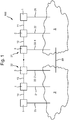
- FIG. 1 is a schematic illustration of an ad hoc wireless network 100 (hereinafter referred to as a network 100) in which a first embodiment may be implemented.
- the network 100 comprises a plurality of nodes, of which some are in the form of UAVs.
- Other nodes may be in other forms, for example manned aircraft and/or ground stations.
- the network 100 operates according to the OLSRv2 protocol, in conventional manner, except where stated otherwise below.
- UAV nodes are shown in Figure 1 , namely a first node 1, a second node 2, a third node 3, a fourth node 4, and a fifth node 5.
- a first node 1 a second node 2
- a third node 3 a fourth node 4
- a fifth node 5 a fifth node 5.
- two sub-networks of the network 100 namely a first sub-network 8 and a second sub-network 9.
- the sub-networks comprise a plurality of further nodes that are inter-connected in any suitable manner and according to their current situations.
- the third node 3 is shown twice in Figure 1 .
- a first representation of the third node 3 is drawn in normal line drawing and representing schematically that it is at a first physical location 31. In the scenario under consideration, when at its first location 31, the third node 3 is relatively long distance away from the fourth node 4.
- the third node 3 will then move its physical location to a new second position 32 that is relatively closer to the fourth node 4.
- a second representation of the third node 3 is drawn in dashed line form and schematically represents the third node 3 when it is at its new second position 32.
- the nodes of the network 100 are coupled on an ad hoc basis by wireless links established between respective nodes. Some nodes may be coupled to only one other node, whereas other nodes may be coupled to plural other nodes.
- Figure 1 shows a current situation where in conventional manner all the links are operated as bidirectional links in conventional manner.
- a first link 11 is provided between the first node 1 and the second node 2
- a second link 12 is provided between the second node 2 and the third node 3 when it is at its initial position 31
- a third link 13 is provided between the third node 3 when it is at its later second position 32 and the fourth node 4
- a fourth link 14 is provided between the fourth node 4 and the fifth node 5.
- links are provided between the UAV nodes and nodes (not shown) in the sub-networks 8 and 9, which for ease of reference will hereinafter be termed sub-network links.
- a first sub-network link 21 is provided between the first node 1 and a node (not shown) in the first sub-network 8
- a second sub-network link 22 is provided between the second node 2 and a node (not shown) in the first sub-network 8
- a first implementation 23-1 of a third sub-network link is provided between the third node 3 when it is at its initial position 31 and a node (not shown) in the first sub-network 8
- a second implementation 23-2 of a third sub-network link is provided between the third node 3 when it is at its later second position 32 and a node (not shown) in the second sub-network 9
- a fourth sub-network link 24 is provided between the fourth node 4 and a node (not shown) in the second sub-network 9
- a fifth sub-network link 25 is provided between the fifth node 5 and a node (not shown) in the second
- any of the nodes shown in Figure 1 may be coupled by further bidirectional links to further nodes in addition to those shown in the Figure, including further nodes in the first sub-network 8 and the second sub-network 9, and there may be more than one link between the two sub-networks.
- further bidirectional links to further nodes in addition to those shown in the Figure, including further nodes in the first sub-network 8 and the second sub-network 9, and there may be more than one link between the two sub-networks.
- the message may be routed from the first node 1 to the fifth node 5 via the inter-network link 89.
- the route from the first node 1 to the relevant node in the first sub-network 8 will be selected from among the first link 11, the second link 12, the first sub-network link 21, the second sub-network link 22, the first implementation 23-1 of the third sub-network link, and the links available within the first sub-network 8, according to conventional metric value calculations derived from those links.
- the route from the relevant node in the second sub-network 9 to the fifth node 5 will be selected from among the third link 13, the fourth link 14, the fourth sub-network link 24, the fifth sub-network link 25, the second implementation 23-2 of the third sub-network link, and the links available within the second sub-network 9, according to conventional metric value calculations derived from those links.
- the network 100 employs a routing protocol that assesses the route on an end-to-end basis. This will include summing the respective OLSRv2 link metric values of the links included in the available routes to provide a summation of the respective OLSRv2 link metric values of the links included in the available routes, with the route with the lowest sum of link metric values being chosen, assuming no other considerations are included.
- the respective OLSRv2 link metric values of the links included in the available routes may be combined in ways others than strict summation as such, to provide a combination of the respective OLSRv2 link metric values of the links included in the available routes, with the route being selected based on the value of the combination that fulfils a predetermined criteria (for example highest, or lowest, or other criteria, as appropriate).
- a predetermined criteria for example highest, or lowest, or other criteria, as appropriate.
- One example of such a combination is that of a weighted summation of the respective OLSRv2 link metric values of the links included in the available routes.
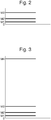
- FIG. 2 is a schematic representation of link metric values as typically used in ad hoc networks, including the OLSRv2 protocol of this embodiment.
- the conventional implementation of metric link values is well known to the skilled person so will only be discussed in a simplified form with reference to Figure 2 .
- Different metric link values are assigned to or determined for each link.
- three different metric link values are shown namely (from lowest value to highest value) M1, M2 and M3. Values may typically differ by up to a few orders of magnitude.
- M1 may be equal to 2 2
- M2 may be equal to 2 3
- M3 may be equal to 2 5
- further possible routes are provided. These further possible routes are provided by virtue of an awareness, estimation or prediction (which may be determined by the third node 3 itself or by one or more other network entities) that the third node 3 will be moving to a new physical location (e.g. its second later position 32), where the third link 13 and the second implementation 23-2 of a third sub-network link 23-2 will be available.
- the third node 3 advertises therefore the connectivity to destinations in the second sub-network 9 including the fourth node 4 and the fifth node 5.
- the third node 3 is able to contribute further routes as available in this embodiment.
- the third node 3 contributes availability of a direct path from itself to the fourth node via the third link 13, and also a direct path from itself to the second sub-network 9 via the second implementation 23-2 of the third sub-network link.
- the destinations advertised by the third node as part of these further contributed routes are advertised in the same manner in which conventionally, under for example OLSRv2, attached networks are advertised as destinations. Also, in the same manner as destination metrics are allocated, under OLSRv2 for example, to attached networks, a destination metric is allocated to the destination of each of these further contributed routes.
- the inter-network link 89 becomes unavailable (and there are no other links between the two sub-networks), or in other scenarios or circumstances where there was no inter-network link between the two sub-networks to begin with, the further routes contributed by the third node that are derived from the third node 3 storing and forwarding the message, can be used instead.
- the inter-network link 89 is not present, overall routing from the first node 1 to the fifth node 5 can still take place.
- a first part of the route will be from the first node 1 to the third node 3 when it is at its first position 31 - this first part of the route will be selected from among the first link 11, the second link 12, the first sub-network link 21, the second sub-network link 22, the first implementation 23-1 of the third sub-network link, and the links available within the first sub-network 8, according to conventional metric value calculations derived from those links.
- a second part of the route will be from the third node 3 when it is at its second position 32 to the fifth node 5 - this first part of the route will be selected from among the third link 13, the fourth link 14, the fourth sub-network link 24, the fifth sub-network link 25, the second implementation 23-2 of the third sub-network link, and the links available within the second sub-network 9, according to conventional metric value calculations derived from those links.
- those destinations that are provided by virtue of the store and forward operation of the third node are allocated (or otherwise associated with) special (destination) metric values that give a reduced likelihood of selection as a suitable route for transmitting the messages compared to conventionally available routes that do not derive from a store and forwarding process.
- a further metric value referred to herein as a special metric value M4
- the link metric values assigned to the other links i.e.
- the routes with the M4 value are less likely to be selected.
- the relative value of the special metric value M4 is sufficiently high, e.g. many orders of magnitude, that any overall routes, e.g. the further contributed routes discussed above, that involve one or more special metrics of such value will be ones of last resort, i.e. they will only be used if no conventional routes, including those described earlier above, or indeed even significantly longer routes (not shown), if such routes are made up entirely of conventional links, are available.
- all destinations provided by virtue of a store and forward process are allocated (or otherwise associated with) the same special metric value M4.
- different such destinations may be allocated (or otherwise associated with) different special metric values.
- all such special metric values are nevertheless very high compared to the metric link values allocated to conventional links within the network 100.
- one or more special high metric values may be specified or determined dynamically, for example different values may be specified at different times, or on different missions or other deployment variables, or may be varied according to dynamic network characteristics under control of an algorithm, or may be updated under an instruction received via the network, and so on.
- OLSRv2 protocol nodes determine which external destinations are reachable and then inform the other nodes of the metrics. In this embodiment, therefore, this aspect of the protocol is varied for the destinations that are to be provided by storing and forwarding, and instead the storing and forwarding node (in this example the third node 3) determines the metric value/values for the artificial destinations it is creating, and informs the second node 2 of this/these values.
- any other appropriate other mechanism may be used to allocate a special higher OLSRv2 metric value to (or otherwise associate a special higher OLSRv2 metric value with) a store and forward destination than is allocated to the conventional destinations.
- physical protocol layer information may be used, and possibly also information from the mission planner.
- the various processes described are implemented in the OLSRv2 protocol layer of a protocol stack. In other embodiments the processes may be implemented in any suitable protocol layer.
- the skilled person is well aware, many communications protocol stack configurations are available in the art, and the skilled person will adapt a suitable protocol layer as appropriate depending upon the required or desired protocol stack implementation. Generally speaking, it will also be readily within the capabilities of the skilled person to adapt any other layers of the protocol stack if required to accommodate changes made to the main layer in which he or she is implementing embodiments of the invention.
- the third node located at a first position 31, advertises a theoretical message destination that it is not currently linked to.
- a special high metric value (whose value preferably renders the theoretical routes as ones of last resort) is allocated to (or otherwise associated with) the theoretical destination.
- route metric value evaluation is performed by the second node 2 for a message to be routed to the fourth node 4.
- step s8 the finding of the route metric evaluation of step s6 is determined to be that the message is to be transmitted via the third node (i.e. the prospective storing and forwarding node).
- the message is transmitted from the second node 2 to the third node 3.
- step s12 the message is received and stored by the third node 3.
- the third node 3 moves from its first location 31 to its later second location 32.
- the third node 3 forwards (i.e. transmits) the message to the fourth node 4.
- Apparatus for implementing the above arrangements and processes as described with reference to Figures 1-4 may be provided by configuring or adapting any suitable apparatus, for example one or more computers or other processing apparatus or processors, and/or providing additional modules.
- the apparatus may comprise a computer, a network of computers, or one or more processors, for implementing instructions and using data, including instructions and data in the form of a computer program or plurality of computer programs stored in or on a machine readable storage medium such as computer memory, a computer disk, ROM, PROM etc., or any combination of these or other storage media.
- the node 3 after the node 3 has stored the message and then moved to its second position 32, the node 3 then transmits the message over a link (in the above examples the third link 13 or the second implementation of the third sub-network link 23-2) that had been known about prior to the storing of the message and which had formed some or all of the basis of the reason the third node 3 had advertised those connections as theoretically available.
- a link in the above examples the third link 13 or the second implementation of the third sub-network link 23-2
- the third node 3 may, during or at the end of the process of moving to the second location 32, instead transmit the message to some other link that has unexpectedly become available during that time.
- the third node may determine that it is time to forward the message using any appropriate method.
- One such appropriate method by way of example is the node may observe its routing table (or any other equivalent routing table or item). In general other possibilities could be by using the routing protocol information, or other sources means such as planning.
- the described process is applied to any type of message to be routed.
- only certain types of message may be included, for example only sensor data, say.
- some messages may be routed as described and not others, dependent upon other factors, for example a prediction of how long the message will need to be stored, or dependent upon the number of nodes available in a range that are sufficiently close to be considered likely to form practical nodes in the near future, and so on.
- embodiments are implemented using the OLSRv2 protocol. In other embodiments other versions or adaptations of OLSR may be used. Yet further embodiments may be implemented under link state routing protocols other than OLSR, and yet further embodiments may be implemented under other types of proactive routing protocol. Generally, embodiments may be implemented under any suitable ad hoc network protocol in which routes and links are advertised or discovered, and in which some form of link metric value or equivalent parameter or parameters is used for assessing the end-to-end route.
- routing metric assessment takes account of the whole end-to-end route. This is in contrast, for example, to the use of a probabilistic metric as disclosed in Lindgren.
- the special link metric value in order for the special link metric value to be one that gives a reduced likelihood of selection as a suitable route for transmitting the messages compared to conventionally available links that do not derive from a store and forwarding process, the value is higher than that of the conventionally available links, as in OLSRv2 protocol the higher the value of the metric link value, the less desirable is the link.
- the special link metric value in order for the special link metric value to be one that gives a reduced likelihood of selection as a suitable route for transmitting the messages compared to conventionally available links that do not derive from a store and forwarding process, the special link metric value will be lower than that of the conventionally available links.
- the ad hoc network includes nodes which are UAVs.
- other embodiments may be implemented in other types of ad hoc network, including, but not limited to, networks where some or all of the nodes are other types of autonomous vehicle, networks where some or all of the nodes are manned vehicles, including for example manned aircraft, networks where some or all of the nodes are satellites, and networks where some or all of the nodes are people, e.g. soldiers or first responders, including any mixtures of the preceding node-type examples.
Landscapes
- Engineering & Computer Science (AREA)
- Computer Networks & Wireless Communication (AREA)
- Signal Processing (AREA)
- Mobile Radio Communication Systems (AREA)
Claims (15)
- Verfahren in einem Ad-hoc-Netzwerk, das eine Mehrzahl von Knoten umfasst, die in zwei oder mehr Teilnetzwerken verteilt sind, wobei das Verfahren umfasst, dass:ein Knoten bestimmt, dass er sich von einem ersten Teilnetzwerk in ein zweites Teilnetzwerk bewegt;der Knoten während seiner Verbindung mit einem ersten Teilnetzwerk:ein theoretisches Ziel in einem zweiten Teilnetzwerk, mit dem der Knoten gegenwärtig nicht verbunden ist, als Teil einer theoretischen Route zwischen dem ersten und zweiten Teilnetzwerk anzeigt;einen speziellen Verbindungsmetrikwert, der eine geringere Wahrscheinlichkeit von Auswahl als eine geeignete Route zum Senden von Nachrichten im Vergleich zu herkömmlicherweise verfügbaren Routen zwischen dem ersten und zweiten Teilnetzwerk im Ad-hoc-Netzwerk ergibt, mit dem theoretischen Ziel im zweiten Teilnetzwerk assoziiert, wobei das Ad-hoc-Netzwerk ein Routing-Protokoll einsetzt, in welchem die geeignete Route basierend auf einem Wert einer Kombination der jeweiligen Verbindungsmetrikwerte von Verbindungen ausgewählt wird, die in den verfügbaren Routen enthalten sind, die theoretische Routen umfassen, aus welchen die geeignete Route ausgewählt wird;wobei das Verfahren ferner umfasst:wenn keine herkömmlichen Routen verfügbar sind, Bestimmen, dass eine Nachricht von einem weiteren Knoten im ersten Teilnetzwerk über die theoretische Route an einen zweiten weiteren Knoten im zweiten Teilnetzwerk gesendet werden soll;wobei der Knoten die Nachricht vom weiteren Knoten empfängt, wenn der Knoten an einem ersten Standort ist und während er mit dem ersten Teilnetzwerk verbunden ist;der Knoten de Nachricht speichert;der Knoten sich vom ersten Standort zu einem zweiten Standort bewegt, um eine Verbindung mit dem zweiten Teilnetzwerk herzustellen, um dadurch die theoretische Route in eine neue reale Route zu verwandeln; undder Knoten die Nachricht entweder direkt oder über das zweite Teilnetzwerk als Teil der neuen realen Route an den zweiten weiteren Knoten sendet.
- Verfahren nach Anspruch 1, wobei die Kombination der jeweiligen Verbindungsmetrikwerte der Verbindungen, die in den verfügbaren Routen enthalten sind, aus welchen die geeignete Route ausgewählt wird, eine Summierung der jeweiligen Verbindungsmetrikwerte der Verbindungen umfasst, die in den verfügbaren Routen enthalten sind, aus welchen die geeignete Route ausgewählt wird.
- Verfahren nach Anspruch 1 oder 2, wobei der spezielle Verbindungsmetrikwert einen Wert aufweist, dass es sich bei allen Gesamtrouten, die das theoretische Ziel umfassen, um einen letzten Ausweg handelt.
- Verfahren nach einem der Ansprüche 1 bis 3, wobei der spezielle Verbindungsmetrikwert höher als jener der herkömmlicherweise verfügbaren Routen im Ad-hoc-Netzwerk ist.
- Verfahren nach einem der Ansprüche 1 bis 4, wobei das Ad-hoc-Netzwerk gemäß einem proaktiven Routing-Protokoll betrieben wird.
- Verfahren nach einem der Ansprüche 1 bis 5, wobei das Ad-hoc-Netzwerk gemäß einem Verbindungszustands-Routing-Protokoll, gegebenenfalls dem OLSRv2-Protokoll, betrieben wird.
- Verfahren nach einem der Ansprüche 1 bis 6, wobei einige oder alle der Knoten unbemannte Fahrzeuge sind.
- Vorrichtung in einem Knoten eines Ad-hoc-Netzwerks, das eine Mehrzahl von Knoten umfasst, die in zwei oder mehr Teilnetzwerken verteilt sind, wobei die Vorrichtung umfasst:Mittel zum Bestimmen, dass der Knoten sich von einem ersten Teilnetzwerk in ein zweites Teilnetzwerk bewegt;Mittel für den Knoten zum Anzeigen während seiner Verbindung mit einem ersten Teilnetzwerk eines theoretischen Ziels in einem zweiten Teilnetzwerk, mit dem der Knoten gegenwärtig nicht verbunden ist, als Teil einer theoretischen Nachrichtenroute zwischen dem ersten und zweiten Teilnetzwerk;Mittel zum Assoziieren eines speziellen Verbindungsmetrikwerts, der eine geringere Wahrscheinlichkeit von Auswahl als eine geeignete Route zum Senden von Nachrichten im Vergleich zu herkömmlicherweise verfügbaren Routen zwischen dem ersten und zweiten Teilnetzwerk im Ad-hoc-Netzwerk ergibt, mit dem theoretischen Ziel im zweiten Teilnetzwerk, wobei das Ad-hoc-Netzwerk ein Routing-Protokoll einsetzt, in welchem die geeignete Route basierend auf einem Wert einer Kombination der jeweiligen Verbindungsmetrikwerte von Verbindungen ausgewählt wird, die in den verfügbaren Routen enthalten sind, die theoretische Routen umfassen, aus welchen die geeignete Route ausgewählt wird;wobei die Vorrichtung ferner umfasst:Mittel zum Bestimmen, dass eine Nachricht von einem weiteren Knoten im ersten Teilnetzwerk über die theoretische Route an einen zweiten weiteren Knoten im zweiten Teilnetzwerk gesendet werden soll, wenn keine herkömmlichen Routen verfügbar sind;Mittel für den Knoten zum Empfangen der Nachricht vom weiteren Knoten, wenn der Knoten an einem ersten Standort ist und während er mit dem ersten Teilnetzwerk verbunden ist;Mittel für den Knoten zum Speichern der Nachricht; undMittel zum Verwandeln der theoretischen Route in eine neue reale Route, nachdem sich der Knoten vom ersten Standort zu einem zweiten Standort bewegt hat, um eine Verbindung mit dem zweiten Teilnetzwerk herzustellen, und wobei der Knoten die Nachricht entweder direkt oder über das zweite Teilnetzwerk als Teil der neuen realen Route an einen zweiten weiteren Knoten sendet.
- Vorrichtung nach Anspruch 8, wobei die Kombination der jeweiligen Verbindungsmetrikwerte der Verbindungen, die in den verfügbaren Routen enthalten sind, aus welchen die geeignete Route ausgewählt wird, eine Summierung der jeweiligen Verbindungsmetrikwerte der Verbindungen umfasst, die in den verfügbaren Routen enthalten sind, aus welchen die geeignete Route ausgewählt wird.
- Vorrichtung nach Anspruch 8 oder 9, wobei der spezielle Verbindungsmetrikwert einen Wert aufweist, dass es sich bei allen Gesamtrouten, die das theoretische Ziel umfassen, um einen letzten Ausweg handelt.
- Vorrichtung nach einem der Ansprüche 8 bis 10, wobei der spezielle Verbindungsmetrikwert höher als jener der herkömmlicherweise verfügbaren Routen im Ad-hoc-Netzwerk ist.
- Vorrichtung nach einem der Ansprüche 8 bis 11, wobei das Ad-hoc-Netzwerk gemäß dem OLSRv2-Protokoll betrieben wird.
- Vorrichtung nach einem der Ansprüche 8 bis 12, wobei einige oder alle der Knoten unbemannte Fahrzeuge sind.
- Programm oder Mehrzahl von Programmen, das/die derart ausgelegt ist/sind, dass es/sie bei Ausführung durch ein Computersystem oder einen oder mehrere Prozessoren das Computersystem oder den einen oder die mehreren Prozessoren veranlasst/veranlassen, gemäß dem Verfahren nach einem der Ansprüche 1 bis 7 zu funktionieren.
- Maschinenlesbares Speichermedium, das ein Programm oder wenigstens eines der Mehrzahl von Programmen nach Anspruch 14 speichert.
Applications Claiming Priority (3)
| Application Number | Priority Date | Filing Date | Title |
|---|---|---|---|
| GB1406288.9A GB2524980A (en) | 2014-04-07 | 2014-04-07 | Ad hoc network |
| EP14250071.9A EP2930976A1 (de) | 2014-04-08 | 2014-04-08 | Ad-Hoc-Netzwerk |
| PCT/GB2015/051019 WO2015155509A1 (en) | 2014-04-07 | 2015-04-01 | Ad hoc network |
Publications (2)
| Publication Number | Publication Date |
|---|---|
| EP3130176A1 EP3130176A1 (de) | 2017-02-15 |
| EP3130176B1 true EP3130176B1 (de) | 2019-06-05 |
Family
ID=52823674
Family Applications (1)
| Application Number | Title | Priority Date | Filing Date |
|---|---|---|---|
| EP15715380.0A Active EP3130176B1 (de) | 2014-04-07 | 2015-04-01 | Routingverfahren und -geräte in ad-hoc-netzwerken |
Country Status (4)
| Country | Link |
|---|---|
| US (1) | US20170034762A1 (de) |
| EP (1) | EP3130176B1 (de) |
| ES (1) | ES2738353T3 (de) |
| WO (1) | WO2015155509A1 (de) |
Families Citing this family (3)
| Publication number | Priority date | Publication date | Assignee | Title |
|---|---|---|---|---|
| US10763953B2 (en) * | 2015-11-11 | 2020-09-01 | Schlumberger Technology Corporation | Aerial-based communication system |
| CN108566614B (zh) * | 2017-11-06 | 2020-08-14 | 南京大学 | 一种面向时延容忍网络的端到端通信方法与系统 |
| WO2021139949A1 (de) * | 2020-01-09 | 2021-07-15 | Sew-Eurodrive Gmbh & Co. Kg | Verfahren zur datenübertragung und technische anlage |
-
2015
- 2015-04-01 EP EP15715380.0A patent/EP3130176B1/de active Active
- 2015-04-01 ES ES15715380T patent/ES2738353T3/es active Active
- 2015-04-01 US US15/302,592 patent/US20170034762A1/en not_active Abandoned
- 2015-04-01 WO PCT/GB2015/051019 patent/WO2015155509A1/en not_active Ceased
Non-Patent Citations (1)
| Title |
|---|
| None * |
Also Published As
| Publication number | Publication date |
|---|---|
| US20170034762A1 (en) | 2017-02-02 |
| WO2015155509A1 (en) | 2015-10-15 |
| EP3130176A1 (de) | 2017-02-15 |
| ES2738353T3 (es) | 2020-01-22 |
Similar Documents
| Publication | Publication Date | Title |
|---|---|---|
| Fraire et al. | Routing-aware fair contact plan design for predictable delay tolerant networks | |
| Secinti et al. | SDNs in the sky: Robust end-to-end connectivity for aerial vehicular networks | |
| Poularakis et al. | SDN-enabled tactical ad hoc networks: Extending programmable control to the edge | |
| JP4024246B2 (ja) | マルチチャネル移動体アドホックネットワーク | |
| US20050053007A1 (en) | Route selection in mobile ad-hoc networks based on traffic state information | |
| AU2022421217B2 (en) | Intelligent network slicing and policy-based routing engine | |
| Ranga et al. | A hybrid timer based single node failure recovery approach for WSANs | |
| Bezirgiannidis et al. | Analysis of contact graph routing enhancements for DTN space communications | |
| Madoery et al. | Congestion management techniques for disruption‐tolerant satellite networks | |
| EP3130176B1 (de) | Routingverfahren und -geräte in ad-hoc-netzwerken | |
| US10158554B1 (en) | Heuristic topology management system for directional wireless networks | |
| Lowe et al. | A delay-tolerant network approach to satellite pickup and delivery scheduling | |
| US12273803B2 (en) | Satellite communication system having primary and secondary neighborhood egress nodes | |
| Mox et al. | Opportunistic communication in robot teams | |
| Yang et al. | Message-oriented middleware with QoS awareness | |
| EP2930976A1 (de) | Ad-Hoc-Netzwerk | |
| Wenning et al. | Autonomous control by means of distributed routing | |
| Heimfarth et al. | Unmanned aerial vehicle as data mule for connecting disjoint segments of wireless sensor network with unbalanced traffic | |
| GB2524980A (en) | Ad hoc network | |
| Harounabadi et al. | Cooperative on-the-fly decision making in mobility-controlled multi ferry delay tolerant networks | |
| Phoummavong et al. | Location-aided route discovery mechanism based on two-hop neighbor information for ad hoc network | |
| WO2020160767A1 (en) | Selecting a next hop for a data packet | |
| US20170026898A1 (en) | Ad hoc network with unidirectional link | |
| Yang et al. | A machine learning based forwarding algorithm over cognitive radios in wireless mesh networks | |
| US20240236817A1 (en) | Target homing optimized routing protocol over an aerial service gateway relay domain |
Legal Events
| Date | Code | Title | Description |
|---|---|---|---|
| STAA | Information on the status of an ep patent application or granted ep patent |
Free format text: STATUS: THE INTERNATIONAL PUBLICATION HAS BEEN MADE |
|
| PUAI | Public reference made under article 153(3) epc to a published international application that has entered the european phase |
Free format text: ORIGINAL CODE: 0009012 |
|
| STAA | Information on the status of an ep patent application or granted ep patent |
Free format text: STATUS: REQUEST FOR EXAMINATION WAS MADE |
|
| 17P | Request for examination filed |
Effective date: 20161107 |
|
| AK | Designated contracting states |
Kind code of ref document: A1 Designated state(s): AL AT BE BG CH CY CZ DE DK EE ES FI FR GB GR HR HU IE IS IT LI LT LU LV MC MK MT NL NO PL PT RO RS SE SI SK SM TR |
|
| AX | Request for extension of the european patent |
Extension state: BA ME |
|
| DAV | Request for validation of the european patent (deleted) | ||
| DAX | Request for extension of the european patent (deleted) | ||
| GRAP | Despatch of communication of intention to grant a patent |
Free format text: ORIGINAL CODE: EPIDOSNIGR1 |
|
| STAA | Information on the status of an ep patent application or granted ep patent |
Free format text: STATUS: GRANT OF PATENT IS INTENDED |
|
| RIC1 | Information provided on ipc code assigned before grant |
Ipc: H04W 40/34 20090101ALI20181220BHEP Ipc: H04W 84/18 20090101ALN20181220BHEP Ipc: H04W 40/38 20090101ALI20181220BHEP Ipc: H04W 40/30 20090101ALI20181220BHEP Ipc: H04W 40/24 20090101ALI20181220BHEP Ipc: H04W 40/18 20090101AFI20181220BHEP |
|
| INTG | Intention to grant announced |
Effective date: 20190110 |
|
| GRAS | Grant fee paid |
Free format text: ORIGINAL CODE: EPIDOSNIGR3 |
|
| GRAA | (expected) grant |
Free format text: ORIGINAL CODE: 0009210 |
|
| STAA | Information on the status of an ep patent application or granted ep patent |
Free format text: STATUS: THE PATENT HAS BEEN GRANTED |
|
| AK | Designated contracting states |
Kind code of ref document: B1 Designated state(s): AL AT BE BG CH CY CZ DE DK EE ES FI FR GB GR HR HU IE IS IT LI LT LU LV MC MK MT NL NO PL PT RO RS SE SI SK SM TR |
|
| REG | Reference to a national code |
Ref country code: GB Ref legal event code: FG4D |
|
| REG | Reference to a national code |
Ref country code: CH Ref legal event code: EP |
|
| REG | Reference to a national code |
Ref country code: AT Ref legal event code: REF Ref document number: 1141247 Country of ref document: AT Kind code of ref document: T Effective date: 20190615 |
|
| REG | Reference to a national code |
Ref country code: DE Ref legal event code: R096 Ref document number: 602015031359 Country of ref document: DE |
|
| REG | Reference to a national code |
Ref country code: IE Ref legal event code: FG4D |
|
| REG | Reference to a national code |
Ref country code: NL Ref legal event code: MP Effective date: 20190605 |
|
| REG | Reference to a national code |
Ref country code: LT Ref legal event code: MG4D |
|
| PG25 | Lapsed in a contracting state [announced via postgrant information from national office to epo] |
Ref country code: SE Free format text: LAPSE BECAUSE OF FAILURE TO SUBMIT A TRANSLATION OF THE DESCRIPTION OR TO PAY THE FEE WITHIN THE PRESCRIBED TIME-LIMIT Effective date: 20190605 Ref country code: AL Free format text: LAPSE BECAUSE OF FAILURE TO SUBMIT A TRANSLATION OF THE DESCRIPTION OR TO PAY THE FEE WITHIN THE PRESCRIBED TIME-LIMIT Effective date: 20190605 Ref country code: LT Free format text: LAPSE BECAUSE OF FAILURE TO SUBMIT A TRANSLATION OF THE DESCRIPTION OR TO PAY THE FEE WITHIN THE PRESCRIBED TIME-LIMIT Effective date: 20190605 Ref country code: HR Free format text: LAPSE BECAUSE OF FAILURE TO SUBMIT A TRANSLATION OF THE DESCRIPTION OR TO PAY THE FEE WITHIN THE PRESCRIBED TIME-LIMIT Effective date: 20190605 Ref country code: NO Free format text: LAPSE BECAUSE OF FAILURE TO SUBMIT A TRANSLATION OF THE DESCRIPTION OR TO PAY THE FEE WITHIN THE PRESCRIBED TIME-LIMIT Effective date: 20190905 |
|
| PG25 | Lapsed in a contracting state [announced via postgrant information from national office to epo] |
Ref country code: RS Free format text: LAPSE BECAUSE OF FAILURE TO SUBMIT A TRANSLATION OF THE DESCRIPTION OR TO PAY THE FEE WITHIN THE PRESCRIBED TIME-LIMIT Effective date: 20190605 Ref country code: GR Free format text: LAPSE BECAUSE OF FAILURE TO SUBMIT A TRANSLATION OF THE DESCRIPTION OR TO PAY THE FEE WITHIN THE PRESCRIBED TIME-LIMIT Effective date: 20190906 Ref country code: LV Free format text: LAPSE BECAUSE OF FAILURE TO SUBMIT A TRANSLATION OF THE DESCRIPTION OR TO PAY THE FEE WITHIN THE PRESCRIBED TIME-LIMIT Effective date: 20190605 Ref country code: BG Free format text: LAPSE BECAUSE OF FAILURE TO SUBMIT A TRANSLATION OF THE DESCRIPTION OR TO PAY THE FEE WITHIN THE PRESCRIBED TIME-LIMIT Effective date: 20190905 |
|
| REG | Reference to a national code |
Ref country code: AT Ref legal event code: MK05 Ref document number: 1141247 Country of ref document: AT Kind code of ref document: T Effective date: 20190605 |
|
| REG | Reference to a national code |
Ref country code: ES Ref legal event code: FG2A Ref document number: 2738353 Country of ref document: ES Kind code of ref document: T3 Effective date: 20200122 |
|
| PG25 | Lapsed in a contracting state [announced via postgrant information from national office to epo] |
Ref country code: NL Free format text: LAPSE BECAUSE OF FAILURE TO SUBMIT A TRANSLATION OF THE DESCRIPTION OR TO PAY THE FEE WITHIN THE PRESCRIBED TIME-LIMIT Effective date: 20190605 Ref country code: AT Free format text: LAPSE BECAUSE OF FAILURE TO SUBMIT A TRANSLATION OF THE DESCRIPTION OR TO PAY THE FEE WITHIN THE PRESCRIBED TIME-LIMIT Effective date: 20190605 Ref country code: PT Free format text: LAPSE BECAUSE OF FAILURE TO SUBMIT A TRANSLATION OF THE DESCRIPTION OR TO PAY THE FEE WITHIN THE PRESCRIBED TIME-LIMIT Effective date: 20191007 Ref country code: SK Free format text: LAPSE BECAUSE OF FAILURE TO SUBMIT A TRANSLATION OF THE DESCRIPTION OR TO PAY THE FEE WITHIN THE PRESCRIBED TIME-LIMIT Effective date: 20190605 Ref country code: RO Free format text: LAPSE BECAUSE OF FAILURE TO SUBMIT A TRANSLATION OF THE DESCRIPTION OR TO PAY THE FEE WITHIN THE PRESCRIBED TIME-LIMIT Effective date: 20190605 Ref country code: CZ Free format text: LAPSE BECAUSE OF FAILURE TO SUBMIT A TRANSLATION OF THE DESCRIPTION OR TO PAY THE FEE WITHIN THE PRESCRIBED TIME-LIMIT Effective date: 20190605 Ref country code: EE Free format text: LAPSE BECAUSE OF FAILURE TO SUBMIT A TRANSLATION OF THE DESCRIPTION OR TO PAY THE FEE WITHIN THE PRESCRIBED TIME-LIMIT Effective date: 20190605 |
|
| PG25 | Lapsed in a contracting state [announced via postgrant information from national office to epo] |
Ref country code: SM Free format text: LAPSE BECAUSE OF FAILURE TO SUBMIT A TRANSLATION OF THE DESCRIPTION OR TO PAY THE FEE WITHIN THE PRESCRIBED TIME-LIMIT Effective date: 20190605 Ref country code: IS Free format text: LAPSE BECAUSE OF FAILURE TO SUBMIT A TRANSLATION OF THE DESCRIPTION OR TO PAY THE FEE WITHIN THE PRESCRIBED TIME-LIMIT Effective date: 20191005 |
|
| REG | Reference to a national code |
Ref country code: DE Ref legal event code: R097 Ref document number: 602015031359 Country of ref document: DE |
|
| PLBE | No opposition filed within time limit |
Free format text: ORIGINAL CODE: 0009261 |
|
| STAA | Information on the status of an ep patent application or granted ep patent |
Free format text: STATUS: NO OPPOSITION FILED WITHIN TIME LIMIT |
|
| PG25 | Lapsed in a contracting state [announced via postgrant information from national office to epo] |
Ref country code: PL Free format text: LAPSE BECAUSE OF FAILURE TO SUBMIT A TRANSLATION OF THE DESCRIPTION OR TO PAY THE FEE WITHIN THE PRESCRIBED TIME-LIMIT Effective date: 20190605 Ref country code: DK Free format text: LAPSE BECAUSE OF FAILURE TO SUBMIT A TRANSLATION OF THE DESCRIPTION OR TO PAY THE FEE WITHIN THE PRESCRIBED TIME-LIMIT Effective date: 20190605 |
|
| 26N | No opposition filed |
Effective date: 20200306 |
|
| PG25 | Lapsed in a contracting state [announced via postgrant information from national office to epo] |
Ref country code: SI Free format text: LAPSE BECAUSE OF FAILURE TO SUBMIT A TRANSLATION OF THE DESCRIPTION OR TO PAY THE FEE WITHIN THE PRESCRIBED TIME-LIMIT Effective date: 20190605 |
|
| PG25 | Lapsed in a contracting state [announced via postgrant information from national office to epo] |
Ref country code: MC Free format text: LAPSE BECAUSE OF FAILURE TO SUBMIT A TRANSLATION OF THE DESCRIPTION OR TO PAY THE FEE WITHIN THE PRESCRIBED TIME-LIMIT Effective date: 20190605 |
|
| REG | Reference to a national code |
Ref country code: CH Ref legal event code: PL |
|
| PG25 | Lapsed in a contracting state [announced via postgrant information from national office to epo] |
Ref country code: LU Free format text: LAPSE BECAUSE OF NON-PAYMENT OF DUE FEES Effective date: 20200401 Ref country code: CH Free format text: LAPSE BECAUSE OF NON-PAYMENT OF DUE FEES Effective date: 20200430 Ref country code: LI Free format text: LAPSE BECAUSE OF NON-PAYMENT OF DUE FEES Effective date: 20200430 |
|
| REG | Reference to a national code |
Ref country code: BE Ref legal event code: MM Effective date: 20200430 |
|
| PG25 | Lapsed in a contracting state [announced via postgrant information from national office to epo] |
Ref country code: BE Free format text: LAPSE BECAUSE OF NON-PAYMENT OF DUE FEES Effective date: 20200430 |
|
| PG25 | Lapsed in a contracting state [announced via postgrant information from national office to epo] |
Ref country code: IE Free format text: LAPSE BECAUSE OF NON-PAYMENT OF DUE FEES Effective date: 20200401 |
|
| PG25 | Lapsed in a contracting state [announced via postgrant information from national office to epo] |
Ref country code: MT Free format text: LAPSE BECAUSE OF FAILURE TO SUBMIT A TRANSLATION OF THE DESCRIPTION OR TO PAY THE FEE WITHIN THE PRESCRIBED TIME-LIMIT Effective date: 20190605 Ref country code: CY Free format text: LAPSE BECAUSE OF FAILURE TO SUBMIT A TRANSLATION OF THE DESCRIPTION OR TO PAY THE FEE WITHIN THE PRESCRIBED TIME-LIMIT Effective date: 20190605 |
|
| PG25 | Lapsed in a contracting state [announced via postgrant information from national office to epo] |
Ref country code: MK Free format text: LAPSE BECAUSE OF FAILURE TO SUBMIT A TRANSLATION OF THE DESCRIPTION OR TO PAY THE FEE WITHIN THE PRESCRIBED TIME-LIMIT Effective date: 20190605 |
|
| PGFP | Annual fee paid to national office [announced via postgrant information from national office to epo] |
Ref country code: FI Payment date: 20220419 Year of fee payment: 8 |
|
| PG25 | Lapsed in a contracting state [announced via postgrant information from national office to epo] |
Ref country code: FI Free format text: LAPSE BECAUSE OF NON-PAYMENT OF DUE FEES Effective date: 20230401 |
|
| PGFP | Annual fee paid to national office [announced via postgrant information from national office to epo] |
Ref country code: DE Payment date: 20250319 Year of fee payment: 11 |
|
| PGFP | Annual fee paid to national office [announced via postgrant information from national office to epo] |
Ref country code: ES Payment date: 20250502 Year of fee payment: 11 |
|
| PGFP | Annual fee paid to national office [announced via postgrant information from national office to epo] |
Ref country code: GB Payment date: 20260204 Year of fee payment: 12 |
|
| PGFP | Annual fee paid to national office [announced via postgrant information from national office to epo] |
Ref country code: IT Payment date: 20260319 Year of fee payment: 12 |
|
| PGFP | Annual fee paid to national office [announced via postgrant information from national office to epo] |
Ref country code: FR Payment date: 20260320 Year of fee payment: 12 |
|
| PGFP | Annual fee paid to national office [announced via postgrant information from national office to epo] |
Ref country code: TR Payment date: 20260326 Year of fee payment: 12 |