EP3129908B1 - Systeme und verfahren zur rna-analyse in der funktionellen bestätigung von krebsmutationen - Google Patents
Systeme und verfahren zur rna-analyse in der funktionellen bestätigung von krebsmutationen Download PDFInfo
- Publication number
- EP3129908B1 EP3129908B1 EP15768442.4A EP15768442A EP3129908B1 EP 3129908 B1 EP3129908 B1 EP 3129908B1 EP 15768442 A EP15768442 A EP 15768442A EP 3129908 B1 EP3129908 B1 EP 3129908B1
- Authority
- EP
- European Patent Office
- Prior art keywords
- mutation
- data set
- genomic
- expression level
- data
- Prior art date
- Legal status (The legal status is an assumption and is not a legal conclusion. Google has not performed a legal analysis and makes no representation as to the accuracy of the status listed.)
- Active
Links
Images





Classifications
-
- G—PHYSICS
- G16—INFORMATION AND COMMUNICATION TECHNOLOGY [ICT] SPECIALLY ADAPTED FOR SPECIFIC APPLICATION FIELDS
- G16B—BIOINFORMATICS, i.e. INFORMATION AND COMMUNICATION TECHNOLOGY [ICT] SPECIALLY ADAPTED FOR GENETIC OR PROTEIN-RELATED DATA PROCESSING IN COMPUTATIONAL MOLECULAR BIOLOGY
- G16B20/00—ICT specially adapted for functional genomics or proteomics, e.g. genotype-phenotype associations
- G16B20/20—Allele or variant detection, e.g. single nucleotide polymorphism [SNP] detection
-
- G—PHYSICS
- G16—INFORMATION AND COMMUNICATION TECHNOLOGY [ICT] SPECIALLY ADAPTED FOR SPECIFIC APPLICATION FIELDS
- G16B—BIOINFORMATICS, i.e. INFORMATION AND COMMUNICATION TECHNOLOGY [ICT] SPECIALLY ADAPTED FOR GENETIC OR PROTEIN-RELATED DATA PROCESSING IN COMPUTATIONAL MOLECULAR BIOLOGY
- G16B20/00—ICT specially adapted for functional genomics or proteomics, e.g. genotype-phenotype associations
-
- G—PHYSICS
- G16—INFORMATION AND COMMUNICATION TECHNOLOGY [ICT] SPECIALLY ADAPTED FOR SPECIFIC APPLICATION FIELDS
- G16B—BIOINFORMATICS, i.e. INFORMATION AND COMMUNICATION TECHNOLOGY [ICT] SPECIALLY ADAPTED FOR GENETIC OR PROTEIN-RELATED DATA PROCESSING IN COMPUTATIONAL MOLECULAR BIOLOGY
- G16B30/00—ICT specially adapted for sequence analysis involving nucleotides or amino acids
-
- G—PHYSICS
- G16—INFORMATION AND COMMUNICATION TECHNOLOGY [ICT] SPECIALLY ADAPTED FOR SPECIFIC APPLICATION FIELDS
- G16B—BIOINFORMATICS, i.e. INFORMATION AND COMMUNICATION TECHNOLOGY [ICT] SPECIALLY ADAPTED FOR GENETIC OR PROTEIN-RELATED DATA PROCESSING IN COMPUTATIONAL MOLECULAR BIOLOGY
- G16B50/00—ICT programming tools or database systems specially adapted for bioinformatics
-
- G—PHYSICS
- G16—INFORMATION AND COMMUNICATION TECHNOLOGY [ICT] SPECIALLY ADAPTED FOR SPECIFIC APPLICATION FIELDS
- G16B—BIOINFORMATICS, i.e. INFORMATION AND COMMUNICATION TECHNOLOGY [ICT] SPECIALLY ADAPTED FOR GENETIC OR PROTEIN-RELATED DATA PROCESSING IN COMPUTATIONAL MOLECULAR BIOLOGY
- G16B50/00—ICT programming tools or database systems specially adapted for bioinformatics
- G16B50/20—Heterogeneous data integration
-
- G—PHYSICS
- G16—INFORMATION AND COMMUNICATION TECHNOLOGY [ICT] SPECIALLY ADAPTED FOR SPECIFIC APPLICATION FIELDS
- G16B—BIOINFORMATICS, i.e. INFORMATION AND COMMUNICATION TECHNOLOGY [ICT] SPECIALLY ADAPTED FOR GENETIC OR PROTEIN-RELATED DATA PROCESSING IN COMPUTATIONAL MOLECULAR BIOLOGY
- G16B50/00—ICT programming tools or database systems specially adapted for bioinformatics
- G16B50/40—Encryption of genetic data
Definitions
- the field of the invention is omics analysis, and especially as it relates to RNomics in cancer diagnosis and therapy.
- the present inventive subject matter is drawn to systems and methods of integrating RNomics information with various analytic systems, and especially genomics analysis, and identification of various markers for neoplastic diseases. More specifically, the inventors have discovered that patient and tumor specific mutations on the genome or exome level can be contextualized with analysis of the transcription levels for the corresponding RNA, especially where the mutations are nonsense mutations in selected genes having a known association with malignancies.
- a system for processing omics data to detect a molecular marker therein according to claim 1.
- genomic mutations in cancer tissues are not equally transcribed into RNA, but that selected mutation types in cancer associated genes, and especially nonsense mutations are transcribed at a higher rate, particularly where the mutation is located in a 3-terminal portion of the cancer associated gene. Even more notably, such highly transcribed genes were found to be involved in more than one cancer type. Consequently, the inventors contemplate systems and methods of detecting molecular markers for diagnosis and treatment of various cancers based on integration of genomic and transcriptomic information. Viewed from another perspective, patient specific highly transcribed mutated RNA (and especially nonsense mutated RNA) may be identified and/or used as a diagnostic tool for the presence, treatment, and/or prevention of various cancers. To that end, various methods of processing omics data and omics record computer systems are contemplated and discussed in more detail below.
- any language directed to a computer should be read to include any suitable combination of computing devices, including servers, interfaces, systems, databases, agents, peers, engines, controllers, modules, or other types of computing devices operating individually or collectively.
- the computing devices comprise a processor configured to execute software instructions stored on a tangible, non-transitory computer readable storage medium (e.g., hard drive, FPGA, PLA, solid state drive, RAM, flash, ROM, etc.).
- the software instructions configure or otherwise program the computing device to provide the roles, responsibilities, or other functionality as discussed below with respect to the disclosed apparatus.
- the disclosed technologies can be embodied as a computer program product that includes a non-transitory computer readable medium storing the software instructions that causes a processor to execute the disclosed steps associated with implementations of computer-based algorithms, processes, methods, or other instructions.
- the various servers, systems, databases, or interfaces exchange data using standardized protocols or algorithms, possibly based on HTTP, HTTPS, AES, public-private key exchanges, web service APIs, known financial transaction protocols, or other electronic information exchanging methods.
- Data exchanges among devices can be conducted over a packet-switched network, the Internet, LAN, WAN, VPN, or other type of packet switched network; a circuit switched network; cell switched network; or other type of network.
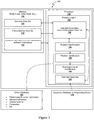
- omics record computer system 100 comprises memory 110 and processor 140 coupled to the memory.
- genomic data set 120 and transcriptomic data set 130 Stored in memory 110 is genomic data set 120 and transcriptomic data set 130.
- the genomic and/or transcriptome data set may also be provided from a data set generator 151 of analysis engine 150.
- raw sequence data can be provided from a sequence database and/or a sequencing device 170 that produces omic data.
- software instructions 112 are stored in the memory for execution on processor 140 to configure the processor to operate as an analysis engine 150, which provides various functions and operations on the data sets.
- analysis engine 150 includes a module for data set association 152 to associate the genomic data set and the transcriptomic data set using the mutation (e.g., pairing or otherwise associating data sets with mutations in common position in the genome).
- Analysis engine may further include a mutation identification module 154 to identify the type of mutation (e.g., as a silent or nonsense mutation), a position identification module 156 to identify the position of the mutation within a gene or transcript, and an expression level identification module 158 that identifies that expression level of the mutated transcript ( e.g., relative to a matched non-mutated transcript of the same patient).
- the position of the mutation is identified (e.g., as being located within the 3'-end portion of the gene) and the expression level of the gene is identified. Finally, the identified position and expression level are then used to update an omics record in the omics database 160.
- Genomic data sets contemplated herein may include various information and may be formatted in a variety of ways. Therefore, suitable genomic data sets may include raw data from sequencing device or raw data storage device. Of course, it should as ne appreciated that the raw data may be preprocessed in several ways. For example, raw data may be preprocessed for improved data transmission ( e.g., as described in PCT/US14/65562 ) and/or formatted to facilitate downstream processing. Particularly preferred formats include BAM, SAM, and FASTA format. Where raw data or preprocessed data are provided, a data set generator may convert such data into suitable formats as noted above. In some aspects, the genomic data set is a data set that includes matched DNA sequence information for both diseased tissue and healthy tissue.
- the data set may include alignments of relatively small segments (e.g., 30 up to 100, 30 up to 300, 30 up to 500, 30 up to 700, etc.), or longer segments ( e.g., 1kb up to 10 kb, 10kb up to 100 kb, 100 kb up to 500kb, 500 kb up to 2 mb, 2mb to 10 mb, etc.).
- the genomic data set is a differential sequence object, typically obtained from a synchronous and incremental alignment of BAM files as discussed in US20120059670 and US20120066001 .
- differential sequence objects will include an identification of a mutation (e.g., transition, transversion, deletion, insertion, rearrangement, etc.), typically with respect to a specific location in the genome or exome (e.g., with respect to base position on a chromosome, location within a specific gene, location within a specific exon, etc.), wherein the mutation is relative to a matched corresponding sample from the same patient ( e.g., mutation is diseased tissue versus corresponding healthy tissue of same donor).
- the genomic data set may be generated from numerous source materials, and preferred source materials include whole genome sequences and exome enriched genome sequences (or exome sequences calculated in silico ).
- contemplated genomic data sets will include at least one, and more typically at least two of sequence information, location information, gene information, reference information to a reference genome, copy numbers, read support, and quality score. Genomic data set will preferably include such information for matched sequences, i.e., for a sequence of the diseased tissue and the corresponding sequence of the healthy tissue. Viewed from a different perspective, a genomic data set will provide specific differential information with respect to differences of DNA sequences obtained from healthy and diseased tissue of the same patient.
- the transcriptomic data set may vary considerably, and may include raw data from a sequencing device or a raw data storage device. As before, such data may be preprocessed for grouping as described in PCT/US14/65562 or formatted to facilitate downstream processing. Particularly preferred formats include BAM, SAM, and FASTA format. Where raw data or preprocessed data are provided, a data set generator may convert such data into suitable formats as noted above.
- the transcriptomic data set is a data set that includes matched RNA sequence information for both diseased tissue and healthy tissue.
- the data set may include alignments of relatively small segments (e.g ., 30 up to 100, 30 up to 300, 30 up to 500, 30 up to 700, etc.). or longer segments ( e.g ., 1kb up to 5 kb, 5 kb up to 20 kb, 20 kb up to 100 kb, etc.).
- the genomic data set is a differential sequence object, typically obtained from a synchronous and incremental alignment of BAM files as discussed in US20120059670 and US20120066001 .
- differential sequence objects will include an identification of a mutation (e.g., transition, transversion, deletion, insertion, rearrangement, etc.), typically with respect to a specific location in the RNA, mRNA, or primary RNA transcript (e.g., with respect to base position on a chromosome or primary transcript, location within a specific gene, location within a specific exon, specific splice variant, etc.), wherein the mutation is relative to a matched corresponding sample from the same patient (e.g., mutation is diseased tissue versus corresponding healthy tissue of same donor).
- Transcriptomic data set may be generated from numerous source materials, preferred material is (preferably reverse transcribed) mRNA and primary transcripts (hnRNA).
- RNA sequence information is obtained from reverse transcribed polyA + -RNA, which is in turn obtained from a tumor sample and a matched normal (healthy) sample of the same patient.
- the same patient sample may also be used for DNA analysis as well as tissue or cell based proteomic analysis.
- polyA + -RNA is typically preferred as a representation of the transcriptome, other forms of RNA (hn-RNA, non-polyadenylated RNA, siRNA, miRNA, etc.) are also deemed suitable for use herein.
- transcriptomic data set will include at least sequence information, location information, gene information, reference information to a reference genome, transcription level, read support, and/or quality score, etc.
- the transcriptomic data set will typically include such information for matched sequences, i.e., for a sequence of the diseased tissue and the corresponding sequence of the healthy tissue of the same patient.
- the genomic data set and the transcriptomic data set can be combined into a single data set that includes DNA and RNA sequence information of the diseased tissue and a corresponding healthy tissue (typically from same donor/patient).
- the combined omic data set is a prepared from the respective DNA and RNA BAM files in a location synchronized incremental alignment that produces a differential sequence object containing the differences for a particular sequence or gene with respect to at least sequence, mutation location, copy number, expression level, etc. for both DNA and RNA sequences of diseased and matched healthy tissues.
- simultaneous analysis of tumor and matched RNA is preferably performed using an algorithm and methods as described in US 2012/0059670 and US 2012/0066001 .
- tumor and matched DNA analysis may be performed using the same patient sample, thus providing genomic and transcriptomic (RNomic) data for the same patient and from the same sample. These data can then be further processed to obtain pathway relevant data using systems and methods as described in WO/2011/139345 and WO/2013/062505 .
- a single pathway analysis for a patient may be performed form a single patient sample and matched control, which will significantly improve and refine analytic data as compared to single omics analysis.
- the same analytic methods may further be refined with additional omic data (e.g., proteomic data) and/or patient specific history data (e.g., prior omics data, current or past pharmaceutical treatment, etc.).
- additional omic data e.g., proteomic data
- patient specific history data e.g., prior omics data, current or past pharmaceutical treatment, etc.
- further data may also be obtained from various other sources, including various commercial sequencing centers and/or academic institutions. On the basis of these data, more accurate diagnoses or predictions can be made, as well as treatment options that are based on refined pathway analyses.
- first tissue is a diseased tissue (e.g., neoplastic, cancerous, infected, traumatized, etc.)
- second tissue is a non-diseased tissue, which may or may not be derived from the same organ or tissue type.
- first and second tissues may be both diseased and from a different point in time to so identify or characterize treatment effect, disease progression or reversal, etc.
- Contemplated analysis engines will typically include a module for data set association that associates the genomic data set and the transcriptomic data set using the mutation (e.g., pairing or otherwise associating genomic and transcriptomic data sets with mutations in common position in the genome).
- genomic and transcriptomic data sets are aligned such that corresponding sequences or locations can be compared between the genomic data set and the transcriptomic data set and that the genomic and transcriptomic data sets include a common mutation.
- association module lines up DNA information with the corresponding RNA information, typically for both the diseased tissue and the healthy tissue, or where a differential sequence object is provided, the association module lines up corresponding mutations in the differential sequence objects between the DNA of the diseased and healthy tissue with the differential sequence object between the corresponding RNA sequences of diseased and healthy tissues.
- all relevant information e.g., type of mutation, sequence information of mutation, copy number information, transcription level information, etc.
- Contemplated analysis engines will further include a module for mutation identification that identifies and/or classifies any mutations in the genomic and transcriptomic data sets, wherein identification and classification include identification of at least a nonsense mutation, and further identification of a missense and/or silent mutation.
- identification and classification include identification of at least a nonsense mutation, and further identification of a missense and/or silent mutation.
- additional information associated with the mutations may also be identified and/or classified, and typical examples of such additional information includes frame shift information, translocation information, alternative splicing information, rearrangement information, etc.
- the analysis engine will include a module that is configured to identify a position of the identified mutation within the gene affected by the mutation, and a further module that is configured to identify the expression (transcription) level of the gene carrying the mutation (typically using the information provided in the transcriptomics data set).
- position identification may be relevant in assessing significance of a mutation where the mutation is a nonsense mutation. Therefore, position information may include identification or confirmation of a mutation as being located within the 3'-end portion of a gene and/or transcript.
- the term "within the 3'-end portion” refers to a position being with the 3'-terminal 50%, or the 3'-terminal 40%, or the 3'-terminal 30%, or the 3'-terminal 20%, or the 3'-terminal 10% of a sequence. Viewed from a different perspective, the term “within the 3'-end portion” may also refer to the 3'-terminal exon, or the last two 3'-terminal exons, or the last three 3'-terminal exons.
- an omics record for the patient may be updated or generated based on the information obtained from the coordinated genomics/transcriptomics analysis.
- the omics record may be updated where the mutation in the genome and transcriptome is a nonsense mutation in a gene, and where the transcription level of that gene is greater than the transcription level of the corresponding unmutated gene.
- Suitable omics databases will typically include omics records form a plurality of patients and may be used to store omics raw or processed data, genomic data sets, transcriptomic data sets, differential sequence objects, BAM files, etc.
- contemplated systems and methods will readily provide a new avenue for identification of potential molecular markers for treatment and diagnostics for cancers based on genomic and transcriptomic information.
- the inventors contemplate that by patient specific identification of genomic mutations and corresponding RNA expression levels, highly transcribed mutated RNA (and especially nonsense mutated RNA) may be confirmed and/or used as a diagnostic tool for the presence, treatment or prevention of various cancers.
- TCGA provides for 13 different types of cancers a significant number of exon pair data (total of >5,000) as well as corresponding RNA sequences (total of >3,900). Using these data, numerous DNA/matched RNA analyses were performed as is described in more detail below.
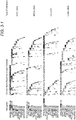
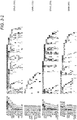
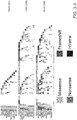
- Figure 3 exemplarily provides a more detailed view of the somatic mutational profiles for selected genes within the cancer type, listing the most affected genes per tumor type with respective mutation types (missense, nonsense, frame shift, in-frame) in a histogram. Moreover, Figure 3 also illustrates the potential associations of mutation types in a single tumor type among the most affected genes. As can be seen, no substantial bias or specific association is seen across all tumor types.
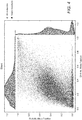
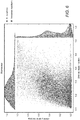
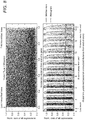
- Figures 4-6 provide a genome-wide analysis of the DNA Mutant Allele Fraction (MAF) vs. RNA for silent mutations ( Figure 4 ), for missense mutations ( Figure 5 ), and nonsense mutations ( Figure 6 ), indicating no significant bias in transcription in silent and missense mutations as compared to all mutations.
- MAF Mutant Allele Fraction
- Figure 4 for silent mutations
- Figure 5 for missense mutations
- Figure 6 nonsense mutations
- Figure 6 depicts a moderate bias towards lower/no transcription of mutated DNA, which led the inventors to analyze possible mechanisms for such apparent bias.
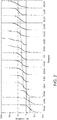
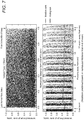
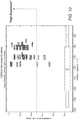
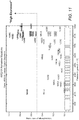
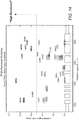
- Figures 10-14 exemplarily depict an analysis of selected genes for which transcription rates were above normal and where such high expression was associated with a nonsense mutation that was located in the 3-terminal portion of the gene/transcript.
- the dotted line indicates the threshold for a highly expressed gene, (i.e ., mutant read support ranks above 50% of reference). Based on these data, it should be appreciated that the above mutated genes will readily serve as a prognostic or diagnostic maker for the associated cancers. Consequently, it should be appreciated that highly transcribed nonsense mutations (particularly where the mutation is located in a 3-terminal portion of a gene) may be used in systems and methods of detecting molecular markers for diagnosis and treatment of various cancers.
Landscapes
- Life Sciences & Earth Sciences (AREA)
- Physics & Mathematics (AREA)
- Health & Medical Sciences (AREA)
- Engineering & Computer Science (AREA)
- Bioinformatics & Cheminformatics (AREA)
- Evolutionary Biology (AREA)
- Biophysics (AREA)
- Bioinformatics & Computational Biology (AREA)
- Biotechnology (AREA)
- General Health & Medical Sciences (AREA)
- Medical Informatics (AREA)
- Spectroscopy & Molecular Physics (AREA)
- Theoretical Computer Science (AREA)
- Analytical Chemistry (AREA)
- Proteomics, Peptides & Aminoacids (AREA)
- Chemical & Material Sciences (AREA)
- Bioethics (AREA)
- Genetics & Genomics (AREA)
- Databases & Information Systems (AREA)
- Molecular Biology (AREA)
- Measuring Or Testing Involving Enzymes Or Micro-Organisms (AREA)
- Apparatus Associated With Microorganisms And Enzymes (AREA)
Claims (11)
- System zum Verarbeiten von Omics-Daten, um einen molekularen Marker darin zu erfassen, wobei das System Folgendes umfasst:einen elektronischen Speicher (110, 170/151), in dem Daten gespeichert sind, die repräsentativ für einen genomischen Datensatz (120) und einen transkriptomischen Datensatz (130) sind,wobei der genomische Datensatz repräsentativ für eine Mutation in zumindest einem Gen eines erkrankten Gewebes eines Patienten ist, und wobei die Mutation relativ zu einem normalen Gewebe des Patienten ist; undwobei der transkriptomische Datensatz repräsentativ für die Mutation in dem und das Expressionsniveau des zumindest einen Gens des erkrankten Gewebes des Patienten ist, und wobei die Mutation und das Expressionsniveau relativ zu dem normalen Gewebe des Patienten sind;eine computerimplementierte Sequenzanalysemaschine (150), die informativ an den elektronischen Speicher (110, 170/151) gekoppelt ist, um einen genomischen Datensatz (120) und einen entsprechenden transkriptomischen Datensatz (130) zu empfangen, und konfiguriert ist, um Ausgabedaten zu erzeugen, die repräsentativ für einen molekularen Marker sind, und die Ausgabedaten an eine computergestützte Omics-Datenbank auszugeben, um eine Omics-Aufzeichnung darin zu aktualisieren;dadurch gekennzeichnet, dass die Sequenzanalysemaschine (150) Folgendes umfasst:(a) ein computerimplementiertes Datenassoziationsmodul (152), das konfiguriert ist, um entsprechende Sequenzen oder Orte der genomischen und transkriptomischen Datensätze (120, 130) auszurichten, sodass sie eine gemeinsame Mutation an derselben Position beinhalten, um ausgerichtete genomische und transkriptomische Datensätze zu erzeugen;(b) ein computerimplementiertes Mutationsidentifikationsmodul (154), das konfiguriert ist, um die ausgerichteten genomischen und transkriptomischen Datensätze zu empfangen und die gemeinsame Mutation zu identifizieren und zu klassifizieren;(c) ein computerimplementiertes Positionsidentifikationsmodul (156), das konfiguriert ist, um, wenn die gemeinsame Mutation als eine Nonsense-Mutation identifiziert wird, aus den ausgerichteten genomischen und transkriptomischen Datensätzen eine Position der Mutation innerhalb des 3'-Endabschnittes des zumindest einen Gens zu bestimmen; und(d) ein computerimplementiertes Expressionsniveauidentifikationsmodul (158), das konfiguriert ist, um aus dem transkriptomischen Datensatz ein Expressionsniveau des zumindest einen Gens zu bestimmen;wobei die Ausgabedaten Daten umfassen, die repräsentativ für die Position der Nonsense-Mutation und das Expressionsniveau davon sind,wobei die Analysemaschine (150) konfiguriert ist, um die Omics-Aufzeichnung zu aktualisieren, wenn die identifizierte Position eine Position in dem 3-terminalen Abschnitt des Gens ist und/oder wenn das Expressionsniveau, das durch das Expressionsniveaumodul (158) bestimmt wird, über einem Expressionsniveau relativ zu dem normalen Gewebe ist,und wobei das erkrankte Gewebe ein Krebsgewebe ist.
- System nach Anspruch 1, wobei Sequenzanalysemaschine (150) ferner ein computerimplementiertes Datensatzgeneratormodul (151) umfasst, das informativ an eine Sequenzdatenbank oder eine Sequenzierungsvorrichtung (170) gekoppelt ist, wobei das Datensatzgeneratormodul (151) konfiguriert ist, um den genomischen Datensatz (120) und den transkriptomischen Datensatz (130) zu erzeugen.
- System nach Anspruch 1, wobei der transkriptomische Datensatz und der genomische Datensatz Differentialsequenzobjekte sind.
- System nach Anspruch 1, wobei die transkriptomischen Daten aus cDNA oder PolyA+-RNA erhalten werden.
- System nach Anspruch 1, wobei das Gen ausgewählt ist aus der Gruppe bestehend aus CDKN2A, ARID1A, FAT1, TP53, PTEN, AHNAK, SRRM2, RASA1, PIK3R1 und MRPL32.
- Verfahren zum Verarbeiten von Omics-Daten, um einen molekularen Marker darin zu erfassen, wobei das Verfahren Folgendes umfasst:Bereitstellen eines elektronischen Speichers (110, 170/151), in dem Daten gespeichert sind, die repräsentativ für einen genomischen Datensatz (120) und einen transkriptomischen Datensatz (130) sind,wobei der genomische Datensatz repräsentativ für eine Mutation in zumindest einem Gen eines erkrankten Gewebes eines Patienten ist, und wobei die Mutation relativ zu einem normalen Gewebe des Patienten ist; undwobei der transkriptomische Datensatz repräsentativ für die Mutation in dem und das Expressionsniveau des zumindest einen Gens des erkrankten Gewebes des Patienten ist, und wobei die Mutation und das Expressionsniveau relativ zu dem normalen Gewebe des Patienten sind;Bereitstellen einer computerimplementierten Sequenzanalysemaschine (150), die informativ an den elektronischen Speicher (110, 170/151) gekoppelt ist, um einen genomischen Datensatz (120) und einen entsprechenden transkriptomischen Datensatz (130) zu empfangen, und Verwenden der Analysemaschine (150), um Ausgabedaten zu erzeugen, die repräsentativ für den molekularen Marker sind, und die Ausgabedaten an eine computergestützte Omics-Datenbank auszugeben, um eine Omics-Aufzeichnung darin zu aktualisieren; gekennzeichnet durch:(a) Verwenden eines computerimplementierten Datenassoziationsmoduls (152), um entsprechende Sequenzen oder Orte der genomischen und transkriptomischen Datensätze (120, 130) auszurichten, sodass sie eine gemeinsame Mutation an derselben Position beinhalten, um ausgerichtete genomische und transkriptomische Datensätze zu erzeugen;(b) Verwenden eines computerimplementierten Mutationsidentifikationsmoduls (154), um die ausgerichteten genomischen und transkriptomischen Datensätze zu empfangen und die gemeinsame Mutation zu identifizieren und zu klassifizieren;(c) wenn die gemeinsame Mutation als eine Nonsense-Mutation identifiziert wird, Verwenden eines computerimplementierten Positionsidentifikationsmoduls (156), um aus den ausgerichteten genomischen und transkriptomischen Datensätzen eine Position der Mutation innerhalb des 3'-Endabschnittes des zumindest einen Gens zu bestimmen; und(d) Verwenden eines computerimplementierten Expressionsniveauidentifikationsmoduls (158), um aus dem transkriptomischen Datensatz ein Expressionsniveau des zumindest einen Gens zu bestimmen;wobei die Ausgabedaten Daten umfassen, die repräsentativ für die Position der Nonsense-Mutation und das Expressionsniveau davon sind,wobei die Analysemaschine (150) verwendet wird, um die Omics-Aufzeichnung zu aktualisieren, wenn die identifizierte Position eine Position in dem 3-terminalen Abschnitt des Gens ist und/oder wenn das Expressionsniveau, das durch das Expressionsniveaumodul (158) bestimmt wird, über einem Expressionsniveau relativ zu dem normalen Gewebe ist,und wobei das erkrankte Gewebe ein Krebsgewebe ist.
- Verfahren nach Anspruch 6, wobei zumindest einer von dem transkriptomischen Datensatz und dem genomischen Datensatz Differentialsequenzobjekte sind.
- Verfahren nach Anspruch 6, wobei der transkriptomische Datensatz auf Analyse von PolyA+-RNA oder cDNA basiert.
- Verfahren nach Anspruch 6, wobei die Omics-Aufzeichnung aktualisiert wird, wenn das identifizierte Expressionsniveau über einem Expressionsniveau relativ zu dem normalen Gewebe ist.
- Verfahren nach Anspruch 6, wobei das Gen ein krebsassoziiertes Gen ist.
- Verfahren nach Anspruch 6, wobei das Gen ausgewählt ist aus der Gruppe bestehend aus CDKN2A, ARID1A, FAT1, TP53, PTEN, AHNAK, SRRM2, RASA1, PIK3R1 und MRPL32.
Applications Claiming Priority (2)
| Application Number | Priority Date | Filing Date | Title |
|---|---|---|---|
| US201461970054P | 2014-03-25 | 2014-03-25 | |
| PCT/US2015/022521 WO2015148689A1 (en) | 2014-03-25 | 2015-03-25 | Systems and methods for rna analysis in functional confirmation of cancer mutations |
Publications (3)
| Publication Number | Publication Date |
|---|---|
| EP3129908A1 EP3129908A1 (de) | 2017-02-15 |
| EP3129908A4 EP3129908A4 (de) | 2017-11-29 |
| EP3129908B1 true EP3129908B1 (de) | 2021-07-21 |
Family
ID=54190756
Family Applications (1)
| Application Number | Title | Priority Date | Filing Date |
|---|---|---|---|
| EP15768442.4A Active EP3129908B1 (de) | 2014-03-25 | 2015-03-25 | Systeme und verfahren zur rna-analyse in der funktionellen bestätigung von krebsmutationen |
Country Status (9)
| Country | Link |
|---|---|
| US (2) | US10192027B2 (de) |
| EP (1) | EP3129908B1 (de) |
| JP (2) | JP6384930B2 (de) |
| KR (2) | KR20180094150A (de) |
| CN (2) | CN109979526B (de) |
| AU (2) | AU2015236054B2 (de) |
| CA (1) | CA2946289C (de) |
| IL (2) | IL248021B (de) |
| WO (1) | WO2015148689A1 (de) |
Families Citing this family (5)
| Publication number | Priority date | Publication date | Assignee | Title |
|---|---|---|---|---|
| CN106414501B (zh) * | 2013-09-26 | 2020-07-14 | 凡弗3基因组有限公司 | 用于病毒相关肿瘤的系统、方法和组合物 |
| CN105671187B (zh) * | 2016-04-08 | 2020-06-05 | 南方医科大学 | 一组用于头颈部鳞状细胞癌分子分型的基因及其应用 |
| AU2018275679A1 (en) * | 2017-06-01 | 2019-12-19 | Nantomics, Llc | Investigating tumoral and temporal heterogeneity through comprehensive -omics profiling in patients with metastatic triple negative breast cancer |
| US12322477B1 (en) * | 2019-12-04 | 2025-06-03 | John Hayward | Methods of efficiently transforming and comparing recombinable DNA information |
| JP7570088B2 (ja) * | 2020-06-18 | 2024-10-21 | 国立研究開発法人産業技術総合研究所 | 情報処理システム、情報処理方法、同定方法及びプログラム |
Citations (1)
| Publication number | Priority date | Publication date | Assignee | Title |
|---|---|---|---|---|
| US20100120025A1 (en) * | 2004-02-24 | 2010-05-13 | Tgen | Compositions and Methods for Prognosis, Diagnosis, Prevention and Treatment of Cancers |
Family Cites Families (25)
| Publication number | Priority date | Publication date | Assignee | Title |
|---|---|---|---|---|
| NZ326525A (en) * | 1995-12-18 | 1999-11-29 | Endorecherche Inc | Chromosome 13-linked breast cancer susceptibility gene |
| US6486299B1 (en) * | 1998-09-28 | 2002-11-26 | Curagen Corporation | Genes and proteins predictive and therapeutic for stroke, hypertension, diabetes and obesity |
| CA2387035A1 (en) | 1999-10-13 | 2001-04-19 | Sequenom, Inc. | Methods for generating databases and databases for identifying polymorphic genetic markers |
| US7332275B2 (en) * | 1999-10-13 | 2008-02-19 | Sequenom, Inc. | Methods for detecting methylated nucleotides |
| CA2453985A1 (en) | 2001-07-17 | 2003-04-03 | Incyte Genomics, Inc. | Receptors and membrane-associated proteins |
| CA2460092C (en) | 2001-09-12 | 2013-05-21 | The Walter And Eliza Hall Institute Of Medical Research | A method of diagnosis and treatment and agents useful for same |
| EP1855727A2 (de) * | 2005-02-17 | 2007-11-21 | Dana-Farber Cancer Institute, Inc. | Zusammensetzungen, kits und verfahren zur identifizierung, beurteilung, vorbeugung und therapie von krebs |
| CA2600370A1 (en) | 2005-03-14 | 2006-09-14 | Board Of Regents Of The University Of Texas System | Bioactive fus1 peptides and nanoparticle-polypeptide complexes |
| CN1920054A (zh) | 2006-06-23 | 2007-02-28 | 南京中医药大学附属医院 | 乳腺癌基因1(brca1)突变检测分析 |
| EP2125034A4 (de) * | 2007-02-01 | 2010-01-27 | Veridex Llc | Verfahren und materialien zur identifizierung des ursprungs eines karzinoms unbekannter primärer herkunft |
| WO2010028098A2 (en) * | 2008-09-03 | 2010-03-11 | The Johns Hopkins University | Pathways underlying pancreatic tumorigenesis and an hereditary pancreatic cancer gene |
| EP3216874A1 (de) * | 2008-09-05 | 2017-09-13 | TOMA Biosciences, Inc. | Verfahren zum stratifizieren und annotieren der behandlungsoptionen eines krebsmedikaments |
| BR112012027104B8 (pt) * | 2010-04-22 | 2020-02-27 | British Columbia Cancer Agency Branch | método de acordo para determinar se a endometriose de um individuo é suscetível de progredir para carcinoma de células claras ovariano , carcinoma endometrioide, carcinoma endometrial e carcinoma uterino, para determinar a prognose para uma pessoa sofrendo de carcinoma de células claras ovariano, e/ou para determinar se agentes quimioterapêuticos padrões são prováveis de serem efetivos no tratamento de carcinoma de células claras ovariano, carcinoma endometrioide, carcinoma endometrial e carcinoma uterino |
| CN110322924A (zh) | 2010-04-29 | 2019-10-11 | 加利福尼亚大学董事会 | 利用关于基因组模型的数据集成的途径识别方法(paradigm) |
| US10192641B2 (en) | 2010-04-29 | 2019-01-29 | The Regents Of The University Of California | Method of generating a dynamic pathway map |
| US9646134B2 (en) * | 2010-05-25 | 2017-05-09 | The Regents Of The University Of California | Bambam: parallel comparative analysis of high-throughput sequencing data |
| AU2011258875B2 (en) * | 2010-05-25 | 2016-05-05 | The Regents Of The University Of California | Bambam: parallel comparative analysis of high-throughput sequencing data |
| WO2012034030A1 (en) * | 2010-09-09 | 2012-03-15 | Omicia, Inc. | Variant annotation, analysis and selection tool |
| EP2681337B1 (de) * | 2011-03-02 | 2018-04-25 | Decode Genetics EHF | Mit krebsrisiko assoziierte brip1-varianten |
| EP2670866A4 (de) * | 2011-04-05 | 2015-09-02 | Translational Genomics Res Inst | Biomarker und anwendungsverfahren dafür |
| US20130184999A1 (en) * | 2012-01-05 | 2013-07-18 | Yan Ding | Systems and methods for cancer-specific drug targets and biomarkers discovery |
| CN108034006A (zh) * | 2012-01-13 | 2018-05-15 | 乌利班-马克西姆利安大学 | 双抗原诱导的双功能互补作用 |
| LU91940B1 (en) | 2012-02-03 | 2013-08-05 | Univ Luxembourg | Method for obtaining integrated genomic, transcriptomic, proteomic and/or metabolomic information from a single unique biological sample |
| CA3014252A1 (en) * | 2016-02-12 | 2017-08-17 | Nantomics, Llc | High-throughput identification of patient-specific neoepitopes as therapeutic targets for cancer immunotherapies |
| CN110214275B (zh) * | 2016-12-01 | 2022-12-06 | 南托米克斯有限责任公司 | 肿瘤抗原性加工和呈递 |
-
2015
- 2015-03-25 EP EP15768442.4A patent/EP3129908B1/de active Active
- 2015-03-25 JP JP2016574903A patent/JP6384930B2/ja active Active
- 2015-03-25 CN CN201910149264.6A patent/CN109979526B/zh active Active
- 2015-03-25 KR KR1020187023501A patent/KR20180094150A/ko not_active Withdrawn
- 2015-03-25 KR KR1020167029659A patent/KR101890792B1/ko active Active
- 2015-03-25 CA CA2946289A patent/CA2946289C/en active Active
- 2015-03-25 CN CN201580027070.9A patent/CN106852176A/zh active Pending
- 2015-03-25 AU AU2015236054A patent/AU2015236054B2/en active Active
- 2015-03-25 US US14/668,518 patent/US10192027B2/en active Active
- 2015-03-25 WO PCT/US2015/022521 patent/WO2015148689A1/en not_active Ceased
-
2016
- 2016-09-25 IL IL248021A patent/IL248021B/en active IP Right Grant
-
2018
- 2018-06-27 IL IL260314A patent/IL260314B/en unknown
- 2018-08-02 JP JP2018145781A patent/JP2019003667A/ja not_active Abandoned
- 2018-12-17 US US16/222,798 patent/US20190121937A1/en active Pending
-
2020
- 2020-02-20 AU AU2020201237A patent/AU2020201237A1/en not_active Withdrawn
Patent Citations (1)
| Publication number | Priority date | Publication date | Assignee | Title |
|---|---|---|---|---|
| US20100120025A1 (en) * | 2004-02-24 | 2010-05-13 | Tgen | Compositions and Methods for Prognosis, Diagnosis, Prevention and Treatment of Cancers |
Also Published As
| Publication number | Publication date |
|---|---|
| IL260314A (en) | 2018-08-30 |
| US20190121937A1 (en) | 2019-04-25 |
| WO2015148689A1 (en) | 2015-10-01 |
| CN106852176A (zh) | 2017-06-13 |
| KR20180094150A (ko) | 2018-08-22 |
| AU2020201237A1 (en) | 2020-03-12 |
| EP3129908A4 (de) | 2017-11-29 |
| JP2019003667A (ja) | 2019-01-10 |
| CA2946289A1 (en) | 2015-10-01 |
| AU2015236054B2 (en) | 2019-11-21 |
| KR101890792B1 (ko) | 2018-08-22 |
| CN109979526A (zh) | 2019-07-05 |
| US20150278435A1 (en) | 2015-10-01 |
| US10192027B2 (en) | 2019-01-29 |
| JP2017522661A (ja) | 2017-08-10 |
| JP6384930B2 (ja) | 2018-09-05 |
| KR20170054324A (ko) | 2017-05-17 |
| CN109979526B (zh) | 2023-11-24 |
| IL260314B (en) | 2020-03-31 |
| CA2946289C (en) | 2018-08-07 |
| EP3129908A1 (de) | 2017-02-15 |
| IL248021B (en) | 2018-07-31 |
| AU2015236054A1 (en) | 2016-11-03 |
Similar Documents
| Publication | Publication Date | Title |
|---|---|---|
| Webster et al. | Genomic signature of Fanconi anaemia DNA repair pathway deficiency in cancer | |
| AU2020201237A1 (en) | Systems and methods for rna analysis in functional confirmation of cancer mutations | |
| Rizvi et al. | Molecular determinants of response to anti–programmed cell death (PD)-1 and anti–programmed death-ligand 1 (PD-L1) blockade in patients with non–small-cell lung cancer profiled with targeted next-generation sequencing | |
| Clark et al. | Recurrent somatic mutations in POLR2A define a distinct subset of meningiomas | |
| US20200395097A1 (en) | Pan-cancer model to predict the pd-l1 status of a cancer cell sample using rna expression data and other patient data | |
| Sakamoto et al. | Long-read sequencing for non-small-cell lung cancer genomes | |
| CA3148023A1 (en) | Systems and methods for detecting cellular pathway dysregulation in cancer specimens | |
| CN110957006B (zh) | 一种brca1/2基因变异的解读方法 | |
| KR102014054B1 (ko) | 다중 종양 및 생식세포 유전자 엑솜에 걸친 분자 프로파일의 종합 분석을 위한 시스템 및 방법 | |
| EP4115427A1 (de) | Systeme und verfahren zur bestimmung des krebszustands mit autoencodern | |
| Hintzsche et al. | IMPACT: a whole-exome sequencing analysis pipeline for integrating molecular profiles with actionable therapeutics in clinical samples | |
| US12094574B2 (en) | Difference-based genomic identity scores | |
| Hasan et al. | Uncovering missed indels by leveraging unmapped reads | |
| EP4634926A1 (de) | Verfahren zum entwurf patientenspezifischer paneele und verfahren zur verwendung davon zum nachweis von minimalen resterkrankungen | |
| Mittal et al. | Integrated sequence and expression analysis of ovarian cancer structural variants underscores the importance of gene fusion regulation | |
| WO2025080809A1 (en) | Disease classification using fragment images | |
| CN118103524A (zh) | 用于检测拷贝数改变的方法和系统 | |
| CN118103916A (zh) | 用于检测和去除针对拷贝数改变调用的污染的方法和系统 |
Legal Events
| Date | Code | Title | Description |
|---|---|---|---|
| STAA | Information on the status of an ep patent application or granted ep patent |
Free format text: STATUS: THE INTERNATIONAL PUBLICATION HAS BEEN MADE |
|
| PUAI | Public reference made under article 153(3) epc to a published international application that has entered the european phase |
Free format text: ORIGINAL CODE: 0009012 |
|
| STAA | Information on the status of an ep patent application or granted ep patent |
Free format text: STATUS: REQUEST FOR EXAMINATION WAS MADE |
|
| 17P | Request for examination filed |
Effective date: 20161025 |
|
| AK | Designated contracting states |
Kind code of ref document: A1 Designated state(s): AL AT BE BG CH CY CZ DE DK EE ES FI FR GB GR HR HU IE IS IT LI LT LU LV MC MK MT NL NO PL PT RO RS SE SI SK SM TR |
|
| AX | Request for extension of the european patent |
Extension state: BA ME |
|
| DAV | Request for validation of the european patent (deleted) | ||
| DAX | Request for extension of the european patent (deleted) | ||
| STAA | Information on the status of an ep patent application or granted ep patent |
Free format text: STATUS: EXAMINATION IS IN PROGRESS |
|
| A4 | Supplementary search report drawn up and despatched |
Effective date: 20171103 |
|
| RIC1 | Information provided on ipc code assigned before grant |
Ipc: G06F 19/28 20110101ALI20171026BHEP Ipc: G06F 19/18 20110101AFI20171026BHEP |
|
| 17Q | First examination report despatched |
Effective date: 20171122 |
|
| REG | Reference to a national code |
Ref country code: DE Ref legal event code: R079 Ref document number: 602015071490 Country of ref document: DE Free format text: PREVIOUS MAIN CLASS: G06F0019180000 Ipc: G16B0020200000 |
|
| RIC1 | Information provided on ipc code assigned before grant |
Ipc: G16B 20/00 20190101AFI20210323BHEP Ipc: G16B 50/00 20190101ALI20210323BHEP |
|
| GRAP | Despatch of communication of intention to grant a patent |
Free format text: ORIGINAL CODE: EPIDOSNIGR1 |
|
| RIC1 | Information provided on ipc code assigned before grant |
Ipc: G16B 20/20 20190101AFI20210326BHEP Ipc: G16B 50/00 20190101ALI20210326BHEP |
|
| STAA | Information on the status of an ep patent application or granted ep patent |
Free format text: STATUS: GRANT OF PATENT IS INTENDED |
|
| INTG | Intention to grant announced |
Effective date: 20210506 |
|
| GRAS | Grant fee paid |
Free format text: ORIGINAL CODE: EPIDOSNIGR3 |
|
| GRAA | (expected) grant |
Free format text: ORIGINAL CODE: 0009210 |
|
| STAA | Information on the status of an ep patent application or granted ep patent |
Free format text: STATUS: THE PATENT HAS BEEN GRANTED |
|
| AK | Designated contracting states |
Kind code of ref document: B1 Designated state(s): AL AT BE BG CH CY CZ DE DK EE ES FI FR GB GR HR HU IE IS IT LI LT LU LV MC MK MT NL NO PL PT RO RS SE SI SK SM TR |
|
| REG | Reference to a national code |
Ref country code: GB Ref legal event code: FG4D |
|
| REG | Reference to a national code |
Ref country code: CH Ref legal event code: EP |
|
| REG | Reference to a national code |
Ref country code: DE Ref legal event code: R096 Ref document number: 602015071490 Country of ref document: DE |
|
| REG | Reference to a national code |
Ref country code: AT Ref legal event code: REF Ref document number: 1413340 Country of ref document: AT Kind code of ref document: T Effective date: 20210815 |
|
| REG | Reference to a national code |
Ref country code: IE Ref legal event code: FG4D |
|
| REG | Reference to a national code |
Ref country code: LT Ref legal event code: MG9D |
|
| REG | Reference to a national code |
Ref country code: NL Ref legal event code: MP Effective date: 20210721 |
|
| REG | Reference to a national code |
Ref country code: AT Ref legal event code: MK05 Ref document number: 1413340 Country of ref document: AT Kind code of ref document: T Effective date: 20210721 |
|
| PG25 | Lapsed in a contracting state [announced via postgrant information from national office to epo] |
Ref country code: ES Free format text: LAPSE BECAUSE OF FAILURE TO SUBMIT A TRANSLATION OF THE DESCRIPTION OR TO PAY THE FEE WITHIN THE PRESCRIBED TIME-LIMIT Effective date: 20210721 Ref country code: FI Free format text: LAPSE BECAUSE OF FAILURE TO SUBMIT A TRANSLATION OF THE DESCRIPTION OR TO PAY THE FEE WITHIN THE PRESCRIBED TIME-LIMIT Effective date: 20210721 Ref country code: NO Free format text: LAPSE BECAUSE OF FAILURE TO SUBMIT A TRANSLATION OF THE DESCRIPTION OR TO PAY THE FEE WITHIN THE PRESCRIBED TIME-LIMIT Effective date: 20211021 Ref country code: NL Free format text: LAPSE BECAUSE OF FAILURE TO SUBMIT A TRANSLATION OF THE DESCRIPTION OR TO PAY THE FEE WITHIN THE PRESCRIBED TIME-LIMIT Effective date: 20210721 Ref country code: PT Free format text: LAPSE BECAUSE OF FAILURE TO SUBMIT A TRANSLATION OF THE DESCRIPTION OR TO PAY THE FEE WITHIN THE PRESCRIBED TIME-LIMIT Effective date: 20211122 Ref country code: LT Free format text: LAPSE BECAUSE OF FAILURE TO SUBMIT A TRANSLATION OF THE DESCRIPTION OR TO PAY THE FEE WITHIN THE PRESCRIBED TIME-LIMIT Effective date: 20210721 Ref country code: AT Free format text: LAPSE BECAUSE OF FAILURE TO SUBMIT A TRANSLATION OF THE DESCRIPTION OR TO PAY THE FEE WITHIN THE PRESCRIBED TIME-LIMIT Effective date: 20210721 Ref country code: BG Free format text: LAPSE BECAUSE OF FAILURE TO SUBMIT A TRANSLATION OF THE DESCRIPTION OR TO PAY THE FEE WITHIN THE PRESCRIBED TIME-LIMIT Effective date: 20211021 Ref country code: SE Free format text: LAPSE BECAUSE OF FAILURE TO SUBMIT A TRANSLATION OF THE DESCRIPTION OR TO PAY THE FEE WITHIN THE PRESCRIBED TIME-LIMIT Effective date: 20210721 Ref country code: RS Free format text: LAPSE BECAUSE OF FAILURE TO SUBMIT A TRANSLATION OF THE DESCRIPTION OR TO PAY THE FEE WITHIN THE PRESCRIBED TIME-LIMIT Effective date: 20210721 Ref country code: HR Free format text: LAPSE BECAUSE OF FAILURE TO SUBMIT A TRANSLATION OF THE DESCRIPTION OR TO PAY THE FEE WITHIN THE PRESCRIBED TIME-LIMIT Effective date: 20210721 |
|
| PG25 | Lapsed in a contracting state [announced via postgrant information from national office to epo] |
Ref country code: PL Free format text: LAPSE BECAUSE OF FAILURE TO SUBMIT A TRANSLATION OF THE DESCRIPTION OR TO PAY THE FEE WITHIN THE PRESCRIBED TIME-LIMIT Effective date: 20210721 Ref country code: LV Free format text: LAPSE BECAUSE OF FAILURE TO SUBMIT A TRANSLATION OF THE DESCRIPTION OR TO PAY THE FEE WITHIN THE PRESCRIBED TIME-LIMIT Effective date: 20210721 Ref country code: GR Free format text: LAPSE BECAUSE OF FAILURE TO SUBMIT A TRANSLATION OF THE DESCRIPTION OR TO PAY THE FEE WITHIN THE PRESCRIBED TIME-LIMIT Effective date: 20211022 |
|
| REG | Reference to a national code |
Ref country code: DE Ref legal event code: R097 Ref document number: 602015071490 Country of ref document: DE |
|
| PG25 | Lapsed in a contracting state [announced via postgrant information from national office to epo] |
Ref country code: DK Free format text: LAPSE BECAUSE OF FAILURE TO SUBMIT A TRANSLATION OF THE DESCRIPTION OR TO PAY THE FEE WITHIN THE PRESCRIBED TIME-LIMIT Effective date: 20210721 |
|
| PLBE | No opposition filed within time limit |
Free format text: ORIGINAL CODE: 0009261 |
|
| STAA | Information on the status of an ep patent application or granted ep patent |
Free format text: STATUS: NO OPPOSITION FILED WITHIN TIME LIMIT |
|
| PG25 | Lapsed in a contracting state [announced via postgrant information from national office to epo] |
Ref country code: SM Free format text: LAPSE BECAUSE OF FAILURE TO SUBMIT A TRANSLATION OF THE DESCRIPTION OR TO PAY THE FEE WITHIN THE PRESCRIBED TIME-LIMIT Effective date: 20210721 Ref country code: SK Free format text: LAPSE BECAUSE OF FAILURE TO SUBMIT A TRANSLATION OF THE DESCRIPTION OR TO PAY THE FEE WITHIN THE PRESCRIBED TIME-LIMIT Effective date: 20210721 Ref country code: RO Free format text: LAPSE BECAUSE OF FAILURE TO SUBMIT A TRANSLATION OF THE DESCRIPTION OR TO PAY THE FEE WITHIN THE PRESCRIBED TIME-LIMIT Effective date: 20210721 Ref country code: EE Free format text: LAPSE BECAUSE OF FAILURE TO SUBMIT A TRANSLATION OF THE DESCRIPTION OR TO PAY THE FEE WITHIN THE PRESCRIBED TIME-LIMIT Effective date: 20210721 Ref country code: CZ Free format text: LAPSE BECAUSE OF FAILURE TO SUBMIT A TRANSLATION OF THE DESCRIPTION OR TO PAY THE FEE WITHIN THE PRESCRIBED TIME-LIMIT Effective date: 20210721 Ref country code: AL Free format text: LAPSE BECAUSE OF FAILURE TO SUBMIT A TRANSLATION OF THE DESCRIPTION OR TO PAY THE FEE WITHIN THE PRESCRIBED TIME-LIMIT Effective date: 20210721 |
|
| 26N | No opposition filed |
Effective date: 20220422 |
|
| PG25 | Lapsed in a contracting state [announced via postgrant information from national office to epo] |
Ref country code: IT Free format text: LAPSE BECAUSE OF FAILURE TO SUBMIT A TRANSLATION OF THE DESCRIPTION OR TO PAY THE FEE WITHIN THE PRESCRIBED TIME-LIMIT Effective date: 20210721 |
|
| PG25 | Lapsed in a contracting state [announced via postgrant information from national office to epo] |
Ref country code: MC Free format text: LAPSE BECAUSE OF FAILURE TO SUBMIT A TRANSLATION OF THE DESCRIPTION OR TO PAY THE FEE WITHIN THE PRESCRIBED TIME-LIMIT Effective date: 20210721 |
|
| REG | Reference to a national code |
Ref country code: CH Ref legal event code: PL |
|
| REG | Reference to a national code |
Ref country code: BE Ref legal event code: MM Effective date: 20220331 |
|
| PG25 | Lapsed in a contracting state [announced via postgrant information from national office to epo] |
Ref country code: LU Free format text: LAPSE BECAUSE OF NON-PAYMENT OF DUE FEES Effective date: 20220325 Ref country code: LI Free format text: LAPSE BECAUSE OF NON-PAYMENT OF DUE FEES Effective date: 20220331 Ref country code: IE Free format text: LAPSE BECAUSE OF NON-PAYMENT OF DUE FEES Effective date: 20220325 Ref country code: FR Free format text: LAPSE BECAUSE OF NON-PAYMENT OF DUE FEES Effective date: 20220331 Ref country code: CH Free format text: LAPSE BECAUSE OF NON-PAYMENT OF DUE FEES Effective date: 20220331 |
|
| PG25 | Lapsed in a contracting state [announced via postgrant information from national office to epo] |
Ref country code: BE Free format text: LAPSE BECAUSE OF NON-PAYMENT OF DUE FEES Effective date: 20220331 |
|
| P01 | Opt-out of the competence of the unified patent court (upc) registered |
Effective date: 20230516 |
|
| PG25 | Lapsed in a contracting state [announced via postgrant information from national office to epo] |
Ref country code: HU Free format text: LAPSE BECAUSE OF FAILURE TO SUBMIT A TRANSLATION OF THE DESCRIPTION OR TO PAY THE FEE WITHIN THE PRESCRIBED TIME-LIMIT; INVALID AB INITIO Effective date: 20150325 |
|
| PG25 | Lapsed in a contracting state [announced via postgrant information from national office to epo] |
Ref country code: MK Free format text: LAPSE BECAUSE OF FAILURE TO SUBMIT A TRANSLATION OF THE DESCRIPTION OR TO PAY THE FEE WITHIN THE PRESCRIBED TIME-LIMIT Effective date: 20210721 Ref country code: CY Free format text: LAPSE BECAUSE OF FAILURE TO SUBMIT A TRANSLATION OF THE DESCRIPTION OR TO PAY THE FEE WITHIN THE PRESCRIBED TIME-LIMIT Effective date: 20210721 |
|
| PG25 | Lapsed in a contracting state [announced via postgrant information from national office to epo] |
Ref country code: MT Free format text: LAPSE BECAUSE OF FAILURE TO SUBMIT A TRANSLATION OF THE DESCRIPTION OR TO PAY THE FEE WITHIN THE PRESCRIBED TIME-LIMIT Effective date: 20210721 |
|
| PGFP | Annual fee paid to national office [announced via postgrant information from national office to epo] |
Ref country code: DE Payment date: 20250319 Year of fee payment: 11 |
|
| PGFP | Annual fee paid to national office [announced via postgrant information from national office to epo] |
Ref country code: GB Payment date: 20250321 Year of fee payment: 11 |
|
| PG25 | Lapsed in a contracting state [announced via postgrant information from national office to epo] |
Ref country code: TR Free format text: LAPSE BECAUSE OF FAILURE TO SUBMIT A TRANSLATION OF THE DESCRIPTION OR TO PAY THE FEE WITHIN THE PRESCRIBED TIME-LIMIT Effective date: 20210721 |