EP3127532B1 - Methods for promoting wound healing and for preparing the compound used in the method - Google Patents
Methods for promoting wound healing and for preparing the compound used in the method Download PDFInfo
- Publication number
- EP3127532B1 EP3127532B1 EP16180351.5A EP16180351A EP3127532B1 EP 3127532 B1 EP3127532 B1 EP 3127532B1 EP 16180351 A EP16180351 A EP 16180351A EP 3127532 B1 EP3127532 B1 EP 3127532B1
- Authority
- EP
- European Patent Office
- Prior art keywords
- compound
- formula
- wound healing
- skin
- composition
- Prior art date
- Legal status (The legal status is an assumption and is not a legal conclusion. Google has not performed a legal analysis and makes no representation as to the accuracy of the status listed.)
- Active
Links
Images





Classifications
-
- A—HUMAN NECESSITIES
- A61—MEDICAL OR VETERINARY SCIENCE; HYGIENE
- A61K—PREPARATIONS FOR MEDICAL, DENTAL OR TOILETRY PURPOSES
- A61K31/00—Medicinal preparations containing organic active ingredients
- A61K31/185—Acids; Anhydrides, halides or salts thereof, e.g. sulfur acids, imidic, hydrazonic or hydroximic acids
- A61K31/19—Carboxylic acids, e.g. valproic acid
-
- A—HUMAN NECESSITIES
- A61—MEDICAL OR VETERINARY SCIENCE; HYGIENE
- A61K—PREPARATIONS FOR MEDICAL, DENTAL OR TOILETRY PURPOSES
- A61K36/00—Medicinal preparations of undetermined constitution containing material from algae, lichens, fungi or plants, or derivatives thereof, e.g. traditional herbal medicines
- A61K36/18—Magnoliophyta (angiosperms)
- A61K36/185—Magnoliopsida (dicotyledons)
- A61K36/28—Asteraceae or Compositae (Aster or Sunflower family), e.g. chamomile, feverfew, yarrow or echinacea
-
- A—HUMAN NECESSITIES
- A61—MEDICAL OR VETERINARY SCIENCE; HYGIENE
- A61K—PREPARATIONS FOR MEDICAL, DENTAL OR TOILETRY PURPOSES
- A61K8/00—Cosmetics or similar toiletry preparations
- A61K8/18—Cosmetics or similar toiletry preparations characterised by the composition
- A61K8/30—Cosmetics or similar toiletry preparations characterised by the composition containing organic compounds
- A61K8/33—Cosmetics or similar toiletry preparations characterised by the composition containing organic compounds containing oxygen
- A61K8/36—Carboxylic acids; Salts or anhydrides thereof
- A61K8/365—Hydroxycarboxylic acids; Ketocarboxylic acids
-
- A—HUMAN NECESSITIES
- A61—MEDICAL OR VETERINARY SCIENCE; HYGIENE
- A61P—SPECIFIC THERAPEUTIC ACTIVITY OF CHEMICAL COMPOUNDS OR MEDICINAL PREPARATIONS
- A61P17/00—Drugs for dermatological disorders
- A61P17/02—Drugs for dermatological disorders for treating wounds, ulcers, burns, scars, keloids, or the like
-
- A—HUMAN NECESSITIES
- A61—MEDICAL OR VETERINARY SCIENCE; HYGIENE
- A61Q—SPECIFIC USE OF COSMETICS OR SIMILAR TOILETRY PREPARATIONS
- A61Q19/00—Preparations for care of the skin
-
- A—HUMAN NECESSITIES
- A61—MEDICAL OR VETERINARY SCIENCE; HYGIENE
- A61Q—SPECIFIC USE OF COSMETICS OR SIMILAR TOILETRY PREPARATIONS
- A61Q19/00—Preparations for care of the skin
- A61Q19/02—Preparations for care of the skin for chemically bleaching or whitening the skin
-
- A—HUMAN NECESSITIES
- A61—MEDICAL OR VETERINARY SCIENCE; HYGIENE
- A61Q—SPECIFIC USE OF COSMETICS OR SIMILAR TOILETRY PREPARATIONS
- A61Q19/00—Preparations for care of the skin
- A61Q19/08—Anti-ageing preparations
-
- C—CHEMISTRY; METALLURGY
- C07—ORGANIC CHEMISTRY
- C07C—ACYCLIC OR CARBOCYCLIC COMPOUNDS
- C07C51/00—Preparation of carboxylic acids or their salts, halides or anhydrides
- C07C51/42—Separation; Purification; Stabilisation; Use of additives
-
- C—CHEMISTRY; METALLURGY
- C07—ORGANIC CHEMISTRY
- C07C—ACYCLIC OR CARBOCYCLIC COMPOUNDS
- C07C51/00—Preparation of carboxylic acids or their salts, halides or anhydrides
- C07C51/42—Separation; Purification; Stabilisation; Use of additives
- C07C51/47—Separation; Purification; Stabilisation; Use of additives by solid-liquid treatment; by chemisorption
-
- C—CHEMISTRY; METALLURGY
- C07—ORGANIC CHEMISTRY
- C07C—ACYCLIC OR CARBOCYCLIC COMPOUNDS
- C07C51/00—Preparation of carboxylic acids or their salts, halides or anhydrides
- C07C51/42—Separation; Purification; Stabilisation; Use of additives
- C07C51/48—Separation; Purification; Stabilisation; Use of additives by liquid-liquid treatment
-
- C—CHEMISTRY; METALLURGY
- C12—BIOCHEMISTRY; BEER; SPIRITS; WINE; VINEGAR; MICROBIOLOGY; ENZYMOLOGY; MUTATION OR GENETIC ENGINEERING
- C12P—FERMENTATION OR ENZYME-USING PROCESSES TO SYNTHESISE A DESIRED CHEMICAL COMPOUND OR COMPOSITION OR TO SEPARATE OPTICAL ISOMERS FROM A RACEMIC MIXTURE
- C12P7/00—Preparation of oxygen-containing organic compounds
- C12P7/40—Preparation of oxygen-containing organic compounds containing a carboxyl group including Peroxycarboxylic acids
- C12P7/42—Hydroxy-carboxylic acids
-
- A—HUMAN NECESSITIES
- A23—FOODS OR FOODSTUFFS; TREATMENT THEREOF, NOT COVERED BY OTHER CLASSES
- A23V—INDEXING SCHEME RELATING TO FOODS, FOODSTUFFS OR NON-ALCOHOLIC BEVERAGES AND LACTIC OR PROPIONIC ACID BACTERIA USED IN FOODSTUFFS OR FOOD PREPARATION
- A23V2002/00—Food compositions, function of food ingredients or processes for food or foodstuffs
-
- A—HUMAN NECESSITIES
- A61—MEDICAL OR VETERINARY SCIENCE; HYGIENE
- A61K—PREPARATIONS FOR MEDICAL, DENTAL OR TOILETRY PURPOSES
- A61K2236/00—Isolation or extraction methods of medicinal preparations of undetermined constitution containing material from algae, lichens, fungi or plants, or derivatives thereof, e.g. traditional herbal medicine
- A61K2236/10—Preparation or pretreatment of starting material
- A61K2236/11—Preparation or pretreatment of starting material involving culturing conditions, e.g. cultivation in the dark or under defined water stress
-
- A—HUMAN NECESSITIES
- A61—MEDICAL OR VETERINARY SCIENCE; HYGIENE
- A61K—PREPARATIONS FOR MEDICAL, DENTAL OR TOILETRY PURPOSES
- A61K2236/00—Isolation or extraction methods of medicinal preparations of undetermined constitution containing material from algae, lichens, fungi or plants, or derivatives thereof, e.g. traditional herbal medicine
- A61K2236/30—Extraction of the material
- A61K2236/33—Extraction of the material involving extraction with hydrophilic solvents, e.g. lower alcohols, esters or ketones
Definitions
- the present invention relates to compositions and a method for improving skin health. Particularly, the present invention provides compositions and a method for promoting wound healing in the skin.
- Melanin is produced via an enzymatic reaction of tyrosinase from tyrosine to DOPA (3, 4-dihydroxyphenylalanine) in melanocytes of the skin, or it is produced via a non-enzymatic oxidation reaction.
- DOPA 3-dihydroxyphenylalanine
- JP 2001 316240 A discloses a collagen production promoter containing an extract of Saussurea involucrate as an active ingredient.
- the extract may be prepared from leaf and stem of Saussurea involucrate by extraction with aqueous ethanol.
- JP 2012 020963 A discloses a melanin production inhibitor containing an extract of Saussurea involucrate or dihydrodehydrocostuslactone as active ingredients.
- the extract and dihydrodehydrocostuslactone may be prepared from the entire plant of Saussurea involucrate by extraction with aqueous ethanol.
- CN 102366432 A discloses use of an extract of Saussurea involucrate callus culture to treat dysmenorrhea.
- the extract may be prepared by extraction with aqueous ethanol.
- Qin et al discloses the effect of callus induction condition on total flavonoid content of Saussurea involucrate callus and extraction of the callus with aqueous ethanol.
- the present invention provides a compound of formula (I) for use in promoting wound healing in the skin:
- the compound of formula (I) is distinguished from the tyrosinase inhibitor or general melanogenesis inhibitors in that it not only inhibits melanogenesis but also promotes collagen production and wound healing.
- the compound may exhibit high activities, particularly in human dermal fibroblasts, to inhibit gene expression of microphthalmia-associated transcription factor (MITF) and gene expression of matrix metalloproteinase 9 (MMP-9), and thus the compound inhibits melanin formation and promotes collagen production.
- MITF microphthalmia-associated transcription factor
- MMP-9 matrix metalloproteinase 9
- the compound may at a concentration of between 8 ng/ml and 18 ng/ml inhibit gene expression of MMP-9 in human dermal fibroblasts by an average of at least 50% and enhance collagen secretion in human dermal fibroblasts by at least 20%.
- the compound may at a concentration of between 8 ng/ml and 18 ng/ml inhibit gene expression of MITF, a master regulator of melanocyte development, in human dermal fibroblasts by an average of at least 40% and reduce melanin content in mouse melanoma cells by at least 20%.
- MITF a master regulator of melanocyte development
- the compound may at a concentration of between 8 ng/ml and 18 ng/ml facilitate repair and closure of a wound area of human dermal fibroblasts, resulting in a 1.21 to 1.4 fold increase in the percentage of wound repair/closure.
- the present invention provides a composition comprising a pharmaceutically acceptable carrier and an effective amount of a compound of formula (I): for use in promoting wound healing in the skin.
- the compound of formula (I) in the composition is at a concentration of between 8 ng/ml and 18 ng/ml.
- the composition is in a form selected from a group consisting of suspensions, solutions, emulsions, ointments, lotions, creams, gels, capsules, and powders; the composition further comprises hydroquinone, salicylic acid, an alpha hydroxy acid, hyaluronic acid, and any combinations thereof; and the composition is administered topically or orally.
- One further aspect of the present invention provides a method of preparing a compound of formula (I), comprising the steps of: (S1) preparing an explant of Saussurea involucrate; (S2) obtaining a callus from the explant of step (S1) and preparing a liquid culture of the callus; (S3) processing the liquid culture of the callus to obtain a biomass of the callus and preparing a ground biomass therefrom; (S4) carrying out a solvent extraction of the ground biomass to obtain at least a supernatant; and (S5) isolating the compound of formula (I) from the supernatant by column chromatography.
- the explant of Saussurea involucrate of step (S1) is prepared by culturing a young leaf of a Saussurea involucrate plant, and the solvent extraction of step (S4) is carried out with 50%-100% ethanol.
- the compound of formula (I) can inhibit melanogenesis and promote collagen production and wound healing. Therefore, the compound can be utilized in skin care products, cosmetics, wound dressings, pharmaceutical compositions, or food for skin whitening, anti-aging, and wound healing. Also, a method for inhibiting melanogenesis, promoting collagen production and wound healing by using the compound can improve skin health of a subject in need.
- the data provided in the present invention represent approximated, experimental values that may vary within a range of ⁇ 20%, preferably ⁇ 10%, and most preferably ⁇ 5%.
- Saussurea involucrata is a species mainly grows in alpine areas of China, such as Xinjiang, Qinghai, Gansu, Yunnan and China. It is usually found between rocks or along cliffs near the snow line at an altitude of 2,400 m to 4,100 m. Because S. involucrate is rich in bioactive ingredients, nutrients and minerals, it is comprehensively studied by researchers around the world.
- the compound of formula (I) can be isolated from S. involucrate, and it exhibits activities to inhibit melanogenesis and promote collagen production and wound healing.
- the compound is represented by formula (I): which has the chemical structure of sesquiterpenoid derivatives.
- FIG. 1 is a flowchart illustrating preparation of the compound of the present invention. As shown in FIG. 1 , the method of preparing the compound comprises five major steps:
- step (S1) comprises the following substeps:
- step (S2) comprises the following substeps:
- step (S3) comprises the following substeps:
- step (S4) comprises the following substeps:
- the sesquiterpenoid compound of formula (I) can be isolated from the supernatant by column chromatography, such as utilizing a high performance liquid chromatography (HPLC) system equipped with a Luna 5m C18 column (Phenomenex, U.S.). The elution is performed with H 2 O and MeCN.
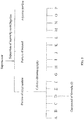
- FIG. 2 is a flowchart illustrating isolation of the compound of formula (I) from a supernatant of the S. involucrate extract using column chromatography. As shown in FIG. 2 , 16 ingredients (A-P) are obtained in step (S5). Among these, ingredient D is a sesquiterpenoid derivative, named compound of formula (I).
- the fraction containing the compound is concentrated using a rotary evaporator till the solvent is removed.
- the NMR spectroscopy (Nuclear Magnetic Resonance spectroscopy) is exploited to analyze the types of functional groups and the atomic bonding within the molecule of the compound of formula (I).
- the NMR spectra used for analysis include a 1 H-NMR spectrum, a 13 C-NMR spectrum, a DEPT (Distortionless Enhancement by Polarization Transfer) spectrum, a NOESY (Nuclear Overhauser Effect Spectroscopy) spectrum, a COSY (Correlation Spectroscopy) spectrum, a HSQC (Heteronuclear Single-Quantum Correlation Spectroscopy) spectrum, and a HMBC (Heteronuclear Multiple Bond Correlation) spectrum.
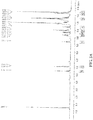
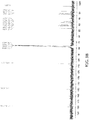
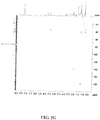
- FIG. 3A to FIG. 3G show the 1 H-NMR spectrum, the 13 C-NMR spectrum, the DEPT spectrum, the NOESY spectrum, the COSY spectrum, the HSQC spectrum, and the HMBC spectrum for the compound of formula (I), respectively. According to these spectra, the molecular structure of the compound of formula (I) is determined.
- the inhibitory effect of the compound of formula (I) on melanogenesis is validated by the following experiments.
- the promoting effects of the compound of formula (I) on collagen production and wound healing are also described.
- Human dermal fibroblasts (CCD-966SK cells, former ATCC CRL-1881), a type of adherent skin cells, were cultured in minimum essential medium supplemented with 10% (v/v) fetal bovine serum (FBS), 0.37% (w/v) sodium bicarbonate, 0.1 mM non-essential amino acid solution (NEAA), 1 mM sodium pyruvate, 0.03% (w/v) L-glutamate, 100 units/ml penicillin and 100 ⁇ g/ml streptomycin at 37°C under humidified atmosphere ( relative humidity of 80%) containing 5% CO 2 . During the culture, the medium was renewed every two days. When the cultured cells reached confluence and formed a monolayer, which was examined by an inverted microscope, a subculture was carried out.
- FBS fetal bovine serum
- NEAA non-essential amino acid solution
- L-glutamate 100 units/ml penicillin and 100 ⁇ g/ml streptomycin at 37°C
- Matrix metalloproteinase 9 is a member of the matrix metalloproteinase (MMPs) family which involves in the breakdown and remodeling of extracellular matrix.
- MMPs matrix metalloproteinase
- the extracellular matrix consists essentially of four components, namely collagens, elastin, glycoproteins, and proteoglycans.
- the proportion of each of the components in different tissues or organs varies. It is well-known that poor support of skin by collagen results in laxity and reduced elasticity of skin.
- the factors that affect collagen content of skin include MMPs levels. MMPs overexpression is stimulated by UV-A radiation or inflammation. Under these conditions, MMPs degrade almost all components of the extracellular matrix and break down proteins in the connective tissue, wherein collagen of the extracellular matrix is degraded and destroyed by MMP-9.
- RT-PCR real-time polymerase chain reaction, ABI StepOnePlusTM System
- the fold change of the MMP-9 gene expression levels was derived using the formula 2 - ⁇ Ct with Ct referring to the threshold cycle number.
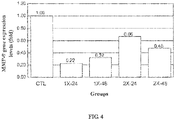
- FIG. 4 shows MMP-9 gene expression levels for each of the five groups, with the output being expressed as the fold-change of expression levels.
- the 1X-24 group when compared with the CTL group, the 1X-24 group exhibited inhibition of MMP-9 gene expression by about 80%, which produced the greatest inhibitory effect.
- the compound at a concentration between 8 ng/ml and 18 ng/ml reduces MMP-9 gene expression in human dermal fibroblasts by an average of over 50%, such as a 58.5% reduction in this embodiment.
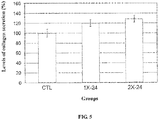
- FIG. 5 shows levels of collagen secretion for each group, with the value for each group being normalized to that for the CTL group. According to FIG. 5 , when compared with the CTL group, the 1X-24 group exhibited a 20% increase in collagen secretion by human dermal fibroblasts.
- the 2X-24 group showed a 30% increase in collagen secretion.
- the compound at a concentration between 8 ng/ml and 18 ng/ml causes an increase of at least 20% in collagen secretion by human dermal fibroblasts.
- MITF microphthalmia-associated transcription factor
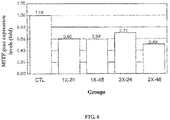
- FIG. 6 shows MITF gene expression levels for each of the five groups, with the output being expressed as the fold-change of expression levels.
- the 2X-48 group when compared with the CTL group, the 2X-48 group exhibited inhibition of MITF gene expression by about 50%, which produced the greatest inhibitory effect.
- the compound at a concentration between 8 ng/ml and 18 ng/ml reduces MITF gene expression in human dermal fibroblasts by an average of over 40%.
- a melanin quantification assay was performed to examine the change of melanin content in mouse melanoma cell line B16F10 (ATCC CRL-6475) upon addition of the compound of the present invention.
- the treatment of the cells was the same as described above.
- the measurement of melanin content was carried out by collecting the precipitates of B16F10 cell lysates (freeze-thaw), mixing the precipitates with IN NaOH at 60°C for 1 hour, and detecting the absorbance of the mixture at 405 nm.
- FIG. 7 shows levels of melanin for each group, with the value for each group being normalized to that for the CTL group.
- the 1X-48 group when compared with the CTL group, the 1X-48 group exhibited a 20% decreased melanin content in mouse melanoma cells. Also, when compared with the CTL group, the 2X-48 group exhibited a 40% decreased melanin content. Thus, it is concluded that the compound at a concentration between 8 ng/ml and 18 ng/ml causes a decrease of at least 20% in melanin formation in mouse melanoma cells.
- Wound refers to tissue injuries to the skin when it is narrowly defined. Wound healing is a physiological process that is complex and dynamic, and it is related to cooperation between multiple cells and tissues for wound repair.
- the mechanism underlying wound healing of human skin can be divided into the following phases: blood clotting, inflammation, proliferation, and maturation.
- fibroblasts proliferate to form fibrocytes and produce collagen.
- maturation newly formed collagens replace the old ones to achieve collagen remodeling, which leads to the normal state of skin in both appearance and function.
- FIG. 8 shows micrographs (100X) of human dermal fibroblasts for each group.
- a constant number of fibrocytes (about 1-2x10 5 cells) were produced in each of the CTL, 1X-18, 2X-18, and 4X-18 groups to repair and close the wound at 18 hours after wounding.
- the 1X-18, 2X-18, and 4X-18 groups exhibited a significantly higher degree of repair/closure in the wound area, when compared with the CTL group.
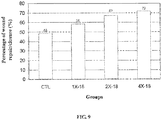
- FIG.9 shows the percentage of wound repair/closure in the wound area for each group.
- the percentage of wound repair/closure for the IX-18 group was 1.21 fold higher than that of the CTL group; the percentage of wound repair/closure for the 2X-18 group was 1.4 fold higher than that of the CTL group; and the percentage of wound repair/closure for the 4X-18 group was 1.5 fold higher than that of the CTL group.
- the compound at a concentration between 8 ng/ml and 18 ng/ml facilitates repair and closure of a wound area of human dermal fibroblasts.
- the compound of formula (I) is distinguished from the tyrosinase inhibitor extracted from Saussurea laniceps or general melanogenesis inhibitors in that it not only inhibits melanogenesis but also promotes collagen production and wound healing.
- the experiments show the high activities of the compound to inhibit MMP-9 gene expression and MITF gene expression in human dermal fibroblasts.
- the compound of formula (I) can further enhance collagen production in human dermal fibroblasts and at the same time inhibit melanin formation in mouse melanoma cells.
- compositions comprising the compound of formula (I) and a pharmaceutically acceptable carrier for inhibiting melanogenesis, promoting collagen production, and promoting wound healing in the skin of a subject in need thereof.
- the compositions can be suspensions, solutions, emulsions, ointments, lotions, creams, gels, capsules, and powders for skin whitening, anti-aging, and wound healing.
- the compositions can further comprise hydroquinone, salicylic acid, an alpha hydroxy acid, hyaluronic acid, etc.
- the compound is also reliable for development of methods for inhibiting melanogenesis, promoting collagen production, and promoting wound healing in the skin of a subject in need thereof.
- Subjects who suffer from hypermelanogenesis, collagen loss, and skin injuries can be treated by administration of the compound of the present invention, either topically or orally.
Landscapes
- Health & Medical Sciences (AREA)
- Life Sciences & Earth Sciences (AREA)
- Chemical & Material Sciences (AREA)
- General Health & Medical Sciences (AREA)
- Public Health (AREA)
- Animal Behavior & Ethology (AREA)
- Veterinary Medicine (AREA)
- Organic Chemistry (AREA)
- Engineering & Computer Science (AREA)
- Dermatology (AREA)
- Natural Medicines & Medicinal Plants (AREA)
- Epidemiology (AREA)
- Medicinal Chemistry (AREA)
- Pharmacology & Pharmacy (AREA)
- Zoology (AREA)
- Biotechnology (AREA)
- Microbiology (AREA)
- Wood Science & Technology (AREA)
- Bioinformatics & Cheminformatics (AREA)
- General Chemical & Material Sciences (AREA)
- Chemical Kinetics & Catalysis (AREA)
- Emergency Medicine (AREA)
- Gerontology & Geriatric Medicine (AREA)
- Birds (AREA)
- Oil, Petroleum & Natural Gas (AREA)
- General Engineering & Computer Science (AREA)
- Botany (AREA)
- Alternative & Traditional Medicine (AREA)
- Biochemistry (AREA)
- Medical Informatics (AREA)
- Mycology (AREA)
- Genetics & Genomics (AREA)
- Nuclear Medicine, Radiotherapy & Molecular Imaging (AREA)
- Acyclic And Carbocyclic Compounds In Medicinal Compositions (AREA)
- Cosmetics (AREA)
- Pharmaceuticals Containing Other Organic And Inorganic Compounds (AREA)
- Medicines Containing Plant Substances (AREA)
- Coloring Foods And Improving Nutritive Qualities (AREA)
Description
- The present invention relates to compositions and a method for improving skin health. Particularly, the present invention provides compositions and a method for promoting wound healing in the skin.
- Melanin is produced via an enzymatic reaction of tyrosinase from tyrosine to DOPA (3, 4-dihydroxyphenylalanine) in melanocytes of the skin, or it is produced via a non-enzymatic oxidation reaction. Considering skin pigmentation, such as spots and freckles, it is found that abnormal secretion of hormones or overexposure to UV radiation stimulates melanin overproduction and deposition in the skin.
- In order to achieve skin whitening, medical scientists in the related field utilize whitening agents or skin-whitening cosmetics along with L-ascorbic acid and salts thereof, kojic acid, arbutin, or hydroquinone to formulate remedies for treating or reducing spots or freckles resulted from hypermelanogenesis. However, during clinical research, medical scientists have found the drawbacks of poor stability or solubility of these formulations. Besides, the effects of these formulations on reducing or removing melanin are unsatisfactory. When the concentrations of L-ascorbic acid or kojic acid are elevated in the formulations to enhance the skin whitening effects, there would be safety issues.
-
JP 2001 316240 A -
JP 2012 020963 A -
CN 102366432 A discloses use of an extract of Saussurea involucrate callus culture to treat dysmenorrhea. The extract may be prepared by extraction with aqueous ethanol. - Qin et al discloses the effect of callus induction condition on total flavonoid content of Saussurea involucrate callus and extraction of the callus with aqueous ethanol.
- In view of the facts mentioned above, the inventors of the present application have carried out a tremendous amount of experiments and developed compositions and a method for inhibiting melanogenesis and promoting collagen production and wound healing.
- In one aspect, the present invention provides a compound of formula (I) for use in promoting wound healing in the skin:

- The compound of formula (I) is distinguished from the tyrosinase inhibitor or general melanogenesis inhibitors in that it not only inhibits melanogenesis but also promotes collagen production and wound healing. The compound may exhibit high activities, particularly in human dermal fibroblasts, to inhibit gene expression of microphthalmia-associated transcription factor (MITF) and gene expression of matrix metalloproteinase 9 (MMP-9), and thus the compound inhibits melanin formation and promotes collagen production.
- The compound may at a concentration of between 8 ng/ml and 18 ng/ml inhibit gene expression of MMP-9 in human dermal fibroblasts by an average of at least 50% and enhance collagen secretion in human dermal fibroblasts by at least 20%.
- The compound may at a concentration of between 8 ng/ml and 18 ng/ml inhibit gene expression of MITF, a master regulator of melanocyte development, in human dermal fibroblasts by an average of at least 40% and reduce melanin content in mouse melanoma cells by at least 20%.
- The compound may at a concentration of between 8 ng/ml and 18 ng/ml facilitate repair and closure of a wound area of human dermal fibroblasts, resulting in a 1.21 to 1.4 fold increase in the percentage of wound repair/closure.
- In another aspect, the present invention provides a composition comprising a pharmaceutically acceptable carrier and an effective amount of a compound of formula (I):

- In one embodiment of the present invention, the compound of formula (I) in the composition is at a concentration of between 8 ng/ml and 18 ng/ml. The composition is in a form selected from a group consisting of suspensions, solutions, emulsions, ointments, lotions, creams, gels, capsules, and powders; the composition further comprises hydroquinone, salicylic acid, an alpha hydroxy acid, hyaluronic acid, and any combinations thereof; and the composition is administered topically or orally.
- One further aspect of the present invention provides a method of preparing a compound of formula (I), comprising the steps of: (S1) preparing an explant of Saussurea involucrate; (S2) obtaining a callus from the explant of step (S1) and preparing a liquid culture of the callus; (S3) processing the liquid culture of the callus to obtain a biomass of the callus and preparing a ground biomass therefrom; (S4) carrying out a solvent extraction of the ground biomass to obtain at least a supernatant; and (S5) isolating the compound of formula (I) from the supernatant by column chromatography.
- In one preferred embodiment of the present invention, the explant of Saussurea involucrate of step (S1) is prepared by culturing a young leaf of a Saussurea involucrate plant, and the solvent extraction of step (S4) is carried out with 50%-100% ethanol.
- The compound of formula (I) can inhibit melanogenesis and promote collagen production and wound healing. Therefore, the compound can be utilized in skin care products, cosmetics, wound dressings, pharmaceutical compositions, or food for skin whitening, anti-aging, and wound healing. Also, a method for inhibiting melanogenesis, promoting collagen production and wound healing by using the compound can improve skin health of a subject in need.
- The present invention is further explained in the following drawings and examples. It is understood that the examples given below do not limit the scope of the invention, and it will be evident to those skilled in the art that modifications can be made without departing from the scope of the appended claims.
- The present invention will be apparent to those skilled in the art from the following detailed description of the preferred embodiments, with reference to the attached drawings, in which:
-
FIG. 1 is a flowchart illustrating preparation of the compound of formula (I) of the present invention; -
FIG. 2 is a flowchart illustrating isolation of the compound of formula (I) of the present invention from a supernatant of a S. involucrate extract using column chromatography; -
FIG. 3A shows the 1H-NMR spectrum for the compound of formula (I); -
FIG. 3B shows the 13C-NMR spectrum for the compound of formula (I); -
FIG 3C shows the DEPT spectrum for the compound of formula (I); -
FIG. 3D shows the NOESY spectrum for the compound of formula (I); -
FIG. 3E shows the COSY spectrum for the compound of formula (I); -
FIG 3F shows the HSQC spectrum for the compound of formula (I); -
FIG. 3G shows the HMBC spectrum for the compound of formula (I); -
FIG. 4 shows MMP-9 gene expression levels in human dermal fibroblasts; -
FIG. 5 shows levels of collagen secretion in human dermal fibroblasts; -
FIG. 6 shows MITF gene expression levels in human dermal fibroblasts; -
FIG. 7 shows levels of melanin in mouse melanoma cells; -
FIG. 8 shows micrographs (100X) of human dermal fibroblasts; -
FIG. 9 shows the percentage of wound repair/closure in a wound area of human dermal fibroblasts. - The data provided in the present invention represent approximated, experimental values that may vary within a range of ±20%, preferably ±10%, and most preferably ±5%.
- The method of preparing the compound of the present invention and the effects of the compound, including inhibition of melanogenesis and promotion of collagen production and wound healing, are described in detail in the following examples along with the drawings.
- Saussurea involucrata is a species mainly grows in alpine areas of China, such as Xinjiang, Qinghai, Gansu, Yunnan and Tibet. It is usually found between rocks or along cliffs near the snow line at an altitude of 2,400 m to 4,100 m. Because S. involucrate is rich in bioactive ingredients, nutrients and minerals, it is comprehensively studied by researchers around the world.
- The compound of formula (I) can be isolated from S. involucrate, and it exhibits activities to inhibit melanogenesis and promote collagen production and wound healing. The compound is represented by formula (I):

- A method to prepare the compound of formula (I) is described, based on which technicians in the related field can obtain the compound unambiguously.
FIG. 1 is a flowchart illustrating preparation of the compound of the present invention. As shown inFIG. 1 , the method of preparing the compound comprises five major steps: - (S1) preparing an explant of S. involucrate;
- (S2) obtaining a callus from the explant of step (S1) and preparing a liquid culture of the callus;
- (S3) processing the liquid culture of the callus to obtain a biomass of the callus and preparing a ground biomass therefrom;
- (S4) carrying out a solvent extraction of the ground biomass to obtain at least a supernatant; and
- (S5) isolating the sesquiterpenoid compound from the supernatant by column chromatography.
- Furthermore, the above step (S1) comprises the following substeps:
- (S11) obtaining at least one young leaf from a plant of S. involucrate and cutting the at least one young leaf into a plurality of leaf segments;
- (S12) rinsing the plurality of leaf segments with bleach (1.5-2% NaClO) for 10 minutes and then washing the plurality of leaf segments with sterile water for 3 minutes;
- (S13) inoculating the plurality of leaf segments onto a solid culture medium, which is a MS medium;
- (S14) keeping the solid culture medium with the plurality of leaf segments on it in a dark environment and incubating the plurality of leaf segments in the dark at temperatures from 18°C to 30°C for five weeks to produce explants of S. involucrate.
- In addition, the above step (S2) comprises the following substeps:
- (S21) taking out the plurality of leaf segments from the solid culture medium of step (S14) and isolating at least one callus tissue from the plurality of leaf segments;
- (S22) mashing the callus tissue and transferring it, with sterilized forceps, into a flask prefilled with 100 ml MS liquid medium;
- (S23) keeping the flask with the callus tissue in it in a dark environment and incubating the callus tissue at 25°C with shaking at 150 rpm for 48 hours to produce a liquid culture of the callus tissue.
- Besides, the above step (S3) comprises the following substeps:
- (S31) transferring the liquid culture of the callus tissue of step (S23) to a bioreactor system (BTF-A10L, Biotop, Taiwan) for a production test process to obtain a biomass of the callus tissue;
- (S32) lyophilizing the biomass of step (S31) to produce a lyophilized biomass;
- (S33) grinding the lyophilized biomass to produce a ground biomass.
- Also, the above step (S4) comprises the following substeps:
- (S41) carrying out an extraction of the ground biomass of step (S33) with 50%-100% and most preferably 70% food grade ethanol (EtOH) as an extraction solvent to produce an extract, with a ratio of the biomass to the 70% ethanol being 1:10 (w/v) and the extraction being performed in a 70°C water bath for 30 minutes;
- (S42) collecting at least one supernatant by centrifugation of the extract of step (S41) at 4800 rpm for 10 min.
- After step (S42), the sesquiterpenoid compound of formula (I) can be isolated from the supernatant by column chromatography, such as utilizing a high performance liquid chromatography (HPLC) system equipped with a Luna 5m C18 column (Phenomenex, U.S.). The elution is performed with H2O and MeCN.
FIG. 2 is a flowchart illustrating isolation of the compound of formula (I) from a supernatant of the S. involucrate extract using column chromatography. As shown inFIG. 2 , 16 ingredients (A-P) are obtained in step (S5). Among these, ingredient D is a sesquiterpenoid derivative, named compound of formula (I). To obtain the purified dry powder of the compound of formula (I), which is stored at room temperature and in the dark, the fraction containing the compound is concentrated using a rotary evaporator till the solvent is removed. - The NMR spectroscopy (Nuclear Magnetic Resonance spectroscopy) is exploited to analyze the types of functional groups and the atomic bonding within the molecule of the compound of formula (I). The NMR spectra used for analysis include a 1H-NMR spectrum, a 13C-NMR spectrum, a DEPT (Distortionless Enhancement by Polarization Transfer) spectrum, a NOESY (Nuclear Overhauser Effect Spectroscopy) spectrum, a COSY (Correlation Spectroscopy) spectrum, a HSQC (Heteronuclear Single-Quantum Correlation Spectroscopy) spectrum, and a HMBC (Heteronuclear Multiple Bond Correlation) spectrum.
-
FIG. 3A to FIG. 3G show the 1H-NMR spectrum, the 13C-NMR spectrum, the DEPT spectrum, the NOESY spectrum, the COSY spectrum, the HSQC spectrum, and the HMBC spectrum for the compound of formula (I), respectively. According to these spectra, the molecular structure of the compound of formula (I) is determined. - The inhibitory effect of the compound of formula (I) on melanogenesis is validated by the following experiments. The promoting effects of the compound of formula (I) on collagen production and wound healing are also described.
- Human dermal fibroblasts (CCD-966SK cells, former ATCC CRL-1881), a type of adherent skin cells, were cultured in minimum essential medium supplemented with 10% (v/v) fetal bovine serum (FBS), 0.37% (w/v) sodium bicarbonate, 0.1 mM non-essential amino acid solution (NEAA), 1 mM sodium pyruvate, 0.03% (w/v) L-glutamate, 100 units/ml penicillin and 100 µg/ml streptomycin at 37°C under humidified atmosphere (relative humidity of 80%) containing 5% CO2. During the culture, the medium was renewed every two days. When the cultured cells reached confluence and formed a monolayer, which was examined by an inverted microscope, a subculture was carried out.
- Matrix metalloproteinase 9 (MMP-9) is a member of the matrix metalloproteinase (MMPs) family which involves in the breakdown and remodeling of extracellular matrix. Currently twenty-eight MMPs have been identified, among which are collagenases, gelatinases, stromelysins, matrilysins, and membrane type-MMPs. MMP-9 is classified as a gelatinase.
- The extracellular matrix consists essentially of four components, namely collagens, elastin, glycoproteins, and proteoglycans. The proportion of each of the components in different tissues or organs varies. It is well-known that poor support of skin by collagen results in laxity and reduced elasticity of skin. The factors that affect collagen content of skin include MMPs levels. MMPs overexpression is stimulated by UV-A radiation or inflammation. Under these conditions, MMPs degrade almost all components of the extracellular matrix and break down proteins in the connective tissue, wherein collagen of the extracellular matrix is degraded and destroyed by MMP-9.
- Therefore, the inventors of the present application studied the inhibitory effect of the compound of formula (I) on MMP-9 gene expression in EXAMPLE 2. The following five groups were compared in this example:
- (1) Control group (CTL group): incubating a culture of human dermal fibroblasts for a predetermined time;
- (2) One dose-24 hours group (1X-24 group): adding one dose of the compound of the present invention to a culture of human dermal fibroblasts and then examining the culture after an incubation of 24 hours, wherein the term "one dose" refers to 8.75 ng/mL of the compound of formula (I) in dimethyl sulfoxide (DMSO);
- (3) One dose-48 hours group (1X-48 group): adding one dose of the compound of the present invention to a culture of human dermal fibroblasts and then examining the culture after an incubation of 48 hours;
- (4) Double dose-24 hours group (2X-24 group): adding a double dose of the compound of the present invention to a culture of human dermal fibroblasts and then examining the culture after an incubation of 24 hours, wherein the term "double dose" refers to 17.5 ng/mL of the compound of formula (I); and
- (5) Double dose-48 hours group (2X-48 group): adding a double dose of the compound of the present invention to a culture of human dermal fibroblasts and then examining the culture after an incubation of 48 hours.
- In EXAMPLE 2, RT-PCR (real-time polymerase chain reaction, ABI StepOnePlus™ System) was applied to monitor alterations of MMP-9 gene expression levels in human dermal fibroblasts upon addition of the compound of the present invention. The fold change of the MMP-9 gene expression levels was derived using the
formula 2-ΔΔCt with Ct referring to the threshold cycle number.FIG. 4 shows MMP-9 gene expression levels for each of the five groups, with the output being expressed as the fold-change of expression levels. According toFIG. 4 , when compared with the CTL group, the 1X-24 group exhibited inhibition of MMP-9 gene expression by about 80%, which produced the greatest inhibitory effect. Besides, it is concluded that the compound at a concentration between 8 ng/ml and 18 ng/ml reduces MMP-9 gene expression in human dermal fibroblasts by an average of over 50%, such as a 58.5% reduction in this embodiment. - In addition, a collagen secretion assay was performed to examine change of collagen content in cultures of human dermal fibroblasts upon addition of the compound of the present invention. The measurement of collagen content was followed the manufacturer's instruction (Sircol™ Collagen Assay, Biocolor, U.K.) and was based on detecting the absorbance of the collagen-binding dye at 555 nm.
FIG. 5 shows levels of collagen secretion for each group, with the value for each group being normalized to that for the CTL group. According toFIG. 5 , when compared with the CTL group, the 1X-24 group exhibited a 20% increase in collagen secretion by human dermal fibroblasts. Also, when compared with the CTL group, the 2X-24 group showed a 30% increase in collagen secretion. Thus, it is concluded that the compound at a concentration between 8 ng/ml and 18 ng/ml causes an increase of at least 20% in collagen secretion by human dermal fibroblasts. - Melanogenesis is a complicated biosynthetic process, mainly an enzymatic reaction catalyzed by tyrosinase in melanocytes. A lot of genes are involved in the regulation of this process. Among them, the gene of microphthalmia-associated transcription factor (MITF) plays a critical role. MITF is found in melanocytes. It regulates melanin synthesis by enhancing the activity of tyrosinase. Therefore, inhibition of MITF gene expression results in lowered tyrosinase activity and thus inhibited melanogenesis, leading to skin whitening.
- Therefore, the inventors of the present application studied the inhibitory effect of the compound of formula (I) on MITF gene expression in EXAMPLE 3. The following five groups were compared in this example:
- (1) Control group (CTL group): incubating a culture of human dermal fibroblasts for a predetermined time;
- (2) One dose-24 hours group (1X-24 group): adding one dose of the compound of the present invention to a culture of human dermal fibroblasts and then examining the culture after an incubation of 24 hours, wherein the term "one dose" refers to 8.75 ng/mL of the compound of formula (I) in DMSO;
- (3) One dose-48 hours group (1X-48 group): adding one dose of the compound of the present invention to a culture of human dermal fibroblasts and then examining the culture after an incubation of 48 hours;
- (4) Double dose-24 hours group (2X-24 group): adding a double dose of the compound of the present invention to a culture of human dermal fibroblasts and then examining the culture after an incubation of 24 hours, wherein the term "double dose" refers to 17.5 ng/mL of the compound of formula (I); and
- (5) Double dose-48 hours group (2X-48 group): adding a double dose of the compound of the present invention to a culture of human dermal fibroblasts and then examining the culture after an incubation of 48 hours.
- Similar to EXAMPLE 2, RT-PCR was also applied to monitor alterations of MITF gene expression levels in human dermal fibroblasts upon addition of the compound of the present invention.
FIG. 6 shows MITF gene expression levels for each of the five groups, with the output being expressed as the fold-change of expression levels. According toFIG. 6 , when compared with the CTL group, the 2X-48 group exhibited inhibition of MITF gene expression by about 50%, which produced the greatest inhibitory effect. Besides, it is concluded that the compound at a concentration between 8 ng/ml and 18 ng/ml reduces MITF gene expression in human dermal fibroblasts by an average of over 40%. - In addition, a melanin quantification assay was performed to examine the change of melanin content in mouse melanoma cell line B16F10 (ATCC CRL-6475) upon addition of the compound of the present invention. The treatment of the cells was the same as described above. The measurement of melanin content was carried out by collecting the precipitates of B16F10 cell lysates (freeze-thaw), mixing the precipitates with IN NaOH at 60°C for 1 hour, and detecting the absorbance of the mixture at 405 nm.
FIG. 7 shows levels of melanin for each group, with the value for each group being normalized to that for the CTL group. According toFIG.7 , when compared with the CTL group, the 1X-48 group exhibited a 20% decreased melanin content in mouse melanoma cells. Also, when compared with the CTL group, the 2X-48 group exhibited a 40% decreased melanin content. Thus, it is concluded that the compound at a concentration between 8 ng/ml and 18 ng/ml causes a decrease of at least 20% in melanin formation in mouse melanoma cells. - Wound refers to tissue injuries to the skin when it is narrowly defined. Wound healing is a physiological process that is complex and dynamic, and it is related to cooperation between multiple cells and tissues for wound repair. The mechanism underlying wound healing of human skin can be divided into the following phases: blood clotting, inflammation, proliferation, and maturation. In the phase of proliferation, fibroblasts proliferate to form fibrocytes and produce collagen. During maturation, newly formed collagens replace the old ones to achieve collagen remodeling, which leads to the normal state of skin in both appearance and function.
- Due to the importance of wound healing, the inventors of the present application studied the promoting effect of the compound of formula (I) on wound healing of skin in EXAMPLE 4. The following four groups were compared in this example:
- (1) Control group (CTL group): creating an incised wound area in a culture of human dermal fibroblasts and then incubating and examining the culture for 18 hours;
- (2) One dose-18 hours group (1X-18 group): creating an incised wound area in a culture of human dermal fibroblasts and adding one dose of the compound of the present invention to the culture; and then examining changes in the wound area of human dermal fibroblasts after an incubation of 18 hours, wherein the term "one dose" refers to 8.75 ng/mL of the compound of formula (I) in DMSO;
- (3) Double dose-18 hours group (2X-18 group): creating an incised wound area in a culture of human dermal fibroblasts and adding one dose of the compound of the present invention to the culture; and then examining changes in the wound area of human dermal fibroblasts after an incubation of 18 hours, wherein the term "double dose" refers to 17.5 ng/mL of the compound of formula (I); and
- (4) Fourfold dose-18 hours group (4X-18 group): creating an incised wound area in a culture of human dermal fibroblasts and adding one dose of the compound of the present invention to the culture; and then examining changes in the wound area of human dermal fibroblasts after an incubation of 18 hours, wherein the term "fourfold dose" refers to 35 ng/mL of the compound of formula (I).
-
FIG. 8 shows micrographs (100X) of human dermal fibroblasts for each group. According toFIG. 8 , a constant number of fibrocytes (about 1-2x10⁵ cells) were produced in each of the CTL, 1X-18, 2X-18, and 4X-18 groups to repair and close the wound at 18 hours after wounding. However, it was noted that the 1X-18, 2X-18, and 4X-18 groups exhibited a significantly higher degree of repair/closure in the wound area, when compared with the CTL group. - In addition, a percentage of wound repair/closure in the wound area of human dermal fibroblasts was determined for the above four groups by analyzing the surface area change of the wound area in
FIG 8 using the software ImageJ.FIG.9 shows the percentage of wound repair/closure in the wound area for each group. According to statistical data shown inFIG 9 , the percentage of wound repair/closure for the IX-18 group was 1.21 fold higher than that of the CTL group; the percentage of wound repair/closure for the 2X-18 group was 1.4 fold higher than that of the CTL group; and the percentage of wound repair/closure for the 4X-18 group was 1.5 fold higher than that of the CTL group. Thus, it is concluded that the compound at a concentration between 8 ng/ml and 18 ng/ml facilitates repair and closure of a wound area of human dermal fibroblasts. - In conclusion, the inventors comprehensively and explicitly disclose every aspect of compound of formula (I), including the preparation method thereof, the chemical structure, and effects of inhibiting melanogenesis and promoting collagen production and wound healing. All disclosure supports that the compound has the following characteristics and advantages.
- First, the compound of formula (I) is distinguished from the tyrosinase inhibitor extracted from Saussurea laniceps or general melanogenesis inhibitors in that it not only inhibits melanogenesis but also promotes collagen production and wound healing. Particularly, the experiments show the high activities of the compound to inhibit MMP-9 gene expression and MITF gene expression in human dermal fibroblasts.
- Secondly, due to the inhibitory effects of the compound of formula (I) on MMP-9 and MITF gene expression, the compound can further enhance collagen production in human dermal fibroblasts and at the same time inhibit melanin formation in mouse melanoma cells.
- Thirdly, because EXAMPLEs 1-4 have revealed that the compound of formula (I) inhibits melanogenesis, promotes collagen production, and promotes wound healing, it is practicable to manufacture compositions comprising the compound of formula (I) and a pharmaceutically acceptable carrier for inhibiting melanogenesis, promoting collagen production, and promoting wound healing in the skin of a subject in need thereof. For example, the compositions can be suspensions, solutions, emulsions, ointments, lotions, creams, gels, capsules, and powders for skin whitening, anti-aging, and wound healing. The compositions can further comprise hydroquinone, salicylic acid, an alpha hydroxy acid, hyaluronic acid, etc. The compound is also reliable for development of methods for inhibiting melanogenesis, promoting collagen production, and promoting wound healing in the skin of a subject in need thereof. Subjects who suffer from hypermelanogenesis, collagen loss, and skin injuries can be treated by administration of the compound of the present invention, either topically or orally.
- The present invention has been described with reference to the above preferred embodiments. However, it will be apparent to those skilled in the art that modifications and changes in form and detail may be made without departing from the scope of the present invention defined by the appended claims.
Claims (9)
- A compound of formula (I) for use in promoting wound healing in the skin:

- A composition, comprising a pharmaceutically acceptable carrier and an effective amount of a compound of formula (I):

- The composition for use in promoting wound healing in the skin of claim 2, wherein the composition is in a form selected from a group consisting of suspensions, solutions, emulsions, ointments, lotions, creams, gels, capsules, and powders.
- The composition for use in promoting wound healing in the skin of claim 2, wherein the composition further comprises hydroquinone, salicylic acid, an alpha hydroxy acid, hyaluronic acid, and any combinations thereof.
- The composition for use in promoting wound healing in the skin of claim 2, wherein the composition is for topical or oral administration.
- The composition for use in promoting wound healing in the skin of claim 2, wherein the compound in the composition is at a concentration of between 8 ng/ml and 18 ng/ml.
- A method of preparing a compound of formula (I), comprising the steps of:(S1) preparing an explant of Saussurea involucrate;(S2) obtaining a callus from the explant of step (S1) and preparing a liquid culture of the callus;(S3) processing the liquid culture of the callus to obtain a biomass of the callus and preparing a ground biomass therefrom;(S4) carrying out a solvent extraction of the ground biomass to obtain at least a supernatant; and(S5) isolating the compound of formula (I) from the supernatant by column chromatography.
- The method of claim 7, wherein the explant of Saussurea involucrate of step (S1) is prepared by culturing a young leaf of a Saussurea involucrate plant.
- The method of claim 7, wherein the solvent extraction of step (S4) is carried out with 50%-100% ethanol.
Applications Claiming Priority (1)
| Application Number | Priority Date | Filing Date | Title |
|---|---|---|---|
| TW104125700A TWI583399B (en) | 2015-08-06 | 2015-08-06 | Compound having functionality to inhibit melanogenesis, enhance collagen-producing action and corneal wound healing |
Publications (2)
| Publication Number | Publication Date |
|---|---|
| EP3127532A1 EP3127532A1 (en) | 2017-02-08 |
| EP3127532B1 true EP3127532B1 (en) | 2019-06-19 |
Family
ID=56507429
Family Applications (1)
| Application Number | Title | Priority Date | Filing Date |
|---|---|---|---|
| EP16180351.5A Active EP3127532B1 (en) | 2015-08-06 | 2016-07-20 | Methods for promoting wound healing and for preparing the compound used in the method |
Country Status (7)
| Country | Link |
|---|---|
| US (1) | US10092530B2 (en) |
| EP (1) | EP3127532B1 (en) |
| JP (1) | JP6279668B2 (en) |
| CN (1) | CN106551923B (en) |
| MY (1) | MY171556A (en) |
| SG (1) | SG10201606015WA (en) |
| TW (1) | TWI583399B (en) |
Families Citing this family (5)
| Publication number | Priority date | Publication date | Assignee | Title |
|---|---|---|---|---|
| US10034844B2 (en) * | 2016-01-28 | 2018-07-31 | Tci Co., Ltd. | Method for enhancing immunity, inhibiting allergic reaction, and/or inhibiting autoimmune reaction |
| CN107281171A (en) * | 2017-06-27 | 2017-10-24 | 中国科学院上海有机化学研究所 | Application of the aromatic rings class medicine in terms of malignant mela noma key transcription factor is suppressed |
| CN109078033A (en) * | 2018-08-08 | 2018-12-25 | 大连普瑞康生物技术有限公司 | Saussurea involucrata culture inhibits protein non-enzyme glycosylation to react the application in anti-aging product |
| TWI779251B (en) * | 2019-11-21 | 2022-10-01 | 大江基因醫學股份有限公司 | Use of a plant extraction for enhancing the gene expression of cct, atg, nadsyn, mrps5, sod3, and tert and/or increase the amount of gsh |
| CN119064243B (en) * | 2024-11-05 | 2025-01-28 | 石家庄铁道大学 | Test method for measuring self-healing effect of damaged salt rock |
Family Cites Families (6)
| Publication number | Priority date | Publication date | Assignee | Title |
|---|---|---|---|---|
| JP3608078B2 (en) * | 2000-05-11 | 2005-01-05 | 株式会社アルソア本社 | Collagen production promoter, estrogenic agent, skin cosmetic and beauty food |
| JP3658548B2 (en) * | 2000-10-24 | 2005-06-08 | 丸善製薬株式会社 | Whitening cosmetics |
| CN1961650B (en) * | 2005-11-11 | 2010-06-02 | 大连普瑞康生物技术有限公司 | Sinkiang saussurea involucrata cell tissue culture and large-scale subculture method thereof |
| JP6005900B2 (en) * | 2010-07-14 | 2016-10-12 | 株式会社アルソア本社 | Melanin production inhibitor and medicinal product, food or cosmetic having melanin production inhibitory action |
| CN102366432B (en) * | 2011-11-02 | 2013-06-26 | 大连普瑞康生物技术有限公司 | Saussurea involucrata culture extract and novel purpose thereof |
| TWM471275U (en) * | 2013-09-11 | 2014-02-01 | Tci Co Ltd | Structure of saussurea involucrate micro-particles for inhibition of melanin synthesis and stimulation of collagen secretion |
-
2015
- 2015-08-06 TW TW104125700A patent/TWI583399B/en active
-
2016
- 2016-07-20 EP EP16180351.5A patent/EP3127532B1/en active Active
- 2016-07-21 SG SG10201606015WA patent/SG10201606015WA/en unknown
- 2016-08-01 JP JP2016151246A patent/JP6279668B2/en active Active
- 2016-08-03 MY MYPI2016702823A patent/MY171556A/en unknown
- 2016-08-03 CN CN201610629312.8A patent/CN106551923B/en active Active
- 2016-08-04 US US15/229,076 patent/US10092530B2/en active Active
Non-Patent Citations (1)
| Title |
|---|
| None * |
Also Published As
| Publication number | Publication date |
|---|---|
| TWI583399B (en) | 2017-05-21 |
| CN106551923B (en) | 2019-03-19 |
| CN106551923A (en) | 2017-04-05 |
| JP2017036265A (en) | 2017-02-16 |
| EP3127532A1 (en) | 2017-02-08 |
| TW201705936A (en) | 2017-02-16 |
| US10092530B2 (en) | 2018-10-09 |
| MY171556A (en) | 2019-10-18 |
| JP6279668B2 (en) | 2018-02-14 |
| US20170079941A1 (en) | 2017-03-23 |
| SG10201606015WA (en) | 2017-03-30 |
Similar Documents
| Publication | Publication Date | Title |
|---|---|---|
| US10092530B2 (en) | Method for inhibiting melanogenesis and promoting collagen production and wound healing | |
| KR102493443B1 (en) | Cosmetic composition comprising extracts extracted with an eco-friendly natural eutectic solvent | |
| JP2017114814A (en) | Cosmetics | |
| KR20210144725A (en) | Anti-aging, antioxidant, anti-inflammatory and whitening agents, and cosmetics | |
| KR101948828B1 (en) | Skin repairing, anti-wrinkle or anti-oxidant composition comprising functional peptide, growth factor and citrus peel fermentation product | |
| WO2015187417A1 (en) | Topical lightening composition and methods of use thereof | |
| JP6779627B2 (en) | How to make callus for Queen of the Night, and external and internal skin preparations containing the extract as an active ingredient | |
| CN106924242A (en) | The purposes of the composition comprising theaflavih digallate | |
| JP2015221791A (en) | A skin external preparation or an internal preparation containing an extract of cucumber rhinoceros cultivated by irradiation with light having a specific wavelength range. | |
| KR102139963B1 (en) | A cosmetic composition for improving wrinkles containing an enzyme-treated soybean embryo extract as an active ingredient and a process for producing the same. | |
| JP2015526514A (en) | DICKKOPF-1 expression regulating composition and use thereof | |
| EP2561881A2 (en) | Novel vascular endothelial growth factor expression inhibitors | |
| JP2011241162A (en) | FGF-7 PRODUCTION PROMOTER, VEGF PRODUCTION PROMOTER, IGF-1 PRODUCTION PROMOTER, HGF PRODUCTION PROMOTER, TESTOSTERONE 5α-REDUCTASE INHIBITOR, AND HAIR TONIC | |
| KR100416400B1 (en) | Composition containing extracts from dried roots of Trichosantes kirilowii maxim for external application and skin-whitening and process for preparation thereof | |
| KR102147604B1 (en) | Composition comprising sodium surfactin for inhibiting hair loss and promoting hair growth | |
| KR102676679B1 (en) | Composition comprising Graviola callus lysate extract as an active ingredient having skin whitening, antioxidant, skin condition improvement and hair loss inhibitory effects | |
| JP2022191664A (en) | Collagen production promoter, mmp-2 inhibitor, cell growth promoter and internal agent | |
| KR102124698B1 (en) | Cosmetic composition for improving skin wrinkle or skin aging comprising mixture extract of Chrysanthemum morfiolium, Aloe vera, and Hedera Helix | |
| JP4587755B2 (en) | Anti-inflammatory agent, whitening agent, anti-aging agent, and skin cosmetic | |
| KR102810446B1 (en) | Cosmetic composition comprising complex lactic acid bacteria fermentation product of extracts extracted with natural eutectic solvent | |
| CN112675248A (en) | Application of flos Hemerocallis extract in regulating gene expression level, caring skin, resisting depression and protecting cerebrovascular | |
| JP2022018719A (en) | Agent for promoting differentiation of epidermal stem cell into epidermal keratinocyte | |
| KR20140072419A (en) | Anti-Wrinkle Composition | |
| JP7828635B2 (en) | A topical and internal skin preparation containing an extract of Sanguisorba officinalis cultivated under irradiation with light having a specific wavelength range. | |
| JP6969760B2 (en) | Composition that promotes hair growth |
Legal Events
| Date | Code | Title | Description |
|---|---|---|---|
| PUAI | Public reference made under article 153(3) epc to a published international application that has entered the european phase |
Free format text: ORIGINAL CODE: 0009012 |
|
| STAA | Information on the status of an ep patent application or granted ep patent |
Free format text: STATUS: REQUEST FOR EXAMINATION WAS MADE |
|
| 17P | Request for examination filed |
Effective date: 20160720 |
|
| AK | Designated contracting states |
Kind code of ref document: A1 Designated state(s): AL AT BE BG CH CY CZ DE DK EE ES FI FR GB GR HR HU IE IS IT LI LT LU LV MC MK MT NL NO PL PT RO RS SE SI SK SM TR |
|
| AX | Request for extension of the european patent |
Extension state: BA ME |
|
| RBV | Designated contracting states (corrected) |
Designated state(s): AL AT BE BG CH CY CZ DE DK EE ES FI FR GB GR HR HU IE IS IT LI LT LU LV MC MK MT NL NO PL PT RO RS SE SI SK SM TR |
|
| STAA | Information on the status of an ep patent application or granted ep patent |
Free format text: STATUS: EXAMINATION IS IN PROGRESS |
|
| 17Q | First examination report despatched |
Effective date: 20180920 |
|
| GRAP | Despatch of communication of intention to grant a patent |
Free format text: ORIGINAL CODE: EPIDOSNIGR1 |
|
| STAA | Information on the status of an ep patent application or granted ep patent |
Free format text: STATUS: GRANT OF PATENT IS INTENDED |
|
| INTG | Intention to grant announced |
Effective date: 20190108 |
|
| GRAS | Grant fee paid |
Free format text: ORIGINAL CODE: EPIDOSNIGR3 |
|
| GRAA | (expected) grant |
Free format text: ORIGINAL CODE: 0009210 |
|
| STAA | Information on the status of an ep patent application or granted ep patent |
Free format text: STATUS: THE PATENT HAS BEEN GRANTED |
|
| AK | Designated contracting states |
Kind code of ref document: B1 Designated state(s): AL AT BE BG CH CY CZ DE DK EE ES FI FR GB GR HR HU IE IS IT LI LT LU LV MC MK MT NL NO PL PT RO RS SE SI SK SM TR |
|
| REG | Reference to a national code |
Ref country code: GB Ref legal event code: FG4D |
|
| REG | Reference to a national code |
Ref country code: CH Ref legal event code: EP |
|
| REG | Reference to a national code |
Ref country code: IE Ref legal event code: FG4D |
|
| REG | Reference to a national code |
Ref country code: DE Ref legal event code: R096 Ref document number: 602016015424 Country of ref document: DE |
|
| REG | Reference to a national code |
Ref country code: AT Ref legal event code: REF Ref document number: 1144586 Country of ref document: AT Kind code of ref document: T Effective date: 20190715 |
|
| REG | Reference to a national code |
Ref country code: NL Ref legal event code: MP Effective date: 20190619 |
|
| PG25 | Lapsed in a contracting state [announced via postgrant information from national office to epo] |
Ref country code: NO Free format text: LAPSE BECAUSE OF FAILURE TO SUBMIT A TRANSLATION OF THE DESCRIPTION OR TO PAY THE FEE WITHIN THE PRESCRIBED TIME-LIMIT Effective date: 20190919 Ref country code: FI Free format text: LAPSE BECAUSE OF FAILURE TO SUBMIT A TRANSLATION OF THE DESCRIPTION OR TO PAY THE FEE WITHIN THE PRESCRIBED TIME-LIMIT Effective date: 20190619 Ref country code: HR Free format text: LAPSE BECAUSE OF FAILURE TO SUBMIT A TRANSLATION OF THE DESCRIPTION OR TO PAY THE FEE WITHIN THE PRESCRIBED TIME-LIMIT Effective date: 20190619 Ref country code: LT Free format text: LAPSE BECAUSE OF FAILURE TO SUBMIT A TRANSLATION OF THE DESCRIPTION OR TO PAY THE FEE WITHIN THE PRESCRIBED TIME-LIMIT Effective date: 20190619 Ref country code: AL Free format text: LAPSE BECAUSE OF FAILURE TO SUBMIT A TRANSLATION OF THE DESCRIPTION OR TO PAY THE FEE WITHIN THE PRESCRIBED TIME-LIMIT Effective date: 20190619 Ref country code: SE Free format text: LAPSE BECAUSE OF FAILURE TO SUBMIT A TRANSLATION OF THE DESCRIPTION OR TO PAY THE FEE WITHIN THE PRESCRIBED TIME-LIMIT Effective date: 20190619 |
|
| REG | Reference to a national code |
Ref country code: LT Ref legal event code: MG4D |
|
| PG25 | Lapsed in a contracting state [announced via postgrant information from national office to epo] |
Ref country code: LV Free format text: LAPSE BECAUSE OF FAILURE TO SUBMIT A TRANSLATION OF THE DESCRIPTION OR TO PAY THE FEE WITHIN THE PRESCRIBED TIME-LIMIT Effective date: 20190619 Ref country code: RS Free format text: LAPSE BECAUSE OF FAILURE TO SUBMIT A TRANSLATION OF THE DESCRIPTION OR TO PAY THE FEE WITHIN THE PRESCRIBED TIME-LIMIT Effective date: 20190619 Ref country code: BG Free format text: LAPSE BECAUSE OF FAILURE TO SUBMIT A TRANSLATION OF THE DESCRIPTION OR TO PAY THE FEE WITHIN THE PRESCRIBED TIME-LIMIT Effective date: 20190919 Ref country code: GR Free format text: LAPSE BECAUSE OF FAILURE TO SUBMIT A TRANSLATION OF THE DESCRIPTION OR TO PAY THE FEE WITHIN THE PRESCRIBED TIME-LIMIT Effective date: 20190920 |
|
| REG | Reference to a national code |
Ref country code: AT Ref legal event code: MK05 Ref document number: 1144586 Country of ref document: AT Kind code of ref document: T Effective date: 20190619 |
|
| PG25 | Lapsed in a contracting state [announced via postgrant information from national office to epo] |
Ref country code: SK Free format text: LAPSE BECAUSE OF FAILURE TO SUBMIT A TRANSLATION OF THE DESCRIPTION OR TO PAY THE FEE WITHIN THE PRESCRIBED TIME-LIMIT Effective date: 20190619 Ref country code: CZ Free format text: LAPSE BECAUSE OF FAILURE TO SUBMIT A TRANSLATION OF THE DESCRIPTION OR TO PAY THE FEE WITHIN THE PRESCRIBED TIME-LIMIT Effective date: 20190619 Ref country code: RO Free format text: LAPSE BECAUSE OF FAILURE TO SUBMIT A TRANSLATION OF THE DESCRIPTION OR TO PAY THE FEE WITHIN THE PRESCRIBED TIME-LIMIT Effective date: 20190619 Ref country code: NL Free format text: LAPSE BECAUSE OF FAILURE TO SUBMIT A TRANSLATION OF THE DESCRIPTION OR TO PAY THE FEE WITHIN THE PRESCRIBED TIME-LIMIT Effective date: 20190619 Ref country code: EE Free format text: LAPSE BECAUSE OF FAILURE TO SUBMIT A TRANSLATION OF THE DESCRIPTION OR TO PAY THE FEE WITHIN THE PRESCRIBED TIME-LIMIT Effective date: 20190619 Ref country code: AT Free format text: LAPSE BECAUSE OF FAILURE TO SUBMIT A TRANSLATION OF THE DESCRIPTION OR TO PAY THE FEE WITHIN THE PRESCRIBED TIME-LIMIT Effective date: 20190619 Ref country code: PT Free format text: LAPSE BECAUSE OF FAILURE TO SUBMIT A TRANSLATION OF THE DESCRIPTION OR TO PAY THE FEE WITHIN THE PRESCRIBED TIME-LIMIT Effective date: 20191021 |
|
| PG25 | Lapsed in a contracting state [announced via postgrant information from national office to epo] |
Ref country code: SM Free format text: LAPSE BECAUSE OF FAILURE TO SUBMIT A TRANSLATION OF THE DESCRIPTION OR TO PAY THE FEE WITHIN THE PRESCRIBED TIME-LIMIT Effective date: 20190619 Ref country code: IT Free format text: LAPSE BECAUSE OF FAILURE TO SUBMIT A TRANSLATION OF THE DESCRIPTION OR TO PAY THE FEE WITHIN THE PRESCRIBED TIME-LIMIT Effective date: 20190619 Ref country code: ES Free format text: LAPSE BECAUSE OF FAILURE TO SUBMIT A TRANSLATION OF THE DESCRIPTION OR TO PAY THE FEE WITHIN THE PRESCRIBED TIME-LIMIT Effective date: 20190619 Ref country code: IS Free format text: LAPSE BECAUSE OF FAILURE TO SUBMIT A TRANSLATION OF THE DESCRIPTION OR TO PAY THE FEE WITHIN THE PRESCRIBED TIME-LIMIT Effective date: 20191019 |
|
| REG | Reference to a national code |
Ref country code: CH Ref legal event code: PL |
|
| PG25 | Lapsed in a contracting state [announced via postgrant information from national office to epo] |
Ref country code: MC Free format text: LAPSE BECAUSE OF FAILURE TO SUBMIT A TRANSLATION OF THE DESCRIPTION OR TO PAY THE FEE WITHIN THE PRESCRIBED TIME-LIMIT Effective date: 20190619 Ref country code: TR Free format text: LAPSE BECAUSE OF FAILURE TO SUBMIT A TRANSLATION OF THE DESCRIPTION OR TO PAY THE FEE WITHIN THE PRESCRIBED TIME-LIMIT Effective date: 20190619 |
|
| REG | Reference to a national code |
Ref country code: BE Ref legal event code: MM Effective date: 20190731 |
|
| PG25 | Lapsed in a contracting state [announced via postgrant information from national office to epo] |
Ref country code: PL Free format text: LAPSE BECAUSE OF FAILURE TO SUBMIT A TRANSLATION OF THE DESCRIPTION OR TO PAY THE FEE WITHIN THE PRESCRIBED TIME-LIMIT Effective date: 20190619 Ref country code: DK Free format text: LAPSE BECAUSE OF FAILURE TO SUBMIT A TRANSLATION OF THE DESCRIPTION OR TO PAY THE FEE WITHIN THE PRESCRIBED TIME-LIMIT Effective date: 20190619 |
|
| PG25 | Lapsed in a contracting state [announced via postgrant information from national office to epo] |
Ref country code: IS Free format text: LAPSE BECAUSE OF FAILURE TO SUBMIT A TRANSLATION OF THE DESCRIPTION OR TO PAY THE FEE WITHIN THE PRESCRIBED TIME-LIMIT Effective date: 20200224 Ref country code: BE Free format text: LAPSE BECAUSE OF NON-PAYMENT OF DUE FEES Effective date: 20190731 Ref country code: LU Free format text: LAPSE BECAUSE OF NON-PAYMENT OF DUE FEES Effective date: 20190720 Ref country code: CH Free format text: LAPSE BECAUSE OF NON-PAYMENT OF DUE FEES Effective date: 20190731 Ref country code: LI Free format text: LAPSE BECAUSE OF NON-PAYMENT OF DUE FEES Effective date: 20190731 |
|
| REG | Reference to a national code |
Ref country code: DE Ref legal event code: R097 Ref document number: 602016015424 Country of ref document: DE |
|
| PLBE | No opposition filed within time limit |
Free format text: ORIGINAL CODE: 0009261 |
|
| STAA | Information on the status of an ep patent application or granted ep patent |
Free format text: STATUS: NO OPPOSITION FILED WITHIN TIME LIMIT |
|
| PG2D | Information on lapse in contracting state deleted |
Ref country code: IS |
|
| PG25 | Lapsed in a contracting state [announced via postgrant information from national office to epo] |
Ref country code: IE Free format text: LAPSE BECAUSE OF NON-PAYMENT OF DUE FEES Effective date: 20190720 |
|
| 26N | No opposition filed |
Effective date: 20200603 |
|
| PG25 | Lapsed in a contracting state [announced via postgrant information from national office to epo] |
Ref country code: SI Free format text: LAPSE BECAUSE OF FAILURE TO SUBMIT A TRANSLATION OF THE DESCRIPTION OR TO PAY THE FEE WITHIN THE PRESCRIBED TIME-LIMIT Effective date: 20190619 |
|
| PG25 | Lapsed in a contracting state [announced via postgrant information from national office to epo] |
Ref country code: CY Free format text: LAPSE BECAUSE OF FAILURE TO SUBMIT A TRANSLATION OF THE DESCRIPTION OR TO PAY THE FEE WITHIN THE PRESCRIBED TIME-LIMIT Effective date: 20190619 |
|
| PG25 | Lapsed in a contracting state [announced via postgrant information from national office to epo] |
Ref country code: MT Free format text: LAPSE BECAUSE OF FAILURE TO SUBMIT A TRANSLATION OF THE DESCRIPTION OR TO PAY THE FEE WITHIN THE PRESCRIBED TIME-LIMIT Effective date: 20190619 Ref country code: HU Free format text: LAPSE BECAUSE OF FAILURE TO SUBMIT A TRANSLATION OF THE DESCRIPTION OR TO PAY THE FEE WITHIN THE PRESCRIBED TIME-LIMIT; INVALID AB INITIO Effective date: 20160720 |
|
| PG25 | Lapsed in a contracting state [announced via postgrant information from national office to epo] |
Ref country code: MK Free format text: LAPSE BECAUSE OF FAILURE TO SUBMIT A TRANSLATION OF THE DESCRIPTION OR TO PAY THE FEE WITHIN THE PRESCRIBED TIME-LIMIT Effective date: 20190619 |
|
| PGFP | Annual fee paid to national office [announced via postgrant information from national office to epo] |
Ref country code: DE Payment date: 20250604 Year of fee payment: 10 |
|
| PGFP | Annual fee paid to national office [announced via postgrant information from national office to epo] |
Ref country code: GB Payment date: 20260608 Year of fee payment: 11 |
|
| PGFP | Annual fee paid to national office [announced via postgrant information from national office to epo] |
Ref country code: FR Payment date: 20260608 Year of fee payment: 11 |