EP3124082A2 - Smart respirator and method for calculating pollutant absorption - Google Patents
Smart respirator and method for calculating pollutant absorption Download PDFInfo
- Publication number
- EP3124082A2 EP3124082A2 EP16166964.3A EP16166964A EP3124082A2 EP 3124082 A2 EP3124082 A2 EP 3124082A2 EP 16166964 A EP16166964 A EP 16166964A EP 3124082 A2 EP3124082 A2 EP 3124082A2
- Authority
- EP
- European Patent Office
- Prior art keywords
- air
- respirator
- index
- smart
- user
- Prior art date
- Legal status (The legal status is an assumption and is not a legal conclusion. Google has not performed a legal analysis and makes no representation as to the accuracy of the status listed.)
- Granted
Links
Images



Classifications
-
- A—HUMAN NECESSITIES
- A62—LIFE-SAVING; FIRE-FIGHTING
- A62B—DEVICES, APPARATUS OR METHODS FOR LIFE-SAVING
- A62B9/00—Component parts for respiratory or breathing apparatus
- A62B9/006—Indicators or warning devices, e.g. of low pressure, contamination
-
- A—HUMAN NECESSITIES
- A62—LIFE-SAVING; FIRE-FIGHTING
- A62B—DEVICES, APPARATUS OR METHODS FOR LIFE-SAVING
- A62B18/00—Breathing masks or helmets, e.g. affording protection against chemical agents or for use at high altitudes or incorporating a pump or compressor for reducing the inhalation effort
- A62B18/02—Masks
-
- A—HUMAN NECESSITIES
- A62—LIFE-SAVING; FIRE-FIGHTING
- A62B—DEVICES, APPARATUS OR METHODS FOR LIFE-SAVING
- A62B18/00—Breathing masks or helmets, e.g. affording protection against chemical agents or for use at high altitudes or incorporating a pump or compressor for reducing the inhalation effort
- A62B18/08—Component parts for gas-masks or gas-helmets, e.g. windows, straps, speech transmitters, signal-devices
- A62B18/084—Means for fastening gas-masks to heads or helmets
-
- A—HUMAN NECESSITIES
- A62—LIFE-SAVING; FIRE-FIGHTING
- A62B—DEVICES, APPARATUS OR METHODS FOR LIFE-SAVING
- A62B18/00—Breathing masks or helmets, e.g. affording protection against chemical agents or for use at high altitudes or incorporating a pump or compressor for reducing the inhalation effort
- A62B18/08—Component parts for gas-masks or gas-helmets, e.g. windows, straps, speech transmitters, signal-devices
- A62B18/088—Devices for indicating filter saturation
-
- A—HUMAN NECESSITIES
- A62—LIFE-SAVING; FIRE-FIGHTING
- A62B—DEVICES, APPARATUS OR METHODS FOR LIFE-SAVING
- A62B23/00—Filters for breathing-protection purposes
- A62B23/02—Filters for breathing-protection purposes for respirators
- A62B23/025—Filters for breathing-protection purposes for respirators the filter having substantially the shape of a mask
-
- A—HUMAN NECESSITIES
- A62—LIFE-SAVING; FIRE-FIGHTING
- A62B—DEVICES, APPARATUS OR METHODS FOR LIFE-SAVING
- A62B23/00—Filters for breathing-protection purposes
- A62B23/02—Filters for breathing-protection purposes for respirators
-
- G—PHYSICS
- G08—SIGNALLING
- G08B—SIGNALLING SYSTEMS, e.g. PERSONAL CALLING SYSTEMS; ORDER TELEGRAPHS; ALARM SYSTEMS
- G08B21/00—Alarms responsive to a single specified undesired or abnormal condition and not otherwise provided for
- G08B21/02—Alarms for ensuring the safety of persons
- G08B21/12—Alarms for ensuring the safety of persons responsive to undesired emission of substances, e.g. pollution alarms
Definitions
- the present disclosure generally relates to the field of smart respirators, and devices for calculating pollutant absorption.
- a smart respirator which comprises a front respirator-body, a main respirator-body and fixation band.
- the main respirator-body comprises a first open end and a second open end, wherein the diameter of the first open end is less than that of the second open end.
- the front respirator-body is arranged at the first open end of the main respirator-body, and the fixation band is arranged at the second open end of the main respirator-body; wherein, filter sheets and sensors are arranged in turn inside the front respirator-body.
- the sensors include an air sensor and a flow sensor, and the filter sheets are used to absorb pollutants in air entering the front respirator-body.
- the air sensor is used to detect an air index of filtered air, and the flow sensor is used to measure the total inhaled air when the user is wearing the smart respirator;
- the fixation band is used to fix the smart respirator on the user's nose and mouth by the second open end, so that a closed space is formed between the main respirator-body and the user's nose and mouth.
- the filter sheets are located on the exterior side and the sensors are located on the interior side (the interior side being the side closer to the nose and mouth of the user when the mask is worn).
- an air exhaust device may be arranged inside the front respirator-body, and the filter sheets are arranged between the air exhaust device and the sensors; the air exhaust device is ventilator or fan, which is used to exhaust the air exhaled by the user out of the smart respirator.
- a processor and a battery may be arranged inside the front respirator-body; wherein the processor includes integrated circuit board and connecting module, and the integrated circuit board may at least be integrated by Printed Circuit Board (PCB) or a singlechip; the battery is used to supply power to the processor.
- PCB Printed Circuit Board
- the processor and the battery are arranged on the inner wall of the front respirator-body.
- the connecting module comprises one of Bluetooth module, infrared module and Near Field Communication (NFC) module.
- NFC Near Field Communication
- a method for calculating pollutant absorption is provided, which is used in the smart respirator as described in first aspect, the method comprising: detecting an air index of filtered air when the user is wearing the smart respirator; measuring the user's total inhaled air; sending the air index of the filtered air and the total inhaled air to a terminal, and the pollutant absorption is calculated according to the air index of the filtered air, the total inhaled air and the local air index of the day when the user is wearing the smart respirator by the terminal.
- the method before the air index of the filtered air and the total inhaled air are sent to the terminal, the method further comprises: enabling a Bluetooth function so as to connect to the terminal via a Bluetooth signal; or enabling a Near Field Communication so as to connect to the terminal via an NFC data channel; or enabling an infrared function so as to connect to the terminal via an infrared signal.
- a method for calculating pollutant absorption quantity comprising: receiving an air index of filtered air of the filtered air and the user's total respiration capacity sent by the smart respirator; acquiring the local air index of the day when the user is wearing the smart respirator; and calculating the pollutant absorption quantity according to the air index of the filtered air, the total inhaled air and the local air index.
- the method before receiving the air index of the filtered air and the user's total inhaled air sent by the smart respirator, the method further comprises: enabling a Bluetooth function so as to connect to the smart respirator via a Bluetooth signal; or enabling a Near Field Communication so as to connect to the smart respirator via an NFC data channel; or enabling an infrared function so as to connect to the smart respirator via an infrared signal.
- the acquiring the local air index of the day comprises: acquiring the local air index via internet; or acquiring the local air index by a built-in air sensor.
- the calculating the pollutant absorption quantity according to the air index of the filtered air, the total inhaled air and the local air index comprises: calculating an air purification degree according to the local air index and the air index of the filtered air; and calculating the pollutant absorption quantity according to the total inhaled air and the air purification degree.
- the method further comprises: uploading the pollutant quantity to the server, which determines an absorption-quantity ranking according to the pollutant absorption quantity uploaded by other terminals and returns the ranking of the absorption-quantity ranking; and receiving the absorption-quantity ranking sent by the server.
- a smart respirator comprising: detecting module, configured to detect an air index of filtered air when the user is wearing the smart respirator; measuring module, configured to measure the user's total inhaled air; sending module, configured to send the air index of the filtered air and the total inhaled air to a terminal, and the pollutant absorption is calculated according to the air index of the filtered air, the total inhaled air and the local air index of the day by the terminal.
- the smart respirator further comprises: connecting module, configured to enable a Bluetooth function so as to connect to the smart respirator via a Bluetooth signal; or connecting module, configured to enable a Near Field Communication so as to connect to the smart respirator via an NFC data channel; or connecting module, configured to enable an infrared function so as to connect to the smart respirator via an infrared signal.
- a device for calculating pollutant absorption quantity comprising: a first receiving module, configured to receive an air index of filtered air and the user's total respiration capacity sent by the smart respirator; a acquiring module, configured to acquire the local air index of the day when the user is wearing the smart respirator; a calculating module, configured to calculate the pollutant absorption quantity according to the air index of the filtered air, the total inhaled air and the local air index.
- the device further comprises: connecting module, configured to enable a Bluetooth function so as to connect to the smart respirator via a Bluetooth signal; or connecting module, configured to enable a Near Field Communication so as to connect to the smart respirator via an NFC data channel; or connecting module, configured to enable an infrared function so as to connect to the smart respirator via an infrared signal.
- the acquiring module is used to: acquire the local air index via internet; or acquire the local air index by a built-in air sensor.
- the calculating module is used to calculating an air purification degree according to the local air index and the air index of the filtered air; and calculating the pollutant absorption quantity according to the total inhaled air and the air purification degree.
- the device further comprises: uploading module, used to upload the pollutant quantity to the server, which determines an absorption-quantity ranking according to the pollutant absorption quantity uploaded by other terminals; and second receiving module, used to receive the absorption-quantity ranking sent by the server.
- a smart respirator comprising: processor; memory, used to store the instructions executable by the processor; wherein the processor is configure to: detect an air index of filtered air when the user is wearing the smart respirator; measure the user's total inhaled air; send the air index of the filtered air and the total inhaled air to a terminal, and the pollutant absorption quantity is calculated according to the air index of the filtered air, the total inhaled air and the local air index of the day when the user is wearing the smart respirator by the terminal.
- a device for calculating pollutant absorption comprising: processor; memory, used to store the instructions executable by the processor; wherein the processor is configure to: receive an air index of filtered air and the user's total respiration capacity sent by the smart respirator; acquire the local air index of the day when the user is wearing the smart respirator; and calculate the pollutant absorption quantity according to the air index of the filtered air, the total inhaled air and the local air index.
- the smart respirator includes the front respirator-body 101, the main respirator-body 1-2 and fixation band 103.
- the main respirator- body 102 includes a first open end 1021 and a second open end 1022. Wherein, the diameter of the first open and 1021 is less than that of the second open end 1022.
- the front respirator-body 101 is arranged at the first open end 1021 of the main respirator-body, and fixation band 103 is arranged at the second open end 1022 of the main respirator-body.
- filter sheets 1011 and sensors 1012 are arranged in turn inside the front respirator-body 101.
- the sensors 1012 include an air sensor and a flow sensor.
- the filter sheets are used to absorb pollutants in air entering the front respirator-body 101.
- the air sensor is of great sensitivity to various kinds of pollutants, such as alcohol, cigarette, ammonia, sulfide or the like, and the air sensor may be used to detect an air index of filtered air.
- the flow sensor is used to measure the total inhaled air when the user is wearing the smart respirator.
- the fixation band 103 is used to fix the smart respirator on the user's nose and mouth by the second open end 1022, so that a closed space is formed between the main respirator-body 102 and the user's nose and mouth.
- an air exhaust device 1013 may be arranged inside the front respirator-body 101, and the filter sheets 1011 are arranged between the air exhaust device 1013 and the sensors 1012.
- the air exhaust device 1013 may be a ventilator, fan or the like, and the air exhaust device 1013 is used to exhaust the air exhaled by the user out of the smart respirator.
- a processor 1014 and a battery 1015 may be arranged inside the front respirator-body 101.
- the processor 1014 and the battery 1015 are arranged on the inner wall of the front respirator-body 101.
- the processor 1014 includes integrated circuit board and connecting module, and the integrated circuit board is integrated by Printed Circuit Board (PCB), a singlechip or the like.
- the processor 1014 is the control center of the smart respirator, which is used to control the sensors to record the time of wearing the smart respirator or control the connecting module to be paired and connected with other terminals or the like.
- the battery 1015 is used to supply power to the processor 1014.
- the connecting module includes one of Bluetooth module, infrared module, Near Field Communication (NFC) module.
- NFC Near Field Communication
- the smart respirator provided in the embodiment of the disclosure can not only detect the air index of the filtered air, but also measure the user's total inhaled air when he is wearing the smart respirator.
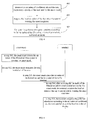
- Fig. 3 is the flow chart of a method for calculating the pollutant absorption quantity, according to an exemplary embodiment. As shown in Fig. 3 , the method is used by the smart respirator, the method including:
- the method provided in the embodiment of the disclosure can detect the air index of the filtered air, measure the user's total inhaled air, and send the air index of filtered air and the user's total inhaled air while wearing the smart respirator to a terminal, so that the pollutant absorption quantity may be calculated according to the air index of the filtered air, the total inhaled air and the local air index by the terminal, and thus the local air condition may be shown to the user more directly.
- the method before the air index of the filtered air and the total inhaled air are sent to the terminal, the method further includes:
- Fig. 4 is the flow chart of a method for calculating the pollutant absorption quantity, according to an exemplary embodiment. As shown in Fig. 4 , the method is used by the terminal, the method including:
- the method provided in the embodiment of the disclosure can calculate the pollutant absorption according to the air index of the filtered air, the total inhaled air and the local air index, and thus the local air condition may be shown to the user more directly.
- the method before receiving the air index of the filtered air of the filtered air and the user's total inhaled air sent by the smart respirator, the method further includes:
- the acquiring the local air index of the day includes:
- the calculating the pollutant absorption quantity according to the air index of the filtered air of the filtered air, the total inhaled air and the local air index of the day includes:
- the method further includes:
- Fig. 5 is the flow chart of a method for calculating the pollutant absorption quantity, according to an exemplary embodiment. As shown in Fig. 5 , the method is used by the terminal and the smart respirator, the method including the following steps.
- the smart respirator detects an air index of filtered air of the filtered air when the user is wearing the smart respirator; wherein, sensors are arranged inside the front respirator-body.
- the sensors include an air sensor and a flow sensor.
- the air sensor is used to detect the air index of the filtered air of the filtered air
- the flow sensor is used to measure the total inhaled air when the user is wearing the smart respirator. Therefore, when the user is wearing the smart respirator, the filter sheets arranged inside the smart respirator filters the air entering the smart respirator, and the air sensor in the smart respirator can detect the air index of the filtered air.
- step 502 the smart respirator measures the user's total inhaled air.
- the smart respirator can measure the user's total inhaled air based on the flow sensor arranged in the smart respirator.
- the smart respirator detecting the air index of the filtered air of the filtered air in step 501 and the smart respirator measuring the user's total inhaled air in step 502 are at the same time.
- the step of the smart respirator detecting the air index of the filtered air of the filtered air is set to be step 501, while the step of the smart respirator measuring the user's total inhaled air is set to be step 502.
- the steps 501 and 502 do not necessarily indicate the specific order to perform.
- step 503 the smart respirator sends the air index of the filtered air and of the filtered air and the total inhaled air to a terminal.
- a connecting module is arranged inside the processor of the smart respirator.
- the connecting module may be Bluetooth module, NFC module, infrared module or the like, and it is used to establish a connection to a terminal which also has connecting function.
- connecting module when the smart respirator is connecting to the terminal, there will be, but not limited to, several ways as below.
- the smart respirator and the terminal enable Bluetooth function, and discover each other in the process of device discovery; after that, the smart respirator broadcasts a Bluetooth signal; after the terminal receives the Bluetooth signal broadcast by the smart respirator, a connection is established between the terminal and the smart respirator according to the received Bluetooth signal.
- the smart respirator and the terminal enable NFC function, and an NFC channel is established by sending packet, and thus the connection between each other is established by the established NFC channel.
- the smart respirator and the terminal enable infrared function, and discover each other in the process of device discovery; after that, the smart respirator broadcasts an infrared signal; the terminal receives the infrared signal broadcast by the smart respirator, a connection is established between the terminal and the smart respirator according to the received infrared signal.
- the smart respirator Based on the connection established with the terminal, the smart respirator sends the air index of the filtered air and the total inhaled air to the terminal. If a Bluetooth connection is established between the smart respirator and the terminal, the smart respirator may send the air index of the filtered air and the total inhaled air to the terminal via the Bluetooth connection; if an NFC data channel is established between the smart respirator and the terminal, the smart respirator may send the air index of the filtered air and the total inhaled air to the terminal via the NFC data channel; and if an infrared connection is established between the smart respirator and the terminal, the smart respirator may send the air index of the filtered air and the total inhaled air to the terminal via the infrared connection.
- step 504 after receiving the air index of the filtered air of the filtered air and the total inhaled air sent by the smart respirator, the terminal acquires the local air index.
- the air index of the filtered air is the density of fine particulate matter, sulfur dioxide, nitrogen dioxide, ozone, carbon monoxide or the like, which is measured by microgram per stere.
- the terminal may determine the position of the terminal via Global Positioning System (GPS), and then acquire the local air index from internet; the terminal may also retrieve the data issued by the local observatory, and then acquire the local air index.
- GPS Global Positioning System
- the terminal may also detect the local air index whole day by the built-in air sensor, store the detected air index in the database, and retrieve the local air index from the database when receiving the wearing time sent by the smart respirator.
- step 505 the terminal calculates the pollutant absorption according to the air index of the filtered air, the total inhaled air and the local air index.
- the terminal when the terminal is calculating the pollutant absorption according to the air index of the filtered air of the filtered air, the total inhaled air and the local air index of the day, the following way may be employed.
- the terminal calculates the air purification degree according to the local air index and the air index of the filtered air.
- the terminal calculates the pollutant absorption quantity according to the total inhaled air and the air purification degree
- the terminal uploads it to the server, which determines an absorption-quantity ranking according to the pollutant absorption quantity uploaded by other terminals and return the adsorption-quantity ranking to the terminal.
- the terminal shows the adsorption-quantity ranking to the user after having received the ranking from the server so that the user can get to know the performance of the wearing smart respirator and the status of the air more directly.
- Fig. 6 is the schematic diagram of a smart respirator, according to an exemplary embodiment. As shown in Fig. 6 , the smart respirator includes detecting module 601, measuring module 602, and sending module 603.
- the detecting module 601 is configured to detect the air index of the filtered air of the filtered air when the user is wearing the smart respirator;
- the measuring module 602 is configured to measure the user's total inhaled air
- the sending module 603 is configured to send the air index of the filtered air of the filtered air and the total inhaled air to a terminal, and the pollutant absorption quantity is calculated according to the air index of the filtered air, the total inhaled air and the local air index by the terminal.
- the smart respirator further includes a connecting module.
- the connecting module is configured to enable a Bluetooth function so as to connect to the terminal via a Bluetooth signal; or the connecting module is configured to enable a Near Field Communication so as to connect to the terminal via an NFC data channel; or The connecting module is configured to enable an infrared function so as to connect to the terminal via an infrared signal.
- the smart respirator provided in the embodiment of the disclosure can detect the air index of the filtered air of the filtered air, measure the user's total inhaled air, and send the air index of the filtered air and the user's total inhaled air while wearing the smart respirator to a terminal, so that the pollutant absorption may be calculated according to the air index of the filtered air, the total inhaled air and the local air index by the terminal, and thus the local air condition may be shown to the user more directly.
- Fig. 7 is the schematic diagram of a device for calculating the pollutant absorption quantity, according to an exemplary embodiment. As shown in Fig. 7 , the device includes a first receiving module 701, acquisition module 702 and calculating module 703.
- the first receiving module 701 is configured to receive the air index of the filtered air of the filtered air and the user's total respiration capacity sent by the smart respirator;
- the acquisition module 702 is configured to acquire the local air index of the day when the user is wearing the smart respirator.
- the calculating module 703 is configured to calculate the pollutant absorption quantity according to the air index of the filtered air, the total inhaled air and the local air index.
- the device further includes a connecting module.
- the connecting module is configured to enable a Bluetooth function so as to connect to the smart respirator via a Bluetooth signal;
- the connecting module is configured to enable a Near Field Communication so as to connect to the smart respirator via a NFC data channel;
- the connecting module is configured to enable an infrared function so as to connect to the smart respirator via an infrared signal.
- the acquiring module is configured to acquire the local air index via internet;
- the acquiring module is configured to acquire the local air index by a built-in air sensor.
- the calculating module is configured to calculate an air purification degree according to the local air index and the air index of the filtered air, and calculate the pollutant absorption quantity according to the total inhaled air and the air purification degree.
- the device further includes an uploading module and a second receiving module.
- the uploading module is configured to upload the pollutant quantity to the server, which determines an absorption-quantity ranking according to the pollutant absorption quantity uploaded by other terminals and return the ranking of the absorption; and the second receiving module is configured to receive the absorption-quantity ranking sent by the server.
- the device provided in the embodiment of the disclosure can calculate the pollutant absorption quantity according to the air index of the filtered air, the total inhaled air and the local air index, and thus the local air condition may be shown to the user more directly.
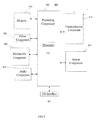
- Fig. 8 is a block diagram of a device 800 for a method for calculating the pollutant absorption, according to an exemplary embodiment.
- the device 800 may be a mobile phone, a computer, a digital broadcast terminal, a messaging device, a gaming console, a tablet, a medical device, exercise equipment, a personal digital assistant, and the like.
- the device 800 may include one or more of the following components: a processing component 802, a memory 804, a power component 806, a multimedia component 808, an audio component 810, an input/output (I/O) interface 812, a sensor component 814, and a communication component 816.
- a processing component 802 a memory 804, a power component 806, a multimedia component 808, an audio component 810, an input/output (I/O) interface 812, a sensor component 814, and a communication component 816.
- the processing component 802 typically controls overall operations of the device 800, such as the operations associated with display, telephone calls, data communications, camera operations, and recording operations.
- the processing component 802 may include one or more processors 820 to execute instructions to perform all or part of the steps in the above described methods.
- the processing component 802 may include one or more modules which facilitate the interaction between the processing component 802 and other components.
- the processing component 802 may include a multimedia module to facilitate the interaction between the multimedia component 808 and the processing component 802.
- the memory 804 is configured to store various types of data to support the operation of the device 800. Examples of such data include instructions for any applications or methods operated on the device 800, contact data, phonebook data, messages, pictures, video, etc.
- the memory 804 may be implemented using any type of volatile or non-volatile memory devices, or a combination thereof, such as a static random access memory (SRAM), an electrically erasable programmable read-only memory (EEPROM), an erasable programmable read-only memory (EPROM), a programmable read-only memory (PROM), a read-only memory (ROM), a magnetic memory, a flash memory, a magnetic or optical disk.
- SRAM static random access memory
- EEPROM electrically erasable programmable read-only memory
- EPROM erasable programmable read-only memory
- PROM programmable read-only memory
- ROM read-only memory
- magnetic memory a magnetic memory
- flash memory a flash memory
- magnetic or optical disk a magnetic or optical
- the power component 806 provides power to various components of the device 800.
- the power component 806 may include a power management system, one or more power sources, and any other components associated with the generation, management, and distribution of power in the device 800.
- the multimedia component 808 includes a screen providing an output interface between the device 800 and the user.
- the screen may include a liquid crystal display (LCD) and a touch panel (TP). If the screen includes the touch panel, the screen may be implemented as a touch screen to receive input signals from the user.
- the touch panel includes one or more touch sensors to sense touches, swipes, and gestures on the touch panel. The touch sensors may not only sense a boundary of a touch or swipe action, but also sense a period of time and a pressure associated with the touch or swipe action.
- the multimedia component 808 includes a front camera and/or a rear camera. The front camera and the rear camera may receive an external multimedia datum while the device 800 is in an operation mode, such as a photographing mode or a video mode. Each of the front camera and the rear camera may be a fixed optical lens system or have focus and optical zoom capability.
- the audio component 810 is configured to output and/or input audio signals.
- the audio component 810 includes a microphone ("MIC") configured to receive an external audio signal when the device 800 is in an operation mode, such as a call mode, a recording mode, and a voice recognition mode.
- the received audio signal may be further stored in the memory 804 or transmitted via the communication component 816.
- the audio component 810 further includes a speaker to output audio signals.
- the I/O interface 812 provides an interface between the processing component 802 and peripheral interface modules, such as a keyboard, a click wheel, buttons, and the like.
- the buttons may include, but are not limited to, a home button, a volume button, a starting button, and a locking button.
- the sensor component 814 includes one or more sensors to provide status assessments of various aspects of the device 800. For instance, the sensor component 814 may detect an open/closed status of the device 800, relative positioning of components, e.g., the display and the keypad, of the device 800, a change in position of the device 800 or a component of the device 800, a presence or absence of user contact with the device 800, an orientation or an acceleration/deceleration of the device 800, and a change in temperature of the device 800.
- the sensor component 814 may include a proximity sensor configured to detect the presence of nearby objects without any physical contact.
- the sensor component 814 may also include a light sensor, such as a CMOS or CCD image sensor, for use in imaging applications.
- the sensor component 814 may also include an accelerometer sensor, a gyroscope sensor, a magnetic sensor, a pressure sensor, or a temperature sensor.
- the communication component 816 is configured to facilitate communication, wired or wirelessly, between the device 800 and other devices.
- the device 800 can access a wireless network based on a communication standard, such as WiFi, 2G, or 3G, or a combination thereof.
- the communication component 816 receives a broadcast signal or broadcast associated information from an external broadcast management system via a broadcast channel.
- the communication component 816 further includes a Near Field Communication (NFC) module to facilitate short-range communications.
- the NFC module may be implemented based on a radio frequency identification (RFID) technology, an infrared data association (IrDA) technology, an ultra-wideband (UWB) technology, a Bluetooth (BT) technology, and other technologies.
- RFID radio frequency identification
- IrDA infrared data association
- UWB ultra-wideband
- BT Bluetooth
- the device 800 may be implemented with one or more application specific integrated circuits (ASICs), digital signal processors (DSPs), digital signal processing devices (DSPDs), programmable logic devices (PLDs), field programmable gate arrays (FPGAs), controllers, micro-controllers, microprocessors, or other electronic components, for performing the above described methods.
- ASICs application specific integrated circuits
- DSPs digital signal processors
- DSPDs digital signal processing devices
- PLDs programmable logic devices
- FPGAs field programmable gate arrays
- controllers micro-controllers, microprocessors, or other electronic components, for performing the above described methods.
- non-transitory computer-readable storage medium including instructions, such as included in the memory 804, executable by the processor 820 in the device 800, for performing the above-described methods.
- the non-transitory computer-readable storage medium may be a ROM, a RAM, a CD-ROM, a magnetic tape, a floppy disc, an optical data storage device, and the like.
- the method before receiving the air index of the filtered air of the filtered air and the user's total inhaled air sent by the smart respirator, the method further includes:
- the acquiring the local air index of the day includes:
- the calculating the pollutant absorption quantity according to the air index of the filtered air, the total inhaled air and the local air index includes:
- the method further includes:
- the pollutant absorption quantity can be calculated according to the air index of the filtered air of the filtered air, the total inhaled air and the local air index of the day, and thus the local air condition may be shown to the user more directly.
Landscapes
- Health & Medical Sciences (AREA)
- General Health & Medical Sciences (AREA)
- Business, Economics & Management (AREA)
- Emergency Management (AREA)
- Pulmonology (AREA)
- Life Sciences & Earth Sciences (AREA)
- Zoology (AREA)
- Measurement Of The Respiration, Hearing Ability, Form, And Blood Characteristics Of Living Organisms (AREA)
- Respiratory Apparatuses And Protective Means (AREA)
- Engineering & Computer Science (AREA)
- Physiology (AREA)
- Heart & Thoracic Surgery (AREA)
- Physical Education & Sports Medicine (AREA)
- Physics & Mathematics (AREA)
- Biophysics (AREA)
- Pathology (AREA)
- Biomedical Technology (AREA)
- Textile Engineering (AREA)
- Medical Informatics (AREA)
- Molecular Biology (AREA)
- Surgery (AREA)
- Animal Behavior & Ethology (AREA)
- Public Health (AREA)
- Veterinary Medicine (AREA)
- Investigating Or Analysing Biological Materials (AREA)
Abstract
Description
- The present disclosure generally relates to the field of smart respirators, and devices for calculating pollutant absorption.
- With development of science and technology, the pollution caused by industry is getting worse. The density of pollutant, such as Fine Particulate Matter (PM 2.5) or the like, in the air is increasing year by year, and the frequency of people suffering from various kinds of respiratory diseases keeps rising. Since a respirator can filter the air entering the lungs to some extent, it can avoid the pollutant in the air, such as poisonous gas or dust, to enter into the lungs, and thus it becomes an important defense for the people's health.
- But a user cannot easily know the improvement in air condition when the user is wearing a respirator. There is a need for improved respirators.
- In view of the fact in the related art, there are provided a smart respirator and a method, smart respirator and device for calculating pollutant absorption.
- According to a first aspect of the present disclosure, a smart respirator is provided, which comprises a front respirator-body, a main respirator-body and fixation band. The main respirator-body comprises a first open end and a second open end, wherein the diameter of the first open end is less than that of the second open end. The front respirator-body is arranged at the first open end of the main respirator-body, and the fixation band is arranged at the second open end of the main respirator-body; wherein, filter sheets and sensors are arranged in turn inside the front respirator-body. The sensors include an air sensor and a flow sensor, and the filter sheets are used to absorb pollutants in air entering the front respirator-body. The air sensor is used to detect an air index of filtered air, and the flow sensor is used to measure the total inhaled air when the user is wearing the smart respirator; the fixation band is used to fix the smart respirator on the user's nose and mouth by the second open end, so that a closed space is formed between the main respirator-body and the user's nose and mouth.
- It should be noted that by "in turn", it is meant that the filter sheets are located on the exterior side and the sensors are located on the interior side (the interior side being the side closer to the nose and mouth of the user when the mask is worn).
- According to an exemplary embodiment, an air exhaust device may be arranged inside the front respirator-body, and the filter sheets are arranged between the air exhaust device and the sensors; the air exhaust device is ventilator or fan, which is used to exhaust the air exhaled by the user out of the smart respirator.
- According to an exemplary embodiment, a processor and a battery may be arranged inside the front respirator-body; wherein the processor includes integrated circuit board and connecting module, and the integrated circuit board may at least be integrated by Printed Circuit Board (PCB) or a singlechip; the battery is used to supply power to the processor.
- According to an exemplary embodiment, the processor and the battery are arranged on the inner wall of the front respirator-body.
- According to an exemplary embodiment, the connecting module comprises one of Bluetooth module, infrared module and Near Field Communication (NFC) module.
- According to a second aspect of the present disclosure, a method for calculating pollutant absorption is provided, which is used in the smart respirator as described in first aspect, the method comprising: detecting an air index of filtered air when the user is wearing the smart respirator; measuring the user's total inhaled air; sending the air index of the filtered air and the total inhaled air to a terminal, and the pollutant absorption is calculated according to the air index of the filtered air, the total inhaled air and the local air index of the day when the user is wearing the smart respirator by the terminal.
- According to an exemplary embodiment, before the air index of the filtered air and the total inhaled air are sent to the terminal, the method further comprises: enabling a Bluetooth function so as to connect to the terminal via a Bluetooth signal; or enabling a Near Field Communication so as to connect to the terminal via an NFC data channel; or enabling an infrared function so as to connect to the terminal via an infrared signal.
- According to a third aspect of the present disclosure, a method for calculating pollutant absorption quantity is provided, the method comprising: receiving an air index of filtered air of the filtered air and the user's total respiration capacity sent by the smart respirator; acquiring the local air index of the day when the user is wearing the smart respirator; and calculating the pollutant absorption quantity according to the air index of the filtered air, the total inhaled air and the local air index.
- According to an exemplary embodiment, before receiving the air index of the filtered air and the user's total inhaled air sent by the smart respirator, the method further comprises: enabling a Bluetooth function so as to connect to the smart respirator via a Bluetooth signal; or enabling a Near Field Communication so as to connect to the smart respirator via an NFC data channel; or enabling an infrared function so as to connect to the smart respirator via an infrared signal.
- According to an exemplary embodiment, the acquiring the local air index of the day comprises: acquiring the local air index via internet; or acquiring the local air index by a built-in air sensor.
- According to an exemplary embodiment, the calculating the pollutant absorption quantity according to the air index of the filtered air, the total inhaled air and the local air index comprises: calculating an air purification degree according to the local air index and the air index of the filtered air; and calculating the pollutant absorption quantity according to the total inhaled air and the air purification degree.
- According to an exemplary embodiment, after calculating the pollutant absorption quantity, the method further comprises: uploading the pollutant quantity to the server, which determines an absorption-quantity ranking according to the pollutant absorption quantity uploaded by other terminals and returns the ranking of the absorption-quantity ranking; and receiving the absorption-quantity ranking sent by the server.
- According to a fourth aspect of the present disclosure, a smart respirator is provided, which comprising: detecting module, configured to detect an air index of filtered air when the user is wearing the smart respirator; measuring module, configured to measure the user's total inhaled air; sending module, configured to send the air index of the filtered air and the total inhaled air to a terminal, and the pollutant absorption is calculated according to the air index of the filtered air, the total inhaled air and the local air index of the day by the terminal.
- According to an exemplary embodiment, the smart respirator further comprises: connecting module, configured to enable a Bluetooth function so as to connect to the smart respirator via a Bluetooth signal; or connecting module, configured to enable a Near Field Communication so as to connect to the smart respirator via an NFC data channel; or connecting module, configured to enable an infrared function so as to connect to the smart respirator via an infrared signal.
- According to a fifth aspect of the present disclosure, a device for calculating pollutant absorption quantity is provided, the device comprising: a first receiving module, configured to receive an air index of filtered air and the user's total respiration capacity sent by the smart respirator; a acquiring module, configured to acquire the local air index of the day when the user is wearing the smart respirator; a calculating module, configured to calculate the pollutant absorption quantity according to the air index of the filtered air, the total inhaled air and the local air index.
- According to an exemplary embodiment, the device further comprises: connecting module, configured to enable a Bluetooth function so as to connect to the smart respirator via a Bluetooth signal; or connecting module, configured to enable a Near Field Communication so as to connect to the smart respirator via an NFC data channel; or connecting module, configured to enable an infrared function so as to connect to the smart respirator via an infrared signal.
- According to an exemplary embodiment, the acquiring module is used to: acquire the local air index via internet; or acquire the local air index by a built-in air sensor.
- According to an exemplary embodiment, the calculating module is used to calculating an air purification degree according to the local air index and the air index of the filtered air; and calculating the pollutant absorption quantity according to the total inhaled air and the air purification degree.
- According to an exemplary embodiment, the device further comprises: uploading module, used to upload the pollutant quantity to the server, which determines an absorption-quantity ranking according to the pollutant absorption quantity uploaded by other terminals; and second receiving module, used to receive the absorption-quantity ranking sent by the server.
- According to a sixth aspect of the present disclosure, a smart respirator is provided, which comprising: processor; memory, used to store the instructions executable by the processor; wherein the processor is configure to: detect an air index of filtered air when the user is wearing the smart respirator; measure the user's total inhaled air; send the air index of the filtered air and the total inhaled air to a terminal, and the pollutant absorption quantity is calculated according to the air index of the filtered air, the total inhaled air and the local air index of the day when the user is wearing the smart respirator by the terminal.
- According to a seventh aspect of the present disclosure, a device for calculating pollutant absorption is provided, the device comprising: processor; memory, used to store the instructions executable by the processor; wherein the processor is configure to: receive an air index of filtered air and the user's total respiration capacity sent by the smart respirator; acquire the local air index of the day when the user is wearing the smart respirator; and calculate the pollutant absorption quantity according to the air index of the filtered air, the total inhaled air and the local air index.
- The technical solutions provided in the embodiment of the disclosure may have the following advantageous:
- by the filter sheets and sensors arranged in turn inside the front respirator-body of the smart respirator, the smart respirator can not only absorb pollutants in air into the front respirator-body, but also can detect the air index of the filtered air, and measure the user's total inhaled air when the user is wearing the smart respirator. The pollutant absorption quantity is calculated according to the air index of the filtered air, the total inhaled air and the local air index, and thus the local air condition may be shown to the user more directly.
- The accompanying drawings, which are incorporated in and constitute a part of this specification, illustrate embodiments consistent with the invention and, together with the description, serve to explain the principles of the invention.
-
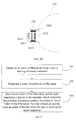
Fig. 1 is a schematic diagram showing the structure of a smart respirator, according to another embodiment. -
Fig. 2A is a schematic diagram showing the structure of a main respirator-body, according to another embodiment. -
Fig. 2B is a schematic diagram showing the structure of a front respirator-body, according to another embodiment. -
Fig. 2C is a schematic diagram showing the structure of a front respirator-body, according to another embodiment. -
Fig. 2D is a schematic diagram showing the structure of a front respirator-body, according to another embodiment. -
Fig. 3 is a flow chart showing a method for calculating pollutant absorption quantity, according to another embodiment. -
Fig. 4 is a flow chart showing a method for calculating pollutant absorption quantity, according to another embodiment. -
Fig. 5 is a flow chart showing a method for calculating pollutant absorption quantity, according to another embodiment. -
Fig. 6 is a schematic diagram showing the structure of a smart respirator, according to another embodiment. -
Fig. 7 is a schematic diagram showing the structure of a device for calculating pollutant absorption, according to another embodiment. -
Fig. 8 is a block diagram showing a device for calculating pollutant absorption quantity, according to another embodiment. - Reference will now be made in detail to exemplary embodiments, examples of which are illustrated in the accompanying drawings. The following description refers to the accompanying drawings in which the same numbers in different drawings represent the same or similar elements unless otherwise represented. The implementations set forth in the following description of exemplary embodiments do not represent all implementations consistent with the invention. Instead, they are merely examples of devices and methods consistent with aspects related to the invention as recited in the appended claims.
- In the embodiments of the disclosure, there is provided a smart respirator. Referring to
Fig, 1 , the smart respirator includes the front respirator-body 101, the main respirator-body 1-2 andfixation band 103. - Referring to
Fig. 2A , the main respirator-body 102 includes a firstopen end 1021 and a secondopen end 1022. Wherein, the diameter of the first open and 1021 is less than that of the secondopen end 1022. The front respirator-body 101 is arranged at the firstopen end 1021 of the main respirator-body, andfixation band 103 is arranged at the secondopen end 1022 of the main respirator-body. - Referring to
Fig. 2B ,filter sheets 1011 andsensors 1012 are arranged in turn inside the front respirator-body 101. Thesensors 1012 include an air sensor and a flow sensor. Wherein, the filter sheets are used to absorb pollutants in air entering the front respirator-body 101. The air sensor is of great sensitivity to various kinds of pollutants, such as alcohol, cigarette, ammonia, sulfide or the like, and the air sensor may be used to detect an air index of filtered air. The flow sensor is used to measure the total inhaled air when the user is wearing the smart respirator. - The
fixation band 103 is used to fix the smart respirator on the user's nose and mouth by the secondopen end 1022, so that a closed space is formed between the main respirator-body 102 and the user's nose and mouth. - Referring to
Fig. 2C , anair exhaust device 1013 may be arranged inside the front respirator-body 101, and thefilter sheets 1011 are arranged between theair exhaust device 1013 and thesensors 1012. Wherein, theair exhaust device 1013 may be a ventilator, fan or the like, and theair exhaust device 1013 is used to exhaust the air exhaled by the user out of the smart respirator. - In an exemplary embodiment of the disclosure, a
processor 1014 and abattery 1015 may be arranged inside the front respirator-body 101. Referring toFig. 2D , theprocessor 1014 and thebattery 1015 are arranged on the inner wall of the front respirator-body 101. Wherein, theprocessor 1014 includes integrated circuit board and connecting module, and the integrated circuit board is integrated by Printed Circuit Board (PCB), a singlechip or the like. Theprocessor 1014 is the control center of the smart respirator, which is used to control the sensors to record the time of wearing the smart respirator or control the connecting module to be paired and connected with other terminals or the like. Thebattery 1015 is used to supply power to theprocessor 1014. - In an exemplary embodiment of the disclosure, the connecting module includes one of Bluetooth module, infrared module, Near Field Communication (NFC) module.
- By the filter sheets and sensors arranged in turn inside the front respirator-body, the smart respirator provided in the embodiment of the disclosure can not only detect the air index of the filtered air, but also measure the user's total inhaled air when he is wearing the smart respirator.
-
Fig. 3 is the flow chart of a method for calculating the pollutant absorption quantity, according to an exemplary embodiment. As shown inFig. 3 , the method is used by the smart respirator, the method including: - in
step 301, detecting the air index of the filtered air when the user is wearing the smart respirator; - in
step 302, measuring the user's total inhaled air; - in
step 303, sending the air index of the filtered air and the total inhaled air to a terminal, and the pollutant absorption quantity is calculated according to the air index of the filtered air, the total inhaled air and the local air index of the day when the user is wearing the smart respirator by the terminal. - The method provided in the embodiment of the disclosure can detect the air index of the filtered air, measure the user's total inhaled air, and send the air index of filtered air and the user's total inhaled air while wearing the smart respirator to a terminal, so that the pollutant absorption quantity may be calculated according to the air index of the filtered air, the total inhaled air and the local air index by the terminal, and thus the local air condition may be shown to the user more directly.
- In an exemplary embodiment of the disclosure, before the air index of the filtered air and the total inhaled air are sent to the terminal, the method further includes:
- enabling a Bluetooth function so as to connect to the terminal via a Bluetooth signal; or
- enabling a Near Field Communication so as to connect to the terminal via an NFC data channel; or
- enabling an infrared function so as to connect to the terminal via an infrared signal.
- All the alternative technical solutions may be combined in any way to form alternative embodiments of the disclosure, which are not elaborated herein.
-
Fig. 4 is the flow chart of a method for calculating the pollutant absorption quantity, according to an exemplary embodiment. As shown inFig. 4 , the method is used by the terminal, the method including: - in
step 401, receiving an air index of filtered air of the filtered air and the user's total respiration capacity sent by the smart respirator; - in
step 402, acquiring the local air index of the day when the user is wearing the smart respirator; - in
step 403, calculating the pollutant absorption quantity according to the air index of the filtered air, the total inhaled air and the local air index. - The method provided in the embodiment of the disclosure can calculate the pollutant absorption according to the air index of the filtered air, the total inhaled air and the local air index, and thus the local air condition may be shown to the user more directly.
- In an exemplary embodiment of the disclosure, before receiving the air index of the filtered air of the filtered air and the user's total inhaled air sent by the smart respirator, the method further includes:
- enabling a Bluetooth function so as to connect to the smart respirator via a Bluetooth signal; or
- enabling a Near Field Communication so as to connect to the smart respirator via an NFC data channel; or
- enabling an infrared function so as to connect to the smart respirator via an infrared signal.
- In an exemplary embodiment of the disclosure, the acquiring the local air index of the day includes:
- acquiring the local air index via internet; or
- acquiring the local air index by a built-in air sensor.
- In an exemplary embodiment of the disclosure, the calculating the pollutant absorption quantity according to the air index of the filtered air of the filtered air, the total inhaled air and the local air index of the day includes:
- calculating an air purification degree according to the local air index of the day and the air index of the filtered air of the filtered air; and
- calculating the pollutant absorption quantity according to the total inhaled air and the air purification degree.
- In an exemplary embodiment of the disclosure, after calculating the pollutant absorption quantity, the method further includes:
- uploading the pollutant quantity to the server, which determines an absorption-quantity ranking according to the pollutant absorption quantity uploaded by other terminals and returns the ranking of the absorption-quantity ranking;
- receiving the absorption-quantity ranking sent by the server.
- All the above alternative technical solutions may be combined in any way to form alternative embodiments of the disclosure, which are not elaborated herein.
-
Fig. 5 is the flow chart of a method for calculating the pollutant absorption quantity, according to an exemplary embodiment. As shown inFig. 5 , the method is used by the terminal and the smart respirator, the method including the following steps. - In step 501, the smart respirator detects an air index of filtered air of the filtered air when the user is wearing the smart respirator;
wherein, sensors are arranged inside the front respirator-body. The sensors include an air sensor and a flow sensor. The air sensor is used to detect the air index of the filtered air of the filtered air, and the flow sensor is used to measure the total inhaled air when the user is wearing the smart respirator. Therefore, when the user is wearing the smart respirator, the filter sheets arranged inside the smart respirator filters the air entering the smart respirator, and the air sensor in the smart respirator can detect the air index of the filtered air. - In step 502, the smart respirator measures the user's total inhaled air.
- The smart respirator can measure the user's total inhaled air based on the flow sensor arranged in the smart respirator.
- It should be noted that the smart respirator detecting the air index of the filtered air of the filtered air in step 501 and the smart respirator measuring the user's total inhaled air in step 502 are at the same time. In the embodiment, the step of the smart respirator detecting the air index of the filtered air of the filtered air is set to be step 501, while the step of the smart respirator measuring the user's total inhaled air is set to be step 502. The steps 501 and 502 do not necessarily indicate the specific order to perform.
- In
step 503, the smart respirator sends the air index of the filtered air and of the filtered air and the total inhaled air to a terminal. - A connecting module is arranged inside the processor of the smart respirator. The connecting module may be Bluetooth module, NFC module, infrared module or the like, and it is used to establish a connection to a terminal which also has connecting function.
- For different kinds of connecting module, when the smart respirator is connecting to the terminal, there will be, but not limited to, several ways as below.
- In the first way, the smart respirator and the terminal enable Bluetooth function, and discover each other in the process of device discovery; after that, the smart respirator broadcasts a Bluetooth signal; after the terminal receives the Bluetooth signal broadcast by the smart respirator, a connection is established between the terminal and the smart respirator according to the received Bluetooth signal.
- In the second way, the smart respirator and the terminal enable NFC function, and an NFC channel is established by sending packet, and thus the connection between each other is established by the established NFC channel.
- In the third way, the smart respirator and the terminal enable infrared function, and discover each other in the process of device discovery; after that, the smart respirator broadcasts an infrared signal; the terminal receives the infrared signal broadcast by the smart respirator, a connection is established between the terminal and the smart respirator according to the received infrared signal.
- Of course, other ways may be taken when the connection is established between the smart respirator and the terminal, and they will not be elaborated herein.
- Based on the connection established with the terminal, the smart respirator sends the air index of the filtered air and the total inhaled air to the terminal. If a Bluetooth connection is established between the smart respirator and the terminal, the smart respirator may send the air index of the filtered air and the total inhaled air to the terminal via the Bluetooth connection; if an NFC data channel is established between the smart respirator and the terminal, the smart respirator may send the air index of the filtered air and the total inhaled air to the terminal via the NFC data channel; and if an infrared connection is established between the smart respirator and the terminal, the smart respirator may send the air index of the filtered air and the total inhaled air to the terminal via the infrared connection.
- In step 504, after receiving the air index of the filtered air of the filtered air and the total inhaled air sent by the smart respirator, the terminal acquires the local air index.
- Wherein, the air index of the filtered air is the density of fine particulate matter, sulfur dioxide, nitrogen dioxide, ozone, carbon monoxide or the like, which is measured by microgram per stere. After receiving the air index of the filtered air of the filtered air and the total inhaled air sent by the smart respirator, the terminal may determine the position of the terminal via Global Positioning System (GPS), and then acquire the local air index from internet; the terminal may also retrieve the data issued by the local observatory, and then acquire the local air index. The terminal may also detect the local air index whole day by the built-in air sensor, store the detected air index in the database, and retrieve the local air index from the database when receiving the wearing time sent by the smart respirator.
- In
step 505, the terminal calculates the pollutant absorption according to the air index of the filtered air, the total inhaled air and the local air index. - In the embodiment, when the terminal is calculating the pollutant absorption according to the air index of the filtered air of the filtered air, the total inhaled air and the local air index of the day, the following way may be employed.
- In the first step, the terminal calculates the air purification degree according to the local air index and the air index of the filtered air.
- In the first step, the terminal may minus the air index of the filtered air by the local air index to get the air purification degree, i.e.:

- For example, if the local air index when the user wears the smart respirator is 20 micrograms per stere, and the air index of the filtered air is 8 micrograms per stere, then the degree of purification of the air= the local air index - the air index of the filtered air = (20-8) micrograms per stere=12 micrograms per stere.
- In the second step, the terminal calculates the pollutant absorption quantity according to the total inhaled air and the air purification degree
In the second step, the terminal may multiply the degree of purification of the air by the total inhaled air to get the pollutant absorption. i.e.:
- For example, if the local air index when the user wears the smart respirator is 35 micrograms per stere, the air index of the filtered air of the air filtered by the smart respirator is 15 micrograms per stere, and the total inhaled air when the user is wearing the smart respirator is 10 steres, then the pollutant absorption quantity = (the local air index - the air index of the filtered air) * the total inhaled air = (35 micrograms per stere-15 micrograms per stere) * 10 steres = 200 micrograms.
- To show the capability for the smart respirator worn by the user to absorb the pollutants more directly, if the pollutant absorption quantity is calculated, the terminal uploads it to the server, which determines an absorption-quantity ranking according to the pollutant absorption quantity uploaded by other terminals and return the adsorption-quantity ranking to the terminal. The terminal shows the adsorption-quantity ranking to the user after having received the ranking from the server so that the user can get to know the performance of the wearing smart respirator and the status of the air more directly.
-
Fig. 6 is the schematic diagram of a smart respirator, according to an exemplary embodiment. As shown inFig. 6 , the smart respirator includes detectingmodule 601, measuringmodule 602, and sendingmodule 603. - The detecting
module 601 is configured to detect the air index of the filtered air of the filtered air when the user is wearing the smart respirator; - The measuring
module 602 is configured to measure the user's total inhaled air; - The sending
module 603 is configured to send the air index of the filtered air of the filtered air and the total inhaled air to a terminal, and the pollutant absorption quantity is calculated according to the air index of the filtered air, the total inhaled air and the local air index by the terminal. - In an exemplary embodiment of the disclosure, the smart respirator further includes a connecting module.
- The connecting module is configured to enable a Bluetooth function so as to connect to the terminal via a Bluetooth signal; or
the connecting module is configured to enable a Near Field Communication so as to connect to the terminal via an NFC data channel; or
The connecting module is configured to enable an infrared function so as to connect to the terminal via an infrared signal. - The smart respirator provided in the embodiment of the disclosure can detect the air index of the filtered air of the filtered air, measure the user's total inhaled air, and send the air index of the filtered air and the user's total inhaled air while wearing the smart respirator to a terminal, so that the pollutant absorption may be calculated according to the air index of the filtered air, the total inhaled air and the local air index by the terminal, and thus the local air condition may be shown to the user more directly.
- With respect to the smart respirator in the above embodiments, the specific manners for performing operations for individual modules therein have been described in detail in the embodiments regarding the methods, which will not be elaborated herein.
-
Fig. 7 is the schematic diagram of a device for calculating the pollutant absorption quantity, according to an exemplary embodiment. As shown inFig. 7 , the device includes afirst receiving module 701,acquisition module 702 and calculatingmodule 703. - The
first receiving module 701 is configured to receive the air index of the filtered air of the filtered air and the user's total respiration capacity sent by the smart respirator; - The
acquisition module 702 is configured to acquire the local air index of the day when the user is wearing the smart respirator; and - The calculating
module 703 is configured to calculate the pollutant absorption quantity according to the air index of the filtered air, the total inhaled air and the local air index. - In an exemplary embodiment of the disclosure, the device further includes a connecting module.
- The connecting module is configured to enable a Bluetooth function so as to connect to the smart respirator via a Bluetooth signal; or
- The connecting module is configured to enable a Near Field Communication so as to connect to the smart respirator via a NFC data channel; or
- The connecting module is configured to enable an infrared function so as to connect to the smart respirator via an infrared signal.
- In an exemplary embodiment of the disclosure, the acquiring module is configured to acquire the local air index via internet; or
- the acquiring module is configured to acquire the local air index by a built-in air sensor.
- In an exemplary embodiment of the disclosure, the calculating module is configured to calculate an air purification degree according to the local air index and the air index of the filtered air, and calculate the pollutant absorption quantity according to the total inhaled air and the air purification degree.
- In an exemplary embodiment of the disclosure, the device further includes an uploading module and a second receiving module.
- The uploading module is configured to upload the pollutant quantity to the server, which determines an absorption-quantity ranking according to the pollutant absorption quantity uploaded by other terminals and return the ranking of the absorption; and
the second receiving module is configured to receive the absorption-quantity ranking sent by the server. - The device provided in the embodiment of the disclosure can calculate the pollutant absorption quantity according to the air index of the filtered air, the total inhaled air and the local air index, and thus the local air condition may be shown to the user more directly.
- With respect to the smart respirator in the above embodiments, the specific manners for performing operations for individual modules therein have been described in detail in the embodiments regarding the methods, which will not be elaborated herein.
-
Fig. 8 is a block diagram of adevice 800 for a method for calculating the pollutant absorption, according to an exemplary embodiment. For example, thedevice 800 may be a mobile phone, a computer, a digital broadcast terminal, a messaging device, a gaming console, a tablet, a medical device, exercise equipment, a personal digital assistant, and the like. - Referring to
Fig. 8 , thedevice 800 may include one or more of the following components: aprocessing component 802, amemory 804, apower component 806, amultimedia component 808, anaudio component 810, an input/output (I/O)interface 812, asensor component 814, and acommunication component 816. - The
processing component 802 typically controls overall operations of thedevice 800, such as the operations associated with display, telephone calls, data communications, camera operations, and recording operations. Theprocessing component 802 may include one ormore processors 820 to execute instructions to perform all or part of the steps in the above described methods. Moreover, theprocessing component 802 may include one or more modules which facilitate the interaction between theprocessing component 802 and other components. For instance, theprocessing component 802 may include a multimedia module to facilitate the interaction between themultimedia component 808 and theprocessing component 802. - The
memory 804 is configured to store various types of data to support the operation of thedevice 800. Examples of such data include instructions for any applications or methods operated on thedevice 800, contact data, phonebook data, messages, pictures, video, etc. Thememory 804 may be implemented using any type of volatile or non-volatile memory devices, or a combination thereof, such as a static random access memory (SRAM), an electrically erasable programmable read-only memory (EEPROM), an erasable programmable read-only memory (EPROM), a programmable read-only memory (PROM), a read-only memory (ROM), a magnetic memory, a flash memory, a magnetic or optical disk. - The
power component 806 provides power to various components of thedevice 800. Thepower component 806 may include a power management system, one or more power sources, and any other components associated with the generation, management, and distribution of power in thedevice 800. - The
multimedia component 808 includes a screen providing an output interface between thedevice 800 and the user. In some embodiments, the screen may include a liquid crystal display (LCD) and a touch panel (TP). If the screen includes the touch panel, the screen may be implemented as a touch screen to receive input signals from the user. The touch panel includes one or more touch sensors to sense touches, swipes, and gestures on the touch panel. The touch sensors may not only sense a boundary of a touch or swipe action, but also sense a period of time and a pressure associated with the touch or swipe action. In some embodiments, themultimedia component 808 includes a front camera and/or a rear camera. The front camera and the rear camera may receive an external multimedia datum while thedevice 800 is in an operation mode, such as a photographing mode or a video mode. Each of the front camera and the rear camera may be a fixed optical lens system or have focus and optical zoom capability. - The
audio component 810 is configured to output and/or input audio signals. For example, theaudio component 810 includes a microphone ("MIC") configured to receive an external audio signal when thedevice 800 is in an operation mode, such as a call mode, a recording mode, and a voice recognition mode. The received audio signal may be further stored in thememory 804 or transmitted via thecommunication component 816. In some embodiments, theaudio component 810 further includes a speaker to output audio signals. - The I/
O interface 812 provides an interface between theprocessing component 802 and peripheral interface modules, such as a keyboard, a click wheel, buttons, and the like. The buttons may include, but are not limited to, a home button, a volume button, a starting button, and a locking button. - The
sensor component 814 includes one or more sensors to provide status assessments of various aspects of thedevice 800. For instance, thesensor component 814 may detect an open/closed status of thedevice 800, relative positioning of components, e.g., the display and the keypad, of thedevice 800, a change in position of thedevice 800 or a component of thedevice 800, a presence or absence of user contact with thedevice 800, an orientation or an acceleration/deceleration of thedevice 800, and a change in temperature of thedevice 800. Thesensor component 814 may include a proximity sensor configured to detect the presence of nearby objects without any physical contact. Thesensor component 814 may also include a light sensor, such as a CMOS or CCD image sensor, for use in imaging applications. In some embodiments, thesensor component 814 may also include an accelerometer sensor, a gyroscope sensor, a magnetic sensor, a pressure sensor, or a temperature sensor. - The
communication component 816 is configured to facilitate communication, wired or wirelessly, between thedevice 800 and other devices. Thedevice 800 can access a wireless network based on a communication standard, such as WiFi, 2G, or 3G, or a combination thereof. In one exemplary embodiment, thecommunication component 816 receives a broadcast signal or broadcast associated information from an external broadcast management system via a broadcast channel. In one exemplary embodiment, thecommunication component 816 further includes a Near Field Communication (NFC) module to facilitate short-range communications. For example, the NFC module may be implemented based on a radio frequency identification (RFID) technology, an infrared data association (IrDA) technology, an ultra-wideband (UWB) technology, a Bluetooth (BT) technology, and other technologies. - In exemplary embodiments, the
device 800 may be implemented with one or more application specific integrated circuits (ASICs), digital signal processors (DSPs), digital signal processing devices (DSPDs), programmable logic devices (PLDs), field programmable gate arrays (FPGAs), controllers, micro-controllers, microprocessors, or other electronic components, for performing the above described methods. - In exemplary embodiments, there is also provided a non-transitory computer-readable storage medium including instructions, such as included in the
memory 804, executable by theprocessor 820 in thedevice 800, for performing the above-described methods. For example, the non-transitory computer-readable storage medium may be a ROM, a RAM, a CD-ROM, a magnetic tape, a floppy disc, an optical data storage device, and the like. - A non-transitory computer readable store media with instructions stored thereon which, when executed by the processor of a mobile terminal, causing the mobile terminal perform a method for calculating pollutant absorption, the method including:
- receiving an air index of filtered air of the filtered air and the user's total respiration capacity sent by a smart respirator;
- acquiring the local air index of the day when the user is wearing the smart respirator;
- calculating the pollutant absorption according to the air index of the filtered air, the total inhaled air and the local air index.
- Alternatively, before receiving the air index of the filtered air of the filtered air and the user's total inhaled air sent by the smart respirator, the method further includes:
- enable a Bluetooth function so as to connect to the smart respirator via a Bluetooth signal; or
- enable a Near Field Communication so as to connect to the smart respirator via an NFC data channel; or
- enable an infrared function so as to connect to the smart respirator via an infrared signal.
- Alternatively, the acquiring the local air index of the day includes:
- acquiring the local air index via internet; or
- acquiring the local air index by a built-in air sensor.
- Alternatively, the calculating the pollutant absorption quantity according to the air index of the filtered air, the total inhaled air and the local air index includes:
- calculating an air purification degree according to the local air index of the day and the air index of the filtered air; and
- calculating the pollutant absorption quantity according to the total inhaled air and the air purification degree.
- Alternatively, after calculating the pollutant absorption quantity, the method further includes:
- uploading the pollutant quantity to the server, which determines an absorption-quantity ranking according to the pollutant absorption quantity uploaded by other terminals and returns the ranking of the absorption-quantity ranking; and
- receiving the absorption-quantity ranking sent by the server.
- By the non-transitory computer readable store media provided in the embodiment of the disclosure, the pollutant absorption quantity can be calculated according to the air index of the filtered air of the filtered air, the total inhaled air and the local air index of the day, and thus the local air condition may be shown to the user more directly.
- Other embodiments of the invention will be apparent to those skilled in the art from consideration of the specification and practice of the invention disclosed here. This application is intended to cover any variations, uses, or adaptations of the invention following the general principles thereof and including such departures from the present disclosure as come within known or customary practice in the art. It is intended that the specification and examples be considered as exemplary only, with a true scope of the invention being indicated by the following claims.
- It will be appreciated that the present invention is not limited to the exact construction that has been described above and illustrated in the accompanying drawings, and that various modifications and changes can be made without departing from the scope thereof. It is intended that the scope of the invention only be limited by the appended claims.
Claims (15)
- A smart respirator, characterized in that it comprises a front respirator-body (101), a main respirator-body (102) and a fixation band (103);
the main respirator-body (102) comprises a first open end (1021) and a second open end (1022), where the diameter of the first open end (1021) is less than that of the second open end (1022);
the front respirator-body (101) is arranged at the first open end (1021) of the main respirator-body (102); and
the fixation band (103) is arranged at the second open end (1022) of the main respirator-body (102);
wherein, filter sheets (1011) and sensors (1012) are arranged in turn inside the front respirator-body (101);
the sensors (1012) comprise an air sensor and a flow sensor;
the filter sheets (1011) are used to absorb pollutants in air entering the front respirator-body;
the air sensor (1012) is used to detect an air index of filtered air;
the flow sensor is used to measure a total inhaled air of a user when the user is wearing the smart respirator; and
the fixation band (103) is used to fix the smart respirator on the nose and the mouth of the user by the second open end (1022), so that a closed space is formed between the main respirator-body (102) and the user's nose and mouth. - The smart respirator of claim 1, wherein an air exhaust device (1013) is further arranged inside the front respirator-body (101), and the filter sheets (1011) are arranged between the air exhaust device (1013) and the sensors (1012); and
the air exhaust device (1013) is a ventilator or a fan, which is used to exhaust the air exhaled by the user out of the smart respirator. - The smart respirator of claim 1, wherein a processor (1014) and a battery (1015) are further arranged inside the front respirator-body (101);
the processor (1014) comprises integrated circuit board and a connecting module, while the integrated circuit board being integrated at least by a Printed Circuit Board (PCB) or a singlechip; and
the battery (1015) is used to supply power to the processor. - The smart respirator of claim 3, wherein the processor (1014) and the battery (1015) are arranged on the inner wall of the front respirator-body.
- The smart respirator of claim 4, wherein the connecting module comprises one of a Bluetooth module, an infrared module and a Near Field Communication (NFC) module.
- A method for calculating pollutant absorption quantity, using the smart respirator of any of claims 1-5, characterized in that is comprises:detecting (301) an air index of filtered air when the user is wearing the smart respirator;measuring (302) the total inhaled air of the user; andsending (303) the air index of the filtered air and the total inhaled air to a terminal, which calculates the pollutant absorption quantity according to the air index of the filtered air, the total inhaled air and a local air index of the day when the user is wearing the smart respirator.
- The method of claim 6, wherein before sending the air index of the filtered air and the total inhaled air to the terminal, the method further comprises:enabling a Bluetooth function so as to connect to the terminal via a Bluetooth signal; orenabling a Near Field Communication (NFC) function so as to connect to the terminal via an NFC data channel; orenabling an infrared function so as to connect to the terminal via an infrared signal.
- A method for calculating pollutant-adsorption, wherein the method further comprises:receiving (401) an air index of filtered air and a total respiration capacity of a user sent by a smart respirator;acquiring (402) a local air index of the day when the user is wearing the smart respirator; andcalculating (403) the pollutant-adsorption quantity according to the air index of the filtered air, the total inhaled air and the local air index.
- The method of claim 8, wherein before receiving the air index of the filtered air and the total respiration capacity sent by the smart respirator, the method further comprises:enabling a Bluetooth function so as to connect to the smart respirator via a Bluetooth signal; orenabling a Near Field Communication (NFC) function so as to connect to the smart respirator via a NFC data channel; orenabling an infrared function so as to connect to the smart respirator via an infrared signal.
- The method of claim 8, wherein acquiring the local air index comprises:acquiring the local air index via internet; oracquiring the local air index by a built-in air sensor.
- The method of claim 8, wherein calculating the pollutant-adsorption quantity according to the air index of the filtered air, the total inhaled air and the local air index comprises:calculating an air purification degree according to the local air index and the air index of the filtered air; andcalculating the pollutant-adsorption quantity according to the total inhaled air and the air purification degree.
- The method of claim 8, wherein after calculating the pollutant-adsorption quantity, the method further comprises:uploading the pollutant-adsorption to a server, which determines a adsorption-quantity ranking of pollutant-adsorption quantities according to the pollutant-adsorption quantities uploaded by other terminals and returns the adsorption-quantity ranking ; andreceiving the adsorption-quantity ranking sent by the server.
- A smart respirator, characterized in that it comprises:a detecting module (601), configured to detect an air index of filtered air when a user is wearing the smart respirator;a measuring module (602), configured to measure a total inhaled air of the user; anda sending module (603), configured to send an air index of filtered air and the total inhaled air to a terminal, wherein the terminal calculates a pollutant-adsorption quantity according to the air index of the filtered air, the total inhaled air and a local air index of the day when the user is wearing the smart respirator.
- A device for calculating a pollutant-adsorption quantity, characterized in comprising:a first receiving module (701), configured to receive an air index of filtered air and a total respiration capacity of a user sent by a smart respirator according to claims 1 to 5;an acquiring module (702), configured to acquire a local air index of the day when the user is wearing the smart respirator; anda calculating module (703), configured to calculate the pollutant-adsorption quantity according to an air index of filtered air, the total inhaled air and the local air index.
- A smart respirator, characterized in comprising:a processor;a memory for storing instructions executable by the processor,wherein the processor is configure to:detect an air index of filtered air when a user is wearing the smart respirator;measure a total inhaled air of the user;send an air index of filtered air and the total inhaled air to a terminal, which calculates a pollutant-adsorption quantity according to the air index of the filtered air, the total inhaled air and the local air index of the day when the user is wearing the smart respirator.
Applications Claiming Priority (1)
| Application Number | Priority Date | Filing Date | Title |
|---|---|---|---|
| CN201510463219.XA CN105029770B (en) | 2015-07-31 | 2015-07-31 | Intelligence mouth mask, the method for calculating pollutant adsorbance, intelligence mouth mask and device |
Publications (3)
| Publication Number | Publication Date |
|---|---|
| EP3124082A2 true EP3124082A2 (en) | 2017-02-01 |
| EP3124082A3 EP3124082A3 (en) | 2017-02-08 |
| EP3124082B1 EP3124082B1 (en) | 2018-07-04 |
Family
ID=54437205
Family Applications (1)
| Application Number | Title | Priority Date | Filing Date |
|---|---|---|---|
| EP16166964.3A Active EP3124082B1 (en) | 2015-07-31 | 2016-04-26 | Smart respirator and method for calculating pollutant absorption |
Country Status (8)
| Country | Link |
|---|---|
| US (1) | US10981022B2 (en) |
| EP (1) | EP3124082B1 (en) |
| JP (1) | JP2017527714A (en) |
| KR (1) | KR101803667B1 (en) |
| CN (1) | CN105029770B (en) |
| MX (1) | MX367550B (en) |
| RU (1) | RU2628711C1 (en) |
| WO (1) | WO2017020497A1 (en) |
Cited By (1)
| Publication number | Priority date | Publication date | Assignee | Title |
|---|---|---|---|---|
| WO2017098329A1 (en) * | 2015-12-07 | 2017-06-15 | Christopher Dobbing | Respirator mask management system |
Families Citing this family (35)
| Publication number | Priority date | Publication date | Assignee | Title |
|---|---|---|---|---|
| US9510024B2 (en) * | 2014-09-12 | 2016-11-29 | Spotify Ab | System and method for early media buffering using prediction of user behavior |
| CN105029770B (en) * | 2015-07-31 | 2016-08-17 | 小米科技有限责任公司 | Intelligence mouth mask, the method for calculating pollutant adsorbance, intelligence mouth mask and device |
| CN105342037A (en) * | 2015-12-10 | 2016-02-24 | 单福琪 | Static anti-haze intelligent mask |
| CN105457177A (en) * | 2016-01-16 | 2016-04-06 | 郑辉 | Intelligent mask with built-in detection device |
| CN105661694B (en) * | 2016-04-13 | 2018-10-16 | 泉州市华凯智能科技有限公司 | Intelligent mask |
| CN105840240A (en) * | 2016-04-13 | 2016-08-10 | 孙欣 | Mining downhole safety monitoring system based on mobile equipment |
| CN105747320B (en) * | 2016-04-13 | 2018-10-26 | 泉州市富永盛技术服务有限公司 | Mine underground safe respirator |
| CN105863732A (en) * | 2016-04-13 | 2016-08-17 | 孙欣 | Mining underground safety monitoring system based on smart mask |
| CN105822350A (en) * | 2016-04-13 | 2016-08-03 | 孙欣 | Mining underground safety monitoring system based on RFID positioning |
| DE102016223182B4 (en) * | 2016-11-23 | 2022-12-15 | Bayerische Motoren Werke Aktiengesellschaft | Mask assembly, system and method of using a system |
| KR101783804B1 (en) * | 2017-01-19 | 2017-10-10 | 주식회사 스포컴 | mask |
| CN106959357A (en) * | 2017-05-03 | 2017-07-18 | 深圳市航达威电子科技有限公司 | A kind of novel intelligent air cleaning monitoring device |
| CN107028251B (en) * | 2017-05-16 | 2018-08-17 | 南京信息工程大学 | A kind of mask system and method based on the Big Dipper |
| CN107019854A (en) * | 2017-05-20 | 2017-08-08 | 深圳市冰夏科技有限公司 | The intelligent mouth mask of anti-haze |
| KR101945313B1 (en) * | 2017-06-27 | 2019-04-17 | 김지은 | Daily life mask |
| CN107300896A (en) * | 2017-06-30 | 2017-10-27 | 北京小米移动软件有限公司 | Household electric appliance control method and equipment |
| TWI650152B (en) * | 2017-08-08 | 2019-02-11 | 研能科技股份有限公司 | Air-filtering protector |
| TWI650154B (en) * | 2017-08-08 | 2019-02-11 | 研能科技股份有限公司 | Air-filtering protector |
| TWI684730B (en) * | 2017-08-08 | 2020-02-11 | 研能科技股份有限公司 | Driving and information-transmission system of air-filtering protector |
| CN107373820A (en) * | 2017-08-18 | 2017-11-24 | 北京纳米能源与系统研究所 | The nanofiber mouth mask of built-in breathing sensor-based system |
| TWI651110B (en) * | 2017-08-22 | 2019-02-21 | 研能科技股份有限公司 | Air-filtering protector |
| CN111051869A (en) | 2017-09-01 | 2020-04-21 | 3M创新有限公司 | Sensing elements for respirators |
| EP3675970A4 (en) | 2017-09-01 | 2021-06-30 | 3M Innovative Properties Company | Fit-test method for respirator with sensing system |
| WO2019046696A1 (en) | 2017-09-01 | 2019-03-07 | 3M Innovative Properties Company | Sensor and sensing system for respirator fit-test method |
| CN111050644A (en) | 2017-09-01 | 2020-04-21 | 3M创新有限公司 | Sensing system for respirator |
| US11642553B2 (en) | 2017-09-28 | 2023-05-09 | Cleanspace Ip Pty Ltd. | Portable personal respirator and use thereof |
| KR102527659B1 (en) | 2017-11-27 | 2023-05-03 | 삼성전자주식회사 | Air cleaner |
| KR102089839B1 (en) | 2017-12-12 | 2020-03-16 | 김예린 | The artificial intelligence(AI) Mask |
| KR102319707B1 (en) * | 2018-01-17 | 2021-11-18 | 연세대학교 산학협력단 | A mask having a light generating unit reacting with fine dust concentration |
| KR102135325B1 (en) * | 2018-05-04 | 2020-07-20 | 한국기계연구원 | Apparatus for measuring dust dosage |
| CN112313722A (en) * | 2018-06-28 | 2021-02-02 | 3M创新有限公司 | Notification delivery for workers wearing personal protective equipment |
| EP4118385A4 (en) | 2020-03-13 | 2024-04-24 | Henley, Julian | ELECTRO-IONIC DEVICES FOR IMPROVED PROTECTION AGAINST AIRBORNE BIOPATHOGENS |
| US12017232B2 (en) | 2020-03-13 | 2024-06-25 | Julian HENLEY | Electro-ionic mask devices for improved protection from airborne biopathogens |
| KR102398751B1 (en) * | 2020-04-23 | 2022-05-20 | 주식회사 마스크팩토리 | Smart mask and manufacturing method the same |
| US20240066454A1 (en) * | 2022-08-25 | 2024-02-29 | Xing Li | Device and Method for Detecting State of an N95 Air Filter |
Family Cites Families (27)
| Publication number | Priority date | Publication date | Assignee | Title |
|---|---|---|---|---|
| US4646732A (en) * | 1985-08-26 | 1987-03-03 | Chien Chao Huei | Circulative respiratory mask |
| SU1560234A1 (en) * | 1987-11-23 | 1990-04-30 | Опытно-Конструкторское Бюро Киевского Научно-Исследовательского Института Гигиены Труда И Профзаболеваний | Respirator |
| JPH0790147B2 (en) * | 1990-01-08 | 1995-10-04 | 株式会社フジタ | Filter replacement time determination device |
| JPH0549709A (en) * | 1991-08-28 | 1993-03-02 | Nec Corp | Mask having filter |
| US5372130A (en) * | 1992-02-26 | 1994-12-13 | Djs&T Limited Partnership | Face mask assembly and method having a fan and replaceable filter |
| AUPN191095A0 (en) * | 1995-03-23 | 1995-04-27 | Safety Equipment Australia Pty Ltd | Positive air-purifying respirator management system |
| US6257235B1 (en) * | 1999-05-28 | 2001-07-10 | Kimberly-Clark Worldwide, Inc. | Face mask with fan attachment |
| JP4245266B2 (en) * | 2000-10-03 | 2009-03-25 | 株式会社重松製作所 | Gas mask with an absorber can time detection device |
| GB2404866B (en) * | 2003-08-15 | 2008-02-27 | Shahar Hayek | Respiratory apparatus |
| GB0423526D0 (en) * | 2004-10-22 | 2004-11-24 | Boc Group Plc | Protectors |
| US7320722B2 (en) * | 2004-10-29 | 2008-01-22 | 3M Innovative Properties Company | Respiratory protection device that has rapid threaded clean air source attachment |
| US7244292B2 (en) * | 2005-05-02 | 2007-07-17 | 3M Innovative Properties Company | Electret article having heteroatoms and low fluorosaturation ratio |
| US7860662B2 (en) * | 2008-12-17 | 2010-12-28 | Scott Technologies, Inc. | Systems and methods for determining filter service lives |
| CN105194777B (en) * | 2010-09-07 | 2018-06-29 | 耐斯特科技有限公司 | It is indicated for the remaining life of breathing mask cylinder and tank |
| CN103402585B (en) * | 2011-02-28 | 2016-01-06 | 兴研株式会社 | Air cleaning device and method for predicting breakthrough time of the air cleaning device |
| US20120260920A1 (en) * | 2011-04-15 | 2012-10-18 | 3M Innovative Properties Company | Face mask having welded thermoplastic mask body |
| WO2013039153A1 (en) | 2011-09-15 | 2013-03-21 | 独立行政法人国立高等専門学校機構 | Respiratory protective tool provided with electric fan |
| US8574331B2 (en) * | 2011-10-26 | 2013-11-05 | Elwha Llc | Air-treatment mask systems, and related methods and air-treatment masks |
| PL3159045T3 (en) | 2011-12-05 | 2022-01-17 | Cleanspace Ip Pty Ltd. | Improved breathing apparatus (papr) |
| US9155923B2 (en) * | 2011-12-06 | 2015-10-13 | East Carolina University | Portable respirators suitable for agricultural workers |
| JP5927698B2 (en) * | 2012-04-24 | 2016-06-01 | 興研株式会社 | Respiratory protection |
| US10213629B2 (en) * | 2013-07-19 | 2019-02-26 | Honeywell International Inc. | End of service life indicator for a respirator |
| CN103815588A (en) * | 2014-01-26 | 2014-05-28 | 苏州智信通电子科技有限公司 | Filter mask with pollutant concentration measuring and displaying functions |
| GB2525643B (en) | 2014-05-01 | 2016-10-05 | Univ Cape Town | Method and device to monitor infectious patients |
| CN104585922B (en) * | 2014-12-31 | 2017-05-24 | 戈家胜 | Multi-functional respirator |
| CN204363022U (en) * | 2015-01-26 | 2015-06-03 | 昆明纳太能源科技有限公司 | Portable intelligent monitoring spray mask |
| CN105029770B (en) * | 2015-07-31 | 2016-08-17 | 小米科技有限责任公司 | Intelligence mouth mask, the method for calculating pollutant adsorbance, intelligence mouth mask and device |
-
2015
- 2015-07-31 CN CN201510463219.XA patent/CN105029770B/en active Active
- 2015-12-23 RU RU2016110111A patent/RU2628711C1/en active
- 2015-12-23 WO PCT/CN2015/098418 patent/WO2017020497A1/en not_active Ceased
- 2015-12-23 MX MX2016003681A patent/MX367550B/en active IP Right Grant
- 2015-12-23 KR KR1020167004666A patent/KR101803667B1/en active Active
- 2015-12-23 JP JP2017531950A patent/JP2017527714A/en active Pending
-
2016
- 2016-04-26 US US15/138,669 patent/US10981022B2/en active Active
- 2016-04-26 EP EP16166964.3A patent/EP3124082B1/en active Active
Non-Patent Citations (1)
| Title |
|---|
| None |
Cited By (1)
| Publication number | Priority date | Publication date | Assignee | Title |
|---|---|---|---|---|
| WO2017098329A1 (en) * | 2015-12-07 | 2017-06-15 | Christopher Dobbing | Respirator mask management system |
Also Published As
| Publication number | Publication date |
|---|---|
| JP2017527714A (en) | 2017-09-21 |
| MX367550B (en) | 2019-08-27 |
| CN105029770A (en) | 2015-11-11 |
| RU2628711C1 (en) | 2017-08-21 |
| KR101803667B1 (en) | 2017-11-30 |
| KR20170023757A (en) | 2017-03-06 |
| CN105029770B (en) | 2016-08-17 |
| WO2017020497A1 (en) | 2017-02-09 |
| US10981022B2 (en) | 2021-04-20 |
| EP3124082B1 (en) | 2018-07-04 |
| US20170028228A1 (en) | 2017-02-02 |
| EP3124082A3 (en) | 2017-02-08 |
| MX2016003681A (en) | 2017-12-07 |
Similar Documents
| Publication | Publication Date | Title |
|---|---|---|
| EP3124082B1 (en) | Smart respirator and method for calculating pollutant absorption | |
| US10561865B2 (en) | Smart mask, method, smart mask and apparatus for calculating pollutant absorption quantity | |
| CN105389957B (en) | Communication means, the apparatus and system of wearable device | |
| US9908074B2 (en) | Method and device for controlling purification of air | |
| US9668117B2 (en) | Method and device for analyzing social relationship | |
| US20170144097A1 (en) | Methods and apparatuses for detecting parameter for air purifier | |
| WO2016065761A1 (en) | Control method and device for air purification | |
| EP3758400A1 (en) | Prompt method, device and medium | |
| CN104332037B (en) | method and device for alarm detection | |
| CN107308563A (en) | The method and device of mouth mask, the filter core of prompting changing mouth mask | |
| CN107291215A (en) | A kind of body-sensing input message processing method and device | |
| CN106767996A (en) | Mouth mask wears detection method, device and mouth mask | |
| CN106251013A (en) | The calibration steps of air quality index and device | |
| JP2005303734A (en) | Communication device and server system | |
| US20180142911A1 (en) | Method and apparatus for air purification and storage medium | |
| CN105959486B (en) | Notification method and device | |
| CN106407372B (en) | Information processing method and device | |
| CN107122286B (en) | Method and device for statistical event information | |
| CN115993313B (en) | Data processing methods, devices and storage media | |
| CN109959389A (en) | A navigation method, external device and system |
Legal Events
| Date | Code | Title | Description |
|---|---|---|---|
| PUAI | Public reference made under article 153(3) epc to a published international application that has entered the european phase |
Free format text: ORIGINAL CODE: 0009012 |
|
| STAA | Information on the status of an ep patent application or granted ep patent |
Free format text: STATUS: THE APPLICATION HAS BEEN PUBLISHED |
|
| PUAL | Search report despatched |
Free format text: ORIGINAL CODE: 0009013 |
|
| AK | Designated contracting states |
Kind code of ref document: A2 Designated state(s): AL AT BE BG CH CY CZ DE DK EE ES FI FR GB GR HR HU IE IS IT LI LT LU LV MC MK MT NL NO PL PT RO RS SE SI SK SM TR |
|
| AX | Request for extension of the european patent |
Extension state: BA ME |
|
| AK | Designated contracting states |
Kind code of ref document: A3 Designated state(s): AL AT BE BG CH CY CZ DE DK EE ES FI FR GB GR HR HU IE IS IT LI LT LU LV MC MK MT NL NO PL PT RO RS SE SI SK SM TR |
|
| AX | Request for extension of the european patent |
Extension state: BA ME |
|
| RIC1 | Information provided on ipc code assigned before grant |
Ipc: A62B 9/00 20060101AFI20170103BHEP |
|
| STAA | Information on the status of an ep patent application or granted ep patent |
Free format text: STATUS: REQUEST FOR EXAMINATION WAS MADE |
|
| 17P | Request for examination filed |
Effective date: 20170420 |
|
| RBV | Designated contracting states (corrected) |
Designated state(s): AL AT BE BG CH CY CZ DE DK EE ES FI FR GB GR HR HU IE IS IT LI LT LU LV MC MK MT NL NO PL PT RO RS SE SI SK SM TR |
|
| STAA | Information on the status of an ep patent application or granted ep patent |
Free format text: STATUS: EXAMINATION IS IN PROGRESS |
|
| 17Q | First examination report despatched |
Effective date: 20170717 |
|
| GRAP | Despatch of communication of intention to grant a patent |
Free format text: ORIGINAL CODE: EPIDOSNIGR1 |
|
| STAA | Information on the status of an ep patent application or granted ep patent |
Free format text: STATUS: GRANT OF PATENT IS INTENDED |
|
| INTG | Intention to grant announced |
Effective date: 20180314 |
|
| GRAS | Grant fee paid |
Free format text: ORIGINAL CODE: EPIDOSNIGR3 |
|
| GRAA | (expected) grant |
Free format text: ORIGINAL CODE: 0009210 |
|
| STAA | Information on the status of an ep patent application or granted ep patent |
Free format text: STATUS: THE PATENT HAS BEEN GRANTED |
|
| AK | Designated contracting states |
Kind code of ref document: B1 Designated state(s): AL AT BE BG CH CY CZ DE DK EE ES FI FR GB GR HR HU IE IS IT LI LT LU LV MC MK MT NL NO PL PT RO RS SE SI SK SM TR |
|
| REG | Reference to a national code |
Ref country code: GB Ref legal event code: FG4D |
|
| REG | Reference to a national code |
Ref country code: CH Ref legal event code: EP |
|
| REG | Reference to a national code |
Ref country code: AT Ref legal event code: REF Ref document number: 1013861 Country of ref document: AT Kind code of ref document: T Effective date: 20180715 |
|
| REG | Reference to a national code |
Ref country code: IE Ref legal event code: FG4D |
|
| REG | Reference to a national code |
Ref country code: DE Ref legal event code: R096 Ref document number: 602016003899 Country of ref document: DE |
|
| REG | Reference to a national code |
Ref country code: NL Ref legal event code: MP Effective date: 20180704 |
|
| REG | Reference to a national code |
Ref country code: LT Ref legal event code: MG4D |
|
| REG | Reference to a national code |
Ref country code: AT Ref legal event code: MK05 Ref document number: 1013861 Country of ref document: AT Kind code of ref document: T Effective date: 20180704 |
|
| PG25 | Lapsed in a contracting state [announced via postgrant information from national office to epo] |
Ref country code: NL Free format text: LAPSE BECAUSE OF FAILURE TO SUBMIT A TRANSLATION OF THE DESCRIPTION OR TO PAY THE FEE WITHIN THE PRESCRIBED TIME-LIMIT Effective date: 20180704 |
|
| PG25 | Lapsed in a contracting state [announced via postgrant information from national office to epo] |
Ref country code: BG Free format text: LAPSE BECAUSE OF FAILURE TO SUBMIT A TRANSLATION OF THE DESCRIPTION OR TO PAY THE FEE WITHIN THE PRESCRIBED TIME-LIMIT Effective date: 20181004 Ref country code: AT Free format text: LAPSE BECAUSE OF FAILURE TO SUBMIT A TRANSLATION OF THE DESCRIPTION OR TO PAY THE FEE WITHIN THE PRESCRIBED TIME-LIMIT Effective date: 20180704 Ref country code: IS Free format text: LAPSE BECAUSE OF FAILURE TO SUBMIT A TRANSLATION OF THE DESCRIPTION OR TO PAY THE FEE WITHIN THE PRESCRIBED TIME-LIMIT Effective date: 20181104 Ref country code: RS Free format text: LAPSE BECAUSE OF FAILURE TO SUBMIT A TRANSLATION OF THE DESCRIPTION OR TO PAY THE FEE WITHIN THE PRESCRIBED TIME-LIMIT Effective date: 20180704 Ref country code: GR Free format text: LAPSE BECAUSE OF FAILURE TO SUBMIT A TRANSLATION OF THE DESCRIPTION OR TO PAY THE FEE WITHIN THE PRESCRIBED TIME-LIMIT Effective date: 20181005 Ref country code: NO Free format text: LAPSE BECAUSE OF FAILURE TO SUBMIT A TRANSLATION OF THE DESCRIPTION OR TO PAY THE FEE WITHIN THE PRESCRIBED TIME-LIMIT Effective date: 20181004 Ref country code: PL Free format text: LAPSE BECAUSE OF FAILURE TO SUBMIT A TRANSLATION OF THE DESCRIPTION OR TO PAY THE FEE WITHIN THE PRESCRIBED TIME-LIMIT Effective date: 20180704 Ref country code: LT Free format text: LAPSE BECAUSE OF FAILURE TO SUBMIT A TRANSLATION OF THE DESCRIPTION OR TO PAY THE FEE WITHIN THE PRESCRIBED TIME-LIMIT Effective date: 20180704 Ref country code: CZ Free format text: LAPSE BECAUSE OF FAILURE TO SUBMIT A TRANSLATION OF THE DESCRIPTION OR TO PAY THE FEE WITHIN THE PRESCRIBED TIME-LIMIT Effective date: 20180704 Ref country code: FI Free format text: LAPSE BECAUSE OF FAILURE TO SUBMIT A TRANSLATION OF THE DESCRIPTION OR TO PAY THE FEE WITHIN THE PRESCRIBED TIME-LIMIT Effective date: 20180704 Ref country code: SE Free format text: LAPSE BECAUSE OF FAILURE TO SUBMIT A TRANSLATION OF THE DESCRIPTION OR TO PAY THE FEE WITHIN THE PRESCRIBED TIME-LIMIT Effective date: 20180704 |
|
| PG25 | Lapsed in a contracting state [announced via postgrant information from national office to epo] |
Ref country code: ES Free format text: LAPSE BECAUSE OF FAILURE TO SUBMIT A TRANSLATION OF THE DESCRIPTION OR TO PAY THE FEE WITHIN THE PRESCRIBED TIME-LIMIT Effective date: 20180704 Ref country code: LV Free format text: LAPSE BECAUSE OF FAILURE TO SUBMIT A TRANSLATION OF THE DESCRIPTION OR TO PAY THE FEE WITHIN THE PRESCRIBED TIME-LIMIT Effective date: 20180704 Ref country code: AL Free format text: LAPSE BECAUSE OF FAILURE TO SUBMIT A TRANSLATION OF THE DESCRIPTION OR TO PAY THE FEE WITHIN THE PRESCRIBED TIME-LIMIT Effective date: 20180704 Ref country code: HR Free format text: LAPSE BECAUSE OF FAILURE TO SUBMIT A TRANSLATION OF THE DESCRIPTION OR TO PAY THE FEE WITHIN THE PRESCRIBED TIME-LIMIT Effective date: 20180704 |
|
| REG | Reference to a national code |
Ref country code: DE Ref legal event code: R097 Ref document number: 602016003899 Country of ref document: DE |
|
| PG25 | Lapsed in a contracting state [announced via postgrant information from national office to epo] |
Ref country code: IT Free format text: LAPSE BECAUSE OF FAILURE TO SUBMIT A TRANSLATION OF THE DESCRIPTION OR TO PAY THE FEE WITHIN THE PRESCRIBED TIME-LIMIT Effective date: 20180704 Ref country code: EE Free format text: LAPSE BECAUSE OF FAILURE TO SUBMIT A TRANSLATION OF THE DESCRIPTION OR TO PAY THE FEE WITHIN THE PRESCRIBED TIME-LIMIT Effective date: 20180704 Ref country code: RO Free format text: LAPSE BECAUSE OF FAILURE TO SUBMIT A TRANSLATION OF THE DESCRIPTION OR TO PAY THE FEE WITHIN THE PRESCRIBED TIME-LIMIT Effective date: 20180704 |
|
| PLBE | No opposition filed within time limit |
Free format text: ORIGINAL CODE: 0009261 |
|
| STAA | Information on the status of an ep patent application or granted ep patent |
Free format text: STATUS: NO OPPOSITION FILED WITHIN TIME LIMIT |
|
| PG25 | Lapsed in a contracting state [announced via postgrant information from national office to epo] |
Ref country code: DK Free format text: LAPSE BECAUSE OF FAILURE TO SUBMIT A TRANSLATION OF THE DESCRIPTION OR TO PAY THE FEE WITHIN THE PRESCRIBED TIME-LIMIT Effective date: 20180704 Ref country code: SM Free format text: LAPSE BECAUSE OF FAILURE TO SUBMIT A TRANSLATION OF THE DESCRIPTION OR TO PAY THE FEE WITHIN THE PRESCRIBED TIME-LIMIT Effective date: 20180704 Ref country code: SK Free format text: LAPSE BECAUSE OF FAILURE TO SUBMIT A TRANSLATION OF THE DESCRIPTION OR TO PAY THE FEE WITHIN THE PRESCRIBED TIME-LIMIT Effective date: 20180704 |
|
| 26N | No opposition filed |
Effective date: 20190405 |
|
| PG25 | Lapsed in a contracting state [announced via postgrant information from national office to epo] |
Ref country code: SI Free format text: LAPSE BECAUSE OF FAILURE TO SUBMIT A TRANSLATION OF THE DESCRIPTION OR TO PAY THE FEE WITHIN THE PRESCRIBED TIME-LIMIT Effective date: 20180704 |
|
| REG | Reference to a national code |
Ref country code: CH Ref legal event code: PL |
|
| REG | Reference to a national code |
Ref country code: BE Ref legal event code: MM Effective date: 20190430 |
|
| PG25 | Lapsed in a contracting state [announced via postgrant information from national office to epo] |
Ref country code: MC Free format text: LAPSE BECAUSE OF FAILURE TO SUBMIT A TRANSLATION OF THE DESCRIPTION OR TO PAY THE FEE WITHIN THE PRESCRIBED TIME-LIMIT Effective date: 20180704 Ref country code: LU Free format text: LAPSE BECAUSE OF NON-PAYMENT OF DUE FEES Effective date: 20190426 |
|
| PG25 | Lapsed in a contracting state [announced via postgrant information from national office to epo] |
Ref country code: CH Free format text: LAPSE BECAUSE OF NON-PAYMENT OF DUE FEES Effective date: 20190430 Ref country code: LI Free format text: LAPSE BECAUSE OF NON-PAYMENT OF DUE FEES Effective date: 20190430 |
|
| PG25 | Lapsed in a contracting state [announced via postgrant information from national office to epo] |
Ref country code: BE Free format text: LAPSE BECAUSE OF NON-PAYMENT OF DUE FEES Effective date: 20190430 |
|
| PG25 | Lapsed in a contracting state [announced via postgrant information from national office to epo] |
Ref country code: TR Free format text: LAPSE BECAUSE OF FAILURE TO SUBMIT A TRANSLATION OF THE DESCRIPTION OR TO PAY THE FEE WITHIN THE PRESCRIBED TIME-LIMIT Effective date: 20180704 |
|
| PG25 | Lapsed in a contracting state [announced via postgrant information from national office to epo] |
Ref country code: IE Free format text: LAPSE BECAUSE OF NON-PAYMENT OF DUE FEES Effective date: 20190426 |
|
| PG25 | Lapsed in a contracting state [announced via postgrant information from national office to epo] |
Ref country code: PT Free format text: LAPSE BECAUSE OF FAILURE TO SUBMIT A TRANSLATION OF THE DESCRIPTION OR TO PAY THE FEE WITHIN THE PRESCRIBED TIME-LIMIT Effective date: 20181104 |
|
| PG25 | Lapsed in a contracting state [announced via postgrant information from national office to epo] |
Ref country code: CY Free format text: LAPSE BECAUSE OF FAILURE TO SUBMIT A TRANSLATION OF THE DESCRIPTION OR TO PAY THE FEE WITHIN THE PRESCRIBED TIME-LIMIT Effective date: 20180704 |
|
| PG25 | Lapsed in a contracting state [announced via postgrant information from national office to epo] |
Ref country code: HU Free format text: LAPSE BECAUSE OF FAILURE TO SUBMIT A TRANSLATION OF THE DESCRIPTION OR TO PAY THE FEE WITHIN THE PRESCRIBED TIME-LIMIT; INVALID AB INITIO Effective date: 20160426 Ref country code: MT Free format text: LAPSE BECAUSE OF FAILURE TO SUBMIT A TRANSLATION OF THE DESCRIPTION OR TO PAY THE FEE WITHIN THE PRESCRIBED TIME-LIMIT Effective date: 20180704 |
|
| PG25 | Lapsed in a contracting state [announced via postgrant information from national office to epo] |
Ref country code: MK Free format text: LAPSE BECAUSE OF FAILURE TO SUBMIT A TRANSLATION OF THE DESCRIPTION OR TO PAY THE FEE WITHIN THE PRESCRIBED TIME-LIMIT Effective date: 20180704 |
|
| REG | Reference to a national code |
Ref country code: DE Ref legal event code: R082 Ref document number: 602016003899 Country of ref document: DE Representative=s name: CBDL PATENTANWAELTE GBR, DE Ref country code: DE Ref legal event code: R082 Ref document number: 602016003899 Country of ref document: DE Representative=s name: CBDL PATENTANWAELTE EGBR, DE |
|
| P01 | Opt-out of the competence of the unified patent court (upc) registered |
Effective date: 20230523 |
|
| PGFP | Annual fee paid to national office [announced via postgrant information from national office to epo] |
Ref country code: DE Payment date: 20240418 Year of fee payment: 9 |
|
| PGFP | Annual fee paid to national office [announced via postgrant information from national office to epo] |
Ref country code: FR Payment date: 20240425 Year of fee payment: 9 |
|
| PGFP | Annual fee paid to national office [announced via postgrant information from national office to epo] |
Ref country code: GB Payment date: 20250423 Year of fee payment: 10 |
|
| REG | Reference to a national code |
Ref country code: DE Ref legal event code: R119 Ref document number: 602016003899 Country of ref document: DE |
|
| PG25 | Lapsed in a contracting state [announced via postgrant information from national office to epo] |
Ref country code: DE Free format text: LAPSE BECAUSE OF NON-PAYMENT OF DUE FEES Effective date: 20251104 |
|
| PG25 | Lapsed in a contracting state [announced via postgrant information from national office to epo] |
Ref country code: FR Free format text: LAPSE BECAUSE OF NON-PAYMENT OF DUE FEES Effective date: 20250430 |