EP3119065A1 - Mobile terminal and method for preventing inadvertent dialing - Google Patents
Mobile terminal and method for preventing inadvertent dialing Download PDFInfo
- Publication number
- EP3119065A1 EP3119065A1 EP14866802.3A EP14866802A EP3119065A1 EP 3119065 A1 EP3119065 A1 EP 3119065A1 EP 14866802 A EP14866802 A EP 14866802A EP 3119065 A1 EP3119065 A1 EP 3119065A1
- Authority
- EP
- European Patent Office
- Prior art keywords
- touch screen
- mobile terminal
- dial plate
- distance sensor
- distance
- Prior art date
- Legal status (The legal status is an assumption and is not a legal conclusion. Google has not performed a legal analysis and makes no representation as to the accuracy of the status listed.)
- Granted
Links
Images

Classifications
-
- H—ELECTRICITY
- H04—ELECTRIC COMMUNICATION TECHNIQUE
- H04M—TELEPHONIC COMMUNICATION
- H04M1/00—Substation equipment, e.g. for use by subscribers
- H04M1/66—Substation equipment, e.g. for use by subscribers with means for preventing unauthorised or fraudulent calling
- H04M1/667—Preventing unauthorised calls from a telephone set
- H04M1/67—Preventing unauthorised calls from a telephone set by electronic means
-
- G—PHYSICS
- G06—COMPUTING OR CALCULATING; COUNTING
- G06F—ELECTRIC DIGITAL DATA PROCESSING
- G06F3/00—Input arrangements for transferring data to be processed into a form capable of being handled by the computer; Output arrangements for transferring data from processing unit to output unit, e.g. interface arrangements
- G06F3/01—Input arrangements or combined input and output arrangements for interaction between user and computer
- G06F3/03—Arrangements for converting the position or the displacement of a member into a coded form
- G06F3/041—Digitisers, e.g. for touch screens or touch pads, characterised by the transducing means
- G06F3/0412—Digitisers structurally integrated in a display
-
- G—PHYSICS
- G06—COMPUTING OR CALCULATING; COUNTING
- G06F—ELECTRIC DIGITAL DATA PROCESSING
- G06F3/00—Input arrangements for transferring data to be processed into a form capable of being handled by the computer; Output arrangements for transferring data from processing unit to output unit, e.g. interface arrangements
- G06F3/01—Input arrangements or combined input and output arrangements for interaction between user and computer
- G06F3/048—Interaction techniques based on graphical user interfaces [GUI]
- G06F3/0481—Interaction techniques based on graphical user interfaces [GUI] based on specific properties of the displayed interaction object or a metaphor-based environment, e.g. interaction with desktop elements like windows or icons, or assisted by a cursor's changing behaviour or appearance
- G06F3/04817—Interaction techniques based on graphical user interfaces [GUI] based on specific properties of the displayed interaction object or a metaphor-based environment, e.g. interaction with desktop elements like windows or icons, or assisted by a cursor's changing behaviour or appearance using icons
-
- G—PHYSICS
- G06—COMPUTING OR CALCULATING; COUNTING
- G06F—ELECTRIC DIGITAL DATA PROCESSING
- G06F3/00—Input arrangements for transferring data to be processed into a form capable of being handled by the computer; Output arrangements for transferring data from processing unit to output unit, e.g. interface arrangements
- G06F3/01—Input arrangements or combined input and output arrangements for interaction between user and computer
- G06F3/048—Interaction techniques based on graphical user interfaces [GUI]
- G06F3/0487—Interaction techniques based on graphical user interfaces [GUI] using specific features provided by the input device, e.g. functions controlled by the rotation of a mouse with dual sensing arrangements, or of the nature of the input device, e.g. tap gestures based on pressure sensed by a digitiser
- G06F3/0488—Interaction techniques based on graphical user interfaces [GUI] using specific features provided by the input device, e.g. functions controlled by the rotation of a mouse with dual sensing arrangements, or of the nature of the input device, e.g. tap gestures based on pressure sensed by a digitiser using a touch-screen or digitiser, e.g. input of commands through traced gestures
- G06F3/04883—Interaction techniques based on graphical user interfaces [GUI] using specific features provided by the input device, e.g. functions controlled by the rotation of a mouse with dual sensing arrangements, or of the nature of the input device, e.g. tap gestures based on pressure sensed by a digitiser using a touch-screen or digitiser, e.g. input of commands through traced gestures for inputting data by handwriting, e.g. gesture or text
-
- H—ELECTRICITY
- H04—ELECTRIC COMMUNICATION TECHNIQUE
- H04M—TELEPHONIC COMMUNICATION
- H04M1/00—Substation equipment, e.g. for use by subscribers
- H04M1/72—Mobile telephones; Cordless telephones, i.e. devices for establishing wireless links to base stations without route selection
- H04M1/724—User interfaces specially adapted for cordless or mobile telephones
- H04M1/72448—User interfaces specially adapted for cordless or mobile telephones with means for adapting the functionality of the device according to specific conditions
- H04M1/72463—User interfaces specially adapted for cordless or mobile telephones with means for adapting the functionality of the device according to specific conditions to restrict the functionality of the device
-
- G—PHYSICS
- G06—COMPUTING OR CALCULATING; COUNTING
- G06F—ELECTRIC DIGITAL DATA PROCESSING
- G06F2203/00—Indexing scheme relating to G06F3/00 - G06F3/048
- G06F2203/041—Indexing scheme relating to G06F3/041 - G06F3/045
- G06F2203/04101—2.5D-digitiser, i.e. digitiser detecting the X/Y position of the input means, finger or stylus, also when it does not touch, but is proximate to the digitiser's interaction surface and also measures the distance of the input means within a short range in the Z direction, possibly with a separate measurement setup
-
- H—ELECTRICITY
- H04—ELECTRIC COMMUNICATION TECHNIQUE
- H04M—TELEPHONIC COMMUNICATION
- H04M2250/00—Details of telephonic subscriber devices
- H04M2250/12—Details of telephonic subscriber devices including a sensor for measuring a physical value, e.g. temperature or motion
Definitions
- the present disclosure relates to the technical field of mobile terminal communication technologies, and more particularly, to a mobile terminal and a method for protecting against mistaken dialing by an inadvertent keystroke.
- one is to additionally make dialing judgement, that is, a dialog box is popped up each time a phone number is selected and dialed so that a mistaken dialing is prevented through "OK" or "Cancel” options on the dialog box.
- the other method is to determine whether there is a voice speech after a call has been successfully dialed, that is, it is detected whether there is an input of a user's voice speech when a call is dialed, and if no audio signal is detected within a preset time, then the call is terminated automatically.
- the first method might still cause a mistaken dialing due to a second mis-touch that falsely selects the "OK" option on the dialog box, so it cannot absolutely prevent the mistaken dialing and the mistaken dialing prevention effect is unsatisfactory.
- the second method is only able to prevent long-time calling after the butt call has been dialed (i.e., to prevent long-time lasting of the butt call) but cannot prevent the mistaken dialing action in a true sense; in other words, the judgement is made after the butt call has been successfully dialed, and this not only causes embarrassment to the called party but also wastes the communication fee of the calling party.
- a technical problem to be solved by the present disclosure is to provide a mobile terminal and a mistaken dialing prevention method thereof, which can automatically deactivate a call program of a smartphone to absolutely prevent mistaken dialing with a very satisfactory effect.
- a technical solution adopted in the present disclosure is as follows: a mistaken dialing preventing method for a mobile terminal is provided, the mobile terminal comprises a distance sensor and a touch screen, and the method comprises the following steps of: when the touch screen is not locked and is displaying a dial plate icon, activating the distance sensor to detect whether there is an obstruction within an effective distance above the touch screen; if there is an obstruction, then detecting by the distance sensor a current distance between the obstruction and the touch screen of the mobile terminal; and if the current distance is smaller than a preset critical distance threshold, then controlling the touch screen to not display the dial plate icon and deactivating the distance sensor by the mobile terminal, wherein the mobile terminal deactivates the touch screen to not display the dial plate icon, or the mobile terminal controls the touch screen to keep activated but not display the dial plate icon, and the preset critical distance threshold is 3 mm.
- the mistaken dialing preventing method further comprises the following step of: if the distance sensor detects that there is not an obstruction within the effective distance above the touch screen, then detecting whether the dial plate icon is displayed on the touch screen, and if the dial plate icon is not displayed, then deactivating the distance sensor.
- the mistaken dialing preventing method further comprises the following step of: if the distance sensor detects that there is not an obstruction within the effective distance above the touch screen, then detecting whether the dial plate icon is displayed on the touch screen, and if the dial plate icon is displayed, then controlling the distance sensor to keep activated.
- a mistaken dialing preventing method for a mobile terminal comprises a distance sensor and a touch screen, and the method comprises the following steps of: when the touch screen is not locked and is displaying a dial plate icon, activating the distance sensor to detect whether there is an obstruction within an effective distance above the touch screen; if there is an obstruction, then detecting by the distance sensor a current distance between the obstruction and the touch screen of the mobile terminal; and if the current distance is smaller than a preset critical distance threshold, then controlling the touch screen to not display the dial plate icon and deactivating the distance sensor by the mobile terminal.
- the mistaken dialing preventing method further comprises the following step of: if the distance sensor detects that there is not an obstruction within the effective distance above the touch screen, then detecting whether the dial plate icon is displayed on the touch screen, and if the dial plate icon is not displayed, then deactivating the distance sensor.
- the mistaken dialing preventing method further comprises the following step of: if the distance sensor detects that there is not an obstruction within the effective distance above the touch screen, then detecting whether the dial plate icon is displayed on the touch screen, and if the dial plate icon is displayed, then controlling the distance sensor to keep activated.
- the step of controlling the touch screen to not display the dial plate icon by the mobile terminal comprises the following steps of: deactivating by the mobile terminal the touch screen to not display the dial plate icon; or controlling by the mobile terminal the touch screen to keep activated but not display the dial plate icon.
- the preset critical distance threshold is 3 mm.
- a mobile terminal comprises a distance sensor, a touch screen and a controlling and processing module
- the controlling and processing module comprises: a controlling unit, being configured to, when the touch screen is not locked and is displaying a dial plate icon, control the distance sensor to be activated to detect whether there is an obstruction within an effective distance above the touch screen; if the distance sensor detects that there is an obstruction within the effective distance above the touch screen, then the controlling unit controls the distance sensor to detect a current distance between the obstruction and the touch screen of the mobile terminal; and a determining unit, being configured to determine if the current distance is smaller than a preset critical distance threshold, wherein if it is determined that the current distance is smaller than a preset critical distance threshold, then the controlling unit controls the touch screen to not display the dial plate icon and deactivates the distance sensor.
- the controlling and processing module further comprises a detecting unit, and if the distance sensor detects that there is not an obstruction within the effective distance above the touch screen, then the detecting unit detects whether the dial plate icon is displayed on the touch screen, and if the dial plate icon is not displayed, then the controlling unit deactivates the distance sensor.
- the controlling and processing module further comprises a detecting unit, and if the distance sensor detects that there is not an obstruction within the effective distance above the touch screen, then the detecting unit detects whether the dial plate icon is displayed on the touch screen, and if the dial plate icon is displayed, then the controlling unit controls the distance sensor to keep activated.
- the controlling unit deactivates the touch screen to not display the dial plate icon; or the controlling unit controls the touch screen to keep activated but not display the dial plate icon.
- the preset critical distance threshold is 3 mm.
- the present disclosure has the following benefits: when the touch screen is not locked, the distance sensor is activated to detect whether there is an obstruction within an effective distance above the touch screen; if there is an obstruction, then the distance sensor detects a current distance between the obstruction and the touch screen of the mobile terminal; and if the current distance is smaller than a preset critical distance threshold, then the touch screen is controlled to not display the dial plate icon and the distance sensor is deactivated. In this way, the present disclosure automatically deactivates a call program to absolutely prevent mistaken dialing.
- a primary objective of the present disclosure is to provide a mistaken dialing preventing method for a mobile terminal.
- a distance sensor is activated to detect whether there is an obstruction within an effective distance above the touch screen; if there is an obstruction, then the distance sensor detects a current distance between the obstruction and the touch screen of the mobile terminal; and if the current distance is smaller than a preset critical distance threshold, the call program is automatically deactivated. In this way, mistaken dialing can be absolutely prevented.
- the mistaken dialing preventing method of the present disclosure is based on a mobile terminal that is provided at least with a distance sensor and a touch screen.
- a smartphone is taken as an example of the mobile terminal for description.
- the mobile terminal is not limited to a smartphone, but may be any communication device with the communication function, e.g., a portable communication device, a PDA (Personal Digital Assistant) with the communication function, a tablet computer, etc.
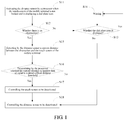
- FIG. 1 is a flowchart diagram of a mistaken dialing preventing method according to a preferred embodiment of the present disclosure. As shown in FIG. 1 , the mistaken dialing preventing method of this embodiment comprises the following steps:
- the primary objective of the present disclosure is to prevent mistaken dialing, and the locking of the touch screen is only for purpose of preventing mal-operation caused by the obstruction on the dial plate, so in other embodiments the step S18 may be: terminating the call program by the mobile terminal.
- the mobile terminal deactivates the call program and exits the dial plate.
- the touch screen does not display the dial plate icon but is not locked, and the distance sensor can also keep activated.
- the mobile terminal controls the touch screen to lock the dial plate icon, but does not control the touch screen to be locked and the distance sensor to be deactivated; instead, the mobile terminal mainly prevents any operations on the call program dialing function (the dial plate icon).
- this embodiment works as follows: when a touch screen is not locked, a distance sensor is activated to detect whether there is an obstruction within an effective distance above the touch screen; if there is an obstruction, then the distance sensor detects a current distance between the obstruction and the touch screen of the mobile terminal; and if the current distance is smaller than a preset critical distance threshold, a call program is automatically deactivated.
- this embodiment eliminates the need of a second judgement, and the mobile terminal can make automatic and intelligent judgement to prevent a mistaken dialing action before the butt call is successfully dialed, so it can absolutely prevent the mistaken dial with a very satisfactory mistaken dialing prevention effect.
- the call program of the smartphone can be deactivated automatically, so the problems of information disclosure and tedious operations resulting from locking the screen several times by the user can be avoided.
- a mobile terminal 20 of this embodiment comprises a distance sensor 21, a touch screen 22 and a controlling and processing module, 23, and the controlling and processing module, 23 comprises a controlling unit 231, a determining unit 232 and a detecting unit 233.
- the controlling unit 231 is configured to, when the touch screen 22 is not locked and is displaying a dial plate icon, control the distance sensor 21 to be activated to detect whether there is an obstruction within an effective distance above the touch screen 22.
- the controlling unit 231 controls the distance sensor 21 to detect a current distance between the obstruction and the touch screen 22.
- the determining unit 232 is configured to determine if the current distance is smaller than a critical distance threshold preset by the controlling and processing module, 23, and the preset critical distance threshold is preferably 3 mm in this embodiment. If it is determined that the current distance is smaller than a preset critical distance threshold, then the controlling unit 231 controls the touch screen 22 to not display the dial plate icon and deactivates the distance sensor 21.
- the detecting unit 233 detects whether the dial plate icon is displayed on the touch screen 22, and if the dial plate icon is not displayed, then the controlling unit 231 deactivates the distance sensor 21; and if the dial plate icon is displayed, then the controlling unit 231 controls the distance sensor 21 to keep activated.
- controlling unit 231 deactivates the touch screen 22 to not display the dial plate icon; or the controlling unit 231 controls the touch screen 22 to keep activated but not display the dial plate icon.
- the mobile terminal 20 shown in FIG. 2 of the present disclosure is based on the method of the embodiment shown in FIG. 1 , so it has the same benefits.
- the functional modules can execute the steps of the method of the embodiments correspondingly, and this will not be further described herein.
- the division of the individual modules of the mobile terminal 20 disclosed in the present disclosure only represents a division of logical functions, and there may be other division manners in practical implementations. For example, a number of modules may be combined or may be integrated into another system, or some features may be omitted or may not be performed.
- mutual coupling or communication connections between the modules may be achieved via a plurality of interfaces, or in an electrical way or some other way.
- the aforesaid functional modules may be or may not be physical blocks, may be co-located at a same site or be distributed in a plurality of network units, and may be implemented either in the form of hardware or in the form of software function blocks.
- the objective of the present disclosure can be achieved by optionally using parts of or all of the modules depending on the actual need.
Landscapes
- Engineering & Computer Science (AREA)
- General Engineering & Computer Science (AREA)
- Theoretical Computer Science (AREA)
- Human Computer Interaction (AREA)
- Computer Security & Cryptography (AREA)
- Signal Processing (AREA)
- Physics & Mathematics (AREA)
- General Physics & Mathematics (AREA)
- Computer Networks & Wireless Communication (AREA)
- Telephone Function (AREA)
- User Interface Of Digital Computer (AREA)
Abstract
Description
- The present disclosure relates to the technical field of mobile terminal communication technologies, and more particularly, to a mobile terminal and a method for protecting against mistaken dialing by an inadvertent keystroke.
- With advancement of the information society and rapid growth of the communication popularization rate, mobile communication terminals having a touch screen such as smartphones have become indispensable to the modem people's life. However, although they bring about conveniences in the life, the smartphones sometimes also cause troubles, and the most common trouble is mistaken dialing by an inadvertent keystroke: when the user puts the smartphone into a pocket of the clothes with the screen being unlocked, it is very likely that the dial keypad will be activated to cause a mistaken dialing due to contact of the smartphone with some other object. This not only causes troubles to the user (and to the called party), but also incurs unnecessary communication fees.
- Currently, there are mainly two methods to prevent mistaken dialing: one is to additionally make dialing judgement, that is, a dialog box is popped up each time a phone number is selected and dialed so that a mistaken dialing is prevented through "OK" or "Cancel" options on the dialog box. The other method is to determine whether there is a voice speech after a call has been successfully dialed, that is, it is detected whether there is an input of a user's voice speech when a call is dialed, and if no audio signal is detected within a preset time, then the call is terminated automatically.
- However, the first method might still cause a mistaken dialing due to a second mis-touch that falsely selects the "OK" option on the dialog box, so it cannot absolutely prevent the mistaken dialing and the mistaken dialing prevention effect is unsatisfactory. On the other hand, the second method is only able to prevent long-time calling after the butt call has been dialed (i.e., to prevent long-time lasting of the butt call) but cannot prevent the mistaken dialing action in a true sense; in other words, the judgement is made after the butt call has been successfully dialed, and this not only causes embarrassment to the called party but also wastes the communication fee of the calling party.
- Accordingly, a technical problem to be solved by the present disclosure is to provide a mobile terminal and a mistaken dialing prevention method thereof, which can automatically deactivate a call program of a smartphone to absolutely prevent mistaken dialing with a very satisfactory effect.
- To solve the aforesaid technical problem, a technical solution adopted in the present disclosure is as follows: a mistaken dialing preventing method for a mobile terminal is provided, the mobile terminal comprises a distance sensor and a touch screen, and the method comprises the following steps of: when the touch screen is not locked and is displaying a dial plate icon, activating the distance sensor to detect whether there is an obstruction within an effective distance above the touch screen; if there is an obstruction, then detecting by the distance sensor a current distance between the obstruction and the touch screen of the mobile terminal; and if the current distance is smaller than a preset critical distance threshold, then controlling the touch screen to not display the dial plate icon and deactivating the distance sensor by the mobile terminal, wherein the mobile terminal deactivates the touch screen to not display the dial plate icon, or the mobile terminal controls the touch screen to keep activated but not display the dial plate icon, and the preset critical distance threshold is 3 mm.
- Preferably, the mistaken dialing preventing method further comprises the following step of: if the distance sensor detects that there is not an obstruction within the effective distance above the touch screen, then detecting whether the dial plate icon is displayed on the touch screen, and if the dial plate icon is not displayed, then deactivating the distance sensor.
- Preferably, the mistaken dialing preventing method further comprises the following step of: if the distance sensor detects that there is not an obstruction within the effective distance above the touch screen, then detecting whether the dial plate icon is displayed on the touch screen, and if the dial plate icon is displayed, then controlling the distance sensor to keep activated.
- To solve the aforesaid technical problem, another technical solution adopted in the present disclosure is as follows: a mistaken dialing preventing method for a mobile terminal is provided, the mobile terminal comprises a distance sensor and a touch screen, and the method comprises the following steps of: when the touch screen is not locked and is displaying a dial plate icon, activating the distance sensor to detect whether there is an obstruction within an effective distance above the touch screen; if there is an obstruction, then detecting by the distance sensor a current distance between the obstruction and the touch screen of the mobile terminal; and if the current distance is smaller than a preset critical distance threshold, then controlling the touch screen to not display the dial plate icon and deactivating the distance sensor by the mobile terminal.
- Preferably, the mistaken dialing preventing method further comprises the following step of: if the distance sensor detects that there is not an obstruction within the effective distance above the touch screen, then detecting whether the dial plate icon is displayed on the touch screen, and if the dial plate icon is not displayed, then deactivating the distance sensor.
- Preferably, the mistaken dialing preventing method further comprises the following step of: if the distance sensor detects that there is not an obstruction within the effective distance above the touch screen, then detecting whether the dial plate icon is displayed on the touch screen, and if the dial plate icon is displayed, then controlling the distance sensor to keep activated.
- Preferably, the step of controlling the touch screen to not display the dial plate icon by the mobile terminal comprises the following steps of: deactivating by the mobile terminal the touch screen to not display the dial plate icon; or controlling by the mobile terminal the touch screen to keep activated but not display the dial plate icon.
- Preferably, the preset critical distance threshold is 3 mm.
- To solve the aforesaid technical problem, yet another technical solution adopted in the present disclosure is as follows: a mobile terminal is provided, the mobile terminal comprises a distance sensor, a touch screen and a controlling and processing module, and the controlling and processing module, comprises: a controlling unit, being configured to, when the touch screen is not locked and is displaying a dial plate icon, control the distance sensor to be activated to detect whether there is an obstruction within an effective distance above the touch screen; if the distance sensor detects that there is an obstruction within the effective distance above the touch screen, then the controlling unit controls the distance sensor to detect a current distance between the obstruction and the touch screen of the mobile terminal; and a determining unit, being configured to determine if the current distance is smaller than a preset critical distance threshold, wherein if it is determined that the current distance is smaller than a preset critical distance threshold, then the controlling unit controls the touch screen to not display the dial plate icon and deactivates the distance sensor.
- Preferably, the controlling and processing module, further comprises a detecting unit, and if the distance sensor detects that there is not an obstruction within the effective distance above the touch screen, then the detecting unit detects whether the dial plate icon is displayed on the touch screen, and if the dial plate icon is not displayed, then the controlling unit deactivates the distance sensor.
- Preferably, the controlling and processing module, further comprises a detecting unit, and if the distance sensor detects that there is not an obstruction within the effective distance above the touch screen, then the detecting unit detects whether the dial plate icon is displayed on the touch screen, and if the dial plate icon is displayed, then the controlling unit controls the distance sensor to keep activated.
- Preferably, the controlling unit deactivates the touch screen to not display the dial plate icon; or the controlling unit controls the touch screen to keep activated but not display the dial plate icon.
- Preferably, the preset critical distance threshold is 3 mm.
- As compared to the prior art, the present disclosure has the following benefits: when the touch screen is not locked, the distance sensor is activated to detect whether there is an obstruction within an effective distance above the touch screen; if there is an obstruction, then the distance sensor detects a current distance between the obstruction and the touch screen of the mobile terminal; and if the current distance is smaller than a preset critical distance threshold, then the touch screen is controlled to not display the dial plate icon and the distance sensor is deactivated. In this way, the present disclosure automatically deactivates a call program to absolutely prevent mistaken dialing.
-
-
FIG. 1 is a flowchart diagram of a mistaken dialing preventing method for a mobile terminal according to one embodiment of the present disclosure. -
FIG. 2 is functional block diagram of a mobile terminal according to one embodiment of the present disclosure. - A primary objective of the present disclosure is to provide a mistaken dialing preventing method for a mobile terminal. According to this method, when a touch screen is not locked, a distance sensor is activated to detect whether there is an obstruction within an effective distance above the touch screen; if there is an obstruction, then the distance sensor detects a current distance between the obstruction and the touch screen of the mobile terminal; and if the current distance is smaller than a preset critical distance threshold, the call program is automatically deactivated. In this way, mistaken dialing can be absolutely prevented.
- The mistaken dialing preventing method of the present disclosure is based on a mobile terminal that is provided at least with a distance sensor and a touch screen. Throughout the present disclosure, a smartphone is taken as an example of the mobile terminal for description. Of course, the mobile terminal is not limited to a smartphone, but may be any communication device with the communication function, e.g., a portable communication device, a PDA (Personal Digital Assistant) with the communication function, a tablet computer, etc.
- To make the objectives, technical solutions and technical effects of the present disclosure clearer, a detailed description will be further made on embodiments of the present disclosure with reference to
FIG. 1 andFIG. 2 . -
FIG. 1 is a flowchart diagram of a mistaken dialing preventing method according to a preferred embodiment of the present disclosure. As shown inFIG. 1 , the mistaken dialing preventing method of this embodiment comprises the following steps: - Step S 11: activating the distance sensor when the touch screen of the mobile terminal is not locked and is displaying a dial plate icon.
The present disclosure is related to situations where the smartphone is used abnormally by the user. Determining whether the smartphone is used normally or abnormally can be achieved through technologies such as infrared induction, and this is beyond the scope of the present disclosure and thus will not be disclosed in detail herein.
When a user puts the smartphone into a pocket of the underclothes or a bag with the touch screen unlocked due to carelessness or in case of an emergency, it is very likely that the dial plate will be activated and the dial plate icon will be displayed on the touch screen due to contact. It shall be appreciated that, activating the dial plate in this embodiment only represents one way of activating the call program, i.e., activating the dial plate is just taken as an example in the present disclosure to describe the way of activating the call program. Of course, other ways may also be possible, e.g, activating the "recent calls" menu (including all the completed calls and missed calls), or activating the "address list" menu. - Step S12: detecting by the distance sensor whether there is an obstruction within an effective distance above the touch screen of the mobile terminal.
When it is detected that the dial plate is activated, a processor built in the mobile terminal controls the distance sensor to be activated through IO (Input/Output) controlling signals, and the processor controls the distance sensor and reads the data of the distance sensor through I2C (Inter-Integrated Circuit) control signals. In this embodiment, the distance sensor is preferably an infrared distance sensor and generally works as follows: the infrared distance sensor is activated and emits infrared light pulses, and when no obstruction (e.g., a human hand) passes within an effective distance above the touch screen, the infrared distance sensor cannot receive light pulses reflected back from the obstruction (i.e., the outputted sampling value of the infrared distance sensor is zero), and then step S 13 is executed; when there is an obstruction within the effective distance above the touch screen, the obstruction reflects the infrared light pulses emitted from the infrared distance sensor back to the infrared distance sensor, and in this case, the outputted sampling value is not zero and thenstep S 15 is executed. - Step S13: determining whether the dial plate icon is displayed on the touch screen of the mobile terminal.
If it is determined by the mobile terminal that the dial plate icon is still displayed on the touch screen (i.e., the call program is activated), then step S14 is executed to keep waiting, and the mobile terminal controls the distance sensor to keep activated. If it is determined by the mobile terminal that the dial plate icon is no longer displayed on the touch screen (i.e., the call program is deactivated), then step S18 is executed to deactivate the distance sensor, and in this case, mistaken dialing is unlikely to occur, so the touch screen can keep activated. - Step S14: waiting.
During the waiting, the touch screen of the mobile terminal and the distance sensor keep activated. Preferably in this embodiment, the mobile terminal can detect whether the dial plate icon is displayed on the touch screen within a preset period, i.e., the step S 13 and thestep S 14 are performed periodically until the dial plate icon is deactivated. - Step S15: detecting by the distance sensor a current distance between the obstruction and the touch screen of the mobile terminal.
The distance sensor transmits the sampling value of the infrared light pulses reflected back from the obstruction to the processor of the mobile terminal, and then the processor can acquire the current distance between the distance sensor and the obstruction through internal computation. - Step S16: determining whether the current distance is smaller than or equal to a preset critical distance threshold.
In this embodiment, the preset critical distance threshold is preferably 3 mm. Of course, the critical distance threshold may be defined as other values by those skilled in the art depending on practical needs. The preset critical distance threshold refers to a critical value used by the mobile terminal to determine whether the mistaken dialing preventing method should be adopted, while the effective distance above the touch screen in the step S12 refers to an effective detecting distance of the infrared light pulses imparted by the manufacturer to the distance sensor of the mobile terminal. The aforesaid two distances have different concepts, but may have values identical to or different from each other.
If it is determined by the mobile terminal that the current distance is greater than a preset critical distance threshold, it means that mistaken dialing will not happen and in this case, the touch screen and the distance sensor are controlled to keep activated, i.e., the step S13 is executed. If it is determined by the mobile terminal that the current distance is smaller than or equal to the preset critical distance threshold, then the touch screen and the distance sensor are controlled to be deactivated, i.e., step S17 and step S18 are executed. - Step S17: controlling the touch screen to be deactivated.
- Step S18: controlling the distance sensor to be deactivated.
- The primary objective of the present disclosure is to prevent mistaken dialing, and the locking of the touch screen is only for purpose of preventing mal-operation caused by the obstruction on the dial plate, so in other embodiments the step S18 may be: terminating the call program by the mobile terminal.
- In other words, when an obstruction approaches the touch screen and it is determined that a mistaken dialing is likely to happen, the mobile terminal deactivates the call program and exits the dial plate. In this case, the touch screen does not display the dial plate icon but is not locked, and the distance sensor can also keep activated. Alternatively, the mobile terminal controls the touch screen to lock the dial plate icon, but does not control the touch screen to be locked and the distance sensor to be deactivated; instead, the mobile terminal mainly prevents any operations on the call program dialing function (the dial plate icon).
- As can be seen from the above descriptions, this embodiment works as follows: when a touch screen is not locked, a distance sensor is activated to detect whether there is an obstruction within an effective distance above the touch screen; if there is an obstruction, then the distance sensor detects a current distance between the obstruction and the touch screen of the mobile terminal; and if the current distance is smaller than a preset critical distance threshold, a call program is automatically deactivated. As compared to the two methods in the prior art, this embodiment eliminates the need of a second judgement, and the mobile terminal can make automatic and intelligent judgement to prevent a mistaken dialing action before the butt call is successfully dialed, so it can absolutely prevent the mistaken dial with a very satisfactory mistaken dialing prevention effect. Moreover, the call program of the smartphone can be deactivated automatically, so the problems of information disclosure and tedious operations resulting from locking the screen several times by the user can be avoided.
- The present disclosure further provides a mobile terminal. Referring to
FIG. 2 , amobile terminal 20 of this embodiment comprises adistance sensor 21, atouch screen 22 and a controlling and processing module, 23, and the controlling and processing module, 23 comprises a controllingunit 231, a determiningunit 232 and a detectingunit 233. - The controlling
unit 231 is configured to, when thetouch screen 22 is not locked and is displaying a dial plate icon, control thedistance sensor 21 to be activated to detect whether there is an obstruction within an effective distance above thetouch screen 22. - If the
distance sensor 21 detects that there is an obstruction within the effective distance above thetouch screen 22, then the controllingunit 231 controls thedistance sensor 21 to detect a current distance between the obstruction and thetouch screen 22. - The determining
unit 232 is configured to determine if the current distance is smaller than a critical distance threshold preset by the controlling and processing module, 23, and the preset critical distance threshold is preferably 3 mm in this embodiment. If it is determined that the current distance is smaller than a preset critical distance threshold, then the controllingunit 231 controls thetouch screen 22 to not display the dial plate icon and deactivates thedistance sensor 21. - If the
distance sensor 21 detects that there is not an obstruction within the effective distance above thetouch screen 22, then the detectingunit 233 detects whether the dial plate icon is displayed on thetouch screen 22, and if the dial plate icon is not displayed, then the controllingunit 231 deactivates thedistance sensor 21; and if the dial plate icon is displayed, then the controllingunit 231 controls thedistance sensor 21 to keep activated. - In this embodiment, the controlling
unit 231 deactivates thetouch screen 22 to not display the dial plate icon; or the controllingunit 231 controls thetouch screen 22 to keep activated but not display the dial plate icon. - The
mobile terminal 20 shown inFIG. 2 of the present disclosure is based on the method of the embodiment shown inFIG. 1 , so it has the same benefits. The functional modules can execute the steps of the method of the embodiments correspondingly, and this will not be further described herein. It shall be understood that, the division of the individual modules of themobile terminal 20 disclosed in the present disclosure only represents a division of logical functions, and there may be other division manners in practical implementations. For example, a number of modules may be combined or may be integrated into another system, or some features may be omitted or may not be performed. Furthermore, mutual coupling or communication connections between the modules may be achieved via a plurality of interfaces, or in an electrical way or some other way. - As integral components of the
mobile terminal 20, the aforesaid functional modules may be or may not be physical blocks, may be co-located at a same site or be distributed in a plurality of network units, and may be implemented either in the form of hardware or in the form of software function blocks. The objective of the present disclosure can be achieved by optionally using parts of or all of the modules depending on the actual need. - What described above are only the embodiments of the present disclosure, but are not intended to limit the scope of the present disclosure. Any equivalent structures or equivalent process flow modifications that are made according to the specification and the attached drawings of the present disclosure, or any direct or indirect applications of the present disclosure in other related technical fields shall all be covered within the scope of the present disclosure.
Claims (13)
- A method for protecting against mistaken dialing of a mobile terminal by an inadvertent keystroke, the mobile terminal comprising a distance sensor and a touch screen, the method comprising the following steps of:when the touch screen is not locked and is displaying a dial plate icon, activating the distance sensor to detect whether there is an obstruction within an effective distance above the touch screen;when there is an obstruction, then detecting by the distance sensor a current distance between the obstruction and the touch screen of the mobile terminal; andwhen the current distance is smaller than a preset critical distance threshold, then controlling the touch screen to not display the dial plate icon and deactivating the distance sensor by the mobile terminal, wherein the mobile terminal deactivates the touch screen to not display the dial plate icon, or the mobile terminal controls the touch screen to keep activated but not display the dial plate icon, and the preset critical distance threshold is 3 mm.
- The method of claim 1, further comprising the following step of:when the distance sensor detects that there is not an obstruction within the effective distance above the touch screen, then detecting whether the dial plate icon is displayed on the touch screen, and when the dial plate icon is not displayed, then switching off the distance sensor.
- The method of claim 1, further comprising the following step of:when the distance sensor detects that there is not an obstruction within the effective distance above the touch screen, then detecting whether the dial plate icon is displayed on the touch screen, and when the dial plate icon is displayed, then controlling the distance sensor to keep activated.
- A method for protecting against mistaken dialing of a mobile terminal by an inadvertent keystroke, the mobile terminal comprising a distance sensor and a touch screen, the method comprising the following steps of:when the touch screen is not locked and is displaying a dial plate icon, activating the distance sensor to detect whether there is an obstruction within an effective distance above the touch screen;when there is an obstruction, then detecting by the distance sensor a current distance between the obstruction and the touch screen of the mobile terminal; andwhen the current distance is smaller than a preset critical distance threshold, then controlling the touch screen to not display the dial plate icon and switching off the distance sensor by the mobile terminal.
- The method of claim 4, further comprising the following step of:when the distance sensor detects that there is not an obstruction within the effective distance above the touch screen, then detecting whether the dial plate icon is displayed on the touch screen, and when the dial plate icon is not displayed, then switching off the distance sensor.
- The method of claim 4, further comprising the following step of:when the distance sensor detects that there is not an obstruction within the effective distance above the touch screen, then detecting whether the dial plate icon is displayed on the touch screen, and when the dial plate icon is displayed, then controlling the distance sensor to keep activated.
- The method of claim 4, wherein the step of controlling the touch screen to not display the dial plate icon by the mobile terminal comprises the following steps of:switching off by the mobile terminal the touch screen to not display the dial plate icon; orcontrolling by the mobile terminal the touch screen to keep activated but not display the dial plate icon.
- The method of claim 4, wherein the preset critical distance threshold is 3 mm.
- A mobile terminal, the mobile terminal comprising a distance sensor, a touch screen and a controlling and processing module, and the controlling and processing module, comprising:a controlling unit, being configured to, when the touch screen is not locked and is displaying a dial plate icon, control the distance sensor to be activated to detect whether there is an obstruction within an effective distance above the touch screen;when the distance sensor detects that there is an obstruction within the effective distance above the touch screen, then the controlling unit controls the distance sensor to detect a current distance between the obstruction and the touch screen of the mobile terminal; anda determining unit, being configured to determine whether the current distance is smaller than a preset critical distance threshold, wherein when it is determined that the current distance is smaller than the preset critical distance threshold, then the controlling unit controls the touch screen to not display the dial plate icon and switches off the distance sensor.
- The mobile terminal of claim 9, wherein the controlling and processing module, further comprises a detecting unit, and when the distance sensor detects that there is not the obstruction within the effective distance above the touch screen, then the detecting unit detects whether the dial plate icon is displayed on the touch screen, and when the dial plate icon is not displayed, then the controlling unit switches off the distance sensor.
- The mobile terminal of claim 9, wherein the controlling and processing module, further comprises a detecting unit, and when the distance sensor detects that there is not the obstruction within the effective distance above the touch screen, then the detecting unit detects whether the dial plate icon is displayed on the touch screen, and when the dial plate icon is displayed, then the controlling unit controls the distance sensor to keep activated.
- The mobile terminal of claim 9, wherein the controlling unit switches off the touch screen to not display the dial plate icon; or the controlling unit controls the touch screen to keep activated but not display the dial plate icon.
- The mobile terminal of claim 9, wherein the preset critical distance threshold is 3 mm.
Applications Claiming Priority (2)
| Application Number | Priority Date | Filing Date | Title |
|---|---|---|---|
| CN201410091141.9A CN103905640A (en) | 2014-03-12 | 2014-03-12 | Mobile terminal and false-dialing preventing method thereof |
| PCT/CN2014/078256 WO2015135255A1 (en) | 2014-03-12 | 2014-05-23 | Mobile terminal and method for preventing inadvertent dialing |
Publications (3)
| Publication Number | Publication Date |
|---|---|
| EP3119065A1 true EP3119065A1 (en) | 2017-01-18 |
| EP3119065A4 EP3119065A4 (en) | 2017-08-23 |
| EP3119065B1 EP3119065B1 (en) | 2019-07-31 |
Family
ID=50996792
Family Applications (1)
| Application Number | Title | Priority Date | Filing Date |
|---|---|---|---|
| EP14866802.3A Active EP3119065B1 (en) | 2014-03-12 | 2014-05-23 | Mobile terminal and method for preventing inadvertent dialing |
Country Status (5)
| Country | Link |
|---|---|
| US (1) | US9531856B2 (en) |
| EP (1) | EP3119065B1 (en) |
| CN (1) | CN103905640A (en) |
| ES (1) | ES2752146T3 (en) |
| WO (1) | WO2015135255A1 (en) |
Cited By (1)
| Publication number | Priority date | Publication date | Assignee | Title |
|---|---|---|---|---|
| CN109451167A (en) * | 2018-11-29 | 2019-03-08 | 努比亚技术有限公司 | Butt call reminding method, device, mobile terminal and storage medium |
Families Citing this family (7)
| Publication number | Priority date | Publication date | Assignee | Title |
|---|---|---|---|---|
| CN104850443B (en) * | 2015-05-29 | 2018-08-14 | 努比亚技术有限公司 | A kind of method and mobile terminal for closing error starting application program |
| WO2017175931A1 (en) * | 2016-04-07 | 2017-10-12 | Samsung Electronics Co., Ltd. | Interaction modes for object-device interactions |
| CN106095053B (en) | 2016-05-31 | 2019-06-11 | 深圳市万普拉斯科技有限公司 | Anti-accidental wake-up device and method and smart terminal |
| CN108021292B (en) * | 2017-10-27 | 2021-01-26 | 努比亚技术有限公司 | Light sensing control trigger control method and device and computer readable storage medium |
| CN107943267A (en) * | 2017-11-21 | 2018-04-20 | 北京小米移动软件有限公司 | A kind of method and apparatus for controlling screen |
| CN107862197A (en) * | 2017-12-11 | 2018-03-30 | 广州视源电子科技股份有限公司 | Touch screen unlocking method and device, storage medium and server |
| CN109195210B (en) * | 2018-08-28 | 2021-03-26 | 努比亚技术有限公司 | Power saving method, mobile terminal and computer readable storage medium |
Family Cites Families (16)
| Publication number | Priority date | Publication date | Assignee | Title |
|---|---|---|---|---|
| JP4820250B2 (en) * | 2006-09-19 | 2011-11-24 | 株式会社リコー | Display input device, method and program |
| US9049302B2 (en) * | 2007-01-07 | 2015-06-02 | Apple Inc. | Portable multifunction device, method, and graphical user interface for managing communications received while in a locked state |
| US9030418B2 (en) * | 2008-06-24 | 2015-05-12 | Lg Electronics Inc. | Mobile terminal capable of sensing proximity touch |
| JP4517253B2 (en) * | 2008-09-30 | 2010-08-04 | 株式会社カシオ日立モバイルコミュニケーションズ | Communication terminal device and program |
| KR20100038688A (en) * | 2008-10-06 | 2010-04-15 | 엘지전자 주식회사 | Mobile terminal and user interface of mobile terminal |
| CN101825964B (en) * | 2009-03-05 | 2015-07-08 | 宏达国际电子股份有限公司 | Portable electronic device and method for preventing touch panel thereof from being touched by mistake |
| JP5402322B2 (en) * | 2009-07-02 | 2014-01-29 | ソニー株式会社 | Information processing apparatus and information processing method |
| CN103118904B (en) * | 2010-09-17 | 2015-10-07 | 歌乐株式会社 | In-vehicle information system, in-vehicle device, information terminal |
| US8812994B2 (en) * | 2011-12-29 | 2014-08-19 | Apple Inc. | Device, method, and graphical user interface for configuring restricted interaction with a user interface |
| JP5894831B2 (en) * | 2012-03-28 | 2016-03-30 | 京セラ株式会社 | Mobile terminal device, program, and control method for mobile terminal device |
| CN103377353B (en) * | 2012-04-23 | 2018-04-17 | 富泰华工业(深圳)有限公司 | Electronic device and its touch screen guard method and protection system |
| CN102841684B (en) * | 2012-08-30 | 2015-12-16 | 小米科技有限责任公司 | A kind of method, device and equipment preventing maloperation |
| CN102946472A (en) * | 2012-10-24 | 2013-02-27 | 广东欧珀移动通信有限公司 | Incoming call processing method and mobile terminal |
| KR102086799B1 (en) * | 2013-02-21 | 2020-03-09 | 삼성전자주식회사 | Method for displaying for virtual keypad an electronic device thereof |
| CN103139389A (en) * | 2013-02-25 | 2013-06-05 | 上海斐讯数据通信技术有限公司 | Method of preventing wrong operation for mobile terminal and mobile terminal |
| CN103369142B (en) * | 2013-07-09 | 2015-02-04 | 广东欧珀移动通信有限公司 | Method and system for avoiding call-up malfunction |
-
2014
- 2014-03-12 CN CN201410091141.9A patent/CN103905640A/en active Pending
- 2014-05-23 ES ES14866802T patent/ES2752146T3/en active Active
- 2014-05-23 EP EP14866802.3A patent/EP3119065B1/en active Active
- 2014-05-23 US US14/648,472 patent/US9531856B2/en active Active
- 2014-05-23 WO PCT/CN2014/078256 patent/WO2015135255A1/en not_active Ceased
Cited By (2)
| Publication number | Priority date | Publication date | Assignee | Title |
|---|---|---|---|---|
| CN109451167A (en) * | 2018-11-29 | 2019-03-08 | 努比亚技术有限公司 | Butt call reminding method, device, mobile terminal and storage medium |
| CN109451167B (en) * | 2018-11-29 | 2021-07-23 | 努比亚技术有限公司 | Method and device for prompting mistaken call dialing, mobile terminal and storage medium |
Also Published As
| Publication number | Publication date |
|---|---|
| EP3119065B1 (en) | 2019-07-31 |
| EP3119065A4 (en) | 2017-08-23 |
| ES2752146T3 (en) | 2020-04-03 |
| WO2015135255A1 (en) | 2015-09-17 |
| US9531856B2 (en) | 2016-12-27 |
| CN103905640A (en) | 2014-07-02 |
| US20150358449A1 (en) | 2015-12-10 |
Similar Documents
| Publication | Publication Date | Title |
|---|---|---|
| US9531856B2 (en) | Mobile terminal and method for protecting against mistaken dialing | |
| EP3151117B1 (en) | Method and device for delaying information broadcasting | |
| US9912490B2 (en) | Method and device for deleting smart scene | |
| US20170143252A1 (en) | Sleep state detection method, apparatus and system | |
| EP3309672A1 (en) | Method and device for restraining edge touches | |
| CN106371643B (en) | Touch chip crash handling method and device | |
| EP3229136A1 (en) | Application calling management method and apparatus | |
| US10318069B2 (en) | Method for controlling state of touch screen, and electronic device and medium for implementing the same | |
| RU2665300C2 (en) | Method and device for processing point reporting of touch screen | |
| EP3232301A1 (en) | Mobile terminal and virtual key processing method | |
| US12363795B2 (en) | Method for determining network switching resource and method for configuring network switching resource | |
| US11743355B2 (en) | Prompting method and device | |
| CN106953969A (en) | Screen control method and device for mobile terminal | |
| CN105163290A (en) | Roaming prompting method and apparatus | |
| CN106034323A (en) | Wireless-terminal-based automatic recovery method and relevant apparatus for data connection | |
| CN106658754B (en) | Method and device for recovering network connection | |
| EP3599601B1 (en) | Method, apparatus, electronic device and storage medium for controlling brightness of screen | |
| CN105100135A (en) | Network sharing setting method and device | |
| CN109922203B (en) | Terminal, screen-off method and device | |
| CN109586951B (en) | Method, device, electronic equipment and readable storage medium for implementing fault transfer | |
| CN106603882A (en) | Incoming call sound volume adjusting method, incoming call sound volume adjusting device and terminal | |
| CN116541247A (en) | Method, device, equipment and storage medium for alarming time limit of job task | |
| KR20210023895A (en) | AC disconnect method and device | |
| CN110769114B (en) | Call interface display method, device and mobile terminal | |
| CN107241493A (en) | Information processing method, device and computer-readable recording medium |
Legal Events
| Date | Code | Title | Description |
|---|---|---|---|
| PUAI | Public reference made under article 153(3) epc to a published international application that has entered the european phase |
Free format text: ORIGINAL CODE: 0009012 |
|
| STAA | Information on the status of an ep patent application or granted ep patent |
Free format text: STATUS: REQUEST FOR EXAMINATION WAS MADE |
|
| 17P | Request for examination filed |
Effective date: 20160811 |
|
| AK | Designated contracting states |
Kind code of ref document: A1 Designated state(s): AL AT BE BG CH CY CZ DE DK EE ES FI FR GB GR HR HU IE IS IT LI LT LU LV MC MK MT NL NO PL PT RO RS SE SI SK SM TR |
|
| AX | Request for extension of the european patent |
Extension state: BA ME |
|
| DAX | Request for extension of the european patent (deleted) | ||
| A4 | Supplementary search report drawn up and despatched |
Effective date: 20170721 |
|
| RIC1 | Information provided on ipc code assigned before grant |
Ipc: G06F 3/0481 20130101ALI20170717BHEP Ipc: G06F 3/0488 20130101ALI20170717BHEP Ipc: H04M 1/00 20060101ALI20170717BHEP Ipc: H04M 1/67 20060101ALI20170717BHEP Ipc: G06F 3/041 20060101ALI20170717BHEP Ipc: H04M 1/725 20060101AFI20170717BHEP |
|
| GRAP | Despatch of communication of intention to grant a patent |
Free format text: ORIGINAL CODE: EPIDOSNIGR1 |
|
| STAA | Information on the status of an ep patent application or granted ep patent |
Free format text: STATUS: GRANT OF PATENT IS INTENDED |
|
| INTG | Intention to grant announced |
Effective date: 20190409 |
|
| GRAS | Grant fee paid |
Free format text: ORIGINAL CODE: EPIDOSNIGR3 |
|
| GRAA | (expected) grant |
Free format text: ORIGINAL CODE: 0009210 |
|
| STAA | Information on the status of an ep patent application or granted ep patent |
Free format text: STATUS: THE PATENT HAS BEEN GRANTED |
|
| AK | Designated contracting states |
Kind code of ref document: B1 Designated state(s): AL AT BE BG CH CY CZ DE DK EE ES FI FR GB GR HR HU IE IS IT LI LT LU LV MC MK MT NL NO PL PT RO RS SE SI SK SM TR |
|
| REG | Reference to a national code |
Ref country code: CH Ref legal event code: EP Ref country code: GB Ref legal event code: FG4D |
|
| REG | Reference to a national code |
Ref country code: AT Ref legal event code: REF Ref document number: 1162239 Country of ref document: AT Kind code of ref document: T Effective date: 20190815 |
|
| REG | Reference to a national code |
Ref country code: IE Ref legal event code: FG4D |
|
| REG | Reference to a national code |
Ref country code: DE Ref legal event code: R096 Ref document number: 602014051045 Country of ref document: DE |
|
| REG | Reference to a national code |
Ref country code: NL Ref legal event code: MP Effective date: 20190731 |
|
| REG | Reference to a national code |
Ref country code: LT Ref legal event code: MG4D |
|
| REG | Reference to a national code |
Ref country code: AT Ref legal event code: MK05 Ref document number: 1162239 Country of ref document: AT Kind code of ref document: T Effective date: 20190731 |
|
| PG25 | Lapsed in a contracting state [announced via postgrant information from national office to epo] |
Ref country code: NL Free format text: LAPSE BECAUSE OF FAILURE TO SUBMIT A TRANSLATION OF THE DESCRIPTION OR TO PAY THE FEE WITHIN THE PRESCRIBED TIME-LIMIT Effective date: 20190731 Ref country code: AT Free format text: LAPSE BECAUSE OF FAILURE TO SUBMIT A TRANSLATION OF THE DESCRIPTION OR TO PAY THE FEE WITHIN THE PRESCRIBED TIME-LIMIT Effective date: 20190731 Ref country code: BG Free format text: LAPSE BECAUSE OF FAILURE TO SUBMIT A TRANSLATION OF THE DESCRIPTION OR TO PAY THE FEE WITHIN THE PRESCRIBED TIME-LIMIT Effective date: 20191031 Ref country code: NO Free format text: LAPSE BECAUSE OF FAILURE TO SUBMIT A TRANSLATION OF THE DESCRIPTION OR TO PAY THE FEE WITHIN THE PRESCRIBED TIME-LIMIT Effective date: 20191031 Ref country code: PT Free format text: LAPSE BECAUSE OF FAILURE TO SUBMIT A TRANSLATION OF THE DESCRIPTION OR TO PAY THE FEE WITHIN THE PRESCRIBED TIME-LIMIT Effective date: 20191202 Ref country code: LT Free format text: LAPSE BECAUSE OF FAILURE TO SUBMIT A TRANSLATION OF THE DESCRIPTION OR TO PAY THE FEE WITHIN THE PRESCRIBED TIME-LIMIT Effective date: 20190731 Ref country code: FI Free format text: LAPSE BECAUSE OF FAILURE TO SUBMIT A TRANSLATION OF THE DESCRIPTION OR TO PAY THE FEE WITHIN THE PRESCRIBED TIME-LIMIT Effective date: 20190731 Ref country code: SE Free format text: LAPSE BECAUSE OF FAILURE TO SUBMIT A TRANSLATION OF THE DESCRIPTION OR TO PAY THE FEE WITHIN THE PRESCRIBED TIME-LIMIT Effective date: 20190731 Ref country code: HR Free format text: LAPSE BECAUSE OF FAILURE TO SUBMIT A TRANSLATION OF THE DESCRIPTION OR TO PAY THE FEE WITHIN THE PRESCRIBED TIME-LIMIT Effective date: 20190731 |
|
| PG25 | Lapsed in a contracting state [announced via postgrant information from national office to epo] |
Ref country code: AL Free format text: LAPSE BECAUSE OF FAILURE TO SUBMIT A TRANSLATION OF THE DESCRIPTION OR TO PAY THE FEE WITHIN THE PRESCRIBED TIME-LIMIT Effective date: 20190731 Ref country code: GR Free format text: LAPSE BECAUSE OF FAILURE TO SUBMIT A TRANSLATION OF THE DESCRIPTION OR TO PAY THE FEE WITHIN THE PRESCRIBED TIME-LIMIT Effective date: 20191101 Ref country code: LV Free format text: LAPSE BECAUSE OF FAILURE TO SUBMIT A TRANSLATION OF THE DESCRIPTION OR TO PAY THE FEE WITHIN THE PRESCRIBED TIME-LIMIT Effective date: 20190731 Ref country code: IS Free format text: LAPSE BECAUSE OF FAILURE TO SUBMIT A TRANSLATION OF THE DESCRIPTION OR TO PAY THE FEE WITHIN THE PRESCRIBED TIME-LIMIT Effective date: 20191130 Ref country code: RS Free format text: LAPSE BECAUSE OF FAILURE TO SUBMIT A TRANSLATION OF THE DESCRIPTION OR TO PAY THE FEE WITHIN THE PRESCRIBED TIME-LIMIT Effective date: 20190731 |
|
| PG25 | Lapsed in a contracting state [announced via postgrant information from national office to epo] |
Ref country code: TR Free format text: LAPSE BECAUSE OF FAILURE TO SUBMIT A TRANSLATION OF THE DESCRIPTION OR TO PAY THE FEE WITHIN THE PRESCRIBED TIME-LIMIT Effective date: 20190731 |
|
| PG25 | Lapsed in a contracting state [announced via postgrant information from national office to epo] |
Ref country code: PL Free format text: LAPSE BECAUSE OF FAILURE TO SUBMIT A TRANSLATION OF THE DESCRIPTION OR TO PAY THE FEE WITHIN THE PRESCRIBED TIME-LIMIT Effective date: 20190731 Ref country code: DK Free format text: LAPSE BECAUSE OF FAILURE TO SUBMIT A TRANSLATION OF THE DESCRIPTION OR TO PAY THE FEE WITHIN THE PRESCRIBED TIME-LIMIT Effective date: 20190731 Ref country code: EE Free format text: LAPSE BECAUSE OF FAILURE TO SUBMIT A TRANSLATION OF THE DESCRIPTION OR TO PAY THE FEE WITHIN THE PRESCRIBED TIME-LIMIT Effective date: 20190731 Ref country code: RO Free format text: LAPSE BECAUSE OF FAILURE TO SUBMIT A TRANSLATION OF THE DESCRIPTION OR TO PAY THE FEE WITHIN THE PRESCRIBED TIME-LIMIT Effective date: 20190731 |
|
| PG25 | Lapsed in a contracting state [announced via postgrant information from national office to epo] |
Ref country code: IS Free format text: LAPSE BECAUSE OF FAILURE TO SUBMIT A TRANSLATION OF THE DESCRIPTION OR TO PAY THE FEE WITHIN THE PRESCRIBED TIME-LIMIT Effective date: 20200224 Ref country code: CZ Free format text: LAPSE BECAUSE OF FAILURE TO SUBMIT A TRANSLATION OF THE DESCRIPTION OR TO PAY THE FEE WITHIN THE PRESCRIBED TIME-LIMIT Effective date: 20190731 Ref country code: SM Free format text: LAPSE BECAUSE OF FAILURE TO SUBMIT A TRANSLATION OF THE DESCRIPTION OR TO PAY THE FEE WITHIN THE PRESCRIBED TIME-LIMIT Effective date: 20190731 Ref country code: SK Free format text: LAPSE BECAUSE OF FAILURE TO SUBMIT A TRANSLATION OF THE DESCRIPTION OR TO PAY THE FEE WITHIN THE PRESCRIBED TIME-LIMIT Effective date: 20190731 |
|
| REG | Reference to a national code |
Ref country code: DE Ref legal event code: R097 Ref document number: 602014051045 Country of ref document: DE |
|
| PLBE | No opposition filed within time limit |
Free format text: ORIGINAL CODE: 0009261 |
|
| STAA | Information on the status of an ep patent application or granted ep patent |
Free format text: STATUS: NO OPPOSITION FILED WITHIN TIME LIMIT |
|
| PG2D | Information on lapse in contracting state deleted |
Ref country code: IS |
|
| PG25 | Lapsed in a contracting state [announced via postgrant information from national office to epo] |
Ref country code: IS Free format text: LAPSE BECAUSE OF FAILURE TO SUBMIT A TRANSLATION OF THE DESCRIPTION OR TO PAY THE FEE WITHIN THE PRESCRIBED TIME-LIMIT Effective date: 20191030 |
|
| 26N | No opposition filed |
Effective date: 20200603 |
|
| PG25 | Lapsed in a contracting state [announced via postgrant information from national office to epo] |
Ref country code: SI Free format text: LAPSE BECAUSE OF FAILURE TO SUBMIT A TRANSLATION OF THE DESCRIPTION OR TO PAY THE FEE WITHIN THE PRESCRIBED TIME-LIMIT Effective date: 20190731 |
|
| PG25 | Lapsed in a contracting state [announced via postgrant information from national office to epo] |
Ref country code: CH Free format text: LAPSE BECAUSE OF NON-PAYMENT OF DUE FEES Effective date: 20200531 Ref country code: LI Free format text: LAPSE BECAUSE OF NON-PAYMENT OF DUE FEES Effective date: 20200531 Ref country code: MC Free format text: LAPSE BECAUSE OF FAILURE TO SUBMIT A TRANSLATION OF THE DESCRIPTION OR TO PAY THE FEE WITHIN THE PRESCRIBED TIME-LIMIT Effective date: 20190731 |
|
| REG | Reference to a national code |
Ref country code: BE Ref legal event code: MM Effective date: 20200531 |
|
| PG25 | Lapsed in a contracting state [announced via postgrant information from national office to epo] |
Ref country code: LU Free format text: LAPSE BECAUSE OF NON-PAYMENT OF DUE FEES Effective date: 20200523 |
|
| PG25 | Lapsed in a contracting state [announced via postgrant information from national office to epo] |
Ref country code: IE Free format text: LAPSE BECAUSE OF NON-PAYMENT OF DUE FEES Effective date: 20200523 |
|
| PG25 | Lapsed in a contracting state [announced via postgrant information from national office to epo] |
Ref country code: BE Free format text: LAPSE BECAUSE OF NON-PAYMENT OF DUE FEES Effective date: 20200531 |
|
| PG25 | Lapsed in a contracting state [announced via postgrant information from national office to epo] |
Ref country code: MT Free format text: LAPSE BECAUSE OF FAILURE TO SUBMIT A TRANSLATION OF THE DESCRIPTION OR TO PAY THE FEE WITHIN THE PRESCRIBED TIME-LIMIT Effective date: 20190731 Ref country code: CY Free format text: LAPSE BECAUSE OF FAILURE TO SUBMIT A TRANSLATION OF THE DESCRIPTION OR TO PAY THE FEE WITHIN THE PRESCRIBED TIME-LIMIT Effective date: 20190731 |
|
| PG25 | Lapsed in a contracting state [announced via postgrant information from national office to epo] |
Ref country code: MK Free format text: LAPSE BECAUSE OF FAILURE TO SUBMIT A TRANSLATION OF THE DESCRIPTION OR TO PAY THE FEE WITHIN THE PRESCRIBED TIME-LIMIT Effective date: 20190731 |
|
| P01 | Opt-out of the competence of the unified patent court (upc) registered |
Effective date: 20230530 |
|
| PGFP | Annual fee paid to national office [announced via postgrant information from national office to epo] |
Ref country code: DE Payment date: 20250521 Year of fee payment: 12 |
|
| PGFP | Annual fee paid to national office [announced via postgrant information from national office to epo] |
Ref country code: ES Payment date: 20250627 Year of fee payment: 12 |
|
| PGFP | Annual fee paid to national office [announced via postgrant information from national office to epo] |
Ref country code: IT Payment date: 20250527 Year of fee payment: 12 |
|
| PGFP | Annual fee paid to national office [announced via postgrant information from national office to epo] |
Ref country code: FR Payment date: 20250528 Year of fee payment: 12 |
|
| PGFP | Annual fee paid to national office [announced via postgrant information from national office to epo] |
Ref country code: GB Payment date: 20260306 Year of fee payment: 13 |