EP3109609A1 - Electroconductive resin composition and pressure sensor - Google Patents
Electroconductive resin composition and pressure sensor Download PDFInfo
- Publication number
- EP3109609A1 EP3109609A1 EP14885949.9A EP14885949A EP3109609A1 EP 3109609 A1 EP3109609 A1 EP 3109609A1 EP 14885949 A EP14885949 A EP 14885949A EP 3109609 A1 EP3109609 A1 EP 3109609A1
- Authority
- EP
- European Patent Office
- Prior art keywords
- resin composition
- pressure sensor
- electroconductive resin
- carbon
- crystalline polyolefin
- Prior art date
- Legal status (The legal status is an assumption and is not a legal conclusion. Google has not performed a legal analysis and makes no representation as to the accuracy of the status listed.)
- Granted
Links
Images

Classifications
-
- H—ELECTRICITY
- H01—ELECTRIC ELEMENTS
- H01B—CABLES; CONDUCTORS; INSULATORS; SELECTION OF MATERIALS FOR THEIR CONDUCTIVE, INSULATING OR DIELECTRIC PROPERTIES
- H01B1/00—Conductors or conductive bodies characterised by the conductive materials; Selection of materials as conductors
- H01B1/20—Conductive material dispersed in non-conductive organic material
- H01B1/24—Conductive material dispersed in non-conductive organic material the conductive material comprising carbon-silicon compounds, carbon or silicon
-
- C—CHEMISTRY; METALLURGY
- C08—ORGANIC MACROMOLECULAR COMPOUNDS; THEIR PREPARATION OR CHEMICAL WORKING-UP; COMPOSITIONS BASED THEREON
- C08K—Use of inorganic or non-macromolecular organic substances as compounding ingredients
- C08K3/00—Use of inorganic substances as compounding ingredients
- C08K3/02—Elements
- C08K3/04—Carbon
-
- C—CHEMISTRY; METALLURGY
- C08—ORGANIC MACROMOLECULAR COMPOUNDS; THEIR PREPARATION OR CHEMICAL WORKING-UP; COMPOSITIONS BASED THEREON
- C08L—COMPOSITIONS OF MACROMOLECULAR COMPOUNDS
- C08L23/00—Compositions of homopolymers or copolymers of unsaturated aliphatic hydrocarbons having only one carbon-to-carbon double bond; Compositions of derivatives of such polymers
- C08L23/02—Compositions of homopolymers or copolymers of unsaturated aliphatic hydrocarbons having only one carbon-to-carbon double bond; Compositions of derivatives of such polymers not modified by chemical after-treatment
-
- C—CHEMISTRY; METALLURGY
- C08—ORGANIC MACROMOLECULAR COMPOUNDS; THEIR PREPARATION OR CHEMICAL WORKING-UP; COMPOSITIONS BASED THEREON
- C08L—COMPOSITIONS OF MACROMOLECULAR COMPOUNDS
- C08L23/00—Compositions of homopolymers or copolymers of unsaturated aliphatic hydrocarbons having only one carbon-to-carbon double bond; Compositions of derivatives of such polymers
- C08L23/02—Compositions of homopolymers or copolymers of unsaturated aliphatic hydrocarbons having only one carbon-to-carbon double bond; Compositions of derivatives of such polymers not modified by chemical after-treatment
- C08L23/10—Homopolymers or copolymers of propene
- C08L23/12—Polypropene
-
- C—CHEMISTRY; METALLURGY
- C08—ORGANIC MACROMOLECULAR COMPOUNDS; THEIR PREPARATION OR CHEMICAL WORKING-UP; COMPOSITIONS BASED THEREON
- C08L—COMPOSITIONS OF MACROMOLECULAR COMPOUNDS
- C08L53/00—Compositions of block copolymers containing at least one sequence of a polymer obtained by reactions only involving carbon-to-carbon unsaturated bonds; Compositions of derivatives of such polymers
-
- C—CHEMISTRY; METALLURGY
- C08—ORGANIC MACROMOLECULAR COMPOUNDS; THEIR PREPARATION OR CHEMICAL WORKING-UP; COMPOSITIONS BASED THEREON
- C08L—COMPOSITIONS OF MACROMOLECULAR COMPOUNDS
- C08L53/00—Compositions of block copolymers containing at least one sequence of a polymer obtained by reactions only involving carbon-to-carbon unsaturated bonds; Compositions of derivatives of such polymers
- C08L53/02—Compositions of block copolymers containing at least one sequence of a polymer obtained by reactions only involving carbon-to-carbon unsaturated bonds; Compositions of derivatives of such polymers of vinyl-aromatic monomers and conjugated dienes
- C08L53/025—Compositions of block copolymers containing at least one sequence of a polymer obtained by reactions only involving carbon-to-carbon unsaturated bonds; Compositions of derivatives of such polymers of vinyl-aromatic monomers and conjugated dienes modified
-
- C—CHEMISTRY; METALLURGY
- C08—ORGANIC MACROMOLECULAR COMPOUNDS; THEIR PREPARATION OR CHEMICAL WORKING-UP; COMPOSITIONS BASED THEREON
- C08L—COMPOSITIONS OF MACROMOLECULAR COMPOUNDS
- C08L91/00—Compositions of oils, fats or waxes; Compositions of derivatives thereof
-
- G—PHYSICS
- G01—MEASURING; TESTING
- G01L—MEASURING FORCE, STRESS, TORQUE, WORK, MECHANICAL POWER, MECHANICAL EFFICIENCY, OR FLUID PRESSURE
- G01L1/00—Measuring force or stress, in general
- G01L1/20—Measuring force or stress, in general by measuring variations in ohmic resistance of solid materials or of electrically-conductive fluids; by making use of electrokinetic cells, i.e. liquid-containing cells wherein an electrical potential is produced or varied upon the application of stress
-
- G—PHYSICS
- G01—MEASURING; TESTING
- G01L—MEASURING FORCE, STRESS, TORQUE, WORK, MECHANICAL POWER, MECHANICAL EFFICIENCY, OR FLUID PRESSURE
- G01L1/00—Measuring force or stress, in general
- G01L1/20—Measuring force or stress, in general by measuring variations in ohmic resistance of solid materials or of electrically-conductive fluids; by making use of electrokinetic cells, i.e. liquid-containing cells wherein an electrical potential is produced or varied upon the application of stress
- G01L1/22—Measuring force or stress, in general by measuring variations in ohmic resistance of solid materials or of electrically-conductive fluids; by making use of electrokinetic cells, i.e. liquid-containing cells wherein an electrical potential is produced or varied upon the application of stress using resistance strain gauges
-
- C—CHEMISTRY; METALLURGY
- C08—ORGANIC MACROMOLECULAR COMPOUNDS; THEIR PREPARATION OR CHEMICAL WORKING-UP; COMPOSITIONS BASED THEREON
- C08L—COMPOSITIONS OF MACROMOLECULAR COMPOUNDS
- C08L2203/00—Applications
- C08L2203/20—Applications use in electrical or conductive gadgets
Definitions
- the average particle size of the particular carbon be smaller than the average particle size of the crystalline polyolefin after crystallization.
- movement of carbon from liquid crystalline polyolefin into the styrene-based thermoplastic elastomer caused by crystallization of the crystalline polyolefin as shown in FIGS.2A and 2B is likely to occur and it is thus possible to effectively improve conductivity of the electrical conductor 11.
- the average particle size of, e.g., polypropylene after crystallization is about 0.1 to 1.0 ⁇ m. As such, it is possible to effectively improve conductivity of the electrical conductor 11 by using carbon black and polypropylene respectively as the carbon and the crystalline polyolefin.
- a mass percentage concentration of the carbon in the electroconductive resin composition constituting the electrical conductor 11 is preferably not less than 18 mass%.
- the electrical conductor 11 thereby have a sufficiently small volume resistivity.
- the mass percentage concentration of the carbon is calculated by dividing the mass of the carbon by the total mass of the electroconductive resin composition (the mass of the electrical conductor 11 ) and then multiplying the obtained value by 100 .
- the process oil in a region with its high concentration moves to a region with low concentration. Therefore, if the mass percentage concentration of the process oil in the electroconductive resin composition constituting the electrical conductor 11 is lower than the mass percentage concentration of the process oil in the insulating resin composition constituting the insulator 10, the process oil in the insulator 10 moves into the electrical conductor 11. This increases the interparticle distance of the carbon in the electrical conductor 11 and decreases conductivity of the electrical conductor 11. However, such a problem can be prevented by adjusting the mass percentage concentration of the process oil in the electroconductive resin composition constituting the electrical conductor 11 to be higher than the mass percentage concentration of the process oil in the insulating resin composition constituting the insulator 10.
- the electrical conductors 11 are formed by extrusion molding using an extruder to cover the surfaces of the core wires 12, thereby forming two electrode wires 14.
- the cross-linking process is not performed since the electrical conductor 11 does not contain a material which needs to be cross-linked.
- SEPTON 4099 used as the styrene-based thermoplastic elastomer is SEEPS (manufactured by Kuraray Co., Ltd) which contains 30% of styrene component and has a molecular weight of 320,000.
- IRGANOX 1010 used as antioxidant is pentaerythritol tetrakis[ 3 -( 3,5 -di-tert-butyl- 4 -hydroxyphenyl)propionate] (manufactured by BASF) which is added to eliminate an effect of oxidative degradation in a heat-aging test (described later) conducted on the pressure sensor.
- an antioxidant an anti-aging agent, an antiozonant, a metal chelator, a flame retardant, a colorant, a foaming agent, a lubricant, a stabilizer, a filler, a compatibilizing agent and a reinforcing agent can be appropriately added to the resin composition used for the electrical conductor or the insulator without departing the scope of the requirements of [ 1 ] to [ 20 ].
Landscapes
- Chemical & Material Sciences (AREA)
- Health & Medical Sciences (AREA)
- Chemical Kinetics & Catalysis (AREA)
- Medicinal Chemistry (AREA)
- Polymers & Plastics (AREA)
- Organic Chemistry (AREA)
- Physics & Mathematics (AREA)
- General Physics & Mathematics (AREA)
- Dispersion Chemistry (AREA)
- Spectroscopy & Molecular Physics (AREA)
- Oil, Petroleum & Natural Gas (AREA)
- Compositions Of Macromolecular Compounds (AREA)
- Push-Button Switches (AREA)
Abstract
Description
- The present invention relates to an electroconductive resin composition and a pressure sensor.
- Conventional pressure sensors in which plural electrical conductors are arranged apart from each other are known (see, e.g.,
PTLs 1 and 2). Such pressure sensors become in an electrically conducted state by contact between the plural electrical conductors when receiving an external force, thereby functioning as a switch. - The pressure sensor described in
PTL 1 has a structure in which four linear electrode wires are spirally arranged with spaces therebetween so as not to be in contact with each other along an inner peripheral surface of a cylindrical insulation, and is thereby capable of reliably detecting an external force in all directions. These electrode wires are each composed of an electrical conductor formed by twisting tin-plated soft copper wires, and a conductive rubber covering the surface thereof It is disclosed that the conductive rubber contains carbon black. - A cord switch described in
PTL 2 is a linear pressure sensor and has a structure in which an end portion of a rubber cover covering the outer periphery of a cylindrical insulation is sealed with a hot-melt resin. Curing time of a sealant is reduced since the hot-melt resin is used as the sealant, and it is thus possible to efficiently manufacture the cord switch. The plural electrical conductors provided in this cord switch are each composed of a core wire and a conductive resin covering the surface thereof. The details of the conductive resin are not disclosed. - Meanwhile, a highly processable conductive rubber composition used as a material for electrical conductor of pressure sensor is known (see, e.g., PTL 3). The conductive rubber composition described in
PTL 3 is obtained by adding an ethylene-α-olefin copolymer and carbon as a conductivity imparting agent to a base rubber having a Mooney viscosity ML1+4 (100°C) of not more than 40. -
- [PTL 1]
JP-B-3275767 - [PTL 2]
JP-A-2005-149760 - [PTL 3]
JP-A-2011-162745 - It is one of objects of the invention to provide an electroconductive resin composition which can be produced at low cost and is suitable as a material for electrical conductors of a pressure sensor, and a pressure sensor including electrical conductors constituted of the electroconductive resin composition.
- To achieve the object described above, an embodiment of the invention provides a pressure sensor comprising: an insulator having a hollow portion; and a plurality of electrical conductors that have been disposed apart from each other along the inner surface facing the hollow portion of the insulator, wherein the plurality of electrical conductors comprise an electroconductive resin composition that includes both a styrene-based thermoplastic elastomer and carbon.
- Also, another embodiment of the invention provides an electroconductive resin composition, comprising: a styrene-based thermoplastic elastomer and carbon.
- According to the invention, it is possible to provide an electroconductive resin composition which can be produced at low cost and is suitable as a material for electrical conductors of a pressure sensor, and a pressure sensor including electrical conductors constituted of the electroconductive resin composition.
-
- [
FIG.1 ]
FIG.1 is a radial cross sectional view showing a linear pressure sensor in an embodiment. - [
FIG.2A ]
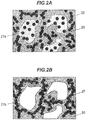
FIG.2A is a schematic diagram illustrating the internal state of an electrical conductor at a temperature higher than a melting point of a crystalline polyolefin. - [
FIG.2B ]
FIG.2B is a schematic diagram illustrating the internal state of the electrical conductor at a temperature lower than a melting point of a crystalline polyolefin. - [
FIG.3 ]
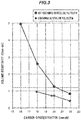
FIG.3 is a graph showing a relation between a carbon concentration (mass%) and volume resistivity (Ohm·cm) in electroconductive resin compositions of Examples respectively when containing and when not containing a crystalline polyolefin. -
FIG.1 is a radial cross sectional view showing alinear pressure sensor 1 in the embodiment. - The
pressure sensor 1 has aninsulator 10 having ahollow portion 13 and pluralelectrical conductors 11 arranged apart from each other along an inner surface of theinsulator 10 facing thehollow portion 13. Theelectrical conductor 11 covers acore wire 12, and theelectrical conductor 11 and thecore wire 12 constitutes anelectrode wire 14 of thepressure sensor 1. Twoelectrical conductors 11 come into contact with each other and are electrically conducted when an external force is applied to thepressure sensor 1, and thepressure sensor 1 thereby functions as a switch. - The
pressure sensor 1 is a linear pressure sensor, in which twoelectrode wires 14 are spirally arranged with a space so as not to be in contact with each other. However, the structure of thepressure sensor 1 is not limited to such a structure. For example, the number of theelectrical conductors 11 may be three, and theinsulator 10 and theelectrical conductor 11 may have a shape other than a linear shape, such as a flat plate shape. - The
core wire 12 is, e.g., a twisted wire composed of 26 to 30 AWG silver-plated soft copper wires. - The
electrical conductor 11 is formed of an electroconductive resin composition containing a styrene-based thermoplastic elastomer and carbon. It is not necessary to cross-link the styrene-based thermoplastic elastomer when molding. Therefore, it is possible to simplify the manufacturing process of theelectrical conductor 11 and to reduce the manufacturing cost, as compared to when using a material which needs to be cross-linked when molding, such as EPDM (ethylene-propylene-diene rubber). - The styrene-based thermoplastic elastomer is a thermoplastic elastomer with styrene blocks at both ends of its molecules. Examples of the styrene-based thermoplastic elastomer include SEBS with styrene blocks at both ends of EB (ethylene-butylene), SEPS with styrene blocks at both ends of EP (ethylene-propylene) and SEEPS with styrene blocks at both ends of EEP (ethylene-ethylene-propylene).
- The molecular weight of the styrene-based thermoplastic elastomer is preferably about 100,000 to 200,000. When the molecular weight is more than 200,000, the surface of the
electrical conductor 11 after extrusion molding may be rough. It is considered that this is because, when the molecular weight of the styrene-based thermoplastic elastomer is too large, molecular chains are less likely to entangle at the time of kneading and this decreases dispersibility of a crystalline polyolefin (described later), etc. - The electroconductive resin composition constituting the
electrical conductor 11 preferably contains a crystalline polyolefin. When kneading a material of theelectrical conductor 11 in an extruder at a temperature higher than the melting point of the crystalline polyolefin, the material of the electrical conductor is kneaded in a state that the crystalline polyolefin is in the form of liquid. Then, after molded into theelectrical conductor 11, the crystalline polyolefin crystallizes in theelectrical conductor 11 at ambient temperature (25°C). -
FIG.2A is a schematic diagram illustrating the internal state of theelectrical conductor 11 at a temperature higher than a melting point of the crystalline polyolefin. InFIG.2A , a region surrounded by a dotted line shows a liquidcrystalline polyolefin 21a in a styrene-basedthermoplastic elastomer 20. As shown inFIG.2A ,carbon 22 is contained in the styrene-basedthermoplastic elastomer 20 as well as in the liquidcrystalline polyolefin 21a at a temperature higher than the melting point of the crystalline polyolefin. -
FIG.2B is a schematic diagram illustrating the internal state of theelectrical conductor 11 at a temperature lower than a melting point of the crystalline polyolefin. A crystallizedcrystalline polyolefin 21b shown inFIG.2B is a result from crystallization of the liquidcrystalline polyolefin 21a caused by temperature drop. Due to the crystallization of the crystalline polyolefin, thecarbon 22 contained in the liquidcrystalline polyolefin 21a is pushed out into the styrene-basedthermoplastic elastomer 20. Then, many conductive paths are formed by the resulting aggregation of carbon and conductivity of theelectrical conductor 11 is improved. In addition, since conductivity can be obtained with the smaller amount of thecarbon 22 than when not using the crystalline polyolefin, it is possible to reduce the amount of thecarbon 22, thereby reducing the manufacturing cost of theelectrical conductor 11. - Generally, kneading in an extruder is carried out at a temperature of about 180 to 230°C. Therefore, it is preferable to use a crystalline polyolefin having a melting point of not more than 180°C and also not less than 25°C (ambient temperature). As such a crystalline polyolefin, it is possible to use, e.g., polypropylene having a melting point of about 140 to 160°C, polyethylene having a melting point of about 100 to 140°C, or EVA (ethylene-vinyl acetate copolymer) having a melting point of about 80°C. It is particularly preferable to use polypropylene as the crystalline polyolefin since it shows affinity for the styrene-based thermoplastic elastomer and the particle size after crystallization is not too large due to good dispersibility.
- When using polypropylene as the crystalline polyolefin, a ratio of the mass of the polypropylene contained in the
electrical conductor 11 to the mass of the carbon contained in theelectrical conductor 11 is preferably not less than 0.20 and not more than 1.10. It is possible to efficiently improve conductivity of theelectrical conductor 11 when the ratio is not less than 0.20. On the other hand, when the ratio is more than more than 1.10, a low-temperature elastic modulus of theelectrical conductor 11 exceeds the desired value. - In addition, the polypropylene is preferably of a reactor blend type. When using, e.g., a block copolymer polypropylene, the low-temperature elastic modulus of the
electrical conductor 11 tends to exceed the desired value. - The carbon in the electroconductive resin composition constituting the
electrical conductor 11 is added for the purpose of imparting conductivity to theelectrical conductor 11. The carbon is preferably particulate carbon such as carbon black. When using carbon in the form other than particle, e.g., in the form of wire or sheet, the level of electrical resistivity of theelectrical conductor 11 varies depending on a direction, which may adversely affect the operation of thepressure sensor 1. Here, carbon black is fine particles of carbon obtained by the incomplete combustion of oil or gas and having a diameter of about 3 to 500 nm. Conductive carbon black having a developed structure of connected elementary carbon particles is particularly preferable. - In addition, it is preferable that the average particle size of the particular carbon be smaller than the average particle size of the crystalline polyolefin after crystallization. In this case, movement of carbon from liquid crystalline polyolefin into the styrene-based thermoplastic elastomer caused by crystallization of the crystalline polyolefin as shown in
FIGS.2A and 2B is likely to occur and it is thus possible to effectively improve conductivity of theelectrical conductor 11. The average particle size of, e.g., polypropylene after crystallization is about 0.1 to 1.0 µm. As such, it is possible to effectively improve conductivity of theelectrical conductor 11 by using carbon black and polypropylene respectively as the carbon and the crystalline polyolefin. - A mass percentage concentration of the carbon in the electroconductive resin composition constituting the
electrical conductor 11 is preferably not less than 18 mass%. Theelectrical conductor 11 thereby have a sufficiently small volume resistivity. The mass percentage concentration of the carbon is calculated by dividing the mass of the carbon by the total mass of the electroconductive resin composition (the mass of the electrical conductor 11) and then multiplying the obtained value by 100. - The insulating resin composition constituting the
insulator 10 preferably contains a styrene-based thermoplastic elastomer in the same manner as the electroconductive resin composition constituting theelectrical conductor 11. It is not necessary to cross-link the styrene-based thermoplastic elastomer when molding. Therefore, it is possible to simplify the manufacturing process of theinsulator 10 and to reduce the manufacturing cost. - The insulating resin composition constituting the
insulator 10 and the electroconductive resin composition constituting theelectrical conductor 11 contain a process oil. Preferably, a mass percentage concentration of the process oil in the electroconductive resin composition constituting theelectrical conductor 11 is higher than a mass percentage concentration of the process oil in the insulating resin composition constituting theinsulator 10. The process oil here is an oil to be added to theinsulator 10 and theelectrical conductor 11 to increase plasticity and to reduce hardness, and also functions as a medium for the carbon in theelectrical conductor 11. - The process oil in a region with its high concentration moves to a region with low concentration. Therefore, if the mass percentage concentration of the process oil in the electroconductive resin composition constituting the
electrical conductor 11 is lower than the mass percentage concentration of the process oil in the insulating resin composition constituting theinsulator 10, the process oil in theinsulator 10 moves into theelectrical conductor 11. This increases the interparticle distance of the carbon in theelectrical conductor 11 and decreases conductivity of theelectrical conductor 11. However, such a problem can be prevented by adjusting the mass percentage concentration of the process oil in the electroconductive resin composition constituting theelectrical conductor 11 to be higher than the mass percentage concentration of the process oil in the insulating resin composition constituting theinsulator 10. - The process oil is preferably a paraffin-based oil. Low-temperature elastic moduli of the
insulator 10 and theelectrical conductor 11 tend to exceed the desired values more when using a paraffin-based oil composed of linear molecules than when using, e.g., a naphthene-based oil or an aromatic oil composed of planar molecules. It is considered that this is because intermolecular interaction is lower and fluidity is less likely to be reduced even at a low temperature in the oil composed of linear molecules than in the oil composed of planar molecules. - A method of manufacturing the
pressure sensor 1 will be described below as an example. - Firstly, the
electrical conductors 11 are formed by extrusion molding using an extruder to cover the surfaces of thecore wires 12, thereby forming twoelectrode wires 14. Here, the cross-linking process is not performed since theelectrical conductor 11 does not contain a material which needs to be cross-linked. - Next, a first linear spacer for forming the center portion of the
hollow portion 13 and second linear spacers for forming the peripheral portion of thehollow portion 13 are formed. - Next, four second spacers and the two
electrode wires 14 are alternately arranged around the first spacer and are then twisted together. - Next, the
insulator 10 is formed by extrusion molding to cover the four second spacers and the twoelectrode wires 14 which are twisted together around the first spacer. - Next, the first spacer and the second spacers are pulled out, thereby forming the
hollow portion 13. Thepressure sensor 1 is formed through the steps described above. - The manufacturing process of the
pressure sensor 1 in the present embodiment is based on the manufacturing process of a pressure sensor disclosed in Japanese Patent No.3275767 electrical conductor 11, or theelectrical conductor 11 and theinsulator 10, is/are not cross-linked at the time of molding. - In the embodiment, an electrical conductor is formed of an electroconductive resin composition which can be produced at low cost and is suitable as a material for electrical conductors of a pressure sensor, thereby allowing a pressure sensor to be obtained at low cost.
- Sixteen types of electroconductive resin compositions (
Samples 1 to 16) having different constituent components or proportions were formed and evaluated for volume resistivity (Ohm·cm), Mooney viscosity, Shore A hardness, and elastic modulus (MPa) at low temperature (-30°C). Then, electrode wires were formed by extrudingSamples 1 to 16 of the electroconductive resin compositions to cover core wires, and extruded appearance (outer appearance of the electrode wire) was evaluated. - The Mooney viscosity was measured at 180°C by a method in accordance with JIS K 6300-1. The value after 7 minutes of preheating and 4 minutes of shearing (ML7+4 (180°C)) was defined as Mooney viscosity. The volume resistivity was measured on
Samples 1 to 16 of the electroconductive resin compositions in the form of sheet by a method in accordance with JIS K 7194 (four terminal four-probe method). The Shore A hardness was measured onSamples 1 to 16 of the electroconductive resin compositions in the form of sheet by a method in accordance with ASTM D2240. The low-temperature elastic modulus was measured at a frequency of 10 Hz at -30°C by a method in accordance with JIS K 7244-4. - The electrode wires used for the evaluation of the extruded appearance were formed by covering core wires (twisted wires each composed 26 AWG silver-plated soft copper wires) with electrical conductors formed of
Samples 1 to 16 of the electroconductive resin compositions so as to have an outer diameter of 1.0 mm. - Tables 1 and 2 below show the constituent components of
Samples 1 to 16 of the electroconductive resin compositions and the evaluation results ofSamples 1 to 16.[Table 1] Product name Sample 1 Sample 2Sample 3Sample 4Sample 5Sample 6 Sample 7 Sample 8 Carbon Ketjenblack EC-600JD 25 25 25 25 25 25 25 25 Crystalline polyolefin WELNEX RGF4VM 5 10 15 20 25 15 15 PM580X 15 Process oil LUCANT HC-40 60 60 60 60 60 60 60 60 Styrene-based thermoplastic SEPTON 4055 35 30 25 20 15 25 25 elastomer SEPTON 4099 25 Antioxidant IRGANOX 1010 0.1 0.1 0.1 0.1 0.1 0.1 0.1 0.1 Total mass (kg) 125.1 125.1 125.1 125.1 125.1 128.1 125.1 125.1 Carbon concentration (mass%) 20.0 20.0 20.0 20.0 20.0 21.9 20.0 20.0 (Crystalline polyolefin/Carbon) Mass ratio 0.20 0.40 0.60 0.80 1.00 0.54 0.60 0.60 (Crystalline polyolefin+Carbon) concentration (mass%) 24.0 28.0 32.0 36.0 40.0 33.6 32.0 32.0 Process oil concentration (mass%) 48.0 48.0 48.0 48.0 48.0 46.8 48.0 48.0 Evaluation item Target value Volume resistivity (Ohm·cm) ≤1.2 0.794 0.753 0.712 0.671 0.625 0.412 0.693 0.715 Mooney viscosity [ML7+4 (180°C)] ≤150 106 101.9 97 92 88 145 101 84 Shore A hardness 84 84 90 94 98 98 96 93 Low-temperature elastic modulus (MPa) ≤500 178 254 330 406 482 430 352 340 Extruded appearance Δ ○ ○ ○ ○ ○ ○ Δ [Table 2] Product name Sample 9 Sample 10Sample 11Sample 12Sample 13Sample 14Sample 15Sample 16Carbon Ketjenblack EC-600JD 25 24 19 22 25 28 25 25 Crystalline polyolefin WELNEX RGF4VM 20 20 0 0 0 0 30 5 Process oil LUCANT HC-40 52 60 60 60 60 60 50 PW-380 10 60 Styrene-based thermoplastic elastomer SEPTON 4055 30 30 40 40 40 40 10 35 Antioxidant IRGANOX 1010 0.1 0.1 0.1 0.1 0.1 0.1 0.1 0.1 Total mass (kg) 127.1 134.1 119.1 122.1 125.1 128.1 125.1 125.1 Carbon concentration (mass%) 19.7 17.9 16.0 18.0 20.0 21.9 20.0 20.0 (Crystalline polyolefin/Carbon) Mass ratio 0.80 0.83 0.00 0.00 0.00 0.00 1.20 0.20 (Crystalline polyolefin+Carbon) concentration (mass%) 35.4 32.8 16.0 18.0 20.0 21.9 44.0 24.0 Process oil concentration (mass%) 40.9 44.7 50.4 49.1 48.0 46.8 48.0 48.0 Evaluation item Target value Volume resistivity (Ohm·cm) ≤1.2 0.721 0.956 4.95 2.6 1.26 0.833 0.603 0.735 Mooney viscosity ML7+4 (180°C) ≤150 88 85 71.3 91.4 129.8 175 85 94 Shore A hardness 95 94 66 71 73 80 98 90 Low-temperature elastic modulus (MPa) ≤500 418 410 56 71.8 102 136 558 530 Extruded appearance ○ ○ ○ ○ Δ × ○ Δ - Masses (kg) of the carbon, the crystalline polyolefin, the process oil and the styrene-based thermoplastic elastomer contained in each electroconductive resin composition sample are shown in the upper rows of Tables 1 and 2. Meanwhile, the total mass (kg) of a material, the carbon concentration (mass%), the mass ratio of the carbon to the crystalline polyolefin, the concentration (mass%) of the total of the crystalline polyolefin and the carbon, and the process oil concentration (mass%) in each electroconductive resin composition sample are shown in the middle rows of Tables 1 and 2.
- Ketjenblack EC-600JD used as the carbon is carbon black (manufactured by Ketjen Black International Company). WELNEX RGF4VM used as the crystalline polyolefin is a reactor blend type polypropylene (manufactured by Japan Polypropylene Corporation) which has a density of 0.89 glcm3, a MFR (Melt Flow Rate) of 6.0 g/10min and a bending elastic modulus of 280 MPa. PM580X used as the crystalline polyolefin is a block copolymer polypropylene (manufactured by SunAllomer Ltd.) which has a density of 0.9 g/cm3, a MFR of 5.0 g/10min and a bending elastic modulus of 1300 MPa. LUCANT HC-40 used as the process oil is an ethylene-α-olefin co-oligomer (manufactured by Mitsui Chemicals, Inc.) which has a kinetic viscosity of 40 mm2/s at 100°C. PW-380 used as the process oil is a mineral oil (manufactured by Idemitsu Kosan Co., Ltd.) which contains 27% of naphthene component and 73% of paraffin component and has a kinetic viscosity of 30 mm2/s. SEPTON 4055 used as the styrene-based thermoplastic elastomer is SEEPS (manufactured by Kuraray Co., Ltd) which contains 30% of styrene component and has a molecular weight of 130,000. SEPTON 4099 used as the styrene-based thermoplastic elastomer is SEEPS (manufactured by Kuraray Co., Ltd) which contains 30% of styrene component and has a molecular weight of 320,000. IRGANOX 1010 used as antioxidant is pentaerythritol tetrakis[3-(3,5-di-tert-butyl-4-hydroxyphenyl)propionate] (manufactured by BASF) which is added to eliminate an effect of oxidative degradation in a heat-aging test (described later) conducted on the pressure sensor.
- The target value for each evaluation is a value as a material for the electrical conductor of the electrode wire of pressure sensor. The symbol "○" in the section of Extruded appearance means that roughness was virtually not observed on the outer appearance, the symbol "Δ" means that slight roughness was observed, and the symbol "×"means that roughness was observed and was to the extent that it is problematic for practical use.
-
Samples 1 to 10 are the samples exhibiting satisfactory results for the evaluations of volume resistivity, Mooney viscosity, low-temperature elastic modulus and extruded appearance. On the other hand,Samples 11 to 16 are the samples exhibiting an unsatisfactory result for at least one of the evaluations of volume resistivity, Mooney viscosity, low-temperature elastic modulus and extruded appearance. - When comparing
Samples 3 and 7 which contain different types of crystalline polyolefins,Sample 3 had the better low-temperature elastic modulus. It is considered that this is becauseSample 3 contains a reactor blend type polypropylene while Sample 7 contains a block copolymer polypropylene. - When comparing
Samples 3 and 8 which contain different types of styrene-based thermoplastic elastomers, the electrode wire having an electrical conductor formed ofSample 3 had the better result in extruded appearance. It is considered that this is because dispersibility of the crystalline polyolefin was reduced in Sample 8 since the molecular weight of the styrene-based thermoplastic elastomer was too large. -
Samples Samples 11 to 14. However, evenSample 14 having the highest carbon concentration thereamong has a higher volume resistivity thanSamples 1 and 9. -
FIG.3 is a graph showing a relation between a carbon concentration (mass%) and volume resistivity (Ohm·cm) respectively when the electroconductive resin composition contains and does not contain a crystalline polyolefin. The plot marks "◆" are the values ofSamples Samples 11 to 14 and show a relation when the electroconductive resin composition does not contain a crystalline polyolefin. - Meanwhile, the evaluation results of
Samples 11 to 14 show that the Mooney viscosity increases with an increase in the carbon concentration in the electroconductive resin composition, which causes a decrease in moldability and resulting deterioration in extruded appearance. On the other hand, for example, Sample 6 is excellent in extruded appearance even though the Mooney viscosity is high. It is considered that this is because moldability is less likely to decrease in the electroconductive resin composition containing the crystalline polyolefin even if the carbon concentration is increased. -
Sample 15, which contains a crystalline polyolefin, achieved the target volume resistivity but had a low-temperature elastic modulus exceeding the target value. It is considered that this is because a ratio of the mass of the crystalline polyolefin to the mass of the carbon inSample 15 was too large. Based on the results that the ratio of the mass of the polypropylene to the mass of the carbon was 1.20 inSample 15 and the ratio of the mass of the polypropylene to the mass of the carbon was not less than 0.20 and not more than 1.0 inSamples 1 to 8 which achieved the target low-temperature elastic modulus, the preferred ratio of the mass of the polypropylene to the mass of the carbon in the electroconductive resin composition is considered to be about not less than 0.20 and not more than 1.0. - In
Sample 16, a crystalline polyolefin was contained and the ratio of the mass of the crystalline polyolefin to the mass of the carbon was 0.20 which is the same value asSample 1, but the low-temperature elastic modulus was more than the target value. It is considered that this is because the process oil inSample 16 contains a naphthene component. - Next, eight types of pressure sensors (Samples A to H) were formed so that the respective electrical conductors of the electrode wires were formed of electroconductive resin compositions composed of different components and the insulators were formed of insulating resin compositions composed of different components. Then, the ON resistance (Ohm), the ON resistance (Ohm) after the heat-aging test at 100°C for 1000 hours, the ON load (N), and the ON load (N) at low temperature (-30°C) were evaluated.
- The pressure sensor samples A to H here have an insulator having a hollow portion and two electrode wires formed in a double spiral structure so as to be provided apart from each other along the inner surface in the hollow portion, in the same manner as the
pressure sensor 1 shown inFIG.1 . The shape of the hollow portion is also the same as that of thepressure sensor 1 shown inFIG.1 . The electrode wires were formed usingSamples - In the ON resistance test, 20 N of load was applied to round bar-shaped indenters of 4 mm in diameter placed on the pressure sensor samples A to H so as to cross substantially orthogonal thereto, electrical resistance at the moment of occurrence of electrical conduction between the two electrode wires was measured 10 times, and the average value thereof was calculated. This average value is the ON resistance value in Table 4. In the ON resistance test after the heat-aging test, the same ON test was conducted after the heat-aging test at 100°C for 1000 hours.
- In the ON load test, a load was gradually applied to round bar-shaped indenters of 4 mm in diameter placed on the pressure sensor samples A to H so as to cross substantially orthogonal thereto, and a load at which electrical resistance of the pressure sensor reached 100 Ohm was measured. In the ON load test under the low temperature conditions, the same ON load test was conducted at a temperature of -30°C.
- Table 3 below shows three types of insulating resin compositions and process oil concentrations used for the insulators in Samples A to H.
[Table 3] Product name Formulation L Formulation M Formulation N Process oil LUCANT HC-40 100 82 85 Styrene-based thermoplastic elastomer SEPTON 4055 65 60 60 Kraton RP6935 25 20 20 Heavy calcium carbonate SOFTON 1200 10 20 20 Antioxidant IRGANOX 1010 0.1 0.1 0.1 Process oil concentration (mass%) 50.0 45.0 45.9 - Kraton RP6935 used as the styrene-based thermoplastic elastomer is SEBS (manufactured by Kraton Polymers) which contains 58% of styrene component and has a molecular weight of 200,000. SOFTON 1200 used as heavy calcium carbonate is heavy calcium carbonate (manufactured by Bihoku Funka Kogyo Co., Ltd.) which has a particle size of 1.8 µm and has an oil absorption of 36 cc/100g.
- Table 4 below shows the types of electro conductive resin compositions used to form electrical conductors and insulating resin compositions used to form insulators in Samples A to H, and the respective evaluation results of Samples A to H.
[Table 4] Sample A Sample B Sample C Sample D Sample E Sample F Sample G Sample H Electroconductive resin composition Sample 3 Sample 3Sample 5Sample 6 Sample 3Sample 6 Sample 12Sample 16Process oil concentration (mass%) 48.0 48.0 48.0 46.9 48.0 46.8 49.2 48.0 Insulating resin composition Formulation Formulation Formulation Formulation Formulation Formulation Formulation Formulation M N M N L L M L Process oil concentration (mass%) 45.1 45.9 45.1 45.9 50.0 50.0 45.1 50.0 Evaluation item Target value ON Evaluation resistance (Ohm) ≤30 15.2 15.7 17.2 18.4 15.5 19.1 41.9 18.7 ON resistance after Heat-aging test 16.4 16.3 18.1 19.0 52.3 42.8 44.7 54.4 ON load (N) ≤15 3.6 3.4 3.8 4.1 4.4 3.7 4.2 4.0 ON load (N) under low temperature conditions 10.2 10.8 14.1 13.6 11.7 12.4 20.3 17.6 - Samples A to D are the samples exhibiting satisfactory results for all four types of evaluations. On the other hand, Samples E to D are the samples exhibiting an unsatisfactory result for at least one of the evaluations.
- The ON resistance values of Samples E, F and H after heat-aging were more than the target value. It is considered that this is because the process oil concentration in Samples E, F and H was higher in the insulating resin composition than in the electroconductive resin composition, and the process oil thus moved from the insulator into the electrical conductors.
- Sample G exhibited the unsatisfactory results for both the ON resistance and the post-heat-aging ON resistance since the electroconductive resin composition constituting the electrical conductor was
Sample 12 having a large volume resistivity. - Technical ideas understood from the embodiment will be described below citing the reference numerals, etc., used for the embodiment. However, each reference numeral, etc., described below is not intended to limit the constituent elements in the claims to the members, etc., specifically described in the embodiment.
- [1] A pressure sensor (1), comprising: an insulator (10) having a hollow portion (13); and a plurality of electrical conductors (11) that have been disposed apart from each other along the inner surface facing the hollow portion (13) of the insulator (10), wherein the plurality of electrical conductors (11) comprise an electroconductive resin composition that includes both a styrene-based thermoplastic elastomer and carbon.
- [2] The pressure sensor (1) defined by [1], wherein the electroconductive resin composition comprises a crystalline polyolefin.
- [3] The pressure sensor (1) defined by [2], wherein the crystalline polyolefin has a melting point of not less than 25°C and not more than 180°C.
- [4] The pressure sensor (1) defined by [3], wherein the crystalline polyolefin is polypropylene.
- [5] The pressure sensor (1) defined by [4], wherein a ratio of the mass of the polypropylene contained in the electroconductive resin composition to the mass of the carbon contained in the plurality of electrical conductors (11) is not less than 0.20 and not more than 1.10.
- [6] The pressure sensor defined by any one of [1] to [5], wherein the electroconductive resin composition has a volume resistivity of not more than 1.0 Ohm·cm.
- [7] The pressure sensor (1) defined by any one of [1] to [5], wherein a mass percentage concentration of the carbon in the electroconductive resin composition is not less than 18 mass%.
- [8] The pressure sensor (1) defined by any one of [1] to [5], wherein the insulator (10) comprises an insulating resin composition containing a styrene-based thermoplastic elastomer.
- [9] The pressure sensor (1) defined by [8], wherein the insulating resin composition and the electroconductive resin composition comprise a process oil, and a mass percentage concentration of the process oil in the electroconductive resin composition is higher than a mass percentage concentration of the process oil in the insulating resin composition.
- [10] The pressure sensor (1) defined by [9], wherein the process oil is a paraffin-based oil.
- [11] The pressure sensor (1) defined by any one of [1] to [5], wherein the carbon is in the form of particle.
- [12] The pressure sensor (1) defined in any one of [2] to [5], wherein the average particle size of the carbon is smaller than the average particle size of the crystalline polyolefin.
- [13] The pressure sensor (1) defined by any one of [1] to [5], wherein the insulator (10) has a cylindrical shape, and the plurality of electrical conductors (11) extend spirally in a longitudinal direction of the insulator (10) along the inner surface of the insulator (10).
- [14] An electroconductive resin composition, comprising a styrene-based thermoplastic elastomer; carbon; and a crystalline polyolefin.
- [15] The electroconductive resin composition defined by [14], wherein the crystalline polyolefin has a melting point of not less than 25°C and not more than 180°C.
- [16] The electroconductive resin composition defined by [15], wherein the crystalline polyolefin is polypropylene.
- [17] The electroconductive resin composition defined by [16], wherein a ratio of the mass of the polypropylene to the mass of the carbon is not less than 0.20 and not more than 1.10.
- [18] The electroconductive resin composition defined by any one of [14] to [17], wherein a volume resistivity is not more than 1.0 Ohm·cm.
- [19] The electroconductive resin composition defined by any one of [14] to [17], wherein a mass percentage concentration of the carbon is not less than 18 mass%.
- [20] The electroconductive resin composition defined by any one of [14] to [17], comprising a paraffin-based oil.
- [21] The electroconductive resin composition defined by any one of [14] to [17], wherein the carbon is in the form of particle.
- [22] The electroconductive resin composition defined by any one of [14] to [17], wherein the average particle size of the carbon is smaller than the average particle size of the crystalline polyolefin.
- Although the embodiment and Examples of the invention have been described, the invention is not to be limited to the embodiment and Examples, and the various kinds of modifications can be implemented without departing from the gist of the invention. For example, the invention is characterized in the constituent components of the electroconductive resin composition constituting the electrical conductor and is thus applicable to pressure sensors having any configurations.
- In addition, an antioxidant, an anti-aging agent, an antiozonant, a metal chelator, a flame retardant, a colorant, a foaming agent, a lubricant, a stabilizer, a filler, a compatibilizing agent and a reinforcing agent can be appropriately added to the resin composition used for the electrical conductor or the insulator without departing the scope of the requirements of [1] to [20].
- In addition, the invention according to claims is not to be limited to the above-mentioned embodiment and Examples. Further, please note that all combinations of the features described in the embodiment and Examples are not necessary to solve the problem of the invention.
- Provided are an electroconductive resin composition which can be produced at low cost and is suitable as a material for electrical conductors of a pressure sensor, and a pressure sensor including electrical conductors constituted of the electroconductive resin composition.
-
- 1:
- PRESSURE SENSOR
- 10:
- INSULATOR
- 11:
- ELECTRICAL CONDUCTOR
- 12:
- CORE WIRE
- 13:
- HOLLOW PORTION
- 14:
- ELECTRODE WIRE
- 20:
- STYRENE-BASED THERMOPLASTIC ELASTOMER
- 21A, 21B:
- CRYSTALLINE POLYOLEFIN
- 22:
- CARBON
Claims (22)
- A pressure sensor, comprising:an insulator having a hollow portion; anda plurality of electrical conductors that have been disposed apart from each other along the inner surface facing the hollow portion of the insulator,wherein the plurality of electrical conductors comprise an electroconductive resin composition that includes both a styrene-based thermoplastic elastomer and carbon.
- The pressure sensor according to claim 1, wherein the electroconductive resin composition comprises a crystalline polyolefin.
- The pressure sensor according to claim 2, wherein the crystalline polyolefin has a melting point of not less than 25°C and not more than 180°C.
- The pressure sensor according to claim 3, wherein the crystalline polyolefin is a polypropylene.
- The pressure sensor according to claim 4, wherein a ratio of the mass of the polypropylene contained in the electroconductive resin composition to the mass of the carbon contained in the plurality of electrical conductors is not less than 0.20 and not more than 1.10.
- The pressure sensor according to any one of claims 1 to 5, wherein the electroconductive resin composition has a volume resistivity of not more than 1.0 Ohm·cm.
- The pressure sensor according to any one of claims 1 to 5, wherein a mass percentage concentration of the carbon in the electroconductive resin composition is not less than 18 mass%.
- The pressure sensor according to any one of claims 1 to 5, wherein the insulator comprises an insulating resin composition containing a styrene-based thermoplastic elastomer.
- The pressure sensor according to claim 8, wherein the insulating resin composition and the electroconductive resin composition comprise a process oil, and a mass percentage concentration of the process oil in the electroconductive resin composition is higher than a mass percentage concentration of the process oil in the insulating resin composition.
- The pressure sensor according to claim 9, wherein the process oil is a paraffin-based oil.
- The pressure sensor according to any one of claims 1 to 5, wherein the carbon is in the form of a particle.
- The pressure sensor according to any one of claims 2 to 5, wherein the average particle size of the carbon is smaller than the average particle size of the crystalline polyolefin.
- The pressure sensor according to any one of claims 1 to 5, wherein the insulator has a cylindrical shape, and the plurality of electrical conductors extend spirally in a longitudinal direction of the insulator along the inner surface of the insulator.
- An electroconductive resin composition, comprising:a styrene-based thermoplastic elastomer;a carbon; anda crystalline polyolefin.
- The electroconductive resin composition according to claim 14, wherein the crystalline polyolefin has a melting point of not less than 25°C and not more than 180°C.
- The electroconductive resin composition according to claim 15, wherein the crystalline polyolefin is a polypropylene.
- The electroconductive resin composition according to claim 16, wherein a ratio of the mass of the polypropylene to the mass of the carbon is not less than 0.20 and not more than 1.10.
- The electroconductive resin composition according to any one of claims 14 to 17, wherein a volume resistivity is not more than 1.0 Ohm·cm.
- The electroconductive resin composition according to any one of claims 14 to 17, wherein a mass percentage concentration of the carbon is not less than 18 mass%.
- The electroconductive resin composition according to any one of claims 14 to 17, comprising a paraffin-based oil.
- The electroconductive resin composition according to any one of claims 14 to 17, wherein the carbon is in the form of particle.
- The electroconductive resin composition according to any one of claims 14 to 17, wherein the average particle size of the carbon is smaller than the average particle size of the crystalline polyolefin.
Applications Claiming Priority (1)
| Application Number | Priority Date | Filing Date | Title |
|---|---|---|---|
| PCT/JP2014/057420 WO2015140943A1 (en) | 2014-03-18 | 2014-03-18 | Electroconductive resin composition and pressure sensor |
Publications (3)
| Publication Number | Publication Date |
|---|---|
| EP3109609A1 true EP3109609A1 (en) | 2016-12-28 |
| EP3109609A4 EP3109609A4 (en) | 2017-08-02 |
| EP3109609B1 EP3109609B1 (en) | 2020-10-21 |
Family
ID=54143951
Family Applications (1)
| Application Number | Title | Priority Date | Filing Date |
|---|---|---|---|
| EP14885949.9A Active EP3109609B1 (en) | 2014-03-18 | 2014-03-18 | Electroconductive resin composition and pressure sensor |
Country Status (5)
| Country | Link |
|---|---|
| US (2) | US9991022B2 (en) |
| EP (1) | EP3109609B1 (en) |
| JP (1) | JP6152922B2 (en) |
| CN (1) | CN106104240B (en) |
| WO (1) | WO2015140943A1 (en) |
Cited By (1)
| Publication number | Priority date | Publication date | Assignee | Title |
|---|---|---|---|---|
| WO2023242519A1 (en) | 2022-06-16 | 2023-12-21 | Sfc Solutions Automotive France | Polymeric deformation sensor |
Families Citing this family (13)
| Publication number | Priority date | Publication date | Assignee | Title |
|---|---|---|---|---|
| JP3080414B2 (en) | 1991-02-15 | 2000-08-28 | 株式会社寺田製作所 | Method for quantitative distribution of tea leaves to hopper of tea making machine |
| US9480731B2 (en) | 2013-12-12 | 2016-11-01 | Medy-Tox, Inc. | Long lasting effect of new botulinum toxin formulations |
| EP3109609B1 (en) * | 2014-03-18 | 2020-10-21 | Hitachi Metals, Ltd. | Electroconductive resin composition and pressure sensor |
| DE102015215820A1 (en) * | 2015-08-19 | 2017-02-23 | Siemens Healthcare Gmbh | Controlling a medical device |
| US10176908B2 (en) * | 2015-09-30 | 2019-01-08 | Sumitomo Electric Industries, Ltd. | Core electric wire for multi-core cable and multi-core cable |
| JP6972942B2 (en) * | 2016-12-28 | 2021-11-24 | 日立金属株式会社 | Pressure sensor |
| US10451496B2 (en) * | 2016-12-28 | 2019-10-22 | Hitachi Metals, Ltd. | Pressure-sensitive sensor |
| JP6948207B2 (en) * | 2017-09-28 | 2021-10-13 | デンカ株式会社 | Conductive resin composition and a model for practicing procedures using it |
| JP6924516B2 (en) * | 2017-12-11 | 2021-08-25 | ロボセンサー技研株式会社 | Linear sensor, strip sensor, and planar sensor |
| JP7011775B2 (en) * | 2017-12-18 | 2022-01-27 | 日立金属株式会社 | Pressure-sensitive sensor manufacturing method and pressure-sensitive sensor manufacturing equipment |
| KR102093822B1 (en) | 2018-11-12 | 2020-03-26 | 한국과학기술연구원 | Apparatus and method for separating sound sources |
| JP7422495B2 (en) * | 2019-06-10 | 2024-01-26 | 株式会社プロテリアル | Pressure sensor manufacturing method and manufacturing device |
| CN114555700B (en) | 2020-02-28 | 2023-08-22 | 住友理工株式会社 | Sheet-shaped flexible electrode and manufacturing method thereof |
Family Cites Families (23)
| Publication number | Priority date | Publication date | Assignee | Title |
|---|---|---|---|---|
| JPS6042461A (en) | 1983-06-29 | 1985-03-06 | Sumitomo Bakelite Co Ltd | Electrically conductive thermoplastic resin composition |
| JPS608362A (en) * | 1983-06-29 | 1985-01-17 | Sumitomo Bakelite Co Ltd | Electrically conductive thermoplastic resin composition |
| US6863177B2 (en) * | 1996-05-13 | 2005-03-08 | Matsushita Electric Industrial Co., Ltd. | Electrically conductive propylene resin composition and part-housing container |
| JP3592483B2 (en) | 1996-05-13 | 2004-11-24 | 松下電器産業株式会社 | Conductive polypropylene resin composition and parts storage container |
| JP3275767B2 (en) * | 1997-04-03 | 2002-04-22 | 日立電線株式会社 | Manufacturing method of pressure sensor |
| JP2001183247A (en) * | 1999-12-24 | 2001-07-06 | Asmo Co Ltd | Pressure detector |
| JP3869255B2 (en) * | 2001-06-14 | 2007-01-17 | 富士通株式会社 | Metal molded body manufacturing method and metal molded body manufactured thereby |
| WO2003085681A1 (en) * | 2002-04-01 | 2003-10-16 | World Properties, Inc. | Electrically conductive polymeric foams and elastomers and methods of manufacture thereof |
| US7212376B2 (en) * | 2003-09-26 | 2007-05-01 | Hitachi Global Storage Netherlands, B.V. | Disk drive system with hydrodynamic bearing lubricant having charge-control additive comprising dioctyldiphenylamine and/or oligomer thereof |
| JP2005149760A (en) | 2003-11-11 | 2005-06-09 | Hitachi Cable Ltd | Cord switch |
| TW200519150A (en) * | 2003-12-05 | 2005-06-16 | Showa Denko Kk | Conductive resin composition and molded product thereof |
| JP2007302817A (en) * | 2006-05-12 | 2007-11-22 | Mitsubishi Engineering Plastics Corp | Thermoplastic resin composition for manufacturing automotive exterior parts |
| WO2009035453A1 (en) * | 2007-09-13 | 2009-03-19 | Henkel Ag & Co. Kgaa | Electrically conductive composition |
| US9099224B2 (en) * | 2009-10-01 | 2015-08-04 | Board Of Supervisors Of Louisiana State University And Agricultural And Mechanical College | Apparatus and method for nanocomposite sensors |
| JP5267468B2 (en) * | 2010-01-15 | 2013-08-21 | 東洋インキScホールディングス株式会社 | Conductive resin composition and method for producing conductive film |
| JP5549257B2 (en) | 2010-02-15 | 2014-07-16 | 日立金属株式会社 | Conductive rubber composition |
| JP2011195618A (en) | 2010-03-17 | 2011-10-06 | Showa Denko Kk | Method for preparing electroconductive resin composition and fuel cell separator using the electroconductive resin composition |
| DE102010043472A1 (en) * | 2010-11-05 | 2012-05-10 | Evonik Goldschmidt Gmbh | Composition of polymers and electrically conductive carbon |
| US8966999B2 (en) * | 2011-06-17 | 2015-03-03 | Microsoft Corporation | Pressure sensor linearization |
| CN102507715A (en) * | 2011-11-14 | 2012-06-20 | 湖南省湘电试验研究院有限公司 | Method for detecting antioxidant of electric oil |
| CN103411710B (en) * | 2013-08-12 | 2016-04-06 | 北京纳米能源与系统研究所 | A kind of pressure transducer, electronic skin and touch-screen equipment |
| CN103592759B (en) * | 2013-11-26 | 2015-09-09 | 上海交通大学 | Display device based on electrowetting effect to drive liquid droplet movement |
| EP3109609B1 (en) * | 2014-03-18 | 2020-10-21 | Hitachi Metals, Ltd. | Electroconductive resin composition and pressure sensor |
-
2014
- 2014-03-18 EP EP14885949.9A patent/EP3109609B1/en active Active
- 2014-03-18 CN CN201480077082.8A patent/CN106104240B/en active Active
- 2014-03-18 WO PCT/JP2014/057420 patent/WO2015140943A1/en not_active Ceased
- 2014-03-18 US US15/124,480 patent/US9991022B2/en active Active
- 2014-03-18 JP JP2016508381A patent/JP6152922B2/en active Active
-
2018
- 2018-04-17 US US15/955,244 patent/US10431348B2/en active Active
Cited By (2)
| Publication number | Priority date | Publication date | Assignee | Title |
|---|---|---|---|---|
| WO2023242519A1 (en) | 2022-06-16 | 2023-12-21 | Sfc Solutions Automotive France | Polymeric deformation sensor |
| FR3136845A1 (en) * | 2022-06-16 | 2023-12-22 | Sealynx International | Polymer material strain sensor |
Also Published As
| Publication number | Publication date |
|---|---|
| EP3109609B1 (en) | 2020-10-21 |
| EP3109609A4 (en) | 2017-08-02 |
| CN106104240B (en) | 2020-02-07 |
| CN106104240A (en) | 2016-11-09 |
| JPWO2015140943A1 (en) | 2017-04-06 |
| WO2015140943A1 (en) | 2015-09-24 |
| US20170025199A1 (en) | 2017-01-26 |
| JP6152922B2 (en) | 2017-06-28 |
| US20180277280A1 (en) | 2018-09-27 |
| US10431348B2 (en) | 2019-10-01 |
| US9991022B2 (en) | 2018-06-05 |
Similar Documents
| Publication | Publication Date | Title |
|---|---|---|
| US10431348B2 (en) | Pressure sensor including electrical conductors comprising electroconductive resin composition that does not need cross-linking | |
| CA2708295C (en) | Electric article comprising at least one element made from a semiconductive polymeric material and semiconductive polymeric composition | |
| EP2711933A1 (en) | Insulation composition for DC power cable and DC power cable prepared by using the same | |
| EP3033391B1 (en) | Thermoplastic blend formulations for cable insulations | |
| EP3971913B1 (en) | Resin composition, and communication cable and wire harness using same | |
| KR101454092B1 (en) | Crosslinked polyolefin composition, direct-current power cable, and process for construction of direct-current power line | |
| US9905326B2 (en) | Semiconductive resin composition and power transmission cable using same | |
| KR101968388B1 (en) | Power cable | |
| JP6358514B2 (en) | Pressure sensor | |
| EP3544026B1 (en) | Power cable | |
| CN109983545B (en) | Composition for wire coating material and insulated wire | |
| KR20150127617A (en) | Power cable with a thick insulation layer and a method for its manufacture | |
| KR101457799B1 (en) | Power cable having a semiconductive layer | |
| JP6564258B2 (en) | Semiconductive resin composition and power cable using the same | |
| EP3859752A1 (en) | Insulator and power cable comprising same | |
| JP2013155272A (en) | Mixed insulating material and molded article thereof | |
| KR20230065683A (en) | Resin composition for power cable with improved transparency and processability and power cable including the same in insulating layer | |
| JP6972942B2 (en) | Pressure sensor | |
| KR20190003079A (en) | Semiconductive composition and power cable having a semiconductive layer formed from the same | |
| JP6445485B2 (en) | Semiconductive resin composition and power cable using the same | |
| KR101942790B1 (en) | Semi-Conductive Layer Composition for Distributing Cable and Eco-Friendly Distributing Cable | |
| WO2017134731A1 (en) | Electrically conductive thermoplastic elastomer composition and pressure-sensitive switch | |
| JP6164420B2 (en) | Rubber unit for semi-conductive paint and power cable connection | |
| KR20140128585A (en) | Compact power cable with increased capacitance | |
| JP5778210B2 (en) | Conductive thermoplastic resin composition and cable |
Legal Events
| Date | Code | Title | Description |
|---|---|---|---|
| PUAI | Public reference made under article 153(3) epc to a published international application that has entered the european phase |
Free format text: ORIGINAL CODE: 0009012 |
|
| STAA | Information on the status of an ep patent application or granted ep patent |
Free format text: STATUS: REQUEST FOR EXAMINATION WAS MADE |
|
| PUAB | Information related to the publication of an a document modified or deleted |
Free format text: ORIGINAL CODE: 0009199EPPU |
|
| PUAI | Public reference made under article 153(3) epc to a published international application that has entered the european phase |
Free format text: ORIGINAL CODE: 0009012 |
|
| 17P | Request for examination filed |
Effective date: 20160907 |
|
| AK | Designated contracting states |
Kind code of ref document: A1 Designated state(s): AL AT BE BG CH CY CZ DE DK EE ES FI FR GB GR HR HU IE IS IT LI LT LU LV MC MK MT NL NO PL PT RO RS SE SI SK SM TR |
|
| AX | Request for extension of the european patent |
Extension state: BA ME |
|
| DAX | Request for extension of the european patent (deleted) | ||
| A4 | Supplementary search report drawn up and despatched |
Effective date: 20170629 |
|
| RIC1 | Information provided on ipc code assigned before grant |
Ipc: C08L 25/02 20060101ALI20170623BHEP Ipc: H01H 13/18 20060101ALI20170623BHEP Ipc: C08L 23/02 20060101ALI20170623BHEP Ipc: G01L 1/20 20060101AFI20170623BHEP |
|
| STAA | Information on the status of an ep patent application or granted ep patent |
Free format text: STATUS: EXAMINATION IS IN PROGRESS |
|
| 17Q | First examination report despatched |
Effective date: 20180604 |
|
| GRAP | Despatch of communication of intention to grant a patent |
Free format text: ORIGINAL CODE: EPIDOSNIGR1 |
|
| STAA | Information on the status of an ep patent application or granted ep patent |
Free format text: STATUS: GRANT OF PATENT IS INTENDED |
|
| INTG | Intention to grant announced |
Effective date: 20200515 |
|
| GRAS | Grant fee paid |
Free format text: ORIGINAL CODE: EPIDOSNIGR3 |
|
| GRAA | (expected) grant |
Free format text: ORIGINAL CODE: 0009210 |
|
| STAA | Information on the status of an ep patent application or granted ep patent |
Free format text: STATUS: THE PATENT HAS BEEN GRANTED |
|
| AK | Designated contracting states |
Kind code of ref document: B1 Designated state(s): AL AT BE BG CH CY CZ DE DK EE ES FI FR GB GR HR HU IE IS IT LI LT LU LV MC MK MT NL NO PL PT RO RS SE SI SK SM TR |
|
| REG | Reference to a national code |
Ref country code: GB Ref legal event code: FG4D |
|
| REG | Reference to a national code |
Ref country code: CH Ref legal event code: EP |
|
| REG | Reference to a national code |
Ref country code: IE Ref legal event code: FG4D |
|
| REG | Reference to a national code |
Ref country code: DE Ref legal event code: R096 Ref document number: 602014071570 Country of ref document: DE |
|
| REG | Reference to a national code |
Ref country code: AT Ref legal event code: REF Ref document number: 1326297 Country of ref document: AT Kind code of ref document: T Effective date: 20201115 |
|
| REG | Reference to a national code |
Ref country code: AT Ref legal event code: MK05 Ref document number: 1326297 Country of ref document: AT Kind code of ref document: T Effective date: 20201021 |
|
| REG | Reference to a national code |
Ref country code: NL Ref legal event code: MP Effective date: 20201021 |
|
| PG25 | Lapsed in a contracting state [announced via postgrant information from national office to epo] |
Ref country code: RS Free format text: LAPSE BECAUSE OF FAILURE TO SUBMIT A TRANSLATION OF THE DESCRIPTION OR TO PAY THE FEE WITHIN THE PRESCRIBED TIME-LIMIT Effective date: 20201021 Ref country code: FI Free format text: LAPSE BECAUSE OF FAILURE TO SUBMIT A TRANSLATION OF THE DESCRIPTION OR TO PAY THE FEE WITHIN THE PRESCRIBED TIME-LIMIT Effective date: 20201021 Ref country code: PT Free format text: LAPSE BECAUSE OF FAILURE TO SUBMIT A TRANSLATION OF THE DESCRIPTION OR TO PAY THE FEE WITHIN THE PRESCRIBED TIME-LIMIT Effective date: 20210222 Ref country code: NL Free format text: LAPSE BECAUSE OF FAILURE TO SUBMIT A TRANSLATION OF THE DESCRIPTION OR TO PAY THE FEE WITHIN THE PRESCRIBED TIME-LIMIT Effective date: 20201021 Ref country code: NO Free format text: LAPSE BECAUSE OF FAILURE TO SUBMIT A TRANSLATION OF THE DESCRIPTION OR TO PAY THE FEE WITHIN THE PRESCRIBED TIME-LIMIT Effective date: 20210121 Ref country code: GR Free format text: LAPSE BECAUSE OF FAILURE TO SUBMIT A TRANSLATION OF THE DESCRIPTION OR TO PAY THE FEE WITHIN THE PRESCRIBED TIME-LIMIT Effective date: 20210122 |
|
| REG | Reference to a national code |
Ref country code: LT Ref legal event code: MG4D |
|
| PG25 | Lapsed in a contracting state [announced via postgrant information from national office to epo] |
Ref country code: SE Free format text: LAPSE BECAUSE OF FAILURE TO SUBMIT A TRANSLATION OF THE DESCRIPTION OR TO PAY THE FEE WITHIN THE PRESCRIBED TIME-LIMIT Effective date: 20201021 Ref country code: PL Free format text: LAPSE BECAUSE OF FAILURE TO SUBMIT A TRANSLATION OF THE DESCRIPTION OR TO PAY THE FEE WITHIN THE PRESCRIBED TIME-LIMIT Effective date: 20201021 Ref country code: IS Free format text: LAPSE BECAUSE OF FAILURE TO SUBMIT A TRANSLATION OF THE DESCRIPTION OR TO PAY THE FEE WITHIN THE PRESCRIBED TIME-LIMIT Effective date: 20210221 Ref country code: LV Free format text: LAPSE BECAUSE OF FAILURE TO SUBMIT A TRANSLATION OF THE DESCRIPTION OR TO PAY THE FEE WITHIN THE PRESCRIBED TIME-LIMIT Effective date: 20201021 Ref country code: BG Free format text: LAPSE BECAUSE OF FAILURE TO SUBMIT A TRANSLATION OF THE DESCRIPTION OR TO PAY THE FEE WITHIN THE PRESCRIBED TIME-LIMIT Effective date: 20210121 Ref country code: AT Free format text: LAPSE BECAUSE OF FAILURE TO SUBMIT A TRANSLATION OF THE DESCRIPTION OR TO PAY THE FEE WITHIN THE PRESCRIBED TIME-LIMIT Effective date: 20201021 Ref country code: ES Free format text: LAPSE BECAUSE OF FAILURE TO SUBMIT A TRANSLATION OF THE DESCRIPTION OR TO PAY THE FEE WITHIN THE PRESCRIBED TIME-LIMIT Effective date: 20201021 |
|
| PG25 | Lapsed in a contracting state [announced via postgrant information from national office to epo] |
Ref country code: HR Free format text: LAPSE BECAUSE OF FAILURE TO SUBMIT A TRANSLATION OF THE DESCRIPTION OR TO PAY THE FEE WITHIN THE PRESCRIBED TIME-LIMIT Effective date: 20201021 |
|
| REG | Reference to a national code |
Ref country code: DE Ref legal event code: R097 Ref document number: 602014071570 Country of ref document: DE |
|
| PG25 | Lapsed in a contracting state [announced via postgrant information from national office to epo] |
Ref country code: LT Free format text: LAPSE BECAUSE OF FAILURE TO SUBMIT A TRANSLATION OF THE DESCRIPTION OR TO PAY THE FEE WITHIN THE PRESCRIBED TIME-LIMIT Effective date: 20201021 Ref country code: SK Free format text: LAPSE BECAUSE OF FAILURE TO SUBMIT A TRANSLATION OF THE DESCRIPTION OR TO PAY THE FEE WITHIN THE PRESCRIBED TIME-LIMIT Effective date: 20201021 Ref country code: RO Free format text: LAPSE BECAUSE OF FAILURE TO SUBMIT A TRANSLATION OF THE DESCRIPTION OR TO PAY THE FEE WITHIN THE PRESCRIBED TIME-LIMIT Effective date: 20201021 Ref country code: SM Free format text: LAPSE BECAUSE OF FAILURE TO SUBMIT A TRANSLATION OF THE DESCRIPTION OR TO PAY THE FEE WITHIN THE PRESCRIBED TIME-LIMIT Effective date: 20201021 Ref country code: EE Free format text: LAPSE BECAUSE OF FAILURE TO SUBMIT A TRANSLATION OF THE DESCRIPTION OR TO PAY THE FEE WITHIN THE PRESCRIBED TIME-LIMIT Effective date: 20201021 Ref country code: CZ Free format text: LAPSE BECAUSE OF FAILURE TO SUBMIT A TRANSLATION OF THE DESCRIPTION OR TO PAY THE FEE WITHIN THE PRESCRIBED TIME-LIMIT Effective date: 20201021 |
|
| PLBE | No opposition filed within time limit |
Free format text: ORIGINAL CODE: 0009261 |
|
| STAA | Information on the status of an ep patent application or granted ep patent |
Free format text: STATUS: NO OPPOSITION FILED WITHIN TIME LIMIT |
|
| PG25 | Lapsed in a contracting state [announced via postgrant information from national office to epo] |
Ref country code: DK Free format text: LAPSE BECAUSE OF FAILURE TO SUBMIT A TRANSLATION OF THE DESCRIPTION OR TO PAY THE FEE WITHIN THE PRESCRIBED TIME-LIMIT Effective date: 20201021 |
|
| 26N | No opposition filed |
Effective date: 20210722 |
|
| PG25 | Lapsed in a contracting state [announced via postgrant information from national office to epo] |
Ref country code: AL Free format text: LAPSE BECAUSE OF FAILURE TO SUBMIT A TRANSLATION OF THE DESCRIPTION OR TO PAY THE FEE WITHIN THE PRESCRIBED TIME-LIMIT Effective date: 20201021 Ref country code: MC Free format text: LAPSE BECAUSE OF FAILURE TO SUBMIT A TRANSLATION OF THE DESCRIPTION OR TO PAY THE FEE WITHIN THE PRESCRIBED TIME-LIMIT Effective date: 20201021 Ref country code: IT Free format text: LAPSE BECAUSE OF FAILURE TO SUBMIT A TRANSLATION OF THE DESCRIPTION OR TO PAY THE FEE WITHIN THE PRESCRIBED TIME-LIMIT Effective date: 20201021 |
|
| REG | Reference to a national code |
Ref country code: CH Ref legal event code: PL |
|
| GBPC | Gb: european patent ceased through non-payment of renewal fee |
Effective date: 20210318 |
|
| PG25 | Lapsed in a contracting state [announced via postgrant information from national office to epo] |
Ref country code: SI Free format text: LAPSE BECAUSE OF FAILURE TO SUBMIT A TRANSLATION OF THE DESCRIPTION OR TO PAY THE FEE WITHIN THE PRESCRIBED TIME-LIMIT Effective date: 20201021 |
|
| REG | Reference to a national code |
Ref country code: BE Ref legal event code: MM Effective date: 20210331 |
|
| PG25 | Lapsed in a contracting state [announced via postgrant information from national office to epo] |
Ref country code: CH Free format text: LAPSE BECAUSE OF NON-PAYMENT OF DUE FEES Effective date: 20210331 Ref country code: LI Free format text: LAPSE BECAUSE OF NON-PAYMENT OF DUE FEES Effective date: 20210331 Ref country code: LU Free format text: LAPSE BECAUSE OF NON-PAYMENT OF DUE FEES Effective date: 20210318 Ref country code: GB Free format text: LAPSE BECAUSE OF NON-PAYMENT OF DUE FEES Effective date: 20210318 Ref country code: FR Free format text: LAPSE BECAUSE OF NON-PAYMENT OF DUE FEES Effective date: 20210331 Ref country code: IE Free format text: LAPSE BECAUSE OF NON-PAYMENT OF DUE FEES Effective date: 20210318 |
|
| PG25 | Lapsed in a contracting state [announced via postgrant information from national office to epo] |
Ref country code: IS Free format text: LAPSE BECAUSE OF FAILURE TO SUBMIT A TRANSLATION OF THE DESCRIPTION OR TO PAY THE FEE WITHIN THE PRESCRIBED TIME-LIMIT Effective date: 20210221 |
|
| PG25 | Lapsed in a contracting state [announced via postgrant information from national office to epo] |
Ref country code: BE Free format text: LAPSE BECAUSE OF NON-PAYMENT OF DUE FEES Effective date: 20210331 |
|
| PG25 | Lapsed in a contracting state [announced via postgrant information from national office to epo] |
Ref country code: HU Free format text: LAPSE BECAUSE OF FAILURE TO SUBMIT A TRANSLATION OF THE DESCRIPTION OR TO PAY THE FEE WITHIN THE PRESCRIBED TIME-LIMIT; INVALID AB INITIO Effective date: 20140318 |
|
| PG25 | Lapsed in a contracting state [announced via postgrant information from national office to epo] |
Ref country code: CY Free format text: LAPSE BECAUSE OF FAILURE TO SUBMIT A TRANSLATION OF THE DESCRIPTION OR TO PAY THE FEE WITHIN THE PRESCRIBED TIME-LIMIT Effective date: 20201021 |
|
| PG25 | Lapsed in a contracting state [announced via postgrant information from national office to epo] |
Ref country code: MK Free format text: LAPSE BECAUSE OF FAILURE TO SUBMIT A TRANSLATION OF THE DESCRIPTION OR TO PAY THE FEE WITHIN THE PRESCRIBED TIME-LIMIT Effective date: 20201021 |
|
| PG25 | Lapsed in a contracting state [announced via postgrant information from national office to epo] |
Ref country code: MT Free format text: LAPSE BECAUSE OF FAILURE TO SUBMIT A TRANSLATION OF THE DESCRIPTION OR TO PAY THE FEE WITHIN THE PRESCRIBED TIME-LIMIT Effective date: 20201021 |
|
| PG25 | Lapsed in a contracting state [announced via postgrant information from national office to epo] |
Ref country code: TR Free format text: LAPSE BECAUSE OF FAILURE TO SUBMIT A TRANSLATION OF THE DESCRIPTION OR TO PAY THE FEE WITHIN THE PRESCRIBED TIME-LIMIT Effective date: 20201021 |
|
| PGFP | Annual fee paid to national office [announced via postgrant information from national office to epo] |
Ref country code: DE Payment date: 20260128 Year of fee payment: 13 |