EP3104358B1 - Flugverwaltungsmodusübergang für flugzeugflugbahnverwaltung - Google Patents
Flugverwaltungsmodusübergang für flugzeugflugbahnverwaltung Download PDFInfo
- Publication number
- EP3104358B1 EP3104358B1 EP16171841.6A EP16171841A EP3104358B1 EP 3104358 B1 EP3104358 B1 EP 3104358B1 EP 16171841 A EP16171841 A EP 16171841A EP 3104358 B1 EP3104358 B1 EP 3104358B1
- Authority
- EP
- European Patent Office
- Prior art keywords
- aircraft
- mode
- speed
- management mode
- trajectory management
- Prior art date
- Legal status (The legal status is an assumption and is not a legal conclusion. Google has not performed a legal analysis and makes no representation as to the accuracy of the status listed.)
- Active
Links
Images



Classifications
-
- G—PHYSICS
- G01—MEASURING; TESTING
- G01C—MEASURING DISTANCES, LEVELS OR BEARINGS; SURVEYING; NAVIGATION; GYROSCOPIC INSTRUMENTS; PHOTOGRAMMETRY OR VIDEOGRAMMETRY
- G01C23/00—Combined instruments indicating more than one navigational value, e.g. for aircraft; Combined measuring devices for measuring two or more variables of movement, e.g. distance, speed or acceleration
- G01C23/005—Flight directors
-
- G—PHYSICS
- G01—MEASURING; TESTING
- G01S—RADIO DIRECTION-FINDING; RADIO NAVIGATION; DETERMINING DISTANCE OR VELOCITY BY USE OF RADIO WAVES; LOCATING OR PRESENCE-DETECTING BY USE OF THE REFLECTION OR RERADIATION OF RADIO WAVES; ANALOGOUS ARRANGEMENTS USING OTHER WAVES
- G01S13/00—Systems using the reflection or reradiation of radio waves, e.g. radar systems; Analogous systems using reflection or reradiation of waves whose nature or wavelength is irrelevant or unspecified
- G01S13/88—Radar or analogous systems specially adapted for specific applications
- G01S13/93—Radar or analogous systems specially adapted for specific applications for anti-collision purposes
- G01S13/933—Radar or analogous systems specially adapted for specific applications for anti-collision purposes of aircraft or spacecraft
-
- G—PHYSICS
- G05—CONTROLLING; REGULATING
- G05D—SYSTEMS FOR CONTROLLING OR REGULATING NON-ELECTRIC VARIABLES
- G05D1/00—Control of position, course, altitude or attitude of land, water, air or space vehicles, e.g. using automatic pilots
- G05D1/04—Control of altitude or depth
- G05D1/06—Rate of change of altitude or depth
- G05D1/0607—Rate of change of altitude or depth specially adapted for aircraft
- G05D1/0653—Rate of change of altitude or depth specially adapted for aircraft during a phase of take-off or landing
- G05D1/0676—Rate of change of altitude or depth specially adapted for aircraft during a phase of take-off or landing specially adapted for landing
-
- G—PHYSICS
- G05—CONTROLLING; REGULATING
- G05D—SYSTEMS FOR CONTROLLING OR REGULATING NON-ELECTRIC VARIABLES
- G05D1/00—Control of position, course, altitude or attitude of land, water, air or space vehicles, e.g. using automatic pilots
- G05D1/10—Simultaneous control of position or course in three dimensions
- G05D1/101—Simultaneous control of position or course in three dimensions specially adapted for aircraft
- G05D1/104—Simultaneous control of position or course in three dimensions specially adapted for aircraft involving a plurality of aircrafts, e.g. formation flying
-
- G—PHYSICS
- G08—SIGNALLING
- G08G—TRAFFIC CONTROL SYSTEMS
- G08G5/00—Traffic control systems for aircraft
- G08G5/20—Arrangements for acquiring, generating, sharing or displaying traffic information
- G08G5/21—Arrangements for acquiring, generating, sharing or displaying traffic information located onboard the aircraft
-
- G—PHYSICS
- G08—SIGNALLING
- G08G—TRAFFIC CONTROL SYSTEMS
- G08G5/00—Traffic control systems for aircraft
- G08G5/20—Arrangements for acquiring, generating, sharing or displaying traffic information
- G08G5/25—Transmission of traffic-related information between aircraft
-
- G—PHYSICS
- G08—SIGNALLING
- G08G—TRAFFIC CONTROL SYSTEMS
- G08G5/00—Traffic control systems for aircraft
- G08G5/30—Flight plan management
- G08G5/34—Flight plan management for flight plan modification
-
- G—PHYSICS
- G08—SIGNALLING
- G08G—TRAFFIC CONTROL SYSTEMS
- G08G5/00—Traffic control systems for aircraft
- G08G5/50—Navigation or guidance aids
- G08G5/54—Navigation or guidance aids for approach or landing
-
- G—PHYSICS
- G08—SIGNALLING
- G08G—TRAFFIC CONTROL SYSTEMS
- G08G5/00—Traffic control systems for aircraft
- G08G5/80—Anti-collision systems
-
- G—PHYSICS
- G01—MEASURING; TESTING
- G01S—RADIO DIRECTION-FINDING; RADIO NAVIGATION; DETERMINING DISTANCE OR VELOCITY BY USE OF RADIO WAVES; LOCATING OR PRESENCE-DETECTING BY USE OF THE REFLECTION OR RERADIATION OF RADIO WAVES; ANALOGOUS ARRANGEMENTS USING OTHER WAVES
- G01S13/00—Systems using the reflection or reradiation of radio waves, e.g. radar systems; Analogous systems using reflection or reradiation of waves whose nature or wavelength is irrelevant or unspecified
- G01S13/88—Radar or analogous systems specially adapted for specific applications
- G01S13/91—Radar or analogous systems specially adapted for specific applications for traffic control
- G01S13/913—Radar or analogous systems specially adapted for specific applications for traffic control for landing purposes
-
- G—PHYSICS
- G08—SIGNALLING
- G08G—TRAFFIC CONTROL SYSTEMS
- G08G5/00—Traffic control systems for aircraft
- G08G5/50—Navigation or guidance aids
- G08G5/53—Navigation or guidance aids for cruising
-
- G—PHYSICS
- G08—SIGNALLING
- G08G—TRAFFIC CONTROL SYSTEMS
- G08G5/00—Traffic control systems for aircraft
- G08G5/50—Navigation or guidance aids
- G08G5/55—Navigation or guidance aids for a single aircraft
Definitions
- This disclosure relates to aviation.
- Air traffic control systems track positions and velocity of aircraft and help manage aircraft trajectories.
- Air traffic control has traditionally been based on radar surveillance, supplemented more recently with cooperative radio surveillance techniques, such as automatic dependent surveillance-broadcast (ADS-B).
- An aircraft may determine its own position, such as via a Global Navigation Satellite System (GNSS), and periodically broadcast its position via a radio frequency, which may be read by ground stations and other aircraft.
- Aircraft position data may be provided to a variety of other applications that serve functions such as traffic situational awareness, traffic alert, and collision avoidance, for example.
- Air traffic control may help manage and coordinate trajectories of aircraft on approach to an airport to ensure the aircraft are spaced at appropriate intervals.
- US 2008/0243314 describes methods, computer programs, and apparatus for adjusting a speed target of an aircraft.
- the adjustment of the speed target of the aircraft may allow that aircraft to maintain merging and spacing constraints with respect to a leading aircraft.
- the speed target of an aircraft may be adjusted by obtaining a speed target, obtaining own ship track data for the aircraft, obtaining lead ship track data for a leading aircraft, and calculating a speed target adjustment based on the speed target, the own ship track data, the lead ship track data and merging and spacing constraints.
- the present invention provides a system according to claim 1 of the appended claims.
- the invention further provides a method according to claim 8 of the appended claims.
- Various examples provided herein are generally directed to techniques, systems, devices, computer program products, and methods for smart transitioning between aircraft trajectory management modes. This may include transitioning from a first trajectory management mode for an aircraft to use while cruising between airports and without other aircraft in its proximate airspace (“cruise trajectory management mode” or “cruise mode”), to a second trajectory management mode for an aircraft to use while on approach to an airport and to merge with other air traffic into an aircraft queue to line up for spaced approach to landing (“merging trajectory management mode” or "merge mode”).
- this may include transitioning an aircraft from Initial Four-Dimension (I4D) trajectory management mode ("I4D mode”) to Airborne Spacing - Flight Interval Management (ASPA-FIM) trajectory management mode ("ASPA-FIM mode").
- I4D mode Initial Four-Dimension
- ASPA-FIM mode Airborne Spacing - Flight Interval Management
- a cruise mode such as I4D mode may involve managing trajectory, including speed and altitude, of an aircraft at cruise between airports.
- a merge mode such as ASPA-FIM mode may involve managing trajectory, including speed and altitude of an aircraft, as well as spacing apart from adjacent aircraft at their relative speeds and altitudes as the multiple aircraft merge into and fly together in a queue on approach for landing at an airport.
- Typical transitioning from cruise mode to merge mode may induce inefficient speed changes, which may in some cases propagate in chain reactions among multiple aircraft on approach for landing.
- Techniques of this disclosure may reduce or resolve such inefficient speed changes among aircraft on approach to an airport and may instead promote efficient transitioning from a cruise mode without aircraft spacing requirements to a merge mode that has aircraft spacing requirements, as further described below.
- FIG. 1 shows a conceptual block diagram of an example own aircraft (or ownship) 100 that includes a traffic computer 102 that incorporates an aircraft trajectory management mode transition unit 110 ("mode transition unit 110") in an example implementation of this disclosure.
- Mode transition unit 110 is configured to intelligently manage transitions from one trajectory management mode to another, such as managing transitions from a cruise trajectory management mode (cruise mode) to a merging trajectory management mode (merge mode) on approach to an airport.
- a cruise mode such as I4D mode may be for managing the trajectory of the own aircraft as own aircraft 100 cruises along the major portion of its flight in isolation from other air traffic, and may be directed to managing speed and altitude changes to promote time efficiency and fuel efficiency, for example.
- a merge mode such as ASPA-FIM mode may be directed to managing the trajectory of the own aircraft on approach to an airport, in proximity to multiple other aircraft, and merging into a queue formation with the other aircraft, with criteria for adequate spacing between aircraft in addition to criteria for speed and altitude, for example.
- mode transition unit 110 may thus be implemented and referred to as a cruise to merge mode transition unit, or as an I4D to ASPA-FIM Smart Transition Algorithm (IASTA) unit.
- Mode transition unit 110 is further described below in an example implementation as an I4D to ASPA-FIM mode transition unit, with the understanding that analogous descriptions may apply to any of a variety of other implementation details.
- Traffic computer 102 may be incorporated as part of the avionics on own aircraft 100 in various examples.
- traffic computer 102 also includes an ADS-B receiver 104, a surveillance processing unit 106, and an ASPA-FIM mode management unit 108, in addition to mode transition unit 110.
- Own aircraft 100 may be behind target aircraft 160 on approach to an airport, such that own aircraft 100 may merge into a queue formation behind target aircraft 160.
- ADS-B receiver 104 may be coupled to one or more antennas and one or more radio transcievers.
- ADS-B receiver 104 may receive and process cooperative surveillance signals, e.g., ADS-B messages, from a transponder of target aircraft 160.
- the ADS-B messages may include indications of traffic state data for the target aircraft (including, e.g., speed of the target aircraft).
- ADS-B receiver 104 may communicate the received target aircraft state data to surveillance processing unit 106.
- the cooperative surveillance messages may include automatic dependent surveillance-contract (ADS-C) messages or other types of cooperative surveillance signals
- mode transition unit 110 may be configured to track the speed of target aircraft 160 based on ADS-C messages or other types of cooperative surveillance signals received from target aircraft 160.
- aircraft 100 and mode transition unit 110 may track the speed of target aircraft 160 based on other techniques besides cooperative surveillance technologies.
- Own aircraft 100 is also equipped with a Flight Management System (FMS) 120, a cockpit display / input system 130, and a Global Navigation Satellite System (GNSS) unit 140.
- FMS 120 includes a baseline FMS unit 122, an I4D trajectory management unit 124, and an ASPA-FIM trajectory management unit 126.
- FMS 120 may communicate flight plan information to traffic computer 102.
- Traffic computer 102 may communicate speed adjustments to FMS 120.
- Cockpit display / input system 130 includes a cockpit display of traffic information (CDTI) 132 and an ASPA-FIM crew interface 134.
- Cockpit display / input system 130 may receive and output information from Air Traffic Control (ATC).
- ASPA-FIM crew interface 134 may communicate ASPA-FIM clearance to traffic computer 102.
- GNSS unit 140 may include a Global Positioning System (GPS) unit, potentially also including enhancements such as a Wide Area Augmentation System (WAAS) unit.
- GPS Global Positioning System
- WAAS Wide Area Augmentation System
- GNSS unit 140 may communicate state data of own aircraft to other systems of own aircraft 100 including cockpit display / input system 130 and surveillance processing unit 106.
- surveillance processing unit 106 may in turn generate cooperative surveillance messages, e.g., ADS-B messages, to be broadcast from own aircraft 100 via one or more antennas and one or more radio transcievers to which surveillance processing unit 106 may be coupled.
- the ADS-B messages transmitted from own aircraft 100 may be received, e.g., by an ADS-B receiver of a following aircraft 180 that is following behind aircraft 100, and merging into queue formation behind own aircraft 100, on approach to an airport.
- Surveillance processing unit 106 may also communicate both target aircraft state data for one or more target aircraft, including representative target aircraft 160 (collectively, "air traffic state data"), and own aircraft state data, to both ASPA-FIM mode management unit 108 and mode transition unit 110.
- ASPA-FIM mode management unit 108 may detect when own aircraft 100 has physically entered a volume of airspace designated as an I4D to ASPA-FIM transition airspace ("transition airspace"), as further described below.
- a merge mode management unit may detect when own aircraft 100 has entered an airspace designated as a cruise mode to merge mode transition airspace.
- ASPA-FIM mode management unit 108 may communicate the ASPA-FIM status of own aircraft 100, including an indication that own aircraft 100 is in the transition airspace, to mode transition unit 110.
- Mode transition unit 110 may use the indication received from ASPA-FIM mode management unit 108 that aircraft 100 has entered the transition airspace as a prerequisite condition for enabling activation of ASPA-FIM mode. In some examples, mode transition unit 110 may apply this indication as one of two or more prerequisite conditions for enabling activation of ASPA-FIM mode. In some examples, mode transition unit 110 may respond to receiving the indication from ASPA-FIM mode management unit 108 that aircraft 100 has entered the transition airspace by then identifying target aircraft 160 as the closest forward aircraft and thus as the target aircraft to evaluate. Mode transition unit 110 may then evaluate the state data from target aircraft 160 and may evaluate the speed of target aircraft 160 over time. Mode transition unit 110 may evaluate the target aircraft state data in terms of a matrix of speed over time for target aircraft 160. Mode transition unit 110 may begin evaluating the target aircraft speed matrix data in response to receiving the indication that aircraft 100 is in the transition airspace.
- Mode transition unit 110 may evaluate the target aircraft speed matrix data from target aircraft 160 to evaluate whether the speed matrix qualifies as indicating a stable rate of change in speed of target aircraft 160 over a selected period of time, according to target aircraft speed change stability criteria, as further described below, that mode transition unit 110 may apply. Mode transition unit 110 may apply a qualifying determination that target aircraft 160 maintains stable rate of change in speed (e.g., stable deceleration or relatively constant speed) over time according to the target aircraft speed change stability criteria, based on the speed matrix data, as another prerequisite condition for enabling activation of ASPA-FIM mode (or other merge mode).
- stable rate of change in speed e.g., stable deceleration or relatively constant speed
- Mode transition unit 110 may thus enable activation of ASPA-FIM mode after determining both that own aircraft 100 has entered the mode transition airspace and that target aircraft 160 has maintained a stable rate of change in speed over the selected period of time. Mode transition unit 110 may communicate an output to ASPA-FIM mode management unit 108 to enable the activation of ASPA-FIM mode. Mode transition unit 110 may also communicate an output to I4D mode trajectory management unit 124 to deactivate I4D mode.
- mode transition unit 110 may also already have begun tracking the speed matrix data for target aircraft 160 prior to receiving the indication that own aircraft 100 is in the transition airspace. In these examples, mode transition unit 110 may still use both the indication that own aircraft 100 has entered the transition airspace, and the qualification of the speed matrix data to determine the stable rate of change in speed of target aircraft 160, as prerequisite conditions for enabling the activation of ASPA-FIM mode.
- the designation of transition airspace, the criteria for stable rate of change in speed, and further elements of the operation and effects of mode transition unit 110 are further described below with reference to the subsequent figures.
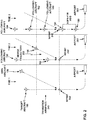
- FIG. 2 shows a diagram of the flight paths of a merging aircraft queue including target aircraft 160 and own aircraft 100 at three successive points in time as they merge into a queue on approach to an airport 201 for landing.
- Target aircraft 160 and own aircraft 100 may also be followed by additional following aircraft, such as following aircraft 180 and subsequent following aircraft 182 and 184, which may also merge into following positions in the same queue behind own aircraft 100.
- FIG. 2 shows an example in which target aircraft 160 and own aircraft 100 are both, at Time 1, on a trajectory heading toward a combined cruise mode waypoint (WP) and merge mode merge point (MP) 242 ("WP/MP 242").
- WP cruise mode waypoint
- MP merge mode merge point
- the cruise mode waypoint may be an I4D Required Time of Arrival (RTA) waypoint, wherein I4D trajectory management unit 124 onboard own aircraft 100 manages the trajectory of own aircraft 100 during the cruising phase of its flight to enhance time efficiency and fuel efficiency under the constraint of finishing its cruise phase and arriving at the RTA waypoint at a selected position at a selected time, preparatory to landing at the destination airport 201.
- the merge mode merge point may be an ASPA-FIM merge point, wherein each aircraft is intended to cross the ASPA-FIM merge point heading toward landing at airport 201 at an appropriate speed determined by ASPA-FIM trajectory management unit 126.
- each aircraft may first head to its own RTA waypoint, then fly from the waypoint through the uncoordinated interim airspace to the merge point.
- this use of an uncoordinated interim airspace separating the cruise mode airspace from the merge mode airspace may interfere with coordinated flight and fuel efficiency and may reduce the flexibility of the airspace in the vicinity of the airport.
- I4D trajectory management unit 124 and ASPA-FIM trajectory management unit 126 onboard own aircraft 100 are configured to designate the I4D RTA waypoint and the ASPA-FIM merge point at the identical or overlapping position of WP/MP 242.
- Target aircraft 160 and additional aircraft forward of and following own aircraft 100 may also have flight management systems (FMSs) equipped with analogous cruise mode trajectory management units and merge mode trajectory management units that also designate WP/MP 242 as their overlapping cruise mode waypoints and merge mode merge points.
- FMSs flight management systems
- various aircraft including own aircraft 100 and target aircraft 160 may all head along different cruise trajectories aimed toward the mutual aircraft approach queue formation merge point of WP/MP 242.
- I4D and ASPA-FIM in a unified flight procedure for approach to and arrival at an airport may provide benefits such as a decreased need for radar vectoring, decreased workload for flight crews and Air Traffic Controllers (ATCo), improved time efficiency and fuel efficiency of aircraft trajectories, and optimized use of airspace.
- the use of overlapping cruise mode and merge mode WP/MP 242 may also eliminate an interim airspace between the designated cruise mode airspace and the designated merge mode airspace, such that instead, the designated cruise mode airspace and the designated merge mode airspace are directly adjacent to each other.
- a portion of the cruise mode airspace leading up to and within a selected distance of WP/MP 242 may then be designated a transition airspace 243.
- Transition airspace 243 may be designated for a certain horizontal distance of WP/MP 242.
- Mode transition unit 110 may reduce or eliminate such inefficient speed changes as the various aircraft transition from cruise mode to merge mode and merge together into a queue, as further described below. Mode transition unit 110 may thereby enhance fuel efficiency and passenger comfort, among other advantages.
- FIG. 2 shows an example of how such inefficient speed changes may be induced.
- target aircraft 160 and own aircraft 100 are both flying on a trajectory heading toward WP/MP 242.
- own aircraft 100 crosses the boundary into the transition airspace 243.
- ASPA-FIM mode management unit 108 onboard own aircraft 100 may determine that own aircraft 100 has entered the transition airspace 243, and may begin applying transitional ASPA-FIM trajectory management requirements, which may include spacing requirements for how much distance own aircraft 100 should maintain behind target aircraft 160.
- the ASPA-FIM spacing requirement may be known as an Assigned Spacing Goal (ASG).
- ASG Assigned Spacing Goal
- the ASPA-FIM trajectory management requirements may seek to maintain own aircraft 100 at the ASG behind target aircraft 160 such that own aircraft 100 is at a safe distance away from target aircraft 160, but also no further away than necessary, to maintain a high flow rate of queued aircraft on approach for landing.
- ASPA-FIM mode management unit 108 may also communicate the determination of entering transition airspace 243 to transition management unit 110, which may then use this determination as one of its prerequisite criteria for enabling activation of ASPA-FIM mode (subsequent to applying transitional ASPA-FIM trajectory management requirements as described above).
- own aircraft 100 continues heading toward WP/MP 242 so that own aircraft 100 can merge into queue formation lined up behind target aircraft 160 and be ready to be in the appropriate heading for the queue when own aircraft 100 passes WP/MP 242.
- own aircraft 100 in order for own aircraft 100 to also maintain the ASG distance from target aircraft 160 instead of allowing the spacing distance between the two aircraft to increase while own aircraft 100 follows merge trajectory 230, own aircraft 100 must quickly accelerate to a higher speed from its initial cruise speed. Own aircraft 100 may then maintain that higher speed while flying along merge trajectory 230, and then quickly decelerate to match the cruising speed of target aircraft 160 as own aircraft 100 lines up in queue formation directly behind target aircraft 160.
- following aircraft 180 is following more distantly behind and along the same trajectory as target aircraft 160.
- own aircraft suddenly enters queue formation behind target aircraft 160 and then rapidly decelerates to match speeds with target aircraft 160 at the ASG distance, thereby also suddenly entering queue formation in front of following aircraft 180 at the same time as rapidly decelerating. This may also occur at approximately the same time that following aircraft 180 enters transition airspace 243.
- the sudden, rapid deceleration and merge into queue by own aircraft 100 ahead of following aircraft 180 may thus induce following aircraft 180 to have to suddenly, rapidly decelerate as well, and subsequently rapidly accelerate again to readjust to the proper speed and ASG distance for the queue formation.
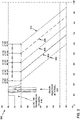
- FIG. 3 shows a graph 300 of an example speed change distribution over time of five aircraft merging into a queue as they transition from I4D to ASPA-FIM, without operation of mode transition unit 110, in order to contrast with the effects of mode transition unit 110 in some examples.
- the five aircraft include target aircraft 160, own aircraft 100, and following aircraft 180, 182, and 184, which respectively exhibit speed distribution plots 302, 304, 306, 308, and 310.
- Target aircraft 160 and following aircraft 180, 182, and 184 all have an initial speed of 230 knots (kt) while own aircraft 100 has an initial speed of 240 kt, in this example.
- Each of the aircraft participates in a speed change chain reaction during chain reaction interval 333, but returns to or acquires a speed of 230 kt before reaching WP/MP 242.
- Each of the aircraft then begin a steady, moderate deceleration as they pass WP/MP 242, and later resume a constant speed at 160 kt, in this example.
- Differences between I4D mode Required Times of Arrival (RTAs) of adjacent pairs of aircraft among those shown or referred to in FIGS. 1-3 may be set to be equivalent to Assigned Spacing Goal (ASG) distances in ASPA-FIM mode.
- RTA values of adjacent pairs of aircraft e.g., target aircraft 160 and own aircraft 100
- ASPA-FIM mode aims both to match each aircraft's speed with the speed of the aircraft's respective forward adjacent aircraft (e.g., target aircraft 160 for own aircraft 100), and to maintain ASG with the respective forward adjacent aircraft.
- Various aircraft may go through these acceleration oscillations to meet the merge mode requirements and pass through WP/MP 242 at the designated speed, heading, and ASG spacing for queue formation and in time intervals equal to the ASG divided by the designated speed.
- Mode transition unit 110 may manage a transition between trajectory management modes from a cruise mode to a merge mode to manage a transition to go from conforming to the requirements of I4D mode to conforming to the requirements of ASPA-FIM mode while avoiding extraneous oscillations or variations in speed.
- mode transition unit 110 on own aircraft 100 may: identify a target aircraft (e.g., target aircraft 160) ahead of the own aircraft 100; track the speed of the target aircraft over time; determine whether the target aircraft has stabilized its rate of change in speed for a selected period of time, according to stable deceleration criteria; and activate a merge trajectory management mode (e.g., ASPA-FIM mode) for own aircraft 100 in response to determining that the target aircraft has stabilized its rate of change in speed for the selected period of time.
- a target aircraft e.g., target aircraft 160
- a merge trajectory management mode e.g., ASPA-FIM mode
- mode transition unit 110 may trigger a transition of own aircraft 100 into the merge mode in response to detecting that two conditions are satisfied: that own aircraft 100 has passed into a trajectory management mode transition airspace 243, and that a target aircraft ahead of own aircraft 100 has stabilized its rate of change in speed (e.g., deceleration or relatively constant speed) for the selected period of time.
- mode transition unit 110 may determine that the rate of change in speed of the target aircraft is stabilized if the deceleration or change in speed of the target aircraft is within selected margins of a constant value over the selected period of time.
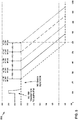
- FIG. 4 shows a graph 400 of a target speed matrix for an example stable rate of change in speed of target aircraft 160 as determined by mode transition unit 110, and a graph 450 of a target speed matrix for an example unstable rate of change in speed of target aircraft 160 as determined by mode transition unit 110.
- mode transition unit 110 may enable activation of ASPA-FIM mode, while if mode transition unit 110 determines that target aircraft 160 does not yet have a stable rate of change in speed, as in graph 450, mode transition unit 110 may refrain from enabling activation of ASPA-FIM mode, and instead may continue monitoring target aircraft 160 while own aircraft 100 continues in cruise mode and does not yet seek to apply a spacing requirement from target aircraft 160.
- Mode transition unit 110 may store a selected margin of acceptable deviation from a constant rate of change in speed, such as plus or minus approximately five knots in one illustrative example from a target speed at a given point in time for a constant deceleration or constant speed, where a rate of change in speed that varies but only by an amount small enough to be within the selected margin may still be determined to be a stable rate of change in speed.
- the selected interval of variation in change of speed may be less than or equal to a variation of five knots above or below a constant value of deceleration, in some examples.
- Mode transition unit 110 may also store a selected interval of time such that mode transition unit 110 waits to determine if target aircraft 160 maintains a stable rate of change in speed for the selected interval of time, such as 60 seconds, for example.
- the selected interval of time may be between 15 and 90 seconds, or within plus or minus five seconds of 60 seconds, for example.
- mode transition unit 110 may dampen, reduce, or avoid extraneous or oscillating speed changes, and may avoid propagating extraneous speed changes back along the queue to the next following aircraft.
- FIG. 5 shows a graph 500 of speed changes of target aircraft 160, own aircraft 100, and follower aircraft 180, 182, and 184 with the benefit of operation of smart transition unit 110, in one example.
- Graph 500 may thus be contrasted with graph 300 of FIG. 3 .
- smart transition unit 110 may ensure that none of the following aircraft react to the merging of own aircraft 100 with extraneous or oscillating speed changes, and the aircraft queue remains stable.
- follower aircraft 180 equipped with a mode transition unit 110 enters the transition airspace while its forward adjacent aircraft, own aircraft 100, performs a rapid acceleration and then rapid deceleration to merge into the queue while maintaining ASG spacing, mode transition unit 110 on follower aircraft 180 may determine that own aircraft 100 is exhibiting an unstable rate of change in speed.
- Mode transition unit 110 on follower aircraft 180 may thus delay enabling activation of ASPA-FIM mode at first, and follower aircraft may instead continue flying in cruise mode, pursuant to the RTA WP speed criteria but without spacing criteria. Subsequently, mode transition unit 110 on follower aircraft 180 may determine when own aircraft 100 has settled into a stable rate of change in speed (e.g., a constant speed) for a selected period of time, and mode transition unit 110 may then enable activation of ASPA-FIM mode for follower aircraft 180. Enabling the activation of the ASPA-FIM mode or other merging trajectory management mode of the own aircraft may include outputting a merging trajectory management mode activation signal to FMS 120. Mode transition unit 110 may also deactivate the I4D mode.
- a stable rate of change in speed e.g., a constant speed
- Mode transition unit 110 may in some examples be implemented at least in part as a software package or software library comprising computer-executable instructions stored on and/or executed by traffic computer 102, as well as data stored and/or processed at least in part by traffic computer 102. Mode transition unit 110 may also be implemented in hardware or firmware in some examples. Own aircraft 100 and traffic computer 102 may also include various other systems and components beyond those shown in FIG. 1 and described above.
- mode transition unit 110 may be implemented using executable software instructions.
- mode transition unit 110 may be a portion of a larger set of executable software instructions which may be executed by processing hardware of traffic computer 102.
- Mode transition unit 110 may be implemented as portions of executable software instructions, and/or with embedded firmware and/or specialized hardware elements.
- mode transition unit 110 of traffic computer 102 may be implemented with at least some functions implemented in embedded firmware, one or more graphical processing units (GPUs), one or more field programmable gate array (FPGAs), one or more application-specific integrated circuits (ASICs), or other specialized hardware.
- GPUs graphical processing units
- FPGAs field programmable gate array
- ASICs application-specific integrated circuits
- FIG. 6 shows a flowchart for a method 600 that a traffic computer 102 with mode transition unit 110, as shown in FIG. 1 and described above with reference to FIGS. 1-5 , may perform in some examples.
- Traffic computer 102 with mode transition unit 110 may track a speed of a target aircraft in flight ahead of an own aircraft on which the system is positioned (602). Traffic computer 102 may further determine whether the target aircraft has maintained a consistent change in speed, within a selected interval of variation in change of speed, for a selected period of time (604).
- Traffic computer 102 may further enable an activation of a queue merging flight trajectory management mode of the own aircraft in response to determining that the own aircraft is in a trajectory management mode transition airspace and that the target aircraft has maintained the consistent change in speed, within the selected interval of variation in change of speed, for the selected period of time (606).
- a mode transition unit 110 as disclosed above may be implemented in any of a variety of additional types of circuit elements in addition to those described above, such as a magnetic nonvolatile random-access memory (RAM) or other types of memory, a mixed-signal integrated circuit, a central processing unit (CPU), a microcontroller, a programmable logic controller (PLC), a system on a chip (SoC), a subsection of any of the above, an interconnected or distributed combination of any of the above, or any other type of component or one or more components capable of being configured in accordance with any of the examples disclosed herein.
- RAM magnetic nonvolatile random-access memory
- PLC programmable logic controller
- SoC system on a chip
Landscapes
- Engineering & Computer Science (AREA)
- Physics & Mathematics (AREA)
- Aviation & Aerospace Engineering (AREA)
- General Physics & Mathematics (AREA)
- Radar, Positioning & Navigation (AREA)
- Remote Sensing (AREA)
- Automation & Control Theory (AREA)
- Electromagnetism (AREA)
- Computer Networks & Wireless Communication (AREA)
- Traffic Control Systems (AREA)
Claims (10)
- System (102, 106, 110, 108), umfassend:eine oder mehrere Speichervorrichtungen; undeinen oder mehrere Prozessoren, konfiguriert zum:Empfangen von kooperativen Überwachungsnachrichten von einem Transponder eines Zielflugzeugs;Verfolgen einer Geschwindigkeit des Zielflugzeugs (160) im Flug vor einem eigenen Flugzeug (100), auf dem das System positioniert ist, basierend auf den vom Zielflugzeug empfangenen kooperativen Überwachungsnachrichten;Bestimmen, basierend auf der verfolgten Geschwindigkeit des Zielflugzeugs, ob das Zielflugzeug über einen ausgewählten Zeitraum eine Verzögerungs- oder Beschleunigungsrate innerhalb eines ausgewählten Variationsbereichs der Verzögerung oder Beschleunigung beibehalten hat; undAktivieren eines Zusammenführungs-Flugbahnverwaltungsmodus des eigenen Flugzeugs als Reaktion auf das Bestimmen, dass sich das eigene Flugzeug in einem Flugbahnverwaltungsmodus-Übergangsluftraum (243) befindet, und dass das Zielflugzeug die Verzögerungs- oder Beschleunigungsrate innerhalb des ausgewählten Variationsbereichs der Geschwindigkeitsänderung über den ausgewählten Zeitraum beibehalten hat, wobei der Flugbahnverwaltungsmodus-Übergangsluftraum einen Luftraum umfasst, der zum Übergang von einem Reiseflugbahnverwaltungsmodus in den Zusammenführungs-Flugbahnverwaltungsmodus bei Annäherung an einen Flughafen bestimmt ist.
- System nach Anspruch 1, wobei der Reiseflugbahnverwaltungsmodus einen Initial-Four-Dimension(I4D, anfänglich vierdimensional)-Flugbahnverwaltungsmodus umfasst.
- System nach Anspruch 1, wobei der Zusammenführungs-Flugbahnverwaltungsmodus einen Airborne-Spacing-Flight Interval Management(ASPA-FIM, Luftraum-Flugintervall-Management)-Modus umfasst, wobei das Bestimmen, dass sich das eigene Flugzeug im Flugbahnverwaltungsmodus-Übergangsluftraum befindet, das Empfangen einer Angabe, dass sich das eigene Flugzeug im Flugbahnverwaltungsmodus-Übergangsluftraum befindet, von einer ASPA-FIM-Moduseinheit umfasst, die den ASPA-FIM-Modus verwaltet.
- System nach Anspruch 1, wobei zum Aktivieren des Zusammenführungs-Flugbahnverwaltungsmodus des eigenen Flugzeugs das System ferner konfiguriert ist, um ein Aktivierungssignal für den Zusammenführungs-Flugbahnverwaltungsmodus an ein Flight Management System (FMS, Flugverwaltungssystem) (120) des eigenen Flugzeugs auszugeben.
- System nach Anspruch 1, wobei der eine oder die mehreren Prozessoren ferner konfiguriert sind, um den Reiseflugbahnverwaltungsmodus als Reaktion auf das Bestimmen zu deaktivieren, dass sich das eigene Flugzeug im Flugbahnverwaltungsmodus-Übergangsluftraum befindet, und dass das Zielflugzeug die Verzögerungs- oder Beschleunigungsrate innerhalb des ausgewählten Variationsbereichs der Geschwindigkeitsänderung für den ausgewählten Zeitraum beibehalten hat.
- System nach Anspruch 1, wobei die kooperativen Überwachungsnachrichten Automatic-Dependent-Surveillance-Broadcast(ADS-B, automatische Aussendung zugehöriger/abhängiger Beobachtungsdaten)-Nachrichten umfassen und das System konfiguriert ist, um die Geschwindigkeit des Zielflugzeugs basierend auf den vom Zielflugzeug empfangenen ADS-B-Nachrichten zu verfolgen.
- System nach Anspruch 1, wobei der ausgewählte Zeitraum zwischen 15 und 90 Sekunden beträgt.
- Verfahren (600), umfassend:Empfangen von kooperativen Überwachungsnachrichten von einem Transponder eines Zielflugzeugs durch den einen oder die mehreren Prozessoren (102, 106);Verfolgen (602) einer Geschwindigkeit des Zielflugzeugs (160) im Flug vor einem eigenen Flugzeug (100), auf dem das System positioniert ist, durch den einen oder die mehreren Prozessoren (102, 106) und basierend auf den vom Zielflugzeug empfangenen kooperativen Überwachungsnachrichten;Bestimmen (604), basierend auf der verfolgten Geschwindigkeit des Zielflugzeugs, ob das Zielflugzeug für einen ausgewählten Zeitraum eine Verzögerungs- oder Beschleunigungsrate innerhalb eines ausgewählten Variationsbereichs einer Geschwindigkeitsänderung beibehalten hat, durch den einen oder die mehreren Prozessoren (102, 110);Aktivieren eines Zusammenführungs-Flugbahnverwaltungsmodus des eigenen Flugzeugs durch den einen oder die mehreren Prozessoren als Reaktion auf das Bestimmen, dass sich das eigene Flugzeug in einem Flugbahnverwaltungsmodus-Übergangsluftraum (243) befindet, und dass das Zielflugzeug die Verzögerungs- oder Beschleunigungsrate Verzögerungs- oder Beschleunigungsrate innerhalb des ausgewählten Variationsbereichs der Geschwindigkeitsänderung über den ausgewählten Zeitraum beibehalten hat, wobei der Flugbahnverwaltungsmodus-Übergangsluftraum einen Luftraum umfasst, der zum Übergang von einem Reiseflugbahnverwaltungsmodus in den Zusammenführungs-Flugbahnverwaltungsmodus bei Annäherung an einen Flughafen bestimmt ist.
- Verfahren nach Anspruch 8, wobei der Reiseflugbahnverwaltungsmodus einen Initial-Four-Dimension(I4D, anfänglich vierdimensional)-Flugbahnverwaltungsmodus umfasst.
- Verfahren nach Anspruch 8, wobei der Zusammenführungs-Flugbahnverwaltungsmodus einen Airborne-Spacing-Flight Interval Management(ASPA-FIM, Luftraum-Flugintervall-Management)-Modus umfasst, wobei das Bestimmen, dass sich das eigene Flugzeug im Flugbahnverwaltungsmodus-Übergangsluftraum befindet, das Empfangen einer Angabe, dass sich das eigene Flugzeug im Flugbahnverwaltungsmodus-Übergangsluftraum befindet, von einer ASPA-FIM-Moduseinheit umfasst, die den ASPA-FIM-Modus verwaltet.
Applications Claiming Priority (1)
| Application Number | Priority Date | Filing Date | Title |
|---|---|---|---|
| US14/733,555 US9711055B2 (en) | 2015-06-08 | 2015-06-08 | Flight management mode transitioning for aircraft trajectory management |
Publications (3)
| Publication Number | Publication Date |
|---|---|
| EP3104358A2 EP3104358A2 (de) | 2016-12-14 |
| EP3104358A3 EP3104358A3 (de) | 2017-04-12 |
| EP3104358B1 true EP3104358B1 (de) | 2020-08-05 |
Family
ID=56096509
Family Applications (1)
| Application Number | Title | Priority Date | Filing Date |
|---|---|---|---|
| EP16171841.6A Active EP3104358B1 (de) | 2015-06-08 | 2016-05-27 | Flugverwaltungsmodusübergang für flugzeugflugbahnverwaltung |
Country Status (2)
| Country | Link |
|---|---|
| US (1) | US9711055B2 (de) |
| EP (1) | EP3104358B1 (de) |
Cited By (1)
| Publication number | Priority date | Publication date | Assignee | Title |
|---|---|---|---|---|
| US12020579B2 (en) | 2021-05-28 | 2024-06-25 | Rockwell Collins, Inc. | System and method for flying aircraft relative to lead aircraft |
Families Citing this family (16)
| Publication number | Priority date | Publication date | Assignee | Title |
|---|---|---|---|---|
| US9997080B1 (en) * | 2015-10-06 | 2018-06-12 | Zipline International Inc. | Decentralized air traffic management system for unmanned aerial vehicles |
| US9953541B2 (en) * | 2016-02-22 | 2018-04-24 | Honeywell International Inc. | Methods and apparatus for obtaining aircraft landing guidance |
| US10859398B2 (en) * | 2016-11-04 | 2020-12-08 | Architecture Technology Corporation | Integrated multi-mode automation for air traffic control |
| US10528043B2 (en) * | 2017-07-25 | 2020-01-07 | Honeywell International Inc. | Systems and methods for maximizing time reliability and fuel-efficiency for an aircraft to meet constraints associated with a required time of arrival (RTA) |
| US10641615B2 (en) | 2017-08-11 | 2020-05-05 | Honeywell International Inc. | Methods and apparatus for displaying flight interval management data for selecting appropriate flight management settings |
| CN107807521B (zh) * | 2017-09-20 | 2021-02-19 | 北京铭海博纳科技发展有限公司 | 面向固定时间的编队飞行器协同控制方法及系统 |
| US11017678B2 (en) * | 2017-09-22 | 2021-05-25 | Vianair Inc. | Terminal and en-route airspace operations based on dynamic routes |
| US10540905B2 (en) * | 2018-03-28 | 2020-01-21 | Gulfstream Aerospace Corporation | Systems, aircrafts and methods for drone detection and collision avoidance |
| US10839701B2 (en) * | 2018-06-05 | 2020-11-17 | Honeywell International Inc. | Methods and systems for stabilized approach energy management |
| US11525699B2 (en) * | 2020-02-13 | 2022-12-13 | Honeywell International Inc. | Radar vectoring energy management guidance methods and systems |
| US11257387B2 (en) * | 2020-03-20 | 2022-02-22 | Honeywell International Inc. | Systems and methods for automatic sequencing behind preceding aircraft on approach |
| US11783717B2 (en) * | 2020-08-26 | 2023-10-10 | Honeywell International Inc. | Systems and methods for identifying a number of feasible target traffic for a paired approach |
| US11842629B2 (en) * | 2020-12-10 | 2023-12-12 | Honeywell International Inc. | Dynamic radar vectoring guidance methods and systems |
| US11705011B2 (en) | 2021-02-16 | 2023-07-18 | Rockwell Collins, Inc. | Assigned spacing to visual separation auto transition |
| WO2024241892A1 (ja) * | 2023-05-23 | 2024-11-28 | ソニーグループ株式会社 | 情報処理方法、情報処理装置、並びにプログラム |
| US20250046195A1 (en) * | 2023-08-01 | 2025-02-06 | Raziel Ella | System for generating unique navigational input for an air-borne vehicle, and a method tehreof |
Family Cites Families (19)
| Publication number | Priority date | Publication date | Assignee | Title |
|---|---|---|---|---|
| CA2099953C (fr) * | 1992-07-24 | 2006-11-14 | Engin Oder | Procede et dispositif d'assistance au pilotage d'un aerodyne a partir d'un ensemble volumineux de documents stockes en memoire |
| US6393358B1 (en) * | 1999-07-30 | 2002-05-21 | The United States Of America As Represented By The Administrator Of The National Aeronautics And Space Administration | En route spacing system and method |
| FR2816091B1 (fr) * | 2000-10-27 | 2003-01-31 | Thomson Csf | Procede de guidage d'un aeronef dans le cadre d'un vol en convoi |
| FR2854129B1 (fr) * | 2003-04-28 | 2007-06-01 | Airbus France | Dispositif d'affichage dans un cockpit d'aeronef d'informations concernant le trafic environnant |
| EP1897079A1 (de) | 2005-06-13 | 2008-03-12 | Aviation Communication & Surveillance Systems, LLC | Abstandssteuerungssystem und -verfahren für ein flugzeug |
| US7437223B2 (en) * | 2005-08-05 | 2008-10-14 | The Boeing Company | Heading reference command and control algorithm and cueing systems and methods for aircraft turn-to-target maneuvers |
| US7650232B1 (en) * | 2005-09-22 | 2010-01-19 | The United States Of America As Represented By The Administrator Of The National Aeronautics And Space Administration (Nasa) | Trajectory specification for high capacity air traffic control |
| US7412324B1 (en) * | 2005-09-28 | 2008-08-12 | Rockwell Collins, Inc. | Flight management system with precision merging |
| FR2894056B1 (fr) * | 2005-11-25 | 2011-04-15 | Thales Sa | Procede de gestion de vol et convoi |
| US7912593B2 (en) | 2007-04-02 | 2011-03-22 | Aviation Communication & Surveillance Systems, Llc | Merging and spacing speed target calculation |
| FR2925711B1 (fr) * | 2007-12-21 | 2010-09-24 | Airbus France | Procede et dispositif de guidage automatique d'un aeronef lors d'une manoeuvre d'espacement au cours d'un atterrissage |
| US8120525B2 (en) | 2008-01-31 | 2012-02-21 | Aviation Communication&Surveillance Systems LLC | Systems and methods for obtaining aircraft state data from multiple data links |
| FR2939946B1 (fr) | 2008-12-12 | 2016-05-27 | Thales Sa | Procede et systeme d'aide a la gestion de l'espacement relatif entre aeronefs |
| US8560148B2 (en) * | 2010-11-09 | 2013-10-15 | Lockheed Martin Corporation | Method and apparatus for air traffic trajectory synchronization |
| FR2968440B1 (fr) | 2010-12-02 | 2014-01-10 | Airbus Operations Sas | Procede et systeme de gestion automatique de l'espacement entre deux aeronefs qui se suivent. |
| WO2012103228A1 (en) * | 2011-01-25 | 2012-08-02 | Nextgen Aerosciences, Llc | Method and apparatus for dynamic aircraft trajectory management |
| US8437949B2 (en) | 2011-03-23 | 2013-05-07 | The Mitre Corporation | Method and systems for determining required interval management performance (RIMP) |
| IL219923A (en) | 2011-08-02 | 2016-09-29 | Boeing Co | A system for separating aircraft traffic |
| EP2804066B1 (de) * | 2013-05-17 | 2019-08-28 | The Boeing Company | Verfahren und System zur Flugzeugführung |
-
2015
- 2015-06-08 US US14/733,555 patent/US9711055B2/en active Active
-
2016
- 2016-05-27 EP EP16171841.6A patent/EP3104358B1/de active Active
Non-Patent Citations (1)
| Title |
|---|
| None * |
Cited By (1)
| Publication number | Priority date | Publication date | Assignee | Title |
|---|---|---|---|---|
| US12020579B2 (en) | 2021-05-28 | 2024-06-25 | Rockwell Collins, Inc. | System and method for flying aircraft relative to lead aircraft |
Also Published As
| Publication number | Publication date |
|---|---|
| US9711055B2 (en) | 2017-07-18 |
| US20160358481A1 (en) | 2016-12-08 |
| EP3104358A2 (de) | 2016-12-14 |
| EP3104358A3 (de) | 2017-04-12 |
Similar Documents
| Publication | Publication Date | Title |
|---|---|---|
| EP3104358B1 (de) | Flugverwaltungsmodusübergang für flugzeugflugbahnverwaltung | |
| US10347142B2 (en) | Air traffic system using procedural trajectory prediction | |
| EP3285245B1 (de) | Leistungsbasierte spurvariation für flugzeugflugmanagement | |
| EP3059721B1 (de) | Automatisiertes flugzeugbodengeschwindigkeits-bedrohungsvermeidungssystem | |
| EP2485206B1 (de) | System zur Warnung vor Zusammenstößen auf Flughafen-Rollbahnen | |
| US9773421B2 (en) | Aircraft maneuver data management system | |
| CA2763334C (en) | Flight management system with integrated tactical commands for use with an aircraft and method of operating same | |
| US11113980B2 (en) | Boolean mathematics approach to air traffic management | |
| US20070061055A1 (en) | Sequencing, merging and approach-spacing systems and methods | |
| US20170032683A1 (en) | Multiple landing threshold aircraft arrival system | |
| US8566012B1 (en) | On-board aircraft system and method for achieving and maintaining spacing | |
| EP3091526A2 (de) | Kollisionsvermeidungssystem für flugzeuge | |
| EP2680248A1 (de) | Verfahren und System für Rollweg-Verkehrshinweise | |
| EP3276590A1 (de) | Vorhersage von fahrzeugmanövern | |
| Nikoleris et al. | Autonomous system for air traffic control in terminal airspace | |
| US20200283165A1 (en) | Systems and methods for alerting non-compliance with standard operating procedures in aviation | |
| EP4485426A1 (de) | Fahrzeugverkehrswarnsystem | |
| Noh et al. | Dynamic event tree framework to assess collision risk between various aircraft types | |
| EP4604097A1 (de) | Automatisierter start- und landebahneindringalarm | |
| Madden | A component-level model of automatic dependent surveillance-broadcast (ads-b) | |
| Young et al. | Fuel-efficient optimized profile descents with time control | |
| de Vries et al. | Integrated conflict resolution for efficient autonomous hazard avoidance | |
| JPH01180488A (ja) | 衝突予測方式 |
Legal Events
| Date | Code | Title | Description |
|---|---|---|---|
| PUAI | Public reference made under article 153(3) epc to a published international application that has entered the european phase |
Free format text: ORIGINAL CODE: 0009012 |
|
| STAA | Information on the status of an ep patent application or granted ep patent |
Free format text: STATUS: REQUEST FOR EXAMINATION WAS MADE |
|
| 17P | Request for examination filed |
Effective date: 20160527 |
|
| AK | Designated contracting states |
Kind code of ref document: A2 Designated state(s): AL AT BE BG CH CY CZ DE DK EE ES FI FR GB GR HR HU IE IS IT LI LT LU LV MC MK MT NL NO PL PT RO RS SE SI SK SM TR |
|
| AX | Request for extension of the european patent |
Extension state: BA ME |
|
| PUAL | Search report despatched |
Free format text: ORIGINAL CODE: 0009013 |
|
| AK | Designated contracting states |
Kind code of ref document: A3 Designated state(s): AL AT BE BG CH CY CZ DE DK EE ES FI FR GB GR HR HU IE IS IT LI LT LU LV MC MK MT NL NO PL PT RO RS SE SI SK SM TR |
|
| AX | Request for extension of the european patent |
Extension state: BA ME |
|
| RIC1 | Information provided on ipc code assigned before grant |
Ipc: G08G 5/02 20060101ALI20170306BHEP Ipc: G08G 5/00 20060101AFI20170306BHEP |
|
| GRAP | Despatch of communication of intention to grant a patent |
Free format text: ORIGINAL CODE: EPIDOSNIGR1 |
|
| STAA | Information on the status of an ep patent application or granted ep patent |
Free format text: STATUS: GRANT OF PATENT IS INTENDED |
|
| INTG | Intention to grant announced |
Effective date: 20200324 |
|
| GRAS | Grant fee paid |
Free format text: ORIGINAL CODE: EPIDOSNIGR3 |
|
| GRAA | (expected) grant |
Free format text: ORIGINAL CODE: 0009210 |
|
| STAA | Information on the status of an ep patent application or granted ep patent |
Free format text: STATUS: THE PATENT HAS BEEN GRANTED |
|
| AK | Designated contracting states |
Kind code of ref document: B1 Designated state(s): AL AT BE BG CH CY CZ DE DK EE ES FI FR GB GR HR HU IE IS IT LI LT LU LV MC MK MT NL NO PL PT RO RS SE SI SK SM TR |
|
| REG | Reference to a national code |
Ref country code: GB Ref legal event code: FG4D |
|
| REG | Reference to a national code |
Ref country code: CH Ref legal event code: EP |
|
| REG | Reference to a national code |
Ref country code: AT Ref legal event code: REF Ref document number: 1299801 Country of ref document: AT Kind code of ref document: T Effective date: 20200815 |
|
| REG | Reference to a national code |
Ref country code: DE Ref legal event code: R096 Ref document number: 602016041185 Country of ref document: DE |
|
| REG | Reference to a national code |
Ref country code: IE Ref legal event code: FG4D |
|
| REG | Reference to a national code |
Ref country code: LT Ref legal event code: MG4D |
|
| REG | Reference to a national code |
Ref country code: NL Ref legal event code: MP Effective date: 20200805 |
|
| REG | Reference to a national code |
Ref country code: AT Ref legal event code: MK05 Ref document number: 1299801 Country of ref document: AT Kind code of ref document: T Effective date: 20200805 |
|
| PG25 | Lapsed in a contracting state [announced via postgrant information from national office to epo] |
Ref country code: LT Free format text: LAPSE BECAUSE OF FAILURE TO SUBMIT A TRANSLATION OF THE DESCRIPTION OR TO PAY THE FEE WITHIN THE PRESCRIBED TIME-LIMIT Effective date: 20200805 Ref country code: HR Free format text: LAPSE BECAUSE OF FAILURE TO SUBMIT A TRANSLATION OF THE DESCRIPTION OR TO PAY THE FEE WITHIN THE PRESCRIBED TIME-LIMIT Effective date: 20200805 Ref country code: FI Free format text: LAPSE BECAUSE OF FAILURE TO SUBMIT A TRANSLATION OF THE DESCRIPTION OR TO PAY THE FEE WITHIN THE PRESCRIBED TIME-LIMIT Effective date: 20200805 Ref country code: SE Free format text: LAPSE BECAUSE OF FAILURE TO SUBMIT A TRANSLATION OF THE DESCRIPTION OR TO PAY THE FEE WITHIN THE PRESCRIBED TIME-LIMIT Effective date: 20200805 Ref country code: PT Free format text: LAPSE BECAUSE OF FAILURE TO SUBMIT A TRANSLATION OF THE DESCRIPTION OR TO PAY THE FEE WITHIN THE PRESCRIBED TIME-LIMIT Effective date: 20201207 Ref country code: ES Free format text: LAPSE BECAUSE OF FAILURE TO SUBMIT A TRANSLATION OF THE DESCRIPTION OR TO PAY THE FEE WITHIN THE PRESCRIBED TIME-LIMIT Effective date: 20200805 Ref country code: GR Free format text: LAPSE BECAUSE OF FAILURE TO SUBMIT A TRANSLATION OF THE DESCRIPTION OR TO PAY THE FEE WITHIN THE PRESCRIBED TIME-LIMIT Effective date: 20201106 Ref country code: NO Free format text: LAPSE BECAUSE OF FAILURE TO SUBMIT A TRANSLATION OF THE DESCRIPTION OR TO PAY THE FEE WITHIN THE PRESCRIBED TIME-LIMIT Effective date: 20201105 Ref country code: BG Free format text: LAPSE BECAUSE OF FAILURE TO SUBMIT A TRANSLATION OF THE DESCRIPTION OR TO PAY THE FEE WITHIN THE PRESCRIBED TIME-LIMIT Effective date: 20201105 Ref country code: AT Free format text: LAPSE BECAUSE OF FAILURE TO SUBMIT A TRANSLATION OF THE DESCRIPTION OR TO PAY THE FEE WITHIN THE PRESCRIBED TIME-LIMIT Effective date: 20200805 |
|
| PG25 | Lapsed in a contracting state [announced via postgrant information from national office to epo] |
Ref country code: RS Free format text: LAPSE BECAUSE OF FAILURE TO SUBMIT A TRANSLATION OF THE DESCRIPTION OR TO PAY THE FEE WITHIN THE PRESCRIBED TIME-LIMIT Effective date: 20200805 Ref country code: PL Free format text: LAPSE BECAUSE OF FAILURE TO SUBMIT A TRANSLATION OF THE DESCRIPTION OR TO PAY THE FEE WITHIN THE PRESCRIBED TIME-LIMIT Effective date: 20200805 Ref country code: NL Free format text: LAPSE BECAUSE OF FAILURE TO SUBMIT A TRANSLATION OF THE DESCRIPTION OR TO PAY THE FEE WITHIN THE PRESCRIBED TIME-LIMIT Effective date: 20200805 Ref country code: LV Free format text: LAPSE BECAUSE OF FAILURE TO SUBMIT A TRANSLATION OF THE DESCRIPTION OR TO PAY THE FEE WITHIN THE PRESCRIBED TIME-LIMIT Effective date: 20200805 Ref country code: IS Free format text: LAPSE BECAUSE OF FAILURE TO SUBMIT A TRANSLATION OF THE DESCRIPTION OR TO PAY THE FEE WITHIN THE PRESCRIBED TIME-LIMIT Effective date: 20201205 |
|
| PG25 | Lapsed in a contracting state [announced via postgrant information from national office to epo] |
Ref country code: EE Free format text: LAPSE BECAUSE OF FAILURE TO SUBMIT A TRANSLATION OF THE DESCRIPTION OR TO PAY THE FEE WITHIN THE PRESCRIBED TIME-LIMIT Effective date: 20200805 Ref country code: CZ Free format text: LAPSE BECAUSE OF FAILURE TO SUBMIT A TRANSLATION OF THE DESCRIPTION OR TO PAY THE FEE WITHIN THE PRESCRIBED TIME-LIMIT Effective date: 20200805 Ref country code: DK Free format text: LAPSE BECAUSE OF FAILURE TO SUBMIT A TRANSLATION OF THE DESCRIPTION OR TO PAY THE FEE WITHIN THE PRESCRIBED TIME-LIMIT Effective date: 20200805 Ref country code: RO Free format text: LAPSE BECAUSE OF FAILURE TO SUBMIT A TRANSLATION OF THE DESCRIPTION OR TO PAY THE FEE WITHIN THE PRESCRIBED TIME-LIMIT Effective date: 20200805 Ref country code: SM Free format text: LAPSE BECAUSE OF FAILURE TO SUBMIT A TRANSLATION OF THE DESCRIPTION OR TO PAY THE FEE WITHIN THE PRESCRIBED TIME-LIMIT Effective date: 20200805 |
|
| REG | Reference to a national code |
Ref country code: DE Ref legal event code: R097 Ref document number: 602016041185 Country of ref document: DE |
|
| PG25 | Lapsed in a contracting state [announced via postgrant information from national office to epo] |
Ref country code: AL Free format text: LAPSE BECAUSE OF FAILURE TO SUBMIT A TRANSLATION OF THE DESCRIPTION OR TO PAY THE FEE WITHIN THE PRESCRIBED TIME-LIMIT Effective date: 20200805 |
|
| PLBE | No opposition filed within time limit |
Free format text: ORIGINAL CODE: 0009261 |
|
| STAA | Information on the status of an ep patent application or granted ep patent |
Free format text: STATUS: NO OPPOSITION FILED WITHIN TIME LIMIT |
|
| PG25 | Lapsed in a contracting state [announced via postgrant information from national office to epo] |
Ref country code: SK Free format text: LAPSE BECAUSE OF FAILURE TO SUBMIT A TRANSLATION OF THE DESCRIPTION OR TO PAY THE FEE WITHIN THE PRESCRIBED TIME-LIMIT Effective date: 20200805 |
|
| 26N | No opposition filed |
Effective date: 20210507 |
|
| PG25 | Lapsed in a contracting state [announced via postgrant information from national office to epo] |
Ref country code: IT Free format text: LAPSE BECAUSE OF FAILURE TO SUBMIT A TRANSLATION OF THE DESCRIPTION OR TO PAY THE FEE WITHIN THE PRESCRIBED TIME-LIMIT Effective date: 20200805 |
|
| PG25 | Lapsed in a contracting state [announced via postgrant information from national office to epo] |
Ref country code: SI Free format text: LAPSE BECAUSE OF FAILURE TO SUBMIT A TRANSLATION OF THE DESCRIPTION OR TO PAY THE FEE WITHIN THE PRESCRIBED TIME-LIMIT Effective date: 20200805 |
|
| REG | Reference to a national code |
Ref country code: DE Ref legal event code: R119 Ref document number: 602016041185 Country of ref document: DE |
|
| REG | Reference to a national code |
Ref country code: CH Ref legal event code: PL |
|
| GBPC | Gb: european patent ceased through non-payment of renewal fee |
Effective date: 20210527 |
|
| PG25 | Lapsed in a contracting state [announced via postgrant information from national office to epo] |
Ref country code: MC Free format text: LAPSE BECAUSE OF FAILURE TO SUBMIT A TRANSLATION OF THE DESCRIPTION OR TO PAY THE FEE WITHIN THE PRESCRIBED TIME-LIMIT Effective date: 20200805 Ref country code: LU Free format text: LAPSE BECAUSE OF NON-PAYMENT OF DUE FEES Effective date: 20210527 Ref country code: LI Free format text: LAPSE BECAUSE OF NON-PAYMENT OF DUE FEES Effective date: 20210531 Ref country code: CH Free format text: LAPSE BECAUSE OF NON-PAYMENT OF DUE FEES Effective date: 20210531 |
|
| REG | Reference to a national code |
Ref country code: BE Ref legal event code: MM Effective date: 20210531 |
|
| PG25 | Lapsed in a contracting state [announced via postgrant information from national office to epo] |
Ref country code: IE Free format text: LAPSE BECAUSE OF NON-PAYMENT OF DUE FEES Effective date: 20210527 Ref country code: GB Free format text: LAPSE BECAUSE OF NON-PAYMENT OF DUE FEES Effective date: 20210527 Ref country code: DE Free format text: LAPSE BECAUSE OF NON-PAYMENT OF DUE FEES Effective date: 20211201 |
|
| PG25 | Lapsed in a contracting state [announced via postgrant information from national office to epo] |
Ref country code: BE Free format text: LAPSE BECAUSE OF NON-PAYMENT OF DUE FEES Effective date: 20210531 |
|
| PG25 | Lapsed in a contracting state [announced via postgrant information from national office to epo] |
Ref country code: HU Free format text: LAPSE BECAUSE OF FAILURE TO SUBMIT A TRANSLATION OF THE DESCRIPTION OR TO PAY THE FEE WITHIN THE PRESCRIBED TIME-LIMIT; INVALID AB INITIO Effective date: 20160527 |
|
| PG25 | Lapsed in a contracting state [announced via postgrant information from national office to epo] |
Ref country code: CY Free format text: LAPSE BECAUSE OF FAILURE TO SUBMIT A TRANSLATION OF THE DESCRIPTION OR TO PAY THE FEE WITHIN THE PRESCRIBED TIME-LIMIT Effective date: 20200805 |
|
| P01 | Opt-out of the competence of the unified patent court (upc) registered |
Effective date: 20230525 |
|
| PG25 | Lapsed in a contracting state [announced via postgrant information from national office to epo] |
Ref country code: MK Free format text: LAPSE BECAUSE OF FAILURE TO SUBMIT A TRANSLATION OF THE DESCRIPTION OR TO PAY THE FEE WITHIN THE PRESCRIBED TIME-LIMIT Effective date: 20200805 |
|
| PG25 | Lapsed in a contracting state [announced via postgrant information from national office to epo] |
Ref country code: TR Free format text: LAPSE BECAUSE OF FAILURE TO SUBMIT A TRANSLATION OF THE DESCRIPTION OR TO PAY THE FEE WITHIN THE PRESCRIBED TIME-LIMIT Effective date: 20200805 |
|
| PG25 | Lapsed in a contracting state [announced via postgrant information from national office to epo] |
Ref country code: MT Free format text: LAPSE BECAUSE OF FAILURE TO SUBMIT A TRANSLATION OF THE DESCRIPTION OR TO PAY THE FEE WITHIN THE PRESCRIBED TIME-LIMIT Effective date: 20200805 |
|
| PGFP | Annual fee paid to national office [announced via postgrant information from national office to epo] |
Ref country code: FR Payment date: 20250526 Year of fee payment: 10 |