EP3101549B1 - Cache-grössenschätzung für cache- router in informationszentrierten netzwerken - Google Patents
Cache-grössenschätzung für cache- router in informationszentrierten netzwerken Download PDFInfo
- Publication number
- EP3101549B1 EP3101549B1 EP16158864.5A EP16158864A EP3101549B1 EP 3101549 B1 EP3101549 B1 EP 3101549B1 EP 16158864 A EP16158864 A EP 16158864A EP 3101549 B1 EP3101549 B1 EP 3101549B1
- Authority
- EP
- European Patent Office
- Prior art keywords
- cache
- requests
- router
- probability
- replacement
- Prior art date
- Legal status (The legal status is an assumption and is not a legal conclusion. Google has not performed a legal analysis and makes no representation as to the accuracy of the status listed.)
- Active
Links
Images



Classifications
-
- H—ELECTRICITY
- H04—ELECTRIC COMMUNICATION TECHNIQUE
- H04L—TRANSMISSION OF DIGITAL INFORMATION, e.g. TELEGRAPHIC COMMUNICATION
- H04L67/00—Network arrangements or protocols for supporting network services or applications
- H04L67/50—Network services
- H04L67/56—Provisioning of proxy services
- H04L67/568—Storing data temporarily at an intermediate stage, e.g. caching
-
- G—PHYSICS
- G06—COMPUTING OR CALCULATING; COUNTING
- G06F—ELECTRIC DIGITAL DATA PROCESSING
- G06F12/00—Accessing, addressing or allocating within memory systems or architectures
- G06F12/02—Addressing or allocation; Relocation
- G06F12/08—Addressing or allocation; Relocation in hierarchically structured memory systems, e.g. virtual memory systems
- G06F12/0802—Addressing of a memory level in which the access to the desired data or data block requires associative addressing means, e.g. caches
- G06F12/0866—Addressing of a memory level in which the access to the desired data or data block requires associative addressing means, e.g. caches for peripheral storage systems, e.g. disk cache
- G06F12/0871—Allocation or management of cache space
-
- G—PHYSICS
- G06—COMPUTING OR CALCULATING; COUNTING
- G06F—ELECTRIC DIGITAL DATA PROCESSING
- G06F12/00—Accessing, addressing or allocating within memory systems or architectures
- G06F12/02—Addressing or allocation; Relocation
- G06F12/08—Addressing or allocation; Relocation in hierarchically structured memory systems, e.g. virtual memory systems
- G06F12/0802—Addressing of a memory level in which the access to the desired data or data block requires associative addressing means, e.g. caches
- G06F12/0806—Multiuser, multiprocessor or multiprocessing cache systems
- G06F12/0813—Multiuser, multiprocessor or multiprocessing cache systems with a network or matrix configuration
-
- G—PHYSICS
- G06—COMPUTING OR CALCULATING; COUNTING
- G06F—ELECTRIC DIGITAL DATA PROCESSING
- G06F12/00—Accessing, addressing or allocating within memory systems or architectures
- G06F12/02—Addressing or allocation; Relocation
- G06F12/08—Addressing or allocation; Relocation in hierarchically structured memory systems, e.g. virtual memory systems
- G06F12/12—Replacement control
-
- G—PHYSICS
- G06—COMPUTING OR CALCULATING; COUNTING
- G06F—ELECTRIC DIGITAL DATA PROCESSING
- G06F2212/00—Indexing scheme relating to accessing, addressing or allocation within memory systems or architectures
- G06F2212/10—Providing a specific technical effect
- G06F2212/1016—Performance improvement
- G06F2212/1024—Latency reduction
-
- G—PHYSICS
- G06—COMPUTING OR CALCULATING; COUNTING
- G06F—ELECTRIC DIGITAL DATA PROCESSING
- G06F2212/00—Indexing scheme relating to accessing, addressing or allocation within memory systems or architectures
- G06F2212/15—Use in a specific computing environment
- G06F2212/154—Networked environment
-
- G—PHYSICS
- G06—COMPUTING OR CALCULATING; COUNTING
- G06F—ELECTRIC DIGITAL DATA PROCESSING
- G06F2212/00—Indexing scheme relating to accessing, addressing or allocation within memory systems or architectures
- G06F2212/31—Providing disk cache in a specific location of a storage system
- G06F2212/314—In storage network, e.g. network attached cache
-
- G—PHYSICS
- G06—COMPUTING OR CALCULATING; COUNTING
- G06F—ELECTRIC DIGITAL DATA PROCESSING
- G06F2212/00—Indexing scheme relating to accessing, addressing or allocation within memory systems or architectures
- G06F2212/60—Details of cache memory
- G06F2212/601—Reconfiguration of cache memory
Definitions
- the embodiments herein generally relate to information centric networks (ICNs), and, more particularly, to estimation of cache size for cache routers in the ICNs.
- ICNs information centric networks
- the Internet is a point-to-point or host-to-host network where information (also referred as content) is identified by its location in the network.
- information also referred as content
- the increasing demand for scalable and efficient distribution of the content led to the Internet architecture, such as information centric networks (ICNs) where communication is not a host-to-host communication.
- ICNs information centric networks
- users may send requests for the content without mentioning its location.
- the content may cached at intermediate routers to deliver the content to the user(s) either from the source and/or from the routers for any future request of the same content.
- a prior art patent application US2014/280679 titled System and method for video caching in wireless networks' discloses a method for delivering video data from a server in a content delivery network (CDN) wherein video preferences of active users of a cell are determined. Video data is cached at base station nodes disposed in a radio access network (RAN), wherein the video data is cached in micro-caches according to caching policy based on the determined video preferences.
- CDN content delivery network
- a request is received for video data and if the cached video data includes the requested video data, the cached video data is served from the RAN cache. If the cached video data does not include the requested video data, the requested video is fetched from the CDN according to a scheduling approach that considers Quality of Experience (QoE).
- QoE Quality of Experience
- another patent application US20150106570 titled 'Cache method and cache apparatus' discloses a cache apparatus storing part of plurality of accessible data blocks into a cache area.
- a calculation part calculates, for each pair of data blocks of the plurality of data blocks, an expected value of the number of accesses made after one of the data blocks is accessed until the other of the data blocks is accessed, on the basis of a probability that when each of the plurality of data blocks is accessed, each data block that is likely to be accessed next is accessed next.
- a determination part determines a data block to be discarded from the cache area, on the basis of the expected value of the number of accesses made after the read data block is accessed until each of the plurality of data blocks is accessed.
- Still another patent application US2008/244181 titled 'Dynamic run-time cache size management' discloses dynamic management of cache sizes during run-time.
- the size of an active portion of a cache is adjusted (e.g., increased or decreased) based on a cache busyness metric.
- an embodiment herein provides a technique for estimating cache size for cache routers in information centric networks (ICNs).
- ICNs information centric networks
- a method for estimating a cache size for a cache router in an ICN is disclosed.
- an average rate of incoming requests and a probability of occurrence of each of the incoming requests at the cache router in a predefined time interval is determined.
- a relation between a cache hit, cache miss with replacement and cache miss without replacement is derived based on the probability of occurrence of each of the requests.
- an entropy of the requests is computed based on the probability of occurrence of each of the requests in the predefined time interval.
- a diversity index of the requests is calculated based on the entropy of the requests and the average rate of the requests.
- the cache size for the cache router is then estimated based on a user defined probability of cache hit, which is an input received from user, the average rate of the requests, the diversity index of the requests and the relation between the cache hit, cache miss with replacement and cache miss without replacement.
- the cache size of the cache router is then adjusted depending on a pattern of a new incoming request and the user defined probability of cache hit.
- a cache router in an ICN includes one or more processors and a memory and a cache communicatively coupled to the processors.
- the memory includes a cache size estimation module.
- the cache size estimation module determines an average rate of incoming requests and a probability of occurrence of each of the incoming requests in a predefined time interval. Further, the cache size estimation module derives a relation between a cache hit, cache miss with replacement and cache miss without replacement based on the probability of occurrence of each of the requests. Furthermore, the cache size estimation module computes an entropy of the requests based on the probability of occurrence of each of the requests in the predefined time interval.
- the cache size estimation module calculates a diversity index of the requests based on the entropy of the requests and the average rate of the requests.
- the cache size estimation module estimates a cache size for the cache based on a user defined probability of cache hit, which is an input received from user, the average rate of the requests, the diversity index of the requests and the relation between the cache hit, cache miss with replacement and cache miss without replacement.
- the cache size estimation module then adjusts the cache size of the cache router depending on a pattern of a new incoming request and the user defined probability of cache hit.
- any block diagram herein represent conceptual views of illustrative systems embodying the principles of the present subject matter.
- any flow charts, flow diagrams, state transition diagrams, pseudo code, and the like represent various processes which may be substantially represented in computer readable medium and so executed by a computing device or processor, whether or not such computing device or processor is explicitly shown.
- FIG. 1 illustrates a networking environment 100 including an information centric network (ICN) 102, according to an embodiment of the present disclosure.
- the networking environment 100 includes the ICN 102, a plurality of user devices 104A-N, and a plurality of data stores 106A-N.
- the user devices 104A-N may include, without limitation, desktop computers, hand-held devices, laptops or other portable computers, network computers, mobile phones, landline phones, and the like.
- the data stores 106A-N may store collection of content, such as files, images, videos, and the like.
- the ICN 102 includes a plurality of cache routers 108A-N collectively referred to as cache routers 108 and individually referred to as a cache router 108.
- the cache routers 108 also referred as ICN routers 108) have extra cache memories (also referred as cache) to locally store contents that pass through the cache routers 108.
- an ICN router 108 can be any Internet router with extra cache and ICN specific interfaces.
- one or more of the user devices 104A-N may send requests to the ICN 102 for accessing content.
- one of the ICN routers 108 may receive the requests and communicate with the data stores 106A-N to provide the content to the one or more of the user devices 104A-N.
- any intermediate cache router 108 on receiving the requests for the content performs one of the following: (i) serves the requests immediately, if the requested content is available with the cache router 108 and (ii) forwards the request(s) to a peer router or to any other ICN router placed at a higher level of hierarchy, if the requested content in not available in the cache router 108.
- the cache router 108 may also store responses of the earlier requests in the cache for any subsequent requests of the same content.
- the ICN router 108 determines a probability of cache hit or cache miss i.e., the probability of finding the content in the cache for newly arriving requests.
- the cache hit is a function of an available cache size, statistical nature of the requests, and content that is already cached in the cache router.
- the ICN router 108 determines a relation between a cache hit, cache miss with replacement and cache miss without replacement based on the probability of cache hit or cache miss.
- the ICN router 108 computes an entropy of the requests using the probability of cache hit or cache miss to characterize the requests.
- the ICN router 108 calculates a diversity index of the requests based on the entropy of the requests and an average rate of the incoming requests. Also, the ICN router 108 estimates the cache size for the cache based on the average rate of the requests, the diversity index, the relation between the cache hit, cache miss with replacement and cache miss without replacement and a required cache hit probability (i.e., a user defined probability of cache hit) as a measure of service level agreement (SLA). This is explained in more detailed with reference to FIGS. 2 and 3 .
- SLA service level agreement
- FIG. 2 schematically illustrates a cache router 200 (e.g., one of the cache routers 108A-N of FIG. 1 ), according to an embodiment of the present disclosure.
- the cache router 200 includes processor(s) 202, a memory 204, a cache 206 (i.e., a cache memory), and interface(s) 208 communicatively coupled to each other.
- the memory 204 includes a cache size estimation module 210.
- the processor(s) 202, the memory 204, the cache 206 and the interface(s) 208 may be communicatively coupled by a system bus or a similar mechanism.
- FIG. 2 shows example components of the cache router 200, in other implementations, the cache router 200 may contain fewer components, additional components, different components, or differently arranged components than depicted in FIG. 2 .
- the processor(s) 202 may include circuitry implementing, among others, audio and logic functions associated with the communication.
- the processor(s) 202 may include, among other things, a clock, an arithmetic logic unit (ALU) and logic gates configured to support operation of the processor(s) 202.
- the processor(s) 202 can be a single processing unit or a number of units, all of which include multiple computing units.
- the processor(s) 202 may be implemented as one or more microprocessors, microcomputers, microcontrollers, digital signal processors, central processing units, state machines, logic circuitries, and/or any devices that manipulate signals based on operational instructions.
- the processor(s) 202 is configured to fetch and execute computer-readable instructions and data stored in the memory 204.
- processors may be provided through the use of dedicated hardware as well as hardware capable of executing software in association with appropriate software.
- the functions may be provided by a single dedicated processor, by a single shared processor, or by a plurality of individual processors, some of which may be shared.
- explicit use of the term "processor” should not be construed to refer exclusively to hardware capable of executing software, and may implicitly include, without limitation, digital signal processor (DSP) hardware, network processor, application specific integrated circuit (ASIC), field programmable gate array (FPGA), read only memory (ROM) for storing software, random access memory (RAM), and non-volatile storage.
- DSP digital signal processor
- ASIC application specific integrated circuit
- FPGA field programmable gate array
- ROM read only memory
- RAM random access memory
- non-volatile storage Other hardware, conventional, and/or custom, may also be included.
- the interface(s) 208 may include a variety of software and hardware interfaces, for example, interfaces for peripheral device(s), such as a keyboard, a mouse, an external memory, and a printer.
- the interface(s) 208 can facilitate multiple communications within a wide variety of networks and protocol types, including wired networks, for example, local area network (LAN), cable, etc., and wireless networks, such as Wireless LAN (WLAN), cellular, or satellite.
- the interface(s) 208 may include one or more ports for connecting the cache router 200 to one or more of user devices and data sources (as shown in FIG. 1 ).
- the memory 204 may include any computer-readable medium known in the art including, for example, volatile memory, such as static random access memory (SRAM) and dynamic random access memory (DRAM), and/or non-volatile memory, such as read only memory (ROM), erasable programmable ROM, flash memories, hard disks, optical disks, and magnetic tapes.
- volatile memory such as static random access memory (SRAM) and dynamic random access memory (DRAM)
- non-volatile memory such as read only memory (ROM), erasable programmable ROM, flash memories, hard disks, optical disks, and magnetic tapes.
- ROM read only memory
- the memory 204 may be configured to store instructions which when executed by the processor(s) 202 causes the cache router 200 to behave in a manner as described in various embodiments.
- the memory 204 includes the cache size estimation module 210 and/or other modules.
- the module 210 includes routines, programs, objects, components, data structures, etc., which perform particular tasks or implement particular abstract data types.
- the other modules may include programs or coded instructions that supplement applications and functions of the cache router 200.
- the cache size estimation module 210 computes an average rate of incoming requests and a probability of occurrence of each of the incoming requests from the user devices for a predefined time interval.
- the data (response) for the requested content is cached at the cache router 200 based upon a caching policy, such as first-in first-out (FIFO), least recently used (LRU) and so on.
- FIFO first-in first-out
- LRU least recently used
- the predefined time interval is a cache refresh time.
- the cache size estimation module 210 determines a relation between the cache hit and cache miss (with and without replacement) based on the probability of occurrence of the requests in the predefined time interval.
- the cache hit is a function of an available cache size, statistical nature of the requests, and content that is already cached in the cache router.
- the cache size estimation module 210 then computes an entropy of the requests based on the probability of occurrence of the requests in the predefined time interval. Characteristics of the requests are then determined using the entropy of the requests. For example, the characteristics of the requests include content popularity, repetition of content and the like. Furthermore, the cache size estimation module 210 calculates a diversity index of the requests based on the entropy of the requests and the average rate of the requests. This is explained in more detail with reference to FIG. 3 .
- the cache size estimation module 210 estimates the cache size for the cache 206 based upon service level agreement (SLA) or user defined probability of cache hit, the characteristics of the requests (captured through the entropy), the average rate of the requests, the diversity index and the relation between the cache hit and cache miss (with and without replacement). For example, the estimated cache size of the cache router supports the cache hit for the requests and a cache hit for new requests with replacement. In some embodiments, the cache size estimation module 210 adjusts the cache size by observing a request pattern arriving and depending upon the change in traffic pattern and a user defined probability of cache hit.
- SLA service level agreement
- the cache size estimation module 210 adjusts the cache size by observing a request pattern arriving and depending upon the change in traffic pattern and a user defined probability of cache hit.
- FIG. 3 illustrates a tri-state model 300 for caching content in the ICN, according to an embodiment of the present disclosure.
- ⁇ is a total arrival rate of requests at an ICN router (e.g., one of the cache routers 108A-N of FIG. 1 or the cache router 200 of FIG. 2 ).
- p H + p M R + p M NR 1 where, p H is a probability of cache hit, p M R is a probability of cache miss with replacement, and p M NR is a probability of cache miss without replacement.
- S N , S N R , and S N NR are three different possible states of a cache.
- the cache is in the state S N when a request for already existing content arrives at the cache. Further, the cache is in the state S N R when a request for content which does not exist in the cache arrives, however, the response of such request gets stored in the cache after replacing one of the existing content. Furthermore, the cache is in the state S N NR when the request for content which does not exist in the cache arrives, however, the response of such request does not replace any existing content in the cache and hence not cached.
- nature of the requests such as the content popularity or repetition of contents can be characterized using an entropy of the requests as the cache hit depends upon the nature of the requests coming from the user devices.
- the value of entropy H(X) depends on the request rate ⁇ (average request rate in T f ) and the probability of occurrence of the requests.
- the entropy H(X) is equal to log 2 ( ⁇ ) when there is no similarity between the requests.
- the entropy H(X) is equal to 0 when all the requests are repeated.
- the diversity index of 0 indicates that the requests at the cache router are same and the diversity index of 1 indicates that the requests are different.
- the cache size for the ICN router can be such that the ICN router is able to accommodate ⁇ H (to support the cache hit for the current requests) and ⁇ R (to support cache hit for new requests by keeping the most valued content for which the requests are arrived in the cache router) fraction of requests in the predefined time interval (T f ).
- SLA service level agreement
- estimation of the cache size for the ICN router is performed using equation (8) where the requests characterization is measured through ⁇ B , p M NR and ⁇ and desired cache hit ( p H ). With change in requests' arrival rate and pattern in future, the cache size can be adjusted by adding additional memory to the cache as required to support cache hit probability.
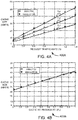
- FIGS. 4A and 4B are graphs 400A and 400B illustrating a cache size of a cache router with respect to a request traffic rate and a probability of cache hit, respectively, according to an embodiment of the present disclosure.
- the graph 400A shows variation of the cache size with respect to the rate of requests ( ⁇ ) for different target cache hit probabilities. From the FIG. 4A , it is observed that as the request rate increases, cache size also increases for a fixed target cache hit probability. This is because as more number of requests arrive, higher cache size is required to maintain a target cache hit probability.
- the graph 400B shows that the cache size increases with increase in cache hit probability for a fixed request rate. This is because higher the target cache hit probability more is the cache size required.
- FIG. 5 is a flow chart 500 illustrating a method for estimating a cache size for a cache router in an ICN, according to an embodiment of the present disclosure.
- an average rate of incoming requests and a probability of occurrence of each of the incoming requests at a cache router in a predefined time interval is determined.
- the data (response) for the requested content is cached at the router based upon a caching policy such as FIFO, LRU and so on.
- a relation between a cache hit, cache miss with replacement and cache miss without replacement is derived based on the probability of occurrence of each of the requests.
- the cache hit is a function of an available cache size, statistical nature of the requests, and content that is already cached in the cache router.
- an entropy of the requests is computed based on the probability of occurrence of each of the requests in the predefined time interval.
- the cache size for the cache router is estimated based upon a user defined probability of cache hit, the average rate of incoming requests, the diversity index and the relation between the cache hit, cache miss with replacement and cache miss without replacement obtained from blocks 502 to 508. For example, the estimated cache size of the cache router supports the cache hit for the requests and a cache hit for new requests with replacement.
- B is the cache size
- c 1 and c 2 are constant values
- ⁇ H is a rate of arrival of requests for already existing content in the cache router
- ⁇ R is a rate of arrival of requests for non-existing content in the cache router with replacement
- B min is a minimum cache size required for a regular operation of the cache router (cache required for a single file size to run basic algorithm)
- 's' is an average size of content associated with the requests at the cache router
- p H is a probability of the cache hit
- p M R is a probability of the cache miss with replacement
- p M NR is a probability
- the cache size of the cache router is adjusted depending on a pattern of a new incoming request and the user defined probability of cache hit. In other words, the cache size is adjusted by observing a request pattern arriving and depending upon a change in traffic pattern and the user defined probability of cache hit. This is explained in more detailed with reference to the FIGS. 1-4B .
- method(s) are described is not intended to be construed as a limitation, and any number of the described method blocks can be combined in any order to implement the method 500, or an alternative method. Additionally, individual blocks may be deleted from the methods without departing from the spirit and scope of the subject matter described herein. Furthermore, the method 500 can be implemented in any suitable hardware, software, firmware, or combination thereof.
- one or more of the method(s) described herein may be implemented at least in part as instructions embodied in a non-transitory computer-readable medium and executable by one or more computing devices.
- a processor for example a microprocessor
- Such instructions may be stored and/or transmitted using any of a variety of known computer-readable media.
- a technique for estimating a cache size for a cache router in an ICN is disclosed.
- cache size estimation by the proposed technique can ensure a cache size which is memory efficient and performance efficient. Thus, delay in accessing content is reduced. Further, the proposed technique for cache size estimation can adapt to different types of content traffic, user's requests pattern and desired cache performance of the cache router.
Landscapes
- Engineering & Computer Science (AREA)
- Theoretical Computer Science (AREA)
- Physics & Mathematics (AREA)
- General Engineering & Computer Science (AREA)
- General Physics & Mathematics (AREA)
- Computer Networks & Wireless Communication (AREA)
- Signal Processing (AREA)
- Data Exchanges In Wide-Area Networks (AREA)
- Information Transfer Between Computers (AREA)
- Mathematical Physics (AREA)
Claims (10)
- Verfahren, umfassend:Ermitteln, durch einen Prozessor (202), einer durchschnittlichen Rate eingehender Anfragen und einer Wahrscheinlichkeit des Auftretens jeder der eingehenden Anfragen bei einem Cache-Router (108A-N/200) in einem vordefinierten Zeitintervall;Ableiten, durch den Prozessor (202), einer Beziehung zwischen einem Cache-Treffer, einem Cache-Fehltreffer mit Ersetzung, und einem Cache-Fehltreffer ohne Ersetzung in dem vordefinierten Zeitintervall basierend auf der Wahrscheinlichkeit des Auftretens jeder der eingehenden Anfragen;Errechnen, durch den Prozessor (202), einer Entropie der Anfragen basierend auf der Wahrscheinlichkeit des Auftretens jeder der Anfragen in dem vordefinierten Zeitintervall;Berechnen, durch den Prozessor (202), eines Diversitätsindex der Anfragen basierend auf der Entropie der Anfragen und der durchschnittlichen Rate der Anfragen; undSchätzen, durch den Prozessor (202), einer Cache-Größe für den Cache-Router (108A-N/200) basierend auf einer benutzerdefinierten Cache-Treffer-Wahrscheinlichkeit, der durchschnittlichen Rate der Anfragen, des Diversitätsindex, und der Beziehung zwischen dem Cache-Treffer, Cache-Fehltreffer mit Ersetzung, und Cache-Fehltreffer ohne Ersetzung; undAnpassen, durch den Prozessor (202), der Cache-Größe des Cache-Routers (108A-N/200) in Abhängigkeit von einem Muster einer neu eingehenden Anfrage und der benutzerdefinierten Wahrscheinlichkeit eines Cache-Treffers.
- Verfahren nach Anspruch 1, wobei der Cache-Treffer eine Funktion einer verfügbaren Cache-Größe, einer statistischen Natur der Anfragen, und von in dem Cache-Router (108A-N/200) zwischengespeicherten Inhalt ist.
- Verfahren nach Anspruch 1, wobei der Diversitätsindex der Anfragen zwischen 0 und 1 liegt, wobei der Diversitätsindex von 0 anzeigt, dass die Anfragen bei dem Cache-Router (108A-N/200) gleich sind, und der Diversitätsindex von 1 anzeigt, dass die Anfragen bei dem Cache-Router (108A-N/200) unterschiedlich sind.
- Verfahren nach Anspruch 1, wobei die Cache-Größe für den Cache-Router (108A-N/200) geschätzt wird basierend auf einer Ankunftsrate von Anfragen nach existierendem Inhalt in dem Cache-Router (108A-N/200), einer Ankunftsrate von Anfragen nach nicht existierendem Inhalt in dem Cache-Router (108A-N/200) mit Ersetzung, einer minimalen Cache-Größe, die für den Cache-Router (108A-N/200) erforderlich ist, einer durchschnittlichen Größe des den Anfragen bei dem Cache-Router (108A-N/200) zugeordneten Inhalts, einer Wahrscheinlichkeit des Cache-Treffers, einer Wahrscheinlichkeit des Cache-Fehltreffers mit Ersetzung, eine Wahrscheinlichkeit des Cache-Fehltreffers ohne Ersetzung, des Diversitätsindex der Anfragen, und der durchschnittlichen Rate der Anfragen.
- Verfahren nach Anspruch 1, wobei die geschätzte Cache-Größe des Cache-Routers (108A-N/200) den Cache-Treffer für die Anfragen und einen Cache-Treffer für neue Anfragen mit Ersetzung unterstützt.
- Cache-Router (108A-N/200) in einem informationszentrierten Netzwerk (102), umfassend:mindestens einen Prozessor (202); undeinen Speicher (204) und einen Cache (206), der kommunikativ mit dem mindestens einen Prozessor (202) gekoppelt ist, wobei der Speicher (204) ein Cache-Größen-Schätzmodul (210) umfasst zum:Bestimmen einer durchschnittlichen Rate eingehender Anfragen und einer Wahrscheinlichkeit des Auftretens jeder der eingehenden Anfragen in einem vordefinierten Zeitintervall;Ableiten einer Beziehung zwischen einem Cache-Treffer, einem Cache-Fehltreffer mit Ersetzung, und einem Cache-Fehltreffer ohne Ersetzung basierend auf der Wahrscheinlichkeit des Auftretens jeder der Anfragen;Errechnen einer Entropie der Anfragen basierend auf der Wahrscheinlichkeit des Auftretens jeder der Anfragen in dem vordefinierten Zeitintervall;Berechnen eines Diversitätsindex der Anfragen basierend auf der Entropie der Anfragen und der durchschnittlichen Rate der Anfragen; undSchätzen einer Cache-Größe des Caches basierend auf einer benutzerdefinierten Wahrscheinlichkeit des Cache-Treffers, der durchschnittlichen Rate der Anfragen, des Diversitätsindex, und der Beziehung zwischen dem Cache-Treffer, Cache-Fehltreffer mit Ersetzung, und Cachefehltreffer ohne Ersetzung; undAnpassen der Cache-Größe in Abhängigkeit von einem Muster einer neu eingehenden Anfrage und der benutzerdefinierten Wahrscheinlichkeit für einen Cache-Treffer.
- Cache-Router nach Anspruch 6, wobei der Cache-Treffer eine Funktion einer verfügbaren Cache-Größe, einer statistischen Natur der Anfragen, und von in dem Cache (206) zwischengespeicherten Inhalt ist.
- Cache-Router nach Anspruch 6, wobei der Diversitätsindex der Anfragen zwischen 0 und 1 liegt, wobei der Diversitätsindex von 0 anzeigt, dass die Anfragen gleich sind, und der Diversitätsindex von 1 anzeigt, dass alle Anfragen unterschiedlich sind.
- Cache-Router nach Anspruch 6, wobei das Cache-Größen-Schätzmodul (210) die Cache-Größe für den Cache (206) basierend auf einer Ankunftsrate von Anfragen nach existierendem Inhalt in dem Cache (206), einer Ankunftsrate von Anfragen nach nicht existierendem Inhalt in dem Cache (206) mit Ersetzung, einer minimalen Cache-Größe, die für den Cache (206) erforderlich ist, einer durchschnittlichen Größe des den Anfragen zugeordneten Inhalts, einer Wahrscheinlichkeit des Cache-Treffers, einer Wahrscheinlichkeit des Cache-Fehltreffers mit Ersetzung, eine Wahrscheinlichkeit des Cache-Fehltreffers ohne Ersetzung, des Diversitätsindex der Anfragen, und der durchschnittlichen Rate der Anfragen schätzt.
- Cache-Router nach Anspruch 6, wobei die geschätzte Cache-Größe des Caches (206) den Cache-Treffer für die Anfragen und einen Cache-Treffer für neue Anfragen mit Ersetzung unterstützt.
Applications Claiming Priority (1)
| Application Number | Priority Date | Filing Date | Title |
|---|---|---|---|
| IN2161MU2015 | 2015-06-04 |
Publications (2)
| Publication Number | Publication Date |
|---|---|
| EP3101549A1 EP3101549A1 (de) | 2016-12-07 |
| EP3101549B1 true EP3101549B1 (de) | 2018-09-26 |
Family
ID=55587035
Family Applications (1)
| Application Number | Title | Priority Date | Filing Date |
|---|---|---|---|
| EP16158864.5A Active EP3101549B1 (de) | 2015-06-04 | 2016-03-07 | Cache-grössenschätzung für cache- router in informationszentrierten netzwerken |
Country Status (2)
| Country | Link |
|---|---|
| US (1) | US10069929B2 (de) |
| EP (1) | EP3101549B1 (de) |
Cited By (1)
| Publication number | Priority date | Publication date | Assignee | Title |
|---|---|---|---|---|
| WO2025006805A1 (en) * | 2023-06-30 | 2025-01-02 | Advanced Micro Devices, Inc. | Running average cache hit rate |
Families Citing this family (4)
| Publication number | Priority date | Publication date | Assignee | Title |
|---|---|---|---|---|
| US10594759B2 (en) * | 2017-05-09 | 2020-03-17 | EMC IP Holding Company LLC | Efficiently executing concurrent operations that depend on each other in a streaming data environment |
| CN108183867B (zh) * | 2017-12-25 | 2021-08-10 | 重庆邮电大学 | 信息中心网络节点缓存替换方法 |
| US11307796B2 (en) * | 2018-09-27 | 2022-04-19 | International Business Machines Corporation | Mapping memory allocation requests using various memory attributes |
| CN114866610B (zh) * | 2022-05-23 | 2023-04-18 | 电子科技大学 | 一种基于ccn的卫星-地面网络缓存方法 |
Family Cites Families (14)
| Publication number | Priority date | Publication date | Assignee | Title |
|---|---|---|---|---|
| US5452440A (en) * | 1993-07-16 | 1995-09-19 | Zitel Corporation | Method and structure for evaluating and enhancing the performance of cache memory systems |
| KR100334767B1 (en) * | 2000-09-30 | 2002-05-03 | Samsung Electronics Co Ltd | Adaptive admission control method for assuring qos of hand-off in radio network and apparatus therefor |
| US7747662B2 (en) | 2005-12-30 | 2010-06-29 | Netapp, Inc. | Service aware network caching |
| US20080244181A1 (en) * | 2007-03-30 | 2008-10-02 | Michael Walz | Dynamic run-time cache size management |
| JP5032210B2 (ja) * | 2007-06-08 | 2012-09-26 | 株式会社日立製作所 | 制御計算機、計算機システム及びアクセス制御方法 |
| US8694730B2 (en) * | 2011-03-04 | 2014-04-08 | Muhammad Ali Ismail | Binary tree based multilevel cache system for multicore processors |
| KR20130085558A (ko) | 2011-12-21 | 2013-07-30 | 삼성전자주식회사 | 컨텐츠 중심 네트워크에서 인터리스트 메시지 및 데이터 메시지를 우선 순위에 따라 처리하는 방법 |
| US9167049B2 (en) | 2012-02-02 | 2015-10-20 | Comcast Cable Communications, Llc | Content distribution network supporting popularity-based caching |
| US20130215756A1 (en) | 2012-02-17 | 2013-08-22 | Electronics And Telecommunications Research Institute | Apparatus and method for managing contents cache considering network cost |
| US9756142B2 (en) * | 2013-03-14 | 2017-09-05 | The Regents Of The University Of California | System and method for delivering video data from a server in a wireless network by caching the video data |
| JP6131818B2 (ja) * | 2013-10-10 | 2017-05-24 | 富士通株式会社 | キャッシュ方法、キャッシュ装置、およびコンピュータプログラム |
| ES2761615T3 (es) * | 2014-12-12 | 2020-05-20 | Tata Consultancy Services Ltd | Procedimiento y sistema de almacenamiento de forma óptima en caché de contenido en una Red Centrada en Información (ICN) |
| JP2017027296A (ja) * | 2015-07-21 | 2017-02-02 | 富士通株式会社 | 性能評価方法、性能評価プログラム及び情報処理装置 |
| US9996476B2 (en) * | 2015-09-03 | 2018-06-12 | International Business Machines Corporation | Management of cache lists via dynamic sizing of the cache lists |
-
2016
- 2016-03-07 EP EP16158864.5A patent/EP3101549B1/de active Active
- 2016-03-09 US US15/065,520 patent/US10069929B2/en active Active
Non-Patent Citations (1)
| Title |
|---|
| None * |
Cited By (2)
| Publication number | Priority date | Publication date | Assignee | Title |
|---|---|---|---|---|
| WO2025006805A1 (en) * | 2023-06-30 | 2025-01-02 | Advanced Micro Devices, Inc. | Running average cache hit rate |
| US12367141B2 (en) | 2023-06-30 | 2025-07-22 | Advanced Micro Devices, Inc. | Running average cache hit rate |
Also Published As
| Publication number | Publication date |
|---|---|
| US10069929B2 (en) | 2018-09-04 |
| EP3101549A1 (de) | 2016-12-07 |
| US20160360000A1 (en) | 2016-12-08 |
Similar Documents
| Publication | Publication Date | Title |
|---|---|---|
| US10728175B2 (en) | Adaptive service chain management | |
| US10812358B2 (en) | Performance-based content delivery | |
| US10027739B1 (en) | Performance-based content delivery | |
| US9825846B1 (en) | Multi-path routing | |
| Paschos et al. | Cache optimization models and algorithms | |
| CN113472852B (zh) | 一种cdn节点的回源方法、装置、设备以及存储介质 | |
| US10231102B2 (en) | Techniques for mobility-aware dynamic service placement in mobile clouds | |
| US10069929B2 (en) | Estimating cache size for cache routers in information centric networks | |
| EP2513799B1 (de) | Verfahren, server und computerprogramm zur zwischenspeicherung | |
| US10129332B2 (en) | Load balancing of distributed services | |
| US20210209024A1 (en) | Method, device and computer program product for managing cache | |
| CN108334774A (zh) | 一种检测攻击的方法、第一服务器及第二服务器 | |
| US20160065689A1 (en) | Cache control device and cache control method | |
| US20230359360A1 (en) | I/o hotspot detection using exponential moving average | |
| CA2874633A1 (en) | Incremental preparation of videos for delivery | |
| CN108769253B (zh) | 一种分布式系统访问性能优化的自适应预取控制方法 | |
| Harris Jr et al. | Ddt: a reinforcement learning approach to dynamic flow timeout assignment in software defined networks | |
| US10819789B2 (en) | Method for identifying and serving similar web content | |
| US10623306B2 (en) | Multi-path routing | |
| Wang et al. | Content-centric caching using deep reinforcement learning in mobile computing | |
| US9866647B2 (en) | Hierarchical cost based caching for online media | |
| US20220050614A1 (en) | System and method for approximating replication completion time | |
| Chen et al. | Can Long-Haul RDMA Benefit Federated Learning | |
| US9678881B2 (en) | Data distribution device and data distribution method | |
| US8699347B2 (en) | Communication apparatus, communication system, communication method, and a computer-readable medium |
Legal Events
| Date | Code | Title | Description |
|---|---|---|---|
| PUAI | Public reference made under article 153(3) epc to a published international application that has entered the european phase |
Free format text: ORIGINAL CODE: 0009012 |
|
| STAA | Information on the status of an ep patent application or granted ep patent |
Free format text: STATUS: THE APPLICATION HAS BEEN PUBLISHED |
|
| AK | Designated contracting states |
Kind code of ref document: A1 Designated state(s): AL AT BE BG CH CY CZ DE DK EE ES FI FR GB GR HR HU IE IS IT LI LT LU LV MC MK MT NL NO PL PT RO RS SE SI SK SM TR |
|
| AX | Request for extension of the european patent |
Extension state: BA ME |
|
| STAA | Information on the status of an ep patent application or granted ep patent |
Free format text: STATUS: REQUEST FOR EXAMINATION WAS MADE |
|
| 17P | Request for examination filed |
Effective date: 20170607 |
|
| RBV | Designated contracting states (corrected) |
Designated state(s): AL AT BE BG CH CY CZ DE DK EE ES FI FR GB GR HR HU IE IS IT LI LT LU LV MC MK MT NL NO PL PT RO RS SE SI SK SM TR |
|
| GRAP | Despatch of communication of intention to grant a patent |
Free format text: ORIGINAL CODE: EPIDOSNIGR1 |
|
| STAA | Information on the status of an ep patent application or granted ep patent |
Free format text: STATUS: GRANT OF PATENT IS INTENDED |
|
| RIC1 | Information provided on ipc code assigned before grant |
Ipc: G06F 12/0813 20160101ALI20180314BHEP Ipc: G06F 12/0871 20160101ALI20180314BHEP Ipc: G06F 12/0866 20160101AFI20180314BHEP Ipc: G06F 12/12 20160101ALI20180314BHEP Ipc: H04L 29/08 20060101ALI20180314BHEP |
|
| INTG | Intention to grant announced |
Effective date: 20180329 |
|
| GRAS | Grant fee paid |
Free format text: ORIGINAL CODE: EPIDOSNIGR3 |
|
| GRAA | (expected) grant |
Free format text: ORIGINAL CODE: 0009210 |
|
| STAA | Information on the status of an ep patent application or granted ep patent |
Free format text: STATUS: THE PATENT HAS BEEN GRANTED |
|
| AK | Designated contracting states |
Kind code of ref document: B1 Designated state(s): AL AT BE BG CH CY CZ DE DK EE ES FI FR GB GR HR HU IE IS IT LI LT LU LV MC MK MT NL NO PL PT RO RS SE SI SK SM TR |
|
| REG | Reference to a national code |
Ref country code: GB Ref legal event code: FG4D |
|
| REG | Reference to a national code |
Ref country code: CH Ref legal event code: EP |
|
| REG | Reference to a national code |
Ref country code: AT Ref legal event code: REF Ref document number: 1046847 Country of ref document: AT Kind code of ref document: T Effective date: 20181015 |
|
| REG | Reference to a national code |
Ref country code: IE Ref legal event code: FG4D |
|
| REG | Reference to a national code |
Ref country code: DE Ref legal event code: R096 Ref document number: 602016005839 Country of ref document: DE |
|
| REG | Reference to a national code |
Ref country code: CH Ref legal event code: NV Representative=s name: ISLER AND PEDRAZZINI AG, CH |
|
| REG | Reference to a national code |
Ref country code: NL Ref legal event code: MP Effective date: 20180926 |
|
| PG25 | Lapsed in a contracting state [announced via postgrant information from national office to epo] |
Ref country code: FI Free format text: LAPSE BECAUSE OF FAILURE TO SUBMIT A TRANSLATION OF THE DESCRIPTION OR TO PAY THE FEE WITHIN THE PRESCRIBED TIME-LIMIT Effective date: 20180926 Ref country code: LT Free format text: LAPSE BECAUSE OF FAILURE TO SUBMIT A TRANSLATION OF THE DESCRIPTION OR TO PAY THE FEE WITHIN THE PRESCRIBED TIME-LIMIT Effective date: 20180926 Ref country code: SE Free format text: LAPSE BECAUSE OF FAILURE TO SUBMIT A TRANSLATION OF THE DESCRIPTION OR TO PAY THE FEE WITHIN THE PRESCRIBED TIME-LIMIT Effective date: 20180926 Ref country code: GR Free format text: LAPSE BECAUSE OF FAILURE TO SUBMIT A TRANSLATION OF THE DESCRIPTION OR TO PAY THE FEE WITHIN THE PRESCRIBED TIME-LIMIT Effective date: 20181227 Ref country code: BG Free format text: LAPSE BECAUSE OF FAILURE TO SUBMIT A TRANSLATION OF THE DESCRIPTION OR TO PAY THE FEE WITHIN THE PRESCRIBED TIME-LIMIT Effective date: 20181226 Ref country code: RS Free format text: LAPSE BECAUSE OF FAILURE TO SUBMIT A TRANSLATION OF THE DESCRIPTION OR TO PAY THE FEE WITHIN THE PRESCRIBED TIME-LIMIT Effective date: 20180926 Ref country code: NO Free format text: LAPSE BECAUSE OF FAILURE TO SUBMIT A TRANSLATION OF THE DESCRIPTION OR TO PAY THE FEE WITHIN THE PRESCRIBED TIME-LIMIT Effective date: 20181226 |
|
| REG | Reference to a national code |
Ref country code: LT Ref legal event code: MG4D |
|
| PG25 | Lapsed in a contracting state [announced via postgrant information from national office to epo] |
Ref country code: LV Free format text: LAPSE BECAUSE OF FAILURE TO SUBMIT A TRANSLATION OF THE DESCRIPTION OR TO PAY THE FEE WITHIN THE PRESCRIBED TIME-LIMIT Effective date: 20180926 Ref country code: HR Free format text: LAPSE BECAUSE OF FAILURE TO SUBMIT A TRANSLATION OF THE DESCRIPTION OR TO PAY THE FEE WITHIN THE PRESCRIBED TIME-LIMIT Effective date: 20180926 Ref country code: AL Free format text: LAPSE BECAUSE OF FAILURE TO SUBMIT A TRANSLATION OF THE DESCRIPTION OR TO PAY THE FEE WITHIN THE PRESCRIBED TIME-LIMIT Effective date: 20180926 |
|
| REG | Reference to a national code |
Ref country code: AT Ref legal event code: MK05 Ref document number: 1046847 Country of ref document: AT Kind code of ref document: T Effective date: 20180926 |
|
| PG25 | Lapsed in a contracting state [announced via postgrant information from national office to epo] |
Ref country code: ES Free format text: LAPSE BECAUSE OF FAILURE TO SUBMIT A TRANSLATION OF THE DESCRIPTION OR TO PAY THE FEE WITHIN THE PRESCRIBED TIME-LIMIT Effective date: 20180926 Ref country code: NL Free format text: LAPSE BECAUSE OF FAILURE TO SUBMIT A TRANSLATION OF THE DESCRIPTION OR TO PAY THE FEE WITHIN THE PRESCRIBED TIME-LIMIT Effective date: 20180926 Ref country code: CZ Free format text: LAPSE BECAUSE OF FAILURE TO SUBMIT A TRANSLATION OF THE DESCRIPTION OR TO PAY THE FEE WITHIN THE PRESCRIBED TIME-LIMIT Effective date: 20180926 Ref country code: IT Free format text: LAPSE BECAUSE OF FAILURE TO SUBMIT A TRANSLATION OF THE DESCRIPTION OR TO PAY THE FEE WITHIN THE PRESCRIBED TIME-LIMIT Effective date: 20180926 Ref country code: AT Free format text: LAPSE BECAUSE OF FAILURE TO SUBMIT A TRANSLATION OF THE DESCRIPTION OR TO PAY THE FEE WITHIN THE PRESCRIBED TIME-LIMIT Effective date: 20180926 Ref country code: EE Free format text: LAPSE BECAUSE OF FAILURE TO SUBMIT A TRANSLATION OF THE DESCRIPTION OR TO PAY THE FEE WITHIN THE PRESCRIBED TIME-LIMIT Effective date: 20180926 Ref country code: RO Free format text: LAPSE BECAUSE OF FAILURE TO SUBMIT A TRANSLATION OF THE DESCRIPTION OR TO PAY THE FEE WITHIN THE PRESCRIBED TIME-LIMIT Effective date: 20180926 Ref country code: IS Free format text: LAPSE BECAUSE OF FAILURE TO SUBMIT A TRANSLATION OF THE DESCRIPTION OR TO PAY THE FEE WITHIN THE PRESCRIBED TIME-LIMIT Effective date: 20190126 Ref country code: PL Free format text: LAPSE BECAUSE OF FAILURE TO SUBMIT A TRANSLATION OF THE DESCRIPTION OR TO PAY THE FEE WITHIN THE PRESCRIBED TIME-LIMIT Effective date: 20180926 |
|
| PG25 | Lapsed in a contracting state [announced via postgrant information from national office to epo] |
Ref country code: PT Free format text: LAPSE BECAUSE OF FAILURE TO SUBMIT A TRANSLATION OF THE DESCRIPTION OR TO PAY THE FEE WITHIN THE PRESCRIBED TIME-LIMIT Effective date: 20190126 Ref country code: SK Free format text: LAPSE BECAUSE OF FAILURE TO SUBMIT A TRANSLATION OF THE DESCRIPTION OR TO PAY THE FEE WITHIN THE PRESCRIBED TIME-LIMIT Effective date: 20180926 Ref country code: SM Free format text: LAPSE BECAUSE OF FAILURE TO SUBMIT A TRANSLATION OF THE DESCRIPTION OR TO PAY THE FEE WITHIN THE PRESCRIBED TIME-LIMIT Effective date: 20180926 |
|
| REG | Reference to a national code |
Ref country code: DE Ref legal event code: R097 Ref document number: 602016005839 Country of ref document: DE |
|
| PG25 | Lapsed in a contracting state [announced via postgrant information from national office to epo] |
Ref country code: DK Free format text: LAPSE BECAUSE OF FAILURE TO SUBMIT A TRANSLATION OF THE DESCRIPTION OR TO PAY THE FEE WITHIN THE PRESCRIBED TIME-LIMIT Effective date: 20180926 |
|
| PLBE | No opposition filed within time limit |
Free format text: ORIGINAL CODE: 0009261 |
|
| STAA | Information on the status of an ep patent application or granted ep patent |
Free format text: STATUS: NO OPPOSITION FILED WITHIN TIME LIMIT |
|
| 26N | No opposition filed |
Effective date: 20190627 |
|
| PG25 | Lapsed in a contracting state [announced via postgrant information from national office to epo] |
Ref country code: MC Free format text: LAPSE BECAUSE OF FAILURE TO SUBMIT A TRANSLATION OF THE DESCRIPTION OR TO PAY THE FEE WITHIN THE PRESCRIBED TIME-LIMIT Effective date: 20180926 Ref country code: SI Free format text: LAPSE BECAUSE OF FAILURE TO SUBMIT A TRANSLATION OF THE DESCRIPTION OR TO PAY THE FEE WITHIN THE PRESCRIBED TIME-LIMIT Effective date: 20180926 |
|
| PG25 | Lapsed in a contracting state [announced via postgrant information from national office to epo] |
Ref country code: LU Free format text: LAPSE BECAUSE OF NON-PAYMENT OF DUE FEES Effective date: 20190307 |
|
| REG | Reference to a national code |
Ref country code: BE Ref legal event code: MM Effective date: 20190331 |
|
| PG25 | Lapsed in a contracting state [announced via postgrant information from national office to epo] |
Ref country code: IE Free format text: LAPSE BECAUSE OF NON-PAYMENT OF DUE FEES Effective date: 20190307 |
|
| PG25 | Lapsed in a contracting state [announced via postgrant information from national office to epo] |
Ref country code: BE Free format text: LAPSE BECAUSE OF NON-PAYMENT OF DUE FEES Effective date: 20190331 |
|
| PG25 | Lapsed in a contracting state [announced via postgrant information from national office to epo] |
Ref country code: TR Free format text: LAPSE BECAUSE OF FAILURE TO SUBMIT A TRANSLATION OF THE DESCRIPTION OR TO PAY THE FEE WITHIN THE PRESCRIBED TIME-LIMIT Effective date: 20180926 |
|
| PG25 | Lapsed in a contracting state [announced via postgrant information from national office to epo] |
Ref country code: MT Free format text: LAPSE BECAUSE OF NON-PAYMENT OF DUE FEES Effective date: 20190307 |
|
| PG25 | Lapsed in a contracting state [announced via postgrant information from national office to epo] |
Ref country code: CY Free format text: LAPSE BECAUSE OF FAILURE TO SUBMIT A TRANSLATION OF THE DESCRIPTION OR TO PAY THE FEE WITHIN THE PRESCRIBED TIME-LIMIT Effective date: 20180926 |
|
| PG25 | Lapsed in a contracting state [announced via postgrant information from national office to epo] |
Ref country code: HU Free format text: LAPSE BECAUSE OF FAILURE TO SUBMIT A TRANSLATION OF THE DESCRIPTION OR TO PAY THE FEE WITHIN THE PRESCRIBED TIME-LIMIT; INVALID AB INITIO Effective date: 20160307 |
|
| PG25 | Lapsed in a contracting state [announced via postgrant information from national office to epo] |
Ref country code: MK Free format text: LAPSE BECAUSE OF FAILURE TO SUBMIT A TRANSLATION OF THE DESCRIPTION OR TO PAY THE FEE WITHIN THE PRESCRIBED TIME-LIMIT Effective date: 20180926 |
|
| P01 | Opt-out of the competence of the unified patent court (upc) registered |
Effective date: 20230526 |
|
| REG | Reference to a national code |
Ref country code: CH Ref legal event code: U11 Free format text: ST27 STATUS EVENT CODE: U-0-0-U10-U11 (AS PROVIDED BY THE NATIONAL OFFICE) Effective date: 20260401 |
|
| PGFP | Annual fee paid to national office [announced via postgrant information from national office to epo] |
Ref country code: GB Payment date: 20260304 Year of fee payment: 11 |
|
| PGFP | Annual fee paid to national office [announced via postgrant information from national office to epo] |
Ref country code: DE Payment date: 20260320 Year of fee payment: 11 |
|
| PGFP | Annual fee paid to national office [announced via postgrant information from national office to epo] |
Ref country code: FR Payment date: 20260323 Year of fee payment: 11 |
|
| PGFP | Annual fee paid to national office [announced via postgrant information from national office to epo] |
Ref country code: CH Payment date: 20260401 Year of fee payment: 11 |