EP3100552B1 - Procédé de communication sans fil, noeud b évolué et équipement utilisateur - Google Patents
Procédé de communication sans fil, noeud b évolué et équipement utilisateur Download PDFInfo
- Publication number
- EP3100552B1 EP3100552B1 EP14879322.7A EP14879322A EP3100552B1 EP 3100552 B1 EP3100552 B1 EP 3100552B1 EP 14879322 A EP14879322 A EP 14879322A EP 3100552 B1 EP3100552 B1 EP 3100552B1
- Authority
- EP
- European Patent Office
- Prior art keywords
- starting
- subframe
- subframes
- starting subframe
- indexes
- Prior art date
- Legal status (The legal status is an assumption and is not a legal conclusion. Google has not performed a legal analysis and makes no representation as to the accuracy of the status listed.)
- Active
Links
Images
Classifications
-
- H—ELECTRICITY
- H04—ELECTRIC COMMUNICATION TECHNIQUE
- H04W—WIRELESS COMMUNICATION NETWORKS
- H04W72/00—Local resource management
- H04W72/04—Wireless resource allocation
- H04W72/044—Wireless resource allocation based on the type of the allocated resource
- H04W72/0446—Resources in time domain, e.g. slots or frames
-
- H—ELECTRICITY
- H04—ELECTRIC COMMUNICATION TECHNIQUE
- H04W—WIRELESS COMMUNICATION NETWORKS
- H04W72/00—Local resource management
- H04W72/20—Control channels or signalling for resource management
-
- H—ELECTRICITY
- H04—ELECTRIC COMMUNICATION TECHNIQUE
- H04B—TRANSMISSION
- H04B7/00—Radio transmission systems, i.e. using radiation field
- H04B7/24—Radio transmission systems, i.e. using radiation field for communication between two or more posts
- H04B7/26—Radio transmission systems, i.e. using radiation field for communication between two or more posts at least one of which is mobile
-
- H—ELECTRICITY
- H04—ELECTRIC COMMUNICATION TECHNIQUE
- H04L—TRANSMISSION OF DIGITAL INFORMATION, e.g. TELEGRAPHIC COMMUNICATION
- H04L5/00—Arrangements affording multiple use of the transmission path
- H04L5/003—Arrangements for allocating sub-channels of the transmission path
- H04L5/0053—Allocation of signalling, i.e. of overhead other than pilot signals
-
- H—ELECTRICITY
- H04—ELECTRIC COMMUNICATION TECHNIQUE
- H04L—TRANSMISSION OF DIGITAL INFORMATION, e.g. TELEGRAPHIC COMMUNICATION
- H04L5/00—Arrangements affording multiple use of the transmission path
- H04L5/003—Arrangements for allocating sub-channels of the transmission path
- H04L5/0032—Distributed allocation, i.e. involving a plurality of allocating devices, each making partial allocation
-
- H—ELECTRICITY
- H04—ELECTRIC COMMUNICATION TECHNIQUE
- H04W—WIRELESS COMMUNICATION NETWORKS
- H04W4/00—Services specially adapted for wireless communication networks; Facilities therefor
- H04W4/70—Services for machine-to-machine communication [M2M] or machine type communication [MTC]
Definitions
- the present disclosure relates to the field of wireless communication, and in particular, to a wireless communication method for communicating Physical Downlink Control Channel (PDCCH) or Enhanced PDCCH (EPDCCH), and an eNode B (eNB) and user equipment (UE) therefor.
- PDCCH Physical Downlink Control Channel
- EPDCCH Enhanced PDCCH
- eNB eNode B
- UE user equipment
- Machine-Type Communication is an important revenue stream for operators and has a huge potential from the operator's perspective.
- MTC Machine-Type Communication
- LTE Long Term Evolution
- E)PDCCH (PDCCH or EPDCCH).
- EPDCCH repetition in time domain is the main method to improve the coverage.
- 3GPP The 3rd Generation Partnership Project
- R1-135461 includes a proposal on required information for PDCCH repetition and the coverage gain of this repetition with higher aggregation level, PSD boosting and reduced DCI size.
- starting subframe timing for PDCCH bundle is to be predefined and same PDCCH and candidate index for PDCCH repetition is preferable.
- the present disclosure provides a wireless communication method for communicating PDCCH or EPDCCH repetition, and an eNB and UE therefor.
- the resource blocking probability of different repetition numbers, UE's detection complexity, and eNB's scheduling complexity can be decreased.
- each of the repetition levels corresponds to an integral (E)PDCCH repetition number (the repetition level is thus also referred to as repetition number in the present disclosure).
- the (E)PDCCH repetitions transmit signals carrying one DCI (Downlink control information).
- Each of the repetitions is transmitted in one subframe, and thus hundreds of (E)PDCCH repetitions would be transmitted in hundreds of concentrated subframes.
- MTC UEs or normal UEs in MTC mode need to receive the MTC (E)PDCCH repetitions and combine them to get the content of the transmitted DCI.
- coherent combining of (E)PDCCH repetitions is not possible if the starting subframe of (E)PDCCH repetitions is not known by UEs. Blind detection of the starting subframe is very complicated for MTC UEs and increases the receiving cost, which is against MTC's low cost requirement.
- One solution for the above issue is to signal the starting subframe of (E)PDCCH to the UE in order for the UE to know the starting subframe and detect the (E)PDCCH correctly.
- This solution needs additional signaling and the signaling should be received before the (E)PDCCH receiving.
- a precondition of correct decoding of (E)PDCCH is correct receiving of the signaling.
- This double-step (E)PDCCH transmission scheme may impact the robustness of (E)PDCCH transmission.
- the starting subframes of (E)PDCCH are in a set of starting subframes (also referred to as a starting subframe set).
- the "subframe index" is the subframe index within one SFN (System Frame Number) period which is 10240 ms.
- the starting subframe set of each repetition level includes the subframes whose indices are integral multiple of the repetition number. The repetition number of each repetition level mostly depends on the coverage enhancement performance.
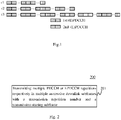
- FIG. 1 illustrates an exemplary subframe allocation in this solution in which three repetition levels (repetition numbers r1, r2 and r3) are shown to transmit two (E)PDCCHs (1st (E)PDCCH and 2nd (E)PDCCH).
- repetition levels repetition numbers r1, r2 and r3
- the positions of both the 1st and the 2nd (E)PDCCH with repetition number r3 may be blocked as shown in the dashed block and cannot be scheduled to any other (E)PDCCH.
- a wireless communication method 200 as shown in Fig. 2 performed by an eNode B for transmitting PDCCH or EPDCCH.
- the method is preferably applied to MTC, but it can also be applied to any communication which needs (E)PDCCH repetitions.
- the method comprises a step 201 of transmitting multiple PDCCH or EPDCCH repetitions respectively in multiple successive downlink subframes with a transmission repetition number and a transmission starting subframe.
- the term of "successive downlink subframes" means there is no other downlink subframes between two successive downlink subframes in time domain but there could be uplink subframes between them.
- FDD Frequency Division Duplexing
- all the 10 subframes in one frame can be used for downlink, and thus the successive downlink subframes are equivalent to successive subframes.
- TDD Time division Duplexing
- 3GPP RAN1 36.211 there are 10 subframes in one frame. Some of them are uplink subframes to transmit uplink signals, and some of them are downlink subframes to transmit downlink signals which are configured by the following table 1 (From 3GPP RAN1 36.211).
- Uplink-downlink configurations Uplink-downlink configuration Downlink-to-Uplink Switch-point periodicity Subframe number 0 1 2 3 4 5 6 7 8 9 0 5 ms D S U U U D S U U U 1 5 ms D S U U D D S U U D 2 5 ms D S U D D D S U D D 3 10 ms D S U U U D D D D D D 4 10 ms D S U U D D D D D D D 5 10 ms D S U D D D D D D D D D 6 5 ms D S U U U U D S U U U D S U U D
- the two downlink subframes can be referred to as "successive downlink subframes".
- S subframe number 1
- subframe number 0 and subframe number 5 are successive downlink subframes.
- subframe number 0 and subframe number 5 would not be considered as successive downlink subframes since there is a downlink subframe number 1.
- the transmission repetition number is selected from a repetition number set which is composed of at least a first repetition number and a second repetition number larger than the first repetition number. Therefore, at least two repetition levels each corresponding to a different repetition number can be selected as the transmission repetition number to transmit the (E)PDCCH repetitions.
- the repetition number or the transmission repetition number means how many times one (E)PDCCH would be transmitted repeatedly in successive downlink subframes.
- the transmission starting subframe can be selected from a first starting subframe set corresponding to the first repetition number when the first repetition number is selected as the transmission repetition number, and the transmission starting subframe can be selected from a second starting subframe set corresponding to the second repetition number when the second repetition number is selected as the transmission repetition number.
- the transmission starting subframe from which the transmission of the multiple (E)PDCCH repetitions starts should be selected from a starting subframe set corresponding to the selected certain repetition number. Accordingly, at the UE side, the UE can only need to detect the subframes in the starting subframe set to find the transmission starting subframe, and therefore, the detection complexity at UE side can be reduced.
- the subframe indexes of any two adjacent starting subframes in the first starting subframe set are offset by a same first index interval
- the subframe indexes of any two adjacent starting subframes in the second starting subframe set are offset by a same second index interval
- the second index interval is an integral multiple of the first index interval
- the subframe index of at least one subframe in the first starting subframe set is identical to the subframe index of one subframe in the second starting subframe set
- the number of downlink subframes from any starting subframe until its next starting subframe in the first starting subframe set is not smaller than the first repetition number
- the number of downlink subframes from any starting subframe until its next starting subframe in the second starting subframe set is not smaller than the second repetition number.
- the "subframe index” is the subframe index within one SFN period.
- the starting subframe candidates are distributed uniformly, that is, the index difference between two adjacent candidates is the same across the starting subframe set.
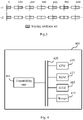
- the subframe indexes of subframes in the first starting subframe set corresponding to the first repetition number r1 can be 0, 100, 200, 300, 400, 500, 600,...
- the subframe indexes of subframes in the second starting subframe set corresponding to the second repetition number r2 can be 0, 200, 400, 600,....
- the second index interval is an integral multiple of the first index interval. As shown in the example of Fig.
- the first index interval r1 is 100
- the second index interval r2 is 200
- the second index interval is the double of the first index interval.
- the subframe index of at least one subframe in the first starting subframe set should be identical to the subframe index of one subframe in the second starting subframe set. As shown in the example of Fig. 3 , at least the subframe indexes "0", "200", “400” and "600" exist both in the first starting subframe and in the second starting subframe.
- the number of downlink subframes from any starting subframe until its next starting subframe in the first or second starting subframe set should not be smaller than the first or second repetition number in order that the multiple (E)PDCCH repetitions allocated in multiple successive downlink subframes beginning from one starting subframe will not overlap its next starting subframe.
- the number of downlink subframes from any starting subframe until its next starting subframe is equal to the corresponding index interval since all the subframes in FDD can be used for downlink.
- the number of downlink subframes from any starting subframe until its next starting subframe is smaller than the corresponding index interval since some subframes in TDD need to be used for uplink and those uplink subframes should be excluded when counting the number of downlink subframes. It is noted that when counting the number of downlink subframes from a certain starting subframe until its next starting subframe, the certain starting subframe is included while its next starting subframe is not included. For example, in Fig. 3 , when counting the number of downlink subframes from the subframe with index "0" until the subframe with index "100" in the first starting subframe set (the top line), the subframe with index "0" is included while the subframe with index "100” is excluded.
- any (E)PDCCH with repetition number r1 would only occupy one (E)PDCCH position with repetition number r2.
- the resource blocking probability can be decreased.
- any two starting subframe sets among all the starting subframe sets satisfy the definitions. This applies to all the embodiments of the present disclosure.
- P can be any positive integer satisfying that the number of downlink subframes from any starting subframe until its next starting subframe in the starting subframe set is not smaller than its corresponding repetition number r.
- the above condition can be expressed as P ⁇ r.
- P 1 and P 2 respectively represent P for the first and second starting subframe sets, then P 2 should be an integral multiple of P 1 .
- the subframes corresponding to the subframe indexes n subframe satisfying the above expression (1) constitute the starting subframe set corresponding to the repetition number r .
- the above expression (3) is particularly advantageous because for all available repetition numbers, the index interval of starting subframes corresponding to a certain repetition number is an integral multiple of that corresponding to any repetition number smaller than the certain repetition number.
- n subframe 10 ⁇ n SFN + ⁇ n s /2 ⁇ , where n s is the slot index within one radio frame, n SFN is the frame index within one SFN period.
- ⁇ can be 5.
- This example is particularly advantageous for TDD.
- the subframe number 0 and number 5 are always downlink subframes that can be used to transmit (E)PDCCH.
- the calculated starting subframes are always downlink subframes.
- the repetition number set, the first index interval, the second index interval, the first starting subframe set and/or the second starting subframe set can be fixedly specified; or the information on the repetition number set, the first index interval, the second index interval, the first starting subframe set and/or the second starting subframe set can be configured through high-layer signaling (e.g. RRC signaling or MAC signaling).
- high-layer signaling e.g. RRC signaling or MAC signaling.
- the transmission repetition number may be signaled through physical-layer or high-layer signaling.
- the UE can preferably enters DRX (Discontinuous Receive) for battery saving. This can also be applied to the other embodiments.
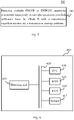
- FIG. 4 is a block diagram illustrating an eNB 400 for transmitting PDCCH or EPDCCH according to an embodiment of the present disclosure.
- the eNB 400 comprises a transmitting unit 401 configured to transmit multiple PDCCH or EPDCCH repetitions respectively in multiple successive downlink subframes with a transmission repetition number and a transmission starting subframe, wherein the transmission repetition number is selected from a repetition number set which is composed of at least a first repetition number and a second repetition number larger than the first repetition number, the transmission starting subframe is selected from a first starting subframe set corresponding to the first repetition number when the first repetition number is selected as the transmission repetition number, and the transmission starting subframe is selected from a second starting subframe set corresponding to the second repetition number when the second repetition number is selected as the transmission repetition number, and the subframe indexes of any two adjacent starting subframes in the first starting subframe set are offset by a same first index interval, the subframe indexes of any two adjacent starting subframes in the first starting subframe set are offset by a same first
- the eNB 400 may optionally include a CPU (Central Processing Unit) 410 for executing related programs to process various data and control operations of respective units in the eNB 400, a ROM (Read Only Memory) 413 for storing various programs required for performing various process and control by the CPU 410, a RAM (Random Access Memory) 415 for storing intermediate data temporarily produced in the procedure of process and control by the CPU 410, and/or a storage unit 417 for storing various programs, data and so on.
- the above transmitting unit 401, CPU 410, ROM 413, RAM 415 and/or storage unit 417 etc. may be interconnected via data and/or command bus 420 and transfer signals between one another.
- Respective units as described above do not limit the scope of the present disclosure.
- the functions of the above transmitting unit 401 may be implemented by hardware, and the above CPU 410, ROM 413, RAM 415 and/or storage unit 417 may not be necessary.
- the functions of the above transmitting unit 401 may also be implemented by functional software in combination with the above CPU 410, ROM 413, RAM 415 and/or storage unit 417 etc.
- the first embodiment can be implemented as a wireless communication method 500 performed by the UE for detecting PDCCH or EPDCCH transmitted from an eNode B as shown in Fig. 5 .
- the wireless communication method 500 comprises a step 501 of detecting multiple PDCCH or EPDCCH repetitions transmitted respectively in multiple successive downlink subframes from the eNode B with a transmission repetition number and a transmission starting subframe, wherein the transmission repetition number is selected from a repetition number set which is composed of at least a first repetition number and a second repetition number larger than the first repetition number, the transmission starting subframe is selected from a first starting subframe set corresponding to the first repetition number when the first repetition number is selected as the transmission repetition number, and the transmission starting subframe is selected from a second starting subframe set corresponding to the second repetition number when the second repetition number is selected as the transmission repetition number, and the subframe indexes of any two adjacent starting subframes in the first starting subframe set are offset by a same first index interval, the subframe indexes
- a UE for performing the above method at UE side is also provided.
- Fig. 6 is a block diagram illustrating a UE 600 for detecting PDCCH or EPDCCH transmitted from an eNode B according to an embodiment of the present disclosure.
- the UE 600 comprises a detecting unit 601 configured to detect multiple PDCCH or EPDCCH repetitions transmitted respectively in multiple successive downlink subframes from the eNode B with a transmission repetition number and a transmission starting subframe, wherein the transmission repetition number is selected from a repetition number set which is composed of at least a first repetition number and a second repetition number larger than the first repetition number, the transmission starting subframe is selected from a first starting subframe set corresponding to the first repetition number when the first repetition number is selected as the transmission repetition number, and the transmission starting subframe is selected from a second starting subframe set corresponding to the second repetition number when the second repetition number is selected as the transmission repetition number, and the subframe indexes of any two adjacent starting subframes in the first starting subframe set are offset by a same first index interval, the subframe indexes of any two adjacent starting subframes in the second starting subframe set are offset by a same second index interval, the second index interval is an integral multiple of the first index interval, the subframe index of at least one subframe in the
- the UE 600 may optionally include a CPU (Central Processing Unit) 610 for executing related programs to process various data and control operations of respective units in the UE 600, a ROM (Read Only Memory) 613 for storing various programs required for performing various process and control by the CPU 610, a RAM (Random Access Memory) 615 for storing intermediate data temporarily produced in the procedure of process and control by the CPU 610, and/or a storage unit 617 for storing various programs, data and so on.
- the above detecting unit 601, CPU 610, ROM 613, RAM 615 and/or storage unit 617 etc. may be interconnected via data and/or command bus 620 and transfer signals between one another.
- the resource blocking probability of different repetition numbers, UE's detection complexity, and eNB's scheduling complexity can be decreased.
- the second embodiment of the present disclosure is further enhancement of the first embodiment, and all the descriptions for the first embodiment are also applied to the second embodiment unless the context indicates otherwise.
- the first starting subframe set and/or the second starting subframe set can be each divided into a number of starting subframe subsets, and each of the starting subframe subsets is dedicated for transmitting the PDCCH or EPDCCH repetitions to one specific UE set composed of one or more UEs.
- the starting subframe set for all UEs can be determined according to the first embodiment, for example, by expression (1).
- different starting subframe candidates can be chosen from the starting subframe set to form respective starting subframe subsets each of which is dedicated for one UE set. In such a way, blind detection number of each UE decreases since it only needs to detect the starting subframe candidates in the stating subframe subset dedicated for itself.
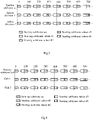
- the top line is the starting subframe set for all UEs in which the starting subframe candidates are subframes with indexes 0, 100, 200, 300, 400, 500, 600, 700,..., and the middle and bottom lines show two subset dividing manners (subset division 1 and subset division 2).
- the starting subframe set is divided into four subsets each of which is dedicated for one UE set.
- the subframes with indexes 0, 400,... constitute the starting subframe subset #1, the subframes with indexes 100, 500,...
- the starting subframe set is divided into two subsets.
- the subframes with indexes 0, 200, 400, 600,... constitute the starting subframe subset #1
- the subframes with indexes 100, 300, 500, 700,... constitute the starting subframe subset #2.
- the starting subframe subset can be constructed by adopting one subframe every predetermined number of subframes from the first starting subframe set or the second starting subframe set.
- the starting subframe subset is constructed by adopting one subframe every 4 subframes from the starting subframe set
- the starting subframe subset is constructed by adopting one subframe every 2 subframes from the starting subframe set.
- the construction of the starting subframe is not limited to the above manner, and it can use any suitable manner.
- a number of successive starting subframe candidates in the starting subframe set can be adopted for one subset, and a number of following successive starting subframe candidates can be adopted for another subset.
- the subframes with indexes 0, 100, 200 and 300 can be taken into one starting subframe subset, and the subframes with indexes 400, 500, 600 and 700 can be taken into another starting subframe subset.
- the present disclosure is not limited by any specific division manner of the starting subframe subsets.
- the UE sets respectively corresponding to the starting subframe subsets can be determined by UE IDs of the UEs or configured through signaling such as physical-layer or high-layer signaling (e.g. RRC or MAC signaling).
- UE ID refers to any identifier for identifying a UE, which is preferably but not limited to UE specific RNTI (Radio Network Temporary Identifier).
- n subframe and P share the same meaning as in expression (1).
- the subframe index n subframe of the starting subframe candidates for the certain UE can be determined.
- the determined starting subframe candidates for the certain UE constitute the starting subframe subset dedicated for the UE set to which the certain UE belongs, and the other UEs in the UE set are those for which the mod( n RNTI , N s ) has the same result as that for the certain UE.
- the subframe index of the starting subframe candidates can be determined, and the determined starting subframe candidates constitute the starting subframe subset for the certain UE set.
- the third embodiment of the present disclosure is further enhancement of the first or second embodiment in order to randomize the inter-cell interference, and all the descriptions for the first and second embodiments are also applied to the third embodiment unless the context indicates otherwise.
- the starting subframe set corresponding to a certain cell is different from the starting subframe set corresponding to another cell which is preferably a neighboring cell that would interfere with the certain cell.
- two starting subframe sets are considered different if the subframe index of at least one subframes in one starting subframe set of the two sets is different from the subframe index of every subframe in the other starting subframe sets of the two sets.
- each of the starting subframe subsets corresponding to a certain cell is different from any of the starting subframe subsets corresponding to another cell which is preferably a neighboring cell that would interfere with the certain cell.
- two starting subframe subsets are considered different if the subframe index of at least one subframes in one starting subframe subset of the two subsets is different from the subframe index of every subframe in the other starting subframe subsets of the two subsets.
- Fig. 8 illustrates an exemplary subframe allocation for transmitting (E)PDCCH repetitions according to the third embodiment.
- the top line is the starting subframe set in which the starting subframe candidates are subframes with indexes 0, 100, 200, 300, 400, 500, 600, 700,..., assuming the two cells (cell1 and cell 2) under consideration have the same starting subframe set.
- the middle line shows the division of the starting subframe subsets for cell 1 and the bottom line shows the division of the starting subframe subsets for cell 2.
- the starting subframe subset #1 includes the subframes with indexes 0, 400,...
- the starting subframe subset #2 includes the subframes with indexes 100, 500,...
- the starting subframe subset #3 includes the subframes with indexes 200, 600,...
- the starting subframe subset #4 includes the subframes with indexes 300, 700,....
- the starting subframe subset #1 includes the subframes with indexes 0, 700,...
- the starting subframe subset #2 includes the subframes with indexes 100, 600,...
- the starting subframe subset #3 includes the subframes with indexes 200, 500,...
- the starting subframe subset #4 includes the subframes with indexes 300, 400,
- each of the starting subframe subsets for cell 1 is different any of the starting subsets for cell 2.
- the subframes corresponding to one of the starting subframe subsets would not always the same for different cells, whereby the inter-cell interference is randomized and the inter-cell interference probability is reduced.
- cell 1 and cell 2 may interfere with each other; however, when coming to the next starting subframe, cell 1 and cell 2 may not interfere with each other since the next starting subframes for cell 1 and cell 2 are respectively the subframes with index 400 and 700 which are different.
- the f( n cell_ID ) can be configured according to practical applications. It can be seen that the starting subframe set obtained based on expression (6) is cell-specific.
- the other parameters share the same meaning as in the previous expressions. It is seen from expression (7) or (8), the starting subframe subsets are not only UE set specific but also cell specific.
- the first to third embodiments it is described how to choose multiple subframes for multiple (E)PDCCH repetitions.
- the fourth embodiment how to map one (E)PDCCH repetition in one subframe will be described. It is noted that the fourth embodiment can be implemented independently or in combination with one of the first to third embodiments.
- each subframe one (E)PDCCH repetition is transmitted.
- the (E)CCE set means a set of any one or more (E)CCEs.
- the (E)CCE set can refer to (E)CCE candidate defined in LTE 36.213, but it is not limited to this.
- One (E)CCE set will be used to transmit a (E)PDCCH for one UE.
- the (E)CCE set determination for one (E)PDCCH repetition of one UE is UE-specific.
- N CCE is the total number of available (E)CCEs in the control region
- L is the aggregation level of the (E)PDCCH repetition.
- 16 CCEs should be preserved for common search space.
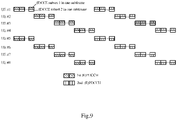
- Fig. 9 illustrates an example of the allocation of the subframes and their (E)CCE sets for different UEs.
- one subframe only two (E)CCE sets are exemplarily shown for transmitting (E)PDCCH.
- One (E)CCE set for transmitting (E)PDCCH can be corresponding to one UE.
- UE #1 and UE #5 occupy the same subframes, but they can be assigned with different (E)CCE sets ((E)CCE set 1 or (E)CCE set 2) to transmit (E)PDCCH; therefore, blocking can be avoided or reduced.
- the (E)CCE set for transmitting one PDCCH or EPDCCH repetition to a UE in one subframe can be determined by a UE ID (e.g., UE-specific RNTI) of the UE or configured through high-layer signaling.
- a UE ID e.g., UE-specific RNTI
- the indexes of the (E)CCE sets used for (E)PDCCH repetitions in one (E)PDCCH repetition period can be same or different, wherein one repetition period includes r repetitions carrying one DCI for the repetition level with the repetition number r .
- the indexes of the (E)CCE sets used for (E)PDCCH repetitions in one (E)PDCCH repetition period are same for one UE, while the indexes of the (E)CCE sets used for (E)PDCCH repetitions in different (E)PDCCH repetition periods for one UE are different.
- This method is used to randomize the resource blocking between UEs. For example, according to the above method, when the indexes of (E)CCE sets for (E)PDCCHs to UE #1 and UE #2 are same in repetition period #1, the indexes of (E)CCE sets for (E)PDCCHs to UE #1 and UE #2 in repetition period #2 can be different, which decreases the resource blocking situation.
- the (E)CCE set for transmitting (E)PDCCH to one certain UE can be determined by the index of the subframe or the index of the frame.
- the (E)CCE set for transmitting one (E)PDCCH repetition in one subframe is determined in a UE-specific manner.
- the fifth embodiment of the present disclosure is further enhancement of the second or third embodiment in order to further reduce the blocking probability and increase the resource usage, and all the descriptions for the first to third embodiments are also applied to the fifth embodiment unless the context indicates otherwise.
- the starting subframes of (E)PDCCH can be restricted in a subset of starting subframes in a UE-specific manner.
- the (E)PDCCH in each subframe, is transmitted in a (E)CCE set which is also selected in a UE-specific manner. The determination of the starting subframe subset and the (E)CCE set are based on at least one common parameter.
- the UEs receiving the PDCCH or EPDCCH repetition in the CCE or ECCE sets with the same index in different subframes include UEs from all the UE sets respectively corresponding to the starting subframe subsets.
- Table 2 illustrates a specific example.
- UEs #4, #5, #6 and #7 share the same (E)CCE set index which is 2 and they include UEs from all the UE sets respectively corresponding to the starting subframe subsets with indexes 1-4 since UE #4 is corresponding to the starting subframe subset with index 1, UE #5 is corresponding to the starting subframe subset with index 2, UE #6 is corresponding to the starting subframe subset with index 3, and UE #7 is corresponding to the starting subframe subset with index 4.
- E E
- UEs #4, #5, #6 and #7 share the same (E)CCE set index which is 2 and they include UEs from all the UE sets respectively corresponding to the starting subframe subsets with indexes 1-4 since UE #4 is corresponding to the starting subframe subset with index 1, UE #5 is corresponding to the starting subframe subset with index 2, UE #6 is corresponding to the starting subframe subset with index 3, and UE #7 is corresponding to the starting subframe subset with index 4.
- the UEs which are assigned with the same (E)CCE set index can be assigned in different starting subframe subsets, and the UEs which are assigned in the same starting subframe subset can be assigned with different (E)CCE set indexes.
- UEs #4, #5, #6 and #7 which are assigned with the same (E)CCE set index 2 are assigned in different starting subframe subsets with index of 1, 2, 3 and 4 respectively, while UEs #1, #5, #9, #13,... which are in the same subframe subset with index 2 are assigned with different (E)CCE set indexes 1, 2, 3, 4,....
- the resource blocking probability would decrease a lot, and it is also easier for eNB to schedule (E)PDCCH repetition transmission.
- Table 2 Starting subframe subset index UE index 1 2 3 4 1 2 3 4 1 (E)CCE 1 0 1 2 3 72 73 74 75 set 2 4 5 6 7 76 77 78 79 index 3 8 9 10 11 80 81 82 83 4 12 13 14 15 84 85 86 87 5 16 17 18 19 88 89 90 91 6 20 21 22 23 92 93 94 95 7 24 25 26 27 96 97 98 99 8 28 29 30 31 100 101 102 103 9 32 33 34 35 104 105 106 107 10 36 37 38 39 108 109 110 111 11 40 41 42 43 112 113 114 115 12 44 45 46 47 116 117 118 119 13 48 49 50 51 120 121 122 123 14 52 53 54 55 124 125 126 127 15 56 57 58 59 128 129 130 131 16 60
- the method of determining the starting subframe subset and the (E)CCE set for a UE can be mathematically expressed by the following examples.
- the starting subframe subset can be determined by expression (5) as described in the second embodiment, and the index of the (E)CCE set in one subframe can be determined by expression (14).
- the resource blocking probability would decrease a lot, and it can also be easier for eNB to schedule (E)PDCCH repetition transmission.
- the present invention can be realized by software, hardware, or software in cooperation with hardware.
- Each functional block used in the description of each embodiment described above can be realized by an LSI as an integrated circuit. They may be individually formed as chips, or one chip may be formed so as to include a part or all of the functional blocks.
- the LSI here may be referred to as an IC, a system LSI, a super LSI, or an ultra LSI depending on a difference in the degree of integration.
- the technique of implementing an integrated circuit is not limited to the LSI and may be realized by using a dedicated circuit or a general-purpose processor.
- a FPGA Field Programmable Gate Array
- a reconfigurable processor in which the connections and the settings of circuits cells disposed inside the LSI can be reconfigured may be used.
- the calculation of each functional block can be performed by using calculating means, for example, including a DSP or a CPU, and the processing step of each function may be recorded on a recording medium as a program for execution.
- the functional block may be integrated by using such technologies.
Landscapes
- Engineering & Computer Science (AREA)
- Signal Processing (AREA)
- Computer Networks & Wireless Communication (AREA)
- Mobile Radio Communication Systems (AREA)
Claims (16)
- Dispositif de communication (400) comprenant :une unité de réglage configurée pour régler un niveau de répétition correspondant à un nombre de répétitions d'un canal de commande de liaison descendante physique ; etune unité de transmission (401) configurée pour transmettre, à un équipement utilisateur, UE, les répétitions du canal de commande de liaison descendante physique dans des sous-trames à partir d'une sous-trame de départ avec le niveau de répétition réglé,caractérisé en ce que :le niveau de répétition est l'un parmi de multiples niveaux de répétition comprenant un premier niveau de répétition et un deuxième niveau de répétition qui est supérieur au premier niveau de répétition,un indice de la sous-trame de départ est l'un des indices de sous-trame de départ, les indices de sous-trame de départ étant l'un parmi des indices de sous-trames de départ dans un premier ensemble de sous-trames de départ défini pour le premier niveau de répétition et des indices de sous-trames de départ dans un deuxième ensemble de sous-trames de départ défini pour le deuxième niveau de répétition,un deuxième intervalle d'indice entre les indices des sous-trames de départ dans le deuxième ensemble de sous-trames de départ est un nombre entier multiple d'un premier intervalle d'indice entre les indices des sous-trames de départ dans le premier ensemble de sous-trames de départ, et au moins l'un des indices des sous-trames de départ est le même dans le premier ensemble de sous-trames de départ et dans le deuxième ensemble de sous-trames de départ, etle premier intervalle d'indice est supérieur ou égal au premier niveau de répétition, et le deuxième intervalle d'indice est supérieur ou égal au deuxième niveau de répétition.
- Dispositif de communication selon la revendication 1, dans lequel un ou plusieurs canaux de commande de liaison descendante physiques sont transmis de manière répétée dans les sous-trames.
- Dispositif de communication selon la revendication 1, dans lequel les sous-trames sont des sous-trames de liaison descendante consécutives disponibles pour la transmission du canal de commande de liaison descendante physique.
- Dispositif de communication selon la revendication 1, dans lequel les indices de sous-trame de départ représentent un nombre entier multiple du niveau de répétition.
- Dispositif de communication selon la revendication 1, dans lequel deux indices de sous-trames adjacents quelconques des indices de sous-trame de départ ont le même intervalle d'indice entre eux.
- Dispositif de communication selon la revendication 1, dans lequel les indices de sous-trame de départ sont donnés par

où nsubframe représente les indices de sous-trame de départ, et P représente un intervalle d'indice entre les indices de sous-trame de départ. - Dispositif de communication selon la revendication 1, dans lequel les indices de sous-trame de départ sont donnés par

où nsubframe représente les indices de sous-trame de départ représentés par 10nSFN + └ ns /2┘, nSFN représente un indice de sous-trame, ns représente un indice de créneau et P représente un intervalle d'indice entre les indices de sous-trame de départ. - Dispositif de communication selon la revendication 7, dans lequel P est supérieur ou égal au niveau de répétition.
- Dispositif de communication selon la revendication 7, dans lequel P = k*α, où a est un nombre entier commun aux multiples niveaux de répétition, et k*α est supérieur ou égal au niveau de répétition.
- Dispositif de communication selon la revendication 1, dans lequel
un sous-ensemble des indices de sous-trame de départ est configuré pour être les indices de sous-trame de départ qui sont spécifiques à l'UE. - Dispositif de communication selon la revendication 10, dans lequel le sous-ensemble est composé de tous les nièmes indices de sous-trame parmi les indices de sous-trame de départ.
- Dispositif de communication selon la revendication 10, dans lequel
le sous-ensemble est déterminé sur la base d'un identifiant de l'UE ou configuré par une signalisation de couche supérieure. - Dispositif de communication selon la revendication 1, dans lequel
le canal de commande de liaison descendante physique est transmis sur un élément de canal de commande, CCE, qui est déterminé sur la base d'un identifiant de l'UE ou configuré par une signalisation de couche supérieure. - Dispositif de communication selon la revendication 1, dans lequel au moins l'un parmi les multiples niveaux de répétition, le premier intervalle d'indice, le deuxième intervalle d'indice, les premiers indices de sous-trame de départ et les deuxièmes indices de sous-trame de départ est réglé de manière fixe.
- Dispositif de communication selon la revendication 1, dans lequel au moins l'un parmi les multiples niveaux de répétition, le premier intervalle d'indice, le deuxième intervalle d'indice, les premiers indices de sous-trame de départ et les deuxièmes indices de sous-trame de départ est configuré par une signalisation de couche supérieure.
- Procédé de communication comprenant :régler un niveau de répétition correspondant à un nombre de répétitions d'un canal de commande de liaison descendante physique ; ettransmettre, à un équipement utilisateur (UE), les répétitions du canal de commande de liaison descendante physique dans des sous-trames à partir d'une sous-trame de départ avec le niveau de répétition réglé,caractérisé en ce que :le niveau de répétition est l'un parmi de multiples niveaux de répétition comprenant un premier niveau de répétition et un deuxième niveau de répétition qui est supérieur au premier niveau de répétition ;un indice de la sous-trame de départ est l'un des indices de sous-trame de départ, les indices de sous-trame de départ étant l'un parmi des indices de sous-trames de départ dans un premier ensemble de sous-trames de départ défini pour le premier niveau de répétition et des indices de sous-trames de départ dans un deuxième ensemble de sous-trames de départ défini pour le deuxième niveau de répétition ; etun deuxième intervalle d'indice entre les indices des sous-trames de départ dans le deuxième ensemble de sous-trames de départ est un nombre entier multiple d'un premier intervalle d'indice entre les indices des sous-trames de départ dans le premier ensemble de sous-trames de départ, et au moins l'un des indices des sous-trames de départ est le même dans le premier ensemble de sous-trames de départ et dans le deuxième ensemble de sous-trames de départ, etle premier intervalle d'indice est supérieur ou égal au premier niveau de répétition, et le deuxième intervalle d'indice est supérieur ou égal au deuxième niveau de répétition.
Priority Applications (2)
| Application Number | Priority Date | Filing Date | Title |
|---|---|---|---|
| EP25164418.3A EP4546698B1 (fr) | 2014-01-27 | 2014-01-27 | Procédé de communication sans fil, enodeb et équipement utilisateur |
| EP22190254.7A EP4109995B1 (fr) | 2014-01-27 | 2014-01-27 | Procédé de communication sans fil, noeud b évolué et équipement utilisateur |
Applications Claiming Priority (1)
| Application Number | Priority Date | Filing Date | Title |
|---|---|---|---|
| PCT/CN2014/071597 WO2015109607A1 (fr) | 2014-01-27 | 2014-01-27 | Procédé de communication sans fil, nœud b évolué et équipement utilisateur |
Related Child Applications (3)
| Application Number | Title | Priority Date | Filing Date |
|---|---|---|---|
| EP22190254.7A Division EP4109995B1 (fr) | 2014-01-27 | 2014-01-27 | Procédé de communication sans fil, noeud b évolué et équipement utilisateur |
| EP22190254.7A Division-Into EP4109995B1 (fr) | 2014-01-27 | 2014-01-27 | Procédé de communication sans fil, noeud b évolué et équipement utilisateur |
| EP25164418.3A Division EP4546698B1 (fr) | 2014-01-27 | 2014-01-27 | Procédé de communication sans fil, enodeb et équipement utilisateur |
Publications (3)
| Publication Number | Publication Date |
|---|---|
| EP3100552A1 EP3100552A1 (fr) | 2016-12-07 |
| EP3100552A4 EP3100552A4 (fr) | 2016-12-07 |
| EP3100552B1 true EP3100552B1 (fr) | 2022-11-09 |
Family
ID=53680706
Family Applications (3)
| Application Number | Title | Priority Date | Filing Date |
|---|---|---|---|
| EP25164418.3A Active EP4546698B1 (fr) | 2014-01-27 | 2014-01-27 | Procédé de communication sans fil, enodeb et équipement utilisateur |
| EP22190254.7A Active EP4109995B1 (fr) | 2014-01-27 | 2014-01-27 | Procédé de communication sans fil, noeud b évolué et équipement utilisateur |
| EP14879322.7A Active EP3100552B1 (fr) | 2014-01-27 | 2014-01-27 | Procédé de communication sans fil, noeud b évolué et équipement utilisateur |
Family Applications Before (2)
| Application Number | Title | Priority Date | Filing Date |
|---|---|---|---|
| EP25164418.3A Active EP4546698B1 (fr) | 2014-01-27 | 2014-01-27 | Procédé de communication sans fil, enodeb et équipement utilisateur |
| EP22190254.7A Active EP4109995B1 (fr) | 2014-01-27 | 2014-01-27 | Procédé de communication sans fil, noeud b évolué et équipement utilisateur |
Country Status (6)
| Country | Link |
|---|---|
| US (2) | US10925037B2 (fr) |
| EP (3) | EP4546698B1 (fr) |
| JP (1) | JP6372769B2 (fr) |
| CN (2) | CN106165508B (fr) |
| ES (2) | ES3032515T3 (fr) |
| WO (1) | WO2015109607A1 (fr) |
Families Citing this family (18)
| Publication number | Priority date | Publication date | Assignee | Title |
|---|---|---|---|---|
| KR101940344B1 (ko) * | 2013-09-26 | 2019-01-21 | 주식회사 케이티 | 하향링크 제어 정보 송수신 방법 및 장치 |
| JP6372769B2 (ja) * | 2014-01-27 | 2018-08-15 | サン パテント トラスト | 通信装置、通信方法及び集積回路 |
| JP6492094B2 (ja) * | 2014-01-29 | 2019-03-27 | 華為技術有限公司Huawei Technologies Co.,Ltd. | 強化された物理チャネル伝送方法、通信デバイス、ユーザ機器、及び基地局 |
| BR112016017767B1 (pt) * | 2014-02-10 | 2022-11-29 | Telefonaktiebolaget Lm Ericsson (Publ) | Método e equipamento de usuário para realizar transmissões de preâmbulo e método e nó de rede para receber transmissões de preâmbulo em um canal de acesso aleatório |
| WO2016072770A1 (fr) * | 2014-11-05 | 2016-05-12 | Lg Electronics Inc. | Procédé et appareil de transmission de radiorecherche d'un équipement d'utilisateur de communication de type machine dans un système de communications sans fil |
| KR102269709B1 (ko) * | 2015-02-06 | 2021-06-25 | 파나소닉 인텔렉츄얼 프로퍼티 코포레이션 오브 아메리카 | 무선 통신 방법, e노드B 및 사용자 기기 |
| ES2760329T3 (es) * | 2015-04-10 | 2020-05-13 | Velos Media Int Ltd | Selección de nivel de repetición de LC-PDCCH para dispositivos MTC |
| KR102179107B1 (ko) * | 2015-04-24 | 2020-11-16 | 삼성전자 주식회사 | 기계형 통신 기술에서 전자 장치의 전력 소모를 절약하는 방법 및 장치 |
| US10555297B2 (en) * | 2016-03-31 | 2020-02-04 | Telefonaktiebolaget Lm Ericsson (Publ) | Uplink transmission timing control |
| US10541802B2 (en) * | 2016-03-31 | 2020-01-21 | Telefonaktiebolaget Lm Ericsson (Publ) | Application of timing advance command in wireless communication device in enhanced coverage mode |
| US11122600B2 (en) | 2016-12-19 | 2021-09-14 | Ntt Docomo, Inc. | Terminals receiving downlink control signals and downlink data signals |
| CN110536459A (zh) * | 2018-08-10 | 2019-12-03 | 中兴通讯股份有限公司 | 一种重复传输方法及装置、通信设备和存储介质 |
| EP3964005B1 (fr) * | 2019-04-30 | 2024-08-21 | ZTE Corporation | Indication de ressource en accès aléatoire |
| CN110536451B (zh) | 2019-09-03 | 2025-06-10 | 中兴通讯股份有限公司 | 信息增强方法、装置、设备和存储介质 |
| CN111277368B (zh) * | 2020-01-20 | 2022-09-02 | 紫光展锐(重庆)科技有限公司 | 控制信道的实际重复发送次数的确定方法及装置、存储介质、终端 |
| US12408178B2 (en) | 2020-03-06 | 2025-09-02 | Beijing Xiaomi Mobile Software Co., Ltd. | Downlink control channel transmission method and apparatus, terminal and access network device |
| WO2021226911A1 (fr) * | 2020-05-14 | 2021-11-18 | Qualcomm Incorporated | Surveillance d'occasions pour des niveaux de répétition associés à des messages de canal de commande |
| CN113973283B (zh) * | 2020-07-23 | 2025-05-13 | 夏普株式会社 | 由用户设备执行的方法以及用户设备 |
Family Cites Families (18)
| Publication number | Priority date | Publication date | Assignee | Title |
|---|---|---|---|---|
| US8228783B2 (en) * | 2007-05-04 | 2012-07-24 | Texas Instruments Incorporated | Base station transmitter for use with an OFDM communications system, a method of dynamically allocating OFDM symbols for PDCCH in the system and a user equipment receiver for use with the system |
| US8724636B2 (en) * | 2008-03-31 | 2014-05-13 | Qualcomm Incorporated | Methods of reliably sending control signal |
| CN101925107B (zh) * | 2009-06-15 | 2014-12-10 | 华为技术有限公司 | 实现资源调度的方法、设备和系统 |
| EP2443782A2 (fr) * | 2009-06-16 | 2012-04-25 | InterDigital Patent Holdings, Inc. | Procédé et appareil pour opération harq synchrone et pour éviter les interférences |
| JP5368643B2 (ja) * | 2009-11-23 | 2013-12-18 | エルジー エレクトロニクス インコーポレイティド | Ack/nack伝送方法及びそのための装置 |
| KR101165643B1 (ko) * | 2010-12-20 | 2012-07-17 | 엘지전자 주식회사 | Ack/nack 전송방법 및 사용자기기와, ack/nack 수신방법 및 기지국 |
| CN102651678B (zh) * | 2011-02-23 | 2015-07-22 | 华为技术有限公司 | 控制信息的传输方法、装置及系统 |
| JP5811443B2 (ja) | 2011-07-22 | 2015-11-11 | シャープ株式会社 | 端末装置、基地局装置、集積回路および通信方法 |
| US9130723B2 (en) * | 2011-08-12 | 2015-09-08 | Lg Electronics Inc. | Method and device for acquiring resource for uplink control channel in wireless communication system |
| US9232520B2 (en) | 2011-11-16 | 2016-01-05 | Electronics And Telecommunications Research Institute | Machine type communication support method and apparatus |
| TWI637603B (zh) * | 2012-10-05 | 2018-10-01 | 內數位專利控股公司 | 增強機器類型通訊(mtc)裝置涵蓋的方法和裝置 |
| US9485763B2 (en) * | 2013-01-14 | 2016-11-01 | Lg Electronics Inc. | Method and user equipment for receiving downlink signal and method and base station for transmitting downlink signal |
| CN105580480B (zh) * | 2013-09-27 | 2020-04-21 | 阿尔卡特朗讯 | 用于确定物理下行链路控制信道的开始时间的方法 |
| US9667386B2 (en) * | 2013-11-13 | 2017-05-30 | Samsung Electronics Co., Ltd | Transmission of control channel and data channels for coverage enhancements |
| EP3073658B1 (fr) * | 2013-11-22 | 2019-11-06 | LG Electronics Inc. | Procédé de réception d'un groupe de pdcch, et dispositif de mtc |
| WO2015093851A1 (fr) * | 2013-12-18 | 2015-06-25 | 엘지전자 주식회사 | Procédé et terminal pour recevoir un regroupement d'epdcch |
| US9973303B2 (en) * | 2013-12-20 | 2018-05-15 | Samsung Electronics Co., Ltd. | Determining timing for transmission or reception of signaling in a coverage enhanced operating mode |
| JP6372769B2 (ja) * | 2014-01-27 | 2018-08-15 | サン パテント トラスト | 通信装置、通信方法及び集積回路 |
-
2014
- 2014-01-27 JP JP2016535048A patent/JP6372769B2/ja active Active
- 2014-01-27 EP EP25164418.3A patent/EP4546698B1/fr active Active
- 2014-01-27 CN CN201480072950.3A patent/CN106165508B/zh active Active
- 2014-01-27 EP EP22190254.7A patent/EP4109995B1/fr active Active
- 2014-01-27 CN CN201910822060.4A patent/CN110601804B/zh active Active
- 2014-01-27 WO PCT/CN2014/071597 patent/WO2015109607A1/fr not_active Ceased
- 2014-01-27 ES ES22190254T patent/ES3032515T3/es active Active
- 2014-01-27 US US15/104,202 patent/US10925037B2/en active Active
- 2014-01-27 ES ES25164418T patent/ES3069464T3/es active Active
- 2014-01-27 EP EP14879322.7A patent/EP3100552B1/fr active Active
-
2021
- 2021-01-08 US US17/145,195 patent/US12501432B2/en active Active
Also Published As
| Publication number | Publication date |
|---|---|
| US20160330723A1 (en) | 2016-11-10 |
| EP4546698A3 (fr) | 2025-07-09 |
| EP4109995A1 (fr) | 2022-12-28 |
| EP3100552A1 (fr) | 2016-12-07 |
| CN110601804B (zh) | 2022-04-12 |
| ES3069464T3 (en) | 2026-06-08 |
| EP3100552A4 (fr) | 2016-12-07 |
| US12501432B2 (en) | 2025-12-16 |
| EP4546698B1 (fr) | 2026-03-18 |
| JP2017510096A (ja) | 2017-04-06 |
| CN110601804A (zh) | 2019-12-20 |
| EP4109995C0 (fr) | 2025-05-14 |
| WO2015109607A1 (fr) | 2015-07-30 |
| JP6372769B2 (ja) | 2018-08-15 |
| US20210136745A1 (en) | 2021-05-06 |
| EP4546698A2 (fr) | 2025-04-30 |
| US10925037B2 (en) | 2021-02-16 |
| CN106165508A (zh) | 2016-11-23 |
| EP4109995B1 (fr) | 2025-05-14 |
| ES3032515T3 (en) | 2025-07-21 |
| CN106165508B (zh) | 2019-10-22 |
| EP4546698C0 (fr) | 2026-03-18 |
Similar Documents
| Publication | Publication Date | Title |
|---|---|---|
| US12501432B2 (en) | User equipment and communication method | |
| CN104025532B (zh) | 用于监测下行链路控制信道的方法和无线装置 | |
| US11190960B2 (en) | Methods and apparatuses for control resource mapping | |
| US9860884B2 (en) | Method for monitoring control channel and wireless device | |
| US9363809B2 (en) | Method and wireless device for monitoring control channel | |
| US20170006584A1 (en) | Method and device of resource allocation in physical downlink control channels | |
| US11843562B2 (en) | ENodeB, user equipment and wireless communication method | |
| CN104012061A (zh) | 用于监控控制信道的方法和无线装置 | |
| CN105637959A (zh) | 无线通信方法、演进节点b和用户设备 | |
| US10721028B2 (en) | Wireless communication method and wireless communication device | |
| CN103476120A (zh) | 物理上行控制信道的发送、处理方法及装置 | |
| JP6512528B2 (ja) | ユーザ機器、通信方法、および集積回路 |
Legal Events
| Date | Code | Title | Description |
|---|---|---|---|
| STAA | Information on the status of an ep patent application or granted ep patent |
Free format text: STATUS: THE INTERNATIONAL PUBLICATION HAS BEEN MADE |
|
| PUAI | Public reference made under article 153(3) epc to a published international application that has entered the european phase |
Free format text: ORIGINAL CODE: 0009012 |
|
| STAA | Information on the status of an ep patent application or granted ep patent |
Free format text: STATUS: REQUEST FOR EXAMINATION WAS MADE |
|
| 17P | Request for examination filed |
Effective date: 20160624 |
|
| A4 | Supplementary search report drawn up and despatched |
Effective date: 20161107 |
|
| AK | Designated contracting states |
Kind code of ref document: A1 Designated state(s): AL AT BE BG CH CY CZ DE DK EE ES FI FR GB GR HR HU IE IS IT LI LT LU LV MC MK MT NL NO PL PT RO RS SE SI SK SM TR |
|
| AX | Request for extension of the european patent |
Extension state: BA ME |
|
| RAP1 | Party data changed (applicant data changed or rights of an application transferred) |
Owner name: SUN PATENT TRUST |
|
| DAX | Request for extension of the european patent (deleted) | ||
| STAA | Information on the status of an ep patent application or granted ep patent |
Free format text: STATUS: EXAMINATION IS IN PROGRESS |
|
| 17Q | First examination report despatched |
Effective date: 20190722 |
|
| GRAP | Despatch of communication of intention to grant a patent |
Free format text: ORIGINAL CODE: EPIDOSNIGR1 |
|
| STAA | Information on the status of an ep patent application or granted ep patent |
Free format text: STATUS: GRANT OF PATENT IS INTENDED |
|
| INTG | Intention to grant announced |
Effective date: 20220706 |
|
| GRAS | Grant fee paid |
Free format text: ORIGINAL CODE: EPIDOSNIGR3 |
|
| GRAA | (expected) grant |
Free format text: ORIGINAL CODE: 0009210 |
|
| STAA | Information on the status of an ep patent application or granted ep patent |
Free format text: STATUS: THE PATENT HAS BEEN GRANTED |
|
| AK | Designated contracting states |
Kind code of ref document: B1 Designated state(s): AL AT BE BG CH CY CZ DE DK EE ES FI FR GB GR HR HU IE IS IT LI LT LU LV MC MK MT NL NO PL PT RO RS SE SI SK SM TR |
|
| REG | Reference to a national code |
Ref country code: GB Ref legal event code: FG4D |
|
| REG | Reference to a national code |
Ref country code: CH Ref legal event code: EP Ref country code: AT Ref legal event code: REF Ref document number: 1531139 Country of ref document: AT Kind code of ref document: T Effective date: 20221115 |
|
| REG | Reference to a national code |
Ref country code: DE Ref legal event code: R096 Ref document number: 602014085510 Country of ref document: DE |
|
| REG | Reference to a national code |
Ref country code: IE Ref legal event code: FG4D |
|
| REG | Reference to a national code |
Ref country code: LT Ref legal event code: MG9D |
|
| REG | Reference to a national code |
Ref country code: NL Ref legal event code: MP Effective date: 20221109 |
|
| REG | Reference to a national code |
Ref country code: AT Ref legal event code: MK05 Ref document number: 1531139 Country of ref document: AT Kind code of ref document: T Effective date: 20221109 |
|
| PG25 | Lapsed in a contracting state [announced via postgrant information from national office to epo] |
Ref country code: SE Free format text: LAPSE BECAUSE OF FAILURE TO SUBMIT A TRANSLATION OF THE DESCRIPTION OR TO PAY THE FEE WITHIN THE PRESCRIBED TIME-LIMIT Effective date: 20221109 Ref country code: PT Free format text: LAPSE BECAUSE OF FAILURE TO SUBMIT A TRANSLATION OF THE DESCRIPTION OR TO PAY THE FEE WITHIN THE PRESCRIBED TIME-LIMIT Effective date: 20230309 Ref country code: NO Free format text: LAPSE BECAUSE OF FAILURE TO SUBMIT A TRANSLATION OF THE DESCRIPTION OR TO PAY THE FEE WITHIN THE PRESCRIBED TIME-LIMIT Effective date: 20230209 Ref country code: LT Free format text: LAPSE BECAUSE OF FAILURE TO SUBMIT A TRANSLATION OF THE DESCRIPTION OR TO PAY THE FEE WITHIN THE PRESCRIBED TIME-LIMIT Effective date: 20221109 Ref country code: FI Free format text: LAPSE BECAUSE OF FAILURE TO SUBMIT A TRANSLATION OF THE DESCRIPTION OR TO PAY THE FEE WITHIN THE PRESCRIBED TIME-LIMIT Effective date: 20221109 Ref country code: ES Free format text: LAPSE BECAUSE OF FAILURE TO SUBMIT A TRANSLATION OF THE DESCRIPTION OR TO PAY THE FEE WITHIN THE PRESCRIBED TIME-LIMIT Effective date: 20221109 Ref country code: AT Free format text: LAPSE BECAUSE OF FAILURE TO SUBMIT A TRANSLATION OF THE DESCRIPTION OR TO PAY THE FEE WITHIN THE PRESCRIBED TIME-LIMIT Effective date: 20221109 |
|
| PG25 | Lapsed in a contracting state [announced via postgrant information from national office to epo] |
Ref country code: RS Free format text: LAPSE BECAUSE OF FAILURE TO SUBMIT A TRANSLATION OF THE DESCRIPTION OR TO PAY THE FEE WITHIN THE PRESCRIBED TIME-LIMIT Effective date: 20221109 Ref country code: PL Free format text: LAPSE BECAUSE OF FAILURE TO SUBMIT A TRANSLATION OF THE DESCRIPTION OR TO PAY THE FEE WITHIN THE PRESCRIBED TIME-LIMIT Effective date: 20221109 Ref country code: LV Free format text: LAPSE BECAUSE OF FAILURE TO SUBMIT A TRANSLATION OF THE DESCRIPTION OR TO PAY THE FEE WITHIN THE PRESCRIBED TIME-LIMIT Effective date: 20221109 Ref country code: IS Free format text: LAPSE BECAUSE OF FAILURE TO SUBMIT A TRANSLATION OF THE DESCRIPTION OR TO PAY THE FEE WITHIN THE PRESCRIBED TIME-LIMIT Effective date: 20230309 Ref country code: HR Free format text: LAPSE BECAUSE OF FAILURE TO SUBMIT A TRANSLATION OF THE DESCRIPTION OR TO PAY THE FEE WITHIN THE PRESCRIBED TIME-LIMIT Effective date: 20221109 Ref country code: GR Free format text: LAPSE BECAUSE OF FAILURE TO SUBMIT A TRANSLATION OF THE DESCRIPTION OR TO PAY THE FEE WITHIN THE PRESCRIBED TIME-LIMIT Effective date: 20230210 |
|
| P01 | Opt-out of the competence of the unified patent court (upc) registered |
Effective date: 20230517 |
|
| PG25 | Lapsed in a contracting state [announced via postgrant information from national office to epo] |
Ref country code: NL Free format text: LAPSE BECAUSE OF FAILURE TO SUBMIT A TRANSLATION OF THE DESCRIPTION OR TO PAY THE FEE WITHIN THE PRESCRIBED TIME-LIMIT Effective date: 20221109 |
|
| PG25 | Lapsed in a contracting state [announced via postgrant information from national office to epo] |
Ref country code: SM Free format text: LAPSE BECAUSE OF FAILURE TO SUBMIT A TRANSLATION OF THE DESCRIPTION OR TO PAY THE FEE WITHIN THE PRESCRIBED TIME-LIMIT Effective date: 20221109 Ref country code: RO Free format text: LAPSE BECAUSE OF FAILURE TO SUBMIT A TRANSLATION OF THE DESCRIPTION OR TO PAY THE FEE WITHIN THE PRESCRIBED TIME-LIMIT Effective date: 20221109 Ref country code: EE Free format text: LAPSE BECAUSE OF FAILURE TO SUBMIT A TRANSLATION OF THE DESCRIPTION OR TO PAY THE FEE WITHIN THE PRESCRIBED TIME-LIMIT Effective date: 20221109 Ref country code: DK Free format text: LAPSE BECAUSE OF FAILURE TO SUBMIT A TRANSLATION OF THE DESCRIPTION OR TO PAY THE FEE WITHIN THE PRESCRIBED TIME-LIMIT Effective date: 20221109 Ref country code: CZ Free format text: LAPSE BECAUSE OF FAILURE TO SUBMIT A TRANSLATION OF THE DESCRIPTION OR TO PAY THE FEE WITHIN THE PRESCRIBED TIME-LIMIT Effective date: 20221109 |
|
| REG | Reference to a national code |
Ref country code: DE Ref legal event code: R097 Ref document number: 602014085510 Country of ref document: DE |
|
| PG25 | Lapsed in a contracting state [announced via postgrant information from national office to epo] |
Ref country code: SK Free format text: LAPSE BECAUSE OF FAILURE TO SUBMIT A TRANSLATION OF THE DESCRIPTION OR TO PAY THE FEE WITHIN THE PRESCRIBED TIME-LIMIT Effective date: 20221109 Ref country code: AL Free format text: LAPSE BECAUSE OF FAILURE TO SUBMIT A TRANSLATION OF THE DESCRIPTION OR TO PAY THE FEE WITHIN THE PRESCRIBED TIME-LIMIT Effective date: 20221109 |
|
| REG | Reference to a national code |
Ref country code: CH Ref legal event code: PL |
|
| PLBE | No opposition filed within time limit |
Free format text: ORIGINAL CODE: 0009261 |
|
| STAA | Information on the status of an ep patent application or granted ep patent |
Free format text: STATUS: NO OPPOSITION FILED WITHIN TIME LIMIT |
|
| PG25 | Lapsed in a contracting state [announced via postgrant information from national office to epo] |
Ref country code: LU Free format text: LAPSE BECAUSE OF NON-PAYMENT OF DUE FEES Effective date: 20230127 |
|
| REG | Reference to a national code |
Ref country code: BE Ref legal event code: MM Effective date: 20230131 |
|
| 26N | No opposition filed |
Effective date: 20230810 |
|
| PG25 | Lapsed in a contracting state [announced via postgrant information from national office to epo] |
Ref country code: LI Free format text: LAPSE BECAUSE OF NON-PAYMENT OF DUE FEES Effective date: 20230131 Ref country code: CH Free format text: LAPSE BECAUSE OF NON-PAYMENT OF DUE FEES Effective date: 20230131 |
|
| PG25 | Lapsed in a contracting state [announced via postgrant information from national office to epo] |
Ref country code: SI Free format text: LAPSE BECAUSE OF FAILURE TO SUBMIT A TRANSLATION OF THE DESCRIPTION OR TO PAY THE FEE WITHIN THE PRESCRIBED TIME-LIMIT Effective date: 20221109 Ref country code: BE Free format text: LAPSE BECAUSE OF NON-PAYMENT OF DUE FEES Effective date: 20230131 |
|
| PG25 | Lapsed in a contracting state [announced via postgrant information from national office to epo] |
Ref country code: IE Free format text: LAPSE BECAUSE OF NON-PAYMENT OF DUE FEES Effective date: 20230127 |
|
| PG25 | Lapsed in a contracting state [announced via postgrant information from national office to epo] |
Ref country code: IT Free format text: LAPSE BECAUSE OF FAILURE TO SUBMIT A TRANSLATION OF THE DESCRIPTION OR TO PAY THE FEE WITHIN THE PRESCRIBED TIME-LIMIT Effective date: 20221109 |
|
| PG25 | Lapsed in a contracting state [announced via postgrant information from national office to epo] |
Ref country code: MC Free format text: LAPSE BECAUSE OF FAILURE TO SUBMIT A TRANSLATION OF THE DESCRIPTION OR TO PAY THE FEE WITHIN THE PRESCRIBED TIME-LIMIT Effective date: 20221109 |
|
| PG25 | Lapsed in a contracting state [announced via postgrant information from national office to epo] |
Ref country code: MC Free format text: LAPSE BECAUSE OF FAILURE TO SUBMIT A TRANSLATION OF THE DESCRIPTION OR TO PAY THE FEE WITHIN THE PRESCRIBED TIME-LIMIT Effective date: 20221109 |
|
| PG25 | Lapsed in a contracting state [announced via postgrant information from national office to epo] |
Ref country code: BG Free format text: LAPSE BECAUSE OF FAILURE TO SUBMIT A TRANSLATION OF THE DESCRIPTION OR TO PAY THE FEE WITHIN THE PRESCRIBED TIME-LIMIT Effective date: 20221109 |
|
| PG25 | Lapsed in a contracting state [announced via postgrant information from national office to epo] |
Ref country code: BG Free format text: LAPSE BECAUSE OF FAILURE TO SUBMIT A TRANSLATION OF THE DESCRIPTION OR TO PAY THE FEE WITHIN THE PRESCRIBED TIME-LIMIT Effective date: 20221109 |
|
| PG25 | Lapsed in a contracting state [announced via postgrant information from national office to epo] |
Ref country code: CY Free format text: LAPSE BECAUSE OF FAILURE TO SUBMIT A TRANSLATION OF THE DESCRIPTION OR TO PAY THE FEE WITHIN THE PRESCRIBED TIME-LIMIT; INVALID AB INITIO Effective date: 20140127 |
|
| PG25 | Lapsed in a contracting state [announced via postgrant information from national office to epo] |
Ref country code: HU Free format text: LAPSE BECAUSE OF FAILURE TO SUBMIT A TRANSLATION OF THE DESCRIPTION OR TO PAY THE FEE WITHIN THE PRESCRIBED TIME-LIMIT; INVALID AB INITIO Effective date: 20140127 |
|
| PG25 | Lapsed in a contracting state [announced via postgrant information from national office to epo] |
Ref country code: TR Free format text: LAPSE BECAUSE OF FAILURE TO SUBMIT A TRANSLATION OF THE DESCRIPTION OR TO PAY THE FEE WITHIN THE PRESCRIBED TIME-LIMIT Effective date: 20221109 |
|
| PGFP | Annual fee paid to national office [announced via postgrant information from national office to epo] |
Ref country code: GB Payment date: 20260123 Year of fee payment: 13 |
|
| PGFP | Annual fee paid to national office [announced via postgrant information from national office to epo] |
Ref country code: DE Payment date: 20260121 Year of fee payment: 13 |
|
| PGFP | Annual fee paid to national office [announced via postgrant information from national office to epo] |
Ref country code: FR Payment date: 20260123 Year of fee payment: 13 |