EP3100480B1 - Vorrichtungen und maschinenlesbare speichermedien zur kommunikation unterstützender informationen für evolved node b (enb) parametertuning - Google Patents
Vorrichtungen und maschinenlesbare speichermedien zur kommunikation unterstützender informationen für evolved node b (enb) parametertuning Download PDFInfo
- Publication number
- EP3100480B1 EP3100480B1 EP15743422.6A EP15743422A EP3100480B1 EP 3100480 B1 EP3100480 B1 EP 3100480B1 EP 15743422 A EP15743422 A EP 15743422A EP 3100480 B1 EP3100480 B1 EP 3100480B1
- Authority
- EP
- European Patent Office
- Prior art keywords
- mme
- time
- enb
- assistance information
- core network
- Prior art date
- Legal status (The legal status is an assumption and is not a legal conclusion. Google has not performed a legal analysis and makes no representation as to the accuracy of the status listed.)
- Active
Links
Images

Classifications
-
- H—ELECTRICITY
- H04—ELECTRIC COMMUNICATION TECHNIQUE
- H04W—WIRELESS COMMUNICATION NETWORKS
- H04W36/00—Hand-off or reselection arrangements
- H04W36/0005—Control or signalling for completing the hand-off
- H04W36/0083—Determination of parameters used for hand-off, e.g. generation or modification of neighbour cell lists
- H04W36/0085—Hand-off measurements
- H04W36/0088—Scheduling hand-off measurements
-
- H—ELECTRICITY
- H04—ELECTRIC COMMUNICATION TECHNIQUE
- H04W—WIRELESS COMMUNICATION NETWORKS
- H04W24/00—Supervisory, monitoring or testing arrangements
- H04W24/08—Testing, supervising or monitoring using real traffic
-
- H—ELECTRICITY
- H04—ELECTRIC COMMUNICATION TECHNIQUE
- H04W—WIRELESS COMMUNICATION NETWORKS
- H04W36/00—Hand-off or reselection arrangements
- H04W36/08—Reselecting an access point
-
- H—ELECTRICITY
- H04—ELECTRIC COMMUNICATION TECHNIQUE
- H04W—WIRELESS COMMUNICATION NETWORKS
- H04W4/00—Services specially adapted for wireless communication networks; Facilities therefor
- H04W4/70—Services for machine-to-machine communication [M2M] or machine type communication [MTC]
-
- H—ELECTRICITY
- H04—ELECTRIC COMMUNICATION TECHNIQUE
- H04W—WIRELESS COMMUNICATION NETWORKS
- H04W72/00—Local resource management
- H04W72/20—Control channels or signalling for resource management
-
- H—ELECTRICITY
- H04—ELECTRIC COMMUNICATION TECHNIQUE
- H04W—WIRELESS COMMUNICATION NETWORKS
- H04W76/00—Connection management
- H04W76/20—Manipulation of established connections
- H04W76/27—Transitions between radio resource control [RRC] states
-
- H—ELECTRICITY
- H04—ELECTRIC COMMUNICATION TECHNIQUE
- H04W—WIRELESS COMMUNICATION NETWORKS
- H04W92/00—Interfaces specially adapted for wireless communication networks
- H04W92/04—Interfaces between hierarchically different network devices
- H04W92/045—Interfaces between hierarchically different network devices between access point and backbone network device
-
- H—ELECTRICITY
- H04—ELECTRIC COMMUNICATION TECHNIQUE
- H04W—WIRELESS COMMUNICATION NETWORKS
- H04W92/00—Interfaces specially adapted for wireless communication networks
- H04W92/16—Interfaces between hierarchically similar devices
- H04W92/20—Interfaces between hierarchically similar devices between access points
Definitions
- Machine type communication is a communication that does not typically require human intervention.
- the advent of machine type communication has brought about a new set of use cases for wireless standards and wireless communications systems.
- Wireless devices used for MTC or MTC applications typically have similar characteristics.
- MTC devices typically have low mobility, low priority, and send small amounts of mobile originated and/or mobile terminated data. The data is typically sent very infrequently, such as once a week, or once a month.
- some types of MTC devices are configured to send relatively small amounts of MTC data more frequently. In order to send the data more frequently, an efficient means of connecting and disconnecting the MTC device to a wireless network would be useful to reduce the impact that frequent connections and disconnections has on the wireless network.
- 3GPP ET AL "3rd Generation Partnership Project; Technical Specification Group Services and System Aspects; Study on Machine-Type Communications (MTC) and other mobile data applications communications enhancements (Release 12)", XP050916398 , and " 3rd Generation Partnership Project; Technical Specification Group Radio Access Network; Study on Enhancements to Machine-Type Communications (MTC) and other Mobile Data Applications; Radio Access Network (RAN) aspects (Release 12)", XP050907586 , describe studies and evaluates architectural enhancements for Machine-Type and other mobile data applications communications.
- FIG. 1 is an example block diagram of an UE 102 in wireless communication with an evolved packet system (EPS) comprising one or more eNodeBs 104 that are in communication with an evolved packet core (EPC) in accordance with the 3GPP LTE Release 8, 9, 10, 11, 12 or 13.
- the EPC can comprise a mobility management entity (MME).
- MME mobility management entity
- the MME can be configured to handle the control plane communication for each UE.
- the control plane signaling provides mobility and security for access for the UE to the evolved Universal Mobile Telecommunications System (UMTS) Terrestrial Radio Access Network (E-UTRAN).
- UMTS Universal Mobile Telecommunications System
- E-UTRAN evolved Universal Mobile Telecommunications System
- a Radio Resource Control (RRC) protocol layer is a sublayer that exists between the user equipment (UE) and the evolved Node B (eNB) in the E-UTRAN.
- the RRC protocol layer is part of an LTE air interface control plane.
- the main services and functions provided by the RRC protocol layer include: the broadcast of system information related to the non-access stratum (NAS) and the access stratum (AS); paging; the establishment and release of an RRC connection between the UE and the e-UTRAN; the establishment, configuration, maintenance and release of point to point radio bearers, and QOS measurement reporting.
- the MME is responsible for the tracking and the paging of the UE in idle-mode.
- the MME is the termination point of the Non-Access Stratum (NAS). Additional features are also provided by the RRC protocol layer.
- the establishment of an RRC connection between the UE and the EPC allows control information and data to be communicated between the UE and the MME using the control plane (comprising a signaling radio bearer between the UE and the eNB and an S1-MME bearer between the eNB and the MME).
- the control plane comprising a signaling radio bearer between the UE and the eNB and an S1-MME bearer between the eNB and the MME.
- the UE can be moved to an RRC idle state, which can minimize power usage until it is desired to reestablish the RRC connected state.
- the UE can move from an RRC connected state to an RRC idle state by when an RRC connection release message is received from the eNB.
- MTC devices can further exacerbate the challenges in optimizing the timing of an RRC connection between a UE operating as an MTC device and a wireless network, such as the EPS.
- An MTC device can be configured to operate with very low power consumption. Thus, the time the MTC device is in an RRC connected state is minimized to reduce power consumption.
- a UE operating as an MTC device may be connected to all of the power meters within a city.
- the meters can be configured to communicate power use at regular intervals, such as hourly, daily, weekly, or monthly.
- the connection of thousands or tens of thousands of MTC devices to a wireless network can result in significant signaling overhead at the E-UTRAN and the EPC. So it is important that each MTC device effectively communicates all necessary information with a minimum number of RRC connections and releases to reduce signaling overhead at the wireless network. This example is not intended to be limiting.
- a wide variety of operating conditions and reporting conditions can exist for UEs operating as MTC devices.
- assistance information parameters can be communicated between an evolved packet system (EPS) and UEs to enhance the network's internal decisions and provide power savings and performance enhancements at the UE.
- EPS evolved packet system
- the assistance information parameters can be used at the network to provide load balancing control, resource allocation, and minimize signaling overhead.
- the assistance information parameters can include updates to parameters associated with the RRC connection release timer, RRC states, and state transition related constants and counters.
- the assistance information parameters can be gathered by a UE, a radio access network (RAN), or at the EPC (i.e. the MME or HSS).
- the assistance information parameters can be stored at the eNB or the EPC.
- the assistance information parameters can be conveyed through different methods to benefit the UE and the network. For example, assistance information can be conveyed upon a request or query from the network, upon handover of a UE to a different eNB, upon re-establishment of an RRC connection from an RRC idle state, or when a UE conveys information due to an internal decision at the UE.
- the assistance information parameters can be used to adjust timing parameters on discontinuous reception (DRX) configurations for a UE. In times of lower activity or no activity, the eNB can activate a DRX mode so that the UE can power down its transceivers for some time defined by a set of timers.
- DRX discontinuous reception
- a UE When an RRC connection release message is communicated, a UE can be moved from an RRC connected mode to an RRC idle mode upon the expiration of a timer maintained at the eNB.
- the value, or parameter definition of this timer is typically operator or network specific. The value is not available in the 3GPP LTE Rel. 8, 9, 10, 11, 12 or 13 standard. Each operator uses a proprietary value for this timer and use the value as a means for differentiation with competing vendors.
- the timer is referred to as an "RRC inactivity timer" or an RRC connection release timer.
- the RRC connection release timer is different from other timers defined in the specification, such as the T320 timer.
- the duration of the RRC connection release timer which provides the time that the UE takes before releasing the UE connection with the EPC, can have a huge impact on UE power consumption. If the time period is too long, it can result in what is called a 'tail effect' during which time the UE is in connected mode but is not transmitting or receiving data. However, if the time period is too short, it can result in frequent RRC state transitions, which can result in high signaling overhead, as previously discussed.
- a delta RRC release time can be configured.
- This delta RRC release time can be an assistance information parameter that can be used to enhance the network procedure for deciding when to release UE connections.
- the delta RRC release time is a relative value of time ( ⁇ ) that can be added to a default instant that the eNB will release a UE's RRC connection.
- the value of the delta RRC release time can be positive or negative, thereby reducing or extending the default RRC release time.
- the delta RRC release time parameter can be generated by the eNB.
- the eNB is the node that determines when to release the RRC connection with the eNB in legacy systems.
- the delta RRC release time value for each UE can be stored by the MME, along with a cell identification (ID).
- ID cell identification
- the decision of releasing the UE connection is not limited to the eNB.
- the decision of releasing the RRC connection for the UE can also be taken by other nodes.
- the decision of releasing the RRC connection for a UE and the gathering of assistance information used to determine the delta RRC release time value may be performed by the UE or nodes in the EPC, such as the MME. This information can be used to determine an improved instance to release the connection that will minimize UE power usage and network traffic.
- the delta RRC release time information can allow the eNB to define its own absolute RRC release time.
- the eNB can be configured to define its own mechanism to determine how and when to release a UE's RRC connection in a future instance.
- Intelligent eNBs can also be configured to consider additional factors such as the handover (HO) rate for a UE, a UE traffic pattern, or other internal algorithms at the eNB to determine when to release the RRC connection.
- HO handover
- an eNB may define its internal constant RRC release time (t D ) to 5 seconds.
- a handover may be triggered for a UE that has already been without data activity for 3 seconds.
- the eNB can also include the delta RRC release time value as a factor that can be used to assist in determining a time period in which to release the RRC connection to minimize network signaling and save UE power consumption and network resources.
- the eNB determines not to release the UE and to keep it connected for a longer period, in which case the relative value of the delta RRC release time is positive, illustrated as ⁇ B in FIG. 2 .
- the delta RRC release time can be communicated from the source eNB to the target eNB.
- the target eNB can then be configured to use this information to minimize network signaling and UE power consumption.
- additional information can also be communicated. For example, assistance information relating to a case in which a UE is kept in a connected mode without transiting to an idle mode may be communicated to the target eNB.
- Assistance information such as the delta RRC release time can be used to understand the traffic activity based on the time that a UE spends in RRC connected mode and RRC idle mode.
- the specific details can be used by the network to reduce signaling overhead incurred due to frequent RRC state transitions.
- information can be collected by one or more UEs and communicated by each UE to the EPC.
- a node in the EPC such as the MME, can use the information to provide assistance information to the eNB to minimize the UE state transitions and achieve optimum network behavior.
- the information can be collected by the MME itself.
- a UE can convey, upon establishing an RRC connection, certain mobility related information.
- the mobility related information can include a list of cell ID and the time spent by the UE in each cell.
- the cell history can be kept for a predetermined amount of time, such as 60, 120, 240, or 480 seconds.
- the mobility information can be communicated to the EPC in other time instants.
- the eNB or MME may request the information.
- the mobility related information such as RRC state information
- RRC state information can be collected by the UEs and associated with selected cells for certain periods of time.
- the information can be collected as illustrated in the proceeding paragraphs.
- the time spent by a UE in each state per cell can be represented as: ⁇ (cell_1, time_idle_1, time_connected_1), (cell_2, time_idle_2, time_connected_2), ..., (cell_n, time_idle_n, time_connected_n) ⁇ , where cell_x refers to cell_ID_x and/or cell_type_x; time_idle_x refers to the time that the UE was in an RRC idle state in Cell_x; and time_connected_x refers to the time that the UE is in an RRC connected state in Cell_x.
- the time spent by a UE in each state without extrapolation can be represented as ⁇ (cell_1, time_RRCstate_1, RRCstate_1), (cell_2, time_RRCstate_2, RRCstate_2), ..., (cell_n, time_RRCstate_n, RRCstate_n) ⁇ in which RRCstate_n represents the RRC state the UE is in.
- RRC idle can be designated as 0 and RRC connected can be designated as 1.
- the number of RRC state transitions per cell, with the time spent in each cell or the RRC state transition rate per cell, can be represented as: ⁇ (cell_1, time_cell_1, RRCstate_count_1), (cell_2, time_cell_2, RRCstate_count_2), ..., (cell_n, time_cell_n, RRCstate_count_n) ⁇ or ⁇ (cell_1, RRCstate_ratio_1), (cell_2, RRCstate_ ratio _2), ..., (cell_n, RRCstate_ ratio _n) ⁇ .
- Time_cell is the time spent in a given cell/eNB.
- RRCstate_count is the number of RRC_idle to RRC_connected state transitions performed by a UE while in the given cell.
- RRCstate_ratio is the ratio of time spent in RRC_idle to time spent in RRC_connected state, or vice versa.
- the time spent by the UE in an RRC idle mode and the time spent by the UE in an RRC connected mode per cell can be represented as the number of RRC state transitions per cell over a certain period of time.
- the information collected can include: ⁇ (cell_1, average_time_idle_1, average_time_connected_1, std_time_idle_1, std_time_connected_1), etc., where average_time_idle_n is the average amount of time that the UE is in an RRC idle time in cell_n; std_time_idle_n is the standard deviation of the time the UE is in idle in cell _n; and average_time_connected_n is the average time the UE is in an RRC connected state in cell_n.
- the assistance information can include a history of RRC state transitions for a UE based on a weighted method.
- the node such as the eNB or MME, that gathers raw information of RRC state transitions and the corresponding durations, can perform some form of weighting before sharing the information as assistance information.
- the weighting of the information can be done in different ways in addition to the exemplary methods. For example, weighting can be applied differently to the time spent that the UE spends in an RRC connected state and an RRC idle state over a window of time. Time base weighting can also be applied.
- the window can be either sliding or fixed.
- the assistance information can also be decoupled from the UE cell history information (referring to the cell ID).
- the UE can send the following information as different options: the assistance information only contains the time of stay and RRC state of each transition; or the assistance information can be the average and deviation (or variance) of the time that the UE has stayed in each cell over a window of time.
- the UE can use an existing UE assistance information container to send the assistance information to convey the assistance information to the network, such as the MME in the EPC.
- a new message can be used to convey the assistance information to the network.
- the UE can communicate the UE assistance information to the eNB.
- the eNB may use the eNB configuration update or S1 setup request or any other appropriate S1 message to convey the information to the MME for storage.
- the UE can communicate UE assistance information when moving from an RRC idle state to an RRC connected state.
- the assistance information can also be communicated to the network or a target eNB at the event of a handover.
- the information can be sent via an X2 connection from a serving eNB to a target eNB when the UE is handed over to another cell.
- the network can update the information and add the time of stay of the current cell information to a list, as previously discussed.
- the network can either re-calculate the average and standard deviation (or variance) based on the time the UE has stayed in the cell, or request the UE to update the information and send it to the network.
- a new signaling can be added in the RRC message for the network to request such information.
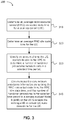
- functionality 300 of a mobility management entity (MME) in an evolved packet core (EPC) that is configured to provide core network assistance information is disclosed, as shown in the flow chart of FIG. 3 .
- the functionality can be implemented as a method or the functionality can be executed as instructions on a machine, where the instructions are included on at least one computer readable medium or one non-transitory machine readable storage medium.
- the MME can include one or more processors configured to: determine an average radio resource control (RRC) connected state time for a user equipment (UE), as shown in block 310; determine an average RRC idle state time for the UE, as shown in block 320; identify an amount of time the UE spends in cells in the EPC to determine a number of handover procedures between cells in a selected time period, as shown in block 330; and communicate the core network assistance information comprising the RRC connected state time, the RRC idle state time, and the number of handover procedures in the selected time period to a serving evolved Node B (eNB) of the UE to enable the serving eNB to reduce UE state transitions for the UE, as shown in block 340.
- RRC radio resource control
- the core network assistance information can be communicated to the serving eNB via an S1 connection with the MME.
- the one or more processors can be further configured to communicate the core network assistance information to a target eNB at a handover of the UE to enable the target eNB to reduce UE state transitions for the UE.
- the target eNB can reduce the number of times the UE transitions between an RRC connected state and an RRC idle state.
- the one or more processors can be further configured to communicate, from the MME to the serving eNB, a time that the UE is in the RRC connected state.
- the one or more processors can be further configured to communicate, from the MME to the serving eNB, a time period that the UE is in the RRC idle state.
- the one or more processors can be further configured to communicate, from the MME to the serving eNB, an indication that the core network assistance information is based on statistical information collected at the MME.
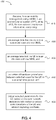
- Another example provides functionality 400 of an evolved Node B (eNB) configured to receive core network assistance information for a UE, as shown in the flow chart of FIG. 4 .
- the functionality can be implemented as a method or the functionality can be executed as instructions on a machine, where the instructions are included on at least one computer readable medium or one non-transitory machine readable storage medium.
- the eNB can have one or more processors that are configured to receive, from a mobility management entity (MME) in an evolved packet system (EPS) of the eNB, the core network assistance information, as shown in block 410.
- MME mobility management entity
- EPS evolved packet system
- the core network assistance information can include an average time that the UE is in a connected state with the MME, as shown in block 420; an average time that the UE is in an idle state with the MME, as shown in block 430; and a number of handover procedures between cells that occur for the UE in a selected time period, as shown in block 440.
- the one or more processors can be further configured to adjust selected parameters for the UE based on the core network assistance information to reduce state transitions of the UE and network signaling overhead, as shown in block 450.
- the one or more processors of the UE can be further configured to receive the core network assistance information for a UE from the MME.
- the one or more processors of the UE can also be configured to communicate, via an X2 connection with a target eNB, the core network assistance information from the eNB to the target eNB at a handover of the UE to enable the target eNB to reduce UE state transitions for the UE.
- the one or more processors can be further configured to receive, from the MME, an time interval between handover procedures for the UE.
- the one or more processors can be further configured to receive, from the MME a time period that the UE is in the connected state, wherein the connected state is a radio resource control (RRC) connected state; and a time period that the UE is in the idle state, wherein the idle state is a radio resource control (RRC) idle state.
- the one or more processors of the eNB can be configured to receive, from the MME, an indication that the core network assistance information is based on statistical information collected at the MME.
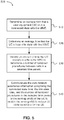
- Another example provides a non-transitory machine readable storage medium having instructions embodied thereon, the instructions which when executed by one or more processors perform the following operations to provide core network assistance information from a mobility management entity (MME) in an evolved packet core (EPC) to a serving evolved Node B (eNB), as shown in the flow chart of FIG. 5 .
- MME mobility management entity
- EPC evolved packet core
- eNB serving evolved Node B
- the operations comprise: determine an average time that a user equipment (UE) is in a connected state with the MME, as shown in block 510; determine an average time that the UE is in an idle state with the MME, as shown in block 520; identify an amount of time the UE spends in cells in the EPC to determine a number of handover procedures between cells in a selected time period, as shown in block 530; and communicate the core network assistance information comprising the connected state time, the idle state time, and the number of handover procedures in the selected time period to the serving (eNB) of the UE to enable the serving eNB to reduce UE state transitions for the UE, as shown in block 540.
- UE user equipment
- Further instructions for the at least one non-transitory machine readable storage medium comprise communicating the core network assistance information to the serving eNB via an S1 connection with the MME; and communicating the core network assistance information to a target eNB at a handover of the UE to enable the target eNB to reduce UE state transitions for the UE.
- the state transitions for the UE can include transitions between an RRC connected state and an RRC idle state, as previously discussed.
- the instructions can be executed by the one or more processors.
- Further instructions for the at least one non-transitory machine readable storage medium comprise: communicating, from the MME to the serving eNB, a time interval between handover procedures for the UE; communicating, from the MME to the serving eNB, a time period that the UE will be in the connected state, wherein the connected state is a radio resource control (RRC) connected state; and communicate, from the MME to the serving eNB, a time period that the UE is in the idle state, wherein the idle state is a radio resource control (RRC) idle state.
- the instructions can further comprise communicating, from the MME to the serving eNB, an indication that the core network assistance information is based on statistical information collected at the MME.
- the instructions can be executed by the one or more processors.
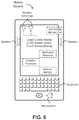
- FIG. 6 provides an example illustration of the wireless device, such as an user equipment (UE), a mobile station (MS), a mobile wireless device, a mobile communication device, a tablet, a handset, or other type of wireless device.
- the wireless device can include one or more antennas configured to communicate with a node, macro node, low power node (LPN), or, transmission station, such as a base station (BS), an evolved Node B (eNB), a baseband unit (BBU), a remote radio head (RRH), a remote radio equipment (RRE), a relay station (RS), a radio equipment (RE), or other type of wireless wide area network (WWAN) access point.
- BS base station
- eNB evolved Node B
- BBU baseband unit
- RRH remote radio head
- RRE remote radio equipment
- RS relay station
- RE radio equipment
- the wireless device can be configured to communicate using at least one wireless communication standard including 3GPP LTE, WiMAX, High Speed Packet Access (HSPA), Bluetooth, and WiFi.
- the wireless device can communicate using separate antennas for each wireless communication standard or shared antennas for multiple wireless communication standards.
- the wireless device can communicate in a wireless local area network (WLAN), a wireless personal area network (WPAN), and/or a WWAN.
- FIG. 6 also provides an illustration of a microphone and one or more speakers that can be used for audio input and output from the wireless device.
- the display screen can be a liquid crystal display (LCD) screen, or other type of display screen such as an organic light emitting diode (OLED) display.
- the display screen can be configured as a touch screen.
- the touch screen can use capacitive, resistive, or another type of touch screen technology.
- An application processor and a graphics processor can be coupled to internal memory to provide processing and display capabilities.
- a non-volatile memory port can also be used to provide data input/output options to a user.
- the non-volatile memory port can also be used to expand the memory capabilities of the wireless device.
- a keyboard can be integrated with the wireless device or wirelessly connected to the wireless device to provide additional user input.
- a virtual keyboard can also be provided using the touch screen.
- Various techniques, or certain aspects or portions thereof, can take the form of program code (i.e., instructions) embodied in tangible media, such as floppy diskettes, CD-ROMs, hard drives, non-transitory computer readable storage medium, or any other machine-readable storage medium wherein, when the program code is loaded into and executed by a machine, such as a computer, the machine becomes an apparatus for practicing the various techniques.
- Circuitry can include hardware, firmware, program code, executable code, computer instructions, and/or software.
- a non-transitory computer readable storage medium can be a computer readable storage medium that does not include signal.
- the computing device can include a processor, a storage medium readable by the processor (including volatile and non-volatile memory and/or storage elements), at least one input device, and at least one output device.
- the volatile and non-volatile memory and/or storage elements can be a RAM, EPROM, flash drive, optical drive, magnetic hard drive, solid state drive, or other medium for storing electronic data.
- the node and wireless device can also include a transceiver module, a counter module, a processing module, and/or a clock module or timer module.
- One or more programs that can implement or utilize the various techniques described herein can use an application programming interface (API), reusable controls, and the like.
- API application programming interface
- Such programs can be implemented in a high level procedural or object oriented programming language to communicate with a computer system.
- the program(s) can be implemented in assembly or machine language, if desired.
- the language can be a compiled or interpreted language, and combined with hardware implementations.
- modules can be implemented as a hardware circuit comprising custom VLSI circuits or gate arrays, off-the-shelf semiconductors such as logic chips, transistors, or other discrete components.
- a module can also be implemented in programmable hardware devices such as field programmable gate arrays, programmable array logic, programmable logic devices or the like.
- multiple hardware circuits can be used to implement the functional units described in this specification.
- a first hardware circuit can be used to perform processing operations and a second hardware circuit (e.g., a transceiver) can be used to communicate with other entities.
- the first hardware circuit and the second hardware circuit can be integrated into a single hardware circuit, or alternatively, the first hardware circuit and the second hardware circuit can be separate hardware circuits.
- Modules can also be implemented in software for execution by various types of processors.
- An identified module of executable code can, for instance, comprise one or more physical or logical blocks of computer instructions, which can, for instance, be organized as an object, procedure, or function. Nevertheless, the executables of an identified module need not be physically located together, but can comprise disparate instructions stored in different locations which, when joined logically together, comprise the module and achieve the stated purpose for the module.
- a module of executable code can be a single instruction, or many instructions, and can even be distributed over several different code segments, among different programs, and across several memory devices.
- operational data can be identified and illustrated herein within modules, and can be embodied in any suitable form and organized within any suitable type of data structure. The operational data can be collected as a single data set, or can be distributed over different locations including over different storage devices, and can exist, at least partially, merely as electronic signals on a system or network.
- the modules can be passive or active, including agents operable to perform desired functions.
Landscapes
- Engineering & Computer Science (AREA)
- Computer Networks & Wireless Communication (AREA)
- Signal Processing (AREA)
- Mobile Radio Communication Systems (AREA)
Claims (15)
- Mobilitätsmanagementeinheit (MME), die konfiguriert ist, Kernnetzunterstützungsinformationen bereitzustellen, wobei die MME einen oder mehrere Prozessoren aufweist, die konfiguriert sind:eine Durchschnittszeit im verbundenen Zustand für ein Anwendergerät (UE) zu bestimmen (510);eine Durchschnittszeit im Ruhezustand für das UE zu bestimmen (520);einen Zeitbetrag zu identifizieren (530), den das UE in Zellen verbringt, die einem EPC für das MME zugeordnet sind, um eine Anzahl von Übergabeprozeduren zwischen Zellen während einer gewählten Zeitdauer zu bestimmen, unddie Kernnetzunterstützungsinformationen an einen dienenden "Evolved Node B" (eNB) des UE zu kommunizieren (540), die die Durchschnittszeit im verbundenen Zustand, die Durchschnittszeit im Ruhezustand und die Anzahl von Übergabeprozeduren in der gewählten Zeitdauer umfassen, um dem dienenden eNB zu ermöglichen, UE-Zustandsübergänge für das UE zu verringern, wobei die Kernnetzunterstützungsinformationen über eine S1-Verbindung mit der MME an den dienenden eNB kommuniziert werden.
- MME nach Anspruch 1, wobei der eine oder die mehreren Prozessoren ferner konfiguriert sind zum:Kommunizieren der Kernnetzunterstützungsinformationen an einen Ziel-eNB bei einer Übergabe des UE, um dem Ziel-eNB zu ermöglichen, die UE-Zustandsübergänge für das UE zu verringern, oderKommunizieren eines Zeitintervalls zwischen Übergabeprozeduren für das UE von der MME an den dienenden eNB oderKommunizieren einer Zeitdauer, die das UE in dem verbundenen Zustand ist, von der MME an den dienenden eNB oderKommunizieren einer Zeitdauer, die das UE in dem Ruhezustand ist, von der MME an den dienenden eNB oderKommunizieren einer Angabe, dass die Kernnetzunterstützungsinformationen auf statistischen Informationen basieren, die an der MME gesammelt werden, von der MME an den dienenden eNB.
- Dienender "Evolved Node B" (eNB), der konfiguriert ist, Kernnetzunterstützungsinformationen für ein Anwendergerät (UE) zu empfangen, wobei der dienende eNB einen oder mehrere Prozessoren aufweist, die konfiguriert sind:
von einer Mobilitätsmanagementeinheit (MME) in einem "Evolved Packet System" (EPS) des dienenden eNB die Kernnetzunterstützungsinformationen zu empfangen (410), wobei die Kernnetzunterstützungsinformationen an den dienenden eNB über eine S1-Verbindung mit der MME kommuniziert werden; wobei die Kernnetzunterstützungsinformationen Folgendes umfassen:eine Durchschnittszeit im verbundenen Zustand, die das UE in einem verbundenen Zustand mit der MME ist;eine Durchschnittszeit im Ruhezustand, die das UE in einem Ruhezustand mit der MME ist, undeine Anzahl von Übergabeprozeduren zwischen Zellen, die für das UE in einer gewählten Zeitdauer auftreten, undEinstellen (450) gewählter Parameter für das UE auf der Grundlage der Kernnetzunterstützungsinformationen, um Zustandsübergänge des UE und Netzsignalisierungsüberhang zu verringern. - Dienender eNB nach Anspruch 3, der einen oder mehrere Prozessoren aufweist, die ferner konfiguriert sind, die Kernnetzunterstützungsinformationen für ein UE von der MME zu empfangen.
- Dienender eNB nach einem der Ansprüche 3 bis 4, der einen oder mehrere Prozessoren aufweist, die ferner konfiguriert sind:über eine X2-Verbindung mit einem Ziel-eNB die Kernnetzunterstützungsinformationen von dem dienenden eNB an den Ziel-eNB bei einer Übergabe des UE zu kommunizieren, um dem Ziel-eNB zu ermöglichen, UE-Zustandsübergänge für das UE zu verringern, odervon der MME ein Zeitintervall zwischen Übergabeprozeduren für das UE zu empfangen odervon der MME eine Zeitdauer zu empfangen, die das UE in dem verbundenen Zustand ist, wobei der verbundene Zustand ein verbundener Zustand der Funkbetriebsmittelsteuerung (RRC) ist, odervon der MME eine Zeitdauer zu empfangen, die das UE in dem Ruhezustand ist, wobei der Ruhezustand ein Ruhezustand der Funkbetriebsmittelsteuerung (RRC) ist, odervon der MME eine Angabe zu empfangen, dass die Kernnetzunterstützungsinformationen auf statistischen Informationen basieren, die an der MME gesammelt werden.
- Dienender eNB nach einem der Ansprüche 3 bis 5, der einen oder mehrere Prozessoren aufweist, die ferner konfiguriert sind:eine Delta-Freigabezeit der Funkbetriebsmittelsteuerung (RRC) auf der Grundlage einer Differenz zwischen einer voreingestellten Wartezeit für das Freigeben einer RRC-Verbindung mit einem UE und einer tatsächlichen Freigabezeit für das Freigeben der RRC-Verbindung mit dem UE zu bestimmen oderdie Delta-RRC-Freigabezeit zu der voreingestellten Wartezeit für das Freigeben der RRC-Verbindung mit dem UE hinzuzufügen, um die voreingestellte Zeit einzustellen, um Leistungsverbrauch an dem UE zu verringern oder Netzverkehr zu verringern, oderdie Delta-RRC-Freigabezeit an eine Mobilitätsmanagementeinheit (MME) für die Speicherung zu kommunizieren oderüber eine X2-Verbindung eine Delta-Zeit der Funkbetriebsmittelsteuerung (RRC) von dem dienenden eNB an einen Ziel-eNB bei einer Übergabe eines UE zu kommunizieren.
- Mindestens ein nichttransitorisches maschinenlesbares Speichermedium, auf dem Anweisungen verkörpert sind, wobei die Anweisungen dann, wenn sie durch einen oder mehrere Prozessoren ausgeführt werden, die folgenden Vorgänge durchführen, um Kernnetzunterstützungsinformationen von einer Mobilitätsmanagementeinheit (MME) für einen dienenden "Evolved Node B" (eNB) bereitzustellen, wobei die Vorgänge Folgendes umfassen:Bestimmen (510) einer Durchschnittszeit im verbundenen Zustand, die ein Anwendergerät (UE) in einem verbundenen Zustand mit der MME ist;Bestimmen (520) einer Durchschnittszeit im Ruhezustand, die das UE in einem Ruhezustand mit der MME ist;Identifizieren (530) eines Zeitbetrags, den das UE in Zellen in dem EPC verbringt, um eine Anzahl von Übergabeprozeduren zwischen Zellen während einer gewählten Zeitdauer zu bestimmen, undKommunizieren über einen S1-MME-Überbringer der Kernnetzunterstützungsinformationen von der MME an den dienenden eNB, wobei die Unterstützungsinformationen die Durchschnittszeit im verbundenen Zustand, die Durchschnittszeit im Ruhezustand und die Anzahl von Übergabeprozeduren in der gewählten Zeitdauer an den dienenden eNB der UE umfassen, um zu ermöglichen, dass der dienende eNB UE-Zustandsübergänge für das UE verringert.
- Mindestens ein nichttransitorisches maschinenlesbares Speichermedium nach Anspruch 7, das ferner Anweisungen umfasst, die dann, wenn sie durch den einen oder die mehreren Prozessoren ausgeführt werden, Folgendes umfassen:Kommunizieren der Kernnetzunterstützungsinformationen an den dienenden eNB über eine S1-Verbindung mit der MME oderKommunizieren der Kernnetzunterstützungsinformationen an einen Ziel-eNB bei einer Übergabe des UE, um dem Ziel-eNB zu ermöglichen, die UE-Zustandsübergänge für das UE zu verringern.
- Mindestens ein nichttransitorisches maschinenlesbares Speichermedium nach Anspruch 7 oder 8, das ferner Anweisungen umfasst, die dann, wenn sie durch den einen oder die mehreren Prozessoren ausgeführt werden, Folgendes umfassen:Kommunizieren eines Zeitintervalls zwischen Übergabeprozeduren für das UE von der MME an den dienenden eNB oderKommunizieren von der MME an den dienenden eNB einer Zeitdauer, die das UE in dem verbundenen Zustand ist, wobei der verbundene Zustand ein verbundener Zustand der Funkbetriebsmittelsteuerung (RRC) ist.
- Mindestens ein nichttransitorisches maschinenlesbares Speichermedium nach Anspruch 7 bis 9, das ferner Anweisungen umfasst, die dann, wenn sie durch den einen oder die mehreren Prozessoren ausgeführt werden, Folgendes umfassen:Kommunizieren von der MME an den dienenden eNB einer Zeitdauer, die das UE in dem Ruhezustand ist, wobei der Ruhezustand ein Ruhezustand der Funkbetriebsmittelsteuerung (RRC) ist, oderKommunizieren von der MME an den dienenden eNB einer Angabe, dass die Kernnetzunterstützungsinformationen auf statistischen Informationen basieren, die an der MME gesammelt werden.
- Mindestens ein nichttransitorisches maschinenlesbares Speichermedium nach einem der Ansprüche 7 bis 10, das ferner Anweisungen umfasst, die dann, wenn sie durch den einen oder die mehreren Prozessoren ausgeführt werden, an dem MME von dem dienenden eNB einen Delta-Freigabezeitwert der Funkbetriebsmittelsteuerung (RRC) für ein oder mehrere UE empfangen.
- Mindestens ein nichttransitorisches maschinenlesbares Speichermedium nach einem der Ansprüche 7 bis 11, das ferner Anweisungen umfasst, die dann, wenn sie durch den einen oder die mehreren Prozessoren ausgeführt werden, jeden Delta-RRC-Freigabezeitwert einer Zellenkennung zuordnen.
- Mindestens ein nichttransitorisches maschinenlesbares Speichermedium nach Anspruch 7 bis 12, das ferner Anweisungen umfasst, die dann, wenn sie durch den einen oder die mehreren Prozessoren ausgeführt werden, die Delta-RRC-Freigabezeit für den dienenden eNB von der MME an einen Ziel-eNB bei einer Übergabe eines UE kommunizieren.
- Mindestens ein nichttransitorisches maschinenlesbares Speichermedium, auf dem Anweisungen verkörpert sind, wobei die Anweisungen dann, wenn sie durch einen oder mehrere Prozessoren durchgeführt werden, die folgenden Vorgänge durchführen, um Kernnetzunterstützungsinformationen für ein Anwendergerät (UE) an einem dienenden "Evolved Node B" (eNB) zu empfangen, wobei die Vorgänge Folgendes umfassen: Empfangen von einer Mobilitätsmanagementeinheit (MME) in einem "Evolved Packet System" (EPS) des dienenden eNBs der Kernnetzunterstützungsinformationen über einen S1-MME-Überbringer zwischen dem eNB und der MME, die folgendes umfassen:eine Durchschnittszeit im verbundenen Zustand, die ein Anwendergerät (UE) in einem verbundenen Zustand mit der MME ist;eine Durchschnittszeit im Ruhezustand, die das UE in einem Ruhezustand mit der MME ist;die Anzahl von Übergabeprozeduren zwischen Zellen, die für das UE in einer gewählten Zeitdauer auftreten, undEinstellen gewählter Parameter für das UE auf der Grundlage der Kernnetzunterstützungsinformationen, die die Durchschnittszeit im verbundenen Zustand, die Durchschnittszeit im Ruhezustand und die Anzahl von Übergabeprozeduren in der gewählten Zeitdauer umfassen, um UE-Zustandsübergänge für das UE und Netzsignalisierungsüberhang zu verringern.
- Mindestens ein nichttransitorisches maschinenlesbares Speichermedium nach Anspruch 14, das ferner Anweisungen umfasst, die dann, wenn sie durch den einen oder die mehreren Prozessoren ausgeführt werden, die Kernnetzunterstützungsinformationen an dem dienenden eNB über eine S1-Verbindung mit dem MME empfangen.
Applications Claiming Priority (3)
| Application Number | Priority Date | Filing Date | Title |
|---|---|---|---|
| US201461933877P | 2014-01-31 | 2014-01-31 | |
| US14/582,373 US9681342B2 (en) | 2014-01-31 | 2014-12-24 | Assistance information for evolved node B (eNB) parameter tuning |
| PCT/US2015/013839 WO2015116966A1 (en) | 2014-01-31 | 2015-01-30 | ASSISTANCE INFORMATION FOR EVOLVED NODE B (eNB) PARAMETER TUNING |
Publications (3)
| Publication Number | Publication Date |
|---|---|
| EP3100480A1 EP3100480A1 (de) | 2016-12-07 |
| EP3100480A4 EP3100480A4 (de) | 2017-09-13 |
| EP3100480B1 true EP3100480B1 (de) | 2020-11-04 |
Family
ID=53757768
Family Applications (1)
| Application Number | Title | Priority Date | Filing Date |
|---|---|---|---|
| EP15743422.6A Active EP3100480B1 (de) | 2014-01-31 | 2015-01-30 | Vorrichtungen und maschinenlesbare speichermedien zur kommunikation unterstützender informationen für evolved node b (enb) parametertuning |
Country Status (7)
| Country | Link |
|---|---|
| US (2) | US9681342B2 (de) |
| EP (1) | EP3100480B1 (de) |
| JP (1) | JP6325114B2 (de) |
| KR (2) | KR101941875B1 (de) |
| CN (1) | CN105850164B (de) |
| TW (3) | TWI577201B (de) |
| WO (1) | WO2015116966A1 (de) |
Cited By (1)
| Publication number | Priority date | Publication date | Assignee | Title |
|---|---|---|---|---|
| EP4456627A4 (de) * | 2021-12-24 | 2025-02-19 | Beijing Xiaomi Mobile Software Co., Ltd. | Informationsverarbeitungsverfahren und -vorrichtung, kommunikationsvorrichtung und speichermedium |
Families Citing this family (12)
| Publication number | Priority date | Publication date | Assignee | Title |
|---|---|---|---|---|
| US10122500B2 (en) * | 2015-08-26 | 2018-11-06 | Apple Inc. | Efficient sparse network resource usage and connection release |
| EP3386265B1 (de) * | 2015-12-04 | 2021-07-21 | LG Electronics Inc. | Verfahren und vorrichtung zur datenübertragung einer benutzergeräte-id in einem drahtloskommunikationssystem |
| CN109565896B (zh) | 2016-08-11 | 2023-05-12 | 三星电子株式会社 | 低功率rrc操作方法和装置 |
| EP3975636B1 (de) * | 2016-09-21 | 2024-03-20 | Kyocera Corporation | Basisstation und funkendgerät |
| KR102817634B1 (ko) * | 2016-11-28 | 2025-06-10 | 삼성전자 주식회사 | 송신 전력 조절 방법 및 장치 |
| EP3560241A4 (de) * | 2016-12-21 | 2020-11-18 | FG Innovation Company Limited | Zustandsübergangsverfahren eines drahtloskommunikationssystems |
| AU2018236614B2 (en) * | 2017-03-13 | 2021-06-03 | Lg Electronics Inc. | Method for receiving report, network device, method for performing report, and base station |
| JP6712560B2 (ja) * | 2017-03-17 | 2020-06-24 | Kddi株式会社 | 情報処理装置、情報処理方法およびプログラム |
| WO2019000186A1 (en) * | 2017-06-26 | 2019-01-03 | Nokia Technologies Oy | OPTIMIZATION FOR NON-MOBILE USER EQUIPMENT |
| EP4580147A3 (de) * | 2018-08-23 | 2025-10-15 | John Mezzalingua Associates, LLC. | System und verfahren zur erzeugung und verwaltung privater subnetzwerke von lte-basisstationen |
| CN112825584B (zh) * | 2019-11-20 | 2022-06-14 | 上海华为技术有限公司 | 一种空闲态终端设备检测方法以及相关设备 |
| CN111642032B (zh) * | 2020-05-19 | 2023-06-27 | 广东小天才科技有限公司 | 一种配置rrc状态的方法及网络设备 |
Family Cites Families (15)
| Publication number | Priority date | Publication date | Assignee | Title |
|---|---|---|---|---|
| CN101610494B (zh) * | 2008-06-16 | 2013-04-24 | 华为技术有限公司 | 实现过载控制或差异化服务的方法、系统及设备 |
| WO2011038359A2 (en) | 2009-09-26 | 2011-03-31 | Cisco Technology, Inc. | Providing services at a communication network edge |
| JP5707573B2 (ja) * | 2009-12-15 | 2015-04-30 | ワイアレス フューチャー テクノロジーズ インコーポレイテッド | ハンドオーバのシグナリング方式を決定するための方法、装置、関連するコンピュータプログラム製品及びデータ構造 |
| JP5524410B2 (ja) | 2010-05-11 | 2014-06-18 | エヌイーシー ヨーロッパ リミテッド | Lte/epcネットワークにおけるmmeの障害を処理する方法 |
| US8903420B2 (en) * | 2011-10-03 | 2014-12-02 | Mediatek Inc. | Location for minimization of drive test in LTE systems |
| US9026156B2 (en) * | 2011-11-07 | 2015-05-05 | Nokia Corporation | Method and apparatus providing in-device co-existence signaling |
| CN104041113A (zh) * | 2011-11-15 | 2014-09-10 | 诺基亚公司 | 间歇性业务的无线电使用优化 |
| WO2013144613A1 (en) | 2012-03-27 | 2013-10-03 | Research In Motion Limited | eNB STORING RRC CONFIGURATION INFORMATION AT ANOTHER NETWORK COMPONENT |
| CN102665245B (zh) * | 2012-04-19 | 2016-03-30 | 华为技术有限公司 | 一种用于减少切换信令的方法和设备 |
| CN104247489B (zh) * | 2012-04-20 | 2018-05-01 | 诺基亚技术有限公司 | Ue上报用于优化ue参数设置的移动性信息的方法和装置 |
| US20150208264A1 (en) | 2012-07-03 | 2015-07-23 | Nokia Corporation | Method and apparatus for adapting minimisation of drive testing reports to operational mode of user equipment using assistance information |
| EP2871906A4 (de) * | 2012-07-06 | 2016-06-08 | Nec Corp | Verfahren zur bestimmung einer zeitgeberablaufperiode, netzwerkknoten und nichttemporäres computerlesbares medium |
| KR101752985B1 (ko) * | 2012-10-04 | 2017-07-03 | 닛본 덴끼 가부시끼가이샤 | 무선 액세스 네트워크 장치, 코어 네트워크 장치, 이동 단말, 이들의 방법, 및 컴퓨터 판독가능 매체 |
| WO2014084675A1 (ko) * | 2012-11-29 | 2014-06-05 | 엘지전자 주식회사 | 무선 통신 시스템에서 단말에 의해 수행되는 단말 상태 정보 보고 방법 및 이를 지원하는 장치 |
| CN103974389B (zh) * | 2013-02-01 | 2018-04-06 | 株式会社日立制作所 | 蜂窝网络中的基站和基站的休眠控制方法 |
-
2014
- 2014-12-24 US US14/582,373 patent/US9681342B2/en active Active
-
2015
- 2015-01-29 TW TW104103031A patent/TWI577201B/zh active
- 2015-01-29 TW TW105144249A patent/TWI619396B/zh active
- 2015-01-29 TW TW106146563A patent/TWI646849B/zh active
- 2015-01-30 CN CN201580003370.3A patent/CN105850164B/zh active Active
- 2015-01-30 WO PCT/US2015/013839 patent/WO2015116966A1/en not_active Ceased
- 2015-01-30 JP JP2016543189A patent/JP6325114B2/ja active Active
- 2015-01-30 EP EP15743422.6A patent/EP3100480B1/de active Active
- 2015-01-30 KR KR1020177033495A patent/KR101941875B1/ko active Active
- 2015-01-30 KR KR1020167014658A patent/KR101801196B1/ko active Active
-
2017
- 2017-05-17 US US15/598,195 patent/US10257754B2/en active Active
Non-Patent Citations (1)
| Title |
|---|
| None * |
Cited By (1)
| Publication number | Priority date | Publication date | Assignee | Title |
|---|---|---|---|---|
| EP4456627A4 (de) * | 2021-12-24 | 2025-02-19 | Beijing Xiaomi Mobile Software Co., Ltd. | Informationsverarbeitungsverfahren und -vorrichtung, kommunikationsvorrichtung und speichermedium |
Also Published As
| Publication number | Publication date |
|---|---|
| TWI646849B (zh) | 2019-01-01 |
| US20170257804A1 (en) | 2017-09-07 |
| US10257754B2 (en) | 2019-04-09 |
| TWI577201B (zh) | 2017-04-01 |
| EP3100480A1 (de) | 2016-12-07 |
| TW201717670A (zh) | 2017-05-16 |
| JP6325114B2 (ja) | 2018-05-16 |
| CN105850164B (zh) | 2019-11-19 |
| US20150237547A1 (en) | 2015-08-20 |
| EP3100480A4 (de) | 2017-09-13 |
| TW201813426A (zh) | 2018-04-01 |
| TWI619396B (zh) | 2018-03-21 |
| KR20160081959A (ko) | 2016-07-08 |
| KR101941875B1 (ko) | 2019-01-25 |
| JP2017505042A (ja) | 2017-02-09 |
| TW201543917A (zh) | 2015-11-16 |
| US9681342B2 (en) | 2017-06-13 |
| KR20170130631A (ko) | 2017-11-28 |
| KR101801196B1 (ko) | 2017-11-24 |
| CN105850164A (zh) | 2016-08-10 |
| WO2015116966A1 (en) | 2015-08-06 |
Similar Documents
| Publication | Publication Date | Title |
|---|---|---|
| EP3100480B1 (de) | Vorrichtungen und maschinenlesbare speichermedien zur kommunikation unterstützender informationen für evolved node b (enb) parametertuning | |
| US10164693B2 (en) | Reduction of buffer overflow | |
| CN105580403B (zh) | 用于移动性信息报告的系统和设备 | |
| US10129830B2 (en) | Systems and methods for enhanced user equipment assistance information in wireless communication systems | |
| US9843958B2 (en) | Communication of preferred power consumption configurations | |
| EP3171528B1 (de) | Systeme und verfahren für verbesserte hilfsinformationen für benutzergeräte in drahtlosen kommunikationssystemen | |
| HK1226896A1 (en) | Assistance information for evolved node b (enb) parameter tuning | |
| HK1226896B (zh) | 用於演进节点b(enb)参数调节的辅助信息 | |
| HK1224479B (zh) | 用於移动性信息报告的系统和设备 | |
| HK1217592B (zh) | 缓冲器溢出的减少 |
Legal Events
| Date | Code | Title | Description |
|---|---|---|---|
| PUAI | Public reference made under article 153(3) epc to a published international application that has entered the european phase |
Free format text: ORIGINAL CODE: 0009012 |
|
| STAA | Information on the status of an ep patent application or granted ep patent |
Free format text: STATUS: REQUEST FOR EXAMINATION WAS MADE |
|
| 17P | Request for examination filed |
Effective date: 20160614 |
|
| AK | Designated contracting states |
Kind code of ref document: A1 Designated state(s): AL AT BE BG CH CY CZ DE DK EE ES FI FR GB GR HR HU IE IS IT LI LT LU LV MC MK MT NL NO PL PT RO RS SE SI SK SM TR |
|
| AX | Request for extension of the european patent |
Extension state: BA ME |
|
| DAX | Request for extension of the european patent (deleted) | ||
| A4 | Supplementary search report drawn up and despatched |
Effective date: 20170810 |
|
| RIC1 | Information provided on ipc code assigned before grant |
Ipc: H04W 76/04 20090101ALI20170804BHEP Ipc: H04W 4/00 20090101AFI20170804BHEP |
|
| STAA | Information on the status of an ep patent application or granted ep patent |
Free format text: STATUS: EXAMINATION IS IN PROGRESS |
|
| 17Q | First examination report despatched |
Effective date: 20190703 |
|
| REG | Reference to a national code |
Ref country code: DE Ref legal event code: R079 Ref document number: 602015061492 Country of ref document: DE Free format text: PREVIOUS MAIN CLASS: H04W0008020000 Ipc: H04W0004700000 |
|
| GRAP | Despatch of communication of intention to grant a patent |
Free format text: ORIGINAL CODE: EPIDOSNIGR1 |
|
| STAA | Information on the status of an ep patent application or granted ep patent |
Free format text: STATUS: GRANT OF PATENT IS INTENDED |
|
| RIC1 | Information provided on ipc code assigned before grant |
Ipc: H04W 76/27 20180101ALI20200508BHEP Ipc: H04W 24/08 20090101ALI20200508BHEP Ipc: H04W 4/70 20180101AFI20200508BHEP |
|
| INTG | Intention to grant announced |
Effective date: 20200528 |
|
| GRAS | Grant fee paid |
Free format text: ORIGINAL CODE: EPIDOSNIGR3 |
|
| GRAA | (expected) grant |
Free format text: ORIGINAL CODE: 0009210 |
|
| STAA | Information on the status of an ep patent application or granted ep patent |
Free format text: STATUS: THE PATENT HAS BEEN GRANTED |
|
| AK | Designated contracting states |
Kind code of ref document: B1 Designated state(s): AL AT BE BG CH CY CZ DE DK EE ES FI FR GB GR HR HU IE IS IT LI LT LU LV MC MK MT NL NO PL PT RO RS SE SI SK SM TR |
|
| REG | Reference to a national code |
Ref country code: GB Ref legal event code: FG4D |
|
| REG | Reference to a national code |
Ref country code: CH Ref legal event code: EP |
|
| REG | Reference to a national code |
Ref country code: AT Ref legal event code: REF Ref document number: 1332407 Country of ref document: AT Kind code of ref document: T Effective date: 20201115 |
|
| REG | Reference to a national code |
Ref country code: DE Ref legal event code: R096 Ref document number: 602015061492 Country of ref document: DE |
|
| REG | Reference to a national code |
Ref country code: IE Ref legal event code: FG4D |
|
| REG | Reference to a national code |
Ref country code: NL Ref legal event code: FP |
|
| REG | Reference to a national code |
Ref country code: AT Ref legal event code: MK05 Ref document number: 1332407 Country of ref document: AT Kind code of ref document: T Effective date: 20201104 |
|
| PG25 | Lapsed in a contracting state [announced via postgrant information from national office to epo] |
Ref country code: PT Free format text: LAPSE BECAUSE OF FAILURE TO SUBMIT A TRANSLATION OF THE DESCRIPTION OR TO PAY THE FEE WITHIN THE PRESCRIBED TIME-LIMIT Effective date: 20210304 Ref country code: RS Free format text: LAPSE BECAUSE OF FAILURE TO SUBMIT A TRANSLATION OF THE DESCRIPTION OR TO PAY THE FEE WITHIN THE PRESCRIBED TIME-LIMIT Effective date: 20201104 Ref country code: FI Free format text: LAPSE BECAUSE OF FAILURE TO SUBMIT A TRANSLATION OF THE DESCRIPTION OR TO PAY THE FEE WITHIN THE PRESCRIBED TIME-LIMIT Effective date: 20201104 Ref country code: NO Free format text: LAPSE BECAUSE OF FAILURE TO SUBMIT A TRANSLATION OF THE DESCRIPTION OR TO PAY THE FEE WITHIN THE PRESCRIBED TIME-LIMIT Effective date: 20210204 Ref country code: GR Free format text: LAPSE BECAUSE OF FAILURE TO SUBMIT A TRANSLATION OF THE DESCRIPTION OR TO PAY THE FEE WITHIN THE PRESCRIBED TIME-LIMIT Effective date: 20210205 |
|
| PG25 | Lapsed in a contracting state [announced via postgrant information from national office to epo] |
Ref country code: AT Free format text: LAPSE BECAUSE OF FAILURE TO SUBMIT A TRANSLATION OF THE DESCRIPTION OR TO PAY THE FEE WITHIN THE PRESCRIBED TIME-LIMIT Effective date: 20201104 Ref country code: ES Free format text: LAPSE BECAUSE OF FAILURE TO SUBMIT A TRANSLATION OF THE DESCRIPTION OR TO PAY THE FEE WITHIN THE PRESCRIBED TIME-LIMIT Effective date: 20201104 Ref country code: BG Free format text: LAPSE BECAUSE OF FAILURE TO SUBMIT A TRANSLATION OF THE DESCRIPTION OR TO PAY THE FEE WITHIN THE PRESCRIBED TIME-LIMIT Effective date: 20210204 Ref country code: IS Free format text: LAPSE BECAUSE OF FAILURE TO SUBMIT A TRANSLATION OF THE DESCRIPTION OR TO PAY THE FEE WITHIN THE PRESCRIBED TIME-LIMIT Effective date: 20210304 Ref country code: LV Free format text: LAPSE BECAUSE OF FAILURE TO SUBMIT A TRANSLATION OF THE DESCRIPTION OR TO PAY THE FEE WITHIN THE PRESCRIBED TIME-LIMIT Effective date: 20201104 Ref country code: SE Free format text: LAPSE BECAUSE OF FAILURE TO SUBMIT A TRANSLATION OF THE DESCRIPTION OR TO PAY THE FEE WITHIN THE PRESCRIBED TIME-LIMIT Effective date: 20201104 Ref country code: PL Free format text: LAPSE BECAUSE OF FAILURE TO SUBMIT A TRANSLATION OF THE DESCRIPTION OR TO PAY THE FEE WITHIN THE PRESCRIBED TIME-LIMIT Effective date: 20201104 |
|
| REG | Reference to a national code |
Ref country code: LT Ref legal event code: MG9D |
|
| PG25 | Lapsed in a contracting state [announced via postgrant information from national office to epo] |
Ref country code: HR Free format text: LAPSE BECAUSE OF FAILURE TO SUBMIT A TRANSLATION OF THE DESCRIPTION OR TO PAY THE FEE WITHIN THE PRESCRIBED TIME-LIMIT Effective date: 20201104 |
|
| REG | Reference to a national code |
Ref country code: NL Ref legal event code: PD Owner name: INTEL CORPORATION; US Free format text: DETAILS ASSIGNMENT: CHANGE OF OWNER(S), ASSIGNMENT; FORMER OWNER NAME: INTEL IP CORPORATION Effective date: 20210623 |
|
| REG | Reference to a national code |
Ref country code: DE Ref legal event code: R081 Ref document number: 602015061492 Country of ref document: DE Owner name: TAHOE RESEARCH, LTD., IE Free format text: FORMER OWNER: INTEL IP CORPORATION, SANTA CLARA, CA, US Ref country code: DE Ref legal event code: R081 Ref document number: 602015061492 Country of ref document: DE Owner name: INTEL CORPORATION, SANTA CLARA, US Free format text: FORMER OWNER: INTEL IP CORPORATION, SANTA CLARA, CA, US |
|
| PG25 | Lapsed in a contracting state [announced via postgrant information from national office to epo] |
Ref country code: LT Free format text: LAPSE BECAUSE OF FAILURE TO SUBMIT A TRANSLATION OF THE DESCRIPTION OR TO PAY THE FEE WITHIN THE PRESCRIBED TIME-LIMIT Effective date: 20201104 Ref country code: RO Free format text: LAPSE BECAUSE OF FAILURE TO SUBMIT A TRANSLATION OF THE DESCRIPTION OR TO PAY THE FEE WITHIN THE PRESCRIBED TIME-LIMIT Effective date: 20201104 Ref country code: SK Free format text: LAPSE BECAUSE OF FAILURE TO SUBMIT A TRANSLATION OF THE DESCRIPTION OR TO PAY THE FEE WITHIN THE PRESCRIBED TIME-LIMIT Effective date: 20201104 Ref country code: SM Free format text: LAPSE BECAUSE OF FAILURE TO SUBMIT A TRANSLATION OF THE DESCRIPTION OR TO PAY THE FEE WITHIN THE PRESCRIBED TIME-LIMIT Effective date: 20201104 Ref country code: CZ Free format text: LAPSE BECAUSE OF FAILURE TO SUBMIT A TRANSLATION OF THE DESCRIPTION OR TO PAY THE FEE WITHIN THE PRESCRIBED TIME-LIMIT Effective date: 20201104 Ref country code: EE Free format text: LAPSE BECAUSE OF FAILURE TO SUBMIT A TRANSLATION OF THE DESCRIPTION OR TO PAY THE FEE WITHIN THE PRESCRIBED TIME-LIMIT Effective date: 20201104 |
|
| REG | Reference to a national code |
Ref country code: DE Ref legal event code: R097 Ref document number: 602015061492 Country of ref document: DE |
|
| REG | Reference to a national code |
Ref country code: GB Ref legal event code: 732E Free format text: REGISTERED BETWEEN 20210715 AND 20210721 |
|
| PG25 | Lapsed in a contracting state [announced via postgrant information from national office to epo] |
Ref country code: DK Free format text: LAPSE BECAUSE OF FAILURE TO SUBMIT A TRANSLATION OF THE DESCRIPTION OR TO PAY THE FEE WITHIN THE PRESCRIBED TIME-LIMIT Effective date: 20201104 Ref country code: MC Free format text: LAPSE BECAUSE OF FAILURE TO SUBMIT A TRANSLATION OF THE DESCRIPTION OR TO PAY THE FEE WITHIN THE PRESCRIBED TIME-LIMIT Effective date: 20201104 |
|
| REG | Reference to a national code |
Ref country code: CH Ref legal event code: PL |
|
| PLBE | No opposition filed within time limit |
Free format text: ORIGINAL CODE: 0009261 |
|
| STAA | Information on the status of an ep patent application or granted ep patent |
Free format text: STATUS: NO OPPOSITION FILED WITHIN TIME LIMIT |
|
| PG25 | Lapsed in a contracting state [announced via postgrant information from national office to epo] |
Ref country code: LU Free format text: LAPSE BECAUSE OF NON-PAYMENT OF DUE FEES Effective date: 20210130 |
|
| REG | Reference to a national code |
Ref country code: BE Ref legal event code: MM Effective date: 20210131 |
|
| 26N | No opposition filed |
Effective date: 20210805 |
|
| PG25 | Lapsed in a contracting state [announced via postgrant information from national office to epo] |
Ref country code: IT Free format text: LAPSE BECAUSE OF FAILURE TO SUBMIT A TRANSLATION OF THE DESCRIPTION OR TO PAY THE FEE WITHIN THE PRESCRIBED TIME-LIMIT Effective date: 20201104 Ref country code: AL Free format text: LAPSE BECAUSE OF FAILURE TO SUBMIT A TRANSLATION OF THE DESCRIPTION OR TO PAY THE FEE WITHIN THE PRESCRIBED TIME-LIMIT Effective date: 20201104 |
|
| PG25 | Lapsed in a contracting state [announced via postgrant information from national office to epo] |
Ref country code: SI Free format text: LAPSE BECAUSE OF FAILURE TO SUBMIT A TRANSLATION OF THE DESCRIPTION OR TO PAY THE FEE WITHIN THE PRESCRIBED TIME-LIMIT Effective date: 20201104 Ref country code: CH Free format text: LAPSE BECAUSE OF NON-PAYMENT OF DUE FEES Effective date: 20210131 Ref country code: LI Free format text: LAPSE BECAUSE OF NON-PAYMENT OF DUE FEES Effective date: 20210131 |
|
| PG25 | Lapsed in a contracting state [announced via postgrant information from national office to epo] |
Ref country code: IE Free format text: LAPSE BECAUSE OF NON-PAYMENT OF DUE FEES Effective date: 20210130 |
|
| PG25 | Lapsed in a contracting state [announced via postgrant information from national office to epo] |
Ref country code: IS Free format text: LAPSE BECAUSE OF FAILURE TO SUBMIT A TRANSLATION OF THE DESCRIPTION OR TO PAY THE FEE WITHIN THE PRESCRIBED TIME-LIMIT Effective date: 20210304 |
|
| PG25 | Lapsed in a contracting state [announced via postgrant information from national office to epo] |
Ref country code: BE Free format text: LAPSE BECAUSE OF NON-PAYMENT OF DUE FEES Effective date: 20210131 |
|
| REG | Reference to a national code |
Ref country code: DE Ref legal event code: R081 Ref document number: 602015061492 Country of ref document: DE Owner name: TAHOE RESEARCH, LTD., IE Free format text: FORMER OWNER: INTEL CORPORATION, SANTA CLARA, CA, US |
|
| PG25 | Lapsed in a contracting state [announced via postgrant information from national office to epo] |
Ref country code: HU Free format text: LAPSE BECAUSE OF FAILURE TO SUBMIT A TRANSLATION OF THE DESCRIPTION OR TO PAY THE FEE WITHIN THE PRESCRIBED TIME-LIMIT; INVALID AB INITIO Effective date: 20150130 |
|
| PG25 | Lapsed in a contracting state [announced via postgrant information from national office to epo] |
Ref country code: CY Free format text: LAPSE BECAUSE OF FAILURE TO SUBMIT A TRANSLATION OF THE DESCRIPTION OR TO PAY THE FEE WITHIN THE PRESCRIBED TIME-LIMIT Effective date: 20201104 |
|
| PGFP | Annual fee paid to national office [announced via postgrant information from national office to epo] |
Ref country code: NL Payment date: 20230119 Year of fee payment: 9 |
|
| PG25 | Lapsed in a contracting state [announced via postgrant information from national office to epo] |
Ref country code: MK Free format text: LAPSE BECAUSE OF FAILURE TO SUBMIT A TRANSLATION OF THE DESCRIPTION OR TO PAY THE FEE WITHIN THE PRESCRIBED TIME-LIMIT Effective date: 20201104 |
|
| REG | Reference to a national code |
Ref country code: NL Ref legal event code: MM Effective date: 20240201 |
|
| PG25 | Lapsed in a contracting state [announced via postgrant information from national office to epo] |
Ref country code: MT Free format text: LAPSE BECAUSE OF FAILURE TO SUBMIT A TRANSLATION OF THE DESCRIPTION OR TO PAY THE FEE WITHIN THE PRESCRIBED TIME-LIMIT Effective date: 20201104 |
|
| PG25 | Lapsed in a contracting state [announced via postgrant information from national office to epo] |
Ref country code: NL Free format text: LAPSE BECAUSE OF NON-PAYMENT OF DUE FEES Effective date: 20240201 |
|
| PG25 | Lapsed in a contracting state [announced via postgrant information from national office to epo] |
Ref country code: NL Free format text: LAPSE BECAUSE OF NON-PAYMENT OF DUE FEES Effective date: 20240201 |
|
| REG | Reference to a national code |
Ref country code: DE Ref legal event code: R082 Ref document number: 602015061492 Country of ref document: DE Representative=s name: DENNEMEYER & ASSOCIATES RECHTSANWALTSGESELLSCH, DE |
|
| PG25 | Lapsed in a contracting state [announced via postgrant information from national office to epo] |
Ref country code: TR Free format text: LAPSE BECAUSE OF FAILURE TO SUBMIT A TRANSLATION OF THE DESCRIPTION OR TO PAY THE FEE WITHIN THE PRESCRIBED TIME-LIMIT Effective date: 20201104 |
|
| PGFP | Annual fee paid to national office [announced via postgrant information from national office to epo] |
Ref country code: GB Payment date: 20260123 Year of fee payment: 12 |
|
| PGFP | Annual fee paid to national office [announced via postgrant information from national office to epo] |
Ref country code: DE Payment date: 20260121 Year of fee payment: 12 |
|
| PGFP | Annual fee paid to national office [announced via postgrant information from national office to epo] |
Ref country code: FR Payment date: 20260123 Year of fee payment: 12 |