EP3097199B1 - Verfahren zur in-vivo-herstellung von glykosaminoglykanen - Google Patents
Verfahren zur in-vivo-herstellung von glykosaminoglykanen Download PDFInfo
- Publication number
- EP3097199B1 EP3097199B1 EP15700770.9A EP15700770A EP3097199B1 EP 3097199 B1 EP3097199 B1 EP 3097199B1 EP 15700770 A EP15700770 A EP 15700770A EP 3097199 B1 EP3097199 B1 EP 3097199B1
- Authority
- EP
- European Patent Office
- Prior art keywords
- cell
- chondroitin
- beta
- udp
- gene
- Prior art date
- Legal status (The legal status is an assumption and is not a legal conclusion. Google has not performed a legal analysis and makes no representation as to the accuracy of the status listed.)
- Active
Links
Images



Classifications
-
- C—CHEMISTRY; METALLURGY
- C12—BIOCHEMISTRY; BEER; SPIRITS; WINE; VINEGAR; MICROBIOLOGY; ENZYMOLOGY; MUTATION OR GENETIC ENGINEERING
- C12P—FERMENTATION OR ENZYME-USING PROCESSES TO SYNTHESISE A DESIRED CHEMICAL COMPOUND OR COMPOSITION OR TO SEPARATE OPTICAL ISOMERS FROM A RACEMIC MIXTURE
- C12P19/00—Preparation of compounds containing saccharide radicals
- C12P19/26—Preparation of nitrogen-containing carbohydrates
-
- A—HUMAN NECESSITIES
- A23—FOODS OR FOODSTUFFS; TREATMENT THEREOF, NOT COVERED BY OTHER CLASSES
- A23L—FOODS, FOODSTUFFS OR NON-ALCOHOLIC BEVERAGES, NOT OTHERWISE PROVIDED FOR; PREPARATION OR TREATMENT THEREOF
- A23L33/00—Modifying nutritive qualities of foods; Dietetic products; Preparation or treatment thereof
- A23L33/10—Modifying nutritive qualities of foods; Dietetic products; Preparation or treatment thereof using additives
-
- A—HUMAN NECESSITIES
- A61—MEDICAL OR VETERINARY SCIENCE; HYGIENE
- A61P—SPECIFIC THERAPEUTIC ACTIVITY OF CHEMICAL COMPOUNDS OR MEDICINAL PREPARATIONS
- A61P19/00—Drugs for skeletal disorders
- A61P19/02—Drugs for skeletal disorders for joint disorders, e.g. arthritis, arthrosis
-
- A—HUMAN NECESSITIES
- A61—MEDICAL OR VETERINARY SCIENCE; HYGIENE
- A61P—SPECIFIC THERAPEUTIC ACTIVITY OF CHEMICAL COMPOUNDS OR MEDICINAL PREPARATIONS
- A61P29/00—Non-central analgesic, antipyretic or antiinflammatory agents, e.g. antirheumatic agents; Non-steroidal antiinflammatory drugs [NSAID]
-
- A—HUMAN NECESSITIES
- A61—MEDICAL OR VETERINARY SCIENCE; HYGIENE
- A61P—SPECIFIC THERAPEUTIC ACTIVITY OF CHEMICAL COMPOUNDS OR MEDICINAL PREPARATIONS
- A61P35/00—Antineoplastic agents
-
- A—HUMAN NECESSITIES
- A61—MEDICAL OR VETERINARY SCIENCE; HYGIENE
- A61P—SPECIFIC THERAPEUTIC ACTIVITY OF CHEMICAL COMPOUNDS OR MEDICINAL PREPARATIONS
- A61P7/00—Drugs for disorders of the blood or the extracellular fluid
- A61P7/04—Antihaemorrhagics; Procoagulants; Haemostatic agents; Antifibrinolytic agents
-
- C—CHEMISTRY; METALLURGY
- C08—ORGANIC MACROMOLECULAR COMPOUNDS; THEIR PREPARATION OR CHEMICAL WORKING-UP; COMPOSITIONS BASED THEREON
- C08B—POLYSACCHARIDES; DERIVATIVES THEREOF
- C08B37/00—Preparation of polysaccharides not provided for in groups C08B1/00 - C08B35/00; Derivatives thereof
- C08B37/006—Heteroglycans, i.e. polysaccharides having more than one sugar residue in the main chain in either alternating or less regular sequence; Gellans; Succinoglycans; Arabinogalactans; Tragacanth or gum tragacanth or traganth from Astragalus; Gum Karaya from Sterculia urens; Gum Ghatti from Anogeissus latifolia; Derivatives thereof
- C08B37/0063—Glycosaminoglycans or mucopolysaccharides, e.g. keratan sulfate; Derivatives thereof, e.g. fucoidan
-
- C—CHEMISTRY; METALLURGY
- C08—ORGANIC MACROMOLECULAR COMPOUNDS; THEIR PREPARATION OR CHEMICAL WORKING-UP; COMPOSITIONS BASED THEREON
- C08B—POLYSACCHARIDES; DERIVATIVES THEREOF
- C08B37/00—Preparation of polysaccharides not provided for in groups C08B1/00 - C08B35/00; Derivatives thereof
- C08B37/006—Heteroglycans, i.e. polysaccharides having more than one sugar residue in the main chain in either alternating or less regular sequence; Gellans; Succinoglycans; Arabinogalactans; Tragacanth or gum tragacanth or traganth from Astragalus; Gum Karaya from Sterculia urens; Gum Ghatti from Anogeissus latifolia; Derivatives thereof
- C08B37/0063—Glycosaminoglycans or mucopolysaccharides, e.g. keratan sulfate; Derivatives thereof, e.g. fucoidan
- C08B37/0069—Chondroitin-4-sulfate, i.e. chondroitin sulfate A; Dermatan sulfate, i.e. chondroitin sulfate B or beta-heparin; Chondroitin-6-sulfate, i.e. chondroitin sulfate C; Derivatives thereof
-
- C—CHEMISTRY; METALLURGY
- C08—ORGANIC MACROMOLECULAR COMPOUNDS; THEIR PREPARATION OR CHEMICAL WORKING-UP; COMPOSITIONS BASED THEREON
- C08B—POLYSACCHARIDES; DERIVATIVES THEREOF
- C08B37/00—Preparation of polysaccharides not provided for in groups C08B1/00 - C08B35/00; Derivatives thereof
- C08B37/006—Heteroglycans, i.e. polysaccharides having more than one sugar residue in the main chain in either alternating or less regular sequence; Gellans; Succinoglycans; Arabinogalactans; Tragacanth or gum tragacanth or traganth from Astragalus; Gum Karaya from Sterculia urens; Gum Ghatti from Anogeissus latifolia; Derivatives thereof
- C08B37/0063—Glycosaminoglycans or mucopolysaccharides, e.g. keratan sulfate; Derivatives thereof, e.g. fucoidan
- C08B37/0075—Heparin; Heparan sulfate; Derivatives thereof, e.g. heparosan; Purification or extraction methods thereof
-
- C—CHEMISTRY; METALLURGY
- C12—BIOCHEMISTRY; BEER; SPIRITS; WINE; VINEGAR; MICROBIOLOGY; ENZYMOLOGY; MUTATION OR GENETIC ENGINEERING
- C12P—FERMENTATION OR ENZYME-USING PROCESSES TO SYNTHESISE A DESIRED CHEMICAL COMPOUND OR COMPOSITION OR TO SEPARATE OPTICAL ISOMERS FROM A RACEMIC MIXTURE
- C12P19/00—Preparation of compounds containing saccharide radicals
- C12P19/04—Polysaccharides, i.e. compounds containing more than five saccharide radicals attached to each other by glycosidic bonds
-
- C—CHEMISTRY; METALLURGY
- C12—BIOCHEMISTRY; BEER; SPIRITS; WINE; VINEGAR; MICROBIOLOGY; ENZYMOLOGY; MUTATION OR GENETIC ENGINEERING
- C12P—FERMENTATION OR ENZYME-USING PROCESSES TO SYNTHESISE A DESIRED CHEMICAL COMPOUND OR COMPOSITION OR TO SEPARATE OPTICAL ISOMERS FROM A RACEMIC MIXTURE
- C12P19/00—Preparation of compounds containing saccharide radicals
- C12P19/18—Preparation of compounds containing saccharide radicals produced by the action of a glycosyl transferase, e.g. alpha-, beta- or gamma-cyclodextrins
-
- A—HUMAN NECESSITIES
- A23—FOODS OR FOODSTUFFS; TREATMENT THEREOF, NOT COVERED BY OTHER CLASSES
- A23V—INDEXING SCHEME RELATING TO FOODS, FOODSTUFFS OR NON-ALCOHOLIC BEVERAGES AND LACTIC OR PROPIONIC ACID BACTERIA USED IN FOODSTUFFS OR FOOD PREPARATION
- A23V2002/00—Food compositions, function of food ingredients or processes for food or foodstuffs
Definitions
- the present invention relates to a process for the production of glycosaminoglycan (GAG) in vivo, by metabolic engineering in a cell of genetically modified bacteria.
- said cell is genetically modified in order to express the genes encoding the enzymes suitable for the synthesis of GAG from a precursor exogenous to the cell, and preferably an exogenous precursor internalized by said cell.
- the present invention relates to a process for producing chondroitin or heparosan in a genetically modified bacterial cell, from an exogenous beta-galactoside precursor, preferably internalized by the cell.
- the present invention relates to the use of an Escherichia coli cell comprising at least the glcA-T, kfoC, kfiD and wbpP genes for the production of chondroitin.
- the present invention relates to the use of an Escherichia coli cell comprising at least the glcA-T, kfiA, kf ⁇ B, kfiC and kfid genes for the production of heparosan.
- Glycosaminoglycans are heteropolysaccharides that make up the extracellular matrix. They are composed of a repetition of a disaccharide unit composed, on the one hand, of a hexosamine which can be N-acetylglucosamine or N-acetylgalactosamine, and, on the other hand, of a uronic acid , which can be glucuronic acid or iduronic acid, or a galactose. These units can be sulfated.
- GAGs are strongly negatively charged due to the presence of sulfate or carboxyl groups on most of their oses, which gives them viscous properties, they play a role in the maintenance of connective tissues and are also involved in cell recognition and tissue growth. According to the composition of the disaccharide unit, one distinguishes among the GAGs: hyaluronic acid, chondroitin, chondroitin sulfate, dermatan sulfate, heparan sulfate, heparin, heparosan and keratan sulfate. Chondroitin is a precursor of chondroitin sulfate and dermatan sulfate (Cimini et al., 2010).
- chondroitin In vivo, chondroitin is subject during its polymerization to numerous sulfatations, operated by chondroitin sulfotransferases, which result in the formation of O-sulfated groups in various positions. Depending on the position of these sulfate groups, chondroitin sulfate play different roles.
- GAGs can be used in different therapeutic areas. Their best-known application is the treatment of osteoarthritis, they have anti-inflammatory activity and an action in the regeneration of cartilage. More recently, chondroitin sulfate has been shown to have anti-viral and anti-infective effects, they are also used in tissue regeneration and engineering. Chondroitin sulfate is also being studied for its value in the diagnosis and treatment of cancer (Jin et al., 2008; Yamada and Sugahara, 2011). Additionally, chondroitin can be used as a nutritional adjuvant. Heparin, the backbone of which is a precursor of heparin synthesis, can be used in various therapeutic applications, as a precursor of non-animal heparin or of heparin-like products, but also for the vectorization of therapeutic products.
- GAGs can be extracted from animal sources or synthesized chemically, enzymatically or microbiologically. The synthesis of these compounds by traditional organic chemistry, however, remains very difficult to this day. Chondroitin sulfate and hyaluronic acid can be extracted and purified from animal tissue such as shark fins, fish cartilage, or animal carcasses. The use, in particular therapeutic, of these compounds requires high and constant levels of quality and purification that the extraction cannot fully satisfy, in particular because of the risk of contamination of the GAGs extracted from animal tissues, for example by a virus or a prion (Zanfardino et al., 2010; Wang et al., 2011).
- GAGs Another source of GAGs is their extraction from certain pathogenic bacteria, where they are part of the extracellular capsule, which gives them a role of natural barrier against the host's defenses.
- the production of chondroitin from capsular polysaccharides has already been carried out from the pathogenic E. coli strains K4 and K5 (Schiraldi et al., 2010; Inoué et al., 1990).
- most of the therapeutic uses of chondroitin require a size of 14 to 20 kDa (Schiraldi et al., 2010).
- the average sizes of wild-type SPCs are around 650 kDa and those of GAGs produced by metabolic engineering are around 150 kDa (Krahulec et al., 2005), the chondroitin thus obtained must therefore be depolymerized prior to most of its uses. therapeutic. This depolymerization step reduces the homogeneity of the product and its quality from a therapeutic point of view.
- the inventors have in fact developed an engineering process by genetic modification of a cell making it possible to produce glycosaminoglycans, and in particular chondroitin and heparosan, from an exogenous acceptor of the beta-galactoside type.
- This exogenous acceptor with two saccharide units replaces the natural bacterial acceptor, or “endogenous” acceptor.
- said “exogenous acceptor” can be internalized by the cell.
- said “exogenous acceptor” can be the object of an intracellular synthesis by a recombinant betagalactosyltransferase.
- beta-galactoside as a possible acceptor of enzymes having GAG synthesis activity.
- the biosynthesis of bacterial glycosaminoglycans takes its source in the cytoplasm of bacteria, near the membrane through which they pass in order to integrate the extracellular wall, from an endogenous membrane acceptor, probably the diacylglycerophosphate (Whitfield, 2006).
- the inventors have now demonstrated that, subject to the presence in the bacterium of a glucuronyl beta-galactoside and of at least one enzyme comprising an activity of synthesizing a GAG from glycosyl-beta galactoside, it is possible to achieve the synthesis by metabolic engineering of GAGs of reduced polydispersity and of a size suitable for therapeutic use ( Figures 1 and 2 ).
- the inventors have demonstrated the possibility of producing chondroitin, by metabolic engineering, subject to the presence in the bacterium of a glucuronyl-beta galactoside and of a bacterial chondroitin synthase, and in the presence of an exogenous acceptor. beta-galactoside.
- the inventors also demonstrated that in the presence of an exogenous beta-galactoside acceptor and at least one gene encoding an enzyme capable of synthesizing heparosan, and preferably the kfiA, kfiB, kfiC and kfiD genes, it is possible to produce l heparosan, with a yield greater than the yields obtained by the implementation of already known methods.
- the synthesis of GAG from an exogenous acceptor by a method according to the invention has the advantage of making it possible to transpose the biosynthetic pathway into different types of cells capable of internalizing said exogenous precursor. Therefore, the presence of the endogenous membrane acceptor specific to E. coli or to the pathogenic bacterial strains producing GAGs is not necessary.
- the GAG thus produced is characterized by the presence at the end of the chain of the exogenous beta-galactoside precursor, this motif resembles a motif naturally present in humans (Kakuda et al., 2004).
- a process for the production of GAG by the metabolic route according to the invention is also of economic interest because of the low cost of the exogenous precursor used.
- GAG glycosaminoglycan
- a method according to the invention relates to the production in a genetically modified cell of a GAG chosen from the group consisting by: hyaluronic acid, chondroitin, chondroitin sulfate, dermatan, dermatan sulfate, heparan, heparan sulfate, heparin, heparosan, keratan and keratan sulfate.
- the term “genetically modified cell” designates a microorganism whose genome sequence has undergone at least one alteration, addition or deletion, in order to confer a particular phenotype on said cell. This modification can in particular be made by adding at least one exogenous gene and elements allowing the expression of this gene in said cell.
- said cell is genetically modified by the introduction of at least one exogenous gene carried by a plasmid.
- said cell is genetically modified by the introduction of at least one exogenous gene integrated into the genome of said cell.
- exogenous beta-galactoside designates a precursor compound, internalized by said cell or object of intracellular synthesis by a recombinant beta-galactosyltranferase, involved in the biosynthetic pathway of GAG and substrate of an enzyme having glycosyl- activity. transferase, preferably glucuronyl-transferase activity.
- exogenous gene designates a heterologous nucleic acid, not naturally present in the cell, the nucleotide sequence of which codes for a defined protein.
- Said nucleic acid can be DNA, in single stranded or double stranded form, or RNA.
- exogenous gene is introduced into said cell by techniques well known to those skilled in the art specializing in the manipulation of recombinant nucleic acids, such as, for example, heat shock or electroporation.
- the term “elements allowing the expression of said gene in said cell” designates in particular a promoter, signals for initiation and termination of translation, as well as appropriate regions for the regulation of transcription.
- the nucleic acid sequence is introduced into said cell in the form of an expression vector which comprises said elements allowing the expression of said gene in said cell.
- An expression vector can also comprise one or more elements allowing its maintenance in the cell, in a stable manner during successive generations. These elements are chosen as a function of the host cell used, and can be, in particular, a gene encoding resistance to an antibiotic.
- Said vector may have autonomous replication or else integrate into the genome of the host cell.
- the expression vector is present in the form of a plasmid, a plasmid possibly carrying one or more of the exogenous genes of interest for the implementation. of a method according to the invention.
- Each of the plasmids present in the cell can be characterized by the number of copies of said plasmid in the cell.
- a plasmid carrying at least one exogenous gene of interest for the implementation of a method according to the invention is present at a low copy number ("low copy" ).
- a plasmid carrying at least one exogenous gene of interest for the implementation of a method according to the invention is present at a high number of copies ("high copy "). It is well known to a person skilled in the art skilled in the technical field that the level of expression of a gene can be correlated with the number of copies of the gene in the cell.
- the expression “enzymes of the pathway for the synthesis of said glycosaminoglycan from glucuronyl beta-galactoside” designates the various enzymes capable of exerting an activity occurring during the pathway of GAG synthesis in the cell.
- said exogenous beta-galactoside is present in the culture medium.
- said exogenous beta-galactoside is recombinant beta-galactoside, produced by said genetically modified cell, said genetically modified cell comprising at least one exogenous gene allowing the synthesis of beta-galactoside .
- the beta-galactoside is chosen from the group consisting of beta-galactosides supported by the active transport system of the bacteria, and preferably from the group consisting of by: lactose, lactose-allyl, beta-allyl-galactoside, beta-methylgalactoside, allyl beta-galactoside, propargyl beta-galactoside.
- the culture of said genetically modified cell is carried out in the presence of exogenous beta-galactoside, said exogenous beta-galactoside being added during the culture so that the glucuronyl beta-galactoside , obtained by the transfer of a glucuronyl group on the beta-galactoside, is present in the intracellular compartment of the cell during the major part of the culture, and preferably during all the duration of the culture.
- Beta-galactoside can be added from time to time in the culture or as a dropwise addition.
- Beta-galactoside can be added to the culture at a concentration of between approximately 0.5 and approximately 8 g / L, the term "approximately” expressing a variation of the order of 10%, preferably between approximately 0.6 and approximately 7 g / L, preferably between approximately 1 and approximately 5 g / L, and more preferably between approximately 1.5 and approximately 4 g / L.
- the subject of the invention is also a process for the production of GAG in a genetically modified cell according to the invention in which the enzyme capable of ensuring the internalization by the cell of exogenous beta-galactoside is a permease, preferably a permease. specific for lactose, preferably the beta-galactoside permease encoded by the LacY gene of E. coli.
- the enzyme capable of ensuring the internalization by the cell of exogenous beta-galactoside is a permease, preferably a permease. specific for lactose, preferably the beta-galactoside permease encoded by the LacY gene of E. coli.
- the culture of said cell is carried out according to a process well known to a person skilled in the art, who can implement the culture process and choose the composition of the medium.
- culture including nutrient concentration, and culture parameters, such as temperature, pH, oxygen concentration, culture inoculation, according to his general knowledge.
- the culture medium can in particular comprise at least one source of one or more elements chosen from: sugars, carbon, nitrogen, phosphate, magnesium, calcium and vitamins.
- the culture can be carried out in a fermenter according to a conventional fermentation process chosen from: batch culture, fed-batch culture or continuous culture.
- the culture of said genetically modified cell is carried out in fed-batch.
- the glucuronyl transferase is a mammalian glucuronyl transferase.
- the mammalian glucuronyl transferase is selected is rat glucuronyl transferase or mouse glucuronyl transferase, and preferably mouse brain glucuronyl transferase.
- the invention relates to a method of producing glycosaminoglycans (GAGs) in a genetically modified cell according to the invention, in which the gene encoding an enzyme capable of exerting a glucuronyl activity.
- transferase on a beta-galactoside substrate is the glcA-T gene (encoding mouse beta-1-3-glucuronyl transferase (GenBank GI reference: 568960207 of December 27, 2013).
- the subject of the invention is a process for the production of GAG in a genetically modified cell, characterized in that the GAG is produced in the cytoplasm of said cell.
- the subject of the invention is also a method for producing GAG in a genetically modified cell according to the invention, in which said cell further comprises a gene encoding an enzyme capable of synthesizing UDP-GlcA from UDP- Glc, and elements allowing expression of said gene in said cell.
- the enzyme capable of synthesizing UDP-GlcA from UDP-Glc is UDP-glucose dehydrogenase.
- a subject of the invention is also a method for producing GAG in a genetically modified cell according to the invention, in which said genetically modified cell further comprises a gene encoding an enzyme capable of synthesizing UDP-GalNAc, and the elements allowing expression of said gene in said cell.
- the enzyme capable of synthesizing UDP-GalNAc is UDP-N-acetyl-glucosamine epimerase from Pseudomonas aeroginosa.
- a subject of the invention is also a method for producing GAG in a genetically modified cell according to the invention in which at least one gene of said genetically modified cell encoding an enzyme using UDP-glcA for the synthesis of a product cell is inactivated, and wherein said cell is a bacterium of Escherichia coli type and the wcaJ gene encoding the enzyme using UDP-glcA for the synthesis of colanic acid is inactivated.
- a subject of the invention is also a method for producing GAG in a genetically modified cell according to the invention in which at least one gene of said genetically modified cell encoding an enzyme capable of hydrolyzing beta-galactoside is inactivated, and in wherein said cell is a bacterium of the Escherichia coli type and that the enzyme capable of hydrolyzing beta-galactoside, the gene of which is inactivated, is beta-galactosidase encoded by the LacZ gene.
- a subject of the invention is also a method for producing GAG in a genetically modified cell according to the invention in which said genetically modified cell is chosen from the group consisting of: Escherichia coli, Bacillus subtilis, Campylobacter pylori, Helicobacter pylori, Agrobacterium tuméfaciens , Staphylococcus aureus, Thermophilus aquaticus, Azorhizobium caulinodans, Rhizobium leguminosarum, Rhizobium meliloti, Neisseria gonorrhoeae, Neisseria meningitidis.
- said genetically modified cell is a bacterium of the Escherichia coli strain.
- said genetically modified cell is a bacterium of the non-pathogenic Escherichia coli strain. More particularly, said genetically modified cell is chosen from the group consisting of: the Escherichia coli K12 strain, the DH1 strain of Escherichia coli K12 (ATCC reference: 68153), the DH1 strain of Escherichia coli K12 in which the lacZ and wcaJ genes are inactivated (Yavuz et al., 2008), an Escherichia coli strain of group B, preferably Escherichia coli BL21.
- the subject of the invention is a method for producing GAG in a genetically modified cell, characterized in that said GAG is chondroitin.
- chondroitin denotes a GAG having for disaccharide unit an N-acetylgalactosamine (GalNAc) and a glucuronic acid (GlcA) and can be represented by: “4-GIcA- ⁇ -1,3-GaINAc- ⁇ -1 ".
- the subject of the invention is a process for producing chondroitin in a genetically modified cell according to the invention, in which said exogenous beta-galactoside is lactose.
- a subject of the invention is also a process for producing chondroitin in a genetically modified cell in which the enzyme capable of synthesizing chondroitin is a bacterial synthase capable of synthesizing chondroitin from glucuronyl-lactose.
- the subject of the invention is a process for the production of chondroitin in a genetically modified cell in which the gene encoding an enzyme capable of exerting a chondroitin synthesis activity is the kfoC gene encoding the chondroitin polymerase of E. coli PMV-1 strain K4 (GenBank reference: GI: 21326784 of December 20, 2010).
- the subject of the invention is a method for producing GAG in a genetically modified cell, characterized in that said GAG is heparosan.
- heparosan denotes a bacterial glycosaminoglycan composed of regular repeats of 4- ⁇ -glucuronyl- (1-4) - ⁇ -N-acetylglucosaminyl-1. Heparosan is produced by pathogenic bacteria such as Escherichia coli K5 and Pasteurella multocida and found in the bacterial capsule.
- the subject of the invention is a process for the production of heparosan in a genetically modified cell according to the invention, characterized in that said beta-galactoside is lactose.
- the invention relates to a process for the production of heparosan in a genetically modified cell according to the invention, characterized in that said beta-galactoside is allyl-lactose.
- the subject of the invention is a method for producing chondroitin in a genetically modified cell, said method comprising obtaining a cell of the K12 strain of Escherichia coli, said cell comprising at least the genes glcA-T ( GI: 568960207), kfoC (GI: 21326784), kfid (UDP-glucose-6-dehydrogenase, E coli, GI 735963 of October 23, 2008) and wbpP (Pseudomonas aeruginosa, GI: 6690131 of January 12, 2000 ) and culturing said cell in the presence of exogenous lactose and under conditions compatible with the production of chondroitin by the cell.
- glcA-T GI: 568960207
- kfoC GI: 21326784
- kfid UDP-glucose-6-dehydrogenase
- E coli E coli
- a subject of the invention is also a method for producing heparosan in a genetically modified cell according to the invention, comprising obtaining a cell comprising at least: a gene encoding a mammalian enzyme capable of exercising an activity glucuronyl transferase on a beta-galactoside substrate, the genes encoding the enzymes of the synthesis pathway of said glycosaminoglycan from glucuronyl beta-galactoside, and the elements allowing the expression of said gene (s) in said cell, a gene encoding a enzyme capable of ensuring the internalization of exogenous beta-galactoside by the cell, and the elements allowing the expression of said gene in said cell, and the culture of said cell in the presence of exogenous beta-galactoside and under conditions compatible with the production of heparosan by the cell, wherein said cell is a bacterial cell.
- the subject of the invention is a process for the production of heparosan in a genetically modified cell according to the invention, in which said exogenous beta-galactoside is lactose.
- the subject of the invention is more particularly a process for the production of heparosan in a genetically modified cell according to the invention, comprising obtaining a cell comprising at least one exogenous gene encoding a GlcNAc transferase, an exogenous gene encoding for a GlcA transferase, and an exogenous gene encoding a UDP-Glc dehydrogenase.
- the subject of the invention is also a process for the production of heparosan in a genetically modified cell according to the invention, comprising obtaining a cell of the Escherichia coli strain, and preferably the K12 strain of Escherichia coli, said cell comprising at least the gene encoding a mammalian beta 1,3 glucuronyl transferase and the sequence whose reference is X77617.1 (October 23, 2008) which comprises the genes kfiD, kfiC, kfiB and kfiA from E. coli and culturing said cell in the presence of a beta-galactoside chosen from: lactose and lactose allyl, under conditions compatible with the production of heparosan by the cell.
- a beta-galactoside chosen from: lactose and lactose allyl
- the subject of the invention is also a process for the production of heparosan in a genetically modified cell according to the invention, comprising obtaining a cell of the Escherichia coli strain, and preferably the K12 strain of Escherichia coli, said cell comprising at least a) the glcA-T gene, and b) the kfiA, kfiB kfiC and kfiD genes of E.
- coli or at least one gene encoding a protein having a function homologous to that of a protein encoded by kfiA, kfiB, kfiC or kfiD and the culture of said cell in the presence of a beta-galactoside chosen from: lactose and lactose allyl, under conditions compatible with the production of heparosan by the cell.
- a beta-galactoside chosen from: lactose and lactose allyl
- protein having a homologous function is meant a protein exerting a function or an activity of the same nature.
- the functions or activities of two or more proteins can be considered as homologous according to the result of tests in which these proteins are placed under identical reaction conditions the same parameter is evaluated, for example the appearance of the given product of a reaction enzymatic. Proteins having a homologous function will make it possible to obtain the same product.
- a gene encoding a protein having a function homologous to that of a protein encoded by kfiA, kfiB, kfiC or kfiD can in particular be a homologous gene derived from another bacterial strain, such as for example Pasteurella multocida, and in particular the PmHS1 gene which codes for a protein having the dual activity of GlcAT and GlcNAcT.
- the implementation of a method according to the invention makes it possible to produce GAG in the cytoplasmic compartment of said modified cell.
- Substrates for sulfotransferases, or PAPS are also produced in the cytoplasm of cells. Due to co-location possible of GAG and PAPS, sulfation of GAGs is possible in the cytoplasm of said genetically modified cells.
- the sulfation of GAG can be carried out by implementing methods well known to those skilled in the art.
- the synthesis of chondroitin sulfate can be carried out by chemical or enzymatic sulfation (Ninomiya et al., 2002).
- GAG sulfation can also be implemented within the genetically modified cell in which GAG is produced, in particular by the presence of genes, endogenous or exogenous, encoding an enzyme capable of exerting GAG sulfotransferase activity.
- the purification of the glycosaminoglycan from the culture of the genetically modified cell can be carried out by any suitable means known to those skilled in the art. This means will in particular be suitable for the production of GAG in the cytoplasm of the genetically modified cell.
- the invention relates to the use of an Escherichia coli cell comprising at least the glcA-T, kfoC, kfiD and wbpP genes for the production of chondroitin.
- the subject of the invention is the use of an Escherichia coli cell comprising at least the glcA-T, kfiA, kfib, kfiC and kfiD genes for the production of heparosan.
- the K12 strain of E. coli (referred to as DJ) used for the production of chondroitin from exogenous lactose is described in Yavuz et al. (2008), this strain is a strain of E. coli DH1 (ATCC reference: 68153) modified as indicated in the publication by Yavuz et al.
- the K12 strain used is transformed with a plasmid having the kfoC gene of E.coli K4.
- the kfoC enzyme uses UDP-GalNac which is provided by the expression of wbpP, a gene encoding a UDP-N-acetyl-glucosamine epimerase from Pseudomonas aeruginosa.
- the Pseudomonas aeruginosa wbpP gene encoding the UPD-Glc epimerase, has also been introduced into the bacteria.
- the enzyme GlcA-T allows the addition of a glucuronic acid (GlcA) on the lactose from UDP-GlcA.
- the gene encoding rat brain glucuronyltransferase (GlcA-T) is also introduced into the bacteria. It is important to have a buildup of UDP-GlcA upstream. To do this, the strain is transformed with a plasmid containing the kfiD gene.
- This gene codes for UDP-glucose dehydrogenase present in K5 allowing the synthesis of UDP-GlcA from UDP-Glc.
- the K12 strain was made LacZ- and wcaJ- by deletions.
- the lacZ gene is part of the lactose operon, it codes for a beta-galactosidase which hydrolyzes lactose into galactose and glucose. Its inactivation makes it possible to prevent the degradation of lactose and therefore increases its availability for the metabolic synthesis of the product of interest.
- the wcaJ gene for its part, codes for an enzyme using UDP-GlcA in the synthesis of colanic acid.
- the different strains studied are SBP9-24, KCB1 and KCB2 (Table 1). ⁇ u> Table 1 ⁇ /u>: Characteristics of the strains studied Stump Host Plasmids present Resistors Comments SBP9-24 DJ pACT3-GlcA-T, pBS-kfoC, pBBR-kfiD, pWKS- wbpP KATC Reference strain, 4 plasmids present KCB1 DJ pBBR-kfiD, pBS-kfoC- GlcA-T, pWKS- wbpP KAT 3 plasmids present, GlcA-T gene inserted into a high copy number plasmid KCB2 DJ pBBR-GIcA-T-kfiD, pBC-kfoC, pWKS- wbpP KAT 3 plasmids present, GlcA-T inserted into a medium copy number plasm
- Strain SBP9-24 is considered to be the reference construct with 4 plasmids, each carrying a gene of interest.
- KCB1 and KCB2 contain only 3 plasmids and are differentiated by the plasmid which carries 2 genes (pBS-kfoC-GlcA-T for KCB1 and pBBR-GlcA-T-kfiD for KCB2), their difference being that KCB2 has the GlcA- gene.
- KCO1 and KCO3 Two control strains are made: KCO1 and KCO3, in order to observe the impact of the expression of GlcA-T (KCOl) and of KfoC (KC03) on the production of chondroitin.
- E. coli K12 The transformations of E. coli K12 are carried out from the strain K12 “DJ” which is lacZ- and wcaJ-. Plasmids (200 ng for pBBR and pWKS, 100 ng for pBS) are added in 100 ⁇ L of competent bacteria. After 15 min in ice and a heat shock of 45 seconds at 42 ° C, 400 ⁇ l of SOC medium are added and the whole is incubated for 1 h at 37 ° C. After concentration in 100 microL of supernatant, the mixture is spread on an LBA + glucose dish (0.1% v / v) and the corresponding antibiotics (0.1% v / v) and incubated at 30 ° C. overnight.
- KH 2 PO 4 (5 g / L), NH4PO 4 (5 g / L), Citric acid (0.5 g / L), NaOH (0.66 g / L), KOH (1.65 g / L) , TMS (7.5 mL / L), Glycerol (2.4 g / L).
- Glucose (17.5 g / L) and MgS0 4 (1 g / L) are autoclaved separately. The thiamine (10 mM) and the antibiotics (35 mM) are added after autoclave.
- Glycerol 750 g / L
- MgS0 4 (18 g / L)
- TMS 37.50 mL / L
- the feed is delivered at a flow rate of 9 mL / min during the second phase and then at a flow rate of 6 mL / min during the third phase (see progress of the cultures).
- the cultures are carried out in Applikon 3L fermenters with a total volume of medium of 1.5 L. During these cultures, several parameters are controlled; oxygen at 40%, the temperature at 33 or 28 ° C depending on the culture phases and the pH at 6.80 with 30% ammonia (10). The cultivation process is divided into several phases.
- the first phase corresponds to a growth phase with the contribution of a carbon source, glucose.
- a carbon source glucose.
- the latter allows catabolic repression, thus the lac operon , used as a promoter in the plasmids providing the genes of interest, is inhibited. This avoids any production before induction is thus promoting the growth of bacteria.
- the temperature of the culture is maintained at 33 ° C. This step is completed when all the glucose as well as the glycerol present in the initial culture medium have been consumed.
- the second phase is an induction phase with the supply of food containing glycerol as a carbon source to replace the glucose of the initial medium.
- Food is administered at a rate of 9 mL / min.
- the temperature of the culture is reduced to 28 ° C.
- the induction of the expression of the genes of interest was carried out by injection of IPTG at 50 mg / L.
- the exogenous precursor necessary for the synthesis chain, lactose is also introduced into the medium at a concentration of 1.6 g / L.
- the third and final phase is started 5 hours after induction by reducing the feed rate (6 mL / min) so as to slow bacterial growth while continuing to provide the energy required for the production of polysaccharide of interest.
- samples of 1.5 mL are taken 1 h after induction (1 h), the day after induction (24 h), on the third day one hour after the second injection of lactose (48 h ) and the last day before stopping the cultures (72 h).
- the supernatant is set aside (extracellular fraction) while the pellet is taken up in 1 ml of distilled water and then placed at 100 ° C. in a water bath for 10 min.
- the pellet contains the bacterial debris and the supernatant corresponds to the intracellular fraction.
- the fractions obtained from these samples are analyzed on a thin layer of silica (TLC) by migration in an n-butanol / acetic acid / water (2: 1: 1) buffer for 30 minutes.
- the standard used during these TLC is a GlcA-Lac / lactose mixture.
- the TLCs are revealed with a mixture of ethyl acetate (100 mL), diphenylamine (2 g), aniline (2 mL), 85% phosphoric acid (10 mL) and hydrochloric acid (1 mL).
- the culture After stopping the fermenters, the culture is recovered and then centrifuged for 20 min at 7000 rpm to separate the bacteria from the extracellular medium.
- the bacterial pellets taken up in 500 mL of H2O, are subjected to a heat treatment (20 min in an autoclave at 100 ° C.) so as to lyse the bacteria.
- the pellets are resuspended and ground and then centrifuged for 20 min at 7000 rpm so as to eliminate the bacterial debris and keep only the supernatant which corresponds to the intracellular fraction of the bacteria.
- the supernatants recovered following the first centrifugation correspond to the extracellular fractions.
- the pH of the fractions is adjusted to 3.5 by treatment with cation exchange resin (amberlite IR-120) which makes it possible to precipitate the proteins
- the fractions are centrifuged for 20 min at 7000 rpm to remove the precipitate.
- protein and the supernatants had their pH adjusted to 6.5 by treatment with anion exchange resin (Dowex 66).
- 500 mL of the fractions are subjected to precipitation with ethanol (3 volumes 96% ethanol for 1 volume of fraction) so as to precipitate the chondroitin. After 3 h at 4 ° C, the mixture is centrifuged for 20 min at 7000 rpm and the pellet dissolved in 80 mL of water.
- the products thus obtained after purification were frozen in liquid nitrogen and then lyophilized so as to obtain a dry mass weighed and used for the characterization of the product.
- GPC-SEC gel permeation chromatography
- Lactose must be properly internalized in the bacteria to allow sufficient intracellular accumulation of GlcA-Lac. The latter can then be recognized as an acceptor by KfoC. Thus during the cultures of the various recombinant strains, several samples were taken in order to evaluate by TLC the concentrations and the distribution of lactose and GlcA-Lac.
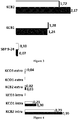
- strains are compared on the production of chondroitin itself, by means of colorimetric assays of uronic acids and osamines, making it possible to quantify the production of chondroitin for each strain.
- the production of chondroitin in the recombinant strain KCB2 is also compared with that in another control: the KCO3 strain.
- This strain lacks the gene encoding KfoC. Its absence in the KCO3 strain results in the virtual absence of uronic acid and osamine, whether in the homologous fraction or extracellularly ( Figure 4 ). TO from the TLC obtained from the culture samples, it is observed that the production of glucuronyl-lactose does indeed take place.
- KfoC is essential for the synthesis of chondroitin, even if the chimeric acceptor is present.
- the second hypothesis is that the membrane environment stabilizes the enzyme-chondroitin coupling for the benefit of the polymerization of the polysaccharide.
- the synthesis of chondroitin takes place at the level of the peri-membrane space, the endogenous acceptor being membrane.
- KfoC has the support of a membrane complex for the synthesis of chondroitin, the roles of which are poorly understood (Whitfield, 2006). Since glucuronyl-lactose is cytoplasmic, synthesis, in the case of this study, then takes place far from the membrane. This cytoplasmic positioning of the synthesis could have an impact on the elongation of chondroitin.
- chondroitin in a non-pathogenic recombinant strain of E. coli is therefore advantageous because it provides, compared with other modes of production, ease of handling.
- the chondroitin obtained is of a smaller size than that obtained by other means (15 kDa against a hundred kDa in culture and 20 kDa in vitro ).
- This mode of production is also advantageous in terms of the quantity produced, which reaches 1.7 g / L while the highest fermenter productions in E. coli K4 are reported as having a production of 1.4 g / L (Schiraldi et al., 2010).
- the chondroitin produced was analyzed by NMR.
- the structure of the repeat motif [GlcAb-3GalNAcb-4] is confirmed by 1 H and 13 C NMR analysis, the results of which are in accordance with those published in the literature for the defructosylated K4 polysaccharide and chondroitin from Pasteurella multocida.
- the proton NMR spectrum shows signals at 4.55, 3.43, 3.64 ppm which correspond to the H-1, H-3, and H-2 of the Glcp-UA residue.
- the signals at 4.18 and 2.08 ppm correspond to the H-4 and H (Ac) of the Galp-NAc residue.
- Carbon NMR shows the characteristic assignments of the N-acetamido group at 23.91 and 176.22 ppm. We also find the characteristic assignment of C-6 of the Glcp-UA residue at 175.61 ppm.
- Example 3 Production of chondroitin in E. coli from exogenous beta-methylgalactoside
- the bacterial strains are prepared and cultivated according to the protocol described in Example 2, except for the fact that the exogenous beta-galactoside consists of beta-methylgalactoside, added at a rate of 4.2 grams in the culture medium.
- the amount of beta-methylgalactoside added to the medium is identical to the amount of lactose added in Example 2, taking into account the different molar masses of the two products.
- the chondroitin fraction produced has a size of 37-61 kDa, that is to say a size smaller than that of chondroitin obtained in the absence of exogenous acceptor, but greater than that obtained in the presence of lactose.
- Example 4 Production of heparosan by a strain of Escherichia coli K12 in the presence of intracellular glucuronyl-lactose.
- Heparosan is formed from a chain of [-4) - ⁇ -GlcA- (1-4) - ⁇ -GlcNAc- (1-]. Its biosynthetic pathway is similar to that of the K4 polysaccharide and the genes associated with export are the same (Whitfield, 2006).
- E coli K12 has been modified to produce heparosan (Barreteau et al., 2012). This strain expresses the kfiABCD genes of E. coli (X77617 of October 23, 2008), the presence of which is necessary and sufficient to produce heparosan intracellularly, of a approximate size of 80 kDa. This strain has now been transformed with a plasmid expressing mouse glucuronyltransferase allowing intracellular synthesis of glucuronyl-lactose in the presence of lactose.
- a first expected index of the management of glucuronyl-lactose by the polymerases is the synthesis of a polysaccharide of smaller size, if we refer to the results obtained with chondroitin for which this is indeed the case.
- the “lactose-free” fraction was passed through DEAE-A25 and a retained fraction representing 40% of the total deposited called SL was recovered.
- the “with lactose” fraction was passed through DEAE-A25 and a retained fraction called AL1 representing only 20% of the total deposited was recovered, this difference in yield possibly being due to the nature of the heparosans produced. It was decided to use a stronger QAE-A25 type heat exchanger. This allowed the recovery of a second fraction called AL2, representing 30% of the total of the initial fraction.
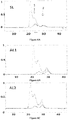
- the fractions SL, AL1 and AL2 were analyzed in SEC-MALS without formation of aggregates ( Figures 6A to 6C ).
- the SL fraction is essentially composed of a polymer of size already observed (Barreteau et al., 2012). However, it also has a smaller size fraction which represents about 30% of the total.
- Fractions AL1 and AL2 are distinguished by an enrichment of the smallest fraction (peak 2), which represents at least 50-70% of the total based on quantification by refractometry.
- peak 2 The intracellular production in a recombinant strain of E coli K12 capable of synthesizing recombinant heparosan induces a modification of the quantity and of the characteristics of the heparosans produced. This results in an enrichment of a small heparosan of about 20 kDa.
- Example 5 Production of heparosan in an Escherichia coli K12 strain in the presence of intracellular glucuronyl-lactose.
- the specific genes for the synthesis of E coli heparosan belong to the cluster of the K5 operon and are: kfiA, encoding a GlcNAc transferase; kfiB, whose role is unknown; kfiC, encoding a glcA transferase; kfiD, encoding a UDP-Glc dehydrogenase.
- the aim of this study is the metabolic engineering of E coli K12 in order to allow a synthesis of heparosan from an exogenous beta-glucuronylated cytoplasmic acceptor originating from the action of mouse GlcA-T (encoded by the gene glcAT) on a beta-galactoside.
- Several strains are produced, described in the table below.
- the HB5 strain is described in Barreteau et al. (2012).
- a first KHB1 strain is produced, expressing the kfiA and kfiC genes encoding the 2 glycosyltransferases involved in the synthesis of heparosan in a large copy number pBluescript (pBS) plasmid, alongside the kfiD genes (UDP- synthesis). GlcA) and glcAT (mouse glucuronyltransferase).
- This strain does not express KfiB, insofar as it has been shown that this protein promotes the binding of KfiC to the membrane, where the endogenous membrane acceptor is located (Hodson et al., 2000).
- KHB3 A new strain called KHB3 is then produced. It is in fact a strain for which the level of expression of the kfiA and kfiC genes is increased, in comparison with the other genes, in order to increase the level of glycosyltransferase activities relative to the expression of KfiB.
- lactose the production of heparosan is doubled compared to the reference strain HB5, which is completely new. This result was confirmed by culturing this same strain in the presence of lactose-allyl. Without lactose, there is no increase in heparosan production, despite the stronger expression of the heparosan synthase enzymes KfiA and KfiC.
Landscapes
- Chemical & Material Sciences (AREA)
- Health & Medical Sciences (AREA)
- Life Sciences & Earth Sciences (AREA)
- Organic Chemistry (AREA)
- Engineering & Computer Science (AREA)
- Chemical Kinetics & Catalysis (AREA)
- General Health & Medical Sciences (AREA)
- Biochemistry (AREA)
- Zoology (AREA)
- Wood Science & Technology (AREA)
- Medicinal Chemistry (AREA)
- General Chemical & Material Sciences (AREA)
- Molecular Biology (AREA)
- Polymers & Plastics (AREA)
- Bioinformatics & Cheminformatics (AREA)
- Materials Engineering (AREA)
- Biotechnology (AREA)
- Microbiology (AREA)
- General Engineering & Computer Science (AREA)
- Genetics & Genomics (AREA)
- Pharmacology & Pharmacy (AREA)
- Public Health (AREA)
- Animal Behavior & Ethology (AREA)
- Nuclear Medicine, Radiotherapy & Molecular Imaging (AREA)
- Veterinary Medicine (AREA)
- Dermatology (AREA)
- Rheumatology (AREA)
- Nutrition Science (AREA)
- Mycology (AREA)
- Food Science & Technology (AREA)
- Pain & Pain Management (AREA)
- Diabetes (AREA)
- Hematology (AREA)
- Immunology (AREA)
- Orthopedic Medicine & Surgery (AREA)
- Physical Education & Sports Medicine (AREA)
- Preparation Of Compounds By Using Micro-Organisms (AREA)
- Micro-Organisms Or Cultivation Processes Thereof (AREA)
- Polysaccharides And Polysaccharide Derivatives (AREA)
Claims (14)
- Verfahren zur Herstellung von Glykosaminoglykan (GAG) in einer genetisch veränderten Zelle, wobei das Verfahren die folgenden Schritte umfasst:a) beim Erhalt einer Zelle, die mindestens umfasst:• ein exogenes Gen, das für ein Säugetierenzym codiert, das in der Lage ist, eine Glucuronyltransferaseaktivität auf einem Beta-Galactosid-Substrat auszuüben, und die Elemente, die die Expression des Gens in der Zelle und die Synthese von Glucuronyl-Beta-Galactosid ermöglichen,• ein Gen, das für ein Enzym codiert, das in der Lage ist, das Glykosaminoglykan ausgehend von dem Glucuronyl-Beta-Galactosid zu synthetisieren, oder die Gene, die für die Enzyme des Synthesewegs des Glykosaminoglykans ausgehend von dem Glucuronyl-Beta-Galactosid codieren, und die Elemente, die die Expression des oder der Gene in der Zelle ermöglichen,• ein Gen, das für ein Enzym codiert, das in der Lage ist, die Internalisierung durch die exogene Beta-Galaktosid-Zelle sicherzustellen, und die Elemente, die die Expression des Gens in der Zelle ermöglichen,b) die Kultur der Zelle bei Vorhandensein von exogenem Beta-Galactosid und unter Bedingungen, die mit der Produktion des Glukosaminoglykans durch die Zelle verträglich sind, wobei die Zelle eine Bakterienzelle ist.
- Verfahren nach Anspruch 1, wobei das Enzym, das in der Lage ist, eine Glucuronyl-Transferase-Aktivität auf einem Beta-Galaktosid-Substrat auszuüben, Glucuronyl-Transferase von Mäusen ist.
- Verfahren nach einem der Ansprüche 1 bis 2, dadurch gekennzeichnet, dass die Zelle ferner ein Gen, das für ein Enzym codiert, das in der Lage ist, UDP-GlcA (Uridindiphosphat-Glucuronsäure) ausgehend von UDP-Glc (Uridindiphosphat-Glucose) zu synthetisieren, und die Elemente umfasst, die die Expression des Gens in der Zelle ermöglichen.
- Verfahren nach Anspruch 3, dadurch gekennzeichnet, dass das Enzym, das in der Lage ist, UDP-GlcA (Uridindiphosphat-Glucuronsäure) ausgehend von UDP-Glc (Uridindiphosphat-Glucose) zu synthetisieren, eine UDP-Glucose-Dehydrogenase, vorzugsweise UDP-Glucose-Dehydrogenase, ist, die durch das Gen kfiD von E. coli K5 codiert wird.
- Verfahren nach einem der Ansprüche 1 bis 4, dadurch gekennzeichnet, dass die Zelle ferner ein Gen umfasst, das für ein Enzym codiert, das in der Lage ist, UDP-GalNAc (Uridindiphosphat-N-Acetylgalactosamin) zu synthetisieren, und die Elemente umfasst, die die Expression des Gens in der Zelle ermöglichen.
- Verfahren nach einem der Ansprüche 1 bis 5, dadurch gekennzeichnet, dass die Bakterie eine nicht pathogene Bakterie vom Stamm Escherichia coli ist.
- Verfahren nach einem der Ansprüche 1 bis 6, dadurch gekennzeichnet, dass das Glykosamninoglykan Chondroitin ist.
- Verfahren zur Herstellung von Chondroitin in einer genetisch veränderten Zelle nach Anspruch 7, wobei das Enzym, das in der Lage ist, das Chrondroitin ausgehend von Glucuronyl-Beta-Galactosid zu synthetisieren, die bakterielle Chrondroitinsynthase des Stamms K4 von Escherichia coli ist, die in der Lage ist, das Chondroitin ausgehend von Glucuronyl-Lactose zu synthetisieren.
- Verfahren zur Herstellung von Chondroitin in einer genetisch veränderten Zelle nach einem der Ansprüche 7 oder 8, wobei das Verfahren den Erhalt einer Bakterienzelle vom Stamm Escherichia coli, vorzugsweise einer Zelle vom Stamm K12 von Escherichia coli, umfasst, wobei die Bakterienzelle mindestens umfasst:• ein exogenes Gen, das für eine Säugetier-Glucuronyltransferase codiert, und die Elemente, die die Expression des Gens in der Zelle ermöglichen,• ein exogenes Gen, das für eine bakterielle Chondroitinsynthase codiert, und die Elemente, die die Expression des Gens in der Zelle ermöglichen,• ein exogenes Gen, das für eine Lactosepermease codiert, und die Elemente, die die Expression des Gens in der Zelle ermöglichen,• ein exogenes Gen, das für eine UDP-Glucosedehydrogenase codiert, und• ein exogenes Gen, das für die UDP-N-Acetylglucosamid-Epimerase von Pseudomonas aeruginosa codiert,
und die Gene wcaJ (Syntheseenzym der Colansäure) und LacZ (β-Galactosidase) der Bakterienzelle deaktiviert wurden. - Verfahren zur Herstellung von Chondroitin in einer genetisch veränderten Zelle nach einem der Ansprüche 7 bis 9, wobei das Verfahren den Erhalt einer Bakterienzelle vom Typ Escherichia coli, vorzugsweise einer Zelle des Stamms K12 von Escherichia coli, umfasst, wobei die Zelle mindestens die Gene glcA-T (Beta-1-3-Glucuronyltransferase), kfoC (Chondroitin-Polymerase), kfiD (UDP-Glucose-6-Dehydrogenase) und wbpP (UDP-N-Acetylglucosamin-Epimerase) umfasst.
- Verfahren nach einem der Ansprüche 1 bis 6, dadurch gekennzeichnet, dass das Glykosamninoglykan Heparosan ist.
- Verfahren zur Herstellung von Heparosan in einer genetisch veränderten Zelle nach Anspruch 11, wobei das Verfahren den Erhalt einer Bakterienzelle vom Stamm Escherichia coli, vorzugsweise einer Zelle vom Stamm K12 von Escherichia coli, umfasst, wobei die Zelle mindestens umfasst: a) das Gen glcA-T (Beta-1-3-Glucuronyltransferase) und b) die Gene kfiA (GlcNAc-Transferase), kfiB, kfiC (glcA-Transferase) und kfiD (UDP-Glucose-6-Dehydrogenase) von E. coli oder mindestens ein Gen, das für ein Protein codiert, das eine Funktion aufweist, die homolog zu derjenigen eines durch kfiA, kfiB, kfiC oder kfiD codierten Proteins ist.
- Verwendung einer Escherichia coli Zelle, die mindestens die Gene glcA-T (Beta-1-3-Glucuronyltransferase), kfoC (Chondroitin-Polymerase), kfiD (UDP-Glucose-6-Dehydrogenase) und wbpP (UDP-N-Acetylglucosamin-Epimerase) umfasst, zur Herstellung von Chondroitin.
- Verwendung einer Escherichia coli Zelle, die mindestens die Gene glcA-T (Beta-1-3-Glucuronyltransferase), kfiA (GlcNAc-Transferase), kfiB, kfiC (glcA-Transferase) und kfiD (UDP-Glucose-6-Dehydrogenase) umfasst, zur Herstellung von Heparosan.
Applications Claiming Priority (2)
| Application Number | Priority Date | Filing Date | Title |
|---|---|---|---|
| FR1450564A FR3016637B1 (fr) | 2014-01-23 | 2014-01-23 | Procede de production in vivo de glycosaminoglycane |
| PCT/EP2015/051339 WO2015110571A1 (fr) | 2014-01-23 | 2015-01-23 | Procede de production in vivo de glycosaminoglycane |
Publications (2)
| Publication Number | Publication Date |
|---|---|
| EP3097199A1 EP3097199A1 (de) | 2016-11-30 |
| EP3097199B1 true EP3097199B1 (de) | 2021-08-25 |
Family
ID=50473587
Family Applications (1)
| Application Number | Title | Priority Date | Filing Date |
|---|---|---|---|
| EP15700770.9A Active EP3097199B1 (de) | 2014-01-23 | 2015-01-23 | Verfahren zur in-vivo-herstellung von glykosaminoglykanen |
Country Status (4)
| Country | Link |
|---|---|
| US (1) | US10301658B2 (de) |
| EP (1) | EP3097199B1 (de) |
| FR (1) | FR3016637B1 (de) |
| WO (1) | WO2015110571A1 (de) |
Families Citing this family (3)
| Publication number | Priority date | Publication date | Assignee | Title |
|---|---|---|---|---|
| CN109486734B (zh) * | 2018-10-30 | 2021-12-31 | 清华大学 | 一种生产软骨素的基因工程菌及其构建方法和应用 |
| US20220195474A1 (en) * | 2019-04-25 | 2022-06-23 | University Of Utah Research Foundation | Metabolic engineering of non-pathogenic escherichia coli strains for the controlled production of low molecular weight heparosan and size-specific heparosan oligosaccharides |
| EP4067500A1 (de) * | 2021-04-01 | 2022-10-05 | Givaudan SA | Heparosanproduzierende rekombinante zellen |
Family Cites Families (3)
| Publication number | Priority date | Publication date | Assignee | Title |
|---|---|---|---|---|
| ES2396955T3 (es) * | 2006-07-06 | 2013-03-01 | Reliance Life Sciences Pvt., Ltd. | Procedimiento para la purificación de ácido hialurónico de elevado peso molecular |
| IT1394311B1 (it) * | 2009-05-25 | 2012-06-06 | Altergon Sa | Produzione biotecnologica di condroitina |
| BR112012021995A8 (pt) * | 2010-03-01 | 2018-01-02 | Dsm Ip Assets Bv | Composição,célula hospedeira bacteriana não patogênica, método para a produção de um sulfato de condroitina,condroitina, composição e anticorpo ou fragmento de anticorpo |
-
2014
- 2014-01-23 FR FR1450564A patent/FR3016637B1/fr not_active Expired - Fee Related
-
2015
- 2015-01-23 US US15/113,059 patent/US10301658B2/en not_active Expired - Fee Related
- 2015-01-23 EP EP15700770.9A patent/EP3097199B1/de active Active
- 2015-01-23 WO PCT/EP2015/051339 patent/WO2015110571A1/fr not_active Ceased
Non-Patent Citations (1)
| Title |
|---|
| None * |
Also Published As
| Publication number | Publication date |
|---|---|
| EP3097199A1 (de) | 2016-11-30 |
| FR3016637B1 (fr) | 2020-11-27 |
| US20170137857A1 (en) | 2017-05-18 |
| WO2015110571A1 (fr) | 2015-07-30 |
| US10301658B2 (en) | 2019-05-28 |
| FR3016637A1 (fr) | 2015-07-24 |
Similar Documents
| Publication | Publication Date | Title |
|---|---|---|
| CA2378562C (fr) | Procede de production d'oligosaccharides | |
| de Oliveira et al. | Genetic basis for hyper production of hyaluronic acid in natural and engineered microorganisms | |
| EP3161143B1 (de) | Herstellung von oligosaccharid | |
| CN111172220B (zh) | 寡糖的发酵生产 | |
| McIntosh et al. | Curdlan and other bacterial (1→ 3)-β-D-glucans | |
| US10364449B2 (en) | Fermentative production of oligosaccharides | |
| US9938549B2 (en) | Process for producing monosaccharides | |
| DK2831237T3 (en) | HIGH-MOLECULAR HEPAROSAN POLYMERS AND METHODS OF PRODUCING AND USING THEREOF | |
| CN110662842B (zh) | 利用谷氨酸棒状杆菌的3-岩藻糖基乳糖的生产方法 | |
| EP2591127B1 (de) | Biotechnologische herstellung von chondroitin | |
| Cimini et al. | Engineering S. equi subsp. zooepidemicus towards concurrent production of hyaluronic acid and chondroitin biopolymers of biomedical interest | |
| WO2015110571A1 (fr) | Procede de production in vivo de glycosaminoglycane | |
| KR102154256B1 (ko) | 코리네박테리움 글루타미쿰을 이용한 3'-푸코실락토오스의 생산방법 | |
| EP2914716A1 (de) | Produktion von hyaluronsäure in algen | |
| Schulte | Metabolic engineering of microbial hosts for the biosynthesis of high molecular weight hyaluronan | |
| WO2018167259A1 (en) | Production of glycoconjugates and multivalent carbohydrate structures and uses thereof | |
| EP1772052A1 (de) | Verbesserte Verfahren und Mittel zur Herstellung von Hyaluronan |
Legal Events
| Date | Code | Title | Description |
|---|---|---|---|
| PUAI | Public reference made under article 153(3) epc to a published international application that has entered the european phase |
Free format text: ORIGINAL CODE: 0009012 |
|
| 17P | Request for examination filed |
Effective date: 20160822 |
|
| AK | Designated contracting states |
Kind code of ref document: A1 Designated state(s): AL AT BE BG CH CY CZ DE DK EE ES FI FR GB GR HR HU IE IS IT LI LT LU LV MC MK MT NL NO PL PT RO RS SE SI SK SM TR |
|
| AX | Request for extension of the european patent |
Extension state: BA ME |
|
| DAX | Request for extension of the european patent (deleted) | ||
| STAA | Information on the status of an ep patent application or granted ep patent |
Free format text: STATUS: EXAMINATION IS IN PROGRESS |
|
| 17Q | First examination report despatched |
Effective date: 20190117 |
|
| RAP1 | Party data changed (applicant data changed or rights of an application transferred) |
Owner name: CENTRE NATIONAL DE LA RECHERCHE SCIENTIFIQUE (C.N.R.S.) Owner name: UNIVERSITE GRENOBLE ALPES |
|
| GRAP | Despatch of communication of intention to grant a patent |
Free format text: ORIGINAL CODE: EPIDOSNIGR1 |
|
| STAA | Information on the status of an ep patent application or granted ep patent |
Free format text: STATUS: GRANT OF PATENT IS INTENDED |
|
| INTG | Intention to grant announced |
Effective date: 20210414 |
|
| GRAS | Grant fee paid |
Free format text: ORIGINAL CODE: EPIDOSNIGR3 |
|
| GRAA | (expected) grant |
Free format text: ORIGINAL CODE: 0009210 |
|
| STAA | Information on the status of an ep patent application or granted ep patent |
Free format text: STATUS: THE PATENT HAS BEEN GRANTED |
|
| AK | Designated contracting states |
Kind code of ref document: B1 Designated state(s): AL AT BE BG CH CY CZ DE DK EE ES FI FR GB GR HR HU IE IS IT LI LT LU LV MC MK MT NL NO PL PT RO RS SE SI SK SM TR |
|
| REG | Reference to a national code |
Ref country code: CH Ref legal event code: EP |
|
| REG | Reference to a national code |
Ref country code: IE Ref legal event code: FG4D Free format text: LANGUAGE OF EP DOCUMENT: FRENCH Ref country code: AT Ref legal event code: REF Ref document number: 1423840 Country of ref document: AT Kind code of ref document: T Effective date: 20210915 |
|
| REG | Reference to a national code |
Ref country code: DE Ref legal event code: R096 Ref document number: 602015072563 Country of ref document: DE |
|
| REG | Reference to a national code |
Ref country code: LT Ref legal event code: MG9D |
|
| REG | Reference to a national code |
Ref country code: NL Ref legal event code: MP Effective date: 20210825 |
|
| REG | Reference to a national code |
Ref country code: AT Ref legal event code: MK05 Ref document number: 1423840 Country of ref document: AT Kind code of ref document: T Effective date: 20210825 |
|
| PG25 | Lapsed in a contracting state [announced via postgrant information from national office to epo] |
Ref country code: BG Free format text: LAPSE BECAUSE OF FAILURE TO SUBMIT A TRANSLATION OF THE DESCRIPTION OR TO PAY THE FEE WITHIN THE PRESCRIBED TIME-LIMIT Effective date: 20211125 Ref country code: AT Free format text: LAPSE BECAUSE OF FAILURE TO SUBMIT A TRANSLATION OF THE DESCRIPTION OR TO PAY THE FEE WITHIN THE PRESCRIBED TIME-LIMIT Effective date: 20210825 Ref country code: LT Free format text: LAPSE BECAUSE OF FAILURE TO SUBMIT A TRANSLATION OF THE DESCRIPTION OR TO PAY THE FEE WITHIN THE PRESCRIBED TIME-LIMIT Effective date: 20210825 Ref country code: NO Free format text: LAPSE BECAUSE OF FAILURE TO SUBMIT A TRANSLATION OF THE DESCRIPTION OR TO PAY THE FEE WITHIN THE PRESCRIBED TIME-LIMIT Effective date: 20211125 Ref country code: PT Free format text: LAPSE BECAUSE OF FAILURE TO SUBMIT A TRANSLATION OF THE DESCRIPTION OR TO PAY THE FEE WITHIN THE PRESCRIBED TIME-LIMIT Effective date: 20211227 Ref country code: FI Free format text: LAPSE BECAUSE OF FAILURE TO SUBMIT A TRANSLATION OF THE DESCRIPTION OR TO PAY THE FEE WITHIN THE PRESCRIBED TIME-LIMIT Effective date: 20210825 Ref country code: ES Free format text: LAPSE BECAUSE OF FAILURE TO SUBMIT A TRANSLATION OF THE DESCRIPTION OR TO PAY THE FEE WITHIN THE PRESCRIBED TIME-LIMIT Effective date: 20210825 Ref country code: HR Free format text: LAPSE BECAUSE OF FAILURE TO SUBMIT A TRANSLATION OF THE DESCRIPTION OR TO PAY THE FEE WITHIN THE PRESCRIBED TIME-LIMIT Effective date: 20210825 Ref country code: SE Free format text: LAPSE BECAUSE OF FAILURE TO SUBMIT A TRANSLATION OF THE DESCRIPTION OR TO PAY THE FEE WITHIN THE PRESCRIBED TIME-LIMIT Effective date: 20210825 Ref country code: RS Free format text: LAPSE BECAUSE OF FAILURE TO SUBMIT A TRANSLATION OF THE DESCRIPTION OR TO PAY THE FEE WITHIN THE PRESCRIBED TIME-LIMIT Effective date: 20210825 |
|
| PG25 | Lapsed in a contracting state [announced via postgrant information from national office to epo] |
Ref country code: PL Free format text: LAPSE BECAUSE OF FAILURE TO SUBMIT A TRANSLATION OF THE DESCRIPTION OR TO PAY THE FEE WITHIN THE PRESCRIBED TIME-LIMIT Effective date: 20210825 Ref country code: LV Free format text: LAPSE BECAUSE OF FAILURE TO SUBMIT A TRANSLATION OF THE DESCRIPTION OR TO PAY THE FEE WITHIN THE PRESCRIBED TIME-LIMIT Effective date: 20210825 Ref country code: GR Free format text: LAPSE BECAUSE OF FAILURE TO SUBMIT A TRANSLATION OF THE DESCRIPTION OR TO PAY THE FEE WITHIN THE PRESCRIBED TIME-LIMIT Effective date: 20211126 |
|
| PG25 | Lapsed in a contracting state [announced via postgrant information from national office to epo] |
Ref country code: NL Free format text: LAPSE BECAUSE OF FAILURE TO SUBMIT A TRANSLATION OF THE DESCRIPTION OR TO PAY THE FEE WITHIN THE PRESCRIBED TIME-LIMIT Effective date: 20210825 |
|
| PG25 | Lapsed in a contracting state [announced via postgrant information from national office to epo] |
Ref country code: DK Free format text: LAPSE BECAUSE OF FAILURE TO SUBMIT A TRANSLATION OF THE DESCRIPTION OR TO PAY THE FEE WITHIN THE PRESCRIBED TIME-LIMIT Effective date: 20210825 |
|
| REG | Reference to a national code |
Ref country code: DE Ref legal event code: R097 Ref document number: 602015072563 Country of ref document: DE |
|
| PG25 | Lapsed in a contracting state [announced via postgrant information from national office to epo] |
Ref country code: SM Free format text: LAPSE BECAUSE OF FAILURE TO SUBMIT A TRANSLATION OF THE DESCRIPTION OR TO PAY THE FEE WITHIN THE PRESCRIBED TIME-LIMIT Effective date: 20210825 Ref country code: SK Free format text: LAPSE BECAUSE OF FAILURE TO SUBMIT A TRANSLATION OF THE DESCRIPTION OR TO PAY THE FEE WITHIN THE PRESCRIBED TIME-LIMIT Effective date: 20210825 Ref country code: RO Free format text: LAPSE BECAUSE OF FAILURE TO SUBMIT A TRANSLATION OF THE DESCRIPTION OR TO PAY THE FEE WITHIN THE PRESCRIBED TIME-LIMIT Effective date: 20210825 Ref country code: EE Free format text: LAPSE BECAUSE OF FAILURE TO SUBMIT A TRANSLATION OF THE DESCRIPTION OR TO PAY THE FEE WITHIN THE PRESCRIBED TIME-LIMIT Effective date: 20210825 Ref country code: CZ Free format text: LAPSE BECAUSE OF FAILURE TO SUBMIT A TRANSLATION OF THE DESCRIPTION OR TO PAY THE FEE WITHIN THE PRESCRIBED TIME-LIMIT Effective date: 20210825 Ref country code: AL Free format text: LAPSE BECAUSE OF FAILURE TO SUBMIT A TRANSLATION OF THE DESCRIPTION OR TO PAY THE FEE WITHIN THE PRESCRIBED TIME-LIMIT Effective date: 20210825 |
|
| PLBE | No opposition filed within time limit |
Free format text: ORIGINAL CODE: 0009261 |
|
| STAA | Information on the status of an ep patent application or granted ep patent |
Free format text: STATUS: NO OPPOSITION FILED WITHIN TIME LIMIT |
|
| PG25 | Lapsed in a contracting state [announced via postgrant information from national office to epo] |
Ref country code: IT Free format text: LAPSE BECAUSE OF FAILURE TO SUBMIT A TRANSLATION OF THE DESCRIPTION OR TO PAY THE FEE WITHIN THE PRESCRIBED TIME-LIMIT Effective date: 20210825 |
|
| REG | Reference to a national code |
Ref country code: DE Ref legal event code: R119 Ref document number: 602015072563 Country of ref document: DE |
|
| 26N | No opposition filed |
Effective date: 20220527 |
|
| PG25 | Lapsed in a contracting state [announced via postgrant information from national office to epo] |
Ref country code: SI Free format text: LAPSE BECAUSE OF FAILURE TO SUBMIT A TRANSLATION OF THE DESCRIPTION OR TO PAY THE FEE WITHIN THE PRESCRIBED TIME-LIMIT Effective date: 20210825 Ref country code: MC Free format text: LAPSE BECAUSE OF FAILURE TO SUBMIT A TRANSLATION OF THE DESCRIPTION OR TO PAY THE FEE WITHIN THE PRESCRIBED TIME-LIMIT Effective date: 20210825 |
|
| REG | Reference to a national code |
Ref country code: CH Ref legal event code: PL |
|
| GBPC | Gb: european patent ceased through non-payment of renewal fee |
Effective date: 20220123 |
|
| REG | Reference to a national code |
Ref country code: BE Ref legal event code: MM Effective date: 20220131 |
|
| PG25 | Lapsed in a contracting state [announced via postgrant information from national office to epo] |
Ref country code: LU Free format text: LAPSE BECAUSE OF NON-PAYMENT OF DUE FEES Effective date: 20220123 Ref country code: GB Free format text: LAPSE BECAUSE OF NON-PAYMENT OF DUE FEES Effective date: 20220123 Ref country code: DE Free format text: LAPSE BECAUSE OF NON-PAYMENT OF DUE FEES Effective date: 20220802 |
|
| PG25 | Lapsed in a contracting state [announced via postgrant information from national office to epo] |
Ref country code: FR Free format text: LAPSE BECAUSE OF NON-PAYMENT OF DUE FEES Effective date: 20220131 Ref country code: BE Free format text: LAPSE BECAUSE OF NON-PAYMENT OF DUE FEES Effective date: 20220131 |
|
| PG25 | Lapsed in a contracting state [announced via postgrant information from national office to epo] |
Ref country code: LI Free format text: LAPSE BECAUSE OF NON-PAYMENT OF DUE FEES Effective date: 20220131 Ref country code: CH Free format text: LAPSE BECAUSE OF NON-PAYMENT OF DUE FEES Effective date: 20220131 |
|
| PG25 | Lapsed in a contracting state [announced via postgrant information from national office to epo] |
Ref country code: IE Free format text: LAPSE BECAUSE OF NON-PAYMENT OF DUE FEES Effective date: 20220123 |
|
| PG25 | Lapsed in a contracting state [announced via postgrant information from national office to epo] |
Ref country code: HU Free format text: LAPSE BECAUSE OF FAILURE TO SUBMIT A TRANSLATION OF THE DESCRIPTION OR TO PAY THE FEE WITHIN THE PRESCRIBED TIME-LIMIT; INVALID AB INITIO Effective date: 20150123 |
|
| PG25 | Lapsed in a contracting state [announced via postgrant information from national office to epo] |
Ref country code: MK Free format text: LAPSE BECAUSE OF FAILURE TO SUBMIT A TRANSLATION OF THE DESCRIPTION OR TO PAY THE FEE WITHIN THE PRESCRIBED TIME-LIMIT Effective date: 20210825 Ref country code: CY Free format text: LAPSE BECAUSE OF FAILURE TO SUBMIT A TRANSLATION OF THE DESCRIPTION OR TO PAY THE FEE WITHIN THE PRESCRIBED TIME-LIMIT Effective date: 20210825 |
|
| PG25 | Lapsed in a contracting state [announced via postgrant information from national office to epo] |
Ref country code: MT Free format text: LAPSE BECAUSE OF FAILURE TO SUBMIT A TRANSLATION OF THE DESCRIPTION OR TO PAY THE FEE WITHIN THE PRESCRIBED TIME-LIMIT Effective date: 20210825 |
|
| PG25 | Lapsed in a contracting state [announced via postgrant information from national office to epo] |
Ref country code: TR Free format text: LAPSE BECAUSE OF FAILURE TO SUBMIT A TRANSLATION OF THE DESCRIPTION OR TO PAY THE FEE WITHIN THE PRESCRIBED TIME-LIMIT Effective date: 20210825 |