EP3095877A1 - Verfahren und mittel zur verwaltung einer beta-lactamase-erzeugenden enterobacteriaceae-kolonisation mit erweitertem spektrum - Google Patents
Verfahren und mittel zur verwaltung einer beta-lactamase-erzeugenden enterobacteriaceae-kolonisation mit erweitertem spektrum Download PDFInfo
- Publication number
- EP3095877A1 EP3095877A1 EP15305758.3A EP15305758A EP3095877A1 EP 3095877 A1 EP3095877 A1 EP 3095877A1 EP 15305758 A EP15305758 A EP 15305758A EP 3095877 A1 EP3095877 A1 EP 3095877A1
- Authority
- EP
- European Patent Office
- Prior art keywords
- esbl
- carriers
- subject
- abundance
- bacteria
- Prior art date
- Legal status (The legal status is an assumption and is not a legal conclusion. Google has not performed a legal analysis and makes no representation as to the accuracy of the status listed.)
- Withdrawn
Links
- 238000000034 method Methods 0.000 title claims abstract description 46
- 241000588921 Enterobacteriaceae Species 0.000 title claims abstract description 18
- 238000001228 spectrum Methods 0.000 title claims abstract description 10
- 102000006635 beta-lactamase Human genes 0.000 title claims abstract description 9
- 108090000204 Dipeptidase 1 Proteins 0.000 title claims abstract description 7
- 241000894006 Bacteria Species 0.000 claims abstract description 88
- 230000000968 intestinal effect Effects 0.000 claims abstract description 57
- 239000000203 mixture Substances 0.000 claims abstract description 39
- 241000605716 Desulfovibrio Species 0.000 claims abstract description 38
- 244000005709 gut microbiome Species 0.000 claims abstract description 35
- 241001464948 Coprococcus Species 0.000 claims abstract description 31
- 241000160321 Parabacteroides Species 0.000 claims abstract description 31
- 241000266824 Oscillospira Species 0.000 claims abstract description 29
- 241000605861 Prevotella Species 0.000 claims abstract description 20
- 238000011282 treatment Methods 0.000 claims abstract description 19
- 230000002265 prevention Effects 0.000 claims abstract description 9
- 108020004465 16S ribosomal RNA Proteins 0.000 claims description 20
- 241000282414 Homo sapiens Species 0.000 claims description 14
- 241001465754 Metazoa Species 0.000 claims description 10
- 235000013406 prebiotics Nutrition 0.000 claims description 6
- 210000003608 fece Anatomy 0.000 claims description 5
- 241000271566 Aves Species 0.000 claims description 4
- 241000124008 Mammalia Species 0.000 claims description 4
- 239000003937 drug carrier Substances 0.000 claims description 4
- 238000000338 in vitro Methods 0.000 claims description 3
- 239000000969 carrier Substances 0.000 description 77
- 241000736262 Microbiota Species 0.000 description 33
- 239000000523 sample Substances 0.000 description 20
- 210000001035 gastrointestinal tract Anatomy 0.000 description 14
- 108090000623 proteins and genes Proteins 0.000 description 14
- 238000004458 analytical method Methods 0.000 description 12
- 108020004414 DNA Proteins 0.000 description 11
- 230000003115 biocidal effect Effects 0.000 description 10
- 239000000090 biomarker Substances 0.000 description 9
- 108091032973 (ribonucleotides)n+m Proteins 0.000 description 8
- 239000003242 anti bacterial agent Substances 0.000 description 8
- 229940088710 antibiotic agent Drugs 0.000 description 8
- 230000001580 bacterial effect Effects 0.000 description 8
- 208000015181 infectious disease Diseases 0.000 description 8
- 238000012384 transportation and delivery Methods 0.000 description 8
- 238000003752 polymerase chain reaction Methods 0.000 description 7
- 108020004707 nucleic acids Proteins 0.000 description 6
- 102000039446 nucleic acids Human genes 0.000 description 6
- 150000007523 nucleic acids Chemical class 0.000 description 6
- 238000004393 prognosis Methods 0.000 description 6
- 241000894007 species Species 0.000 description 6
- 241000192125 Firmicutes Species 0.000 description 5
- 239000002299 complementary DNA Substances 0.000 description 5
- 230000000813 microbial effect Effects 0.000 description 5
- 238000005070 sampling Methods 0.000 description 5
- 238000012360 testing method Methods 0.000 description 5
- 230000000694 effects Effects 0.000 description 4
- 239000000047 product Substances 0.000 description 4
- 238000012175 pyrosequencing Methods 0.000 description 4
- -1 rRNA Proteins 0.000 description 4
- 241000605059 Bacteroidetes Species 0.000 description 3
- 241000283690 Bos taurus Species 0.000 description 3
- 241000282817 Bovidae Species 0.000 description 3
- PEDCQBHIVMGVHV-UHFFFAOYSA-N Glycerine Chemical compound OCC(O)CO PEDCQBHIVMGVHV-UHFFFAOYSA-N 0.000 description 3
- 241000095588 Ruminococcaceae Species 0.000 description 3
- 241000282887 Suidae Species 0.000 description 3
- 230000003321 amplification Effects 0.000 description 3
- 239000012472 biological sample Substances 0.000 description 3
- 239000002775 capsule Substances 0.000 description 3
- 210000004027 cell Anatomy 0.000 description 3
- 239000003795 chemical substances by application Substances 0.000 description 3
- 238000002512 chemotherapy Methods 0.000 description 3
- 210000001072 colon Anatomy 0.000 description 3
- 230000002496 gastric effect Effects 0.000 description 3
- 238000007726 management method Methods 0.000 description 3
- 238000007481 next generation sequencing Methods 0.000 description 3
- 238000003199 nucleic acid amplification method Methods 0.000 description 3
- 238000012502 risk assessment Methods 0.000 description 3
- 238000012163 sequencing technique Methods 0.000 description 3
- 241001156739 Actinobacteria <phylum> Species 0.000 description 2
- 229920001817 Agar Polymers 0.000 description 2
- 241000606125 Bacteroides Species 0.000 description 2
- 241000927512 Barnesiella Species 0.000 description 2
- 108020004256 Beta-lactamase Proteins 0.000 description 2
- 229930186147 Cephalosporin Natural products 0.000 description 2
- 102000053602 DNA Human genes 0.000 description 2
- 208000034423 Delivery Diseases 0.000 description 2
- 241000588724 Escherichia coli Species 0.000 description 2
- 238000000729 Fisher's exact test Methods 0.000 description 2
- RFSUNEUAIZKAJO-ARQDHWQXSA-N Fructose Chemical class OC[C@H]1O[C@](O)(CO)[C@@H](O)[C@@H]1O RFSUNEUAIZKAJO-ARQDHWQXSA-N 0.000 description 2
- 241000192128 Gammaproteobacteria Species 0.000 description 2
- 241000282412 Homo Species 0.000 description 2
- DGAQECJNVWCQMB-PUAWFVPOSA-M Ilexoside XXIX Chemical compound C[C@@H]1CC[C@@]2(CC[C@@]3(C(=CC[C@H]4[C@]3(CC[C@@H]5[C@@]4(CC[C@@H](C5(C)C)OS(=O)(=O)[O-])C)C)[C@@H]2[C@]1(C)O)C)C(=O)O[C@H]6[C@@H]([C@H]([C@@H]([C@H](O6)CO)O)O)O.[Na+] DGAQECJNVWCQMB-PUAWFVPOSA-M 0.000 description 2
- TWRXJAOTZQYOKJ-UHFFFAOYSA-L Magnesium chloride Chemical compound [Mg+2].[Cl-].[Cl-] TWRXJAOTZQYOKJ-UHFFFAOYSA-L 0.000 description 2
- 241001494479 Pecora Species 0.000 description 2
- 229930182555 Penicillin Natural products 0.000 description 2
- JGSARLDLIJGVTE-MBNYWOFBSA-N Penicillin G Chemical compound N([C@H]1[C@H]2SC([C@@H](N2C1=O)C(O)=O)(C)C)C(=O)CC1=CC=CC=C1 JGSARLDLIJGVTE-MBNYWOFBSA-N 0.000 description 2
- 241000425347 Phyla <beetle> Species 0.000 description 2
- ZYFVNVRFVHJEIU-UHFFFAOYSA-N PicoGreen Chemical compound CN(C)CCCN(CCCN(C)C)C1=CC(=CC2=[N+](C3=CC=CC=C3S2)C)C2=CC=CC=C2N1C1=CC=CC=C1 ZYFVNVRFVHJEIU-UHFFFAOYSA-N 0.000 description 2
- 241000288906 Primates Species 0.000 description 2
- 241000192142 Proteobacteria Species 0.000 description 2
- 238000011529 RT qPCR Methods 0.000 description 2
- FAPWRFPIFSIZLT-UHFFFAOYSA-M Sodium chloride Chemical compound [Na+].[Cl-] FAPWRFPIFSIZLT-UHFFFAOYSA-M 0.000 description 2
- 238000010521 absorption reaction Methods 0.000 description 2
- 239000008272 agar Substances 0.000 description 2
- 238000000246 agarose gel electrophoresis Methods 0.000 description 2
- 238000013196 antibiotherapy Methods 0.000 description 2
- 238000003149 assay kit Methods 0.000 description 2
- 230000008901 benefit Effects 0.000 description 2
- 108010032601 beta-lactamase CTX-2 Proteins 0.000 description 2
- YZBQHRLRFGPBSL-RXMQYKEDSA-N carbapenem Chemical compound C1C=CN2C(=O)C[C@H]21 YZBQHRLRFGPBSL-RXMQYKEDSA-N 0.000 description 2
- 229940041011 carbapenems Drugs 0.000 description 2
- 229940124587 cephalosporin Drugs 0.000 description 2
- 150000001780 cephalosporins Chemical class 0.000 description 2
- 238000011161 development Methods 0.000 description 2
- 235000014113 dietary fatty acids Nutrition 0.000 description 2
- 238000009792 diffusion process Methods 0.000 description 2
- LOKCTEFSRHRXRJ-UHFFFAOYSA-I dipotassium trisodium dihydrogen phosphate hydrogen phosphate dichloride Chemical compound P(=O)(O)(O)[O-].[K+].P(=O)(O)([O-])[O-].[Na+].[Na+].[Cl-].[K+].[Cl-].[Na+] LOKCTEFSRHRXRJ-UHFFFAOYSA-I 0.000 description 2
- 239000002552 dosage form Substances 0.000 description 2
- 239000000194 fatty acid Substances 0.000 description 2
- 229930195729 fatty acid Natural products 0.000 description 2
- 150000004665 fatty acids Chemical class 0.000 description 2
- 235000021255 galacto-oligosaccharides Nutrition 0.000 description 2
- 150000003271 galactooligosaccharides Chemical class 0.000 description 2
- 238000003306 harvesting Methods 0.000 description 2
- 230000036541 health Effects 0.000 description 2
- 238000009396 hybridization Methods 0.000 description 2
- 210000000936 intestine Anatomy 0.000 description 2
- 239000007788 liquid Substances 0.000 description 2
- 230000007246 mechanism Effects 0.000 description 2
- 229960000282 metronidazole Drugs 0.000 description 2
- VAOCPAMSLUNLGC-UHFFFAOYSA-N metronidazole Chemical compound CC1=NC=C([N+]([O-])=O)N1CCO VAOCPAMSLUNLGC-UHFFFAOYSA-N 0.000 description 2
- 238000007479 molecular analysis Methods 0.000 description 2
- 229940049954 penicillin Drugs 0.000 description 2
- 239000002953 phosphate buffered saline Substances 0.000 description 2
- 244000144977 poultry Species 0.000 description 2
- 238000000746 purification Methods 0.000 description 2
- 210000003705 ribosome Anatomy 0.000 description 2
- 210000000813 small intestine Anatomy 0.000 description 2
- 229940083542 sodium Drugs 0.000 description 2
- 229910052708 sodium Inorganic materials 0.000 description 2
- 239000011734 sodium Substances 0.000 description 2
- 238000007619 statistical method Methods 0.000 description 2
- 241001148471 unidentified anaerobic bacterium Species 0.000 description 2
- 238000007473 univariate analysis Methods 0.000 description 2
- 150000003952 β-lactams Chemical class 0.000 description 2
- HCUOEKSZWPGJIM-YBRHCDHNSA-N (e,2e)-2-hydroxyimino-6-methoxy-4-methyl-5-nitrohex-3-enamide Chemical compound COCC([N+]([O-])=O)\C(C)=C\C(=N/O)\C(N)=O HCUOEKSZWPGJIM-YBRHCDHNSA-N 0.000 description 1
- IXPNQXFRVYWDDI-UHFFFAOYSA-N 1-methyl-2,4-dioxo-1,3-diazinane-5-carboximidamide Chemical compound CN1CC(C(N)=N)C(=O)NC1=O IXPNQXFRVYWDDI-UHFFFAOYSA-N 0.000 description 1
- QGKBSGBYSPTPKJ-UZMKXNTCSA-N 2,6-di-o-methyl-β-cyclodextrin Chemical compound COC[C@H]([C@H]([C@@H]([C@H]1OC)O)O[C@H]2O[C@@H]([C@@H](O[C@H]3O[C@H](COC)[C@H]([C@@H]([C@H]3OC)O)O[C@H]3O[C@H](COC)[C@H]([C@@H]([C@H]3OC)O)O[C@H]3O[C@H](COC)[C@H]([C@@H]([C@H]3OC)O)O[C@H]3O[C@H](COC)[C@H]([C@@H]([C@H]3OC)O)O3)[C@H](O)[C@H]2OC)COC)O[C@@H]1O[C@H]1[C@H](O)[C@@H](OC)[C@@H]3O[C@@H]1COC QGKBSGBYSPTPKJ-UZMKXNTCSA-N 0.000 description 1
- OIALAIQRYISUEV-UHFFFAOYSA-N 2-[2-[2-[2-[2-[2-[2-[2-[2-[2-[2-[2-[2-[2-[2-[2-[2-[2-[2-[2-[2-[2-[2-[2-[2-[2-[2-[2-[2-[2-[2-[2-[2-[2-[2-[2-[2-[2-[2-[2-[2-[2-[2-[2-[2-[2-[2-[2-[2-(2-hydroxyethoxy)ethoxy]ethoxy]ethoxy]ethoxy]ethoxy]ethoxy]ethoxy]ethoxy]ethoxy]ethoxy]ethoxy]ethoxy]ethoxy]e Polymers CCCCCCCCCCCCCCCCCC(=O)OCCOCCOCCOCCOCCOCCOCCOCCOCCOCCOCCOCCOCCOCCOCCOCCOCCOCCOCCOCCOCCOCCOCCOCCOCCOCCOCCOCCOCCOCCOCCOCCOCCOCCOCCOCCOCCOCCOCCOCCOCCOCCOCCOCCOCCOCCOCCOCCOCCOCCO OIALAIQRYISUEV-UHFFFAOYSA-N 0.000 description 1
- ZIIQCSMRQKCOCT-UHFFFAOYSA-N 2-acetamido-3-methyl-3-nitrososulfanylbutanoic acid Chemical compound CC(=O)NC(C(O)=O)C(C)(C)SN=O ZIIQCSMRQKCOCT-UHFFFAOYSA-N 0.000 description 1
- WZRJTRPJURQBRM-UHFFFAOYSA-N 4-amino-n-(5-methyl-1,2-oxazol-3-yl)benzenesulfonamide;5-[(3,4,5-trimethoxyphenyl)methyl]pyrimidine-2,4-diamine Chemical compound O1C(C)=CC(NS(=O)(=O)C=2C=CC(N)=CC=2)=N1.COC1=C(OC)C(OC)=CC(CC=2C(=NC(N)=NC=2)N)=C1 WZRJTRPJURQBRM-UHFFFAOYSA-N 0.000 description 1
- WDJHALXBUFZDSR-UHFFFAOYSA-N Acetoacetic acid Natural products CC(=O)CC(O)=O WDJHALXBUFZDSR-UHFFFAOYSA-N 0.000 description 1
- 241000251468 Actinopterygii Species 0.000 description 1
- 108700028369 Alleles Proteins 0.000 description 1
- 108091093088 Amplicon Proteins 0.000 description 1
- WZPBZJONDBGPKJ-UHFFFAOYSA-N Antibiotic SQ 26917 Natural products O=C1N(S(O)(=O)=O)C(C)C1NC(=O)C(=NOC(C)(C)C(O)=O)C1=CSC(N)=N1 WZPBZJONDBGPKJ-UHFFFAOYSA-N 0.000 description 1
- 241000416162 Astragalus gummifer Species 0.000 description 1
- 208000031729 Bacteremia Diseases 0.000 description 1
- 208000035143 Bacterial infection Diseases 0.000 description 1
- 241000222122 Candida albicans Species 0.000 description 1
- 229920002134 Carboxymethyl cellulose Polymers 0.000 description 1
- 241001430149 Clostridiaceae Species 0.000 description 1
- 241001112695 Clostridiales Species 0.000 description 1
- 108010078777 Colistin Proteins 0.000 description 1
- 229920000858 Cyclodextrin Polymers 0.000 description 1
- FBPFZTCFMRRESA-FSIIMWSLSA-N D-Glucitol Natural products OC[C@H](O)[C@H](O)[C@@H](O)[C@H](O)CO FBPFZTCFMRRESA-FSIIMWSLSA-N 0.000 description 1
- 238000007400 DNA extraction Methods 0.000 description 1
- 241001228605 Desulfovibrio alaskensis G20 Species 0.000 description 1
- 241000604463 Desulfovibrio piger Species 0.000 description 1
- 241000605758 Desulfovibrio vulgaris str. Hildenborough Species 0.000 description 1
- 241001467894 Desulfovibrionaceae Species 0.000 description 1
- 241000305071 Enterobacterales Species 0.000 description 1
- 241000194033 Enterococcus Species 0.000 description 1
- 241000194031 Enterococcus faecium Species 0.000 description 1
- 241000588722 Escherichia Species 0.000 description 1
- 101001109689 Homo sapiens Nuclear receptor subfamily 4 group A member 3 Proteins 0.000 description 1
- 101000598778 Homo sapiens Protein OSCP1 Proteins 0.000 description 1
- 229920001202 Inulin Polymers 0.000 description 1
- 239000007836 KH2PO4 Substances 0.000 description 1
- 241000588747 Klebsiella pneumoniae Species 0.000 description 1
- 238000012313 Kruskal-Wallis test Methods 0.000 description 1
- 241001112693 Lachnospiraceae Species 0.000 description 1
- JVTAAEKCZFNVCJ-UHFFFAOYSA-M Lactate Chemical compound CC(O)C([O-])=O JVTAAEKCZFNVCJ-UHFFFAOYSA-M 0.000 description 1
- 240000003183 Manihot esculenta Species 0.000 description 1
- 235000016735 Manihot esculenta subsp esculenta Nutrition 0.000 description 1
- 101001067395 Mus musculus Phospholipid scramblase 1 Proteins 0.000 description 1
- 229930193140 Neomycin Natural products 0.000 description 1
- MWUXSHHQAYIFBG-UHFFFAOYSA-N Nitric oxide Chemical class O=[N] MWUXSHHQAYIFBG-UHFFFAOYSA-N 0.000 description 1
- 102100022673 Nuclear receptor subfamily 4 group A member 3 Human genes 0.000 description 1
- 206010034133 Pathogen resistance Diseases 0.000 description 1
- 108010087702 Penicillinase Proteins 0.000 description 1
- 241000286209 Phasianidae Species 0.000 description 1
- 241000235645 Pichia kudriavzevii Species 0.000 description 1
- 229920003171 Poly (ethylene oxide) Polymers 0.000 description 1
- 229920000148 Polycarbophil calcium Polymers 0.000 description 1
- 229920002701 Polyoxyl 40 Stearate Polymers 0.000 description 1
- 206010037596 Pyelonephritis Diseases 0.000 description 1
- 238000002123 RNA extraction Methods 0.000 description 1
- 241000606009 Ruminobacter Species 0.000 description 1
- 240000004808 Saccharomyces cerevisiae Species 0.000 description 1
- 235000014680 Saccharomyces cerevisiae Nutrition 0.000 description 1
- 238000012300 Sequence Analysis Methods 0.000 description 1
- ABBQHOQBGMUPJH-UHFFFAOYSA-M Sodium salicylate Chemical compound [Na+].OC1=CC=CC=C1C([O-])=O ABBQHOQBGMUPJH-UHFFFAOYSA-M 0.000 description 1
- 229920002125 Sokalan® Polymers 0.000 description 1
- 241001180364 Spirochaetes Species 0.000 description 1
- 241001648295 Succinivibrio Species 0.000 description 1
- 241001648303 Succinivibrionaceae Species 0.000 description 1
- QAOWNCQODCNURD-UHFFFAOYSA-L Sulfate Chemical compound [O-]S([O-])(=O)=O QAOWNCQODCNURD-UHFFFAOYSA-L 0.000 description 1
- 241000131694 Tenericutes Species 0.000 description 1
- RTAQQCXQSZGOHL-UHFFFAOYSA-N Titanium Chemical compound [Ti] RTAQQCXQSZGOHL-UHFFFAOYSA-N 0.000 description 1
- 229920001615 Tragacanth Polymers 0.000 description 1
- 108010059993 Vancomycin Proteins 0.000 description 1
- 238000001793 Wilcoxon signed-rank test Methods 0.000 description 1
- 230000006978 adaptation Effects 0.000 description 1
- 239000011543 agarose gel Substances 0.000 description 1
- GUBGYTABKSRVRQ-ASMJPISFSA-N alpha-maltose Chemical compound O[C@@H]1[C@@H](O)[C@H](O)[C@@H](CO)O[C@@H]1O[C@@H]1[C@@H](CO)O[C@H](O)[C@H](O)[C@H]1O GUBGYTABKSRVRQ-ASMJPISFSA-N 0.000 description 1
- LSQZJLSUYDQPKJ-NJBDSQKTSA-N amoxicillin Chemical compound C1([C@@H](N)C(=O)N[C@H]2[C@H]3SC([C@@H](N3C2=O)C(O)=O)(C)C)=CC=C(O)C=C1 LSQZJLSUYDQPKJ-NJBDSQKTSA-N 0.000 description 1
- 229960003022 amoxicillin Drugs 0.000 description 1
- 238000000540 analysis of variance Methods 0.000 description 1
- 230000008485 antagonism Effects 0.000 description 1
- 230000000845 anti-microbial effect Effects 0.000 description 1
- 230000003416 augmentation Effects 0.000 description 1
- WZPBZJONDBGPKJ-VEHQQRBSSA-N aztreonam Chemical compound O=C1N(S([O-])(=O)=O)[C@@H](C)[C@@H]1NC(=O)C(=N/OC(C)(C)C(O)=O)\C1=CSC([NH3+])=N1 WZPBZJONDBGPKJ-VEHQQRBSSA-N 0.000 description 1
- 229960003644 aztreonam Drugs 0.000 description 1
- 238000010418 babysitting Methods 0.000 description 1
- 208000022362 bacterial infectious disease Diseases 0.000 description 1
- 230000006399 behavior Effects 0.000 description 1
- 230000009286 beneficial effect Effects 0.000 description 1
- WHGYBXFWUBPSRW-FOUAGVGXSA-N beta-cyclodextrin Chemical class OC[C@H]([C@H]([C@@H]([C@H]1O)O)O[C@H]2O[C@@H]([C@@H](O[C@H]3O[C@H](CO)[C@H]([C@@H]([C@H]3O)O)O[C@H]3O[C@H](CO)[C@H]([C@@H]([C@H]3O)O)O[C@H]3O[C@H](CO)[C@H]([C@@H]([C@H]3O)O)O[C@H]3O[C@H](CO)[C@H]([C@@H]([C@H]3O)O)O3)[C@H](O)[C@H]2O)CO)O[C@@H]1O[C@H]1[C@H](O)[C@@H](O)[C@@H]3O[C@@H]1CO WHGYBXFWUBPSRW-FOUAGVGXSA-N 0.000 description 1
- 108010002829 beta-lactamase TEM-3 Proteins 0.000 description 1
- 235000013361 beverage Nutrition 0.000 description 1
- 239000003833 bile salt Substances 0.000 description 1
- 229940093761 bile salts Drugs 0.000 description 1
- 210000001124 body fluid Anatomy 0.000 description 1
- 210000004556 brain Anatomy 0.000 description 1
- 239000000872 buffer Substances 0.000 description 1
- 238000010804 cDNA synthesis Methods 0.000 description 1
- 229940095731 candida albicans Drugs 0.000 description 1
- 150000001720 carbohydrates Chemical class 0.000 description 1
- 235000014633 carbohydrates Nutrition 0.000 description 1
- 239000001768 carboxy methyl cellulose Substances 0.000 description 1
- 235000010948 carboxy methyl cellulose Nutrition 0.000 description 1
- 239000008112 carboxymethyl-cellulose Substances 0.000 description 1
- 229960004261 cefotaxime Drugs 0.000 description 1
- AZZMGZXNTDTSME-JUZDKLSSSA-M cefotaxime sodium Chemical compound [Na+].N([C@@H]1C(N2C(=C(COC(C)=O)CS[C@@H]21)C([O-])=O)=O)C(=O)\C(=N/OC)C1=CSC(N)=N1 AZZMGZXNTDTSME-JUZDKLSSSA-M 0.000 description 1
- ORFOPKXBNMVMKC-DWVKKRMSSA-N ceftazidime Chemical compound S([C@@H]1[C@@H](C(N1C=1C([O-])=O)=O)NC(=O)\C(=N/OC(C)(C)C(O)=O)C=2N=C(N)SC=2)CC=1C[N+]1=CC=CC=C1 ORFOPKXBNMVMKC-DWVKKRMSSA-N 0.000 description 1
- 229960000484 ceftazidime Drugs 0.000 description 1
- 238000012512 characterization method Methods 0.000 description 1
- 210000000349 chromosome Anatomy 0.000 description 1
- 229940047766 co-trimoxazole Drugs 0.000 description 1
- 235000019864 coconut oil Nutrition 0.000 description 1
- 239000003240 coconut oil Substances 0.000 description 1
- 229960003346 colistin Drugs 0.000 description 1
- 150000001875 compounds Chemical class 0.000 description 1
- 239000000470 constituent Substances 0.000 description 1
- 238000010411 cooking Methods 0.000 description 1
- 238000012937 correction Methods 0.000 description 1
- 238000007821 culture assay Methods 0.000 description 1
- 238000003935 denaturing gradient gel electrophoresis Methods 0.000 description 1
- 206010012601 diabetes mellitus Diseases 0.000 description 1
- WOWBFOBYOAGEEA-UHFFFAOYSA-N diafenthiuron Chemical compound CC(C)C1=C(NC(=S)NC(C)(C)C)C(C(C)C)=CC(OC=2C=CC=CC=2)=C1 WOWBFOBYOAGEEA-UHFFFAOYSA-N 0.000 description 1
- 235000005911 diet Nutrition 0.000 description 1
- 230000037213 diet Effects 0.000 description 1
- 230000001079 digestive effect Effects 0.000 description 1
- BNIILDVGGAEEIG-UHFFFAOYSA-L disodium hydrogen phosphate Chemical compound [Na+].[Na+].OP([O-])([O-])=O BNIILDVGGAEEIG-UHFFFAOYSA-L 0.000 description 1
- 229910000397 disodium phosphate Inorganic materials 0.000 description 1
- 235000019800 disodium phosphate Nutrition 0.000 description 1
- 238000009826 distribution Methods 0.000 description 1
- 239000003651 drinking water Substances 0.000 description 1
- 235000020188 drinking water Nutrition 0.000 description 1
- 239000003814 drug Substances 0.000 description 1
- 230000002183 duodenal effect Effects 0.000 description 1
- 210000001198 duodenum Anatomy 0.000 description 1
- 238000001962 electrophoresis Methods 0.000 description 1
- 239000000839 emulsion Substances 0.000 description 1
- 150000002081 enamines Chemical class 0.000 description 1
- 150000002148 esters Chemical class 0.000 description 1
- 239000000284 extract Substances 0.000 description 1
- 230000002550 fecal effect Effects 0.000 description 1
- 235000013305 food Nutrition 0.000 description 1
- 238000007672 fourth generation sequencing Methods 0.000 description 1
- 238000005194 fractionation Methods 0.000 description 1
- 210000003736 gastrointestinal content Anatomy 0.000 description 1
- 239000000499 gel Substances 0.000 description 1
- 230000002068 genetic effect Effects 0.000 description 1
- 150000002314 glycerols Chemical class 0.000 description 1
- 210000004013 groin Anatomy 0.000 description 1
- 238000010842 high-capacity cDNA reverse transcription kit Methods 0.000 description 1
- 238000012165 high-throughput sequencing Methods 0.000 description 1
- 230000007062 hydrolysis Effects 0.000 description 1
- 238000006460 hydrolysis reaction Methods 0.000 description 1
- 210000000987 immune system Anatomy 0.000 description 1
- 238000001802 infusion Methods 0.000 description 1
- 210000004347 intestinal mucosa Anatomy 0.000 description 1
- JYJIGFIDKWBXDU-MNNPPOADSA-N inulin Chemical compound O[C@H]1[C@H](O)[C@@H](CO)O[C@@]1(CO)OC[C@]1(OC[C@]2(OC[C@]3(OC[C@]4(OC[C@]5(OC[C@]6(OC[C@]7(OC[C@]8(OC[C@]9(OC[C@]%10(OC[C@]%11(OC[C@]%12(OC[C@]%13(OC[C@]%14(OC[C@]%15(OC[C@]%16(OC[C@]%17(OC[C@]%18(OC[C@]%19(OC[C@]%20(OC[C@]%21(OC[C@]%22(OC[C@]%23(OC[C@]%24(OC[C@]%25(OC[C@]%26(OC[C@]%27(OC[C@]%28(OC[C@]%29(OC[C@]%30(OC[C@]%31(OC[C@]%32(OC[C@]%33(OC[C@]%34(OC[C@]%35(OC[C@]%36(O[C@@H]%37[C@@H]([C@@H](O)[C@H](O)[C@@H](CO)O%37)O)[C@H]([C@H](O)[C@@H](CO)O%36)O)[C@H]([C@H](O)[C@@H](CO)O%35)O)[C@H]([C@H](O)[C@@H](CO)O%34)O)[C@H]([C@H](O)[C@@H](CO)O%33)O)[C@H]([C@H](O)[C@@H](CO)O%32)O)[C@H]([C@H](O)[C@@H](CO)O%31)O)[C@H]([C@H](O)[C@@H](CO)O%30)O)[C@H]([C@H](O)[C@@H](CO)O%29)O)[C@H]([C@H](O)[C@@H](CO)O%28)O)[C@H]([C@H](O)[C@@H](CO)O%27)O)[C@H]([C@H](O)[C@@H](CO)O%26)O)[C@H]([C@H](O)[C@@H](CO)O%25)O)[C@H]([C@H](O)[C@@H](CO)O%24)O)[C@H]([C@H](O)[C@@H](CO)O%23)O)[C@H]([C@H](O)[C@@H](CO)O%22)O)[C@H]([C@H](O)[C@@H](CO)O%21)O)[C@H]([C@H](O)[C@@H](CO)O%20)O)[C@H]([C@H](O)[C@@H](CO)O%19)O)[C@H]([C@H](O)[C@@H](CO)O%18)O)[C@H]([C@H](O)[C@@H](CO)O%17)O)[C@H]([C@H](O)[C@@H](CO)O%16)O)[C@H]([C@H](O)[C@@H](CO)O%15)O)[C@H]([C@H](O)[C@@H](CO)O%14)O)[C@H]([C@H](O)[C@@H](CO)O%13)O)[C@H]([C@H](O)[C@@H](CO)O%12)O)[C@H]([C@H](O)[C@@H](CO)O%11)O)[C@H]([C@H](O)[C@@H](CO)O%10)O)[C@H]([C@H](O)[C@@H](CO)O9)O)[C@H]([C@H](O)[C@@H](CO)O8)O)[C@H]([C@H](O)[C@@H](CO)O7)O)[C@H]([C@H](O)[C@@H](CO)O6)O)[C@H]([C@H](O)[C@@H](CO)O5)O)[C@H]([C@H](O)[C@@H](CO)O4)O)[C@H]([C@H](O)[C@@H](CO)O3)O)[C@H]([C@H](O)[C@@H](CO)O2)O)[C@@H](O)[C@H](O)[C@@H](CO)O1 JYJIGFIDKWBXDU-MNNPPOADSA-N 0.000 description 1
- 229940029339 inulin Drugs 0.000 description 1
- JCQLYHFGKNRPGE-FCVZTGTOSA-N lactulose Chemical compound OC[C@H]1O[C@](O)(CO)[C@@H](O)[C@@H]1O[C@H]1[C@H](O)[C@@H](O)[C@@H](O)[C@@H](CO)O1 JCQLYHFGKNRPGE-FCVZTGTOSA-N 0.000 description 1
- 229960000511 lactulose Drugs 0.000 description 1
- PFCRQPBOOFTZGQ-UHFFFAOYSA-N lactulose keto form Natural products OCC(=O)C(O)C(C(O)CO)OC1OC(CO)C(O)C(O)C1O PFCRQPBOOFTZGQ-UHFFFAOYSA-N 0.000 description 1
- 210000002429 large intestine Anatomy 0.000 description 1
- 230000005923 long-lasting effect Effects 0.000 description 1
- 230000007774 longterm Effects 0.000 description 1
- 229910001629 magnesium chloride Inorganic materials 0.000 description 1
- 238000004519 manufacturing process Methods 0.000 description 1
- 230000001404 mediated effect Effects 0.000 description 1
- 150000004667 medium chain fatty acids Chemical class 0.000 description 1
- 108020004999 messenger RNA Proteins 0.000 description 1
- 239000000693 micelle Substances 0.000 description 1
- 238000002493 microarray Methods 0.000 description 1
- 244000000010 microbial pathogen Species 0.000 description 1
- 229910000402 monopotassium phosphate Inorganic materials 0.000 description 1
- 235000019796 monopotassium phosphate Nutrition 0.000 description 1
- 210000004877 mucosa Anatomy 0.000 description 1
- 230000035772 mutation Effects 0.000 description 1
- JORAUNFTUVJTNG-BSTBCYLQSA-N n-[(2s)-4-amino-1-[[(2s,3r)-1-[[(2s)-4-amino-1-oxo-1-[[(3s,6s,9s,12s,15r,18s,21s)-6,9,18-tris(2-aminoethyl)-3-[(1r)-1-hydroxyethyl]-12,15-bis(2-methylpropyl)-2,5,8,11,14,17,20-heptaoxo-1,4,7,10,13,16,19-heptazacyclotricos-21-yl]amino]butan-2-yl]amino]-3-h Chemical compound CC(C)CCCCC(=O)N[C@@H](CCN)C(=O)N[C@H]([C@@H](C)O)CN[C@@H](CCN)C(=O)N[C@H]1CCNC(=O)[C@H]([C@@H](C)O)NC(=O)[C@H](CCN)NC(=O)[C@H](CCN)NC(=O)[C@H](CC(C)C)NC(=O)[C@@H](CC(C)C)NC(=O)[C@H](CCN)NC1=O.CCC(C)CCCCC(=O)N[C@@H](CCN)C(=O)N[C@H]([C@@H](C)O)CN[C@@H](CCN)C(=O)N[C@H]1CCNC(=O)[C@H]([C@@H](C)O)NC(=O)[C@H](CCN)NC(=O)[C@H](CCN)NC(=O)[C@H](CC(C)C)NC(=O)[C@@H](CC(C)C)NC(=O)[C@H](CCN)NC1=O JORAUNFTUVJTNG-BSTBCYLQSA-N 0.000 description 1
- 229960004927 neomycin Drugs 0.000 description 1
- 239000002840 nitric oxide donor Substances 0.000 description 1
- 229940066429 octoxynol Drugs 0.000 description 1
- 229920002113 octoxynol Polymers 0.000 description 1
- 229920001542 oligosaccharide Polymers 0.000 description 1
- 150000002482 oligosaccharides Chemical class 0.000 description 1
- LSQZJLSUYDQPKJ-UHFFFAOYSA-N p-Hydroxyampicillin Natural products O=C1N2C(C(O)=O)C(C)(C)SC2C1NC(=O)C(N)C1=CC=C(O)C=C1 LSQZJLSUYDQPKJ-UHFFFAOYSA-N 0.000 description 1
- 239000008188 pellet Substances 0.000 description 1
- 210000002640 perineum Anatomy 0.000 description 1
- 229950005134 polycarbophil Drugs 0.000 description 1
- 229920000642 polymer Polymers 0.000 description 1
- XDJYMJULXQKGMM-UHFFFAOYSA-N polymyxin E1 Natural products CCC(C)CCCCC(=O)NC(CCN)C(=O)NC(C(C)O)C(=O)NC(CCN)C(=O)NC1CCNC(=O)C(C(C)O)NC(=O)C(CCN)NC(=O)C(CCN)NC(=O)C(CC(C)C)NC(=O)C(CC(C)C)NC(=O)C(CCN)NC1=O XDJYMJULXQKGMM-UHFFFAOYSA-N 0.000 description 1
- KNIWPHSUTGNZST-UHFFFAOYSA-N polymyxin E2 Natural products CC(C)CCCCC(=O)NC(CCN)C(=O)NC(C(C)O)C(=O)NC(CCN)C(=O)NC1CCNC(=O)C(C(C)O)NC(=O)C(CCN)NC(=O)C(CCN)NC(=O)C(CC(C)C)NC(=O)C(CC(C)C)NC(=O)C(CCN)NC1=O KNIWPHSUTGNZST-UHFFFAOYSA-N 0.000 description 1
- 229940099429 polyoxyl 40 stearate Drugs 0.000 description 1
- 229920000136 polysorbate Polymers 0.000 description 1
- GNSKLFRGEWLPPA-UHFFFAOYSA-M potassium dihydrogen phosphate Chemical compound [K+].OP(O)([O-])=O GNSKLFRGEWLPPA-UHFFFAOYSA-M 0.000 description 1
- 239000000843 powder Substances 0.000 description 1
- 230000008569 process Effects 0.000 description 1
- 238000012545 processing Methods 0.000 description 1
- 102000004169 proteins and genes Human genes 0.000 description 1
- 238000003762 quantitative reverse transcription PCR Methods 0.000 description 1
- 108700022487 rRNA Genes Proteins 0.000 description 1
- GHBFNMLVSPCDGN-UHFFFAOYSA-N rac-1-monooctanoylglycerol Chemical compound CCCCCCCC(=O)OCC(O)CO GHBFNMLVSPCDGN-UHFFFAOYSA-N 0.000 description 1
- 239000002516 radical scavenger Substances 0.000 description 1
- 238000011084 recovery Methods 0.000 description 1
- 210000000664 rectum Anatomy 0.000 description 1
- 230000009467 reduction Effects 0.000 description 1
- 230000026267 regulation of growth Effects 0.000 description 1
- 238000007894 restriction fragment length polymorphism technique Methods 0.000 description 1
- 210000004767 rumen Anatomy 0.000 description 1
- HFHDHCJBZVLPGP-UHFFFAOYSA-N schardinger α-dextrin Chemical compound O1C(C(C2O)O)C(CO)OC2OC(C(C2O)O)C(CO)OC2OC(C(C2O)O)C(CO)OC2OC(C(O)C2O)C(CO)OC2OC(C(C2O)O)C(CO)OC2OC2C(O)C(O)C1OC2CO HFHDHCJBZVLPGP-UHFFFAOYSA-N 0.000 description 1
- 230000003248 secreting effect Effects 0.000 description 1
- 230000035945 sensitivity Effects 0.000 description 1
- 239000000661 sodium alginate Substances 0.000 description 1
- 235000010413 sodium alginate Nutrition 0.000 description 1
- 229940005550 sodium alginate Drugs 0.000 description 1
- 239000011780 sodium chloride Substances 0.000 description 1
- OABYVIYXWMZFFJ-ZUHYDKSRSA-M sodium glycocholate Chemical compound [Na+].C([C@H]1C[C@H]2O)[C@H](O)CC[C@]1(C)[C@@H]1[C@@H]2[C@@H]2CC[C@H]([C@@H](CCC(=O)NCC([O-])=O)C)[C@@]2(C)[C@@H](O)C1 OABYVIYXWMZFFJ-ZUHYDKSRSA-M 0.000 description 1
- 229960004025 sodium salicylate Drugs 0.000 description 1
- 239000000243 solution Substances 0.000 description 1
- 239000000600 sorbitol Substances 0.000 description 1
- 230000007480 spreading Effects 0.000 description 1
- 238000003892 spreading Methods 0.000 description 1
- 238000010561 standard procedure Methods 0.000 description 1
- 238000000528 statistical test Methods 0.000 description 1
- 230000004936 stimulating effect Effects 0.000 description 1
- 210000002784 stomach Anatomy 0.000 description 1
- 239000000126 substance Substances 0.000 description 1
- 239000006228 supernatant Substances 0.000 description 1
- 239000004094 surface-active agent Substances 0.000 description 1
- 239000000725 suspension Substances 0.000 description 1
- 208000024891 symptom Diseases 0.000 description 1
- 230000002194 synthesizing effect Effects 0.000 description 1
- 230000009897 systematic effect Effects 0.000 description 1
- 239000008399 tap water Substances 0.000 description 1
- 235000020679 tap water Nutrition 0.000 description 1
- 238000010257 thawing Methods 0.000 description 1
- 238000002560 therapeutic procedure Methods 0.000 description 1
- 229910052719 titanium Inorganic materials 0.000 description 1
- 239000010936 titanium Substances 0.000 description 1
- 239000000196 tragacanth Substances 0.000 description 1
- 235000010487 tragacanth Nutrition 0.000 description 1
- 229940116362 tragacanth Drugs 0.000 description 1
- ODLHGICHYURWBS-LKONHMLTSA-N trappsol cyclo Chemical compound CC(O)COC[C@H]([C@H]([C@@H]([C@H]1O)O)O[C@H]2O[C@@H]([C@@H](O[C@H]3O[C@H](COCC(C)O)[C@H]([C@@H]([C@H]3O)O)O[C@H]3O[C@H](COCC(C)O)[C@H]([C@@H]([C@H]3O)O)O[C@H]3O[C@H](COCC(C)O)[C@H]([C@@H]([C@H]3O)O)O[C@H]3O[C@H](COCC(C)O)[C@H]([C@@H]([C@H]3O)O)O3)[C@H](O)[C@H]2O)COCC(O)C)O[C@@H]1O[C@H]1[C@H](O)[C@@H](O)[C@@H]3O[C@@H]1COCC(C)O ODLHGICHYURWBS-LKONHMLTSA-N 0.000 description 1
- 150000003626 triacylglycerols Chemical class 0.000 description 1
- 210000001635 urinary tract Anatomy 0.000 description 1
- 208000019206 urinary tract infection Diseases 0.000 description 1
- 238000002255 vaccination Methods 0.000 description 1
- 230000009677 vaginal delivery Effects 0.000 description 1
- 229960003165 vancomycin Drugs 0.000 description 1
- MYPYJXKWCTUITO-UHFFFAOYSA-N vancomycin Natural products O1C(C(=C2)Cl)=CC=C2C(O)C(C(NC(C2=CC(O)=CC(O)=C2C=2C(O)=CC=C3C=2)C(O)=O)=O)NC(=O)C3NC(=O)C2NC(=O)C(CC(N)=O)NC(=O)C(NC(=O)C(CC(C)C)NC)C(O)C(C=C3Cl)=CC=C3OC3=CC2=CC1=C3OC1OC(CO)C(O)C(O)C1OC1CC(C)(N)C(O)C(C)O1 MYPYJXKWCTUITO-UHFFFAOYSA-N 0.000 description 1
- MYPYJXKWCTUITO-LYRMYLQWSA-O vancomycin(1+) Chemical compound O([C@@H]1[C@@H](O)[C@H](O)[C@@H](CO)O[C@H]1OC1=C2C=C3C=C1OC1=CC=C(C=C1Cl)[C@@H](O)[C@H](C(N[C@@H](CC(N)=O)C(=O)N[C@H]3C(=O)N[C@H]1C(=O)N[C@H](C(N[C@@H](C3=CC(O)=CC(O)=C3C=3C(O)=CC=C1C=3)C([O-])=O)=O)[C@H](O)C1=CC=C(C(=C1)Cl)O2)=O)NC(=O)[C@@H](CC(C)C)[NH2+]C)[C@H]1C[C@](C)([NH3+])[C@H](O)[C@H](C)O1 MYPYJXKWCTUITO-LYRMYLQWSA-O 0.000 description 1
- XLYOFNOQVPJJNP-UHFFFAOYSA-N water Substances O XLYOFNOQVPJJNP-UHFFFAOYSA-N 0.000 description 1
- 230000036642 wellbeing Effects 0.000 description 1
Images




Classifications
-
- C—CHEMISTRY; METALLURGY
- C12—BIOCHEMISTRY; BEER; SPIRITS; WINE; VINEGAR; MICROBIOLOGY; ENZYMOLOGY; MUTATION OR GENETIC ENGINEERING
- C12Q—MEASURING OR TESTING PROCESSES INVOLVING ENZYMES, NUCLEIC ACIDS OR MICROORGANISMS; COMPOSITIONS OR TEST PAPERS THEREFOR; PROCESSES OF PREPARING SUCH COMPOSITIONS; CONDITION-RESPONSIVE CONTROL IN MICROBIOLOGICAL OR ENZYMOLOGICAL PROCESSES
- C12Q1/00—Measuring or testing processes involving enzymes, nucleic acids or microorganisms; Compositions therefor; Processes of preparing such compositions
- C12Q1/68—Measuring or testing processes involving enzymes, nucleic acids or microorganisms; Compositions therefor; Processes of preparing such compositions involving nucleic acids
- C12Q1/6876—Nucleic acid products used in the analysis of nucleic acids, e.g. primers or probes
- C12Q1/6888—Nucleic acid products used in the analysis of nucleic acids, e.g. primers or probes for detection or identification of organisms
- C12Q1/689—Nucleic acid products used in the analysis of nucleic acids, e.g. primers or probes for detection or identification of organisms for bacteria
-
- C—CHEMISTRY; METALLURGY
- C12—BIOCHEMISTRY; BEER; SPIRITS; WINE; VINEGAR; MICROBIOLOGY; ENZYMOLOGY; MUTATION OR GENETIC ENGINEERING
- C12Q—MEASURING OR TESTING PROCESSES INVOLVING ENZYMES, NUCLEIC ACIDS OR MICROORGANISMS; COMPOSITIONS OR TEST PAPERS THEREFOR; PROCESSES OF PREPARING SUCH COMPOSITIONS; CONDITION-RESPONSIVE CONTROL IN MICROBIOLOGICAL OR ENZYMOLOGICAL PROCESSES
- C12Q2600/00—Oligonucleotides characterized by their use
- C12Q2600/118—Prognosis of disease development
Definitions
- the present invention relates to the field of the management of extended-spectrum beta-lactamase (ESBL)-producing Enterobacteriaceae colonization.
- the present invention relates to methods for assessing the risk to develop intestinal carriage of ESBL-producing Enterobacteriaceae (E-ESBL) or for prognosing intestinal carriage of E-ESBL.
- the invention relates to methods comprising a step of determining the abundance of at least one bacterium selected from the list consisting of bacteria from the genus Desulfovibrio, Oscillospira, Parabacteroides, Coprococcus and Prevotella in the gut microbiota of a subject.
- a further object of this invention is to provide a new composition, for mucosal administration, comprising at least one bacterium selected from the list consisting of bacteria from the genus Desulfovibrio, Oscillospira, Parabacteroides, and Coprococcus. More particularly, this invention relates to such compositions for use in the prevention or treatment of intestinal carriage of E-ESBL in a subject in need thereof.
- Antibiotics have revolutionized the treatment of bacterial infections since the first use of penicillin. However, antibiotic overuse has led to an increase in bacterial resistance.
- E-ESBL Extended Spectrum Beta-Lactamase producing Enterobacteriaceae
- E-ESBL Prior to causing infections, E-ESBL colonize the intestinal microbiota of healthy individuals and can persist in the human gut for years. Hence, intestinal colonization is recognized as the cornerstone of the dissemination of E-ESBL. Epidemiological and individual risk factors for such colonization have been studied extensively but whether it is associated with significant changes in the composition of the rest of the microbiota, as a cause or as a consequence, is still unknown.
- Known risk factors for intestinal carriage of E-ESBL and infections include international travels, recent hospitalizations, antibiotic use, urinary tract catheters, older age, and diabetes (Soraas et al., 2013).
- Extended spectrum beta-lactamases (ESBL) carriers are resistant not only to most beta-lactams, but they are also very often co-resistant to the most commonly used antibiotics and can cause very common infections, such as urinary tract infections and pyelonephritis.
- carbapenems are, in general, regarded as the preferred agent for treatment of infections due to E-ESBL. Carbapenems are resistant to ESBL-mediated hydrolysis and exhibit excellent in vitro activity against strains of Enterobacteriaceae expressing ESBLs. However, as for all other antibiotics, it recently appeared carbapenem-resistant enterobacteriaceae that are immune to the carbapenem class of antibiotics.
- the human colon harbours a vast ensemble of microbes which is defined as the microbiota.
- the gut microbiota in humans is a particularly complex ecosystem with few dominant phyla (Firmicutes, Bacteroidetes, Proteobacteria and Actinobacteria) but show greater microbial diversity at lower taxonomic levels and a high functional redundancy.
- the gut microbiota seems to be involved in a large number of host beneficial functions such as food processing, growth regulation of the intestinal epithelium and development of the immune system.
- an important function of the intestinal microbiota is to prevent colonisation by exogenous bacteria, including potentially pathogenic microorganisms.
- the invention relates to methods comprising a step of determining the abundance of at least one bacterium selected from the list consisting of bacteria from the genus Desulfovibrio, Oscillospira, Parabacteroides, Coprococcus and Prevotella in the gut microbiota of a subject.
- a further object of this invention relates to a mucosal composition
- a mucosal composition comprising at least one bacterium selected from the list consisting of bacteria from the genus Desulfovibrio, Oscillospira, Parabacteroides, and Coprococcus.
- Yet a further object of this invention relates to at least one bacterium selected from the list consisting of bacteria from the genus Desulfovibrio, Oscillospira, Parabacteroides, and Coprococcus, for use in the prevention or treatment of intestinal carriage of E-ESBL in a subject in need thereof.
- the present invention solves the current needs in the art for an efficient management of the spreading of E-ESBL by providing a method for assessing the risk to develop intestinal carriage of E-ESBL or for prognosing intestinal carriage of E-ESBL, along with means and methods for the prevention or the treatment of intestinal carriage of E-ESBL.
- the invention stems, inter alia, from the unexpected discovery by the inventors, that four genera, Desulfovibrio, Oscillospira, Parabacteroides and Coprococcus were significantly more abundant in the active microbiota of non-carriers than in that of carriers of E-ESBL. Furthermore, the inventors also showed that carriers presented a significantly greater abundance of Prevotella genus in the active microbiota.
- the inventors developed a method for assessing the risk to develop intestinal carriage of E-ESBL or for prognosing intestinal carriage of E-ESBL, comprising a step of determining the abundance of at least one bacterium selected from the list consisting of bacteria from the genus Desulfovibrio, Oscillospira, Parabacteroides, Coprococcus and Prevotella in a sample of the gut microbiota of a subject.
- Desulfovibrio, Oscillospira, Parabacteroides and Coprococcus can be used to produce a composition, for mucosal administration, useful for balancing the gut microbial population and thus to prevent or to reduce the intestinal carriage of E-ESBL in a subject in need thereof.
- the term "prognosing intestinal carriage of E-ESBL” refers to the prediction of the behavior of E-ESBL population among the gut microbiota, either in the absence of, or during or after administration of an appropriate therapy. This may include an estimation of the chances of recovery (absence of detectable E-ESBL in gut microbiota) or of the risks of an augmentation of the abundance of E-ESBL in the gut microbiota for a subject after a time-period.
- assessing the risk to develop it is herein meant determining the probability of a subject to have his/her gut microbiota colonized by E-ESBL at a detectable level over a time-period.
- intestinal carriage of E-ESBL relates to the presence of E-ESBL in the gastro-intestinal tract which includes intestines, colon and the perianal region.
- the perianal area includes the perineum and the groin or inguinal region.
- sample of feces refers to a sample of bodily fluid obtained from feces and that is useful for the purpose of prognosis or risk assessment of a subject of interest.
- E-ESBL extended-spectrum beta-lactamase-producing Enterobacteriaceae
- E-ESBL extended-spectrum beta-lactamase-producing Enterobacteriaceae
- ESBLs confer resistance to most beta-lactams (e.g., penicillin, cephalosporin, aztreonam) and are encoded by genes derived through mutations of the ubiquitous plasmid-borne b / a TEM and b / a SHV wild-type penicillinase genes or more recently b / a CTX-M genes.
- beta-lactams e.g., penicillin, cephalosporin, aztreonam
- Enterobacteriaceae herein considered are preferably Escherichia coli and Klebsiella pneumoniae.
- subject refers to any animal, including (but not limited to) mammals and aves, which can take beneficiae from the methods and means of the invention.
- the term "abundance” refers to the concentration of a group of bacteria in a biological sample.
- the unit for expressing abundance is depending on the counting method and can include number of nucleic sequence copies and number of clones.
- the term "relative abundance” refers to the percent of bacteria compared to a reference value in the same biological sample.
- the reference value can be a wider population, such as whole community or another bacterial group such as Enterobacteriaceae.
- the relative abundance of Desulfovibrio in a sample can be calculated as a percent of total analyzed sequences of the sample.
- the term "compared abundance" refers to the ratio between the abundance as defined above and a reference value which is obtained from the same biological sample.
- the reference value used for determining the compared abundance can be the value expected in a healthy or low risk population or the value previously determined of the same subject.
- the compared abundance refers to ratio between the concentration of a group of bacteria in a sample and the concentration of the same group of bacteria in a non-colonized subject.
- the compared abundance can also refers to ratio between the concentration of a group of bacteria in a sample and a threshold concentration for this group of bacteria.
- the threshold concentration of the same group of bacteria corresponds to a concentration which will not be associated with a GIT colonization by E-ESBL. Hence the compared abundance can be calculated according to a previous abundance or a threshold concentration.
- gut microbiota refers to the microbial population of the gastro-intestinal tract. More particularly, the term “total gut microbiota” refers to the whole microbial population of the gastro-intestinal tract, whether it is metabolically active or in a quiescent state, as measured for example via the rRNA gene.
- active gut microbiota refers to metabolically active bacteria in the gastro-intestinal tract as measured for example via the transcripts of the 16S rRNA gene.
- treating intestinal carriage of E-ESBL means reversing or alleviating the intestinal carriage of E-ESBL.
- the term "preventing intestinal carriage of E-ESBL”, means protecting the gastro-intestinal tract from a colonization by E-ESBL. It may be a partial or complete prevention of the gastro-intestinal tract from the colonization by E-ESBL. Thus it includes the capacity to avoid the onset, or to minimize the development of the intestinal carriage of E-ESBL.
- compositions refers to various active compositions suitable to reach the intestinal compartment. It is intended to include (but is not limited to) compositions for oral administration, sublingual administration and rectal administration.
- pharmaceutical carrier refers to substances that improve the delivery and the effectiveness of an active principle (here the bacteria).
- prebiotics refers to compounds that allow specific changes both in the composition and/or in the activity of gastrointestinal microbiota, conferring benefits upon the host well-being and health.
- a "healthy or low risk population” means a population constituted of subjects who have not previously been diagnosed with E-ESBL infections. In other words, such subjects, if examined by a medical professional, would be characterized as healthy and free of symptoms of E-ESBL infections and preferably free of intestinal carriage of E-ESBL.
- the invention relates to an in vitro method for assessing the risk to develop intestinal carriage of E-ESBL or for prognosing intestinal carriage of E-ESBL, comprising a step of determining the abundance of at least one bacterium selected from the list consisting of bacteria from the genus Desulfovibrio, Oscillospira, Parabacteroides, Coprococcus and Prevotella in a sample from the gut microbiota of a subject.
- bacteria belonging to Desulfovibrio, Oscillospira, Parabacteroides and Coprococcus were significantly more abundant in the gut microbiota of non-carriers than in that of carriers of E-ESBL, whereas Prevotella is significantly more abundant in the gut microbiota of carriers than in that of non-carriers of E-ESBL.
- determining the abundance of at least one bacterium selected from the list consisting of bacteria from the genus Desulfovibrio, Oscillospira, Parabacteroides, Coprococcus and Prevotella enables, on the one hand, to assess the risk of a subject to become colonized by E-ESBL and, on the other hand, to prognose the intestinal carriage of E-ESBL of a subject already colonized.
- the determination of the abundance can be done by methods well known by the person skilled in the art.
- techniques for characterizing and quantifying the gut microbiota include the use of nucleic acid analysis.
- Nucleic acid analysis includes analysis of, for example, DNA, RNA, mRNA, rRNA, and/or tRNA, and can be accomplished using, for example, pyrosequencing, qPCR, RT-qPCR, clone libraries, DGGE, T-RFLP, ARISA, microarrays, FISH, dot-blot hybridization, next generation sequencing, nanopore sequencing, and any other DNA hybridization methods that will detect a specific sequence.
- Next Generation Sequencing provides for high-capacity, low-cost sequencing.
- nucleic acid analysis can be based on the sequence of the 16S rRNA gene and/or the corresponding transcript sequences.
- 16S rRNA is a component of the 30S small subunit of prokaryotic ribosomes.
- the encoding genes are referred to as 16S rDNA and are used in reconstructing phylogenies as they are highly conserved between different species of bacteria. Primers used for the amplification of such sequences before sequencing are well-known by the person skilled in the art. List of such primers can be found in Baker et al. 2003.
- primers listed in table I can be used for nucleic acid analysis based on the 16S rRNA gene.
- Table I Primer name Sequence Ref E8F 5'-AGAGTTTGATCMTGGCTCAG-3' SEQ ID n°1 357R 5'- TGCTGCCTCCCGTAGGAGT-3' SEQ ID n°2
- Bioinformatics helps to achieve an efficient definition of the characteristics and distributions of intestinal microbiota between subjects. For example, an appropriate method can be found in examples below.
- the Inventors showed that determining the abundance of at least one bacterium belonging to one of five genera can be relevant for the management of E-ESBL colonization of the gastro-intestinal tract (GIT). Those five genera correspond to anaerobic bacteria described below.
- Desulfovibrio comprises Gram negative rod-shaped bacteria identified as anaerobically growing, non-spore forming motile organisms and about 0.7 um in cell diameter. Desulfovibrio is known as a sulfate reducing bacterium. To date, the genome of two strains have already been sequenced: Desulfovibrio desulfuricans G20 and Desulfovibrio vulgaris subsp. vulgaris str. Hildenborough. Both of the completely sequenced genomes showed Desulfovibrio to have one chromosome measuring over 3 Mbp in length.
- the Oscillospira genus belonging to the order of Clostridiales, family Ruminococcaceae, comprises large bacterium (3-6 x 10-40 ⁇ m) often observed in the rumen contents of sheep and cattle as well as the alimentary tract of other herbivorous animals or humans. Although no pure culture were reported, it is defined as comprising Gram-positive bacteria affiliated with the low G+C subclass (Firmicutes).
- the genus Parabacteroides comprises rod-shaped, 0.8-1.6 ⁇ 1.2-12 ⁇ m in size, Gram-negative bacterium, obligately anaerobic, non-spore-forming and non-motile. It can be found in the human GIT microbiota. This genus has been created recently from members of the Bacteroides genus.
- the genus Coprococcus comprises Gram-positive cocci which are strictly anaerobic and chemoorganotrophs. All described species have been isolated from human intestinal contents or feces. They can be grown in pure culture and fermentable carbohydrates are either required are highly stimulatory for growth.
- the genus Prevotella comprises anaerobic, non spore forming, Gram-negative non motile rods. They are common inhabitant of human intestines. As for Parabacteroides, this genus has been recently created from members of the Bacteroides genus.
- a genus generally contains several bacterial species which can in turn contain several subspecies, varieties and ultimately strains.
- the abundance is determined for at least one bacterium from the selected genus.
- the person skilled in the art will understand that it is sufficient to refer to a group of bacteria belonging to the analyzed genus. This group of bacteria can contain only one strain of the analyzed genus but it can also contain several varieties or species provided that all the bacteria of this group belong to the analyzed genus.
- the abundance is determined for all the bacteria belonging to specie of the selected genus.
- the abundance is determined for all the bacteria belonging to the Desulfovibrio piger species.
- the abundance is determined for all the bacteria of the selected genus.
- the abundance is determined for all the bacteria belonging to the Desulfovibrio genus.
- the method of the invention comprises a step of determining the abundance of at least one bacterium of at least two genera selected from the list consisting of the genus Desulfovibrio, Parabacteroides, Prevotella, Oscillospira and Coprococcus.
- the method comprises a step of determining the abundance of at least one bacterium of each of the genus Desulfovibrio, Parabacteroides, Prevotella, Oscillospira and Coprococcus.
- the method comprises a step of determining the abundance of at least one bacterium of the genus Desulfovibrio and at least one bacterium Prevotella.
- the abundance of at least one bacterium of the total gut microbiota of said subject which is determined in a sample.
- the total gut microbiota is preferably determined by DNA based molecular analysis.
- the abundance of at least one bacterium of the active gut microbiota of said subject which is determined in a sample.
- the active gut microbiota is preferably determined by RNA based molecular analysis.
- the method of the invention comprises the step of retro-transcribing RNA into single-stranded cDNA and synthesizing double-stranded cDNAfrom the latter.
- a high abundance of bacteria belonging to genus Desulfovibrio, Oscillospira, Parabacteroides, and Coprococcus is indicative of a low susceptibility to intestinal carriage of E-ESBL.
- a high abundance of bacteria belonging to the genus Prevotella is indicative of a higher susceptibility to intestinal carriage of E-ESBL.
- a significant shift on the abundance or relative abundance is a 10 %, preferably a 30 % and more preferably a 50 % shift.
- a high compared abundance can be an abundance or relative abundance 10 % higher than the previous abundance, the threshold concentration or the ratio calculated with reference bacterial group in a healthy or low risk population.
- the abundance of at least one bacterium is determined from a sample of feces from said subject.
- Preferred test samples include stools and can be obtained for example through the use of rectal swabs or anal swabs.
- some test samples would be more readily analyzed following a fractionation or purification procedure.
- the subject is an animal. It can be animals belonging to the mammal's class such as primates, or bovidaes, or animals belonging to the aves class such as Gallinaes.
- the subject according to the invention is selected from the group consisting of cattle, poultry and human.
- the subject is a bovidae, a suidae, a phasianidae or a human. More preferably, the subject is a human.
- methods according to the invention can be used on human which are at risk of developing an intestinal carriage of E-ESBL such as international travelers, patients in intensive care units or patient under chemotherapy.
- Methods according to the invention will identify subjects which are at risk of developing an intestinal carriage of E-ESBL because their gut microbiota is not prepared to prevent colonization. Hence, they will permit to identify subjects which will take benefit from a treatment to reduce the risk of developing an intestinal carriage of E-ESBL or to improve the prognosis of the intestinal carriage of E-ESBL.
- the methods of the invention can further comprise a step of administering to the subject a treatment to reduce the risk of developing an intestinal carriage of E-ESBL or to improve the prognosis of the intestinal carriage of E-ESBL.
- Another object of the invention is a mucosal composition
- a mucosal composition comprising at least one bacterium selected from the list consisting of bacteria from the genus Desulfovibrio, Parabacteroides, Oscillospira and Coprococcus.
- the invention relates to a mucosal composition
- a mucosal composition comprising at least one bacterium selected from the list consisting of bacteria from the genus Desulfovibrio, Parabacteroides, and Coprococcus.
- the invention relates to a mucosal composition comprising at least one bacterium from each of the genus Desulfovibrio and Coprococcus. Yet preferably, the invention relates to a mucosal composition comprising at least one bacterium from each of the genus Desulfovibrio, Parabacteroides, and Coprococcus.
- Mucosal compositions can contain one or more appropriate pharmaceutical vehicles or carriers which may be used in order to ensure a suitable mucosal delivery of each to the expected site (e.g., a mucosal surface).
- a mucosal delivery is typically selected from nasal, oral, sub-lingual, tracheal, pharyngeal, bronchial, esophageal, gastric, duodenal, intestinal, rectal, preputial and vaginal deliveries.
- a mucosal delivery is a delivery to a mucosal surface, such as nasal, oral, sub-lingual, tracheal, bronchial, pharyngeal, esophageal, gastric, and mucosae of the duodenum, small and large intestines, including the rectum, as well as preputial and vaginal mucosae.
- the mucosal surface refers to digestive mucosa.
- the mucosal delivery is an oral delivery.
- the mucosal composition according to the invention is an orally administrable composition.
- Orally administrable composition can be any dosage form which can be administered orally, such as, but not limited to: a capsule, a tablet, a powder that can be dispersed in a beverage, a liquid such as a solution, suspension, or emulsion, a soft gel/chew capsule, a chewable bar or other convenient dosage form such as oral liquid in a capsule, as known in the art.
- the mucosal composition may further comprise at least one absorption agent.
- absorption agents are well known from the one of skill in the art.
- surfactants such as polyoxyethylene derivatives of fatty acid partial esters of sorbitol anhydrides (e.g., Tween® 80, Polyoxyl 40 Stearate, Polyoxyethylene 50 Stearate, polyoxyethylene-9-lauryl ether and Octoxynol), bile salts such as sodium glycocholate, mixed micelles, enamines, nitric oxide donors (eg., S-nitroso-N-acetyl-DL-penicillamine, NOR1, NOR4-which are preferably co-administered with an NO scavenger such as carboxy-PITO or doclofenac sodium), sodium salicylate, glycerol esters of acetoacetic acid (eg., glyceryl-1,3-diacetoacetate or 1,2-isopropylidenegly
- the mucosal composition comprises a prebiotic.
- Preferred prebiotics according to the present invention are prebiotics which allow improving gut colonization by bacteria belonging to the genus Desulfovibrio, Parabacteroides, Oscillospira or Coprococcus.
- Prebiotics are preferably selected from non digestible oligosaccharides, such as fructooligosaccharides (FOS), galactooligosaccharides (GOS), lactulose, and inulin. They cannot be adsorbed until they reach colon, where they can be fermented by a specific microbiota into small chain fatty acid (SCFA) and lactate.
- SCFA small chain fatty acid
- Mucosal compositions comprising at least one bacterium selected from the list consisting of bacteria from the genus Desulfovibrio, Parabacteroides and Coprococcus can be prepared by methods well known of the person skilled in the art.
- the invention relates to at least one bacterium selected from the list consisting of bacteria from the genus Desulfovibrio, Parabacteroides, Oscillospira and Coprococcus, or a composition comprising same, for use in the prevention or treatment of intestinal carriage of E-ESBL in a subject in need thereof.
- the intestinal carriage of E-ESBL in a subject is monitored along the treatment.
- Intestinal carriage of E-ESBL can be followed by methods well known to the person skill in the art such as classical culture assays with antibiotics or nucleic acid analysis based on 16S rRNA gene and ESBL DNA.
- Enterobacteriaceae isolates can be screened for possible ESBL production by use of the double disk diffusion method.
- the subject in need thereof can be treated for at least one day, preferably at least three days, more preferably one week.
- the treatment begins two weeks before the beginning of potential risk of colonization.
- the treatment should be as long as the subject is exposed to the risk for instance for the travelers the length of the stay in endemic areas.
- the assessment of intestinal carriage of E-ESBL in a subject along the treatment can allow the adaptation of the treatment and particularly the dosage regime.
- the treatment according to the invention can be coupled with a method of prognosis of intestinal carriage of E-ESBL according to the invention.
- a subject in need thereof is an animal. It can be animals belonging to the mammal's class such as primates, suidaes or bovidaes, or animals belonging to the aves class such as Gallinaes.
- the subject according to the invention is selected from the group consisting in suidaes, cattle, sheep, poultry and human. In a preferred embodiment, the subject is a human.
- the subject in need thereof is a human which are at risk of developing an intestinal carriage of E-ESBL such as international travelers, patients in intensive care units or patient under chemotherapy.
- the invention in another aspect, relates to a method for the treatment of intestinal carriage of E-ESBL comprising a step of administering a mucosal composition comprising at least one bacterium selected from the list consisting of bacteria from the genus Desulfovibrio, Oscillospira, Parabacteroides, and Coprococcus.
- All the aspects of the present invention preferably involve all the features (including any illustrative, advantageous, or preferred features) that have been described above with respect to the first aspect of the invention. This means that all the herein-described features of the first aspect can apply mutatis mutandis to anyone of the aspects of the present invention.
- the volunteers enrolled in the study were healthy adult Wayampi Amerindians from the village of Trois-Sauts in French Guyana. This is a genetically homogenous population of -500, still living mostly in a traditional manner, including alimentation which is provided by hunting, fishing and raising crops. However, a resident paramedic ensures fully free access to allopathic medicine and records all healthcare deliveries, including antibiotics.
- 151 individuals were tested for E-ESBL intestinal carriage, as follows. Fresh fecal samples were inoculated immediately onto Drigalski agar slants in screw-cup tubes and sent to mainland France within 2 weeks, at room temperature.
- RNAlater Applied Biosystems, Villebon-sur-Yvette, France
- E-ESBL carriers Eight (5.3%) of the 151 individuals were found to be E-ESBL carriers. Among them, 4 were carrying a CTX-M-1 type ESBL, two were carrying a CTX-M-8 ESBL and one was carrying a CTX-M-2 ESBL. The last carrier was carrying both CTX-M-2 and CTX-M-8 ESBLs (AA).
- the microbiota of 23 non-carriers (3 per carrier except in one case) who were chosen to match carriers as closely as possible in terms of age, gender and antibiotic consumption was analysed within the year preceding sampling.
- the faecal samples were defrosted and homogenized and 5 ml of each were diluted with 5 ml of phosphate buffered saline (PBS) (containing, per litre, 8 g of NaCl, 0.2 g of KCI, 1.44 g of Na2HPO4, and 0.24 g of KH2PO4 [pH 7.2]). Then, they were centrifuged at 2000 rpm at 4°C for 2 minutes to remove faecal debris. The supernatant was centrifuged at 13000 rpm for 5 min to pellet the cells.
- PBS phosphate buffered saline
- Total DNA and RNA were extracted from pelleted cells using AllPrep DNA/RNA/Protein Mini Kit (QIAGEN, Hilden, Germany) following the manufacturer's instructions. The DNA and RNA extractions were checked by running a standard agarose gel electrophoresis and were quantified with Nanodrop-1000 Spectrophotometer (Thermo Scientific, Wilmington city, USA).
- a region of the 16S rRNA gene was amplified by polymerase chain reaction (PCR) with the universal primers E8F (SEQ ID n°1) and 357R (SEQ ID n°2) using the sample-specific Multiplex Identifier (MID) for pyrosequencing.
- the amplified region comprises hyper-variable regions V1 and V2.
- PCR For each sample a 50 ⁇ l PCR mix was prepared containing: 5 ⁇ l of Buffer Taq (10X) with 20mM MgCl 2 , 2 ⁇ l of dNTPs (10mM), 1 ⁇ l of each primer (10mM), 0.4 ⁇ l of Taq Fast start polymerase (5u/ ⁇ l), 39.6 ⁇ l of nuclease-free water and 1 ⁇ l of DNA template.
- PCR was run under the following conditions: 95° for 2 min followed by 25 cycles of 95° for 30 s, 52° for 1 min and 72° for 1 min and a final extension step at 72° for 10 min. The amplification process was checked by electrophoresis in agarose gel (1.4%).
- PCR products were purified using NucleoFast® 96 PCR Clean-Up Kit (Macherey-Nagel) and quantified with Nanodrop-1000 Spectrophotometer (Thermo Scientific) and with the QuantiT PicoGreen dsDNA Assay Kit (Invitrogen). The pooled PCR products were directly pyrosequenced.
- 16S rRNA amplicons hereafter 16S rDNA
- low quality score ⁇ 20
- short read lengths ⁇ 100 nt
- Taxonomic information of the transcripts of 16S rRNA gene (hereafter 16S rRNA, active bacteria) and 16S rDNA (total bacteria) sequences were obtained by comparison with the Ribosomal Database Project-II (RDP) using pick_otus_through_otu_table.py pipe line available in QIIME v1.4.0 software.
- Operational Taxonomic Units (OTUs) were created by Uclust applying cluster criteria of 97% similarity. The most representative sequences for each OTU were then compared against the QIIME cluster version of the green genes database (database gg_97_otus_4feb2011_aligned.fasta).
- the Chao1 richness estimator was computed to assess the expected number of bacterial taxa in the samples and the Shannon index of biodiversity to measure the level of homogeneity in the microbiota composition.
- Each of the eight ESBL carriers was matched with three non-carriers, chosen among the 143 possible ones (the 151 sampled individuals, except the 8 carriers), as close as possible in terms of gender, age and antibiotic exposure. Epidemiological characteristics of carriers and non-carriers were compared by univariate analysis of variance using a Fisher exact test.
- LDA linear discriminant analysis
- LEfSe linear discriminant analysis effect size algorithm from the Galaxy software package was used to identify specific taxa as biomarkers for carriers and non-carriers. LEfSe first identifies the significant differences in taxa composition between groups (carriers and non-carriers) by applying the Kruskal-Wallis test. Then, the Wilcoxon test was used to check all pairwise comparisons considering that for each group there were individuals treated or not with antibiotics. A cut-off ⁇ value ⁇ 0.05 was fixed for both type of tests. The bacterial taxa with significant differences between samples were used to build the LDA model and to estimate its effect as a discriminant feature among them. The threshold used to consider a discriminative feature for the logarithmic LDA score was set to > 2.0.
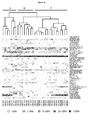
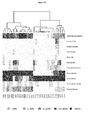
- FIG. 1a shows the heat map based on taxon abundance and sample composition. Three major clusters (named A, B and C) were obtained and the eight E-ESBL carriers were scattered among them (4, 2 and 2 in cluster A, B and C, respectively). In almost all the samples, Prevotella genus (Bacteroidetes phylum) was the most abundant taxon.
- the ESBL carriers clustered together, indicating that, contrary to the obtained with total bacteria, the bacterial composition was more similar between them than between the other samples.
- the active ones did not cluster according to the CTX-M allele type of carriers.
- the microbiota of the Wayampi was quite homogenous, and the microbiota of ESBL carriers in terms of taxa richness was less homogeneous than that of non-carriers.
- Non-carriers had differential anaerobic bacteria in both total and active microbiota that could play a role in colonization resistance, while Prevotella appeared as a biomarker for the active microbiota of carriers.
Landscapes
- Chemical & Material Sciences (AREA)
- Life Sciences & Earth Sciences (AREA)
- Analytical Chemistry (AREA)
- Proteomics, Peptides & Aminoacids (AREA)
- Organic Chemistry (AREA)
- Zoology (AREA)
- Wood Science & Technology (AREA)
- Health & Medical Sciences (AREA)
- Engineering & Computer Science (AREA)
- Microbiology (AREA)
- Immunology (AREA)
- Molecular Biology (AREA)
- Biotechnology (AREA)
- Biophysics (AREA)
- Physics & Mathematics (AREA)
- Biochemistry (AREA)
- Bioinformatics & Cheminformatics (AREA)
- General Engineering & Computer Science (AREA)
- General Health & Medical Sciences (AREA)
- Genetics & Genomics (AREA)
- Measuring Or Testing Involving Enzymes Or Micro-Organisms (AREA)
Priority Applications (1)
| Application Number | Priority Date | Filing Date | Title |
|---|---|---|---|
| EP15305758.3A EP3095877A1 (de) | 2015-05-20 | 2015-05-20 | Verfahren und mittel zur verwaltung einer beta-lactamase-erzeugenden enterobacteriaceae-kolonisation mit erweitertem spektrum |
Applications Claiming Priority (1)
| Application Number | Priority Date | Filing Date | Title |
|---|---|---|---|
| EP15305758.3A EP3095877A1 (de) | 2015-05-20 | 2015-05-20 | Verfahren und mittel zur verwaltung einer beta-lactamase-erzeugenden enterobacteriaceae-kolonisation mit erweitertem spektrum |
Publications (1)
| Publication Number | Publication Date |
|---|---|
| EP3095877A1 true EP3095877A1 (de) | 2016-11-23 |
Family
ID=53264603
Family Applications (1)
| Application Number | Title | Priority Date | Filing Date |
|---|---|---|---|
| EP15305758.3A Withdrawn EP3095877A1 (de) | 2015-05-20 | 2015-05-20 | Verfahren und mittel zur verwaltung einer beta-lactamase-erzeugenden enterobacteriaceae-kolonisation mit erweitertem spektrum |
Country Status (1)
| Country | Link |
|---|---|
| EP (1) | EP3095877A1 (de) |
Cited By (1)
| Publication number | Priority date | Publication date | Assignee | Title |
|---|---|---|---|---|
| CN111565734A (zh) * | 2017-06-19 | 2020-08-21 | 普罗比公司 | 植物乳杆菌的治疗用途 |
Citations (5)
| Publication number | Priority date | Publication date | Assignee | Title |
|---|---|---|---|---|
| US20120207726A1 (en) * | 2009-06-16 | 2012-08-16 | The Trustees Of Columbia University In The City Of New York | Autism-associated biomarkers and uses thereof |
| US20130323217A1 (en) * | 2010-12-22 | 2013-12-05 | Da Volterra | Compositions and methods for the controlled repopulation of gram-negative bacteria in the colon |
| WO2014150094A1 (en) * | 2013-03-15 | 2014-09-25 | University Of Florida Research Foundation, Inc. | Butyrogenic bacteria as probiotics to treat clostridium difficile |
| WO2014201037A2 (en) * | 2013-06-10 | 2014-12-18 | New York University | Methods for manipulating immune responses by altering microbiota |
| WO2015003001A1 (en) * | 2013-07-01 | 2015-01-08 | The Washington University | Methods for identifying supplements that increase gut colonization by an isolated bacterial species, and compositions derived therefrom |
-
2015
- 2015-05-20 EP EP15305758.3A patent/EP3095877A1/de not_active Withdrawn
Patent Citations (5)
| Publication number | Priority date | Publication date | Assignee | Title |
|---|---|---|---|---|
| US20120207726A1 (en) * | 2009-06-16 | 2012-08-16 | The Trustees Of Columbia University In The City Of New York | Autism-associated biomarkers and uses thereof |
| US20130323217A1 (en) * | 2010-12-22 | 2013-12-05 | Da Volterra | Compositions and methods for the controlled repopulation of gram-negative bacteria in the colon |
| WO2014150094A1 (en) * | 2013-03-15 | 2014-09-25 | University Of Florida Research Foundation, Inc. | Butyrogenic bacteria as probiotics to treat clostridium difficile |
| WO2014201037A2 (en) * | 2013-06-10 | 2014-12-18 | New York University | Methods for manipulating immune responses by altering microbiota |
| WO2015003001A1 (en) * | 2013-07-01 | 2015-01-08 | The Washington University | Methods for identifying supplements that increase gut colonization by an isolated bacterial species, and compositions derived therefrom |
Non-Patent Citations (13)
| Title |
|---|
| "Bergey's Manual of Systematic Bacteriology", vol. 2, 2004 |
| A SORAAS; A SUNDSFJORD; I SANDVEN; C BRUNBORG; P.A. JENUM: "Risk Factors for Community-Acquired Urinary Tract Infections Caused by ESBL-Producing Enterobacteriaceae - A Case-Control Study in a Low Prevalence Country", PLOS ONE, vol. 8, no. 7, 2013, pages E69581 |
| A. ZABORIN ET AL: "Membership and Behavior of Ultra-Low-Diversity Pathogen Communities Present in the Gut of Humans during Prolonged Critical Illness", MBIO, vol. 5, no. 5, 23 September 2014 (2014-09-23), pages e01361 - 14, XP055214353, DOI: 10.1128/mBio.01361-14 * |
| B HUTTNER; T HAUSTEIN; I UGKAY; G RENZI; A STEWARDSON; D SCHAERRER; A AGOSTINHO; A ANDREMONT; J SCHRENZEL; D PITTET: "Decolonization of intestinal carriage of extended-spectrum 13-lactamase-producing Enterobacteriaceae with oral colistin and neomycin: a randomized, double-blind, placebo-controlled trial", J ANTIMICROB CHEMOTHER., vol. 68, no. 10, October 2013 (2013-10-01), pages 2375 - 82 |
| C. UBEDA; V BUCCI; S. CABALLERO; ANA DJUKOVIC; NORA C. TOUSSAINT; MICHELE EQUINDA; LAUREN LIPUMA; LILAN LING; ASIA GOBOURNE; DANIE: "Intestinal Microbiota Containing Barnesiella Species Cures Vancomycin-Resistant Enterococcus faecium Colonization", INFECT. IMMUN, vol. 81, no. 3, March 2013 (2013-03-01), pages 965 - 973 |
| GC BAKER; JJ SMITH; DA COWAN.: "Review and re-analysis of domain-specific 16S primers", JOURNAL OF MICROBIOLOGICAL METHODS, vol. 55, 2003, pages 541 - 555 |
| I ARNAUD; O BAJOLET; X BERTRAND; H BLANCHARD; E CAILLAT-VALLET; C DUMARTIN; M EVEILLARD; T FOSSE; N GARREAU; O HOFF: "Regional trends in enterobacteriaceae extended-spectrum betalactamase-producing (ESBLE) and methicillin-resistant staphylococcus aureus (MRSA) between 2007 and 2011", ANTIMICROBIAL RESISTANCE AND INFECTION CONTROL, vol. 2, no. 1, 2013, pages 034 |
| O. CLERMONT ET AL: "Rapid detection of the O25b-ST131 clone of Escherichia coli encompassing the CTX-M-15-producing strains", JOURNAL OF ANTIMICROBIAL CHEMOTHERAPY, vol. 64, no. 2, 1 August 2009 (2009-08-01), pages 274 - 277, XP055056612, ISSN: 0305-7453, DOI: 10.1093/jac/dkp194 * |
| R. SINGH ET AL: "Donor feces infusion for eradication of Extended Spectrum beta-Lactamase producing Escherichia coli in a patient with end stage renal disease", CLINICAL MICROBIOLOGY AND INFECTION., vol. 20, no. 11, 8 July 2014 (2014-07-08), United Kingdom, Switzerland, pages O977 - O978, XP055213916, ISSN: 1198-743X, DOI: 10.1111/1469-0691.12683 * |
| R. SINGH; E. VAN NOOD; M. NIEUWDORP; B. VAN DAM; I.J. TEN BERGE; S.E. GEERLINGS; F.J. BEMELMAN: "Donor feces infusion for eradication of Extended Spectrum beta-Lactamase producing Escherichia coli in a patient with end stage renal disease", CLIN MICROBIOL INFECT., vol. 20, no. 11, pages 0977 - 0978 |
| REUVEN FRIEDMANN ET AL: "Prospective Evaluation of Colonization with Extended-Spectrum beta-Lactamase (ESBL)-Producing Enterobacteriaceae Among Patients at Hospital Admission and of Subsequent Colonization with ESBL-Producing Enterobacteriaceae Among Patients During Hospitalization", INFECTION CONTROL AND HOSPITAL EPIDEMIOLOGY, vol. 30, no. 6, 1 June 2009 (2009-06-01), US, pages 534 - 542, XP055214175, ISSN: 0899-823X, DOI: 10.1086/597505 * |
| ROGERS B A ET AL: "Prolonged carriage of resistantby returned travellers: clonality, risk factors and bacterial characteristics", EUROPEAN JOURNAL OF CLINICAL MICROBIOLOGY & INFECTIOUS DISEASES, SPRINGER, BERLIN, DE, vol. 31, no. 9, 7 March 2012 (2012-03-07), pages 2413 - 2420, XP035098167, ISSN: 1435-4373, DOI: 10.1007/S10096-012-1584-Z * |
| T URICH; A LANZÉN; J QI ET AL.: "Simultaneous assessment of soil microbial community structure and function through analysis of the meta-transcriptome", PLOS ONE, vol. 3, 2008, pages E2527 |
Cited By (1)
| Publication number | Priority date | Publication date | Assignee | Title |
|---|---|---|---|---|
| CN111565734A (zh) * | 2017-06-19 | 2020-08-21 | 普罗比公司 | 植物乳杆菌的治疗用途 |
Similar Documents
| Publication | Publication Date | Title |
|---|---|---|
| Biggel et al. | Horizontally acquired papGII-containing pathogenicity islands underlie the emergence of invasive uropathogenic Escherichia coli lineages | |
| Shin et al. | Beneficial roles of probiotics on the modulation of gut microbiota and immune response in pigs | |
| Rodriguez-Palacios et al. | The artificial sweetener splenda promotes gut proteobacteria, dysbiosis, and myeloperoxidase reactivity in Crohn’s disease–like ileitis | |
| Meng et al. | Characterization of Shiga toxin-producing Escherichia coli isolated from healthy pigs in China | |
| Quan et al. | Etiology and prevalence of ESBLs in adult community-onset urinary tract infections in East China: a prospective multicenter study | |
| Vebø et al. | The transcriptome of the nosocomial pathogen Enterococcus faecalis V583 reveals adaptive responses to growth in blood | |
| Petersen et al. | A phylogenetic group of Escherichia coli associated with active left-sided inflammatory bowel disease | |
| Gordon et al. | E scherichia coli diversity in the lower intestinal tract of humans | |
| El-Shazly et al. | Expanded spectrum β–lactamase producing Escherichia coli isolated from chickens with colibacillosis in Egypt | |
| Bello Gonzalez et al. | Characterization of Enterococcus isolates colonizing the intestinal tract of intensive care unit patients receiving selective digestive decontamination | |
| Lee et al. | Prevalence, characteristics and clonal distribution of extended-spectrum β-lactamase-and AmpC β-lactamase-producing Escherichia coli following the swine production stages, and potential risks to humans | |
| García-Meniño et al. | Fluoroquinolone resistance in complicated urinary tract infections: association with the increased occurrence and diversity of Escherichia coli of clonal complex 131, together with ST1193 | |
| Handrova et al. | Antibiotic resistance and virulence factors of Escherichia coli from eagles and goshawks | |
| Cao et al. | Detection of a clinical carbapenem-resistant Citrobacter portucalensis strain and the dissemination of C. portucalensis in clinical settings | |
| Shin et al. | Antimicrobial resistance, virulence genes and PFGE-profiling of Escherichia coli isolates from South Korean cattle farms | |
| Michalik et al. | Intra-operative biopsy in chronic sinusitis detects pathogenic Escherichia coli that carry fimG/H, fyuA and agn43 genes coding biofilm formation | |
| Hansen et al. | Molecular characterization of Danish ESBL/AmpC-producing Klebsiella pneumoniae from bloodstream infections, 2018 | |
| WO2023118460A1 (en) | New biomarker for disorders and diseases associated with intestinal dysbiosis | |
| Prajapati et al. | Variability in in vitro biofilm production and antimicrobial sensitivity pattern among Pasteurella multocida strains | |
| Kang et al. | Genetic characteristics of extended-Spectrum Beta-lactamase-producing Salmonella isolated from retail meats in South Korea | |
| Leoni et al. | Occurrence and temporal distribution of extended-spectrum β-lactamase-producing Escherichia coli in clams from the Central Adriatic, Italy | |
| EP3095877A1 (de) | Verfahren und mittel zur verwaltung einer beta-lactamase-erzeugenden enterobacteriaceae-kolonisation mit erweitertem spektrum | |
| Cao et al. | Molecular profiling of a multi-strain hypervirulent Klebsiella pneumoniae infection within a single patient | |
| Luo et al. | Serum bacterial DNA detection in patients with cholangitis after Kasai procedure | |
| Hosseininasab et al. | Diffusely adherent and cyclomodulin-positive Escherichia coli are associated with colon diseases |
Legal Events
| Date | Code | Title | Description |
|---|---|---|---|
| PUAI | Public reference made under article 153(3) epc to a published international application that has entered the european phase |
Free format text: ORIGINAL CODE: 0009012 |
|
| AK | Designated contracting states |
Kind code of ref document: A1 Designated state(s): AL AT BE BG CH CY CZ DE DK EE ES FI FR GB GR HR HU IE IS IT LI LT LU LV MC MK MT NL NO PL PT RO RS SE SI SK SM TR |
|
| AX | Request for extension of the european patent |
Extension state: BA ME |
|
| STAA | Information on the status of an ep patent application or granted ep patent |
Free format text: STATUS: THE APPLICATION IS DEEMED TO BE WITHDRAWN |
|
| 18D | Application deemed to be withdrawn |
Effective date: 20170524 |