EP3089824B1 - Improved material processing system - Google Patents
Improved material processing system Download PDFInfo
- Publication number
- EP3089824B1 EP3089824B1 EP14876900.3A EP14876900A EP3089824B1 EP 3089824 B1 EP3089824 B1 EP 3089824B1 EP 14876900 A EP14876900 A EP 14876900A EP 3089824 B1 EP3089824 B1 EP 3089824B1
- Authority
- EP
- European Patent Office
- Prior art keywords
- coarse
- valuable product
- fine
- waste rock
- processing system
- Prior art date
- Legal status (The legal status is an assumption and is not a legal conclusion. Google has not performed a legal analysis and makes no representation as to the accuracy of the status listed.)
- Active
Links
Images




Classifications
-
- B—PERFORMING OPERATIONS; TRANSPORTING
- B03—SEPARATION OF SOLID MATERIALS USING LIQUIDS OR USING PNEUMATIC TABLES OR JIGS; MAGNETIC OR ELECTROSTATIC SEPARATION OF SOLID MATERIALS FROM SOLID MATERIALS OR FLUIDS; SEPARATION BY HIGH-VOLTAGE ELECTRIC FIELDS
- B03B—SEPARATING SOLID MATERIALS USING LIQUIDS OR USING PNEUMATIC TABLES OR JIGS
- B03B5/00—Washing granular, powdered or lumpy materials; Wet separating
- B03B5/28—Washing granular, powdered or lumpy materials; Wet separating by sink-float separation
-
- B—PERFORMING OPERATIONS; TRANSPORTING
- B03—SEPARATION OF SOLID MATERIALS USING LIQUIDS OR USING PNEUMATIC TABLES OR JIGS; MAGNETIC OR ELECTROSTATIC SEPARATION OF SOLID MATERIALS FROM SOLID MATERIALS OR FLUIDS; SEPARATION BY HIGH-VOLTAGE ELECTRIC FIELDS
- B03B—SEPARATING SOLID MATERIALS USING LIQUIDS OR USING PNEUMATIC TABLES OR JIGS
- B03B9/00—General arrangement of separating plant, e.g. flow sheets
-
- B—PERFORMING OPERATIONS; TRANSPORTING
- B03—SEPARATION OF SOLID MATERIALS USING LIQUIDS OR USING PNEUMATIC TABLES OR JIGS; MAGNETIC OR ELECTROSTATIC SEPARATION OF SOLID MATERIALS FROM SOLID MATERIALS OR FLUIDS; SEPARATION BY HIGH-VOLTAGE ELECTRIC FIELDS
- B03B—SEPARATING SOLID MATERIALS USING LIQUIDS OR USING PNEUMATIC TABLES OR JIGS
- B03B5/00—Washing granular, powdered or lumpy materials; Wet separating
- B03B5/62—Washing granular, powdered or lumpy materials; Wet separating by hydraulic classifiers, e.g. of launder, tank, spiral or helical chute concentrator type
- B03B5/66—Washing granular, powdered or lumpy materials; Wet separating by hydraulic classifiers, e.g. of launder, tank, spiral or helical chute concentrator type of the hindered settling type
-
- B—PERFORMING OPERATIONS; TRANSPORTING
- B03—SEPARATION OF SOLID MATERIALS USING LIQUIDS OR USING PNEUMATIC TABLES OR JIGS; MAGNETIC OR ELECTROSTATIC SEPARATION OF SOLID MATERIALS FROM SOLID MATERIALS OR FLUIDS; SEPARATION BY HIGH-VOLTAGE ELECTRIC FIELDS
- B03D—FLOTATION; DIFFERENTIAL SEDIMENTATION
- B03D1/00—Flotation
- B03D1/02—Froth-flotation processes
-
- B—PERFORMING OPERATIONS; TRANSPORTING
- B03—SEPARATION OF SOLID MATERIALS USING LIQUIDS OR USING PNEUMATIC TABLES OR JIGS; MAGNETIC OR ELECTROSTATIC SEPARATION OF SOLID MATERIALS FROM SOLID MATERIALS OR FLUIDS; SEPARATION BY HIGH-VOLTAGE ELECTRIC FIELDS
- B03D—FLOTATION; DIFFERENTIAL SEDIMENTATION
- B03D1/00—Flotation
- B03D1/02—Froth-flotation processes
- B03D1/025—Froth-flotation processes adapted for the flotation of fines
-
- B—PERFORMING OPERATIONS; TRANSPORTING
- B03—SEPARATION OF SOLID MATERIALS USING LIQUIDS OR USING PNEUMATIC TABLES OR JIGS; MAGNETIC OR ELECTROSTATIC SEPARATION OF SOLID MATERIALS FROM SOLID MATERIALS OR FLUIDS; SEPARATION BY HIGH-VOLTAGE ELECTRIC FIELDS
- B03D—FLOTATION; DIFFERENTIAL SEDIMENTATION
- B03D1/00—Flotation
- B03D1/08—Subsequent treatment of concentrated product
- B03D1/085—Subsequent treatment of concentrated product of the feed, e.g. conditioning, de-sliming
-
- B—PERFORMING OPERATIONS; TRANSPORTING
- B03—SEPARATION OF SOLID MATERIALS USING LIQUIDS OR USING PNEUMATIC TABLES OR JIGS; MAGNETIC OR ELECTROSTATIC SEPARATION OF SOLID MATERIALS FROM SOLID MATERIALS OR FLUIDS; SEPARATION BY HIGH-VOLTAGE ELECTRIC FIELDS
- B03D—FLOTATION; DIFFERENTIAL SEDIMENTATION
- B03D1/00—Flotation
- B03D1/14—Flotation machines
-
- B—PERFORMING OPERATIONS; TRANSPORTING
- B03—SEPARATION OF SOLID MATERIALS USING LIQUIDS OR USING PNEUMATIC TABLES OR JIGS; MAGNETIC OR ELECTROSTATIC SEPARATION OF SOLID MATERIALS FROM SOLID MATERIALS OR FLUIDS; SEPARATION BY HIGH-VOLTAGE ELECTRIC FIELDS
- B03D—FLOTATION; DIFFERENTIAL SEDIMENTATION
- B03D1/00—Flotation
- B03D1/14—Flotation machines
- B03D1/24—Pneumatic
-
- C—CHEMISTRY; METALLURGY
- C22—METALLURGY; FERROUS OR NON-FERROUS ALLOYS; TREATMENT OF ALLOYS OR NON-FERROUS METALS
- C22B—PRODUCTION AND REFINING OF METALS; PRETREATMENT OF RAW MATERIALS
- C22B1/00—Preliminary treatment of ores or scrap
Definitions
- Ore processing systems are used all over the world in the mining industry. These processing systems take ore and rock from mines and crush it to recover target valuable product that is taken to market and sold for profit. These ore processing systems typically recover 85-90% of the valuable product, meaning they do not recover 10-15% of the valuable product which remains in the waste tailings from the ore processing system. Unrecoverable loss occurs either because of the mass, shape, or other factors associated with the valuable product or the valuable product is unintentionally discharged from the system through the stream of waste rock. Losing valuable product of this magnitude equates to lost profit for the ore processing system. Material recovery systems that attempt to recover and collect this lost valuable product have been used in the industry in the past, however, these prior art material processing systems are inefficient, ineffective, and unreliable.
- the present invention provides a material processing system according to claim 1 and a method of processing tailings according to claim 7 .
- US 2 319 394 A discloses a material processing system according tot he preamble of claim 1.
- the coarse valuable product and the fine valuable product could be copper, gold, or phosphorous. Both the coarse valuable product and the fine valuable product could be rendered hydrophobic.
- the classification element could sort the tailings by mass and the classification element could be one of a cyclone separator, hindered-bed density separator, or screen.
- the coarse flotation element could be an air-assisted hindered-bed density separator and the fines flotation element could be a column separator.
- the material processing system could comprise a re-grind mill and/or a flotation machine, either or both positioned to process coarse valuable product and/or the fine valuable product from the classification element, coarse flotation element, and fines flotation element.
- Tailings from ore processing systems are often discharged as slurry mixtures comprising water, coarse waste rock, fine waste rock, coarse valuable product, and fine valuable product.
- Some limited processing of the tailings has been conducted in the prior art, but that processing has tended to not be very efficient or effective and is typically unprofitable. What is presented is a material processing system that comprises a combination of three elements in a variety of configurations: a classification element, a coarse flotation element, and a fines flotation element.
- the classification element, the coarse flotation element, and the fines flotation element are arranged in a variety of ways to separate from the tailings the coarse waste rock, the fine waste rock, the coarse valuable product, and the fine valuable product to maximize recovery of the coarse valuable product and the fine valuable product.
- the use of these three elements in combination has been found to be much more effective than prior art tailings processing systems.
- the classification element essentially separates the tailings by mass or density, or more specifically, the classification element separates coarse waste rock and/or coarse valuable product from fine waste rock and/or fine valuable product.
- the classification element is typically embodied as a hindered-bed density separator, a cyclone separator, or a screen, but may be embodied as other devices capable of separating the coarse waste rock and/or the coarse valuable product from the fine waste rock and/or the fine valuable product.
- the preferred classification element is a hindered-bed density separator, for example a CROSSFLOAT separator manufactured by Erie Manufacturing of Erie, Pennsylvania.
- Hindered-bed density separators utilize a fluidized bed created from the upward flow of teeter water interacting with a downward flow of a particulate slurry to separate coarse waste rock and/or coarse valuable product from fine waste rock and/or fine valuable product.
- Those having skill in the art also know fluidized beds as hindered-beds. Coarse waste rock and coarse valuable product heavy enough to penetrate the fluidized bed, fall down through the fluidized bed to be discharged through a course output at the bottom of the separator.
- the fine waste rock and fine valuable product that cannot penetrate the fluidized bed are kept floating above the fluidized bed until the upward flow of teeter water ultimately pushes them over the top of the separator to be discharged through a fines output.
- Cyclone separators separate coarse waste rock and/or coarse valuable product from fine waste rock and/or fine valuable product through vortex separation.
- a high speed rotating fluid flow is established within the cyclone separator.
- the fluid flows in a helical pattern starting from the bottom of the cyclone separator and flowing upwards to its top.
- Coarse waste rock and/or coarse valuable product entering the cyclone separator will have too much inertia to follow the rotating fluid flow upwards.
- the coarse waste rock and/or the coarse valuable product instead strike against inner walls of the cyclone separator and fall out of the bottom through a coarse output. Since fine waste rock and/or fine valuable product have much less mass, they follow the fluid flow up and out of the top of the cyclone separator through a fine output.
- Screens comprise an angled or graduated woven screen element, such as a mesh or a net, to separate coarse valuable product and/or coarse waste rock from fine valuable product and/or fine waste rock.
- the components to be separated enter the screen at the highest point of the woven screen element and then descend towards the lowest point of the woven screen element by rolling, sliding, and/or tumbling. While rolling, sliding, and/or tumbling, the components to be separated are broken up by grinding against other components or against the woven screen element. Fine valuable product and/or fine waste rock fall through holes in the woven screen element and discharge from the screen through the fines output.
- Coarse valuable product and/or coarse waste rock will roll, slide, and/or tumble on top of the woven screen element without falling through because they are too large to fit through the holes and discharge out of the screen through the coarse output.
- the woven screen element may also have the ability to vibrate, which assists the components to be separated by rolling, sliding, and/or tumbling. It should be understood that those having ordinary skill in the art will also know the screen as a sieve or sifter.
- the coarse flotation element separates coarse valuable product from coarse waste rock, fine waste rock, and/or fine valuable product.
- the coarse flotation element is preferably an air-assisted hindered-bed density separator; for example, the HYDROFLOAT separator manufactured by Eriez Manufacturing of Erie, Pennsylvania, but may be embodied as other devices capable of separating the coarse valuable product from the coarse waste rock, the fine waste rock, and/or the fine valuable product.
- the air-assisted hindered-bed density separator is similar to the hindered-bed density separator in that this separator creates a fluidized bed by flowing teeter water upwards against a downward flow of particulate slurry. However, in this case teeter water also includes gas bubbles in the flow.
- the gas bubbles selectively adhere to target fine valuable product and coarse valuable product to alter their density and encourage them to float to the top of the separator and be ultimately removed from the separator through a fine valuable product output.
- the chemistry of the target valuable product may be modified to make them more likely to attach to a gas bubble for removal.
- Coarse waste rock heavy enough to penetrate the fluidized bed falls down through the fluidized bed to be discharged through a course waste output at the bottom of the separator.
- the fine waste rock and fine valuable product that cannot penetrate the fluidized bed are kept floating above the fluidized bed until the upward flow of teeter water ultimately pushes them over the top of the separator to be discharged through the fine valuable product output.
- the air assisted hindered-bed density separator is known to those having ordinary skill in the art and any description of its function presented herein is not meant to be exhaustive or comprehensive but is only presented for purposes of clarification and narration.
- the fines flotation element separates fine valuable product from coarse waste rock, fine waste rock, and/or coarse valuable product.
- the fines flotation element is typically embodied as a column separator, but may be embodied as other devices capable of separating the fine valuable product from the coarse waste rock, the fine waste rock, and/or the coarse valuable product.
- Column separators are flotation devices that also act as three phase settlers where particles move downwards in a hindered settling environment countercurrent to a swarm of rising air bubbles that are generated by spargers located at the bottom of the column separator.
- the column separators are effective in capturing fine valuable product that adheres to the air bubbles to be carried over the top of the separator and subsequently discharged from a fine product output while the coarse product, coarse waste rock, and/or fine waste rock are discharged from the bottom of the separator through a coarse product/waste output.
- Column separators are known to those having ordinary skill in the art and any description of their function presented herein is not meant to be exhaustive or comprehensive but is only presented for purposes of clarification and narration.
- target coarse valuable product and the fine valuable product may both be in gold, copper, phosphates, or other target valuable product.
- reagents may be introduced within the tailings, the classification element, the coarse flotation element, and/or fines flotation element to render the coarse valuable product and/or the fine valuable product more hydrophobic and to facilitate separation of the coarse valuable and/or fine valuable product from the coarse waste rock and/or the fine waste rock.
- the tailings 12 are first sent to the classification element 14 to separate the coarse waste rock and the coarse valuable product from the fine waste rock and the fine valuable product.
- the classification element 14 discharges the coarse waste rock and the coarse valuable product through its coarse output 16 to the coarse flotation element 18.
- the coarse flotation element 18 separates and extracts the coarse valuable product from the coarse waste rock.
- the coarse valuable product is removed through a coarse/valuable product output 32 from the material processing system 10 to a coarse valuable product collection area 24 for removal or further processing as necessary.
- the coarse waste rock is discharged through the coarse waste output 30 to a coarse waste rock collection area 28.
- the classification element 14 discharges the fine waste rock and the fine valuable product through its fines output 20 to the fines flotation element 22.
- the fines flotation element 22 then separates and extracts the fine valuable product from the fine waste rock.
- the fine valuable product is removed through a fine valuable product output 34 from the material processing system 10 to a fine valuable product collection area 26 for removal or further processing as necessary.
- the fine waste rock is discharged through a fine waste output 36 to a fine waste rock collection area 38.
- the coarse valuable product collection area 24 and the fine valuable product collection area 26 may be the same area.
- the coarse waste rock within the coarse waste rock collection area 28 and the fine waste rock collection area 38 from the coarse flotation element 18 and the fines flotation element 22 are generally discarded.
- the coarse valuable product and/or the fine valuable product in the coarse valuable product collection area 24 and the fine valuable product collection area 26 may include coarse waste rock and/or fine waste rock. Recovered coarse valuable product and/or fine valuable product in the coarse valuable product collection area 24 and the fine valuable product collection area 26 may sometimes require further processing to liberate the valuable product from the waste rock. In such instances, the coarse valuable product and/or the fine valuable product in the coarse valuable product collection area 24 and/or the fine valuable product collection area 26 are sent to a re-grind mill to liberate waste rock from the coarse valuable product and/or the fine valuable product. In some instances, this reground material can be circulated back to the material processing system 10 for reprocessing. A flotation machine may be incorporated to attempt to separate the newly liberated valuable product from the waste rock prior to returning the reground material to the material processing system 10.
- FIG 1A shows an embodiment of the material processing system 10a that implements the arrangement disclosed in FIG 1 and does not form part of the invention.
- the classification element 14a is a hindered-bed density separator as described above. Coarse waste rock and coarse valuable product are discharged through the course output 16a at the bottom of the classification element 14a. The fine waste rock and the fine valuable product are ultimately discharged through the fines output 20a of the classification element 14a.
- the coarse flotation element 18a in this embodiment is as an air-assisted, hindered-bed density separator.
- the coarse flotation element 18a separates the coarse waste rock from the coarse valuable product.
- the coarse waste rock is discharged to a coarse waste rock collection area 28a through the coarse waste output 30a and the coarse valuable product is discharged to the coarse valuable product collection area 24a through a coarse/valuable product output 32a.
- the fine valuable product and the fine waste rock from the fines output 20a are conveyed to the fines flotation element 22a for separation.
- the fines flotation element 22a is embodied as a column separator.
- the fine valuable product is discharged through the fine valuable product output 34a to the fine valuable product collection area 26a for further processing.
- the fine waste rock is discharged through a fine waste output 36a to a fine waste rock collection area 38a.
- FIG 1B shows another embodiment of the material processing system 10b that implements the arrangements disclosed in FIG 1 , as discussed above, and does not form part of the invention.
- the coarse flotation element 18b is an air-assisted hindered-bed density separator and functions in the same way as discussed above.
- the fines flotation element 22b is a column separator and also functions in the same way as discussed above.
- the classification element 14b is a cyclone separator which functions as described above.
- FIG 1C shows another embodiment of the material processing system 10c that implements the arrangements disclosed in FIG 1 , as discussed above, and does not form part of the invention.
- the coarse flotation element 18c is an air-assisted hindered-bed density separator and functions in the same way as discussed above.
- the fines flotation element 22c is embodied as a column separator and also functions in the same way as discussed above.
- the classification element 14c is a screen which functions as described above.
- FIG 1D shows an embodiment of the material processing system 10d that implements the arrangements disclosed in FIG 1 , as discussed above, but also comprises a second classification element 40d.
- the classification element is a cyclone separator that functions as discussed above. Coarse waste rock and coarse valuable product discharged through the course output 16d of the classification element 14d is sent to the second classification element 40d to remove any fine waste rock and fine valuable product that may have bypassed the classification element 14d due to inefficiencies in the cyclone separator.
- the second classification element 40d is a hindered-bed density separator that functions as discussed above.
- any fine coarse product and fine waste rock recovered is discharged through a second fine output 42d and reintroduced to the fines output 20d of the classification element 14d to be conveyed to the fines flotation element 22d.
- the fines flotation element 22d is a column separator that functions in the same way as discussed above.
- the coarse valuable product and the coarse waste rock fall downwardly through the second classification element 40d and are discharged out a second coarse output 44d to be conveyed to the coarse flotation element 18d, which will separate the coarse valuable product from the coarse waste rock.
- the coarse flotation element 18d in this embodiment is an air-assisted hindered-bed density separator that functions in the same way as discussed above.
- FIG 1E shows another embodiment of the material processing system 10e that implements the arrangements disclosed in FIG 1 , as discussed above, but also comprises a second classification element 40e in a different arrangement from that shown in FIG 1D .
- both the classification element 14e and the second classification element 40e are cyclone separators that function as described above.
- the second classification element 40e is located downstream of the coarse flotation element 18e. The coarse valuable product from the coarse/valuable product output 32e of the coarse flotation element 18e is conveyed to the second classification element 40e for reprocessing to separate any fine waste rock or fine valuable product that may have bypassed the classification element 14e due to inefficiencies in the cyclone separator.
- any fine coarse product and fine waste rock recovered is discharged through a second fine output 42e and reintroduced to the fines output 20e of the classification element 14e to be conveyed to the fines flotation element 22e.
- the fines flotation element 22e is a column separator that functions in the same way as discussed above.
- the coarse valuable product falls downwardly through the second classification element 40e and is discharged out a second coarse output 44e to be conveyed to the coarse valuable product collection area 24e.
- FIG 1F shows another embodiment of the material processing system 10f that implements the arrangements disclosed in FIG 1 but also comprises a second classification element 40f arranged in the same way as the embodiment of the material processing system disclosed in FIG 1E above.
- the second classification element 40f is a screen that functions in the same way as discussed above.
- the tailings 12g are first sent to a coarse flotation element 18g to separate and extract the coarse waste rock from the coarse valuable product, the fine waste rock, and the fine valuable product.
- the coarse waste rock is discharged through the coarse waste output 30g to a coarse waste rock collection area 28g.
- the coarse flotation element 18g discharges the coarse valuable product, the fine valuable product, and the fine waste rock through the coarse/valuable product output 32g to be conveyed to the classification element 14g.
- the classification element 14g then separates the coarse valuable product from the fine valuable product and the fine waste rock.
- the coarse valuable product is discharged from the course output 16g to the coarse valuable product collection area 24g.
- the fine waste rock and the fine valuable product are discharged from the classification element 14g through the fines output 20g and conveyed to the fines flotation element 22g.
- the fines flotation element 22g then separates and extracts the fine valuable product from the fine waste rock and the fine valuable product is discharged from the fine valuable product output 34g to a fine valuable product collection area 26g for further processing.
- the fine waste rock is discharged through the fine waste output 36g to a fine waste rock collection area 38g.
- FIG 2A shows an embodiment of the material processing system 10h that implements the arrangement disclosed in FIG 2 as discussed above and does not form part of the invention.
- the coarse flotation element 18h is an air-assisted hindered-bed density separator that functions in the same way as discussed above;
- the classification element 14h is a cyclone separator that functions in the same way as discussed above;
- the fines flotation element 22h is a column separator that also functions in the same way as discussed above.
- FIG 2B shows another embodiment of the material processing system 10i that implements the arrangements disclosed in FIG 2 as discussed above, and does not form part of the invention.
- the coarse flotation element 18i is an air-assisted hindered-bed density separator that functions in the same way as discussed above;
- the classification element 14i is a hindered-bed density separator that functions in the same way as discussed above; and
- the fines flotation element 22i is a column separator that also functions in the same way as discussed above.
- FIG 2C shows another embodiment of the material processing system 10j that implements the arrangements disclosed in FIG 2 as discussed above, and does not form part of the invention.
- the coarse flotation element 18j is an air-assisted hindered-bed density separator that functions in the same way as discussed above;
- the classification element 14j is a screen that functions in the same way as discussed above;
- the fines flotation element 22j is a column separator that also functions in the same way as discussed above.
- the tailings 12k are first sent to the coarse flotation element 18k to separate and extract the coarse waste rock from the coarse valuable product, the fine waste rock, and the fine valuable product.
- the coarse flotation element 18k discharges the coarse valuable product, the fine valuable product, and the fine waste rock through the coarse/valuable product output 32k to the fines flotation element 22k.
- the fines flotation element 22k separates the fine valuable product from the fine waste rock and the coarse valuable product to the fine valuable product collection area 26k through the fine valuable product output 34k.
- the fine waste rock and the coarse valuable product pass through the fine waste output 36k to the classification element 14k.
- the classification element 14k then separates and extracts the coarse valuable product from the fine waste rock and conveys the coarse valuable product through the course output 16k to the coarse valuable product collection area 24k and the fine waste rock through the fines output 20k to the fine waste rock collection area 38k.
- FIG 3A shows an embodiment of the material processing system 101 that implements the arrangements disclosed in FIG 3 as discussed above, and does not form part of the invention.
- the coarse flotation element 181 is an air-assisted hindered-bed density separator that functions in the same way as discussed above;
- the classification element 141 is a cyclone separator that functions in the same way as discussed above;
- the fines flotation element 221 is a column separator that also functions in the same way as discussed above.
- FIG 3B shows another embodiment of the material processing system 10m that implements the arrangements disclosed in FIG 3 as discussed above, and does not form part of the invention.
- the coarse flotation element 18m is an air-assisted hindered-bed density separator that functions in the same way as discussed above;
- the classification element 14m is a hindered-bed density separator that functions in the same way as discussed above; and
- the fines flotation element 22m is a column separator that also functions in the same way as discussed above.
- FIG 3C shows another embodiment of the material processing system 10n that implements the arrangements disclosed in FIG 3 as discussed above, and does not form part of the invention.
- the coarse flotation element 18n is an air-assisted hindered-bed density separator that functions in the same way as discussed above;
- the classification element 14n is a screen that functions in the same way as discussed above;
- the fines flotation element 22n is a column separator that also functions in the same way as discussed above.
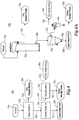
- FIG 4 Another effective arrangement of the material processing system 10o is shown in FIG 4 .
- the tailings 12o are first sent to the fines flotation element 22o to separate and extract the fine valuable product from the coarse valuable product, the fine waste rock, and the coarse waste rock.
- the fine valuable product is discharged through a fine valuable product output 34o to a fine valuable product collection area 26o.
- the fines flotation element 22o discharges the coarse valuable product, the fine waste rock, and the coarse waste rock through the fine waste output 36o to be conveyed to the coarse flotation element 18o.
- the coarse flotation element 18o separates the coarse waste rock from the fine waste rock and the coarse valuable product.
- the coarse waste rock is discharged through a coarse waste output 30o to a coarse waste rock collection area 28o.
- the coarse flotation element 18o discharges the fine waste rock and the coarse valuable product through the coarse/valuable product output 32o to the classification element 14o.
- the classification element 14o then separates and extracts the coarse valuable product from the fine waste rock.
- the coarse valuable product is discharged through the coarse output 16o to the coarse valuable product collection area 24o and the fine waste rock is discharged through the fines output 20o to the fine waste rock collection area 38o.
- FIG 4A shows an embodiment of the material processing system 10p that implements the arrangements disclosed in FIG 4 as discussed above, and does not form part of the invention.
- the coarse flotation element 18p is an air-assisted hindered-bed density separator that functions in the same way as discussed above;
- the classification element 14p is a cyclone separator that functions in the same way as discussed above;
- the fines flotation element 22p is a column separator that also functions in the same way as discussed above.
- FIG 4B shows another embodiment of the material processing system 10q that implements the arrangements disclosed in FIG 4 as discussed above, and does not form part of the invention.
- the coarse flotation element 18q is an air-assisted hindered-bed density separator that functions in the same way as discussed above;
- the classification element 14q is a hindered-bed density separator that functions in the same way as discussed above; and
- the fines flotation element 22q is a column separator that also functions in the same way as discussed above.
- FIG 4C shows another embodiment of the material processing system 10r that implements the arrangements disclosed in FIG 4 as discussed above, and does not form part of the invention.
- the coarse flotation element 18r is an air-assisted hindered-bed density separator that functions in the same way as discussed above;
- the classification element 14r is a screen that functions in the same way as discussed above;
- the fines flotation element 22r is a column separator that also functions in the same way as discussed above.
- the tailings 12s are first sent to the fines flotation element 22s to separate and extract the fine valuable product from the coarse valuable product, the fine waste rock, and the coarse waste rock.
- the fine valuable product is discharged through a fine valuable product output 34s to a fine valuable product collection area 26s.
- the fines flotation element 22s discharges the coarse valuable product, the fine waste rock, and the coarse waste rock through the fine waste output 36s to the classification element 14s.
- the classification element 14s separates the fine waste rock from the coarse waste rock and the coarse valuable product.
- the fine waste rock is discharged through the fines output 20s to the fine waste rock collection area 38s.
- the classification element 14s discharges the coarse waste rock and the coarse valuable product through the coarse output 16s to the coarse flotation element 18s.
- the coarse flotation element 18s then separates and extracts the coarse valuable product from the coarse waste rock.
- the coarse valuable product is discharged through the coarse/valuable product output 32s to the valuable product collection area 24s and the coarse waste rock is discharged through the coarse waste output 30s to the coarse waste rock collection area 28s.
- FIG 5A shows an embodiment of the material processing system 10t that implements the arrangements disclosed in FIG 5 as discussed above, and does not form part of the invention.
- the coarse flotation element 18t is an air-assisted hindered-bed density separator that functions in the same way as discussed above;
- the classification element 14t is a cyclone separator that functions in the same way as discussed above;
- the fines flotation element 22t is a column separator that also functions in the same way as discussed above.
- FIG 5B shows another embodiment of the material processing system 10u that implements the arrangements disclosed in FIG 5 as discussed above, and does not form part of the invention.
- the coarse flotation element 18u is an air-assisted hindered-bed density separator that functions in the same way as discussed above;
- the classification element 14u is a hindered-bed density separator that functions in the same way as discussed above; and
- the fines flotation element 22u is a column separator that also functions in the same way as discussed above.
- FIG 5C shows another embodiment of the material processing system 10v that implements the arrangements disclosed in FIG 5 as discussed above, and does not form part of the invention.
- the coarse flotation element 18v is an air-assisted hindered-bed density separator that functions in the same way as discussed above;
- the classification element 14v is a screen that functions in the same way as discussed above;
- the fines flotation element 22v is a column separator that also functions in the same way as discussed above.
Landscapes
- Engineering & Computer Science (AREA)
- Chemical & Material Sciences (AREA)
- Life Sciences & Earth Sciences (AREA)
- Materials Engineering (AREA)
- Metallurgy (AREA)
- Environmental & Geological Engineering (AREA)
- General Life Sciences & Earth Sciences (AREA)
- Geochemistry & Mineralogy (AREA)
- Geology (AREA)
- Manufacturing & Machinery (AREA)
- Organic Chemistry (AREA)
- Mechanical Engineering (AREA)
- Biotechnology (AREA)
- Dispersion Chemistry (AREA)
- Processing Of Solid Wastes (AREA)
- Separation Of Solids By Using Liquids Or Pneumatic Power (AREA)
- Manufacture And Refinement Of Metals (AREA)
- Crushing And Grinding (AREA)
- Drilling And Exploitation, And Mining Machines And Methods (AREA)
- Combined Means For Separation Of Solids (AREA)
Description
- Ore processing systems are used all over the world in the mining industry. These processing systems take ore and rock from mines and crush it to recover target valuable product that is taken to market and sold for profit. These ore processing systems typically recover 85-90% of the valuable product, meaning they do not recover 10-15% of the valuable product which remains in the waste tailings from the ore processing system. Unrecoverable loss occurs either because of the mass, shape, or other factors associated with the valuable product or the valuable product is unintentionally discharged from the system through the stream of waste rock. Losing valuable product of this magnitude equates to lost profit for the ore processing system. Material recovery systems that attempt to recover and collect this lost valuable product have been used in the industry in the past, however, these prior art material processing systems are inefficient, ineffective, and unreliable. Thus, there is a need in the industry to improve recovery and collection of the lost valuable product in material processing systems. What is presented is an improved material processing system and methodology that processes tailings from ore processing systems to recover the valuable product unintentionally discharged from an ore processing system.
- What is presented is a material processing system and method for processing tailings discharged from an ore processing system. The present invention provides a material processing system according to claim 1 and a method of processing tailings according to claim 7 .
-
US 2 319 394 A discloses a material processing system according tot he preamble of claim 1. - The coarse valuable product and the fine valuable product could be copper, gold, or phosphorous. Both the coarse valuable product and the fine valuable product could be rendered hydrophobic. The classification element could sort the tailings by mass and the classification element could be one of a cyclone separator, hindered-bed density separator, or screen. The coarse flotation element could be an air-assisted hindered-bed density separator and the fines flotation element could be a column separator.
- The material processing system could comprise a re-grind mill and/or a flotation machine, either or both positioned to process coarse valuable product and/or the fine valuable product from the classification element, coarse flotation element, and fines flotation element.
- For a more complete understanding and appreciation of this invention, and its many advantages, reference will be made to the following detailed description taken in conjunction with the accompanying drawings.
-
FIG 1 shows a flow-chart of the material processing system; -
FIG 1A shows a schematic view of an embodiment of the material processing system ofFIG 1 not forming part of the invention; -
FIG 1B shows a schematic view of another embodiment of the material processing system ofFIG 1 not forming part of the invention; -
FIG 1C shows a schematic view of another embodiment of the material processing system ofFIG. 1 not forming part of the invention; -
FIG 1D shows a schematic view of an embodiment of the material processing system ofFIG 1 ; -
FIG 1E shows a schematic view of another embodiment of the material processing system ofFIG 1 ; - FIG IF shows a schematic view of another embodiment of the material processing system of
FIG 1 ; -
FIG 2 shows a flow-chart of another configuration of the material processing system not forming part of the invention; -
FIG 2A shows a schematic view of an embodiment of the material processing system ofFIG 2 not forming part of the invention; -
FIG 2B shows a schematic view of another embodiment of the material processing system ofFIG 2 not forming part of the invention; -
FIG 2C shows a schematic view of another embodiment of the material processing system ofFIG 2 not forming part of the invention; -
FIG 3 shows a flow-chart of another configuration of the material processing system not forming part of the invention; -
FIG 3A shows a schematic view of an embodiment of the material processing system ofFIG 3 not forming part of the invention; -
FIG 3B shows a schematic view of another embodiment of the material processing system ofFIG 3 not forming part of the invention; -
FIG 3C shows a schematic view of another embodiment of the material processing system ofFIG 3 not forming part of the invention; -
FIG 4 shows a flow-chart of another configuration of the material processing system not forming part of the invention; -
FIG 4A shows a schematic view of an embodiment of the material processing system ofFIG 4 not forming part of the invention; -
FIG 4B shows a schematic view of another embodiment of the material processing system ofFIG 4 not forming part of the invention; -
FIG 4C shows a schematic view of another embodiment of the material processing system ofFIG 4 not forming part of the invention; -
FIG 5 shows a flow-chart of another configuration of the material processing system not forming part of the invention; -
FIG 5A shows a schematic view of an embodiment of the material processing system ofFIG 5 not forming part of the invention; -
FIG 5B shows a schematic view of another embodiment of the material processing system ofFIG. 5 not forming part of the invention; and -
FIG 5C shows a schematic view of another embodiment of the material processing system ofFIG 5 not forming part of the invention. - Referring to the drawings, some of the reference numerals are used to designate the same or corresponding parts through several of the embodiments and figures shown and described. Corresponding parts are denoted in different embodiments with the addition of lowercase letters. Variations of corresponding parts in form or function that are depicted in the figures are described. It will be understood that variations in the embodiments can generally be interchanged without deviating from the invention.
- Tailings from ore processing systems are often discharged as slurry mixtures comprising water, coarse waste rock, fine waste rock, coarse valuable product, and fine valuable product. Some limited processing of the tailings has been conducted in the prior art, but that processing has tended to not be very efficient or effective and is typically unprofitable. What is presented is a material processing system that comprises a combination of three elements in a variety of configurations: a classification element, a coarse flotation element, and a fines flotation element.
- The classification element, the coarse flotation element, and the fines flotation element are arranged in a variety of ways to separate from the tailings the coarse waste rock, the fine waste rock, the coarse valuable product, and the fine valuable product to maximize recovery of the coarse valuable product and the fine valuable product. The use of these three elements in combination has been found to be much more effective than prior art tailings processing systems.
- The classification element essentially separates the tailings by mass or density, or more specifically, the classification element separates coarse waste rock and/or coarse valuable product from fine waste rock and/or fine valuable product. The classification element is typically embodied as a hindered-bed density separator, a cyclone separator, or a screen, but may be embodied as other devices capable of separating the coarse waste rock and/or the coarse valuable product from the fine waste rock and/or the fine valuable product. Each of these embodiments are known to those having ordinary skill in the art and any descriptions of their function presented herein are not meant to be exhaustive or comprehensive but are only presented for purposes of clarification and narration.
- The preferred classification element is a hindered-bed density separator, for example a CROSSFLOAT separator manufactured by Eriez Manufacturing of Erie, Pennsylvania. Hindered-bed density separators utilize a fluidized bed created from the upward flow of teeter water interacting with a downward flow of a particulate slurry to separate coarse waste rock and/or coarse valuable product from fine waste rock and/or fine valuable product. Those having skill in the art also know fluidized beds as hindered-beds. Coarse waste rock and coarse valuable product heavy enough to penetrate the fluidized bed, fall down through the fluidized bed to be discharged through a course output at the bottom of the separator. The fine waste rock and fine valuable product that cannot penetrate the fluidized bed are kept floating above the fluidized bed until the upward flow of teeter water ultimately pushes them over the top of the separator to be discharged through a fines output.
- Cyclone separators separate coarse waste rock and/or coarse valuable product from fine waste rock and/or fine valuable product through vortex separation. To create the vortex, a high speed rotating fluid flow is established within the cyclone separator. The fluid flows in a helical pattern starting from the bottom of the cyclone separator and flowing upwards to its top. Coarse waste rock and/or coarse valuable product entering the cyclone separator will have too much inertia to follow the rotating fluid flow upwards. The coarse waste rock and/or the coarse valuable product instead strike against inner walls of the cyclone separator and fall out of the bottom through a coarse output. Since fine waste rock and/or fine valuable product have much less mass, they follow the fluid flow up and out of the top of the cyclone separator through a fine output.
- Screens comprise an angled or graduated woven screen element, such as a mesh or a net, to separate coarse valuable product and/or coarse waste rock from fine valuable product and/or fine waste rock. The components to be separated enter the screen at the highest point of the woven screen element and then descend towards the lowest point of the woven screen element by rolling, sliding, and/or tumbling. While rolling, sliding, and/or tumbling, the components to be separated are broken up by grinding against other components or against the woven screen element. Fine valuable product and/or fine waste rock fall through holes in the woven screen element and discharge from the screen through the fines output. Coarse valuable product and/or coarse waste rock will roll, slide, and/or tumble on top of the woven screen element without falling through because they are too large to fit through the holes and discharge out of the screen through the coarse output. The woven screen element may also have the ability to vibrate, which assists the components to be separated by rolling, sliding, and/or tumbling. It should be understood that those having ordinary skill in the art will also know the screen as a sieve or sifter.
- The coarse flotation element separates coarse valuable product from coarse waste rock, fine waste rock, and/or fine valuable product. The coarse flotation element is preferably an air-assisted hindered-bed density separator; for example, the HYDROFLOAT separator manufactured by Eriez Manufacturing of Erie, Pennsylvania, but may be embodied as other devices capable of separating the coarse valuable product from the coarse waste rock, the fine waste rock, and/or the fine valuable product. The air-assisted hindered-bed density separator is similar to the hindered-bed density separator in that this separator creates a fluidized bed by flowing teeter water upwards against a downward flow of particulate slurry. However, in this case teeter water also includes gas bubbles in the flow. The gas bubbles selectively adhere to target fine valuable product and coarse valuable product to alter their density and encourage them to float to the top of the separator and be ultimately removed from the separator through a fine valuable product output. The chemistry of the target valuable product may be modified to make them more likely to attach to a gas bubble for removal. Coarse waste rock heavy enough to penetrate the fluidized bed falls down through the fluidized bed to be discharged through a course waste output at the bottom of the separator. In addition to coarse valuable product with sufficient bubbles, the fine waste rock and fine valuable product that cannot penetrate the fluidized bed are kept floating above the fluidized bed until the upward flow of teeter water ultimately pushes them over the top of the separator to be discharged through the fine valuable product output. The air assisted hindered-bed density separator is known to those having ordinary skill in the art and any description of its function presented herein is not meant to be exhaustive or comprehensive but is only presented for purposes of clarification and narration.
- The fines flotation element separates fine valuable product from coarse waste rock, fine waste rock, and/or coarse valuable product. The fines flotation element is typically embodied as a column separator, but may be embodied as other devices capable of separating the fine valuable product from the coarse waste rock, the fine waste rock, and/or the coarse valuable product. Column separators are flotation devices that also act as three phase settlers where particles move downwards in a hindered settling environment countercurrent to a swarm of rising air bubbles that are generated by spargers located at the bottom of the column separator. The column separators are effective in capturing fine valuable product that adheres to the air bubbles to be carried over the top of the separator and subsequently discharged from a fine product output while the coarse product, coarse waste rock, and/or fine waste rock are discharged from the bottom of the separator through a coarse product/waste output. Column separators are known to those having ordinary skill in the art and any description of their function presented herein is not meant to be exhaustive or comprehensive but is only presented for purposes of clarification and narration.
- It should be understood that the target coarse valuable product and the fine valuable product may both be in gold, copper, phosphates, or other target valuable product. It should also be understood that reagents may be introduced within the tailings, the classification element, the coarse flotation element, and/or fines flotation element to render the coarse valuable product and/or the fine valuable product more hydrophobic and to facilitate separation of the coarse valuable and/or fine valuable product from the coarse waste rock and/or the fine waste rock.
- The preferred effective arrangement of the
material processing system 10 is shown inFIG 1 . In this embodiment, thetailings 12 are first sent to theclassification element 14 to separate the coarse waste rock and the coarse valuable product from the fine waste rock and the fine valuable product. Theclassification element 14 discharges the coarse waste rock and the coarse valuable product through itscoarse output 16 to thecoarse flotation element 18. Thecoarse flotation element 18 separates and extracts the coarse valuable product from the coarse waste rock. The coarse valuable product is removed through a coarse/valuable product output 32 from thematerial processing system 10 to a coarse valuableproduct collection area 24 for removal or further processing as necessary. The coarse waste rock is discharged through thecoarse waste output 30 to a coarse wasterock collection area 28. Theclassification element 14 discharges the fine waste rock and the fine valuable product through itsfines output 20 to thefines flotation element 22. Thefines flotation element 22 then separates and extracts the fine valuable product from the fine waste rock. The fine valuable product is removed through a finevaluable product output 34 from thematerial processing system 10 to a fine valuableproduct collection area 26 for removal or further processing as necessary. The fine waste rock is discharged through afine waste output 36 to a fine wasterock collection area 38. In some instances the coarse valuableproduct collection area 24 and the fine valuableproduct collection area 26 may be the same area. The coarse waste rock within the coarse wasterock collection area 28 and the fine wasterock collection area 38 from thecoarse flotation element 18 and thefines flotation element 22 are generally discarded. - It should be understood that due to variations in the tailings material and/or the process, the coarse valuable product and/or the fine valuable product in the coarse valuable
product collection area 24 and the fine valuableproduct collection area 26 may include coarse waste rock and/or fine waste rock. Recovered coarse valuable product and/or fine valuable product in the coarse valuableproduct collection area 24 and the fine valuableproduct collection area 26 may sometimes require further processing to liberate the valuable product from the waste rock. In such instances, the coarse valuable product and/or the fine valuable product in the coarse valuableproduct collection area 24 and/or the fine valuableproduct collection area 26 are sent to a re-grind mill to liberate waste rock from the coarse valuable product and/or the fine valuable product. In some instances, this reground material can be circulated back to thematerial processing system 10 for reprocessing. A flotation machine may be incorporated to attempt to separate the newly liberated valuable product from the waste rock prior to returning the reground material to thematerial processing system 10. -
FIG 1A shows an embodiment of thematerial processing system 10a that implements the arrangement disclosed inFIG 1 and does not form part of the invention. In this embodiment, theclassification element 14a is a hindered-bed density separator as described above. Coarse waste rock and coarse valuable product are discharged through thecourse output 16a at the bottom of theclassification element 14a. The fine waste rock and the fine valuable product are ultimately discharged through thefines output 20a of theclassification element 14a. - After being discharged from the
coarse output 16a, the coarse valuable product and the coarse waste rock are conveyed to thecoarse flotation element 18a. Thecoarse flotation element 18a in this embodiment is as an air-assisted, hindered-bed density separator. Thecoarse flotation element 18a separates the coarse waste rock from the coarse valuable product. The coarse waste rock is discharged to a coarse wasterock collection area 28a through thecoarse waste output 30a and the coarse valuable product is discharged to the coarse valuableproduct collection area 24a through a coarse/valuable product output 32a. - The fine valuable product and the fine waste rock from the
fines output 20a are conveyed to thefines flotation element 22a for separation. Thefines flotation element 22a is embodied as a column separator. The fine valuable product is discharged through the finevaluable product output 34a to the fine valuableproduct collection area 26a for further processing. The fine waste rock is discharged through afine waste output 36a to a fine wasterock collection area 38a. -
FIG 1B shows another embodiment of thematerial processing system 10b that implements the arrangements disclosed inFIG 1 , as discussed above, and does not form part of the invention. In this embodiment, thecoarse flotation element 18b is an air-assisted hindered-bed density separator and functions in the same way as discussed above. Thefines flotation element 22b is a column separator and also functions in the same way as discussed above. However, in this embodiment, theclassification element 14b is a cyclone separator which functions as described above. -
FIG 1C shows another embodiment of thematerial processing system 10c that implements the arrangements disclosed inFIG 1 , as discussed above, and does not form part of the invention. In this embodiment, thecoarse flotation element 18c is an air-assisted hindered-bed density separator and functions in the same way as discussed above. Thefines flotation element 22c is embodied as a column separator and also functions in the same way as discussed above. However, in this embodiment, theclassification element 14c is a screen which functions as described above. -
FIG 1D shows an embodiment of thematerial processing system 10d that implements the arrangements disclosed inFIG 1 , as discussed above, but also comprises asecond classification element 40d. In this embodiment the classification element is a cyclone separator that functions as discussed above. Coarse waste rock and coarse valuable product discharged through thecourse output 16d of theclassification element 14d is sent to thesecond classification element 40d to remove any fine waste rock and fine valuable product that may have bypassed theclassification element 14d due to inefficiencies in the cyclone separator. Thesecond classification element 40d is a hindered-bed density separator that functions as discussed above. - Once separation in the
second classification element 40d is complete, any fine coarse product and fine waste rock recovered is discharged through a secondfine output 42d and reintroduced to thefines output 20d of theclassification element 14d to be conveyed to thefines flotation element 22d. In this embodiment of thematerial processing system 10d, thefines flotation element 22d is a column separator that functions in the same way as discussed above. - The coarse valuable product and the coarse waste rock fall downwardly through the
second classification element 40d and are discharged out a secondcoarse output 44d to be conveyed to thecoarse flotation element 18d, which will separate the coarse valuable product from the coarse waste rock. Thecoarse flotation element 18d in this embodiment is an air-assisted hindered-bed density separator that functions in the same way as discussed above. -
FIG 1E shows another embodiment of thematerial processing system 10e that implements the arrangements disclosed inFIG 1 , as discussed above, but also comprises asecond classification element 40e in a different arrangement from that shown inFIG 1D . In this embodiment, both theclassification element 14e and thesecond classification element 40e are cyclone separators that function as described above. However, in this embodiment, thesecond classification element 40e is located downstream of thecoarse flotation element 18e. The coarse valuable product from the coarse/valuable product output 32e of thecoarse flotation element 18e is conveyed to thesecond classification element 40e for reprocessing to separate any fine waste rock or fine valuable product that may have bypassed theclassification element 14e due to inefficiencies in the cyclone separator. - Once separation in the
second classification element 40e is complete, any fine coarse product and fine waste rock recovered is discharged through a secondfine output 42e and reintroduced to thefines output 20e of theclassification element 14e to be conveyed to thefines flotation element 22e. In this embodiment of thematerial processing system 10e, thefines flotation element 22e is a column separator that functions in the same way as discussed above. - The coarse valuable product falls downwardly through the
second classification element 40e and is discharged out a secondcoarse output 44e to be conveyed to the coarse valuableproduct collection area 24e. -
FIG 1F shows another embodiment of thematerial processing system 10f that implements the arrangements disclosed inFIG 1 but also comprises asecond classification element 40f arranged in the same way as the embodiment of the material processing system disclosed inFIG 1E above. In this embodiment, however, thesecond classification element 40f is a screen that functions in the same way as discussed above. - Another effective arrangement of the material processing system lOg is shown in
FIG 2 . In this embodiment, thetailings 12g are first sent to acoarse flotation element 18g to separate and extract the coarse waste rock from the coarse valuable product, the fine waste rock, and the fine valuable product. The coarse waste rock is discharged through thecoarse waste output 30g to a coarse wasterock collection area 28g. Thecoarse flotation element 18g discharges the coarse valuable product, the fine valuable product, and the fine waste rock through the coarse/valuable product output 32g to be conveyed to theclassification element 14g. Theclassification element 14g then separates the coarse valuable product from the fine valuable product and the fine waste rock. The coarse valuable product is discharged from thecourse output 16g to the coarse valuableproduct collection area 24g. The fine waste rock and the fine valuable product are discharged from theclassification element 14g through thefines output 20g and conveyed to thefines flotation element 22g. Thefines flotation element 22g then separates and extracts the fine valuable product from the fine waste rock and the fine valuable product is discharged from the finevaluable product output 34g to a fine valuableproduct collection area 26g for further processing. The fine waste rock is discharged through thefine waste output 36g to a fine wasterock collection area 38g. -
FIG 2A shows an embodiment of thematerial processing system 10h that implements the arrangement disclosed inFIG 2 as discussed above and does not form part of the invention. In this embodiment, thecoarse flotation element 18h is an air-assisted hindered-bed density separator that functions in the same way as discussed above; theclassification element 14h is a cyclone separator that functions in the same way as discussed above; and thefines flotation element 22h is a column separator that also functions in the same way as discussed above. -
FIG 2B shows another embodiment of thematerial processing system 10i that implements the arrangements disclosed inFIG 2 as discussed above, and does not form part of the invention. In this embodiment, thecoarse flotation element 18i is an air-assisted hindered-bed density separator that functions in the same way as discussed above; theclassification element 14i is a hindered-bed density separator that functions in the same way as discussed above; and thefines flotation element 22i is a column separator that also functions in the same way as discussed above. -
FIG 2C shows another embodiment of thematerial processing system 10j that implements the arrangements disclosed inFIG 2 as discussed above, and does not form part of the invention. In this embodiment, thecoarse flotation element 18j is an air-assisted hindered-bed density separator that functions in the same way as discussed above; theclassification element 14j is a screen that functions in the same way as discussed above; and thefines flotation element 22j is a column separator that also functions in the same way as discussed above. - Another effective arrangement of the
material processing system 10k is shown inFIG 3 . In this embodiment not forming part of the invention, thetailings 12k are first sent to thecoarse flotation element 18k to separate and extract the coarse waste rock from the coarse valuable product, the fine waste rock, and the fine valuable product. Thecoarse flotation element 18k discharges the coarse valuable product, the fine valuable product, and the fine waste rock through the coarse/valuable product output 32k to thefines flotation element 22k. Thefines flotation element 22k separates the fine valuable product from the fine waste rock and the coarse valuable product to the fine valuableproduct collection area 26k through the finevaluable product output 34k. The fine waste rock and the coarse valuable product pass through thefine waste output 36k to theclassification element 14k. - The
classification element 14k then separates and extracts the coarse valuable product from the fine waste rock and conveys the coarse valuable product through thecourse output 16k to the coarse valuableproduct collection area 24k and the fine waste rock through thefines output 20k to the fine wasterock collection area 38k. -
FIG 3A shows an embodiment of the material processing system 101 that implements the arrangements disclosed inFIG 3 as discussed above, and does not form part of the invention. In this embodiment, thecoarse flotation element 181 is an air-assisted hindered-bed density separator that functions in the same way as discussed above; the classification element 141 is a cyclone separator that functions in the same way as discussed above; and thefines flotation element 221 is a column separator that also functions in the same way as discussed above. -
FIG 3B shows another embodiment of thematerial processing system 10m that implements the arrangements disclosed inFIG 3 as discussed above, and does not form part of the invention. In this embodiment, thecoarse flotation element 18m is an air-assisted hindered-bed density separator that functions in the same way as discussed above; theclassification element 14m is a hindered-bed density separator that functions in the same way as discussed above; and thefines flotation element 22m is a column separator that also functions in the same way as discussed above. -
FIG 3C shows another embodiment of thematerial processing system 10n that implements the arrangements disclosed inFIG 3 as discussed above, and does not form part of the invention. In this embodiment, thecoarse flotation element 18n is an air-assisted hindered-bed density separator that functions in the same way as discussed above; theclassification element 14n is a screen that functions in the same way as discussed above; and thefines flotation element 22n is a column separator that also functions in the same way as discussed above. - Another effective arrangement of the material processing system 10o is shown in
FIG 4 . In this embodiment not forming part of the invention, the tailings 12o are first sent to the fines flotation element 22o to separate and extract the fine valuable product from the coarse valuable product, the fine waste rock, and the coarse waste rock. The fine valuable product is discharged through a fine valuable product output 34o to a fine valuable product collection area 26o. The fines flotation element 22o discharges the coarse valuable product, the fine waste rock, and the coarse waste rock through the fine waste output 36o to be conveyed to the coarse flotation element 18o. The coarse flotation element 18o separates the coarse waste rock from the fine waste rock and the coarse valuable product. The coarse waste rock is discharged through a coarse waste output 30o to a coarse waste rock collection area 28o. The coarse flotation element 18o discharges the fine waste rock and the coarse valuable product through the coarse/valuable product output 32o to the classification element 14o. The classification element 14o then separates and extracts the coarse valuable product from the fine waste rock. The coarse valuable product is discharged through the coarse output 16o to the coarse valuable product collection area 24o and the fine waste rock is discharged through the fines output 20o to the fine waste rock collection area 38o. -
FIG 4A shows an embodiment of thematerial processing system 10p that implements the arrangements disclosed inFIG 4 as discussed above, and does not form part of the invention. In this embodiment, thecoarse flotation element 18p is an air-assisted hindered-bed density separator that functions in the same way as discussed above; theclassification element 14p is a cyclone separator that functions in the same way as discussed above; and thefines flotation element 22p is a column separator that also functions in the same way as discussed above. -
FIG 4B shows another embodiment of thematerial processing system 10q that implements the arrangements disclosed inFIG 4 as discussed above, and does not form part of the invention. In this embodiment, thecoarse flotation element 18q is an air-assisted hindered-bed density separator that functions in the same way as discussed above; theclassification element 14q is a hindered-bed density separator that functions in the same way as discussed above; and thefines flotation element 22q is a column separator that also functions in the same way as discussed above. -
FIG 4C shows another embodiment of thematerial processing system 10r that implements the arrangements disclosed inFIG 4 as discussed above, and does not form part of the invention. In this embodiment, thecoarse flotation element 18r is an air-assisted hindered-bed density separator that functions in the same way as discussed above; theclassification element 14r is a screen that functions in the same way as discussed above; and thefines flotation element 22r is a column separator that also functions in the same way as discussed above. - Another effective arrangement of the
material processing system 10s is shown inFIG 5 . In this embodiment not forming part of the invention, thetailings 12s are first sent to thefines flotation element 22s to separate and extract the fine valuable product from the coarse valuable product, the fine waste rock, and the coarse waste rock. The fine valuable product is discharged through a finevaluable product output 34s to a fine valuableproduct collection area 26s. Thefines flotation element 22s discharges the coarse valuable product, the fine waste rock, and the coarse waste rock through thefine waste output 36s to theclassification element 14s. Theclassification element 14s separates the fine waste rock from the coarse waste rock and the coarse valuable product. The fine waste rock is discharged through thefines output 20s to the fine wasterock collection area 38s. Theclassification element 14s discharges the coarse waste rock and the coarse valuable product through thecoarse output 16s to thecoarse flotation element 18s. Thecoarse flotation element 18s then separates and extracts the coarse valuable product from the coarse waste rock. The coarse valuable product is discharged through the coarse/valuable product output 32s to the valuableproduct collection area 24s and the coarse waste rock is discharged through thecoarse waste output 30s to the coarse wasterock collection area 28s. -
FIG 5A shows an embodiment of thematerial processing system 10t that implements the arrangements disclosed inFIG 5 as discussed above, and does not form part of the invention. In this embodiment, thecoarse flotation element 18t is an air-assisted hindered-bed density separator that functions in the same way as discussed above; theclassification element 14t is a cyclone separator that functions in the same way as discussed above; and thefines flotation element 22t is a column separator that also functions in the same way as discussed above. -
FIG 5B shows another embodiment of thematerial processing system 10u that implements the arrangements disclosed inFIG 5 as discussed above, and does not form part of the invention. In this embodiment, thecoarse flotation element 18u is an air-assisted hindered-bed density separator that functions in the same way as discussed above; theclassification element 14u is a hindered-bed density separator that functions in the same way as discussed above; and thefines flotation element 22u is a column separator that also functions in the same way as discussed above. -
FIG 5C shows another embodiment of thematerial processing system 10v that implements the arrangements disclosed inFIG 5 as discussed above, and does not form part of the invention. In this embodiment, thecoarse flotation element 18v is an air-assisted hindered-bed density separator that functions in the same way as discussed above; theclassification element 14v is a screen that functions in the same way as discussed above; and thefines flotation element 22v is a column separator that also functions in the same way as discussed above. This invention has been described with reference to several preferred embodiments. Many modifications and alterations will occur to others upon reading and understanding the preceding specification. It is intended that the invention be construed as including all such alterations and modifications in so far as they come within the scope of the appended claims.
Claims (9)
- A material processing system (10d, 10e, 10f) for processing tailings (12d, 12e, 12f) discharged from an ore processing system, the tailings (12d, 12e, 12f) comprising coarse waste rock, fine waste rock, coarse valuable product, and fine valuable product, said material processing system (10d, 10e, 10f) comprising:a classification element (14d, 14e, 14f), a second classification element (40d, 40e, 40f), a coarse flotation element (18d, 18e, 18f), and a fines flotation element (22d, 22e, 22f) arranged to separate the coarse valuable product, the coarse waste rock, the fine valuable product, and the fine waste rock;said classification element and said second classification element configured to separate respectively the coarse material from the fine material;said coarse flotation element configured to separate the coarse waste rock from the coarse valuable product, the fine waste rock, the fine valuable product, or any combination thereof; andsaid fines flotation element configured to separate the fine valuable product from the coarse waste rock, the fine waste rock, the coarse valuable product, or any combination thereof;the tailings (12d, 12e, 12f) are conveyed by conveying means to said classification element (14d, 14e, 14f) to separate the coarse waste rock and the coarse valuable product from the fine waste rock and the fine valuable product;the coarse waste rock and the coarse valuable product from said classification element (14e, 14f) are conveyed by conveying means to said coarse flotation element (18e, 18f) to separate the coarse valuable product from the coarse waste rock; the coarse valuable product from said coarse flotation element (18e, 18f) is conveyed by conveying means to said second classification element (40e, 40f) to further classify the coarse valuable product to remove any of the fine waste rock and the fine valuable product that may have bypassed said coarse flotation element (18e, 18f) in the coarse valuable product.characterized in thatthe fine valuable product and the fine waste rock from said second classification element (40d, 40e, 40f) are conveyed by conveying means to the fine waste rock and the fine valuable product output from said classification element (14d, 14e, 14f); the fine waste rock and the fine valuable product from said classification element (14d, 14e, 14f) and the second classification element (40d, 40e, 40f) are conveyed by conveying means to said fines flotation element (22d, 22e, 22f) to separate the fine valuable product from the fine waste rock.
- The material processing system (10d, 10e, 10f) of claim 1 wherein said classification element sorts the tailings by mass.
- The material processing system (10d, 10e, 10f) of any of claims 1 to 2 wherein said classification element is one of a cyclone separator, hindered-bed density separator, or screen.
- The material processing system (10d, 10e, 10f) of any of claims 1 to 2 wherein said coarse flotation element is an air-assisted hindered-bed density separator.
- The material processing system (10d, 10e, 10f) of any of claims 1 to 2 wherein said fines flotation element is a column separator.
- The material processing system (10d, 10e, 10f) of any of claims 1 to 2 further comprising a re-grind mill, a flotation machine, or any combination thereof, positioned to process coarse valuable product, the fine valuable product, or any combination thereof, from said classification element, coarse flotation element, and fines flotation element.
- A method of processing tailings using the processing system of any of claims 1 through 6.
- The method of processing tailings using the processing system of claim 7 wherein both the coarse valuable product and the fine valuable product are copper, gold, or phosphorous.
- The method of processing tailings using the processing system of claim 7 wherein both the coarse valuable product and the fine valuable product are rendered hydrophobic.
Applications Claiming Priority (2)
| Application Number | Priority Date | Filing Date | Title |
|---|---|---|---|
| US14/146,474 US10052637B2 (en) | 2014-01-02 | 2014-01-02 | Material processing system |
| PCT/US2014/010170 WO2015102638A1 (en) | 2014-01-02 | 2014-01-03 | Improved material processing system |
Publications (3)
| Publication Number | Publication Date |
|---|---|
| EP3089824A1 EP3089824A1 (en) | 2016-11-09 |
| EP3089824A4 EP3089824A4 (en) | 2018-03-21 |
| EP3089824B1 true EP3089824B1 (en) | 2021-09-15 |
Family
ID=53480706
Family Applications (1)
| Application Number | Title | Priority Date | Filing Date |
|---|---|---|---|
| EP14876900.3A Active EP3089824B1 (en) | 2014-01-02 | 2014-01-03 | Improved material processing system |
Country Status (15)
| Country | Link |
|---|---|
| US (1) | US10052637B2 (en) |
| EP (1) | EP3089824B1 (en) |
| CN (1) | CN105873682B (en) |
| AU (1) | AU2014374469B2 (en) |
| BR (1) | BR112016015408B1 (en) |
| CA (1) | CA2933815C (en) |
| CL (1) | CL2016001703A1 (en) |
| DK (1) | DK3089824T3 (en) |
| ES (1) | ES2898084T3 (en) |
| MA (1) | MA39218B1 (en) |
| MX (1) | MX382237B (en) |
| PE (1) | PE20160770A1 (en) |
| RU (1) | RU2663019C2 (en) |
| WO (1) | WO2015102638A1 (en) |
| ZA (1) | ZA201604171B (en) |
Families Citing this family (11)
| Publication number | Priority date | Publication date | Assignee | Title |
|---|---|---|---|---|
| US9833790B2 (en) * | 2015-07-09 | 2017-12-05 | Jesse W. Rhodes, JR. | Assembly and method for gravitationally separating gold from small particles |
| US12030062B2 (en) * | 2017-10-12 | 2024-07-09 | Cytec Industries Inc. | Methods for flotation recovery of value material from coarse-sized particles |
| CN109174442B (en) * | 2018-08-10 | 2021-03-30 | 中国地质科学院矿产综合利用研究所 | Physical beneficiation removal method for heavy metals in copper tailings |
| CA3110405A1 (en) | 2018-08-24 | 2020-02-27 | Newcrest Mining Limited | Recovering valuable material from an ore |
| CN110153143A (en) * | 2019-03-14 | 2019-08-23 | 西安煤科动力科技有限公司 | A kind of coal slime tailing, fired brick prepared therefrom and preparation method thereof |
| US12115536B2 (en) | 2019-12-06 | 2024-10-15 | Iron Ore Company Of Canada | Fluid-borne particle classification system and method of use |
| CN110882850B (en) * | 2019-12-11 | 2022-11-29 | 郑州大学 | A mineral processing system and mineral processing method for protecting graphite flakes |
| KR102442975B1 (en) * | 2020-04-17 | 2022-09-15 | 한국원자력연구원 | Float sorting device for selective separation of non-metallic minerals |
| CN111790518B (en) * | 2020-06-28 | 2022-04-19 | 深圳市中金岭南有色金属股份有限公司凡口铅锌矿 | Comprehensive recovery process for metal mine excavation waste rocks |
| WO2023212777A1 (en) * | 2022-05-06 | 2023-11-09 | Newcrest Mining Limited | Processing mined ore |
| WO2025120613A1 (en) | 2023-12-08 | 2025-06-12 | Weir Minerals U.S. Inc. | Tailings deposition |
Family Cites Families (15)
| Publication number | Priority date | Publication date | Assignee | Title |
|---|---|---|---|---|
| US2319394A (en) * | 1940-04-05 | 1943-05-18 | Chemical Construction Corp | Beneficiation of low grade coal |
| US3322272A (en) * | 1964-06-24 | 1967-05-30 | Continental Oil Co | Floatation and size classification of solids |
| US3388793A (en) * | 1965-11-26 | 1968-06-18 | Int Minerals & Chem Corp | Beneficiation of phosphate ores |
| US3782539A (en) * | 1971-11-01 | 1974-01-01 | Pm Holding Co | Beneficiation of phosphate ores |
| US4227996A (en) * | 1979-03-22 | 1980-10-14 | Celanese Corporation | Flotation process for improving recovery of phosphates from ores |
| PH16050A (en) * | 1983-01-14 | 1983-06-02 | Antonio M Dr Ostrea | Gold recovery by sulfhydric-fatty acid flotation as applied to gold ores/cyanidation tailings |
| US4807761A (en) * | 1983-09-22 | 1989-02-28 | C-H Development & Sales, Inc. | Hydraulic separating method and apparatus |
| US5795484A (en) * | 1987-10-22 | 1998-08-18 | Greenwald, Sr.; Edward H. | Method and apparatus for dewatering |
| SU1731283A1 (en) * | 1989-12-11 | 1992-05-07 | Всесоюзный научно-исследовательский и проектный институт механической обработки полезных ископаемых "Механобр" | Ore flotation method |
| US5316751A (en) * | 1991-02-11 | 1994-05-31 | Gordon Kingsley | Methods for mine tailing clean-up using recovery technologies |
| RU2136383C1 (en) * | 1997-08-13 | 1999-09-10 | Открытое акционерное общество "Уралкалий" | Method for flotation enrichment of potassium ores |
| US6425485B1 (en) * | 1998-03-26 | 2002-07-30 | Eriez Magnetics | Air-assisted density separator device and method |
| AUPQ437899A0 (en) * | 1999-11-30 | 1999-12-23 | Wmc Resources Limited | Improved flotation of sulphide minerals |
| AUPR343701A0 (en) * | 2001-02-28 | 2001-03-29 | Wmc Resources Limited | pH adjustment in the flotation of sulphide minerals |
| CN100500299C (en) * | 2007-03-20 | 2009-06-17 | 武汉工程大学 | Phosphate rock floating process |
-
2014
- 2014-01-02 US US14/146,474 patent/US10052637B2/en active Active
- 2014-01-03 DK DK14876900.3T patent/DK3089824T3/en active
- 2014-01-03 BR BR112016015408-8A patent/BR112016015408B1/en active IP Right Grant
- 2014-01-03 PE PE2016000988A patent/PE20160770A1/en unknown
- 2014-01-03 CA CA2933815A patent/CA2933815C/en active Active
- 2014-01-03 MX MX2016008805A patent/MX382237B/en unknown
- 2014-01-03 RU RU2016131664A patent/RU2663019C2/en active
- 2014-01-03 WO PCT/US2014/010170 patent/WO2015102638A1/en not_active Ceased
- 2014-01-03 CN CN201480072080.XA patent/CN105873682B/en active Active
- 2014-01-03 EP EP14876900.3A patent/EP3089824B1/en active Active
- 2014-01-03 AU AU2014374469A patent/AU2014374469B2/en active Active
- 2014-01-03 MA MA39218A patent/MA39218B1/en unknown
- 2014-01-03 ES ES14876900T patent/ES2898084T3/en active Active
-
2016
- 2016-06-21 ZA ZA2016/04171A patent/ZA201604171B/en unknown
- 2016-07-01 CL CL2016001703A patent/CL2016001703A1/en unknown
Also Published As
| Publication number | Publication date |
|---|---|
| ES2898084T3 (en) | 2022-03-03 |
| DK3089824T3 (en) | 2021-12-13 |
| RU2016131664A (en) | 2018-02-07 |
| CL2016001703A1 (en) | 2016-12-23 |
| CA2933815A1 (en) | 2015-07-09 |
| US10052637B2 (en) | 2018-08-21 |
| US20150182973A1 (en) | 2015-07-02 |
| MX382237B (en) | 2025-03-13 |
| RU2663019C2 (en) | 2018-08-01 |
| AU2014374469A1 (en) | 2016-07-07 |
| CA2933815C (en) | 2018-06-19 |
| BR112016015408A2 (en) | 2017-08-08 |
| WO2015102638A1 (en) | 2015-07-09 |
| AU2014374469B2 (en) | 2019-06-13 |
| EP3089824A4 (en) | 2018-03-21 |
| MA39218B1 (en) | 2018-11-30 |
| ZA201604171B (en) | 2017-08-30 |
| MX2016008805A (en) | 2017-02-28 |
| MA39218A1 (en) | 2017-12-29 |
| CN105873682B (en) | 2018-12-14 |
| BR112016015408B1 (en) | 2021-02-17 |
| PE20160770A1 (en) | 2016-08-11 |
| EP3089824A1 (en) | 2016-11-09 |
| CN105873682A (en) | 2016-08-17 |
Similar Documents
| Publication | Publication Date | Title |
|---|---|---|
| CA2933815C (en) | Improved material processing system | |
| CA2866770A1 (en) | Extraction process of clay, silica and iron ore by dry concentration | |
| CN100455532C (en) | Cement kiln combustion gas extraction dust treatment system and treatment method | |
| EP3405295B1 (en) | Method and apparatus for washing and grading silica sand for glass production | |
| CN107073478B (en) | Method for treating and removing electronic waste for the purpose of recovering the components contained in such waste | |
| CN114555233B (en) | Continuous pneumatic separation methods and devices for particulate materials consisting of particulate mixtures with non-uniform particle sizes and densities | |
| JP2016089196A (en) | Valuable metal recovery method and valuable metal recovery system | |
| AU2025200050A1 (en) | System and Method for Recovering Desired Materials from Fines in Incinerator Ash | |
| KR102667916B1 (en) | Air separation methods and equipment | |
| CN109701730A (en) | A kind of efficient coal cleaning process increased operation rate | |
| JP2009173967A (en) | How to prevent short path in Trommel | |
| AU1843901A (en) | Improved flotation of sulphide minerals | |
| CN105964390B (en) | Comprehensive utilization method of copper ore waste rock containing less than 0.2% of copper, less than 0.01% of molybdenum and less than 0.01% of cobalt | |
| Legault-Seguin et al. | Dense Medium Separation—An Effective and Robust Preconcentration Technology | |
| JP2007050347A (en) | Crushing and polishing apparatus and method for treating contaminated soil using this apparatus | |
| CN109201315A (en) | A kind of coal cleaning process increased operation rate | |
| CN114072235A (en) | Method for beneficiation of iron ore streams | |
| CN112642581A (en) | Method for selecting titanium from low-grade vanadium titano-magnetite | |
| CN107088469A (en) | A kind of composite ore point mill, sorting, suspension roasting tower mill weak magnetic separation process | |
| RU2490068C2 (en) | Method of dressing of iron ore | |
| WO2022047533A1 (en) | Beneficiation of pyrochlore | |
| RU2123891C1 (en) | Complex for processing gold-containing ores | |
| RU2750896C1 (en) | Method for finishing precious metal concentrates | |
| AU2023444121A1 (en) | Method and Processing Plant for Processing Rocks | |
| OA22237A (en) | Method and preparation system for preparing rocks |
Legal Events
| Date | Code | Title | Description |
|---|---|---|---|
| PUAI | Public reference made under article 153(3) epc to a published international application that has entered the european phase |
Free format text: ORIGINAL CODE: 0009012 |
|
| 17P | Request for examination filed |
Effective date: 20160615 |
|
| AK | Designated contracting states |
Kind code of ref document: A1 Designated state(s): AL AT BE BG CH CY CZ DE DK EE ES FI FR GB GR HR HU IE IS IT LI LT LU LV MC MK MT NL NO PL PT RO RS SE SI SK SM TR |
|
| AX | Request for extension of the european patent |
Extension state: BA ME |
|
| DAX | Request for extension of the european patent (deleted) | ||
| RIC1 | Information provided on ipc code assigned before grant |
Ipc: B03D 1/02 20060101ALI20170906BHEP Ipc: B03B 9/00 20060101ALI20170906BHEP Ipc: B03B 5/28 20060101ALI20170906BHEP Ipc: B03D 1/00 20060101ALI20170906BHEP Ipc: B03B 5/62 20060101AFI20170906BHEP |
|
| A4 | Supplementary search report drawn up and despatched |
Effective date: 20180216 |
|
| RIC1 | Information provided on ipc code assigned before grant |
Ipc: B03D 1/02 20060101ALI20180212BHEP Ipc: B03B 5/28 20060101ALI20180212BHEP Ipc: B03B 9/00 20060101ALI20180212BHEP Ipc: B03D 1/00 20060101ALI20180212BHEP Ipc: B03B 5/62 20060101AFI20180212BHEP |
|
| STAA | Information on the status of an ep patent application or granted ep patent |
Free format text: STATUS: EXAMINATION IS IN PROGRESS |
|
| 17Q | First examination report despatched |
Effective date: 20190117 |
|
| REG | Reference to a national code |
Ref country code: DE Ref legal event code: R079 Ref document number: 602014080188 Country of ref document: DE Free format text: PREVIOUS MAIN CLASS: B03B0005620000 Ipc: B03D0001080000 |
|
| GRAP | Despatch of communication of intention to grant a patent |
Free format text: ORIGINAL CODE: EPIDOSNIGR1 |
|
| STAA | Information on the status of an ep patent application or granted ep patent |
Free format text: STATUS: GRANT OF PATENT IS INTENDED |
|
| RIC1 | Information provided on ipc code assigned before grant |
Ipc: B03D 1/02 20060101ALI20210312BHEP Ipc: B03B 9/00 20060101ALI20210312BHEP Ipc: C22B 1/00 20060101ALI20210312BHEP Ipc: B03D 1/08 20060101AFI20210312BHEP |
|
| INTG | Intention to grant announced |
Effective date: 20210406 |
|
| GRAS | Grant fee paid |
Free format text: ORIGINAL CODE: EPIDOSNIGR3 |
|
| GRAA | (expected) grant |
Free format text: ORIGINAL CODE: 0009210 |
|
| STAA | Information on the status of an ep patent application or granted ep patent |
Free format text: STATUS: THE PATENT HAS BEEN GRANTED |
|
| AK | Designated contracting states |
Kind code of ref document: B1 Designated state(s): AL AT BE BG CH CY CZ DE DK EE ES FI FR GB GR HR HU IE IS IT LI LT LU LV MC MK MT NL NO PL PT RO RS SE SI SK SM TR |
|
| REG | Reference to a national code |
Ref country code: CH Ref legal event code: EP Ref country code: GB Ref legal event code: FG4D |
|
| REG | Reference to a national code |
Ref country code: SE Ref legal event code: TRGR |
|
| REG | Reference to a national code |
Ref country code: DE Ref legal event code: R096 Ref document number: 602014080188 Country of ref document: DE |
|
| REG | Reference to a national code |
Ref country code: IE Ref legal event code: FG4D |
|
| REG | Reference to a national code |
Ref country code: AT Ref legal event code: REF Ref document number: 1430121 Country of ref document: AT Kind code of ref document: T Effective date: 20211015 |
|
| REG | Reference to a national code |
Ref country code: DK Ref legal event code: T3 Effective date: 20211210 |
|
| REG | Reference to a national code |
Ref country code: FI Ref legal event code: FGE |
|
| REG | Reference to a national code |
Ref country code: LT Ref legal event code: MG9D |
|
| REG | Reference to a national code |
Ref country code: NL Ref legal event code: MP Effective date: 20210915 |
|
| PG25 | Lapsed in a contracting state [announced via postgrant information from national office to epo] |
Ref country code: LT Free format text: LAPSE BECAUSE OF FAILURE TO SUBMIT A TRANSLATION OF THE DESCRIPTION OR TO PAY THE FEE WITHIN THE PRESCRIBED TIME-LIMIT Effective date: 20210915 Ref country code: BG Free format text: LAPSE BECAUSE OF FAILURE TO SUBMIT A TRANSLATION OF THE DESCRIPTION OR TO PAY THE FEE WITHIN THE PRESCRIBED TIME-LIMIT Effective date: 20211215 Ref country code: NO Free format text: LAPSE BECAUSE OF FAILURE TO SUBMIT A TRANSLATION OF THE DESCRIPTION OR TO PAY THE FEE WITHIN THE PRESCRIBED TIME-LIMIT Effective date: 20211215 Ref country code: HR Free format text: LAPSE BECAUSE OF FAILURE TO SUBMIT A TRANSLATION OF THE DESCRIPTION OR TO PAY THE FEE WITHIN THE PRESCRIBED TIME-LIMIT Effective date: 20210915 Ref country code: RS Free format text: LAPSE BECAUSE OF FAILURE TO SUBMIT A TRANSLATION OF THE DESCRIPTION OR TO PAY THE FEE WITHIN THE PRESCRIBED TIME-LIMIT Effective date: 20210915 |
|
| REG | Reference to a national code |
Ref country code: AT Ref legal event code: MK05 Ref document number: 1430121 Country of ref document: AT Kind code of ref document: T Effective date: 20210915 |
|
| PG25 | Lapsed in a contracting state [announced via postgrant information from national office to epo] |
Ref country code: LV Free format text: LAPSE BECAUSE OF FAILURE TO SUBMIT A TRANSLATION OF THE DESCRIPTION OR TO PAY THE FEE WITHIN THE PRESCRIBED TIME-LIMIT Effective date: 20210915 Ref country code: GR Free format text: LAPSE BECAUSE OF FAILURE TO SUBMIT A TRANSLATION OF THE DESCRIPTION OR TO PAY THE FEE WITHIN THE PRESCRIBED TIME-LIMIT Effective date: 20211216 |
|
| REG | Reference to a national code |
Ref country code: ES Ref legal event code: FG2A Ref document number: 2898084 Country of ref document: ES Kind code of ref document: T3 Effective date: 20220303 |
|
| PG25 | Lapsed in a contracting state [announced via postgrant information from national office to epo] |
Ref country code: AT Free format text: LAPSE BECAUSE OF FAILURE TO SUBMIT A TRANSLATION OF THE DESCRIPTION OR TO PAY THE FEE WITHIN THE PRESCRIBED TIME-LIMIT Effective date: 20210915 |
|
| PG25 | Lapsed in a contracting state [announced via postgrant information from national office to epo] |
Ref country code: IS Free format text: LAPSE BECAUSE OF FAILURE TO SUBMIT A TRANSLATION OF THE DESCRIPTION OR TO PAY THE FEE WITHIN THE PRESCRIBED TIME-LIMIT Effective date: 20220115 Ref country code: SM Free format text: LAPSE BECAUSE OF FAILURE TO SUBMIT A TRANSLATION OF THE DESCRIPTION OR TO PAY THE FEE WITHIN THE PRESCRIBED TIME-LIMIT Effective date: 20210915 Ref country code: SK Free format text: LAPSE BECAUSE OF FAILURE TO SUBMIT A TRANSLATION OF THE DESCRIPTION OR TO PAY THE FEE WITHIN THE PRESCRIBED TIME-LIMIT Effective date: 20210915 Ref country code: RO Free format text: LAPSE BECAUSE OF FAILURE TO SUBMIT A TRANSLATION OF THE DESCRIPTION OR TO PAY THE FEE WITHIN THE PRESCRIBED TIME-LIMIT Effective date: 20210915 Ref country code: PT Free format text: LAPSE BECAUSE OF FAILURE TO SUBMIT A TRANSLATION OF THE DESCRIPTION OR TO PAY THE FEE WITHIN THE PRESCRIBED TIME-LIMIT Effective date: 20220117 Ref country code: PL Free format text: LAPSE BECAUSE OF FAILURE TO SUBMIT A TRANSLATION OF THE DESCRIPTION OR TO PAY THE FEE WITHIN THE PRESCRIBED TIME-LIMIT Effective date: 20210915 Ref country code: NL Free format text: LAPSE BECAUSE OF FAILURE TO SUBMIT A TRANSLATION OF THE DESCRIPTION OR TO PAY THE FEE WITHIN THE PRESCRIBED TIME-LIMIT Effective date: 20210915 Ref country code: EE Free format text: LAPSE BECAUSE OF FAILURE TO SUBMIT A TRANSLATION OF THE DESCRIPTION OR TO PAY THE FEE WITHIN THE PRESCRIBED TIME-LIMIT Effective date: 20210915 Ref country code: CZ Free format text: LAPSE BECAUSE OF FAILURE TO SUBMIT A TRANSLATION OF THE DESCRIPTION OR TO PAY THE FEE WITHIN THE PRESCRIBED TIME-LIMIT Effective date: 20210915 Ref country code: AL Free format text: LAPSE BECAUSE OF FAILURE TO SUBMIT A TRANSLATION OF THE DESCRIPTION OR TO PAY THE FEE WITHIN THE PRESCRIBED TIME-LIMIT Effective date: 20210915 |
|
| REG | Reference to a national code |
Ref country code: DE Ref legal event code: R097 Ref document number: 602014080188 Country of ref document: DE |
|
| PLBE | No opposition filed within time limit |
Free format text: ORIGINAL CODE: 0009261 |
|
| STAA | Information on the status of an ep patent application or granted ep patent |
Free format text: STATUS: NO OPPOSITION FILED WITHIN TIME LIMIT |
|
| 26N | No opposition filed |
Effective date: 20220616 |
|
| PG25 | Lapsed in a contracting state [announced via postgrant information from national office to epo] |
Ref country code: SI Free format text: LAPSE BECAUSE OF FAILURE TO SUBMIT A TRANSLATION OF THE DESCRIPTION OR TO PAY THE FEE WITHIN THE PRESCRIBED TIME-LIMIT Effective date: 20210915 Ref country code: MC Free format text: LAPSE BECAUSE OF FAILURE TO SUBMIT A TRANSLATION OF THE DESCRIPTION OR TO PAY THE FEE WITHIN THE PRESCRIBED TIME-LIMIT Effective date: 20210915 |
|
| REG | Reference to a national code |
Ref country code: CH Ref legal event code: PL |
|
| REG | Reference to a national code |
Ref country code: BE Ref legal event code: MM Effective date: 20220131 |
|
| PG25 | Lapsed in a contracting state [announced via postgrant information from national office to epo] |
Ref country code: LU Free format text: LAPSE BECAUSE OF NON-PAYMENT OF DUE FEES Effective date: 20220103 |
|
| PG25 | Lapsed in a contracting state [announced via postgrant information from national office to epo] |
Ref country code: BE Free format text: LAPSE BECAUSE OF NON-PAYMENT OF DUE FEES Effective date: 20220131 |
|
| PG25 | Lapsed in a contracting state [announced via postgrant information from national office to epo] |
Ref country code: LI Free format text: LAPSE BECAUSE OF NON-PAYMENT OF DUE FEES Effective date: 20220131 Ref country code: CH Free format text: LAPSE BECAUSE OF NON-PAYMENT OF DUE FEES Effective date: 20220131 |
|
| PG25 | Lapsed in a contracting state [announced via postgrant information from national office to epo] |
Ref country code: IT Free format text: LAPSE BECAUSE OF FAILURE TO SUBMIT A TRANSLATION OF THE DESCRIPTION OR TO PAY THE FEE WITHIN THE PRESCRIBED TIME-LIMIT Effective date: 20210915 Ref country code: IE Free format text: LAPSE BECAUSE OF NON-PAYMENT OF DUE FEES Effective date: 20220103 |
|
| PG25 | Lapsed in a contracting state [announced via postgrant information from national office to epo] |
Ref country code: HU Free format text: LAPSE BECAUSE OF FAILURE TO SUBMIT A TRANSLATION OF THE DESCRIPTION OR TO PAY THE FEE WITHIN THE PRESCRIBED TIME-LIMIT; INVALID AB INITIO Effective date: 20140103 |
|
| PG25 | Lapsed in a contracting state [announced via postgrant information from national office to epo] |
Ref country code: MK Free format text: LAPSE BECAUSE OF FAILURE TO SUBMIT A TRANSLATION OF THE DESCRIPTION OR TO PAY THE FEE WITHIN THE PRESCRIBED TIME-LIMIT Effective date: 20210915 Ref country code: CY Free format text: LAPSE BECAUSE OF FAILURE TO SUBMIT A TRANSLATION OF THE DESCRIPTION OR TO PAY THE FEE WITHIN THE PRESCRIBED TIME-LIMIT Effective date: 20210915 |
|
| PG25 | Lapsed in a contracting state [announced via postgrant information from national office to epo] |
Ref country code: TR Free format text: LAPSE BECAUSE OF FAILURE TO SUBMIT A TRANSLATION OF THE DESCRIPTION OR TO PAY THE FEE WITHIN THE PRESCRIBED TIME-LIMIT Effective date: 20210915 |
|
| PG25 | Lapsed in a contracting state [announced via postgrant information from national office to epo] |
Ref country code: MT Free format text: LAPSE BECAUSE OF FAILURE TO SUBMIT A TRANSLATION OF THE DESCRIPTION OR TO PAY THE FEE WITHIN THE PRESCRIBED TIME-LIMIT Effective date: 20210915 |
|
| PGFP | Annual fee paid to national office [announced via postgrant information from national office to epo] |
Ref country code: GB Payment date: 20251215 Year of fee payment: 13 |
|
| PGFP | Annual fee paid to national office [announced via postgrant information from national office to epo] |
Ref country code: SE Payment date: 20260108 Year of fee payment: 13 |
|
| PGFP | Annual fee paid to national office [announced via postgrant information from national office to epo] |
Ref country code: ES Payment date: 20260202 Year of fee payment: 13 |
|
| PGFP | Annual fee paid to national office [announced via postgrant information from national office to epo] |
Ref country code: DE Payment date: 20260113 Year of fee payment: 13 Ref country code: DK Payment date: 20260109 Year of fee payment: 13 |
|
| PGFP | Annual fee paid to national office [announced via postgrant information from national office to epo] |
Ref country code: FI Payment date: 20260113 Year of fee payment: 13 |
|
| PGFP | Annual fee paid to national office [announced via postgrant information from national office to epo] |
Ref country code: FR Payment date: 20260112 Year of fee payment: 13 |