EP3085529A1 - Flexible veneer panel with metal mesh layer - Google Patents
Flexible veneer panel with metal mesh layer Download PDFInfo
- Publication number
- EP3085529A1 EP3085529A1 EP16166155.8A EP16166155A EP3085529A1 EP 3085529 A1 EP3085529 A1 EP 3085529A1 EP 16166155 A EP16166155 A EP 16166155A EP 3085529 A1 EP3085529 A1 EP 3085529A1
- Authority
- EP
- European Patent Office
- Prior art keywords
- veneer
- metal mesh
- panel
- face
- adhesive material
- Prior art date
- Legal status (The legal status is an assumption and is not a legal conclusion. Google has not performed a legal analysis and makes no representation as to the accuracy of the status listed.)
- Granted
Links
Images

Classifications
-
- B—PERFORMING OPERATIONS; TRANSPORTING
- B32—LAYERED PRODUCTS
- B32B—LAYERED PRODUCTS, i.e. PRODUCTS BUILT-UP OF STRATA OF FLAT OR NON-FLAT, e.g. CELLULAR OR HONEYCOMB, FORM
- B32B5/00—Layered products characterised by the non- homogeneity or physical structure, i.e. comprising a fibrous, filamentary, particulate or foam layer; Layered products characterised by having a layer differing constitutionally or physically in different parts
- B32B5/02—Layered products characterised by the non- homogeneity or physical structure, i.e. comprising a fibrous, filamentary, particulate or foam layer; Layered products characterised by having a layer differing constitutionally or physically in different parts characterised by structural features of a fibrous or filamentary layer
- B32B5/028—Net structure, e.g. spaced apart filaments bonded at the crossing points
-
- B—PERFORMING OPERATIONS; TRANSPORTING
- B32—LAYERED PRODUCTS
- B32B—LAYERED PRODUCTS, i.e. PRODUCTS BUILT-UP OF STRATA OF FLAT OR NON-FLAT, e.g. CELLULAR OR HONEYCOMB, FORM
- B32B15/00—Layered products comprising a layer of metal
-
- B—PERFORMING OPERATIONS; TRANSPORTING
- B32—LAYERED PRODUCTS
- B32B—LAYERED PRODUCTS, i.e. PRODUCTS BUILT-UP OF STRATA OF FLAT OR NON-FLAT, e.g. CELLULAR OR HONEYCOMB, FORM
- B32B15/00—Layered products comprising a layer of metal
- B32B15/02—Layer formed of wires, e.g. mesh
-
- B—PERFORMING OPERATIONS; TRANSPORTING
- B32—LAYERED PRODUCTS
- B32B—LAYERED PRODUCTS, i.e. PRODUCTS BUILT-UP OF STRATA OF FLAT OR NON-FLAT, e.g. CELLULAR OR HONEYCOMB, FORM
- B32B15/00—Layered products comprising a layer of metal
- B32B15/04—Layered products comprising a layer of metal comprising metal as the main or only constituent of a layer, which is next to another layer of the same or of a different material
- B32B15/08—Layered products comprising a layer of metal comprising metal as the main or only constituent of a layer, which is next to another layer of the same or of a different material of synthetic resin
- B32B15/098—Layered products comprising a layer of metal comprising metal as the main or only constituent of a layer, which is next to another layer of the same or of a different material of synthetic resin comprising condensation resins of aldehydes, e.g. with phenols, ureas or melamines
-
- B—PERFORMING OPERATIONS; TRANSPORTING
- B32—LAYERED PRODUCTS
- B32B—LAYERED PRODUCTS, i.e. PRODUCTS BUILT-UP OF STRATA OF FLAT OR NON-FLAT, e.g. CELLULAR OR HONEYCOMB, FORM
- B32B15/00—Layered products comprising a layer of metal
- B32B15/04—Layered products comprising a layer of metal comprising metal as the main or only constituent of a layer, which is next to another layer of the same or of a different material
- B32B15/10—Layered products comprising a layer of metal comprising metal as the main or only constituent of a layer, which is next to another layer of the same or of a different material of wood
-
- B—PERFORMING OPERATIONS; TRANSPORTING
- B32—LAYERED PRODUCTS
- B32B—LAYERED PRODUCTS, i.e. PRODUCTS BUILT-UP OF STRATA OF FLAT OR NON-FLAT, e.g. CELLULAR OR HONEYCOMB, FORM
- B32B15/00—Layered products comprising a layer of metal
- B32B15/04—Layered products comprising a layer of metal comprising metal as the main or only constituent of a layer, which is next to another layer of the same or of a different material
- B32B15/12—Layered products comprising a layer of metal comprising metal as the main or only constituent of a layer, which is next to another layer of the same or of a different material of paper or cardboard
-
- B—PERFORMING OPERATIONS; TRANSPORTING
- B32—LAYERED PRODUCTS
- B32B—LAYERED PRODUCTS, i.e. PRODUCTS BUILT-UP OF STRATA OF FLAT OR NON-FLAT, e.g. CELLULAR OR HONEYCOMB, FORM
- B32B15/00—Layered products comprising a layer of metal
- B32B15/14—Layered products comprising a layer of metal next to a fibrous or filamentary layer
-
- B—PERFORMING OPERATIONS; TRANSPORTING
- B32—LAYERED PRODUCTS
- B32B—LAYERED PRODUCTS, i.e. PRODUCTS BUILT-UP OF STRATA OF FLAT OR NON-FLAT, e.g. CELLULAR OR HONEYCOMB, FORM
- B32B15/00—Layered products comprising a layer of metal
- B32B15/18—Layered products comprising a layer of metal comprising iron or steel
-
- B—PERFORMING OPERATIONS; TRANSPORTING
- B32—LAYERED PRODUCTS
- B32B—LAYERED PRODUCTS, i.e. PRODUCTS BUILT-UP OF STRATA OF FLAT OR NON-FLAT, e.g. CELLULAR OR HONEYCOMB, FORM
- B32B15/00—Layered products comprising a layer of metal
- B32B15/20—Layered products comprising a layer of metal comprising aluminium or copper
-
- B—PERFORMING OPERATIONS; TRANSPORTING
- B32—LAYERED PRODUCTS
- B32B—LAYERED PRODUCTS, i.e. PRODUCTS BUILT-UP OF STRATA OF FLAT OR NON-FLAT, e.g. CELLULAR OR HONEYCOMB, FORM
- B32B21/00—Layered products comprising a layer of wood, e.g. wood board, veneer, wood particle board
- B32B21/04—Layered products comprising a layer of wood, e.g. wood board, veneer, wood particle board comprising wood as the main or only constituent of a layer, which is next to another layer of the same or of a different material
- B32B21/08—Layered products comprising a layer of wood, e.g. wood board, veneer, wood particle board comprising wood as the main or only constituent of a layer, which is next to another layer of the same or of a different material of synthetic resin
-
- B—PERFORMING OPERATIONS; TRANSPORTING
- B32—LAYERED PRODUCTS
- B32B—LAYERED PRODUCTS, i.e. PRODUCTS BUILT-UP OF STRATA OF FLAT OR NON-FLAT, e.g. CELLULAR OR HONEYCOMB, FORM
- B32B21/00—Layered products comprising a layer of wood, e.g. wood board, veneer, wood particle board
- B32B21/14—Layered products comprising a layer of wood, e.g. wood board, veneer, wood particle board comprising wood board or veneer
-
- B—PERFORMING OPERATIONS; TRANSPORTING
- B32—LAYERED PRODUCTS
- B32B—LAYERED PRODUCTS, i.e. PRODUCTS BUILT-UP OF STRATA OF FLAT OR NON-FLAT, e.g. CELLULAR OR HONEYCOMB, FORM
- B32B27/00—Layered products comprising a layer of synthetic resin
- B32B27/06—Layered products comprising a layer of synthetic resin as the main or only constituent of a layer, which is next to another layer of the same or of a different material
- B32B27/10—Layered products comprising a layer of synthetic resin as the main or only constituent of a layer, which is next to another layer of the same or of a different material of paper or cardboard
-
- B—PERFORMING OPERATIONS; TRANSPORTING
- B32—LAYERED PRODUCTS
- B32B—LAYERED PRODUCTS, i.e. PRODUCTS BUILT-UP OF STRATA OF FLAT OR NON-FLAT, e.g. CELLULAR OR HONEYCOMB, FORM
- B32B27/00—Layered products comprising a layer of synthetic resin
- B32B27/38—Layered products comprising a layer of synthetic resin comprising epoxy resins
-
- B—PERFORMING OPERATIONS; TRANSPORTING
- B32—LAYERED PRODUCTS
- B32B—LAYERED PRODUCTS, i.e. PRODUCTS BUILT-UP OF STRATA OF FLAT OR NON-FLAT, e.g. CELLULAR OR HONEYCOMB, FORM
- B32B29/00—Layered products comprising a layer of paper or cardboard
- B32B29/002—Layered products comprising a layer of paper or cardboard as the main or only constituent of a layer, which is next to another layer of the same or of a different material
-
- B—PERFORMING OPERATIONS; TRANSPORTING
- B32—LAYERED PRODUCTS
- B32B—LAYERED PRODUCTS, i.e. PRODUCTS BUILT-UP OF STRATA OF FLAT OR NON-FLAT, e.g. CELLULAR OR HONEYCOMB, FORM
- B32B37/00—Methods or apparatus for laminating, e.g. by curing or by ultrasonic bonding
- B32B37/06—Methods or apparatus for laminating, e.g. by curing or by ultrasonic bonding characterised by the heating method
-
- B—PERFORMING OPERATIONS; TRANSPORTING
- B32—LAYERED PRODUCTS
- B32B—LAYERED PRODUCTS, i.e. PRODUCTS BUILT-UP OF STRATA OF FLAT OR NON-FLAT, e.g. CELLULAR OR HONEYCOMB, FORM
- B32B37/00—Methods or apparatus for laminating, e.g. by curing or by ultrasonic bonding
- B32B37/10—Methods or apparatus for laminating, e.g. by curing or by ultrasonic bonding characterised by the pressing technique, e.g. using action of vacuum or fluid pressure
-
- B—PERFORMING OPERATIONS; TRANSPORTING
- B32—LAYERED PRODUCTS
- B32B—LAYERED PRODUCTS, i.e. PRODUCTS BUILT-UP OF STRATA OF FLAT OR NON-FLAT, e.g. CELLULAR OR HONEYCOMB, FORM
- B32B37/00—Methods or apparatus for laminating, e.g. by curing or by ultrasonic bonding
- B32B37/12—Methods or apparatus for laminating, e.g. by curing or by ultrasonic bonding characterised by using adhesives
- B32B37/1207—Heat-activated adhesive
-
- B—PERFORMING OPERATIONS; TRANSPORTING
- B32—LAYERED PRODUCTS
- B32B—LAYERED PRODUCTS, i.e. PRODUCTS BUILT-UP OF STRATA OF FLAT OR NON-FLAT, e.g. CELLULAR OR HONEYCOMB, FORM
- B32B5/00—Layered products characterised by the non- homogeneity or physical structure, i.e. comprising a fibrous, filamentary, particulate or foam layer; Layered products characterised by having a layer differing constitutionally or physically in different parts
- B32B5/02—Layered products characterised by the non- homogeneity or physical structure, i.e. comprising a fibrous, filamentary, particulate or foam layer; Layered products characterised by having a layer differing constitutionally or physically in different parts characterised by structural features of a fibrous or filamentary layer
- B32B5/022—Non-woven fabric
-
- B—PERFORMING OPERATIONS; TRANSPORTING
- B32—LAYERED PRODUCTS
- B32B—LAYERED PRODUCTS, i.e. PRODUCTS BUILT-UP OF STRATA OF FLAT OR NON-FLAT, e.g. CELLULAR OR HONEYCOMB, FORM
- B32B7/00—Layered products characterised by the relation between layers; Layered products characterised by the relative orientation of features between layers, or by the relative values of a measurable parameter between layers, i.e. products comprising layers having different physical, chemical or physicochemical properties; Layered products characterised by the interconnection of layers
- B32B7/04—Interconnection of layers
- B32B7/12—Interconnection of layers using interposed adhesives or interposed materials with bonding properties
-
- B—PERFORMING OPERATIONS; TRANSPORTING
- B32—LAYERED PRODUCTS
- B32B—LAYERED PRODUCTS, i.e. PRODUCTS BUILT-UP OF STRATA OF FLAT OR NON-FLAT, e.g. CELLULAR OR HONEYCOMB, FORM
- B32B37/00—Methods or apparatus for laminating, e.g. by curing or by ultrasonic bonding
- B32B37/12—Methods or apparatus for laminating, e.g. by curing or by ultrasonic bonding characterised by using adhesives
- B32B2037/1253—Methods or apparatus for laminating, e.g. by curing or by ultrasonic bonding characterised by using adhesives curable adhesive
-
- B—PERFORMING OPERATIONS; TRANSPORTING
- B32—LAYERED PRODUCTS
- B32B—LAYERED PRODUCTS, i.e. PRODUCTS BUILT-UP OF STRATA OF FLAT OR NON-FLAT, e.g. CELLULAR OR HONEYCOMB, FORM
- B32B2260/00—Layered product comprising an impregnated, embedded, or bonded layer wherein the layer comprises an impregnation, embedding, or binder material
- B32B2260/02—Composition of the impregnated, bonded or embedded layer
- B32B2260/021—Fibrous or filamentary layer
- B32B2260/023—Two or more layers
-
- B—PERFORMING OPERATIONS; TRANSPORTING
- B32—LAYERED PRODUCTS
- B32B—LAYERED PRODUCTS, i.e. PRODUCTS BUILT-UP OF STRATA OF FLAT OR NON-FLAT, e.g. CELLULAR OR HONEYCOMB, FORM
- B32B2260/00—Layered product comprising an impregnated, embedded, or bonded layer wherein the layer comprises an impregnation, embedding, or binder material
- B32B2260/02—Composition of the impregnated, bonded or embedded layer
- B32B2260/026—Wood layer
-
- B—PERFORMING OPERATIONS; TRANSPORTING
- B32—LAYERED PRODUCTS
- B32B—LAYERED PRODUCTS, i.e. PRODUCTS BUILT-UP OF STRATA OF FLAT OR NON-FLAT, e.g. CELLULAR OR HONEYCOMB, FORM
- B32B2260/00—Layered product comprising an impregnated, embedded, or bonded layer wherein the layer comprises an impregnation, embedding, or binder material
- B32B2260/04—Impregnation, embedding, or binder material
- B32B2260/046—Synthetic resin
-
- B—PERFORMING OPERATIONS; TRANSPORTING
- B32—LAYERED PRODUCTS
- B32B—LAYERED PRODUCTS, i.e. PRODUCTS BUILT-UP OF STRATA OF FLAT OR NON-FLAT, e.g. CELLULAR OR HONEYCOMB, FORM
- B32B2262/00—Composition or structural features of fibres which form a fibrous or filamentary layer or are present as additives
- B32B2262/08—Animal fibres, e.g. hair, wool, silk
-
- B—PERFORMING OPERATIONS; TRANSPORTING
- B32—LAYERED PRODUCTS
- B32B—LAYERED PRODUCTS, i.e. PRODUCTS BUILT-UP OF STRATA OF FLAT OR NON-FLAT, e.g. CELLULAR OR HONEYCOMB, FORM
- B32B2262/00—Composition or structural features of fibres which form a fibrous or filamentary layer or are present as additives
- B32B2262/10—Inorganic fibres
- B32B2262/103—Metal fibres
-
- B—PERFORMING OPERATIONS; TRANSPORTING
- B32—LAYERED PRODUCTS
- B32B—LAYERED PRODUCTS, i.e. PRODUCTS BUILT-UP OF STRATA OF FLAT OR NON-FLAT, e.g. CELLULAR OR HONEYCOMB, FORM
- B32B2307/00—Properties of the layers or laminate
- B32B2307/50—Properties of the layers or laminate having particular mechanical properties
- B32B2307/546—Flexural strength; Flexion stiffness
-
- B—PERFORMING OPERATIONS; TRANSPORTING
- B32—LAYERED PRODUCTS
- B32B—LAYERED PRODUCTS, i.e. PRODUCTS BUILT-UP OF STRATA OF FLAT OR NON-FLAT, e.g. CELLULAR OR HONEYCOMB, FORM
- B32B2307/00—Properties of the layers or laminate
- B32B2307/70—Other properties
- B32B2307/714—Inert, i.e. inert to chemical degradation, corrosion
-
- B—PERFORMING OPERATIONS; TRANSPORTING
- B32—LAYERED PRODUCTS
- B32B—LAYERED PRODUCTS, i.e. PRODUCTS BUILT-UP OF STRATA OF FLAT OR NON-FLAT, e.g. CELLULAR OR HONEYCOMB, FORM
- B32B2307/00—Properties of the layers or laminate
- B32B2307/70—Other properties
- B32B2307/732—Dimensional properties
-
- B—PERFORMING OPERATIONS; TRANSPORTING
- B32—LAYERED PRODUCTS
- B32B—LAYERED PRODUCTS, i.e. PRODUCTS BUILT-UP OF STRATA OF FLAT OR NON-FLAT, e.g. CELLULAR OR HONEYCOMB, FORM
- B32B2309/00—Parameters for the laminating or treatment process; Apparatus details
- B32B2309/08—Dimensions, e.g. volume
- B32B2309/10—Dimensions, e.g. volume linear, e.g. length, distance, width
- B32B2309/105—Thickness
-
- B—PERFORMING OPERATIONS; TRANSPORTING
- B32—LAYERED PRODUCTS
- B32B—LAYERED PRODUCTS, i.e. PRODUCTS BUILT-UP OF STRATA OF FLAT OR NON-FLAT, e.g. CELLULAR OR HONEYCOMB, FORM
- B32B2311/00—Metals, their alloys or their compounds
-
- B—PERFORMING OPERATIONS; TRANSPORTING
- B32—LAYERED PRODUCTS
- B32B—LAYERED PRODUCTS, i.e. PRODUCTS BUILT-UP OF STRATA OF FLAT OR NON-FLAT, e.g. CELLULAR OR HONEYCOMB, FORM
- B32B2317/00—Animal or vegetable based
- B32B2317/16—Wood, e.g. woodboard, fibreboard, woodchips
-
- B—PERFORMING OPERATIONS; TRANSPORTING
- B32—LAYERED PRODUCTS
- B32B—LAYERED PRODUCTS, i.e. PRODUCTS BUILT-UP OF STRATA OF FLAT OR NON-FLAT, e.g. CELLULAR OR HONEYCOMB, FORM
- B32B2451/00—Decorative or ornamental articles
-
- B—PERFORMING OPERATIONS; TRANSPORTING
- B32—LAYERED PRODUCTS
- B32B—LAYERED PRODUCTS, i.e. PRODUCTS BUILT-UP OF STRATA OF FLAT OR NON-FLAT, e.g. CELLULAR OR HONEYCOMB, FORM
- B32B2605/00—Vehicles
-
- B—PERFORMING OPERATIONS; TRANSPORTING
- B32—LAYERED PRODUCTS
- B32B—LAYERED PRODUCTS, i.e. PRODUCTS BUILT-UP OF STRATA OF FLAT OR NON-FLAT, e.g. CELLULAR OR HONEYCOMB, FORM
- B32B2607/00—Walls, panels
Definitions
- the present disclosure relates to decorative and structural panels, and, more specifically, to a flexible veneer panel with a metal mesh layer.
- Current veneer panels may include paper-backed veneer panels, fleece-backed veneer panels, and two-ply veneer panels.
- paper-backed veneer panels and fleece-backed veneer panels may tear or wrinkle.
- Each of the existing panels may also experience delamination in some applications.
- these flexible panels may not be useable in vehicular applications due to limitations such as flammability of the panels.
- the two-ply veneer panel may provide flexibility but is also susceptible to being cracked and/or broken.
- a panel may comprise a wood veneer, a metal mesh proximate the veneer, a backing layer proximate the metal mesh, and a thermoset adhesive bonding the wood veneer to the metal mesh and the backing layer.
- the adhesive material may comprise at least one of a phenolic glue film or a phenolic surface film.
- the wood veneer may comprise a thickness from 0.015 inches to 0.030 inches.
- the thermoset adhesive may have penetrated into the wood veneer and the metal mesh.
- the metal mesh may comprise at least one of stainless steel or aluminum.
- the metal mesh may metal wires with a diameter from 0.0009 inches to 0.0019 inches.
- the metal mesh may comprise a 400 wire-per-inch wire mesh.
- the backing layer may comprise a second wood veneer.
- a method of making a veneer panel may comprise the steps of forming a veneer assembly by stacking a face veneer, a metal mesh, and a backing layer, applying an adhesive material between a back surface of the face veneer and the metal mesh, and pressing the veneer assembly.
- the adhesive material may comprise at least one of a phenolic glue film or a phenolic surface film.
- the pressing the veneer assembly may further comprise heating the veneer assembly.
- the veneer panel may be flexed using a flex machine.
- the metal mesh may comprise at least one of stainless steel or aluminum.
- the metal mesh may also comprise metal wires with a diameter from 0.0009 inches to 0.0019 inches.
- the metal mesh may further comprise a 400 wire-per-inch mesh.
- any reference to singular includes plural embodiments, and any reference to more than one component or step may include a singular embodiment or step.
- any reference to attached, fixed, connected or the like may include permanent, removable, temporary, partial, full and/or any other possible attachment option.
- any reference to without contact (or similar phrases) may also include reduced contact or minimal contact. Surface shading lines may be used throughout the figures to denote different parts but not necessarily to denote the same or different materials.
- a 3-ply wood veneer panel may comprise a metal mesh and/or metal fabric layer disposed between two wooden layers. Adhesive material may bond the three layers together with each layer having a thickness substantially less than the thickness of the other 2 dimensions. The resulting 3-ply panel may display flexibility relative to the plane formed by the two larger dimensions.
- Veneer panel 100 may be a veneer assembly with three or more layers stacked in the y-direction relative to the axes provided for reference.
- Veneer panel 100 may have a face veneer 102 that may comprise a thin layer of walnut, cherry, birch, rosewood, oak, maple, mahogany, hemlock, teak, walnut, or any other wood species.
- Face veneer 102 of veneer panel 100 may have a thickness T1 ranging from 0.015 inches to 0.030 inches (0.38 mm to 0.76 mm).
- face veneer 102 may comprise a thickness T1 of 0.02 inches (0.508 mm).
- Face veneer 102 may further be sanded to provide a smooth, decorative surface for finishing.
- Veneer panel may be a flexible veneer panel.
- Veneer panel 100 may be formed in any dimensions, and readily be made into rectangular 4 foot by 8 foot (1.2 m to 2.4 m) panels. Veneer panels may also be cut into smaller sizes or varied shapes.
- an adhesive material 104 may be applied to a back surface of face veneer 102.
- the adhesive material may be in the form of a thermoset adhesive, such as a phenolic glue film or a phenolic surface film, or any other suitable adhesive.
- Adhesive material 104 may have a thickness T2 of 0.005 inches (0.13 mm), for example.
- a phenolic glue film may allow the glue to be cut in a sheet form and disposed between a back surface face veneer 102 and metal mesh 106 during the layup process.
- a metal mesh 106 may act as a core material for veneer panel 100.
- Metal mesh 106 may be a woven metal material similar to a fabric.
- Metal mesh 106 may be woven on high-speed looms in various weaves (e.g., twill weave or square weave).
- the diameter of the wire in a metal mesh contributes more to the strength of a veneer panel than the type of weave of the mesh being.
- the metal mesh may range from 325 wire-per-inch mesh to 500 wire-per-inch (325 wire-per-2.54-cm to 500 wire-per-2.54-cm) mesh.
- the metal mesh may be a 400 wire-per-inch (400 wire-per-2.54-cm) mesh or other fabric-like metal woven mesh.
- metal mesh 106 may be woven from metal wires, the metal wires having a diameter from 0.0009 inches (0.023 mm) to 0.0019 inches (0.048 mm).
- a veneer panel may be made from a metal weave of wires with 0.0012 inch (0.0305 mm) diameter. Higher diameter wires may show through thin cuts of face veneer 102 or otherwise telegraph the presence of the woven wires behind face veneer 102.
- Metal mesh 106 may thus have a thickness T3 less than 0.05 inches (1.27 mm).
- metal mesh 106 may be made from any metallic material (e.g., aluminum, steel, or any other suitable metal).
- a corrosion resistant stainless steel such as T-316 stainless steel (16-18% chromium, 10-14% nickel, 0.8% max carbon, 2% max magnesium, 0.75% max silicon, 2-3% molybdenum) or T-304 stainless steel (18-20% chromium, 8-10.5% nickel, 0.8% max carbon, 2% max magnesium, 0.75% max silicon) may be suitable for its corrosion resistance.
- the material for metal mesh 106 may be selected to resist reacting chemicals such as tannins in the wood and/or fire retardant surface treatments, depending on the desired application.
- Aluminum mesh may also be used and is of relatively light weight with generally low melting point. Thus, aluminum may be less fire resistant than steel but provides weight savings compared to steel. In that regard, various metals may be compared and selected for metal mesh 106 based on suitability to the final application of veneer panel 100.
- an adhesive material 108 may be applied to a surface of metal mesh 106 on the opposite side of metal mesh 106 from adhesive material 104.
- metal mesh 106 may be sandwiched between adhesive material 104 and adhesive material 108.
- Adhesive material 108 may be in the form of a thermoset adhesive (e.g., a phenolic glue film or a phenolic surface film).
- Adhesive material 108 may have a thickness T4 of 0.005 inches (0.13 mm), for example.
- a phenolic glue film may allow the glue to be cut in a sheet form and located between backing layer 110 and metal mesh 106 during the layup process.
- backing layer 110 may form the back surface of veneer panel 100. Backing layer 110 may thus be hidden from sight in applications where only one side of veneer panel 100 is visible. Thus, backing layer 110 may be made from a less visually appealing and or mismatched material. Backing layer 110 may be a thin layer of walnut, cherry, birch, rosewood, oak, maple, mahogany, hemlock, teak, walnut, poplar, or any other wood species. Using a wood material for backing layer 110, and particularly the same wood species as face veneer 102, may result a more balanced coefficient of thermal expansion than other backing materials. Backing layer 110 may be a wooden layer with a thickness T5 ranging from 0.015 inches to 0.030 inches (0.38 mm to 0.76 mm). For example, backing layer 110 may comprise a poplar layer with thickness T5 of 0.02 inches (0.508 mm).
- the grain of the wood on backing layer 110 may be aligned with the grain of face veneer 102 for flexibility, or the grain of the wood on backing layer 110 may be disposed roughly orthogonal to the grain of face veneer 102 for increased stiffness.
- Backing layer 110 may further be sanded to provide a smooth surface with a consistent thickness.
- backing layer 110 may be made from non-wood materials such as fiber-reinforced composite, paper, felt, or another suitable material.
- veneer panel 100 is shown in a 3-ply configuration with each layer fanned out for visibility.
- the layup for veneer panel 100 comprises face veneer 102 on a top surface.
- Adhesive material 104 may be a continuous sheet cut into a shape to mirror the shape of face veneer 102 and the other layers of veneer panel 100.
- Metal mesh 106 may be disposed between adhesive material 104 and adhesive material 108.
- a backing layer 110 may be disposed adjacent adhesive material 108 to form the bottom surface of veneer panel 100. In that regard, backing layer 110 may provide support for veneer panel 100.
- Face veneer 102, adhesive material 104, metal mesh 106, adhesive material 108, and backing layer 110 may each be a separate layer cut into the same shape and be aligned prior to a heat pressing treatment to form the veneer panel 100.
- a veneer panel 100 is shown with a heat and/or pressure treatment (e.g., by pressing veneer panel 100 inside a press machine), in accordance with various embodiments.
- Pressure P may be a compressive force applied uniformly and/or substantially uniformly across the outer surfaces of veneer panel 100 through face veneer 102 and backing layer 110.
- Veneer panel 100 may also be heated to reach the thermal threshold to set thermosetting adhesive materials.
- adhesive material 104 may penetrate (in the y-direction) into fibers of the wood used for face veneer 102 as well as into metal mesh 106. Metal mesh 106 and face veneer 102 may press together and contact one another or have a thin layer of adhesive remaining between one another.
- adhesive material 108 may penetrate into the material (e.g., wood) used for backing layer 110 as well as into metal mesh 106. Metal mesh 106 and backing layer 110 may press together and contact one another or have a thin layer of adhesive remaining between one another. Adhesive material 104 and adhesive material 108 may then thermoset and initiate cross-linking bonds. Adhesive material that has invaded into face veneer 102, metal mesh 106, and backing layer 110 may provide a strong adhesion and resist delamination.
- veneer panel 100 may be sanded after going through the press process to create more uniform surfaces. Veneer panel 100 may then be run through a flex machine to introduce small micro cracks into the panel by flexing the panel. The microcracks may not be visible to the naked eye but nonetheless may improve flexibility of the panel. The 3-ply sandwich construction of veneer panel 100 may resist breaking in the flex machine.
- references to "various embodiments”, “one embodiment”, “an embodiment”, “an example embodiment”, etc. indicate that the embodiment described may include a particular feature, structure, or characteristic, but every embodiment may not necessarily include the particular feature, structure, or characteristic. Moreover, such phrases are not necessarily referring to the same embodiment. Further, when a particular feature, structure, or characteristic is described in connection with an embodiment, it is submitted that it is within the knowledge of one skilled in the art to affect such feature, structure, or characteristic in connection with other embodiments whether or not explicitly described. After reading the description, it will be apparent to one skilled in the relevant art(s) how to implement the disclosure in alternative embodiments.
Landscapes
- Engineering & Computer Science (AREA)
- Life Sciences & Earth Sciences (AREA)
- Wood Science & Technology (AREA)
- Physics & Mathematics (AREA)
- Fluid Mechanics (AREA)
- Textile Engineering (AREA)
- Laminated Bodies (AREA)
Abstract
Description
- The present disclosure relates to decorative and structural panels, and, more specifically, to a flexible veneer panel with a metal mesh layer.
- Current veneer panels may include paper-backed veneer panels, fleece-backed veneer panels, and two-ply veneer panels. In some instances, paper-backed veneer panels and fleece-backed veneer panels may tear or wrinkle. Each of the existing panels may also experience delamination in some applications. In other instances, these flexible panels may not be useable in vehicular applications due to limitations such as flammability of the panels. The two-ply veneer panel may provide flexibility but is also susceptible to being cracked and/or broken.
- A panel may comprise a wood veneer, a metal mesh proximate the veneer, a backing layer proximate the metal mesh, and a thermoset adhesive bonding the wood veneer to the metal mesh and the backing layer.
- In various embodiments, the adhesive material may comprise at least one of a phenolic glue film or a phenolic surface film. The wood veneer may comprise a thickness from 0.015 inches to 0.030 inches. The thermoset adhesive may have penetrated into the wood veneer and the metal mesh. The metal mesh may comprise at least one of stainless steel or aluminum. The metal mesh may metal wires with a diameter from 0.0009 inches to 0.0019 inches. The metal mesh may comprise a 400 wire-per-inch wire mesh. The backing layer may comprise a second wood veneer.
- A method of making a veneer panel may comprise the steps of forming a veneer assembly by stacking a face veneer, a metal mesh, and a backing layer, applying an adhesive material between a back surface of the face veneer and the metal mesh, and pressing the veneer assembly.
- In various embodiments, the adhesive material may comprise at least one of a phenolic glue film or a phenolic surface film. The pressing the veneer assembly may further comprise heating the veneer assembly. The veneer panel may be flexed using a flex machine. The metal mesh may comprise at least one of stainless steel or aluminum. The metal mesh may also comprise metal wires with a diameter from 0.0009 inches to 0.0019 inches. The metal mesh may further comprise a 400 wire-per-inch mesh.
- The foregoing features and elements may be combined in various combinations without exclusivity, unless expressly indicated otherwise. These features and elements as well as the operation thereof will become more apparent in light of the following description and the accompanying drawings. It should be understood, however, the following description and drawings are intended to be exemplary in nature and non-limiting.
- The subject matter of the present disclosure is particularly pointed out and distinctly claimed in the concluding portion of the specification. A more complete understanding of the present disclosure, however, may best be obtained by referring to the detailed description and claims when considered in connection with the figures, wherein like numerals denote like elements.
-
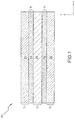
FIGs. 1 illustrates a cross-sectional view of a 3-ply veneer panel with an adhesive material disposed between the plies, in accordance with various embodiments; -
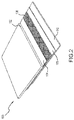
FIG. 2 illustrates a perspective view of a 3-ply veneer panel with the layers used to make the panel spread staggered for clarity, in accordance with various embodiments; and -
FIG. 3 illustrates a cross-sectional view of a 3-ply veneer with adhesive material propagated into the metal material, in accordance with various embodiments. - The detailed description of exemplary embodiments herein makes reference to the accompanying drawings, which show exemplary embodiments by way of illustration. While these exemplary embodiments are described in sufficient detail to enable those skilled in the art to practice the exemplary embodiments of the disclosure, it should be understood that other embodiments may be realized and that logical changes and adaptations in design and construction may be made in accordance with this disclosure and the teachings herein. Thus, the detailed description herein is presented for purposes of illustration only and not limitation. The steps recited in any of the method or process descriptions may be executed in any order and are not necessarily limited to the order presented.
- Furthermore, any reference to singular includes plural embodiments, and any reference to more than one component or step may include a singular embodiment or step. Also, any reference to attached, fixed, connected or the like may include permanent, removable, temporary, partial, full and/or any other possible attachment option. Additionally, any reference to without contact (or similar phrases) may also include reduced contact or minimal contact. Surface shading lines may be used throughout the figures to denote different parts but not necessarily to denote the same or different materials.
- A 3-ply wood veneer panel may comprise a metal mesh and/or metal fabric layer disposed between two wooden layers. Adhesive material may bond the three layers together with each layer having a thickness substantially less than the thickness of the other 2 dimensions. The resulting 3-ply panel may display flexibility relative to the plane formed by the two larger dimensions.
- With reference to
FIG. 1 , aveneer panel 100 is shown, in accordance with various embodiments.Veneer panel 100 may be a veneer assembly with three or more layers stacked in the y-direction relative to the axes provided for reference.Veneer panel 100 may have aface veneer 102 that may comprise a thin layer of walnut, cherry, birch, rosewood, oak, maple, mahogany, hemlock, teak, walnut, or any other wood species.Face veneer 102 ofveneer panel 100 may have a thickness T1 ranging from 0.015 inches to 0.030 inches (0.38 mm to 0.76 mm). For example,face veneer 102 may comprise a thickness T1 of 0.02 inches (0.508 mm).Face veneer 102 may further be sanded to provide a smooth, decorative surface for finishing. Veneer panel may be a flexible veneer panel.Veneer panel 100 may be formed in any dimensions, and readily be made into rectangular 4 foot by 8 foot (1.2 m to 2.4 m) panels. Veneer panels may also be cut into smaller sizes or varied shapes. - In various embodiments, an
adhesive material 104 may be applied to a back surface offace veneer 102. The adhesive material may be in the form of a thermoset adhesive, such as a phenolic glue film or a phenolic surface film, or any other suitable adhesive.Adhesive material 104 may have a thickness T2 of 0.005 inches (0.13 mm), for example. A phenolic glue film may allow the glue to be cut in a sheet form and disposed between a backsurface face veneer 102 andmetal mesh 106 during the layup process. - In various embodiments, a
metal mesh 106 may act as a core material forveneer panel 100.Metal mesh 106 may be a woven metal material similar to a fabric.Metal mesh 106 may be woven on high-speed looms in various weaves (e.g., twill weave or square weave). The diameter of the wire in a metal mesh contributes more to the strength of a veneer panel than the type of weave of the mesh being. The metal mesh may range from 325 wire-per-inch mesh to 500 wire-per-inch (325 wire-per-2.54-cm to 500 wire-per-2.54-cm) mesh. For example, the metal mesh may be a 400 wire-per-inch (400 wire-per-2.54-cm) mesh or other fabric-like metal woven mesh. - In various embodiments,
metal mesh 106 may be woven from metal wires, the metal wires having a diameter from 0.0009 inches (0.023 mm) to 0.0019 inches (0.048 mm). For example, a veneer panel may be made from a metal weave of wires with 0.0012 inch (0.0305 mm) diameter. Higher diameter wires may show through thin cuts offace veneer 102 or otherwise telegraph the presence of the woven wires behindface veneer 102.Metal mesh 106 may thus have a thickness T3 less than 0.05 inches (1.27 mm). - In various embodiments,
metal mesh 106 may be made from any metallic material (e.g., aluminum, steel, or any other suitable metal). A corrosion resistant stainless steel such as T-316 stainless steel (16-18% chromium, 10-14% nickel, 0.8% max carbon, 2% max magnesium, 0.75% max silicon, 2-3% molybdenum) or T-304 stainless steel (18-20% chromium, 8-10.5% nickel, 0.8% max carbon, 2% max magnesium, 0.75% max silicon) may be suitable for its corrosion resistance. In that regard, the material formetal mesh 106 may be selected to resist reacting chemicals such as tannins in the wood and/or fire retardant surface treatments, depending on the desired application. Aluminum mesh may also be used and is of relatively light weight with generally low melting point. Thus, aluminum may be less fire resistant than steel but provides weight savings compared to steel. In that regard, various metals may be compared and selected formetal mesh 106 based on suitability to the final application ofveneer panel 100. - In various embodiments, an
adhesive material 108 may be applied to a surface ofmetal mesh 106 on the opposite side ofmetal mesh 106 fromadhesive material 104. Thus,metal mesh 106 may be sandwiched betweenadhesive material 104 andadhesive material 108.Adhesive material 108 may be in the form of a thermoset adhesive (e.g., a phenolic glue film or a phenolic surface film).Adhesive material 108 may have a thickness T4 of 0.005 inches (0.13 mm), for example. A phenolic glue film may allow the glue to be cut in a sheet form and located betweenbacking layer 110 andmetal mesh 106 during the layup process. - In various embodiments,
backing layer 110 may form the back surface ofveneer panel 100.Backing layer 110 may thus be hidden from sight in applications where only one side ofveneer panel 100 is visible. Thus,backing layer 110 may be made from a less visually appealing and or mismatched material.Backing layer 110 may be a thin layer of walnut, cherry, birch, rosewood, oak, maple, mahogany, hemlock, teak, walnut, poplar, or any other wood species. Using a wood material forbacking layer 110, and particularly the same wood species asface veneer 102, may result a more balanced coefficient of thermal expansion than other backing materials.Backing layer 110 may be a wooden layer with a thickness T5 ranging from 0.015 inches to 0.030 inches (0.38 mm to 0.76 mm). For example,backing layer 110 may comprise a poplar layer with thickness T5 of 0.02 inches (0.508 mm). - In various embodiments, the grain of the wood on
backing layer 110 may be aligned with the grain offace veneer 102 for flexibility, or the grain of the wood onbacking layer 110 may be disposed roughly orthogonal to the grain offace veneer 102 for increased stiffness.Backing layer 110 may further be sanded to provide a smooth surface with a consistent thickness. In various embodiments,backing layer 110 may be made from non-wood materials such as fiber-reinforced composite, paper, felt, or another suitable material. - With reference to
FIG. 2 ,veneer panel 100 is shown in a 3-ply configuration with each layer fanned out for visibility. The layup forveneer panel 100 comprisesface veneer 102 on a top surface.Adhesive material 104 may be a continuous sheet cut into a shape to mirror the shape offace veneer 102 and the other layers ofveneer panel 100.Metal mesh 106 may be disposed betweenadhesive material 104 andadhesive material 108. Abacking layer 110 may be disposed adjacentadhesive material 108 to form the bottom surface ofveneer panel 100. In that regard,backing layer 110 may provide support forveneer panel 100.Face veneer 102,adhesive material 104,metal mesh 106,adhesive material 108, andbacking layer 110 may each be a separate layer cut into the same shape and be aligned prior to a heat pressing treatment to form theveneer panel 100. - With reference to
FIG. 3 , aveneer panel 100 is shown with a heat and/or pressure treatment (e.g., by pressingveneer panel 100 inside a press machine), in accordance with various embodiments. Pressure P may be a compressive force applied uniformly and/or substantially uniformly across the outer surfaces ofveneer panel 100 throughface veneer 102 andbacking layer 110.Veneer panel 100 may also be heated to reach the thermal threshold to set thermosetting adhesive materials. - In various embodiments, and in response to the increased temperature and pressure,
adhesive material 104 may penetrate (in the y-direction) into fibers of the wood used forface veneer 102 as well as intometal mesh 106.Metal mesh 106 andface veneer 102 may press together and contact one another or have a thin layer of adhesive remaining between one another. Similarly, in response to the increased temperature and pressure,adhesive material 108 may penetrate into the material (e.g., wood) used forbacking layer 110 as well as intometal mesh 106.Metal mesh 106 andbacking layer 110 may press together and contact one another or have a thin layer of adhesive remaining between one another.Adhesive material 104 andadhesive material 108 may then thermoset and initiate cross-linking bonds. Adhesive material that has invaded intoface veneer 102,metal mesh 106, andbacking layer 110 may provide a strong adhesion and resist delamination. - In various embodiments,
veneer panel 100 may be sanded after going through the press process to create more uniform surfaces.Veneer panel 100 may then be run through a flex machine to introduce small micro cracks into the panel by flexing the panel. The microcracks may not be visible to the naked eye but nonetheless may improve flexibility of the panel. The 3-ply sandwich construction ofveneer panel 100 may resist breaking in the flex machine. - Benefits and other advantages have been described herein with regard to specific embodiments. Furthermore, the connecting lines shown in the various figures contained herein are intended to represent exemplary functional relationships and/or physical couplings between the various elements. It should be noted that many alternative or additional functional relationships or physical connections may be present in a practical system. However, the benefits, advantages, and any elements that may cause any benefit or advantage to occur or become more pronounced are not to be construed as critical, required, or essential features or elements of the disclosure. The scope of the disclosure is accordingly to be limited by nothing other than the appended claims, in which reference to an element in the singular is not intended to mean "one and only one" unless explicitly so stated, but rather "one or more." Moreover, where a phrase similar to "at least one of A, B, or C" is used in the claims, it is intended that the phrase be interpreted to mean that A alone may be present in an embodiment, B alone may be present in an embodiment, C alone may be present in an embodiment, or that any combination of the elements A, B and C may be present in a single embodiment; for example, A and B, A and C, B and C, or A and B and C.
- Systems, methods and apparatus are provided herein. In the detailed description herein, references to "various embodiments", "one embodiment", "an embodiment", "an example embodiment", etc., indicate that the embodiment described may include a particular feature, structure, or characteristic, but every embodiment may not necessarily include the particular feature, structure, or characteristic. Moreover, such phrases are not necessarily referring to the same embodiment. Further, when a particular feature, structure, or characteristic is described in connection with an embodiment, it is submitted that it is within the knowledge of one skilled in the art to affect such feature, structure, or characteristic in connection with other embodiments whether or not explicitly described. After reading the description, it will be apparent to one skilled in the relevant art(s) how to implement the disclosure in alternative embodiments.
- Furthermore, no element, component, or method step in the present disclosure is intended to be dedicated to the public regardless of whether the element, component, or method step is explicitly recited in the claims. No claim element herein is to be construed under the provisions of 35 U.S.C. 112(f), unless the element is expressly recited using the phrase "means for." As used herein, the terms "comprises", "comprising", or any other variation thereof, are intended to cover a non-exclusive inclusion, such that a process, method, article, or apparatus that comprises a list of elements does not include only those elements but may include other elements not expressly listed or inherent to such process, method, article, or apparatus.
Claims (15)
- A veneer panel (100), comprising:a face veneer (102);a metal mesh (106) contacting the face veneer (102);a backing layer (110) contacting the metal mesh (106); andan adhesive material (108) bonding the face veneer (102) to the metal mesh (106) and the backing layer (110).
- The veneer panel of claim 1, wherein the adhesive material (108) comprises at least one of a phenolic glue film or a phenolic surface film.
- The veneer panel of claim 1 or 2, wherein the face veneer (102) comprises a thickness from 0.015 inches to 0.030 inches.
- The veneer panel of any preceding claim, wherein the adhesive material (108) is penetrated into the face veneer (102) and the metal mesh (106).
- The veneer panel of any preceding claim, wherein the metal mesh (106) comprises at least one of stainless steel or aluminum.
- The veneer panel of any preceding claim, wherein the metal mesh (106) comprises metal wires with a diameter from 0.0009 inches to 0.0019 inches.
- The veneer panel of any preceding claim, wherein the metal mesh (106) comprises a 400 wire-per-inch mesh.
- The veneer panel of any preceding claim, wherein the backing layer (110) comprises a second face veneer.
- A method of making a veneer panel (100), comprising:forming a veneer assembly by stacking a face veneer (102), a metal mesh (106), and a backing layer (110);applying an adhesive material (108) between a back surface of the face veneer (102) and the metal mesh (106); andpressing the veneer assembly.
- The method of claim 9, wherein the adhesive material (108) comprises at least one of a phenolic glue film or a phenolic surface film.
- The method of claim 9 or 10, wherein the pressing the veneer assembly further comprises heating the veneer assembly.
- The method of any of claims 9 to 11, further comprising flexing the veneer panel (100) using a flex machine.
- The method of any of claims 9 to 12, wherein the metal mesh (106) comprises at least one of stainless steel or aluminum.
- The method of any of claims 9 to 13, wherein the metal mesh (106) comprises metal wires with a diameter from 0.0009 inches to 0.0019 inches.
- The method of any of claims 9 to 14, wherein the metal mesh (106) comprises a 400 wire-per-inch mesh.
Applications Claiming Priority (1)
| Application Number | Priority Date | Filing Date | Title |
|---|---|---|---|
| US14/694,663 US10814582B2 (en) | 2015-04-23 | 2015-04-23 | Flexible veneer panel with metal mesh layer |
Publications (2)
| Publication Number | Publication Date |
|---|---|
| EP3085529A1 true EP3085529A1 (en) | 2016-10-26 |
| EP3085529B1 EP3085529B1 (en) | 2023-01-25 |
Family
ID=56289278
Family Applications (1)
| Application Number | Title | Priority Date | Filing Date |
|---|---|---|---|
| EP16166155.8A Active EP3085529B1 (en) | 2015-04-23 | 2016-04-20 | Flexible veneer panel with metal mesh layer |
Country Status (2)
| Country | Link |
|---|---|
| US (1) | US10814582B2 (en) |
| EP (1) | EP3085529B1 (en) |
Cited By (2)
| Publication number | Priority date | Publication date | Assignee | Title |
|---|---|---|---|---|
| CN107571390A (en) * | 2017-06-15 | 2018-01-12 | 阜阳市宏桥建材有限公司 | A kind of preparation method of paper stalk board |
| WO2024213896A1 (en) * | 2023-04-14 | 2024-10-17 | Bone, Alexander | A reinforced panel, door panel comprising such reinforced panels and method of manufacturing the same |
Families Citing this family (5)
| Publication number | Priority date | Publication date | Assignee | Title |
|---|---|---|---|---|
| WO2017075041A1 (en) * | 2015-10-28 | 2017-05-04 | Armstrong World Industries, Inc. | Improved fire performance for wood veneer laminated ceiling tile |
| US11014330B2 (en) | 2017-03-24 | 2021-05-25 | Goodrich Corporation | Veneer panel with thin thermally conductive layer |
| US11890837B2 (en) | 2020-09-29 | 2024-02-06 | Goodrich Corporation (HSC) | Flame retardant veneer panel |
| EP4366948A4 (en) * | 2021-07-07 | 2025-05-07 | Välinge Innovation AB | PROCESS FOR PRODUCING A PANEL UNIT AND PANEL |
| KR20230020693A (en) * | 2021-08-04 | 2023-02-13 | 현대모비스 주식회사 | Real wood sheet and real wood sheet manufacturing method that can be automatically wrapped |
Citations (4)
| Publication number | Priority date | Publication date | Assignee | Title |
|---|---|---|---|---|
| US5243126A (en) * | 1990-01-30 | 1993-09-07 | Canadian Forest Products Ltd. | Conductive panel |
| ZA966990B (en) * | 1995-10-16 | 1997-02-24 | Monte Moss | Composite wood panel. |
| CN101811313A (en) * | 2009-02-19 | 2010-08-25 | 山东新港企业集团有限公司 | Metal reinforced wood composite board and machining method thereof |
| US8083878B1 (en) * | 2006-10-10 | 2011-12-27 | Goodrich Corporation | Fire resistant veneer assembly for aircraft interiors |
Family Cites Families (10)
| Publication number | Priority date | Publication date | Assignee | Title |
|---|---|---|---|---|
| US488809A (en) | 1892-12-27 | Conrad heepe | ||
| US1387011A (en) | 1920-05-07 | 1921-08-09 | Ratcliff Arthur | Composition board |
| GB8417704D0 (en) * | 1984-07-11 | 1984-08-15 | Secr Defence | Laminate materials |
| US4968771A (en) * | 1989-10-17 | 1990-11-06 | Georgia-Pacific Resins, Inc. | Wood adhesives modified with surface active agents |
| JPH03224731A (en) * | 1989-12-07 | 1991-10-03 | Yamaha Corp | Manufacture of composite molded product |
| US6033754A (en) * | 1996-08-20 | 2000-03-07 | Fiber Technologies, Inc. | Reinforced laminated veneer lumber |
| FR2883798B1 (en) * | 2005-04-04 | 2010-02-05 | Skywoods | NEW DECORATIVE WOOD-BASED PANEL FOR INTERIOR DEVELOPMENT |
| MX2009004755A (en) | 2006-11-01 | 2009-08-31 | Mallard Creek Polymers Inc | Engineered wood product. |
| CA2570930C (en) * | 2006-12-12 | 2014-02-25 | Peer Falko Idestrup | Fabric reinforced multi-ply plywood panel |
| DE102013101428A1 (en) * | 2013-02-13 | 2014-08-14 | Airex Ag | Biegeholzlaminat and produced thereon curved molding |
-
2015
- 2015-04-23 US US14/694,663 patent/US10814582B2/en active Active
-
2016
- 2016-04-20 EP EP16166155.8A patent/EP3085529B1/en active Active
Patent Citations (4)
| Publication number | Priority date | Publication date | Assignee | Title |
|---|---|---|---|---|
| US5243126A (en) * | 1990-01-30 | 1993-09-07 | Canadian Forest Products Ltd. | Conductive panel |
| ZA966990B (en) * | 1995-10-16 | 1997-02-24 | Monte Moss | Composite wood panel. |
| US8083878B1 (en) * | 2006-10-10 | 2011-12-27 | Goodrich Corporation | Fire resistant veneer assembly for aircraft interiors |
| CN101811313A (en) * | 2009-02-19 | 2010-08-25 | 山东新港企业集团有限公司 | Metal reinforced wood composite board and machining method thereof |
Non-Patent Citations (1)
| Title |
|---|
| DATABASE WPI Week 201066, Derwent World Patents Index; AN 2010-L68572, XP002760814 * |
Cited By (2)
| Publication number | Priority date | Publication date | Assignee | Title |
|---|---|---|---|---|
| CN107571390A (en) * | 2017-06-15 | 2018-01-12 | 阜阳市宏桥建材有限公司 | A kind of preparation method of paper stalk board |
| WO2024213896A1 (en) * | 2023-04-14 | 2024-10-17 | Bone, Alexander | A reinforced panel, door panel comprising such reinforced panels and method of manufacturing the same |
Also Published As
| Publication number | Publication date |
|---|---|
| EP3085529B1 (en) | 2023-01-25 |
| US10814582B2 (en) | 2020-10-27 |
| US20160311194A1 (en) | 2016-10-27 |
Similar Documents
| Publication | Publication Date | Title |
|---|---|---|
| EP3085529B1 (en) | Flexible veneer panel with metal mesh layer | |
| TWI613079B (en) | Cover layer with outside film layer of an elastic plastic | |
| US20120067508A1 (en) | Fire resistant veneer assembly for aircraft interiors | |
| JP6448628B2 (en) | Composite panel for floor or wall covering parts and method for manufacturing such a panel | |
| US9718257B2 (en) | Bending wood laminate and bent shaped part produced therefrom | |
| JP2011110939A (en) | Veneer reinforcement material wood floor and method for manufacturing the same | |
| CN112399917B (en) | CFRP sheet, laminate using CFRP sheet, and method for producing CFRP sheet | |
| US20180222169A1 (en) | Pressed laminate panel with a single layer elastomerick treated paper | |
| EP3592107B1 (en) | Heated floor panels | |
| KR101035655B1 (en) | LPM decorative plate of furniture and building interior material which can be cold press, hot press, lapping, membrane work and its manufacturing method | |
| US20050186399A1 (en) | Lighter-weight reinforced decorative composite material | |
| KR101439941B1 (en) | Manufacturing method high pressure laminate sheet | |
| KR100640738B1 (en) | Method for producing veneer sheet having solid wood, and veneer sheet having solid wood manufactured by the method | |
| KR101441345B1 (en) | Manufacturing method high pressure melamine sheet based on veneer | |
| EP2517856A1 (en) | Multi-layer laminate structure with reversible bonding | |
| US20240165924A1 (en) | Panels and method for producing panels | |
| KR20090006503A (en) | Strain-resistant natural veneer surface synthetic resin sheet | |
| US7579063B2 (en) | Fabric reinforced multi-ply plywood panel | |
| EP3725514A1 (en) | Carbon fiber decorative veneer | |
| US10821710B2 (en) | Flexible polyimide-backed aviation veneer | |
| CN215947708U (en) | Special fluorine dragon emery wheel shock insulator base cloth of mesh | |
| JP2000202947A (en) | Auxiliary sheet for applying cosmetic material | |
| CA3163186A1 (en) | Metal reinforced board | |
| EP3974178A1 (en) | Flame retardant veneer panel | |
| EP3760436B1 (en) | Thermally layered fire treated veneer panel |
Legal Events
| Date | Code | Title | Description |
|---|---|---|---|
| PUAI | Public reference made under article 153(3) epc to a published international application that has entered the european phase |
Free format text: ORIGINAL CODE: 0009012 |
|
| AK | Designated contracting states |
Kind code of ref document: A1 Designated state(s): AL AT BE BG CH CY CZ DE DK EE ES FI FR GB GR HR HU IE IS IT LI LT LU LV MC MK MT NL NO PL PT RO RS SE SI SK SM TR |
|
| AX | Request for extension of the european patent |
Extension state: BA ME |
|
| STAA | Information on the status of an ep patent application or granted ep patent |
Free format text: STATUS: REQUEST FOR EXAMINATION WAS MADE |
|
| 17P | Request for examination filed |
Effective date: 20170425 |
|
| RBV | Designated contracting states (corrected) |
Designated state(s): AL AT BE BG CH CY CZ DE DK EE ES FI FR GB GR HR HU IE IS IT LI LT LU LV MC MK MT NL NO PL PT RO RS SE SI SK SM TR |
|
| STAA | Information on the status of an ep patent application or granted ep patent |
Free format text: STATUS: EXAMINATION IS IN PROGRESS |
|
| 17Q | First examination report despatched |
Effective date: 20190429 |
|
| RIC1 | Information provided on ipc code assigned before grant |
Ipc: B32B 21/14 20060101ALI20220812BHEP Ipc: B32B 15/20 20060101ALI20220812BHEP Ipc: B32B 15/18 20060101ALI20220812BHEP Ipc: B32B 15/14 20060101ALI20220812BHEP Ipc: B32B 15/12 20060101ALI20220812BHEP Ipc: B32B 15/10 20060101ALI20220812BHEP Ipc: B32B 15/02 20060101ALI20220812BHEP Ipc: B32B 7/12 20060101AFI20220812BHEP |
|
| INTG | Intention to grant announced |
Effective date: 20220901 |
|
| STAA | Information on the status of an ep patent application or granted ep patent |
Free format text: STATUS: GRANT OF PATENT IS INTENDED |
|
| GRAS | Grant fee paid |
Free format text: ORIGINAL CODE: EPIDOSNIGR3 |
|
| GRAA | (expected) grant |
Free format text: ORIGINAL CODE: 0009210 |
|
| STAA | Information on the status of an ep patent application or granted ep patent |
Free format text: STATUS: THE PATENT HAS BEEN GRANTED |
|
| AK | Designated contracting states |
Kind code of ref document: B1 Designated state(s): AL AT BE BG CH CY CZ DE DK EE ES FI FR GB GR HR HU IE IS IT LI LT LU LV MC MK MT NL NO PL PT RO RS SE SI SK SM TR |
|
| REG | Reference to a national code |
Ref country code: GB Ref legal event code: FG4D |
|
| REG | Reference to a national code |
Ref country code: CH Ref legal event code: EP |
|
| REG | Reference to a national code |
Ref country code: DE Ref legal event code: R096 Ref document number: 602016077588 Country of ref document: DE |
|
| REG | Reference to a national code |
Ref country code: AT Ref legal event code: REF Ref document number: 1545657 Country of ref document: AT Kind code of ref document: T Effective date: 20230215 Ref country code: IE Ref legal event code: FG4D |
|
| REG | Reference to a national code |
Ref country code: LT Ref legal event code: MG9D |
|
| REG | Reference to a national code |
Ref country code: NL Ref legal event code: MP Effective date: 20230125 |
|
| REG | Reference to a national code |
Ref country code: AT Ref legal event code: MK05 Ref document number: 1545657 Country of ref document: AT Kind code of ref document: T Effective date: 20230125 |
|
| P01 | Opt-out of the competence of the unified patent court (upc) registered |
Effective date: 20230522 |
|
| PG25 | Lapsed in a contracting state [announced via postgrant information from national office to epo] |
Ref country code: NL Free format text: LAPSE BECAUSE OF FAILURE TO SUBMIT A TRANSLATION OF THE DESCRIPTION OR TO PAY THE FEE WITHIN THE PRESCRIBED TIME-LIMIT Effective date: 20230125 |
|
| PG25 | Lapsed in a contracting state [announced via postgrant information from national office to epo] |
Ref country code: RS Free format text: LAPSE BECAUSE OF FAILURE TO SUBMIT A TRANSLATION OF THE DESCRIPTION OR TO PAY THE FEE WITHIN THE PRESCRIBED TIME-LIMIT Effective date: 20230125 Ref country code: PT Free format text: LAPSE BECAUSE OF FAILURE TO SUBMIT A TRANSLATION OF THE DESCRIPTION OR TO PAY THE FEE WITHIN THE PRESCRIBED TIME-LIMIT Effective date: 20230525 Ref country code: NO Free format text: LAPSE BECAUSE OF FAILURE TO SUBMIT A TRANSLATION OF THE DESCRIPTION OR TO PAY THE FEE WITHIN THE PRESCRIBED TIME-LIMIT Effective date: 20230425 Ref country code: LV Free format text: LAPSE BECAUSE OF FAILURE TO SUBMIT A TRANSLATION OF THE DESCRIPTION OR TO PAY THE FEE WITHIN THE PRESCRIBED TIME-LIMIT Effective date: 20230125 Ref country code: LT Free format text: LAPSE BECAUSE OF FAILURE TO SUBMIT A TRANSLATION OF THE DESCRIPTION OR TO PAY THE FEE WITHIN THE PRESCRIBED TIME-LIMIT Effective date: 20230125 Ref country code: HR Free format text: LAPSE BECAUSE OF FAILURE TO SUBMIT A TRANSLATION OF THE DESCRIPTION OR TO PAY THE FEE WITHIN THE PRESCRIBED TIME-LIMIT Effective date: 20230125 Ref country code: ES Free format text: LAPSE BECAUSE OF FAILURE TO SUBMIT A TRANSLATION OF THE DESCRIPTION OR TO PAY THE FEE WITHIN THE PRESCRIBED TIME-LIMIT Effective date: 20230125 Ref country code: AT Free format text: LAPSE BECAUSE OF FAILURE TO SUBMIT A TRANSLATION OF THE DESCRIPTION OR TO PAY THE FEE WITHIN THE PRESCRIBED TIME-LIMIT Effective date: 20230125 |
|
| PG25 | Lapsed in a contracting state [announced via postgrant information from national office to epo] |
Ref country code: SE Free format text: LAPSE BECAUSE OF FAILURE TO SUBMIT A TRANSLATION OF THE DESCRIPTION OR TO PAY THE FEE WITHIN THE PRESCRIBED TIME-LIMIT Effective date: 20230125 Ref country code: PL Free format text: LAPSE BECAUSE OF FAILURE TO SUBMIT A TRANSLATION OF THE DESCRIPTION OR TO PAY THE FEE WITHIN THE PRESCRIBED TIME-LIMIT Effective date: 20230125 Ref country code: IS Free format text: LAPSE BECAUSE OF FAILURE TO SUBMIT A TRANSLATION OF THE DESCRIPTION OR TO PAY THE FEE WITHIN THE PRESCRIBED TIME-LIMIT Effective date: 20230525 Ref country code: GR Free format text: LAPSE BECAUSE OF FAILURE TO SUBMIT A TRANSLATION OF THE DESCRIPTION OR TO PAY THE FEE WITHIN THE PRESCRIBED TIME-LIMIT Effective date: 20230426 Ref country code: FI Free format text: LAPSE BECAUSE OF FAILURE TO SUBMIT A TRANSLATION OF THE DESCRIPTION OR TO PAY THE FEE WITHIN THE PRESCRIBED TIME-LIMIT Effective date: 20230125 |
|
| REG | Reference to a national code |
Ref country code: DE Ref legal event code: R097 Ref document number: 602016077588 Country of ref document: DE |
|
| PG25 | Lapsed in a contracting state [announced via postgrant information from national office to epo] |
Ref country code: SM Free format text: LAPSE BECAUSE OF FAILURE TO SUBMIT A TRANSLATION OF THE DESCRIPTION OR TO PAY THE FEE WITHIN THE PRESCRIBED TIME-LIMIT Effective date: 20230125 Ref country code: RO Free format text: LAPSE BECAUSE OF FAILURE TO SUBMIT A TRANSLATION OF THE DESCRIPTION OR TO PAY THE FEE WITHIN THE PRESCRIBED TIME-LIMIT Effective date: 20230125 Ref country code: EE Free format text: LAPSE BECAUSE OF FAILURE TO SUBMIT A TRANSLATION OF THE DESCRIPTION OR TO PAY THE FEE WITHIN THE PRESCRIBED TIME-LIMIT Effective date: 20230125 Ref country code: DK Free format text: LAPSE BECAUSE OF FAILURE TO SUBMIT A TRANSLATION OF THE DESCRIPTION OR TO PAY THE FEE WITHIN THE PRESCRIBED TIME-LIMIT Effective date: 20230125 Ref country code: CZ Free format text: LAPSE BECAUSE OF FAILURE TO SUBMIT A TRANSLATION OF THE DESCRIPTION OR TO PAY THE FEE WITHIN THE PRESCRIBED TIME-LIMIT Effective date: 20230125 |
|
| PG25 | Lapsed in a contracting state [announced via postgrant information from national office to epo] |
Ref country code: SK Free format text: LAPSE BECAUSE OF FAILURE TO SUBMIT A TRANSLATION OF THE DESCRIPTION OR TO PAY THE FEE WITHIN THE PRESCRIBED TIME-LIMIT Effective date: 20230125 |
|
| PLBE | No opposition filed within time limit |
Free format text: ORIGINAL CODE: 0009261 |
|
| STAA | Information on the status of an ep patent application or granted ep patent |
Free format text: STATUS: NO OPPOSITION FILED WITHIN TIME LIMIT |
|
| GBPC | Gb: european patent ceased through non-payment of renewal fee |
Effective date: 20230425 |
|
| PG25 | Lapsed in a contracting state [announced via postgrant information from national office to epo] |
Ref country code: LU Free format text: LAPSE BECAUSE OF NON-PAYMENT OF DUE FEES Effective date: 20230420 |
|
| 26N | No opposition filed |
Effective date: 20231026 |
|
| REG | Reference to a national code |
Ref country code: BE Ref legal event code: MM Effective date: 20230430 |
|
| PG25 | Lapsed in a contracting state [announced via postgrant information from national office to epo] |
Ref country code: MC Free format text: LAPSE BECAUSE OF FAILURE TO SUBMIT A TRANSLATION OF THE DESCRIPTION OR TO PAY THE FEE WITHIN THE PRESCRIBED TIME-LIMIT Effective date: 20230125 |
|
| PG25 | Lapsed in a contracting state [announced via postgrant information from national office to epo] |
Ref country code: GB Free format text: LAPSE BECAUSE OF NON-PAYMENT OF DUE FEES Effective date: 20230425 |
|
| PG25 | Lapsed in a contracting state [announced via postgrant information from national office to epo] |
Ref country code: SI Free format text: LAPSE BECAUSE OF FAILURE TO SUBMIT A TRANSLATION OF THE DESCRIPTION OR TO PAY THE FEE WITHIN THE PRESCRIBED TIME-LIMIT Effective date: 20230125 Ref country code: MC Free format text: LAPSE BECAUSE OF FAILURE TO SUBMIT A TRANSLATION OF THE DESCRIPTION OR TO PAY THE FEE WITHIN THE PRESCRIBED TIME-LIMIT Effective date: 20230125 Ref country code: GB Free format text: LAPSE BECAUSE OF NON-PAYMENT OF DUE FEES Effective date: 20230425 |
|
| REG | Reference to a national code |
Ref country code: IE Ref legal event code: MM4A |
|
| PG25 | Lapsed in a contracting state [announced via postgrant information from national office to epo] |
Ref country code: BE Free format text: LAPSE BECAUSE OF NON-PAYMENT OF DUE FEES Effective date: 20230430 |
|
| PG25 | Lapsed in a contracting state [announced via postgrant information from national office to epo] |
Ref country code: IE Free format text: LAPSE BECAUSE OF NON-PAYMENT OF DUE FEES Effective date: 20230420 |
|
| PG25 | Lapsed in a contracting state [announced via postgrant information from national office to epo] |
Ref country code: IE Free format text: LAPSE BECAUSE OF NON-PAYMENT OF DUE FEES Effective date: 20230420 |
|
| PG25 | Lapsed in a contracting state [announced via postgrant information from national office to epo] |
Ref country code: IT Free format text: LAPSE BECAUSE OF FAILURE TO SUBMIT A TRANSLATION OF THE DESCRIPTION OR TO PAY THE FEE WITHIN THE PRESCRIBED TIME-LIMIT Effective date: 20230125 |
|
| PG25 | Lapsed in a contracting state [announced via postgrant information from national office to epo] |
Ref country code: BG Free format text: LAPSE BECAUSE OF FAILURE TO SUBMIT A TRANSLATION OF THE DESCRIPTION OR TO PAY THE FEE WITHIN THE PRESCRIBED TIME-LIMIT Effective date: 20230125 |
|
| PG25 | Lapsed in a contracting state [announced via postgrant information from national office to epo] |
Ref country code: BG Free format text: LAPSE BECAUSE OF FAILURE TO SUBMIT A TRANSLATION OF THE DESCRIPTION OR TO PAY THE FEE WITHIN THE PRESCRIBED TIME-LIMIT Effective date: 20230125 |
|
| PG25 | Lapsed in a contracting state [announced via postgrant information from national office to epo] |
Ref country code: CY Free format text: LAPSE BECAUSE OF FAILURE TO SUBMIT A TRANSLATION OF THE DESCRIPTION OR TO PAY THE FEE WITHIN THE PRESCRIBED TIME-LIMIT; INVALID AB INITIO Effective date: 20160420 |
|
| PG25 | Lapsed in a contracting state [announced via postgrant information from national office to epo] |
Ref country code: HU Free format text: LAPSE BECAUSE OF FAILURE TO SUBMIT A TRANSLATION OF THE DESCRIPTION OR TO PAY THE FEE WITHIN THE PRESCRIBED TIME-LIMIT; INVALID AB INITIO Effective date: 20160420 |
|
| PG25 | Lapsed in a contracting state [announced via postgrant information from national office to epo] |
Ref country code: TR Free format text: LAPSE BECAUSE OF FAILURE TO SUBMIT A TRANSLATION OF THE DESCRIPTION OR TO PAY THE FEE WITHIN THE PRESCRIBED TIME-LIMIT Effective date: 20230125 |
|
| PGFP | Annual fee paid to national office [announced via postgrant information from national office to epo] |
Ref country code: FR Payment date: 20260319 Year of fee payment: 11 |
|
| REG | Reference to a national code |
Ref country code: CH Ref legal event code: U11 Free format text: ST27 STATUS EVENT CODE: U-0-0-U10-U11 (AS PROVIDED BY THE NATIONAL OFFICE) Effective date: 20260501 |
|
| PGFP | Annual fee paid to national office [announced via postgrant information from national office to epo] |
Ref country code: DE Payment date: 20260319 Year of fee payment: 11 |
|
| PGFP | Annual fee paid to national office [announced via postgrant information from national office to epo] |
Ref country code: CH Payment date: 20260501 Year of fee payment: 11 |