EP3079700B1 - Soluble guanylate cyclase activators - Google Patents
Soluble guanylate cyclase activators Download PDFInfo
- Publication number
- EP3079700B1 EP3079700B1 EP14869616.4A EP14869616A EP3079700B1 EP 3079700 B1 EP3079700 B1 EP 3079700B1 EP 14869616 A EP14869616 A EP 14869616A EP 3079700 B1 EP3079700 B1 EP 3079700B1
- Authority
- EP
- European Patent Office
- Prior art keywords
- pyrimidin
- methyl
- amino
- pyrrolo
- pyrazolo
- Prior art date
- Legal status (The legal status is an assumption and is not a legal conclusion. Google has not performed a legal analysis and makes no representation as to the accuracy of the status listed.)
- Active
Links
- 0 CCOC(C(*)=C(C#N)C#N)=O Chemical compound CCOC(C(*)=C(C#N)C#N)=O 0.000 description 8
- HXMRUQGCJCYHAD-UHFFFAOYSA-N CC(C)(CCc1nc([n](C)cc2)c2c(C(/N=C(\C(C(C)(C)C(C)=C)=C(C)C)/N)=C)n1)F Chemical compound CC(C)(CCc1nc([n](C)cc2)c2c(C(/N=C(\C(C(C)(C)C(C)=C)=C(C)C)/N)=C)n1)F HXMRUQGCJCYHAD-UHFFFAOYSA-N 0.000 description 1
- SAEIHLVFTMJONB-UHFFFAOYSA-N CC(c1c(N2)nc(-c3nc(CCC(C(F)(F)F)(F)F)nc4c3cn[n]4C)nc1N)(C2=O)C#N Chemical compound CC(c1c(N2)nc(-c3nc(CCC(C(F)(F)F)(F)F)nc4c3cn[n]4C)nc1N)(C2=O)C#N SAEIHLVFTMJONB-UHFFFAOYSA-N 0.000 description 1
- MOFZLPPSEOEXNJ-UHFFFAOYSA-N Cc(cc1)cc(OC)c1F Chemical compound Cc(cc1)cc(OC)c1F MOFZLPPSEOEXNJ-UHFFFAOYSA-N 0.000 description 1
- FFNKBQRKZRMYCL-UHFFFAOYSA-N Nc([nH]nc1)c1C#N Chemical compound Nc([nH]nc1)c1C#N FFNKBQRKZRMYCL-UHFFFAOYSA-N 0.000 description 1
Classifications
-
- C—CHEMISTRY; METALLURGY
- C07—ORGANIC CHEMISTRY
- C07D—HETEROCYCLIC COMPOUNDS
- C07D519/00—Heterocyclic compounds containing more than one system of two or more relevant hetero rings condensed among themselves or condensed with a common carbocyclic ring system not provided for in groups C07D453/00 or C07D455/00
-
- A—HUMAN NECESSITIES
- A61—MEDICAL OR VETERINARY SCIENCE; HYGIENE
- A61K—PREPARATIONS FOR MEDICAL, DENTAL OR TOILETRY PURPOSES
- A61K31/00—Medicinal preparations containing organic active ingredients
- A61K31/33—Heterocyclic compounds
- A61K31/395—Heterocyclic compounds having nitrogen as a ring hetero atom, e.g. guanethidine or rifamycins
- A61K31/495—Heterocyclic compounds having nitrogen as a ring hetero atom, e.g. guanethidine or rifamycins having six-membered rings with two or more nitrogen atoms as the only ring heteroatoms, e.g. piperazine or tetrazines
- A61K31/505—Pyrimidines; Hydrogenated pyrimidines, e.g. trimethoprim
- A61K31/519—Pyrimidines; Hydrogenated pyrimidines, e.g. trimethoprim ortho- or peri-condensed with heterocyclic rings
-
- A—HUMAN NECESSITIES
- A61—MEDICAL OR VETERINARY SCIENCE; HYGIENE
- A61K—PREPARATIONS FOR MEDICAL, DENTAL OR TOILETRY PURPOSES
- A61K31/00—Medicinal preparations containing organic active ingredients
- A61K31/33—Heterocyclic compounds
- A61K31/395—Heterocyclic compounds having nitrogen as a ring hetero atom, e.g. guanethidine or rifamycins
- A61K31/495—Heterocyclic compounds having nitrogen as a ring hetero atom, e.g. guanethidine or rifamycins having six-membered rings with two or more nitrogen atoms as the only ring heteroatoms, e.g. piperazine or tetrazines
- A61K31/505—Pyrimidines; Hydrogenated pyrimidines, e.g. trimethoprim
- A61K31/519—Pyrimidines; Hydrogenated pyrimidines, e.g. trimethoprim ortho- or peri-condensed with heterocyclic rings
- A61K31/52—Purines, e.g. adenine
-
- A—HUMAN NECESSITIES
- A61—MEDICAL OR VETERINARY SCIENCE; HYGIENE
- A61K—PREPARATIONS FOR MEDICAL, DENTAL OR TOILETRY PURPOSES
- A61K45/00—Medicinal preparations containing active ingredients not provided for in groups A61K31/00 - A61K41/00
- A61K45/06—Mixtures of active ingredients without chemical characterisation, e.g. antiphlogistics and cardiaca
-
- A—HUMAN NECESSITIES
- A61—MEDICAL OR VETERINARY SCIENCE; HYGIENE
- A61P—SPECIFIC THERAPEUTIC ACTIVITY OF CHEMICAL COMPOUNDS OR MEDICINAL PREPARATIONS
- A61P13/00—Drugs for disorders of the urinary system
- A61P13/12—Drugs for disorders of the urinary system of the kidneys
-
- A—HUMAN NECESSITIES
- A61—MEDICAL OR VETERINARY SCIENCE; HYGIENE
- A61P—SPECIFIC THERAPEUTIC ACTIVITY OF CHEMICAL COMPOUNDS OR MEDICINAL PREPARATIONS
- A61P3/00—Drugs for disorders of the metabolism
- A61P3/08—Drugs for disorders of the metabolism for glucose homeostasis
- A61P3/10—Drugs for disorders of the metabolism for glucose homeostasis for hyperglycaemia, e.g. antidiabetics
-
- A—HUMAN NECESSITIES
- A61—MEDICAL OR VETERINARY SCIENCE; HYGIENE
- A61P—SPECIFIC THERAPEUTIC ACTIVITY OF CHEMICAL COMPOUNDS OR MEDICINAL PREPARATIONS
- A61P7/00—Drugs for disorders of the blood or the extracellular fluid
- A61P7/02—Antithrombotic agents; Anticoagulants; Platelet aggregation inhibitors
-
- A—HUMAN NECESSITIES
- A61—MEDICAL OR VETERINARY SCIENCE; HYGIENE
- A61P—SPECIFIC THERAPEUTIC ACTIVITY OF CHEMICAL COMPOUNDS OR MEDICINAL PREPARATIONS
- A61P9/00—Drugs for disorders of the cardiovascular system
-
- C—CHEMISTRY; METALLURGY
- C07—ORGANIC CHEMISTRY
- C07B—GENERAL METHODS OF ORGANIC CHEMISTRY; APPARATUS THEREFOR
- C07B2200/00—Indexing scheme relating to specific properties of organic compounds
- C07B2200/05—Isotopically modified compounds, e.g. labelled
Definitions
- Cyclic GMP is an important intracellular messenger which triggers a multitude of different effects via the modulation of cGMP-dependent protein kinases, phosphodiesterases and ion channels. Examples are the relaxation of smooth muscles, the inhibition of thrombocyte activation and the inhibition of the proliferation of smooth-muscle cells and of leukocyte adhesion.
- cGMP is produced by particulate and soluble guanylate cyclases as a response to a number of extracellular and intracellular stimuli. In the case of the particulate guanylate cyclases, stimulation is essentially effected by peptidic messengers, such as the atrial natriuretic peptide or the cerebral natriuretic peptide.
- sGC soluble guanylate cyclases
- sGC soluble guanylate cyclases
- the most important stimulant is nitrogen monoxide ("NO") or a closely related species.
- NO nitrogen monoxide
- the function of other factors such as carbon monoxide or the hydroxyl radical is still largely unclear.
- NO nitrogen monoxide
- the binding of NO to the heme with formation of a penta-coordinate heme-nitrosyl complex is proposed as the mechanism of the activation by NO.
- the associated release of the histidine which is bound in the basal state to the iron converts the enzyme into the active conformation.
- Active soluble guanylate cyclases are composed of an ⁇ and a ⁇ subunit each.
- Several subunit subtypes have been described which differ from one another with respect to sequence, tissue-specific distribution and expression in different development stages.
- the subtypes ⁇ 1 and ⁇ 1 are mainly expressed in brain and lung, while ⁇ 2 is found in particular in liver and kidney.
- the subtype ⁇ 2 was shown to be present in human fetal brain.
- the subunits referred to as ⁇ 3 and ⁇ 3 were isolated from human brain and are homologous to ⁇ 1 and ⁇ 1 .
- More recent works indicate an ⁇ 2 i subunit which contains an insert in the catalytic domain. All subunits show great homologies in the region of the catalytic domain.
- the enzymes presumably contain one heme per heterodimer, which is bound via ⁇ 1 -Cys-78 and/or ⁇ 1 -His-105 and is part of the regulatory center.
- guanylate-cyclase-activating factors can be reduced, or their degradation may be promoted owing to the increased occurrence of free radicals.
- the resulting reduced activation of the sGC leads, via a weakening of the respective cGMP-mediated cellular response, for example to an increase of the blood pressure, to platelet activation or to increased cell proliferation and cell adhesion.
- a weakening of the respective cGMP-mediated cellular response for example to an increase of the blood pressure, to platelet activation or to increased cell proliferation and cell adhesion.
- endothelial dysfunction, atherosclerosis, hypertension, stable or unstable angina pectoris, thrombosis, myocardial infarction, strokes or erectile dysfunction results.
- Pharmacological stimulation of sGC offers a possibility to normalize cGMP production and therefore makes possible the treatment and/or prevention of such disorders.
- WO2013030288 A1 discloses fused pyrimidine compounds which are cGMP modulators for use in treating in particular cardiovascular diseases.
- the compounds of the present invention effect a strong activation of guanylate cyclase and are therefore suitable for the therapy and prophylaxis of disorders which are associated with a low cGMP level.
- the present invention relates to compounds which activate soluble guanylate cyclase and are valuable pharmaceutically active compounds for the therapy and prophylaxis of diseases, for example for cardiovascular diseases such as hypertension, heart failure, pulmonary hypertension, angina pectoris, diabetes, cardiac insufficiency, thrombosis, chronic kidney disease or atherosclerosis.
- the compounds of Formula I are capable of modulating the body's production of cyclic guanosine monophosphate ("cGMP") and are generally suitable for the therapy and prophylaxis of diseases which are associated with a disturbed cGMP balance.
- the invention furthermore relates to processes for preparing compounds of Formula I, to them for use for the therapy and prophylaxis of the abovementioned diseases and for preparing pharmaceuticals for this purpose, and to pharmaceutical preparations which comprise compounds of Formula I.
- the present invention is directed to compounds having structural Formula I: as defined in the claims, in particular as follows: or a pharmaceutically acceptable salt thereof wherein:
- Disclosure 1 is referred to herein as Disclosure 1, are compounds of Formula I wherein:
- Disclosure 2 is referred to herein as Disclosure 2, which is referred to herein as Disclosure 2, are compounds of Formula I wherein:
- Disclosure 1 or Disclosure 2 may have structural Formula Ia: wherein all variables including R 1 , R 2 , R 3 , R 4 , R 5 , X 1 and X 2 are as defined before.
- Compounds of Formula I, Disclosure 1 or Disclosure 2 may have structural Formula Ib: wherein all variables including R 1 , R 3 , R 4 , X 1 and X 2 are as defined before.
- Disclosed are compounds of Formula I, Formula la, Formula Ib or Disclosure 1 wherein X 1 and X 2 are both N.
- X 1 and X 2 are both CR in Formula I Formula Ia or Formula Ib; or X 1 and X 2 are both CH in Formula I, Formula la, Formula Ib, Disclosure 1 or Disclosure 2.
- X 1 is N and X 2 is CR in Formula I, Formula Ia or Formula Ib; or X 1 is N and X 2 is CH in Formula I, Formula la, Formula Ib, Disclosure 1 or Disclosure 2.
- R 1 is -H or -C 1-3 alkyl unsubstituted or substituted with one to three of -F; particularly it is -H, -CH 3 ,-CD 3 , -CH 2 CH 3 or -CD 2 CD 3 ; and more particularly it is -CH 3 or -CD 3 .
- R 2 is unsubstituted -C 1-6 alkyl, unsubstituted -C 3-6 cycloalkyl or unsubstituted phenyl.
- Disclosure or Disclosure 2 R 2 can be (a) -C 1-6 alkyl substituted with
- R 2 can be -C 1-5 alkyl-CF 3 , -C 1-4 alkyl-CF 3 , -C 1-3 alkyl-CF 3 , or -C 1-2 alkyl-CF 3 , wherein each group is unsubstituted or substituted with one to three of -F on one or more available carbons.
- R 2 can be -C 3-6 cycloalkyl or -C 1-3 alkyl-C 3-6 cycloalkyl wherein a carbon in the cycloalkyl ring is di-substituted with -F, for example but no limited to:
- R 2 can be -phenyl or -C 1-3 alkyl-phenyl, wherein each phenyl is substituted with one to three of -F.
- Formula la, Formula Ib, Disclosure 1 or Disclosure 2 R 3 can be -C 1-6 alkyl or -C 3-6 cycloalkyl, and particularly it is -C 1-3 alkyl or cyclopropyl.
- compounds of Disclosure 1 or Disclosure 2 R 4 can be:
- Formula la, Formula Ib, Disclosure 1 or Disclosure 2 R a can be (a) -H, (b) -C 1-4 alkyl unsubstituted or substituted with one or more substituents independently selected from -OH and one to three of -F, (c) -C 1-3 alkyl-C 3-6 cycloalkyl and particularly -CH 2 -C 3-6 cycloalkyl or -CH 2 -cyclopropyl, (d) -C 3-6 cycloalkyl and particularly cyclopropyl, or (e) a heteroaryl which is pyridyl or pyrazolyl, wherein the heteroaryl is unsubstituted or substituted with -C 1-3 alkyl.
- Formula la, Formula Ib, and compounds of Disclosure 1 or Disclosure 2 R a can be
- Formula la, Disclosure 1 or Disclosure 2 R 5 can be -H, -OH or -NH 2 , or particularly it is -NH 2 .
- alkyl is intended to include both branched- and straight-chain saturated aliphatic hydrocarbon groups having the specified number of carbon atoms when noted.
- Commonly used abbreviations for alkyl groups are used throughout the specification, e.g. methyl may be represented by conventional abbreviations including "Me” or CH 3 or a symbol that is an extended bond without a defined terminal group, e.g., a methyl substituent on phenyl may be represented as: Ethyl may be represented by "Et” or CH 2 CH 3 , propyl may be represented by “Pr” or CH 2 CH 2 CH 3 , butyl may be represented by "Bu” or CH 2 CH 2 CH 2 CH 3 , etc.
- C 1-6 alkyl (or “C 1 -C 6 alkyl”) for example, means linear or branched chain alkyl groups, including all isomers, having the specified number of carbon atoms.
- C 1-6 alkyl includes all of the hexyl alkyl and pentyl alkyl isomers as well as n-, iso-, sec- and t-butyl, n- and isopropyl, ethyl and methyl.
- C 1-4 alkyl means n-, iso-, sec- and t-butyl, n- and isopropyl, ethyl and methyl. If no number is specified, 1-10 carbon atoms are intended for linear or branched alkyl groups.
- cycloalkyl means a cyclized alkyl ring (i.e., a carbocycle) containing no heteroatoms.
- examples of cycloalkyl include cyclopropyl, cyclobutyl, cyclopentyl, cyclohexyl, cycloheptyl, decahydronaphthyl and the like.
- cycloalkyl is cyclopropyl or cyclobutyl, and particularly cyclopropyl.
- alkenyl unless otherwise indicated, means carbon chains which contain at least one carbon-carbon double bond, and which may be linear or branched or combinations thereof. Examples of alkenyl include, but are not limited to, vinyl, allyl, isopropenyl, pentenyl, hexenyl, heptenyl, 1-propenyl, 2-butenyl, 2-methyl-2-butenyl, and the like.
- alkynyl refers to a hydrocarbon radical straight or branched, containing the specified number of carbon atoms and at least one carbon to carbon triple bond. Alkynyl groups include ethynyl, propynyl, butynyl, 3-methylbutynyl and so on.
- Alkyl, alkenyl, alkynyl and cycloalkyl are each intended to include such carbon moieties containing isotopic forms of hydrogen (H) such as protium ( 1 H), for example but not limited to -CH 3 , and/or deuterium ( 2 H, also denoted herein as D), for example but not limited to -CD 3 .
- H isotopic forms of hydrogen
- protium 1 H
- -CH 3 deuterium
- D deuterium
- Heteroaryl unless otherwise indicated, means a mono- or bicyclic aromatic ring or ring system, wherein the ring or ring system is made up of a specified number of atoms when noted, and which contains at least one heteroatom selected from O, S and N or a specified number and selection of heteroatoms when noted.
- Examples include, but are not limited to, pyrrolyl, isoxazolyl, isothiazolyl, pyrazolyl, pyridyl, oxazolyl, oxadiazolyl, 1,3,4-oxadiazolyl-2(3H)-one, thiadiazolyl, thiazolyl, imidazolyl, triazolyl, tetrazolyl, furanyl, triazinyl, thienyl, pyridinyl, pyrimidinyl, pyrimidyl, pyridazinyl, pyrazinyl, and the like.
- Heteroaryl also includes a bicyclic ring system comprised of a mono-heteroaryl ring fused to a heterocyclic ring or a cycloalkyl ring. Additional examples of heteroaryls include, but are not limited to, indazolyl, thienopyrazolyl, imidazopyridazinyl, pyrazolopyrazolyl, pyrazolopyridinyl, imidazopyridinyl and imidazothiazolyl. Heteroaryl also includes such groups in charged form, e.g., pyridinium.
- Heterocyclyl means a 5- or 6-membered monocyclic non-aromatic or saturated ring containing at least one heteroatom selected from N, S and O, in which the point of attachment may be via an available carbon or nitrogen in the ring.
- heterocyclyl means a 5- or 6-membered monocyclic non-aromatic or saturated ring containing at least one heteroatom selected from N, S and O, in which the point of attachment may be via an available carbon or nitrogen in the ring. Examples include, but are not limited to, pyrrolidinyl, piperidinyl, piperazinyl, morpholinyl, imidazolidinyl, 2,3-dihydrofuro(2,3-b)pyridyl, benzoxazinyl, oxetanyl, tetrahydrofuranyl or tetrahydropyranyl and the like.
- the terms also includes partially unsaturated monocyclic rings that are not aromatic, such as 2- or 4-pyridones attached through the nitrogen or N-substituted-(1H, 3H)-pyrimidine-2, 4-diones (N-substituted uracils).
- the terms also include such moieties in charged form, e.g., piperidinium.
- Halogen includes fluorine (fluoro), chlorine (chloro), bromine (bromo) and iodine (iodo).
- halo is fluoro (-F) or chloro (-Cl).
- any variable e.g., R 1 , R 2 , etc.
- its definition on each occurrence is independent of its definition at every other occurrence.
- Combinations of substituents and/or variables are permissible only if such combinations result in stable compounds.
- the various substituents i.e. R 1 , R 2 , etc., are to be chosen in conformity with well-known principles of chemical structure connectivity and stability.
- substitution by a named substituent is permitted on any atom in a ring (e.g., aryl, a heteroaryl ring, or a saturated heterocyclic ring) provided such ring substitution is chemically allowed and results in a stable compound.
- a “stable” compound is a compound which can be prepared and isolated and whose structure and properties remain or can be caused to remain essentially unchanged for a period of time sufficient to allow use of the compound for the purposes described herein (e.g., therapeutic or prophylactic administration to a subject).
- substituted shall be deemed to include multiple degrees of substitution by a named substituent. Where multiple substituent moieties are disclosed or claimed, the substituted compound can be independently substituted by one or more of the disclosed or claimed substituent moieties, singly or plurally. By independently substituted, it is meant that the (two or more) substituents can be the same or different.
- Compounds of structural Formula I may contain one or more asymmetric centers and can thus occur as racemates and racemic mixtures, single enantiomers, diastereoisomeric mixtures and individual diastereoisomers. Centers of asymmetry that are present in the compounds of Formula I can all independently of one another have S configuration or R configuration.
- the compounds of this invention includes all possible enantiomers and diastereomers and mixtures of two or more stereoisomers, for example mixtures of enantiomers and/or diastereomers, in all ratios.
- enantiomers are a subject of the invention in enantiomerically pure form, both as levorotatory and as dextrorotatory antipodes, in the form of racemates and in the form of mixtures of the two enantiomers in all ratios.
- the invention includes both the cis form and the trans form as well as mixtures of these forms in all ratios.
- the present invention is meant to comprehend all such stereo-isomeric forms of the compounds of structural Formula I.
- Compounds of structural Formula I may be separated into their individual diastereoisomers by, for example, fractional crystallization from a suitable solvent, for example methanol or ethyl acetate or a mixture thereof, or via chiral chromatography using an optically active stationary phase.
- Absolute stereochemistry may be determined by X-ray crystallography of crystalline products or crystalline intermediates which are derivatized, if necessary, with a reagent containing an asymmetric center of known absolute configuration.
- any stereoisomer or isomers of a compound of Formula I may be obtained by stereospecific synthesis using optically pure starting materials or reagents of known absolute configuration.
- racemic mixtures of the compounds may be separated so that the individual enantiomers are isolated.
- the separation can be carried out by methods well known in the art, such as the coupling of a racemic mixture of compounds to an enantiomerically pure compound to form a diastereoisomeric mixture, followed by separation of the individual diastereoisomers by standard methods, such as fractional crystallization or chromatography.
- the coupling reaction is often the formation of salts using an enantiomerically pure acid or base.
- the diasteromeric derivatives may then be converted to the pure enantiomers by cleavage of the added chiral residue.
- the racemic mixture of the compounds can also be separated directly by chromatographic methods utilizing chiral stationary phases, which methods are well known in the art.
- Some of the compounds described herein may exist as tautomers which have different points of attachment of hydrogen accompanied by one or more double bond shifts.
- a ketone and its enol form are keto-enol tautomers.
- the individual tautomers as well as mixtures thereof are encompassed with compounds of Formula I of the present invention.
- the atoms may exhibit their natural isotopic abundances, or one or more of the atoms may be artificially enriched in a particular isotope having the same atomic number, but an atomic mass or mass number different from the atomic mass or mass number predominately found in nature.
- the present invention as described and claimed herein is meant to include all suitable isotopic variations of the compounds of structural Formula I and embodiments thereof.
- different isotopic forms of hydrogen (H) include protium ( 1 H) and deuterium ( 2 H, also denoted herein as D).
- Protium is the predominant hydrogen isotope found in nature.
- Enriching for deuterium may afford certain therapeutic advantages, such as increasing in vivo half-life or reducing dosage requirements, or may provide a compound useful as a standard for characterization of biological samples.
- Isotopically-enriched compounds within structural Formula I can be prepared without undue experimentation by conventional techniques well known to those skilled in the art or by processes analogous to those described in the Schemes and Examples herein using appropriate isotopically-enriched reagents and/or intermediates.
- references to the compounds of structural Formula I are meant to also include the pharmaceutically acceptable salts thereof, and also salts that are not pharmaceutically acceptable when they are used as precursors to the free compounds or their pharmaceutically acceptable salts or in other synthetic manipulations.
- the compounds of the present invention including the compounds of the Examples, also includes all salts of the compounds of Formula I which, owing to low physiological compatibility, are not directly suitable for use in pharmaceuticals but which can be used, for example, as intermediates for chemical reactions or for the preparation of physiologically acceptable salts.
- the compounds of the present invention may be administered in the form of a pharmaceutically acceptable salt.
- pharmaceutically acceptable salt refers to salts prepared from pharmaceutically acceptable non-toxic bases or acids including inorganic or organic bases and inorganic or organic acids. Salts of basic compounds encompassed within the term “pharmaceutically acceptable salt” refer to non-toxic salts of the compounds of this invention which are generally prepared by reacting the free base with a suitable organic or inorganic acid.
- Representative salts of basic compounds of the present invention include, but are not limited to, the following: acetate, ascorbate, benzenesulfonate, benzoate, bicarbonate, bisulfate, bitartrate, borate, bromide, butyrate, camphorate, camphorsulfonate, camsylate, carbonate, chloride, clavulanate, citrate, dihydrochloride, edetate, edisylate, estolate, esylate, fumarate, gluceptate, gluconate, glutamate, glycollylarsanilate, hexylresorcinate, hydrabamine, hydrobromide, hydrochloride, hydroxynaphthoate, iodide, isothionate, lactate, lactobionate, laurate, malate, maleate, mandelate, mesylate, methylbromide, methylnitrate, methylsulfate, methanes
- suitable pharmaceutically acceptable salts thereof include, but are not limited to, salts derived from inorganic bases including aluminum, ammonium, calcium, copper, ferric, ferrous, lithium, magnesium, manganic, mangamous, potassium, sodium, zinc, and the like. Particularly preferred are the ammonium, calcium, magnesium, potassium, and sodium salts.
- Salts derived from pharmaceutically acceptable organic non-toxic bases include salts of primary, secondary, and tertiary amines, cyclic amines, dicyclohexyl amines and basic ion-exchange resins, such as arginine, betaine, caffeine, choline, N,N-dibenzylethylenediamine, diethylamine, 2-diethylaminoethanol, 2-dimethylaminoethanol, ethanolamine, ethylenediamine, N-ethylmorpholine, N-ethylpiperidine, glucamine, glucosamine, histidine, hydrabamine, isopropylamine, lysine, methylglucamine, morpholine, piperazine, piperidine, polyamine resins, procaine, purines, theobromine, triethylamine, trimethylamine, tripropylamine, tromethamine, and the like.
- basic ion-exchange resins such as arg
- the invention also includes, in addition to the salt forms mentioned, inner salts or betaines (zwitterions). Salts can be obtained from the compounds of Formula I by customary methods which are known to the person skilled in the art, for example by combination with an organic or inorganic acid or base in a solvent or dispersant, or by anion exchange or cation exchange from other salts.
- the present invention also includes all salts of the compounds of Formula I which, owing to low physiological compatibility, are not directly suitable for use in pharmaceuticals but which can be used, for example, as intermediates for chemical reactions or for the preparation of pharmaceutically acceptable salts.
- compounds of the present invention may exist in amorphous form and/or one or more crystalline forms, and as such all amorphous and crystalline forms and mixtures thereof of the compounds of Formula I, including the Examples, are intended to be included within the scope of the present invention.
- some of the compounds of the instant invention may form solvates with water (i.e., a hydrate) or common organic solvents such as but not limited to ethyl acetate.
- esters can optionally be made by esterification of an available carboxylic acid (-COOH) group or by formation of an ester on an available hydroxy group in a compound.
- labile amides can be made.
- Pharmaceutically acceptable esters or amides of the compounds of this invention may be prepared to act as pro-drugs which can be hydrolyzed back to an acid (or -COO- depending on the pH of the fluid or tissue where conversion takes place) or hydroxy form particularly in vivo, e.g.
- esters and acyl groups known in the art for modifying the solubility or hydrolysis characteristics for use as sustained-release or prodrug formulations.
- esters of carboxylic acid derivatives such as methyl, ethyl, or pivaloyloxymethyl
- acyl derivatives of alcohols such as O-acetyl, O-pivaloyl, O-benzoyl, and O -aminoacyl, can be employed.
- the compounds within the generic structural formulas, embodiments and specific compounds described in the Examples and claimed herein encompass salts, all possible stereoisomers and tautomers, physical forms (e.g., amorphous and crystalline forms), and any combination of these forms, as well as the salts, thereof, where such forms are possible unless specified otherwise.
- the present invention also relates to processes for the preparation of the compounds of Formula I which are described in the following and by which the compounds of the invention are obtainable.
- the compounds of Formula I according to the invention effect an increase of cGMP concentration via the activation of the soluble guanylate cyclase (sGC), and they are therefore useful agents for the therapy and prophylaxis of disorders which are associated with a low or decreased cGMP level or which are caused thereby, or for whose therapy or prophylaxis an increase of the present cGMP level is desired.
- the activation of the sGC by the compounds of Formula I can be examined, for example, in the activity assay described below.
- terapéuticaally effective (or efficacious) amount and similar descriptions such as “an amount efficacious for treatment” are intended to mean that amount of a pharmaceutical drug that will elicit the biological or medical response of a tissue, a system, animal or human that is being sought by a researcher, veterinarian, medical doctor or other clinician.
- prophylactically effective (or efficacious) amount and similar descriptions such as “an amount efficacious for prevention” are intended to mean that amount of a pharmaceutical drug that will prevent or reduce the risk of occurrence of the biological or medical event that is sought to be prevented in a tissue, a system, animal or human by a researcher, veterinarian, medical doctor or other clinician.
- the dosage a patient receives can be selected so as to achieve the desired reduction in blood pressure; the dosage a patient receives may also be titrated over time in order to reach a target blood pressure.
- the dosage regimen utilizing a compound of the instant invention is selected in accordance with a variety of factors including type, species, age, weight, sex and medical condition of the patient; the severity of the condition to be treated; the potency of the compound chosen to be administered; the route of administration; and the renal and hepatic function of the patient. A consideration of these factors is well within the purview of the ordinarily skilled clinician for the purpose of determining the therapeutically effective or prophylactically effective dosage amount needed to prevent, counter, or arrest the progress of the condition. It is understood that a specific daily dosage amount can simultaneously be both a therapeutically effective amount, e.g., for treatment of hypertension, and a prophylactically effective amount, e.g., for prevention of myocardial infarction.
- disorders and pathological conditions which are associated with a low cGMP level or in which an increase of the cGMP level is desired and for whose therapy and prophylaxis it is possible to use compounds of Formula I are, for example, cardiovascular diseases, such as endothelial dysfunction, diastolic dysfunction, atherosclerosis, hypertension, heart failure, pulmonary hypertension, which includes pulmonary arterial hypertension (PAH), stable and unstable angina pectoris, thrombosis, restenosis, myocardial infarction, strokes, cardiac insufficiency or pulmonary hypertonia, or, for example, erectile dysfunction, asthma bronchiale, chronic kidney disease and diabetes.
- cardiovascular diseases such as endothelial dysfunction, diastolic dysfunction, atherosclerosis, hypertension, heart failure, pulmonary hypertension, which includes pulmonary arterial hypertension (PAH), stable and unstable angina pectoris, thrombosis, restenosis, myocardial infarction, strokes, cardiac insufficiency or
- the compounds of Formula I and their pharmaceutically acceptable salts can be administered to animals, preferably to mammals, and in particular to humans, as pharmaceuticals by themselves, in mixtures with one another or in the form of pharmaceutical preparations.
- the term "patient” includes animals, preferably mammals and especially humans, who use the instant active agents for the prevention or treatment of a medical condition. Administering of the drug to the patient includes both self-administration and administration to the patient by another person.
- the patient may be in need of, or desire, treatment for an existing disease or medical condition, or may be in need of or desire prophylactic treatment to prevent or reduce the risk of occurrence of said disease or medical condition.
- a patient "in need" of treatment of an existing condition or of prophylactic treatment encompasses both a determination of need by a medical professional as well as the desire of a patient for such treatment.
- a subject of the present invention therefore also are the compounds of Formula I according to the invention and their pharmaceutically acceptable salts for use as pharmaceuticals, a them for use for activating soluble guanylate cyclase, for normalizing a disturbed cGMP balance and in particular for use in the therapy and prophylaxis of the abovementioned syndromes as well as their use for preparing medicaments for these purposes.
- a therapeutically effective amount is intended to mean that amount of a drug or pharmaceutical agent that will elicit the biological or medical response of a tissue, a system, animal or human that is being sought by a researcher, veterinarian, medical doctor or other clinician.
- a prophylactically effective amount is intended to mean that amount of a pharmaceutical drug that will prevent or reduce the risk of occurrence of the biological or medical event that is sought to be prevented in a tissue, a system, animal or human by a researcher, veterinarian, medical doctor or other clinician. It is understood that a specific daily dosage amount can simultaneously be both a therapeutically effective amount, e.g., for treatment of hypertension, and a prophylactically effective amount, e.g., for prevention of myocardial infarction.
- a subject of the present invention are pharmaceutical preparations (or pharmaceutical compositions) which comprise as active component an effective dose of at least one compound of Formula I and/or a pharmaceutically acceptable salt thereof according to the invention and a customary pharmaceutically acceptable carrier, i.e., one or more pharmaceutically acceptable carrier substances and/or additives.
- a subject of the invention are, for example, said compound and its pharmaceutically acceptable salts for use as a pharmaceutical, pharmaceutical preparations which comprise as active component an effective dose of said compound and/or a pharmaceutically acceptable salt thereof and a customary pharmaceutically acceptable carrier, and the uses of said compound and/or a pharmaceutically acceptable salt thereof in the therapy or prophylaxis of the abovementioned syndromes as well as their use for preparing medicaments for these purposes.
- the pharmaceuticals according to the invention can be administered orally, for example in the form of pills, tablets, lacquered tablets, sugar-coated tablets, granules, hard and soft gelatin capsules, aqueous, alcoholic or oily solutions, syrups, emulsions or suspensions, or rectally, for example in the form of suppositories. Administration can also be carried out parenterally, for example subcutaneously, intramuscularly or intravenously in the form of solutions for injection or infusion.
- Suitable administration forms are, for example, percutaneous or topical administration, for example in the form of ointments, tinctures, sprays or transdermal therapeutic systems, or the inhalative administration in the form of nasal sprays or aerosol mixtures, or, for example, microcapsules, implants or rods.
- the preferred administration form depends, for example, on the disease to be treated and on its severity.
- the amount of active compound of Formula I and/or its pharmaceutically acceptable salts in the pharmaceutical preparations normally is from 0.2 to 200 mg, preferably from 1 to 200 mg, per dose, but depending on the type of the pharmaceutical preparation it can also be higher.
- the pharmaceutical preparations usually comprise 0.5 to 90 percent by weight of the compounds of Formula I and/or their pharmaceutically acceptable salts.
- the preparation of the pharmaceutical preparations can be carried out in a manner known per se.
- one or more compounds of Formula I and/or their pharmaceutically acceptable salts together with one or more solid or liquid pharmaceutical carrier substances and/or additives (or auxiliary substances) and, if desired, in combination with other pharmaceutically active compounds having therapeutic or prophylactic action, are brought into a suitable administration form or dosage form which can then be used as a pharmaceutical in human or veterinary medicine.
- Carriers for soft gelatin capsules and suppositories are, for example, fats, waxes, semisolid and liquid polyols, natural or hardened oils, etc.
- Suitable carriers for the preparation of solutions, for example of solutions for injection, or of emulsions or syrups are, for example, water, physiologically sodium chloride solution, alcohols such as ethanol, glycerol, polyols, sucrose, invert sugar, glucose, mannitol, vegetable oils, etc.
- Suitable carriers for microcapsules, implants or rods are, for example, copolymers of glycolic acid and lactic acid.
- the pharmaceutical preparations can also contain customary additives, for example fillers, disintegrants, binders, lubricants, wetting agents, stabilizers, emulsifiers, dispersants, preservatives, sweeteners, colorants, flavorings, aromatizers, thickeners, diluents, buffer substances, solvents, solubilizers, agents for achieving a depot effect, salts for altering the osmotic pressure, coating agents or antioxidants.
- customary additives for example fillers, disintegrants, binders, lubricants, wetting agents, stabilizers, emulsifiers, dispersants, preservatives, sweeteners, colorants, flavorings, aromatizers, thickeners, diluents, buffer substances, solvents, solubilizers, agents for achieving a depot effect, salts for altering the osmotic pressure, coating agents or antioxidants.
- the dosage of the active compound of Formula I and/or of a pharmaceutically acceptable salt thereof to be adminstered depends on the individual case and is, as is customary, to be adapted to the individual circumstances to achieve an optimum effect. Thus, it depends on the nature and the severity of the disorder to be treated, and also on the sex, age, weight and individual responsiveness of the human or animal to be treated, on the efficacy and duration of action of the compounds used, on whether the therapy is acute or chronic or prophylactic, or on whether other active compounds are administered in addition to compounds of Formula I.
- a daily dose of approximately 0.01 to 100 mg/kg, preferably 0.01 to 10 mg/kg, in particular 0.3 to 5 mg/kg (in each case mg per kg of bodyweight) is appropriate for administration to an adult weighing approximately 75 kg in order to obtain the desired results.
- the daily dose can be administered in a single dose or, in particular when larger amounts are administered, be divided into several, for example two, three or four individual doses. In some cases, depending on the individual response, it may be necessary to deviate upwards or downwards from the given daily dose. A single daily dose is preferred.
- the compounds of Formula I activate soluble guanylate cyclase.
- They can also be employed as a scientific tool or as an aid for biochemical investigations in which such an effect on soluble guanylate cyclase is intended, and also for diagnostic purposes, for example in the in vitro diagnosis of cell samples or tissue samples.
- the compounds of Formula I and salts thereof can furthermore be employed, as already mentioned above, as intermediates for the preparation of other pharmaceutically active compounds.
- One or more additional pharmacologically active agents may be administered in combination with a compound of Formula I.
- An additional active agent is intended to mean a pharmaceutically active agent (or agents) that is active in the body, including pro-drugs that convert to pharmaceutically active form after administration, which are different from the compound of Formula I, and also includes free-acid, free-base and pharmaceutically acceptable salts of said additional active agents.
- any suitable additional active agent or agents including but not limited to anti-hypertensive agents, anti-atherosclerotic agents such as a lipid modifying compound, anti-diabetic agents and/or anti-obesity agents may be used in any combination with the compound of Formula I in a single dosage formulation (a fixed dose drug combination), or may be administered to the patient in one or more separate dosage formulations which allows for concurrent or sequential administration of the active agents (co-administration of the separate active agents).
- angiotensin converting enzyme inhibitors e.g, alacepril, benazepril, captopril, ceronapril, cilazapril, delapril, enalapril, enalaprilat, fosinopril, imidapril, lisinopril, moveltipril, perindopril, quinapril, ramipril, spirapril, temocapril, or trandolapril), angiotensin II receptor antagonists (e.g., losartan i.e., COZAAR®, valsartan, candesartan, olmesartan, telmesartan and any of these drugs used in combination with hydrochlorothiazide such as HYZAAR®); neutral endopeptidase inhibitors (e.g., thiorphan and phosphoramidon), ald
- angiotensin II receptor antagonists e.
- urea derivatives of di- and tri-peptides See U.S. Pat. No. 5,116,835 ), amino acids and derivatives ( U.S. Patents 5,095,119 and 5,104,869 ), amino acid chains linked by non-peptidic bonds ( U.S. Patent 5,114,937 ), di- and tri-peptide derivatives ( U.S. Patent 5,106,835 ), peptidyl amino diols ( U.S. Patents 5,063,208 and 4,845,079 ) and peptidyl beta-aminoacyl aminodiol carbamates ( U.S. Patent 5,089,471 ); also, a variety of other peptide analogs as disclosed in the following U.S.
- Patent 4,980,283 and fluoro- and chloro-derivatives of statone-containing peptides ( U.S. Patent 5,066,643 ), enalkrein, RO 42-5892, A 65317, CP 80794, ES 1005, ES 8891, SQ 34017, aliskiren (2(S),4(S),5(S),7(S)-N-(2-carbamoyl-2-methylpropyl)-5-amino-4-hydroxy-2,7-diisopropyl-8-[4-methoxy-3-(3-methoxypropoxy)-phenyl]-octanamid hemifumarate) SPP600, SPP630 and SPP635), endothelin receptor antagonists, phosphodiesterase-5 inhibitors (e.g.
- sildenafil, tadalfil and vardenafil vasodilators
- calcium channel blockers e.g., amlodipine, nifedipine, verastrial, diltiazem, gallopamil, niludipine, nimodipins, nicardipine
- potassium channel activators e.g., nicorandil, pinacidil, cromakalim, minoxidil, aprilkalim, loprazolam
- diuretics e.g., hydrochlorothiazide
- sympatholitics e.g., beta-adrenergic blocking drugs (e.g., propranolol, atenolol, bisoprolol, carvedilol, metoprolol, or metoprolol tartate), alpha adrenergic blocking drugs (e.g., doxazocin, prazocin or alpha methyldo
- lipid lowering agents e.g., HMG-CoA reductase inhibitors such as simvastatin and lovastatin which are marketed as ZOCOR® and MEVACOR® in lactone pro-drug form and function as inhibitors after administration, and pharmaceutically acceptable salts of dihydroxy open ring acid HMG-CoA reductase inhibitors such as atorvastatin (particularly the calcium salt sold in LIPITOR®), rosuvastatin (particularly the calcium salt sold in CRESTOR®), pravastatin (particularly the sodium salt sold in PRAVACHOL®), and fluvastatin (particularly the sodium salt sold in LESCOL®); a cholesterol absorption inhibitor such as ezetimibe (ZETIA®) and ezetimibe in combination with any other lipid lowering agents such as the HMG-CoA reductase inhibitors noted above and particularly with simvastatin (e.g., VYTORIN®) or with atorvastatin calcium (e.g.
- LIPTRUZET® LIPTRUZET®
- niacin in immediate-release or controlled release forms niacin receptor agonists such as acipimox and acifran, as well as niacin receptor partial agonists
- metabolic altering agents including insulin sensitizing agents and related compounds (e.g., muraglitazar, glipizide, metformin, rosiglitazone) or with other drugs beneficial for the prevention or the treatment of the above-mentioned diseases including nitroprusside and diazoxide the free-acid, free-base, and pharmaceutically acceptable salt forms of the above active agents where chemically possible.
- Conversion of the nitrile 2 to the amidine 3 can be accomplished with a reagent such as amino(chloro)methylaluminum, prepared from trimethylaluminum and ammonium chloride, in a non-polar solvent such as toluene at 100°C as described by Garigipati, R. S. et al Tetrahedron Letters 1990, 31(14), 1969 .
- a reagent such as amino(chloro)methylaluminum, prepared from trimethylaluminum and ammonium chloride
- a non-polar solvent such as toluene at 100°C as described by Garigipati, R. S. et al Tetrahedron Letters 1990, 31(14), 1969 .
- the reaction may also be carried out on the corresponding methyl ester of compound 2.
- Reaction of compound 4 with the amidine 3 in an alcoholic solvent such as MeOH, n-BuOH or t-BuOH and a base such as NaOMe, NaOEt, t-BuOK, K 2 CO 3 or NaHCO 3 at 90°C to 150°C affords the pyrimidine lactam 1.
- the reaction may also be carried out in the absence of a base. Additionally, the reaction may also be carried out on the corresponding ethyl or propyl ester of compound 4.
- ester 5 The preparation of compound 4a is outlined in Scheme 2. Deprotonation of ester 5 using a base such as LiHMDS, NaHMDS, NaH or LDA in a solvent such as THF or DMF followed by treatment with MeI affords the ester 6.
- the esters 5 and 6 may be prepared from the corresponding carboxylic acid by treatment with trimethylsilyl diazomethane or MeOH with catalytic sulfuric acid.
- the compound 7 is prepared by treating compound 6 with a brominating reagent such as NBS and AIBN in a solvent such as carbon tetrachloride at refluxing temperatures.
- Compound 4a wherein R 3 is phenyl, methyl or an ester, is obtained from 7 by reaction with malononitrile and a base such as NaH, t-BuOK, K 2 CO 3 or DBU in a solvent such as THF or DMF at ambient temperature to 100°C.
- a base such as NaH, t-BuOK, K 2 CO 3 or DBU
- a solvent such as THF or DMF at ambient temperature to 100°C.
- the synthetic sequence depicted in Scheme 2 may also used to prepare the corresponding ethyl or propyl ester of compound 4a.
- compound 4b (depicted as the ethyl ester) may also be prepared as shown in Scheme 3.
- Reaction of a suitable alkyl, or aryl magnesium halide with the dicyanopropenoate 8a (or 8b ) and lithium chloride in a solvent such as THF affords compound 4b.
- Cycloalkyl and alkynyl magnesium halides are also suitable reagents for this reaction.
- Compound 8a R 3 is CO 2 Et
- Compound 8b (R4 is Me) can be prepared using the procedure described by Hagiware et. al. Synthesis 1974, 9, 669 .
- Compounds with structure 16 may be prepared by the sequence depicted in Scheme 4. Conversion of an appropriately substituted acid 9 to the amidine 10 can be accomplished with a reagent such as amino(chloro)methylaluminum, prepared from trimethylaluminum and ammonium chloride, in a non-polar solvent such as toluene. Treatment of 10 with ethyl 2-cyano-4,4-diethoxybutanoate ( 11 ) under refluxing conditions in an alcoholic solvent such as ethanol and suitable base such as sodium ethoxide affords the pyrimidine 12. De-protection of the acetal under standard conditions such as TFA in ethanol at RT affords 13 which can be converted to 14 by refluxing in POCl 3 .
- a reagent such as amino(chloro)methylaluminum, prepared from trimethylaluminum and ammonium chloride
- a non-polar solvent such as toluene.
- Alkylation of the NH can be accomplished using a suitable alkyl or benzyl halide and a base such as NaH in a suitable solvent such as DMF to give 15.
- conversion of the chloride 15 to the nitrile 16 can be accomplished either by treatment of 15 with potassium cyanide in DMSO or treatment of 15 with zinc cyanide in the presence of a suitable catalyst such as Pd 2 (dba) 3 and a ligand such as dppf in a polar solvent such a DMF.
- Compounds with structure 20 may be prepared by the sequence depicted in Scheme 5.
- Treatment of 17 with an appropriate propyl ester 17a and a suitable base such as NaOEt in an alcoholic solvent such as EtOH under refluxing conditions gives the cyclized product 18.
- This can be converted to the chloro compound 19 with phosphorous oxychloride either neat or in a chlorinated solvent such as DCE under refluxing conditions.
- the nitrile 20 can be prepared by treatment of the chloride 19 with zinc cyanide in the presence of a suitable catalyst such as Pd 2 (dba) 3 and a ligand such as dppf in a polar solvent such a DMF.
- Intermediate 22 can be converted to the deuterium intermediate 23 with dimethyl sulfated 6 using the methods described in scheme 6.
- Compounds with structure 30 may be prepared by the sequence depicted in Scheme 8.
- Commercially available 5-amino-1-methyl-1H-pyrazole-4-carbonitrile (24) can be converted the amide 25 by treatment with concentrated sulfuric acid, which can be coupled to a suitable acid (26) in the presence of isopropyl chloroformate and a base such as N -methyl morpholine to afford 27.
- Treatment of 27 with a suitable base such as sodium ethoxide in an alcoholic solvent such as EtOH under refluxing conditions gives the cyclized product 28 which can be converted to 29 by refluxing in either neat POCl 3 or in a mixture of DCE and POCl 3 .
- the nitrile 30 can be prepared by treatment of the chloride 29 with zinc cyanide in the presence of a suitable catalyst such as Pd 2 (dba) 3 and a ligand such as dppf in a polar solvent such a DMF
- compound 28 may also be prepared as shown in Scheme 9.
- Compounds with structure 35 maybe prepared by the sequence as shown in Scheme 11.
- Structure 34 (depicted as the ethyl ester) can be formed analogous to the conversion of 3 to 1 as outlined in Scheme 1.
- conversion of the ester 34 to the amidine 35 can be accomplished with a reagent prepared from trimethylaluminum and corresponding heteroarylamine in a non-polar solvent such as toluene at 80°C.
- acyl hydrazide intermediate 36 Oxidation of the acyl hydrazide 36 to an acyl azide occurs upon treatment with t-butyl nitrite in the prescence of an TFA. Subsequent heating in an alcohol solvent such as t-BuOH affords the carbamate 37. Following TFA mediated carbamate removal, treatment of the primary amine 38 with an appropriate acylation reagent bearing the desired Ra substitution affords 39.
- t-BuONO tert -butyl nitrite t-Boc 2
- a chiral center in a compound may exist in the "S" or “R” stereo-configurations, or as a mixture of both.
- such compounds having a racemic chiral center were separated into individual stereoisomers, for example, referred to as isomer A (or enantiomer A or the like), which refers to the observed faster eluting isomer, and isomer B (or enantiomer B or the like), which refers to the observed slower eluting isomer, and each such isomer may be noted in the example as either the fast or slow eluting isomer.
- the downstream compound may take the "A" or "B" designation that corresponds to the previously used intermediate.
- any Intermediates described below may be referred to herein by their number preceded by "I-.”
- the racemic parent title compound would be referred to as Intermediate 2 (or 1-2), and the separated stereoisomers are noted as Intermediates 2A and 2B (or I-2A and I-2B).
- compounds having a chiral center were derived synthetically from a single isomer intermediate; e.g., Example 1 was made using stereoisomer I-2B. Absolute stereochemistry (R or S) of each of the separated isomers was not determined, unless specifically described otherwise.
- An asterisk (*) may be used in a chemical structure drawing that indicates the location of a chiral center.
- Step A Methyl 2-(4-fluorophenyl)propanoate.
- Methyl 2-(4-fluorophenyl)acetate 25 g, 149 mmol was dissolved in THF (300 mL).
- Hexamethylphosphoramide (26.6 g, 149 mmol) was added and the solution was cooled to -78°C.
- lithium diisopropylamide (2 M, 78 mL, 156 mmol) was added dropwise over several min. After aging for 15 min, iodomethane (42.2 g, 297 mmol) was rapidly added and the solution was then allowed to warm to ambient temperature.
- Step B Methyl 2-bromo-2-(4-fluorophenyl)propanoate.
- a carbon tetrachloride (212 mL) solution of the intermediate from Step A (27 g, 148 mmol), NBS (29 g, 163 mmol) and AIBN (0.730 g, 4.45 mmol) was heated to reflux. After hr the solution was filtered while still hot and the filtercake was washed with ether (50 mL). The filtrate was concentrated and the resulting residue was dissolved in EtOAc (300 mL) and washed with water (2 x 300 mL) and 37% aq Na 2 SO 3 (100 mL). The EtOAc was then dried with MgSO 4 , filtered, and removed to afford the title product which was used without further purification.
- Step C Methyl 33-dicyano-2-(4-fluorophenyl)-2-methylpropanoate.
- Malononitrile (10.58 g, 160 mmol) was added to a stirred THF (300 mL) solution of potassium t-butoxide (17.97 g, 160 mmol).
- the resulting suspension was heated to 60°C for 30 min then a solution of the intermediate from Step B (38 g, 146 mmol) in THF (100 mL) was added.
- the reaction solution was then heated at 60°C oil bath for 2 h.
- Step A Methyl 2-phenylpropanoate. Trimethylsilyl diazomethane (2.0M in hexanes, 40 mL, 80 mmol) was added dropwise to a solution of racemic 2-phenylpropionic acid (10.0 g, 66.6 mmol) in benzene (100 mL) and MeOH (20 mL) cooled in an ice bath. After the addition was complete the reaction solution was stirred at RT for 2 h. The solution was then concentrated to give the title product.
- Step B Methyl 2-bromo-2-phenylpropanoate.
- a carbon tetrachloride (150 mL) solution of the intermediate from Step A (10.39 g, 66.6 mmol), NBS (14.22 g, 80 mmol) and AIBN (0.547 g, 3.33 mmol) was heated to reflux. After 4 h the reaction solution was cooled to RT and the mixture filtered. The filtrate was concentrated and the residue purified by silica gel chromatography using a 10% to 50% EtOAc in hexanes gradient to give the title product.
- Step C Methyl 3,3-dicyano-2-methyl-2-phenylpropanoate.
- Malononitrile (4.29g, 65mmol) and potassium t-butoxide (7.29 g, 65 mmol) were added to a THF (100 mL) solution containing the intermediate from Step B (15.8 g, 65 mmol).
- the reaction solution was then placed in an 85°C oil bath for 4 h.
- the solution was then cooled to RT and partitioned between saturated aqueous ammonium chloride and EtOAc.
- the organic layer was washed with brine, dried over sodium sulfate, filtered, and concentrated.
- Step 1 Ethyl 2-(4-chlorophenyl)-3,3-dicyanoacrylate: To a solution of ethyl 2-(4-chlorophenyl)-2-oxoacetate (90.0 g, 0.425 mol) and piperidine (6.3 mL) in EtOH (900 mL) at 0 °C was added propanedinitrile (120 g, 1.818 mol) dropwise. After the addition, the resulting solution was stirred at 70 °C overnight and concentrated under vacuum. The residue was purified by silica gel chromatography using a 10/1 gradient of EtOAc/petroleum ether to give the title product. Step
- Step A Methyl 2-(dicyanomethylene)butanoate.
- Methyl 2-oxobutanoate (15 g, 129 mmol) and malononitrile (12.80 g, 194 mmol) were added to a flask followed by the addition of 3-aminopropanoic acid (0.575 g, 6.46 mmol) as a solution in water (12.92 ml), followed by the addition of EtOH (12.92 ml) and the reaction is left to stir for two h.
- the mixture was diluted with EtOAc and water.
- the layers were separated and the organic layer was dried with anhydrous sodium sulfate and concentrated.
- Silica gel chromatography (0% to 40% EtOAc in hexanes gradient) afforded the title product.
- Step B Methyl 2-(dicyanomethyl)-2-ethylbut-3-ynoate.
- the intermediate from step A in THF (3.50 ml) under nitrogen was cooled to -50°C.
- Ethynylmagnesium bromide (4.20 ml, 2.102 mmol) was added dropwise and the reaction was slowly allowed to warm in the bath for ⁇ 30 min.
- the mixture was quenched with saturated aq. NH 4 Cl and diluted with EtOAc and water.
- the layers were separated and the organic layer was dried with anhydrous sodium sulfate and concentrated.
- Silica gel chromatography (0% to 40% EtOAc in hexanes gradient) gave the title compound.
- Step A Methyl 3,3-dicyano-2-cyclopropylacrylate.
- a solution of beta-alanine (27.8 mg, 0.312 mmol) in water (535 ⁇ l) was added in small portions over ⁇ 5 min period.
- the reaction was cooled in an ice-bath and EtOH (350 ⁇ l) was added.
- the reaction was stirred at RT for 24 h.
- the reaction was diluted with water and extracted with ethyl ether.
- the ether layer was back extracted 2x with water.
- the ether layer was further diluted with EtOAc and dried (sodium sulfate).
- the combined organic layers were purified by silica gel column chromatography eluting with a 0% to 30% EtOAc in hexanes gradient to give the title product.
- Step B Methyl 2-cyclopropyl-2-(dicyanomethyl)but-3-ynoate.
- a solution of ethynylmagnesium bromide (6.8 mL, 3.41 mmol, 0.5M in THF).
- the reaction was stirred at RT for 30 min.
- the resulting solution was cooled to -30 °C.
- a solution of the intermediate from Step A (0.500 g, 2.84 mmol) in THF (5 mL) was added.
- the reaction was stirred for 1 h in the cooling bath then raised up to RT slowly.
- Step A Ethyl 2-cyclohexyl-2-oxoacetate.
- a 250-mL 3-necked round-bottom flask was purged and maintained with an inert atmosphere of nitrogen, and into it was added diethyl oxalate (7.3 g, 49.95 mmol, 1.0 equiv) and THF (80 mL), and then bromo(cyclohexyl)magnesium (50 mL, 50 mmol, 1.0 equiv, 1 N) was added dropwise at 0°C.
- the resulting solution was stirred for 2 h at ambient temperature.
- the reaction was then quenched by the addition of NH 4 Cl (3 N, 100 mL).
- the resulting solution was extracted with EtOAc (3 x 100 mL) and the organic layers were combined, dried over anhydrous sodium sulfate and filtered. The filtrate was concentrated in vacuo to afford the title product.
- Step B Ethyl 3, 3-dicyano-2-cyclohexylprop-2-enoate.
- the intermediate from Step A 9.0 g, 48.85 mmol, 1.00 equiv
- propanedinitrile 3.2 g, 48.44 mmol, 1.00 equiv
- 3-aminopropanoic acid 2.17 g, 24.36 mmol, 1.50 equiv
- water 10 mL
- EtOH (10 mL) was added.
- the resulting solution was stirred for 16 h at ambient temperature.
- the reaction was then quenched by the addition of brine (100 mL).
- Step C Ethyl 3,3-dicyano-2-cyclohexyl-2-methylpropanoate.
- the intermediate from Step B 1.3 g, 5.6 mmol, 1.0 equiv
- lithium chloride 0.35 g, 8.30 mmol, 1.50 equiv
- THF 18 mL
- Bromo(methyl)magnesium 2.24 g, 0.56 mmol, 1.2 equiv
- Step A 4,4,5,5,5-Pentafluoropentanoic acid.
- Jones Reagent a solution of chromium trioxide in diluted sulfuric acid
- acetone 20 mL
- a solution of 4,4,5,5,5-pentafluoropentan-1-ol 7.12 g, 40 mmol
- acetone 30 mL
- Step B Propyl 4,4,5,5,5-pentafluoropentanoate.
- thionyl chloride (14.9 mL, 0.195 mol).
- the mixture was then stirred at RT for 5 h.
- the solution was concentrated in vacuo.
- the residue was diluted with EtOAc and poured into ice water.
- the organic layer was washed by aqueous NaHCO 3 solution, dried over anhydrous Na 2 SO 4 , concentrated in vacuo to give the title product.
- Step C 1-Methyl-6-(3,3,4,4,4-pentafluorobutyl)-1 H -pyrazolo[3,4- d ]pyrimidin-4-ol.
- Step D 4-Chloro-1-methyl-6-(3,3,4,4,4-pentafluorobutyl)-1 H -pyrazol[3,4- d ]pyrimidine.
- the intermediate from Step C (43 g, 0.145 mmol) in POCl 3 (250 mL) was stirred at 115°C overnight.
- the mixture was diluted with EtOAc (2 L) and then washed with H 2 O (1 L ⁇ 5).
- the organic layer was dried and concentrated in vacuo.
- Step E 1-Methyl-6-(3,3,4,4,4-pentafluorobutyl)-1 H -pyrazolo[3,4- d ]pyrimidine-4-carbonitrile.
- Step F 1-Methyl-6-(3,3,4,4,4-pentafluorobulyl)-1 H -pyrazolo[3,4- d ]pyrimidine-4-carboximidamide.
- Me 3 Al (254 mL, 0.51 mol, 2 mol/L) dropwise, then stirred at RT for 1 h.
- Step G 4-Amino-5-methyl-2-(1-methyl-6-(3,3,4,4,4-pentafluorobulyl)-1 H -pyrazolo[3,4- d ]pyrimidin-4-yl)-5-phenyl-5 H -pyrrolo[2,3- d ]pyrimidin-6(7 H )-one.
- a tert-butanol (2.0 mL) solution containing the intermediate from Step F (40 mg, 0.124 mmol), Intermediate 2B (45 mg, 0.186 mmol) and potassium tert -butoxide (17 mg, 0.149 mmol) was heated at 120 °C in a sealed tube for 1.5 h.
- Step A 5-Amino-1-trideuteriomethy-1 H -pyrazole-4-carbonitrile.
- 3-Amino-1 H -pyrazole-4-carbonitrile 200 g, 1.85 mol was dissolved in 1 L of DMF in a 2 L of three -necked flask.
- Cs 2 CO 3 260 g, 2.03 mol was then added.
- the mixture was cooled to 0°C and CD 3 I (280 g, 1.93 mol) was added slowly at 0°C-10°C.
- the solution was stirred for 6 h at 0-10°C.
- the solvent was concentrated and DCM (500 mL) was added and the mixture was stirred for 0.5 hr at RT.
- Step B 5-Amino-1-trideuteriomethyl-1 H -pyrazole-4-carboxamide.
- conc.H 2 SO 4 500mL
- CH 3 CN 300 mL
- CH 3 CN 300 mL
- the mixture was filtered and washed the filter cake with CH 3 CN (1 L).
- the filter cake was washed with DMF (100 mL) and DMF filtrate was saved. The cake was recovered and stirred in DMF (200 mL) for 0.5 h at RT. The mixture was filtered again. The cake was washed with DMF (200 mL) and DMF flitrate was also saved. Both saved DMF flitrates were combined and concentrated to give the title product.
- Step C 6-(3,3,4,4,4-Pentafluorobutyl)-1-trideuteriomethyl-1 H -pyrazolo[3,4- d ]pyrimidine-4-carboximidamide.
- the title compound was prepared from the intermediate in 5-Amino-1-trideuteriomethyl-1 H -pyrazole-4-carboxamide and Propyl 4,4,5,5,5-pentafluoropentanoate (see Example 1, Step B) according to the procedure described in Step C to Step F of Example 1.
- Step D 4-Amino-5-(4-fluorophenyl)-5-methyl-2-(6-(3,3,4,4,4-pentafluorobutyl)-1-trideuteriomethyl-1 H -pyrazolo[3,4- d ]pyrimidin-4-yl)-5 H -pyrrolo[2,3- d ]pyrimidin-6(7 H )-one.
- Step A Ethyl 5,5,5-trifluoropentanoate.
- thionyl chloride 6.94 mL, 95.0 mol
- the solution was then stirred at RT for 5 h.
- the solution was concentrated in vacuo.
- the residue was diluted with diethyl ether and poured into ice water.
- the organic layer was washed by aqueous NaHCO 3 solution, dried over MgSO 4 , concentrated in vacuo to give the title product.
- Step B 1-Methyl-6-(4,4,4-trifluorobutyl)-1 H -pyrazolo[3,4- d ]pyrimidine-4-carboximidamide.
- the title compound was prepared using the intermediate from Step A and 5-amino-1-methyl-1 H- pyrazole-4-carboxamide according to the procedure described in Step C to Step F of Example 1.
- Step C 4-Amino-5-methyl-2-(1-methyl-6-(4,4,4-trifluorobutyl)-1 H -pyrazolo[3,4- d ]pyrimidin-4-yl)-5-phenyl-5 H -pyrrolo[2,3- d ]pyrimidin-6(7 H )-one.
- the title compound was prepared from the intermediate from Step B and Intermediate 2B according to the procedures described in Step G of Example 1.
- Step A 1-Methyl-5-(4,4,4-trifluorobutanamido)-1 H -pyrazole-4-carboxamide.
- Isopropyl chloroformate (1.95 g, 14.3 mmol) and N -methylmorpholine (1.44 g, 14.3 mmol) were added to a solution of 4,4,4-trifluorobutanoic acid (2.03 g, 14.3 mmol) in THF (40 mL) at -15°C.
- Step B 1-Methyl-6-(3,3,3-trifluoropropyl)-1 H -pyrazolo[3,4- d ]pyrimidin-4-ol.
- the intermediate from Step A (1.2 g, 4.54 mmol) and sodium ethoxide (0.31 g, 4.54 mmol) were suspended in EtOH (20 ml) and heated for 2 h under reflux. The solution was cooled to RT and saturated aqueous NH 4 Cl was added. The material was extracted EtOAc. The organic layer was dried, filtered, and concentrated in vacuo to give the title compound.
- Step C 1-Methyl-6-(3,3,3-trifluoropropyl)-1 H -pyrazolo[3,4- d ]pyrimidine-4-carboximidamide.
- the title compound was prepared from the intermediate from Step B according to the procedure described in Step D to Step F of Example 1.
- Step D 4-Amino-5-methyl-2-(1-methyl-6-(3,3,3-trifluoropropyl)-1 H -pyrazolo[3,4- d ]pyrimidin-4-yl)-5-phepyl-5 H -pyrrolo[2,3- d ]pyrimidin-6(7 H )-one.
- the title compound was prepared from the intermediate from Step C and Intermediate 2B according to the procedures described in Step G of Example 1.
- Step A (3,3-Difluorocyclobutyl)methyl 4-methylbenzenesulfonate: To a 250 mL round-bottom flask in a water bath at RT, (3,3-difluorocyclobutyl)methanol (20 g, 164 mmol), DCM (100 ml), triethylamine (34.2 mL, 246 mmol), DMAP (2 g, 16.38 mmol) and Tosyl-Cl (37.5 g, 197 mmol) were added and the reaction was stirred at RT overnight. The mixture was then poured into ice-water (200 mL). The water phase was extracted with EtOAc (200 mL). The organic phase was combined and concentrated.
- Step B 2-(3,3-Difluorocyclobutyl)acetonitrile: To a 100 mL round flask, the intermediate from Step A (5g, 18.10 mmol), sodium cyanide (0.976 g, 19.91 mmol) and DMSO (36.2 mL) were added. The reaction was flushed with nitrogen for 2 min and heated to 90°C for 5 h. The reaction was cooled down to RT. Ether (50 mL) and water (50 mL) were added and the resulting mixture was stirred for 10 min. The ether layer was washed with brine (50 mL ⁇ 2), dried by MgSO 4 , filtered and concentrated to afford title compound.
- Step C Propyl 2-(3,3-difluorocyclobutyl)acetate: To a 40 mL microwave vial, the intermediate from Step B (3.3 g, 70% w/w, 9.61 mmol) and propanol (19.22 ml) were added. HCl gas was bubbled through the reaction mixture for 20 min. The reaction vial was sealed and was heated to 90°C for 1.5 h. The reaction was cooled down to RT, filtered, and rinsed with ether. The filtrate was concentrated in vacuo to afford title compound.
- Step D 6-((33-Difluorocyclobutyl)methyl)-1-methyl-1H-pyrazolo[3,4-d]pyrimidine-4-carboximidamide.
- the title compound was prepared using the intermediate from Step C and 5-amino-1-methyl-1 H -pyrazole-4-carboxamide according to the procedure described in Step C to Step F of Example 1.
- Step E 4-Amino-2-(6-((3,3-difluorocyclobutyl)methyl)-1-methyl-1 H -pyrazolo[3,4- d ]pyrimidin-4-yl)-5-(4-fluorophenyl)-5-methyl-5 H -pyrrolo[2,3- d ]pyrimidin-6(7 H )-one.
- the title compound was prepared from the intermediate from Step D and Intermediate 1B according to the procedures described in Step D of Example 2.
- Step A 6-(2,3-Difluorobenzyl)-1-methyl-1 H -pyrazolo[3,4- d ]pyrimidine-4-carboximidamide.
- the title compound was prepared from methyl 2-(2,3-difluorophenyl)acetate and 5-amino-1-methyl-1 H -pyrazole-4-carboxamide according to the procedure described in Step C to Step F of Example 1.
- Step B 4-Amino-2-(6-(2,3-difluorobenzyl)-1-methyl-1 H -pyrazolo[3,4- d ]pyrimidin-4-yl)-5-(4-fluorophenyl)-5-methyl-5 H -pyrrolo[2,3- d ]pyrimidin-6(7 H )-one.
- the title compound was prepared using the intermediate from Step A and Intermediate 1B according to the procedures described in Step G of Example 1.
- Step A 5-Amino-1-ethyl-1 H -pyrazole-4-carbonitrile.
- EtOH 150 mL
- ethoxymethylene malononitrile 8.13 g, 66.6 mmol
- DIEA 8.61 g, 66.6 mmol
- the resulting mixture was refluxed for 18 h.
- the solution was cooled to RT and concentrated in vacuo.
- the crude product was purified by silica gel chromatography using 0% to 10% MeOH (with 2M NH 3 ) in CH 2 Cl 2 gradient to give the title compound.
- Step B 5-Amino-1-ethyl-1H-pyrazole-4-carboxamide.
- the title compound was prepared from the intermediate from Step A according to the procedures described in Step B of Example 2.
- Step C 1-Ethyl-6-(3,3,4,4,4-pentafluorobulyl)-1 H -pyrazolo[3,4- d ]pyrimidine-4-carboximidamide.
- the title compound was prepared from the intermediate from Step B and 4,4,5,5,5-pentafluoropentanoic acid from Step A of Example 1 according to the procedure described in Step A to Step C of Example 4.
- Step D 4-Amino-2-(1-ethyl-6-(3,3,4,4,4-pentafluorobulyl)-1 H -pyrazolo[3,4- d ]pyrimidin-4-yl)-5-methyl-5-phepyl-5 H -pyrrolo[2,3- d ]pyrimidin-6(7 H )-one.
- the title compound was prepared from the intermediate from Step C and Intermediate 2B according to the procedures described in Step G of Example 1.
- Step A 6-(3,3,4,4,4-Pentafluorobutyl)-1 H -pyrazolo[3,4- d ]pyrimidine-4-carboximidamide.
- the title compound was prepared from the intermediate described in Step B of Example 1 and 5-amino-1 H -pyrazole-4-carboxamide according to the procedure described in Step C to Step F of Example 1.
- Step B 4-amino-5-(4-fluorophenyl)-5-methyl-2-(6-(3,3,4,4,4-pentafluorobutyl)-1 H- pyrazolo[3,4- d ]pyrimidin-4-yl)-5 H -pyrrolo[2,3- d ]pyrimidin-6(7 H )-one.
- the title compound was prepared from the intermediate from Step A and Intermediate 1B according to the procedures described in Step D of Example 2.
- Step A Ethyl 4-amino-5-cyclopropyl-2-(6-(3,3,4,4,4-pentafluorobutyl)-1-trideuteriomethyl-1 H- pyrazolo[3,4- d ]pyrimidin-4-yl)-6-oxo-6,7-dihydro-5 H -pyrrolo[2,3- d ]pyrimidine-5-carboxylate.
- the title compound was prepared from the intermediate as described in Step C of Example 2 and Intermediate 11 according to the procedure described in Step D of Example 2.
- Step B 4-Amino- N ,5-dicyclopropyl-2-(6-(3,3,4,4,4-pentafluorobulyl)-1-trideuteriomethyl-1 H- pyrazolo[3,4- d ]pyrimidin-4-yl)-6-oxo-6,7-dihydro-5 H -pyrrolo[2,3- d ]pyrimidine-5-carboxamide.
- the intermediate from Step A (0.137 g, 0.252 mmol) in cyclopropylamine (2 mL) was heated at 70°C for 8 h. The reaction solution was then concentrated in vacuo and the residue was purified by reverse phase HPLC using water/acetonitrile (0.1% TFA) to give the title product.
- Step A Ethyl 4-amino-5-methyl-2-(1-methyl-6-(3,3,4,4,4-pentafluorobulyl)-1 H -pyrazolo[3,4- d ]pyrimidin-4-yl)-6-oxo-6,7-dihydro-5 H -pyrrolo[2,3- d ]pyrimidine-5-carboxylate.
- the title compound was prepared from the intermediate described in Step F of Example 1 and Intermediate 3 according to the procedures described in Step D of Example 2.
- Step B 4-Amino-5-methyl-2-(1-methyl-6-(3,3,4,4,4-pentafluorobutyl)-1 H -pyrazolo[3,4- d ]pyrimidin-4-yl)-6-oxo-6,7-dihydro-5 H -pyrrolo[2,3- d ]pyrimidine-5-carboxamide.
- a 7 M solution of ammonia in MeOH (3.0 mL, 21.0 mmol) was added to the intermediate from Step A (0.100 g, 0.194 mmol) and the resulting mixture was heated at 50°C for 18 h.
- Example 38 is for reference only, with Table 3B providing NMR characterization and chiral separation of final products via the noted technique to obtain S and R enantiomers of each product.
- Step A Ethyl 4-amino-2-(6-(2,3-difluorobenzyl)-1-methyl-1 H -pyrazolo[3,4- d ]pyrimidin-4-yl)-5-methyl-6-oxo-6,7-dihydro-5 H -pyrrolo[2,3- d ]pyrimidine-5-carboxylate.
- the title compound was prepared from the intermediate described in Step A of Example 6 and Intermediate 3 according to the procedures described in Step D of Example 2. Chiral separation using SFC on a Chiralpak AD column provided both enantiomers of the title compound.
- Step B 4-Amino- N -cyclopropyl-2-(6-(2,3-difluorobenzyl)-1-methyl-1 H -pyrazolo[3,4- d ]pyrimidin-4-yl)-5-methyl-6-oxo-6,7-dihydro-5 H -pyrrolo[2,3- d ]pyrimidine-5-carboxamide.
- the title compound was prepared from the intermediate (faster eluting enantiomer) in Step A according to the procedure described in Step B of Example 28.
- Trimethylaluminum (2.0M in toluene, 1.6 mL, 3.13 mmol) was added dropwise to a solution of 2-aminopyridine (0.294 g, 3.13 mmol) in 4 mL toluene at 0°C. The solution was then stirred at RT for 4 h. This solution was added to the intermediate described in Step A of Example 28 (0.170 g, 0.313 mmol) and the mixture was heated at 80°C for 5 h. The reaction mixture was cooled to RT, quenched with 6N NaOH, and extracted with EtOAc. The organic phase was washed with brine, dried with MgSO 4 , filtered, and concentrated in vacuo.
- Step A Ethyl 4-amino-5-methyl-2-(6-(3,3,4,4,4-pentafluorobutyl)-1-trideuteriomethyl-1 H- pyrazolo[3,4-d]pyrimidin-4-yl)-6-oxo-6,7-dihydro-5H-pyrrolo[2,3-d]pyrimidine-5-carboxylate,
- the title compound was prepared from the intermediate described in Step C of Example 2 and Intermediate 3 according to the procedures described in Step D of Example 2.
- Step B 4-Amino-5-methyl- N -(1-methyl-1 H -pyrazol-4-yl)-2-(6-(3,3,4,4,4-pentafluorobutyl)-1-trideuteriomethyl-1 H -pyrazolo[3,4- d ]pyrimidin-4-yl)-6-oxo-6,7-dihydro-5 H -pyrrolo[2,3- d ]pyrimidine-5-carboxamide.
- the title compound was prepared from the intermediate from Step A and 1-methyl-1 H -pyrazol-4-amine according to the procedure described for Example 41. Chiral separation using SFC on a Chiralpak AD-H column provided both enantiomers of the title compound.
- Step A 4-Amino-5-(4-methoxyphenyl)-5-methyl-2-(6-(3,3,4,4,4-pentafluorobutyl)-1-trideuteriomethyl-1 H -pyrazolo[3,4- d ]pyrimidin-4-yl)-5 H -pyrrolo[2,3- d ]pyrimidin-6(7H)-one
- the indicated compound was prepared from the intermediate described in Step C of Example 2, and Intermediate 13B according to the procedure described in Step D of Example 2. Chiral separation using SFC on a Chiralcel OJ column provided both enantiomers of the title compound.
- Step B 4-Amino-5-(4-hydroxyphenyl)-5-methyl-2-(6-(3,3,4,4,4-pentafluorobutyl)-1-trideuteriomethyl-1 H -pyrazolo[3,4- d ]pyrimidin-4-yl)-5 H -pyrrolo[2,3- d ]pyrimidin-6(7 H )-one.
- BBr 3 (1.45 mL, 1.45 mmol, 1M in DCM) was added to a DCM solution (1 mL) containing faster eluting enantiomer of Step A (40 mg, 0.072 mmol) and the resulting solution was stirred for 1 h.
- Step A Ethyl 4-(4-amino-5-methyl-2-(6-(3,3,4,4,4-pentafluorobutyl)-1-trideuteriomethyl-1 H- pyrazolo[3,4- d ]pyrimidin-4-yl)-6-oxo-6,7-dihydro-5 H -pyrrolo[2,3- d ]pyrimidin-5-yl)benzoate.
- the title compound was prepared from the intermediate described in Step C of Example 2 and Intermediate 14B according to the procedure described in Step D of Example 2.
- Step B 4-(4-Amino-5-methyl-2-(6-(33,4,4,4-pentafluorobutyl)-1-trideuteriomethyl-1 H- pyrazolo[3,4- d ]pyrimidin-4-yl)-6-oxo-6,7-dihydro-5 H -pyrrolo[2,3- d ]pyrimidin-5-yl)benzohydrazide.
- Hydrazine hydrate (0.12 mL, 2.53 mmol) was added to a MeOH (4 mL) solution of the intermediate (0.030 g, 0.051 mmol) from Step A. The mixture was heated at 70 °C for 2 h, cooled to RT, and concentrated in vacuo to give the title compound.
- Step C 5-(4-(1,3,4-Oxadiazol-2-yl)phenyl)-4-amino-5-methyl-2-(1-methyl-6-(3,3,4,4,4-pentafluorobutyl)-1 H -pyrazolo[3,4- d ]pyrimidin-4-yl)-5 H -pyrrolo[2,3- d ]pyrimidin-6(7 H )-one.
- a mixture of the intermediate from Step B (0.050 g, 0.086 mmol) and formic acid (4.0 mL, 105 mmol) in CH 3 CN (4 mL) was stirred at 80°C for 3 h, cooled to RT, and concentrated in vacuo.
- Step A 4-Amino-5-(4-iodophenyl)-5-methyl-2-(6-(3,3,4,4,4-pentafluorobulyl)-1-trideuteriomethyl-1H-pyrazolo[3,4- d ]pyrimidin-4-yl)-5 H -pyrrolo[2,3- d ]pyrimidin-6(7 H )-one.
- the indicated compound was prepared from the intermediate described in Step C of Example 2 and Intermediate 9B according to the procedure described in Step D of Example 2.
- Step B 4-Amino-5-methyl-5-(4-(1-methyl-1 H -pyrazol-4-yl)phenyl)-2-(6-(3,3,4,4,4-pentafluorobutyl)-1-trideuteriomethyl-1 H -pyrazolo[3,4- d ]pyrimidin-4-yl)-5 H -pyrrolo[2,3- d ]pyrimidin-6(7 H )-one.
- step A The intermediate from step A (20 mg, 0.031 mmol), chloro(2-dicyclohexylphosphino-2',4',6'-triisopropyl-1,1'-biphenyl)[2-(2'-amino-1,1'-biphenyl)]palladium(II) (4.9 mg, 6.2 ⁇ mol), and 1-methyl-4-(4,4,5,5,-tetramethyl-1,3,2-dioaborolan-2-yl)-1 H -pyrazole (10.0 mg, 0.046 mmol) were weighed out into a 2 dram vial.
- Step A 4-Amino-5-methyl-2-(1-methyl-6-(3,3,4,4,4-pentafluorobutyl)-1 H -pyrazolo[3,4- d ]pyrimidin-4-yl)-6-oxo-6,7-dihydro-5 H -pyrrolo[2,3- d ]pyrimidine-5-carbohydrazide.
- Hydrazine hydrate (0.39 mL, 8.12 mmol) was added to a MeOH (8 mL) solution of the intermediate described in Step A of Example 30 (0.42g, 0.812 mmol). The mixture was heated at 50°C for 2 h, cooled to RT, and concentrated in vacuo.
- the crude product was purified by silica gel chromatography using 0% to 20% MeOH in DCM gradient to give the title compound.
- Step B tert -Butyl (4-amino-5-methyl-2-(1-methyl-6-(3,3,4,4,4-pentafluorobutyl)-1 H- pyrazolo[3,4- d ]pyrimidin-4-yl)-6-oxo-6,7-dihydro-5 H -pyrrolo[2,3-d]pyrimidin-5-yl)carbamate.
- the intermediate from Step A 2.0 g, 4.0 mmol
- THF 40 mL
- trifluoroacetic acid 0.52 g, 4.64 mmol, 1.15 equiv.
- Step C 4,5-Diamino-5-methyl-2-(1-methyl-6-(3,3,4,4,4-pentafluorobutyl)-1 H -pyrazolo[3,4- d ]pyrimidin-4-yl)-5 H -pyrrolo[2,3- d ]pyrimidin-6(7 H )-one.
- Example 50 Into a 8-mL sealed tube, were placed the product of Example 50 (60 mg, 0.13mmol), 1,2-dichloroethane (6 mL), and cyclopropanecarbaldehyde (15 mg, 0.19 mmol, 1.5 equiv), and the mixture was stirred for 10 min at ambient temperature. To this was added sodium triacetoxyborohydride (110 mg, 0.52 mmol, 4.0 equiv). The resulting mixture was stirred for 16 h at RT and quenched by the addition of water (50 mL). The resulting solution was extracted with DCM (3 x 50 mL) and the organic layers were combined.
- DCM 3 x 50 mL
- Step A 3-Chloro-1-methyl-6-(3,3,4,4,4-pentafluorobutyl)-1 H -pyrazolo[3,4- d ]pyrimidine-4-carboximidamide.
- a mixture of the intermediate (2.0 g, 6.21 mmol) described in Step F of Example 1, 1,3-dichloro-5,5-dimethylimidazolidine-2,4-dione (2.45 g, 12.41 mmol) and palladium(II) acetate (139 mg, 0.621 mmol) were heated in acetic acid (62 mL) at 100°C for 18 h in a sealed tube. The mixture was cooled to RT and concentrated. The residue was purified by supercritical fluid chromatography with MeOH as the carrier to afford the title compound.
- Step B 4-Amino-2-(3-chloro-1-methyl-6-(3,3,4,4,4-pentafluorobulyl)-1 H -pyrazolo[3,4- d ]pyrimidin-4-yl)-5-(4-fluorophepyl)-5-methyl-5 H -pyrrolo[2,3- d ]pyrimidin-6(7 H )-one.
- the title compound was prepared from the intermediate from Step A and Intermediate 1B (slower eluting enantiomer) according to the procedures described in Step D of Example 2.
- Step A 4,4,5,5,5-Pentafluoropentanimidamide.
- Trimethyl aluminum 2.0 M toluene, 32.5 mL, 65.1 mmol
- NH 4 Cl 3.48 g, 65.1 mmol
- the solution was then stirred at RT for 1 h.
- 4,4,5,5,5-Pentafluoropentanoic acid (2.50 g, 13.0 mmol) described in Step A of Example 1 was added and the resulting mixture was stirred at 100°C for 18 h.
- the reaction mixture was cooled to RT and quenched with silica-gel and a 1:1 mixture of MeOH/chloroform (50 mL).
- Step B 6-Amino-5-(2,2-diethoxyethyl)-2-(3,3,4,4,4-pentafluorobulyl)pyrimidin-4-ol.
- a mixture of the intermediate from Step A (1.01 g, 5.29 mmol) and NaOEt (0.72 g, 10.6 mmol) in EtOH (20 mL) was stirred at RT for 20 min.
- a solution of ethyl 2-cyano-4,4-diethoxybutanoate (1.34 g, 5.82 mmol) in 20 mL of EtOH was added and the resulting mixture was refluxed for 18 h.
- the reaction mixture was cooled to RT, concentrated in vacuo and the residue was diluted with EtOAc.
- Step C 2-(3,3,4,4,4-Pentafluorobutyl)-7 H -pyrrolo[2,3- d ]pyrimidin-4-ol.
- Step D 4-Chloro-2-(3,3,4,4,4-pentafluorobutyl)-7 H -pyrrolo[2,3- d ]pyrimidine.
- a solution of the intermediate from Step C (0.88 g, 3.13 mmol) in POCl 3 (10 mL) was refluxed for 3 h.
- the resulting mixture was concentrated in vacuo and the residue was diluted with diethyl ether, washed with water, dried over MgSO 4 , filtered, and concentrated in vacuo.
- the crude product was purified by silica gel chromatography using a 0% to 70% EtOAc/CH 2 Cl 2 (1/1) mixture in hexanes gradient to give the title compound.
- Step E 4-Chloro-2-(3,3,4,4,4-pentafluorobutyl)-7-trideuteriomethyl-7 H -pyrrolo[2,3- d ]pyrimidine.
- Step F 2-(3,3,4,4,4-Pentafluorobutyl)-7-trideuteriomethyl-7 H -pyrrolo[2,3- d ]pyrimidine-4-carbonitrile.
- the resulting solution was heated at 100 °C for 1 h.
- the reaction was cooled to RT, diluted with water (10 mL) and extracted with EtOAc.
- Step G 2-(3,3,4,4,4-Pentafluorobutyl)-7-trideuteriomethyl-7 H -pyrrolo[2,3- d ]pyrimidine-4-carboximidamide.
- Trimethylaluminum 2.0 M in toluene, 32.8 mL, 65.7 mmol
- NH 4 Cl 3.51 g, 65.7 mmol
- the solution was then stirred at RT for 1 h.
- This solution (7.97 mL, 3.91 mmol) was then added to the intermediate from Step F (0.12 g, 0.391 mmol) and then heated at 110°C for 18 h.
- reaction mixture was cooled to RT and quenched with silica-gel and 1:1 MeOH-chloroform (25 mL). The resulting slurry was stirred vigorously for 30 min. The reaction mixture was filtered through a silca gel pad (1") and washed with MeOH. The filtrate was concentrated in vacuo to yield the title compound.
- Step H 4-Amino-5-methyl-2'-(3,3,4,4,4-pentafluorobutyl)-5-phenyl-7'-trideuteriomethyl-5 H ,7' H -[2,4'-bipyrrolo[2,3- d ]pyrimidin]-6(7 H )-one.
- the title compound was prepared from the intermediate from Step G and intermediate 2B (slower eluting enantiomer) according to the procedure described in Step G of Example 1.
- Step A 4-Chloro-7-methyl-2-(3,3,4,4,4-pentafluorobutyl)-7 H -pyrrolo[2,3- d ]pyrimidine.
- Step B 7-Methyl-2-(3,3,4,4,4-pentafluorobutyl)-7 H -pyrrolo[2,3- d ]pyrimidine-4-carbonitrile.
- reaction mixture was cooled to RT and quenched with silica-gel and 1:1 MeOH-chloroform (25 mL). The resulting slurry was stirred vigorously for 30 min. The reaction mixture was filtered through a silca gel pad (1") and washed with MeOH. The filtrate was concentrated in vacuo to yield the title compound.
- Step D 4-Amino-5-(4-fluorophenyl)-5,7'-dimethyl-2'-(3,3,4,4,4-pentafluorobutyl)-5 H ,7' H -[2,4'-bipyrrolo[2,3- d ]pyrimidin]-6(7 H )-one.
- the title compound was prepared from the intermediate from Step C and intermediate 1B (slower eluting enantiomer) according to the procedures described in Step G of Example 1.
- Step A 2-(2,3-Difluorobenzyl)-7-methyl-7 H -pyrrolo[2,3- d ]pyrimidine-4-carboximidamide.
- the title compound was prepared from 2-(2,3-difluorophenyl)acetic acid in place of 4,4,5,5,5-pentafluoropentanoic acid according to the procedures described in Step A to Step G of Example 60.
- Step B 4-Amino-2'-(2,3-difluorobenzyl)-5,7'-dimethyl-5-phenyl-5 H ,7' H -[2,4'-bipyrrolo[2,3- d ]pyrimidin]-6(7 H )-one .
- the title compound was prepared from the intermediate from Step A and Intermediate 2B according to the procedure described in Step G of Example 1.
- Step A 2-(3,3,4,4,4-Pentafluorobutyl)-7 H -pyrrolo[2,3- d ]pyrimidine-4-carbonitrile.
- a mixture of the intermediate (0.166 g, 0.554 mmol) described in Step D of Example 60 and KCN (0.289 g, 4.43 mmol) in DMSO (4 mL) was heated at 140°C for 4 h.
- the resulting mixture was partitioned between EtOAc and water.
- the organic phase was washed with brine, dried with MgSO 4 , filtered, and concentrated in vacuo.
- the crude product was purified by silica gel chromatography using 0% to 50% EtOAc in hexanes gradient to give the title compound.
- Step B 2-(3,3,4,4,4-Pentafluorobutyl)-7 H -pyrrolo[2,3- d ]pyrimidine-4-carboximidamide.
- Trimethyl aluminum 2.0 M toluene, 1.83 mL, 3.66 mmol
- ammonium chloride (0.15 g, 3.65 mmol) suspended in toluene (9 mL) at 0°C.
- the solution was then stirred at RT for 1 h.
- the intermediate from Step A (0.106 g, 0.365 mmol) was then added.
- the resulting mixture was left stirring at 100°C for 18 h.
- reaction mixture was cooled to RT and quenched with silica-gel and 1:1 MeOH-chloroform (250 mL). The resulting slurry was stirred vigorously for 30 min. The reaction mixture was filtered through a silca gel pad (1") and washed with MeOH. The filtrate was concentrated in vacuo to yield the title compound.
- Step C 4-Amino-5-methyl-2'-(3,3,4,4,4-pentafluorobutyl)-5-phenyl-5 H ,7' H -[2,4'-bipyrrolo[2,3- d ]pyrimidin]-6(7 H )-one.
- the title compound was prepared from the intermediate from Step B and Intermediate 2B according to the procedures described in Step G of Example 1.
- Step A 5-Amino-1-methyl-1 H -1,2,3-triazole-4-carboxamide.
- 5-amino-1 H -1,2,3-triazole-4-carboxamide was prepared according to the procedure described by Albert et. al. J. Chem. Soc. (C) 1969, 9, 152 .
- MeOH MeOH
- NaOMe solution 1.79 mL, 7.84 mmol, 25%
- the solution was then stirred for 30 min at RT and dimethyl sulfate was added (0.75 mL, 7.84 mmol).
- the resulting mixture was left stirring at RT for 3 h and concentrated in vacuo.
- the crude product was purified by silica gel chromatography using 0% to 15% MeOH in DCM gradient to give the title compound.
- Step B 5-(2,3-Difluorobenzyl)-3-methyl-3 H -[1,2,3]triazolo[4,5- d ]pyrimidin-7-ol.
- An EtOH (5 mL) solution containing the intermediate from Step A (0.98 g, 0.69 mmol), methyl 2-(2,3-difluorophenyl)acetate (259 mg, 1.39 mmol) and NaOEt (0.52 mL, 1.39 mmol, 21% solution in EtOH) was refluxed for 20 h. The resulting mixture was cooled to RT and concentrated in vacuo. The residue was suspended in water and extracted with 30% IPA/CHCl 3 (3 ⁇ ). The organic layer was concentrated in vacuo to give the title compound, which was used in the next step without further purification.
- Step C 5-(2,3-difluorobenzyl)-3-methyl-3 H -[1,2,3]triazolo[4,5- d ]pyrimidine-7-carboximidamide.
- the title compound was prepared from the intermediate from Step B according to the procedures described in Step D to Step F of Example 1.
- Step F 4-Amino-2-(5-(2,3-difluorobenzyl)-3-methyl-3 H -[1,2,3]triazolo[4,5- d ]pyrimidin-7-yl)-5-(4-fluorophenyl)-5-methyl-5H-pyrrolo[2,3- d ]pyrimidin-6(7 H )-one.
- the title compound was prepared from the intermediate from Step C and Intermediate 1B according to the procedure described in Step G of Example 1.
- Step A 5-Amino-3-trideuteriomethyl-1 H -1,2,3-triazole-4-carboxamide.
- the title compound was prepared from 5-amino-1 H -1,2,3-triazole-4-carboxamide and dimethyl sulfate-d 6 according to the procedures described in Step A of Example 66.
- Step B 5-(3,3,4,4,4-Pentafluorobutyl-3-trideuteriomethyl-3 H -[1,2,3]triazolo[4,5- d ]pyrimidine-7-carboximidamide.
- the title compound was prepared from the intermediate from Step A and the intermediate described in Step B of Example 1 according to the procedures described in Steps B to C of Example 66.
- Step C 4-Amino-5-(4-fluorophenyl)-5-methyl-2-(5-(3,3,4,4,4-pentafluorobutyl-3-trideuteriomethyl)-3 H -[1,2,3]triazolo[4,5- d ]pyrimidin-7-yl)-5 H -pyrrolo[2,3- d ]pyrimidin-6(7 H )- one.
- the indicated compound was prepared from the intermediate from Step B and Intermediate 1B according to the procedure described in Step D of Example 2.
- BIOLOGICAL ASSAYS Cell-based sGC Functional Assay (CASA Assay)
- sGC is a heme-containing enzyme that converts GTP to secondary messenger cGMP. Increases in cGMP levels affect several physiological processes including vasorelaxation through multiple downstream pathways. The rate by which sGC catalyzes cGMP formation is greatly increased by NO and by recently discovered NO-independent activators and stimulators. Heme-dependent activators (HDAs) preferentially activate sGC containing a ferrous heme group. To determine the effect of sGC activators on enzyme activity, the CASA assay was developed to monitor the generation of cGMP in a cell line that stably expresses the heterodimeric sGC protein.
- HDAs Heme-dependent activators
- a CHO-K1 cell line stably expressing the sGC ⁇ 1/ ⁇ 1 heterodimer was generated using a standard transfection protocol.
- CHO-K1 cells were transfected with plasmids pIREShyghsGC ⁇ 1 and pIRESneo-hsGC ⁇ 1 simultaneously using FUGENE reagent.
- Clones that stably express both subunits were selected with hygromycin and neomycin for ⁇ 2 weeks. Clone #7 was chosen for the assay and was designated CHO-K1/sGC.
- CHO-K1/sGC cells were maintained in F-K12 medium containing 10% heat-inactivated Fetal Bovine Serum (FBS), 100 ⁇ g/mL penicillin/streptomycin, 0.5 mg/mL hygromycin and 0.25 mg/mL G418. The cells were then cryopreserved in LN2.
- FBS heat-inactivated Fetal Bovine Serum
- the cGMP produced by test compounds was directly compared to the maximum cGMP production (this value was set to equal 100% activation.) of the published sGC-HDA Compound A: (Example 1 in WO 2010/065275, published June 10, 2010 ). The test compounds' activity was then expressed as a percentage of Compound A, the standard in every experiment. This percent activation was calculated either in the presence or absence of DETA-NO which was then plotted. IP and maximum fold induction was derived using ADA analysis software for 4P fit.
- Spontaneously hypertensive rats (SHR, male, Charles River) were implanted with DSI TA11PA-C40 telemetry device (Data Sciences, Inc., St. Paul, MN) under isoflurane or ketamine/metomidine anesthesia.
- the telemetry unit catheter was inserted into the descending aorta via the femoral artery and the telemetry device was implanted subcutaneously in the left flank area. Animals were allowed to recover from surgery for 14 days before the start of any studies. Blood pressure, heart rate, and activity signals from conscious, freely moving rats were recorded continuously for 30 seconds every 10 min.
- SBP systolic blood pressure
- Category A SBP in SHRs ⁇ 25 mmHg
- Category B SBP in SHRs 25-40 mmHg
- Category C SBP in SHRs >40 mmHg.
- Examples 7, 61, 62, 67, 69, 71 and 73 are for reference only.
- Table 7 EX Dose (P.O. mpk) Category 1 1 C 2 1 C 4 3 C 6 3 A 7 3 B 9 1 C 12 1 B 28 1 C 31 0.3 B 32 1 A 61 1 A 62 1 A 67 1 A 69 3 B 71 1 A 73 3 A
Landscapes
- Health & Medical Sciences (AREA)
- Chemical & Material Sciences (AREA)
- Organic Chemistry (AREA)
- Medicinal Chemistry (AREA)
- Veterinary Medicine (AREA)
- Public Health (AREA)
- General Health & Medical Sciences (AREA)
- Animal Behavior & Ethology (AREA)
- Life Sciences & Earth Sciences (AREA)
- Pharmacology & Pharmacy (AREA)
- Epidemiology (AREA)
- Nuclear Medicine, Radiotherapy & Molecular Imaging (AREA)
- General Chemical & Material Sciences (AREA)
- Chemical Kinetics & Catalysis (AREA)
- Diabetes (AREA)
- Bioinformatics & Cheminformatics (AREA)
- Engineering & Computer Science (AREA)
- Hematology (AREA)
- Endocrinology (AREA)
- Emergency Medicine (AREA)
- Cardiology (AREA)
- Heart & Thoracic Surgery (AREA)
- Urology & Nephrology (AREA)
- Obesity (AREA)
- Nitrogen Condensed Heterocyclic Rings (AREA)
- Pharmaceuticals Containing Other Organic And Inorganic Compounds (AREA)
Description
- Cyclic GMP (cGMP) is an important intracellular messenger which triggers a multitude of different effects via the modulation of cGMP-dependent protein kinases, phosphodiesterases and ion channels. Examples are the relaxation of smooth muscles, the inhibition of thrombocyte activation and the inhibition of the proliferation of smooth-muscle cells and of leukocyte adhesion. cGMP is produced by particulate and soluble guanylate cyclases as a response to a number of extracellular and intracellular stimuli. In the case of the particulate guanylate cyclases, stimulation is essentially effected by peptidic messengers, such as the atrial natriuretic peptide or the cerebral natriuretic peptide. The soluble guanylate cyclases ("sGC"), which are cytosolic heterodimeric heme proteins, in contrast, are essentially regulated by a family of low- molecular-weight factors which are formed enzymatically. The most important stimulant is nitrogen monoxide ("NO") or a closely related species. The function of other factors such as carbon monoxide or the hydroxyl radical is still largely unclear. The binding of NO to the heme with formation of a penta-coordinate heme-nitrosyl complex is proposed as the mechanism of the activation by NO. The associated release of the histidine which is bound in the basal state to the iron converts the enzyme into the active conformation.
- Active soluble guanylate cyclases are composed of an α and a β subunit each. Several subunit subtypes have been described which differ from one another with respect to sequence, tissue-specific distribution and expression in different development stages. The subtypes α1 and β1 are mainly expressed in brain and lung, while β2 is found in particular in liver and kidney. The subtype α2 was shown to be present in human fetal brain. The subunits referred to as α3 and β3 were isolated from human brain and are homologous to α1 and β1. More recent works indicate an α2i subunit which contains an insert in the catalytic domain. All subunits show great homologies in the region of the catalytic domain. The enzymes presumably contain one heme per heterodimer, which is bound via β1-Cys-78 and/or β1-His-105 and is part of the regulatory center.
- Under pathologic conditions, the formation of guanylate-cyclase-activating factors can be reduced, or their degradation may be promoted owing to the increased occurrence of free radicals. The resulting reduced activation of the sGC leads, via a weakening of the respective cGMP-mediated cellular response, for example to an increase of the blood pressure, to platelet activation or to increased cell proliferation and cell adhesion. As a consequence, formation of endothelial dysfunction, atherosclerosis, hypertension, stable or unstable angina pectoris, thrombosis, myocardial infarction, strokes or erectile dysfunction results. Pharmacological stimulation of sGC offers a possibility to normalize cGMP production and therefore makes possible the treatment and/or prevention of such disorders.
- For the pharmacological stimulation of the sGC, use has been made of compounds whose activity is based on an intermediate NO release, for example organic nitrates. The drawback of this treatment is the development of tolerance and a reduction of activity, and the higher dosage which is required because of this.
- Various sGC stimulators which do not act via NO release were described by Vesely in a series of publications. However, the compounds, most of which are hormones, plant hormones, vitamins or natural compounds such as, for example, lizard poisons, predominantly only have weak effects on the cGMP formation in cell lysates. D. L. Vesely, Eur. J. Clin. Invest., vol.15, 1985, p. 258; D. L. Vesely, Biochem. Biophys. Res. Comm., vol. 88, 1979, p.1244. A stimulation of heme-free guanylate cyclase by protoporphyrin IX was demonstrated by Ignarro et al., Adv. Pharmacol., vol. 26, 1994, p. 35. Pettibone et al., Eur. J. Pharmacol., vol. 116, 1985 p. 307, described an antihypertensive action of diphenyliodonium hexafluorophosphate and attributed this to a stimulation of sGC. According to Yu et al., Brit. J. Pharmacol, vol. 114, 1995, p.1587, isoliquiritigenin, which has a relaxing action on isolated rat aortas, also activates sGC. Ko et al., Blood vol. 84, 1994, p. 4226, Yu et al., Biochem. J. vol. 306, 1995, p. 787, and Wu et al., Brit. J. Pharmacol. vol. 116, 1995, p. 1973, demonstrated a sGC-stimulating activity of 1-benzyl-3-(5-hydroxymethyl-2-furyl)indazole and demonstrated an antiproliferative and thrombocyte-inhibiting action. Pyrazoles and fused pyrazoles which exhibit a sGC-stimulating activity are described in European Patent Application No.
908,456 19,744,027 . - A series of 2-sulfonylaminobenzoic acid N-arylamides, the N-aryl group of which carries a thio substituent, have been mentioned in the literature. These compounds in which the N-aryl group generally carries as further substituents groups which are readily oxidizable such as, for example, two hydroxy groups being in para position with respect to one another and which in this case can be regarded as hydroquinone derivatives, are auxiliaries for the preparation of photographic materials (see, for example, Chemical Abstracts 119, 105757; 120, 41858; 123, 70224; or 126, 257007). British patent publication No.
876,526 WO2013030288 A1 discloses fused pyrimidine compounds which are cGMP modulators for use in treating in particular cardiovascular diseases. - It has now been found that the compounds of the present invention effect a strong activation of guanylate cyclase and are therefore suitable for the therapy and prophylaxis of disorders which are associated with a low cGMP level.
- The present invention relates to compounds which activate soluble guanylate cyclase and are valuable pharmaceutically active compounds for the therapy and prophylaxis of diseases, for example for cardiovascular diseases such as hypertension, heart failure, pulmonary hypertension, angina pectoris, diabetes, cardiac insufficiency, thrombosis, chronic kidney disease or atherosclerosis. The compounds of Formula I

- The present invention is directed to compounds having structural Formula I: as defined in the claims, in particular as follows:

- X1 is N; X2 is CH;
- R is -H, halo or cyclopropyl;
- R1 is CH3 or CD3;
- R2 is
- (a) -C1-6alkyl unsubstituted or substituted with
- (i) one to six of -F,
- (ii) -C3-6cycloalkyl unsubstituted or substituted with one to three of -F or
- (iii) phenyl unsubstituted or independently substituted at each occurrence with one to three of halo, -CN, -CH3 or -OCH3,
- (b) -C3-6cycloalkyl unsubstituted or substituted with one to three of -F, or
- (c) phenyl unsubstituted or independently substituted at each occurrence with one to three of halo, -CN, -CH3 or -OCH3;
- (a) -C1-6alkyl unsubstituted or substituted with
- R2a is -H or -C1-3alkyl unsubstituted or substituted with one to three of -F;
- R2b is -H or -C1-3alkyl unsubstituted or substituted with one to three of -F;
- or R2b is -H and R2 and R2a are joined together with the carbon to which they are both attached to represent
- (a) -C3-6cycloalkyl unsubstituted or substituted with one to three of -F, or
- (b) a 4 to 6 membered heterocycle comprised of carbons and one or two heteroatoms independently selected from N, O or S, wherein the heterocycle is unsubstituted or independently substituted at each occurrence with one to three of halo, -CN, -CH3 or -OCH3;
- R3 is -C1-6alkyl or -C3-6cycloalkyl;
- R4 is
- (a) -C1-6alkyl,
- (b) -OC1-6alkyl
- (c) -C2-6alkynyl,
- (d) -C3-6cycloalkyl,
- (e) -COO-C1-6alkyl
- (f) -NHRa,
- (g) -NH-C(O)-Ra,
- (h) -C(O)NHRa,
- (i) -CN,
- (j) phenyl unsubstituted or substituted with one to three substituents independently selected at each occurrence from halo, -C1-6alkyl, -OC1-6alkyl, -OH or -CN; or
- (k) phenyl substituted with a 5 or 6 membered heteroaryl comprised of carbon atoms, one to three of N, and zero or one of O, wherein the heteroaryl is unsubstituted or substituted with -C1-3alkyl;
- Ra is (a) -H, (b) -C1-6alkyl unsubstituted or substituted with one or more substituents independently selected from -OH, one to three of -F,
(c) -C1-3alkyl-C3-6cycloalkyl, (d) -C3-6cycloalkyl, or (e) a 5 or 6 membered heteroaryl comprised of carbon atoms and one to three heteroatoms independently selected from N, O and S, wherein the heteroaryl is unsubstituted or substituted with -C1-3alkyl; - R5 is NH2.
- Further subject-matter disclosed herein going beyond the scope of the appended claims does not form part of the invention.
- In one disclosure,
which is referred to herein as Disclosure 1, are compounds of Formula I wherein: - X1 and X2
- are each independently CH or N,
- R1
- is -H or -C1-3alkyl;
- R3
- is -C1-6alkyl or -C3-6cycloalkyl; and
- R5
- is -H, -OH or -NH2.
- In another disclosure, which is referred to herein as Disclosure 2, are compounds of Formula I wherein:
- X1 and X2
- are each independently CH or N,
- R1
- is -H or -C1-3alkyl;
- R2
- is (a) -C1-6alkyl substituted with (i) one to six of -F, (ii) -C3-6cycloalkyl substituted with one to three of -F, or (iii) phenyl substituted with one to three of -F, (b) -C3-6cycloalkyl substituted with one to three of -F, or (c) phenyl substituted with one to three of -F;
- R3
- is -C1-6alkyl or -C3-6cycloalkyl;
- R4
- is (a) -C1-6alkyl, (b) -OC1-6alkyl (c) -C2-3alkynyl and particularly -C=CH, (d) -C3-6cycloalkyl, (e) -COO-C1-3alkyl, (f) -NHRa, (g) -NH-C(O)-Ra, (h) -C(O)NHRa, (i) -CN, (j) phenyl unsubstituted or substituted with one to three substituents independently selected at each occurrence from halo, -C1-3alkyl, -OC1-3alkyl, -OH or -CN; or (k) phenyl substituted with a 5 or 6 membered heteroaryl comprised of carbon atoms, one to three of N, and zero or one of O, wherein the heteroaryl is unsubstituted or substituted with -C1-3alkyl;
- Ra
- is (a) -H, (b) -C1-6alkyl unsubstituted or substituted with one or more substituents independently selected from -OH and one to three of -F, (c) -C1-3alkyl-C3-6cycloalkyl, (d) -C3-6cycloalkyl, or (e) 5 or 6 membered heteroaryl comprised of carbon atoms and one to three of N, wherein the heteroaryl is unsubstituted or substituted with -C1-3alkyl ; and
- R5
- is -H, -OH or -NH2.
- In compounds of Formula I, Disclosure 1 or Disclosure 2 may have structural Formula Ia:


- Disclosed are compounds of Formula I, Formula la, Formula Ib, Disclosure 1 or Disclosure 2 wherein R1 is -H or -C1-3alkyl unsubstituted or substituted with one to three of -F; particularly it is -H, -CH3,-CD3, -CH2CH3 or -CD2CD3; and more particularly it is -CH3 or -CD3.
- Disclosed are compounds of Formula I, Formula Ia or Disclosure 1 wherein R2 is unsubstituted -C1-6alkyl, unsubstituted -C3-6cycloalkyl or unsubstituted phenyl.
- In compounds of Formula I, Disclosure or Disclosure 2 R2 can be (a) -C1-6alkyl substituted with
- (i) one to six of -F,
- (ii) -C3-6cycloalkyl substituted with one to three of -F, or
- (iii) phenyl independently substituted at each occurrence with one to three of halo, -CN, -CH3 or -OCH3,
- (b) -C3-6cycloalkyl substituted with one to three of -F, or
- (c) phenyl independently substituted at each occurrence with one to three of halo, -CN, -CH3 or -OCH3.
- In an alternate embodiment are compounds of Formula I, and in a further disclosure, compounds of Disclosure 1 and Disclosure 2 wherein:
R2 is: - (a) -C1-6alkyl substituted with (i) one to six of -F; (ii) -C3-6cycloalkyl substituted with one to three of -F, or; (iii) phenyl substituted with one to three of -F;
- (b) -C3-6cycloalkyl substituted with one to three of -F, or;
- (c) phenyl substituted with one to three of -F.
- Particularly, R2 can be -C1-5alkyl-CF3, -C1-4alkyl-CF3, -C1-3alkyl-CF3, or -C1-2alkyl-CF3, wherein each group is unsubstituted or substituted with one to three of -F on one or more available carbons. Alternatively, R2 can be -C3-6cycloalkyl or -C1-3alkyl-C3-6cycloalkyl wherein a carbon in the cycloalkyl ring is di-substituted with -F, for example but no limited to:

- Alternatively, R2 can be -phenyl or -C1-3alkyl-phenyl, wherein each phenyl is substituted with one to three of -F.
- In compounds of Formula I, Formula la, Formula Ib, Disclosure 1 or Disclosure 2 R3 can be -C1-6alkyl or -C3-6cycloalkyl, and particularly it is -C1-3alkyl or cyclopropyl.
- In compounds of Formula I, Formula Ia, Formula Ib or Disclosure 1 R4 can be
- (a) -C1-4alkyl,
- (b) -OC1-4alkyl, and particularly -OCH3 or -OCD3,
- (c) -C2-3alkynyl and particularly -C=CH,
- (d) -C3-6cycloalkyl,
- (e) -COO-C1-3alkyl
- (f) -NHRa,
- (g) -NH-C(O)-Ra,
- (h) -C(O)NHRa,
- (i) -CN,
- (j) phenyl unsubstituted or substituted with one to three substituents independently selected at each occurrence from -F, -Cl, -Br, -C1-3alkyl, -OC1-3alkyl, -OH or -CN; or
- (k) phenyl substituted with a 5 or 6 membered heteroaryl comprised of carbon atoms, one to three of N, and zero or one of O, wherein the heteroaryl is unsubstituted or substituted with -C1-3alkyl; and particularly wherein the unsubstituted or substituted heteroaryl is pyridyl, oxadiazolyl or pyrazolyl.
- In compounds of Formula I, Formula la, Formula Ib, and in a further disclosure, compounds of Disclosure 1 or Disclosure 2 R4 can be:
- (a) -C1-4alkyl;
- (b) -OC1-4alkyl;
- (c) -C2-3alkynyl;
- (d) -C3-6cycloalkyl;
- (e) -COO-C1-3alkyl;
- (f) -NHRa;
- (g) -NH-C(O)-Ra;
- (h) -C(O)NHRa;
- (i) -CN;
- (j) phenyl unsubstituted or substituted with one to three substituents independently selected at each occurrence from -F, -Cl, -Br, -C1-3alkyl, -OC1-3alkyl, -OH; or -CN, or;
- (k) phenyl substituted with pyridyl, oxadiazolyl, or pyrazolyl.
- In compounds of Formula I, Formula la, Formula Ib, Disclosure 1 or Disclosure 2 Ra can be (a) -H, (b) -C1-4alkyl unsubstituted or substituted with one or more substituents independently selected from -OH and one to three of -F, (c) -C1-3alkyl-C3-6cycloalkyl and particularly -CH2-C3-6cycloalkyl or -CH2-cyclopropyl, (d) -C3-6cycloalkyl and particularly cyclopropyl, or (e) a heteroaryl which is pyridyl or pyrazolyl, wherein the heteroaryl is unsubstituted or substituted with -C1-3alkyl. In compounds of Formula I, Formula la, Formula Ib, and compounds of Disclosure 1 or Disclosure 2 Ra can be
- (a) -H;
- (b) -C1-4alkyl unsubstituted or substituted with one or more substituents independently selected from -OH and one to three of -F;
- (c) -CH2-C3-6cycloalkyl;
- (d) -C3-6cycloalkyl, or;
- (e) a heteroaryl which is pyridyl or pyrazolyl, wherein the heteroaryl is unsubstituted or substituted with -C1-3alkyl.
- In compounds of Formula I, Formula la, Disclosure 1 or Disclosure 2 R5 can be -H, -OH or -NH2, or particularly it is -NH2.
- In another embodiment of this invention are each of the following compounds of Formula I, whereby examples 7, 8, 19, 20, 38 and 60-73 are reference examples and not according to the invention, including the S and R enantiomers of such compounds, and the pharmaceutically acceptable salts of each said compound:
EX Compound Name 1 4-Amino-5-methyl-2-(1-methyl-6-(3,3,4,4,4-pentafluorobutyl)-1H-pyrazolo[3,4-d]pyrimidin-4-yl)-5-phenyl-5H-pyrrolo[2,3-d]pyrimidin-6(7H)-one 2 4-Amino-5-(4-fluorophenyl)-5-methyl-2-(6-(3,3,4,4,4-pentafluorobutyl)-1-trideuteriomethyl-1H-pyrazolo[3,4-d]pyrimidin-4-yl)-5H-pyrrolo[2,3-d]pyrimidin-6(7H)-one 3 4-Amino-5-methyl-2-(1-methyl-6-(4,4,4-trifluorobutyl)-1H-pyrazolo[3,4-d]pyrimidin-4-yl)-5-phenyl-5H-pyrrolo[2,3-d]pyrimidin-6(7H)-one 4 4-Amino-5-methyl-2-(1-methyl-6-(3,3,3-trifluoropropyl)-1H-pyrazolo[3,4-d]pyrimidin-4-yl)-5-phenyl-5H-pyrrolo[2,3-d]pyrimidin-6(7H)-one 5 4-Amino-2-(6-((3,3-difluorocyclobutyl)methyl)-1-methyl-1H-pyrazolo[3,4-d]pyrimidin-4-yl)-5-(4-fluorophenyl)-5-methyl-5H-pyrrolo[2,3-d]pyrimidin-6(7H)-one 6 4-Amino-2-(6-(2,3-difluorobenzyl)-1-methyl-1H-pyrazolo[3,4-d]pyrimidin-4-yl)-5-(4-fluorophenyl)-5-methyl-5H-pyrrolo[2,3-d]pyrimidin-6(7H)-one 7 4-Amino-2-(1-ethyl-6-(3,3,4,4,4-pentafluorobutyl)-1H-pyrazolo[3,4-d]pyrimidin-4-yl)-5-methyl-5-phenyl-5H-pyrrolo[2,3-d]pyrimidin-6(7H)-one 8 4-Amino-5-(4-fluorophenyl)-5-methyl-2-(6-(3,3,4,4,4-pentafluorobutyl)-1H-pyrazolo[3,4-d]pyrimidin-4-yl)-5H-pyrrolo[2,3-d]pyrimidin-6(7H)-one 9 4-Amino-5-(4-fluorophenyl)-5-methyl-2-(1-methyl-6-(3,3,4,4,4-pentafluorobutyl)-1H-pyrazolo[3,4-d]pyrimidin-4-yl)-5H-pyrrolo[2,3-d]pyrimidin-6(7H)-one 10 4-Amino-5-(4-bromophenyl)-5-methyl-2-(1-methyl-6-(3,3,4,4,4-pentafluorobutyl)-1H-pyrazolo[3,4-d]pyrimidin-4-yl)-5H-pyrrolo[2,3-d]pyrimidin-6(7H)-one 11 4-Amino-5-(4-fluorophenyl)-5-methyl-2-(1-methyl-6-(3,3,3-trifluoropropyl)-1H-pyrazolo[3,4-d]pyrimidin-4-yl)-5H-pyrrolo[2,3-d]pyrimidin-6(7H)-one 12 4-Amino-5,5-dimethyl-2-(6-(3,3,4,4,4-pentafluorobutyl)-1-trideuteriomethyl-1H-pyrazolo[3,4-d]pyrimidin-4-yl)-5H-pyrrolo[2,3-d]pyrimidin-6(7H)-one 13 4-Amino-5-methyl-2-(6-(3,3,4,4,4-pentafluorobutyl)-1-trideuteriomethyl-1H-pyrazolo[3,4-d]pyrimidin-4-yl)-5-phenyl-5H-pyrrolo[2,3-d]pyrimidin-6(7H)-one 14 4-Amino-5-(3-methoxyphenyl)-5-methyl-2-(6-(3,3,4,4,4-pentafluorobutyl)-1-trideuteriomethyl-1H-pyrazolo[3,4-d]pyrimidin-4-yl)-5H-pyrrolo[2,3-d]pyrimidin-6(7H)-one 15 4-Amino-5-(3-fluoro-4-methoxyphenyl)-5-methyl-2-(1-methyl-6-(4,4,4-trifluorobutyl)-1H-pyrazolo[3,4-d]pyrimidin-4-yl)-5H-pyrrolo[2,3-d]pyrimidin-6(7H)-one 16 4-Amino-5-(3-fluoro-4-methoxyphenyl)-5-methyl-2-(1-methyl-6-(3,3,4,4,4-pentafluorobutyl)-1H-pyrazolo[3,4-d]pyrimidin-4-yl)-5H-pyrrolo[2,3-d]pyrimidin-6(7H)-one 17 4-Amino-5-cyclopropyl-5-methyl-2-(6-(3,3,4,4,4-pentafluorobutyl)-1-trideuteriomethyl-1H-pyrazolo[3,4-d]pyrimidin-4-yl)-5H-pyrrolo[2,3-d]pyrimidin-6(7H)-one 18 4-Amino-5-cyclohexyl-5-methyl-2-(1-methyl-6-(3,3,4,4,4-pentafluorobutyl)-1H-pyrazolo[3,4-d]pyrimidin-4-yl)-5H-pyrrolo[2,3-d]pyrimidin-6(7H)-one 19 4-Amino-2-(1-ethyl-6-(3,3,4,4,4-pentafluorobutyl)-1H-pyrazolo[3,4-d]pyrimidin-4-yl)-5-(4-fluorophenyl)-5-methyl-5H-pyrrolo[2,3-d]pyrimidin-6(7H)-one 20 4-Amino-2-(1-ethyl-6-(4,4,4-trifluorobutyl)-1H-pyrazolo[3,4-d]pyrimidin-4-yl)-5-(4-fluorophenyl)-5-methyl-5H-pyrrolo[2,3-d]pyrimidin-6(7H)-one 21 4-Amino-5-ethynyl-5-methyl-2-(1-methyl-6-(3,3,4,4,4-pentafluorobutyl)-1H-pyrazolo[3,4-d]pyrimidin-4-yl)-5H-pyrrolo[2,3-d]pyrimidin-6(7H)-one 22 4-Amino-5-ethynyl-5-methyl-2-(6-(3,3,4,4,4-pentafluorobutyl)-1-trideuteriomethyl-1H-pyrazolo[3,4-d]pyrimidin-4-yl)-5H-pyrrolo[2,3-d]pyrimidin-6(7H)-one 23 4-Amino-5-ethyl-5-ethynyl-2-(1-methyl-6-(3,3,4,4,4-pentafluorobutyl)-1H-pyrazolo[3,4-d]pyrimidin-4-yl)-5H-pyrrolo[2,3-d]pyrimidin-6(7H)-one 24 4-Amino-5-cyclopropyl-5-ethynyl-2-(1-methyl-6-(3,3,4,4,4-pentafluorobutyl)-1H-pyrazolo[3,4-d]pyrimidin-4-yl)-5H-pyrrolo[2,3-d]pyrimidin-6(7H)-one 25 4-Amino-5-butyl-5-cyclopropyl-2-(6-(3,3,4,4,4-pentafluorobutyl)-1-trideuteriomethyl-1H-pyrazolo[3,4-d]pyrimidin-4-yl)-5H-pyrrolo[2,3-d]pyrimidin-6(7H)-one 26 Ethyl 4-amino-5-cyclopropyl-2-(1-methyl-6-(3,3,4,4,4-pentafluorobutyl)-1H-pyrazolo[3,4-d]pyrimidin-4-yl)-6-oxo-6,7-dihydro-5H-pyrrolo[2,3-d]pyrimidine-5-carboxylate 27 Ethyl 4-amino-5-cyclopropyl-2-(1-methyl-6-(4,4,4-trifluorobutyl)-1H-pyrazolo[3,4-d]pyrimidin-4-yl)-6-oxo-6,7-dihydro-5H-pyrrolo[2,3-d]pyrimidine-5-carboxylate 28 4-Amino-N,5-dicyclopropyl-2-(6-(3,3,4,4,4-pentafluorobutyl)-1-trideuteriomethyl-1H-pyrazolo[3,4-d]pyrimidin-4-yl)-6-oxo-6,7-dihydro-5H-pyrrolo[2,3-d]pyrimidine-5-carboxamide 29 4-Amino-5-cyclopropyl-N-ethyl-2-(6-(3,3,4,4,4-pentafluorobutyl)-1-trideuteriomethyl-1H-pyrazolo[3,4-d]pyrimidin-4-yl)-6-oxo-6,7-dihydro-5H-pyrrolo[2,3-d]pyrimidine-5-carboxamide 30 4-Amino-5-methyl-2-(1-methyl-6-(3,3,4,4,4-pentafluorobutyl)-1H-pyrazolo[3,4-d]pyrimidin-4-yl)-6-oxo-6,7-dihydro-5H-pyrrolo[2,3-d]pyrimidine-5-carboxamide 31 4-Amino-N-cyclopropyl-5-methyl-2-(1-methyl-6-(3,3,4,4,4-pentafluorobutyl)-1H-pyrazolo[3,4-d]pyrimidin-4-yl)-6-oxo-6,7-dihydro-5H-pyrrolo[2,3-d]pyrimidine-5-carboxamide 32 4-Amino-N-cyclopropyl-5-methyl-2-(6-(3,3,4,4,4-pentafluorobutyl)-1-trideuteriomethyl-1H-pyrazolo[3,4-d]pyrimidin-4-yl)-6-oxo-6,7-dihydro-5H-pyrrolo[2,3-d]pyrimidine-5-carboxamide 33 4-Amino-N,5-dicyclopropyl-2-(1-methyl-6-(3,3,4,4,4-pentafluorobutyl)-1H-pyrazolo[3,4-d]pyrimidin-4-yl)-6-oxo-6,7-dihydro-5H-pyrrolo[2,3-d]pyrimidine-5-carboxamide 34 4-Amino-N-cyclopropyl-5-ethyl-2-(6-(3,3,4,4,4-pentafluorobutyl)-1-trideuteriomethyl-1H-pyrazolo[3,4-d]pyrimidin-4-yl)-6-oxo-6,7-dihydro-5H-pyrrolo[2,3-d]pyrimidine-5-carboxamide 35 4-Amino-N-cyclopropyl-5-isopropyl-2-(6-(3,3,4,4,4-pentafluorobutyl)-1-trideuteriomethyl-1H-pyrazolo[3,4-d]pyrimidin-4-yl)-6-oxo-6,7-dihydro-5N-pyrrolo[2,3-d]pyrimidine-5-carboxamide 36 4-Amino-5-ethyl-2-(6-(3,3,4,4,4-pentafluorobutyl)-1-trideuteriomethyl-1H-pyrazolo[3,4-d]pyrimidin-4-yl)-6-oxo-6,7-dihydro-5H-pyrrolo[2,3-d]pyrimidine-5-carboxamide 37 4-Amino-5-isopropyl-2-(6-(3,3,4,4,4-pentafluorobutyl)-1-trideuteriomethyl-1H-pyrazolo[3,4-d]pyrimidin-4-yl)-6-oxo-6,7-dihydro-5H-pyrrolo[2,3-d]pyrimidine-5-carboxamide 38 4-Amino-N,5-dicyclopropyl-2-(1-ethyl-6-(3,3,4,4,4-pentafluorobutyl)-1H-pyrazolo[3,4-d]pyrimidin-4-yl)-6-oxo-6,7-dihydro-5H-pyrrolo[2,3-d]pyrimidine-5-carboxamide 39 4-Amino-N-ethyl-5-methyl-2-(6-(3,3,4,4,4-pentafluorobutyl)-1-trideuteriomethyl-1H-pyrazolo[3,4-d]pyrimidin-4-yl)-6-oxo-6,7-dihydro-5H-pyrrolo[2,3-d]pyrimidine-5-carboxamide 40 4-Amino-N-cyclopropyl-2-(6-(2,3-difluorobenzyl)-1-methyl-1H-pyrazolo[3,4-d]pyrimidin-4-yl)-5-methyl-6-oxo-6,7-dihydro-5H-pyrrolo[2,3-d]pyrimidine-5-carboxamide 41 4-Amino-5-cyclopropyl-2-(6-(3,3,4,4,4-pentafluorobutyl)-1-trideuteriomethyl-1H-pyrazolo[3,4-d]pyrimidin-4-yl)-6-oxo-N-(pyridin-2-yl)-6,7-dihydro-5H-pyrrolo[2,3-d]pyrimidine- 5 -carboxamide 42 4-amino-5-methyl-N-(1-methyl-1H-pyrazol-4-yl)-2-(6-(3,3,4,4,4-pentafluorobutyl)-1-trideuteriomethyl-1H-pyrazolo[3,4-d]pyrimidin-4-yl)-6-oxo-6,7-dihydro-5H-pyrrolo[2,3-d]pyrimidine-5-carboxamide 43 4-Amino-5-(4-hydroxyphenyl)-5-methyl-2-(6-(3,3,4,4,4-pentafluorobutyl)-1-trideuteriomethyl-1H-pyrazolo[3,4-d]pyrimidin-4-yl)-5H-pyrrolo[2,3-d]pyrimidin-6(7H)-one 44 4-Amino-5-(3-hydroxyphenyl)-5-methyl-2-(6-(3,3,4,4,4-pentafluorobutyl)-1-trideuteriomethyl-1H-pyrazolo[3,4-d]pyrimidin-4-yl)-5H-pyrrolo[2,3-d]pyrimidin-6(7H)-one 45 5-(4-(1,3,4-Oxadiazol-2-yl)phenyl)-4-amino-5-methyl-2-(1-methyl-6-(3,3,4,4,4-pentafluorobutyl)-1H-pyrazolo[3,4-d]pyrimidin-4-yl)-5H-pyrrolo[2,3-d]pyrimidin-6(7H)-one 46 4-Amino-5-methyl-5-(4-(1-methyl-1H-pyrazol-4-yl)phenyl)-2-(6-(3,3,4,4,4-pentafluorobutyl)-1-trideuteriomethyl-1H-pyrazolo[3,4-d]pyrimidin-4-yl)-5H-pyrrolo[2,3-d]pyrimidin-6(7H)-one 47 4-(4-Amino-5-methyl-2-(6-(3,3,4,4,4-pentafluorobutyl)-1-trideuteriomethyl-1H-pyrazolo[3,4-d]pyrimidin-4-yl)-6-oxo-6,7-dihydro-5H-pyrrolo[2,3-d]pyrimidin-5-yl)benzonitrile 48 5-(4-Fluorophenyl)-4-hydroxy-5-methyl-2-(6-(3,3,4,4,4-pentafluorobutyl)-1-trideuteriomethyl-1H-pyrazolo[3,4-d]pyrimidin-4-yl)-5H-pyrrolo[2,3-d]pyrimidin-6(7H)-one 49 4-Amino-5-methyl-2-(1-methyl-6-(3,3,4,4,4-pentafluorobutyl)-1H-pyrazolo[3,4-d]pyrimidin-4-yl)-6-oxo-6,7-dihydro-5H-pyrrolo[2,3-d]pyrimidine-5-carbonitrile 50 4,5-Diamino-5-methyl-2-(1-methyl-6-(3,3,4,4,4-pentafluorobutyl)-1H-pyrazolo[3,4-d]pyrimidin-4-yl)-5H-pyrrolo[2,3-d]pyrimidin-6(7H)-one 51 N-(4-Amino-5-methyl-2-(1-methyl-6-(3,3,4,4,4-pentafluorobutyl)-1H-pyrazolo[3,4-d]pyrimidin-4-yl)-6-oxo-6,7-dihydro-5H-pyrrolo[2,3-d]pyrimidin-5-yl)picolinamide 52 N-(4-Amino-5-methyl-2-(1-methyl-6-(3,3,4,4,4-pentafluorobutyl)-1H-pyrazolo[3,4-d]pyrimidin-4-yl)-6-oxo-6,7-dihydro-5H-pyrrolo[2,3-d]pyrimidin-5-yl)-2-cyclopropylacetamide 53 N-(4-Amino-5-methyl-2-(1-methyl-6-(3,3,4,4,4-pentafluorobutyl)-1H-pyrazolo[3,4-d]pyrimidin-4-yl)-6-oxo-6,7-dihydro-5H-pyrrolo[2,3-d]pyrimidin-5-yl)cyclopropanecarboxamide 54 4-Amino-5-((cyclopropylmethyl)amino)-5-methyl-2-(1-methyl-6-(3,3,4,4,4-pentafluorobutyl)-1H-pyrazolo[3,4-d]pyrimidin-4-yl)-5H-pyrrolo[2,3-d]pyrimidin-6(7H)-one 55 4-Amino-5-(isopropylamino)-5-methyl-2-(1-methyl-6-(3,3,4,4,4-pentafluorobutyl)-1H-pyrazolo[3,4-d]pyrimidin-4-yl)-5H-pyrrolo[2,3-d]pyrimidin-6(7H)-one 56 4-Amino-5-methoxy-5-methyl-2-(1-methyl-6-(3,3,4,4,4-pentafluorobutyl)-1H-pyrazolo[3,4-d]pyrimidin-4-yl)-5H-pyrrolo[2,3-d]pyrimidin-6(7H)-one 57 4-Amino-5-methyl-5-trideuteriomethoxy-2-(1-methyl-6-(3,3,4,4,4-pentafluorobutyl)-1H-pyrazolo[3,4-d]pyrimidin-4-yl)-5H-pyrrolo[2,3-d]pyrimidin-6(7H)-one 58 4-Amino-2-(3-chloro-1-methyl-6-(3,3,4,4, 4-pentafluorobutyl)-1H-pyrazolo[3,4-d]pyrimidin-4-yl)-5-(4-fluorophenyl)-5-methyl-5H-pyrrolo[2,3-d]pyrimidin-6(7H)-one 59 4-Amino-2-(3-cyclopropyl-6-(3,3,4,4,4-pentafluorobutyl)-1-trideuteriomethyl-1H-pyrazolo[3,4-d]pyrimidin-4-yl)-5-(4-fluorophenyl)-5-methyl-5H-pyrrolo[2,3-d]pyrimidin-6(7H)-one 60 4-Amino-5-methyl-2'-(3,3,4,4,4-pentafluorobutyl)-5-phenyl-7'-trideuteriomethyl-5H,7'H-[2,4'-bipyrrolo[2,3-d]pyrimidin]-6(7H)-one 61 4-Amino-5-(4-fluorophenyl)-5,7'-dimethyl-2'-(3,3,4,4,4-pentafluorobutyl)-5H,7'H-[2,4'-bipyrrolo[2,3-d]pyrimidin]-6(7H)-one 62 4-Amino-5,7'-dimethyl-2'-(3,3,4,4,4-pentafluorobutyl)-5-phenyl-5H,7'H-[2,4'-bipyrrolo[2,3-d]pyrimidin]-6(7H)-one 63 4-Amino-5,5,7'-trimethyl-2'-(3,3,4,4,4-pentafluorobutyl)-5H,7'H-[2,4'-bipyrrolo[2,3-d]pyrimidin]-6(7H)-one 64 4-Amino-2'-(2,3-difluorobenzyl)-5,7'-dimethyl-5-phenyl-5H,7'H-[2,4'-bipyrrolo[2,3-d]pyrimidin]-6(7H)-one 65 4-Amino-5-methyl-2'-(3,3,4,4,4-pentafluorobutyl)-5-phenyl-5H,7'H-[2,4'-bipyrrolo[2,3-d]pyrimidin]-6(7H)-one 66 4-Amino-2-(5-(2,3-difluorobenzyl)-3-methyl-3H-[1,2,3]triazolo[4,5-d]pyrimidin-7-yl)-5-(4-fluorophenyl)-5-methyl-5H-pyrrolo[2,3-d]pyrimidin-6(7H)-one 67 4-Amino-5-(4-fluorophenyl)-5-methyl-2-(5-(3,3,4,4,4-pentafluorobutyl-3-trideuteriomethyl)-3H-[1,2,3]triazolo[4,5-d]pyrimidin-7-yl)-5H-pyrrolo[2,3-d]pyrimidin-6(7H)-one 68 4-Amino-5-methyl-2-(5-(3,3,4,4,4-pentafluorobutyl-3-trideuteriomethyl)-3H-[1,2,3]triazolo[4,5-d]pyrimidin-7-yl)-5-phenyl-5H-pyrrolo[2,3-d]pyrimidin-6(7H)-one 69 4-Amino-5-cyclopropyl-5-(4-fluorophenyl)-2-(5-(3,3,4,4,4-pentafluorobutyl-3-trideuteriomethyl)-3H-[1,2,3]triazolo[4,5-d]pyrimidin-7-yl)-5H-pyrrolo[2,3-d]pyrimidin-6(7H)-one 70 4-Amino-5-(4-chlorophenyl)-5-methyl-2-(5-(3,3,4,4,4-pentafluorobutyl-3-trideuteriomethyl)-3H-[1,2,3]triazolo[4,5-d]pyrimidin-7-yl)-5H-pyrrolo[2,3-d]pyrimidin-6(7H)-one 71 4-Amino-5-(4-methoxyphenyl)-5-methyl-2-(5-(3,3,4,4,4-pentafluorobutyl-3-trideuteriomethyl)-3H-[1,2,3]triazolo[4,5-d]pyrimidin-7-yl)-5H-pyrrolo[2,3-d]pyrimidin-6(7H)-one 72 4-Amino-5-(4-fluoro-3-methoxyphenyl)-5-methyl-2-(5-(3,3,4,4,4-pentafluorobutyl-3-trideuteriomethyl)-3H-[1,2,3]triazolo[4,5-d]pyrimidin-7-yl)-5H-pyrrolo[2,3-d]pyrimidin-6(7H)-one 73 4-Amino-5-(4-chloro-2-fluorophenyl)-5-methyl-2-(5-(3,3,4,4,4-pentafluorobutyl-3-trideuteriomethyl)-3H-[1,2,3]triazolo[4,5-d]pyrimidin-7-yl)-5H-pyrrolo[2,3-d]pyrimidin-6(7H)-one - All structural Formulas, embodiments and classes thereof described herein include the pharmaceutically acceptable salts of the compounds defined therein. Reference to the compounds of structural Formula I includes the compounds of other generic structural Formulas and embodiments that fall within the scope of Formula I, including but not limited to Formula la, Formula Ib, and Embodiment 1 and Embodiment 2.
- As used herein except where noted, "alkyl" is intended to include both branched- and straight-chain saturated aliphatic hydrocarbon groups having the specified number of carbon atoms when noted. Commonly used abbreviations for alkyl groups are used throughout the specification, e.g. methyl may be represented by conventional abbreviations including "Me" or CH3 or a symbol that is an extended bond without a defined terminal group, e.g., a methyl substituent on phenyl may be represented as:

- "Alkenyl" unless otherwise indicated, means carbon chains which contain at least one carbon-carbon double bond, and which may be linear or branched or combinations thereof. Examples of alkenyl include, but are not limited to, vinyl, allyl, isopropenyl, pentenyl, hexenyl, heptenyl, 1-propenyl, 2-butenyl, 2-methyl-2-butenyl, and the like. The term "alkynyl" refers to a hydrocarbon radical straight or branched, containing the specified number of carbon atoms and at least one carbon to carbon triple bond. Alkynyl groups include ethynyl, propynyl, butynyl, 3-methylbutynyl and so on.
- Alkyl, alkenyl, alkynyl and cycloalkyl are each intended to include such carbon moieties containing isotopic forms of hydrogen (H) such as protium (1H), for example but not limited to -CH3, and/or deuterium (2H, also denoted herein as D), for example but not limited to -CD3.
- "Heteroaryl" unless otherwise indicated, means a mono- or bicyclic aromatic ring or ring system, wherein the ring or ring system is made up of a specified number of atoms when noted, and which contains at least one heteroatom selected from O, S and N or a specified number and selection of heteroatoms when noted. Examples include, but are not limited to, pyrrolyl, isoxazolyl, isothiazolyl, pyrazolyl, pyridyl, oxazolyl, oxadiazolyl, 1,3,4-oxadiazolyl-2(3H)-one, thiadiazolyl, thiazolyl, imidazolyl, triazolyl, tetrazolyl, furanyl, triazinyl, thienyl, pyridinyl, pyrimidinyl, pyrimidyl, pyridazinyl, pyrazinyl, and the like. Heteroaryl also includes a bicyclic ring system comprised of a mono-heteroaryl ring fused to a heterocyclic ring or a cycloalkyl ring. Additional examples of heteroaryls include, but are not limited to, indazolyl, thienopyrazolyl, imidazopyridazinyl, pyrazolopyrazolyl, pyrazolopyridinyl, imidazopyridinyl and imidazothiazolyl. Heteroaryl also includes such groups in charged form, e.g., pyridinium.
- "Heterocyclyl," "heterocyclic," "heterocycle" or the like, unless otherwise indicated, means a 5- or 6-membered monocyclic non-aromatic or saturated ring containing at least one heteroatom selected from N, S and O, in which the point of attachment may be via an available carbon or nitrogen in the ring. Examples include, but are not limited to, pyrrolidinyl, piperidinyl, piperazinyl, morpholinyl, imidazolidinyl, 2,3-dihydrofuro(2,3-b)pyridyl, benzoxazinyl, oxetanyl, tetrahydrofuranyl or tetrahydropyranyl and the like. The terms also includes partially unsaturated monocyclic rings that are not aromatic, such as 2- or 4-pyridones attached through the nitrogen or N-substituted-(1H, 3H)-pyrimidine-2, 4-diones (N-substituted uracils). The terms also include such moieties in charged form, e.g., piperidinium.
- "Halogen" (or "halo") unless otherwise indicated, includes fluorine (fluoro), chlorine (chloro), bromine (bromo) and iodine (iodo). In one embodiment, halo is fluoro (-F) or chloro (-Cl).
- When any variable (e.g., R1, R2, etc.) occurs more than one time in any constituent or in Formula I or other generic Formulae herein, its definition on each occurrence is independent of its definition at every other occurrence. Combinations of substituents and/or variables are permissible only if such combinations result in stable compounds. In choosing compounds of the present invention, one of ordinary skill in the art will recognize that the various substituents, i.e. R1, R2, etc., are to be chosen in conformity with well-known principles of chemical structure connectivity and stability. Unless expressly stated to the contrary, substitution by a named substituent is permitted on any atom in a ring (e.g., aryl, a heteroaryl ring, or a saturated heterocyclic ring) provided such ring substitution is chemically allowed and results in a stable compound. A "stable" compound is a compound which can be prepared and isolated and whose structure and properties remain or can be caused to remain essentially unchanged for a period of time sufficient to allow use of the compound for the purposes described herein (e.g., therapeutic or prophylactic administration to a subject).
- The term "substituted" shall be deemed to include multiple degrees of substitution by a named substituent. Where multiple substituent moieties are disclosed or claimed, the substituted compound can be independently substituted by one or more of the disclosed or claimed substituent moieties, singly or plurally. By independently substituted, it is meant that the (two or more) substituents can be the same or different.
- Under standard nomenclature used throughout this disclosure, the terminal portion of the designated side chain is described first, followed by the adjacent functionality toward the point of attachment. For example, a C1-5 alkylcarbonylamino C1-6 alkyl substituent is equivalent to

- Unless expressly depicted or described otherwise, variables depicted in a structural formula with a "floating" bond are permitted on any available carbon atom in the ring to which the variable is attached. When a moiety is noted as being "optionally substituted" in Formula I or any embodiment thereof, it means that Formula I or the embodiment thereof encompasses compounds that contain the noted substituent (or substituents) on the moiety and also compounds that do not contain the noted substituent (or substituents) on the moiety.
- Compounds of structural Formula I may contain one or more asymmetric centers and can thus occur as racemates and racemic mixtures, single enantiomers, diastereoisomeric mixtures and individual diastereoisomers. Centers of asymmetry that are present in the compounds of Formula I can all independently of one another have S configuration or R configuration. The compounds of this invention includes all possible enantiomers and diastereomers and mixtures of two or more stereoisomers, for example mixtures of enantiomers and/or diastereomers, in all ratios. Thus, enantiomers are a subject of the invention in enantiomerically pure form, both as levorotatory and as dextrorotatory antipodes, in the form of racemates and in the form of mixtures of the two enantiomers in all ratios. In the case of a cis/trans isomerism the invention includes both the cis form and the trans form as well as mixtures of these forms in all ratios. The present invention is meant to comprehend all such stereo-isomeric forms of the compounds of structural Formula I.
- Compounds of structural Formula I may be separated into their individual diastereoisomers by, for example, fractional crystallization from a suitable solvent, for example methanol or ethyl acetate or a mixture thereof, or via chiral chromatography using an optically active stationary phase. Absolute stereochemistry may be determined by X-ray crystallography of crystalline products or crystalline intermediates which are derivatized, if necessary, with a reagent containing an asymmetric center of known absolute configuration. Alternatively, any stereoisomer or isomers of a compound of Formula I may be obtained by stereospecific synthesis using optically pure starting materials or reagents of known absolute configuration.
- If desired, racemic mixtures of the compounds may be separated so that the individual enantiomers are isolated. The separation can be carried out by methods well known in the art, such as the coupling of a racemic mixture of compounds to an enantiomerically pure compound to form a diastereoisomeric mixture, followed by separation of the individual diastereoisomers by standard methods, such as fractional crystallization or chromatography. The coupling reaction is often the formation of salts using an enantiomerically pure acid or base. The diasteromeric derivatives may then be converted to the pure enantiomers by cleavage of the added chiral residue. The racemic mixture of the compounds can also be separated directly by chromatographic methods utilizing chiral stationary phases, which methods are well known in the art.
- For compounds of Formula I described herein which contain olefinic double bonds, unless specified otherwise, they are meant to include both E and Z geometric isomers.
- Some of the compounds described herein may exist as tautomers which have different points of attachment of hydrogen accompanied by one or more double bond shifts. For example, a ketone and its enol form are keto-enol tautomers. The individual tautomers as well as mixtures thereof are encompassed with compounds of Formula I of the present invention.
- In the compounds of structural Formula I, the atoms may exhibit their natural isotopic abundances, or one or more of the atoms may be artificially enriched in a particular isotope having the same atomic number, but an atomic mass or mass number different from the atomic mass or mass number predominately found in nature. The present invention as described and claimed herein is meant to include all suitable isotopic variations of the compounds of structural Formula I and embodiments thereof. For example, different isotopic forms of hydrogen (H) include protium (1H) and deuterium (2H, also denoted herein as D). Protium is the predominant hydrogen isotope found in nature. Enriching for deuterium may afford certain therapeutic advantages, such as increasing in vivo half-life or reducing dosage requirements, or may provide a compound useful as a standard for characterization of biological samples. Isotopically-enriched compounds within structural Formula I, can be prepared without undue experimentation by conventional techniques well known to those skilled in the art or by processes analogous to those described in the Schemes and Examples herein using appropriate isotopically-enriched reagents and/or intermediates.
- It will be understood that, as used herein, references to the compounds of structural Formula I are meant to also include the pharmaceutically acceptable salts thereof, and also salts that are not pharmaceutically acceptable when they are used as precursors to the free compounds or their pharmaceutically acceptable salts or in other synthetic manipulations. The compounds of the present invention, including the compounds of the Examples, also includes all salts of the compounds of Formula I which, owing to low physiological compatibility, are not directly suitable for use in pharmaceuticals but which can be used, for example, as intermediates for chemical reactions or for the preparation of physiologically acceptable salts.
- The compounds of the present invention may be administered in the form of a pharmaceutically acceptable salt. The term "pharmaceutically acceptable salt" refers to salts prepared from pharmaceutically acceptable non-toxic bases or acids including inorganic or organic bases and inorganic or organic acids. Salts of basic compounds encompassed within the term "pharmaceutically acceptable salt" refer to non-toxic salts of the compounds of this invention which are generally prepared by reacting the free base with a suitable organic or inorganic acid. Representative salts of basic compounds of the present invention include, but are not limited to, the following: acetate, ascorbate, benzenesulfonate, benzoate, bicarbonate, bisulfate, bitartrate, borate, bromide, butyrate, camphorate, camphorsulfonate, camsylate, carbonate, chloride, clavulanate, citrate, dihydrochloride, edetate, edisylate, estolate, esylate, fumarate, gluceptate, gluconate, glutamate, glycollylarsanilate, hexylresorcinate, hydrabamine, hydrobromide, hydrochloride, hydroxynaphthoate, iodide, isothionate, lactate, lactobionate, laurate, malate, maleate, mandelate, mesylate, methylbromide, methylnitrate, methylsulfate, methanesulfonate, mucate, napsylate, nitrate, N-methylglucamine ammonium salt, oleate, oxalate, pamoate (embonate), palmitate, pantothenate, phosphate/diphosphate, polygalacturonate, propionate, salicylate, stearate, sulfate, subacetate, succinate, tannate, tartrate, teoclate, thiocyanate, tosylate, triethiodide, valerate and the like. Furthermore, where the compounds of the invention carry an acidic moiety, suitable pharmaceutically acceptable salts thereof include, but are not limited to, salts derived from inorganic bases including aluminum, ammonium, calcium, copper, ferric, ferrous, lithium, magnesium, manganic, mangamous, potassium, sodium, zinc, and the like. Particularly preferred are the ammonium, calcium, magnesium, potassium, and sodium salts. Salts derived from pharmaceutically acceptable organic non-toxic bases include salts of primary, secondary, and tertiary amines, cyclic amines, dicyclohexyl amines and basic ion-exchange resins, such as arginine, betaine, caffeine, choline, N,N-dibenzylethylenediamine, diethylamine, 2-diethylaminoethanol, 2-dimethylaminoethanol, ethanolamine, ethylenediamine, N-ethylmorpholine, N-ethylpiperidine, glucamine, glucosamine, histidine, hydrabamine, isopropylamine, lysine, methylglucamine, morpholine, piperazine, piperidine, polyamine resins, procaine, purines, theobromine, triethylamine, trimethylamine, tripropylamine, tromethamine, and the like. If the compounds of Formula I simultaneously contain acidic and basic groups in the molecule the invention also includes, in addition to the salt forms mentioned, inner salts or betaines (zwitterions). Salts can be obtained from the compounds of Formula I by customary methods which are known to the person skilled in the art, for example by combination with an organic or inorganic acid or base in a solvent or dispersant, or by anion exchange or cation exchange from other salts. The present invention also includes all salts of the compounds of Formula I which, owing to low physiological compatibility, are not directly suitable for use in pharmaceuticals but which can be used, for example, as intermediates for chemical reactions or for the preparation of pharmaceutically acceptable salts.
- Furthermore, compounds of the present invention may exist in amorphous form and/or one or more crystalline forms, and as such all amorphous and crystalline forms and mixtures thereof of the compounds of Formula I, including the Examples, are intended to be included within the scope of the present invention. In addition, some of the compounds of the instant invention may form solvates with water (i.e., a hydrate) or common organic solvents such as but not limited to ethyl acetate.
- Any pharmaceutically acceptable pro-drug modification of a compound may result in conversion in vivo to a compound within the scope of this invention. For example, esters can optionally be made by esterification of an available carboxylic acid (-COOH) group or by formation of an ester on an available hydroxy group in a compound. Similarly, labile amides can be made. Pharmaceutically acceptable esters or amides of the compounds of this invention may be prepared to act as pro-drugs which can be hydrolyzed back to an acid (or -COO- depending on the pH of the fluid or tissue where conversion takes place) or hydroxy form particularly in vivo, e.g. those esters and acyl groups known in the art for modifying the solubility or hydrolysis characteristics for use as sustained-release or prodrug formulations. Also, in the case of a carboxylic acid (-COOH) or alcohol group being present in the compounds of the present invention, pharmaceutically acceptable esters of carboxylic acid derivatives, such as methyl, ethyl, or pivaloyloxymethyl, or acyl derivatives of alcohols, such as O-acetyl, O-pivaloyl, O-benzoyl, and O-aminoacyl, can be employed.
- Accordingly, the compounds within the generic structural formulas, embodiments and specific compounds described in the Examples and claimed herein encompass salts, all possible stereoisomers and tautomers, physical forms (e.g., amorphous and crystalline forms), and any combination of these forms, as well as the salts, thereof, where such forms are possible unless specified otherwise.
- The present invention also relates to processes for the preparation of the compounds of Formula I which are described in the following and by which the compounds of the invention are obtainable.
- The compounds of Formula I according to the invention effect an increase of cGMP concentration via the activation of the soluble guanylate cyclase (sGC), and they are therefore useful agents for the therapy and prophylaxis of disorders which are associated with a low or decreased cGMP level or which are caused thereby, or for whose therapy or prophylaxis an increase of the present cGMP level is desired. The activation of the sGC by the compounds of Formula I can be examined, for example, in the activity assay described below.
- The terms "therapeutically effective (or efficacious) amount" and similar descriptions such as "an amount efficacious for treatment" are intended to mean that amount of a pharmaceutical drug that will elicit the biological or medical response of a tissue, a system, animal or human that is being sought by a researcher, veterinarian, medical doctor or other clinician. The terms "prophylactically effective (or efficacious) amount" and similar descriptions such as "an amount efficacious for prevention" are intended to mean that amount of a pharmaceutical drug that will prevent or reduce the risk of occurrence of the biological or medical event that is sought to be prevented in a tissue, a system, animal or human by a researcher, veterinarian, medical doctor or other clinician. As an example, the dosage a patient receives can be selected so as to achieve the desired reduction in blood pressure; the dosage a patient receives may also be titrated over time in order to reach a target blood pressure. The dosage regimen utilizing a compound of the instant invention is selected in accordance with a variety of factors including type, species, age, weight, sex and medical condition of the patient; the severity of the condition to be treated; the potency of the compound chosen to be administered; the route of administration; and the renal and hepatic function of the patient. A consideration of these factors is well within the purview of the ordinarily skilled clinician for the purpose of determining the therapeutically effective or prophylactically effective dosage amount needed to prevent, counter, or arrest the progress of the condition. It is understood that a specific daily dosage amount can simultaneously be both a therapeutically effective amount, e.g., for treatment of hypertension, and a prophylactically effective amount, e.g., for prevention of myocardial infarction.
- Disorders and pathological conditions which are associated with a low cGMP level or in which an increase of the cGMP level is desired and for whose therapy and prophylaxis it is possible to use compounds of Formula I are, for example, cardiovascular diseases, such as endothelial dysfunction, diastolic dysfunction, atherosclerosis, hypertension, heart failure, pulmonary hypertension, which includes pulmonary arterial hypertension (PAH), stable and unstable angina pectoris, thrombosis, restenosis, myocardial infarction, strokes, cardiac insufficiency or pulmonary hypertonia, or, for example, erectile dysfunction, asthma bronchiale, chronic kidney disease and diabetes. Compounds of Formula I can additionally be used in the therapy of cirrhosis of the liver and also for improving a restricted memory performance or ability to learn.
- The compounds of Formula I and their pharmaceutically acceptable salts can be administered to animals, preferably to mammals, and in particular to humans, as pharmaceuticals by themselves, in mixtures with one another or in the form of pharmaceutical preparations. The term "patient" includes animals, preferably mammals and especially humans, who use the instant active agents for the prevention or treatment of a medical condition. Administering of the drug to the patient includes both self-administration and administration to the patient by another person. The patient may be in need of, or desire, treatment for an existing disease or medical condition, or may be in need of or desire prophylactic treatment to prevent or reduce the risk of occurrence of said disease or medical condition. As used herein, a patient "in need" of treatment of an existing condition or of prophylactic treatment encompasses both a determination of need by a medical professional as well as the desire of a patient for such treatment.
- A subject of the present invention therefore also are the compounds of Formula I according to the invention and their pharmaceutically acceptable salts for use as pharmaceuticals, a them for use for activating soluble guanylate cyclase, for normalizing a disturbed cGMP balance and in particular for use in the therapy and prophylaxis of the abovementioned syndromes as well as their use for preparing medicaments for these purposes.
- A therapeutically effective amount is intended to mean that amount of a drug or pharmaceutical agent that will elicit the biological or medical response of a tissue, a system, animal or human that is being sought by a researcher, veterinarian, medical doctor or other clinician. A prophylactically effective amount is intended to mean that amount of a pharmaceutical drug that will prevent or reduce the risk of occurrence of the biological or medical event that is sought to be prevented in a tissue, a system, animal or human by a researcher, veterinarian, medical doctor or other clinician. It is understood that a specific daily dosage amount can simultaneously be both a therapeutically effective amount, e.g., for treatment of hypertension, and a prophylactically effective amount, e.g., for prevention of myocardial infarction.
- Furthermore, a subject of the present invention are pharmaceutical preparations (or pharmaceutical compositions) which comprise as active component an effective dose of at least one compound of Formula I and/or a pharmaceutically acceptable salt thereof according to the invention and a customary pharmaceutically acceptable carrier, i.e., one or more pharmaceutically acceptable carrier substances and/or additives.
- Thus, a subject of the invention are, for example, said compound and its pharmaceutically acceptable salts for use as a pharmaceutical, pharmaceutical preparations which comprise as active component an effective dose of said compound and/or a pharmaceutically acceptable salt thereof and a customary pharmaceutically acceptable carrier, and the uses of said compound and/or a pharmaceutically acceptable salt thereof in the therapy or prophylaxis of the abovementioned syndromes as well as their use for preparing medicaments for these purposes.
- The pharmaceuticals according to the invention can be administered orally, for example in the form of pills, tablets, lacquered tablets, sugar-coated tablets, granules, hard and soft gelatin capsules, aqueous, alcoholic or oily solutions, syrups, emulsions or suspensions, or rectally, for example in the form of suppositories. Administration can also be carried out parenterally, for example subcutaneously, intramuscularly or intravenously in the form of solutions for injection or infusion. Other suitable administration forms are, for example, percutaneous or topical administration, for example in the form of ointments, tinctures, sprays or transdermal therapeutic systems, or the inhalative administration in the form of nasal sprays or aerosol mixtures, or, for example, microcapsules, implants or rods. The preferred administration form depends, for example, on the disease to be treated and on its severity.
- The amount of active compound of Formula I and/or its pharmaceutically acceptable salts in the pharmaceutical preparations normally is from 0.2 to 200 mg, preferably from 1 to 200 mg, per dose, but depending on the type of the pharmaceutical preparation it can also be higher. The pharmaceutical preparations usually comprise 0.5 to 90 percent by weight of the compounds of Formula I and/or their pharmaceutically acceptable salts. The preparation of the pharmaceutical preparations can be carried out in a manner known per se. For this purpose, one or more compounds of Formula I and/or their pharmaceutically acceptable salts, together with one or more solid or liquid pharmaceutical carrier substances and/or additives (or auxiliary substances) and, if desired, in combination with other pharmaceutically active compounds having therapeutic or prophylactic action, are brought into a suitable administration form or dosage form which can then be used as a pharmaceutical in human or veterinary medicine.
- For the production of pills, tablets, sugar-coated tablets and hard gelatin capsules it is possible to use, for example, lactose, starch, for example maize starch, or starch derivatives, talc, stearic acid or its salts, etc. Carriers for soft gelatin capsules and suppositories are, for example, fats, waxes, semisolid and liquid polyols, natural or hardened oils, etc. Suitable carriers for the preparation of solutions, for example of solutions for injection, or of emulsions or syrups are, for example, water, physiologically sodium chloride solution, alcohols such as ethanol, glycerol, polyols, sucrose, invert sugar, glucose, mannitol, vegetable oils, etc. It is also possible to lyophilize the compounds of Formula I and their pharmaceutically acceptable salts and to use the resulting lyophilisates, for example, for preparing preparations for injection or infusion. Suitable carriers for microcapsules, implants or rods are, for example, copolymers of glycolic acid and lactic acid.
- Besides the active compounds and carriers, the pharmaceutical preparations can also contain customary additives, for example fillers, disintegrants, binders, lubricants, wetting agents, stabilizers, emulsifiers, dispersants, preservatives, sweeteners, colorants, flavorings, aromatizers, thickeners, diluents, buffer substances, solvents, solubilizers, agents for achieving a depot effect, salts for altering the osmotic pressure, coating agents or antioxidants.
- The dosage of the active compound of Formula I and/or of a pharmaceutically acceptable salt thereof to be adminstered depends on the individual case and is, as is customary, to be adapted to the individual circumstances to achieve an optimum effect. Thus, it depends on the nature and the severity of the disorder to be treated, and also on the sex, age, weight and individual responsiveness of the human or animal to be treated, on the efficacy and duration of action of the compounds used, on whether the therapy is acute or chronic or prophylactic, or on whether other active compounds are administered in addition to compounds of Formula I. In general, a daily dose of approximately 0.01 to 100 mg/kg, preferably 0.01 to 10 mg/kg, in particular 0.3 to 5 mg/kg (in each case mg per kg of bodyweight) is appropriate for administration to an adult weighing approximately 75 kg in order to obtain the desired results. The daily dose can be administered in a single dose or, in particular when larger amounts are administered, be divided into several, for example two, three or four individual doses. In some cases, depending on the individual response, it may be necessary to deviate upwards or downwards from the given daily dose. A single daily dose is preferred.
- The compounds of Formula I activate soluble guanylate cyclase. On account of this property, apart from use as pharmaceutically active compounds in human medicine and veterinary medicine, they can also be employed as a scientific tool or as an aid for biochemical investigations in which such an effect on soluble guanylate cyclase is intended, and also for diagnostic purposes, for example in the in vitro diagnosis of cell samples or tissue samples. The compounds of Formula I and salts thereof can furthermore be employed, as already mentioned above, as intermediates for the preparation of other pharmaceutically active compounds.
- One or more additional pharmacologically active agents may be administered in combination with a compound of Formula I. An additional active agent (or agents) is intended to mean a pharmaceutically active agent (or agents) that is active in the body, including pro-drugs that convert to pharmaceutically active form after administration, which are different from the compound of Formula I, and also includes free-acid, free-base and pharmaceutically acceptable salts of said additional active agents. Generally, any suitable additional active agent or agents, including but not limited to anti-hypertensive agents, anti-atherosclerotic agents such as a lipid modifying compound, anti-diabetic agents and/or anti-obesity agents may be used in any combination with the compound of Formula I in a single dosage formulation (a fixed dose drug combination), or may be administered to the patient in one or more separate dosage formulations which allows for concurrent or sequential administration of the active agents (co-administration of the separate active agents). Examples of additional active agents which may be employed include but are not limited to angiotensin converting enzyme inhibitors (e.g, alacepril, benazepril, captopril, ceronapril, cilazapril, delapril, enalapril, enalaprilat, fosinopril, imidapril, lisinopril, moveltipril, perindopril, quinapril, ramipril, spirapril, temocapril, or trandolapril), angiotensin II receptor antagonists (e.g., losartan i.e., COZAAR®, valsartan, candesartan, olmesartan, telmesartan and any of these drugs used in combination with hydrochlorothiazide such as HYZAAR®); neutral endopeptidase inhibitors (e.g., thiorphan and phosphoramidon), aldosterone antagonists, aldosterone synthase inhibitors, renin inhibitors (e.g. urea derivatives of di- and tri-peptides (See
U.S. Pat. No. 5,116,835 ), amino acids and derivatives (U.S. Patents 5,095,119 and5,104,869 ), amino acid chains linked by non-peptidic bonds (U.S. Patent 5,114,937 ), di- and tri-peptide derivatives (U.S. Patent 5,106,835 ), peptidyl amino diols (U.S. Patents 5,063,208 and4,845,079 ) and peptidyl beta-aminoacyl aminodiol carbamates (U.S. Patent 5,089,471 ); also, a variety of other peptide analogs as disclosed in the followingU.S. Patents 5,071,837 ;5,064,965 ;5,063,207 ;5,036,054 ;5,036,053 ;5,034,512 and4,894,437 , and small molecule renin inhibitors (including diol sulfonamides and sulfinyls (U.S. Patent 5,098,924 ), N-morpholino derivatives (U.S. Patent 5,055,466 ), N-heterocyclic alcohols (U.S. Patent 4,885,292 ) and pyrolimidazolones (U.S. Patent 5,075,451 ); also, pepstatin derivatives (U.S. Patent 4,980,283 ) and fluoro- and chloro-derivatives of statone-containing peptides (U.S. Patent 5,066,643 ), enalkrein, RO 42-5892, A 65317, CP 80794, ES 1005, ES 8891, SQ 34017, aliskiren (2(S),4(S),5(S),7(S)-N-(2-carbamoyl-2-methylpropyl)-5-amino-4-hydroxy-2,7-diisopropyl-8-[4-methoxy-3-(3-methoxypropoxy)-phenyl]-octanamid hemifumarate) SPP600, SPP630 and SPP635), endothelin receptor antagonists, phosphodiesterase-5 inhibitors (e.g. sildenafil, tadalfil and vardenafil), vasodilators, calcium channel blockers (e.g., amlodipine, nifedipine, veraparmil, diltiazem, gallopamil, niludipine, nimodipins, nicardipine), potassium channel activators (e.g., nicorandil, pinacidil, cromakalim, minoxidil, aprilkalim, loprazolam), diuretics (e.g., hydrochlorothiazide), sympatholitics, beta-adrenergic blocking drugs (e.g., propranolol, atenolol, bisoprolol, carvedilol, metoprolol, or metoprolol tartate), alpha adrenergic blocking drugs (e.g., doxazocin, prazocin or alpha methyldopa) central alpha adrenergic agonists, peripheral vasodilators (e.g. hydralazine); lipid lowering agents e.g., HMG-CoA reductase inhibitors such as simvastatin and lovastatin which are marketed as ZOCOR® and MEVACOR® in lactone pro-drug form and function as inhibitors after administration, and pharmaceutically acceptable salts of dihydroxy open ring acid HMG-CoA reductase inhibitors such as atorvastatin (particularly the calcium salt sold in LIPITOR®), rosuvastatin (particularly the calcium salt sold in CRESTOR®), pravastatin (particularly the sodium salt sold in PRAVACHOL®), and fluvastatin (particularly the sodium salt sold in LESCOL®); a cholesterol absorption inhibitor such as ezetimibe (ZETIA®) and ezetimibe in combination with any other lipid lowering agents such as the HMG-CoA reductase inhibitors noted above and particularly with simvastatin (e.g., VYTORIN®) or with atorvastatin calcium (e.g. LIPTRUZET®); niacin in immediate-release or controlled release forms; niacin receptor agonists such as acipimox and acifran, as well as niacin receptor partial agonists; metabolic altering agents including insulin sensitizing agents and related compounds (e.g., muraglitazar, glipizide, metformin, rosiglitazone) or with other drugs beneficial for the prevention or the treatment of the above-mentioned diseases including nitroprusside and diazoxide the free-acid, free-base, and pharmaceutically acceptable salt forms of the above active agents where chemically possible. - The following examples are provided so that the invention might be more fully understood. Unless otherwise indicated, the starting materials are commercially available. They should not be construed as limiting the invention in any way.
- Several methods for preparing the compounds of this invention are described in the following Schemes and Examples. Starting materials and intermediates are purchased, made from known procedures, or as otherwise illustrated. Some frequently applied routes to the compounds of Formula I are also described by the Schemes as follows. In some cases the order of carrying out the the steps of reaction schemes may be varied to facilitate the reaction or to avoid unwanted reaction products. The "R" and "X" groups in the Schemes correspond to the variables defined in Formula I at the same positions on the structures. Compounds 2, 9 and 17a , which each have a -CH2-R2 moiety, are used for illustration purposes in Schemes 1, 4 and 5, but analogs of each compound having -CR2aR2bR2 in place of -CH2-R2 can likewise be employed resulting in downstream intermediates and final products containing the corresponding -CR2aR2bR2 moiety.
- Compounds with structure 1 may be prepared by the sequence depicted in Scheme 1.

- Conversion of the nitrile 2 to the amidine 3 can be accomplished with a reagent such as amino(chloro)methylaluminum, prepared from trimethylaluminum and ammonium chloride, in a non-polar solvent such as toluene at 100°C as described by Garigipati, R. S. et al Tetrahedron Letters 1990, 31(14), 1969. The reaction may also be carried out on the corresponding methyl ester of compound 2. Reaction of compound 4 with the amidine 3 in an alcoholic solvent such as MeOH, n-BuOH or t-BuOH and a base such as NaOMe, NaOEt, t-BuOK, K2CO3 or NaHCO3 at 90°C to 150°C affords the pyrimidine lactam 1. The reaction may also be carried out in the absence of a base. Additionally, the reaction may also be carried out on the corresponding ethyl or propyl ester of compound 4.

- The preparation of compound 4a is outlined in Scheme 2. Deprotonation of ester 5 using a base such as LiHMDS, NaHMDS, NaH or LDA in a solvent such as THF or DMF followed by treatment with MeI affords the ester 6. The esters 5 and 6 may be prepared from the corresponding carboxylic acid by treatment with trimethylsilyl diazomethane or MeOH with catalytic sulfuric acid. The compound 7 is prepared by treating compound 6 with a brominating reagent such as NBS and AIBN in a solvent such as carbon tetrachloride at refluxing temperatures. Compound 4a, wherein R3 is phenyl, methyl or an ester, is obtained from 7 by reaction with malononitrile and a base such as NaH, t-BuOK, K2CO3 or DBU in a solvent such as THF or DMF at ambient temperature to 100°C. The synthetic sequence depicted in Scheme 2 may also used to prepare the corresponding ethyl or propyl ester of compound 4a.
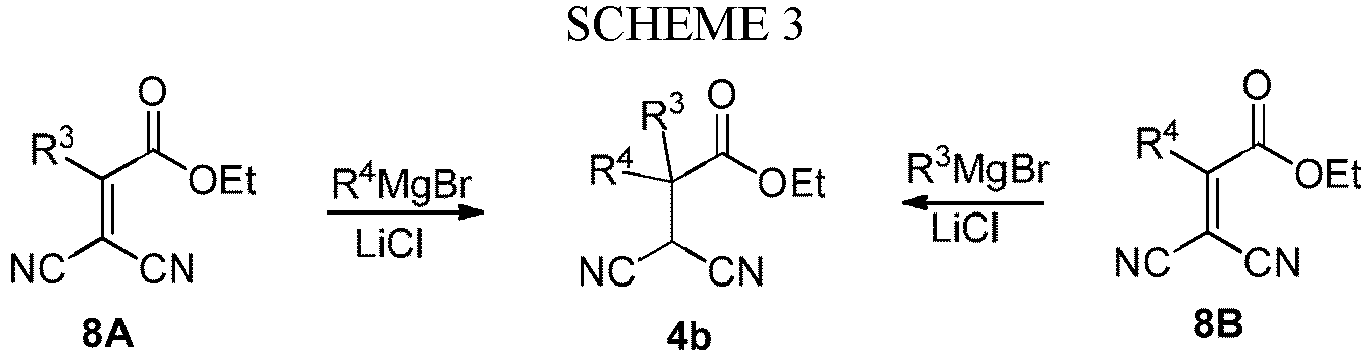
- In addition to the methods described in Scheme 2, compound 4b (depicted as the ethyl ester) may also be prepared as shown in Scheme 3. Reaction of a suitable alkyl, or aryl magnesium halide with the dicyanopropenoate 8a (or 8b) and lithium chloride in a solvent such as THF affords compound 4b. Cycloalkyl and alkynyl magnesium halides are also suitable reagents for this reaction. Compound 8a (R3 is CO2Et) can be prepared using the procedure described by Sentman et. al. J. Org. Chem. 1982, 47, 4577. Compound 8b (R4 is Me) can be prepared using the procedure described by Hagiware et. al. Synthesis 1974, 9, 669.

- Compounds with structure 16 may be prepared by the sequence depicted in Scheme 4. Conversion of an appropriately substituted acid 9 to the amidine 10 can be accomplished with a reagent such as amino(chloro)methylaluminum, prepared from trimethylaluminum and ammonium chloride, in a non-polar solvent such as toluene. Treatment of 10 with ethyl 2-cyano-4,4-diethoxybutanoate (11) under refluxing conditions in an alcoholic solvent such as ethanol and suitable base such as sodium ethoxide affords the pyrimidine 12. De-protection of the acetal under standard conditions such as TFA in ethanol at RT affords 13 which can be converted to 14 by refluxing in POCl3. Alkylation of the NH can be accomplished using a suitable alkyl or benzyl halide and a base such as NaH in a suitable solvent such as DMF to give 15. Finally, conversion of the chloride 15 to the nitrile 16 can be accomplished either by treatment of 15 with potassium cyanide in DMSO or treatment of 15 with zinc cyanide in the presence of a suitable catalyst such as Pd2(dba)3 and a ligand such as dppf in a polar solvent such a DMF.

- Compounds with structure 20 may be prepared by the sequence depicted in Scheme 5. Treatment of 17 with an appropriate propyl ester 17a and a suitable base such as NaOEt in an alcoholic solvent such as EtOH under refluxing conditions gives the cyclized product 18. This can be converted to the chloro compound 19 with phosphorous oxychloride either neat or in a chlorinated solvent such as DCE under refluxing conditions. The nitrile 20 can be prepared by treatment of the chloride 19 with zinc cyanide in the presence of a suitable catalyst such as Pd2(dba)3 and a ligand such as dppf in a polar solvent such a DMF.

- Scheme 6 outlines the preparation of the intermediate 17. Commercially available 5-amino-1-benzyl-1H-1,2,3-triazole-4-carboxamide (21) can be converted to 5-amino-1-methyl-1H-1,2,3-triazole-4-carboxamide (22) according to the procedure described by Albert et. al. J. Chem. Soc. (C) 1969, 9, 152. Installation of the methyl group can be accomplished with an alkylating agent such as dimethyl sulfate in the presence of a suitable base such as NaOMe in an alcoholic solvent such as MeOH to give 17 as a mixture of regioisomers.

- Intermediate 22 can be converted to the deuterium intermediate 23 with dimethyl sulfated6 using the methods described in scheme 6.

- Compounds with structure 30 may be prepared by the sequence depicted in Scheme 8. Commercially available 5-amino-1-methyl-1H-pyrazole-4-carbonitrile (24) can be converted the amide 25 by treatment with concentrated sulfuric acid, which can be coupled to a suitable acid (26) in the presence of isopropyl chloroformate and a base such as N-methyl morpholine to afford 27. Treatment of 27 with a suitable base such as sodium ethoxide in an alcoholic solvent such as EtOH under refluxing conditions gives the cyclized product 28 which can be converted to 29 by refluxing in either neat POCl3 or in a mixture of DCE and POCl3. Finally, the nitrile 30 can be prepared by treatment of the chloride 29 with zinc cyanide in the presence of a suitable catalyst such as Pd2(dba)3 and a ligand such as dppf in a polar solvent such a DMF

- In addition to the methods described in Scheme 8, compound 28 may also be prepared as shown in Scheme 9. Treatment of 25 with an appropriate ethyl or propyl ester and a suitable base such as NaOEt in an alcoholic solvent such as ethanol under refluxing conditions gives the cyclized product 28, which can be elaborated to 30 using the procedures described in Scheme 8.

- Compounds with structure 33 may be prepared by the sequence depicted in Scheme 10. Thus, treatment of commercially available 3-amino-1H-pyrazole-4-carbonitrile with a suitable base such as solid Cs2CO3 in a solvent such as DMF at 0°C followed by the addition of iodomethane-d3 at 0°C to ambient temperature affords 32, which can be elaborated to 33 using the procedures described in Schemes 8 and 9.

- Compounds with structure 35 maybe prepared by the sequence as shown in Scheme 11. Structure 34 (depicted as the ethyl ester) can be formed analogous to the conversion of 3 to 1 as outlined in Scheme 1. Treatment of an intermediate of type 34 with ammonia and alkyl amine with or without a solvent such as THF and MeOH forms 35. In the case that heteroaryl amines are used, conversion of the ester 34 to the amidine 35 can be accomplished with a reagent prepared from trimethylaluminum and corresponding heteroarylamine in a non-polar solvent such as toluene at 80°C.
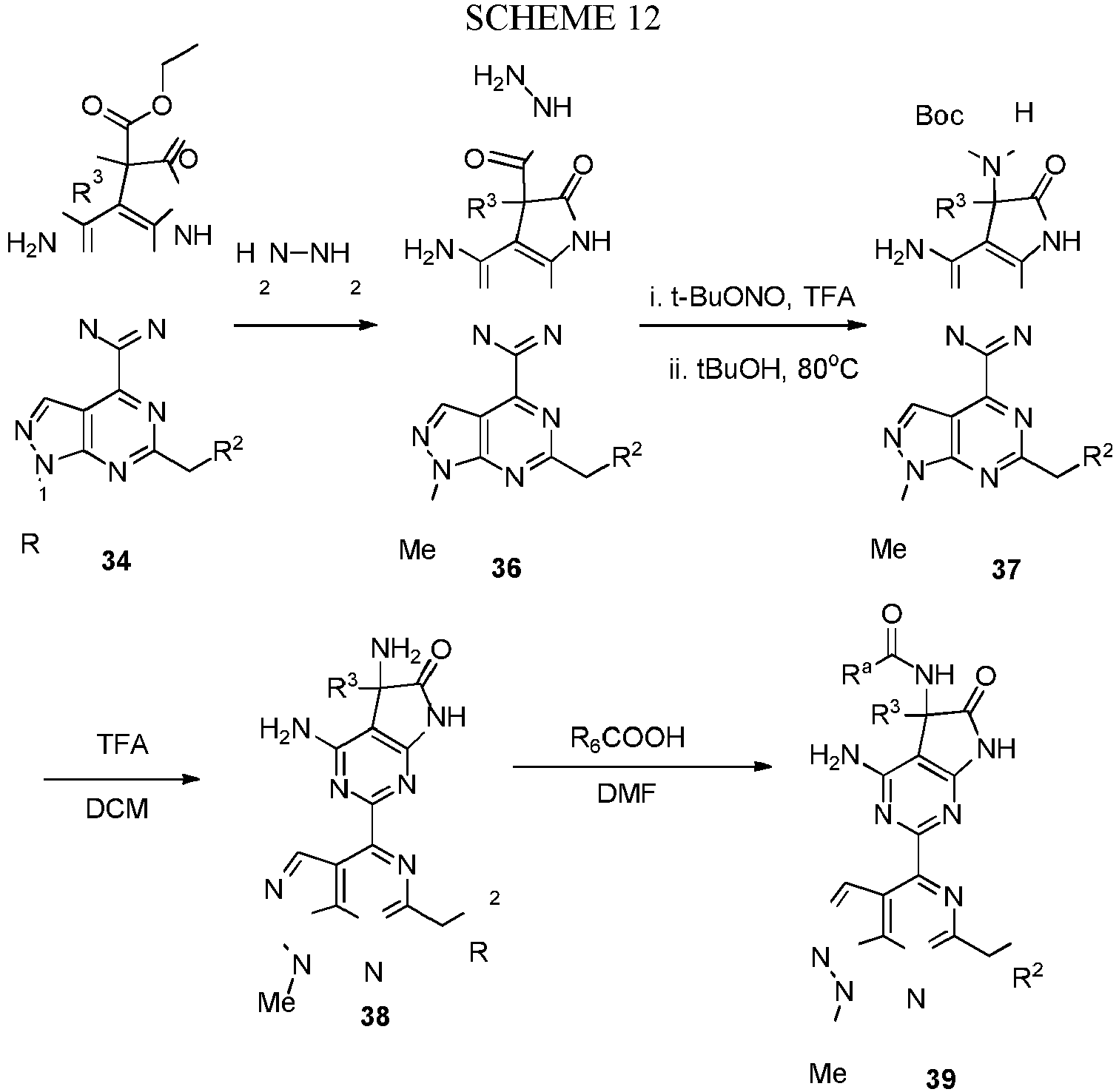
- Compounds with structure 39 may be prepared by the sequence depicted in Scheme 12. Treatment of an intermediate of type 34 with hydrazine forms the acyl hydrazide intermediate 36. Oxidation of the acyl hydrazide 36 to an acyl azide occurs upon treatment with t-butyl nitrite in the prescence of an TFA. Subsequent heating in an alcohol solvent such as t-BuOH affords the carbamate 37. Following TFA mediated carbamate removal, treatment of the primary amine 38 with an appropriate acylation reagent bearing the desired Ra substitution affords 39.

- Compounds with structure 40 may be prepared by the sequence depicted in Scheme 13. Treatment of compound 38 with an appropriate aldehyde bearing the desired Ra substitution under reductive amination conditions affords 40.
- Compounds of the present invention possess an asymmetric center at the carbon bearing the R3 substituent which can be either R or S configuration. These enantiomeric isomers may be separated or resolved using methods familiar to those skilled in the art. For example, the compounds of the present invention may be resolved to the pure stereo-isomers using chiral SFC chromatography. Use of the enantiomerically pure compound 4 as described in Schemes 2 and 3 affords enantiomerically pure products 1. Unless otherwise noted, the examples in the present invention are enantiomerically pure isomers (R or S). Biochemical assay data is listed for the more active enantiomer if only one of the enantiomers is active.
- The independent synthesis of diastereomers and enantiomers or their chromatographic separations may be achieved as known in the art by appropriate modification of the methodology disclosed herein. Their absolute stereochemistry may be determined by x-ray crystallography of crystalline products or crystalline intermediates which are derivatized, if necessary, with a reagent containing an asymmetric center of known absolute stereochemistry, or by vibrational circular dichroism (VCD) spectroscopy.
- Throughout the synthetic schemes and Examples, abbreviations and acronyms may be used with the following meanings unless otherwise indicated:
aq, aq. = aqueous AIBN = 2,2'-Azobisisobutyronitrile Ar = aryl Ac = acetate BF3OEt2 = boron trifluoride diethyl etherate Bn = benzyl Bu = butyl, t-Bu = tert-butyl t-BuOK = potassium tert-butoxide t-BuONO = tert-butyl nitrite t-Boc2O = di-tert-butyl dicarbonate cPr or cyPr = cyclopropyl conc, conc. = concentrated DPPF, dppf = 1,1'-Bis(diphenylphosphino)ferrocene DBU = 1,8-Diazabicyclo[4.3.0]undec-7-ene DCE = 1,2-dichloroethane dba = dibenzylideneacetone; Pd2dba3 = tris(dibenzylidineacetone)dipalladium DIEA = diisopropylethylamine DCM = dichloromethane DMA, DMAC = dimethylacetamide DME = 1,2-dimethoxyethane DMAP = 4-dimethylaminopyridine DMF = N,N-dimethylformamide Et = ethyl DMSO = dimethylsulfoxide EtOAc = ethyl acetate EDC = 1-Ethyl-3-(3-dimethylaminopropyl) carbodiimidehydrochloride eq., equiv = equivalent(s) EtOH = ethanol HOAc = acetic acid Fe(acac)3 = iron(III) acetylacetonate h, hr = hour HPLC = High pressure liquid chromatography iPr = isopropyl HMPA = hexamethylphosphoramide IPA, i-PrOH = isopropanol LDA = lithium diisopropylamide LAH = Lithium aluminum hydride LiHMDS, LHMDS = lithium bis(trimethylsilyl)amide Me = methyl MeOH = methanol min, min. = minute Mp = melting point mCPBA = 3-chloroperoxybenzoic acid NMP = N-methylpyrrolidone NaHMDS = sodium bis(trimethylsilyl)amide NBS = N-bromo succinmide NIS = N-iodosuccinimide NMR = nuclear magnetic resonance PDA = photodiode array Pd/C = palladium on activated carbon Pd2(dba)3 = tris(dibenzylideneacetone)dipalladium (0) Ph = phenyl Pd(PPH3)4 = tetrakis(triphenylphosphine)palladium (0) Pr = propyl iPrMgCl = isopropylmagnesium chloride psig = pounds per square inch gauge rt = retention time PTFE = polytetrafluoroethylene RT = room temperature sat. = saturated SFC = supercritical fluid chromatography TEA = triethylamine TFA = trifluoroacetic acid THF = tetrahydrofuran TLC = thin layer chromatography prep TLC = preparative thin layer chromatography TMSCN = trimethylsilyl cyanide TsCl = 4-toluenesulfonyl chloride LCMS, LC/MS = liquid chromatography-mass spectrometry EX = example % ACT = percent activation INT = intermediate MeI = methyl iodide w = weight v = volume b.p. = boiling point m.p. = melthing point L = liter(s) mL = milliliter(s) Mol = mole(s) mmol = millimole(s) nM = nanomolar µM = micromolar - The following examples and reference examples are provided to more fully illustrate the present invention, and shall not be construed as limiting the scope in any manner. Unless stated otherwise, the following conditions were employed:
- 1) All operations were carried out at RT, that is, at a temperature in the range 18-25°C;
- 2) Reactions are generally done using commercially available anhydrous solvents under an inert atmosphere, either nitrogen or argon;
- 3) Microwave reactions were done using a Biotage Initiator™ or CEM Explorer® system;
- 4) Evaporation of solvent was carried out using a rotary evaporator under reduced pressure (4.5-30 mmHg) with a bath temperature of up to 50°C;
- 5) The course of reactions was followed by TLC and/or tandem HPLC followed by electron spray mass spectroscopy (MS), herein termed LCMS, and any reaction times are given for illustration only;
- 6) The structure of all final compounds was assured by at least one of the following techniques: MS or proton nuclear magnetic resonance (1H NMR) spectrometry, and the purity was assured by at least one of the following techniques: TLC or HPLC;
- 7) 1H NMR spectra were recorded on either a Varian Unity or a Varian Inova instrument at 400, 500 or 600 MHz using the indicated solvent; when line-listed, NMR data is in the form of delta values for major diagnostic protons, given in parts per million (ppm) relative to residual solvent peaks (multiplicity and number of hydrogens); conventional abbreviations used for signal shape are: s. singlet; d. doublet (apparent); t. triplet (apparent); m. multiplet; br. broad; etc.;
- 8) MS data were recorded on a Waters Micromass unit, interfaced with a Hewlett-Packard (Agilent 1100) HPLC instrument, and operating on MassLynx/OpenLynx software; electrospray ionization was used with positive (ES+) or negative ion (ES-) detection; and diode array detection.
- 9) Purification of compounds by preparative reverse phase HPLC was performed on a Gilson system using a YMC-Pack Pro C18 column (150 x 20 mm i.d.) eluting at 20 mL/min with a water/acetonitrile (0.1% TFA) gradient (typically 5% acetonitrile to 95% acetonitrile);
- 10) Purification of compounds by preparative thin layer chromatography (PTLC) was conducted on 20 x 20 cm glass plates coated with silica gel, commercially available from Analtech; or E Merck.
- 11) Flash column chromatography was carried out on a Biotage SiO2 cartridge system using the Biotage Horizon and Biotage SP-1 systems; or a Teledyne Isco SiO2 cartridge using the CombiFlashRf system;
- The following are representative procedures for the preparation of intermediates used to prepare the final products described in the Examples that follow thereafter. These examples are provided for the purpose of further illustration only and are not intended to be limitations on the disclosed invention.
- It is understood that a chiral center in a compound may exist in the "S" or "R" stereo-configurations, or as a mixture of both. In some of the examples for intermediate compounds and final compounds, such compounds having a racemic chiral center were separated into individual stereoisomers, for example, referred to as isomer A (or enantiomer A or the like), which refers to the observed faster eluting isomer, and isomer B (or enantiomer B or the like), which refers to the observed slower eluting isomer, and each such isomer may be noted in the example as either the fast or slow eluting isomer. When a single "A" or "B" isomer intermediate is used to prepare a downstream compound, the downstream compound may take the "A" or "B" designation that corresponds to the previously used intermediate.
- Any Intermediates described below may be referred to herein by their number preceded by "I-." For illustration, in the example titled "Intermediate 2," the racemic parent title compound would be referred to as Intermediate 2 (or 1-2), and the separated stereoisomers are noted as Intermediates 2A and 2B (or I-2A and I-2B). In some examples, compounds having a chiral center were derived synthetically from a single isomer intermediate; e.g., Example 1 was made using stereoisomer I-2B. Absolute stereochemistry (R or S) of each of the separated isomers was not determined, unless specifically described otherwise. An asterisk (*) may be used in a chemical structure drawing that indicates the location of a chiral center.
-

- Step A: Methyl 2-(4-fluorophenyl)propanoate. Methyl 2-(4-fluorophenyl)acetate (25 g, 149 mmol) was dissolved in THF (300 mL). Hexamethylphosphoramide (26.6 g, 149 mmol) was added and the solution was cooled to -78°C. Then, lithium diisopropylamide (2 M, 78 mL, 156 mmol) was added dropwise over several min. After aging for 15 min, iodomethane (42.2 g, 297 mmol) was rapidly added and the solution was then allowed to warm to ambient temperature. The solvents were then removed under reduced pressure and the resulting residue was dissolved in EtOAc (300 mL) and washed with IN HCl (2 x 200 mL) and brine (200 mL). The EtOAc layer was then dried with MgSO4, filtered, and concentrated in vacuo. The resulting material was purified by silica gel chromatography eluting with a 0% to 10% EtOAc in hexanes gradient to afford the title product.
- Step B: Methyl 2-bromo-2-(4-fluorophenyl)propanoate. A carbon tetrachloride (212 mL) solution of the intermediate from Step A (27 g, 148 mmol), NBS (29 g, 163 mmol) and AIBN (0.730 g, 4.45 mmol) was heated to reflux. After hr the solution was filtered while still hot and the filtercake was washed with ether (50 mL). The filtrate was concentrated and the resulting residue was dissolved in EtOAc (300 mL) and washed with water (2 x 300 mL) and 37% aq Na2SO3 (100 mL). The EtOAc was then dried with MgSO4, filtered, and removed to afford the title product which was used without further purification.
- Step C: Methyl 33-dicyano-2-(4-fluorophenyl)-2-methylpropanoate. Malononitrile (10.58 g, 160 mmol) was added to a stirred THF (300 mL) solution of potassium t-butoxide (17.97 g, 160 mmol). The resulting suspension was heated to 60°C for 30 min then a solution of the intermediate from Step B (38 g, 146 mmol) in THF (100 mL) was added. The reaction solution was then heated at 60°C oil bath for 2 h. THF was then removed under reduced pressure and the resulting material was dissolved in EtOAc (400 mL) and washed with IN HCl (200 mL) and brine (200 mL). The EtOAc was then dried, filtered, and conc. in vacuo. The resulting material was purified by silica gel chromatography eluting with a 0% to 25% EtOAc in hexane gradient to give the title racemic product. 1H NMR (500 MHz, CDCl3): δ 7.38 (2 H, m), 7.16 (2 H, m), 4.49 (1 H, s), 3.83 (3 H, s), 2.02 (3 H, s). The racemic material was resolved on a Berger SFC preparative instrument using a ChiralPak AD-H column to obtain enantiomer I-1A (faster eluting) and enantiomer I-1B (slower eluting).
-

- Step A: Methyl 2-phenylpropanoate. Trimethylsilyl diazomethane (2.0M in hexanes, 40 mL, 80 mmol) was added dropwise to a solution of racemic 2-phenylpropionic acid (10.0 g, 66.6 mmol) in benzene (100 mL) and MeOH (20 mL) cooled in an ice bath. After the addition was complete the reaction solution was stirred at RT for 2 h. The solution was then concentrated to give the title product.
- Step B: Methyl 2-bromo-2-phenylpropanoate. A carbon tetrachloride (150 mL) solution of the intermediate from Step A (10.39 g, 66.6 mmol), NBS (14.22 g, 80 mmol) and AIBN (0.547 g, 3.33 mmol) was heated to reflux. After 4 h the reaction solution was cooled to RT and the mixture filtered. The filtrate was concentrated and the residue purified by silica gel chromatography using a 10% to 50% EtOAc in hexanes gradient to give the title product.
- Step C: Methyl 3,3-dicyano-2-methyl-2-phenylpropanoate. Malononitrile (4.29g, 65mmol) and potassium t-butoxide (7.29 g, 65 mmol) were added to a THF (100 mL) solution containing the intermediate from Step B (15.8 g, 65 mmol). The reaction solution was then placed in an 85°C oil bath for 4 h. The solution was then cooled to RT and partitioned between saturated aqueous ammonium chloride and EtOAc. The organic layer was washed with brine, dried over sodium sulfate, filtered, and concentrated. The crude material was purified by silica gel chromatography eluting with a 0% to 30% EtOAc in hexanes gradient to give the title racemic product. 1H NMR (500 MHz, CDCl3): δ 7.44-7.42 (3 H, m), 7.38-7.36 (2 H, m), 4.50 (1 H, s), 3.80 (3 H, s), 2.00 (3 H, s). The racemic material was resolved on a Berger SFC preparative instrument using a ChiralPak AD-H to obtain enantiomer I-2A (faster eluting) and enantiomer I-2B (slower eluting).
- Using essentially the same procedures described for Intermediates 1 and 2, the following compounds in Table 1 were made.
Table 1 
INT R1 R2 Characterizaton Data 3 CO2Et Et 1H NMR (500 MHz, CDCl3): δ 4.55 (1 H, s), 4.41-4.28 (4 H, m), 1.83 (3 H, s), 1.35 (6 H, t, J = 7.15 Hz). 4 
Et 1H NMR (300 MHz, CDCl3): δ 7.60-7.55 (2 H, m), 7.27-7.21 (2 H, m), 4.47 (1 H, s), 4.37-4.13 (2 H, m), 1.97 (3 H, s), 1.25 (3 H, t, J = 7.2 Hz). Enantiomers resolved using Chiracel OJ column. -

- Step 1: Ethyl 2-(4-chlorophenyl)-3,3-dicyanoacrylate: To a solution of ethyl 2-(4-chlorophenyl)-2-oxoacetate (90.0 g, 0.425 mol) and piperidine (6.3 mL) in EtOH (900 mL) at 0 °C was added propanedinitrile (120 g, 1.818 mol) dropwise. After the addition, the resulting solution was stirred at 70 °C overnight and concentrated under vacuum. The residue was purified by silica gel chromatography using a 10/1 gradient of EtOAc/petroleum ether to give the title product. Step
- 2: Ethyl 2-(4-chlorophenyl)-3,3-dicyano-2-methylpropanoate: To a stirred mixture of intermediate from Step A (82.0 g, 0.315 mol) and LiCl (26.2 g, 0.624 mol) in THF (1.3 L) at 0 °C was added MeMgBr (213 mL, 639 mmol, 3 mol/L) dropwise. The resulting solution was then stirred for 2 h at RT and quenched by the addition of 500 mL of NH4Cl (sat.). The resulting mixture was extracted with EtOAc (500 mL ×3). The organic layers were combined, dried over anhydrous sodium sulfate, and concentrated under vacuum. The residue was purified by silica gel chromatography using a EtOAc/petroleum ether=10/1 gradient to give the title product. 1H NMR (500 MHz, CDCl3): δ 7.44-7.46 (2 H, m), 7.33-7.35 (2 H, m), 4.48 (1 H, s), 4.25-4.34 (2 H, m), 2.01 (3 H, s), 1.28 (3 H, t, J=7.13 Hz). The racemic material was resolved on a SHIMADZU LC-8A preparative instrument using a Chiralcel OJ column to obtain enantiomer I-5A (faster eluting) and enantiomer I-5B (slower eluting).
-

- To a flask contaning anhydrous LiCl (25.8 mg, 0.609 mmol) in THF (1 mL), was added a solution of ethynylmagnesium bromide (1.3 mL, 0.640 mmol, 0.5M in THF). The reaction was stirred at RT for 25 min. The resulting solution was then added to a solution of ethyl 3,3-dicyano-2-methylprop-2-enoate (prepared according to Hagiware et. al. Synthesis 1974, 9, 669) (0.609 mL, 0.609 mmol, 1M solution in benzene) in THF (22.5 mL) at -10 to -20 C fast dropwise via syringe. The reaction was stirred for 10 min and quenched with saturated aq NH4Cl, and then diluted with water and EtOAc. The layers were separated and the organic layer was dried with anhydrous sodium sulfate and concentrated. The residue was purified by silica gel chromatography using a 0% to 40% EtOAc in hexanes gradient to give the title product. 1H NMR (500 MHz, CDCl3): δ 4.34 (q, J=7.17 Hz, 2 H), 4.31 (s, 1 H), 2.66 (s, 1 H), 1.80 (s,3 H),
1.35 (t, J=7.14 Hz, 3 H). The title racemic intermediate was used for the synthesis of final products. -

- Step A: Methyl 2-(dicyanomethylene)butanoate. Methyl 2-oxobutanoate (15 g, 129 mmol) and malononitrile (12.80 g, 194 mmol) were added to a flask followed by the addition of 3-aminopropanoic acid (0.575 g, 6.46 mmol) as a solution in water (12.92 ml), followed by the addition of EtOH (12.92 ml) and the reaction is left to stir for two h. The mixture was diluted with EtOAc and water. The layers were separated and the organic layer was dried with anhydrous sodium sulfate and concentrated. Silica gel chromatography (0% to 40% EtOAc in hexanes gradient) afforded the title product.
- Step B Methyl 2-(dicyanomethyl)-2-ethylbut-3-ynoate. The intermediate from step A in THF (3.50 ml) under nitrogen was cooled to -50°C. Ethynylmagnesium bromide (4.20 ml, 2.102 mmol) was added dropwise and the reaction was slowly allowed to warm in the bath for ∼30 min. The mixture was quenched with saturated aq. NH4Cl and diluted with EtOAc and water. The layers were separated and the organic layer was dried with anhydrous sodium sulfate and concentrated. Silica gel chromatography (0% to 40% EtOAc in hexanes gradient) gave the title compound. 1H NMR (500 MHz, CDCl3): 4.28 (1 H, s), 3.88 (3 H, s), 2.70 (1 H, s), 2.04-2.16 (2 H, m), 1.07 (3 H, t, J=7.44 Hz). The title racemic intermediate was used for the synthesis of final products.
-

- Step A: Methyl 3,3-dicyano-2-cyclopropylacrylate. A mixture of methyl 2-cyclopropyl-2-oxoacetate (prepared similarly to: Russian Chemical Bulletin 2007, 56, 1515-1521) (800 mg, 6.24 mmol) and malononitrile (516 mg, 7.80 mmol) was stirred for 2-3 min. A solution of beta-alanine (27.8 mg, 0.312 mmol) in water (535 µl) was added in small portions over ∼5 min period. The reaction was cooled in an ice-bath and EtOH (350 µl) was added. The reaction was stirred at RT for 24 h. The reaction was diluted with water and extracted with ethyl ether. The ether layer was back extracted 2x with water. The ether layer was further diluted with EtOAc and dried (sodium sulfate). The combined organic layers were purified by silica gel column chromatography eluting with a 0% to 30% EtOAc in hexanes gradient to give the title product.
- Step B: Methyl 2-cyclopropyl-2-(dicyanomethyl)but-3-ynoate. To a flask containing anhydrous LiCl (144 mg, 3.41 mmol) in THF (2 mL) was added a solution of ethynylmagnesium bromide (6.8 mL, 3.41 mmol, 0.5M in THF). The reaction was stirred at RT for 30 min. The resulting solution was cooled to -30 °C. A solution of the intermediate from Step A (0.500 g, 2.84 mmol) in THF (5 mL) was added. The reaction was stirred for 1 h in the cooling bath then raised up to RT slowly. The mixture was quenched with saturated aqueous NH4Cl, and then diluted with water and EtOAc. The layers were separated and the organic layer was dried with sodium sulfate and concentrated in vacuo. Purification by silica gel column chromatography eluting with a 0% to 30% EtOAc in hexanes gradient afforded the title product. 1H NMR (500 MHz, CDCl3): δ 4.41 (1 H, s), 3.93 (3 H, s), 2.63 (1 H, s), 1.31-1.24 (1 H, m), 1.03-0.96 (1 H, m), 0.92-0.79 (2 H, m), 0.77-0.67 (1 H, m). The title racemic intermediate was used for the synthesis of final products.
-

- Isopropylmagnesium chloride LiCl complex (6.09 mL, 7.92 mmol, 1.3 M in THF) was added to a solution of 1,4-diiodobenzene (2.61 g, 7.92 mmol) in THF (25 mL) cooled to -30 °C. The reaction was stirred for 2 h with the temperature maintained -30°C. A solution of ethyl 3,3-dicyano-2-methylprop-2-enoate (prepared according to Hagiware et. al. Synthesis 1974, 9, 669) (1.0 g, 6.09 mmol) in benzene (2 mL) was added. The resulting mixture was warmed to RT and stirred for 5 min. The reaction was then quenched with saturated aqueous NH4Cl and extracted with EtOAc. The organic layer was dried (sodium sulfate) and concentrated in vacuo. Purification by silica gel column chromatography eluting with a 0% to 25% EtOAc in hexanes gradient afforded the title product. 1H NMR (500 MHz, CDCl3): δ 7.80 (2 H, d, J = 8.31 Hz), 7.14 (2 H, d, J = 8.31 Hz), 4.47 (1 H, s), 4.36-4.24 (2 H, m), 1.99 (3 H, s), 1.28 (3 H, t, J = 7.14 Hz). The racemic material was resolved on a Berger SFC preparative instrument using a Chiralpak AD-H column to obtain enantiomer I-9A (faster eluting) and enantiomer I-9B (slower eluting).
-

- A THF (45.0 ml) solution of diethyl (dicyanomethylidene)propanedioate (prepared analogous to Sentman et. al. J. Org. Chem. 1982, 47, 4577) (4.5 ml, 4.5 mmol, 1M solution in benzene) was cooled to 0°C and cyclopropylmagnesium bromide (9.00 ml, 4.50 mmol) and lithium chloride (0.191 g, 4.5 mmol) were added. The reaction was stirred at 0°C for 2 h and then warmed to RT while stirring for an additional 2 h. The reaction was diluted with EtOAc and quenched with saturated aqueous NH4Cl. The layers were separated and the organic layer was dried with MgSO4, filtered, and concentrated in vacuo. Purification by silica gel column chromatography eluting with a 0% to 40% EtOAc in hexanes gradient afforded the title product. 1H NMR (500 MHz, CDCl3): δ 4.41 (1 H, s), 4.38-4.26 (4 H, m), 1.52-1.45 (1 H, m), 1.33 (6 H, t, J = 7.14 Hz), 0.86-0.79 (2 H, m), 0.71-0.66 (2 H, m).
-

- Step A: Ethyl 2-cyclohexyl-2-oxoacetate. A 250-mL 3-necked round-bottom flask was purged and maintained with an inert atmosphere of nitrogen, and into it was added diethyl oxalate (7.3 g, 49.95 mmol, 1.0 equiv) and THF (80 mL), and then bromo(cyclohexyl)magnesium (50 mL, 50 mmol, 1.0 equiv, 1 N) was added dropwise at 0°C. The resulting solution was stirred for 2 h at ambient temperature. The reaction was then quenched by the addition of NH4Cl (3 N, 100 mL). The resulting solution was extracted with EtOAc (3 x 100 mL) and the organic layers were combined, dried over anhydrous sodium sulfate and filtered. The filtrate was concentrated in vacuo to afford the title product.
- Step B: Ethyl 3, 3-dicyano-2-cyclohexylprop-2-enoate. Into a 250-mL round-bottom flask, was placed the intermediate from Step A (9.0 g, 48.85 mmol, 1.00 equiv), propanedinitrile (3.2 g, 48.44 mmol, 1.00 equiv), 3-aminopropanoic acid (2.17 g, 24.36 mmol, 1.50 equiv), water (10 mL), the mixture was stirred for 10 min at ambient temperature, EtOH (10 mL) was added. The resulting solution was stirred for 16 h at ambient temperature. The reaction was then quenched by the addition of brine (100 mL). The resulting solution was extracted with EtOAc (3 x 100 mL) and the organic layers were combined, dried over anhydrous sodium sulfate and filtered. The filtrate was concentrated in vacuo to dryness. The residue was applied onto a C18 column with water/acetonitrile=1/4 to afford the title product.
- Step C: Ethyl 3,3-dicyano-2-cyclohexyl-2-methylpropanoate. Into a 100-mL 3-necked round-bottom flask purged and maintained with an inert atmosphere of nitrogen, were placed the intermediate from Step B (1.3 g, 5.6 mmol, 1.0 equiv), lithium chloride (0.35 g, 8.30 mmol, 1.50 equiv) and THF (18 mL). Bromo(methyl)magnesium (2.24 g, 0.56 mmol, 1.2 equiv) was added dropwise at 0°C. The resulting solution was stirred for 3 h at ambient temperature. The reaction was then quenched by the addition of saturated aq. ammonium chloride solution (50 mL). The mixture was extracted with EtOAc (3 × 80 mL) and the organic layers were combined, dried over anhydrous sodium sulfate and filtered. The filtrate was concentrated in vacuo. Purification by silica gel column chromatography eluting with 10% petroleum ether in diethyl ether afforded the title product. 1H NMR (300 MHz, CDCl3): δ 4.34-4.22 (3 H, m), 1.87-1.81 (3 H), 1.77-1.57 (3 H, m), 1.53 (3 H, s), 1.34 (3 H, t, J = 7.2 Hz), 1.26-1.21 (2 H, m), 1.18-1.14 (3 H, m). The title racemic intermediate was used for the synthesis of final products.
- Using essentially the same procedures as described for making Intermediates 5 to 11, the following compounds in Table 1A were synthesized. NMR characterization data for the noted intermediates is provided in Table 1B.
Table 1A 
INT R1 R2 R3 Resolution Conditions 12 
Me Et Chiralpak AD-H 13 
Me Et Racemate used 14 
Me Et Chiralpak AD-H 15 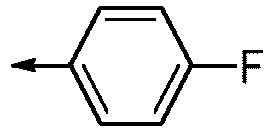

Me Chiralcel OJ 16 
Me Et Racemate used 17 n-Bu 
Me Racemate used 18 Me 
Et Racemate used 19 CO2Et Et Et N/A (Not Applicable) 20 CO2Et i-Pr Et N/A 21 
Me Et Chiralcel OJ-H 22 
Me Me Chiralpak AS-H Table 1B INT Characterizaton Data 12 1H NMR (500 MHz, CDCl3): δ 7.31 (2 H, t, J = 8.89 Hz), 6.97 (2 H, d, J = 8.69 Hz), 4.49 (1 H, s), 4.36-4.22 (2 H, m), 3.85 (3 H, s), 2.00 (3 H, s), 1.31-1.25 (3 H, m). 13 1H NMR (500 MHz, CDCl3): δ 7.38 (1 H, t, J = 8.05 Hz), 6.98-6.91 (3 H, m), 4.52 (1 H, s), 4.36-4.22 (2 H, m), 3.84 (3 H, s), 2.00 (3 H, s), 1.28 (3 H, t, J = 7.13 Hz), 14 1H NMR (500 MHz, CDCl3): δ 8.14 (2 H, d, J = 8.35 Hz), 7.48 (2 H, d, J = 8.37 Hz), 4.53 (1 H, s), 4.42 (2 H, q, J = 7.13 Hz), 4.36-4.25 (2 H, m), 2. 2.02 (3 H, s), 1.43 (3 H, q, J = 7.00 Hz),1.28 (3 H, q, J = 7.04 Hz). 15 1H NMR (500 MHz, CDCl3): δ 6.97-6.92 (2 H, m), 6.82-6.77 (2 H, m), 4.79 (1 H, s), 3.93 (3 H, s), 2.32-2.25 (1 H, m), 1.47-1.26 (4 H, m). 16 1H NMR (500 MHz, CDCl3): δ 7.09-7.12 (2 H, m), 6.99 (1 H, t, J = 8.58 Hz), 4.48 (1 H, s), 4.23-4.31 (2 H, m), 3.89 (3 H, s), 1.94 (3 H, s), 1.24 (3 H, t, J = 7.14 Hz). 17 1H NMR (500 MHz, CDCl3): δ 4.31 (1 H, s), 3.79 (3 H, s), 1.91-1.67 (2 H, m), 1.45-1.29 (3 H, m), 1.28-1.09 (2 H, m), 0.99-0.87 (3 H, m), 0.78-0.64 (3 H, m), 0.55-0.47 (1 H, m). 18 1H NMR (500 MHz, CDCl3): δ 4.30-4.17 (3 H, m), 1.35 (3 H, s) 1.32-1.24 (3 H, m), 1.17-1.11 (1 H, m), 0.71-0.58 (3 H, m), 0.50-0.45 (1 H, m). 19 1H NMR (500 MHz, CDCl3): δ 4.41 (1 H, s), 4.35-4.27 (4 H, m), 2.28-2.20 (2 H, m), 1.31 (6 H, t, J = 7.16 Hz), 1.05 (3 H, t, J = 7.50 Hz). 20 1H NMR (500 MHz, CDCl3): δ 4.48 (1 H, s), 4.39 (4 H, q, J = 7.13 Hz), 2.74-2.80 (1 H, m), 1.38 (6 H, t, J = 7.15 Hz), , 1.18 (6 H, d, J = 6.94 Hz). 21 1H NMR (400 MHz, CDCl3): δ 7.42 (1 H, t, J = 8.40 Hz), 7.31 (1 H, dd, J = 7.20, 2.25 Hz), 7.21-7.18 (1 H, m), 4.58 (1 H, s), 4.35-4.27 (2 H, m), 2.01 (3 H, s), 1.28 (3 H, t, J = 7.20 Hz). 22 1H NMR (500 MHz, CDCl3): δ 7.12 (1 H, dd, J = 10.72, 8.46 Hz), 6.95-6.88 (2 H, m), 4.46 (1 H, s), 4.34-4.21 (2 H, m), 3.90 (3 H, s), 1.98 (3 H, s), 1.26 (3 H, td, J = 7.12, 2.88 Hz). -

- A 12 L, 3 neck round bottom flask equipped with a mechanical stirrer, thermometer, condenser and nitrogen bubbler, was charged with malononitrile (251 g, 3.802 moles) and THF (2 liters). Potassium t-butoxide (1M THF, 3.802L, 3.802 moles) was then added. The mixture was stirred at 50°C for 30 min. Methyl 2-bromoisobutyrate (688 g, 3.80 moles) was added and the reaction mixture was stirred overnight at 50°C. The reaction was partitioned between aqueous 1 N HCI and EtOAc. The organic phase was washed with brine, dried over MgSO4, filtered, and concentrated to give the title product. 1H NMR (400 MHz, CD3CN): δ 4.35 (1 H, s) 3.73 (3 H, s), 1.43 (6 H, s).
-

- Step A: 4,4,5,5,5-Pentafluoropentanoic acid. To a stirred solution of Jones Reagent (a solution of chromium trioxide in diluted sulfuric acid) (20 ml, 160 mmol) in acetone (20 mL) at 0 °C, a solution of 4,4,5,5,5-pentafluoropentan-1-ol (7.12 g, 40 mmol) in acetone (30 mL) was added dropwise. After in remaining ice bath, the mixture was stirred continuously at RT for 1 h. The mixture was poured into ice/water and extracted with diethyl ether. Crude ether mixture was extracted with aqueous 2N sodium hydroxide. On the inorganic layer was acidified with aqueous 6N HCl and the organic layer was extracted with diethyl ether. The ether layer was washed with brine, dried over anhydrous sodium sulfate and concentrated in vacuo to give the title product.
- Step B: Propyl 4,4,5,5,5-pentafluoropentanoate. To a solution of the intermediate from Step A (25 g, 0.13 mol) in propanol (100 mL) at 0 °C was added thionyl chloride (14.9 mL, 0.195 mol). The mixture was then stirred at RT for 5 h. The solution was concentrated in vacuo. The residue was diluted with EtOAc and poured into ice water. The organic layer was washed by aqueous NaHCO3 solution, dried over anhydrous Na2SO4, concentrated in vacuo to give the title product.
- Step C: 1-Methyl-6-(3,3,4,4,4-pentafluorobutyl)-1H-pyrazolo[3,4-d]pyrimidin-4-ol. The mixture of 5-amino-1-methyl-1H-pyrazole-4-carboxamide (70 g, 0.49 mol), EtONa (117 g, 1.72 mol) and the intermediate from Step B ((272 g, 1.16 mol) in EtOH (1 L) was stirred in a sealed bottle at 120°C overnight. The mixture was concentrated and the residue was diluted with H2O (2 L) and then adjusted to pH = 6 with 2 N aqueous HCl solution. The mixture was extracted with EtOAc (1 L × 3). The combined organic layer was dried over Na2SO4, filtered and concentrated. The residue was purified by silica gel column chromatography using petroleum ether/EtOAc = 1: 1 to give the title product.
- Step D: 4-Chloro-1-methyl-6-(3,3,4,4,4-pentafluorobutyl)-1H-pyrazol[3,4-d]pyrimidine. The intermediate from Step C (43 g, 0.145 mmol) in POCl3 (250 mL) was stirred at 115°C overnight. The mixture was diluted with EtOAc (2 L) and then washed with H2O (1 L × 5). The organic layer was dried and concentrated in vacuo. The residue was purified by silica gel column chromatography using EtOAc/petroleum ether = 1:5 to give the title product.
- Step E: 1-Methyl-6-(3,3,4,4,4-pentafluorobutyl)-1H-pyrazolo[3,4-d]pyrimidine-4-carbonitrile. A mixture of the intermediate from Step D (38 g, 0.12 mol), ZnCN2 (38 g, 0.33 mol), Pd2(dba)3 (3.5 g), dppf (4.3 g) in DMF (1L) was stirred at 115 oC for 4 h. The mixture was filtered and the filtrate was concentrated in vacuo. The residue was purified by silica gel column chromatography using EtOAc/petroleum ether =1:10 to give the title product.
- Step F: 1-Methyl-6-(3,3,4,4,4-pentafluorobulyl)-1H-pyrazolo[3,4-d]pyrimidine-4-carboximidamide. To NH4Cl (27 g, 0.51 mol) in toluene (1 L) was added Me3Al (254 mL, 0.51 mol, 2 mol/L) dropwise, then stirred at RT for 1 h. The intermediate from Step D (77.5 g, 0.25 mol) was added to the above solution and heated to 120°C. The mixture was stirred at this temperature for 2 h, and then cooled to RT. MeOH, DCM and silica gel were added and stirred for 15 min, filtered off solid. The filtrate was concentrated and the crude was suspended in THF and filtered again. The filtrate was concentrated and washed with petroleum ether: EtOAc = 10:1 (100 mL). The solid was dried in vacuo to get the title product
- Step G: 4-Amino-5-methyl-2-(1-methyl-6-(3,3,4,4,4-pentafluorobulyl)-1H-pyrazolo[3,4-d]pyrimidin-4-yl)-5-phenyl-5H-pyrrolo[2,3-d]pyrimidin-6(7H)-one. A tert-butanol (2.0 mL) solution containing the intermediate from Step F (40 mg, 0.124 mmol), Intermediate 2B (45 mg, 0.186 mmol) and potassium tert-butoxide (17 mg, 0.149 mmol) was heated at 120 °C in a sealed tube for 1.5 h. The reaction was then purified by reverse phase HPLC using water/acetonitrile (0.1% TFA) to give the title product. 1H NMR (500MHz, DMSO-d6): δ 11.30 (1 H, s), 9.01 (1 H, s), 7.41-7.26 (5 H, m), 6.79 (2 H, s), 4.07 (3 H, s), 3.36-3.21 (2 H, partially overlapping with H2O), 2.95-2.82 (2 H, m), 1.81 (3 H, s), m/z = 519 (M+H).
-

- Step A: 5-Amino-1-trideuteriomethy-1H-pyrazole-4-carbonitrile. 3-Amino-1H-pyrazole-4-carbonitrile (200 g, 1.85 mol) was dissolved in 1 L of DMF in a 2 L of three -necked flask. Cs2CO3 (260 g, 2.03 mol) was then added. The mixture was cooled to 0°C and CD3I (280 g, 1.93 mol) was added slowly at 0°C-10°C. The solution was stirred for 6 h at 0-10°C. The solvent was concentrated and DCM (500 mL) was added and the mixture was stirred for 0.5 hr at RT. The mixture was filtered and the filter cake was washed with DCM (250mL). Another 250 mL of DCM was added to the filter cake and the mixture was stirred for 0.5 hr at RT. It was filtered again and the filter cake was washed again with DCM (250 mL) and dried to give the title product.
- Step B: 5-Amino-1-trideuteriomethyl-1H-pyrazole-4-carboxamide. To the intermediate from Step A (120 g, 0.96 mol) was added conc.H2SO4 (500mL) at 10 °C. The resulting mixture was stirred for 6 h at RT and CH3CN (300 mL) was added slowly at 0-10°C. The mixture was filtered and washed the filter cake with CH3CN (1 L). The solid was dissolved in water (600 mL) and NaOH aqueous solution (50 wt%) was added until the pH = 7. Water was removed in vacuo and DMF (200 mL) was added. The mixture was filtered. The filter cake was washed with DMF (100 mL) and DMF filtrate was saved. The cake was recovered and stirred in DMF (200 mL) for 0.5 h at RT. The mixture was filtered again. The cake was washed with DMF (200 mL) and DMF flitrate was also saved. Both saved DMF flitrates were combined and concentrated to give the title product.
- Step C: 6-(3,3,4,4,4-Pentafluorobutyl)-1-trideuteriomethyl-1H-pyrazolo[3,4-d]pyrimidine-4-carboximidamide. The title compound was prepared from the intermediate in 5-Amino-1-trideuteriomethyl-1H-pyrazole-4-carboxamide and Propyl 4,4,5,5,5-pentafluoropentanoate (see Example 1, Step B) according to the procedure described in Step C to Step F of Example 1.
- Step D: 4-Amino-5-(4-fluorophenyl)-5-methyl-2-(6-(3,3,4,4,4-pentafluorobutyl)-1-trideuteriomethyl-1H-pyrazolo[3,4-d]pyrimidin-4-yl)-5H-pyrrolo[2,3-d]pyrimidin-6(7H)-one. A tert-butanol (7 mL) solution containing the intermediate from Step C (210mg, 0.646 mmol), Intermediate 1B (238 mg, 0.968 mmol) and KHCO3 (129 mg, 1.29 mmol) was heated at 120 °C in a sealed tube for 18 h. The solvents were then removed under reduced pressure and the resulting material was purified on silica gel chromatography eluting with a 0% to 100% EtOAc in hexanes gradient to afford the title product. 1H NMR (500 MHz, DMSO-d6): δ 11.32 (1 H, s), 9.02 (1 H, s), 7.31 (2 H, t, J = 6.43 Hz), 7.18 (2 H, t, J = 8.59 Hz), 6.84 (2 H, s), 3.40-3.21 (2 H, partially overlapping with H2O), 2.95-2.82 (2 H, m), 1.81 (3 H, s), m/z = 537 (M+H).
-

- Step A: Ethyl 5,5,5-trifluoropentanoate. To a solution of 5,5,5-trifluoropentanoic acid (9.89 g, 63.4 mol) in EtOH (60 mL) at 0°C was added thionyl chloride (6.94 mL, 95.0 mol) dropwise. The mixture was then stirred at RT for 5 h. The solution was concentrated in vacuo. The residue was diluted with diethyl ether and poured into ice water. The organic layer was washed by aqueous NaHCO3 solution, dried over MgSO4, concentrated in vacuo to give the title product.
- Step B: 1-Methyl-6-(4,4,4-trifluorobutyl)-1H-pyrazolo[3,4-d]pyrimidine-4-carboximidamide. The title compound was prepared using the intermediate from Step A and 5-amino-1-methyl-1H-pyrazole-4-carboxamide according to the procedure described in Step C to Step F of Example 1.
- Step C: 4-Amino-5-methyl-2-(1-methyl-6-(4,4,4-trifluorobutyl)-1H-pyrazolo[3,4-d]pyrimidin-4-yl)-5-phenyl-5H-pyrrolo[2,3-d]pyrimidin-6(7H)-one. The title compound was prepared from the intermediate from Step B and Intermediate 2B according to the procedures described in Step G of Example 1. 1H NMR (500 MHz, CDCl3): δ 11.30 (1 H, s), 8.99 (1 H, s), 7.35 (2 H, t, J=7.39 Hz), 7.29 (2 H, t, J=8.09 Hz), 6.78 (2 H, s), 4.06 (3 H, s), 3.15 (2 H, t, J=7.69 Hz), 2.48-2.40 (2 H, partially overlapping with DMSO), 2.08 (2 H, t, J=7.78 Hz), 1.81 (3 H, s), m/z = 483 (M+H).
-

- Step A: 1-Methyl-5-(4,4,4-trifluorobutanamido)-1H-pyrazole-4-carboxamide. Isopropyl chloroformate (1.95 g, 14.3 mmol) and N-methylmorpholine (1.44 g, 14.3 mmol) were added to a solution of 4,4,4-trifluorobutanoic acid (2.03 g, 14.3 mmol) in THF (40 mL) at -15°C. The solution was stirred for 10 min then cooled to -50°C and a solution of 5-amino-1-methyl-1H-pyrazole-4-carboxamide (2.0 g, 14.3 mmol) and DIEA (2.49 ml, 14.3 mmol) in DMF (20 ml) was added. The solution was allowed to slowly warm to ambient temperature over 2 h. The solution was diluted with EtOAc and washed with brine. The organic layer was dried, filtered, and concentrated in vacuo. The crude product was purified by silica gel chromatography using 0% to 15% MeOH in CH2Cl2 gradient to give the title compound.
- Step B: 1-Methyl-6-(3,3,3-trifluoropropyl)-1H-pyrazolo[3,4-d]pyrimidin-4-ol. The intermediate from Step A (1.2 g, 4.54 mmol) and sodium ethoxide (0.31 g, 4.54 mmol) were suspended in EtOH (20 ml) and heated for 2 h under reflux. The solution was cooled to RT and saturated aqueous NH4Cl was added. The material was extracted EtOAc. The organic layer was dried, filtered, and concentrated in vacuo to give the title compound.
- Step C: 1-Methyl-6-(3,3,3-trifluoropropyl)-1H-pyrazolo[3,4-d]pyrimidine-4-carboximidamide. The title compound was prepared from the intermediate from Step B according to the procedure described in Step D to Step F of Example 1.
- Step D: 4-Amino-5-methyl-2-(1-methyl-6-(3,3,3-trifluoropropyl)-1H-pyrazolo[3,4-d]pyrimidin-4-yl)-5-phepyl-5H-pyrrolo[2,3-d]pyrimidin-6(7H)-one. The title compound was prepared from the intermediate from Step C and Intermediate 2B according to the procedures described in Step G of Example 1. 1H NMR (500MHz, DMSO-d6): δ11.29 (1 H, s), 9.01 (1 H, s), 7.40-7.26 (5 H, m), 6.75 (2 H, s), 4.03 (3 H, s), 3.36-3.21 (2 H, partially overlapping with H2O), 3.00-2.87 (2 H, m), 1.81 (3 H, s), m/z = 469 (M+H).
-

- Step A: (3,3-Difluorocyclobutyl)methyl 4-methylbenzenesulfonate: To a 250 mL round-bottom flask in a water bath at RT, (3,3-difluorocyclobutyl)methanol (20 g, 164 mmol), DCM (100 ml), triethylamine (34.2 mL, 246 mmol), DMAP (2 g, 16.38 mmol) and Tosyl-Cl (37.5 g, 197 mmol) were added and the reaction was stirred at RT overnight. The mixture was then poured into ice-water (200 mL). The water phase was extracted with EtOAc (200 mL). The organic phase was combined and concentrated. The crude product was redissolved in EtOAc (200 mL), washed with water (200 mL), brine (200 mL), dried by MgSO4, filtered and the solvent was evaporated under reduced pressure. The resulting crude was filtered through an one inch silica gel pad, rinsed with a mixture of EtOAc and Hexane (1:1, 500 mL), and concentrated to afford the title product.
- Step B: 2-(3,3-Difluorocyclobutyl)acetonitrile: To a 100 mL round flask, the intermediate from Step A (5g, 18.10 mmol), sodium cyanide (0.976 g, 19.91 mmol) and DMSO (36.2 mL) were added. The reaction was flushed with nitrogen for 2 min and heated to 90°C for 5 h. The reaction was cooled down to RT. Ether (50 mL) and water (50 mL) were added and the resulting mixture was stirred for 10 min. The ether layer was washed with brine (50 mL × 2), dried by MgSO4, filtered and concentrated to afford title compound.
- Step C: Propyl 2-(3,3-difluorocyclobutyl)acetate: To a 40 mL microwave vial, the intermediate from Step B (3.3 g, 70% w/w, 9.61 mmol) and propanol (19.22 ml) were added. HCl gas was bubbled through the reaction mixture for 20 min. The reaction vial was sealed and was heated to 90°C for 1.5 h. The reaction was cooled down to RT, filtered, and rinsed with ether. The filtrate was concentrated in vacuo to afford title compound.
- Step D: 6-((33-Difluorocyclobutyl)methyl)-1-methyl-1H-pyrazolo[3,4-d]pyrimidine-4-carboximidamide. The title compound was prepared using the intermediate from Step C and 5-amino-1-methyl-1H-pyrazole-4-carboxamide according to the procedure described in Step C to Step F of Example 1.
- Step E: 4-Amino-2-(6-((3,3-difluorocyclobutyl)methyl)-1-methyl-1H-pyrazolo[3,4-d]pyrimidin-4-yl)-5-(4-fluorophenyl)-5-methyl-5H-pyrrolo[2,3-d]pyrimidin-6(7H)-one. The title compound was prepared from the intermediate from Step D and Intermediate 1B according to the procedures described in Step D of Example 2. 1H NMR (500 MHz, CD3OD): δ 8.93 (1H, s), 7.41 (2H, m), 7.13 (2H, t, J=9.0 Hz), 4.14 (3H, s), 3.38 (2H, d, J=7.7 Hz), 2.91 (1H, m), 2.77 (2H, m), 2.50 (2H, m), 1.92 (3H, s), m/z = 495 (M+1).
-

- Step A: 6-(2,3-Difluorobenzyl)-1-methyl-1H-pyrazolo[3,4-d]pyrimidine-4-carboximidamide. The title compound was prepared from methyl 2-(2,3-difluorophenyl)acetate and 5-amino-1-methyl-1H-pyrazole-4-carboxamide according to the procedure described in Step C to Step F of Example 1.
- Step B: 4-Amino-2-(6-(2,3-difluorobenzyl)-1-methyl-1H-pyrazolo[3,4-d]pyrimidin-4-yl)-5-(4-fluorophenyl)-5-methyl-5H-pyrrolo[2,3-d]pyrimidin-6(7H)-one. The title compound was prepared using the intermediate from Step A and Intermediate 1B according to the procedures described in Step G of Example 1. 1H NMR (500MHz, DMSO-d6): δ 11.35 (1 H, s), 9.02 (1 H, s), 7.35-7.28 (3 H, m), 7.20-7.13 (4 H, m), 6.85 (2 H, s), 4.50 (2 H, s), 3.99 (3 H, s), 1.80 (3 H, s), m/z =517 (M+1).
-

- Step A: 5-Amino-1-ethyl-1H-pyrazole-4-carbonitrile. To a solution of ethyl hydrazine oxalate (10.0 g, 66.6 mmol) in EtOH (150 mL) was added ethoxymethylene malononitrile (8.13 g, 66.6 mmol) and DIEA (8.61 g, 66.6 mmol). The resulting mixture was refluxed for 18 h. The solution was cooled to RT and concentrated in vacuo. The crude product was purified by silica gel chromatography using 0% to 10% MeOH (with 2M NH3) in CH2Cl2 gradient to give the title compound.
- Step B: 5-Amino-1-ethyl-1H-pyrazole-4-carboxamide. The title compound was prepared from the intermediate from Step A according to the procedures described in Step B of Example 2.
- Step C: 1-Ethyl-6-(3,3,4,4,4-pentafluorobulyl)-1H-pyrazolo[3,4-d]pyrimidine-4-carboximidamide. The title compound was prepared from the intermediate from Step B and 4,4,5,5,5-pentafluoropentanoic acid from Step A of Example 1 according to the procedure described in Step A to Step C of Example 4.
- Step D: 4-Amino-2-(1-ethyl-6-(3,3,4,4,4-pentafluorobulyl)-1H-pyrazolo[3,4-d]pyrimidin-4-yl)-5-methyl-5-phepyl-5H-pyrrolo[2,3-d]pyrimidin-6(7H)-one. The title compound was prepared from the intermediate from Step C and Intermediate 2B according to the procedures described in Step G of Example 1. 1H NMR (500MHz, DMSO-d6): 11.31 (1 H, s), 9.00 (1 H, s), 7.38-7.25 (5 H, m), 6.81 (2 H, s), 4.50 (2 H, q, J = 7.22 Hz), 3.38-3.30 (2 H, partially overlapping with H2O), 2.96-2.82 (2 H, m), 1.82 (3 H, s), 1.45 (3 H, t, J = 7.22 Hz), m/z =533 (M+1).
-

- Step A: 6-(3,3,4,4,4-Pentafluorobutyl)-1H-pyrazolo[3,4-d]pyrimidine-4-carboximidamide. The title compound was prepared from the intermediate described in Step B of Example 1 and 5-amino-1H-pyrazole-4-carboxamide according to the procedure described in Step C to Step F of Example 1.
- Step B: 4-amino-5-(4-fluorophenyl)-5-methyl-2-(6-(3,3,4,4,4-pentafluorobutyl)-1H-pyrazolo[3,4-d]pyrimidin-4-yl)-5H-pyrrolo[2,3-d]pyrimidin-6(7H)-one. The title compound was prepared from the intermediate from Step A and Intermediate 1B according to the procedures described in Step D of Example 2. 1H NMR (500MHz, DMSO-d6): δ 13.99 (1 H, s), 11.31 (1 H, s), 8.99 (1 H, s), 7.30 (2 H, dd, J=8.61, 5.37 Hz), 7.17 (2 H, t, J=8.75 Hz), 6.80 (2 H, br s), 3.39-3.22 (2 H, partially overlapping with H2O), 2.84-2.87 (2 H, m), 1.80 (3 H, s), m/z = 523 (M+1).
- Using essentially the same procedures described in Examples 1-8, the following compounds in Table 2A were made, whereof Examples 19 and 20 are for reference only. Table 2B specifies the intermediate used to make each of
- Examples 9-27. Where the intermediate used was racemic, the final product was resolved into its S and R enantiomers using the noted technique.
Table 2A 
EX R1 R2 R4 R3 m/z (M+H) 9 CH3 CH2CF2CF3 
CH3 537 10 CH3 CH2CF2CF3 
CH3 597 11 CH3 CH2CF3 
CH3 487 12 CD3 CH2CF2CF3 CH3 CH3 460 13 CD3 CH2CF2CF3 
CH3 522 14 CD3 CH2CF2CF3 
CH3 552 15 CH3 CH2CH2CF3 
CH3 531 16 CH3 CH2CF2CF3 
CH3 567 17 CD3 CH2CF2CF3 
CH3 486 18 CH3 CH2CF2CF3 
CH3 525 19 Et CH2CF2CF3 
CH3 551 20 Et CH2CH2CF3 
CH3 515 21 CH3 CH2CF2CF3 ←C≡CH CH3 467 22 CD3 CH2CF2CF3 ←C≡CH CH3 470 23 CH3 CH2CF2CF3 ←C≡CH Et 481 24 CH3 CH2CF2CF3 ←C≡CH 
493 25 CD3 CH2CF2CF3 ←n-butyl 
528 26 CH3 CH2CF2CF3 CO2Et 
541 27 CH3 CH2CH2CF3 CO2Et 
505 Table 2B EX Chiral Source Characterizaton Data 9 Intermediate 1B 1H NMR (500MHz, DMSO-d6): δ 11.32 (1 H, s), 9.01 (1 H, s), 7.30 (2 H, dd, J=8.53, 5.44 Hz), 7.17 (2 H, t, J=8.71 Hz), 6.83 (2 H, s), 4.07 (3 H, s), 3.40-3.21 (2 H, partially overlapping with H2O), 2.95-2.81 (2 H, m), 1.81 (3 H, s). 10 Intermediate 4A 1H NMR (300MHz, CD3OD): δ 8.40 (1 H, s), 7.54 (2 H, dd, J=6.6, 1.8 Hz), 7.30 (2 H, dd, J=6.6, 2.1 Hz), 4.14 (3 H, s), 3.51-3.45 (2 H, m), 3.00-2.82 (2 H, m), 1.90 (3 H, s). 11 Intermediate 1B 1H NMR (500MHz, DMSO-d6): δ 11.31 (1 H, s), 9.01 (1 H, s), 7.30 (2 H, dd, J=8.62, 5.40 Hz), 7.17 (2 H, t, J=8.77 Hz), 6.82 (2 H, s), 4.07 (3 H, s), 3.36-3.22 (2 H, partially overlapping with H2O), 2.98-2.87 (2 H, m), 1.80 (3 H, s), 12 Not applicable 1H NMR (500MHz, DMSO-d6): δ 11.15 (1 H, s), 8.98 (1 H, s), 7.01 (2 H, s), 3.37-3.30 (2 H, partially overlapping with H2O), 2.94-2.79 (2 H, m), 1.37 (6 H, s). 13 Intermediate 2B 1H NMR (500MHz, DMSO-d6): δ 11.30 (1 H, s), 9.02 (1 H, s), 7.40-7.21 (5 H, m), 6.79 (2 H, s), 3.38-3.21 (2 H, partially overlapping with H2O), 2.95-2.83 (2 H, m), 1.81 (3 H, s). 14 Racemic Intermediate 14 1H NMR (500MHz, DMSO-d6): δ 11.30 (2 H, s), 9.01 (1 H, s), 7.25 (1 H, t, J = 7.98 Hz), 6.91-6.59 (5 H, m), 3.74 (3 H, s), 3.50-3.20 (2 H, overlapping with H2O) 2.94-2.82 (2 H, m), 1.79 (3 H, s). Product resolved using Chiralpak AS. 15 Racemic Intermediate 17 1H NMR (300MHz, CDCl3): δ 8.86 (1 H, s), 8.70 (1 H, s), 6.89-7.13 (3 H, m), 5.00 (1 H, br s), 4.16 (3 H, s), 3.89 (3 H, s), 3.26 (2 H, s), 2.23 (4 H, br s), 1.87 (3 H, s). Product resolved using Chiralpak AD-H 16 Racemic Intermediate 17 1H NMR (300MHz, CDCl3): δ 10.23 (1 H, s), 8.68 (1 H, s), 6.90-7.12 (3 H, m), 4.97 (2 H, s), 4.14 (3 H, s), 3.87 (3 H, s), 3.39-3.44 (2 H, m), 2.67-2.85 (2 H, m), 1.84 (3 H, s). Product resolved using Chiralpak AD-H 17 Racemic Intermediate 19 1H NMR (500MHz, DMSO-d6): δ 11.06 (1 H, s), 9.00 (1 H, s), 6.98 (2 H, s), 3.50-3.20 (2 H, overlapping with H2O), 2.93-2.80 (2 H, m), 1.46 (3 H, s), 1.41-1.35 (1 H, m), 0.57-0.52 (1 H, m), 0.42-0.33 (2 H, m), 0.20-0.15 (1 H, t, J=6.75 Hz). Product resolved using Chiralcel OD 18 Racemic Intermediate 12 1H NMR (500MHz, CD3OD): δ 8.89 (1 H, s), 4.09 (3 H, s), 3.45-3.27 (2 H, m), 2.95-2.77 (2 H, m), 2.05-1.98 (1 H, m), 1.88-1.43 (10 H, m). Product resolved using Chiralpak IA 19 Intermediate 1B 1H NMR (500MHz, DMSO-d6): δ 11.31 (1 H, s), 9.00 (1 H, s), 7.30 (2 H, dd, J=8.56, 5.33 Hz), 7.17 (2 H, t, J=8.71 Hz), 4.49 (2 H, q, J=7.23 Hz), 3.40-3.25 (2 H, overlapping with H2O), 2.86-2.89 (2 H, m), 1.80 (3 H, s), 1.45 (3 H, t, J=7.22 Hz). 20 Intermediate 1B 1H NMR (500MHz, DMSO-d6): δ 11.32 (1 H, s), 8.98 (1 H, s), 7.30 (2 H, dd, J=8.61, 5.34 Hz), 7.17 (2 H, t, J=8.74 Hz), 4.48 (2 H, q, J=7.23 Hz), 3.14 (2 H, t, J=7.62 Hz), 2.53-2.36 (2 H, m), 2.08 (2 H, t, J=7.99 Hz), 1.80 (3 H, s), 1.45 (3 H, t, J=7.22 Hz). 21 Racemic Intermediate7 1H NMR (500MHz, DMSO-d6): δ 11.51 (1 H, s), 8.98 (1 H, s), 7.15 (2 H, br s), 4.08 (3 H, s), 3.40 (1 H, s), 3.37-3.27 (2 H, overlapping with H2O), 2.87-2.90 (2 H, m), 1.66 (3 H, s). Product resolved using Chiralpak AD-H 22 Racemic Intermediate7 1H NMR (500MHz, CD3OD): δ 8.94 (1 H, s), 3.48-3.49 (3 H, m), 2.93-2.89 (3 H, m), 1.77 (3 H, s). Product resolved using Chiralpak IC 23 Racemic Intermediate 8 1H NMR (500MHz, DMSO-d6): δ 11.51 (1 H, s), 9.01 (1 H, s), 7.14 (2 H, br s), 4.08 (3 H, s), 3.40 (1 H, s), 3.37-3.28 (2 H, overlapping with H2O), 2.87-2.90 (2 H, m), 2.37-2.38 (1 H, m), 2.07 (1 H, dt, J=14.01, 7.26 Hz), 0.69 (4 H, t, J=7.37 Hz). Product resolved using Chiralpak IC 24 Racemic Intermediate 8 1H NMR (500MHz, DMSO-d6): δ 11.47 (1 H, s), 9.02 (1 H, s), 6.72 (2 H, br s), 4.06 (3 H, s), 3.41 (1 H, s), 3.37-3.27 (2 H, overlapping with H2O), 2.90-2.82 (2 H, m), 1.32-1.34 (1 H, m), 0.80-0.82 (1 H, m), 0.50-0.52 (3 H, m). Product resolved using Chiralcel OD-H 25 Racemic Intermediate 18 1H NMR (500MHz, DMSO-d6): δ 11.11 (1 H, s), 9.03 (1 H, s), 7.00 (2 H, s), 3.36-3.30 (2 H, m, partially overlapping with H2O), 2.95-2.81 (2 H, m), 2.44-2.34 (1 H, m), 1.86-1.77 (1 H, m), 1.44-0.37 (12 H, m). Product resolved using Chiralpak IC 26 Intermediate 10 1H NMR (300MHz, CDCl3): δ 9.10(s, 1H), 8.65 (1 H, s), 6.36 (1 H, br), 4.33-4.20 (2 H, m), 4.14 (3 H, s), 3.55-3.50 (2 H, m), 2.91-2.73 (2 H, m), 1.77-1.74 (1 H, m), 1.28-1.23 (3 H, m), 0.68-0.57 (4 H, m). Product resolved using Chiralpak AD-H 27 Intermediate 10 1H NMR (400MHz, CDCl3): δ 8.65 (1H, s), 7.28 (1 H, s), 5.82 (1 H, s), 5.37-4.25 (2 H, m), 4.18 (3 H, s), 3.32-3.28 (2 H, t, J=6.8 Hz), 2.30 (4 H, m), 1.84-1.77 (1 H, m), 1.31-1.28 3 H, t, J=6.8Hz), 0.90 (1 H, m), 0.72 (3 H, m). Product resolved using Chiralpak IC -

- Step A: Ethyl 4-amino-5-cyclopropyl-2-(6-(3,3,4,4,4-pentafluorobutyl)-1-trideuteriomethyl-1H-pyrazolo[3,4-d]pyrimidin-4-yl)-6-oxo-6,7-dihydro-5H-pyrrolo[2,3-d]pyrimidine-5-carboxylate. The title compound was prepared from the intermediate as described in Step C of Example 2 and Intermediate 11 according to the procedure described in Step D of Example 2.
- Step B: 4-Amino-N,5-dicyclopropyl-2-(6-(3,3,4,4,4-pentafluorobulyl)-1-trideuteriomethyl-1H-pyrazolo[3,4-d]pyrimidin-4-yl)-6-oxo-6,7-dihydro-5H-pyrrolo[2,3-d]pyrimidine-5-carboxamide. The intermediate from Step A (0.137 g, 0.252 mmol) in cyclopropylamine (2 mL) was heated at 70°C for 8 h. The reaction solution was then concentrated in vacuo and the residue was purified by reverse phase HPLC using water/acetonitrile (0.1% TFA) to give the title product. Chiral separation using SFC on a Chiralpak AD column provided both enantiomers of the title compound. 1H NMR (500MHz, DMSO-d6): δ 11.32 (1 H, s), 8.99 (1 H, s), 7.74 (1 H, s), 7.13 (2 H, s), 3.35-3.28 (2 H, partially overlapping with H2O), 2.93-2.80 (2 H, m), 2.74-2.68 (1 H, m), 1.78-1.71 (1 H, m), 0.69-0.61 (2 H, m), 0.54-0.44 (4 H, m), 0.39-0.31 (2 H, m). m/z = 555 (M+1).
-

- To the intermediate from Step A of Example 28 (0.126 g, 0.232 mmol) was added EtNH2 (2.0 mL, 7 M in THF) and the resulting mixture was heated at 50°C for 3 h. The reaction solution was then concentrated in vacuo and the residue was purified on silica gel eluting with a 0% to 100% EtOAc in hexanes gradient to afford the title product. Chiral separation using SFC on a Chiralpak AD column provided both enantiomers of the title compound. 1H NMR (500MHz, DMSO-d6): δ 11.43 (1 H, br s), 8.98 (1 H, s), 7.80 (1 H, s), 7.22 (2 H, s), 3.37-3.26 (2 H, m, overlapping with H2O), 3.16-3.18 (2 H, m), 2.87 (2 H, t, J=9.30 Hz), 1.71-1.72 (1 H, m), 1.04 (3 H, t, J=7.16 Hz), 0.48-0.50 (2 H, m), 0.41-0.43 (1 H, m), 0.33-0.36 (1 H, m).
-

- Step A: Ethyl 4-amino-5-methyl-2-(1-methyl-6-(3,3,4,4,4-pentafluorobulyl)-1H-pyrazolo[3,4-d]pyrimidin-4-yl)-6-oxo-6,7-dihydro-5H-pyrrolo[2,3-d]pyrimidine-5-carboxylate. The title compound was prepared from the intermediate described in Step F of Example 1 and Intermediate 3 according to the procedures described in Step D of Example 2.
- Step B: 4-Amino-5-methyl-2-(1-methyl-6-(3,3,4,4,4-pentafluorobutyl)-1H-pyrazolo[3,4-d]pyrimidin-4-yl)-6-oxo-6,7-dihydro-5H-pyrrolo[2,3-d]pyrimidine-5-carboxamide. A 7 M solution of ammonia in MeOH (3.0 mL, 21.0 mmol) was added to the intermediate from Step A (0.100 g, 0.194 mmol) and the resulting mixture was heated at 50°C for 18 h. The reaction solution was then concentrated in vacuo and the residue was purified by reverse phase HPLC using water/acetonitrile (0.1% TFA) to give the title product. Chiral separation using SFC on a Chiralpak AD column provided both enantiomers of the title compound. 1H NMR (500MHz, DMSO-d6): δ 11.4 (1 H, s), 8.98 (1 H, s), 7.45 (1 H, s), 7.22 (1 H, s), 4.06 (3 H, s), 3.33-3.25 (2 H, overlapping with H2O), 2.88 (2 H, t, J=8.03 Hz), 1.59 (3 H, s). m/z = 486 (M+1).
- Using essentially the same procedures described in the Examples 28-30, the following compounds in Table 3A were made, whereof Example 38 is for reference only, with Table 3B providing NMR characterization and chiral separation of final products via the noted technique to obtain S and R enantiomers of each product.
Table 3A 
EX R1 R3 R4 m/z (M+H) 31 CH3 CH3 
526 32 CD3 CH3 
529 33 CH3 

552 34 CD3 Et 
543 35 CD3 

∼ 36 CD3 Et 
503 37 CD3 

∼ 38 Et 

∼ 39 CD3 CH3 
∼ Table 3B EX Chiral Source Characterization Data 31 Chiralcel OD 1H NMR (500MHz, DMSO-d6): δ 11.32 (1 H, s), 8.99 (1 H, s), 7.65 (1 H, s), 6.93 (2 H, s), 4.06 (3 H, s), 3.42-3.21 (2 H, overlapping with H2O), 2.92-2.80 (2 H, m), 2.67-2.60 (1 H, m), 1.57 (3 H, s), 0.61-0.57 (2 H, m), 0.47-0.44 (2 H, m). 32 Chiralcel OD 1H NMR (500MHz, DMSO-d6): δ 11.35 (1 H, s), 8.99 (1 H, s), 7.64 (1 H, s), 6.95 (2 H, s), 3.42-3.21 (2 H, overlapping with H2O), 2.93-2.80 (2 H, m), 2.67-2.61 (1 H, m), 1.57 (3 H, s), 0.59-0.56 (2 H, m), 0.47-0.42 (2 H, m). 33 Chiralpak AD-H 1H NMR (500MHz, DMSO-d6): δ 11.42 (1 H, br s), 8.99 (1 H, s), 7.72 (1 H, s), 7.15 (2 H, br s), 4.07 (3 H, s), 3.43-3.25 (2 H, partially overlapping with H2O), 2.90-2.87 (2 H, m), 2.72-2.69 (1 H, m), 1.78-1.71 (1 H, m), 0.65 (2 H, t, J=6.84 Hz), 0.48-0.51 (4 H, m), 0.33-0.37 (2 H, m). 34 Chiralpak AD 1H NMR (500MHz, CD3OD): δ 8.90 (1 H, s), 4.60 (s, 3 H), 3.45-3.47 (2 H, m), 2.87-2.90 (2 H, m), 2.72 (1 H, tt, J=7.21, 3.86 Hz), 2.42-2.34 (1 H, m), 2.26 (1 H, dt, J=13.94, 7.17 Hz), 0.82-0.72 (5 H, m), 0.60-0.51 (2 H, m). 35 Chiralpak AD 1H NMR (500MHz, CD3OD): δ 8.90 (1 H, s), 4.59 (3 H, s), 3.46 (2 H, t, J=8.08 Hz), 2.93-2.83 (3 H, m), 2.78-2.71 (1 H, m), 1.13 (3 H, d, J=6.72 Hz), 0.88 (3 H, d, J=6.91 Hz), 0.83-0.75 (2 H, m), 0.63-0.53 (2 H, m). 36 Chiralpak AD 1H NMR (500MHz, CD3OD): δ 8.89 (1 H, s), 4.59 (3 H, s), 3.49-3.42 (2 H, m), 2.93-2.82 (2 H, m), 2.42 (1 H, dt, J=13.88, 7.28 Hz), 2.29 (1 H, dd, J=13.97, 7.28 Hz), 0.82 (3 H, t, J=7.32 Hz). 37 Chiralpak AD 1H NMR (500MHz, CD3OD): δ 8.91 (1 H, s), 4.59 (3 H, s), 3.51-3.42 (2 H, m), 2.96-2.83 (3 H, m), 1.19 (3 H, d, J=6.74 Hz), 0.91 (3 H, d, J=6.94 Hz). 38 Chiralpak AD-H 1H NMR (500MHz, DMSO-d6): δ 11.37 (1 H, br s), 8.97 (1 H, s), 7.72 (1 H, s), 7.14 (2 H, s), 4.49 (2 H, q, J=7.23 Hz), 3.38-3.28 (2 H, partially overlapping with H2O), 2.93-2.79 (2 H, m), 2.73-2.68 (1 H, m), 1.74 (1 H, m), 1.44 (3 H, t, J=7.22 Hz), 0.67-0.60 (2 H, m), 0.55-0.46 (4 H, m), 0.40-0.29 (2 H, m). 39 Chiralpak AD-H 1H NMR (500MHz, DMSO-d6): δ 11.40 (1 H, br s), 8.98 (1 H, s), 7.68 (2 H, s), 6.99 (2 H, br s), 3.43-3.28 (2 H, partially overlapping with H2O), 3.09 (2 H, t, J=6.90 Hz), 2.92-2.79 (2 H, m) 1.58 (3 H, s), 0.98 (3 H, t, J=7.15 Hz). -

- Step A: Ethyl 4-amino-2-(6-(2,3-difluorobenzyl)-1-methyl-1H-pyrazolo[3,4-d]pyrimidin-4-yl)-5-methyl-6-oxo-6,7-dihydro-5H-pyrrolo[2,3-d]pyrimidine-5-carboxylate. The title compound was prepared from the intermediate described in Step A of Example 6 and Intermediate 3 according to the procedures described in Step D of Example 2. Chiral separation using SFC on a Chiralpak AD column provided both enantiomers of the title compound.
- Step B: 4-Amino-N-cyclopropyl-2-(6-(2,3-difluorobenzyl)-1-methyl-1H-pyrazolo[3,4-d]pyrimidin-4-yl)-5-methyl-6-oxo-6,7-dihydro-5H-pyrrolo[2,3-d]pyrimidine-5-carboxamide. The title compound was prepared from the intermediate (faster eluting enantiomer) in Step A according to the procedure described in Step B of Example 28. 1H NMR (500MHz, DMSO-d6): δ 11.39 (1 H, br s), 9.01 (1 H, s), 7.66 (1 H, d, J = 3.91 Hz), 7.32 (1 H, d, J = 9.32 Hz), 7.20-7.06 (2 H, m), 4.49 (2 H, s), 3.98 (3 H, s), 2.68-2.60 (1 H, m), 1.57 (3 H, s), 0.63-0.55 (2 H, m), 0.44-0.47 (2 H, m), m/z = 506 (M+1).
-

- Trimethylaluminum (2.0M in toluene, 1.6 mL, 3.13 mmol) was added dropwise to a solution of 2-aminopyridine (0.294 g, 3.13 mmol) in 4 mL toluene at 0°C. The solution was then stirred at RT for 4 h. This solution was added to the intermediate described in Step A of Example 28 (0.170 g, 0.313 mmol) and the mixture was heated at 80°C for 5 h. The reaction mixture was cooled to RT, quenched with 6N NaOH, and extracted with EtOAc. The organic phase was washed with brine, dried with MgSO4, filtered, and concentrated in vacuo. Purification by reverse phase HPLC using water/acetonitrile (0.1% TFA) gave the title compound. Chiral separation using SFC on a Chiralpak IC column provided both enantiomers of the title compound. 1H NMR (500MHz, DMSO-d6): δ 11.73 (1 H, s), 9.95 (1 H, s), 9.01 (1 H, s), 8.36 (1 H, d, J=4.82 Hz), 8.09 (1 H, d, J=8.36 Hz), 7.88-7.83 (1 H, m), 7.31 (2 H, s), 7.20 (1 H, dd, J=7.33, 4.95 Hz), 3.35-3.28 (2 H, partially overlapping with H2O), 2.94-2.81 (2 H, m), 2.03-1.91 (1 H, m), 0.65-0.53 (3 H, m), 0.43-0.37 (1 H, m). m/z = 592 (M+1).
-

- Step A: Ethyl 4-amino-5-methyl-2-(6-(3,3,4,4,4-pentafluorobutyl)-1-trideuteriomethyl-1H-pyrazolo[3,4-d]pyrimidin-4-yl)-6-oxo-6,7-dihydro-5H-pyrrolo[2,3-d]pyrimidine-5-carboxylate, The title compound was prepared from the intermediate described in Step C of Example 2 and Intermediate 3 according to the procedures described in Step D of Example 2.
- Step B: 4-Amino-5-methyl-N-(1-methyl-1H-pyrazol-4-yl)-2-(6-(3,3,4,4,4-pentafluorobutyl)-1-trideuteriomethyl-1H-pyrazolo[3,4-d]pyrimidin-4-yl)-6-oxo-6,7-dihydro-5H-pyrrolo[2,3-d]pyrimidine-5-carboxamide. The title compound was prepared from the intermediate from Step A and 1-methyl-1H-pyrazol-4-amine according to the procedure described for Example 41. Chiral separation using SFC on a Chiralpak AD-H column provided both enantiomers of the title compound. 1H NMR (500MHz, DMSO-d6): δ 11.46 (1 H, s), 9.61 (1 H, s), 9.00 (1 H, s), 7.87 (1 H, s), 7.46 (1 H, s), 6.95 (2 H, s), 3.76 (3 H, s), 3.36-3.25 (2 H, partially overlapping with H2O), 2.95-2.82 (2 H, m), 1.67 (3 H, s). m/z = 569 (M+1).
-

- Step A: 4-Amino-5-(4-methoxyphenyl)-5-methyl-2-(6-(3,3,4,4,4-pentafluorobutyl)-1-trideuteriomethyl-1H-pyrazolo[3,4-d]pyrimidin-4-yl)-5H-pyrrolo[2,3-d]pyrimidin-6(7H)-one The indicated compound was prepared from the intermediate described in Step C of Example 2, and Intermediate 13B according to the procedure described in Step D of Example 2. Chiral separation using SFC on a Chiralcel OJ column provided both enantiomers of the title compound.
- Step B: 4-Amino-5-(4-hydroxyphenyl)-5-methyl-2-(6-(3,3,4,4,4-pentafluorobutyl)-1-trideuteriomethyl-1H-pyrazolo[3,4-d]pyrimidin-4-yl)-5H-pyrrolo[2,3-d]pyrimidin-6(7H)-one. BBr3 (1.45 mL, 1.45 mmol, 1M in DCM) was added to a DCM solution (1 mL) containing faster eluting enantiomer of Step A (40 mg, 0.072 mmol) and the resulting solution was stirred for 1 h. DCM was removed and the resulting material was dissolved in dioxane and purified by reverse phase HPLC using water/acetonitrile (0.1% TFA) to give the title product. 1H NMR (500MHz, DMSO-d6): δ 11.21 (1 H, s), 9.39 (1 H, s), 9.01 (1 H, s), 7.06 (2 H, d, J=8.34 Hz), 6.72 (4 H, m, a doublet with J=8.34 Hz overlapping with a broad singlet), 3.36-3.25 (2 H, partially overlapping with H2O), 2.94-2.81 (2 H, m), 1.75 (3 H, s). m/z = 538 (M+1).
-

- The title compound was prepared from Example 14 according to the procedures described in Step B of Example 43. 1H NMR (500MHz, DMSO-d6): δ 8.97 (1 H, s), 7.08 (1 H, t, J=7.82 Hz), 6.71-6.59 (5 H, m, overlapping with a broad singlet), 3.36-3.25 (2 H, overlapping with H2O), 2.95-2.82 (6 H, m), 1.66 (3 H, s). m/z=538 (M+1).
-

- Step A: Ethyl 4-(4-amino-5-methyl-2-(6-(3,3,4,4,4-pentafluorobutyl)-1-trideuteriomethyl-1H-pyrazolo[3,4-d]pyrimidin-4-yl)-6-oxo-6,7-dihydro-5H-pyrrolo[2,3-d]pyrimidin-5-yl)benzoate. The title compound was prepared from the intermediate described in Step C of Example 2 and Intermediate 14B according to the procedure described in Step D of Example 2.
- Step B: 4-(4-Amino-5-methyl-2-(6-(33,4,4,4-pentafluorobutyl)-1-trideuteriomethyl-1H-pyrazolo[3,4-d]pyrimidin-4-yl)-6-oxo-6,7-dihydro-5H-pyrrolo[2,3-d]pyrimidin-5-yl)benzohydrazide. Hydrazine hydrate (0.12 mL, 2.53 mmol) was added to a MeOH (4 mL) solution of the intermediate (0.030 g, 0.051 mmol) from Step A. The mixture was heated at 70 °C for 2 h, cooled to RT, and concentrated in vacuo to give the title compound.
- Step C: 5-(4-(1,3,4-Oxadiazol-2-yl)phenyl)-4-amino-5-methyl-2-(1-methyl-6-(3,3,4,4,4-pentafluorobutyl)-1H-pyrazolo[3,4-d]pyrimidin-4-yl)-5H-pyrrolo[2,3-d]pyrimidin-6(7H)-one. A mixture of the intermediate from Step B (0.050 g, 0.086 mmol) and formic acid (4.0 mL, 105 mmol) in CH3CN (4 mL) was stirred at 80°C for 3 h, cooled to RT, and concentrated in vacuo. Polyphosphoric acid (5 mL) was then added. The resulting mixture was heated at 125°C for 5 h and cooled to RT. Water (5 mL) was added and followed by adding solid K2CO3 until the pH was 7. The material was extracted with EtOAc. The organic layer was dried, filtered, and concentrated in vacuo. The crude product was purified by reverse phase HPLC using water/acetonitrile (0.1% TFA) to give the title compound. 1H NMR (500 MHz, DMSO-d6): δ 11.40 (1 H, s), 9.34 (1 H, s), 9.03 (1 H, s), 8.02 (2 H, d, J=8.25 Hz), 7.51 (2H, d, J=8.27 Hz), 6.89 (2 H, s), 3.39-3.31 (2 H, m, partially overlapping with H2O), 2.95-2.82 (2 H, m), 1.87 (3 H, s). m/z=590 (M+1).
-

- Step A: 4-Amino-5-(4-iodophenyl)-5-methyl-2-(6-(3,3,4,4,4-pentafluorobulyl)-1-trideuteriomethyl-1H-pyrazolo[3,4-d]pyrimidin-4-yl)-5H-pyrrolo[2,3-d]pyrimidin-6(7H)-one. The indicated compound was prepared from the intermediate described in Step C of Example 2 and Intermediate 9B according to the procedure described in Step D of Example 2.
- Step B: 4-Amino-5-methyl-5-(4-(1-methyl-1H-pyrazol-4-yl)phenyl)-2-(6-(3,3,4,4,4-pentafluorobutyl)-1-trideuteriomethyl-1H-pyrazolo[3,4-d]pyrimidin-4-yl)-5H-pyrrolo[2,3-d]pyrimidin-6(7H)-one. The intermediate from step A (20 mg, 0.031 mmol), chloro(2-dicyclohexylphosphino-2',4',6'-triisopropyl-1,1'-biphenyl)[2-(2'-amino-1,1'-biphenyl)]palladium(II) (4.9 mg, 6.2 µmol), and 1-methyl-4-(4,4,5,5,-tetramethyl-1,3,2-dioaborolan-2-yl)-1H-pyrazole (10.0 mg, 0.046 mmol) were weighed out into a 2 dram vial. THF (1 mL) and 0.5 M potassium phosphate (tribasic) solution (0.5 mL, 0.250 mmol) were added in order. The mixture was stirred at RT for 18 h. The crude product was purified by reversed phase HPLC using acetonitrile/pH 10 NH4OH to give the title product. m/z=602 (M+1).
-

- A mixture of intermediate (0.042 mg, 0.065 mmol) described in Step A of Example 46, ZnCN2 (0.008 g, 0.065 mol), Pd2(dba)3 (0.006 g, 0.0065 mmol), dppf (7 mg, 0.013 g) in DMF (2 mL) was stirred at 100°C for 1 h. The mixture was filtered and the filtrate was concentrated in vacuo. The crude product was purified by reverse phase HPLC using water/acetonitrile (0.1% TFA) to give the title compound. 1H NMR (500 MHz, DMSO-d6): δ 11.43 (1 H, s), 9.02 (1 H, s), 7.83 (2 H, d, J=8.22 Hz), 7.48 (2 H, d, J=8.22 Hz), 6.92 (2 H, br s), 3.40-3.20 (2 H, m, partially overlapping with H2O), 2.95-2.82 (2 H, m), 1.85 (3 H, s). m/z =547 (M+1).
-

- To 4-amino-5-(4-fluorophenyl)-5-methyl-2-(6-(3,3,4,4,4-pentafluorobutyl)-1-trideuteriomethyl-1H-pyrazolo[3,4-d]pyrimidin-4-yl)-5H-pyrrolo[2,3-d]pyrimidin-6(7H)-one (see Example 2) (25 mg, 0.046) in DCE (1.5 mL) was added tert-butyl nitrite (14 mg, 0.14 mmol) and water (3 mg, 0.14 mmol) mmol). The mixture was stirred at 60°C for 4 h. The mixture was then concentrated in vacuo. The crude product was purified by reverse phase HPLC using water/acetonitrile (0.1% TFA) to give the title compound. 1H NMR (500 MHz, DMSO-d6): δ 12.90 (1 H, br s), 11.25 (1 H, br s), 8.73 (1 H, s), 7.44 (2 H, dd, J=8.54, 5.42 Hz), 7.14 (2 H, t, J=8.76 Hz), 3.43-3.22 (2 H, m, partially overlapping with H2O), 3.11-2.96 (2 H, m), 1.73 (3 H, s), m/z=541 (M+1).
-

- To 4-amino-5-methyl-2-(1-methyl-6-(3,3,4,4,4-pentafluorobutyl)-1H-pyrazolo[3,4-d]pyrimidin-4-yl)-6-oxo-6,7-dihydro-5H-pyrrolo[2,3-d]pyrimidine-5-carboxamide racemate (see Example 30) (210 mg, 0.433 mmol) in pyridine (8 mL) was added POCl3 (531 mg, 3.47 mmol) dropwise at 0 °C. The resulting solution was stirred for 20 min at ambient temperature and concentrated in vacuo. The mixture was quenched by the addition of water/ice. The pH value of the solution was adjusted to 9 with saturated sodium carbonate aqueous solution. The resulting solution was extracted with EtOAc and the organic layers were combined. The resulting mixture was washed with brine, dried over anhydrous sodium sulfate, filtered, and concentrated in vacuo. The crude product was purified by silica gel chromatography using 0 to 15 % MeOH in CH2Cl2 gradient to give the title compound. Chiral separation using Prep-HPLC on a Chiralpak IC column provided both enantiomers of the title compound. 1H NMR (300 MHz, CD3OD): δ 8.91 (s, 1H), 4.13 (s, 3H), 3.50-3.44 (m, 2H), 2.98-2.80 (m, 2H), 1.91 (s, 3H), m/z =468 (M+1).
-

- Step A: 4-Amino-5-methyl-2-(1-methyl-6-(3,3,4,4,4-pentafluorobutyl)-1H-pyrazolo[3,4-d]pyrimidin-4-yl)-6-oxo-6,7-dihydro-5H-pyrrolo[2,3-d]pyrimidine-5-carbohydrazide. Hydrazine hydrate (0.39 mL, 8.12 mmol) was added to a MeOH (8 mL) solution of the intermediate described in Step A of Example 30 (0.42g, 0.812 mmol). The mixture was heated at 50°C for 2 h, cooled to RT, and concentrated in vacuo. The crude product was purified by silica gel chromatography using 0% to 20% MeOH in DCM gradient to give the title compound.
- Step B: tert-Butyl (4-amino-5-methyl-2-(1-methyl-6-(3,3,4,4,4-pentafluorobutyl)-1H-pyrazolo[3,4-d]pyrimidin-4-yl)-6-oxo-6,7-dihydro-5H-pyrrolo[2,3-d]pyrimidin-5-yl)carbamate. Into a 100-mL 3-necked round-bottom flask purged and maintained with an inert atmosphere of nitrogen, were placed the intermediate from Step A (2.0 g, 4.0 mmol), THF (40 mL) and trifluoroacetic acid (0.52 g, 4.64 mmol, 1.15 equiv). This was followed by the addition of t-butyl nitrite (1.2 g, 11.99 mmol, 3.0 equiv) dropwise with stirring at 0 °C. The resulting solution was stirred for 1 h at 0°C, and then concentrated in vacuo. t-Butanol (40 mL) was added at RT and the mxiture was stirred at 80°C for 1 h. The reaction was then quenched by the addition of water. The pH value of the solution was adjusted to 8 with aqueous sodium carbonate (1 N). The resulting solution was extracted with EtOAc, washed with brine, dried over anhydrous sodium sulfate and filtered. The filtrate was concentrated in vacuo to dryness. The residue was purified by silica gel chromatography using MeOH/DCM gradient to give the title compound. Chiral separation using Prep-HPLC on a Chiralpak IC column provided both enantiomers of the title compound.
- Step C: 4,5-Diamino-5-methyl-2-(1-methyl-6-(3,3,4,4,4-pentafluorobutyl)-1H-pyrazolo[3,4-d]pyrimidin-4-yl)-5H-pyrrolo[2,3-d]pyrimidin-6(7H)-one. To the intermediate from Step B (slower eluting enantiomer) (0.34 g, 0.61 mmol) in DCM (5 mL) was added trifluoroacetic acid (2.5 mL). The resulting solution was stirred for 3 h at RT and concentrated in vacuo. The pH value of the solution was adjusted to 8 with saturated aqueous sodium carbonate solution. The resulting solution was extracted with EtOAc and the organic layers were combined, washed with brine, dried over anhydrous sodium sulfate and filtered. The filtrate was concentrated in vacuo to give the title compound. 1H NMR (400 MHz, DMSO-d6): δ 11.12 (1 H, br s), 8.97 (1 H, s), 6.910 (2 H, br s), 4.08 (3 H, s), 3.36 (2 H, t, J = 7.2 Hz), 2.96 -2. 82 (2 H, m), 2.31 (2 H, s), 1.39 (3 H, s), m/z =458 (M+1).
-

- Into a 8-mL round-bottom flask, were placed a solution of pyridine-2-carboxylic acid (15 mg, 0.12 mmol) in N,N-dimethylformamide (4 mL), N,N,N,N-tetramethyl-O-(7-azabenzotriazol-1-yl)uronium hexafluorophospate (62 mg, 0.16 mmol) and triethylamine (22 mg, 0.22 mmol). The resulting solution was stirred for 30 min at RT. Then 4,5-diamino-5-methyl-2-(1-methyl-6-(3,3,4,4,4-pentafluorobutyl)-1H-pyrazolo[3,4-d]pyrimidin-4-yl)-5H-pyrrolo[2,3-d]pyrimidin-6(7H)-one (see Example 50) (50 mg, 0.11 mmol) was added. The resulting solution was stirred for 4 h at ambient temperature. The reaction was then quenched by the addition of brine (50 mL). The resulting solution was extracted with EtOAc (3 x 30 mL) and the organic layers were combined, dried over anhydrous sodium sulfate and filtered. The filtrate was concentrated in vacuo. The residue was purified by silica gel chromatography using EtOAc/petroleum ether gradient to give the title compound. 1H NMR (400 MHz, CDCl3): δ 9.47 (1 H, s), 8.71-8.59 (3 H, m), 8.15 (1 H, d, J=8.0 Hz), 7.91-7.87 (1 H, m), 7.52-7.49 (1 H, m), 6.28 (2 H, br s), 4.18 (3 H, s), 3.56-3.52 (2 H, m), 2.88-2.75 (2 H, m), 1.95 (3 H, s), m/z =563 (M+1).
-
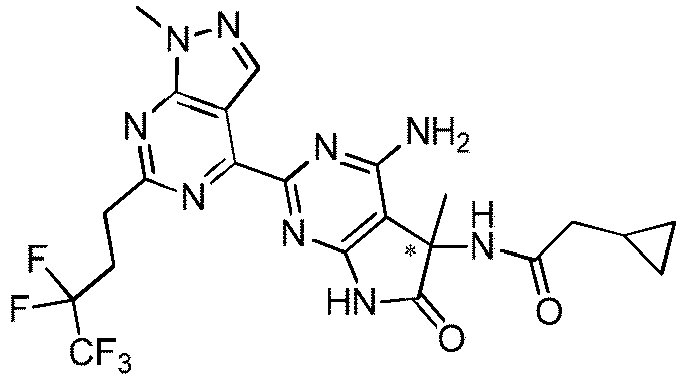
- The title compound was prepared from 4,5-diamino-5-methyl-2-(1-methyl-6-(3,3,4,4,4-pentafluorobutyl)-1H-pyrazolo[3,4-d]pyrimidin-4-yl)-5H-pyrrolo[2,3-d]pyrimidin-6(7H)-one (See Example 50) and 2-cyclopropylacetic acid according to the procedures described in Example 51. 1H NMR (300MHz, CDCl3): δ 8 10.59 (1 H, br s), 8.53 (1 H, s), 6.86 (1 H, br s), 6.41 (2 H, br s), 4.15 (3 H, s), 3.52-3.36 (2 H, m), 2.87-2.70 (2 H, m), 2.12 (1 H, d, J=7.2 Hz), 1.81 (3 H, s), 0.97-0.89 (1 H, m), 0.62-0.57 (2 H, m), 0.20-0.12 (2 H, m), m/z =540 (M+1).
-

- The title compound was prepared from 4,5-diamino-5-methyl-2-(1-methyl-6-(3,3,4,4,4-pentafluorobutyl)-1H-pyrazolo[3,4-d]pyrimidin-4-yl)-5H-pyrrolo[2,3-d]pyrimidin-6(7H)-one (see Example 50) and cyclopropanecarboxylic acid according to the procedures described in Example 51. 1H NMR (300MHz, CD3OD): δ 8.91 (1 H, s), 4.14 (3 H, s), 3.49-3.47 (2 H, m), 2.97-2.84 (2 H, m), 1.75-1.68 (1 H, m), 1.66 (3 H, s), 0.86-0.77 (4 H, m), m/z =526 (M+1).
-

- Into a 8-mL sealed tube, were placed the product of Example 50 (60 mg, 0.13mmol), 1,2-dichloroethane (6 mL), and cyclopropanecarbaldehyde (15 mg, 0.19 mmol, 1.5 equiv), and the mixture was stirred for 10 min at ambient temperature. To this was added sodium triacetoxyborohydride (110 mg, 0.52 mmol, 4.0 equiv). The resulting mixture was stirred for 16 h at RT and quenched by the addition of water (50 mL). The resulting solution was extracted with DCM (3 x 50 mL) and the organic layers were combined. The resulting mixture was washed with brine (50 mL), dried over anhydrous sodium sulfate and filtered. The filtrate was concentrated in vacuo. The residue was purified by silica gel chromatography using 0% to 20% MeOH in DCM gradient to afford the title compound. This was further purified by recrystallization from DCM/hexanes. 1H NMR (300MHz, CDCl3): δ 8.73 (2 H, br s), 7.73 (1 H, s), 5.75 (2 H, br s), 4.16 (3 H, s), 3.56-3.50 (2 H, m), 2.89-2.71 (2 H, m), 2.36-2.34 (1 H, m), 2.11-2.05 (1 H, m), 1.63 (3 H, s), 0.92-0.86 (1 H, m), 0.55-0.40 (2 H, m), 0.15-0.05 (2 H, m), m/z =512 (M+1).
-

- The title compound was prepared from the product of Example 50 and acetone according to the procedures described in Example 54. 1H NMR (300MHz, CDCl3): δ 8.74 (1 H, br s), 8.62 (1 H, br), 5.77 (2 H, br), 4.17 (3 H, s), 3.58-3.52 (2 H, m), 2.90-2.65 (3 H, m), 1.58 (3 H, s), 1.07 (3 H, d, J = 6.3 Hz), 0.99 (3 H, d, J = 6.3 Hz), m/z =500 (M+1).
-

- Into a 50-mL sealed tube, were placed 4-amino-5-methyl-2-(1-methyl-6-(3,3,4,4,4-pentafluorobutyl)-1H-pyrazolo[3,4-d]pyrimidin-4-yl)-6-oxo-6,7-dihydro-5H-pyrrolo[2,3-d]pyrimidine-5-carboxamide (racemate) see Example 30) (170 mg, 0.35 mmol), N-bromosuccinimide (137 mg, 0.77 mmol), MeOH (12 mL) and 1,8-diazabicyclo[5.4.0]undec-7-ene (203 mg, 1.33 mmol). The resulting mixture was stirred for 30 min at 80°C. The reaction progress was monitored by LC/MS (liquid chromatography-mass spectrometry). The reaction was then quenched by the addition of water (100 mL). The resulting solution was extracted with EtOAc (4 x 50 mL) and the organic layers were combined. The resulting mixture was washed with brine (30 mL), dried over anhydrous sodium sulfate and filtered. The filtrate was concentrated in vacuo to dryness. The residue was purified by silica gel chromatography using EtOAc/petroleum ether gradient to give the title compound. Chiral separation using Prep-HPLC on a Chiralpak IC column provided both enantiomers of the title compound. 1H NMR (400MHz, CDCl3): δ 8.82 (1 H, br s), 8.73 (1 H, s), 5.85 (2 H, br s), 4.20 (3 H, s), 3.60-3.52 (2 H, m), 3.25 (3 H, s), 2.95-2.82 (2 H, m), 1.72 (3 H, s), m/z =473 (M+1).
-

- The title compound was prepared from 4-amino-5-methyl-2-(1-methyl-6-(3,3,4,4,4-pentafluorobutyl)-1H-pyrazolo[3,4-d]pyrimidin-4-yl)-6-oxo-6,7-dihydro-5H-pyrrolo[2,3-d]pyrimidine-5-carboxamide (racemic) (see Example 30) and CD3OD according to the procedures described in Example 56. 1H NMR (300MHz, CDCl3): δ 8.70 (1 H, s), 8.61 (1 H, br s), 5.85 (2 H, br s), 4.18 (3 H, s), 3.59-3.54 (2 H, m), 2.95-2.77 (2 H, m), 1.70 (3 H, s), m/z =476 (M+1).
-

- Step A: 3-Chloro-1-methyl-6-(3,3,4,4,4-pentafluorobutyl)-1H-pyrazolo[3,4-d]pyrimidine-4-carboximidamide. A mixture of the intermediate (2.0 g, 6.21 mmol) described in Step F of Example 1, 1,3-dichloro-5,5-dimethylimidazolidine-2,4-dione (2.45 g, 12.41 mmol) and palladium(II) acetate (139 mg, 0.621 mmol) were heated in acetic acid (62 mL) at 100°C for 18 h in a sealed tube. The mixture was cooled to RT and concentrated. The residue was purified by supercritical fluid chromatography with MeOH as the carrier to afford the title compound.
- Step B: 4-Amino-2-(3-chloro-1-methyl-6-(3,3,4,4,4-pentafluorobulyl)-1H-pyrazolo[3,4-d]pyrimidin-4-yl)-5-(4-fluorophepyl)-5-methyl-5H-pyrrolo[2,3-d]pyrimidin-6(7H)-one. The title compound was prepared from the intermediate from Step A and Intermediate 1B (slower eluting enantiomer) according to the procedures described in Step D of Example 2. 1H NMR (500 MHz, DMSO-d6): δ 11.25 (1 H, s), 7.29 (2 H, dd, J=8.55, 5.37 Hz), 7.20 (2 H, t, J=8.73 Hz), 4.04 (3 H, s), 3.38-3.29 (2 H, m, overlapping with H2O), 2.93-2.79 (2 H, m), 1.81 (3 H, s), m/z=571 (M+1).
-

- To a 4 mL vial in the glovebox were added 4-amino-5-(4-fluorophenyl)-5-methyl-2-(6-(3,3,4,4,4-pentafluorobutyl)-1-trideuteriomethyl-1H-pyrazolo[3,4-d]pyrimidin-4-yl)-5H-pyrrolo[2,3-d]pyrimidin-6(7H)-one (Example 2) (20 mg, 0.037 mmol), potassium cyclopropyltrifluoroborate (44.0 mg, 0.297 mmol), manganese(IV) oxide (25.8 mg, 0.297 mmol), HOAc (200 µl), H2O (60.0 µl), TFA (2.86 µl, 0.037 mmol)) in order. The mixture was heated at 50°C for 24 h and cooled to RT. Solid NaHCO3 was added until CO2 evolution ceased. The resulting mixture was extracted with extracted with methyl t-butyl ether (10 mL) and the organic layer was concentrated in vacuo. The residue was purified by reverse phase HPLC using acetonitrile in water with 0.1% TFA as the eluent to give the title product as a TFA salt. 1H NMR (500MHz, CDCl3): δ 9.41 (1 H, br s), 7.34 (2 H, m), 7.14 (2 H, m), 5.32 (2 H, br s), 3.50 (2 H, m), 2.82 (2 H, m), 2.37 (1 H, m), 1.91 (3 H, s), 1.05 (2 H, m), 0.92 (2 H, m), m/z=580 (M+1).
-

- Step A: 4,4,5,5,5-Pentafluoropentanimidamide. Trimethyl aluminum (2.0 M toluene, 32.5 mL, 65.1 mmol) was added to NH4Cl (3.48 g, 65.1 mmol) suspended in toluene (100 mL) at 0°C. The solution was then stirred at RT for 1 h. 4,4,5,5,5-Pentafluoropentanoic acid (2.50 g, 13.0 mmol) described in Step A of Example 1 was added and the resulting mixture was stirred at 100°C for 18 h. The reaction mixture was cooled to RT and quenched with silica-gel and a 1:1 mixture of MeOH/chloroform (50 mL). The resulting slurry was stirred vigorously for 30 min. The reaction mixture was filtered through a silica gel pad and washed with MeOH. The filtrate was concentrated. The crude product was purified by silica gel chromatography using a 0% to 30% MeOH (with 2M NH3) in DCM gradient to give the title compound
- Step B: 6-Amino-5-(2,2-diethoxyethyl)-2-(3,3,4,4,4-pentafluorobulyl)pyrimidin-4-ol. A mixture of the intermediate from Step A (1.01 g, 5.29 mmol) and NaOEt (0.72 g, 10.6 mmol) in EtOH (20 mL) was stirred at RT for 20 min. A solution of ethyl 2-cyano-4,4-diethoxybutanoate (1.34 g, 5.82 mmol) in 20 mL of EtOH was added and the resulting mixture was refluxed for 18 h. The reaction mixture was cooled to RT, concentrated in vacuo and the residue was diluted with EtOAc. The solution was then washed with water, dried over MgSO4, filtered, and concentrated in vacuo. The crude product was purified by silica gel chromatography using a 0% to 15% MeOH (with 2M NH3) in DCM gradient to give the title compound.
- Step C: 2-(3,3,4,4,4-Pentafluorobutyl)-7H-pyrrolo[2,3-d]pyrimidin-4-ol. To a solution of the intermediate from Step B (1.170 g, 3.13 mmol) in 50 mL of EtOH was added TFA dropwise. The resulting mixture was stirred at RT for 18 h and concentrated in vacuo to give the title compound which was used in the next step without further purification.
- Step D: 4-Chloro-2-(3,3,4,4,4-pentafluorobutyl)-7H-pyrrolo[2,3-d]pyrimidine. A solution of the intermediate from Step C (0.88 g, 3.13 mmol) in POCl3 (10 mL) was refluxed for 3 h. The resulting mixture was concentrated in vacuo and the residue was diluted with diethyl ether, washed with water, dried over MgSO4, filtered, and concentrated in vacuo. The crude product was purified by silica gel chromatography using a 0% to 70% EtOAc/CH2Cl2 (1/1) mixture in hexanes gradient to give the title compound.
- Step E: 4-Chloro-2-(3,3,4,4,4-pentafluorobutyl)-7-trideuteriomethyl-7H-pyrrolo[2,3-d]pyrimidine. To a suspension of NaH (0.025 g, 0.629 mmol) in DMF (4 mL) at 0°C was added dropwise a solution of the intermediate from Step D (0.145 g, 0.484 mmol) in DMF (4 mL). The reaction mixture was stirred at RT for 15 min and then CD3I (0.140 g, 0.968 mmol) was added. The resulting mixture was then stirred at RT for 2 h and partitioned between EtOAc and water. The organic phase was washed with brine, dried with MgSO4, filtered, and concentrated in vacuo. The crude product was purified by silica gel chromatography using a 0% to 30% EtOAc in hexanes gradient to give the title compound.
- Step F: 2-(3,3,4,4,4-Pentafluorobutyl)-7-trideuteriomethyl-7H-pyrrolo[2,3-d]pyrimidine-4-carbonitrile. To a solution of the intermediate from Step E (0.130 g, 0.411 mmol) in DMF (6 mL) was added zinc cyanide (0.048 g, 0.411 mmol), Pd2dba3 (0.038 g, 0.041 mmol), DPPF (0.046 g, 0.082 mmol). The resulting solution was heated at 100 °C for 1 h. The reaction was cooled to RT, diluted with water (10 mL) and extracted with EtOAc. The organic phase was washed with brine, dried with MgSO4, filtered, and concentrated in vacuo. The crude product was purified by silica gel chromatography using a 0% to 50% EtOAc in hexanes gradient to give the title compound.
- Step G: 2-(3,3,4,4,4-Pentafluorobutyl)-7-trideuteriomethyl-7H-pyrrolo[2,3-d]pyrimidine-4-carboximidamide. Trimethylaluminum (2.0 M in toluene, 32.8 mL, 65.7 mmol) was added dropwise to a suspension of NH4Cl (3.51 g, 65.7 mmol) in 100 mL toluene cooled to 0°C. The solution was then stirred at RT for 1 h. This solution (7.97 mL, 3.91 mmol) was then added to the intermediate from Step F (0.12 g, 0.391 mmol) and then heated at 110°C for 18 h. The reaction mixture was cooled to RT and quenched with silica-gel and 1:1 MeOH-chloroform (25 mL). The resulting slurry was stirred vigorously for 30 min. The reaction mixture was filtered through a silca gel pad (1") and washed with MeOH. The filtrate was concentrated in vacuo to yield the title compound.
- Step H: 4-Amino-5-methyl-2'-(3,3,4,4,4-pentafluorobutyl)-5-phenyl-7'-trideuteriomethyl-5H,7'H-[2,4'-bipyrrolo[2,3-d]pyrimidin]-6(7H)-one. The title compound was prepared from the intermediate from Step G and intermediate 2B (slower eluting enantiomer) according to the procedure described in Step G of Example 1. 1H NMR (500MHz, DMSO-d6): δ 11.23 (1 H, s), 7.64 (1 H, d, J=3.46 Hz), 7.39-7.34 (3 H, m), 7.31 (3 H, t, J=7.49 Hz), 6.63 (2 H, s), 3.35-3.28 (2 H, partially overlapping with H2O), 2.94-2.80 (3 H, m), 1.83 (3 H, s), m/z =521 (M+1).
-

- Step A: 4-Chloro-7-methyl-2-(3,3,4,4,4-pentafluorobutyl)-7H-pyrrolo[2,3-d]pyrimidine. To a suspension of NaH (0.200 g, 4.99 mmol) in DMF (5 mL) at 0°C was added dropwise a solution of the intermediate (0.748 g, 2.496 mmol) described in Step D of Example 60 in DMF (10 mL). The reaction mixture was stirred at RT for 15 min and then MeI (0.709 g, 4.99 mmol) was added. The resulting mixture was then stirred at RT for 1 h and partitioned between EtOAc and water. The organic phase was washed with brine, dried with MgSO4, filtered, and concentrated in vacuo. The crude product was purified by silica gel chromatography using a 0 to 40% EtOAc in hexanes gradient to give the title compound.
- Step B: 7-Methyl-2-(3,3,4,4,4-pentafluorobutyl)-7H-pyrrolo[2,3-d]pyrimidine-4-carbonitrile. To a solution of the intermediate from Step A (0.681 g, 2.17 mmol) in DMF (10 mL) was added zinc cyanide (0.255 g, 2.17 mmol), Pd2dba3 (0.199 g, 0.217 mmol), dppf (0.241 g, 0.434 mmol). The resulting solution was heated at 100°C for 1 h. The reaction was cooled to RT, diluted with water (10 mL) and extracted with EtOAc. The organic phase was washed with brine, dried with MgSO4, filtered, and concentrated in vacuo. The crude product was purified by silica gel chromatography using a 0 to 40% EtOAc in hexanes gradient to give the title compound. Step
- C: 7-Methyl-2-(3,3,4,4,4-pentafluorobutyl)-7H-pyrrolo[2,3-d]pyrimidine-4- carboximidamide. Trimethylaluminum (2.0 M in toluene, 18.9 mL, 37.8 mmol) was added dropwise to a suspension of NH4Cl (2.02 g, 37.8 mmol) in 55 mL toluene cooled to 0°C. The solution was then stirred at RT for 1 h. This solution (27.9 mL, 14.23 mmol) was then added to the intermediate from Step B (0.541 g, 1.778 mmol) and then heated at 100°C for 18 h. The reaction mixture was cooled to RT and quenched with silica-gel and 1:1 MeOH-chloroform (25 mL). The resulting slurry was stirred vigorously for 30 min. The reaction mixture was filtered through a silca gel pad (1") and washed with MeOH. The filtrate was concentrated in vacuo to yield the title compound.
- Step D: 4-Amino-5-(4-fluorophenyl)-5,7'-dimethyl-2'-(3,3,4,4,4-pentafluorobutyl)-5H,7'H-[2,4'-bipyrrolo[2,3-d]pyrimidin]-6(7H)-one. The title compound was prepared from the intermediate from Step C and intermediate 1B (slower eluting enantiomer) according to the procedures described in Step G of Example 1. 1H NMR δ (500MHz, DMSO-d6): δ 11.24 (1 H, s), 7.63 (1 H, d, J = 3.48 Hz), 7.36-7.28 (3 H, m), 7.17 (2 H, t, J = 8.75 Hz), 6.66 (2 H, s), 3.84 (3 H, s), 3.35-3.28 (2 H, partially overlapping with H2O), 2.91-2.78 (2 H, m), 1.80 (3 H, s), m/z =536 (M+1).
- Using essentially the same procedures described in Example 61, the following reference compounds in Table 4 were synthesized.
Table 4 
EX R4 m/z (M+H ) Chiral Source Data 62 
518 Intermediate 2B 1H NMR (500MHz, DMSO-d6): δ 11.23 (1 H, s), 7.64 (1 H, d, J= 3.47 Hz), 7.39-7.34 (3 H, m), 7.31 (3 H, t, J=7.59 Hz), 6.62 (2 H, s), 3.86 (3 H, s), 3.35-3.28 (2 H, partially overlapping with H2O), 2.93-2.80 (2 H, m), 1.83 (3 H, s). 63 Me 456 Not applicable 1H NMR (500MHz, DMSO-d6): δ 11.08 (1 H, s), 7.63 (1 H, d, J=3.48 Hz), 7.31 (1 H, d, J=3.46 Hz), 6.86 (2 H, s), 3.84 (3 H, s), 3.35-3.27 (2 H, partially overlapping with H2O), 2.91-2.78 (2 H, m), 1.38 (6 H, s). -

- Step A: 2-(2,3-Difluorobenzyl)-7-methyl-7H-pyrrolo[2,3-d]pyrimidine-4-carboximidamide. The title compound was prepared from 2-(2,3-difluorophenyl)acetic acid in place of 4,4,5,5,5-pentafluoropentanoic acid according to the procedures described in Step A to Step G of Example 60.
- Step B: 4-Amino-2'-(2,3-difluorobenzyl)-5,7'-dimethyl-5-phenyl-5H,7'H-[2,4'-bipyrrolo[2,3-d]pyrimidin]-6(7H)-one. The title compound was prepared from the intermediate from Step A and Intermediate 2B according to the procedure described in Step G of Example 1. 1H NMR (500MHz, DMSO-d6): δ 11.23 (1 H, s), 7.63 (1 H, d, J=3.48Hz), 7.40-7.28 (7 H, m), 7.17-7.10 (2 H, m), 6.62 (2 H, s), 4.44 (2 H, s), 3.78 (3 H, s), 1.83 (3 H, s), m/z =498 (M+1).
-

- Step A: 2-(3,3,4,4,4-Pentafluorobutyl)-7H-pyrrolo[2,3-d]pyrimidine-4-carbonitrile. A mixture of the intermediate (0.166 g, 0.554 mmol) described in Step D of Example 60 and KCN (0.289 g, 4.43 mmol) in DMSO (4 mL) was heated at 140°C for 4 h. The resulting mixture was partitioned between EtOAc and water. The organic phase was washed with brine, dried with MgSO4, filtered, and concentrated in vacuo. The crude product was purified by silica gel chromatography using 0% to 50% EtOAc in hexanes gradient to give the title compound.
- Step B: 2-(3,3,4,4,4-Pentafluorobutyl)-7H-pyrrolo[2,3-d]pyrimidine-4-carboximidamide. Trimethyl aluminum (2.0 M toluene, 1.83 mL, 3.66 mmol) was added to ammonium chloride (0.15 g, 3.65 mmol) suspended in toluene (9 mL) at 0°C. The solution was then stirred at RT for 1 h. The intermediate from Step A (0.106 g, 0.365 mmol) was then added. The resulting mixture was left stirring at 100°C for 18 h. The reaction mixture was cooled to RT and quenched with silica-gel and 1:1 MeOH-chloroform (250 mL). The resulting slurry was stirred vigorously for 30 min. The reaction mixture was filtered through a silca gel pad (1") and washed with MeOH. The filtrate was concentrated in vacuo to yield the title compound.
- Step C: 4-Amino-5-methyl-2'-(3,3,4,4,4-pentafluorobutyl)-5-phenyl-5H,7'H-[2,4'-bipyrrolo[2,3-d]pyrimidin]-6(7H)-one. The title compound was prepared from the intermediate from Step B and Intermediate 2B according to the procedures described in Step G of Example 1. 1H NMR (500 MHz, DMSO-d6): δ 12.09 (1 H, s), 11.24 (1 H, s), 7.60 (1 H, t, J=2.75 Hz), 7.40-7.28 (6 H, m), 6.62 (2 H, s), 3.35-3.25 (2 H, m, partially overlapping with H2O), 2.91-2.77 (2 H, m), 1.83 (3 H, s). m/z=504 (M+1).
-
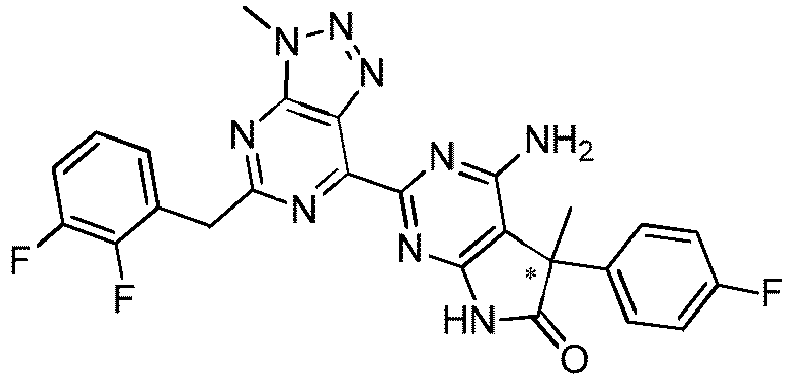
- Step A: 5-Amino-1-methyl-1H-1,2,3-triazole-4-carboxamide. 5-amino-1H-1,2,3-triazole-4-carboxamide was prepared according to the procedure described by Albert et. al. J. Chem. Soc. (C) 1969, 9, 152. To 5-amino-1H-1,2,3-triazole-4-carboxamide (0.830 g, 6.53 mmol) in MeOH (20 mL) was added NaOMe solution (1.79 mL, 7.84 mmol, 25%) dropwise at RT. The solution was then stirred for 30 min at RT and dimethyl sulfate was added (0.75 mL, 7.84 mmol). The resulting mixture was left stirring at RT for 3 h and concentrated in vacuo. The crude product was purified by silica gel chromatography using 0% to 15% MeOH in DCM gradient to give the title compound.
- Step B: 5-(2,3-Difluorobenzyl)-3-methyl-3H-[1,2,3]triazolo[4,5-d]pyrimidin-7-ol. An EtOH (5 mL) solution containing the intermediate from Step A (0.98 g, 0.69 mmol), methyl 2-(2,3-difluorophenyl)acetate (259 mg, 1.39 mmol) and NaOEt (0.52 mL, 1.39 mmol, 21% solution in EtOH) was refluxed for 20 h. The resulting mixture was cooled to RT and concentrated in vacuo. The residue was suspended in water and extracted with 30% IPA/CHCl3 (3×). The organic layer was concentrated in vacuo to give the title compound, which was used in the next step without further purification.
- Step C: 5-(2,3-difluorobenzyl)-3-methyl-3H-[1,2,3]triazolo[4,5-d]pyrimidine-7-carboximidamide. The title compound was prepared from the intermediate from Step B according to the procedures described in Step D to Step F of Example 1.
- Step F: 4-Amino-2-(5-(2,3-difluorobenzyl)-3-methyl-3H-[1,2,3]triazolo[4,5-d]pyrimidin-7-yl)-5-(4-fluorophenyl)-5-methyl-5H-pyrrolo[2,3-d]pyrimidin-6(7H)-one. The title compound was prepared from the intermediate from Step C and Intermediate 1B according to the procedure described in Step G of Example 1. 1H NMR (500MHz, DMSO-d6): δ 11.36 (1 H, s), 7.32 (2 H, dd, J = 8.76, 5.50 Hz), 7.19 (2 H, t, J = 8.43 Hz), 4.57 (2 H, s), 4.25 (3 H, s), 1.82 (3 H, s). m/z = 518 (M+1).
-

- Step A: 5-Amino-3-trideuteriomethyl-1H-1,2,3-triazole-4-carboxamide. The title compound was prepared from 5-amino-1H-1,2,3-triazole-4-carboxamide and dimethyl sulfate-d6 according to the procedures described in Step A of Example 66.
- Step B: 5-(3,3,4,4,4-Pentafluorobutyl-3-trideuteriomethyl-3H-[1,2,3]triazolo[4,5-d]pyrimidine-7-carboximidamide. The title compound was prepared from the intermediate from Step A and the intermediate described in Step B of Example 1 according to the procedures described in Steps B to C of Example 66.
- Step C: 4-Amino-5-(4-fluorophenyl)-5-methyl-2-(5-(3,3,4,4,4-pentafluorobutyl-3-trideuteriomethyl)-3H-[1,2,3]triazolo[4,5-d]pyrimidin-7-yl)-5H-pyrrolo[2,3-d]pyrimidin-6(7H)-one. The indicated compound was prepared from the intermediate from Step B and Intermediate 1B according to the procedure described in Step D of Example 2. 1H NMR (500MHz, DMSO-d6): δ 11.36 (1 H, s), 7.32 (2 H, dd, J=8.57, 5.35 Hz), 7.20 (2 H, t, J=8.71 Hz), 6.78 (2 H, s), 3.42 (2 H, t, J=7.86 Hz), 2.90 (2 H, t, J=9.07 Hz), 1.83 (3 H, s). m/z = 541 (M+1).
- Using essentially the same procedures described in the Examples 66 and 67, the following reference compounds in Table 5 were synthesized.
Table 5 
EX R3 R4 m/z (M+H) Chiral Source Data 68 Me 
523 I-2B 1H NMR (500MHz, DMSO-d6): δ 11.34 (1 H, s), 7.37 (2 H, t, J=7.41 Hz), 7.33-7.26 (3 H, m), 6.73 (2 H, s), 3.42 (3 H, t, J=7.86 Hz), 2.96-2.83 (2 H, m), 1.84 (3 H, s). 69 

567 I-16A 1H NMR (500MHz, DMSO-d6): δ 11.32 (1 H, s), 7.46 (2 H, dd, J=8.56, 5.40 Hz), 7.22 (2 H, t, J=8.74 Hz), 6.68 (2 H, s), 3.42 (3 H, t, J=7.86 Hz), 2.96-2.83 (2 H, m), 2.05-1.99 (1 H, m), 0.99-0.93 (1 H, m), 0.78-0.72 (1 H, m), 0.57-0.50 (1 H, m), 0.19-0.13 (1 H, m). 70 Me 
557 I-5A 1H NMR (500MHz, DMSO-d6): δ 11.37 (1 H, s), 7.43 (2 H, d, J=8.37 Hz), 7.29 (2 H, d, J=8.27 Hz), 6.80 (2 H, s), 3.42 (2 H, t, J=7.86 Hz), 2.89 (2 H, t, J=7.89 Hz), 1.82 (3 H, s). 71 Me 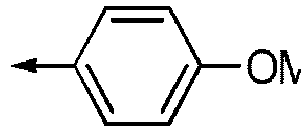
553 I-12B 1H NMR (500MHz, DMSO-d6): δ 11.30 (1 H, s), 7.21 (2 H, d, J=8.43 Hz), 6.93 (2 H, d, J=8.44 Hz), 6.70 (2 H, s), 3.75 (3 H, s), 3.43 (3 H, t, J=7.94 Hz), 2.98-2.84 (3 H, m), 1.81 (3 H, s). 72 Me 
571 I-22A 1H NMR (500MHz, DMSO-d6): δ 11.36 (1 H, s), 7.18-7.11 (2 H, m), 6.77 (2 H, s), 6.72 (1 H, ddd, J=6.22, 4.70, 2.45 Hz), 3.86 (3 H, s), 3.42 (3 H, t, J=7.86 Hz), 2.96-2.84 (2 H, m), 1.83 (3 H, s). 73 Me 
575 I-21A 1H NMR (400MHz, CDCl3): δ 8.86 (1 H, br s), 7.55 (1 H, t, J=8.0 Hz), 7.32-1.29 (1 H, m), 7.16-7.13 (1 H, m), 5.08 (2 H, r s), 3.63 (2 H, d, J=8.0 Hz), 2.92-2.79 (2 H, m), 1.92 (3 H, s). - sGC is a heme-containing enzyme that converts GTP to secondary messenger cGMP. Increases in cGMP levels affect several physiological processes including vasorelaxation through multiple downstream pathways. The rate by which sGC catalyzes cGMP formation is greatly increased by NO and by recently discovered NO-independent activators and stimulators. Heme-dependent activators (HDAs) preferentially activate sGC containing a ferrous heme group. To determine the effect of sGC activators on enzyme activity, the CASA assay was developed to monitor the generation of cGMP in a cell line that stably expresses the heterodimeric sGC protein.
- Methods: A CHO-K1 cell line stably expressing the sGC α1/β1 heterodimer was generated using a standard transfection protocol. CHO-K1 cells were transfected with plasmids pIREShyghsGCα1 and pIRESneo-hsGCβ1 simultaneously using FUGENE reagent. Clones that stably express both subunits were selected with hygromycin and neomycin for ∼2 weeks. Clone #7 was chosen for the assay and was designated CHO-K1/sGC. CHO-K1/sGC cells were maintained in F-K12 medium containing 10% heat-inactivated Fetal Bovine Serum (FBS), 100 µg/mL penicillin/streptomycin, 0.5 mg/mL hygromycin and 0.25 mg/mL G418. The cells were then cryopreserved in LN2. On the day of the assay, cells were thawed and resuspended in EBSS Assay Buffer (EAB, Sigma, E3024) supplemented with 5mM MgCl2, 10mM HEPES (4-(2-hydroxyethyl)piperazine-1-ethanesulfonic acid) and 0.05% BSA (bovine serum albumin) and cell density was then adjusted to 4X10⁵/mL with EAB. IBMX (3-isobutyl-1-methylxanthin, 0.5mM) was added to inhibit degradation of cGMP. Compounds were diluted from DMSO stock solutions and added to the assay at a final DMSO concentration of 2.5%. Cells were incubated with compounds in the presence and absence of 1 µM of Diethylenetriamine/nitric oxide adduct (DETA-NO; Sigma, 17018) for 1hr at 37 °C. At the end of the incubation period, the reaction was terminated and the cells were lysed with the detection reagents from Cisbio Kits. The level of intracellular cGMP was determined using an HTRF-based assay kit (CisBio, 62GM2PEC), which detects the displacement of a fluorescence labeled cGMP from its specific antibody. The cGMP produced by test compounds was directly compared to the maximum cGMP production (this value was set to equal 100% activation.) of the published sGC-HDA Compound A:

WO 2010/065275, published June 10, 2010 ). The test compounds' activity was then expressed as a percentage of Compound A, the standard in every experiment. This percent activation was calculated either in the presence or absence of DETA-NO which was then plotted. IP and maximum fold induction was derived using ADA analysis software for 4P fit. - Most preferred compounds had an IP of less than or equal to about 500 nM. Data for the compounds of the Examples is provided in Table 6 (Examples 7, 8, 19, 20, 38 and 60-73 of which are for reference only).


- Spontaneously hypertensive rats (SHR, male, Charles River) were implanted with DSI TA11PA-C40 telemetry device (Data Sciences, Inc., St. Paul, MN) under isoflurane or ketamine/metomidine anesthesia. The telemetry unit catheter was inserted into the descending aorta via the femoral artery and the telemetry device was implanted subcutaneously in the left flank area. Animals were allowed to recover from surgery for 14 days before the start of any studies. Blood pressure, heart rate, and activity signals from conscious, freely moving rats were recorded continuously for 30 seconds every 10 min. On the day prior to administration of compound, a single oral dose of vehicle (10% transcutol/20% Cremophor/70% water) was administered to all animals to establish baseline control data. The blood pressure lowering efficacy of compound (PO) or vehicle was evaluated following a single oral gavage. Data were collected as hourly averages, and changes in blood pressure were calculated by subtracting control baseline data on an hourly basis. Animals were maintained on normal diet with a 12 h
light-dark cycle. - Maximum peak decreases of systolic blood pressure (SBP) in SHR at a particular P.O. dose (mpk milligrams per kilogram) for the following Example compounds are provided. Category A=SBP in SHRs <25 mmHg; Category B=SBP in SHRs 25-40 mmHg; Category C=SBP in SHRs >40 mmHg. Examples 7, 61, 62, 67, 69, 71 and 73 are for reference only.
Table 7 EX Dose (P.O. mpk) Category 1 1 C 2 1 C 4 3 C 6 3 A 7 3 B 9 1 C 12 1 B 28 1 C 31 0.3 B 32 1 A 61 1 A 62 1 A 67 1 A 69 3 B 71 1 A 73 3 A
Claims (16)
- A compound having structural Formula I:
 X1 is N;X2 is CH;R1 is CH3 or CD3;R2 is:(a) -C1-6alkyl unsubstituted or substituted with (i) one to six of -F; (ii) -C3-6cycloalkyl unsubstituted or substituted with one to three of -F, or; (iii) phenyl unsubstituted or independently substituted at each occurrence with one to three of halo, -CN, -CH3, or -OCH3;(b) -C3-6cycloalkyl unsubstituted or substituted with one to three of -F, or;(c) phenyl unsubstituted or independently substituted at each occurrence with one to three of halo, -CN, -CH3, or -OCH3;R2a is -H or -C1-3alkyl unsubstituted or substituted with one to three of -F;R2b is -H or -C1-3alkyl unsubstituted or substituted with one to three of -F, or;R2b is -H and R2 and R2a are joined together with the carbon to which they are both attached to represent:(a) -C3-6cycloalkyl unsubstituted or substituted with one to three of -F, or;(b) a 4 to 6 membered heterocycle comprised of carbons and one or two heteroatoms independently selected from N, O, or S, wherein the heterocycle is unsubstituted or independently substituted at each occurrence with one to three of halo, -CN, -CH3, or -OCH3;R3 is -C1-6alkyl or -C3-6cycloalkyl;R4 is (a) -C1-6alkyl; (b) -OC1-6alkyl; (c) -C2-6alkynyl; (d) -C3-6cycloalkyl; (e) -COO-C1-6alkyl; (f) -NHRa; (g) -NH-C(O)-Ra; (h) -C(O)NHRa; (i) -CN; (j) phenyl unsubstituted or substituted with one to three substituents independently selected at each occurrence from halo,-C1-6alkyl, -OC1-6alkyl, -OH; or -CN, or; (k) phenyl substituted with a 5 or 6 membered heteroaryl comprised of carbon atoms, one to three of N, and zero or one of O, wherein the heteroaryl is unsubstituted or substituted with -C1-3alkyl;Ra is(a) -H;(b) -C1-6alkyl unsubstituted or substituted with one or more substituents independently selected from -OH, one to three of -F,(c) -C1-3alkyl-C3-6cycloalkyl,(d) -C3-6cycloalkyl, or;(e) a 5 or 6 membered heteroaryl comprised of carbon atoms and one to three heteroatoms independently selected from N, O, and S, wherein the heteroaryl is unsubstituted or substituted with -C1-3alkyl, and;R5 is NH2.
 - The compound of claim 1 or a pharmaceutically acceptable salt thereof wherein:
R3 is -C1-6alkyl or -C3-6cycloalkyl. - The compound of claim 1 or a pharmaceutically acceptable salt thereof wherein:R2 is:(a) -C1-6alkyl substituted with (i) one to six of -F; (ii) -C3-6cycloalkyl substituted with one to three of -F, or; (iii) phenyl substituted with one to three of -F;(b) -C3-6cycloalkyl substituted with one to three of -F, or;(c) phenyl substituted with one to three of -F;R3 is -C1-6alkyl or -C3-6cycloalkyl;R4 is(a) -C1-6alkyl;(b) -OC1-6alkyl;(c) -C2-3alkynyl;(d) -C3-6cycloalkyl;(e) -COO-C1-3alkyl;(f) -NHRa;(g) -NH-C(O)-Ra;(h) -C(O)NHRa;(i) -CN;(j) phenyl unsubstituted or substituted with one to three substituents independently selected at each occurrence from halo, -C1-3alkyl, -OC1-3alkyl, -OH, or -CN, or;(k) phenyl substituted with a 5 or 6 membered heteroaryl comprised of carbon atoms, one to three of N, and zero or one of O, wherein the heteroaryl is unsubstituted or substituted with -C1-3alkyl;Ra is:(a) -H;(b) -C1-6alkyl unsubstituted or substituted with one or more substituents independently selected from -OH and one to three of -F;(c) -C1-3alkyl-C3-6cycloalkyl;(d) -C3-6cycloalkyl, or;(e) 5 or 6 membered heteroaryl comprised of carbon atoms and one to three of N, wherein the heteroaryl is unsubstituted or substituted with -C1-3alkyl.
- The compound of claim 1 or a pharmaceutically acceptable salt thereof wherein R2 is:(a) -C1-6alkyl substituted with (i) one to six of -F; (ii) -C3-6cycloalkyl substituted with one to three of -F, or; (iii) phenyl substituted with one to three of -F;(b) -C3-6cycloalkyl substituted with one to three of -F, or;(c) phenyl substituted with one to three of -F.
- The compound of claim 1 or a pharmaceutically acceptable salt thereof wherein R3 is -C1-3alkyl or cyclopropyl.
- The compound of Claim 1 or a pharmaceutically acceptable salt thereof wherein is R4 is:(a) -C1-4alkyl;(b) -OC1-4alkyl;(c) -C2-3alkynyl;(d) -C3-6cycloalkyl;(e) -COO-C1-3alkyl;(f) -NHRa;(g) -NH-C(O)-Ra;(h) -C(O)NHRa;(i) -CN;(j) phenyl unsubstituted or substituted with one to three substituents independently selected at each occurrence from -F, -Cl, -Br, -C1-3alkyl, -OC1-3alkyl, -OH; or -CN, or;(k) phenyl substituted with pyridyl, oxadiazolyl, or pyrazolyl.
- The compound of claim 1 or a pharmaceutically acceptable salt thereof wherein Ra is:(a) -H;(b) -C1-4alkyl unsubstituted or substituted with one or more substituents independently selected from -OH and one to three of -F;(c) -CH2-C3-6cycloalkyl;(d) -C3-6cycloalkyl, or;(e) a heteroaryl which is pyridyl or pyrazolyl, wherein the heteroaryl is unsubstituted or substituted with -C1-3alkyl.
- The compound of claim 1, having the structural Formula Ia or a
pharmaceutically acceptable salt thereof:
- The compound of Claim 1, having the structural Formula Ib or a pharmaceutically acceptable salt thereof:

- A compound which is:4-Amino-5-methyl-2-(1-methyl-6-(3,3,4,4,4-pentafluorobutyl)-1H-pyrazolo[3,4-d]pyrimidin-4-yl)-5-phenyl-5H-pyrrolo[2,3-d]pyrimidin-6(7H)-one;4-Amino-5-(4-fluorophenyl)-5-methyl-2-(6-(3,3,4,4,4-pentafluorobutyl)-1-trideuteriomethyl-1H-pyrazolo[3,4-d]pyrimidin-4-yl)-5H-pyrrolo[2,3-d]pyrimidin-6(7H)-one;4-Amino-5-methyl-2-(1-methyl-6-(4,4,4-trifluorobutyl)-1H-pyrazolo[3,4-d]pyrimidin-4-yl)-5-phenyl-5H-pyrrolo[2,3-d]pyrimidin-6(7H)-one;4-Amino-5-methyl-2-(1-methyl-6-(3,3,3-trifluoropropyl)-1H-pyrazolo[3,4-d]pyrimidin-4-yl)-5-phenyl-5H-pyrrolo[2,3-d]pyrimidin-6(7H)-one;4-Amino-2-(6-((3,3-difluorocyclobutyl)methyl)-1-methyl-1H-pyrazolo[3,4-d]pyrimidin-4-yl)-5-(4-fluorophenyl)-5-methyl-5H-pyrrolo[2,3-d]pyrimidin-6(7H)-one;4-Amino-2-(6-(2,3-difluorobenzyl)-1-methyl-1H-pyrazolo[3,4-d]pyrimidin-4-yl)-5-(4-fluorophenyl)-5-methyl-5H-pyrrolo[2,3-d]pyrimidin-6(7H)-one;4-Amino-5-(4-fluorophenyl)-5-methyl-2-(1-methyl-6-(3,3,4,4,4-pentafluorobutyl)-1H-pyrazolo[3,4-d]pyrimidin-4-yl)-5H-pyrrolo[2,3-d]pyrimidin-6(7H)-one;4-Amino-5-(4-bromophenyl)-5-methyl-2-(1-methyl-6-(3,3,4,4,4-pentafluorobutyl)-1H-pyrazolo[3,4-d]pyrimidin-4-yl)-5H-pyrrolo[2,3-d]pyrimidin-6(7H)-one;4-Amino-5-(4-fluorophenyl)-5-methyl-2-(1-methyl-6-(3,3,3-trifluoropropyl)-1H-pyrazolo[3,4-d]pyrimidin-4-yl)-5H-pyrrolo[2,3-d]pyrimidin-6(7H)-one;4-Amino-5,5-dimethyl-2-(6-(3,3,4,4,4-pentafluorobutyl)-1-trideuteriomethyl-1H-pyrazolo[3,4-d]pyrimidin-4-yl)-5H-pyrrolo[2,3-d]pyrimidin-6(7H)-one;4-Amino-5-methyl-2-(6-(3,3,4,4,4-pentafluorobutyl)-1-trideuteriomethyl-1H-pyrazolo[3,4-d]pyrimidin-4-yl)-5-phenyl-5H-pyrrolo[2,3-d]pyrimidin-6(7H)-one;4-Amino-5-(3-methoxyphenyl)-5-methyl-2-(6-(3,3,4,4,4-pentafluorobutyl)-1-trideuteriomethyl-1H-pyrazolo[3,4-d]pyrimidin-4-yl)-5H-pyrrolo[2,3-d]pyrimidin-6(7H)-one;4-Amino-5-(3-fluoro-4-methoxyphenyl)-5-methyl-2-(1-methyl-6-(4,4,4-trifluorobutyl)-1H-pyrazolo[3,4-d]pyrimidin-4-yl)-5H-pyrrolo[2,3-d]pyrimidin-6(7H)-one;4-Amino-5-(3-fluoro-4-methoxyphenyl)-5-methyl-2-(1-methyl-6-(3,3,4,4,4-pentafluorobutyl)-1H-pyrazolo[3,4-d]pyrimidin-4-yl)-5H-pyrrolo[2,3-d]pyrimidin-6(7H)-one;4-Amino-5-cyclopropyl-5-methyl-2-(6-(3,3,4,4,4-pentafluorobutyl)-1-trideuteriomethyl-1H-pyrazolo[3,4-d]pyrimidin-4-yl)-5H-pyrrolo[2,3-d]pyrimidin-6(7H)-one;4-Amino-5-cyclohexyl-5-methyl-2-(1-methyl-6-(3,3,4,4,4-pentafluorobutyl)-1H-pyrazolo[3,4-d]pyrimidin-4-yl)-5H-pyrrolo[2,3-d]pyrimidin-6(7H)-one;4-Amino-5-ethynyl-5-methyl-2-(1-methyl-6-(3,3,4,4,4-pentafluorobutyl)-1H-pyrazolo[3,4-d]pyrimidin-4-yl)-5H-pyrrolo[2,3-d]pyrimidin-6(7H)-one;4-Amino-5-ethynyl-5-methyl-2-(6-(3,3,4,4,4-pentafluorobutyl)-1-trideuteriomethyl-1H-pyrazolo[3,4-d]pyrimidin-4-yl)-5H-pyrrolo[2,3-d]pyrimidin-6(7H)-one;4-Amino-5-ethyl-5-ethynyl-2-(1-methyl-6-(3,3,4,4,4-pentafluorobutyl)-1H-pyrazolo[3,4-d]pyrimidin-4-yl)-5H-pyrrolo[2,3-d]pyrimidin-6(7H)-one;4-Amino-5-cyclopropyl-5-ethynyl-2-(1-methyl-6-(3,3,4,4,4-pentafluorobutyl)-1H-pyrazolo[3,4-d]pyrimidin-4-yl)-5H-pyrrolo[2,3-d]pyrimidin-6(7H)-one;4-Amino-5-butyl-5-cyclopropyl-2-(6-(3,3,4,4,4-pentafluorobutyl)-1-trideuteriomethyl-1H-pyrazolo[3,4-d]pyrimidin-4-yl)-5H-pyrrolo[2,3-d]pyrimidin-6(7H)-one;Ethyl 4-amino-5-cyclopropyl-2-(1-methyl-6-(3,3,4,4,4-pentafluorobutyl)-1H-pyrazolo[3,4-d]pyrimidin-4-yl)-6-oxo-6,7-dihydro-5H-pyrrolo[2,3-d]pyrimidine-5-carboxylate;Ethyl 4-amino-5-cyclopropyl-2-(1-methyl-6-(4,4,4-trifluorobutyl)-1H-pyrazolo[3,4-d]pyrimidin-4-yl)-6-oxo-6,7-dihydro-5H-pyrrolo[2,3-d]pyrimidine-5-carboxylate;4-Amino-N,5-dicyclopropyl-2-(6-(3,3,4,4,4-pentafluorobutyl)-1-trideuteriomethyl-1H-pyrazolo[3,4-d]pyrimidin-4-yl)-6-oxo-6,7-dihydro-5H-pyrrolo[2,3-d]pyrimidine-5-carboxamide;4-Amino-5-cyclopropyl-N-ethyl-2-(6-(3,3,4,4,4-pentafluorobutyl)-1-trideuteriomethyl-1H-pyrazolo[3,4-d]pyrimidin-4-yl)-6-oxo-6,7-dihydro-5H-pyrrolo[2,3-d]pyrimidine-5-carboxamide;4-Amino-5-methyl-2-(1-methyl-6-(3,3,4,4,4-pentafluorobutyl)-1H-pyrazolo[3,4-d]pyrimidin-4-yl)-6-oxo-6,7-dihydro-5H-pyrrolo[2,3-d]pyrimidine-5-carboxamide;4-Amino-N-cyclopropyl-5-methyl-2-(1-methyl-6-(3,3,4,4,4-pentafluorobutyl)-1H-pyrazolo[3,4-d]pyrimidin-4-yl)-6-oxo-6,7-dihydro-5H-pyrrolo[2,3-d]pyrimidine-5-carboxamide;4-Amino-N-cyclopropyl-5-methyl-2-(6-(3,3,4,4,4-pentafluorobutyl)-1-trideuteriomethyl-1H-pyrazolo[3,4-d]pyrimidin-4-yl)-6-oxo-6,7-dihydro-5H-pyrrolo[2,3-d]pyrimidine-5-carboxamide;4-Amino-N,5-dicyclopropyl-2-(1-methyl-6-(3,3,4,4,4-pentafluorobutyl)-1H-pyrazolo[3,4-d]pyrimidin-4-yl)-6-oxo-6,7-dihydro-5H-pyrrolo[2,3-d]pyrimidine-5-carboxamide;4-Amino-N-cyclopropyl-5-ethyl-2-(6-(3,3,4,4,4-pentafluorobutyl)-1-trideuteriomethyl-1H-pyrazolo[3,4-d]pyrimidin-4-yl)-6-oxo-6,7-dihydro-5H-pyrrolo[2,3-d]pyrimidine-5-carboxamide;4-Amino-N-cyclopropyl-5-isopropyl-2-(6-(3,3,4,4,4-pentafluorobutyl)-1-trideuteriomethyl-1H-pyrazolo[3,4-d]pyrimidin-4-yl)-6-oxo-6,7-dihydro-5N-pyrrolo[2,3-d]pyrimidine-5-carboxamide;4-Amino-5-ethyl-2-(6-(3,3,4,4,4-pentafluorobutyl)-1-trideuteriomethyl-1H-pyrazolo[3,4-d]pyrimidin-4-yl)-6-oxo-6,7-dihydro-5H-pyrrolo[2,3-d]pyrimidine-5-carboxamide;4-Amino-5-isopropyl-2-(6-(3,3,4,4,4-pentafluorobutyl)-1-trideuterioniethyl-1H-pyrazolo[3,4-d]pyrimidin-4-yl)-6-oxo-6,7-dihydro-5H-pyrrolo[2,3-d]pyrimidine-5-carboxamide;4-Amino-N-ethyl-5-methyl-2-(6-(3,3,4,4,4-pentafluorobutyl)-1-trideuteriomethyl-1H-pyrazolo[3,4-d]pyrimidin-4-yl)-6-oxo-6,7-dihydro-5H-pyrrolo[2,3-d]pyrimidine-5-carboxamide;4-Amino-N-cyclopropyl-2-(6-(2,3-difluorobenzyl)-1-methyl-1H-pyrazolo[3,4-d]pyrimidin-4-yl)-5-methyl-6-oxo-6,7-dihydro-5H-pyrrolo[2,3-d]pyrimidine-5-carboxamide;4-Amino-5-cyclopropyl-2-(6-(3,3,4,4,4-pentafluorobutyl)-1-trideuteriomethyl-1H-pyrazolo[3,4-d]pyrimidin-4-yl)-6-oxo-N-(pyridin-2-yl)-6,7-dihydro-5H-pyrrolo[2,3-d]pyrimidine-5-carboxamide;4-amino-5-methyl-N-(1-methyl-1H-pyrazol-4-yl)-2-(6-(3,3,4,4,4-pentafluorobutyl)-1-trideuteriomethyl-1H-pyrazolo[3,4-d]pyrimidin-4-yl)-6-oxo-6,7-dihydro-5H-pyrrolo[2,3-d]pyrimidine-5-carboxamide;4-Amino-5-(4-hydroxyphenyl)-5-methyl-2-(6-(3,3,4,4,4-pentafluorobutyl)-1-trideuteriomethyl-1H-pyrazolo[3,4-d]pyrimidin-4-yl)-5H-pyrrolo[2,3-d]pyrimidin-6(7H)-one;4-Amino-5-(3-hydroxyphenyl)-5-methyl-2-(6-(3,3,4,4,4-pentafluorobutyl)-1-trideuteriomethyl-1H-pyrazolo[3,4-d]pyrimidin-4-yl)-5H-pyrrolo[2,3-d]pyrimidin-6(7H)-one;5-(4-(1,3,4-Oxadiazol-2-yl)phenyl)-4-amino-5-methyl-2-(1-methyl-6-(3,3,4,4,4-pentafluorobutyl)-1H-pyrazolo[3,4-d]pyrimidin-4-yl)-5H-pyrrolo[2,3-d]pyrimidin-6(7H)-one;4-Amino-5-methyl-5-(4-(1-methyl-1H-pyrazol-4-yl)phenyl)-2-(6-(3,3,4,4,4-pentafluorobutyl)-1-trideuteriomethyl-1H-pyrazolo[3,4-d]pyrimidin-4-yl)-5H-pyrrolo[2,3-d]pyrimidin-6(7H)-one;4-(4-Amino-5-methyl-2-(6-(3,3,4,4,4-pentafluorobutyl)-1-trideuteriomethyl-1H-pyrazolo[3,4-d]pyrimidin-4-yl)-6-oxo-6,7-dihydro-5H-pyrrolo[2,3-d]pyrimidin-5-yl)benzonitrile;4-Amino-5-methyl-2-(1-methyl-6-(3,3,4,4,4-pentafluorobutyl)-1H-pyrazolo[3,4-d]pyrimidin-4-yl)-6-oxo-6,7-dihydro-5H-pyrrolo[2,3-d]pyrimidine-5-carbonitrile;4,5-Diamino-5-methyl-2-(1-methyl-6-(3,3,4,4,4-pentafluorobutyl)-1H-pyrazolo[3,4-d]pyrimidin-4-yl)-5H-pyrrolo[2,3-d]pyrimidin-6(7H)-one;N-(4-Amino-5-methyl-2-(1-methyl-6-(3,3,4,4,4-pentafluorobutyl)-1H-pyrazolo[3,4-d]pyrimidin-4-yl)-6-oxo-6,7-dihydro-5H-pyrrolo[2,3-d]pyrimidin-5-yl)picolinamide;N-(4-Amino-5-methyl-2-(1-methyl-6-(3,3,4,4,4-pentafluorobutyl)-1H-pyrazolo[3,4-d]pyrimidin-4-yl)-6-oxo-6,7-dihydro-5H-pyrrolo[2,3-d]pyrimidin-5-yl)-2-cyclopropylacetamide;N-(4-Amino-5-methyl-2-(1-methyl-6-(3,3,4,4,4-pentafluorobutyl)-1H-pyrazolo[3,4-d]pyrimidin-4-yl)-6-oxo-6,7-dihydro-5H-pyrrolo[2,3-d]pyrimidin-5-yl)cyclopropanecarboxamide;4-Amino-5-((cyclopropylmethyl)amino)-5-methyl-2-(1-methyl-6-(3,3,4,4,4-pentafluorobutyl)-1H-pyrazolo[3,4-d]pyrimidin-4-yl)-5H-pyrrolo[2,3-d]pyrimidin-6(7H)-one;4-Amino-5-(isopropylamino)-5-methyl-2-(1-methyl-6-(3,3,4,4,4-pentafluorobutyl)-1H-pyrazolo[3,4-d]pyrimidin-4-yl)-5H-pyrrolo[2,3-d]pyrimidin-6(7H)-one;4-Amino-5-methoxy-5-methyl-2-(1-methyl-6-(3,3,4,4,4-pentafluorobutyl)-1H-pyrazolo[3,4-d]pyrimidin-4-yl)-5H-pyrrolo[2,3-d]pyrimidin-6(7H)-one;4-Amino-5-methyl-5-trideuteriomethoxy-2-(1-methyl-6-(3,3,4,4,4-pentafluorobutyl)-1H-pyrazolo[3,4-d]pyrimidin-4-yl)-5H-pyrrolo[2,3-d]pyrimidin-6(7H)-one;4-Amino-2-(3-chloro-1-methyl-6-(3,3,4,4,4-pentafluorobutyl)-1H-pyrazolo[3,4-d]pyrimidin-4-yl)-5-(4-fluorophenyl)-5-methyl-5H-pyrrolo[2,3-d]pyrimidin-6(7H)-one;4-Amino-2-(3-cyclopropyl-6-(3,3,4,4,4-pentafluorobutyl)-1-trideuteriomethyl-1H-pyrazolo[3,4-d]pyrimidin-4-yl)-5-(4-fluorophenyl)-5-methyl-5H-pyrrolo[2,3-d]pyrimidin-6(7H)-one;each of the S and R enantiomers thereof, or a pharmaceutically acceptable salt of each of the foregoing compounds.
- The compound of claim 10, which is:4-Amino-5-methyl-2-(1-methyl-6-(3,3,4,4,4-pentafluorobutyl)-1H-pyrazolo[3,4-d]pyrimidin-4-yl)-5-phenyl-5H-pyrrolo[2,3-d]pyrimidin-6(7H)-one;4-Amino-5-(4-fluorophenyl)-5-methyl-2-(6-(3,3,4,4,4-pentafluorobutyl)-1-trideuteriomethyl-1H-pyrazolo[3,4-d]pyrimidin-4-yl)-5H-pyrrolo[2,3-d]pyrimidin-6(7H)-one;4-Amino-5-methyl-2-(1-methyl-6-(3,3,3-trifluoropropyl)-1H-pyrazolo[3,4-d]pyrimidin-4-yl)-5-phenyl-5H-pyrrolo[2,3-d]pyrimidin-6(7H)-one;4-Amino-2-(6-(2,3-difluorobenzyl)-1-methyl-1H-pyrazolo[3,4-d]pyrimidin-4-yl)-5-(4-fluorophenyl)-5-methyl-5H-pyrrolo[2,3-d]pyrimidin-6(7H)-one;4-Amino-5-(4-fluorophenyl)-5-methyl-2-(1-methyl-6-(3,3,4,4,4-pentafluorobutyl)-1H-pyrazolo[3,4-d]pyrimidin-4-yl)-5H-pyrrolo[2,3-d]pyrimidin-6(7H)-one;4-Amino-5,5-dimethyl-2-(6-(3,3,4,4,4-pentafluorobutyl)-1-trideuteriomethyl-1H-pyrazolo[3,4-d]pyrimidin-4-yl)-5H-pyrrolo[2,3-d]pyrimidin-6(7H)-one;4-Amino-N,5-dicyclopropyl-2-(6-(3,3,4,4,4-pentafluorobutyl)-1-trideuteriomethyl-1H-pyrazolo[3,4-d]pyrimidin-4-yl)-6-oxo-6,7-dihydro-5H-pyrrolo[2,3-d]pyrimidine-5-carboxamide;4-Amino-N-cyclopropyl-5-methyl-2-(1-methyl-6-(3,3,4,4,4-pentafluorobutyl)-1H-pyrazolo[3,4-d]pyrimidin-4-yl)-6-oxo-6,7-dihydro-5H-pyrrolo[2,3-d]pyrimidine-5-carboxamide;4-Amino-N-cyclopropyl-5-methyl-2-(6-(3,3,4,4,4-pentafluorobutyl)-1-trideuteriomethyl-1H-pyrazolo[3,4-d]pyrimidin-4-yl)-6-oxo-6,7-dihydro-5H-pyrrolo[2,3-d]pyrimidine-5-carboxamide;each of the S and R enantiomers thereof, or a pharmaceutically acceptable salt of each of the foregoing compounds.
- A compound of any previous claim, or a pharmaceutically acceptable salt thereof for use in the treatment of one or more conditions selected from cardiovascular disease, endothelial dysfunction, diastolic dysfunction, atherosclerosis, hypertension, heart failure, pulmonary hypertension, angina pectoris, thrombosis, restenosis, myocardial infarction, stroke, cardiac insufficiency, pulmonary hypertonia, erectile dysfunction, asthma bronchiale, chronic kidney disease, diabetes, or cirrhosis of the liver in a patient.
- A pharmaceutical composition comprised of the compound of any one of claims 1 to 11, or a pharmaceutically acceptable salt thereof, and a pharmaceutically acceptable carrier.
- A combination comprising a compound of any one of claims 1 to 11 or a pharmaceutically acceptable salt thereof and one or more additional pharmacologically active compounds.
- The combination of claim 14 wherein the one or more additional active agents is selected from an angiotensin converting enzyme inhibitor, an angiotensin II receptor antagonist, a neutral endopeptidase inhibitor, an aldosterone antagonist, a renin inhibitor, an endothelin receptors antagonist, an aldosterone synthase inhibitor, a phosphodiesterase-5 inhibitor, a vasodilator, a calcium channel blocker, a potassium channel activator, a diuretic, a sympatholitic, a beta-adrenergic blocking drug, an alpha adrenergic blocking drug, a central alpha adrenergic agonist, a peripheral vasodilator, a lipid lowering agent, or a metabolic altering agent.
- A compound of any one of claims 1 to 11 or a pharmaceutically acceptable salt thereof for use in therapy.
Applications Claiming Priority (2)
| Application Number | Priority Date | Filing Date | Title |
|---|---|---|---|
| US201361914568P | 2013-12-11 | 2013-12-11 | |
| PCT/US2014/068689 WO2015088886A1 (en) | 2013-12-11 | 2014-12-05 | Soluble guanylate cyclase activators |
Publications (3)
| Publication Number | Publication Date |
|---|---|
| EP3079700A1 EP3079700A1 (en) | 2016-10-19 |
| EP3079700A4 EP3079700A4 (en) | 2017-07-19 |
| EP3079700B1 true EP3079700B1 (en) | 2020-11-25 |
Family
ID=53371713
Family Applications (1)
| Application Number | Title | Priority Date | Filing Date |
|---|---|---|---|
| EP14869616.4A Active EP3079700B1 (en) | 2013-12-11 | 2014-12-05 | Soluble guanylate cyclase activators |
Country Status (3)
| Country | Link |
|---|---|
| US (1) | US9783552B2 (en) |
| EP (1) | EP3079700B1 (en) |
| WO (1) | WO2015088886A1 (en) |
Families Citing this family (21)
| Publication number | Priority date | Publication date | Assignee | Title |
|---|---|---|---|---|
| EP3079701B1 (en) | 2013-12-11 | 2021-08-11 | Merck Sharp & Dohme Corp. | Soluble guanylate cyclase activators |
| WO2015187470A1 (en) | 2014-06-04 | 2015-12-10 | Merck Sharp & Dohme Corp. | Imidazo-pyrazine derivatives useful as soluble guanylate cyclase activators |
| TW201625635A (en) | 2014-11-21 | 2016-07-16 | 默沙東藥廠 | Triazolo-pyrazinyl derivatives useful as soluble guanylate cyclase activators |
| EP3303342B1 (en) | 2015-05-27 | 2021-03-17 | Merck Sharp & Dohme Corp. | Imidazo-pyrazinyl derivatives useful as soluble guanylate cyclase activators |
| EP3310782B1 (en) | 2015-05-28 | 2021-12-01 | Merck Sharp & Dohme Corp. | Imidazo-pyrazinyl derivatives useful as soluble guanylate cyclase activators |
| JP2019502686A (en) | 2015-12-14 | 2019-01-31 | アイアンウッド ファーマシューティカルズ インコーポレイテッド | Use of sGC stimulators to treat gastrointestinal sphincter dysfunction |
| WO2017107052A1 (en) | 2015-12-22 | 2017-06-29 | Merck Sharp & Dohme Corp. | Soluble guanylate cyclase stimulators |
| WO2017197555A1 (en) | 2016-05-16 | 2017-11-23 | Merck Sharp & Dohme Corp. | Fused pyrazine derivatives useful as soluble guanylate cyclase stimulators |
| EP3458063A4 (en) | 2016-05-18 | 2020-02-26 | Merck Sharp & Dohme Corp. | METHODS OF USING TRIAZOLO-PYRAZINYL-SOLUBLE GUANYLATE CYCLASE ACTIVATORS FOR FIBROTIC DISORDERS |
| JP7101688B2 (en) | 2016-10-11 | 2022-07-15 | バイエル・ファルマ・アクティエンゲゼルシャフト | Combinations containing sGC stimulants and mineral corticoid receptor antagonists |
| WO2018069148A1 (en) | 2016-10-11 | 2018-04-19 | Bayer Pharma Aktiengesellschaft | Combination containing sgc activators and mineralocorticoid receptor antagonists |
| US20190381039A1 (en) | 2016-12-13 | 2019-12-19 | Cyclerion Therapeutics, Inc. | USE OF sGC STIMULATORS FOR THE TREATMENT OF ESOPHAGEAL MOTILITY DISORDERS |
| WO2019081456A1 (en) | 2017-10-24 | 2019-05-02 | Bayer Aktiengesellschaft | Use of activators and stimulators of sgc comprising a beta2 subunit |
| EP3498298A1 (en) | 2017-12-15 | 2019-06-19 | Bayer AG | The use of sgc stimulators and sgc activators alone or in combination with pde5 inhibitors for the treatment of bone disorders including osteogenesis imperfecta (oi) |
| CN112055584A (en) | 2018-04-30 | 2020-12-08 | 拜耳公司 | Use of sGC activators and sGC stimulators for the treatment of cognitive impairment |
| JP2021523201A (en) | 2018-05-15 | 2021-09-02 | バイエル アクチェンゲゼルシャフトBayer Aktiengesellschaft | 1,3-thiazole-2-yl-substituted benzamide for treating diseases associated with nerve fiber sensitization |
| US11508483B2 (en) | 2018-05-30 | 2022-11-22 | Adverio Pharma Gmbh | Method of identifying a subgroup of patients suffering from dcSSc which benefits from a treatment with sGC stimulators and sGC activators in a higher degree than a control group |
| JP7542518B2 (en) | 2018-07-11 | 2024-08-30 | ティセント セラピューティクス インコーポレーテッド | Use of sGC stimulators for the treatment of mitochondrial disorders |
| US20220128561A1 (en) | 2019-01-17 | 2022-04-28 | Bayer Aktiengesellschaft | Methods to determine whether a subject is suitable of being treated with an agonist of soluble gyanylyl cyclase (sgc) |
| CN110563641B (en) * | 2019-09-29 | 2023-03-24 | 三峡大学 | Ortho-halogenated phenyl pyridine ketone compound and preparation method thereof |
| CN115010616B (en) * | 2022-07-01 | 2024-03-26 | 常州锐博生物科技有限公司 | Synthesis method of 1-aminocyclopropane hydrochloride |
Family Cites Families (46)
| Publication number | Priority date | Publication date | Assignee | Title |
|---|---|---|---|---|
| US3211732A (en) * | 1965-10-12 | Pyrazolob:x-d]pyrlil/hdines | ||
| GB876526A (en) | 1957-12-24 | 1961-09-06 | Geigy Ag J R | Process for the production of new aminobenzoic acid derivatives and their use in pest control |
| US4845079A (en) | 1985-01-23 | 1989-07-04 | Luly Jay R | Peptidylaminodiols |
| US5066643A (en) | 1985-02-19 | 1991-11-19 | Sandoz Ltd. | Fluorine and chlorine statine or statone containing peptides and method of use |
| US4894437A (en) | 1985-11-15 | 1990-01-16 | The Upjohn Company | Novel renin inhibiting polypeptide analogs containing S-aryl-D- or L- or DL-cysteinyl, 3-(arylthio)lactic acid or 3-(arylthio)alkyl moieties |
| US4885292A (en) | 1986-02-03 | 1989-12-05 | E. R. Squibb & Sons, Inc. | N-heterocyclic alcohol renin inhibitors |
| US4980283A (en) | 1987-10-01 | 1990-12-25 | Merck & Co., Inc. | Renin-inhibitory pepstatin phenyl derivatives |
| US5089471A (en) | 1987-10-01 | 1992-02-18 | G. D. Searle & Co. | Peptidyl beta-aminoacyl aminodiol carbamates as anti-hypertensive agents |
| US5034512A (en) | 1987-10-22 | 1991-07-23 | Warner-Lambert Company | Branched backbone renin inhibitors |
| US5063207A (en) | 1987-10-26 | 1991-11-05 | Warner-Lambert Company | Renin inhibitors, method for using them, and compositions containing them |
| US5055466A (en) | 1987-11-23 | 1991-10-08 | E. R. Squibb & Sons, Inc. | N-morpholino derivatives and their use as anti-hypertensive agents |
| US5036054A (en) | 1988-02-11 | 1991-07-30 | Warner-Lambert Company | Renin inhibitors containing alpha-heteroatom amino acids |
| US5036053A (en) | 1988-05-27 | 1991-07-30 | Warner-Lambert Company | Diol-containing renin inhibitors |
| DE3841520A1 (en) | 1988-12-09 | 1990-06-13 | Hoechst Ag | ENZYME-INFRINGING DERIVATIVES OF DIPEPTIDES, METHOD FOR THE PRODUCTION THEREOF, METHODS CONTAINING THEM AND THEIR USE |
| US5106835A (en) | 1988-12-27 | 1992-04-21 | American Cyanamid Company | Renin inhibitors |
| US5063208A (en) | 1989-07-26 | 1991-11-05 | Abbott Laboratories | Peptidyl aminodiol renin inhibitors |
| US5098924A (en) | 1989-09-15 | 1992-03-24 | E. R. Squibb & Sons, Inc. | Diol sulfonamide and sulfinyl renin inhibitors |
| US5104869A (en) | 1989-10-11 | 1992-04-14 | American Cyanamid Company | Renin inhibitors |
| US5114937A (en) | 1989-11-28 | 1992-05-19 | Warner-Lambert Company | Renin inhibiting nonpeptides |
| US5075451A (en) | 1990-03-08 | 1991-12-24 | American Home Products Corporation | Pyrrolimidazolones useful as renin inhibitors |
| US5095119A (en) | 1990-03-08 | 1992-03-10 | American Home Products Corporation | Renin inhibitors |
| US5064965A (en) | 1990-03-08 | 1991-11-12 | American Home Products Corporation | Renin inhibitors |
| US5071837A (en) | 1990-11-28 | 1991-12-10 | Warner-Lambert Company | Novel renin inhibiting peptides |
| US5656629A (en) * | 1995-03-10 | 1997-08-12 | Sanofi Winthrop, Inc. | 6-substituted pyrazolo (3,4-d)pyrimidin-4-ones and compositions and methods of use thereof |
| DE19744026A1 (en) | 1997-10-06 | 1999-04-08 | Hoechst Marion Roussel De Gmbh | Pyrazole derivatives, their preparation and their use in medicinal products |
| DE19744027A1 (en) | 1997-10-06 | 1999-04-08 | Hoechst Marion Roussel De Gmbh | New pyrazolo(3,4-b)pyridine derivatives useful as cGMP agonists |
| DE19834044A1 (en) | 1998-07-29 | 2000-02-03 | Bayer Ag | New substituted pyrazole derivatives |
| DE10220570A1 (en) | 2002-05-08 | 2003-11-20 | Bayer Ag | Carbamate-substituted pyrazolopyridines |
| CA2698332C (en) | 2007-09-06 | 2012-08-21 | Merck Sharp & Dohme Corp. | Pyrazole derivatives as soluble guanylate cyclase activators |
| CA2711759A1 (en) * | 2008-01-30 | 2009-08-06 | Genentech, Inc. | Pyrazolopyrimidine pi3k inhibitor compounds and methods of use |
| US8741910B2 (en) | 2008-11-25 | 2014-06-03 | Merck Sharp & Dohme Corp. | Soluble guanylate cyclase activators |
| CN102414194A (en) | 2009-02-26 | 2012-04-11 | 默沙东公司 | Soluble guanylate cyclase activators |
| WO2011119518A1 (en) | 2010-03-25 | 2011-09-29 | Merck Sharp & Dohme Corp. | Soluble guanylate cyclase activators |
| DE102010021637A1 (en) | 2010-05-26 | 2011-12-01 | Bayer Schering Pharma Aktiengesellschaft | Substituted 5-fluoro-1H-pyrazolopyridines and their use |
| MA34330B1 (en) | 2010-05-27 | 2013-06-01 | Merck Sharp & Dohme | SOLUBLE GUANYLATE CYCLASE ACTIVATORS |
| CA2804470A1 (en) * | 2010-07-09 | 2012-01-12 | Bayer Intellectual Property Gmbh | Ring-fused pyrimidines and triazines and use thereof for the treatment and/or prophylaxis of cardiovascular diseases |
| EP2632551B1 (en) | 2010-10-28 | 2016-07-06 | Merck Sharp & Dohme Corp. | Soluble guanylate cyclase activators |
| JP6005134B2 (en) | 2011-04-21 | 2016-10-12 | バイエル・インテレクチュアル・プロパティ・ゲゼルシャフト・ミット・ベシュレンクテル・ハフツングBayer Intellectual Property GmbH | Fluoroalkyl-substituted pyrazolopyridines and uses thereof |
| CA2834901A1 (en) | 2011-05-06 | 2012-11-15 | Bayer Intellectual Property Gmbh | Substituted imidazopyridines and imidazopyridazines and the use thereof |
| AU2012280246A1 (en) | 2011-07-06 | 2014-01-23 | Bayer Intellectual Property Gmbh | Heteroaryl-substituted pyrazolopyridines and use thereof as soluble guanylate cyclase stimulators |
| PH12014500460A1 (en) * | 2011-09-02 | 2014-04-14 | Bayer Ip Gmbh | Substituted annellated pyrimidine and the use thereof |
| DE102012200352A1 (en) | 2012-01-11 | 2013-07-11 | Bayer Intellectual Property Gmbh | Substituted, fused imidazoles and pyrazoles and their use |
| DE102012200349A1 (en) | 2012-01-11 | 2013-07-11 | Bayer Intellectual Property Gmbh | Substituted fused pyrimidines and triazines and their use |
| EP3079701B1 (en) | 2013-12-11 | 2021-08-11 | Merck Sharp & Dohme Corp. | Soluble guanylate cyclase activators |
| WO2015187470A1 (en) | 2014-06-04 | 2015-12-10 | Merck Sharp & Dohme Corp. | Imidazo-pyrazine derivatives useful as soluble guanylate cyclase activators |
| TW201625635A (en) | 2014-11-21 | 2016-07-16 | 默沙東藥廠 | Triazolo-pyrazinyl derivatives useful as soluble guanylate cyclase activators |
-
2014
- 2014-12-05 WO PCT/US2014/068689 patent/WO2015088886A1/en not_active Ceased
- 2014-12-05 US US15/103,148 patent/US9783552B2/en active Active
- 2014-12-05 EP EP14869616.4A patent/EP3079700B1/en active Active
Non-Patent Citations (1)
| Title |
|---|
| None * |
Also Published As
| Publication number | Publication date |
|---|---|
| EP3079700A4 (en) | 2017-07-19 |
| US20160304537A1 (en) | 2016-10-20 |
| EP3079700A1 (en) | 2016-10-19 |
| WO2015088886A1 (en) | 2015-06-18 |
| US9783552B2 (en) | 2017-10-10 |
Similar Documents
| Publication | Publication Date | Title |
|---|---|---|
| US9783552B2 (en) | Soluble guanylate cyclase activators | |
| EP2575473B1 (en) | Soluble guanylate cyclase activators | |
| EP3079701B1 (en) | Soluble guanylate cyclase activators | |
| EP2373317B1 (en) | 4-amino-5,7-dihydro-6H-pyrrolo[2,3-d]pyrimidin-6-one or 4-amino-5,8-dihydropyrido[2,3-d]pyrimidin-7(6H)-one derivatives as activators of the soluble guanylat cyclase for the treatment of cardiovascular diseases | |
| EP3221319B1 (en) | Triazolo-pyrazinyl derivatives useful as soluble guanylate cyclase activators | |
| US10213429B2 (en) | Imidazo-pyrazinyl derivatives useful as soluble guanylate cyclase activators | |
| WO2018066718A1 (en) | Therapeutic compounds | |
| EP3303342B1 (en) | Imidazo-pyrazinyl derivatives useful as soluble guanylate cyclase activators | |
| JP2012509877A5 (en) | ||
| CN101647802A (en) | 5,7-diaminopyrazolo [4,3-d] pyrimidines with pde-5 inhibiting activity and composition thereof | |
| US10925876B2 (en) | Methods for using triazolo-pyrazinyl soluble guanylate cyclase activators in fibrotic disorders | |
| HK1142522A (en) | 5, 7-diaminopyrazolo [4,3-d] pyrimidines with pde -5 inhibiting activity and composition thereof |
Legal Events
| Date | Code | Title | Description |
|---|---|---|---|
| PUAI | Public reference made under article 153(3) epc to a published international application that has entered the european phase |
Free format text: ORIGINAL CODE: 0009012 |
|
| 17P | Request for examination filed |
Effective date: 20160711 |
|
| AK | Designated contracting states |
Kind code of ref document: A1 Designated state(s): AL AT BE BG CH CY CZ DE DK EE ES FI FR GB GR HR HU IE IS IT LI LT LU LV MC MK MT NL NO PL PT RO RS SE SI SK SM TR |
|
| AX | Request for extension of the european patent |
Extension state: BA ME |
|
| DAX | Request for extension of the european patent (deleted) | ||
| A4 | Supplementary search report drawn up and despatched |
Effective date: 20170620 |
|
| RIC1 | Information provided on ipc code assigned before grant |
Ipc: A61P 9/00 20060101ALI20170613BHEP Ipc: A61P 13/12 20060101ALI20170613BHEP Ipc: A61K 45/06 20060101ALI20170613BHEP Ipc: A61P 3/10 20060101ALI20170613BHEP Ipc: A61P 7/02 20060101ALI20170613BHEP Ipc: C07D 519/00 20060101ALI20170613BHEP Ipc: A61K 31/519 20060101AFI20170613BHEP |
|
| STAA | Information on the status of an ep patent application or granted ep patent |
Free format text: STATUS: EXAMINATION IS IN PROGRESS |
|
| 17Q | First examination report despatched |
Effective date: 20181009 |
|
| GRAP | Despatch of communication of intention to grant a patent |
Free format text: ORIGINAL CODE: EPIDOSNIGR1 |
|
| STAA | Information on the status of an ep patent application or granted ep patent |
Free format text: STATUS: GRANT OF PATENT IS INTENDED |
|
| INTG | Intention to grant announced |
Effective date: 20200609 |
|
| GRAS | Grant fee paid |
Free format text: ORIGINAL CODE: EPIDOSNIGR3 |
|
| GRAA | (expected) grant |
Free format text: ORIGINAL CODE: 0009210 |
|
| STAA | Information on the status of an ep patent application or granted ep patent |
Free format text: STATUS: THE PATENT HAS BEEN GRANTED |
|
| AK | Designated contracting states |
Kind code of ref document: B1 Designated state(s): AL AT BE BG CH CY CZ DE DK EE ES FI FR GB GR HR HU IE IS IT LI LT LU LV MC MK MT NL NO PL PT RO RS SE SI SK SM TR |
|
| REG | Reference to a national code |
Ref country code: GB Ref legal event code: FG4D |
|
| REG | Reference to a national code |
Ref country code: CH Ref legal event code: EP |
|
| REG | Reference to a national code |
Ref country code: AT Ref legal event code: REF Ref document number: 1337488 Country of ref document: AT Kind code of ref document: T Effective date: 20201215 |
|
| REG | Reference to a national code |
Ref country code: DE Ref legal event code: R096 Ref document number: 602014072788 Country of ref document: DE |
|
| REG | Reference to a national code |
Ref country code: IE Ref legal event code: FG4D |
|
| REG | Reference to a national code |
Ref country code: AT Ref legal event code: MK05 Ref document number: 1337488 Country of ref document: AT Kind code of ref document: T Effective date: 20201125 |
|
| REG | Reference to a national code |
Ref country code: NL Ref legal event code: MP Effective date: 20201125 |
|
| PG25 | Lapsed in a contracting state [announced via postgrant information from national office to epo] |
Ref country code: GR Free format text: LAPSE BECAUSE OF FAILURE TO SUBMIT A TRANSLATION OF THE DESCRIPTION OR TO PAY THE FEE WITHIN THE PRESCRIBED TIME-LIMIT Effective date: 20210226 Ref country code: RS Free format text: LAPSE BECAUSE OF FAILURE TO SUBMIT A TRANSLATION OF THE DESCRIPTION OR TO PAY THE FEE WITHIN THE PRESCRIBED TIME-LIMIT Effective date: 20201125 Ref country code: FI Free format text: LAPSE BECAUSE OF FAILURE TO SUBMIT A TRANSLATION OF THE DESCRIPTION OR TO PAY THE FEE WITHIN THE PRESCRIBED TIME-LIMIT Effective date: 20201125 Ref country code: NO Free format text: LAPSE BECAUSE OF FAILURE TO SUBMIT A TRANSLATION OF THE DESCRIPTION OR TO PAY THE FEE WITHIN THE PRESCRIBED TIME-LIMIT Effective date: 20210225 Ref country code: PT Free format text: LAPSE BECAUSE OF FAILURE TO SUBMIT A TRANSLATION OF THE DESCRIPTION OR TO PAY THE FEE WITHIN THE PRESCRIBED TIME-LIMIT Effective date: 20210325 |
|
| PG25 | Lapsed in a contracting state [announced via postgrant information from national office to epo] |
Ref country code: IS Free format text: LAPSE BECAUSE OF FAILURE TO SUBMIT A TRANSLATION OF THE DESCRIPTION OR TO PAY THE FEE WITHIN THE PRESCRIBED TIME-LIMIT Effective date: 20210325 Ref country code: PL Free format text: LAPSE BECAUSE OF FAILURE TO SUBMIT A TRANSLATION OF THE DESCRIPTION OR TO PAY THE FEE WITHIN THE PRESCRIBED TIME-LIMIT Effective date: 20201125 Ref country code: SE Free format text: LAPSE BECAUSE OF FAILURE TO SUBMIT A TRANSLATION OF THE DESCRIPTION OR TO PAY THE FEE WITHIN THE PRESCRIBED TIME-LIMIT Effective date: 20201125 Ref country code: LV Free format text: LAPSE BECAUSE OF FAILURE TO SUBMIT A TRANSLATION OF THE DESCRIPTION OR TO PAY THE FEE WITHIN THE PRESCRIBED TIME-LIMIT Effective date: 20201125 Ref country code: BG Free format text: LAPSE BECAUSE OF FAILURE TO SUBMIT A TRANSLATION OF THE DESCRIPTION OR TO PAY THE FEE WITHIN THE PRESCRIBED TIME-LIMIT Effective date: 20210225 Ref country code: AT Free format text: LAPSE BECAUSE OF FAILURE TO SUBMIT A TRANSLATION OF THE DESCRIPTION OR TO PAY THE FEE WITHIN THE PRESCRIBED TIME-LIMIT Effective date: 20201125 |
|
| REG | Reference to a national code |
Ref country code: LT Ref legal event code: MG9D |
|
| PG25 | Lapsed in a contracting state [announced via postgrant information from national office to epo] |
Ref country code: HR Free format text: LAPSE BECAUSE OF FAILURE TO SUBMIT A TRANSLATION OF THE DESCRIPTION OR TO PAY THE FEE WITHIN THE PRESCRIBED TIME-LIMIT Effective date: 20201125 |
|
| PG25 | Lapsed in a contracting state [announced via postgrant information from national office to epo] |
Ref country code: LT Free format text: LAPSE BECAUSE OF FAILURE TO SUBMIT A TRANSLATION OF THE DESCRIPTION OR TO PAY THE FEE WITHIN THE PRESCRIBED TIME-LIMIT Effective date: 20201125 Ref country code: SK Free format text: LAPSE BECAUSE OF FAILURE TO SUBMIT A TRANSLATION OF THE DESCRIPTION OR TO PAY THE FEE WITHIN THE PRESCRIBED TIME-LIMIT Effective date: 20201125 Ref country code: RO Free format text: LAPSE BECAUSE OF FAILURE TO SUBMIT A TRANSLATION OF THE DESCRIPTION OR TO PAY THE FEE WITHIN THE PRESCRIBED TIME-LIMIT Effective date: 20201125 Ref country code: SM Free format text: LAPSE BECAUSE OF FAILURE TO SUBMIT A TRANSLATION OF THE DESCRIPTION OR TO PAY THE FEE WITHIN THE PRESCRIBED TIME-LIMIT Effective date: 20201125 Ref country code: CZ Free format text: LAPSE BECAUSE OF FAILURE TO SUBMIT A TRANSLATION OF THE DESCRIPTION OR TO PAY THE FEE WITHIN THE PRESCRIBED TIME-LIMIT Effective date: 20201125 Ref country code: EE Free format text: LAPSE BECAUSE OF FAILURE TO SUBMIT A TRANSLATION OF THE DESCRIPTION OR TO PAY THE FEE WITHIN THE PRESCRIBED TIME-LIMIT Effective date: 20201125 |
|
| REG | Reference to a national code |
Ref country code: CH Ref legal event code: PL |
|
| REG | Reference to a national code |
Ref country code: DE Ref legal event code: R097 Ref document number: 602014072788 Country of ref document: DE |
|
| PG25 | Lapsed in a contracting state [announced via postgrant information from national office to epo] |
Ref country code: DK Free format text: LAPSE BECAUSE OF FAILURE TO SUBMIT A TRANSLATION OF THE DESCRIPTION OR TO PAY THE FEE WITHIN THE PRESCRIBED TIME-LIMIT Effective date: 20201125 Ref country code: MC Free format text: LAPSE BECAUSE OF FAILURE TO SUBMIT A TRANSLATION OF THE DESCRIPTION OR TO PAY THE FEE WITHIN THE PRESCRIBED TIME-LIMIT Effective date: 20201125 |
|
| REG | Reference to a national code |
Ref country code: BE Ref legal event code: MM Effective date: 20201231 |
|
| PLBE | No opposition filed within time limit |
Free format text: ORIGINAL CODE: 0009261 |
|
| STAA | Information on the status of an ep patent application or granted ep patent |
Free format text: STATUS: NO OPPOSITION FILED WITHIN TIME LIMIT |
|
| PG25 | Lapsed in a contracting state [announced via postgrant information from national office to epo] |
Ref country code: AL Free format text: LAPSE BECAUSE OF FAILURE TO SUBMIT A TRANSLATION OF THE DESCRIPTION OR TO PAY THE FEE WITHIN THE PRESCRIBED TIME-LIMIT Effective date: 20201125 Ref country code: LU Free format text: LAPSE BECAUSE OF NON-PAYMENT OF DUE FEES Effective date: 20201205 Ref country code: NL Free format text: LAPSE BECAUSE OF FAILURE TO SUBMIT A TRANSLATION OF THE DESCRIPTION OR TO PAY THE FEE WITHIN THE PRESCRIBED TIME-LIMIT Effective date: 20201125 Ref country code: IE Free format text: LAPSE BECAUSE OF NON-PAYMENT OF DUE FEES Effective date: 20201205 Ref country code: IT Free format text: LAPSE BECAUSE OF FAILURE TO SUBMIT A TRANSLATION OF THE DESCRIPTION OR TO PAY THE FEE WITHIN THE PRESCRIBED TIME-LIMIT Effective date: 20201125 |
|
| 26N | No opposition filed |
Effective date: 20210826 |
|
| PG25 | Lapsed in a contracting state [announced via postgrant information from national office to epo] |
Ref country code: LI Free format text: LAPSE BECAUSE OF NON-PAYMENT OF DUE FEES Effective date: 20201231 Ref country code: CH Free format text: LAPSE BECAUSE OF NON-PAYMENT OF DUE FEES Effective date: 20201231 Ref country code: ES Free format text: LAPSE BECAUSE OF FAILURE TO SUBMIT A TRANSLATION OF THE DESCRIPTION OR TO PAY THE FEE WITHIN THE PRESCRIBED TIME-LIMIT Effective date: 20201125 Ref country code: SI Free format text: LAPSE BECAUSE OF FAILURE TO SUBMIT A TRANSLATION OF THE DESCRIPTION OR TO PAY THE FEE WITHIN THE PRESCRIBED TIME-LIMIT Effective date: 20201125 |
|
| PG25 | Lapsed in a contracting state [announced via postgrant information from national office to epo] |
Ref country code: IS Free format text: LAPSE BECAUSE OF FAILURE TO SUBMIT A TRANSLATION OF THE DESCRIPTION OR TO PAY THE FEE WITHIN THE PRESCRIBED TIME-LIMIT Effective date: 20210325 Ref country code: TR Free format text: LAPSE BECAUSE OF FAILURE TO SUBMIT A TRANSLATION OF THE DESCRIPTION OR TO PAY THE FEE WITHIN THE PRESCRIBED TIME-LIMIT Effective date: 20201125 Ref country code: MT Free format text: LAPSE BECAUSE OF FAILURE TO SUBMIT A TRANSLATION OF THE DESCRIPTION OR TO PAY THE FEE WITHIN THE PRESCRIBED TIME-LIMIT Effective date: 20201125 Ref country code: CY Free format text: LAPSE BECAUSE OF FAILURE TO SUBMIT A TRANSLATION OF THE DESCRIPTION OR TO PAY THE FEE WITHIN THE PRESCRIBED TIME-LIMIT Effective date: 20201125 |
|
| PG25 | Lapsed in a contracting state [announced via postgrant information from national office to epo] |
Ref country code: MK Free format text: LAPSE BECAUSE OF FAILURE TO SUBMIT A TRANSLATION OF THE DESCRIPTION OR TO PAY THE FEE WITHIN THE PRESCRIBED TIME-LIMIT Effective date: 20201125 |
|
| PG25 | Lapsed in a contracting state [announced via postgrant information from national office to epo] |
Ref country code: BE Free format text: LAPSE BECAUSE OF NON-PAYMENT OF DUE FEES Effective date: 20201231 |
|
| REG | Reference to a national code |
Ref country code: DE Ref legal event code: R081 Ref document number: 602014072788 Country of ref document: DE Owner name: MERCK SHARP & DOHME LLC, RAHWAY, US Free format text: FORMER OWNER: MERCK SHARP & DOHME CORP., RAHWAY, N.J., US |
|
| REG | Reference to a national code |
Ref country code: GB Ref legal event code: 732E Free format text: REGISTERED BETWEEN 20221013 AND 20221019 |
|
| PGFP | Annual fee paid to national office [announced via postgrant information from national office to epo] |
Ref country code: DE Payment date: 20251118 Year of fee payment: 12 |
|
| PGFP | Annual fee paid to national office [announced via postgrant information from national office to epo] |
Ref country code: GB Payment date: 20251113 Year of fee payment: 12 |
|
| PGFP | Annual fee paid to national office [announced via postgrant information from national office to epo] |
Ref country code: FR Payment date: 20251111 Year of fee payment: 12 |