EP3074973B1 - Metadata for ducking control - Google Patents
Metadata for ducking control Download PDFInfo
- Publication number
- EP3074973B1 EP3074973B1 EP15710649.3A EP15710649A EP3074973B1 EP 3074973 B1 EP3074973 B1 EP 3074973B1 EP 15710649 A EP15710649 A EP 15710649A EP 3074973 B1 EP3074973 B1 EP 3074973B1
- Authority
- EP
- European Patent Office
- Prior art keywords
- stem
- channel group
- channel
- ducking values
- audio
- Prior art date
- Legal status (The legal status is an assumption and is not a legal conclusion. Google has not performed a legal analysis and makes no representation as to the accuracy of the status listed.)
- Active
Links
Images
Classifications
-
- G—PHYSICS
- G10—MUSICAL INSTRUMENTS; ACOUSTICS
- G10L—SPEECH ANALYSIS TECHNIQUES OR SPEECH SYNTHESIS; SPEECH RECOGNITION; SPEECH OR VOICE PROCESSING TECHNIQUES; SPEECH OR AUDIO CODING OR DECODING
- G10L19/00—Speech or audio signals analysis-synthesis techniques for redundancy reduction, e.g. in vocoders; Coding or decoding of speech or audio signals, using source filter models or psychoacoustic analysis
- G10L19/008—Multichannel audio signal coding or decoding using interchannel correlation to reduce redundancy, e.g. joint-stereo, intensity-coding or matrixing
-
- H—ELECTRICITY
- H03—ELECTRONIC CIRCUITRY
- H03G—CONTROL OF AMPLIFICATION
- H03G3/00—Gain control in amplifiers or frequency changers
- H03G3/20—Automatic control
- H03G3/30—Automatic control in amplifiers having semiconductor devices
- H03G3/3089—Control of digital or coded signals
-
- H—ELECTRICITY
- H04—ELECTRIC COMMUNICATION TECHNIQUE
- H04N—PICTORIAL COMMUNICATION, e.g. TELEVISION
- H04N21/00—Selective content distribution, e.g. interactive television or video on demand [VOD]
- H04N21/40—Client devices specifically adapted for the reception of or interaction with content, e.g. set-top-box [STB]; Operations thereof
- H04N21/43—Processing of content or additional data, e.g. demultiplexing additional data from a digital video stream; Elementary client operations, e.g. monitoring of home network or synchronising decoder's clock; Client middleware
- H04N21/439—Processing of audio elementary streams
- H04N21/4396—Processing of audio elementary streams by muting the audio signal
-
- H—ELECTRICITY
- H04—ELECTRIC COMMUNICATION TECHNIQUE
- H04N—PICTORIAL COMMUNICATION, e.g. TELEVISION
- H04N21/00—Selective content distribution, e.g. interactive television or video on demand [VOD]
- H04N21/80—Generation or processing of content or additional data by content creator independently of the distribution process; Content per se
- H04N21/81—Monomedia components thereof
- H04N21/8106—Monomedia components thereof involving special audio data, e.g. different tracks for different languages
-
- H—ELECTRICITY
- H04—ELECTRIC COMMUNICATION TECHNIQUE
- H04R—LOUDSPEAKERS, MICROPHONES, GRAMOPHONE PICK-UPS OR LIKE ACOUSTIC ELECTROMECHANICAL TRANSDUCERS; ELECTRIC HEARING AIDS; PUBLIC ADDRESS SYSTEMS
- H04R27/00—Public address systems
- H04R27/02—Amplifying systems for the deaf
-
- H—ELECTRICITY
- H04—ELECTRIC COMMUNICATION TECHNIQUE
- H04R—LOUDSPEAKERS, MICROPHONES, GRAMOPHONE PICK-UPS OR LIKE ACOUSTIC ELECTROMECHANICAL TRANSDUCERS; ELECTRIC HEARING AIDS; PUBLIC ADDRESS SYSTEMS
- H04R2227/00—Details of public address [PA] systems covered by H04R27/00 but not provided for in any of its subgroups
- H04R2227/003—Digital PA systems using, e.g. LAN or internet
-
- H—ELECTRICITY
- H04—ELECTRIC COMMUNICATION TECHNIQUE
- H04R—LOUDSPEAKERS, MICROPHONES, GRAMOPHONE PICK-UPS OR LIKE ACOUSTIC ELECTROMECHANICAL TRANSDUCERS; ELECTRIC HEARING AIDS; PUBLIC ADDRESS SYSTEMS
- H04R2227/00—Details of public address [PA] systems covered by H04R27/00 but not provided for in any of its subgroups
- H04R2227/009—Signal processing in [PA] systems to enhance the speech intelligibility
Definitions
- a system and method are described for adding ducking values into an audio asset representing a piece of sound program content.
- the ducking values may be associated with a particular channel/channel group and may be used for ducking every other channel/channel group in the piece of sound program content except for the associated channel/channel group.
- Other embodiments are also described.
- An audio channel may be selectively toggled "on" and "off' by a listener.
- a movie or television show may include a narration channel that may be selected by a user.
- the narration channel may provide audio descriptions of visual actions and activities taking place within a corresponding video. Accordingly, this narration channel may be beneficial to users that are visually impaired.
- narration may allow a visually impaired user to better understand the visual actions and activities taking place in a video
- directly playing this narration channel over other audio channels may compromise overall intelligibility of these channels.
- main dialogue channels may interfere with narration channels when both of these channels are played simultaneously.
- WO 2012/138594 A1 discloses to duck a main audio program in order to emphasize an associated audio program, e.g. an additional description for visually impaired.
- WO 2011/044153 A1 discloses to estimate a set of gain values in order to create a dominance effect of a second audio stream over a first audio stream.
- the audio encoding device may examine a set of audio channels corresponding to a piece of sound program content and produce a set of ducking values to associate with one of the channels or a channel group.
- the audio channels may include a narration channel that assists visually impaired users to understand actions taking place in a movie or television broadcast.
- the narration channel may include an audio description of movement of characters in video or other actions that would not be evident to visually impaired users.
- the ducking values may be associated with this narration channel in an audio asset representing the encoded piece of sound program content.
- the audio asset may be transferred to one or more audio decoding devices for playback through a set of loudspeakers.
- the ducking values may reduce the dynamic range of all other channels apart from the narration channel in the piece of sound program content during playback. Accordingly, the narration channel may be emphasized through the reduction in range of the other channels being played back.
- the ducking values may vary over time such that ducking is performed during periods in which activity is detected in the narration channel and not during periods of inactivity (e.g., voice/speech activity).
- ducking may be applied separately to audio channels/channel groups. For example, a dialogue channel may be more severely ducked than music/effects channels. This variability allows the improvement of intelligibility of a narration channel without the need to duck other channels that may not as harshly affect intelligibility of the narration channel.
- ducking values may also cause one or more channels not associated with the ducking values to be rendered at a different location within the sound field. For instance, ducking values may cause channels to be rendered by the surround loudspeakers during playback. Along with ducking and reducing the dynamic range of the channels, this modification of the rendering location may improve the intelligibility of another channel (e.g., a narration channel).
- another channel e.g., a narration channel
- ducking values may be included in an encoded piece of sound program content and associated with a particular channel/channel group. During playback of the encoded piece of sound program content, the ducking values may be applied to all other channels/channel groups not associated with the ducking values. This ducking may improve intelligibility of audio in the non-ducked channel/channel group. For instance, as described above, a narration channel/channel group may be more clearly heard by listeners through the use of selective ducking of other channels/channel groups during playback.
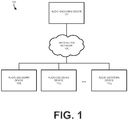
- FIG. 1 shows an audio system 100 according to one embodiment.
- the audio system 100 may include an audio encoding device 101 and a set of audio decoding devices 103 1 -103 N .
- the audio encoding device 101 and the audio decoding devices 103 1 -103 N may be communicatively coupled through the distributed network 105.
- the audio encoding device 101 may encode one or more pieces of sound program content and transfer the encoded data to one or more of the audio decoding devices 103 1 -103 N over the distributed network 105.
- the audio encoding device 101 may encode a multi-channel piece of sound program content.
- the encoded data produced by the audio encoding device 101 may include metadata for separate channels or channel groups comprising the piece of sound program content.
- metadata for a particular channel/channel group may indicate that all other channels/channel groups should be "ducked" (i.e., reduced in intensity/volume) for a specified duration/period of time. This ducking may allow the channel/channel group that is not being ducked (i.e., channel/channel group associated with the ducking values) to be more clearly heard/understood by user/listeners.
- the audio system 100 may include more elements than those shown in Figure 1 and described herein.
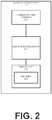
- FIG. 2 shows a component diagram of the audio encoding device 101 according to one embodiment.
- the audio encoding device 101 may be any computing device that is capable of encoding a multi-channel piece of sound program content.
- the audio encoding device 101 may be a laptop computer, a desktop computer, a computer server, a tablet computer, a gaming system, and/or a mobile device (e.g., cellular telephone or mobile media player).
- a mobile device e.g., cellular telephone or mobile media player
- the audio encoding device 101 may include a main system processor 201 and a memory unit 203.
- the processor 201 and memory unit 203 are generically used here to refer to any suitable combination of programmable data processing components and data storage that conduct the operations needed to implement the various functions and operations of the audio encoding device 101.
- the processor 201 may be a special purpose processor such as an application-specific integrated circuit (ASIC), a general purpose microprocessor, a field-programmable gate array (FPGA), a digital signal controller, or a set of hardware logic structures (e.g., filters, arithmetic logic units, and dedicated state machines) while the memory unit 203 may refer to microelectronic, non-volatile random access memory.
- ASIC application-specific integrated circuit
- FPGA field-programmable gate array
- a digital signal controller or a set of hardware logic structures (e.g., filters, arithmetic logic units, and dedicated state machines)
- the memory unit 203 may refer to microelectronic, non-
- An operating system may be stored in the memory unit 203, along with application programs specific to the various functions of the audio encoding device 101, which are to be run or executed by the processor 201 to perform the various functions of the audio encoding device 101.
- the memory unit 203 may include an encoder 205, which in conjunction with other hardware and software elements of the audio encoding device 101, encodes a multi-channel piece of sound program content.
- the encoded data produced by the encoder 205 may include metadata for separate channels or channel groups of the piece of sound program content.
- the metadata may indicate ducking values to be applied by one or more of the audio decoding devices 103 1 -103 N to other channels/channel groups not associated with the metadata.
- the ducking values may be used by one or more of the audio decoding devices 103 1 -103 N to duck other channels/channel groups to improve the intelligibility to users of the non-ducked channels/channel groups.
- the audio encoding device 101 may include a communications interface 207 for communicating with other components over one or more connections.
- the communications interface 207 may be capable of communicating using Bluetooth, the IEEE 802.11x suite of standards, IEEE 802.3, cellular Global System for Mobile Communications (GSM) standards, cellular Code Division Multiple Access (CDMA) standards, and/or Long Term Evolution (LTE) standards.
- the communications interface 207 facilitates the transmission/reception of video, audio, and/or other pieces of data over the distributed network 105.
- the audio encoding device 101 may receive one or more pieces of sound program content to be encoded via the communications interface 207.
- the pieces of sound program content may be encoded/processed and transmitted to one or more of the audio decoding devices 103 1 -103 N for playback also via the communications interface 207.
- the audio decoding device 103 1 may be any computing device that is capable of receiving, decoding, and playing back an encoded piece of sound program content.
- the audio decoding device 103 1 may be a laptop computer, a desktop computer, a tablet computer, a set-top box, a multimedia player, a gaming system, and/or a mobile device (e.g., cellular telephone or mobile media player).
- the audio decoding device 103 1 may receive an audio asset representing an encoded piece of sound program content from the audio encoding device 101.
- the audio decoding device 103 1 may read/extract metadata in the encoded piece of sound program content for a particular channel/channel group.
- the metadata may include ducking values to be applied to other channels/channel groups. Accordingly, as noted above, these channels/channel groups that are not associated with the ducking values may be ducked using the ducking values to improve the intelligibility of non-ducked channels/channel groups.
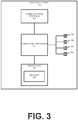
- the audio decoding device 103 1 may include a main system processor 301 and a memory unit 303. Similar to the processor 201 and the memory unit 203, the processor 301 and the memory unit 303 are generically used here to refer to any suitable combination of programmable data processing components and data storage that conduct the operations needed to implement the various functions and operations of the audio decoding device 103 1 .
- the processor 301 may be a special purpose processor such as an ASIC, a general purpose microprocessor, a FPGA, a digital signal controller, or a set of hardware logic structures (e.g., filters, arithmetic logic units, and dedicated state machines) while the memory unit 303 may refer to microelectronic, non-volatile random access memory.
- An operating system may be stored in the memory unit 303, along with application programs specific to the various functions of the audio decoding device 103 1 , which are to be run or executed by the processor 301 to perform the various functions of the audio decoding device 103 1 .
- the memory unit 303 may include a decoder 305.
- the decoder 305 along with one or more other components of the audio decoding device 103 1 , may extract/derive ducking values from an audio asset representing the encoded piece of sound program content.
- the ducking values may have been derived through an analysis of a primary channel group and inserted with the audio asset.
- the decoder 305 may extract the ducking values or apply an algorithm to an encoded version of the ducking values within the mixed signal to produce the ducking values.
- the decoder 305 may thereafter apply these ducking values to one or more channels/channel groups of the encoded piece of sound program content.
- the ducking values may be associated in the encoded piece of sound program content with a first channel/channel group and the decoder 305 may apply the ducking values to a second channel/channel group that is distinct from the first channel/channel group. Accordingly, ducking performed by the decoder 305 is relative to other channel/channel groups that are not associated with the ducking values within the audio asset instead of the channel/channel group associated with the ducking values.
- the audio decoding device 103 1 may include one or more loudspeakers 309 for outputting sound based on the encoded piece of sound program content.
- the loudspeakers 309 may be any combination of full-range drivers, mid-range drivers, subwoofers, woofers, and tweeters.
- Each of the loudspeakers 309 may use a lightweight diaphragm, or cone, connected to a rigid basket, or frame, via a flexible suspension that constrains a coil of wire (e.g., a voice coil) to move axially through a cylindrical magnetic gap.
- a voice coil e.g., a voice coil
- the audio decoding device 103 1 may include a communications interface 307 for communicating with other components over one or more connections.
- the communications interface 307 may be capable of communicating using Bluetooth, the IEEE 802.11x suite of standards, IEEE 802.3, cellular Global System for Mobile Communications (GSM) standards, cellular Code Division Multiple Access (CDMA) standards, and/or Long Term Evolution (LTE) standards.
- the communications interface 307 facilitates the transmission/reception of video, audio, and/or other pieces of data.
- the audio decoding device 103 1 may receive an audio asset representing an encoded piece of sound program content from the audio encoding device 101 via the communications interface 307. This received audio asset may be decoded and played back by the audio decoding device 103 1 as will be described in greater detail below.
- the other audio decoding devices 103 2 -103 N may be identical to the audio decoding device 103 1 .
- the audio decoding devices 103 2 -103 N may each include a processor 301, memory unit 303, decoder 305, communications interface 307, and one or more loudspeakers 309.
- the audio encoding device 101 and the audio decoding devices 103 1 -103 N may communicate over the distributed network 105.
- the distributed network 105 may be composed of any combination of networking devices, including switches, routers, controllers, access points, etc.
- the distributed network may operate using one or more standards/protocols, including Bluetooth, the IEEE 802.11x suite of standards, IEEE 802.3, cellular Global System for Mobile Communications (GSM) standards, cellular Code Division Multiple Access (CDMA) standards, and/or Long Term Evolution (LTE) standards.
- GSM Global System for Mobile Communications
- CDMA Code Division Multiple Access
- LTE Long Term Evolution
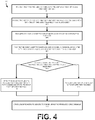
- a method 400 will be described for (1) encoding a multi-channel piece of sound program content to include ducking values associated with a first channel/channel group and (2) playing back the encoded multi-channel piece of sound program content such that a second channel/channel group is ducked in favor of the first channel/channel group that is associated with the ducking values.
- ducking may be performed in a similar manner relative to sound objects or stems represented by the piece of sound program content.
- Each operation of the method 400 may be performed by one or more components of the audio encoding device 101, one or more audio decoding devices 103 1 -103 N , and/or another device.
- one or more of the encoder 205 of the audio encoding device 101 and the decoder 305 of the audio decoding device 103 1 may be used for performing the operations of the method 400.
- different elements and devices may be used for performing the method 400.
- the encoder 205 and the decoder 305 are described as residing in the memory units 203 and 303, respectively, in other embodiments, the encoder 205 and the decoder 305 may be implemented by one or more hardware structures, including filters, arithmetic logic units, and dedicated state machines.
- the method 400 may commence at operation 401 with the receipt of a set of audio signals representing one or more channels for a piece of sound program content.
- the audio encoding device 101 may receive N channels of audio corresponding to a piece of sound program content (e.g., a musical composition or a soundtrack/audio track of a movie), where N is greater than or equal to two.
- N is greater than or equal to two.
- four channels of audio representing a piece of sound program content may be received at operation 401.
- one of the received channels may correspond to a narration channel that assists visually impaired users to understand actions taking place in a movie or television broadcast.
- the other channels may correspond to either spatial channels (e.g., left, right, and center audio channels) and/or represent objects/stems (e.g., dialogue, music, and effects audio objects/stems).
- the audio signals/channels may be received at operation 401 from an external system or device (e.g., an external computer or streaming audio service) via the communications interface 207.
- the audio signals/channels may be stored locally on the audio encoding device 101 (e.g., stored in the memory unit 203) and retrieved at operation 401.
- the audio signals/channels received at operation 401 may be intended for reproduction simultaneously and in sync with a video.
- the audio signals/channels received at operation 401 may be an audio track for a movie or television program.
- the audio signals/channels may be transmitted and received at operation 401 along with the corresponding video content or apart from the video content.
- the channels received at operation 401 may be processed/encoded to generate an audio asset representing the piece of sound program content.
- channels may be grouped and processed within these groups.
- Each channel group may include one or more individual channels that are associated together.
- the channel groups may be analyzed together to determine Dynamic Range Control/Compression (DRC) gain values that are to be applied to each respective group of channels during decoding/playback of the encoded piece of sound program content.
- DRC Dynamic Range Control/Compression
- the DRC gain values may be added as metadata to an audio asset representing the encoded piece of sound program content.
- ducking values may be determined for a single channel/channel group in the piece of sound program content.
- the ducking values represent the amount other channels/channel groups will be ducked (e.g., reduced in volume).
- a piece of sound program content received at operation 401 may include four objects: (1) a narration object; (2) a dialogue object; (3) a music object; and (4) an effects object.
- these four objects may be assigned to channel groups prior to processing (e.g., the narration object may be assigned to a first channel group, the dialogue object may be assigned to a second channel group, and the music and effects object may be both assigned to a third channel group).
- a set of ducking values may be generated and associated with the first channel group.
- the set of ducking values associated with the first channel group indicates the amount of attenuation to be applied to one or more of the other channel groups by decoders 305 in one or more of the audio decoding devices 103 1 -103 N .
- individual ducking sequences may be associated with the original layout of the channels/channel groups and each possible downmix of the channels/channel groups.
- an identifier may be associated with the original layout of the channels/channel groups and the each possible downmix of the channels/channel groups.
- separate sequences of ducking values may be associated with each identifier. Accordingly, the appropriate sequence of ducking values may be applied to the channels/channel groups based on their layout/downmix arrangement.
- the ducking values may be applied to channel groups by narrowing/compressing the dynamic range of these channel groups.
- the ducking values may indicate that other channel groups may be ducked by 10dB during playback by one or more of the audio decoding devices 103 1 -103 N and may be applied similar to DRC gain values.
- This ducking may fluctuate over a specified time period. For instance, while detecting activity (e.g., voice or speech activity) in the first channel group during a first time period, operation 403 may set ducking values associated with the first channel group to a first level during this first time period.
- activity e.g., voice or speech activity
- operation 403 may set ducking values associated with the first channel group to a second level during this second time period.
- the first level may be greater than the second level such that the second and third channel groups are more severely ducked during periods of activity in the first channel group than during periods of inactivity. Accordingly, the first channel group may be emphasized during periods of activity while allowing the second and third channel groups to be heard and unchanged during periods in which the first channel group is relatively inactive.
- the ducking values may be applied similar to DRC gain values.
- the ducking values may be less than or equal to zero dB such that application of ducking values causes no attenuation of channel groups (i.e., during periods of inactivity in the first channel group) or attenuation of channel groups.
- application of ducking values may override other effects indicated in the audio asset, including "clipping" or "fading" of channels/channel groups.
- the ducking values may indicate application of different levels of ducking to each channel group.
- operation 403 may determine that the second channel group associated with dialogue may need to be more severely ducked during playback than the third channel group associated with music and effects. This more severe ducking of dialogue allows narration in the first channel group to reside in foreground audio along with music and effects in the third channel group while dialogue in the second channel group may be played just beneath (i.e., in the background). Since dialogue may more harshly interfere with the intelligibility of narration in comparison to music and effects, allowing the separate ducking of the second and third channel groups minimizes the amount of ducking while still promoting intelligibility of narration to users.
- ducking values may be used to reduce the playback level of channels/channel groups.
- ducking values may be extended to not only alter the level of playback, but to additionally or separately change the rendering location in the sound field of channels/channel groups.
- the ducking values added to the audio asset at operation 403 may indicate that the rendering of the second channel group is to be moved from front loudspeakers 309 to surround loudspeakers 309 during playback by the audio decoding devices 103 1 -103 N .
- This movement of channels/channel groups may be limited during a period of time. For example, movement of channels/channel groups may only be caused when activity is detected in the first channel group (e.g., the narration channel group).
- By moving the rendering location of channels/channel groups in the sound field particular channels/channel groups of interest may be emphasized in relation to other channels/channel groups.
- the ducking values generated at operation 403 and inserted within the audio asset may be associated with a single channel/channel group. Accordingly, each audio asset includes a single channel/channel group that is not ducked during playback while all other channels/channel groups in the audio asset are ducked using the ducking values.
- the ducking values generated at operation 403 may be associated with multiple channels/channel groups, but only one of these multiple channels/channel groups may be active for playback at a time.
- the audio asset may include multiple different narration channels/channel groups corresponding to different languages. In these embodiments, only one language may be selected for playback at a time (i.e., only one active channel/channel group amongst the different narration channel/channel groups). Accordingly, the ducking values are applied to all other active channel/channel groups not associated with the ducking values (i.e., ducking values not applied to active and inactive narration channel/channel groups).
- the audio asset may include multiple sets of ducking values that are each associated with a different channel/channel group.
- the audio asset may include multiple different narration channels/channel groups corresponding to different languages with only one channel/channel group authorized to be active at a time.
- each of the narration channels/channel groups may be associated with a different set of ducking values that will be applied to all other active channels/channel groups during playback.
- operation 405 may transfer the audio asset representing the piece of sound program content to one or more of the audio decoding devices 103 1 -103 N .
- transfer of the audio asset may be performed over the distributed network 105 using the communications interface 207 of the audio encoding device 101 and the communications interfaces 307 of the one or more of the audio decoding devices 103 1 -103 N .
- the audio asset may be transferred at operation 405 through other techniques (e.g., via a portable memory device).
- the one or more of the audio decoding devices 103 1 -103 N may decode the audio asset to reveal two or more channels/channel groups, ducking values associated within one of the channels/channel groups, and/or other audio information added at operation 403.
- the ducking values may be used for (1) ducking particular channels/channel groups and/or (2) moving particular channels within the sound field.
- the method 400 may determine if ducking values were present in the audio asset and whether the channel/channel group associated with the ducking values was selected for playback (e.g., selected for playback by a user).
- the channel/channel group associated with the ducking values was selected for playback (e.g., selected for playback by a user).
- drive signals may be generated for the channels/channel groups selected for playback without ducking. These drive signals generated at operation 413 may be used for playback through the loudspeakers 309 at operation 415.
- the decoded ducking values may be applied to non-associated channels/channel groups to produce a set of drive signals for playback through the loudspeakers 309 at operation 415.
- the ducking values may reduce the dynamic range of channels/channel groups not associated with the ducking values.
- ducking values may be applied to the second and/or third channel groups such that audio from the first channel group remains un-ducked and consequently is more intelligible to users.
- a scale factor may be applied to the ducking values before application at operation 411.
- ducking values may also cause one or more channels/channel groups not associated with the ducking values to move within the sound field. For instance, at operation 411 ducking values may cause the second channel group, in the example above, to move into surround loudspeakers 309. Along with ducking the dynamic range of the second and/or third channel groups, this movement may improve the intelligibility of the first channel group.
- ducking values may be included in an audio asset representing a piece of sound program content and associated with a particular channel/channel group. During playback of the encoded piece of sound program content, the ducking values may be applied to all other channels/channel groups. This ducking may improve intelligibility of audio in the non-ducked channel/channel group. For instance, a narration channel/channel group may be more clearly heard by users through the use of selective ducking of other channels/channel groups during playback.
- an embodiment of the invention may be an article of manufacture in which a machine-readable medium (such as microelectronic memory) has stored thereon instructions which program one or more data processing components (generically referred to here as a "processor") to perform the operations described above.
- a machine-readable medium such as microelectronic memory
- data processing components program one or more data processing components (generically referred to here as a "processor") to perform the operations described above.
- some of these operations might be performed by specific hardware components that contain hardwired logic (e.g ., dedicated digital filter blocks and state machines). Those operations might alternatively be performed by any combination of programmed data processing components and fixed hardwired circuit components.
Landscapes
- Engineering & Computer Science (AREA)
- Signal Processing (AREA)
- Physics & Mathematics (AREA)
- Multimedia (AREA)
- Acoustics & Sound (AREA)
- Mathematical Physics (AREA)
- Computational Linguistics (AREA)
- Health & Medical Sciences (AREA)
- Audiology, Speech & Language Pathology (AREA)
- Human Computer Interaction (AREA)
- Stereophonic System (AREA)
Applications Claiming Priority (3)
| Application Number | Priority Date | Filing Date | Title |
|---|---|---|---|
| US201461970284P | 2014-03-25 | 2014-03-25 | |
| US14/613,203 US9654076B2 (en) | 2014-03-25 | 2015-02-03 | Metadata for ducking control |
| PCT/US2015/017830 WO2015148046A1 (en) | 2014-03-25 | 2015-02-26 | Metadata for ducking control |
Publications (2)
| Publication Number | Publication Date |
|---|---|
| EP3074973A1 EP3074973A1 (en) | 2016-10-05 |
| EP3074973B1 true EP3074973B1 (en) | 2019-07-31 |
Family
ID=54191763
Family Applications (1)
| Application Number | Title | Priority Date | Filing Date |
|---|---|---|---|
| EP15710649.3A Active EP3074973B1 (en) | 2014-03-25 | 2015-02-26 | Metadata for ducking control |
Country Status (7)
| Country | Link |
|---|---|
| US (3) | US9654076B2 (enExample) |
| EP (1) | EP3074973B1 (enExample) |
| JP (3) | JP6400739B2 (enExample) |
| KR (1) | KR101843010B1 (enExample) |
| CN (2) | CN114495953A (enExample) |
| AU (3) | AU2015236755B2 (enExample) |
| WO (1) | WO2015148046A1 (enExample) |
Families Citing this family (92)
| Publication number | Priority date | Publication date | Assignee | Title |
|---|---|---|---|---|
| MX2007005027A (es) | 2004-10-26 | 2007-06-19 | Dolby Lab Licensing Corp | Calculo y ajuste de la sonoridad percibida y/o el balance espectral percibido de una senal de audio. |
| TWI529703B (zh) | 2010-02-11 | 2016-04-11 | 杜比實驗室特許公司 | 用以非破壞地正常化可攜式裝置中音訊訊號響度之系統及方法 |
| TWI896112B (zh) | 2010-12-03 | 2025-09-01 | 美商杜比實驗室特許公司 | 音頻解碼裝置、音頻解碼方法及音頻編碼方法 |
| CN103325380B (zh) | 2012-03-23 | 2017-09-12 | 杜比实验室特许公司 | 用于信号增强的增益后处理 |
| US10844689B1 (en) | 2019-12-19 | 2020-11-24 | Saudi Arabian Oil Company | Downhole ultrasonic actuator system for mitigating lost circulation |
| CN121122295A (zh) | 2012-05-18 | 2025-12-12 | 杜比实验室特许公司 | 用于维持与参数音频编码器相关联的可逆动态范围控制信息的系统 |
| KR102192755B1 (ko) | 2013-01-21 | 2020-12-18 | 돌비 레버러토리즈 라이쎈싱 코오포레이션 | 프로그램 라우드니스 및 경계 메타데이터를 가진 오디오 인코더 및 디코더 |
| CN119479682A (zh) | 2013-01-21 | 2025-02-18 | 杜比实验室特许公司 | 用于在不同回放设备之间优化响度和动态范围的系统和方法 |
| CN105074818B (zh) | 2013-02-21 | 2019-08-13 | 杜比国际公司 | 音频编码系统、用于产生比特流的方法以及音频解码器 |
| CN107093991B (zh) | 2013-03-26 | 2020-10-09 | 杜比实验室特许公司 | 基于目标响度的响度归一化方法和设备 |
| CN105190618B (zh) | 2013-04-05 | 2019-01-25 | 杜比实验室特许公司 | 用于自动文件检测的对来自基于文件的媒体的特有信息的获取、恢复和匹配 |
| TWM487509U (zh) | 2013-06-19 | 2014-10-01 | 杜比實驗室特許公司 | 音訊處理設備及電子裝置 |
| ES3061991T3 (en) | 2013-09-12 | 2026-04-08 | Dolby Laboratories Licensing Corp | Dynamic range control for a wide variety of playback environments |
| CN110675883B (zh) | 2013-09-12 | 2023-08-18 | 杜比实验室特许公司 | 用于下混合音频内容的响度调整 |
| US9654076B2 (en) | 2014-03-25 | 2017-05-16 | Apple Inc. | Metadata for ducking control |
| CN110808723B (zh) | 2014-05-26 | 2024-09-17 | 杜比实验室特许公司 | 音频信号响度控制 |
| US9615170B2 (en) * | 2014-06-09 | 2017-04-04 | Harman International Industries, Inc. | Approach for partially preserving music in the presence of intelligible speech |
| CN119296555A (zh) | 2014-10-10 | 2025-01-10 | 杜比实验室特许公司 | 基于发送无关的表示的节目响度 |
| US9772817B2 (en) | 2016-02-22 | 2017-09-26 | Sonos, Inc. | Room-corrected voice detection |
| US10095470B2 (en) | 2016-02-22 | 2018-10-09 | Sonos, Inc. | Audio response playback |
| US9947316B2 (en) | 2016-02-22 | 2018-04-17 | Sonos, Inc. | Voice control of a media playback system |
| US10142754B2 (en) | 2016-02-22 | 2018-11-27 | Sonos, Inc. | Sensor on moving component of transducer |
| US9811314B2 (en) | 2016-02-22 | 2017-11-07 | Sonos, Inc. | Metadata exchange involving a networked playback system and a networked microphone system |
| US9965247B2 (en) | 2016-02-22 | 2018-05-08 | Sonos, Inc. | Voice controlled media playback system based on user profile |
| US10264030B2 (en) | 2016-02-22 | 2019-04-16 | Sonos, Inc. | Networked microphone device control |
| US9978390B2 (en) | 2016-06-09 | 2018-05-22 | Sonos, Inc. | Dynamic player selection for audio signal processing |
| US10134399B2 (en) | 2016-07-15 | 2018-11-20 | Sonos, Inc. | Contextualization of voice inputs |
| US10152969B2 (en) | 2016-07-15 | 2018-12-11 | Sonos, Inc. | Voice detection by multiple devices |
| US10115400B2 (en) | 2016-08-05 | 2018-10-30 | Sonos, Inc. | Multiple voice services |
| US9693164B1 (en) | 2016-08-05 | 2017-06-27 | Sonos, Inc. | Determining direction of networked microphone device relative to audio playback device |
| US9794720B1 (en) | 2016-09-22 | 2017-10-17 | Sonos, Inc. | Acoustic position measurement |
| US9942678B1 (en) | 2016-09-27 | 2018-04-10 | Sonos, Inc. | Audio playback settings for voice interaction |
| US9743204B1 (en) | 2016-09-30 | 2017-08-22 | Sonos, Inc. | Multi-orientation playback device microphones |
| KR102428440B1 (ko) * | 2016-10-17 | 2022-08-02 | 하만인터내셔날인더스트리스인코포레이티드 | 음성 기능을 갖는 휴대용 오디오 디바이스 |
| US10181323B2 (en) | 2016-10-19 | 2019-01-15 | Sonos, Inc. | Arbitration-based voice recognition |
| US11183181B2 (en) | 2017-03-27 | 2021-11-23 | Sonos, Inc. | Systems and methods of multiple voice services |
| US10580457B2 (en) * | 2017-06-13 | 2020-03-03 | 3Play Media, Inc. | Efficient audio description systems and methods |
| US10475449B2 (en) | 2017-08-07 | 2019-11-12 | Sonos, Inc. | Wake-word detection suppression |
| WO2019046065A1 (en) | 2017-08-28 | 2019-03-07 | Dolby Laboratories Licensing Corporation | NAVIGATION METADATA WITH MULTIMEDIA CONTENT AWARENESS |
| US10048930B1 (en) | 2017-09-08 | 2018-08-14 | Sonos, Inc. | Dynamic computation of system response volume |
| US10446165B2 (en) | 2017-09-27 | 2019-10-15 | Sonos, Inc. | Robust short-time fourier transform acoustic echo cancellation during audio playback |
| US10482868B2 (en) | 2017-09-28 | 2019-11-19 | Sonos, Inc. | Multi-channel acoustic echo cancellation |
| US10621981B2 (en) | 2017-09-28 | 2020-04-14 | Sonos, Inc. | Tone interference cancellation |
| US10051366B1 (en) | 2017-09-28 | 2018-08-14 | Sonos, Inc. | Three-dimensional beam forming with a microphone array |
| US10466962B2 (en) | 2017-09-29 | 2019-11-05 | Sonos, Inc. | Media playback system with voice assistance |
| US10880650B2 (en) | 2017-12-10 | 2020-12-29 | Sonos, Inc. | Network microphone devices with automatic do not disturb actuation capabilities |
| US10818290B2 (en) | 2017-12-11 | 2020-10-27 | Sonos, Inc. | Home graph |
| US11343614B2 (en) | 2018-01-31 | 2022-05-24 | Sonos, Inc. | Device designation of playback and network microphone device arrangements |
| US11175880B2 (en) | 2018-05-10 | 2021-11-16 | Sonos, Inc. | Systems and methods for voice-assisted media content selection |
| US10847178B2 (en) | 2018-05-18 | 2020-11-24 | Sonos, Inc. | Linear filtering for noise-suppressed speech detection |
| US10959029B2 (en) | 2018-05-25 | 2021-03-23 | Sonos, Inc. | Determining and adapting to changes in microphone performance of playback devices |
| US10681460B2 (en) | 2018-06-28 | 2020-06-09 | Sonos, Inc. | Systems and methods for associating playback devices with voice assistant services |
| US11076035B2 (en) | 2018-08-28 | 2021-07-27 | Sonos, Inc. | Do not disturb feature for audio notifications |
| US10461710B1 (en) | 2018-08-28 | 2019-10-29 | Sonos, Inc. | Media playback system with maximum volume setting |
| US10587430B1 (en) | 2018-09-14 | 2020-03-10 | Sonos, Inc. | Networked devices, systems, and methods for associating playback devices based on sound codes |
| US10878811B2 (en) | 2018-09-14 | 2020-12-29 | Sonos, Inc. | Networked devices, systems, and methods for intelligently deactivating wake-word engines |
| US11024331B2 (en) | 2018-09-21 | 2021-06-01 | Sonos, Inc. | Voice detection optimization using sound metadata |
| US10811015B2 (en) | 2018-09-25 | 2020-10-20 | Sonos, Inc. | Voice detection optimization based on selected voice assistant service |
| US11100923B2 (en) | 2018-09-28 | 2021-08-24 | Sonos, Inc. | Systems and methods for selective wake word detection using neural network models |
| US10692518B2 (en) | 2018-09-29 | 2020-06-23 | Sonos, Inc. | Linear filtering for noise-suppressed speech detection via multiple network microphone devices |
| US11899519B2 (en) | 2018-10-23 | 2024-02-13 | Sonos, Inc. | Multiple stage network microphone device with reduced power consumption and processing load |
| EP3654249A1 (en) | 2018-11-15 | 2020-05-20 | Snips | Dilated convolutions and gating for efficient keyword spotting |
| US11183183B2 (en) | 2018-12-07 | 2021-11-23 | Sonos, Inc. | Systems and methods of operating media playback systems having multiple voice assistant services |
| US11132989B2 (en) | 2018-12-13 | 2021-09-28 | Sonos, Inc. | Networked microphone devices, systems, and methods of localized arbitration |
| US10602268B1 (en) | 2018-12-20 | 2020-03-24 | Sonos, Inc. | Optimization of network microphone devices using noise classification |
| US10867604B2 (en) | 2019-02-08 | 2020-12-15 | Sonos, Inc. | Devices, systems, and methods for distributed voice processing |
| US11315556B2 (en) | 2019-02-08 | 2022-04-26 | Sonos, Inc. | Devices, systems, and methods for distributed voice processing by transmitting sound data associated with a wake word to an appropriate device for identification |
| US11120794B2 (en) | 2019-05-03 | 2021-09-14 | Sonos, Inc. | Voice assistant persistence across multiple network microphone devices |
| US11361756B2 (en) | 2019-06-12 | 2022-06-14 | Sonos, Inc. | Conditional wake word eventing based on environment |
| US10586540B1 (en) | 2019-06-12 | 2020-03-10 | Sonos, Inc. | Network microphone device with command keyword conditioning |
| US11200894B2 (en) | 2019-06-12 | 2021-12-14 | Sonos, Inc. | Network microphone device with command keyword eventing |
| US10871943B1 (en) | 2019-07-31 | 2020-12-22 | Sonos, Inc. | Noise classification for event detection |
| US11138969B2 (en) | 2019-07-31 | 2021-10-05 | Sonos, Inc. | Locally distributed keyword detection |
| US11138975B2 (en) | 2019-07-31 | 2021-10-05 | Sonos, Inc. | Locally distributed keyword detection |
| JP7404737B2 (ja) * | 2019-09-24 | 2023-12-26 | カシオ計算機株式会社 | 自動演奏装置、電子楽器、方法およびプログラム |
| US11189286B2 (en) | 2019-10-22 | 2021-11-30 | Sonos, Inc. | VAS toggle based on device orientation |
| US11200900B2 (en) | 2019-12-20 | 2021-12-14 | Sonos, Inc. | Offline voice control |
| US11562740B2 (en) | 2020-01-07 | 2023-01-24 | Sonos, Inc. | Voice verification for media playback |
| US11556307B2 (en) | 2020-01-31 | 2023-01-17 | Sonos, Inc. | Local voice data processing |
| US11308958B2 (en) | 2020-02-07 | 2022-04-19 | Sonos, Inc. | Localized wakeword verification |
| US11727919B2 (en) | 2020-05-20 | 2023-08-15 | Sonos, Inc. | Memory allocation for keyword spotting engines |
| US11308962B2 (en) | 2020-05-20 | 2022-04-19 | Sonos, Inc. | Input detection windowing |
| US11482224B2 (en) | 2020-05-20 | 2022-10-25 | Sonos, Inc. | Command keywords with input detection windowing |
| US12387716B2 (en) | 2020-06-08 | 2025-08-12 | Sonos, Inc. | Wakewordless voice quickstarts |
| US11698771B2 (en) | 2020-08-25 | 2023-07-11 | Sonos, Inc. | Vocal guidance engines for playback devices |
| US12283269B2 (en) | 2020-10-16 | 2025-04-22 | Sonos, Inc. | Intent inference in audiovisual communication sessions |
| US11984123B2 (en) | 2020-11-12 | 2024-05-14 | Sonos, Inc. | Network device interaction by range |
| EP4243014A4 (en) | 2021-01-25 | 2024-07-17 | Samsung Electronics Co., Ltd. | DEVICE AND METHOD FOR PROCESSING A MULTI-CHANNEL AUDIO SIGNAL |
| US11551700B2 (en) | 2021-01-25 | 2023-01-10 | Sonos, Inc. | Systems and methods for power-efficient keyword detection |
| US12327556B2 (en) | 2021-09-30 | 2025-06-10 | Sonos, Inc. | Enabling and disabling microphones and voice assistants |
| WO2023115272A1 (zh) | 2021-12-20 | 2023-06-29 | 华为技术有限公司 | 一种芯片管理装置及相关方法 |
| US12327549B2 (en) | 2022-02-09 | 2025-06-10 | Sonos, Inc. | Gatekeeping for voice intent processing |
Family Cites Families (22)
| Publication number | Priority date | Publication date | Assignee | Title |
|---|---|---|---|---|
| US7350156B2 (en) | 2001-09-21 | 2008-03-25 | Yamaha Corporation | Audio signal editing apparatus and control method therefor |
| US7617109B2 (en) | 2004-07-01 | 2009-11-10 | Dolby Laboratories Licensing Corporation | Method for correcting metadata affecting the playback loudness and dynamic range of audio information |
| US7974422B1 (en) * | 2005-08-25 | 2011-07-05 | Tp Lab, Inc. | System and method of adjusting the sound of multiple audio objects directed toward an audio output device |
| WO2008142651A1 (en) | 2007-05-22 | 2008-11-27 | Koninklijke Philips Electronics N.V. | A device for and a method of processing audio data |
| US8326444B1 (en) | 2007-08-17 | 2012-12-04 | Adobe Systems Incorporated | Method and apparatus for performing audio ducking |
| KR101058042B1 (ko) * | 2007-09-06 | 2011-08-19 | 삼성전자주식회사 | 멀티스트림 재생장치 및 재생방법 |
| AU2009274456B2 (en) * | 2008-04-18 | 2011-08-25 | Dolby Laboratories Licensing Corporation | Method and apparatus for maintaining speech audibility in multi-channel audio with minimal impact on surround experience |
| JP5603339B2 (ja) | 2008-10-29 | 2014-10-08 | ドルビー インターナショナル アーベー | 既存のオーディオゲインメタデータを使用した信号のクリッピングの保護 |
| US8428758B2 (en) | 2009-02-16 | 2013-04-23 | Apple Inc. | Dynamic audio ducking |
| EP2230783A3 (en) * | 2009-03-20 | 2013-04-17 | Yamaha Corporation | Mixing control apparatus |
| EP2486567A1 (en) | 2009-10-09 | 2012-08-15 | Dolby Laboratories Licensing Corporation | Automatic generation of metadata for audio dominance effects |
| US9324337B2 (en) * | 2009-11-17 | 2016-04-26 | Dolby Laboratories Licensing Corporation | Method and system for dialog enhancement |
| TWI529703B (zh) * | 2010-02-11 | 2016-04-11 | 杜比實驗室特許公司 | 用以非破壞地正常化可攜式裝置中音訊訊號響度之系統及方法 |
| TWI459828B (zh) * | 2010-03-08 | 2014-11-01 | Dolby Lab Licensing Corp | 在多頻道音訊中決定語音相關頻道的音量降低比例的方法及系統 |
| TWI525987B (zh) * | 2010-03-10 | 2016-03-11 | 杜比實驗室特許公司 | 在單一播放模式中組合響度量測的系統 |
| JP4686684B1 (ja) * | 2010-09-22 | 2011-05-25 | 株式会社アクセル | 音声処理装置 |
| EP2619904B1 (en) * | 2010-09-22 | 2014-07-30 | Dolby Laboratories Licensing Corporation | Audio stream mixing with dialog level normalization |
| JP5719966B2 (ja) * | 2011-04-08 | 2015-05-20 | ドルビー ラボラトリーズ ライセンシング コーポレイション | 2つのエンコードされたビットストリームからのオーディオストリームの混合において使用するためのメタデータの自動設定 |
| EP2934878B1 (en) | 2012-12-18 | 2016-09-21 | E. I. du Pont de Nemours and Company | Laminates of fluoroelastomer and heat-resistant acrylate elastomer |
| TWI530941B (zh) * | 2013-04-03 | 2016-04-21 | 杜比實驗室特許公司 | 用於基於物件音頻之互動成像的方法與系統 |
| US9300268B2 (en) * | 2013-10-18 | 2016-03-29 | Apple Inc. | Content aware audio ducking |
| US9654076B2 (en) | 2014-03-25 | 2017-05-16 | Apple Inc. | Metadata for ducking control |
-
2015
- 2015-02-03 US US14/613,203 patent/US9654076B2/en active Active
- 2015-02-26 KR KR1020167023186A patent/KR101843010B1/ko active Active
- 2015-02-26 CN CN202210126941.4A patent/CN114495953A/zh active Pending
- 2015-02-26 WO PCT/US2015/017830 patent/WO2015148046A1/en not_active Ceased
- 2015-02-26 AU AU2015236755A patent/AU2015236755B2/en active Active
- 2015-02-26 EP EP15710649.3A patent/EP3074973B1/en active Active
- 2015-02-26 CN CN201580006201.5A patent/CN105940448A/zh active Pending
- 2015-02-26 JP JP2016570945A patent/JP6400739B2/ja active Active
-
2017
- 2017-05-15 US US15/595,792 patent/US10224894B2/en active Active
- 2017-11-29 AU AU2017268582A patent/AU2017268582B2/en active Active
-
2018
- 2018-07-05 JP JP2018128114A patent/JP6606232B2/ja active Active
-
2019
- 2019-02-07 US US16/269,866 patent/US10992276B2/en active Active
- 2019-03-13 AU AU2019201701A patent/AU2019201701C1/en active Active
- 2019-10-17 JP JP2019189850A patent/JP6883636B2/ja active Active
Non-Patent Citations (1)
| Title |
|---|
| None * |
Also Published As
| Publication number | Publication date |
|---|---|
| JP2018173656A (ja) | 2018-11-08 |
| KR20160113661A (ko) | 2016-09-30 |
| US10224894B2 (en) | 2019-03-05 |
| CN114495953A (zh) | 2022-05-13 |
| JP2020038375A (ja) | 2020-03-12 |
| JP2017509932A (ja) | 2017-04-06 |
| US20190181822A1 (en) | 2019-06-13 |
| WO2015148046A1 (en) | 2015-10-01 |
| US10992276B2 (en) | 2021-04-27 |
| JP6400739B2 (ja) | 2018-10-03 |
| AU2017268582A1 (en) | 2017-12-21 |
| AU2019201701C1 (en) | 2021-02-25 |
| US20150280676A1 (en) | 2015-10-01 |
| EP3074973A1 (en) | 2016-10-05 |
| JP6606232B2 (ja) | 2019-11-13 |
| JP6883636B2 (ja) | 2021-06-09 |
| AU2019201701B2 (en) | 2020-09-03 |
| US9654076B2 (en) | 2017-05-16 |
| AU2017268582B2 (en) | 2019-03-07 |
| AU2015236755B2 (en) | 2017-08-31 |
| CN105940448A (zh) | 2016-09-14 |
| KR101843010B1 (ko) | 2018-03-29 |
| US20180006621A1 (en) | 2018-01-04 |
| AU2019201701A1 (en) | 2019-04-04 |
| AU2015236755A1 (en) | 2016-07-07 |
Similar Documents
| Publication | Publication Date | Title |
|---|---|---|
| EP3074973B1 (en) | Metadata for ducking control | |
| RU2661775C2 (ru) | Передача сигнальной информации рендеринга аудио в битовом потоке | |
| JP6186435B2 (ja) | ゲームオーディオコンテンツを示すオブジェクトベースオーディオの符号化及びレンダリング | |
| KR102686742B1 (ko) | 객체 기반 오디오 신호 균형화 | |
| US20170126343A1 (en) | Audio stem delivery and control | |
| US20160192105A1 (en) | Processing Spatially Diffuse or Large Audio Objects | |
| KR20150109418A (ko) | 새로운 미디어 장치 상에 내장된 라우드니스 메타데이터를 갖거나 또는 갖지 않고 미디어의 정규화된 오디오 재생을 위한 방법 및 장치 | |
| US12035127B2 (en) | Spatial audio capture, transmission and reproduction | |
| HK1229520B (en) | Metadata for ducking control | |
| HK1229520A1 (en) | Metadata for ducking control | |
| RU2803638C2 (ru) | Обработка пространственно диффузных или больших звуковых объектов | |
| HK1229945B (en) | Processing spatially diffuse or large audio objects |
Legal Events
| Date | Code | Title | Description |
|---|---|---|---|
| PUAI | Public reference made under article 153(3) epc to a published international application that has entered the european phase |
Free format text: ORIGINAL CODE: 0009012 |
|
| 17P | Request for examination filed |
Effective date: 20160701 |
|
| AK | Designated contracting states |
Kind code of ref document: A1 Designated state(s): AL AT BE BG CH CY CZ DE DK EE ES FI FR GB GR HR HU IE IS IT LI LT LU LV MC MK MT NL NO PL PT RO RS SE SI SK SM TR |
|
| AX | Request for extension of the european patent |
Extension state: BA ME |
|
| DAX | Request for extension of the european patent (deleted) | ||
| REG | Reference to a national code |
Ref country code: HK Ref legal event code: DE Ref document number: 1229520 Country of ref document: HK |
|
| RAP1 | Party data changed (applicant data changed or rights of an application transferred) |
Owner name: APPLE INC. |
|
| GRAP | Despatch of communication of intention to grant a patent |
Free format text: ORIGINAL CODE: EPIDOSNIGR1 |
|
| STAA | Information on the status of an ep patent application or granted ep patent |
Free format text: STATUS: GRANT OF PATENT IS INTENDED |
|
| RIC1 | Information provided on ipc code assigned before grant |
Ipc: H03G 3/30 20060101ALN20190205BHEP Ipc: H04N 21/81 20110101ALN20190205BHEP Ipc: H04N 21/439 20110101ALN20190205BHEP Ipc: H04R 27/02 20060101ALN20190205BHEP Ipc: G10L 19/008 20130101AFI20190205BHEP |
|
| INTG | Intention to grant announced |
Effective date: 20190220 |
|
| GRAS | Grant fee paid |
Free format text: ORIGINAL CODE: EPIDOSNIGR3 |
|
| GRAA | (expected) grant |
Free format text: ORIGINAL CODE: 0009210 |
|
| STAA | Information on the status of an ep patent application or granted ep patent |
Free format text: STATUS: THE PATENT HAS BEEN GRANTED |
|
| AK | Designated contracting states |
Kind code of ref document: B1 Designated state(s): AL AT BE BG CH CY CZ DE DK EE ES FI FR GB GR HR HU IE IS IT LI LT LU LV MC MK MT NL NO PL PT RO RS SE SI SK SM TR |
|
| REG | Reference to a national code |
Ref country code: CH Ref legal event code: EP Ref country code: GB Ref legal event code: FG4D |
|
| REG | Reference to a national code |
Ref country code: AT Ref legal event code: REF Ref document number: 1161760 Country of ref document: AT Kind code of ref document: T Effective date: 20190815 |
|
| REG | Reference to a national code |
Ref country code: IE Ref legal event code: FG4D |
|
| REG | Reference to a national code |
Ref country code: DE Ref legal event code: R096 Ref document number: 602015034737 Country of ref document: DE |
|
| REG | Reference to a national code |
Ref country code: NL Ref legal event code: MP Effective date: 20190731 |
|
| REG | Reference to a national code |
Ref country code: LT Ref legal event code: MG4D |
|
| REG | Reference to a national code |
Ref country code: AT Ref legal event code: MK05 Ref document number: 1161760 Country of ref document: AT Kind code of ref document: T Effective date: 20190731 |
|
| PG25 | Lapsed in a contracting state [announced via postgrant information from national office to epo] |
Ref country code: NL Free format text: LAPSE BECAUSE OF FAILURE TO SUBMIT A TRANSLATION OF THE DESCRIPTION OR TO PAY THE FEE WITHIN THE PRESCRIBED TIME-LIMIT Effective date: 20190731 Ref country code: HR Free format text: LAPSE BECAUSE OF FAILURE TO SUBMIT A TRANSLATION OF THE DESCRIPTION OR TO PAY THE FEE WITHIN THE PRESCRIBED TIME-LIMIT Effective date: 20190731 Ref country code: AT Free format text: LAPSE BECAUSE OF FAILURE TO SUBMIT A TRANSLATION OF THE DESCRIPTION OR TO PAY THE FEE WITHIN THE PRESCRIBED TIME-LIMIT Effective date: 20190731 Ref country code: LT Free format text: LAPSE BECAUSE OF FAILURE TO SUBMIT A TRANSLATION OF THE DESCRIPTION OR TO PAY THE FEE WITHIN THE PRESCRIBED TIME-LIMIT Effective date: 20190731 Ref country code: NO Free format text: LAPSE BECAUSE OF FAILURE TO SUBMIT A TRANSLATION OF THE DESCRIPTION OR TO PAY THE FEE WITHIN THE PRESCRIBED TIME-LIMIT Effective date: 20191031 Ref country code: FI Free format text: LAPSE BECAUSE OF FAILURE TO SUBMIT A TRANSLATION OF THE DESCRIPTION OR TO PAY THE FEE WITHIN THE PRESCRIBED TIME-LIMIT Effective date: 20190731 Ref country code: SE Free format text: LAPSE BECAUSE OF FAILURE TO SUBMIT A TRANSLATION OF THE DESCRIPTION OR TO PAY THE FEE WITHIN THE PRESCRIBED TIME-LIMIT Effective date: 20190731 Ref country code: PT Free format text: LAPSE BECAUSE OF FAILURE TO SUBMIT A TRANSLATION OF THE DESCRIPTION OR TO PAY THE FEE WITHIN THE PRESCRIBED TIME-LIMIT Effective date: 20191202 Ref country code: BG Free format text: LAPSE BECAUSE OF FAILURE TO SUBMIT A TRANSLATION OF THE DESCRIPTION OR TO PAY THE FEE WITHIN THE PRESCRIBED TIME-LIMIT Effective date: 20191031 |
|
| PG25 | Lapsed in a contracting state [announced via postgrant information from national office to epo] |
Ref country code: LV Free format text: LAPSE BECAUSE OF FAILURE TO SUBMIT A TRANSLATION OF THE DESCRIPTION OR TO PAY THE FEE WITHIN THE PRESCRIBED TIME-LIMIT Effective date: 20190731 Ref country code: RS Free format text: LAPSE BECAUSE OF FAILURE TO SUBMIT A TRANSLATION OF THE DESCRIPTION OR TO PAY THE FEE WITHIN THE PRESCRIBED TIME-LIMIT Effective date: 20190731 Ref country code: GR Free format text: LAPSE BECAUSE OF FAILURE TO SUBMIT A TRANSLATION OF THE DESCRIPTION OR TO PAY THE FEE WITHIN THE PRESCRIBED TIME-LIMIT Effective date: 20191101 Ref country code: AL Free format text: LAPSE BECAUSE OF FAILURE TO SUBMIT A TRANSLATION OF THE DESCRIPTION OR TO PAY THE FEE WITHIN THE PRESCRIBED TIME-LIMIT Effective date: 20190731 Ref country code: ES Free format text: LAPSE BECAUSE OF FAILURE TO SUBMIT A TRANSLATION OF THE DESCRIPTION OR TO PAY THE FEE WITHIN THE PRESCRIBED TIME-LIMIT Effective date: 20190731 Ref country code: IS Free format text: LAPSE BECAUSE OF FAILURE TO SUBMIT A TRANSLATION OF THE DESCRIPTION OR TO PAY THE FEE WITHIN THE PRESCRIBED TIME-LIMIT Effective date: 20191130 |
|
| PG25 | Lapsed in a contracting state [announced via postgrant information from national office to epo] |
Ref country code: TR Free format text: LAPSE BECAUSE OF FAILURE TO SUBMIT A TRANSLATION OF THE DESCRIPTION OR TO PAY THE FEE WITHIN THE PRESCRIBED TIME-LIMIT Effective date: 20190731 |
|
| PG25 | Lapsed in a contracting state [announced via postgrant information from national office to epo] |
Ref country code: PL Free format text: LAPSE BECAUSE OF FAILURE TO SUBMIT A TRANSLATION OF THE DESCRIPTION OR TO PAY THE FEE WITHIN THE PRESCRIBED TIME-LIMIT Effective date: 20190731 Ref country code: RO Free format text: LAPSE BECAUSE OF FAILURE TO SUBMIT A TRANSLATION OF THE DESCRIPTION OR TO PAY THE FEE WITHIN THE PRESCRIBED TIME-LIMIT Effective date: 20190731 Ref country code: IT Free format text: LAPSE BECAUSE OF FAILURE TO SUBMIT A TRANSLATION OF THE DESCRIPTION OR TO PAY THE FEE WITHIN THE PRESCRIBED TIME-LIMIT Effective date: 20190731 Ref country code: EE Free format text: LAPSE BECAUSE OF FAILURE TO SUBMIT A TRANSLATION OF THE DESCRIPTION OR TO PAY THE FEE WITHIN THE PRESCRIBED TIME-LIMIT Effective date: 20190731 Ref country code: DK Free format text: LAPSE BECAUSE OF FAILURE TO SUBMIT A TRANSLATION OF THE DESCRIPTION OR TO PAY THE FEE WITHIN THE PRESCRIBED TIME-LIMIT Effective date: 20190731 |
|
| PG25 | Lapsed in a contracting state [announced via postgrant information from national office to epo] |
Ref country code: SM Free format text: LAPSE BECAUSE OF FAILURE TO SUBMIT A TRANSLATION OF THE DESCRIPTION OR TO PAY THE FEE WITHIN THE PRESCRIBED TIME-LIMIT Effective date: 20190731 Ref country code: CZ Free format text: LAPSE BECAUSE OF FAILURE TO SUBMIT A TRANSLATION OF THE DESCRIPTION OR TO PAY THE FEE WITHIN THE PRESCRIBED TIME-LIMIT Effective date: 20190731 Ref country code: SK Free format text: LAPSE BECAUSE OF FAILURE TO SUBMIT A TRANSLATION OF THE DESCRIPTION OR TO PAY THE FEE WITHIN THE PRESCRIBED TIME-LIMIT Effective date: 20190731 Ref country code: IS Free format text: LAPSE BECAUSE OF FAILURE TO SUBMIT A TRANSLATION OF THE DESCRIPTION OR TO PAY THE FEE WITHIN THE PRESCRIBED TIME-LIMIT Effective date: 20200224 |
|
| REG | Reference to a national code |
Ref country code: DE Ref legal event code: R097 Ref document number: 602015034737 Country of ref document: DE |
|
| PLBE | No opposition filed within time limit |
Free format text: ORIGINAL CODE: 0009261 |
|
| STAA | Information on the status of an ep patent application or granted ep patent |
Free format text: STATUS: NO OPPOSITION FILED WITHIN TIME LIMIT |
|
| PG2D | Information on lapse in contracting state deleted |
Ref country code: IS |
|
| PG25 | Lapsed in a contracting state [announced via postgrant information from national office to epo] |
Ref country code: IS Free format text: LAPSE BECAUSE OF FAILURE TO SUBMIT A TRANSLATION OF THE DESCRIPTION OR TO PAY THE FEE WITHIN THE PRESCRIBED TIME-LIMIT Effective date: 20191030 |
|
| 26N | No opposition filed |
Effective date: 20200603 |
|
| PG25 | Lapsed in a contracting state [announced via postgrant information from national office to epo] |
Ref country code: SI Free format text: LAPSE BECAUSE OF FAILURE TO SUBMIT A TRANSLATION OF THE DESCRIPTION OR TO PAY THE FEE WITHIN THE PRESCRIBED TIME-LIMIT Effective date: 20190731 |
|
| REG | Reference to a national code |
Ref country code: CH Ref legal event code: PL |
|
| GBPC | Gb: european patent ceased through non-payment of renewal fee |
Effective date: 20200226 |
|
| REG | Reference to a national code |
Ref country code: BE Ref legal event code: MM Effective date: 20200229 |
|
| PG25 | Lapsed in a contracting state [announced via postgrant information from national office to epo] |
Ref country code: MC Free format text: LAPSE BECAUSE OF FAILURE TO SUBMIT A TRANSLATION OF THE DESCRIPTION OR TO PAY THE FEE WITHIN THE PRESCRIBED TIME-LIMIT Effective date: 20190731 Ref country code: LU Free format text: LAPSE BECAUSE OF NON-PAYMENT OF DUE FEES Effective date: 20200226 |
|
| PG25 | Lapsed in a contracting state [announced via postgrant information from national office to epo] |
Ref country code: LI Free format text: LAPSE BECAUSE OF NON-PAYMENT OF DUE FEES Effective date: 20200229 Ref country code: CH Free format text: LAPSE BECAUSE OF NON-PAYMENT OF DUE FEES Effective date: 20200229 |
|
| PG25 | Lapsed in a contracting state [announced via postgrant information from national office to epo] |
Ref country code: GB Free format text: LAPSE BECAUSE OF NON-PAYMENT OF DUE FEES Effective date: 20200226 Ref country code: FR Free format text: LAPSE BECAUSE OF NON-PAYMENT OF DUE FEES Effective date: 20200229 Ref country code: IE Free format text: LAPSE BECAUSE OF NON-PAYMENT OF DUE FEES Effective date: 20200226 |
|
| PG25 | Lapsed in a contracting state [announced via postgrant information from national office to epo] |
Ref country code: BE Free format text: LAPSE BECAUSE OF NON-PAYMENT OF DUE FEES Effective date: 20200229 |
|
| PG25 | Lapsed in a contracting state [announced via postgrant information from national office to epo] |
Ref country code: MT Free format text: LAPSE BECAUSE OF FAILURE TO SUBMIT A TRANSLATION OF THE DESCRIPTION OR TO PAY THE FEE WITHIN THE PRESCRIBED TIME-LIMIT Effective date: 20190731 Ref country code: CY Free format text: LAPSE BECAUSE OF FAILURE TO SUBMIT A TRANSLATION OF THE DESCRIPTION OR TO PAY THE FEE WITHIN THE PRESCRIBED TIME-LIMIT Effective date: 20190731 |
|
| PG25 | Lapsed in a contracting state [announced via postgrant information from national office to epo] |
Ref country code: MK Free format text: LAPSE BECAUSE OF FAILURE TO SUBMIT A TRANSLATION OF THE DESCRIPTION OR TO PAY THE FEE WITHIN THE PRESCRIBED TIME-LIMIT Effective date: 20190731 |
|
| P01 | Opt-out of the competence of the unified patent court (upc) registered |
Effective date: 20230526 |
|
| PGFP | Annual fee paid to national office [announced via postgrant information from national office to epo] |
Ref country code: DE Payment date: 20260102 Year of fee payment: 12 |