EP3073783B1 - Vorrichtung, system und verfahren zur vorhersage von roamingmustern von mobilen vorrichtungen innerhalb drahtloser netzwerke - Google Patents
Vorrichtung, system und verfahren zur vorhersage von roamingmustern von mobilen vorrichtungen innerhalb drahtloser netzwerke Download PDFInfo
- Publication number
- EP3073783B1 EP3073783B1 EP15186077.2A EP15186077A EP3073783B1 EP 3073783 B1 EP3073783 B1 EP 3073783B1 EP 15186077 A EP15186077 A EP 15186077A EP 3073783 B1 EP3073783 B1 EP 3073783B1
- Authority
- EP
- European Patent Office
- Prior art keywords
- mobile device
- visited
- roaming
- specific
- wireless network
- Prior art date
- Legal status (The legal status is an assumption and is not a legal conclusion. Google has not performed a legal analysis and makes no representation as to the accuracy of the status listed.)
- Active
Links
Images



Classifications
-
- H—ELECTRICITY
- H04—ELECTRIC COMMUNICATION TECHNIQUE
- H04W—WIRELESS COMMUNICATION NETWORKS
- H04W36/00—Hand-off or reselection arrangements
- H04W36/0005—Control or signalling for completing the hand-off
- H04W36/0083—Determination of parameters used for hand-off, e.g. generation or modification of neighbour cell lists
- H04W36/00837—Determination of triggering parameters for hand-off
- H04W36/008375—Determination of triggering parameters for hand-off based on historical data
-
- H—ELECTRICITY
- H04—ELECTRIC COMMUNICATION TECHNIQUE
- H04W—WIRELESS COMMUNICATION NETWORKS
- H04W24/00—Supervisory, monitoring or testing arrangements
- H04W24/04—Arrangements for maintaining operational condition
-
- H—ELECTRICITY
- H04—ELECTRIC COMMUNICATION TECHNIQUE
- H04W—WIRELESS COMMUNICATION NETWORKS
- H04W8/00—Network data management
- H04W8/18—Processing of user or subscriber data, e.g. subscribed services, user preferences or user profiles; Transfer of user or subscriber data
-
- H—ELECTRICITY
- H04—ELECTRIC COMMUNICATION TECHNIQUE
- H04L—TRANSMISSION OF DIGITAL INFORMATION, e.g. TELEGRAPHIC COMMUNICATION
- H04L45/00—Routing or path finding of packets in data switching networks
- H04L45/74—Address processing for routing
- H04L45/745—Address table lookup; Address filtering
- H04L45/7453—Address table lookup; Address filtering using hashing
-
- H—ELECTRICITY
- H04—ELECTRIC COMMUNICATION TECHNIQUE
- H04L—TRANSMISSION OF DIGITAL INFORMATION, e.g. TELEGRAPHIC COMMUNICATION
- H04L67/00—Network arrangements or protocols for supporting network services or applications
- H04L67/2866—Architectures; Arrangements
- H04L67/30—Profiles
- H04L67/303—Terminal profiles
-
- H—ELECTRICITY
- H04—ELECTRIC COMMUNICATION TECHNIQUE
- H04W—WIRELESS COMMUNICATION NETWORKS
- H04W8/00—Network data management
- H04W8/02—Processing of mobility data, e.g. registration information at HLR [Home Location Register] or VLR [Visitor Location Register]; Transfer of mobility data, e.g. between HLR, VLR or external networks
Definitions
- a wireless network may include 20 APs that facilitate connections between mobile devices and the wireless network.
- a mobile device may visit areas covered by 18 of those 20 APs over a 1-hour period of time. In doing so, the mobile device may establish and/or maintain a network session with the wireless network by way of the 18 different APs visited over that 1-hour period of time.
- each of the APs visited by the mobile device may need to obtain a profile and/or context for the mobile device prior to facilitating a transfer of the mobile device's network session from the last visited AP.
- the APs may be able to obtain the mobile device's profile and/or context using one or more conventional approaches.
- these conventional approaches may have deficiencies that lead to certain problems (such as high resource consumption, unreliability, and/or delays) within the wireless network.
- a wireless network may be configured to pre-cache each mobile device's profile and/or context in each of the APs within the wireless network.
- this conventional approach may lead to unnecessarily high memory consumption and/or processing power usage in the APs.
- a wireless network may be configured such that a newly visited AP requests the mobile device's profile and/or context from the last visited AP.
- this conventional approach may introduce certain delays into the transfer of the mobile device's profile and/or context from one AP to the other, potentially resulting in connection loss and/or the need for re-authentication.
- a wireless network may be configured to pre-cache each mobile device's profile and/or context in those APs neighboring the current AP (using, e.g., Radio Resource Management (RRM)).
- RRM Radio Resource Management
- this conventional approach may require complex, expensive, and/or specialized management tools and/or wireless architectures. Additionally or alternatively, this conventional approach may fail to take into account whether the mobile devices are even likely to visit certain neighboring APs. This conventional approach may also be somewhat ineffective in the event that the wireless network includes signal coverage holes.
- EP 2 019 518 A2 relates to a method for fast roaming in a wireless network.
- WO 2013/122830 A1 relates to detecting neighboring access points in a network.
- the present disclosure describes various apparatuses, systems, and methods for predicting roaming patterns of mobile devices within wireless networks.
- embodiments of the instant disclosure may be able to generate a historical representation of the mobile device's roaming pattern within the wireless network.
- embodiments of the instant disclosure may be able to predict, based at least in part on the historical representation of the mobile device's roaming pattern, which of the APs the mobile device will visit next.
- the APs that the mobile device is likely to visit next may sometimes be referred to collectively as the "profile neighborhood" or "context neighborhood.”
- Embodiments of the instant disclosure may then provide each AP within the profile neighborhood with a roaming-session profile that facilitates transferring the mobile device's roaming session to any AP within the profile neighborhood.
- embodiments of the instant disclosure may set an initial profile neighborhood for the mobile device that consists of the APs neighboring and/or surrounding the AP first visited by the mobile device. As the mobile device begins roaming within the wireless network, embodiments of the instant disclosure may modify the initial profile neighborhood to reflect the mobile device's historical roaming pattern instead of merely the APs neighboring and/or surrounding the AP currently hosting the mobile device.
- embodiments of the instant disclosure may be able to (1) reduce the amount of memory consumed and/or processing power used by the APs within the wireless network, (2) reduce the amount of delay involved in transferring the mobile device's roaming session from one AP to another, (3) decrease the likelihood of connection loss resulting from transferring the mobile device's roaming session from one AP to another, (4) mitigate the need for re-authentication in connection with transferring the mobile device's roaming session from one AP to another, and/or (5) reduce network overhead and/or maintenance costs.
- FIG. 1 examples of apparatuses that predict roaming patterns of mobile devices within wireless networks.
- the discussion corresponding to FIG. 2 will provide a detailed description of example implementations of an apparatus that predicts roaming patterns of mobile devices within wireless networks.
- the discussion corresponding to FIG. 3 will provide a detailed description of an example network incorporated into an implementation for predicting roaming patterns of mobile devices within the network.
- the discussion corresponding to FIGS. 4 and 5 will provide a detailed description of example information about mobile devices roaming within wireless networks.
- FIG. 6 will provide a detailed description of an example method for predicting roaming patterns of mobile devices within wireless networks.
- the discussion corresponding to FIG. 7 will provide numerous examples of systems that may include the apparatus shown in FIG. 1 .
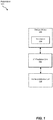
- FIG. 1 shows a block diagram of an example apparatus 100 for predicting roaming patterns of mobile devices within wireless networks.
- the term "roaming pattern,” as used herein, generally refers to any pattern or sequence of APs visited by a mobile device within a wireless network. By predicting the roaming patterns of mobile devices within a wireless network, apparatus 100 may be able to predict which APs within the wireless network will be visited next by the mobile devices.
- apparatus 100 may include an AP-prediction unit 106 communicatively coupled to a storage device 102.
- AP-prediction unit generally refers to any type, form, or portion of physical hardware, circuit, device, and/or processor that performs certain Input/Output (I/O) operations and/or computing tasks directed to predicting roaming patterns of mobile devices within wireless networks.
- I/O Input/Output
- AP-prediction unit 106 may represent an integrated circuit whose configuration and/or infrastructure is at least partially fixed. Additionally or alternatively, AP-prediction unit 106 may represent an integrated circuit whose configuration and/or infrastructure is at least partially variable and/or programmable.
- AP-prediction unit 106 examples include, without limitation, Field-Programmable Gate Arrays (FPGAs), Central Processing Units (CPUs), processors, microprocessors, microcontrollers, Application-Specific Integrated Circuits (ASICs), software modules installed on one or more of the same, portions of one or more of the same, variations of one or more of the same, combinations of one or more of the same, or any other suitable AP-prediction unit.
- FPGAs Field-Programmable Gate Arrays
- CPUs Central Processing Units
- ASICs Application-Specific Integrated Circuits
- storage device 102 may include information 104 about mobile devices roaming within a wireless network.
- information 104 may be arranged and/or stored in a table (such as a hash table) within storage device 102.
- information 104 may be indexed by Media Access Control (MAC) addresses that each correspond to a different mobile device roaming with the wireless network.
- MAC Media Access Control
- Examples of storage device 102 include, without limitation, random-access memory devices, read-only memory devices, solid-state drives, flash drives, disk drives, portions of one or more of the same, variations of one or more of the same, combinations of one or more of the same, or any other suitable storage device.
- apparatus 100 may also include a profile-distribution unit 108 communicatively coupled to AP-prediction unit 106.
- profile-distribution unit generally refers to any type, form, or portion of physical hardware, circuit, device, and/or processor that performs certain Input/Output (I/O) operations and/or computing tasks directed to distributing roaming-session profiles for mobile devices to APs within a wireless network.
- profile-distribution unit 108 may represent an integrated circuit whose configuration and/or infrastructure is at least partially fixed. Additionally or alternatively, profile-distribution unit 108 may represent an integrated circuit whose configuration and/or infrastructure is at least partially variable and/or programmable.
- profile-distribution unit 108 examples include, without limitation, FPGAs, CPUs, processors, microprocessors, microcontrollers, ASICs, software modules installed on one or more of the same, portions of one or more of the same, variations of one or more of the same, combinations of one or more of the same, or any other suitable profile-distribution unit.
- apparatus 100 may include and/or represent all or a portion of a wireless Local Area Network (LAN) controller that manages APs within a wireless network. Additionally or alternatively, apparatus 100 may include and/or represent all or a portion of a master AP that has been designated and/or assigned to manage other APs within a wireless network.
- LAN Local Area Network
- AP-prediction unit 106 may identify a mobile device roaming within a wireless network. In this example, AP-prediction unit 106 may determine the number of times that the mobile device has visited a specific AP within the wireless network. AP-prediction unit 106 may arrive at this determination based at least in part on information 104 stored in storage device 102.
- AP-prediction unit 106 may generate a score based at least in part on the number of times that the mobile device has visited the specific AP.
- the score may represent the probability that the specific AP is the next AP visited by the mobile device.
- AP-prediction unit 106 may determine that the score is above a certain threshold.
- profile-distribution unit 108 may provide the specific AP with a roaming-session profile that facilitates transferring a roaming session of the mobile device to the specific AP.
- profile-distribution unit 108 may ensure that the specific AP is able to seamlessly take over the mobile device's roaming session in the event that the specific AP is the next AP visited by the mobile device while roaming within the wireless network.
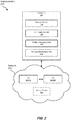
- FIG. 2 shows a block diagram of an example implementation 200 of apparatus 100 for predicting roaming patterns of mobile devices within wireless networks.
- implementation 200 may include apparatus 100 in communication with one or more of APs 202(1)-(N) via a network 204.
- Implementation 200 may also include a mobile device 206 that is roaming within network 204.
- apparatus 100, APs 202(1)-(N), and mobile device 206 may all represent and/or be considered portions of network 204.
- apparatus 100 and APs 202(1)-(N) may all represent and/or be considered portions of the infrastructure and/or architecture of network 204 to which mobile device 206 is connected.
- network generally refers to any type or form of medium and/or architecture that facilitates communication or data transfer.
- Examples of network 204 include, without limitation, an intranet, a Wide Area Network (WAN), a LAN, a wireless LAN, a Personal Area Network (PAN), the Internet, a Power Line Communications (PLC) network, a cellular network (e.g., a Global System for Mobile Communications (GSM) network), portions of one or more of the same, variations of one or more of the same, combinations of one or more of the same, or any other suitable network.
- Network 204 may facilitate communication or data transfer using wireless and/or wired connections.
- APs 202(1)-(N) may be positioned and/or arranged throughout a physical location and/or structure to enable mobile devices to access network 204 while roaming around the physical location and/or structure.
- the mobile devices may visit various APs included in APs 202(1)-(N).
- the mobile devices may establish a connection to the network through one or more of those APs.
- the APs may transfer the mobile devices' roaming sessions from one to another as the mobile devices roam throughout the physical location and/or structure.
- Each of APs 202(1)-(N) may emit a signal and/or radiation that reaches and/or covers an area of the physical location and/or structure.
- mobile device 206 may move out of an area covered by the signal and/or radiation of one of APs 202(1)-(N) and into an area covered by the signal and/or radiation of another one of APs 202(1)-(N).
- these APs may in essence pass and/or transfer the roaming session of mobile device 206 from the one to the other such that the connection between mobile device 206 and network 204 goes uninterrupted.
- mobile device generally refers to any type or form of computing device capable of reading computer-executable instructions and/or being carried by a user.
- Examples of mobile device 206 include, without limitation, cellular phones, laptops, tablets, Personal Digital Assistants (PDAs), multimedia players, embedded systems, wearable devices (e.g., smart watches, smart glasses, etc.), gaming consoles, variations of one or more of the same, combinations of one or more of the same, or any other suitable mobile device.
- PDAs Personal Digital Assistants
- multimedia players e.g., multimedia players, embedded systems
- wearable devices e.g., smart watches, smart glasses, etc.
- gaming consoles variations of one or more of the same, combinations of one or more of the same, or any other suitable mobile device.
- apparatus 100 may also include a storage-maintenance unit 210 communicatively coupled to storage device 102.
- storage-maintenance unit generally refers to any type, form, or portion of physical hardware, circuit, device, and/or processor that performs certain Input/Output (I/O) operations and/or computing tasks directed to maintaining information about mobile devices roaming within a wireless network.
- I/O Input/Output
- storage-maintenance unit 210 may represent an integrated circuit whose configuration and/or infrastructure is at least partially fixed. Additionally or alternatively, storage-maintenance unit 210 may represent an integrated circuit whose configuration and/or infrastructure is at least partially variable and/or programmable.
- Examples of storage-maintenance unit 210 include, without limitation, FPGAs, CPUs, processors, microprocessors, microcontrollers, ASICs, software modules installed on one or more of the same, portions of one or more of the same, variations of one or more of the same, combinations of one or more of the same, or any other suitable storage-maintenance unit. Although illustrated as separate entities in FIG. 2 , AP-prediction unit 106, profile-distribution unit 108, and storage-maintenance unit 210 may alternatively represent portions of a single unit that predicts roaming patterns of mobile devices within wireless networks.
- storage-maintenance unit 210 may construct a table that includes information 104 about the mobile devices roaming within network 204. For example, storage-maintenance unit 210 may organize information 104 into a hash table stored in storage device 102. Additionally or alternatively, storage-maintenance unit 210 may index information 104 included in the hash table by the MAC addresses of the mobile devices roaming within network 204.
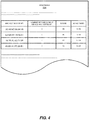
- storage-maintenance unit 210 may organize information 104 into a table shown in FIG. 3 . By organizing information 104 in this way, storage-maintenance unit 210 may ensure that information 104 in FIG. 3 is easily accessible and/or searchable. As illustrated in FIG. 3
- information 104 may identify the MAC addresses of various mobile devices roaming within network 204 (in this example, "32:58:42:61:9C:A2,” “22:F1:A3:93:F4:2E,” “B7:43:33:1A:45:37,” “64:AB:FF:18:C4:01,” and "05:F9:A6:33:FA:21”) and corresponding information about those mobile devices (in this example, "Information 300,” “Information 302,” “Information 304,” “Information 306,” and “Information 308,” respectively).
- each of information 300, information 302, information 304, information 306, and information 308 may identify one or more APs that the mobile devices represented by MAC addresses "32:58:42:61:9C:A2," “22:F1:A3:93:F4:2E,” “B7:43:33:1A:45:37,” “64:AB:FF:18:C4:01,” and "05:F9:A6:33:FA:21,” respectively, are likely to visit next.
- each AP identified in information 304 may have been assigned a score that represents the probability that the mobile device with MAC address "B7:43:33:1A:45:37” will visit that AP next.
- each of the scores assigned to the APs identified in information 304 may be above a certain threshold, meaning that the mobile device with MAC address "B7:43:33:1A:45:37" is likely to visit one of these APs next (as opposed to visiting one of the other APs next) while roaming within network 204.
- information 304 may identify the MAC addresses of the 4 different APs most likely to be visited next by the mobile device with MAC address "B7:43:33:1A:45:37" (in this example, “3C:42:5C:06:24:1A,” “E2:BA:24:19:6B:54,” “16:7B:A5:43:71:3B,” and “45:BA:41:FC:29:B1”), the number of times that the mobile device with MAC address "B7:43:33:1A:45:37” has visited those 4 different APs (in this example, "4,” “5,” “7,” and “4,” respectively), the scores assigned to those 4 different APs (in this example, "65,” “85,” “80,” and “70,” respectively), and aging timers that indicate the amount of time that has passed since the mobile device with MAC address "B7:43:33:1A:45:37” last visited those 4 different APs (in this example, “3C:42
- AP-prediction unit 106 may identify mobile device 206 roaming within network 204. For example, AP-prediction unit 106 may detect mobile device 206 moving within a physical location and/or structure covered by network 204. Additionally or alternatively, AP-prediction unit 106 may identify mobile device 206 as being connected to network 204 by way of AP 202(1).
- AP-prediction unit 106 may determine the number of times that mobile device 206 has visited and/or associated with a specific AP within network 204. For example, AP-prediction unit 106 may access information 104. AP-prediction unit 106 may then determine that mobile device 206 has visited and/or associated with AP 202(N) more than 10 times. In other words, AP-prediction unit 106 may determine that mobile device 206 has established and/or maintained a network connection through AP 202(N) on more than 10 different occasions.
- AP-prediction unit 106 may generate a score that represents the probability that the specific AP is the next AP visited by mobile device 206.
- x may represent the number of times that a mobile device has visited AP 202(N)
- W x0 may represent the value of the score when the mobile device last roamed away from AP 202(N)
- t may represent the amount of time that has elapsed since the mobile device last roamed away from AP 202(N).
- AP-prediction unit 106 may configure information 104 to automatically generate and/or maintain a score for AP 202(N) based at least in part on that formula.
- apparatus 100 may maintain and/or keep track of various aging timers.
- Each of these aging timers may correspond to a different AP with respect to a specific mobile device.
- one aging timer may correspond to AP 202(N) for mobile device 206.
- another aging timer may correspond to AP 202(N) for another mobile device (not necessarily illustrated in FIG. 2 ).
- aging timers may run (or increase with time) only when the corresponding AP is not hosting the mobile device. For example, while mobile device 206 is visiting and/or associated with AP 202(N), the aging timer corresponding to AP 202(N) for mobile device 206 may remain stopped and/or reset. In contrast, while mobile device 206 is roaming elsewhere within network 204 and is not associated with AP 202(N), the aging timer corresponding to AP 202(N) for mobile device 206 may be running (or increasing with time).
- aging timers may stop and/or reset once the mobile device re-visits and/or re-associates with the corresponding AP. For example, when mobile device 206 re-visits and/or re-associates with AP 202(N), apparatus 100 may stop and/or reset the aging timer corresponding to AP 202(N) for mobile device 206. Accordingly, this aging timer may cause the corresponding score to decay and/or decrement only while mobile device 206 is not visiting and/or associating with AP 202(N).
- AP-prediction unit 106 may determine that the score is above a certain threshold. For example, AP-prediction unit 106 may determine that the score for AP 202(N) is above a threshold value of "60.” In one example, this threshold may be arbitrarily fixed at a specific value. In another example, this threshold may vary based at least in part on the scores for other APs relative to mobile device 206 (e.g., such that information 304 always identifies the 4 APs most likely to be visited next by mobile device 206).
- profile-distribution unit 108 may provide AP 202(N) with a roaming-session profile that facilitates transferring the roaming session of mobile device 206 to AP 202(N).
- roaming-session profile generally refers to any type or form of data, information, keys, and/or context that enables an AP to provide network access to a mobile device that has been authenticated previously by another AP. For example, in the event that AP 202(1) has previously authenticated mobile device 206, AP 202(N) may skip the authentication process for mobile device 206 based at least in part on the roaming-session profile.
- the authentication process may include and/or represent Institute of Electrical and Electronics Engineers (IEEE) 802.IX authentication.
- profile-distribution unit 108 may provide AP 202(N) with the roaming-session profile by directing AP 202(1) to send an instance of the roaming-session profile to AP 202(N). Additionally or alternatively, profile-distribution unit 108 may provide AP 202(N) with the roaming-session profile by sending an instance of the roaming-session profile to AP 202(N) from apparatus 100.
- the roaming-session profile may include one or more roaming keys, unique network keys, encryption keys, and/or other security parameters that indicate how to encode network traffic destined for mobile device 206 during the roaming session.
- the roaming-session profile may include a Pairwise Master Key (PMK) used to encode network traffic destined for mobile device 206 during the roaming session.
- the roaming-session profile may include one or more multicast and/or broadcast keys.
- the roaming-session profile may also include one or more unicast and/or mapping keys.
- the size of the roaming-session profile may vary depending on the type of roaming session of mobile device 206 and/or the type(s) of services applied to the network traffic transferred to and/or from mobile device 206 during the roaming session.
- network 204 may apply certain security services to network traffic originating from and/or destined for mobile device 206.
- the size of roaming-session profile may remain relatively small.
- network 204 may apply Deep Packet Inspection (DPI) and/or firewall services to network traffic originating from and/or destined for mobile device 206.
- DPI Deep Packet Inspection
- the size of roaming-session profile may become relatively large.
- network 204 may distribute the roaming-session profile for mobile device 206 to only those APs that are most likely to be visited next by mobile device 206.
- network 204 may distribute the roaming-session profile for mobile device 206 to only those APs whose scores with respect to mobile device 206 are above the threshold.
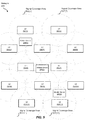
- network 204 in FIG. 5 may include APs 202(1)-202(12). As illustrated in FIG. 5 , each of APs 202(1)-(12) may emit a signal and/or radiation that reaches and/or covers a certain area or space. For example, APs 202(1), 202(2), 202(11), and 202(12) may each emit a signal and/or radiation that reaches the perimeter represented by signal coverage areas 502(1), 502(2), 502(11), and 502(12), respectively, in FIG. 5 .
- mobile devices 206(1)-(3) may be roaming around a physical location and/or structure covered by network 204.
- apparatus 100 may maintain information 104 about mobile devices 206(1)-(3) in storage device 102.
- apparatus 100 may determine the number of times that mobile device 206(1)-(3) have visited APs 202(1)-(N) within network 204 based at least in part on information 104.
- apparatus 100 may determine that mobile device 206(1) has visited each of APs 202(1)-(4) four times within the last hour, each of APs 202(5)-(8) two times within the last hour, and each of APs 202(9)-(12) zero times within the last hour.
- apparatus 100 may determine that mobile device 206(2) has visited each of APs 202(1)-(5) one time within the last hour, each of APs 202(6)-(8) four times within the last hour, and each of APs 202(9)-(12) one time within the last hour. Additionally or alternatively, apparatus 100 may determine that mobile device 206(3) has visited each of APs 202(1)-(6) zero times within the last hour, each of APs 202(7)-(9) three times within the last hour, and each of APs 202(10)-(12) five times within the last hour.
- Apparatus 100 may then generate, for each of APs 202(1)-(12), scores that represent the probability that the AP in question will be the next AP visited by mobile devices 206(1)-(3). For example, apparatus 100 may generate a score of "75" for AP 202(4) with respect to mobile device 206(1). In this example, the score of "75" may represent the probability that AP 202(4) is the next AP visited by mobile device 206(1) while roaming within network 204.
- apparatus 100 may generate a score of "30" for AP 202(4) with respect to mobile device 206(2).
- the score of "30” may represent the probability that AP 202(4) is the next AP visited by mobile device 206(2) while roaming within network 204.
- apparatus 100 may generate a score of "0" for AP 202(4) with respect to mobile device 206(3).
- the score of "0” may represent the probability that AP 202(4) is the next AP visited by mobile device 206(3) while roaming within network 204.
- network 204 may maintain a threshold value of "60" for determining whether an AP is likely to be visited next by a mobile device. Accordingly, apparatus 100 may determine that the score of "75" for AP 202(4) with respect to mobile device 206(1) is above the threshold value of "60.” In other words, mobile device 206(1) may be considered likely to visit AP 202(4) next while roaming within network 204. As a result, apparatus 100 may provide AP 202(4) with the roaming-session profile of mobile device 206(1) in anticipation of mobile device 206(1) potentially visiting AP 202(4) next.
- apparatus 100 may determine that the score of "30" for AP 202(4) with respect to mobile device 206(2) is below the threshold value of "60.” In other words, mobile device 206(2) may be considered unlikely to visit AP 202(4) next while roaming within network 204. As a result, apparatus 100 may refrain from providing AP 202(4) with the roaming-session profile of mobile device 206(2) in an effort to avoid consuming unnecessary memory and/or processing power on AP 202(4).
- apparatus 100 may determine that the score of "0" for AP 202(4) with respect to mobile device 206(3) is below the threshold value of "60.” In other words, mobile device 206(3) may be considered unlikely to visit AP 202(4) next while roaming within network 204. As a result, apparatus 100 may refrain from providing AP 202(4) with the roaming-session profile of mobile device 206(3) in an effort to avoid consuming unnecessary memory and/or processing power on AP 202(4).
- storage-maintenance unit 210 may update information 104 as mobile devices 206(1)-(3) roam within network 204. For example, mobile device 206(1) may visit AP 202(4) while roaming within network 204. Once AP 202(4) assumes the roaming session of mobile device 206(1), AP 202(4) may send a notification indicating the same to apparatus 100.
- storage-maintenance unit 210 may receive the notification and then update information 104 to account for the recent visit of mobile device 206(1) to AP 202(4). For example, storage-maintenance unit 210 may reset and/or restart the aging timer for AP 202(4) with respect to mobile device 206(1). By resetting and/or restarting the aging timer in this way, storage-maintenance unit 210 may in essence reset and/or restart any decay and/or decrement applied to the corresponding score for AP 202(4).
- mobile device 206(3) may visit AP 202(11) while roaming within network 204. Once AP 202(11) assumes the roaming session of mobile device 206(3), AP 202(11) may send a notification indicating the same to apparatus 100.
- storage-maintenance unit 210 may receive the notification and then update information 104 to account for the recent visit of mobile device 206(3) to AP 202(11). For example, storage-maintenance unit 210 may reset and/or restart the aging timer for AP 202(11) with respect to mobile device 206(3). By resetting and/or restarting the aging timer in this way, storage-maintenance unit 210 may in essence reset and/or restart any decay and/or decrement applied to the corresponding score for AP 202(11).
- storage-maintenance unit 210 may determine that mobile device 206(1) has not visited AP 202(9) within a certain amount of time. For example, storage-maintenance unit 210 may determine that mobile device 206(1) has not visited AP 202(9) within the last two hours based at least in part on the aging timer for AP 202(9). In response to this determination, storage-maintenance unit 210 may remove an entry corresponding to AP 202(9) from information 104 and/or the profile neighborhood for mobile device 206(1).
- the scores for APs 202(1)-(12) may decrease as the aging timers for APs 202(1)-(N) increase.
- storage-maintenance unit 210 may configure information 104 such that the scores for AP 202(7) with respect to mobile devices 206(1)-(3) decrease as the aging timers for AP 202(7) with respect to mobile devices 206(1)-(3) increase.
- AP-prediction unit 106 may detect an increase in the amount of time since mobile device 206(2) last visited AP 202(7) based at least in part on the corresponding aging timer for AP 202(7). AP-prediction unit 106 may then decrement the score for AP 202(7) with respect to mobile device 206(2) to account for the increase in the amount of time since mobile device 206(2) last visited AP 202(7).
- AP-prediction unit 106 may generate the scores for APs 202(1)-(12) based at least in part on the roaming patterns of mobile devices 206(1)-(3). For example, AP-prediction unit 106 may generate a representation of a roaming pattern for mobile device 206(1) based at least in part on the number of times that mobile device 206(1) has visited APs 202(1)-(12). AP-prediction unit 106 may then generate and/or modify a score for each of APs 202(1)-(12) with respect to mobile device 206(1) based at least in part on the roaming pattern for mobile device 206(1).
- a mobile device may roam to an AP that is not included in the mobile device's profile neighborhood.
- mobile device 206(1) may roam to AP 202(10) from AP 202(7) even though mobile device 206(1) had not visited AP 202(10) at all within the last hour. Since, in this example, AP 202(10) is not be included in the mobile device's profile neighborhood, AP 202(10) may not yet have access to the roaming-session profile of mobile device 206(1). As a result, AP 202(10) may request and obtain the roaming-session profile of mobile device 206(1) from AP 202(7), and AP-prediction unit 106 may add AP 202(10) to the profile neighborhood of mobile device 206(1).
- FIG. 6 is a flow diagram of an example method 600 for predicting roaming patterns of mobile devices within wireless networks.
- Method 600 may include the step of identifying at least one mobile device roaming within a wireless network (610). This identifying step may be performed in a variety of ways.
- AP-prediction unit 106 may, as part of a wireless LAN controller or master AP, identify mobile device 206 roaming within network 204 by receiving a notification indicating that mobile device 206 is attempting to associate with one or more of APs 202(1)-(N).
- AP-prediction unit 106 may identify mobile device 206 roaming within network 204 by analyzing information 104 maintained in storage device 102.
- method 600 may also include the step of determining a number of times that the mobile device has visited a specific AP within the wireless network (620).
- This determining step may be performed in a variety of ways.
- AP-prediction unit 106 may, as part of the wireless LAN or master AP, determine the number of times that mobile device 206 has visited AP 202(1) within network 204 by analyzing information 104 maintained in storage device 102.
- storage-maintenance unit 210 may, as part of the wireless LAN or master AP, update information 104 on an as-needed basis to ensure that information 104 reflects the current number of times that mobile device has visited AP 202(1).
- method 600 may additionally include the step of generating a score that represents a probability that the specific AP is the next AP visited by the mobile device based at least in part on the number of times that the mobile device has visited the specific AP (630).
- This generating step may be performed in a variety of ways.
- AP-prediction unit 106 may, as part of the wireless LAN or master AP, generate a score that represents the probability that AP 202(1) will be the next AP visited by mobile device 206 based at least in part on the number of times that mobile device 206 has previously visited AP 202(1).
- AP-prediction unit 106 may configure information 104 to automatically generate and/or maintain such a score for AP 202(1) based at least in part on a mathematical formula that accounts for the number of times that mobile device 206 has previously visited AP 202(1).
- method 600 may further include the step of determining that the score is above a certain threshold (640).
- This determining step may be performed in a variety of ways. For example, AP-prediction unit 106 may, as part of the wireless LAN or master AP, compare the score that represents the probability that AP 202(1) will be the next AP visited by mobile device 206 with a certain threshold. AP-prediction unit 106 may then determine that the score is above the threshold based at least in part on this comparison.
- method 600 may finally include the step of providing the specific AP with a roaming-session profile that facilitates transferring a roaming session of the mobile device to the specific AP in anticipation of the specific AP being the next AP visited by the mobile device while roaming with the wireless network (650).
- This providing step may be performed in a variety of ways.
- AP-prediction unit 106 may, as part of the wireless LAN or master AP, provide AP 202(1) with a roaming-session profile by directing the AP with which mobile device 206 is currently associated to send an instance of the roaming-session profile to AP 202(1).
- AP-prediction unit 106 may provide AP 202(1) with the roaming-session profile by sending an instance of the roaming-session profile to AP 202(1) from apparatus 100.
- FIG. 7 is a block diagram of an example computing system 700 capable of implementing and/or being used in connection with one or more of the embodiments described and/or illustrated herein.
- all or a portion of computing system 700 may perform and/or be a means for performing, either alone or in combination with other elements, one or more of the steps described in connection with FIG. 5 .
- All or a portion of computing system 700 may also perform and/or be a means for performing and/or implementing any other steps, methods, or processes described and/or illustrated herein.
- computing system 700 may include apparatus 100 from FIG. 1 .
- Computing system 700 broadly represents any type or form of electrical load, including a single or multi-processor computing device or system capable of executing computer-readable instructions.
- Examples of computing system 700 include, without limitation, network devices (e.g., wireless WLAN controllers, master APs, etc.), workstations, laptops, client-side terminals, servers, distributed computing systems, mobile devices, network switches, network routers (e.g., backbone routers, edge routers, core routers, mobile service routers, broadband routers, etc.), network appliances (e.g., network security appliances, network control appliances, network timing appliances, SSL VPN (Secure Sockets Layer Virtual Private Network) appliances, etc.), network controllers, gateways (e.g., service gateways, mobile packet gateways, multi-access gateways, security gateways, etc.), and/or any other type or form of computing system or device.
- network devices e.g., wireless WLAN controllers, master APs, etc.
- workstations e.g., laptops, client-
- Computing system 700 may be programmed, configured, and/or otherwise designed to comply with one or more networking protocols. According to certain embodiments, computing system 700 may be designed to work with protocols of one or more layers of the Open Systems Interconnection (OSI) reference model, such as a physical layer protocol, a link layer protocol, a network layer protocol, a transport layer protocol, a session layer protocol, a presentation layer protocol, and/or an application layer protocol.
- OSI Open Systems Interconnection
- computing system 700 may include a network device configured according to a Universal Serial Bus (USB) protocol, an Institute of Electrical and Electronics Engineers (IEEE) 1394 protocol, an Ethernet protocol, a T1 protocol, a Synchronous Optical Networking (SONET) protocol, a Synchronous Digital Hierarchy (SDH) protocol, an Integrated Services Digital Network (ISDN) protocol, an Asynchronous Transfer Mode (ATM) protocol, a Point-to-Point Protocol (PPP), a Point-to-Point Protocol over Ethernet (PPPoE), a Point-to-Point Protocol over ATM (PPPoA), a Bluetooth protocol, an IEEE 802.XX protocol, a frame relay protocol, a token ring protocol, a spanning tree protocol, and/or any other suitable protocol.
- Computing system 700 may include various network and/or computing components.
- computing system 700 may include at least one processor 714 and a system memory 716.
- Processor 714 generally represents any type or form of processing unit capable of processing data or interpreting and executing instructions.
- processor 714 may represent an application-specific integrated circuit (ASIC), a system on a chip (e.g., a network processor), a hardware accelerator, a general purpose processor, and/or any other suitable processing element.
- ASIC application-specific integrated circuit
- a system on a chip e.g., a network processor
- hardware accelerator e.g., a general purpose processor, and/or any other suitable processing element.
- Processor 714 may process data according to one or more of the networking protocols discussed above. For example, processor 714 may execute or implement a portion of a protocol stack, may process packets, may perform memory operations (e.g., queuing packets for later processing), may execute end-user applications, and/or may perform any other processing tasks.
- processor 714 may execute or implement a portion of a protocol stack, may process packets, may perform memory operations (e.g., queuing packets for later processing), may execute end-user applications, and/or may perform any other processing tasks.
- System memory 716 generally represents any type or form of volatile or non-volatile storage device or medium capable of storing data and/or other computer-readable instructions. Examples of system memory 716 include, without limitation, Random Access Memory (RAM), Read Only Memory (ROM), flash memory, or any other suitable memory device. Although not required, in certain embodiments computing system 700 may include both a volatile memory unit (such as, for example, system memory 716) and a non-volatile storage device (such as, for example, primary storage device 732, as described in detail below). System memory 716 may be implemented as shared memory and/or distributed memory in a network device. Furthermore, system memory 716 may store packets and/or other information used in networking operations.
- RAM Random Access Memory
- ROM Read Only Memory
- flash memory or any other suitable memory device.
- computing system 700 may include both a volatile memory unit (such as, for example, system memory 716) and a non-volatile storage device (such as, for example, primary storage device 732, as described in detail below).
- System memory 716
- example computing system 700 may also include one or more components or elements in addition to processor 714 and system memory 716.
- computing system 700 may include a memory controller 718, an Input/Output (I/O) controller 720, and a communication interface 722, each of which may be interconnected via communication infrastructure 712.
- Communication infrastructure 712 generally represents any type or form of infrastructure capable of facilitating communication between one or more components of a computing device. Examples of communication infrastructure 712 include, without limitation, a communication bus (such as a Serial ATA (SATA), an Industry Standard Architecture (ISA), a Peripheral Component Interconnect (PCI), a PCI Express (PCIe), and/or any other suitable bus), and a network.
- SATA Serial ATA
- ISA Industry Standard Architecture
- PCI Peripheral Component Interconnect
- PCIe PCI Express
- Memory controller 718 generally represents any type or form of device capable of handling memory or data or controlling communication between one or more components of computing system 700.
- memory controller 718 may control communication between processor 714, system memory 716, and I/O controller 720 via communication infrastructure 712.
- memory controller 718 may include a Direct Memory Access (DMA) unit that may transfer data (e.g., packets) to or from a link adapter.
- DMA Direct Memory Access
- I/O controller 720 generally represents any type or form of device or module capable of coordinating and/or controlling the input and output functions of a computing device. For example, in certain embodiments I/O controller 720 may control or facilitate transfer of data between one or more elements of computing system 700, such as processor 714, system memory 716, communication interface 722, and storage interface 730.
- Communication interface 722 broadly represents any type or form of communication device or adapter capable of facilitating communication between example computing system 700 and one or more additional devices.
- communication interface 722 may facilitate communication between computing system 700 and a private or public network including additional computing systems.
- Examples of communication interface 722 include, without limitation, a link adapter, a wired network interface (such as a network interface card), a wireless network interface (such as a wireless network interface card), and any other suitable interface.
- communication interface 722 may provide a direct connection to a remote server via a direct link to a network, such as the Internet.
- Communication interface 722 may also indirectly provide such a connection through, for example, a local area network (such as an Ethernet network), a personal area network, a wide area network, a private network (e.g., a virtual private network), a telephone or cable network, a cellular telephone connection, a satellite data connection, or any other suitable connection.
- a local area network such as an Ethernet network
- a personal area network such as an Ethernet network
- a wide area network such as a wide area network
- a private network e.g., a virtual private network
- telephone or cable network such as a cellular telephone connection
- satellite data connection such as satellite data network
- communication interface 722 may also represent a host adapter configured to facilitate communication between computing system 700 and one or more additional network or storage devices via an external bus or communications channel.
- host adapters include, without limitation, Small Computer System Interface (SCSI) host adapters, Universal Serial Bus (USB) host adapters, IEEE 1394 host adapters, Advanced Technology Attachment (ATA), Parallel ATA (PATA), Serial ATA (SATA), and External SATA (eSATA) host adapters, Fibre Channel interface adapters, Ethernet adapters, or the like.
- Communication interface 722 may also enable computing system 700 to engage in distributed or remote computing. For example, communication interface 722 may receive instructions from a remote device or send instructions to a remote device for execution.
- example computing system 700 may also include a primary storage device 732 and/or a backup storage device 734 coupled to communication infrastructure 712 via a storage interface 730.
- Storage devices 732 and 734 generally represent any type or form of storage device or medium capable of storing data and/or other computer-readable instructions.
- storage devices 732 and 734 may represent a magnetic disk drive (e.g., a so-called hard drive), a solid state drive, a floppy disk drive, a magnetic tape drive, an optical disk drive, a flash drive, or the like.
- Storage interface 730 generally represents any type or form of interface or device for transferring data between storage devices 732 and 734 and other components of computing system 700.
- storage devices 732 and 734 may be configured to read from and/or write to a removable storage unit configured to store computer software, data, or other computer-readable information.
- suitable removable storage units include, without limitation, a floppy disk, a magnetic tape, an optical disk, a flash memory device, or the like.
- Storage devices 732 and 734 may also include other similar structures or devices for allowing computer software, data, or other computer-readable instructions to be loaded into computing system 700.
- storage devices 732 and 734 may be configured to read and write software, data, or other computer-readable information.
- Storage devices 732 and 734 may be a part of computing system 700 or may be separate devices accessed through other interface systems.
- computing system 700 may also employ any number of software, firmware, and/or hardware configurations.
- one or more of the example embodiments disclosed herein may be encoded as a computer program (also referred to as computer software, software applications, computer-readable instructions, or computer control logic) on a computer-readable medium.
- computer-readable medium generally refers to any form of device, carrier, or medium capable of storing or carrying computer-readable instructions.
- Examples of computer-readable media include, without limitation, transmission-type media, such as carrier waves, and non-transitory-type media, such as magnetic-storage media (e.g., hard disk drives and floppy disks), optical-storage media (e.g., Compact Disks (CDs) and Digital Video Disks (DVDs)), electronic-storage media (e.g., solid-state drives and flash media), and other distribution systems.
- transmission-type media such as carrier waves
- non-transitory-type media such as magnetic-storage media (e.g., hard disk drives and floppy disks), optical-storage media (e.g., Compact Disks (CDs) and Digital Video Disks (DVDs)), electronic-storage media (e.g., solid-state drives and flash media), and other distribution systems.
- non-transitory-type media such as magnetic-storage media (e.g., hard disk drives and floppy disks), optical-storage media (e.g., Compact Disk
- each block diagram component, flowchart step, operation, and/or component described and/or illustrated herein may be implemented, individually and/or collectively, using a wide range of hardware, software, or firmware (or any combination thereof) configurations.
- any disclosure of components contained within other components should be considered as being by way of example in nature since many other architectures can be implemented to achieve the same functionality.
- apparatus 100 in FIG. 1 may represent portions of a cloud-computing or network-based environment.
- Cloud-computing and network-based environments may provide various services and applications via the Internet. These cloud-computing and network-based services (e.g., software as a service, platform as a service, infrastructure as a service, etc.) may be accessible through a web browser or other remote interface.
- Various functions described herein may also provide network switching capabilities, gateway access capabilities, network security functions, content caching and delivery services for a network, network control services, and/or and other networking functionality.
- one or more of the modules described herein may transform data, physical devices, and/or representations of physical devices from one form to another.
- one or more of the modules recited herein may receive data to be transformed, transform the data into a score, output a result of the transformation to determine whether an AP is likely to be visited next by a mobile device, use the result of the transformation to predict a roaming pattern of the mobile device, and store the result of the transformation to determine which APs are to receive a roaming-session profile for the mobile device.
- one or more of the modules recited herein may transform a processor, volatile memory, non-volatile memory, and/or any other portion of a physical computing device from one form to another by executing on the computing device, storing data on the computing device, and/or otherwise interacting with the computing device.
- an apparatus as disclosed herein may include (1) a storage device that maintains information about mobile devices roaming within a wireless network, (2) an AP-prediction unit that (A) determines, based at least in part on the information maintained in the storage device, a number of times that a mobile device has visited a specific AP within the wireless network, (C) generates, based at least in part on the number of times, a score that represents a probability that the specific AP is the next AP visited by the mobile device, and then (D) determines that the score is above a certain threshold, and (3) a profile-distribution unit that provides, in response to the determination that the score is above the certain threshold, the specific AP with a roaming-session profile that facilitates transferring a roaming session of the mobile device to the specific AP.
- a storage device that maintains information about mobile devices roaming within a wireless network
- an AP-prediction unit that (A) determines, based at least in part on the information maintained in the storage device, a number of
Landscapes
- Engineering & Computer Science (AREA)
- Computer Networks & Wireless Communication (AREA)
- Signal Processing (AREA)
- Databases & Information Systems (AREA)
- Mobile Radio Communication Systems (AREA)
Claims (7)
- Vorrichtung (100), die Folgendes umfasst:eine Speichervorrichtung (102), die dafür konfiguriert ist, Informationen über mobile Vorrichtungen (206), die innerhalb eines Drahtlosnetzes (204) roamen, zu verwalten;eine AP-Vorhersageeinheit (106), die kommunikativ mit der Speichervorrichtung gekoppelt ist, wobei die AP-Vorhersageeinheit für Folgendes konfiguriert ist:Identifizieren mindestens einer der mobilen Vorrichtungen, die innerhalb des Drahtlosnetzes roamen;Bestimmen, mindestens teilweise anhand der in der Speichervorrichtung verwalteten Informationen, einer Anzahl von Malen, die die mobile Vorrichtung einen speziellen Zugangspunkt (Access Point, AP) (202) innerhalb des Drahtlosnetzes besucht hat;Generieren, mindestens teilweise anhand der Anzahl von Malen, die die mobile Vorrichtung den speziellen AP besucht hat, einer Wertung, die eine Wahrscheinlichkeit repräsentiert, dass der spezielle AP der nächste AP ist, der durch die mobile Vorrichtung besucht wird; undBestimmen, dass die Wertung über einer bestimmten Schwelle liegt;eine Profilverteilungseinheit (108), die dafür konfiguriert ist, in Reaktion auf die Bestimmung, dass die Wertung über der bestimmten Schwelle liegt, an den speziellen AP ein Roaming-Sitzungsprofil zu übermitteln, das die Übertragung einer Roaming-Sitzung der mobilen Vorrichtung zu dem speziellen AP in der Erwartung ermöglicht, dass der spezielle AP der nächste AP ist, der durch die mobile Vorrichtung besucht wird, während sie innerhalb des Drahtlosnetzes roamt; undeine Speicherverwaltungseinheit (210), die kommunikativ mit der Speichervorrichtung gekoppelt ist, wobei die Speicherverwaltungseinheit für Folgendes konfiguriert ist:Erstellen einer Tabelle, die die Informationen über die mobilen Vorrichtungen enthält, die innerhalb des Drahtlosnetzes roamen, wobei die Informationen über die mobilen Vorrichtungen Informationen umfassen, die einen Satz APs identifizieren, deren Wertungen, welche die Wahrscheinlichkeit repräsentieren, dass die mobile Vorrichtung die APs als Nächstes besucht, über der bestimmten Schwelle liegen,wobei die Informationen über die mobilen Vorrichtungen des Weiteren Informationen umfassen, die für jeden einzelnen AP innerhalb des Satzes APs Folgendes identifizieren:eine MAC-Adresse des einzelnen AP,eine Anzahl von Malen, die die mobile Vorrichtung den einzelnen AP besucht hat,eine Wertung, die die Wahrscheinlichkeit repräsentiert, dass der einzelne AP der nächste AP ist, der durch die mobile Vorrichtung besucht wird, undeinen Alterungs-Timer, der eine Zeitdauer repräsentiert, seit die mobile Vorrichtung das letzte Mal mindestens einen einzelnen AP (202) innerhalb des Drahtlosnetzes besuchte; undIndexieren der in der Tabelle enthaltenen Informationen durch Media Access Control (MAC)-Adressen, die jeweils einer anderen mobilen Vorrichtung entsprechen, die innerhalb des Drahtlosnetzes roamt,wobei die AP-Vorhersageeinheit für Folgendes konfiguriert ist:Detektieren, mindestens teilweise anhand des Alterungs-Timers, einer Zunahme der Zeitdauer, seit die mobile Vorrichtung das letzte Mal den einzelnen AP besuchte; undDekrementieren der Wertung, die die Wahrscheinlichkeit repräsentiert, dass der einzelne AP der nächste AP ist, der durch die mobile Vorrichtung besucht wird, mindestens teilweise aufgrund der Zunahme der Zeitdauer, seit die mobile Vorrichtung das letzte Mal den einzelnen AP besuchte.
- Vorrichtung nach Anspruch 1, wobei die Speicherverwaltungseinheit des Weiteren für Folgendes konfiguriert ist:Empfangen, von dem speziellen AP, einer oder mehrerer Benachrichtigungen, die anzeigen, dass eine oder mehrere der mobilen Vorrichtungen, die innerhalb des Drahtlosnetzes roamen, vor kurzem den speziellen AP besucht haben; undAktualisieren der in der Tabelle enthaltenen Informationen mindestens teilweise anhand der von dem speziellen AP empfangenen Benachrichtigungen.
- Vorrichtung nach Anspruch 1 oder 2, wobei die Speicherverwaltungseinheit des Weiteren für Folgendes konfiguriert ist:Empfangen, von einem weiteren AP innerhalb des Drahtlosnetzes, einer Benachrichtigung, die anzeigt, dass die mobile Vorrichtung vor kurzem den anderen AP besucht hat; undAktualisieren der in der Tabelle enthaltenen Informationen mindestens teilweise anhand der Benachrichtigung, die anzeigt, dass die mobile Vorrichtung vor kurzem den anderen AP besucht hat.
- Vorrichtung nach Anspruch 1, wobei die Speicherverwaltungseinheit für Folgendes konfiguriert ist:Bestimmen, mindestens teilweise anhand des Alterungs-Timers, dass die mobile Vorrichtung den einzelnen AP nicht innerhalb einer bestimmten Zeitdauer besucht hat; undEntfernen eines Eintrags, der dem einzelnen AP entspricht, aus den Informationen in Reaktion auf das Bestimmen, dass die mobile Vorrichtung den einzelnen AP nicht innerhalb der bestimmten Zeitdauer besucht hat.
- Vorrichtung nach einem der vorangehenden Ansprüche, wobei die AP-Vorhersageeinheit dafür konfiguriert ist, die Anzahl von Malen, die die mobile Vorrichtung den speziellen AP besucht hat, durch Bestimmen einer Anzahl von Malen, die die mobile Vorrichtung eine Netzverbindung durch den speziellen AP hergestellt hat, zu bestimmen.
- Vorrichtung nach einem der vorangehenden Ansprüche, wobei die AP-Vorhersageeinheit für Folgendes konfiguriert ist:Bestimmen der Anzahl von Malen, die die mobile Vorrichtung den speziellen AP besucht hat, durch Generieren, mindestens teilweise anhand der Anzahl von Malen, die die mobile Vorrichtung den speziellen AP besucht hat, einer Darstellung eines Roaming-Musters der mobilen Vorrichtung innerhalb des Drahtlosnetzes; undGenerieren, mindestens teilweise anhand der Darstellung des Roaming-Musters der mobilen Vorrichtung, der Wertung, die die Wahrscheinlichkeit repräsentiert, dass der spezielle AP der nächste AP ist, der durch die mobile Vorrichtung besucht wird.
- Verfahren (600), das Folgendes umfasst:Verwalten von Informationen über mobile Vorrichtungen (206), die innerhalb eines Drahtlosnetzes (204) roamen;Identifizieren (610) mindestens einer der mobilen Vorrichtungen, die innerhalb eines Drahtlosnetzes roamen;Bestimmen (620), mindestens teilweise anhand der verwalteten Informationen, einer Anzahl von Malen, die die mobile Vorrichtung einen speziellen AP (202) innerhalb des Drahtlosnetzes besucht hat;Generieren (630), mindestens teilweise anhand der Anzahl von Malen, die die mobile Vorrichtung den speziellen AP besucht hat, einer Wertung, die eine Wahrscheinlichkeit repräsentiert, dass der spezielle AP der nächste AP ist, der durch die mobile Vorrichtung besucht wird;Erstellen einer Tabelle, die die Informationen über die mobilen Vorrichtungen enthält, die innerhalb des Drahtlosnetzes roamen, wobei die Informationen über die mobilen Vorrichtungen Informationen umfassen, die einen Satz APs identifizieren, deren Wertungen, welche die Wahrscheinlichkeit repräsentieren, dass die mobile Vorrichtung die APs als Nächstes besucht, über einer bestimmten Schwelle liegen,
wobei die Informationen über die mobilen Vorrichtungen des Weiteren Informationen umfassen, die für jeden einzelnen AP innerhalb des Satzes APs Folgendes identifizieren:eine MAC-Adresse des einzelnen AP,eine Anzahl von Malen, die die mobile Vorrichtung den einzelnen AP besucht hat,eine Wertung, die die Wahrscheinlichkeit repräsentiert, dass der einzelne AP der nächste AP ist, der durch die mobile Vorrichtung besucht wird, undeinen Alterungs-Timer, der eine Zeitdauer repräsentiert, seit die mobile Vorrichtung das letzte Mal mindestens einen einzelnen AP (202) innerhalb des Drahtlosnetzes besuchte;Indexieren der in der Tabelle enthaltenen Informationen durch Media Access Control (MAC)-Adressen, die jeweils einer anderen mobilen Vorrichtung entsprechen, die innerhalb des Drahtlosnetzes roamt;Detektieren, mindestens teilweise anhand des Alterungs-Timers, einer Zunahme der Zeitdauer, seit die mobile Vorrichtung das letzte Mal den einzelnen AP besuchte;Dekrementieren der Wertung, die die Wahrscheinlichkeit repräsentiert, dass der einzelne AP der nächste AP ist, der durch die mobile Vorrichtung besucht wird, mindestens teilweise aufgrund der Zunahme der Zeitdauer, seit die mobile Vorrichtung das letzte Mal den einzelnen AP besuchte; undBestimmen (640), dass die Wertung über der bestimmten Schwelle liegt; undÜbermitteln (650), an den speziellen AP, in Reaktion auf die Bestimmung, dass die Wertung über der bestimmten Schwelle liegt, eines Roaming-Sitzungsprofils, das die Übertragung einer Roaming-Sitzung der mobilen Vorrichtung zu dem speziellen AP in der Erwartung ermöglicht, dass der spezielle AP der nächste AP ist, der durch die mobile Vorrichtung besucht wird, während sie innerhalb des Drahtlosnetzes roamt.
Applications Claiming Priority (1)
| Application Number | Priority Date | Filing Date | Title |
|---|---|---|---|
| US14/664,811 US9351219B1 (en) | 2015-03-21 | 2015-03-21 | Apparatus, system, and method for predicting roaming patterns of mobile devices within wireless networks |
Publications (2)
| Publication Number | Publication Date |
|---|---|
| EP3073783A1 EP3073783A1 (de) | 2016-09-28 |
| EP3073783B1 true EP3073783B1 (de) | 2018-06-13 |
Family
ID=54196810
Family Applications (1)
| Application Number | Title | Priority Date | Filing Date |
|---|---|---|---|
| EP15186077.2A Active EP3073783B1 (de) | 2015-03-21 | 2015-09-21 | Vorrichtung, system und verfahren zur vorhersage von roamingmustern von mobilen vorrichtungen innerhalb drahtloser netzwerke |
Country Status (3)
| Country | Link |
|---|---|
| US (2) | US9351219B1 (de) |
| EP (1) | EP3073783B1 (de) |
| CN (1) | CN105992261B (de) |
Families Citing this family (10)
| Publication number | Priority date | Publication date | Assignee | Title |
|---|---|---|---|---|
| US9351219B1 (en) | 2015-03-21 | 2016-05-24 | Juniper Networks, Inc. | Apparatus, system, and method for predicting roaming patterns of mobile devices within wireless networks |
| CN108696947B (zh) * | 2017-03-16 | 2020-05-01 | 中兴通讯股份有限公司 | 一种用户信息管理的方法和系统 |
| CN106850855A (zh) * | 2017-03-27 | 2017-06-13 | 嘉兴爱尔特云网络科技有限责任公司 | 无线局域网远程监控方法、服务器、无线接入点及系统 |
| US10701546B2 (en) * | 2017-10-06 | 2020-06-30 | Cisco Technology, Inc. | Redrawing roaming boundaries in a wireless network |
| US20200145824A1 (en) * | 2018-11-05 | 2020-05-07 | Comcast Cable Communications, Llc | Localized Multi-Factor Network Authentication |
| CN109982240B (zh) * | 2019-03-11 | 2020-10-27 | 中山大学 | 一种无线定位基站布设方法 |
| CN113498070B (zh) * | 2020-03-20 | 2023-01-06 | 华为技术有限公司 | Ap预测方法、装置及系统 |
| CN114007248B (zh) * | 2021-09-16 | 2022-12-27 | 荣耀终端有限公司 | Wi-Fi漫游的方法、电子设备及存储介质 |
| US20230300687A1 (en) * | 2022-03-18 | 2023-09-21 | Arris Enterprises Llc | Predictive Roaming and Resource Allocation Based on Historical Behavior |
| US20260039572A1 (en) * | 2024-07-31 | 2026-02-05 | Hewlett Packard Enterprise Development Lp | Dynamic network traffic analysis for anomaly |
Family Cites Families (12)
| Publication number | Priority date | Publication date | Assignee | Title |
|---|---|---|---|---|
| FI106606B (fi) * | 1998-04-03 | 2001-02-28 | Nokia Networks Oy | Matkapuhelinkeskuksen ja radioverkko-ohjaimen välisen linkin optimointi |
| US7263357B2 (en) * | 2003-01-14 | 2007-08-28 | Samsung Electronics Co., Ltd. | Method for fast roaming in a wireless network |
| US7881699B2 (en) * | 2006-09-26 | 2011-02-01 | Bridgewater Systems Corp | Systems and methods for subscriber profile management |
| US8706024B2 (en) * | 2009-12-11 | 2014-04-22 | Aldo G. Cugnini | System and method for providing interactive mobile content using multiple communication paths |
| US8644818B1 (en) * | 2010-10-14 | 2014-02-04 | Cisco Technology, Inc. | Radio access point device location verification based on wireless user device roaming history |
| US8542836B2 (en) * | 2010-12-01 | 2013-09-24 | Juniper Networks, Inc. | System, apparatus and methods for highly scalable continuous roaming within a wireless network |
| US9785972B2 (en) * | 2011-11-09 | 2017-10-10 | Verizon Patent And Licensing Inc. | Content delivery using social affine targeting |
| US9026099B2 (en) * | 2011-12-08 | 2015-05-05 | Apple Inc. | Mechanisms to improve mobile device roaming in wireless networks |
| CN102572716A (zh) * | 2012-02-15 | 2012-07-11 | 杭州华三通信技术有限公司 | 用于发现相邻ap的方法和装置 |
| CN104115525B (zh) * | 2012-02-17 | 2018-06-19 | 苹果公司 | 检测网络中的相邻接入点 |
| US9414289B2 (en) * | 2013-12-22 | 2016-08-09 | Avaya Inc. | Predictive client VLAN extension |
| US9351219B1 (en) | 2015-03-21 | 2016-05-24 | Juniper Networks, Inc. | Apparatus, system, and method for predicting roaming patterns of mobile devices within wireless networks |
-
2015
- 2015-03-21 US US14/664,811 patent/US9351219B1/en active Active
- 2015-09-18 CN CN201510601521.7A patent/CN105992261B/zh active Active
- 2015-09-21 EP EP15186077.2A patent/EP3073783B1/de active Active
-
2016
- 2016-04-15 US US15/130,456 patent/US9681351B2/en active Active
Non-Patent Citations (1)
| Title |
|---|
| None * |
Also Published As
| Publication number | Publication date |
|---|---|
| CN105992261A (zh) | 2016-10-05 |
| CN105992261B (zh) | 2019-08-02 |
| US9351219B1 (en) | 2016-05-24 |
| EP3073783A1 (de) | 2016-09-28 |
| US20160277989A1 (en) | 2016-09-22 |
| US9681351B2 (en) | 2017-06-13 |
Similar Documents
| Publication | Publication Date | Title |
|---|---|---|
| EP3073783B1 (de) | Vorrichtung, system und verfahren zur vorhersage von roamingmustern von mobilen vorrichtungen innerhalb drahtloser netzwerke | |
| US12550004B2 (en) | Cross-layer and cross-access technology traffic splitting and retransmission mechanisms | |
| US9100242B2 (en) | System and method for maintaining captive portal user authentication | |
| EP3110086B1 (de) | System und verfahren zur detektion von netzwerknachbarerreichbarkeit | |
| US10897509B2 (en) | Dynamic detection of inactive virtual private network clients | |
| US10250634B2 (en) | Apparatus, system, and method for protecting against denial of service attacks using one-time cookies | |
| US12041052B2 (en) | Continuing a media access control security (MACSEC) key agreement (MKA) session upon a network device becoming temporarily unavailable | |
| US11595390B2 (en) | Self-organizing trusted networks | |
| TW201636764A (zh) | 伺服器系統、以電腦實現增強伺服器系統之記憶體錯誤容忍率的方法、及電腦可讀取儲存媒體 | |
| WO2023229761A1 (en) | Establishment of trust for disconnected edge-based deployments | |
| US10735469B1 (en) | Apparatus, system, and method for predictively enforcing security policies on unknown flows | |
| US10075534B1 (en) | Method, system, and apparatus for reducing control traffic in connection with neighbor reachability confirmations | |
| US10516998B2 (en) | Wireless network authentication control | |
| US9471402B1 (en) | Systems and methods for facilitating dependency-ordered delivery of data sets to applications within distributed systems | |
| US10419357B1 (en) | Systems and methods for supporting path maximum transmission unit discovery by maintaining metadata integrity across proprietary and native network stacks within network devices | |
| CN118612809A (zh) | 数据传输方法、装置、网络拓扑结构、设备及存储介质 | |
| US12143492B2 (en) | Method and apparatus for providing strong mutual authentication, encryption, and integrity for constraint devices without secure storage and PKI support | |
| EP3382956B1 (de) | Vorrichtung, system und verfahren zur ermöglichung einer steuergerätebasierten multicast-signalisierung | |
| US10305795B1 (en) | Apparatus, system, and method for improving the process of establishing peering relationships via internet exchanges | |
| US11528122B1 (en) | Apparatus, system, and method for synchronizing slave clocks with optimal master clocks in partial timing networks | |
| US10362070B1 (en) | Method, system, and apparatus for achieving user space intervention during connection-establishment handshakes | |
| EP3826262B1 (de) | System und verfahren zur sicherung der kommunikation zwischen vorrichtungen auf einem netzwerk mit mehreren zugangspunkten | |
| US11329925B2 (en) | Technologies for low-latency network packet transmission |
Legal Events
| Date | Code | Title | Description |
|---|---|---|---|
| PUAI | Public reference made under article 153(3) epc to a published international application that has entered the european phase |
Free format text: ORIGINAL CODE: 0009012 |
|
| AK | Designated contracting states |
Kind code of ref document: A1 Designated state(s): AL AT BE BG CH CY CZ DE DK EE ES FI FR GB GR HR HU IE IS IT LI LT LU LV MC MK MT NL NO PL PT RO RS SE SI SK SM TR |
|
| AX | Request for extension of the european patent |
Extension state: BA ME |
|
| STAA | Information on the status of an ep patent application or granted ep patent |
Free format text: STATUS: REQUEST FOR EXAMINATION WAS MADE |
|
| 17P | Request for examination filed |
Effective date: 20170328 |
|
| RBV | Designated contracting states (corrected) |
Designated state(s): AL AT BE BG CH CY CZ DE DK EE ES FI FR GB GR HR HU IE IS IT LI LT LU LV MC MK MT NL NO PL PT RO RS SE SI SK SM TR |
|
| STAA | Information on the status of an ep patent application or granted ep patent |
Free format text: STATUS: EXAMINATION IS IN PROGRESS |
|
| 17Q | First examination report despatched |
Effective date: 20170720 |
|
| GRAP | Despatch of communication of intention to grant a patent |
Free format text: ORIGINAL CODE: EPIDOSNIGR1 |
|
| STAA | Information on the status of an ep patent application or granted ep patent |
Free format text: STATUS: GRANT OF PATENT IS INTENDED |
|
| RIC1 | Information provided on ipc code assigned before grant |
Ipc: H04W 36/32 20090101ALN20171214BHEP Ipc: H04W 8/18 20090101ALI20171214BHEP Ipc: H04W 36/24 20090101ALN20171214BHEP Ipc: H04W 36/00 20090101AFI20171214BHEP |
|
| INTG | Intention to grant announced |
Effective date: 20180103 |
|
| GRAS | Grant fee paid |
Free format text: ORIGINAL CODE: EPIDOSNIGR3 |
|
| GRAA | (expected) grant |
Free format text: ORIGINAL CODE: 0009210 |
|
| STAA | Information on the status of an ep patent application or granted ep patent |
Free format text: STATUS: THE PATENT HAS BEEN GRANTED |
|
| AK | Designated contracting states |
Kind code of ref document: B1 Designated state(s): AL AT BE BG CH CY CZ DE DK EE ES FI FR GB GR HR HU IE IS IT LI LT LU LV MC MK MT NL NO PL PT RO RS SE SI SK SM TR |
|
| REG | Reference to a national code |
Ref country code: GB Ref legal event code: FG4D |
|
| REG | Reference to a national code |
Ref country code: CH Ref legal event code: EP Ref country code: AT Ref legal event code: REF Ref document number: 1009804 Country of ref document: AT Kind code of ref document: T Effective date: 20180615 |
|
| REG | Reference to a national code |
Ref country code: IE Ref legal event code: FG4D |
|
| REG | Reference to a national code |
Ref country code: DE Ref legal event code: R096 Ref document number: 602015012163 Country of ref document: DE |
|
| REG | Reference to a national code |
Ref country code: NL Ref legal event code: MP Effective date: 20180613 |
|
| REG | Reference to a national code |
Ref country code: LT Ref legal event code: MG4D |
|
| PG25 | Lapsed in a contracting state [announced via postgrant information from national office to epo] |
Ref country code: CY Free format text: LAPSE BECAUSE OF FAILURE TO SUBMIT A TRANSLATION OF THE DESCRIPTION OR TO PAY THE FEE WITHIN THE PRESCRIBED TIME-LIMIT Effective date: 20180613 Ref country code: ES Free format text: LAPSE BECAUSE OF FAILURE TO SUBMIT A TRANSLATION OF THE DESCRIPTION OR TO PAY THE FEE WITHIN THE PRESCRIBED TIME-LIMIT Effective date: 20180613 Ref country code: LT Free format text: LAPSE BECAUSE OF FAILURE TO SUBMIT A TRANSLATION OF THE DESCRIPTION OR TO PAY THE FEE WITHIN THE PRESCRIBED TIME-LIMIT Effective date: 20180613 Ref country code: NO Free format text: LAPSE BECAUSE OF FAILURE TO SUBMIT A TRANSLATION OF THE DESCRIPTION OR TO PAY THE FEE WITHIN THE PRESCRIBED TIME-LIMIT Effective date: 20180913 Ref country code: FI Free format text: LAPSE BECAUSE OF FAILURE TO SUBMIT A TRANSLATION OF THE DESCRIPTION OR TO PAY THE FEE WITHIN THE PRESCRIBED TIME-LIMIT Effective date: 20180613 Ref country code: BG Free format text: LAPSE BECAUSE OF FAILURE TO SUBMIT A TRANSLATION OF THE DESCRIPTION OR TO PAY THE FEE WITHIN THE PRESCRIBED TIME-LIMIT Effective date: 20180913 Ref country code: SE Free format text: LAPSE BECAUSE OF FAILURE TO SUBMIT A TRANSLATION OF THE DESCRIPTION OR TO PAY THE FEE WITHIN THE PRESCRIBED TIME-LIMIT Effective date: 20180613 |
|
| PG25 | Lapsed in a contracting state [announced via postgrant information from national office to epo] |
Ref country code: LV Free format text: LAPSE BECAUSE OF FAILURE TO SUBMIT A TRANSLATION OF THE DESCRIPTION OR TO PAY THE FEE WITHIN THE PRESCRIBED TIME-LIMIT Effective date: 20180613 Ref country code: RS Free format text: LAPSE BECAUSE OF FAILURE TO SUBMIT A TRANSLATION OF THE DESCRIPTION OR TO PAY THE FEE WITHIN THE PRESCRIBED TIME-LIMIT Effective date: 20180613 Ref country code: GR Free format text: LAPSE BECAUSE OF FAILURE TO SUBMIT A TRANSLATION OF THE DESCRIPTION OR TO PAY THE FEE WITHIN THE PRESCRIBED TIME-LIMIT Effective date: 20180914 Ref country code: HR Free format text: LAPSE BECAUSE OF FAILURE TO SUBMIT A TRANSLATION OF THE DESCRIPTION OR TO PAY THE FEE WITHIN THE PRESCRIBED TIME-LIMIT Effective date: 20180613 |
|
| REG | Reference to a national code |
Ref country code: AT Ref legal event code: MK05 Ref document number: 1009804 Country of ref document: AT Kind code of ref document: T Effective date: 20180613 |
|
| PG25 | Lapsed in a contracting state [announced via postgrant information from national office to epo] |
Ref country code: NL Free format text: LAPSE BECAUSE OF FAILURE TO SUBMIT A TRANSLATION OF THE DESCRIPTION OR TO PAY THE FEE WITHIN THE PRESCRIBED TIME-LIMIT Effective date: 20180613 |
|
| PG25 | Lapsed in a contracting state [announced via postgrant information from national office to epo] |
Ref country code: PL Free format text: LAPSE BECAUSE OF FAILURE TO SUBMIT A TRANSLATION OF THE DESCRIPTION OR TO PAY THE FEE WITHIN THE PRESCRIBED TIME-LIMIT Effective date: 20180613 Ref country code: SK Free format text: LAPSE BECAUSE OF FAILURE TO SUBMIT A TRANSLATION OF THE DESCRIPTION OR TO PAY THE FEE WITHIN THE PRESCRIBED TIME-LIMIT Effective date: 20180613 Ref country code: RO Free format text: LAPSE BECAUSE OF FAILURE TO SUBMIT A TRANSLATION OF THE DESCRIPTION OR TO PAY THE FEE WITHIN THE PRESCRIBED TIME-LIMIT Effective date: 20180613 Ref country code: IS Free format text: LAPSE BECAUSE OF FAILURE TO SUBMIT A TRANSLATION OF THE DESCRIPTION OR TO PAY THE FEE WITHIN THE PRESCRIBED TIME-LIMIT Effective date: 20181013 Ref country code: CZ Free format text: LAPSE BECAUSE OF FAILURE TO SUBMIT A TRANSLATION OF THE DESCRIPTION OR TO PAY THE FEE WITHIN THE PRESCRIBED TIME-LIMIT Effective date: 20180613 Ref country code: AT Free format text: LAPSE BECAUSE OF FAILURE TO SUBMIT A TRANSLATION OF THE DESCRIPTION OR TO PAY THE FEE WITHIN THE PRESCRIBED TIME-LIMIT Effective date: 20180613 Ref country code: EE Free format text: LAPSE BECAUSE OF FAILURE TO SUBMIT A TRANSLATION OF THE DESCRIPTION OR TO PAY THE FEE WITHIN THE PRESCRIBED TIME-LIMIT Effective date: 20180613 |
|
| PG25 | Lapsed in a contracting state [announced via postgrant information from national office to epo] |
Ref country code: SM Free format text: LAPSE BECAUSE OF FAILURE TO SUBMIT A TRANSLATION OF THE DESCRIPTION OR TO PAY THE FEE WITHIN THE PRESCRIBED TIME-LIMIT Effective date: 20180613 Ref country code: IT Free format text: LAPSE BECAUSE OF FAILURE TO SUBMIT A TRANSLATION OF THE DESCRIPTION OR TO PAY THE FEE WITHIN THE PRESCRIBED TIME-LIMIT Effective date: 20180613 |
|
| REG | Reference to a national code |
Ref country code: DE Ref legal event code: R097 Ref document number: 602015012163 Country of ref document: DE |
|
| PLBE | No opposition filed within time limit |
Free format text: ORIGINAL CODE: 0009261 |
|
| STAA | Information on the status of an ep patent application or granted ep patent |
Free format text: STATUS: NO OPPOSITION FILED WITHIN TIME LIMIT |
|
| PG25 | Lapsed in a contracting state [announced via postgrant information from national office to epo] |
Ref country code: MC Free format text: LAPSE BECAUSE OF FAILURE TO SUBMIT A TRANSLATION OF THE DESCRIPTION OR TO PAY THE FEE WITHIN THE PRESCRIBED TIME-LIMIT Effective date: 20180613 |
|
| REG | Reference to a national code |
Ref country code: CH Ref legal event code: PL |
|
| 26N | No opposition filed |
Effective date: 20190314 |
|
| PG25 | Lapsed in a contracting state [announced via postgrant information from national office to epo] |
Ref country code: SI Free format text: LAPSE BECAUSE OF FAILURE TO SUBMIT A TRANSLATION OF THE DESCRIPTION OR TO PAY THE FEE WITHIN THE PRESCRIBED TIME-LIMIT Effective date: 20180613 Ref country code: DK Free format text: LAPSE BECAUSE OF FAILURE TO SUBMIT A TRANSLATION OF THE DESCRIPTION OR TO PAY THE FEE WITHIN THE PRESCRIBED TIME-LIMIT Effective date: 20180613 |
|
| REG | Reference to a national code |
Ref country code: BE Ref legal event code: MM Effective date: 20180930 |
|
| REG | Reference to a national code |
Ref country code: IE Ref legal event code: MM4A |
|
| PG25 | Lapsed in a contracting state [announced via postgrant information from national office to epo] |
Ref country code: LU Free format text: LAPSE BECAUSE OF NON-PAYMENT OF DUE FEES Effective date: 20180921 |
|
| PG25 | Lapsed in a contracting state [announced via postgrant information from national office to epo] |
Ref country code: IE Free format text: LAPSE BECAUSE OF NON-PAYMENT OF DUE FEES Effective date: 20180921 |
|
| PG25 | Lapsed in a contracting state [announced via postgrant information from national office to epo] |
Ref country code: BE Free format text: LAPSE BECAUSE OF NON-PAYMENT OF DUE FEES Effective date: 20180930 Ref country code: LI Free format text: LAPSE BECAUSE OF NON-PAYMENT OF DUE FEES Effective date: 20180930 Ref country code: CH Free format text: LAPSE BECAUSE OF NON-PAYMENT OF DUE FEES Effective date: 20180930 |
|
| PG25 | Lapsed in a contracting state [announced via postgrant information from national office to epo] |
Ref country code: AL Free format text: LAPSE BECAUSE OF FAILURE TO SUBMIT A TRANSLATION OF THE DESCRIPTION OR TO PAY THE FEE WITHIN THE PRESCRIBED TIME-LIMIT Effective date: 20180613 |
|
| PG25 | Lapsed in a contracting state [announced via postgrant information from national office to epo] |
Ref country code: MT Free format text: LAPSE BECAUSE OF NON-PAYMENT OF DUE FEES Effective date: 20180921 |
|
| PG25 | Lapsed in a contracting state [announced via postgrant information from national office to epo] |
Ref country code: TR Free format text: LAPSE BECAUSE OF FAILURE TO SUBMIT A TRANSLATION OF THE DESCRIPTION OR TO PAY THE FEE WITHIN THE PRESCRIBED TIME-LIMIT Effective date: 20180613 |
|
| PG25 | Lapsed in a contracting state [announced via postgrant information from national office to epo] |
Ref country code: PT Free format text: LAPSE BECAUSE OF FAILURE TO SUBMIT A TRANSLATION OF THE DESCRIPTION OR TO PAY THE FEE WITHIN THE PRESCRIBED TIME-LIMIT Effective date: 20180613 |
|
| PG25 | Lapsed in a contracting state [announced via postgrant information from national office to epo] |
Ref country code: MK Free format text: LAPSE BECAUSE OF NON-PAYMENT OF DUE FEES Effective date: 20180613 Ref country code: HU Free format text: LAPSE BECAUSE OF FAILURE TO SUBMIT A TRANSLATION OF THE DESCRIPTION OR TO PAY THE FEE WITHIN THE PRESCRIBED TIME-LIMIT; INVALID AB INITIO Effective date: 20150921 |
|
| P01 | Opt-out of the competence of the unified patent court (upc) registered |
Effective date: 20230520 |
|
| PGFP | Annual fee paid to national office [announced via postgrant information from national office to epo] |
Ref country code: DE Payment date: 20250820 Year of fee payment: 11 |
|
| PGFP | Annual fee paid to national office [announced via postgrant information from national office to epo] |
Ref country code: GB Payment date: 20250822 Year of fee payment: 11 |
|
| PGFP | Annual fee paid to national office [announced via postgrant information from national office to epo] |
Ref country code: FR Payment date: 20250821 Year of fee payment: 11 |