EP3069205B1 - Verfahren und vorrichtung zur ermittlung von daten bezüglich thermischer eigenschaften - Google Patents
Verfahren und vorrichtung zur ermittlung von daten bezüglich thermischer eigenschaften Download PDFInfo
- Publication number
- EP3069205B1 EP3069205B1 EP14799853.8A EP14799853A EP3069205B1 EP 3069205 B1 EP3069205 B1 EP 3069205B1 EP 14799853 A EP14799853 A EP 14799853A EP 3069205 B1 EP3069205 B1 EP 3069205B1
- Authority
- EP
- European Patent Office
- Prior art keywords
- temperature
- data
- thermal
- heat
- house
- Prior art date
- Legal status (The legal status is an assumption and is not a legal conclusion. Google has not performed a legal analysis and makes no representation as to the accuracy of the status listed.)
- Active
Links
Images




Classifications
-
- G—PHYSICS
- G05—CONTROLLING; REGULATING
- G05D—SYSTEMS FOR CONTROLLING OR REGULATING NON-ELECTRIC VARIABLES
- G05D23/00—Control of temperature
- G05D23/19—Control of temperature characterised by the use of electric means
- G05D23/1917—Control of temperature characterised by the use of electric means using digital means
-
- F—MECHANICAL ENGINEERING; LIGHTING; HEATING; WEAPONS; BLASTING
- F24—HEATING; RANGES; VENTILATING
- F24F—AIR-CONDITIONING; AIR-HUMIDIFICATION; VENTILATION; USE OF AIR CURRENTS FOR SCREENING
- F24F11/00—Control or safety arrangements
- F24F11/62—Control or safety arrangements characterised by the type of control or by internal processing, e.g. using fuzzy logic, adaptive control or estimation of values
- F24F11/63—Electronic processing
- F24F11/64—Electronic processing using pre-stored data
-
- F—MECHANICAL ENGINEERING; LIGHTING; HEATING; WEAPONS; BLASTING
- F24—HEATING; RANGES; VENTILATING
- F24D—DOMESTIC- OR SPACE-HEATING SYSTEMS, e.g. CENTRAL HEATING SYSTEMS; DOMESTIC HOT-WATER SUPPLY SYSTEMS; ELEMENTS OR COMPONENTS THEREFOR
- F24D19/00—Details
- F24D19/10—Arrangement or mounting of control or safety devices
-
- F—MECHANICAL ENGINEERING; LIGHTING; HEATING; WEAPONS; BLASTING
- F24—HEATING; RANGES; VENTILATING
- F24F—AIR-CONDITIONING; AIR-HUMIDIFICATION; VENTILATION; USE OF AIR CURRENTS FOR SCREENING
- F24F11/00—Control or safety arrangements
- F24F11/30—Control or safety arrangements for purposes related to the operation of the system, e.g. for safety or monitoring
-
- F—MECHANICAL ENGINEERING; LIGHTING; HEATING; WEAPONS; BLASTING
- F24—HEATING; RANGES; VENTILATING
- F24F—AIR-CONDITIONING; AIR-HUMIDIFICATION; VENTILATION; USE OF AIR CURRENTS FOR SCREENING
- F24F11/00—Control or safety arrangements
- F24F11/30—Control or safety arrangements for purposes related to the operation of the system, e.g. for safety or monitoring
- F24F11/32—Responding to malfunctions or emergencies
- F24F11/38—Failure diagnosis
-
- F—MECHANICAL ENGINEERING; LIGHTING; HEATING; WEAPONS; BLASTING
- F24—HEATING; RANGES; VENTILATING
- F24F—AIR-CONDITIONING; AIR-HUMIDIFICATION; VENTILATION; USE OF AIR CURRENTS FOR SCREENING
- F24F11/00—Control or safety arrangements
- F24F11/30—Control or safety arrangements for purposes related to the operation of the system, e.g. for safety or monitoring
- F24F11/46—Improving electric energy efficiency or saving
-
- F—MECHANICAL ENGINEERING; LIGHTING; HEATING; WEAPONS; BLASTING
- F24—HEATING; RANGES; VENTILATING
- F24F—AIR-CONDITIONING; AIR-HUMIDIFICATION; VENTILATION; USE OF AIR CURRENTS FOR SCREENING
- F24F11/00—Control or safety arrangements
- F24F11/62—Control or safety arrangements characterised by the type of control or by internal processing, e.g. using fuzzy logic, adaptive control or estimation of values
-
- G—PHYSICS
- G05—CONTROLLING; REGULATING
- G05B—CONTROL OR REGULATING SYSTEMS IN GENERAL; FUNCTIONAL ELEMENTS OF SUCH SYSTEMS; MONITORING OR TESTING ARRANGEMENTS FOR SUCH SYSTEMS OR ELEMENTS
- G05B13/00—Adaptive control systems, i.e. systems automatically adjusting themselves to have a performance which is optimum according to some preassigned criterion
- G05B13/02—Adaptive control systems, i.e. systems automatically adjusting themselves to have a performance which is optimum according to some preassigned criterion electric
- G05B13/04—Adaptive control systems, i.e. systems automatically adjusting themselves to have a performance which is optimum according to some preassigned criterion electric involving the use of models or simulators
- G05B13/048—Adaptive control systems, i.e. systems automatically adjusting themselves to have a performance which is optimum according to some preassigned criterion electric involving the use of models or simulators using a predictor
-
- G—PHYSICS
- G05—CONTROLLING; REGULATING
- G05D—SYSTEMS FOR CONTROLLING OR REGULATING NON-ELECTRIC VARIABLES
- G05D23/00—Control of temperature
- G05D23/19—Control of temperature characterised by the use of electric means
-
- G—PHYSICS
- G06—COMPUTING OR CALCULATING; COUNTING
- G06F—ELECTRIC DIGITAL DATA PROCESSING
- G06F17/00—Digital computing or data processing equipment or methods, specially adapted for specific functions
- G06F17/10—Complex mathematical operations
- G06F17/16—Matrix or vector computation, e.g. matrix-matrix or matrix-vector multiplication, matrix factorization
-
- G—PHYSICS
- G06—COMPUTING OR CALCULATING; COUNTING
- G06N—COMPUTING ARRANGEMENTS BASED ON SPECIFIC COMPUTATIONAL MODELS
- G06N7/00—Computing arrangements based on specific mathematical models
- G06N7/01—Probabilistic graphical models, e.g. probabilistic networks
-
- F—MECHANICAL ENGINEERING; LIGHTING; HEATING; WEAPONS; BLASTING
- F24—HEATING; RANGES; VENTILATING
- F24F—AIR-CONDITIONING; AIR-HUMIDIFICATION; VENTILATION; USE OF AIR CURRENTS FOR SCREENING
- F24F11/00—Control or safety arrangements
- F24F11/50—Control or safety arrangements characterised by user interfaces or communication
- F24F11/52—Indication arrangements, e.g. displays
-
- F—MECHANICAL ENGINEERING; LIGHTING; HEATING; WEAPONS; BLASTING
- F24—HEATING; RANGES; VENTILATING
- F24F—AIR-CONDITIONING; AIR-HUMIDIFICATION; VENTILATION; USE OF AIR CURRENTS FOR SCREENING
- F24F11/00—Control or safety arrangements
- F24F11/50—Control or safety arrangements characterised by user interfaces or communication
- F24F11/56—Remote control
-
- F—MECHANICAL ENGINEERING; LIGHTING; HEATING; WEAPONS; BLASTING
- F24—HEATING; RANGES; VENTILATING
- F24F—AIR-CONDITIONING; AIR-HUMIDIFICATION; VENTILATION; USE OF AIR CURRENTS FOR SCREENING
- F24F2110/00—Control inputs relating to air properties
- F24F2110/10—Temperature
-
- F—MECHANICAL ENGINEERING; LIGHTING; HEATING; WEAPONS; BLASTING
- F24—HEATING; RANGES; VENTILATING
- F24F—AIR-CONDITIONING; AIR-HUMIDIFICATION; VENTILATION; USE OF AIR CURRENTS FOR SCREENING
- F24F2140/00—Control inputs relating to system states
- F24F2140/50—Load
-
- F—MECHANICAL ENGINEERING; LIGHTING; HEATING; WEAPONS; BLASTING
- F24—HEATING; RANGES; VENTILATING
- F24F—AIR-CONDITIONING; AIR-HUMIDIFICATION; VENTILATION; USE OF AIR CURRENTS FOR SCREENING
- F24F2140/00—Control inputs relating to system states
- F24F2140/60—Energy consumption
Definitions
- This invention relates to apparatus for and a method of obtaining thermal property data on thermal properties of a temperature controlled system, to a controller for a temperature management system and to a temperature management system having such a controller.
- the invention is particularly, but not exclusively, applicable to the control of a heating and/or cooling system, such as a central heating system or air conditioning system for the home or office. It is still the case that most domestic space heating systems control temperature by targeting a set point temperature (which may form part of a schedule of such temperatures that vary over a control period) and using a thermostat with hysteresis to turn the heat source on and off. This type of control is based only on the current state of the house and its heating system, and does not take into account any forward planning or knowledge of the thermal response of the house.
- the known method can fail to achieve energy efficiency and/or the best comfort for the occupants of the house, and provides the occupants practically no insight into the thermal performance of the house and the heating/cooling system, for example the rate of heat loss from the house to the external environment and the energy input to the heating/cooling system that will be required in order to achieve a desired temperature change within the house.
- These drawbacks are particularly pertinent to the control of a heat pump-based heating or cooling system.
- US5197666 describes a method and apparatus for estimation of thermal parameters for climate control
- US2013/085614 describes a system and method for controlling energy use in a building management system using energy budgets.
- a method of obtaining thermal property data on thermal properties of a temperature controlled system which includes a temperature control apparatus, said data being suitable for use in predicting the temperature of at least part of the system, the method comprising the steps of:
- said steps (d) and (e) are repeated a predetermined number of times, the final sample constituting said thermal property data.
- the statistical inference process enables the thermal property data to be sufficiently accurate for the associated thermal parameters of the temperature controlled system to be determined, if desired.
- This information can provide a useful insight into the thermal performance of the system, for example predicted heating and cooling rates of the system in various circumstances, the energy required by the temperature control apparatus to ensure the system conforms to a required temperature or schedule of set point temperatures or the amount of heat energy transferred between the temperature control system and the external environment.
- the acquisition of thermal property data does not necessarily require any alteration of the operation of the temperature control apparatus, nor a change of temperature of the temperature controlled system.
- the thermal property data can be used in the control of the temperature control apparatus, by being fed into a thermal model for the temperature controlled system, from which the energy requirements needed for the temperature control apparatus to achieve a desired temperature of the temperature controlled system can be anticipated and this data can be used in determining an operating schedule for the temperature control apparatus.
- the temperature controlled system may be any system that needs to have its temperature controlled over an extended period, for example, a domestic or commercial oven or laboratory incubator.
- the temperature controlled system comprises at least one room, for example in a domestic dwelling or an office of an office block, the temperature control apparatus comprising a heating and/or cooling system for the room.
- the invention provides data that can be used to assess the thermal properties of a room or house (for example the efficacy of any insulation for the room or house) and/or can be used in optimising the performance of a heating/cooling system for the room, for example by the method described in the Huval paper mentioned above or the method described and claimed in the present applicant's PCT Patent Application No. PCT/GB2013/050376 .
- the thermal properties, in respect of which said thermal property data are obtained comprise any two or more thermal parameters, such as the heat capacities and thermal transfer properties of the room or of the heating and/or cooling system, the thermal transfer properties as between the room and the environment external to the room, or an arithmetic combination or function of said capacities and thermal transfer properties.
- said thermal properties further comprise the heat capacity and thermal transfer properties of the thermal mass of the room or a function of said properties, or arithmetic combination of the properties with one or more of the other thermal properties.
- the thermal capacity of the heating and/or cooling system is combined with heat energy supplied to or removed from the room and this combined quantity is part of the thermal property data determined by said process of statistical inference.
- the process of statistical inference is preferably a process of Bayesian Inference.
- the process may be a forward filtering backward sampling process.
- Step (b) above, of determining the heat supply/removal data may comprise monitoring control signals to the temperature control apparatus and calculating or estimating the heat supply/removal data from the data obtained by said monitoring.
- the determining of the heat supply/removal data may additionally comprise determining the temperature(s) of the transfer medium at the output of the temperature control apparatus, by a process of statistical inference.
- control signals to the temperature control apparatus are not known, in this case the determination of the heat supply/removal data being achieved by means of a statistical inference process, preferably a particle filter technique applied to the recorded temperatures.
- the invention also lies in assessment apparatus for performing the aforesaid method.
- assessment apparatus for obtaining thermal property data on thermal properties of a temperature controlled system which includes a temperature control apparatus, said data being suitable for use in predicting the temperature of at least part of the system, the assessment apparatus comprising at least one temperature sensor (4) for monitoring the temperature of the at least part of the system over a succession of portions or points of a data acquisition period, an electronic memory for storing said temperatures for each point or portion, a data processor arrangement operable to estimate heat transfer data indicative of the amount of heat energy supplied to or removed from said part of the system by the temperature control apparatus during the period, and to determine the thermal property data from the recorded temperatures and the heat transfer data, and characterised in that the data processor arrangement is operable to determine the thermal property data by a process of statistical inference comprising:
- a controller for a temperature management system for heating and/or cooling a room comprising an output for control signals to the temperature management system and said assessment apparatus, wherein the electronic memory is arranged also to store said thermal property data and said data processor arrangement is also operable to calculate, for each portion of a control period, the heat energy to be transferred by the heating and/or cooling system for the temperature in the room to meet a given one or more conditions over the control period.
- condition could be that the temperature conforms to a set point schedule over that period.
- condition could be that the sum of the cost of supplying energy to the heating/cooling system and a parameter representative of a predetermined acceptability of variations from a set point temperature is minimised.
- house 1 has one or more rooms (not shown) which are heated by a heating system comprising a boiler 2 linked to a heat delivery system (not shown) which in this example takes the form of a set of radiators through which water heated by the boiler 2 is circulated.
- a heating system comprising a boiler 2 linked to a heat delivery system (not shown) which in this example takes the form of a set of radiators through which water heated by the boiler 2 is circulated.
- a heating system comprising a boiler 2 linked to a heat delivery system (not shown) which in this example takes the form of a set of radiators through which water heated by the boiler 2 is circulated.
- heat delivery system not shown
- a temperature sensor (or a respective sensor in each room) is denoted by the reference numeral 4, and monitors the temperature of the room in question.
- the output of the sensor is fed to an input 6 of a controller generally referenced 8.
- the controller 8 is represented as three functional blocks, a control block 10 for actually controlling the boiler 2, a thermal parameter learning block 12 for determining the thermal property data for the house 1 and a user suggestion engine for providing a home owner/user with information that provides an insight into the thermal performance of the house 1.
- the information from the block 14 is displayed to the user via a user interface 16 which may, for example, take the form of a computer terminal and/or touch screen.
- the interface 16 also enables the user to send command and settings information to a control input 18 of the controller 8.
- An output 20 on the controller 8 provides control signals for the boiler 2, and these are fed to the input P of the thermal parameter learning block 12.
- Both the block 12 and the block 10 receive external temperature data from a suitable source 22, such as an external sensor or internet weather station. This data is indicated by the symbol T E in the block 12, whilst the input for the control block is denoted by the reference numeral 24. It can be seen that the learning block 12 also receives the data from the sensor(s) 4 at input y. It will be appreciated that other external data may be taken into account.
- the thermal parameter learning block 12 uses a process of Bayesian Inference on the data fed to the block (T E, y, P) to infer vectors X, E and r respectively representative of the hidden temperature state, energy input (from the boiler) and thermal parameters of the house 1.
- the data in the vectors X, E can be processed by the suggestion engine 14 to provide the insight mentioned above, whilst the thermal parameters, arranged in the vector r are used for similar purposes by the engine 14, and are also used by the controller 10 to predict the quantitative effect of the operation of the boiler 2, in response to control signals, on the temperature(s) within house 1.
- the described method infers detailed thermal characteristics of a house, such as time constants for heating and cooling, from measured temperature traces and optionally control signals.
- Our approach involves representing the house with a simple physics model, and then using Bayesian inference to deduce “backwards" the model parameters that have the best match to the measured data.
- the model can subsequently be used in the "forward" direction to predict temperature response, energy consumption etc.
- This predictive ability has a number of advantages (see description of example Applications in later sections).
- We model the house as three or four thermal blocks, corresponding to the fabric of the house as well as elements of its heating system (such as radiators).
- the state of the house is a vector of temperatures x( t ) at time t , with one vector component for each thermal block.
- Figure 2 is a simple physics model, with three blocks that can hold heat and transfer heat between each other. These are
- Each of these has a heat capacity C (i.e. quantity of thermal material, taking a certain amount of energy to raise its temperature T ), and each link has a thermal conductance k.
- C i.e. quantity of thermal material, taking a certain amount of energy to raise its temperature T
- k thermal conductance
- a matrix formulation means that the above equations can be more simply represented, and also provides an elegant framework for manipulating sets of temperatures - particularly when we need to manipulate time series of sets of temperatures. This approach is known as a "state space” formulation and is a more modern replacement for the more traditional "transfer function" approach to control theory.
- a _ _ d ⁇ k H ⁇ k W ⁇ k M C R k H C R k M C R k H C H ⁇ k H C H 0 k M C M 0 ⁇ k M C M ;
- B _ d 0 1 C H 0 1 E max ;
- F _ d k W C R 0 0
- E (t) is a vector of energy inputs to the house (such as the power output from a boiler, usually scaled to ensure 0 ⁇ E ⁇ 1 always - see further discussion in "Energy inference” below), whose effect on the house is represented by the matrix B d
- T E is a vector of external influences to the house (such as the external temperature), whose effect on the house is represented by the matrix F d .
- the state of the house is represented by three temperatures (the room temperature, the temperature of the water in the heating system, and the temperature of the internal thermal mass of the house, respectively), where there is a single energy input to the house, and where there is a single external influence (the outside temperature.
- x (t) is a three-dimensional vector and E (t) and T E ( t ) are scalar quantities.
- the vector r ( r 1 r 2 r 3 r 4 r 5 r 6 ) is the set of thermal parameters that we are trying to learn - six numbers that characterise the thermal dynamics of the house. In general, the constitution and size of all of the matrices may be different.
- the output of our thermal parameter learning process will be the vector r ( from which the matrices A d , B d and F d can be reconstructed).
- the vector r consists of (inverse) time-scales for the house and heating system, with the units of each element thus being 1/time.
- the r -parameter for energy input r 6 will be different from this - it is often a temperature gradient rather than an inverse time-scale (see discussion below on Energy Inference).
- E max is the maximum heat energy that can be output by the boiler. In this case the boiler burner is not modulated, so the boiler is either fully on or off.
- the measurement data can come from a variety of possible sources (see example scenarios above and applications below). Most important is the set of measured temperatures from the inside the house, but generally we will also include what we know about external conditions and the energy input to the house - for example, external conditions and whether heat was requested from a boiler.
- Rolling buffer To produce the input buffer, we must maintain a rolling buffer of temperature measurements y k , where data older than the duration of the buffer (for example, a week) is discarded.
- the rolling buffer is kept updated at a fixed time interval (for example, every 5 minutes) as the measurements arrive, and then at a much longer timer interval (for example, every night) the thermal parameter learning process is executed using the contents of the buffer.
- the time period to which the data in the buffer corresponds i.e. the period over which the stored temperature data was obtained) is the data acquisition period.
- the input buffer consists of the following sets of vectors (see also Figure 3 again), where n is the length of the buffer in time steps:
- FFBS forward-filter-backward-sampling
- the first step is to use a forward-filtering approach to infer a number of intermediate quantities:
- the energy input will be unknown, as it represents the thermal energy delivered by the heating source to the heat delivery system (e.g. from boiler to the water in the radiators) - but we require a value of E in order to use our house thermal model.
- Our approach is to use the value of the hidden state during the forward-filtering, together with what we know about control signals P , to estimate a value for E. For example, for a conventional boiler, if the "hidden" water temperature is too high (e.g. >70C), we can infer that the boiler will no longer be firing.
- a related complication is that the unit E is measured in will vary from scenario to scenario, as often we will only have a relative measurement (such as the fraction of full power the heating system is running at).
- E is a dimensionless quantity giving the fraction of its maximum output power the is operating at (as a single scalar value). For a non-modulating gas boiler, this will be 1 when the gas flame is on and 0 when the gas flame is off.
- a heat pump is a rather different scenario, as we are likely to be able to measure the input electrical power to the heat pump (via an electricity meter). However, we still cannot determine E immediately, since E is the output thermal power from the heat pump to the heat delivery system.
- E is the output thermal power from the heat pump to the heat delivery system.
- COP coefficient of performance
- the COP varies depending on the water temperature, so like the boiler we used the water temperature component of the inferred hidden state to deduce the COP and thus E.
- E will be a value in kilowatts, which means that the corresponding component of r will have units of degrees per unit time per kilowatt. This means that we will be able to use r as before to infer as best as we can the thermal effect on the house of a kilowatt of electricity into the heat pump.
- the next step after forward filtering is to use a backward-sampling approach to sample values of the hidden state x k from the above forward-filtered quantities:
- the next step is to sample a new thermal parameter vector r using this sampled set ⁇ X k ⁇ :
- X the thermal parameters of the house r.
- X 1: k ) the form of P ( r
- D k X k , 2 ⁇ X k , 1 T k , E ⁇ X k , 1 X k , 3 ⁇ X k , 1 0 0 0 0 0 X k , 1 ⁇ X k , 2 0 E k 0 0 0 0 X k , 1 ⁇ X k , 3 0 where the addition numeric suffix on X indexes the vector components.
- D thus intuitively give the differences in temperature between different model states that affect other model states when multiplied by each element of r, thus separating the effects of the different components of r, and representing them in s a linear matrix form. Note the matrix multiplication in the term D r.
- Our method for sampling this function is to expand the log term around the mode of the distribution, and then use rejection sampling on the resulting multivariate Gaussian.
- the output of this mathematical process is a single vector value for the new sampled r .
- the approach adopted in this method is to (a) calculate the mode of the distribution and (b) "rejection sample” from a multivariate Gaussian centred at the mode.
- Rejection sampling is a standard technique in the literature, which enables samples to be drawn from a distribution that cannot be analytically sampled from, by sampling from a similar proposal distribution (that can be analytically sampled from) and rejecting samples if the desired distribution has lower probability than the proposal distribution. This is done in a way that can guarantee mathematically that samples are representative of the desired distribution.
- the only downside is that a vast number of samples might need to be rejected, but this can be avoided with careful choice of proposal distribution, which is what we describe here.
- the procedure described above constitutes a Bayesian "Gibbs sampling” process for inferring ⁇ X k ⁇ and r .
- the Bayesian formulation of the original problem is the probability distribution P (x 1: n ,r
- the Gibbs sampling process is to start with an initial guess for r , and then use this to sample from P (x 1: n
- FFBS forward-filtering-backward-sampling
- the second Gibbs step is to sample r in turn given the sample ⁇ X k ⁇ , from P ( r
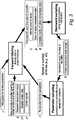
- Figure 4 helps to illustrate possible use of the thermal property data obtained by the method according to the invention. This information can be used to improve temperature control or provide useful feedback to the householder about the management of their house's heating system.
- the overall concept is a feedback loop of measuring temperatures, analysing them, and changing the way heating is managed as a result.
- the outputs of the "thermal parameter learning” block are used to provide useful insight to a consumer, as well as automatically as part of a heating control system.
- the thermal parameter learning block resides on a "home energy management system” consisting of a computer with an ability to store and process data, and optionally interact with a user via a display and input ability (e.g. touchscreen).
- the influence of other weather data could be included equivalently.
- Our thermal learning method provides a way in which a block of data from a house can be processed in order to produce a matched model of the thermal response of the house. This model can then be used to make predictive deductions about the house, for example how temperatures will change in response to particular control signals or energy inputs, and we give some example applications in later sections.
- the method can be applied to any situation where there is a linear house model and a means of inferring the thermal input provided by the heating system, given the history of control signals.
- a storage heater with a variable vent position v can be modelled by the slightly adapted propagation matrix:
- a d ⁇ vr 1 ⁇ r 2 ⁇ r 3 vr 1 r 3 vr 4 ⁇ vr 4 0 r 5 0 ⁇ r 5
- A and thus D also
- A is now non-linear in the effective parameter vector [ r ; v min ] and so our formalism cannot readily be extended to the storage heater scenario.
- Each particle evolves independently, and we record at each time step the weight of each particle, its power decision, and its Kalman mean.
- the covariance is identical across particles (no dependence on B in the maths) so we just need to record this once at each timestep.
- our inductive probability is a combination of the Kalman filter in the presence of a known firing (as above) and a probability of firing (second term) represented by the particle distribution.
- Our particle update step is: P u k
- u k ⁇ 1 which is the same as the standard Kalman filter equations with x k integrated out. This is the key maths: the residual term is from the Kalman step is usually left out, but there is still dependence on B k in this term, which is in turn dependent on u so we need it in this case.
- the output from forward filtering is a power level (0 or 1), weight, and temperature state (mean) for each particle at each moment in time, plus a covariance matrix at each point in time for all particles.
- the weight reflects the importance of that particle.
- Hidden temperature state X n k sampled from multi-dimensional Gaussian specified by scale matrix S n k and mean ⁇ n k ,p , where we have chosen p by sampling a particle (taking account of weights at this time-step).
- the output of the backward sampling is a single sample ⁇ X k ⁇ , ⁇ u k ⁇ (as we have sampled a particular particle at each time step) - and then this can be used exactly as previously for sampling r .
- This invention is applicable where the inferred house model is used as part of a predictive control system for managing temperatures in the house.
- Predictive Temperature Control (as is employed in the methods described in the Huval paper (mentioned above) or PCT Patent Application No. PCT/GB2013/050376 ) requires a linear model of the form produced by the method described in this document, and uses it to calculate the optimum strategy for heating the system over a future time window.
- the model to do this can be produced by simpler methods but our approach provides simpler results and greater applicability - for a slow responding heating system with a heat pump or underfloor heating it would be very hard to infer a house model without sophisticated methods such as we have described here.
- the method is fully automatic and invisible to any human operator.
- the control system starts off using a preset house model, which is updated after measurements come in, and constantly updated (e.g. every night) with new information.
- the updates are not carried out in situations where the information is questionable: e.g. warm periods, missing sensor data.
- Heat pumps are very hard to control and usually need an installer to choose a "heat slope" which effectively represents the installers belief about the level of house insulation.
- Our approach to heat pump control eliminates the need for a heat slope as the control algorithms are automatically aware of the thermal dynamics of the house through the learning process, and we estimate that 10% savings in energy consumption are likely to be possible in practice from this approach.
- Multi-zone properties where heat can be channelled to different sets of rooms independently, can be hard to control as temperatures on one room influence another. With a learned model of these connections, we can allow for these influences in advance and ensure for example that a bedroom does not overheat as a result of heating another room previously.
- Hot water, learning a model of a hot water tank, and measuring hot water demand over the course of a day means that we can optimise production of hot water, for example to not reheat the tank if there will be sufficient left for the evening taking into account cooling and consumption. It also means we can optimise for secondary heat sources such as solar thermal through the use of a weather forecast and knowledge of the impact of irradiation on hot water production via the panels.
- the secondary application of this invention is to use the inferred house model to present useful insight to the householder (or other stakeholder such as a landlord). This would mean that they can take actions to improve the physical heating system, the control set-up, or their behaviour in using it. In some cases this feedback is possible semi-automatically, where the system gives the user a suggestion through an interactive interface, to which they have to simply agree to the change rather than go off and implement it independently - this would be possible for example if the control system itself is also doing the learning and communication, and the recommendation is a change in control setting.
- the model provides a quantitative picture of how the house responds to heat input and external conditions, how much energy is required to achieve certain temperature patterns, how quickly the house loses heat, how different parts of the house and heating system exchange heat with each other: insight can be provided in all of these areas.
- Figure 5 shows the data captured over a data acquisition period.
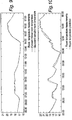
- Figure 6 shows a detail of the room temperature trace with the forward-filtered temperature (solid line, higher) and the backward-filtered temperature (dashed line). The latter can be seen to follow the measurements a lot better: Note that our state X contains hidden variables.
- Figure 7 shows the inferred thermal mass and external wall temperatures: and we also infer the radiator temperature, as shown in Figure 8 : These states can provide additional insight about the house and how it responds to heat and how it can best be controlled.
- the next step is to construct the matrix U and vector ⁇ from the sampled hidden temperature traces and their gradients.
- Figure 9 shows a detail of the room temperature graph with forward-filtered and backward-sampled room temperature measurements, using this updated r .
- the forward filtered trace is now much closer to the measurements, indicating that the model is better (e.g. It naturally produces the right gradient for the heating period, rather than having to be constantly pulled down by the measurements).
- the spreadsheet at the end of the text of this description sets out the data obtained in the process of another worked example. Since the number of samples k of the data acquisition period is large, certain rows are spread over several pages. The rows in question have been denoted by reference numerals 32-50 to enable the pages to be easily cross-referenced to each other.
- n r Number of thermal parameters characterising house model 6 in the examples above n m Number of temperature measurements taken from heating system Usually 1 (room temperature) but may be more (e.g. pipe temperatures) n s Number of temperatures characterising the hidden state x of the house 3 in the examples above n b Number of independent energy inputs to the house model Usually 1, but may be more (e.g. hybrid systems) n f Number of external influences on the house model Usually 1 (external temperature), but may be more (e.g. solar irradiance factor) r Parameter vector ( n r ⁇ 1), list of parameters characterising the thermal properties of the house.
- the purpose of this invention is to infer r.
- Usually most components will be numbers in inverse-time units (e.g. 0.1 per hour), thus representing timescales , but the r param measuring energy input will have different units (e.g. may be degrees per hour).
- y k Measurement vector ( n m ⁇ 1) at time index k (list of temperatures measured from the home) Normally a single number but might include pipe temperatures, so e.g. vector of two temperatures.
- x k Hidden state vector ( n s ⁇ 1) at time k list of temperatures characterising the state of the model house. Three temperatures: the room temperature, the temperature of the water in the heating system, and the temperature of the interior thermal mass of the house.
- H [1 0 0]
- T E,k Measured external influences on the house at time k . Usually just the external temperature, but may also include solar irradiation, cloud cover, etc.
- P k Measured information about the control signals to the house's heating systems at time k. Usually of size ( n b x 1). could be the boiler request signal (0 or 1).
- E. ⁇ k Inferred mean ( n s ⁇ 1) of the probability distribution of the hidden state x k See x k S k Inferred scale matrix n s ⁇ n s (i.e. inverse of the covariance matrix) of the probability distribution of the hidden state x k .
- B d to influence the house state.
- actual firing of the boiler could be (inferred) actual firing of the boiler (so would be zero when the request signal is 1, because the boiler is maintaining maximum temperature), i.e. 0 or 1 for gas flame off or on.
- X k Sampled value of the hidden state vector ( n s ⁇ 1) at time k, list of temperatures characterising the state of the model house. As for x k . The difference is that X k represents a single sampled value after the backwards-sampling step, rather than a random variable.
- D k Matrix n s ⁇ n r representing the linear relationship between the r parameter vector and the gradient in the hidden state vector x . See Eqns 8 and 9 U Inferred scale matrix n r ⁇ n r (i.e. inverse of the covariance matrix) of the likelihood probability distribution of r from the backward-sampled state vectors over the time period. See worked example.
- m i Gamma shape parameter for the prior of the ith r param see Eqn 10
- i is 1 to n r 2 to 4
- ⁇ i Gamma scale parameter for the prior of the ith r param see Eqn 10
- i is 1 to n r Typical value (e.g. inverse-time constant) for that r param.
- v Mode of the posterior distribution of r vector of size n r ⁇ 1. Similar to r.
Landscapes
- Engineering & Computer Science (AREA)
- Physics & Mathematics (AREA)
- General Engineering & Computer Science (AREA)
- Mechanical Engineering (AREA)
- Combustion & Propulsion (AREA)
- Chemical & Material Sciences (AREA)
- Mathematical Physics (AREA)
- General Physics & Mathematics (AREA)
- Signal Processing (AREA)
- Fuzzy Systems (AREA)
- Theoretical Computer Science (AREA)
- Automation & Control Theory (AREA)
- Health & Medical Sciences (AREA)
- Mathematical Optimization (AREA)
- Computational Mathematics (AREA)
- Software Systems (AREA)
- Data Mining & Analysis (AREA)
- Pure & Applied Mathematics (AREA)
- Mathematical Analysis (AREA)
- Biomedical Technology (AREA)
- Computing Systems (AREA)
- Algebra (AREA)
- Artificial Intelligence (AREA)
- Evolutionary Computation (AREA)
- Computer Vision & Pattern Recognition (AREA)
- Medical Informatics (AREA)
- Databases & Information Systems (AREA)
- Probability & Statistics with Applications (AREA)
- Thermal Sciences (AREA)
- Air Conditioning Control Device (AREA)
Claims (16)
- Verfahren zum Erlangen von Daten zu thermischen Eigenschaften über thermische Eigenschaften eines temperaturgesteuerten System, welches ein Temperaturregelgerät einschließt, wobei sich die Daten zur Vorhersage der Temperatur von zumindest einem Teil des Systems eignen, wobei das Verfahren folgende Schritte umfasst:(a) Überwachen der Temperatur von zumindest einem Teil des Systems über eine Reihenfolge von Abschnitten oder Punkten einer Datenerfassungsperiode und Aufzeichnen der Temperatur für jeden Abschnitt oder Punkt in einem elektronischen Speicher;(b) Ermitteln von Wärmeübertragungsdaten, die auf die Menge von Wärmeenergie hinweisen, die vom Temperaturregelgerät über die Erfassungsperiode dem Teil des Systems geliefert oder von diesem entfernt wurde;
und dadurch gekennzeichnet, dass das Verfahren ferner einschließt(c) Ermitteln der Daten zu thermischen Eigenschaften anhand der aufgezeichneten Temperaturen und der Wärmeübertragungsdaten durch einen Prozess statistischer Inferenz, umfassend:(d) Abtasten eines Satzes möglicher Daten zu thermischen Eigenschaften;(e) Ermitteln eines Likelihood-Wertes, der auf die Wahrscheinlichkeit hinweist, dass der abgetastete Satz möglicher Daten zu thermischen Eigenschaften konsistent mit den aufgezeichneten Temperaturen und den Wärmeübertragungsdaten ist; und(f) Wiederholen der Schritte (d) und (e) für andere Proben zu möglichen Daten thermischer Eigenschaften. - Verfahren nach Anspruch 1, bei dem die Daten zu thermischen Eigenschaften zur Steuerung des Temperaturregelgeräts verwendet werden, indem sie in ein thermisches Modell für das temperaturgesteuerte System gespeist werden, aus dem die Energiebedürfnisse, die für das Temperaturregelgerät nötig sind, um eine gewünschte Temperatur des temperaturgesteuerten Systems zu erzielen, erwartet werden können und sich diese Daten beim Bestimmen eines Arbeitsplans für das Temperaturregelgerät benutzen lassen.
- Verfahren nach irgendeinem der vorhergehenden Ansprüche, bei dem das temperaturgesteuerte System zumindest einen Raum, zum Beispiel in einem Wohnhaus oder einem Büro in einem Büroblock umfasst, wobei das Temperaturregelgerät ein Heiz- und/oder Kühlsystem für den Raum umfasst.
- Verfahren nach irgendeinem der vorhergehenden Ansprüche, bei dem die thermischen Eigenschaften, bezüglich deren die Daten zu thermischen Eigenschaften erlangt werden, zwei beliebige oder mehr der Wärmekapazitäten und Wärmeübertragungseigenschaften des Raums oder des Heiz- und/oder Kühlsystems, die Wärmeübertragungseigenschaften wie zwischen dem Raum und der Umgebung außerhalb des Raums oder eine arithmetische Kombination oder Funktion der Kapazitäten und Wärmeübertragungseigenschaften umfassen.
- Verfahren nach Anspruch 3, bei dem die thermischen Eigenschaften ferner die Heizkapazität und Wärmeübertragungseigenschaften der thermischen Masse des Raums oder eine Funktion der Eigenschaften oder arithmetische Kombination der Eigenschaften mit einer oder mehreren der anderen thermischen Eigenschaften umfassen.
- Verfahren nach Anspruch 5, bei dem die thermischen Eigenschaften die thermische Kapazität des Heiz- und/oder Kühlsystems umfassen, mit der Wärmeenergie kombiniert wird, die dem Raum zugeführt oder aus diesem entfernt wird.
- Verfahren nach irgendeinem der vorhergehenden Ansprüche, bei dem der Prozess statistischer Inferenz ein Prozess von bayesianischer Inferenz ist.
- Verfahren nach irgendeinem der vorhergehenden Ansprüche, bei dem der Prozess statistischer Inferenz ein Vorwärtsfilterungs-Rückwärtsabtastprozess ist.
- Verfahren nach irgendeinem der vorhergehenden Ansprüche, bei dem Schritt (b) Überwachungssteuersignale zum Temperaturregelgerät und Berechnen oder Schätzen der Daten für Wärmezufuhr -abfuhr anhand der durch Überwachung erlangten Daten umfasst.
- Verfahren nach Anspruch 9, bei dem das Temperaturregelgerät im Raum befindliche Wärme mittels eines umlaufenden Wärmeübertragungsmediums überträgt, wobei das Ermitteln von Daten für Wärmezufuhr-/abfuhr zusätzlich das Ermitteln der Temperatur(en) des Übertragungsmediums am Ausgang des Temperaturregelgeräts, durch einen Prozess statistischer Inferenz, umfasst.
- Bewertungsgerät, das angepasst ist, ein Verfahren in Übereinstimmung mit irgendwelchen der vorhergehenden Ansprüche durchzuführen.
- Bewertungsgerät zum Erlangen von Daten zu thermischen Eigenschaften über thermische Eigenschaften eines temperaturgesteuerten Systems, welches ein Temperaturregelgerät einschließt, wobei sich die Daten zur Vorhersage der Temperatur von zumindest einem Teil des Systems eignen, wobei das Bewertungsgerät zumindest einen Temperatursensor (4) zum Überwachen der Temperatur des zumindest einen Teils des Systems über eine Reihenfolge von Abschnitten oder Punkten einer Datenerfassungsperiode, einen elektronischen Speicher zum Speichern der Temperaturen für jeden Punkt oder Abschnitt, eine Datenprozessoranordnung zum Schätzen von Wärmeübertragungsdaten umfasst, die auf die Menge von Wärmeenergie hinweisen, die dem Teil des Systems durch das Temperaturregelgerät während der Periode zugeführt oder von diesem abgeführt wurde, und um die Daten für thermische Eigenschaften anhand der aufgezeichneten Temperaturen und der Wärmeübertragungsdaten zu bestimmen, und dadurch gekennzeichnet, dass die Datenprozessoranordnung betriebsfähig ist, die Daten zur thermischen Eigenschaften durch einen Prozess statistischer Inferenz zu bestimmen, umfassend:(a) Abtasten eines Satzes möglicher Daten zu thermischen Eigenschaften;(b) Ermitteln eines Likelihood-Wertes, der auf die Wahrscheinlichkeit hinweist, dass der abgetastete Satz möglicher Daten zu thermischen Eigenschaften konsistent mit den aufgezeichneten Temperaturen und Wärmeübertragungsdaten ist; und(c) Wiederholen der Schritte (a) und (b) für andere Proben zu möglichen Daten thermischer Eigenschaften.
- Steuergerät (8) für ein Temperaturmanagementsystem zum Heizen und/oder Kühlen eines Raums, das einen Ausgang für Steuersignale an das Temperaturmanagementsystem und Bewertungsgerät in Übereinstimmung mit Anspruch 12 umfasst, wobei der elektronische Speicher eingerichtet ist, außerdem die Daten zu thermischen Eigenschaften zu speichern, und die Datenprozessoranordnung außerdem betriebsfähig ist, für jeden Abschnitt einer Steuerungsperiode, die Wärmeenergie zu berechnen, die vom Heiz- und/oder Kühlsystem für die Temperatur im Raum zu übertragen ist, um eine gegebene Bedingung über die Steuerungsperiode zu erfüllen.
- Steuergerät (8) nach Anspruch 13, bei dem die gegebene Bedingung ist, dass die Summe der Kosten für die Lieferung von Energie zum Heiz-/Kühlsystem und ein Parameter, der repräsentativ für eine vorbestimmte Akzeptanz von Abweichungen von einer eingestellten Leiterplatten-Temperatur minimiert wird.
- Temperaturregelgerät mit einem Steuergerät (8), in Übereinstimmung mit Anspruch 13 oder Anspruch 14, bei dem das Temperaturregelgerät eine Wärmepumpe oder einen Wärmespeicher umfasst.
- Verfahren nach irgendeinem der Ansprüche 1 bis 10, bei dem der Schritt vorgesehen ist, die Daten zu thermischen Eigenschaften oder daraus abgeleitete Daten anzuzeigen, wobei die angezeigten Daten dazu dienen, die effektive Steuerung des Temperaturregelgeräts seitens des Benutzers zu erleichtern.
Applications Claiming Priority (2)
| Application Number | Priority Date | Filing Date | Title |
|---|---|---|---|
| GB1320134.8A GB2520293B (en) | 2013-11-14 | 2013-11-14 | Improvements in and relating to temperature controlled systems |
| PCT/GB2014/053345 WO2015071654A1 (en) | 2013-11-14 | 2014-11-11 | Improvements in and relating to temperature controlled systems |
Publications (2)
| Publication Number | Publication Date |
|---|---|
| EP3069205A1 EP3069205A1 (de) | 2016-09-21 |
| EP3069205B1 true EP3069205B1 (de) | 2021-01-06 |
Family
ID=49883630
Family Applications (1)
| Application Number | Title | Priority Date | Filing Date |
|---|---|---|---|
| EP14799853.8A Active EP3069205B1 (de) | 2013-11-14 | 2014-11-11 | Verfahren und vorrichtung zur ermittlung von daten bezüglich thermischer eigenschaften |
Country Status (5)
| Country | Link |
|---|---|
| US (1) | US10353983B2 (de) |
| EP (1) | EP3069205B1 (de) |
| DK (1) | DK3069205T3 (de) |
| GB (1) | GB2520293B (de) |
| WO (1) | WO2015071654A1 (de) |
Families Citing this family (55)
| Publication number | Priority date | Publication date | Assignee | Title |
|---|---|---|---|---|
| US10871756B2 (en) * | 2014-08-26 | 2020-12-22 | Johnson Solid State, Llc | Temperature control system and methods for operating same |
| US10317862B2 (en) | 2015-02-06 | 2019-06-11 | Johnson Controls Technology Company | Systems and methods for heat rise compensation |
| US10082308B2 (en) | 2015-02-06 | 2018-09-25 | Johnson Controls Technology Company | Thermostat with heat rise compensation based on wireless data transmission |
| US11493220B2 (en) | 2015-02-06 | 2022-11-08 | Johnson Controls Technology Company | Systems and methods for heat rise compensation |
| US10274971B2 (en) * | 2015-05-12 | 2019-04-30 | Moen Incorporated | Systems and methods of temperature control of downstream fluids using predictive algorithms |
| WO2016194397A1 (ja) * | 2015-06-03 | 2016-12-08 | 三菱電機株式会社 | 温水暖房システム、制御装置および制御方法 |
| GB201513012D0 (en) * | 2015-06-11 | 2015-09-09 | Eaton Industires Austria Gmbh | Method for the detection of an open ventilation opening |
| US10041695B2 (en) * | 2015-10-13 | 2018-08-07 | Utopus Insights, Inc. | Scheduling for air conditioners and other appliances |
| US9939162B2 (en) * | 2015-11-13 | 2018-04-10 | Honeywell International Inc. | HVAC boiler controller |
| US10267951B2 (en) | 2016-05-12 | 2019-04-23 | The Climate Corporation | Statistical blending of weather data sets |
| KR102725312B1 (ko) * | 2016-10-31 | 2024-11-04 | 주식회사 테그웨이 | 피드백 디바이스 및 이를 이용하는 열적 피드백 제공 방법 |
| US10465945B2 (en) * | 2016-11-18 | 2019-11-05 | A. O. Smith Corporation | System and method for determining an abnormal condition of a water heater |
| US11009898B2 (en) * | 2016-12-23 | 2021-05-18 | Marc Zuluaga | Thermal energy usage metering system for steam-heated multiple unit building |
| US11900287B2 (en) | 2017-05-25 | 2024-02-13 | Johnson Controls Tyco IP Holdings LLP | Model predictive maintenance system with budgetary constraints |
| EP3242182B1 (de) | 2017-02-14 | 2022-06-29 | Grundfos Holding A/S | Verfahren zur durchführung einer steuerung in bezug auf eine aussentemperatur sowie entsprechender server. |
| US11675322B2 (en) | 2017-04-25 | 2023-06-13 | Johnson Controls Technology Company | Predictive building control system with discomfort threshold adjustment |
| US11371739B2 (en) | 2017-04-25 | 2022-06-28 | Johnson Controls Technology Company | Predictive building control system with neural network based comfort prediction |
| US10146237B2 (en) | 2017-04-28 | 2018-12-04 | Johnson Controls Technology Company | Smart thermostat with model predictive control |
| US11274849B2 (en) | 2017-04-28 | 2022-03-15 | Johnson Controls Tyco IP Holdings LLP | Smart thermostat with model predictive control and demand response integration |
| US11747800B2 (en) | 2017-05-25 | 2023-09-05 | Johnson Controls Tyco IP Holdings LLP | Model predictive maintenance system with automatic service work order generation |
| US11409274B2 (en) | 2017-05-25 | 2022-08-09 | Johnson Controls Tyco IP Holdings LLP | Model predictive maintenance system for performing maintenance as soon as economically viable |
| US11120411B2 (en) | 2017-05-25 | 2021-09-14 | Johnson Controls Tyco IP Holdings LLP | Model predictive maintenance system with incentive incorporation |
| US11416955B2 (en) | 2017-05-25 | 2022-08-16 | Johnson Controls Tyco IP Holdings LLP | Model predictive maintenance system with integrated measurement and verification functionality |
| US12282324B2 (en) | 2017-05-25 | 2025-04-22 | Tyco Fire & Security Gmbh | Model predictive maintenance system with degradation impact model |
| US11636429B2 (en) | 2017-05-25 | 2023-04-25 | Johnson Controls Tyco IP Holdings LLP | Model predictive maintenance systems and methods with automatic parts resupply |
| WO2018217251A1 (en) | 2017-05-25 | 2018-11-29 | Johnson Controls Technology Company | Model predictive maintenance system for building equipment |
| US12242259B2 (en) | 2017-05-25 | 2025-03-04 | Tyco Fire & Security Gmbh | Model predictive maintenance system with event or condition based performance |
| ES2696424A1 (es) * | 2017-07-13 | 2019-01-15 | Green Momit S L | Metodo para el calculo del consumo energetico para acondicionar termicamente una edificacion |
| CA3070670C (en) * | 2017-07-24 | 2022-08-09 | Grid4C | A method and system for automatic detection of inefficient household thermal insulation |
| US12000608B2 (en) * | 2017-07-27 | 2024-06-04 | Tyco Fire & Security Gmbh | Central plant control system with setpoints modification based on physical constraints |
| JP2019039575A (ja) * | 2017-08-22 | 2019-03-14 | シャープ株式会社 | 空気調和システム |
| CN107783941B (zh) * | 2017-09-26 | 2020-09-29 | 国网浙江省电力公司杭州供电公司 | 一种基于谷电价格变化的太阳能补偿型电锅炉供热控制方法 |
| US11480356B2 (en) | 2017-12-11 | 2022-10-25 | Johnson Controls Tyco IP Holdings LLP | Thermostat with startup temperature estimation |
| JP6943826B2 (ja) | 2018-09-28 | 2021-10-06 | 三菱パワー株式会社 | 熱機器の内部状態推定方法及び装置 |
| JP7108185B2 (ja) * | 2018-11-22 | 2022-07-28 | 富士通株式会社 | 最適化装置および最適化装置の制御方法 |
| CN110068117B (zh) * | 2019-04-18 | 2020-09-22 | 广州亚禾电子科技有限公司 | 一种空调性能持续监测系统及方法 |
| US10995688B2 (en) * | 2019-06-04 | 2021-05-04 | GM Global Technology Operations LLC | Method and system for determining thermal state |
| CN110347971B (zh) * | 2019-07-18 | 2023-04-07 | 深圳大学 | 基于tsk模糊模型的粒子滤波方法、装置及存储介质 |
| US11480360B2 (en) * | 2019-08-06 | 2022-10-25 | Johnson Controls Tyco IP Holdings LLP | Building HVAC system with modular cascaded model |
| CN111523210B (zh) * | 2020-04-10 | 2023-05-16 | 浙江英集动力科技有限公司 | 城市集中供热系统升降温过程预测分析方法及其系统 |
| CN112396127B (zh) * | 2020-12-04 | 2024-06-11 | 东软睿驰汽车技术(沈阳)有限公司 | 一种车辆零部件选型方法、装置及相关产品 |
| CN113050729A (zh) * | 2021-02-22 | 2021-06-29 | 青岛海尔生物医疗股份有限公司 | 用于实验室环境调节的方法、装置和实验室 |
| CN112984617B (zh) * | 2021-03-17 | 2024-06-28 | 瑞纳智能设备股份有限公司 | 一种基于人工智能的恒定供暖二网供温一网温控阀开度调节方法 |
| CN112963284B (zh) * | 2021-03-19 | 2022-05-20 | 中国第一汽车股份有限公司 | 一种发动机控制系统及发动机控制方法 |
| CN113237050B (zh) * | 2021-05-14 | 2022-09-16 | 西安热工研究院有限公司 | 一种基于数据模型高压加热器自动暖管系统及方法 |
| GB2607639B (en) | 2021-07-21 | 2024-07-03 | Passiv Uk Ltd | A system for controlling energy supply and/or consumption from an energy network |
| CN114165825B (zh) * | 2021-11-26 | 2023-03-31 | 南京国之鑫科技有限公司 | 一种换热站供热调控系统及方法 |
| WO2023104980A1 (en) * | 2021-12-08 | 2023-06-15 | Belimo Holding Ag | Determination of a temperature in a hvac system |
| CN114704873A (zh) * | 2022-01-25 | 2022-07-05 | 河海大学 | 一种建筑适应性供暖方法 |
| GB2616257A (en) | 2022-02-25 | 2023-09-06 | Passiv Uk Ltd | A temperature management system |
| DE102022117671A1 (de) * | 2022-07-14 | 2024-01-25 | Viessmann Climate Solutions Se | Verfahren zur Betriebszustandsüberwachung eines Heizungssystems, Verfahren zum Steuern eines Heizungssystems und Heizungssystem |
| CN115081247B (zh) * | 2022-07-19 | 2023-04-07 | 河北农业大学 | 一种基于贝叶斯网络的热力系统可靠性评估方法 |
| CN118856525B (zh) * | 2024-07-08 | 2024-12-27 | 山东灿铭精工科技有限公司 | 一种基于物联网的空调智能化节能控制方法、设备及系统 |
| CN120650774B (zh) * | 2025-06-30 | 2026-02-27 | 安阳益和热力集团有限公司 | 一种热力管道的室内温度实时调控方法及其控制系统 |
| CN120993994B (zh) * | 2025-10-17 | 2026-01-30 | 铭科智能装备科技(南通)有限公司 | 一种基于数字孪生的模具温度场协同调控方法 |
Family Cites Families (12)
| Publication number | Priority date | Publication date | Assignee | Title |
|---|---|---|---|---|
| US5197666A (en) * | 1991-03-18 | 1993-03-30 | Wedekind Gilbert L | Method and apparatus for estimation of thermal parameter for climate control |
| WO2008036878A2 (en) * | 2006-09-21 | 2008-03-27 | Kassel Edward A | An energy efficient method of monitoring and controlling an hvac system |
| DE602007000217D1 (de) | 2007-02-08 | 2008-12-11 | Nordiq Goeteborg Ab | Heizsystemsteuerung auf der Basis der erforderlichen Heizleistung |
| KR100820650B1 (ko) | 2007-03-15 | 2008-04-08 | 주식회사 경동네트웍 | 난방장치 제어방법 |
| GB2448896B (en) * | 2007-05-02 | 2009-05-20 | Univ Montfort | Energy management system |
| CN102934036B (zh) * | 2010-02-15 | 2016-04-27 | 开利公司 | 用于估计温度受控空间内的参数和状态的基于模型的系统和方法 |
| EP3800407A1 (de) * | 2010-03-15 | 2021-04-07 | Klatu Networks, Inc. | Verfahren zur überwachung, beeinflussung des status und optimierung der effizienz von kühlsystemen und entsprechendes system |
| JP5577931B2 (ja) * | 2010-08-06 | 2014-08-27 | ソニー株式会社 | 画像処理装置、画像処理方法およびプログラム |
| US8606374B2 (en) * | 2010-09-14 | 2013-12-10 | Nest Labs, Inc. | Thermodynamic modeling for enclosures |
| GB201111538D0 (en) * | 2011-07-06 | 2011-08-17 | Passivsystems Ltd | Apparatus and methods for monitoring and analysing the performance of a heating or cooling system |
| US8843238B2 (en) * | 2011-09-30 | 2014-09-23 | Johnson Controls Technology Company | Systems and methods for controlling energy use in a building management system using energy budgets |
| GB201208519D0 (en) | 2012-05-15 | 2012-06-27 | Passivsystems Ltd | Predictive temperature management system controller |
-
2013
- 2013-11-14 GB GB1320134.8A patent/GB2520293B/en active Active
-
2014
- 2014-11-11 WO PCT/GB2014/053345 patent/WO2015071654A1/en not_active Ceased
- 2014-11-11 US US15/036,702 patent/US10353983B2/en not_active Expired - Fee Related
- 2014-11-11 EP EP14799853.8A patent/EP3069205B1/de active Active
- 2014-11-11 DK DK14799853.8T patent/DK3069205T3/da active
Non-Patent Citations (1)
| Title |
|---|
| None * |
Also Published As
| Publication number | Publication date |
|---|---|
| US20160356515A1 (en) | 2016-12-08 |
| WO2015071654A1 (en) | 2015-05-21 |
| US10353983B2 (en) | 2019-07-16 |
| GB2520293B (en) | 2018-02-07 |
| EP3069205A1 (de) | 2016-09-21 |
| GB201320134D0 (en) | 2014-01-01 |
| GB2520293A (en) | 2015-05-20 |
| DK3069205T3 (da) | 2021-03-15 |
Similar Documents
| Publication | Publication Date | Title |
|---|---|---|
| US10353983B2 (en) | Temperature controlled systems | |
| De Coninck et al. | Practical implementation and evaluation of model predictive control for an office building in Brussels | |
| Harb et al. | Development and validation of grey-box models for forecasting the thermal response of occupied buildings | |
| US10378805B2 (en) | Model predictive control for heat transfer to fluids | |
| US11859838B2 (en) | System and method for aligning HVAC consumption with renewable power production with the aid of a digital computer | |
| Gupta et al. | Collaborative energy and thermal comfort management through distributed consensus algorithms | |
| Maasoumy et al. | Selecting building predictive control based on model uncertainty | |
| Lee et al. | Simplified data-driven models for model predictive control of residential buildings | |
| WO2013171448A1 (en) | Predictive temperature management system controller | |
| Kontes et al. | Intelligent BEMS design using detailed thermal simulation models and surrogate-based stochastic optimization | |
| US12169072B2 (en) | Predictive control for domestic heating system | |
| US12410936B2 (en) | Indoor-temperature estimation apparatus, non-transitory computer-readable medium, and indoor-temperature estimation method | |
| CN113887832B (zh) | 楼宇负荷预测方法、装置、设备及介质 | |
| Wang et al. | An environment-adaptive SAC-based HVAC control of single-zone residential and office buildings | |
| Mohebi et al. | Comparing different parameter identification techniques for optimal control of building energy systems | |
| EP3839359B1 (de) | Überwachung und steuerung der warmwasserproduktion und -verteilung für haushalte | |
| Biyik et al. | Model predictive building thermostatic controls of small-to-medium commercial buildings for optimal peak load reduction incorporating dynamic human comfort models: Algorithm and implementation | |
| Mulayim et al. | Leveraging Grey Box Models for Enhanced Energy Flexibility in Centralized and Decentralized Single-Zone Multi-Node Systems | |
| Kummert et al. | Comparing control strategies using experimental and simulation results: Methodology and application to heating control of passive solar buildings | |
| Liu | Exploration of Intelligent HVAC Operation Strategies for Office Buildings | |
| Fontenot et al. | Thermal discomfort prediction with sparse residential thermostat dataset | |
| Abtahi et al. | Archetype building energy models for residential sector: Importance of uncontrolled inputs in predictive control and energy flexibility | |
| Koosha et al. | An Uncertainty and Sensitivity Analysis Tool for Building Thermal Energy Consumption: A Performance Comprehension of Static and Dynamic Response Analyses | |
| Atabay et al. | Self-adapting building models and optimized HVAC scheduling for demand side management | |
| CN119249662B (zh) | 供热管网模型的优化方法、装置、设备及程序产品 |
Legal Events
| Date | Code | Title | Description |
|---|---|---|---|
| PUAI | Public reference made under article 153(3) epc to a published international application that has entered the european phase |
Free format text: ORIGINAL CODE: 0009012 |
|
| 17P | Request for examination filed |
Effective date: 20160610 |
|
| AK | Designated contracting states |
Kind code of ref document: A1 Designated state(s): AL AT BE BG CH CY CZ DE DK EE ES FI FR GB GR HR HU IE IS IT LI LT LU LV MC MK MT NL NO PL PT RO RS SE SI SK SM TR |
|
| AX | Request for extension of the european patent |
Extension state: BA ME |
|
| DAX | Request for extension of the european patent (deleted) | ||
| STAA | Information on the status of an ep patent application or granted ep patent |
Free format text: STATUS: EXAMINATION IS IN PROGRESS |
|
| 17Q | First examination report despatched |
Effective date: 20190613 |
|
| RAP1 | Party data changed (applicant data changed or rights of an application transferred) |
Owner name: PASSIVSYSTEMS LIMITED |
|
| REG | Reference to a national code |
Ref country code: DE Ref legal event code: R079 Ref document number: 602014074024 Country of ref document: DE Free format text: PREVIOUS MAIN CLASS: G05D0023190000 Ipc: F24F0011300000 |
|
| GRAP | Despatch of communication of intention to grant a patent |
Free format text: ORIGINAL CODE: EPIDOSNIGR1 |
|
| STAA | Information on the status of an ep patent application or granted ep patent |
Free format text: STATUS: GRANT OF PATENT IS INTENDED |
|
| RIC1 | Information provided on ipc code assigned before grant |
Ipc: G05D 23/19 20060101ALI20200730BHEP Ipc: F24F 110/10 20180101ALI20200730BHEP Ipc: F24F 11/30 20180101AFI20200730BHEP Ipc: F24F 11/62 20180101ALI20200730BHEP Ipc: F24F 140/60 20180101ALI20200730BHEP Ipc: F24F 140/50 20180101ALI20200730BHEP |
|
| INTG | Intention to grant announced |
Effective date: 20200824 |
|
| RIN1 | Information on inventor provided before grant (corrected) |
Inventor name: CARTER, EDWIN |
|
| RBV | Designated contracting states (corrected) |
Designated state(s): AL AT BE BG CH CY CZ DE DK EE ES FI FR GR HR HU IE IS IT LI LT LU LV MC MK MT NL NO PL PT RO RS SE SI SK SM TR |
|
| GRAS | Grant fee paid |
Free format text: ORIGINAL CODE: EPIDOSNIGR3 |
|
| GRAA | (expected) grant |
Free format text: ORIGINAL CODE: 0009210 |
|
| STAA | Information on the status of an ep patent application or granted ep patent |
Free format text: STATUS: THE PATENT HAS BEEN GRANTED |
|
| AK | Designated contracting states |
Kind code of ref document: B1 Designated state(s): AL AT BE BG CH CY CZ DE DK EE ES FI FR GR HR HU IE IS IT LI LT LU LV MC MK MT NL NO PL PT RO RS SE SI SK SM TR |
|
| REG | Reference to a national code |
Ref country code: AT Ref legal event code: REF Ref document number: 1352780 Country of ref document: AT Kind code of ref document: T Effective date: 20210115 Ref country code: CH Ref legal event code: EP |
|
| REG | Reference to a national code |
Ref country code: DE Ref legal event code: R096 Ref document number: 602014074024 Country of ref document: DE |
|
| REG | Reference to a national code |
Ref country code: IE Ref legal event code: FG4D |
|
| REG | Reference to a national code |
Ref country code: DK Ref legal event code: T3 Effective date: 20210310 |
|
| REG | Reference to a national code |
Ref country code: NL Ref legal event code: FP |
|
| REG | Reference to a national code |
Ref country code: AT Ref legal event code: MK05 Ref document number: 1352780 Country of ref document: AT Kind code of ref document: T Effective date: 20210106 |
|
| REG | Reference to a national code |
Ref country code: LT Ref legal event code: MG9D |
|
| PG25 | Lapsed in a contracting state [announced via postgrant information from national office to epo] |
Ref country code: HR Free format text: LAPSE BECAUSE OF FAILURE TO SUBMIT A TRANSLATION OF THE DESCRIPTION OR TO PAY THE FEE WITHIN THE PRESCRIBED TIME-LIMIT Effective date: 20210106 Ref country code: FI Free format text: LAPSE BECAUSE OF FAILURE TO SUBMIT A TRANSLATION OF THE DESCRIPTION OR TO PAY THE FEE WITHIN THE PRESCRIBED TIME-LIMIT Effective date: 20210106 Ref country code: GR Free format text: LAPSE BECAUSE OF FAILURE TO SUBMIT A TRANSLATION OF THE DESCRIPTION OR TO PAY THE FEE WITHIN THE PRESCRIBED TIME-LIMIT Effective date: 20210407 Ref country code: PT Free format text: LAPSE BECAUSE OF FAILURE TO SUBMIT A TRANSLATION OF THE DESCRIPTION OR TO PAY THE FEE WITHIN THE PRESCRIBED TIME-LIMIT Effective date: 20210506 Ref country code: LT Free format text: LAPSE BECAUSE OF FAILURE TO SUBMIT A TRANSLATION OF THE DESCRIPTION OR TO PAY THE FEE WITHIN THE PRESCRIBED TIME-LIMIT Effective date: 20210106 Ref country code: BG Free format text: LAPSE BECAUSE OF FAILURE TO SUBMIT A TRANSLATION OF THE DESCRIPTION OR TO PAY THE FEE WITHIN THE PRESCRIBED TIME-LIMIT Effective date: 20210406 Ref country code: NO Free format text: LAPSE BECAUSE OF FAILURE TO SUBMIT A TRANSLATION OF THE DESCRIPTION OR TO PAY THE FEE WITHIN THE PRESCRIBED TIME-LIMIT Effective date: 20210406 |
|
| PG25 | Lapsed in a contracting state [announced via postgrant information from national office to epo] |
Ref country code: SE Free format text: LAPSE BECAUSE OF FAILURE TO SUBMIT A TRANSLATION OF THE DESCRIPTION OR TO PAY THE FEE WITHIN THE PRESCRIBED TIME-LIMIT Effective date: 20210106 Ref country code: AT Free format text: LAPSE BECAUSE OF FAILURE TO SUBMIT A TRANSLATION OF THE DESCRIPTION OR TO PAY THE FEE WITHIN THE PRESCRIBED TIME-LIMIT Effective date: 20210106 Ref country code: RS Free format text: LAPSE BECAUSE OF FAILURE TO SUBMIT A TRANSLATION OF THE DESCRIPTION OR TO PAY THE FEE WITHIN THE PRESCRIBED TIME-LIMIT Effective date: 20210106 Ref country code: PL Free format text: LAPSE BECAUSE OF FAILURE TO SUBMIT A TRANSLATION OF THE DESCRIPTION OR TO PAY THE FEE WITHIN THE PRESCRIBED TIME-LIMIT Effective date: 20210106 Ref country code: LV Free format text: LAPSE BECAUSE OF FAILURE TO SUBMIT A TRANSLATION OF THE DESCRIPTION OR TO PAY THE FEE WITHIN THE PRESCRIBED TIME-LIMIT Effective date: 20210106 |
|
| PG25 | Lapsed in a contracting state [announced via postgrant information from national office to epo] |
Ref country code: IS Free format text: LAPSE BECAUSE OF FAILURE TO SUBMIT A TRANSLATION OF THE DESCRIPTION OR TO PAY THE FEE WITHIN THE PRESCRIBED TIME-LIMIT Effective date: 20210506 |
|
| REG | Reference to a national code |
Ref country code: DE Ref legal event code: R097 Ref document number: 602014074024 Country of ref document: DE |
|
| PG25 | Lapsed in a contracting state [announced via postgrant information from national office to epo] |
Ref country code: EE Free format text: LAPSE BECAUSE OF FAILURE TO SUBMIT A TRANSLATION OF THE DESCRIPTION OR TO PAY THE FEE WITHIN THE PRESCRIBED TIME-LIMIT Effective date: 20210106 Ref country code: CZ Free format text: LAPSE BECAUSE OF FAILURE TO SUBMIT A TRANSLATION OF THE DESCRIPTION OR TO PAY THE FEE WITHIN THE PRESCRIBED TIME-LIMIT Effective date: 20210106 Ref country code: SM Free format text: LAPSE BECAUSE OF FAILURE TO SUBMIT A TRANSLATION OF THE DESCRIPTION OR TO PAY THE FEE WITHIN THE PRESCRIBED TIME-LIMIT Effective date: 20210106 |
|
| PLBE | No opposition filed within time limit |
Free format text: ORIGINAL CODE: 0009261 |
|
| STAA | Information on the status of an ep patent application or granted ep patent |
Free format text: STATUS: NO OPPOSITION FILED WITHIN TIME LIMIT |
|
| PG25 | Lapsed in a contracting state [announced via postgrant information from national office to epo] |
Ref country code: ES Free format text: LAPSE BECAUSE OF FAILURE TO SUBMIT A TRANSLATION OF THE DESCRIPTION OR TO PAY THE FEE WITHIN THE PRESCRIBED TIME-LIMIT Effective date: 20210106 Ref country code: RO Free format text: LAPSE BECAUSE OF FAILURE TO SUBMIT A TRANSLATION OF THE DESCRIPTION OR TO PAY THE FEE WITHIN THE PRESCRIBED TIME-LIMIT Effective date: 20210106 Ref country code: SK Free format text: LAPSE BECAUSE OF FAILURE TO SUBMIT A TRANSLATION OF THE DESCRIPTION OR TO PAY THE FEE WITHIN THE PRESCRIBED TIME-LIMIT Effective date: 20210106 |
|
| 26N | No opposition filed |
Effective date: 20211007 |
|
| PG25 | Lapsed in a contracting state [announced via postgrant information from national office to epo] |
Ref country code: AL Free format text: LAPSE BECAUSE OF FAILURE TO SUBMIT A TRANSLATION OF THE DESCRIPTION OR TO PAY THE FEE WITHIN THE PRESCRIBED TIME-LIMIT Effective date: 20210106 |
|
| PG25 | Lapsed in a contracting state [announced via postgrant information from national office to epo] |
Ref country code: SI Free format text: LAPSE BECAUSE OF FAILURE TO SUBMIT A TRANSLATION OF THE DESCRIPTION OR TO PAY THE FEE WITHIN THE PRESCRIBED TIME-LIMIT Effective date: 20210106 |
|
| PG25 | Lapsed in a contracting state [announced via postgrant information from national office to epo] |
Ref country code: IT Free format text: LAPSE BECAUSE OF FAILURE TO SUBMIT A TRANSLATION OF THE DESCRIPTION OR TO PAY THE FEE WITHIN THE PRESCRIBED TIME-LIMIT Effective date: 20210106 |
|
| PG25 | Lapsed in a contracting state [announced via postgrant information from national office to epo] |
Ref country code: IS Free format text: LAPSE BECAUSE OF FAILURE TO SUBMIT A TRANSLATION OF THE DESCRIPTION OR TO PAY THE FEE WITHIN THE PRESCRIBED TIME-LIMIT Effective date: 20210506 |
|
| PG25 | Lapsed in a contracting state [announced via postgrant information from national office to epo] |
Ref country code: MC Free format text: LAPSE BECAUSE OF FAILURE TO SUBMIT A TRANSLATION OF THE DESCRIPTION OR TO PAY THE FEE WITHIN THE PRESCRIBED TIME-LIMIT Effective date: 20210106 |
|
| REG | Reference to a national code |
Ref country code: CH Ref legal event code: PL |
|
| PG25 | Lapsed in a contracting state [announced via postgrant information from national office to epo] |
Ref country code: LU Free format text: LAPSE BECAUSE OF NON-PAYMENT OF DUE FEES Effective date: 20211111 Ref country code: BE Free format text: LAPSE BECAUSE OF NON-PAYMENT OF DUE FEES Effective date: 20211130 |
|
| REG | Reference to a national code |
Ref country code: BE Ref legal event code: MM Effective date: 20211130 |
|
| REG | Reference to a national code |
Ref country code: DE Ref legal event code: R081 Ref document number: 602014074024 Country of ref document: DE Owner name: PASSIV UK LIMITED, GB Free format text: FORMER OWNER: PASSIVSYSTEMS LTD., NEWBURY, BERKSHIRE, GB |
|
| PG25 | Lapsed in a contracting state [announced via postgrant information from national office to epo] |
Ref country code: LI Free format text: LAPSE BECAUSE OF NON-PAYMENT OF DUE FEES Effective date: 20211130 Ref country code: CH Free format text: LAPSE BECAUSE OF NON-PAYMENT OF DUE FEES Effective date: 20211130 |
|
| REG | Reference to a national code |
Ref country code: NL Ref legal event code: PD Owner name: PASSIV UK LIMITED; GB Free format text: DETAILS ASSIGNMENT: CHANGE OF OWNER(S), ASSIGNMENT; FORMER OWNER NAME: PASSIVSYSTEMS LIMITED Effective date: 20220914 |
|
| PG25 | Lapsed in a contracting state [announced via postgrant information from national office to epo] |
Ref country code: HU Free format text: LAPSE BECAUSE OF FAILURE TO SUBMIT A TRANSLATION OF THE DESCRIPTION OR TO PAY THE FEE WITHIN THE PRESCRIBED TIME-LIMIT; INVALID AB INITIO Effective date: 20141111 |
|
| PG25 | Lapsed in a contracting state [announced via postgrant information from national office to epo] |
Ref country code: CY Free format text: LAPSE BECAUSE OF FAILURE TO SUBMIT A TRANSLATION OF THE DESCRIPTION OR TO PAY THE FEE WITHIN THE PRESCRIBED TIME-LIMIT Effective date: 20210106 |
|
| P01 | Opt-out of the competence of the unified patent court (upc) registered |
Effective date: 20230602 |
|
| P02 | Opt-out of the competence of the unified patent court (upc) changed |
Effective date: 20230619 |
|
| PG25 | Lapsed in a contracting state [announced via postgrant information from national office to epo] |
Ref country code: MK Free format text: LAPSE BECAUSE OF FAILURE TO SUBMIT A TRANSLATION OF THE DESCRIPTION OR TO PAY THE FEE WITHIN THE PRESCRIBED TIME-LIMIT Effective date: 20210106 |
|
| PG25 | Lapsed in a contracting state [announced via postgrant information from national office to epo] |
Ref country code: MT Free format text: LAPSE BECAUSE OF FAILURE TO SUBMIT A TRANSLATION OF THE DESCRIPTION OR TO PAY THE FEE WITHIN THE PRESCRIBED TIME-LIMIT Effective date: 20210106 |
|
| PG25 | Lapsed in a contracting state [announced via postgrant information from national office to epo] |
Ref country code: TR Free format text: LAPSE BECAUSE OF FAILURE TO SUBMIT A TRANSLATION OF THE DESCRIPTION OR TO PAY THE FEE WITHIN THE PRESCRIBED TIME-LIMIT Effective date: 20210106 |
|
| PGFP | Annual fee paid to national office [announced via postgrant information from national office to epo] |
Ref country code: NL Payment date: 20251119 Year of fee payment: 12 |
|
| PGFP | Annual fee paid to national office [announced via postgrant information from national office to epo] |
Ref country code: DE Payment date: 20251119 Year of fee payment: 12 |
|
| PGFP | Annual fee paid to national office [announced via postgrant information from national office to epo] |
Ref country code: DK Payment date: 20251125 Year of fee payment: 12 |
|
| PGFP | Annual fee paid to national office [announced via postgrant information from national office to epo] |
Ref country code: FR Payment date: 20251125 Year of fee payment: 12 |
|
| PGFP | Annual fee paid to national office [announced via postgrant information from national office to epo] |
Ref country code: IE Payment date: 20251121 Year of fee payment: 12 |