EP3068756B1 - Hydroformylierung von triglyceriden in einem selbstemulgierenden medium - Google Patents
Hydroformylierung von triglyceriden in einem selbstemulgierenden medium Download PDFInfo
- Publication number
- EP3068756B1 EP3068756B1 EP14806041.1A EP14806041A EP3068756B1 EP 3068756 B1 EP3068756 B1 EP 3068756B1 EP 14806041 A EP14806041 A EP 14806041A EP 3068756 B1 EP3068756 B1 EP 3068756B1
- Authority
- EP
- European Patent Office
- Prior art keywords
- cyclodextrin
- process according
- reaction
- triglycerides
- phosphine
- Prior art date
- Legal status (The legal status is an assumption and is not a legal conclusion. Google has not performed a legal analysis and makes no representation as to the accuracy of the status listed.)
- Not-in-force
Links
- 238000007037 hydroformylation reaction Methods 0.000 title claims description 32
- 150000003626 triacylglycerols Chemical class 0.000 title claims description 28
- 229920000858 Cyclodextrin Polymers 0.000 claims description 69
- 238000006243 chemical reaction Methods 0.000 claims description 63
- XYFCBTPGUUZFHI-UHFFFAOYSA-N Phosphine Chemical compound P XYFCBTPGUUZFHI-UHFFFAOYSA-N 0.000 claims description 52
- 238000000034 method Methods 0.000 claims description 43
- HFHDHCJBZVLPGP-UHFFFAOYSA-N schardinger α-dextrin Chemical group O1C(C(C2O)O)C(CO)OC2OC(C(C2O)O)C(CO)OC2OC(C(C2O)O)C(CO)OC2OC(C(O)C2O)C(CO)OC2OC(C(C2O)O)C(CO)OC2OC2C(O)C(O)C1OC2CO HFHDHCJBZVLPGP-UHFFFAOYSA-N 0.000 claims description 32
- XLYOFNOQVPJJNP-UHFFFAOYSA-N water Substances O XLYOFNOQVPJJNP-UHFFFAOYSA-N 0.000 claims description 31
- 229910000073 phosphorus hydride Inorganic materials 0.000 claims description 25
- 239000003054 catalyst Substances 0.000 claims description 22
- 239000012071 phase Substances 0.000 claims description 20
- 238000003756 stirring Methods 0.000 claims description 20
- 239000000839 emulsion Substances 0.000 claims description 19
- 238000006467 substitution reaction Methods 0.000 claims description 13
- 125000004432 carbon atom Chemical group C* 0.000 claims description 12
- 239000000203 mixture Substances 0.000 claims description 12
- 150000003003 phosphines Chemical class 0.000 claims description 11
- UFTFJSFQGQCHQW-UHFFFAOYSA-N triformin Chemical compound O=COCC(OC=O)COC=O UFTFJSFQGQCHQW-UHFFFAOYSA-N 0.000 claims description 11
- -1 hydroxypropyl group Chemical group 0.000 claims description 10
- UFHFLCQGNIYNRP-UHFFFAOYSA-N Hydrogen Chemical compound [H][H] UFHFLCQGNIYNRP-UHFFFAOYSA-N 0.000 claims description 9
- 125000001997 phenyl group Chemical group [H]C1=C([H])C([H])=C(*)C([H])=C1[H] 0.000 claims description 9
- UGFAIRIUMAVXCW-UHFFFAOYSA-N Carbon monoxide Chemical compound [O+]#[C-] UGFAIRIUMAVXCW-UHFFFAOYSA-N 0.000 claims description 8
- 229910002091 carbon monoxide Inorganic materials 0.000 claims description 8
- ZUOUZKKEUPVFJK-UHFFFAOYSA-N diphenyl Chemical compound C1=CC=CC=C1C1=CC=CC=C1 ZUOUZKKEUPVFJK-UHFFFAOYSA-N 0.000 claims description 8
- 239000007789 gas Substances 0.000 claims description 7
- 239000012429 reaction media Substances 0.000 claims description 7
- WHGYBXFWUBPSRW-FOUAGVGXSA-N beta-cyclodextrin Chemical compound OC[C@H]([C@H]([C@@H]([C@H]1O)O)O[C@H]2O[C@@H]([C@@H](O[C@H]3O[C@H](CO)[C@H]([C@@H]([C@H]3O)O)O[C@H]3O[C@H](CO)[C@H]([C@@H]([C@H]3O)O)O[C@H]3O[C@H](CO)[C@H]([C@@H]([C@H]3O)O)O[C@H]3O[C@H](CO)[C@H]([C@@H]([C@H]3O)O)O3)[C@H](O)[C@H]2O)CO)O[C@@H]1O[C@H]1[C@H](O)[C@@H](O)[C@@H]3O[C@@H]1CO WHGYBXFWUBPSRW-FOUAGVGXSA-N 0.000 claims description 6
- 230000015572 biosynthetic process Effects 0.000 claims description 6
- 239000004305 biphenyl Substances 0.000 claims description 6
- 238000006555 catalytic reaction Methods 0.000 claims description 6
- 239000007795 chemical reaction product Substances 0.000 claims description 6
- 239000012074 organic phase Substances 0.000 claims description 5
- 238000000926 separation method Methods 0.000 claims description 5
- 235000010290 biphenyl Nutrition 0.000 claims description 4
- 238000007172 homogeneous catalysis Methods 0.000 claims description 4
- 125000002496 methyl group Chemical group [H]C([H])([H])* 0.000 claims description 3
- 238000010907 mechanical stirring Methods 0.000 claims description 2
- MYAJTCUQMQREFZ-UHFFFAOYSA-K tppts Chemical group [Na+].[Na+].[Na+].[O-]S(=O)(=O)C1=CC=CC(P(C=2C=C(C=CC=2)S([O-])(=O)=O)C=2C=C(C=CC=2)S([O-])(=O)=O)=C1 MYAJTCUQMQREFZ-UHFFFAOYSA-K 0.000 claims description 2
- 229910052723 transition metal Inorganic materials 0.000 claims description 2
- 150000003624 transition metals Chemical class 0.000 claims description 2
- 229920001450 Alpha-Cyclodextrin Polymers 0.000 claims 1
- 229940043377 alpha-cyclodextrin Drugs 0.000 claims 1
- 229960004853 betadex Drugs 0.000 claims 1
- GDSRMADSINPKSL-HSEONFRVSA-N gamma-cyclodextrin Chemical compound OC[C@H]([C@H]([C@@H]([C@H]1O)O)O[C@H]2O[C@@H]([C@@H](O[C@H]3O[C@H](CO)[C@H]([C@@H]([C@H]3O)O)O[C@H]3O[C@H](CO)[C@H]([C@@H]([C@H]3O)O)O[C@H]3O[C@H](CO)[C@H]([C@@H]([C@H]3O)O)O[C@H]3O[C@H](CO)[C@H]([C@@H]([C@H]3O)O)O[C@H]3O[C@H](CO)[C@H]([C@@H]([C@H]3O)O)O3)[C@H](O)[C@H]2O)CO)O[C@@H]1O[C@H]1[C@H](O)[C@@H](O)[C@@H]3O[C@@H]1CO GDSRMADSINPKSL-HSEONFRVSA-N 0.000 claims 1
- 229940080345 gamma-cyclodextrin Drugs 0.000 claims 1
- 229940097362 cyclodextrins Drugs 0.000 description 39
- 239000010948 rhodium Substances 0.000 description 22
- 239000003921 oil Substances 0.000 description 21
- 235000019198 oils Nutrition 0.000 description 21
- ODLHGICHYURWBS-LKONHMLTSA-N trappsol cyclo Chemical compound CC(O)COC[C@H]([C@H]([C@@H]([C@H]1O)O)O[C@H]2O[C@@H]([C@@H](O[C@H]3O[C@H](COCC(C)O)[C@H]([C@@H]([C@H]3O)O)O[C@H]3O[C@H](COCC(C)O)[C@H]([C@@H]([C@H]3O)O)O[C@H]3O[C@H](COCC(C)O)[C@H]([C@@H]([C@H]3O)O)O[C@H]3O[C@H](COCC(C)O)[C@H]([C@@H]([C@H]3O)O)O3)[C@H](O)[C@H]2O)COCC(O)C)O[C@@H]1O[C@H]1[C@H](O)[C@@H](O)[C@@H]3O[C@@H]1COCC(C)O ODLHGICHYURWBS-LKONHMLTSA-N 0.000 description 19
- 125000002485 formyl group Chemical class [H]C(*)=O 0.000 description 16
- 238000005191 phase separation Methods 0.000 description 16
- BAECOWNUKCLBPZ-HIUWNOOHSA-N Triolein Natural products O([C@H](OCC(=O)CCCCCCC/C=C\CCCCCCCC)COC(=O)CCCCCCC/C=C\CCCCCCCC)C(=O)CCCCCCC/C=C\CCCCCCCC BAECOWNUKCLBPZ-HIUWNOOHSA-N 0.000 description 15
- PHYFQTYBJUILEZ-UHFFFAOYSA-N Trioleoylglycerol Natural products CCCCCCCCC=CCCCCCCCC(=O)OCC(OC(=O)CCCCCCCC=CCCCCCCCC)COC(=O)CCCCCCCC=CCCCCCCCC PHYFQTYBJUILEZ-UHFFFAOYSA-N 0.000 description 15
- PHYFQTYBJUILEZ-IUPFWZBJSA-N triolein Chemical compound CCCCCCCC\C=C/CCCCCCCC(=O)OCC(OC(=O)CCCCCCC\C=C/CCCCCCCC)COC(=O)CCCCCCC\C=C/CCCCCCCC PHYFQTYBJUILEZ-IUPFWZBJSA-N 0.000 description 15
- 229940117972 triolein Drugs 0.000 description 15
- 238000013019 agitation Methods 0.000 description 12
- 238000010587 phase diagram Methods 0.000 description 11
- 239000008186 active pharmaceutical agent Substances 0.000 description 9
- 230000003197 catalytic effect Effects 0.000 description 9
- 239000004006 olive oil Substances 0.000 description 9
- 239000000047 product Substances 0.000 description 9
- 235000015112 vegetable and seed oil Nutrition 0.000 description 9
- 239000008158 vegetable oil Substances 0.000 description 9
- 239000002609 medium Substances 0.000 description 8
- 235000008390 olive oil Nutrition 0.000 description 8
- 238000004458 analytical method Methods 0.000 description 7
- 125000004429 atom Chemical group 0.000 description 7
- 125000000217 alkyl group Chemical group 0.000 description 6
- 239000008346 aqueous phase Substances 0.000 description 6
- 230000002051 biphasic effect Effects 0.000 description 6
- BASFCYQUMIYNBI-UHFFFAOYSA-N platinum Chemical compound [Pt] BASFCYQUMIYNBI-UHFFFAOYSA-N 0.000 description 6
- RIOQSEWOXXDEQQ-UHFFFAOYSA-N triphenylphosphine Chemical compound C1=CC=CC=C1P(C=1C=CC=CC=1)C1=CC=CC=C1 RIOQSEWOXXDEQQ-UHFFFAOYSA-N 0.000 description 6
- GGRQQHADVSXBQN-FGSKAQBVSA-N carbon monoxide;(z)-4-hydroxypent-3-en-2-one;rhodium Chemical compound [Rh].[O+]#[C-].[O+]#[C-].C\C(O)=C\C(C)=O GGRQQHADVSXBQN-FGSKAQBVSA-N 0.000 description 5
- 239000003153 chemical reaction reagent Substances 0.000 description 5
- 238000010908 decantation Methods 0.000 description 5
- 238000004064 recycling Methods 0.000 description 5
- AFFLGGQVNFXPEV-UHFFFAOYSA-N 1-decene Chemical compound CCCCCCCCC=C AFFLGGQVNFXPEV-UHFFFAOYSA-N 0.000 description 4
- OKTJSMMVPCPJKN-UHFFFAOYSA-N Carbon Chemical compound [C] OKTJSMMVPCPJKN-UHFFFAOYSA-N 0.000 description 4
- 235000019486 Sunflower oil Nutrition 0.000 description 4
- CUJRVFIICFDLGR-UHFFFAOYSA-N acetylacetonate Chemical compound CC(=O)[CH-]C(C)=O CUJRVFIICFDLGR-UHFFFAOYSA-N 0.000 description 4
- 150000001768 cations Chemical class 0.000 description 4
- 239000000470 constituent Substances 0.000 description 4
- 235000014113 dietary fatty acids Nutrition 0.000 description 4
- 230000000694 effects Effects 0.000 description 4
- 239000000194 fatty acid Substances 0.000 description 4
- 229930195729 fatty acid Natural products 0.000 description 4
- 150000004665 fatty acids Chemical class 0.000 description 4
- 229910052703 rhodium Inorganic materials 0.000 description 4
- MHOVAHRLVXNVSD-UHFFFAOYSA-N rhodium atom Chemical compound [Rh] MHOVAHRLVXNVSD-UHFFFAOYSA-N 0.000 description 4
- 239000011734 sodium Substances 0.000 description 4
- 125000001424 substituent group Chemical group 0.000 description 4
- 239000000758 substrate Substances 0.000 description 4
- 239000004094 surface-active agent Substances 0.000 description 4
- PEDCQBHIVMGVHV-UHFFFAOYSA-N Glycerine Chemical compound OCC(O)CO PEDCQBHIVMGVHV-UHFFFAOYSA-N 0.000 description 3
- 241000208818 Helianthus Species 0.000 description 3
- OKKJLVBELUTLKV-UHFFFAOYSA-N Methanol Chemical compound OC OKKJLVBELUTLKV-UHFFFAOYSA-N 0.000 description 3
- 240000007817 Olea europaea Species 0.000 description 3
- 239000000654 additive Substances 0.000 description 3
- 150000001336 alkenes Chemical class 0.000 description 3
- 125000006267 biphenyl group Chemical group 0.000 description 3
- 150000001875 compounds Chemical class 0.000 description 3
- 238000002474 experimental method Methods 0.000 description 3
- 229910052697 platinum Inorganic materials 0.000 description 3
- 239000000126 substance Substances 0.000 description 3
- 239000002600 sunflower oil Substances 0.000 description 3
- 238000003786 synthesis reaction Methods 0.000 description 3
- 238000012360 testing method Methods 0.000 description 3
- 238000005160 1H NMR spectroscopy Methods 0.000 description 2
- QGZKDVFQNNGYKY-UHFFFAOYSA-O Ammonium Chemical compound [NH4+] QGZKDVFQNNGYKY-UHFFFAOYSA-O 0.000 description 2
- 235000003222 Helianthus annuus Nutrition 0.000 description 2
- XEEYBQQBJWHFJM-UHFFFAOYSA-N Iron Chemical compound [Fe] XEEYBQQBJWHFJM-UHFFFAOYSA-N 0.000 description 2
- KDLHZDBZIXYQEI-UHFFFAOYSA-N Palladium Chemical compound [Pd] KDLHZDBZIXYQEI-UHFFFAOYSA-N 0.000 description 2
- VYPSYNLAJGMNEJ-UHFFFAOYSA-N Silicium dioxide Chemical compound O=[Si]=O VYPSYNLAJGMNEJ-UHFFFAOYSA-N 0.000 description 2
- 239000007983 Tris buffer Substances 0.000 description 2
- 229910052784 alkaline earth metal Inorganic materials 0.000 description 2
- HFHDHCJBZVLPGP-RWMJIURBSA-N alpha-cyclodextrin Chemical class OC[C@H]([C@H]([C@@H]([C@H]1O)O)O[C@H]2O[C@@H]([C@@H](O[C@H]3O[C@H](CO)[C@H]([C@@H]([C@H]3O)O)O[C@H]3O[C@H](CO)[C@H]([C@@H]([C@H]3O)O)O[C@H]3O[C@H](CO)[C@H]([C@@H]([C@H]3O)O)O3)[C@H](O)[C@H]2O)CO)O[C@@H]1O[C@H]1[C@H](O)[C@@H](O)[C@@H]3O[C@@H]1CO HFHDHCJBZVLPGP-RWMJIURBSA-N 0.000 description 2
- 125000003118 aryl group Chemical group 0.000 description 2
- 239000003795 chemical substances by application Substances 0.000 description 2
- 229910017052 cobalt Inorganic materials 0.000 description 2
- 239000010941 cobalt Substances 0.000 description 2
- GUTLYIVDDKVIGB-UHFFFAOYSA-N cobalt atom Chemical compound [Co] GUTLYIVDDKVIGB-UHFFFAOYSA-N 0.000 description 2
- 238000011161 development Methods 0.000 description 2
- 238000010586 diagram Methods 0.000 description 2
- 239000006185 dispersion Substances 0.000 description 2
- 238000000605 extraction Methods 0.000 description 2
- 239000003925 fat Substances 0.000 description 2
- 235000019197 fats Nutrition 0.000 description 2
- 238000004817 gas chromatography Methods 0.000 description 2
- IPCSVZSSVZVIGE-UHFFFAOYSA-N hexadecanoic acid Chemical compound CCCCCCCCCCCCCCCC(O)=O IPCSVZSSVZVIGE-UHFFFAOYSA-N 0.000 description 2
- 229910052739 hydrogen Inorganic materials 0.000 description 2
- 239000001257 hydrogen Substances 0.000 description 2
- VKOBVWXKNCXXDE-UHFFFAOYSA-N icosanoic acid Chemical compound CCCCCCCCCCCCCCCCCCCC(O)=O VKOBVWXKNCXXDE-UHFFFAOYSA-N 0.000 description 2
- 238000006317 isomerization reaction Methods 0.000 description 2
- 230000011987 methylation Effects 0.000 description 2
- 238000007069 methylation reaction Methods 0.000 description 2
- 238000012986 modification Methods 0.000 description 2
- 230000004048 modification Effects 0.000 description 2
- 125000001624 naphthyl group Chemical group 0.000 description 2
- 238000007254 oxidation reaction Methods 0.000 description 2
- SECPZKHBENQXJG-FPLPWBNLSA-N palmitoleic acid Chemical compound CCCCCC\C=C/CCCCCCCC(O)=O SECPZKHBENQXJG-FPLPWBNLSA-N 0.000 description 2
- 229920000642 polymer Polymers 0.000 description 2
- 230000035484 reaction time Effects 0.000 description 2
- 238000011084 recovery Methods 0.000 description 2
- BDHFUVZGWQCTTF-UHFFFAOYSA-N sulfonic acid Chemical compound OS(=O)=O BDHFUVZGWQCTTF-UHFFFAOYSA-N 0.000 description 2
- 239000000725 suspension Substances 0.000 description 2
- 238000005809 transesterification reaction Methods 0.000 description 2
- LENZDBCJOHFCAS-UHFFFAOYSA-N tris Chemical compound OCC(N)(CO)CO LENZDBCJOHFCAS-UHFFFAOYSA-N 0.000 description 2
- WRIDQFICGBMAFQ-UHFFFAOYSA-N (E)-8-Octadecenoic acid Natural products CCCCCCCCCC=CCCCCCCC(O)=O WRIDQFICGBMAFQ-UHFFFAOYSA-N 0.000 description 1
- LQJBNNIYVWPHFW-UHFFFAOYSA-N 20:1omega9c fatty acid Natural products CCCCCCCCCCC=CCCCCCCCC(O)=O LQJBNNIYVWPHFW-UHFFFAOYSA-N 0.000 description 1
- QSBYPNXLFMSGKH-UHFFFAOYSA-N 9-Heptadecensaeure Natural products CCCCCCCC=CCCCCCCCC(O)=O QSBYPNXLFMSGKH-UHFFFAOYSA-N 0.000 description 1
- WQZGKKKJIJFFOK-GASJEMHNSA-N Glucose Chemical group OC[C@H]1OC(O)[C@H](O)[C@@H](O)[C@@H]1O WQZGKKKJIJFFOK-GASJEMHNSA-N 0.000 description 1
- 244000068988 Glycine max Species 0.000 description 1
- OYHQOLUKZRVURQ-HZJYTTRNSA-N Linoleic acid Chemical compound CCCCC\C=C/C\C=C/CCCCCCCC(O)=O OYHQOLUKZRVURQ-HZJYTTRNSA-N 0.000 description 1
- 238000005481 NMR spectroscopy Methods 0.000 description 1
- ZQPPMHVWECSIRJ-UHFFFAOYSA-N Oleic acid Natural products CCCCCCCCC=CCCCCCCCC(O)=O ZQPPMHVWECSIRJ-UHFFFAOYSA-N 0.000 description 1
- 239000005642 Oleic acid Substances 0.000 description 1
- 235000021314 Palmitic acid Nutrition 0.000 description 1
- 235000021319 Palmitoleic acid Nutrition 0.000 description 1
- 229920001744 Polyaldehyde Polymers 0.000 description 1
- 235000019484 Rapeseed oil Nutrition 0.000 description 1
- KJTLSVCANCCWHF-UHFFFAOYSA-N Ruthenium Chemical compound [Ru] KJTLSVCANCCWHF-UHFFFAOYSA-N 0.000 description 1
- 244000000231 Sesamum indicum Species 0.000 description 1
- 235000021355 Stearic acid Nutrition 0.000 description 1
- ATJFFYVFTNAWJD-UHFFFAOYSA-N Tin Chemical compound [Sn] ATJFFYVFTNAWJD-UHFFFAOYSA-N 0.000 description 1
- 239000003513 alkali Substances 0.000 description 1
- 125000003545 alkoxy group Chemical group 0.000 description 1
- DTOSIQBPPRVQHS-PDBXOOCHSA-N alpha-linolenic acid Chemical compound CC\C=C/C\C=C/C\C=C/CCCCCCCC(O)=O DTOSIQBPPRVQHS-PDBXOOCHSA-N 0.000 description 1
- 235000020661 alpha-linolenic acid Nutrition 0.000 description 1
- 229940053200 antiepileptics fatty acid derivative Drugs 0.000 description 1
- 238000013459 approach Methods 0.000 description 1
- 239000012736 aqueous medium Substances 0.000 description 1
- 239000007864 aqueous solution Substances 0.000 description 1
- 229910052799 carbon Inorganic materials 0.000 description 1
- 125000002843 carboxylic acid group Chemical group 0.000 description 1
- 150000001735 carboxylic acids Chemical class 0.000 description 1
- 238000005119 centrifugation Methods 0.000 description 1
- 125000003636 chemical group Chemical group 0.000 description 1
- 238000007385 chemical modification Methods 0.000 description 1
- 239000007809 chemical reaction catalyst Substances 0.000 description 1
- SECPZKHBENQXJG-UHFFFAOYSA-N cis-palmitoleic acid Natural products CCCCCCC=CCCCCCCCC(O)=O SECPZKHBENQXJG-UHFFFAOYSA-N 0.000 description 1
- 239000000084 colloidal system Substances 0.000 description 1
- 239000013065 commercial product Substances 0.000 description 1
- 230000001419 dependent effect Effects 0.000 description 1
- 238000010790 dilution Methods 0.000 description 1
- 239000012895 dilution Substances 0.000 description 1
- 238000004945 emulsification Methods 0.000 description 1
- 150000002194 fatty esters Chemical class 0.000 description 1
- 235000013305 food Nutrition 0.000 description 1
- 238000009472 formulation Methods 0.000 description 1
- 238000002290 gas chromatography-mass spectrometry Methods 0.000 description 1
- 125000005843 halogen group Chemical group 0.000 description 1
- 238000010438 heat treatment Methods 0.000 description 1
- 150000002431 hydrogen Chemical class 0.000 description 1
- 230000002209 hydrophobic effect Effects 0.000 description 1
- 125000002887 hydroxy group Chemical group [H]O* 0.000 description 1
- 239000002608 ionic liquid Substances 0.000 description 1
- 229910052741 iridium Inorganic materials 0.000 description 1
- GKOZUEZYRPOHIO-UHFFFAOYSA-N iridium atom Chemical compound [Ir] GKOZUEZYRPOHIO-UHFFFAOYSA-N 0.000 description 1
- 229910052742 iron Inorganic materials 0.000 description 1
- QXJSBBXBKPUZAA-UHFFFAOYSA-N isooleic acid Natural products CCCCCCCC=CCCCCCCCCC(O)=O QXJSBBXBKPUZAA-UHFFFAOYSA-N 0.000 description 1
- 239000003446 ligand Substances 0.000 description 1
- 235000020778 linoleic acid Nutrition 0.000 description 1
- OYHQOLUKZRVURQ-IXWMQOLASA-N linoleic acid Natural products CCCCC\C=C/C\C=C\CCCCCCCC(O)=O OYHQOLUKZRVURQ-IXWMQOLASA-N 0.000 description 1
- 229960004488 linolenic acid Drugs 0.000 description 1
- KQQKGWQCNNTQJW-UHFFFAOYSA-N linolenic acid Natural products CC=CCCC=CCC=CCCCCCCCC(O)=O KQQKGWQCNNTQJW-UHFFFAOYSA-N 0.000 description 1
- 239000007791 liquid phase Substances 0.000 description 1
- 239000000314 lubricant Substances 0.000 description 1
- 238000004949 mass spectrometry Methods 0.000 description 1
- 238000000816 matrix-assisted laser desorption--ionisation Methods 0.000 description 1
- 230000001404 mediated effect Effects 0.000 description 1
- 229910052751 metal Inorganic materials 0.000 description 1
- 239000002184 metal Substances 0.000 description 1
- 150000004702 methyl esters Chemical class 0.000 description 1
- WQEPLUUGTLDZJY-UHFFFAOYSA-N n-Pentadecanoic acid Natural products CCCCCCCCCCCCCCC(O)=O WQEPLUUGTLDZJY-UHFFFAOYSA-N 0.000 description 1
- 125000005441 o-toluyl group Chemical group [H]C1=C([H])C(C(*)=O)=C(C([H])=C1[H])C([H])([H])[H] 0.000 description 1
- QIQXTHQIDYTFRH-UHFFFAOYSA-N octadecanoic acid Chemical compound CCCCCCCCCCCCCCCCCC(O)=O QIQXTHQIDYTFRH-UHFFFAOYSA-N 0.000 description 1
- OQCDKBAXFALNLD-UHFFFAOYSA-N octadecanoic acid Natural products CCCCCCCC(C)CCCCCCCCC(O)=O OQCDKBAXFALNLD-UHFFFAOYSA-N 0.000 description 1
- ZQPPMHVWECSIRJ-KTKRTIGZSA-N oleic acid Chemical compound CCCCCCCC\C=C/CCCCCCCC(O)=O ZQPPMHVWECSIRJ-KTKRTIGZSA-N 0.000 description 1
- 229920001542 oligosaccharide Polymers 0.000 description 1
- 150000002894 organic compounds Chemical class 0.000 description 1
- 239000003960 organic solvent Substances 0.000 description 1
- 125000002524 organometallic group Chemical group 0.000 description 1
- 230000003647 oxidation Effects 0.000 description 1
- 229910052763 palladium Inorganic materials 0.000 description 1
- 239000004014 plasticizer Substances 0.000 description 1
- 230000008092 positive effect Effects 0.000 description 1
- 238000002360 preparation method Methods 0.000 description 1
- 238000012552 review Methods 0.000 description 1
- 229910052707 ruthenium Inorganic materials 0.000 description 1
- 150000003839 salts Chemical class 0.000 description 1
- 229920006395 saturated elastomer Polymers 0.000 description 1
- 235000011803 sesame oil Nutrition 0.000 description 1
- 239000000377 silicon dioxide Substances 0.000 description 1
- 235000012424 soybean oil Nutrition 0.000 description 1
- 239000008117 stearic acid Substances 0.000 description 1
- 150000003460 sulfonic acids Chemical class 0.000 description 1
- 150000005691 triesters Chemical class 0.000 description 1
- 238000010200 validation analysis Methods 0.000 description 1
- 238000012795 verification Methods 0.000 description 1
Images
Classifications
-
- C—CHEMISTRY; METALLURGY
- C11—ANIMAL OR VEGETABLE OILS, FATS, FATTY SUBSTANCES OR WAXES; FATTY ACIDS THEREFROM; DETERGENTS; CANDLES
- C11C—FATTY ACIDS FROM FATS, OILS OR WAXES; CANDLES; FATS, OILS OR FATTY ACIDS BY CHEMICAL MODIFICATION OF FATS, OILS, OR FATTY ACIDS OBTAINED THEREFROM
- C11C3/00—Fats, oils, or fatty acids by chemical modification of fats, oils, or fatty acids obtained therefrom
-
- C—CHEMISTRY; METALLURGY
- C07—ORGANIC CHEMISTRY
- C07C—ACYCLIC OR CARBOCYCLIC COMPOUNDS
- C07C67/00—Preparation of carboxylic acid esters
- C07C67/30—Preparation of carboxylic acid esters by modifying the acid moiety of the ester, such modification not being an introduction of an ester group
- C07C67/313—Preparation of carboxylic acid esters by modifying the acid moiety of the ester, such modification not being an introduction of an ester group by introduction of doubly bound oxygen containing functional groups, e.g. carboxyl groups
-
- C—CHEMISTRY; METALLURGY
- C07—ORGANIC CHEMISTRY
- C07C—ACYCLIC OR CARBOCYCLIC COMPOUNDS
- C07C67/00—Preparation of carboxylic acid esters
- C07C67/30—Preparation of carboxylic acid esters by modifying the acid moiety of the ester, such modification not being an introduction of an ester group
- C07C67/333—Preparation of carboxylic acid esters by modifying the acid moiety of the ester, such modification not being an introduction of an ester group by isomerisation; by change of size of the carbon skeleton
- C07C67/343—Preparation of carboxylic acid esters by modifying the acid moiety of the ester, such modification not being an introduction of an ester group by isomerisation; by change of size of the carbon skeleton by increase in the number of carbon atoms
- C07C67/347—Preparation of carboxylic acid esters by modifying the acid moiety of the ester, such modification not being an introduction of an ester group by isomerisation; by change of size of the carbon skeleton by increase in the number of carbon atoms by addition to unsaturated carbon-to-carbon bonds
-
- C—CHEMISTRY; METALLURGY
- C11—ANIMAL OR VEGETABLE OILS, FATS, FATTY SUBSTANCES OR WAXES; FATTY ACIDS THEREFROM; DETERGENTS; CANDLES
- C11C—FATTY ACIDS FROM FATS, OILS OR WAXES; CANDLES; FATS, OILS OR FATTY ACIDS BY CHEMICAL MODIFICATION OF FATS, OILS, OR FATTY ACIDS OBTAINED THEREFROM
- C11C3/00—Fats, oils, or fatty acids by chemical modification of fats, oils, or fatty acids obtained therefrom
- C11C3/12—Fats, oils, or fatty acids by chemical modification of fats, oils, or fatty acids obtained therefrom by hydrogenation
- C11C3/126—Fats, oils, or fatty acids by chemical modification of fats, oils, or fatty acids obtained therefrom by hydrogenation using catalysts based principally on other metals or derivates
Definitions
- the invention relates to a process for the hydroformylation of triglycerides by creating systems allowing the temporary self-emulsification of the reaction medium.
- hydroformylation reaction of vegetable oils is of major interest in view of the many applications of the reaction products it provides.
- the aldehydes thus formed are used in the industrial field, in particular in lubricants or plasticizers.
- the main use of these polyaldehydes remains their use in polymer chemistry, especially for the synthesis of biosourced polymers.
- hydroformylation is recognized to be an environmentally friendly process because it allows to limit the amount of residues, or even to eliminate them completely, all constituent atoms of the reagents being involved in the final products.
- This reaction is most often carried out in a homogeneous medium and requires catalysts generally based on cobalt or rhodium which are most often associated with ligands such as phosphines, for example triphenylphosphine (TPP).
- ligands such as phosphines, for example triphenylphosphine (TPP).
- the hydroformylation reaction of the vegetable oils and triglycerides has been transposed in biphasic medium.
- the purpose is to immobilize the catalyst in a phase immiscible with the reagents, using, for example, ionic liquids or an aqueous phase.
- ionic liquids or an aqueous phase In the case of aqueous phases, additives such as surfactants or silica are necessary to promote contact between the substrate to be converted and the catalyst. The use of these additives, however, complicates the recycling of the catalyst.
- cyclodextrins could be effective additives in biphasic hydroformylation catalysis.
- FR2729385 discloses the use of a rhodium-containing catalyst such as Rh (acac) (CO) 2 in the presence of trisulphonated triphenylphosphine (TPPTS) and optionally substituted DCs for hydroformylation reactions of linear or branched average olefins in biphasic medium without forming an emulsion. Only 1-decene is exemplified. At the end of the reaction, the decanting products allow the recovery of the two phases.
- TPPTS trisulphonated triphenylphosphine
- the inclusion complexes between the organic molecules and the DCs may have interesting surfactant properties allowing the reaction system to be emulsified.
- the article “Versatile Eco-friendly Pickering Emulsions Based on Substrate / Native Cyclodextrin Complexes: A Wining Approach for Solvent-Free Oxidation", Leclercq et al, ChemSusChem (2013), Volume 6, No.8, p1533-1540 catalytic oxidation reactions of organic substrates in the presence of native CD are described.
- the resulting stable emulsion is stabilized by substrate / CD complexes having surface active properties.
- the recovery of the organic phase and the recycling of the aqueous phase require centrifugation and heating steps.
- WO 02/100524 A1 also shows that the fat / CD complexes can have surfactant properties and that these complexes can be isolated.
- Triglycerides are mentioned in the list of fats considered but are not exemplified.
- the invention relates to a process for hydroformylation of triglycerides by homogeneous catalysis in the presence of at least one cyclodextrin. substituted (CD) with a methyl or hydroxypropyl group, said process comprising a step a) of bringing together, with agitation, at least one catalyst, of water, of at least one unsaturated triglyceride having more than 45 carbon atoms and of said substituted cyclodextrin, in the presence of hydrogen gas and carbon monoxide, said step being carried out under reaction conditions allowing the establishment of an emulsion during stirring and decantation of the products after stopping the agitation; said reaction conditions comprising in particular a mechanical stirring ranging from 400 to 1400 revolutions / minute and step a) being carried out under pressure of a gas comprising molecular hydrogen and carbon monoxide at a pressure greater than or equal to 20 bars.
- a gas comprising molecular hydrogen and carbon monoxide at a pressure greater than or equal to
- Triglyceride triester derived from glycerol and three fatty acids, saturated or unsaturated, of varying length of fatty chain but generally comprising at least 14 carbon atoms.
- the unsaturated triglycerides used in the process are compounds having more than 45 carbon atoms.
- the triglycerides that can be used in the process of the invention can adopt the formula described above.
- Preferably the series of numbers x n , y n and z n are identical.
- the unsaturated triglyceride fatty chains each comprise at least 14 carbon atoms, preferably 16, 18 or more than 20 carbon atoms.
- Unsaturated triglycerides are generally very hydrophobic.
- Homogeneous catalysis catalytic process in which the catalyst is soluble in at least one liquid phase.
- the cyclodextrins may be native (without modification) or substituted with different chemical groups of interest (methyl, hydroxypropyl, etc.) on the different hydroxyl positions of the molecule. In the latter case the substitution can be total or partial.
- the degree of substitution is determined by 1 H NMR and mass spectrometry (MALDI, electrospray).
- Reaction conditions operating conditions in which the reaction takes place. These conditions are, for example, the concentrations and / or the relative proportions of the reagents put together as well as the physical characteristics of the medium such as pressure, temperature and stirring.
- Emulsion macroscopically homogeneous, microscopically heterogeneous dispersion of two immiscible substances whose stability varies over time.
- the reaction system is mechanically stirred in a range of 400 to 1400 rpm.
- the stirring speed is generally set at its maximum value for optimum dispersion of the organic phase in the aqueous phase.
- Rapid settling one of the particularly advantageous aspects of the invention is rapid decantation, that is to say a separation of the aqueous and oily (organic) phases in less than one hour, preferably in less than 30 min and advantageously in less than 10 min (for example less than 5 min).
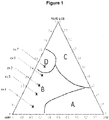
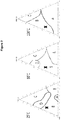
- Domain B is the one in which it is appropriate to position oneself to perform the reaction because it makes it possible to obtain a phase separation at the end of the reaction.
- the conditions of the domain A do not make it possible to obtain an effective hydroformylation reaction.
- phase diagrams is well known and formalized and is part of the basic knowledge of those skilled in the art.
- the substituted cyclodextrin used is a cyclodextrin- ⁇ , - ⁇ or - ⁇ .
- said cyclodextrin is a cyclodextrin - ⁇ or - ⁇ .
- cyclodextrin used in the process according to the invention is selected from the group consisting of RAME- ⁇ -CD, HP- ⁇ -CD, HP- ⁇ -CD, HP- ⁇ -CD, RAME- ⁇ - CD, CRYSMEB and mixtures thereof.
- the average degree of substitution of the substituted cyclodextrin may be chosen in a range from 0.5 to 3, preferably from 0.5 to 2.0.
- the cyclodextrin is a methylated cyclodextrin, an average degree of substitution of about 1.8 ⁇ 10% or 0.8 ⁇ 10% is particularly advantageous.
- the substituted cyclodextrin is a hydroxypropylated cyclodextrin, an average degree of substitution ranging from 0.5 to 0.9, preferably from 0.5 to 2.0, such as for example 0.6 or 0.8, is particularly advantageous.
- step a) is carried out at a temperature chosen in the range of 40 and 140 ° C., preferably 40 ° C. to 120 ° C., more particularly 50 to 100 ° C. 70 ° C. A temperature around 60 ° C or 80 ° C, ⁇ 5 ° C is preferred.
- cyclodextrin / triglyceride molar ratio be selected in a range of from 0.5 to 3.0, preferably from 0.2 to 4.0 at about 2.9.
- the pressure of the gas which comprises molecular hydrogen and carbon monoxide is chosen in a range from 20 to 200 bar.
- the pressure of said gas comprising molecular hydrogen and carbon monoxide is greater than or equal to 80 bar
- the reaction catalyst comprises, or consists of, a transition metal such as rhodium, ruthenium, palladium, iridium, cobalt and platinum or a bimetallic compound such as platinum / tin and platinum / iron.
- this catalyst is in the form of a complex associated with a phosphine, optionally sulfonated and / or water-soluble, such as TPPTS or phenyl (s) / biphenyl (s) phosphine sulfonated.
- A, B and C each represent an aryl group, more particularly a phenyl or biphenyl group.
- the substituents X 1 to X 3 are advantageously -SO 3 Na or -CO 2 Na.
- the substituents R 1 to R 3 are advantageously hydrogen or an alkyl group.
- the numbers x1, x2 and x3 are advantageously equal to 1 or 0 (at least one of them being equal to 1).
- the numbers y1, y2 and y3 can vary between 4 and 9.
- TPTS trisulphonated triphenylphosphine
- the sulfonated phosphines particularly advantageous for the process of the present invention are TPPTS and sulfonated phenyl (s) -biphenyl (s) phosphines.
- the process according to the invention can be carried out from a biosourced oil such as vegetable oils, refined or not, for example oilseed oils.
- Vegetable oils can be, for example, olive, sesame, soya, sunflower and rapeseed oils. Preferably these oils may be olive or sunflower oils.
- step a) is carried out in the absence of an organic solvent, and in particular without any organic compounds not participating in the reaction and / or being present at more than 10% by weight in the reaction medium.
- the step of recovering the products of the reaction is carried out by separation of the reaction medium from said phase.
- the quantity of water of the reaction medium is preferably greater than or equal to 50% by weight of the reaction medium.
- a concentration range greater than or equal to 65% by mass in water, for example 72% by weight.
- it is appropriate to be placed in a concentration range allowing a settling of the products of the reaction while avoiding an excessive dilution of the products (for example a quantity of water greater than 75% by weight).
- the reaction time may vary from a few minutes to several days depending on the reaction conditions. It is usually several hours but is usually less than 24 hours. It can be chosen between 2 and 20 hours, advantageously between 4 and 19 hours, for example 6 or 18 hours.
- the invention relates to the use of at least one of the aforementioned modified cyclodextrins in a process for the hydroformylation of triglycerides as described above.
- the emulsions being temperature dependent, the diagram was developed at a temperature of 80 ° C (temperature used for catalytic tests).
- the procedure used is as follows: In a test tube provided with a magnetic stirrer, predetermined amounts of RAME- ⁇ -CD and triolein are introduced (see Table 1a, tubes 1 to 4). A certain amount of water is then added to each tube. The medium is stirred (magnetic bar at 1400 rpm) in an oil bath at 80 ° C for 20 min. The agitation is then stopped. Two minutes after stopping the stirring, the test tube is removed from the bath for observation. Once the phases have been identified, a new quantity of water is added, thus changing the proportions of the various constituents.
- Example 2 Hydroformylation reaction of a triglyceride, triolein, in a self-emulsifying system according to the invention.
- a conversion of 26% and a selectivity of 78% in favor of the aldehyde are determined by NMR of the reaction products after decantation of the latter. This conversion corresponds to a conversion of the unsaturations contained in the triolein and not to a conversion of the triolein itself.
- Example 4 to 7 The relative positions of Examples 4 to 7 on the previously established phase diagram are given in Figure 1 .
- Experiment 3 is an example without cyclodextrin and is given for comparison. It can be shown that domain B is a zone allowing to have a significant conversion and selectivity. Indeed, Example 7, located in the D domain, shows a decrease in the selectivity of the hydroformylation.
- Table 2 The particular experimental conditions as well as the results are collated in Table 2 below.
- Example Pressure bar
- Conversion of double bonds %
- Selectivity to aldehyde %) 13 20 12 25 14 80 58 87
- Example 23 to 27 hydroformylation process on a mixture of triglycerides of natural origin: commercial olive oil
- Example 2 The following examples were made under the same conditions as Example 2. As in the previous examples, it was previously verified that the system is in a type B domain by developing phase diagrams.
- the commercial oil, as for triolein, is decanted after reaction. These vegetable oils are not pure but the following results make it possible to say that the present invention is suitable for the hydroformylation of complex mixtures of triglycerides. The results are summarized in Table 6.
- Table 6 Example cyclodextrin Pressi on (bar) Temperature (° C) Time (hours) Conversion (%) Selectivity (%) 23 RAME- ⁇ -CD (1.8) a 50 80 18 44 56 24 RAME- ⁇ -CD (1.8) a 80 80 18 66 70 25 RAME- ⁇ -CD (1.8) a 100 50 6 35 78 26 RAME- ⁇ -CD (1.8) a 150 50 6 58 81 27 HP- ⁇ -CD (0.6) a 80 80 18 78 85 a The number in brackets represents the degree of substitution per glucosidic unit of the cyclodextrin in question.
- Example 2 The following examples were carried out according to the same experimental conditions as in Example 2, except for the nature of the phosphine used in combination with the rhodium as well as the CO / H 2 synthesis gas pressure which is 80 bars. In these examples, a sulfonated monophosphine with a phosphine / metal molar ratio of 5/1 is used.
- Table 8 Example phosphine Structure of the phosphine Conversion (%) Selectivity (%) 28 Tris (o-toluyl) disulfonated phosphine 91 88 29 Trisulfonated biphenyldiphenyl phosphine 58 85 30 Trisulfonated bis (biphenyl) phenyl phosphine 72 86 31 Tris (biphenyl) trisulfonated phosphine 51 82
- Particularly advantageous phosphines in the process of the present invention are TPPTS and sulfonated phenyl (s) -biphenyl (s) phosphines, i.e., sulfonated phosphines including phenyl groups and / or biphenyl groups.
- the examples listed in Table 8 show the validity of the present invention for a range of sulfonated aromatic phosphines.
- the catalyst and the phosphine are those of Example 2. Phase separation takes place.
- Table 9 were obtained by the methods of analysis previously described. ⁇ b> Table 9 ⁇ / b> Temperature (° C) Conversion of double bonds (%) Selectivity to aldehyde (%) 30 28 68 50 53 79 60 69 85 80 91 90 100 55 65 120 13 23
- the catalyst and phosphine are those of Example 2. Phase separation takes place except when the amount of water is outside the desired phase separation range.
- the results presented in Table 13 were obtained by the methods of analysis previously described. % mass of water Conversion of double bonds (%) Selectivity to aldehyde (%) decanting 24 3 43 No 39 19 54 No 52 78 85 Yes 66 74 83 Yes 79 66 77 Yes 88 55 65 Yes These results indicate that, to the extent that one places oneself in phase separation conditions allowing the settling, the optimum quantity of water is less than 79% by weight.
- Example 35 Hydroformylation process using CRYSMEB on triolein.
- the catalyst and the phosphine are those of Example 2. Phase separation takes place.
- Table 14 were obtained by the methods of analysis previously described. ⁇ b> Table 14 ⁇ / b> Temperature Conversion of double bonds (%) Selectivity to aldehyde (%) 40 69 87 60 96 88 80 96 94 100 74 84 120 36 70
- a temperature optimum is established at around 60 to 80 ° C.
- % initial polyunsaturates in oil molar percentage of fatty esters having at least two double bonds on the carbon chain (linoleic, linolenic derivatives) in the oil in question. Percentage obtained after methanolic transesterification of triglycerides and GC and GC-MS analysis of the methyl esters obtained.
- Percentage of isomerization of the polyunsaturated chains number of moles of conjugated isomer formed / number of moles of initial polyunsaturated chains. Note that only polyunsaturated derivatives can be isomerized.
Landscapes
- Chemical & Material Sciences (AREA)
- Organic Chemistry (AREA)
- General Chemical & Material Sciences (AREA)
- Life Sciences & Earth Sciences (AREA)
- Engineering & Computer Science (AREA)
- Chemical Kinetics & Catalysis (AREA)
- Oil, Petroleum & Natural Gas (AREA)
- Wood Science & Technology (AREA)
- Organic Low-Molecular-Weight Compounds And Preparation Thereof (AREA)
Claims (12)
- Verfahren zur Hydroformylierung von Triglyceriden durch homogene Katalyse in Gegenwart mindestens eines Cyclodextrins, substituiert durch eine Methyl- oder Hydroxypropylgruppe, wobei das Verfahren einen Schritt a) des in Gegenwart Bringens, unter Rühren, von mindestens einem Katalysator, von Wasser, von mindestens einem ungesättigten Triglycerid mit mehr als 45 Kohlenstoffatomen und von dem substituierten Cyclodextrin, in Gegenwart von gasförmigem Wasserstoff und von Kohlenmonoxid, umfasst, wobei der Schritt unter Reaktionsbedingungen realisiert wird, die das Bilden einer Emulsion beim Rühren und das Dekantieren der Produkte der Reaktion nach Anhalten des Rührens gestatten; wobei die Reaktionsbedingungen insbesondere ein mechanisches Rühren mit 400 bis 1.400 Umdrehungen/Minute umfassen und Schritt a) unter Druck eines Gases, das molekularen Wasserstoff und Kohlenmonoxid enthält, bei einem Druck von größer oder gleich 20 bar erfolgt.
- Verfahren nach Anspruch 1, dadurch gekennzeichnet, dass, das substituierte Cyclodextrin ein α-, β- oder γ-Cyclodextrin ist.
- Verfahren nach Anspruch 1 oder 2, dadurch gekennzeichnet, dass das methylierte Cyclodextrin einen gemittelten Substitutionsgrad von 0,5 bis 2, vorzugsweise von 0,8, aufweist.
- Verfahren nach Anspruch 1 oder 2, dadurch gekennzeichnet, dass das hydroxypropylierte Cyclodextrin einen gemittelten Substitutionsgrad von 0,5 bis 2,0, vorzugsweise von 0,8, aufweist.
- Verfahren nach einem der Ansprüche 1 bis 4, dadurch gekennzeichnet, dass Schritt a) bei einer Temperatur von 40 °C bis 120 °C, vorzugsweise von 60 °C bis 80 °C, erfolgt.
- Verfahren nach einem der Ansprüche 1 bis 5, dadurch gekennzeichnet, dass das Molverhältnis Cyclodextrin/Triglycerid in einem Bereich von 0,2 bis 4 gewählt ist und vorzugsweise 2,9 ist.
- Verfahren nach einem der Ansprüche 1 bis 6, dadurch gekennzeichnet, dass der Druck des Gases, das molekularen Wasserstoff und Kohlenmonoxid enthält, größer oder gleich 80 bar ist.
- Verfahren nach einem der Ansprüche 1 bis 7, dadurch gekennzeichnet, dass der Katalysator ein Komplex ist, der ein Übergangsmetall, assoziiert mit einem sulfonierten Phosphin, umfasst.
- Verfahren nach Anspruch 8, dadurch gekennzeichnet, dass das sulfonierte Phosphin TPPTS oder ein sulfoniertes Phenyl-/Biphenylphosphin ist.
- Verfahren nach einem der Ansprüche 1 bis 9, dadurch gekennzeichnet, dass das Triglycerid ein Gemisch aus Triglyceriden ist, wobei das Gemisch nicht mehr als 10 Mol-% polygesättigter Fettsäuren in den Triglyceriden enthält.
- Verfahren nach einem der Ansprüche 1 bis 10, dadurch gekennzeichnet, dass die Reaktionsbedingungen nahe der oder die der Katalyse sind, die ohne die Gegenwart von Cyclodextrin realisiert wird.
- Verfahren nach einem der vorhergehenden Ansprüche, dadurch gekennzeichnet, dass das Dekantieren die Abtrennung einer organischen Phase gestattet, welche die Produkte der Reaktion enthält, und der Schritt des Auffangens der Produkte der Reaktion durch Abtrennung aus einem Reaktionsmedium der Phase erfolgt.
Applications Claiming Priority (2)
| Application Number | Priority Date | Filing Date | Title |
|---|---|---|---|
| FR1361018A FR3013045B1 (fr) | 2013-11-12 | 2013-11-12 | Procede d'hydroformylation de triglycerides en milieu auto-emulsifiant |
| PCT/FR2014/052860 WO2015071580A1 (fr) | 2013-11-12 | 2014-11-07 | Hydroformylation de triglycérides en milieu auto-émulsifiant |
Publications (2)
| Publication Number | Publication Date |
|---|---|
| EP3068756A1 EP3068756A1 (de) | 2016-09-21 |
| EP3068756B1 true EP3068756B1 (de) | 2018-06-13 |
Family
ID=49817099
Family Applications (1)
| Application Number | Title | Priority Date | Filing Date |
|---|---|---|---|
| EP14806041.1A Not-in-force EP3068756B1 (de) | 2013-11-12 | 2014-11-07 | Hydroformylierung von triglyceriden in einem selbstemulgierenden medium |
Country Status (5)
| Country | Link |
|---|---|
| US (1) | US9556402B2 (de) |
| EP (1) | EP3068756B1 (de) |
| CA (1) | CA2929475A1 (de) |
| FR (1) | FR3013045B1 (de) |
| WO (1) | WO2015071580A1 (de) |
Family Cites Families (3)
| Publication number | Priority date | Publication date | Assignee | Title |
|---|---|---|---|---|
| FR2729385B1 (fr) | 1995-01-17 | 1997-04-04 | Centre Nat Rech Scient | Procede d'hydroformylation d'une olefine en milieu biphasique |
| FR2825714B1 (fr) | 2001-06-08 | 2005-03-25 | Seppic Sa | Nouvelle utilisation de complexes d'inclusion de cyclodestrine |
| WO2008156993A2 (en) * | 2007-06-13 | 2008-12-24 | Dow Global Technologies Inc. | Extraction process for aldehyde product separation and catalyst recovery |
-
2013
- 2013-11-12 FR FR1361018A patent/FR3013045B1/fr not_active Expired - Fee Related
-
2014
- 2014-11-07 WO PCT/FR2014/052860 patent/WO2015071580A1/fr not_active Ceased
- 2014-11-07 CA CA2929475A patent/CA2929475A1/fr not_active Abandoned
- 2014-11-07 EP EP14806041.1A patent/EP3068756B1/de not_active Not-in-force
- 2014-11-07 US US15/035,556 patent/US9556402B2/en not_active Expired - Fee Related
Non-Patent Citations (1)
| Title |
|---|
| None * |
Also Published As
| Publication number | Publication date |
|---|---|
| US20160289596A1 (en) | 2016-10-06 |
| FR3013045B1 (fr) | 2016-01-01 |
| CA2929475A1 (fr) | 2015-05-21 |
| FR3013045A1 (fr) | 2015-05-15 |
| US9556402B2 (en) | 2017-01-31 |
| EP3068756A1 (de) | 2016-09-21 |
| WO2015071580A1 (fr) | 2015-05-21 |
Similar Documents
| Publication | Publication Date | Title |
|---|---|---|
| Cardozo et al. | Aqueous phase homogeneous catalysis using core–shell nanoreactors: Application to rhodium-catalyzed hydroformylation of 1-octene | |
| Lipshutz et al. | Olefin cross-metathesis reactions at room temperature using the nonionic amphiphile “PTS”: just add water | |
| EP1698686B1 (de) | Gleichzeitige Herstellung von Olefinen und Estern durch Ethenolyse von ungesättigten Fetten in nicht-wässrigen ionischen Flüssigkeiten. | |
| Winkler et al. | Highly efficient oxyfunctionalization of unsaturated fatty acid esters: an attractive route for the synthesis of polyamides from renewable resources | |
| WO2014096732A1 (fr) | NANO-CATALYSEURS METALLIQUES DANS LE GLYCEROL et APPLICATIONS EN SYNTHESE ORGANIQUE | |
| Andjelkovic et al. | Elucidation of structural isomers from the homogeneous rhodium-catalyzed isomerization of vegetable oils | |
| CA2756415C (fr) | Polymeres (meth) acryliques de bas poids moleculaire, exempts de composes soufres, metalliques et halogenes et de taux de monomeres residuels faible, leur procede de preparation et leurs utilisations | |
| EP3317247A1 (de) | Verfahren zur herstellung von polyolen | |
| Boulanger et al. | Rhodium‐catalyzed hydroformylation of unsaturated fatty esters in aqueous media assisted by activated carbon | |
| CA2788066A1 (fr) | Emulsion acrylique associative contenant un monomere a base d'alcool oxo, son procede de fabrication et procede d'epaississement d'une formulation aqueuse a partir de cette emulsion | |
| Vanbésien et al. | A self-emulsifying catalytic system for the aqueous biphasic hydroformylation of triglycerides | |
| EP2237865B1 (de) | Verfahren zur verkapselung von ölen in einem wässrigen medium mit hase-polymeremulsionen, erhaltene produkte und verwendungen davon | |
| FR3001964A1 (fr) | Synthese de compose insature ramifie par metathese croisee | |
| JP6650883B2 (ja) | 低温硬化ダイカスト潤滑剤用の新規改質シリコーン油 | |
| Hapiot et al. | Recent developments in cyclodextrin‐mediated aqueous biphasic hydroformylation and tsuji–trost reactions | |
| FR2896498A1 (fr) | Procede de co-production d'olefines et de diesters ou de diacides a partir de corps gras insatures. | |
| EP3068756B1 (de) | Hydroformylierung von triglyceriden in einem selbstemulgierenden medium | |
| EP3062632B1 (de) | Phenolpolymer mit 5,5'-biarylbindungen, verfahren zur herstellung davon und verwendungen davon | |
| Sombat et al. | Micellar Nanoreactors from Amphiphilic Copolymers for Thia-Michael Addition in Water | |
| EP0804399B1 (de) | Verfahren zur hydroformylierung eines olefins in einem biphasischen medium | |
| FR2768732A1 (fr) | Procede de fabrication d'un agent de surface emulsifiant et dispersant, a partir d'une huile polymerisee et d'un aminoalcool | |
| Roth et al. | Continuous Production of Bifunctional Platform Chemicals From Plant Oils in Water by Cyclodextrin‐Mediated Hydroformylation | |
| EP0040577B1 (de) | Verfahren zur katalytischen Konjugierung der Doppelbindungen mehrfach ungesättigter Fette | |
| Lourens et al. | Toward sustainable chemical synthesis: metathesis of sunflower-derived ethyl esters and evaluation of the surfactant potential of the product mixtures | |
| FR2793703A1 (fr) | Procede de fabrication de compositions utilisables comme agents de surface emulsifiants et dispersants, les compositions obtenues et leurs utilisations |
Legal Events
| Date | Code | Title | Description |
|---|---|---|---|
| PUAI | Public reference made under article 153(3) epc to a published international application that has entered the european phase |
Free format text: ORIGINAL CODE: 0009012 |
|
| 17P | Request for examination filed |
Effective date: 20160608 |
|
| AK | Designated contracting states |
Kind code of ref document: A1 Designated state(s): AL AT BE BG CH CY CZ DE DK EE ES FI FR GB GR HR HU IE IS IT LI LT LU LV MC MK MT NL NO PL PT RO RS SE SI SK SM TR |
|
| AX | Request for extension of the european patent |
Extension state: BA ME |
|
| RIN1 | Information on inventor provided before grant (corrected) |
Inventor name: MONFLIER, ERIC Inventor name: VANBESIEN, THEODORE Inventor name: HAPIOT, FREDERIC |
|
| DAX | Request for extension of the european patent (deleted) | ||
| 17Q | First examination report despatched |
Effective date: 20170410 |
|
| GRAJ | Information related to disapproval of communication of intention to grant by the applicant or resumption of examination proceedings by the epo deleted |
Free format text: ORIGINAL CODE: EPIDOSDIGR1 |
|
| GRAP | Despatch of communication of intention to grant a patent |
Free format text: ORIGINAL CODE: EPIDOSNIGR1 |
|
| GRAP | Despatch of communication of intention to grant a patent |
Free format text: ORIGINAL CODE: EPIDOSNIGR1 |
|
| RIC1 | Information provided on ipc code assigned before grant |
Ipc: C07C 67/347 20060101AFI20180124BHEP Ipc: C11C 3/00 20060101ALI20180124BHEP Ipc: C07C 69/716 20060101ALI20180124BHEP Ipc: C11C 3/12 20060101ALI20180124BHEP |
|
| RAP1 | Party data changed (applicant data changed or rights of an application transferred) |
Owner name: PIVERT Owner name: CENTRE NATIONAL DE LA RECHERCHE SCIENTIFIQUE (C.N. Owner name: UNIVERSITE D'ARTOIS |
|
| INTG | Intention to grant announced |
Effective date: 20180228 |
|
| GRAS | Grant fee paid |
Free format text: ORIGINAL CODE: EPIDOSNIGR3 |
|
| GRAA | (expected) grant |
Free format text: ORIGINAL CODE: 0009210 |
|
| AK | Designated contracting states |
Kind code of ref document: B1 Designated state(s): AL AT BE BG CH CY CZ DE DK EE ES FI FR GB GR HR HU IE IS IT LI LT LU LV MC MK MT NL NO PL PT RO RS SE SI SK SM TR |
|
| REG | Reference to a national code |
Ref country code: GB Ref legal event code: FG4D Free format text: NOT ENGLISH |
|
| REG | Reference to a national code |
Ref country code: CH Ref legal event code: EP Ref country code: AT Ref legal event code: REF Ref document number: 1008372 Country of ref document: AT Kind code of ref document: T Effective date: 20180615 |
|
| REG | Reference to a national code |
Ref country code: IE Ref legal event code: FG4D Free format text: LANGUAGE OF EP DOCUMENT: FRENCH |
|
| REG | Reference to a national code |
Ref country code: DE Ref legal event code: R096 Ref document number: 602014027079 Country of ref document: DE |
|
| REG | Reference to a national code |
Ref country code: NL Ref legal event code: FP |
|
| REG | Reference to a national code |
Ref country code: LT Ref legal event code: MG4D |
|
| PG25 | Lapsed in a contracting state [announced via postgrant information from national office to epo] |
Ref country code: FI Free format text: LAPSE BECAUSE OF FAILURE TO SUBMIT A TRANSLATION OF THE DESCRIPTION OR TO PAY THE FEE WITHIN THE PRESCRIBED TIME-LIMIT Effective date: 20180613 Ref country code: BG Free format text: LAPSE BECAUSE OF FAILURE TO SUBMIT A TRANSLATION OF THE DESCRIPTION OR TO PAY THE FEE WITHIN THE PRESCRIBED TIME-LIMIT Effective date: 20180913 Ref country code: LT Free format text: LAPSE BECAUSE OF FAILURE TO SUBMIT A TRANSLATION OF THE DESCRIPTION OR TO PAY THE FEE WITHIN THE PRESCRIBED TIME-LIMIT Effective date: 20180613 Ref country code: CY Free format text: LAPSE BECAUSE OF FAILURE TO SUBMIT A TRANSLATION OF THE DESCRIPTION OR TO PAY THE FEE WITHIN THE PRESCRIBED TIME-LIMIT Effective date: 20180613 Ref country code: ES Free format text: LAPSE BECAUSE OF FAILURE TO SUBMIT A TRANSLATION OF THE DESCRIPTION OR TO PAY THE FEE WITHIN THE PRESCRIBED TIME-LIMIT Effective date: 20180613 Ref country code: SE Free format text: LAPSE BECAUSE OF FAILURE TO SUBMIT A TRANSLATION OF THE DESCRIPTION OR TO PAY THE FEE WITHIN THE PRESCRIBED TIME-LIMIT Effective date: 20180613 Ref country code: NO Free format text: LAPSE BECAUSE OF FAILURE TO SUBMIT A TRANSLATION OF THE DESCRIPTION OR TO PAY THE FEE WITHIN THE PRESCRIBED TIME-LIMIT Effective date: 20180913 |
|
| PG25 | Lapsed in a contracting state [announced via postgrant information from national office to epo] |
Ref country code: HR Free format text: LAPSE BECAUSE OF FAILURE TO SUBMIT A TRANSLATION OF THE DESCRIPTION OR TO PAY THE FEE WITHIN THE PRESCRIBED TIME-LIMIT Effective date: 20180613 Ref country code: LV Free format text: LAPSE BECAUSE OF FAILURE TO SUBMIT A TRANSLATION OF THE DESCRIPTION OR TO PAY THE FEE WITHIN THE PRESCRIBED TIME-LIMIT Effective date: 20180613 Ref country code: GR Free format text: LAPSE BECAUSE OF FAILURE TO SUBMIT A TRANSLATION OF THE DESCRIPTION OR TO PAY THE FEE WITHIN THE PRESCRIBED TIME-LIMIT Effective date: 20180914 Ref country code: RS Free format text: LAPSE BECAUSE OF FAILURE TO SUBMIT A TRANSLATION OF THE DESCRIPTION OR TO PAY THE FEE WITHIN THE PRESCRIBED TIME-LIMIT Effective date: 20180613 |
|
| REG | Reference to a national code |
Ref country code: AT Ref legal event code: MK05 Ref document number: 1008372 Country of ref document: AT Kind code of ref document: T Effective date: 20180613 |
|
| PG25 | Lapsed in a contracting state [announced via postgrant information from national office to epo] |
Ref country code: AT Free format text: LAPSE BECAUSE OF FAILURE TO SUBMIT A TRANSLATION OF THE DESCRIPTION OR TO PAY THE FEE WITHIN THE PRESCRIBED TIME-LIMIT Effective date: 20180613 Ref country code: PL Free format text: LAPSE BECAUSE OF FAILURE TO SUBMIT A TRANSLATION OF THE DESCRIPTION OR TO PAY THE FEE WITHIN THE PRESCRIBED TIME-LIMIT Effective date: 20180613 Ref country code: CZ Free format text: LAPSE BECAUSE OF FAILURE TO SUBMIT A TRANSLATION OF THE DESCRIPTION OR TO PAY THE FEE WITHIN THE PRESCRIBED TIME-LIMIT Effective date: 20180613 Ref country code: RO Free format text: LAPSE BECAUSE OF FAILURE TO SUBMIT A TRANSLATION OF THE DESCRIPTION OR TO PAY THE FEE WITHIN THE PRESCRIBED TIME-LIMIT Effective date: 20180613 Ref country code: SK Free format text: LAPSE BECAUSE OF FAILURE TO SUBMIT A TRANSLATION OF THE DESCRIPTION OR TO PAY THE FEE WITHIN THE PRESCRIBED TIME-LIMIT Effective date: 20180613 Ref country code: EE Free format text: LAPSE BECAUSE OF FAILURE TO SUBMIT A TRANSLATION OF THE DESCRIPTION OR TO PAY THE FEE WITHIN THE PRESCRIBED TIME-LIMIT Effective date: 20180613 Ref country code: IS Free format text: LAPSE BECAUSE OF FAILURE TO SUBMIT A TRANSLATION OF THE DESCRIPTION OR TO PAY THE FEE WITHIN THE PRESCRIBED TIME-LIMIT Effective date: 20181013 |
|
| PG25 | Lapsed in a contracting state [announced via postgrant information from national office to epo] |
Ref country code: SM Free format text: LAPSE BECAUSE OF FAILURE TO SUBMIT A TRANSLATION OF THE DESCRIPTION OR TO PAY THE FEE WITHIN THE PRESCRIBED TIME-LIMIT Effective date: 20180613 Ref country code: IT Free format text: LAPSE BECAUSE OF FAILURE TO SUBMIT A TRANSLATION OF THE DESCRIPTION OR TO PAY THE FEE WITHIN THE PRESCRIBED TIME-LIMIT Effective date: 20180613 |
|
| REG | Reference to a national code |
Ref country code: DE Ref legal event code: R097 Ref document number: 602014027079 Country of ref document: DE |
|
| PLBE | No opposition filed within time limit |
Free format text: ORIGINAL CODE: 0009261 |
|
| STAA | Information on the status of an ep patent application or granted ep patent |
Free format text: STATUS: NO OPPOSITION FILED WITHIN TIME LIMIT |
|
| 26N | No opposition filed |
Effective date: 20190314 |
|
| PG25 | Lapsed in a contracting state [announced via postgrant information from national office to epo] |
Ref country code: SI Free format text: LAPSE BECAUSE OF FAILURE TO SUBMIT A TRANSLATION OF THE DESCRIPTION OR TO PAY THE FEE WITHIN THE PRESCRIBED TIME-LIMIT Effective date: 20180613 Ref country code: DK Free format text: LAPSE BECAUSE OF FAILURE TO SUBMIT A TRANSLATION OF THE DESCRIPTION OR TO PAY THE FEE WITHIN THE PRESCRIBED TIME-LIMIT Effective date: 20180613 |
|
| REG | Reference to a national code |
Ref country code: CH Ref legal event code: PL |
|
| PG25 | Lapsed in a contracting state [announced via postgrant information from national office to epo] |
Ref country code: MC Free format text: LAPSE BECAUSE OF FAILURE TO SUBMIT A TRANSLATION OF THE DESCRIPTION OR TO PAY THE FEE WITHIN THE PRESCRIBED TIME-LIMIT Effective date: 20180613 |
|
| REG | Reference to a national code |
Ref country code: IE Ref legal event code: MM4A |
|
| PG25 | Lapsed in a contracting state [announced via postgrant information from national office to epo] |
Ref country code: CH Free format text: LAPSE BECAUSE OF NON-PAYMENT OF DUE FEES Effective date: 20181130 Ref country code: LI Free format text: LAPSE BECAUSE OF NON-PAYMENT OF DUE FEES Effective date: 20181130 |
|
| PG25 | Lapsed in a contracting state [announced via postgrant information from national office to epo] |
Ref country code: IE Free format text: LAPSE BECAUSE OF NON-PAYMENT OF DUE FEES Effective date: 20181107 |
|
| PG25 | Lapsed in a contracting state [announced via postgrant information from national office to epo] |
Ref country code: AL Free format text: LAPSE BECAUSE OF FAILURE TO SUBMIT A TRANSLATION OF THE DESCRIPTION OR TO PAY THE FEE WITHIN THE PRESCRIBED TIME-LIMIT Effective date: 20180613 |
|
| PGFP | Annual fee paid to national office [announced via postgrant information from national office to epo] |
Ref country code: LU Payment date: 20191120 Year of fee payment: 6 |
|
| PG25 | Lapsed in a contracting state [announced via postgrant information from national office to epo] |
Ref country code: MT Free format text: LAPSE BECAUSE OF FAILURE TO SUBMIT A TRANSLATION OF THE DESCRIPTION OR TO PAY THE FEE WITHIN THE PRESCRIBED TIME-LIMIT Effective date: 20180613 |
|
| PG25 | Lapsed in a contracting state [announced via postgrant information from national office to epo] |
Ref country code: TR Free format text: LAPSE BECAUSE OF FAILURE TO SUBMIT A TRANSLATION OF THE DESCRIPTION OR TO PAY THE FEE WITHIN THE PRESCRIBED TIME-LIMIT Effective date: 20180613 |
|
| PGFP | Annual fee paid to national office [announced via postgrant information from national office to epo] |
Ref country code: GB Payment date: 20191120 Year of fee payment: 6 |
|
| PG25 | Lapsed in a contracting state [announced via postgrant information from national office to epo] |
Ref country code: PT Free format text: LAPSE BECAUSE OF FAILURE TO SUBMIT A TRANSLATION OF THE DESCRIPTION OR TO PAY THE FEE WITHIN THE PRESCRIBED TIME-LIMIT Effective date: 20180613 |
|
| PG25 | Lapsed in a contracting state [announced via postgrant information from national office to epo] |
Ref country code: HU Free format text: LAPSE BECAUSE OF FAILURE TO SUBMIT A TRANSLATION OF THE DESCRIPTION OR TO PAY THE FEE WITHIN THE PRESCRIBED TIME-LIMIT; INVALID AB INITIO Effective date: 20141107 Ref country code: MK Free format text: LAPSE BECAUSE OF NON-PAYMENT OF DUE FEES Effective date: 20180613 |
|
| PGFP | Annual fee paid to national office [announced via postgrant information from national office to epo] |
Ref country code: NL Payment date: 20201127 Year of fee payment: 7 |
|
| PGFP | Annual fee paid to national office [announced via postgrant information from national office to epo] |
Ref country code: DE Payment date: 20201211 Year of fee payment: 7 Ref country code: FR Payment date: 20201127 Year of fee payment: 7 |
|
| PGFP | Annual fee paid to national office [announced via postgrant information from national office to epo] |
Ref country code: BE Payment date: 20201127 Year of fee payment: 7 |
|
| GBPC | Gb: european patent ceased through non-payment of renewal fee |
Effective date: 20201107 |
|
| PG25 | Lapsed in a contracting state [announced via postgrant information from national office to epo] |
Ref country code: LU Free format text: LAPSE BECAUSE OF NON-PAYMENT OF DUE FEES Effective date: 20201107 |
|
| PG25 | Lapsed in a contracting state [announced via postgrant information from national office to epo] |
Ref country code: GB Free format text: LAPSE BECAUSE OF NON-PAYMENT OF DUE FEES Effective date: 20201107 |
|
| REG | Reference to a national code |
Ref country code: DE Ref legal event code: R119 Ref document number: 602014027079 Country of ref document: DE |
|
| REG | Reference to a national code |
Ref country code: NL Ref legal event code: MM Effective date: 20211201 |
|
| PG25 | Lapsed in a contracting state [announced via postgrant information from national office to epo] |
Ref country code: BE Free format text: LAPSE BECAUSE OF NON-PAYMENT OF DUE FEES Effective date: 20211130 |
|
| REG | Reference to a national code |
Ref country code: BE Ref legal event code: MM Effective date: 20211130 |
|
| PG25 | Lapsed in a contracting state [announced via postgrant information from national office to epo] |
Ref country code: NL Free format text: LAPSE BECAUSE OF NON-PAYMENT OF DUE FEES Effective date: 20211201 |
|
| PG25 | Lapsed in a contracting state [announced via postgrant information from national office to epo] |
Ref country code: DE Free format text: LAPSE BECAUSE OF NON-PAYMENT OF DUE FEES Effective date: 20220601 |
|
| PG25 | Lapsed in a contracting state [announced via postgrant information from national office to epo] |
Ref country code: FR Free format text: LAPSE BECAUSE OF NON-PAYMENT OF DUE FEES Effective date: 20211130 |