EP3065344A1 - Verfahren und system zur integration von entfernten geräten in eine lokale automatisierungsstruktur - Google Patents
Verfahren und system zur integration von entfernten geräten in eine lokale automatisierungsstruktur Download PDFInfo
- Publication number
- EP3065344A1 EP3065344A1 EP16020064.8A EP16020064A EP3065344A1 EP 3065344 A1 EP3065344 A1 EP 3065344A1 EP 16020064 A EP16020064 A EP 16020064A EP 3065344 A1 EP3065344 A1 EP 3065344A1
- Authority
- EP
- European Patent Office
- Prior art keywords
- proxy
- appliance
- premises
- home gateway
- temporarily
- Prior art date
- Legal status (The legal status is an assumption and is not a legal conclusion. Google has not performed a legal analysis and makes no representation as to the accuracy of the status listed.)
- Withdrawn
Links
- 238000000034 method Methods 0.000 title claims abstract description 99
- 238000004891 communication Methods 0.000 claims description 30
- 230000005540 biological transmission Effects 0.000 claims description 26
- 238000005516 engineering process Methods 0.000 claims description 12
- 238000000151 deposition Methods 0.000 claims description 2
- 230000010354 integration Effects 0.000 description 6
- 230000008569 process Effects 0.000 description 5
- 238000013475 authorization Methods 0.000 description 3
- 230000007246 mechanism Effects 0.000 description 3
- 230000009193 crawling Effects 0.000 description 2
- 230000000694 effects Effects 0.000 description 2
- 238000010438 heat treatment Methods 0.000 description 2
- 230000004044 response Effects 0.000 description 2
- 240000001913 Atriplex hortensis Species 0.000 description 1
- 241001101988 Proxys Species 0.000 description 1
- 230000003190 augmentative effect Effects 0.000 description 1
- 230000036772 blood pressure Effects 0.000 description 1
- 238000010276 construction Methods 0.000 description 1
- 230000001276 controlling effect Effects 0.000 description 1
- 230000001419 dependent effect Effects 0.000 description 1
- 238000010586 diagram Methods 0.000 description 1
- 230000036541 health Effects 0.000 description 1
- 238000009434 installation Methods 0.000 description 1
- 230000003993 interaction Effects 0.000 description 1
- 238000002955 isolation Methods 0.000 description 1
- 238000012544 monitoring process Methods 0.000 description 1
- 238000005457 optimization Methods 0.000 description 1
- 230000002688 persistence Effects 0.000 description 1
- 230000000306 recurrent effect Effects 0.000 description 1
- 230000001105 regulatory effect Effects 0.000 description 1
- 238000000926 separation method Methods 0.000 description 1
- 230000003068 static effect Effects 0.000 description 1
Images

Classifications
-
- H—ELECTRICITY
- H04—ELECTRIC COMMUNICATION TECHNIQUE
- H04L—TRANSMISSION OF DIGITAL INFORMATION, e.g. TELEGRAPHIC COMMUNICATION
- H04L67/00—Network arrangements or protocols for supporting network services or applications
- H04L67/01—Protocols
- H04L67/12—Protocols specially adapted for proprietary or special-purpose networking environments, e.g. medical networks, sensor networks, networks in vehicles or remote metering networks
- H04L67/125—Protocols specially adapted for proprietary or special-purpose networking environments, e.g. medical networks, sensor networks, networks in vehicles or remote metering networks involving control of end-device applications over a network
-
- H—ELECTRICITY
- H04—ELECTRIC COMMUNICATION TECHNIQUE
- H04L—TRANSMISSION OF DIGITAL INFORMATION, e.g. TELEGRAPHIC COMMUNICATION
- H04L12/00—Data switching networks
- H04L12/28—Data switching networks characterised by path configuration, e.g. LAN [Local Area Networks] or WAN [Wide Area Networks]
- H04L12/2803—Home automation networks
- H04L12/283—Processing of data at an internetworking point of a home automation network
- H04L12/2834—Switching of information between an external network and a home network
-
- H—ELECTRICITY
- H04—ELECTRIC COMMUNICATION TECHNIQUE
- H04L—TRANSMISSION OF DIGITAL INFORMATION, e.g. TELEGRAPHIC COMMUNICATION
- H04L67/00—Network arrangements or protocols for supporting network services or applications
- H04L67/50—Network services
- H04L67/56—Provisioning of proxy services
-
- H—ELECTRICITY
- H04—ELECTRIC COMMUNICATION TECHNIQUE
- H04L—TRANSMISSION OF DIGITAL INFORMATION, e.g. TELEGRAPHIC COMMUNICATION
- H04L61/00—Network arrangements, protocols or services for addressing or naming
- H04L61/59—Network arrangements, protocols or services for addressing or naming using proxies for addressing
Definitions
- the present invention relates to a method and system for integrating at least one device, at least temporarily remote from a room, in a local premises automation structure.
- the present invention further relates to a home gateway for controlling building automation protocols with the internet protocol or for implementing the internet protocol in the protocols of building automation devices.
- Systems for building automation usually control devices, such as heating controllers, light switches or temperature sensors. All of these devices are located locally in a user's home and are connected via known, locally acting mechanisms of the building automation system, such as radio technologies. In general, in particular radio technologies, but also alternative means of communication have only limited to the house or building, local range.
- remote devices or remote appliances such as a switchable light on a nearby the building garage. They are permanently operated outside the building and can not be connected to the building automation system using state-of-the-art technology.
- a proxy server proxy for short, which is connected via a first pairing connection to a addressable by the automation structure home gateway and by depositing a proxy ID and a proxy-specific global address, in particular a proxy -specific IP address registered with a central service.
- the at least one device which is at least temporarily removed from the premises, is registered in the automation structure via a second pairing connection to the home gateway (for example in the case of temporary presence in the premises), wherein the home gateway sends a local proxy-specific address the at least one at least temporarily removed from the premises device, which is then registered, if necessary with the transmission of an appliance ID, the proxy server, which deposits an appliance ID together with the proxy ID at the Central Service.
- the home gateway sends a local proxy-specific address the at least one at least temporarily removed from the premises device, which is then registered, if necessary with the transmission of an appliance ID, the proxy server, which deposits an appliance ID together with the proxy ID at the Central Service.
- the proxy deposits an address of the central service and the proxy ID at least one device at least temporarily remote from the premises, via which device the at least one device at least temporarily removed from the premises enters an area in which it has Internet access and / or a WAN (Wide Area Network), logs in to the Central Service, which then deposits a global address of the premises with the device and the device at the proxy, if necessary with transmission of the Appliance ID and a current global device Address and the proxy logs the device to the home gateway, usually with submission of the appliance ID, so that the device and the home gateway can transmit messages to each other via the proxy.
- WAN Wide Area Network
- the present invention relates to a method for integrating at least one device, at least temporarily remote from a room, into a local premises automation structure in which a proxy server is provided and the at least one device at least temporarily remote from the premises is registered with the proxy server the at least one device at least temporarily remote from the premises and a home gateway arranged in the premises automation structure can transmit messages to one another via the proxy.
- the appliance is registered, for example, by the home gateway with the proxy, or that the appliance itself actively registers with the proxy.
- the local address of the proxy can be configured, for example.
- the method according to the invention for integrating at least one device at least temporarily away from a room makes it possible to integrate both nomadic devices and devices permanently outside reach of a selected communication technology of the structure for automating the premises into the structure for automating the premises.
- the inventive method also allows a control of nomadic appliances that are outside the spatiality or the automation structure are located.
- a room is to be understood as both mobile and immobile premises.
- An immobile space is, for example, a building, a building complex, such as a hospital or a school.
- a mobile premises may be a car, a bus, an airplane or a train.
- Nomadic appliances or nomadic devices have the property that they can leave the local structure to automate the corresponding premises, for example, together with a user. However, by virtue of the method according to the invention, they remain part of the automation structure of the respective spatiality despite the spatial entity that then arises.
- a nomadic appliance may, for example, continue to send data to the structure for automating the premises, e.g. B. get commands from the structure to automate the space.
- Examples of nomadic appliances are so-called wearables, watches, pedometer, headsets or smart clothing. Wearables, but also sensors and actuators in cars or in other places stored devices can thus read their data from an automation structure of a corresponding spatiality. Based on the read-out data, other devices in the appropriate premises or even third nomadic appliances can be switched on or off.
- remote appliances or remote devices so for non-nomadic sensors or actuators that are permanently in a fixed location, but away from the automated premises or in particular the automated building.
- Remote appliances are lights or gate openers for a garage remote from an automated facility. These, too, despite the spatial distance, remain part of the corresponding spatiality automation structure.
- room automation and thus a data recording or data transmission within a room, such as a building or a building complex, not only includes a control of functions within a building, but more generally to a control of any functionality and also extends to reading any sensors within a building or building complex.
- a building or premises automation structure also includes monitoring, control, regulation and optimization facilities in which all sensors, actuators, operating elements, consumers and other technical units are networked with each other.
- the system according to the invention for integrating at least one device, which is at least temporarily remote from a room, into a local automation structure of a room initially consists of a system for automation, as is known from the prior art.
- this known system is now supplemented by a so-called proxy server or proxy, which takes over the administration of remote and / or nomadic devices or appliances to be integrated, as well as communication from or to these appliances to be integrated forwards or allows.
- the at least one device at least temporarily remote from the premises, reports itself indirectly via the proxy and with transmission of the appliance ID at the home gateway when leaving the premises.
- the at least one at least temporarily remote from the room device logs in with recurring entry into the premises with the transmission of the appliance ID at the proxy and the proxy the device at the home gateway. If necessary, a pairing connection is established between the at least one device, which is at least temporarily remote from the room, and the home gateway.
- the device If the at least one device, at least temporarily remote from the premises, returns to an area in which it can communicate over the Internet or a WAN, the device logs in with transmission of the proxy ID, the appliance ID and its current, global address for the Central Service and Central Service, the device communicates the appliance ID and the current global address of the device to the proxy, and the proxy the device to submit the appliance ID to the home gateway.
- the home gateway checks its accessibility via a local network of the premises and in the case of unavailability the device sends the message over the local area network to the proxy, along with the appliance ID, which forwards the message to the device at least temporarily remote from the premises.
- the proxy uses a current global address of the device. The current global address is previously provided by the device.
- the device if the device is not accessible via the Internet or a respective WAN, this is recognized by the proxy and the message is then rejected.
- the message for transmission of a message from the at least one device at least temporarily remote from the premises to the home gateway, the message together with the proxy ID and the appliance ID using the global address of the premises to the proxy which then forwards the message to the home gateway along with the appliance ID.
- the device When leaving an area in which the device can communicate over the Internet or via a corresponding WAN, the device logs off the central service with the transmission of the proxy ID and the appliance ID. In response, the central service reports the device with the submission of the appliance ID to the proxy and the proxy the device with submitting the appliance ID to the home gateway.
- the device In order to de-register the device, which is at least temporarily remote from the premises, from the automation structure of the premises, the device de-registers itself with the transmission of the appliance ID to the proxy and the Proxy de-registers the device at the home gateway. Subsequently, an appliance-automation-dependent un-pairing takes place between the appliance and the automation gateway.
- the step of unpairing corresponds to the state of the art.
- the mutual message transmission between the home gateway and the device is realized wirelessly, based on radio technology.
- the other communication paths, d. H. between gateway and proxy and between proxy and appliance also based on a wireless technology, usually for all paths the same, based.
- the mutual message transmission between the home gateway and the device is realized cable-based.
- the other communication paths, d. H. between gateway and proxy and between proxy and appliance can be realized cable-based. It is also conceivable that a part of the mentioned communication paths is cable-based and the remaining part is realized radio-based.
- the central service can be located, for example, as a cloud service outside the premises or outside the automation structure of the premises. He provides procedural steps to be provided by him via the Internet and / or a respective WAN.
- the central service can be cloud-operated, for example, by a provider of the home automation system and its customers are made available.
- the service is a central service because it exists exactly once, centrally. In contrast, there are many home gateways and many proxies, one pair in each building.
- the Central Service consists of the same subcomponents as the Proxy.
- a connection between the home gateway and the at least one device, which is at least partially remote from the premises is based on IP technology and IP addresses or on another suitable communication format and an associated addressing format.
- this can be related to both IPv4 and IPv6.
- IPv4 addressing a public IPv4 address is assigned to a router in the building or in the room, whereby the router autonomously assigns static or dynamic local IPv4 addresses.
- the public address or public address of the router and the local IPv4 addresses of the connected devices are different and not unique.
- IPv6 addressing each device receives its own public, ie global IPv6 address. Every device in the building can therefore be addressed directly from outside through its public, ie global IP address.
- using public IPv6 addresses eliminates the need for clear local association of local devices. It is therefore all the more important that the central service or a proxy records which devices belong to the building or the room or the local room automation system.
- the appliance ID is specified by the device and transmitted to the proxy when registering the device with the proxy.
- the appliance ID is specified by the proxy itself when registering the device with the proxy.
- the proxy or proxy server can be arranged as a separate device in the automation structure of a respective premises. Alternatively, it is also conceivable that the proxy as an additional module on an already existing in the automation structure device, such as the home gateway or other device such. B. a router Home is operated.
- the home gateway is located outside of the space or completely eliminated and that the space is addressed via the Internet, in particular by means of a arranged in the space Home Automation Bridge.
- the space can be chosen as immobile or mobile space.
- the nomadic or remote appliance is directly IP-enabled or connected to the Internet or the IP-based local area network via a so-called bridge or other gateway.
- the forest will be augmented with that element.
- the home gateway is located outside of the room, but is accessible via the Internet, for example, then one speaks of "in-the-cloud", the system must be extended by a system element, such as a Home Automation Bridge become. This is then local and can communicate with both the in-the-home home gateway and local appliances.
- a system element such as a Home Automation Bridge
- the device can either proactively register with the proxy or new appliances can be "searched” and “found” by the proxy.
- the latter can be accomplished with so-called crawling mechanisms. Crawling mechanisms are known in the art.
- a so-called credential is generated in advance by the proxy when registering the device in the automation structure of the corresponding premises and stored together with the proxy ID and the appliance ID at the central service.
- the credential is usually a very long number that can not be guessed de facto.
- a credential is a credential in a broad sense. It is irrelevant for the inventive method, whether one and the same credential applies to all at least temporarily remote from the room devices, ie for all nomadic appliances or remote appliances, or whether a credential authenticates a single appliance or a single device.
- a credential may, for example, be invalidated by a user during his "lifetime".
- the credential may also be generated by the central service or, if applicable, by another system element.
- the above-mentioned example, in which the credential is generated by the proxy, is obvious, but represents only a special embodiment of the method according to the invention.
- the credential may be provided with a validity period.
- the state of the art provides a variety of options. As an example, reference is made to the technology of the tokens.
- the global address of the state-of-the-art premises is contributed on a communication path between proxy and central service.
- the proxy will not readily know the building's global IP address itself.
- the global address is automatically provided by an IAD (Internet Access Device) on the communication path between the respective device and the local network. It is also conceivable that the global address of the premises is provided by the proxy and transmitted to the central service.
- IAD Internet Access Device
- a message that can not be delivered is usually discarded. Alternatively, however, it is conceivable that the message will be cached and sent at the earliest opportunity, d. H. as soon as the device is accessible again.
- the sender of a respective message eg. As the home gateway, it is informed whether a message from the intermediate receiver, for example, the proxy, to another recipient, for example.
- the Central Service could be forwarded or whether the transmission of the message has failed.
- the above-mentioned un-pairing can be done on the one hand via the Internet or local networks for home control of the respective premises. If the de-registration takes place over the Internet, this does not correspond to the prior art un-pairing between the device and the home gateway, but rather is a "standalone" un-pairing without communication between the device and the home gateway.
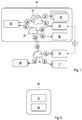
- FIG. 1 schematically shows an overview of an embodiment of a system according to the invention for integrating at least one at least temporarily away from a building device 10 in a local (building) -Automatmaschines Modell.
- the embodiment of the system according to the invention shown here comprises, on the one hand, a building automation structure which is essentially known from the prior art and which is located within a building 30, and also a proxy server, proxy 40 for short
- the building 30 may, for example, be a house or a dwelling of a customer, but also any other building or other building complex is conceivable.
- Shown is a home gateway 50 and a local area network 60.
- the proxy 40 communicates with the home gateway 50 via the local area network 60 via communication paths 2a and 2c shown here.
- At least one at least temporarily removed from a building device 10 is a nomadic appliance, which has the property that they can leave, for example.
- the building 30 and re-enter which here by dashed arrow is indicated.
- the device 10 may communicate with the home gateway 50 via either the local home appliance control 62 networks via the paths 1a and 1c. This controls the actuators of the appliance and reads out the sensors of the appliance. This is where the pairing and the un-pairing take place. This corresponds to the state of the art. Or it may communicate via the local network 60 with the home gateway via the communication paths 2a and 2b and the internet 70 via the paths 2b, 2d and 3d.
- This communication channel ie via the local network 60, is used by the method described here in the corresponding method steps mentioned below.
- the device 10 if the device 10 is outside the building 30, it is not responsive or controllable to the local area network 60. Integration of the device 10 is then only possible via the proxy 40, which manages the nomadic appliance 10 and forwards the communication to and from this appliance 10.
- the proxy 40 which manages the nomadic appliance 10 and forwards the communication to and from this appliance 10.
- both the nomadic appliance 10, as long as it is outside the building 30, and the remote appliance 11 can only be coupled to the building automation structure via the Internet 70 and corresponding communication paths 3c and 3d or 3b and 3d.
- a central service 80 which can communicate with the building 30 or with the components 50, 61, 10 and 40 arranged therein via the Internet 70 and corresponding communication paths 3a and 3d.
- the nomadic appliance, and the remote appliance each need a global address, in case the communication is based on IP technology, a respective IP address.
- IP addresses By means of such IP addresses, a communication via respective interfaces is then possible, so that, for example, the nomadic appliance 10 can be coupled to the local network 60 via paths 3c, 3d and 2d and then communication via the proxy 40 with the home gateway 50 can be enabled.
- the device 10 or the device 11 or the remote appliance 11 can be actuators and / or sensors of a system for building control.
- Examples of such devices or appliances are heating thermostats, temperature sensors, shutter control, motion detectors, alarm systems, but also in particular in the case of a nomadic appliance "wearables", such as, for example, a pulse or a blood pressure meter.
- the local appliances 61 shown here are appliances or appliances that are permanently located in the building 30. Such a local appliance corresponds to an appliance according to the prior art.
- the remote appliance 11 shown here is "removed" in that it is permanently outside the building 30 and, because of its distance from the building 30, can no longer be addressed via the local home appliance control 62 networks.
- a nomadic appliance 10 is an appliance that is periodically inside and temporarily outside the building 30 at times. If it is outside the building 30, it is also no longer controllable via local radio protocols because of their distance from the building 30.
- the property of the changing location of the nomadic appliance 10 is in FIG. 1 represented by the dashed arrow 4. Nevertheless, a nomadic appliance that is currently located locally in the building 30 is not a local appliance 61 in the terminology of the present description.
- the home gateway 50 controls the appliances or appliances in the building 30.
- the home gateway 50 coordinates the appliances.
- all radiator valves in the building 30 are coordinated such that a desired room temperature is maintained in the building 30.
- all lights of the building 30 or of the house are turned on and an alarm is activated on a corresponding alarm system.
- the home gateway 50 controls the appliances or appliances 61 and 10 located in the building 30 locally, if the latter is currently to be found in the building.
- the home control local area networks 62 are typically radio networks.
- the home gateway 50 communicates usually simultaneously with appliances from 61 different manufacturers. Connected thereto, the home gateway 50 simultaneously communicates via various, possibly even appliance-specific, local networks for home appliance control 62.
- the local network 60 in building 30 may be, for example, a wireless and / or a wired local area network (LAN).
- the range of the local area network 60 is typically limited by the building 30.
- the local network 60 can be realized, for example, as an IP network.
- the building 30 or the building automation part of the building, the nomadic appliance 10, the remote appliance 11 or the central service 80 must be addressable with a respective global address from the Internet. In the prior art, this is usually a respective IP address.
- the IAD forms the network termination of a telecommunications network to the subscriber. It thus forms the connection between the long-distance network of a telecommunications provider and the customer network. Behind the IAD is a modem and can be provided a router of the customer. Thus, communication between the local network 60 and the Internet 70 may be enabled.
- the IAD is in FIG. 1 but not shown.
- the router has with its address the global address, usually the IP address of the building 30.
- the router can be addressed via modem and IAD and thus the building 30 from the Internet.
- the customer's router is assigned an IPv4 address for a limited time by the telecommunications provider.
- the proxy server or Proxy 40 for short supports integration of nomadic appliances 10 or remote appliances 11 into the building automation structure.
- the proxy manages objects of the building automation structure for integration of nomadic appliances 10 and remote appliances 11 into the local building automation and organizes activities of the nomadic appliance integration 10 and remote appliances 11 into the local building automation in the building 30.
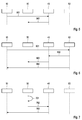
- FIG. 2 shows the internal structure of a proxy 40 to be provided according to the invention.
- the proxy 40 includes as a subsystem a logic 41 and a repository 42.
- the subsystem logic 41 controls the flow of all internal processes of the proxy 40. It contains the appropriate program logic.
- the sub-system repository 42 allows persistence of information such as connection data to the home gateway 50, the own proxy ID, the central service address 80, and context data for each nomadic appliance 10 or remote appliance 11, d. H. their ID, global address, and credential, respectively.
- the central service 80 can be operated, for example, by a provider of the respective building automation structure and provided to its customers. It can be realized as a cloud service. Procedural steps that the central service as part of an integration of at least temporarily remote from a particular building devices in the respective local building automation performs, provides the central service 80, for example. Via the Internet.
- the central service 80 consists of the same subcomponents or subsystems as the proxy 40 described above.
- Central service 80 also supports the integration of nomadic appliances 10 or remote appliances 11 into the building automation structure.
- the central service manages and organizes objects of the structure and activities of the method outside the building 30.
- the central service 80 typically exists only once, while there are many home gateways 50 and many proxies 40, one pair in each premises. This implies that the central service 80 must satisfy other functional requirements, such as availability or scalability, than, in particular, a proxy 40. Accordingly, the central service 80 is to be constructed differently than a proxy 40. However, these structural differences are within the scope of the present invention Description does not matter.
- a dashed rectangle indicates an object which, however, is not involved in the respective method step. It is shown only for the sake of completeness.
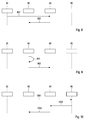
- FIG. 3 now shows a first method step according to an embodiment of the method according to the invention, namely the registration of the proxy 40.
- a nomadic appliance 10 the home gateway 50, the proxy 40 and the central service 80 are each shown schematically as a rectangle.
- the home gateway 50 and the proxy 40 establish a trusted connection, so-called pairing, as shown by arrow 301.
- the construction of such a connection is known from the prior art.
- the proxy 40 deposits its proxy ID with the central service 80, as indicated by arrow 302.
- the proxy ID can, for example, be a unique MAC address.
- the specific form of the address is of no relevance in the context of the present description, and any suitable form of the address can be selected.
- the proxy 40 stores the global address of the building at the central service 80.
- the global address was assigned, for example, to the above-mentioned router by an Internet provider, for example via DHCP.
- the central service 80 then deposits an assignment of the proxy ID and the global address, for example in a table.
- FIG. 4 shows a second method step of an embodiment of the inventive method, namely a local registration of a nomadic or remote appliance 10 or 11.
- the nomadic appliance 10 is represented on behalf of a nomadic appliance or remote appliance.
- the home gateway 50, the proxy 40 and the central service 80 are shown.
- the nomadic appliance 10 is paired with the home gateway 50. The process of pairing corresponds to the state of the art.
- the nomadic appliance 10 is now integrated into the building automation structure.
- the nomadic appliance 10 logs in at 402 as "nomadic" at the home gateway 50. At the same time she transmits her appliance ID. Submitting the appliance ID is optional at this point.
- the home gateway 50 persists the appliance ID with the previous paring context, for example in a table.
- step 403 the home gateway 50 transmits the local address of the proxy 40 to the appliance 10.
- the nomadic appliance 10 registers with the proxy 40 in step 404. At the same time it transmits its appliance ID.
- the proxy 40 deposits a previously generated credential, its own proxy ID and the appliance ID in a step 405 in the central service 80.
- the central service 80 stores an assignment of proxy ID, appliance ID and credential eg. In a table ,
- the credential is a very long number that can not be guessed de facto.
- the central service stores in a step 406 at the nomadic appliance 10 the address of the central service. Further, in step 407, at the nomadic appliance 10, the central service deposits the proxy ID and the credential.
- FIG. 5 shows a third method step of an embodiment of the method according to the invention.
- This is a recurring local logout of a nomadic Appliance 10.
- the nomadic appliance 10 leaves the building 30 along with a user.
- This procedure describes how the appliance 10 logs out of the proxy 40. From now on, it will no longer be available via the communication channels 1a to 1c, as in FIG. 1 shown to be reachable.
- "Recurring" means that this process step is performed periodically, for example every time the appliance 10 leaves the building 30. It can not always be guaranteed that the appliance 10 can log off in good time before leaving the building 30. Therefore, this process step is optional.
- the home gateway 50 detects that the appliance 10 is no longer available and logs it out to the proxy 40.
- the nomadic appliance 10 logs off the proxy 40 in step 501. It transmits its appliance ID.
- the proxy 40 logs off the appliance 10 at the home gateway 50 as no longer reachable in step 502.
- the proxy 40 transmits the appliance ID of the appliance 10 to be logged off.
- FIG. 6 shows a fourth process step of an embodiment of the method according to the invention.
- the nomadic appliance 10 is now in an area where it can communicate over the Internet.
- This process step describes how nomadic appliance 10 logs on to service 80. "Recurring" means that this step is repeated, for example, every time the appliance 10 enters an area where it can communicate over the Internet.
- the nomadic appliance 10 the home gateway 50, the proxy 40 and the central service 80 are shown.
- a step 601 the nomadic appliance 10 logs in to the central service 80 as reachable again. It transmits the proxy ID, its own appliance ID, the credential and its current global address. The credential is authenticated in a step not shown here, followed by an authorization of the appliance.
- the central service 80 logs the nomadic appliance 10 to the proxy 40 in step 602. Central service 80 transmits the appliance ID for this purpose.
- the proxy 40 in step 603, registers the nomadic appliance 10 with the home gateway 50.
- the proxy 40 stores the appliance ID and the global address of the nomadic appliance 10.
- the central service 80 deposits the global address of the building 30 at the nomadic appliance 10 in step 604.
- FIG. 7 shows a fifth method step of an embodiment of the method according to the invention. This method step describes how the home gateway 50 sends a message to a non-locally available nomadic appliance 10.
- the home gateway 50 checks, as indicated by the curved arrow 701, in particular a nomadic appliance 10 via a local network to the home appliance controller 62nd is reachable. In this scenario, this is not the case. Then, in step 702, the home gateway 50 sends the message, along with the appliance ID of the nomadic appliance 10, to the proxy 40.
- the proxy 40 sends the message in step 703 via the in FIG. 1 path 2c, 2d, 3c, 3d to the nomadic appliance 10.
- the proxy 40 uses the global address of the nomadic appliance 10, which was communicated to him in a previous method step.
- FIG. 8 shows a sixth method step of an embodiment of the method according to the invention, namely a communication of the nomadic appliance 10 towards the home gateway 50.
- This method step describes how the non-locally available nomadic appliance 10 sends a message to the home gateway 50.
- the nomadic appliance 10, the home gateway 50, the proxy 40 and the central service 80 are shown.
- the locally unavailable nomadic appliance 10 in a step 801 sends the message together with the proxy ID, its appliance ID and the Credential to proxy 40.
- the credential is authenticated in a step not shown here, followed by an authorization of the appliance. For addressing, she uses the global address of building 30, which was communicated to her in a previous procedural step.
- the proxy 40 sends the message along with the appliance ID to the home gateway 50 in step 802.
- FIG. 9 shows a seventh process step of an embodiment of the method according to the invention.
- This method step describes how the home gateway 50 sends a message to the nomadic appliance 10 that is neither globally nor locally available. Shown are again the nomadic appliance 10, the home gateway 50, the proxy 40 and the central service 80.
- the home gateway 50 checks as shown by the curved arrow 901 whether the nomadic appliance 10 is reachable via a local network to the home appliance controller 62. In this scenario, this is not the case.
- the home gateway 50 then sends the message along with the appliance ID of the nomadic appliance 10 to the proxy 40 in a step 902.
- the proxy 40 now recognizes that the nomadic appliance 10 is globally unavailable. Proxy 40 discards the message.
- the proxy could also cache the message and later, upon discovery of the availability of the appliance 10, forward it to the appliance 10.
- the home gateway 50 could also cache the message and, if the nomadic appliance 10 can be reached, send the message again.
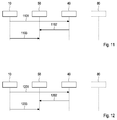
- FIG. 10 shows an eighth method step of an embodiment of the method according to the invention, namely a recurring central logout of a nomadic appliance 10.
- this method step it is described how a non-globally available nomadic appliance 10 logs off. From now on, it will no longer be accessible via the communication paths 3d and 3c. "Recurring" means that this step is performed repetitively, for example, every time the appliance 10 goes into a non-connectivity area. However, it can not always be guaranteed that the appliance 10 can log off in good time before leaving a connectivity area. Therefore, this process step is optional.
- the central service 80 recognizes that the appliance 10 is no longer available and then logs it off from proxy 40.
- the nomadic appliance 10, the home gateway 50, the proxy 40 and the central service 80 are again shown.
- the nomadic appliance 10 logs off from the central service 80 in step 1001. It transmits the proxy ID, its appliance ID, and the credential.
- the credential is authenticated in a step not shown here, followed by an authorization of the appliance.
- Central service 80 logs off nomadic appliance 10 at proxy 40 in step 1002. He transmits the appliance ID.
- the proxy 40 logs off the nomadic appliance 10 at the home gateway 50 in step 1003. He transmits the appliance ID.
- FIG. 11 shows a ninth method step of an embodiment of the method according to the invention, namely a recurrent local login of a remote or nomadic appliance.
- the nomadic appliance 10 for example, enters the building 30 together with a user.
- this method step it describes how the nomadic appliance 10 logs on to the building automation structure in this case. It will be accessible from now on via the communication channels 1a to 1c. "Recurring" means that this step is repeated, for example, when the nomadic appliance 10 enters the building.
- the nomadic appliance 10 the home gateway 50, the proxy 40 and the central service 80 are shown.
- the nomadic appliance 10 logs on to the proxy 40. It transmits its appliance ID.
- the proxy 40 logs the nomadic appliance 10 to the home gateway 50. In doing so, it transmits the appliance ID of the nomadic appliance 10.
- the nomadic appliance 10 becomes, if necessary, the home gateway 50 pairs. The appliance 10 is now integrated locally in the building automation structure. The pairing should be enabled without interaction with the user.
- FIG. 12 describes a tenth method step of an embodiment of the method according to the invention, namely a de-registration of a remote or nomadic appliance.
- a nomadic appliance 10 de-registers with the building automation structure in which it is still registered. The nomadic appliance 10 will no longer be known in the building automation structure.
- the nomadic appliance 10 the home gateway 50, the proxy 40 and the central service 80 are shown.
- the nomadic appliance 10 de-registers itself with the proxy 40. In doing so, it transmits its appliance ID.
- the proxy 40 de-registers the nomadic appliance 10 at the home gateway 50 in step 1202. It transmits its appliance ID for this purpose.
- un-pairing takes place between the home gateway 50 and the nomadic appliance 10.
- the appliance 10 is no longer known in the building automation structure. The process of unpairing corresponds completely to the state of the art. The un-pairing is performed over the local network 60.
Landscapes
- Engineering & Computer Science (AREA)
- Computer Networks & Wireless Communication (AREA)
- Signal Processing (AREA)
- Automation & Control Theory (AREA)
- Computing Systems (AREA)
- Health & Medical Sciences (AREA)
- General Health & Medical Sciences (AREA)
- Medical Informatics (AREA)
- Data Exchanges In Wide-Area Networks (AREA)
- Small-Scale Networks (AREA)
Abstract
Die vorliegende Erfindung betrifft ein Verfahren zur Integration mindestens eines zumindest zeitweise von einer Räumlichkeit entfernten Geräts in eine lokale Räumlichkeitsautomatisierungsstruktur, bei dem ein Proxy-Server vorgesehen wird und das mindestens eine zumindest zeitweise von der Räumlichkeit entfernte Gerät bei dem Proxy-Server registriert wird, wodurch das mindestens eine zumindest zeitweise von der Räumlichkeit entfernte Gerät und ein in der Räumlichkeitsautomatisierungsstruktur angeordnetes Home-Gateway über den Proxy gegenseitig Nachrichten übermitteln können.
Description
- Die vorliegende Erfindung betrifft ein Verfahren und ein System zur Integration mindestens eines zumindest zeitweise von einer Räumlichkeit entfernten Geräts in einer lokalen Räumlichkeitsautomatisierungsstruktur. Die vorliegende Erfindung betrifft ferner ein Home-Gateway zur Steuerung von Protokollen der Gebäudeautomatisierung mit dem Internetprotokoll oder zur Umsetzung des Internetprotokolls in den Protokollen von Gebäudeautomatisierungsgeräten.
- Unter einem zumindest zeitweise von einer Räumlichkeit entfernten Gerät versteht man dabei nicht nur sogenannte "entfernte Appliances", sondern auch sogenannte "nomadische Appliances".
- Systeme zur Gebäudeautomatisierung steuern in der Regel Geräte, wie bspw. Heizungsregler, Lichtschalter oder Temperatursensoren. All diese Geräte befinden sich lokal in einem Haus eines Benutzers und werden über bekannte, lokal wirkende Mechanismen des Systems zur Gebäudeautomatisierung, wie bspw. Funktechnologien, angeschlossen. In der Regel haben insbesondere Funktechnologien, aber auch alternative Kommunikationswege lediglich eine auf das Haus bzw. Gebäude begrenzte, lokale Reichweite.
- Nomadische Geräte bzw. nomadische Appliances, die im System zur Gebäudeautomatisierung zwar bekannt sind, aber z. B. mit einem Benutzer das Gebäude verlassen und wieder betreten, sind in der Zeit Ihrer Abwesenheit für das Gebäudeautomatisierungssystem folglich nicht über die herkömmlichen Kommunikationswege erreichbar. Folglich sind sie für das Gebäudeautomatisierungssystem nicht verfügbar und somit ihre Sensorik nicht nutzbar und ihre Aktorik nicht steuerbar.
- Dasselbe gilt für entfernte Geräte bzw. entfernte Appliances, wie bspw. ein schaltbares Licht an einer dem Gebäude naheliegenden Garage. Sie werden dauerhaft außerhalb des Gebäudes betrieben und können mit den Mitteln des Stands der Technik nicht an das System zur Gebäudeautomatisierung angeschlossen werden.
- Aus der Druckschrift
US 8,473,325 ist ein System zur automatisierten Installation und zum Management von IT-Geräten in einem Heimnetzwerk bekannt. Allerdings erlaubt das dort beschriebene System nur indizierte Geräte in einem festbegrenzten Netzabschnitt zu regulieren. - Es war demnach eine Aufgabe der vorliegenden Erfindung, eine Möglichkeit vorzusehen, auch nomadische oder entfernte Geräte in eine lokale Automatisierungsstruktur einer Räumlichkeit zu integrieren.
- Diese Aufgabe wird gelöst von einem Verfahren mit den Merkmalen des Patentanspruchs 1 sowie einem System mit den Merkmalen des Patentanspruchs 17.
- Weitere Ausgestaltungen sind den jeweiligen Unteransprüchen und der nachfolgenden Beschreibung zu entnehmen.
- Gemäß Patentanspruch 1 wird ein Verfahren zur Integration mindestens eines zumindest zeitweise von einer Räumlichkeit entfernten Geräts in einer lokalen Räumlichkeitsautomatisierungsstruktur vorgeschlagen. Bei dem erfindungsgemäßen Verfahren wird ein Proxy-Server, kurz Proxy, vorgesehen, der sich über eine erste Pairing-Verbindung zu einem von der Automatisierungsstruktur ansprechbaren Home-Gateway und durch Hinterlegen einer Proxy-ID und einer Proxy-spezifischen globalen Adresse, insbesondere einer Proxy-spezifischen IP-Adresse bei einem Zentralen Dienst registriert. Ferner wird das mindestens eine zumindest zeitweise von der Räumlichkeit entfernte Gerät (bspw. bei temporärer Anwesenheit in der Räumlichkeit) über eine zweite Pairing-Verbindung zu dem Home-Gateway in der Automatisierungsstruktur registriert, wobei das Home-Gateway eine lokale Proxy-spezifische Adresse an das mindestens eine zumindest zeitweise von der Räumlichkeit entfernte Gerät übermittelt, das dann, ggf. mit Übermittlung einer Appliance-ID, bei dem Proxy-Server registriert wird, der eine Appliance-ID zusammen mit der Proxy-ID bei dem Zentralen Dienst hinterlegt. Der Proxy hinterlegt in Reaktion darauf bei dem mindestens einen zumindest zeitweise von der Räumlichkeit entfernten Gerät eine Adresse des Zentralen Dienstes sowie die Proxy-ID, worüber das mindestens eine zumindest zeitweise von der Räumlichkeit entfernte Gerät bei Eintritt in einen Bereich, in dem es über Internet und/oder ein WAN (Wide Area Network) kommunizieren kann, sich bei dem Zentralen Dienst anmeldet, der dann eine globale Adresse der Räumlichkeit bei dem Gerät hinterlegt und das Gerät beim Proxy ggf. mit Übermittlung der Appliance-ID und einer aktuellen globalen Geräte-Adresse und der Proxy das Gerät beim Home-Gateway, in der Regel mit Übermittlung der Appliance-ID, anmeldet, so dass das Gerät und das Home-Gateway sich über den Proxy gegenseitig Nachrichten übermitteln können.
- Die vorliegende Erfindung betrifft ein Verfahren zur Integration mindestens eines zumindest zeitweise von einer Räumlichkeit entfernten Geräts in eine lokale Räumlichkeitsautomatisierungsstruktur, bei dem ein Proxy-Server vorgesehen wird und das mindestens eine zumindest zeitweise von der Räumlichkeit entfernte Gerät bei dem Proxy-Server registriert wird, wodurch das mindestens eine zumindest zeitweise von der Räumlichkeit entfernte Gerät und ein in der Räumlichkeitsautomatisierungsstruktur angeordnetes Home-Gateway über den Proxy gegenseitig Nachrichten übermitteln können.
- Es ist denkbar, dass die Appliance bspw. von dem Home-Gateway beim Proxy registriert wird oder dass sich die Appliance selbst aktiv beim Proxy registriert.
- In der Regel ist dem Zentralen Dienst genau eine Adresse zugeordnet. Es ist jedoch auch denkbar, dass der Zentrale Dienst zugunsten von Ausfallsicherheit und/oder Verfügbarkeit über mehrere Adressen verfügt.
- Die lokale Adresse des Proxy kann bspw. konfiguriert werden.
- Das erfindungsgemäße Verfahren zur Integration mindestens eines zumindest zeitweise von einer Räumlichkeit entfernten Geräts ermöglicht es, sowohl nomadische Geräte als auch sich dauerhaft außerhalb einer Reichweite einer gewählten Kommunikationstechnologie der Struktur zur Automatisierung der Räumlichkeit befindliche Geräte in die Struktur zur Automatisierung der Räumlichkeit zu integrieren.
- Somit ermöglicht das erfindungsgemäße Verfahren auch eine Steuerung von nomadischen Appliances, die sich außerhalb der Räumlichkeit bzw. der Automatisierungsstruktur befinden. Unter einer Räumlichkeit sind dabei sowohl mobile als auch immobile Räumlichkeiten zu verstehen. Bei einer immobilen Räumlichkeit handelt es sich bspw. um ein Gebäude, einen Gebäudekomplex, wie bspw. ein Krankenhaus oder eine Schule. Bei einer mobilen Räumlichkeit kann es sich bspw. um ein Auto, einen Bus, ein Flugzeug oder eine Bahn handeln.
- Nomadische Appliances bzw. nomadische Geräte haben die Eigenschaft, dass sie die lokale Struktur zur Automatisierung der entsprechenden Räumlichkeit bspw. gemeinsam mit einem Nutzer verlassen können. Mittels des erfindungsgemäßen Verfahrens bleiben sie aber trotz der dann entstandenen räumlichen Instanz weiter ein Teil der Automatisierungsstruktur der jeweiligen Räumlichkeit. Mithin kann eine nomadische Appliance weiterhin bspw. Daten an die Struktur zur Automatisierung der Räumlichkeit senden und z. B. Kommandos von der Struktur zur Automatisierung der Räumlichkeit erhalten. Beispiele für nomadische Appliances sind sogenannte Wearables, Uhren, Schrittmesser, Sprechgarnituren oder auch intelligente Kleidung. Wearables, aber auch Sensoren und Aktoren in Autos oder an weiteren Orten aufbewahrte Geräte können somit ihre Daten von einer Automatisierungsstruktur einer entsprechenden Räumlichkeit auslesen lassen. Basierend auf den ausgelesenen Daten können andere Geräte in der entsprechenden Räumlichkeit oder auch dritte nomadische Appliances ein- oder ausgeschaltet werden.
- Dasselbe gilt sinngemäß für entfernte Appliances bzw. entfernte Geräte, also für nicht nomadische Sensoren oder Aktoren, die sich dauerhaft an einem festen Ort, aber entfernt von der automatisierten Räumlichkeit bzw. insbesondere des automatisierten Gebäudes befinden. Beispiele für entfernte Appliances sind Beleuchtungen oder Toröffner für eine von einer automatisierten Räumlichkeit entfernten Garage. Auch diese bleiben trotz der räumlichen Distanz weiter ein Teil der entsprechenden Räumlichkeitsautomatisierungsstruktur. Es sei betont, dass der Begriff Räumlichkeitsautomatisierung und damit eine Datenaufnahme bzw. Datenübertragung innerhalb einer Räumlichkeit, wie bspw. eines Gebäudes oder eines Gebäudekomplexes, nicht nur eine Steuerung von Funktionen innerhalb eines Gebäudes umfasst, sondern sich ganz allgemein auf eine Steuerung beliebiger Funktionalitäten und auch auf ein Auslesen jeglicher Sensoren innerhalb eines Gebäudes oder eines Gebäudekomplexes erstreckt. Das umfasst bspw. auch den Betrieb von Alarmanlagen und ein Auslesen biologischer Parameter von in einem Gebäude befindlichen Personen mittels Sensoren, insbesondere im Rahmen von Healthcare bzw. Gesundheitsfürsorge. Insbesondere umfasst eine Gebäude- bzw. Räumlichkeitsautomatisierungsstruktur auch Überwachungs-, Steuer-, Regel- und Optimierungseinrichtungen, bei denen alle Sensoren, Aktoren, Bedienelemente, Verbraucher und andere technischen Einheiten miteinander vernetzt sind.
- Im Folgenden werden nun zunächst das erfindungsgemäße Verfahren sowie das erfindungsgemäße System beschrieben.
- Das erfindungsgemäße System zu Integration mindestens eines zumindest zeitweise von einer Räumlichkeit entfernten Geräts in eine lokale Automatisierungsstruktur einer Räumlichkeit besteht zunächst aus einem System zur Automatisierung, wie es aus dem Stand der Technik bekannt ist. Dieses bekannte System wird nunmehr erfindungsgemäß um einen sogenannten Proxy-Server oder kurz Proxy ergänzt, der die Verwaltung von zu integrierenden entfernten und/oder nomadischen Geräten bzw. Appliances übernimmt sowie eine Kommunikation von und zu diesen zu integrierenden Appliances weiterleitet bzw. ermöglicht.
- In weiterer Ausgestaltung des erfindungsgemäßen Verfahrens meldet sich das mindestens eine zumindest zeitweise von der Räumlichkeit entfernte Gerät bei Verlassen der Räumlichkeit mittelbar über den Proxy und mit Übermittlung der Appliance-ID beim Home-Gateway ab.
- In weiterer Ausgestaltung des erfindungsgemäßen Verfahrens meldet sich das mindestens eine zumindest zeitweise von der Räumlichkeit entfernte Gerät bei wiederkehrendem Eintritt in die Räumlichkeit mit Übermittlung der Appliance-ID beim Proxy und der Proxy das Gerät beim Home-Gateway an. Dabei wird ggf. eine Pairing-Verbindung zwischen dem mindestens einen zumindest zeitweise von der Räumlichkeit entfernten Gerät und dem Home-Gateway aufgebaut.
- Bei wiederkehrendem Eintritt des mindestens einen zumindest zeitweise von der Räumlichkeit entfernten Geräts in einen Bereich, in dem es über das Internet oder ein WAN kommunizieren kann, meldet sich das Gerät mit Übermittlung der Proxy-ID, der Appliance-ID sowie seiner aktuellen, globalen Adresse bei dem Zentralen Dienst und der Zentrale Dienst das Gerät mit Übermittlung der Appliance-ID und der aktuellen, globalen Adresse des Geräts beim Proxy und der Proxy das Gerät mit Übermittlung der Appliance-ID beim Home-Gateway an.
- In weiterer Ausgestaltung wird zur Übermittlung einer Nachricht von dem Home-Gateway zu dem mindestens einen zumindest zeitweise von der Räumlichkeit entfernten Gerät von dem Home-Gateway dessen Erreichbarkeit über ein lokales Netz der Räumlichkeit geprüft und bei Nichterreichbarkeit des Geräts über das lokale Netz der Räumlichkeit die Nachricht zusammen mit der Appliance-ID an den Proxy gesendet, der die Nachricht an das eine zumindest zeitweise von der Räumlichkeit entfernte Gerät weiterleitet. Dabei nutzt der Proxy eine aktuelle globale Adresse des Geräts. Die aktuelle globale Adresse wird zuvor seitens des Geräts bereitgestellt.
- In weiterer Ausgestaltung des erfindungsgemäßen Verfahrens wird bei Nichterreichbarkeit des Geräts über das Internet oder ein jeweiliges WAN dies von dem Proxy erkannt und die Nachricht wird sodann verworfen.
- In weiterer Ausgestaltung des erfindungsgemäßen Verfahrens wird zur Übermittlung einer Nachricht von dem mindestens einen zumindest zeitweise von der Räumlichkeit entfernten Gerät zu dem Home-Gateway die Nachricht zusammen mit der Proxy-ID und der Appliance-ID unter Nutzung der globalen Adresse der Räumlichkeit an den Proxy gesendet, der die Nachricht dann gemeinsam mit der Appliance-ID an das Home-Gateway weiterleitet.
- Bei Verlassen eines Bereichs, in dem das Gerät über das Internet bzw. über ein entsprechendes WAN kommunizieren kann, meldet sich das Gerät bei dem Zentralen Dienst mit Übermittlung der Proxy-ID und der Appliance-ID ab. In Reaktion darauf meldet der Zentrale Dienst das Gerät mit Übermittlung der Appliance-ID am Proxy und der Proxy das Gerät mit Übermittlung der Appliance-ID beim Home-Gateway ab.
- Zum De-Registrieren des zumindest einen zumindest zeitweise von der Räumlichkeit entfernten Geräts von der Automatisierungsstruktur der Räumlichkeit de-registriert sich das Gerät mit Übermittlung der Appliance-ID bei dem Proxy und der Proxy de-registriert das Gerät bei dem Home-Gateway. Anschließend findet ein (von der Appliance-Technologie abhängiges) Un-Pairing zwischen Gerät und Automatisierungs-Gateway statt. Der Schritt des Un-Pairing entspricht dabei dem Stand der Technik.
- In möglicher Ausgestaltung des erfindungsgemäßen Verfahrens wird die gegenseitige Nachrichtenübermittlung zwischen dem Home-Gateway und dem Gerät kabellos, auf einer Funktechnologie basierend realisiert. Ebenso ist es denkbar, die anderen Kommunikationspfade, d. h. zwischen Gateway und Proxy und zwischen Proxy und Appliance ebenfalls auf einer Funktechnologie, in der Regel für alle Pfade die gleiche, basierend zu realisieren.
- In alternativer Ausgestaltung des erfindungsgemäßen Verfahrens wird die gegenseitige Nachrichtenübermittlung zwischen dem Home-Gateway und dem Gerät kabelbasiert realisiert.
- Auch die anderen Kommunikationspfade, d. h. zwischen Gateway und Proxy und zwischen Proxy und Appliance können kabelbasiert realisiert werden. Es ist auch denkbar, dass ein Teil der genannten Kommunikationspfade kabelbasiert und der verbleibende Teil funkbasiert realisiert wird.
- Der Zentrale Dienst kann sich bspw. als Cloud-Service außerhalb der Räumlichkeit bzw. außerhalb der Automatisierungsstruktur der Räumlichkeit befinden. Er stellt von ihm bereitzustellende Verfahrensschritte über das Internet und/oder ein jeweiliges WAN bereit.
- Der Zentrale Dienst kann cloud-basiert z.B. von einem Anbieter des Hausautomatisierungssystems betrieben und dessen Kunden zur Verfügung gestellt werden. Die Verfahrensschritte, die er im Rahmen des Verfahrens zur Integration von entfernten Geräten in die lokale Gebäudeautomatisierung durchführt, stellt er dann über das Internet bereit. Der Dienst ist ein Zentraler Dienst, weil er genau einmal, zentral, existiert. Im Gegensatz dazu gibt es viele Home Gateways und viele Proxys, jeweils ein Paar in jedem Gebäude. Der Zentrale Dienst besteht aus denselben Sub-Komponenten wie der Proxy.
- Es ist denkbar, dass eine Verbindung zwischen dem Home-Gateway und dem mindestens einen zumindest teilweise von der Räumlichkeit entfernten Gerät auf IP-Technologie und IP-Adressen oder auf einem anderen geeigneten Kommunikationsformat und einem dazugehörigen Adressierungsformat basiert. Im Falle, dass die Kommunikation bzw. Verbindung auf IP-Technologie basiert, kann sich dies sowohl auf IPv4 als auch auf IPv6 beziehen.
- Bei der IPv4 Adressierung wird einem Router im Gebäude bzw. in der Räumlichkeit eine öffentliche IPv4 Adresse zugewiesen, wobei der Router selbstständig statische oder dynamische lokale IPv4 Adressen vergibt. Dabei sind die öffentliche Adresse oder öffentliche Adresse des Routers und die lokalen IPv4 Adressen der daran angeschlossenen Geräte verschieden und nicht eindeutig. Bei der IPv6 Adressierung erhält jedes Gerät eine eigene öffentliche, d. h. globale IPv6 Adresse. Jedes Gerät im Gebäude ist damit durch seine öffentliche, d. h. globale IP Adresse direkt von außen ansprechbar. Dadurch, dass öffentliche IPv6 Adressen verwendet werden, fällt allerdings die eindeutige lokale Zuordnung von lokalen Geräten weg. Umso wichtiger ist es, dass im Zentralen Dienst oder einem Proxy festgehalten wird, welche Geräte dem Gebäude bzw. der Räumlichkeit oder dem lokalen Räumlichkeitsautomationssystem angehören.
- In einer Ausführungsform des erfindungsgemäßen Verfahrens wird die Appliance-ID von dem Gerät vorgegeben und beim Registrieren des Geräts bei dem Proxy an den Proxy übermittelt. Alternativ ist es jedoch auch denkbar, dass die Appliance-ID bei Registrierung des Geräts bei dem Proxy von dem Proxy selbst vorgegeben wird.
- Der Proxy bzw. Proxy-Server kann als separates Gerät in der Automatisierungsstruktur einer jeweiligen Räumlichkeit angeordnet werden. Alternativ dazu ist es auch denkbar, dass der Proxy als Zusatzmodul auf einem in der Automatisierungsstruktur bereits vorhandenen Gerät, wie bspw. dem Home-Gateway oder einem anderen Gerät, wie z. B. einem Router Home betrieben wird.
- Es ist ferner denkbar, dass sich das Home-Gateway außerhalb der Räumlichkeit befindet oder gänzlich entfällt und dass die Räumlichkeit über das Internet, insbesondere mittels einer in der Räumlichkeit angeordneten Home Automation Bridge angesprochen wird.
- Wie voranstehend bereits erwähnt, kann die Räumlichkeit als immobile oder auch als mobile Räumlichkeit gewählt werden.
- Für das erfindungsgemäße Verfahren ist es unerheblich, ob der Zentrale Dienst bspw. aus Gründen einer Ausfallsicherheit oder einer Lastverteilung mehrfach instanziiert wird oder nicht.
- Es ist ebenfalls für das Verfahren unerheblich, ob eine Kommunikation von mehreren Parametern in einer einzigen Übermittlung getätigt wird oder in einer Sequenz von Übermittlungen. Ferner spielt auch die Reihenfolge, in der die einzelnen Übermittlungen bzw. Requests versendet werden, die sich aus der Auftrennung eines "Sammelrequests" ergeben, keine Rolle.
- Es ist ferner für das erfindungsgemäße Verfahren unerheblich, ob das mindestens eine zumindest teilweise von der Räumlichkeit entfernte Gerät, d. h. die nomadische oder die entfernte Appliance direkt IP-fähig ist oder über eine sogenannte Bridge oder ein weiteres Gateway an das Internet oder an das IP-basierte lokale Netzwerk angeschlossen wird. In dem Fall, dass das Gerät bzw. die nomadische oder entfernte Appliance über eine Bridge oder ein IP-Gateway an das Internet oder an das IP-basierte Intranet angeschlossen wird, wird die Gesamtstruktur um dieses entsprechende Element erweitert. Im Falle, dass das Home-Gateway sich außerhalb der Räumlichkeit befindet, aber bspw. über das Internet erreichbar ist, man spricht dann von "in-the-cloud", muss das System um ein Systemelement, wie bspw. eine Home Automation Bridge erweitert werden. Diese befindet sich dann lokal und kann sowohl mit dem Home-Gateway in-the-cloud als auch mit lokalen Appliances kommunizieren. Sie besitzt allerdings in der Regel keine nennenswerte Logik zur Automatisierungsstruktur, sondern dient im Grunde nur einer Protokollumsetzung.
- Im Rahmen des erfindungsgemäßen Verfahrens kann sich das Gerät entweder proaktiv bei dem Proxy registrieren oder neue Appliances können vom Proxy "gesucht" und "gefunden" werden. Letzteres kann mit sogenannten Crawling-Mechanismen bewerkstelligt werden. Crawling-Mechanismen sind aus dem Stand der Technik bekannt.
- Es ist im Rahmen des erfindungsgemäßen Verfahrens ferner denkbar, dass sich bspw. Teile des erfindungsgemäßen Systems in einer Räumlichkeit, wie bspw. einem Haus befinden, oder einer anderen Räumlichkeit, wie bspw. einer Fabrikhalle, einem Hotel oder auch einer beweglichen Räumlichkeit, wie einem Auto, Bus oder Flugzeug.
- In weiterer Ausgestaltung des erfindungsgemäßen Verfahrens wird von dem Proxy bei einem Registrieren des Geräts bei der Automatisierungsstruktur der entsprechenden Räumlichkeit vorab ein sogenanntes Credential generiert und zusammen mit der Proxy-ID und der Appliance-ID beim Zentralen Dienst hinterlegt. Das Credential ist in der Regel eine sehr lange Zahl, die de facto nicht zu erraten ist. Bei einem Credential handelt es sich im weiten Sinne um einen Berechtigungsnachweis. Dabei ist es für das erfindungsgemäße Verfahren unerheblich, ob ein und dasselbe Credential für alle sich zumindest zeitweise von der Räumlichkeit entfernten Geräte, d. h. für alle nomadischen Appliances oder entfernten Appliances gilt, oder ob ein Credential genau eine einzige Appliance bzw. ein einziges Gerät authentifiziert. Darüber hinaus kann ein Credential bspw. von einem Nutzer während seiner "Lebenszeit" invalidiert werden. Alternativ dazu ist es auch möglich, dass eine derartige Ungültigmachung des Credentials nicht möglich ist. Das Credential kann auch von dem Zentralen Dienst oder ggf. von einem anderen Systemelement generiert werden. Das bereits voranstehend erwähnte Beispiel, bei dem das Credential von dem Proxy generiert wird, ist naheliegend, stellt aber lediglich eine spezielle Ausführungsform des erfindungsgemäßen Verfahrens dar. Das Credential kann mit einer Gültigkeitsdauer versehen sein. Neben der Möglichkeit, das Credential als sehr lange Zahl, die de facto nicht zu erraten ist, darzustellen, ist es auch denkbar, das Credential mit einer anderen geeigneten Syntax zu realisieren. Der Stand der Technik stellt dazu eine Vielzahl von Möglichkeiten bereit. Als Beispiel sei auf die Technologie der Token verwiesen.
- Insofern es sich um ein auf IP basiertes lokales Netzwerk und um das auf IP basierte Internet handelt, wird die globale Adresse der Räumlichkeit nach dem Stand der Technik auf einem Kommunikationspfad zwischen Proxy und Zentralem Dienst, beigesteuert. Nach dem Stand der Technik wird der Proxy die globale IP-Adresse des Gebäudes nicht ohne weiteres selbst kennen. In diesem Fall wird die globale Adresse von einem IAD (Internet Access Device) auf dem Kommunikationspfad zwischen jeweiligem Gerät und lokalem Netzwerk automatisch beigesteuert. Es ist auch denkbar, dass die globale Adresse der Räumlichkeit von dem Proxy bereitgestellt und an den Zentralen Dienst übermittelt wird.
- Eine Nachricht, die nicht ausgeliefert werden kann, wird in der Regel verworfen. Alternativ ist es jedoch denkbar, dass die Nachricht zwischengespeichert wird und bei nächster Gelegenheit versendet wird, d. h. sobald das Gerät wieder erreichbar ist.
- Es ist ferner denkbar, dass der Sender einer jeweiligen Nachricht, z. B. das Home-Gateway, darüber informiert wird, ob eine Nachricht von dem Zwischenempfänger, bspw. dem Proxy, an einen weiteren Empfänger, bspw. den Zentralen Dienst, weitergeleitet werden konnte oder ob die Übermittlung der Nachricht fehlgeschlagen ist.
- Das voranstehend erwähnte Un-Pairing kann einerseits über das Internet erfolgen oder über lokale Netze zur Haussteuerung der jeweiligen Räumlichkeit. Findet das De-Registrieren über das Internet statt, entspricht dies keinem Un-Pairing nach dem Stand der Technik zwischen dem Gerät und dem Home-Gateway, sondern vielmehr handelt es sich dann um ein "alleinstehendes" Un-Pairing ohne Kommunikation zwischen Gerät und Home-Gateway.
- Weitere Vorteile und Ausgestaltungen der Erfindung ergeben sich aus der Beschreibung und den beiliegenden Zeichnungen.
- Es versteht sich, dass die voranstehend genannten und die nachstehend noch zu erläuternden Merkmale nicht nur in der jeweils angegebenen Kombination, sondern auch in anderen Kombinationen oder in Alleinstellung verwendbar sind, ohne den Rahmen der vorliegenden Erfindung zu verlassen.
- Die Erfindung ist anhand eines Ausführungsbeispiels in den Zeichnungen schematisch dargestellt und wird im Folgenden unter Bezugnahme auf die Zeichnungen ausführlich beschrieben.
-
Figur 1 zeigt in schematischer Darstellung eine Ausführungsform eines erfindungsgemäßen Systems. -
Figur 2 zeigt in schematischer Darstellung eine innere Struktur eines erfindungsgemäß vorgesehenen Proxys. -
Figur 3 zeigt in schematischer Darstellung einen ersten Verfahrensschritt einer Ausführungsform des erfindungsgemäßen Verfahrens. -
Figur 4 zeigt in schematischer Darstellung einen zweiten Verfahrensschritt einer Ausführungsform des erfindungsgemäßen Verfahrens. -
Figur 5 zeigt einen dritten Verfahrensschritt einer Ausführungsform des erfindungsgemäßen Verfahrens. -
Figur 6 zeigt einen vierten Verfahrensschritt einer Ausführungsform des erfindungsgemäßen Verfahrens. -
Figur 7 zeigt einen fünften Verfahrensschritt einer Ausführungsform des erfindungsgemäßen Verfahrens. -
Figur 8 zeigt einen sechsten Verfahrensschritt einer Ausführungsform des erfindungsgemäßen Verfahrens. -
Figur 9 zeigt einen siebten Verfahrensschritt einer Ausführungsform des erfindungsgemäßen Verfahrens. -
Figur 10 zeigt einen achten Verfahrensschritt einer Ausführungsform des erfindungsgemäßen Verfahrens. -
Figur 11 zeigt einen neunten Verfahrensschritt einer Ausführungsform des erfindungsgemäßen Verfahrens. -
Figur 12 zeigt einen zehnten Verfahrensschritt einer Ausführungsform des erfindungsgemäßen Verfahrens. - Die Figuren werden übergreifend beschrieben. Gleiche Bezugszeichen bezeichnen gleiche Komponenten.
-
Figur 1 gibt schematisch einen Überblick über eine Ausführungsform eines erfindungsgemäßen Systems zur Integration mindestens eines zumindest zeitweise von einem Gebäude entfernten Geräts 10 in einer lokalen (Gebäude)-Automatisierungsstruktur. Die hier gezeigte Ausführungsform des erfindungsgemäßen Systems umfasst zum einen eine im Wesentlichen aus dem Stand der Technik bekannte Gebäudeautomatisierungsstruktur, die sich innerhalb eines Gebäudes 30 befindet, und ferner einen Proxy-Server, kurz Proxy 40. Bei dem Gebäude 30 kann es sich bspw. um ein Haus oder Wohnung eines Kunden handeln, aber auch jedes andere Gebäude oder jeder andere Gebäudekomplex ist denkbar. Dargestellt ist ein Home-Gateway 50 sowie ein lokales Netzwerk 60. Es gibt lokale Appliances 61, die von dem Home-Gateway 50 über lokale Netze zur Hausgerätesteuerung 62 über Kommunikationspfade 1a und 1b anzusteuern sind. Der Proxy 40 kommuniziert mit dem Home-Gateway 50 über das lokale Netzwerk 60, und zwar über hier dargestellte Kommunikationspfade 2a und 2c. - Bei dem hier dargestellten mindestens einen zumindest zeitweise von einem Gebäude entfernten Gerät 10 handelt es sich um eine nomadische Appliance, die die Eigenschaft hat, dass sie bspw. mit einem Nutzer das Gebäude 30 verlassen und auch wieder betreten kann, was hier durch gestrichelten Pfeil 4 angedeutet ist. Befindet sich das Gerät 10 innerhalb des Gebäudes 30, so kann es entweder über die lokalen Netze zur Hausgerätesteuerung 62 über die Pfade 1a und 1c mit dem Home-Gateway 50 kommunizieren. Hierüber werden die Aktoren der Appliance gesteuert und die Sensoren der Appliance ausgelesen. Hierüber finden auch das Pairing und das Un-Pairing statt. Das entspricht dem Stand der Technik. Oder es kann über das lokale Netzwerk 60 mit dem Home-Gateway über die Kommunikationspfade 2a und 2b und dem Internet 70 über die Pfade 2b, 2d und 3d kommunizieren. Dieser Kommunikationskanal, d. h. über das lokale Netzwerk 60, wird von dem hier beschriebenen Verfahren bei den entsprechenden, unten genannten Verfahrensschritten genutzt. Befindet sich jedoch das Gerät 10 außerhalb des Gebäudes 30, so ist es nicht für das lokale Netzwerk 60 ansprech- oder ansteuerbar. Eine Integration des Geräts 10 ist dann nur über den Proxy 40 möglich, der die nomadische Appliance 10 verwaltet und die Kommunikation von und zu dieser Appliance 10 weiterleitet bzw. ermöglicht. Gleiches gilt für generell entfernte Geräte 11 bzw. entfernte Appliances. In der hier dargestellten Struktur ist sowohl die nomadische Appliance 10, solange sie sich außerhalb des Gebäudes 30 befindet als auch die entfernte Appliance 11 nur über das Internet 70 und entsprechende Kommunikationspfade 3c und 3d bzw. 3b und 3d mit der Gebäudeautomatisierungsstruktur koppelbar. Ferner vorgesehen ist ein Zentraler Dienst 80, der mit dem Gebäude 30 bzw. mit den darin angeordneten Komponenten 50, 61, 10 und 40 über das Internet 70 und entsprechende Kommunikationspfade 3a und 3d kommunizieren kann. Zur Kommunikation mit dem Gebäude benötigen sowohl das Gebäude selbst als auch der Zentrale Dienst, die nomadische Appliance und die entfernte Appliance jeweilig eine globale Adresse, im Fall, dass die Kommunikation auf IP-Technologie basiert, eine jeweilige IP-Adresse. Mittels derartiger IP-Adressen ist sodann eine Kommunikation über jeweilige Schnittstellen möglich, so dass bspw. die nomadische Appliance 10 über Pfade 3c, 3d und 2d an das lokale Netzwerk 60 angekoppelt werden kann und sodann eine Kommunikation über den Proxy 40 mit dem Home-Gateway 50 ermöglicht werden kann.
- Bei dem Gerät 10 oder auch dem Gerät 11 bzw. der entfernten Appliance 11 kann es sich um Aktoren und/oder Sensoren eines Systems zur Gebäudesteuerung handeln. Beispiele für derartige Geräte bzw. Appliances sind Heizungsthermostate, Temperaturfühler, Rolladensteuerung, Bewegungsmelder, Alarmanlagen, aber auch insbesondere im Fall einer nomadischen Appliance "Wearables", wie bspw. ein Puls- oder ein Blutdruckmesser.
- Die hier dargestellten lokalen Appliances 61 sind Appliances bzw. Geräte, die sich im Gebäude 30 dauerhaft befinden. Eine derartige lokale Appliance entspricht einer Appliance gemäß dem Stand der Technik.
- Die hier dargestellte entfernte Appliance 11 ist insofern "entfernt", als sie sich permanent außerhalb des Gebäudes 30 befindet und dabei wegen ihrer Distanz zum Gebäude 30 nicht mehr über die lokalen Netze zur Hausgerätesteuerung 62 ansprechbar ist.
- Wie bereits voranstehend erwähnt, handelt es sich bei einer nomadischen Appliance 10 um eine Appliance, die sich wiederkehrend zeitweise innerhalb und zeitweise außerhalb des Gebäudes 30 befindet. Sofern sie sich außerhalb des Gebäudes 30 befindet, ist sie wegen ihrer Distanz zum Gebäude 30 ebenfalls nicht mehr über lokale Funkprotokolle steuerbar. Die Eigenschaft des wechselnden Aufenthaltsorts der nomadischen Appliance 10 ist in
Figur 1 durch den gestrichelten Pfeil 4 dargestellt. Eine nomadische Appliance, die sich gerade lokal im Gebäude 30 befindet, ist in der Terminologie der vorliegenden Beschreibung trotzdem keine lokale Appliance 61. - Das Home-Gateway 50 steuert die Geräte bzw. Appliances im Gebäude 30. Insbesondere koordiniert das Home-Gateway 50 die Appliances. So werden bspw. alle Heizkörperventile im Gebäude 30 derart koordiniert, dass im Gebäude 30 eine gewünschte Raumtemperatur gehalten wird. Oder es werden bspw. im Falle des Anschlags eines Bewegungsmelders während der Abwesenheit eines Nutzers des Gebäudes 30 alle Lichter des Gebäudes 30 bzw. des Hauses angeschaltet und ein Alarm an einer entsprechenden Alarmanlage aktiviert. Über die lokalen Netze zur Hausgerätesteuerung 62 steuert das Home-Gateway 50 die im Gebäude 30 sich lokal befindenden Geräte bzw. Appliances 61 und 10, falls letzteres aktuell in dem Gebäude zu finden ist. Die lokalen Netze 62 zur Haussteuerung sind in der Regel Funknetze. Das Home-Gateway 50 kommuniziert in der Regel gleichzeitig mit Appliances 61 verschiedener Hersteller. Damit verbunden kommuniziert das Home-Gateway 50 gleichzeitig über verschiedene, ggf. sogar Appliance-spezifische lokalen Netze zur Hausgerätesteuerung 62.
- Das lokale Netzwerk 60 in Gebäude 30 kann bspw. ein drahtloses und/oder ein verkabeltes LAN (Local Area Network) sein. Die Reichweite des lokalen Netzwerks 60 ist in der Regel durch das Gebäude 30 begrenzt. Das lokale Netzwerk 60 kann bspw. als IP-Netzwerk realisiert sein.
- Das Gebäude 30 bzw. der sich im Gebäude befindliche Teil der Gebäudeautomatisierungsstruktur, die nomadische Appliance 10, die entfernte Appliance 11 oder der Zentrale Dienst 80 müssen mit einer jeweiligen globalen Adresse aus dem Internet heraus adressierbar sein. Gemäß dem Stand der Technik handelt es sich dabei in der Regel um eine jeweilige IP-Adresse.
- Innerhalb des Gebäudes 30 kann sich bspw. ein weiteres Gerät, nämlich das IAD (Integrated Access Device) befinden. Das IAD bildet den Netzabschluss eines Fernmeldenetzes zum Teilnehmer. Es bildet also die Verbindung zwischen dem Fernbereichsnetz eines Telekommunikationsanbieters und dem Kundennetzwerk. Hinter dem IAD ist ein Modem und kann ein Router des Kunden vorgesehen sein. Somit kann eine Kommunikation zwischen dem lokalen Netzwerk 60 und dem Internet 70 ermöglicht werden. Das IAD ist in
Figur 1 jedoch nicht dargestellt. Der Router besitzt mit seiner Adresse insbesondere die globale Adresse, in der Regel die IP-Adresse des Gebäudes 30. Der Router ist über Modem und IAD und somit das Gebäude 30 aus dem Internet heraus adressierbar. In der Regel wird dem Router des Kunden von dem Telekommunikationsanbieter zeitlich begrenzt eine IPv4-Adresse zugewiesen. - Der Proxy-Server oder kurz Proxy 40 unterstützt eine Integration von nomadischen Appliances 10 oder entfernten Appliances 11 in die Gebäudeautomatisierungsstruktur. Der Proxy verwaltet Objekte der Gebäudeautomatisierungsstruktur zur Integration von nomadischen Appliances 10 und entfernten Appliances 11 in die lokale Gebäudeautomatisierung und organisiert Aktivitäten des Verfahrens zur Integration von nomadischen Appliances 10 und entfernten Appliances 11 in die lokale Gebäudeautomatisierung im Gebäude 30.
-
Figur 2 zeigt die innere Struktur eines erfindungsgemäß vorzusehenden Proxys 40. - Der Proxy 40 umfasst als Sub-System eine Logik 41 und ein Repository 42. Das Sub-System Logik 41 steuert den Ablauf aller internen Prozesse des Proxys 40. Sie beinhaltet die entsprechende Programmlogik.
- Das Sub-System Repository 42 erlaubt ein Persistieren von Informationen, wie bspw. von Verbindungsdaten hin zum Home-Gateway 50, der eigenen Proxy-ID, der Adresse des Zentralen Dienstes 80 sowie Kontextdaten für jede nomadische Appliance 10 oder entfernte Appliance 11, d. h. jeweils deren ID, globale Adresse, und Credential.
- Der Zentrale Dienst 80 kann bspw. von einem Anbieter der jeweiligen Gebäudeautomatisierungsstruktur betrieben und dessen Kunden zur Verfügung gestellt werden. Er kann als ein Cloud-Service realisiert sein. Verfahrensschritte, die der Zentrale Dienst im Rahmen einer Integration von zumindest zeitweise von einem jeweiligen Gebäude entfernten Geräten in die jeweils lokale Gebäudeautomatisierung durchführt, stellt der Zentrale Dienst 80 bspw. über das Internet bereit. Der Zentrale Dienst 80 besteht aus denselben Sub-Komponenten bzw. Sub-Systemen wie der voranstehend beschriebene Proxy 40.
- Allerdings unterscheiden sich die jeweiligen Funktionsumfänge voneinander.
- Der Zentrale Dienst 80 unterstützt ebenfalls die Integration von nomadischen Appliances 10 oder entfernten Appliances 11 in die Gebäudeautomatisierungsstruktur. Der Zentrale Dienst verwaltet und organisiert Objekte der Struktur und Aktivitäten des Verfahrens außerhalb des Gebäudes 30.
- Der Zentrale Dienst 80 existiert in der Regel nur einmal, während es viele Home-Gateways 50 und viele Proxys 40, jeweils ein Paar in jeder Räumlichkeit, gibt. Dies impliziert, dass der Zentrale Dienst 80 anderen funktionalen Anforderungen, wie bspw. Verfügbarkeit oder Skalierbarkeit genügen muss, als insbesondere ein Proxy 40. Entsprechend ist der Zentrale Dienst 80 anders zu bauen als ein Proxy 40. Allerdings sind diese baulichen Unterschiede im Rahmen der vorliegenden Beschreibung nicht von Bedeutung.
- Die folgenden Abbildungen 3 bis 12 lehnen sich an sogenannte UML-Sequenzdiagramme an.
- Ein gestrichelt dargestelltes Rechteck bezeichnet ein Objekt, das allerdings in dem jeweiligen Verfahrensschritt nicht eingebunden ist. Es ist nur der Vollständigkeit halber dargestellt.
-
Figur 3 zeigt nun einen ersten Verfahrensschritt gemäß einer Ausführungsform des erfindungsgemäßen Verfahrens, nämlich die Anmeldung des Proxys 40. - In
Figur 3 ist demnach eine nomadische Appliance 10, das Home-Gateway 50, der Proxy 40 sowie der Zentrale Dienst 80 jeweilig als Rechteck schematisch dargestellt. Das Home-Gateway 50 und der Proxy 40 etablieren, wie durch Pfeil 301 dargestellt, miteinander eine vertrauenswürdige Verbindung, ein sogenanntes Pairing. Der Aufbau einer solchen Verbindung ist aus dem Stand der Technik bekannt. - Der Proxy 40 hinterlegt seine Proxy-ID beim Zentralen Dienst 80, wie durch Pfeil 302 angedeutet. Die Proxy-ID kann bspw. eine eindeutige MAC-Adresse sein. Die konkrete Ausprägung der Adresse ist im Rahmen der vorliegenden Beschreibung ohne Relevanz, und es kann jede geeignete Ausprägung der Adresse gewählt werden. Ferner hinterlegt der Proxy 40 die globale Adresse des Gebäudes beim Zentralen Dienst 80. Die globale Adresse wurde bspw. dem voranstehend genannten Router von einem Internet-Provider, bspw. über DHCP, zugewiesen. Der Zentrale Dienst 80 hinterlegt sodann eine Zuordnung von Proxy-ID und der globalen Adresse, bspw. in einer Tabelle.
-
Figur 4 zeigt einen zweiten Verfahrensschritt einer Ausführungsform des erfindungsgemäßen Verfahrens, nämlich ein lokales Registrieren einer nomadischen oder entfernten Appliance 10 bzw. 11. Auch hier ist die nomadische Appliance 10 stellvertretend für eine nomadische Appliance oder entfernte Appliance dargestellt. Ferner ist das Home-Gateway 50, der Proxy 40 und der Zentrale Dienst 80 dargestellt. In einem ersten Schritt 401 wird die nomadische Appliance 10 mit dem Home-Gateway 50 gepaired. Der Vorgang des Pairings entspricht dabei dem Stand der Technik. Die nomadische Appliance 10 ist nun in die Gebäudeautomatisierungsstruktur eingebunden. - Die nomadische Appliance 10 meldet sich in Schritt 402 als "nomadisch" beim Home-Gateway 50 an. Dabei übermittelt sie gleichzeitig ihre Appliance-ID. Die Übermittlung der Appliance-ID ist an dieser Stelle optional. Das Home-Gateway 50 persistiert die Appliance-ID mit dem vorausgegangenen Paring-Kontext bspw. in einer Tabelle.
- In Schritt 403 übermittelt das Home-Gateway 50 die lokale Adresse des Proxy 40 an die Appliance 10.
- Die nomadische Appliance 10 registriert sich in Schritt 404 beim Proxy 40. Sie übermittelt dabei gleichzeitig ihre Appliance-ID. Der Proxy 40 hinterlegt ein vorab generiertes Credential, seine eigene Proxy-ID sowie die Appliance-ID in einem Schritt 405 beim Zentralen Dienst 80. Der Zentrale Dienst 80 hinterlegt eine Zuordnung von Proxy-ID, Appliance-ID und Credential bspw. in einer Tabelle.
- In der Regel ist das Credential eine sehr lange Zahl, die de facto nicht zu erraten ist.
- Der Zentrale Dienst hinterlegt in einem Schritt 406 bei der nomadischen Appliance 10 die Adresse des Zentralen Dienstes. Ferner hinterlegt der Zentrale Dienst in Schritt 407 bei der nomadischen Appliance 10 die Proxy-ID und das Credential.
-
Figur 5 zeigt einen dritten Verfahrensschritt einer Ausführungsform des erfindungsgemäßen Verfahrens. Dabei handelt es sich um ein wiederkehrendes lokales Abmelden einer nomadischen Appliance 10. Die nomadische Appliance 10 verlässt zum Beispiel gemeinsam mit einem Benutzer das Gebäude 30. In diesem Verfahren wird beschrieben, wie sich die Appliance 10 beim Proxy 40 abmeldet. Sie wird von nun an nicht mehr über die Kommunikationswege 1a bis 1c, wie inFigur 1 gezeigt, erreichbar sein. "Wiederkehrend" bedeutet, dass dieser Verfahrensschritt wiederkehrend, zum Beispiel jedes Mal, wenn die Appliance 10 das Gebäude 30 verlässt, durchgeführt wird. Es kann nicht immer gewährleistet werden, dass die Appliance 10 sich noch rechtzeitig vor dem Verlassen des Gebäudes 30 abmelden kann. Daher ist dieser Verfahrensschritt optional. Alternativ erkennt das Home-Gateway 50, dass die Appliance 10 nicht mehr verfügbar ist und meldet sie beim Proxy 40 ab. - Dargestellt sind wiederum die nomadische Appliance 10, das Home-Gateway 50, der Proxy 40 sowie der Zentrale Dienst 80. Die nomadische Appliance 10 meldet sich in Schritt 501 beim Proxy 40 ab. Sie übermittelt dabei ihre Appliance-ID. Der Proxy 40 meldet in Schritt 502 die Appliance 10 beim Home-Gateway 50 als nicht mehr erreichbar ab. Der Proxy 40 übermittelt dabei die Appliance ID der abzumeldenden Appliance 10.
-
Figur 6 zeigt einen vierten Verfahrensschritt einer Ausführungsform des erfindungsgemäßen Verfahrens. Die nomadische Appliance 10 befindet sich nun in einem Bereich, in dem sie über das Internet kommunizieren kann. In diesem Verfahrensschritt wird beschrieben, wie sich die nomadische Appliance 10 beim Dienst 80 anmeldet. "Wiederkehrend" bedeute, dass dieser Verfahrensschritt wiederkehrend, bspw. jedes Mal, wenn die Appliance 10 in einen Bereich eintritt, in dem sie über das Internet kommunizieren kann, durchgeführt wird. - Dargestellt sind wiederum die nomadische Appliance 10, das Home-Gateway 50, der Proxy 40 sowie der Zentrale Dienst 80.
- In einem Schritt 601 meldet sich die nomadische Appliance 10 beim Zentralen Dienst 80 als wieder erreichbar an. Dabei übermittelt sie die Proxy-ID, ihre eigene Appliance-ID, das Credential sowie ihre aktuelle globale Adresse. Das Credential wird in einem hier nicht dargestellten Schritt authentifiziert, gefolgt von einer Autorisierung der Appliance. Der Zentrale Dienst 80 meldet in Schritt 602 die nomadische Appliance 10 beim Proxy 40 an. Der Zentrale Dienst 80 übermittelt dazu die Appliance-ID.
- Der Proxy 40 meldet in Schritt 603 die nomadische Appliance 10 beim Home-Gateway 50 an. Der Proxy 40 hinterlegt dabei die Appliance-ID und die globale Adresse der nomadischen Appliance 10.
- Der Zentrale Dienst 80 hinterlegt in Schritt 604 die globale Adresse des Gebäudes 30 bei der nomadischen Appliance 10.
-
Figur 7 zeigt einen fünften Verfahrensschritt einer Ausführungsform des erfindungsgemäßen Verfahrens. In diesem Verfahrensschritt wird beschrieben, wie das Home-Gateway 50 eine Nachricht an eine nicht lokal verfügbare nomadische Appliance 10 sendet. - Wieder dargestellt sind die nomadische Appliance 10, das Home-Gateway 50, der Proxy 40 sowie der Zentrale Dienst 80. Das Home-Gateway 50 überprüft, wie durch gebogenen Pfeil 701 angedeutet, ob insbesondere eine nomadische Appliance 10 über ein lokales Netz zur Hausgerätesteuerung 62 erreichbar ist. In diesem vorliegenden Szenario sei dies nicht der Fall. Sodann sendet das Home-Gateway 50 in Schritt 702 die Nachricht, gemeinsam mit der Appliance-ID der nomadischen Appliance 10 an den Proxy 40. Der Proxy 40 sendet die Nachricht in Schritt 703 über den in
Figur 1 gezeigten Weg 2c, 2d, 3c, 3d an die nomadische Appliance 10. Der Proxy 40 benutzt dazu die globale Adresse der nomadischen Appliance 10, die ihm in einem vorangegangenen Verfahrensschritt mitgeteilt wurde. -
Figur 8 zeigt einen sechsten Verfahrensschritt einer Ausführungsform des erfindungsgemäßen Verfahrens, nämlich eine Kommunikation der nomadischen Appliance 10 hin zu dem Home-Gateway 50. - In diesem Verfahrensschritt wird beschrieben, wie die nicht lokal verfügbare nomadische Appliance 10 eine Nachricht an das Home-Gateway 50 sendet. Dargestellt sind wiederum die nomadische Appliance 10, das Home-Gateway 50, der Proxy 40 sowie der Zentrale Dienst 80. Die lokal nicht verfügbare nomadische Appliance 10 sendet in einem Schritt 801 die Nachricht gemeinsam mit der Proxy-ID, ihrer Appliance-ID und dem Credential an den Proxy 40. Das Credential wird in einem hier nicht dargestellten Schritt authentifiziert, gefolgt von einer Autorisierung der Appliance. Zur Adressierung nutzt sie die globale Adresse des Gebäudes 30, die ihr in einem vorausgegangenen Verfahrensschritt mitgeteilt wurde. Der Proxy 40 schickt in Schritt 802 die Nachricht gemeinsam mit der Appliance-ID an das Home-Gateway 50.
-
Figur 9 zeigt einen siebten Verfahrensschritt einer Ausführungsform des erfindungsgemäßen Verfahrens. In diesem Verfahrensschritt wird beschrieben, wie das Home-Gateway 50 eine Nachricht an die weder global noch lokal verfügbare nomadische Appliance 10 sendet. Dargestellt sind wiederum die nomadische Appliance 10, das Home-Gateway 50, der Proxy 40 sowie der Zentrale Dienst 80. Das Home-Gateway 50 überprüft, wie durch gebogenen Pfeil 901 dargestellt, ob die nomadische Appliance 10 über ein lokales Netzwerk zur Hausgerätesteuerung 62 erreichbar ist. In diesem Szenario sei dies nicht der Fall. Das Home-Gateway 50 sendet dann in einem Schritt 902 die Nachricht gemeinsam mit der Appliance-ID der nomadischen Appliance 10 an den Proxy 40. Der Proxy 40 erkennt nunmehr, dass die nomadische Appliance 10 global nicht verfügbar ist. Der Proxy 40 verwirft die Nachricht. Alternativ könnte der Proxy auch die Nachricht zwischenspeichern und später bei festgestellter Verfügbarkeit der Appliance 10 diese an die Appliance 10 weiterleiten. Auch das Home-Gateway 50 könnte die Nachricht zwischenspeichern und bei festgestellter Erreichbarkeit der nomadischen Appliance 10 die Nachricht nochmals versenden. -
Figur 10 zeigt einen achten Verfahrensschritt einer Ausführungsform des erfindungsgemäßen Verfahrens, nämlich ein wiederkehrendes zentrales Abmelden einer nomadischen Appliance 10. In diesem Verfahrensschritt wird beschrieben, wie sich eine nicht global verfügbare nomadische Appliance 10 abmeldet. Sie wird von nun an nicht mehr über die Kommunikationswege 3d und 3c erreichbar sein. "Wiederkehrend" bedeutet, dass dieser Verfahrensschritt wiederkehrend, bspw. jedes Mal, wenn die Appliance 10 sich in einem Bereich ohne Konnektivität begibt, durchgeführt wird. Allerdings kann nicht immer gewährleistet werden, dass sich die Appliance 10 noch rechtzeitig vor dem Verlassen eines Bereichs mit Konnektivität abmelden kann. Daher ist dieser Verfahrensschritt optional. - In einer alternativen Ausführungsform erkennt der Zentrale Dienst 80, dass die Appliance 10 nicht mehr verfügbar ist und meldet sie dann vom Proxy 40 ab. Dargestellt sind wiederum die nomadische Appliance 10, das Home-Gateway 50, der Proxy 40 sowie der Zentrale Dienst 80. Die nomadische Appliance 10 meldet sich in Schritt 1001 beim Zentralen Dienst 80 ab. Sie übermittelt die Proxy-ID, ihre Appliance-ID sowie das Credential. Das Credential wird in einem hier nicht dargestellten Schritt authentifiziert, gefolgt von einer Autorisierung der Appliance. Der Zentrale Dienst 80 meldet in Schritt 1002 die nomadische Appliance 10 beim Proxy 40 ab. Er übermittelt dabei die Appliance-ID. Der Proxy 40 meldet in Schritt 1003 die nomadische Appliance 10 beim Home-Gateway 50 ab. Er übermittelt dabei die Appliance-ID.
-
Figur 11 zeigt einen neunten Verfahrensschritt einer Ausführungsform des erfindungsgemäßen Verfahrens, nämlich ein wiederkehrendes lokales Anmelden einer entfernten oder nomadischen Appliance. Die nomadische Appliance 10 betritt bspw. gemeinsam mit einem Benutzer das Gebäude 30. In diesem Verfahrensschritt wird beschrieben, wie sich in diesem Fall die nomadische Appliance 10 bei der Gebäudeautomatisierungsstruktur anmeldet. Sie wird von nun an über die Kommunikationswege 1a bis 1c erreichbar sein. "Wiederkehrend" bedeutet, dass dieser Verfahrensschritt wiederkehrend, bspw. wenn die nomadische Appliance 10 das Gebäude betritt, durchgeführt wird. - Dargestellt sind wiederum die nomadische Appliance 10, das Home-Gateway 50, der Proxy 40 sowie der Zentrale Dienst 80. In Schritt 1102 meldet sich die nomadische Appliance 10 beim Proxy 40 an. Sie übermittelt dabei ihre Appliance-ID. In Schritt 1102 meldet der Proxy 40 die nomadische Appliance 10 beim Home-Gateway 50 an. Er übermittelt dabei die Appliance-ID der nomadischen Appliance 10. In Schritt 1103 wird die nomadische Appliance 10 ggf. mit dem Home-Gateway 50 gepaired. Die Appliance 10 ist nun in die Gebäudeautomatisierungsstruktur lokal eingebunden. Das Pairing sollte ohne Interaktion mit dem Nutzer ermöglicht werden.
-
Figur 12 beschreibt einen zehnten Verfahrensschritt einer Ausführungsform des erfindungsgemäßen Verfahrens, nämlich eine De-Registrierung einer entfernten oder nomadischen Appliance. Eine nomadische Appliance 10 de-registriert sich bei der Gebäudeautomatisierungsstruktur, bei der sie noch registriert ist. Die nomadische Appliance 10 wird in der Gebäudeautomatisierungsstruktur nicht mehr bekannt sein. - Dargestellt sind wiederum die nomadische Appliance 10, das Home-Gateway 50, der Proxy 40 sowie der Zentrale Dienst 80. In Schritt 1201 de-registriert sich die nomadische Appliance 10 beim Proxy 40. Dabei übermittelt sie ihre Appliance-ID. Der Proxy 40 de-registriert die nomadische Appliance 10 in Schritt 1202 beim Home-Gateway 50. Er übermittelt dazu ihre Appliance-ID. In Schritt 1203 findet zwischen dem Home-Gateway 50 und der nomadischen Appliance 10 ein Un-Pairing statt. Die Appliance 10 ist nun in der Gebäudeautomatisierungsstruktur nicht mehr bekannt. Der Vorgang des Un-Pairings entspricht dabei vollständig dem Stand der Technik. Das Un-Pairing wird über das lokale Netz 60 durchgeführt.
Claims (17)
- Verfahren zur Integration mindestens eines zumindest zeitweise von einer Räumlichkeit entfernten Geräts (10) in eine lokale Räumlichkeitsautomatisierungsstruktur, bei dem ein Proxy-Server (40) vorgesehen wird und das mindestens eine zumindest zeitweise von der Räumlichkeit entfernte Gerät (10) bei dem Proxy-Server (40) registriert wird, wodurch das mindestens eine zumindest zeitweise von der Räumlichkeit entfernte Gerät (10) und ein in der Räumlichkeitsautomatisierungsstruktur angeordnetes Home-Gateway (50) über den Proxy (40) gegenseitig Nachrichten übermitteln können, bei dem sich der Proxy-Server (40) über eine erste Pairing-Verbindung zu dem von der Automatisierungsstruktur ansprechbaren Home-Gateway (50) und durch Hinterlegen einer Proxy-ID und einer Proxy-spezifischen IP-Adresse bei einem Zentralen Dienst (80) registriert, und das mindestens eine zumindest zeitweise von der Räumlichkeit entfernte Gerät (10) bei temporärer Anwesenheit in der Räumlichkeit über eine zweite Pairing-Verbindung zu dem Home-Gateway (50) in der Automatisierungsstruktur registriert wird, wobei das Home-Gateway (50) eine lokale Proxy-spezifische Adresse an das mindestens eine zumindest zeitweise von der Räumlichkeit entfernte Gerät (10) übermittelt, das dann bei dem Proxy-Server (40) registriert wird, der eine Appliance-ID zusammen mit der Proxy-ID bei dem Zentralen Dienst (80) hinterlegt und der Zentrale Dienst (80) in Reaktion darauf bei dem mindestens einen zumindest zeitweise von der Räumlichkeit entfernten Gerät (10) eine Adresse des Zentralen Dienstes (80) sowie die Proxy-ID hinterlegt, worüber das mindestens eine zumindest zeitweise von der Räumlichkeit entfernte Gerät (10) bei Eintritt in einen Bereich, in dem es über das Internet (70) kommunizieren kann, sich beim Zentralen Dienst (80) anmeldet, der dann das Gerät (10) beim Proxy (40) und der Proxy (40) das Gerät (10) beim Home-Gateway (50) anmeldet.
- Verfahren nach Anspruch 1, bei dem sich das mindestens eine zumindest zeitweise von der Räumlichkeit entfernte Gerät (10) bei Verlassen der Räumlichkeit mittelbar über den Proxy (40) und mit Übermittlung der Appliance-ID beim Home-Gateway (50) abmeldet.
- Verfahren nach einem der voranstehenden Ansprüche, bei dem sich das mindestens eine zumindest zeitweise von der Räumlichkeit entfernte Gerät (10) bei Eintritt in die Räumlichkeit mit Übermittlung der Appliance-ID beim Proxy (40) und der Proxy (40) das Gerät (10) beim Home-Gateway (50) anmeldet.
- Verfahren nach einem der voranstehenden Ansprüche, bei dem sich das mindestens eine zumindest zeitweise von der Räumlichkeit entfernte Gerät (10) bei wiederkehrendem Eintritt in einen Bereich, in dem es über das Internet (70) kommunizieren kann, mit Übermittlung der Proxy-ID, der Appliance-ID sowie einer aktuellen, globalen Adresse des mindestens einen zumindest zeitweise von der Räumlichkeit entfernten Geräts (10) bei dem Zentralen Dienst (80) und der Zentrale Dienst (80) das Gerät (10) mit Übermittlung der Appliance-ID beim Proxy (40) und der Proxy (40) das Gerät (10) mit Übermittlung der Appliance-ID beim Home-Gateway (50) anmeldet.
- Verfahren nach einem der voranstehenden Ansprüche, bei dem zur Übermittlung einer Nachricht von dem Home-Gateway (50) zu dem mindestens einen zumindest zeitweise von der Räumlichkeit entfernten Gerät (10) von dem Home-Gateway (50) dessen Erreichbarkeit über ein lokales Netz (60) der Räumlichkeit geprüft und bei Nichterreichbarkeit des Geräts (10) über das lokale Netz (60) der Räumlichkeit die Nachricht zusammen mit der Appliance-ID an den Proxy (40) gesendet wird, der die Nachricht an das mindestens eine zumindest zeitweise von der Räumlichkeit entfernte Gerät (10) weiterleitet.
- Verfahren nach einem der voranstehenden Ansprüche, bei dem sich das Gerät (10) bei Verlassen eines Bereichs, in dem es über das Internet (70) kommunizieren kann, beim Zentralen Dienst (80) mit Übermittlung der Proxy-ID und der Appliance-ID abmeldet und der Zentrale Dienst (80) das Gerät (10) mit Übermittlung der Appliance-ID beim Proxy (40) und der Proxy (40) das Gerät (10) mit Übermittlung der Appliance-ID beim Home-Gateway (50) abmeldet.
- Verfahren nach einem der voranstehenden Ansprüche, bei dem zum De-Registrieren des mindestens einen zumindest zeitweise von der Räumlichkeit entfernten Geräts (10) von der Automatisierungsstruktur sich das Gerät (10) mit Übermittlung der Appliance-ID bei dem Proxy (40) und der Proxy (40) das Gerät (10) bei dem Home-Gateway (50) de-registriert und zwischen dem Home-Gateway (50) und dem Gerät (10) ein Un-Pairing durchgeführt wird.
- Verfahren nach einem der voranstehenden Ansprüche, bei dem die gegenseitige Nachrichtenübermittlung zwischen dem Home-Gateway (50) und dem Gerät (10) kabellos, auf einer Funktechnologie basierend oder kabelbasiert realisiert wird.
- Verfahren nach einem der voranstehenden Ansprüche, bei dem der Zentrale Dienst (80) als Cloud-Service außerhalb der Räumlichkeit realisiert wird und von ihm bereitzustellende Verfahrensschritte eines Verfahrens gemäß einem der voranstehenden Ansprüche über das Internet (70) bereitgestellt werden.
- Verfahren nach einem der voranstehenden Ansprüche, bei dem eine Verbindung zwischen Home-Gateway (50) und dem mindestens einen zumindest zeitweise von der Räumlichkeit entfernten Gerät (10) auf IP-Technologie und IP Adressen oder auf einem anderen geeigneten Kommunikationsformat und einem dazugehörigen Adressierungsformat basiert.
- System zur Integration mindestens eines zumindest zeitweise von einer Räumlichkeit entfernten Geräts (10) in eine lokale Räumlichkeitsautomatisierungsstruktur, wobei das System mindestens einen Proxy-Server (40) mit einer Proxy-ID, der dazu ausgelegt ist, mit einem von der Räumlichkeitsautomatisierungsstruktur umfassten Home-Gateway (50) zu kommunizieren und darüber eine Kommunikation zwischen Home-Gateway (50) und dem zumindest zeitweise von der Räumlichkeit entfernten Gerät (10) zu verwalten, und einen Zentralen Dienst (80), der dazu ausgelegt ist, zur Integration des Geräts (10) in die lokale Räumlichkeitsautomatisierungsstruktur außerhalb der Räumlichkeit notwendige Schritte umzusetzen, umfasst.
- System nach Anspruch 11, bei dem sowohl der Proxy (40) als auch das Home-Gateway (50) als Zusatzmodul auf einem in der Automatisierungsstruktur bereits vorhandenen Gerät betrieben wird.
- System nach Anspruch 11, bei dem sowohl der Proxy (40) als auch das Home-Gateway (50) als ein separates Gerät in der Automatisierungsstruktur realisiert ist.
- System nach Anspruch 11, bei dem sich das Home-Gateway (50) außerhalb der Räumlichkeit befindet und über das Internet (70), insbesondere mittels einer in der Räumlichkeit angeordneten Home Automation Bridge anzusprechen ist.
- System nach einem der Ansprüche 11 bis 14, bei dem die Räumlichkeit eine immobile oder eine mobile Räumlichkeit ist.
- Home-Gateway, das einem System nach einem der Ansprüche 11 bis 15 zugeordnet ist.
- Automatisierungsstruktur für eine Räumlichkeit, bei der ein Proxy-Server (40) anzuordnen ist und die dazu ausgelegt ist, ein Verfahren nach einem der Ansprüche 1 bis 10 umzusetzen.
Applications Claiming Priority (1)
| Application Number | Priority Date | Filing Date | Title |
|---|---|---|---|
| DE102015002821.9A DE102015002821A1 (de) | 2015-03-03 | 2015-03-03 | Verfahren und System zur Integration von entfernten Geräten in eine lokale Automatisierungsstruktur |
Publications (1)
| Publication Number | Publication Date |
|---|---|
| EP3065344A1 true EP3065344A1 (de) | 2016-09-07 |
Family
ID=55527221
Family Applications (1)
| Application Number | Title | Priority Date | Filing Date |
|---|---|---|---|
| EP16020064.8A Withdrawn EP3065344A1 (de) | 2015-03-03 | 2016-03-03 | Verfahren und system zur integration von entfernten geräten in eine lokale automatisierungsstruktur |
Country Status (2)
| Country | Link |
|---|---|
| EP (1) | EP3065344A1 (de) |
| DE (1) | DE102015002821A1 (de) |
Citations (4)
| Publication number | Priority date | Publication date | Assignee | Title |
|---|---|---|---|---|
| US20120196536A1 (en) * | 2011-01-28 | 2012-08-02 | Samsung Electronics Co., Ltd. | Method and apparatus for remotely controlling consumer electronics device by using wireless personal area network |
| US8473325B2 (en) | 2007-10-12 | 2013-06-25 | Pie Digital, Inc. | System and method for automatic configuration and management of home network devices using a hierarchical index model |
| US20140005809A1 (en) * | 2012-06-27 | 2014-01-02 | Ubiquiti Networks, Inc. | Method and apparatus for configuring and controlling interfacing devices |
| US20140129006A1 (en) * | 2012-11-06 | 2014-05-08 | Hon Hai Precision Industry Co., Ltd. | Smart gateway, smart home system and smart controlling method thereof |
Family Cites Families (3)
| Publication number | Priority date | Publication date | Assignee | Title |
|---|---|---|---|---|
| JP4487490B2 (ja) * | 2003-03-10 | 2010-06-23 | ソニー株式会社 | 情報処理装置、およびアクセス制御処理方法、情報処理方法、並びにコンピュータ・プログラム |
| US20160277261A9 (en) * | 2006-12-29 | 2016-09-22 | Prodea Systems, Inc. | Multi-services application gateway and system employing the same |
| US20100332373A1 (en) * | 2009-02-26 | 2010-12-30 | Jason Crabtree | System and method for participation in energy-related markets |
-
2015
- 2015-03-03 DE DE102015002821.9A patent/DE102015002821A1/de not_active Ceased
-
2016
- 2016-03-03 EP EP16020064.8A patent/EP3065344A1/de not_active Withdrawn
Patent Citations (4)
| Publication number | Priority date | Publication date | Assignee | Title |
|---|---|---|---|---|
| US8473325B2 (en) | 2007-10-12 | 2013-06-25 | Pie Digital, Inc. | System and method for automatic configuration and management of home network devices using a hierarchical index model |
| US20120196536A1 (en) * | 2011-01-28 | 2012-08-02 | Samsung Electronics Co., Ltd. | Method and apparatus for remotely controlling consumer electronics device by using wireless personal area network |
| US20140005809A1 (en) * | 2012-06-27 | 2014-01-02 | Ubiquiti Networks, Inc. | Method and apparatus for configuring and controlling interfacing devices |
| US20140129006A1 (en) * | 2012-11-06 | 2014-05-08 | Hon Hai Precision Industry Co., Ltd. | Smart gateway, smart home system and smart controlling method thereof |
Also Published As
| Publication number | Publication date |
|---|---|
| DE102015002821A1 (de) | 2016-09-08 |
Similar Documents
| Publication | Publication Date | Title |
|---|---|---|
| EP3066791B1 (de) | Netzwerksystem, koppeleinheit und verfahren zum betreiben eines netzwerksystems | |
| EP3021524B1 (de) | Verfahren zum aufbau eines lokalen steuerungskanals zwischen einem steuerungsgerät und einem gebäudeinternen zugangsportal | |
| WO2019042891A1 (de) | Kommunikationsmodul und beleuchtungs-bussystem mit netzwerkschnittstelle | |
| WO2003067853A2 (de) | System und verfahren zur analyse eines netzwerks und/oder generierung der topologie eines netzwerks | |
| EP3854028B1 (de) | Verfahren zum erfassen von netzwerkteilnehmern in einem automatisierungsnetzwerk und automatisierungsnetzwerk | |
| DE102013216501A1 (de) | Messgerätezugangsvorrichtung, Feldgerät und Verfahren zum Steuern des Zugangs zu einem Messgerät | |
| WO2007104453A1 (de) | Verfahren zur datenkommunikation mit einem bei einem kraftfahrzeug angeordneten kommunikationsteilnehmer mit dynamischer adressvergabe | |
| WO2014044824A1 (de) | Endgerät, überwachungssystem mit dem endgerät sowie verfahren zur initialisierung des endgeräts | |
| WO2015173147A1 (de) | Feldgerät, verfahren zum betreiben eines feldgerätes und cloud-dienst | |
| EP2680497B1 (de) | Externer Zugriff auf IP-basierte Haussteuereinheit in lokalem Netzwerk | |
| DE102014112704B3 (de) | Netzwerksystem und Netzwerkteilnehmer zur Datenübertragung über eine Cloud-Infrastruktur und Verfahren zur Einrichtung | |
| EP2898649B1 (de) | Überwachungssystem mit nachrichtenweiterleitung, verfahren sowie computerprogramm | |
| DE102015002821A1 (de) | Verfahren und System zur Integration von entfernten Geräten in eine lokale Automatisierungsstruktur | |
| EP2719129A1 (de) | Hauskommunikationsnetzwerk | |
| EP3010183B1 (de) | Vorrichtung, System und Verfahren zum Verbinden von Feldbusgeräten mit dem Internet | |
| EP2171943B1 (de) | Verfahren zum routen von dienstnachrichten | |
| DE102011004312B4 (de) | Verfahren und Vorrichtungen zur positionsabhängigen Autokonfiguration eines Gerätemoduls | |
| EP3329746B1 (de) | System zur konfiguration von gebäudetechnikbetriebsgeräten | |
| DE102009039879B9 (de) | Verfahren zum Steuern der Freigabe einer Einrichtung oder eines Dienstes, als Master ausgebildete Sendeempfangseinrichtung sowie System mit derartiger Einrichtung | |
| DE102011116251B4 (de) | Nachrichtenübermittlungssystem und Verfahren zum Übertragen einer Nachricht von einem Server zu einem Fahrzeug | |
| DE102014005945A1 (de) | Verfahren zur Übermittlung von Informationen | |
| EP2067236A1 (de) | Verfahren und system zum einbinden eines elektrischen gerätes in ein energieversorgungsnetz | |
| WO2024033088A1 (de) | Gebäudetechnikelement, gebäudesteuerungssystem mit diesem und verfahren zur steuerung eines geräts | |
| EP3289729A1 (de) | Ansteuerung von funktionen der hausautomation |
Legal Events
| Date | Code | Title | Description |
|---|---|---|---|
| PUAI | Public reference made under article 153(3) epc to a published international application that has entered the european phase |
Free format text: ORIGINAL CODE: 0009012 |
|
| AK | Designated contracting states |
Kind code of ref document: A1 Designated state(s): AL AT BE BG CH CY CZ DE DK EE ES FI FR GB GR HR HU IE IS IT LI LT LU LV MC MK MT NL NO PL PT RO RS SE SI SK SM TR |
|
| AX | Request for extension of the european patent |
Extension state: BA ME |
|
| STAA | Information on the status of an ep patent application or granted ep patent |
Free format text: STATUS: THE APPLICATION HAS BEEN PUBLISHED |
|
| STAA | Information on the status of an ep patent application or granted ep patent |
Free format text: STATUS: THE APPLICATION IS DEEMED TO BE WITHDRAWN |
|
| 18D | Application deemed to be withdrawn |
Effective date: 20170308 |