EP3059934B1 - Gruppennachrichtenübermittlungssystem und verfahren - Google Patents
Gruppennachrichtenübermittlungssystem und verfahren Download PDFInfo
- Publication number
- EP3059934B1 EP3059934B1 EP16153806.1A EP16153806A EP3059934B1 EP 3059934 B1 EP3059934 B1 EP 3059934B1 EP 16153806 A EP16153806 A EP 16153806A EP 3059934 B1 EP3059934 B1 EP 3059934B1
- Authority
- EP
- European Patent Office
- Prior art keywords
- message
- group
- messages
- data
- group messaging
- Prior art date
- Legal status (The legal status is an assumption and is not a legal conclusion. Google has not performed a legal analysis and makes no representation as to the accuracy of the status listed.)
- Active
Links
Images




Classifications
-
- H—ELECTRICITY
- H04—ELECTRIC COMMUNICATION TECHNIQUE
- H04W—WIRELESS COMMUNICATION NETWORKS
- H04W4/00—Services specially adapted for wireless communication networks; Facilities therefor
- H04W4/24—Accounting or billing
-
- H—ELECTRICITY
- H04—ELECTRIC COMMUNICATION TECHNIQUE
- H04L—TRANSMISSION OF DIGITAL INFORMATION, e.g. TELEGRAPHIC COMMUNICATION
- H04L12/00—Data switching networks
- H04L12/02—Details
- H04L12/14—Charging, metering or billing arrangements specially adapted for data communications, e.g. authentication, authorisation and accounting [AAA] framework
- H04L12/1425—Charging, metering or billing arrangements specially adapted for data communications, e.g. authentication, authorisation and accounting [AAA] framework involving dedicated fields in the data packet for billing purposes
-
- H—ELECTRICITY
- H04—ELECTRIC COMMUNICATION TECHNIQUE
- H04L—TRANSMISSION OF DIGITAL INFORMATION, e.g. TELEGRAPHIC COMMUNICATION
- H04L51/00—User-to-user messaging in packet-switching networks, transmitted according to store-and-forward or real-time protocols, e.g. e-mail
- H04L51/21—Monitoring or handling of messages
- H04L51/224—Monitoring or handling of messages providing notification on incoming messages, e.g. pushed notifications of received messages
-
- H—ELECTRICITY
- H04—ELECTRIC COMMUNICATION TECHNIQUE
- H04L—TRANSMISSION OF DIGITAL INFORMATION, e.g. TELEGRAPHIC COMMUNICATION
- H04L12/00—Data switching networks
- H04L12/02—Details
- H04L12/14—Charging, metering or billing arrangements specially adapted for data communications, e.g. authentication, authorisation and accounting [AAA] framework
- H04L12/1442—Charging, metering or billing arrangements specially adapted for data communications, e.g. authentication, authorisation and accounting [AAA] framework at network operator level
- H04L12/1446—Charging, metering or billing arrangements specially adapted for data communications, e.g. authentication, authorisation and accounting [AAA] framework at network operator level inter-operator billing
-
- H—ELECTRICITY
- H04—ELECTRIC COMMUNICATION TECHNIQUE
- H04L—TRANSMISSION OF DIGITAL INFORMATION, e.g. TELEGRAPHIC COMMUNICATION
- H04L12/00—Data switching networks
- H04L12/02—Details
- H04L12/16—Arrangements for providing special services to substations
- H04L12/18—Arrangements for providing special services to substations for broadcast or conference, e.g. multicast
- H04L12/189—Arrangements for providing special services to substations for broadcast or conference, e.g. multicast in combination with wireless systems
-
- H—ELECTRICITY
- H04—ELECTRIC COMMUNICATION TECHNIQUE
- H04M—TELEPHONIC COMMUNICATION
- H04M15/00—Arrangements for metering, time-control or time indication ; Metering, charging or billing arrangements for voice wireline or wireless communications, e.g. VoIP
- H04M15/41—Billing record details, i.e. parameters, identifiers, structure of call data record [CDR]
-
- H—ELECTRICITY
- H04—ELECTRIC COMMUNICATION TECHNIQUE
- H04M—TELEPHONIC COMMUNICATION
- H04M15/00—Arrangements for metering, time-control or time indication ; Metering, charging or billing arrangements for voice wireline or wireless communications, e.g. VoIP
- H04M15/53—Arrangements for metering, time-control or time indication ; Metering, charging or billing arrangements for voice wireline or wireless communications, e.g. VoIP using mediation
-
- H—ELECTRICITY
- H04—ELECTRIC COMMUNICATION TECHNIQUE
- H04M—TELEPHONIC COMMUNICATION
- H04M15/00—Arrangements for metering, time-control or time indication ; Metering, charging or billing arrangements for voice wireline or wireless communications, e.g. VoIP
- H04M15/57—Arrangements for metering, time-control or time indication ; Metering, charging or billing arrangements for voice wireline or wireless communications, e.g. VoIP for integrated multimedia messaging subsystem [IMS]
-
- H—ELECTRICITY
- H04—ELECTRIC COMMUNICATION TECHNIQUE
- H04M—TELEPHONIC COMMUNICATION
- H04M15/00—Arrangements for metering, time-control or time indication ; Metering, charging or billing arrangements for voice wireline or wireless communications, e.g. VoIP
- H04M15/62—Arrangements for metering, time-control or time indication ; Metering, charging or billing arrangements for voice wireline or wireless communications, e.g. VoIP based on trigger specification
-
- H—ELECTRICITY
- H04—ELECTRIC COMMUNICATION TECHNIQUE
- H04M—TELEPHONIC COMMUNICATION
- H04M15/00—Arrangements for metering, time-control or time indication ; Metering, charging or billing arrangements for voice wireline or wireless communications, e.g. VoIP
- H04M15/70—Administration or customization aspects; Counter-checking correct charges
- H04M15/765—Linked or grouped accounts, e.g. of users or devices
-
- H—ELECTRICITY
- H04—ELECTRIC COMMUNICATION TECHNIQUE
- H04W—WIRELESS COMMUNICATION NETWORKS
- H04W4/00—Services specially adapted for wireless communication networks; Facilities therefor
- H04W4/06—Selective distribution of broadcast services, e.g. multimedia broadcast multicast service [MBMS]; Services to user groups; One-way selective calling services
-
- H—ELECTRICITY
- H04—ELECTRIC COMMUNICATION TECHNIQUE
- H04W—WIRELESS COMMUNICATION NETWORKS
- H04W4/00—Services specially adapted for wireless communication networks; Facilities therefor
- H04W4/12—Messaging; Mailboxes; Announcements
-
- H—ELECTRICITY
- H04—ELECTRIC COMMUNICATION TECHNIQUE
- H04W—WIRELESS COMMUNICATION NETWORKS
- H04W4/00—Services specially adapted for wireless communication networks; Facilities therefor
- H04W4/12—Messaging; Mailboxes; Announcements
- H04W4/14—Short messaging services, e.g. short message services [SMS] or unstructured supplementary service data [USSD]
-
- H—ELECTRICITY
- H04—ELECTRIC COMMUNICATION TECHNIQUE
- H04L—TRANSMISSION OF DIGITAL INFORMATION, e.g. TELEGRAPHIC COMMUNICATION
- H04L51/00—User-to-user messaging in packet-switching networks, transmitted according to store-and-forward or real-time protocols, e.g. e-mail
- H04L51/58—Message adaptation for wireless communication
-
- H—ELECTRICITY
- H04—ELECTRIC COMMUNICATION TECHNIQUE
- H04M—TELEPHONIC COMMUNICATION
- H04M2215/00—Metering arrangements; Time controlling arrangements; Time indicating arrangements
- H04M2215/01—Details of billing arrangements
Definitions
- This invention relates to a system and method for group messaging, and in particular to a processing method and system for billing data.
- Multi-party messaging is a service offered by mobile telecommunications systems. Such systems may be known as “group chat” or “group messaging” systems and are analogous to audio or video conferencing systems, but utilise text or multimedia messages rather than live audio or video.
- Multi-party messaging systems are defined. Each user in a group can send a message to a central destination and that message is distributed to all members of the group. Such an approach is convenient for users as they do not have to ensure all recipients are in the address list for a message as is the case when using "reply all" functionality to maintain a group conversation.
- Multi-party messaging systems may be provided using SMS or MMS messaging systems, or any other messaging system which allows the exchange of messages. Multi-party messaging system may also allow files to be shared amongst the group.
- a computing system which may be known as a group messaging server, may be provided by a mobile network provider to provide functions to set up and manage members of groups, and to distribute messages to members of the groups.
- a mobile network provider may provide functions to set up and manage members of groups, and to distribute messages to members of the groups.
- Such a system may be provided as part of the telecommunications system or as a separate system connected to the telecommunications system.
- Multi-party messaging systems can be used by users of a diverse range of mobile networks and not all members of a group chat may be users of the mobile network which is providing the group messaging server.
- Conventional billing arrangements between mobile network operators are that the network terminating a message charges the network originating the message on a per-message basis. These are typically known as interconnect charges.
- Group messaging systems can involve the transmission of large numbers of messages because each message sent by a user to a group results in that message being duplicated to many recipients. A large amount of data is thus generated to ensure messaging is correctly charged, which data must also be transmitted between networks to reconcile services provided between the two networks.
- FIG. 1 shows a schematic diagram of three mobile telecommunications networks, N1, N2, N3.
- Mobile network N1 is providing a group messaging server 100 which is hosting a group chat involving user A in network N1, users B & C in network N2, and users D & E in network N3.
- User B may send a first message 101 to the group messaging server 100.
- the group messaging server then transmits this message to each of the users A, C, D, and E in the group chat as shown by messages 102 - 105.
- Messages 101, and 103-105 are transmitted between different mobile networks and are known as interconnect messages.
- Network N1 must store information representing (1) one incoming and one outgoing message with network N2, (2) two outgoing messages to network N3, and (3) one internal message within network N1.
- One message to a small, simple, group has thus resulted in the need to store at least 5 sets of data representing messages in two directions between three different networks, and to transmit and receive such data between those networks to facilitate payment reconciliation.
- This data is generated for every message sent in every group chat. Since there may be large numbers of messages sent in each group chat, and a large number of users within each group, the amount of data transmitted between networks to manage this can be very large.
- each message sent by user B to the group may result in a payment from network N1 to network N2 for terminating the forwarded messages sent from the group messaging server 100 in network N1 to the users in network N2, compared to only a single message from network N2 to N1.
- a user of network N2 can thus affect the payments due by network N1 to network N2.
- US patent publication no. US 2013/0173730 describes methods, devices and computer programs for reporting of a transmission state of a multimedia message addressed to a recipient user device.
- a multimedia message from an originator device is sent to an originator server, onwards to a recipient server, and then further to addressed recipient devices.
- the recipient servers aggregate indications of message transmission state types into a report representing the transmission state of the multimedia message. The report is sent to the originator server.
- European patent publication EP 1821452 considers a method for collecting inter-operator charging information in a group communication system.
- An intermediate charging information collection unit is provided at an interface between group communication network elements, and examines group communication messages received from the network elements. Charging information is generated and used for inter-network charging.
- a data processing method performed in a group messaging system of a mobile telecommunications network according to claim 1.
- a group messaging system in communication with a mobile telecommunications network according to claim 6.
- a data processing method performed in a group messaging server of a mobile telecommunications network, the method comprising the steps of receiving an incoming message at the group messaging server from a remote user terminal, the message being for distribution to a group of users; storing details of the incoming message in a messaging log, the details comprising a message identifier received with the incoming message; identifying at least one recipient from the group of users to which the incoming message should be transmitted; transmitting an outgoing message to each of the at least one recipient, wherein the outgoing message comprises at least part of the incoming message and the message identifier; storing details of each outgoing message in the message log, the details comprising the message identifier; and processing the message log to identify groups of messages, wherein the groups of messages are identified by having a common message identifier, and generating charging data based on the groups of messages.
- the group of users may be identified by data stored in the group messaging server.
- At least one user of the group of users may be a user of a different mobile telecommunications network to the mobile telecommunications network in which the group messaging server is located.
- the charging data may be dependent on the balance of incoming and outgoing messages between the mobile telecommunications network in which the group messaging server is located and another mobile telecommunications network.
- group messaging server in communication with a mobile telecommunications network, the group messaging server comprising a computer processor configured to execute instructions to perform the method described hereinbefore.
- Figure 1 shows a schematic diagram of a system to facilitate the use of that data in a manner that avoids the difficulties identified above.
- Figure 2 shows a schematic network diagram of a group messaging system which facilitates the management of group chat sessions and manages data in an efficient manner.
- Mobile network N1 comprises a group messaging server 200 which comprises a group routing system 201 and a group messaging addressing system 202.
- Routing system 201 is connected to the telecommunication system of mobile network N1 such that messages sent to the group messaging server 200 are directed to that routing system. Under control of addressing system 202 the routing system 201 duplicates received messages to all other users in the relevant group. Addressing system 202 may thus store data defining groups and their members, and in particular addressing details of the members to allow messages to be routed to them.
- Group messaging server 200 may also be provided with a management system 203 to perform the creation and amendment of groups. Management system 203 may be accessed by users via a mobile network connection, or via another computer connection such as the internet. Control of groups may be conducted using a web-interface, or control messages exchanged between a user's handset and the management system 203.
- Group messaging server 200 also comprises a group messaging log 204 in communication with group routing system 201.
- Group messaging log 204 is utilised to store details of messages received and sent by group messaging server 200 and may be utilised for billing or other purposes.
- Group routing system 201 comprises functionality for storing relevant data into the group messaging log either at the time of routing messages or after the event.
- Mobile network N1 also comprises a charging system 205 which is in communication with group messaging log 204.
- Charging system 205 receives data, or can retrieve data, from the group messaging log 204 for use in the invoicing process for both subscribers to the network N1 and for interconnect billing to networks N2 and N3.
- Figure 2 shows the same messages as shown in Figure 1 , with a user B transmitting a message 101 to a group messaging server 200, which message is transmitted to users A, C, D, and E by group routing system 201.
- group messaging server 200 which message is transmitted to users A, C, D, and E by group routing system 201.
- These messages will be used in an example to describe the operation of certain functions of group chart server 200.
- Figure 3 shows a flow-chart of a method of data recordal in relation to a group messaging service.
- message 101 is received by group routing system 201 and identified as relating to a specific group managed by group messaging server 200. This identification may be made from the destination address specified in the message, or other identity information in the message.
- data relating to the message 101 is transmitted to the messaging log 204 and stored in that log.
- table 1 For example, the data shown in table 1 may be stored. Table 1 Message # Message ID Source network Destination network Sent to group messaging server 1 ID1 N2 N1 Yes
- Message ID is an identifier applied to the message by the device of user B which transmitted the message.
- the remaining fields identify other features of the message, such as source and destination of the message.
- group routing system 201 identifies the members of the group and their addresses from group addressing system 202.
- the group routing system 201 forwards the message 101 to each of the other members A, C, D, and E of the group as messages 102 - 105.
- the forwarded messages include the same message ID as the received message 101.
- the details of the messages 102 - 105 are transferred to the messaging log 204 and stored as shown in Table 2 Table 2 Message Message ID Source network Destination network Sent to group messaging server 1 ID1 N2 N1 Yes 2 ID1 N1 N2 No 3 ID1 N1 N1 N1 No 4 ID1 N1 N3 No 5 ID1 N1 N3 No
- each of the messages is transmitted with the same message ID and that message ID is stored such that it is indicated that all of the messages are related to original message 101.
- step 304 the group messaging server 100 waits for further messages and continues to receive, forward, and record such messages as they are received.
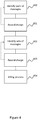
- Figure 4 shows a flow chart of a process of co-ordinating interconnect invoicing for a group messaging system.
- the charging process utilises the common message IDs applied to messages to group them to minimise data transmission and storage during the billing process.
- a billing process is utilised such that all related messages within a group chap (for example a received message and all forwarded replies) to a particular network are charged a single interconnect fee.
- This process may also have an advantage in reduced fraud as it reduces the fees generated for networks terminating messages sent by a group messaging server.
- charging system 205 interrogates group messaging log 204 to identify pairs of messages with the same message ID sent in opposite directions between two networks.
- messages 1 and 2 form such a pair, being between networks N1 and N2.
- charging system 205 records a single interconnect charge entry for the pair of messages as the messages are related.
- the process of steps 400 and 401 may repeat to identify all other applicable messages, or the process may move directly to step 402 and return later to identify other applicable messages.
- a record may also be kept of the outgoing message to act as a "shadow" invoice to reconcile against an invoice received from network N2 for terminating that message, or the entry in the message log could be used to minimise the data stored and transferred during the charging process..
- charging system 205 interrogates group messaging log 204 to identify sets of messages having the same message ID and being from a particular first to a particular second network.
- messages 4 and 5 would be identified as being from network N1 to network N3 and having message ID ID1.
- charging system 205 records a single interconnect entry for the two messages as they are related. The process of steps 402 and 403 may repeat immediately to review all potential networks, or the whole process of steps 400 - 403 may be repeated as a single process.
- Message 3 in the above example is not processed in the interconnect billing process because the source and destination networks are both the network hosting the group messaging server and therefore there are no interconnect charges.
- the billing process continues by the transmission of invoices between mobile network providers and the reconciliation of those invoices and making of payments.
- entries in the messaging log may be marked as such so that they are not considered again, or they could be deleted or archived to minimise the size of the messaging log database.
- the charging process may identify messages 1 and 2 as being to and from the same networks and thus recognise that the interconnect charges for the two messages cancel each other out or that only one of them prevails in the charging records. The charging system would thus make no entry for these entries and there would then be only a single interconnect charging entry for all five messages of the example.
- the fields shown above are given by way of example only and different or other fields may be stored as well as or instead of the example fields.
- data relating to the number of participants in a group chat, the number of distinct networks involved, or the countries of the participants may be stored.
- the charging process can apply differential charging to interconnect items based on their source or destination. For example, a premium may be charged for terminating messages at a group messaging server in view of the extra resources required to process and distribute that message. The charge for out-going messages from a group messaging server may then be lower, or even zero, in recognition of the premium on the incoming message.
- the premium may be dependent on the number of members of the particular group chat.
- the premium may also be dependent on the number of different networks to which outgoing messages must be sent. For example, the greater the number of networks the higher the premium.
- Other parameters may also be used to differentiate pricing, for example the number of countries covered by members of a group chat, or the number of networks to which the group messaging server could send messages.
- Each of the variations to charging models may be implemented by recording appropriate data in the group messaging log (or other appropriate data store) and utilising that data during the charging process.
- Figure 5 shows a schematic diagram comparable to that of Figure 2 , but in which network N2 is also provided with a group messaging server 500 capable of recording equivalent data about group chat messages to group messaging server 200 of network N1.
- Group messaging server 500 is configured to record data as described in relation to Figure 2 , which data can be utilised by network N2's charging system 501 in the same manner as described in relation to charging system 205.
- Such an arrangement, whereby each network records data in the same manner may further reduce the processing and data transmission requirements of group messaging charging.
- the common message ID utilised for related messages provides a common index for all networks to utilise when communicating charging data which further reduces the complexity of reconciling data from each of the networks.
- components have been described as reading or obtaining data from another component, that function may be performed in any way.
- the data may be requested using an API or via a direct access to a storage medium, or the data may be transmitted from the source component to the reading or obtaining component in response to a request or as part of a scheduled process.
- the various systems and functions described herein may be implemented in a single computing system, or in multiple networked computing systems.
- the divisions between systems in this description need to be followed in an implementation, but have only been used for clarity of explanation.
- the actual implementation may be dependent on a range of parameters and requirements of the operator.
- the data gathering system and analysis system may be provided as a single system, comprising a processing system to receive, process, and analyse the data and a data storage system (such as non-volatile computer memory) to store the data.
- the systems may be centrally located or may be distributed.
- some functions are optional and may be omitted, while additional functions may also be provided, without moving outside the scope of this disclosure.
- Functions relating to the processes described herein may be implemented on computers connected for data communication via the components of a packet data network. Although special purpose devices may be used, such devices also may be implemented using one or more hardware platforms intended to represent a general class of data processing device commonly used so as to implement the functions discussed above, albeit with an appropriate network connection for data communication.
- a general-purpose computer typically comprises a central processor or other processing device, an internal communication bus, various types of memory or storage media (RAM, ROM, EEPROM, cache memory, disk drives etc.) for code and data storage, and one or more network interface cards or ports for communication purposes.
- the software functionalities involve programming, including executable code as well as associated stored data.
- the software code is executable by the general-purpose computer that functions as the server or terminal device used for transmitting queries, analysing data, or responding to queries, or any other relevant function. In operation, the code is stored within the general-purpose computer platform. At other times, however, the software may be stored at other locations and/or transported for loading into the appropriate general-purpose computer system. Execution of such code by a processor of the computer platform or by a number of computer platforms enables the platform(s) to implement the methodologies described herein.
- a general purpose computer hardware platform may be arranged to provide a computer with user interface elements, as may be used to implement a personal computer or other type of work station or terminal device.
- a general purpose computer hardware platform may also be arranged to provide a network or host computer platform, as may typically be used to implement a server.
- Figure 6 illustrates various components of an exemplary computing-based device 600 which may be implemented as any form of a computing and/or electronic device, and in which embodiments of any one or more of the systems described herein be implemented.
- the systems 200-205 of Figure 2 may be implemented using computing-based devices having some or all of the features shown in Figure 6
- Computing-based device 600 comprises one or more processors 601 which may be microprocessors, controllers or any other suitable type of processors for processing computer executable instructions to control the operation of the device in order to provide the functionality described hereinbefore.
- the processors 601 may include one or more fixed function blocks (also referred to as accelerators) which implement a part of the methods described hereinbefore in hardware (rather than software or firmware).
- Platform software comprising an operating system 602 or any other suitable platform software may be provided at the computing-based device to enable application software 603 to be executed on the device.
- Computer-readable media may include, for example, computer storage media such as memory 604 and communications media.
- Computer storage media, such as memory 604 includes volatile and non-volatile, removable and non-removable media implemented in any method or technology for storage of information such as computer readable instructions, data structures, program modules or other data.
- Computer storage media includes, but is not limited to, RAM, ROM, EPROM, EEPROM, flash memory or other memory technology, CD-ROM, digital versatile disks (DVD) or other optical storage, magnetic cassettes, magnetic tape, magnetic disk storage or other magnetic storage devices, or any other non-transmission medium that can be used to store information for access by a computing device.
- communication media may embody computer readable instructions, data structures, program modules, or other data in a modulated data signal, such as a carrier wave, or other transport mechanism.
- computer storage media does not include communication media.
- the computer storage media (memory 604) is shown within the computing-based device 600 it will be appreciated that the storage may be distributed or located remotely and accessed via a network 610 or other communication link (e.g. using communication interface 605).
- Memory 604 may also provide a store system 609 for storing data for use by the computing system, for example in the form of databases.
- Communication interface 605 may also provide an interface to systems of the mobile telecommunications network to provide communications and functions required to perform the methods described herein.
- the computing-based device 600 may also comprise an input/output controller 606 arranged to output display information to a display device 607 which may be separate from or integral to the computing-based device 600.
- the display information may provide a graphical user interface.
- the input/output controller 606 may also be arranged to receive and process input from one or more devices, such as a user input device 608 (e.g. a mouse or a keyboard). In an embodiment the display device 607 may also act as the user input device.
- the input/output controller 606 may also output data to devices other than the display device, e.g. a locally connected printing device (not shown in Figure 6 ).
- 'computer' is used herein to refer to any device with processing capability such that it can execute instructions. Those skilled in the art will realize that such processing capabilities are incorporated into many different devices and therefore the term 'computer' includes PCs, servers, mobile telephones, personal digital assistants and many other devices.
- a remote computer may store an example of the process described as software.
- a local or terminal computer may access the remote computer and download a part or all of the software to run the program.
- the local computer may download pieces of the software as needed, or execute some software instructions at the local terminal and some at the remote computer (or computer network).
- a dedicated circuit such as a DSP, programmable logic array, or the like.
- aspects of the methods described herein may be embodied in programming.
- Program aspects of the technology may be thought of as “products” or “articles of manufacture” typically in the form of executable code and/or associated data that is carried on or embodied in a type of machine readable medium and/or in a plurality of such media.
- “Storage” type media include any or all of the tangible memory of the computers, processors or the like, or associated modules thereof, such as various semiconductor memories, tape drives, disk drives and the like, which may provide non- transitory storage at any time for the software programming. All or portions of the software may at times be communicated through the Internet or various other telecommunication networks. Such communications, for example, may enable loading of the software from one computer or processor into another.
- another type of media that may bear the software elements includes optical, electrical and electromagnetic waves, such as used across physical interfaces between local devices, through wired and optical landline networks and over various air- links.
- the physical elements that carry such waves, such as wired or wireless links, optical links or the like, also may be considered as media bearing the software.
- terms such as computer or machine "readable medium” refer to any medium that participates in providing instructions to a processor for execution.
- a machine readable medium may take many forms, including but not limited to, a tangible storage medium, a carrier wave medium or physical transmission medium.
- Non-volatile storage media include, for example, optical or magnetic disks, such as any of the storage devices in any computer(s) or the like.
- Volatile storage media include dynamic memory, such as main memory of such a computer platform.
- Tangible transmission media include coaxial cables; copper wire and fibre optics, including the wires that comprise a bus within a computer system.
- Carrier-wave transmission media can take the form of electric or electromagnetic signals, or acoustic or light waves such as those generated during radio frequency (RF) and infrared (IR) data communications.
- RF radio frequency
- IR infrared
- Computer-readable media therefore include for example: a floppy disk, a flexible disk, hard disk, magnetic tape, any other magnetic medium, a CD-ROM, DVD or DVD-ROM, any other optical medium, punch cards paper tape, any other physical storage medium with patterns of holes, a RAM, a PROM and EPROM, a FLASH-EPROM, any other memory chip or cartridge, a carrier wave transporting data or instructions, cables or links transporting such a carrier wave, or any other medium from which a computer can read programming code and/or data. Many of these forms of computer readable media may be involved in carrying one or more sequences of one or more instructions to a processor for execution.
Landscapes
- Engineering & Computer Science (AREA)
- Computer Networks & Wireless Communication (AREA)
- Signal Processing (AREA)
- Multimedia (AREA)
- Business, Economics & Management (AREA)
- Accounting & Taxation (AREA)
- Information Transfer Between Computers (AREA)
- Telephonic Communication Services (AREA)
Claims (10)
- Ein in einem Gruppennachrichtenübermittlungssystem (200) in Verbindung mit einem mobilen Telekommunikationsnetz durchgeführtes Datenverarbeitungsverfahren, wobei das Verfahren die folgenden Schritte umfasst:Empfangen einer eingehenden Nachricht von einem entfernten Benutzerendgerät durch ein Weiterleitungssystem (201) des Gruppennachrichtenübermittlungssystems, wobei die Nachricht der Verteilung an eine Gruppe von Benutzern dient;Speichern der Einzelheiten der eingehenden Nachricht in einem Nachrichtenübermittlungsprotokoll (204) in Verbindung mit dem Weiterleitungssystem (201), wobei die Einzelheiten von dem Weiterleitungssystem (201) übermittelt werden und eine Nachrichtenkennung umfassen, die mit der eingehenden Nachricht empfangen wird;Identifizieren, an dem Weiterleitungssystem (201), zumindest eines Empfängers aus der Gruppe von Benutzern, an den die eingehende Nachricht übermittelt werden soll;Übermitteln, durch das Weiterleitungssystem (201), einer ausgehenden Nachricht an jeden der zumindest einen Empfänger, wobei die ausgehende Nachricht zumindest einen Teil der eingehenden Nachricht und die Nachrichtenkennung umfasst;Speichern der Einzelheiten jeder ausgehenden Nachricht in dem Nachrichtenübermittlungsprotokoll (204) in Verbindung mit dem Weiterleitungssystem (201), wobei die Einzelheiten von dem Weiterleitungssystem (201) übermittelt werden und die Nachrichtenkennung umfassen; undVerarbeiten, durch ein Abrechnungssystem (205) in Verbindung mit dem Nachrichtenübermittlungsprotokoll (204), zur Identifizierung von Gruppen von Nachrichten in dem Nachrichtenübermittlungsprotokoll (204), wobei die Gruppen von Nachrichten dadurch identifiziert werden, dass sie eine gemeinsame Nachrichtenkennung aufweisen; undErzeugen von Abrechnungsdaten an dem Abrechnungssystem (205) basierend auf den Gruppen von Nachrichten.
- Ein Verfahren nach Anspruch 1, wobei die Gruppe von Benutzern durch in dem Gruppennachrichtenübermittlungssystem (200) gespeicherte Daten identifiziert wird.
- Ein Verfahren nach Anspruch 1 oder 2, wobei das Gruppennachrichtenübermittlungssystem (200) Teil des Telekommunikationsnetzes ist.
- Ein Verfahren nach Anspruch 3, wobei es sich bei zumindest einem aus der Gruppe der Benutzer um einen Benutzer eines mobilen Telekommunikationsnetzes handelt, das sich von dem mobilen Telekommunikationsnetz unterscheidet, von dem das Gruppennachrichtenübermittlungssystem (200) ein Teil ist.
- Ein Verfahren nach Anspruch 3 oder 4, wobei die Abrechnungsdaten von dem Verhältnis zwischen eingehenden und ausgehenden Nachrichten zwischen dem mobilen Telekommunikationsnetz, von dem das Gruppennachrichtenübermittlungssystem (200) ein Teil ist, und einem anderen mobilen Telekommunikationsnetz abhängig sind.
- Ein Gruppennachrichtenübermittlungssystem (200) in Verbindung mit einem mobilen Telekommunikationsnetz, wobei das Gruppennachrichtenübermittlungssystem Folgendes umfasst:ein Nachrichtenübermittlungsprotokoll (204) zur Speicherung von Einzelheiten von Nachrichten, die durch das Gruppennachrichtenübermittlungssystem (200) empfangen und gesendet werden;ein Weiterleitungssystem (201) in Verbindung mit dem Nachrichtenübermittlungsprotokoll (204), wobei das Weiterleitungssystem so konfiguriert ist, dass es:eine eingehende Nachricht von einem entfernten Benutzerendgerät empfängt, wobei die Nachricht der Verteilung an eine Gruppe von Benutzern dient;die Einzelheiten der eingehenden Nachricht an das Nachrichtenübermittlungsprotokoll (204) zur Speicherung darin übermittelt, wobei die Details eine Nachrichtenkennung umfassen, die mit der eingehenden Nachricht empfangen wird;zumindest einen Empfänger aus der Gruppe von Benutzern identifiziert, an den die eingehende Nachricht übermittelt werden soll;eine ausgehende Nachricht an jeden der zumindest einen Empfänger übermittelt, wobei die ausgehende Nachricht zumindest einen Teil der eingehenden Nachricht und die Nachrichtenkennung umfasst;die Einzelheiten jeder ausgehenden Nachricht an das Nachrichtenübermittlungsprotokoll (204) zur Speicherung darin übermittelt, wobei die Einzelheiten die Nachrichtenkennung umfassen; undein Abrechnungssystem (205) in Verbindung mit dem Nachrichtenübermittlungsprotokoll (204), wobei das Abrechnungssystem so konfiguriert ist, dass es:Gruppen von Nachrichten in dem Nachrichtenübermittlungsprotokoll (204) identifiziert, wobei die Gruppen von Nachrichten dadurch identifiziert werden, dass sie eine gemeinsame Nachrichtenkennung aufweisen;Abrechnungsdaten basierend auf den Gruppen von Nachrichten erzeugt.
- Ein Gruppennachrichtenübermittlungssystem (200) nach Anspruch 6, wobei das Gruppennachrichtenübermittlungssystem (200) weiter eine Datenspeicherung umfasst, wobei die Gruppe von Benutzern durch in der Datenspeicherung gespeicherte Daten identifiziert wird.
- Ein Gruppennachrichtenübermittlungssystem (200) nach Anspruch 6 oder 7, wobei das Gruppennachrichtenübermittlungssystem (200) Teil des Telekommunikationsnetzes ist.
- Ein Gruppennachrichtenübermittlungssystem (200) nach Anspruch 8, wobei es sich bei zumindest einem aus der Gruppe der Benutzer um einen Benutzer eines mobilen Telekommunikationsnetzes handelt, das sich von dem mobilen Telekommunikationsnetz unterscheidet, von dem das Gruppennachrichtenübermittlungssystem (200) ein Teil ist.
- Ein Gruppennachrichtenübermittlungssystem (200) nach Anspruch 8 oder 9, wobei das Abrechnungssystem so konfiguriert ist, dass es Abrechnungsdaten erzeugt, die von dem Verhältnis zwischen eingehenden und ausgehenden Nachrichten zwischen dem mobilen Telekommunikationsnetz, von dem das Gruppennachrichtenübermittlungssystem (200) ein Teil ist, und einem anderen mobilen Telekommunikationsnetz abhängig sind.
Applications Claiming Priority (1)
| Application Number | Priority Date | Filing Date | Title |
|---|---|---|---|
| GB1502815.2A GB2535513A (en) | 2015-02-19 | 2015-02-19 | Group messaging system |
Publications (2)
| Publication Number | Publication Date |
|---|---|
| EP3059934A1 EP3059934A1 (de) | 2016-08-24 |
| EP3059934B1 true EP3059934B1 (de) | 2019-08-07 |
Family
ID=52821887
Family Applications (1)
| Application Number | Title | Priority Date | Filing Date |
|---|---|---|---|
| EP16153806.1A Active EP3059934B1 (de) | 2015-02-19 | 2016-02-02 | Gruppennachrichtenübermittlungssystem und verfahren |
Country Status (3)
| Country | Link |
|---|---|
| US (1) | US9882857B2 (de) |
| EP (1) | EP3059934B1 (de) |
| GB (1) | GB2535513A (de) |
Families Citing this family (2)
| Publication number | Priority date | Publication date | Assignee | Title |
|---|---|---|---|---|
| CN108123808B (zh) * | 2016-11-28 | 2021-04-09 | 华为技术有限公司 | 流量管理的方法及设备 |
| CN107093069A (zh) * | 2017-06-20 | 2017-08-25 | 上海闻泰电子科技有限公司 | 智能电表数据处理系统和方法 |
Family Cites Families (7)
| Publication number | Priority date | Publication date | Assignee | Title |
|---|---|---|---|---|
| US5923733A (en) * | 1996-06-27 | 1999-07-13 | At&T | Group message delivery system |
| US8699472B2 (en) | 2000-05-24 | 2014-04-15 | Nokia Corporation | Common charging identifier for communication networks |
| AU2003239840A1 (en) * | 2002-05-06 | 2003-11-17 | Telefonaktiebolaget Lm Ericsson (Publ) | Multi-user multimedia messaging services |
| US7386520B2 (en) * | 2002-08-22 | 2008-06-10 | International Business Machines Corporation | Cost-based method for dynamically pricing and prioritizing an e-mail |
| EP1821452B1 (de) * | 2006-02-17 | 2010-08-11 | Teliasonera Ab | Bereitstellung von Gebühreninformationen in einem Gruppenkommunikationssystem |
| GB2436412A (en) * | 2006-11-27 | 2007-09-26 | Cvon Innovations Ltd | Authentication of network usage for use with message modifying apparatus |
| KR20110079235A (ko) * | 2009-12-31 | 2011-07-07 | 주식회사 네이블커뮤니케이션즈 | 그룹 메시지 서비스 방법 |
-
2015
- 2015-02-19 GB GB1502815.2A patent/GB2535513A/en not_active Withdrawn
-
2016
- 2016-01-22 US US15/004,707 patent/US9882857B2/en active Active
- 2016-02-02 EP EP16153806.1A patent/EP3059934B1/de active Active
Non-Patent Citations (1)
| Title |
|---|
| None * |
Also Published As
| Publication number | Publication date |
|---|---|
| US20160248714A1 (en) | 2016-08-25 |
| EP3059934A1 (de) | 2016-08-24 |
| US9882857B2 (en) | 2018-01-30 |
| GB201502815D0 (en) | 2015-04-08 |
| GB2535513A (en) | 2016-08-24 |
Similar Documents
| Publication | Publication Date | Title |
|---|---|---|
| US12069059B2 (en) | System and method for dynamically providing communication profiles for mobile devices | |
| EP1958401B1 (de) | Vorrichtung und verfahren für nachrichtenänderung | |
| US20110268022A1 (en) | System and Method for Routing Signals Using Network-Specific Identifiers for a Common Server Module | |
| US8331963B1 (en) | Enabling retrieval of a mobile messaging service message from multiple devices associated with a single mobile directory number | |
| US20120095856A1 (en) | Using a mobile device to make a transaction | |
| US20110269472A1 (en) | System and Method for Routing a Call to a Mobile Device Associated with Multiple Communication Profiles | |
| US8526923B2 (en) | Enabling a user to purchase a ring back tone | |
| CN102710556B (zh) | 即时通信好友的添加方法及装置 | |
| EP1935144A2 (de) | Vorrichtung und verfahren zur bereitstellung einer kontextabhängigen multimedia-nachrichtendienst-antwort | |
| CN110519714B (zh) | 一种短信审批处理方法、装置、电子设备和存储介质 | |
| US9882857B2 (en) | Group messaging system | |
| EP2564608B1 (de) | Mobile vorrichtung und verfahren zur dynamischen bereitstellung von kommunikationsprofilen für mobile vorrichtungen | |
| CN101860838A (zh) | 一种预付费计费方法及系统 | |
| US8359003B1 (en) | Alternative text billing system and method | |
| WO2017167240A1 (zh) | 主副卡业务订购方法、装置及通信系统 | |
| US9439049B2 (en) | System and method for message service gateway | |
| CN102724140B (zh) | 即时通信好友添加方法及装置 | |
| CN101715171A (zh) | 综合业务管理平台ismp集群接入装置及方法 | |
| CN113676876B (zh) | 服务共享方法及装置 | |
| KR102169265B1 (ko) | 고객의 휴대전화 번호 관련 정보 조회 방법, 이에 사용되는 정보제공 서버, 고객관리 서버, 및 통신사 서버 | |
| US8260256B2 (en) | Billing off-net users for telecom services | |
| US8819204B2 (en) | Method and device for operating a group service in a communications network | |
| US20040240648A1 (en) | Dynamic processing of data processing instructions | |
| CN115878352B (zh) | 一种基于预先订阅的事件投递处理方法及装置 | |
| CN114092078B (zh) | 代付方法、装置、设备及存储介质 |
Legal Events
| Date | Code | Title | Description |
|---|---|---|---|
| PUAI | Public reference made under article 153(3) epc to a published international application that has entered the european phase |
Free format text: ORIGINAL CODE: 0009012 |
|
| AK | Designated contracting states |
Kind code of ref document: A1 Designated state(s): AL AT BE BG CH CY CZ DE DK EE ES FI FR GB GR HR HU IE IS IT LI LT LU LV MC MK MT NL NO PL PT RO RS SE SI SK SM TR |
|
| AX | Request for extension of the european patent |
Extension state: BA ME |
|
| STAA | Information on the status of an ep patent application or granted ep patent |
Free format text: STATUS: REQUEST FOR EXAMINATION WAS MADE |
|
| 17P | Request for examination filed |
Effective date: 20170216 |
|
| RBV | Designated contracting states (corrected) |
Designated state(s): AL AT BE BG CH CY CZ DE DK EE ES FI FR GB GR HR HU IE IS IT LI LT LU LV MC MK MT NL NO PL PT RO RS SE SI SK SM TR |
|
| GRAP | Despatch of communication of intention to grant a patent |
Free format text: ORIGINAL CODE: EPIDOSNIGR1 |
|
| STAA | Information on the status of an ep patent application or granted ep patent |
Free format text: STATUS: GRANT OF PATENT IS INTENDED |
|
| RIC1 | Information provided on ipc code assigned before grant |
Ipc: H04L 12/58 20060101ALI20190131BHEP Ipc: H04M 15/00 20060101AFI20190131BHEP Ipc: H04W 4/24 20180101ALI20190131BHEP Ipc: H04L 12/14 20060101ALI20190131BHEP Ipc: H04W 4/12 20090101ALI20190131BHEP Ipc: H04W 4/06 20090101ALI20190131BHEP |
|
| INTG | Intention to grant announced |
Effective date: 20190227 |
|
| GRAS | Grant fee paid |
Free format text: ORIGINAL CODE: EPIDOSNIGR3 |
|
| GRAA | (expected) grant |
Free format text: ORIGINAL CODE: 0009210 |
|
| STAA | Information on the status of an ep patent application or granted ep patent |
Free format text: STATUS: THE PATENT HAS BEEN GRANTED |
|
| AK | Designated contracting states |
Kind code of ref document: B1 Designated state(s): AL AT BE BG CH CY CZ DE DK EE ES FI FR GB GR HR HU IE IS IT LI LT LU LV MC MK MT NL NO PL PT RO RS SE SI SK SM TR |
|
| REG | Reference to a national code |
Ref country code: GB Ref legal event code: FG4D |
|
| REG | Reference to a national code |
Ref country code: CH Ref legal event code: EP Ref country code: AT Ref legal event code: REF Ref document number: 1165638 Country of ref document: AT Kind code of ref document: T Effective date: 20190815 |
|
| REG | Reference to a national code |
Ref country code: DE Ref legal event code: R096 Ref document number: 602016017932 Country of ref document: DE |
|
| REG | Reference to a national code |
Ref country code: IE Ref legal event code: FG4D |
|
| REG | Reference to a national code |
Ref country code: NL Ref legal event code: MP Effective date: 20190807 |
|
| REG | Reference to a national code |
Ref country code: LT Ref legal event code: MG4D |
|
| PG25 | Lapsed in a contracting state [announced via postgrant information from national office to epo] |
Ref country code: HR Free format text: LAPSE BECAUSE OF FAILURE TO SUBMIT A TRANSLATION OF THE DESCRIPTION OR TO PAY THE FEE WITHIN THE PRESCRIBED TIME-LIMIT Effective date: 20190807 Ref country code: LT Free format text: LAPSE BECAUSE OF FAILURE TO SUBMIT A TRANSLATION OF THE DESCRIPTION OR TO PAY THE FEE WITHIN THE PRESCRIBED TIME-LIMIT Effective date: 20190807 Ref country code: BG Free format text: LAPSE BECAUSE OF FAILURE TO SUBMIT A TRANSLATION OF THE DESCRIPTION OR TO PAY THE FEE WITHIN THE PRESCRIBED TIME-LIMIT Effective date: 20191107 Ref country code: NL Free format text: LAPSE BECAUSE OF FAILURE TO SUBMIT A TRANSLATION OF THE DESCRIPTION OR TO PAY THE FEE WITHIN THE PRESCRIBED TIME-LIMIT Effective date: 20190807 Ref country code: SE Free format text: LAPSE BECAUSE OF FAILURE TO SUBMIT A TRANSLATION OF THE DESCRIPTION OR TO PAY THE FEE WITHIN THE PRESCRIBED TIME-LIMIT Effective date: 20190807 Ref country code: PT Free format text: LAPSE BECAUSE OF FAILURE TO SUBMIT A TRANSLATION OF THE DESCRIPTION OR TO PAY THE FEE WITHIN THE PRESCRIBED TIME-LIMIT Effective date: 20191209 Ref country code: FI Free format text: LAPSE BECAUSE OF FAILURE TO SUBMIT A TRANSLATION OF THE DESCRIPTION OR TO PAY THE FEE WITHIN THE PRESCRIBED TIME-LIMIT Effective date: 20190807 Ref country code: NO Free format text: LAPSE BECAUSE OF FAILURE TO SUBMIT A TRANSLATION OF THE DESCRIPTION OR TO PAY THE FEE WITHIN THE PRESCRIBED TIME-LIMIT Effective date: 20191107 |
|
| REG | Reference to a national code |
Ref country code: AT Ref legal event code: MK05 Ref document number: 1165638 Country of ref document: AT Kind code of ref document: T Effective date: 20190807 |
|
| PG25 | Lapsed in a contracting state [announced via postgrant information from national office to epo] |
Ref country code: RS Free format text: LAPSE BECAUSE OF FAILURE TO SUBMIT A TRANSLATION OF THE DESCRIPTION OR TO PAY THE FEE WITHIN THE PRESCRIBED TIME-LIMIT Effective date: 20190807 Ref country code: IS Free format text: LAPSE BECAUSE OF FAILURE TO SUBMIT A TRANSLATION OF THE DESCRIPTION OR TO PAY THE FEE WITHIN THE PRESCRIBED TIME-LIMIT Effective date: 20191207 Ref country code: ES Free format text: LAPSE BECAUSE OF FAILURE TO SUBMIT A TRANSLATION OF THE DESCRIPTION OR TO PAY THE FEE WITHIN THE PRESCRIBED TIME-LIMIT Effective date: 20190807 Ref country code: GR Free format text: LAPSE BECAUSE OF FAILURE TO SUBMIT A TRANSLATION OF THE DESCRIPTION OR TO PAY THE FEE WITHIN THE PRESCRIBED TIME-LIMIT Effective date: 20191108 Ref country code: LV Free format text: LAPSE BECAUSE OF FAILURE TO SUBMIT A TRANSLATION OF THE DESCRIPTION OR TO PAY THE FEE WITHIN THE PRESCRIBED TIME-LIMIT Effective date: 20190807 Ref country code: AL Free format text: LAPSE BECAUSE OF FAILURE TO SUBMIT A TRANSLATION OF THE DESCRIPTION OR TO PAY THE FEE WITHIN THE PRESCRIBED TIME-LIMIT Effective date: 20190807 |
|
| PG25 | Lapsed in a contracting state [announced via postgrant information from national office to epo] |
Ref country code: TR Free format text: LAPSE BECAUSE OF FAILURE TO SUBMIT A TRANSLATION OF THE DESCRIPTION OR TO PAY THE FEE WITHIN THE PRESCRIBED TIME-LIMIT Effective date: 20190807 |
|
| PG25 | Lapsed in a contracting state [announced via postgrant information from national office to epo] |
Ref country code: AT Free format text: LAPSE BECAUSE OF FAILURE TO SUBMIT A TRANSLATION OF THE DESCRIPTION OR TO PAY THE FEE WITHIN THE PRESCRIBED TIME-LIMIT Effective date: 20190807 Ref country code: DK Free format text: LAPSE BECAUSE OF FAILURE TO SUBMIT A TRANSLATION OF THE DESCRIPTION OR TO PAY THE FEE WITHIN THE PRESCRIBED TIME-LIMIT Effective date: 20190807 Ref country code: EE Free format text: LAPSE BECAUSE OF FAILURE TO SUBMIT A TRANSLATION OF THE DESCRIPTION OR TO PAY THE FEE WITHIN THE PRESCRIBED TIME-LIMIT Effective date: 20190807 Ref country code: IT Free format text: LAPSE BECAUSE OF FAILURE TO SUBMIT A TRANSLATION OF THE DESCRIPTION OR TO PAY THE FEE WITHIN THE PRESCRIBED TIME-LIMIT Effective date: 20190807 Ref country code: RO Free format text: LAPSE BECAUSE OF FAILURE TO SUBMIT A TRANSLATION OF THE DESCRIPTION OR TO PAY THE FEE WITHIN THE PRESCRIBED TIME-LIMIT Effective date: 20190807 Ref country code: PL Free format text: LAPSE BECAUSE OF FAILURE TO SUBMIT A TRANSLATION OF THE DESCRIPTION OR TO PAY THE FEE WITHIN THE PRESCRIBED TIME-LIMIT Effective date: 20190807 |
|
| PG25 | Lapsed in a contracting state [announced via postgrant information from national office to epo] |
Ref country code: IS Free format text: LAPSE BECAUSE OF FAILURE TO SUBMIT A TRANSLATION OF THE DESCRIPTION OR TO PAY THE FEE WITHIN THE PRESCRIBED TIME-LIMIT Effective date: 20200224 Ref country code: SM Free format text: LAPSE BECAUSE OF FAILURE TO SUBMIT A TRANSLATION OF THE DESCRIPTION OR TO PAY THE FEE WITHIN THE PRESCRIBED TIME-LIMIT Effective date: 20190807 Ref country code: SK Free format text: LAPSE BECAUSE OF FAILURE TO SUBMIT A TRANSLATION OF THE DESCRIPTION OR TO PAY THE FEE WITHIN THE PRESCRIBED TIME-LIMIT Effective date: 20190807 Ref country code: CZ Free format text: LAPSE BECAUSE OF FAILURE TO SUBMIT A TRANSLATION OF THE DESCRIPTION OR TO PAY THE FEE WITHIN THE PRESCRIBED TIME-LIMIT Effective date: 20190807 |
|
| REG | Reference to a national code |
Ref country code: DE Ref legal event code: R097 Ref document number: 602016017932 Country of ref document: DE |
|
| PLBE | No opposition filed within time limit |
Free format text: ORIGINAL CODE: 0009261 |
|
| STAA | Information on the status of an ep patent application or granted ep patent |
Free format text: STATUS: NO OPPOSITION FILED WITHIN TIME LIMIT |
|
| PG2D | Information on lapse in contracting state deleted |
Ref country code: IS |
|
| 26N | No opposition filed |
Effective date: 20200603 |
|
| PG25 | Lapsed in a contracting state [announced via postgrant information from national office to epo] |
Ref country code: SI Free format text: LAPSE BECAUSE OF FAILURE TO SUBMIT A TRANSLATION OF THE DESCRIPTION OR TO PAY THE FEE WITHIN THE PRESCRIBED TIME-LIMIT Effective date: 20190807 |
|
| REG | Reference to a national code |
Ref country code: CH Ref legal event code: PL |
|
| REG | Reference to a national code |
Ref country code: BE Ref legal event code: MM Effective date: 20200229 |
|
| PG25 | Lapsed in a contracting state [announced via postgrant information from national office to epo] |
Ref country code: MC Free format text: LAPSE BECAUSE OF FAILURE TO SUBMIT A TRANSLATION OF THE DESCRIPTION OR TO PAY THE FEE WITHIN THE PRESCRIBED TIME-LIMIT Effective date: 20190807 Ref country code: LU Free format text: LAPSE BECAUSE OF NON-PAYMENT OF DUE FEES Effective date: 20200202 |
|
| PG25 | Lapsed in a contracting state [announced via postgrant information from national office to epo] |
Ref country code: CH Free format text: LAPSE BECAUSE OF NON-PAYMENT OF DUE FEES Effective date: 20200229 Ref country code: LI Free format text: LAPSE BECAUSE OF NON-PAYMENT OF DUE FEES Effective date: 20200229 |
|
| PG25 | Lapsed in a contracting state [announced via postgrant information from national office to epo] |
Ref country code: IE Free format text: LAPSE BECAUSE OF NON-PAYMENT OF DUE FEES Effective date: 20200202 |
|
| PG25 | Lapsed in a contracting state [announced via postgrant information from national office to epo] |
Ref country code: BE Free format text: LAPSE BECAUSE OF NON-PAYMENT OF DUE FEES Effective date: 20200229 |
|
| PG25 | Lapsed in a contracting state [announced via postgrant information from national office to epo] |
Ref country code: MT Free format text: LAPSE BECAUSE OF FAILURE TO SUBMIT A TRANSLATION OF THE DESCRIPTION OR TO PAY THE FEE WITHIN THE PRESCRIBED TIME-LIMIT Effective date: 20190807 Ref country code: CY Free format text: LAPSE BECAUSE OF FAILURE TO SUBMIT A TRANSLATION OF THE DESCRIPTION OR TO PAY THE FEE WITHIN THE PRESCRIBED TIME-LIMIT Effective date: 20190807 |
|
| PG25 | Lapsed in a contracting state [announced via postgrant information from national office to epo] |
Ref country code: MK Free format text: LAPSE BECAUSE OF FAILURE TO SUBMIT A TRANSLATION OF THE DESCRIPTION OR TO PAY THE FEE WITHIN THE PRESCRIBED TIME-LIMIT Effective date: 20190807 |
|
| P01 | Opt-out of the competence of the unified patent court (upc) registered |
Effective date: 20230519 |
|
| PGFP | Annual fee paid to national office [announced via postgrant information from national office to epo] |
Ref country code: GB Payment date: 20260219 Year of fee payment: 11 |
|
| PGFP | Annual fee paid to national office [announced via postgrant information from national office to epo] |
Ref country code: DE Payment date: 20260218 Year of fee payment: 11 |
|
| PGFP | Annual fee paid to national office [announced via postgrant information from national office to epo] |
Ref country code: FR Payment date: 20260218 Year of fee payment: 11 |