EP3059780A1 - Method for confirming locked state of battery contact dedicated to electric vehicle - Google Patents
Method for confirming locked state of battery contact dedicated to electric vehicle Download PDFInfo
- Publication number
- EP3059780A1 EP3059780A1 EP13895772.5A EP13895772A EP3059780A1 EP 3059780 A1 EP3059780 A1 EP 3059780A1 EP 13895772 A EP13895772 A EP 13895772A EP 3059780 A1 EP3059780 A1 EP 3059780A1
- Authority
- EP
- European Patent Office
- Prior art keywords
- sensing
- positive locking
- bolt
- electric vehicle
- contact
- Prior art date
- Legal status (The legal status is an assumption and is not a legal conclusion. Google has not performed a legal analysis and makes no representation as to the accuracy of the status listed.)
- Withdrawn
Links
Images

Classifications
-
- H—ELECTRICITY
- H01—ELECTRIC ELEMENTS
- H01R—ELECTRICALLY-CONDUCTIVE CONNECTIONS; STRUCTURAL ASSOCIATIONS OF A PLURALITY OF MUTUALLY-INSULATED ELECTRICAL CONNECTING ELEMENTS; COUPLING DEVICES; CURRENT COLLECTORS
- H01R13/00—Details of coupling devices of the kinds covered by groups H01R12/70 or H01R24/00 - H01R33/00
- H01R13/64—Means for preventing incorrect coupling
- H01R13/641—Means for preventing incorrect coupling by indicating incorrect coupling; by indicating correct or full engagement
-
- H—ELECTRICITY
- H01—ELECTRIC ELEMENTS
- H01M—PROCESSES OR MEANS, e.g. BATTERIES, FOR THE DIRECT CONVERSION OF CHEMICAL ENERGY INTO ELECTRICAL ENERGY
- H01M50/00—Constructional details or processes of manufacture of the non-active parts of electrochemical cells other than fuel cells, e.g. hybrid cells
- H01M50/50—Current conducting connections for cells or batteries
- H01M50/543—Terminals
-
- B—PERFORMING OPERATIONS; TRANSPORTING
- B60—VEHICLES IN GENERAL
- B60L—PROPULSION OF ELECTRICALLY-PROPELLED VEHICLES; SUPPLYING ELECTRIC POWER FOR AUXILIARY EQUIPMENT OF ELECTRICALLY-PROPELLED VEHICLES; ELECTRODYNAMIC BRAKE SYSTEMS FOR VEHICLES IN GENERAL; MAGNETIC SUSPENSION OR LEVITATION FOR VEHICLES; MONITORING OPERATING VARIABLES OF ELECTRICALLY-PROPELLED VEHICLES; ELECTRIC SAFETY DEVICES FOR ELECTRICALLY-PROPELLED VEHICLES
- B60L50/00—Electric propulsion with power supplied within the vehicle
- B60L50/50—Electric propulsion with power supplied within the vehicle using propulsion power supplied by batteries or fuel cells
- B60L50/60—Electric propulsion with power supplied within the vehicle using propulsion power supplied by batteries or fuel cells using power supplied by batteries
- B60L50/64—Constructional details of batteries specially adapted for electric vehicles
-
- B—PERFORMING OPERATIONS; TRANSPORTING
- B60—VEHICLES IN GENERAL
- B60L—PROPULSION OF ELECTRICALLY-PROPELLED VEHICLES; SUPPLYING ELECTRIC POWER FOR AUXILIARY EQUIPMENT OF ELECTRICALLY-PROPELLED VEHICLES; ELECTRODYNAMIC BRAKE SYSTEMS FOR VEHICLES IN GENERAL; MAGNETIC SUSPENSION OR LEVITATION FOR VEHICLES; MONITORING OPERATING VARIABLES OF ELECTRICALLY-PROPELLED VEHICLES; ELECTRIC SAFETY DEVICES FOR ELECTRICALLY-PROPELLED VEHICLES
- B60L58/00—Methods or circuit arrangements for monitoring or controlling batteries or fuel cells, specially adapted for electric vehicles
- B60L58/10—Methods or circuit arrangements for monitoring or controlling batteries or fuel cells, specially adapted for electric vehicles for monitoring or controlling batteries
-
- F—MECHANICAL ENGINEERING; LIGHTING; HEATING; WEAPONS; BLASTING
- F16—ENGINEERING ELEMENTS AND UNITS; GENERAL MEASURES FOR PRODUCING AND MAINTAINING EFFECTIVE FUNCTIONING OF MACHINES OR INSTALLATIONS; THERMAL INSULATION IN GENERAL
- F16B—DEVICES FOR FASTENING OR SECURING CONSTRUCTIONAL ELEMENTS OR MACHINE PARTS TOGETHER, e.g. NAILS, BOLTS, CIRCLIPS, CLAMPS, CLIPS OR WEDGES; JOINTS OR JOINTING
- F16B39/00—Locking of screws, bolts or nuts
- F16B39/02—Locking of screws, bolts or nuts in which the locking takes place after screwing down
-
- H—ELECTRICITY
- H01—ELECTRIC ELEMENTS
- H01M—PROCESSES OR MEANS, e.g. BATTERIES, FOR THE DIRECT CONVERSION OF CHEMICAL ENERGY INTO ELECTRICAL ENERGY
- H01M10/00—Secondary cells; Manufacture thereof
- H01M10/42—Methods or arrangements for servicing or maintenance of secondary cells or secondary half-cells
- H01M10/48—Accumulators combined with arrangements for measuring, testing or indicating the condition of cells, e.g. the level or density of the electrolyte
-
- H—ELECTRICITY
- H01—ELECTRIC ELEMENTS
- H01M—PROCESSES OR MEANS, e.g. BATTERIES, FOR THE DIRECT CONVERSION OF CHEMICAL ENERGY INTO ELECTRICAL ENERGY
- H01M50/00—Constructional details or processes of manufacture of the non-active parts of electrochemical cells other than fuel cells, e.g. hybrid cells
- H01M50/20—Mountings; Secondary casings or frames; Racks, modules or packs; Suspension devices; Shock absorbers; Transport or carrying devices; Holders
-
- H—ELECTRICITY
- H01—ELECTRIC ELEMENTS
- H01M—PROCESSES OR MEANS, e.g. BATTERIES, FOR THE DIRECT CONVERSION OF CHEMICAL ENERGY INTO ELECTRICAL ENERGY
- H01M50/00—Constructional details or processes of manufacture of the non-active parts of electrochemical cells other than fuel cells, e.g. hybrid cells
- H01M50/20—Mountings; Secondary casings or frames; Racks, modules or packs; Suspension devices; Shock absorbers; Transport or carrying devices; Holders
- H01M50/204—Racks, modules or packs for multiple batteries or multiple cells
-
- H—ELECTRICITY
- H01—ELECTRIC ELEMENTS
- H01M—PROCESSES OR MEANS, e.g. BATTERIES, FOR THE DIRECT CONVERSION OF CHEMICAL ENERGY INTO ELECTRICAL ENERGY
- H01M50/00—Constructional details or processes of manufacture of the non-active parts of electrochemical cells other than fuel cells, e.g. hybrid cells
- H01M50/20—Mountings; Secondary casings or frames; Racks, modules or packs; Suspension devices; Shock absorbers; Transport or carrying devices; Holders
- H01M50/249—Mountings; Secondary casings or frames; Racks, modules or packs; Suspension devices; Shock absorbers; Transport or carrying devices; Holders specially adapted for aircraft or vehicles, e.g. cars or trains
-
- H—ELECTRICITY
- H01—ELECTRIC ELEMENTS
- H01M—PROCESSES OR MEANS, e.g. BATTERIES, FOR THE DIRECT CONVERSION OF CHEMICAL ENERGY INTO ELECTRICAL ENERGY
- H01M50/00—Constructional details or processes of manufacture of the non-active parts of electrochemical cells other than fuel cells, e.g. hybrid cells
- H01M50/20—Mountings; Secondary casings or frames; Racks, modules or packs; Suspension devices; Shock absorbers; Transport or carrying devices; Holders
- H01M50/296—Mountings; Secondary casings or frames; Racks, modules or packs; Suspension devices; Shock absorbers; Transport or carrying devices; Holders characterised by terminals of battery packs
-
- H—ELECTRICITY
- H01—ELECTRIC ELEMENTS
- H01M—PROCESSES OR MEANS, e.g. BATTERIES, FOR THE DIRECT CONVERSION OF CHEMICAL ENERGY INTO ELECTRICAL ENERGY
- H01M50/00—Constructional details or processes of manufacture of the non-active parts of electrochemical cells other than fuel cells, e.g. hybrid cells
- H01M50/50—Current conducting connections for cells or batteries
- H01M50/502—Interconnectors for connecting terminals of adjacent batteries; Interconnectors for connecting cells outside a battery casing
-
- H—ELECTRICITY
- H01—ELECTRIC ELEMENTS
- H01M—PROCESSES OR MEANS, e.g. BATTERIES, FOR THE DIRECT CONVERSION OF CHEMICAL ENERGY INTO ELECTRICAL ENERGY
- H01M50/00—Constructional details or processes of manufacture of the non-active parts of electrochemical cells other than fuel cells, e.g. hybrid cells
- H01M50/50—Current conducting connections for cells or batteries
- H01M50/572—Means for preventing undesired use or discharge
-
- H—ELECTRICITY
- H01—ELECTRIC ELEMENTS
- H01M—PROCESSES OR MEANS, e.g. BATTERIES, FOR THE DIRECT CONVERSION OF CHEMICAL ENERGY INTO ELECTRICAL ENERGY
- H01M50/00—Constructional details or processes of manufacture of the non-active parts of electrochemical cells other than fuel cells, e.g. hybrid cells
- H01M50/50—Current conducting connections for cells or batteries
- H01M50/572—Means for preventing undesired use or discharge
- H01M50/574—Devices or arrangements for the interruption of current
- H01M50/579—Devices or arrangements for the interruption of current in response to shock
-
- H—ELECTRICITY
- H01—ELECTRIC ELEMENTS
- H01R—ELECTRICALLY-CONDUCTIVE CONNECTIONS; STRUCTURAL ASSOCIATIONS OF A PLURALITY OF MUTUALLY-INSULATED ELECTRICAL CONNECTING ELEMENTS; COUPLING DEVICES; CURRENT COLLECTORS
- H01R4/00—Electrically-conductive connections between two or more conductive members in direct contact, i.e. touching one another; Means for effecting or maintaining such contact; Electrically-conductive connections having two or more spaced connecting locations for conductors and using contact members penetrating insulation
- H01R4/56—Electrically-conductive connections between two or more conductive members in direct contact, i.e. touching one another; Means for effecting or maintaining such contact; Electrically-conductive connections having two or more spaced connecting locations for conductors and using contact members penetrating insulation one conductor screwing into another
-
- B—PERFORMING OPERATIONS; TRANSPORTING
- B60—VEHICLES IN GENERAL
- B60Y—INDEXING SCHEME RELATING TO ASPECTS CROSS-CUTTING VEHICLE TECHNOLOGY
- B60Y2200/00—Type of vehicle
- B60Y2200/90—Vehicles comprising electric prime movers
- B60Y2200/91—Electric vehicles
-
- H—ELECTRICITY
- H01—ELECTRIC ELEMENTS
- H01M—PROCESSES OR MEANS, e.g. BATTERIES, FOR THE DIRECT CONVERSION OF CHEMICAL ENERGY INTO ELECTRICAL ENERGY
- H01M2200/00—Safety devices for primary or secondary batteries
-
- H—ELECTRICITY
- H01—ELECTRIC ELEMENTS
- H01M—PROCESSES OR MEANS, e.g. BATTERIES, FOR THE DIRECT CONVERSION OF CHEMICAL ENERGY INTO ELECTRICAL ENERGY
- H01M2200/00—Safety devices for primary or secondary batteries
- H01M2200/20—Pressure-sensitive devices
-
- H—ELECTRICITY
- H01—ELECTRIC ELEMENTS
- H01M—PROCESSES OR MEANS, e.g. BATTERIES, FOR THE DIRECT CONVERSION OF CHEMICAL ENERGY INTO ELECTRICAL ENERGY
- H01M2220/00—Batteries for particular applications
- H01M2220/20—Batteries in motive systems, e.g. vehicle, ship, plane
-
- Y—GENERAL TAGGING OF NEW TECHNOLOGICAL DEVELOPMENTS; GENERAL TAGGING OF CROSS-SECTIONAL TECHNOLOGIES SPANNING OVER SEVERAL SECTIONS OF THE IPC; TECHNICAL SUBJECTS COVERED BY FORMER USPC CROSS-REFERENCE ART COLLECTIONS [XRACs] AND DIGESTS
- Y02—TECHNOLOGIES OR APPLICATIONS FOR MITIGATION OR ADAPTATION AGAINST CLIMATE CHANGE
- Y02E—REDUCTION OF GREENHOUSE GAS [GHG] EMISSIONS, RELATED TO ENERGY GENERATION, TRANSMISSION OR DISTRIBUTION
- Y02E60/00—Enabling technologies; Technologies with a potential or indirect contribution to GHG emissions mitigation
- Y02E60/10—Energy storage using batteries
-
- Y—GENERAL TAGGING OF NEW TECHNOLOGICAL DEVELOPMENTS; GENERAL TAGGING OF CROSS-SECTIONAL TECHNOLOGIES SPANNING OVER SEVERAL SECTIONS OF THE IPC; TECHNICAL SUBJECTS COVERED BY FORMER USPC CROSS-REFERENCE ART COLLECTIONS [XRACs] AND DIGESTS
- Y02—TECHNOLOGIES OR APPLICATIONS FOR MITIGATION OR ADAPTATION AGAINST CLIMATE CHANGE
- Y02T—CLIMATE CHANGE MITIGATION TECHNOLOGIES RELATED TO TRANSPORTATION
- Y02T10/00—Road transport of goods or passengers
- Y02T10/60—Other road transportation technologies with climate change mitigation effect
- Y02T10/70—Energy storage systems for electromobility, e.g. batteries
Definitions
- the present invention relates to a positive locking confirmation mechanism and a positive locking confirmation method for a battery contact of a battery pack in a battery box of an electric vehicle, and more particularly to a device of using a voltage sensor or a current sensor of a battery management unit to sense the locking state and confirming the positive locking state of a great number of battery contacts in a battery box and a technology of warning and indicating the user to check specified contacts before the contact of any battery contact is loosened.
- the technology of the present invention is applied to the electric vehicles requiring a great number of battery packs (e.g., electric buses or electric trucks).
- a battery pack of a large electric vehicle comprises several hundreds of batteries. These batteries are connected with each other in parallel or in series. However, if the battery contacts are not securely locked, the batteries of the battery pack are possibly loosened. Especially, when the electric vehicle is driven on a road with a poor condition, the vibration of electric vehicle may accelerate the problem of loosening the battery contacts. If the battery contacts are loosened or poorly contacted during the travelling process of the electric vehicle, the overall power system is possibly shut down or burnt out.
- the conventional electrode connecting method cannot indicate whether the electrodes are certainly locked. If the battery pack is suffered from a poor contact problem, the worker cannot immediately realize the damaged site. Under this circumstance, the time period of checking the battery pack is largely increased. Moreover, since the electric vehicle is only powered by the battery pack, the reliability of the battery pack is an important factor influencing performance of the electric vehicle.
- An object of present invention provides a positive locking confirmation mechanism for increasing the efficacy of assembling the battery contacts and confirming the positive locking state of the battery contact in order to overcome the drawbacks of the conventional technology.
- Another object of present invention provides a warning means of issuing a warning prompt when the battery contact is possibly loosened.
- the warning prompt can notify the maintenance worker to check and repair the battery pack.
- Another object of present invention provides an identifying means for facilitating the maintenance worker to identify the electrode that is possibly loosened.
- a positive locking confirmation mechanism for a battery contact of an electric vehicle.
- the positive locking confirmation mechanism includes a terminal bolt, a sensing bolt and a sensing unit.
- the terminal bolt is locked on an electrode, so that a conductor is contacted with the electrode.
- the sensing bolt is locked on the terminal bolt, so that a sensing contact is contacted with the terminal bolt. While the sensing bolt is screwed into the terminal bolt, the terminal bolt is subjected to deformation. A drag force is generated to fix the terminal bolt in response to the deformation of the terminal bolt.
- the sensing unit is used for detecting whether the sensing contact and the terminal bolt are in a positive locking state.
- the terminal bolt is subjected to deformation through a pin.
- the terminal bolt has a taper structure, and the taper structure is contacted with the pin.
- the pin has a thread.
- the sensing unit judges whether the sensing contact and the terminal bolt are in the positive locking state according to a result of judging whether a voltage signal from the sensing contact is stable.
- the sensing bolt is made of an insulation material.
- an insulation packing is arranged between the sensing bolt and the sensing contact.
- the sensing bolt and the sensing contact are connected with each other through a safety rope.
- the sensing unit is a battery protection board.
- a positive locking conformation mechanism for a battery contact of an electric vehicle includes a terminal bolt, a sensing bolt and a controlling unit.
- the terminal bolt is used for locking a conductor on an electrode of a battery.
- a head portion of the terminal bolt has an internal thread.
- a tail end of the terminal bolt has an expansive section.
- the sensing bolt is screwed into the internal thread of the terminal bolt so as to lock a sensing contact of a voltage sensor. While the sensing bolt is screwed into the internal thread of the terminal bolt, a pin is pushed by the sensing bolt to prop open the expansive section of the terminal bolt, so that the terminal bolt and the electrode of the battery are in a positive locking state.
- the controlling unit is used for receiving a voltage signal from the voltage sensor and judging whether the terminal bolt and the electrode of the battery are in the positive locking state according to a result of judging whether the voltage signal is stable.
- the controlling unit issues a warning signal and an identification code of the electrode to a vehicular controller.
- a non-conductive coating is formed on a contact area between the sensing bolt and the sensing contact of the voltage sensor.
- the sensing bolt is not electrically conductive.
- the sensing bolt and the pin are integrally formed as a one-piece structure.
- the voltage sensor further includes an accelerometer for sensing vibration of the electric vehicle.
- the voltage sensor further includes a gyroscope for sensing motion of the electric vehicle.
- Element numerals in the drawings is illustrated as follows: 101, electrode; 102, terminal bolt; 103, pin; 104, sensing contact; 105, sensing bolt; 106, central hole; 107, slot of the expansive section; 108, electrode thread; 110, expansive section; 111, taper structure; 112, internal opening; 113, internal thread; 114, conductor; and 115, external thread.
- the positive locking confirmation mechanism for a battery contact of an electric vehicle comprises a terminal bolt 102, a sensing bolt 105, a pin 103, a conductor 114, a sensing contact 104 and an electrode 101.
- the terminal bolt 102 comprises a central hole 106.
- the central hole 106 has three segments. A first segment of the central hole 106 is an internal thread 113 to be engaged with the sensing bolt 105. A second segment of the central hole 106 is an internal opening 112 for accommodating the pin 103. A third segment of the central hole 106 is a taper structure 111 for providing an expansion force by the pin103.
- the sensing bolt 105 results in deformation of the expansive section 110 of the terminal bolt 102. Due to the deformation of the expansive section 110, the positive locking state of the terminal bolt 102 can be confirmed. Consequently, the locking state of the sensing bolt 105 can facilitate the positive locking state of the terminal bolt 102. If the sensing bolt 105 is loosened, the sensing contact 104 is separated from the terminal bolt 102 because of the vibration of the electric vehicle. Under this circumstance, the voltage signal is subjected to a change.
- a computing process is performed to detect the stability of the voltage signal in order to judge whether the positive locking state is maintained.
- the output voltage of battery is very stable. Consequently, if the voltage signal is interrupted because of the vibration of the electric vehicle, the system judges that the battery contact is no longer in the positive locking state.
- the system can realize that the battery contact is possibly loosened according to the interrupted voltage signal.
- the system will indicate the battery contact that needs to be checked and repaired. Consequently, the maintenance worker can check and repair the battery contact before the battery contact is loosened.
- a computing unit is used for performing the computing process. That is, the computing unit continuously detects whether the voltage signal is stable. More preferably, the computing unit further comprises an accelerometer or a gyroscope. If the frequency of the unstable voltage signal matches the vibration frequency of the vehicle body, the computing unit can accurately judge that the battery contact is about to be loosened. By checking whether the frequency of the voltage signal matches the vibration frequency of the vehicle body, the misjudgment from the electromagnetic interference will be minimized. In some embodiments, the current signal and the voltage signal are both taken into consideration. If the current signal is stable but the voltage signal is interrupted, the system judges that the sensing contact is possibly loosened.
- the sensing bolt is specially designed.
- the sensing bolt is made of an insulation material. Consequently, when the sensing bolt is in the positive locking state, the sensing contact can acquire the voltage signal through the terminal bolt only. Moreover, when the sensing bolt is loosened, the sensing contact cannot acquire the voltage signal through the terminal bolt. Under this circumstance, the system can accurately sense whether the sensing bolt is loosened.
- the sensing bolt is a metal bolt with an insulation coating.
- the sensing bolt and the pin are integrally formed as a one-piece structure.
- the sensing bolt has a recess, and the pin is fixed in the recess.
- the pin is fixed in the recess of the sensing bolt in a press-fit manner. Consequently, the pin will not be detached from the sensing bolt.
- the pin is detachably connected with the sensing bolt
- the pin is preferably equipped with a thread to be engaged with the terminal bolt. After the pin is screwed into the terminal bolt, the sensing bolt is screwed into the terminal bolt.
- a non-conductive coating is formed on a contact area between the sensing contact and the sensing bolt.
- the non-conductive coating is replaced by an insulation packing.
- the sensing bolt and the sensing contact are connected with each other through a safety rope. Consequently, even if the sensing bolt is loosened, the sensing bolt will not drop down to the battery pack.
- the present invention provides a positive locking confirmation mechanism.
- the concepts of the present invention will be described as follows.
- the sensing bolt 105 and the pin 103 are certainly accommodated within the central hole 106. Since the taper structure 111 is pushed by the pin 103, the expansive section 110 is subjected to deformation. In response to the deformation of the expansive section 110, the terminal bolt 102 and the electrode thread 108 are compressed against each other. Under this circumstance, a large drag force is generated to confirm the positive locking state of the terminal bolt 102.
- the sensing bolt 105 and the pin 103 are still accommodated within the central hole 106 but the pin 103 is no longer contacted with the taper structure 111. Consequently, the expansive section 110 is restored to its original shape. Under this circumstance, the terminal bolt 102 is not in the positive locking state. That is, the terminal bolt 102 is possibly loosened.
- the system will notify the user to check the possibly-loosened contact.
- the maintenance worker can recognize the possibly-loosened contact according to the identification code of the corresponding battery.
Landscapes
- Engineering & Computer Science (AREA)
- General Chemical & Material Sciences (AREA)
- Electrochemistry (AREA)
- Chemical Kinetics & Catalysis (AREA)
- Chemical & Material Sciences (AREA)
- Mechanical Engineering (AREA)
- Manufacturing & Machinery (AREA)
- Transportation (AREA)
- Power Engineering (AREA)
- Sustainable Energy (AREA)
- Sustainable Development (AREA)
- Life Sciences & Earth Sciences (AREA)
- Aviation & Aerospace Engineering (AREA)
- General Engineering & Computer Science (AREA)
- Secondary Cells (AREA)
- Connection Of Batteries Or Terminals (AREA)
- Electric Propulsion And Braking For Vehicles (AREA)
Abstract
Description
- The present invention relates to a positive locking confirmation mechanism and a positive locking confirmation method for a battery contact of a battery pack in a battery box of an electric vehicle, and more particularly to a device of using a voltage sensor or a current sensor of a battery management unit to sense the locking state and confirming the positive locking state of a great number of battery contacts in a battery box and a technology of warning and indicating the user to check specified contacts before the contact of any battery contact is loosened. The technology of the present invention is applied to the electric vehicles requiring a great number of battery packs (e.g., electric buses or electric trucks).
- Generally, a battery pack of a large electric vehicle comprises several hundreds of batteries. These batteries are connected with each other in parallel or in series. However, if the battery contacts are not securely locked, the batteries of the battery pack are possibly loosened. Especially, when the electric vehicle is driven on a road with a poor condition, the vibration of electric vehicle may accelerate the problem of loosening the battery contacts. If the battery contacts are loosened or poorly contacted during the travelling process of the electric vehicle, the overall power system is possibly shut down or burnt out.
- However, the conventional electrode connecting method cannot indicate whether the electrodes are certainly locked. If the battery pack is suffered from a poor contact problem, the worker cannot immediately realize the damaged site. Under this circumstance, the time period of checking the battery pack is largely increased. Moreover, since the electric vehicle is only powered by the battery pack, the reliability of the battery pack is an important factor influencing performance of the electric vehicle.
- An object of present invention provides a positive locking confirmation mechanism for increasing the efficacy of assembling the battery contacts and confirming the positive locking state of the battery contact in order to overcome the drawbacks of the conventional technology.
- Another object of present invention provides a warning means of issuing a warning prompt when the battery contact is possibly loosened. The warning prompt can notify the maintenance worker to check and repair the battery pack.
- Another object of present invention provides an identifying means for facilitating the maintenance worker to identify the electrode that is possibly loosened.
- In accordance with an aspect of the present invention, there is provided a positive locking confirmation mechanism for a battery contact of an electric vehicle. The positive locking confirmation mechanism includes a terminal bolt, a sensing bolt and a sensing unit. The terminal bolt is locked on an electrode, so that a conductor is contacted with the electrode. The sensing bolt is locked on the terminal bolt, so that a sensing contact is contacted with the terminal bolt. While the sensing bolt is screwed into the terminal bolt, the terminal bolt is subjected to deformation. A drag force is generated to fix the terminal bolt in response to the deformation of the terminal bolt. The sensing unit is used for detecting whether the sensing contact and the terminal bolt are in a positive locking state.
- In an embodiment, the terminal bolt is subjected to deformation through a pin.
- In an embodiment, the terminal bolt has a taper structure, and the taper structure is contacted with the pin.
- In an embodiment, the pin has a thread.
- In an embodiment, the sensing unit judges whether the sensing contact and the terminal bolt are in the positive locking state according to a result of judging whether a voltage signal from the sensing contact is stable.
- In an embodiment, the sensing bolt is made of an insulation material.
- In an embodiment, an insulation packing is arranged between the sensing bolt and the sensing contact.
- In an embodiment, the sensing bolt and the sensing contact are connected with each other through a safety rope.
- In an embodiment, the sensing unit is a battery protection board.
- In accordance with another aspect of the present invention, there is provided a positive locking conformation mechanism for a battery contact of an electric vehicle. The positive locking confirmation mechanism includes a terminal bolt, a sensing bolt and a controlling unit. The terminal bolt is used for locking a conductor on an electrode of a battery. A head portion of the terminal bolt has an internal thread. A tail end of the terminal bolt has an expansive section. The sensing bolt is screwed into the internal thread of the terminal bolt so as to lock a sensing contact of a voltage sensor. While the sensing bolt is screwed into the internal thread of the terminal bolt, a pin is pushed by the sensing bolt to prop open the expansive section of the terminal bolt, so that the terminal bolt and the electrode of the battery are in a positive locking state. The controlling unit is used for receiving a voltage signal from the voltage sensor and judging whether the terminal bolt and the electrode of the battery are in the positive locking state according to a result of judging whether the voltage signal is stable.
- In an embodiment, when the voltage signal is unstable, the electrode of the battery is not in the positive locking state, and the controlling unit issues a warning signal and an identification code of the electrode to a vehicular controller.
- In an embodiment, a non-conductive coating is formed on a contact area between the sensing bolt and the sensing contact of the voltage sensor.
- In an embodiment, the sensing bolt is not electrically conductive.
- In an embodiment, the sensing bolt and the pin are integrally formed as a one-piece structure.
- In an embodiment, the voltage sensor further includes an accelerometer for sensing vibration of the electric vehicle.
- In an embodiment, the voltage sensor further includes a gyroscope for sensing motion of the electric vehicle.
- The above contents of the present invention will become more readily apparent to those ordinarily skilled in the art after reviewing the following detailed description and accompanying drawings, in which:
-
-
FIG. 1 is a schematic cross-sectional view illustrating a positive locking confirmation mechanism according to an embodiment of the present invention; -
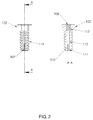
FIG. 2 is a schematic cross-sectional view illustrating a terminal bolt of the positive locking confirmation mechanism according to the embodiment of the present invention; and -
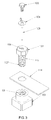
FIG. 3 is a schematic exploded view illustrating the positive locking confirmation mechanism according to the embodiment of the present invention. - Element numerals in the drawings is illustrated as follows: 101, electrode; 102, terminal bolt; 103, pin; 104, sensing contact; 105, sensing bolt; 106, central hole; 107, slot of the expansive section; 108, electrode thread; 110, expansive section; 111, taper structure; 112, internal opening; 113, internal thread; 114, conductor; and 115, external thread.
- Hereinafter, a positive locking confirmation mechanism for a battery contact of an electric vehicle according to an embodiment of the present invention will be illustrated with reference to
FIGS. 1 to 3 . The positive locking confirmation mechanism for a battery contact of an electric vehicle comprises aterminal bolt 102, asensing bolt 105, apin 103, aconductor 114, asensing contact 104 and anelectrode 101. Theterminal bolt 102 comprises acentral hole 106. Thecentral hole 106 has three segments. A first segment of thecentral hole 106 is aninternal thread 113 to be engaged with thesensing bolt 105. A second segment of thecentral hole 106 is aninternal opening 112 for accommodating thepin 103. A third segment of thecentral hole 106 is ataper structure 111 for providing an expansion force by the pin103. - When a pressure is applied to the
pin 103 through thesensing bolt 105, anexpansive section 110 of theterminal bolt 102 is propped open. Consequently, theterminal bolt 102 is in a positive locking state. While thesensing bolt 105 is screwed into theinternal thread 113, thepin 103 is pushed by thesensing bolt 105. Moreover, the tip of thepin 103 is contacted with thetaper structure 111 to generate an expansion force. In response to the expansion force, theexpansive section 110 of theterminal bolt 102 is propped open. Due to the expansion force applied to theexpansive section 110 of theterminal bolt 102, theterminal bolt 102 and anelectrode thread 108 can be securely combined together. - In accordance with a positive locking design of the present invention, the
sensing bolt 105 results in deformation of theexpansive section 110 of theterminal bolt 102. Due to the deformation of theexpansive section 110, the positive locking state of theterminal bolt 102 can be confirmed. Consequently, the locking state of thesensing bolt 105 can facilitate the positive locking state of theterminal bolt 102. If thesensing bolt 105 is loosened, thesensing contact 104 is separated from theterminal bolt 102 because of the vibration of the electric vehicle. Under this circumstance, the voltage signal is subjected to a change. - In accordance with another positive locking design of the present invention, a computing process is performed to detect the stability of the voltage signal in order to judge whether the positive locking state is maintained. In a normal working condition, the output voltage of battery is very stable. Consequently, if the voltage signal is interrupted because of the vibration of the electric vehicle, the system judges that the battery contact is no longer in the positive locking state.
- On the other hand, if the
sensing bolt 105 is loosened and thesensing contact 104 and theterminal bolt 102 are not in close contact with each other, the system can realize that the battery contact is possibly loosened according to the interrupted voltage signal. In addition, the system will indicate the battery contact that needs to be checked and repaired. Consequently, the maintenance worker can check and repair the battery contact before the battery contact is loosened. - Moreover, a computing unit is used for performing the computing process. That is, the computing unit continuously detects whether the voltage signal is stable. More preferably, the computing unit further comprises an accelerometer or a gyroscope. If the frequency of the unstable voltage signal matches the vibration frequency of the vehicle body, the computing unit can accurately judge that the battery contact is about to be loosened. By checking whether the frequency of the voltage signal matches the vibration frequency of the vehicle body, the misjudgment from the electromagnetic interference will be minimized. In some embodiments, the current signal and the voltage signal are both taken into consideration. If the current signal is stable but the voltage signal is interrupted, the system judges that the sensing contact is possibly loosened.
- Moreover, in some embodiment, the sensing bolt is specially designed. Preferably, the sensing bolt is made of an insulation material. Consequently, when the sensing bolt is in the positive locking state, the sensing contact can acquire the voltage signal through the terminal bolt only. Moreover, when the sensing bolt is loosened, the sensing contact cannot acquire the voltage signal through the terminal bolt. Under this circumstance, the system can accurately sense whether the sensing bolt is loosened. In some other embodiments, the sensing bolt is a metal bolt with an insulation coating.
- For simplifying the assembling process, the sensing bolt and the pin are integrally formed as a one-piece structure. In another embodiment, the sensing bolt has a recess, and the pin is fixed in the recess. Preferably, the pin is fixed in the recess of the sensing bolt in a press-fit manner. Consequently, the pin will not be detached from the sensing bolt.
- In case that the pin is detachably connected with the sensing bolt, the pin is preferably equipped with a thread to be engaged with the terminal bolt. After the pin is screwed into the terminal bolt, the sensing bolt is screwed into the terminal bolt.
- Preferably, a non-conductive coating is formed on a contact area between the sensing contact and the sensing bolt. In some embodiments, the non-conductive coating is replaced by an insulation packing.
- For preventing the issues that the sensing bolt is loosened and drops down to the battery pack, the sensing bolt and the sensing contact are connected with each other through a safety rope. Consequently, even if the sensing bolt is loosened, the sensing bolt will not drop down to the battery pack.
- The present invention provides a positive locking confirmation mechanism. The concepts of the present invention will be described as follows.
- Firstly, if the system can acquire a stable voltage signal through the
sensing contact 104, thesensing bolt 105 and thepin 103 are certainly accommodated within thecentral hole 106. Since thetaper structure 111 is pushed by thepin 103, theexpansive section 110 is subjected to deformation. In response to the deformation of theexpansive section 110, theterminal bolt 102 and theelectrode thread 108 are compressed against each other. Under this circumstance, a large drag force is generated to confirm the positive locking state of theterminal bolt 102. - Secondly, if the system receives the interrupted voltage signal, the
sensing bolt 105 and thepin 103 are still accommodated within thecentral hole 106 but thepin 103 is no longer contacted with thetaper structure 111. Consequently, theexpansive section 110 is restored to its original shape. Under this circumstance, theterminal bolt 102 is not in the positive locking state. That is, theterminal bolt 102 is possibly loosened. - Preferably, if the system detects that any battery contact is possibly loosened, the system will notify the user to check the possibly-loosened contact. When the electric vehicle is driven to the maintenance station, the maintenance worker can recognize the possibly-loosened contact according to the identification code of the corresponding battery. By using the positive locking confirmation mechanism of the present invention, the maintenance time is largely reduced, and the injury and damage caused by the loosened contact are minimized.
Claims (16)
- A positive locking confirmation mechanism for a battery contact of an electric vehicle, the positive locking confirmation mechanism comprising:a terminal bolt locked on an electrode, so that a conductor is contacted with the electrode;a sensing bolt locked on the terminal bolt, so that a sensing contact is contacted with the terminal bolt, wherein while the sensing bolt is screwed into the terminal bolt, the terminal bolt is subjected to deformation, wherein a drag force is generated to fix the terminal bolt in response to the deformation of the terminal bolt; anda sensing unit configured for detecting whether the sensing contact and the terminal bolt are in a positive locking state.
- The positive locking confirmation mechanism for the battery contact of the electric vehicle according to claim 1, wherein the terminal bolt is subjected to deformation through a pin.
- The positive locking confirmation mechanism for the battery contact of the electric vehicle according to claim 2, wherein the terminal bolt has a taper structure, and the taper structure is contacted with the pin.
- The positive locking confirmation mechanism for the battery contact of the electric vehicle according to claim 2, wherein the pin has a thread.
- The positive locking confirmation mechanism for the battery contact of the electric vehicle according to claim 1, wherein the sensing unit judges whether the sensing contact and the terminal bolt are in the positive locking state according to a result of judging whether a voltage signal from the sensing contact is stable.
- The positive locking confirmation mechanism for the battery contact of the electric vehicle according to claim 1, wherein the sensing bolt is made of an insulation material.
- The positive locking confirmation mechanism for the battery contact of the electric vehicle according to claim 1, wherein an insulation packing is arranged between the sensing bolt and the sensing contact.
- The positive locking confirmation mechanism for the battery contact of the electric vehicle according to claim 1, wherein the sensing bolt and the sensing contact are connected with each other through a safety rope.
- The positive locking confirmation mechanism for the battery contact of the electric vehicle according to claim 1, wherein the sensing unit is a battery protection board.
- A positive locking confirmation mechanism for a battery contact of an electric vehicle, the positive locking confirmation mechanism comprising:a terminal bolt configured for locking a conductor on an electrode of a battery, wherein a head portion of the terminal bolt has an internal thread, and a tail end of the terminal bolt has an expansive section;a sensing bolt screwed into the internal thread of the terminal bolt so as to lock a sensing contact of a voltage sensor, wherein while the sensing bolt is screwed into the internal thread of the terminal bolt, a pin is pushed by the sensing bolt to prop open the expansive section of the terminal bolt, so that the terminal bolt and the electrode of the battery are in a positive locking state; anda controlling unit configured for receiving a voltage signal from the voltage sensor and judging whether the terminal bolt and the electrode of the battery are in the positive locking state according to a result of judging whether the voltage signal is stable.
- The positive locking conformation mechanism for the battery contact of the electric vehicle according to claim 10, wherein when the voltage signal is unstable, the electrode of the battery is not in the positive locking state, and the controlling unit issues a warning signal and an identification code of the electrode to a vehicular controller.
- The positive locking conformation mechanism for the battery contact of the electric vehicle according to claim 10, wherein a non-conductive coating is formed on a contact area between the sensing bolt and the sensing contact of the voltage sensor.
- The positive locking conformation mechanism for the battery contact of the electric vehicle according to claim 10, wherein the sensing bolt is not electrically conductive.
- The positive locking conformation mechanism for the battery contact of the electric vehicle according to claim 10, wherein the sensing bolt and the pin are integrally formed as a one-piece structure.
- The positive locking conformation mechanism for the battery contact of the electric vehicle according to claim 10, wherein the voltage sensor further comprises an accelerometer for sensing vibration of the electric vehicle.
- The positive locking confirmation mechanism for the battery contact of the electric vehicle according to claim 10, wherein the voltage sensor further comprises a gyroscope for sensing motion of the electric vehicle.
Applications Claiming Priority (1)
| Application Number | Priority Date | Filing Date | Title |
|---|---|---|---|
| PCT/CN2013/085298 WO2015054840A1 (en) | 2013-10-16 | 2013-10-16 | Method for confirming locked state of battery contact dedicated to electric vehicle |
Publications (2)
| Publication Number | Publication Date |
|---|---|
| EP3059780A1 true EP3059780A1 (en) | 2016-08-24 |
| EP3059780A4 EP3059780A4 (en) | 2017-04-19 |
Family
ID=52827545
Family Applications (1)
| Application Number | Title | Priority Date | Filing Date |
|---|---|---|---|
| EP13895772.5A Withdrawn EP3059780A4 (en) | 2013-10-16 | 2013-10-16 | Method for confirming locked state of battery contact dedicated to electric vehicle |
Country Status (7)
| Country | Link |
|---|---|
| US (1) | US9559464B2 (en) |
| EP (1) | EP3059780A4 (en) |
| JP (1) | JP6242483B2 (en) |
| KR (1) | KR20160071424A (en) |
| CN (1) | CN105637670A (en) |
| CA (1) | CA2927501C (en) |
| WO (1) | WO2015054840A1 (en) |
Cited By (3)
| Publication number | Priority date | Publication date | Assignee | Title |
|---|---|---|---|---|
| WO2018108198A1 (en) * | 2016-12-15 | 2018-06-21 | SWT Stadtwerke Trier Versorgungs-GmbH | Pole element having an insulation means, and use of a sliding insulation means for collecting measurement values on a battery cell |
| TWI746794B (en) * | 2017-08-17 | 2021-11-21 | 大陸商上海蔚來汽車有限公司 | Bolt locking method, battery pack installation system and installation method |
| TWI746793B (en) * | 2017-08-17 | 2021-11-21 | 大陸商上海蔚來汽車有限公司 | Bolt locking method, battery pack installation system and installation method |
Families Citing this family (9)
| Publication number | Priority date | Publication date | Assignee | Title |
|---|---|---|---|---|
| DE102015013472A1 (en) | 2015-10-17 | 2016-04-28 | Daimler Ag | Electrical contact unit for producing an electrical connection between a battery terminal and a vehicle electrical system of a vehicle |
| ES2887380T3 (en) * | 2017-05-24 | 2021-12-22 | Siemens Mobility GmbH | Condition control of an element of wear and tear |
| JP2019038423A (en) * | 2017-08-25 | 2019-03-14 | 株式会社シマノ | Bicycle connector |
| CN107579364B (en) * | 2017-08-31 | 2022-09-20 | 国网河南省电力公司内乡县供电公司 | Binding post with screw is become flexible prompt facility |
| JP2019133850A (en) * | 2018-01-31 | 2019-08-08 | トヨタ自動車株式会社 | Ground terminal assembly structure |
| CN108398613A (en) * | 2018-03-02 | 2018-08-14 | 蔚来汽车有限公司 | Method and device for detecting connection state of battery and vehicle body, controller and medium |
| CN108539531A (en) * | 2018-04-26 | 2018-09-14 | 中测测试科技(杭州)有限公司 | A kind of automotive check connector that connection performance is visual and application method |
| JP7334485B2 (en) * | 2019-06-07 | 2023-08-29 | 富士電機株式会社 | External connection part of semiconductor module, method for manufacturing external connection part of semiconductor module, semiconductor module, vehicle, and method for connecting external connection part and bus bar |
| DE202019106029U1 (en) * | 2019-10-30 | 2019-11-11 | Erwin Halder Kg | Screwable devices with retractable thread segments |
Family Cites Families (78)
| Publication number | Priority date | Publication date | Assignee | Title |
|---|---|---|---|---|
| US1507936A (en) * | 1920-03-26 | 1924-09-09 | Francis G Schmitt | Storage-battery terminal |
| US2654078A (en) * | 1950-11-03 | 1953-09-29 | Gen Motors Corp | Connector assembly |
| US3566947A (en) * | 1969-04-29 | 1971-03-02 | John A Jukes | Self-locking threaded insert |
| IL39893A (en) * | 1971-08-17 | 1974-11-29 | Fischer Artur | Fixing element |
| US3775730A (en) * | 1971-11-05 | 1973-11-27 | Gen Motors Corp | Corrosion-proof battery terminal and cable connector therefor |
| DE2220422B1 (en) * | 1972-04-26 | 1972-11-30 | Fischer A | Fastening element for anchoring in parts of concrete structures |
| US3848506A (en) * | 1972-12-15 | 1974-11-19 | K Zifferer | Expansion anchor |
| US3783439A (en) * | 1973-02-14 | 1974-01-01 | P Valentino | Battery charger adapter |
| US3928079A (en) * | 1974-10-07 | 1975-12-23 | Gen Motors Corp | Battery cable with detachably retained connector |
| US3921496A (en) * | 1974-11-04 | 1975-11-25 | J Frank Helderman | Fastener assembly |
| DE2617191C2 (en) * | 1976-04-20 | 1985-12-05 | Hilti Ag, Schaan | Expansion anchor |
| US4446214A (en) * | 1979-02-26 | 1984-05-01 | The Richardson Company | Method for forming a metal casting extending through a preformed structure and articles produced thereby |
| US4377317A (en) * | 1980-06-27 | 1983-03-22 | Auto-Line Manufacturing Corp. | Adapter for connecting auxiliary cable to side terminal battery |
| US4288504A (en) * | 1980-07-21 | 1981-09-08 | Julian Victor J | Sealed battery cable termination |
| US4391559A (en) * | 1980-07-28 | 1983-07-05 | Nifco Inc. | Plastic fastener |
| US4351890A (en) * | 1980-07-31 | 1982-09-28 | General Battery Corporation | Battery case having a side terminal molded therein |
| GB2087133B (en) * | 1980-11-05 | 1984-07-18 | Chloride Group Ltd | Electric storage batteries |
| US4396692A (en) * | 1980-12-11 | 1983-08-02 | General Battery Corporation | Variable side terminal for use in a storage battery |
| US4424854A (en) * | 1981-11-10 | 1984-01-10 | Tiegel Manufacturing Company | Side terminal lead alloy product and process |
| US4478919A (en) * | 1981-11-10 | 1984-10-23 | Tiegel Manufacturing Company | Side terminal lead alloy product and process |
| US4673240A (en) * | 1982-02-04 | 1987-06-16 | Byfield Jr Dwight | Side mount universal battery terminal |
| JPS60220211A (en) * | 1984-04-13 | 1985-11-02 | 建設フアスナ−株式会社 | Plug built-in type female screw anchor and its production |
| US4609238A (en) * | 1985-02-05 | 1986-09-02 | Jamgotchian George H | Magnetic terminal-plate cable end connection for battery |
| US4643511A (en) * | 1985-12-19 | 1987-02-17 | System Material Handling Company | Auxiliary wire connections for side post batteries |
| US4729934A (en) * | 1986-11-25 | 1988-03-08 | Krystaszek Henry J | Battery side terminal |
| US4752543A (en) * | 1987-04-02 | 1988-06-21 | Anderson Carl J | Universal terminal storage battery with handle |
| US4797111A (en) * | 1987-05-04 | 1989-01-10 | Ackmann Martin E | Terminal for side-mount battery |
| SE463779B (en) * | 1989-05-29 | 1991-01-21 | Scantool Hb | EXPANSION BOLT |
| US4936799A (en) * | 1990-01-16 | 1990-06-26 | Woodall Edward P | Automobile battery electrical connector assembly |
| US5013259A (en) * | 1990-02-26 | 1991-05-07 | Kalas Manufacturing, Inc. | Remote auxiliary terminal assembly |
| US5021013A (en) * | 1990-06-04 | 1991-06-04 | Dorothy Wiesler | Battery cable connector |
| US5281493A (en) * | 1992-09-04 | 1994-01-25 | Globe-Union Inc. | Terminal construction for a battery |
| JPH06120390A (en) * | 1992-10-05 | 1994-04-28 | Fuji Electric Co Ltd | Terminal structure of resin-sealed semiconductor device |
| DE19510306A1 (en) * | 1995-03-22 | 1996-09-26 | Hilti Ag | Expansion dowels |
| US5662497A (en) * | 1995-11-03 | 1997-09-02 | New York State Electric & Gas Corporation | Modular battery terminal connector assembly |
| JP3365602B2 (en) * | 1996-05-09 | 2003-01-14 | トヨタ自動車株式会社 | Control method of battery output of electric vehicle and terminal connection structure of battery used for the method |
| FR2753368B1 (en) * | 1996-09-13 | 1999-01-08 | Chauvin Jean Luc | EXPANSIONAL OSTEOSYNTHESIS CAGE |
| US6261039B1 (en) * | 1996-10-02 | 2001-07-17 | Gary Jack Reed | Thread repair insert |
| US6025088A (en) * | 1997-10-31 | 2000-02-15 | Gnb Technologies, Inc. | Lead-acid battery designed to readily receive charging leads |
| US6312852B1 (en) * | 1998-02-26 | 2001-11-06 | C&D Charter Holdings Inc. | Battery cell cover with flexible positive post terminal |
| GB9805817D0 (en) * | 1998-03-19 | 1998-05-13 | Chloride Ind Batteries Limited | Battery |
| US6258481B1 (en) * | 1998-10-15 | 2001-07-10 | C&D/Charter Holdings, Inc. | Battery terminal bushing having frontal access to battery termination |
| US6190796B1 (en) * | 1999-03-12 | 2001-02-20 | Lucent Technologies, Inc. | Battery having recessed posts and stand system |
| US6739813B1 (en) * | 2000-05-19 | 2004-05-25 | William P. Gundy | Plastic encapsulated bolt and anchor assembly |
| US20040259431A1 (en) * | 2001-02-20 | 2004-12-23 | Delcourt Mark H. | Grounding stud |
| US20030063959A1 (en) * | 2001-10-02 | 2003-04-03 | Sha-Lan Kao | Expansion screw |
| BR0314846A (en) * | 2002-09-21 | 2005-08-02 | Patrick W Breslin | Split Lock Screw Fastener Assembly and Method |
| US6925395B2 (en) * | 2002-10-15 | 2005-08-02 | Canberra Aquila, Inc. | Apparatus and method for measuring the torque applied to bolts |
| JP3786087B2 (en) | 2002-12-26 | 2006-06-14 | ふそうエンジニアリング株式会社 | Battery terminal |
| TW577493U (en) * | 2003-01-09 | 2004-02-21 | Great Asia Machinery Co Ltd | Internal driving type expansion bolt |
| DE20311263U1 (en) * | 2003-07-22 | 2003-09-11 | Böllhoff GmbH, 33649 Bielefeld | Screw connection arrangement for connecting two components |
| US20050084360A1 (en) * | 2003-10-10 | 2005-04-21 | Panasik Cheryl L. | Self-drilling anchor |
| US7344421B1 (en) * | 2005-06-06 | 2008-03-18 | Spencer Troy L | Quick release battery cable connector |
| US20070117471A1 (en) * | 2005-11-19 | 2007-05-24 | Liebert Corporation | Battery connection systems and methods for use thereof |
| US20080038079A1 (en) * | 2006-08-14 | 2008-02-14 | Bobon James L | Adjustable concrete drop-in anchor |
| CN101232082B (en) * | 2007-01-25 | 2010-05-26 | 深圳华粤宝电池有限公司 | Battery cover plate with new type structure and secondary battery thereof |
| WO2008121995A1 (en) * | 2007-03-30 | 2008-10-09 | Tennant Company | Threaded insert and method of using same |
| EP2169760A4 (en) * | 2007-05-18 | 2011-04-27 | Panasonic Corp | BATTERY PACK AND BATTERY SYSTEM |
| JP2009043441A (en) * | 2007-08-06 | 2009-02-26 | Gs Yuasa Corporation:Kk | Storage battery |
| US20100329814A1 (en) * | 2007-10-31 | 2010-12-30 | Carl Strom | Self-Tapping Insert and Method of Utilizing the Same to Replace Damaged Bores and Threads |
| US7641522B2 (en) * | 2007-12-11 | 2010-01-05 | Lasen Development Llc | Electrical-connection device, particularly for photovoltaic-cell solar panels |
| US8047868B1 (en) * | 2008-03-28 | 2011-11-01 | GEP Power Products, Inc. | Stud-type junction block |
| US8372537B2 (en) * | 2008-06-03 | 2013-02-12 | C&D Technologies, Inc. | Battery with a molded in-front terminal |
| CN201344916Y (en) * | 2008-11-21 | 2009-11-11 | 比亚迪股份有限公司 | Three-electrode system testing device |
| JP4696291B2 (en) * | 2009-06-04 | 2011-06-08 | 三菱自動車工業株式会社 | Secondary battery abnormality detection device |
| CN101922492A (en) * | 2009-06-17 | 2010-12-22 | 鸿富锦精密工业(深圳)有限公司 | Fixing device |
| TW201118284A (en) * | 2009-11-18 | 2011-06-01 | Nan Ya Printed Circuit Board | Battery |
| US9099730B2 (en) * | 2010-01-21 | 2015-08-04 | C&D Technologies, Inc. | Storage battery having molded-in terminal |
| KR20110133257A (en) * | 2010-06-04 | 2011-12-12 | 에스비리모티브 주식회사 | Secondary battery |
| US8540469B2 (en) * | 2010-06-10 | 2013-09-24 | Black & Decker Inc. | Drop-in anchor |
| KR101310733B1 (en) * | 2011-01-07 | 2013-09-24 | 주식회사 엘지화학 | Apparatus and method for managing battery pack |
| CN202189856U (en) * | 2011-08-08 | 2012-04-11 | 深圳市沃特玛电池有限公司 | The connection structure of the pole piece of the battery pack |
| CN202217728U (en) * | 2011-09-29 | 2012-05-09 | 北京神州远望科技有限公司 | Intelligent power lithium battery module |
| CN103066234A (en) * | 2011-10-19 | 2013-04-24 | 黄泓雯 | Lithium battery and electrode link module thereof |
| US9382936B2 (en) * | 2012-12-19 | 2016-07-05 | Avago Technologies General Ip (Singapore) Pte. Ltd. | Threaded insert with thermal insulation capability |
| CN103219488A (en) * | 2013-03-27 | 2013-07-24 | 武汉中原长江科技发展有限公司 | Lithium-ion power battery |
| JP2014229351A (en) * | 2013-05-17 | 2014-12-08 | 株式会社豊田自動織機 | Battery module |
| JP2015056266A (en) * | 2013-09-11 | 2015-03-23 | 三菱重工業株式会社 | Fastening device having fasteners, fastener loosening detection device, and battery module equipped with fastening device |
-
2013
- 2013-10-16 KR KR1020167012384A patent/KR20160071424A/en not_active Abandoned
- 2013-10-16 CN CN201380080280.5A patent/CN105637670A/en active Pending
- 2013-10-16 EP EP13895772.5A patent/EP3059780A4/en not_active Withdrawn
- 2013-10-16 CA CA2927501A patent/CA2927501C/en not_active Expired - Fee Related
- 2013-10-16 JP JP2016524122A patent/JP6242483B2/en not_active Expired - Fee Related
- 2013-10-16 US US15/029,849 patent/US9559464B2/en not_active Expired - Fee Related
- 2013-10-16 WO PCT/CN2013/085298 patent/WO2015054840A1/en not_active Ceased
Cited By (3)
| Publication number | Priority date | Publication date | Assignee | Title |
|---|---|---|---|---|
| WO2018108198A1 (en) * | 2016-12-15 | 2018-06-21 | SWT Stadtwerke Trier Versorgungs-GmbH | Pole element having an insulation means, and use of a sliding insulation means for collecting measurement values on a battery cell |
| TWI746794B (en) * | 2017-08-17 | 2021-11-21 | 大陸商上海蔚來汽車有限公司 | Bolt locking method, battery pack installation system and installation method |
| TWI746793B (en) * | 2017-08-17 | 2021-11-21 | 大陸商上海蔚來汽車有限公司 | Bolt locking method, battery pack installation system and installation method |
Also Published As
| Publication number | Publication date |
|---|---|
| JP6242483B2 (en) | 2017-12-13 |
| US9559464B2 (en) | 2017-01-31 |
| CA2927501C (en) | 2017-06-20 |
| US20160285203A1 (en) | 2016-09-29 |
| KR20160071424A (en) | 2016-06-21 |
| WO2015054840A1 (en) | 2015-04-23 |
| JP2016536748A (en) | 2016-11-24 |
| CN105637670A (en) | 2016-06-01 |
| CA2927501A1 (en) | 2015-04-23 |
| EP3059780A4 (en) | 2017-04-19 |
Similar Documents
| Publication | Publication Date | Title |
|---|---|---|
| US9559464B2 (en) | Positive locking confirmation mechanism for battery contact of electric vehicle | |
| US20160240833A1 (en) | Positive locking confirmation mechanism for battery contact of electric vehicle and positive locking confirmation device for electrode of battery pack | |
| EP3408130B1 (en) | Arrangement with battery system for providing electric energy to a vehicle | |
| US20120299599A1 (en) | Electric leakage sensing apparatus | |
| CN107221968A (en) | Supply unit | |
| CN109490768A (en) | The redundance judging method and system of contacts of contactor adhesion | |
| EP2975724A1 (en) | Abnormality diagnosis device | |
| CN113631938B (en) | Method and system for detecting connection failure of parallel battery cells | |
| CN113646648B (en) | Method and system for detecting connection failure of parallel battery units | |
| US10840562B2 (en) | Energy storage system, monitoring unit for energy storage device, and method of monitoring energy storage device | |
| KR102221308B1 (en) | Insulation Resistance Measuring Method For Electrical Vehicle Battery Or Fuel Cell Vehicle Stack, And Circuit Thereof | |
| CN106458038B (en) | It runs the method for Storage Unit, implement the battery management system of this method | |
| US7459911B2 (en) | Method for detecting the connection between the energy storage mechanism and the electrical system of a vehicle | |
| KR20090063839A (en) | Vehicle battery overcharge prevention device | |
| TWI491093B (en) | A Positive Locking Confirmation Apparatus and a Method for Preventing Loose Connection of Battery Terminal for Electric Vehicle | |
| US20120009448A1 (en) | Diagnostic system for the internal status of a lithium battery | |
| EP3059797B1 (en) | Detection apparatus for detecting locked states of multiple electrodes by using battery sensor | |
| KR20250023942A (en) | Battery system with impact detection | |
| CN104953195A (en) | Resistance based method and system to assess vehicle component integrity | |
| KR102839430B1 (en) | Battery pack including BMS board breakage diagnosis function and its diagnosis/release method | |
| TWI479769B (en) | Electric products, high-voltage safe power supply system and high voltage safety protection device | |
| JP2017046502A (en) | Battery state detection device and vehicle system |
Legal Events
| Date | Code | Title | Description |
|---|---|---|---|
| PUAI | Public reference made under article 153(3) epc to a published international application that has entered the european phase |
Free format text: ORIGINAL CODE: 0009012 |
|
| 17P | Request for examination filed |
Effective date: 20160517 |
|
| AK | Designated contracting states |
Kind code of ref document: A1 Designated state(s): AL AT BE BG CH CY CZ DE DK EE ES FI FR GB GR HR HU IE IS IT LI LT LU LV MC MK MT NL NO PL PT RO RS SE SI SK SM TR |
|
| AX | Request for extension of the european patent |
Extension state: BA ME |
|
| RAP1 | Party data changed (applicant data changed or rights of an application transferred) |
Owner name: ALEEES ECO ARK (CAYMAN) CO. LTD. |
|
| DAX | Request for extension of the european patent (deleted) | ||
| A4 | Supplementary search report drawn up and despatched |
Effective date: 20170316 |
|
| RIC1 | Information provided on ipc code assigned before grant |
Ipc: H01M 2/34 20060101ALI20170311BHEP Ipc: F16B 39/02 20060101ALN20170311BHEP Ipc: H01M 2/30 20060101AFI20170311BHEP |
|
| RIC1 | Information provided on ipc code assigned before grant |
Ipc: H01M 2/34 20060101ALI20171218BHEP Ipc: H01M 2/30 20060101AFI20171218BHEP Ipc: F16B 39/02 20060101ALN20171218BHEP |
|
| GRAP | Despatch of communication of intention to grant a patent |
Free format text: ORIGINAL CODE: EPIDOSNIGR1 |
|
| STAA | Information on the status of an ep patent application or granted ep patent |
Free format text: STATUS: GRANT OF PATENT IS INTENDED |
|
| INTG | Intention to grant announced |
Effective date: 20180205 |
|
| STAA | Information on the status of an ep patent application or granted ep patent |
Free format text: STATUS: THE APPLICATION IS DEEMED TO BE WITHDRAWN |
|
| 18D | Application deemed to be withdrawn |
Effective date: 20180616 |