EP3046290A1 - Method and device for generating prompt - Google Patents
Method and device for generating prompt Download PDFInfo
- Publication number
- EP3046290A1 EP3046290A1 EP16151163.9A EP16151163A EP3046290A1 EP 3046290 A1 EP3046290 A1 EP 3046290A1 EP 16151163 A EP16151163 A EP 16151163A EP 3046290 A1 EP3046290 A1 EP 3046290A1
- Authority
- EP
- European Patent Office
- Prior art keywords
- information
- open
- window
- door
- closed state
- Prior art date
- Legal status (The legal status is an assumption and is not a legal conclusion. Google has not performed a legal analysis and makes no representation as to the accuracy of the status listed.)
- Granted
Links
Images




Classifications
-
- H—ELECTRICITY
- H04—ELECTRIC COMMUNICATION TECHNIQUE
- H04W—WIRELESS COMMUNICATION NETWORKS
- H04W4/00—Services specially adapted for wireless communication networks; Facilities therefor
- H04W4/12—Messaging; Mailboxes; Announcements
-
- G—PHYSICS
- G08—SIGNALLING
- G08C—TRANSMISSION SYSTEMS FOR MEASURED VALUES, CONTROL OR SIMILAR SIGNALS
- G08C17/00—Arrangements for transmitting signals characterised by the use of a wireless electrical link
- G08C17/02—Arrangements for transmitting signals characterised by the use of a wireless electrical link using a radio link
-
- H—ELECTRICITY
- H04—ELECTRIC COMMUNICATION TECHNIQUE
- H04L—TRANSMISSION OF DIGITAL INFORMATION, e.g. TELEGRAPHIC COMMUNICATION
- H04L12/00—Data switching networks
- H04L12/64—Hybrid switching systems
- H04L12/6418—Hybrid transport
-
- H—ELECTRICITY
- H04—ELECTRIC COMMUNICATION TECHNIQUE
- H04W—WIRELESS COMMUNICATION NETWORKS
- H04W4/00—Services specially adapted for wireless communication networks; Facilities therefor
- H04W4/02—Services making use of location information
- H04W4/021—Services related to particular areas, e.g. point of interest [POI] services, venue services or geofences
-
- H—ELECTRICITY
- H04—ELECTRIC COMMUNICATION TECHNIQUE
- H04W—WIRELESS COMMUNICATION NETWORKS
- H04W4/00—Services specially adapted for wireless communication networks; Facilities therefor
- H04W4/02—Services making use of location information
- H04W4/029—Location-based management or tracking services
Definitions
- the invention generally relates to the field of smart home, and in particular to a method and device for generating a prompt.
- a user In daily life, a user usually allows indoor and outdoor air to circulate by opening doors and windows, thereby purifying the indoor air.
- the invention provides a method and device for generating a prompt, in accordance with claims which follow.
- the invention relates to a method for generating a prompt, comprising:
- the step of generating the prompt according to the information about the open-or-closed state of the door or window and the information about the indoor and outdoor environments may comprise that:
- the step of determining the correct open-or-closed state the door or window is supposed to be in according to the information about the indoor and outdoor environments may comprise that:
- the step of determining the correct open-or-closed state the door or window is supposed to be in according to the information about the indoor and outdoor environments may comprise that:
- the step of determining the correct open-or-closed state the door or window is supposed to be in according to the information about the indoor and outdoor environments may comprise that:
- the method may further comprise that:
- the step of sending the prompt to the mobile terminal may comprise that:
- the step of sending the prompt to the mobile terminal according to the state information may comprise that:
- the method may further comprise that:
- the step of controlling the open-or-closed state of the door or window may comprise that:
- the invention relates to a device for generating a prompt, comprising:
- the generating module may comprise:
- the determining sub-module may comprise:
- the determining sub-module may comprise:
- the determining sub-module may comprise:
- the device may further comprise:
- the sending module may comprise:
- the device may further comprise:
- the steps of the method for generating a prompt are determined by computer program instructions.
- the invention is also directed to a computer program for executing the steps of a method for generating a prompt as described above when this program is executed by a computer.
- This program can use any programming language and take the form of source code, object code or a code intermediate between source code and object code, such as a partially compiled form, or any other desirable form.
- the invention is also directed to a computer-readable information medium containing instructions of a computer program as described above.
- the information medium can be any entity or device capable of storing the program.
- the support can include storage means such as a ROM, for example a CD ROM or a microelectronic circuit ROM, or magnetic storage means, for example a diskette (floppy disk) or a hard disk.
- the information medium can be an integrated circuit in which the program is incorporated, the circuit being adapted to execute the method in question or to be used in its execution.
- the door or window 110 comprises a control chip and a mechanical control unit for controlling the door or window to open or close, these control chip and mechanical control unit being connected with the electronic equipment 120 through Bluetooth, infrared or a wireless network.
- the door or window in the embodiments of the invention is: a door, a window, or a combination of a door and a window.
- the electronic equipment 120 which has a processing function, may be a residential gateway, a server connected with the residential gateway, a smart appliance or a piece of mobile equipment at home.
- the residential gateway may be an intelligent router.
- the smart appliance may be a smart television or a smart set top box, and so on.
- the mobile equipment at home may be a tablet computer or laptop computer, and so on.
- the electronic equipment may be any one of the intelligent router, the server connected with the intelligent router, the smart television and the tablet computer.
- the electronic equipment 120 is connected with the smart appliance 130 through a wired or wireless network.
- the smart appliance 130 may be an intelligent air purifier, an intelligent air conditioner, a piece of intelligent gas equipment or an intelligent floor heating system, and so on.
- the mobile terminal 140 may be a piece of portable intelligent equipment, and the intelligent equipment may be a smart phone or the tablet computer, and so on.
- the electronic equipment 120 is the intelligent router for example, which does not form a limit to the invention.
- Step 201 information about an open-or-closed state of a door or window is acquired.
- the information about an open-or-closed state of a door or window may include at least one of the following: whether the door or window is open, the open manner of the door or window and the open angle of the door or window.
- Step 202 information about indoor and outdoor environments is acquired.
- the information about indoor and outdoor environments may include: information about weather condition, information about indoor environment quality, information about outdoor environment quality, information about indoor humidity, information about harmful gas content and working state information of a specified device, and so on.
- the information about indoor environment quality is an indoor environment index which is calculated according to an indoor air environment
- the information about outdoor environment quality is an outdoor environment index which is calculated according to an outdoor air environment.
- Step 203 the prompt is generated according to the information about the open-or-closed state of the door or window and the information about the indoor and outdoor environments.
- the method for generating a prompt solves the problem that when the door or window are opened or closed unreasonably, an indoor air environment gets bad, which influences the health of user, and achieves the effect of reminding the user to open or close the door or window reasonably according to the condition of indoor and outdoor environments, thereby not only improving the indoor air quality, but also preventing theft and protecting the security of user.
- Fig. 3A is a flowchart of a method for generating a prompt according to another exemplary embodiment.
- This method for generating a prompt is performed by the electronic equipment 120 in Fig. 1 .
- this embodiment is illustrated by taking that the electronic equipment 120 is the intelligent router for example.
- the method for generating a prompt may include the following steps.
- Step 301 information about an open-or-closed state of a door or window is acquired.
- the sensor may be an infrared distance sensor or a mechanical sensor installed on the frame of the door or window.
- the sensor is configured for acquiring the information about the open-or-closed state of a door or window.
- the information about the open-or-closed state of a door or window may include at least one of the following: whether the door or window is open, the open manner of the door or window and the open angle of the door or window.
- the open manner of the door or window may include: side hung open manner, top-hung casement open manner, sliding sash open manner, and so on.
- the senor on the door or window can determine whether the door/window is open by detecting whether the door/window is separated from the frame. Furthermore, the sensor can also calculate the open angle of the door or window by acquiring a distance between the door (or window) and the frame.
- the sensor is also connected with the electronic equipment 120 in Fig. 1 through a Bluetooth, infrared or wireless network.
- the sensor can be connected with the intelligent router through the wireless network and sends the acquired information about the open-or-closed state of a door or window to the intelligent router.
- the intelligent router receives the information about the open-or-closed state of a door or window sent from the sensor.
- this embodiment is illustrated by just taking that the electronic equipment 120 is the intelligent router for example, which does not form a limit to the invention.
- Step 302 information about indoor and outdoor environments is acquired.
- the information about indoor and outdoor environments may include: information about weather condition, information about indoor environment quality, information about outdoor environment quality, information about indoor humidity, information about harmful gas content and working state information of a specified device, and so on.
- the specified device may be a smart appliance bound with the intelligent router in advance.
- the specified device sends its working state information to the intelligent router when its working state changes.
- the specified device may include: the air purifier, a refrigerating unit, a heating unit or other smart appliances.
- the intelligent router may acquire the information about weather condition and the information about outdoor environment quality by looking up on the Internet.
- the intelligent router is also connected with the smart appliance at home through the wired or wireless network, and receives the information about indoor environment quality, the information about indoor humidity, the information about harmful gas content and the working state information of the specified device sent by the smart appliance.
- the air purifier at home may be connected with the intelligent router, and sends the acquired information about indoor environment quality, information about indoor humidity and information about harmful gas content to the intelligent router.
- the intelligent floor heating system at home may be connected with the intelligent router.
- the intelligent floor heating system may report its working state information to the intelligent router during working.
- Step 303 the correct open-or-closed state the door or window is supposed to be in is determined according to the information about indoor and outdoor environments.
- the outdoor environment quality may be poorer than the indoor environment quality, when the user opens the door or window, indoor air pollution may be caused, so the intelligent router needs to estimate the indoor environment quality and the outdoor environment quality according to the acquired information about indoor and outdoor environments, and further determines the correct open-or-closed state the door or window is supposed to be in.
- Step 303 may include the following steps.
- Step 303A it is detected that whether the outdoor environment quality is better than the indoor environment quality according to the information about indoor and outdoor environments.
- the intelligent router acquires the information about indoor environment quality carried in the information about indoor environment and the information about outdoor environment quality carried in the information about outdoor environment, and detects whether the outdoor environment quality is better than the indoor environment quality according to the information about indoor environment quality and the information about outdoor environment quality.
- the information about indoor environment quality and the information about outdoor environment quality are environment pollution indexes calculated according to pollutant content of the air respectively.
- the intelligent router detects whether the outdoor environment quality is better than the indoor environment quality by comparing the environment pollution indexes.
- Step 303B if the outdoor environment quality is better than the indoor environment quality, then it is determined that the correct open-or-closed state is an open state; or if the indoor environment quality is better than the outdoor environment quality, then it is determined that the correct open-or-closed state is a closed state.
- an environment quality index corresponding to the information about indoor environment quality is greater than the environment quality index corresponding to the information about outdoor environment quality, namely the current outdoor environment is better than the current indoor environment
- opening the door or window for ventilation can purify the indoor air
- the intelligent router determines that the correct open-or-closed state is an open state.
- the environment quality index corresponding to the information about indoor environment quality is less than the environment quality index corresponding to the information about outdoor environment quality, namely the current indoor environment is better than the current outdoor environment
- opening the door or window for ventilation will cause indoor air pollution
- the intelligent router determines that the correct open-or-closed state is a closed state.
- the intelligent router needs to further detect whether it is right to open the door/window now according to weather forecast information carried in the information about indoor and outdoor environments. When it is detected that it is raining or the rain will come, the intelligent router determines the closed state as the correct open-or-closed state.
- Step 304 it is detected that whether the open-or-closed state of the door or window is identical to the correct open-or-closed state.
- the intelligent router After determining the correct open-or-closed state, the intelligent router detects whether the current open-or-closed state of the door or window is identical to the correct open-or-closed state. When it is detected that they are identical, it is proceed to Step 305; when it is detected that they are different, it is proceed to Step 306.
- Step 305 if the open-or-closed state of the door or window is identical to the correct open-or-closed state, no prompt is generated.
- Step 306 if the open-or-closed state of the door or window is different from the correct open-or-closed state, the prompt is generated according to the correct open-or-closed state.
- the intelligent router When it is detected that the current open-or-closed state of the door or window is different from the correct open-or-closed state, the intelligent router generates the prompt according to the correct open-or-closed state.
- the prompt is used for reminding the user to open or close the door/window.
- Step 307 the prompt is sent to the mobile terminal.
- Step 307 may include the following steps.
- Step 307A state information of the mobile terminal is acquired.
- the state information may include at least one of the following: information about an on-or-off state of the mobile terminal and information about geographic location of the mobile terminal.
- the intelligent router may further acquire the state information of the bound mobile terminal.
- the state information includes the information about an on-or-off state of the mobile terminal and the information about geographic location of the mobile terminal, and so on.
- the intelligent router selects the mobile terminal which is able to receive the prompt as the target mobile terminal according to the acquired state information.
- Step 307B the prompt is sent to the mobile terminal according to the state information.
- the intelligent router sends the prompt to the target mobile terminal which is able to receive the prompt.
- the prompt may be text information or voice information, and so on; the invention does not limit this.
- Step 308 the open-or-closed state of the door or window is controlled.
- the open-or-closed state may include at least one of the following: whether the door or window is open, an open mode of the door or window, and an open angle of the door or window.
- Step 308 may include the following steps.
- Step 308A the door or window is controlled to open or close automatically according to the prompt.
- the intelligent router After sending the prompt to the mobile terminal, the intelligent router starts a timer, and detects in a preset time span whether the feedback information sent by the mobile terminal is received. When the feedback information is not received in the preset time span, the intelligent router automatically controls the door or window to open or close according to the prompt. Note that, when the intelligent router detects that the harmful indoor gas content is greater than the preset threshold, it can automatically control the door or window to close without need of receiving the feedback information of the user.
- Step 308B it is received the feedback information which is sent by the mobile terminal in response to the received prompt; the door or window is controlled to open or close according to the feedback information.
- the intelligent router After sending the prompt to the mobile terminal, the intelligent router starts the timer, and detects in the preset time span whether the feedback information sent by the mobile terminal is received. When the feedback information is received in the preset time span, the intelligent router controls the door or window to open or close according to the feedback information.
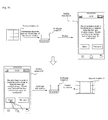
- the door or window 31 sends the current information about open-or-closed state of the door or window to the intelligent router 32.
- the intelligent router 32 generates the prompt according to the information about open-or-closed state of the door or window, and sends the prompt to the mobile terminal 33 to remind the user to open the door or window. Then, the user selects to open the door or window according to the prompt.
- the mobile terminal 33 sends the feedback information to the intelligent router 32 according to the selection of the user.
- the intelligent router 32 sends a control instruction to the door or window 31 according to the feedback information to control the door or window 31 to open.
- the method for generating a prompt solves the problem that when the door or window are opened or closed unreasonably, an indoor air environment gets bad, which influences the health of user, and achieves the effect of reminding the user to open or close the door or window reasonably according to the condition of indoor and outdoor environments, thereby not only improving the indoor air quality, but also preventing theft and protecting the security of user.
- this exemplary embodiment avoids the problem that when the outdoor environment is relatively bad, the indoor environment is polluted because of opening the door or window by the user, and improves the accuracy of the generated prompt.
- Step 303A and Step 303B may be replaced with Step 303C and Step 303D.
- Step 303C it is acquired the working state information of a specified device which is carried in the information about indoor and outdoor environments.
- the specified device at home is connected with the intelligent router beforehand.
- the specified device reports its current working state information to the intelligent router initiatively.
- the air purifier when the air purifier is started, it sends its working state information to the intelligent router.
- the working state information is used for informing the intelligent router that the air purifier is working.
- Step 303D if the working state information indicates that the specified device is in the running state, then it is determined that the correct open-or-closed state is a closed state; or if the working state information indicates that the specified device is in the off state, then it is determined that the correct open-or-closed state is an open state.
- the specified device may include: the air purifier, the refrigerating unit or the heating unit.
- the intelligent router determines according to the working state information that the specified device is running, for ensuring the working efficiency of the specified device, it is determined that the correct open-or-closed state is a closed state.
- the intelligent router determines according to the working state information that the specified device is not running, it is determined that the correct open-or-closed state is an open state.
- the intelligent router determines that the correct open-or-closed state should be an open state when detecting that the gas equipment is running.
- the exemplary embodiment By determining whether it is needed to open the door or window according to the working state of the specified device, the exemplary embodiment also avoids the problem that when the user is using the specified device, the power resource is wasted because opening the door or window influences the working efficiency of the specified device, and achieves the effects of giving full play to the working efficiency of the specified device and saving the power resource.
- the intelligent router may also determine to open or close the door or window according to harmful indoor gas content. As shown in Fig. 3G , the above Step 303A and Step 303B may be replaced with Step 303E to Step 303G.
- Step 303E harmful indoor gas content which is carried in the information about the indoor and outdoor environments is acquired.
- the intelligent router acquires the harmful indoor gas content which is carried in the information about the indoor and outdoor environments.
- the harmful indoor gas content may be acquired through the air purifier or other equipment.
- Step 303F it is detected that whether the harmful indoor gas content exceeds a preset threshold.
- Step 303G if the harmful indoor gas content exceeds the preset threshold, it is determined that the correct open-or-closed state should be an open state.
- the intelligent router determines that the correct open-or-closed state of the door or window should be an open state.
- the exemplary embodiment By detecting whether the harmful indoor gas content exceeds the preset threshold, and reminding the user to open the door or window when the harmful indoor gas content exceeds the preset threshold, the exemplary embodiment also achieves the effect of ensuring the quality of the indoor air.
- Step 307B may include Step 307Ba, Step 307Bb or Step 307Bc.
- Step 307Ba the prompt is sent to the mobile terminal which is in the on state according to the information about the on-or-off state.
- the intelligent router acquires information indicating the bound mobile terminal is in the on state, and sends the prompt to the mobile terminal which is in the on state.
- Step 307Bb the prompt is sent to the mobile terminal which is in the on state and whose is nearest to the door or window according to the information about the on-or-off state and the information about the geographic location.
- the intelligent router determines the mobile terminal which is nearest to the door or window as the target mobile terminal according to the information about geographic location of the mobile terminal which is in the on state, and sends the prompt to the target mobile terminal.
- Step 307Bc the prompt is sent, according to the information about geographic location, to the mobile terminal which is entering or leaving a preset area around the door or window.
- the intelligent router When the intelligent router detects that the bound mobile terminal is connected to it, it can be determined that the mobile terminal has entered the preset area around the door or window. When the intelligent router detects that the bound mobile terminal gets disconnected with it, the intelligent router further acquires the information about geographic location of the mobile terminal. When the information about geographic location indicates that the mobile terminal is far from the intelligent router, it can be determined that the mobile terminal is leaving the preset area around the door or window.
- the intelligent router determines that it is needed to close the door or window, and detects that there is a bound mobile terminal connected to the intelligent router, the intelligent router can determine that the mobile terminal is the one having entered the preset area around the door or window, and sends the prompt to the mobile terminal.
- the exemplary embodiment By sending the prompt to the mobile terminal which is in the on state or the mobile terminal which is in the on state and nearest to the door or window, the exemplary embodiment also ensures that the user can be reminded in time to open or close the door or window, and achieves the effect of improving timeliness of the prompt.
- Fig. 4 is a structural diagram of a device for generating a prompt according to an exemplary embodiment.
- the device for generating a prompt can be a part or all of the electronic equipment 120 in Fig. 1 through software, hardware or a combination of them.
- the device for generating a prompt may include:
- the device for generating a prompt solves the problem that when the door or window are opened or closed unreasonably, an indoor air environment gets bad, which influences the health of user, and achieves the effect of reminding the user to open or close the door or window reasonably according to the condition of indoor and outdoor environments, thereby not only improving the indoor air quality, but also preventing theft and protecting the security of user.
- Fig. 5 is a structural diagram of the device for generating a prompt according to another exemplary embodiment.
- the device for generating a prompt can be a part or all of the electronic equipment 120 in Fig. 1 through software, hardware or the combination of them.
- the device for generating a prompt may include:
- the generating module 503 may include:
- the determining sub-module 503A may include:
- the determining sub-module 503A may include:
- the determining sub-module 503A may include:
- the device may further include:
- the sending module 504 may include:
- the sending sub-module 504B may include:
- the device may further include:
- controlling module 505 may include:
- the device for generating a prompt solves the problem that when the door or window are opened or closed unreasonably, an indoor air environment gets bad, which influences the health of user, and achieves the effect of reminding the user to open or close the door or window reasonably according to the condition of indoor and outdoor environments, thereby not only improving the indoor air quality, but also preventing theft and protecting the security of user.
- this exemplary embodiment avoids the problem that when the outdoor environment is relatively bad, the indoor environment is polluted because of opening the door or window by the user, and improves accuracy of the generated prompt.
- the exemplary embodiment By determining whether it is needed to open the door or window according to the working state of the specified device, the exemplary embodiment also avoids the problem that when the user is using the specified device, the power resource is wasted because opening the door or window influences the working efficiency of the specified device, and achieves the effects of giving full play to the working efficiency of the specified device and saving the power resource.
- the exemplary embodiment By detecting whether the harmful indoor gas content exceeds the preset threshold, and reminding the user to open the door or window when the harmful indoor gas content exceeds the preset threshold, the exemplary embodiment also achieves the effect of ensuring the quality of the indoor air.
- the exemplary embodiment By sending the prompt to the mobile terminal which is in the on state or the mobile terminal which is in the on state and nearest to the door or window, the exemplary embodiment also ensures that the user can be reminded to open or close the door or window in time, and achieves the effect of improving timeliness of the prompt.
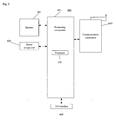
- Fig. 6 is a structural diagram of a device for generating a prompt according to an exemplary embodiment.
- the device 600 may be the smart phone, the smart television, the tablet computer, the intelligent router, the laptop computer, and so on. This embodiment is illustrated by taking that device 600 is the intelligent router for example, which does not form a limit to the invention.
- the device 600 may include one or more of the following components: a processing component 602, a memory 604, a power component 606, an Input/Output (I/O) interface 608 and a communication component 610.
- a processing component 602 a memory 604
- a power component 606 an Input/Output (I/O) interface 608
- a communication component 610 a communication component 610.
- the processing component 602 typically controls overall operations of the device 600.
- the processing component 602 may include one or more processors 620 to execute instructions to perform all or part of steps in the above described method.
- the processing component 602 may include one or more modules which facilitate the interaction between the processing component 602 and other components.
- the memory 604 is configured to store various types of data to support the operation of the device 600. Examples of these data include instructions for any application or method operated on the device 600.
- the memory 604 may be implemented using any volatile or any non-volatile storage device, or a combination thereof, such as a Static Random Access Memory (SRAM), an Electrically Erasable Programmable Read-Only Memory (EEPROM), an Erasable Programmable Read Only Memory (EPROM), a Programmable Read Only Memory (PROM), a Read-Only Memory (ROM), a magnetic memory, a flash memory, a disk or a compact disc.
- SRAM Static Random Access Memory
- EEPROM Electrically Erasable Programmable Read-Only Memory
- EPROM Erasable Programmable Read Only Memory
- PROM Programmable Read Only Memory
- ROM Read-Only Memory
- the power component 606 provides power to various components of the device 600.
- the power component 606 may include a power management system, one or more power sources, and other components associated with generation, management and distribution of power in the device 600.
- the I/O interface 608 provides an interface between the processing component 602 and peripheral interface modules.
- the communication component 610 is configured to facilitate communication, wired or wirelessly, between the device 600 and other devices.
- the communication component 610 receives a broadcast signal or broadcast associated information from an external broadcast management system via a broadcast channel.
- the communication component 610 further includes a Near Field Communication (NFC) module to facilitate short-range communications.
- NFC Near Field Communication
- the NFC module may be implemented based on a Radio Frequency Identification (RFID) technology, an Infrared Data Association (IrDA) technology, an Ultra Wide Band (UWB) technology, a Bluetooth (BT) technology, and other technologies.
- RFID Radio Frequency Identification
- IrDA Infrared Data Association
- UWB Ultra Wide Band
- BT Bluetooth
- the device 600 may be implemented with one or more Application Specific Integrated Circuits (ASICs), Digital Signal Processors (DSPs), Digital Signal Processing Devices (DSPDs), Programmable Logic Devices (PLDs), Field Programmable Gate Arrays (FPGAs), controllers, microcontrollers, microprocessors or other electronic components, for performing the above described methods.
- ASICs Application Specific Integrated Circuits
- DSPs Digital Signal Processors
- DSPDs Digital Signal Processing Devices
- PLDs Programmable Logic Devices
- FPGAs Field Programmable Gate Arrays
- controllers microcontrollers, microprocessors or other electronic components, for performing the above described methods.
- non-transitory computer readable storage medium including instructions, such as included in the memory 604, executable by the processor 620 in the device 600, for performing the above-described methods.
- the non-transitory computer readable storage medium may be a ROM, a Compact Disc Read Only Memory (CD-ROM), a magnetic tape, a floppy disc, an optical data storage device, and the like.
- Non-transitory computer readable storage medium including instructions that, when executed by the processor of the device 600, cause the device 600 to perform the method for generating a prompt.
- the embodiments of the invention by acquiring the information about the open-or-closed state of the door or window, acquiring the information about indoor and outdoor environments, generating the prompt according to the information about the open-or-closed state of the door or window and the information about the indoor and outdoor environments, it is solved the problem that when the door or window are opened or closed unreasonably, an indoor air environment gets bad, which influences the health of user, and it is achieved the effect of reminding the user to open or close the door or window reasonably according to the condition of indoor and outdoor environments, thereby not only improving the indoor air quality, but also preventing theft and protecting the security of use.
Landscapes
- Engineering & Computer Science (AREA)
- Computer Networks & Wireless Communication (AREA)
- Signal Processing (AREA)
- Physics & Mathematics (AREA)
- General Physics & Mathematics (AREA)
- Telephonic Communication Services (AREA)
- Automation & Control Theory (AREA)
- Air Conditioning Control Device (AREA)
- Power-Operated Mechanisms For Wings (AREA)
- Health & Medical Sciences (AREA)
- Computing Systems (AREA)
- General Health & Medical Sciences (AREA)
- Medical Informatics (AREA)
- Ventilation (AREA)
- Cold Air Circulating Systems And Constructional Details In Refrigerators (AREA)
Abstract
Description
- The invention generally relates to the field of smart home, and in particular to a method and device for generating a prompt.
- In daily life, a user usually allows indoor and outdoor air to circulate by opening doors and windows, thereby purifying the indoor air.
- However, on one hand, the user often forgets to open or close the window, on the other hand, the user often cannot judge exactly the difference between indoor air quality and outdoor air quality, so when the doors and windows are opened or closed unreasonably, an indoor air environment is bad, which influences the health of user.
- Accordingly, the invention provides a method and device for generating a prompt, in accordance with claims which follow.
- According to a first aspect, the invention relates to a method for generating a prompt, comprising:
- acquiring information about an open-or-closed state of a door or window;
- acquiring information about indoor and outdoor environments; and
- generating a prompt according to the information about the open-or-closed state of the door or window and the information about the indoor and outdoor environments.
- By acquiring the information about the open-or-closed state of the door or window, acquiring the information about indoor and outdoor environments, generating the prompt according to the information about the open-or-closed state of the door or window and the information about the indoor and outdoor environments, it is solved the problem that when the door or window are opened or closed unreasonably, an indoor air environment gets bad, which influences the health of user, and it is achieved the effect of reminding the user to open or close the door or window reasonably according to the condition of indoor and outdoor environments, thereby not only improving the indoor air quality, but also preventing theft and protecting the security of user.
- According to an exemplary embodiment, the step of generating the prompt according to the information about the open-or-closed state of the door or window and the information about the indoor and outdoor environments may comprise that:
- a correct open-or-closed state the door or window is supposed to be in is determined according to the information about the indoor and outdoor environments;
- it is detected that whether the open-or-closed state of the door or window is identical to the correct open-or-closed state; and
- in the case that the open-or-closed state of the door or window is different from the correct open-or-closed state, the prompt is generated according to the correct open-or-closed state.
- According to an exemplary embodiment, the step of determining the correct open-or-closed state the door or window is supposed to be in according to the information about the indoor and outdoor environments may comprise that:
- it is detected that whether outdoor environment quality is better than indoor environment quality according to the information about the indoor and outdoor environments;
- in the case that the outdoor environment quality is better than the indoor environment quality, it is determined that the correct open-or-closed state is an open state; or in the case that the indoor environment quality is better than the outdoor environment quality, it is determined that the correct open-or-closed state is a closed state.
- According to an exemplary embodiment, the step of determining the correct open-or-closed state the door or window is supposed to be in according to the information about the indoor and outdoor environments may comprise that:
- it is acquired working state information of a specified device which is carried in the information about indoor and outdoor environments;
- in the case that the working state information indicates that the specified device is in a running state, it is determined that the correct open-or-closed state is a closed state; or in the case that the working state information indicates that the specified device is in an off state, it is determined that the correct open-or-closed state is an open state,
- the specified device may comprise: an air purifier, a refrigerating unit or a heating unit.
- According to an exemplary embodiment, the step of determining the correct open-or-closed state the door or window is supposed to be in according to the information about the indoor and outdoor environments may comprise that:
- it is acquired harmful indoor gas content which is carried in the information about the indoor and outdoor environments;
- it is detected that whether the harmful indoor gas content exceeds a preset threshold; and
- if the harmful indoor gas content exceeds the preset threshold, then it is determined that the correct open-or-closed state is an open state.
- According to an exemplary embodiment, the method may further comprise that:
- the prompt is sent to a mobile terminal.
- According to an exemplary embodiment, the step of sending the prompt to the mobile terminal may comprise that:
- it is acquired state information of the mobile terminal, which comprises at least one of the following: information about an on-or-off state of the mobile terminal and information about geographic location of the mobile terminal;
- the prompt is sent to the mobile terminal according to the state information.
- According to an exemplary embodiment, the step of sending the prompt to the mobile terminal according to the state information may comprise that:
- the prompt is sent to the mobile terminal which is in an on state according to the information about the on-or-off state; or
- the prompt is sent to the mobile terminal which is in the on state and is nearest to the door or window according to the information about the on-or-off state and the information about the geographic location; or
- the prompt is sent to the mobile terminal which is entering or leaving a preset area around the door or window according to the information about the geographic location.
- According to an exemplary embodiment, the method may further comprise that:
- it is controlled the open-or-closed state of the door or window, the open-or-closed state comprises at least one of the following: whether the door or window is open, an open mode of the door or window, and an open angle of the door or window.
- According to an exemplary embodiment, the step of controlling the open-or-closed state of the door or window may comprise that:
- the door or window is controlled to open or close automatically according to the prompt; or
- it is received feedback information which is sent by the mobile terminal in response to the received prompt; and the door or window is controlled to open or close according to the feedback information.
- According to a second aspect, the invention relates to a device for generating a prompt, comprising:
- a first acquiring module, configured to acquire information about an open-or-closed state of a door or window;
- a second acquiring module, configured to acquire information about indoor and outdoor environments; and
- a generating module, configured to generate a prompt according to the information about the open-or-closed state of the door or window and the information about the indoor and outdoor environments.
- The advantages and technical effects of the device according to the invention correspond to those of the method presented above.
- According to an exemplary embodiment, the generating module may comprise:
- a determining sub-module, configured to determine a correct open-or-closed state the door or window is supposed to be in according to the information about the indoor and outdoor environments;
- a detecting sub-module, configured to detect whether the open-or-closed state of the door or window is identical to the correct open-or-closed state; and
- a generating sub-module, configured to, in the case that the open-or-closed state of the door or window is different from the correct open-or-closed state, generate the prompt according to the correct open-or-closed state.
- According to an exemplary embodiment, the determining sub-module may comprise:
- a first detecting sub-module, configured to detect whether the outdoor environment quality is better than the indoor environment quality according to the information about the indoor and outdoor environments; and
- a first determining sub-module, configured to, in the case that the outdoor environment quality is better than the indoor environment quality, determine that the correct open-or-closed state is an open state, or in the case that the indoor environment quality is better than the outdoor environment quality, determine that correct open-or-closed state is a closed state.
- According to an exemplary embodiment, the determining sub-module may comprise:
- a first acquiring sub-module, configured to acquire working state information of a specified device which is carried in the information about the indoor and outdoor environments; and
- a second determining sub-module, configured to, in the case that the working state information indicates that the specified device is in a running state, determine that the correct open-or-closed state is a closed state, or in the case that the working state information indicates that the specified device is in an off state, determine that the correct open-or-closed state is an open state,
- the specified device comprises: the air purifier, the refrigerating unit or the heating unit.
- According to an exemplary embodiment, the determining sub-module may comprise:
- a second acquiring sub-module, configured to acquire the harmful indoor gas content which is carried in the information about the indoor and outdoor environments;
- a second detecting sub-module, configured to detect whether the harmful indoor gas content exceeds the preset threshold; and
- a third determining sub-module, configured to, when the harmful indoor gas content exceeds the preset threshold, determine that the correct open-or-closed state is an open state.
- According to an exemplary embodiment, the device may further comprise:
- a sending module, configured to send the prompt to the mobile terminal.
- According to an exemplary embodiment, the sending module may comprise:
- a third acquiring sub-module, configured to acquire state information of the mobile terminal, wherein the state information comprises at least one of the following: information about an on-or-off state of the mobile terminal and information about geographic location of the mobile terminal;
- a sending sub-module, configured to send the prompt to the mobile terminal according to the state information.
- According to an exemplary embodiment, the sending sub-module may comprise:
- a first sending sub-module, configured to send the prompt to the mobile terminal which is in an on state according to the information about the on-or-off state; or
- a second sending sub-module, configured to send the prompt to the mobile terminal which is in the on state and is nearest to the door or window according to the information about the on-or-off state and the information about the geographic location; or
- a third sending sub-module, configured to send the prompt to the mobile terminal which is entering or leaving a preset area around the door or window according to the information about the geographic location.
- According to an exemplary embodiment, the device may further comprise:
- a controlling module, configured to control the open-or-closed state of the door or window, wherein the open-or-closed state comprises at least one of the following: whether the door or window is open, an open mode of the door or window, and an open angle of the door or window.
- According to an exemplary embodiment, the controlling module may comprise:
- a first controlling sub-module, configured to control the door or window to open or close automatically according to the prompt; or
- a second controlling sub-module, configured to receive feedback information which is sent by the mobile terminal in response to the received the prompt, and control the door or window to open or close according to the feedback information.
- According to a third aspect, the invention relates to a device for generating a prompt, comprising:
- a processor; and
- a memory for storing instructions executable by the processor,
- the processor is configured to:
- acquire information about an open-or-closed state of a door or window;
- acquire information about indoor and outdoor environments; and
- generate a prompt according to the information about the open-or-closed state of the door or window and the information about the indoor and outdoor environments.
- In one particular embodiment, the steps of the method for generating a prompt are determined by computer program instructions.
- Consequently, according to a fourth aspect, the invention is also directed to a computer program for executing the steps of a method for generating a prompt as described above when this program is executed by a computer.
- This program can use any programming language and take the form of source code, object code or a code intermediate between source code and object code, such as a partially compiled form, or any other desirable form.
- The invention is also directed to a computer-readable information medium containing instructions of a computer program as described above.
- The information medium can be any entity or device capable of storing the program. For example, the support can include storage means such as a ROM, for example a CD ROM or a microelectronic circuit ROM, or magnetic storage means, for example a diskette (floppy disk) or a hard disk.
- Alternatively, the information medium can be an integrated circuit in which the program is incorporated, the circuit being adapted to execute the method in question or to be used in its execution.
- It is to be understood that both the foregoing general description and the following detailed description are exemplary and explanatory only and are not restrictive of the invention, as claimed.
- The accompanying drawings, which are incorporated in and constitute a part of this specification, illustrate embodiments consistent with the invention and, together with the description, serve to explain the principles of the invention.
-
Fig. 1 is a diagram of implementation environments for each embodiment of the invention; -
Fig. 2 is a flowchart of a method for generating a prompt according to an exemplary embodiment; -
Fig. 3A is a flowchart of a method for generating a prompt according to another exemplary embodiment; -
Fig. 3B is a flowchart of a process of determining the correct open-or-closed state the door or window is supposed to be in involved in the method for generating a prompt according to another exemplary embodiment; -
Fig. 3C is a flowchart of a process of sending the prompt involved in the method for generating prompt according to another exemplary embodiment; -
Fig. 3D is a flowchart of a process of controlling the open or closed state of the door or window involved in the method for generating a prompt according to another exemplary embodiment; -
Fig. 3E is a diagram of the implementation of the method for generating a prompt according to another exemplary embodiment; -
Fig. 3F is a flowchart of the process of determining the correct open-or-closed state the door or window is supposed to be in involved in the method for generating a prompt according to another exemplary embodiment; -
Fig. 3G is a flowchart of the process of determining the correct open-or-closed state the door or window is supposed to be in involved in the method for generating a prompt according to another exemplary embodiment; -
Fig. 3H is a flowchart of the process of sending the prompt involved in the method for generating a prompt according to another exemplary embodiment; -
Fig. 4 is a structural diagram of a device for generating a prompt according to an exemplary embodiment; -
Fig. 5 is a structural diagram of the device for generating a prompt according to another exemplary embodiment; and -
Fig. 6 is a block diagram of a device for generating a prompt according to an exemplary embodiment. - The specific embodiments of the invention are shown through the above accompanying drawings, and more detailed description will be given hereinafter. These accompanying drawings and text description do not limit the scope of conception of the invention in any way, but illustrate concepts of the invention for the skilled personnel in the field by referring to particular embodiments.
- Reference will now be made in detail to exemplary embodiments, examples of which are illustrated in the accompanying drawings. The following description refers to the accompanying drawings in which the same numbers in different drawings represent the same or similar elements unless otherwise represented. The implementations set forth in the following description of exemplary embodiments do not represent all implementations consistent with the invention. Instead, they are merely examples of devices and methods consistent with aspects related to the invention as recited in the appended claims.
-
Fig. 1 is a diagram of implementation environments for each embodiment of the invention. The implementation environments include a door orwindow 110,electronic equipment 120, asmart appliance 130 and amobile terminal 140. - The door or
window 110 comprises a control chip and a mechanical control unit for controlling the door or window to open or close, these control chip and mechanical control unit being connected with theelectronic equipment 120 through Bluetooth, infrared or a wireless network. The door or window in the embodiments of the invention is: a door, a window, or a combination of a door and a window. - The
electronic equipment 120, which has a processing function, may be a residential gateway, a server connected with the residential gateway, a smart appliance or a piece of mobile equipment at home. The residential gateway may be an intelligent router. The smart appliance may be a smart television or a smart set top box, and so on. The mobile equipment at home may be a tablet computer or laptop computer, and so on. As shown inFig. 1 , the electronic equipment may be any one of the intelligent router, the server connected with the intelligent router, the smart television and the tablet computer. - The
electronic equipment 120 is connected with thesmart appliance 130 through a wired or wireless network. - The
smart appliance 130 may be an intelligent air purifier, an intelligent air conditioner, a piece of intelligent gas equipment or an intelligent floor heating system, and so on. - The
electronic equipment 120 is connected with themobile terminal 140 through a wireless network. - The
mobile terminal 140 may be a piece of portable intelligent equipment, and the intelligent equipment may be a smart phone or the tablet computer, and so on. - For facilitating description, the following embodiments are illustrated by just taking that the
electronic equipment 120 is the intelligent router for example, which does not form a limit to the invention. -
Fig. 2 is a flowchart of a method for generating a prompt according to an exemplary embodiment. In this embodiment, the method for generating a prompt is performed by theelectronic equipment 120 inFig. 1 , and the method for generating the prompt may include the following steps. - In
Step 201, information about an open-or-closed state of a door or window is acquired. - The information about an open-or-closed state of a door or window may include at least one of the following: whether the door or window is open, the open manner of the door or window and the open angle of the door or window.
- In
Step 202, information about indoor and outdoor environments is acquired. - The information about indoor and outdoor environments may include: information about weather condition, information about indoor environment quality, information about outdoor environment quality, information about indoor humidity, information about harmful gas content and working state information of a specified device, and so on.
- The information about indoor environment quality is an indoor environment index which is calculated according to an indoor air environment, and the information about outdoor environment quality is an outdoor environment index which is calculated according to an outdoor air environment.
- The specified device may include: the air purifier, a refrigerating unit, a heating unit or other smart appliances.
- In
Step 203, the prompt is generated according to the information about the open-or-closed state of the door or window and the information about the indoor and outdoor environments. - To sum up, by acquiring the information about the open-or-closed state of the door or window, acquiring the information about indoor and outdoor environments, and generating the prompt according to the information about the open-or-closed state of the door or window and the information about the indoor and outdoor environments, the method for generating a prompt provided by this exemplary embodiment solves the problem that when the door or window are opened or closed unreasonably, an indoor air environment gets bad, which influences the health of user, and achieves the effect of reminding the user to open or close the door or window reasonably according to the condition of indoor and outdoor environments, thereby not only improving the indoor air quality, but also preventing theft and protecting the security of user.
-
Fig. 3A is a flowchart of a method for generating a prompt according to another exemplary embodiment. This method for generating a prompt is performed by theelectronic equipment 120 inFig. 1 . For facilitating description, this embodiment is illustrated by taking that theelectronic equipment 120 is the intelligent router for example. The method for generating a prompt may include the following steps. - In
Step 301, information about an open-or-closed state of a door or window is acquired. - There is a sensor pre-installed on the door or window by the user. The sensor may be an infrared distance sensor or a mechanical sensor installed on the frame of the door or window. The sensor is configured for acquiring the information about the open-or-closed state of a door or window. The information about the open-or-closed state of a door or window may include at least one of the following: whether the door or window is open, the open manner of the door or window and the open angle of the door or window. The open manner of the door or window may include: side hung open manner, top-hung casement open manner, sliding sash open manner, and so on.
- For example, the sensor on the door or window can determine whether the door/window is open by detecting whether the door/window is separated from the frame. Furthermore, the sensor can also calculate the open angle of the door or window by acquiring a distance between the door (or window) and the frame.
- The sensor is also connected with the
electronic equipment 120 inFig. 1 through a Bluetooth, infrared or wireless network. For example, when theelectronic equipment 120 is the intelligent router, the sensor can be connected with the intelligent router through the wireless network and sends the acquired information about the open-or-closed state of a door or window to the intelligent router. Correspondingly, the intelligent router receives the information about the open-or-closed state of a door or window sent from the sensor. - Note that, this embodiment is illustrated by just taking that the
electronic equipment 120 is the intelligent router for example, which does not form a limit to the invention. - In
Step 302, information about indoor and outdoor environments is acquired. - The information about indoor and outdoor environments may include: information about weather condition, information about indoor environment quality, information about outdoor environment quality, information about indoor humidity, information about harmful gas content and working state information of a specified device, and so on.
- The specified device may be a smart appliance bound with the intelligent router in advance. The specified device sends its working state information to the intelligent router when its working state changes. The specified device may include: the air purifier, a refrigerating unit, a heating unit or other smart appliances.
- The intelligent router may acquire the information about weather condition and the information about outdoor environment quality by looking up on the Internet. The intelligent router is also connected with the smart appliance at home through the wired or wireless network, and receives the information about indoor environment quality, the information about indoor humidity, the information about harmful gas content and the working state information of the specified device sent by the smart appliance.
- For example, the air purifier at home may be connected with the intelligent router, and sends the acquired information about indoor environment quality, information about indoor humidity and information about harmful gas content to the intelligent router.
- For example, the intelligent floor heating system at home may be connected with the intelligent router. The intelligent floor heating system may report its working state information to the intelligent router during working.
- In
Step 303, the correct open-or-closed state the door or window is supposed to be in is determined according to the information about indoor and outdoor environments. - The outdoor environment quality may be poorer than the indoor environment quality, when the user opens the door or window, indoor air pollution may be caused, so the intelligent router needs to estimate the indoor environment quality and the outdoor environment quality according to the acquired information about indoor and outdoor environments, and further determines the correct open-or-closed state the door or window is supposed to be in.
- Optionally, as shown in
Fig. 3B ,Step 303 may include the following steps. - In
Step 303A, it is detected that whether the outdoor environment quality is better than the indoor environment quality according to the information about indoor and outdoor environments. - The intelligent router acquires the information about indoor environment quality carried in the information about indoor environment and the information about outdoor environment quality carried in the information about outdoor environment, and detects whether the outdoor environment quality is better than the indoor environment quality according to the information about indoor environment quality and the information about outdoor environment quality.
- For example, the information about indoor environment quality and the information about outdoor environment quality are environment pollution indexes calculated according to pollutant content of the air respectively. The higher the environment pollution index is, the poorer the environment quality is. The intelligent router detects whether the outdoor environment quality is better than the indoor environment quality by comparing the environment pollution indexes.
- In
Step 303B, if the outdoor environment quality is better than the indoor environment quality, then it is determined that the correct open-or-closed state is an open state; or if the indoor environment quality is better than the outdoor environment quality, then it is determined that the correct open-or-closed state is a closed state. - When it is detected that an environment quality index corresponding to the information about indoor environment quality is greater than the environment quality index corresponding to the information about outdoor environment quality, namely the current outdoor environment is better than the current indoor environment, opening the door or window for ventilation can purify the indoor air, and the intelligent router determines that the correct open-or-closed state is an open state. When it is detected that the environment quality index corresponding to the information about indoor environment quality is less than the environment quality index corresponding to the information about outdoor environment quality, namely the current indoor environment is better than the current outdoor environment, opening the door or window for ventilation will cause indoor air pollution, and the intelligent router determines that the correct open-or-closed state is a closed state.
- Note that, when it is raining, the outdoor environment quality may be better than the indoor environment quality, but opening the door or window may let rainwater enter home, so the intelligent router needs to further detect whether it is right to open the door/window now according to weather forecast information carried in the information about indoor and outdoor environments. When it is detected that it is raining or the rain will come, the intelligent router determines the closed state as the correct open-or-closed state.
- In
Step 304, it is detected that whether the open-or-closed state of the door or window is identical to the correct open-or-closed state. - After determining the correct open-or-closed state, the intelligent router detects whether the current open-or-closed state of the door or window is identical to the correct open-or-closed state. When it is detected that they are identical, it is proceed to Step 305; when it is detected that they are different, it is proceed to Step 306.
- In
Step 305, if the open-or-closed state of the door or window is identical to the correct open-or-closed state, no prompt is generated. - In
Step 306, if the open-or-closed state of the door or window is different from the correct open-or-closed state, the prompt is generated according to the correct open-or-closed state. - When it is detected that the current open-or-closed state of the door or window is different from the correct open-or-closed state, the intelligent router generates the prompt according to the correct open-or-closed state. The prompt is used for reminding the user to open or close the door/window.
- In
Step 307, the prompt is sent to the mobile terminal. - For making the user open or close the door/window according to the prompt, the intelligent router sends the prompt to the mobile terminal which is bound to the intelligent router. As shown in
Fig. 3C ,Step 307 may include the following steps. - In
Step 307A, state information of the mobile terminal is acquired, The state information may include at least one of the following: information about an on-or-off state of the mobile terminal and information about geographic location of the mobile terminal. - For enabling the user to receive the prompt in time, the intelligent router may further acquire the state information of the bound mobile terminal. The state information includes the information about an on-or-off state of the mobile terminal and the information about geographic location of the mobile terminal, and so on. The intelligent router selects the mobile terminal which is able to receive the prompt as the target mobile terminal according to the acquired state information.
- In
Step 307B, the prompt is sent to the mobile terminal according to the state information. - The intelligent router sends the prompt to the target mobile terminal which is able to receive the prompt. The prompt may be text information or voice information, and so on; the invention does not limit this.
- In
Step 308, the open-or-closed state of the door or window is controlled. The open-or-closed state may include at least one of the following: whether the door or window is open, an open mode of the door or window, and an open angle of the door or window. - After receiving the prompt through the mobile terminal, the user can send the feedback information to the intelligent router, and then the intelligent router controls the door/window to open or close according to the feedback information. However, the user may not view the prompt or return the feedback information in time, in this case, the intelligent router may control the door/window to open or close automatically according to the prompt. As shown in
Fig. 3D ,Step 308 may include the following steps. - In
Step 308A, the door or window is controlled to open or close automatically according to the prompt. - Optionally, after sending the prompt to the mobile terminal, the intelligent router starts a timer, and detects in a preset time span whether the feedback information sent by the mobile terminal is received. When the feedback information is not received in the preset time span, the intelligent router automatically controls the door or window to open or close according to the prompt. Note that, when the intelligent router detects that the harmful indoor gas content is greater than the preset threshold, it can automatically control the door or window to close without need of receiving the feedback information of the user.
- In
Step 308B, it is received the feedback information which is sent by the mobile terminal in response to the received prompt; the door or window is controlled to open or close according to the feedback information. - Optionally, after sending the prompt to the mobile terminal, the intelligent router starts the timer, and detects in the preset time span whether the feedback information sent by the mobile terminal is received. When the feedback information is received in the preset time span, the intelligent router controls the door or window to open or close according to the feedback information.
- For example, as shown in
Fig. 3E , the door orwindow 31 sends the current information about open-or-closed state of the door or window to theintelligent router 32. Theintelligent router 32 generates the prompt according to the information about open-or-closed state of the door or window, and sends the prompt to themobile terminal 33 to remind the user to open the door or window. Then, the user selects to open the door or window according to the prompt. Themobile terminal 33 sends the feedback information to theintelligent router 32 according to the selection of the user. Theintelligent router 32 sends a control instruction to the door orwindow 31 according to the feedback information to control the door orwindow 31 to open. - To sum up, by acquiring the information about the open-or-closed state of the door or window, acquiring the information about indoor and outdoor environments, and generating the prompt according to the information about the open-or-closed state of the door or window and the information about the indoor and outdoor environments, the method for generating a prompt provided by this exemplary embodiment solves the problem that when the door or window are opened or closed unreasonably, an indoor air environment gets bad, which influences the health of user, and achieves the effect of reminding the user to open or close the door or window reasonably according to the condition of indoor and outdoor environments, thereby not only improving the indoor air quality, but also preventing theft and protecting the security of user.
- By detecting whether the outdoor environment quality is better than the indoor environment quality, reminding the user to open the door or window when the outdoor environment quality is better than the indoor environment quality, and reminding the user to close the door or window when the indoor environment quality is better than the outdoor environment quality, this exemplary embodiment avoids the problem that when the outdoor environment is relatively bad, the indoor environment is polluted because of opening the door or window by the user, and improves the accuracy of the generated prompt.
- When the user is using the air purifier or other home appliances, opening the door or window will cause the problem that the home appliances cannot achieve the desired work efficiency, so the intelligent router may also determine the correct open-or-closed state the door or window is supposed to be in according to the working state information of the specified device. As a possible implementation mode, as shown in
Fig. 3F , theabove Step 303A andStep 303B may be replaced withStep 303C andStep 303D. - In
Step 303C, it is acquired the working state information of a specified device which is carried in the information about indoor and outdoor environments. - The specified device at home is connected with the intelligent router beforehand. When the working state of the specified device changes, the specified device reports its current working state information to the intelligent router initiatively.
- For example, when the air purifier is started, it sends its working state information to the intelligent router. The working state information is used for informing the intelligent router that the air purifier is working.
- In
Step 303D, if the working state information indicates that the specified device is in the running state, then it is determined that the correct open-or-closed state is a closed state; or if the working state information indicates that the specified device is in the off state, then it is determined that the correct open-or-closed state is an open state. The specified device may include: the air purifier, the refrigerating unit or the heating unit. - When the intelligent router determines according to the working state information that the specified device is running, for ensuring the working efficiency of the specified device, it is determined that the correct open-or-closed state is a closed state. When the intelligent router determines according to the working state information that the specified device is not running, it is determined that the correct open-or-closed state is an open state.
- Note that, because of the gas equipment generates harmful gas when working, when the specified device is the gas equipment, for ensuring the health of user, the intelligent router determines that the correct open-or-closed state should be an open state when detecting that the gas equipment is running.
- By determining whether it is needed to open the door or window according to the working state of the specified device, the exemplary embodiment also avoids the problem that when the user is using the specified device, the power resource is wasted because opening the door or window influences the working efficiency of the specified device, and achieves the effects of giving full play to the working efficiency of the specified device and saving the power resource.
- As another possible implementation mode, the intelligent router may also determine to open or close the door or window according to harmful indoor gas content. As shown in
Fig. 3G , theabove Step 303A andStep 303B may be replaced withStep 303E to Step 303G. - In
Step 303E, harmful indoor gas content which is carried in the information about the indoor and outdoor environments is acquired. - The intelligent router acquires the harmful indoor gas content which is carried in the information about the indoor and outdoor environments. The harmful indoor gas content may be acquired through the air purifier or other equipment.
- In
Step 303F, it is detected that whether the harmful indoor gas content exceeds a preset threshold. - In
Step 303G, if the harmful indoor gas content exceeds the preset threshold, it is determined that the correct open-or-closed state should be an open state. - When the harmful indoor gas content exceeds the preset threshold, the indoor air is harmful to the health of user, and the intelligent router determines that the correct open-or-closed state of the door or window should be an open state.
- By detecting whether the harmful indoor gas content exceeds the preset threshold, and reminding the user to open the door or window when the harmful indoor gas content exceeds the preset threshold, the exemplary embodiment also achieves the effect of ensuring the quality of the indoor air.
- For enabling the user to receive the prompt in time, as shown in
Fig. 3H , theabove Step 307B may include Step 307Ba, Step 307Bb or Step 307Bc. - In Step 307Ba, the prompt is sent to the mobile terminal which is in the on state according to the information about the on-or-off state.
- The intelligent router acquires information indicating the bound mobile terminal is in the on state, and sends the prompt to the mobile terminal which is in the on state.
- In Step 307Bb, the prompt is sent to the mobile terminal which is in the on state and whose is nearest to the door or window according to the information about the on-or-off state and the information about the geographic location.
- When the door or window cannot open or close automatically, for making the user open or close the door or window in time, the intelligent router determines the mobile terminal which is nearest to the door or window as the target mobile terminal according to the information about geographic location of the mobile terminal which is in the on state, and sends the prompt to the target mobile terminal.
- In Step 307Bc, the prompt is sent, according to the information about geographic location, to the mobile terminal which is entering or leaving a preset area around the door or window.
- When the intelligent router detects that the bound mobile terminal is connected to it, it can be determined that the mobile terminal has entered the preset area around the door or window. When the intelligent router detects that the bound mobile terminal gets disconnected with it, the intelligent router further acquires the information about geographic location of the mobile terminal. When the information about geographic location indicates that the mobile terminal is far from the intelligent router, it can be determined that the mobile terminal is leaving the preset area around the door or window.
- For example, when the intelligent router determines that it is needed to close the door or window, and detects that there is a bound mobile terminal connected to the intelligent router, the intelligent router can determine that the mobile terminal is the one having entered the preset area around the door or window, and sends the prompt to the mobile terminal.
- By sending the prompt to the mobile terminal which is in the on state or the mobile terminal which is in the on state and nearest to the door or window, the exemplary embodiment also ensures that the user can be reminded in time to open or close the door or window, and achieves the effect of improving timeliness of the prompt.
- The following are embodiments of the device of the invention, which can be used for implementing the embodiments of the method of the invention. The details which are not discussed in the embodiments of the device of the invention may be found in the embodiments of the method of the invention.
-
Fig. 4 is a structural diagram of a device for generating a prompt according to an exemplary embodiment. The device for generating a prompt can be a part or all of theelectronic equipment 120 inFig. 1 through software, hardware or a combination of them. The device for generating a prompt may include: - a first acquiring
module 401, which is configured to acquire information about an open-or-closed state of a door or window; - a second acquiring
module 402, which is configured to acquire information about indoor and outdoor environments; and - a
generating module 403, which is configured to generate the prompt according to the information about the open-or-closed state of the door or window and the information about the indoor and outdoor environments. - To sum up, by acquiring the information about the open-or-closed state of the door or window, acquiring the information about indoor and outdoor environments, and generating the prompt according to the information about the open-or-closed state of the door or window and the information about the indoor and outdoor environments, the device for generating a prompt provided by this exemplary embodiment solves the problem that when the door or window are opened or closed unreasonably, an indoor air environment gets bad, which influences the health of user, and achieves the effect of reminding the user to open or close the door or window reasonably according to the condition of indoor and outdoor environments, thereby not only improving the indoor air quality, but also preventing theft and protecting the security of user.
-
Fig. 5 is a structural diagram of the device for generating a prompt according to another exemplary embodiment. The device for generating a prompt can be a part or all of theelectronic equipment 120 inFig. 1 through software, hardware or the combination of them. The device for generating a prompt may include: - a first acquiring
module 501, which is configured to acquire information about an open-or-closed state of a door or window; - a second acquiring
module 502, which is configured to acquire the information about indoor and outdoor environments; and - a
generating module 503, which is configured to generate the prompt according to the information about the open-or-closed state of the door or window and the information about the indoor and outdoor environments. - Optionally, the
generating module 503 may include: - a determining sub-module 503A, which is configured to determine a correct open-or-closed state the door or window is supposed to be in according to the information about the indoor and outdoor environments;
- a detecting sub-module 503B, which is configured to detect whether the open-or-closed state of the door or window is identical to the correct open-or-closed state; and
- a generating sub-module 503C, which is configured to, when the open-or-closed state of the door or window is different from the correct open-or-closed state, generate the prompt according to the correct open-or-closed state.
- Optionally, the determining sub-module 503A may include:
- a first detecting sub-module 503Aa, which is configured to detect whether the outdoor environment quality is better than the indoor environment quality according to the information about the indoor and outdoor environments; and
- a first determining sub-module 503Ab, which is configured to, when the outdoor environment quality is better than the indoor environment quality, determine that the correct open-or-closed state is an open state, or when the indoor environment quality is better than the outdoor environment quality, determine that the correct open-or-closed state is a closed state.
- Optionally, the determining sub-module 503A may include:
- a first acquiring sub-module 503Ac, which is configured to acquire a working state information of a specified device which is carried in the information about the indoor and outdoor environments; and
- a second determining sub-module 503Ad, which is configured to, when the working state information indicates that the specified device is in the running state, determine that the correct open-or-closed state is a closed state, or when the working state information indicates that the specified device is in the off state, determine that the correct open-or-closed state is an open state;
- the specified device may include: the air purifier, a refrigerating unit or a heating unit.
- Optionally, the determining sub-module 503A may include:
- a second acquiring sub-module 503Ae, which is configured to acquire harmful indoor gas content which is carried in the information about the indoor and outdoor environments;
- a second detecting sub-module 503Af, which is configured to detect whether the harmful indoor gas content exceeds a preset threshold; and
- a third determining sub-module 503Ag, which is configured to, when the harmful indoor gas content exceeds the preset threshold, determine that the correct open-or-closed state is an open state.
- Optionally, the device may further include:
- a sending
module 504, which is configured to send the prompt to the mobile terminal. - Optionally, the sending
module 504 may include: - a third acquiring sub-module 504A, which is configured to acquire state information of the mobile terminal, the state information including at least one of the following: information about an on-or-off state of the mobile terminal and information about geographic location of the mobile terminal; and
- a sending sub-module 504B, which is configured to send the prompt to the mobile terminal according to the state information.
- Optionally, the sending sub-module 504B may include:
- a first sending sub-module 504Ba, which is configured to send the prompt to the mobile terminal which is in the on state according to the information about the on-or-off state; or
- a second sending sub-module 504Bb, which is configured to send the prompt to the mobile terminal which is in the on state and is nearest to the door or window according to the information about the on-or-off state and the information about the geographic location; or
- a third sending sub-module 504Bc, which is configured to send the prompt to the mobile terminal which is entering or leaving the preset area around the door or window according to the information about the geographic location.
- Optionally, the device may further include:
- a controlling
module 505, which is configured to control the open-or-closed state of the door or window. The open-or-closed state may include at least one of the following: whether the door or window is open, an open mode of the door or window, and an open angle of the door or window. - Optionally, the controlling
module 505 may include: - a first controlling sub-module 505A, which is configured to control the door or window to open or close automatically according to the prompt; or
- a second controlling sub-module 505B, which is configured to receive feedback information which is sent by the mobile terminal in response to the received the prompt, and control the door or window to open or close according to the feedback information.
- To sum up, by acquiring the information about the open-or-closed state of the door or window, acquiring the information about indoor and outdoor environments, and generating the prompt according to the information about the open-or-closed state of the door or window and the information about the indoor and outdoor environments, the device for generating a prompt provided by this exemplary embodiment solves the problem that when the door or window are opened or closed unreasonably, an indoor air environment gets bad, which influences the health of user, and achieves the effect of reminding the user to open or close the door or window reasonably according to the condition of indoor and outdoor environments, thereby not only improving the indoor air quality, but also preventing theft and protecting the security of user.
- By detecting whether the outdoor environment quality is better than the indoor environment quality, reminding the user to open the door or window when the outdoor environment quality is better than the indoor environment quality, and reminding the user to close the door or window when the indoor environment quality is better than the outdoor environment quality, this exemplary embodiment avoids the problem that when the outdoor environment is relatively bad, the indoor environment is polluted because of opening the door or window by the user, and improves accuracy of the generated prompt.
- By determining whether it is needed to open the door or window according to the working state of the specified device, the exemplary embodiment also avoids the problem that when the user is using the specified device, the power resource is wasted because opening the door or window influences the working efficiency of the specified device, and achieves the effects of giving full play to the working efficiency of the specified device and saving the power resource.
- By detecting whether the harmful indoor gas content exceeds the preset threshold, and reminding the user to open the door or window when the harmful indoor gas content exceeds the preset threshold, the exemplary embodiment also achieves the effect of ensuring the quality of the indoor air.
- By sending the prompt to the mobile terminal which is in the on state or the mobile terminal which is in the on state and nearest to the door or window, the exemplary embodiment also ensures that the user can be reminded to open or close the door or window in time, and achieves the effect of improving timeliness of the prompt.
- About the device in the above embodiments, the specific ways of executing operation by each module have been described in detail in the embodiments of the method, so they are not described here in detail.
-
Fig. 6 is a structural diagram of a device for generating a prompt according to an exemplary embodiment. Thedevice 600 may be the smart phone, the smart television, the tablet computer, the intelligent router, the laptop computer, and so on. This embodiment is illustrated by taking thatdevice 600 is the intelligent router for example, which does not form a limit to the invention. - With reference to
Fig. 6 , thedevice 600 may include one or more of the following components: aprocessing component 602, amemory 604, apower component 606, an Input/Output (I/O)interface 608 and acommunication component 610. - The
processing component 602 typically controls overall operations of thedevice 600. Theprocessing component 602 may include one ormore processors 620 to execute instructions to perform all or part of steps in the above described method. Moreover, theprocessing component 602 may include one or more modules which facilitate the interaction between theprocessing component 602 and other components. - The
memory 604 is configured to store various types of data to support the operation of thedevice 600. Examples of these data include instructions for any application or method operated on thedevice 600. Thememory 604 may be implemented using any volatile or any non-volatile storage device, or a combination thereof, such as a Static Random Access Memory (SRAM), an Electrically Erasable Programmable Read-Only Memory (EEPROM), an Erasable Programmable Read Only Memory (EPROM), a Programmable Read Only Memory (PROM), a Read-Only Memory (ROM), a magnetic memory, a flash memory, a disk or a compact disc. - The
power component 606 provides power to various components of thedevice 600. Thepower component 606 may include a power management system, one or more power sources, and other components associated with generation, management and distribution of power in thedevice 600. - The I/
O interface 608 provides an interface between theprocessing component 602 and peripheral interface modules. - The
communication component 610 is configured to facilitate communication, wired or wirelessly, between thedevice 600 and other devices. In one exemplary embodiment, thecommunication component 610 receives a broadcast signal or broadcast associated information from an external broadcast management system via a broadcast channel. In one exemplary embodiment, thecommunication component 610 further includes a Near Field Communication (NFC) module to facilitate short-range communications. For example, the NFC module may be implemented based on a Radio Frequency Identification (RFID) technology, an Infrared Data Association (IrDA) technology, an Ultra Wide Band (UWB) technology, a Bluetooth (BT) technology, and other technologies. - In exemplary embodiments, the
device 600 may be implemented with one or more Application Specific Integrated Circuits (ASICs), Digital Signal Processors (DSPs), Digital Signal Processing Devices (DSPDs), Programmable Logic Devices (PLDs), Field Programmable Gate Arrays (FPGAs), controllers, microcontrollers, microprocessors or other electronic components, for performing the above described methods. - In exemplary embodiments, there is also provided a non-transitory computer readable storage medium including instructions, such as included in the
memory 604, executable by theprocessor 620 in thedevice 600, for performing the above-described methods. For example, the non-transitory computer readable storage medium may be a ROM, a Compact Disc Read Only Memory (CD-ROM), a magnetic tape, a floppy disc, an optical data storage device, and the like. - It is provided a non-transitory computer readable storage medium including instructions that, when executed by the processor of the
device 600, cause thedevice 600 to perform the method for generating a prompt. - Other embodiments of the invention will be apparent to those skilled in the art from consideration of the specification and practice of the invention disclosed here. This application is intended to cover any variations, uses, or adaptations of the invention following the general principles thereof and including such departures from the present invention as come within known or customary practice in the art. It is intended that the specification and examples be considered as exemplary only, with a true scope and spirit of the invention being indicated by the following claims.
- It will be appreciated that the present invention is not limited to the exact construction that has been described above and illustrated in the accompanying drawings, and that various modifications and changes can be made without departing from the scope thereof. It is intended that the scope of the invention only be limited by the appended claims.
- In the embodiments of the invention, by acquiring the information about the open-or-closed state of the door or window, acquiring the information about indoor and outdoor environments, generating the prompt according to the information about the open-or-closed state of the door or window and the information about the indoor and outdoor environments, it is solved the problem that when the door or window are opened or closed unreasonably, an indoor air environment gets bad, which influences the health of user, and it is achieved the effect of reminding the user to open or close the door or window reasonably according to the condition of indoor and outdoor environments, thereby not only improving the indoor air quality, but also preventing theft and protecting the security of use.
Claims (14)
- A method for generating a prompt, characterized in that the method comprises:acquiring (201, 301) information about an open-or-closed state of a door or window;acquiring (202, 302) information about indoor and outdoor environments; andgenerating (203) a prompt according to the information about the open-or-closed state of the door or window and the information about the indoor and outdoor environments.
- The method according to claim 1, wherein the step of generating the prompt according to the information about the open-or-closed state of the door or window and the information about the indoor and outdoor environments comprises:determining (303) a correct open-or-closed state the door or window is supposed to be in according to the information about the indoor and outdoor environments;detecting (304) whether the open-or-closed state of the door or window is identical to the correct open-or-closed state; andin the case that the open-or-closed state of the door or window is different from the correct open-or-closed state, generating (306) the prompt according to the correct open-or-closed state.
- The method according to claim 2, wherein the step (303) of determining the correct open-or-closed state the door or window is supposed to be in according to the information about the indoor and outdoor environments comprises:detecting (303A) whether outdoor environment quality is better than indoor environment quality according to the information about the indoor and outdoor environments;in the case that the outdoor environment quality is better than the indoor environment quality, determining (303B) that the correct open-or-closed state is an open state; or in the case that the indoor environment quality is better than the outdoor environment quality, determining that the correct open-or-closed state is a closed state.
- The method according to claim 2, wherein the step (303) of determining the correct open-or-closed state the door or window is supposed to be in according to the information about the indoor and outdoor environments comprises:acquiring (303C) working state information of a specified device which is carried in the information about the indoor and outdoor environments;in the case that the working state information indicates that the specified device is in a running state, determining (303D) that the correct open-or-closed state is a closed state; or in the case that the working state information indicates that the specified device is in an off state, determining that the correct open-or-closed state is an open state,wherein the specified device comprises: an air purifier, a refrigerating unit or a heating unit.
- The method according to claim 2, wherein the step (303) of determining the correct open-or-closed state the door or window is supposed to be in according to the information about the indoor and outdoor environments comprises:acquiring (303E) harmful indoor gas content which is carried in the information about the indoor and outdoor environments;detecting (303F) whether the harmful indoor gas content exceeds a preset threshold; andin the case that the harmful indoor gas content exceeds the preset threshold, determining (303G) that the correct open-or-closed state is an open state.
- The method according to any one of claims 1 to 5, further comprising:sending (307) the prompt to a mobile terminal.
- The method according to claim 6, wherein the step (307) of sending the prompt to the mobile terminal comprises:acquiring (307A) state information of the mobile terminal, wherein the state information comprises at least one of the following: information about an on-or-off state of the mobile terminal and information about geographic location of the mobile terminal; andsending (307B) the prompt to the mobile terminal according to the state information.
- The method according to claim 7, wherein the step (307B) of sending the prompt to the mobile terminal according to the state information comprises:sending (307Ba) the prompt to the mobile terminal which is in an on state according to the information about the on-or-off state; orsending (307Bb) the prompt to the mobile terminal which is in the on state and is nearest to the door or window according to the information about the on-or-off state and the information about the geographic location; orsending (307Bc) the prompt to the mobile terminal which is entering or leaving a preset area around the door or window according to the information about the geographic location.
- The method according to claim 6, further comprising:controlling (308) the open-or-closed state of the door or window, wherein the open-or-closed state comprises at least one of the following: whether the door or window is open, an open mode of the door or window, and an open angle of the door or window.
- The method according to claim 9, wherein the step (308) of controlling the open-or-closed state of the door or window comprises:controlling (308A) the door or window to open or close automatically according to the prompt; orreceiving (308B) feedback information which is sent by the mobile terminal in response to the received the prompt, and controlling the door or window to open or close according to the feedback information.
- A device for generating a prompt, characterized in that the device comprises:a first acquiring module (401, 501), configured to acquire information about an open-or-closed state of a door or window;a second acquiring module (402, 502), configured to acquire information about indoor and outdoor environments; anda generating module (403, 503), configured to generate a prompt according to the information about the open-or-closed state of the door or window and the information about the indoor and outdoor environments.
- The device according to claim 11, wherein the generating module (503) comprises:a determining sub-module (503A), configured to determine a correct open-or-closed state the door or window is supposed to be in according to the information about the indoor and outdoor environments;a detecting sub-module (503B), configured to detect whether the open-or-closed state of the door or window is identical to the correct open-or-closed state; anda generating sub-module (503C), configured to, in the case that the open-or-closed state of the door or window is different from the correct open-or-closed state, generate the prompt according to the correct open-or-closed state.
- A computer program including instructions for executing the steps of a method for generating a prompt according to any one of claims 1 to 10 when said program is executed by a computer.
- A recording medium readable by a computer and having recorded thereon a computer program including instructions for executing the steps of a method for generating a prompt according to any one of claims 1 to 10.
Applications Claiming Priority (2)
| Application Number | Priority Date | Filing Date | Title |
|---|---|---|---|
| CN201510020696 | 2015-01-15 | ||
| CN201510046469.3A CN104640082B (en) | 2015-01-15 | 2015-01-29 | Prompting message generation method and device |
Publications (2)
| Publication Number | Publication Date |
|---|---|
| EP3046290A1 true EP3046290A1 (en) | 2016-07-20 |
| EP3046290B1 EP3046290B1 (en) | 2018-12-12 |
Family
ID=53218292
Family Applications (1)
| Application Number | Title | Priority Date | Filing Date |
|---|---|---|---|
| EP16151163.9A Active EP3046290B1 (en) | 2015-01-15 | 2016-01-14 | Method and device for generating prompt |
Country Status (9)
| Country | Link |
|---|---|
| US (1) | US9628967B2 (en) |
| EP (1) | EP3046290B1 (en) |
| JP (1) | JP6293309B2 (en) |
| KR (1) | KR101781127B1 (en) |
| CN (1) | CN104640082B (en) |
| BR (1) | BR112016005863B1 (en) |
| MX (1) | MX355527B (en) |
| RU (1) | RU2648637C2 (en) |
| WO (1) | WO2016112725A1 (en) |
Cited By (2)
| Publication number | Priority date | Publication date | Assignee | Title |
|---|---|---|---|---|
| CN110219568A (en) * | 2019-06-12 | 2019-09-10 | 西南石油大学 | A kind of intelligent window |
| CN110409955A (en) * | 2019-06-06 | 2019-11-05 | 雄安达实智慧科技有限公司 | Window control method, device and electronic equipment based on decision tree prediction model |
Families Citing this family (20)
| Publication number | Priority date | Publication date | Assignee | Title |
|---|---|---|---|---|
| CN104640082B (en) * | 2015-01-15 | 2019-02-12 | 小米科技有限责任公司 | Prompting message generation method and device |
| CN104930648B (en) * | 2015-05-29 | 2017-07-07 | 广东美的制冷设备有限公司 | The processing method of air-conditioner working environment state, system and air-conditioner |
| CN105045118B (en) * | 2015-05-29 | 2018-09-25 | 四川长虹电器股份有限公司 | A kind of information processing method and smart home control device |
| CN104977910A (en) * | 2015-06-23 | 2015-10-14 | 努比亚技术有限公司 | NFC-based intelligent household control system and apparatus |
| CN105007325A (en) * | 2015-07-24 | 2015-10-28 | 成都史塔克智能科技有限公司 | Wireless control method, device and system for opening and closing doors and windows |
| CN105072391A (en) * | 2015-07-30 | 2015-11-18 | 广东欧珀移动通信有限公司 | A method and device for monitoring indoor child safety |
| CN105225434A (en) * | 2015-08-25 | 2016-01-06 | 小米科技有限责任公司 | Based reminding method and device |
| CN105374176B (en) * | 2015-10-29 | 2019-02-12 | 小米科技有限责任公司 | Reminding method and device |
| CN105700362A (en) * | 2016-01-13 | 2016-06-22 | 北京小米移动软件有限公司 | Equipment control method and apparatus thereof |
| CN105863433A (en) * | 2016-05-04 | 2016-08-17 | 廖建强 | Control method and device of window |
| CN106288213B (en) * | 2016-08-22 | 2019-01-22 | 云南雄汇医疗科技股份有限公司 | A kind of energy-saving intelligentized system of novel building |
| CN106569414A (en) * | 2016-11-18 | 2017-04-19 | 王家辉 | Smart home control device carrying out data adjustment through weather forecasting |
| FR3069006A1 (en) * | 2017-07-13 | 2019-01-18 | Invoxia | METHOD AND DEVICE FOR DOOR SUPERVISION, AND SUPERVISION SYSTEM INCLUDING SUCH A DEVICE |
| CN108873740A (en) * | 2018-04-25 | 2018-11-23 | 霍尼韦尔环境自控产品(天津)有限公司 | The control method of smart machine and the control system of smart machine |
| CN110660182B (en) * | 2019-09-27 | 2022-05-20 | 珠海格力电器股份有限公司 | Security method, gateway and computer readable storage medium |
| CN111596557B (en) * | 2020-04-02 | 2022-05-10 | 北京声智科技有限公司 | Device control method, device, electronic device, and computer-readable storage medium |
| JP7354982B2 (en) * | 2020-10-09 | 2023-10-03 | トヨタ自動車株式会社 | Control device, unmanned aerial vehicle, and method |
| CN113469841B (en) * | 2021-06-22 | 2023-08-18 | 青岛海尔科技有限公司 | Smart window adjusting method and device, storage medium and electronic device |
| CN113819591A (en) * | 2021-08-13 | 2021-12-21 | 青岛海尔空调器有限总公司 | Air conditioner indoor unit and control method thereof |
| CN113819517A (en) * | 2021-08-13 | 2021-12-21 | 青岛海尔空调器有限总公司 | Air conditioner indoor unit and control method thereof |
Citations (3)
| Publication number | Priority date | Publication date | Assignee | Title |
|---|---|---|---|---|
| WO1999002987A1 (en) * | 1997-07-12 | 1999-01-21 | Idt-Lcd Holdings (Bvi) Ltd. (Idt-Bvi) | Device for monitoring the air quality |
| CN201381735Y (en) * | 2009-03-25 | 2010-01-13 | 汕头市龙湖区金珠小学 | Door/window status monitoring device |
| CN103528167A (en) * | 2013-10-29 | 2014-01-22 | 国家电网公司 | Energy efficiency monitoring method and system capable of balancing air-conditioning energy saving and environmental air quality monitoring |
Family Cites Families (19)
| Publication number | Priority date | Publication date | Assignee | Title |
|---|---|---|---|---|
| US6481232B2 (en) * | 2000-07-26 | 2002-11-19 | Fakieh Research & Development Center | Apparatus and method for cooling of closed spaces and production of freshwater from hot humid air |
| JP3945193B2 (en) * | 2001-06-29 | 2007-07-18 | 富士ゼロックス株式会社 | Information notification system and information notification apparatus |
| CN1226572C (en) * | 2003-01-17 | 2005-11-09 | 济南大学 | Health-care intelligent door window and automatic control technique of indoor environment atmosphero |
| US7641545B2 (en) * | 2006-07-19 | 2010-01-05 | Purdue Research Foundation | Ventilated window for indoor air quality improvement in buildings |
| US7641515B1 (en) * | 2008-08-21 | 2010-01-05 | Tyco Electronics Corporation | Center plate for a connector assembly |
| CN102080861A (en) * | 2009-11-30 | 2011-06-01 | 中国移动通信集团江苏有限公司 | Regulation method of working condition of air conditioner and integral air conditioner |
| CN101949252B (en) * | 2010-09-10 | 2012-07-18 | 深圳职业技术学院 | Multifunctional intelligent window |
| US8428616B2 (en) * | 2010-09-29 | 2013-04-23 | At&T Intellectual Property I, L.P. | Notifications based on device presence |
| JP2012160877A (en) * | 2011-01-31 | 2012-08-23 | Konica Minolta Business Technologies Inc | Image processor |
| CN102296906A (en) * | 2011-07-29 | 2011-12-28 | 高杉 | Automatic window opening and closing system |
| JP5969932B2 (en) * | 2013-01-31 | 2016-08-17 | 東京瓦斯株式会社 | Home energy management system |
| JP6286808B2 (en) * | 2013-04-12 | 2018-03-07 | パナソニックIpマネジメント株式会社 | Air conditioning system and controller |
| KR20160032004A (en) * | 2013-04-23 | 2016-03-23 | 카나리 컨넥트 인코퍼레이티드 | Security and/or monitoring devices and systems |
| CN203518128U (en) * | 2013-10-29 | 2014-04-02 | 国家电网公司 | Energy efficiency monitoring system giving consideration to air conditioning energy saving and ambient air quality |
| CN103941664A (en) * | 2013-12-31 | 2014-07-23 | 海尔集团公司 | Method and system for binding user terminal and household appliance control device |
| RU2017103524A (en) * | 2014-07-04 | 2018-08-08 | Конинклейке Филипс Н.В. | SYSTEM AND METHOD OF NOTIFICATION OF AIR QUALITY |
| CN104122232B (en) * | 2014-07-28 | 2016-06-08 | 烟台烟大众智知识产权服务有限公司 | ship control device based on gas analysis |
| CN104214894A (en) * | 2014-08-21 | 2014-12-17 | 珠海格力电器股份有限公司 | Control method of air conditioner |
| CN104640082B (en) * | 2015-01-15 | 2019-02-12 | 小米科技有限责任公司 | Prompting message generation method and device |
-
2015
- 2015-01-29 CN CN201510046469.3A patent/CN104640082B/en active Active
- 2015-10-29 JP JP2016568998A patent/JP6293309B2/en active Active
- 2015-10-29 KR KR1020167003692A patent/KR101781127B1/en active Active
- 2015-10-29 MX MX2016004025A patent/MX355527B/en active IP Right Grant
- 2015-10-29 WO PCT/CN2015/093275 patent/WO2016112725A1/en not_active Ceased
- 2015-10-29 RU RU2016103401A patent/RU2648637C2/en active
- 2015-10-29 BR BR112016005863-1A patent/BR112016005863B1/en active IP Right Grant
-
2016
- 2016-01-14 US US14/995,498 patent/US9628967B2/en active Active
- 2016-01-14 EP EP16151163.9A patent/EP3046290B1/en active Active
Patent Citations (3)
| Publication number | Priority date | Publication date | Assignee | Title |
|---|---|---|---|---|
| WO1999002987A1 (en) * | 1997-07-12 | 1999-01-21 | Idt-Lcd Holdings (Bvi) Ltd. (Idt-Bvi) | Device for monitoring the air quality |
| CN201381735Y (en) * | 2009-03-25 | 2010-01-13 | 汕头市龙湖区金珠小学 | Door/window status monitoring device |
| CN103528167A (en) * | 2013-10-29 | 2014-01-22 | 国家电网公司 | Energy efficiency monitoring method and system capable of balancing air-conditioning energy saving and environmental air quality monitoring |
Cited By (2)
| Publication number | Priority date | Publication date | Assignee | Title |
|---|---|---|---|---|
| CN110409955A (en) * | 2019-06-06 | 2019-11-05 | 雄安达实智慧科技有限公司 | Window control method, device and electronic equipment based on decision tree prediction model |
| CN110219568A (en) * | 2019-06-12 | 2019-09-10 | 西南石油大学 | A kind of intelligent window |
Also Published As
| Publication number | Publication date |
|---|---|
| RU2016103401A (en) | 2017-08-08 |
| MX2016004025A (en) | 2016-09-26 |
| CN104640082B (en) | 2019-02-12 |
| MX355527B (en) | 2018-04-20 |
| EP3046290B1 (en) | 2018-12-12 |
| JP2017511945A (en) | 2017-04-27 |
| US20160212598A1 (en) | 2016-07-21 |
| BR112016005863A2 (en) | 2017-11-21 |
| BR112016005863B1 (en) | 2023-10-10 |
| CN104640082A (en) | 2015-05-20 |
| RU2648637C2 (en) | 2018-03-26 |
| KR20160099080A (en) | 2016-08-19 |
| WO2016112725A1 (en) | 2016-07-21 |
| JP6293309B2 (en) | 2018-03-14 |
| US9628967B2 (en) | 2017-04-18 |
| KR101781127B1 (en) | 2017-09-22 |
Similar Documents
| Publication | Publication Date | Title |
|---|---|---|
| EP3046290B1 (en) | Method and device for generating prompt | |
| EP3242170A1 (en) | Prompt information sending method and device | |
| CN107192390B (en) | Localization method, device and the terminal device of shared vehicle | |
| US11060745B1 (en) | Energy reduction | |
| US10452036B2 (en) | System and method for deterministic calculation of recovery time for an environmental system | |
| EP4071416A1 (en) | Data learning server and method for generating and using learning model thereof | |
| CN107168085B (en) | A kind of smart home equipment remote control method, device, medium and computing equipment | |
| CN104429095B (en) | Equipment control device, equipment control system, program | |
| US20160266557A1 (en) | Method and apparatus for controlling smart home device | |
| CN106817909A (en) | Air conditioning control method, air conditioning control device and air-conditioning control program | |
| CN104614997A (en) | Control method, control device and electronic equipment | |
| CN104483937A (en) | Hotel intelligent room control system and method | |
| EP3099017B1 (en) | A method and a device for controlling a smart home power supply | |
| CN105577487A (en) | Control method of intelligent household equipment and information processing device | |
| CN104640083B (en) | Method for sending information and device | |
| WO2016051733A1 (en) | Ventilation assisting device and program | |
| CN111191805A (en) | Station management method and device, electronic equipment and computer readable storage medium | |
| CN107388509A (en) | Control method, device and the air conditioner of air conditioner | |
| CN111010321A (en) | Device control method and system, network side device | |
| JP6909961B2 (en) | Display method, program, and display system | |
| CN110805989B (en) | Control method and device of air conditioner | |
| CN105682021B (en) | Information processing method and electronic equipment | |
| CN117328769A (en) | Method and system for robots to pass through automatic doors | |
| CN106292328A (en) | A kind of obturator control system based on cloud computing and method | |
| CN108195036B (en) | Air conditioner control method and device |
Legal Events
| Date | Code | Title | Description |
|---|---|---|---|
| PUAI | Public reference made under article 153(3) epc to a published international application that has entered the european phase |
Free format text: ORIGINAL CODE: 0009012 |
|
| AK | Designated contracting states |
Kind code of ref document: A1 Designated state(s): AL AT BE BG CH CY CZ DE DK EE ES FI FR GB GR HR HU IE IS IT LI LT LU LV MC MK MT NL NO PL PT RO RS SE SI SK SM TR |
|
| AX | Request for extension of the european patent |
Extension state: BA ME |
|
| STAA | Information on the status of an ep patent application or granted ep patent |
Free format text: STATUS: REQUEST FOR EXAMINATION WAS MADE |
|
| 17P | Request for examination filed |
Effective date: 20170116 |
|
| RBV | Designated contracting states (corrected) |
Designated state(s): AL AT BE BG CH CY CZ DE DK EE ES FI FR GB GR HR HU IE IS IT LI LT LU LV MC MK MT NL NO PL PT RO RS SE SI SK SM TR |
|
| STAA | Information on the status of an ep patent application or granted ep patent |
Free format text: STATUS: EXAMINATION IS IN PROGRESS |
|
| 17Q | First examination report despatched |
Effective date: 20180118 |
|
| REG | Reference to a national code |
Ref country code: DE Ref legal event code: R079 Ref document number: 602016007910 Country of ref document: DE Free format text: PREVIOUS MAIN CLASS: H04L0012280000 Ipc: H04L0012640000 |
|
| GRAP | Despatch of communication of intention to grant a patent |
Free format text: ORIGINAL CODE: EPIDOSNIGR1 |
|
| STAA | Information on the status of an ep patent application or granted ep patent |
Free format text: STATUS: GRANT OF PATENT IS INTENDED |
|
| RIC1 | Information provided on ipc code assigned before grant |
Ipc: H04W 4/12 20090101ALI20180606BHEP Ipc: H04W 4/021 20180101ALI20180606BHEP Ipc: H04L 12/64 20060101AFI20180606BHEP Ipc: H04L 12/28 20060101ALI20180606BHEP |
|
| INTG | Intention to grant announced |
Effective date: 20180625 |
|
| GRAS | Grant fee paid |
Free format text: ORIGINAL CODE: EPIDOSNIGR3 |
|
| GRAA | (expected) grant |
Free format text: ORIGINAL CODE: 0009210 |
|
| STAA | Information on the status of an ep patent application or granted ep patent |
Free format text: STATUS: THE PATENT HAS BEEN GRANTED |
|
| AK | Designated contracting states |
Kind code of ref document: B1 Designated state(s): AL AT BE BG CH CY CZ DE DK EE ES FI FR GB GR HR HU IE IS IT LI LT LU LV MC MK MT NL NO PL PT RO RS SE SI SK SM TR |
|
| REG | Reference to a national code |
Ref country code: GB Ref legal event code: FG4D |
|
| REG | Reference to a national code |
Ref country code: CH Ref legal event code: EP |
|
| REG | Reference to a national code |
Ref country code: AT Ref legal event code: REF Ref document number: 1077451 Country of ref document: AT Kind code of ref document: T Effective date: 20181215 |
|
| REG | Reference to a national code |
Ref country code: DE Ref legal event code: R096 Ref document number: 602016007910 Country of ref document: DE |
|
| REG | Reference to a national code |
Ref country code: IE Ref legal event code: FG4D |
|
| REG | Reference to a national code |
Ref country code: NL Ref legal event code: MP Effective date: 20181212 |
|
| REG | Reference to a national code |
Ref country code: LT Ref legal event code: MG4D |
|
| PG25 | Lapsed in a contracting state [announced via postgrant information from national office to epo] |
Ref country code: HR Free format text: LAPSE BECAUSE OF FAILURE TO SUBMIT A TRANSLATION OF THE DESCRIPTION OR TO PAY THE FEE WITHIN THE PRESCRIBED TIME-LIMIT Effective date: 20181212 Ref country code: NO Free format text: LAPSE BECAUSE OF FAILURE TO SUBMIT A TRANSLATION OF THE DESCRIPTION OR TO PAY THE FEE WITHIN THE PRESCRIBED TIME-LIMIT Effective date: 20190312 Ref country code: LV Free format text: LAPSE BECAUSE OF FAILURE TO SUBMIT A TRANSLATION OF THE DESCRIPTION OR TO PAY THE FEE WITHIN THE PRESCRIBED TIME-LIMIT Effective date: 20181212 Ref country code: FI Free format text: LAPSE BECAUSE OF FAILURE TO SUBMIT A TRANSLATION OF THE DESCRIPTION OR TO PAY THE FEE WITHIN THE PRESCRIBED TIME-LIMIT Effective date: 20181212 Ref country code: BG Free format text: LAPSE BECAUSE OF FAILURE TO SUBMIT A TRANSLATION OF THE DESCRIPTION OR TO PAY THE FEE WITHIN THE PRESCRIBED TIME-LIMIT Effective date: 20190312 Ref country code: LT Free format text: LAPSE BECAUSE OF FAILURE TO SUBMIT A TRANSLATION OF THE DESCRIPTION OR TO PAY THE FEE WITHIN THE PRESCRIBED TIME-LIMIT Effective date: 20181212 Ref country code: ES Free format text: LAPSE BECAUSE OF FAILURE TO SUBMIT A TRANSLATION OF THE DESCRIPTION OR TO PAY THE FEE WITHIN THE PRESCRIBED TIME-LIMIT Effective date: 20181212 |
|
| REG | Reference to a national code |
Ref country code: AT Ref legal event code: MK05 Ref document number: 1077451 Country of ref document: AT Kind code of ref document: T Effective date: 20181212 |
|
| PG25 | Lapsed in a contracting state [announced via postgrant information from national office to epo] |
Ref country code: GR Free format text: LAPSE BECAUSE OF FAILURE TO SUBMIT A TRANSLATION OF THE DESCRIPTION OR TO PAY THE FEE WITHIN THE PRESCRIBED TIME-LIMIT Effective date: 20190313 Ref country code: AL Free format text: LAPSE BECAUSE OF FAILURE TO SUBMIT A TRANSLATION OF THE DESCRIPTION OR TO PAY THE FEE WITHIN THE PRESCRIBED TIME-LIMIT Effective date: 20181212 Ref country code: SE Free format text: LAPSE BECAUSE OF FAILURE TO SUBMIT A TRANSLATION OF THE DESCRIPTION OR TO PAY THE FEE WITHIN THE PRESCRIBED TIME-LIMIT Effective date: 20181212 Ref country code: RS Free format text: LAPSE BECAUSE OF FAILURE TO SUBMIT A TRANSLATION OF THE DESCRIPTION OR TO PAY THE FEE WITHIN THE PRESCRIBED TIME-LIMIT Effective date: 20181212 |
|
| PG25 | Lapsed in a contracting state [announced via postgrant information from national office to epo] |
Ref country code: NL Free format text: LAPSE BECAUSE OF FAILURE TO SUBMIT A TRANSLATION OF THE DESCRIPTION OR TO PAY THE FEE WITHIN THE PRESCRIBED TIME-LIMIT Effective date: 20181212 |
|
| PG25 | Lapsed in a contracting state [announced via postgrant information from national office to epo] |
Ref country code: PL Free format text: LAPSE BECAUSE OF FAILURE TO SUBMIT A TRANSLATION OF THE DESCRIPTION OR TO PAY THE FEE WITHIN THE PRESCRIBED TIME-LIMIT Effective date: 20181212 Ref country code: CZ Free format text: LAPSE BECAUSE OF FAILURE TO SUBMIT A TRANSLATION OF THE DESCRIPTION OR TO PAY THE FEE WITHIN THE PRESCRIBED TIME-LIMIT Effective date: 20181212 Ref country code: PT Free format text: LAPSE BECAUSE OF FAILURE TO SUBMIT A TRANSLATION OF THE DESCRIPTION OR TO PAY THE FEE WITHIN THE PRESCRIBED TIME-LIMIT Effective date: 20190412 Ref country code: IT Free format text: LAPSE BECAUSE OF FAILURE TO SUBMIT A TRANSLATION OF THE DESCRIPTION OR TO PAY THE FEE WITHIN THE PRESCRIBED TIME-LIMIT Effective date: 20181212 |
|
| PG25 | Lapsed in a contracting state [announced via postgrant information from national office to epo] |
Ref country code: SK Free format text: LAPSE BECAUSE OF FAILURE TO SUBMIT A TRANSLATION OF THE DESCRIPTION OR TO PAY THE FEE WITHIN THE PRESCRIBED TIME-LIMIT Effective date: 20181212 Ref country code: RO Free format text: LAPSE BECAUSE OF FAILURE TO SUBMIT A TRANSLATION OF THE DESCRIPTION OR TO PAY THE FEE WITHIN THE PRESCRIBED TIME-LIMIT Effective date: 20181212 Ref country code: SM Free format text: LAPSE BECAUSE OF FAILURE TO SUBMIT A TRANSLATION OF THE DESCRIPTION OR TO PAY THE FEE WITHIN THE PRESCRIBED TIME-LIMIT Effective date: 20181212 Ref country code: EE Free format text: LAPSE BECAUSE OF FAILURE TO SUBMIT A TRANSLATION OF THE DESCRIPTION OR TO PAY THE FEE WITHIN THE PRESCRIBED TIME-LIMIT Effective date: 20181212 Ref country code: IS Free format text: LAPSE BECAUSE OF FAILURE TO SUBMIT A TRANSLATION OF THE DESCRIPTION OR TO PAY THE FEE WITHIN THE PRESCRIBED TIME-LIMIT Effective date: 20190412 |
|
| REG | Reference to a national code |
Ref country code: CH Ref legal event code: PL |
|
| REG | Reference to a national code |
Ref country code: DE Ref legal event code: R097 Ref document number: 602016007910 Country of ref document: DE |
|
| PG25 | Lapsed in a contracting state [announced via postgrant information from national office to epo] |
Ref country code: LU Free format text: LAPSE BECAUSE OF NON-PAYMENT OF DUE FEES Effective date: 20190114 |
|
| REG | Reference to a national code |
Ref country code: BE Ref legal event code: MM Effective date: 20190131 |
|
| PLBE | No opposition filed within time limit |
Free format text: ORIGINAL CODE: 0009261 |
|
| STAA | Information on the status of an ep patent application or granted ep patent |
Free format text: STATUS: NO OPPOSITION FILED WITHIN TIME LIMIT |
|
| REG | Reference to a national code |
Ref country code: IE Ref legal event code: MM4A |
|
| PG25 | Lapsed in a contracting state [announced via postgrant information from national office to epo] |
Ref country code: SI Free format text: LAPSE BECAUSE OF FAILURE TO SUBMIT A TRANSLATION OF THE DESCRIPTION OR TO PAY THE FEE WITHIN THE PRESCRIBED TIME-LIMIT Effective date: 20181212 Ref country code: MC Free format text: LAPSE BECAUSE OF FAILURE TO SUBMIT A TRANSLATION OF THE DESCRIPTION OR TO PAY THE FEE WITHIN THE PRESCRIBED TIME-LIMIT Effective date: 20181212 Ref country code: DK Free format text: LAPSE BECAUSE OF FAILURE TO SUBMIT A TRANSLATION OF THE DESCRIPTION OR TO PAY THE FEE WITHIN THE PRESCRIBED TIME-LIMIT Effective date: 20181212 Ref country code: AT Free format text: LAPSE BECAUSE OF FAILURE TO SUBMIT A TRANSLATION OF THE DESCRIPTION OR TO PAY THE FEE WITHIN THE PRESCRIBED TIME-LIMIT Effective date: 20181212 |
|
| 26N | No opposition filed |
Effective date: 20190913 |
|
| PG25 | Lapsed in a contracting state [announced via postgrant information from national office to epo] |
Ref country code: BE Free format text: LAPSE BECAUSE OF NON-PAYMENT OF DUE FEES Effective date: 20190131 |
|
| PG25 | Lapsed in a contracting state [announced via postgrant information from national office to epo] |
Ref country code: CH Free format text: LAPSE BECAUSE OF NON-PAYMENT OF DUE FEES Effective date: 20190131 Ref country code: LI Free format text: LAPSE BECAUSE OF NON-PAYMENT OF DUE FEES Effective date: 20190131 |
|
| PG25 | Lapsed in a contracting state [announced via postgrant information from national office to epo] |
Ref country code: IE Free format text: LAPSE BECAUSE OF NON-PAYMENT OF DUE FEES Effective date: 20190114 |
|
| PG25 | Lapsed in a contracting state [announced via postgrant information from national office to epo] |
Ref country code: TR Free format text: LAPSE BECAUSE OF FAILURE TO SUBMIT A TRANSLATION OF THE DESCRIPTION OR TO PAY THE FEE WITHIN THE PRESCRIBED TIME-LIMIT Effective date: 20181212 |
|
| PG25 | Lapsed in a contracting state [announced via postgrant information from national office to epo] |
Ref country code: MT Free format text: LAPSE BECAUSE OF NON-PAYMENT OF DUE FEES Effective date: 20190114 |
|
| PG25 | Lapsed in a contracting state [announced via postgrant information from national office to epo] |
Ref country code: CY Free format text: LAPSE BECAUSE OF FAILURE TO SUBMIT A TRANSLATION OF THE DESCRIPTION OR TO PAY THE FEE WITHIN THE PRESCRIBED TIME-LIMIT Effective date: 20181212 |
|
| PG25 | Lapsed in a contracting state [announced via postgrant information from national office to epo] |
Ref country code: HU Free format text: LAPSE BECAUSE OF FAILURE TO SUBMIT A TRANSLATION OF THE DESCRIPTION OR TO PAY THE FEE WITHIN THE PRESCRIBED TIME-LIMIT; INVALID AB INITIO Effective date: 20160114 |
|
| PG25 | Lapsed in a contracting state [announced via postgrant information from national office to epo] |
Ref country code: MK Free format text: LAPSE BECAUSE OF FAILURE TO SUBMIT A TRANSLATION OF THE DESCRIPTION OR TO PAY THE FEE WITHIN THE PRESCRIBED TIME-LIMIT Effective date: 20181212 |
|
| REG | Reference to a national code |
Ref country code: DE Ref legal event code: R082 Ref document number: 602016007910 Country of ref document: DE Representative=s name: CBDL PATENTANWAELTE GBR, DE Ref country code: DE Ref legal event code: R082 Ref document number: 602016007910 Country of ref document: DE Representative=s name: CBDL PATENTANWAELTE EGBR, DE |
|
| P01 | Opt-out of the competence of the unified patent court (upc) registered |
Effective date: 20230523 |
|
| PGFP | Annual fee paid to national office [announced via postgrant information from national office to epo] |
Ref country code: GB Payment date: 20260123 Year of fee payment: 11 |
|
| PGFP | Annual fee paid to national office [announced via postgrant information from national office to epo] |
Ref country code: DE Payment date: 20260126 Year of fee payment: 11 |
|
| PGFP | Annual fee paid to national office [announced via postgrant information from national office to epo] |
Ref country code: FR Payment date: 20260129 Year of fee payment: 11 |