EP3045038A1 - Excrement treatment material and method for producing same - Google Patents
Excrement treatment material and method for producing same Download PDFInfo
- Publication number
- EP3045038A1 EP3045038A1 EP14874233.1A EP14874233A EP3045038A1 EP 3045038 A1 EP3045038 A1 EP 3045038A1 EP 14874233 A EP14874233 A EP 14874233A EP 3045038 A1 EP3045038 A1 EP 3045038A1
- Authority
- EP
- European Patent Office
- Prior art keywords
- water
- core part
- surface layer
- excrement
- wet
- Prior art date
- Legal status (The legal status is an assumption and is not a legal conclusion. Google has not performed a legal analysis and makes no representation as to the accuracy of the status listed.)
- Withdrawn
Links
Images




Classifications
-
- A—HUMAN NECESSITIES
- A01—AGRICULTURE; FORESTRY; ANIMAL HUSBANDRY; HUNTING; TRAPPING; FISHING
- A01K—ANIMAL HUSBANDRY; AVICULTURE; APICULTURE; PISCICULTURE; FISHING; REARING OR BREEDING ANIMALS, NOT OTHERWISE PROVIDED FOR; NEW BREEDS OF ANIMALS
- A01K1/00—Housing animals; Equipment therefor
- A01K1/015—Floor coverings, e.g. bedding-down sheets ; Stable floors
- A01K1/0152—Litter
- A01K1/0154—Litter comprising inorganic material
-
- A—HUMAN NECESSITIES
- A01—AGRICULTURE; FORESTRY; ANIMAL HUSBANDRY; HUNTING; TRAPPING; FISHING
- A01K—ANIMAL HUSBANDRY; AVICULTURE; APICULTURE; PISCICULTURE; FISHING; REARING OR BREEDING ANIMALS, NOT OTHERWISE PROVIDED FOR; NEW BREEDS OF ANIMALS
- A01K1/00—Housing animals; Equipment therefor
- A01K1/015—Floor coverings, e.g. bedding-down sheets ; Stable floors
- A01K1/0152—Litter
-
- A—HUMAN NECESSITIES
- A01—AGRICULTURE; FORESTRY; ANIMAL HUSBANDRY; HUNTING; TRAPPING; FISHING
- A01K—ANIMAL HUSBANDRY; AVICULTURE; APICULTURE; PISCICULTURE; FISHING; REARING OR BREEDING ANIMALS, NOT OTHERWISE PROVIDED FOR; NEW BREEDS OF ANIMALS
- A01K1/00—Housing animals; Equipment therefor
- A01K1/015—Floor coverings, e.g. bedding-down sheets ; Stable floors
- A01K1/0152—Litter
- A01K1/0155—Litter comprising organic material
-
- B—PERFORMING OPERATIONS; TRANSPORTING
- B01—PHYSICAL OR CHEMICAL PROCESSES OR APPARATUS IN GENERAL
- B01J—CHEMICAL OR PHYSICAL PROCESSES, e.g. CATALYSIS OR COLLOID CHEMISTRY; THEIR RELEVANT APPARATUS
- B01J20/00—Solid sorbent compositions or filter aid compositions; Sorbents for chromatography; Processes for preparing, regenerating or reactivating thereof
- B01J20/22—Solid sorbent compositions or filter aid compositions; Sorbents for chromatography; Processes for preparing, regenerating or reactivating thereof comprising organic material
-
- B—PERFORMING OPERATIONS; TRANSPORTING
- B01—PHYSICAL OR CHEMICAL PROCESSES OR APPARATUS IN GENERAL
- B01J—CHEMICAL OR PHYSICAL PROCESSES, e.g. CATALYSIS OR COLLOID CHEMISTRY; THEIR RELEVANT APPARATUS
- B01J20/00—Solid sorbent compositions or filter aid compositions; Sorbents for chromatography; Processes for preparing, regenerating or reactivating thereof
- B01J20/22—Solid sorbent compositions or filter aid compositions; Sorbents for chromatography; Processes for preparing, regenerating or reactivating thereof comprising organic material
- B01J20/26—Synthetic macromolecular compounds
- B01J20/261—Synthetic macromolecular compounds obtained by reactions only involving carbon to carbon unsaturated bonds
-
- B—PERFORMING OPERATIONS; TRANSPORTING
- B01—PHYSICAL OR CHEMICAL PROCESSES OR APPARATUS IN GENERAL
- B01J—CHEMICAL OR PHYSICAL PROCESSES, e.g. CATALYSIS OR COLLOID CHEMISTRY; THEIR RELEVANT APPARATUS
- B01J20/00—Solid sorbent compositions or filter aid compositions; Sorbents for chromatography; Processes for preparing, regenerating or reactivating thereof
- B01J20/22—Solid sorbent compositions or filter aid compositions; Sorbents for chromatography; Processes for preparing, regenerating or reactivating thereof comprising organic material
- B01J20/26—Synthetic macromolecular compounds
- B01J20/264—Synthetic macromolecular compounds derived from different types of monomers, e.g. linear or branched copolymers, block copolymers, graft copolymers
-
- B—PERFORMING OPERATIONS; TRANSPORTING
- B01—PHYSICAL OR CHEMICAL PROCESSES OR APPARATUS IN GENERAL
- B01J—CHEMICAL OR PHYSICAL PROCESSES, e.g. CATALYSIS OR COLLOID CHEMISTRY; THEIR RELEVANT APPARATUS
- B01J20/00—Solid sorbent compositions or filter aid compositions; Sorbents for chromatography; Processes for preparing, regenerating or reactivating thereof
- B01J20/28—Solid sorbent compositions or filter aid compositions; Sorbents for chromatography; Processes for preparing, regenerating or reactivating thereof characterised by their form or physical properties
- B01J20/28002—Solid sorbent compositions or filter aid compositions; Sorbents for chromatography; Processes for preparing, regenerating or reactivating thereof characterised by their form or physical properties characterised by their physical properties
- B01J20/28004—Sorbent size or size distribution, e.g. particle size
-
- B—PERFORMING OPERATIONS; TRANSPORTING
- B01—PHYSICAL OR CHEMICAL PROCESSES OR APPARATUS IN GENERAL
- B01J—CHEMICAL OR PHYSICAL PROCESSES, e.g. CATALYSIS OR COLLOID CHEMISTRY; THEIR RELEVANT APPARATUS
- B01J20/00—Solid sorbent compositions or filter aid compositions; Sorbents for chromatography; Processes for preparing, regenerating or reactivating thereof
- B01J20/28—Solid sorbent compositions or filter aid compositions; Sorbents for chromatography; Processes for preparing, regenerating or reactivating thereof characterised by their form or physical properties
- B01J20/28014—Solid sorbent compositions or filter aid compositions; Sorbents for chromatography; Processes for preparing, regenerating or reactivating thereof characterised by their form or physical properties characterised by their form
- B01J20/28016—Particle form
-
- B—PERFORMING OPERATIONS; TRANSPORTING
- B01—PHYSICAL OR CHEMICAL PROCESSES OR APPARATUS IN GENERAL
- B01J—CHEMICAL OR PHYSICAL PROCESSES, e.g. CATALYSIS OR COLLOID CHEMISTRY; THEIR RELEVANT APPARATUS
- B01J20/00—Solid sorbent compositions or filter aid compositions; Sorbents for chromatography; Processes for preparing, regenerating or reactivating thereof
- B01J20/30—Processes for preparing, regenerating, or reactivating
- B01J20/3014—Kneading
-
- B—PERFORMING OPERATIONS; TRANSPORTING
- B01—PHYSICAL OR CHEMICAL PROCESSES OR APPARATUS IN GENERAL
- B01J—CHEMICAL OR PHYSICAL PROCESSES, e.g. CATALYSIS OR COLLOID CHEMISTRY; THEIR RELEVANT APPARATUS
- B01J20/00—Solid sorbent compositions or filter aid compositions; Sorbents for chromatography; Processes for preparing, regenerating or reactivating thereof
- B01J20/30—Processes for preparing, regenerating, or reactivating
- B01J20/3021—Milling, crushing or grinding
-
- B—PERFORMING OPERATIONS; TRANSPORTING
- B01—PHYSICAL OR CHEMICAL PROCESSES OR APPARATUS IN GENERAL
- B01J—CHEMICAL OR PHYSICAL PROCESSES, e.g. CATALYSIS OR COLLOID CHEMISTRY; THEIR RELEVANT APPARATUS
- B01J20/00—Solid sorbent compositions or filter aid compositions; Sorbents for chromatography; Processes for preparing, regenerating or reactivating thereof
- B01J20/30—Processes for preparing, regenerating, or reactivating
- B01J20/3035—Compressing
-
- B—PERFORMING OPERATIONS; TRANSPORTING
- B01—PHYSICAL OR CHEMICAL PROCESSES OR APPARATUS IN GENERAL
- B01J—CHEMICAL OR PHYSICAL PROCESSES, e.g. CATALYSIS OR COLLOID CHEMISTRY; THEIR RELEVANT APPARATUS
- B01J20/00—Solid sorbent compositions or filter aid compositions; Sorbents for chromatography; Processes for preparing, regenerating or reactivating thereof
- B01J20/30—Processes for preparing, regenerating, or reactivating
- B01J20/32—Impregnating or coating ; Solid sorbent compositions obtained from processes involving impregnating or coating
- B01J20/3202—Impregnating or coating ; Solid sorbent compositions obtained from processes involving impregnating or coating characterised by the carrier, support or substrate used for impregnation or coating
- B01J20/3206—Organic carriers, supports or substrates
- B01J20/3208—Polymeric carriers, supports or substrates
Definitions
- the excrement-treating material according to the present invention is constituted by incorporating a pulverized water-absorbable polymer that has been pulverized into particle sizes of from 20 ⁇ m to 50 ⁇ m by means of a pulverizer and plant fibers each having a fiber length of 0.1 mm to 2 mm into a compounding material for the surface layer, and partially adding water to the surface of the core part after granulation to noncontinuously form a highly-wet part; reacting a water content in the highly-wet part and the pulverized water-absorbable polymer in the surface layer-compounding material to noncontinuously form an adhering part; bonding the surface layer to the surface of the core part through the adhering part; and upon absorption of excreted urine, accelerating the permeation of the excreted urine into the core part in a part other than the adhering part between the surface layer and the surface of the core part, and thus simultaneously achieves utilization of the adhesion ability of the water-
- the pulverized water-absorbable polymer 7 in the surface layer-compounding material which has firstly contacted the water content in the highly-wet part 5 positively absorbs the water content to exert an adhesion ability, to thereby prevent the residual pulverized water-absorbable polymer 7 in the compounding material from reacting with the water content. Furthermore, the pulverized water-absorbable polymer 7 that reacts with the water content in the above-mentioned highly-wet part 5 also absorbs the water content in the surrounding lowly-wet part 6 to thereby prevent the pulverized water-absorbable polymer 7 that is in contact with the lowly-wet part 6 from reacting with the water content.
Landscapes
- Chemical & Material Sciences (AREA)
- Analytical Chemistry (AREA)
- Chemical Kinetics & Catalysis (AREA)
- Organic Chemistry (AREA)
- Life Sciences & Earth Sciences (AREA)
- Environmental Sciences (AREA)
- Biodiversity & Conservation Biology (AREA)
- Animal Husbandry (AREA)
- Zoology (AREA)
- Inorganic Chemistry (AREA)
- Housing For Livestock And Birds (AREA)
- Solid-Sorbent Or Filter-Aiding Compositions (AREA)
- Absorbent Articles And Supports Therefor (AREA)
Abstract
Description
- The present invention relates to an excrement-treating material formed of a compression-granulated water-absorbing granular body and having a composite layer structure of a core part and a surface layer, and a method for manufacturing the excrement-treating material.
- As shown in the following
Patent Literature 1, an excrement-treating material having a composite layer structure of a water-absorbable core part and a water-absorbable surface layer covering the surface of the core part and having enhanced water absorbability has been already known since before. The surface layer in the excrement-treating material ofPatent Literature 1 is formed of a powder of a water-absorbing resin such as a water-absorbable polymer, and is formed by reacting the powder of a water-absorbing resin with a water content that is present on the surface of the core part to thereby bond the powder to the surface of the core part. - Furthermore, as shown in the following
Patent Literatures Patent Literatures -
- Patent Literature 1:
JP 4-335841 A - Patent Literature 2:
JP 2003-274780 A - Patent Literature 3:
JP 2005-318902 A - The excrement-treating material of the above-mentioned
Patent Literature 1 has an advantage that the water-absorbable polymer constituting the surface layer reacts with the water content on the surface of the core part to exert an adhesion ability by itself, and thus the surface layer can be easily bonded to the surface of the core part, but has a problem that the water-absorbable polymer that has reacted with the water content partially lacks its water absorbability, and thus the water absorbability of the entirety of the surface layer is decreased. - In addition, when the water-absorbable polymer has once reacted with the water content to exert adhesion ability and be gelatinized, this also causes inhibition of the introduction of excreted urine to the core part, and thus it is possible that the function that is inherent to the surface layer to conduce the excreted urine to the core part cannot be exerted.
- Furthermore, in the excrement-treating materials of the above-mentioned
Patent Literatures - In addition, since it is necessary to use PVA after heating and then dissolving in water, complex operations are forcedly required.
- The present invention provides an excrement-treating material that effectively solves the problem possessed by the above-mentioned conventional excrement-treating materials, and utilizes the adhesion ability of the water-absorbable polymer in the surface layer-compounding material without using an adhesive, and suitably exerts the water absorbability and water transport ability that are inherent to the surface layer, and a method for manufacturing the excrement-treating material.
- In summary, the excrement-treating material according to the present invention is constituted by incorporating a pulverized water-absorbable polymer that has been pulverized into particle sizes of from 20 µm to 50 µm by means of a pulverizer and plant fibers each having a fiber length of 0.1 mm to 2 mm into a compounding material for the surface layer, and partially adding water to the surface of the core part after granulation to noncontinuously form a highly-wet part; reacting a water content in the highly-wet part and the pulverized water-absorbable polymer in the surface layer-compounding material to noncontinuously form an adhering part; bonding the surface layer to the surface of the core part through the adhering part; and upon absorption of excreted urine, accelerating the permeation of the excreted urine into the core part in a part other than the adhering part between the surface layer and the surface of the core part, and thus simultaneously achieves utilization of the adhesion ability of the water-absorbable polymer and exertion of the functions that are inherent to the surface layer.
- Preferably, the core part is colored by a water-insoluble pigment or by the color of a base material of a material that is incorporated in a compounding material for the core part so that the excrement-treating material has a constitution where the color of the core part is seen through the surface layer and the seeing-through is accelerated by the adhering part upon absorption of excreted urine, whereby discrimination between before use and after use is also enabled.
- Alternatively, the core part is colored by a water-soluble dye so that the excrement-treating material has a constitution where, upon absorption of excreted urine, the water-soluble dye is eluted into the excreted urine through a part other than the adhering part on the surface of the core part to stain the surface layer, whereby discrimination between before use and after use is also enabled.
- Alternatively, a water-soluble dye powder is incorporated in the compounding material for the surface layer so that the excrement-treating material has a constitution where the elution of the water-soluble dye powder into the water content of the highly-wet part on the surface of the core part is prevented by the adhering part, and also has a constitution where, upon absorption of excreted urine, the water-soluble dye powder is eluted into the excreted urine to stain the surface layer, whereby an excrement-treating material that suitably contributes to discrimination between before use and after use is formed.
- In addition, a method for manufacturing an excrement-treating material according to the present invention is a method for manufacturing an excrement-treating material including a water-absorbable core part and a water-absorbable surface layer covering the core part, and the method includes the processes of the following A to E:
- A: wet-kneading a compounding material for the core part;
- B: compression-granulating the wet-kneaded compounding material for the core part;
- C: partially adding water to the surface of the granulated core part;
- D: sprinkling a compounding material for the surface layer containing a pulverized water-absorbable polymer that has been pulverized into particle sizes of from 20 µm to 50 µm by means of a pulverizer and plant fibers each having a fiber length of 0.1 mm to 2 mm, with the surface of the core part to which water has been added; and
- E: compression-bonding the surface layer to the surface of the core part.
- Preferably, a water-insoluble pigment powder or a water-soluble dye powder or a water-soluble dye solution is incorporated in the compounding material for the core part to thereby manufacture a colored kneaded product, and the kneaded product is compression-granulated to give a colored core part.
- Alternatively, the method includes a process of coloring the surface of the core part manufactured in the compression-granulating process with a water-insoluble pigment or a water-soluble dye, whereby a core part with a colored surface is obtained.
- Alternatively, a water-soluble dye powder is incorporated in the compounding material for the surface layer, whereby a surface layer that stains itself upon absorption of excreted urine is formed.
- According to the present invention, an adhering part is obtained by instantly reacting the pulverized water-absorbable polymer with the water content in the highly-wet part on the surface of the core part by utilizing the high-speed water-absorbability of the pulverized water-absorbable polymer incorporated in the compounding material for the surface layer of the core part, whereas the reaction of the residual pulverized water-absorbable polymer with the water content in the surface layer-compounding material can be suppressed. Therefore, the adhesion performance of the water-absorbable polymer is utilized, but the water absorbability of the entirety of the surface layer is not decreased.
- Furthermore, the water transport ability of the part other than the adhering part on the surface of the core part is ensured by noncontinuously forming the adhering part on the surface of the core part, whereby suitable upon absorption of excreted urine by the composite layer structure of the core part and the surface layer is sought.
-
-
Fig. 1 is a cross-sectional drawing of a core part of an excrement-treating material according to the present invention. -
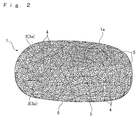
Fig. 2 is a cross-sectional drawing showing the state in which a highly-wet part has been noncontinuously formed by partially adding water to a surface of the core part. -
Fig. 3 is a cross-sectional drawing showing the state in which a surface layer has been formed on the surface of the core part. -
Fig. 4 is an explanatory drawing that schematically shows the state in which the adhering part has been formed by the reaction of a pulverized water-absorbable polymer with a water content. -
Fig. 5 is an explanatory drawing that schematically shows, with enlargement, the state in which two excrement-treating materials according to the present invention are bonded to each other. -
Fig. 6 is an explanatory drawing that schematically shows processes for the generation of the pulverized water-absorbable polymer. -
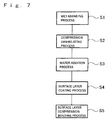
Fig. 7 is a flow chart that schematically shows processes for manufacturing the excrement-treating material. -
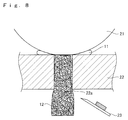
Fig. 8 is an explanatory drawing that schematically shows a compression-granulating process. -
Fig. 9 is explanatory drawing that schematically shows a water addition process. -
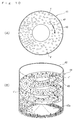
Figs. 10(A) and 10(B) are explanatory drawings that schematically show a surface layer compression bonding process, whereinFig. 10(A) is a plane view of a compression bonding apparatus, andFig. 10(B) is a perspective view that schematically shows the internal structure of the compression bonding apparatus with partial cutaway. - The best mode of the present invention will be explained below based on
Figs. 1 to 10(B) . - As shown in
Figs. 1 to 4 , the excrement-treating material according to the present example is premised on an excrement-treating material having a composite layer structure formed of a water-absorbable core part 1 and a water-absorbable surface layer 2 covering thecore part 1. The structure of the excrement-treating material according to the present invention will be explained in detail based on each ofFigs. 1 to 4 . - The
core part 1 shown inFig. 1 has been granulated into sizes of particle sizes from 1 mm to 20 mm, and is obtained by wet-kneading and compressing a compounding material containing plant fibers (virgin pulp from wood materials, pulp recycled from waste paper, bamboo pulp, used tea leaves, soy pulp and the like) 3 and a water-absorbable polymer 4 such as polyacrylic acid-based polymers and starch-acrylic acid-based polymers as major materials. The above-mentionedplant fibers 3 and the water-absorbable polymer 4 can be obtained by pulverizing waste materials from disposable diapers, sanitary products and the like. In this case, materials such as paper pieces are also incorporated, and these are also formed of plant fibers, and thus are also explained as plant fibers in the present application. - The plant fibers 3 (3a) that are incorporated in the
core part 1 each has a fiber length of from 1 mm to 8 mm. Furthermore, as the above-mentioned water-absorbable polymer 4, a water-absorbable polymer having a particle size of approximately 400 µm is used, unlike the pulverized water-absorbable polymer mentioned below. - Furthermore, inorganic filler materials such as calcium carbonate, clay, talc and bentonite may be incorporated in the compounding material for the
core part 1 to add a suitable weight, to thereby prevent scattering during laying and use of the excrement-treating material. - Furthermore, adhesives such as starches (corn starch, tapioca starch, potato starch and the like) or/and carboxylmethyl cellulose (CMC) are suitably selected and incorporated together with the above-mentioned inorganic filler materials in the compounding material for the
core part 1, in an optional manner depending on working. - In addition, flavor materials, antibacterium agents and the like are incorporated in the compounding material for the
core part 1 in an optional manner depending on working. - The excrement-treating material according to the present invention is such that the
surface 1a of thecore part 1 is covered with thesurface layer 2 mentioned below to give a composite layer structure formed of thecore part 1 and thesurface layer 2. Secondly, the structure in which thesurface 1 a of the core part is covered with thesurface layer 2 will be explained. - As the compounding material for the
surface layer 2 covering thesurface 1 a of the core part, plant fibers 3 (3b) are incorporated together with the pulverized water-absorbable polymer 7 that has been pulverized the water-absorbable polymer 4 into particle sizes of from 20 µm to 50 µm the above-mentioned in the compounding material for thecore part 1 in a similar manner to that for thecore part 1, and an adhesive such as a starch or CMC is incorporated as necessary, and these are set as the major materials. The plant fibers 3 (3b) that are incorporated in the compounding material for thesurface layer 2 each has a fiber length of from 0.1 mm to 2 mm. - The pulverized water-
absorbable polymer 7 is a water-absorbable polymer that has been pulverized by means of a dry-type, collision-type pulverizer, and for example, as shown inFig. 6 , it is a water-absorbable polymer that has been pulverized by means of a knownpulverizer 51. - A water-absorbable polymer as a raw material is sent from a
supply port 51 a of the pulverizer 51, and the water-absorbable polymer that has been sent comes into collision with a pulverizingrotor 52 that is rotating, and the water-absorbable polymers come into collision and are pulverized into particle sizes of from 20 µm to 50 µm. The coarse water-absorbable polymer that has not reach desired particle sizes is repelled by aclassification rotor 54 that is rotating, descends along the inner circumferential surface of aguide ring 53, and comes into collision with the pulverizingrotor 52 again. Furthermore, the water-absorbable polymer that has been pulverized into desired particle sizes is conveyed by a circulating airflow that flows from anair admission port 55 to anoutlet 51 b, and ejected from theoutlet 51 b through the inner side of theclassification rotor 54. The pulverized water-absorbable polymer 7 having a particle size of from 20 µm to 50 µm is obtained by adjusting the rotation velocity of theclassification rotor 54 and the air volume of the circulating airflow. - Wide varieties of planes are formed on the surface of the pulverized water-
absorbable polymer 7 by the pulverization, and thus the rate of the surface area per volume has been increased from before the pulverization. Therefore, the water-absorbable polymer can quickly react with the water content to absorb the water content. Furthermore, since the water-absorbable polymer has small particle sizes and thus is light, the water-absorbable polymer is easily sprinkled in the plant fibers 3 (3b) in the surface layer-compounding material. In addition, the pulverized water-absorbable polymer 7 in the present invention is not limited to the water-absorbable polymer that has been pulverized by the collision type pulverizer exemplified inFig. 6 , and can also be pulverized by using a known pulverizer such as a pulverizer utilizing a high-speed fluid or a pulverizer utilizing a high-speed vortex flow and a highfrequency wave pressure oscillation. - As shown in
Fig. 2 , in the excrement-treating material according to the present invention, water is partially added to thesurface 1 a of thecore part 1 immediately after granulation to noncontinuously form a highly-wet part 5, and the water content in the highly-wet part 5 and the pulverized water-absorbable polymer 7 in the surface layer-compounding material mentioned below are reacted to form an adheringpart 8 shown inFigs. 3 and4 , and thesurface layer 2 is bonded. Specifically, the highly-wet part 5 and a lowly-wet part 6 are randomly formed on thesurface 1 a of the core part, and the water content in the highly-wet part 5 and the pulverized water-absorbable polymer 7 in the surface layer-compounding material are positively reacted to give the adheringpart 8, whereby thesurface layer 2 is bonded. - In detail, as shown in
Fig. 2 , the highly-wet part 5 is noncontinuously formed on thesurface 1 a of the core part, and simultaneously, theresidual surface 1a of the core part is set as the lowly-wet part 6, and the compounding material for thesurface layer 2 is sprinkled on thesurface 1 a of the core part on which the highly-wet part 5 and the lowly-wet part 6 have been formed. - At this time, as shown in
Figs. 3 and4 , the pulverized water-absorbable polymer 7 having a particle size of from 20 µm to 50 µm incorporated in the compounding material for thesurface layer 2 quickly reacts with the water content in the highly-wet part 5 (absorbs the water content) and adheres, with swelling, to the adjacent pulverized water-absorbable polymer 7 by its own adhesion ability to thereby form the adheringpart 8 that is transparent and has a plate-like shape. In addition, 7' inFig. 4 shows the pulverized water-absorbable polymer 7 that has swollen, and 9 inFigs. 3 and4 shows a part other than the adheringpart 8 on thesurface 1 a of the core part, that is, a part on which the adhering part has not been formed, and thepart 9 on which the adhering part has not been formed is formed between the adheringparts 8 that are rising in transparent, plate-like shapes. - Furthermore, the compounding material for the
surface layer 2 is bonded to thesurface 1 a of the core part through the adheringpart 8 to form thesurface layer 2, whereby the excrement-treating material according to the present invention 1' is obtained. In addition, thedense surface layer 2 as shown inFigs. 3 and4 is formed by the surface layer compression bonding process mentioned below. - As mentioned above, the pulverized water-
absorbable polymer 7 in the surface layer-compounding material which has been firstly brought into contact with the water content in the highly-wet part 5 positively absorbs the water content to exert the adhesion ability to thereby prevent the residual pulverized water-absorbable polymer 7 in the compounding material from reacting with the water content. Furthermore, the pulverized water-absorbable polymer 7 that reacts with the water content in the highly-wet part 5 also absorbs the water content in the lowly-wet part 6 around the highly-wet part 5 to thereby prevent the pulverized water-absorbable polymer 7 that is in contact with the lowly-wet part 6 from reacting with the water content. - The excrement-treating material 1' of the present example having the above-mentioned structure has a constitution where, upon absorption of excreted urine, accelerates the permeation of the excreted urine into the core part at the
part 9 other than thesurface layer 2 and the adheringpart 8 on thesurface 1a of the core part, to thereby seek to attain both utilization of the adhesion ability possessed by the water-absorbable polymer and exertion of the functions that are inherent to the surface layer 2 (a water-absorbing function and a water transport function). - Furthermore, in the excrement-treating material 1' of the present example, as mentioned above, the pulverized water-
absorbable polymer 7, which has a small particle size and is light, is scattered amongmany plant fibers 3b, and as shown inFig. 5 , when the excrement-treating material 1' receives excreted urine, the pulverized water-absorbable polymer 7 in thesurface layer 2 absorbs the excreted urine to become the swollen pulverized water-absorbable polymer 7' to thereby exerts an adhesion ability, and simultaneously, theplant fibers 3b in thesurface layer 2 transfer in the excreted urine or are pushed out by the swelling of the pulverized water-absorbable polymer 7, and fluff. - Furthermore, the adjacent excrement-treating materials 1' are bonded to each other by the adhesion ability of the swollen pulverized water-absorbable polymer 7' and the entanglement of the
plant fibers 3b that transfer or fluff. By this way, many excrement-treating materials 1' are consolidated in clumps, and thus a user can easily take out these masses of the excrement-treating material 1' that has been consolidated in clumps. - Specifically, in the bonding of the excrement-treating materials 1' to each other, the bonding of the excrement-treating materials 1' is complemented by the entangled structure of the above-mentioned
plant fibers 3b. Furthermore, it is needless to say that the adhesive such as a starch in thesurface layer 2 also contributes to the bonding of the excrement-treating materials 1' to each other. - As shown in
Figs. 1 to 4 , the excrement-treating material 1' according to the present example is premised on an excrement-treating material having a composite layer structure formed of a water-absorbable core part 1 and asurface layer 2 in a similar manner to that in Example 1, and has a constitution in which a highly-wet part 5 and a lowly-wet part 6 are formed on asurface 1 a of acore part 1, the water content in the highly-wet part 5 and a pulverized water-absorbable polymer 7 in a compounding material for thesurface layer 2 are reacted to form an adheringpart 8, and thesurface layer 2 is bonded to thesurface 1 a of the core part through the adheringpart 8, to thereby seek the achievement of both utilization of the adhesion ability possessed by the water-absorbable polymer and exertion of the functions that are inherent to the surface layer 2 (a water-absorbing function and a water transport function). Furthermore, as shown inFig. 5 , similarly to Example 1, the excrement-treating material 1' of the present example is such that the excrement-treating materials 1' are effectively bonded to each other upon absorption of excreted urine by the pulverized water-absorbable polymer 7 that is scattered in the surface layer 2 (inFig. 5 , the swollen pulverized water-absorbable polymer 7') andplant fibers 3b. - The difference of this example from Example 1 is that this example has a constitution where the
surface 1a or the entirety of thecore part 1 is colored, and upon absorption of excreted urine, the color of thecolored core part 1 is exposed by permeation or immersion through thesurface layer 2 that has got wet. By this way, before use and after use are easily discriminated. - Subsequently, an example in which the
core part 1 is colored will be explained. - In the case of the present example, the
surface 1 a or the entirety of thecore part 1 is colored by using a color material formed of a water-insoluble pigment. - Specifically, the
surface 1 a of the core part is colored by spraying a dispersion liquid of a water-insoluble pigment onto thesurface 1 a of thegranulated core part 1. Alternatively, a water-insoluble pigment powder is incorporated in the compounding material for thecore part 1, the compounding material to which the water-insoluble pigment powder has been incorporated is wet-kneaded and then compression-granulated, whereby thecore part 1 in which the entirety including thesurface 1 a has been colored is obtained. - In the case of this example, the
surface 1 a or the entirety of thecore part 1 is colored by using a color material formed of a water-soluble dye. - Specifically, the solution of the water-soluble dye is sprayed onto the
surface 1 a of thegranulated core part 1 to thereby color thesurface 1 a of the core part. A powder body or solution of the water-soluble dye is incorporated into the water-soluble dye for thecore part 1, the compounding material into which the powder body or solution of the water-soluble dye has been incorporated is wet-kneaded and then compression-granulated, whereby thecore part 1 in which the entirety including thesurface 1 a has been colored is obtained. - In the case of the present example, as the
plant fibers 3 in the compounding material for thecore part 1, for example, a colored material such as waste paper pulp (pulp having a low degree of whiteness), a coffee extract residue or used tea leaves is incorporated, and the compounding material is wet-kneaded and then compression-granulated, whereby thecore part 1 in which the entirety including thesurface 1a has been colored with the base material color of these material is obtained. - In each of the above-mentioned Coloring Examples, although the color used for the coloring is not specifically limited, the color is set to be darker than the color of the
surface layer 2 so as to be exposed through thesurface layer 2 that has got wet. For example, in the case when the color of thesurface layer 2 is white, the color used for the coloring can be blue, green, yellow, red, brown, bark or the like. - In addition, it is preferable that the
plant fibers 3b as the compounding material for thesurface layer 2 are prepared from pulp having a high degree of whiteness. This is because the color is set brighter than the color of the colored part of thesurface 1a of the core part to thereby surely expose the color of thecore part 1 through thesurface layer 2 upon absorption of excreted urine. - In the case when the
core part 1 is colored by the color of a water-insoluble pigment or a base material as in Coloring Example 1 or Coloring Example 3 mentioned above, the excrement-treating material 1' of the present example having the above-mentioned structure allows to see of the color of thecore part 1 through thesurface layer 2 upon absorption of excreted urine, and accelerates the see-through by the transparent, plate-like adheringpart 8. That is, the color of thesurface 1a or the entirety of thecolored core part 1 is exposed by permeation through thesurface layer 2, and the exposure by permeation is complemented by the adheringpart 8. - Furthermore, in the case when the
core part 1 is colored by the water-soluble dye as in the above-mentioned Coloring Example 2, upon absorption of excreted urine, the water-soluble dye is eluted into the excreted urine through thepart 9 other than the adhering part on thesurface 1 a of the core part to color thesurface layer 2. That is, the color of thesurface 1 a or the entirety of thecolored core part 1 is exposed by penetration through thesurface layer 2 and thepart 9 on which the adhering part has not been formed. - As shown in
Figs. 1 to 4 , the excrement-treating material 1' according to the present example is also premised on a composite layer structure formed of a water-absorbable core part 1 and a water-absorbable surface layer 2 in a similar manner to that in Examples 1 and 2, and has a constitution in which a highly-wet part 5 and a lowly-wet part 6 are formed on asurface 1 a of acore part 1, the water content in the highly-wet part 5 and a pulverized water-absorbable polymer 7 in a compounding material for thesurface layer 2 are reacted to form an adheringpart 8, and thesurface layer 2 is bonded to thesurface 1 a of the core part through the adheringpart 8, to thereby seek the achievement of both utilization of the adhesion ability possessed by the water-absorbable polymer and exertion of the functions that are inherent to the surface layer 2 (a water-absorbing function and a water transport function). Furthermore, as shown inFig. 5 , similarly to Examples 1 and 2 mentioned above, the excrement-treating material 1' of the present example is such that the excrement-treating materials 1' are effectively bonded to each other upon absorption of excreted urine by the pulverized water-absorbable polymer 7 that is scattered in the surface layer 2 (inFig. 5 , the swollen pulverized water-absorbable polymer 7') and theplant fibers 3. - The difference of this example from Examples 1 and 2 mentioned above is that a water-soluble dye powder is incorporated in the compounding material for the
surface layer 2 gives a constitution where the elution of the water-soluble dye powder into the water content in the highly-wet part 5 on thesurface 1a of thecore part 1 is prevented by the adheringpart 8, and also gives a constitution where, upon absorption of excreted urine, the water-soluble dye powder is eluted into the excreted urine to stain thesurface layer 2. By this way, before use and after use are easily discriminated. - In addition, although the color of the water-soluble dye powder is not specifically limited, in order to clarify the change from the color of the
surface layer 2 before absorption of urine, i.e., the color of theplant fibers 3b contained in the compounding material of thesurface layer 2 and the color of the pulverized water-absorbable polymer 7, the color is set to be darker than the colors of theseplant fibers 3b and pulverized water-absorbable polymer 7. For example, in the case when theplant fibers 3b are formed by a material having a high degree of whiteness, the color of the pulverized water-absorbable polymer 7 is white, and the color of thesurface layer 2 is white, the color used for the coloring can be blue, green, yellow, red or the like. - In the excrement-treating material 1' of the present example having the above-mentioned structure, the water-soluble dye powder in the compounding material for the
surface layer 2 stains thesurface layer 2 upon absorption of excreted urine, and before use and after use can be properly discriminated by the change in color by the staining. - Subsequently, the method for manufacturing an excrement-treating material according to the present invention will be explained in detail.
- As shown in
Fig. 7 , the method for manufacturing an excrement-treating material according to the present invention includes a process of wet-kneading a compounding material for the core element 1 (a wet-kneading process S1); a process of compressing and granulating the wet-kneaded compounding material for the core part 1 (a compression-granulating process S2); discontinuously adding water to thesurface 1 a of thegranulated core part 1 to form a highly-wet part 5 and a lowly-wet part 6 (a water addition process S3); a process of reacting the water content in the highly-wet part 5 and the pulverized water-absorbable polymer 7 in the compounding material for thesurface layer 2 to form an adheringpart 8, and coating thesurface 1a of the core part with thesurface layer 2 through the adhering part 8 (a surface layer coating process S4); and a process of compression bonding thesurface layer 2 to thesurface 1 a of the core part (a surface layer compression bonding process S5). - Firstly, in the wet-kneading process, the compounding material for the
core part 1 is kneaded while the water content is adjusted by adjusting the amount of the water to be added and the amount of the injection of the compounding material. By this wet-kneading, the wet kneadedproduct 11 mentioned below is obtained. A preferable amount of the water to be added is such an amount that the water content rate of the compounding material for thecore part 1 can be adjusted to from 15 to 30% by weight. - Furthermore, in the case when the entirety of the
core part 1 is colored in the above-mentioned Example 2 in which thecore part 1 is colored, a powder of a water-insoluble pigment or a water-soluble dye, or a solution of a water-soluble dye is incorporated in the compounding material for thecore part 1 in this process. Alternatively, a kneaded product colored with the color of a base material of a colored material such as waste paper pulp, a coffee extract residue or used tea leaves is formed, and granulated as mentioned below. - Then, as shown in
Fig. 8 , the kneadedproduct 11 of the compounding material for thecore part 1 which has undergone the wet-kneading process is compression-granulated in a known extrusion type compression granulator to thereby give agranulated product 12. - Specifically, the kneaded
product 11 is press-fit into agranulation hole 22a that has been formed in adie 22, by means of apressurization roller 21, to thereby give thegranulated product 12. The above-mentionedgranulated product 12 is then swollen by the release of the compression at the outer end of thegranulation hole 22a, and broken by abreaking blade 23 to give thecore part 1. - In this process, the kneaded
product 11 having a water content rate of from 15 to 30% by weight is compression-granulated to give thecore part 1 formed of the wetgranulated product 12. - Then, as shown in
Fig. 9 , thecore part 1 is injected into a knownshower drum 31, and water is sprayed onto thecore part 1 by means of ashower 32. - At this time, by spraying a suitable amount of water onto the
core part 1, the water content adheres to thesurface 1 a of thecore part 1 in a patchy fashion, and the highly-wet part 5 and the lowly-wet part 6 are formed as shown inFig. 2 . The suitable rate of the amount of the water to be sprayed is such that the sprayed water is from 40 ml to 80 ml with respect to 0.3 kg to 0.5 kg of the core part 1 (thecore part 1 with a volume of about 1 L). In accordance with the increase or decrease of thecore part 1 to be treated in this process, the amount is adjusted within the above-mentioned rate. - Furthermore, in the case when the
surface 1a of thecore part 1 is colored in the above-mentioned Example 2 in which thecore part 1 is colored, a dispersion liquid of a water-insoluble pigment or an aqueous solution of a water-soluble dye is sprayed, and the portion onto which the dispersion liquid or aqueous solution has been sprayed is set as the highly-wet part 5. - Alternatively, the entirety of the
surface 1 a of thecore part 1 is continuously colored with a water-insoluble pigment or a water-soluble dye in a shower drum that is different from theshower drum 31 used in this process, the water content of thecolored surface 1 a of thecore part 1 is adjusted, and water is added by means of theshower drum 31 in this process. - Then, the
core part 1 in which the highly-wet part 5 has been discontinuously formed on thesurface 1 a as mentioned above, i.e, thecore part 1 in which the highly-wet part 5 and the lowly-wet part 6 have been formed on thesurface 1 a, is injected together with the compounding material for thesurface layer 2 into a known coating drum, and thesurface 1a of the saidcore part 1 is coated with thesurface layer 2. - At this time, the water content in the highly-
wet part 5 on thesurface 1a of the core part and the pulverized water-absorbable polymer 7 in the compounding material for thesurface layer 2 quickly react, whereby the pulverized water-absorbable polymer 7 swells and exerts an adhesion performance, and the adjacent swollen pulverized water-absorbable polymers 7' bond to each other to form a plate-like shape to thereby form an adheringpart 8 as shown inFig. 3 , and the compounding material for thesurface layer 2 is bonded through the adheringpart 8 to thereby form thesurface layer 2. - As mentioned above, the pulverized water-
absorbable polymer 7 in the surface layer-compounding material which has firstly contacted the water content in the highly-wet part 5 positively absorbs the water content to exert an adhesion ability, to thereby prevent the residual pulverized water-absorbable polymer 7 in the compounding material from reacting with the water content. Furthermore, the pulverized water-absorbable polymer 7 that reacts with the water content in the above-mentioned highly-wet part 5 also absorbs the water content in the surrounding lowly-wet part 6 to thereby prevent the pulverized water-absorbable polymer 7 that is in contact with the lowly-wet part 6 from reacting with the water content. - Furthermore, in the case when a water-soluble dye powder is incorporated in the compounding material for the
surface layer 2 as shown in the above-mentioned Example 3, the adheringpart 8 prevents the elution of the water-soluble dye powder into the water content in the highly-wet part 5 on thesurface 1 a of the core part in this process. - Subsequently, the
surface layer 2 that is coating thecore part 1 is compression-bonded. Specifically, as shown inFigs. 10(A) and 10(B) , the core part 1 (excrement-treating materials 1') coated with thesurface layer 2 is injected into acompression bonding apparatus 41 that finely oscillates up and down, and is transferred with providing repetitive oscillation up and down. - As shown in
Figs. 10(A) and 10(B) , as thecompression bonding apparatus 41, for example, an apparatus having a bottomed-cylindricaloscillating body 42 and ahelical path 43 that follows the inner circumferential surface of theoscillating body 42 can be used. - By the oscillations in the vertical and horizontal directions provided to the
oscillating body 42, thehelical path 43 in theoscillating body 42 is also oscillated. As shown inFigs. 10(A) and 10(B) , the core part 1 (the excrement-treating material 1') coated with thesurface layer 2, which has been injected into the upper end of thehelical path 43, gradually transfers in the downward direction while thecore part 1 oscillates up and down by the above-mentioned oscillation in the vertical and horizontal directions, and finally transfers in the horizontal direction while thecore part 1 further oscillates up and down on abottom plate 42a of theoscillating body 42. Furthermore, as shown inFigs. 10(A) and 10(B) , for example, if the above-mentionedbottom plate 42a is formed into a low-height conical form, then the core part 1 (the excrement-treating material 1') that is present on thebottom plate 42a can be collected along the inner circumferential surface of theoscillating body 42. Therefore, if thecore part 1 is oscillated while thecore part 1 is collected along the inner circumferential surface of theoscillating body 42 by this way, then thecore part 1 is homogeneously mixed at an internal corner formed by the inner circumferential surface and thebottom plate 42a irrespective of the sizes and weights. Furthermore, for example, it is also possible to transfer thecore part 1 along the inner circumferential surface (internal corner) of theoscillating body 42 also on thehelical path 43 by the width, direction, timing and the like of the oscillation provided to theoscillating body 42. - As mentioned above, by transferring the core part 1 (the excrement-treating material 1') coated with the
surface layer 2 by while oscillating thecore part 1 up and down, the surface of thesurface layer 2 is evenly hit on thehelical path 43 or thebottom plate 42a, whereby thesurface layer 2 is compression-bonded to thesurface 1 a of the core part. - In addition, as another example of the
compression bonding apparatus 41 explained above, it is an optional format depending on operation to dispose a cyclic plate with cutaway part(s) of a single stage of multiple stages instead of thehelical path 43, and to allow thecore part 1 to sequentially fall through the cutaway part(s) while applying oscillation on the cyclic plate, to finally provide oscillation on thebottom plate 42a. Alternatively, the compression bonding of the surface layers may also be by using, for example, a conveyor having an oscillation-generating part. - By this surface layer compression bonding process, as shown in
Figs. 3 and4 , the compounding material for thesurface layer 2 enters into apart 9 other than the adheringpart 8, on which an adhering part has not been formed, and forms thesurface layer 2 that suitably covers thecore part 1, whereby the excrement-treating material 1' having a composite layer structure can be manufactured. Specifically, the adheringpart 8 that is slightly rising, and the compounding material for thesurface layer 2 which has entered into thepart 9 on which an adhering part has not been formed and which is dished more than the adheringpart 8 is, play a role of an anchor that prevents the peeling-off of thesurface layer 2, and when the adheringpart 8 and the compounding material receive excreted urine, they function to transport water to thereby guide the excreted urine into thecore part 1. - As explained above, the excrement-treating material 1' according to the present invention adopts a composite layer structure obtained by bonding the water-absorbing
surface layer 2 and the water-absorbable core part 1 through the adheringpart 8 that is noncontinuously and numerously formed on thesurface 1 a of thecore part 1 by the reaction of the water content and the pulverized water-absorbable polymer 7, and has a constitution where, upon absorption of excreted urine, the permeation of the excreted urine into thecore part 1 in thepart 9 other than the adheringpart 8 between thesurface layer 2 and thesurface 1 a of the core part is accelerated, to thereby seek to attain both utilization of the adhesion ability possessed by the water-absorbable polymer and exertion of the functions that are inherent to the surface layer. - Furthermore, the excrement-treating material 1' according to the present invention also enables discrimination between before use and after use, and in the case when the
core part 1 is colored by a water-insoluble pigment or by a color of a base material of a material that is incorporated in a compounding material for the core part, the excrement-treating material has a constitution where the color of thecore part 1 is seen through thesurface layer 2 and the seeing-through is accelerated by the adheringpart 8 upon absorption of excreted urine. - Alternatively, the
core part 1 is colored by a water-soluble dye so that the excrement-treating material has a constitution where, upon absorption of excreted urine, the water-soluble dye is eluted into the excreted urine through thepart 9 other than the adheringpart 8 on thesurface 1 a of the core part to stain thesurface layer 2. - Alternatively, a water-soluble dye powder is incorporated in the compounding material for the
surface layer 2 so that the excrement-treating material has a constitution where the elution of the water-soluble dye powder into the water content of the highly-wet part 5 on thesurface 1 a of the core part is prevented by the adheringpart 8, and also has a constitution where, upon absorption of excreted urine, the water-soluble dye powder is eluted into the excreted urine to stain thesurface layer 2. - 1 ... core part, 1a ... surface, 1' ... excrement-treating material, 2 ... surface layer, 3 ... plant fibers, 3a ... plant fibers in core part, 3b ... plant fibers in surface layer, 4 ... water-absorbable polymer, 5 ... highly-wet part, 6 ... lowly-wet part, 7 ... pulverized water-absorbable polymer, 7' ... swollen pulverized water-absorbable polymer, 8 ... adhering part, 9 ... part other than adhering part (part on which adhering part has not been formed), 11 ... kneaded product of compounding material of core part, 12 ... compression-granulated product, 21 .. pressurization roller, 22 ... die, 22a ... granulation hole, 23 ... breaking blade, 31 ... shower drum, 32 ... shower, 41 ... compression bonding apparatus, 42 ... oscillating body, 42a ... bottom plate, 43 ... helical path, 51 ... pulverizer, 51a ... supply port, 51b ... outlet, 52 ... pulverizing rotor, 53 ... guide ring, 54 ... classification rotor, 55 ... air admission port, S1 ... wet-kneading process, S2 ... compression-granulating process, S3 ... water addition process, S4 ... surface layer coating process, S5 ... surface layer compression bonding process.
Claims (8)
- An excrement-treating material comprising a water-absorbable core part and a water-absorbable surface layer covering the core part, wherein the material is constituted by:incorporating a pulverized water-absorbable polymer that has been pulverized into particle sizes of from 20 µm to 50 µm by means of a pulverizer and plant fibers each having a fiber length of 0.1 mm to 2 mm into a compounding material for the surface layer, and partially adding water to the surface of the core part after granulation to noncontinuously form a highly-wet part;reacting a water content in the highly-wet part and the pulverized water-absorbable polymer in the surface layer-compounding material to noncontinuously form an adhering part;bonding the surface layer to the surface of the core part through the adhering part; andupon absorption of excreted urine, accelerating the permeation of the excreted urine into the core part in a part other than the adhering part between the surface layer and the surface of the core part.
- The excrement-treating material according to claim 1, wherein the core part is colored by a water-insoluble pigment or by a color of a base material of a material that is incorporated in a compounding material for the core part so that the excrement-treating material has a constitution where the color of the core part is seen through the surface layer and the seeing-through is accelerated by the adhering part upon absorption of excreted urine.
- The excrement-treating material according to claim 1, wherein the core part is colored by a water-soluble dye so that the excrement-treating material has a constitution where, upon absorption of excreted urine, the water-soluble dye is eluted into the excreted urine through a part other than the adhering part on the surface of the core part to stain the surface layer.
- The excrement-treating material according to claim 1, wherein a water-soluble dye powder is incorporated in the compounding material for the surface layer so that the excrement-treating material has a constitution where the elution of the water-soluble dye powder into the water content of the highly-wet part on the surface of the core part is prevented by the adhering part, and also has a constitution where, upon absorption of excreted urine, the water-soluble dye powder is eluted into the excreted urine to stain the surface layer.
- A method for manufacturing an excrement-treating material comprising a water-absorbable core part and a water-absorbable surface layer covering the core part, the method comprising the processes of the following A to E:A: wet-kneading a compounding material for the core part;B: compression-granulating the wet-kneaded compounding material for the core part;C: partially adding water to the surface of the granulated core part;D: sprinkling a compounding material for the surface layer containing a pulverized water-absorbable polymer that has been pulverized into particle sizes of from 20 µm to 50 µm by means of a pulverizer and plant fibers each having a fiber length of 0.1 mm to 2 mm, with the surface of the core part to which water has been added; andE: compression-bonding the surface layer to the surface of the core part.
- The method for manufacturing an excrement-treating material according to claim 5, wherein a water-insoluble pigment powder or a water-soluble dye powder or a water-soluble dye solution is incorporated in the compounding material for the core part.
- The method for manufacturing an excrement-treating material according to claim 5, comprising a process of coloring the surface of the core part manufactured in the compression-granulating process with a water-insoluble pigment or a water-soluble dye.
- The method for manufacturing an excrement-treating material according to claim 5, wherein a water-soluble dye powder is incorporated in the compounding material for the surface layer.
Applications Claiming Priority (2)
| Application Number | Priority Date | Filing Date | Title |
|---|---|---|---|
| JP2013269280A JP5616520B1 (en) | 2013-12-26 | 2013-12-26 | Excrement treatment material and manufacturing method thereof |
| PCT/JP2014/080463 WO2015098361A1 (en) | 2013-12-26 | 2014-11-18 | Excrement treatment material and method for producing same |
Publications (2)
| Publication Number | Publication Date |
|---|---|
| EP3045038A1 true EP3045038A1 (en) | 2016-07-20 |
| EP3045038A4 EP3045038A4 (en) | 2016-10-12 |
Family
ID=52574735
Family Applications (1)
| Application Number | Title | Priority Date | Filing Date |
|---|---|---|---|
| EP14874233.1A Withdrawn EP3045038A4 (en) | 2013-12-26 | 2014-11-18 | EXCREMENT TREATMENT MATERIAL AND PRODUCTION METHOD THEREOF |
Country Status (5)
| Country | Link |
|---|---|
| US (1) | US9743637B2 (en) |
| EP (1) | EP3045038A4 (en) |
| JP (1) | JP5616520B1 (en) |
| CN (1) | CN105813454B (en) |
| WO (1) | WO2015098361A1 (en) |
Cited By (1)
| Publication number | Priority date | Publication date | Assignee | Title |
|---|---|---|---|---|
| EP3412141A4 (en) * | 2016-02-01 | 2019-07-17 | Daiki Co., Ltd. | WATER ABSORBING TREATMENT MATERIAL |
Families Citing this family (5)
| Publication number | Priority date | Publication date | Assignee | Title |
|---|---|---|---|---|
| CA164069S (en) * | 2015-08-26 | 2016-03-15 | 7905122 Canada Inc | Particle for animal litter |
| JP6652950B2 (en) * | 2017-08-02 | 2020-02-26 | ペパーレット株式会社 | Method for producing granular excrement disposal material |
| US10251368B1 (en) * | 2017-12-12 | 2019-04-09 | Gail Bolka | Animal litter and methods of making and using the same |
| BR102018004568A2 (en) * | 2018-03-07 | 2019-09-17 | Skaf Trade Comércio, Exportação E Importação Ltda. | SANITARY GRANULATE FOR HOUSEHOLD ANIMALS AND THEIR PRODUCTION PROCESS |
| JP6517408B1 (en) | 2018-06-21 | 2019-05-22 | 株式会社大貴 | Method of manufacturing water absorbing material |
Family Cites Families (22)
| Publication number | Priority date | Publication date | Assignee | Title |
|---|---|---|---|---|
| JP2630339B2 (en) * | 1991-05-10 | 1997-07-16 | 三洋化成工業株式会社 | Animal waste treatment material |
| JP2534031B2 (en) * | 1994-12-29 | 1996-09-11 | ペパーレット株式会社 | Urine waste treatment material |
| JP3413550B2 (en) * | 1999-03-19 | 2003-06-03 | 株式会社ミリオン | Excrement disposal materials for pets |
| JP4430208B2 (en) * | 2000-06-29 | 2010-03-10 | ユニ・チャームペットケア株式会社 | Granular absorber for pets |
| JP2003106561A (en) * | 2001-10-01 | 2003-04-09 | Denso Corp | Air conditioner |
| SG103904A1 (en) * | 2002-01-11 | 2004-05-26 | Uni Charm Corp | Colored absorbent article |
| JP3723516B2 (en) * | 2002-03-20 | 2005-12-07 | ペパーレット株式会社 | Granular animal urine treatment material |
| JP3786201B2 (en) * | 2002-10-28 | 2006-06-14 | ペパーレット株式会社 | Production of granulation for animal excrement absorption |
| US6745720B2 (en) * | 2002-10-29 | 2004-06-08 | Cycle Group Limited Of Delaware | Clumping animal litter and method of making same |
| US7331309B2 (en) * | 2005-02-01 | 2008-02-19 | Nature's Earth Products, Inc. | Clumping animal litter composition and method of producing the same |
| US7603964B2 (en) * | 2005-04-29 | 2009-10-20 | The Clorox Company | Composite particle animal litter and method thereof |
| JP3889022B2 (en) * | 2005-08-01 | 2007-03-07 | ペパーレット株式会社 | Granular urine treatment material for animals |
| JP3801613B2 (en) * | 2005-09-26 | 2006-07-26 | 株式会社大貴 | Granular excrement disposal material and production method |
| JP4476973B2 (en) * | 2006-07-10 | 2010-06-09 | ユニ・チャームペットケア株式会社 | Floor material for urination of pet animals |
| US8601981B2 (en) * | 2007-01-18 | 2013-12-10 | Profile Products L.L.C. | Animal litter |
| JP2009044992A (en) * | 2007-08-20 | 2009-03-05 | Shinichi Kato | Urination treating material for animal |
| JP4644270B2 (en) * | 2008-05-15 | 2011-03-02 | 道雄 伊藤 | Excrement disposal material for pets |
| AU2009314545B2 (en) * | 2008-11-17 | 2014-04-10 | Nestec S.A. | Animal litters |
| JP5336415B2 (en) * | 2010-04-08 | 2013-11-06 | ペパーレット株式会社 | Excrement treatment material |
| CN103889213B (en) * | 2011-12-28 | 2016-05-18 | 伊藤博 | Excreta is processed material |
| JP6029328B2 (en) * | 2012-05-31 | 2016-11-24 | ユニ・チャーム株式会社 | Animal litter |
| JP5379321B1 (en) * | 2013-03-29 | 2013-12-25 | ユニ・チャーム株式会社 | Method for producing excrement disposal material and excrement disposal material |
-
2013
- 2013-12-26 JP JP2013269280A patent/JP5616520B1/en active Active
-
2014
- 2014-11-18 EP EP14874233.1A patent/EP3045038A4/en not_active Withdrawn
- 2014-11-18 WO PCT/JP2014/080463 patent/WO2015098361A1/en not_active Ceased
- 2014-11-18 CN CN201480065470.4A patent/CN105813454B/en active Active
- 2014-11-18 US US15/104,976 patent/US9743637B2/en active Active
Cited By (1)
| Publication number | Priority date | Publication date | Assignee | Title |
|---|---|---|---|---|
| EP3412141A4 (en) * | 2016-02-01 | 2019-07-17 | Daiki Co., Ltd. | WATER ABSORBING TREATMENT MATERIAL |
Also Published As
| Publication number | Publication date |
|---|---|
| JP5616520B1 (en) | 2014-10-29 |
| US9743637B2 (en) | 2017-08-29 |
| WO2015098361A1 (en) | 2015-07-02 |
| CN105813454A (en) | 2016-07-27 |
| EP3045038A4 (en) | 2016-10-12 |
| US20160316713A1 (en) | 2016-11-03 |
| JP2015122993A (en) | 2015-07-06 |
| CN105813454B (en) | 2019-04-02 |
Similar Documents
| Publication | Publication Date | Title |
|---|---|---|
| US9743637B2 (en) | Excrement-treating material and method for manufacturing same | |
| CN100551233C (en) | Animal is handled material with the drainage urine of granular pattern | |
| US11304401B2 (en) | Water absorption treatment material and method for manufacturing the same | |
| CN107426981A (en) | Water-absorbing material and its manufacture method | |
| US9854786B2 (en) | Production method for animal excrement treatment material and production device therefore | |
| TWI618482B (en) | Method for manufacturing animal excrement disposal material and manufacturing device thereof | |
| US20180303683A1 (en) | Water absorption treatment material and method for manufacturing the same | |
| EP3412142B1 (en) | Method for manufacturing a water-absorbing material | |
| EP3789109A1 (en) | Production method for water absorbing material | |
| EP3045037B1 (en) | Excrement-treating material and method for manufacturing same | |
| JP6367072B2 (en) | Water absorption treatment material and method for producing the same | |
| JP5421481B1 (en) | Manufacturing method of animal excrement disposal material and manufacturing apparatus thereof | |
| CN110898759A (en) | Whole starch microbead preparation device | |
| CZ20013630A3 (en) | Colored pigment granules and process of their preparation | |
| HK1058287B (en) | Granulated-type discharged urine processing material for animal | |
| CN107337394A (en) | A kind of energy-conserving and environment-protective material and its production technology | |
| JP6554273B2 (en) | Water absorption treatment material | |
| JP2016042840A (en) | Water absorption treatment material |
Legal Events
| Date | Code | Title | Description |
|---|---|---|---|
| PUAI | Public reference made under article 153(3) epc to a published international application that has entered the european phase |
Free format text: ORIGINAL CODE: 0009012 |
|
| 17P | Request for examination filed |
Effective date: 20160412 |
|
| AK | Designated contracting states |
Kind code of ref document: A1 Designated state(s): AL AT BE BG CH CY CZ DE DK EE ES FI FR GB GR HR HU IE IS IT LI LT LU LV MC MK MT NL NO PL PT RO RS SE SI SK SM TR |
|
| AX | Request for extension of the european patent |
Extension state: BA ME |
|
| A4 | Supplementary search report drawn up and despatched |
Effective date: 20160914 |
|
| RIC1 | Information provided on ipc code assigned before grant |
Ipc: A01K 1/015 20060101AFI20160908BHEP |
|
| DAX | Request for extension of the european patent (deleted) | ||
| STAA | Information on the status of an ep patent application or granted ep patent |
Free format text: STATUS: EXAMINATION IS IN PROGRESS |
|
| 17Q | First examination report despatched |
Effective date: 20211021 |
|
| GRAP | Despatch of communication of intention to grant a patent |
Free format text: ORIGINAL CODE: EPIDOSNIGR1 |
|
| STAA | Information on the status of an ep patent application or granted ep patent |
Free format text: STATUS: GRANT OF PATENT IS INTENDED |
|
| INTG | Intention to grant announced |
Effective date: 20231114 |
|
| STAA | Information on the status of an ep patent application or granted ep patent |
Free format text: STATUS: THE APPLICATION IS DEEMED TO BE WITHDRAWN |
|
| 18D | Application deemed to be withdrawn |
Effective date: 20240315 |