EP3043829B1 - Composition d'agent de contraste d'imagerie photoacoustique - Google Patents
Composition d'agent de contraste d'imagerie photoacoustique Download PDFInfo
- Publication number
- EP3043829B1 EP3043829B1 EP14843282.6A EP14843282A EP3043829B1 EP 3043829 B1 EP3043829 B1 EP 3043829B1 EP 14843282 A EP14843282 A EP 14843282A EP 3043829 B1 EP3043829 B1 EP 3043829B1
- Authority
- EP
- European Patent Office
- Prior art keywords
- use according
- photoacoustic
- imaging
- group
- antibody
- Prior art date
- Legal status (The legal status is an assumption and is not a legal conclusion. Google has not performed a legal analysis and makes no representation as to the accuracy of the status listed.)
- Not-in-force
Links
Images





Classifications
-
- A—HUMAN NECESSITIES
- A61—MEDICAL OR VETERINARY SCIENCE; HYGIENE
- A61K—PREPARATIONS FOR MEDICAL, DENTAL OR TOILETRY PURPOSES
- A61K49/00—Preparations for testing in vivo
- A61K49/22—Echographic preparations; Ultrasonic imaging preparations
Definitions
- Various embodiments relate to photoacoustic contrast agent compositions.
- Photoacoustic imaging is a non-invasive imaging technique which generally involves flashing a laser at low energy onto a target area or region on a subject's body.
- the laser at low energy may penetrate deeply into the body to create a large radiated area for more detailed imaging. Rapid absorption of laser energy may expand the tissue through transient thermo-elastic expansion. This expansion creates ultrasonic acoustic waves that may be detected using ultrasound detectors of appropriate sensitivity, such as ultrasound transducers.
- the transducer readings may be processed and interpreted using mathematical algorithms to create two dimensional or three dimensional images of the target area to depict the tissue structure.
- contrast agents include organic based contrast agents, such as cyanine dyes, nanoparticles, polyhydroxy-fullerene and carbon nanotubes.
- organic based contrast agents such as cyanine dyes, nanoparticles, polyhydroxy-fullerene and carbon nanotubes.
- the photoacoustic contrast that is achieved using the contrast agents may be low, resulting in poor spatial resolution of the images.
- Kien Voon Kong et al. (“Bioimaging in the Mid-Infrared Using an Organometallic Carbonyl Tag", Bioconjugate Chem. 2007, vol. 18, no. 5, 1370-1374 ) discloses preparation of stable and water-soluble organometallic carbonyl cluster derivatives such as Os 3 (CO) 10 ( ⁇ -H) ⁇ -S-(CH 2 ) 10 -COO - Na + .
- the CO stretching vibrations afford strong mid-infrared signals for bioimaging via an IR microscope.
- the composition comprises a metal carbonyl cluster compound having the general formula (I) M 3 (CO) x L 12-x (I) wherein M at each occurrence denotes a metal independently selected from the group consisting of Fe, Ru, and Os; x is an integer from 10 to 12; and each L is independently selected from the group consisting of -H and -A-(CH 2 ) n -COO - Y + , wherein A is selected from the group consisting of S, O, C and N; n is an integer from 1 to 10; and Y is any cation.
- M at each occurrence denotes a metal independently selected from the group consisting of Fe, Ru, and Os
- x is an integer from 10 to 12
- each L is independently selected from the group consisting of -H and -A-(CH 2 ) n -COO - Y + , wherein A is selected from the group consisting of S, O, C and N; n is an integer from 1 to 10; and
- Photoacoustic imaging is based on the mechanism that electromagnetic waveforms, such as radio frequency (rf) or optical waves, may be absorbed by a material, to result in local heating and thermoelastic expansion.
- the thermoelastic expansion may, in turn, produce megahertz ultrasonic waves in the material, thereby generating a photoacoustic signal.
- photoacoustic imaging refers to signal generation caused by an electromagnetic pulse, with absorption and expansion of a photoacoustic imaging contrast agent, followed by acoustic detection, where the photoacoustic imaging contrast agent absorbs the light energy and converts it to thermal energy that generates the photoacoustic signal.
- a photoacoustic imaging contrast agent composition comprising a metal carbonyl cluster compound is disclosed herein.
- the metal carbonyl cluster compound offers multiple sites for attachment of various ligands as property modifiers. Further, by conjugation to a myriad of bioactive agents such as proteins, antibodies, and drugs, molecular imaging and therapeutic monitoring may be carried out.
- metal carbonyl cluster refers to metal cluster compounds comprising carbon monoxide in complex combination with metal atoms, wherein the metal atoms in the metal carbonyl cluster are held together entirely or at least substantially by bonds between metal atoms.
- the metal carbonyl cluster compound has general formula (I) M 3 (CO) x L 12-x (I), wherein M at each occurrence denotes a metal independently selected from the group consisting of Fe, Ru, and Os; x is an integer from 10 to 12; and each L is independently selected from the group consisting of -H and -A-(CH 2 ) n -COO - Y + , wherein A is selected from the group consisting of S, O, C and N; n is an integer from 1 to 10; and Y is any cation.
- CO in formula (I) denotes a carbonyl ligand.
- M is Os.
- the metal carbonyl cluster compound may comprise more than one metal.
- M in the general formula M 3 (CO) x L 12-x mentioned above may be represented by (M a ) 2 M b , M a (M b ) 2 , (M b ) 2 M c , M b (M c ) 2 , (M a ) 2 M c , M a (M c ) 2 , or M a M b M c , where M a , M b and M c denote different metals.
- the metal carbonyl compound may have general formula M a M b M c (CO) x L 12-x , wherein M a , M b , and M e denote different metals, and CO, L, and x having the same definitions as that mentioned above.
- x is an integer from 10 to 12, such as 10, 11, or 12. In various embodiments, x is 10.
- the metal carbonyl cluster compound may contain one or more different ligands besides carbonyl ligands, as represented by L in general formula (I).
- L is independently selected from the group consisting of -H and -A-(CH 2 ) n -COO - Y + , wherein A is selected from the group consisting of S, O, C and N; n is an integer from 1 to 10; and Y is any cation.
- A is S.
- n is an integer from 1 to 6, such as 1, 2, 3, 4, 5, or 6. In specific embodiments, n is 2.
- Y is selected from the group consisting of an alkali metal and NH 4 .
- Y may be lithium (Li), sodium (Na), potassium (K), rubidium (Rb), cesium (Cs), or NH 4 .
- Y is selected from the group consisting of Na and K. In specific embodiments, Y is Na.
- the metal carbonyl cluster compound is Os 3 (CO) 10 ( ⁇ -H) ⁇ -S(CH 2 ) 2 COO - Na + .
- the symbol " ⁇ " is used to denote a bridging atom.
- H and S are bridging atoms.
- the metal carbonyl cluster compound may be conjugated or attached to a bioactive agent.
- bioactive agent is defined as those organic molecules having an effect in a biological system, whether such system is in vitro, in vivo, or in situ.
- Biologically active molecules may include growth factors, cytokines, antiseptics, antibiotics, anti-inflammatory agents, analgesics, anesthetics, chemotherapeutic agents, clotting agents, metabolites, chemoattractants, hormones, steroids, and other drugs, or cell attachment molecules.
- the bioactive agent is a protein, an antibody, an antibody fragment, an antibody like molecules, or a drug.
- the bioactive agent may be a proteinaceous molecule, such as an antibody, for example a monoclonal or polyclonal antibody, which immunologically binds to a target analyte at a specific determinant or epitope.
- an antibody is used in the broadest sense and specifically covers monoclonal antibodies as well as antibody variants, fragments or antibody like molecules, such as for example, Fab, F(ab') 2 , scFv, Fv diabodies and linear antibodies, so long as they exhibit the desired binding activity.
- the bioactive agent is a monoclonal antibody.
- monoclonal antibody refers to an antibody obtained from a population of substantially homogeneous antibodies, i.e., the individual antibodies comprising the population are identical except for possible naturally occurring mutations that may be present in minor amounts. Monoclonal antibodies are highly specific, being directed against a single antigenic site. Furthermore, in contrast to conventional (polyclonal) antibody preparations which typically include different antibodies directed against different determinants (epitopes), each monoclonal antibody is directed against a single determinant on the antigen.
- the monoclonal antibodies are advantageous in that they may be synthesized by the hybridoma culture, uncontaminated by other immunoglobulins.
- the modifier "monoclonal” indicates the character of the antibody as being obtained from a substantially homogeneous population of antibodies, and is not to be construed as requiring production of the antibody by any particular method.
- the monoclonal antibodies may include "chimeric” antibodies and humanized antibodies.
- a "chimeric" antibody is a molecule in which different portions are derived from different animal species, such as those having a variable region derived from a murine mAb and a human immunoglobulin constant region.
- the bioactive molecule is a polyclonal antibody.
- Polyclonal antibodies refer to heterogeneous populations of antibody molecules derived from the sera of animals immunized with an antigen, or an antigenic functional derivative thereof.
- host animals such as rabbits, mice and goats, may be immunized by injection with an antigen or hapten-carrier conjugate optionally supplemented with adjuvants.
- Protein generally refers to a short chain of amino acids linked by peptide bonds. Typically peptides comprise amino acid chains of about 2-100, more typically about 4-50, and most commonly about 6-20 amino acids.
- Polypeptide generally refers to individual straight or branched chain sequences of amino acids that are typically longer than peptides. “Polypeptides” usually comprise at least about 20 to 1000 amino acids in length, more typically at least about 100 to 600 amino acids, and frequently at least about 200 to about 500 amino acids. Included are homo-polymers of one specific amino acid, such as for example, poly-lysine.
- Proteins include single polypeptides as well as complexes of multiple polypeptide chains, which may be the same or different.
- Multiple chains in a protein may be characterized by secondary, tertiary and quaternary structure as well as the primary amino acid sequence structure, may be held together, for example, by disulfide bonds, and may include post-synthetic modifications such as, without limitation, glycosylation, phosphorylation, truncations or other processing.
- Antibodies such as IgG proteins are typically comprised of four polypeptide chains (i.e., two heavy and two light chains) that are held together by disulfide bonds.
- proteins may include additional components such associated metals (e. g., iron, copper and sulfur), or other moieties.
- the definitions of peptides, polypeptides and proteins includes, without limitation, biologically active and inactive forms; denatured and native forms; as well as variant, modified, truncated, hybrid, and chimeric forms thereof.
- drug generally means a therapeutic or pharmaceutical agent which may be included/mixed into the photoacoustic imaging contrast agent composition, or conjugated or attached to the metal carbonyl cluster compound comprised in the photoacoustic imaging contrast agent composition.
- Examples of a drug include: antiproliferative/antimitotic agents including natural products such as vinca alkaloids (e.g. vinblastine, vincristine, and vinorelbine), paclitaxel, epidipodophyllotoxins (e.g.
- antibiotics dactinomycin (actinomycin D) daunorubicin, doxorubicin and idarubicin
- anthracyclines mitoxantrone, bleomycins, plicamycin (mithramycin) and mitomycin
- enzymes L-asparaginase which systemically metabolizes L-asparagine and deprives cells which do not have the capacity to synthesize their own asparagine
- antiproliferative/antimitotic alkylating agents such as nitrogen mustards (such as mechlorethamine, cyclophosphamide and analogs, melphalan, chlorambucil), ethylenimines and methylmelamines (hexamethylmelamine and thiotepa), alkyl sulfonates-busulfan, nirosoureas (carmustine (BCNU) and analogs, streptozocin), tra
- anticoagulants heparin, synthetic heparin salts and other inhibitors of thrombin
- fibrinolytic agents such as tissue plasminogen activator, streptokinase and urokinase
- antiplatelet such as aspirin, dipyridamole, ticlopidine, clopidogrel, abciximab
- antimigratory such as breveldin
- antiinflammatory such as adrenocortical steroids (Cortisol, cortisone, fludrocortisone, prednisone, prednisolone, 6-alpha-methylprednisolone, triamcinolone, betamethasone, and dexamethasone), non-steroidal agents (such as salicylic acid derivatives e.g.
- acetaminophen para-aminophenol derivatives
- indole and indene acetic acids such as indomethacin, sulindac, and etodalac
- heteroaryl acetic acids such as tolmetin, diclofenac, and ketorolac
- arylpropionic acids such as ibuprofen and derivatives
- anthranilic acids such as mefenamic acid, and meclofenamic acid
- enolic acids such as piroxicam, tenoxicam, phenylbutazone, and oxyphenthatrazone
- nabumetone gold compounds
- auranofm aurothioglucose, gold sodium thiomalate
- immunosuppressive such as cyclosporine, tacrolimus (FK-506), sirolimus (rapamycin), azathioprine, mycophenolate mofetil
- angiogenic such aspirin); para-aminophenol derivative
- Radio frequency and optical waves are used in photoacoustic imaging because of their desirable physical properties, such as deeper tissue penetration and better absorption by contrast agents.
- it is able to provide higher spatial resolutions with high intrinsic contrasts, as compared to most optical imaging techniques.
- photoacoustic imaging on biological samples, measuring the acoustic signals generated with ultrasonic transducers allows rebuilding of the distribution of optical energy deposition, and ultimately to obtain images of the biological tissues.
- the photoacoustic imaging may be a laser-based photoacoustic imaging.
- the photoacoustic imaging is carried out at a wavelength in the visible range of 400 nm to 750 nm. In specific embodiments, the photoacoustic imaging is carried out at a wavelength of about 410 nm.
- the photoacoustic imaging is photoacoustic microscopy carried out in a subject.
- the photoacoustic microscopy may include laser pulse generation, delivery of the laser pulse to a subject under study, reception of photoacoustic signal generated from the subject, image reconstruction, and display of the image. Exemplary illustrations of how photoacoustic microscopy may be carried out are provided in the examples disclosed herein.
- the term “and/or” includes any and all combinations of one or more of the associated listed items.
- the terminology used herein is for the purpose of describing particular embodiments only.
- the singular forms “a”, “an” and “the” are intended to include the plural forms as well, unless the context clearly indicates otherwise.
- the terms “comprises” and/or “comprising,” when used in this specification, specify the presence of stated features, integers, steps, operations, elements, and/or components, but do not preclude the presence or addition of one or more other features, integers, steps, operations, elements, components, and/or groups thereof.
- osmium carbonyl clusters are oxygen-stable and moisture-stable. Further, they are suitable for biomedical imaging, and some of their derivatives have potential to interact with various biomolecules.
- the microscopy system consists of laser pulse generation and delivery, PA signal reception, and image reconstruction and display.
- Laser pulses 4 ns wide, were generated at a frequency of 10 Hz by using an optical parametric oscillator (Surlite OPO Plus, Continuum, USA).
- the laser was pumped by a frequency-tripled Nd:YAG Q-switched laser (Surlite II-10, Continuum, USA).
- the incident wavelength was set at 410 nm.
- the custom-made 50-MHz ultrasonic transducer (Acoustic Sensor, Taiwan) has a -6 dB fractional bandwidth of 57.5%, focal length of 9 mm, and a 6 mm active element, offering an axial resolution of 32 ⁇ m and a lateral resolution of 61 ⁇ m.
- Laser energy was delivered using a 1-mm multimodal fiber.
- the fiber tip was coaxially aligned with a convex lens, an axicon, a plexiglass mirror, and an ultrasonic transducer on an optical bench, forming dark-field illumination that was confocal with the focal point of the ultrasonic transducer.
- the incident energy density on the sample surface was well within American National Standards Institute (ANSI) safety limits.
- the transducer was immersed in an acrylic water tank during the imaging process, and the hole at the bottom of the tank was sealed with a piece of 15- ⁇ m thick polyethylene film.
- a thin layer of ultrasonic gel was applied as a PA conductive medium, which was then attached to the thin polyethylene film to ensure reliable coupling of the PA waves with the water tank.
- the PA signals received by the ultrasonic transducer were pre-amplified by a low-noise amplifier (noise figure 1.2 dB, gain 55 dB, AU-3A-0110, USA), cascaded to an ultrasonic receiver (5073 PR, Olympus, USA) and then digitized and sampled by a computer-based 14-bit analog to digital (A/D) card (CompuScope 14220, GaGe, USA) at a 200-MHz sampling rate for data storage.
- a low-noise amplifier noise figure 1.2 dB, gain 55 dB, AU-3A-0110, USA
- A/D analog to digital
- A-line i.e., one-dimensional images where the axis represents the imaging depth
- B-scan i.e., two-dimensional images where one axis is the lateral scanning distance and the other is the imaging depth
- C-scan i.e., projection images from the three-dimensional images.
- the laser was pulsed with a pulse repetition rate of 10 Hz and coupled by a lens to an optical fiber to illuminate the ROI.
- a window at the bottom of the water container was sealed with an optically and ultrasonically transparent, disposable polyethylene film.
- FIG. 1B shows false color images representing the relative PA signal strengths.
- 1c exhibited the highest PA signal among the three carbonyl clusters ( FIG. 1 ); it was about 1.5 and 1.2 times higher than that for 1a and 1b, respectively, and more significantly, 2.4 times higher than that for single-walled carbon nanotubes (SWNT).
- the absorbance maximum at about 380 nm for 1c, for example, has been assigned to a metal-metal bond ⁇ to ⁇ * transition.
- the compounds 1 a-c were dissolved in a water/ethanol (60:40, v/v) mixture.
- the compound 1c has low water solubility.
- the water-soluble cluster [Os 3 (CO) 10 ( ⁇ -H)( ⁇ -S(CH 2 ) 2 COO)] - Na + ( 2 ) was thus synthesized, and its cytoxicity was evaluated.
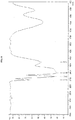
- An MTS cytotoxicity assay shows that 2 poses little effect on the viability of cells ( FIG. 2 ).
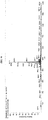
- the PA signal for an aqueous solution of 2 was found to be adequate even down to 2.5 ⁇ M ( FIG. 3 ).
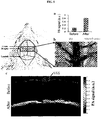
- Cortical vasculature of the rat was in vivo imaged at 32 ⁇ 61 ⁇ m resolution, with a designed 50-MHz dark-field confocal PA microscopy system ( FIG. 4 ); the PA signal at ⁇ 410 was acquired.
- the SSS is the largest vein in the rodent brain cortex, and a selected section of it is the region-of-interest (ROI) in this study ( FIG. 5B ).
- ROI region-of-interest
- the SSS is a large central cerebral vein at cortical layer, and collects blood flow from both hemispheres before emptying into the internal jugular vein. That is, accurate measurements of blood flow changes in the SSS are thus very important.
- NIRS Near-infrared spectroscopy
- PA imaging can see venous, capillary, and arterial blood.
- the SSS was not satisfactorily visualized in the projected PA C-scan image.
- the detected PA signals from the SSS were weaker than those from other cortical vessels. This weaker SSS signals may result from the frequency of the PA signals generated by the SSS may be out of the detection bandwidth of the transducer.
- sensing with spherical geometric focusing inherently prefers point-like PA sources, which is not the case of for the large sized SSS, thus weakening the detection of PA signals from the SSS. That is, probing the changes of SSS via the designed contrast agents provide a novel insight for optical imaging technique to study the SSS related neuroscience issues.
- the image acquired 20 min after the administration of a solution of 2 showed the brain vasculature with greater clarity, especially the SSS ( FIG. 5C ).
- OSCC oral squamous cell carcinoma
- a polyethylene tubing (about 20 cm in length) was filled with the sample solution and then positioned at the focus of the transducer, i.e. at a depth of 9 mm with respect to the transducer in the water tank.
- the system was maintained in a 25 °C water bath throughout the experiment. Imaging was carried out with the PA microscopy system at 32 ⁇ 61- ⁇ m resolution, with a scanning step size of 20 ⁇ m for each B-scan.
- a craniotomy was also performed for each animal, and a bilateral cranial window of approximately 6 (horizontal) ⁇ 4 (vertical) mm size was made with a high-speed drill.
- the pallet was moved to position at the bregma, which was 9 mm anterior to an imaginary line drawn between the centers of each ear bar (the interaural line).
- the interaural and bregma references were then used to position the heads in the PAM system.
- a PA C-scan projection image from the three-dimensional images
- 200 ⁇ L of 2 at 30 ⁇ M was administered via retro-orbital injection prior to imaging.
- organometallic carbonyl cluster compounds may be safe contrast agents for use in laser-based photoacoustic imaging.
- a water-soluble osmium carbonyl cluster was used for the in vivo imaging of the rat cerebral vasculature, with high spatial resolution and satisfactory sensitivity.
- Use of an exogenous contrast agent may potentially provide a method to monitor intra- or extravascular blood flow in biological tissues. This is important for an accurate assessment of acute ischaemic stroke, lesion development, thermal injury, neovascularization, tumor angiogenesis, tumor necrosis, hepatic function and regional blood flow response.
- Choice of the osmium carbonyl clusters rests primarily because on their well-studied chemistry, and also on the fact that they offer multiple sites for attachment of various ligands as property modifiers. Through conjugation to bioactive materials such as proteins, antibodies, and drugs, molecular imaging and therapeutic monitoring may also be carried out.
Landscapes
- Health & Medical Sciences (AREA)
- Physics & Mathematics (AREA)
- Acoustics & Sound (AREA)
- Nuclear Medicine, Radiotherapy & Molecular Imaging (AREA)
- Radiology & Medical Imaging (AREA)
- Epidemiology (AREA)
- Life Sciences & Earth Sciences (AREA)
- Animal Behavior & Ethology (AREA)
- General Health & Medical Sciences (AREA)
- Public Health (AREA)
- Veterinary Medicine (AREA)
- Medicines Containing Antibodies Or Antigens For Use As Internal Diagnostic Agents (AREA)
Claims (13)
- Utilisation d'une composition d'agent de contraste d'imagerie photoacoustique dans une microscopie photoacoustique réalisée sur un sujet à une longueur d'onde dans la plage du visible de 400 nm à 750 nm, la composition comprenant un composé métallique à groupement carbonyle ayant la formule générale (I)
M3(CO)xL12-x (I)
dans laquelleM dans chaque cas représente un métal indépendamment choisi dans le groupe constitué par Fe, Ru et Os ;x est un nombre entier de 10 à 12 ; etchaque L est indépendamment choisi dans le groupe constitué par -H et -A-(CH2)n-COO-Y+, où A est choisi dans le groupe constitué par S, O, C et N ; n est un nombre entier de 1 à 10 ; et Y est un quelconque cation. - Utilisation selon la revendication 1, dans laquelle M est Os.
- Utilisation selon la revendication 1, dans laquelle x est 10.
- Utilisation selon la revendication 1, dans laquelle A est S.
- Utilisation selon la revendication 1, dans laquelle n est un nombre entier de 1 à 6.
- Utilisation selon la revendication 1, dans laquelle n est 2.
- Utilisation selon la revendication 1, dans laquelle Y est choisi dans le groupe constitué par un métal alcalin et NH4.
- Utilisation selon la revendication 1, dans laquelle Y est choisi dans le groupe constitué par Na et K.
- Utilisation selon la revendication 1, dans laquelle Y est Na.
- Utilisation selon la revendication 1, dans laquelle le composé métallique à groupement carbonyle est Os3(CO)10(µ-H)µ-S(CH2)2COO-Na+.
- Utilisation selon la revendication 1, dans laquelle le composé métallique à groupement carbonyle est conjugué ou attaché à un agent bioactif.
- Utilisation selon la revendication 11, dans laquelle l'agent bioactif est choisi dans le groupe constitué par une protéine, un anticorps, un fragment d'anticorps, une molécule de type anticorps ou un médicament.
- Utilisation selon la revendication 1, dans laquelle la microscopie photoacoustique est réalisée à une longueur d'onde d'environ 410 nm.
Applications Claiming Priority (2)
| Application Number | Priority Date | Filing Date | Title |
|---|---|---|---|
| SG2013068895 | 2013-09-12 | ||
| PCT/SG2014/000423 WO2015038066A1 (fr) | 2013-09-12 | 2014-09-09 | Composition d'agent de contraste d'imagerie photoacoustique |
Publications (3)
| Publication Number | Publication Date |
|---|---|
| EP3043829A1 EP3043829A1 (fr) | 2016-07-20 |
| EP3043829A4 EP3043829A4 (fr) | 2017-04-26 |
| EP3043829B1 true EP3043829B1 (fr) | 2018-12-19 |
Family
ID=52666040
Family Applications (1)
| Application Number | Title | Priority Date | Filing Date |
|---|---|---|---|
| EP14843282.6A Not-in-force EP3043829B1 (fr) | 2013-09-12 | 2014-09-09 | Composition d'agent de contraste d'imagerie photoacoustique |
Country Status (4)
| Country | Link |
|---|---|
| US (1) | US20160220709A1 (fr) |
| EP (1) | EP3043829B1 (fr) |
| SG (2) | SG10201801993WA (fr) |
| WO (1) | WO2015038066A1 (fr) |
Families Citing this family (3)
| Publication number | Priority date | Publication date | Assignee | Title |
|---|---|---|---|---|
| US9933688B1 (en) | 2017-07-24 | 2018-04-03 | Raytheon Company | Analog-to-digital converter using a continuous-wave laser and a timing reference derived from a multifrequency optical signal |
| US10135541B1 (en) | 2017-07-24 | 2018-11-20 | Raytheon Company | Analog-to-digital converter using a timing reference derived from an optical pulse train |
| US10139704B1 (en) * | 2017-07-24 | 2018-11-27 | Raytheon Company | High-speed analog-to-digital converter |
Family Cites Families (1)
| Publication number | Priority date | Publication date | Assignee | Title |
|---|---|---|---|---|
| WO2014137291A1 (fr) * | 2013-03-05 | 2014-09-12 | Agency For Science, Technology And Research | Procédé de détection d'un analyte faisant appel à la spectroscopie raman exaltée de surface, biocapteur, et son procédé de fabrication |
-
2014
- 2014-09-09 US US14/917,868 patent/US20160220709A1/en not_active Abandoned
- 2014-09-09 SG SG10201801993WA patent/SG10201801993WA/en unknown
- 2014-09-09 SG SG11201601628VA patent/SG11201601628VA/en unknown
- 2014-09-09 EP EP14843282.6A patent/EP3043829B1/fr not_active Not-in-force
- 2014-09-09 WO PCT/SG2014/000423 patent/WO2015038066A1/fr not_active Ceased
Non-Patent Citations (1)
| Title |
|---|
| None * |
Also Published As
| Publication number | Publication date |
|---|---|
| EP3043829A4 (fr) | 2017-04-26 |
| EP3043829A1 (fr) | 2016-07-20 |
| WO2015038066A1 (fr) | 2015-03-19 |
| SG11201601628VA (en) | 2016-04-28 |
| US20160220709A1 (en) | 2016-08-04 |
| SG10201801993WA (en) | 2018-05-30 |
Similar Documents
| Publication | Publication Date | Title |
|---|---|---|
| US20080173093A1 (en) | System and method for photoacoustic tomography of joints | |
| US11707537B2 (en) | Conformational restriction of cyanine fluorophores in far-red and near-IR range | |
| Antonio et al. | Advances in biomedical Raman microscopy | |
| De La Zerda et al. | Family of enhanced photoacoustic imaging agents for high-sensitivity and multiplexing studies in living mice | |
| Henry et al. | Surface-enhanced Raman spectroscopy biosensing: in vivo diagnostics and multimodal imaging | |
| Nagy-Simon et al. | Antibody conjugated, Raman tagged hollow gold–silver nanospheres for specific targeting and multimodal dark-field/SERS/two photon-FLIM imaging of CD19 (+) B lymphoblasts | |
| Li et al. | Simultaneous molecular and hypoxia imaging of brain tumors in vivo using spectroscopic photoacoustic tomography | |
| US10398315B2 (en) | Method of imaging living tissue | |
| Ou et al. | Diagnosis of immunomarkers in vivo via multiplexed surface enhanced Raman spectroscopy with gold nanostars | |
| Lajoinie et al. | In vitro methods to study bubble-cell interactions: Fundamentals and therapeutic applications | |
| US20110262354A1 (en) | Cyanine-containing compounds for cancer imaging and treatment | |
| US20100028261A1 (en) | Molecular Specific Photoacoustic Imaging | |
| US10288568B2 (en) | Raman probe and methods of imaging | |
| CN103687854A (zh) | 碳酸酐酶靶向剂及其使用方法 | |
| US20160220709A1 (en) | Photoacoustic imaging contrast agent composition | |
| Chou et al. | Infrared-active quadruple contrast FePt nanoparticles for multiple scale molecular imaging | |
| KR101599973B1 (ko) | 소동물을 위한 광 음향 단층 촬영 장치 | |
| Zharov et al. | Photothermal flow cytometry in vitro for detection and imaging of individual moving cells | |
| Zeng et al. | Coherent Raman scattering microscopy in oncology pharmacokinetic research | |
| Suttikittipong et al. | Comparison of MEMS-based photoacoustic microscopy in biomedical imaging | |
| Zhao et al. | Recent technical progression in photoacoustic imaging—towards using contrast agents and multimodal techniques | |
| US20130052131A1 (en) | Nanoparticles, methods of making nanoparticles, and methods of use | |
| Zhang et al. | In Vivo imaging of mammalian embryos by NIR-I photoacoustic tomography and NIR-II optical coherence tomography using gold nanostars as multifunctional contrast agents | |
| US10736513B2 (en) | Imaging devices, systems, and methods of operation for acoustic-enhanced optical coherence tomography | |
| US20160287727A1 (en) | Photoacoustic imaging contrast agent |
Legal Events
| Date | Code | Title | Description |
|---|---|---|---|
| PUAI | Public reference made under article 153(3) epc to a published international application that has entered the european phase |
Free format text: ORIGINAL CODE: 0009012 |
|
| 17P | Request for examination filed |
Effective date: 20160310 |
|
| AK | Designated contracting states |
Kind code of ref document: A1 Designated state(s): AL AT BE BG CH CY CZ DE DK EE ES FI FR GB GR HR HU IE IS IT LI LT LU LV MC MK MT NL NO PL PT RO RS SE SI SK SM TR |
|
| AX | Request for extension of the european patent |
Extension state: BA ME |
|
| DAX | Request for extension of the european patent (deleted) | ||
| RIC1 | Information provided on ipc code assigned before grant |
Ipc: A61K 49/22 20060101AFI20170315BHEP Ipc: A61K 31/28 20060101ALI20170315BHEP |
|
| A4 | Supplementary search report drawn up and despatched |
Effective date: 20170328 |
|
| RIC1 | Information provided on ipc code assigned before grant |
Ipc: A61K 49/22 20060101AFI20170321BHEP Ipc: A61K 31/28 20060101ALI20170321BHEP |
|
| STAA | Information on the status of an ep patent application or granted ep patent |
Free format text: STATUS: EXAMINATION IS IN PROGRESS |
|
| 17Q | First examination report despatched |
Effective date: 20180228 |
|
| GRAP | Despatch of communication of intention to grant a patent |
Free format text: ORIGINAL CODE: EPIDOSNIGR1 |
|
| STAA | Information on the status of an ep patent application or granted ep patent |
Free format text: STATUS: GRANT OF PATENT IS INTENDED |
|
| INTG | Intention to grant announced |
Effective date: 20180713 |
|
| GRAS | Grant fee paid |
Free format text: ORIGINAL CODE: EPIDOSNIGR3 |
|
| GRAA | (expected) grant |
Free format text: ORIGINAL CODE: 0009210 |
|
| STAA | Information on the status of an ep patent application or granted ep patent |
Free format text: STATUS: THE PATENT HAS BEEN GRANTED |
|
| AK | Designated contracting states |
Kind code of ref document: B1 Designated state(s): AL AT BE BG CH CY CZ DE DK EE ES FI FR GB GR HR HU IE IS IT LI LT LU LV MC MK MT NL NO PL PT RO RS SE SI SK SM TR |
|
| REG | Reference to a national code |
Ref country code: GB Ref legal event code: FG4D |
|
| REG | Reference to a national code |
Ref country code: CH Ref legal event code: EP |
|
| REG | Reference to a national code |
Ref country code: IE Ref legal event code: FG4D |
|
| REG | Reference to a national code |
Ref country code: DE Ref legal event code: R096 Ref document number: 602014038372 Country of ref document: DE |
|
| REG | Reference to a national code |
Ref country code: AT Ref legal event code: REF Ref document number: 1077966 Country of ref document: AT Kind code of ref document: T Effective date: 20190115 |
|
| REG | Reference to a national code |
Ref country code: NL Ref legal event code: MP Effective date: 20181219 |
|
| PG25 | Lapsed in a contracting state [announced via postgrant information from national office to epo] |
Ref country code: FI Free format text: LAPSE BECAUSE OF FAILURE TO SUBMIT A TRANSLATION OF THE DESCRIPTION OR TO PAY THE FEE WITHIN THE PRESCRIBED TIME-LIMIT Effective date: 20181219 Ref country code: LV Free format text: LAPSE BECAUSE OF FAILURE TO SUBMIT A TRANSLATION OF THE DESCRIPTION OR TO PAY THE FEE WITHIN THE PRESCRIBED TIME-LIMIT Effective date: 20181219 Ref country code: NO Free format text: LAPSE BECAUSE OF FAILURE TO SUBMIT A TRANSLATION OF THE DESCRIPTION OR TO PAY THE FEE WITHIN THE PRESCRIBED TIME-LIMIT Effective date: 20190319 Ref country code: LT Free format text: LAPSE BECAUSE OF FAILURE TO SUBMIT A TRANSLATION OF THE DESCRIPTION OR TO PAY THE FEE WITHIN THE PRESCRIBED TIME-LIMIT Effective date: 20181219 Ref country code: HR Free format text: LAPSE BECAUSE OF FAILURE TO SUBMIT A TRANSLATION OF THE DESCRIPTION OR TO PAY THE FEE WITHIN THE PRESCRIBED TIME-LIMIT Effective date: 20181219 Ref country code: BG Free format text: LAPSE BECAUSE OF FAILURE TO SUBMIT A TRANSLATION OF THE DESCRIPTION OR TO PAY THE FEE WITHIN THE PRESCRIBED TIME-LIMIT Effective date: 20190319 |
|
| REG | Reference to a national code |
Ref country code: LT Ref legal event code: MG4D |
|
| REG | Reference to a national code |
Ref country code: AT Ref legal event code: MK05 Ref document number: 1077966 Country of ref document: AT Kind code of ref document: T Effective date: 20181219 |
|
| PG25 | Lapsed in a contracting state [announced via postgrant information from national office to epo] |
Ref country code: GR Free format text: LAPSE BECAUSE OF FAILURE TO SUBMIT A TRANSLATION OF THE DESCRIPTION OR TO PAY THE FEE WITHIN THE PRESCRIBED TIME-LIMIT Effective date: 20190320 Ref country code: AL Free format text: LAPSE BECAUSE OF FAILURE TO SUBMIT A TRANSLATION OF THE DESCRIPTION OR TO PAY THE FEE WITHIN THE PRESCRIBED TIME-LIMIT Effective date: 20181219 Ref country code: SE Free format text: LAPSE BECAUSE OF FAILURE TO SUBMIT A TRANSLATION OF THE DESCRIPTION OR TO PAY THE FEE WITHIN THE PRESCRIBED TIME-LIMIT Effective date: 20181219 Ref country code: RS Free format text: LAPSE BECAUSE OF FAILURE TO SUBMIT A TRANSLATION OF THE DESCRIPTION OR TO PAY THE FEE WITHIN THE PRESCRIBED TIME-LIMIT Effective date: 20181219 |
|
| PG25 | Lapsed in a contracting state [announced via postgrant information from national office to epo] |
Ref country code: NL Free format text: LAPSE BECAUSE OF FAILURE TO SUBMIT A TRANSLATION OF THE DESCRIPTION OR TO PAY THE FEE WITHIN THE PRESCRIBED TIME-LIMIT Effective date: 20181219 |
|
| PG25 | Lapsed in a contracting state [announced via postgrant information from national office to epo] |
Ref country code: IT Free format text: LAPSE BECAUSE OF FAILURE TO SUBMIT A TRANSLATION OF THE DESCRIPTION OR TO PAY THE FEE WITHIN THE PRESCRIBED TIME-LIMIT Effective date: 20181219 Ref country code: CZ Free format text: LAPSE BECAUSE OF FAILURE TO SUBMIT A TRANSLATION OF THE DESCRIPTION OR TO PAY THE FEE WITHIN THE PRESCRIBED TIME-LIMIT Effective date: 20181219 Ref country code: PT Free format text: LAPSE BECAUSE OF FAILURE TO SUBMIT A TRANSLATION OF THE DESCRIPTION OR TO PAY THE FEE WITHIN THE PRESCRIBED TIME-LIMIT Effective date: 20190419 Ref country code: ES Free format text: LAPSE BECAUSE OF FAILURE TO SUBMIT A TRANSLATION OF THE DESCRIPTION OR TO PAY THE FEE WITHIN THE PRESCRIBED TIME-LIMIT Effective date: 20181219 Ref country code: PL Free format text: LAPSE BECAUSE OF FAILURE TO SUBMIT A TRANSLATION OF THE DESCRIPTION OR TO PAY THE FEE WITHIN THE PRESCRIBED TIME-LIMIT Effective date: 20181219 |
|
| PG25 | Lapsed in a contracting state [announced via postgrant information from national office to epo] |
Ref country code: SM Free format text: LAPSE BECAUSE OF FAILURE TO SUBMIT A TRANSLATION OF THE DESCRIPTION OR TO PAY THE FEE WITHIN THE PRESCRIBED TIME-LIMIT Effective date: 20181219 Ref country code: EE Free format text: LAPSE BECAUSE OF FAILURE TO SUBMIT A TRANSLATION OF THE DESCRIPTION OR TO PAY THE FEE WITHIN THE PRESCRIBED TIME-LIMIT Effective date: 20181219 Ref country code: SK Free format text: LAPSE BECAUSE OF FAILURE TO SUBMIT A TRANSLATION OF THE DESCRIPTION OR TO PAY THE FEE WITHIN THE PRESCRIBED TIME-LIMIT Effective date: 20181219 Ref country code: IS Free format text: LAPSE BECAUSE OF FAILURE TO SUBMIT A TRANSLATION OF THE DESCRIPTION OR TO PAY THE FEE WITHIN THE PRESCRIBED TIME-LIMIT Effective date: 20190419 Ref country code: RO Free format text: LAPSE BECAUSE OF FAILURE TO SUBMIT A TRANSLATION OF THE DESCRIPTION OR TO PAY THE FEE WITHIN THE PRESCRIBED TIME-LIMIT Effective date: 20181219 |
|
| REG | Reference to a national code |
Ref country code: DE Ref legal event code: R097 Ref document number: 602014038372 Country of ref document: DE |
|
| PLBE | No opposition filed within time limit |
Free format text: ORIGINAL CODE: 0009261 |
|
| STAA | Information on the status of an ep patent application or granted ep patent |
Free format text: STATUS: NO OPPOSITION FILED WITHIN TIME LIMIT |
|
| PG25 | Lapsed in a contracting state [announced via postgrant information from national office to epo] |
Ref country code: DK Free format text: LAPSE BECAUSE OF FAILURE TO SUBMIT A TRANSLATION OF THE DESCRIPTION OR TO PAY THE FEE WITHIN THE PRESCRIBED TIME-LIMIT Effective date: 20181219 Ref country code: AT Free format text: LAPSE BECAUSE OF FAILURE TO SUBMIT A TRANSLATION OF THE DESCRIPTION OR TO PAY THE FEE WITHIN THE PRESCRIBED TIME-LIMIT Effective date: 20181219 |
|
| 26N | No opposition filed |
Effective date: 20190920 |
|
| PG25 | Lapsed in a contracting state [announced via postgrant information from national office to epo] |
Ref country code: SI Free format text: LAPSE BECAUSE OF FAILURE TO SUBMIT A TRANSLATION OF THE DESCRIPTION OR TO PAY THE FEE WITHIN THE PRESCRIBED TIME-LIMIT Effective date: 20181219 |
|
| PG25 | Lapsed in a contracting state [announced via postgrant information from national office to epo] |
Ref country code: TR Free format text: LAPSE BECAUSE OF FAILURE TO SUBMIT A TRANSLATION OF THE DESCRIPTION OR TO PAY THE FEE WITHIN THE PRESCRIBED TIME-LIMIT Effective date: 20181219 |
|
| PG25 | Lapsed in a contracting state [announced via postgrant information from national office to epo] |
Ref country code: MC Free format text: LAPSE BECAUSE OF FAILURE TO SUBMIT A TRANSLATION OF THE DESCRIPTION OR TO PAY THE FEE WITHIN THE PRESCRIBED TIME-LIMIT Effective date: 20181219 |
|
| REG | Reference to a national code |
Ref country code: CH Ref legal event code: PL |
|
| PG25 | Lapsed in a contracting state [announced via postgrant information from national office to epo] |
Ref country code: LI Free format text: LAPSE BECAUSE OF NON-PAYMENT OF DUE FEES Effective date: 20190930 Ref country code: CH Free format text: LAPSE BECAUSE OF NON-PAYMENT OF DUE FEES Effective date: 20190930 Ref country code: IE Free format text: LAPSE BECAUSE OF NON-PAYMENT OF DUE FEES Effective date: 20190909 Ref country code: LU Free format text: LAPSE BECAUSE OF NON-PAYMENT OF DUE FEES Effective date: 20190909 |
|
| REG | Reference to a national code |
Ref country code: BE Ref legal event code: MM Effective date: 20190930 |
|
| PG25 | Lapsed in a contracting state [announced via postgrant information from national office to epo] |
Ref country code: BE Free format text: LAPSE BECAUSE OF NON-PAYMENT OF DUE FEES Effective date: 20190930 |
|
| PG25 | Lapsed in a contracting state [announced via postgrant information from national office to epo] |
Ref country code: CY Free format text: LAPSE BECAUSE OF FAILURE TO SUBMIT A TRANSLATION OF THE DESCRIPTION OR TO PAY THE FEE WITHIN THE PRESCRIBED TIME-LIMIT Effective date: 20181219 |
|
| PG25 | Lapsed in a contracting state [announced via postgrant information from national office to epo] |
Ref country code: MT Free format text: LAPSE BECAUSE OF FAILURE TO SUBMIT A TRANSLATION OF THE DESCRIPTION OR TO PAY THE FEE WITHIN THE PRESCRIBED TIME-LIMIT Effective date: 20181219 Ref country code: HU Free format text: LAPSE BECAUSE OF FAILURE TO SUBMIT A TRANSLATION OF THE DESCRIPTION OR TO PAY THE FEE WITHIN THE PRESCRIBED TIME-LIMIT; INVALID AB INITIO Effective date: 20140909 |
|
| PGFP | Annual fee paid to national office [announced via postgrant information from national office to epo] |
Ref country code: FR Payment date: 20210927 Year of fee payment: 8 |
|
| PGFP | Annual fee paid to national office [announced via postgrant information from national office to epo] |
Ref country code: DE Payment date: 20210816 Year of fee payment: 8 Ref country code: GB Payment date: 20210923 Year of fee payment: 8 |
|
| PG25 | Lapsed in a contracting state [announced via postgrant information from national office to epo] |
Ref country code: MK Free format text: LAPSE BECAUSE OF FAILURE TO SUBMIT A TRANSLATION OF THE DESCRIPTION OR TO PAY THE FEE WITHIN THE PRESCRIBED TIME-LIMIT Effective date: 20181219 |
|
| REG | Reference to a national code |
Ref country code: DE Ref legal event code: R119 Ref document number: 602014038372 Country of ref document: DE |
|
| GBPC | Gb: european patent ceased through non-payment of renewal fee |
Effective date: 20220909 |
|
| PG25 | Lapsed in a contracting state [announced via postgrant information from national office to epo] |
Ref country code: FR Free format text: LAPSE BECAUSE OF NON-PAYMENT OF DUE FEES Effective date: 20220930 Ref country code: DE Free format text: LAPSE BECAUSE OF NON-PAYMENT OF DUE FEES Effective date: 20230401 |
|
| PG25 | Lapsed in a contracting state [announced via postgrant information from national office to epo] |
Ref country code: GB Free format text: LAPSE BECAUSE OF NON-PAYMENT OF DUE FEES Effective date: 20220909 |