EP3042782B1 - Carbonless copy note pad - Google Patents
Carbonless copy note pad Download PDFInfo
- Publication number
- EP3042782B1 EP3042782B1 EP15168989.0A EP15168989A EP3042782B1 EP 3042782 B1 EP3042782 B1 EP 3042782B1 EP 15168989 A EP15168989 A EP 15168989A EP 3042782 B1 EP3042782 B1 EP 3042782B1
- Authority
- EP
- European Patent Office
- Prior art keywords
- paper sheet
- color
- sheet
- note
- carbonless copy
- Prior art date
- Legal status (The legal status is an assumption and is not a legal conclusion. Google has not performed a legal analysis and makes no representation as to the accuracy of the status listed.)
- Active
Links
Images






Classifications
-
- B—PERFORMING OPERATIONS; TRANSPORTING
- B41—PRINTING; LINING MACHINES; TYPEWRITERS; STAMPS
- B41L—APPARATUS OR DEVICES FOR MANIFOLDING, DUPLICATING OR PRINTING FOR OFFICE OR OTHER COMMERCIAL PURPOSES; ADDRESSING MACHINES OR LIKE SERIES-PRINTING MACHINES
- B41L1/00—Devices for performing operations in connection with manifolding by means of pressure-sensitive layers or intermediaries, e.g. carbons; Accessories for manifolding purposes
- B41L1/20—Manifolding assemblies, e.g. book-like assemblies
- B41L1/22—Manifolding assemblies, e.g. book-like assemblies made up of single sheets or forms
- B41L1/24—Pads or books
-
- B—PERFORMING OPERATIONS; TRANSPORTING
- B41—PRINTING; LINING MACHINES; TYPEWRITERS; STAMPS
- B41L—APPARATUS OR DEVICES FOR MANIFOLDING, DUPLICATING OR PRINTING FOR OFFICE OR OTHER COMMERCIAL PURPOSES; ADDRESSING MACHINES OR LIKE SERIES-PRINTING MACHINES
- B41L1/00—Devices for performing operations in connection with manifolding by means of pressure-sensitive layers or intermediaries, e.g. carbons; Accessories for manifolding purposes
- B41L1/20—Manifolding assemblies, e.g. book-like assemblies
- B41L1/36—Manifolding assemblies, e.g. book-like assemblies with pressure-sensitive layers or coating other than carbon
-
- B—PERFORMING OPERATIONS; TRANSPORTING
- B41—PRINTING; LINING MACHINES; TYPEWRITERS; STAMPS
- B41M—PRINTING, DUPLICATING, MARKING, OR COPYING PROCESSES; COLOUR PRINTING
- B41M5/00—Duplicating or marking methods; Sheet materials for use therein
- B41M5/124—Duplicating or marking methods; Sheet materials for use therein using pressure to make a masked colour visible, e.g. to make a coloured support visible, to create an opaque or transparent pattern, or to form colour by uniting colour-forming components
-
- B—PERFORMING OPERATIONS; TRANSPORTING
- B41—PRINTING; LINING MACHINES; TYPEWRITERS; STAMPS
- B41M—PRINTING, DUPLICATING, MARKING, OR COPYING PROCESSES; COLOUR PRINTING
- B41M5/00—Duplicating or marking methods; Sheet materials for use therein
- B41M5/124—Duplicating or marking methods; Sheet materials for use therein using pressure to make a masked colour visible, e.g. to make a coloured support visible, to create an opaque or transparent pattern, or to form colour by uniting colour-forming components
- B41M5/1243—Inert particulate additives, e.g. protective stilt materials
-
- B—PERFORMING OPERATIONS; TRANSPORTING
- B42—BOOKBINDING; ALBUMS; FILES; SPECIAL PRINTED MATTER
- B42D—BOOKS; BOOK COVERS; LOOSE LEAVES; PRINTED MATTER CHARACTERISED BY IDENTIFICATION OR SECURITY FEATURES; PRINTED MATTER OF SPECIAL FORMAT OR STYLE NOT OTHERWISE PROVIDED FOR; DEVICES FOR USE THEREWITH AND NOT OTHERWISE PROVIDED FOR; MOVABLE-STRIP WRITING OR READING APPARATUS
- B42D5/00—Sheets united without binding to form pads or blocks
- B42D5/003—Note-pads
Definitions
- the mixture was then added to the four-neck flask to mix with the contents therein at 280 rpm for 15 minutes. Thereafter, the contents in the four-neck flask were heated to and kept at 70°C for 2 hours. Next, an exothermic reaction was allowed to take place, which caused the temperature in the four-neck flask to rise to 95°C. After the temperature dropped to 70°C, the contents in the four-neck flask were kept at 70°C for 8 hours. When the temperature dropped to room temperature, the contents were filtered to thereby obtain coarse particles having an average particle size of about 40 ⁇ m to 120 ⁇ m.
- a carbonless copy note pad of Example 3 was similar to that of Example 2, except that a thickness of the coarse particle coating layer 4 was 0.127 mm.
- the second paper sheet 12, the color-developing coating layer 2, and the coarse particle coating layer 4 in combination had a total base weight of 117.3 g/m 2 .
- the roughness of the coarse particle coating layer 4 was measured and is listed in Table 1.
Landscapes
- Color Printing (AREA)
- Duplication Or Marking (AREA)
- Engineering & Computer Science (AREA)
- Ceramic Engineering (AREA)
Description
- This invention relates to a note pad, and more particularly to a carbonless copy note pad.
- Conventional carbonless copy note pads include a plurality of carbonless copy paper sets. Each set may include a writing paper sheet and one to six copy paper sheets.
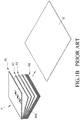
Figs. 1A and1B show a conventional carbonlesscopy note pad 9 with two copy paper sheets in each set. - The conventional carbonless
copy note pad 9 includes a topmostnote sheet set 91, a next-to-topmostnote sheet set 92, a bottommostnote sheet set 94, and a plurality of interveningnote sheet sets 93. The note sheet sets 91, 92, 93, 94 are bonded together at one side edge by gluing. As shown, each of thenote sheet sets writing paper sheet 901, upper and lowercopy paper sheets writing paper sheet 901 of the topmostnote sheet set 91, a replica of the message is formed on an upper surface of each of the upper and lowercopy paper sheets note sheet set 91. To prevent the writing from acting on the next-to- topmostnote sheet set 92, aseparate cardboard divider 8 need be placed between the topmostnote sheet set 91 and the next-to-topmostnote sheet set 92, i.e., between the lowercopy paper sheet 903 of the topmostnote sheet set 91 and thewriting paper sheet 901 of the next-to-topmostnote sheet set 92, which is very inconvenient. Thus, there is a need for a novel carbonless copy note pad which can be conveniently used without the need for acardboard divider 8. - Co-pending
U.S. Application No. 13/038128, filed March 1, 2011 and entitled "NOTE PAD CONTAINING CARBONLESS COLOR-DEVELOPING MATERIAL," discloses a note pad that includes carbonless note sheets capable of developing an image or mark when a pressure is applied thereto. -
WO 98/14331 -
EP 0620121 discloses legume starch stilting material for carbonless papers used in offset printing presses and in copier duplicators. - Therefore, an object of the present invention is to provide a novel carbonless copy note pad including a plurality of note sheet sets, each of the note sheet sets include two or more paper sheets. A coarse particle coating layer is formed on the last sheet of every note sheet set. With the provision of the coarse particle coating layer, transfer of a writing on a topmost one of the note sheet sets to the sheets of all the note sheet sets below the topmost note sheet set can be effectively prevented. In other words, even if no separate cardboard divider is provided below the topmost one of the note sheet sets during writing, the remaining note sheet sets remain unaffected.
- According to a first aspect of the present invention, a carbonless copy note pad according to
claim 1 is provided. The carbonless copy pad includes a stack of note sheet sets each of which includes first and second paper sheets, a color-developing coating layer, and a coarse particle coating layer. The first paper sheet has a writing surface and a back surface opposite to the writing surface. The second paper sheet has an upper surface to face the back surface of the first paper sheet, and a lower surface opposite to the upper surface. The color-developing coating layer is formed on at least one of the first and second paper sheets. The coarse particle coating layer is formed on the lower surface of the second paper sheet, and has a roughened surface such that a scribbling pressure resulting from a scribbling movement on the writing surface of the first paper sheet is dispersed so as to prevent the scribbling pressure from acting on a next one of the note sheet sets . - According to a second aspect of the present invention, a carbonless copy note pad includes a stack of note sheet sets each of which includes first and second paper sheets, a first adhesive layer, a color-developing coating layer, and a coarse particle coating layer. The first paper sheet has a writing surface and a back surface opposite to the writing surface. The second paper sheet has an upper surface to face the back surface of the first paper sheet, and a lower surface opposite to the upper surface. The first adhesive layer is permanently bonded to the back surface of the first paper sheet, and is releasably attached to the upper surface of the second paper sheet. The color-developing coating layer is formed on at least one of the first and second paper sheets. The coarse particle coating layer is formed on the lower surface of the second paper sheet, and has a roughened surface such that a scribbling pressure resulting from a scribbling movement on the writing surface of the first paper sheet is dispersed so as to prevent the scribbling pressure from acting on the next one of the note sheet sets. Preferably, each of the first and second paper sheets has a side edge. The side edges of the first and second paper sheets of the note sheet sets are flush with each other, and are bonded together by glue.
- Other features and advantages of the present invention will become apparent in the following detailed description of the embodiments of the invention, with reference to the accompanying drawings, in which:
-
Figs. 1A and1B are perspective views of a conventional carbonless copy note pad; -
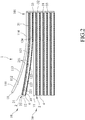
Fig. 2 is a cross-sectional view of a carbonless copy note pad according to a first embodiment of the present invention; -
Fig. 3 is a perspective view of the carbonless copy note pad ofFig. 2 ; -
Fig. 4 illustrates that a scribbling pressure is applied to a top one of note sheet sets of the carbonless copy note pad ofFig. 2 using a writing instrument; -
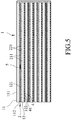
Fig. 5 illustrates that a mark is formed on a second paper sheet of the top one of the note sheet sets in the carbonless copy note pad ofFig. 4 in response to the scribbling pressure; -
Fig. 6 is a cross-sectional view of a carbonless copy note pad according to a second embodiment of the present invention; -
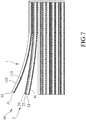
Fig. 7 is a cross-sectional view of a carbonless copy note pad according to a third embodiment of the present invention; -
Fig. 8 is a cross-sectional view of a carbonless copy note pad according to a fourth embodiment of the present invention; -
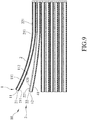
Fig. 9 is a cross-sectional view of a carbonless copy note pad according to a fifth embodiment of the present invention; -
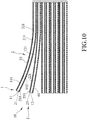
Fig. 10 is a cross-sectional view of a carbonless copy note pad according to a sixth embodiment of the present invention; and -
Fig. 11 is a cross-sectional view of a carbonless copy note pad according to a seventh embodiment of the present invention. - Before the present invention is described in greater detail, it should be noted herein that same reference numerals are used to denote like elements throughout the specification.
- With reference to
Figs. 2 to 5 , a carbonlesscopy note pad 1 according to a first embodiment of the present invention includes a stack ofnote sheet sets 10. - Each of the
note sheet set 10 includes afirst paper sheet 11, asecond paper sheet 12, a color-developingcoating layer 2, a coarseparticle coating layer 4, and first and secondadhesive layer - The
first paper sheet 11 has awriting surface 111 and aback surface 112 opposite to thewriting surface 111, and includes a firstflippable part 113 and a first re-adherablepart 114. - The
second paper sheet 12 has anupper surface 121 to face theback surface 112 of thefirst paper sheet 11, and alower surface 122 opposite to theupper surface 121. Thesecond paper sheet 12 includes a secondflippable part 123 and asecond re-adherable part 124. - Each of the first and
second paper sheets - The first
adhesive layer 31 is coated on and permanently bonded to thefirst re-adherable part 114 at theback surface 112 of thefirst paper sheet 11, and is releasably attached to thesecond re-adherable part 124 at theupper surface 121 of thesecond paper sheet 12, such that the firstflippable part 113 of thefirst paper sheet 11 is flippable while thefirst re-adherable part 114 is attached to thesecond paper sheet 12. The secondadhesive layer 33 is coated on thesecond re-adherable part 124 at thelower surface 122 of thesecond paper sheet 12, and is releasably attached to a next one of thenote sheet sets 10, such that the secondflippable part 123 of thesecond paper sheet 12 is flippable while the second re-adherablepart 124 is attached to the next one of thenote sheet sets 10. Each of the first and secondadhesive layers - The color-developing
coating layer 2 is formed on at least one of the first andsecond paper sheets microcapsules 211 and a carbonless color-developingmaterial 221. Each of themicrocapsules 211 includes a microshell and a reactive dye enclosed inside the microshell and is rupturable. The reactive dye may be crystal violet lactone (CVL), and the microshell may be made from an amino-containing resin or gelatin. - In this embodiment, the color-developing
coating layer 2 is formed on theupper surface 121 of thesecond paper sheet 12, and includes amicrocapsule sublayer 21 having themicrocapsules 211, and a color-developingsublayer 22 having the carbonless color-developingmaterial 221. Themicrocapsule sublayer 21 has themicrocapsules 211 in an amount ranging from 1.2 g/m2 to 3.0 g/m2. Themicrocapsules 211 have particle sizes ranging from 2.0µm to 6.0µm. The carbonless color-developingmaterial 221 may include phenolic resins, active clay, and/or salicylic acid resins. - The color-developing
sublayer 22 is formed on theupper surface 121 of thesecond paper sheet 12, and themicrocapsule sublayer 21 is formed on the color-developingsublayer 22. The firstadhesive layer 31 is releasably attached to thesecond re-adherable part 124 with the color-developingcoating layer 2 disposed therebetween. - With reference to
Figs. 4 and5 , as a user jots-down a message (i.e., makes a scribbling movement) on thewriting surface 111 of thefirst paper sheet 11, a scribbling pressure resulting from the scribbling movement is applied to the color-developingcoating layer 2 therebeneath, such that corresponding ones of themicrocapsules 211 in the color-developingcoating layer 2 rupture to release the reactive dye therein, which reacts with the carbonless color-developingmaterial 221 to exhibit acolored mark 5, which is a replica of the message, on thesecond paper sheet 12. - The coarse
particle coating layer 4 is a coarse particle-containing binder layer, and is formed on thelower surface 122 of thesecond paper sheet 12, and has a roughenedsurface 41 such that the scribbling pressure resulting from the scribbling movement on thewriting surface 111 of thefirst paper sheet 11 and transferred thereto is dispersed so as to prevent the scribbling pressure from acting on the next one of the note sheet sets 10 (seeFig. 4 ). - The roughened
surface 41 of the coarseparticle coating layer 4 has a roughness not less than 5 µm. The coarseparticle coating layer 4 includes a binder and a plurality of coarse particles dispersed in the binder. The coarse particles are made from pigment or filler. The coarse particles have particle sizes not less than 20 µm. In this embodiment, the particle sizes of the coarse particles range from 40 µm to 120 µm. - More particularly, the coarse
particle coating layer 4 includes the coarse particles, the binder, clay, and calcium carbonate. The binder may include a starch-based binder, a polyvinyl alcohol-based binder and/or a latex-based binder. The presence of the coarse particles in the coarseparticle coating layer 4 can increase surface coarseness (roughness). The roughenedsurface 41 of the coarseparticle coating layer 4 provides an increased surface area that helps disperse the scribbling pressure throughout the coarseparticle coating layer 4 to advantageously prevent themicrocapsules 211 in the next one of the note sheet sets 10 from rupturing. The amount of the coarse particles can be adjusted for varying the roughness of the roughenedsurface 41, and may range from 0.1 wt% to 95 wt% based on the total weight of the coarseparticle coating layer 4. - In this embodiment, a first bonding force between the first
adhesive layer 31 and the secondre-adherable part 124 is greater than a second bonding force between the secondadhesive layer 33 and the next one of the note sheet sets 10. Thus, the topmost one of the note sheet sets 10 can be easily torn away from the remaining note sheet sets 10. - Each of the first and
second paper sheets side edge 101, and the side edges 101 of the first andsecond paper sheets side edge 101 flush with each other and are bonded together at the side edges 101 by gluing, e.g., by a glue layer 32 (seeFig. 2 ). -
Fig. 6 shows a carbonlesscopy note pad 1 according to a second embodiment of the present invention. The second embodiment is similar to the first embodiment except that themicrocapsule sublayer 21 is formed on theback surface 112 of thefirst paper sheet 11. -
Fig. 7 shows a carbonlesscopy note pad 1 according to a third embodiment of the present invention. The third embodiment is similar to the first embodiment except that the color-developingcoating layer 2 includes two of themicrocapsule sublayers 21, one of which is formed on theback surface 112 of thefirst paper sheet 11, and the other of which is formed on the color-developingsublayer 22 on thesecond paper sheet 12. -
Fig. 8 shows a carbonlesscopy note pad 1 according to a fourth embodiment of the present invention. The fourth embodiment is similar to the first embodiment except that each of the note sheet sets 10 includes two of the color-developingcoating layers 2, one of which is formed on thewriting surface 111 of thefirst paper sheet 11, and the other of which is formed on theupper surface 121 of thesecond paper sheet 12. Each of the color-developingcoating layers 2 is a single layer including themicrocapsules 211 and the carbonless color-developingmaterial 221. - The fourth embodiment allows a user to write down a message and make a copy thereof even if no writing instrument is at hand. For instance, the user may use a finger or a pointed object such as a stylus to "write" a message by applying a scribbling pressure to the color-developing
coating layer 2 on thewriting surface 111 of thefirst paper sheet 11, with a replica of the message formed on theupper surface 121 of thesecond paper sheet 12. -
Fig. 9 shows a carbonlesscopy note pad 1 according to a fifth embodiment of the present invention. The fifth embodiment is similar to the fourth embodiment. In this embodiment, the color-developingcoating layer 2, which is formed on thewriting surface 111 of thefirst paper sheet 11, is a single layer including themicrocapsules 211 and the carbonless color-developingmaterial 221. The color-developingcoating layer 2, which is formed on theupper surface 121 of thesecond paper sheet 12, includes amicrocapsule sublayer 21 having themicrocapsules 211 and a color-developingsublayer 22 having the carbonless color-developingmaterial 221. The color-developingsublayer 22 is formed on theupper surface 121 of thesecond paper sheet 12, and themicrocapsule sublayer 21 is formed on the color-developingsublayer 22. -
Fig. 10 shows a carbonlesscopy note pad 1 according to a sixth embodiment of the present invention. The sixth embodiment is similar to the fourth embodiment. In this embodiment, one of the color-developingcoating layers 2 is formed on thewriting surface 111 of thefirst paper sheet 11, and the other one of the color-developingcoating layers 2 includes amicrocapsule sublayer 21 and amixing sublayer 23. Themicrocapsule sublayer 21 has themicrocapsules 211, and is formed on theback surface 112 of thefirst paper sheet 11. The mixingsublayer 23 has themicrocapsules 211 and the carbonless color-developingmaterial 221, and is formed on theupper surface 121 of thesecond paper sheet 12. -
Fig. 11 shows a carbonlesscopy note pad 1 according to a seventh embodiment of the present invention. The seventh embodiment is similar to the first embodiment. In this embodiment, each of the note sheet sets 10 further includes upper and lowerintervening paper sheets adhesive layers intervening paper sheets upward surface first paper sheet 11 and adownward surface second paper sheet 12, and includes aflippable part re-adherable part - The additional color-developing coating layers 2' are formed on the
upward surfaces paper sheets coating layers 2, and includes a microcapsule sublayer 21' having microcapsules 211' and a color-developing sublayer 22' having a carbonless color-developing material 221'. - The first
adhesive layer 31 is releasably attached to the thirdre-adherable part 134 at theupward surface 131 of the upperintervening paper sheet 13. - The upper additional
adhesive layers 34 is coated on the thirdre-adherable part 134 at thedownward surface 132 of the upperintervening paper sheets 13 and is releasably attached to the thirdre-adherable part 144 at theupward surface 141 of the lowerintervening paper sheet 14. - The lower additional
adhesive layers 35 is coated on the thirdre-adherable part 144 at thedownward surface 142 of the lowerintervening paper sheet 14 and is releasably attached to the secondre-adherable part 124 at theupper surface 121 of thesecond paper sheet 12. - The present invention will now be explained in more detail below by way of the following examples and comparative examples.
- A carbonless copy note pad of Example 1 had a structure similar to the carbonless copy note pad of the first embodiment of this invention, i.e., each note sheet set 10 included first and
second paper sheets adhesive layers coating layer 2, and a coarseparticle coating layer 4. Each of the first andsecond paper sheets first paper sheet 11 had a paper base weight of 90 g/m2, and thesecond paper sheet 12 had a paper base weight of 80 g/m2. Anupper surface 121 of thesecond paper sheet 12 was coated with the color-developingcoating layer 2, and alower surface 122 of thesecond paper sheet 12 was coated with the coarseparticle coating layer 4. Thesecond paper sheet 12, the color-developingcoating layer 2, and the coarseparticle coating layer 4 in combination had a total base weight of 99.8 g/m2. The color-developingcoating layer 2 included microcapsules (21.4 wt%), wheat starch (42.57 wt%), polyvinyl alcohol (10.82 wt%), a carbonless color-developing material (salicylic acid resin) (16.19 wt%), and a calcium stearate (9.02 wt%). The color-developingcoating layer 2 was in an amount of 5.2 g/m2. In each of the microcapsules, a reactive dye (crystal violet lactone, CVL) was enclosed in a microshell made of an amino-containing resin. The coarseparticle coating layer 4 included clay (43.2 wt%), calcium carbonate (42.8 wt%), polyvinyl alcohol (7.0 wt%), latex (6.9 wt%), and coarse particles (0.8 wt%). A roughness of the coarseparticle coating layer 4 was measured using a Parker print surface roughness tester (Model No. M590, Messmer Instruments Ltd.). The roughness and thickness of the coarseparticle coating layer 4 are listed in Table 1. - The coarse particles were formed in a manner as described below. 80 g of a dispersing agent (polyacrylic acid type), 30 g of sodium dodecyl sulfate (SDS), and 2500 g of deionized water were added to and mixed in a 5-liter four-neck flask fitted with a thermometer, a cooler, and a stirrer. In another flask, 5 g of benzoyl peroxide (BPO) was evenly dissolved in a solution including 500 g of methyl methacrylate (MMA), 350 g of methyl acrylate (MA), 350 g of butyl acrylate, and 40 g of acrylic acid to obtain a mixture. The mixture was then added to the four-neck flask to mix with the contents therein at 280 rpm for 15 minutes. Thereafter, the contents in the four-neck flask were heated to and kept at 70°C for 2 hours. Next, an exothermic reaction was allowed to take place, which caused the temperature in the four-neck flask to rise to 95°C. After the temperature dropped to 70°C, the contents in the four-neck flask were kept at 70°C for 8 hours. When the temperature dropped to room temperature, the contents were filtered to thereby obtain coarse particles having an average particle size of about 40µm to 120µm.
- A carbonless copy note pad of Comparative Example 1 was similar to that of Example 1, except that the coarse
particle coating layer 4 was not coated on thesecond paper sheet 12 of each note sheet set 10. Thesecond paper sheet 12 and the color-developingcoating layer 2 in combination had a total base weight of 90.4 g/m2. - A carbonless copy note pad of Comparative Example 2 was similar to that of Comparative Example 1, except that the
second paper sheet 12 of each note sheet set 10 had a paper base weight of 90 g/m2. Thesecond paper sheet 12 and the color-developingcoating layer 2 in combination had a total base weight of 100.8 g/m2. - A carbonless copy note pad of Example 2 was similar to that of Example 1, except that a thickness of the coarse
particle coating layer 4 was 0.121 mm, and that each of the first andsecond paper sheets second paper sheet 12, the color-developingcoating layer 2, and the coarseparticle coating layer 4 in combination had a total base weight of 109.9 g/m2. The roughness of the coarseparticle coating layer 4 was measured and is listed in Table 1. - A carbonless copy note pad of Example 3 was similar to that of Example 2, except that a thickness of the coarse
particle coating layer 4 was 0.127 mm. Thesecond paper sheet 12, the color-developingcoating layer 2, and the coarseparticle coating layer 4 in combination had a total base weight of 117.3 g/m2. The roughness of the coarseparticle coating layer 4 was measured and is listed in Table 1. - A carbonless copy note pad of Example 4 was similar to that of Example 2, except that a thickness of the coarse
particle coating layer 4 was 0.131 mm. Thesecond paper sheet 12, the color-developingcoating layer 2, and the coarseparticle coating layer 4 in combination had a total base weight of 117.9 g/m2. The roughness of the coarseparticle coating layer 4 was measured and is listed in Table 1. - A carbonless copy note pad of Example 5 was similar to that of Example 2, except that a thickness of the coarse
particle coating layer 4 was 0.149 mm. Thesecond paper sheet 12, the color-developingcoating layer 2, and the coarseparticle coating layer 4 in combination had a total base weight of 142.7 g/m2. The roughness of the coarseparticle coating layer 4 was measured and is listed in Table 1. - A carbonless copy note pad of Comparative Example 3 was similar to that of Example 2, except that the coarse
particle coating layer 4 did not include the coarse particles. The coarseparticle coating layer 4 included clay (43.2 wt%), calcium carbonate (42.8wt%), polyvinyl alcohol (7.0 wt%), and latex (6.9 wt%). Thesecond paper sheet 12, the color-developingcoating layer 2, and the coarseparticle coating layer 4 in combination had a total base weight of 109.3 g/m2. The roughness and thickness of the coarseparticle coating layer 4 were measured and are listed in Table 1. - A carbonless copy note pad of Example 6 was similar to that of Example 2, except that a thickness of the coarse
particle coating layer 4 was 0.125 mm. Thesecond paper sheet 12, the color-developingcoating layer 2, and the coarseparticle coating layer 4 in combination had a total base weight of 108.2 g/m2. The roughness of the coarseparticle coating layer 4 was measured and is listed in Table 1. - A carbonless copy note pad of Example 7 was similar to that of Example 6, except that the coarse
particle coating layer 4 included clay (42.2 wt%), calcium carbonate (41.8 wt%), polyvinyl alcohol (6.8 wt%), latex (6.8 wt%), and coarse particles (2.4 wt%). Thesecond paper sheet 12, the color-developingcoating layer 2, and the coarseparticle coating layer 4 in combination had a total base weight of 107.2 g/m2. The roughness and thickness of the coarseparticle coating layer 4 were measured and are listed in Table 1. - A carbonless copy note pad of Example 8 was similar to that of Example 6, except that the coarse
particle coating layer 4 included clay (39.4 wt%), calcium carbonate (39.1 wt%), polyvinyl alcohol (6.4 wt%), latex (6.3 wt%), and coarse particles (8.8 wt%). Thesecond paper sheet 12, the color-developingcoating layer 2, and the coarseparticle coating layer 4 in combination had a total base weight of 109.1 g/m2. The roughness and thickness of the coarseparticle coating layer 4 were measured and are listed in Table 1. - Each of the carbonless copy note pads of Examples 1-8 and Comparative Examples 1-3 was subjected to a typewriter intensity test for evaluating the color developing effect of the
second paper sheets 12 of the topmost two of the note sheet sets 10 (first and second note sheet sets 10). Details of the test are disclosed in, e.g.,US 4087376 . In this test, instead of a typewriter, a dot matrix printer (EPSON LQ-2080C) with a pressure set to be close to that of human writing (i.e., the scale of the printer was set to zero) was used to print characters on the first and second note sheet sets 10 together. Thereafter, Hunter Whiteness values (HW values) of thesecond paper sheets 12 of the first and second note sheet sets 10 of the carbonlesscopy note pad 1 in each of the Examples and the Comparative Examples were measured using an automatic reflectometer (Model TR-600, Tokyo Denshoku K. K.) for evaluating the color developing effect. Such reflectometer was also used inU.S. 4784982 for measuring Hunter whiteness. - In all the Examples and the Comparative Examples, an original HW value of the background (unprinted area) of each
second paper sheet 12 was about 80-85, and the HW values of the characters on eachsecond paper sheet 12 after standing for 20 seconds (initial time) and 4 minutes 40 seconds (aged time) were measured to calculate ΔHW values.
- For this test, the higher the ΔHW value of the printed characters, the darker the color developed in the characters. The ΔHW value of the Examples and the Comparative Examples are listed in Table 1.
Table 1 Second paper sheet Coarse particle coating layer Second paper sheet of first note sheet set Second paper sheet of second note sheet set Paper base weight (g/m2) Total Base weight (g/m2) Roughness (µm) Thickness (mm) ΔHW (%) Initial ΔHW (%) Aged ΔHW (%) Initial ΔHW (%) Aged EX 1 80 99.8 5.09 0.124 10.8 11.9 3.1 3.2 CE 180 90.4 No coarse particle coating layer 11.0 12.1 5.8 5.9 CE 290 100.8 10.2 11.4 5.5 5.6 EX 290 109.9 5.01 0.121 10.8 11.4 2.8 2.9 EX 3 90 117.3 5.06 0.127 10.4 11.6 2.6 2.8 EX 490 117.9 5.07 0.131 10.2 11.2 1.8 1.8 EX 590 142.7 4.94 0.149 10.4 11.9 1.2 1.4 CE 3 90 109.3 3.65 0.122 9.7 10.5 5.3 5.5 EX 6 90 108.2 5.05 0.125 10.6 11.8 2.8 2.9 EX 7 90 107.2 8.81 0.126 10.5 11.2 1.6 1.6 EX 890 109.1 14.03 0.128 10.5 11.3 1.2 1.5 - It is noted that in the carbonless copy note pads of
EX 1 andCE 1, the first paper sheets had the same paper base weight of 90 g/m2, and the second paper sheets had the same paper base weight of 80 g/m2. The coarse particle coating layer was merely formed on the lower surface of each second paper sheet ofEX 1. The ΔHW values (initial and aged) of the second paper sheets in the first note sheet sets of the carbonless copy note pads ofEX 1 andCE 1 are substantially the same, showing that a replica of the characters exhibited on the second paper sheet of the first note sheet set in the carbonless copy note pad ofEX 1 is as clear as that in the first note sheet set of the carbonless copy note pad ofCE 1. The ΔHW values (initial and aged) of the second paper sheet in the second note sheet set of the carbonless copy note pad ofEX 1 are much smaller than those of the carbonless copy note pad ofCE 1. It should be noted that the lower the ΔHW value of the second paper sheet in the second note sheet set, the lighter/fainter the characters exhibited thereon. It is evident that the coarse particle coating layer can effectively disperse the scribbling pressure. - In the carbonless copy note pads of
EX 1 andCE 2, the first paper sheets had the same paper base weight of 90 g/m2. In the carbonless copy note pad ofEX 1, the second paper sheet had a paper base weight of 80 g/m2, and the second paper sheet, the color-developing coating layer, and the coarse particle coating layer in combination had a total base weight of 99.8 g/m2. In the carbonless copy note pad ofCE 2, the second paper sheet had a paper base weight of 90 g/m2, and the second paper sheet and the color-developing coating layer in combination had a total base weight of 100.8 g/m2. The coarse particle coating layer was merely formed on the lower surface of each second paper sheet in the carbonless copy note pad ofEX 1. It can be found that when the second paper sheets had almost the same total base weight, the ΔHW values (initial and aged) of the second paper sheet of the second note sheet set in the carbonless copy note pad ofEX 1 are much smaller than those in the carbonless copy note pad ofCE 2. This demonstrates that the carbonless copy note pad of EX1 provided with the coarse particle coating layer can better prevent thescribbling pressure 1 from acting on the underlying sheets, i.e., disperse the scribbling pressure, than the carbonless copy note pad ofCE 2 in which the second paper sheet has an increased paper base weight. - In the carbonless copy note pads of
EX 2 toEX 5, the coarse particle coating layers had substantially the same roughness (4.94µm ∼ 5.07µm) but different thicknesses (0.121 mm ∼ 0.149 mm). It can be noted that with the increase in thickness of the coarse particle coating layer, the coarse particle coating layer can more effectively disperse the scribbling pressure. - In the carbonless copy note pads of CE 3 and EX 6 to
EX 8, the coarse particle coating layers had similar thicknesses (ranging from 0.122 mm to 0.128 mm), and different roughness (ranging from 3.65µm to 14.03µm). It can be noted that with the increase in roughness of the coarse particle coating layer, the coarse particle coating layer can more effectively disperse the scribbling pressure.
Claims (13)
- A carbonless copy note pad (1) comprising:
a stack of note sheet sets (10) each of which includes:a first paper sheet (11) having a writing surface (111) and a back surface (112) opposite to said writing surface (111);a second paper sheet (12) having an upper surface (121) to face said back surface (112) of said first paper sheet (11), and a lower surface (122) opposite to said upper surface (121); and at least one color-developing coating layer (2) formed on at least one of said first and second paper sheets (11, 12), said color-developing coating layer (2) includes a plurality of microcapsules (211) and a carbonless color-developing material (221), each of said microcapsules (211) encapsulating a reactive dye and being rupturable,characterized in that each of said note sheet sets (10) further includes a coarse particle-containing binder layer (4) which is formed on said lower surface (122) of said second paper sheet (12), and which has a surface (41) with a roughness such that a scribbling pressure resulting from a scribbling movement on said writing surface (111) of said first paper sheet (11) is dispersed so as to prevent the scribbling pressure from acting on a next one of said note sheet sets (10). - The carbonless copy note pad (1) according to Claim 1, characterized in that the roughness of said surface (41) of said coarse particle-containing binder layer (4) has a roughness not less than 5 µm.
- The carbonless copy note pad (1) according to Claim 1, characterized in that said coarse particle-containing binder layer (2) includes a binder and a plurality of coarse particles dispersed in the binder.
- The carbonless copy note pad (1) according to Claim 3, characterized in that either: said coarse particle-containing binder layer (4) further includes clay and calcium carbonate; or said binder is selected from the group consisting of a polyvinyl alcohol-based binder, a latex-based binder, a starch-based binder, and a combination thereof.
- The carbonless copy note pad (1) according to Claim 3, characterized in that said coarse particles have particle sizes are not less than 20µm.
- The carbonless copy note pad (1) according to Claim 1, characterized in that said color-developing coating layer (2) is formed on said upper surface (121) of said second paper sheet (12).
- The carbonless copy note pad (1) according to Claim 1, characterized in that said color-developing coating layer (2) includes a microcapsule sublayer (21) having said microcapsules (211), and a color-developing sublayer (22) which has said carbonless color-developing material (221), and which is formed on said upper surface (121) of said second paper sheet (12).
- The carbonless copy note pad (1) according to Claim 7, characterized in that either said microcapsule sublayer (21) is formed on said back surface (112) of said first paper sheet (11) or said microcapsule sublayer (21) is formed on said color-developing sublayer (22).
- The carbonless copy note pad (1) according to Claim 7, wherein the microcapsule sublayer (21) is formed on the color developing sublayer (22) of the second paper sheet (12), and further comprising an additional microcapsule sublayer formed on the back surface (112) of the first paper sheet (11).
- The carbonless copy note pad (1) according to Claim 1, characterized in that each of said note sheet sets (10) includes two of said color-developing coating layers (2), one of which is formed on said writing surface (111) of said first paper sheet (11), and the other of which is formed on said second paper sheet (12).
- The carbonless copy note pad (1) according to Claim 1, characterized in that said at least one of said color-developing coating layer (2) is formed on said second paper sheet (12), and each of said note sheet sets further includesat least one intervening paper sheet (13, 14) which is disposed between said first and second paper sheets (11, 12), and which has an upward surface (131, 141) to face said first paper sheet (11) and a downward surface (132, 142) to face said second paper sheet (12), andan additional color-developing coating layer (2') formed on said upward surface (131, 141) of said intervening paper sheet (13, 14).
- The carbonless copy note pad (1) according to Claim 1, characterized in that said first paper sheet (11) includes a first flippable part (113) and a first re-adherable part (114), said second paper sheet (12) including a second flippable part (123) and a second re-adherable part (124), said carbonless copy note pad (1) further includinga first adhesive layer (31) which is coated on said first re-adherable part (114) at said back surface (112) of said first paper sheet (11), and which is releasably attached to said second re-adherable part (124) at said upper surface (121) of said second paper sheet (12), anda second adhesive layer (33) which is coated on said second re-adherable part (124) at said lower surface (122) of said second paper sheet (12), and which is releasably attached to said next one of said note sheet sets (1)and wherein, optionally, a first bonding force between said first adhesive layer (31) and said second re-adherable part (124) is greater than a second bonding force between said second adhesive layer (33) and said next one of said note sheet sets (10).
- The carbonless copy note pad (1) according to Claim 1 and further comprising:a first adhesive layer (31) which is permanently bonded to said back surface (112) of said first paper sheet (11), and which is releasably attached to said upper surface (121) of said second paper sheet (12); andwherein each of said first and second paper sheets (11, 12) has a side edge (101), said side edges (101) of said first and second paper sheets (11, 12) of said note sheet sets (10) being flush with each other and being bonded together by gluing.
Applications Claiming Priority (1)
| Application Number | Priority Date | Filing Date | Title |
|---|---|---|---|
| TW104100547A TWI526331B (en) | 2015-01-08 | 2015-01-08 | A note with a memo function |
Publications (2)
| Publication Number | Publication Date |
|---|---|
| EP3042782A1 EP3042782A1 (en) | 2016-07-13 |
| EP3042782B1 true EP3042782B1 (en) | 2019-07-03 |
Family
ID=53496372
Family Applications (1)
| Application Number | Title | Priority Date | Filing Date |
|---|---|---|---|
| EP15168989.0A Active EP3042782B1 (en) | 2015-01-08 | 2015-05-22 | Carbonless copy note pad |
Country Status (7)
| Country | Link |
|---|---|
| US (1) | US9908356B2 (en) |
| EP (1) | EP3042782B1 (en) |
| JP (1) | JP6034920B2 (en) |
| KR (1) | KR101735184B1 (en) |
| AU (1) | AU2015202713B2 (en) |
| CA (1) | CA2893372C (en) |
| TW (1) | TWI526331B (en) |
Families Citing this family (2)
| Publication number | Priority date | Publication date | Assignee | Title |
|---|---|---|---|---|
| CN115071311A (en) * | 2021-05-31 | 2022-09-20 | 重庆电子工程职业学院 | An architectural design drawing aid |
| USD1096938S1 (en) | 2022-08-11 | 2025-10-07 | ACCO Brands Corporation | Pocket with surface indicia |
Family Cites Families (20)
| Publication number | Priority date | Publication date | Assignee | Title |
|---|---|---|---|---|
| NL268635A (en) * | 1960-08-26 | 1900-01-01 | ||
| US3481759A (en) * | 1966-08-22 | 1969-12-02 | Minnesota Mining & Mfg | Impact marking carbonless paper |
| JPS545325B2 (en) * | 1971-08-30 | 1979-03-15 | ||
| GB1435206A (en) * | 1973-07-31 | 1976-05-12 | Staley Mfg Co A E | Size classified cereal starch granules motor vehicle including spare wheel holder |
| US4001140A (en) | 1974-07-10 | 1977-01-04 | Ncr Corporation | Capsule manufacture |
| US4280718A (en) * | 1975-03-24 | 1981-07-28 | Henkel Corporation | Pressure sensitive recording sheet containing size classified cereal starch granules |
| US3981523A (en) | 1975-03-24 | 1976-09-21 | Moore Business Forms, Inc. | Carbonless manifold business forms |
| DE2600743A1 (en) * | 1976-01-10 | 1977-07-14 | Eupaco Papier Vertrieb Gmbh & | Reaction type paper copier - has additional sheet coated with colour reaction component located above write through sheet |
| US4448445A (en) * | 1982-02-10 | 1984-05-15 | Wallace Computer Services, Inc. | Pressure-sensitive record system |
| JPS63210017A (en) | 1987-02-27 | 1988-08-31 | Mizusawa Ind Chem Ltd | Composite phillosilicate and its production |
| ES2084100T3 (en) * | 1990-03-27 | 1996-05-01 | Wiggins Teape Group Ltd | PRESSURE SENSITIVE COPY PAPER. |
| US5223473A (en) * | 1990-11-21 | 1993-06-29 | Xerox Corporation | Self-cleaning carbonless paper |
| EP0491487B1 (en) * | 1990-12-15 | 1993-07-21 | The Wiggins Teape Group Limited | Pressure-sensitive copying paper |
| US5334094A (en) * | 1992-09-21 | 1994-08-02 | Minnesota Mining And Manufacturing Company | Carbonless pad assembly |
| EP0620121A3 (en) * | 1993-04-15 | 1995-11-15 | Minnesota Mining & Mfg | Legume starch stilting material for carbonless papers used in offset printing presses and in copier/duplicators. |
| ES2111498B1 (en) | 1996-07-25 | 1998-09-01 | Univ Granada | PROCEDURE FOR THE INDUSTRIAL USE OF OLEANOLIC AND MASLINIC ACIDS CONTAINED IN THE BYPRODUCTS OF OLIVE MILLING. |
| US5863629A (en) | 1996-09-30 | 1999-01-26 | Taiwan Hopax Chemicals Mfg., Co., Ltd. | Writing system of stacked carbonless repositionable self-adhesive paper |
| US6217443B1 (en) | 1999-03-11 | 2001-04-17 | Leonard C. Green, Jr. | Carbonless paper notepad |
| JP2009248519A (en) * | 2008-04-10 | 2009-10-29 | Dainippon Printing Co Ltd | Booklet with duplicating form |
| US20120015174A1 (en) * | 2010-07-13 | 2012-01-19 | Taiwan Hopax Chemicals Mfg. Co., Ltd. | Note pad containing carbonless color-developing material |
-
2015
- 2015-01-08 TW TW104100547A patent/TWI526331B/en active
- 2015-05-20 AU AU2015202713A patent/AU2015202713B2/en not_active Ceased
- 2015-05-22 EP EP15168989.0A patent/EP3042782B1/en active Active
- 2015-05-28 JP JP2015108121A patent/JP6034920B2/en active Active
- 2015-06-02 CA CA2893372A patent/CA2893372C/en active Active
- 2015-06-04 KR KR1020150079308A patent/KR101735184B1/en not_active Expired - Fee Related
- 2015-06-04 US US14/730,273 patent/US9908356B2/en active Active
Non-Patent Citations (1)
| Title |
|---|
| None * |
Also Published As
| Publication number | Publication date |
|---|---|
| TW201625430A (en) | 2016-07-16 |
| US20160200128A1 (en) | 2016-07-14 |
| US9908356B2 (en) | 2018-03-06 |
| CA2893372C (en) | 2017-11-07 |
| KR101735184B1 (en) | 2017-05-12 |
| TWI526331B (en) | 2016-03-21 |
| JP2016124288A (en) | 2016-07-11 |
| EP3042782A1 (en) | 2016-07-13 |
| AU2015202713B2 (en) | 2017-06-01 |
| KR20160085684A (en) | 2016-07-18 |
| CA2893372A1 (en) | 2016-07-08 |
| JP6034920B2 (en) | 2016-11-30 |
| AU2015202713A1 (en) | 2016-07-28 |
Similar Documents
| Publication | Publication Date | Title |
|---|---|---|
| EP2407316B1 (en) | Note pad containing carbonless color-developing material | |
| KR20140009963A (en) | Intermediate transfer medium | |
| CA2893372C (en) | Carbonless copy note pad | |
| US5334094A (en) | Carbonless pad assembly | |
| TWI415750B (en) | Touch the display of the image of the notes | |
| WO1994025281A1 (en) | Pressure sensitive copying paper with repositionable adhesive properties | |
| CN106142885B (en) | Sticky notes with copy memo function | |
| JP2000033788A (en) | Recording sheet | |
| JP2000033788A5 (en) | ||
| JP3477178B2 (en) | Laminated sheet | |
| JPH11335632A (en) | Pressure sensitive pseudo adhesive sheet | |
| JPH07251581A (en) | Delivery slip and its creation method | |
| JP3191281B2 (en) | Colored paper for pressure-sensitive copying | |
| JPH07214945A (en) | Delivery slip | |
| JP2005319659A (en) | Single piece print paper | |
| JPH07324184A (en) | Adhesive composition for forms and pressure-sensitive copying paper set | |
| JPH10240439A (en) | Recording medium for producing mouse pad, kit for producing mouse pad including the same, and method for producing mouse pad using the same | |
| JP2001075481A (en) | Signet cover seal | |
| JPH0872395A (en) | Adhesive recording sheet, double-sided adhesive recording sheet and pressure-sensitive adhesive recording sheet | |
| JPH08175001A (en) | Pressure-sensitive recording sheet for labels | |
| JPH07205576A (en) | Pressure sensitive confidential carbon copy sheet | |
| JPH11254821A (en) | Delivery sheet | |
| JPH0822248A (en) | Pressure-sensitive recording sheet for labels | |
| JPH1024675A (en) | Delivery slips and how to create them | |
| JP2001018558A (en) | Recording medium whose recording contents can be concealed |
Legal Events
| Date | Code | Title | Description |
|---|---|---|---|
| PUAI | Public reference made under article 153(3) epc to a published international application that has entered the european phase |
Free format text: ORIGINAL CODE: 0009012 |
|
| AK | Designated contracting states |
Kind code of ref document: A1 Designated state(s): AL AT BE BG CH CY CZ DE DK EE ES FI FR GB GR HR HU IE IS IT LI LT LU LV MC MK MT NL NO PL PT RO RS SE SI SK SM TR |
|
| AX | Request for extension of the european patent |
Extension state: BA ME |
|
| STAA | Information on the status of an ep patent application or granted ep patent |
Free format text: STATUS: REQUEST FOR EXAMINATION WAS MADE |
|
| 17P | Request for examination filed |
Effective date: 20170112 |
|
| RBV | Designated contracting states (corrected) |
Designated state(s): AL AT BE BG CH CY CZ DE DK EE ES FI FR GB GR HR HU IE IS IT LI LT LU LV MC MK MT NL NO PL PT RO RS SE SI SK SM TR |
|
| GRAP | Despatch of communication of intention to grant a patent |
Free format text: ORIGINAL CODE: EPIDOSNIGR1 |
|
| STAA | Information on the status of an ep patent application or granted ep patent |
Free format text: STATUS: GRANT OF PATENT IS INTENDED |
|
| INTG | Intention to grant announced |
Effective date: 20181123 |
|
| GRAS | Grant fee paid |
Free format text: ORIGINAL CODE: EPIDOSNIGR3 |
|
| GRAA | (expected) grant |
Free format text: ORIGINAL CODE: 0009210 |
|
| STAA | Information on the status of an ep patent application or granted ep patent |
Free format text: STATUS: THE PATENT HAS BEEN GRANTED |
|
| AK | Designated contracting states |
Kind code of ref document: B1 Designated state(s): AL AT BE BG CH CY CZ DE DK EE ES FI FR GB GR HR HU IE IS IT LI LT LU LV MC MK MT NL NO PL PT RO RS SE SI SK SM TR |
|
| REG | Reference to a national code |
Ref country code: GB Ref legal event code: FG4D |
|
| REG | Reference to a national code |
Ref country code: CH Ref legal event code: EP Ref country code: AT Ref legal event code: REF Ref document number: 1150518 Country of ref document: AT Kind code of ref document: T Effective date: 20190715 |
|
| REG | Reference to a national code |
Ref country code: IE Ref legal event code: FG4D |
|
| REG | Reference to a national code |
Ref country code: DE Ref legal event code: R096 Ref document number: 602015032995 Country of ref document: DE |
|
| REG | Reference to a national code |
Ref country code: NL Ref legal event code: MP Effective date: 20190703 |
|
| REG | Reference to a national code |
Ref country code: LT Ref legal event code: MG4D |
|
| REG | Reference to a national code |
Ref country code: AT Ref legal event code: MK05 Ref document number: 1150518 Country of ref document: AT Kind code of ref document: T Effective date: 20190703 |
|
| PG25 | Lapsed in a contracting state [announced via postgrant information from national office to epo] |
Ref country code: FI Free format text: LAPSE BECAUSE OF FAILURE TO SUBMIT A TRANSLATION OF THE DESCRIPTION OR TO PAY THE FEE WITHIN THE PRESCRIBED TIME-LIMIT Effective date: 20190703 Ref country code: HR Free format text: LAPSE BECAUSE OF FAILURE TO SUBMIT A TRANSLATION OF THE DESCRIPTION OR TO PAY THE FEE WITHIN THE PRESCRIBED TIME-LIMIT Effective date: 20190703 Ref country code: SE Free format text: LAPSE BECAUSE OF FAILURE TO SUBMIT A TRANSLATION OF THE DESCRIPTION OR TO PAY THE FEE WITHIN THE PRESCRIBED TIME-LIMIT Effective date: 20190703 Ref country code: NO Free format text: LAPSE BECAUSE OF FAILURE TO SUBMIT A TRANSLATION OF THE DESCRIPTION OR TO PAY THE FEE WITHIN THE PRESCRIBED TIME-LIMIT Effective date: 20191003 Ref country code: NL Free format text: LAPSE BECAUSE OF FAILURE TO SUBMIT A TRANSLATION OF THE DESCRIPTION OR TO PAY THE FEE WITHIN THE PRESCRIBED TIME-LIMIT Effective date: 20190703 Ref country code: PT Free format text: LAPSE BECAUSE OF FAILURE TO SUBMIT A TRANSLATION OF THE DESCRIPTION OR TO PAY THE FEE WITHIN THE PRESCRIBED TIME-LIMIT Effective date: 20191104 Ref country code: CZ Free format text: LAPSE BECAUSE OF FAILURE TO SUBMIT A TRANSLATION OF THE DESCRIPTION OR TO PAY THE FEE WITHIN THE PRESCRIBED TIME-LIMIT Effective date: 20190703 Ref country code: AT Free format text: LAPSE BECAUSE OF FAILURE TO SUBMIT A TRANSLATION OF THE DESCRIPTION OR TO PAY THE FEE WITHIN THE PRESCRIBED TIME-LIMIT Effective date: 20190703 Ref country code: LT Free format text: LAPSE BECAUSE OF FAILURE TO SUBMIT A TRANSLATION OF THE DESCRIPTION OR TO PAY THE FEE WITHIN THE PRESCRIBED TIME-LIMIT Effective date: 20190703 Ref country code: BG Free format text: LAPSE BECAUSE OF FAILURE TO SUBMIT A TRANSLATION OF THE DESCRIPTION OR TO PAY THE FEE WITHIN THE PRESCRIBED TIME-LIMIT Effective date: 20191003 |
|
| PG25 | Lapsed in a contracting state [announced via postgrant information from national office to epo] |
Ref country code: LV Free format text: LAPSE BECAUSE OF FAILURE TO SUBMIT A TRANSLATION OF THE DESCRIPTION OR TO PAY THE FEE WITHIN THE PRESCRIBED TIME-LIMIT Effective date: 20190703 Ref country code: AL Free format text: LAPSE BECAUSE OF FAILURE TO SUBMIT A TRANSLATION OF THE DESCRIPTION OR TO PAY THE FEE WITHIN THE PRESCRIBED TIME-LIMIT Effective date: 20190703 Ref country code: GR Free format text: LAPSE BECAUSE OF FAILURE TO SUBMIT A TRANSLATION OF THE DESCRIPTION OR TO PAY THE FEE WITHIN THE PRESCRIBED TIME-LIMIT Effective date: 20191004 Ref country code: ES Free format text: LAPSE BECAUSE OF FAILURE TO SUBMIT A TRANSLATION OF THE DESCRIPTION OR TO PAY THE FEE WITHIN THE PRESCRIBED TIME-LIMIT Effective date: 20190703 Ref country code: RS Free format text: LAPSE BECAUSE OF FAILURE TO SUBMIT A TRANSLATION OF THE DESCRIPTION OR TO PAY THE FEE WITHIN THE PRESCRIBED TIME-LIMIT Effective date: 20190703 Ref country code: IS Free format text: LAPSE BECAUSE OF FAILURE TO SUBMIT A TRANSLATION OF THE DESCRIPTION OR TO PAY THE FEE WITHIN THE PRESCRIBED TIME-LIMIT Effective date: 20191103 |
|
| PG25 | Lapsed in a contracting state [announced via postgrant information from national office to epo] |
Ref country code: TR Free format text: LAPSE BECAUSE OF FAILURE TO SUBMIT A TRANSLATION OF THE DESCRIPTION OR TO PAY THE FEE WITHIN THE PRESCRIBED TIME-LIMIT Effective date: 20190703 |
|
| PG25 | Lapsed in a contracting state [announced via postgrant information from national office to epo] |
Ref country code: EE Free format text: LAPSE BECAUSE OF FAILURE TO SUBMIT A TRANSLATION OF THE DESCRIPTION OR TO PAY THE FEE WITHIN THE PRESCRIBED TIME-LIMIT Effective date: 20190703 Ref country code: PL Free format text: LAPSE BECAUSE OF FAILURE TO SUBMIT A TRANSLATION OF THE DESCRIPTION OR TO PAY THE FEE WITHIN THE PRESCRIBED TIME-LIMIT Effective date: 20190703 Ref country code: RO Free format text: LAPSE BECAUSE OF FAILURE TO SUBMIT A TRANSLATION OF THE DESCRIPTION OR TO PAY THE FEE WITHIN THE PRESCRIBED TIME-LIMIT Effective date: 20190703 Ref country code: IT Free format text: LAPSE BECAUSE OF FAILURE TO SUBMIT A TRANSLATION OF THE DESCRIPTION OR TO PAY THE FEE WITHIN THE PRESCRIBED TIME-LIMIT Effective date: 20190703 Ref country code: DK Free format text: LAPSE BECAUSE OF FAILURE TO SUBMIT A TRANSLATION OF THE DESCRIPTION OR TO PAY THE FEE WITHIN THE PRESCRIBED TIME-LIMIT Effective date: 20190703 |
|
| PG25 | Lapsed in a contracting state [announced via postgrant information from national office to epo] |
Ref country code: IS Free format text: LAPSE BECAUSE OF FAILURE TO SUBMIT A TRANSLATION OF THE DESCRIPTION OR TO PAY THE FEE WITHIN THE PRESCRIBED TIME-LIMIT Effective date: 20200224 Ref country code: SK Free format text: LAPSE BECAUSE OF FAILURE TO SUBMIT A TRANSLATION OF THE DESCRIPTION OR TO PAY THE FEE WITHIN THE PRESCRIBED TIME-LIMIT Effective date: 20190703 Ref country code: SM Free format text: LAPSE BECAUSE OF FAILURE TO SUBMIT A TRANSLATION OF THE DESCRIPTION OR TO PAY THE FEE WITHIN THE PRESCRIBED TIME-LIMIT Effective date: 20190703 |
|
| REG | Reference to a national code |
Ref country code: DE Ref legal event code: R097 Ref document number: 602015032995 Country of ref document: DE |
|
| PLBE | No opposition filed within time limit |
Free format text: ORIGINAL CODE: 0009261 |
|
| STAA | Information on the status of an ep patent application or granted ep patent |
Free format text: STATUS: NO OPPOSITION FILED WITHIN TIME LIMIT |
|
| PG2D | Information on lapse in contracting state deleted |
Ref country code: IS |
|
| 26N | No opposition filed |
Effective date: 20200603 |
|
| PG25 | Lapsed in a contracting state [announced via postgrant information from national office to epo] |
Ref country code: SI Free format text: LAPSE BECAUSE OF FAILURE TO SUBMIT A TRANSLATION OF THE DESCRIPTION OR TO PAY THE FEE WITHIN THE PRESCRIBED TIME-LIMIT Effective date: 20190703 |
|
| PG25 | Lapsed in a contracting state [announced via postgrant information from national office to epo] |
Ref country code: LI Free format text: LAPSE BECAUSE OF NON-PAYMENT OF DUE FEES Effective date: 20200531 Ref country code: MC Free format text: LAPSE BECAUSE OF FAILURE TO SUBMIT A TRANSLATION OF THE DESCRIPTION OR TO PAY THE FEE WITHIN THE PRESCRIBED TIME-LIMIT Effective date: 20190703 Ref country code: CH Free format text: LAPSE BECAUSE OF NON-PAYMENT OF DUE FEES Effective date: 20200531 |
|
| REG | Reference to a national code |
Ref country code: BE Ref legal event code: MM Effective date: 20200531 |
|
| PG25 | Lapsed in a contracting state [announced via postgrant information from national office to epo] |
Ref country code: LU Free format text: LAPSE BECAUSE OF NON-PAYMENT OF DUE FEES Effective date: 20200522 |
|
| PG25 | Lapsed in a contracting state [announced via postgrant information from national office to epo] |
Ref country code: IE Free format text: LAPSE BECAUSE OF NON-PAYMENT OF DUE FEES Effective date: 20200522 |
|
| PG25 | Lapsed in a contracting state [announced via postgrant information from national office to epo] |
Ref country code: BE Free format text: LAPSE BECAUSE OF NON-PAYMENT OF DUE FEES Effective date: 20200531 |
|
| PG25 | Lapsed in a contracting state [announced via postgrant information from national office to epo] |
Ref country code: MT Free format text: LAPSE BECAUSE OF FAILURE TO SUBMIT A TRANSLATION OF THE DESCRIPTION OR TO PAY THE FEE WITHIN THE PRESCRIBED TIME-LIMIT Effective date: 20190703 Ref country code: CY Free format text: LAPSE BECAUSE OF FAILURE TO SUBMIT A TRANSLATION OF THE DESCRIPTION OR TO PAY THE FEE WITHIN THE PRESCRIBED TIME-LIMIT Effective date: 20190703 |
|
| PG25 | Lapsed in a contracting state [announced via postgrant information from national office to epo] |
Ref country code: MK Free format text: LAPSE BECAUSE OF FAILURE TO SUBMIT A TRANSLATION OF THE DESCRIPTION OR TO PAY THE FEE WITHIN THE PRESCRIBED TIME-LIMIT Effective date: 20190703 |
|
| PGFP | Annual fee paid to national office [announced via postgrant information from national office to epo] |
Ref country code: FR Payment date: 20220525 Year of fee payment: 8 Ref country code: DE Payment date: 20220527 Year of fee payment: 8 |
|
| PGFP | Annual fee paid to national office [announced via postgrant information from national office to epo] |
Ref country code: GB Payment date: 20230529 Year of fee payment: 9 |
|
| REG | Reference to a national code |
Ref country code: DE Ref legal event code: R119 Ref document number: 602015032995 Country of ref document: DE |
|
| PG25 | Lapsed in a contracting state [announced via postgrant information from national office to epo] |
Ref country code: DE Free format text: LAPSE BECAUSE OF NON-PAYMENT OF DUE FEES Effective date: 20231201 |
|
| PG25 | Lapsed in a contracting state [announced via postgrant information from national office to epo] |
Ref country code: FR Free format text: LAPSE BECAUSE OF NON-PAYMENT OF DUE FEES Effective date: 20230531 |
|
| GBPC | Gb: european patent ceased through non-payment of renewal fee |
Effective date: 20240522 |
|
| PG25 | Lapsed in a contracting state [announced via postgrant information from national office to epo] |
Ref country code: GB Free format text: LAPSE BECAUSE OF NON-PAYMENT OF DUE FEES Effective date: 20240522 |