EP3040337B1 - 2, 6-di-nitrogen-containing substituted purine derivative, and preparation method, pharmaceutical composition and use thereof - Google Patents
2, 6-di-nitrogen-containing substituted purine derivative, and preparation method, pharmaceutical composition and use thereof Download PDFInfo
- Publication number
- EP3040337B1 EP3040337B1 EP14840599.6A EP14840599A EP3040337B1 EP 3040337 B1 EP3040337 B1 EP 3040337B1 EP 14840599 A EP14840599 A EP 14840599A EP 3040337 B1 EP3040337 B1 EP 3040337B1
- Authority
- EP
- European Patent Office
- Prior art keywords
- compound
- mmol
- purine
- acid
- quinoline
- Prior art date
- Legal status (The legal status is an assumption and is not a legal conclusion. Google has not performed a legal analysis and makes no representation as to the accuracy of the status listed.)
- Active
Links
- 0 C**C(CC([*@@](C)N=*(C)N)N*)=C Chemical compound C**C(CC([*@@](C)N=*(C)N)N*)=C 0.000 description 15
- YLLXNTXDBBCRGN-UHFFFAOYSA-N Nc(cc1)cc2c1nccc2-c1ccccc1 Chemical compound Nc(cc1)cc2c1nccc2-c1ccccc1 YLLXNTXDBBCRGN-UHFFFAOYSA-N 0.000 description 3
- BTMDXQMPSPTZAA-UHFFFAOYSA-N COc(c(OC)c1)ccc1-c1ccnc(cc2)c1cc2Nc1nc(NC2CC2)c2nc[nH]c2n1 Chemical compound COc(c(OC)c1)ccc1-c1ccnc(cc2)c1cc2Nc1nc(NC2CC2)c2nc[nH]c2n1 BTMDXQMPSPTZAA-UHFFFAOYSA-N 0.000 description 2
- XJRWDPHLHKDVDJ-UHFFFAOYSA-N C(C1)CC1Nc1c2N=[I]Nc2nc(Nc(cc2)cc3c2nccc3-c2ccccc2)n1 Chemical compound C(C1)CC1Nc1c2N=[I]Nc2nc(Nc(cc2)cc3c2nccc3-c2ccccc2)n1 XJRWDPHLHKDVDJ-UHFFFAOYSA-N 0.000 description 1
- JXCIJXKSZNQGSD-UHFFFAOYSA-N CC(C)Nc1c2nc[nH]c2nc(Nc(cc2)cc3c2nccc3-c2ccccc2)n1 Chemical compound CC(C)Nc1c2nc[nH]c2nc(Nc(cc2)cc3c2nccc3-c2ccccc2)n1 JXCIJXKSZNQGSD-UHFFFAOYSA-N 0.000 description 1
- CXNIUSPIQKWYAI-UHFFFAOYSA-N CC1(C)c2cccc(P(c3ccccc3)c3ccccc3)c2Oc2c1cccc2P(c1ccccc1)c1ccccc1 Chemical compound CC1(C)c2cccc(P(c3ccccc3)c3ccccc3)c2Oc2c1cccc2P(c1ccccc1)c1ccccc1 CXNIUSPIQKWYAI-UHFFFAOYSA-N 0.000 description 1
- YHTGOMBFRSWNDO-HMTLIYDFSA-N CCC(CC1)(C2)CC=C1[C@H]2P(c1ccccc1)c1ccccc1 Chemical compound CCC(CC1)(C2)CC=C1[C@H]2P(c1ccccc1)c1ccccc1 YHTGOMBFRSWNDO-HMTLIYDFSA-N 0.000 description 1
- MFJUDLSJKOHBEV-UHFFFAOYSA-N COc1cccc(-c2ccnc(cc3)c2cc3N)c1 Chemical compound COc1cccc(-c2ccnc(cc3)c2cc3N)c1 MFJUDLSJKOHBEV-UHFFFAOYSA-N 0.000 description 1
- FPIDEMRMMDTIFC-UHFFFAOYSA-N COc1cccc(-c2ccnc(cc3)c2cc3Nc2nc(NC3CC3)c3nc[nH]c3n2)c1 Chemical compound COc1cccc(-c2ccnc(cc3)c2cc3Nc2nc(NC3CC3)c3nc[nH]c3n2)c1 FPIDEMRMMDTIFC-UHFFFAOYSA-N 0.000 description 1
- ZOIVKYIDCIIRSO-UHFFFAOYSA-N Oc1c2nc[nH]c2nc(Nc(cc2)cc3c2nccc3-c2ccccc2)n1 Chemical compound Oc1c2nc[nH]c2nc(Nc(cc2)cc3c2nccc3-c2ccccc2)n1 ZOIVKYIDCIIRSO-UHFFFAOYSA-N 0.000 description 1
- MUALRAIOVNYAIW-UHFFFAOYSA-N c(cc1)ccc1P(c1ccccc1)c(ccc1ccccc11)c1-c1c(cccc2)c2ccc1P(c1ccccc1)c1ccccc1 Chemical compound c(cc1)ccc1P(c1ccccc1)c(ccc1ccccc11)c1-c1c(cccc2)c2ccc1P(c1ccccc1)c1ccccc1 MUALRAIOVNYAIW-UHFFFAOYSA-N 0.000 description 1
- RYXZOQOZERSHHQ-UHFFFAOYSA-N c(cc1)ccc1P(c1ccccc1)c1ccccc1Oc(cccc1)c1P(c1ccccc1)c1ccccc1 Chemical compound c(cc1)ccc1P(c1ccccc1)c1ccccc1Oc(cccc1)c1P(c1ccccc1)c1ccccc1 RYXZOQOZERSHHQ-UHFFFAOYSA-N 0.000 description 1
Classifications
-
- C—CHEMISTRY; METALLURGY
- C07—ORGANIC CHEMISTRY
- C07D—HETEROCYCLIC COMPOUNDS
- C07D473/00—Heterocyclic compounds containing purine ring systems
- C07D473/02—Heterocyclic compounds containing purine ring systems with oxygen, sulphur, or nitrogen atoms directly attached in positions 2 and 6
- C07D473/18—Heterocyclic compounds containing purine ring systems with oxygen, sulphur, or nitrogen atoms directly attached in positions 2 and 6 one oxygen and one nitrogen atom, e.g. guanine
-
- A—HUMAN NECESSITIES
- A61—MEDICAL OR VETERINARY SCIENCE; HYGIENE
- A61K—PREPARATIONS FOR MEDICAL, DENTAL OR TOILETRY PURPOSES
- A61K31/00—Medicinal preparations containing organic active ingredients
- A61K31/33—Heterocyclic compounds
- A61K31/395—Heterocyclic compounds having nitrogen as a ring hetero atom, e.g. guanethidine or rifamycins
- A61K31/495—Heterocyclic compounds having nitrogen as a ring hetero atom, e.g. guanethidine or rifamycins having six-membered rings with two or more nitrogen atoms as the only ring heteroatoms, e.g. piperazine or tetrazines
- A61K31/505—Pyrimidines; Hydrogenated pyrimidines, e.g. trimethoprim
- A61K31/519—Pyrimidines; Hydrogenated pyrimidines, e.g. trimethoprim ortho- or peri-condensed with heterocyclic rings
- A61K31/52—Purines, e.g. adenine
-
- A—HUMAN NECESSITIES
- A61—MEDICAL OR VETERINARY SCIENCE; HYGIENE
- A61K—PREPARATIONS FOR MEDICAL, DENTAL OR TOILETRY PURPOSES
- A61K31/00—Medicinal preparations containing organic active ingredients
- A61K31/33—Heterocyclic compounds
- A61K31/395—Heterocyclic compounds having nitrogen as a ring hetero atom, e.g. guanethidine or rifamycins
- A61K31/535—Heterocyclic compounds having nitrogen as a ring hetero atom, e.g. guanethidine or rifamycins having six-membered rings with at least one nitrogen and one oxygen as the ring hetero atoms, e.g. 1,2-oxazines
- A61K31/5375—1,4-Oxazines, e.g. morpholine
- A61K31/5377—1,4-Oxazines, e.g. morpholine not condensed and containing further heterocyclic rings, e.g. timolol
-
- A—HUMAN NECESSITIES
- A61—MEDICAL OR VETERINARY SCIENCE; HYGIENE
- A61P—SPECIFIC THERAPEUTIC ACTIVITY OF CHEMICAL COMPOUNDS OR MEDICINAL PREPARATIONS
- A61P35/00—Antineoplastic agents
-
- A—HUMAN NECESSITIES
- A61—MEDICAL OR VETERINARY SCIENCE; HYGIENE
- A61P—SPECIFIC THERAPEUTIC ACTIVITY OF CHEMICAL COMPOUNDS OR MEDICINAL PREPARATIONS
- A61P35/00—Antineoplastic agents
- A61P35/02—Antineoplastic agents specific for leukemia
-
- A—HUMAN NECESSITIES
- A61—MEDICAL OR VETERINARY SCIENCE; HYGIENE
- A61P—SPECIFIC THERAPEUTIC ACTIVITY OF CHEMICAL COMPOUNDS OR MEDICINAL PREPARATIONS
- A61P43/00—Drugs for specific purposes, not provided for in groups A61P1/00-A61P41/00
-
- C—CHEMISTRY; METALLURGY
- C07—ORGANIC CHEMISTRY
- C07D—HETEROCYCLIC COMPOUNDS
- C07D473/00—Heterocyclic compounds containing purine ring systems
- C07D473/02—Heterocyclic compounds containing purine ring systems with oxygen, sulphur, or nitrogen atoms directly attached in positions 2 and 6
- C07D473/16—Heterocyclic compounds containing purine ring systems with oxygen, sulphur, or nitrogen atoms directly attached in positions 2 and 6 two nitrogen atoms
Definitions
- the invention relates to fields of compound preparation, specially relates to substituted purine derivatives, method for preparing the same, pharmaceutical compositions and uses thereof.
- Malignant tumor is one of the main diseases to seriously influence human health and threaten human life currently. More than 5 million people die of cancer all over the world every year. Although there already have some therapeutic means such as surgery, radiotherapy, chemotherapy and so on, their cure rate is generally not high. Wherein, the chemotherapy is the main treatment means, however it exists some deficiencies such as poor selectivity, severe side effects and the like. Therefore, it is becoming a research hotspot to find antitumor medicament having lower toxicity, mild side effect, higher anticancer activity and good stability, etc.
- PI3K is a complicated large family, is also one of targets of targeting anti-tumor pharmaceutical, including type I , type II and type III.
- Type I of PI3K is divided into two subtypes as IA and IB, which respectively transmit signals from tyrosine kinase linked receptor and G protein linked receptor, and its effect is to catalyze phosphorylation of phosphatidyl inositol (P1) at D3 position, and convert substrate PIP2 into PIP3.
- P13K of Type IA is a dimer protein consist of catalytic subunit P110 and regulatory subunit P85, with double activities of lipoid kinase and protein kinase. The activity of P13K is strictly controlled by many mechanisms in normal cells.
- P13K is activated by two ways. Firstly, one of the two ways is to interact with growth factor receptor having phosphorylation tyrosine residues or to connexin, to cause conformational changes of P85-P110 dimers, and then P13K is activated.
- growth factor receptor having phosphorylation tyrosine residues or to connexin
- P13K is activated.
- RTK the signal comes from activation of kinase mediated by ligand, to make tyrosine residues on the inner surface of the cell membrane produce phosphorylation.
- the tyrosine residues of phosphorylation immediately become binding sites of intracellular signaling proteins, and are activated by combinating with SH 2 structure domain of P85 to make P85-P110 compounds gathered on the cell membrane, the second way is to combine Ras with P110 directly to make P13K activation.
- Akt is also referred to as protein kinase B (PKB), is serine/threonine kinase with relative molecular mass of 60 000, and is a homologue of v-akt, and has the similarity with protein kinase A (PKA) and protein kinase C (PKC).
- PKA protein kinase A
- PPC protein kinase C
- Akt can directly phosphorylate various transcription factors, and can inhibit expression of apoptosis gene and enhance expression of anti-apoptotic gene by regulating the transcription factors, so as to promote cell survival.
- transcription factor FKHRLI can promote transcription of apoptosis gene Fas-1 and Bim
- Akt is transferred from cell membrane to cell nucleus and phosphorylates FKHRL1 after being activated.
- Phosphorylated FKHRL1 is transported out of the cell nucleus and chelated with cytoplasmic protein 14-3-3 together, and then lost transcription function to target genes.
- Akt can also positively regulate two transcription factors such as NF-KB and Bc1-2.
- NF-KB has something to do with cell differentiation, apoptosis and survival caused by many cytokines and growth factors.
- NF- ⁇ B is combined with its inhibitory factor I- ⁇ B in cytoplasm, and loses transcriptional activity.
- Akt can activate IKK (the kinase of 1 - ⁇ B) by phosphorylation, and results in phosphorylation and, degradation of I - ⁇ B, and separates with NF- ⁇ B, and then the released NF- ⁇ B is translocated into the cell nucleus and induces expression of target gene.
- IKK the kinase of 1 - ⁇ B
- Akt1KK is necessary for mediating degradation of I - ⁇ B and activation of NF- ⁇ B, and is the key regulator in the process of NF-KB depedent gene transcription, and plays an important role in promoting tumor cell survival.
- Akt can also promote cell survival directly by phosphorylating pro-apoptosis protein Bad.
- Bad is an apoptotic protein in EC1-2 family, and can promote cell apoptosis by combining and antagonising the Bc1-2 and the EC1-K.
- Akt can phosphorylate the Ser136 residues of Bad directly or by Raf-1 and P65PAK, to make the Bad chelate with the 14-3-3 protein in cytoplasm, to terminate the antagonism of Bad to the Bc1-2 or the Bc1-XI on mitochondrial membrane, and to make the released Bc1-2 or Bc1-XI restore the anti-apoptosis function.
- Akt can directly inhibit activities of cysteine aspartase-9 (caspase-9). Pro-caspase-9 loses its activity after being phosphorylated by Akt, and the downstream signal is interrupted.
- WO0103456 disclose compounds with PI3K inhibitors and antitumor activity thereof.
- N 6 disubstituted purine derivatives used for treating the allergic disease are disclosed in US4853386 ; 6-cyclopropylamino-9H-purine derivatives having antiviral activity are disclosed in JP2003-55377A and JP 2003-119197A .
- Glycosylated purine derivatives having anti-inflammatory effects are disclosed in J. Org. Chem., pages 3212-3215, Vol. 69, 2004 .
- N 2 - butylphenyl-2'-deoxy purine derivatives having activities of DNA ⁇ polymerase of eukaryotic cells are disclosed in J. Med. Chem. pages 175-181, vol. 27, 1984 .
- N 2 -quinoline or isoquinoline substituted purine derivatives having antitumour activity and the preparation thereof, as XC302, are disclosed in CN1880315A .
- 2, 6-dinitrogen-containing substituted purine derivatives having antitumor activity and its preparation method are discolosed in CN101289449A .
- Other agents having antitumor activity are disclosed in WO2005097135 and WO2013106792 .
- WO0109134 discloses antiinflammatory agents.
- Purine derivatives are also disclosed in CN101148448 .
- the purpose of present invention is to provide a substituted purine derivatives of formula (I) or its pharmaceutical salts or hydrates thereof, in accordance with claim 1.
- R4 is selected from any one of methyl, ethyl, cyclopentylmethyl, cyclopropyl, phenyl, o-methoxyphenyl, m-methoxyphenyl, p-methoxyphenyl, m-ethoxyphenyl, dimethoxyphenyl, m-fluorophenyl, p-fluorophenyl, 1, 3-benzodioxol;, morpholinyl, piperazinyl and methyl piperazinyl.
- the pharmaceutical salt is selected from any one of acidic addition salts produced by organic acid or inorganic acid, or alkaline addition salts produced by organic alkali or inorganic alkali, preferably the acid is selected from any one of hydrochloric acid, sulfuric acid, hydrobromic acid, methanesulfonic acid, benzenesulfonic acid, p-toluenesulfonic acid, maleic acid, fumaric acid, lactic acid, citric acid.
- the compounds of formula (I) are selected from the compounds in accordance with claim 3.
- the dosage form of the pharmaceutical composition is selected from any one of a tablet, a capsule, a pill, an oral liquid preparation, a granule, a powder, an injection, an implant or an external preparation.
- the pharmaceutical composition is selected from any one of injection, transfusion, freeze-dried powder injection, oral liquid preparation, tablet, capsule, granule, pill, powder, syrup, mixture, sprays, distillate formula, medical tea, gels, paste, liniment, lotion, daub, fumigants, suppositories, emplastrum, condensate paste and ointments.
- the pharmaceutical composition of the present invention can be obtained by any of preparations technical means known very well in the art.
- the pharmaceutical composition of the present invention also includes a pharmaceutically acceptable carrier, the dosages and types of the pharmaceutical acceptable carrier is determined according to the factors of physicochemical properties and contents of effective components in Chinese medicine composition, formulation types and so on.
- the pharmaceutically acceptable carriers of the present invention are conventional excipients or adjuvants for preparing the preparations in the art.
- the conventional excipients or adjuvants include but not limit to filler (diluent), lubricants (glidants or antitack agent), dispersant, humectant, adhesive, modifier, solubilizer, antioxidant, bacteriostat, emulsifier, etc..
- the adhesive such as syrup, arabic gum, gelatin, sorbitol, tragacanth, cellulose or its derivatives, gelatin mucilage, starch slurry or polyvinylpyrrolidone
- the cellulose derivative is selected from any one of microcrystalline cellulose, sodium carboxymethylcellulose, ethylcellulose or hydroxypropyl methylcellulose
- the starch derivative is selected from any one or its combination of sodium carboxymethyl starch, sodium starch glycolate, pregelatinized starch, modified starch, hydroxypropyl starch, corn starch; the filler such as lactose, powdered sugar, dextrin, starch or its derivatives, cellulose or its derivatives, inorganic calcium salt, sorbitol or glycine etc.
- the inorganic calcium salt is selected from any one of calcium sulfate, calcium phosphate, calcium hydrogenphosphate, sedimentary calcium carbonate
- the cellulose derivatives are selected from any one of microcrystalline cellulose, sodium carboxymethyl cellulose, ethyl cellulose or hydroxypropyl methyl cellulose
- the starch derivatives are selected from any one or its combination of sodium carboxymethyl starch, sodium starch glycolate, pregelatinized starch, modified starch, hydroxypropyl starch, corn starch; lubricant such as aerosil, magnesium stearate, talcum powder, aluminum hydroxide, boric acid, hydrogenated vegetable oil, polyethylene glycol, etc.; disintegrating agent, such as starch or its derivatives, polyvinylpyrrolidone or microcrystalline cellulose, preferably the starch derivatives are selected from any one or its combination of sodium carboxymethyl starch, sodium starch glycolate, pregelatinized starch, modified starch, hydroxypropy
- Another purpose of the present invention is to the substituted purine derivatives of formula (I) or pharmaceutical salts or hydrates or pharmaceutical composition according to claim 1 or 4 for use in treating tumor diseases in accordance with claim 8.
- the tumor diseases are selected from any one or its combination of lung cancer, liver cancer, leukemia, osteocarcinoma, pancreas cancer, skin cancer, melanoma, metrocarcinoma, oophoroma, rectal carcinoma, gastric carcinoma, colon cancer, breast carcinoma, salpingo carcinoma, endometrium carcinoma, cervix carcinoma, vagina carcinoma, carcinoma of vulva, esophagus carcinoma, small intestine carcinoma, endocrinium carcinoma, soft tissue sarcoma, urethra carcinoma, prostatic cancer, lymphocytoma, bladder cancer, kidney or ureter cancer, tumors of vertebral column, tumors in the neuroglia of the brain, and pituitary adenoma.
- Another purpose of the present invention is to provide the method for preparing substituted purine derivatives of formula (I) or the pharmaceutical salts or hydrate thereof, in accordance with claim 10; including the following steps:
- R1 is unsubstituted C1 ⁇ C6 straight or branched alkyl; or C1 ⁇ C6 straight or branched alkyl substituted by methoxyl, C3 ⁇ C6-cycloalkyl, hydroxyl or amino ; or unsubstituted C3 ⁇ C6-cycloalkyl; or C3 ⁇ C6-cycloalkyl substituted by carboxylic carbomethoxy or carboxylic ; or phenyl substituted by methoxy ;
- R2 is H;
- R3 is H, 2,3-dihydropyrane, trifluoroethyl or piperidyl;
- R4 is H; unsubstituted C1 ⁇ C6 straight alkyl; unsubstituted C3 ⁇ C6 cycloalkyl; unsubstituted phenyl; phenyl substituted by carboxylic carbomethoxy, C1 ⁇ C6 straight alkoxy, bis C1 ⁇ C6 straight alkoxy, C1 ⁇
- the reacting molar ratio of compound (a) to R3 is 1:1-5, preferably the molar ratio of the compound (a) to HA-R1 is 1:1-5, more preferably the temperature of condensation reaction is 40 ⁇ 60°C.
- the molar ratio of compound (b) to compound (c) is 1:0.5-2.
- the temperature of coupling reaction is 55 ⁇ 120°C, preferably using microwave heating.
- the aprotic solvents is selected from any one or its combination of tetrahydrofuran, isopropyl ether, glycol dimethyl ether, dioxane, pyridine, 1-methyl-2-pyrrolidone (NMP), 1,3-dimethyltrimethylene urea (DMPU), toluene or xylene.
- the molar ratio of compound (b) to acid is 1:1 ⁇ 10.
- the acid is selected from any one or its combination of hydrochloric acid, sulfuric acid, hydrobromic acid, methanesulfonic acid, benzene sulfonic acid, paratoluenesulfonic acid, maleic acid, fumaric acid, lactic acid, citric acid;
- the compounds of the structure of formula (I) and their serial numbers are as follows. No Name of the compounds MED1007-32 N6-cyclopropyl-N2-(4-morpholine quinoline-6-yl)-9H-purine-2,6-diamine (not according to the present invention) MED1007-33 N6-cyclopropyl-N2-(4-(piperazin-1-yl) quinoline-6-yl)-9H-purine-2,6-diamine (not according to the present invention) MED 1007-34 N-(6-isopropyl-9H-purine-2-yl)quinoline-6-amine MED 1007-35 N-(6-cyclopentyloxy-9H-purine-2-yl) quinoline-6-amine MED1007-51 N-(6-isopropoxy-9H-purine-2-yl)-4-(phenyl-1-yl) quinoline-6-amine MED 1007-
- the percentage is volume /volume percent if the present invention has something to do with the percentage between the liquid and liquid; the percentage is the volume/weight percent if the invention has something to do with the percentage between liquid and solid; the percentage is weight/volume percentif the present invention has something to do with the percentage between solid and liquid; and the rest is weight/weight percent.
- the -disubstituted purine derivatives of the present invention has the inhibitory activity to PI3K, and also has the advantage such as lower toxicity, broader spectrum anticancer, higher anticancer activity and good stability and so on.
- the preparation method of the compound of present example includs the following steps:
- Sulphuric acid (320 ml) and nitric acid (320 ml) are added into sulphuric acid and SM-1 (260 g) at temperature of -15°C ⁇ 0°C, and stirred for 3 hours at room temperature to form a reaction mixture; ice water is added to the reaction mixture and filtered, then the filter cake is filered to obtain the compound B (320 g, yield 95%).
- Pd(pph 3 ) 4 (18g, 15.6 mmol) is added into dioxane solution (400 ml), compound C (33 g, 156 mmol), borophenylic acid (20 g, 156 mmol) and cesium carbonate (152g, 468 mmoll, and stirred under reflux for 18 hours to form a reaction mixture; the reaction mixture is extracted with ethyl acetate, and washed with water and brine, dried with anhydrous sodium sulfate, concentrated, then purified by SGC (purification solvent) to obtain the conpound 1(22 g, yield 56%).
- SGC purification solvent
- Raney nickel (5g) is added into the tetrahydrofuran: methanol (300 ml) and compound 1 (20 g), and stirred for 16 hours at room temperature under condition of hydrogen to form a reaction mixture, the reaction mixture is filtered, and concentrated, purified by SGC (purification solvent) to obtain compound INTA-1 (15 g, yield 88%).
- THP (111g, 1320 mmol) is added into ethyl acetate (200 ml), compound SM-3 (100g, 529mmol) and p-toluenesulfonic acid (5g, 26 mmol), and stirred under reflux for 0.5 hours to form a reaction mixture, then the reaction mixture is extracted with ethyl acetate, and washed with water and brine, dried with anhydrous sodium sulfate, concentrated, then purified by SGC (a purification solvent) to obtain compound 2 (130 g, yield 90%).
- the preparation method of the compound of the present example includs the following steps:
- Molecular formula: C 24 H 19 N 7 O 2 Molecular weight: 437.16.
- the preparation method of the compound of the example includes the following steps:
- the preparation method of the compound of the example includs the following steps: Compound INTB-7 (105mg, 0.36 mmol), palladium acetate (8mg, 0.036mmol), BINAP (22 mg, 0.036 mmol) and potassium phosphate (152 mg, 0.72 mmol) are added to Compound INTA-1 (79.2mg, 0.36 mmol) dissolved in toluene (3 mL), and stirred under reflux overnight to form a reaction mixture, cooled to room temperature, and ethyl acetate and water are added to the reaction mixture to form an organic layer.
- Compound INTB-11 136 mg, 0.45 mmol
- palladium acetate 10 mg, 0.045 mmol
- BINAP 30 mg, 0.045
- the preparation method of the compound of the present example includs the following steps:
- the preparation method of the compound of the example includs the following steps: Methanesulfonic acid (52 mg, 0.51 mmol) with ethanol (4 mL) and water (dropwise add) are added to a solution of compound MED1007-31 (50 mg, 0.127 mmol), and stirred overnight at room temperature, and filtrated and washed with ethanol and ethyl acetate to obtain yellow solid MED1007-91 (35 mg, yield 44%).
- Molecular formula: C 25 H 33 N 7 O 8 S 2 Molecular weight: 624.
- the preparation method of the compound of the present example includs the following steps: Methanesulfonic acid (40 mg, 0.42 mmol) is added to compound MED1007-109 (60 mg, 0.14 mmol) dissolved in ethanol (5 mL) and water at the temperature of 0°C, and stirred overnight at room temperature to form a reaction mixture. The reaction mixture is filtered, the filter cake is dried under vacuum condition to obtain compound MED1007-109S (40 mg, yield 44%). Molecular formula: C 24 H 21 N 7 O2CH 3 SO 3 H.2H 2 O, Molecular weight: 423.47.
- the half inhibitory concentration IC50 of proliferation of three kinds of tumor cell strain (U87MG, PC - 3, BT474) for 12 candidate compounds of the present invention is detected by CCK-8 detection kits.
- the studied compounds are dissolved by DMSO to make the final concentration 10mM.
- the tumor cell growth inhibition rate % [(A c -A s )/(A c -A b )] ⁇ 100%
- a s OA of sample (cell + CCK-8+ test compound);
- a c OA of negative control (cell + CCK-8+DMSO);
- a b OA of positive control (culture medium + CCK-8+DMSO);
- Compounds of MED1007 series include -51, -63, -91, -101, -104, -105, -108, -109s, -115, XC-302 and Wortmannin.
- IC50s ( ⁇ M) results are shown in table 1.
- Staurosporine is chosed as a positive control drug to study the inhibitory activity of test compounds of MED1007 series to PDGFR ⁇ enzyme at the concentration of 10 ⁇ M and 1 ⁇ M, wherein, each study group is detected by setting triplicate wells.
- the half inhibitory concentration of staurosporine to PDGFR ⁇ and the inhibition rate of ten test compounds to the enzyme activity of PDGFR ⁇ at 10 ⁇ M and 1 ⁇ M is detected by HTRF kinEASE TK kit.
- the experimental results are shown in Table 3: The inhibition rate of test compounds to PDGFR ⁇ at 10 ⁇ M and 1 ⁇ M.
- 1mL 1 ⁇ Kinase Buffer 200 ⁇ L 5xEnzyme buffer, 5 ⁇ L 1M MgCl 2 , 1 ⁇ L 1M DTT, 1 ⁇ L 1M MnCl 2 , 20 ⁇ L 2500nM SEB, 773 ⁇ L ddH 2 O.
- 1mL 1 ⁇ Kinase Buffer includes 200 ⁇ L 5xEnzyme buffer, 5 ⁇ L 1M MgCl 2 , 1 ⁇ L 1M DTT, 1 ⁇ L 1M MnCl 2 , 20 ⁇ L 2500nM SEB, 773 ⁇ L ddH 2 O.
- TK-Substrate and ATP are diluted to 2.5 times of reaction concentration with 1 ⁇ PDGFR ⁇ Kinase Buffer.
- 5 ⁇ PDGFR ⁇ enzyme working solution is prepared with 1 ⁇ PDGFR ⁇ kinase buffer.
- TK-Ab-Cryptate is diluted 100 times with Detection Buffer to use as working solution.
- the inhibitory activity of the compounds of present invention to the phosphorylation level of PC-3 cell Akt is studied by using Cisbio HTRF phospho Akt (Ser473) cell-based assay test kit.
- PC-3 prostate cancer cells line (cell bank of Chinese Academy of Sciences) is cultured by using culture medium (F12K +10% FBS).
- hEGF is prepared as stock solution of 100ug/ml with 10mM acetic acid, and the stock solution is diluted to 200ng/ml with serum-free medium, added 50 ul to each well to be stimulated.
- 4 ⁇ Lysis Buffer is diluted 4 times with ddH 2 O to prepare 1 ⁇ Lysis Buffer.
- 100 ⁇ Blocking Reagent is diluted 100 times with 1 ⁇ Lysis Buffer.
- 20 ⁇ Anti-Phospho-Akt is diluted 20 times with Detection Buffer.
- 20 ⁇ Anti- Akt is diluted 20 times with Detection Buffer.
- the compounds are diluted with DMSO, and the working concentration of compounds is 100 times of detection concentration.
- Cells in logarithmic growth phase are collected, counted, and resuspended with complete culture medium; The cell concentration is adjusted to appropriate concentration, and cell suspension is inoculated into 96 well plates at 50 ⁇ l per well; Cells are incubated for more than 4 h in the 5% CO 2 incubator at temperature of 37°C, relative humidity of 100%; Cell plate is removed from the incubator. The cell suspension is aspirated gently, and 50ul serum-free F12K medium is quickly added, then the cell plate is placed into the incubator to culture overnight.
- the compounds are diluted in a linear gradient with DMSO.
- 0.5ul compounds is added into the test well, mixed on oscillators, and incubated at room temperature for 2 hours.
- Proportioned hEGF solution is added to test well at 50 ⁇ l per well, and the final concentration is 100ng/ml.
- serum-free medium is added into The negative control well at 50 ⁇ l per well.
- the solution is mixed on oscillator and incubated at room temperature for 2 hours.
- liquid in 96 well plates is aspirated by multichannel pipette or the supernatant is discarded gently.
- the proportioned complete lysate is added quickly at 50 ⁇ l per well.
- the solution is mixed on oscillator and lysed at room temperature for 30 min.
- 16 ⁇ l cell lysate is transfered from the 96 well plates to white low volume 384 well plates, and the proportioned two pairs of detection antibody are added.
- the solution is mixed on oscillator , and incubated at room temperature for 4 hours to detect the readings.
- the experimental results are shown in Table 4.
- 4x Reaction Buffer (Cat. 33-002, Millipore) is diluted with ddH2O to 1.33 X, and 1M DTT is added to make the final concentration as 6.67mM. For example, 10 ⁇ L DTT is added into 500 ⁇ L 4x Reaction Buffer, and water is added to 1.5 mL.
- Test compounds are dissolved with DMSO to 1 mM as storage liquid. 2 ⁇ L of each of storage liquid is added into 48 ⁇ L ddH 2 O, to obtain the 40 ⁇ M compounds solution containing 4% DMSO. After mixing, 3 ⁇ L of each of the solution is added into 27 ⁇ L 4% DMSO (in ddH 2 O) to obtain the 4 ⁇ M compounds solution. 5 ⁇ L of each dilute solution is added into 384-well plates, then the final concentration of the compounds in the 20 ⁇ L final kinase reaction system is 10 ⁇ M and 1 ⁇ M respectively contained 1% DMSO. The dilution methods of compounds are similar to the preliminary screening in IC50 test.
- 2 ⁇ PIP2 working fluid is prepared with 1.33 ⁇ reaction buffer to the final concentration of 20 ⁇ M.
- the concentration optimization of two enzymes has been completed in the previous work,
- the screening concentration of PI 3k ⁇ kinase 80 ng/well
- the screening concentration of PI 3k ⁇ kinase 8 ng/well
- the screening concentration of PI 3k ⁇ kinase 2ng/well
- Kinase is diluted with 2 ⁇ PIP2 operating fluid
- the concentration of kinase operating fluid is 2 times of screening concentration.
- 10 mM ATP is diluted with 1.33 ⁇ reaction buffer to 400 ⁇ M.
- the concentration of ATP is 100 ⁇ M in 20 ⁇ L kinase reaction system.
- Stop A and Stop B are mixed according to the proportion of 3:1, and are placed for 2 hours at room temperature to obtain the stop solution available.
- DM C, DM A and DM B are mixed according to the proportion of 18:1:1, and are placed for 2 hours at room temperature to obtain the detection solution available.
- the inhibition rate of the test compounds to PI3K alpha at 10 ⁇ M and 1 ⁇ M can be seen in Table 5.
Landscapes
- Chemical & Material Sciences (AREA)
- Organic Chemistry (AREA)
- Health & Medical Sciences (AREA)
- Public Health (AREA)
- Veterinary Medicine (AREA)
- Medicinal Chemistry (AREA)
- Pharmacology & Pharmacy (AREA)
- Life Sciences & Earth Sciences (AREA)
- Animal Behavior & Ethology (AREA)
- General Health & Medical Sciences (AREA)
- Epidemiology (AREA)
- Nuclear Medicine, Radiotherapy & Molecular Imaging (AREA)
- General Chemical & Material Sciences (AREA)
- Chemical Kinetics & Catalysis (AREA)
- Hematology (AREA)
- Oncology (AREA)
- Engineering & Computer Science (AREA)
- Bioinformatics & Cheminformatics (AREA)
- Pharmaceuticals Containing Other Organic And Inorganic Compounds (AREA)
- Low-Molecular Organic Synthesis Reactions Using Catalysts (AREA)
Description
- The invention relates to fields of compound preparation, specially relates to substituted purine derivatives, method for preparing the same, pharmaceutical compositions and uses thereof.
- Malignant tumor (cancer) is one of the main diseases to seriously influence human health and threaten human life currently. More than 5 million people die of cancer all over the world every year. Although there already have some therapeutic means such as surgery, radiotherapy, chemotherapy and so on, their cure rate is generally not high. Wherein, the chemotherapy is the main treatment means, however it exists some deficiencies such as poor selectivity, severe side effects and the like. Therefore, it is becoming a research hotspot to find antitumor medicament having lower toxicity, mild side effect, higher anticancer activity and good stability, etc.
- PI3K is a complicated large family, is also one of targets of targeting anti-tumor pharmaceutical, including type I , type II and type III. Type I of PI3K is divided into two subtypes as IA and IB, which respectively transmit signals from tyrosine kinase linked receptor and G protein linked receptor, and its effect is to catalyze phosphorylation of phosphatidyl inositol (P1) at D3 position, and convert substrate PIP2 into PIP3. P13K of Type IA is a dimer protein consist of catalytic subunit P110 and regulatory subunit P85, with double activities of lipoid kinase and protein kinase. The activity of P13K is strictly controlled by many mechanisms in normal cells. It is generally believed that inactive P85-P110 composition in resting cells is ubiquitous in cytoplasm, and waiting for appropriate signal to be activated. P13K is activated by two ways. Firstly, one of the two ways is to interact with growth factor receptor having phosphorylation tyrosine residues or to connexin, to cause conformational changes of P85-P110 dimers, and then P13K is activated. For RTK, the signal comes from activation of kinase mediated by ligand, to make tyrosine residues on the inner surface of the cell membrane produce phosphorylation. The tyrosine residues of phosphorylation immediately become binding sites of intracellular signaling proteins, and are activated by combinating with SH2 structure domain of P85 to make P85-P110 compounds gathered on the cell membrane, the second way is to combine Ras with P110 directly to make P13K activation.
- After PI3K is activated, the second messenger PIPa is generated on cell membranes, PIPa is combined with a signal protein Akt containing PH structre domain and phosphoinositide dependent kinase-1 (PDK1) in cells, to make PDK1 phosphorylated Ser473 and Thr308 of Akt protein, and make Akt activation. Akt is also referred to as protein kinase B (PKB), is serine/threonine kinase with relative molecular mass of 60 000, and is a homologue of v-akt, and has the similarity with protein kinase A (PKA) and protein kinase C (PKC). Akt can directly phosphorylate various transcription factors, and can inhibit expression of apoptosis gene and enhance expression of anti-apoptotic gene by regulating the transcription factors, so as to promote cell survival. For example, transcription factor FKHRLI can promote transcription of apoptosis gene Fas-1 and Bim, Akt is transferred from cell membrane to cell nucleus and phosphorylates FKHRL1 after being activated. Phosphorylated FKHRL1 is transported out of the cell nucleus and chelated with cytoplasmic protein 14-3-3 together, and then lost transcription function to target genes. In addition, Akt can also positively regulate two transcription factors such as NF-KB and Bc1-2. NF-KB has something to do with cell differentiation, apoptosis and survival caused by many cytokines and growth factors. Under normal conditions, NF-κB is combined with its inhibitory factor I-κB in cytoplasm, and loses transcriptional activity. Akt can activate IKK (the kinase of 1 -κB) by phosphorylation, and results in phosphorylation and, degradation of I -κB, and separates with NF-κB, and then the released NF-κB is translocated into the cell nucleus and induces expression of target gene. Akt1KK is necessary for mediating degradation of I -κB and activation of NF-κB, and is the key regulator in the process of NF-KB depedent gene transcription, and plays an important role in promoting tumor cell survival.
- In addition to the expression of influencing apoptosis and anti-apoptotic genes, Akt can also promote cell survival directly by phosphorylating pro-apoptosis protein Bad. Bad is an apoptotic protein in EC1-2 family, and can promote cell apoptosis by combining and antagonising the Bc1-2 and the EC1-K. Akt can phosphorylate the Ser136 residues of Bad directly or by Raf-1 and P65PAK, to make the Bad chelate with the 14-3-3 protein in cytoplasm, to terminate the antagonism of Bad to the Bc1-2 or the Bc1-XI on mitochondrial membrane, and to make the released Bc1-2 or Bc1-XI restore the anti-apoptosis function. Besides, Akt can directly inhibit activities of cysteine aspartase-9 (caspase-9). Pro-caspase-9 loses its activity after being phosphorylated by Akt, and the downstream signal is interrupted.
-
WO0103456 WO2003072557 ,WO2005113554 ,WO2006122806 ,WO2006046040 ,WO2007044729 ,WO2008144463 andWO200911824 - N6 disubstituted purine derivatives used for treating the allergic disease are disclosed in
US4853386 ; 6-cyclopropylamino-9H-purine derivatives having antiviral activity are disclosed inJP2003-55377A JP 2003-119197A CN1880315A . 2, 6-dinitrogen-containing substituted purine derivatives having antitumor activity and its preparation method are discolosed inCN101289449A . Other agents having antitumor activity are disclosed inWO2005097135 andWO2013106792 .WO0109134 CN101148448 . - The purpose of present invention is to provide a substituted purine derivatives of formula (I) or its pharmaceutical salts or hydrates thereof,

- In the preferred solution of the present invention, R4 is selected from any one of methyl, ethyl, cyclopentylmethyl, cyclopropyl, phenyl, o-methoxyphenyl, m-methoxyphenyl, p-methoxyphenyl, m-ethoxyphenyl, dimethoxyphenyl, m-fluorophenyl, p-fluorophenyl, 1, 3-benzodioxol;, morpholinyl, piperazinyl and methyl piperazinyl.
- In the preferred solution of the present invention, the pharmaceutical salt is selected from any one of acidic addition salts produced by organic acid or inorganic acid, or alkaline addition salts produced by organic alkali or inorganic alkali, preferably the acid is selected from any one of hydrochloric acid, sulfuric acid, hydrobromic acid, methanesulfonic acid, benzenesulfonic acid, p-toluenesulfonic acid, maleic acid, fumaric acid, lactic acid, citric acid.
- In the preferred solution of the present invention, the compounds of formula (I) are selected from the compounds in accordance with claim 3.
- In accordance with a second aspect of the present invention, it is provided substituted purine derivatives or pharmaceutical salts or hydrates thereof in accordance with claim 4.
- It is another purpose of the present invention to provide a pharmaceutical composition composed of the substituted purine derivative of formula (I) or pharmaceutical salt or hydrate and pharmaceutical acceptable carrier thereofin accordance with claim 5.
- In the preferred solution of the present invention, the dosage form of the pharmaceutical composition is selected from any one of a tablet, a capsule, a pill, an oral liquid preparation, a granule, a powder, an injection, an implant or an external preparation.
- In the preferred solution of the present invention, the pharmaceutical composition is selected from any one of injection, transfusion, freeze-dried powder injection, oral liquid preparation, tablet, capsule, granule, pill, powder, syrup, mixture, sprays, distillate formula, medical tea, gels, paste, liniment, lotion, daub, fumigants, suppositories, emplastrum, condensate paste and ointments.
- The pharmaceutical composition of the present invention can be obtained by any of preparations technical means known very well in the art.
- If necessary, the pharmaceutical composition of the present invention also includes a pharmaceutically acceptable carrier, the dosages and types of the pharmaceutical acceptable carrier is determined according to the factors of physicochemical properties and contents of effective components in Chinese medicine composition, formulation types and so on.
- The pharmaceutically acceptable carriers of the present invention are conventional excipients or adjuvants for preparing the preparations in the art. The conventional excipients or adjuvants include but not limit to filler (diluent), lubricants (glidants or antitack agent), dispersant, humectant, adhesive, modifier, solubilizer, antioxidant, bacteriostat, emulsifier, etc.. Wherein, the adhesive, such as syrup, arabic gum, gelatin, sorbitol, tragacanth, cellulose or its derivatives, gelatin mucilage, starch slurry or polyvinylpyrrolidone,perferably the cellulose derivative is selected from any one of microcrystalline cellulose, sodium carboxymethylcellulose, ethylcellulose or hydroxypropyl methylcellulose, perferably the starch derivative is selected from any one or its combination of sodium carboxymethyl starch, sodium starch glycolate, pregelatinized starch, modified starch, hydroxypropyl starch, corn starch; the filler such as lactose, powdered sugar, dextrin, starch or its derivatives, cellulose or its derivatives, inorganic calcium salt, sorbitol or glycine etc. perferablly the inorganic calcium salt is selected from any one of calcium sulfate, calcium phosphate, calcium hydrogenphosphate, sedimentary calcium carbonate, perferablly the cellulose derivatives are selected from any one of microcrystalline cellulose, sodium carboxymethyl cellulose, ethyl cellulose or hydroxypropyl methyl cellulose, , perferablly the starch derivatives are selected from any one or its combination of sodium carboxymethyl starch, sodium starch glycolate, pregelatinized starch, modified starch, hydroxypropyl starch, corn starch; lubricant such as aerosil, magnesium stearate, talcum powder, aluminum hydroxide, boric acid, hydrogenated vegetable oil, polyethylene glycol, etc.; disintegrating agent, such as starch or its derivatives, polyvinylpyrrolidone or microcrystalline cellulose, preferably the starch derivatives are selected from any one or its combination of sodium carboxymethyl starch, sodium starch glycolate, pregelatinized starch, modified starch, hydroxypropyl starch, corn starch; humectant such as sodium dodecyl sulfate, water or alcohol, etc.; antioxidants such as sodium sulfite, sodium bisulfite, sodium metabisulfite, dibutyl benzoic acid, etc.; bacteriostat such as 0.5% phenol, 0.3% cresol, and 0.5% chloretone etc.; acid-base regulator such as hydrochloric acid, citric acid, potassium (sodium) hydroxide, sodium citrate, sodium dihydrogen phosphate, disodium hydrogen phosphate, etc; emulsifier, such as polysorbate-80, sorbitan oleate, Pluronic F-68, lecithin and soybean phospholipids etc.; solubilizer such as tween-80, bile and glycerin etc.
- Another purpose of the present invention is to the substituted purine derivatives of formula (I) or pharmaceutical salts or hydrates or pharmaceutical composition according to claim 1 or 4 for use in treating tumor diseases in accordance with claim 8.
- In the preferred solution of the present invention, the tumor diseases are selected from any one or its combination of lung cancer, liver cancer, leukemia, osteocarcinoma, pancreas cancer, skin cancer, melanoma, metrocarcinoma, oophoroma, rectal carcinoma, gastric carcinoma, colon cancer, breast carcinoma, salpingo carcinoma, endometrium carcinoma, cervix carcinoma, vagina carcinoma, carcinoma of vulva, esophagus carcinoma, small intestine carcinoma, endocrinium carcinoma, soft tissue sarcoma, urethra carcinoma, prostatic cancer, lymphocytoma, bladder cancer, kidney or ureter cancer, tumors of vertebral column, tumors in the neuroglia of the brain, and pituitary adenoma.
- Another purpose of the present invention is to provide the method for preparing substituted purine derivatives of formula (I) or the pharmaceutical salts or hydrate thereof, in accordance with claim 10; including the following steps:
- 1) reacting compound (a) with R3 under catalysis of catalyst p-toluene sulfonic acid or pyridine salt of p-toluene sulfonic acid, and then condensating with HA-R1 to obtain compound (b) at temperature of 20 ∼ 100°C in the presence of depickling solvent such as triethylamine, sodium carbonate, potassium carbonate or sodium bicarbonate ;

- 2) undergoing catalytic coupling reaction of compounds (b) and (c) with catalyst, ligand, alkali (base), aprotic solvent at temperature of 15∼150°C and then forming salts with acids to obtain compound (d),
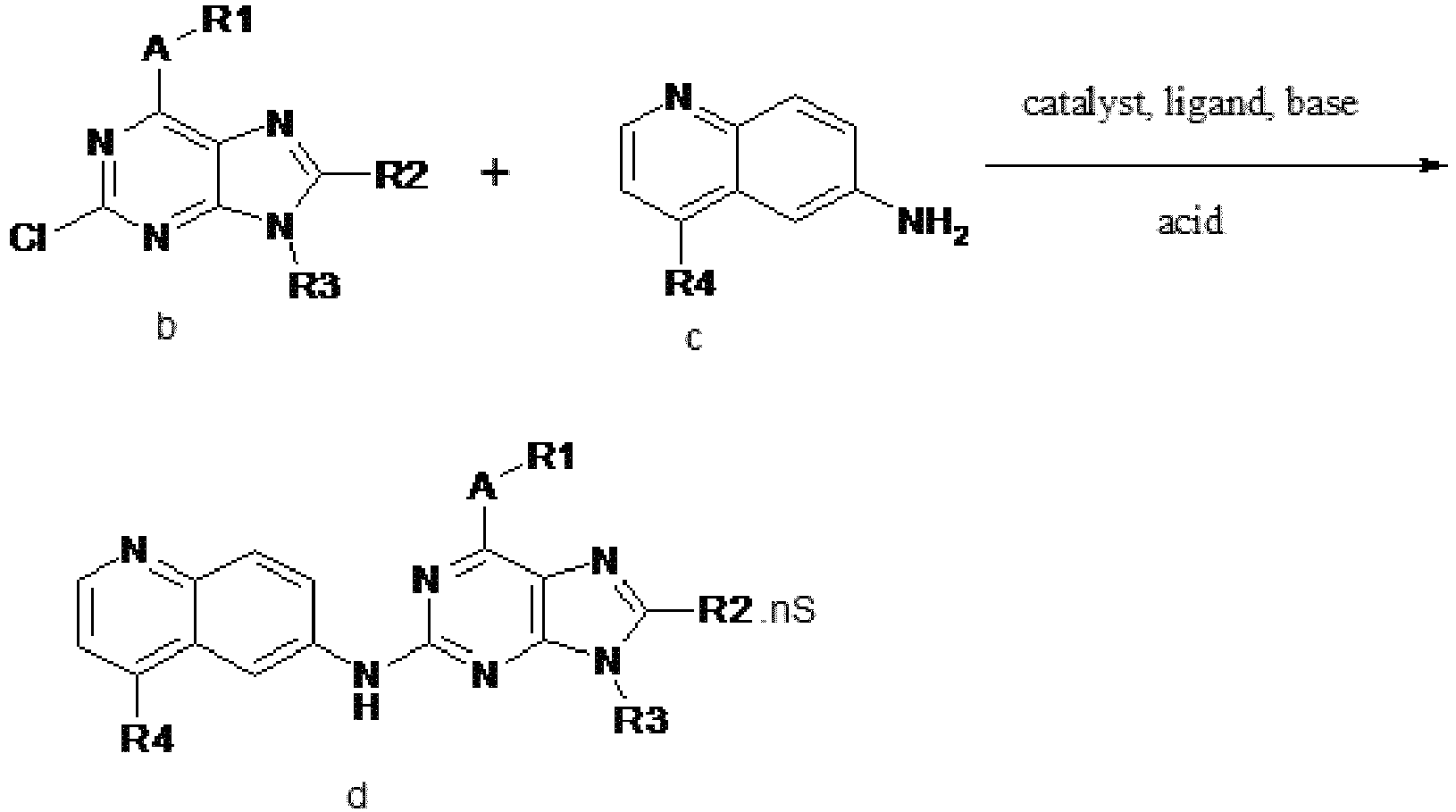
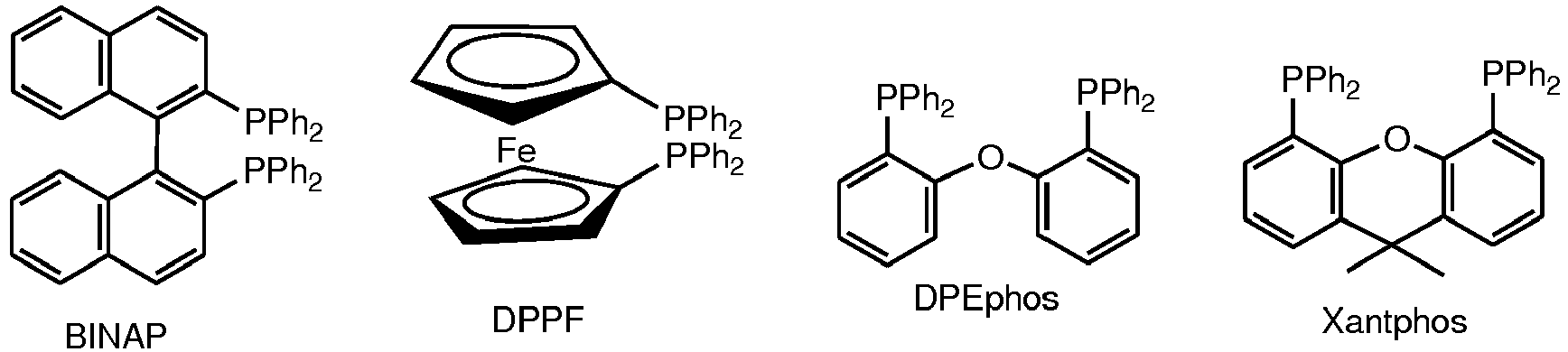


The catalyst is transition metal catalysts palladium or nickel such as PdCl2, Pd(OAc)2, Pd2(dba)3, Ni(OAc)2 or Ni/C.
The alkali (base) is selected from any one or its combination of sodium tert-butoxide, potassium tert-butoxide, potassium carbonate, cesium carbonate and tripotassium phosphate;
The acid in salt-forming with acids is selected from any one or its combination of hydrochloric acid, sulphuric acid, hydrobromic acid, methanesulfonic acid, benzenesulfonic acid, paratoluenesulfonic acid, maleic acid, fumaric acid, lactic acid, citric acid; - 3) Neutralizing compound (d) with sodium carbonate, potassium carbonate, sodium hydroxide or potassium hydroxide, to produce compound (I);

- Wherein, R1 is unsubstituted C1∼C6 straight or branched alkyl; or C1∼C6 straight or branched alkyl substituted by methoxyl, C3∼C6-cycloalkyl, hydroxyl or amino ; or unsubstituted C3∼C6-cycloalkyl; or C3∼C6-cycloalkyl substituted by carboxylic carbomethoxy or carboxylic ; or phenyl substituted by methoxy ; R2 is H;
R3 is H, 2,3-dihydropyrane, trifluoroethyl or piperidyl;
R4 is H; unsubstituted C1∼C6 straight alkyl; unsubstituted C3∼C6 cycloalkyl; unsubstituted phenyl; phenyl substituted by carboxylic carbomethoxy, C1∼C6 straight alkoxy, bis C1∼C6 straight alkoxy, C1∼C6 straight alkyl sulphanyl or halogen atoms ; 1, 3 -benzodioxol; unsubstituted morpholinyl; unsubstituted piperazinyl; or piperazinyl substituted by methyl;
A is O. - In the preferred solution of the present invention, the reacting molar ratio of compound (a) to R3 is 1:1-5, preferably the molar ratio of the compound (a) to HA-R1 is 1:1-5, more preferably the temperature of condensation reaction is 40∼60°C.
- In the preferred solution of the present invention, the molar ratio of compound (b) to compound (c) is 1:0.5-2.
- In the preferred solution of the present invention, the temperature of coupling reaction is 55∼120°C, preferably using microwave heating.
- In the preferred solution of the present invention, the aprotic solvents is selected from any one or its combination of tetrahydrofuran, isopropyl ether, glycol dimethyl ether, dioxane, pyridine, 1-methyl-2-pyrrolidone (NMP), 1,3-dimethyltrimethylene urea (DMPU), toluene or xylene.
- In the preferred solution of the present invention, the molar ratio of compound (b) to acid is 1:1∼10.
- In the preferred solution of the present invention, the acid is selected from any one or its combination of hydrochloric acid, sulfuric acid, hydrobromic acid, methanesulfonic acid, benzene sulfonic acid, paratoluenesulfonic acid, maleic acid, fumaric acid, lactic acid, citric acid;
- In order to clearly illustrate the protected scope of the present invention, the compounds of the structure of formula (I) and their serial numbers are as follows.
No Name of the compounds MED1007-32 N6-cyclopropyl-N2-(4-morpholine quinoline-6-yl)-9H-purine-2,6-diamine (not according to the present invention) MED1007-33 N6-cyclopropyl-N2-(4-(piperazin-1-yl) quinoline-6-yl)-9H-purine-2,6-diamine (not according to the present invention) MED 1007-34 N-(6-isopropyl-9H-purine-2-yl)quinoline-6-amine MED 1007-35 N-(6-cyclopentyloxy-9H-purine-2-yl) quinoline-6-amine MED1007-51 N-(6-isopropoxy-9H-purine-2-yl)-4-(phenyl-1-yl) quinoline-6-amine MED 1007-108 N-(6-isopropoxy-9H-purine-2-yl)-4-(phenyl-1-yl) quinoline-6-amine-methane sulfo nate MED1007-113 N6-cyclopropyl-N2-(4-methyl quinoline-6-yl)-9H-purine-2,6-diamine dihydrate dimethanesulfonate (not according to the present invention) MED1007-114 N6-cyclopropyl-N2-(4-ethyl quinoline-6-yl)-9H-purine-2, 6-diamine dihydrate dimethanesulfonate (not according to the present invention) MED 1007-115 N6-cyclopropyl-N2-(4-cyclopropyl quinoline-6-yl)-9H-purine-2, 6-diamine dihydrate dimethanesulfonate (not according to the present invention) MED1007-132 2-(4-(4-methoxy phenyl) quinoline-6-yl amino)-9H-purine-6-ol-methanesulfonate MED1007-133 4-([1,3]benzodioxol-5-yl)-N-(6-isopropoxy-9H-purine-2-yl) quinoline -6-amine-methanesulfonate MED 1007-134 2-(4-(3-methoxy phenyl) quinoline-6-yl amino) 9H-purine-6-ol-methanesulfonate MED 1007-135 4-(3-fluorophenyl)-N-(6-isopropoxy-9H-purine-2-yl) quinoline-6-amine-methanesulfonate MED1007-136 4-(4-fluorophenyl)-N-(6-isopropoxy-9H-purine-2-yl) quinoline-6-amine-methanesulfonate MED1007-137 4-(3, 4-dimethoxy phenyl)-N-(6-isopropoxy-9H-purine-2-yl) quinoline-6-amine-methanesulfonate MED 1007-139 2-(4-([1,3] benzodioxol-5-yl) quinoline-6-yl amino)-9H-purine-6-ol-methanesulfonate MED1007-142 N-(6-isopropoxy-9H-purine-2-yl)-4-(piperazine-1-yl)quinoline-6-amine-methanesulfonate MED1007-143 N-(6-isopropoxy-9H-purine-2-yl)-4-(4-methyl piperazine-1-yl) quinoline-6- amine- methanesulfonate MED 1007-148 1-(2-(4-phenyl quinoline-6-yl amino)-9H-purine-6-yl) piperidine-4-ol (not according to the present invention) MED 1007-149 1-(2-(4-phenyl quinoline-6-yl amino)-9H-purine-6-yl) piperidine-3-amide (not according to the present invention) MED1007-15 1-(2-(4-phenyl quinoline-6-yl amino)-9H-purine-6-yl amino) cyclopropane carboxylic acid methyl ester (not according to the present invention) MED1007-152 1-(2-(4-phenyl quinoline-6-yl amino)-9H-purine-6-yl amino) cyclopropane carboxylic acid (not according to the present invention) MED1007-31 N6-cyclopropyl-N2-(4-phenyl quinoline-6-yl)-9H-purine-2,6 diamine (not according to the present invention) MED 1007-54 N-(6-phenoxy-9H-purine-2-yl)-4-(piperazine-1-yl) quinoline-6-amine (not according to the present invention) MED1007-58 N-(6-isopropoxy-9H-purine-2-yl)-4-(piperazine-1-yl)quinoline-6-amine (not according to the present invention) MED 1007-59 4-(6-(6-(cyclopropyl amino)-9H-purine-2-yl amino) quinoline-4-yl) p-methyl benzoate (not according to the present invention) MED 1007-60 4-(6-(6-(cyclopropyl amino)-9H-purine-2-yl amino) quinoline-4-yl) m-methyl benzoate (not according to the present invention) MED 1007-61 N6-cyclopropyl-N2-(4-(3-methoxy phenyl) quinoline-6-yl)-9H-purine -2,6- diamine (not according to the present invention) MED 1007-63 N6-cyclopropyl-N2-(4-(4-methoxy phenyl) quinoline-6-yl)-9H-purine-2,6- diamine (not according to the present invention) MED 1007-64 N6-cyclopropyl-N2-(4-(3-fluoro phenyl) quinoline-6-yl)-9H-purine-2, 6-diamine (not according to the present invention) MED 1007-65 N6-cyclopropyl-N2-(4-phenyl quinoline-6-yl)-9-(2, 2,2-trifluoro ethyl)-9H-purine-2, 6-diamine (not according to the present invention) MED 1007-66 N6-cyclopropyl-N2-(4-phenylquinoline-6-yl)-9-(piperidine-4-yl)-9H-purine-2,6- diamine (not according to the present invention) MED 1007-67 N6-(3-methoxy propyl)-N2-(4-phenyl quinoline-6-yl)-9H-purine-2,6-diamine (not according to the present invention) MED 1007-68 N6-(2-methoxy ethyl)-N2-(4-phenyl quinoline-6-yl)-9H-purine-2,6-diamine (not according to the present invention) MED 1007-69 2-(2-(4-phenyl quinoline-6-yl amino)-9H-purine-6-yl amino) ethanol (not according to the present invention) MED 1007-70 N6-(2-aminoethyl)-N2-(4-phenyl quinoline-6-yl)-9H-purine-2, 6-diamine (not according to the present invention) MED 1007-71 N6-cyclobutyl-N2-(4-(3-methoxy phenyl) quinoline-6-yl)-9H-purine-2,6-diamine (not according to the present invention) MED 1007-72 N6-cyclobutyl-N2-(4-(4-fluorophenyl) quinoline-6-yl)-9H- purine-2,6-diamine (not according to the present invention) MED 1007-73 3-(2-(4-phenyl quinoline-6-yl amino)-9H-purine-6-yl amino) propyl-1-ol (not according to the present invention) MED 1007-75 N6-cyclobutyl-N2-(4-phenyl quinoline-6-yl)-9H-purine-2,6-diamine (not according to the present invention) MED 1007-83 N6-cyclopropyl-N2-(4-(3-ethoxy phenyl) quinoline-6-yl)-9H-purine-2,6-diamine (not according to the present invention) MED 1007-84 N6-cyclopropyl-N2-(4-(3,4-dimethoxy phenyl) quinoline-6-yl)-9H-purine-2,6-diamine (not according to the present invention) MED 1007-85 N2-(4-([1,3]benzodioxol-5-yl) quinoline-6-yl)-N6-cyclopropane- 9H-purine-2, 6-diamine (not according to the present invention) MED 1007-86 N6-cyclopropyl-N2-(4-(2-methoxy phenyl) quinoline-6-yl)-9H-purine-2,6- diamine (not according to the present invention) MED 1007-87 N6-cyclopropyl-N2-(4-(2-(methylthio) phenyl) quinoline-6-yl)-9H-purine-2,6-diamine (not according to the present invention) MED 1007-88 N6-cyclopropyl-N2-(4-(3-(methylthio) phenyl) quinoline-6-yl)-9H-purine-2,6-diamine (not according to the present invention) MED 1007-91 N6-cyclopropyl-N2-(4-phenyl quinoline-6-yl)-9H-purine-2,6-diammonium salt dihydrate dimethanesulfonate (not according to the present invention) MED 1007-97 N-(6-cyclobutyl-9H-purine-2-yl) quinoline-6-amine MED 1007-98 N-(6-cyclobutyl-9H-purine-2-yl)-4-phenyl quinoline-6-amine MED 1007-99 N6-(cyclopentyl methyl)-N2-(4-phenyl quinoline-6-yl)-9H-purine-2,6 -diamine (not according to the present invention) MED 1007-101 N6-isopropyl-N2-(4-phenyl quinoline-6-yl)-9H-purine-2,6-diamine (not according to the present invention) MED 1007-103 4-phenyl-N-(6-(pyrrolidine-1-yl)-9H-purine-2-yl) quinoline-6-amine (not according to the present invention) MED 1007-104 N-(6- isopropoxy-9H-purine-2-yl) quinoline-6-amine MED 1007-105 N-(6-(pentyl-3-yl oxyl)-9H-purine-2-yl)-4-phenyl quinoline-6-amine MED 1007-106 N6-cyclopentyl-N2-(4-phenyl quinoline-6-yl)-9H-purine-2, 6-diamine (not according to the present invention) MED 1007-107 N-(6-cyclohexyloxy-9H-purine-2-yl)-4-phenyl quinoline-6-amine MED 1007-108 N-(6- isopropoxy-9H-purine-2-yl)-4-phenyl quinoline-6-amine dihydrate dimethanesulfonate MED1007-109 N-(6-morpholine-9H-purine-2-yl)-4-phenyl quinoline-6-amine (not according to the present invention) MED1007-109S N-(6-morpholine-9H-purine-2-yl)-4-phenyl quinoline-6-amine dihydrate dimethanesulfonate (not according to the present invention) MED1007-110 2-(4-phenyl quinoline-6-yl amino)-9H-purine-6-ol - Unless other description, the percentage is volume /volume percent if the present invention has something to do with the percentage between the liquid and liquid; the percentage is the volume/weight percent if the invention has something to do with the percentage between liquid and solid; the percentage is weight/volume percentif the present invention has something to do with the percentage between solid and liquid; and the rest is weight/weight percent.
- The -disubstituted purine derivatives of the present invention has the inhibitory activity to PI3K, and also has the advantage such as lower toxicity, broader spectrum anticancer, higher anticancer activity and good stability and so on.
- Hereafter, the present invention will specifically be described with reference to examples. The examples are given only for illustration of the technical solution of the present invention and should not be construed to limit the present invention.
-

- The preparation method of the compound of present example includs the following steps:
- Sulphuric acid (320 ml) and nitric acid (320 ml) are added into sulphuric acid and SM-1 (260 g) at temperature of -15°C∼0°C, and stirred for 3 hours at room temperature to form a reaction mixture; ice water is added to the reaction mixture and filtered, then the filter cake is filered to obtain the compound B (320 g, yield 95%).
- DMF solution (0.1 ml) is added into phosphorus oxychloride (30 ml) and compound B (5 g), and stirred under reflux for 3 hours to form a reaction mixture, then the reaction mixture is put into ice water and extracted with ethyl acetate, and washed with water and brine, dried with anhydrous sodium sulfate, concentrated, and then purified via SGC (purification solvent) to obtain compound C (3 g, yield 55%).
- Pd(pph3)4 (18g, 15.6 mmol) is added into dioxane solution (400 ml), compound C (33 g, 156 mmol), borophenylic acid (20 g, 156 mmol) and cesium carbonate (152g, 468 mmoll, and stirred under reflux for 18 hours to form a reaction mixture; the reaction mixture is extracted with ethyl acetate, and washed with water and brine, dried with anhydrous sodium sulfate, concentrated, then purified by SGC (purification solvent) to obtain the conpound 1(22 g, yield 56%).
- Raney nickel (5g) is added into the tetrahydrofuran: methanol (300 ml) and compound 1 (20 g), and stirred for 16 hours at room temperature under condition of hydrogen to form a reaction mixture, the reaction mixture is filtered, and concentrated, purified by SGC (purification solvent) to obtain compound INTA-1 (15 g, yield 88%).
- THP (111g, 1320 mmol) is added into ethyl acetate (200 ml), compound SM-3 (100g, 529mmol) and p-toluenesulfonic acid (5g, 26 mmol), and stirred under reflux for 0.5 hours to form a reaction mixture, then the reaction mixture is extracted with ethyl acetate, and washed with water and brine, dried with anhydrous sodium sulfate, concentrated, then purified by SGC (a purification solvent) to obtain compound 2 (130 g, yield 90%).
- Sodium hydride (2.2g, 55 mmol) is added into a tetrahydrofuran solution (30 ml) having compound 2 (10g, 36.7mmol) at temperature of 0°C; and stirred for 0.5 hour at room temperature to form a reaction mixture; 2-propyl alcohol (2.4 g, 40.4 mmol) is added into the reaction mixture at temperature of -10°C, and stirred for 1 hour at temperature of 0°C; and extracted with ethyl acetate, and washed with water and brine, concentrated, dried with anhydrous sodium sulfate, then puried by SGC (a purification solvent) to obtain compound INTB-1 (9 g, yield 80%).
- Potassium phosphate (7 g, 27.3 mmol) is added into toluene (30 ml) and compound INTB-1 (2 g, 9.1 mmol), compound INTA - 1 (2.7 g, 9.1 mmol) and Pd(dppf)2Cl2 (1.3 g, 1.82 mmol) to form a mixture;and stirred under reflux and argon for 20 hours to form a reaction mixture; the reaction mixture is extracted with ethyl acetate, and washed with water and brine, concentrated, dried with anhydrous sodium sulfate, then puried by SGC (purified solvent) to obtain compound 3 (1.9 g, yield 45%).
- 4N hydrochloric acid (5 ml) is added into a methanol (20 ml) and compound 3 (1.3 g) and stirred for 5 hours at room temperature to form a reaction mixture, a saturated aqueous sodium bicarbonate is added into the reaction mixture to adjust pH=8, and filtered and the filter cake is dried, to obtain compound MED 1007-51 (0.95 g, yield 93%).
Number Molecular formula Molecular weight Confirmation parameters of structure Compound B C9H6N2O3 190.16 1H-NMR (400 MHz, DMSO-d6): 8.850-8.843 (d, J=2.8 Hz, 1H), 8.443-8.414 (m, 1H), 8.067-8.049 (d, J=7.2 Hz, 1H), 7.754-7.732 (d, J=8.8 Hz, 1H), 6.227-6.208 (d, J=7.6 Hz, 1H). Compound C C9H5ClN2O2 208.60 1H-NMR (400 MHz, CDCl3): 9.206-9.201 (d, J=2.0 Hz, 1H), 8.974-8.962 (d, J=4.8 Hz, 1H), 8.558-8.536 (t, 1H), 8.298-8.275 (d, J=9.2 Hz, 1H), 7.674-7.662 (d, J=4.8 Hz, 1H). Compound 1 C15H10N2O2 250.2 Compound INTA-1 C15H12N2 220.27 MS (ESI) m/z: 220.10 Compound 2 C10H10Cl2N4O 273.12 1H-NMR (400 MHz, CDCl3): 8.336 (s, 1H), 5.783-5.756 (d, J=10.8 Hz, 1H), 4.207-4.181 (d, J=10.4 Hz, 1H), 3.817-3.761 (m, 1H), 2.192-1.663 (m, 7H). MS (ESI) m/z: 188 Compound INTB-1 C13H17ClN4O2 296.75 1H-NMR (400 MHz, CDCl3): 8.097 (s, 1H), 5.746-5.720 (d, J=10.4 Hz, 1H), 5.692-5.630 (m 1H), 4.174-4.113 (m 1H), 3.804-3.747 (m 1H), 2.130-1.945 (m 3H), 1.807-1.664 (m 3H), 1.638-0.885 (m, 7H). MS (ESI) m/z: 297.3 [M+1]+ Compound 3 C28H28N6O2 480.56 1H-NMR (400 MHz, CDCl3): 8.822-8.811 (d, J=4.4 Hz, 1H), 8.153-8.086 (m, 3H), 7.857 (s 1H), 7.579-7.451 (m, 5H), 7.291-7.263 (m, 1H), 5.479-5.448 (t, 1H), 5.287-5.225 (m, 1H), 4.148-4.113 (t, 1H), 3.712-3.659 (t, 1H), 2.046-2.027 (m, 4H), 1.773-1.625 (m, 2H), 1.408-1.336 (m, 6H), 1.277-1.242 (t, 1H). MS (m/z)MS (ESI) m/z::481.2 [M+1]+ MED1007-51 (INT5) C23H20N6O 396.44 1H-NMR (400 MHz, DMSO-d6): 12.743 (s 1H), 9.668 (s 1H), 8.736 (s 1H), 8.387-8.000 (m, 4H), 7.600-7.544 (m, 5H), 7.339 (s 1H), 5.037 (s, 1H), 1.221 (s, 6H). MS (ESI) m/z: 397.2 [M+1]+ -

- The preparation method of the compound of the example includs the following steps
:Methanesulfonic acid (8.2 g, 85.9 mmol) is added into ethanol (400 ml) and compound MED1007-51 (17 g, 42.9 mmol) and stirred for 16 hours at room temperature, filtered, and then the filter cake is dried to obtain MED1007-108 (22 g, yield 88%).
Molecular formula: C23H20N6O·2CH3SO3H, Molecular weight: 590.67.
1H-NMR (400 MHz, DMSO-d6): 10.395 (s 1H), 9.154-9.140 (d, J=5.6 Hz, 1H), 8.820 (s 1H), 8.602-8.546 (t, 2H), 8.327-8.304 (d, J=9.2 Hz, 1H), 7.956-7.942 (d, J=5.6 Hz, 1H), 7.743-7.691 (m, 5H), 5.049 (s, 1H), 2.930 (s, 6H), 1.272 (s, 6H).
MS (ESI) m/z: 397.2 [M+1]+ -

- The preparation method of the compound of the example includs the following steps:
- 1) Compound C (208 mg, 1.0 mmol), palladium acetate (22.45 mg, 0.1 mmol), Binap (125 mg, 0.2 mmol) and cesium carbonate (290 mg, 1.5 mmol) are mixed in a three-necked flask to form a mixture, Compound SM-4 (morpholine, 104µl, 1.2 mmol) and toluene (3 ml) are added into the mixture in turn under vacuum condition, and is reacted for 3 hours at temprature of 100 °C to form a reaction mixture; then the reaction mixture is cooled, ethyl acetate is added to the reaction mixture, and filtered, and concentrated under reduced pressure, and purified by column chromatography (the eluent of column chromatography is petroleum ether and ethyl acetate (1:3)) to obtain Compound 4 (158 mg).
- 2) Compound 4 (158 mg, 4.75 mmol) is dissolved in ethanol (8 ml) to form a mixture, palladium/carbon (16 mg) is added into the mixture under vacuum condition, and stirred for 3 hours at room temperature to form a reaction mixture, the reaction mixture is filtered, and concentrated to obtain raw compound INTA-2 of 140 mg.
- 3) Compound INTAB-2 (144 mg, 0.49 mmol), compound INTA - 2 (135 mg, 0.59 mmol), palladium acetate (11 mg, 0.05 mmol), Binap (62 mg, 0.10 mmol) and cesium carbonate (145 mg, 0.75 mmol) are mixed in a three-necked flask to form a mixture, toluene is added into the mixture under vacuum condition; and reacted over night at temperature of 100 °C to form a reaction mixture, and then the reaction mixture is cooled, filtered, purifid by thin layer chromatography (a developing solvent of TLC is dichloromethane and methanol (10:1)) to obtain compound 5.
- 4) Compound 5 is suspend in 1N aqueous hydrochloric acid solution, and stirred for 2 hours at room temperature to form a reaction mixture, the reaction mixture is filtered, and the filter cake is washed with water and dichloromethane to obtain MED1007-32 (105 mg, yield 45%).
-

- The preparation method of the compound of the example includs the following steps:
- 1) Compound C (208 mg, 1.0 mmol), palladium acetate (22.45 mg, 0.1 mmol), Binap (125 mg, 0.2 mmol) and cesium carbonate (290 mg, 1.5 mmol) are mixed in a three-necked flask to form a mixture, and Compound SM-5 (104µl, 1.2 mmol) and toluene (3 ml) are added into the mixture in turn under vacuum condition, and then reacted for 3 hours at temprature of 100 °C to form a reaction mixture, cooled, and ethyl acetate is added into the reaction mixture, and filtrated, the filtrate is concentrated under reduced pressure, and purified by column chromatography (a eluent of column chromatography is petroleum and ethyl acetate (1:3)) to obtain compound 6 (158 mg).
- 2) Compound 6 (158 mg, 4.75 mmol) is dissolved into ethanol (8 ml) to form a mixture, palladium/carbon (16 mg) is added to the mixture under vacuum condition, and stirred for 3 hours at room temperature to form a reaction mixture. The reaction mixture is filtered , and concentrated to obtain 140 mg of a raw compound 26.
- 3) Compound 8 (144 mg, 0.49 mmol), compound 26 (135 mg, 0.59 mmol), palladium acetate (11 mg, 0.05 mmol), Binap (62 mg, 0.10 mmol) and cesium carbonate (145 mg, 0.75 mmol) are mixed in a three-necked flask to form a mixture, toluene is added into the mixture under vacuum condition; and reacted over night at temperature of 100 °C to form a reaction mixture; then the reaction mixture is cooled, filtered, the filtrate is purified by thin layer chromatography (a developing solvent of TLC is dichloromethane and methanol (10:1)) to obtain compound 29.
- 4) Compound 29 is suspend in 4N aqueous hydrochloric acid solution, stirred for 2 hours at room temperature to form a reaction mixture, the reaction mixture is filtered. The filter cake is washed with water and dichloromethane to obtain MED1007-33 (105 mg, yield 45%).
-

- The preparation method of the compound of the example includs the following steps:
- 1) Compound INTB-1 (144 mg, 0.49 mmol), compound INTA-4 (135 mg, 0.59 mmol), palladium acetate (11 mg, 0.05 mmol), Binap (62 mg, 0.10 mmol) and cesium carbonate (145 mg, 0.75 mmol) are mixed in a three-necked flask to form a mixture, toluene is added into the mixture under vacuum condition; and reacted over night at temperature of 100 °C to form a reaction mixture, the reaction mixture is cooled, filtered, and the filtrate is purifid by thin layer chromatography (a developing solvent of TLC is dichloromethane and methanol (10:1)), to obtain compound 8.
- 2) Compound 8 is suspend in 4N aqueous hydrochloric acid solution,and stirred for 2 hours at room temperature to form a reaction mixture, the reaction mixture is filtered, and the filter cake is washed with water and dichloromethane to obtain MED1007-34 (68 mg, yield 45%).
-

- The preparation method of the compound of the example includs the following steps:
- 1) Sodium hydride (60mg, 1.5 mmol) is added into DMF (5 ml) and compound SM-6 (86mg, 1mmol) and stirred 1 hour at room temperature to form a mixture,; and then compound 2 (273 mg, 1mmol) is added to the mixture at room temperature to form a reaction mixture, and stirred over night; and dissolved in ethyl acetate (50 ml), washed with brine (2 x 50 ml), dried with anhydrous sodium sulfate, concentrated under vacuum condition, then purified by SGC (ethyl acetate : petroleum ether =1:1) to obtain compound 9 (300 mg, yield 86%).
- 2) The suspension liquid of compound 9 (160 mg, 0.5 mmol) is refluxed under nitrogen condition for 12 hours to form a reaction mixture; and then cooled to a room temperature, the reaction mixture is dissolved in ethyl acetate (50 ml), washed with brine (2 x 50 ml), dryied with anhydrous sodium sulfate, concentrated under vacuum condition, and purified by Pre-TLC (ethyl acetate : petroleum ether = 1:1) to obtained compound 10 (100 mg, yield 68%).
- 3) Hydrochloric acid /dioxane (5 ml) is added into dioxane (5 ml) and compound 10 (100 mg) to form a mixture, and stirred for 2 hours at room temperature to form a reaction mixture; the reaction mixture is dissolved in dichloromethane (50 ml), washed with sodium hydroxide (50 ml, 1 N) and brine (2 x 50 ml), dried with anhydrous sodium sulfate, and concentrated in vacuum condition, and purified by Pre-HPLC (a purification solvent) to obtain MED1007-35 (18 mg).
-

- The preparation method of the compound of the example includs the following steps:
- 1)Compound INTB-2 (450 mg, 1.54 mmol), palladium acetate (68 mg, 0.3 mmol), BINAP (186 mg, 0.3 mmol) and potassium phosphate (1.2 g, 4.62 mmol) are added to compound INTA - 5 (243 mg, 1.54 mmol) dissolved in toluene (10 mL), and stirred under reflux overnight to form a reaction mixture, then cooled to a room temperature, ethyl acetate and water are added to the reaction mixture to form an organic layer, then the organic layer is dried with anhydrous sodium sulfate, filtered, concentrated, purified by Pre-TLC (ethyl acetate: methanol = 15:1) to obtain compound 11 (250 mg, yield 39%).
- 2) Compound 11 (250 mg, 0.6 mmol) is dissolved in methanol (5 mL) and 4N hydrochloric acid methanol (5 mL),and stirred overnight at room temperature to form a reaction mixture, the reaction mixture is diluted with water, and extracted by ethyl acetate, washed with sodium bicarbonate and brine, dried with anhydrous sodium sulfate and concentrated to dryness, purified by Pre-TLC (dichloromethane: methanol = 10:1) to obtain compound 12 (140 mg, yield 70%).
- 3) Methanesulfonic acid (152 mg, 1.69 mmol) is added to compound 12 (140 mg, 0.42 mmol) dissolved in aqueous ethanol (5 mL) at temperature of 0 °C, and stirred overnight at room temperature to form a reaction mixture. The reaction mixture is filtered,and the filter cake is dried under vacuum condition to obtain compound MED1007-113 (100 mg, yield 42%).
-

- The preparation method of the compound of the example includs the following steps:
- 1) Compound INTB-2 (136 mg, 0.46 mmol), palladium acetate (20 mg, 0.1 mmol), BINAP (56 mg, 0.1 mmol) and potassium phosphate (368 mg, 1.4 mmol) are added to compound INTA - 6 (80 mg, 0.46 mmol) dissolved in toluene (10 mL), and stirred under reflux overnight to form a reaction mixture, then cooled to a room temperature, ethyl acetate and water are added to the reaction mixture to form an , organic layer and the organic layer is separated and dried by anhydrous sodium sulfate, filtered, concentrated and purified by Pre-TLC (ethyl acetate: methanol = 15:1) to obtain compound 3 (140 mg, yield: 71%).
- 2) Compound 13 (140 mg, 0.32 mmol) is dissolved in methanol (5 mL) and 4N hydrochloric acid methanol (5 mL), and stirred overnight at room temperature to form a reaction mixture, the reaction mixture is diluted with water, extracted with ethyl acetate, and washed with sodium bicarbonate and brine, dried over anhydrous sodium sulfate, concentrated to dryness, and purified by Pre-TLC (dichloromethane: methanol = 10:1) to obtain compound 14 (60 mg, yield 54%).
- 3) Compound 4 (60 mg, 0.17 mmol) is dissolved in aqueous ethanol (5 mL), and methanesulfonic acid (52 mg, 0.52 mmol) is added at temperature of 0°C, and stirred overnight at room temperature to form a reaction mixture. The reaction mixture is filtered, the filter cake is dried under vacuum condition to obtain MED1007-114 (25 mg, yield 25%).
-

- The preparation method of the compound of the example includs the following steps:
- 1) Compound INTB-2 (480 mg, 1.63 mmol), palladium acetate (74 mg, 0.33 mmol), BINAP (205 mg, 0.33 mmol) and potassium phosphate (1280 mg, 4.9 mmol) are added to Compound INTA - 7 (300 mg, 1.63 mmol) dissolved in toluene (10 mL), and stirred under reflux overnight, then cooled to a room temperature, ethyl acetate and water are added to the reaction mixture to form an organic layer, the organic layer is separated, dried with anhydrous sodium sulfate, filtered, concentrated and purified by Pre-TLC (ethyl acetate: methanol = 15:1) to obtain compound 3 (130 mg, yield: 71%).
- 2) Compound 15 (130 mg, 0.29 mmol) is dissolved in methanol (5 mL) and 4N hydrochloric acid methanol (5 mL), and stirred overnight at room temperature to form a reaction mixture,and diluted with water, then extracted with ethyl acetate, and washed with sodium bicarbonate and brine, dried over anhydrous sodium sulfate, concentrated to dryness, and purified by Pre-TLC (dichloromethane: methanol = 10:1) to obtain compound 16 (60 mg, yield 58%).
- 3) Methanesulfonic acid (52 mg, 0.52 mmol) is added to Compound 16 (60 mg, 0.17 mmol) dissolved in aqueous ethanol (5 mL) at temperature of 0°C, and stirred overnight at room temperature to form a reaction mixture. The reaction mixture is filtered, the filter cake is dried under vacuum condition to obtain MED1007-115 (30 mg, yield 30%).
-

- The preparation method of the compound of the example includs the following steps:
- 1) Compound INTB-1 (33.8 mg, 0.135 mmol), palladium acetate (6 mg, 0.027 mmol), BINAP (16.8 mg, 0.027 mmol) and potassium phosphate (108 mg, 0.41 mmol) are added to compound INTA-8 (40 mg, 0.135 mmol) dissolved in toluene (10 mL), and stirred under reflux overnight to form a reaction mixture, then the reaction mixture is cooled to room temperature, ethyl acetate and water are added to the reaction mixture.form a organic layer, the organic layer is separated, dried over anhydrous sodium sulfate, filtered, concentrated and purified by Pre-TLC (ethyl acetate: methanol = 10:1) to obtain compound 17 (60 mg, yield: 88%).
- 2) Compound 17 (60 mg, 0.12 mmol) is dissolved in methanol (5 mL) and 4N hydrochloric acid methanol (5 mL), and stirred overnight at room temperature to form a reaction mixture, the reaction mixture is diluted with water, and washed with sodium bicarbonate and brine, dried with anhydrous sodium sulfate, concentrated to dryness, and purified by Pre-TLC (dichloromethane: methanol = 10:1) to obtain compound 18 (30 mg, yield 58%).
- 3) Methanesulfonic acid (17 mg, 0.18 mmol) is added to compound 4 (30 mg, 0.07 mmol) dissolved in aqueous ethanol (5 mL) at temperature of 0°C, and stirred overnight at room temperature to form a reaction mixture. The reaction mixture is filtered, the filter cake is dried under vacuum condition to obtain compound 5 (10 mg, yield 38%).
-

- The preparation method of the compound of the present example includs the following steps:
- 1) Compound INTB-1 (100 mg, 0.38 mmol), palladium acetate (17 mg, 0.076 mmol), BINAP (47 mg, 0.076 mmol) and potassium phosphate (300 mg, 1.14 mmol) are added to compound INTA - 9 (150 mg, 0.5 mmol) dissolved in toluene (10 mL) and stirred under reflux overnight to form a reaction mixture, cooled to the room temperature, ethyl acetate and water are added to the reaction mixture to form an organic layer, the organic layer is separated, dried with anhydrous sodium sulfate, filtered, concentrated and purified by Pre-TLC (ethyl acetate: methanol = 10:1) to obtain compound 19 (100 mg, yield 50%).
- 2) Compound 19 (100 mg, 0.19 mmol) is dissolved in methanol (5 mL) and 4N hydrochloric acid methanol (5 mL), and stirred overnight at room temperature to form a reaction mixture, the reaction mixture is diluted with water, and washed with sodium bicarbonate and brine, dried with anhydrous sodium sulfate, concentrated to dryness, and purified by Pre-TLC (dichloromethane: methanol = 10:1) to obtain compound 20 (30 mg, yield 36%).
- 3) Methanesulfonic acid (19 mg, 0.18 mmol) is added to compound 20 (30 mg, 0.07 mmol) dissolved in aqueous ethanol (5 mL) at temperature of 0°C, and stirred overnight at room temperature to form a reaction mixture. The reaction mixture is filtered, the filter cake is dried under vacuum condition to obtain compound MED1007-133 (15 mg, yield 40%).
-

- The preparation method of the compound of the example includs the following steps:
- 1) Compound INTA-10 (170 mg, 0.68 mmol), palladium acetate (31 mg, 0.14 mmol), BINAP (87 mg, 0.14 mmol) and potassium phosphate (540 mg, 2.04 mmol) are added to compound INTB-1 (200 mg, 0.68 mmol) dissolved in toluene (20 mL), and stirred under reflux overnight, cooled to room temperature, ethyl acetate and water are added to the reaction mixture to form an organic layer, the organic layer is separated, dried with anhydrous sodium sulfate, filtered, concentrated and purified by Pre-TLC (ethyl acetate: methanol = 10:1) to obtain compound 21 (300 mg, yield 87%).
- 2) Compound 21 (300 mg, 0.59 mmol) is dissolved in methanol (5 mL) and 4N hydrochloric acid methanol (5 mL), and stirred overnight at room temperature to form a reaction mixture, the reaction mixture is diluted with water, and washed with sodium bicarbonate and brine, dried with anhydrous sodium sulfate, concentrated to dryness, and purified by Pre-TLC (dichloromethane: methanol = 10:1) to obtain compound 22 (170 mg, yield 68%).
- 3) Methanesulfonic acid (19 mg, 0.18 mmol) is added to compound 22 (170 mg, 0.4 mmol) dissolved in aqueous ethanol (10 mL) at temperature of 0°C, and stirred overnight at room temperature to form a reaction mixture. The reaction mixture is filtered, the filter cake is dried under vacuum condition to obtain compound MED1007-134 (50 mg, yield 25%).
-

- The preparation method of the compound of the example includs the following steps:
- 1) Compound INTA-11 (100 mg, 0.38 mmol), palladium acetate (17 mg, 0.076 mmol), BINAP (47 mg, 0.076 mmol) and potassium phosphate (300 mg, 1.14 mmol) are added to compound INTB-1 (150 mg, 0.5 mmol) dissolved in toluene (10 mL), and stirred under reflux overnight form a reaction mixture, cooled to room temperature, ethyl acetate and water are added to the reaction mixture to form an, organic layer and the organic layer is separateed, dried over anhydrous sodium sulfate, filtered, concentrated and purified by Pre-TLC (ethyl acetate: methanol = 10:1) to obtain compound 23 (100 mg, yield 50%).
- 2) Compound 23 (100 mg, 0.19 mmol) is dissolved in methanol (5 mL) and 4N hydrochloric acid methanol (5 mL), and stirred overnight at room temperature form a reaction mixture, the reaction mixture is diluted with water, and washed with sodium bicarbonate and brine, dried over anhydrous sodium sulfate, concentrated to dryness, and purified by Pre-TLC (dichloromethane: methanol = 10:1) to obtain compound 24 (30 mg, yield 36%).
- 3) Methanesulfonic acid(19 mg, 0.18 mmol) is added to Compound 24 (30 mg, 0.07 mmol) dissolved in aqueous ethanol (5 mL) at temperature of 0°C, and stirred overnight at room temperature form a reaction mixture. The reaction mixture is filtered, the filter cake is dried under vacuum condition to obtain compound MED1007-135 (15 mg, yield 40%).
-

- The preparation method of the compound of the example includs the following steps:
- 1) Compound INTA-12 (100 mg, 0.38 mmol), palladium acetate (17 mg, 0.076 mmol), BINAP (47 mg, 0.076 mmol) and potassium phosphate (300 mg, 1.14 mmol) are added to compound INTB-1 (150 mg, 0.5 mmol) dissolved in toluene (10 mL) and stirred under reflux overnight to form a reaction mixture, cooled to room temperature, ethyl acetate and water are added to the reaction mixture form an organic layer , and the organic layer is separated, dried over anhydrous sodium sulfate, filtered, concentrated and purified by Pre-TLC (ethyl acetate: methanol = 10:1) to obtain compound 25 (100 mg, yield 50%).
- 2) Compound 25 (100 mg, 0.19 mmol) is dissolved in methanol (5 mL) and 4N hydrochloric acid methanol (5 mL), and stirred overnight at room temperature to form a reaction mixture, the reaction mixture is diluted with water,and washed with sodium bicarbonate and brine, dried over anhydrous sodium sulfate, concentrated to dryness, and purified by Pre-TLC (dichloromethane: methanol = 10:1) to obtain compound 26 (30 mg, yield 36%).
- 3) Methanesulfonic acid(19 mg, 0.18 mmol) is added to compound 26 (30 mg, 0.07 mmol) dissolved in aqueous ethanol(5 mL) at temperature of 0°C, and stirred overnight at room temperature to form a reaction mixture. The to reaction mixture is filtered, the filter cake is dried under vacuum condition to obtain compound MED1007-136 (15 mg, yield 40%).
-

- The preparation method of the compound of the example includs the following steps:
- 1) Compound INTA-13 (160 mg, 0.57 mmol), palladium acetate (25 mg, 0.11 mmol), BINAP (71 mg, 0.11 mmol) and potassium phosphate (451 mg, 1.71 mmol) are added to compound INTB-1 (170 mg, 0.57 mmol) dissolved in toluene (15 mL), and stirred at reflux overnight to form a reaction mixture, cooled to room temperature, ethyl acetate and water are added to the reaction mixture to form an organic layer, and the organic layer is separated, dried over anhydrous sodium sulfate, filtered, concentrated and purified by Pre-TLC (ethyl acetate: methanol = 10:1) to obtain compound 27 (150 mg, yield 50%).
- 2) Compound 27 (150 mg, 0.27 mmol) is dissolved in methanol (5 mL) and 4N hydrochloric acid methanol (5 mL), and stirred overnight at room temperature to form a reaction mixture, the reaction mixture is diluted with water, and washed with sodium bicarbonate and brine, dried with anhydrous sodium sulfate, concentrated to dryness, and purified by Pre-TLC (dichloromethane: methanol = 10:1) to obtain compound 28 (40 mg, yield 32%).
- 3) Methanesulfonic acid (25 mg, 0.26 mmol) is added to compound 28 (40 mg, 0.087 mmol) dissolved in aqueous ethanol (5 mL) at temperature of 0°C, and stirred overnight at room temperature to form a reaction mixture. The reaction mixture is filtered, the filter cake is dried under vacuum condition to obtain compound MED1007-137 (18 mg, yield 37%).
-

- The preparation method of the compound of the example includs the following steps:
- 1) Compound INTA-9 (35.6 mg, 0.135 mmol), palladium acetate (6 mg, 0.027 mmol), BINAP (16.8 mg, 0.027 mmol) and potassium phosphate (108 mg, 0.41 mmol) are added to compound INTB-1 (40 mg, 0.135 mmol) dissolved in toluene (10 mL), and stirred underreflux overnight to form a reaction mixture, cooled to room temperature, ethyl acetate and water are added to the reaction mixture to form an organic layer, and the organic layer is separated, dried with anhydrous sodium sulfate, filtered, concentrated and purified by Pre-TLC (ethyl acetate: methanol = 10:1) to obtain compound 19 (60 mg, yield 85%).
- 2) Compound 20 (60 mg, 0.11 mmol) is dissolved in methanol (5 mL) and 4N hydrochloric acid methanol (5 mL), and stirred overnight at room temperature to form a reaction mixture, the reaction mixture is dilute with water, and washed with sodium bicarbonate and brine, dried with anhydrous sodium sulfate, concentrated to dryness, and purified by Pre-TLC (dichloromethane: methanol = 10:1) to obtain compound 4 (28 mg, yield 58%).
- 3) Methanesulfonic acid (17 mg, 0.18 mmol) is added to compound 20 (28 mg, 0.07 mmol) dissolved in aqueous ethanol (5 mL) at the temperature of 0°C, and stirred overnight at room temperature to form a reaction mixture. The reaction mixture is filtered, the filter cake is dried under vacuum condition to obtain compound MED1007-139 (11 mg, yield 31%).
-

- The preparation method of the compound of the example includs the following steps:
- 1) Compound INTA-3 (183 mg, 0.56 mmol), palladium acetate (25 mg, 0.11 mmol), BINAP (104.5 mg, 0.17 mmol) and potassium phosphate (442 mg, 1.68 mmol) are added to compound INTB-1 (200 mg, 0.68 mmol) dissolved in toluene (10 mL), and stirred at reflux overnight to form a reaction mixture, cooled to room temperature, ethyl acetate and water are added to form an organic layer, and the organic layer is separated, dried with anhydrous sodium sulfate, filtered, concentrated and purified by Pre-TLC (ethyl acetate: methanol = 10:1) to obtain compound 29 (223 mg, yield 68%).
- 2) Compound 29 (190 mg, 0.37 mmol) is dissolved in methanol (5 mL) and 4N hydrochloric acid methanol (5 mL), and stirred overnight at room temperature to form a reaction mixture, the reaction mixture is diluted with water, and washed with sodium bicarbonate and brine, dried with the anhydrous sodium sulfate, concentrated to dryness, and purified by Pre-TLC (dichloromethane: methanol = 10:1) to obtain compound 30 (60 mg, yield 40%).
- 3) Methanesulfonic acid (43 mg, 0.45 mmol) is added to Compound 30 (60 mg, 0.15 mmol) is dissolved in ethanol (5 mL) and water at temperature of 0°C and stirred overnight at room temperature to form a reaction mixture. The reaction mixture is filtered, the filter cake is dried under vacuum condition to obtain compound MED1007-142 (80 mg, yield 90%).
-

- The preparation method of the compound of the example includs the following steps:
- 1) Compound INTA-14 (136 mg, 0.56 mmol), palladium acetate (25 mg, 0.11 mmol), BINAP (104.5 mg, 0.17 mmol) and potassium phosphate (442 mg, 1.68 mmol) are added to compound INTB-1 (200 mg, 0.68 mmol) dissolved in toluene (10 mL) . and stirred under reflux overnight to form a reaction mixture, cooled to room temperature, ethyl acetate and water are added to the reaction mixture to form an organic layer. Then the organic layer is separated and dried by anhydrous sodium sulfate, and filtered, concentrated and purified by Pre-TLC (ethyl acetate: methanol = 10:1) to obtain a brown solid compound 31 (190 mg, yield 67%).
- 2) Compound 31 (190 mg, 0.37 mmol) is dissolved in methanol (5 mL) and 4N hydrochloric acid methanol (5 mL), and stirred overnight at room temperature to form a reaction mixture, the reaction mixture is diluted with water, extracted with ethyl acetate and washed with sodium bicarbonate and brine to form an organic phase. The organic phase is dried with sodium sulfate, concentrated to dryness, and purified by Pre-TLC (dichloromethane: methanol = 10:1) to obtain yellow solid compound 32 (88 mg, yield 57%).
- 3) Methanesulfonic acid (60 mg, 0.63 mmol) is added to compound 32 (88 mg, 0.21 mmol) dissolved in ethanol (5 mL) and water at temperature of 0°C, and stirred overnight at room temperature to form a reaction mixture. The reaction mixture is filtered, the filter cake is dried under vacuum condition to obtain compound MED1007-143 (20 mg, yield 15%).
-

- The preparation method of the compound of the example includs the following steps:
- 1) Compound 2 (0.3 g, 3.1 mmol), DIPEA (0.7 g, 5.2 mmol) are added to compound 2 (0.7 g, 2.56 mmol) dissolved in tetrahydrofuran (10 ml), and stirred for 10 hours at room temperature to form a reaction mixture. Water is added to dilute the reaction mixture, and extracted with ethyl acetate to form an organic layer. The organic layer is seperated and dried with anhydrous sodium sulfate, and filtered, concentrated, purified by SGC to obtain brown solid compound INTB-3 (0.75 g, yield 85%).
- 2) Compound INTB-3 (750mg, 2.22 mmol), palladium acetate (100mg, 0.45mmol), BINAP (414mg, 0.67 mmol) and potassium phosphate (1.8g, 6.67 mmol) are added to compound INTA-1 (540mg, 2.44mmol) dissolved in toluene (30 mL), and stirred under reflux overnight to form a reaction mixture, cooled to room temperature, and ethyl acetate and water are added to the reaction mixture to form an organic layer. The organic layer is separated, dried with anhydrous sodium sulfate. And the organic layer is filtered and concentrated, purified by SGC (dichloromethane: methanol = 50:1) to obtain brown solid compound 33 (500mg, yield 50%).
- 3) Compound 33 (100mg, 0.19 mmol) is dissolved in methanol (2 mL) and 4N hydrochloric acid methanol (2 mL), and stirred overnight at room temperature to form a reaction mixture. Water is added to the reaction mixture to dilute the reaction mixture, and then extracted with ethyl acetate, and washed by sodium bicarbonate and brine, dried with anhydrous sodium sulfate, concentrated to dryness, purified by SGC (dichloromethane: methanol = 10:1) and then yellow solid MED1007-148 (30mg, yield 38%).
-

- The preparation method of the compound of the example includs the following steps:
- 1) Compound SM-8 (0.4 g, 3.1 mmol), DIPEA (0.7 g, 5.2 mmol) are added to compound 2 (0.7 g, 2.56 mmol) dissolved in tetrahydrofuran (10 ml), and stirred for 10 hours at room temperature to form a reaction mixture. Water is added to the reaction mixture to dilute the reaction mixture and extracted with ethyl acetate to form an organic layer. The organic layer is separated, dried with anhydrous sodium sulfate, filtrated and concentrated, purified by SGC to obtain brown solid compound INTB-4 (0.8 g, yield 85%).
- 2) Compound INTB-4 (810mg, 2.22 mmol), palladium acetate (100mg, 0.45mmol), BINAP (414mg, 0.67 mmol) and potassium phosphate (1.8g, 6.67 mmol) are added to compound INTA-1 (540mg, 2.44mmol) dissolved in toluene (30 mL), and stirred under reflux overnight to form a reaction mixture, cooled to room temperature, and ethyl acetate and water are added to the reaction mixture to form an organic layer. The organic layer is separated, dried with anhydrous sodium sulfate, filtrated and concentrated, purified by SGC (dichloromethane: methanol = 50:1) to obtain brown solid compound 34 (240mg, yield 20%).
- 3) Compound 34 (80mg, 0.15 mmol) is dissolved in dichloromethane (5 mL) and trifluoroacetic acid (1 mL), and stirred overnight at room temperature to form a reaction mixture, and diluted with water, extracted with ethyl acetate, the and washed with sodium bicarbonate and brine to form an organic phase, the organic phase is dried with anhydrous sodium sulfate, concentrated to dryness, and then purified by SGC (dichloromethane: methanol = 10:1) to obtain yellow solid (MED1007-149) (25mg, yield 40%).
-

- The preparation method of the compound of the example includs the following steps:
- 1) Compound SM-9 (0.72 g, 4.78 mmol) and DIPEA (2.4 g, 18.4 mmol) are added to compound 2 (1 g, 3.68 mmol) dissolved in dichloromethane (10 ml) and stirred for 50 hours at temperature of 50°C to form a reaction mixture. Water and ethyl acetat are added to the reaction mixture, and cooled to room temperature to form an organic layer. The organic layer is separated, dried with anhydrous sodium sulfate filtrated, concentrated, and then purified by SGC (ethyl acetat: petroleum ether=1:2) to obtain brown solid compound INTB-5 (0.9 g, yield 75%).
- 2) Compound INTB-5 (500 mg, 1.4 mmol), palladium acetate (63 mg, 0.28mmol), BINAP (174 mg, 0.28 mmol) and potassium phosphate (1.1 g, 4.2 mmol) are added to compound INTA-1 (313 mg, 1.4 mmol) dissolved in toluene (30 mL), and stirred under reflux overnight to form a reaction mixture, cooled to room temperature, ethyl acetate and water are added to the reaction mixture to form an organic layer, the organic layer is separated and dried with anhydrous sodium sulfate, filtrated, concentrated, and then purified by SGC (dichloromethane: methanol = 30:1) to obtain brown solid compound 35 (535mg, yield 65%).
- 3) Compound 35 (535 mg, 1 mmol) is dissolved in methanol (5 mL) and 4N hydrochloric acid methanol (5 mL), and stirred overnight at room temperature to form a reaction mixture, and the reaction mixture is diluted with water, extracted by ethyl acetate and washed by sodium bicarbonate and brine to form an organic phase, the organic phase is dried with anhydrous sodium sulfate and concentrated to dryness, and then purified by SGC (dichloromethane: methanol = 10:1) to obtain yellow solid (MED1007-151) (300mg, yield 65%).
-

- The preparation method of the compound of the example includs the following steps:
Lithium hydroxide (30 mg, 0.72mmol) is in batches added into tetrahydrofuran (5 mL) and water (0.5 mL) and compound MED1007-151 (65 mg, 0.15 mmol) at temperature of 0°C, and stirred for 50 hours at room temperature to form a reaction mixture, then adjusted to pH=5 with hydrochloric acid, and filtrated and dried to obtain compound MED1007-152 (40 mg, yield 60%).
Molecular formula: C24H19N7O2, Molecular weight: 437.16.
1H-NMR (400 MHz, DMSO-d6): δ 12.1 (b, 1H), 9.157 (s, 1H), 8.699 (s, 1H), 7.928-7.307 (m, 10H), 1.404 (s, 1H), 1.114 (s, 1H).
MS (ESI) m/z: 438.1 [M+1]+. -

- The preparation method of the compound of the example includs the following steps:
- 1) Compound INTA 1 (60 mg, 0.27 mmol), compound INTB-2 (80 mg, 0.27 mmol), palladium acetate (10 mg, 0.045 mmol), Binap (30 mg, 0.048 mmol) and potassium phosphate (230 mg, 1.08 mmol) are dissolved in toluene (10 mL), and then stirred under reflux overnight to form a reaction mixture, cooled to room temperature, ethyl acetate and water are added to the reaction mixture to form an organic layer. The organic layer is separated, dried with anhydrous sodium sulfate, filtrated, concentrated and purified by Pre-TLC (ethyl acetate: methanol = 15:1) to obtain brown solid compound 36 (50 mg, yield 39%).
- 2) Compound 36 (50 mg, 0.104 mmol) is dissolved in dichloromethane (4 mL) and trifluoroacetic acid(2 mL), and stirred overnight at room temperature, concentrated to dryness and purified by Pre-TLC (dichloromethane: methanol = 10:1) to obtain then yellow solid compound MED1007-31 (25 mg, yield 61%).
-

- The preparation method of the compound of the example includs the following steps:
- 1) Compound INTB-6 (101 mg, 0.305 mmol), Pd(PPh3)4 (35 mg, 0.0305 mmol) and cesium carbonate (198 mg, 0.61 mmol) are added to compound INTA - 3 (100 mg, 0.305 mmol) dissolved in toluene (3 mL), and stirred under reflux overnight to form a reaction mixture, cooled to room temperature, and ethyl acetate and water are added to the reaction mixture to form an organic layer. The organic layer is separated, dried with anhydrous sodium sulfate, filtratied, concentrated and purified by Pre-TLC (ethyl acetate: methanol = 15:1) to obtain brown solid compound 37 (101 mg, yield 53%).
- 2) Compound 37 (101 mg, 0.16 mmol) is dissolved in dichloromethane (4 mL) and trifluoroacetic acid(1 mL), and stirred overnight at room temperature to form a reaction mixture, the reaction mixture is concentrated, dried and purified by Pre-TLC to obtain yellow solid compound MED1007-54 (9 mg, yield 11%).
-

- The preparation method of the compound of the example includs the following steps:
- 1) Compound 2 (90mg, 0.305 mmol), Pd(PPh3)4 (35 mg, 0.0305 mmol) and cesium carbonate (198 mg, 0.61 mmol) are added to compound INTA-3 (100 mg, 0.305 mmol) is dissolved in toluene (3 mL), and stirred under reflux overnight to form a reaction mixture, cooled to room temperature, and ethyl acetate and water are added to the reaction mixture to form an organic layer. The organic layer is separated, dried by anhydrous sodium sulfate, filtrated, concentrated, and purified by Pre-TLC (ethyl acetate: methanol = 15:1) to obtain brown solid compound 38 (80 mg, yield 45%).
- 2) Compound 38 (80 mg, 0.136 mmol) is dissolved in dichloromethane (4 mL) and trifluoroacetic acid (1 mL), and stirred overnight at room temperature, concentrated to dryness and purified by Pre-TLC to obtain yellow solid compound MED1007-58 (25 mg, yield 46%).
-

- The preparation method of the compound of the example includs the following steps:
- 1) Compound 2 (105mg, 0.36 mmol), palladium acetate (8mg, 0.036mmol), BINAP (22 mg, 0.036 mmol) and potassium phosphate (152 mg, 0.72 mmol) are added to compound INTA - 15 (100mg, 0.36 mmol) dissolved in toluene (3 mL), and stirred under reflux overnight to form a reaction mixture, cooled to room temperature, and ethyl acetate and water are added to the reaction mixture to form an organic layer. The organic layer is separated, dried with anhydrous sodium sulfate, filtrated, concentrated, and purified by Pre-TLC (ethyl acetate: methanol = 15:1) to obtain brown solid compound 39 (50 mg, yield 26%).
- 2) Compound 39 (50 mg, 0.093 mmol) is dissolved in dichloromethane (4 mL) and trifluoroacetic acid (1 mL), and stirred overnight at room temperature, concentrated to dryness and purified by Pre-TLC (dichloromethane: methanol = 10:1) to obtain yellow solid compound MED1007-59 (10 mg, yield 24%).
-

- The preparation method of the compound of the example includs the following steps:
- 1) Compound INTB-2 (105mg, 0.36 mmol), palladium acetate (8mg , 0.036mmol), BINAP (22 mg, 0.036 mmol) and potassium phosphate (152 mg, 0.72 mmol) are added to compound INTA-16 (100mg, 0.36 mmol) dissolved in toluene (3 mL), and stirred under reflux overnight to form a reaction mixture, cooled to room temperature, and ethyl acetate and water are added to the reaction mixture to form an organic layer. The organic layer is separated, dried with anhydrous sodium sulfate, filtrated, concentrated and purified by Pre-TLC (ethyl acetate: methanol = 15:1) to obtain brown solid compound 40 (50 mg, yield 26%).
- 2) Compound 40 (50 mg, 0.093 mmol) is dissolved in dichloromethane (4 mL) and trifluoroacetic acid (1 mL), and stirred overnight at room temperature, concentrated to dryness and purified by Pre-TLC (dichloromethane: methanol = 10:1) to obtain yellow solid compound MED1007-60 (11 mg, yield 26%).
-

- The preparation method of the compound of the example includes the following steps:
- 1) Compound INTB-2 (105mg, 0.36 mmol), palladium acetate (8mg , 0.036mmol), BINAP (22 mg, 0.036 mmol) and potassium phosphate (152 mg, 0.72 mmol) are added to compound INTA-10 (90mg, 0.36 mmol) dissolved in toluene (3 mL), and stirred under reflux overnight to form a reaction mixture, cooled to room temperature, and ethyl acetate and water are added to the reaction mixture to form an organic layer. The organic layer is separated, dried with anhydrous sodium sulfate, filtrated, concentrated, and purified by Pre-TLC (ethyl acetate: methanol = 15:1) to obtain brown solid compound 41 (60 mg, yield 30%).
- 2) Compound 41 (60 mg, 0.12 mmol) is dissolved in dichloromethane (4 mL) and trifluoroacetic acid (1 mL), and stirred overnight at room temperature, concentrated to dryness and purified by Pre-TLC (dichloromethane: methanol = 10:1) to obtain yellow solid compound MED1007-61 (10 mg, yield 24%).
-

- The preparation method of the compound of the example includs the following steps:
- 1) Compound INTB-2 (105mg, 0.36 mmol), palladium acetate (8mg , 0.036mmol), BINAP (22 mg, 0.036 mmol) and potassium phosphate (152 mg, 0.72 mmol) are added to compound INTA-8 (90mg, 0.36 mmol) dissolved in toluene (3 mL), and stirred under reflux overnight to form a reaction mixture, cooled to room temperature, and ethyl acetate and water are added to the reaction mixture to form an organic layer. The organic layer is separated, dried by anhydrous sodium sulfate, filtrated, concentrated and purified by Pre-TLC (ethyl acetate: methanol = 15:1) to obtain brown solid compound 42 (50 mg, yield 27.5%).
- 2) Compound 42 (50 mg, 0.1 mmol) is dissolved in dichloromethane (4 mL) and trifluoroacetic acid (1 mL), and stirred overnight at room temperature, concentrated to dryness and purified by Pre-TLC (dichloromethane: methanol = 10:1) to obtain yellow solid compound MED1007-63 (20 mg, yield 47.6%).
-

- The preparation method of the compound of the example includs the following steps:
- 1) Compound INTB-2 (105mg, 0.36 mmol), palladium acetate (8mg , 0.036mmol), BINAP (22 mg, 0.036 mmol) and potassium phosphate (152 mg, 0.72 mmol) are added to compound INTA-11 (86mg, 0.36 mmol) dissolved in toluene (3 mL), and stirred under reflux overnight to form a reaction mixture, cooled to room temperature, and ethyl acetate and water are added to the reaction mixture to form an organic layer. The organic layer is separated, dried with anhydrous sodium sulfate, filtrated, concentrated and purified by Pre-TLC (ethyl acetate: methanol = 15:1) to obtain brown solid compound 43 (30 mg, yield 16.8%).
- 2) Compound 43 (30 mg, 0.06 mmol) is dissolved in dichloromethane (4 mL) and trifluoroacetic acid (1 mL), and stirred overnight at room temperature, concentrated to dryness and purified by Pre-TLC (dichloromethane: methanol = 10:1) to obtain yellow solid compound MED1007-64 (7 mg, yield 28.4%).
-

- The preparation method of the compound of the example includs the following steps:
Compound INTB-7 (105mg, 0.36 mmol), palladium acetate (8mg, 0.036mmol), BINAP (22 mg, 0.036 mmol) and potassium phosphate (152 mg, 0.72 mmol) are added to Compound INTA-1 (79.2mg, 0.36 mmol) dissolved in toluene (3 mL), and stirred under reflux overnight to form a reaction mixture, cooled to room temperature, and ethyl acetate and water are added to the reaction mixture to form an organic layer. The organic layer is separated, dried with anhydrous sodium sulfate, filtrated, concentrated and purified by Pre-TLC (ethyl acetate: methanol = 15:1) and Pre-HPLC to obtain pink solid compound MED1007-65 (40 mg, yield 23.4%).
Molecular formula: C25H20F3N7, Molecular weight: 475.
1H-NMR (400 MHz, CD3OD): δ 8.858 (s, 1H), δ 8.680 (d, J=4.4Hz, 1H), 7.976 (dd, J1=9.2 Hz, J2=16.4 Hz, 2H), 7.856 (s, 1H), 7.551-7.600 (m, 5H), 7.362 (d, J=4.8 Hz, 1H), 4.661 (dd, J1=8.8 Hz, J2=17.6 Hz, 2H), 2.593 (s, 1H), 0.536-0.691 (m, 4H).
MS (ESI) m/z: 476.3 [M+1]+. -

- The preparation method of the compound of the example includs the following steps:
- 1) Compound INTA-1 (56mg, 0.25mmol), compound INTB-8 (100mg, 0.25 mmol), palladium acetate (10mg, 0.045mmol), BINAP (30mg , 0.048 mmol) and potassium phosphate (230 mg, 1.08 mmol) are dissolved in toluene (10 mL), and stirred under reflux overnight to form a reaction mixture, cooled to room temperature, and ethyl acetate and water are added to the reaction mixture to form an organic layer. The organic layer is separated, dried with anhydrous sodium sulfate, filtrated, concentrated, purified by Pre-TLC (ethyl acetate: methanol = 8:1) to obtain brown solid compound 3 (50mg, yield 38%).
- 2) Compound 44 (55 mg, 0.095 mmol) is dissolved in dichloromethane (4 mL) and trifluoroacetic acid (2 mL), and stirred overnight at room temperature, concentrated to dryness and purified by Pre-HPLC to obtain yellow solid compound MED1007-66 (15 mg, yield 33%).
-

- The preparation method of the compound of the example includs the following steps:
- 1) Compound INTA-1 (68mg, 0.307mmol), compound INTB-9 (100mg, 0.307mmol), palladium acetate (10mg, 0. 045mmol), BINAP (30mg , 0.048 mmol) and potassium phosphate (250 mg, 1.17mmol) are dissolved in toluene (10 mL), and stirred under reflux overnight to form a reaction mixture, cooled to room temperature, and ethyl acetate and water are added to the reaction mixture to form an organic layer. The organic layer is separated, dried with anhydrous sodium sulfate, filtrated, concentrated, purified by Pre-TLC (ethyl acetate: methanol = 25:1) to obtain brown solid compound 45 (50mg, yield 31.9%).
- 2) Compound 45 (50 mg, 0.098 mmol) is dissolved in dichloromethane (4 mL) and trifluoroacetic acid (2 mL), and stirred overnight at room temperature, concentrated to dryness and purified by Pre-HPLC to obtain yellow solid compound MED1007-67 (16 mg, yield 38.4%).
-

- The preparation method of the compound of the example includs the following steps:
- 1)Compound INTB-10 (112 mg, 0.36 mmol), palladium acetate (8 mg, 0.036 mmol), BINAP (22 mg, 0.036 mmol) and potassium phosphate (152 mg, 0.72 mmol) are added to compound INTA-1 (79 mg, 0.36 mmol) dissolved in toluene (3 mL), and stirred under reflux overnight to form a reaction mixture, cooled to room temperature, and ethyl acetate and water are added to the reaction mixture to form an organic layer. The organic layer is separated, dried with anhydrous sodium sulfate, filtrated, concentrated, and purified by Pre-TLC (ethyl acetate: methanol = 15:1) to obtain brown solid compound 46 (45 mg, yield 25%).
- 2) Compound 46 (45 mg, 0.091 mmol) is dissolved in dichloromethane (4 mL) and trifluoroacetic acid (1 mL), and stirred overnight at room temperature, concentrated to dryness and purified by Pre-TLC (dichloromethane: methanol = 10:1) to obtain yellow solid compound MED1007-68 (10 mg, yield 27%).
-

- The preparation method of the compound of the example includs the following steps:
Compound INTB-11 (136 mg, 0.45 mmol), palladium acetate (10 mg, 0.045 mmol), BINAP (30 mg, 0.045 mmol) and potassium phosphate (240 mg, 0.9 mmol) are added to compound INTA-1 (100 mg, 0.45 mmol) dissolved in toluene (3 mL), and stirred under reflux overnight to form a reaction mixture, cooled to room temperature, and ethyl acetate and water are added to the reaction mixture to form an organic layer. The organic layer is separated, dried by anhydrous sodium sulfate, filtrated, concentrated, and purified by Pre-TLC (ethyl acetate: methanol = 15:1) to obtain brown solid compound 47 (70 mg, yield: 33%). - Compound 47 (70mg, 0.15 mmol) is dissolved in dichloromethane (4 mL) and trifluoroacetic acid (1 mL), and stirred overnight at room temperature, concentrated to dryness and purified by Pre-TLC (dichloromethane: methanol = 10:1) to obtain yellow solid compound MED1007-69 (30 mg, yield 52%).
Molecular formula: C22H19N7O, Molecular weight: 397.
1H-NMR (400 MHz, CD3OD): δ 8.695 (d, J=4.4Hz, 1H), δ 8.452 (s, 1H), 8.091 (d, J=10.4Hz, 1H), 8.004 (d, J=9.2 Hz, 1H), 7.819 (s, 1H), 7.549-7.629 (m, 5H), 7.392(d, J=4.8 Hz, 1H), 3.624-3.648 (m, 2H), 3.366 (m, 2H).
MS (ESI) m/z: 398.4 [M+1]+. -

- The preparation method of the compound of the example includs the following steps:
- 1)Compound INTB-11 (180 mg, 0.45 mmol), palladium acetate (10 mg, 0.045 mmol), BINAP (30 mg, 0.045 mmol) and potassium phosphate (240 mg, 0.9 mmol) are added to compound INTA-1 (100 mg, 0.45 mmol) dissolved in toluene (3 mL), and stirred under reflux overnight to form a reaction mixture, cooled to room temperature, and ethyl acetate and water are added to the reaction mixture to form an organic layer. The organic layer is separated, dried with anhydrous sodium sulfate, filtrated, concentrated, and purified by Pre-TLC (ethyl acetate: methanol = 15:1) to obtain brown solid compound 48 (50 mg, yield 19.1%).
- 2) Compound 48 (50 mg, 0.09 mmol) is dissolved in dichloromethane (4 mL) and trifluoroacetic acid (1 mL), and stirred overnight at room temperature, concentrated to dryness and purified by Pre-TLC (dichloromethane: methanol = 10:1) to obtain yellow solid compound MED1007-70 (20 mg, yield 58.8 %).
-

- The preparation method of the compound of the example includs the following steps:
- 1)Compound INTB-13 (110 mg, 0.36 mmol), palladium acetate (8 mg, 0.036 mmol), BINAP (22 mg, 0.036 mmol) and potassium phosphate (152 mg, 0.72 mmol) are added to compound INTA-10 (90 mg, 0.36mmol) dissolved in toluene (3 mL), and stirred under reflux overnight to form a reaction mixture, cooled to room temperature, and ethyl acetate and water are added to the reaction mixture to form an organic layer. The organic layer is separated, dried with anhydrous sodium sulfate, filtrated, concentrated, and purified by Pre-TLC (ethyl acetate: methanol = 15:1) to obtain brown solid compound 49 (50 mg, yield 27%).
- 2) Compound 49 (50 mg, 0.096 mmol) is dissolved in dichloromethane (4 mL) and trifluoroacetic acid (1 mL),and stirred overnight at room temperature, concentrated to dryness, and purified by Pre-TLC (dichloromethane: methanol = 10:1) to obtain yellow solid compound MED1007-71 (10 mg, yield 24 %).
-

- The preparation method of the compound of the example includs the following steps:
- 1)Compound INTB-13 (138.6 mg, 0.45 mmol), palladium acetate (10 mg, 0.045 mmol), BINAP (30 mg, 0.045 mmol) and potassium phosphate (240 mg, 0.9 mmol) are added to compound INTA-12 (107 mg, 0.45mmol) dissolved in toluene (3 mL), and stirred under reflux overnight to form a reaction mixture, cooled to room temperature, and ethyl acetate and water are added to the reaction mixture to form an organic layer. The organic layer is separated, dried by anhydrous sodium sulfate, filtrated, concentrated, and purified by Pre-TLC (ethyl acetate: methanol = 15:1) to obtain brown solid compound 50 (60 mg, yield: 26.1%).
- 2) Compound 50 (60 mg, 0.12 mmol) is dissolved in dichloromethane (4 mL) and trifluoroacetic acid (1 mL), and stirred overnight at room temperature, concentrated to dryness, and purified by Pre-TLC (dichloromethane: methanol = 10:1) to obtain yellow solid compound MED1007-72 (10 mg, yield 20.1%).
-

- The preparation method of the compound of the example includs the following steps:
- 1) Compound INTA-1 (71 mg, 0.32mmol), compound INTB-14 (100 mg, 0.32 mmol), palladium acetate (10 mg, 0.045 mmol), BINAP (30 mg, 0.048 mmol) and potassium phosphate (250 mg, 1.17 mmol) are dissolved in toluene (10 mL), and stirred under reflux overnight to form a reaction mixture, cooled to room temperature, and ethyl acetate and water are added to the reaction mixture to form an organic layer. The organic layer is separated, dried with anhydrous sodium sulfate, filtrated, concentrated, and purified by Pre-TLC (ethyl acetate: methanol = 10:1) to obtain brown solid compound 51 (45 mg, yield 28.4%).
- 2) Compound 51 (45 mg, 0.091 mmol) is dissolved in dichloromethane (4 mL) and trifluoroacetic acid (2 mL), and stirred overnight at room temperature, concentrated to dryness, and purified by Pre-TLC to obtain yellow solid compound MED1007-73 (14 mg, yield 37.4%).
-

- The preparation method of the compound of the example includs the following steps:
- 1) Compound INTA-1 (72 mg, 0.32mmol), compound INTB-13 (100 mg, 0.32 mmol), palladium acetate (10 mg, 0.045 mmol), BINAP (30 mg, 0.048 mmol) and potassium phosphate (250 mg, 1.17 mmol) are dissolved in toluene (10 mL), and stirred under reflux overnight to form a reaction mixture, cooled to room temperature, and ethyl acetate and water are added to the reaction mixture to form an organic layer. The organic layer is separated, dried with anhydrous sodium sulfate, filtrated, concentrated, and purified by Pre-TLC (ethyl acetate: methanol = 30:1) to obtain brown solid compound 52 (45 mg, yield: 28.6%).
- 2) Compound 52 (45 mg, 0.091 mmol) is dissolved in dichloromethane (4 mL) and trifluoroacetic acid (2 mL), and stirred overnight at room temperature, concentrated to dryness, and purified by Pre-HPLC to obtain yellow solid compound MED1007-75 (15 mg, yield 40.5%).
-

- The preparation method of the compound of the example includs the following steps:
- 1) Compound INTA-17 (198 mg, 0.749mmol), compound INTB-2 (200 mg, 0.473 mmol), palladium acetate (15 mg, 0.068 mmol), BINAP (30 mg, 0.064 mmol) and potassium phosphate (500 mg, 2.24 mmol) are dissolved in toluene (15 mL), and stirred under reflux overnight to form a reaction mixture, cooled to room temperature, and ethyl acetate and water are added to the reaction mixture to form an organic layer. The organic layer is separated, dried with anhydrous sodium sulfate, filtrated, concentrated, and purified by Pre-TLC (ethyl acetate: methanol = 30:1) to obtain brown solid compound 53 (60 mg, yield 44%).
- 2) Compound 53 (60 mg, 0.115 mmol) is dissolved in methanol (10 mL) saturated with hydrochloric acid, and stirred overnight at room temperature, concentrated to dryness, and purified by Pre-HPLC to obtain yellow solid compound MED1007-83 (9 mg, yield 17.8%).
-

- The preparation method of the compound of the example includs the following steps:
- 1) Compound INTB-2 (132 mg, 0.45 mmol), palladium acetate (10 mg, 0.045 mmol), BINAP (30 mg, 0.045 mmol) and potassium phosphate (240 mg, 0.9 mmol) are added to compound INTA-13 (119 mg, 0.45 mmol) dissolved in toluene (3 mL), and stirred under reflux overnight to form a reaction mixture, cooled to room temperature, and ethyl acetate and water are added to the reaction mixture to form an organic layer. The organic layer is separated, dried with anhydrous sodium sulfate, filtrated, concentrated and purified by Pre-TLC (ethyl acetate: methanol= 15:1) to obtain brown solid compound 54 (100 mg, yield 42.6%).
- 2) Compound 54 (60 mg, 0.125 mmol) is dissolved in 2N hydrochloric acid methanol (5 mL), and stirred overnight at room temperature, concentrated to dryness and purified by Pre-TLC (dichloromethane: methanol = 10:1) to obtain yellow solid compound MED1007-84 (15 mg).
-

- The preparation method of the compound of the example includs the following steps:
- 1)Compound INTB-2 (132 mg, 0.45 mmol), palladium acetate (10 mg, 0.045 mmol), BINAP (30 mg, 0.045 mmol) and potassium phosphate (240 mg, 0.9 mmol) are added to compound INTA-9 (119 mg, 0.45 mmol) dissolved in toluene (3 mL), and stirred under reflux overnight to form a reaction mixture, cooled to room temperature, and ethyl acetate and water are added to the reaction mixture to form an organic layer. The organic layer is separated, dried with anhydrous sodium sulfate, filtrated, concentrated and purified by Pre-TLC (ethyl acetate: methanol = 15:1) to obtain brown solid compound 55 (100 mg, yield 42.6%).
- 2) Compound 55 (60 mg, 0.125 mmol) is dissolved in dichloromethane (4 mL) and trifluoroacetic acid (1 mL), and stirred overnight at room temperature, concentrated to dryness and purified by Pre-TLC (dichloromethane: methanol= 10:1) to obtain yellow solid compound MED1007-85 (35 mg, yield 41.8%).
-

- The preparation method of the compound of the example includs the following steps:
- 1)Compound INTB-2 (105 mg, 0.36 mmol), palladium acetate (8 mg, 0.036 mmol), BINAP (22 mg, 0.036 mmol) and potassium phosphate (152 mg, 0.72 mmol) are added to compound INTA-18 (90 mg, 0.36 mmol) dissolved in toluene (3 mL), and stirred under reflux overnight to form a reaction mixture, cooled to room temperature, and ethyl acetate and water are added to the reaction mixture to form an organic layer. The organic layer is separated, dried with anhydrous sodium sulfate, filtrated,, concentrated and purified by Pre-TLC (ethyl acetate: methanol = 15:1) to obtain brown solid compound 56 (50 mg, yield 27.5%).
- 2) Compound 56 (50 mg, 0.1 mmol) is dissolved in dichloromethane (4 mL) and trifluoroacetic (1 mL), and stirred overnight at room temperature, concentrated to dryness and purified by Pre-TLC (dichloromethane: methanol= 10:1) to obtain yellow solid compound MED1007-86 (30 mg, yield 71.4%).
-

- The preparation method of the compound of the example includs the following steps:
- 1)Compound INTB-2 (105 mg, 0.36 mmol), palladium acetate (8 mg, 0.036 mmol), BINAP (22 mg, 0.036 mmol) and potassium phosphate (152 mg, 0.72 mmol) are added to compound INTA-19 (96 mg, 0.36 mmol) dissolved in toluene (3 mL), and stirred under reflux overnight to form a reaction mixture, cooled to room temperature, and ethyl acetate and water are added to the reaction mixture to form an organic layer. The organic layer is separated, dried with anhydrous sodium sulfate, filtrated, concentrated and purified by Pre-TLC (ethyl acetate: methanol = 15:1) to obtain brown solid compound 57 (60 mg, yield 32%).
- 2) Compound 57 (60 mg, 0.11 mmol) is dissolved in dichloromethane (4 mL) and trifluoroacetic acid (1 mL), and stirred overnight at room temperature, concentrated to dryness and purified by Pre-TLC (dichloromethane: methanol= 10:1) to obtain yellow solid compound MED1007-87 (30 mg, yield 59.5%).
-
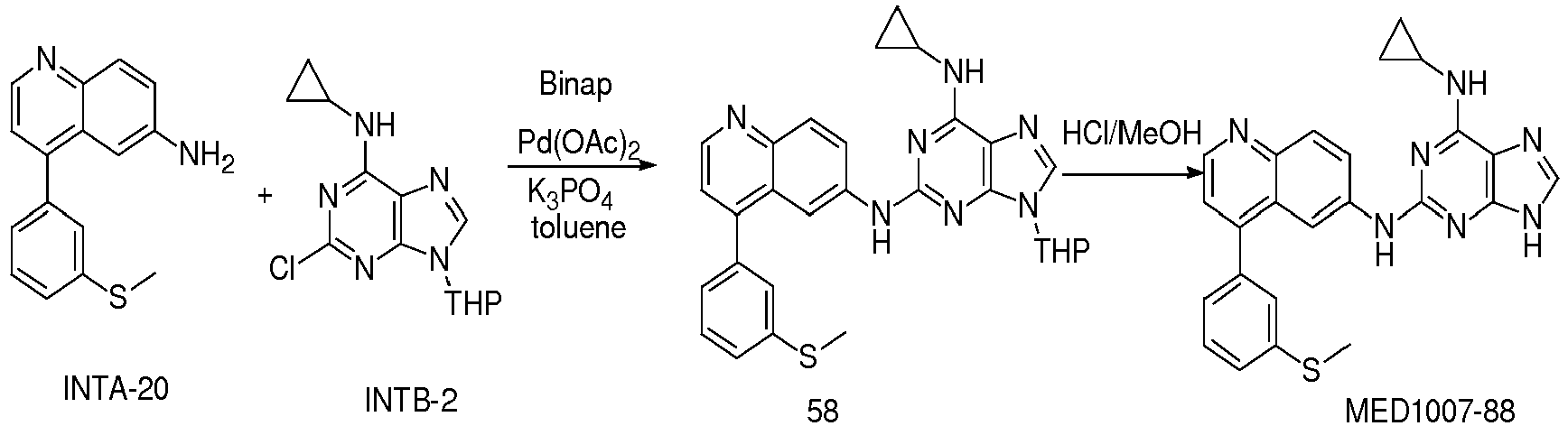
- The preparation method of the compound of the present example includs the following steps:
- 1) Compound INTA-20 (181 mg, 0.68 mmol), compound INTB-2 (200 mg, 0.68 mmol), palladium acetate (15 mg, 0.068 mmol), BINAP (30 mg , 0.064 mmol) and potassium phosphate (500 mg, 2.24 mmol) are dissolved in toluene (15 mL), and stirred under reflux overnight to form a reaction mixture, cooled to room temperature, and ethyl acetate and water are added to the reaction mixture to form an organic layer. The organic layer is separated, dried by anhydrous sodium sulfate, filtrated, concentrated and purified by Pre-TLC (ethyl acetate: methanol= 20:1) to obtain yellow solid compound 58 (80 mg, yield 24%).
- 2) Compound 58 (80 mg, 0.115 mmol) is dissolved in methanol solution (10 mL) saturated with hydrochloric acid, and stirred overnight at room temperature, concentrated to dryness and purified by Pre-HPLC to obtain yellow solid compound MED1007-88 (21 mg, yield 35%).
-

- The preparation method of the compound of the example includs the following steps:
Methanesulfonic acid (52 mg, 0.51 mmol) with ethanol (4 mL) and water (dropwise add) are added to a solution of compound MED1007-31 (50 mg, 0.127 mmol), and stirred overnight at room temperature, and filtrated and washed with ethanol and ethyl acetate to obtain yellow solid MED1007-91 (35 mg, yield 44%).
Molecular formula: C25H33N7O8S2, Molecular weight: 624.
1H-NMR (400 MHz, CD3OD): δ 9.038 (d, J=5.6 Hz, 1H), δ 8.062-8.657 (m, 3H), 8.281 (d, J=9.2 Hz, 1H), 7.963 (d, J=5.6 Hz, 1H), 7.700-7.782 (m, 5H), 2.737 (s, 6H), 2.419 (b, 1H), 0.609-0.709 (m, 4H).
MS (ESI) m/z: 394.3 [M+1]+. -

- The preparation method of the compound of the example includs the following steps:
- 1)Compound INTB-15 (200 mg, 0.65 mmol), palladium acetate (15 mg, 0.065 mmol), BINAP (45 mg, 0.065 mmol) and potassium phosphate (512 mg, 1.95 mmol) are added to compound INTA-4 (93 mg, 0.65 mmol) dissolved in toluene (20 mL), and stirred under reflux overnight to form a reaction mixture, cooled to room temperature, and ethyl acetate and water are added to the reaction mixture. to form an organic layer The organic layer is separated, dried with anhydrous sodium sulfate, filtrated, concentrated and purified by Pre-TLC (ethyl acetate: methanol = 15:1) to obtain brown solid compound 59 (190 mg, yield: 70%).
- 2) Compound 59 (190 mg, 0.46 mmol) is dissolved in methanol (5 mL) and 4N hydrochloric acid methanol (5 mL), and stirred overnight at room temperature to form a reaction mixture, the reaction mixture is diluteed with water, extracted with ethyl acetate, washed with sodium bicarbonate and brine to form an organic phase. The organic phase is dried with anhydrous sodium sulfate, concentrated to dryness and purified by Pre-TLC (dichloromethane: methanol = 10:1) to obtain yellow solid MED1007-97 (70 mg, yield 46%).
-

- The preparation method of the compound of the example includs the following steps:
- 1)Compound INTB-15 (200 mg, 0.487 mmol), palladium acetate (15 mg, 0.049 mmol), BINAP (45 mg, 0.049 mmol) and potassium phosphate (360 mg, 1.46 mmol) are added to Compound INTA-1 (142 mg, 0.487 mmol) is dissolved in toluene (3 mL), and stirred under reflux overnight to form a reaction mixture, cooled to room temperature, and ethyl acetate and water are added to the reaction mixture to form an organic layer. The organic layer is separated, dried with anhydrous sodium sulfate, filtrated, concentrated and purified by Pre-TLC (ethyl acetate: methanol = 15:1) to obtain brown solid compound 60 (100 mg, yield 41.6%).
- 2) Compound 60 (100 mg, 0.2 mmol) is dissolved in dichloromethane (4 mL) and trifluoroacetic acid (1 mL), and stirred overnight at room temperature, concentrated to dryness and purified by Pre-TLC (dichloromethane: methanol = 10:1) to obtain yellow solid compound MED1007-98 (50 mg, yield 61.3%).
-

- The preparation method of the compound of the example includs the following steps:
- 1) DIPEA (900 mg, 6.95 mmol) is added in tetrahydrofuran (30 ml), compound SM-10 (375 mg, 2.78 mmol) and compound 2 (600 mg, 2.32 mmol) at room temperature, and stirred for 12 hours at temperature of 50 °C, extracted with ethyl acetate, washed with water and brine, dried with sodium sulfate, filtrated and concentrated to obtain yellow solid compound INTB-16 (700 mg, yield 90%).
- 2)Compound INTB-16 (184 mg, 0.55 mmol), palladium acetate (20 mg, 0.09 mmol), BINAP (56 mg, 0.09 mmol) and potassium phosphate (328 mg, 1.35 mmol) are added to compound INTA-1 (100 mg, 0.45 mmol) dissolved in toluene (20 mL), and stirred under reflux overnight to form a reaction mixture, cooled to room temperature, and ethyl acetate and water are added to the reaction mixture to form an organic layer. The organic layer is separated, dried with anhydrous sodium sulfate, filtrated, concentrated and purified by Pre-TLC (ethyl acetate: methanol = 15:1) to obtain brown solid compound 61 (90 mg, yield: 38%).
- 3) Compound 61 (90 mg, 0.17 mmol) is dissolved in methanol (5 mL) and 4N hydrochloric acid methanol (5 mL), and stirred overnight at room temperature to form a reaction mixture, the reaction mixture is diluted with water, extracted with ethyl acetate, and washed with sodium bicarbonate and brine to form an organic phase. The organic phase is dried with sodium sulfate, concentrated to dryness and purified by Pre-TLC (dichloromethane: methanol = 10:1) to obtain yellow solid MED1007-99 (50 mg, yield 68%).
-

- The preparation method of the compound of the example includs the following steps:
- 1)Compound INTB-17 (295 mg, 1 mmol), palladium acetate (45 mg, 0.2 mmol), BINAP (124 mg, 0.2 mmol) and potassium phosphate (630 mg, 3 mmol) are added to compound INTA-1 (220 mg, 1 mmol) dissolved in toluene (15 mL), and stirred under reflux overnight to form a reaction mixture, cooled to room temperature, and ethyl acetate and water are added to the reaction mixture to form an organic layer. The organic layer is separated, dried with anhydrous sodium sulfate, filtrated, concentrated and purified by Pre-TLC (ethyl acetate: methanol = 15:1) to obtain brown solid compound 62 (300 mg, yield: 62%) will be obtained.
- 2) Compound 62 (300 mg, 0.62 mmol) is dissolved in methanol (10 mL) and 4N hydrochloric acid methanol (10 mL), and stirred overnight at room temperature to form a reaction mixture. The reaction mixture is filtered, the filter cake is dried under vacuum condition to obtain compound MED1007-101 (150 mg, yield 60%).
-

- The preparation method of the compound of the example includs the following steps:
- 1) Compound INTA-1 (220 mg, 1 mmol), compound INTB-18 (307 mg, 1 mmol), palladium acetate (44.8 mg, 0.2 mmol), BINAP (124.4 mg, 0.2 mmol) and potassium phosphate (789 mg, 3 mmol) are dissolved in toluene (15 mL), and stirred under reflux overnight to form a reaction mixture, cooled to room temperature, and ethyl acetate and water are added to the reaction mixture to form an organic layer. The organic layer is separated, dried with anhydrous sodium sulfate, filtrated, concentrated and purified by Pre-TLC (ethyl acetate: methanol = 20:1) to obtain yellow solid compound 63 (80 mg, yield 47%).
- 2) Compound 63 (80 mg) is dissolved in methanol (10 mL) saturated with HCl, and stirred overnight at room temperature, concentrated to dryness and purified by Pre-HPLC to obtain yellow solid compound MED1007-103 (40 mg, yield 56%).
-

- The preparation method of the compound of the example includs the following steps:
- 1) Compound INTA-4 (144 mg, 1 mmol), compound INTB-1 (296 mg, 1 mmol), palladium acetate (44.8 mg, 0.2 mmol), BINAP (124.4 mg, 0.2 mmol) and potassium phosphate (789 mg, 3 mmol) are dissolved in toluene (15 mL), and stirred under reflux overnight to form a reaction mixture, cooled to room temperature, and ethyl acetate and water are added to the reaction mixture to form an organic layer. The organic layer is separated, dried with anhydrous sodium sulfate, filtrated, concentrated and purified by Pre-TLC (ethyl acetate: methanol = 20:1) to obtain yellow solid compound 8 (80 mg, yield 49%).
- 2) Compound 8 (80 mg) is dissolved in methanol (10 mL) saturated with hydrogen chloride, and stirred overnight at room temperature, concentrated to dryness and purified by Pre-HPLC to obtain yellow solid compound MED1007-34 (40 mg).
- 3) B is slowly added dropwise to compound MED1007-34 (40 mg) dissolved in ethanol and two drops of water and stirred overnight at room temperature to form a reaction mixture. The reaction mixture is filtrated and concentrated to obtain yellow solid compound MED1007-104 (29 mg, yield 68%).
-

- The preparation method of the compound of the example includs the following steps:
- 1)Compound INTB-19 (322 mg, 1 mmol), palladium acetate (45 mg, 0.2 mmol), BINAP (124 mg, 0.2 mmol) and potassium phosphate (630 mg, 3 mmol) are added to compound INTA-1 (220 mg, 1 mmol) dissolved in toluene (15 mL), and stirred under reflux overnight to form a reaction mixture, cooled to room temperature, and ethyl acetate and water are added to the reaction mixture to form an organic layer. The organic layer is separated, dried with anhydrous sodium sulfate, filtrated, concentrated and purified by Pre-TLC (ethyl acetate: methanol = 15:1) to obtain brown solid compound 64 (280 mg, yield: 55%).
- 2) Compound 64 (280 mg, 0.55 mmol) is dissolved in methanol (10 mL) and 4N hydrochloric acid methanol (10 mL), and stirred overnight at room temperature to form a reaction mixture.The reaction mixture is filtered, the filter cake is dried under vacuum condition to obtain compound MED1007-105 (140 mg, yield 60%).
-

- The preparation method of the compound of the example includs the following steps:
- 1) Compound INTA-1 (220 mg, 1 mmol), compound INTB-20 (321 mg, 1 mmol), palladium acetate (44.8 mg, 0.2 mmol), BINAP (124.4 mg, 0.2 mmol) and potassium phosphate (789 mg, 3 mmol) are dissolved in toluene (15 mL), and stirred under reflux overnight to form a reaction mixture, cooled to room temperature, and ethyl acetate and water are added to the reaction mixture to form an organic layer. The organic layer is separated, dried with anhydrous sodium sulfate, filtrated, concentrated and purified by Pre-TLC (ethyl acetate: methanol = 20:1) to obtain yellow solid compound 65 (40 mg, yield 29%).
- 2) Compound 65 (40 mg) is dissolved in methanol (10 mL) saturated with hydrogen chloride, and stirred overnight at room temperature, concentrated to dryness and purified by Pre-HPLC to obtain yellow solid compound MED1007-106 (19 mg, yield 42%).
-

- The preparation method of the compound of the example includs the following steps:
- 1) Compound INTA-1 (220 mg, 1 mmol), compound INTB-21 (420 mg, 1 mmol), palladium acetate (44.8 mg, 0.2 mmol), BINAP (124.4 mg, 0.2 mmol) and potassium phosphate (789 mg, 3 mmol) are dissolved in toluene (15 mL), and stirred under reflux overnight to form a reaction mixture, cooled to room temperature, and ethyl acetate and water are added to the reaction mixture to form an organic layer. The organic layer is separated, dried with anhydrous sodium sulfate, filtrated, concentrated and purified by Pre-TLC (ethyl acetate: methanol = 20:1) to obtain yellow solid compound 66 (100 mg, yield 49%).
- 2) Compound 66 (100 mg) is dissolved in methanol (10 mL) saturated with hydrogen chloride, and stirred overnight at room temperature, concentrated to dryness and purified by Pre-HPLC to obtain yellow solid compound MED1007-107 (60 mg, yield 58%).
-

- The preparation method of the compound of the example includs the following steps:
- 1)Compound 2 (296 mg, 1 mmol), palladium acetate (44.8 mg, 0.2 mmol), BINAP (124.4 mg, 0.2 mmol) and potassium phosphate (636 mg, 3 mmol) are added to compound INTA-1 (220 mg, 1 mmol) dissolved in toluene (10 mL), and stirred under reflux overnight to form a reaction mixture, cooled to room temperature, and ethyl acetate and water are added to the reaction mixture to form an organic layer. The organic layer is separated, dried by anhydrous sodium sulfate, filtrated, concentrated and purified by Pre-TLC (ethyl acetate: methanol = 15:1) to obtain brown solid compound 3 (400 mg, yield 83%).
- 2) Compound 3 (200mg, 0.48 mmol) is dissolved in methanol (5 mL) and 4N hydrochloric acid methanol (5 mL), and stirred overnight at room temperature to form a reaction mixture, the reaction mixture is diluted with water, extracted with ethyl acetate, and washed with sodium bicarbonate and brine to form an organic phase. The organic phase is dried with anhydrous sodium sulfate, concentrated to dryness, and then purified by Pre-TLC (dichloromethane: methanol = 10:1) to obtain brown solid MED1007-51 (140mg, yield 73%).
- 3)Methanesulfonic acid (152 mg, 1.69 mmol) is added to compound MED1007-51(140 mg, 0.35 mmol) dissolved in ethanol (5 mL) and water at temperature of 0°C, and stirred overnight at room temperature to form a reaction mixture. The reaction mixture is filtered, the filter cake is dried under vacuum condition to obtain compound MED1007-108 (100 mg, yield 45%).
-

- The preparation method of the compound of the example includs the following steps:
- 1)Compound INTB-22 (146 mg, 0.45 mmol), palladium acetate (20 mg, 0.1 mmol), BINAP (56 mg, 0.1 mmol) and potassium phosphate (355 mg, 1.35 mmol) are added to compound INTA-1 (100 mg, 45 mmol) dissolved in toluene (10 mL), and stirred under reflux overnight to form a reaction mixture, cooled to room temperature, and ethyl acetate and water are added to the reaction mixture to form an organic layer. The organic layer is separated, dried with anhydrous sodium sulfate, filtrated, concentrated and purified by Pre-TLC (ethyl acetate: methanol = 15:1) to obtain brown solid compound 67 (180 mg, yield: 78%).
- 2) Compound 67 (180 mg, 0.35 mmol) is dissolved in methanol (5 mL) and 4N hydrochloric acid methanol (5 mL), and stirred overnight at room temperature to form a reaction mixture. The reaction mixture is diluted water, extracted with ethyl acetate, washed with sodium bicarbonate and brine to form an organic phase. The organic phase is dried with sodium sulfate, concentrated to dryness and purified by Pre-TLC (dichloromethane: methanol = 10:1) to obtain yellow solid compound MED1007-109 (100 mg, yield 66%).
-

- The preparation method of the compound of the present example includs the following steps:
Methanesulfonic acid (40 mg, 0.42 mmol) is added to compound MED1007-109 (60 mg, 0.14 mmol) dissolved in ethanol (5 mL) and water at the temperature of 0°C, and stirred overnight at room temperature to form a reaction mixture. The reaction mixture is filtered, the filter cake is dried under vacuum condition to obtain compound MED1007-109S (40 mg, yield 44%).
Molecular formula: C24H21N7O2CH3SO3H.2H2O, Molecular weight: 423.47.
1H-NMR (400 MHz, DMSO-d6): δ 9.083 (d, J=5.6Hz, 1H), 8.671 (d, J=2.4Hz, 1H), 8.473 (m, 2H), 8.325 (d, J=9.2Hz, 1H), 8.000 (d, J=5.6Hz, 1H), 7.755 (m, 5H), 3.894 (s, 4H), 3.710 (m, 4H), 2.746 (s, 6H).
MS (ESI) m/z: 424.5 [M+1]+ -
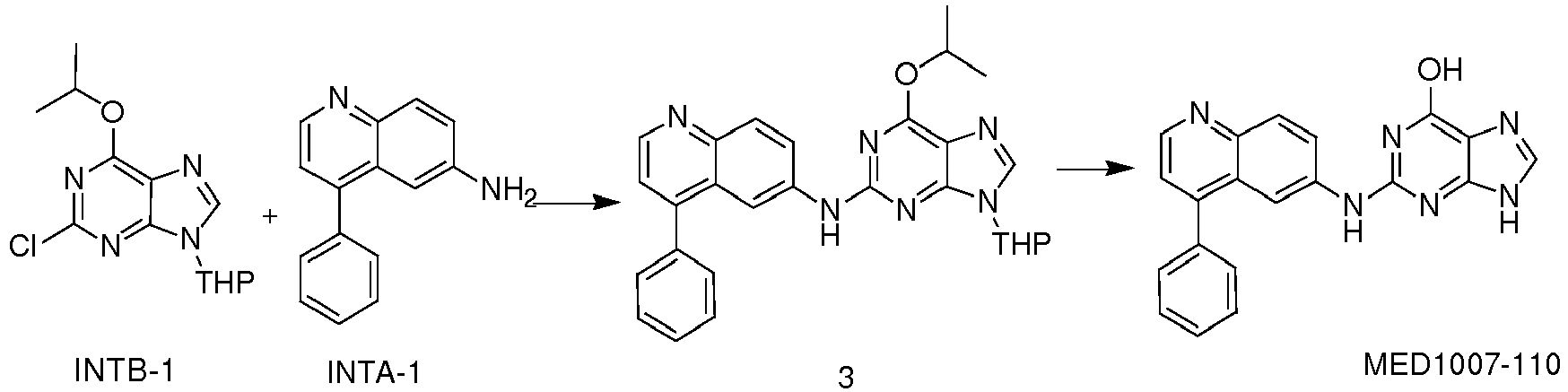
- The preparation method of the compound of the example includs the following steps:
- 1)Compound INTB-1 (296 mg, 1 mmol), palladium acetate (44.8 mg, 0.2 mmol), BINAP (124.4 mg, 0.2 mmol) and potassium phosphate (636 mg, 3 mmol) are added to compound INTA-1 (220 mg, 1 mmol) dissolved in toluene (10 mL), and stirred under reflux overnight to form a reaction mixture, cooled to room temperature, and ethyl acetate and water are added to the reaction mixture to form an organic layer. The organic layer is separated, dried with anhydrous sodium sulfate, filtrated, concentrated and purified by Pre-TLC (ethyl acetate: methanol = 15:1) to obtain brown solid compound 3 (400 mg, yield: 83%).
- 2)Trifluoroacetic acid (1.5 mL) is added to compound 3 (200 mg, 0.42 mmol) dissolved in dichloromethane (5 mL) at 0°C, and stirred for 30 hours at 35°C to form a reaction mixture. The reaction mixture is diluted with water, extracted with ethyl acetate, washed with sodium bicarbonate and brine to form an organic phase. The organic phase is dried with sodium sulfate, concentrated to dryness and purified by Pre-TLC (dichloromethane: methanol = 10:1) to obtain yellow solid compound MED1007-110 (120 mg, yield 80%).
- The half inhibitory concentration IC50 of proliferation of three kinds of tumor cell strain (U87MG, PC - 3, BT474) for 12 candidate compounds of the present invention is detected by CCK-8 detection kits.
- U87MG human glioblastoma Multiforme cell strain (cell bank of Chinese Academy of Sciences)
PC-3 human prostate cancer cell strain (cell bank of Chinese Academy of Sciences)
BT474 human breast cancer cell strain (cell bank of Chinese Academy of Sciences) - Cell Counting Kit-8 (Cat# CK04-13, Dojindo)
96 well culture plates (Cat# 3599, Corning Costar)
Fetal calf serum (Cat#10099-141, GIBCO)
Culture medium (Invitrogen)
Table model microplate reader SpectraMax M5 Microplate Reader (Molecular Devices)
Candidate compounds: provided by chemical department of Medicilon -
Culture medium preparation Cell line Culture medium U87MG EMEM +1mM sodium pyruvate +1.5g/L NaHCO3 +10%FBS PC-3 F12 K +10%FBS BT474 Hybri care + 10% FBS - The studied compounds are dissolved by DMSO to make the final concentration 10mM.
-
- a) Collecting the cells in logarithmic phase, counting, and resuspending the cells with complete medium.
- b) Adjusting the concentration of cells to a suitable concentration, inoculating in 96 well plates, each well is inoculated to 100 µl cell suspension.
- c) incubating cells for 24 hours in a 5% CO2 incubator at temperature of 37 °C, under the condition of 100% relative humidity.
-
- a) The cells in logarithmic phase is collected , counted, resuspended with complete medium. The concentration of cells is adjusted to a suitable concentration (determined in accordance with the optimizable test results of cell density), and the cells is inoculated in 96 well plates, wherein each well is inoculated 100 µl cell suspension, Cells are incubated for 24 hours in 5% CO2 incubator at temperature of 37°C under the condition of 100% relative humidity.
- b) The test compounds are diluted to 500µM with culture medium, then diluted in series eight times. Cells are added as 25µl/well. The final concentrations of the compounds are diluted from 100µM to 0µM, with 4 times dilution, and there are a total of 10 concentration points.
- c) Cells are incubated for 72 hours in 5% CO2 incubator at temperature of 37°C under the condition of 100% relative humidity.
- d) The culture medium is aspirated and discarded, and complete medium containing 10% CCK-8 is incubated in a incubator at 37°C for 2 ∼ 4 hours.
- e) After shocking gently, the absorbance of the culture medium is measured at 450 nm wavelength on SpectraMax M5 Microplate Reader, with the absorbance at 650 nm as reference, to calculate the inhibition rate.
- The tumor cell growth inhibition rate %=[(Ac-As)/(Ac-Ab)]×100%
Wherein, As: OA of sample (cell + CCK-8+ test compound);
Ac: OA of negative control (cell + CCK-8+DMSO);
Ab: OA of positive control (culture medium + CCK-8+DMSO); - Compounds of MED1007 series include -51, -63, -91, -101, -104, -105, -108, -109s, -115, XC-302 and Wortmannin. As an effect for U87MG, PC - 3 & BT474 cytotoxic, the IC50s (µM) results are shown in table 1.
Table 1 PC-3 cells U-87MG cells BT-474 cells MED1007-51 0.0662 (1st test) 15.65 (1st test) 0.0814 (1st test) 0.1729 (2nd test) 4.424 (2nd test) 0.1138 (2nd test) MED1007-91 0.6542 8.150 0.5229 MED1007-101 0.6162 8.604 0.4409 MED1007-104 1.696 18.11 1.362 MED1007-105 1.025 40.95 0.4202 MED1007-108 0.0716 (1st test) 12.33 (1st test) 0.0630 (1st test) 0.1131 (2nd test) 5.467 (2nd test) 0.0350 (2nd test) MED1007-109S 0.6965 18.30 0.6123 MED1007-115 1.567 7.356 1.949 XC-302 14.96 17.80 5.874 Wortmannin 21.57 Re-test needed 5.210 - It can be seen from Table 1 that compounds of the present invention have the effect of inhibiting tumor cell proliferation
- Inhibition efficiency is detected, the Staurosporine is chosed as a positive control drug to study the inhibitory activity of test compounds of MED1007 series to PDGFRβ enzyme at the concentration of 10µM and 1µM, wherein, each study group is detected by setting triplicate wells.
- The half inhibitory concentration of staurosporine to PDGFR β and the inhibition rate of ten test compounds to the enzyme activity of PDGFR β at 10 µM and 1µM is detected by HTRF kinEASE TK kit. The experimental results are shown in Table 3: The inhibition rate of test compounds to PDGFR β at 10 µM and 1µM.
- 2104 EnVision® Multilabel Reader (PerkinElmer)
OptiPlate-384, White Opaque 384-well MicroPlate(Cat.6007290, PerkinElmer)
HTRF kinEASE TK (Cat.62TK0PEC, Cisbio)
PDGFR β enzyme (Cat.P3082, Invitrogen)
ATP 10 mM (Cat.PV3227, Invitrogen)
DTT 1 M (Cat.D5545, Sigma)
MgCl2 1 M (Cat.M8266 Sigma)
MnCl2 1 M
Detecting compounds -
Table 2 PDGFR β Concentration of enzyme Final concentration of enzyme reaction steps (10 µL) 0.2 ng/well ATP (µM) 30 µM TK-Substrate 1 µM Time of enzyme reaction 10 min Sa-XL665 Final concentration in complete reaction (20 µL) 125 nM TK-Ab-Cryptate 1:100 dilution - 1mL 1×Kinase Buffer200 µL 5xEnzyme buffer, 5 µL 1M MgCl2, 1µL 1M DTT, 1µL 1M MnCl2, 20µL 2500nM SEB, 773 µL ddH2O.

- 1mL 1×Kinase Buffer includes 200 µL 5xEnzyme buffer, 5 µL 1M MgCl2, 1µL 1M DTT, 1µL 1M MnCl2, 20µL 2500nM SEB, 773 µL ddH2O.
- Concentrations of TK-Substrate and ATP are shown in Table 2.
- TK-Substrate and ATP are diluted to 2.5 times of reaction concentration with 1×PDGFR β Kinase Buffer.
- 5× PDGFR β enzyme working solution is prepared with 1×PDGFR β kinase buffer.
- Concentration of Sa-XL665 in reaction is shown in Table 1. 4xSa-XL665 working solution is prepared with Detection Buffer.
- TK-Ab-Cryptate is diluted 100 times with Detection Buffer to use as working solution.
-
Table 3 10 µM 1µM Inhibition rate % SD Inhibition rate % SD MED1007-15 93.52 2.99 31.22 10.80 MED1007-31 26.16 8.17 13.84 5.70 MED1007-32 24.48 3.39 9.16 7.71 MED1007-33 25.64 5.41 4.71 2.98 MED1007-34 98.81 0.46 53.82 0.58 MED1007-35 98.99 0.27 54.84 4.93 MED1007-51 33.56 6.25 11.90 8.34 MED1007-54 43.66 9.04 7.30 6.78 MED1007-58 29.50 5.74 3.93 5.03 MED1007-59 0.93 5.95 4.39 7.18 MED1007-60 10.59 8.43 -0.63 9.55 MED1007-61 55.00 6.51 4.72 15.97 MED1007-63 28.00 3.86 -0.31 10.29 MED1007-64 20.07 5.02 -3.26 16.10 MED1007-65 13.99 7.93 21.49 4.50 MED1007-66 14.49 6.06 16.99 5.66 MED1007-67 18.74 9.64 22.24 2.60 MED1007-68 11.74 13.32 18.74 2.41 MED1007-69 31.76 3.88 11.74 19.27 MED1007-70 73.01 1.02 33.37 3.77 MED1007-71 4.50 15.44 9.74 15.37 MED1007-72 2.50 8.69 7.25 20.83 MED1007-73 35.03 19.70 16.99 12.72 MED1007-75 8.74 7.90 13.24 9.54 MED1007-83 7.60 9.50 4.50 2.74 MED1007-84 13.42 3.14 -8.59 1.15 MED1007-85 29.83 9.04 -3.44 7.56 MED1007-86 -3.13 5.06 -5.49 7.58 MED1007-87 -4.13 2.09 -7.60 6.81 MED1007-88 2.89 3.14 -5.37 8.17 MED1007-91 13.82 5.30 -10.96 8.66 MED1007-97 99.45 0.62 98.42 0.98 MED1007-98 37.83 1.68 38.13 9.81 MED1007-99 9.88 5.88 33.06 6.25 Staurosporine 98.52 0.84 99.82 2.44 XC-302 96.53 1.31 51.15 5.21 - It can be seen from Table 3 that, the compounds of present invention have the role of inhibiting PDGFR β enzyme.
- The inhibitory activity of the compounds of present invention to the phosphorylation level of PC-3 cell Akt (Ser473) is studied by using Cisbio HTRF phospho Akt (Ser473) cell-based assay test kit.
- Cell strain: PC-3 prostate cancer cells line (cell bank of Chinese Academy of Sciences) is cultured by using culture medium (F12K +10% FBS).
- 2104 EnVision® Multilabel Reader (PerkinElmer)
OptiPlate-384, White Opaque Low Volume 384-well MicroPlate(Cat.3674, CORNING)
HTRF Phospho Akt (Ser473) cell-based assay kit (Cat.64AKSPEG,500test, CISBIO)
96 well culture plate (Cat# 3599, Corning Costar)
fetal calf serum (Cat#10099-141, GIBCO)
F12K culture medium (Invitrogen)
hEGF (Cat.9644-0.2mg, SIGMA) - hEGF is prepared as stock solution of 100ug/ml with 10mM acetic acid, and the stock solution is diluted to 200ng/ml with serum-free medium, added 50 ul to each well to be stimulated.
- 4×Lysis Buffer is diluted 4 times with ddH2O to prepare 1×Lysis Buffer.
100×Blocking Reagent is diluted 100 times with 1×Lysis Buffer. - 20×Anti-Phospho-Akt is diluted 20 times with Detection Buffer.
20×Anti- Akt is diluted 20 times with Detection Buffer. - The compounds are diluted with DMSO, and the working concentration of compounds is 100 times of detection concentration.
- Cells in logarithmic growth phase are collected, counted, and resuspended with complete culture medium;
The cell concentration is adjusted to appropriate concentration, and cell suspension is inoculated into 96 well plates at 50µl per well;
Cells are incubated for more than 4 h in the 5% CO2 incubator at temperature of 37°C, relative humidity of 100%;
Cell plate is removed from the incubator. The cell suspension is aspirated gently, and 50ul serum-free F12K medium is quickly added, then the cell plate is placed into the incubator to culture overnight. - The compounds are diluted in a linear gradient with DMSO.
- 0.5ul compounds is added into the test well, mixed on oscillators, and incubated at room temperature for 2 hours.
- Proportioned hEGF solution is added to test well at 50µl per well, and the final concentration is 100ng/ml. serum-free medium is added into The negative control well at 50µl per well.
- The solution is mixed on oscillator and incubated at room temperature for 2 hours.
- The liquid in 96 well plates is aspirated by multichannel pipette or the supernatant is discarded gently. The proportioned complete lysate is added quickly at 50µl per well.
- The solution is mixed on oscillator and lysed at room temperature for 30 min.
- 16µl cell lysate is transfered from the 96 well plates to white low volume 384 well plates, and the proportioned two pairs of detection antibody are added. The solution is mixed on oscillator , and incubated at room temperature for 4 hours to detect the readings. The experimental results are shown in Table 4.
Table 4 Compounds IC50(nM) MED 1007-31 111.5 MED1007-35 74.50 MED 1007-46 261.4 MED1007-51 1.140 (1st test); 0.6831 (2nd test) MED1007-63 62.22 MED1007-91 73.96 MED1007-101 66.96 MED1007-103 276.4 MED1007-108 3.827 (1st test); 6.513 (2nd test) MED1007-109S 116.4 MED1007-115 259.5 XC-302 10.05 (1st test); 33.60 (2nd test) Wortmannin 7.406 - It can be seen from Table 4 that the compounds of present invention (and reference examples) have the inhibitory effects to phosphorylation levels of PC-3 cells Akt (Ser473), especially MED1007 and MED 1007-108-51.
- Study on the inhibitory activity of the compounds of present invention to PI 3κα, PI3κδ and PI3κγ. Two or three concentrations of the compunds are selected to preliminary screening to calculat respectively the activity inhibition rate of the compounds of corresponding concentrations to enzyme, then the compounds with better activity are selected by preliminary screening for IC50 test.
- EnVision Multilabel Plate Reader (PerkinElmer)
The 384-well opaque black board (Cat. 6007279, PerkinElmer)
PI 3-Kinase (human) HTRF™ Assay kit (Cat. 33-017, Millipore)
4× Reaction Buffer (Cat. 33-002, Millipore)
PIP2 1mM (Cat. 33-004, Millipore)
Stop A (Cat. 33-006, Millipore)
Stop B (Cat. 33-008, Millipore)
DM A (Cat. 33-010, Millipore)
DM B (Cat. 33-012, Millipore)
DM C (Cat. 33-014, Millipore)
PI 3k γ (Biology, Medicilon)
PI 3k α (Cat. 14-602, Millipore)
PI 3k δ (Cat. 14-604, Millipore)
ATP 10mM (Cat. PV3227, Invitrogen)
DTT 1M (cat. D5545, Sigma)
Test Compounds - 4x Reaction Buffer (Cat. 33-002, Millipore) is diluted with ddH2O to 1.33 X, and 1M DTT is added to make the final concentration as 6.67mM. For example, 10µL DTT is added into 500µL 4x Reaction Buffer, and water is added to 1.5 mL.
- The Test compounds are dissolved with DMSO to 1 mM as storage liquid. 2µL of each of storage liquid is added into 48µL ddH2O, to obtain the 40µM compounds solution containing 4% DMSO. After mixing, 3 µL of each of the solution is added into 27µL 4% DMSO (in ddH2O) to obtain the 4µM compounds solution. 5µL of each dilute solution is added into 384-well plates, then the final concentration of the compounds in the 20 µL final kinase reaction system is 10 µM and 1 µM respectively contained 1% DMSO. The dilution methods of compounds are similar to the preliminary screening in IC50 test.
- 2× PIP2 working fluid is prepared with 1.33×reaction buffer to the final concentration of 20 µM.
- The concentration optimization of two enzymes has been completed in the previous work,
The screening concentration of PI 3k γ kinase: 80 ng/well,
The screening concentration of PI 3k α kinase: 8 ng/well,
The screening concentration of PI 3k δ kinase: 2ng/well,
Kinase is diluted with 2× PIP2 operating fluid, the concentration of kinase operating fluid is 2 times of screening concentration. - Namely 2× PIP2 working solution.
- 10 mM ATP is diluted with 1.33×reaction buffer to 400µM. The concentration of ATP is 100µM in 20 µL kinase reaction system.
- Stop A and Stop B are mixed according to the proportion of 3:1, and are placed for 2 hours at room temperature to obtain the stop solution available.
- DM C, DM A and DM B are mixed according to the proportion of 18:1:1, and are placed for 2 hours at room temperature to obtain the detection solution available.
- The inhibition rate of the test compounds to PI3K alpha at 10 µM and 1µM, can be seen in Table 5. The inhibition rate of the determining compounds to PI3K gamma at 10 µM and 1µM. Please refer to Table 6. The inhibition rate of the determining compounds to PI3K delta at 10 µM and 1µM. Please refer to Table 7-8.
Table 5 Inhibition rate of the compounds of the present invention (and reference examples) to PI3K α 10 µM 1 µM % Inhibition Rate SD % Inhibition Rate SD MED1007-65 10.16 3.24 0.69 3.33 MED1007-66 -4.35 3.44 -2.28 2.60 MED1007-67 37.24 5.99 3.77 1.27 MED1007-68 51.93 7.89 7.74 5.81 MED1007-69 78.19 2.00 38.81 1.27 MED1007-70 62.53 13.41 26.60 3.41 MED1007-71 75.01 4.56 10.38 2.89 MED1007-72 65.93 10.25 8.78 4.14 MED1007-73 66.06 3.86 29.68 8.53 MED1007-75 51.31 6.47 11.07 4.73 MED1007-83 87.58 13.37 36.18 5.41 MED1007-84 99.19 6.55 58.69 9.60 MED1007-85 90.10 8.98 66.25 2.16 MED1007-86 39.60 7.57 19.17 2.97 MED1007-87 60.58 11.46 13.77 5.82 MED1007-88 109.90 3.38 46.17 2.72 MED1007-91 123.67 12.67 97.03 9.40 MED1007-97 114.22 10.91 56.26 15.28 MED1007-98 117.55 9.60 102.16 25.20 MED1007-99 88.30 8.37 23.31 3.06 MED1007-101 126.00 4.56 49.53 9.31 MED1007-103 82.17 11.55 55.28 5.82 MED1007-104 106.40 5.35 60.32 7.07 MED1007-105 110.74 15.85 60.41 5.51 MED1007-106 97.43 9.31 24.37 5.18 MED1007-107 65.78 14.86 29.88 4.55 wortmamnnin 104.86 11.68 109.45 2.58 Table 6 Inhibition rate of the compounds of the present invention (and reference examples) to PI3 K γ 10 µM 1 µM Inhibition rate% SD Inhibition rate % SD MED1007-15 19.09 8.95 10.38 7.55 MED1007-31 52.59 4.55 11.33 6.12 MED1007-32 4.28 3.61 -13.71 7.68 MED1007-33 20.00 9.75 20.99 8.94 MED1007-34 57.33 4.76 24.44 10.18 MED1007-35 53.05 3.70 19.18 0.99 MED1007-51 56.18 15.01 1.16 2.65 MED1007-54 -4.67 4.95 -6.81 3.58 MED1007-58 -0.98 1.10 -0.29 4.12 MED1007-59 4.97 0.93 0.83 1.60 MED1007-60 4.45 4.85 -2.59 3.93 MED1007-61 20.40 4.76 -8.18 2.00 MED1007-63 14.73 15.73 0.96 1.65 MED1007-64 15.93 4.27 -4.23 4.17 MED1007-65 37.22 5.52 1.54 4.44 MED1007-66 -2.46 3.49 1.48 3.84 MED1007-67 10.21 7.20 0.71 6.12 MED1007-68 10.85 9.88 -0.02 4.68 MED1007-69 21.13 8.31 1.27 2.04 MED1007-70 10.85 3.20 5.26 2.89 MED1007-71 47.43 6.15 2.55 6.12 MED1007-72 42.71 7.31 2.15 4.11 MED1007-73 28.41 7.23 5.49 3.04 MED1007-75 10.92 4.32 6.93 5.85 MED1007-83 23.98 3.52 5.93 3.06 MED1007-84 34.17 1.76 26.57 2.85 MED1007-85 41.94 3.67 16.79 1.75 MED1007-86 23.06 4.68 8.35 3.48 MED1007-87 29.49 1.24 -3.76 5.33 MED1007-88 41.52 2.75 7.02 2.82 MED1007-91 81.29 1.76 29.82 5.14 MED1007-97 77.03 8.34 74.69 11.34 MED1007-98 105.26 8.04 32.83 9.84 MED1007-99 39.93 7.59 4.68 1.71 wortmamnnin 100.51 10.99 104.58 11.89 XC-302 49.31 11.50 18.27 11.54 Table 7 Inhibition rate of the compounds of present invention (and reference examples) to PI3Kδ 10 µM 1 µM Inhibition rate % SD Inhibition rate % SD MED1007-15 8.64 8.12 1.25 6.17 MED1007-31 97.80 4.37 40.16 4.04 MED1007-32 42.08 10.18 30.97 6.64 MED1007-33 62.98 4.66 21.44 5.31 MED1007-34 69.84 11.17 40.16 6.69 MED1007-35 87.40 12.33 44.42 4.09 MED1007-51 75.53 12.27 39.62 3.85 MED1007-54 42.35 5.37 13.29 11.60 MED1007-58 35.00 7.28 2.11 1.15 MED1007-59 59.00 11.29 17.98 3.23 MED1007-60 34.08 9.10 -2.33 2.61 MED1007-61 102.25 8.51 16.67 5.77 MED1007-63 122.21 0.16 37.50 5.09 MED1007-64 88.73 6.17 14.14 1.23 MED1007-65 38.36 2.96 7.48 2.68 MED1007-66 19.84 6.82 4.75 2.46 MED1007-67 32.02 4.75 11.27 7.44 MED1007-68 42.27 5.89 20.71 3.54 MED1007-69 36.42 2.73 28.94 3.84 MED1007-70 51.56 11.53 41.00 8.43 MED1007-71 64.36 10.65 24.37 6.54 MED1007-72 89.46 6.27 33.92 2.32 MED1007-73 66.45 4.33 6.41 8.13 MED1007-75 42.60 7.49 10.92 6.19 MED1007-83 68.47 5.63 22.69 3.39 MED1007-84 101.02 9.19 71.75 0.89 MED1007-85 113.38 11.47 54.15 11.86 MED1007-86 66.43 3.10 27.31 4.01 MED1007-87 79.97 4.73 23.00 1.11 MED1007-88 102.74 4.98 30.99 3.17 MED1007-91 115.45 6.14 96.32 9.56 MED1007-97 88.46 1.49 72.30 6.62 MED1007-98 105.16 6.79 71.13 11.27 MED1007-99 88.11 2.47 7.67 0.95 MED1007-101 95.57 6.39 75.71 9.72 MED1007-103 87.50 4.65 68.04 6.21 MED1007-104 85.86 7.71 57.14 1.69 MED1007-105 104.61 4.14 74.20 7.59 MED1007-106 89.10 3.54 32.93 11.47 MED1007-107 119.10 0.19 29.34 1.62 wortmamnnin 107.83 4.35 95.38 9.07 xc-302 67.42 5.07 22.84 10.45 Table 8 Inhibition rate of the test compounds to PI3K delta 10 µM 2 µM 0.4 µM PI3K delta Inhibition rate % SD Inhibition rate % SD Inhibition rate % SD MED1007-108 89.03 6.37 78.59 0.33 40.49 6.40 MED1007-109 91.58 2.02 44.05 8.43 22.64 4.21 MED1007-109S 94.36 7.36 57.34 4.49 30.22 3.83 MED1007-110 12.60 8.28 2.94 1.14 6.26 1.75 MED1007-113 68.86 1.23 37.71 1.94 29.98 2.20 MED1007-114 78.94 1.15 49.15 7.43 28.36 6.12 MED1007-115 94.59 0.33 60.20 6.38 36.79 5.34 MED1007-132 54.97 5.37 8.54 4.96 -0.76 1.74 MED1007-133 83.41 9.01 69.00 1.91 20.77 2.59 MED1007-135 83.41 4.19 59.60 2.40 27.17 6.82 MED1007-136 80.51 5.37 44.84 6.69 15.66 3.82 MED1007-137 99.14 5.60 63.30 0.14 27.62 3.09 MED1007-139 20.12 2.74 15.01 5.98 4.29 3.87 Wortmannin 104.91 0.82 109.43 5.90 93.43 7.66 - It can be seen from Ttable 5, 6, 7, 8 that 1007 series of compounds of the present invention (and reference examples) are effective PI3K inhibitor, and the selectivities of different compounds to PI3K subtype are different. It can be seen from the results that the compound of the present invention can select specific PI3K inhibitors and extentive PI3K inhibitors, with good antitumor activity and selectivity.
- Although the present invention has been described in connection with the above embodiments, it should be understood that the present invention is not limited to such preferred embodiments and procedures set forth above. The embodiments and procedures were chosen and described in order to best explain the principles of the invention and its practical application, to thereby enable others skilled in the art to best utilize the invention. Therefore, the intention is only limited by the scope of the appended claims.
1H-NMR (400 MHz, DMSO-d6): δ 12.388 (s, 1H), 9.271 (s, 1H), 8.492-8.481 (d, J=4.4 Hz, 1H), 8.396 (s, 1H), 8.328 (s, 1H), 7.843-7.824 (d, J=7.6 Hz, 1H), 7.802 (s, 1H), 7.605 (s, 1H), 6.884-6.870 (d, J=5.6 Hz, 1H), 3.915 (s, 4H), 3.169 (s, 4H), 1.229(s, 1H), 0.760 (m, 2H), 0.669 (m, 2H).
MS (ESI) m/z: 403 [M+1]+
1H-NMR (400 MHz, DMSO-d6): δ 12.404 (s, 1H), 9.266 (s, 1H), 8.461 (s, 1H), 8.384 (s, 1H), 8.284 (s, 1H), 7.821-7.802 (d, J=7.6 Hz, 1H), 7.781 (s, 1H), 7.602 (s, 1H), 6.838 (s, 1H), 3.090 (s, 4H), 3.017 (s, 4H), 1.228(s, 1H), 1.160(s, 1H), 0.748 (m, 2H), 0.658 (m, 2H).
MS (ESI) m/z: 402 [M+1]+
1H-NMR (400 MHz, DMSO-d6): δ 12.919 (s, 1H), 9.702 (s, 1H), 8.699 (s, 1H), 8.571 (s, 1H), 8.140 (s, 1H), 8.057 (s, 1H), 7.982 (s, 1H), 7.921 (s, 1H), 7.442 (s, 1H), 5.638(s, 1H), 1.461 (s, 6H).
MS (ESI) m/z: 321 [M+1]+
1H-NMR (400 MHz, DMSO-d6): δ 12.9 (s, 1H), 9.708 (s, 1H), 8.704-8.695 (d, J=3.6 Hz, 1H), 8.585 (s, 1H), 8.156-8.136 (d, J=8.0 Hz, 1H), 8.058 (s, 1H), 8.010-7.987(d, J=9.2 Hz, 1H), 7.924-7.901(d, J=9.2 Hz, 1H), 7.461-7.430 (m, 1H), 5.747(s, 1H), 2.121-2.088 (t, 2H), 1.893-1.860(d, J=13.2 Hz, 2H), 1.805-1.778 (t, 2H), 1.686-1.672(d, J=5.6 Hz, 2H).
MS (ESI) m/z: 347 [M+1]+
1H-NMR (400 MHz, DMSO-d6): δ 10.164 (s, 1H), 8.975 (m, 1H), 8.961 (s, 1H), 8.469 (m, 1H), 8.282 (s, 1H), 8.123 (d, J=9.2 Hz, 1H), 7.914 (d, J=5.6Hz, 1H), 3.168 (b, 1H), 2.902 (s, 3H), 2.499 (s, 6H), 0.871 (m, 2H), 0.719 (m, 2H).
MS (ESI) m/z: 332.4 [M+1]+.
1H-NMR (400 MHz, DMSO-d6): δ 10.030 (s, 1H), 8.986 (m, 2H), 8.509 (m, 2H), 8.111 (m, 2H), 7.876 (d, J = 5.6Hz, 1H), 3.282 (q, J = 7.6Hz, 2H), 3.158 (m, 1H), 2.338 (s, 6H), 1.415 (t, J = 7.6Hz, 3H), 0.849 (m, 2H), 0.718 (m, 2H).
MS (ESI) m/z: 346.5 [M+1]+.
1H-NMR (400 MHz, DMSO-d6): δ 10.177 (s, 1H), 9.331 (s, 1H), 8.925 (d, J = 6Hz, 1H), 8.767 (m, 1H), 8.493 (m, 1H), 8.308 (br s, 1H), 8.164 (d, J = 9.2Hz, 1H), 7.525 (d, J = 6Hz, 1H), 3.101 (br s, 1H), 2.760 (m, 1H), 2.338 (s, 6H), 1.475 (m, 2H), 1.249 (m, 2H), 0.858 (d, J = 6Hz, 2H),0.704 (m, 2H).
MS (ESI) m/z: 358.5 [M+1]+.
1H-NMR (400 MHz, DMSO-d6): δ 11.621 (b, 1H), 9.854 (s, 1H), 9.133 (d, J = 5.2Hz, 1H), 8.821 (s, 1H), 8.338 (m, 3H), 7.855 (d, J = 5.2Hz, 1H),7.728 (d, J = 4.4Hz, 2H), 7.284 (d, J = 8.8Hz, 2H), 3.893 (s, 3H), 2.369 (s, 6H).
MS (ESI) m/z: 385.3 [M+1]+.
1H-NMR (400 MHz, CD3OD): δ 9.173 (s, 1H), 8.869 (d, J=5.6Hz, 1H),8.710 (s, 1H), 8.503 (d, J=9.2Hz, 1H), 8.171 (m, 1H), 7.832 (d, J=5.6Hz, 1H), 7.210 (d, J=6Hz, 2H), 7.055 (d, J=8Hz, 1H), 6.047 (d, J = 6Hz, 2H),5.250 (s, 1H), 2.613 (s, 6H), 1.320 (m, 6H).
MS (ESI) m/z: 441.4 [M+1]+.
1H-NMR (400 MHz, DMSO-d6): δ 11.405 (b, 1H), 9.707 (s, 1H), 9.067 (d, J =2 .4Hz, 1H), 8.654 (s, 1H), 8.370 (m, 1H), 8.244 (d, J = 8.8Hz, 1H), 8.151 (d, J = 1.6Hz, 1H), 7.787 (d, J = 5.2Hz, 1H), 7.589 (t, J = 8.8Hz, 1H), 7.250 (d, J = 7.6 Hz, 1H), 7.202 (s, 1H), 7.193 (d, J = 7.2 Hz, 1H), 3.857 (s, 3H), 2.385 (s, 3H).
MS (ESI) m/z: 385.3 [M+1]+.
1H-NMR (400 MHz, CD3OD): δ 9.98 (s, 1H), 8.75 (d, J=5.6Hz, 1H), 8.55-8.60 (m, 2H), 8.23 (d, J=9.2Hz, 1H), 7.83-7.93 (m, 3H), 7.47-7.51 (m, 2H), 5.30 (m, 1H), 1.390 (m, 6H).
MS (ESI) m/z: 415 [M+1]+.
1H-NMR (400 MHz, CD3OD): δ 8.91 (s, 1H), 8.75 (d, J=5.6Hz, 1H), 8.55-8.60 (m, 2H), 8.14 (d, J=9.2Hz, 1H), 7.85 (m, 1H), 7.61 (m, 1H), 7.36-7.49 (m, 3H), 5.23 (m, 1H), 1.30 (m, 6H).
MS (ESI) m/z: 415 [M+1]+.
1H-NMR (400 MHz, CD3OD): δ 9.291 (s, 1H), 9.064 (m, 2H),8.570 (m, 1H), 8.305 (m, 1H), 7.997 (m, 1H), 7.406 (m, 2H)" 7.298 (d, J=8.8Hz, 1H), 4.916 (s, 1H), 3.950 (m, 6H), 2.731 (s, 6H), 1.377 (m, 6H).
MS (ESI) m/z: 457.5 [M+1]+.
1H-NMR (400 MHz, DMSO-d6): δ 11.758 (b, 1H), 9.974 (s, 1H), 9.151 (d, J=5.2Hz, 1H), 8.963 (s, 1H), 8.370 (m, 3H), 7.921 (d, J=5.6Hz, 1H), 7.332 (s, 1H), 7.259 (s, 2H), 6.197 (s, 2H), 2.405 (s, 6H).
MS (ESI) m/z: 399.2 [M+1]+.
1H-NMR (400 MHz, CD3OD): δ 8.9 (s, 1H), 8.469-8.455 (d, J=5.6Hz, 1H), 7.990 (s, 2H), 7.847-7.824 (d, J=9.2Hz, 1H), 7.091-7.077 (d, J=5.6Hz, 1H), 5.586-5.555 (t, 1H), 3.703-3.691 (d, J=4.8Hz, 4H), 3.603-3.591 (d, J=4.8Hz, 4H), 1.392(s, 3H), 1.376 (s, 3H), 1.185 (s, 6H).
MS (ESI) m/z: 405.5 [M+1]+.
1H-NMR (400 MHz, DMSO-d6): δ 10.203 (s, 1H), 8.777-8.761 (d, J=6.4Hz, 1H), 8.712 (s, 1H), 8.507 (s, 2H), 8.116-8.093 (d, J=9.2Hz, 1H), 7.380-7.363 (d, J=6.8Hz, 1H), 5.641 (s, 1H), 4.283-4.281 (s, 3H), 3.168 (s, 4H), 2.962(s, 4H), 2.357 (s, 6H), 1.457 (s, 3H), 1.442(s, 3H).
MS (ESI) m/z: 419.4 [M+1]+.
1H-NMR (400 MHz, DMSO-d6): δ 9.285 (s, 1H), 8.771-8.761 (d, J=4.0Hz, 1H), 8.312-8.308 (d, J=1.6Hz, 1H), 8.266-8.243 (d, J=9.2Hz, 1H), 8.034-8.011 (d, J=9.2Hz, 1H), 7.881 (s, 1H), 7.657-7.586 (m, 5H), 7.374-7.363 (d, J=4.4Hz, 1H), 4.758 (s, 2H), 3.742 (s, 1H), 1.785-1.761 (m, 4H), 1.342(m, 4H) .
MS (ESI) m/z: 438.3 [M+1]+
1H-NMR (400 MHz, DMSO-d6): δ 9.206 (s, 1H), 8.710-8.699 (d, J=4.4Hz, 1H), 8.314-8.294 (d, J=8.0Hz, 1H), 8.150 (s, 1H), 7.969-7.946 (d, J=9.2Hz, 1H), 7.809 (s, 1H), 7.622-7.529 (m, 5H), 7.342 (s, 1H), 7.316-7.305 (d, J=4.4Hz, 1H), 6.849 (s, 1H), 3.157-3.140 (m, 2H), 2.338-2.311 (m, 2H), 1.883-1.859 (m, 2H), 1.644-1.620 (m, 2H), 1.359-1.335 (m, 2H).
MS (ESI) m/z: 465.4 [M+1]+
MS (ESI) m/z: 452.1 [M+1]+.
1H-NMR (400 MHz, CD3OD): δ 8.445 (s, 1H), 8.377 (d, J = 5.2 Hz, 1H), 7.963 (d, J = 8.8 Hz, 1H), 7.875 (s, 1H), 7.761 (d, J = 8.8 Hz, 1H), 6.846 (d, J = 5.2 Hz, 1H), 5.556-5.586 (m, 1H), 3.193-3.209 (m, 4H), 3.086-3.096 (m, 4H), 1.379 (d, J = 6.0 Hz, 6H).
MS (ESI) m/z: 394.3 [M+1]+.
1H-NMR (400 MHz, CD3OD): δ 8.646 (s, 1H), 8.431-8.472 (m, 2H), 8.012 (d, J=8.8 Hz, 1H), 7.731 (d, J=8.8 Hz, 1H), 7.383-7.421 (m, 2H), 7.181-7.262 (m, 4H), 3.920-3.930 (m, 4H), 3.200-3.215 (m, 4H).
MS (ESI) m/z: 439 [M+1]+
1H-NMR (400 MHz, CD3OD): δ 8.445 (s, 1H), 8.377 (d, J=5.2 Hz, 1H), 7.963 (d, J=8.8 Hz, 1H), 7.875 (s, 1H), 7.761 (d, J=8.8 Hz, 1H), 6.846 (d, J=5.2 Hz, 1H), 5.556-5.586 (m, 1H), 3.193-3.209 (m, 4H), 3.086-3.096 (m, 4H), 1.379 (d, J=6.0 Hz, 6H).
MS (ESI) m/z: 405 [M+1]+
1H-NMR (400 MHz, CD3OD): δ 8.596 (d, J=4.0 Hz, 1H), 8.384 (s, 1H), 8.061-8.124 (m, 3H), 7.900 (d, J=8.8 Hz, 1H), 7.624-7.703 (m, 3H), 7.295 (d, J=4.4 Hz, 1H), 3.884 (s, 3H), 2.293 (s, 1H), 1.187 (s, 1H), 0.377-0.469 (m, 4H).
MS (m/z):MS (ESI) m/z: 452 [M+1]+
1H-NMR (400 MHz, CD3OD): δ 8.599 (d, J=4.8 Hz, 1H), 8.352 (s, 1H), 8.070-8.132 (m, 3H), 7.907 (d, J=8.8 Hz, 1H), 7.592-7.772 (m, 3H), 7.290 (d, J=4.4 Hz, 1H), 3.836 (s, 3H), 2.346 (s, 1H), 1.188 (s, 1H), 0.386-0.506 (m, 4H)
MS (ESI) m/z: 452 [M+1]+
1H-NMR (400 MHz, CD3OD): δ 8.659 (d, J=2.8Hz, 2H), 8.112 (d, J=9.2 Hz, 1H), 7.978 (d, J=9.2 Hz, 1H), 7.822 (s, 1H), 7.467 (t, J=8.0 Hz, 1H), 7.360 (d, J=8.4 Hz, 1H), 7.158 (d, J=7.6 Hz, 2H), 7.085 (d, J=8.4 Hz, 1H), 3.869 (s, 3H), 3.365 (s, 1H), 2.429 (s, 1H),0.479-0.618 (m, 4H).
MS (ESI) m/z: 424 [M+1]+
1H-NMR (400 MHz, CD3OD): δ 8.684 (s, 1H), δ 8.647 (d, J=4.4Hz, 1H), 8.093 (d, J=9.2 Hz, 1H), 7.977 (d, J=8.8 Hz, 1H), 7.824 (s, 1H), 7.562 (d, J=7.6 Hz, 2H), 7.350 (d, J=8.4 Hz, 1H), 7.137 (d, J=7.6 Hz, 2H), 3.918 (s, 3H), 2.437 (s, 1H), 0.479-0.601 (m, 4H).
MS (ESI) m/z: 424 [M+1]+.
1H-NMR (400 MHz, CD3OD): δ 8.698 (d, J=4.4Hz, 1H), δ 8.502 (s, 1H), δ 8.225 (d, J=9.6Hz, 1H), 8.008 (d, J=9.2 Hz, 1H), 7.611 (q, J1=14.0 Hz, J2=7.2 Hz, 1H), 7.446 (d, J=7.6 Hz, 1H), 7.368-7.399 (m, 2H), 7.293 (t, J=8.8 Hz, 1H), 2.481-2.512 (m, 1H), 0.527-0.674 (m, 4H).
MS (ESI) m/z: 412 [M+1]+.
1H-NMR (400 MHz, CD3OD): δ 8.445 (s, 1H), 8.377 (d, J=5.2 Hz, 1H), 7.963 (d, J=8.8 Hz, 1H), 7.875 (s, 1H), 7.761 (d, J=8.8 Hz, 1H), 6.846 (d, J=5.2 Hz, 1H), 5.556-5.586 (m, 1H), 3.193-3.209 (m, 4H), 3.086-3.096 (m, 4H), 1.379 (d, J=6.0 Hz, 6H).
MS (ESI) m/z: 394.3 [M+1]+.
1H-NMR (400 MHz, CD3OD): δ 8.445 (s, 1H), 8.377 (d, J=5.2 Hz, 1H), 7.963 (d, J=8.8 Hz, 1H), 7.875 (s, 1H), 7.761 (d, J=8.8 Hz, 1H), 6.846 (d, J=5.2 Hz, 1H), 5.556-5.586 (m, 1H), 3.193-3.209 (m, 4H), 3.086-3.096 (m, 4H), 1.379 (d, J=6.0 Hz, 6H)
MS (ESI) m/z: 426.3 [M+1]+
1H-NMR (400 MHz, DMSO-d6): δ 9.445 (s, 1H), 8.761 (d, J=4.0 Hz, 2H), 8.410 (s, 1H), 7.956-8.227 (m, 3H), 7.384-7.607 (m, 7H), 3.289-3.441 (m, 7H).
MS (ESI) m/z: 412.2 [M+1]+.
1H-NMR (400 MHz, CD3OD): δ 8.981 (d, J=5.2Hz, 1H), δ 8.597-8.649 (m, 2H), 8.377 (s, 1H), 8.242 (d, J=9.6 Hz, 1H), 7.921 (d, J=6.0 Hz, 1H), 7.721-7.784 (m, 5H), 3.664 (m, 2H), 3.817 (t, J=5.2 Hz, 2H).
MS (ESI) m/z: 397.3 [M+1]+.
1H-NMR (400 MHz, CD3OD): δ 8.558 (d, J=4.4 Hz, 1H), 8.409 (s, 1H), 7.708-8.002 (m, 3H), 7.277-7.414 (m, 2H), 6.996-7.100 (m, 3H), 3.759 (s, 3H), 3.249 (s, 1H), 2.169-2.200 (m, 2H), 1.803-1.850 (m, 2H), 4.575-1.649 (m, 2H).
MS (ESI) m/z: 438.3 [M+1]+.
1H-NMR (400 MHz, CD3OD): δ 8.563 (d, J=4.4Hz, 1H), δ 8.298 (s, 1H), 8.062 (d, J=8.0 Hz, 1H), 7.914 (d, J=9.2 Hz, 1H), 7.732 (s, 1H), 7.581-7.621 (m, 2H), 7.258-7.318 (m, 3H), 4.218 (t, J=7.2 Hz, 1H), 2.218-2.251 (m, 2H), 1.865-1.895 (m, 2H), 1.656-1.684 (m, 2H).
MS (ESI) m/z: 246.3 [M+1]+.
1H-NMR (400 MHz, CD3OD): δ 8.445 (s, 1H), 8.377 (d, J=5.2 Hz, 1H), 7.963 (d, J=8.8 Hz, 1H), 7.875 (s, 1H), 7.761 (d, J=8.8 Hz, 1H), 6.846 (d, J=5.2 Hz, 1H), 5.556-5.586 (m, 1H), 3.193-3.209 (m, 4H), 3.086-3.096 (m, 4H), 1.379 (d, J=6.0 Hz, 6H).
MS (ESI) m/z: 412.4 [M+1]+.
1H-NMR (400 MHz, CD3OD): δ 8.445 (s, 1H), 8.377 (d, J=5.2 Hz, 1H), 7.963 (d, J=8.8 Hz, 1H), 7.875 (s, 1H), 7.761 (d, J=8.8 Hz, 1H), 6.846 (d, J=5.2 Hz, 1H), 5.556-5.586 (m, 1H), 3.193-3.209 (m, 4H), 3.086-3.096 (m, 4H), 1.379 (d, J=6.0 Hz, 6H).
MS (ESI) m/z: 408.4 [M+1]+.
1H-NMR (400 MHz, DMSO 8.445 (s, 1H), 8.377 (d, J=5.2 Hz, 1H), 7.963 (d, J=8.8 Hz, 1H), 7.875 (s, 1H), 7.761 (d, J=8.8 Hz, 1H), 6.846 (d, J=5.2 Hz, 1H), 5.556-5.586 (m, 1H), 3.193-3.209 (m, 4H), 3.086-3.096 (m, 4H), 1.379 (d, J=6.0 Hz, 6H).
MS (ESI) m/z: 438.4 [M+1]+.
1H-NMR (400 MHz, CD3OD): δ 8.686 (s, 1H), 8.518 (d, J=4.4 Hz, 1H), δ 7.944 (d, J=8.4 Hz, 1H), 7.850 (d, J=8.4 Hz, 1H), 7.720 (s, 1H), 7.243 (d, J=4.0 Hz, 1H), 7.020-7.092 (m, 3H), 3.828 (s, 3H), 3.753 (s, 3H),3.222 (s, 3H), 2.350 (s, 1H),1.184 (s, 1H), 0.358-0.471 (m, 4H).
MS (ESI) m/z: 454.3 [M+1]+.
1H-NMR (400 MHz, CD3OD): δ 8.647 (d, J=2.8 Hz, 2H), δ 8.138 (d, J=8.4 Hz, 1H), 7.978 (d, J=9.2 Hz, 1H), 7.833 (s, 1H), 7.358 (d, J=4.4 Hz, 1H), 7.023-7.123 (m, 3H), 6.096 (s, 2H), 2.577-2.593 (m, 1H), 0.533-0.689 (m, 4H).
MS (ESI) m/z: 438.4 [M+1]+.
1H-NMR (400 MHz, CD3OD): δ 8.658 (d, J=4.4Hz, 1H), δ 8.223 (d, J=9.2 Hz, 1H), 8.144 (s, 1H), 7.969 (d, J=9.2 Hz, 1H), 7.811 (s, 1H), 7.524 (t, J=8.0 Hz, 1H), 7.319-7.342 (m, 2H), 7.176 (d, J=17.2 Hz, 1H), 7.136 (t, J=7.2 Hz, 1H), 3.739 (s, 3H), 2.443 (s, 1H), 0.489-0.697 (m, 4H).
MS (ESI) m/z: 424.2 [M+1]+.
1H-NMR (400 MHz, DMSO): δ 12.339 (s, 1H), 9.244 (s, 1H), 8.676 (d, J=4.0Hz, 1H), 8.268-8.293 (m, 1H), 7.798-8.010 (m, 3H), 7.425-7.526 (m, 3H), 7.210-7.321 (m, 3H), 2.332 (s, 3H), 2.286 (b, 1H), 0.423-0.523 (m, 4H).
MS (ESI) m/z:440.2 [M+1]+.
1H-NMR (400 MHz, DMSO 0.449 (d, J=7.2 Hz,4H), 2.330-2.433 (m, 1H), 2.535 (s, 3H), 7.422-7.655 (m, 4H), 8.154 (d, J=2.4 Hz, 1H), 8.277-8.423 (m, 2H), 8.667 (m, 1H), 8.914 (d, J= 1.8Hz, 1H), 9.912-9.924 (m, 1H).
MS (m/z):MS (ESI) m/z: 440 [M+1]+.
1H-NMR (400 MHz, CD3OD): δ 8.669 (d, J=2.4 Hz, 2H), 8.241 (d, J=8 Hz, 1H), 8.021 (s, 1H), 7.958 (m, 2H), 7.484 (m, 1H), 5.551 (m, 1H), 2.619 (m, 2H), 2.324 (m, 2H), 1.878 (m, 2H).
MS (ESI) m/z: 333.3 [M+1]+.
1H-NMR (400 MHz, CD3OD): δ 8.718 (d, J=4.8Hz, 1H), δ 8.509 (d, J=2.4 Hz, 1H),7.967-8.108 (m, 3H), 7.560-7.682 (m, 5H), 7.425 (d,J=4.8Hz,1H), 4.830-4.866 (m, 1H), 2.309-2.372 (m, 2H), 2.105-2.155 (m, 2H), 1.619-1.811(m, 2H).
MS (ESI) m/z: 409.5 [M+1]+.
1H-NMR (400 MHz, DMSO-d6): δ 10.319 (s, 1H), 9.109 (d, J=5.6 Hz, 1H), 8.997 (s, 1H), 8.882 (s, 1H), 8.544 (s, 2H), 8.393 (d, J=10 Hz, 1H), 7.900 (d, J=5.6 Hz, 1H), 7.679 (m, 5H), 3.092 (s, 2H), 2.049 (m, 1H), 1.671 (m, 2H), 1.491 (m, 4H), 1.167 (M, 2H).
MS (ESI) m/z: 436.5 [M+1]+.
1H-NMR (400 MHz, DMSO-d6): δ 10.427 (s, 1H), 9.119 (d, J=5.6 Hz, 1H), 9.026 (s, 1H), 8.920 (s, 1H), 8.591 (s, 1H), 8.514 (m, 2H), 7.991 (d, J=5.6 Hz, 1H), 7.741 (m, 5H), 3.651 (s, 1H), 1.071 (d, J=6.4 Hz, 6H).
MS (ESI) m/z: 396.4 [M+1]+.
1H-NMR: 1H-NMR (400 MHz, DMSO 1.649-1.899 (m, 4H), 2.867 (t, 2H), 3.941 (s, 2H), 7.621-7.737 (m, 6H), 8.133 (s 1H), 8.244(s, 2H), 8.766 (s, 1H), 8.985 (d, J= 4.8Hz, 1H), 9.940-9.948 (m, 1H)
MS (ESI) m/z: MS (ESI) m/z: 408 [M+1]+
1H-NMR (400 MHz, DMSO 1.499(d, J=6 Hz,6H), 2.505 (m, 6H), 5.674 (t, 1H), 8.011 (dd, J=8.0 Hz, 1H), 8.217 (d, J=8.8 Hz, 1H), 8.327-8.351 (m, 1H), 8.749 (s, 1H), 8.900 (s, 1H), 8.977 (d, J=8.8 Hz 1H), 9.096 (d, J=4.8 Hz 1H), 10.396 (s, 1H).
MS (ESI) m/z: 321 [M+1]+.
1H-NMR (400 MHz, DMSO-d6): δ 12.712 (s, 1H), 9.607 (s, 1H), 8.748 (d, J=4 Hz, 1H), 8.315 (d, J=8 Hz, 1H), 8.181 (s, 1H), 8.006 (m, 2H), 7.618 (m, 5H), 7.350 (d, J=4.8 Hz, 1H), 5.049 (m, 1H), 1.630 (m, 4H), 0.847 (m, 6H).
MS (ESI) m/z: 425.4 [M+1]+.
1H-NMR (400 MHz, DMSO-d6): δ 1.176-1.777 (m, 8H), 3.936-4.021 (m, 1H), 7.568-7.828 (m, 8H), 8.151 (d, J=8.8 Hz, 1H), 8.348-8.443 (m, 3H), 8.950 (d, J= 4.8Hz, 1H), 9.898 (s, 1H).
MS (ESI) m/z: 421 [M+1]+.
1H-NMR (400 MHz, DMSO-d6): 1.181-1.986 (m,10H), 5.139 (t, 1H), 7.585-7.675 (m, 6H), 8.136-8.325 (m, 2H), 8.510 (s, 1H), 8.532-8.542 (m, 1H), 8.926 (s, 1H),9.861 (s, 1H).
MS (ESI) m/z: 437 [M+1]+.
1H-NMR (400 MHz, DMSO-d6): δ 9.193 (s, 1H), 9.046 (d, J=5.6Hz, 1H), 8.679 (m, 2H), 8.304 (d, J=10Hz, 1H), 7.988 (d, J=6Hz, 1H), 7.745 (m, 5H), 5.355 (m, 1H), 2.727 (s, 6H), 1.401 (d, J=6Hz, 6H).
MS (ESI) m/z:397.2 [M+1]+.
1H-NMR (400 MHz, DMSO-d6): δ 10.077 (b, 1H), 9.067 (d, J=2Hz, 1H), 8.566 (s, 1H), 8.466 (s, 2H), 8.183 (b, 1H), 7.887 (d, J=5.6 Hz, 1H), 7.693 (m, 5H), 3.863 (b, 4H), 3.587 (d, J=4 Hz, 4H)
MS (ESI) m/z: 424.4 [M+1]+
1H-NMR (400 MHz, DMSO-d6): δ 12.551 (b, 1H), 10.822 (b, 1H), 9.559 (b, 1H), 8.818 (d, J=3.2Hz, 1H), 8.090 (m, 9H), 7.392 (m, 1H).
MS (ESI) m/z: 355.4 [M+1]+.
Claims (13)
- Substituted purine derivatives or pharmaceutical salts or hydrate thereof, characterized by the compound of formula (I) :
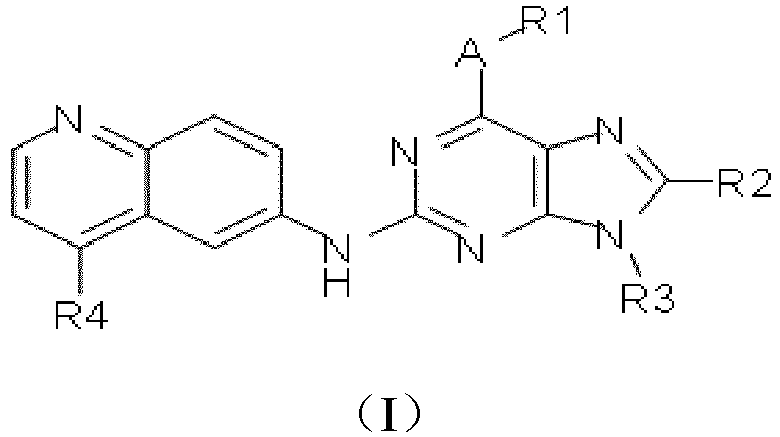 wherein, R1 represents unsubstituted C1∼C6 straight or branched alkyl; or C1∼C6 straight or branched alkyl substituted by methoxyl, C3∼C6-cycloalkyl, hydroxyl or amino; or unsubstituted C3∼C6-cycloalkyl; or C3∼C6-cycloalkyl substituted by carboxylic carbomethoxy or carboxylic; or phenyl substituted by methoxy;R2 is H;R3 represents H, tetrahydropyrane, trifluoroethyl, piperidyl;R4 represents H, unsubstituted C1∼C6 straight alkyl; unsubstituted C3-C6 cycloalkyl; unsubstituted phenyl; phenyl substituted by carboxylic carbomethoxy, C1∼C6 straight alkoxy, bis-C1∼C6 straight alkoxy, C1∼C6 straight alkyl sulphanyl or halogen atoms; 1,3-benzodioxol; unsubstituted morpholinyl; unsubstituted piperazinyl; or piperazinyl substituted by methyl;A represents O.
 - The substituted purine derivatives or pharmaceutical salts or hydrate thereof according to claim 1, characterized in that R4 represents methyl, ethyl, cyclopropyl, phenyl, o-methoxyphenyl, m-methoxyphenyl, p-methoxyphenyl, m-ethoxyphenyl, dimethoxyphenyl, m-fluorophenyl, p-fluorophenyl, 1, 3-benzodioxol, morpholinyl, piperazinyl and methylpiperazinyl.
- The substituted purine derivatives or pharmaceutical salts or hydrates thereof according to claim 1, characterized in that the compounds of formula (I) are selected from the following compounds:3) N-(6-isopropoxy-9H-purine-2-yl) quinoline-6-amine;4) N-(6-Cyclopentyloxy-9H- purine-2-yl) quinoline-6-amine;5) N-(6-isopropoxy-9H-purine-2-yl)-4-(phenyl-1-yl)quinoline-6-amine;6)N-(6-isopropoxy-9H-purine-2-yl)-4-(phenyl-1-yl)quinoline-6-amine-methane sulfo nate;11) 4-[1,3]benzodioxol-5-yl)-N-(6-isopropoxy-9H-purine-2-yl)quinoline-6-amine-methane sulfo nate;13) 4-(3-fluorophenyl)-N-(6-isopropoxy-9H-purine-2-yl)quinoline-6-amine-methane sulfo nate;14) 4-(4-fluorophenyl)-N-(6-isopropoxy-9H-purine-2-yl)quinoline-6-amine-methane sulfo nate;15) 4-(3, 4-dimethoxy phenyl)-N-(6-isopropoxy-9H-purine-2-yl)quinoline-6-amine-methanesulfonate;17) N-(6-isopropoxy-9H-purine-2-yl)-4-(piperazine-1-yl)quinoline-6-amine-methane sulfo nate;18) N-(6-isopropoxy-9H-purine-2-yl)-4-(4-methyl piperazine-1-yl)quinoline-6-amine-methanesulfonate;24) N-(6-phenoxy-9H-purine-2-yl)-4-(piperazine-1-yl)quinoline-6-amine;25) N-(6-isopropoxy-9H-purine-2-yl)-4-(piperazine-1-yl)quinoline-6-amine;48) N-(6-cyclobutoxy-9H-purine-2-yl) quinoline-6-amine;49) N-(6-cyclobutoxy-9H-purine-2-yl)-4-phenyl quinoline-6-amine;53) N-(6-isopropoxy-9H-purine-2-yl)quinoline-6-amine;54) N-(6-(pentyl-3-yl oxyl)-9H-purine-2-yl)-4-phenyl quinoline-6-amine;56) N-(6-cyclohexyloxy-9H-purine-2-yl)-4-phenyl quinoline-6-amine;57)N-(6-isopropoxy-9H-purine-2-yl)-4-phenyl quinoline-6-amine dihydrate dimethane- sulfo nate;
- Substituted purine derivatives or pharmaceutical salts or hydrates thereof characterized by a compound selected from one of the following compounds: 10) 2-(4-(4-methoxyphenyl) quinoline-6-yl amino)-9H-purine-6-ol-methanesulfonate;12) 2-(4-(3-methoxy phenyl) quinoline-6-yl amino) 9H-purine-6-ol-methanesulfonate;16) 2-(4-([1,3]benzodioxol-5-yl)quinoline-6-yl amino)-9H-purine-6-ol-methane sulfo nate;60) 2-(4-phenyl quinoline-6-yl amino)-9H-purine-6-ol.
- A pharmaceutical composition, characterized in that the pharmaceutical composition is consisting of the compounds or pharmaceutical salts or hydrates thereof according to any one of claims 1-4 and a pharmaceutical acceptable excipient.
- The pharmaceutical composition according to claim 5, characterized in that the salt is acidic addition salts produced by organic acid or inorganic acid, or the salt is alkaline addition salts produced by organic alkali or inorganic alkali; the acid is hydrochloric acid, sulfuric acid, hydrobromic acid, methanesulfonic acid, benzenesulfonic acid, p-toluenesulfonic acid, maleic acid, fumaric acid, lactic acid, citric acid.
- The pharmaceutical composition according to claim 5 or 6, is characterized in that the pharmaceutical composition is in the form of a tablet, a capsule, a pill, an oral liquid preparation, a granule, a powder, an injection, an implant or an external preparation.
- The compounds according to any one of claims 1-4 for use in treating tumor diseases.
- The compounds according to claim 8, is characterized in that the tumor diseases include lung cancer, liver cancer, leukemia, osteocarcinoma, pancreas cancer, skin cancer, melanoma, metrocarcinoma, oophoroma, rectal carcinoma, gastric carcinoma, colon cancer, breast carcinoma, salpingo carcinoma, endometrium carcinoma, cervix carcinoma, vagina carcinoma, carcinoma of vulva, esophagus carcinoma, small intestine carcinoma, endocrinium carcinoma, soft tissue sarcoma, urethra carcinoma, prostatic cancer, lymphocytoma, bladder cancer, kidney or ureter cancer, tumors of vertebral column, tumors in the neuroglia of the brain, and pituitary adenoma.
- A preparation method of compounds or pharmaceutical salts or hydrate thereof according to any one of claims 1-3, is characterized in that, the method includs the following steps:1) reacting compound (a) with R3 under catalysis of catalyst p-toluene sulfonic acid or pyridine salt of p-toluene sulfonic acid, and then condensating with HA-R1 to obtain compound (b) at temperature of 20 ∼ 100°C in the presence of depickling solvent such as triethylamine, sodium carbonate, potassium carbonate or sodium bicarbonate;
 2) undergoing catalytic coupling reaction of compounds (b) and (c) with catalyst, ligand, alkali, aprotic solvent at temperature of 15∼150°C and then forming salts with acids to obtain compound (d),

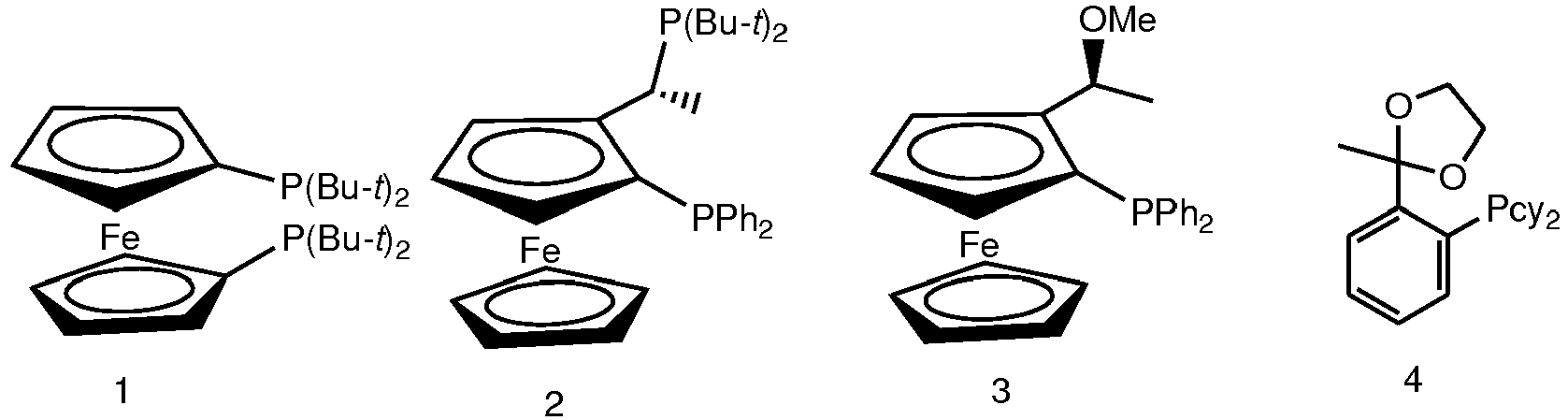


the alkali is sodium tert-butoxide, potassium tert-butoxide, potassium carbonate, cesium carbonate and tripotassium phosphate;
the acid in salt-forming with acids is selected from any one or its combination of hydrochloric acid, sulphuric acid, hydrobromic acid, methanesulfonic acid, benzenesulfonic acid, paratoluenesulfonic acid, maleic acid, fumaric acid, lactic acid, citric acid;3) neutralizing compound (d) with sodium carbonate, potassium carbonate, sodium hydroxide or potassium hydroxide to produce the compound (I);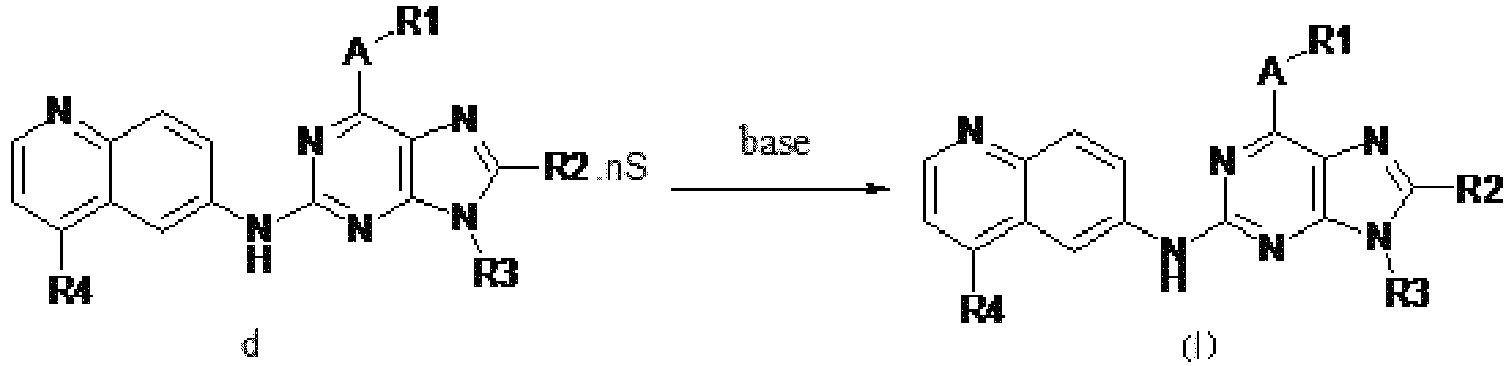 wherein, R1 represents unsubstituted C1∼C6 straight or branched alkyl; or C1∼C6 straight or branched alkyl substituted by methoxyl, C3∼C6-cycloalkyl, hydroxyl or amino; or unsubstituted C3∼C6-cycloalkyl; or C3∼C6-cycloalkyl substituted by carboxylic carbomethoxy or carboxylic; or phenyl substituted by methoxy ;R2 is H;R3 is H, 2,3-dihydropyrane, trifluoroethyl or piperidyl;R4 represents H, unsubstituted C1∼C6 straight alkyl; unsubstituted C3-C6 cycloalkyl; unsubstituted phenyl, phenyl substituted by carboxylic carbomethoxy, C1∼C6 straight alkoxy, bis-C1∼C6 straight alkoxy, C1∼C6 straight alkyl sulphanyl or halogen atoms; 1,3-benzodioxol; unsubstituted morpholinyl; unsubstituted piperazinyl; or piperazinyl substituted by methyl;A represents O.
 - The preparation method according to claim 10, characterized in that the reacting molar ratio of compound (a) to R3 is 1:1-5, the molar ratio of the compound (a) to compound HA-R1 is 1:1-5, the temperature of condensation reaction is 40-60 °C.
- The preparation method according to claim 10, characterized in that the molar ratio of compound (b) to compound (c) is 1:0.5-2; the temperature of catalytic coupling reaction is 55∼120°C or using microwave heating; the aprotic solvent is selected from any one or its combination of tetrahydrofuran, isopropyl ether, glycol dimethyl ether, dioxane, pyridine, 1-methyl-2-pyrrolidone (NMP), 1,3-dimethyltrimethylene urea (DMPU), toluene or xylene.
- The preparation method of the compounds or pharmaceutical salts or hydrate thereof according to claim 10 characterized in that the molar ratio of compound (b) to acid is 1:1-10, wherein the acid is hydrochloric acid, sulfuric acid, hydrobromic acid, methanesulfonic acid, benzenesulfonic acid, paratoluenesulfonic acid, maleic acid, fumaric acid, lactic acid, citric acid.
Applications Claiming Priority (3)
| Application Number | Priority Date | Filing Date | Title |
|---|---|---|---|
| CN201310388308 | 2013-08-30 | ||
| CN201410417725.0A CN104418858B (en) | 2013-08-30 | 2014-08-22 | Nitrogenous substituted purine derivative of 2,6- bis- and preparation method thereof and its pharmaceutical composition and application |
| PCT/CN2014/000799 WO2015027667A1 (en) | 2013-08-30 | 2014-08-27 | 2, 6-di-nitrogen-containing substituted purine derivative, and preparation method, pharmaceutical composition and use thereof |
Publications (3)
| Publication Number | Publication Date |
|---|---|
| EP3040337A1 EP3040337A1 (en) | 2016-07-06 |
| EP3040337A4 EP3040337A4 (en) | 2017-01-18 |
| EP3040337B1 true EP3040337B1 (en) | 2019-04-17 |
Family
ID=52585483
Family Applications (1)
| Application Number | Title | Priority Date | Filing Date |
|---|---|---|---|
| EP14840599.6A Active EP3040337B1 (en) | 2013-08-30 | 2014-08-27 | 2, 6-di-nitrogen-containing substituted purine derivative, and preparation method, pharmaceutical composition and use thereof |
Country Status (6)
| Country | Link |
|---|---|
| US (1) | US9718823B2 (en) |
| EP (1) | EP3040337B1 (en) |
| JP (1) | JP2016529260A (en) |
| CN (1) | CN104418858B (en) |
| ES (1) | ES2731333T3 (en) |
| WO (1) | WO2015027667A1 (en) |
Families Citing this family (5)
| Publication number | Priority date | Publication date | Assignee | Title |
|---|---|---|---|---|
| US20220072002A1 (en) * | 2018-12-24 | 2022-03-10 | Chia Tai Tianqing Pharmaceuticalgroup Co., Ltd. | Treatment use of pyrrolopyrimidine compound, and solid pharmaceutical composition of pyrrolopyrimidine compound |
| WO2021146127A1 (en) * | 2020-01-13 | 2021-07-22 | Zhanggui Wu | Use of n2-quincline or isoquinoline substituted purine derivatives in cancer treatment |
| CN115551518B (en) * | 2020-05-07 | 2023-10-24 | 上海华禹生物科技有限公司 | Using N 2 Combination therapy for cancer of quinoline or isoquinoline substituted purine derivatives |
| EP4237423B1 (en) | 2020-11-02 | 2024-12-11 | Boehringer Ingelheim International GmbH | Substituted 1h-pyrazolo[4,3-c]pyridines and derivatives as egfr inhibitors |
| WO2023071998A1 (en) * | 2021-10-26 | 2023-05-04 | 杭州德睿智药科技有限公司 | Novel pyrido or triazine-substituted pyrido heterocyclic compound |
Family Cites Families (18)
| Publication number | Priority date | Publication date | Assignee | Title |
|---|---|---|---|---|
| DE3529497A1 (en) | 1985-08-17 | 1987-02-26 | Boehringer Mannheim Gmbh | N (ARROW HIGH) 6 (ARROW HIGH) -DISUBSTITUTED PURINE DERIVATIVES, METHOD FOR THE PRODUCTION THEREOF AND MEDICINAL PRODUCTS CONTAINING THESE COMPOUNDS |
| EP1192824B1 (en) | 1999-07-05 | 2011-10-19 | TeleCommunication Systems, Inc. | A method of transmitting data items to a number of mobile stations, a mobile station, and a storage module |
| GB9918035D0 (en) * | 1999-07-30 | 1999-09-29 | Novartis Ag | Organic compounds |
| JP2003055377A (en) | 2001-08-16 | 2003-02-26 | Mitsui Chemicals Inc | Method for producing 2-amino-6-cyclopropylamino-9h- purine |
| JP2003119197A (en) | 2001-10-15 | 2003-04-23 | Mitsui Chemicals Inc | Method for producing 2-amino-6-cyclopropylamino-9h- purine |
| AR038703A1 (en) | 2002-02-28 | 2005-01-26 | Novartis Ag | DERIVATIVES OF 5-PHENYLTIAZOL AND USE AS AN INHIBITOR OF QUINASA P I 3 |
| MXPA06001758A (en) * | 2003-08-15 | 2006-08-11 | Irm Llc | 6-substituted anilino purines as rtk inhibitors. |
| GB0407723D0 (en) * | 2004-04-05 | 2004-05-12 | Novartis Ag | Organic compounds |
| EP1761540B1 (en) | 2004-05-13 | 2016-09-28 | Icos Corporation | Quinazolinones as inhibitors of human phosphatidylinositol 3-kinase delta |
| GB0423653D0 (en) | 2004-10-25 | 2004-11-24 | Piramed Ltd | Pharmaceutical compounds |
| GB0510390D0 (en) | 2005-05-20 | 2005-06-29 | Novartis Ag | Organic compounds |
| CN100526315C (en) * | 2005-06-16 | 2009-08-12 | 浙江医药股份有限公司新昌制药厂 | N2-quinoline or isoquinoline substituted purine derivative and its preparation method and uses |
| AU2006302179C1 (en) | 2005-10-07 | 2013-06-20 | Exelixis, Inc. | N- (3-amino-quinoxalin-2-yl) -sulfonamide derivatives and their use as phosphatidylinositol 3-kinase inhibitors |
| CN101148448B (en) * | 2006-09-20 | 2010-08-04 | 浙江医药股份有限公司新昌制药厂 | Method for preparing N2-quinoline substituted purine derivative |
| CN101289449A (en) * | 2007-04-20 | 2008-10-22 | 浙江医药股份有限公司新昌制药厂 | 2, 6-dinitrogen-containing substituted purine derivative and preparation method and application thereof |
| PE20090717A1 (en) | 2007-05-18 | 2009-07-18 | Smithkline Beecham Corp | QUINOLINE DERIVATIVES AS PI3 KINASE INHIBITORS |
| US20110106113A1 (en) | 2007-07-13 | 2011-05-05 | The Brigham And Women's Hospital, Inc. | System and method for hernia mesh fixation |
| AU2013207712B2 (en) * | 2012-01-13 | 2017-08-31 | Acea Biosciences Inc. | Heterocyclic compounds and uses as anticancer agents. |
-
2014
- 2014-08-22 CN CN201410417725.0A patent/CN104418858B/en active Active
- 2014-08-27 ES ES14840599T patent/ES2731333T3/en active Active
- 2014-08-27 EP EP14840599.6A patent/EP3040337B1/en active Active
- 2014-08-27 US US14/914,674 patent/US9718823B2/en active Active
- 2014-08-27 JP JP2016537087A patent/JP2016529260A/en active Pending
- 2014-08-27 WO PCT/CN2014/000799 patent/WO2015027667A1/en not_active Ceased
Non-Patent Citations (1)
| Title |
|---|
| None * |
Also Published As
| Publication number | Publication date |
|---|---|
| US20160207924A1 (en) | 2016-07-21 |
| JP2016529260A (en) | 2016-09-23 |
| EP3040337A1 (en) | 2016-07-06 |
| CN104418858B (en) | 2018-12-11 |
| WO2015027667A1 (en) | 2015-03-05 |
| CN104418858A (en) | 2015-03-18 |
| ES2731333T3 (en) | 2019-11-15 |
| EP3040337A4 (en) | 2017-01-18 |
| US9718823B2 (en) | 2017-08-01 |
Similar Documents
| Publication | Publication Date | Title |
|---|---|---|
| CN119039237B (en) | A quinazolinamine compound, its preparation method and application | |
| EP2086979B1 (en) | Imidazo[1,2-b]pyridazine and pyrazolo[1,5-a]pyrimidine derivatives and their use as protein kinase inhibitors | |
| AU2001239414B2 (en) | 4-amino-5-cyano-2-anilino-pyrimidine derivatives and their use as inhibitors of cell-cycle kinases | |
| JP5662564B2 (en) | Arylaminopurine derivatives, methods for their preparation and use as pharmaceuticals | |
| CN103588792B (en) | Pyridopyrimidine or pyrimidopyrimidine compound, preparation method thereof, pharmaceutical composition and application thereof | |
| CA3188077A1 (en) | Egfr inhibitor, preparation method therefor and application thereof | |
| EP3722292A1 (en) | Novel pyrimidine derivative having effect of inhibiting cancer cell growth and pharmaceutical composition containing same | |
| KR20050091462A (en) | Furopyrimidine compound and ddr2 tyrosine kinase activity inhibitor comprising the same | |
| KR20070009546A (en) | Pyrazolo[1,5-a]pyrimidin-7-yl-amine derivatives for use in the treatment of protein kinase dependent diseases | |
| EP2896620A1 (en) | Alkynyl heteroaromatic ring compound and application thereof | |
| US9718823B2 (en) | 2, 6-Di-nitrogen-containing substituted purine derivative, and preparation method, pharmaceutical composition and use thereof | |
| CN110357885A (en) | A kind of pteridine compounds and its application pharmaceutically | |
| KR20090015978A (en) | Inhibitors of APT (protein kinase VII) | |
| EP3476846A1 (en) | Novel heterocyclic derivative compound and use thereof | |
| CN116813621A (en) | 9H purine compounds and pharmaceutical compositions and uses thereof | |
| Qi et al. | Discovery of thiazolidin-4-one urea analogues as novel multikinase inhibitors that potently inhibit FLT3 and VEGFR2 | |
| EP1870414A1 (en) | Thienopyridine derivative, or quinoline derivative, or quinazoline derivative, having c-met autophosphorylation inhibiting potency | |
| CN105153190B (en) | Heterocycle miazines compound of the amide structure containing biaryl and its preparation method and application | |
| EP1469809B1 (en) | Multiple acting anti-angiogenic and cytotoxic compounds and methods for using the same | |
| TW201427958A (en) | Aryl amine substituted pyrimidine and quinazoline and their use as anticancer drugs | |
| CN115746023B (en) | Heterocyclic macrocyclic compound containing indazole structure as protein kinase inhibitor and preparation method thereof | |
| Geng et al. | Design, synthesis and preliminary biological evaluation of 5, 8-dihydropteridine-6, 7-diones that induce apoptosis and suppress cell migration | |
| WO2020077944A1 (en) | Purine derivative, preparation method therefor and use thereof | |
| CN110357852B (en) | Benzopyrimidine compounds, preparation method and application | |
| CN117800953A (en) | A kind of 2-aromatic aminopyrimidine compound and its preparation method and application |
Legal Events
| Date | Code | Title | Description |
|---|---|---|---|
| PUAI | Public reference made under article 153(3) epc to a published international application that has entered the european phase |
Free format text: ORIGINAL CODE: 0009012 |
|
| 17P | Request for examination filed |
Effective date: 20160329 |
|
| AK | Designated contracting states |
Kind code of ref document: A1 Designated state(s): AL AT BE BG CH CY CZ DE DK EE ES FI FR GB GR HR HU IE IS IT LI LT LU LV MC MK MT NL NO PL PT RO RS SE SI SK SM TR |
|
| AX | Request for extension of the european patent |
Extension state: BA ME |
|
| DAX | Request for extension of the european patent (deleted) | ||
| A4 | Supplementary search report drawn up and despatched |
Effective date: 20161219 |
|
| RIC1 | Information provided on ipc code assigned before grant |
Ipc: C07D 473/16 20060101AFI20161213BHEP Ipc: A61P 35/00 20060101ALI20161213BHEP Ipc: A61K 31/52 20060101ALI20161213BHEP Ipc: C07D 473/18 20060101ALI20161213BHEP Ipc: A61K 31/5377 20060101ALI20161213BHEP |
|
| STAA | Information on the status of an ep patent application or granted ep patent |
Free format text: STATUS: EXAMINATION IS IN PROGRESS |
|
| 17Q | First examination report despatched |
Effective date: 20180202 |
|
| GRAP | Despatch of communication of intention to grant a patent |
Free format text: ORIGINAL CODE: EPIDOSNIGR1 |
|
| STAA | Information on the status of an ep patent application or granted ep patent |
Free format text: STATUS: GRANT OF PATENT IS INTENDED |
|
| INTG | Intention to grant announced |
Effective date: 20181017 |
|
| GRAJ | Information related to disapproval of communication of intention to grant by the applicant or resumption of examination proceedings by the epo deleted |
Free format text: ORIGINAL CODE: EPIDOSDIGR1 |
|
| GRAL | Information related to payment of fee for publishing/printing deleted |
Free format text: ORIGINAL CODE: EPIDOSDIGR3 |
|
| GRAS | Grant fee paid |
Free format text: ORIGINAL CODE: EPIDOSNIGR3 |
|
| STAA | Information on the status of an ep patent application or granted ep patent |
Free format text: STATUS: EXAMINATION IS IN PROGRESS |
|
| GRAR | Information related to intention to grant a patent recorded |
Free format text: ORIGINAL CODE: EPIDOSNIGR71 |
|
| STAA | Information on the status of an ep patent application or granted ep patent |
Free format text: STATUS: GRANT OF PATENT IS INTENDED |
|
| GRAA | (expected) grant |
Free format text: ORIGINAL CODE: 0009210 |
|
| STAA | Information on the status of an ep patent application or granted ep patent |
Free format text: STATUS: THE PATENT HAS BEEN GRANTED |
|
| INTC | Intention to grant announced (deleted) | ||
| INTG | Intention to grant announced |
Effective date: 20190306 |
|
| AK | Designated contracting states |
Kind code of ref document: B1 Designated state(s): AL AT BE BG CH CY CZ DE DK EE ES FI FR GB GR HR HU IE IS IT LI LT LU LV MC MK MT NL NO PL PT RO RS SE SI SK SM TR |
|
| REG | Reference to a national code |
Ref country code: GB Ref legal event code: FG4D |
|
| REG | Reference to a national code |
Ref country code: CH Ref legal event code: EP |
|
| REG | Reference to a national code |
Ref country code: DE Ref legal event code: R096 Ref document number: 602014045059 Country of ref document: DE |
|
| REG | Reference to a national code |
Ref country code: AT Ref legal event code: REF Ref document number: 1121423 Country of ref document: AT Kind code of ref document: T Effective date: 20190515 Ref country code: IE Ref legal event code: FG4D |
|
| REG | Reference to a national code |
Ref country code: NL Ref legal event code: MP Effective date: 20190417 |
|
| REG | Reference to a national code |
Ref country code: LT Ref legal event code: MG4D |
|
| PG25 | Lapsed in a contracting state [announced via postgrant information from national office to epo] |
Ref country code: NL Free format text: LAPSE BECAUSE OF FAILURE TO SUBMIT A TRANSLATION OF THE DESCRIPTION OR TO PAY THE FEE WITHIN THE PRESCRIBED TIME-LIMIT Effective date: 20190417 |
|
| PG25 | Lapsed in a contracting state [announced via postgrant information from national office to epo] |
Ref country code: NO Free format text: LAPSE BECAUSE OF FAILURE TO SUBMIT A TRANSLATION OF THE DESCRIPTION OR TO PAY THE FEE WITHIN THE PRESCRIBED TIME-LIMIT Effective date: 20190717 Ref country code: HR Free format text: LAPSE BECAUSE OF FAILURE TO SUBMIT A TRANSLATION OF THE DESCRIPTION OR TO PAY THE FEE WITHIN THE PRESCRIBED TIME-LIMIT Effective date: 20190417 Ref country code: SE Free format text: LAPSE BECAUSE OF FAILURE TO SUBMIT A TRANSLATION OF THE DESCRIPTION OR TO PAY THE FEE WITHIN THE PRESCRIBED TIME-LIMIT Effective date: 20190417 Ref country code: FI Free format text: LAPSE BECAUSE OF FAILURE TO SUBMIT A TRANSLATION OF THE DESCRIPTION OR TO PAY THE FEE WITHIN THE PRESCRIBED TIME-LIMIT Effective date: 20190417 Ref country code: AL Free format text: LAPSE BECAUSE OF FAILURE TO SUBMIT A TRANSLATION OF THE DESCRIPTION OR TO PAY THE FEE WITHIN THE PRESCRIBED TIME-LIMIT Effective date: 20190417 Ref country code: PT Free format text: LAPSE BECAUSE OF FAILURE TO SUBMIT A TRANSLATION OF THE DESCRIPTION OR TO PAY THE FEE WITHIN THE PRESCRIBED TIME-LIMIT Effective date: 20190817 Ref country code: LT Free format text: LAPSE BECAUSE OF FAILURE TO SUBMIT A TRANSLATION OF THE DESCRIPTION OR TO PAY THE FEE WITHIN THE PRESCRIBED TIME-LIMIT Effective date: 20190417 |
|
| PG25 | Lapsed in a contracting state [announced via postgrant information from national office to epo] |
Ref country code: BG Free format text: LAPSE BECAUSE OF FAILURE TO SUBMIT A TRANSLATION OF THE DESCRIPTION OR TO PAY THE FEE WITHIN THE PRESCRIBED TIME-LIMIT Effective date: 20190717 Ref country code: RS Free format text: LAPSE BECAUSE OF FAILURE TO SUBMIT A TRANSLATION OF THE DESCRIPTION OR TO PAY THE FEE WITHIN THE PRESCRIBED TIME-LIMIT Effective date: 20190417 Ref country code: LV Free format text: LAPSE BECAUSE OF FAILURE TO SUBMIT A TRANSLATION OF THE DESCRIPTION OR TO PAY THE FEE WITHIN THE PRESCRIBED TIME-LIMIT Effective date: 20190417 Ref country code: PL Free format text: LAPSE BECAUSE OF FAILURE TO SUBMIT A TRANSLATION OF THE DESCRIPTION OR TO PAY THE FEE WITHIN THE PRESCRIBED TIME-LIMIT Effective date: 20190417 Ref country code: GR Free format text: LAPSE BECAUSE OF FAILURE TO SUBMIT A TRANSLATION OF THE DESCRIPTION OR TO PAY THE FEE WITHIN THE PRESCRIBED TIME-LIMIT Effective date: 20190718 |
|
| REG | Reference to a national code |
Ref country code: AT Ref legal event code: MK05 Ref document number: 1121423 Country of ref document: AT Kind code of ref document: T Effective date: 20190417 |
|
| PG25 | Lapsed in a contracting state [announced via postgrant information from national office to epo] |
Ref country code: IS Free format text: LAPSE BECAUSE OF FAILURE TO SUBMIT A TRANSLATION OF THE DESCRIPTION OR TO PAY THE FEE WITHIN THE PRESCRIBED TIME-LIMIT Effective date: 20190817 |
|
| REG | Reference to a national code |
Ref country code: DE Ref legal event code: R097 Ref document number: 602014045059 Country of ref document: DE |
|
| PG25 | Lapsed in a contracting state [announced via postgrant information from national office to epo] |
Ref country code: SK Free format text: LAPSE BECAUSE OF FAILURE TO SUBMIT A TRANSLATION OF THE DESCRIPTION OR TO PAY THE FEE WITHIN THE PRESCRIBED TIME-LIMIT Effective date: 20190417 Ref country code: RO Free format text: LAPSE BECAUSE OF FAILURE TO SUBMIT A TRANSLATION OF THE DESCRIPTION OR TO PAY THE FEE WITHIN THE PRESCRIBED TIME-LIMIT Effective date: 20190417 Ref country code: DK Free format text: LAPSE BECAUSE OF FAILURE TO SUBMIT A TRANSLATION OF THE DESCRIPTION OR TO PAY THE FEE WITHIN THE PRESCRIBED TIME-LIMIT Effective date: 20190417 Ref country code: AT Free format text: LAPSE BECAUSE OF FAILURE TO SUBMIT A TRANSLATION OF THE DESCRIPTION OR TO PAY THE FEE WITHIN THE PRESCRIBED TIME-LIMIT Effective date: 20190417 Ref country code: EE Free format text: LAPSE BECAUSE OF FAILURE TO SUBMIT A TRANSLATION OF THE DESCRIPTION OR TO PAY THE FEE WITHIN THE PRESCRIBED TIME-LIMIT Effective date: 20190417 Ref country code: CZ Free format text: LAPSE BECAUSE OF FAILURE TO SUBMIT A TRANSLATION OF THE DESCRIPTION OR TO PAY THE FEE WITHIN THE PRESCRIBED TIME-LIMIT Effective date: 20190417 |
|
| PLBE | No opposition filed within time limit |
Free format text: ORIGINAL CODE: 0009261 |
|
| STAA | Information on the status of an ep patent application or granted ep patent |
Free format text: STATUS: NO OPPOSITION FILED WITHIN TIME LIMIT |
|
| PG25 | Lapsed in a contracting state [announced via postgrant information from national office to epo] |
Ref country code: SM Free format text: LAPSE BECAUSE OF FAILURE TO SUBMIT A TRANSLATION OF THE DESCRIPTION OR TO PAY THE FEE WITHIN THE PRESCRIBED TIME-LIMIT Effective date: 20190417 |
|
| 26N | No opposition filed |
Effective date: 20200120 |
|
| PG25 | Lapsed in a contracting state [announced via postgrant information from national office to epo] |
Ref country code: TR Free format text: LAPSE BECAUSE OF FAILURE TO SUBMIT A TRANSLATION OF THE DESCRIPTION OR TO PAY THE FEE WITHIN THE PRESCRIBED TIME-LIMIT Effective date: 20190417 |
|
| PG25 | Lapsed in a contracting state [announced via postgrant information from national office to epo] |
Ref country code: LU Free format text: LAPSE BECAUSE OF NON-PAYMENT OF DUE FEES Effective date: 20190827 Ref country code: SI Free format text: LAPSE BECAUSE OF FAILURE TO SUBMIT A TRANSLATION OF THE DESCRIPTION OR TO PAY THE FEE WITHIN THE PRESCRIBED TIME-LIMIT Effective date: 20190417 Ref country code: LI Free format text: LAPSE BECAUSE OF NON-PAYMENT OF DUE FEES Effective date: 20190831 Ref country code: CH Free format text: LAPSE BECAUSE OF NON-PAYMENT OF DUE FEES Effective date: 20190831 Ref country code: MC Free format text: LAPSE BECAUSE OF FAILURE TO SUBMIT A TRANSLATION OF THE DESCRIPTION OR TO PAY THE FEE WITHIN THE PRESCRIBED TIME-LIMIT Effective date: 20190417 |
|
| REG | Reference to a national code |
Ref country code: BE Ref legal event code: MM Effective date: 20190831 |
|
| PG25 | Lapsed in a contracting state [announced via postgrant information from national office to epo] |
Ref country code: IE Free format text: LAPSE BECAUSE OF NON-PAYMENT OF DUE FEES Effective date: 20190827 |
|
| PG25 | Lapsed in a contracting state [announced via postgrant information from national office to epo] |
Ref country code: BE Free format text: LAPSE BECAUSE OF NON-PAYMENT OF DUE FEES Effective date: 20190831 |
|
| PG25 | Lapsed in a contracting state [announced via postgrant information from national office to epo] |
Ref country code: CY Free format text: LAPSE BECAUSE OF FAILURE TO SUBMIT A TRANSLATION OF THE DESCRIPTION OR TO PAY THE FEE WITHIN THE PRESCRIBED TIME-LIMIT Effective date: 20190417 |
|
| PG25 | Lapsed in a contracting state [announced via postgrant information from national office to epo] |
Ref country code: MT Free format text: LAPSE BECAUSE OF FAILURE TO SUBMIT A TRANSLATION OF THE DESCRIPTION OR TO PAY THE FEE WITHIN THE PRESCRIBED TIME-LIMIT Effective date: 20190417 Ref country code: HU Free format text: LAPSE BECAUSE OF FAILURE TO SUBMIT A TRANSLATION OF THE DESCRIPTION OR TO PAY THE FEE WITHIN THE PRESCRIBED TIME-LIMIT; INVALID AB INITIO Effective date: 20140827 |
|
| PG25 | Lapsed in a contracting state [announced via postgrant information from national office to epo] |
Ref country code: MK Free format text: LAPSE BECAUSE OF FAILURE TO SUBMIT A TRANSLATION OF THE DESCRIPTION OR TO PAY THE FEE WITHIN THE PRESCRIBED TIME-LIMIT Effective date: 20190417 |
|
| P01 | Opt-out of the competence of the unified patent court (upc) registered |
Effective date: 20230530 |
|
| PGFP | Annual fee paid to national office [announced via postgrant information from national office to epo] |
Ref country code: DE Payment date: 20240819 Year of fee payment: 11 |
|
| PGFP | Annual fee paid to national office [announced via postgrant information from national office to epo] |
Ref country code: GB Payment date: 20240717 Year of fee payment: 11 |
|
| PGFP | Annual fee paid to national office [announced via postgrant information from national office to epo] |
Ref country code: FR Payment date: 20240725 Year of fee payment: 11 |
|
| PGFP | Annual fee paid to national office [announced via postgrant information from national office to epo] |
Ref country code: ES Payment date: 20240918 Year of fee payment: 11 |
|
| PGFP | Annual fee paid to national office [announced via postgrant information from national office to epo] |
Ref country code: IT Payment date: 20240830 Year of fee payment: 11 |
|
| REG | Reference to a national code |
Ref country code: DE Ref legal event code: R119 Ref document number: 602014045059 Country of ref document: DE |
|
| GBPC | Gb: european patent ceased through non-payment of renewal fee |
Effective date: 20250827 |