EP3036314B1 - Method for manufacturing a dye scavenging substrate - Google Patents
Method for manufacturing a dye scavenging substrate Download PDFInfo
- Publication number
- EP3036314B1 EP3036314B1 EP14720624.7A EP14720624A EP3036314B1 EP 3036314 B1 EP3036314 B1 EP 3036314B1 EP 14720624 A EP14720624 A EP 14720624A EP 3036314 B1 EP3036314 B1 EP 3036314B1
- Authority
- EP
- European Patent Office
- Prior art keywords
- mpa
- substrate
- hours
- pressure
- rollers
- Prior art date
- Legal status (The legal status is an assumption and is not a legal conclusion. Google has not performed a legal analysis and makes no representation as to the accuracy of the status listed.)
- Not-in-force
Links
Images
Classifications
-
- D—TEXTILES; PAPER
- D06—TREATMENT OF TEXTILES OR THE LIKE; LAUNDERING; FLEXIBLE MATERIALS NOT OTHERWISE PROVIDED FOR
- D06P—DYEING OR PRINTING TEXTILES; DYEING LEATHER, FURS OR SOLID MACROMOLECULAR SUBSTANCES IN ANY FORM
- D06P5/00—Other features in dyeing or printing textiles, or dyeing leather, furs, or solid macromolecular substances in any form
- D06P5/22—Effecting variation of dye affinity on textile material by chemical means that react with the fibre
-
- C—CHEMISTRY; METALLURGY
- C11—ANIMAL OR VEGETABLE OILS, FATS, FATTY SUBSTANCES OR WAXES; FATTY ACIDS THEREFROM; DETERGENTS; CANDLES
- C11D—DETERGENT COMPOSITIONS; USE OF SINGLE SUBSTANCES AS DETERGENTS; SOAP OR SOAP-MAKING; RESIN SOAPS; RECOVERY OF GLYCEROL
- C11D17/00—Detergent materials or soaps characterised by their shape or physical properties
- C11D17/04—Detergent materials or soaps characterised by their shape or physical properties combined with or containing other objects
- C11D17/041—Compositions releasably affixed on a substrate or incorporated into a dispensing means
-
- C—CHEMISTRY; METALLURGY
- C11—ANIMAL OR VEGETABLE OILS, FATS, FATTY SUBSTANCES OR WAXES; FATTY ACIDS THEREFROM; DETERGENTS; CANDLES
- C11D—DETERGENT COMPOSITIONS; USE OF SINGLE SUBSTANCES AS DETERGENTS; SOAP OR SOAP-MAKING; RESIN SOAPS; RECOVERY OF GLYCEROL
- C11D17/00—Detergent materials or soaps characterised by their shape or physical properties
- C11D17/04—Detergent materials or soaps characterised by their shape or physical properties combined with or containing other objects
- C11D17/041—Compositions releasably affixed on a substrate or incorporated into a dispensing means
- C11D17/046—Insoluble free body dispenser
-
- C—CHEMISTRY; METALLURGY
- C11—ANIMAL OR VEGETABLE OILS, FATS, FATTY SUBSTANCES OR WAXES; FATTY ACIDS THEREFROM; DETERGENTS; CANDLES
- C11D—DETERGENT COMPOSITIONS; USE OF SINGLE SUBSTANCES AS DETERGENTS; SOAP OR SOAP-MAKING; RESIN SOAPS; RECOVERY OF GLYCEROL
- C11D17/00—Detergent materials or soaps characterised by their shape or physical properties
- C11D17/04—Detergent materials or soaps characterised by their shape or physical properties combined with or containing other objects
- C11D17/049—Cleaning or scouring pads; Wipes
-
- C—CHEMISTRY; METALLURGY
- C11—ANIMAL OR VEGETABLE OILS, FATS, FATTY SUBSTANCES OR WAXES; FATTY ACIDS THEREFROM; DETERGENTS; CANDLES
- C11D—DETERGENT COMPOSITIONS; USE OF SINGLE SUBSTANCES AS DETERGENTS; SOAP OR SOAP-MAKING; RESIN SOAPS; RECOVERY OF GLYCEROL
- C11D3/00—Other compounding ingredients of detergent compositions covered in group C11D1/00
- C11D3/0005—Other compounding ingredients characterised by their effect
- C11D3/0021—Dye-stain or dye-transfer inhibiting compositions
-
- C—CHEMISTRY; METALLURGY
- C11—ANIMAL OR VEGETABLE OILS, FATS, FATTY SUBSTANCES OR WAXES; FATTY ACIDS THEREFROM; DETERGENTS; CANDLES
- C11D—DETERGENT COMPOSITIONS; USE OF SINGLE SUBSTANCES AS DETERGENTS; SOAP OR SOAP-MAKING; RESIN SOAPS; RECOVERY OF GLYCEROL
- C11D3/00—Other compounding ingredients of detergent compositions covered in group C11D1/00
- C11D3/16—Organic compounds
- C11D3/26—Organic compounds containing nitrogen
- C11D3/30—Amines; Substituted amines ; Quaternized amines
-
- D—TEXTILES; PAPER
- D06—TREATMENT OF TEXTILES OR THE LIKE; LAUNDERING; FLEXIBLE MATERIALS NOT OTHERWISE PROVIDED FOR
- D06B—TREATING TEXTILE MATERIALS USING LIQUIDS, GASES OR VAPOURS
- D06B21/00—Successive treatments of textile materials by liquids, gases or vapours
-
- D—TEXTILES; PAPER
- D06—TREATMENT OF TEXTILES OR THE LIKE; LAUNDERING; FLEXIBLE MATERIALS NOT OTHERWISE PROVIDED FOR
- D06M—TREATMENT, NOT PROVIDED FOR ELSEWHERE IN CLASS D06, OF FIBRES, THREADS, YARNS, FABRICS, FEATHERS OR FIBROUS GOODS MADE FROM SUCH MATERIALS
- D06M13/00—Treating fibres, threads, yarns, fabrics or fibrous goods made from such materials, with non-macromolecular organic compounds; Such treatment combined with mechanical treatment
- D06M13/10—Treating fibres, threads, yarns, fabrics or fibrous goods made from such materials, with non-macromolecular organic compounds; Such treatment combined with mechanical treatment with compounds containing oxygen
- D06M13/11—Compounds containing epoxy groups or precursors thereof
-
- D—TEXTILES; PAPER
- D06—TREATMENT OF TEXTILES OR THE LIKE; LAUNDERING; FLEXIBLE MATERIALS NOT OTHERWISE PROVIDED FOR
- D06M—TREATMENT, NOT PROVIDED FOR ELSEWHERE IN CLASS D06, OF FIBRES, THREADS, YARNS, FABRICS, FEATHERS OR FIBROUS GOODS MADE FROM SUCH MATERIALS
- D06M13/00—Treating fibres, threads, yarns, fabrics or fibrous goods made from such materials, with non-macromolecular organic compounds; Such treatment combined with mechanical treatment
- D06M13/322—Treating fibres, threads, yarns, fabrics or fibrous goods made from such materials, with non-macromolecular organic compounds; Such treatment combined with mechanical treatment with compounds containing nitrogen
- D06M13/385—Treating fibres, threads, yarns, fabrics or fibrous goods made from such materials, with non-macromolecular organic compounds; Such treatment combined with mechanical treatment with compounds containing nitrogen containing epoxy groups
-
- D—TEXTILES; PAPER
- D06—TREATMENT OF TEXTILES OR THE LIKE; LAUNDERING; FLEXIBLE MATERIALS NOT OTHERWISE PROVIDED FOR
- D06M—TREATMENT, NOT PROVIDED FOR ELSEWHERE IN CLASS D06, OF FIBRES, THREADS, YARNS, FABRICS, FEATHERS OR FIBROUS GOODS MADE FROM SUCH MATERIALS
- D06M13/00—Treating fibres, threads, yarns, fabrics or fibrous goods made from such materials, with non-macromolecular organic compounds; Such treatment combined with mechanical treatment
- D06M13/322—Treating fibres, threads, yarns, fabrics or fibrous goods made from such materials, with non-macromolecular organic compounds; Such treatment combined with mechanical treatment with compounds containing nitrogen
- D06M13/46—Compounds containing quaternary nitrogen atoms
- D06M13/463—Compounds containing quaternary nitrogen atoms derived from monoamines
-
- D—TEXTILES; PAPER
- D06—TREATMENT OF TEXTILES OR THE LIKE; LAUNDERING; FLEXIBLE MATERIALS NOT OTHERWISE PROVIDED FOR
- D06M—TREATMENT, NOT PROVIDED FOR ELSEWHERE IN CLASS D06, OF FIBRES, THREADS, YARNS, FABRICS, FEATHERS OR FIBROUS GOODS MADE FROM SUCH MATERIALS
- D06M13/00—Treating fibres, threads, yarns, fabrics or fibrous goods made from such materials, with non-macromolecular organic compounds; Such treatment combined with mechanical treatment
- D06M13/322—Treating fibres, threads, yarns, fabrics or fibrous goods made from such materials, with non-macromolecular organic compounds; Such treatment combined with mechanical treatment with compounds containing nitrogen
- D06M13/46—Compounds containing quaternary nitrogen atoms
- D06M13/47—Compounds containing quaternary nitrogen atoms derived from heterocyclic compounds
-
- D—TEXTILES; PAPER
- D06—TREATMENT OF TEXTILES OR THE LIKE; LAUNDERING; FLEXIBLE MATERIALS NOT OTHERWISE PROVIDED FOR
- D06M—TREATMENT, NOT PROVIDED FOR ELSEWHERE IN CLASS D06, OF FIBRES, THREADS, YARNS, FABRICS, FEATHERS OR FIBROUS GOODS MADE FROM SUCH MATERIALS
- D06M13/00—Treating fibres, threads, yarns, fabrics or fibrous goods made from such materials, with non-macromolecular organic compounds; Such treatment combined with mechanical treatment
- D06M13/52—Treating fibres, threads, yarns, fabrics or fibrous goods made from such materials, with non-macromolecular organic compounds; Such treatment combined with mechanical treatment combined with mechanical treatment
- D06M13/525—Embossing; Calendering; Pressing
-
- D—TEXTILES; PAPER
- D06—TREATMENT OF TEXTILES OR THE LIKE; LAUNDERING; FLEXIBLE MATERIALS NOT OTHERWISE PROVIDED FOR
- D06M—TREATMENT, NOT PROVIDED FOR ELSEWHERE IN CLASS D06, OF FIBRES, THREADS, YARNS, FABRICS, FEATHERS OR FIBROUS GOODS MADE FROM SUCH MATERIALS
- D06M23/00—Treatment of fibres, threads, yarns, fabrics or fibrous goods made from such materials, characterised by the process
-
- D—TEXTILES; PAPER
- D06—TREATMENT OF TEXTILES OR THE LIKE; LAUNDERING; FLEXIBLE MATERIALS NOT OTHERWISE PROVIDED FOR
- D06M—TREATMENT, NOT PROVIDED FOR ELSEWHERE IN CLASS D06, OF FIBRES, THREADS, YARNS, FABRICS, FEATHERS OR FIBROUS GOODS MADE FROM SUCH MATERIALS
- D06M2101/00—Chemical constitution of the fibres, threads, yarns, fabrics or fibrous goods made from such materials, to be treated
- D06M2101/02—Natural fibres, other than mineral fibres
- D06M2101/04—Vegetal fibres
- D06M2101/06—Vegetal fibres cellulosic
-
- D—TEXTILES; PAPER
- D10—INDEXING SCHEME ASSOCIATED WITH SUBLASSES OF SECTION D, RELATING TO TEXTILES
- D10B—INDEXING SCHEME ASSOCIATED WITH SUBLASSES OF SECTION D, RELATING TO TEXTILES
- D10B2201/00—Cellulose-based fibres, e.g. vegetable fibres
- D10B2201/01—Natural vegetable fibres
- D10B2201/02—Cotton
-
- D—TEXTILES; PAPER
- D10—INDEXING SCHEME ASSOCIATED WITH SUBLASSES OF SECTION D, RELATING TO TEXTILES
- D10B—INDEXING SCHEME ASSOCIATED WITH SUBLASSES OF SECTION D, RELATING TO TEXTILES
- D10B2201/00—Cellulose-based fibres, e.g. vegetable fibres
- D10B2201/20—Cellulose-derived artificial fibres
- D10B2201/22—Cellulose-derived artificial fibres made from cellulose solutions
- D10B2201/24—Viscose
-
- D—TEXTILES; PAPER
- D10—INDEXING SCHEME ASSOCIATED WITH SUBLASSES OF SECTION D, RELATING TO TEXTILES
- D10B—INDEXING SCHEME ASSOCIATED WITH SUBLASSES OF SECTION D, RELATING TO TEXTILES
- D10B2401/00—Physical properties
- D10B2401/14—Dyeability
Definitions
- the present invention relates to a method for manufacturing a dye scavenging substrate.
- the invention therefore, provides a method for manufacturing a dye scavenging substrate which comprises the steps of:
- the alkaline solution comprises a basic solution comprising water and a base, preferably NaOH.
- the basic solution comprises water and the base in a respective ratio by weight of from about 10:90 to about 50:50, preferably from about 20:80 to about 40:60, more preferably about 30:70.
- the basic solution is a 30% solution of NaOH available under the trade name Caustic Soda Liquor from Micro-Bio (Ireland) Ltd, Industrial Estate, Fermoy, County Cork, Ireland.
- the compound is preferably a salt of epoxy propyl ammonium having the general formula (II), preferably glycidyltrimethylammonium chloride, also known as (2,3-epoxypropyl)trimethylammonium chloride, available in solid form or as a 72% aqueous solution from Sigma Aldrich, wherein R 4 , R 5 , R 6 are each methyl and Y" - is chloride.
- the alkaline solution preferably comprises the compound and the basic solution in a respective ratio by weight of from about 1:0.42 to about 1:0.83, preferably from about 1:0.56 to about 1:0.69, more preferably about 1:0.59. It will be appreciated that these ratios preferably refer to the compound in solid form.
- the alkaline solution preferably comprises the compound and the basic solution in a respective ratio by weight of about 1:0.42.
- the compound may be a compound of formula (I), for example 3-chloro-2-hydroxypropyltrimethylammonium chloride, available from Sigma Aldrich, wherein R 1 , R 2 , R 3 are each methyl, X' is chlorine, and Y' - is chloride.
- formula (I) for example 3-chloro-2-hydroxypropyltrimethylammonium chloride, available from Sigma Aldrich, wherein R 1 , R 2 , R 3 are each methyl, X' is chlorine, and Y' - is chloride.
- the alkaline solution is at a temperature of from about 10°C to about 30°C, more preferably about 20°C.
- the pressure is from about 0.05 MPa to about 0.35 MPa, more preferably from about 0.10 MPa to about 0.30 MPa, even more preferably from about 0.10 MPa to about 0.25 MPa, still more preferably from about 0.10 MPa to about 0.20 MPa, even more preferably from about 0.12 MPa to about 0.18 MPa, still more preferably about 0.13 MPa or about 0.14 MPa or about 0.15 MPa or about 0.16 MPa or about 0.17 MPa, most preferably about 0.16 M Pa.
- the pressure is obtained by passing the substrate between a pair of rollers, optionally pneumatically actuated rollers.
- the rollers are preferably nitrile rubber 70 shore hardness type rollers available from Downey Textile Machinery, Spurn Point, Manchester Road, Linthwaite, Huddersfield, West Yorkshire HD7 5RF, United Kingdom. It will, however, be appreciated that any other suitable type of rollers may be used.
- Step (c) may be carried out on a textile padder, e.g. a textile padder available from Downey Textile Machinery, details provided above, but it will be appreciated that step (c) is not limited to use with this particular apparatus.
- the substrate is passed through the rollers at a speed of from about 10 m.min -1 to about 60 m.min -1 , preferably from about 20 m.min -1 to about 60 m.min -1 , more preferably from about 30 m.min -1 to about 60 m.min -1 , even more preferably from about 40 m.min -1 to about 60 m.min -1 , still more preferably from about 50 m.min -1 to about 60 m.min -1 , especially about 55 m.min -1 .
- an air manifold is used to maintain constant and consistent air pressure across the substrate, to enable the substrate to pick up a consistent weight of the alkaline solution containing the dye scavenging compound, therefore enabling the substrate to demonstrate a consistent and repeatable dye scavenging performance.
- any suitable conventional air manifold may be used.
- the air manifold may be provided as part of the textile padder. However, it will be appreciated that the invention is not limited thereto.
- step (d) the substrate is rotated for a period of from about 24 hours to about 60 hours, more preferably from about 24 hours to about 48 hours, still more preferably from about 30 hours to about 48 hours, even more preferably from about 36 hours to about 48 hours, even more preferably from about 42 hours to about 48 hours, still more preferably about 43 or 44 or 45 or 46 or 47 or 48 hours, most preferably about 48 hours.
- This step of rotating the substrate is also known as the curing step.
- the substrate is rotated continuously on a roller.
- the temperature is from about 10°C to about 100°C, more preferably from about 10°C to about 50°C, more preferably from about 10°C to about 40°C, even more preferably from about 10°C to about 30°C, still more preferably from about 15°C to about 25°C, even more preferably about 20°C.
- the acid solution comprises water and a hydrochloric acid (HCl) solution, preferably a 11.6M HCl solution.
- the acid solution preferably has a pH from about 1.5 to about 2.5, more preferably a pH of 2.1.
- a pH probe is placed in the bath containing the acid solution in order to maintain the pH at 2.1.
- the pH probe conveniently signals the water requirement and this is dosed when required to give the correct pH automatically.
- the acid solution is at a temperature of from about 10°C to about 30°C, more preferably about 20°C.
- the pressure is from about 0.20 MPa to about 0.35 MPa, still more preferably from about 0.25 MPa to about 0.35 MPa, even more preferably from about 0.28 MPa to about 0.33 MPa, still more preferably about 0.29 MPa or about 0.30 MPa or about 0.31 MPa or about 0.32 MPa, most preferably about 0.30 MPa.
- step (f) the pressure is obtained by passing the substrate between a pair of rollers, optionally pneumatically actuated rollers.
- the rollers are preferably nitrile rubber 70 shore hardness type rollers available from Downey Textile Machinery, details provided above. It will, however, be appreciated that any other suitable type of rollers may be used.
- Step (f) may be carried out on a textile padder, e.g. a textile padder available from Downey Textile Machinery, details provided above, but it will be appreciated that step (f) is not limited to use with this particular apparatus.
- the substrate is passed through the rollers at a speed of from about 10 m.min -1 to about 60 m.min -1 , preferably from about 20 m.min -1 to about 60 m.min -1 , more preferably from about 30 m.min -1 to about 60 m.min -1 , even more preferably from about 40 m.min -1 to about 60 m.min -1 , still more preferably from about 50 m.min -1 to about 60 m.min -1 , especially about 55 m.min -1 .
- an air manifold is used to maintain constant and consistent air pressure across the substrate, to enable a consistent amount of liquid (neutralizing acid solution) to be squeezed from the substrate, thereby enabling the substrate to demonstrate a consistent and repeatable performance.
- liquid neutralizing acid solution
- any suitable conventional air manifold may be used.
- the air manifold may be provided as part of the textile padder. However, it will be appreciated that the invention is not limited thereto.
- the minimum pressure in step (f) is preferably higher than the minimum pressure in step (c), as in step (c), it is desirable to retain liquid (the alkaline solution containing the dye scavenging compound), to allow the liquid to react on the substrate, whereas in step (f), it is desirable to remove the liquid (the acid solution used to neutralize the alkaline solution containing the dye scavenging compound), prior to drying the substrate.
- the drying temperature is from about 95°C to about 125°C, preferably from about 100°C to about 120°C, most preferably about 115°C.
- the substrate is dried by passing the substrate along one or more drying cylinders, which drying cylinders are optionally at a temperature of from about 95°C to about 125°C, preferably from about 100°C to about 120°C, most preferably about 115°C.
- the drying cylinders may be drying cylinders sold under the trade name Prichard available from Downey Textile Machinery, details provided above, but it will be appreciated that the invention is not limited thereto.
- the method may comprise one or more of the additional steps of (f)(i) - (f)(iv):
- the method may comprise all steps (a) - (f), (f)(i) - (f)(iv), and (g).
- the first and second fresh water rinses take the form of a bath containing water, optionally at a temperature of from about 10°C to about 30°C, preferably about 20°C.
- the pressure is obtained by passing the substrate between a pair of rollers, optionally pneumatically actuated rollers. Details of suitable rollers are provided above, but it will be appreciated that the invention is not limited thereto.
- the pressure is approximately 0.2 MPa.
- the substrate is preferably passed through the rollers at a speed of from about 10 m.min -1 to about 60 m.min -1 , preferably from about 20 m.min -1 to about 60 m.min -1 , more preferably from about 30 m.min -1 to about 60 m.min -1 , even more preferably from about 40 m.min -1 to about 60 m.min -1 , still more preferably from about 50 m.min -1 to about 60 m.min -1 , especially about 55 m.min -1 .
- the absorbent substrate may be formed from any suitable material, and may be woven or non-woven.
- suitable materials include cellulosic materials such as viscose, cotton, wood pulp, paper, and mixtures thereof.
- the material may comprise a naturally occurring material or a synthetic material or a mixture thereof.
- the substrate may comprise a blend of viscose and cotton in a ratio by weight in the range of from about 70:30 to about 30:70, optionally from about 60:40 to about 40:60, further optionally about 50:50.
- the absorbent substrate may comprise a binder such as polyvinylacetate.
- a suitable substrate may be a substrate comprising viscose and cotton in a 50:50 ratio by weight, and optionally including a binder, as disclosed for example in International PCT Patent Publication No. WO-A-97/48789 .
- the substrate is not limited to being made from the above-listed materials, and be made from any other suitable material(s), cellulosic or otherwise.
- the dye scavenging compound (I) and/or (II) is preferably present in an amount of from about 4.4 g to about 5.5 g, more preferably from about 4.6 g to about 5.1 g, most preferably about 4.9 g per square metre of absorbent substrate.
- the dimensions of the substrate, once cut for use in a domestic wash, are approximately 25 cm x 12 cm. It will, however, be appreciated that any other suitable dimensions may be used.
- the amount of dye scavenging compound (I) and/or (II) provided on a 25 cm x 12 cm substrate is preferably from about 0.13 g to about 0.17 g, more preferably from about 0.133 g to about 0.16 g, even more preferably from about 0.138 g to about 0.153 g, most preferably about 0.150 g.
- the absorbent substrate material preferably has a weight of from about 40 g/m 2 to 200 g/m 2 , more preferably from about 55 g/m 2 to 80 g/m 2 , most preferably approximately 60 g/m 2 or 70 g/m 2 .
- rollers used in the method of the invention are preferably nitrile rubber 70 shore hardness type rollers available from Downey Textile Machinery, details provided above.
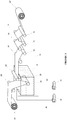
- FIG. 1 there is shown a first part of an apparatus 10 for use in the method of the invention which comprises a bath 11 containing rollers 12, 20, a pair of pneumatically operated rollers 13,14, and a series of rollers 16.
- the method is generally carried out as follows.
- a roll of absorbent substrate 15 is loaded onto a roller bar (not shown) of the first part of the apparatus 10.
- the substrate 15 is then fed via roller 20 into the bath 11 so as to pass beneath the roller 12 and out of the bath 11 to between the rollers 13,14.
- the bath 11 is charged with a basic solution as described above, via line 32.
- the bath 11 is charged with a dye scavenging compound solution as described above, via line 33.
- the rollers 13, 14 are set to provide a pressure of from about 0.04 MPa to about 0.40 MPa.
- the substrate 15 then passes along the series of rollers 16 along a convoluted pathway to finally emerge therefrom to be taken up by a take-up roller (not shown) so as to provide a partially treated substrate roll 15'.
- the partially treated substrate roll 15' is then removed from the apparatus 10, wrapped in a water impermeable material, replaced on the take-up roller, and rotated continuously on the take-up roller at a temperature of from about 10°C to about 100°C for a period of up to about 60 hours.
- This step of rotating the partially treated substrate roll 15' is referred to as the curing step.
- the water impermeable material may be a water impermeable film, for example derived from regenerated cellulose, such as Cellophane (trade mark), for example Cellophane available from Innovia Films Ltd, Wigton, Cumbria, United Kingdom.
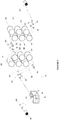
- FIG. 2 there is shown a second part of the apparatus 10, in which like components have been accorded like reference numerals and unless otherwise stated perform a like function to the components shown in Figure 1 .
- the partially treated substrate roll 15' is unwound from the take-up roller onto a roller bar (not shown) and then onto the roller 20' of the second part of the apparatus 10.
- the substrate 15' is fed via roller 20' into the bath 11' so as to pass beneath the roller 12', and out of the bath 11' to between the pneumatically operated rollers 13',14'.
- the bath 11' is charged with an acid solution as described above, by means of a pump (not shown) via a line (not shown).
- the substrate 15' then passes along the series of rollers 16' and drying cylinders 22 along a convoluted pathway to finally emerge therefrom to be taken up by a take-up roller (not shown) to provide a treated substrate roll 15", being the dye scavenging substrate.
- the drying cylinders 22 are preferably at a temperature of from about 95°C to about 125°C, to facilitate drying of the treated substrate 15".
- the thus produced substrate 15" is now stored and cut into appropriately sized pieces, preferably 25 cm x 12 cm.
- the substrate is preferably passed through the first and second parts of the apparatus 10 at a speed of from about 10 m.min -1 to about 60 m.min -1 .
- the second part of the apparatus 10 may be adapted to include a series of two baths containing water so as to provide first and second fresh water rinses.
- the one or more baths would be provided as part of the apparatus 10 after the bath 11' and before the rollers 16', so that the substrate 15' on leaving the bath 11' would pass between the rollers 13', 14' and then into a first bath containing water (not shown), out of the first bath and between a first set of pneumatically operated rollers (not shown), then into a second bath containing water (not shown), out of the second bath and between a second set of pneumatically actuated rollers (not shown).
- the substrate would then pass along the series of rollers 16' and drying cylinders 22 along the convoluted pathway to finally emerge and be taken up by the take-up roller (not shown) to provide a treated substrate roll 15", being the dye scavenging substrate.
- the fresh water rinses do not affect the resultant substrate in any substantial way, but serve to remove the odour of the dye scavenging compound.
- the method may be carried out on any textile padder, for example a textile padder available from Downey Textile Machinery, details provided above, but it will be appreciated that the method of the invention is not limited to use with this particular apparatus.
- a dye scavenging substrate was prepared as follows.
- a roll of cellulosic substrate 15 was loaded onto a roller bar (not shown) of the first part of the apparatus 10 ( Figure 1 ), and fed via roller 20 into the bath 11, at a speed of 55 m.min -1 .
- the bath 11 contained an alkaline solution comprising a 30% solution of NaOH available under the trade name Caustic Soda Liquor from Micro-Bio (Ireland) Ltd, and (2,3-epoxypropyl)trimethylammonium chloride (72% solution) available from Sigma Aldrich, in a respective ratio by weight of 0.42:1.
- the alkaline solution was at a temperature of 20°C.
- the substrate 15 was passed beneath the roller 12 in the bath, then out of the bath 11 and between the pair of pneumatically actuated rollers 13, 14 set to provide a pressure of 0.16 MPa.
- the substrate 15 was then passed along the series of rollers 16 along a convoluted pathway to finally emerge therefrom and be taken up by a take-up roller (not shown) so as to provide a partially treated substrate roll 15'.
- the partially treated substrate roll 15' was removed from the apparatus 10, wrapped in Cellophane (trade mark), replaced on the take-up roller, and rotated continuously on the take-up roller at a temperature of about 20°C for a period of 48 hours (the curing step).
- the substrate 15' was loaded onto a roller bar (not shown) of the second part of the apparatus 10 ( Figure 2 ), and fed via roller 20' into the bath 11', at a speed of 55 m.min -1 .
- the bath 11' contained an acid solution comprising a solution of 11.6M HCl with water to give a pH of 2.1.
- the acid solution was at a temperature of 20°C.
- the substrate 15' was passed beneath the roller 12' in the bath 11', then out of the bath 11' and between the pair of pneumatically actuated rollers 13', 14' set to provide a pressure of 0.30 MPa.
- the substrate 15' was then passed through the series of rollers 16' and drying cylinders 22, operating at a temperature of 115°C.
- the substrate 15' was then taken up by a take-up roller (not shown) to provide the treated substrate roll 15", being the dye scavenging substrate.
- the thus produced substrate 15" was then stored and cut into pieces measuring 25 cm x 12 cm, and bearing about 0.15g of dye scavenging compound per cut substrate.
- a solution of dye in water having a dye concentration of 0.100 g/L was prepared.
- the substrates used were as follows.
- Substrate (25 cm x 12 cm) prepared using a pressure in step (c) of 1.03 MPa (pressure according to WO 97/48789 , "old pressure") and rotated (cured) for 1 hour, i.e. a difference in pressure and curing time.
- Substrate (25 cm x 12 cm) prepared using a pressure in step (c) of 1.03 MPa (pressure according to WO 97/48789 , "old pressure") and rotated (cured) for 48 hours, i.e. a difference in pressure.
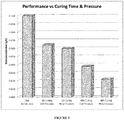
- Substrate X was placed in the dye solution for a period of 3 minutes, following which the substrate was removed and the dye concentration was measured using a spectrophotometer DR3900 available from Hach, Will Wurstr. 11, D-40549 Düsseldorf, Germany. The process was then repeated separately for each of the remaining substrates A, B and C, using a fresh dye solution having a dye concentration of 0.100 g/L for each test. These tests were repeated three times and averages taken. The results are shown in Table 1 and in Figure 3 .
- Substrate X also displayed far superior dye pick-up results compared with substrates B and C in which only one of pressure or curing time was adjusted compared to the prior art (disclosed in e.g. the Example of WO-A-97/48789 ). Without wishing to be bound by theory, it is proposed that a surprising synergy is achieved by the reduced pressure and increased curing time used in the method of the present invention, thereby producing an unexpected technical effect of significantly improved dye pick-up.
- the wet tensile strength of each of the dye scavenging substrates B, D, E, X, F and G was measured as follows. The prepared substrates were submerged in a container of water in order to wet the substrates. Once wet, the wet cross direction (CD) tensile strength of each substrate was measured using a tensile tester A700980 available from Zwick Roell, Southern Avenue, Leominster, Herefordshire HR6 OQH, United Kingdom. The results are shown in Table 2. Table 2 B D E X F G Pressure New New New New New New New Curing Time 1h 12h 24h 48h 72h 96h Wet CD Tensile Strength (N/m) 542.9 452.3 426.6 415.7 399.3 378
- the method of the invention produces a dye scavenging substrate that displays a superior performance in terms of dye pick-up, and yet still maintains good tensile strength in the wash, and is suitable for use in domestic and commercial laundry environments.
Landscapes
- Engineering & Computer Science (AREA)
- Chemical & Material Sciences (AREA)
- Textile Engineering (AREA)
- Chemical Kinetics & Catalysis (AREA)
- Oil, Petroleum & Natural Gas (AREA)
- Life Sciences & Earth Sciences (AREA)
- Wood Science & Technology (AREA)
- Organic Chemistry (AREA)
- Mechanical Engineering (AREA)
- General Chemical & Material Sciences (AREA)
- Treatment Of Fiber Materials (AREA)
- Materials Engineering (AREA)
- Coloring (AREA)
Priority Applications (1)
| Application Number | Priority Date | Filing Date | Title |
|---|---|---|---|
| PL14720624T PL3036314T3 (pl) | 2013-08-20 | 2014-05-01 | Sposób produkcji podłoża wychwytującego barwnik |
Applications Claiming Priority (2)
| Application Number | Priority Date | Filing Date | Title |
|---|---|---|---|
| GB1314895.2A GB2519505A (en) | 2013-08-20 | 2013-08-20 | Method for manufacturing a dye scavenging substrate |
| PCT/EP2014/058951 WO2015024677A1 (en) | 2013-08-20 | 2014-05-01 | Method for manufacturing a dye scavenging substrate |
Publications (2)
| Publication Number | Publication Date |
|---|---|
| EP3036314A1 EP3036314A1 (en) | 2016-06-29 |
| EP3036314B1 true EP3036314B1 (en) | 2017-08-30 |
Family
ID=49301968
Family Applications (1)
| Application Number | Title | Priority Date | Filing Date |
|---|---|---|---|
| EP14720624.7A Not-in-force EP3036314B1 (en) | 2013-08-20 | 2014-05-01 | Method for manufacturing a dye scavenging substrate |
Country Status (8)
| Country | Link |
|---|---|
| US (1) | US9845570B2 (pl) |
| EP (1) | EP3036314B1 (pl) |
| KR (1) | KR20160045089A (pl) |
| AU (1) | AU2014310851B2 (pl) |
| ES (1) | ES2642341T3 (pl) |
| GB (1) | GB2519505A (pl) |
| PL (1) | PL3036314T3 (pl) |
| WO (1) | WO2015024677A1 (pl) |
Families Citing this family (2)
| Publication number | Priority date | Publication date | Assignee | Title |
|---|---|---|---|---|
| EP3775360B1 (en) * | 2018-03-26 | 2024-02-21 | Grasim Industries Limited | A process for preparing cationic regenerated cellulosic fibers |
| EP3572496A1 (en) * | 2018-05-25 | 2019-11-27 | Henkel AG & Co. KGaA | Dye scavenging textile material i |
Family Cites Families (6)
| Publication number | Priority date | Publication date | Assignee | Title |
|---|---|---|---|---|
| FR1585665A (fr) * | 1968-08-30 | 1970-01-30 | Inst Textile De France | Nouveaux polymeres hydroxyles a caractere textile ayant des proprietes tinctorales ameliorees, procede de modification des proprietes tinctoriales des polymeres polyhydroxyles, et nouveau procede de teint |
| US4380453A (en) * | 1980-02-06 | 1983-04-19 | Dixie Yarns, Inc. | Extraneous dye or colorant scavenging system in laundry |
| US5698476A (en) * | 1995-03-01 | 1997-12-16 | The Clorox Company | Laundry article for preventing dye carry-over and indicator therefor |
| ES2173452T3 (es) * | 1996-06-19 | 2002-10-16 | Little Island Patents Ltd | Substrato para la captura de colorantes y procedimiento para su produccion. |
| US6833336B2 (en) * | 2000-10-13 | 2004-12-21 | The Procter & Gamble Company | Laundering aid for preventing dye transfer |
| ATE409738T1 (de) * | 2004-07-29 | 2008-10-15 | Orlandi Spa | Material zum auffangen von farbstoffen |
-
2013
- 2013-08-20 GB GB1314895.2A patent/GB2519505A/en not_active Withdrawn
-
2014
- 2014-05-01 AU AU2014310851A patent/AU2014310851B2/en not_active Ceased
- 2014-05-01 WO PCT/EP2014/058951 patent/WO2015024677A1/en not_active Ceased
- 2014-05-01 EP EP14720624.7A patent/EP3036314B1/en not_active Not-in-force
- 2014-05-01 ES ES14720624.7T patent/ES2642341T3/es active Active
- 2014-05-01 PL PL14720624T patent/PL3036314T3/pl unknown
- 2014-05-01 KR KR1020167006786A patent/KR20160045089A/ko not_active Withdrawn
-
2016
- 2016-02-18 US US15/046,642 patent/US9845570B2/en not_active Expired - Fee Related
Non-Patent Citations (1)
| Title |
|---|
| None * |
Also Published As
| Publication number | Publication date |
|---|---|
| AU2014310851A1 (en) | 2016-04-07 |
| KR20160045089A (ko) | 2016-04-26 |
| GB2519505A (en) | 2015-04-29 |
| PL3036314T3 (pl) | 2017-12-29 |
| ES2642341T3 (es) | 2017-11-16 |
| EP3036314A1 (en) | 2016-06-29 |
| GB201314895D0 (en) | 2013-10-02 |
| AU2014310851B2 (en) | 2017-05-04 |
| US20160160438A1 (en) | 2016-06-09 |
| WO2015024677A1 (en) | 2015-02-26 |
| US9845570B2 (en) | 2017-12-19 |
Similar Documents
| Publication | Publication Date | Title |
|---|---|---|
| US6368361B1 (en) | Manufacturing process of antibacterial fiber | |
| CN103147288B (zh) | 一种基于三聚氯氰的卤胺类抗菌材料的制备方法 | |
| EP0906412B1 (en) | A dye scavenging substrate, and a method for its manufacture | |
| CN108049011B (zh) | 一种罗马布的制备方法 | |
| CN101736592B (zh) | 一种洗衣机用吸色清洁袋或清洁条的制造方法 | |
| EP3036314B1 (en) | Method for manufacturing a dye scavenging substrate | |
| DE102016218163A1 (de) | Verbesserte Färbung von Textilien mit synthetischen Materialien in der Waschmaschine durch modifizierte Silikone | |
| CN105821657A (zh) | 一种免烫面料及其制备方法 | |
| CN103191583B (zh) | 防串色的捕色片及其制备方法 | |
| WO2012107405A1 (en) | Dye scavenging substrate | |
| IES20080364A2 (en) | An article for use in washing textile articles | |
| EP3572495B1 (en) | Dye scavenging textile material ii | |
| CN113861059B (zh) | 一种n,n-双(2-丙烯酰胺乙基)丙烯酰胺及其制备方法和应用 | |
| KR101687166B1 (ko) | 승화전사성 및 견뢰도가 우수한 나일론계 경편 원단의 제조 방법 | |
| KR101167527B1 (ko) | 기능성 벽지 | |
| JP2017166116A (ja) | 繊維着色剤 | |
| EP3572496A1 (en) | Dye scavenging textile material i | |
| CN103669011A (zh) | 复合型练染一浴酶及染色方法 | |
| EP3775360B1 (en) | A process for preparing cationic regenerated cellulosic fibers | |
| CN104790110A (zh) | 一种植物源有色抗菌纤维面料生产工艺 | |
| KR101197104B1 (ko) | 원적외선 방사 및 다기능을 갖는 친환경 천연염색벽지 제조방법 | |
| KR101866476B1 (ko) | 인형원단 제조방법 | |
| US20040045095A1 (en) | Process and composition for obtaining a rubbery tissue | |
| EP3359635B1 (en) | Device for the washing of textile articles and method of use of said device | |
| DE102017203019A1 (de) | Färbung von Polyestertextilien in der Waschmaschine mit Hilfe von quaternisierten oder quaternisierbaren Polysaccharid-Verbindungen |
Legal Events
| Date | Code | Title | Description |
|---|---|---|---|
| PUAI | Public reference made under article 153(3) epc to a published international application that has entered the european phase |
Free format text: ORIGINAL CODE: 0009012 |
|
| 17P | Request for examination filed |
Effective date: 20160115 |
|
| AK | Designated contracting states |
Kind code of ref document: A1 Designated state(s): AL AT BE BG CH CY CZ DE DK EE ES FI FR GB GR HR HU IE IS IT LI LT LU LV MC MK MT NL NO PL PT RO RS SE SI SK SM TR |
|
| AX | Request for extension of the european patent |
Extension state: BA ME |
|
| DAX | Request for extension of the european patent (deleted) | ||
| GRAP | Despatch of communication of intention to grant a patent |
Free format text: ORIGINAL CODE: EPIDOSNIGR1 |
|
| RIC1 | Information provided on ipc code assigned before grant |
Ipc: D06P 5/22 20060101ALI20170321BHEP Ipc: D06M 101/06 20060101ALI20170321BHEP Ipc: D06M 23/00 20060101ALI20170321BHEP Ipc: C11D 3/30 20060101ALI20170321BHEP Ipc: D06M 13/11 20060101ALI20170321BHEP Ipc: D06P 3/66 20060101ALI20170321BHEP Ipc: D06M 13/385 20060101ALI20170321BHEP Ipc: D06M 13/463 20060101ALI20170321BHEP Ipc: C11D 3/00 20060101AFI20170321BHEP Ipc: D06M 13/525 20060101ALI20170321BHEP Ipc: D06M 13/47 20060101ALI20170321BHEP Ipc: C11D 17/04 20060101ALI20170321BHEP |
|
| INTG | Intention to grant announced |
Effective date: 20170419 |
|
| GRAS | Grant fee paid |
Free format text: ORIGINAL CODE: EPIDOSNIGR3 |
|
| GRAA | (expected) grant |
Free format text: ORIGINAL CODE: 0009210 |
|
| AK | Designated contracting states |
Kind code of ref document: B1 Designated state(s): AL AT BE BG CH CY CZ DE DK EE ES FI FR GB GR HR HU IE IS IT LI LT LU LV MC MK MT NL NO PL PT RO RS SE SI SK SM TR |
|
| REG | Reference to a national code |
Ref country code: GB Ref legal event code: FG4D |
|
| REG | Reference to a national code |
Ref country code: CH Ref legal event code: EP |
|
| REG | Reference to a national code |
Ref country code: AT Ref legal event code: REF Ref document number: 923568 Country of ref document: AT Kind code of ref document: T Effective date: 20170915 |
|
| REG | Reference to a national code |
Ref country code: IE Ref legal event code: FG4D |
|
| REG | Reference to a national code |
Ref country code: DE Ref legal event code: R096 Ref document number: 602014013806 Country of ref document: DE |
|
| REG | Reference to a national code |
Ref country code: ES Ref legal event code: FG2A Ref document number: 2642341 Country of ref document: ES Kind code of ref document: T3 Effective date: 20171116 |
|
| REG | Reference to a national code |
Ref country code: NL Ref legal event code: MP Effective date: 20170830 |
|
| REG | Reference to a national code |
Ref country code: LT Ref legal event code: MG4D |
|
| REG | Reference to a national code |
Ref country code: AT Ref legal event code: MK05 Ref document number: 923568 Country of ref document: AT Kind code of ref document: T Effective date: 20170830 |
|
| PG25 | Lapsed in a contracting state [announced via postgrant information from national office to epo] |
Ref country code: SE Free format text: LAPSE BECAUSE OF FAILURE TO SUBMIT A TRANSLATION OF THE DESCRIPTION OR TO PAY THE FEE WITHIN THE PRESCRIBED TIME-LIMIT Effective date: 20170830 Ref country code: AT Free format text: LAPSE BECAUSE OF FAILURE TO SUBMIT A TRANSLATION OF THE DESCRIPTION OR TO PAY THE FEE WITHIN THE PRESCRIBED TIME-LIMIT Effective date: 20170830 Ref country code: NO Free format text: LAPSE BECAUSE OF FAILURE TO SUBMIT A TRANSLATION OF THE DESCRIPTION OR TO PAY THE FEE WITHIN THE PRESCRIBED TIME-LIMIT Effective date: 20171130 Ref country code: HR Free format text: LAPSE BECAUSE OF FAILURE TO SUBMIT A TRANSLATION OF THE DESCRIPTION OR TO PAY THE FEE WITHIN THE PRESCRIBED TIME-LIMIT Effective date: 20170830 Ref country code: LT Free format text: LAPSE BECAUSE OF FAILURE TO SUBMIT A TRANSLATION OF THE DESCRIPTION OR TO PAY THE FEE WITHIN THE PRESCRIBED TIME-LIMIT Effective date: 20170830 Ref country code: FI Free format text: LAPSE BECAUSE OF FAILURE TO SUBMIT A TRANSLATION OF THE DESCRIPTION OR TO PAY THE FEE WITHIN THE PRESCRIBED TIME-LIMIT Effective date: 20170830 |
|
| PG25 | Lapsed in a contracting state [announced via postgrant information from national office to epo] |
Ref country code: IS Free format text: LAPSE BECAUSE OF FAILURE TO SUBMIT A TRANSLATION OF THE DESCRIPTION OR TO PAY THE FEE WITHIN THE PRESCRIBED TIME-LIMIT Effective date: 20171230 Ref country code: BG Free format text: LAPSE BECAUSE OF FAILURE TO SUBMIT A TRANSLATION OF THE DESCRIPTION OR TO PAY THE FEE WITHIN THE PRESCRIBED TIME-LIMIT Effective date: 20171130 Ref country code: GR Free format text: LAPSE BECAUSE OF FAILURE TO SUBMIT A TRANSLATION OF THE DESCRIPTION OR TO PAY THE FEE WITHIN THE PRESCRIBED TIME-LIMIT Effective date: 20171201 Ref country code: LV Free format text: LAPSE BECAUSE OF FAILURE TO SUBMIT A TRANSLATION OF THE DESCRIPTION OR TO PAY THE FEE WITHIN THE PRESCRIBED TIME-LIMIT Effective date: 20170830 Ref country code: RS Free format text: LAPSE BECAUSE OF FAILURE TO SUBMIT A TRANSLATION OF THE DESCRIPTION OR TO PAY THE FEE WITHIN THE PRESCRIBED TIME-LIMIT Effective date: 20170830 |
|
| PG25 | Lapsed in a contracting state [announced via postgrant information from national office to epo] |
Ref country code: NL Free format text: LAPSE BECAUSE OF FAILURE TO SUBMIT A TRANSLATION OF THE DESCRIPTION OR TO PAY THE FEE WITHIN THE PRESCRIBED TIME-LIMIT Effective date: 20170830 |
|
| PG25 | Lapsed in a contracting state [announced via postgrant information from national office to epo] |
Ref country code: CZ Free format text: LAPSE BECAUSE OF FAILURE TO SUBMIT A TRANSLATION OF THE DESCRIPTION OR TO PAY THE FEE WITHIN THE PRESCRIBED TIME-LIMIT Effective date: 20170830 Ref country code: RO Free format text: LAPSE BECAUSE OF FAILURE TO SUBMIT A TRANSLATION OF THE DESCRIPTION OR TO PAY THE FEE WITHIN THE PRESCRIBED TIME-LIMIT Effective date: 20170830 Ref country code: DK Free format text: LAPSE BECAUSE OF FAILURE TO SUBMIT A TRANSLATION OF THE DESCRIPTION OR TO PAY THE FEE WITHIN THE PRESCRIBED TIME-LIMIT Effective date: 20170830 |
|
| REG | Reference to a national code |
Ref country code: FR Ref legal event code: PLFP Year of fee payment: 5 |
|
| PG25 | Lapsed in a contracting state [announced via postgrant information from national office to epo] |
Ref country code: SM Free format text: LAPSE BECAUSE OF FAILURE TO SUBMIT A TRANSLATION OF THE DESCRIPTION OR TO PAY THE FEE WITHIN THE PRESCRIBED TIME-LIMIT Effective date: 20170830 Ref country code: SK Free format text: LAPSE BECAUSE OF FAILURE TO SUBMIT A TRANSLATION OF THE DESCRIPTION OR TO PAY THE FEE WITHIN THE PRESCRIBED TIME-LIMIT Effective date: 20170830 Ref country code: EE Free format text: LAPSE BECAUSE OF FAILURE TO SUBMIT A TRANSLATION OF THE DESCRIPTION OR TO PAY THE FEE WITHIN THE PRESCRIBED TIME-LIMIT Effective date: 20170830 |
|
| REG | Reference to a national code |
Ref country code: DE Ref legal event code: R097 Ref document number: 602014013806 Country of ref document: DE |
|
| PLBE | No opposition filed within time limit |
Free format text: ORIGINAL CODE: 0009261 |
|
| STAA | Information on the status of an ep patent application or granted ep patent |
Free format text: STATUS: NO OPPOSITION FILED WITHIN TIME LIMIT |
|
| PGFP | Annual fee paid to national office [announced via postgrant information from national office to epo] |
Ref country code: ES Payment date: 20180626 Year of fee payment: 5 |
|
| 26N | No opposition filed |
Effective date: 20180531 |
|
| PG25 | Lapsed in a contracting state [announced via postgrant information from national office to epo] |
Ref country code: SI Free format text: LAPSE BECAUSE OF FAILURE TO SUBMIT A TRANSLATION OF THE DESCRIPTION OR TO PAY THE FEE WITHIN THE PRESCRIBED TIME-LIMIT Effective date: 20170830 |
|
| PGFP | Annual fee paid to national office [announced via postgrant information from national office to epo] |
Ref country code: GR Payment date: 20180529 Year of fee payment: 13 |
|
| REG | Reference to a national code |
Ref country code: CH Ref legal event code: PL |
|
| REG | Reference to a national code |
Ref country code: BE Ref legal event code: MM Effective date: 20180531 |
|
| PG25 | Lapsed in a contracting state [announced via postgrant information from national office to epo] |
Ref country code: MC Free format text: LAPSE BECAUSE OF FAILURE TO SUBMIT A TRANSLATION OF THE DESCRIPTION OR TO PAY THE FEE WITHIN THE PRESCRIBED TIME-LIMIT Effective date: 20170830 |
|
| REG | Reference to a national code |
Ref country code: IE Ref legal event code: MM4A |
|
| PG25 | Lapsed in a contracting state [announced via postgrant information from national office to epo] |
Ref country code: LI Free format text: LAPSE BECAUSE OF NON-PAYMENT OF DUE FEES Effective date: 20180531 Ref country code: CH Free format text: LAPSE BECAUSE OF NON-PAYMENT OF DUE FEES Effective date: 20180531 |
|
| PG25 | Lapsed in a contracting state [announced via postgrant information from national office to epo] |
Ref country code: LU Free format text: LAPSE BECAUSE OF NON-PAYMENT OF DUE FEES Effective date: 20180501 |
|
| PG25 | Lapsed in a contracting state [announced via postgrant information from national office to epo] |
Ref country code: IE Free format text: LAPSE BECAUSE OF NON-PAYMENT OF DUE FEES Effective date: 20180501 |
|
| PG25 | Lapsed in a contracting state [announced via postgrant information from national office to epo] |
Ref country code: BE Free format text: LAPSE BECAUSE OF NON-PAYMENT OF DUE FEES Effective date: 20180531 |
|
| PG25 | Lapsed in a contracting state [announced via postgrant information from national office to epo] |
Ref country code: MT Free format text: LAPSE BECAUSE OF NON-PAYMENT OF DUE FEES Effective date: 20180501 |
|
| PG25 | Lapsed in a contracting state [announced via postgrant information from national office to epo] |
Ref country code: TR Free format text: LAPSE BECAUSE OF FAILURE TO SUBMIT A TRANSLATION OF THE DESCRIPTION OR TO PAY THE FEE WITHIN THE PRESCRIBED TIME-LIMIT Effective date: 20170830 |
|
| PG25 | Lapsed in a contracting state [announced via postgrant information from national office to epo] |
Ref country code: PT Free format text: LAPSE BECAUSE OF FAILURE TO SUBMIT A TRANSLATION OF THE DESCRIPTION OR TO PAY THE FEE WITHIN THE PRESCRIBED TIME-LIMIT Effective date: 20170830 |
|
| PG25 | Lapsed in a contracting state [announced via postgrant information from national office to epo] |
Ref country code: MK Free format text: LAPSE BECAUSE OF NON-PAYMENT OF DUE FEES Effective date: 20170830 Ref country code: HU Free format text: LAPSE BECAUSE OF FAILURE TO SUBMIT A TRANSLATION OF THE DESCRIPTION OR TO PAY THE FEE WITHIN THE PRESCRIBED TIME-LIMIT; INVALID AB INITIO Effective date: 20140501 Ref country code: CY Free format text: LAPSE BECAUSE OF FAILURE TO SUBMIT A TRANSLATION OF THE DESCRIPTION OR TO PAY THE FEE WITHIN THE PRESCRIBED TIME-LIMIT Effective date: 20170830 |
|
| PG25 | Lapsed in a contracting state [announced via postgrant information from national office to epo] |
Ref country code: AL Free format text: LAPSE BECAUSE OF FAILURE TO SUBMIT A TRANSLATION OF THE DESCRIPTION OR TO PAY THE FEE WITHIN THE PRESCRIBED TIME-LIMIT Effective date: 20170830 |
|
| PGFP | Annual fee paid to national office [announced via postgrant information from national office to epo] |
Ref country code: DE Payment date: 20200520 Year of fee payment: 7 Ref country code: FR Payment date: 20200522 Year of fee payment: 7 |
|
| PGFP | Annual fee paid to national office [announced via postgrant information from national office to epo] |
Ref country code: IT Payment date: 20200528 Year of fee payment: 7 Ref country code: GB Payment date: 20200527 Year of fee payment: 7 |
|
| REG | Reference to a national code |
Ref country code: ES Ref legal event code: FD2A Effective date: 20200925 |
|
| PG25 | Lapsed in a contracting state [announced via postgrant information from national office to epo] |
Ref country code: ES Free format text: LAPSE BECAUSE OF NON-PAYMENT OF DUE FEES Effective date: 20190502 |
|
| PG25 | Lapsed in a contracting state [announced via postgrant information from national office to epo] |
Ref country code: PL Free format text: LAPSE BECAUSE OF NON-PAYMENT OF DUE FEES Effective date: 20190501 |
|
| REG | Reference to a national code |
Ref country code: DE Ref legal event code: R119 Ref document number: 602014013806 Country of ref document: DE |
|
| GBPC | Gb: european patent ceased through non-payment of renewal fee |
Effective date: 20210501 |
|
| PG25 | Lapsed in a contracting state [announced via postgrant information from national office to epo] |
Ref country code: GB Free format text: LAPSE BECAUSE OF NON-PAYMENT OF DUE FEES Effective date: 20210501 Ref country code: DE Free format text: LAPSE BECAUSE OF NON-PAYMENT OF DUE FEES Effective date: 20211201 |
|
| PG25 | Lapsed in a contracting state [announced via postgrant information from national office to epo] |
Ref country code: FR Free format text: LAPSE BECAUSE OF NON-PAYMENT OF DUE FEES Effective date: 20210531 |
|
| PG25 | Lapsed in a contracting state [announced via postgrant information from national office to epo] |
Ref country code: IT Free format text: LAPSE BECAUSE OF NON-PAYMENT OF DUE FEES Effective date: 20200501 |
|
| PG25 | Lapsed in a contracting state [announced via postgrant information from national office to epo] |
Ref country code: IT Free format text: LAPSE BECAUSE OF NON-PAYMENT OF DUE FEES Effective date: 20210501 |