EP3034693B1 - Paper based composite planar material - Google Patents
Paper based composite planar material Download PDFInfo
- Publication number
- EP3034693B1 EP3034693B1 EP15165119.7A EP15165119A EP3034693B1 EP 3034693 B1 EP3034693 B1 EP 3034693B1 EP 15165119 A EP15165119 A EP 15165119A EP 3034693 B1 EP3034693 B1 EP 3034693B1
- Authority
- EP
- European Patent Office
- Prior art keywords
- paper
- composite material
- particles
- filler
- surface layer
- Prior art date
- Legal status (The legal status is an assumption and is not a legal conclusion. Google has not performed a legal analysis and makes no representation as to the accuracy of the status listed.)
- Not-in-force
Links
Images




Classifications
-
- D—TEXTILES; PAPER
- D21—PAPER-MAKING; PRODUCTION OF CELLULOSE
- D21H—PULP COMPOSITIONS; PREPARATION THEREOF NOT COVERED BY SUBCLASSES D21C OR D21D; IMPREGNATING OR COATING OF PAPER; TREATMENT OF FINISHED PAPER NOT COVERED BY CLASS B31 OR SUBCLASS D21G; PAPER NOT OTHERWISE PROVIDED FOR
- D21H17/00—Non-fibrous material added to the pulp, characterised by its constitution; Paper-impregnating material characterised by its constitution
- D21H17/63—Inorganic compounds
- D21H17/67—Water-insoluble compounds, e.g. fillers, pigments
-
- B—PERFORMING OPERATIONS; TRANSPORTING
- B65—CONVEYING; PACKING; STORING; HANDLING THIN OR FILAMENTARY MATERIAL
- B65D—CONTAINERS FOR STORAGE OR TRANSPORT OF ARTICLES OR MATERIALS, e.g. BAGS, BARRELS, BOTTLES, BOXES, CANS, CARTONS, CRATES, DRUMS, JARS, TANKS, HOPPERS, FORWARDING CONTAINERS; ACCESSORIES, CLOSURES, OR FITTINGS THEREFOR; PACKAGING ELEMENTS; PACKAGES
- B65D81/00—Containers, packaging elements, or packages, for contents presenting particular transport or storage problems, or adapted to be used for non-packaging purposes after removal of contents
- B65D81/34—Containers, packaging elements, or packages, for contents presenting particular transport or storage problems, or adapted to be used for non-packaging purposes after removal of contents for packaging foodstuffs or other articles intended to be cooked or heated within the package
-
- B—PERFORMING OPERATIONS; TRANSPORTING
- B65—CONVEYING; PACKING; STORING; HANDLING THIN OR FILAMENTARY MATERIAL
- B65D—CONTAINERS FOR STORAGE OR TRANSPORT OF ARTICLES OR MATERIALS, e.g. BAGS, BARRELS, BOTTLES, BOXES, CANS, CARTONS, CRATES, DRUMS, JARS, TANKS, HOPPERS, FORWARDING CONTAINERS; ACCESSORIES, CLOSURES, OR FITTINGS THEREFOR; PACKAGING ELEMENTS; PACKAGES
- B65D81/00—Containers, packaging elements, or packages, for contents presenting particular transport or storage problems, or adapted to be used for non-packaging purposes after removal of contents
- B65D81/34—Containers, packaging elements, or packages, for contents presenting particular transport or storage problems, or adapted to be used for non-packaging purposes after removal of contents for packaging foodstuffs or other articles intended to be cooked or heated within the package
- B65D81/3446—Containers, packaging elements, or packages, for contents presenting particular transport or storage problems, or adapted to be used for non-packaging purposes after removal of contents for packaging foodstuffs or other articles intended to be cooked or heated within the package specially adapted to be heated by microwaves
-
- D—TEXTILES; PAPER
- D21—PAPER-MAKING; PRODUCTION OF CELLULOSE
- D21H—PULP COMPOSITIONS; PREPARATION THEREOF NOT COVERED BY SUBCLASSES D21C OR D21D; IMPREGNATING OR COATING OF PAPER; TREATMENT OF FINISHED PAPER NOT COVERED BY CLASS B31 OR SUBCLASS D21G; PAPER NOT OTHERWISE PROVIDED FOR
- D21H17/00—Non-fibrous material added to the pulp, characterised by its constitution; Paper-impregnating material characterised by its constitution
- D21H17/63—Inorganic compounds
- D21H17/67—Water-insoluble compounds, e.g. fillers, pigments
- D21H17/675—Oxides, hydroxides or carbonates
-
- D—TEXTILES; PAPER
- D21—PAPER-MAKING; PRODUCTION OF CELLULOSE
- D21H—PULP COMPOSITIONS; PREPARATION THEREOF NOT COVERED BY SUBCLASSES D21C OR D21D; IMPREGNATING OR COATING OF PAPER; TREATMENT OF FINISHED PAPER NOT COVERED BY CLASS B31 OR SUBCLASS D21G; PAPER NOT OTHERWISE PROVIDED FOR
- D21H17/00—Non-fibrous material added to the pulp, characterised by its constitution; Paper-impregnating material characterised by its constitution
- D21H17/63—Inorganic compounds
- D21H17/67—Water-insoluble compounds, e.g. fillers, pigments
- D21H17/68—Water-insoluble compounds, e.g. fillers, pigments siliceous, e.g. clays
-
- D—TEXTILES; PAPER
- D21—PAPER-MAKING; PRODUCTION OF CELLULOSE
- D21H—PULP COMPOSITIONS; PREPARATION THEREOF NOT COVERED BY SUBCLASSES D21C OR D21D; IMPREGNATING OR COATING OF PAPER; TREATMENT OF FINISHED PAPER NOT COVERED BY CLASS B31 OR SUBCLASS D21G; PAPER NOT OTHERWISE PROVIDED FOR
- D21H19/00—Coated paper; Coating material
- D21H19/36—Coatings with pigments
-
- D—TEXTILES; PAPER
- D21—PAPER-MAKING; PRODUCTION OF CELLULOSE
- D21H—PULP COMPOSITIONS; PREPARATION THEREOF NOT COVERED BY SUBCLASSES D21C OR D21D; IMPREGNATING OR COATING OF PAPER; TREATMENT OF FINISHED PAPER NOT COVERED BY CLASS B31 OR SUBCLASS D21G; PAPER NOT OTHERWISE PROVIDED FOR
- D21H19/00—Coated paper; Coating material
- D21H19/36—Coatings with pigments
- D21H19/38—Coatings with pigments characterised by the pigments
- D21H19/385—Oxides, hydroxides or carbonates
-
- D—TEXTILES; PAPER
- D21—PAPER-MAKING; PRODUCTION OF CELLULOSE
- D21H—PULP COMPOSITIONS; PREPARATION THEREOF NOT COVERED BY SUBCLASSES D21C OR D21D; IMPREGNATING OR COATING OF PAPER; TREATMENT OF FINISHED PAPER NOT COVERED BY CLASS B31 OR SUBCLASS D21G; PAPER NOT OTHERWISE PROVIDED FOR
- D21H19/00—Coated paper; Coating material
- D21H19/36—Coatings with pigments
- D21H19/44—Coatings with pigments characterised by the other ingredients, e.g. the binder or dispersing agent
- D21H19/52—Cellulose; Derivatives thereof
-
- D—TEXTILES; PAPER
- D21—PAPER-MAKING; PRODUCTION OF CELLULOSE
- D21H—PULP COMPOSITIONS; PREPARATION THEREOF NOT COVERED BY SUBCLASSES D21C OR D21D; IMPREGNATING OR COATING OF PAPER; TREATMENT OF FINISHED PAPER NOT COVERED BY CLASS B31 OR SUBCLASS D21G; PAPER NOT OTHERWISE PROVIDED FOR
- D21H19/00—Coated paper; Coating material
- D21H19/36—Coatings with pigments
- D21H19/44—Coatings with pigments characterised by the other ingredients, e.g. the binder or dispersing agent
- D21H19/54—Starch
-
- D—TEXTILES; PAPER
- D21—PAPER-MAKING; PRODUCTION OF CELLULOSE
- D21H—PULP COMPOSITIONS; PREPARATION THEREOF NOT COVERED BY SUBCLASSES D21C OR D21D; IMPREGNATING OR COATING OF PAPER; TREATMENT OF FINISHED PAPER NOT COVERED BY CLASS B31 OR SUBCLASS D21G; PAPER NOT OTHERWISE PROVIDED FOR
- D21H21/00—Non-fibrous material added to the pulp, characterised by its function, form or properties; Paper-impregnating or coating material, characterised by its function, form or properties
- D21H21/14—Non-fibrous material added to the pulp, characterised by its function, form or properties; Paper-impregnating or coating material, characterised by its function, form or properties characterised by function or properties in or on the paper
- D21H21/16—Sizing or water-repelling agents
-
- D—TEXTILES; PAPER
- D21—PAPER-MAKING; PRODUCTION OF CELLULOSE
- D21H—PULP COMPOSITIONS; PREPARATION THEREOF NOT COVERED BY SUBCLASSES D21C OR D21D; IMPREGNATING OR COATING OF PAPER; TREATMENT OF FINISHED PAPER NOT COVERED BY CLASS B31 OR SUBCLASS D21G; PAPER NOT OTHERWISE PROVIDED FOR
- D21H21/00—Non-fibrous material added to the pulp, characterised by its function, form or properties; Paper-impregnating or coating material, characterised by its function, form or properties
- D21H21/50—Non-fibrous material added to the pulp, characterised by its function, form or properties; Paper-impregnating or coating material, characterised by its function, form or properties characterised by form
- D21H21/52—Additives of definite length or shape
-
- D—TEXTILES; PAPER
- D21—PAPER-MAKING; PRODUCTION OF CELLULOSE
- D21H—PULP COMPOSITIONS; PREPARATION THEREOF NOT COVERED BY SUBCLASSES D21C OR D21D; IMPREGNATING OR COATING OF PAPER; TREATMENT OF FINISHED PAPER NOT COVERED BY CLASS B31 OR SUBCLASS D21G; PAPER NOT OTHERWISE PROVIDED FOR
- D21H27/00—Special paper not otherwise provided for, e.g. made by multi-step processes
- D21H27/10—Packing paper
Definitions
- the present invention relates to a modification of paper-based materials for applications in packaging, in particular during microwave heating.
- the quantity of packaging material production grows exponentially worldwide.
- the materials based on cellulose, essentially paper, have the highest quantity in production.
- the generaly known paper applications change towards new technical fields, e.g. structured foils with phase inclusions, microheterogenic foil materials with visual signalization (wetness, microbe presence, enzyme, etc.), foil materials with specific biological activity (intracellular chemical information systems, control systems for transport flow regulation, immobilization layers of specific cultures, etc.), foil materials for economic ayay of agricultural production, foil and dispersive materials for ecological applications.
- Paper is a product made by felting of fine plant fibres in aqueous dispersion on a web. Surface paper mass is approximately up to 150 g/m 2 . Paper exceeding this surface mass is called carton, and above 250 g/m 2 board. Papers can be divided to graphical papers, used for different kinds of printmaking and writting, wrapping papers, used to protect different kinds of goods, technical papers, used in technical practices, and special papers for special technical applications.
- paper pulp preparation including defibering, grinding, filling, gluing and coloring
- paper pulp processing using a paper machine.
- cellulose fibres are machined, which leads to their structural changes, e.g. fiber dimension changes, increase in active surface of fibers and swelling of fibres.
- Individual fibres undergo phases of defibering, spinning, grinding, ceremoniization and homogenization.
- inorganic fillers such as kaolin, TiO 2 , silica and Al 2 O 3 are added to the pulp dispersion being of different shape and size ranging from tens of nanometers to hundreds of micrometers allowing thus an entrapment of the fillers particles in the paper cellulose fibrous mash ( WO 2012/059650 , WO 03/080932 , US 7842162 ).
- the shape of the kaolin particles used in patent WO 2012/059650 was in the form of granules and agglomerates of essencially spherical form and being of preferable size ranging from 10 to 40 ⁇ m.
- the shape of the filler particles of Al 2 O 3 and TiO 2 was in the form of plate-like geometry, however applied clays (kaolinates and hallosites) were present in the tubule shape.
- the necessity of the oppositely-charged nanoparticles in comparison to the pulp's fibers charge application is needed to allow sequencial processing of the layer-by-layer coating of the pulp fibers.
- the starting lignocellulose fibers are divided into separate portions which are separately nanocoated with opposite charge, and then blended to form a complex aggregate pulp of nanocoated fibers.
- Polyions used in the assembly are as follows polycations-poly(ethylenimine), poly(dimethyldiallyl ammonium chloride, poly(allylamine), polylysine, chitosan, and polyanions - poly(styrenesulfonate), poly(vinylsulfate), poly(acrylic acid), chitosan, starch and polymers such as carboxymethylcellulose and cationic and anionic starch.
- the paper machine is a complex technological device, comprising a head box, web, pressing and drying parts. Furthermore, it may contain gluing presser, calendering and winding of paper. In order to obtain a constant quality, paper pulp must be spread over the web of the paper machine evenly (quantity and speed) along its whole width.
- the head box contains paper pulp with 0.6 % of dry mass, while by the end of the web the dry mass content is about 50 %.
- the head box contains paper pulp with 0.6 % of dry mass, while by the end of the web the dry mass content is about 50 %.
- Paperboard product is constructed in such a way, that to one side of the surface the water impermeable layer is appliled and from the other side continuous water permeable layer is affixed.
- an impermeable layer the polytetramethylene terephthalate, or polycyclohexalene dimethylene terephthalate, and other materials such as polycyclohexalene dimethylene terephthalate-phtalic acid copolymer, nylon 6, nylon 66, nylon 6/66 copolymers.
- the extrusion coating method is used as a deposition technique of the water impermeable layer on the paper board.
- Canadian patent CA 2867598 is decribed method of preparation of shear resistant preflocullated fillers used in papermaking.
- the idea of this patent is in creating larger agglomerates through treatment with coagulants and/or flocullants prior to their addition to the paper stock.
- the whole procedure is based on two step addition of flocculating agents to the dispersion.
- the polymeric flocculants the copolymer and terpolymers of (meth)acrylamide with dimethylaminoethyl methacrylate, dimethylaminoethyl acrylate, diethylaminoethyl acrylate, diethylaminoethyl methacrylate or their quarternary ammonium forms made with dimethyl sulfate, methyl chloride or benzyl chloride.
- anionic polymers include copolymers of acrylamide with sodium acrylate and/or 2-acrylamido 2-methylpropane sulfonic acid or an acrylamide homopolymer.
- As the coagulants the common inorganic and organic substances on sodium aluminate, ferric and epichlorhydrin-dimethylamine copolymers etc. are used.
- Another patent US 3804656 ) discloses preparation of the pigment dispersion and its use in papermaking based on combination of nonionic surface active agent and a cationic surfactant at an alkaline pH.
- the ethylene oxide condensates of alkyl phenols ethylene oxide condensates of alcohols such as octyl alcohol and ethylene oxide condensates of thioalcohols and mixed condensed polyethylene polypropylene glycols.
- the cationic surface active agents the nonpolymeric quarternary ammonium salts such as lauryldimethyl benzyl ammonium chloride, lauryltrimethyl ammonium chlopride, di-isobutyl phenoxy ethoxy ethyl dimethylbenzyl ammonium chloride are used.
- the nonionic dispersant is used in amount with the range of 0.1 percent to 0.5 percent, based on the weight of the pigment or filler.
- Cationic surface active agent is employed in amount within the range of 0.1 percent to 0.5 percent of the pigment or filler.
- the ratio of nonionic surfactant to cationic surfactant depends on the species of pigment and end use of the product and generally is in the range of from about 20 to 80 parts by weight nonionic surfactant to 80 to 20 parts by weight cationic surfactant. From a practical application point of view, concerning a heat preparation of food in a microwave field, also the ability of the pagkaging to resist the infiltration of moisture, oil or grease should be considered important, besides the above mentioned aspects of efficiency of microwave energy absorption and its transformation to heat.
- the subject of the present invention is a paper-based composite planar material, which contains cellulose fibers and filler particles, selected from kaolin, TiO 2 , Al 2 O 3 and the mixtures thereof, of size in the range of from 50 nm to 5 ⁇ m, preferably from 0.5 ⁇ m to 5 ⁇ m.
- the filler particles content is in the range of from 5 to 65 % (w/w).
- their stabilization is necessary, using at least one polymeric surfactant of the type of polyoxyglycol of a weight average molecular mass from 5 kDa to 1.8 MDa.
- the composite material further contains a surface layer containing a mixture of at least one hydrophilic polymer, preferably a cellulose derivative, more preferably hydroxyethyl cellulose or carboxymethyl cellulose, of the weight mean molecular mass from 10 kDa to 1.5 MDa, with iron oxide, aluminium oxide, titanium oxide and/or silicon oxide particles.
- Said metal oxide may contain the metal in various oxidation states (for example Fe 2 O 3 , Fe 3 O 4 , FeO, FeO 2 , Al 2 O 3 , TiO 2 , SiO 2 ).
- Starch might be used instead of the hydrophilic polymer.
- Metal oxide particles are individually dispersed in the surface layer, and ensure the antimicrobial properties related to following photochemical, microwave or plazmochemical generation of active forms of oxygen.
- the metal oxide particles are present in the surface layer in the amount of from 0.1 to 15 % (w/w) relative to the dry mass of the composite material.
- the surface layer is solidified by physical or chemical procedures by the addition of cross-linking agent, thermally or plasmachemically (for example by corona treatment or microwave plasma).
- cross-linking agent for example by corona treatment or microwave plasma.
- cross-linking agent for example by corona treatment or microwave plasma.
- divinyl sulfone, glutaraldehyde and others might be used as cross-linking agents, in concentrations in the range of from 0.01 to 7 % (w/w), and optionally other known procedures might be used.
- Filler particles are preferably deposited on the surface of the cellulose fibers. This is achieved by an addition of colloid dispersion of nano/micro-particles of the filler, based on kaolinite, TiO 2 , Al 2 O 3 , SiO 2 and/or kaolin, into a dispersion of paper pulp, which is based on cellulose pulp, during the preparation procedure.
- the described material has significantly better values of vapor, water and oil permeability.
- the composite material may further contain refining additives based on acrylate dispersions or vinyl acetate, preferably in the range of from 0.001 to 20 % (w/w), to enable modulation of strength and wettable characteristics.
- the surface layer might further contain a photochemically active substance enabling to monitor sterility changes visually by color changes, which is particularly preferable for example in food-processing and food-storing applications.
- the invention further contains a packaging material for microwave applications, which contains the composite material according to the present invention.
- the present invention also relates to use of the composite material for microwave applications and/or for food-processing and/or food-storing applications.
- the present invention further encompasses a method for preparing the composite material, wherein a colloid dispersion of nano/micro-particles of the filler, based on TiO 2 , Al 2 O 3 , SiO 2 and/or kaolin, having a particle size in the range of from 50 nm to 5 ⁇ m, whereas the filler particle content is in the range of from 5 to 65 % (w/w), is added into a dispersion of paper pulp based on cellulose pulp, the filler nano/micro particles are stabilized by addition of a polyoxyglycol type surfactant having a weight average molecular mass from 5 kDa to 1.8 MDa, and the resulting mixture is placed on a wire (paper web).
- a colloid dispersion of nano/micro-particles of the filler based on TiO 2 , Al 2 O 3 , SiO 2 and/or kaolin, having a particle size in the range of from 50 nm to 5 ⁇ m, whereas the filler
- the colloid dispersion is stabilized by a surfactant, for example a polymeric surfactant of the type of polyoxyglycol, preferably of a weight average molecular mass from 5 kDa to 1.8 MDa.
- a surfactant for example a polymeric surfactant of the type of polyoxyglycol, preferably of a weight average molecular mass from 5 kDa to 1.8 MDa.
- refining additives based on acrylate dispersions or vinyl acetate can be added to the mixture.
- the resulting composite material is further coated with a surface layer containing a mixture of at least one hydrophilic polymer, preferably a cellulose derivative, more preferably hydroxyethyl cellulose or carboxymethyl cellulose, of the weight mean molecular mass from 10 kDa to 1.5 MDa, with iron oxide, aluminium oxide, titanium oxide and/or silicon oxide particles, present in the surface layer in the amount of from 0.1 to 15 % (w/w) relative to the dry mass of the composite material.
- Said metal oxide may contain the metal in various oxidation states (for example Fe 2 O 3 , Fe 3 O 4 , FeO, FeO 2 , Al 2 O 3 , TiO 2 , SiO 2 ).
- Starch might be used instead of the hydrophilic polymer.
- the surface layer is then solidified by physical or chemical procedures by the addition of cross-linking agent, thermally or plasmachemically (for example by corona treatment or microwave plasma).
- the preparation procedure of the composite material is based on classical paper technologies, where an additional element (a colloidal dispersion of filler nano/micro particles based on kaolinite, TiO 2 , Al 2 O 3 , SiO 2 and kaolin in a concentration range of from 2 to 65 % (w/w) and of an exactly defined mean particle diameter in a range of from 50 nm to 5000 nm) is added to the system of paper dispersion on the basis of cellulose pulp.
- the filler nano/micro particles are stabilized electrostatically, eventually sterically, for example by a polymeric auxiliary preparation addition, based on amphoteric polymeric polyoxyglycol type surfactant (e.g.
- the dispersion treated by the above-described method is further mixed with paper pulp and deposited on a paper web.
- This method a selective coverage of individual cellulose fibers by filler particles of exactly defined distribution of particle sizes is achieved, enabling formation of a complex nano-structured layer in a cross-section of the final paper sheet.
- common further paper processing is applied, including pressing and other common paper processing procedures.
- a coating procedure takes place, using a water soluble dispersion of cellulose derivatives (preferably hydroxyethyl cellulose, carboxymethyl cellulose) of the mean molecular mass in a range of from 10 kDa to 1.5 MDa mixed with nanoparticles of iron, aluminium or silicium oxides of variable oxidation stages or combinations thereof (variable mass ratio lies in the range of from 0.01 to 30 % (w/w)).
- the water soluble dispersion of hydrophile polymers might be replaced by a starch dispersion (e.g. Perlsize or Perlcoat (Lyckeby Amylex)).
- the paper coating procedure according to Example 2 its solidification is then performed using physical or chemical procedures with the addition of a suitable cross-linking agent.
- the solidification is performed thermally or plasmachemically (e.g. by corona treatment or microwave plasma).
- Divinylsulphon, glutaraldehyde etc. in concentrations in a range of from 0.01 to 7 % (w/w) might be used as cross-linking agents, or, alternatively, other known procedures.
- the second tangent can be associated with the property characterizing the inner structure of the paper, related to the infiltration into a microporous structure of the paper layer.
- Fig. 6 shows the influence of a degree of paper filling (expressed as a kaolin concentration within a working dispersion) on the critical times t 1 and t 2 .
- the critical time t 1 is not influenced by the filler concentration.
- the most suitable layer seems to be a layer of dispersed iron oxide (Fe 3 O 4 , magnetite), or eventually Fe 2 O 3 or other metal oxides in different oxidation states, which are deposited on the surface of the above mentioned paper, i.e. a composite of cellulose/filler, forming a homogeneous distribution of magnetite nano particles.
- Such layer contains a solidified layer of hydrophilic polymer of a defined molar mass, which is further solidified by physical or chemical procedures in order to exhibit exactly defined swelling characteristics when exposed to moisture. This ensures the ability of selective surface wrinklage of the above described sandwich structure paper/coating, influencing the ability of microwave radiation absorption by this system.
- Coated and filled papers can find their applications mainly in packaging of food used for microwave heating, e.g. roasted corn, pizza, ready-to-cook food, prepared meals, etc.
Landscapes
- Chemical & Material Sciences (AREA)
- Engineering & Computer Science (AREA)
- Inorganic Chemistry (AREA)
- Life Sciences & Earth Sciences (AREA)
- Food Science & Technology (AREA)
- Mechanical Engineering (AREA)
- Dispersion Chemistry (AREA)
- Paper (AREA)
Description
- The present invention relates to a modification of paper-based materials for applications in packaging, in particular during microwave heating.
- The quantity of packaging material production grows exponentially worldwide. The materials based on cellulose, essentially paper, have the highest quantity in production. Progressively, important changes occur in structure and properties of the paper thin layer. Also the generaly known paper applications change towards new technical fields, e.g. structured foils with phase inclusions, microheterogenic foil materials with visual signalization (wetness, microbe presence, enzyme, etc.), foil materials with specific biological activity (intracellular chemical information systems, control systems for transport flow regulation, immobilization layers of specific cultures, etc.), foil materials for economic ayay of agricultural production, foil and dispersive materials for ecological applications.
First paper, produced by felting of fibres, was invented in China at the beginning of this era. Around the year 600 A.D., this production technology got into Japan and Middle Asia, and around the year 900 A.D. to North Africa. In 11th century, paper production began in Europe - in Spain and Italy. Mechanical paper production began to evolve following the invention of paper machine around the year 1800 A.D. Paper is a product made by felting of fine plant fibres in aqueous dispersion on a web. Surface paper mass is approximately up to 150 g/m2. Paper exceeding this surface mass is called carton, and above 250 g/m2 board. Papers can be divided to graphical papers, used for different kinds of printmaking and writting, wrapping papers, used to protect different kinds of goods, technical papers, used in technical practices, and special papers for special technical applications. From the paper production point of view, it can be divided into two basic phases: paper pulp preparation, including defibering, grinding, filling, gluing and coloring, and paper pulp processing, using a paper machine. During the paper pulp preparation, cellulose fibres are machined, which leads to their structural changes, e.g. fiber dimension changes, increase in active surface of fibers and swelling of fibres. Individual fibres undergo phases of defibering, spinning, grinding, egalization and homogenization. To improve paper physicochemical properties, different types of inorganic fillers such as kaolin, TiO2, silica and Al2O3 are added to the pulp dispersion being of different shape and size ranging from tens of nanometers to hundreds of micrometers allowing thus an entrapment of the fillers particles in the paper cellulose fibrous mash (WO 2012/059650 ,WO 03/080932 US 7842162 ). The shape of the kaolin particles used in patentWO 2012/059650 was in the form of granules and agglomerates of essencially spherical form and being of preferable size ranging from 10 to 40 µm. In theUS patent 782162 the shape of the filler particles of Al2O3 and TiO2 was in the form of plate-like geometry, however applied clays (kaolinates and hallosites) were present in the tubule shape. As an addition, the necessity of the oppositely-charged nanoparticles in comparison to the pulp's fibers charge application is needed to allow sequencial processing of the layer-by-layer coating of the pulp fibers. The starting lignocellulose fibers are divided into separate portions which are separately nanocoated with opposite charge, and then blended to form a complex aggregate pulp of nanocoated fibers. Polyions used in the assembly are as follows polycations-poly(ethylenimine), poly(dimethyldiallyl ammonium chloride, poly(allylamine), polylysine, chitosan, and polyanions - poly(styrenesulfonate), poly(vinylsulfate), poly(acrylic acid), chitosan, starch and polymers such as carboxymethylcellulose and cationic and anionic starch. The paper machine is a complex technological device, comprising a head box, web, pressing and drying parts. Furthermore, it may contain gluing presser, calendering and winding of paper. In order to obtain a constant quality, paper pulp must be spread over the web of the paper machine evenly (quantity and speed) along its whole width. Once the paper pulp spreads over the web, water is removed from it. The head box contains paper pulp with 0.6 % of dry mass, while by the end of the web the dry mass content is about 50 %. After water removal of a paper sheet on the web of the paper machine, more water is being removed by pressing, generally in several consecutive pressers with gradually increasing pressures. Drying part removes water residues and produces paper with dry-mass of about 95 %. Furthermore, during certain types of paper production, coating of paper is often required. Coating is performed directly in the paper machine by gluing pressers. This process is followed by calendering, which gives the paper its required smoothness and thickness. Winding of paper is the last operation during paper production using paper machine. It might be followed by cutting into sheets, grading, wrapping and weighting.
Issues concerning paper based packaging materials (cellulose pulp) and their modifications for microwave applications are discussed worldwide for several decades. The principal solution for this kind of packaging is in preparation of paper composed from a plurality of layers and an inserted metalized PET-based (e.g.EP 642989 EP 437946 CN 202295622 ) polymeric layer, enabling a selective absorbance of microwave energy and a volume extensibility change (shrinkage) once the final temperature is reached (JP 2010001041 US6066375 ).US patent 4391833 describes coated heat resistant paperboard product which may be constructed into a container for food to be used in either conventional or microwave ovens. Paperboard product is constructed in such a way, that to one side of the surface the water impermeable layer is appliled and from the other side continuous water permeable layer is affixed. As an impermeable layer the polytetramethylene terephthalate, or polycyclohexalene dimethylene terephthalate, and other materials such as polycyclohexalene dimethylene terephthalate-phtalic acid copolymer,nylon 6, nylon 66,nylon 6/66 copolymers. As a deposition technique of the water impermeable layer on the paper board the extrusion coating method is used. In Canadian patentCA 2867598 is decribed method of preparation of shear resistant preflocullated fillers used in papermaking. The idea of this patent is in creating larger agglomerates through treatment with coagulants and/or flocullants prior to their addition to the paper stock. The whole procedure is based on two step addition of flocculating agents to the dispersion. As the polymeric flocculants the copolymer and terpolymers of (meth)acrylamide with dimethylaminoethyl methacrylate, dimethylaminoethyl acrylate, diethylaminoethyl acrylate, diethylaminoethyl methacrylate or their quarternary ammonium forms made with dimethyl sulfate, methyl chloride or benzyl chloride. Representative anionic polymers include copolymers of acrylamide with sodium acrylate and/or 2-acrylamido 2-methylpropane sulfonic acid or an acrylamide homopolymer. As the coagulants the common inorganic and organic substances on sodium aluminate, ferric and epichlorhydrin-dimethylamine copolymers etc. are used. Another patent (US 3804656 ) discloses preparation of the pigment dispersion and its use in papermaking based on combination of nonionic surface active agent and a cationic surfactant at an alkaline pH. As a nonionic dispersant the ethylene oxide condensates of alkyl phenols, ethylene oxide condensates of alcohols such as octyl alcohol and ethylene oxide condensates of thioalcohols and mixed condensed polyethylene polypropylene glycols. As the cationic surface active agents the nonpolymeric quarternary ammonium salts such as lauryldimethyl benzyl ammonium chloride, lauryltrimethyl ammonium chlopride, di-isobutyl phenoxy ethoxy ethyl dimethylbenzyl ammonium chloride are used. The nonionic dispersant is used in amount with the range of 0.1 percent to 0.5 percent, based on the weight of the pigment or filler. Cationic surface active agent is employed in amount within the range of 0.1 percent to 0.5 percent of the pigment or filler. The ratio of nonionic surfactant to cationic surfactant depends on the species of pigment and end use of the product and generally is in the range of from about 20 to 80 parts by weight nonionic surfactant to 80 to 20 parts by weight cationic surfactant.
From a practical application point of view, concerning a heat preparation of food in a microwave field, also the ability of the pagkaging to resist the infiltration of moisture, oil or grease should be considered important, besides the above mentioned aspects of efficiency of microwave energy absorption and its transformation to heat. - The subject of the present invention is a paper-based composite planar material, which contains cellulose fibers and filler particles, selected from kaolin, TiO2, Al2O3 and the mixtures thereof, of size in the range of from 50 nm to 5 µm, preferably from 0.5 µm to 5 µm. The filler particles content is in the range of from 5 to 65 % (w/w). In order to maintain a perfect dispersion of filler particles, their stabilization is necessary, using at least one polymeric surfactant of the type of polyoxyglycol of a weight average molecular mass from 5 kDa to 1.8 MDa.
The composite material further contains a surface layer containing a mixture of at least one hydrophilic polymer, preferably a cellulose derivative, more preferably hydroxyethyl cellulose or carboxymethyl cellulose, of the weight mean molecular mass from 10 kDa to 1.5 MDa, with iron oxide, aluminium oxide, titanium oxide and/or silicon oxide particles. Said metal oxide may contain the metal in various oxidation states (for example Fe2O3, Fe3O4, FeO, FeO2, Al2O3, TiO2, SiO2). Starch might be used instead of the hydrophilic polymer. Metal oxide particles are individually dispersed in the surface layer, and ensure the antimicrobial properties related to following photochemical, microwave or plazmochemical generation of active forms of oxygen. The metal oxide particles are present in the surface layer in the amount of from 0.1 to 15 % (w/w) relative to the dry mass of the composite material.
The surface layer is solidified by physical or chemical procedures by the addition of cross-linking agent, thermally or plasmachemically (for example by corona treatment or microwave plasma). For example divinyl sulfone, glutaraldehyde and others might be used as cross-linking agents, in concentrations in the range of from 0.01 to 7 % (w/w), and optionally other known procedures might be used. - Filler particles are preferably deposited on the surface of the cellulose fibers. This is achieved by an addition of colloid dispersion of nano/micro-particles of the filler, based on kaolinite, TiO2, Al2O3, SiO2 and/or kaolin, into a dispersion of paper pulp, which is based on cellulose pulp, during the preparation procedure.
- The described material has significantly better values of vapor, water and oil permeability.
- In a preferred embodiment, the composite material may further contain refining additives based on acrylate dispersions or vinyl acetate, preferably in the range of from 0.001 to 20 % (w/w), to enable modulation of strength and wettable characteristics.
- In another preferred embodiment, the surface layer might further contain a photochemically active substance enabling to monitor sterility changes visually by color changes, which is particularly preferable for example in food-processing and food-storing applications.
- The invention further contains a packaging material for microwave applications, which contains the composite material according to the present invention.
- The present invention also relates to use of the composite material for microwave applications and/or for food-processing and/or food-storing applications.
- The present invention further encompasses a method for preparing the composite material, wherein a colloid dispersion of nano/micro-particles of the filler, based on TiO2, Al2O3, SiO2 and/or kaolin, having a particle size in the range of from 50 nm to 5 µm, whereas the filler particle content is in the range of from 5 to 65 % (w/w), is added into a dispersion of paper pulp based on cellulose pulp, the filler nano/micro particles are stabilized by addition of a polyoxyglycol type surfactant having a weight average molecular mass from 5 kDa to 1.8 MDa, and the resulting mixture is placed on a wire (paper web). The colloid dispersion is stabilized by a surfactant, for example a polymeric surfactant of the type of polyoxyglycol, preferably of a weight average molecular mass from 5 kDa to 1.8 MDa. In one preferred embodiment, refining additives based on acrylate dispersions or vinyl acetate can be added to the mixture.
The resulting composite material is further coated with a surface layer containing a mixture of at least one hydrophilic polymer, preferably a cellulose derivative, more preferably hydroxyethyl cellulose or carboxymethyl cellulose, of the weight mean molecular mass from 10 kDa to 1.5 MDa, with iron oxide, aluminium oxide, titanium oxide and/or silicon oxide particles, present in the surface layer in the amount of from 0.1 to 15 % (w/w) relative to the dry mass of the composite material. Said metal oxide may contain the metal in various oxidation states (for example Fe2O3, Fe3O4, FeO, FeO2, Al2O3, TiO2, SiO2). Starch might be used instead of the hydrophilic polymer. The surface layer is then solidified by physical or chemical procedures by the addition of cross-linking agent, thermally or plasmachemically (for example by corona treatment or microwave plasma). -
-
Fig. 1 . Depiction of original cellulose fibers (by SEM). -
Fig. 2 . Depiction of covering of cellulose fibres by microparticles of kaolinite (by SEM). -
Fig. 3 . Detailed surface structure of cellulose fibers covered by a kaolinite based filler (by SEM). -
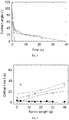
Fig. 4 . Dependence of equilibrium contact angle of wetting upon the age of a glycerol drop for unmodified paper. -
Fig. 5 . Dependence of equilibrium contact angle of wettability upon the age of a glycerol drop for a modified paper sample. -
Fig. 6 . The influence of kaolin addition upon kinetics of glycerol wettability on studied paper samples. The experimental point empty circle with a cross has been excluded from the linear regression calculation. Full circle: critical time t1, empty circle: critical time t2. -
Fig. 7 . The influence of size of the kaolin filler particles (diameter of the particles) on the kinetics of glycerol wettability on studied paper samples. The experimental point empty circle with a cross has been excluded from the linear regression calculation. Full circle: critical time t1, empty circle: critical time t2. -
Fig. 8 . Mossbauer spektra of a solidified surface layer of carboxymethylcellulose filled with dispersed nanoparticles of iron(III) oxide with the size of 60 nm (left) and 40 nm (right): (a) transmission and (b) conversion electrone 57Fe Mossbauer spektra. Measurements were carried out at room temperature of 23 °C. The concentration of iron(III) oxide nanoparticles was 5 % (w/w). - The preparation procedure of the composite material is based on classical paper technologies, where an additional element (a colloidal dispersion of filler nano/micro particles based on kaolinite, TiO2, Al2O3, SiO2 and kaolin in a concentration range of from 2 to 65 % (w/w) and of an exactly defined mean particle diameter in a range of from 50 nm to 5000 nm) is added to the system of paper dispersion on the basis of cellulose pulp. The filler nano/micro particles are stabilized electrostatically, eventually sterically, for example by a polymeric auxiliary preparation addition, based on amphoteric polymeric polyoxyglycol type surfactant (e.g. polyethylene oxide (PEO)) of the mean molecular mass in a range of from 5 kDa to 1.8 MDa and in a concentration range of from 0.0001 to 12.0 % (w/w) of the mass of the dispersion.
The dispersion treated by the above-described method is further mixed with paper pulp and deposited on a paper web. By this method, a selective coverage of individual cellulose fibers by filler particles of exactly defined distribution of particle sizes is achieved, enabling formation of a complex nano-structured layer in a cross-section of the final paper sheet. After water removal, common further paper processing is applied, including pressing and other common paper processing procedures. - Subsequently to the preparation of nano-structured paper according to Example 1, a coating procedure takes place, using a water soluble dispersion of cellulose derivatives (preferably hydroxyethyl cellulose, carboxymethyl cellulose) of the mean molecular mass in a range of from 10 kDa to 1.5 MDa mixed with nanoparticles of iron, aluminium or silicium oxides of variable oxidation stages or combinations thereof (variable mass ratio lies in the range of from 0.01 to 30 % (w/w)). The water soluble dispersion of hydrophile polymers might be replaced by a starch dispersion (e.g. Perlsize or Perlcoat (Lyckeby Amylex)).
- After the paper coating procedure according to Example 2, its solidification is then performed using physical or chemical procedures with the addition of a suitable cross-linking agent. The solidification is performed thermally or plasmachemically (e.g. by corona treatment or microwave plasma). Divinylsulphon, glutaraldehyde etc. in concentrations in a range of from 0.01 to 7 % (w/w) might be used as cross-linking agents, or, alternatively, other known procedures.
- In order to evaluate the wettability of the tested papers, a method of following the kinetics of sinking-in was chosen, based on monitoring of the contact angle of wetting changes with the age of a glycerole drop. It is possible to expect that when the contact wetting angle is 0°, the surface is perfectly wet. The time needed to reach this situation - critical time - corresponds to the time on the x axes (age of a drop) necessary to obtain a perfect wettability. By comparison of individual critical times it is possible to compare the resistance of individual papers tested towards liquid infiltration. As can be seen from kinetic curves, in most cases the dependence of contact wetting angle of glycerole on studied papers decreased with increasing time, showing a characteristic linear progression in the starting stages of infiltration and limit linear progression at the end of the experiment. Therefore a method of tangents was chosen, and a critical time was calculated as a cross-section of tangents with the time axes at the beginning and the end of the experiment (see
Fig. 4 for ordinary paper andFig. 5 for a paper according to Example 3). The first tangent (from the beginning of the experiment) can be associated with the property characterizing surface roughness of the sample, influencing the speed of equilibrium state establishement. The second tangent (from the end of the experiment) can be associated with the property characterizing the inner structure of the paper, related to the infiltration into a microporous structure of the paper layer.
Fig. 6 shows the influence of a degree of paper filling (expressed as a kaolin concentration within a working dispersion) on the critical times t1 and t2. As it is apparent from this dependence, the critical time t1 is not influenced by the filler concentration. On the contrary, the critical time t2 depends on the microporous structure of the paper layer, and linearly increases with increasing concentration of fillers. Such linear increase confirms the increasing resistance against the infiltration of testing liquid of 75 % (t2 = 32 s, t2 of an unfilled paper is 8 s).
The influence of additives in coating of cellulose fibres is demonstated by 15-times higher increase (from 8 s to 120 s) of both critical times (t1 and t2) upon acrylate dispersion addition, comparing with unmodified paper.
The last monitored parameter was the size of filler particles (kaolin). The summary of the results is inFig. 7 . The granulometry of particles does not influence the surface roughness of the sample (t1), related to the technological procedure of paper preparation. However, a significant increase of paper resistance towards infiltration of liquids for particles with diameter less than 200 µm (increase of critical time t2 from 4 s to 39 s) was observed. In order to characterize the infiltration of vapours, experiments with hexane vapours were performed using selected paper samples using iGC method (inversion gas chromatography).
The influence of mineral composition, used as microwave radiation absorption, is important for the efficiency of the change of microwave energy into heat. In our case, we focused on minerals of the type of kaolin, as a frequent filler in paper applications, but with an eye on the dependence of dielectric constant (imaginary part) on the size of the particles, moisture and shape of the particles. Kaolinite exhibits characteristics suitable for its applications in packaging for microwave heating. Slight warming (temperatures around 110 °C) takes place.
From the efficient transformation of microwave radiation into heat point of view, the most suitable layer seems to be a layer of dispersed iron oxide (Fe3O4, magnetite), or eventually Fe2O3 or other metal oxides in different oxidation states, which are deposited on the surface of the above mentioned paper, i.e. a composite of cellulose/filler, forming a homogeneous distribution of magnetite nano particles. Such layer contains a solidified layer of hydrophilic polymer of a defined molar mass, which is further solidified by physical or chemical procedures in order to exhibit exactly defined swelling characteristics when exposed to moisture. This ensures the ability of selective surface wrinklage of the above described sandwich structure paper/coating, influencing the ability of microwave radiation absorption by this system. This combination of nano structured cellulose layer with fibres selectively coated by defined filler particles (with relatively narrow distribution of particle sizes) based on kaolinite, and a hydrophilic layer of dispersed magnetite particles of exact granulometry (in the range of from units to hundreds of nanometers), enabling an efficient absorption of microwave radiation and its transformation into heat. It can be assumed a selective absorption of the magnetic, as well as the electrical component of the microwave field by the specifically organized metal oxide nanoparticles in the prepared planar sandwich composite, e.g. in octahedral or tetrahedral configuration of iron atoms within the crystal lattice of its oxide, as it is for a layer of Fe2O3 nanoparticles in a solidified carboxymethylcellulose (Fig. 8 ). - Coated and filled papers, according to the present invention, can find their applications mainly in packaging of food used for microwave heating, e.g. roasted corn, pizza, ready-to-cook food, prepared meals, etc.
Claims (7)
- A paper-based composite planar material, characterized in that it contains cellulose fibers and filler particles selected from kaolin, TiO2, Al2O3 and mixtures thereof, said filler particles having a size in the range of from 50 nm to 5 µm, whereas the filler particle content is in the range of from 5 to 65 % (w/w), and whereas the paper-based composite planar material further contains at least one polymeric surfactant of the polyoxyglycol type, having a weight average molecular mass from 5 kDa to 1.8 MDa, and whereas the paper-based composite planar material further contains a surface layer containing a mixture of at least one hydrophilic polymer or starch, preferably a cellulose derivative, with iron oxide, aluminium oxide, titanium oxide and/or silicon oxide particles, present in the surface layer in the amount of from 0.1 to 15 % (w/w) relative to the dry mass of the composite material;
the said surface layer being solidified by cross-linking or thermally or plasmachemically. - The composite material according to the claim 1, characterized in that the filler particles are deposited on the surface of the cellulose fibers.
- The composite material according to any one of the preceding claims, characterized in that it further contains at least one acrylate- or vinyl acetate-based refining additive, suitable for modulation of strength and wettable characteristics.
- The composite material according to any one of the preceding claims, characterized in that the surface layer further contains a photochemically active substance for monitoring sterility changes visually using color changes.
- Packaging material for microwave applications, characterized in that it contains the composite material according to any one of the preceding claims.
- A method for preparing the composite material according to any one of claims 1 to 4, characterized in that a colloid dispersion of nano/micro-particles of a filler, based on TiO2, Al2O3, SiO2 and/or kaolin, having a particle size in the range of from 50 nm to 5 µm, whereas the filler particle content is in the range of from 5 to 65 % (w/w), is added into a dispersion of paper pulp based on cellulose pulp; the filler nano/micro particles are stabilized by addition of a polyoxyglycol type surfactant having a weight average molecular mass from 5 kDa to 1.8 MDa; the resulting mixture is placed on a paper web, wherein the colloid dispersion is stabilized by a surfactant; the resulting composite material is further coated with a surface layer containing a mixture of at least one hydrophilic polymer or starch with iron oxide, aluminium oxide, titanium oxide and/or silicon oxide particles, present in the surface layer in the amount of from 0.1 to 15 % (w/w) relative to the dry mass of the composite material; and the surface layer is solidified by addition of a cross-linking agent, thermally or plasmachemically.
- Use of the composite material according to any one of claims 1 to 4 for microwave applications and/or for food-processing and/or food-storing applications.
Priority Applications (1)
| Application Number | Priority Date | Filing Date | Title |
|---|---|---|---|
| PL15165119T PL3034693T3 (en) | 2014-12-17 | 2015-04-24 | Paper based composite planar material |
Applications Claiming Priority (1)
| Application Number | Priority Date | Filing Date | Title |
|---|---|---|---|
| CZ2014-30459U CZ29098U1 (en) | 2014-12-17 | 2014-12-17 | Cellulose-based planar composite material |
Publications (2)
| Publication Number | Publication Date |
|---|---|
| EP3034693A1 EP3034693A1 (en) | 2016-06-22 |
| EP3034693B1 true EP3034693B1 (en) | 2018-08-08 |
Family
ID=53015586
Family Applications (1)
| Application Number | Title | Priority Date | Filing Date |
|---|---|---|---|
| EP15165119.7A Not-in-force EP3034693B1 (en) | 2014-12-17 | 2015-04-24 | Paper based composite planar material |
Country Status (3)
| Country | Link |
|---|---|
| EP (1) | EP3034693B1 (en) |
| CZ (1) | CZ29098U1 (en) |
| PL (1) | PL3034693T3 (en) |
Cited By (1)
| Publication number | Priority date | Publication date | Assignee | Title |
|---|---|---|---|---|
| US12203220B2 (en) | 2019-05-20 | 2025-01-21 | Ecolab Usa Inc. | Formulation for size press applications |
Family Cites Families (13)
| Publication number | Priority date | Publication date | Assignee | Title |
|---|---|---|---|---|
| US3804656A (en) * | 1972-02-22 | 1974-04-16 | Engelhard Min & Chem | Pigment dispersions and use thereof |
| US4391833A (en) * | 1975-09-04 | 1983-07-05 | International Paper Company | Method of making and using heat resistant resin coated paperboard product and product thereof |
| GB8928706D0 (en) | 1989-12-20 | 1990-02-28 | Bowater Packaging Ltd | Transparent barrier packaging materials |
| US5320672A (en) * | 1991-12-17 | 1994-06-14 | Whalen Shaw Michael | Associatively dispersed pigments and coatings containing said pigments |
| GB9318143D0 (en) | 1993-09-01 | 1993-10-20 | Bowater Packaging Ltd | Microwave interactive barrier films |
| US6066375A (en) * | 1997-04-10 | 2000-05-23 | Fort James Corporation | Coated paperboard and paperboard containers having a microwave interactive layer which emits none or very low amounts of benzene in microwave applications |
| FI118092B (en) * | 2002-03-25 | 2007-06-29 | Timson Oy | Fiber-containing web and process for its preparation |
| US7842162B1 (en) * | 2005-03-14 | 2010-11-30 | Louisiana Tech University Foundation, Inc. | Layer-by-layer nanocoating for paper fabrication |
| JP5324139B2 (en) | 2008-06-19 | 2013-10-23 | 雪印メグミルク株式会社 | Cooking container |
| FI123224B (en) * | 2010-11-05 | 2012-12-31 | Nordkalk Oy Ab | Fiber product and process for its manufacture |
| CN202295622U (en) | 2011-09-28 | 2012-07-04 | 郭锡虎 | Novel structure of packaging bag for microwave popcorn |
| KR20150008125A (en) * | 2012-04-18 | 2015-01-21 | 날코 컴퍼니 | Controllable filler prefloculation using a dual polymer system |
| SI2684999T1 (en) * | 2012-07-13 | 2015-03-31 | Omya International Ag | High solids and low viscous aqueous slurries of calcium carbonate-comprising materials with improved rheological stability under increased temperature |
-
2014
- 2014-12-17 CZ CZ2014-30459U patent/CZ29098U1/en not_active IP Right Cessation
-
2015
- 2015-04-24 PL PL15165119T patent/PL3034693T3/en unknown
- 2015-04-24 EP EP15165119.7A patent/EP3034693B1/en not_active Not-in-force
Non-Patent Citations (1)
| Title |
|---|
| None * |
Cited By (1)
| Publication number | Priority date | Publication date | Assignee | Title |
|---|---|---|---|---|
| US12203220B2 (en) | 2019-05-20 | 2025-01-21 | Ecolab Usa Inc. | Formulation for size press applications |
Also Published As
| Publication number | Publication date |
|---|---|
| CZ29098U1 (en) | 2016-02-01 |
| PL3034693T3 (en) | 2019-01-31 |
| EP3034693A1 (en) | 2016-06-22 |
Similar Documents
| Publication | Publication Date | Title |
|---|---|---|
| EP2622133B1 (en) | Cellulose-reinforced high mineral content products and methods of making the same | |
| JP6313755B2 (en) | Paper barrier packaging materials | |
| Hubbe et al. | RETENTION AID POLYMER INTERACTIONS WITH CELLULOSIC SURFACES AND SUSPENSIONS: A REVIEW. | |
| Dimic-Misic et al. | The influence of shear on the dewatering of high consistency nanofibrillated cellulose furnishes | |
| FI3186442T4 (en) | Heat-sealing barrier paper | |
| Raj et al. | Effect of polyelectrolyte morphology and adsorption on the mechanism of nanocellulose flocculation | |
| JP2015227517A (en) | Barrier packaging material made of paper | |
| US20150197892A1 (en) | Filler suspension and its use in the manufacture of paper | |
| JP6236329B2 (en) | Paper barrier packaging materials | |
| CN110382601A (en) | The method of film of the production comprising microfibrillated cellulose and nano particle | |
| WO2013164646A1 (en) | Fibre based material | |
| Dimic-Misic et al. | Influence on pore structure of micro/nanofibrillar cellulose in pigmented coating formulations | |
| Salas et al. | Nanocellulose applications in papermaking | |
| WO2005108674A1 (en) | Article formed into sheet, method for producing the same and exothermic formed article | |
| WO2013153267A1 (en) | Sterilizable and printable nonwoven packaging materials | |
| JP6515801B2 (en) | Thickener for battery separator coating solution, battery separator coating solution and battery separator | |
| KR20190086449A (en) | METHOD FOR MANUFACTURING FILM CONTAINING MFC | |
| Abenghal et al. | Development of a new sustainable packaging paper based on cellulose filaments and refined kraft pulp | |
| Iselau et al. | Role of the aggregation behavior of hydrophobic particles in paper surface hydrophobation | |
| Taheri et al. | Interaction of the electrical conductivity of recycled pulp colloidal suspension with chitosan and bentonite as a papermaking additive system | |
| EP3034693A1 (en) | Paper based composite planar material | |
| EP2274479A1 (en) | Reinforced porous fibre product | |
| Vanerek et al. | Bentonite delamination induced by pulp fibers under high shear monitored by calcium carbonate deposition | |
| FI121999B (en) | Process for making a web and web | |
| Abenghal et al. | Cellulose filaments as sustainable packaging materials: Enhancing barrier properties with cationic starch and alkylketene dimer |
Legal Events
| Date | Code | Title | Description |
|---|---|---|---|
| PUAI | Public reference made under article 153(3) epc to a published international application that has entered the european phase |
Free format text: ORIGINAL CODE: 0009012 |
|
| 17P | Request for examination filed |
Effective date: 20150513 |
|
| AK | Designated contracting states |
Kind code of ref document: A1 Designated state(s): AL AT BE BG CH CY CZ DE DK EE ES FI FR GB GR HR HU IE IS IT LI LT LU LV MC MK MT NL NO PL PT RO RS SE SI SK SM TR |
|
| AX | Request for extension of the european patent |
Extension state: BA ME |
|
| STAA | Information on the status of an ep patent application or granted ep patent |
Free format text: STATUS: EXAMINATION IS IN PROGRESS |
|
| 17Q | First examination report despatched |
Effective date: 20170728 |
|
| GRAP | Despatch of communication of intention to grant a patent |
Free format text: ORIGINAL CODE: EPIDOSNIGR1 |
|
| STAA | Information on the status of an ep patent application or granted ep patent |
Free format text: STATUS: GRANT OF PATENT IS INTENDED |
|
| INTG | Intention to grant announced |
Effective date: 20180504 |
|
| GRAS | Grant fee paid |
Free format text: ORIGINAL CODE: EPIDOSNIGR3 |
|
| GRAA | (expected) grant |
Free format text: ORIGINAL CODE: 0009210 |
|
| STAA | Information on the status of an ep patent application or granted ep patent |
Free format text: STATUS: THE PATENT HAS BEEN GRANTED |
|
| AK | Designated contracting states |
Kind code of ref document: B1 Designated state(s): AL AT BE BG CH CY CZ DE DK EE ES FI FR GB GR HR HU IE IS IT LI LT LU LV MC MK MT NL NO PL PT RO RS SE SI SK SM TR |
|
| REG | Reference to a national code |
Ref country code: GB Ref legal event code: FG4D |
|
| REG | Reference to a national code |
Ref country code: CH Ref legal event code: EP Ref country code: AT Ref legal event code: REF Ref document number: 1027169 Country of ref document: AT Kind code of ref document: T Effective date: 20180815 |
|
| REG | Reference to a national code |
Ref country code: IE Ref legal event code: FG4D |
|
| REG | Reference to a national code |
Ref country code: DE Ref legal event code: R096 Ref document number: 602015014508 Country of ref document: DE |
|
| REG | Reference to a national code |
Ref country code: NL Ref legal event code: MP Effective date: 20180808 |
|
| REG | Reference to a national code |
Ref country code: LT Ref legal event code: MG4D |
|
| PG25 | Lapsed in a contracting state [announced via postgrant information from national office to epo] |
Ref country code: GR Free format text: LAPSE BECAUSE OF FAILURE TO SUBMIT A TRANSLATION OF THE DESCRIPTION OR TO PAY THE FEE WITHIN THE PRESCRIBED TIME-LIMIT Effective date: 20181109 Ref country code: SE Free format text: LAPSE BECAUSE OF FAILURE TO SUBMIT A TRANSLATION OF THE DESCRIPTION OR TO PAY THE FEE WITHIN THE PRESCRIBED TIME-LIMIT Effective date: 20180808 Ref country code: RS Free format text: LAPSE BECAUSE OF FAILURE TO SUBMIT A TRANSLATION OF THE DESCRIPTION OR TO PAY THE FEE WITHIN THE PRESCRIBED TIME-LIMIT Effective date: 20180808 Ref country code: LT Free format text: LAPSE BECAUSE OF FAILURE TO SUBMIT A TRANSLATION OF THE DESCRIPTION OR TO PAY THE FEE WITHIN THE PRESCRIBED TIME-LIMIT Effective date: 20180808 Ref country code: IS Free format text: LAPSE BECAUSE OF FAILURE TO SUBMIT A TRANSLATION OF THE DESCRIPTION OR TO PAY THE FEE WITHIN THE PRESCRIBED TIME-LIMIT Effective date: 20181208 Ref country code: NO Free format text: LAPSE BECAUSE OF FAILURE TO SUBMIT A TRANSLATION OF THE DESCRIPTION OR TO PAY THE FEE WITHIN THE PRESCRIBED TIME-LIMIT Effective date: 20181108 Ref country code: NL Free format text: LAPSE BECAUSE OF FAILURE TO SUBMIT A TRANSLATION OF THE DESCRIPTION OR TO PAY THE FEE WITHIN THE PRESCRIBED TIME-LIMIT Effective date: 20180808 Ref country code: BG Free format text: LAPSE BECAUSE OF FAILURE TO SUBMIT A TRANSLATION OF THE DESCRIPTION OR TO PAY THE FEE WITHIN THE PRESCRIBED TIME-LIMIT Effective date: 20181108 |
|
| PG25 | Lapsed in a contracting state [announced via postgrant information from national office to epo] |
Ref country code: AL Free format text: LAPSE BECAUSE OF FAILURE TO SUBMIT A TRANSLATION OF THE DESCRIPTION OR TO PAY THE FEE WITHIN THE PRESCRIBED TIME-LIMIT Effective date: 20180808 Ref country code: LV Free format text: LAPSE BECAUSE OF FAILURE TO SUBMIT A TRANSLATION OF THE DESCRIPTION OR TO PAY THE FEE WITHIN THE PRESCRIBED TIME-LIMIT Effective date: 20180808 Ref country code: HR Free format text: LAPSE BECAUSE OF FAILURE TO SUBMIT A TRANSLATION OF THE DESCRIPTION OR TO PAY THE FEE WITHIN THE PRESCRIBED TIME-LIMIT Effective date: 20180808 |
|
| PG25 | Lapsed in a contracting state [announced via postgrant information from national office to epo] |
Ref country code: EE Free format text: LAPSE BECAUSE OF FAILURE TO SUBMIT A TRANSLATION OF THE DESCRIPTION OR TO PAY THE FEE WITHIN THE PRESCRIBED TIME-LIMIT Effective date: 20180808 Ref country code: ES Free format text: LAPSE BECAUSE OF FAILURE TO SUBMIT A TRANSLATION OF THE DESCRIPTION OR TO PAY THE FEE WITHIN THE PRESCRIBED TIME-LIMIT Effective date: 20180808 Ref country code: IT Free format text: LAPSE BECAUSE OF FAILURE TO SUBMIT A TRANSLATION OF THE DESCRIPTION OR TO PAY THE FEE WITHIN THE PRESCRIBED TIME-LIMIT Effective date: 20180808 Ref country code: RO Free format text: LAPSE BECAUSE OF FAILURE TO SUBMIT A TRANSLATION OF THE DESCRIPTION OR TO PAY THE FEE WITHIN THE PRESCRIBED TIME-LIMIT Effective date: 20180808 |
|
| REG | Reference to a national code |
Ref country code: DE Ref legal event code: R097 Ref document number: 602015014508 Country of ref document: DE |
|
| PG25 | Lapsed in a contracting state [announced via postgrant information from national office to epo] |
Ref country code: SM Free format text: LAPSE BECAUSE OF FAILURE TO SUBMIT A TRANSLATION OF THE DESCRIPTION OR TO PAY THE FEE WITHIN THE PRESCRIBED TIME-LIMIT Effective date: 20180808 Ref country code: DK Free format text: LAPSE BECAUSE OF FAILURE TO SUBMIT A TRANSLATION OF THE DESCRIPTION OR TO PAY THE FEE WITHIN THE PRESCRIBED TIME-LIMIT Effective date: 20180808 Ref country code: SK Free format text: LAPSE BECAUSE OF FAILURE TO SUBMIT A TRANSLATION OF THE DESCRIPTION OR TO PAY THE FEE WITHIN THE PRESCRIBED TIME-LIMIT Effective date: 20180808 |
|
| PLBE | No opposition filed within time limit |
Free format text: ORIGINAL CODE: 0009261 |
|
| STAA | Information on the status of an ep patent application or granted ep patent |
Free format text: STATUS: NO OPPOSITION FILED WITHIN TIME LIMIT |
|
| 26N | No opposition filed |
Effective date: 20190509 |
|
| PG25 | Lapsed in a contracting state [announced via postgrant information from national office to epo] |
Ref country code: SI Free format text: LAPSE BECAUSE OF FAILURE TO SUBMIT A TRANSLATION OF THE DESCRIPTION OR TO PAY THE FEE WITHIN THE PRESCRIBED TIME-LIMIT Effective date: 20180808 |
|
| REG | Reference to a national code |
Ref country code: CH Ref legal event code: PL |
|
| REG | Reference to a national code |
Ref country code: BE Ref legal event code: MM Effective date: 20190430 |
|
| GBPC | Gb: european patent ceased through non-payment of renewal fee |
Effective date: 20190424 |
|
| PG25 | Lapsed in a contracting state [announced via postgrant information from national office to epo] |
Ref country code: LU Free format text: LAPSE BECAUSE OF NON-PAYMENT OF DUE FEES Effective date: 20190424 Ref country code: MC Free format text: LAPSE BECAUSE OF FAILURE TO SUBMIT A TRANSLATION OF THE DESCRIPTION OR TO PAY THE FEE WITHIN THE PRESCRIBED TIME-LIMIT Effective date: 20180808 |
|
| PG25 | Lapsed in a contracting state [announced via postgrant information from national office to epo] |
Ref country code: CH Free format text: LAPSE BECAUSE OF NON-PAYMENT OF DUE FEES Effective date: 20190430 Ref country code: GB Free format text: LAPSE BECAUSE OF NON-PAYMENT OF DUE FEES Effective date: 20190424 Ref country code: LI Free format text: LAPSE BECAUSE OF NON-PAYMENT OF DUE FEES Effective date: 20190430 |
|
| PG25 | Lapsed in a contracting state [announced via postgrant information from national office to epo] |
Ref country code: BE Free format text: LAPSE BECAUSE OF NON-PAYMENT OF DUE FEES Effective date: 20190430 |
|
| PG25 | Lapsed in a contracting state [announced via postgrant information from national office to epo] |
Ref country code: TR Free format text: LAPSE BECAUSE OF FAILURE TO SUBMIT A TRANSLATION OF THE DESCRIPTION OR TO PAY THE FEE WITHIN THE PRESCRIBED TIME-LIMIT Effective date: 20180808 |
|
| PG25 | Lapsed in a contracting state [announced via postgrant information from national office to epo] |
Ref country code: IE Free format text: LAPSE BECAUSE OF NON-PAYMENT OF DUE FEES Effective date: 20190424 |
|
| PG25 | Lapsed in a contracting state [announced via postgrant information from national office to epo] |
Ref country code: PT Free format text: LAPSE BECAUSE OF FAILURE TO SUBMIT A TRANSLATION OF THE DESCRIPTION OR TO PAY THE FEE WITHIN THE PRESCRIBED TIME-LIMIT Effective date: 20181208 |
|
| PG25 | Lapsed in a contracting state [announced via postgrant information from national office to epo] |
Ref country code: CY Free format text: LAPSE BECAUSE OF FAILURE TO SUBMIT A TRANSLATION OF THE DESCRIPTION OR TO PAY THE FEE WITHIN THE PRESCRIBED TIME-LIMIT Effective date: 20180808 |
|
| REG | Reference to a national code |
Ref country code: AT Ref legal event code: UEP Ref document number: 1027169 Country of ref document: AT Kind code of ref document: T Effective date: 20180808 |
|
| PG25 | Lapsed in a contracting state [announced via postgrant information from national office to epo] |
Ref country code: HU Free format text: LAPSE BECAUSE OF FAILURE TO SUBMIT A TRANSLATION OF THE DESCRIPTION OR TO PAY THE FEE WITHIN THE PRESCRIBED TIME-LIMIT; INVALID AB INITIO Effective date: 20150424 Ref country code: MT Free format text: LAPSE BECAUSE OF FAILURE TO SUBMIT A TRANSLATION OF THE DESCRIPTION OR TO PAY THE FEE WITHIN THE PRESCRIBED TIME-LIMIT Effective date: 20180808 |
|
| PG25 | Lapsed in a contracting state [announced via postgrant information from national office to epo] |
Ref country code: MK Free format text: LAPSE BECAUSE OF FAILURE TO SUBMIT A TRANSLATION OF THE DESCRIPTION OR TO PAY THE FEE WITHIN THE PRESCRIBED TIME-LIMIT Effective date: 20180808 |
|
| REG | Reference to a national code |
Ref country code: FR Ref legal event code: PLFP Year of fee payment: 9 |
|
| PGFP | Annual fee paid to national office [announced via postgrant information from national office to epo] |
Ref country code: CZ Payment date: 20230223 Year of fee payment: 9 |
|
| PGFP | Annual fee paid to national office [announced via postgrant information from national office to epo] |
Ref country code: PL Payment date: 20230324 Year of fee payment: 9 |
|
| PGFP | Annual fee paid to national office [announced via postgrant information from national office to epo] |
Ref country code: FR Payment date: 20230412 Year of fee payment: 9 Ref country code: DE Payment date: 20230419 Year of fee payment: 9 |
|
| PGFP | Annual fee paid to national office [announced via postgrant information from national office to epo] |
Ref country code: FI Payment date: 20230418 Year of fee payment: 9 Ref country code: AT Payment date: 20230419 Year of fee payment: 9 |
|
| REG | Reference to a national code |
Ref country code: DE Ref legal event code: R119 Ref document number: 602015014508 Country of ref document: DE |
|
| REG | Reference to a national code |
Ref country code: AT Ref legal event code: MM01 Ref document number: 1027169 Country of ref document: AT Kind code of ref document: T Effective date: 20240424 |
|
| PG25 | Lapsed in a contracting state [announced via postgrant information from national office to epo] |
Ref country code: DE Free format text: LAPSE BECAUSE OF NON-PAYMENT OF DUE FEES Effective date: 20241105 |
|
| PG25 | Lapsed in a contracting state [announced via postgrant information from national office to epo] |
Ref country code: FI Free format text: LAPSE BECAUSE OF NON-PAYMENT OF DUE FEES Effective date: 20240424 |
|
| PG25 | Lapsed in a contracting state [announced via postgrant information from national office to epo] |
Ref country code: FR Free format text: LAPSE BECAUSE OF NON-PAYMENT OF DUE FEES Effective date: 20240430 |
|
| PG25 | Lapsed in a contracting state [announced via postgrant information from national office to epo] |
Ref country code: AT Free format text: LAPSE BECAUSE OF NON-PAYMENT OF DUE FEES Effective date: 20240424 |
|
| PG25 | Lapsed in a contracting state [announced via postgrant information from national office to epo] |
Ref country code: CZ Free format text: LAPSE BECAUSE OF NON-PAYMENT OF DUE FEES Effective date: 20240424 |
|
| PG25 | Lapsed in a contracting state [announced via postgrant information from national office to epo] |
Ref country code: FR Free format text: LAPSE BECAUSE OF NON-PAYMENT OF DUE FEES Effective date: 20240430 Ref country code: FI Free format text: LAPSE BECAUSE OF NON-PAYMENT OF DUE FEES Effective date: 20240424 Ref country code: DE Free format text: LAPSE BECAUSE OF NON-PAYMENT OF DUE FEES Effective date: 20241105 Ref country code: CZ Free format text: LAPSE BECAUSE OF NON-PAYMENT OF DUE FEES Effective date: 20240424 Ref country code: AT Free format text: LAPSE BECAUSE OF NON-PAYMENT OF DUE FEES Effective date: 20240424 |
|
| PG25 | Lapsed in a contracting state [announced via postgrant information from national office to epo] |
Ref country code: PL Free format text: LAPSE BECAUSE OF NON-PAYMENT OF DUE FEES Effective date: 20240424 |