EP3027644B1 - Cgrp agonist peptides - Google Patents
Cgrp agonist peptides Download PDFInfo
- Publication number
- EP3027644B1 EP3027644B1 EP14752510.9A EP14752510A EP3027644B1 EP 3027644 B1 EP3027644 B1 EP 3027644B1 EP 14752510 A EP14752510 A EP 14752510A EP 3027644 B1 EP3027644 B1 EP 3027644B1
- Authority
- EP
- European Patent Office
- Prior art keywords
- cgrp
- agonist
- seq
- calcitonin gene
- acid
- Prior art date
- Legal status (The legal status is an assumption and is not a legal conclusion. Google has not performed a legal analysis and makes no representation as to the accuracy of the status listed.)
- Active
Links
Images

Classifications
-
- C—CHEMISTRY; METALLURGY
- C07—ORGANIC CHEMISTRY
- C07K—PEPTIDES
- C07K14/00—Peptides having more than 20 amino acids; Gastrins; Somatostatins; Melanotropins; Derivatives thereof
- C07K14/435—Peptides having more than 20 amino acids; Gastrins; Somatostatins; Melanotropins; Derivatives thereof from animals; from humans
- C07K14/575—Hormones
- C07K14/57527—Calcitonin gene related peptide
-
- A—HUMAN NECESSITIES
- A61—MEDICAL OR VETERINARY SCIENCE; HYGIENE
- A61P—SPECIFIC THERAPEUTIC ACTIVITY OF CHEMICAL COMPOUNDS OR MEDICINAL PREPARATIONS
- A61P3/00—Drugs for disorders of the metabolism
-
- A—HUMAN NECESSITIES
- A61—MEDICAL OR VETERINARY SCIENCE; HYGIENE
- A61P—SPECIFIC THERAPEUTIC ACTIVITY OF CHEMICAL COMPOUNDS OR MEDICINAL PREPARATIONS
- A61P3/00—Drugs for disorders of the metabolism
- A61P3/04—Anorexiants; Antiobesity agents
-
- A—HUMAN NECESSITIES
- A61—MEDICAL OR VETERINARY SCIENCE; HYGIENE
- A61P—SPECIFIC THERAPEUTIC ACTIVITY OF CHEMICAL COMPOUNDS OR MEDICINAL PREPARATIONS
- A61P3/00—Drugs for disorders of the metabolism
- A61P3/08—Drugs for disorders of the metabolism for glucose homeostasis
- A61P3/10—Drugs for disorders of the metabolism for glucose homeostasis for hyperglycaemia, e.g. antidiabetics
-
- A—HUMAN NECESSITIES
- A61—MEDICAL OR VETERINARY SCIENCE; HYGIENE
- A61P—SPECIFIC THERAPEUTIC ACTIVITY OF CHEMICAL COMPOUNDS OR MEDICINAL PREPARATIONS
- A61P43/00—Drugs for specific purposes, not provided for in groups A61P1/00-A61P41/00
-
- A—HUMAN NECESSITIES
- A61—MEDICAL OR VETERINARY SCIENCE; HYGIENE
- A61K—PREPARATIONS FOR MEDICAL, DENTAL OR TOILETRY PURPOSES
- A61K38/00—Medicinal preparations containing peptides
Definitions
- the present invention relates to peptide agonists of the calcitonin/calcitonin gene-related peptide (CT/CGRP) family of peptide hormones and therapeutic uses thereof.
- CT/CGRP calcitonin/calcitonin gene-related peptide
- the CT/CGRP peptide family includes calcitonin gene-related peptide (CGRP), adrenomedullin (ADM), intermedin (IM), calcitonin (CT) and amylin.
- CGRP calcitonin gene-related peptide
- ADM adrenomedullin
- IM intermedin
- CT calcitonin
- amylin amylin.
- CTR calcitonin receptor
- CLR calcitonin receptor
- CRLR calcitonin rcccptor-likc receptor
- calcitonin receptor is the main mediator for calcitonin action, it preferentially binds amylin, when the receptor is associated with a receptor activity modifying protein (RAMP) (see, e.g., Tilikaratne, et al. 2000, J. Pharmacol. Exp. Ther. 294(1):61-72 ).
- RAMP receptor activity modifying protein
- Cloning and functional studies have shown that CGRP, ADM, IM and, to a lesser extent, amylin likewise interact with different combinations of CRLR and the three receptor activity modifying proteins (RAMP-1, RAMP-2 and RAMP-3); see, e.g., McLatchie et al. 1998, Nature 393:333-339 and Roh et al.
- calcitonin receptor-like receptor CRLR
- RAMPs receptor activity-modifying proteins
- CGRP calcitonin gene-related peptide
- ADM adrenomedullin
- IM intermedin
- the physiological functions of the hormone peptides in the CT/CGRP family are determined by receptor-binding specificity and the tissue expression profiles of individual ligands and their respective receptors and have been shown to be involved in cardiovascular morphogenesis, sensory neurotransmission, inflammatory reactions, nociceptive behavior and glucose homeostasis (see, e.g., Hay, et al. 2001, Trends Pharmacol. Sci. 22:57-59 ; Shindo, et al. 2001, Circulation 104:1964-1971 ; Zhang et al. 2001, Pain 89:265-273 ; Salmon et al. (1999) Neuroreport 10:849-854 ; Salmon, et al. 2001, Nat. Neurosci. 4: 357-358 ; and Mulder, et al. 2000, Am. J. Physiol. 278:E684-E691 ).
- Calcitonin gene-related peptide is a peptide which, in several species, exists in two forms, designated CGRP-alpha and CGRP-beta (or CGRP-I and CGRP-II, respectively).
- CGRP peptides are highly conserved across species, for example, human and rat CGRP-alpha peptides share 89% amino acid homology (the mature peptides differing by four amino acids) compared to 92% amino acid homology between human alpha- and beta-CGRP (which differ by 3 amino acids). (See for example, Ma, H.
- CGRP is a 37 amino acid vasoactive neuropeptide that is released from sensory, motor and enteric nerves comprising an amphiphilic ⁇ -helical secondary structure in the amino acid sequence between residues 8-25.
- CGRP has potent vasodilatory and cardiotonic action, as described, for example, in U.S. Pat. No. 4,530,838 to Evans, et al.
- CGRP is present in both the central and peripheral nervous systems and is concentrated in those areas of the body receiving sensory input from the dorsal horn with limited amounts associated with autonomic input.
- the peptide is present in the nuclei of sensory and motor cranial nerves and in cell bodies in the hypothalamus, preoptic area, ventromedial thalamus, hippocampus, and the like ( Poyner, D. 1992, Pharmac. Ther. 56:23-51 ).
- CGRP is known to be involved in various pharmacological effects, such as: 1) vasodilation, 2) muscle and liver AMP kinase (AMPK) activation and lipolysis and/or fat oxidation, 3) reduction in food intake, 4) inhibition of gastric emptying and modification of gut function and 5) increased glycolysis and inhibition of glycogen synthesis.
- AMPK muscle and liver AMP kinase
- the net physiological significance of these effects is not completely understood; however, evidence of CGRP's role in fatty acid oxidation and regulation of lipid availability and utilization has been demonstrated ( Danaher, et al, 2008 Endocrinology 149(1):154-160 ).
- Metabolic syndrome is a disease state manifested by obesity, insulin resistance, dyslipidemia and hypertension. Today, these four manifestations are treated by selective treatment paradigms. Native CGRP has a half-life of less than 30 minutes, and a short duration of pharmacological actions after CGRP infusions is evident. Due to vasodilatory effects of administered CGRP, in vivo pharmacological studies of native CGRP can be difficult due to the secondary effects of vasodilation and compensatory vasoconstrictive actions. Thus, the pharmacological usefulness of CGRP, particularly with respect to long-term or chronic use thereof, requires the generation of CGRP analogues with prolonged action and some effects may even only be obtained with longer-acting analogues. Similarly, to be viable as a therapeutic agent, particularly for chronic use, analogues having prolonged action are desirable.
- CGRP calcitonin gene-related peptide
- the CGRP agonist is selected from the group comprising SEQ ID NO:1, SEQ ID NO:2, SEQ ID NO:3 and SEQ ID NO:4 or a pharmaceutically acceptable salt thereof.
- the calcitonin gene-related peptide (CGRP) agonist comprises a C-terminal carboxy group replaced by an amide group.
- the amide group comprises the structure -C(O)NH 2 .
- a pharmaceutical composition comprising a calcitonin gene-related peptide (CGRP) agonist of the present invention.
- the pharmaceutical composition comprises an acceptable excipient and any of the embodiments described above.
- the pharmaceutical composition comprises an effective amount of the CGRP agonist for use in the treatment of a metabolic disorder in a subject in need thereof, wherein the subject is human.
- a method of treating a metabolic disorder comprising administering to a subject in need thereof an effective amount of the calcitonin gene-related peptide (CGRP) agonist of the present invention, wherein the subject is human.
- CGRP calcitonin gene-related peptide
- a method of treating a metabolic disorder selected from the group comprising diabetes and obesity comprises administering to a subject in need thereof an effective amount of the calcitonin gene-related peptide (CGRP) agonist, wherein the subject is human.
- CGRP calcitonin gene-related peptide
- a calcitonin gene-related peptide agonist having the structure of Formula I is disclosed X 1 -Y 1 -Z 1 (I) wherein:
- X 1 comprises the sequence, SEQ ID NO: 9 (ACDTATC).
- Z 1 comprises the sequence, SEQ ID NO: 10 (PRTNVGSKAF).
- Some CGRP agonists comprising : an amino acid sequence having at least 80%, preferably 90%, sequence identity to the amino acid sequence of SEQ ID NOS: 1, 2, 3, 4 or 5 wherein said peptide retains agonist activity, are disclosed.
- Some embodiments provide a pharmaceutical composition comprising a pharmaceutically acceptable excipient and a calcitonin gene-related peptide agonist as disclosed and described herein.
- Some embodiments provide a method of treating a condition associated with insufficient levels of CGRP or that are ameliorated by increased CGRP said method comprising the administration of a calcitonin gene-related peptide agonist as disclosed and described herein, to an individual, the method comprising administering to the individual an effective amount of a calcitonin gene-related peptide agonist as disclosed and described herein.
- Some embodiments disclose a calcitonin gene-related peptide agonist having the structure selected from the following peptide sequences, listed in Table 1.
- Table 1 NH 2 -ACDTATCVLGRLSQELHRLQTYPRTNVGSKAF-NH 2 ; (SEQ ID NO: 1)-NH 2 NH 2 -ACDTATCVLGRLSQELHRLQTYPTNVGSKAF-NH 2 ; (SEQ ID NO: 2)-NH 2 NH 2 -CDTATCVLGRLSQELHRLQTYPRTNVGSKAF-NH 2 ; (SEQ ID NO: 3)-NH 2 NH 2 -CDTATCVLGRLSQELHRLQTYPTNVGSKAF-NH 2 ; (SEQ ID NO: 4)-NH 2 NH 2 -ACDTATCMLGRYTQDFNRFHTFPRTNVGSKAF-NH 2 ; (SEQ ID NO: 5)-NH 2
- the amino acid sequence of the calcitonin gene-related peptide agonist can be modified, relative to the sequence of SEQ ID NOS: 1, 2, 3, 4 or 5 such that the modification reduces the calcitonin gene-related peptide agonist's susceptibility to enzymatic proteolysis.
- this modification may comprise the N-terminal addition of a sequence comprising all or part of the 864 residue XTENS polypeptide, a polypeptide that has been shown to increase protein stability after administration to a subject. See, for example, Schellenberger, et al., 2009, Nature Biotechnology 27(12): 1186-1192 .
- agonist refers to a biologically active ligand which binds to its complementary biologically active receptor and activates the latter either to cause a biological response in the receptor or to enhance preexisting biological activity of the receptor.
- a-helix means a structural component that forms an ⁇ -helical protein structure or any other structural analogue which results in a similar positioning of the X 1 and Z 1 domains on a receptor.
- pharmaceutically acceptable carrier refers to a carrier medium which does not interfere with the effectiveness of the biological activity of the active ingredients and which is not toxic to the host or patient.
- pharmaceutically acceptable salt refers to the non-toxic alkali metal, alkaline earth metal, and ammonium salts commonly used in the pharmaceutical industry including the sodium, potassium, lithium, calcium, magnesium, barium, ammonium, and protamine zinc salts, which are prepared by methods well known in the art.
- non-toxic acid addition salts which are generally prepared by reacting the modified calcitonin gene-related peptide agonists disclosed herein with a suitable organic or inorganic acid.
- Representative salts include the hydrochloride, hydrobromide, sulfate, bisulfate, acetate, oxalate, valerate, oleate, laurate, borate, benzoate, lactate, phosphate, tosylate, citrate, maleate, fumarate, succinate, tartrate, napsylate, and the like.
- the term refers to those salts which retain the biological effectiveness and properties of the free bases and which are not biologically or otherwise undesirable, formed with inorganic acids such as hydrochloric acid, hydrobromic acid, sulfuric acid, nitric acid, phosphoric acid and the like, and organic acids such as acetic acid, propionic acid, glycolic acid, pyruvic acid, oxalic acid, malic acid, malonic acid, succinic acid, maleic acid, fumaric acid, tartaric acid, citric acid, benzoic acid, cinnamic acid, mandelic acid, menthanesulfonic acid, ethanesulfonic acid, p-toluenesulfonic acid, salicylic acid and the like.
- inorganic acids such as hydrochloric acid, hydrobromic acid, sulfuric acid, nitric acid, phosphoric acid and the like
- organic acids such as acetic acid, propionic acid, glycolic acid, pyruvic acid, ox
- terapéuticaally- or pharmaceutically-effective amount refers to the amount of composition sufficient to induce a desired biological result. That result can be alleviation of the signs, symptoms, or causes of a disease, or any other desired alteration of a biological system.
- the amino- and/or carboxy-terminus of the peptide compounds disclosed herein can be unmodified hydrogen.
- the amino- and/or carboxy-terminus of the peptide compound can be modified with a derivative group.
- Amino-derivative groups which can be present at the N-terminus of a peptide compound include acetyl, aryl, aralkyl, acyl, epoxysuccinyl and cholesteryl groups.
- Carboxy-derivative groups which can be present at the C-terminus of a peptide compound include alcohol, aldehyde, epoxysuccinate, acid halide, carbonyl, halomethane, diazomethane groups and carboxamide.
- the amino terminus is unmodified hydrogen and the carboxy-terminus is modified with a carboxamide derivative group.
- Amino acids are sometimes referred to herein by the usual three letter codes and/or one letter codes. If, due to typing errors, there are deviations from the commonly used codes, the commonly used codes apply.
- Percent (%) amino acid sequence identity with respect to the polypeptide sequences identified herein is defined as the percentage of amino acid residues in a candidate sequence that are identical with the amino acid residues in the specific polypeptide sequence, after aligning the sequences and introducing gaps, if necessary, to achieve the maximum percent sequence identity, and not considering any conservative substitutions as part of the sequence identity. Alignment for purposes of determining percent amino acid sequence identity can be achieved in various ways that are within the skill in the art, for instance, using publicly available computer software such as BLAST, BLAST-2, ALIGN, ClustalW2, Kalign, MAFFT, or Megalign (DNASTAR) software. Those skilled in the art can determine appropriate parameters for measuring alignment, including any algorithms needed to achieve maximal alignment over the full length of the sequences being compared.
- calcitonin gene-related peptide agonists described herein can be prepared by classical methods known in the art, for example, by using standard solid phase techniques. See, for example, Merrifield, 1963 J. Am. Chem. Soc. 85:2149 .
- CGRP agonists of the present invention preferably comprise a C-terminal amide, wherein the C-terminal carboxyl group is replaced by an amide -C(O)NR 3 R 4 , wherein R 3 and R 4 are preferably hydrogen (H) but may either or both be a functional group selected, for example, to protect the C-terminal amide from enzymatic degradation and/or to prolong the half-life of the peptide compound in vivo, provided however such functional groups do not interfere with, or are modified or removed in vivo to permit, binding of the peptide compound to the CGRP receptor.
- Such functional groups are well known to those of skill in the art; see for example, Kahns, A. and Bundgaard, H. 1991 Pharmaceutical Research 8(12):1533-1538 . Techniques for synthesis of such C-terminal amides are also well known to those of skill in the art.
- the calcitonin gene-related peptide agonists as disclosed and described herein may also be prepared by recombinant DNA techniques well known in the art.
- Such recombinantly produced CGRP peptide agonists may be further modified, for example to replace the C-terminal carboxyl group with an amide, after recombinant production using techniques well known in the art, including for example, enzymatic conversion of the acid to the amide.
- compositions containing the CGRP peptide agonists of the present invention can be administered for prophylactic and/or therapeutic treatments.
- compositions are administered to a patient already suffering from a disease, as described above, in an amount sufficient to cure or at least partially arrest or ameliorate the symptoms of the disease and/or its complications.
- An amount adequate to accomplish this is defined as a "therapeutically effective amount” or “therapeutically effective dose”. Amounts effective for this use will depend, for example, on the severity of the disease and the weight and general state of the patient, and can be readily determined by one of ordinary skill in the art.
- compositions containing the compounds disclosed herein are administered to a patient susceptible to or otherwise at risk of a particular disease and are sufficient to prevent, delay or lessen the severity of the disease.
- Such an amount is defined to be a "prophylactically effective amount” or “prophylactically effective dose.”
- the precise amounts again depend, for example, on the patient's state of health and weight, and can be readily determined by one of ordinary skill in the art.
- a therapeutically effective amount of a compound of the present invention is administered to a subject (for example, patient or animal) suffering from insulin resistance, type-2 diabetes mellitus, hypertension, obesity, dyslipidaemia, atherosclerosis and/or thrombosis.
- the dosage ranges for the administration of a compound of this invention are those large enough to produce a therapeutic effect.
- compositions comprising, as an active ingredient, at least one of the peptides disclosed herein in association with a pharmaceutical carrier or diluent.
- These pharmaceutical compositions can be administered by any means, as known to those of skill in the art, and include, without limitation, oral, pulmonary, parenteral (intramuscular, intraperitoneal, intravenous, or subcutaneous injection), inhalational ( via a fine powder formulation, or aerosol), transdermal, intranasal or sublingual routes of administration and can be formulated in dosage forms appropriate for each route of administration. See, for example, Bernstein, et al. PCT Patent Publication No. WO 93/25221, published December 23, 1993 ; Pitt, et al. PCT Patent Publication No. WO 94/17784, published August 18, 1994 ; and Pitt, et al. European Patent Application 613,683, published September 7, 1994 .
- Suitable routes of administration are likewise known to those of skill in the art and may include, for example and without limitation, oral, transmucosal or topical; parenteral delivery, including intramuscular, subcutaneous, intravenous, intramedullary injections, intrathecal, intraperitoneal, intranasal, or intraocular injections, as well as needle-free subcutaneous delivery.
- parenteral delivery including intramuscular, subcutaneous, intravenous, intramedullary injections, intrathecal, intraperitoneal, intranasal, or intraocular injections, as well as needle-free subcutaneous delivery.
- the compounds can also be administered in sustained or controlled release dosage forms, including without limitation, depot injections, osmotic pumps, transdermal (including electrotransport) patches, and the like, for prolonged and/or timed, pulsed administration at a predetermined rate.
- compositions of the present embodiments may be manufactured in a manner that is itself known, e.g., by means of conventional mixing, dissolving, granulating, dragee-making, levigating, emulsifying, encapsulating, entrapping or tabletting processes.
- compositions for use in accordance with the present embodiments thus may be formulated in conventional manner using one or more physiologically acceptable carriers comprising excipients and auxiliaries which facilitate processing of the active compounds into preparations which can be used pharmaceutically and which are appropriate for the intended route of administration.
- physiologically acceptable carriers comprising excipients and auxiliaries which facilitate processing of the active compounds into preparations which can be used pharmaceutically and which are appropriate for the intended route of administration.
- excipients Any of the well-known techniques, carriers, and excipients may be used as suitable and as understood in the art; e.g., in Remington's Pharmaceutical Sciences, above.
- the exact dosage will be determined on a drug-by-drug and disease-by-disease basis, in most cases, some generalizations regarding the dosage can be made, and those of skill in the pharmacology art will understand from the disclosure herein that appropriate doses can be determined using routine techniques.
- the doses for a compound of this invention would fall in a concentration of from about 10 -15 M to 10 -5 M (for example, as measured in one or more of muscle, blood, serum or plasma).
- the amount of a compound of this invention administered to an animal to achieve a desired level or concentration of the compound of this invention will depend on a number of factors well known to practitioners, such as compound half-life (for example, serum half-life), and the frequency and mode of administration.
- the dose of a compound of the present invention may be administered in the range from 20 picograms to 1 gram, more often between 3 nanograms and 500 micrograms per dose.
- the unit dosage in some cases daily dosage is less than about 100 micrograms, less than about 10 micrograms, less than about 1 microgram, less than about 100 nanograms, less than about 10 nanograms, less than about 1 nanogram, less than about 100 picograms, or less than about 10 picograms.
- dosages may be calculated as the free base.
- the composition is administered 1 to 4 times per day or as a single acute dose.
- the peptides will be administered for a period of continuous therapy, for example for a week or more, or for months or years.
- Dosage amount and interval may be adjusted individually to provide plasma levels of the active moiety which are sufficient to maintain the modulating effects, or minimal effective concentration (MEC).
- MEC minimal effective concentration
- the MEC will vary for each compound but can be estimated from in vitro data. Dosages necessary to achieve the MEC will depend on individual characteristics and route of administration. However, HPLC assays or bioassays can be used to determine plasma concentrations.
- Dosage intervals can also be determined using MEC value.
- Compositions should be administered using a regimen which maintains plasma levels above the MEC for 10-90% of the time, preferably between 30-90% and most preferably between 50-90%.
- a compound of the present invention can be formulated or co-administered with other active agents that, for example, also treat metabolic or cardiovascular diseases/disorders.
- the compounds described herein are useful in vitro as unique tools for understanding the biological role of CGRP.
- the present compounds are also useful in the development of other compounds that bind to and activate CGRP receptors, because the present compounds provide important information on the relationship between structure and activity to facilitate such development.
- a representative CGRP agonist peptide according to the present invention, ACX017 (SEQ ID NO:1), -NH 2 was profiled against G-Protein Coupled Receptors (GPCRs) in cell-based assays to determine its agonist activity and dose response. Results of the CGRP and adrenomedullin receptor screens are provided below. Assays were performed using the SelectScreen® Cell-based GPCR Profiling Services by Life Technologies, Carlsbad, CA.
- CALCRL:RAMP1 CRE-bla Freestyle 293F - Agonist Screen (CGRP Receptor)
- CALCRL:RAMP1-CRE-bla Freestyle 293F cells were thawed and resuspended in Assay Media (DMEM, 10% dialyzed FBS, 25 mM HEPES pH 7.3, 0.1 mM NEAA, 100 U/mL/100 ⁇ g/mL Pen/Strep) to a concentration of 312,500 cells/mL. 32 ⁇ L of cell suspension (10,000 cells) was added to each well of a 384-well Poly-D-Lysine assay plate. Cells in Assay Media were incubated for 16-24 hours in the plate at 37°C/5% CO2 in a humidified incubator.
- Assay Media DMEM, 10% dialyzed FBS, 25 mM HEPES pH 7.3, 0.1 mM NEAA, 100 U/mL/100 ⁇ g/mL Pen/Strep
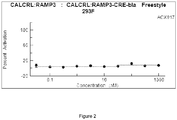
- CALCRL:RAMP3 CRE-bla Freestyle 293F - Agonist Screen (Adrenomedullin 2 Receptor)
- CALCRL:RAMP3-CRE-bla Freestyle 293F cells were thawed and resuspended in Assay Media (DMEM, 10% dialyzed FBS, 25 mM HEPES pH 7.3, 0.1 mM NEAA, 100 U/mL/100 ⁇ g/mL Pen/Strep) to a concentration of 312,500 cells/mL. 32 ⁇ L of cell suspension (10,000 cells) was added to each well of a 384-well Poly-D-Lysine assay plate. Cells in Assay Media were incubated for 16-24 hours in the plate at 37°C/5% CO2 in a humidified incubator.
- Assay Media DMEM, 10% dialyzed FBS, 25 mM HEPES pH 7.3, 0.1 mM NEAA, 100 U/mL/100 ⁇ g/mL Pen/Strep
- the full agonist control contained 0.1% DMSO, cells and a maximum concentration of the known agonist.
- the full agonist control was used to determine the upper end of the assay or 100% activation.
- the no agonist control contained 0.1% DMSO, cells and assay media in place of the agonist.
- the no agonist control was used to determine the lower end of the assay or 0% activation.
- the cell-free control contained 0.1% DMSO and assay media. It was used to determine the background fluorescence for both coumarin and fluorescein wavelengths. This value was used for background subtraction.
- Known Agonist A known agonist titration was run on every plate for each cell-line to ensure the cell line was activated within an expected EC50/IC50 range as previously determined.
- FIG. 1 shows that ACX017 demonstrated agonist activity against the CGRP receptor with an approximate EC50 concentration of 105nM.
- FIG. 2 shows that ACX017 did not activate the adrenomedullin 2 (AM2) receptor. As such ACX017 was shown to exhibit binding and functional specificity to the CGRP receptor in a dose dependent response.
- AM2 adrenomedullin 2
- Sprague Dawley Rats male, 400g body weight ( ⁇ 12-14wks old) were acclimated for at least seven days to housing environment and a 12 hour light/dark reverse cycle (light overnight/dark during the day. Animals were purpose-bred, specific pathogen-free, and experimentally naive at the start of the study. Animals had ad libitum access to special Rodent Diet with 60%kcal%fat (D12492, Research Diets, New Brunswick, NJ) and acidified water (pH 2.5-3.0) from arrival throughout the end of the study. Body weight at study initiation was at least 450g. Animals that had: 1) significantly low body weight, 2) severe dehydration, or 3) wounds from fighting were excluded from the study.
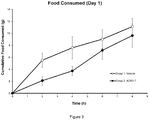
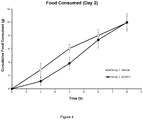
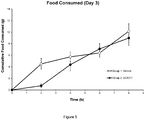
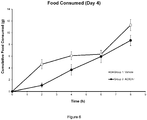
- Food consumption was measured pre-dose and at 2, 4, 6 and 8 hours post dose. Food intake was measured by weighing food hoppers on Days 1, 2, 3 and four in the hour before end of the light phase and at 2, 4, 6 and 8 hours post dosing.
- Average food intake for each of the Test and Control groups at each time point post dosing was determined. Cumulative food intake for each group over the entire test period (8 hours) is provided in graph form in FIGS. 1-4 for each of Days 1-4, respectively.
- ACX017 suppressed appetite in the Test group for at least about four hours after dosing as evidenced by reduced food intake during that period compared to the Control group at four hours.
- ACX017 SEQ ID NO: 1
- -NH 2 can cause appetite suppression in a subject, as demonstrated.
Landscapes
- Health & Medical Sciences (AREA)
- Chemical & Material Sciences (AREA)
- Life Sciences & Earth Sciences (AREA)
- Organic Chemistry (AREA)
- General Health & Medical Sciences (AREA)
- Medicinal Chemistry (AREA)
- Diabetes (AREA)
- Genetics & Genomics (AREA)
- Pharmacology & Pharmacy (AREA)
- Veterinary Medicine (AREA)
- General Chemical & Material Sciences (AREA)
- Chemical Kinetics & Catalysis (AREA)
- Nuclear Medicine, Radiotherapy & Molecular Imaging (AREA)
- Public Health (AREA)
- Bioinformatics & Cheminformatics (AREA)
- Engineering & Computer Science (AREA)
- Animal Behavior & Ethology (AREA)
- Endocrinology (AREA)
- Hematology (AREA)
- Obesity (AREA)
- Biophysics (AREA)
- Toxicology (AREA)
- Zoology (AREA)
- Gastroenterology & Hepatology (AREA)
- Biochemistry (AREA)
- Molecular Biology (AREA)
- Proteomics, Peptides & Aminoacids (AREA)
- Emergency Medicine (AREA)
- Child & Adolescent Psychology (AREA)
- Medicines That Contain Protein Lipid Enzymes And Other Medicines (AREA)
- Peptides Or Proteins (AREA)
Applications Claiming Priority (2)
| Application Number | Priority Date | Filing Date | Title |
|---|---|---|---|
| US201361860244P | 2013-07-30 | 2013-07-30 | |
| PCT/US2014/048724 WO2015017455A1 (en) | 2013-07-30 | 2014-07-29 | Cgrp agonist peptides |
Publications (2)
| Publication Number | Publication Date |
|---|---|
| EP3027644A1 EP3027644A1 (en) | 2016-06-08 |
| EP3027644B1 true EP3027644B1 (en) | 2019-08-21 |
Family
ID=51355665
Family Applications (1)
| Application Number | Title | Priority Date | Filing Date |
|---|---|---|---|
| EP14752510.9A Active EP3027644B1 (en) | 2013-07-30 | 2014-07-29 | Cgrp agonist peptides |
Country Status (4)
| Country | Link |
|---|---|
| US (1) | US9951115B2 (enExample) |
| EP (1) | EP3027644B1 (enExample) |
| JP (1) | JP6538682B2 (enExample) |
| WO (1) | WO2015017455A1 (enExample) |
Families Citing this family (2)
| Publication number | Priority date | Publication date | Assignee | Title |
|---|---|---|---|---|
| WO2016183479A1 (en) * | 2015-05-13 | 2016-11-17 | The Board Of Regents Of The University Of Oklahoma | Variants of adrenomedullin and calcitonin gene-related peptide and methods of use |
| EP3366286A1 (en) * | 2017-02-22 | 2018-08-29 | Johannes Keller | Compounds for treating sepsis |
Citations (4)
| Publication number | Priority date | Publication date | Assignee | Title |
|---|---|---|---|---|
| WO2006083254A1 (en) * | 2004-02-11 | 2006-08-10 | Amylin Pharmaceuticals, Inc. | Amylin family peptides and methods for making and using them |
| WO2006105345A2 (en) * | 2005-03-31 | 2006-10-05 | Amylin Pharmaceuticals, Inc. | Compositions and methods for the control, prevention, and treatment of obesity and eating disorders |
| WO2009064298A1 (en) * | 2007-11-14 | 2009-05-22 | Amylin Pharmaceuticals, Inc. | Methods for treating obesity and obesity related diseases and disorders |
| EP2127676A2 (en) * | 2004-11-01 | 2009-12-02 | Amylin Pharmaceuticals, Inc. | Treatment of obesity and related disorders |
Family Cites Families (5)
| Publication number | Priority date | Publication date | Assignee | Title |
|---|---|---|---|---|
| WO1994021665A1 (en) * | 1993-03-24 | 1994-09-29 | Amylin Pharmaceuticals, Inc. | Cloned receptors and methods for screening |
| WO2007055743A2 (en) * | 2005-11-01 | 2007-05-18 | Amylin Pharmaceuticals, Inc. | Treatment of obesity and related disorders |
| WO2010107874A2 (en) | 2009-03-17 | 2010-09-23 | Amylin Pharmaceuticals, Inc. | Methods for affecting body composition using amylin agonists |
| US20140249076A1 (en) * | 2011-10-18 | 2014-09-04 | Astrazeneca Pharmaceuticals Lp | Amylin-calcitonin chimeric peptides conjugated to duration enhancing moieties |
| KR101855242B1 (ko) * | 2012-01-26 | 2018-05-09 | 크리스토퍼 제이. 소레스 | 펩타이드 호르몬의 칼시토닌 cgrp 패밀리의 펩타이드 길항제 및 그의 용도 |
-
2014
- 2014-07-29 EP EP14752510.9A patent/EP3027644B1/en active Active
- 2014-07-29 JP JP2016531836A patent/JP6538682B2/ja active Active
- 2014-07-29 US US14/908,515 patent/US9951115B2/en active Active
- 2014-07-29 WO PCT/US2014/048724 patent/WO2015017455A1/en not_active Ceased
Patent Citations (4)
| Publication number | Priority date | Publication date | Assignee | Title |
|---|---|---|---|---|
| WO2006083254A1 (en) * | 2004-02-11 | 2006-08-10 | Amylin Pharmaceuticals, Inc. | Amylin family peptides and methods for making and using them |
| EP2127676A2 (en) * | 2004-11-01 | 2009-12-02 | Amylin Pharmaceuticals, Inc. | Treatment of obesity and related disorders |
| WO2006105345A2 (en) * | 2005-03-31 | 2006-10-05 | Amylin Pharmaceuticals, Inc. | Compositions and methods for the control, prevention, and treatment of obesity and eating disorders |
| WO2009064298A1 (en) * | 2007-11-14 | 2009-05-22 | Amylin Pharmaceuticals, Inc. | Methods for treating obesity and obesity related diseases and disorders |
Non-Patent Citations (4)
| Title |
|---|
| BRZOZOWSKI TOMASZ ET AL: "Role of central and peripheral ghrelin in the mechanism of gastric mucosal defence", INFLAMMOPHARMACOLOGY, vol. 13, no. 1-3, 2005, pages 45 - 62, ISSN: 0925-4692 * |
| DE LA COUR ET AL: "Secretion of ghrelin from rat stomach ghrelin cells in response to local microinfusion of candidate messenger compounds: A microdialysis study", REGULATORY PEPTIDES, ELSEVIER SCIENCE BV, NL, vol. 143, no. 1-3, 10 August 2007 (2007-08-10), pages 118 - 126, XP022192149, ISSN: 0167-0115, DOI: 10.1016/J.REGPEP.2007.05.001 * |
| HARRIET A. WATKINS ET AL, BRITISH JOURNAL OF PHARMACOLOGY, vol. 170, December 2013 (2013-12-01), pages 1308 - 1322, DOI: 10.1111/bph.12072URL * |
| MICHAEL M. COX AND DAVID L. NELSON: "principles of biochemistry 4th edition", 20 May 2005, SARA TENNEYW.H. FREEMAN AND COMPANY, pages: 120 - 122 * |
Also Published As
| Publication number | Publication date |
|---|---|
| WO2015017455A1 (en) | 2015-02-05 |
| JP6538682B2 (ja) | 2019-07-03 |
| US9951115B2 (en) | 2018-04-24 |
| US20160207975A1 (en) | 2016-07-21 |
| EP3027644A1 (en) | 2016-06-08 |
| JP2016528231A (ja) | 2016-09-15 |
Similar Documents
| Publication | Publication Date | Title |
|---|---|---|
| KR102351313B1 (ko) | Gip/glp1 공효능제 화합물 | |
| JP5485876B2 (ja) | 代謝疾患の治療における治療剤としての非アシル化グレリン | |
| JP6247205B2 (ja) | ポリペプチド | |
| JP6227629B2 (ja) | ヒトアミリン類似体 | |
| JP5703226B2 (ja) | アミリン誘導体 | |
| CN106459170A (zh) | 衍生自毒蜥外泌肽‑4的glp‑1/胰高血糖素受体双重激动剂 | |
| CA2223611A1 (en) | Appetite regulating compositions | |
| AU2021229621B2 (en) | Peptides as selective GIP receptor agonists | |
| US11572399B2 (en) | Long-acting GIP peptide analogues | |
| KR20220108064A (ko) | 최적화된 gip 펩타이드 유사체 | |
| US8318664B2 (en) | Unacylated ghrelin fragments as therapeutic agent in the treatment of obesity | |
| CN120981479A (zh) | Gip/glp1/gcg三受体激动剂及其用途 | |
| EP3027644B1 (en) | Cgrp agonist peptides |
Legal Events
| Date | Code | Title | Description |
|---|---|---|---|
| PUAI | Public reference made under article 153(3) epc to a published international application that has entered the european phase |
Free format text: ORIGINAL CODE: 0009012 |
|
| 17P | Request for examination filed |
Effective date: 20160229 |
|
| AK | Designated contracting states |
Kind code of ref document: A1 Designated state(s): AL AT BE BG CH CY CZ DE DK EE ES FI FR GB GR HR HU IE IS IT LI LT LU LV MC MK MT NL NO PL PT RO RS SE SI SK SM TR |
|
| AX | Request for extension of the european patent |
Extension state: BA ME |
|
| DAX | Request for extension of the european patent (deleted) | ||
| STAA | Information on the status of an ep patent application or granted ep patent |
Free format text: STATUS: EXAMINATION IS IN PROGRESS |
|
| 17Q | First examination report despatched |
Effective date: 20170302 |
|
| RIC1 | Information provided on ipc code assigned before grant |
Ipc: A61P 3/10 20060101ALI20180531BHEP Ipc: C07K 14/585 20060101AFI20180531BHEP Ipc: A61K 38/23 20060101ALI20180531BHEP Ipc: A61P 3/04 20060101ALI20180531BHEP Ipc: C07K 14/575 20060101ALI20180531BHEP Ipc: A61P 3/00 20060101ALI20180531BHEP |
|
| GRAP | Despatch of communication of intention to grant a patent |
Free format text: ORIGINAL CODE: EPIDOSNIGR1 |
|
| STAA | Information on the status of an ep patent application or granted ep patent |
Free format text: STATUS: GRANT OF PATENT IS INTENDED |
|
| INTG | Intention to grant announced |
Effective date: 20180723 |
|
| GRAJ | Information related to disapproval of communication of intention to grant by the applicant or resumption of examination proceedings by the epo deleted |
Free format text: ORIGINAL CODE: EPIDOSDIGR1 |
|
| STAA | Information on the status of an ep patent application or granted ep patent |
Free format text: STATUS: EXAMINATION IS IN PROGRESS |
|
| INTC | Intention to grant announced (deleted) | ||
| GRAP | Despatch of communication of intention to grant a patent |
Free format text: ORIGINAL CODE: EPIDOSNIGR1 |
|
| STAA | Information on the status of an ep patent application or granted ep patent |
Free format text: STATUS: GRANT OF PATENT IS INTENDED |
|
| INTG | Intention to grant announced |
Effective date: 20190313 |
|
| GRAS | Grant fee paid |
Free format text: ORIGINAL CODE: EPIDOSNIGR3 |
|
| GRAA | (expected) grant |
Free format text: ORIGINAL CODE: 0009210 |
|
| STAA | Information on the status of an ep patent application or granted ep patent |
Free format text: STATUS: THE PATENT HAS BEEN GRANTED |
|
| AK | Designated contracting states |
Kind code of ref document: B1 Designated state(s): AL AT BE BG CH CY CZ DE DK EE ES FI FR GB GR HR HU IE IS IT LI LT LU LV MC MK MT NL NO PL PT RO RS SE SI SK SM TR |
|
| REG | Reference to a national code |
Ref country code: GB Ref legal event code: FG4D |
|
| REG | Reference to a national code |
Ref country code: CH Ref legal event code: EP |
|
| REG | Reference to a national code |
Ref country code: DE Ref legal event code: R096 Ref document number: 602014052167 Country of ref document: DE |
|
| REG | Reference to a national code |
Ref country code: AT Ref legal event code: REF Ref document number: 1169649 Country of ref document: AT Kind code of ref document: T Effective date: 20190915 |
|
| REG | Reference to a national code |
Ref country code: IE Ref legal event code: FG4D |
|
| REG | Reference to a national code |
Ref country code: LT Ref legal event code: MG4D |
|
| REG | Reference to a national code |
Ref country code: NL Ref legal event code: MP Effective date: 20190821 |
|
| PG25 | Lapsed in a contracting state [announced via postgrant information from national office to epo] |
Ref country code: LT Free format text: LAPSE BECAUSE OF FAILURE TO SUBMIT A TRANSLATION OF THE DESCRIPTION OR TO PAY THE FEE WITHIN THE PRESCRIBED TIME-LIMIT Effective date: 20190821 Ref country code: SE Free format text: LAPSE BECAUSE OF FAILURE TO SUBMIT A TRANSLATION OF THE DESCRIPTION OR TO PAY THE FEE WITHIN THE PRESCRIBED TIME-LIMIT Effective date: 20190821 Ref country code: BG Free format text: LAPSE BECAUSE OF FAILURE TO SUBMIT A TRANSLATION OF THE DESCRIPTION OR TO PAY THE FEE WITHIN THE PRESCRIBED TIME-LIMIT Effective date: 20191121 Ref country code: NL Free format text: LAPSE BECAUSE OF FAILURE TO SUBMIT A TRANSLATION OF THE DESCRIPTION OR TO PAY THE FEE WITHIN THE PRESCRIBED TIME-LIMIT Effective date: 20190821 Ref country code: HR Free format text: LAPSE BECAUSE OF FAILURE TO SUBMIT A TRANSLATION OF THE DESCRIPTION OR TO PAY THE FEE WITHIN THE PRESCRIBED TIME-LIMIT Effective date: 20190821 Ref country code: NO Free format text: LAPSE BECAUSE OF FAILURE TO SUBMIT A TRANSLATION OF THE DESCRIPTION OR TO PAY THE FEE WITHIN THE PRESCRIBED TIME-LIMIT Effective date: 20191121 Ref country code: PT Free format text: LAPSE BECAUSE OF FAILURE TO SUBMIT A TRANSLATION OF THE DESCRIPTION OR TO PAY THE FEE WITHIN THE PRESCRIBED TIME-LIMIT Effective date: 20191223 Ref country code: FI Free format text: LAPSE BECAUSE OF FAILURE TO SUBMIT A TRANSLATION OF THE DESCRIPTION OR TO PAY THE FEE WITHIN THE PRESCRIBED TIME-LIMIT Effective date: 20190821 |
|
| PG25 | Lapsed in a contracting state [announced via postgrant information from national office to epo] |
Ref country code: RS Free format text: LAPSE BECAUSE OF FAILURE TO SUBMIT A TRANSLATION OF THE DESCRIPTION OR TO PAY THE FEE WITHIN THE PRESCRIBED TIME-LIMIT Effective date: 20190821 Ref country code: IS Free format text: LAPSE BECAUSE OF FAILURE TO SUBMIT A TRANSLATION OF THE DESCRIPTION OR TO PAY THE FEE WITHIN THE PRESCRIBED TIME-LIMIT Effective date: 20191221 Ref country code: LV Free format text: LAPSE BECAUSE OF FAILURE TO SUBMIT A TRANSLATION OF THE DESCRIPTION OR TO PAY THE FEE WITHIN THE PRESCRIBED TIME-LIMIT Effective date: 20190821 Ref country code: GR Free format text: LAPSE BECAUSE OF FAILURE TO SUBMIT A TRANSLATION OF THE DESCRIPTION OR TO PAY THE FEE WITHIN THE PRESCRIBED TIME-LIMIT Effective date: 20191122 Ref country code: ES Free format text: LAPSE BECAUSE OF FAILURE TO SUBMIT A TRANSLATION OF THE DESCRIPTION OR TO PAY THE FEE WITHIN THE PRESCRIBED TIME-LIMIT Effective date: 20190821 Ref country code: AL Free format text: LAPSE BECAUSE OF FAILURE TO SUBMIT A TRANSLATION OF THE DESCRIPTION OR TO PAY THE FEE WITHIN THE PRESCRIBED TIME-LIMIT Effective date: 20190821 |
|
| REG | Reference to a national code |
Ref country code: AT Ref legal event code: MK05 Ref document number: 1169649 Country of ref document: AT Kind code of ref document: T Effective date: 20190821 |
|
| PG25 | Lapsed in a contracting state [announced via postgrant information from national office to epo] |
Ref country code: TR Free format text: LAPSE BECAUSE OF FAILURE TO SUBMIT A TRANSLATION OF THE DESCRIPTION OR TO PAY THE FEE WITHIN THE PRESCRIBED TIME-LIMIT Effective date: 20190821 |
|
| PG25 | Lapsed in a contracting state [announced via postgrant information from national office to epo] |
Ref country code: RO Free format text: LAPSE BECAUSE OF FAILURE TO SUBMIT A TRANSLATION OF THE DESCRIPTION OR TO PAY THE FEE WITHIN THE PRESCRIBED TIME-LIMIT Effective date: 20190821 Ref country code: AT Free format text: LAPSE BECAUSE OF FAILURE TO SUBMIT A TRANSLATION OF THE DESCRIPTION OR TO PAY THE FEE WITHIN THE PRESCRIBED TIME-LIMIT Effective date: 20190821 Ref country code: EE Free format text: LAPSE BECAUSE OF FAILURE TO SUBMIT A TRANSLATION OF THE DESCRIPTION OR TO PAY THE FEE WITHIN THE PRESCRIBED TIME-LIMIT Effective date: 20190821 Ref country code: IT Free format text: LAPSE BECAUSE OF FAILURE TO SUBMIT A TRANSLATION OF THE DESCRIPTION OR TO PAY THE FEE WITHIN THE PRESCRIBED TIME-LIMIT Effective date: 20190821 Ref country code: DK Free format text: LAPSE BECAUSE OF FAILURE TO SUBMIT A TRANSLATION OF THE DESCRIPTION OR TO PAY THE FEE WITHIN THE PRESCRIBED TIME-LIMIT Effective date: 20190821 Ref country code: PL Free format text: LAPSE BECAUSE OF FAILURE TO SUBMIT A TRANSLATION OF THE DESCRIPTION OR TO PAY THE FEE WITHIN THE PRESCRIBED TIME-LIMIT Effective date: 20190821 |
|
| PG25 | Lapsed in a contracting state [announced via postgrant information from national office to epo] |
Ref country code: SK Free format text: LAPSE BECAUSE OF FAILURE TO SUBMIT A TRANSLATION OF THE DESCRIPTION OR TO PAY THE FEE WITHIN THE PRESCRIBED TIME-LIMIT Effective date: 20190821 Ref country code: CZ Free format text: LAPSE BECAUSE OF FAILURE TO SUBMIT A TRANSLATION OF THE DESCRIPTION OR TO PAY THE FEE WITHIN THE PRESCRIBED TIME-LIMIT Effective date: 20190821 Ref country code: IS Free format text: LAPSE BECAUSE OF FAILURE TO SUBMIT A TRANSLATION OF THE DESCRIPTION OR TO PAY THE FEE WITHIN THE PRESCRIBED TIME-LIMIT Effective date: 20200224 Ref country code: SM Free format text: LAPSE BECAUSE OF FAILURE TO SUBMIT A TRANSLATION OF THE DESCRIPTION OR TO PAY THE FEE WITHIN THE PRESCRIBED TIME-LIMIT Effective date: 20190821 |
|
| REG | Reference to a national code |
Ref country code: DE Ref legal event code: R097 Ref document number: 602014052167 Country of ref document: DE |
|
| PLBE | No opposition filed within time limit |
Free format text: ORIGINAL CODE: 0009261 |
|
| STAA | Information on the status of an ep patent application or granted ep patent |
Free format text: STATUS: NO OPPOSITION FILED WITHIN TIME LIMIT |
|
| PG2D | Information on lapse in contracting state deleted |
Ref country code: IS |
|
| 26N | No opposition filed |
Effective date: 20200603 |
|
| PG25 | Lapsed in a contracting state [announced via postgrant information from national office to epo] |
Ref country code: SI Free format text: LAPSE BECAUSE OF FAILURE TO SUBMIT A TRANSLATION OF THE DESCRIPTION OR TO PAY THE FEE WITHIN THE PRESCRIBED TIME-LIMIT Effective date: 20190821 |
|
| PG25 | Lapsed in a contracting state [announced via postgrant information from national office to epo] |
Ref country code: MC Free format text: LAPSE BECAUSE OF FAILURE TO SUBMIT A TRANSLATION OF THE DESCRIPTION OR TO PAY THE FEE WITHIN THE PRESCRIBED TIME-LIMIT Effective date: 20190821 |
|
| REG | Reference to a national code |
Ref country code: CH Ref legal event code: PL |
|
| REG | Reference to a national code |
Ref country code: BE Ref legal event code: MM Effective date: 20200731 |
|
| PG25 | Lapsed in a contracting state [announced via postgrant information from national office to epo] |
Ref country code: LI Free format text: LAPSE BECAUSE OF NON-PAYMENT OF DUE FEES Effective date: 20200731 Ref country code: CH Free format text: LAPSE BECAUSE OF NON-PAYMENT OF DUE FEES Effective date: 20200731 Ref country code: LU Free format text: LAPSE BECAUSE OF NON-PAYMENT OF DUE FEES Effective date: 20200729 |
|
| PG25 | Lapsed in a contracting state [announced via postgrant information from national office to epo] |
Ref country code: BE Free format text: LAPSE BECAUSE OF NON-PAYMENT OF DUE FEES Effective date: 20200731 |
|
| PG25 | Lapsed in a contracting state [announced via postgrant information from national office to epo] |
Ref country code: IE Free format text: LAPSE BECAUSE OF NON-PAYMENT OF DUE FEES Effective date: 20200729 |
|
| PG25 | Lapsed in a contracting state [announced via postgrant information from national office to epo] |
Ref country code: MT Free format text: LAPSE BECAUSE OF FAILURE TO SUBMIT A TRANSLATION OF THE DESCRIPTION OR TO PAY THE FEE WITHIN THE PRESCRIBED TIME-LIMIT Effective date: 20190821 Ref country code: CY Free format text: LAPSE BECAUSE OF FAILURE TO SUBMIT A TRANSLATION OF THE DESCRIPTION OR TO PAY THE FEE WITHIN THE PRESCRIBED TIME-LIMIT Effective date: 20190821 |
|
| PG25 | Lapsed in a contracting state [announced via postgrant information from national office to epo] |
Ref country code: MK Free format text: LAPSE BECAUSE OF FAILURE TO SUBMIT A TRANSLATION OF THE DESCRIPTION OR TO PAY THE FEE WITHIN THE PRESCRIBED TIME-LIMIT Effective date: 20190821 |
|
| P01 | Opt-out of the competence of the unified patent court (upc) registered |
Effective date: 20230507 |
|
| PGFP | Annual fee paid to national office [announced via postgrant information from national office to epo] |
Ref country code: GB Payment date: 20250605 Year of fee payment: 12 |
|
| PGFP | Annual fee paid to national office [announced via postgrant information from national office to epo] |
Ref country code: FR Payment date: 20250610 Year of fee payment: 12 |
|
| PGFP | Annual fee paid to national office [announced via postgrant information from national office to epo] |
Ref country code: DE Payment date: 20250604 Year of fee payment: 12 |