EP3027552B1 - Syngas production by co2 reduction process - Google Patents
Syngas production by co2 reduction process Download PDFInfo
- Publication number
- EP3027552B1 EP3027552B1 EP14777817.9A EP14777817A EP3027552B1 EP 3027552 B1 EP3027552 B1 EP 3027552B1 EP 14777817 A EP14777817 A EP 14777817A EP 3027552 B1 EP3027552 B1 EP 3027552B1
- Authority
- EP
- European Patent Office
- Prior art keywords
- reactor
- process according
- sep
- leaving
- sulfur
- Prior art date
- Legal status (The legal status is an assumption and is not a legal conclusion. Google has not performed a legal analysis and makes no representation as to the accuracy of the status listed.)
- Active
Links
Images

Classifications
-
- C—CHEMISTRY; METALLURGY
- C01—INORGANIC CHEMISTRY
- C01B—NON-METALLIC ELEMENTS; COMPOUNDS THEREOF; METALLOIDS OR COMPOUNDS THEREOF NOT COVERED BY SUBCLASS C01C
- C01B3/00—Hydrogen; Gaseous mixtures containing hydrogen; Separation of hydrogen from mixtures containing it; Purification of hydrogen; Reversible storage of hydrogen
- C01B3/02—Production of hydrogen; Production of gaseous mixtures containing hydrogen
- C01B3/06—Production of hydrogen; Production of gaseous mixtures containing hydrogen by reaction of inorganic compounds containing electro-positively bound hydrogen with inorganic reducing agents
-
- C—CHEMISTRY; METALLURGY
- C01—INORGANIC CHEMISTRY
- C01B—NON-METALLIC ELEMENTS; COMPOUNDS THEREOF; METALLOIDS OR COMPOUNDS THEREOF NOT COVERED BY SUBCLASS C01C
- C01B17/00—Sulfur; Compounds thereof
- C01B17/02—Preparation of sulfur; Purification
- C01B17/04—Preparation of sulfur; Purification from gaseous sulfur compounds including gaseous sulfides
-
- C—CHEMISTRY; METALLURGY
- C01—INORGANIC CHEMISTRY
- C01B—NON-METALLIC ELEMENTS; COMPOUNDS THEREOF; METALLOIDS OR COMPOUNDS THEREOF NOT COVERED BY SUBCLASS C01C
- C01B17/00—Sulfur; Compounds thereof
- C01B17/02—Preparation of sulfur; Purification
- C01B17/04—Preparation of sulfur; Purification from gaseous sulfur compounds including gaseous sulfides
- C01B17/0404—Preparation of sulfur; Purification from gaseous sulfur compounds including gaseous sulfides by processes comprising a dry catalytic conversion of hydrogen sulfide-containing gases, e.g. the Claus process
- C01B17/0408—Pretreatment of the hydrogen sulfide containing gases
-
- C—CHEMISTRY; METALLURGY
- C01—INORGANIC CHEMISTRY
- C01B—NON-METALLIC ELEMENTS; COMPOUNDS THEREOF; METALLOIDS OR COMPOUNDS THEREOF NOT COVERED BY SUBCLASS C01C
- C01B17/00—Sulfur; Compounds thereof
- C01B17/48—Sulfur dioxide; Sulfurous acid
- C01B17/50—Preparation of sulfur dioxide
- C01B17/508—Preparation of sulfur dioxide by oxidation of sulfur compounds
-
- Y—GENERAL TAGGING OF NEW TECHNOLOGICAL DEVELOPMENTS; GENERAL TAGGING OF CROSS-SECTIONAL TECHNOLOGIES SPANNING OVER SEVERAL SECTIONS OF THE IPC; TECHNICAL SUBJECTS COVERED BY FORMER USPC CROSS-REFERENCE ART COLLECTIONS [XRACs] AND DIGESTS
- Y02—TECHNOLOGIES OR APPLICATIONS FOR MITIGATION OR ADAPTATION AGAINST CLIMATE CHANGE
- Y02E—REDUCTION OF GREENHOUSE GAS [GHG] EMISSIONS, RELATED TO ENERGY GENERATION, TRANSMISSION OR DISTRIBUTION
- Y02E60/00—Enabling technologies; Technologies with a potential or indirect contribution to GHG emissions mitigation
- Y02E60/30—Hydrogen technology
- Y02E60/36—Hydrogen production from non-carbon containing sources, e.g. by water electrolysis
-
- Y—GENERAL TAGGING OF NEW TECHNOLOGICAL DEVELOPMENTS; GENERAL TAGGING OF CROSS-SECTIONAL TECHNOLOGIES SPANNING OVER SEVERAL SECTIONS OF THE IPC; TECHNICAL SUBJECTS COVERED BY FORMER USPC CROSS-REFERENCE ART COLLECTIONS [XRACs] AND DIGESTS
- Y02—TECHNOLOGIES OR APPLICATIONS FOR MITIGATION OR ADAPTATION AGAINST CLIMATE CHANGE
- Y02P—CLIMATE CHANGE MITIGATION TECHNOLOGIES IN THE PRODUCTION OR PROCESSING OF GOODS
- Y02P20/00—Technologies relating to chemical industry
- Y02P20/10—Process efficiency
- Y02P20/129—Energy recovery, e.g. by cogeneration, H2recovery or pressure recovery turbines
-
- Y—GENERAL TAGGING OF NEW TECHNOLOGICAL DEVELOPMENTS; GENERAL TAGGING OF CROSS-SECTIONAL TECHNOLOGIES SPANNING OVER SEVERAL SECTIONS OF THE IPC; TECHNICAL SUBJECTS COVERED BY FORMER USPC CROSS-REFERENCE ART COLLECTIONS [XRACs] AND DIGESTS
- Y02—TECHNOLOGIES OR APPLICATIONS FOR MITIGATION OR ADAPTATION AGAINST CLIMATE CHANGE
- Y02P—CLIMATE CHANGE MITIGATION TECHNOLOGIES IN THE PRODUCTION OR PROCESSING OF GOODS
- Y02P20/00—Technologies relating to chemical industry
- Y02P20/10—Process efficiency
- Y02P20/133—Renewable energy sources, e.g. sunlight
Definitions
- the present invention relates a production process of synthesis gas starting from CO 2 and H 2 S, said reactants being generated by industrial conventional processes or separated by conventional industrial purification processes.
- Synthesis gas is mainly obtained by partial oxidation of hydrocarbon, usually methane.
- This process is represented by a cathedral oven provided with tubes containing a catalyst through which methane and steam flow to convert these reactants into CO and H 2 , i.e. syngas.
- the purpose of the oven is to heat the tubes by heat radiation to reach the reaction temperatures up to 800°C.
- Syngas is then cooled down and separated down stream the oven.
- syngas is produced from coal gasification.
- the gasification reactor is fed with coal oxygen and steam to achieve a syngas stream by partial oxidation reaction of the coal itself.
- gasification is technologically feasible also for biomasses and agricultural/industrial residues or solid urban waste, but substantially with the same finality to partially oxidize the reactants in order to obtain syngas.
- US 4171347 describes a for the catalytic oxidation of H 2 S to SO 2 in the presence of an oxidation catalyst like V 2 O 5 or V 2 S 5 at temperatures of from 150 to 482°C.
- GB2143225 discloses only an improved Claus process carried out with specific catalysts comprising at least one metal selected Group 3b and/or 4b of the periodic table of the elements on a silica containing carrier .
- all theoretical reaction scheme means the general and stoichiometric scheme of reactants conversion. This scheme and all associated stoichiometry may vary according to the reactor methodologies as well the operating conditions thereof.
- catalytic train of the Claus unit means the series of catalytic converters and condensers for sulfur recovery that in Claus unit are positioned downstream the thermal section.
- oxygen means pure oxygen, air, oxygen-enriched air, combustion air etc.
- oxygen is pure oxygen or air.
- operating unit means a plant for carrying out the process of the invention comprising a reactor at least one separation section, separating syngas from the other components of flue gases leaving said thermal or regenerative reactor, and least one recycling section of the unconverted reactants.
- independent operating unit means an operating unit to carry out the process according to the present invention, wherein the at least one separating section and/or at least one recycling section is apart from those of other operative units destined to different industrial processes.
- efficient regeneration means that the regenerative section of the reactor is able to significantly preheat the feed up to temperature close to the conditions of the thermal section of the reactor (i.e. over 1000°C).
- the process of the invention is generally carried out by feeding oxygen/air in a reactor in amounts of from 5 to 25 % by volume mixture based on the total gaseous mixture sent to the reactor, in order to sustain energetically the syngas endothermic production via CO 2 reduction, preferably in the range of 5% to 15% when the regeneration is very efficient.
- the process of the invention is carried out in a regenerative flow reactor or a thermal reactor, although the former is more preferred.
- the regenerative thermal reactor ( figure 2 ), in which syngas is produced, is preferably a tubular plug flow reactor (PFR) for the regenerative section and PFR for the thermal section internally covered with refractory and preferably provided downstream with a waste heat boiler.
- this reactor section is a thermal furnace covered with refractory and provided downstream with a waste heat boiler, in which medium/high pressure vapours are generated at the shell side by reactor flue gases that are cooled down entering the waste heat boiler at the tubes side.
- the regenerative thermal reactor preferably used in the process of the invention may have different configurations with reactants feed positioned in one or different reactor areas.
- the process according to the present invention may also be carried out in a thermal reactor, that is a PFR, through which gases pass with a turbulent flow and provided downstream with a waste heat boiler, like that previously described.
- reaction temperatures of the process according to the present invention are comprised between 800 and 1550°C.
- reaction temperatures are comprised between 1300 and 1550°C when a high sequestering therefore a high conversion of CO 2 and H 2 S is required, whereas the process is carried out at lower temperatures (900-1100°C) when the target is to obtain a relatively high H 2 /CO ratio.
- the exercise pressure is preferably comprised between 1 and 2 absolute atm., more preferably between 1.5 and 2 atm.
- the contact times are preferably between 0.1 and 3 s. more preferably between 0.5 and 1.5 s.
- the regenerative thermal reactor, or in alternative the thermal reactor used in the process according to the present invention is simulated by using complex kinetic schemes (Manenti et al., Multiscale modelling of Claus thermal furnace and waste heat boiler using detailed kinetics, Computers and Chemical Engineering, 59, 219-225, 2013 ), comprising 2426 chemical reactions and 142 chemical species.
- the simulation cannot be conducted by using commercial software, since the main processes simulators are not provided with complex kinetic schemes. Therefore the present simulation is carried out with the abovementioned tools previously in situ validated.
- the thermal reactor is represented schematically in Figure 1 .
- the simulation data are reported in the following table 1.
- An alternative configuration of the reactor is the proposed regenerative (energetically integrated) thermal reactor and is schematically represented in Figure 2 .
- the reactor receives CO 2 and H 2 S reactant streams at a relatively low temperature (e.g. 250°C).
- This feedstock is preheated (e.g., up to 700°C) with flue gases leaving the furnace.
- oxygen is fed to further increase the temperature up to the desired value (1300-1550°C). Flue gases are then cooled down, by exchanging heat with inlet gases. In this way a significant heat recovery is achieved, and the oxygen amount required to sustain the production of syngas is decidedly lower than that required in the thermal reactor.
- the following data are related to the proposed reaction conducted at 1300°C, 1.8 bar and 1 s residence time. Whenever the feedstock temperature is lower than the reaction temperature, additional O 2 is needed to increase the temperature itself.
- Oxygen quantity is less due to the amount of CO2 that works as Oxygen basin for H2S oxidation.
- Flue gases coming from the reactor are cooled down and syngas is separated from the other compounds namely H 2 S, CO 2 , SO 2 , H 2 O and S 2 .
- the process of the invention is preferably carried out in a productive unit that, besides the regenerative thermal reactor, it further comprises at least one of conversion/condensation/ compression sections allowing the separation of flue gases from said reactors.
- This separation can be realized in different ways, depending on the use of the different streams that, besides syngas, may be utilized industrially, and the production site, wherein the production unit for carrying out the process according to the invention is integrated with.
- FIG 3 a preferred embodiment is depicted of an independent productive unit used for carrying out the process according to the present invention.
- a regenerative thermal reactor acid gas (mainly H 2 S), CO 2 and oxygen (O 2 ) or combustion air or other fuel mixture are fed.
- acid gas mainly H 2 S
- CO 2 and oxygen O 2
- combustion air or other fuel mixture are fed.
- CO 2 reduction to CO occurs, with H 2 formation through H 2 S pyrolysis, thereby producing syngas.
- S 2 , SO 2 and H 2 O form as by products.
- Flue gases are cooled down in a waste heat boiler not represented in the figure. Cooling down must be sufficiently quick to avoid any recombination reactions among flue gases ( Manenti et al., Design of SRU thermal reactor and waste heat boiler considering recombination reactions, Procedia Engineering, 42, 414-421, 2012 ).
- SO 2 can be used in sulfuric acid production processes. As syngas production is always associated with a compression thereof at different tens of atmospheres, no further operating cost is required if SO 2 condensation occurs by pressure increase. For example syngas is compressed up to 80 bar or more for methanol synthesis ( Manenti et al., Considerations on the Steady-state Modeling of Methanol Synthesis Fixed-Bed Reactor, Chemical Engineering Science, 66(2), 152-162, 2011 ).
- the process of the invention is able to exhaust and increase the values of two by products like H 2 S and CO 2 having a strong environmental impact, thereby producing syngas with different CO/H 2 ratios; in addition the process of the invention, besides being energetically sustainable shows high conversion yields.
- the process of the invention is particularly useful for increasing the performances and profits of sulfur recovery units.
- the typical scheme of a sulfur recovery unit is depicted in Figure 4 .
- the acid gas to be treated is fed with non stoichiometric combustion air to a Claus furnace wherein part of H 2 S is converted to SO 2 according to the following reaction.
- the reaction is generally conducted at temperatures higher than 1000°C, with temperatures that may be higher than 1500°C in the presence of ammonia fractions in the acid gas stream.
- flue gas When leaving Claus furnace flue gas is cooled down to 300°C in a waste heat boiler with production of medium pressure vapor.
- a condenser downstream the waste heat boiler completes cool down by separating sulfur by condensation. Condensed sulfur is sent to liquid sulfur pit.
- the stream, thus free from sulfur, mainly consisting of H 2 S, SO 2 and H 2 O enters the first Claus catalytic converter CC1, wherein the following reaction occurs: R5: 2 H 2 S + SO 2 ⁇ 3/2S 2 + H 2 O
- Tail residue usually contains a small percentage of unconverted H 2 S (for example when molar ratios H 2 S/SO 2 higher than 2 are present in flue gases leaving Claus furnace). This residue is then washed with solvent for residual H 2 S abatement. H 2 S is then released from the stripper head and upstream recycled at Claus furnace feed, in addition to freshly fed acid gas.
- the mixture containing CO 2 , H 2 S, SO 2 , H 2 O and syngas is fed at the catalytic train CC1-CC2, wherein the Claus reaction R5 occurs.
- Syngas is inert both on the catalytic bed (not titanium based catalyst) and in intermediate sulfur condensing and removal operating conditions. Therefore flue gases coming from the third condenser Cond are unconverted CO 2 , H 2 S and syngas.
- Syngas is recovered at the top of the amine washing column ( ABSORBER in fig. 5 ), whereas H 2 S and CO 2 are recovered at the top of the stripper ( STRIPPER in the same figure) and recycled upstream the reactor.
- the operating unit to carry out the process of the invention integrated with Claus sulfur recovery unit allows to exhaust CO 2 by H 2 S reduction, thereby coproducing syngas and elemental sulfur.
- a production unit of sulfuric acid is schematically represented in Figure 6 .
- the production process encompasses the primary oxidation of sulfurated compounds, for example acid gas (H 2 S) according to the above mentioned global reaction R4: H 2 S + 1.5O 2 ⁇ SO 2 + H 2 O,
- the process according to the present invention may be integrated with the aforementioned process.
- the insertion of an independent operating unit to carry out the process of the invention in a possible revamp is reported in Fig. 7 .
- the thermal furnace of direct oxidation of H 2 S to SO 2 according to the aforementioned reaction R4 is replaced by the reactor indicated with NEW in Figure 7 , preferably a regenerative thermal reactor, wherein the process according to the present invention is carried out and from which SO 2 is in any case obtained.
- Natural gas is extracted by gases wells in the form of a gas or a volatile product released by liquid masses or porous solids. In any case it is a mixture of the so called light and volatile hydrocarbon compounds, in part defined as incondensable (i.e. methane) because of their very low condensation temperature.
- incondensable i.e. methane
- Natural gas contains a more or less marked presence of H 2 S and CO 2 according to the location of the specific deposit. For example Kashgan site in Ukraine, one of the world largest gas natural deposit, has an elevated amount of H 2 S (about 20% on the total natural gas content). Therefore the need is felt to purify natural gases from CO 2 and H 2 S and the most known technology to remove these contaminants is the amine sweetening (washing) previously mentioned.
- the process of the invention is particularly attractive for sequestering and converting CO 2 and H 2 S coming also from different streams and processes, thereby producing syngas as well as elemental sulfur in case the invention is integrated with sulfur recovery units.
- the process of the invention is even more attractive in case the deposits are already provided with amine washing columns, which the reactor, preferably a regenerative thermal reactor, to carry out the process according to the present invention may be connected to.
- Production unit integrated in a production unit for producing methanol 4.
- the invention allows to produce syngas for methanol synthesis occurring according to the overall reaction ( Manenti et al., Considerations on the Steady-state Modeling of Methanol Synthesis Fixed-Bed Reactor, Chemical Engineering Science, 66(2), 152-162, 2011 ): R8: CO + 2 H 2 ⁇ CH 3 OH
- An independent operating unit comprising a reactor, preferably a regenerative thermal reactor, to carry out the process according to the present invention allows to obtain syngas to be used in methanol production.
- Figure 8 reports a scheme of an operating unit for example to produce methanol according to Lurgi, Casale and Davy Process Technology ( Manenti et al., Considerations on the Steady-state Modeling of Methanol Synthesis Fixed-Bed Reactor, Chemical Engineering Science, 66(2), 152-162, 2011 ).
- CO 2 reverse water gas shift reaction
- NW reverse water gas shift reaction
- An alternative operating unit to carry out the process of the invention integrated with Claus operating unit may be also encompassed to be associated with a methanol plant production.
- Syngas is the starting reactant of Fischer Tropsch gas-to-liquid processes. In these processes, syngas is transformed into hydrocarbon compounds with progressively longer chains (indicated with the single unit -[CH 2 ]- according to the overall reaction: R9: CO + 2 H 2 ⁇ -[CH 2 ]- + H 2 O.
- syngas prepared with the process according to the present invention in the reactor NEW and purified by passing it through the 4 separation sections Sep1-Sep4 may be used as starting reactant in the Fischer Tropsch gas-to-liquid process as reported in Figure 9 .
- Coal gasification reactor receives coal, steam and oxygen as reactants to produce syngas.
- Gasification by products are CO 2 and H 2 S (due to the presence of sulfur in loaded coal) and may be fed at the reactor NEW, preferably a regenerative thermal reactor, wherein the process according to the present invention is carried out, thereby increasing coal syngas production.
Landscapes
- Chemical & Material Sciences (AREA)
- Organic Chemistry (AREA)
- Inorganic Chemistry (AREA)
- Chemical Kinetics & Catalysis (AREA)
- Health & Medical Sciences (AREA)
- General Health & Medical Sciences (AREA)
- Engineering & Computer Science (AREA)
- Combustion & Propulsion (AREA)
- Carbon And Carbon Compounds (AREA)
- Industrial Gases (AREA)
- Gas Separation By Absorption (AREA)
- Organic Low-Molecular-Weight Compounds And Preparation Thereof (AREA)
Description
- The present invention relates a production process of synthesis gas starting from CO2 and H2S, said reactants being generated by industrial conventional processes or separated by conventional industrial purification processes.
- Synthesis gas (syngas) is mainly obtained by partial oxidation of hydrocarbon, usually methane. This process is represented by a cathedral oven provided with tubes containing a catalyst through which methane and steam flow to convert these reactants into CO and H2, i.e. syngas. The purpose of the oven is to heat the tubes by heat radiation to reach the reaction temperatures up to 800°C. Syngas is then cooled down and separated down stream the oven. In alternative syngas is produced from coal gasification. The gasification reactor is fed with coal oxygen and steam to achieve a syngas stream by partial oxidation reaction of the coal itself. Nowadays gasification is technologically feasible also for biomasses and agricultural/industrial residues or solid urban waste, but substantially with the same finality to partially oxidize the reactants in order to obtain syngas.
- Peter D. Clark et al in "Comments on the role of H2S in the Chemistry of Earth 's early atmosphere and in prebiotic Synthesis" Journal of Molecular Evolution vo. 47, No. 2, 1 August 1998, pages 127-132 discloses a small scale lab process for producing syngas starting from H2S and CO2 wherein the energetic supply for carrying out this reaction is supplied by an electrically heated surface.
-
US 4171347 describes a for the catalytic oxidation of H2S to SO2 in the presence of an oxidation catalyst like V2O5 or V2S5 at temperatures of from 150 to 482°C. -
GB2143225 - The applicant has found a process as claimed in
claim 1 for producing synthesis gas. -
-
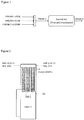
Figure 1 represents a block diagram of a thermal reactor used in the process of the invention. -
Figure 2 represents a scheme of a regenerative thermal reactor utilized in the process of the invention in the presence of oxygen or air. -
Figure 3 represents a block diagram of an independent productive unit to carry out the process of the invention. -
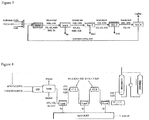
Figure 4 represents a block diagram of a conventional Claus type productive unit for sulfur recovery. -
Figure 5 represents a block diagram of a productive unit to carry out the process of the invention integrated with a Claus type catalytic train. -
Figure 6 represents a block diagram of a conventional type productive unit for producing sulfuric acid -
Figure 7 represents a block diagram of a productive unit for carrying out the process of the invention integrated with the productive unit for producing sulfuric acid. -
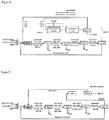
Figure 8 represents a block diagram of a production unit for carrying out the process of the invention coupled with a production unit destined to methanol production. -
Figure 9 represents a block diagram of a production unit for carrying out the process of the invention associated with a production unit for producing gasoline/gasoil according to Fischer Tropsch gas-to-liquids processes. -
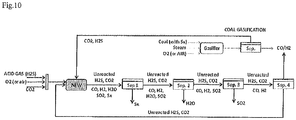
Figure 10 represents a block diagram of a production unit for carrying out the process of the invention coupled with a production unit for producing syngas from coal gasification. - For the purposes of the invention the wording "overall theoretical reaction scheme" means the general and stoichiometric scheme of reactants conversion. This scheme and all associated stoichiometry may vary according to the reactor methodologies as well the operating conditions thereof.
- For the purposes of the present invention the definition "catalytic train of the Claus unit" means the series of catalytic converters and condensers for sulfur recovery that in Claus unit are positioned downstream the thermal section.
- For the purposes of the present invention the wording "oxygen" means pure oxygen, air, oxygen-enriched air, combustion air etc. Preferably oxygen is pure oxygen or air.
- For the purposes of the present invention the wording "operating unit" means a plant for carrying out the process of the invention comprising a reactor at least one separation section, separating syngas from the other components of flue gases leaving said thermal or regenerative reactor, and least one recycling section of the unconverted reactants.
- For the purposes of the present invention the wording "independent operating unit" means an operating unit to carry out the process according to the present invention, wherein the at least one separating section and/or at least one recycling section is apart from those of other operative units destined to different industrial processes.
- For the purposes of the present invention for "small portion of H2S" it is intended the volume % of H2S directly reacting with O2 according to the aforementioned reaction R2, therefore (depending on the volume of O2 entering the reactor) calculated on the total volume of fed H2S.
- For the purposes of the present invention the wording "efficient regeneration" means that the regenerative section of the reactor is able to significantly preheat the feed up to temperature close to the conditions of the thermal section of the reactor (i.e. over 1000°C).
- The process of the invention is generally carried out by feeding oxygen/air in a reactor in amounts of from 5 to 25 % by volume mixture based on the total gaseous mixture sent to the reactor, in order to sustain energetically the syngas endothermic production via CO2 reduction, preferably in the range of 5% to 15% when the regeneration is very efficient.
- The process of the invention is carried out in a regenerative flow reactor or a thermal reactor, although the former is more preferred.
- The regenerative thermal reactor (
figure 2 ), in which syngas is produced, is preferably a tubular plug flow reactor (PFR) for the regenerative section and PFR for the thermal section internally covered with refractory and preferably provided downstream with a waste heat boiler. According to a particularly preferred embodiment this reactor section is a thermal furnace covered with refractory and provided downstream with a waste heat boiler, in which medium/high pressure vapours are generated at the shell side by reactor flue gases that are cooled down entering the waste heat boiler at the tubes side. - The regenerative thermal reactor preferably used in the process of the invention may have different configurations with reactants feed positioned in one or different reactor areas. The process according to the present invention may also be carried out in a thermal reactor, that is a PFR, through which gases pass with a turbulent flow and provided downstream with a waste heat boiler, like that previously described.
- The reaction temperatures of the process according to the present invention are comprised between 800 and 1550°C.
- Preferably the reaction temperatures are comprised between 1300 and 1550°C when a high sequestering therefore a high conversion of CO2 and H2S is required, whereas the process is carried out at lower temperatures (900-1100°C) when the target is to obtain a relatively high H2/CO ratio.
- Fed oxygen sustains thermally the reaction R1 through the combustion of small part of H2S according to the following reaction scheme:
R2: H2S + 1.5O2 → SO2 + H2O
- The exercise pressure is preferably comprised between 1 and 2 absolute atm., more preferably between 1.5 and 2 atm.
- The contact times are preferably between 0.1 and 3 s. more preferably between 0.5 and 1.5 s.
- These parameters were obtained by carrying out a simulation we describe herein below only for illustrative but not limitative purposes.
- The regenerative thermal reactor, or in alternative the thermal reactor used in the process according to the present invention is simulated by using complex kinetic schemes (Manenti et al., Multiscale modelling of Claus thermal furnace and waste heat boiler using detailed kinetics, Computers and Chemical Engineering, 59, 219-225, 2013), comprising 2426 chemical reactions and 142 chemical species. The simulation cannot be conducted by using commercial software, since the main processes simulators are not provided with complex kinetic schemes. Therefore the present simulation is carried out with the abovementioned tools previously in situ validated.
- The thermal reactor is represented schematically in
Figure 1 . The simulation data are reported in the following table 1.Table 1 Thermal reactor DATA Temp in1 ° C 250 250 Pressure bar 1.5 1.5 CO2 kmol 10 10 H2S kmol 30 30 O2 kmol 11.81 5.79 RESULTS React. Temp. 2 °C 1500 1000 CO2 kmol 5.09 7.81 H2S kmol 3.58 18.29 S2 kmol 10.90 4.14 H2 kmol 5.37 3.67 CO kmol 4.80 1.90 SO2 kmol 3.68 2.89 H2O kmol 20.86 7.97 COS kmol 0.11 0.29 1 Inlet Temperature
2 Reactor Temperature - An alternative configuration of the reactor is the proposed regenerative (energetically integrated) thermal reactor and is schematically represented in
Figure 2 . The reactor receives CO2 and H2S reactant streams at a relatively low temperature (e.g. 250°C). This feedstock is preheated (e.g., up to 700°C) with flue gases leaving the furnace. Once the above temperature is reached, oxygen is fed to further increase the temperature up to the desired value (1300-1550°C). Flue gases are then cooled down, by exchanging heat with inlet gases. In this way a significant heat recovery is achieved, and the oxygen amount required to sustain the production of syngas is decidedly lower than that required in the thermal reactor. - The simulation data for the regenerative reactor are reported in the following table 2.
Table 2. Regenerative reactor DATA Temp. In 1 °C 700 700 Pressure bar 1.5 1.5 CO2 kmol 10 10 H2S kmol 30 30 O2 kmol 9.19 3.47 RESULTS React. Temp 2 °C 1500 1000 CO2 kmol 4.47 7.44 H2S kmol 4.32 19.79 S2 kmol 11.25 3.98 H2 kmol 6.32 3.99 CO kmol 5.40 2.23 SO2 kmol 2.25 1.67 H2O kmol 19.16 6.16 COS kmol 0.13 0.33 1 Inlet temperature
2 Reactor Temperature - Optimal conditions change at different operating conditions as reported hereinbelow for illustrative but not limitative purposes.
- The following data are related to the proposed reaction conducted at 1300°C, 1.8 bar and 1 s residence time. Whenever the feedstock temperature is lower than the reaction temperature, additional O2 is needed to increase the temperature itself.
-
- T = 1300 °C P = 1.8 bar Residence time = 1 s
- Molar Fraction Inlet: 82% H2S, 10% CO2, 8% O2
- Output: 24.4%v syngas, H2/CO Ratio = 3, no production of SO2, conversion of H2S = 60%v and CO2 = 70%v
- Since no SO2 is generated, there is a high selectivity towards H2 and the process is not necessary to be associated with plants directed to exhaust SO2 like for example that occurring in the Claus catalytic train or in the sulphuric acid production as reported later on.
-
- T = 1300 °C P = 1.8 bar Residence time = 1 s
- Molar Fraction Inlet: 31% H2S, 62% CO2, 7% O2
- Output: H2/CO Ratio = 0.2, H2S/SO2 Ratio = 1, Conversion of H2S = 87%v and CO2 = 35.5%v
- Production of SO2: possibility to couple it, for instance, with Claus catalytic converters and/or sulfuric acid plants as reported later on.
- Oxygen quantity is less due to the amount of CO2 that works as Oxygen basin for H2S oxidation.
-
- T = 1300 °C P = 1.8 bar Residence time = 1 s
- Molar Fraction Inlet: 40% H2S, 52% CO2, 8% O2
- Output: H2S/CO2 Ratio = 2 (Claus optimal condition), Conversion of H2S = 85%v and CO2 = 40%v, 21.5%v syngas, H2/CO Ratio = 0.35
- Flue gases coming from the reactor are cooled down and syngas is separated from the other compounds namely H2S, CO2, SO2, H2O and S2. For this purpose the process of the invention is preferably carried out in a productive unit that, besides the regenerative thermal reactor, it further comprises at least one of conversion/condensation/ compression sections allowing the separation of flue gases from said reactors. This separation can be realized in different ways, depending on the use of the different streams that, besides syngas, may be utilized industrially, and the production site, wherein the production unit for carrying out the process according to the invention is integrated with.
- Herein below for illustrative but not limitative purposes are reported some preferred embodiments of productive units for conducting the process according to the present invention, said operating units being independent or integrated with operating units destined to other industrial processes.
- In
figure 3 a preferred embodiment is depicted of an independent productive unit used for carrying out the process according to the present invention. - At the inlet of the reactor, indicated with "NEW" in the figure, preferably a regenerative thermal reactor, acid gas (mainly H2S), CO2 and oxygen (O2) or combustion air or other fuel mixture are fed. In the regenerative thermal reactor CO2 reduction to CO occurs, with H2 formation through H2S pyrolysis, thereby producing syngas. S2, SO2 and H2O form as by products. Flue gases are cooled down in a waste heat boiler not represented in the figure. Cooling down must be sufficiently quick to avoid any recombination reactions among flue gases (Manenti et al., Design of SRU thermal reactor and waste heat boiler considering recombination reactions, Procedia Engineering, 42, 414-421, 2012). After cooling down, separation of elemental sulfur is performed in Sep.1 through condensation. Sulfur is then sent to sulfur pit and thereafter sold or used for other processes (e.g. for the preparation of sulfuric acid). The residual stream contains unreacted H2S and CO2, SO2, H2O and syngas. By subsequent treatments occurring separately in Sep.2, Sep.3 and Sep. 4 or occurring in the same separators combined among each other, it is possible to purify syngas. Before condensing water, sulfur vapours must be hydrogenated, to avoid that sulfur solidifies, thereby obstructing pipelines.
- SO2 can be used in sulfuric acid production processes. As syngas production is always associated with a compression thereof at different tens of atmospheres, no further operating cost is required if SO2 condensation occurs by pressure increase. For example syngas is compressed up to 80 bar or more for methanol synthesis (Manenti et al., Considerations on the Steady-state Modeling of Methanol Synthesis Fixed-Bed Reactor, Chemical Engineering Science, 66(2), 152-162, 2011).
- Compression favours also the last separation phase of syngas from unconverted H2S and CO2 and optional other acid by products by conventional washing with (amine) solvent, able to sequester H2S and CO2 and release syngas. Sequestered H2S and CO2, once recovered from the solvent are recycled at the reactor.
- The process of the invention is able to exhaust and increase the values of two by products like H2S and CO2 having a strong environmental impact, thereby producing syngas with different CO/H2 ratios; in addition the process of the invention, besides being energetically sustainable shows high conversion yields.
- As above seen, the separations for the purification of syngas occur without additional compression costs if compared to conventional technologies of separation processes (amine washing), favouring therefore the insertion/integration of the process of the invention in conventional processes, as reported herein below.
- The process of the invention is particularly useful for increasing the performances and profits of sulfur recovery units. The typical scheme of a sulfur recovery unit is depicted in
Figure 4 . The acid gas to be treated is fed with non stoichiometric combustion air to a Claus furnace wherein part of H2S is converted to SO2 according to the following reaction.
R4: H2S + 1.5 O2 → SO2 + H2O
- The reaction is generally conducted at temperatures higher than 1000°C, with temperatures that may be higher than 1500°C in the presence of ammonia fractions in the acid gas stream. When leaving Claus furnace flue gas is cooled down to 300°C in a waste heat boiler with production of medium pressure vapor. A condenser downstream the waste heat boiler completes cool down by separating sulfur by condensation. Condensed sulfur is sent to liquid sulfur pit. The stream, thus free from sulfur, mainly consisting of H2S, SO2 and H2O enters the first Claus catalytic converter CC1, wherein the following reaction occurs:
R5: 2 H2S + SO2 → 3/2S2 + H2O
- This is an equilibrium reaction, requiring to be performed a multiple step process, with intermediate thermal treatment and subsequent intermediate removal of the product (S2). With 2-3 catalytic steps yields higher than 90% can be reached. Tail residue, usually contains a small percentage of unconverted H2S (for example when molar ratios H2S/SO2 higher than 2 are present in flue gases leaving Claus furnace). This residue is then washed with solvent for residual H2S abatement. H2S is then released from the stripper head and upstream recycled at Claus furnace feed, in addition to freshly fed acid gas.
- The process of the invention allows to use to the best the technology of conventional Claus process and producing syngas with decidedly low costs. A possible application is represented in
Figure 5 . Flue gases coming from syngas reactor NEW are sent to the classic catalytic train converter of the Claus process (sulfur unit recovery) upstream or downstream the first condenser Cond. - After the first sulfur removal, the mixture containing CO2, H2S, SO2, H2O and syngas is fed at the catalytic train CC1-CC2, wherein the Claus reaction R5 occurs. Syngas is inert both on the catalytic bed (not titanium based catalyst) and in intermediate sulfur condensing and removal operating conditions. Therefore flue gases coming from the third condenser Cond are unconverted CO2, H2S and syngas. Syngas is recovered at the top of the amine washing column (ABSORBER in
fig. 5 ), whereas H2S and CO2 are recovered at the top of the stripper (STRIPPER in the same figure) and recycled upstream the reactor. The operating unit to carry out the process of the invention integrated with Claus sulfur recovery unit (in this specific example only with Claus catalytic train) allows to exhaust CO2 by H2S reduction, thereby coproducing syngas and elemental sulfur. - In
figures 4 and5 the hydrogenation reactor operating the sulfur vapours and sulfurated by products reduction and the quench tower performing cooling down of flue gases and process water condensation upstream the absorber are not reported. - A production unit of sulfuric acid is schematically represented in
Figure 6 . In particular the production process encompasses the primary oxidation of sulfurated compounds, for example acid gas (H2S) according to the above mentioned global reaction
R4: H2S + 1.5O2 → SO2 + H2O,
- The successive secondary oxidation of SO2:
R6: SO2 + 0.5O2 → SO3
and finally SO3 absorption in water:
R7: SO3 + H2O → H2SO4
- The process according to the present invention may be integrated with the aforementioned process. The insertion of an independent operating unit to carry out the process of the invention in a possible revamp is reported in
Fig. 7 . In this case the thermal furnace of direct oxidation of H2S to SO2 according to the aforementioned reaction R4 is replaced by the reactor indicated with NEW inFigure 7 , preferably a regenerative thermal reactor, wherein the process according to the present invention is carried out and from which SO2 is in any case obtained. - The following advantages of this revamp are obtained: besides the sulfuric acid production, the revamp allows to obtain syngas associated with CO2 abatement, which have a considerable economic value.
- Natural gas is extracted by gases wells in the form of a gas or a volatile product released by liquid masses or porous solids. In any case it is a mixture of the so called light and volatile hydrocarbon compounds, in part defined as incondensable (i.e. methane) because of their very low condensation temperature. Very often natural gas contains a more or less marked presence of H2S and CO2 according to the location of the specific deposit. For example Kashgan site in Kazakhstan, one of the world largest gas natural deposit, has an elevated amount of H2S (about 20% on the total natural gas content). Therefore the need is felt to purify natural gases from CO2 and H2S and the most known technology to remove these contaminants is the amine sweetening (washing) previously mentioned.
- Once separated from natural gas, these compounds are often re-injected in the deposits because of the impossibility of a removal thereof. The process of the invention is particularly attractive for sequestering and converting CO2 and H2S coming also from different streams and processes, thereby producing syngas as well as elemental sulfur in case the invention is integrated with sulfur recovery units. The process of the invention is even more attractive in case the deposits are already provided with amine washing columns, which the reactor, preferably a regenerative thermal reactor, to carry out the process according to the present invention may be connected to.
- The invention allows to produce syngas for methanol synthesis occurring according to the overall reaction (Manenti et al., Considerations on the Steady-state Modeling of Methanol Synthesis Fixed-Bed Reactor, Chemical Engineering Science, 66(2), 152-162, 2011):
R8: CO + 2 H2 → CH3OH
- This synthesis requires elevated pressures (from 80 bar on) and H2/CO ratios higher than 2 (preferably higher than 3-4) to obtain yields of 6-7% (yields of the industrial processes). An independent operating unit comprising a reactor, preferably a regenerative thermal reactor, to carry out the process according to the present invention allows to obtain syngas to be used in methanol production.
-
Figure 8 reports a scheme of an operating unit for example to produce methanol according to Lurgi, Casale and Davy Process Technology (Manenti et al., Considerations on the Steady-state Modeling of Methanol Synthesis Fixed-Bed Reactor, Chemical Engineering Science, 66(2), 152-162, 2011). In the synthesis reaction of methanol also CO2 is involved (reverse water gas shift reaction), that, together with unconverted syngas, may be recycled upward the methanol reactor and/or the reactor, indicated with "NEW" in the figure, to carry out of the process of the invention, preferably a regenerative thermal reactor. - An alternative operating unit to carry out the process of the invention integrated with Claus operating unit may be also encompassed to be associated with a methanol plant production.
- Syngas is the starting reactant of Fischer Tropsch gas-to-liquid processes. In these processes, syngas is transformed into hydrocarbon compounds with progressively longer chains (indicated with the single unit -[CH2]- according to the overall reaction:
R9: CO + 2 H2 → -[CH2]- + H2O.
- Therefore syngas prepared with the process according to the present invention in the reactor NEW and purified by passing it through the 4 separation sections Sep1-Sep4 may be used as starting reactant in the Fischer Tropsch gas-to-liquid process as reported in
Figure 9 . - The process of the invention allows to obtain syngas as a support for coal gasification according to what reported in
Figure 10 . Coal gasification reactor receives coal, steam and oxygen as reactants to produce syngas. Gasification by products are CO2 and H2S (due to the presence of sulfur in loaded coal) and may be fed at the reactor NEW, preferably a regenerative thermal reactor, wherein the process according to the present invention is carried out, thereby increasing coal syngas production.
Claims (15)
- A process for producing synthesis gas comprising the endothermic reaction between CO2 and H2S, according to the following overall theoretical reaction scheme
R1: CO2 + 2 H2S → CO + H2 + S2 + H2O; wherein:
i) the energetic supply is provided by the exothermic oxidation of a portion of H2S to SO2 according to the following reaction scheme:
R2: H2S + 1.5 O2 → SO2 + H2O
ii) the amount of fed oxygen for carrying out R2 is comprised between 5% and 25% by volume over the total volume of fed reactants gaseous mixture;iii) said process is carried out at a temperature comprised between 800 and 1550°Cin a production unit comprising:• a regenerative thermal flow reactor or a thermal reactor (NEW),• at least one separation section (Sep.1-Sep4, CC1-CC2, COND, ABSORBER, STRIPPER) of the various components of the gaseous mixture leaving said thermal reactor or regenerative thermal flow reactor, and• at least one section for recycling the unconverted H2S and CO2. - The process according to claim 1 wherein the amount of fed oxygen is comprised between 5% and 15%, when regeneration is very effective.
- The process according to any one of claims 1 or 2 , wherein the reaction temperature is comprised between 850 and 1550°C for residence times comprised between 0.1s and 3s.
- The process according to claim 3, wherein said temperature reaction is comprised between 1300 and 1550°C to obtain the maximum conversion of CO2 and H2S.
- The process according to claim 3 wherein the temperature reaction is comprised between 850°C and 1100°C to obtain a synthesis gas with higher H2/CO ratios.
- The process according to any one claim 1-5, wherein, said regenerative thermal flow reactor comprises:a) a regenerative section being a tubular PFR, in which fed gases are preheated and through which gases pass with a turbulent flowb) a thermal section, being a PFR, in which the reactions R1 and R2 take place and through which gases pass with a turbulent flow,said regenerative thermal reactor being optionally provided downstream with a waste heat boiler.
- The process according to anyone of claims 1-5, wherein, said thermal reactor is a PFR, through which gases pass in a turbulent flow.
- The process according 6, wherein said waste heat boiler receives the gases leaving the reactor and said gases cool down at the tube side while generating medium-high pressure vapours at the shell side.
- The process according to anyone of claims 1-8, wherein the effluent of the reactor is purified in a separation section that comprises:• a first separation section (Sep.1) wherein sulfur is separated by cooling from the gaseous mixture and collected in a suitable tank;• a second separation section (Sep.2) wherein the gaseous mixture leaving said first separation section (Sep.1) and comprising CO, H2, H2O, SO2 and CO2 and unconverted H2S and possibly nitrogen, in case the process is carried out in the presence of air, is cooled down to allow the separation of water by condensation,• a possible third separation section (Sep.3), wherein SO2 is separated from the gaseous mixture by washing or chemical conversion,• a fourth separation section (Sep. 4) wherein the mixture leaving said third separation section (Sep. 3) and comprising H2S, CO2, CO and H2 is washed to separate the synthesis gas from the reactants not yet converted, which are recovered and then recycled at the reactor,said separation sections being able to be combined or integrated with one another.
- The process according to anyone of claims 1-8 wherein the gases entering the reactor (NEW) are H2S, O2 or air and CO2 and wherein the gases leaving said reactor are cooled in a boiler for steam recovery (WASTE HEAT BOILER) and then sent to a first condenser (Cond) of a Claus unit for sulfur recovery, in a sulfur pit (SULFUR PIT), whereas the gases leaving said condenser are sent to a catalytic conversion section, where the following reaction takes place:
R5: 2H2S + SO2 → 3/2S2 + H2O
said catalytic conversion section comprising at least 1 catalytic converter (CC1) and (CC2) arranged in succession and spaced by at least 1 condenser (Cond) to allow the partial recovery of sulfur, formed in each converter, said sulfur being conveyed into the aforementioned sulfur pit, and the gaseous mixture leaving the last condenser (Cond) of said catalytic conversion section and comprising CO, H2, CO2, H2S, and possibly nitrogen pass through a hydrogenation reactor and a quenching tower, and then to a solvent washing column (ABSORBER), wherein said gaseous mixture is washed with amines to recover the unconverted CO2 and H2S at the top of a stripper (STRIPPER) and recycled at the thermal/regenerative reactor (NEW), whereas the synthesis gas is recovered at the top of said solvent washing column. - The process according to any one of claims 1-9, wherein SO2 coming from the third separation section (Sep. 3) is sent to a reactor R7 where the following reaction is carried out
R6: SO2 + 0.5O2 → SO3
and SO3 thus formed and leaving the reactor R7 is reacted in the presence of water in the reactor R8 to give sulfuric acid according to the following reaction scheme:
R7: SO3 + H2O → H2SO4
- The process according to anyone of claims 1-9, wherein syngas leaving the fourth separation section (Sep 4) is conveyed to a production unit for producing methanol.
- The process according to anyone of claims 1-9, wherein the reactants CO2 and H2S come from natural gas deposits.
- The process according to claim anyone of claims 1-9, wherein syngas leaving the fourth separation section (Sep 4) is sent to a production unit for producing gasoline and gasoil through the gas-to-liquid Fischer Tropsch process.
- The process according to anyone of claims 1-9, wherein the reactants CO2 and H2S come totally or in part from a coal gasification unit.
Applications Claiming Priority (2)
| Application Number | Priority Date | Filing Date | Title |
|---|---|---|---|
| IT001322A ITMI20131322A1 (en) | 2013-08-02 | 2013-08-02 | CO2 REDUCTION PROCESS FOR SYNTHESIS GAS PRODUCTION. |
| PCT/IB2014/063593 WO2015015457A1 (en) | 2013-08-02 | 2014-07-31 | Syngas production by co2 reduction process |
Publications (2)
| Publication Number | Publication Date |
|---|---|
| EP3027552A1 EP3027552A1 (en) | 2016-06-08 |
| EP3027552B1 true EP3027552B1 (en) | 2019-08-28 |
Family
ID=49304128
Family Applications (1)
| Application Number | Title | Priority Date | Filing Date |
|---|---|---|---|
| EP14777817.9A Active EP3027552B1 (en) | 2013-08-02 | 2014-07-31 | Syngas production by co2 reduction process |
Country Status (9)
| Country | Link |
|---|---|
| US (1) | US9630839B2 (en) |
| EP (1) | EP3027552B1 (en) |
| CN (1) | CN105531222B (en) |
| CA (1) | CA2918458C (en) |
| DK (1) | DK3027552T3 (en) |
| EA (1) | EA031340B1 (en) |
| ES (1) | ES2754263T3 (en) |
| IT (1) | ITMI20131322A1 (en) |
| WO (1) | WO2015015457A1 (en) |
Families Citing this family (9)
| Publication number | Priority date | Publication date | Assignee | Title |
|---|---|---|---|---|
| RU2746896C2 (en) * | 2016-07-21 | 2021-04-21 | Хальдор Топсёэ А/С | Method of synthesis of sulphuric acid from sulphur-containing source material with rapid gas cooling |
| IT201700001505A1 (en) | 2017-01-09 | 2018-07-09 | Milano Politecnico | Solar concentration catalytic reactor. |
| WO2018127852A1 (en) | 2017-01-09 | 2018-07-12 | Sabic Global Technologies B.V. | Carbon monoxide, hydrogenm sulfur dioxide and elemental sulfur production from carbon dioxide reduction by hydrogen sulfide |
| US10889757B2 (en) * | 2017-10-19 | 2021-01-12 | Fujifilm Electronic Materials U.S.A., Inc. | Etching compositions |
| IT201900006953A1 (en) | 2019-05-17 | 2020-11-17 | Milano Politecnico | Furnace for gas fields, for refineries and for the reforming process |
| IT201900006957A1 (en) * | 2019-05-17 | 2020-11-17 | Milano Politecnico | Furnace for gas fields, for refineries and for the reforming process |
| EP4108739A1 (en) | 2021-06-21 | 2022-12-28 | TotalEnergies OneTech | Process for the incorporation of co2 into hydrocarbons |
| US12116326B2 (en) | 2021-11-22 | 2024-10-15 | Saudi Arabian Oil Company | Conversion of hydrogen sulfide and carbon dioxide into hydrocarbons using non-thermal plasma and a catalyst |
| US12515950B2 (en) | 2024-01-02 | 2026-01-06 | Saudi Arabian Oil Company | H2 recovery and CO2 separation using membrane |
Family Cites Families (4)
| Publication number | Priority date | Publication date | Assignee | Title |
|---|---|---|---|---|
| US4171347A (en) * | 1975-08-18 | 1979-10-16 | Union Oil Company Of California | Catalytic incineration of hydrogen sulfide from gas streams |
| GB8318098D0 (en) * | 1983-07-04 | 1983-08-03 | Shell Int Research | Oxidation of hydrogen sulphide to elemental sulphur |
| US4999178A (en) * | 1988-12-08 | 1991-03-12 | Bowman Melvin G | Thermochemical cycle for splitting hydrogen sulfide |
| CN102553407B (en) * | 2012-01-15 | 2013-11-06 | 浙江大学 | Thermochemical cycle reaction system for decomposing CO2And H2O method and device |
-
2013
- 2013-08-02 IT IT001322A patent/ITMI20131322A1/en unknown
-
2014
- 2014-07-31 DK DK14777817T patent/DK3027552T3/en active
- 2014-07-31 EA EA201600161A patent/EA031340B1/en not_active IP Right Cessation
- 2014-07-31 US US14/907,573 patent/US9630839B2/en active Active
- 2014-07-31 CN CN201480043519.6A patent/CN105531222B/en not_active Expired - Fee Related
- 2014-07-31 EP EP14777817.9A patent/EP3027552B1/en active Active
- 2014-07-31 CA CA2918458A patent/CA2918458C/en active Active
- 2014-07-31 WO PCT/IB2014/063593 patent/WO2015015457A1/en not_active Ceased
- 2014-07-31 ES ES14777817T patent/ES2754263T3/en active Active
Non-Patent Citations (1)
| Title |
|---|
| None * |
Also Published As
| Publication number | Publication date |
|---|---|
| CA2918458C (en) | 2021-07-06 |
| ITMI20131322A1 (en) | 2015-02-03 |
| CN105531222A (en) | 2016-04-27 |
| CN105531222B (en) | 2018-11-06 |
| CA2918458A1 (en) | 2015-02-05 |
| WO2015015457A1 (en) | 2015-02-05 |
| US9630839B2 (en) | 2017-04-25 |
| EA031340B1 (en) | 2018-12-28 |
| US20160185596A1 (en) | 2016-06-30 |
| EP3027552A1 (en) | 2016-06-08 |
| EA201600161A1 (en) | 2016-06-30 |
| ES2754263T3 (en) | 2020-04-16 |
| DK3027552T3 (en) | 2019-11-25 |
Similar Documents
| Publication | Publication Date | Title |
|---|---|---|
| US9630839B2 (en) | Syngas production by CO2 reduction process | |
| CN1228238C (en) | Gasifying process for production of ammonia and urea | |
| US7655213B2 (en) | Direct oxidation of sulfur with carbon dioxide recycle | |
| KR102637923B1 (en) | Methods and systems for reducing CO2 emissions from industrial processes | |
| SA519410066B1 (en) | Ammonia production Process Using Advanced Shift Process | |
| EA033955B1 (en) | Integrated process for the production of formaldehyde-stabilized urea | |
| EA034603B1 (en) | Process for the production of formaldehyde | |
| CN110049944B (en) | Method for producing pure hydrogen from synthesis gas originating from waste gasification and related plant | |
| JP2012512182A (en) | Integrated process for the production of olefins and intermediates for the production of ammonia and urea | |
| CN102238995A (en) | Integrated warm gas desulfurization and gas shift for cleanup of gaseous streams | |
| CN100396662C (en) | Integrated urea production plant and process | |
| CA2835150A1 (en) | Zero emissions sulphur recovery process with concurrent hydrogen production | |
| US8273323B2 (en) | Hydrogen production method | |
| KR102892862B1 (en) | Furnaces and processes for synthesis gas production | |
| US7854915B2 (en) | Method of producing sulfuric acid and installation for carrying out the method | |
| JP2021510666A (en) | Production of hydrogen gas and sulfur dioxide by water splitting via hydrogen sulfide | |
| CN107099348A (en) | The method that synthetic natural gas is produced using underground coal gasification(UCG) product gas | |
| JP2023028524A (en) | Method for producing methanol | |
| WO2020234708A1 (en) | Furnace and process for synthesis gas production | |
| WO2015015463A1 (en) | Process and relating plant for the production of hydrogen | |
| RU2825953C1 (en) | Ammonia synthesis system with low carbon dioxide emission and control of urea disequilibrium | |
| JP2025507538A (en) | Method for producing liquid hydrocarbons from synthesis gas | |
| CN119793155A (en) | A process system for recovering elemental sulfur from sulfur-containing tail gas and producing methanol | |
| EA043398B1 (en) | FURNACE AND METHOD FOR PRODUCING SYNTHESIS GAS | |
| WO2019205055A1 (en) | Method and device for combining tail gas circulation of low temperature methanol washing unit and plurality of sets of claus units |
Legal Events
| Date | Code | Title | Description |
|---|---|---|---|
| PUAI | Public reference made under article 153(3) epc to a published international application that has entered the european phase |
Free format text: ORIGINAL CODE: 0009012 |
|
| 17P | Request for examination filed |
Effective date: 20160121 |
|
| AK | Designated contracting states |
Kind code of ref document: A1 Designated state(s): AL AT BE BG CH CY CZ DE DK EE ES FI FR GB GR HR HU IE IS IT LI LT LU LV MC MK MT NL NO PL PT RO RS SE SI SK SM TR |
|
| AX | Request for extension of the european patent |
Extension state: BA ME |
|
| DAX | Request for extension of the european patent (deleted) | ||
| STAA | Information on the status of an ep patent application or granted ep patent |
Free format text: STATUS: EXAMINATION IS IN PROGRESS |
|
| 17Q | First examination report despatched |
Effective date: 20170728 |
|
| GRAP | Despatch of communication of intention to grant a patent |
Free format text: ORIGINAL CODE: EPIDOSNIGR1 |
|
| STAA | Information on the status of an ep patent application or granted ep patent |
Free format text: STATUS: GRANT OF PATENT IS INTENDED |
|
| INTG | Intention to grant announced |
Effective date: 20190524 |
|
| GRAS | Grant fee paid |
Free format text: ORIGINAL CODE: EPIDOSNIGR3 |
|
| GRAA | (expected) grant |
Free format text: ORIGINAL CODE: 0009210 |
|
| STAA | Information on the status of an ep patent application or granted ep patent |
Free format text: STATUS: THE PATENT HAS BEEN GRANTED |
|
| AK | Designated contracting states |
Kind code of ref document: B1 Designated state(s): AL AT BE BG CH CY CZ DE DK EE ES FI FR GB GR HR HU IE IS IT LI LT LU LV MC MK MT NL NO PL PT RO RS SE SI SK SM TR |
|
| REG | Reference to a national code |
Ref country code: GB Ref legal event code: FG4D |
|
| REG | Reference to a national code |
Ref country code: CH Ref legal event code: EP |
|
| REG | Reference to a national code |
Ref country code: DE Ref legal event code: R096 Ref document number: 602014052583 Country of ref document: DE |
|
| REG | Reference to a national code |
Ref country code: AT Ref legal event code: REF Ref document number: 1172168 Country of ref document: AT Kind code of ref document: T Effective date: 20190915 |
|
| REG | Reference to a national code |
Ref country code: IE Ref legal event code: FG4D |
|
| REG | Reference to a national code |
Ref country code: DK Ref legal event code: T3 Effective date: 20191118 |
|
| REG | Reference to a national code |
Ref country code: NL Ref legal event code: FP |
|
| REG | Reference to a national code |
Ref country code: LT Ref legal event code: MG4D |
|
| PG25 | Lapsed in a contracting state [announced via postgrant information from national office to epo] |
Ref country code: FI Free format text: LAPSE BECAUSE OF FAILURE TO SUBMIT A TRANSLATION OF THE DESCRIPTION OR TO PAY THE FEE WITHIN THE PRESCRIBED TIME-LIMIT Effective date: 20190828 Ref country code: LT Free format text: LAPSE BECAUSE OF FAILURE TO SUBMIT A TRANSLATION OF THE DESCRIPTION OR TO PAY THE FEE WITHIN THE PRESCRIBED TIME-LIMIT Effective date: 20190828 Ref country code: NO Free format text: LAPSE BECAUSE OF FAILURE TO SUBMIT A TRANSLATION OF THE DESCRIPTION OR TO PAY THE FEE WITHIN THE PRESCRIBED TIME-LIMIT Effective date: 20191128 Ref country code: PT Free format text: LAPSE BECAUSE OF FAILURE TO SUBMIT A TRANSLATION OF THE DESCRIPTION OR TO PAY THE FEE WITHIN THE PRESCRIBED TIME-LIMIT Effective date: 20191230 Ref country code: HR Free format text: LAPSE BECAUSE OF FAILURE TO SUBMIT A TRANSLATION OF THE DESCRIPTION OR TO PAY THE FEE WITHIN THE PRESCRIBED TIME-LIMIT Effective date: 20190828 Ref country code: BG Free format text: LAPSE BECAUSE OF FAILURE TO SUBMIT A TRANSLATION OF THE DESCRIPTION OR TO PAY THE FEE WITHIN THE PRESCRIBED TIME-LIMIT Effective date: 20191128 Ref country code: SE Free format text: LAPSE BECAUSE OF FAILURE TO SUBMIT A TRANSLATION OF THE DESCRIPTION OR TO PAY THE FEE WITHIN THE PRESCRIBED TIME-LIMIT Effective date: 20190828 |
|
| PG25 | Lapsed in a contracting state [announced via postgrant information from national office to epo] |
Ref country code: IS Free format text: LAPSE BECAUSE OF FAILURE TO SUBMIT A TRANSLATION OF THE DESCRIPTION OR TO PAY THE FEE WITHIN THE PRESCRIBED TIME-LIMIT Effective date: 20191228 Ref country code: AL Free format text: LAPSE BECAUSE OF FAILURE TO SUBMIT A TRANSLATION OF THE DESCRIPTION OR TO PAY THE FEE WITHIN THE PRESCRIBED TIME-LIMIT Effective date: 20190828 Ref country code: RS Free format text: LAPSE BECAUSE OF FAILURE TO SUBMIT A TRANSLATION OF THE DESCRIPTION OR TO PAY THE FEE WITHIN THE PRESCRIBED TIME-LIMIT Effective date: 20190828 Ref country code: GR Free format text: LAPSE BECAUSE OF FAILURE TO SUBMIT A TRANSLATION OF THE DESCRIPTION OR TO PAY THE FEE WITHIN THE PRESCRIBED TIME-LIMIT Effective date: 20191129 Ref country code: LV Free format text: LAPSE BECAUSE OF FAILURE TO SUBMIT A TRANSLATION OF THE DESCRIPTION OR TO PAY THE FEE WITHIN THE PRESCRIBED TIME-LIMIT Effective date: 20190828 |
|
| REG | Reference to a national code |
Ref country code: AT Ref legal event code: MK05 Ref document number: 1172168 Country of ref document: AT Kind code of ref document: T Effective date: 20190828 |
|
| PG25 | Lapsed in a contracting state [announced via postgrant information from national office to epo] |
Ref country code: TR Free format text: LAPSE BECAUSE OF FAILURE TO SUBMIT A TRANSLATION OF THE DESCRIPTION OR TO PAY THE FEE WITHIN THE PRESCRIBED TIME-LIMIT Effective date: 20190828 |
|
| REG | Reference to a national code |
Ref country code: ES Ref legal event code: FG2A Ref document number: 2754263 Country of ref document: ES Kind code of ref document: T3 Effective date: 20200416 |
|
| PG25 | Lapsed in a contracting state [announced via postgrant information from national office to epo] |
Ref country code: PL Free format text: LAPSE BECAUSE OF FAILURE TO SUBMIT A TRANSLATION OF THE DESCRIPTION OR TO PAY THE FEE WITHIN THE PRESCRIBED TIME-LIMIT Effective date: 20190828 Ref country code: RO Free format text: LAPSE BECAUSE OF FAILURE TO SUBMIT A TRANSLATION OF THE DESCRIPTION OR TO PAY THE FEE WITHIN THE PRESCRIBED TIME-LIMIT Effective date: 20190828 Ref country code: EE Free format text: LAPSE BECAUSE OF FAILURE TO SUBMIT A TRANSLATION OF THE DESCRIPTION OR TO PAY THE FEE WITHIN THE PRESCRIBED TIME-LIMIT Effective date: 20190828 Ref country code: AT Free format text: LAPSE BECAUSE OF FAILURE TO SUBMIT A TRANSLATION OF THE DESCRIPTION OR TO PAY THE FEE WITHIN THE PRESCRIBED TIME-LIMIT Effective date: 20190828 |
|
| PG25 | Lapsed in a contracting state [announced via postgrant information from national office to epo] |
Ref country code: SM Free format text: LAPSE BECAUSE OF FAILURE TO SUBMIT A TRANSLATION OF THE DESCRIPTION OR TO PAY THE FEE WITHIN THE PRESCRIBED TIME-LIMIT Effective date: 20190828 Ref country code: CZ Free format text: LAPSE BECAUSE OF FAILURE TO SUBMIT A TRANSLATION OF THE DESCRIPTION OR TO PAY THE FEE WITHIN THE PRESCRIBED TIME-LIMIT Effective date: 20190828 Ref country code: SK Free format text: LAPSE BECAUSE OF FAILURE TO SUBMIT A TRANSLATION OF THE DESCRIPTION OR TO PAY THE FEE WITHIN THE PRESCRIBED TIME-LIMIT Effective date: 20190828 Ref country code: IS Free format text: LAPSE BECAUSE OF FAILURE TO SUBMIT A TRANSLATION OF THE DESCRIPTION OR TO PAY THE FEE WITHIN THE PRESCRIBED TIME-LIMIT Effective date: 20200224 |
|
| REG | Reference to a national code |
Ref country code: DE Ref legal event code: R097 Ref document number: 602014052583 Country of ref document: DE |
|
| PLBE | No opposition filed within time limit |
Free format text: ORIGINAL CODE: 0009261 |
|
| STAA | Information on the status of an ep patent application or granted ep patent |
Free format text: STATUS: NO OPPOSITION FILED WITHIN TIME LIMIT |
|
| PG2D | Information on lapse in contracting state deleted |
Ref country code: IS |
|
| 26N | No opposition filed |
Effective date: 20200603 |
|
| PG25 | Lapsed in a contracting state [announced via postgrant information from national office to epo] |
Ref country code: SI Free format text: LAPSE BECAUSE OF FAILURE TO SUBMIT A TRANSLATION OF THE DESCRIPTION OR TO PAY THE FEE WITHIN THE PRESCRIBED TIME-LIMIT Effective date: 20190828 |
|
| PG25 | Lapsed in a contracting state [announced via postgrant information from national office to epo] |
Ref country code: MC Free format text: LAPSE BECAUSE OF FAILURE TO SUBMIT A TRANSLATION OF THE DESCRIPTION OR TO PAY THE FEE WITHIN THE PRESCRIBED TIME-LIMIT Effective date: 20190828 |
|
| REG | Reference to a national code |
Ref country code: CH Ref legal event code: PL |
|
| REG | Reference to a national code |
Ref country code: BE Ref legal event code: MM Effective date: 20200731 |
|
| PG25 | Lapsed in a contracting state [announced via postgrant information from national office to epo] |
Ref country code: LU Free format text: LAPSE BECAUSE OF NON-PAYMENT OF DUE FEES Effective date: 20200731 Ref country code: CH Free format text: LAPSE BECAUSE OF NON-PAYMENT OF DUE FEES Effective date: 20200731 Ref country code: LI Free format text: LAPSE BECAUSE OF NON-PAYMENT OF DUE FEES Effective date: 20200731 |
|
| PG25 | Lapsed in a contracting state [announced via postgrant information from national office to epo] |
Ref country code: BE Free format text: LAPSE BECAUSE OF NON-PAYMENT OF DUE FEES Effective date: 20200731 |
|
| PG25 | Lapsed in a contracting state [announced via postgrant information from national office to epo] |
Ref country code: IE Free format text: LAPSE BECAUSE OF NON-PAYMENT OF DUE FEES Effective date: 20200731 |
|
| PG25 | Lapsed in a contracting state [announced via postgrant information from national office to epo] |
Ref country code: MT Free format text: LAPSE BECAUSE OF FAILURE TO SUBMIT A TRANSLATION OF THE DESCRIPTION OR TO PAY THE FEE WITHIN THE PRESCRIBED TIME-LIMIT Effective date: 20190828 Ref country code: CY Free format text: LAPSE BECAUSE OF FAILURE TO SUBMIT A TRANSLATION OF THE DESCRIPTION OR TO PAY THE FEE WITHIN THE PRESCRIBED TIME-LIMIT Effective date: 20190828 |
|
| PG25 | Lapsed in a contracting state [announced via postgrant information from national office to epo] |
Ref country code: MK Free format text: LAPSE BECAUSE OF FAILURE TO SUBMIT A TRANSLATION OF THE DESCRIPTION OR TO PAY THE FEE WITHIN THE PRESCRIBED TIME-LIMIT Effective date: 20190828 |
|
| PGFP | Annual fee paid to national office [announced via postgrant information from national office to epo] |
Ref country code: NL Payment date: 20250721 Year of fee payment: 12 |
|
| PGFP | Annual fee paid to national office [announced via postgrant information from national office to epo] |
Ref country code: ES Payment date: 20250826 Year of fee payment: 12 |
|
| PGFP | Annual fee paid to national office [announced via postgrant information from national office to epo] |
Ref country code: DK Payment date: 20250725 Year of fee payment: 12 Ref country code: DE Payment date: 20250722 Year of fee payment: 12 |
|
| PGFP | Annual fee paid to national office [announced via postgrant information from national office to epo] |
Ref country code: IT Payment date: 20250718 Year of fee payment: 12 |
|
| PGFP | Annual fee paid to national office [announced via postgrant information from national office to epo] |
Ref country code: GB Payment date: 20250722 Year of fee payment: 12 |
|
| PGFP | Annual fee paid to national office [announced via postgrant information from national office to epo] |
Ref country code: FR Payment date: 20250725 Year of fee payment: 12 |