EP3026586A1 - Simulierung von temperaturverteilungen innerhalb von pfannen eines hüttenwerks und innerhalb von in den pfannen enthaltener metallschmelze - Google Patents
Simulierung von temperaturverteilungen innerhalb von pfannen eines hüttenwerks und innerhalb von in den pfannen enthaltener metallschmelze Download PDFInfo
- Publication number
- EP3026586A1 EP3026586A1 EP15192667.2A EP15192667A EP3026586A1 EP 3026586 A1 EP3026586 A1 EP 3026586A1 EP 15192667 A EP15192667 A EP 15192667A EP 3026586 A1 EP3026586 A1 EP 3026586A1
- Authority
- EP
- European Patent Office
- Prior art keywords
- pan
- molten metal
- pans
- temperature
- metal contained
- Prior art date
- Legal status (The legal status is an assumption and is not a legal conclusion. Google has not performed a legal analysis and makes no representation as to the accuracy of the status listed.)
- Granted
Links
Images
Classifications
-
- G—PHYSICS
- G06—COMPUTING OR CALCULATING; COUNTING
- G06F—ELECTRIC DIGITAL DATA PROCESSING
- G06F30/00—Computer-aided design [CAD]
- G06F30/20—Design optimisation, verification or simulation
- G06F30/23—Design optimisation, verification or simulation using finite element methods [FEM] or finite difference methods [FDM]
Definitions
- the invention relates to a method of simulating temperature distributions within pans of a metallurgical plant and within molten metal contained in the pans.
- the invention relates to a computer program with program code means stored on a computer-readable data medium.
- the invention relates to a data carrier and a computer system.
- Analytical models are known for simulating temperature distributions within pans of a metallurgical plant and within molten metal contained in the pans. With the analytical models, such a simulation can be carried out simultaneously with a factory in a steel mill.
- WO 02/36292 A2 describes a method and a device for controlling the steel temperature from the casting level of a continuous casting plant to the furnace tapping, wherein the steel temperature of the casting level is controlled "online", ie simultaneously with the operation of the continuous casting plant.
- the object of the invention is to provide a novel simulation of temperature distributions within pans of a metallurgical plant and within molten metal contained in the pans, which allows accurate predictions of these temperature distributions in real time.
- Claim 1 proposes a method for simulating temperature distributions within pans of a metallurgical plant and within molten metal contained in the pans, by numerically simulating a temperature distribution for each pan and the molten metal contained therein using a finite volume method and predetermined boundary conditions is, for which the respective pan, the molten metal contained therein and an environment surrounding the pan predetermined size are at least partially decomposed into a finite number of grid cells.
- convection flows within a molten metal contained in a ladle can be numerically simulated and predicted using computational fluid dynamics (CFD). These simulation results are made available to a computer program as boundary conditions for the numerical simulation.
- CFD computational fluid dynamics
- the pan can also have a lid, an outer wall and a refractory inner lining arranged on the inner side of the outer wall, for example a lining, whose transient temperature distributions can also be simulated numerically, whereby these simulations can also be combined via boundary conditions with each other and the simulations of the transient temperature distribution of the molten metal contained in the ladle.
- a multi-body model can thus be created whose reaction to different process steps and conditions can be numerically simulated.
- a user of the method according to the invention can combine different process steps into a process chain with one another, whereby boundary conditions are generated which are taken into account when carrying out the method according to the invention.
- the computational effort required to carry out the method according to the invention can be further reduced by starting from rotationally symmetrical pans, of which in each case first a two-dimensional model together with the molten metal contained therein is numerically simulated and a three-dimensional one from this two-dimensional model via the rotational symmetry and a corresponding transformation Model of the pan and the molten metal contained is generated.
- Non-rotationally symmetric pans can also be calculated by using asymmetric grids.
- the invention further enables a prediction of the minimum and / or maximum residence time of a pan in the respective process step, for example the heating time of the pan.
- a prediction of the temperatures for the multi-body system pan, with pan lid and lining, and pan contents is possible. It is also possible to predict the wear of the brick lining and its consideration in the thermal calculation. It is possible to predict the maintenance of the lining of a pan.
- a prediction of the heating power and heating time for controlling the heating systems for example, a volume flow of the burner when preheating the pans and their preheating, possible. It may be necessary information to control the logistics processes, for example, the time to reach a minimum allowable temperature of the pan contents are provided.
- the maximum allowable time for provision of the next pan can be determined.
- replacement strategies for the further procedure can be simulated and evaluated with the information obtained from offline simulations and the actual state of the current pans according to the invention.
- the invention can be used online for real-time simulation, offline for planning the process steps and / or repetition for simulating acquired process data of performed processes.
- specifications for the control and / or regulation of individual process steps can be derived. For example, based on the simulation, a heating time, a heating power, a rinsing time, an addition of cooling scrap or the like for controlling the temperature in the ladle or molten metal may be specified.
- the values determined by the model for the thermal energy, the heating time, the cooling time, the flushing duration, the addition of alloy and the like can be used to control and / or regulate individual ladle process steps or the ladle insert in the metallurgical plant.
- a temperature at each pan and / or the molten metal contained therein and a position of the pan at intervals or continuously measured wherein the measured temperature is compared with the simulated for the pan or for the molten metal contained therein temperature distribution, wherein at a deviation of the temperature distribution from the measured temperature by a predetermined amount, at least one boundary condition for adjusting the temperature distribution to the measured temperature is corrected.
- the performed numerical simulation can be checked for their correctness simultaneously with their execution and, if necessary, be adapted or optimized.
- boundary conditions can be generated and given boundary conditions adapted to actual conditions.
- the measurements can be used to test and monitor the pans and their contents.
- a heat transfer between a pan and the molten metal contained therein, a wear of a refractory inner lining of the pan, a required preheating of the pan and / or a present cooling of the pan is taken into account in the numerical simulation by individual constraints. This can be done via results of measurements of the particular temperature of a pan and the molten metal contained therein. The measurements of the respective temperature of the metal melt contained in a ladle can also be used to adapt the heat transfer between the molten metal and the ladle or associated boundary conditions. Furthermore, it is possible by measurements of the temperature of the pan surface to determine the wear of a refractory inner lining, in particular a lining or related boundary conditions.
- the respective determined wear profile of the refractory inner lining can be taken into account as a boundary condition in the numerical simulation according to the invention, whereby a risk of breakdown of the pan can be reduced. Also a hereby possible prediction of a wear rate of the refractory inner lining of a ladle can be taken into account as a boundary condition when carrying out the method according to the invention.
- Other individual boundary conditions may be, for example, the dimensions of a pan, the dimensions and material of a refractory inner lining of a pan, the weight of a pan, the filling weight of a pan or the like.
- a further advantageous embodiment provides that process-step-specific boundary conditions are taken into account with a time specification. All process steps of a process chain to be executed in a metallurgical plant can be numerically simulated numerically according to the method according to the invention, which is done by temporally specifying the boundary conditions for the description of the respective process step.
- a process chain may include, for example, the steps of heating a pan, charging the molten metal into the heated pan, treating (eg by chemical reactions) the molten metal contained in the pan, covering the pan with its or a separate lid, emptying the molten metal from the pan Pan in an intermediate container of the mill, emptying slag from the pan and cooling the pan include.
- Further process-step-specific boundary conditions can be derived, for example, from a gas analysis, a gas volume flow, a calorific value or the like.
- the temperature distributions of the pans and the respective molten metal contained therein are simulated numerically simultaneously to operation in the steelworks.
- Such a numerical online simulation of the transient temperature distributions within pans of a metallurgical plant and within molten metal contained in the pans is not conventionally possible, since conventional numerical simulations require too much computing power for this purpose.
- the online numerical simulation can be timed positions of the process routes of the Pans and data from temperature measurements are supplied. These positions and data can be additionally stored to be available for a subsequent numerical offline simulation.
- the temperature distributions of the pans and the molten metal contained therein are numerically simulated independently of operation in the smelting works.
- Such a numerical offline simulation may differ from an online simulation solely by the way in which these simulations are supplied with data.
- An offline numerical simulation can be supplied with data, for example via input files, stored process data and / or by manual input.
- a numerical offline simulation can also be used to plan process chains within a metallurgical plant.
- Claim 8 proposes a computer program with program code means stored on a computer-readable data carrier, which cause a computer or a corresponding computing unit to carry out a method according to one of the aforementioned embodiments or any combination thereof when executed on the computer or the corresponding computer unit become.
- the computer program With the computer program, the advantages mentioned above with respect to the method are connected accordingly.
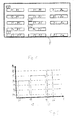
- FIG. 1 shows a schematic representation of a process chain P within a metallurgical plant with n pans.
- the process chain P comprises five different process steps P1 to P5 and m locations 01 to Om, at which in each case at least one of the process steps P1 to P5 can be carried out.
- a pan 1 is located at location 01 for performing the process step P1.
- Another pan 2 is located at location 02 for performing the process step P3.
- Another pan 3 is located at location 02 for performing the process step P4.
- Another pan n is located at location 01 for performing process step P5.
- FIG. 2 shows a time course of boundary conditions for a numerical simulation according to the invention.
- a ladle of a metallurgical plant can, for example, at the beginning in a process step P1 and taking into account associated with the process step P1 boundary conditions until the time t1 be warmed up. From time t1 to t2, the ladle can be filled with a molten metal in a process step P4 and taking into account boundary conditions associated with process step P4. From the time t2 to t3, the filled pan can be warmed up in the process step P1 and in consideration of boundary conditions associated with the process step P1.
- the molten metal contained in the ladle can be treated in a process step P5 and in consideration of boundary conditions associated with process step P5.
- the filled pan can be warmed up in the process step P1 and in consideration of boundary conditions associated with the process step P1.
- the molten metal contained in the ladle can be poured from the ladle into an intermediate container in a process step P6 and taking into account boundary conditions associated with process step P6.
- the slag contained in the ladle can be poured out of the ladle in a process step P3 and taking into account boundary conditions associated with process step P3.
Landscapes
- Engineering & Computer Science (AREA)
- Physics & Mathematics (AREA)
- Theoretical Computer Science (AREA)
- Computer Hardware Design (AREA)
- Evolutionary Computation (AREA)
- Geometry (AREA)
- General Engineering & Computer Science (AREA)
- General Physics & Mathematics (AREA)
- Waste-Gas Treatment And Other Accessory Devices For Furnaces (AREA)
- Treatment Of Steel In Its Molten State (AREA)
Abstract
Description
- Die Erfindung betrifft ein Verfahren zum Simulieren von Temperaturverteilungen innerhalb von Pfannen eines Hüttenwerks und innerhalb von in den Pfannen enthaltener Metallschmelze.
- Des Weiteren betrifft die Erfindung ein Computerprogramm mit auf einem computerlesbaren Datenträger gespeicherten Programmcodemitteln.
- Ferner betrifft die Erfindung einen Datenträger sowie ein Computersystem.
- Es sind analytische Modelle zur Simulation von Temperaturverteilungen innerhalb von Pfannen eines Hüttenwerks und innerhalb von in den Pfannen enthaltener Metallschmelze bekannt. Mit den analytischen Modellen kann eine solche Simulation simultan zu einem Betrieb im Hüttenwerk erfolgen.
- Des Weiteren sind numerische Modelle zur Simulation von Temperaturverteilungen innerhalb von Pfannen eines Hüttenwerks und innerhalb von in den Pfannen enthaltener Metallschmelze bekannt, welche eine numerische Strömungssimulation von Strömungen innerhalb der Metallschmelze umfassen. Diese numerischen Modelle bedürfen einer enormen Rechenleistung, weshalb sie nicht in Echtzeit zu einem Betrieb im Hüttenwerk genutzt werden können.
-
WO 02/36292 A2 - Aufgabe der Erfindung ist es, eine neuartige Simulation von Temperaturverteilungen innerhalb von Pfannen eines Hüttenwerks und innerhalb von in den Pfannen enthaltener Metallschmelze bereitzustellen, welche genaue Vorhersagen zu diesen Temperaturverteilungen in Echtzeit ermöglicht.
- Diese Aufgabe wird durch ein Verfahren gemäß Anspruch 1, ein Computerprogramm gemäß Anspruch 8, einen Datenträger gemäß Anspruch 9 und ein Computersystem gemäß Anspruch 10 gelöst. Vorteilhafte Ausgestaltungen sind in den abhängigen Ansprüchen wiedergegeben, welche jeweils für sich genommen oder in verschiedener Kombination miteinander einen Aspekt der Erfindung darstellen können.
- Mit Anspruch 1 wird ein Verfahren zum Simulieren von Temperaturverteilungen innerhalb von Pfannen eines Hüttenwerks und innerhalb von in den Pfannen enthaltener Metallschmelze vorgeschlagen, nach dem für jede Pfanne und die darin enthaltene Metallschmelze eine Temperaturverteilung unter Verwendung eines Finite-Volumen-Verfahrens und vorgegebener Randbedingungen numerisch simuliert wird, wozu die jeweilige Pfanne, die darin enthaltene Metallschmelze und eine die Pfanne umgebende Umgebung vorgegebener Größe zumindest teilweise in eine endliche Anzahl von Gitterzellen zerlegt werden.
- Durch die erfindungsgemäße Verwendung eines Finite-Volumen-Verfahrens und vorgegebener Randbedingungen sowie der damit verbundenen zumindest teilweisen Zerlegung der jeweiligen Pfanne, der darin enthaltenen Metallschmelze und der die Pfanne umgebenden Umgebung vorgegebener Größe in eine endliche Anzahl von Gitterzellen ist der zur Durchführung des erfindungsgemäßen Verfahrens erforderliche Rechenaufwand deutlich gegenüber herkömmlichen numerischen Modellen reduziert, was insbesondere eine numerische Simulation von instationären Temperaturverteilungen innerhalb von Pfannen eines Hüttenwerks und innerhalb von in den Pfannen enthaltener Metallschmelze in Echtzeit zu einem Betrieb im Hüttenwerk möglich macht. So ist es möglich, eine Vielzahl an Pfannen und deren Inhalt gleichzeitig zu simulieren.
- Mittels des erfindungsgemäßen Verfahrens und der damit durchführbaren numerischen Simulation von instationären Temperaturverteilungen innerhalb von Pfannen eines Hüttenwerks und innerhalb von in den Pfannen enthaltener Metallschmelze können unter Berücksichtigung verschiedener Randbedingungen unterschiedliche Szenarien in Echtzeit numerisch simuliert werden. Auch lassen sich zukünftige Temperaturverläufe numerisch simulieren, wodurch genaue Vorhersagen zu instationären Temperaturverteilungen innerhalb von Pfannen des Hüttenwerks und innerhalb von in den Pfannen enthaltener Metallschmelze ermöglicht werden. Unter Berücksichtigung von entsprechend vorhersagbaren instationären Temperaturverteilungen können Prozessabläufe geplant und optimiert werden, was wiederum die Prozesssicherheit und die Betriebssicherheit erhöht.
- Bei der Durchführung des erfindungsgemäßen Verfahrens können Konvektionsströmungen innerhalb einer in einer Pfanne enthaltenen Metallschmelze numerisch simuliert und vorausberechnet werden, wozu die numerische Strömungsmechanik (Computational Fluid Dynamics; CFD) verwendet wird. Diese Simulationsergebnisse werden einem Computerprogramm als Randbedingungen für die numerische Simulation zur Verfügung gestellt.
- Nach dem erfindungsgemäßen Verfahren besteht die Möglichkeit, die instationären Temperaturverteilungen einer Pfanne und der darin enthaltenen Metallschmelze getrennt voneinander unter relativ geringer Rechenleistung numerisch zu simulieren und diese Simulationen über Randbedingungen, beispielsweise einem Wärmeübergang zwischen der Pfanne und der Metallschmelze, miteinander zu kombinieren. Auch kann die Pfanne einen Deckel, eine Außenwand und eine an der Innenseite der Außenwand angeordnete feuerfeste Innenauskleidung, beispielsweise eine Ausmauerung, aufweisen, deren instationäre Temperaturverteilungen ebenfalls separat numerisch simuliert werden, wobei diese Simulationen ebenfalls über Randbedingungen miteinander und den Simulationen der instationären Temperaturverteilung der in der Pfanne enthaltenen Metallschmelze kombiniert werden können. Insgesamt kann somit ein Mehrkörpermodell geschaffen werden, dessen Reaktion auf verschiedene Prozessschritte und Gegebenheiten numerisch simulierbar ist.
- Ein Anwender des erfindungsgemäßen Verfahrens kann verschiedene Prozessschritte zu einer Prozesskette miteinander kombinieren, wodurch Randbedingungen generiert werden, welche bei einer Durchführung des erfindungsgemäßen Verfahrens berücksichtigt werden.
- Der zur Durchführung des erfindungsgemäßen Verfahrens erforderliche Rechenaufwand kann weitergehender dadurch reduziert werden, dass von rotationssymmetrisch ausgebildeten Pfannen ausgegangen wird, von denen jeweils zunächst ein zweidimensionales Modell nebst der darin enthaltenen Metallschmelze numerisch simuliert und aus diesem zweidimensionalen Modell über die Rotationssymmetrie und eine entsprechende Transformation ein dreidimensionales Modell der Pfanne und der darin enthaltenen Metallschmelze erzeugt wird. Nicht rotationssysmmetrische Pfannen können durch den Einsatz asymmetrischer Gitternetze ebenfalls berechnet werden.
- Durch die gemäß der Erfindung mögliche Berechnung der instationären Temperaturverteilung bzw. der jeweiligen Temperatur der in einer Pfanne enthaltenen Metallschmelze im Voraus ist die Temperatur der Metallschmelze zu den Zeitpunkten "Pfanne auf", "Pfanne voll" und "Pfanne leer" bekannt. Hierdurch erhält ein Betreiber eines Hüttenwerks die Möglichkeit, eine Gießgeschwindigkeit entsprechend des gemäß der erfindungsgemäßen Simulation zu erwartenden Temperaturverlaufs der Metallschmelze zu optimieren.
- Die Erfindung ermöglicht des Weiteren eine Vorhersage der minimalen und/oder maximalen Verweilzeit einer Pfanne im jeweiligen Prozessschritt, beispielsweise der Aufheizzeit der Pfanne. Zudem ist eine Vorhersage der Temperaturen für das Mehrkörpersystem Pfanne, mit Pfannendeckel und Ausmauerung, und Pfanneninhalt möglich. Auch ist eine Vorhersage des Verschleißes der Ausmauerung und dessen Berücksichtigung bei der thermischen Berechnung möglich. Es ist eine Vorhersage der Wartung der Ausmauerung einer Pfanne möglich. Des Weiteren ist eine Vorhersage der Heizleistung und Heizdauer zur Steuerung der Erwärmungsanlagen, beispielsweise eines Volumenstroms der Brenner beim Vorwärmen der Pfannen und deren Vorwärmdauer, möglich. Es können notwendige Informationen zur Steuerung der logistischen Abläufe, beispielsweise der Zeit bis zum Erreichen einer minimal zulässigen Temperatur des Pfanneninhalts, bereitgestellt werden. Hierdurch kann die maximal zulässige Zeit zur Bereitstellung der nächsten Pfanne festgelegt werden. Im Störfall können mit den erfindungsgemäß gewonnenen Informationen aus Offline-Simulationen und dem Ist-Zustand der aktuellen Pfannen Ersatzstrategien für das weitere Vorgehen simuliert und bewertet werden. Die Erfindung kann online zur Echtzeit-Simulation, offline zur Planung der Prozessschritte und/oder zur Wiederholung zur Simulation erfasster Prozessdaten durchgeführter Prozesse verwendet werden.
- Aus der erfindungsgemäßen Simulation können Vorgaben zur Steuerung und/oder Regelung einzelner Prozessschritte abgeleitet werden. Beispielsweise kann auf Basis der Simulation eine Aufheizzeit, eine Heizleistung, eine Spüldauer, eine Zugabe von Kühlschrott oder dergleichen zur Steuerung der Temperatur in der Pfanne bzw. Metallschmelze vorgegeben werden. Insbesondere können die vom Modell ermittelten Werte für die thermische Energie, die Aufheizzeit, die Abkühlzeit, die Spüldauer, die Legierungszugabe und dergleichen zur Steuerung und/oder Regelung einzelner Pfannenprozessschritte bzw. des Pfanneneinsatzes im Hüttenwerk verwendet werden.
- Gemäß einer vorteilhaften Ausgestaltung werden eine Temperatur an jeder Pfanne und/oder der darin enthaltenen Metallschmelze sowie eine Position der Pfanne in zeitlichen Abständen oder kontinuierlich gemessen, wobei die gemessene Temperatur mit der für die Pfanne bzw. für die darin enthaltene Metallschmelze simulierten Temperaturverteilung verglichen wird, wobei bei einer Abweichung der Temperaturverteilung von der gemessenen Temperatur um ein vorgegebenes Ausmaß wenigstens eine Randbedingung zur Anpassung der Temperaturverteilung an die gemessene Temperatur korrigiert wird. Hierdurch kann die durchgeführte numerische Simulation simultan zu deren Durchführung auf ihre Richtigkeit überprüft und gegebenenfalls angepasst bzw. optimiert werden. Mit den Messungen lassen sich Randbedingungen generieren und gegebene Randbedingungen an tatsächliche Gegebenheiten anpassen. Zudem können die Messungen zur Prüfung und Überwachung der Pfannen und ihrer Inhalte verwendet werden.
- Nach einer weiteren vorteilhaften Ausgestaltung wird durch individuelle Randbedingungen ein Wärmeübergang zwischen einer Pfanne und der darin enthaltenen Metallschmelze, ein Verschleiß einer feuerfesten Innenauskleidung der Pfanne, eine erforderliche Vorwärmung der Pfanne und/oder eine vorliegende Abkühlung der Pfanne bei der numerischen Simulation berücksichtigt. Dies kann über Ergebnisse von Messungen der jeweiligen Temperatur einer Pfanne und der darin enthaltenen Metallschmelze erfolgen. Die Messungen der jeweiligen Temperatur der in einer Pfanne enthaltenen Metallschmelze können auch zur Adaption des Wärmeübergangs zwischen der Metallschmelze und der Pfanne bzw. zugehöriger Randbedingungen verwendet werden. Des Weiteren ist es durch Messungen der Temperatur der Pfannenoberfläche möglich, den Verschleiß einer feuerfesten Innenauskleidung, insbesondere einer Ausmauerung, bzw. zugehörige Randbedingungen zu ermitteln. Das jeweilig ermittelte Verschleißprofil der feuerfesten Innenauskleidung kann als Randbedingung bei der erfindungsgemäßen numerischen Simulation berücksichtigt werden, wodurch eine Durchbruchgefahr der Pfanne reduziert werden kann. Auch eine hierdurch mögliche Vorausberechnung einer Verschleißrate der feuerfesten Innenauskleidung einer Pfanne kann bei der Durchführung des erfindungsgemäßen Verfahrens als Randbedingung berücksichtigt werden. Weitere individuelle Randbedingungen können beispielsweise die Abmessungen einer Pfanne, die Abmessungen und das Material einer feuerfesten Innenauskleidung einer Pfanne, das Gewicht einer Pfanne, das Füllgewicht einer Pfanne oder dergleichen sein.
- Eine weitere vorteilhafte Ausgestaltung sieht vor, dass prozessschrittspezifische Randbedingungen mit einer zeitlichen Vorgabe berücksichtigt werden. Alle Prozessschritte einer in einem Hüttenwerk auszuführenden Prozesskette können gemäß dem erfindungsgemäßen Verfahren zeitgetreu numerisch simuliert werden, was durch zeitliche Vorgabe der Randbedingungen zur Beschreibung des jeweiligen Prozessschritts erfolgt. Eine Prozesskette kann beispielsweise die Schritte Erwärmen einer Pfanne, Einfüllen der Metallschmelze in die erwärmte Pfanne, Behandeln (z. B. durch chemische Reaktionen) der in der Pfanne enthaltenen Metallschmelze, Abdecken der Pfanne mit ihrem oder einem separaten Deckel, Ausleeren der Metallschmelze aus der Pfanne in einen Zwischenbehälter des Hüttenwerks, Ausleeren von Schlacke aus der Pfanne und Abkühlen der Pfanne umfassen. Weitere prozessschrittspezifische Randbedingungen können beispielsweise aus einer Gasanalyse, einem Gasvolumenstrom, einem Heizwert oder dergleichen abgeleitet werden.
- Es wird des Weiteren als vorteilhaft erachtet, wenn die Temperaturverteilungen der Pfannen und der darin jeweilig enthaltenen Metallschmelze simultan zu einem Betrieb im Hüttenwerk numerisch simuliert werden. Eine solche numerische Online-Simulation der instationären Temperaturverteilungen innerhalb von Pfannen eines Hüttenwerks und innerhalb von in den Pfannen enthaltener Metallschmelze ist herkömmlich nicht möglich, da herkömmliche numerische Simulationen einer hierzu zu großen Rechenleistung bedürfen. Der numerischen Online-Simulation können zeitlich erfasste Positionen der Prozessrouten der Pfannen und Daten aus Temperaturmessungen zugeführt werden. Diese Positionen und Daten können zusätzlich gespeichert werden, um für eine nachträgliche numerische Offline-Simulation zur Verfügung zu stehen.
- Vorteilhafterweise werden die Temperaturverteilungen der Pfannen und der darin jeweilig enthaltenen Metallschmelze unabhängig von einem Betrieb im Hüttenwerk numerisch simuliert. Eine solche numerische Offline-Simulation kann sich von einer Online-Simulation allein durch die Art der Versorgung dieser Simulationen mit Daten unterscheiden. Einer numerischen Offline-Simulation können Daten beispielsweise über Eingabedateien, gespeicherte Prozessdaten und/oder durch Eingabe per Hand zugeführt werden. Eine numerische Offline-Simulation kann auch zur Planung von Prozessketten innerhalb eines Hüttenwerks verwendet werden.
- Ferner wird vorgeschlagen, dass die numerische Simulation auf Basis von Prozessdaten eines bereits erfolgten Betriebs im Hüttenwerk durchgeführt wird. Dies macht insbesondere eine historische Datenanalyse möglich, um Prozessabläufe weitergehender untersuchen und optimieren zu können.
- Mit Anspruch 8 wird ein Computerprogramm mit auf einem computerlesbaren Datenträger gespeicherten Programmcodemitteln, vorgeschlagen, die einen Computer oder eine entsprechende Recheneinheit veranlassen, ein Verfahren gemäß einer der vorgenannten Ausgestaltungen oder einer beliebigen Kombination derselben durchzuführen, wenn sie auf dem Computer bzw. der entsprechenden Recheneinheit ausgeführt werden. Mit dem Computerprogramm sind die oben mit Bezug auf das Verfahren genannten Vorteile entsprechend verbunden.
- Mit Anspruch 9 wird ein Datenträger mit einem vorgenannten Computerprogramm vorgeschlagen. Mit dem Datenträger sind die oben mit Bezug auf das Verfahren genannten Vorteile entsprechend verbunden.
- Mit Anspruch 10 wird ein Computersystem vorgeschlagen, auf dem ein vorgenanntes Computerprogramm geladen ist. Mit dem Computersystem sind die oben mit Bezug auf das Verfahren genannten Vorteile entsprechend verbunden.
- Im Folgenden wird die Erfindung unter Bezugnahme auf die anliegenden Figuren anhand von bevorzugten Ausführungsbeispielen exemplarisch erläutert, wobei die nachfolgend dargestellten Merkmale sowohl jeweils für sich genommen als auch in verschiedener Kombination miteinander einen Aspekt der Erfindung darstellen können. Es zeigen
- Figur 1:
- eine schematische Darstellung einer Prozesskette innerhalb eines Hüttenwerks und
- Figur 2:
- einen zeitlichen Verlauf von Randbedingungen für eine erfindungsgemäße numerische Simulation.
-
Figur 1 zeigt eine schematische Darstellung einer Prozesskette P innerhalb eines Hüttenwerks mit n Pfannen. Die Prozesskette P umfasst fünf verschiedene Prozessschritte P1 bis P5 und m Orte 01 bis Om, an denen jeweils wenigstens einer der Prozessschritte P1 bis P5 durchführbar ist. Eine Pfanne 1 befindet sich am Ort 01 zur Durchführung des Prozessschritts P1. Eine weitere Pfanne 2 befindet sich am Ort 02 zur Durchführung des Prozessschritts P3. Eine weitere Pfanne 3 befindet sich am Ort 02 zur Durchführung des Prozessschritts P4. Eine weitere Pfanne n befindet sich am Ort 01 zur Durchführung des Prozessschritts P5. -
Figur 2 zeigt einen zeitlichen Verlauf von Randbedingungen für eine erfindungsgemäße numerische Simulation. Eine Pfanne eines Hüttenwerks kann beispielsweise zu Beginn in einem Prozessschritt P1 und unter Berücksichtigung von mit dem Prozessschritt P1 verbundenen Randbedingungen bis zum Zeitpunkt t1 aufgewärmt werden. Vom Zeitpunkt t1 bis t2 kann die Pfanne in einem Prozessschritt P4 und unter Berücksichtigung von mit dem Prozessschritt P4 verbundenen Randbedingungen mit einer Metallschmelze befüllt werden. Vom Zeitpunkt t2 bis t3 kann die befüllte Pfanne in dem Prozessschritt P1 und unter Berücksichtigung von mit dem Prozessschritt P1 verbundenen Randbedingungen aufgewärmt werden. Vom Zeitpunkt t3 bis t4 kann die in der Pfanne enthaltene Metallschmelze in einem Prozessschritt P5 und unter Berücksichtigung von mit dem Prozessschritt P5 verbundenen Randbedingungen behandelt werden. Vom Zeitpunkt t4 bis t5 kann die befüllte Pfanne in dem Prozessschritt P1 und unter Berücksichtigung von mit dem Prozessschritt P1 verbundenen Randbedingungen aufgewärmt werden. Vom Zeitpunkt t5 bis t6 kann die in der Pfanne enthaltene Metallschmelze in einem Prozessschritt P6 und unter Berücksichtigung von mit dem Prozessschritt P6 verbundenen Randbedingungen aus der Pfanne in einen Zwischenbehälter gegossen werden. Vom Zeitpunkt t6 an kann die in der Pfanne enthaltene Schlacke in einem Prozessschritt P3 und unter Berücksichtigung von mit dem Prozessschritt P3 verbundenen Randbedingungen aus der Pfanne gegossen werden. -
- 1
- Pfanne
- 2
- Pfanne
- 3
- Pfanne
- n
- Pfanne
- P
- Prozesskette
- P1
- Prozessschritt
- P2
- Prozessschritt
- P3
- Prozessschritt
- P4
- Prozessschritt
- P5
- Prozessschritt
- O1
- Ort
- O2
- Ort
- Om
- Ort
Claims (10)
- Verfahren zum Simulieren von Temperaturverteilungen innerhalb von Pfannen (1,..., n) eines Hüttenwerks und innerhalb von in den Pfannen (1,..., n) enthaltener Metallschmelze, dadurch gekennzeichnet, dass für jede Pfanne (1,..., n) und die darin enthaltene Metallschmelze eine Temperaturverteilung unter Verwendung eines Finite-Volumen-Verfahrens und vorgegebener Randbedingungen numerisch simuliert wird, wozu die jeweilige Pfanne (1,..., n), die darin enthaltene Metallschmelze und eine die Pfanne (1,..., n) umgebende Umgebung vorgegebener Größe zumindest teilweise in eine endliche Anzahl von Gitterzellen zerlegt werden.
- Verfahren nach Anspruch 1, dadurch gekennzeichnet, dass eine Temperatur an jeder Pfanne (1,..., n) und/oder der darin enthaltenen Metallschmelze sowie eine Position der Pfanne (1,..., n) in zeitlichen Abständen oder kontinuierlich gemessen wird, wobei die gemessene Temperatur mit der für die Pfanne (1,..., n) bzw. für die darin enthaltene Metallschmelze simulierten Temperaturverteilung verglichen wird, wobei bei einer Abweichung der Temperaturverteilung von der gemessenen Temperatur um ein vorgegebenes Ausmaß wenigstens eine Randbedingung zur Anpassung der Temperaturverteilung an die gemessene Temperatur korrigiert wird.
- Verfahren nach Anspruch 1 oder 2, dadurch gekennzeichnet, dass durch individuelle Randbedingungen ein Wärmeübergang zwischen einer Pfanne (1,..., n) und der darin enthaltenen Metallschmelze, ein Verschleiß einer feuerfesten Innenauskleidung der Pfanne (1,..., n), eine erforderliche Vorwärmung der Pfanne (1,..., n) und/oder eine vorliegende Abkühlung der Pfanne (1,..., n) bei der numerischen Simulation berücksichtigt wird.
- Verfahren nach einem der Ansprüche 1 bis 3, dadurch gekennzeichnet, dass prozessschrittspezifische Randbedingungen mit einer zeitlichen Vorgabe berücksichtigt werden.
- Verfahren nach einem der Ansprüche 1 bis 4, dadurch gekennzeichnet, dass die Temperaturverteilungen der Pfannen (1,..., n) und der darin jeweilig enthaltenen Metallschmelze simultan zu einem Betrieb im Hüttenwerk simuliert werden.
- Verfahren nach einem der Ansprüche 1 bis 4, dadurch gekennzeichnet, dass die Temperaturverteilungen der Pfannen (1,..., n) und der darin jeweilig enthaltenen Metallschmelze unabhängig von einem Betrieb im Hüttenwerk simuliert werden.
- Verfahren nach Anspruch 6, dadurch gekennzeichnet, dass die numerische Simulation auf Basis von Prozessdaten eines bereits erfolgten Betriebs im Hüttenwerk durchgeführt wird.
- Computerprogramm mit auf einem computerlesbaren Datenträger gespeicherten Programmcodemitteln, die einen Computer oder eine entsprechende Recheneinheit veranlassen, ein Verfahren gemäß einem der Ansprüche 1 bis 7 durchzuführen, wenn sie auf dem Computer bzw. der entsprechenden Recheneinheit ausgeführt werden.
- Datenträger mit einem Computerprogramm nach Anspruch 8.
- Computersystem, auf dem ein Computerprogramm nach Anspruch 8 geladen ist.
Applications Claiming Priority (1)
| Application Number | Priority Date | Filing Date | Title |
|---|---|---|---|
| DE102014224334.3A DE102014224334A1 (de) | 2014-11-28 | 2014-11-28 | Simulierung von Temperaturverteilungen innerhalb von Pfannen eines Hüttenwerks und innerhalb von in den Pfannen enthaltener Metallschmelze |
Publications (2)
| Publication Number | Publication Date |
|---|---|
| EP3026586A1 true EP3026586A1 (de) | 2016-06-01 |
| EP3026586B1 EP3026586B1 (de) | 2019-04-10 |
Family
ID=54544904
Family Applications (1)
| Application Number | Title | Priority Date | Filing Date |
|---|---|---|---|
| EP15192667.2A Active EP3026586B1 (de) | 2014-11-28 | 2015-11-03 | Simulierung von temperaturverteilungen innerhalb von pfannen eines hüttenwerks und innerhalb von in den pfannen enthaltener metallschmelze |
Country Status (2)
| Country | Link |
|---|---|
| EP (1) | EP3026586B1 (de) |
| DE (1) | DE102014224334A1 (de) |
Cited By (2)
| Publication number | Priority date | Publication date | Assignee | Title |
|---|---|---|---|---|
| EP4624849A1 (de) | 2024-03-27 | 2025-10-01 | SMS Group GmbH | Metallurgische anlage und verfahren zur steuerung oder planung eines sekundärmetallurgischen prozesses |
| DE102024209469A1 (de) * | 2024-03-27 | 2025-10-02 | Sms Group Gmbh | Metallurgische Anlage und Verfahren zur Steuerung oder Planung eines sekundärmetallurgischen Prozesses |
Citations (3)
| Publication number | Priority date | Publication date | Assignee | Title |
|---|---|---|---|---|
| WO2002036292A2 (de) | 2000-11-04 | 2002-05-10 | Sms Demag Aktiengesellschaft | Verfahren und vorrichtung zur kontrolle der stahltemperatur vom giessspiegel einer stranggiessanlage bis zum ofenabstich |
| WO2011089621A2 (en) * | 2010-01-19 | 2011-07-28 | Aditya Birla Science & Technology Co. Ltd. | A soft sensor based on-line decision system for metallurgical processes |
| CN103382515A (zh) * | 2013-07-19 | 2013-11-06 | 东北大学 | 一种在线实时监测rh精炼过程钢水温度的系统及方法 |
-
2014
- 2014-11-28 DE DE102014224334.3A patent/DE102014224334A1/de not_active Withdrawn
-
2015
- 2015-11-03 EP EP15192667.2A patent/EP3026586B1/de active Active
Patent Citations (3)
| Publication number | Priority date | Publication date | Assignee | Title |
|---|---|---|---|---|
| WO2002036292A2 (de) | 2000-11-04 | 2002-05-10 | Sms Demag Aktiengesellschaft | Verfahren und vorrichtung zur kontrolle der stahltemperatur vom giessspiegel einer stranggiessanlage bis zum ofenabstich |
| WO2011089621A2 (en) * | 2010-01-19 | 2011-07-28 | Aditya Birla Science & Technology Co. Ltd. | A soft sensor based on-line decision system for metallurgical processes |
| CN103382515A (zh) * | 2013-07-19 | 2013-11-06 | 东北大学 | 一种在线实时监测rh精炼过程钢水温度的系统及方法 |
Non-Patent Citations (2)
| Title |
|---|
| ANONYMOUS: "An overview of ESTER", 15 December 2010 (2010-12-15), XP055265845, Retrieved from the Internet <URL:http://web.archive.org/web/20101215152315/http://www.cham.co.uk/phoenics/d_polis/d_info/ester.htm> [retrieved on 20160415] * |
| LEE ET AL: "Modeling of in-ladle direct thermal control rheocasting process", MATERIALS SCIENCE AND ENGINEERING A: STRUCTURAL MATERIALS: PROPERTIES, MICROSTRUCTURES AND PROCESSING, ELSEVIER BV, NL, vol. 449-451, 19 March 2007 (2007-03-19), pages 680 - 683, XP005914713, ISSN: 0921-5093, DOI: 10.1016/J.MSEA.2006.02.423 * |
Cited By (2)
| Publication number | Priority date | Publication date | Assignee | Title |
|---|---|---|---|---|
| EP4624849A1 (de) | 2024-03-27 | 2025-10-01 | SMS Group GmbH | Metallurgische anlage und verfahren zur steuerung oder planung eines sekundärmetallurgischen prozesses |
| DE102024209469A1 (de) * | 2024-03-27 | 2025-10-02 | Sms Group Gmbh | Metallurgische Anlage und Verfahren zur Steuerung oder Planung eines sekundärmetallurgischen Prozesses |
Also Published As
| Publication number | Publication date |
|---|---|
| DE102014224334A1 (de) | 2016-06-02 |
| EP3026586B1 (de) | 2019-04-10 |
Similar Documents
| Publication | Publication Date | Title |
|---|---|---|
| EP0813700B1 (de) | Intelligentes rechner-leitsystem | |
| US20200158437A1 (en) | System and method for dynamic process modeling, error correction and control of a reheat furnace | |
| EP2048553A1 (de) | Regelkreis zur Regelung eines Prozesses, insbesondere Verbrennungsprozesses | |
| DE102007030492B4 (de) | Gebäudemodellbasiertes prädiktives Verfahren zur Generierung und Weitergabe von Informationen über Auswirkungen von Sollwert-Änderungen | |
| DE112014005434T5 (de) | Verfahren und Vorrichtung für intelligente Entscheidungen und Endpunktvorhersage für einen PS-Kupferkonverter-Blasprozess | |
| EP3026586B1 (de) | Simulierung von temperaturverteilungen innerhalb von pfannen eines hüttenwerks und innerhalb von in den pfannen enthaltener metallschmelze | |
| EP3642372B2 (de) | Verfahren zum betreiben eines glühofens | |
| Tirian et al. | Adaptive control system for continuous steel casting based on neural networks and fuzzy logic | |
| EP2222882A1 (de) | Verfahren und computer-programm zum automatischen erstellen von technologischen rezepten zur wärmebehandlung von metallischen werkstücken in industrieöfen sowie einrichtung zur durchführung des verfahrens und computer-programms | |
| EP2935633A1 (de) | Verfahren und vorrichtung zur vorhersage, steuerung und/oder regelung von stahlwerksprozessen | |
| EP3386627B1 (de) | Steuerungssystem zur modellierung und optimierung einer dieselhydrierungseinheit | |
| EP2776770B1 (de) | System zur überwachung des elektrodenverbrauchs | |
| CN114807590A (zh) | 一种基于加热炉钢坯加热二级控制方法及系统 | |
| EP2064602A2 (de) | Vorrichtung zur steuerung einer lichtbogenofenanlage | |
| WO2015161975A2 (de) | Auf modellierung einer beizlinie beruhende optimierung einer sequenz von zu beizenden bändern | |
| DE102007059582B4 (de) | Verfahren und Vorrichtung zum Training des Bedienpersonals einer prozesstechnischen Anlage | |
| DE19623671C2 (de) | Verfahren und Einrichtung zum Führen eines Prozesses in der Grundstoffindustrie | |
| EP1302823A2 (de) | Rechnergestützter Konfigurator zum Konfigurieren einer Anlage der Grundstoffindustrie | |
| EP1517107B1 (de) | Verfahren zum optimalen Betrieb eines Erwärmungsofens | |
| Pfeiffer et al. | Modern production of heavy plates for construction applications–controlling production processes and quality | |
| EP4624849A1 (de) | Metallurgische anlage und verfahren zur steuerung oder planung eines sekundärmetallurgischen prozesses | |
| JP6786848B2 (ja) | 製鋼工程における溶鋼温度制御の支援方法、装置及びプログラム | |
| EP2664970A1 (de) | Prozessleitsystem und Verfahren | |
| EP3474090B1 (de) | Verfahren zur regelung eines prozesses innerhalb eines systems, insbesondere eines verbrennungsprozesses in einem kessel oder ofen | |
| DE102019208194A1 (de) | Vorrichtung und Verfahren zur Steuerung komplexer Produktionsabfolgen in großtechnischen Anlagen insbesondere der Stahlindustrie |
Legal Events
| Date | Code | Title | Description |
|---|---|---|---|
| PUAI | Public reference made under article 153(3) epc to a published international application that has entered the european phase |
Free format text: ORIGINAL CODE: 0009012 |
|
| 17P | Request for examination filed |
Effective date: 20151103 |
|
| AK | Designated contracting states |
Kind code of ref document: A1 Designated state(s): AL AT BE BG CH CY CZ DE DK EE ES FI FR GB GR HR HU IE IS IT LI LT LU LV MC MK MT NL NO PL PT RO RS SE SI SK SM TR |
|
| AX | Request for extension of the european patent |
Extension state: BA ME |
|
| 17Q | First examination report despatched |
Effective date: 20160621 |
|
| RBV | Designated contracting states (corrected) |
Designated state(s): AL AT BE BG CH CY CZ DE DK EE ES FI FR GB GR HR HU IE IS IT LI LT LU LV MC MK MT NL NO PL PT RO RS SE SI SK SM TR |
|
| GRAP | Despatch of communication of intention to grant a patent |
Free format text: ORIGINAL CODE: EPIDOSNIGR1 |
|
| STAA | Information on the status of an ep patent application or granted ep patent |
Free format text: STATUS: GRANT OF PATENT IS INTENDED |
|
| INTG | Intention to grant announced |
Effective date: 20181106 |
|
| GRAS | Grant fee paid |
Free format text: ORIGINAL CODE: EPIDOSNIGR3 |
|
| GRAA | (expected) grant |
Free format text: ORIGINAL CODE: 0009210 |
|
| STAA | Information on the status of an ep patent application or granted ep patent |
Free format text: STATUS: THE PATENT HAS BEEN GRANTED |
|
| AK | Designated contracting states |
Kind code of ref document: B1 Designated state(s): AL AT BE BG CH CY CZ DE DK EE ES FI FR GB GR HR HU IE IS IT LI LT LU LV MC MK MT NL NO PL PT RO RS SE SI SK SM TR |
|
| REG | Reference to a national code |
Ref country code: GB Ref legal event code: FG4D Free format text: NOT ENGLISH |
|
| REG | Reference to a national code |
Ref country code: CH Ref legal event code: EP Ref country code: AT Ref legal event code: REF Ref document number: 1119653 Country of ref document: AT Kind code of ref document: T Effective date: 20190415 |
|
| REG | Reference to a national code |
Ref country code: IE Ref legal event code: FG4D Free format text: LANGUAGE OF EP DOCUMENT: GERMAN |
|
| REG | Reference to a national code |
Ref country code: DE Ref legal event code: R096 Ref document number: 502015008614 Country of ref document: DE |
|
| REG | Reference to a national code |
Ref country code: NL Ref legal event code: MP Effective date: 20190410 |
|
| REG | Reference to a national code |
Ref country code: LT Ref legal event code: MG4D |
|
| PG25 | Lapsed in a contracting state [announced via postgrant information from national office to epo] |
Ref country code: NL Free format text: LAPSE BECAUSE OF FAILURE TO SUBMIT A TRANSLATION OF THE DESCRIPTION OR TO PAY THE FEE WITHIN THE PRESCRIBED TIME-LIMIT Effective date: 20190410 |
|
| PG25 | Lapsed in a contracting state [announced via postgrant information from national office to epo] |
Ref country code: ES Free format text: LAPSE BECAUSE OF FAILURE TO SUBMIT A TRANSLATION OF THE DESCRIPTION OR TO PAY THE FEE WITHIN THE PRESCRIBED TIME-LIMIT Effective date: 20190410 Ref country code: HR Free format text: LAPSE BECAUSE OF FAILURE TO SUBMIT A TRANSLATION OF THE DESCRIPTION OR TO PAY THE FEE WITHIN THE PRESCRIBED TIME-LIMIT Effective date: 20190410 Ref country code: PT Free format text: LAPSE BECAUSE OF FAILURE TO SUBMIT A TRANSLATION OF THE DESCRIPTION OR TO PAY THE FEE WITHIN THE PRESCRIBED TIME-LIMIT Effective date: 20190910 Ref country code: SE Free format text: LAPSE BECAUSE OF FAILURE TO SUBMIT A TRANSLATION OF THE DESCRIPTION OR TO PAY THE FEE WITHIN THE PRESCRIBED TIME-LIMIT Effective date: 20190410 Ref country code: AL Free format text: LAPSE BECAUSE OF FAILURE TO SUBMIT A TRANSLATION OF THE DESCRIPTION OR TO PAY THE FEE WITHIN THE PRESCRIBED TIME-LIMIT Effective date: 20190410 Ref country code: NO Free format text: LAPSE BECAUSE OF FAILURE TO SUBMIT A TRANSLATION OF THE DESCRIPTION OR TO PAY THE FEE WITHIN THE PRESCRIBED TIME-LIMIT Effective date: 20190710 Ref country code: FI Free format text: LAPSE BECAUSE OF FAILURE TO SUBMIT A TRANSLATION OF THE DESCRIPTION OR TO PAY THE FEE WITHIN THE PRESCRIBED TIME-LIMIT Effective date: 20190410 Ref country code: LT Free format text: LAPSE BECAUSE OF FAILURE TO SUBMIT A TRANSLATION OF THE DESCRIPTION OR TO PAY THE FEE WITHIN THE PRESCRIBED TIME-LIMIT Effective date: 20190410 |
|
| REG | Reference to a national code |
Ref country code: DE Ref legal event code: R079 Ref document number: 502015008614 Country of ref document: DE Free format text: PREVIOUS MAIN CLASS: G06F0017500000 Ipc: G06F0030000000 |
|
| PG25 | Lapsed in a contracting state [announced via postgrant information from national office to epo] |
Ref country code: RS Free format text: LAPSE BECAUSE OF FAILURE TO SUBMIT A TRANSLATION OF THE DESCRIPTION OR TO PAY THE FEE WITHIN THE PRESCRIBED TIME-LIMIT Effective date: 20190410 Ref country code: LV Free format text: LAPSE BECAUSE OF FAILURE TO SUBMIT A TRANSLATION OF THE DESCRIPTION OR TO PAY THE FEE WITHIN THE PRESCRIBED TIME-LIMIT Effective date: 20190410 Ref country code: BG Free format text: LAPSE BECAUSE OF FAILURE TO SUBMIT A TRANSLATION OF THE DESCRIPTION OR TO PAY THE FEE WITHIN THE PRESCRIBED TIME-LIMIT Effective date: 20190710 Ref country code: GR Free format text: LAPSE BECAUSE OF FAILURE TO SUBMIT A TRANSLATION OF THE DESCRIPTION OR TO PAY THE FEE WITHIN THE PRESCRIBED TIME-LIMIT Effective date: 20190711 Ref country code: PL Free format text: LAPSE BECAUSE OF FAILURE TO SUBMIT A TRANSLATION OF THE DESCRIPTION OR TO PAY THE FEE WITHIN THE PRESCRIBED TIME-LIMIT Effective date: 20190410 |
|
| PG25 | Lapsed in a contracting state [announced via postgrant information from national office to epo] |
Ref country code: IS Free format text: LAPSE BECAUSE OF FAILURE TO SUBMIT A TRANSLATION OF THE DESCRIPTION OR TO PAY THE FEE WITHIN THE PRESCRIBED TIME-LIMIT Effective date: 20190810 |
|
| REG | Reference to a national code |
Ref country code: DE Ref legal event code: R097 Ref document number: 502015008614 Country of ref document: DE |
|
| PG25 | Lapsed in a contracting state [announced via postgrant information from national office to epo] |
Ref country code: EE Free format text: LAPSE BECAUSE OF FAILURE TO SUBMIT A TRANSLATION OF THE DESCRIPTION OR TO PAY THE FEE WITHIN THE PRESCRIBED TIME-LIMIT Effective date: 20190410 Ref country code: DK Free format text: LAPSE BECAUSE OF FAILURE TO SUBMIT A TRANSLATION OF THE DESCRIPTION OR TO PAY THE FEE WITHIN THE PRESCRIBED TIME-LIMIT Effective date: 20190410 Ref country code: RO Free format text: LAPSE BECAUSE OF FAILURE TO SUBMIT A TRANSLATION OF THE DESCRIPTION OR TO PAY THE FEE WITHIN THE PRESCRIBED TIME-LIMIT Effective date: 20190410 Ref country code: SK Free format text: LAPSE BECAUSE OF FAILURE TO SUBMIT A TRANSLATION OF THE DESCRIPTION OR TO PAY THE FEE WITHIN THE PRESCRIBED TIME-LIMIT Effective date: 20190410 Ref country code: CZ Free format text: LAPSE BECAUSE OF FAILURE TO SUBMIT A TRANSLATION OF THE DESCRIPTION OR TO PAY THE FEE WITHIN THE PRESCRIBED TIME-LIMIT Effective date: 20190410 |
|
| PLBE | No opposition filed within time limit |
Free format text: ORIGINAL CODE: 0009261 |
|
| STAA | Information on the status of an ep patent application or granted ep patent |
Free format text: STATUS: NO OPPOSITION FILED WITHIN TIME LIMIT |
|
| PG25 | Lapsed in a contracting state [announced via postgrant information from national office to epo] |
Ref country code: SM Free format text: LAPSE BECAUSE OF FAILURE TO SUBMIT A TRANSLATION OF THE DESCRIPTION OR TO PAY THE FEE WITHIN THE PRESCRIBED TIME-LIMIT Effective date: 20190410 Ref country code: IT Free format text: LAPSE BECAUSE OF FAILURE TO SUBMIT A TRANSLATION OF THE DESCRIPTION OR TO PAY THE FEE WITHIN THE PRESCRIBED TIME-LIMIT Effective date: 20190410 |
|
| 26N | No opposition filed |
Effective date: 20200113 |
|
| PG25 | Lapsed in a contracting state [announced via postgrant information from national office to epo] |
Ref country code: TR Free format text: LAPSE BECAUSE OF FAILURE TO SUBMIT A TRANSLATION OF THE DESCRIPTION OR TO PAY THE FEE WITHIN THE PRESCRIBED TIME-LIMIT Effective date: 20190410 |
|
| PG25 | Lapsed in a contracting state [announced via postgrant information from national office to epo] |
Ref country code: SI Free format text: LAPSE BECAUSE OF FAILURE TO SUBMIT A TRANSLATION OF THE DESCRIPTION OR TO PAY THE FEE WITHIN THE PRESCRIBED TIME-LIMIT Effective date: 20190410 |
|
| REG | Reference to a national code |
Ref country code: CH Ref legal event code: PL |
|
| PG25 | Lapsed in a contracting state [announced via postgrant information from national office to epo] |
Ref country code: CH Free format text: LAPSE BECAUSE OF NON-PAYMENT OF DUE FEES Effective date: 20191130 Ref country code: LU Free format text: LAPSE BECAUSE OF NON-PAYMENT OF DUE FEES Effective date: 20191103 Ref country code: LI Free format text: LAPSE BECAUSE OF NON-PAYMENT OF DUE FEES Effective date: 20191130 Ref country code: MC Free format text: LAPSE BECAUSE OF FAILURE TO SUBMIT A TRANSLATION OF THE DESCRIPTION OR TO PAY THE FEE WITHIN THE PRESCRIBED TIME-LIMIT Effective date: 20190410 |
|
| REG | Reference to a national code |
Ref country code: BE Ref legal event code: MM Effective date: 20191130 |
|
| GBPC | Gb: european patent ceased through non-payment of renewal fee |
Effective date: 20191103 |
|
| PG25 | Lapsed in a contracting state [announced via postgrant information from national office to epo] |
Ref country code: IE Free format text: LAPSE BECAUSE OF NON-PAYMENT OF DUE FEES Effective date: 20191103 Ref country code: FR Free format text: LAPSE BECAUSE OF NON-PAYMENT OF DUE FEES Effective date: 20191130 Ref country code: GB Free format text: LAPSE BECAUSE OF NON-PAYMENT OF DUE FEES Effective date: 20191103 |
|
| PG25 | Lapsed in a contracting state [announced via postgrant information from national office to epo] |
Ref country code: BE Free format text: LAPSE BECAUSE OF NON-PAYMENT OF DUE FEES Effective date: 20191130 |
|
| PG25 | Lapsed in a contracting state [announced via postgrant information from national office to epo] |
Ref country code: CY Free format text: LAPSE BECAUSE OF FAILURE TO SUBMIT A TRANSLATION OF THE DESCRIPTION OR TO PAY THE FEE WITHIN THE PRESCRIBED TIME-LIMIT Effective date: 20190410 |
|
| PG25 | Lapsed in a contracting state [announced via postgrant information from national office to epo] |
Ref country code: MT Free format text: LAPSE BECAUSE OF FAILURE TO SUBMIT A TRANSLATION OF THE DESCRIPTION OR TO PAY THE FEE WITHIN THE PRESCRIBED TIME-LIMIT Effective date: 20190410 Ref country code: HU Free format text: LAPSE BECAUSE OF FAILURE TO SUBMIT A TRANSLATION OF THE DESCRIPTION OR TO PAY THE FEE WITHIN THE PRESCRIBED TIME-LIMIT; INVALID AB INITIO Effective date: 20151103 |
|
| REG | Reference to a national code |
Ref country code: AT Ref legal event code: MM01 Ref document number: 1119653 Country of ref document: AT Kind code of ref document: T Effective date: 20201103 |
|
| PG25 | Lapsed in a contracting state [announced via postgrant information from national office to epo] |
Ref country code: AT Free format text: LAPSE BECAUSE OF NON-PAYMENT OF DUE FEES Effective date: 20201103 |
|
| PG25 | Lapsed in a contracting state [announced via postgrant information from national office to epo] |
Ref country code: MK Free format text: LAPSE BECAUSE OF FAILURE TO SUBMIT A TRANSLATION OF THE DESCRIPTION OR TO PAY THE FEE WITHIN THE PRESCRIBED TIME-LIMIT Effective date: 20190410 |
|
| P01 | Opt-out of the competence of the unified patent court (upc) registered |
Effective date: 20230707 |
|
| PGFP | Annual fee paid to national office [announced via postgrant information from national office to epo] |
Ref country code: DE Payment date: 20251119 Year of fee payment: 11 |