EP3022862B1 - Methods and apparatus for dynamic transmission of retransmission requests - Google Patents
Methods and apparatus for dynamic transmission of retransmission requests Download PDFInfo
- Publication number
- EP3022862B1 EP3022862B1 EP14750053.2A EP14750053A EP3022862B1 EP 3022862 B1 EP3022862 B1 EP 3022862B1 EP 14750053 A EP14750053 A EP 14750053A EP 3022862 B1 EP3022862 B1 EP 3022862B1
- Authority
- EP
- European Patent Office
- Prior art keywords
- communication characteristic
- value
- retransmission request
- communication
- status
- Prior art date
- Legal status (The legal status is an assumption and is not a legal conclusion. Google has not performed a legal analysis and makes no representation as to the accuracy of the status listed.)
- Not-in-force
Links
- 230000005540 biological transmission Effects 0.000 title claims description 84
- 238000000034 method Methods 0.000 title claims description 49
- 238000004891 communication Methods 0.000 claims description 206
- 230000001965 increasing effect Effects 0.000 claims description 17
- 230000004044 response Effects 0.000 claims description 11
- 230000011664 signaling Effects 0.000 claims description 9
- 230000015654 memory Effects 0.000 claims description 6
- 238000001514 detection method Methods 0.000 description 30
- 238000012545 processing Methods 0.000 description 16
- 238000010586 diagram Methods 0.000 description 14
- 230000006870 function Effects 0.000 description 14
- 238000005259 measurement Methods 0.000 description 12
- 238000005516 engineering process Methods 0.000 description 9
- 238000013461 design Methods 0.000 description 5
- 230000007480 spreading Effects 0.000 description 5
- 238000010295 mobile communication Methods 0.000 description 3
- 230000008569 process Effects 0.000 description 3
- 238000001228 spectrum Methods 0.000 description 3
- 230000003044 adaptive effect Effects 0.000 description 2
- 238000003491 array Methods 0.000 description 2
- 230000001413 cellular effect Effects 0.000 description 2
- 239000003795 chemical substances by application Substances 0.000 description 2
- 238000004590 computer program Methods 0.000 description 2
- 230000003750 conditioning effect Effects 0.000 description 2
- 230000000694 effects Effects 0.000 description 2
- 230000002708 enhancing effect Effects 0.000 description 2
- 238000001914 filtration Methods 0.000 description 2
- 238000013507 mapping Methods 0.000 description 2
- 230000008520 organization Effects 0.000 description 2
- 230000002093 peripheral effect Effects 0.000 description 2
- 230000010363 phase shift Effects 0.000 description 2
- 230000003321 amplification Effects 0.000 description 1
- 230000008901 benefit Effects 0.000 description 1
- 230000002457 bidirectional effect Effects 0.000 description 1
- 230000015556 catabolic process Effects 0.000 description 1
- 230000008859 change Effects 0.000 description 1
- 230000006835 compression Effects 0.000 description 1
- 238000007906 compression Methods 0.000 description 1
- 238000012937 correction Methods 0.000 description 1
- 125000004122 cyclic group Chemical group 0.000 description 1
- 230000007812 deficiency Effects 0.000 description 1
- 238000006731 degradation reaction Methods 0.000 description 1
- 230000001627 detrimental effect Effects 0.000 description 1
- 238000005562 fading Methods 0.000 description 1
- 230000002349 favourable effect Effects 0.000 description 1
- 230000006872 improvement Effects 0.000 description 1
- 230000000977 initiatory effect Effects 0.000 description 1
- 230000007774 longterm Effects 0.000 description 1
- 238000012986 modification Methods 0.000 description 1
- 230000004048 modification Effects 0.000 description 1
- 238000003199 nucleic acid amplification method Methods 0.000 description 1
- 230000003287 optical effect Effects 0.000 description 1
- 239000005022 packaging material Substances 0.000 description 1
- 238000004321 preservation Methods 0.000 description 1
- 238000012827 research and development Methods 0.000 description 1
- 230000002441 reversible effect Effects 0.000 description 1
- 230000011218 segmentation Effects 0.000 description 1
- 230000003068 static effect Effects 0.000 description 1
- 238000012546 transfer Methods 0.000 description 1
- 230000007704 transition Effects 0.000 description 1
Images






Classifications
-
- H—ELECTRICITY
- H04—ELECTRIC COMMUNICATION TECHNIQUE
- H04L—TRANSMISSION OF DIGITAL INFORMATION, e.g. TELEGRAPHIC COMMUNICATION
- H04L1/00—Arrangements for detecting or preventing errors in the information received
- H04L1/12—Arrangements for detecting or preventing errors in the information received by using return channel
- H04L1/16—Arrangements for detecting or preventing errors in the information received by using return channel in which the return channel carries supervisory signals, e.g. repetition request signals
- H04L1/18—Automatic repetition systems, e.g. Van Duuren systems
- H04L1/1829—Arrangements specially adapted for the receiver end
- H04L1/1848—Time-out mechanisms
-
- H—ELECTRICITY
- H04—ELECTRIC COMMUNICATION TECHNIQUE
- H04L—TRANSMISSION OF DIGITAL INFORMATION, e.g. TELEGRAPHIC COMMUNICATION
- H04L1/00—Arrangements for detecting or preventing errors in the information received
- H04L1/0001—Systems modifying transmission characteristics according to link quality, e.g. power backoff
- H04L1/0002—Systems modifying transmission characteristics according to link quality, e.g. power backoff by adapting the transmission rate
Definitions
- aspects of the present disclosure relate generally to wireless communication systems, and more particularly, to enhanced status retransmissions.
- Wireless communication networks are widely deployed to provide various communication services such as telephony, video, data, messaging, broadcasts, and so on.
- Such networks which are usually multiple access networks, support communications for multiple users by sharing the available network resources.
- UTRAN UMTS Terrestrial Radio Access Network
- the UTRAN is the radio access network (RAN) defined as a part of the Universal Mobile Telecommunications System (UMTS), a third generation (3G) mobile phone technology supported by the 3rd Generation Partnership Project (3GPP).
- UMTS Universal Mobile Telecommunications System
- 3GPP 3rd Generation Partnership Project
- the UMTS which is the successor to Global System for Mobile Communications (GSM) technologies, currently supports various air interface standards, such as Wideband-Code Division Multiple Access (W-CDMA), Time Division-Code Division Multiple Access (TD-CDMA), and Time Division-Synchronous Code Division Multiple Access (TD-SCDMA).
- W-CDMA Wideband-Code Division Multiple Access
- TD-CDMA Time Division-Code Division Multiple Access
- TD-SCDMA Time Division-Synchronous Code Division Multiple Access
- the UMTS also supports enhanced 3G data communications protocols, such as High Speed Packet Access (HSPA), which provides higher data transfer speeds and capacity to associated UMTS networks.
- HSPA High Speed Packet Access
- communication restrictive parameters particularly communication restrictions between a receiver and transmitter, may often lead to degradations in wireless communication. Even more, the communication restrictive parameters inhibit wireless devices from achieving higher wireless communication quality through, for example, less restrictive communication parameters. Thus, improvements in retransmission techniques are desired.
- a method of communication comprises determining whether a communication characteristic meets or exceeds a communication characteristic threshold value. Additionally, the method comprises adjusting a retransmission request transmission rate when the communication characteristic value meets or exceeds the communication characteristic threshold value. Moreover, the method comprises sending a retransmission request to a network entity based on the adjusted retransmission request transmission rate.
- an apparatus for communication comprises means for determining whether a communication characteristic value meets or exceeds a communication characteristic threshold value.
- the apparatus further comprises means for adjusting a retransmission request transmission rate when the communication characteristic value meets or exceeds the communication characteristic threshold value.
- the apparatus comprises means for sending a retransmission request to a network entity based on the adjusted retransmission request transmission rate.
- an apparatus for communication comprises a memory storing executable instructions and a processor in communication with the memory, wherein the processor is configured to execute the instructions to determine whether a communication characteristic value meets or exceeds a communication characteristic threshold value. Moreover, the processor is configured to execute the instructions to adjust a retransmission request transmission rate when the communication characteristic value meets or exceeds the communication characteristic threshold value. Additionally, the processor is configured to execute the instructions to send a retransmission request to a network entity based on the adjusted retransmission request transmission rate.
- the present aspects generally relate to enhanced status retransmissions.
- some user equipments may be configured to limit communication of retransmission requests to a network entity. For instance, during mobility scenarios (e.g., crossing cell coverage boundaries) resulting in communication of a reconfiguration message (e.g., physical channel reconfiguration) from a network entity to a UE, the UE, due to poor network conditions, may not receive a complete reconfiguration message. In such scenarios, the UE may communicate a retransmission request to the network entity requesting retransmission of at least missing portions of the reconfiguration message. However, upon communication of the retransmission request to the network entity, the UE may not be permitted to communicate a subsequent retransmission request for a period of time.
- a reconfiguration message e.g., physical channel reconfiguration
- the UE may be prohibited from communicating a subsequent retransmission request until expiration of a timer.
- the UE may be unable to increase the frequency of retransmission request transmissions to the network entity due to a failure in determining the cause (e.g., poor radio conditions) of the missing or absent portions of the reconfiguration message.
- the present methods and apparatuses may provide an efficient solution, as compared to current solutions, to enhance call quality by increasing the transmission rate of retransmission requests communicated to a network entity.
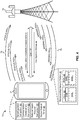
- a wireless communication system 10 includes at least one UE 12 in communication coverage of at least one network entity 14 (e.g., base station).
- UE 12 may communicate with network 16 by way of network entity 14.
- network 16 may facilitate communication between UE 12 and second UE 13 via, for example, another network entity 15.
- UE 12 may conduct data and/or voice communication with second UE 13.
- UE 12 may communicate with network entity 14 via one or more communication channels 18 utilizing one or more air interfaces.
- the one or more communication channels 18 may enable communication on one or both of the uplink and the downlink.
- communication on the one or more communication channels 18 may include communication of one or more PDUs 20.
- PDUs 20 may include radio link control (RLC) acknowledgement mode (AM) PDUs that may carry configuration data for configuring UE 12 during, for example, mobility scenarios.
- RLC radio link control
- AM acknowledgement mode
- UEs 12 and 13 may also be referred to by those skilled in the art as a mobile station, a subscriber station, a mobile unit, a subscriber unit, a wireless unit, a remote unit, a mobile device, a wireless device, a wireless communications device, a remote device, a mobile subscriber station, an access terminal, a mobile terminal, a wireless terminal, a remote terminal, a handset, a terminal, a user agent, a mobile client, a client, or some other suitable terminology.
- network entities 14 and 15 may be a macrocell, picocell, femtocell, access point, relay, Node B, mobile Node B, UE (e.g., communicating in peer-to-peer or ad-hoc mode with UEs 12 and 13), or substantially any type of component that can communicate with UEs 12 and 13 to provide wireless network access at the UEs 12 and 13.
- UE 13 may be the same as or similar to UE 12.
- UE 12 may include reconfiguration component 22, which may be configured to reconfigure communication (e.g., physical channel reconfiguration) with a network entity (e.g., network entity 14) in response to receiving a reconfiguration message from the network entity.
- reconfiguration component 22 may be configured to obtain or otherwise receive at least a first portion of a reconfiguration message 26 from network entity 14.
- the first portion may be any one or more of plurality of PDUs 20 (e.g., PDU 1 , PDU 2 , PDU 3 , PDU 4 , PDU n ), where n is a positive integer.
- PDUs 20 may include one or both of signaling radio bearer (SRB) data and data radio bearer (DRB) data.
- SRB signaling radio bearer
- DRB data radio bearer
- reconfiguration component 22 may include reconfiguration message detection component 24.
- reconfiguration message 26 may alternatively be referred to as a configuration message, both of which may, in some non-limiting scenarios, configure UE 12 to adjust a network entity connection so as to maintain an active communication session (e.g., call).
- reconfiguration message detection component 24 may be configured to detect an absent portion (e.g., absent/missing second portion) of the reconfiguration message 26. For instance, reconfiguration message detection component 24 may detect one or more missing PDUs from the communicated PDUs 20 forming an absent second portion of the reconfiguration message 26. In other words, during reconfiguration (e.g., physical channel reconfiguration), the reconfiguration message 26 transmitted by network entity 14 to UE 12, may not be received by UE 12 in its entirety due to poor network conditions. As such, reconfiguration message detection component 24 may detect or otherwise determine the absent second portion (e.g., one or more missing PDUs).
- an absent portion e.g., absent/missing second portion
- second portion does not restrict the absent second portion of the plurality of PDUs 20 to be later in sequence or later in time relative to a received first portion of the plurality of PDUs 20.
- the absent second portion may be any one or more of the plurality of PDUs 20 (e.g., PDU 1 , PDU 2 , PDU 3 , PDU 4 , PDU n ) not received by UE 12 from network entity 14.
- reconfiguration component 22 and/or a subcomponent thereof may be configured to send one or more retransmission requests 25 to the network entity 14 to request retransmission of at least the missing PDUs forming the absent second portion.
- the one or more retransmission requests 25 may be one or more status PDUs.
- reconfiguration component 22 may include communication characteristic component 62, which may be configured to determine a radio condition communication state between UE 12 and network entity 14.
- communication characteristic component 62 may be configured to receive one or more communication characteristic measurements indicating the current and/or expected radio condition communication state.
- communication characteristic component 62 may be configured to compare a communication characteristic value representative of or otherwise related to one or more received communication characteristic measurements so as to provide an indication of the radio condition communication state. For instance, based on such determination, reconfiguration component 22 may be configured to adjust a retransmission request transmission rate to increase the transmission rate of the retransmission requests to network entity 14.
- reconfiguration component 22 may include status prohibit timer 28, which may be configured to prohibit communication of retransmission requests from UE 12 to network entity 14 during a status prohibit time period 56.
- status prohibit timer 28 may be configured to prohibit communication of retransmission requests from UE 12 to network entity 14 during a status prohibit time period 56.
- conventional aspects prevented UE 12 from sending a plurality of retransmission requests 25, for example, in order to conserve bandwidth and/or conserve communication resources.
- aspects of the reconfiguration component 22 include various component and/or subcomponents that enable the sending of one or more retransmission requests 25 irrespective of state of status prohibit timer 28, e.g., no matter if status prohibit time period is still in effect or otherwise has not yet expired.
- UE 12 may include communication component 30, which may be configured to transmit and receive data and/or voice communication (e.g., PDUs 20) on one or more communication channels 18 with one or more network entities (e.g., network entity 14).
- the communication component 30 may receive at least one reconfiguration message 26 from one or more network entities (e.g., network entity 14), and/or may transmit one or more retransmission requests 25 to the network entity.
- communication component 30 may include, but is not limited to, one or more of a transmitter, a receiver, a transceiver, protocol stacks, transmit chain components, and receive chain components.
- an aspect of the reconfiguration component 22 may include various components and/or subcomponents, which may be configured to facilitate enhanced reconfiguration (e.g., physical channel reconfiguration).
- reconfiguration component 22 may enhance reconfiguration during a call session by increasing the frequency of retransmission requests communicated to a network entity when one or more missing PDUs forming an absent second portion are detected.
- reconfiguration component 22 may be configured to effectively disregard status prohibit timer 28, and hence, communicate one or more retransmission requests (e.g., status PDUs) to network entity 14 during a state of status prohibit timer 28 when status prohibit time period 56 is in effect or otherwise has not expired.
- the various component/subcomponents described herein enable reconfiguration component 22 to achieve such enhanced reconfigurations.
- reconfiguration component 22 may include reconfiguration message detection component 24.
- reconfiguration message detection component 24 may be configured to receive and/or decode at least one of a first portion and a second portion of a reconfiguration message 26 from a network entity, where a non-received or non-decoded portion of reconfiguration message 26 may be referred to as an absent second portion.
- a first portion of the reconfiguration message 26 may include PDU 1 30, PDU 2 32 and PDU 3 34.
- the absent second portion may include PDU 4 36 and PDUn 38, with n being any number greater than four. It should be understood that any one or any combination of the PDUs shown as part of, or forming reconfiguration message 26 may be considered as either the first portion or second absent portion.
- reconfiguration message detection component 24 may include PDU detection component 47, which may be configured to detect at least an absent second portion of the reconfiguration message 26.
- PDU detection component 47 may detect one or more missing PDUs (e.g., PDU 4 36, PDU n 38) forming an absent second portion of the reconfiguration message 26.
- PDU detection component 47 may employ various detection techniques to detect or otherwise determine missing PDUs forming an absent second portion.
- PDU detection component 47 may detect the absent second portion by determining one or more missing PDU sequence numbers forming the reconfiguration message 26. For instance, in aspects where PDU 1 30, PDU 2 32 and PDU 4 36 are received and form the first portion of reconfiguration message 26, PDU detection component 47 may determine that at least PDU 3 34 is missing based on its absence using, for example, the PDU sequence numbers 51. Further, in other aspects, or in conjunction with the previous aspect, PDU detection component 47 may detect the absent second portion by determining one or more missing PDUs based at least on a missing PDU indicator 53. In such aspects, the missing PDU indicator 53 indicates at least an approximate size or duration in the time domain of one or more PDUs forming the reconfiguration message 26.
- PDU detection component 47 may determine, based on the missing PDU indicator 53 and a sum of the size of PDU 1 30, PDU 2 32 and PDU 3 34, that at least PDU 4 36 is missing.
- reconfiguration component 22 may, via communication component 30 ( Fig. 1 ), configure retransmission request component 48 to transmit one or more retransmission requests 25 to network entity 14.
- the one or more retransmission requests 25 may be in the form of one or more status PDUs.
- one or more status PDUs may include Status PDU 1 50, Status PDU 2 52, and Status PDU n 54, where n is any number greater than three.
- a status PDU may inform the network entity (e.g., network entity 14) the acknowledgment information of the one or more RLC (Acknowledge Mode) PDUs (e.g., PDUs forming reconfirmation message 26) received at reconfiguration component 22.
- a status PDU may indicate to the network entity in communication with UE the PDUs not received by the UE (e.g., absent or missing PDU 4 36).
- retransmission request component 48 may be configured to continuously or periodically transmit one or more retransmission requests 25 in the form of status PDUs (e.g., Status PDU 1 50) to indicate the absent or missing PDUs (e.g., PDU 4 36).
- Each status PDU transmitted to the network entity may indicate the same or different absent or missing PDU(s). For instance, regardless of whether some of absent or missing PDU(s) have been retransmitted to UE 12 in response to a status PDU (e.g., Status PDU 1 50) received by network entity 14, UE 12 may continue to periodically transmit subsequent status PDU(s) (e.g., Status PDU 2 52) to network entity 14 indicating the same absent or missing PDU information (e.g., SRB data).
- a status PDU e.g., Status PDU 1 50
- UE 12 may continue to periodically transmit subsequent status PDU(s) (e.g., Status PDU 2 52) to network entity 14 indicating the same absent or missing PDU information (e.g., SRB data).
- reconfiguration message detection component 24 may be configured to send or otherwise provide status prohibit timer disregard state trigger 46 to retransmission request component 48 to initialize a status prohibit timer disregard state 58.
- status prohibit timer disregard state 58 comprises a configuration or operating state of retransmission request component 48 that allows retransmission request component 48 to send one or more retransmission requests, e.g., status PDUs, to network entity 14 to request retransmission of at least one or more missing PDUs, e.g., the determined absent second portion of reconfiguration message 26 from network entity 14 irrespective of status prohibit timer 28 and/or the status prohibit time period 56.
- the sending of the status prohibit timer disregard state trigger 46 to initialize status prohibit timer disregard state 58 may be done concurrently with the sending of Status PDU 1 50 to network entity 14.
- retransmission request component 48 operating in status prohibit timer disregard state 58 may be enabled or otherwise configured to periodically transmit subsequent status PDUs (e.g., Status PDU 2 52) during the status prohibit time period 56.
- retransmission request component 48 may send a status PDU periodically for every defined time interval (e.g., every TTI).
- retransmission request component 48 operating in the status prohibit timer disregard state 58 may transmit a plurality of status PDUs (e.g., Status PDU 1 50, Status PDU 2 52, Status PDU 3 54) to the network entity 14, each indicating some or all of the absent or missing PDU(s) (e.g., PDU 4 36).
- operating in status prohibit timer disregard state 58 may effectively enable reconfiguration component 22, and in particular, retransmission request component 48, to disregard status prohibit timer 28 during the status prohibit time period 56 and/or until a complete reconfiguration message 26 is determined to have been formed and/or received.
- reconfiguration message 26 may be considered complete when all SRBs forming the reconfiguration message 26 have received.
- the retransmission request 25 described herein may request retransmission of one or both of SRBs and DRBs.
- status prohibit timer 28 may be any timer which prohibits or otherwise prevents the communication of retransmission requests to a network entity until the expiration of some timer.
- reconfiguration component 22 in response to sending one or more status PDUs to network entity 14, reconfiguration component 22, and more specifically, reconfiguration message detection component 24, may be configured to receive or otherwise obtain retransmitted second portion 40.
- retransmitted second portion 40 may include at least PDU 1 42, which may contain at least SRB 1 and optionally DRB 1 .
- reconfiguration message detection component 24 may again detect or otherwise determine whether one or more missing PDUs forming the absent second portion remain missing or absent.
- it may instruct retransmission request component 48 to halt the retransmission requests.
- communication characteristic component 62 aspects of the communication characteristic component 62 are described herein with respect to Fig. 3 . However, it should be understood that communication characteristic component 62, and subcomponents thereof, may be implemented or executed as part of the features and aspects described herein with respect to the various components and/or subcomponent of the reconfiguration component 22 of Fig. 2 . Moreover, in some aspects, the aspects described herein with respect to reconfiguration component 22 may be implemented, in part or as a whole, at a network entity, such as network entity 14 ( Fig. 1 ).
- reconfiguration component 22 may include various components and/or subcomponents, which may be configured to facilitate enhanced reconfiguration (e.g., via received reconfiguration message 26) with another network entity (e.g., to reconfigure connection to network entity 15).
- reconfiguration component 22 may be configured to facilitate enhanced reconfiguration by increasing a transmission rate of retransmission requests 25 communicated to a network entity (e.g., network entity 14) for requesting retransmission of at least an absent portion of the reconfiguration message 26.
- reconfiguration component 22 may include reconfiguration message detection component 24, which may be configured in a similar manner as described herein with respect to Fig. 2 .
- reconfiguration message detection component 24 may be configured to detect an absent portion (e.g., of reconfiguration message 26, such as absent PDU 4 36 in Fig. 2 ).
- reconfiguration component 22 may include communication characteristic component 62, which may be configured to determine a radio condition communication state between UE 12 and at least network entity 14.
- communication characteristic component 62 may be configured to receive one or more communication characteristic measurements 63 indicating the current and/or expected radio condition communication state.
- communication characteristic component 62 may be configured to compare a communication characteristic value 64 representative of or otherwise related to one or more received communication characteristic measurements 63 to a corresponding communication characteristic threshold value 66. Based on this comparison, communication characteristic component 62 may provide an indication of the radio condition communication state 67 between, for example, UE 12 ( Fig. 1 ) and network entity 14 ( Fig. 1 ).
- communication characteristic component 62 may include one or more communication characteristic threshold values 66 set to indicate a certain communication state, such as a poor radio condition state when the communication characteristic value 64 meets or exceeds the communication characteristic threshold value 66, or a good radio condition state when the communication characteristic value 64 does not meet or exceed the communication characteristic threshold value 66.
- the value of the communication characteristic threshold may be static or dynamic, and may be based on historical information of radio condition communication state 67.
- the communication characteristic value 64 may include one or more of a transmission automatic gain control (TxAGC), a transmit power control (TPC) bit value, block error rate (BLER) value, acknowledgment (ACK) value, negative ACK value, hybrid automatic repeat request (HARQ) value, and a radio link control (RLC) frame error rate (FER) value.
- TxAGC transmission automatic gain control
- TPC transmit power control
- BLER block error rate
- ACK acknowledgment
- HARQ hybrid automatic repeat request
- RLC radio link control
- FER radio link control
- communication characteristic value 64 may be a value indicative of a radio condition state between UE 12 ( Fig. 1 ) and a network entity based at least on, or at least determined by one or more of the received communication characteristic measurements 63 (e.g., TxAGC and TPC bit).
- communication characteristic component 62 may be configured to continuously monitor, by tracking, counting or otherwise determining a corresponding total number of a respective communication characteristic measurement value received over the course of or during the period of time.
- communication characteristic component 62 may be configured to track a time duration during which the TxAGC value may be equal to or indicate a high TxAGC level.
- communication characteristic component 62 may be configured to count or otherwise maintain a number representative of or equal to a TPC bit value instructing/requesting an increase in transmission power.
- communication characteristic component 62 may generate an indication of the radio condition communication state.
- reconfiguration component 22 may include retransmission request component 48, which may be configured to adjust a retransmission request transmission rate based on the radio condition communication state. In an aspect, for instance, when a comparison between the communication characteristic value 64 and communication characteristic threshold value 66 indicates or otherwise signifies poor radio conditions between UE 12 ( Fig. 1 ) and network entity 14 ( Fig. 1 ).
- retransmission request component 48 may be configured to adjust a retransmission request transmission rate 60 to increase the transmission rate of the retransmission requests (e.g., Status PDUs) to network entity 14 (e.g., until a complete reconfiguration message is received and/or determined).
- retransmission request component 48 may be configured to adjust a retransmission request transmission rate 60 to increase the transmission rate of the retransmission requests (e.g., Status PDUs) to network entity 14 (e.g., until a complete reconfiguration message is received and/or determined).
- retransmission request component 48 may be configured to adjust the retransmission request transmission rate 60 by increasing the retransmission request transmission rate by a value corresponding to a difference between the communication characteristic value 64 and the communication characteristic threshold value 66.
- the increase in the retransmission request transmission rate 60 may be proportional to an increase in the difference between the communication characteristic value 64 and the communication characteristic threshold value 66. That is, as the radio conditions worsen, the transmission rate of retransmission requests (e.g., Status PDU) transmissions increases.
- retransmission request component 48 may be configured to reduce a transmission interval period between successive retransmission request transmissions to increase a transmission rate of retransmission request transmissions (e.g., retransmission request transmission rate 60) to a network entity (e.g., network entity 14, Fig. 1 ).
- the retransmission request transmission rate 60 may indicate or otherwise signify a transmission rate of successive retransmission requests 25 to the network entity.
- reconfiguration component may be configured to trigger a status prohibit timer disregard state 58 ( Fig. 3 ) for at least a portion of a status prohibit time period 56 ( Fig. 3 ) of a status prohibit timer 28 when the communication characteristic value 64 does not meet or exceed the communication characteristic threshold value 66.
- reconfiguration component 22 may be configured to continuously adjust the retransmission request transmission rate 60 as the radio conditions worsen (e.g., based on the determination by communication characteristic component 62). That is, in such non-limiting aspects, as the radio conditions worsen, the time duration during which the TxAGC value may be equal to or indicate a high TxAGC level and/or the number representative of or equal to a TPC bit value instructing/requesting an increase in transmission power may increase dramatically such that they far exceed an initial communication characteristic threshold value 66.
- communication characteristic component 62 may include two or more communication characteristic threshold values 66, each of which may be associated with a correspondingly increasing retransmission request transmission rate 60 (note: for simplicity in the drawing, only a single communication characteristic threshold value 66 corresponding to a single retransmission request transmission rate 60 is illustrated).
- communication characteristic value 64 increases, a progressively higher communication characteristic threshold value will be met or satisfied, thereby triggering a successively higher retransmission request transmission rate 60.
- the aspects described herein with respect to reconfiguration component 22 may be implemented, in part or as a whole, at a network entity, such as network entity 14 ( Fig. 1 ).
- a call 72 between UE 12 and another UE is established and/or is ongoing via network entity 14.
- network entity 14 may send reconfiguration message 26 to UE 12.
- reconfiguration message 26 may not have been received in its entirety by UE 12, and/or may not have been properly decoded, at UE 12. That is, one or more missing PDUs 76 forming an absent second portion are detected by reconfiguration component 22.
- reconfiguration component 22 may send one or more Status PDUs 74, including, for instance, first status PDU (Status PDU 1 ), indicating or otherwise identifying the one or more missing PDUs forming the absent second portion.
- UE 12 may determine, via reconfiguration component 22, and upon receiving a missing/absent portion of reconfiguration message 26 (e.g., missing/absent PDUs), that poor radio conditions exist with network entity 14. Specifically, UE 12 may determine a radio condition communication state 67 ( Fig. 3 ) with network entity 14.
- communication characteristic component 62 may be configured to receive one or more communication characteristic measurements 63 indicating the current and/or expected radio condition communication state. As such, communication characteristic component 62 may be configured to compare a communication characteristic value 64 or 66 (see Fig. 3 ) representative of or otherwise related to one or more received communication characteristic measurements (e.g., TxAGC and/or TPC bit) so as to provide an indication of the radio condition communication state 67 ( Fig. 3 ).
- reconfiguration component 22 may be configured to adjust a retransmission request transmission rate 60 ( Fig. 3 ) to increase the transmission rate of the retransmission requests (Status PDUs) to network entity 14.
- network entity 14 may transmit one or more missing PDUs 76 (e.g., in the form of, or included within one or more reconfiguration messages).
- the missing PDUs 76 may be transmitted by network entity 14, and correspondingly received by UE 12, in response to the transmission of one or more respective Status PDUs 74.
- missing PDUs 76 may include transmitted second portion 40, which may in turn include one or both of SRB and DRB information.
- network entity 14 may transmit only the SRB information to facilitate the reconfiguration procedure at UE 12 (e.g., reselection/handover).
- status prohibit timer 28 may be initiated or turned on for status prohibit time period 56, which prohibits further status transmissions until expiration of status prohibit timer 28 and/or status prohibit time period 56.
- to the present apparatus and methods may effectively disregard the status prohibit timer 28 to ensure successful reconfiguration and call preservation (e.g., when a determination that communication characteristic value 64 ( Fig. 3 ) does not meet or exceed communication characteristic threshold value 66 ( Fig. 3 )).
- reconfiguration component 22 may send subsequent status PDUs (e.g., Status PDU 2 , Status PDU 3 , Status PDU n ) even when the status prohibit timer 28 is activated.
- network entity 14 may, upon receiving one or more status PDUs, transmit at least the missing PDUs (e.g., Missing PDU 1 ) to UE 12.
- Reconfiguration component 22 may continue sending status PDUs to network entity until a complete reconfiguration message 26 is received (e.g., missing PDUs received), even when status prohibit timer 28 is activated and/or when status prohibit time period 56 has not expired.
- the aspects described herein with respect to reconfiguration component 22 may be implemented, in part or as a whole, at a network entity, such as network entity 14.
- a UE such as UE 12 ( Fig. 1 ) may perform one aspect of a method 80 for enhancing status retransmission by initiate status prohibit timer disregard state based at least in part on detecting an absent second portion.
- method 80 includes receiving a first portion of a reconfiguration message.
- UE 12 may execute reconfiguration component 22 ( Figs. 1 and 2 ) to receive at least a first portion (e.g., PDU 1 30, PDU 2 32 and/or PDU 3 34) of a reconfiguration message 26 from a network entity 14.
- the first portion of the reconfiguration message 26 may be communicated within one or more RLC AM PDUs.
- one or more PDUs (e.g., PDU 1 30, PDU 2 32 and/or PDU 3 34) forming the first portion may include at least one of signaling radio bearer (SRB) data and data radio bearer (DRB) data.
- SRB signaling radio bearer
- DRB data radio bearer
- method 80 includes detecting an absent second portion of the reconfiguration message.
- reconfiguration component 22 may execute reconfiguration message detection component 24 to detect an absent second portion (e.g., PDU 4 36) of the reconfiguration message 26.
- the absent second portion of the reconfiguration message 26 may be communicated within one or more RLC AM PDUs.
- one or more PDUs (e.g., PDU 4 36) forming the absent second portion may include at least one of signaling radio bearer (SRB) data and data radio bearer (DRB) data.
- SRB signaling radio bearer
- DRB data radio bearer
- detecting the absent second portion may include determining one or more missing PDU sequence numbers in a defined range of PDU sequence number forming the reconfiguration message. In other aspects, or in conjunction with the previous aspect, detecting the absent second portion may include determining one or more missing PDUs based at least on a PDU sequence timer.
- method 80 includes sending a retransmission request.
- reconfiguration component 22 may execute retransmission request component 48 to send one or more retransmission requests to network entity 14 based at least in part on the detecting of the absent second portion (e.g., PDU 4 36) of the reconfiguration message 26 and irrespective of a state of status prohibit timer 28.
- sending the retransmission request may include sending one or more status PDU (e.g., Status PDU 1 50) to the network entity 14.
- the status PDU requests the network entity 14 retransmit at least the absent second portion of the reconfiguration message 26.
- the sending of the status PDU occurs prior to an expiration of the status prohibit timer 28.
- method 80 may optionally include receiving a retransmitted second portion of the reconfiguration message.
- reconfiguration component 22 may execute reconfiguration message detection component 24 to receive one or more retransmitted second portions (e.g., PDU 1 42) of the reconfiguration message 26 in response to sending one or more retransmission requests (e.g., Status PDU 1 50) to the network entity 14.
- retransmission requests e.g., Status PDU 1 50
- method 80 may optionally include repeating the sending of the retransmission request for every defined time interval.
- reconfiguration component 22 Figs. 1 and 2
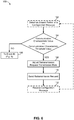
- a UE such as UE 12 ( Fig. 1 ) may perform one aspect of a method 100 for enhancing status retransmission by increasing a retransmission request transmission rate during poor radio conditions.
- method 100 may be executed by reconfiguration component 22 ( Figs. 1-4 ) of UE 12.
- method 100 may optionally detect an absent portion of a configuration message.
- reconfiguration component 22 Figs. 1-3
- reconfiguration message detection component 24 Figs. 1-3
- method 100 may determine whether a communication characteristic value meets or exceeds a communication characteristic threshold value. For instance, as described herein, reconfiguration component 22 ( Figs. 1-3 ) may execute communication characteristic component 62 ( Figs. 2 and 3 ) to determine whether a communication characteristic value 64 ( Fig. 3 ) meets or exceeds a communication characteristic threshold value 66 ( Fig. 3 ). At block 106, method 100 may return to block 86 ( Fig. 5 ) when a determination is made at block 104 that communication characteristic value does not meet or exceed a communication characteristic threshold value.
- method 100 may send a retransmission request.
- reconfiguration component 22 Figs. 1-3
- retransmission request component 48 Figs. 2 and 3
- method 100 may optionally receive a subsequent or second configuration message in response to sending the retransmission request.
- reconfiguration component 22 Figs. 1-3
- method 100 may return to block 102 and continue to perform the aspects of blocks 104-110 until a complete reconfiguration message is received/determined. Additionally, in such aspects, a successive or subsequent adjustment of the retransmission request transmission rate may progressively increase the transmission rate of the retransmission requests as the communication characteristic value exceeds a higher communication characteristic threshold value at block 104.
- Fig. 7 is a block diagram illustrating an example of a hardware implementation for an apparatus 120 employing a processing system 134, wherein the system may be the same as or similar to UE 12 executing reconfiguration component 22 ( Fig. 1 ).
- the processing system 134 may be implemented with a bus architecture, represented generally by the bus 122.
- the bus 122 may include any number of interconnecting buses and bridges depending on the specific application of the processing system 134 and the overall design constraints.
- the bus 122 links together various circuits including one or more processors, represented generally by the processor 124, and computer-readable media, represented generally by the computer-readable medium 126 and UE components (e.g., UE 12), such as reconfiguration component 22 ( Fig. 1 ).
- the bus 122 may also link various other circuits such as timing sources, peripherals, voltage regulators, and power management circuits, which are well known in the art, and therefore, will not be described any further.
- a bus interface 128 provides an interface between the bus 122 and a transceiver 130.
- the transceiver 130 provides a means for communicating with various other apparatus over a transmission medium.
- a user interface 132 e.g., keypad, display, speaker, microphone, joystick
- the processor 124 is responsible for managing the bus 122 and general processing, including the execution of software stored on the computer-readable medium 126.
- the software when executed by the processor 124, causes the processing system 134 to perform the various functions described infra for any particular apparatus.
- the computer-readable medium 126 may also be used for storing data that is manipulated by the processor 124 when executing software.
- reconfiguration component 22 may be implemented by any one or more of processor 124 and computer-readable medium 126.
- the processor and/or computer-readable medium 126 may be configured to, via reconfiguration component 22, detect absent portions of reconfiguration messages and send one or more retransmission requests in a wireless communications device (e.g., UE 12).
- a UMTS network includes three interacting domains: a Core Network (CN) 204, a UMTS Terrestrial Radio Access Network (UTRAN) 202, and User Equipment (UE) 210 that may be the same or similar as UE 12 including reconfiguration component 22 ( Fig. 1 ).
- the UTRAN 202 provides various wireless services including telephony, video, data, messaging, broadcasts, and/or other services.
- the UTRAN 202 may include a plurality of Radio Network Subsystems (RNSs) such as an RNS 207, each controlled by a respective Radio Network Controller (RNC) such as an RNC 206.
- RNSs Radio Network Subsystems
- the UTRAN 202 may include any number of RNCs 206 and RNSs 207 in addition to the RNCs 206 and RNSs 207 illustrated herein.
- the RNC 206 is an apparatus responsible for, among other things, assigning, reconfiguring and releasing radio resources within the RNS 207.
- the RNC 206 may be interconnected to other RNCs (not shown) in the UTRAN 202 through various types of interfaces such as a direct physical connection, a virtual network, or the like, using any suitable transport network.
- Communication between a UE 210 and a Node B 208 may be considered as including a physical (PHY) layer and a medium access control (MAC) layer. Further, communication between a UE 210 and an RNC 206 by way of a respective Node B 208 may be considered as including a RRC layer.
- the PHY layer may be considered layer 1; the MAC layer may be considered layer 2; and the RRC layer may be considered layer 3.
- Information hereinbelow utilizes terminology introduced in the RRC Protocol Specification, 3GPP TS 25.331 v9.1.0.
- the geographic region covered by the RNS 207 may be divided into a number of cells, with a radio transceiver apparatus serving each cell.
- a radio transceiver apparatus is commonly referred to as a Node B in UMTS applications, but may also be referred to by those skilled in the art as a base station (BS), a base transceiver station (BTS), a radio base station, a radio transceiver, a transceiver function, a basic service set (BSS), an extended service set (ESS), an access point (AP), or some other suitable terminology.
- BS basic service set
- ESS extended service set
- AP access point
- three Node Bs 208 are shown in each RNS 207; however, the RNSs 207 may include any number of wireless Node Bs.
- the Node Bs 208 provide wireless access points to a CN 204 for any number of mobile apparatuses, such as UE 210.
- Examples of a mobile apparatus include a cellular phone, a smart phone, a session initiation protocol (SIP) phone, a laptop, a notebook, a netbook, a smartbook, a personal digital assistant (PDA), a satellite radio, a global positioning system (GPS) device, a multimedia device, a video device, a digital audio player (e.g., MP3 player), a camera, a game console, or any other similar functioning device.
- SIP session initiation protocol
- PDA personal digital assistant
- GPS global positioning system
- multimedia device e.g., a digital audio player (e.g., MP3 player), a camera, a game console, or any other similar functioning device.
- the CN 204 interfaces with one or more access networks, such as the UTRAN 202.
- the CN 204 is a GSM core network.
- the various concepts presented throughout this disclosure may be implemented in a RAN, or other suitable access network, to provide UEs with access to types of CNs other than GSM networks.
- the CN 204 includes a circuit-switched (CS) domain and a packet-switched (PS) domain.
- Some of the circuit-switched elements are a Mobile services Switching Centre (MSC), a Visitor location register (VLR) and a Gateway MSC.
- Packet-switched elements include a Serving GPRS Support Node (SGSN) and a Gateway GPRS Support Node (GGSN).
- Some network elements, like EIR, HLR, VLR and AuC may be shared by both of the circuit-switched and packet-switched domains.
- the CN 204 supports circuit-switched services with a MSC 212 and a GMSC 214.
- the GMSC 214 may be referred to as a media gateway (MGW).
- MGW media gateway
- the MSC 212 is an apparatus that controls call setup, call routing, and UE mobility functions.
- the MSC 212 also includes a VLR that contains subscriber-related information for the duration that a UE is in the coverage area of the MSC 212.
- the GMSC 214 provides a gateway through the MSC 212 for the UE to access a circuit-switched network 216.
- the GMSC 214 includes a home location register (HLR) 215 containing subscriber data, such as the data reflecting the details of the services to which a particular user has subscribed.
- the HLR is also associated with an authentication center (AuC) that contains subscriber-specific authentication data.
- AuC authentication center
- the CN 204 also supports packet-data services with a serving GPRS support node (SGSN) 218 and a gateway GPRS support node (GGSN) 220.
- GPRS which stands for General Packet Radio Service, is designed to provide packet-data services at speeds higher than those available with standard circuit-switched data services.
- the GGSN 220 provides a connection for the UTRAN 202 to a packet-based network 222.
- the packet-based network 222 may be the Internet, a private data network, or some other suitable packet-based network.
- the primary function of the GGSN 220 is to provide the UEs 210 with packet-based network connectivity. Data packets may be transferred between the GGSN 220 and the UEs 210 through the SGSN 218, which performs primarily the same functions in the packet-based domain as the MSC 212 performs in the circuit-switched domain.
- An air interface for UMTS may utilize a spread spectrum Direct-Sequence Code Division Multiple Access (DS-CDMA) system.
- the spread spectrum DS-CDMA spreads user data through multiplication by a sequence of pseudorandom bits called chips.
- the "wideband" W-CDMA air interface for UMTS is based on such direct sequence spread spectrum technology and additionally calls for a frequency division duplexing (FDD).
- FDD uses a different carrier frequency for the UL and DL between a Node B 208 and a UE 210.
- Another air interface for UMTS that utilizes DS-CDMA, and uses time division duplexing (TDD), is the TD-SCDMA air interface.
- TD-SCDMA time division duplexing
- HSPA air interface includes a series of enhancements to the 3G/W-CDMA air interface, facilitating greater throughput and reduced latency.
- HSPA utilizes hybrid automatic repeat request (HARQ), shared channel transmission, and adaptive modulation and coding.
- HARQ hybrid automatic repeat request
- the standards that define HSPA include HSDPA (high speed downlink packet access) and HSUPA (high speed uplink packet access, also referred to as enhanced uplink, or EUL).
- HSDPA utilizes as its transport channel the high-speed downlink shared channel (HS-DSCH).
- the HS-DSCH is implemented by three physical channels: the high-speed physical downlink shared channel (HS-PDSCH), the high-speed shared control channel (HS-SCCH), and the high-speed dedicated physical control channel (HS-DPCCH).
- HS-PDSCH high-speed physical downlink shared channel
- HS-SCCH high-speed shared control channel
- HS-DPCCH high-speed dedicated physical control channel
- the HS-DPCCH carries the HARQ ACK/NACK signaling on the uplink to indicate whether a corresponding packet transmission was decoded successfully. That is, with respect to the downlink, the UE 210 provides feedback to the node B 208 over the HS-DPCCH to indicate whether it correctly decoded a packet on the downlink.
- HS-DPCCH further includes feedback signaling from the UE 210 to assist the node B 208 in taking the right decision in terms of modulation and coding scheme and precoding weight selection, this feedback signaling including the CQI and PCI.
- MIMO Multiple Input Multiple Output
- MIMO systems generally enhance data transmission performance, enabling diversity gains to reduce multipath fading and increase transmission quality, and spatial multiplexing gains to increase data throughput.
- Spatial multiplexing may be used to transmit different streams of data simultaneously on the same frequency.
- the data steams may be transmitted to a single UE 210 to increase the data rate or to multiple UEs 210 to increase the overall system capacity. This is achieved by spatially precoding each data stream and then transmitting each spatially precoded stream through a different transmit antenna on the downlink.
- the spatially precoded data streams arrive at the UE(s) 210 with different spatial signatures, which enables each of the UE(s) 210 to recover the one or more the data streams destined for that UE 210.
- each UE 210 may transmit one or more spatially precoded data streams, which enables the node B 208 to identify the source of each spatially precoded data stream.
- Spatial multiplexing may be used when channel conditions are good.
- beamforming may be used to focus the transmission energy in one or more directions, or to improve transmission based on characteristics of the channel. This may be achieved by spatially precoding a data stream for transmission through multiple antennas. To achieve good coverage at the edges of the cell, a single stream beamforming transmission may be used in combination with transmit diversity.
- Single Input Multiple Output generally refers to a system utilizing a single transmit antenna (a single input to the channel) and multiple receive antennas (multiple outputs from the channel).
- a single transport block is sent over the respective carrier.
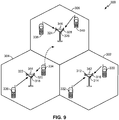
- an access network 300 in a UTRAN architecture is illustrated in which UE, such as a UE the same as or similar to UE 12 including reconfiguration component 22 ( Fig. 1 ) may operate.
- the multiple access wireless communication system includes multiple cellular regions (cells), including cells 302, 304, and 306, each of which may include one or more sectors.
- the multiple sectors can be formed by groups of antennas with each antenna responsible for communication with UEs in a portion of the cell. For example, in cell 302, antenna groups 312, 314, and 316 may each correspond to a different sector. In cell 304, antenna groups 318, 320, and 322 each correspond to a different sector.
- antenna groups 324, 326, and 328 each correspond to a different sector.
- the cells 302, 304 and 306 may include several wireless communication devices, e.g., User Equipment or UEs, which may be in communication with one or more sectors of each cell 302, 304 or 306.
- UEs 330 and 332 may be in communication with Node B 342
- UEs 334 and 336 may be in communication with Node B 344
- UEs 338 and 340 can be in communication with Node B 346.
- each Node B 342, 344, 346 is configured to provide an access point to a CN 204 (see FIG.
- the UE 334 may maintain communication with one or more of the neighboring cells. During this time, the UE 334 may maintain an Active Set, that is, a list of cells that the UE 334 is simultaneously connected to (i.e., the UTRA cells that are currently assigning a downlink dedicated physical channel DPCH or fractional downlink dedicated physical channel F-DPCH to the UE 334 may constitute the Active Set).
- an Active Set that is, a list of cells that the UE 334 is simultaneously connected to (i.e., the UTRA cells that are currently assigning a downlink dedicated physical channel DPCH or fractional downlink dedicated physical channel F-DPCH to the UE 334 may constitute the Active Set).
- the modulation and multiple access scheme employed by the access network 300 may vary depending on the particular telecommunications standard being deployed.
- the standard may include Evolution-Data Optimized (EV-DO) or Ultra Mobile Broadband (UMB).
- EV-DO and UMB are air interface standards promulgated by the 3rd Generation Partnership Project 2 (3GPP2) as part of the CDMA2000 family of standards and employs CDMA to provide broadband Internet access to mobile stations.
- 3GPP2 3rd Generation Partnership Project 2
- the standard may alternately be Universal Terrestrial Radio Access (UTRA) employing Wideband-CDMA (W-CDMA) and other variants of CDMA, such as TD-SCDMA; Global System for Mobile Communications (GSM) employing TDMA; and Evolved UTRA (E-UTRA), Ultra Mobile Broadband (UMB), IEEE 802.11 (Wi-Fi), IEEE 802.16 (WiMAX), IEEE 802.20, and Flash-OFDM employing OFDMA.
- UTRA, E-UTRA, UMTS, LTE, LTE Advanced, and GSM are described in documents from the 3GPP organization.
- CDMA2000 and UMB are described in documents from the 3GPP2 organization.
- the actual wireless communication standard and the multiple access technology employed will depend on the specific application and the overall design constraints imposed on the system.
- the radio protocol architecture may take on various forms depending on the particular application.
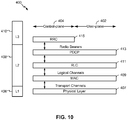
- An example for an HSPA system will now be presented with reference to Fig. 10 .
- the L2 layer 408 includes a media access control (MAC) sublayer 409, a radio link control (RLC) sublayer 411, and a packet data convergence protocol (PDCP) 413 sublayer, which are terminated at the node B on the network side.
- MAC media access control
- RLC radio link control
- PDCP packet data convergence protocol
- the UE may have several upper layers above the L2 layer 408 including a network layer (e.g., IP layer) that is terminated at a PDN gateway on the network side, and an application layer that is terminated at the other end of the connection (e.g., far end UE, server, etc.).
- IP layer e.g., IP layer
- the transmit processor 520 may provide cyclic redundancy check (CRC) codes for error detection, coding and interleaving to facilitate forward error correction (FEC), mapping to signal constellations based on various modulation schemes (e.g., binary phase-shift keying (BPSK), quadrature phase-shift keying (QPSK), M-phase-shift keying (M-PSK), M-quadrature amplitude modulation (M-QAM), and the like), spreading with orthogonal variable spreading factors (OVSF), and multiplying with scrambling codes to produce a series of symbols.
- CRC cyclic redundancy check
- Channel estimates from a channel processor 544 may be used by a controller/processor 540 to determine the coding, modulation, spreading, and/or scrambling schemes for the transmit processor 520. These channel estimates may be derived from a reference signal transmitted by the UE 550 or from feedback from the UE 550.
- the symbols generated by the transmit processor 520 are provided to a transmit frame processor 530 to create a frame structure.
- the transmit frame processor 530 creates this frame structure by multiplexing the symbols with information from the controller/processor 540, resulting in a series of frames.
- the frames are then provided to a transmitter 532, which provides various signal conditioning functions including amplifying, filtering, and modulating the frames onto a carrier for downlink transmission over the wireless medium through antenna 534.
- the antenna 534 may include one or more antennas, for example, including beam steering bidirectional adaptive antenna arrays or other similar beam technologies.
- a receiver 554 receives the downlink transmission through an antenna 552 and processes the transmission to recover the information modulated onto the carrier.
- the information recovered by the receiver 554 is provided to a receive frame processor 560, which parses each frame, and provides information from the frames to a channel processor 594 and the data, control, and reference signals to a receive processor 570.
- the receive processor 570 then performs the inverse of the processing performed by the transmit processor 520 in the Node B 510. More specifically, the receive processor 570 descrambles and despreads the symbols, and then determines the most likely signal constellation points transmitted by the Node B 510 based on the modulation scheme. These soft decisions may be based on channel estimates computed by the channel processor 594.
- the soft decisions are then decoded and deinterleaved to recover the data, control, and reference signals.
- the CRC codes are then checked to determine whether the frames were successfully decoded.
- the data carried by the successfully decoded frames will then be provided to a data sink 572, which represents applications running in the UE 550 and/or various user interfaces (e.g., display).
- Control signals carried by successfully decoded frames will be provided to a controller/processor 590.
- the controller/processor 590 may also use an acknowledgement (ACK) and/or negative acknowledgement (NACK) protocol to support retransmission requests for those frames.
- ACK acknowledgement
- NACK negative acknowledgement
- a transmit processor 580 receives data from a data source 578 and control signals from the controller/processor 590 and provides various signal processing functions including CRC codes, coding and interleaving to facilitate FEC, mapping to signal constellations, spreading with OVSFs, and scrambling to produce a series of symbols.
- Channel estimates may be used to select the appropriate coding, modulation, spreading, and/or scrambling schemes.
- the symbols produced by the transmit processor 580 will be provided to a transmit frame processor 582 to create a frame structure.
- the transmit frame processor 582 creates this frame structure by multiplexing the symbols with information from the controller/processor 590, resulting in a series of frames.
- the frames are then provided to a transmitter 556, which provides various signal conditioning functions including amplification, filtering, and modulating the frames onto a carrier for uplink transmission over the wireless medium through the antenna 552.
- the uplink transmission is processed at the Node B 510 in a manner similar to that described in connection with the receiver function at the UE 550.
- a receiver 535 receives the uplink transmission through the antenna 534 and processes the transmission to recover the information modulated onto the carrier.
- the information recovered by the receiver 535 is provided to a receive frame processor 536, which parses each frame, and provides information from the frames to the channel processor 544 and the data, control, and reference signals to a receive processor 538.
- the receive processor 538 performs the inverse of the processing performed by the transmit processor 580 in the UE 550.
- the data and control signals carried by the successfully decoded frames may then be provided to a data sink 539 and the controller/processor, respectively. If some of the frames were unsuccessfully decoded by the receive processor, the controller/processor 540 may also use an acknowledgement (ACK) and/or negative acknowledgement (NACK) protocol to support retransmission requests for those frames.
- ACK acknowledgement
- NACK negative acknowledgement
- the controller/processors 540 and 590 may be used to direct the operation at the Node B 510 and the UE 550, respectively.
- the controller/processors 540 and 590 may provide various functions including timing, peripheral interfaces, voltage regulation, power management, and other control functions.
- the computer readable media of memories 542 and 592 may store data and software for the Node B 510 and the UE 550, respectively.
- a scheduler/processor 546 at the Node B 510 may be used to allocate resources to the UEs and schedule downlink and/or uplink transmissions for the UEs.
- LTE Long Term Evolution
- LTE-A LTE-Advanced
- EV-DO Evolution-Data Optimized
- UMB Ultra Mobile Broadband
- IEEE 802.11 Wi-Fi
- IEEE 802.16 WiMAX
- IEEE 802.20 Ultra-Wideband
- Bluetooth and/or other suitable systems.
- the actual telecommunication standard, network architecture, and/or communication standard employed will depend on the specific application and the overall design constraints imposed on the system.
- processors include microprocessors, microcontrollers, digital signal processors (DSPs), field programmable gate arrays (FPGAs), programmable logic devices (PLDs), state machines, gated logic, discrete hardware circuits, and other suitable hardware configured to perform the various functionality described throughout this disclosure.
- DSPs digital signal processors
- FPGAs field programmable gate arrays
- PLDs programmable logic devices
- state machines gated logic, discrete hardware circuits, and other suitable hardware configured to perform the various functionality described throughout this disclosure.
- One or more processors in the processing system may execute software.
- Software shall be construed broadly to mean instructions, instruction sets, code, code segments, program code, programs, subprograms, software modules, applications, software applications, software packages, routines, subroutines, objects, executables, threads of execution, procedures, functions, etc., whether referred to as software, firmware, middleware, microcode, hardware description language, or otherwise.
- the software may reside on a computer-readable medium.
- the computer-readable medium may be a non-transitory computer-readable medium.
- a non-transitory computer-readable medium includes, by way of example, a magnetic storage device (e.g., hard disk, floppy disk, magnetic strip), an optical disk (e.g., compact disk (CD), digital versatile disk (DVD)), a smart card, a flash memory device (e.g., card, stick, key drive), random access memory (RAM), read only memory (ROM), programmable ROM (PROM), erasable PROM (EPROM), electrically erasable PROM (EEPROM), a register, a removable disk, and any other suitable medium for storing software and/or instructions that may be accessed and read by a computer.
- a magnetic storage device e.g., hard disk, floppy disk, magnetic strip
- an optical disk e.g., compact disk (CD), digital versatile disk (DVD)
- a smart card e.g.,
- the computer-readable medium may also include, by way of example, a carrier wave, a transmission line, and any other suitable medium for transmitting software and/or instructions that may be accessed and read by a computer.
- the computer-readable medium may be resident in the processing system, external to the processing system, or distributed across multiple entities including the processing system.
- the computer-readable medium may be embodied in a computer-program product.
- a computer-program product may include a computer-readable medium in packaging materials.
Landscapes
- Engineering & Computer Science (AREA)
- Computer Networks & Wireless Communication (AREA)
- Signal Processing (AREA)
- Quality & Reliability (AREA)
- Mobile Radio Communication Systems (AREA)
- Detection And Prevention Of Errors In Transmission (AREA)
- Communication Control (AREA)
Applications Claiming Priority (4)
| Application Number | Priority Date | Filing Date | Title |
|---|---|---|---|
| US201361847450P | 2013-07-17 | 2013-07-17 | |
| US13/944,602 US9509448B2 (en) | 2012-09-19 | 2013-07-17 | Methods and apparatus for enhanced status retransmission |
| US14/192,626 US9531499B2 (en) | 2012-09-19 | 2014-02-27 | Methods and apparatus for dynamic transmission of retransmission requests |
| PCT/US2014/046634 WO2015009685A1 (en) | 2013-07-17 | 2014-07-15 | Methods and apparatus for dynamic transmission of retransmission requests |
Publications (2)
| Publication Number | Publication Date |
|---|---|
| EP3022862A1 EP3022862A1 (en) | 2016-05-25 |
| EP3022862B1 true EP3022862B1 (en) | 2019-03-27 |
Family
ID=52346668
Family Applications (1)
| Application Number | Title | Priority Date | Filing Date |
|---|---|---|---|
| EP14750053.2A Not-in-force EP3022862B1 (en) | 2013-07-17 | 2014-07-15 | Methods and apparatus for dynamic transmission of retransmission requests |
Country Status (5)
| Country | Link |
|---|---|
| EP (1) | EP3022862B1 (https=) |
| JP (2) | JP6543624B2 (https=) |
| KR (1) | KR102057087B1 (https=) |
| CN (1) | CN105432036B (https=) |
| WO (1) | WO2015009685A1 (https=) |
Families Citing this family (1)
| Publication number | Priority date | Publication date | Assignee | Title |
|---|---|---|---|---|
| CN115278770A (zh) * | 2022-07-27 | 2022-11-01 | 中国电信股份有限公司 | 数据传输控制方法、系统、设备及存储介质 |
Family Cites Families (11)
| Publication number | Priority date | Publication date | Assignee | Title |
|---|---|---|---|---|
| US6567388B1 (en) * | 1999-03-05 | 2003-05-20 | Qualcomm, Incorporated | Method and apparatus for efficient data retransmission in a voice-over-data communication system |
| CN1989721A (zh) * | 2004-06-16 | 2007-06-27 | 高通股份有限公司 | 用于无线通信中的链路控制的方法和设备 |
| US8855572B2 (en) * | 2004-06-16 | 2014-10-07 | Qualcomm Incorporated | Method and apparatus for link control in wireless communications |
| DE602004029784D1 (de) * | 2004-09-24 | 2010-12-09 | Research In Motion Ltd | Steuerprotokoll für Funkverbindungen |
| US8699428B2 (en) * | 2006-10-27 | 2014-04-15 | Telefonaktiebolaget L M Ericsson (Publ) | Method and arrangement for efficiently utilizing radio resources in a communication network |
| WO2009132276A2 (en) * | 2008-04-25 | 2009-10-29 | Interdigital Patent Holdings, Inc. | Radio link control status reporting and polling |
| US8526440B2 (en) * | 2008-04-28 | 2013-09-03 | Qualcomm Incorporated | Partial radio link control status report |
| CN101277176B (zh) * | 2008-05-15 | 2011-09-14 | 华为技术有限公司 | 调整混合自动重传次数的方法和设备及系统 |
| EP2465293A4 (en) * | 2009-08-10 | 2016-08-24 | Ericsson Telefon Ab L M | TRANSFER METHOD FOR MINIMIZING DATA TREATED TO A TARGET NODE |
| JP2011055435A (ja) * | 2009-09-04 | 2011-03-17 | Panasonic Corp | 再送制御装置及び再送制御方法 |
| US10462690B2 (en) | 2011-08-05 | 2019-10-29 | Telefonaktiebolaget Lm Ericsson (Publ) | RLC status reporting for eight-carrier HSDPA |
-
2014
- 2014-07-15 EP EP14750053.2A patent/EP3022862B1/en not_active Not-in-force
- 2014-07-15 CN CN201480040287.9A patent/CN105432036B/zh not_active Expired - Fee Related
- 2014-07-15 WO PCT/US2014/046634 patent/WO2015009685A1/en not_active Ceased
- 2014-07-15 JP JP2016527025A patent/JP6543624B2/ja not_active Expired - Fee Related
- 2014-07-15 KR KR1020167003727A patent/KR102057087B1/ko not_active Expired - Fee Related
-
2019
- 2019-03-06 JP JP2019040519A patent/JP6641046B2/ja not_active Expired - Fee Related
Non-Patent Citations (1)
| Title |
|---|
| None * |
Also Published As
| Publication number | Publication date |
|---|---|
| KR20160033724A (ko) | 2016-03-28 |
| JP6641046B2 (ja) | 2020-02-05 |
| EP3022862A1 (en) | 2016-05-25 |
| KR102057087B1 (ko) | 2019-12-18 |
| CN105432036B (zh) | 2019-12-06 |
| JP2016529790A (ja) | 2016-09-23 |
| CN105432036A (zh) | 2016-03-23 |
| JP2019083589A (ja) | 2019-05-30 |
| WO2015009685A1 (en) | 2015-01-22 |
| JP6543624B2 (ja) | 2019-07-10 |
Similar Documents
| Publication | Publication Date | Title |
|---|---|---|
| EP2719112B1 (en) | Methods and apparatuses for user equipment-based enhancements of radio link control for multi-point wireless transmission | |
| US9531499B2 (en) | Methods and apparatus for dynamic transmission of retransmission requests | |
| EP2974104B1 (en) | Method and apparatus for improving re-transmission of reconfiguration messages | |
| EP2944120A1 (en) | Method and apparatus for fast handover evaluation | |
| WO2013116403A1 (en) | Method and apparatus for channel fallback in enhanced cell forward access channel dedicated channel | |
| US9564920B2 (en) | Method and apparatus for mitigation of false packet decodes due to early decoding | |
| EP2898619B1 (en) | Methods and apparatus for enhanced status retransmission | |
| EP3008848B1 (en) | Methods and apparatus for improving call performance and data throughput | |
| US20160150522A1 (en) | Uplink resource management during radio link control (rlc) transmission window full state | |
| US9510217B2 (en) | Method and apparatus for enhanced application signaling from a wireless communications device | |
| WO2013184711A1 (en) | Methods and apparatus for dltpc rejection in downlink windup mode | |
| JP6641046B2 (ja) | 再送信要求を動的に送信するための方法および装置 | |
| US9008047B2 (en) | Methods and apparatuses for implementing a multi-RAB minimum TFC determination algorithm based on transmit power | |
| US9232484B2 (en) | Apparatus and methods of HSPA transmit power control |
Legal Events
| Date | Code | Title | Description |
|---|---|---|---|
| PUAI | Public reference made under article 153(3) epc to a published international application that has entered the european phase |
Free format text: ORIGINAL CODE: 0009012 |
|
| 17P | Request for examination filed |
Effective date: 20151217 |
|
| AK | Designated contracting states |
Kind code of ref document: A1 Designated state(s): AL AT BE BG CH CY CZ DE DK EE ES FI FR GB GR HR HU IE IS IT LI LT LU LV MC MK MT NL NO PL PT RO RS SE SI SK SM TR |
|
| AX | Request for extension of the european patent |
Extension state: BA ME |
|
| DAX | Request for extension of the european patent (deleted) | ||
| STAA | Information on the status of an ep patent application or granted ep patent |
Free format text: STATUS: EXAMINATION IS IN PROGRESS |
|
| 17Q | First examination report despatched |
Effective date: 20180118 |
|
| GRAP | Despatch of communication of intention to grant a patent |
Free format text: ORIGINAL CODE: EPIDOSNIGR1 |
|
| STAA | Information on the status of an ep patent application or granted ep patent |
Free format text: STATUS: GRANT OF PATENT IS INTENDED |
|
| INTG | Intention to grant announced |
Effective date: 20181004 |
|
| GRAS | Grant fee paid |
Free format text: ORIGINAL CODE: EPIDOSNIGR3 |
|
| GRAA | (expected) grant |
Free format text: ORIGINAL CODE: 0009210 |
|
| STAA | Information on the status of an ep patent application or granted ep patent |
Free format text: STATUS: THE PATENT HAS BEEN GRANTED |
|
| AK | Designated contracting states |
Kind code of ref document: B1 Designated state(s): AL AT BE BG CH CY CZ DE DK EE ES FI FR GB GR HR HU IE IS IT LI LT LU LV MC MK MT NL NO PL PT RO RS SE SI SK SM TR |
|
| REG | Reference to a national code |
Ref country code: GB Ref legal event code: FG4D |
|
| REG | Reference to a national code |
Ref country code: CH Ref legal event code: EP |
|
| REG | Reference to a national code |
Ref country code: AT Ref legal event code: REF Ref document number: 1114291 Country of ref document: AT Kind code of ref document: T Effective date: 20190415 |
|
| REG | Reference to a national code |
Ref country code: IE Ref legal event code: FG4D |
|
| REG | Reference to a national code |
Ref country code: DE Ref legal event code: R096 Ref document number: 602014043650 Country of ref document: DE |
|
| PG25 | Lapsed in a contracting state [announced via postgrant information from national office to epo] |
Ref country code: LT Free format text: LAPSE BECAUSE OF FAILURE TO SUBMIT A TRANSLATION OF THE DESCRIPTION OR TO PAY THE FEE WITHIN THE PRESCRIBED TIME-LIMIT Effective date: 20190327 Ref country code: FI Free format text: LAPSE BECAUSE OF FAILURE TO SUBMIT A TRANSLATION OF THE DESCRIPTION OR TO PAY THE FEE WITHIN THE PRESCRIBED TIME-LIMIT Effective date: 20190327 Ref country code: SE Free format text: LAPSE BECAUSE OF FAILURE TO SUBMIT A TRANSLATION OF THE DESCRIPTION OR TO PAY THE FEE WITHIN THE PRESCRIBED TIME-LIMIT Effective date: 20190327 Ref country code: NO Free format text: LAPSE BECAUSE OF FAILURE TO SUBMIT A TRANSLATION OF THE DESCRIPTION OR TO PAY THE FEE WITHIN THE PRESCRIBED TIME-LIMIT Effective date: 20190627 |
|
| REG | Reference to a national code |
Ref country code: NL Ref legal event code: MP Effective date: 20190327 |
|
| PG25 | Lapsed in a contracting state [announced via postgrant information from national office to epo] |
Ref country code: BG Free format text: LAPSE BECAUSE OF FAILURE TO SUBMIT A TRANSLATION OF THE DESCRIPTION OR TO PAY THE FEE WITHIN THE PRESCRIBED TIME-LIMIT Effective date: 20190627 Ref country code: GR Free format text: LAPSE BECAUSE OF FAILURE TO SUBMIT A TRANSLATION OF THE DESCRIPTION OR TO PAY THE FEE WITHIN THE PRESCRIBED TIME-LIMIT Effective date: 20190628 Ref country code: NL Free format text: LAPSE BECAUSE OF FAILURE TO SUBMIT A TRANSLATION OF THE DESCRIPTION OR TO PAY THE FEE WITHIN THE PRESCRIBED TIME-LIMIT Effective date: 20190327 Ref country code: LV Free format text: LAPSE BECAUSE OF FAILURE TO SUBMIT A TRANSLATION OF THE DESCRIPTION OR TO PAY THE FEE WITHIN THE PRESCRIBED TIME-LIMIT Effective date: 20190327 Ref country code: RS Free format text: LAPSE BECAUSE OF FAILURE TO SUBMIT A TRANSLATION OF THE DESCRIPTION OR TO PAY THE FEE WITHIN THE PRESCRIBED TIME-LIMIT Effective date: 20190327 Ref country code: HR Free format text: LAPSE BECAUSE OF FAILURE TO SUBMIT A TRANSLATION OF THE DESCRIPTION OR TO PAY THE FEE WITHIN THE PRESCRIBED TIME-LIMIT Effective date: 20190327 |
|
| REG | Reference to a national code |
Ref country code: AT Ref legal event code: MK05 Ref document number: 1114291 Country of ref document: AT Kind code of ref document: T Effective date: 20190327 |
|
| PG25 | Lapsed in a contracting state [announced via postgrant information from national office to epo] |
Ref country code: CZ Free format text: LAPSE BECAUSE OF FAILURE TO SUBMIT A TRANSLATION OF THE DESCRIPTION OR TO PAY THE FEE WITHIN THE PRESCRIBED TIME-LIMIT Effective date: 20190327 Ref country code: RO Free format text: LAPSE BECAUSE OF FAILURE TO SUBMIT A TRANSLATION OF THE DESCRIPTION OR TO PAY THE FEE WITHIN THE PRESCRIBED TIME-LIMIT Effective date: 20190327 Ref country code: SK Free format text: LAPSE BECAUSE OF FAILURE TO SUBMIT A TRANSLATION OF THE DESCRIPTION OR TO PAY THE FEE WITHIN THE PRESCRIBED TIME-LIMIT Effective date: 20190327 Ref country code: AL Free format text: LAPSE BECAUSE OF FAILURE TO SUBMIT A TRANSLATION OF THE DESCRIPTION OR TO PAY THE FEE WITHIN THE PRESCRIBED TIME-LIMIT Effective date: 20190327 Ref country code: PT Free format text: LAPSE BECAUSE OF FAILURE TO SUBMIT A TRANSLATION OF THE DESCRIPTION OR TO PAY THE FEE WITHIN THE PRESCRIBED TIME-LIMIT Effective date: 20190727 Ref country code: ES Free format text: LAPSE BECAUSE OF FAILURE TO SUBMIT A TRANSLATION OF THE DESCRIPTION OR TO PAY THE FEE WITHIN THE PRESCRIBED TIME-LIMIT Effective date: 20190327 Ref country code: EE Free format text: LAPSE BECAUSE OF FAILURE TO SUBMIT A TRANSLATION OF THE DESCRIPTION OR TO PAY THE FEE WITHIN THE PRESCRIBED TIME-LIMIT Effective date: 20190327 Ref country code: IT Free format text: LAPSE BECAUSE OF FAILURE TO SUBMIT A TRANSLATION OF THE DESCRIPTION OR TO PAY THE FEE WITHIN THE PRESCRIBED TIME-LIMIT Effective date: 20190327 |
|
| PG25 | Lapsed in a contracting state [announced via postgrant information from national office to epo] |
Ref country code: PL Free format text: LAPSE BECAUSE OF FAILURE TO SUBMIT A TRANSLATION OF THE DESCRIPTION OR TO PAY THE FEE WITHIN THE PRESCRIBED TIME-LIMIT Effective date: 20190327 Ref country code: SM Free format text: LAPSE BECAUSE OF FAILURE TO SUBMIT A TRANSLATION OF THE DESCRIPTION OR TO PAY THE FEE WITHIN THE PRESCRIBED TIME-LIMIT Effective date: 20190327 |
|
| PG25 | Lapsed in a contracting state [announced via postgrant information from national office to epo] |
Ref country code: IS Free format text: LAPSE BECAUSE OF FAILURE TO SUBMIT A TRANSLATION OF THE DESCRIPTION OR TO PAY THE FEE WITHIN THE PRESCRIBED TIME-LIMIT Effective date: 20190727 Ref country code: AT Free format text: LAPSE BECAUSE OF FAILURE TO SUBMIT A TRANSLATION OF THE DESCRIPTION OR TO PAY THE FEE WITHIN THE PRESCRIBED TIME-LIMIT Effective date: 20190327 |
|
| REG | Reference to a national code |
Ref country code: DE Ref legal event code: R097 Ref document number: 602014043650 Country of ref document: DE |
|
| PG25 | Lapsed in a contracting state [announced via postgrant information from national office to epo] |
Ref country code: DK Free format text: LAPSE BECAUSE OF FAILURE TO SUBMIT A TRANSLATION OF THE DESCRIPTION OR TO PAY THE FEE WITHIN THE PRESCRIBED TIME-LIMIT Effective date: 20190327 |
|
| PLBE | No opposition filed within time limit |
Free format text: ORIGINAL CODE: 0009261 |
|
| STAA | Information on the status of an ep patent application or granted ep patent |
Free format text: STATUS: NO OPPOSITION FILED WITHIN TIME LIMIT |
|
| PG25 | Lapsed in a contracting state [announced via postgrant information from national office to epo] |
Ref country code: SI Free format text: LAPSE BECAUSE OF FAILURE TO SUBMIT A TRANSLATION OF THE DESCRIPTION OR TO PAY THE FEE WITHIN THE PRESCRIBED TIME-LIMIT Effective date: 20190327 Ref country code: MC Free format text: LAPSE BECAUSE OF FAILURE TO SUBMIT A TRANSLATION OF THE DESCRIPTION OR TO PAY THE FEE WITHIN THE PRESCRIBED TIME-LIMIT Effective date: 20190327 |
|
| REG | Reference to a national code |
Ref country code: CH Ref legal event code: PL |
|
| 26N | No opposition filed |
Effective date: 20200103 |
|
| PG25 | Lapsed in a contracting state [announced via postgrant information from national office to epo] |
Ref country code: TR Free format text: LAPSE BECAUSE OF FAILURE TO SUBMIT A TRANSLATION OF THE DESCRIPTION OR TO PAY THE FEE WITHIN THE PRESCRIBED TIME-LIMIT Effective date: 20190327 |
|
| REG | Reference to a national code |
Ref country code: BE Ref legal event code: MM Effective date: 20190731 |
|
| PG25 | Lapsed in a contracting state [announced via postgrant information from national office to epo] |
Ref country code: LI Free format text: LAPSE BECAUSE OF NON-PAYMENT OF DUE FEES Effective date: 20190731 Ref country code: LU Free format text: LAPSE BECAUSE OF NON-PAYMENT OF DUE FEES Effective date: 20190715 Ref country code: CH Free format text: LAPSE BECAUSE OF NON-PAYMENT OF DUE FEES Effective date: 20190731 Ref country code: BE Free format text: LAPSE BECAUSE OF NON-PAYMENT OF DUE FEES Effective date: 20190731 |
|
| PG25 | Lapsed in a contracting state [announced via postgrant information from national office to epo] |
Ref country code: IE Free format text: LAPSE BECAUSE OF NON-PAYMENT OF DUE FEES Effective date: 20190715 |
|
| PG25 | Lapsed in a contracting state [announced via postgrant information from national office to epo] |
Ref country code: CY Free format text: LAPSE BECAUSE OF FAILURE TO SUBMIT A TRANSLATION OF THE DESCRIPTION OR TO PAY THE FEE WITHIN THE PRESCRIBED TIME-LIMIT Effective date: 20190327 |
|
| PG25 | Lapsed in a contracting state [announced via postgrant information from national office to epo] |
Ref country code: MT Free format text: LAPSE BECAUSE OF FAILURE TO SUBMIT A TRANSLATION OF THE DESCRIPTION OR TO PAY THE FEE WITHIN THE PRESCRIBED TIME-LIMIT Effective date: 20190327 Ref country code: HU Free format text: LAPSE BECAUSE OF FAILURE TO SUBMIT A TRANSLATION OF THE DESCRIPTION OR TO PAY THE FEE WITHIN THE PRESCRIBED TIME-LIMIT; INVALID AB INITIO Effective date: 20140715 |
|
| PG25 | Lapsed in a contracting state [announced via postgrant information from national office to epo] |
Ref country code: MK Free format text: LAPSE BECAUSE OF FAILURE TO SUBMIT A TRANSLATION OF THE DESCRIPTION OR TO PAY THE FEE WITHIN THE PRESCRIBED TIME-LIMIT Effective date: 20190327 |
|
| PGFP | Annual fee paid to national office [announced via postgrant information from national office to epo] |
Ref country code: FR Payment date: 20230616 Year of fee payment: 10 |
|
| PGFP | Annual fee paid to national office [announced via postgrant information from national office to epo] |
Ref country code: GB Payment date: 20230614 Year of fee payment: 10 |
|
| PGFP | Annual fee paid to national office [announced via postgrant information from national office to epo] |
Ref country code: DE Payment date: 20230614 Year of fee payment: 10 |
|
| REG | Reference to a national code |
Ref country code: DE Ref legal event code: R119 Ref document number: 602014043650 Country of ref document: DE |
|
| GBPC | Gb: european patent ceased through non-payment of renewal fee |
Effective date: 20240715 |
|
| PG25 | Lapsed in a contracting state [announced via postgrant information from national office to epo] |
Ref country code: DE Free format text: LAPSE BECAUSE OF NON-PAYMENT OF DUE FEES Effective date: 20250201 |
|
| PG25 | Lapsed in a contracting state [announced via postgrant information from national office to epo] |
Ref country code: FR Free format text: LAPSE BECAUSE OF NON-PAYMENT OF DUE FEES Effective date: 20240731 |
|
| PG25 | Lapsed in a contracting state [announced via postgrant information from national office to epo] |
Ref country code: GB Free format text: LAPSE BECAUSE OF NON-PAYMENT OF DUE FEES Effective date: 20240715 |