EP3022310B1 - Microorganisms and methods for the production of fatty acids and fatty acid derived products - Google Patents
Microorganisms and methods for the production of fatty acids and fatty acid derived products Download PDFInfo
- Publication number
- EP3022310B1 EP3022310B1 EP14825882.5A EP14825882A EP3022310B1 EP 3022310 B1 EP3022310 B1 EP 3022310B1 EP 14825882 A EP14825882 A EP 14825882A EP 3022310 B1 EP3022310 B1 EP 3022310B1
- Authority
- EP
- European Patent Office
- Prior art keywords
- coa
- synthase
- seq
- acyl
- fatty acid
- Prior art date
- Legal status (The legal status is an assumption and is not a legal conclusion. Google has not performed a legal analysis and makes no representation as to the accuracy of the status listed.)
- Active
Links
Images


Classifications
-
- C—CHEMISTRY; METALLURGY
- C12—BIOCHEMISTRY; BEER; SPIRITS; WINE; VINEGAR; MICROBIOLOGY; ENZYMOLOGY; MUTATION OR GENETIC ENGINEERING
- C12P—FERMENTATION OR ENZYME-USING PROCESSES TO SYNTHESISE A DESIRED CHEMICAL COMPOUND OR COMPOSITION OR TO SEPARATE OPTICAL ISOMERS FROM A RACEMIC MIXTURE
- C12P7/00—Preparation of oxygen-containing organic compounds
- C12P7/64—Fats; Fatty oils; Ester-type waxes; Higher fatty acids, i.e. having at least seven carbon atoms in an unbroken chain bound to a carboxyl group; Oxidised oils or fats
- C12P7/6409—Fatty acids
-
- C—CHEMISTRY; METALLURGY
- C12—BIOCHEMISTRY; BEER; SPIRITS; WINE; VINEGAR; MICROBIOLOGY; ENZYMOLOGY; MUTATION OR GENETIC ENGINEERING
- C12N—MICROORGANISMS OR ENZYMES; COMPOSITIONS THEREOF; PROPAGATING, PRESERVING, OR MAINTAINING MICROORGANISMS; MUTATION OR GENETIC ENGINEERING; CULTURE MEDIA
- C12N15/00—Mutation or genetic engineering; DNA or RNA concerning genetic engineering, vectors, e.g. plasmids, or their isolation, preparation or purification; Use of hosts therefor
- C12N15/09—Recombinant DNA-technology
- C12N15/11—DNA or RNA fragments; Modified forms thereof; Non-coding nucleic acids having a biological activity
- C12N15/52—Genes encoding for enzymes or proenzymes
-
- C—CHEMISTRY; METALLURGY
- C12—BIOCHEMISTRY; BEER; SPIRITS; WINE; VINEGAR; MICROBIOLOGY; ENZYMOLOGY; MUTATION OR GENETIC ENGINEERING
- C12N—MICROORGANISMS OR ENZYMES; COMPOSITIONS THEREOF; PROPAGATING, PRESERVING, OR MAINTAINING MICROORGANISMS; MUTATION OR GENETIC ENGINEERING; CULTURE MEDIA
- C12N9/00—Enzymes; Proenzymes; Compositions thereof; Processes for preparing, activating, inhibiting, separating or purifying enzymes
- C12N9/0004—Oxidoreductases (1.)
- C12N9/0006—Oxidoreductases (1.) acting on CH-OH groups as donors (1.1)
-
- C—CHEMISTRY; METALLURGY
- C12—BIOCHEMISTRY; BEER; SPIRITS; WINE; VINEGAR; MICROBIOLOGY; ENZYMOLOGY; MUTATION OR GENETIC ENGINEERING
- C12N—MICROORGANISMS OR ENZYMES; COMPOSITIONS THEREOF; PROPAGATING, PRESERVING, OR MAINTAINING MICROORGANISMS; MUTATION OR GENETIC ENGINEERING; CULTURE MEDIA
- C12N9/00—Enzymes; Proenzymes; Compositions thereof; Processes for preparing, activating, inhibiting, separating or purifying enzymes
- C12N9/0004—Oxidoreductases (1.)
- C12N9/001—Oxidoreductases (1.) acting on the CH-CH group of donors (1.3)
-
- C—CHEMISTRY; METALLURGY
- C12—BIOCHEMISTRY; BEER; SPIRITS; WINE; VINEGAR; MICROBIOLOGY; ENZYMOLOGY; MUTATION OR GENETIC ENGINEERING
- C12N—MICROORGANISMS OR ENZYMES; COMPOSITIONS THEREOF; PROPAGATING, PRESERVING, OR MAINTAINING MICROORGANISMS; MUTATION OR GENETIC ENGINEERING; CULTURE MEDIA
- C12N9/00—Enzymes; Proenzymes; Compositions thereof; Processes for preparing, activating, inhibiting, separating or purifying enzymes
- C12N9/10—Transferases (2.)
- C12N9/1025—Acyltransferases (2.3)
- C12N9/1029—Acyltransferases (2.3) transferring groups other than amino-acyl groups (2.3.1)
-
- C—CHEMISTRY; METALLURGY
- C12—BIOCHEMISTRY; BEER; SPIRITS; WINE; VINEGAR; MICROBIOLOGY; ENZYMOLOGY; MUTATION OR GENETIC ENGINEERING
- C12N—MICROORGANISMS OR ENZYMES; COMPOSITIONS THEREOF; PROPAGATING, PRESERVING, OR MAINTAINING MICROORGANISMS; MUTATION OR GENETIC ENGINEERING; CULTURE MEDIA
- C12N9/00—Enzymes; Proenzymes; Compositions thereof; Processes for preparing, activating, inhibiting, separating or purifying enzymes
- C12N9/14—Hydrolases (3)
- C12N9/16—Hydrolases (3) acting on ester bonds (3.1)
-
- C—CHEMISTRY; METALLURGY
- C12—BIOCHEMISTRY; BEER; SPIRITS; WINE; VINEGAR; MICROBIOLOGY; ENZYMOLOGY; MUTATION OR GENETIC ENGINEERING
- C12N—MICROORGANISMS OR ENZYMES; COMPOSITIONS THEREOF; PROPAGATING, PRESERVING, OR MAINTAINING MICROORGANISMS; MUTATION OR GENETIC ENGINEERING; CULTURE MEDIA
- C12N9/00—Enzymes; Proenzymes; Compositions thereof; Processes for preparing, activating, inhibiting, separating or purifying enzymes
- C12N9/88—Lyases (4.)
-
- C—CHEMISTRY; METALLURGY
- C12—BIOCHEMISTRY; BEER; SPIRITS; WINE; VINEGAR; MICROBIOLOGY; ENZYMOLOGY; MUTATION OR GENETIC ENGINEERING
- C12P—FERMENTATION OR ENZYME-USING PROCESSES TO SYNTHESISE A DESIRED CHEMICAL COMPOUND OR COMPOSITION OR TO SEPARATE OPTICAL ISOMERS FROM A RACEMIC MIXTURE
- C12P7/00—Preparation of oxygen-containing organic compounds
- C12P7/40—Preparation of oxygen-containing organic compounds containing a carboxyl group including Peroxycarboxylic acids
-
- C—CHEMISTRY; METALLURGY
- C12—BIOCHEMISTRY; BEER; SPIRITS; WINE; VINEGAR; MICROBIOLOGY; ENZYMOLOGY; MUTATION OR GENETIC ENGINEERING
- C12P—FERMENTATION OR ENZYME-USING PROCESSES TO SYNTHESISE A DESIRED CHEMICAL COMPOUND OR COMPOSITION OR TO SEPARATE OPTICAL ISOMERS FROM A RACEMIC MIXTURE
- C12P7/00—Preparation of oxygen-containing organic compounds
- C12P7/40—Preparation of oxygen-containing organic compounds containing a carboxyl group including Peroxycarboxylic acids
- C12P7/52—Propionic acid; Butyric acids
-
- C—CHEMISTRY; METALLURGY
- C12—BIOCHEMISTRY; BEER; SPIRITS; WINE; VINEGAR; MICROBIOLOGY; ENZYMOLOGY; MUTATION OR GENETIC ENGINEERING
- C12P—FERMENTATION OR ENZYME-USING PROCESSES TO SYNTHESISE A DESIRED CHEMICAL COMPOUND OR COMPOSITION OR TO SEPARATE OPTICAL ISOMERS FROM A RACEMIC MIXTURE
- C12P7/00—Preparation of oxygen-containing organic compounds
- C12P7/62—Carboxylic acid esters
-
- C—CHEMISTRY; METALLURGY
- C12—BIOCHEMISTRY; BEER; SPIRITS; WINE; VINEGAR; MICROBIOLOGY; ENZYMOLOGY; MUTATION OR GENETIC ENGINEERING
- C12Y—ENZYMES
- C12Y203/00—Acyltransferases (2.3)
- C12Y203/01—Acyltransferases (2.3) transferring groups other than amino-acyl groups (2.3.1)
- C12Y203/0118—Beta-ketoacyl-acyl-carrier-protein synthase III (2.3.1.180)
-
- C—CHEMISTRY; METALLURGY
- C12—BIOCHEMISTRY; BEER; SPIRITS; WINE; VINEGAR; MICROBIOLOGY; ENZYMOLOGY; MUTATION OR GENETIC ENGINEERING
- C12Y—ENZYMES
- C12Y203/00—Acyltransferases (2.3)
- C12Y203/01—Acyltransferases (2.3) transferring groups other than amino-acyl groups (2.3.1)
- C12Y203/01194—Acetoacetyl-CoA synthase (2.3.1.194)
-
- C—CHEMISTRY; METALLURGY
- C12—BIOCHEMISTRY; BEER; SPIRITS; WINE; VINEGAR; MICROBIOLOGY; ENZYMOLOGY; MUTATION OR GENETIC ENGINEERING
- C12P—FERMENTATION OR ENZYME-USING PROCESSES TO SYNTHESISE A DESIRED CHEMICAL COMPOUND OR COMPOSITION OR TO SEPARATE OPTICAL ISOMERS FROM A RACEMIC MIXTURE
- C12P7/00—Preparation of oxygen-containing organic compounds
- C12P7/64—Fats; Fatty oils; Ester-type waxes; Higher fatty acids, i.e. having at least seven carbon atoms in an unbroken chain bound to a carboxyl group; Oxidised oils or fats
- C12P7/6436—Fatty acid esters
Definitions
- Fatty acid and fatty acid derivatives are important precursors to manufacturing many consumer products, industrial chemicals and fuels.
- fatty acids and fatty acid derivatives are used to make detergents, cleaners, plastics, paper, paints, lubricants, waxes, coatings and surfactants. They can also be used as flavor and fragrance agents.
- fatty acids and fatty acid derivatives are produced from oleochemical (plant and animal fats) or petrochemical sources.
- fatty acids derived from oleochemical sources have aliphatic chains with an even number of carbons
- fatty acids derived from petrochemical sources have aliphatic chains with an odd number of carbons.
- WO2012/129450 A1 discloses metabolically engineered microorganism strains, such as bacterial strains, in which there is an increased utilization of malonyl-CoA for production of a chemical product.
- FIG. 1 is a chart that illustrates the fatty acid carbon composition of various common oleochemical feedstocks.
- Many of the commercial applications for fatty acids and fatty acid derivatives require a fatty acid precursor having greater specificity with respect to its aliphatic chain lengths.
- C6-C10 fatty acids are used in the production of jet lubricants
- C12-C14 fatty acids are used to make surfactants and detergents
- C16 - C18 fatty acids are used for metal soap production.
- current fatty acid production methods require costly feedstock processing procedures, such as fractionation and distillation, in order to isolate the fatty acid components required for a given application.
- feedstock processing procedures such as fractionation and distillation
- the disclosure provides for a genetically modified organism comprising a heterologous nucleic acid sequence encoding a 3-ketoacyl-CoA synthase, a ketoacyl-CoA reductase, a hydroxyacyl-CoA dehydratase, or an enoyl-CoA reductase; and wherein said microorganism is capable of producing a fatty acid or fatty acid-derived product having a carbon chain length of C4 or greater.
- the 3-ketoacyl-CoA synthase comprises NphT7.
- the 3-ketoacyl-CoA synthase comprises an amino acid sequence of at least 70% homology to any one of SEQ ID NOs. 1-120.
- the ketoacyl-CoA reductase is selected from the group consisting of a 3-ketobutyryl-CoA reductase, a 3-hydroxybutyryl-CoA dehydrogenase, a 3-ketovaleryl-CoA reductase, and 3-hydroxyvaleryl-CoA dehydrogenase.
- the ketoacyl-CoA reductase comprises an amino acid sequence of at least 70% homology to any one of SEQ ID NO 183 and SEQ ID NO 271.
- the hydroxyacyl-CoA dehydratase is selected from the group consisting of a 3-hydroxybutyryl-CoA dehydratase and an enoyl-CoA hydratase.
- the hydroxyacyl-CoA dehydratase comprises an amino acid sequence of at least 70% homology to any one of SEQ ID NO 183 and SEQ ID NO 272.
- the enoyl-CoA reductase is trans-2-enoyl-reductase.
- the enoyl-CoA reductase comprises an amino acid sequence of at least 70% homology to SEQ ID NO 275.
- the 3-ketoacyl-CoA synthase comprises a modified NphT7 polypeptide comprising one or more amino acid substitutions selected from the group consisting of a PDRP to HFLQ substitution for amino acids 86-89,F217A, F217E, F217G, F217I, F217L, F217M, F217P, F217S, F217T, F217V, F217W, G288S, G309S, I147A, I147C, I147D, I147E, I147F, I147G, I147H, I147K, I147L, I147M, I147N, I147P, I147Q, I147R, I147S, I147T, I147V, I147W, I147Y, V157F, V196G, and Y144L.
- the 3-ketoacyl-CoA synthase comprises a modified NphT7 polypeptide comprising two amino acid substitutions selected from the group consisting of I147T and F217V, I147T and Y144L, I147T and V196G, I147F and F217V, I147M and F217V, I147S and F217V, I147T and HFLQ, I147T and V157F, I147T and F217G, I147T and F217A, I147T and F217L, I147T and F217I, I147T and F217M, I147T and F217P, I147T and F217S, I147T and F217E, I147S and F217G, I147S and F217A, I147S and F217L, I147S and F217I, I147S and F217M, I147S and F217W, I147S and F217S, I147S and F217S, I147
- the 3-ketoacyl-CoA synthase comprises a modified NphT7 polypeptide comprising three amino acid substitutions selected from the group consisting of Y144L, I147T, and F217V; I147T, F217V, and HFLQ; I147T, V147F, and F217V; and Y144L, I147T, and V157F.
- the 3-ketoacyl-CoA synthase comprises a modified NphT7 polypeptide comprising one or more amino acid substitutions at a position selected from the group consisting of Ser84, Val114, Gly288, Ile194, Gly318, Thr85, Gln90, Val196, Tyr144, Phe159, Ile147, and Phe217.
- the ketoacyl-CoA reductase is selected from the group consisting 3-ketoacyl-CoA reductase and 3-hydroxyacyl-CoA dehydrogenase.
- the ketoacyl-CoA reductase comprises an amino acid sequence of at least 70% homology to anyone of SEQ ID NO 183 and SEQ ID NO 271.
- the hydroxyacyl-CoA dehydratase is selected from the group consisting of a 3-hydroxyacyl-CoA dehydratase and enoyl-CoA hydratase.
- the hydroxyacyl-CoA dehydratase comprises an amino acid sequence of at least 70% homology to any one of SEQ ID NO 183, and SEQ ID NO 272.
- the enoyl-CoA reductase is trans-2-enoyl-reductase.
- the enoyl-CoA reductase comprises an amino acid sequence of at least 70% homology to SEQ ID NO 275.
- the genetically modified organism further comprises a heterologous nucleic acid sequence encoding a thioesterase or a wax ester synthase.
- the genetically modified organism further comprises a heterologous nucleic acid sequence encoding a termination enzyme that catalyzes the production of a fatty acid-derived product selected from the group comprising a fatty alcohol, a fatty aldehyde, a fatty alkene, a fatty amide, a fatty alkane, and a fatty diacid.
- the thioesterase is an acyl-CoA esterase and the organism is capable of producing a fatty acid.
- the thioesterase is selected from the group comprising tesA, 'tesA, tesB, yciA, ybgC, ybfF, fadM, AtTE, CpTE, CperfTE, LpTE, and PA2801TE.
- the thioesterase comprises an amino acid sequence of at least 70% homology to any one of SEQ ID NO 277, SEQ ID NO 278, SEQ ID NO 279, SEQ ID NO 280, SEQ ID NO 281, SEQ ID NO 282, SEQ ID NO 283, SEQ ID NO 284, SEQ ID NO 285, SEQ ID NO 286, SEQ ID NO 287, and SEQ ID NO 288.
- the wax ester synthase is selected from the group comprising Maq1, Pcry1, Rjos1, and Abork1, and wherein said organism is capable of producing a fatty ester.
- the wax ester synthase comprises an amino acid sequence of at least 70% homology to any one of SEQ ID NO 289, SEQ ID NO 290, SEQ ID NO 291, and SEQ ID NO 292, and wherein said organism is capable of producing a fatty ester.
- the 3-ketoacyl-CoA synthase is NphT7; the keto-CoA reductase is selected from the group consisting of hbd and fadB; the 3-hydroxy-acyl-CoA dehydratase is selected from the group consisting of crt and fadB; the enoyl-CoA reductase is ter; and the thioesterase is selected from the group consisting of CpTE, fadM, PA2801TE, tesB, ybgC, ybfF, and yciA, and wherein the proteins encoded by the polynucleotides are capable of producing a four or five carbon fatty acid or fatty acid derived product.
- the thioesterase is selected from the group consisting of tesB and yciA.
- one or more 3-ketoacyl-CoA synthases are selected from the group consisting of NphT7, NphT7 I147T, NphT7 F217V, and NphT7 I147T,F217V;the keto-CoA reductase is fadB; the 3-hydroxy-acyl-CoA dehydratase is fadB; the enoyl-CoA reductase is ter; and the thioesterase is selected from the group consisting of AtTE, CpTE, CperfTE, PA2801TE, tesA, tesB, ybfF, ybgC, and yciA, and wherein the proteins encoded by the polynucleotides are capable of producing a six or seven carbon fatty acid or fatty acid derived product.
- the thioesterase is selected from the group consisting of PA2801TE, tesB, and yciA.
- one or more 3-ketoacyl-CoA synthases are selected from the group consisting of NphT7, NphT7 I147T, NphT7 F217V, NphT7 I147T and F217V, Npth7 I147S, Npth7 I147S and F217V, and synthase III;
- the keto-CoA reductase is selected from the group consisting of fadB and fabG;
- the 3-hydroxy-acyl-CoA dehydratase is selected from the group consisting of fadB, ech and ech2;
- the enoyl-CoA reductase is ter;
- the thioesterase is selected from the group consisting of AtTE, CpTE, CperfTE, fadM, PA2801TE, tesA, tesB
- the thioesterase is selected from the group consisting of PA2801TE, tesB, and yciA.
- one or more 3-ketoacyl-CoA synthases are selected from the group consisting of NphT7, NphT7 I147T, NphT7 F217V, NphT7 I147T and F217V, Npth7 I147S, Npth7 I147S and F217V, synthase III, synthase IV, and synthase V;
- the keto-CoA reductase is selected from the group consisting of fadB and fabG;
- the 3-hydroxy-acyl-CoA dehydratase is selected from the group consisting of fadB, ech and ech2;
- the enoyl-CoA reductase is ter;
- the thioesterase is selected from the group consisting of AtTE, CpTE, fadM, PA2801TE,
- the thioesterase is selected from the group consisting of tesB and yciA.
- one or more 3-ketoacyl-CoA synthases are selected from the group consisting of NphT7, NphT7 I147T, NphT7 F217V, NphT7 I147T and F217V, Npth7 I147S, Npth7 I147S and F217V, synthase III, synthase IV, synthase V, and synthase VI;
- the keto-CoA reductase is selected from the group consisting of fadB, fabG, and fadJ
- the 3-hydroxy-acyl-CoA dehydratase is selected from the group consisting of fadB, ech, and fadJ;
- the enoyl-CoA reductase is ter; and the thioesterase is selected from the group consisting of AtTE, CpTE, C
- the thioesterase is selected from the group consisting of fadM, PA2801TE, tesA, tesB, and yciA.
- one or more 3-ketoacyl-CoA synthases are selected from the group consisting of NphT7, NphT7 I147T, NphT7 F217V, NphT7 I147T and F217V, Npth7 I147S, Npth7 I147S and F217V, synthase III, synthase IV, synthase V, and synthase VI;
- the keto-CoA reductase is selected from the group consisting of fadB, and fadJ;
- the 3-hydroxy-acyl-CoA dehydratase is selected form the group consisting of fadB, and fadJ;
- the enoyl-CoA reductase is selected from the group consisting of ter, ydiO and
- the thioesterase is selected from the group consisting of fadM, tesA, tesB, and yciA, and the proteins encoded by the polynucleotides are capable of producing a fourteen or fifteen carbon fatty acid or fatty acid derived product.
- the thioesterase is selected from the group consisting of AtTE, CpTE, CperfTE, fadM, Pa2801TE, tesA, tesB, ybfF, ybgC, and yciA, and the proteins encoded by the polynucleotides are capable of producing a sixteen or seventeen carbon fatty acid or fatty acid derived product.
- the thioesterase is selected from the group consisting of AtTE, fadM, tesA, tesB, ybfF, ybgC, and yciA, and the proteins encoded by the polynucleotides are capable of producing a sixteen or seventeen carbon fatty acid or fatty acid derived product.
- the organism is capable of using acetyl-CoA as a primer and malonyl-CoA as the extender molecule to produce a fatty acid or fatty acid derived product have a carbon chain length selected from 4, 6, 8, 10, 12, 14, 16, 18 and 20.
- the organism is capable of using propionyl-CoA as a primer and malonyl-CoA as the extender molecule to produce a fatty acid or fatty acid derived product have a carbon chain length selected from 5, 7, 9, 11, 13, 15, 17, 19, and 21.
- the disclosure provides for a modified NphT7 polypeptide, comprising an amino acid sequence having at least 70% homology to SEQ ID NO:1 and one or more amino acid substitutions, deletions, or insertions, wherein the modified NphT7 polypeptide is capable of accepting an acyl-CoA substrate having a carbon chain length of C4 or greater.
- the modified NphT7 polypeptide is capable of catalyzing a condensation reaction to condense an acyl-CoA substrate with a malonyl-CoA to produce a 3-keto-acyl-CoA having a carbon chain length of C6 or greater.
- a modified NphT7 polypeptide comprises one or more amino acid substitutions selected from the group consisting of I147T, F217V, Y144L, V157F, G309S, G288S, a PDRP to HFLQ substitution for amino acids 86-89, 1147F, I147M, I147Q, I147S, I147C, I147E, I147N, I147W, I147D, I147R, I147P, I147L, V196G, I147G, I147H, I147K, 1147V, I147A, I147Y, F217G, F217A, F217L, F217I, F217M, F217T, F217P, F217S, F217E, F217L, F217W, and any combination thereof.
- a modified NphT7 polypeptide comprises one amino acid substitution selected from the group consisting of I147V, I147F, I147M, I147Q, I147S, I147C, I147E, I147N, I147W, I147D, I147R, I147P, I147L, I147G, I147H, I147K, I147A, I147Y, and F217V.
- a modified NphT7 polypeptide comprises two amino acid substitutions selected from the group consisting of I147T and F217V, I147T and Y144L, I147T and V196G, I147F and F217V, I147M and F217V, I147S and F217V, I147T and HFLQ, I147T and V157F, I147T and F217G, I147T and F217A, I147T and F217L, I147T and F217I, I147T and F217M, I147T and F217P, I147T and F217S, I147T and F217E, I147S and F217G, I147S and F217A, I147S and F217L, I147S and F217I, I147S and F217M, I147S and F217W, I147S and F217S, I147S and F217E, I147S and F217K, I147F and
- a modified NphT7 polypeptide comprises three amino acid substitutions selected from the group consisting of (Y144L, I147T, and F217V), (I147T, F217V, and HFLQ), (I147T, V147F, and F217V), and (Y144L, I147T, and V157F).
- a modified NphT7 polypeptide comprises one or more amino acid substitutions at a position selected from the group consisting of Ser84, Val114, Gly288, Ile194, Gly318, Thr85, Gln90, Val196, Tyr144, Phe159, Ile147, Phe217, and any combination thereof.
- a modified NphT7 polypeptide comprises an I147T amino acid substitution. In some embodiments, a modified NphT7 polypeptide comprises an F217V amino acid substitution. In some embodiments, a modified NphT7 polypeptide comprises two or more amino acid substitutions, deletions, or insertions. In some embodiments, a modified NphT7 polypeptide comprises an I147T amino acid substitution and an F217V amino acid substitution. In some embodiments, a modified polypeptide of is isolated and purified.
- the disclosure provides for an isolated and purified polynucleotide encoding a modified NphT7 polypeptide of the disclosure.
- the disclosure provides for an isolated and purified polynucleotide comprising a nucleic acid sequence having at least 70% but less than 100% or about 100% homology or complementarity to SEQ ID NO:2, wherein the polynucleotide encodes a modified NphT7 polypeptide of SEQ ID NO:1 having one or more amino acid substitutions, wherein the modified NphT7 polypeptide is capable of accepting an acyl-CoA substrate having a carbon chain length of C4 or greater.
- an isolated and purified polynucleotide of encodes a modified NphT7 polypeptide capable of catalyzing a condensation reaction to condense an acyl-CoA substrate with a malonyl-CoA to produce a 3-ketoacyl-CoA having a carbon chain length of C6 or greater.
- an isolated and purified polynucleotide encodes a modified NphT7 polypeptide comprising one or more amino acid substitutions selected from the group consisting of I147T, F217V, Y144L, V157F, G309S, G288S, a PDRP to HFLQ substitution for amino acids 86-89, I147F, I147M, I147Q, I147S, I147C, I147E, I147N, I147W, I147D, I147R, I147P, I147L, V196G, I147G, I147H, I147K, 1147V, I147A, I147Y, F217G, F217A, F217L, F217I, F217M, F217T, F217P, F217S, F217E, F217L, F217W, and any combination thereof.
- an isolated and purified polynucleotide encodes a modified NphT7 polypeptide comprising one amino acid substitution selected from the group consisting of I147V, I147F, I147M, I147Q, I147S, I147C, I147E, I147N, I147W, I147D, I147R, I147P, I147L, I147G, I147H, I147K, I147A, I147Y, and F217V.
- an isolated and purified polynucleotide encodes a modified NphT7 polypeptide comprising two amino acid substitutions selected from the group consisting of I147T and F217V, I147T and Y144L, I147T and V196G, I147F and F217V, I147M and F217V, I147S and F217V, I147T and HFLQ, I147T and V157F, I147T and F217G, I147T and F217A, I147T and F217L, I147T and F217I, I147T and F217M, I147T and F217P, I147T and F217S, I147T and F217E, I147S and F217G, I147S and F217A, I147S and F217L, I147S and F217I, I147S and F217M, I147S and F217W, I147S and F217S, I147S and F217S, I147
- an isolated and purified polynucleotide encodes a modified NphT7 polypeptide comprising three amino acid substitutions selected from the group consisting of (Y144L, I147T, and F217V), (I147T, F217V, and HFLQ), (I147T, V147F, and F217V), and (Y144L, I147T, and V157F).
- an isolated and purified polynucleotide encodes a modified NphT7 polypeptide comprising one or more amino acid substitutions at a position selected from the group consisting of Ser84, Val114, Gly288, Ile194, Gly318, Thr85, Gln90, Val196, Tyr144, Phe159, Ile147, Phe217, and any combination thereof.
- an isolated and purified polynucleotide encodes a modified NphT7 polypeptide comprising an I147T amino acid substitution.
- an isolated and purified polynucleotide encodes a modified NphT7 polypeptide comprising an F217V amino acid substitution.
- an isolated and purified polynucleotide encodes a modified NphT7 polypeptide comprising two or more amino acid substitutions. In some embodiments, an isolated and purified polynucleotide encodes a modified NphT7 polypeptide, comprising an I147T amino acid substitution and an F217V amino acid substitution. In some embodiments, an isolated and purified polynucleotide is RNA. In some embodiments, an isolated and purified polynucleotide is an mRNA. In some embodiments, an isolated and purified polynucleotide is a DNA. In some embodiments, an isolated and purified polynucleotide is a cDNA. In some embodiments, vector comprises a polynucleotide of the disclosure. In some embodiments, a plasmid comprises a polynucleotide of the disclosure.
- the disclosure provides for a method of selecting a 3-ketoacyl-CoA synthase as a candidate for condensing a malonyl-CoA with an acyl-CoA having a carbon chain length greater than C2, comprising: identifying a 3-ketoacyl-CoA synthase polypeptide comprising an amino acid sequence having at least 70% but less than 100% or about 100% homology to SEQ ID NO:1; and selecting the 3-ketoacyl-CoA synthase as a candidate for condensing an acyl-CoA having a carbon chain length greater than C2 with a malonyl-CoA, if the 3-ketoacyl-CoA synthase comprises one or more features selected from the group consisting of an (A/G)GGSR sequence motif, lack of a STPDXPQ sequence motif, and solely hydrophobic residues in the substrate binding site.
- the method comprises selecting at least two 3-ketoacyl-CoA synthases, wherein each
- the disclosure provides for a library of NphT7 homologs selected by a method of the disclosure.
- the disclosure provides for an isolated NphT7 homolog, comprising an amino acid sequence having at least 70% but less than 100% homology to any one of SEQ ID NOs. 1-120.
- the disclosure provides for an isolated polynucleotide encoding a selected 3-ketoacyl-CoA synthase of the disclosure.
- the disclosure provides for a genetically modified organism expressing a selected 3-ketoacyl-CoA synthase of the disclosure.
- the disclosure provides for a method of producing a genetically modified organism that expresses a selected 3-ketoacyl-CoA synthase of the disclosure, comprising transforming a microorganism with a polynucleotide of the disclosure.
- the disclosure provides for a genetically modified organism capable of producing a fatty acid or fatty acid-derived product having a carbon chain length of C6 or greater at a rate or titer above a control organism lacking the genetic modification, wherein the genetically modified organism does not comprise any one of SEQ ID NO:121, SEQ ID NO:122, and SEQ ID NO:123.
- a genetically modified organism comprises a vector or plasmid of the disclosure.
- the genetically modified organism is transformed with a vector or plasmid.
- the genetically modified organism comprises a polynucleotide of the disclosure.
- the genetically modified organism expresses a modified polypeptide and/or polynucleotide of the disclosure. In some embodiments, the genetically modified organism, expresses an NphT7 homolog or a modified NphT7 polypeptide of the disclosure. In some embodiments, the genetically modified organism comprises a heterologous polypeptide capable of condensing a malonyl-CoA with an acyl-CoA having a carbon chain length greater than C2 to produce a 3-ketoacyl-CoA having a carbon chain length greater than C4. In some embodiments, the acyl-CoA is acetyl-CoA and the 3-ketoacyl-CoA is 3-ketobutyryl-CoA.
- the acyl-CoA is acetyl-CoA and the 3-ketoacyl-CoA is 3-ketobutyryl-CoA. In some embodiments, the acyl-CoA is propionyl-CoA and the 3-ketoacyl-CoA is 3-ketovaleryl-CoA. In some embodiments, the genetically modified organism is capable of producing a free fatty acid or fatty acid-derived product with a carbon chain length C6, C8, C10, C12, C14, C16, C18, C20, or greater with > 20, 30, 40, 50, 60, 70, 80, or 90% purity.
- the genetically modified organism is capable of producing a free fatty acid or fatty acid-derived product at a rate of about 0.1 g/gDCW ⁇ hr, about 0.2 g/gDCW ⁇ hr, or greater.
- the genetically modified organism further comprises an additional genetic modification that increases production rate of acyl-CoA.
- the genetically modified organism further comprises an additional genetic modification that increases production rate of malonyl-CoA.
- the genetically modified organism further comprise an additional genetic modification that inhibits a malonyl-ACP fatty acid synthesis pathway.
- the genetically modified organism further comprises an additional genetic modification reduces the conversion of malonyl-CoA to malonyl ACP. In some embodiments, the genetically modified organism, further comprises an additional genetic modification reduces the rate of condensation of malonyl-ACP with acetyl-ACP. In some embodiments, the genetically modified organism, further comprises one or more additional genetic modifications that fully or partially inhibit one or more reactions selected from the group consisting of glucose to methylglyoxal conversion, pyruvate to lactate conversion, acetyl-CoA to acetate conversion, acetyl-CoA to ethanol conversion, fatty acyl to acetyl-CoA conversion, and any combination thereof.
- the genetically modified organism comprises a polynucleotide encoding a 3-ketoacyl-CoA synthase that comprises an amino acid sequence of at least 70% but less than 100% or about 100% homology to any one of SEQ ID NOs. 1-120.
- the genetically modified organism comprises one or more heterologous polypeptides selected from the group consisting of keto-CoA reductase (KCR), 3-hydroxy-acyl-CoA dehydratase (3HDh), enoyl CoA reductase (EnCR), thioesterase enzymes, and any combination thereof.
- the genetically modified organism comprises one or more heterologous KCR selected from the group consisting of fadB, fabG, fadJ, ech2, PhaB, PaFabG, and any combination thereof.
- the genetically modified organism comprises one or more heterologous 3HDh selected from the group consisting of fadB, fadJ, ech, ech2, crt, and any combination thereof.
- the genetically modified organism comprises one or more heterologous EnCR selected from the group consisting of ter, ccr, fadE, ydiO and any combination thereof.
- the genetically modified organism comprises one or more heterologous thioesterases selected from the group consisting of yciA, PA2801TE, ATTE, YbgC, tesA, YbfF, fadM, LpTE, CpTE (or CperfTE), and any combination thereof.
- the genetically modified organism comprises one or more heterologous 3-ketoacyl-CoA synthases selected from the group consisting of WT NphT7, NphT7 mutated at I147T, and NphT7 mutated at I147T and F217V, and any combination thereof, and at least one of: a heterologous fadB; a heterologous ter; and/or one or more thioesterases selected from the group consisting of tesA, yciA, PA2801TE, and any combination thereof.
- the genetically modified organism comprises one or more heterologous 3-ketoacyl-CoA synthases selected from the group consisting of WT NphT7, NphT7 mutated at I147T, NphT7 mutated at I147T and F217V, synthase III, and any combination thereof; and at least one of: one or more heterologous KCR selected from the group consisting of fadB and fabG; one or more heterologous 3HDh selected from the group consisting of fadB, ech and ech2; a heterologous ter; and/or one or more thioesterases selected from the group consisting of tesA, yciA, PA2801TE, and any combination thereof.
- heterologous 3-ketoacyl-CoA synthases selected from the group consisting of WT NphT7, NphT7 mutated at I147T, NphT7 mutated at I147T and F217V, synthase III
- the genetically modified organism comprises one or more heterologous 3-ketoacyl-CoA synthases selected from the group consisting of WT NphT7, NphT7 mutated at I147T, NphT7 mutated at I147T and F217V, synthase III, synthase IV, synthase V, and any combination thereof; and at least one of: one or more heterologous KCR selected from the group consisting of fadB and fabG; one or more heterologous 3HDh selected from the group consisting of fadB, ech and ech2; a heterologous ter; and/or one or more thioesterases selected from the group consisting of tesA, ATTE, YbgC, and any combination thereof.
- heterologous 3-ketoacyl-CoA synthases selected from the group consisting of WT NphT7, NphT7 mutated at I147T, NphT7 mutated at I147T and
- the genetically modified organism comprises one or more heterologous 3-ketoacyl-CoA synthases selected from the group consisting of WT NphT7, NphT7 mutated at I147T, NphT7 mutated at I147T and F217V, synthase III, synthase IV, synthase V, synthase VI, and any combination thereof; and at least one of: one or more heterologous KCR selected from the group consisting of fadB, fabG, fadJ, and any combination thereof; one or more heterologous 3HDh selected from the group consisting of fadB, fadJ, ech, and any combination thereof; a heterologous ter; and/or one or more thioesterases selected from the group consisting of tesA, ybgC, ybFF, and any combination thereof.
- the genetically modified organism comprises one or more heterologous 3-ketoacyl-CoA synthases selected from the group consisting of WT NphT7, NphT7 mutated at I147T, NphT7 mutated at I147T and F217V, synthase III, synthase IV, synthase V, synthase VI, and any combination thereof; and at least one of: one or more heterologous KCR selected from the group consisting of fadB and fadJ; one or more heterologous 3HDh selected from the group consisting of fadB and fadJ; one or more heterologous EnCR selected from the group consisting of ter, ydiO and fadE; and/or one or more thioesterases selected from the group consisting of tesA, fadM and any combination thereof.
- heterologous 3-ketoacyl-CoA synthases selected from the group consisting of WT NphT7, N
- the genetically modified organism further comprises an additional genetic modification that reduces activity of one or more endogenous polypeptides selected from the group consisting of KCR, hbd, enoyl CoA reductase, thioesterase, and any combination thereof.
- the genetically modified organism further comprises an additional genetic modification that reduces activity of a temperature sensitive version of one or more endogenous polypeptides.
- the genetically modified organism comprises one or more vectors encoding a second genetic modification of the disclosure.
- the genetically modified organism comprises a heterologous transporter that can transport past a cell membrane a free fatty acid having a carbon chain length of C6 or greater.
- the genetically modified organism comprises a heterologous transporter that is an ABC transporter.
- the genetically modified organism comprises a fatty acid-derived product that is a fatty alcohol, a fatty aldehyde, a fatty alkene, a fatty amide, a fatty ester, a fatty alkane, or fatty diacid.
- one or more of thioesterases are fully or partially knocked out, the thioesterases being selected from the group consisting of tesB, YciA, AtTE, CpTE, and any combination thereof.
- the genetically modified organism is isolated and purified.
- the disclosure provides for a genetically modified organism having a genetic modification selected from the group consisting of F-, ⁇ (araD-araB)567, ⁇ lacZ4787(::rrnB-3), LAM-, rph-1, ⁇ (rhaD-rhaB)568, hsdR514, ⁇ ldhA::frt, ⁇ pflB::frt, ⁇ mgsA::frt, ⁇ poxB::frt, ⁇ pta-ack::frt, fabI(ts)-(S241F)-zeoR, ⁇ tig::frt, ⁇ atoDAEB::frt, and ⁇ fadD::frt, and an additional genetic modification that increases synthesis of fatty acid from CoA substrates.
- a genetic modification selected from the group consisting of F-, ⁇ (araD-araB)567, ⁇ lacZ4787(::rrnB
- the genetically modified organism comprises a deletion of a host gene, wherein the deletion results in increased malonyl-CoA production.
- the genetically modified organism comprises a deletion of one or more genes selected from the group consisting of lactate dehydrogenase, pyruvate formate lyase, methylglyoxal synthase, pyruvate oxidase, phosphotransacetylase acetate kinase, bifunctional acetyl-CoA reductase/alcohol dehydrogenase, and any combination thereof.
- the genetically modified organism of the disclosure further comprises an additional genetic modification that is associated with one or more enzymes selected from the group consisting of ACP, fabl, fabB, fabH, fabD, fabF, fabG, fabA, fabZ, fabR, and any combination thereof.
- he genetically modified organism of the disclosure further comprises an additional genetic modification that is associated with one or more enzymes selected from the group consisting of udhA, pntAB, PDH, CoAA, panD, aceA, aceB, aceK, GAPDH, pyk, pyk, gltA, CS, bicA, GOGAT, gdh, can, cynT, cynS, puuC, aldA, aldB, yieP, yibD, pstS, BAAT, rhtA, mdtM, yddG, yebS, yeeO, dedA, ycaP, ytfL, ybbP, yegH, ykgH, ytfF, eamB, ydhP, ypjD, mdlB, acrD, ydcO
- the genetically modified organism of the disclosure further comprises an additional genetic modification associated with an ACCase enzyme. In some embodiments, the genetically modified organism of the disclosure, further comprises an additional genetic modification that is associated with one or more enzymes selected from the group consisting of cscA, cscB, cscK, galP, galKf, and any combination thereof.
- the genetically modified organism further comprises an additional genetic modification that is associated with one or more enzymes selected from the group consisting of fadE, fadD, fadA, fadB, fadI, fadJ, ydiO, paaJ, yqeF, tig, atoD, atoA, atoE, atoB, and any combination thereof.
- the genetically modified organism further comprises an additional genetic modification that is associated with one or more enzymes selected from the group consisting of NphT7, SaFabH, BsFabH, PaFabH, MtFabH, FabH, PaFabG, fabG, hbd, crt, ech, ech2, ter, ccr, and any combination thereof.
- the genetically modified organism further comprises an additional genetic modification resulting in expression of a heterologous thioesterase.
- the genetically modified organism any claim comprises one or more heterologous thioesterases selected from the group consisting of tesA, 'tesA, tesB, yciA, ybgC, ybfF, fadM, AtTE, CpTE (or CperfTE), LpTE, Pa2801TE, and any combination thereof.
- the genetically modified organism further comprises an additional genetic modification resulting in expression of a heterologous wax ester synthase.
- the genetically modified organism comprises one or more heterologous wax ester synthases selected from the group consisting of Maq1, Pcry1, Rjos1, Abork1, and any combination thereof.
- the genetically modified organism further comprises an additional genetic modification that results in expression of one or more heterologous proteins selected from the group consisting of prpE, phaA, phaB, phaC, THNS, THNS", and any combination thereof.
- the genetically modified organism is a microorganism. In some embodiments, the genetically modified organism is E. Coli.
- the disclosure provides for a method of producing from malonyl-CoA a free fatty acid that has a carbon chain length of C6 or greater comprising culturing a transformed microorganism with a carbon feed source, thereby producing the free fatty acid.
- the disclosure provides for a method of producing from malonyl-CoA a free fatty acid that has a carbon chain length of C6 or greater comprising: inducing expression of a polypeptide in a microorganism; and culturing a transformed microorganism with a carbon feed source, thereby producing the free fatty acid.
- the disclosure provides for a method of producing from malonyl-CoA a free fatty acid that has a carbon chain length of C6 or greater comprising: providing a genetically modified microorganism; and culturing a transformed microorganism with a carbon feed source, thereby producing the free fatty acid.
- the disclosure provides for a method of producing a free fatty acid that has a carbon chain length of C6 or greater comprising culturing a microorganism under conditions sufficient to increase acyl-CoA and malonyl-CoA production.
- the disclosure provides for a method of producing a free fatty acid that has a carbon chain length of C6 or greater, comprising culturing a microorganism under conditions sufficient to enable condensation of a malonyl-CoA and an acyl-CoA of a carbon chain length of C2 or greater, whereby the condensation results in production of a keto-acyl CoA product having a chain length of C6 or greater.
- the disclosure provides for a method of producing a free fatty acid that has a carbon chain length of C6 or greater, comprising culturing a microorganism under conditions sufficient to reduce a keto group in a keto-acyl CoA product having a carbon chain length of C6 or greater, hereby producing a hydroxyl-acyl-CoA product having a carbon chain length of C6 or greater.
- the disclosure provides for a method of producing a free fatty acid that has a carbon chain length of C6 or greater, comprising culturing a microorganism under conditions sufficient to perform a dehydratase reaction of a hydroxyl-acyl-CoA producing having a carbon chain length of C6 or greater to produce an enoyl-acyl-CoA product having a carbon chain length of C6 or greater.
- the disclosure provides a method of producing a free fatty acid that has a carbon chain length of C6 or greater, comprising culturing a microorganism under conditions sufficient to reduce an enoyl group of an enoyl-acyl-CoA product having a carbon chain length of C6 or greater to produce an acyl-CoA product having a carbon chain length of C6 or greater.
- the disclosure provides a method for a method of producing a free fatty acid that has a carbon chain length of C6 or greater, comprising culturing a microorganism under conditions sufficient to remove a CoA group from an acyl-CoA product having a carbon chain length of C6 or greater to produce a free fatty acid or fatty acid-derived product having a carbon chain length of C6 or greater.
- the disclosure provides for a method of producing a free fatty acid or fatty acid-derived product of chain length of C6 or greater from malonyl-CoA, comprising: culturing a genetically modified organism under conditions sufficient to increase acyl CoA and malonyl-CoA production, condensing the acyl CoA and malonyl-CoA in the genetically modified organism to produce a keto-acyl CoA product having a carbon chain length of C6 or greater; reducing a keto-group in the keto-acyl CoA product to product a hydroxyl-acyl-CoA product having a carbon chain length of C6 or greater; performing a dehydratase reaction on the hydroxyl-acyl-CoA product to produce an enoyl-acyl-CoA product having a carbon chain length of C6 or greater; and reducing an enoyl group of the enoyl-acyl-CoA product to produce an acyl-CoA product having a carbon chain length of C6 or greater
- the method comprises culturing a genetically modified organism that comprises one or more heterologous 3-ketoacyl-CoA synthases selected from the group consisting of WT NphT7, NphT7 mutated at I147T, NphT7 mutated at I147T and F217V, and any combination thereof; and at least one of: a heterologous fadB; a heterologous ter; and/or one or more thioesterases selected from the group consisting of yciA and PA2801TE.
- the method further comprises culturing a genetically modified organism that comprises one or more heterologous 3-ketoacyl-CoA synthases selected from the group consisting of WT NphT7, NphT7 mutated at I147T, NphT7 mutated at I147T and F217V, synthase III, and any combination thereof; and at least one of: one or more heterologous KCR selected from the group consisting of fadB and fabG; one or more heterologous 3HDh selected from the group consisting of fadB, ech and ech2; a heterologous ter; and/or one or more thioesterases selected from the group consisting of tesA, yciA, PA2801TE, and any combination thereof.
- the method further comprises culturing a genetically modified organism that comprises one or more heterologous 3-ketoacyl-CoA synthases selected from the group consisting of WT NphT7, NphT7 mutated at I147T, NphT7 mutated at I147T and F217V, synthase III, synthase IV, synthase V, and any combination thereof; at least one of: one or more heterologous KCR selected from the group consisting of fadB and fabG; one or more heterologous 3HDh selected from the group consisting of fadB, ech and ech2; a heterologous ter; and/or one or more thioesterases selected from the group consisting of tesA, ATTE, YbgC,
- the method further comprises culturing a genetically modified organism that comprises one or more heterologous 3-ketoacyl-CoA synthases selected from the group consisting of WT NphT7, NphT7 mutated at I147T, NphT7 mutated at I147T and F217V, synthase III, synthase IV, synthase V, synthase VI, and any combination thereof; and at least one of: one or more heterologous KCR selected from the group consisting of fadB, fabG, fadJ, and any combination thereof; one or more heterologous 3HDh selected from the group consisting of fadB, fadJ, ech, and any combination thereof; a heterologous ter; and/or one or more thioeste
- the method further comprises culturing a genetically modified organism that comprises one or more heterologous 3-ketoacyl-CoA synthases selected from the group consisting of WT NphT7, NphT7 mutated at I147T, NphT7 mutated at I147T and F217V, synthase III, synthase IV, synthase V, synthase VI, and any combination thereof; and at least one of: one or more heterologous KCR selected from the group consisting of fadB and fadJ; one or more heterologous 3HDh selected from the group consisting of fadB and fadJ; one or more heterologous EnCR selected from the group consisting of ter, ydiO and fadE; and/or one or more
- the method further comprises a cycle that comprises reactions, wherein the cycle comprises reactions employing: a NphT7, a KCR, a 3HDh, and an EnCR, wherein at least one, two, three, four, five, six, seven, eight, or nine cycles are conducted, and at least one of the NphT7, KCR, 3HDh, and/or EnCR is modified.
- the disclosure provides for a free fatty acid or fatty acid-derived product produced from a genetically modified organism.
- the disclosure provides for a free fatty acid or fatty acid-derived product produced by a method of the disclosure.
- the fatty acid-derived product is a fatty alcohol, fatty amide, fatty ester, fatty aldehyde, fatty alkene, fatty alkane, or fatty diacid, each of which is substituted or unsubstituted.
- the disclosure provides for use of a genetically modified organism for producing a fatty acid having a carbon chain length of C6 or greater.
- the disclosure provides for a system for producing a free fatty acid or fatty acid-derived product comprising a carbon chain length of C6 or greater comprising: one or more genetically modified organisms and/or modified polypeptides; and an incubator configured for culturing the one or more genetically modified organisms.
- the system comprises a culture medium that comprises a carbon feed source.
- the system comprises a purification system for purifying a free fatty acid or fatty acid-derived product.
- the system comprises at least two strains of genetically modified organisms.
- the system comprises at least three strains of genetically modified organisms.
- the system is capable of producing a free fatty acid or fatty acid-derived product at a titer of about 5 g/L, about 10 g/L, or greater. In some embodiments, the system is capable of producing a free fatty acid or fatty acid-derived product comprising a carbon chain of C6 or greater at a concentration of about 0.5 g/L or greater. In some embodiments, the system is capable of producing a free fatty acid or fatty acid-derived product comprising a C12 carbon chain at a concentration of about 0.7 g/L or greater.
- the system is capable of producing a free fatty acid or fatty acid-derived product comprising a C14 carbon chain at a concentration of about 0.7 g/L or greater. In some embodiments, the system is capable of producing a free fatty acid or fatty acid-derived product comprising a C16 carbon chain at a concentration of about 0.8 g/L or greater. In some embodiments, the system is capable of yielding a free fatty acid or fatty acid-derived product at about 0.125 g/g, about 0.16 g/g, or greater. In some embodiments, the system further comprises a mixing apparatus. In some embodiments, the system further comprises a heating apparatus, wherein the incubator comprises the heating apparatus. In some embodiments, the system further comprises a reservoir.
- the system further comprises a pump.
- the system the reservoir is operably connected to the incubator, and wherein the pump is operably configured to pump material from the reservoir to the incubator.
- the system further comprises a lysing apparatus.
- the system further comprises an extracting apparatus.
- the system further comprises a distillation apparatus.
- the disclosure provides for a genetically modified organism that is Clostridium, Zymomonas, Escherichia, Salmonella, Rhodococcus, Pseudomonas, Streptomyces, Bacillus, Lactobacillus, Enterococcus, Alcaligenes, Klebsiella, Paenibacillus, Arthrobacter, Corynebacterium, Brevibacterium, Pichia, Candida, Hansenula, Thraustochytrids, Bacteriophage, or Saccharomyces.
- the genetically modified organism is a prokaryotic cell.
- the genetically modified organism is a eukaryotic cell.
- the genetically modified organism is a yeast cell. In some embodiments, the genetically modified organism is a bacteria cell. In some embodiments, the genetically modified organism is a fungi cell. In some embodiments, the genetically modified organism is a microalgae cell. In some embodiments, the genetically modified organism is an algae cell.
- the disclosure provides for a carbon source comprising a C6 carbon source.
- the carbon source comprises a C3 carbon source.
- the carbon source comprises one or more cellulosic sugars.
- the carbon source comprises glucose, sucrose, fructose, dextrose, lactose, xylose, or any combination thereof.
- the carbon source comprises less than about 50%, 40%, 30%, 20%, 10%, or 5% by mass of glycerol.
- the disclosure provides for a biomass comprising a genetically modified organism.
- the biomass comprises a lysed genetically modified organism.
- the biomass comprises a modified NphT7 polypeptide.
- the biomass comprises a modified polypeptide.
- the biomass comprises a polynucleotide.
- the biomass comprises a free fatty acid or fatty acid-derived product.
- the biomass is dehydrated.
- the disclosure provides for a broth comprising a genetically modified organism. In one aspect the disclosure provides for a broth comprising a lysed genetically modified organism. In one aspect the disclosure provides for a broth comprising a modified NphT7 polypeptide. In one aspect the disclosure provides for a broth comprising a modified polypeptide. In one aspect the disclosure provides for a broth comprising a polynucleotide of the disclosure. In one aspect the disclosure provides for a broth comprising a free fatty acid or fatty acid-derived product of the disclosure.
- the disclosure provides for an acyl-CoA product, comprising about 15% to 50% by mass of acyl-CoA having a carbon chain length of C4. In one aspect the disclosure provides for an acyl-CoA product, comprising about 40% to 50% by mass of acyl-CoA having a carbon chain length of C6. In one aspect the disclosure provides for an acyl-CoA product, comprising about 5% to 30% by mass of acyl-CoA having a carbon chain length of C8. In one aspect the disclosure provides for an acyl-CoA product, comprising about 1% to 20% by mass of acyl-CoA having a carbon chain length of C12.
- the disclosure provides for an acyl-CoA product, wherein the mass ratio of acyl-CoA having a carbon chain length of C4, acyl-CoA having a carbon chain length of C6, acyl-CoA having a carbon chain length of C8, and acyl-CoA having a carbon chain length of C12, is about 2:4:2:1. In one aspect the disclosure provides for an acyl-CoA product, wherein the mass ratio of acyl-CoA having a carbon chain length of C4, acyl-CoA having a carbon chain length of C6, and acyl-CoA having a carbon chain length of C8, is about 7:8:1.
- the disclosure provides for an acyl-CoA product, wherein the mass ratio of acyl-CoA having a carbon chain length of C4, acyl-CoA having a carbon chain length of C6, acyl-CoA having a carbon chain length of C8, and acyl-CoA having a carbon chain length of C12, is about 2:1:1:1. In one aspect the disclosure provides for an acyl-CoA product, wherein the mass ratio of acyl-CoA having a carbon chain length of C4, acyl-CoA having a carbon chain length of C6, acyl-CoA having a carbon chain length of C8, and acyl-CoA having a carbon chain length of C12, is about 8:2:3:1. In some embodiments, the acyl-CoA product is selected from the group consisting of 3-ketoacyl-CoA, 3-hydroxyacyl-CoA, and enoyl-CoA.
- the disclosure provides for a free fatty acid or fatty acid-derived product, comprising about 15% to 50 by mass of a free fatty acid or fatty acid-derivative having a carbon chain length of C4. In one aspect the disclosure provides for a free fatty acid or fatty acid-derived product, comprising about 40% to 50% by mass of a free fatty acid or fatty acid-derivative having a carbon chain length of C6. In one aspect the disclosure provides for a free fatty acid or fatty acid-derived product, comprising about 5% to 30% by mass of a free fatty acid or fatty acid-derivative having a carbon chain length of C8.
- the disclosure provides for a free fatty acid or fatty acid-derived product, comprising about 1% to 20% by mass of a free fatty acid or fatty acid-derivative having a carbon chain length of C12.
- a free fatty acid or fatty acid-derived product wherein the mass ratio of a free fatty acid or fatty acid-derivative having a carbon chain length of C4, a free fatty acid or fatty acid-derivative having a carbon chain length of C6, a free fatty acid or fatty acid-derivative having a carbon chain length of C8, and acyl-CoA having a carbon chain length of C12, is about 2:4:2:1.
- the disclosure provides for a free fatty acid or fatty acid-derived product, wherein the mass ratio of a free fatty acid or fatty acid-derivative having a carbon chain length of C4, a free fatty acid or fatty acid-derivative having a carbon chain length of C6, and a free fatty acid or fatty acid-derivative having a carbon chain length of C8, is about 7:8:1.
- the disclosure provides for a free fatty acid or fatty acid-derived product, wherein the mass ratio of a free fatty acid or fatty acid-derivative having a carbon chain length of C4, a free fatty acid or fatty acid-derivative having a carbon chain length of C6, a free fatty acid or fatty acid-derivative having a carbon chain length of C8, and a free fatty acid or fatty acid-derivative having a carbon chain length of C12, is about 2:1:1:1.
- the disclosure provides for a free fatty acid or fatty acid-derived product, wherein the mass ratio of a free fatty acid or fatty acid-derivative having a carbon chain length of C4, a free fatty acid or fatty acid-derivative having a carbon chain length of C6, a free fatty acid or fatty acid-derivative having a carbon chain length of C8, and a free fatty acid or fatty acid-derivative having a carbon chain length of C12, is about 8:2:3:1.
- the disclosure provides for a free fatty acid or fatty acid-derived product, comprising about 16% or greater mass of a free fatty acid or fatty acid-derivative having a carbon chain length of C14.
- the disclosure provides for a free fatty acid or fatty acid-derived product, comprising about 20% or greater mass of a free fatty acid or fatty acid-derivative having a carbon chain length of C16. In one aspect the disclosure provides for a free fatty acid or fatty acid-derived product, comprising about 36% or greater mass of a free fatty acid or fatty acid-derivative having a carbon chain length of C14 or C16. In one aspect the disclosure provides for a free fatty acid or fatty acid-derived product, comprising about 60% or greater mass of a free fatty acid or fatty acid-derivative having a carbon chain length of C14 or C16.
- the disclosure provides for a free fatty acid or fatty acid-derived product, wherein the mass ratio of a free fatty acid or fatty acid-derivative having a carbon chain length of C4, a free fatty acid or free fatty acid-derivative having a carbon chain length of C6, a free fatty acid or fatty acid-derivative having a carbon chain length of C8, a free fatty acid or fatty acid-derivative having a carbon chain length of CIO, a free fatty acid or fatty acid-derivative having a carbon chain length of C12, a free fatty acid having a carbon chain length of C14, a free fatty acid or fatty acid-derivative having a carbon chain length of C16, and a free fatty acid or fatty acid-derivative having a carbon chain length of C18, is about 10:20:12:7:8:16:20:7, or about 1:2:1:1:1:2:2:1.
- the disclosure provides for an acyl-
- the disclosure provides for a method of making one or more fatty acid-derived products selected from the group consisting of fatty ester, fatty amide, fatty alcohol, fatty aldehyde, fatty alkene, fatty alkane, fatty diacid, and any combination thereof, comprising: contacting a carbon source with a microorganism to form a free fatty acid having a carbon chain length of C6 or greater; and converting the free fatty acid to the fatty acid-derived product, wherein the fatty acid-derived product comprises a carbon chain length of C6 or greater.
- the disclosure provides for a method of making an ester of a fatty acid, comprising esterifying a fatty acid produced by a genetically modified organism.
- the disclosure provides for a method of making an amide of a fatty acid, comprising forming an amide of a fatty acid produced by a genetically modified organism of the disclosure. In one aspect the disclosure provides for a method of making a fatty alcohol, comprising forming the fatty alcohol from the fatty acid produced by a genetically modified organism of the disclosure. In one aspect the disclosure provides for a method of making an aldehyde of a fatty acid, comprising forming an aldehyde of a fatty acid produced by a genetically modified organism of the disclosure.
- the disclosure provides for a fuel comprising the acyl-CoA product, free fatty acid product, or fatty-acid derived product of the disclosure.
- a lotion comprising the acyl-CoA product, free fatty acid product, or fatty-acid derived product of the disclosure.
- a soap comprising the acyl-CoA product, free fatty acid product, or fatty-acid derived product of the disclosure.
- a food comprising the acyl-CoA product, free fatty acid product, or fatty-acid derived product of the disclosure.
- the disclosure provides for a cream comprising the acyl-CoA product, free fatty acid product, or fatty-acid derived product of the disclosure.
- the disclosure provides for a shampoo comprising the acyl-CoA product, free fatty acid product, or fatty-acid derived product of the disclosure.
- the disclosure provides for a conditioner comprising the acyl-CoA product, free fatty acid product, or fatty-acid derived product of the disclosure.
- a cleaner comprising the acyl-CoA product, free fatty acid product, or fatty-acid derived product of the disclosure.
- the disclosure provides for a detergent comprising the acyl-CoA product, free fatty acid product, or fatty-acid derived product of the disclosure. In one aspect the disclosure provides for a lubricant comprising the acyl-CoA product, free fatty acid product, or fatty-acid derived product of the disclosure. In one aspect the disclosure provides for a paint comprising the acyl-CoA product, free fatty acid product, or fatty-acid derived product of the disclosure. In one aspect the disclosure provides for a stain comprising the acyl-CoA product, free fatty acid product, or fatty-acid derived product of the disclosure.
- the disclosure provides for an ink comprising the acyl-CoA product, free fatty acid product, or fatty-acid derived product of the disclosure. In one aspect the disclosure provides for a pharmaceutical formulation comprising the acyl-CoA product, free fatty acid product, or fatty-acid derived product of the disclosure. In some embodiments, the product further comprises one or more active agents. In some embodiments, the product further comprises an excipient.
- the disclosure provides for one or more isolated and purified polynucleotides comprising exogenous nucleic acid molecules encoding proteins comprising an acetoacetyl CoA synthase, a keto-CoA reductase, a 3-hydroxy-acyl-CoA dehydratase, an enoyl-CoA reductase, and a thioesterase, wherein the 3-ketoacyl-CoA synthase is selected from the group consisting of NphT7, NphT7 I147T, NphT7 F217V, NphT7 I147T and F217V, Npth7 I147S, Npth7 I147S and F217V, synthase III, synthase IV, synthase V, and synthase VI; the keto-CoA reductase is selected from the group consisting of hbd, fadB, fabG and fadJ the 3-hydroxy-acyl-
- the 3-ketoacyl-CoA synthase is NphT7; the keto-CoA reductase is selected from the group consisting of hbd and fadB; the 3-hydroxy-acyl-CoA dehydratase is selected from the group consisting of crt and fadB; the enoyl-CoA reductase is ter; and the thioesterase is yciA, and wherein the proteins encoded by the polynucleotides are capable of producing a four carbon fatty acid or fatty acid derived product.
- the thioesterase is selected from the group consisting of tesB and yciA.
- the 3-ketoacyl-CoA synthase is NphT7 and wherein the proteins encoded by the polynucleotides are capable of producing a four carbon fatty acid or fatty acid derived product.
- the keto-CoA reductase is selected from the group consisting of hbd and fadB, and wherein the proteins encoded by the polynucleotides are capable of producing a four carbon fatty acid or fatty acid derived product.
- the 3-hydroxy-acyl-CoA dehydratase is selected from the group consisting of crt and fadB, and wherein the proteins encoded by the polynucleotides are capable of producing a four carbon fatty acid or fatty acid derived product.
- the enoyl-CoA reductase is ter, and wherein the proteins encoded by the polynucleotides are capable of producing a four carbon fatty acid or fatty acid derived product.
- the thioesterase is selected from the group consisting of CpTE, fadM, PA2801TE, tesB, ybgC, ybfF, and yciA, and wherein the proteins encoded by the polynucleotides are capable of producing a four carbon fatty acid or fatty acid derived product.
- the thioesterase is selected from the group consisting of tesB and yciA, and wherein the proteins encoded by the polynucleotides are capable of producing a four carbon fatty acid or fatty acid derived product.
- one or more 3-ketoacyl-CoA synthases are selected from the group consisting of NphT7, NphT7 I147T, NphT7 F217V, and NphT7 I147T,F217V; the keto-CoA reductase is fadB; the 3-hydroxy-acyl-CoA dehydratase is fadB; the enoyl-CoA reductase is ter; and the thioesterase is selected from the group consisting of AtTE, CpTE (or CperfTE), PA2801TE, tesA, tesB, ybfF, ybgC, and yciA, and wherein the proteins encoded by the polynucleotides are capable of producing a six carbon fatty acid or fatty acid derived product.
- the keto-CoA reductase is fadB
- the 3-hydroxy-acyl-CoA dehydratase is fadB
- the thioesterase is selected from the group consisting of PA2801TE, tesB, and yciA.
- one or more 3-ketoacyl-CoA synthases are selected from the group consisting of NphT7, NphT7 I147T, NphT7 F217V, and NphT7 I147T and F217V, and wherein the proteins encoded by the polynucleotides are capable of producing a six carbon fatty acid or fatty acid derived product.
- the keto-CoA reductase is fadB, and wherein the proteins encoded by the polynucleotides are capable of producing a six carbon fatty acid or fatty acid derived product.
- the 3-hydroxy-acyl-CoA dehydratase is fadB, and wherein the proteins encoded by the polynucleotides are capable of producing a six carbon fatty acid or fatty acid derived product.
- the enoyl-CoA reductase is ter, and wherein the proteins encoded by the polynucleotides are capable of producing a six carbon fatty acid or fatty acid derived product.
- the thioesterase is selected form the group consisting of AtTE, CpTE (or CperfTE), PA2801TE, tesA, tesB, ybfF, ybgC, and yciA, and wherein the proteins encoded by the polynucleotides are capable of producing a six carbon fatty acid or fatty acid derived product.
- the thioesterase is selected form the group consisting of PA2801TE, tesB, and yciA, and wherein the proteins encoded by the polynucleotides are capable of producing a six carbon fatty acid or fatty acid derived product.
- one or more 3-ketoacyl-CoA synthases are selected from the group consisting of NphT7, NphT7 I147T, NphT7 F217V, NphT7 I147T and F217V, Npth7 I147S, Npth7 I147S and F217V, and synthase III;
- the keto-CoA reductase is selected from the group consisting of fadB and fabG;
- the 3-hydroxy-acyl-CoA dehydratase is selected from the group consisting of fadB, ech and ech2;
- the enoyl-CoA reductase is ter;
- the thioesterase is selected from the group consisting of AtTE, CpTE (or CperfTE), fadM, PA2801TE, tesA, tesB, ybfF, ybgC, and yciA; and wherein the proteins encoded by the polyn
- the thioesterase is selected from the group consisting of PA2801TE, tesB, and yciA.
- one or more 3-ketoacyl-CoA synthases are selected from the group consisting of NphT7, NphT7 I147T, NphT7 F217V, NphT7 I147T and F217V, Npth7 I147S, Npth7 I147S and F217V, and synthase III, and wherein the proteins encoded by the polynucleotides are capable of producing an eight carbon fatty acid or fatty acid derived product.
- the keto-CoA reductase is selected from the group consisting of fadB and fabG, and wherein the proteins encoded by the polynucleotides are capable of producing an eight carbon fatty acid or fatty acid derived product.
- the 3-hydroxy-acyl-CoA dehydratase is selected form the group consisting of fadB, ech and ech2, and wherein the proteins encoded by the polynucleotides are capable of producing an eight carbon fatty acid or fatty acid derived product.
- the enoyl-CoA reductase is ter, and wherein the proteins encoded by the polynucleotides are capable of producing an eight carbon fatty acid or fatty acid derived product.
- the thioesterase is selected from the group consisting of AtTE, CpTE (or CperfTE), fadM, PA2801TE, tesA, tesB, ybfF, ybgC, and yciA, and wherein the proteins encoded by the polynucleotides are capable of producing an eight carbon fatty acid or fatty acid derived product.
- the thioesterase is selected from the group consisting of PA2801TE, tesB, and yciA, and wherein the proteins encoded by the polynucleotides are capable of producing an eight carbon fatty acid or fatty acid derived product.
- one or more 3-ketoacyl-CoA synthases are selected from the group consisting of NphT7, NphT7 I147T, NphT7 F217V, NphT7 I147T and F217V, Npth7 I147S, Npth7 I147S and F217V, synthase III, synthase IV, and synthase V;
- the keto-CoA reductase is selected from the group consisting of fadB and fabG;
- the 3-hydroxy-acyl-CoA dehydratase is selected from the group consisting of fadB, ech and ech2;
- the enoyl-CoA reductase is ter;
- the thioesterase is selected from the group consisting of AtTE, CpTE, fadM, PA2801TE, tesA, tesB, ybfF, ybgC, and yciA, and wherein the proteins
- the thioesterase is selected from the group consisting of tesB and yciA.
- one or more 3-ketoacyl-CoA synthases are selected from the group consisting of NphT7, NphT7 I147T, NphT7 F217V, NphT7 I147T and F217V, Npth7 I147S, Npth7 I147S and F217V, synthase III, synthase IV, and synthase V, and wherein the proteins encoded by the polynucleotides are capable of producing a ten carbon fatty acid or fatty acid derived product.
- the keto-CoA reductase is selected from the group consisting of fadB and fabG, and wherein the proteins encoded by the polynucleotides are capable of producing a ten carbon fatty acid or fatty acid derived product.
- the 3-hydroxy-acyl-CoA dehydratase is selected from the group consisting of fadB, ech and ech2, and wherein the proteins encoded by the polynucleotides are capable of producing a ten carbon fatty acid or fatty acid derived product.
- the enoyl-CoA reductase is ter, and wherein the proteins encoded by the polynucleotides are capable of producing a ten carbon fatty acid or fatty acid derived product.
- the thioesterase is selected from the group consisting of AtTE, CpTE, fadM, PA2801TE, tesA, tesB, ybfF, ybgC, and yciA, and wherein the proteins encoded by the polynucleotides are capable of producing a ten carbon fatty acid or fatty acid derived product.
- the thioesterase is selected from the group consisting of tesB and yciA, and wherein the proteins encoded by the polynucleotides are capable of producing a ten carbon fatty acid or fatty acid derived product.
- one or more 3-ketoacyl-CoA synthases are selected from the group consisting of NphT7, NphT7 I147T, NphT7 F217V, NphT7 I147T and F217V, Npth7 I147S, Npth7 I147S and F217V, synthase III, synthase IV, synthase V, and synthase VI;
- the keto-CoA reductase is selected from the group consisting of fadB, fabG, and fadJ
- the 3-hydroxy-acyl-CoA dehydratase is selected from the group consisting of fadB, ech, and fadJ;
- the enoyl-CoA reductase is ter;
- the thioesterase is selected from the group consisting of AtTE, CpTE (or CperfTE), fadM, LpTE, PA2801TE, tesA, tesB
- the thioesterase is selected from the group consisting of fadM, PA2801TE, tesA, tesB, and yciA.
- one or more 3-ketoacyl-CoA synthases are selected from the group consisting of NphT7, NphT7 I147T, NphT7 F217V, NphT7 I147T and F217V, Npth7 I147S, Npth7 I147S and F217V, synthase III, synthase IV, synthase V, and synthase VI, and wherein the proteins encoded by the polynucleotides are capable of producing a twelve carbon fatty acid or fatty acid derived product.
- the keto-CoA reductase is selected form the group consisting of fadB, fabG, and fadJ, and wherein the proteins encoded by the polynucleotides are capable of producing a twelve carbon fatty acid or fatty acid derived product.
- the 3-hydroxy-acyl-CoA dehydratase is selected from the group consisting of fadB, ech, and fadJ, and wherein the proteins encoded by the polynucleotides are capable of producing a twelve carbon fatty acid or fatty acid derived product.
- the enoyl-CoA reductase is ter, and wherein the proteins encoded by the polynucleotides are capable of producing a twelve carbon fatty acid or fatty acid derived product.
- the thioesterase is selected from the group consisting of AtTE, CpTE (or CperfTE), fadM, LpTE, PA2801TE, tesA, tesB, ybfF, ybgC, and yciA, and wherein the proteins encoded by the polynucleotides are capable of producing a twelve carbon fatty acid or fatty acid derived product.
- the thioesterase is selected from the group consisting of fadM, PA2801TE, tesA, tesB, and yciA, and wherein the proteins encoded by the polynucleotides are capable of producing a twelve carbon fatty acid or fatty acid derived product.
- one or more 3-ketoacyl-CoA synthases are selected from the group consisting of NphT7, NphT7 I147T, NphT7 F217V, NphT7 I147T and F217V, Npth7 I147S, Npth7 I147S and F217V, synthase III, synthase IV, synthase V, and synthase VI;
- the keto-CoA reductase is selected from the group consisting of fadB, and fadJ;
- the 3-hydroxy-acyl-CoA dehydratase is selected form the group consisting of fadB, and fadJ;
- the enoyl-CoA reductase is selected from the group consisting of ter, ydiO and fadE;
- the thioesterase is selected from the group consisting of AtTE, CpTE (or CperfTE), fadM, LpTE
- the thioesterase is selected from the group consisting of fadM, tesA, tesB, and yciA, and the proteins encoded by the polynucleotides are capable of producing a fourteen carbon fatty acid or fatty acid derived product.
- the thioesterase is selected from the group consisting of AtTE, CpTE (or CperfTE), fadM, Pa2801TE, tesA, tesB, ybfF, ybgC, and yciA, and the proteins encoded by the polynucleotides are capable of producing a sixteen carbon fatty acid or fatty acid derived product.
- the thioesterase is selected from the group consisting of AtTE, fadM, tesA, tesB, ybfF, ybgC, and yciA, and the proteins encoded by the polynucleotides are capable of producing a sixteen carbon fatty acid or fatty acid derived product.
- one or more 3-ketoacyl-CoA synthases are selected from the group consisting of NphT7, NphT7 I147T, NphT7 F217V, NphT7 I147T and F217V, Npth7 I147S, Npth7 I147S and F217V, synthase III, synthase IV, synthase V, and synthase VI, and wherein the proteins encoded by the polynucleotides are capable of producing a fatty acid with a carbon chain length of greater than or equal to fourteen carbons.
- the keto-CoA reductase is selected form the group consisting of fadB, and fadJ, and wherein the proteins encoded by the polynucleotides are capable of producing a fatty acid with a carbon chain length of greater than or equal to fourteen carbons.
- the 3-hydroxy-acyl-CoA dehydratase is selected form the group consisting of fadB, and fadJ, and wherein the proteins encoded by the polynucleotides are capable of producing a fatty acid with a carbon chain length of greater than or equal to fourteen carbons.
- the enoyl-CoA reductase is selected form the group consisting of ter, ydiO and fadE, and wherein the proteins encoded by the polynucleotides are capable of producing a fatty acid with a carbon chain length of greater than or equal to fourteen carbons.
- the thioesterase is selected form the group consisting of AtTE, CpTE (or CperfTE), fadM, LpTE, PA2801TE, tesA, tesB, ybfF, ybgC, and yciA, and wherein the proteins encoded by the polynucleotides are capable of producing a fatty acid with a carbon chain length of greater than or equal to fourteen carbons.
- the disclosure provides for one or more isolated and purified polynucleotides comprising exogenous nucleic acid molecules encoding proteins comprising a 3-oxoacyl-(acyl carrier protein) synthase III from a species selected from the group consisting of Alishewanella aestuarii B11, Arcobacter butzleri ED-1, Clostridiales bacterium 1_7_47_FAA, Gluconacetobacter oboediens 174Bp2, Gordonia aichiensis NBRC 108223, Mesorhizobium sp.
- a species selected from the group consisting of Alishewanella aestuarii B11, Arcobacter butzleri ED-1, Clostridiales bacterium 1_7_47_FAA, Gluconacetobacter oboediens 174Bp2, Gordonia aichiensis NBRC 108223, Mesorhizobium sp.
- the 3-oxoacyl-(acyl carrier protein) synthase III is from a species selected from the group consisting of Pelosinus fermentans DSM 17108, Saccharomonospora glauca K62, Verrucosispora maris AB-18-032, and Clostridiales bacterium 1_7_47_FAA, and wherein the proteins encoded by the polynucleotides are capable of producing an acetyl-CoA.
- the 3-oxoacyl-(acyl carrier protein) synthase III is from a species selected from the group consisting of Saccharomonospora glauca K62, Saccharomonospora azurea NA-128, Mesorhizobium sp. STM 4661, and Clostridiales bacterium 1_7_47_FAA, and wherein the proteins encoded by the polynucleotides are capable of producing a four carbon fatty acid or fatty acid derived product.
- the 3-oxoacyl-(acyl carrier protein) synthase III is from a species selected from the group consisting of Gordonia aichiensis NBRC 108223, Arcobacter butzleri ED-1, Clostridiales bacterium 1_7_47_FAA, Saccharomonospora glauca K62, and Ralstonia solanacearum Po82, and wherein the proteins encoded by the polynucleotides are capable of producing a six carbon fatty acid or fatty acid derived product.
- the 3-oxoacyl-(acyl carrier protein) synthase III is from a species selected from the group consisting of Gordonia aichiensis NBRC 108223, Gluconacetobacter oboediens 174Bp2, Arcobacter butzleri ED-1, Ralstonia solanacearum Po82, and Phaeobacter gallaeciensis 2.10, and wherein the proteins encoded by the polynucleotides are capable of producing an eight carbon fatty acid or fatty acid derived product.
- the 3-oxoacyl-(acyl carrier protein) synthase III is from Alishewanella aestuarii B11, and wherein the proteins encoded by the polynucleotides are capable of producing a ten carbon fatty acid or fatty acid derived product.
- the proteins encoded by the polynucleotides further comprise a 3-ketoacyl-CoA synthase from Streptomyces sp. (strain CL190).
- the present invention relates generally to various production methods and/or genetically modified microorganisms that have utility for fermentative production of various chemical products, to methods of making such chemical products that utilize populations of these microorganisms in vessels, and to systems for chemical production that employ these microorganisms and methods.
- Among the benefits of the present invention is increased specific productivity when such microorganisms produce a chemical product during a fermentation event or cycle.
- the present invention provides production techniques and/or genetically modified microorganisms to produce a chemical product of interest, such as a fatty acid or fatty acid derived product.
- the invention provides for one or more means for modulating conversion of malonyl-CoA to fatty acyl molecules, wherein the production pathway comprises a malonyl-CoA dependent pathway that includes an enzymatic conversion step that uses malonyl-CoA as a substrate.
- the malonyl-CoA dependent pathway is also a malonyl-ACP independent pathway, and is used in combination with the inhibition of a microorganism's native malonyl-ACP dependent fatty acid synthase pathway.
- fatty acid or fatty acid derived products are produced in a manner dependent on both a malonyl-CoA dependent pathway and a malonyl-ACP dependent pathway.
- the genetically modified microorganisms of the invention are metabolically engineered to increase utilization of malonyl-CoA for production of a fatty acid or fatty acid derived product, through a metabolic pathway that is at least in part malonyl-CoA dependent.
- the fatty acid derived products may include esters, aldehydes, alcohols, alkanes, alkenes, and diacids, with various degrees of desaturation and chain branching, and further downstream products made from such chemical products. Also, genetic modifications may be made to provide one or more chemical products.
- the present invention also relates to genetically engineered microorganisms having encoded therein unique enzymes and combinations of enzymes that function within the malonyl-CoA dependent pathway to produce fatty acids or fatty acid derived products of specific chain lengths.
- the microorganisms and methods provide a cost-competitive means of producing relatively high concentrations of fatty acids or fatty acid derived products of specific chain lengths or products having a relatively narrow carbon chain length distribution (i.e., 2, 3, 4 or less than 5 different carbon chain lengths with in the fatty acid product, e.g. C8/C10 or C8/C10/C12).
- the one letter abbreviations A, R, N, C, D, Q, E, G, H, I, L, K, M, F, P, S, T, W, Y and V represent the twenty amino acids commonly found in peptides synthesized in nature.
- the convention Letter1NumberLetter2 when applied to polypeptides, means that the amino acid having the one letter code Letter 1, at Number position in the polypeptide, is substituted with the amino acid having the one letter code Letter2.
- I147T means that the amino acid I, found at position 147 in the peptide, is substituted with the amino acid T.
- the symbol CNumber means a carbon backbone chain length having the indicated number of carbon atoms.
- C20 means a chemical backbone having a 20 carbon chain length. Note that the number of carbons included in the carbon backbone does not include carbon contained in functional units attached to the backbone (e.g., a functional unit in a fatty acid derived product).
- enzymatic conversion of the indicated substrate(s) to indicated product(s) under known standard conditions for that enzyme is at least 10, at least 20, at least 30, at least 40, at least 50, at least 60, at least 70, at least 80, or at least 90 percent less than the enzymatic activity for the same biochemical conversion by a native (non-modified) enzyme under a standard specified condition.
- a decrease in enzymatic activity may be achieved in variety a ways known to those skilled in the art, including for example, a gene disruption or a gene deletion.
- a decrease in enzymatic activity may be temporal, be controlled through the expression of various genetic elements, or decrease in response to the cultivation conditions of the cell.
- a cell having reduced enzymatic activity of an enzyme can be identified using any method known in the art. For example, enzyme activity assays can be used to identify cells having reduced enzyme activity. See, for example, Enzyme Nomenclature, Academic Press, Inc., New York 2007 .
- enzymatic activity As used herein, “increase enzymatic activity,” “increasing enzymatic activity,” and the like is meant to indicate that a microorganism cell's, or an isolated enzyme, exhibits a higher level of activity than that measured in a comparable cell of the same species or its native enzyme. That is, enzymatic conversion of the indicated substrate(s) to indicated product(s) under known standard conditions for that enzyme is at least 10, at least 20, at least 30, at least 40, at least 50, at least 60, at least 70, at least 80, or at least 90 percent greater than the enzymatic activity for the same biochemical conversion by a native (non-modified) enzyme under a standard specified condition. These terms also can include addition of an exogenous enzymatic activity.
- An increase in enzymatic activity may be temporal, be controlled through the expression of various genetic elements, or increase in response to the cultivation conditions of the cell.
- a cell having increased enzymatic activity of an enzyme can be identified using any method known in the art, including the enzyme activity assays noted above used to identify cells having reduced enzyme activity.
- the term "gene disruption,” or grammatical equivalents thereof is intended to mean a genetic modification to a microorganism that renders the encoded gene product as having a reduced polypeptide activity compared with polypeptide activity in or from a microorganism cell not so modified.
- the genetic modification can be, for example, deletion of the entire gene, deletion or other modification of a regulatory sequence required for transcription or translation, deletion of a portion of the gene which results in a truncated gene product (e.g., enzyme) or by any of various mutation strategies that reduces activity (including to no detectable activity level) of the encoded gene product.
- a disruption may broadly include a deletion of all or part of the nucleic acid sequence encoding the enzyme, and also includes, but is not limited to other types of genetic modifications, e.g., introduction of stop codons, frame shift mutations, introduction or removal of portions of the gene, and introduction of a degradation signal, those genetic modifications affecting mRNA transcription levels and/or stability, and altering the promoter or repressor upstream of the gene encoding the enzyme.
- a gene disruption is taken to mean any genetic modification to the DNA, mRNA encoded from the DNA, and the corresponding amino acid sequence that results in reduced polypeptide activity.
- Many different methods can be used to make a cell having reduced polypeptide activity.
- a cell can be engineered to have a disrupted regulatory sequence or polypeptide-encoding sequence using common mutagenesis or knock-out technology. See, e.g., Methods in Yeast Genetics (1997 edition), Adams et al., Cold Spring Harbor Press (1998 ).
- One particularly useful method of gene disruption is complete gene deletion because it reduces or eliminates the occurrence of genetic reversions in the genetically modified microorganisms of the invention.
- antisense technology can be used to reduce the activity of a particular polypeptide.
- a cell can be engineered to contain a cDNA that encodes an antisense molecule that prevents a polypeptide from being translated.
- gene silencing can be used to reduce the activity of a particular polypeptide.
- heterologous is intended to include the term “exogenous” as the latter term is generally used in the art.
- Heterologous can refer to polypeptides and/or nucleic acids which are not ordinarily produced by the host cell.
- Such heterologous polypeptides and/or nucleic acid thus may comprise polypeptides which either do not have substantial amino acid sequence homology with those proteins produced by the host cell or may comprise polypeptides with substantial but incomplete homology to proteins produced by the host cell or the cell line from which the host cell is derived.
- heterologous DNA refers to a nucleic acid sequence wherein at least one of the following is true: (a) the sequence of nucleic acids is foreign to (i.e., not naturally found in) a given host microorganism; (b) the sequence may be naturally found in a given host microorganism, but in an unnatural amount (e.g., greater than expected) or position; or (c) the sequence of nucleic acids comprises two or more subsequences that are not found in the same relationship to each other in nature. For example, regarding instance (c), a heterologous nucleic acid sequence that is recombinantly produced will have two or more sequences from unrelated genes arranged to make a new functional nucleic acid.
- antisense molecule encompasses any nucleic acid molecule or nucleic acid analog (e.g ., peptide nucleic acids) that contains a sequence that corresponds to the coding strand of an endogenous polypeptide.
- An antisense molecule also can have flanking sequences (e.g ., regulatory sequences).
- antisense molecules can be ribozymes or antisense oligonucleotides.
- a ribozyme can have any general structure including, without limitation, hairpin, hammerhead, or axhead structures, provided the molecule cleaves RNA.
- Bio-production as used herein, may be aerobic, microaerobic, or anaerobic.
- the language "sufficiently homologous" refers to proteins or portions thereof that have amino acid sequences that include a minimum number of identical or equivalent amino acid residues when compared to an amino acid sequence of the amino acid sequences provided in this application (including the SEQ ID Nos./sequence listings) such that the protein or portion thereof is able to achieve the respective enzymatic reaction and/or other function.
- To determine whether a particular protein or portion thereof is sufficiently homologous may be determined by an assay of enzymatic activity, such as those commonly known in the art.
- nucleic acid sequences may be varied and still encode an enzyme or other polypeptide exhibiting a desired functionality.
- hybridization refers to the process in which two single-stranded polynucleotides bind non-covalently to form a stable double-stranded polynucleotide.
- the term “hybridization” may also refer to triple-stranded hybridization.
- the resulting (usually) double-stranded polynucleotide is a “hybrid” or “duplex.”
- “Hybridization conditions” will typically include salt concentrations of less than about 1M, more usually less than about 500 mM and less than about 200 mM.
- Hybridization temperatures can be as low as 5°C, but are typically greater than 22°C, more typically greater than about 30°C, and often are in excess of about 37°C.
- Hybridizations are usually performed under stringent conditions, i.e. conditions under which a probe will hybridize to its target subsequence. Stringent conditions are sequence-dependent and are different in different circumstances. Longer fragments may require higher hybridization temperatures for specific hybridization. As other factors may affect the stringency of hybridization, including base composition and length of the complementary strands, presence of organic solvents and extent of base mismatching, the combination of parameters is more important than the absolute measure of any one alone.
- stringent conditions are selected to be about 5°C lower than the T m (temperature at which half the DNA is present in a single-stranded (denatured) form) for the specific sequence at a defined ionic strength and pH.
- Exemplary stringent conditions include salt concentration of at least 0.01 M to no more than 1 M Na ion concentration (or other salts) at a pH 7.0 to 8.3 and a temperature of at least 25°C.
- salt concentration at least 0.01 M to no more than 1 M Na ion concentration (or other salts) at a pH 7.0 to 8.3 and a temperature of at least 25°C.
- 5 X SSPE 750 mM NaCl, 50 mM Na Phosphate, 5 mM EDTA, pH 7.4
- a temperature of 25-30°C are suitable for allele-specific probe hybridizations.
- hybridizing specifically to or “specifically hybridizing to” or like expressions refer to the binding, duplexing, or hybridizing of a molecule substantially to or only to a particular nucleotide sequence or sequences under stringent conditions when that sequence is present in a complex mixture (e.g., total cellular) DNA or RNA.
- segment of interest is meant to include both a gene and any other nucleic acid sequence segment of interest.
- One example of a method used to obtain a segment of interest is to acquire a culture of a microorganism, where that microorganism's genome includes the gene or nucleic acid sequence segment of interest.
- the genetic modification of a gene product i.e., an enzyme
- the genetic modification is of a nucleic acid sequence, such as or including the gene, that normally encodes the stated gene product, i.e., the enzyme.
- a truncated respective polypeptide has at least about 90%, or at least about 91%, or at least about 92%, or at least about 93%, or at least about 94%, or at least about 95%, or at least about 96%, or at least about 97%, or at least about 98%, or at least about 99% of the full length of a polypeptide encoded by a nucleic acid sequence encoding the respective native enzyme, and more particularly at least 95% of the full length of a polypeptide encoded by a nucleic acid sequence encoding the respective native enzyme.
- a polypeptide having an amino acid sequence at least, for example, 95% "identical" to a reference amino acid sequence of a polypeptide is intended that the amino acid sequence of the claimed polypeptide is identical to the reference sequence except that the claimed polypeptide sequence can include up to five amino acid alterations per each 100 amino acids of the reference amino acid of the polypeptide.
- up to 5% of the amino acid residues in the reference sequence can be deleted or substituted with another amino acid, or a number of amino acids up to 5% of the total amino acid residues in the reference sequence can be inserted into the reference sequence.
- alterations of the reference sequence can occur at the amino or carboxy terminal positions of the reference amino acid sequence or anywhere between those terminal positions, interspersed either individually among residues in the reference sequence or in one or more contiguous groups within the reference sequence. In other embodiments truncation may be more substantial, as described elsewhere herein.
- Species and other phylogenic identifications are according to the classification known to a person skilled in the art of microbiology.
- These means may be provided in combination with one another.
- references to "synthase III”, “synthase IV”, “synthase V”, and “synthase VI” shall refer to the third, fourth, fifth and sixth synthase, respectively, that is included in among a group of synthases.
- Synthase III, synthase IV, synthase V, and synthase VI may be any 3-ketoacyl-CoA synthase disclosed herein.
- a reference herein to a genetically modified organism comprising a heterologous nucleic acid sequence encoding a 3-ketoacyl-CoA synthase selected from the group consisting of synthase III and synthase IV means either: (1) a genetically modified organism comprising a heterologous nucleic acid sequence encoding at least three 3-ketoacyl-CoA synthases wherein at least one of such 3-ketoacyl-CoA synthases is a 3-ketoacyl-CoA synthase disclosed herein; or (2) a genetically modified organism comprising a heterologous nucleic acid sequence encoding at least four 3-ketoacyl-CoA synthases wherein at least one of such 3-ketoacyl-CoA synthases is a 3-ketoacyl-CoA synthase disclosed herein.
- the present invention relates to a fatty acid pathway that comprises four steps which utilizes a pathway that is similar to the type II fatty acid synthesis (FAS) system utilized by bacteria.
- FAS fatty acid synthesis
- Both fatty acid syntheses are shown below in Scheme 1.
- both pathways are cyclical processes that involve: 1) condensation of acyl chain, 2) reduction of the condensation product, 3) dehydration, and 4) reduction to produce an acyl chain that is two carbon atoms longer and the process is repeated with each cycle adding two additional carbons.
- most enzymes utilized for the type II FAS system can also function in the propose fatty acid pathway.
- a key step involving the chain elongation of acyl moiety is quite different.
- a condensation step of the proposed fatty acid pathway employs, inter alia, a ketoacyl-CoA synthase that catalyzes the condensation of acyl-CoA with malonyl-CoA, while type II FAS system utilizes ketoacyl-ACP synthases that catalyzes the condensation of acyl-ACP with malonyl-ACP.
- This type of CoA dependent pathway has been previously known for elongation of longer fatty acid chain lengths (e.g., elongation to C14 to C16 or higher).
- novel genetically modified microorganisms capable of producing fatty acids through the elongation pathway illustrated in Scheme 1A and which is capable of elongation of lower carbon chain lengths through this pathway (e.g., elongation of C4 to C6, C6 to C8, C8 to C10, C10 to C12, and C12 to C14).
- ⁇ -Ketoacyl and 3-ketoacyl are synonymous.
- FIG 27 The novel CoA dependent fatty acid pathway and the key enzymes associated therewith are illustrated in Figure 27 for the production of a C6 fatty acid.
- a malonyl-CoA is added during each cycle until the desired carbon chain length is reached.
- Figure 4 illustrates the production of even chain fatty acid esters using acetyl-CoA as a primer and malonyl-CoA (MCA) as the extender molecule.
- Figure 5 illustrates the production of odd chain fatty acids using propionyl-CoA as a primer and malonyl-CoA (MCA) as the extender molecule.
- Figure 6 illustrates the production of odd chain fatty acid esters using propionyl-CoA as a primer and malonyl-CoA (MCA) as the extender molecule.
- fatty acid or fatty acid derived products are produced in a manner dependent at least in part on a malonyl-CoA dependent pathway.
- the malonyl-CoA dependent pathway is also a malonyl-ACP independent fatty acid production pathway, and may be used in combination with the inhibition of a microorganism's malonyl-ACP dependent fatty acid synthase pathway.
- fatty acid or fatty acid derived products are produced through a microorganism pathway that is partially malonyl-CoA dependent and partially malonyl-ACP dependent.
- fatty acid or fatty acid derived products are produced through a microorganism pathway that is initiated through the reaction of malonyl-CoA and acetyl-CoA via a CoA dependent pathway.
- FIG. 7 to Figure 14 examples of various malonyl-CoA dependent pathways are illustrated.
- the pathways illustrated are examples of the production of fatty acids or esters having carbon chain lengths of 4, 6, 8, or 10.
- One skilled in the art would appreciate that in view of cyclic nature of the pathways, the pathways could be extended to depict higher carbon chain lengths.
- genetically modified microorganisms are provided that include various combinations of enzymes that determine (1) the carbon chain lengths produced by the organism, and (2) the extent to which the pathway is CoA-dependent or both CoA- and ACP-dependent.
- the present invention herein provides genetically modified microorganisms that are modified to enable and/or improve a microorganism's ability to produce fatty acids and/or fatty acid derivatives at least in part through a malonyl-CoA dependent pathway.
- the malonyl-CoA dependent pathway may be independent of a malonyl-ACP pathway or may be in combination with a malonyl-ACP pathway.
- the genetically modified organism herein can be Clostridium, Zymomonas , Escherichia , Salmonella , Rhodococcus , Pseudomonas , Streptomyces, Bacillus , Lactobacillus , Enterococcus , Alcaligenes , Klebsiella , Paenibacillus , Arthrobacter , Corynebacterium , Brevibacterium , Pichia , Candida , Hansenula , Thraustochytrids, Bacteriophage , Saccharomyces ; can be a prokaryotic cell; can be a eukaryotic cell; and/or can be a bacteria, yeast, fungi, microalgae or algae cell.
- the genetically modified organism is Escherichia coli.
- the genetic modifications contemplated by the present invention include enhancing the organism's function in three phases of a CoA-dependent fatty acid pathway contemplated herein: (1) initiation of the fatty acid pathway; (2) chain length extension (or elongation); and (3) termination of the process once a desired chain length is achieved. These three phases are exemplified in Figure 7 to Figure 14 .
- the first phase of the malonyl-CoA dependent pathway is reaction initiation.
- the reaction to produce even chain fatty acid products is initiated through the conversion of acetyl-CoA + malonyl-CoA to 3-ketobutyryl-CoA.
- This conversion requires a synthase - a ketobutyryl-CoA synthase.
- the reaction initiation phase is completed by the conversion of ketobutyryl-CoA to butyryl-CoA by three enzymes: a ketoacyl-CoA reductase ("KCR"), a hydroxyacyl-CoA dehydratase (“3HDh”), and an enoyl-CoA reductase ("EnCr").
- KCR ketoacyl-CoA reductase
- 3HDh hydroxyacyl-CoA dehydratase
- EnCr an enoyl-CoA reductase
- a genetically modified microorganism of the present invention includes native or exogenous enzymes encoded therein that provide these functions.
- NphT7 a 3-ketoacyl-CoA synthase from Streptomyces sp.
- Strain CL190 acts as the ketobutyryl-CoA synthase that initiates fatty acid synthesis by catalyzing the condensation of acetyl-CoA with malonyl-CoA to 3-ketobutyryl-CoA and with reduction ⁇ dehydration ⁇ reduction to butyryl-CoA (C 4 -CoA).
- NphT7 acts as the 3-ketovaleryl-CoA synthase that initiates fatty acid synthesis by catalyzing the condensation of propionyl-CoA with malonyl-CoA to 3-ketovaleryl-CoA and with reduction ⁇ dehydration ⁇ reduction to valeryl-CoA (C 5 -CoA).
- the protein sequence for NphT7 (BAJ10048.1 GI:299758082) and its nucleotide sequence (AB540131.1 GI:299758081) are provided below (SEQ ID NO:1; SEQ ID NO:2).
- the 3-ketobutyryl-CoA synthase of the present invention is a homolog to a synthase comprising a protein sequence of any one of SEQ ID NOs. 1-120, as shown in Table 1 below.
- the 3-ketobutyryl-CoA synthase of the present invention is a 3-ketoacyl-CoA synthase that comprises an amino acid sequence having at least about 70%, about 75%, about 80%, about 85%, about 90%, about 92%, about 94%, about 96%, about 98%, or about 99%, but less than 100% or about 100% homology to any one of SEQ ID NOs. 1-120.
- the method herein comprises selecting at least two of 3-ketoacyl-CoA synthases, wherein each synthase occupies a different branch of a phylogenetic tree.
- the present invention provides a library of NphT7 homologs herein selected by a method herein.
- the 3-ketovaleryl-CoA synthase of the present invention is a homolog to a synthase comprising a protein sequence of any one of SEQ ID NOs. 1-120, as shown in Table 1 below.
- the 3-ketovaleryl-CoA synthase of the present invention is a 3-ketoacyl-CoA synthase that comprises an amino acid sequence having at least about 70%, about 75%, about 80%, about 85%, about 90%, about 92%, about 94%, about 96%, about 98%, or about 99%, but less than 100% or about 100% homology to any one of SEQ ID NOs. 1-120.
- the method herein comprises selecting at least two of 3-ketoacyl-CoA synthases, wherein each synthase occupies a different branch of a phylogenetic tree.
- the present invention provides a library of NphT7 homologs herein selected by a method herein. Table 1. Synthase Sequences SEQ ID NO FASTA Header Protein sequence SEQ ID NO:3 >gi
- SEQ ID NO:4 >gi
- SEQ ID NO:5 >gi
- SEQ ID NO:6 >gi
- SEQ ID NO:7 >gi
- SEQ ID NO:9 >gi
- Amaeromyxobact er dehalogenans 2CP-C SEQ ID NO:10 >gi
- Psychrobacter cryohalolentis K5 SEQ ID NO:11 >gi
- SEQ ID NO:26 >gi
- Vibrio cholerae AM-19226 SEQ ID NO:27 >gi
- SEQ ID NO:28 >gi
- SEQ ID NO:29 >gi
- Propionibacterium acnes J139 SEQ ID NO:30 >gi
- SEQ ID NO:31 >gi
- SEQ ID NO:32 >gi
- SEQ ID NO:33 >gi
- SEQ ID NO:34 >gi
- SEQ ID NO:35 >gi
- SEQ ID NO:36 >gi
- SEQ ID NO:37 >gi
- SA3_actF SEQ ID NO:38 >gi
- SEQ ID NO:41 >gi
- Actinobacillus ureae ATCC 25976 SEQ ID NO:42 >gi
- SEQ ID NO:43 >gi
- Xanthomonas vesicatoria ATCC 35937 SEQ ID NO:44 >gi
- SEQ ID NO:53 >gi
- SEQ ID NO:54 >gi
- S23321 SEQ ID NO:59 >gi
- SEQ ID NO:60 >gi
- SEQ ID NO:62 >gi
- SEQ ID NO:63 >gi
- SEQ ID NO:66 >gi
- Alishewanella aestuarii B11 SEQ ID NO:67 >gi
- SEQ ID NO:68 >gi
- SEQ ID NO:73 >gi
- SEQ ID NO:74 >gi
- SEQ ID NO:82 >gi
- SEQ ID NO:83 >gi
- SEQ ID NO:84 >gi
- SEQ ID NO:85 >gi
- polymorphum F0401 SEQ ID NO:86 >gi
- Lupac 08 SEQ ID NO:93 >gi
- SEQ ID NO:94 >gi
- SJCon SEQ ID NO:95 >gi
- SEQ ID NO:96 >gi
- STM 4661 SEQ ID NO:97 >gi
- SEQ ID NO:105 >gi
- Paenibacillus peoriae KCTC 3763 SEQ ID NO:106 >gi
- SEQ ID NO:107 >gi
- Candidatus Solibacter usitatus Ellin6076 SEQ ID NO:108 >gi
- SEQ ID NO:112 >gi
- SEQ ID NO:113 >gi
- Verrucosispora maris AB-18-032 SEQ ID NO:114 >gi
- SEQ ID NO:115 >gi
- reaction initiation phase for even chain fatty acid products is completed by the conversion of 3-ketobutyryl-CoA to butyryl-CoA by three enzymes: a ketoacyl-CoA reductase, a hydroxyacyl-CoA dehydratase, and an enoyl-CoA reductase.
- the ketoacyl-CoA reductase may be selected from the group consisting of 3-ketobutyryl-CoA reductase (e.g., fadB, a bifunctional enzyme - SEQ ID NO 183) and 3-hydroxybutyryl-CoA dehydrogenase (e.g., hbd - SEQ ID NO 271); the hydroxyacyl-CoA dehydratase may be selected from the group consisting of 3-hydroxybutyryl-CoA dehydratase (e.g., fadB, a bifunctional enzyme - SEQ ID NO 183) and enoyl-CoA hydratase (e.g., crt - SEQ ID NO 272); and the enoyl-CoA reductase may be trans-2-enoyl-reductase (e.g., ter - SEQ ID NO 275).
- 3-ketobutyryl-CoA reductase e.g.,
- the bifunctional fadB is both the ketoacyl-CoA reductase and the hydroxyacyl-CoA dehydratase, or the ketoacyl-CoA reductase is hbd and the hydroxyacyl-CoA dehydratase is crt.
- reaction initiation phase for odd chain fatty acid products is completed by the conversion of 3-ketovaleryl-CoA to valeryl-CoA by three enzymes: a ketoacyl-CoA reductase, a hydroxyacyl-CoA dehydratase, and an enoyl-CoA reductase.
- the ketoacyl-CoA reductase may be selected from the group consisting of 3-ketovaleryl-CoA reductase (e.g., fadB, a bifunctional enzyme - SEQ ID NO 183) and 3-hydroxyvaleryl-CoA dehydrogenase (e.g., hbd - SEQ ID NO 271); the hydroxyacyl-CoA dehydratase may be selected from the group consisting of 3-hydroxyvaleryl-CoA dehydratase (e.g., fadB, a bifunctional enzyme - SEQ ID NO 183) and enoyl-CoA hydratase (e.g., crt - SEQ ID NO 272); and the enoyl-CoA reductase may be trans-2-enoyl-reductase (e.g., ter - SEQ ID NO 275).
- 3-ketovaleryl-CoA reductase e.g., f
- the bifunctional fadB is both the ketoacyl-CoA reductase and the hydroxyacyl-CoA dehydratase, or the ketoacyl-CoA reductase is hbd and the hydroxyacyl-CoA dehydratase is crt.
- the initiation phase may be achieved through a malonyl-ACP dependent pathway with at least a portion of one or more subsequent phases (i.e., elongation phase and/or termination phase) relying upon the malonyl-CoA dependent pathway.
- the reaction to produce even chain fatty acid products is initiated through conversion of acetyl-CoA + malonyl-ACP to 3-ketobutyryl-ACP.
- the reaction to produce even chain fatty acid products is initiated through conversion of propionyl-CoA + malonyl-ACP to 3-ketovaleryl-ACP.
- a genetically modified microorganism having encoded therein one or more enzymes described herein that catalyze reactions along the malonyl-CoA dependent pathway, and wherein native enzymes facilitate the initiation phase through the native malonyl-ACP pathway.
- a CoA-dependent elongation phase immediately follows an ACP-dependent initiation phase (see for example Figure 13 )
- the microorganism must also encode for a transacylase, such as butyryl-ACP:CoA transacylase, which will convert butyryl-ACP to butyryl-CoA or valeryl-ACP:CoA transacylase, which will convert valeryl-ACP to valeryl-CoA.
- a transacylase such as butyryl-ACP:CoA transacylase, which will convert butyryl-ACP to butyryl-CoA or valeryl-ACP:CoA transacylase, which will convert valeryl-ACP to valeryl-CoA.
- the microorganism must also encode for a transacylase, such as butyryl-CoA:ACP transacylase, which will convert butyryl-CoA to butyryl-ACP or valeryl- CoA:ACP transacylase, which will convert valeryl-CoA to valeryl-ACP.
- a transacylase such as butyryl-CoA:ACP transacylase, which will convert butyryl-CoA to butyryl-ACP or valeryl- CoA:ACP transacylase, which will convert valeryl-CoA to valeryl-ACP.
- Suitable butyryl-CoA:ACP transacylase include fabH, preferably from E. Coli, FASN, preferably from Homo sapiens, and FAS1, preferably from Saccharomyces cerevisiae.
- Additional transacylases include enzymes of the class 2.3.1.38, such as from Brassica juncea, Euglena gracilis, and ACT from Streptomyces collinus.
- a genetically modified microorganism may be encoded for a gene that transitions a fatty acid production pathway from an ACP-dependent pathway to a CoA-dependent pathway, or conversely from a CoA-dependent pathway to an ACP-dependent pathway, by converting any ACP intermediate to its corresponding CoA intermediate, or vice versa.
- the genetically modified microorganism may be encoded for phaG, preferably from Pseudomonas putida KT2440, which converts 3-hydroxyacyl-ACP to 3-hydroxyacyl-CoA.
- the second phase of the malonyl-CoA dependent pathway involves a cyclic process wherein the length of the carbon chain is extended by two carbons with each cycle. As illustrated in Figure 7 , this phase requires a ketoacyl-CoA synthase, a ketoacyl-CoA reductase, a hydroxyacyl-CoA dehydratase, and an enoyl-CoA reductase. Accordingly, a genetically modified microorganism of the present invention includes native or exogenous enzymes encoded therein that provide these functions.
- NphT7 exhibits significant specificty for acetyl-CoA and propionyl-CoA as primers in the initiation phase, and it shows minimal activity with larger acyl-CoA chains during the elongation phase.
- Most 3-ketoacyl-CoA synthases that are capable of catalyzing the condensation of longer acyl-CoA chains are found in plants, mammals, yeast and other lower eukaryotes.
- the present invention provides a modified NphT7 polypeptide that functions as the ketoacyl-CoA synthase during the elongation phase in the malonyl-CoA dependent pathway.
- the modified NphT7 comprises an amino acid sequence having at least 70% but less than 100% or about 100% homology to SEQ ID NO:1 and one or more amino acid substitutions, deletions, or insertions, wherein the modified NphT7 polypeptide is capable of accepting an acyl-CoA substrate having a carbon chain length of C4 or greater, for example C5, C6, C7, C8, C9, C10, C11, C12, C13, C14, C15, C16, C17, C18, C19, C20, C21 or C22.
- the modified NphT7 polypeptide is capable of catalyzing a condensation reaction to condense an acyl-CoA substrate with a malonyl-CoA to produce a 3-ketoacyl-CoA having a carbon chain length of C6 or greater, for example C7, C8, C9, C10, C11, C12, C13, C14, C15, C16, C17, C18, C19, C20, C21 or C22.
- the modified NphT7 polypeptide comprises one or more amino acid substitutions selected from the group consisting of I147T, F217V, Y144L, V157F, G309S, G288S, a PDRP to HFLQ substitution for amino acids 86-89, I147F, I147M, I147Q, I147S, I147C, I147E, I147N, I147W, I147D, I147R, I147P, I147L, V196G, I147G, I147H, I147K, 1147V, I147A, I147Y, F217G, F217A, F217L, F217I, F217M, F217T, F217P, F217S, F217E, F217L, F217W, and any combination thereof.
- the modified NphT7 polypeptide comprises one amino acid substitution selected from the group consisting of I147V, I147F, I147M, I147Q, I147S, I147C, I147E, I147N, I147W, I147D, I147R, I147P, I147L, I147G, I147H, I147K, I147A, I147Y, and F217V.
- the modified NphT7 polypeptide comprises two amino acid substitutions selected from the group consisting of I147T and F217V, I147T and Y144L, I147T and V196G, I147F and F217V, I147M and F217V, I147S and F217V, I147T and HFLQ, I147T and V157F, I147T and F217G, I147T and F217A, I147T and F217L, I147T and F217I, I147T and F217M, I147T and F217P, I147T and F217S, I147T and F217E, I147S and F217G, I147S and F217A, I147S and F217L, I147S and F217I, I147S and F217M, I147S and F217W, I147S and F217S, I147S and F217E, I147S and F217K, I147F and F
- the modified NphT7 polypeptide of any embodiment comprising three amino acid substitutions selected from the group consisting of (Y144L, I147T, and F217V), (I147T, F217V, and HFLQ), (I147T, V147F, and F217V), and (Y144L, I147T, and V157F).
- the modified NphT7 polypeptide comprises one or more amino acid substitutions at a position selected from the group consisting of Ser84, Val114, Gly288, Ile194, Gly318, Thr85, Gln90, Val196, Tyr144, Phe159, Ile147, Phe217, and any combination thereof.
- the modified NphT7 polypeptide comprises an I147T amino acid substitution. In some embodiments, the modified NphT7 polypeptide comprises an F217V amino acid substitution. In some embodiments, the modified NphT7 polypeptide comprises two or more amino acid substitutions, deletions, or insertions, such as an I147T amino acid substitution and an F217V amino acid substitution. In some embodiments, the modified polypeptide is isolated and purified.
- the present invention provides an isolated and purified polynucleotide encoding a modified NphT7 polypeptide.
- the isolated and purified polynucleotide comprises a nucleic acid sequence having at least 70% but less than 100% or about 100% homology or complementarity to SEQ ID NO:2, wherein the polynucleotide encodes a modified NphT7 polypeptide of SEQ ID NO:1 having one or more amino acid substitutions, deletions, or insertions, wherein the modified NphT7 polypeptide is capable of accepting an acyl-CoA substrate having a carbon chain length of C4 or greater, for example C5, C6, C7, C8, C9, C10, C11, C12, C13, C14, C15, C16, C17, C18, C19, C20, C21 or C22.
- the isolated and purified polynucleotide encodes a modified NphT7 polypeptide capable of catalyzing a condensation reaction to condense an acyl-CoA substrate with a malonyl-CoA to produce a 3-ketoacyl-CoA having a carbon chain length of C6 or greater, for example C7, C8, C9, C10, C11, C12, C13, C14, C15, C16, C17, C18, C19, C20, C21 or C22.
- the isolated and purified polynucleotide encodes a modified NphT7 polypeptide comprising one amino acid substitution selected from the group consisting of 1147V, I147F, I147M, I147Q, I147S, I147C, I147E, I147N, I147W, I147D, I147R, I147P, I147L, I147G, I147H, I147K, I147A, I147Y, and F217V.
- the isolated and purified polynucleotide encodes a modified NphT7 polypeptide comprising two amino acid substitutions selected from the group consisting of I147T and F217V, I147T and Y144L, I147T and V196G, I147F and F217V, I147M and F217V, I147S and F217V, I147T and HFLQ, I147T and V157F, I147T and F217G, I147T and F217A, I147T and F217L, I147T and F217I, I147T and F217M, I147T and F217P, I147T and F217S, I147T and F217E, I147S and F217G, I147S and F217A, I147S and F217L, I147S and F217I, I147S and F217M, I147S and F217W, I147S and F217S, I147S and F217S, I147
- the isolated and purified polynucleotide herein encodes a modified NphT7 polypeptide comprising three amino acid substitutions selected from the group consisting of (Y144L, I147T, and F217V), (I147T, F217V, and HFLQ), (I147T, V147F, and F217V), and (Y144L, I147T, and V157F).
- the isolated and purified polynucleotide herein encodes a modified NphT7 polypeptide comprising one or more amino acid substitutions at a position selected from the group consisting of Ser84, Val114, Gly288, Ile194, Gly318, Thr85, Gln90, Val196, Tyr144, Phe159, Ile147, Phe217, and any combination thereof.
- the isolated and purified polynucleotide herein encodes a modified NphT7 polypeptide comprising an I147T amino acid substitution.
- the isolated and purified polynucleotide herein encodes a modified NphT7 polypeptide comprising an F217V amino acid substitution.
- the isolated and purified polynucleotide herein encodes a modified NphT7 polypeptide comprising two or more amino acid substitutions, deletions, or insertions. In some aspects, the isolated and purified polynucleotide herein encodes a modified NphT7 polypeptide, comprising an I147T amino acid substitution and an F217V amino acid substitution. In some embodiments, the isolated and purified polynucleotide herein is a RNA, mRNA, DNA, or cDNA. In some embodiments, the isolated and purified polynucleotide herein is a synthetic polynucleotide. In some embodiments, the isolated and purified polynucleotide herein is synthetic: RNA, mRNA, DNA, or cDNA.
- the present invention provides for a ketoacyl-CoA synthase that is active during the elongation phase in the malonyl-CoA dependent pathway, wherein the ketoacyl-CoA synthase is selected from the group consisting of npht7 F217V, npht7 I147T, synthase III, synthase IV, synthase V, and synthase VI; wherein npht7 F217V and/or npht7 I147T catalyzes a reaction adding the 5 th and/or 6 th carbon in the elongation, npht7 F217V, npht7 I147T, and/or synthase III catalyzes a reaction adding the 7 th and/or 8 th carbon in the elongation, npht7 F217V, npht7 I147T, synthase III, synthase IV, and/or syntha
- each cycle of the malonyl-CoA dependent elongation phase requires a 3-ketoacyl-CoA reductase ("KCR”), a hydroxyacyl-CoA dehydratase (“3HDh”), and an enoyl-CoA reductase (“EnCr”).
- KCR 3-ketoacyl-CoA reductase
- 3HDh hydroxyacyl-CoA dehydratase
- EnCr enoyl-CoA reductase
- the ketoacyl-CoA reductase may be selected from the group consisting of 3-ketoacyl-CoA reductase (e.g., fadB, a bifunctional enzyme - SEQ ID NO 183) and 3-hydroxyacyl-CoA dehydrogenase (e.g., hbd - SEQ ID NO 271); the hydroxyacyl-CoA dehydratase may be selected from the group consisting of 3-hydroxyacyl-CoA dehydratase (e.g., fadB, a bifunctional enzyme - SEQ ID NO 183) and enoyl-CoA hydratase (e.g., crt - SEQ ID NO 272); and the enoyl-CoA reductase may be trans-2-enoyl-reductase (e.g., ter - SEQ ID NO 275).
- 3-ketoacyl-CoA reductase e.g., fad
- the bifunctional fadB is both the ketoacyl-CoA reductase and the hydroxyacyl-CoA dehydratase, or the ketoacyl-CoA reductase is hbd and the hydroxyacyl-CoA dehydratase is crt.
- the genetically modified microorganism encodes an enzyme capable of terminating an acyl elongation cycle substantially at a desired chain length or substantially within a relatively narrow distribution of chain lengths (i.e., a distribution of 2-4 carbons - e.g., C8-C10, C8-C12, C10-C12, C10-C14, etc.).
- the termination enzyme is a thioesterase such as an acyl-CoA esterase, and the microorganism produces a fatty acid.
- Suitable thioesterases include tesA - SEQ ID NO 277, 'tesA - SEQ ID NO 278, tesB - SEQ ID NO 279, yciA - SEQ ID NO 280, ybgC - SEQ ID NO 281, ybfF - SEQ ID NO 282, fadM - SEQ ID NO 283, AtTE - SEQ ID NO 284, CpTE - SEQ ID NO 285, CperfTE - SEQ ID NO 286, LpTE - SEQ ID NO 287, and PA2801TE - SEQ ID NO 288, and combinations thereof.
- the termination enzyme is a wax ester synthase and the microorganism produces a fatty ester.
- Suitable wax ester synthase include Maq1 - SEQ ID NO 289, Pcryl - SEQ ID NO 290, Rjos1 - SEQ ID NO 291, and Abork1 - SEQ ID NO 292.
- other known termination enzyme(s) that will enable the genetically modified microorganism to produce alternative fatty acid derivatives such as, for example, a fatty alcohol, a fatty aldehyde, a fatty alkene, a fatty amide, a fatty alkane, or a fatty diacid.
- the termination enzyme may be a fatty acid or acyl-CoA reductase that catalyzes the production of a fatty alcohol or fatty aldehyde, or an aldehyde decarbonylase that catalyzes the production of fatty aldehyde, or an aldehyde decarbonylase together with an acyl-ACP reductase or an acyl-CoA reductase that catalyzes the production of an alkane.
- the genetically modified microorganism is engineered to produce a fatty acid or fatty acid derivative product having substantially a specific chain length or having a substantially narrow distribution of chain lengths (i.e., 2-4 carbons).
- a fatty acid or fatty acid derivative product having substantially a specific chain length or having a substantially narrow distribution of chain lengths (i.e., 2-4 carbons).
- chain lengths i.e., 2-4 carbons.
- at least 50%, 60%, 70%, 80%, or 90% of the fatty acids or fatty acid derivative produced by the genetically modified microorganism of the present invention is of a desired chain length or within a desired narrow distribution of chain lengths.
- Applicants have determined that such specificity may be achieved through engineering a microorganism to encode for various combinations of genes that will lead to the production of fatty acids and fatty acid derivatives having specific chain lengths.
- a genetically modified microorganism having encoded therein the genes included in Table 2 for a given pathway, wherein such microorganism is capable of producing a fatty acid or fatty acid derivative having a carbon chain length indicated in Table 2 for such pathway.
- a genetically modified microorganism having encoded therein the genes included in Table 2 above for a combination of pathways wherein the microorganism is capable of producing fatty acids or fatty acid derivatives within a substantially narrow distribution of chain lengths corresponding to the carbon chain lengths indicated in Table 2 for such combination of pathways.
- a genetically modified microorganism comprising NphT7, fadB, ter, AtTE, and tesA (C10 pathway A and C12 pathway A), wherein said microorganism is capable of producing a fatty acid composition comprising C10 and C12 fatty acids.
- the present invention provides one or more isolated and purified polynucleotides comprising exogenous nucleic acid molecules encoding proteins comprising a 3-oxoacyl-(acyl carrier protein) synthase III from a species selected from the group consisting of Alishewanella aestuarii B11, Arcobacter butzleri ED-1, Clostridiales bacterium 1_7_47_FAA, Gluconacetobacter oboediens 174Bp2, Gordonia aichiensis NBRC 108223, Mesorhizobium sp.
- the 3-oxoacyl-(acyl carrier protein) synthase III is from a species selected from the group consisting of Pelosinus fermentans DSM 17108, Saccharomonospora glauca K62, Verrucosispora maris AB-18-032, and Clostridiales bacterium 1_7_47_FAA, and wherein the proteins encoded by the polynucleotides are capable of producing an acetyl-CoA.
- the 3-oxoacyl-(acyl carrier protein) synthase III is from a species selected from the group consisting of Saccharomonospora glauca K62, Saccharomonospora azurea NA-128, Mesorhizobium sp. STM 4661, and Clostridiales bacterium 1_7_47_FAA, and wherein the proteins encoded by the polynucleotides are capable of producing a four carbon fatty acid.
- the 3-oxoacyl-(acyl carrier protein) synthase III is from a species selected from the group consisting of Gordonia aichiensis NBRC 108223, Arcobacter butzleri ED-1, Clostridiales bacterium 1_7_47_FAA, Saccharomonospora glauca K62, and Ralstonia solanacearum Po82, and wherein the proteins encoded by the polynucleotides are capable of producing a six carbon fatty acid.
- the 3-oxoacyl-(acyl carrier protein) synthase III is from a species selected from the group consisting of Gordonia aichiensis NBRC 108223, Gluconacetobacter oboediens 174Bp2, Arcobacter butzleri ED-1, Ralstonia solanacearum Po82, and Phaeobacter gallaeciensis 2.10, and wherein the proteins encoded by the polynucleotides are capable of producing an eight carbon fatty acid.
- the 3-oxoacyl-(acyl carrier protein) synthase III is from Alishewanella aestuarii B11, and wherein the proteins encoded by the polynucleotides are capable of producing a ten carbon fatty acid.
- the present invention relate to microorganisms that are genetically modified to produce fatty acids and fatty acid derivatives through a malonyl-CoA dependent pathway that is also a malonyl-ACP independent pathway.
- This aspect of the invention may be used in combination with the inhibition of a microorganism's malonyl-ACP dependent fatty acid synthase pathway through one or more genetic modifications to reduce the activity of enzymes encoded by one or more of the microorganism's malonyl-ACP dependent fatty acid synthase system genes.
- the compositions may be used in the methods and systems of the present invention.
- the fatty acid synthase system comprises polypeptides that have the following enzymatic activities: malonyl-CoA-acyl carrier protein (ACP) transacylase; 3-ketoacyl-ACP synthase; 3-ketoacyl-ACP reductase; 3-hydroxyacyl-ACP dehydratase; 3-hydroxyacyl-ACP dehydratase; and enoyl-ACP reductase.
- ACP malonyl-CoA-acyl carrier protein
- nucleic acid sequences that encode temperature-sensitive forms of these polypeptides may be introduced in place of the native enzymes, and when such genetically modified microorganisms are cultured at elevated temperatures (at which these thermolabile polypeptides become inactivated, partially or completely, due to alterations in protein structure or complete denaturation), there is observed an increase in flux through the malonyl-CoA dependent pathway and a decrease in flux through the malonyl-ACP dependent pathway.
- these temperature-sensitive mutant genes could include fabI ts (S241F), fabB ts (A329V) or fabD ts (W257Q).
- fabI ts S241F
- fabB ts A329V
- fabD ts W257Q
- other types of genetic modifications may be made to otherwise modulate, such as lower, enzymatic activities of one or more of these polypeptides.
- a result of such genetic modifications is to shift malonyl-CoA utilization so that there is a reduced conversion of malonyl-CoA to fatty acids via the native pathway, overall biomass, and proportionally greater conversion of carbon source to a chemical product including a fatty acid or fatty acid derived product via a malonyl-CoA dependent, and in some cases a malonyl-ACP independent route.
- the specific productivity for the microbially produced chemical product is unexpectedly high.
- additional genetic modifications, such as to increase malonyl-CoA production may be made for certain embodiments.
- enoyl-acyl carrier protein reductase (EC No. 1.3.1.9, also referred to as enoyl-ACP reductase) is a key enzyme for fatty acid biosynthesis from malonyl-CoA.
- this enzyme, FabI is encoded by the gene fabI ( See " Enoyl-Acyl Carrier Protein (fabI) Plays a Determinant Role in Completing Cycles of Fatty Acid Elongation in Escherichia coli," Richard J. Heath and Charles O. Rock, J. Biol. Chem. 270:44, pp. 26538-26543 (1995 )for its discussion of fabI and the fatty acid synthase system).
- the present invention may utilize a microorganism that is provided with a nucleic acid sequence (polynucleotide) that encodes a polypeptide having enoyl-ACP reductase enzymatic activity that may be modulated during a fermentation event.
- a nucleic acid sequence encoding a temperature-sensitive enoyl-ACP reductase may be provided in place of the native enoyl-ACP reductase, so that an elevated culture temperature results in reduced enzymatic activity, which then results in a shifting utilization of malonyl-CoA to production of a desired chemical product.
- One such sequence is a mutant temperature-sensitive fabI (fabI TS ) of E.
- This enzyme may exhibit reduced enzymatic activity at temperatures above 30°C but normal enzymatic activity at 30°C, so that elevating the culture temperature to, for example to 34°C, 35°C, 36°C, 37°C or even 42°C, reduces enzymatic activity of enoyl-ACP reductase.
- nucleic acid and amino acid sequences for enoyl-ACP reductase in species other than E. coli are readily obtained by conducting homology searches in known genomics databases, such as BLASTN and BLASTP. Approaches to obtaining homologues in other species and functional equivalent sequences are described herein. Accordingly, it is appreciated that the present invention may be practiced by one skilled in the art for many microorganism species of commercial interest.
- enoyl-ACP reductase may be employed as known to those skilled in the art, such as, but not limited to, replacing a native enoyl-ACP or enoyl-CoA reductase with a nucleic acid sequence that includes an inducible promoter for this enzyme, so that an initial induction may be followed by no induction, thereby decreasing enoyl-ACP or enoyl-CoA reductase enzymatic activity after a selected cell density is attained.
- a genetic modification may be made to reduce the enzymatic activity of the enoyl-ACP reductase gene ( e.g., fabI in E.
- the promoter may be induced (such as with isopropyl- ⁇ -D-thiogalactopyranoiside (IPTG)) during a first phase of a method herein, and after the IPTG is exhausted, removed or diluted out the second step, of reducing enoyl-ACP reductase enzymatic activity, may begin.
- IPTG isopropyl- ⁇ -D-thiogalactopyranoiside
- Other approaches may be applied to control enzyme expression and activity such as are described herein and/or known to those skilled in the art.
- promoters that are turned on in response to phosphate depletion may be used to controllably express desired genes.
- Such promoters could include the yibD or pstS gene promoters in E. coli.
- reducing the enzymatic activity of enoyl-ACP reductase (and/or of other enzymes of the fatty acid synthase system) in a microorganism leads to an accumulation and/or shunting of malonyl-CoA, a metabolic intermediate upstream of the enzyme, and such malonyl-CoA may then be converted to a chemical product for which the microorganism cell comprises a metabolic pathway that utilizes malonyl-CoA.
- compositions, methods and systems of the present invention the reduction of enzymatic activity of enoyl-ACP reductase (or, more generally, of the fatty acid synthase system) is made to occur after a sufficient cell density of a genetically modified microorganism is attained.
- This bi-phasic culture approach balances a desired quantity of biocatalyst, in the cell biomass which supports a particular production rate, with yield, which may be partly attributed to having less carbon be directed to cell mass after the enoyl-ACP reductase activity (and/or activity of other enzymes of the fatty acid synthase system) is/are reduced. This results in a shifting net utilization of malonyl-CoA, thus providing for greater carbon flux to a desired chemical product.
- each respective enzymatic activity so modulated may be reduced by at least 10, at least 20, at least 30, at least 40, at least 50, at least 60, at least 70, at least 80, or at least 90 percent compared with the activity of the native, non-modulated enzymatic activity (such as in a cell or isolated).
- the conversion of malonyl-CoA to fatty acyl-ACP or molecules may be reduced by at least 10, at least 20, at least 30, at least 40, at least 50, at least 60, at least 70, at least 80, or at least 90 percent compared with such conversion in a non-modulated cell or other system.
- the conversion of malonyl-CoA to fatty acid molecules through its native pathway may be reduced by at least 10, at least 20, at least 30, at least 40, at least 50, at least 60, at least 70, at least 80, or at least 90 percent compared with such conversion in a non-modulated cell or other system.
- the genetic modifications described hereinabove may be combined with various additional genetic modifications to further enhance production of a desired chemical product.
- Such additional genetic modifications may result in a variety of beneficial attributes, such as increasing glucose uptake, decreasing consumption of key intermediates by alternative reaction pathways leading to undesirable by-products, and driving carbon flux to malonyl-CoA.
- beneficial attributes such as increasing glucose uptake, decreasing consumption of key intermediates by alternative reaction pathways leading to undesirable by-products, and driving carbon flux to malonyl-CoA.
- Glucose transporter N/A galP Increase function Pyruvate dehydrogenase E1p 1.2.4.1 aceE Increase function lipoate acetyltransferase / dihydrolipoamide acetyltransferase 2.3.1.12 aceF Increase function Pyruvate dehydrogenase E3 (lipoamide dehydrogenase) 1.8.1.4 lpd Increase function or alter such as by mutation to increase resistance to NADH inhibition, Lactate dehydrogenase 1.1.1.28 ldhA Decrease function, including by mutation Pyruvate formate lyase (B "inactive") 2.3.1.- pflB Decrease function, including by mutation Pyruvate oxidase 1.2.2.2 poxB Decrease function, including by mutation Phosphate acetyltransferase 2.3.1.8 Pta Decrease function, including by mutation acetate kinase 2.7.2.15 2.7.2.1
- acyl-CoA synthase 2.3.1.86 fadD Decrease via deletion or mutation acetate CoA-transferase 2.8.3.8 atoD Decrease via deletion or mutation acetate CoA-transferase 2.8.3.8 atoA Decrease via deletion or mutation Transporter atoE Decrease via deletion or mutation acetyl-CoA acetyltransferase 2.3.1.9 atoB Decrease via deletion or mutation pantothenate kinase 2.7.1.33 coaA Increase function lactose repressor lacI Decrease via deletion or mutation ⁇ -glutamyl- ⁇ -amino butyraldehyde dehydrogenase 1.2.1.- puuC Decrease via deletion or mutation malate synthase A 2.3.3.9 aceB Decrease via deletion or mutation isocitrate lyase 4.1.3.1 aceA Decrease via deletion or mutation isocitrate dehydrogenase phosphatase / isocit
- genetic modifications also are provided to increase the pool and availability of the cofactor NADPH, and/or, consequently, the NADPH/NADP + ratio.
- this may be done by increasing activity, such as by genetic modification, of one or more of the following genes: pgi (in a mutated form), pntAB, overexpressed, gapA:gapN substitution/replacement, and disrupting or modifying a soluble transhydrogenase such as sthA, and/or genetic modifications of one or more of zwf, gnd, and edd.
- any subgroup of genetic modifications may be made to decrease cellular production of fermentation product(s) selected from the group consisting of acetate, acetoin, acetone, acrylic, malate, fatty acid ethyl esters, glycerolipids, lipids, isoprenoids, glycerol, ethylene glycol, ethylene, propylene, butylene, isobutylene, ethyl acetate, vinyl acetate, other acetates, 1,4-butanediol, 2,3-butanediol, butanol, isobutanol, sec-butanol, butyrate, isobutyrate, 2-OH-isobutryate, 3-OH-butyrate, ethanol, isopropanol, D-lactate, L-lactate, pyruvate, itaconate, levulinate, glucarate, glutarate,
- additional genetic modification is associated with a genotype or an enzyme selected from the group listed in Table 4 - Table 13 below.
- the amino acid sequences of these enzymes are shown in Table 14.
- Table 4. Base strain E. coli K12 BW25113 ( Datsenko, K.A., and Wanner, B.L., Proc. Natl., Acad. Sci. USA 97:6640-6645, 2000 ) Genotype Function EC # Organism Gene Gene ID Comments F- Mating negative E. coli araD araA araB b0061, ECK0062 b0062, ECK0063 b0063, ECK0064 ⁇ (araD-araB)567 utilization of arabinose E.
- E. coli panD aspartate-1 - decarboxylase (proenzyme) aspartate beta-alanine + CO2 4.1.1.11
- 422338672 FabH 3-ketoacyl-CoA synthase a fatty acyl-CoA + malonyl-CoA a 3-ketoacyl-CoA + CoASH + CO2 2.3.1.- Mycobacterium liflandii 128FXT gi
- 443491493 FabH 3-ketoacyl-CoA synthase a fatty acyl-CoA + malonyl-CoA a 3-ketoacyl-CoA + CoASH + CO2 2.3.1.- Mesorhizobium sp.
- 352106212 FabH 3-ketoacyl-CoA synthase a fatty acyl-CoA + malonyl-CoA a 3-ketoacyl-CoA + CoASH + CO2 2.3.1.- Saccharomonospora cyanea NA-134 gi
- 375098553 FabH 3-ketoacyl-CoA synthase a fatty acyl-CoA + malonyl-CoA a 3-ketoacyl-CoA + CoASH + CO2 2.3.1.- Arcobacter butzleri ED-1 gi
- 384154990 FabH 3-ketoacyl-CoA synthase a fatty acyl-CoA + malonyl-CoA a 3-ketoacyl-CoA + CoASH + CO2 2.3.1.- Marinobacter adhaerens HP15 gi
- tesB thioesterase acyl-CoA + H2O fatty acid + CoASH 3.1.2.20
- E. coli tesB b0452, ECK0446 yciA acyl-CoA thioesterase acyl-CoA + H2O fatty acid + CoASH 3.1.2.20
- E. coli yciA b1253, ECK1247 ybgC acyl-CoA thioesterase acyl-CoA + H2O fatty acid + CoASH 3.1.2.28 E.
- MG1655 SEQ ID NO:128 pta >gi
- MG1655 SEQ ID NO:130 adhE >gi
- ACP acyl carrier protein
- MG1655 SEQ ID NO:132 fabI >gi
- MG1655 SEQ ID NO:134 fabH >gi
- MG1655 SEQ ID NO:136 fabF >gi
- SEQ ID NO:138 fabA >gi
- SEQ ID NO:139 fabZ >gi
- SEQ ID NO:140 fabR >gi
- MG1655 SEQ ID NO:145 pntA >gi
- MG1655 SEQ ID NO:147 ACCase >gi
- MG1655 SEQ ID NO:149 ACCase >gi
- MG1655 SEQ ID NO:151 PDH >gi
- MG1655 SEQ ID NO:153 PDH >gi
- MG1655 SEQ ID NO:156 aceA >gi
- MG1655 SEQ ID NO:159 GAPDH >gi
- SEQ ID NO:165 GOGAT >gi
- SEQ ID NO:166 gdh >gi
- SEQ ID NO:167 can >gi
- MG1655 SEQ ID NO:168 cynT >gi
- MG1655 SEQ ID NO:181 fadD >gi
- MG1655 SEQ ID NO:183 fadB >gi
- MG1655 SEQ ID NO:185 fadJ >gi
- MG1655 SEQ ID NO:187 paaJ >gi
- MG1655 SEQ ID NO:189 tig >gi
- MG1655 SEQ ID NO:191 atoA >gi
- MG1655 SEQ ID NO:193 atoB >gi
- SEQ ID NO:220 FabH >gi
- SEQ ID NO:221 FabH >gi
- SEQ ID NO:223 FabH >gi
- SEQ ID NO:226 FabH >gi
- SEQ ID NO:227 FabH >gi
- SEQ ID NO:228 FabH >gi
- SEQ ID NO:229 FabH >gi
- SA3_actF SEQ ID NO:232 FabH >gi
- SEQ ID NO:236 FabH >gi
- SEQ ID NO:237 FabH >gi
- polymorphum F0401 SEQ ID NO:245 FabH >gi
- STM 4661 SEQ ID NO:247 FabH >gi
- MG1655 SEQ ID NO:281 ybgC >gi
- PHA-polymerase 1 [Pseudomonas oleovorans] SEQ ID NO:298 phaC >gi
- amino acids in amino acid sequences can be varied without significant effect on the structure or function of proteins. Variants included can constitute deletions, insertions, inversions, repeats, and type substitutions so long as the indicated enzyme activity is not significantly adversely affected. Guidance concerning which amino acid changes are likely to be phenotypically silent can be found, inter alia , in Bowie, J. U., et al., "Deciphering the Message in Protein Sequences: Tolerance to Amino Acid Substitutions," Science 247:1306-1310 (1990 ).
- polypeptides obtained by the expression of the polynucleotide molecules of the present invention may have at least approximately 50%, 60%, 70%, 80%, 90%, 95%, 96%, 97%, 98%, 99% or 100% identity to one or more amino acid sequences encoded by the genes and/or nucleic acid sequences described herein for the fatty acid or fatty acid derived product tolerance-related and biosynthesis pathways.
- amino acids homologous to those described herein are within the scope of the present invention. It will be appreciated that amino acid "homology” includes conservative substitutions, i.e. those that substitute a given amino acid in a polypeptide by another amino acid of similar characteristics.
- replacements of an aliphatic amino acid such as Ala, Val, Leu and Ile with another aliphatic amino acid replacement of a Ser with a Thr or vice versa
- replacement of an acidic residue such as Asp or Glu with another acidic residue
- replacement of a residue bearing an amide group such as Asn or Gln, with another residue bearing an amide group
- exchange of a basic residue such as Lys or Arg with another basic residue
- replacement of an aromatic residue such as Phe or Tyr with another aromatic residue.
- nucleic acid and amino acid sequences provided herein, it is appreciated that conservatively modified variants of these sequences are included, and are within the scope of the invention in its various embodiments.
- Functionally equivalent nucleic acid and amino acid sequences which may include conservatively modified variants as well as more extensively varied sequences, which are well within the skill of the person of ordinary skill in the art, and microorganisms comprising these, also are within the scope of various embodiments of the invention, as are methods and systems comprising such sequences and/or microorganisms.
- nucleic acid sequences encoding sufficiently homologous proteins or portions thereof are within the scope of the invention.
- nucleic acids sequences that encode a particular amino acid sequence employed in the invention may vary due to the degeneracy of the genetic code, and nonetheless fall within the scope of the invention.
- Table 15 provides a summary of similarities among amino acids, upon which conservative and less conservative substitutions may be based, and also various codon redundancies that reflect this degeneracy. Table 15.
- Amino Acid Conservative Substitutions Amino Acid Relationships DNA codons Alanine N, Ali GCT, GCC, GCA, GCG Proline N CCT, CCC, CCA, CCG Valine N, Ali GTT, GTC, GTA, GTG Leucine N, Ali CTT, CTC, CTA, CTG, TTA, TTG Isoleucine N, Ali ATT, ATC, ATA Methionine N ATG Phenylalanine N, Aro TTT, TTC Tryptophan N TGG Glycine PU GGT, GGC, GGA, GGG Serine PU TCT, TCC, TCA, TCG, AGT, AGC Threonine PU ACT, ACC, ACA, ACG Asparagine PU, Ami AAT, AAC Glutamine PU, Ami CAA, CAG Cysteine PU TGT, TGC Aspartic acid NEG, A GAT, GAC Glutamic acid NEG, A GAA, GAG Arginine
- variants and portions of particular nucleic acid sequences, and respective encoded amino acid sequences recited herein may be exhibit a desired functionality, e.g., enzymatic activity at a selected level, when such nucleic acid sequence variant and/or portion contains a 15 nucleotide sequence identical to any 15 nucleotide sequence set forth in the nucleic acid sequences recited herein including, without limitation, the sequence starting at nucleotide number 1 and ending at nucleotide number 15, the sequence starting at nucleotide number 2 and ending at nucleotide number 16, the sequence starting at nucleotide number 3 and ending at nucleotide number 17, and so forth.
- nucleic acid that contains a nucleotide sequence that is greater than 15 nucleotides (e.g., 16, 17, 18, 19, 20, 21, 22, 23, 24, 25, 26, 27, 28, 29, 30 or more nucleotides) in length and identical to any portion of the sequence set forth in nucleic acid sequences recited herein.
- the disclosure provides isolated nucleic acid that contains a 25 nucleotide sequence identical to any 25 nucleotide sequence set forth in any one or more (including any grouping of) nucleic acid sequences recited herein including, without limitation, the sequence starting at nucleotide number 1 and ending at nucleotide number 25, the sequence starting at nucleotide number 2 and ending at nucleotide number 26, the sequence starting at nucleotide number 3 and ending at nucleotide number 27, and so forth.
- Additional examples include, without limitation, isolated nucleic acids that contain a nucleotide sequence that is 50 or more nucleotides (e.g., 100, 150, 200, 250, 300, or more nucleotides) in length and identical to any portion of any of the sequences disclosed herein.
- isolated nucleic acids can include, without limitation, those isolated nucleic acids containing a nucleic acid sequence represented in any one section of discussion and/or examples, such as regarding a fatty acid or fatty acid derived product production pathways, nucleic acid sequences encoding enzymes of the fatty acid synthase system, or a fatty acid or fatty acid derived product tolerance.
- the disclosure provides an isolated nucleic acid containing a nucleic acid sequence listed herein that contains a single insertion, a single deletion, a single substitution, multiple insertions, multiple deletions, multiple substitutions, or any combination thereof (e. g., single deletion together with multiple insertions).
- Such isolated nucleic acid molecules can share at least 60, 65, 70, 75, 80, 85, 90, 95, 97, 98, or 99 percent sequence identity with a nucleic acid sequence listed herein (i.e., in the sequence listing).
- Additional examples include, without limitation, isolated nucleic acids that contain a nucleic acid sequence that encodes an amino acid sequence that is 50 or more amino acid residues (e.g., 100, 150, 200, 250, 300, or more amino acid residues) in length and identical to any portion of an amino acid sequence listed or otherwise disclosed herein.
- isolated nucleic acids that contain a nucleic acid sequence that encodes an amino acid sequence that is 50 or more amino acid residues (e.g., 100, 150, 200, 250, 300, or more amino acid residues) in length and identical to any portion of an amino acid sequence listed or otherwise disclosed herein.
- the invention provides isolated nucleic acid that contains a nucleic acid sequence that encodes an amino acid sequence having a variation of an amino acid sequence listed or otherwise disclosed herein.
- the invention provides isolated nucleic acid containing a nucleic acid sequence encoding an amino acid sequence listed or otherwise disclosed herein that contains a single insertion, a single deletion, a single substitution, multiple insertions, multiple deletions, multiple substitutions, or any combination thereof (e.g., single deletion together with multiple insertions).
- Such isolated nucleic acid molecules can contain a nucleic acid sequence encoding an amino acid sequence that shares at least 60, 65, 70, 75, 80, 85, 90, 95, 97, 98, or 99 percent sequence identity with an amino acid sequence listed or otherwise disclosed herein.
- substitutions may be made of one polar uncharged (PU) amino acid for a polar uncharged amino acid of a listed sequence, optionally considering size/molecular weight (i.e., substituting a serine for a threonine).
- Guidance concerning which amino acid changes are likely to be phenotypically silent can be found, inter alia, in Bowie, J. U., et Al., "Deciphering the Message in Protein Sequences: Tolerance to Amino Acid Substitutions," Science 247:1306-1310 (1990 ),which teachings are, however, also generally known to those skilled in the art.
- Recognized conservative amino acid substitutions comprise (substitutable amino acids following each colon of a set): ala:ser; arg:lys; asn:gln or his; asp:glu; cys:ser; gln:asn; glu:asp; gly:pro; his:asn or gln; ile:leu or val; leu:ile or val; lys: arg or gln or glu; met:leu or ile; phe:met or leu or tyr; ser:thr; thr:ser; trp:tyr; tyr:trp or phe; val:ile or leu.
- codon preferences and codon usage tables for a particular species can be used to engineer isolated nucleic acid molecules that take advantage of the codon usage preferences of that particular species.
- the isolated nucleic acid provided herein can be designed to have codons that are preferentially used by a particular microorganism of interest. Numerous software and sequencing services are available for such codon-optimizing of sequences.
- the invention provides polypeptides that contain the entire amino acid sequence of an amino acid sequence listed or otherwise disclosed herein.
- the invention provides polypeptides that contain a portion of an amino acid sequence listed or otherwise disclosed herein.
- the invention provides polypeptides that contain a 15 amino acid sequence identical to any 15 amino acid sequence of an amino acid sequence listed or otherwise disclosed herein including, without limitation, the sequence starting at amino acid residue number 1 and ending at amino acid residue number 15, the sequence starting at amino acid residue number 2 and ending at amino acid residue number 16, the sequence starting at amino acid residue number 3 and ending at amino acid residue number 17, and so forth. It will be appreciated that the invention also provides polypeptides that contain an amino acid sequence that is greater than 15 amino acid residues (e.
- the invention provides polypeptides that contain a 25 amino acid sequence identical to any 25 amino acid sequence of an amino acid sequence listed or otherwise disclosed herein including, without limitation, the sequence starting at amino acid residue number 1 and ending at amino acid residue number 25, the sequence starting at amino acid residue number 2 and ending at amino acid residue number 26, the sequence starting at amino acid residue number 3 and ending at amino acid residue number 27, and so forth.
- Additional examples include, without limitation, polypeptides that contain an amino acid sequence that is 50 or more amino acid residues (e.g., 100, 150, 200, 250, 300 or more amino acid residues) in length and identical to any portion of an amino acid sequence listed or otherwise disclosed herein. Further, it is appreciated that, per above, a 15 nucleotide sequence will provide a 5 amino acid sequence, so that the latter, and higher-length amino acid sequences, may be defined by the above-described nucleotide sequence lengths having identity with a sequence provided herein.
- the invention provides polypeptides that an amino acid sequence having a variation of the amino acid sequence set forth in an amino acid sequence listed or otherwise disclosed herein.
- the invention provides polypeptides containing an amino acid sequence listed or otherwise disclosed herein that contains a single insertion, a single deletion, a single substitution, multiple insertions, multiple deletions, multiple substitutions, or any combination thereof (e.g., single deletion together with multiple insertions).
- Such polypeptides can contain an amino acid sequence that shares at least 60, 65, 70, 75, 80, 85, 90, 95, 97, 98 or 99 percent sequence identity with an amino acid sequence listed or otherwise disclosed herein.
- a particular variant amino acid sequence may comprise any number of variations as well as any combination of types of variations.
- polypeptides having a variant amino acid sequence can retain enzymatic activity.
- Such polypeptides can be produced by manipulating the nucleotide sequence encoding a polypeptide using standard procedures such as site-directed mutagenesis or various PCR techniques.
- one type of modification includes the substitution of one or more amino acid residues for amino acid residues having a similar chemical and/or biochemical property.
- a polypeptide can have an amino acid sequence set forth in an amino acid sequence listed or otherwise disclosed herein comprising one or more conservative substitutions.
- substitutions that are less conservative, and/or in areas of the sequence that may be more critical, for example selecting residues that differ more significantly in their effect on maintaining: (a) the structure of the polypeptide backbone in the area of the substitution, for example, as a sheet or helical conformation; (b) the charge or hydrophobicity of the polypeptide at the target site; or (c) the bulk of the side chain.
- substitutions that in general are expected to produce the greatest changes in polypeptide function are those in which: (a) a hydrophilic residue, e.g., serine or threonine, is substituted for (or by) a hydrophobic residue, e.g., leucine, isoleucine, phenylalanine, valine or alanine; (b) a cysteine or proline is substituted for (or by) any other residue ; (c) a residue having an electropositive side chain, e.g., lysine, arginine, or histidine, is substituted for (or by) an electronegative residue, e.g., glutamic acid or aspartic acid; or (d) a residue having a bulky side chain, e.g., phenylalanine, is substituted for (or by) one not having a side chain, e.g., glycine.
- a hydrophilic residue e.g., serine or th
- polypeptides having enzymatic activity can be assessed for polypeptides having enzymatic activity by analyzing the ability of the polypeptide to catalyze the conversion of the same substrate as the related native polypeptide to the same product as the related native polypeptide. Accordingly, polypeptides having 5, 10, 20, 30, 40, 50 or less conservative substitutions are provided by the invention.
- any particular polypeptide is at least 50%, 60%, 70%, 80%, 85%, 90%, 92%, 95%, 96%, 97%, 98% or 99% identical to any reference amino acid sequence of any polypeptide described herein (which may correspond with a particular nucleic acid sequence described herein), such particular polypeptide sequence can be determined conventionally using known computer programs such the Bestfit program (Wisconsin Sequence Analysis Package, Version 8 for Unix, Genetics Computer Group, University Research Park, 575 Science Drive, Madison, Wis. 53711).
- the parameters are set such that the percentage of identity is calculated over the full length of the reference amino acid sequence and that gaps in homology of up to 5% of the total number of amino acid residues in the reference sequence are allowed.
- the identity between a reference sequence (query sequence, i . e ., a sequence of the present invention) and a subject sequence, also referred to as a global sequence alignment may be determined using the FASTDB computer program based on the algorithm of Brutlag et al. (Comp. App. Biosci. 6:237-245 (1990 )).
- the percent identity is corrected by calculating the number of residues of the query sequence that are lateral to the N- and C-terminal of the subject sequence, which are not matched/aligned with a corresponding subject residue, as a percent of the total bases of the query sequence.
- a determination of whether a residue is matched/aligned is determined by results of the FASTDB sequence alignment. This percentage is then subtracted from the percent identity, calculated by the FASTDB program using the specified parameters, to arrive at a final percent identity score. This final percent identity score is what is used for the purposes of this embodiment. Only residues to the N- and C-termini of the subject sequence, which are not matched/aligned with the query sequence, are considered for the purposes of manually adjusting the percent identity score. That is, only query residue positions outside the farthest N- and C-terminal residues of the subject sequence are considered for this manual correction. For example, a 90 amino acid residue subject sequence is aligned with a 100 residue query sequence to determine percent identity.
- the deletion occurs at the N-terminus of the subject sequence and therefore, the FASTDB alignment does not show a matching/alignment of the first 10 residues at the N-terminus.
- the 10 unpaired residues represent 10% of the sequence (number of residues at the N- and C-termini not matched/total number of residues in the query sequence) so 10% is subtracted from the percent identity score calculated by the FASTDB program. If the remaining 90 residues were perfectly matched the final percent identity would be 90%.
- a 90 residue subject sequence is compared with a 100 residue query sequence. This time the deletions are internal deletions so there are no residues at the N- or C-termini of the subject sequence which are not matched/aligned with the query.
- Embodiments of the present invention may result from introduction of an expression vector into a host microorganism, wherein the expression vector contains a nucleic acid sequence coding for an enzyme that is, or is not, normally found in a host microorganism.
- the ability to genetically modify a host cell is essential for the production of any genetically modified (recombinant) microorganism.
- the mode of gene transfer technology may be by electroporation, conjugation, transduction, or natural transformation.
- a broad range of host conjugative plasmids and drug resistance markers are available.
- the cloning vectors are tailored to the host microorganisms based on the nature of antibiotic resistance markers that can function in that host.
- a genetically modified (recombinant) microorganism may comprise modifications other than via plasmid introduction, including modifications to its genomic DNA.
- nucleic acid constructs can be prepared comprising an isolated polynucleotide encoding a polypeptide having enzyme activity operably linked to one or more (several) control sequences that direct the expression of the coding sequence in a microorganism, such as E. coli, under conditions compatible with the control sequences.
- the isolated polynucleotide may be manipulated to provide for expression of the polypeptide. Manipulation of the polynucleotide's sequence prior to its insertion into a vector may be desirable or necessary depending on the expression vector.
- the techniques for modifying polynucleotide sequences utilizing recombinant DNA methods are well established in the art.
- the control sequence may be an appropriate promoter sequence, a nucleotide sequence that is recognized by a host cell for expression of a polynucleotide encoding a polypeptide of the present invention.
- the promoter sequence contains transcriptional control sequences that mediate the expression of the polypeptide.
- the promoter may be any nucleotide sequence that shows transcriptional activity in the host cell of choice including mutant, truncated, and hybrid promoters, and may be obtained from genes encoding extracellular or intracellular polypeptides either homologous or heterologous to the host cell.
- suitable promoters for directing transcription of the nucleic acid constructs, especially in an E. coli host cell are the lac promoter ( Gronenborn, 1976, Mol. Gen. Genet.
- tac promoter DeBoer et a/., 1983, Proceedings of the National Academy of Sciences USA 80: 21-25
- trc promoter Brosius et al, 1985, J. Biol. Chem. 260: 3539-3541
- T7 RNA polymerase promoter Studier and Moffatt, 1986, J. Mol. Biol. 189: 113-130
- phage promoter p L Elvin et al., 1990, Gene 87: 123-126
- tetA promoter Skerra, 1994, Gene 151 : 131-135
- araBAD promoter Guzman et al., 1995, J. Bacteriol.
- rhaP BAD promoter Haldimann et al., 1998, J. Bacteriol. 180: 1277-1286 ).
- Other promoters are described in " Useful proteins from recombinant bacteria” in Scientific American, 1980, 242: 74-94 ; and in Sambrook and Russell, “Molecular Cloning: A Laboratory Manual,” Third Edition 2001 (volumes 1-3), Cold Spring Harbor Laboratory Press, Cold Spring Harbor, N.Y .
- the control sequence may also be a suitable transcription terminator sequence, a sequence recognized by a host cell to terminate transcription.
- the terminator sequence is operably linked to the 3' terminus of the nucleotide sequence encoding the polypeptide. Any terminator that is functional in an E. coli cell may be used in the present invention. It may also be desirable to add regulatory sequences that allow regulation of the expression of the polypeptide relative to the growth of the host cell. Examples of regulatory systems are those that cause the expression of the gene to be turned on or off in response to a chemical or physical stimulus, including the presence of a regulatory compound. Regulatory systems in prokaryotic systems include the lac, tac, and trp operator systems.
- the genetic manipulations and/or modifications may be described to include various genetic manipulations, including those directed to change regulation of, and therefore ultimate activity of, an enzyme or enzymatic activity of an enzyme identified in any of the respective pathways.
- Such genetic modifications, and any references herein to modulating a gene may be directed to transcriptional, translational, and post-translational modifications that result in a change of enzyme activity and/or selectivity under selected and/or identified culture conditions and/or to provision of additional nucleic acid sequences such as to increase copy number and/or mutants of an enzyme related to fatty acid or fatty acid derived product production.
- Random mutagenesis may be practiced to provide genetic modifications that may fall into any of these or other stated approaches.
- the genetic modifications and/or modulation further broadly fall into additions (including insertions), deletions (such as by a mutation) and substitutions of one or more nucleic acids in a nucleic acid of interest.
- a genetic modification and/or modulation results in improved enzymatic specific activity and/or turnover number of an enzyme. Without being limited, changes may be measured by one or more of the following: K M ; K cat ; and K avidity .
- a microorganism may comprise one or more gene deletions.
- the genes encoding the lactate dehydrogenase (ldhA), phosphate acetyltransferase (pta), pyruvate oxidase (poxB), and pyruvate-formate lyase (pflB) may be disrupted, including deleted.
- lactate dehydrogenase phosphate acetyltransferase
- poxB pyruvate oxidase
- pflB pyruvate-formate lyase
- Gene deletions may be accomplished by mutational gene deletion approaches, and/or starting with a mutant strain having reduced or no expression of one or more of these enzymes, and/or other methods known to those skilled in the art. Gene deletions may be effectuated by any of a number of known specific methodologies, including but not limited to the RED/ET methods using kits and other reagents sold by Gene Bridges (Gene Bridges GmbH, Dresden, Germany, ⁇ www.genebridges.com>>).
- the host microorganism expressing ⁇ -red recombinase is transformed with a linear DNA product coding for a selectable marker flanked by the terminal regions (generally ⁇ 50 bp, and alternatively up to about ⁇ 300 bp) homologous with the target gene.
- the marker could then be removed by another recombination step performed by a plasmid vector carrying the FLP-recombinase, or another recombinase, such as Cre.
- Targeted deletion of parts of microbial chromosomal DNA or the addition of foreign genetic material to microbial chromosomes may be practiced to alter a host cell's metabolism so as to reduce or eliminate production of undesired metabolic products. This may be used in combination with other genetic modifications such as described herein in this general example.
- Polypeptides and nucleic acids encoding polypeptides can be produced by standard DNA mutagenesis techniques, for example, M13 primer mutagenesis. Details of these techniques are provided in Sambrook and Russell, 2001. Nucleic acid molecules can contain changes of a coding region to fit the codon usage bias of the particular microorganism into which the molecule is to be introduced.
- the coding region can be altered by taking advantage of the degeneracy of the genetic code to alter the coding sequence in such a way that, while the nucleic acid sequence is substantially altered, it nevertheless encodes a polypeptide having an amino acid sequence identical or substantially similar to the native amino acid sequence.
- alanine is encoded in the open reading frame by the nucleotide codon triplet GCT. Because of the degeneracy of the genetic code, three other nucleotide codon triplets--GCA, GCC, and GCGalso code for alanine.
- nucleic acid sequence of the open reading frame can be changed at this position to any of these three codons without affecting the amino acid sequence of the encoded polypeptide or the characteristics of the polypeptide.
- nucleic acid variants can be derived from a nucleic acid sequence disclosed herein using standard DNA mutagenesis techniques as described herein, or by synthesis of nucleic acid sequences.
- the invention encompasses nucleic acid molecules that encode the same polypeptide but vary in nucleic acid sequence by virtue of the degeneracy of the genetic code.
- the invention also provides an isolated nucleic acid that is at least about 12 bases in length (e.g., at least about 13, 14, 15, 16, 17, 18, 19, 20, 25, 30, 40, 50, 60, 100, 250, 500, 750, 1000, 1500, 2000, 3000, 4000, 5000, 6000, 7000, 8000, 9000, 10000, 11000, 12000, 13000, 14000, 15000, 16000, 17000, 18000, 19000 or 20000 bases in length) and hybridizes, under hybridization conditions, to the sense or antisense strand of a nucleic acid having a sequence listed or otherwise disclosed herein.
- the hybridization conditions can be moderately or highly stringent hybridization conditions.
- the microorganisms described herein are used in a fermentation process to produce a desired chemical product, such as a fatty acid or fatty acid derivative, through the bioproduction pathways described herein.
- a process may be exemplified by providing into a vessel, such as a culture or bioreactor vessel, the following: (1) bio-production media, (2) nutrient media, such as a minimal media as known to those skilled in the art, and (3) an inoculum of a genetically modified microorganism so as to provide a population of such microorganism, such as a bacterium, and more particularly a member of the family Enterobacteriaceae, such as E. coli.
- the genetically modified microorganism comprises a metabolic pathway that converts malonyl-CoA to a selected chemical product.
- the inoculum is cultured in the vessel so that the cell density increases to a cell density suitable for reaching a production level of a fatty acid or fatty acid derived product that meets the desired overall productivity metrics.
- a population of these genetically modified microorganisms may be cultured to a first cell density in a first, preparatory vessel, and then transferred to the noted vessel so as to provide the selected cell density. Numerous multi-vessel culturing strategies are known to those skilled in the art.
- Bio-production media which is used in the present invention with recombinant microorganisms having a biosynthetic pathway for a fatty acid or fatty acid derived product, may contain suitable carbon sources or substrates for the intended metabolic pathways.
- suitable substrates may include, but are not limited to, monosaccharides such as glucose and fructose, oligosaccharides such as lactose or sucrose, polysaccharides such as starch or cellulose or mixtures thereof and unpurified mixtures from renewable feedstocks such as cheese whey permeate, cornsteep liquor, sugar beet molasses, and barley malt.
- the carbon substrate may also be one-carbon substrates such as carbon dioxide, carbon monoxide, or methanol for which metabolic conversion into key biochemical intermediates has been demonstrated.
- methylotrophicmicroorganisms are also known to utilize a number of other carbon containing compounds such as methylamine, glucosamine and a variety of amino acids for metabolic activity.
- carbon substrates and mixtures thereof are suitable in the present invention as a carbon source
- common carbon substrates used as carbon sources are various monomeric and oligomeric sugars, such as for example glucose, fructose, and sucrose, as well as mixtures of any of these sugars.
- suitable substrates include xylose, arabinose, other cellulose-based C-5 sugars, high-fructose corn syrup, and various other sugars and sugar mixtures as are available commercially.
- Sucrose may be obtained from feedstocks such as sugar cane, sugar beets, cassava, bananas or other fruit, and sweet sorghum.
- Glucose and dextrose may be obtained through saccharification of starch based feedstocks including grains such as corn, wheat, rye, barley, and oats. Also, in some embodiments all or a portion of the carbon source may be glycerol. Alternatively, glycerol may be excluded as an added carbon source.
- the carbon source is selected from glucose, fructose, sucrose, dextrose, lactose, glycerol, and mixtures thereof.
- the amount of these components in the carbon source may be greater than about 50%, greater than about 60%, greater than about 70%, greater than about 80%, greater than about 90%, or more, up to 100% or essentially 100% of the carbon source.
- methylotrophicmicroorganisms are known to utilize a number of other carbon containing compounds such as methylamine, glucosamine and a variety of amino acids for metabolic activity.
- methylotrophic yeast are known to utilize the carbon from methylamine to form trehalose or glycerol ( Bellion et al., Microb. Growth C1 Compd. (Int. Symp.), 7th (1993), 415-32. Editor(s): Murrell, J. Collin; Kelly, Don P. Publisher: Intercept, Andover, UK ).
- various species of Candida will metabolize alanine or oleic acid ( Sulter et al., Arch. Microbiol. 153:485-489 (1990 )).
- the source of carbon utilized in embodiments of the present invention may encompass a wide variety of carbon-containing substrates.
- fermentable sugars may be obtained from cellulosic and lignocellulosic biomass through processes of pretreatment and saccharification, as described, for example, in U.S. Patent Publication No. 2007/0031918A1 .
- Biomass refers to any cellulosic or lignocellulosic material and includes materials comprising cellulose, and optionally further comprising hemicellulose, lignin, starch, oligosaccharides and/or monosaccharides. Biomass may also comprise additional components, such as protein and/or lipid.
- Biomass may be derived from a single source, or biomass can comprise a mixture derived from more than one source; for example, biomass could comprise a mixture of corn cobs and corn stover, or a mixture of grass and leaves.
- Biomass includes, but is not limited to, bioenergy crops, agricultural residues, municipal solid waste, industrial solid waste, sludge from paper manufacture, yard waste, wood and forestry waste.
- biomass examples include, but are not limited to, corn grain, corn cobs, crop residues such as corn husks, corn stover, grasses, wheat, wheat straw, barley, barley straw, hay, rice straw, switchgrass, waste paper, sugar cane bagasse, sorghum, soy, components obtained from milling of grains, trees, branches, roots, leaves, wood chips, sawdust, shrubs and bushes, vegetables, fruits, flowers and animal manure. Any such biomass may be used in a bio-production method or system to provide a carbon source.
- crop residues such as corn husks, corn stover, grasses, wheat, wheat straw, barley, barley straw, hay, rice straw, switchgrass, waste paper, sugar cane bagasse, sorghum, soy, components obtained from milling of grains, trees, branches, roots, leaves, wood chips, sawdust, shrubs and bushes, vegetables, fruits, flowers and animal manure. Any such biomass may be used in a bio-production method or system to provide a carbon
- any of a wide range of sugars including, but not limited to sucrose, glucose, xylose, cellulose or hemicellulose
- a microorganism such as in an industrial system comprising a reactor vessel in which a defined media (such as a minimal salts media including but not limited to M9 minimal media, potassium sulfate minimal media, yeast synthetic minimal media and many others or variations of these), an inoculum of a microorganism providing one or more of the fatty acid or fatty acid derived biosynthetic pathway alternatives, and the a carbon source may be combined.
- a defined media such as a minimal salts media including but not limited to M9 minimal media, potassium sulfate minimal media, yeast synthetic minimal media and many others or variations of these
- an inoculum of a microorganism providing one or more of the fatty acid or fatty acid derived biosynthetic pathway alternatives, and the a carbon source may be combined.
- the carbon source enters the cell and is catabolized by well-known and common metabolic pathways to yield common metabolic intermediates, including phosphoenolpyruvate (PEP).
- PEP phosphoenolpyruvate
- Bio-based carbon can be distinguished from petroleum-based carbon according to a variety of methods, including without limitation ASTM D6866, or various other techniques. For example, carbon-14 and carbon-12 ratios differ in bio-based carbon sources versus petroleum-based sources, where higher carbon-14 ratios are found in bio-based carbon sources.
- the carbon source is not petroleum-based, or is not predominantly petroleum based. In various embodiments, the carbon source is greater than about 50% non-petroleum based, greater than about 60% non-petroleum based, greater than about 70% non-petroleum based, greater than about 80% non-petroleum based, greater than about 90% non-petroleum based, or more.
- the carbon source has a carbon-14 to carbon-12 ratio of about 1.0 x 10⁻¹⁴ or greater, for example, 2.0 x 10⁻¹⁴ or greater, 3.0 x 10⁻¹⁴ or greater, 4.0 x 10⁻¹⁴ or greater, 5.0 x 10⁻¹⁴ or greater, 6.0 x 10⁻¹⁴ or greater, 7.0 x 10⁻¹⁴ or greater, 8.0 x 10⁻¹⁴ or greater, 9.0 x 10⁻¹⁴ or greater, or 10.0 x 10⁻¹⁴ or greater.
- the carbon source of any embodiment comprising a C6 carbon source or C3 carbon source.
- the carbon source of any embodiment comprising one or more cellulosic sugars, such as glucose, sucrose, fructose, dextrose, lactose, xylose, or any combination thereof.
- the carbon source of any embodiment comprising less than about 50%, 40%, 30%, 20%, 10%, or 5% by mass of glycerol.
- the fermentation bioproduction process in accordance with the present invention may utilize an inoculum comprising any of the genetically modified microorganism described hereinabove.
- Features as described and claimed herein may be provided in a microorganism selected from the listing herein, or another suitable microorganism, that also comprises one or more natural, introduced, or enhanced fatty acid or fatty acid derived product bio-production pathways.
- the microorganism comprises an endogenous fatty acid or fatty acid derived product production pathway (which may, in some such embodiments, be enhanced), whereas in other embodiments the microorganism does not comprise an endogenous fatty acid or fatty acid derived product production pathway.
- Varieties of these genetically modified microorganisms may comprise genetic modifications and/or other system alterations as may be described in other patent applications of one or more of the present inventor(s) and/or subject to assignment to the owner of the present patent application.
- a microorganism used for the present invention may be selected from bacteria, cyanobacteria, filamentous fungi and yeasts.
- microbial hosts initially selected for bio-production of a selected chemical product should also utilize sugars including glucose at a high rate.
- Most microbes are capable of utilizing carbohydrates.
- certain environmental microbes cannot utilize carbohydrates to high efficiency, and therefore would not be suitable hosts for such embodiments that are intended for glucose or other carbohydrates as the principal added carbon source.
- the present invention easily may be applied to an ever-increasing range of suitable microorganisms. Further, given the relatively low cost of genetic sequencing, the genetic sequence of a species of interest may readily be determined to make application of aspects of the present invention more readily obtainable (based on the ease of application of genetic modifications to a microorganism having a known genomic sequence).
- suitable microbial hosts for the bio-production of a chemical product generally may include, but are not limited to, any gram negative microorganisms, more particularly a member of the family Enterobacteriaceae, such as E. coli, or Oligotropha carboxidovorans , or Pseudomononas sp .; any gram positive microorganism, for example Bacillus subtilis, Lactobaccilus sp. or Lactococcus sp .; a yeast, for example Saccharomyces cerevisiae , Pichia pastoris or Pichia stipitis ; and other groups or microbial species.
- any gram negative microorganisms more particularly a member of the family Enterobacteriaceae, such as E. coli, or Oligotropha carboxidovorans , or Pseudomononas sp .
- any gram positive microorganism for example Bacillus subtilis, Lactobaccilus s
- suitable microbial hosts for the bio-production of a fatty acid or fatty acid derived product generally include, but are not limited to, members of the genera Clostridium, Zymomonas, Escherichia, Salmonella, Rhodococcus, Pseudomonas, Bacillus, Lactobacillus, Enterococcus, Alcaligenes, Klebsiella, Paenibacillus, Arthrobacter, Corynebacterium, Brevibacterium, Pichia, Candida, Hansenula and Saccharomyces.
- Hosts that may be particularly of interest include: Oligotropha carboxidovorans (such as strain OM5), Escherichia coli, Alcaligenes eutrophus (Cupriavidus necator), Bacillus licheniformis, Paenibacillus macerans, Rhodococcus erythropolis, Pseudomonas putida, Lactobacillus plantarum, Enterococcus faecium, Enterococcus gallinarium, Enterococcus faecalis, Bacillus subtilis and Saccharomyces cerevisiae.
- Oligotropha carboxidovorans such as strain OM5
- Escherichia coli Alcaligenes eutrophus (Cupriavidus necator)
- Bacillus licheniformis such as Bacillus licheniformis
- Paenibacillus macerans such as Bacillus licheniformis
- Rhodococcus erythropolis Ps
- suitable microbial hosts for the bio-production of fatty acid or fatty acid derived product generally include, but are not limited to, members of the genera Clostridium , Zymomonas , Escherichia , Salmonella , Rhodococcus , Pseudomonas , Bacillus , Lactobacillus, Enterococcus, Alcaligenes, Klebsiella, Paenibacillus, Arthrobacter, Corynebacterium, Brevibacterium, Pichia, Candida, Hansenula and Saccharomyces.
- Hosts that may be particularly of interest include: Oligotropha carboxidovorans (such as strain OM5 T ), Escherichia coli , Alcaligenes eutrophus ( Cupriaviaus necator ), Bacillus licheniformis , Paenibacillus macerans , Rhodococcus erythropolis , Pseudomonas putida , Lactobacillus plantarum , Enterococcus faecium , Enterococcus gallinarium , Enterococcus faecalis , Bacillus subtilis and Saccharomyces cerevisiae.
- Oligotropha carboxidovorans such as strain OM5 T
- Escherichia coli Alcaligenes eutrophus ( Cupriaviaus necator )
- Bacillus licheniformis , Paenibacillus macerans , Rhodococcus erythropolis , Pseudomon
- any of the known strains of these species may be utilized as a starting microorganism, as may any of the following species including respective strains thereof - Cupriavidus basilensis , Cupriavidus campinensis , Cupriavidus gilardi , Cupriavidus laharsis , Cupriavidus metallidurans , Cupriavidus oxalaticus , Cupriavidus pauculus , Cupriavidus pinatubonensis , Cupriavidus respiraculi , and Cupriavidus taiwanensis .
- the recombinant microorganism is a gram-negative bacterium. In some embodiments, the recombinant microorganism is selected from the genera Zymomonas, Escherichia, Pseudomonas, Alcaligenes, and Klebsiella . In some embodiments, the recombinant microorganism is selected from the species Escherichia coli , Cupriavidus necator , Oligotropha carboxidovorans , and Pseudomonas putida. In some embodiments, the recombinant microorganism is an E. coli strain.
- the recombinant microorganism is a gram-positive bacterium. In some embodiments, the recombinant microorganism is selected from the genera Clostridium, Salmonella, Rhodococcus, Bacillus, Lactobacillus, Enterococcus, Paenibacillus, Arthrobacter, Corynebacterium, and Brevibacterium .
- the recombinant microorganism is selected from the species Bacillus licheniformis , Paenibacillus macerans , Rhodococcus erythropolis, Lactobacillus plantarum, Enterococcus faecium, Enterococcus gallinarium, Enterococcus faecalis, and Bacillus subtilis.
- the recombinant microorganism is a B. subtilis strain.
- the recombinant microorganism is yeast. In some embodiments, the recombinant microorganism is selected from the genera Pichia, Candida , Hansenula, Klebsiella, Issatchenkia, and Saccharomyces. In particular embodiments, the recombinant microorganism is Saccharomyces cerevisiae.
- any of the above microorganisms may be used for production of chemical products other than fatty acid or fatty acid derived product.
- the ability to genetically modify the host is essential for the production of any recombinant microorganism.
- the mode of gene transfer technology may be by electroporation, conjugation, transduction or natural transformation.
- a broad range of host conjugative plasmids and drug resistance markers are available.
- the cloning vectors are tailored to the host microorganisms based on the nature of antibiotic resistance markers that can function in that host.
- bio-production media In addition to an appropriate carbon source, such as selected from one of the herein-disclosed types, bio-production media must contain suitable minerals, salts, cofactors, buffers and other components, known to those skilled in the art, suitable for the growth of the cultures and promotion of the enzymatic pathway necessary for chemical product bio-production under the present invention.
- Another aspect of the invention regards media and culture conditions that comprise genetically modified microorganisms of the invention and optionally supplements.
- Suitable growth media in the present invention are common commercially prepared media such as Luria Bertani (LB) broth, Terrific Broth (TB), M9 minimal media, Sabouraud Dextrose (SD) broth, Yeast medium (YM) broth, (Ymin) yeast synthetic minimal media, and minimal media as described herein, such as M9 minimal media.
- LB Luria Bertani
- TB Terrific Broth
- M9 minimal media M9 minimal media
- SD Sabouraud Dextrose
- YM Yeast medium
- yeast synthetic minimal media yeast synthetic minimal media
- minimal media as described herein, such as M9 minimal media such as M9 minimal media.
- Other defined or synthetic growth media may also be used, and the appropriate medium for growth of the particular microorganism will be known by one skilled in the art of microbiology or bio-production science.
- a minimal media may be developed and used that does not comprise, or that has a low level of addition of various components, for example less than 10, 5, 2 or 1 g/L of a complex nitrogen source including but not limited to yeast extract, peptone, tryptone, soy flour, corn steep liquor, or casein.
- a complex nitrogen source including but not limited to yeast extract, peptone, tryptone, soy flour, corn steep liquor, or casein.
- These minimal medias may also have limited supplementation of vitamin mixtures including biotin, vitamin B12 and derivatives of vitamin B12, thiamin, pantothenate and other vitamins.
- Minimal media may also have limited simple inorganic nutrient sources containing less than 28, 17, or 2.5 mM phosphate, less than 25 or 4 mM sulfate, and less than 130 or 50mM total nitrogen.
- Suitable pH ranges for the bio-production are from pH 3.0 to pH 10.0, where pH 6.0 to pH 8.0 is a typical pH range for the initial condition.
- the pH can be 2.0, 3.0, 4.0, 5.0, 6.0, 7.0, 8.0, 9.0, or 10.0
- the actual culture conditions for a particular embodiment are not meant to be limited by these pH ranges.
- Bio-productions may be performed under aerobic, microaerobic, or anaerobic conditions, with or without agitation.
- specific supplements to a bioreactor vessel comprising such microorganism population may also be provided to further improve the methods and systems.
- Fermentation systems utilizing methods according to the invention are also within the scope of the disclosure.
- any of the recombinant microorganisms as described and/or referred to herein may be introduced into an industrial bio-production system where the microorganisms convert a carbon source into a fatty acid or fatty acid derived product in a commercially viable operation.
- the bio-production system includes the introduction of such a recombinant microorganism into a bioreactor vessel, with a carbon source substrate and bio-production media suitable for growing the recombinant microorganism, and maintaining the bio-production system within a suitable temperature range (and dissolved oxygen concentration range if the reaction is aerobic or microaerobic) for a suitable time to obtain a desired conversion of a portion of the substrate molecules to a selected chemical product.
- Industrial bio-production systems and their operation are well-known to those skilled in the arts of chemical engineering and bioprocess engineering.
- Bio-productions may be performed under aerobic, microaerobic, or anaerobic conditions, with or without agitation.
- the operation of cultures and populations of microorganisms to achieve aerobic, microaerobic and anaerobic conditions are known in the art, and dissolved oxygen levels of a liquid culture comprising a nutrient media and such microorganism populations may be monitored to maintain or confirm a desired aerobic, microaerobic or anaerobic condition.
- syngas is used as a feedstock
- aerobic, microaerobic, or anaerobic conditions may be utilized.
- sugars are used, anaerobic, aerobic or microaerobic conditions can be implemented in various embodiments.
- any of the recombinant microorganisms as described and/or referred to herein may be introduced into an industrial bio-production system where the microorganisms convert a carbon source into a selected chemical product in a commercially viable operation.
- the bio-production system includes the introduction of such a recombinant microorganism into a bioreactor vessel, with a carbon source substrate and bio-production media suitable for growing the recombinant microorganism, and maintaining the bio-production system within a suitable temperature range (and dissolved oxygen concentration range if the reaction is aerobic or microaerobic) for a suitable time to obtain a desired conversion of a portion of the substrate molecules to the selected chemical product.
- syngas components or sugars are provided to a microorganism, such as in an industrial system comprising a reactor vessel in which a defined media (such as a minimal salts media including but not limited to M9 minimal media, potassium sulfate minimal media, yeast synthetic minimal media and many others or variations of these), an inoculum of a microorganism providing an embodiment of the biosynthetic pathway(s) taught herein, and the carbon source may be combined.
- the carbon source enters the cell and is catabolized by well-known and common metabolic pathways to yield common metabolic intermediates, including phosphoenolpyruvate (PEP) or acetyl-CoA.
- PEP phosphoenolpyruvate
- acetyl-CoA See Molecular Biology of the Cell, 3rd Ed., B.
- various embodiments of the present invention may employ a batch type of industrial bioreactor.
- a classical batch bioreactor system is considered “closed” meaning that the composition of the medium is established at the beginning of a respective bio-production event and not subject to artificial alterations and additions during the time period ending substantially with the end of the bio-production event.
- the medium is inoculated with the desired microorganism or microorganisms, and bio-production is permitted to occur without adding anything to the system.
- a "batch" type of bio-production event is batch with respect to the addition of carbon source and attempts are often made at controlling factors such as pH and oxygen concentration.
- a variation on the standard batch system is the fed-batch system.
- Fed-batch bio-production processes are also suitable in the present invention and comprise a typical batch system with the exception that the nutrients, including the substrate, are added in increments as the bio-production progresses.
- Fed-Batch systems are useful when catabolite repression is apt to inhibit the metabolism of the cells and where it is desirable to have limited amounts of substrate in the media.
- Measurement of the actual nutrient concentration in Fed-Batch systems may be measured directly, such as by sample analysis at different times, or estimated on the basis of the changes of measurable factors such as pH, dissolved oxygen and the partial pressure of waste gases such as CO 2 . Batch and fed-batch approaches are common and well known in the art and examples may be found in Thomas D.
- Continuous bio-production is considered an "open" system where a defined bio-production medium is added continuously to a bioreactor and an equal amount of conditioned media is removed simultaneously for processing.
- Continuous bio-production generally maintains the cultures within a controlled density range where cells are primarily in log phase growth.
- Two types of continuous bioreactor operation include a chemostat, wherein fresh media is fed to the vessel while simultaneously removing an equal rate of the vessel contents. The limitation of this approach is that cells are lost and high cell density generally is not achievable. In fact, typically one can obtain much higher cell density with a fed-batch process.
- Another continuous bioreactor utilizes perfusion culture, which is similar to the chemostat approach except that the stream that is removed from the vessel is subjected to a separation technique which recycles viable cells back to the vessel.
- This type of continuous bioreactor operation has been shown to yield significantly higher cell densities than fed-batch and can be operated continuously.
- Continuous bio-production is particularly advantageous for industrial operations because it has less down time associated with draining, cleaning and preparing the equipment for the next bio-production event. Furthermore, it is typically more economical to continuously operate downstream unit operations, such as distillation, than to run them in batch mode.
- Continuous bio-production allows for the modulation of one factor or any number of factors that affect cell growth or end product concentration.
- one method will maintain a limiting nutrient such as the carbon source or nitrogen level at a fixed rate and allow all other parameters to moderate.
- a number of factors affecting growth can be altered continuously while the cell concentration, measured by media turbidity, is kept constant.
- embodiments of the present invention may be practiced using either batch, fed-batch or continuous processes and that any known mode of bio-production would be suitable. It is contemplated that cells may be immobilized on an inert scaffold as whole cell catalysts and subjected to suitable bio-production conditions for chemical product bio-production, or be cultured in liquid media in a vessel, such as a culture vessel.
- embodiments used in such processes, and in bio-production systems using these processes include a population of genetically modified microorganisms of the present invention, a culture system comprising such population in a media comprising nutrients for the population, and methods of making a selected chemical product.
- Embodiments of the invention include methods of making a selected chemical product in a bio-production system, some of which methods may include obtaining a fatty acid or fatty acid derived product after such bio-production event.
- a method of making a fatty acid or fatty acid derived product may comprise: providing to a culture vessel a media comprising suitable nutrients; providing to the culture vessel an inoculum of a genetically modified microorganism comprising genetic modifications described herein such that the microorganism produces a selected chemical product from syngas and/or a sugar molecule; and maintaining the culture vessel under suitable conditions for the genetically modified microorganism to produce a selected chemical product.
- bio-production methods and systems including industrial bio-production systems for production of a selected chemical product, a recombinant microorganism genetically engineered to modify one or more aspects effective to increase chemical product bio-production by at least 20 percent over control microorganism lacking the one or more modifications.
- a system for bio-production of a chemical product comprising: a fermentation tank suitable for microorganism cell culture; a line for discharging contents from the fermentation tank to an extraction and/or separation vessel; and an extraction and/or separation vessel suitable for removal of the chemical product from cell culture waste.
- the system may include one or more pre-fermentation tanks, distillation columns, centrifuge vessels, back extraction columns, mixing vessels, or combinations thereof.
- the genetic modification increases microbial synthesis of a selected fatty acid or fatty acid derived chemical product above a rate or titer of a control microorganism lacking said at least one genetic modification to produce a selected chemical product.
- the genetic modification is effective to increase enzymatic conversions to a selected chemical product by at least about 5 percent, at least about 10 percent, at least about 20 percent, at least about 30 percent, or at least about 50 percent above the enzymatic conversion of a control microorganism lacking the genetic modification.
- bio-production of a selected chemical product may reach at least 1, at least 2, at least 5, at least 10, at least 20, at least 30, at least 40, and at least 50 g/liter titer, such as by using one of the methods disclosed herein.
- embodiments of the present invention may be combined with other genetic modifications and/or method or system modulations so as to obtain a microorganism (and corresponding method) effective to produce at least 10, at least 20, at least 30, at least 40, at least 45, at least 50, at least 80, at least 100, or at least 120 grams of a chemical product (such as a fatty acid or fatty acid derivative) per liter of final ( e . g ., spent) fermentation broth while achieving this with specific and/or volumetric productivity rates as disclosed herein.
- the amount of a chemical product produced in a bio-production media generally can be determined using a number of methods known in the art, for example, high performance liquid chromatography (HPLC), gas chromatography (GC), or GC/Mass Spectroscopy (MS).
- Unexpected increases in specific productivity by a population of a genetically modified microorganism may be achieved in methods and systems in which that microorganism has a microbial production pathway from malonyl-CoA to a selected chemical product as well as a reduction in the enzymatic activity of a selected enzyme of the microorganism's fatty acid synthase system (more particularly, its malonyl-ACP dependent fatty acid elongation enzymes), in addition to the increase activity of a microorganisms malonyl-CoA dependent fatty acyl-CoA production pathway.
- a selected enzyme of the microorganism's fatty acid synthase system more particularly, its malonyl-ACP dependent fatty acid elongation enzymes
- a microbial chemical bio-production event i.e., a fermentation event using a cultured population of a microorganism
- a genetically modified microorganism as described herein, wherein the specific productivity is between 0.01 and 0.60 grams of selected chemical product produced per gram of microorganism cell on a dry weight basis per hour (g chemical product/g DCW-hr).
- the specific productivity is greater than 0.01, greater than 0.05, greater than 0.10, greater than 0.15, greater than 0.20, greater than 0.25, greater than 0.30, greater than 0.35, greater than 0.40, greater than 0.45, or greater than 0.50 g chemical product/g DCW-hr.
- Specific productivity may be assessed over a 2, 4, 6, 8, 12 or 24 hour period in a particular microbial chemical production event. More particularly, the specific productivity for a chemical product is between 0.05 and 0.10, 0.10 and 0.15, 0.15 and 0.20, 0.20 and 0.25, 0.25 and 0.30, 0.30 and 0.35, 0.35 and 0.40, 0.40 and 0.45, or 0.45 and 0.50 g chemical product/g DCW-hr., 0.50 and 0.55, or 0.55 and 0.60 g chemical product/g DCW-hr.
- Various embodiments comprise culture systems demonstrating such productivity.
- the volumetric productivity achieved may be about 0.25 g fatty acid (or other chemical product) per liter per hour (g (chemical product)/L-hr), may be greater than about 0.25 g fatty acid (or other chemical product)/L-hr, may be greater than about 0.50 g fatty acid (or other chemical product)/L-hr, may be greater than about 1.0 g fatty acid (or other chemical product)/L-hr, may be greater than about 1.50 g fatty acid (or other chemical product)/L-hr, may be greater than about 2.0 g fatty acid (or other chemical product)/L-hr, may be greater than about 2.50 g fatty acid (or other chemical product)/L-hr, may be greater than about 3.0 g fatty acid (or other chemical product)/L-hr, may be greater than about 3.50 g fatty acid (or other chemical product)/L-hr, may be greater than about 4.0 g fatty acid (or other chemical
- specific productivity as measured over a 24-hour fermentation (culture) period may be greater than about 0.01, 0.05, 0.10, 0.20, 0.5, 1.0, 2.0, 3.0, 4.0, 5.0, 6.0, 7.0, 8.0, 9.0, 10.0, 11.0 or 12.0 grams of chemical product per gram DCW of microorganisms (based on the final DCW at the end of the 24-hour period).
- the specific productivity exceeds (is at least) 0.01 g chemical product/g DCW-hr, exceeds (is at least) 0.05 g chemical product/g DCW-hr, exceeds (is at least) 0.10 g chemical product/g DCW-hr, exceeds (is at least) 0.15 g chemical product/g DCW-hr, exceeds (is at least) 0.20 g chemical product/g DCW-hr, exceeds (is at least) 0.25 g chemical product/g DCW-hr, exceeds (is at least) 0.30 g chemical product/g DCW-hr, exceeds (is at least) 0.35 g chemical product/g DCW-hr, exceeds (is at least) 0.40 g chemical product/g DCW-hr, exceeds (is at least) 0.45 g chemical product/g DCW-hr, exceeds (is at least) 0.50 g chemical product/g DCW-hr, exceeds (is at least) 0.60 g
- specific productivity values for a fatty acid or fatty acid derived product, and for other chemical products described herein may exceed 0.01 g chemical product/g DCW-hr, may exceed 0.05 g chemical product/g DCW-hr, may exceed 0.10 g chemical product/g DCW-hr, may exceed 0.15 g chemical product/g DCW-hr, may exceed 0.20 g chemical product/g DCW-hr, may exceed 0.25 g chemical product/g DCW-hr, may exceed 0.30 g chemical product/g DCW-hr, may exceed 0.35 g chemical product/g DCW-hr, may exceed 0.40 g chemical product/g DCW-hr, may exceed 0.45 g chemical product/g DCW-hr, and may exceed 0.50 g or 0.60 chemical product/g DCW-hr.
- Such specific productivity may be assessed over a 2, 4, 6, 8, 12 or 24 hour period in a particular
- the improvements achieved by embodiments of the present invention may be determined by percentage increase in specific productivity, or by percentage increase in volumetric productivity, compared with an appropriate control microorganism lacking the particular genetic modification combinations taught herein (with or without the supplements taught herein, added to a vessel comprising the microorganism population).
- specific productivity and/or volumetric productivity improvements is/are at least 10, at least 20, at least 30, at least 40, at least 50, at least 100, at least 200, at least 300, at least 400, and at least 500 percent over the respective specific productivity and/or volumetric productivity of such appropriate control microorganism.
- production of a chemical product may reach at least 1, at least 2, at least 5, at least 10, at least 20, at least 30, at least 40, and at least 50 g/liter titer in various embodiments.
- the metrics may be applicable to any of the compositions, e.g., genetically modified microorganisms, methods, e.g., of producing chemical products, and systems, e.g., fermentation systems utilizing the genetically modified microorganisms and/or methods disclosed herein.
- One chemical product may be a fatty acid of any chain length from 4 to greater than 18 carbons, for example, 5, 6, 7, 8, 9, 10, 11, 12, 13, 14, 15, 16, 17, 18, 19, 20 carbon atoms, or more carbon atoms.
- This group of chemical products includes: butyrate or butyric acid, valerate or valeric acid, caproate or caproic acid, enanthate or enanthic acid, caprylate or caprylic acid, pelargonate or pelargonic acid, caprate or capric acid, undecylate or undecylic acid, laurate or lauric acid, tridecylate or tridecylic acid, myristate or myristic acid, pentadecylate or pentadecylic acid, palmitate or palmitic acid, margarate or margaric acid, stearate or stearic acid, nonadecylate or nonadecylic acid, arachidate or arachidic acid.
- These fatty acid products may be produced from a fatty acyl-CoA intermediate via the activity of a fatty acyl-CoA thioesterase or wax ester synthase.
- these fatty acids may be produced from a fatty acyl-CoA intermediate via concerted activities of a fatty acyl-CoA phosphotransferase first producing a fatty acyl-phosphate and then the action of a fatty acid kinase operating to produce a fatty acid from the fatty acyl-phosphate.
- Another chemical product may be a fatty aldehyde of any chain length from 4 to greater than 18 carbons, for example, 5, 6, 7, 8, 9, 10, 11, 12, 13, 14, 15, 16, 17, 18, 19, 20 carbon atoms, or more carbon atoms.
- This group of chemical products includes: Butyraldehyde, Valeraldehyde, Caproaldehyde, Enanthaldehyde, Caprylaldehyde, Pelargonaldehyde, Capraldehyde, Undecylaldehyde, Lauraldehyde, Tridecylaldehyde, Myristaldehyde, Pentadecylaldehyde, Palmitaldehyde, Margaraldehyde, Stearaldehyde, Nonadecylaldehyde, and Arachidaldehyde.
- aldehyde products may be produced from a fatty acyl-CoA intermediate via the activity of a fatty acyl-CoA reductase or acyl-CoA reductase.
- Production strains making fatty acids may also be used to produce fatty aldehydes.
- Another chemical product may be a fatty alcohol of any chain length from 4 to greater than 18 carbons, for example, 5, 6, 7, 8, 9, 10, 11, 12, 13, 14, 15, 16, 17, 18, 19, 20 carbon atoms, or more carbon atoms.
- This group of chemical products includes: butanol, amyl alcohol, hexanol, heptanol, octanol, nonanol, decanol, hendecanol, dodecanol, tridecanol, tetradecanol, pentadecanol, hexadecanol, heptadecanol, octadecanol, nonadecanol, and eicosanol.
- fatty acid products may be produced from a fatty aldehyde via the activity of an aldehyde reductase.
- Production strains making fatty acids may also be used to produce fatty alcohols by expressing genes encoding enzymes that convert fatty acyl-CoA or free fatty acids to fatty alcohols. Examples of these enzymes include an alcohol-forming acyl-CoA reductase (EC 1.2.1.-), or a long-chain-fatty-acyl-CoA reductase (EC 1.2.1.50) plus an alcohol dehydrogenase (EC 1.1.1.1), or a combination of an aldehyde dehydrogenase (EC 1.2.1.-) and an alcohol dehydrogenase.
- a polypeptide with fatty acyl-CoA reductase activity is provided by the fabG gene of Acinetobacter SP. ADP1, accession number YP_047869.
- a polypeptide with fatty-acyl reductase activity is provided by the FAR-N_SDR_e gene of Bombyx mori, accession number BAC79425.
- a polypeptide with aldehyde dehydrogenase is provided by the ALDH gene of Geobacillus thermodenitrificans NG80-2, accession number YP_001125970.
- a polypeptide with alcohol dehydrogenase activity is provided by the yqhD gene of E. coli, accession number AP_003562.1. Additional sources of these activities are known to the art and can be combined to generate a production strain that produces fatty alcohols.
- Another chemical product may be an alpha olefin of any chain length from 4 to greater than 18 carbons, for example, 5, 6, 7, 8, 9, 10, 11, 12, 13, 14, 15, 16, 17, 18, 19, 20 carbon atoms, or more carbon atoms.
- Another chemical product may be an alkane of any chain length from 4 to greater than 18 carbons, for example, 5, 6, 7, 8, 9, 10, 11, 12, 13, 14, 15, 16, 17, 18, 19, 20 carbon atoms, or more carbon atoms.
- Another chemical product may be a diacid of any chain length from 4 to greater than 18 carbons, for example, 5, 6, 7, 8, 9, 10, 11, 12, 13, 14, 15, 16, 17, 18, 19, 20 carbon atoms, or more carbon atoms.
- These fatty acid derived products may be produced from a fatty acid via omega or terminal oxidation by enzymes known in the art.
- any of these may be described herein as a selected chemical product, or a chemical product of interest or as a fatty acid product or as a fatty acid derivative or fatty acid product derivative. Also, any grouping, including any sub-group, of the above listing may be considered what is referred to by "selected chemical product,” "chemical product of interest,” and the like.
- a microorganism may inherently comprise a biosynthesis pathway to such chemical product and/or may require addition of one or more heterologous nucleic acid sequences to provide or complete such a biosynthesis pathway, in order to achieve a desired production of such chemical product.
- the enzyme NphT7 is a 3-keto-acyl-CoA synthase that is active with acetyl-CoA as the primer and malonyl-CoA as the extender donor to generate a 3-keto-C4-CoA product; the native enzyme has no detectable activity on longer chain primers.
- Residue modifications were made to NphT7 to alter the acyl-CoA binding pocket to accept substrates with chain lengths greater than or equal to 4 carbons. These modifications are single amino acid changes, combinations of single amino acid changes, and targeted structural loop modifications that allow the condensation reaction of acyl-CoAs with chain lengths greater than or equal to 4 carbons, such as C4-CoA and C6-CoA, with malonyl-CoA.
- Mutant nphT7 genes were constructed by oligonucleotide-directed mutagenesis and all mutants were verified to be correct by DNA sequencing.
- Parent and mutant nphT7 genes were cloned in pET28b vectors in frame with 6 His residues, transformed into E. coli BL21(DE3), and cultures in Terrific Broth containing 35 ug/ml kanamycin were incubated at 37°C until the OD 600 was 0.4. Expression was induced by the addition of 0.1 mM IPTG. Cells were incubated at 18 °C and harvested after 18 hours by centrifugation at 4,000 rpm at 4°C for 10 minutes. Pellets were stored at -80 °C prior to lysis.
- Lysates were prepared by resuspending cells in 50 mL Lysis Buffer (25 mM Tris, pH 8.0, 300 mM NaCl, 5 mM ⁇ -mercaptoethanol, and benzonase nuclease) and lysing with a Microfluidizer (two passes). Soluble fractions were isolated by centrifugation at 12,000 RPM at 4 °C for 30 minutes. Expression was analyzed by SDS-PAGE (coomassie staining) and anti-His western blotting (4 ug soluble/lane, maintained same volume for soluble/insoluble fraction). NphT7 enzymes were purified by Ni-NTA chromatography. Loop mutants mtloop1 and mtloop2 were additionally purified using DEAE-Sepharose chromatography.
- 3-ketoacyl-CoA synthase activity was monitored by measuring the release of free CoA-SH using the 5,5'-dithiobis-(2-nitrobenzoic acid) (DTNB) reagent, malonyl-CoA as the donor substrate, and various primer substrates (acetyl-CoA, C4-CoA, C6-CoA, or C10-CoA).
- DTNB 5,5'-dithiobis-(2-nitrobenzoic acid)
- 3-ketoacyl-CoA synthase activity was also monitored by coupling the production of 3-ketoacyl-CoA to the subsequent formation of the 3-hydroxyacyl-CoA product by purified PaFabG and NADPH. Reactions were carried out at room temperature for 30 min, stopped by the addition of acetonitrile to 20% and incubating on ice for 15 minutes, and analyzed by UPLC-MS/MS.
- NphT7 is an ideal place to begin forming a strategy for identifying other 3-ketoacyl-CoA synthase candidates because unlike type II FAS 3-ketoacyl-ACP synthases (KAS) that uses malonyl-ACP as an extender, it can perform the targeted reaction using malonyl-CoA and therefore, homologs of NphT7 would likely have maintained specificity for malonyl-CoA.
- KAS III from various organisms have been characterized by crystal structures and biochemical assays to define substrate binding sites and substrate specificities. Unlike NphT7, KAS III from various organisms have shown different specificity for longer or branched acyl-CoA.
- KAS II there is similar information available for KAS I and KAS II but unlike KAS III that utilizes acyl-CoA as a substrate for the condensation reaction, they require acyl-ACP as a substrate. Therefore, crystal structures of known KAS III along with biochemical data provide guidance in identifying conserved residues that recognize acyl-CoA and aid in identification of NphT7 homologs that utilize longer chain acyl-CoAs. Table 18. Summary of substrate specificity of KAS III from different organisms KAS III (FabH homologs) Substrate Specificity a Reference E. coli FabH C2 - C3 Choi et al., J Bact. 2000 B. subtilis FabH1 C2 - C8* Choi et al., J Bact.
- Substrates include branched chain acyl-CoA
- Okamura et al. (PNAS, 2010 ) defines the biochemical function of NphT7 and compares the amino acid sequence to other NphT7 homologs and E. coli KAS III, FabH (ecFabH). Mainly, the well characterized ecFabH is used to describe the similarities between all NphT7 (NphT7 and 6 NphT7 homologs) and the main differences to KAS III. The information provided by Okaramura et al. with addition of other reports describing other KAS III will be used to define rules for identifying potential 3-ketoacyl-CoA candidates.
- strain CL190 Pelosinus fermentans DSM 17108 Saccharomonospora glauca K62 Verrucosispora maris AB-18-032 Clostridiales bacterium 1_7_47_ FAA C4-CoA Streptomyces sp. (strain CL190) Saccharomonospora glauca K62 Saccharomonospora azurea NA-128 Mesorhizobium sp.
- a further approach to chain length specificity can be achieved by targeting the release of fatty acids from the acyl-CoA precursor.
- the genes encoding a variety of thioesterases were synthesized using codons optimized for expression in E. coli by a commercial DNA synthesis provider (DNA2.0) and the genes expressed. Purification of the enzymes was enabled by affinity chromatography based on the N-terminal 6His affinity tag. The activity of this variety of thioesterases on acyl-CoAs of different chain lengths was assessed ( Figure 16 ).
- thioesterase PA2801TE has broad specificity from C6-CoA to C16-CoA
- thioesterase 'tesA has no detectable activity on acyl-CoAs shorter than C10, and is minimally active on C10-CoA.
- E. coli strains were evaluated for production of free fatty acids. These strains comprise an engineered host based on strain BW25113 and with the additional genetic modifications: ⁇ ldhA::frt, ApflB::frt, ⁇ mgsA::frt, ⁇ poxB::frt, ⁇ pta-ack::frt; a temperature-sensitive allele of fabI (fabI ts S241F); and the additional modifications: ⁇ tig::frt, ⁇ atoDAEB::frt, ⁇ fadD::frt that minimize diversion of acyl-CoA substrates or fatty acid products.
- NphT7 Genes encoding NphT7, one or more thioesterases, a keto-CoA reductase (KCR), a 3-hydroxyacyl-CoA dehydratase (3HDh), and an enoyl-CoA reductase (EnCr) are also provided on plasmids.
- KCR keto-CoA reductase
- HDh 3-hydroxyacyl-CoA dehydratase
- EnCr enoyl-CoA reductase
- Alternative KCRs, 3HDh, and EnCr enzymes may be used to provide the requisite activities to convert the keto-acyl-CoA product of NphT7, NphT7 mutants, or fabH homologs to the fully saturated product elongated by 2 carbons, viz. the reduction of the keto-acyl-CoA to 3-hydroxyacyl-CoA by KCR, the dehydration of the 3-hydroxyacyl-CoA to the enoyl-CoA by 3HDh, and the reduction of the enoyl-CoA to acyl-CoA by EnCr.
- alternative KCRs including FadIJ, Hbd, and FadB.
- FadB has sufficient activity as a KCR up to C16 (See the Table 22 below).
- Activity of FadB on 3-hydroxyacyl-CoAs of different chain lengths Substrate Specific Activity (U/mg) 3-OH-C4-CoA 0.4321 3-OH-C6-CoA 0.585 3-OH-C8-CoA 0.1255 3-OH-C10-CoA 0.1777 3-OH-C12-CoA 0.1935 3-OH-C14-CoA 0.2564 3-OH-C16-CoA 0.1158
- modifications include deletion or modulation of tesB, yciA, fadM, ybgC, and ybfF.
- odd chain length fatty acids can be produced using the genetically modified enzymes and methods of the present invention.
- the enzymes NphT7 and NphT7 mutants are active with propionyl-CoA as the primer and malonyl-CoA as the extender donor to generate C5 keto-acyl-CoA.
- the NphT7 variants and fabHs described herein would further extend the C5 keto-acyl-CoA to make longer chain odd-numbered fatty acid products.
- NphT7 reactions 200 ⁇ L contained 100 mM Tris-HCl (pH 8), 5 mM MgCl 2 , 1 mM malonyl-CoA, 1 mM primer CoA (C 2 -, or C 3 -CoA), and various concentrations of wild-type NphT7 or mutant enzymes. Reactions without any primer CoA but with malonyl-CoA were also run.
- NphT7-Hbd coupled reactions 200 ⁇ L contained 100 mM Tris-HCl (pH 8), 0.75 mM NADH, 1 mM malonyl-CoA, 1 mM primer CoA (C 2 or C 3 -CoA), 10 ⁇ g of partially purified Hbd, and various concentrations of wild-type NphT7 or mutant enzymes. Reactions without any primer CoA but with malonyl-CoA were also run. Oxidation of NADH was followed at 340 nm, at 37°C for 15 min.
- 3-keto-C5-CoA was produced by NphT7 only when C3- and malonyl-CoA were present simultaneously (Table 23 - Run 2).
- NphT7 was coupled to Hbd, the majority of the 3-keto-C5-CoA was reduced to 3-OH-C5-CoA.
- NphT7 I147T, F217V
- NphT7 I147S, F217V
- Both mutants could use C3-CoA as primer to produce 3-keto-C5-CoA, which was further reduced to 3-OH-C5-CoA in the presence of Hbd plus NADH (Table 23 - Runs 7-18).
- acetyl-CoA plus malonyl-CoA or malonyl-CoA alone only 3-keto-C4-CoA was produced by these enzymes.
- Higher concentrations of products were detected in either NphT7 (I147T, F217V) or NphT7 (I147S, F217V) because more enzymes were used in these 2 reactions than the reactions with wild-type NphT7.
- odd chain fatty acids such as fatty acids of C5, C7, C9, C11, C13, C15, and C17 in length
- a fabH with the desired chain length specificity a KCR, a 3HDh, and an EnCr
- a terminating enzyme such as a thioesterase or an ester synthase with the desired chain length specificity, and providing a source of propionyl-CoA as the primer and malonyl-CoA as the extender.
- C 4 and C 6 fatty acids can be produced using the genetically modified enzymes and methods of the present invention.
- C 4 and C 6 fatty acids can be produced by microorganisms genetically modified to encode certain NphT7 mutant enzymes in combination with PA2801TE thioesterase. These amino acid modifications enable the condensation reaction of acyl-CoA (C4-CoA and C6-CoA) with malonyl-CoA.
- the genetically modified microorganism comprises one or more heterologous 3-ketoacyl-CoA synthases selected from the group comprising wild-type NphT7, a variant of NphT7 with the I147T and F217V mutations, or a variant of NphT7 with I147S and F217V mutations, and any combination thereof, and at least one of: a) a heterologous KCR, such as fadB; b) a heterologous 3HDh, such as a fadB, c) a heterologous EnCr, such as ter; and d) a thioesterase PA2801TE.
- E. coli strains were evaluated for production of free fatty acids: Table 24. Genetic Modifications of Test Strains Strain Synthase/thiolase KCR 3HDh EnCr thioesterase Host Genotype* Plasmid 1 Plasmid 2 A nphT7 fadA fadB ter 'tesA 1 pACYC-PpstsIH-nphtT7-ter TT - PpstsIH 'tesA pET-PpstsIH-fadBA- TT B nphT7 fadA fadB ter 'tesA 2 pACYC-PpstsIH-nphtT7-ter TT - PpstsIH 'tesA pET-PpstsIH-fadBA-TT- C nphT7 fadB ter NONE 2 pACYC-
- a single colony was incubated at 30°C for 20 hours in 150 ml SM11 with 35 ⁇ g/ml Kanamycin and 20 ⁇ g/ml Chloramphenicol.
- the cultures were transferred to 50 mL conical tubes and centrifuged at 4,000 RPM for 15 minutes.
- the pellets were resuspended in fresh SM11 (with phosphate) media to an optical density of 20.
- the resuspensions of each strain were combined, and 2.5 ml (5%) of the combined resuspensions was used to inoculate 50ml of SM11 without phosphate media.
- the culture was incubated for 4 hours at 30°C, and thereafter the temperature was shifted to 37°C.
- C 4 , C 6 and C 8 fatty acids were produced using the genetically modified enzymes and methods of the present invention.
- C 4 , C 6 and C 8 fatty acids were produced by microorganisms genetically modified to encode certain NphT7 mutant enzymes in combination with thioesterases. These amino acid modifications enable the condensation reaction of acyl-CoA (C2-CoA, C4-CoA, and C6-CoA) with malonyl-CoA.
- the genetically modified microorganism comprises one or more heterologous 3-ketoacyl-CoA synthases selected from the group comprising wild-type NphT7, or a variant of NphT7 with I147S and F217V mutations, and any combination thereof, and at least one of: a) a heterologous KCR, such as fadB; b) a heterologous 3HDh, such as a fadB, c) a heterologous EnCr, such as ter; and d) a thioesterase 'tesA.
- fatty acids of chain length > C8, such as C10, C12, C14, C16, and C18 fatty acids in length with high specificity is made possible by the construction of recombinant strains carrying genes expressing NphT7 and/or an NphT7 mutant, a fabH with the desired chain length specificity, a KCR, a 3HDh, and an EnCr, and a terminating enzyme such as a thioesterase or an ester synthase with the desired specificity, and providing a source of acetyl-CoA as the primer and malonyl-CoA as the extender.
Landscapes
- Chemical & Material Sciences (AREA)
- Life Sciences & Earth Sciences (AREA)
- Organic Chemistry (AREA)
- Health & Medical Sciences (AREA)
- Engineering & Computer Science (AREA)
- Zoology (AREA)
- Wood Science & Technology (AREA)
- Genetics & Genomics (AREA)
- Bioinformatics & Cheminformatics (AREA)
- General Engineering & Computer Science (AREA)
- Biochemistry (AREA)
- General Health & Medical Sciences (AREA)
- Biotechnology (AREA)
- Microbiology (AREA)
- Biomedical Technology (AREA)
- Molecular Biology (AREA)
- Medicinal Chemistry (AREA)
- General Chemical & Material Sciences (AREA)
- Chemical Kinetics & Catalysis (AREA)
- Oil, Petroleum & Natural Gas (AREA)
- Biophysics (AREA)
- Plant Pathology (AREA)
- Physics & Mathematics (AREA)
- Micro-Organisms Or Cultivation Processes Thereof (AREA)
- Preparation Of Compounds By Using Micro-Organisms (AREA)
Description
- The present application claims the benefit of
US Provisional Patent Application No. 61/856,652 - This invention was made with Government support under DE-AR0000088 awarded by the United States Department of Energy. The Government has certain rights in this invention.
- Fatty acid and fatty acid derivatives (such as fatty acid methyl esters (FAME), fatty alcohols, fatty amines, etc.) are important precursors to manufacturing many consumer products, industrial chemicals and fuels. For example, fatty acids and fatty acid derivatives are used to make detergents, cleaners, plastics, paper, paints, lubricants, waxes, coatings and surfactants. They can also be used as flavor and fragrance agents. Currently, fatty acids and fatty acid derivatives are produced from oleochemical (plant and animal fats) or petrochemical sources. In general, the fatty acids derived from oleochemical sources have aliphatic chains with an even number of carbons, whereas fatty acids derived from petrochemical sources have aliphatic chains with an odd number of carbons.
WO2012/129450 A1 discloses metabolically engineered microorganism strains, such as bacterial strains, in which there is an increased utilization of malonyl-CoA for production of a chemical product. - Both oleochemical and petrochemical fatty acids have significant shortcomings. Most notably, the feedstocks used to produce such fatty acids generally include a mixture of fatty acids of varying carbon chain lengths and may include a wide range of chain lengths, as well as saturated and unsaturated fatty acids.
Figure 1 is a chart that illustrates the fatty acid carbon composition of various common oleochemical feedstocks. Many of the commercial applications for fatty acids and fatty acid derivatives, however, require a fatty acid precursor having greater specificity with respect to its aliphatic chain lengths. For example, C6-C10 fatty acids are used in the production of jet lubricants, C12-C14 fatty acids are used to make surfactants and detergents, and C16 - C18 fatty acids are used for metal soap production. As a result, current fatty acid production methods require costly feedstock processing procedures, such as fractionation and distillation, in order to isolate the fatty acid components required for a given application. There are technical limits to the effectiveness of such processing procedures and their ability to isolate relatively high concentrations of fatty acids of isolated chain lengths. - Another short coming of oleochemical and petrochemical fatty acids is the wide fluctuation in the cost of the feedstocks. Oleochemical feedstock prices are extremely volatile and can significantly fluctuate from year to year and fluctuate among the various geographic regions. Since overall production costs are very sensitive to feedstock price, such volatility can significantly impact margins. Regarding petrochemical fatty acids, there is increasing acceptance that petroleum hydrocarbon supplies are decreasing, and as a result their costs are expected to continue to increase.
- Finally, there is increasing concern regarding sustainability within the chemical industry, and there is a growing demand for chemicals produced from renewable resources. In fact, many chemical companies and their customers have implemented sustainability initiatives with a goal of replacing current chemicals such as petro-based chemicals with chemicals made from renewable sources. Such companies are seeking renewable chemicals that have minimal impact on product performance or characteristics, as well as minimal impact on downstream products and customers. There are even sustainability concerns within the oleochemical industry. Although many of the oleochemical fatty acids are derived from renewable resources, current industry practices do not manage the harvesting of these resources in a sustainable way. For example, there has been significant concern regarding deforestation in the production of palm oil, a primary source for oleochemical fatty acids.
- In view of these shortcomings regarding petro-based and oleo-based fatty acids and fatty acid derivatives, interest has increased for developing and improving industrial microbial systems for production of chemicals and fuels using sustainable plant-based feedstocks. Such industrial microbial systems could completely or partially replace the use of petroleum hydrocarbons or oleochemicals for production of certain chemicals and products.
- Numerous chemicals are produced through such microbial systems, ranging from antibiotic and anti-malarial pharmaceutical products to fine chemicals to fuels such as ethanol. However, there is still a commercial need for modified microorganisms that are adapted to produce fatty acids and fatty acid derived products, and in particular, fatty acid and fatty acid derived products that have a high concentration of a specific fatty acid chain length.
- The subject-matter of the invention is that which is defined in the appended claims. Unclaimed aspects or embodiments described herein do not form part of the subject-matter of the invention. In one aspect the disclosure provides for a genetically modified organism comprising a heterologous nucleic acid sequence encoding a 3-ketoacyl-CoA synthase, a ketoacyl-CoA reductase, a hydroxyacyl-CoA dehydratase, or an enoyl-CoA reductase; and wherein said microorganism is capable of producing a fatty acid or fatty acid-derived product having a carbon chain length of C4 or greater. In some embodiments, the 3-ketoacyl-CoA synthase comprises NphT7. In some embodiments, the 3-ketoacyl-CoA synthase comprises an amino acid sequence of at least 70% homology to any one of SEQ ID NOs. 1-120. In some embodiments, the ketoacyl-CoA reductase is selected from the group consisting of a 3-ketobutyryl-CoA reductase, a 3-hydroxybutyryl-CoA dehydrogenase, a 3-ketovaleryl-CoA reductase, and 3-hydroxyvaleryl-CoA dehydrogenase. In some embodiments, the ketoacyl-CoA reductase comprises an amino acid sequence of at least 70% homology to any one of SEQ ID NO 183 and SEQ ID NO 271. In some embodiments, the hydroxyacyl-CoA dehydratase is selected from the group consisting of a 3-hydroxybutyryl-CoA dehydratase and an enoyl-CoA hydratase. In some embodiments, the hydroxyacyl-CoA dehydratase comprises an amino acid sequence of at least 70% homology to any one of SEQ ID NO 183 and SEQ ID NO 272. In some embodiments, the enoyl-CoA reductase is trans-2-enoyl-reductase. In some embodiments, the enoyl-CoA reductase comprises an amino acid sequence of at least 70% homology to SEQ ID NO 275. In some embodiments, the 3-ketoacyl-CoA synthase comprises a modified NphT7 polypeptide comprising one or more amino acid substitutions selected from the group consisting of a PDRP to HFLQ substitution for amino acids 86-89,F217A, F217E, F217G, F217I, F217L, F217M, F217P, F217S, F217T, F217V, F217W, G288S, G309S, I147A, I147C, I147D, I147E, I147F, I147G, I147H, I147K, I147L, I147M, I147N, I147P, I147Q, I147R, I147S, I147T, I147V, I147W, I147Y, V157F, V196G, and Y144L. In some embodiments, the 3-ketoacyl-CoA synthase comprises a modified NphT7 polypeptide comprising two amino acid substitutions selected from the group consisting of I147T and F217V, I147T and Y144L, I147T and V196G, I147F and F217V, I147M and F217V, I147S and F217V, I147T and HFLQ, I147T and V157F, I147T and F217G, I147T and F217A, I147T and F217L, I147T and F217I, I147T and F217M, I147T and F217P, I147T and F217S, I147T and F217E, I147S and F217G, I147S and F217A, I147S and F217L, I147S and F217I, I147S and F217M, I147S and F217W, I147S and F217S, I147S and F217E, I147S and F217K, I147F and F217A, I147F and F217L, I147F and F217I, I147F and F217M, I147F and F217P, I147F and F217E, I147M and F217G, I147M and F217A, I147M and F217L, I147M and F217I, I147M and F217M, I147M and F217P, I147M and F217S, I147M and F217E, and I147M and F217K. In some embodiments, the 3-ketoacyl-CoA synthase comprises a modified NphT7 polypeptide comprising three amino acid substitutions selected from the group consisting of Y144L, I147T, and F217V; I147T, F217V, and HFLQ; I147T, V147F, and F217V; and Y144L, I147T, and V157F. In some embodiments, the 3-ketoacyl-CoA synthase comprises a modified NphT7 polypeptide comprising one or more amino acid substitutions at a position selected from the group consisting of Ser84, Val114, Gly288, Ile194, Gly318, Thr85, Gln90, Val196, Tyr144, Phe159, Ile147, and Phe217. In some embodiments, the ketoacyl-CoA reductase is selected from the group consisting 3-ketoacyl-CoA reductase and 3-hydroxyacyl-CoA dehydrogenase. In some embodiments, the ketoacyl-CoA reductase comprises an amino acid sequence of at least 70% homology to anyone of SEQ ID NO 183 and SEQ ID NO 271. In some embodiments, the hydroxyacyl-CoA dehydratase is selected from the group consisting of a 3-hydroxyacyl-CoA dehydratase and enoyl-CoA hydratase. In some embodiments, the hydroxyacyl-CoA dehydratase comprises an amino acid sequence of at least 70% homology to any one of SEQ ID NO 183, and SEQ ID NO 272. In some embodiments, the enoyl-CoA reductase is trans-2-enoyl-reductase. In some embodiments, the enoyl-CoA reductase comprises an amino acid sequence of at least 70% homology to SEQ ID NO 275. In some embodiments, the genetically modified organism further comprises a heterologous nucleic acid sequence encoding a thioesterase or a wax ester synthase. In some embodiments, the genetically modified organism further comprises a heterologous nucleic acid sequence encoding a termination enzyme that catalyzes the production of a fatty acid-derived product selected from the group comprising a fatty alcohol, a fatty aldehyde, a fatty alkene, a fatty amide, a fatty alkane, and a fatty diacid. In some embodiments, the thioesterase is an acyl-CoA esterase and the organism is capable of producing a fatty acid. In some embodiments, the thioesterase is selected from the group comprising tesA, 'tesA, tesB, yciA, ybgC, ybfF, fadM, AtTE, CpTE, CperfTE, LpTE, and PA2801TE. In some embodiments, the thioesterase comprises an amino acid sequence of at least 70% homology to any one of SEQ ID NO 277, SEQ ID NO 278, SEQ ID NO 279, SEQ ID NO 280, SEQ ID NO 281, SEQ ID NO 282, SEQ ID NO 283, SEQ ID NO 284, SEQ ID NO 285, SEQ ID NO 286, SEQ ID NO 287, and SEQ ID NO 288. In some embodiments, the wax ester synthase is selected from the group comprising Maq1, Pcry1, Rjos1, and Abork1, and wherein said organism is capable of producing a fatty ester. In some embodiments, the wax ester synthase comprises an amino acid sequence of at least 70% homology to any one of SEQ ID NO 289, SEQ ID NO 290, SEQ ID NO 291, and SEQ ID NO 292, and wherein said organism is capable of producing a fatty ester. In some embodiments, the 3-ketoacyl-CoA synthase is NphT7; the keto-CoA reductase is selected from the group consisting of hbd and fadB; the 3-hydroxy-acyl-CoA dehydratase is selected from the group consisting of crt and fadB; the enoyl-CoA reductase is ter; and the thioesterase is selected from the group consisting of CpTE, fadM, PA2801TE, tesB, ybgC, ybfF, and yciA, and wherein the proteins encoded by the polynucleotides are capable of producing a four or five carbon fatty acid or fatty acid derived product. In some embodiments, the thioesterase is selected from the group consisting of tesB and yciA. In some embodiments, one or more 3-ketoacyl-CoA synthases are selected from the group consisting of NphT7, NphT7 I147T, NphT7 F217V, and NphT7 I147T,F217V;the keto-CoA reductase is fadB; the 3-hydroxy-acyl-CoA dehydratase is fadB; the enoyl-CoA reductase is ter; and the thioesterase is selected from the group consisting of AtTE, CpTE, CperfTE, PA2801TE, tesA, tesB, ybfF, ybgC, and yciA, and wherein the proteins encoded by the polynucleotides are capable of producing a six or seven carbon fatty acid or fatty acid derived product. In some embodiments, the thioesterase is selected from the group consisting of PA2801TE, tesB, and yciA. In some embodiments, one or more 3-ketoacyl-CoA synthases are selected from the group consisting of NphT7, NphT7 I147T, NphT7 F217V, NphT7 I147T and F217V, Npth7 I147S, Npth7 I147S and F217V, and synthase III; the keto-CoA reductase is selected from the group consisting of fadB and fabG; the 3-hydroxy-acyl-CoA dehydratase is selected from the group consisting of fadB, ech and ech2; the enoyl-CoA reductase is ter; and the thioesterase is selected from the group consisting of AtTE, CpTE, CperfTE, fadM, PA2801TE, tesA, tesB, ybfF, ybgC, and yciA; and wherein the proteins encoded by the polynucleotides are capable of producing an eight or nine carbon fatty acid or fatty acid derived product. In some embodiments, the thioesterase is selected from the group consisting of PA2801TE, tesB, and yciA. In some embodiments, one or more 3-ketoacyl-CoA synthases are selected from the group consisting of NphT7, NphT7 I147T, NphT7 F217V, NphT7 I147T and F217V, Npth7 I147S, Npth7 I147S and F217V, synthase III, synthase IV, and synthase V; the keto-CoA reductase is selected from the group consisting of fadB and fabG; the 3-hydroxy-acyl-CoA dehydratase is selected from the group consisting of fadB, ech and ech2; the enoyl-CoA reductase is ter; and the thioesterase is selected from the group consisting of AtTE, CpTE, fadM, PA2801TE, tesA, tesB, ybfF, ybgC, and yciA, and wherein the proteins encoded by the polynucleotides are capable of producing a ten or eleven carbon fatty acid or fatty acid derived product. In some embodiments, the thioesterase is selected from the group consisting of tesB and yciA. In some embodiments, one or more 3-ketoacyl-CoA synthases are selected from the group consisting of NphT7, NphT7 I147T, NphT7 F217V, NphT7 I147T and F217V, Npth7 I147S, Npth7 I147S and F217V, synthase III, synthase IV, synthase V, and synthase VI; the keto-CoA reductase is selected from the group consisting of fadB, fabG, and fadJ, the 3-hydroxy-acyl-CoA dehydratase is selected from the group consisting of fadB, ech, and fadJ; the enoyl-CoA reductase is ter; and the thioesterase is selected from the group consisting of AtTE, CpTE, CperfTE, fadM, LpTE, PA2801TE, tesA, tesB, ybfF, ybgC, and yciA, and wherein the proteins encoded by the polynucleotides are capable of producing a twelve or thirteen carbon fatty acid or fatty acid derived product. In some embodiments, the thioesterase is selected from the group consisting of fadM, PA2801TE, tesA, tesB, and yciA. In some embodiments, one or more 3-ketoacyl-CoA synthases are selected from the group consisting of NphT7, NphT7 I147T, NphT7 F217V, NphT7 I147T and F217V, Npth7 I147S, Npth7 I147S and F217V, synthase III, synthase IV, synthase V, and synthase VI; the keto-CoA reductase is selected from the group consisting of fadB, and fadJ; the 3-hydroxy-acyl-CoA dehydratase is selected form the group consisting of fadB, and fadJ; the enoyl-CoA reductase is selected from the group consisting of ter, ydiO and fadE; and the thioesterase is selected from the group consisting of AtTE, CpTE, CperfTE, fadM, LpTE, PA2801TE, tesA, tesB, ybfF, ybgC, and yciA, and wherein the proteins encoded by the polynucleotides are capable of producing a fatty acid with a carbon chain length of at least fourteen carbons. In some embodiments, the thioesterase is selected from the group consisting of fadM, tesA, tesB, and yciA, and the proteins encoded by the polynucleotides are capable of producing a fourteen or fifteen carbon fatty acid or fatty acid derived product. In some embodiments, the thioesterase is selected from the group consisting of AtTE, CpTE, CperfTE, fadM, Pa2801TE, tesA, tesB, ybfF, ybgC, and yciA, and the proteins encoded by the polynucleotides are capable of producing a sixteen or seventeen carbon fatty acid or fatty acid derived product. In some embodiments, the thioesterase is selected from the group consisting of AtTE, fadM, tesA, tesB, ybfF, ybgC, and yciA, and the proteins encoded by the polynucleotides are capable of producing a sixteen or seventeen carbon fatty acid or fatty acid derived product. In some embodiments, the organism is capable of using acetyl-CoA as a primer and malonyl-CoA as the extender molecule to produce a fatty acid or fatty acid derived product have a carbon chain length selected from 4, 6, 8, 10, 12, 14, 16, 18 and 20. In some embodiments, the organism is capable of using propionyl-CoA as a primer and malonyl-CoA as the extender molecule to produce a fatty acid or fatty acid derived product have a carbon chain length selected from 5, 7, 9, 11, 13, 15, 17, 19, and 21.
- In one aspect, the disclosure provides for a modified NphT7 polypeptide, comprising an amino acid sequence having at least 70% homology to SEQ ID NO:1 and one or more amino acid substitutions, deletions, or insertions, wherein the modified NphT7 polypeptide is capable of accepting an acyl-CoA substrate having a carbon chain length of C4 or greater. In some embodiments, the modified NphT7 polypeptide is capable of catalyzing a condensation reaction to condense an acyl-CoA substrate with a malonyl-CoA to produce a 3-keto-acyl-CoA having a carbon chain length of C6 or greater. In some embodiments, a modified NphT7 polypeptide comprises one or more amino acid substitutions selected from the group consisting of I147T, F217V, Y144L, V157F, G309S, G288S, a PDRP to HFLQ substitution for amino acids 86-89, 1147F, I147M, I147Q, I147S, I147C, I147E, I147N, I147W, I147D, I147R, I147P, I147L, V196G, I147G, I147H, I147K, 1147V, I147A, I147Y, F217G, F217A, F217L, F217I, F217M, F217T, F217P, F217S, F217E, F217L, F217W, and any combination thereof. In some embodiments, a modified NphT7 polypeptide comprises one amino acid substitution selected from the group consisting of I147V, I147F, I147M, I147Q, I147S, I147C, I147E, I147N, I147W, I147D, I147R, I147P, I147L, I147G, I147H, I147K, I147A, I147Y, and F217V. In some embodiments, a modified NphT7 polypeptide comprises two amino acid substitutions selected from the group consisting of I147T and F217V, I147T and Y144L, I147T and V196G, I147F and F217V, I147M and F217V, I147S and F217V, I147T and HFLQ, I147T and V157F, I147T and F217G, I147T and F217A, I147T and F217L, I147T and F217I, I147T and F217M, I147T and F217P, I147T and F217S, I147T and F217E, I147S and F217G, I147S and F217A, I147S and F217L, I147S and F217I, I147S and F217M, I147S and F217W, I147S and F217S, I147S and F217E, I147S and F217K, I147F and F217A, I147F and F217L, I147F and F217I, I147F and F217M, I147F and F217P, I147F and F217E, I147M and F217G, I147M and F217A, I147M and F217L, I147M and F217I, I147M and F217M, I147M and F217P, I147M and F217S, I147M and F217E, and I147M and F217K. In some embodiments, a modified NphT7 polypeptide comprises three amino acid substitutions selected from the group consisting of (Y144L, I147T, and F217V), (I147T, F217V, and HFLQ), (I147T, V147F, and F217V), and (Y144L, I147T, and V157F). In some embodiments, a modified NphT7 polypeptide comprises one or more amino acid substitutions at a position selected from the group consisting of Ser84, Val114, Gly288, Ile194, Gly318, Thr85, Gln90, Val196, Tyr144, Phe159, Ile147, Phe217, and any combination thereof. In some embodiments, a modified NphT7 polypeptide comprises an I147T amino acid substitution. In some embodiments, a modified NphT7 polypeptide comprises an F217V amino acid substitution. In some embodiments, a modified NphT7 polypeptide comprises two or more amino acid substitutions, deletions, or insertions. In some embodiments, a modified NphT7 polypeptide comprises an I147T amino acid substitution and an F217V amino acid substitution. In some embodiments, a modified polypeptide of is isolated and purified.
- In one aspect the disclosure provides for an isolated and purified polynucleotide encoding a modified NphT7 polypeptide of the disclosure.
- In one aspect the disclosure provides for an isolated and purified polynucleotide comprising a nucleic acid sequence having at least 70% but less than 100% or about 100% homology or complementarity to SEQ ID NO:2, wherein the polynucleotide encodes a modified NphT7 polypeptide of SEQ ID NO:1 having one or more amino acid substitutions, wherein the modified NphT7 polypeptide is capable of accepting an acyl-CoA substrate having a carbon chain length of C4 or greater. In some embodiments, an isolated and purified polynucleotide of encodes a modified NphT7 polypeptide capable of catalyzing a condensation reaction to condense an acyl-CoA substrate with a malonyl-CoA to produce a 3-ketoacyl-CoA having a carbon chain length of C6 or greater. In some embodiments, an isolated and purified polynucleotide encodes a modified NphT7 polypeptide comprising one or more amino acid substitutions selected from the group consisting of I147T, F217V, Y144L, V157F, G309S, G288S, a PDRP to HFLQ substitution for amino acids 86-89, I147F, I147M, I147Q, I147S, I147C, I147E, I147N, I147W, I147D, I147R, I147P, I147L, V196G, I147G, I147H, I147K, 1147V, I147A, I147Y, F217G, F217A, F217L, F217I, F217M, F217T, F217P, F217S, F217E, F217L, F217W, and any combination thereof. In some embodiments, an isolated and purified polynucleotide encodes a modified NphT7 polypeptide comprising one amino acid substitution selected from the group consisting of I147V, I147F, I147M, I147Q, I147S, I147C, I147E, I147N, I147W, I147D, I147R, I147P, I147L, I147G, I147H, I147K, I147A, I147Y, and F217V. In some embodiments, an isolated and purified polynucleotide encodes a modified NphT7 polypeptide comprising two amino acid substitutions selected from the group consisting of I147T and F217V, I147T and Y144L, I147T and V196G, I147F and F217V, I147M and F217V, I147S and F217V, I147T and HFLQ, I147T and V157F, I147T and F217G, I147T and F217A, I147T and F217L, I147T and F217I, I147T and F217M, I147T and F217P, I147T and F217S, I147T and F217E, I147S and F217G, I147S and F217A, I147S and F217L, I147S and F217I, I147S and F217M, I147S and F217W, I147S and F217S, I147S and F217E, I147S and F217K, I147F and F217A, I147F and F217L, I147F and F217I, I147F and F217M, I147F and F217P, I147F and F217E, I147M and F217G, I147M and F217A, I147M and F217L, I147M and F217I, I147M and F217M, I147M and F217P, I147M and F217S, I147M and F217E, and I147M and F217K. In some embodiments, an isolated and purified polynucleotide encodes a modified NphT7 polypeptide comprising three amino acid substitutions selected from the group consisting of (Y144L, I147T, and F217V), (I147T, F217V, and HFLQ), (I147T, V147F, and F217V), and (Y144L, I147T, and V157F). In some embodiments, an isolated and purified polynucleotide encodes a modified NphT7 polypeptide comprising one or more amino acid substitutions at a position selected from the group consisting of Ser84, Val114, Gly288, Ile194, Gly318, Thr85, Gln90, Val196, Tyr144, Phe159, Ile147, Phe217, and any combination thereof. In some embodiments, an isolated and purified polynucleotide encodes a modified NphT7 polypeptide comprising an I147T amino acid substitution. In some embodiments, an isolated and purified polynucleotide encodes a modified NphT7 polypeptide comprising an F217V amino acid substitution. In some embodiments, an isolated and purified polynucleotide encodes a modified NphT7 polypeptide comprising two or more amino acid substitutions. In some embodiments, an isolated and purified polynucleotide encodes a modified NphT7 polypeptide, comprising an I147T amino acid substitution and an F217V amino acid substitution. In some embodiments, an isolated and purified polynucleotide is RNA. In some embodiments, an isolated and purified polynucleotide is an mRNA. In some embodiments, an isolated and purified polynucleotide is a DNA. In some embodiments, an isolated and purified polynucleotide is a cDNA. In some embodiments, vector comprises a polynucleotide of the disclosure. In some embodiments, a plasmid comprises a polynucleotide of the disclosure.
- In one aspect, the disclosure provides for a method of selecting a 3-ketoacyl-CoA synthase as a candidate for condensing a malonyl-CoA with an acyl-CoA having a carbon chain length greater than C2, comprising: identifying a 3-ketoacyl-CoA synthase polypeptide comprising an amino acid sequence having at least 70% but less than 100% or about 100% homology to SEQ ID NO:1; and selecting the 3-ketoacyl-CoA synthase as a candidate for condensing an acyl-CoA having a carbon chain length greater than C2 with a malonyl-CoA, if the 3-ketoacyl-CoA synthase comprises one or more features selected from the group consisting of an (A/G)GGSR sequence motif, lack of a STPDXPQ sequence motif, and solely hydrophobic residues in the substrate binding site. In some embodiments, the method comprises selecting at least two 3-ketoacyl-CoA synthases, wherein each synthase III occupies a different branch of a phylogenetic tree.
- In one aspect the disclosure provides for a library of NphT7 homologs selected by a method of the disclosure.
- In one aspect the disclosure provides for an isolated NphT7 homolog, comprising an amino acid sequence having at least 70% but less than 100% homology to any one of SEQ ID NOs. 1-120.
- In one aspect the disclosure provides for an isolated polynucleotide encoding a selected 3-ketoacyl-CoA synthase of the disclosure.
- In one aspect the disclosure provides for a genetically modified organism expressing a selected 3-ketoacyl-CoA synthase of the disclosure.
- In one aspect, the disclosure provides for a method of producing a genetically modified organism that expresses a selected 3-ketoacyl-CoA synthase of the disclosure, comprising transforming a microorganism with a polynucleotide of the disclosure.
- In one aspect the disclosure provides for a genetically modified organism capable of producing a fatty acid or fatty acid-derived product having a carbon chain length of C6 or greater at a rate or titer above a control organism lacking the genetic modification, wherein the genetically modified organism does not comprise any one of SEQ ID NO:121, SEQ ID NO:122, and SEQ ID NO:123. In some embodiments, a genetically modified organism comprises a vector or plasmid of the disclosure. In some embodiments, the genetically modified organism is transformed with a vector or plasmid. In some embodiments, the genetically modified organism comprises a polynucleotide of the disclosure. In some embodiments, the genetically modified organism, expresses a modified polypeptide and/or polynucleotide of the disclosure. In some embodiments, the genetically modified organism, expresses an NphT7 homolog or a modified NphT7 polypeptide of the disclosure. In some embodiments, the genetically modified organism comprises a heterologous polypeptide capable of condensing a malonyl-CoA with an acyl-CoA having a carbon chain length greater than C2 to produce a 3-ketoacyl-CoA having a carbon chain length greater than C4. In some embodiments, the acyl-CoA is acetyl-CoA and the 3-ketoacyl-CoA is 3-ketobutyryl-CoA. In some embodiments, the acyl-CoA is acetyl-CoA and the 3-ketoacyl-CoA is 3-ketobutyryl-CoA. In some embodiments, the acyl-CoA is propionyl-CoA and the 3-ketoacyl-CoA is 3-ketovaleryl-CoA. In some embodiments, the genetically modified organism is capable of producing a free fatty acid or fatty acid-derived product with a carbon chain length C6, C8, C10, C12, C14, C16, C18, C20, or greater with > 20, 30, 40, 50, 60, 70, 80, or 90% purity. In some embodiments, the genetically modified organism is capable of producing a free fatty acid or fatty acid-derived product at a rate of about 0.1 g/gDCW∗hr, about 0.2 g/gDCW∗hr, or greater. In some embodiments, the genetically modified organism further comprises an additional genetic modification that increases production rate of acyl-CoA. In some embodiments, the genetically modified organism, further comprises an additional genetic modification that increases production rate of malonyl-CoA. In some embodiments, the genetically modified organism, further comprise an additional genetic modification that inhibits a malonyl-ACP fatty acid synthesis pathway. In some embodiments, the genetically modified organism, further comprises an additional genetic modification reduces the conversion of malonyl-CoA to malonyl ACP. In some embodiments, the genetically modified organism, further comprises an additional genetic modification reduces the rate of condensation of malonyl-ACP with acetyl-ACP. In some embodiments, the genetically modified organism, further comprises one or more additional genetic modifications that fully or partially inhibit one or more reactions selected from the group consisting of glucose to methylglyoxal conversion, pyruvate to lactate conversion, acetyl-CoA to acetate conversion, acetyl-CoA to ethanol conversion, fatty acyl to acetyl-CoA conversion, and any combination thereof. In some embodiments, the genetically modified organism, comprises a polynucleotide encoding a 3-ketoacyl-CoA synthase that comprises an amino acid sequence of at least 70% but less than 100% or about 100% homology to any one of SEQ ID NOs. 1-120. In some embodiments, the genetically modified organism, comprises one or more heterologous polypeptides selected from the group consisting of keto-CoA reductase (KCR), 3-hydroxy-acyl-CoA dehydratase (3HDh), enoyl CoA reductase (EnCR), thioesterase enzymes, and any combination thereof. In some embodiments, the genetically modified organism, comprises one or more heterologous KCR selected from the group consisting of fadB, fabG, fadJ, ech2, PhaB, PaFabG, and any combination thereof. In some embodiments, the genetically modified organism, comprises one or more heterologous 3HDh selected from the group consisting of fadB, fadJ, ech, ech2, crt, and any combination thereof. In some embodiments, the genetically modified organism, comprises one or more heterologous EnCR selected from the group consisting of ter, ccr, fadE, ydiO and any combination thereof. In some embodiments, the genetically modified organism, comprises one or more heterologous thioesterases selected from the group consisting of yciA, PA2801TE, ATTE, YbgC, tesA, YbfF, fadM, LpTE, CpTE (or CperfTE), and any combination thereof. In some embodiments, the genetically modified organism, comprises one or more heterologous 3-ketoacyl-CoA synthases selected from the group consisting of WT NphT7, NphT7 mutated at I147T, and NphT7 mutated at I147T and F217V, and any combination thereof, and at least one of: a heterologous fadB; a heterologous ter; and/or one or more thioesterases selected from the group consisting of tesA, yciA, PA2801TE, and any combination thereof. In some embodiments, the genetically modified organism, comprises one or more heterologous 3-ketoacyl-CoA synthases selected from the group consisting of WT NphT7, NphT7 mutated at I147T, NphT7 mutated at I147T and F217V, synthase III, and any combination thereof; and at least one of: one or more heterologous KCR selected from the group consisting of fadB and fabG; one or more heterologous 3HDh selected from the group consisting of fadB, ech and ech2; a heterologous ter; and/or one or more thioesterases selected from the group consisting of tesA, yciA, PA2801TE, and any combination thereof. In some embodiments, the genetically modified organism, comprises one or more heterologous 3-ketoacyl-CoA synthases selected from the group consisting of WT NphT7, NphT7 mutated at I147T, NphT7 mutated at I147T and F217V, synthase III, synthase IV, synthase V, and any combination thereof; and at least one of: one or more heterologous KCR selected from the group consisting of fadB and fabG; one or more heterologous 3HDh selected from the group consisting of fadB, ech and ech2; a heterologous ter; and/or one or more thioesterases selected from the group consisting of tesA, ATTE, YbgC, and any combination thereof. In some embodiments, the genetically modified organism, comprises one or more heterologous 3-ketoacyl-CoA synthases selected from the group consisting of WT NphT7, NphT7 mutated at I147T, NphT7 mutated at I147T and F217V, synthase III, synthase IV, synthase V, synthase VI, and any combination thereof; and at least one of: one or more heterologous KCR selected from the group consisting of fadB, fabG, fadJ, and any combination thereof; one or more heterologous 3HDh selected from the group consisting of fadB, fadJ, ech, and any combination thereof; a heterologous ter; and/or one or more thioesterases selected from the group consisting of tesA, ybgC, ybFF, and any combination thereof. In some embodiments, the genetically modified organism, comprises one or more heterologous 3-ketoacyl-CoA synthases selected from the group consisting of WT NphT7, NphT7 mutated at I147T, NphT7 mutated at I147T and F217V, synthase III, synthase IV, synthase V, synthase VI, and any combination thereof; and at least one of: one or more heterologous KCR selected from the group consisting of fadB and fadJ; one or more heterologous 3HDh selected from the group consisting of fadB and fadJ; one or more heterologous EnCR selected from the group consisting of ter, ydiO and fadE; and/or one or more thioesterases selected from the group consisting of tesA, fadM and any combination thereof. In some embodiments, the genetically modified organism, further comprises an additional genetic modification that reduces activity of one or more endogenous polypeptides selected from the group consisting of KCR, hbd, enoyl CoA reductase, thioesterase, and any combination thereof. In some embodiments, the genetically modified organism, further comprises an additional genetic modification that reduces activity of a temperature sensitive version of one or more endogenous polypeptides. In some embodiments, the genetically modified organism, comprises one or more vectors encoding a second genetic modification of the disclosure. In some embodiments, the genetically modified organism, comprises a heterologous transporter that can transport past a cell membrane a free fatty acid having a carbon chain length of C6 or greater. In some embodiments, the genetically modified organism, comprises a heterologous transporter that is an ABC transporter. In some embodiments, the genetically modified organism, comprises a fatty acid-derived product that is a fatty alcohol, a fatty aldehyde, a fatty alkene, a fatty amide, a fatty ester, a fatty alkane, or fatty diacid. In some embodiments, one or more of thioesterases are fully or partially knocked out, the thioesterases being selected from the group consisting of tesB, YciA, AtTE, CpTE, and any combination thereof. In some embodiments, the genetically modified organism is isolated and purified.
- In one aspect the disclosure provides for a genetically modified organism having a genetic modification selected from the group consisting of F-, Δ(araD-araB)567, ΔlacZ4787(::rrnB-3), LAM-, rph-1, Δ(rhaD-rhaB)568, hsdR514, ΔldhA::frt, ΔpflB::frt, ΔmgsA::frt, ΔpoxB::frt, Δpta-ack::frt, fabI(ts)-(S241F)-zeoR, Δtig::frt, ΔatoDAEB::frt, and ΔfadD::frt, and an additional genetic modification that increases synthesis of fatty acid from CoA substrates. In some embodiments, the genetically modified organism, comprises a deletion of a host gene, wherein the deletion results in increased malonyl-CoA production. In some embodiments, the genetically modified organism, comprises a deletion of one or more genes selected from the group consisting of lactate dehydrogenase, pyruvate formate lyase, methylglyoxal synthase, pyruvate oxidase, phosphotransacetylase acetate kinase, bifunctional acetyl-CoA reductase/alcohol dehydrogenase, and any combination thereof. In some embodiments, the genetically modified organism of the disclosure, further comprises an additional genetic modification that is associated with one or more enzymes selected from the group consisting of ACP, fabl, fabB, fabH, fabD, fabF, fabG, fabA, fabZ, fabR, and any combination thereof. In some embodiments, he genetically modified organism of the disclosure, further comprises an additional genetic modification that is associated with one or more enzymes selected from the group consisting of udhA, pntAB, PDH, CoAA, panD, aceA, aceB, aceK, GAPDH, pyk, pyk, gltA, CS, bicA, GOGAT, gdh, can, cynT, cynS, puuC, aldA, aldB, yieP, yibD, pstS, BAAT, rhtA, mdtM, yddG, yebS, yeeO, dedA, ycaP, ytfL, ybbP, yegH, ykgH, ytfF, eamB, ydhP, ypjD, mdlB, acrD, ydcO, emrD, citT, citS, citM, citH, and any combination thereof. In some embodiments, the genetically modified organism of the disclosure, further comprises an additional genetic modification associated with an ACCase enzyme. In some embodiments, the genetically modified organism of the disclosure, further comprises an additional genetic modification that is associated with one or more enzymes selected from the group consisting of cscA, cscB, cscK, galP, galKf, and any combination thereof. In some embodiments, the genetically modified organism , further comprises an additional genetic modification that is associated with one or more enzymes selected from the group consisting of fadE, fadD, fadA, fadB, fadI, fadJ, ydiO, paaJ, yqeF, tig, atoD, atoA, atoE, atoB, and any combination thereof. In some embodiments, the genetically modified organism , further comprises an additional genetic modification that is associated with one or more enzymes selected from the group consisting of NphT7, SaFabH, BsFabH, PaFabH, MtFabH, FabH, PaFabG, fabG, hbd, crt, ech, ech2, ter, ccr, and any combination thereof. In some embodiments, the genetically modified organism, further comprises an additional genetic modification resulting in expression of a heterologous thioesterase. In some embodiments, the genetically modified organism any claim, comprises one or more heterologous thioesterases selected from the group consisting of tesA, 'tesA, tesB, yciA, ybgC, ybfF, fadM, AtTE, CpTE (or CperfTE), LpTE, Pa2801TE, and any combination thereof. In some embodiments, the genetically modified organism , further comprises an additional genetic modification resulting in expression of a heterologous wax ester synthase. In some embodiments, the genetically modified organism , comprises one or more heterologous wax ester synthases selected from the group consisting of Maq1, Pcry1, Rjos1, Abork1, and any combination thereof. In some embodiments, the genetically modified organism , further comprises an additional genetic modification that results in expression of one or more heterologous proteins selected from the group consisting of prpE, phaA, phaB, phaC, THNS, THNS", and any combination thereof. In some embodiments, the genetically modified organism is a microorganism. In some embodiments, the genetically modified organism is E. Coli.
- In one aspect the disclosure provides for a method of producing from malonyl-CoA a free fatty acid that has a carbon chain length of C6 or greater comprising culturing a transformed microorganism with a carbon feed source, thereby producing the free fatty acid.
- In one aspect the disclosure provides for a method of producing from malonyl-CoA a free fatty acid that has a carbon chain length of C6 or greater comprising: inducing expression of a polypeptide in a microorganism; and culturing a transformed microorganism with a carbon feed source, thereby producing the free fatty acid.
- In one aspect the disclosure provides for a method of producing from malonyl-CoA a free fatty acid that has a carbon chain length of C6 or greater comprising: providing a genetically modified microorganism; and culturing a transformed microorganism with a carbon feed source, thereby producing the free fatty acid.
- In one aspect the disclosure provides for a method of producing a free fatty acid that has a carbon chain length of C6 or greater comprising culturing a microorganism under conditions sufficient to increase acyl-CoA and malonyl-CoA production.
- In one aspect the disclosure provides for a method of producing a free fatty acid that has a carbon chain length of C6 or greater, comprising culturing a microorganism under conditions sufficient to enable condensation of a malonyl-CoA and an acyl-CoA of a carbon chain length of C2 or greater, whereby the condensation results in production of a keto-acyl CoA product having a chain length of C6 or greater.
- In one aspect the disclosure provides for a method of producing a free fatty acid that has a carbon chain length of C6 or greater, comprising culturing a microorganism under conditions sufficient to reduce a keto group in a keto-acyl CoA product having a carbon chain length of C6 or greater, hereby producing a hydroxyl-acyl-CoA product having a carbon chain length of C6 or greater.
- In one aspect, the disclosure provides for a method of producing a free fatty acid that has a carbon chain length of C6 or greater, comprising culturing a microorganism under conditions sufficient to perform a dehydratase reaction of a hydroxyl-acyl-CoA producing having a carbon chain length of C6 or greater to produce an enoyl-acyl-CoA product having a carbon chain length of C6 or greater.
- In one aspect, the disclosure provides a method of producing a free fatty acid that has a carbon chain length of C6 or greater, comprising culturing a microorganism under conditions sufficient to reduce an enoyl group of an enoyl-acyl-CoA product having a carbon chain length of C6 or greater to produce an acyl-CoA product having a carbon chain length of C6 or greater.
- In one aspect the disclosure provides a method for a method of producing a free fatty acid that has a carbon chain length of C6 or greater, comprising culturing a microorganism under conditions sufficient to remove a CoA group from an acyl-CoA product having a carbon chain length of C6 or greater to produce a free fatty acid or fatty acid-derived product having a carbon chain length of C6 or greater.
- In one aspect the disclosure provides for a method of producing a free fatty acid or fatty acid-derived product of chain length of C6 or greater from malonyl-CoA, comprising: culturing a genetically modified organism under conditions sufficient to increase acyl CoA and malonyl-CoA production, condensing the acyl CoA and malonyl-CoA in the genetically modified organism to produce a keto-acyl CoA product having a carbon chain length of C6 or greater; reducing a keto-group in the keto-acyl CoA product to product a hydroxyl-acyl-CoA product having a carbon chain length of C6 or greater; performing a dehydratase reaction on the hydroxyl-acyl-CoA product to produce an enoyl-acyl-CoA product having a carbon chain length of C6 or greater; and reducing an enoyl group of the enoyl-acyl-CoA product to produce an acyl-CoA product having a carbon chain length of C6 or greater; and removing a CoA group from the acyl-CoA product to produce the free fatty acid or fatty acid-derived product having a carbon chain length of C6 or greater. In some embodiments, at least 20%, 30%, 40%, 50%, 60%, 70%, 80%, or 90% of free fatty acids produced by a genetically modified organism comprise a carbon chain length of C6 or greater. In some embodiments, the method comprises culturing a genetically modified organism that comprises one or more heterologous 3-ketoacyl-CoA synthases selected from the group consisting of WT NphT7, NphT7 mutated at I147T, NphT7 mutated at I147T and F217V, and any combination thereof; and at least one of: a heterologous fadB; a heterologous ter; and/or one or more thioesterases selected from the group consisting of yciA and PA2801TE. In some embodiments, at least 20%, 30%, 40%, 50%, 60%, 70%, 80%, or 90% of free fatty acids produced by a genetically modified organism comprise a carbon chain length of C8 or greater. In some embodiments, the method further comprises culturing a genetically modified organism that comprises one or more heterologous 3-ketoacyl-CoA synthases selected from the group consisting of WT NphT7, NphT7 mutated at I147T, NphT7 mutated at I147T and F217V, synthase III, and any combination thereof; and at least one of: one or more heterologous KCR selected from the group consisting of fadB and fabG; one or more heterologous 3HDh selected from the group consisting of fadB, ech and ech2; a heterologous ter; and/or one or more thioesterases selected from the group consisting of tesA, yciA, PA2801TE, and any combination thereof. In some embodiments, at least 20%, 30%, 40%, 50%, 60%, 70%, 80%, or 90% of free fatty acids produced by a genetically modified organism comprise a carbon chain length of C10 or greater. In some embodiments, the method further comprises culturing a genetically modified organism that comprises one or more heterologous 3-ketoacyl-CoA synthases selected from the group consisting of WT NphT7, NphT7 mutated at I147T, NphT7 mutated at I147T and F217V, synthase III, synthase IV, synthase V, and any combination thereof; at least one of: one or more heterologous KCR selected from the group consisting of fadB and fabG; one or more heterologous 3HDh selected from the group consisting of fadB, ech and ech2; a heterologous ter; and/or one or more thioesterases selected from the group consisting of tesA, ATTE, YbgC, and any combination thereof. In some embodiments, at least 20%, 30%, 40%, 50%, 60%, 70%, 80%, or 90% of free fatty acids produced by a genetically modified organism comprise a carbon chain length of C12. In some embodiments, the method further comprises culturing a genetically modified organism that comprises one or more heterologous 3-ketoacyl-CoA synthases selected from the group consisting of WT NphT7, NphT7 mutated at I147T, NphT7 mutated at I147T and F217V, synthase III, synthase IV, synthase V, synthase VI, and any combination thereof; and at least one of: one or more heterologous KCR selected from the group consisting of fadB, fabG, fadJ, and any combination thereof; one or more heterologous 3HDh selected from the group consisting of fadB, fadJ, ech, and any combination thereof; a heterologous ter; and/or one or more thioesterases selected from the group consisting of tesA, ybgC, ybFF, and any combination thereof. In some embodiments, at least 50%, 60%, 70%, 80%, or 90% of free fatty acids produced by a genetically modified organism comprise a carbon chain length of C14 or C16. In some embodiments, the method further comprises culturing a genetically modified organism that comprises one or more heterologous 3-ketoacyl-CoA synthases selected from the group consisting of WT NphT7, NphT7 mutated at I147T, NphT7 mutated at I147T and F217V, synthase III, synthase IV, synthase V, synthase VI, and any combination thereof; and at least one of: one or more heterologous KCR selected from the group consisting of fadB and fadJ; one or more heterologous 3HDh selected from the group consisting of fadB and fadJ; one or more heterologous EnCR selected from the group consisting of ter, ydiO and fadE; and/or one or more thioesterases selected from the group consisting of tesA, fadM, and any combination thereof. In some embodiments, the method further comprises a cycle that comprises reactions, wherein the cycle comprises reactions employing: a NphT7, a KCR, a 3HDh, and an EnCR, wherein at least one, two, three, four, five, six, seven, eight, or nine cycles are conducted, and at least one of the NphT7, KCR, 3HDh, and/or EnCR is modified.
- In one aspect the disclosure provides for a free fatty acid or fatty acid-derived product produced from a genetically modified organism.
- In one aspect the disclosure provides for a free fatty acid or fatty acid-derived product produced by a method of the disclosure. In some embodiments, the fatty acid-derived product is a fatty alcohol, fatty amide, fatty ester, fatty aldehyde, fatty alkene, fatty alkane, or fatty diacid, each of which is substituted or unsubstituted.
- In one aspect the disclosure provides for use of a genetically modified organism for producing a fatty acid having a carbon chain length of C6 or greater.
- In one aspect the disclosure provides for a system for producing a free fatty acid or fatty acid-derived product comprising a carbon chain length of C6 or greater comprising: one or more genetically modified organisms and/or modified polypeptides; and an incubator configured for culturing the one or more genetically modified organisms. In some embodiments, the system comprises a culture medium that comprises a carbon feed source. In some embodiments, the system comprises a purification system for purifying a free fatty acid or fatty acid-derived product. In some embodiments, the system comprises at least two strains of genetically modified organisms. In some embodiments, the system comprises at least three strains of genetically modified organisms. In some embodiments, the system is capable of producing a free fatty acid or fatty acid-derived product at a titer of about 5 g/L, about 10 g/L, or greater. In some embodiments, the system is capable of producing a free fatty acid or fatty acid-derived product comprising a carbon chain of C6 or greater at a concentration of about 0.5 g/L or greater. In some embodiments, the system is capable of producing a free fatty acid or fatty acid-derived product comprising a C12 carbon chain at a concentration of about 0.7 g/L or greater. In some embodiments, the system is capable of producing a free fatty acid or fatty acid-derived product comprising a C14 carbon chain at a concentration of about 0.7 g/L or greater. In some embodiments, the system is capable of producing a free fatty acid or fatty acid-derived product comprising a C16 carbon chain at a concentration of about 0.8 g/L or greater. In some embodiments, the system is capable of yielding a free fatty acid or fatty acid-derived product at about 0.125 g/g, about 0.16 g/g, or greater. In some embodiments, the system further comprises a mixing apparatus. In some embodiments, the system further comprises a heating apparatus, wherein the incubator comprises the heating apparatus. In some embodiments, the system further comprises a reservoir. In some embodiments, the system further comprises a pump. In some embodiments, the system the reservoir is operably connected to the incubator, and wherein the pump is operably configured to pump material from the reservoir to the incubator. In some embodiments, the system further comprises a lysing apparatus. In some embodiments, the system further comprises an extracting apparatus. In some embodiments, the system further comprises a distillation apparatus.
- In one aspect the disclosure provides for a genetically modified organism that is Clostridium, Zymomonas, Escherichia, Salmonella, Rhodococcus, Pseudomonas, Streptomyces, Bacillus, Lactobacillus, Enterococcus, Alcaligenes, Klebsiella, Paenibacillus, Arthrobacter, Corynebacterium, Brevibacterium, Pichia, Candida, Hansenula, Thraustochytrids, Bacteriophage, or Saccharomyces. In some embodiments, the genetically modified organism is a prokaryotic cell. In some embodiments, the genetically modified organism is a eukaryotic cell. In some embodiments, the genetically modified organism is a yeast cell. In some embodiments, the genetically modified organism is a bacteria cell. In some embodiments, the genetically modified organism is a fungi cell. In some embodiments, the genetically modified organism is a microalgae cell. In some embodiments, the genetically modified organism is an algae cell.
- In one aspect the disclosure provides for a carbon source comprising a C6 carbon source. In some embodiments, the carbon source comprises a C3 carbon source. In some embodiments, the carbon source comprises one or more cellulosic sugars. In some embodiments, the carbon source comprises glucose, sucrose, fructose, dextrose, lactose, xylose, or any combination thereof. In some embodiments, the carbon source comprises less than about 50%, 40%, 30%, 20%, 10%, or 5% by mass of glycerol.
- In one aspect the disclosure provides for a biomass comprising a genetically modified organism. In some embodiments, the biomass comprises a lysed genetically modified organism. In some embodiments, the biomass comprises a modified NphT7 polypeptide. In some embodiments, the biomass comprises a modified polypeptide. In some embodiments, the biomass comprises a polynucleotide. In some embodiments, the biomass comprises a free fatty acid or fatty acid-derived product. In some embodiments, the biomass is dehydrated.
- In one aspect the disclosure provides for a broth comprising a genetically modified organism. In one aspect the disclosure provides for a broth comprising a lysed genetically modified organism. In one aspect the disclosure provides for a broth comprising a modified NphT7 polypeptide. In one aspect the disclosure provides for a broth comprising a modified polypeptide. In one aspect the disclosure provides for a broth comprising a polynucleotide of the disclosure. In one aspect the disclosure provides for a broth comprising a free fatty acid or fatty acid-derived product of the disclosure.
- In one aspect the disclosure provides for an acyl-CoA product, comprising about 15% to 50% by mass of acyl-CoA having a carbon chain length of C4. In one aspect the disclosure provides for an acyl-CoA product, comprising about 40% to 50% by mass of acyl-CoA having a carbon chain length of C6. In one aspect the disclosure provides for an acyl-CoA product, comprising about 5% to 30% by mass of acyl-CoA having a carbon chain length of C8. In one aspect the disclosure provides for an acyl-CoA product, comprising about 1% to 20% by mass of acyl-CoA having a carbon chain length of C12. In one aspect the disclosure provides for an acyl-CoA product, wherein the mass ratio of acyl-CoA having a carbon chain length of C4, acyl-CoA having a carbon chain length of C6, acyl-CoA having a carbon chain length of C8, and acyl-CoA having a carbon chain length of C12, is about 2:4:2:1. In one aspect the disclosure provides for an acyl-CoA product, wherein the mass ratio of acyl-CoA having a carbon chain length of C4, acyl-CoA having a carbon chain length of C6, and acyl-CoA having a carbon chain length of C8, is about 7:8:1. In one aspect the disclosure provides for an acyl-CoA product, wherein the mass ratio of acyl-CoA having a carbon chain length of C4, acyl-CoA having a carbon chain length of C6, acyl-CoA having a carbon chain length of C8, and acyl-CoA having a carbon chain length of C12, is about 2:1:1:1. In one aspect the disclosure provides for an acyl-CoA product, wherein the mass ratio of acyl-CoA having a carbon chain length of C4, acyl-CoA having a carbon chain length of C6, acyl-CoA having a carbon chain length of C8, and acyl-CoA having a carbon chain length of C12, is about 8:2:3:1. In some embodiments, the acyl-CoA product is selected from the group consisting of 3-ketoacyl-CoA, 3-hydroxyacyl-CoA, and enoyl-CoA.
- In one aspect the disclosure provides for a free fatty acid or fatty acid-derived product, comprising about 15% to 50 by mass of a free fatty acid or fatty acid-derivative having a carbon chain length of C4. In one aspect the disclosure provides for a free fatty acid or fatty acid-derived product, comprising about 40% to 50% by mass of a free fatty acid or fatty acid-derivative having a carbon chain length of C6. In one aspect the disclosure provides for a free fatty acid or fatty acid-derived product, comprising about 5% to 30% by mass of a free fatty acid or fatty acid-derivative having a carbon chain length of C8. In one aspect the disclosure provides for a free fatty acid or fatty acid-derived product, comprising about 1% to 20% by mass of a free fatty acid or fatty acid-derivative having a carbon chain length of C12. In one aspect the disclosure provides for a free fatty acid or fatty acid-derived product, wherein the mass ratio of a free fatty acid or fatty acid-derivative having a carbon chain length of C4, a free fatty acid or fatty acid-derivative having a carbon chain length of C6, a free fatty acid or fatty acid-derivative having a carbon chain length of C8, and acyl-CoA having a carbon chain length of C12, is about 2:4:2:1. In one aspect the disclosure provides for a free fatty acid or fatty acid-derived product, wherein the mass ratio of a free fatty acid or fatty acid-derivative having a carbon chain length of C4, a free fatty acid or fatty acid-derivative having a carbon chain length of C6, and a free fatty acid or fatty acid-derivative having a carbon chain length of C8, is about 7:8:1. In one aspect the disclosure provides for a free fatty acid or fatty acid-derived product, wherein the mass ratio of a free fatty acid or fatty acid-derivative having a carbon chain length of C4, a free fatty acid or fatty acid-derivative having a carbon chain length of C6, a free fatty acid or fatty acid-derivative having a carbon chain length of C8, and a free fatty acid or fatty acid-derivative having a carbon chain length of C12, is about 2:1:1:1. In one aspect the disclosure provides for a free fatty acid or fatty acid-derived product, wherein the mass ratio of a free fatty acid or fatty acid-derivative having a carbon chain length of C4, a free fatty acid or fatty acid-derivative having a carbon chain length of C6, a free fatty acid or fatty acid-derivative having a carbon chain length of C8, and a free fatty acid or fatty acid-derivative having a carbon chain length of C12, is about 8:2:3:1. In one aspect the disclosure provides for a free fatty acid or fatty acid-derived product, comprising about 16% or greater mass of a free fatty acid or fatty acid-derivative having a carbon chain length of C14. In one aspect the disclosure provides for a free fatty acid or fatty acid-derived product, comprising about 20% or greater mass of a free fatty acid or fatty acid-derivative having a carbon chain length of C16. In one aspect the disclosure provides for a free fatty acid or fatty acid-derived product, comprising about 36% or greater mass of a free fatty acid or fatty acid-derivative having a carbon chain length of C14 or C16. In one aspect the disclosure provides for a free fatty acid or fatty acid-derived product, comprising about 60% or greater mass of a free fatty acid or fatty acid-derivative having a carbon chain length of C14 or C16. In one aspect the disclosure provides for a free fatty acid or fatty acid-derived product, wherein the mass ratio of a free fatty acid or fatty acid-derivative having a carbon chain length of C4, a free fatty acid or free fatty acid-derivative having a carbon chain length of C6, a free fatty acid or fatty acid-derivative having a carbon chain length of C8, a free fatty acid or fatty acid-derivative having a carbon chain length of CIO, a free fatty acid or fatty acid-derivative having a carbon chain length of C12, a free fatty acid having a carbon chain length of C14, a free fatty acid or fatty acid-derivative having a carbon chain length of C16, and a free fatty acid or fatty acid-derivative having a carbon chain length of C18, is about 10:20:12:7:8:16:20:7, or about 1:2:1:1:1:2:2:1. In one aspect the disclosure provides for an acyl-CoA product, free fatty acid product, or fatty acid-derived product, that is isolated and purified.
- In one aspect the disclosure provides for a method of making one or more fatty acid-derived products selected from the group consisting of fatty ester, fatty amide, fatty alcohol, fatty aldehyde, fatty alkene, fatty alkane, fatty diacid, and any combination thereof, comprising: contacting a carbon source with a microorganism to form a free fatty acid having a carbon chain length of C6 or greater; and converting the free fatty acid to the fatty acid-derived product, wherein the fatty acid-derived product comprises a carbon chain length of C6 or greater. In one aspect the disclosure provides for a method of making an ester of a fatty acid, comprising esterifying a fatty acid produced by a genetically modified organism. In one aspect the disclosure provides for a method of making an amide of a fatty acid, comprising forming an amide of a fatty acid produced by a genetically modified organism of the disclosure. In one aspect the disclosure provides for a method of making a fatty alcohol, comprising forming the fatty alcohol from the fatty acid produced by a genetically modified organism of the disclosure. In one aspect the disclosure provides for a method of making an aldehyde of a fatty acid, comprising forming an aldehyde of a fatty acid produced by a genetically modified organism of the disclosure.
- In one aspect the disclosure provides for a fuel comprising the acyl-CoA product, free fatty acid product, or fatty-acid derived product of the disclosure. In one aspect the disclosure provides for a lotion comprising the acyl-CoA product, free fatty acid product, or fatty-acid derived product of the disclosure. In one aspect the disclosure provides for a soap comprising the acyl-CoA product, free fatty acid product, or fatty-acid derived product of the disclosure. In one aspect the disclosure provides for a food comprising the acyl-CoA product, free fatty acid product, or fatty-acid derived product of the disclosure. In one aspect the disclosure provides for a cream comprising the acyl-CoA product, free fatty acid product, or fatty-acid derived product of the disclosure. In one aspect the disclosure provides for a shampoo comprising the acyl-CoA product, free fatty acid product, or fatty-acid derived product of the disclosure. In one aspect the disclosure provides for a conditioner comprising the acyl-CoA product, free fatty acid product, or fatty-acid derived product of the disclosure. In one aspect the disclosure provides for a cleaner comprising the acyl-CoA product, free fatty acid product, or fatty-acid derived product of the disclosure. In one aspect the disclosure provides for a detergent comprising the acyl-CoA product, free fatty acid product, or fatty-acid derived product of the disclosure. In one aspect the disclosure provides for a lubricant comprising the acyl-CoA product, free fatty acid product, or fatty-acid derived product of the disclosure. In one aspect the disclosure provides for a paint comprising the acyl-CoA product, free fatty acid product, or fatty-acid derived product of the disclosure. In one aspect the disclosure provides for a stain comprising the acyl-CoA product, free fatty acid product, or fatty-acid derived product of the disclosure. In one aspect the disclosure provides for an ink comprising the acyl-CoA product, free fatty acid product, or fatty-acid derived product of the disclosure. In one aspect the disclosure provides for a pharmaceutical formulation comprising the acyl-CoA product, free fatty acid product, or fatty-acid derived product of the disclosure. In some embodiments, the product further comprises one or more active agents. In some embodiments, the product further comprises an excipient.
- In one aspect the disclosure provides for one or more isolated and purified polynucleotides comprising exogenous nucleic acid molecules encoding proteins comprising an acetoacetyl CoA synthase, a keto-CoA reductase, a 3-hydroxy-acyl-CoA dehydratase, an enoyl-CoA reductase, and a thioesterase, wherein the 3-ketoacyl-CoA synthase is selected from the group consisting of NphT7, NphT7 I147T, NphT7 F217V, NphT7 I147T and F217V, Npth7 I147S, Npth7 I147S and F217V, synthase III, synthase IV, synthase V, and synthase VI; the keto-CoA reductase is selected from the group consisting of hbd, fadB, fabG and fadJ the 3-hydroxy-acyl-CoA dehydratase is selected from the group consisting of crt, ech, fadB, and fadJ; the enoyl-CoA reductase is selected from the group consisting of ter, ydiO and fadE; and the thioesterase is selected from the group consisting of AtTE, CpTE (or CperfTE), fadM, LpTE, PA2801TE, tesA, tesB, ybfF, ybgC, and yciA. In some embodiments, the 3-ketoacyl-CoA synthase is NphT7; the keto-CoA reductase is selected from the group consisting of hbd and fadB; the 3-hydroxy-acyl-CoA dehydratase is selected from the group consisting of crt and fadB; the enoyl-CoA reductase is ter; and the thioesterase is yciA, and wherein the proteins encoded by the polynucleotides are capable of producing a four carbon fatty acid or fatty acid derived product. In some embodiments, the thioesterase is selected from the group consisting of tesB and yciA. In some embodiments, the 3-ketoacyl-CoA synthase is NphT7 and wherein the proteins encoded by the polynucleotides are capable of producing a four carbon fatty acid or fatty acid derived product. In some embodiments, the keto-CoA reductase is selected from the group consisting of hbd and fadB, and wherein the proteins encoded by the polynucleotides are capable of producing a four carbon fatty acid or fatty acid derived product. In some embodiments, the 3-hydroxy-acyl-CoA dehydratase is selected from the group consisting of crt and fadB, and wherein the proteins encoded by the polynucleotides are capable of producing a four carbon fatty acid or fatty acid derived product. In some embodiments, the enoyl-CoA reductase is ter, and wherein the proteins encoded by the polynucleotides are capable of producing a four carbon fatty acid or fatty acid derived product. In some embodiments, the thioesterase is selected from the group consisting of CpTE, fadM, PA2801TE, tesB, ybgC, ybfF, and yciA, and wherein the proteins encoded by the polynucleotides are capable of producing a four carbon fatty acid or fatty acid derived product. In some embodiments, the thioesterase is selected from the group consisting of tesB and yciA, and wherein the proteins encoded by the polynucleotides are capable of producing a four carbon fatty acid or fatty acid derived product. In some embodiments, one or more 3-ketoacyl-CoA synthases are selected from the group consisting of NphT7, NphT7 I147T, NphT7 F217V, and NphT7 I147T,F217V; the keto-CoA reductase is fadB; the 3-hydroxy-acyl-CoA dehydratase is fadB; the enoyl-CoA reductase is ter; and the thioesterase is selected from the group consisting of AtTE, CpTE (or CperfTE), PA2801TE, tesA, tesB, ybfF, ybgC, and yciA, and wherein the proteins encoded by the polynucleotides are capable of producing a six carbon fatty acid or fatty acid derived product. In some embodiments, the thioesterase is selected from the group consisting of PA2801TE, tesB, and yciA. In some embodiments, one or more 3-ketoacyl-CoA synthases are selected from the group consisting of NphT7, NphT7 I147T, NphT7 F217V, and NphT7 I147T and F217V, and wherein the proteins encoded by the polynucleotides are capable of producing a six carbon fatty acid or fatty acid derived product. In some embodiments, the keto-CoA reductase is fadB, and wherein the proteins encoded by the polynucleotides are capable of producing a six carbon fatty acid or fatty acid derived product. In some embodiments, the 3-hydroxy-acyl-CoA dehydratase is fadB, and wherein the proteins encoded by the polynucleotides are capable of producing a six carbon fatty acid or fatty acid derived product. In some embodiments, the enoyl-CoA reductase is ter, and wherein the proteins encoded by the polynucleotides are capable of producing a six carbon fatty acid or fatty acid derived product. In some embodiments, the thioesterase is selected form the group consisting of AtTE, CpTE (or CperfTE), PA2801TE, tesA, tesB, ybfF, ybgC, and yciA, and wherein the proteins encoded by the polynucleotides are capable of producing a six carbon fatty acid or fatty acid derived product. In some embodiments, the thioesterase is selected form the group consisting of PA2801TE, tesB, and yciA, and wherein the proteins encoded by the polynucleotides are capable of producing a six carbon fatty acid or fatty acid derived product. In some embodiments, one or more 3-ketoacyl-CoA synthases are selected from the group consisting of NphT7, NphT7 I147T, NphT7 F217V, NphT7 I147T and F217V, Npth7 I147S, Npth7 I147S and F217V, and synthase III; the keto-CoA reductase is selected from the group consisting of fadB and fabG; the 3-hydroxy-acyl-CoA dehydratase is selected from the group consisting of fadB, ech and ech2; the enoyl-CoA reductase is ter; and the thioesterase is selected from the group consisting of AtTE, CpTE (or CperfTE), fadM, PA2801TE, tesA, tesB, ybfF, ybgC, and yciA; and wherein the proteins encoded by the polynucleotides are capable of producing an eight carbon fatty acid or fatty acid derived product. In some embodiments, the thioesterase is selected from the group consisting of PA2801TE, tesB, and yciA. In some embodiments, one or more 3-ketoacyl-CoA synthases are selected from the group consisting of NphT7, NphT7 I147T, NphT7 F217V, NphT7 I147T and F217V, Npth7 I147S, Npth7 I147S and F217V, and synthase III, and wherein the proteins encoded by the polynucleotides are capable of producing an eight carbon fatty acid or fatty acid derived product. In some embodiments, the keto-CoA reductase is selected from the group consisting of fadB and fabG, and wherein the proteins encoded by the polynucleotides are capable of producing an eight carbon fatty acid or fatty acid derived product. In some embodiments, the 3-hydroxy-acyl-CoA dehydratase is selected form the group consisting of fadB, ech and ech2, and wherein the proteins encoded by the polynucleotides are capable of producing an eight carbon fatty acid or fatty acid derived product. In some embodiments, the enoyl-CoA reductase is ter, and wherein the proteins encoded by the polynucleotides are capable of producing an eight carbon fatty acid or fatty acid derived product. In some embodiments, the thioesterase is selected from the group consisting of AtTE, CpTE (or CperfTE), fadM, PA2801TE, tesA, tesB, ybfF, ybgC, and yciA, and wherein the proteins encoded by the polynucleotides are capable of producing an eight carbon fatty acid or fatty acid derived product. In some embodiments, the thioesterase is selected from the group consisting of PA2801TE, tesB, and yciA, and wherein the proteins encoded by the polynucleotides are capable of producing an eight carbon fatty acid or fatty acid derived product. In some embodiments, one or more 3-ketoacyl-CoA synthases are selected from the group consisting of NphT7, NphT7 I147T, NphT7 F217V, NphT7 I147T and F217V, Npth7 I147S, Npth7 I147S and F217V, synthase III, synthase IV, and synthase V; the keto-CoA reductase is selected from the group consisting of fadB and fabG; the 3-hydroxy-acyl-CoA dehydratase is selected from the group consisting of fadB, ech and ech2; the enoyl-CoA reductase is ter; and the thioesterase is selected from the group consisting of AtTE, CpTE, fadM, PA2801TE, tesA, tesB, ybfF, ybgC, and yciA, and wherein the proteins encoded by the polynucleotides are capable of producing a ten carbon fatty acid or fatty acid derived product. In some embodiments, the thioesterase is selected from the group consisting of tesB and yciA. In some embodiments, one or more 3-ketoacyl-CoA synthases are selected from the group consisting of NphT7, NphT7 I147T, NphT7 F217V, NphT7 I147T and F217V, Npth7 I147S, Npth7 I147S and F217V, synthase III, synthase IV, and synthase V, and wherein the proteins encoded by the polynucleotides are capable of producing a ten carbon fatty acid or fatty acid derived product. In some embodiments, the keto-CoA reductase is selected from the group consisting of fadB and fabG, and wherein the proteins encoded by the polynucleotides are capable of producing a ten carbon fatty acid or fatty acid derived product. In some embodiments, the 3-hydroxy-acyl-CoA dehydratase is selected from the group consisting of fadB, ech and ech2, and wherein the proteins encoded by the polynucleotides are capable of producing a ten carbon fatty acid or fatty acid derived product. In some embodiments, the enoyl-CoA reductase is ter, and wherein the proteins encoded by the polynucleotides are capable of producing a ten carbon fatty acid or fatty acid derived product. In some embodiments, the thioesterase is selected from the group consisting of AtTE, CpTE, fadM, PA2801TE, tesA, tesB, ybfF, ybgC, and yciA, and wherein the proteins encoded by the polynucleotides are capable of producing a ten carbon fatty acid or fatty acid derived product. In some embodiments, the thioesterase is selected from the group consisting of tesB and yciA, and wherein the proteins encoded by the polynucleotides are capable of producing a ten carbon fatty acid or fatty acid derived product. In some embodiments, one or more 3-ketoacyl-CoA synthases are selected from the group consisting of NphT7, NphT7 I147T, NphT7 F217V, NphT7 I147T and F217V, Npth7 I147S, Npth7 I147S and F217V, synthase III, synthase IV, synthase V, and synthase VI; the keto-CoA reductase is selected from the group consisting of fadB, fabG, and fadJ, the 3-hydroxy-acyl-CoA dehydratase is selected from the group consisting of fadB, ech, and fadJ; the enoyl-CoA reductase is ter; and the thioesterase is selected from the group consisting of AtTE, CpTE (or CperfTE), fadM, LpTE, PA2801TE, tesA, tesB, ybfF, ybgC, and yciA, and wherein the proteins encoded by the polynucleotides are capable of producing a twelve carbon fatty acid or fatty acid derived product. In some embodiments, the thioesterase is selected from the group consisting of fadM, PA2801TE, tesA, tesB, and yciA. In some embodiments, one or more 3-ketoacyl-CoA synthases are selected from the group consisting of NphT7, NphT7 I147T, NphT7 F217V, NphT7 I147T and F217V, Npth7 I147S, Npth7 I147S and F217V, synthase III, synthase IV, synthase V, and synthase VI, and wherein the proteins encoded by the polynucleotides are capable of producing a twelve carbon fatty acid or fatty acid derived product. In some embodiments, the keto-CoA reductase is selected form the group consisting of fadB, fabG, and fadJ, and wherein the proteins encoded by the polynucleotides are capable of producing a twelve carbon fatty acid or fatty acid derived product. In some embodiments, the 3-hydroxy-acyl-CoA dehydratase is selected from the group consisting of fadB, ech, and fadJ, and wherein the proteins encoded by the polynucleotides are capable of producing a twelve carbon fatty acid or fatty acid derived product. In some embodiments, the enoyl-CoA reductase is ter, and wherein the proteins encoded by the polynucleotides are capable of producing a twelve carbon fatty acid or fatty acid derived product. In some embodiments, the thioesterase is selected from the group consisting of AtTE, CpTE (or CperfTE), fadM, LpTE, PA2801TE, tesA, tesB, ybfF, ybgC, and yciA, and wherein the proteins encoded by the polynucleotides are capable of producing a twelve carbon fatty acid or fatty acid derived product. In some embodiments, the thioesterase is selected from the group consisting of fadM, PA2801TE, tesA, tesB, and yciA, and wherein the proteins encoded by the polynucleotides are capable of producing a twelve carbon fatty acid or fatty acid derived product. In some embodiments, one or more 3-ketoacyl-CoA synthases are selected from the group consisting of NphT7, NphT7 I147T, NphT7 F217V, NphT7 I147T and F217V, Npth7 I147S, Npth7 I147S and F217V, synthase III, synthase IV, synthase V, and synthase VI; the keto-CoA reductase is selected from the group consisting of fadB, and fadJ; the 3-hydroxy-acyl-CoA dehydratase is selected form the group consisting of fadB, and fadJ; the enoyl-CoA reductase is selected from the group consisting of ter, ydiO and fadE; and the thioesterase is selected from the group consisting of AtTE, CpTE (or CperfTE), fadM, LpTE, PA2801TE, tesA, tesB, ybfF, ybgC, and yciA, and wherein the proteins encoded by the polynucleotides are capable of producing a fatty acid with a carbon chain length of at least fourteen carbons. In some embodiments, the thioesterase is selected from the group consisting of fadM, tesA, tesB, and yciA, and the proteins encoded by the polynucleotides are capable of producing a fourteen carbon fatty acid or fatty acid derived product. In some embodiments, the thioesterase is selected from the group consisting of AtTE, CpTE (or CperfTE), fadM, Pa2801TE, tesA, tesB, ybfF, ybgC, and yciA, and the proteins encoded by the polynucleotides are capable of producing a sixteen carbon fatty acid or fatty acid derived product. In some embodiments, the thioesterase is selected from the group consisting of AtTE, fadM, tesA, tesB, ybfF, ybgC, and yciA, and the proteins encoded by the polynucleotides are capable of producing a sixteen carbon fatty acid or fatty acid derived product. In some embodiments, one or more 3-ketoacyl-CoA synthases are selected from the group consisting of NphT7, NphT7 I147T, NphT7 F217V, NphT7 I147T and F217V, Npth7 I147S, Npth7 I147S and F217V, synthase III, synthase IV, synthase V, and synthase VI, and wherein the proteins encoded by the polynucleotides are capable of producing a fatty acid with a carbon chain length of greater than or equal to fourteen carbons. In some embodiments, the keto-CoA reductase is selected form the group consisting of fadB, and fadJ, and wherein the proteins encoded by the polynucleotides are capable of producing a fatty acid with a carbon chain length of greater than or equal to fourteen carbons. In some embodiments, the 3-hydroxy-acyl-CoA dehydratase is selected form the group consisting of fadB, and fadJ, and wherein the proteins encoded by the polynucleotides are capable of producing a fatty acid with a carbon chain length of greater than or equal to fourteen carbons. In some embodiments, the enoyl-CoA reductase is selected form the group consisting of ter, ydiO and fadE, and wherein the proteins encoded by the polynucleotides are capable of producing a fatty acid with a carbon chain length of greater than or equal to fourteen carbons. In some embodiments, the thioesterase is selected form the group consisting of AtTE, CpTE (or CperfTE), fadM, LpTE, PA2801TE, tesA, tesB, ybfF, ybgC, and yciA, and wherein the proteins encoded by the polynucleotides are capable of producing a fatty acid with a carbon chain length of greater than or equal to fourteen carbons.
- In one aspect the disclosure provides for one or more isolated and purified polynucleotides comprising exogenous nucleic acid molecules encoding proteins comprising a 3-oxoacyl-(acyl carrier protein) synthase III from a species selected from the group consisting of Alishewanella aestuarii B11, Arcobacter butzleri ED-1, Clostridiales bacterium 1_7_47_FAA, Gluconacetobacter oboediens 174Bp2, Gordonia aichiensis NBRC 108223, Mesorhizobium sp. STM 4661, Pelosinus fermentans DSM 17108, Phaeobacter gallaeciensis 2.10, Ralstonia solanacearum Po82, Saccharomonospora azurea NA-128, Saccharomonospora glauca K62, and Verrucosispora maris AB-18-032, wherein the proteins encoded by the polynucleotides are capable of producing a fatty acid. In some embodiments, the 3-oxoacyl-(acyl carrier protein) synthase III is from a species selected from the group consisting of Pelosinus fermentans DSM 17108, Saccharomonospora glauca K62, Verrucosispora maris AB-18-032, and Clostridiales bacterium 1_7_47_FAA, and wherein the proteins encoded by the polynucleotides are capable of producing an acetyl-CoA. In some embodiments, the 3-oxoacyl-(acyl carrier protein) synthase III is from a species selected from the group consisting of Saccharomonospora glauca K62, Saccharomonospora azurea NA-128, Mesorhizobium sp. STM 4661, and Clostridiales bacterium 1_7_47_FAA, and wherein the proteins encoded by the polynucleotides are capable of producing a four carbon fatty acid or fatty acid derived product. In some embodiments, the 3-oxoacyl-(acyl carrier protein) synthase III is from a species selected from the group consisting of Gordonia aichiensis NBRC 108223, Arcobacter butzleri ED-1, Clostridiales bacterium 1_7_47_FAA, Saccharomonospora glauca K62, and Ralstonia solanacearum Po82, and wherein the proteins encoded by the polynucleotides are capable of producing a six carbon fatty acid or fatty acid derived product. In some embodiments, the 3-oxoacyl-(acyl carrier protein) synthase III is from a species selected from the group consisting of Gordonia aichiensis NBRC 108223, Gluconacetobacter oboediens 174Bp2, Arcobacter butzleri ED-1, Ralstonia solanacearum Po82, and Phaeobacter gallaeciensis 2.10, and wherein the proteins encoded by the polynucleotides are capable of producing an eight carbon fatty acid or fatty acid derived product. In some embodiments, the 3-oxoacyl-(acyl carrier protein) synthase III is from Alishewanella aestuarii B11, and wherein the proteins encoded by the polynucleotides are capable of producing a ten carbon fatty acid or fatty acid derived product. In some embodiments, the proteins encoded by the polynucleotides further comprise a 3-ketoacyl-CoA synthase from Streptomyces sp. (strain CL190).
-
-
Figure 1 is a chart showing the carbon chain length distribution in oleochemical feedstocks used to make fatty acids and fatty acid derivatives. -
Figure 2 is a diagram that illustrates various complete bioproduction pathways of the present invention, and provides a representative example of the conversion of various carbon sources to a C10 fatty acid or C10 fatty ester. -
Figure 3 is a diagram showing production of even chain fatty acids using acetyl-CoA as a primer and malonyl-CoA (MCA) as the extender molecule. -
Figure 4 is a diagram showing production of even chain fatty acid esters using acetyl-CoA as a primer and malonyl-CoA (MCA) as the extender molecule. -
Figure 5 is a diagram showing production of odd chain fatty acids using propionyl-CoA as a primer and malonyl-CoA (MCA) as the extender molecule. -
Figure 6 is a diagram showing production of odd chain fatty acid esters using propionyl-CoA as a primer and malonyl-CoA (MCA) as the extender molecule. -
Figure 7 - Figure 14 are a series of various reaction pathways in accordance with the present invention. -
Figure 15 is a bar chart showing the formation of acyl-CoA products produced with NphT7 variants and NphT7 mutants acting (100 µg, 30 min. assays) on Malonyl-CoA and C4-, C6-, or C10-CoA to generate the corresponding C6-, C8- and C12-hydroxyacyl-CoA in the presence of PaFabG hydroxyacyl-CoA reductase. -
Figure 16 is a bar chart showing activity of thioesterases on acyl-CoA substrates of different carbon chain lengths. -
Figure 17 is a bar chart showing production rates of C8-C18 free fatty acids produced in different bacteria strains. -
Figure 18 is a bar chart showing titers of C6-C18 free fatty acids produced in different bacteria strains. -
Figure 19 is a pie chart showing the chain length specificity distribution of free fatty acids produced instrain sample 3. -
Figure 20 is a bar chart showing the chain length specificity preference of different 3HDh. -
Figure 21 is a graph showing the fatty acid carbon chain length distribution produced by various microorganisms in accordance with the present invention. -
Figure 22 includes a series of pie charts showing the fatty acid carbon chain length distribution produced by various microorganisms in accordance with the present invention. -
Figure 23 is a bar chart showing the amounts of C4, C6, and C8 free fatty acid produced by various genetically modified microorganisms in accordance with the present invention. -
Figure 24 is a bar chart showing the amounts of total fatty acids (C4-C18) produced by various genetically modified microorganisms in accordance with the present invention. -
Figure 25 includes a series of pie charts showing the distribution of free fatty acids produced by various genetically modified microorganisms in accordance with the present invention. -
Figure 26 shows a fatty acid pathway that comprises four steps which utilizes a pathway that is similar to the type II fatty acid synthesis (FAS) system utilized by bacteria. Both fatty acid syntheses are shown inFigure 26 . A. Instep 1, 3-ketoacyl-CoA synthase catalyzes the condensation of acyl-CoA (or acetyl-CoA at initial step of chain elongation) with malonyl-CoA to yield β-ketoacyl-CoA. In the subsequent steps, β-ketoacyl-CoA undergoes reduction by β-ketoacyl-CoA reductase (step 2), dehydration by β-hydroxyacyl-CoA dehydratase (step 3), and a final reduction by enoyl-CoA reductase (step 4). Reactions are repeated and each cycle adds two carbons to the acyl-CoA chain. (B) Type II FAS System. Fatty acid synthesis is initiated by β-ketoacyl-ACP synthase (KASIII) (step 1a) which catalyzes the condensation of acetyl-CoA with malonyl-ACP to yield β-ketoacyl-ACP. In the subsequent steps, β-ketoacyl-ACP undergoes reduction (step 2), dehydration (step 3), and reduction (step 4) similar to CoA specific pathway. Further elongation steps are initiated by KASI or KASII (step 1b) which catalyzes the condensation of acyl-ACP with malonyl-ACP.Figure 27 depicts the novel CoA dependent fatty acid pathway and the key enzymes associated therewith. -
Figure 27 shows the novel CoA dependent fatty acid pathway and the key enzymes associated therewith. - The details of one or more inventive embodiments are set forth in the accompanying drawings, the claims, and the description herein. Other features, objects, and advantages of the inventive embodiments disclosed and contemplated herein can be combined with any other embodiment unless explicitly excluded.
- The present invention relates generally to various production methods and/or genetically modified microorganisms that have utility for fermentative production of various chemical products, to methods of making such chemical products that utilize populations of these microorganisms in vessels, and to systems for chemical production that employ these microorganisms and methods. Among the benefits of the present invention is increased specific productivity when such microorganisms produce a chemical product during a fermentation event or cycle.
- The present invention provides production techniques and/or genetically modified microorganisms to produce a chemical product of interest, such as a fatty acid or fatty acid derived product. The invention provides for one or more means for modulating conversion of malonyl-CoA to fatty acyl molecules, wherein the production pathway comprises a malonyl-CoA dependent pathway that includes an enzymatic conversion step that uses malonyl-CoA as a substrate. In accordance with certain embodiments, the malonyl-CoA dependent pathway is also a malonyl-ACP independent pathway, and is used in combination with the inhibition of a microorganism's native malonyl-ACP dependent fatty acid synthase pathway. In accordance with certain other embodiments of the present invention, fatty acid or fatty acid derived products are produced in a manner dependent on both a malonyl-CoA dependent pathway and a malonyl-ACP dependent pathway.
- The genetically modified microorganisms of the invention are metabolically engineered to increase utilization of malonyl-CoA for production of a fatty acid or fatty acid derived product, through a metabolic pathway that is at least in part malonyl-CoA dependent. The fatty acid derived products may include esters, aldehydes, alcohols, alkanes, alkenes, and diacids, with various degrees of desaturation and chain branching, and further downstream products made from such chemical products. Also, genetic modifications may be made to provide one or more chemical products.
- The present invention also relates to genetically engineered microorganisms having encoded therein unique enzymes and combinations of enzymes that function within the malonyl-CoA dependent pathway to produce fatty acids or fatty acid derived products of specific chain lengths. The microorganisms and methods provide a cost-competitive means of producing relatively high concentrations of fatty acids or fatty acid derived products of specific chain lengths or products having a relatively narrow carbon chain length distribution (i.e., 2, 3, 4 or less than 5 different carbon chain lengths with in the fatty acid product, e.g. C8/C10 or C8/C10/C12).
- As used herein unless otherwise indicated, open terms such as "contain," "containing," "include," "including," and the like mean comprising.
- Some embodiments herein contemplate numerical ranges. When a numerical range is provided, the range includes the range endpoints. Numerical ranges include all values and subranges therein as if explicitly written out.
- As used herein, the article "a" means one or more unless explicitly stated otherwise.
- As used herein, herein unless otherwise indicated, the one letter abbreviations A, R, N, C, D, Q, E, G, H, I, L, K, M, F, P, S, T, W, Y and V, represent the twenty amino acids commonly found in peptides synthesized in nature.
- As used herein, unless otherwise indicated, the convention Letter1NumberLetter2, when applied to polypeptides, means that the amino acid having the one
letter code Letter 1, at Number position in the polypeptide, is substituted with the amino acid having the one letter code Letter2. For example, I147T means that the amino acid I, found at position 147 in the peptide, is substituted with the amino acid T. - As used herein, unless otherwise indicated, the symbol CNumber means a carbon backbone chain length having the indicated number of carbon atoms. For example, C20 means a chemical backbone having a 20 carbon chain length. Note that the number of carbons included in the carbon backbone does not include carbon contained in functional units attached to the backbone (e.g., a functional unit in a fatty acid derived product).
- As used herein, "reduced enzymatic activity," "reducing enzymatic activity," "decreased enzymatic activity," "decreasing enzymatic activity," and the like is meant to indicate that a microorganism cell's, or an isolated enzyme, exhibits a lower level of activity than that measured in a comparable cell of the same species or its native enzyme. That is, enzymatic conversion of the indicated substrate(s) to indicated product(s) under known standard conditions for that enzyme is at least 10, at least 20, at least 30, at least 40, at least 50, at least 60, at least 70, at least 80, or at least 90 percent less than the enzymatic activity for the same biochemical conversion by a native (non-modified) enzyme under a standard specified condition. These terms also can include elimination of that enzymatic activity. A decrease in enzymatic activity may be achieved in variety a ways known to those skilled in the art, including for example, a gene disruption or a gene deletion. A decrease in enzymatic activity may be temporal, be controlled through the expression of various genetic elements, or decrease in response to the cultivation conditions of the cell. A cell having reduced enzymatic activity of an enzyme can be identified using any method known in the art. For example, enzyme activity assays can be used to identify cells having reduced enzyme activity. See, for example, Enzyme Nomenclature, Academic Press, Inc., New York 2007.
- As used herein, "increase enzymatic activity," "increasing enzymatic activity," and the like is meant to indicate that a microorganism cell's, or an isolated enzyme, exhibits a higher level of activity than that measured in a comparable cell of the same species or its native enzyme. That is, enzymatic conversion of the indicated substrate(s) to indicated product(s) under known standard conditions for that enzyme is at least 10, at least 20, at least 30, at least 40, at least 50, at least 60, at least 70, at least 80, or at least 90 percent greater than the enzymatic activity for the same biochemical conversion by a native (non-modified) enzyme under a standard specified condition. These terms also can include addition of an exogenous enzymatic activity. An increase in enzymatic activity may be temporal, be controlled through the expression of various genetic elements, or increase in response to the cultivation conditions of the cell. A cell having increased enzymatic activity of an enzyme can be identified using any method known in the art, including the enzyme activity assays noted above used to identify cells having reduced enzyme activity.
- As used herein, the term "gene disruption," or grammatical equivalents thereof (and including "to disrupt enzymatic function," "disruption of enzymatic function," and the like), is intended to mean a genetic modification to a microorganism that renders the encoded gene product as having a reduced polypeptide activity compared with polypeptide activity in or from a microorganism cell not so modified. The genetic modification can be, for example, deletion of the entire gene, deletion or other modification of a regulatory sequence required for transcription or translation, deletion of a portion of the gene which results in a truncated gene product (e.g., enzyme) or by any of various mutation strategies that reduces activity (including to no detectable activity level) of the encoded gene product. A disruption may broadly include a deletion of all or part of the nucleic acid sequence encoding the enzyme, and also includes, but is not limited to other types of genetic modifications, e.g., introduction of stop codons, frame shift mutations, introduction or removal of portions of the gene, and introduction of a degradation signal, those genetic modifications affecting mRNA transcription levels and/or stability, and altering the promoter or repressor upstream of the gene encoding the enzyme.
- In various contexts, a gene disruption is taken to mean any genetic modification to the DNA, mRNA encoded from the DNA, and the corresponding amino acid sequence that results in reduced polypeptide activity. Many different methods can be used to make a cell having reduced polypeptide activity. For example, a cell can be engineered to have a disrupted regulatory sequence or polypeptide-encoding sequence using common mutagenesis or knock-out technology. See, e.g., Methods in Yeast Genetics (1997 edition), Adams et al., Cold Spring Harbor Press (1998). One particularly useful method of gene disruption is complete gene deletion because it reduces or eliminates the occurrence of genetic reversions in the genetically modified microorganisms of the invention. Accordingly, a disruption of a gene whose product is an enzyme thereby disrupts enzymatic function. Alternatively, antisense technology can be used to reduce the activity of a particular polypeptide. For example, a cell can be engineered to contain a cDNA that encodes an antisense molecule that prevents a polypeptide from being translated. Further, gene silencing can be used to reduce the activity of a particular polypeptide.
- The term "heterologous" is intended to include the term "exogenous" as the latter term is generally used in the art. Heterologous can refer to polypeptides and/or nucleic acids which are not ordinarily produced by the host cell. Such heterologous polypeptides and/or nucleic acid thus may comprise polypeptides which either do not have substantial amino acid sequence homology with those proteins produced by the host cell or may comprise polypeptides with substantial but incomplete homology to proteins produced by the host cell or the cell line from which the host cell is derived.
- The term "heterologous DNA," "heterologous nucleic acid sequence," and the like as used herein refers to a nucleic acid sequence wherein at least one of the following is true: (a) the sequence of nucleic acids is foreign to (i.e., not naturally found in) a given host microorganism; (b) the sequence may be naturally found in a given host microorganism, but in an unnatural amount (e.g., greater than expected) or position; or (c) the sequence of nucleic acids comprises two or more subsequences that are not found in the same relationship to each other in nature. For example, regarding instance (c), a heterologous nucleic acid sequence that is recombinantly produced will have two or more sequences from unrelated genes arranged to make a new functional nucleic acid.
- The term "antisense molecule" as used herein encompasses any nucleic acid molecule or nucleic acid analog (e.g., peptide nucleic acids) that contains a sequence that corresponds to the coding strand of an endogenous polypeptide. An antisense molecule also can have flanking sequences (e.g., regulatory sequences). Thus, antisense molecules can be ribozymes or antisense oligonucleotides.
- As used herein, a ribozyme can have any general structure including, without limitation, hairpin, hammerhead, or axhead structures, provided the molecule cleaves RNA.
- Bio-production, as used herein, may be aerobic, microaerobic, or anaerobic.
- As used herein, the language "sufficiently homologous" refers to proteins or portions thereof that have amino acid sequences that include a minimum number of identical or equivalent amino acid residues when compared to an amino acid sequence of the amino acid sequences provided in this application (including the SEQ ID Nos./sequence listings) such that the protein or portion thereof is able to achieve the respective enzymatic reaction and/or other function. To determine whether a particular protein or portion thereof is sufficiently homologous may be determined by an assay of enzymatic activity, such as those commonly known in the art.
- Descriptions and methods for sequence identity and homology are intended to be exemplary and it is recognized that these concepts are well-understood in the art. Further, it is appreciated that nucleic acid sequences may be varied and still encode an enzyme or other polypeptide exhibiting a desired functionality.
- Further to nucleic acid sequences, "hybridization" refers to the process in which two single-stranded polynucleotides bind non-covalently to form a stable double-stranded polynucleotide. The term "hybridization" may also refer to triple-stranded hybridization. The resulting (usually) double-stranded polynucleotide is a "hybrid" or "duplex." "Hybridization conditions" will typically include salt concentrations of less than about 1M, more usually less than about 500 mM and less than about 200 mM. Hybridization temperatures can be as low as 5°C, but are typically greater than 22°C, more typically greater than about 30°C, and often are in excess of about 37°C. Hybridizations are usually performed under stringent conditions, i.e. conditions under which a probe will hybridize to its target subsequence. Stringent conditions are sequence-dependent and are different in different circumstances. Longer fragments may require higher hybridization temperatures for specific hybridization. As other factors may affect the stringency of hybridization, including base composition and length of the complementary strands, presence of organic solvents and extent of base mismatching, the combination of parameters is more important than the absolute measure of any one alone. Generally, stringent conditions are selected to be about 5°C lower than the Tm (temperature at which half the DNA is present in a single-stranded (denatured) form) for the specific sequence at a defined ionic strength and pH. Exemplary stringent conditions include salt concentration of at least 0.01 M to no more than 1 M Na ion concentration (or other salts) at a pH 7.0 to 8.3 and a temperature of at least 25°C. For example, conditions of 5 X SSPE (750 mM NaCl, 50 mM Na Phosphate, 5 mM EDTA, pH 7.4) and a temperature of 25-30°C are suitable for allele-specific probe hybridizations. For stringent conditions, see for example, Sambrook and Russell and Anderson "Nucleic Acid Hybridization" 1st Ed., BIOS Scientific Publishers Limited (1999)for hybridization protocols. "Hybridizing specifically to" or "specifically hybridizing to" or like expressions refer to the binding, duplexing, or hybridizing of a molecule substantially to or only to a particular nucleotide sequence or sequences under stringent conditions when that sequence is present in a complex mixture (e.g., total cellular) DNA or RNA.
- The use of the phrase "segment of interest" is meant to include both a gene and any other nucleic acid sequence segment of interest. One example of a method used to obtain a segment of interest is to acquire a culture of a microorganism, where that microorganism's genome includes the gene or nucleic acid sequence segment of interest.
- When the genetic modification of a gene product, i.e., an enzyme, is referred to herein, including the claims, it is understood that the genetic modification is of a nucleic acid sequence, such as or including the gene, that normally encodes the stated gene product, i.e., the enzyme.
- In some embodiments a truncated respective polypeptide has at least about 90%, or at least about 91%, or at least about 92%, or at least about 93%, or at least about 94%, or at least about 95%, or at least about 96%, or at least about 97%, or at least about 98%, or at least about 99% of the full length of a polypeptide encoded by a nucleic acid sequence encoding the respective native enzyme, and more particularly at least 95% of the full length of a polypeptide encoded by a nucleic acid sequence encoding the respective native enzyme. By a polypeptide having an amino acid sequence at least, for example, 95% "identical" to a reference amino acid sequence of a polypeptide is intended that the amino acid sequence of the claimed polypeptide is identical to the reference sequence except that the claimed polypeptide sequence can include up to five amino acid alterations per each 100 amino acids of the reference amino acid of the polypeptide. In other words, to obtain a polypeptide having an amino acid sequence at least 95% identical to a reference amino acid sequence, up to 5% of the amino acid residues in the reference sequence can be deleted or substituted with another amino acid, or a number of amino acids up to 5% of the total amino acid residues in the reference sequence can be inserted into the reference sequence. These alterations of the reference sequence can occur at the amino or carboxy terminal positions of the reference amino acid sequence or anywhere between those terminal positions, interspersed either individually among residues in the reference sequence or in one or more contiguous groups within the reference sequence. In other embodiments truncation may be more substantial, as described elsewhere herein.
- Species and other phylogenic identifications are according to the classification known to a person skilled in the art of microbiology.
- Where methods and steps described herein indicate certain events occurring in certain order, those of ordinary skill in the art will recognize that the ordering of certain steps may be modified and that such modifications are in accordance with the variations of the invention. Additionally, certain steps may be performed concurrently in a parallel process when possible, as well as performed sequentially.
- The meaning of abbreviations is as follows: "C" means Celsius or degrees Celsius, as is clear from its usage, DCW means dry cell weight, "s" means second(s), "min" means minute(s), "h," "hr," or "hrs" means hour(s), "psi" means pounds per square inch, "nm" means nanometers, "d" means day(s), "µL" or "uL" or "ul" means microliter(s), "mL" means milliliter(s), "L" means liter(s), "mm" means millimeter(s), "nm" means nanometers, "mM" means millimolar, "µM" or "uM" means micromolar, "M" means molar, "mmol" means millimole(s), "µmol" or "uMol" means micromole(s)", "g" means gram(s), "µg" or "ug" means microgram(s) and "ng" means nanogram(s), "PCR" means polymerase chain reaction, "OD" means optical density, "OD600" means the optical density measured at a photon wavelength of 600 nm, "kDa" means kilodaltons, "g" means the gravitation constant, "bp" means base pair(s), "kbp" means kilobase pair(s), "% w/v" means weight/volume percent, "% v/v" means volume/volume percent, "IPTG" means isopropyl-µ-D-thiogalactopyranoiside, "RBS" means ribosome binding site, "rpm" means revolutions per minute, "HPLC" means high performance liquid chromatography, "UPLC" means ultra performance liquid chromatography, and "GC" means gas chromatography.
- By "means for modulating" is meant any one of the following: 1) providing in a microorganism cell at least one polynucleotide that encodes at least one polypeptide having certain enzymatic activity, wherein such enzymatic activity of the polypeptide so encoded is either: (a) exogenous, (b) native but is lower or higher than the enzymatic activity of its native form (such as by mutation and/or promoter substitution, etc.), or (c) modulated to have a reduced or increased enzymatic activity at any point during a fermentation process (such as by temperature sensitivity, inducible promoter, etc.); or 2) providing to a vessel comprising a microorganism cell or population an inhibitor that inhibits enzymatic activity or a supplement that increases enzymatic activity. These means may be provided in combination with one another.
- As used herein, references to "synthase III", "synthase IV", "synthase V", and "synthase VI" (except in the context of the name of a specific enzyme sequence included in a FASTA header in one of the Tables) shall refer to the third, fourth, fifth and sixth synthase, respectively, that is included in among a group of synthases. Synthase III, synthase IV, synthase V, and synthase VI may be any 3-ketoacyl-CoA synthase disclosed herein. For example, a reference herein to a genetically modified organism comprising a heterologous nucleic acid sequence encoding a 3-ketoacyl-CoA synthase selected from the group consisting of synthase III and synthase IV means either: (1) a genetically modified organism comprising a heterologous nucleic acid sequence encoding at least three 3-ketoacyl-CoA synthases wherein at least one of such 3-ketoacyl-CoA synthases is a 3-ketoacyl-CoA synthase disclosed herein; or (2) a genetically modified organism comprising a heterologous nucleic acid sequence encoding at least four 3-ketoacyl-CoA synthases wherein at least one of such 3-ketoacyl-CoA synthases is a 3-ketoacyl-CoA synthase disclosed herein.
- The present invention relates to a fatty acid pathway that comprises four steps which utilizes a pathway that is similar to the type II fatty acid synthesis (FAS) system utilized by bacteria. Both fatty acid syntheses are shown below in
Scheme 1. As illustrated inFigure 26 inScheme 1, both pathways are cyclical processes that involve: 1) condensation of acyl chain, 2) reduction of the condensation product, 3) dehydration, and 4) reduction to produce an acyl chain that is two carbon atoms longer and the process is repeated with each cycle adding two additional carbons. Given the similarities between the two processes, most enzymes utilized for the type II FAS system can also function in the propose fatty acid pathway. However, a key step involving the chain elongation of acyl moiety is quite different. In accordance with the present invention, a condensation step of the proposed fatty acid pathway employs, inter alia, a ketoacyl-CoA synthase that catalyzes the condensation of acyl-CoA with malonyl-CoA, while type II FAS system utilizes ketoacyl-ACP synthases that catalyzes the condensation of acyl-ACP with malonyl-ACP. This type of CoA dependent pathway has been previously known for elongation of longer fatty acid chain lengths (e.g., elongation to C14 to C16 or higher). In accordance with the present invention, however, applicants have discovered novel genetically modified microorganisms capable of producing fatty acids through the elongation pathway illustrated in Scheme 1A and which is capable of elongation of lower carbon chain lengths through this pathway (e.g., elongation of C4 to C6, C6 to C8, C8 to C10, C10 to C12, and C12 to C14). (Note that β-Ketoacyl and 3-ketoacyl are synonymous.) - The novel CoA dependent fatty acid pathway and the key enzymes associated therewith are illustrated in
Figure 27 for the production of a C6 fatty acid. One skilled in the art will appreciate the cyclic nature of this pathway, wherein a malonyl-CoA is added during each cycle until the desired carbon chain length is reached.Figure 4 illustrates the production of even chain fatty acid esters using acetyl-CoA as a primer and malonyl-CoA (MCA) as the extender molecule.Figure 5 illustrates the production of odd chain fatty acids using propionyl-CoA as a primer and malonyl-CoA (MCA) as the extender molecule.Figure 6 illustrates the production of odd chain fatty acid esters using propionyl-CoA as a primer and malonyl-CoA (MCA) as the extender molecule. - In accordance with the present invention, fatty acid or fatty acid derived products are produced in a manner dependent at least in part on a malonyl-CoA dependent pathway. In accordance with certain embodiments, the malonyl-CoA dependent pathway is also a malonyl-ACP independent fatty acid production pathway, and may be used in combination with the inhibition of a microorganism's malonyl-ACP dependent fatty acid synthase pathway. In accordance with certain other embodiments of the present invention, fatty acid or fatty acid derived products are produced through a microorganism pathway that is partially malonyl-CoA dependent and partially malonyl-ACP dependent. In accordance with certain other embodiments of the present invention, fatty acid or fatty acid derived products are produced through a microorganism pathway that is initiated through the reaction of malonyl-CoA and acetyl-CoA via a CoA dependent pathway.
- Referring to
Figure 7 to Figure 14 , examples of various malonyl-CoA dependent pathways are illustrated. The pathways illustrated are examples of the production of fatty acids or esters having carbon chain lengths of 4, 6, 8, or 10. One skilled in the art would appreciate that in view of cyclic nature of the pathways, the pathways could be extended to depict higher carbon chain lengths. In accordance with the present invention, genetically modified microorganisms are provided that include various combinations of enzymes that determine (1) the carbon chain lengths produced by the organism, and (2) the extent to which the pathway is CoA-dependent or both CoA- and ACP-dependent. In addition, if the acetyl-CoA precursor that initiates the pathways shown inFigure 7 to Figure 14 is changed to propionyl-CoA, then fatty acids and esters having a carbon chain length that is an odd number (i.e., 5, 7, 9, or 11) will be made through the pathways. - The present invention herein provides genetically modified microorganisms that are modified to enable and/or improve a microorganism's ability to produce fatty acids and/or fatty acid derivatives at least in part through a malonyl-CoA dependent pathway. The malonyl-CoA dependent pathway may be independent of a malonyl-ACP pathway or may be in combination with a malonyl-ACP pathway.
- In general, the genetically modified organism herein can be Clostridium, Zymomonas, Escherichia, Salmonella, Rhodococcus, Pseudomonas, Streptomyces, Bacillus, Lactobacillus, Enterococcus, Alcaligenes, Klebsiella, Paenibacillus, Arthrobacter, Corynebacterium, Brevibacterium, Pichia, Candida, Hansenula, Thraustochytrids, Bacteriophage, Saccharomyces; can be a prokaryotic cell; can be a eukaryotic cell; and/or can be a bacteria, yeast, fungi, microalgae or algae cell. Preferably the genetically modified organism is Escherichia coli.
- The genetic modifications contemplated by the present invention include enhancing the organism's function in three phases of a CoA-dependent fatty acid pathway contemplated herein: (1) initiation of the fatty acid pathway; (2) chain length extension (or elongation); and (3) termination of the process once a desired chain length is achieved. These three phases are exemplified in
Figure 7 to Figure 14 . - The first phase of the malonyl-CoA dependent pathway is reaction initiation. The reaction to produce even chain fatty acid products is initiated through the conversion of acetyl-CoA + malonyl-CoA to 3-ketobutyryl-CoA. This conversion requires a synthase - a ketobutyryl-CoA synthase. As illustrated in
Figure 7 , the reaction initiation phase is completed by the conversion of ketobutyryl-CoA to butyryl-CoA by three enzymes: a ketoacyl-CoA reductase ("KCR"), a hydroxyacyl-CoA dehydratase ("3HDh"), and an enoyl-CoA reductase ("EnCr"). The reaction to produce odd chain fatty acid products is initiated through the conversion of propionyl-CoA + malonyl-CoA to 3-ketovaleryl-CoA with subsequent reduction and dehydration reactions catalyzed by KCR, 3HDh, and EnCr. Accordingly, a genetically modified microorganism of the present invention includes native or exogenous enzymes encoded therein that provide these functions. - In accordance with one aspect of the present invention, NphT7, a 3-ketoacyl-CoA synthase from Streptomyces sp. Strain CL190 acts as the ketobutyryl-CoA synthase that initiates fatty acid synthesis by catalyzing the condensation of acetyl-CoA with malonyl-CoA to 3-ketobutyryl-CoA and with reduction → dehydration → reduction to butyryl-CoA (C4-CoA). In accordance with one aspect of the present invention, NphT7 acts as the 3-ketovaleryl-CoA synthase that initiates fatty acid synthesis by catalyzing the condensation of propionyl-CoA with malonyl-CoA to 3-ketovaleryl-CoA and with reduction → dehydration → reduction to valeryl-CoA (C5-CoA). The protein sequence for NphT7 (BAJ10048.1 GI:299758082) and its nucleotide sequence (AB540131.1 GI:299758081) are provided below (SEQ ID NO:1; SEQ ID NO:2).


- In some embodiments, the 3-ketobutyryl-CoA synthase of the present invention is a homolog to a synthase comprising a protein sequence of any one of SEQ ID NOs. 1-120, as shown in Table 1 below. In some embodiments, the 3-ketobutyryl-CoA synthase of the present invention is a 3-ketoacyl-CoA synthase that comprises an amino acid sequence having at least about 70%, about 75%, about 80%, about 85%, about 90%, about 92%, about 94%, about 96%, about 98%, or about 99%, but less than 100% or about 100% homology to any one of SEQ ID NOs. 1-120. In some embodiments, the method herein comprises selecting at least two of 3-ketoacyl-CoA synthases, wherein each synthase occupies a different branch of a phylogenetic tree. In one aspect, the present invention provides a library of NphT7 homologs herein selected by a method herein.
- In some embodiments, the 3-ketovaleryl-CoA synthase of the present invention is a homolog to a synthase comprising a protein sequence of any one of SEQ ID NOs. 1-120, as shown in Table 1 below. In some embodiments, the 3-ketovaleryl-CoA synthase of the present invention is a 3-ketoacyl-CoA synthase that comprises an amino acid sequence having at least about 70%, about 75%, about 80%, about 85%, about 90%, about 92%, about 94%, about 96%, about 98%, or about 99%, but less than 100% or about 100% homology to any one of SEQ ID NOs. 1-120. In some embodiments, the method herein comprises selecting at least two of 3-ketoacyl-CoA synthases, wherein each synthase occupies a different branch of a phylogenetic tree. In one aspect, the present invention provides a library of NphT7 homologs herein selected by a method herein.
Table 1. Synthase Sequences SEQ ID NO FASTA Header Protein sequence SEQ ID NO:3 >gi|18310050|ref| NP_561984.11/1-324 3-oxoacyl-ACP synthase [Clostridium perfringens str. 13] 
SEQ ID NO:4 >gi|21224866|ref] NP_630645.11/1-316 3-oxoacyl-ACP synthase [Streptomyces coelicolor A3(2)] 
SEQ ID NO:5 >gi|23014672|ref| ZP_00054477.1|/1 -324 COG0332: 3-oxoacyl- [acyl-carrier-protein] synthase III [Magnetospirillum magnetotacticum MS-1] 
SEQ ID NO:6 >gi|28898830|ref| NP_798435.1|/1-316 3-oxoacyl-ACP synthase [Vibrio parahaemolyticus RIMD 2210633] 
SEQ ID NO:7 >gi|56419339|ref| YP_146657.1|/1-310 3-oxoacyl-ACP synthase [Geobacillus kaustophilus HTA426] 
SEQ ID NO:8 >gi|65318552|ref| ZP_00391511.1|/1 -308 COG0332: 3-oxoacyl-[acyl-carrier-protein] synthase III [Bacillus anthracis str. A2012] 
SEQ ID NO:9 >gi|86159172|ref) YP_465957.1|/1-326 3-oxoacyl-ACP synthase [Anaeromyxobact er dehalogenans 2CP-C] 
SEQ ID NO:10 >gi|93006238|ref| YP_ 580675.1|/1-381 3-oxoacyl-ACP synthase [Psychrobacter cryohalolentis K5] 
SEQ ID NO:11 >gi|109899602|ref |YP_662857.1|/1-374 3-oxoacyl-ACP synthase [Pseudoalteromon as atlantica T6c] 
SEQ ID NO:12 >gi|114047960|ref |YP_738510.1|/1-319 3-oxoacyl-(acyl carrier protein) synthase III [Shewanella sp. MR-7] 
SEQ ID NO:13 >gi|121533809|ref |ZP_01665636.1|/ 1-338 3-oxoacyl-(acyl-carrier-protein) synthase III [Thermosinus carboxydivorans Nor1] 
SEQ ID NO:14 >gi|146293464|ref |YP_001183888.1| /1-373 3-oxoacyl-ACP synthase [Shewanella putrefaciens CN-32] 
SEQ ID NO:15 >gi|160900704|ref |YP_001566286.1| /1-325 3-oxoacyl-ACP synthase [Delftia acidovorans SPH-1] 
SEQ ID NO:16 >gi|166364688|ref |YP_001656961.1| /1-333 3-oxoacyl-ACP synthase [Microcystis aeruginosa NIES-843] 
SEQ ID NO:17 >gi|169633183|ref |YP_001706919.1| /1-368 3-oxoacyl-ACP synthase [Acinetobacter baumannii SDF] 
SEQ ID NO:18 >gi|170781992|ref |YP_001710324.1| /1-324 3-oxoacyl-ACP synthase [Clavibacter michiganensis subsp. sepedonicus] 
SEQ ID NO:19 >gi|1971048351ref |YP_002130212.1| /1-370 3-oxoacyl-ACP synthase [Phenylobacterium zucineum HLK1] 
SEQ ID NO:20 >gi|219849850|ref |YP_002464283.1| /1-342 3-oxoacyl-(acyl-carrier-protein) synthase III [Chloroflexus aggregans DSM 9485] 
SEQ ID NO:21 >gi|227523050|ref |ZP_03953099.1|/ 1-327 3-oxoacyl-(acyl carrier protein) synthase III [Lactobacillus hilgardii ATCC 8290] 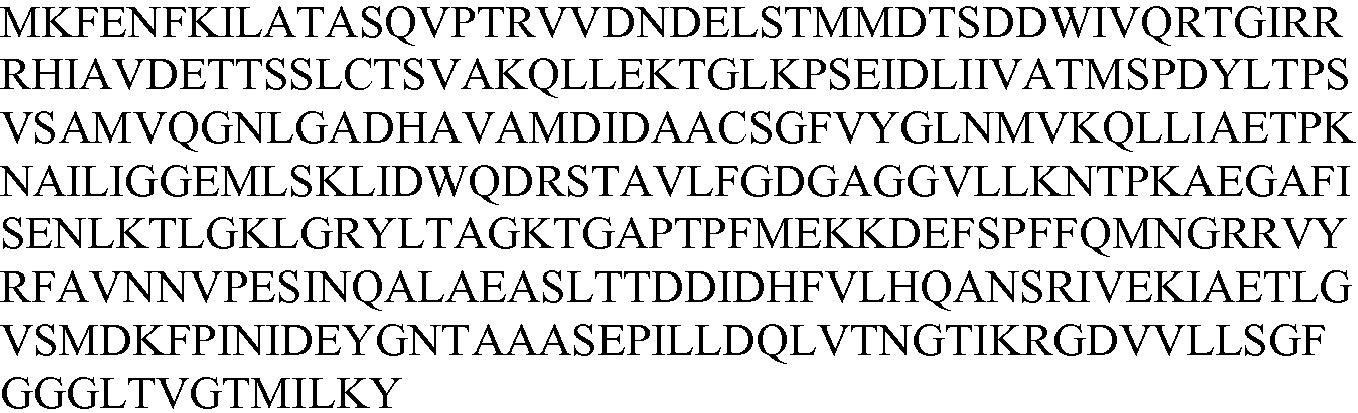
SEQ ID NO:22 >gi|238623523|em b|CAX48662.1|/- 327 putative 3-oxoacyl-[acyl-carrier-protein] synthase [Streptomyces anulatus] 
SEQ ID NO:23 >gi|239623103|ref |ZP_04666134.1|/ I/ 1-320 3-oxoacyl-[acyl-carrier-protein] synthase III [Clostridiales bacterium 1 7 47_FAA] 
SEQ ID NO:24 >gi|240850683|ref |YP_002972083.1| /1-324 3-oxoacyl-(acyl carrier protein) synthase III [Bartonella grahamii as4aup] 
SEQ ID NO:25 >gi|253681256|ref |ZP_04862054.1|/ I/ 1-324 3-oxoacyl-[acyl-carrier-protein] synthase 3 [Clostridium botulinum D str. 1873] 
SEQ ID NO:26 >gi|254286853|ref |ZP_04961806.1|/ 1-312 3-oxoacyl-(acyl-carrier-protein) synthase III [Vibrio cholerae AM-19226] 
SEQ ID NO:27 >gi|25447764 7|ref |ZP_05091033.1|/ 1-323 3-oxoacyl-(acyl-carrier-protein) synthase III [Ruegeria sp. R11] 
SEQ ID NO:28 >gi|262375396|ref |ZP_06068629.1|/ 1-369 3-Oxoacyl-[acyl-carrier-protein (ACP)] synthase III family protein [Acinetobacter lwoffii SH145] 
SEQ ID NO:29 >gi|282854072|ref |ZP_06263409.1|/ 1-332 3-oxoacyl-[acyl-carrier-protein] synthase 3 [Propionibacterium acnes J139] 
SEQ ID NO:30 >gi|291439887|ref |ZP_06579277.1|/ 1-333 3-oxoacyl-(acyl carrier protein) synthase III [Streptomyces ghanaensis ATCC 14672] 
SEQ ID NO:31 >gi|294791665|ref |ZP_06756813.1|/ 1-331 3-oxoacyl-(acyl-carrier-protein) synthase III [Veillonella sp. 6_1_27] 
SEQ ID NO:32 >gi|296388215|ref |ZP_06877690.1|/ 1-373 3-oxoacyl-(acyl carrier protein) synthase III [Pseudomonas aeruginosa PAb1] 
SEQ ID NO:33 >gi|302539498|ref |ZP_07291840.1|/ 1-343 3-oxoacyl-[acyl-carrier-protein] synthase III [Streptomyces sp. C] 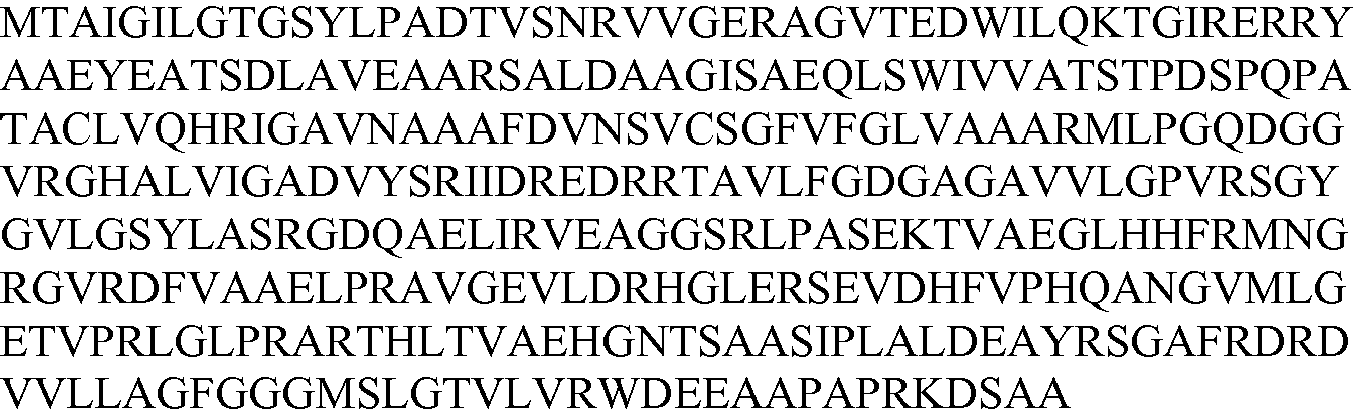
SEQ ID NO:34 >gi|307083025|ref |ZP_07492138.1|/ 1-313 3-oxoacyl-[acyl-carrier-protein] synthase III fabH, partial [Mycobacterium tuberculosis SUMu012] 
SEQ ID NO:35 >gi|311113478|ref |YP_003984700.1| /1-341 3-oxoacyl-(acyl-carrier-protein) synthase III [Rothia dentocariosa ATCC 17931] 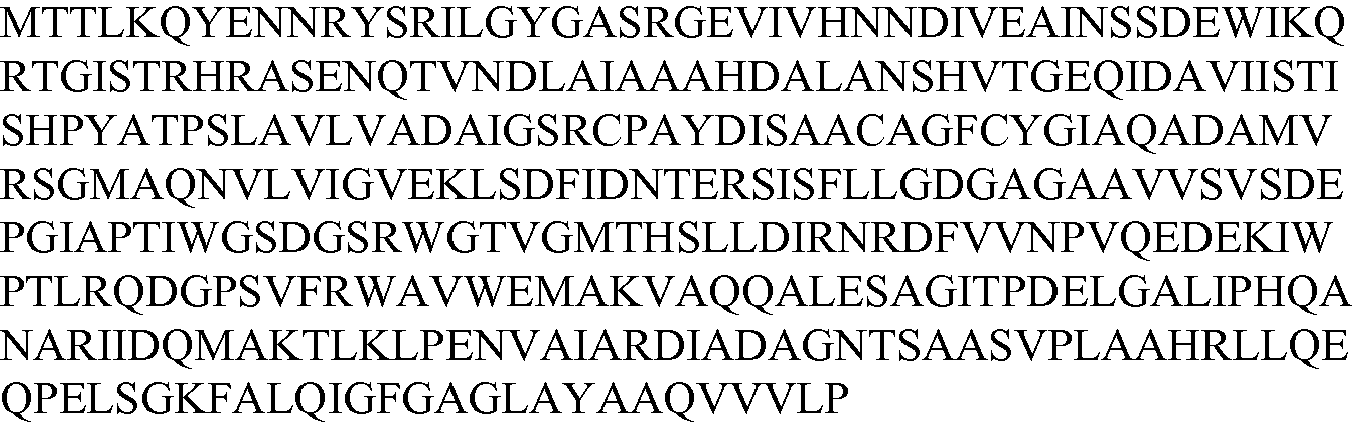
SEQ ID NO:36 >gi|312793335|ref |YP_004026258.1| /1-328 3-oxoacyl-(acyl-carrier-protein) synthase iii [Caldicellulosirupt or kristjanssonii 177R1B] 
SEQ ID NO:37 >gi|318080591|ref |ZP_07987923.1/ 1-307 3-oxoacyl-(acyl-carrier-protein) synthase III [Streptomyces sp. SA3_actF] 
SEQ ID NO:38 >gi|320116117|ref |YP_004186276.1| /1-331 3-oxoacyl-(acyl-carrier-protein) synthase III [Thermo anaeroba cter brockii subsp. finnii Ako-1] 
SEQ ID NO:39 >gi|320449672|ref |YP_004201768.1| /1-322 3-oxoacyl-ACP synthase [Thermus scotoductus SA-01] 
SEQ ID NO:40 >gi|322421910|ref |YP_004201133.1| /1-326 3-oxoacyl-(acyl-carrier-protein) synthase III [Geobacter sp. M18] 
SEQ ID NO:41 >gi|322513545|ref |ZP_08066645.1|/ 1-316 3-oxoacyl-(acyl-carrier-protein) synthase III [Actinobacillus ureae ATCC 25976] 
SEQ ID NO:42 >gi|325677042|ref |ZP_08156713.1|/ 1-345 3-oxoacyl-(acyl-carrier-protein) synthase III [Rhodococcus equi ATCC 33707] 
SEQ ID NO:43 >gi|325917371|ref |ZP_08179586.1|/ 1-325 3-oxoacyl-(acyl-carrier-protein) synthase III [Xanthomonas vesicatoria ATCC 35937] 
SEQ ID NO:44 >gi|326203621|ref |ZP_08193485.1|/ 1-332 3-oxoacyl-(acyl-carrier-protein) synthase III [Clostridium papyrosolvens DSM 2782] 
SEQ ID NO:45 >gi|332670773|ref |YP_004453781.1| /1-334 3-oxoacyl-(acyl-carrier-protein) synthase III [Cellulomonas fimi ATCC 484] 
SEQ ID NO:46 >gi|339488784|ref |YP_004703312.1| /1-369 3-oxoacyl-ACP synthase [Pseudomonas putida S16] 
SEQ ID NO:47 >gi|339494943|ref |YP_004715236.1| /1-373 3-oxoacyl-(acyl carrier protein) synthase III [Pseudomonas stutzeri ATCC 17588 = LMG 11199] 
SEQ ID NO:48 >gi|340361349|ref |ZP_08683778.1|/ 1-320 3-oxoacyl-[acyl-carrier-protein] synthase III [Neisseria macacae ATCC 33926] 
SEQ ID NO:49 >gi|344206308|ref |YP_004791449.1| /1-325 3-oxoacyl-ACP synthase [Stenotrophomona s maltophilia JV3] 
SEQ ID NO:50 >gi|345304635|ref |YP_004826537.1| /1-346 3-oxoacyl-ACP synthase III [Rhodothermus marinus SG0.5JP17-172] 
SEQ ID NO:51 >gi|349685677|ref |ZP_08896819.1|/ 1-323 3-oxoacyl-[acyl-carrier-protein] synthase III [Gluconacetobacte r oboediens 174Bp2] 
SEQ ID NO:52 >gi|352106212|ref |ZP_08961263.1|/ 1-373 3-oxoacyl-(acyl carrier protein) synthase III [Halomonas sp. HAL1] 
SEQ ID NO:53 >gi|358061230|ref |ZP_09147893.1|/ 1-313 3-oxoacyl-(acyl carrier protein) synthase III [Staphylococcus simiae CCM 7213] 
SEQ ID NO:54 >gi|373112342|ref |ZP_09526574.1|/ 1-328 3-oxoacyl-[acyl-carrier-protein] synthase 3 [Fusobacterium necrophorum subsp. funduliforme 1_1_36S] 
SEQ ID NO:55 >gi|374851360|db j|BAL54322.1|/1-307 3-oxoacyl-[acyl-carrier-protein] synthase III [uncultured Aquificae bacterium] 
SEQ ID NO:56 >gi|375098553|ref |ZP_09744816.1|/ 1-340 3-oxoacyl-(acyl-carrier-protein) synthase III [Saccharomonosp ora cyanea NA-134] 
SEQ ID NO:57 >gi|381164912|ref |ZP_09874142.1|/ 1-326 3-oxoacyl-(acyl-carrier-protein) synthase III [Saccharomonosp ora azurea NA-128] 
SEQ ID NO:58 >gi|383771442|ref |YP_005450507.1| /1-326 3-oxoacyl-ACP synthase [Bradyrhizobium sp. S23321] 
SEQ ID NO:59 >gi|384154990|ref |YP_005537805.1| /1-333 3-oxoacyl-ACP synthase [Arcobacter butzleri ED-1] 
SEQ ID NO:60 >gi|384450582|ref |YP_005663182.1| /1-335 3-oxoacyl-ACP synthase [Chlamydophila psittaci 6BC] 
SEQ ID NO:61 >gi|385331603|ref |YP_005885554.1| /1-373 3-oxoacyl-ACP synthase [Marinobacter adhaerens HP15] 
SEQ ID NO:62 >gi|386265484|ref |YP_005828976.1| /1-316 Beta-ketoacyl-ACP synthase III [Haemophilus influenzae R2846] 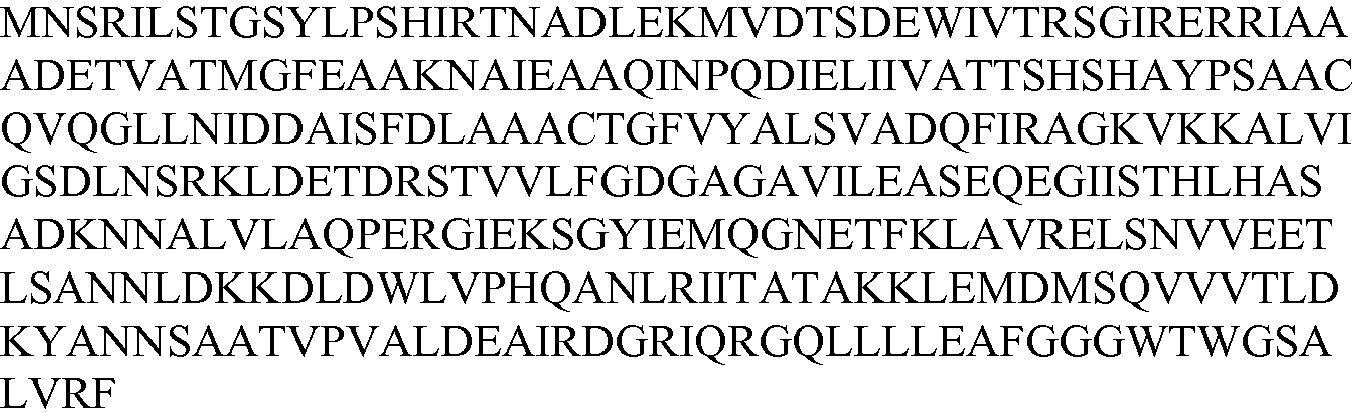
SEQ ID NO:63 >gi|386335197|ref |YP_006031367.1| /1-373 3-oxoacyl-ACP synthase [Ralstonia solanacearum Po82] 
SEQ ID NO:64 >gi|390454110|ref |ZP_10239638.1|/ 1-329 3-oxoacyl-(acyl-carrier-protein) synthase III [Paenibacillus peoriae KCTC 3763] 
SEQ ID NO:65 >gi|392946737|ref |ZP_10312379.1|/ 1-307 3-oxoacyl-(acyl-carrier-protein) synthase III [Frankia sp. QA3] 
SEQ ID NO:66 >gi|397172008|ref |ZP_10495404.1|/ 1-372 3-oxoacyl-(acyl carrier protein) synthase III [Alishewanella aestuarii B11] 
SEQ ID NO:67 >gi|398305630|ref |ZP_10509216.1|/ 1-312 3-oxoacyl-(acyl carrier protein) synthase III [Bacillus vallismortis DV1-F-3] 
SEQ ID NO:68 >gi|398884037|ref |ZP_10638982.1|/ 1-373 3-oxoacyl-(acyl-carrier-protein) synthase III [Pseudomonas sp. GM60] 
SEQ ID NO:69 >gi|399047091|ref |ZP_10739223.1|/ 1-342 3-oxoacyl-(acyl-carrier-protein) synthase III [Brevibacillus sp. CF112] SEQ ID NO:70 >gi|400755130|ref |YP_006563498.1| /1-374 3-oxoacyl-[acyl-carrier-protein] synthase 3[Phaeobacter gallaeciensis 2.10] 
SEQ ID NO:71 >gi|400756529|ref |NP_952652.2|/1-326 3-oxoacyl-ACP synthase [Geobacter sulfurreducens PCA] 
SEQ ID NO:72 >gi|401563713|ref |ZP_10804658.1|/ 1-334 beta-ketoacyl-acyl-carrier-protein synthase III [Selenomonas sp. FOBRC6] 
SEQ ID NO:73 >gi|402823152|ref |ZP_10872590.1|/ 1-323 3-oxoacyl-(acyl carrier protein) synthase III [Sphingomonas sp. LH128] 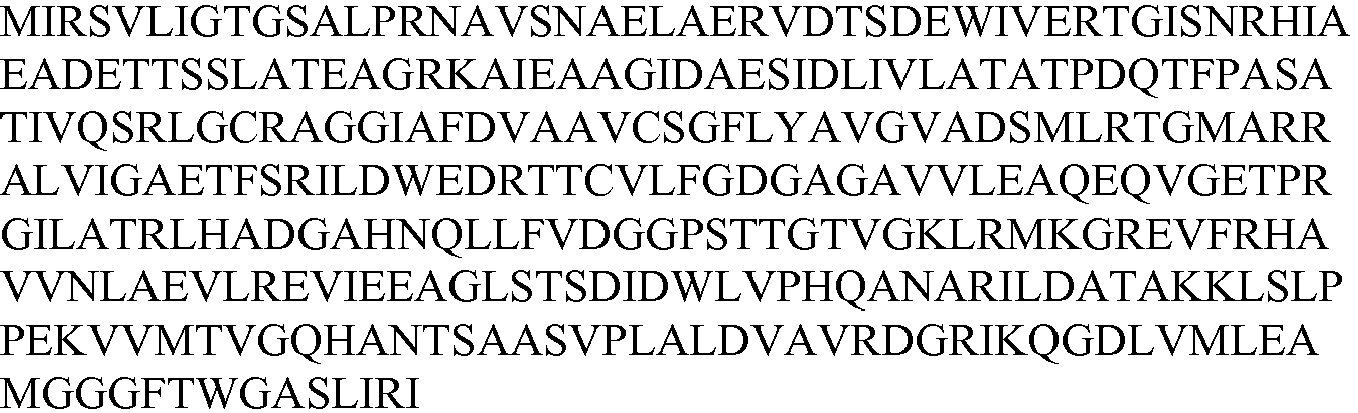
SEQ ID NO:74 >gi|407684813|ref |YP_006799987.1| /1-374 3-oxoacyl-ACP synthase [Alteromonas macleodii str. 'English Channel 673'] 
SEQ ID NO:75 >gi|410479651|ref |YP_006767288.1| /1-341 3-oxoacyl-(acyl-carrier-protein) synthase III [Leptospirillum ferriphilum ML-04] 
SEQ ID NO:76 >gi|410617776|ref |ZP_11328741.1|/ 1-319 3-oxoacyl-[acyl-carrier-protein] synthase 3 protein 1 [Glaciecola polaris LMG 21857]
SEQ ID NO:77 >gi|411009303|ref |ZP_11385632.1|/ 1-319 3-oxoacyl-(acyl carrier protein) synthase III [Aeromonas aquariorum AAK1] 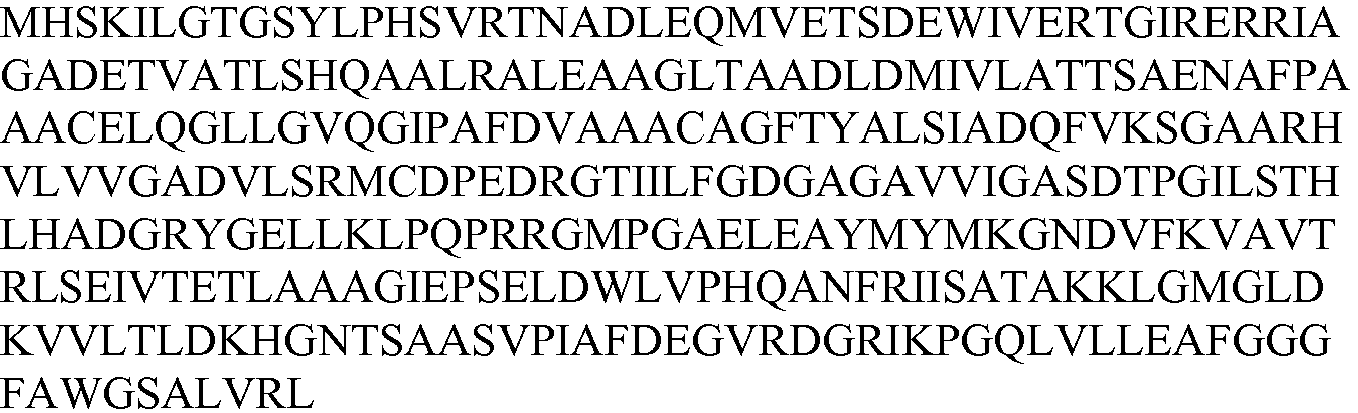
SEQ ID NO:78 >gi|415794657|ref |ZP_11496472.1|/ 1-316 3-oxoacyl-(acyl-carrier-protein) synthase III family protein, partial [Escherichia coli E128010] 
SEQ ID NO:79 >gi|417318270|ref |ZP_12104859.1|/ 1-287 3-oxoacyl-(acyl carrier protein) synthase III [Listeria monocytogenes J1-220] 
SEQ ID NO:80 >gi|417334430|ref |ZP_12117640.1|/ 1-221 3-oxoacyl-acyl-carrier-protein synthase KAS3 [Salmonella enterica subsp. enterica serovar Alachua str. R6-377] 
SEQ ID NO:81 >gi|417747984|ref |ZP_12396438.1|/ 1-335 3-oxoacyl-(acyl-carrier-protein) synthase III [Mycobacterium avium subsp. paratuberculosis S397] 
SEQ ID NO:82 >gi|420680190|ref |ZP_15164698.1|/ 1-220 3-oxoacyl-[acyl-carrier-protein] synthase 3[Yersinia pestis PY-47] 
SEQ ID NO:83 >gi|421612789|ref |ZP_16053888.1|/ 1-392 3-oxoacyl-(acyl-carrier-protein) synthase III [Rhodopirellula baltica SH28] 
SEQ ID NO:84 >gi|421888767|ref |ZP_16319848.1|/ 1-355 3-oxoacyl-(acyl-carrier-protein) synthase III (Beta-ketoacyl-ACP synthase III) (KAS III) [Ralstonia solanacearum K60-1 ] 
SEQ ID NO:85 >gi|422338672|ref |ZP_16419632.1|/ 1-328 3-oxoacyl-(acyl-carrier-protein) synthase III [Fusobacterium nucleatum subsp. polymorphum F0401] 
SEQ ID NO:86 >gi|423074933|ref |ZP_17063653.1|/ 1-331 3-oxoacyl-(acyl carrier protein) synthase III [Desulfitobacteriu m hafniense DP7] 
SEQ ID NO:87 >gi|423197564|ref |ZP_17184147.1|/ 1-373 hypothetical protein HMPREF1171_02 179 [Aeromonas hydrophila SSU] 
SEQ ID NO:88 >gi|424068956|ref |ZP_17806404.1|/ 1-373 3-oxoacyl-ACP synthase [Pseudomonas syringae pv. avellanae str. ISPaVe013] 
SEQ ID NO:89 >gi|424853848|ref |ZP_18278206.1|/ 1-339 3-oxoacyl-[acyl-carrier-protein] synthase [Rhodococcus opacus PD630] 
SEQ ID NO:90 >gi|427825838|ref |ZP_18992900.1|/ 1-329 3-oxoacyl-[acyl-carrier-protein] synthase III [Bordetella bronchiseptica Bbr77] 
SEQ ID NO:91 >gi|441509582|ref |ZP_20991498.1|/ 1-356 3-oxoacyl-[acyl-carrier-protein] synthase III [Gordonia aichiensis NBRC 108223] 
SEQ ID NO:92 >gi|443293257|ref |ZP_21032351.1|/ 1-314 3-oxoacyl-(acyl-carrier-protein) synthase III; acetylCoA ACP transacylase [Micromonospora lupini str. Lupac 08] 
SEQ ID NO:93 >gi|443491493|ref |YP_007369640.1| /1-362 3-oxoacyl-[acyl-carrier-protein] synthase III, FabH_1 [Mycobacterium liflandii 128FXT] 
SEQ ID NO:94 >gi|444307652|ref |ZP_21143377.1|/ 1-353 3-oxoacyl-(acyl carrier protein) synthase III [Arthrobacter sp. SJCon] 
SEQ ID NO:95 >gi|459055350|ref |ZP_23152864.1|/ 1-338 3-oxoacyl-[acyl-carrier-protein] synthase III [Gordonia paraffinivorans NBRC 108238] 
SEQ ID NO:96 >gi|474659331|em b|CCV14840.1|/1-373 Beta-ketoacyl-acyl-carrier-protein synthase I [Mesorhizobium sp. STM 4661] 
SEQ ID NO:97 >gi|478769383|gb| ENO13968.1|/1-322 3-oxoacyl-ACP synthase [Marinobacter nanhaiticus D15-8W] 
SEQ ID NO:98 >gi|479875377|gb| ENU26638.1|/1-368 hypothetical protein F992_02187 [Acinetobacter sp. NIPH 236] 
SEQ ID NO:99 >gi|345301988|ref |YP_004823890.1| 3-oxoacyl-ACP synthase III [Rhodothermus marinus SG0.5JP17-172] 
SEQ ID NO:100 >gi|471324089|ref |YP_007523119.1| 3-oxoacyl-[acyl-carrier-protein] synthase 3 protein 3[Streptomyces davawensis JCM 
SEQ ID NO:101 >gi|330444499|ref |YP_004377485.1| 3-oxoacyl-ACP synthase III [Chlamydophila pecorum E58] 
SEQ ID NO:102 >gi|459068159|ref |ZP_23165498.1| 3-oxoacyl-(acyl-carrier-protein) synthase III [Clostridium ultunense Esp] 
SEQ ID NO:103 >gi|383454618|ref |YP_005368607.1| 3-oxoacyl-(acyl-carrier-protein) synthase III [Corallococcus coralloides DSM 2259] 
SEQ ID NO:104 >gi|333371191|ref |ZP_08463153.1| 3-oxoacyl-[acyl-carrier-protein] synthase III [Desmospora sp. 8437] 
SEQ ID NO:105 >gi|390454110|ref |ZP_10239638.1| 3-oxoacyl-(acyl-carrier-protein) synthase III [Paenibacillus peoriae KCTC 3763] 
SEQ ID NO:106 >gi|392959403|ref |ZP_10324886.1| 3-oxoacyl-(acyl-carrier-protein) synthase 3 [Pelosinus fermentans DSM 17108] 
SEQ ID NO:107 >gi|116626090|ref |YP_828246.1| 3-oxoacyl-ACP synthase [Candidatus Solibacter usitatus Ellin6076] 
SEQ ID NO:108 >gi|323702691|ref |ZP_08114352.1| 3-oxoacyl-(acyl-carrier-protein) synthase III [Desulfotomaculu m nigrificans DSM 574] 
SEQ ID NO:109 >gi|384566084|ref |ZP_10013188.1| 3-oxoacyl-(acyl-carrier-protein) synthase III [Saccharomonosp ora glauca K62] 
SEQ ID NO:110 >gi|298162138|gb| ADI59524.1| CorB [Corallococcus coralloides] 
SEQ ID NO:111 >gi|148359775|ref |YP_001250982.1| 3-oxoacyl-(acyl carrier protein) synthase III FabH [Legionella pneumophila str. Corby] 
SEQ ID NO:112 >gi|15824218|dbj| BAB69376.1|3-oxoacyl-(acyl carrier protein) synthase [Streptomyces avermitilis] 
SEQ ID NO:113 >gi|330468931|ref |YP_004406674.1| 3-oxoacyl-(acyl carrier protein) synthase III [Verrucosispora maris AB-18-032] 
SEQ ID NO:114 >gi|32444698|emb |CAD74700.1|3-oxoacyl-(acyl-carrier protein) synthase [Rhodopirellula baltica SH 1] 
SEQ ID NO:115 >gi|392374495|ref |YP_003206328.1| 3-oxoacyl-[acyl-carrier-protein] synthase III (Beta-ketoacyl-ACP synthase III)(KAS III) [Candidatus Methylomirabilis oxyfera]] 
SEQ ID NO:116 >gi|317121784|ref IYP_004101787.1| 3-oxoacyl-(acyl-carrier-protein) synthase III [Thermaerobacter marianensis DSM 12885] 
SEQ ID NO:117 >gil383787841|ref |YP_005472409.1| 3-oxoacyl-ACP synthase [Caldisericum exile AZM16c01] 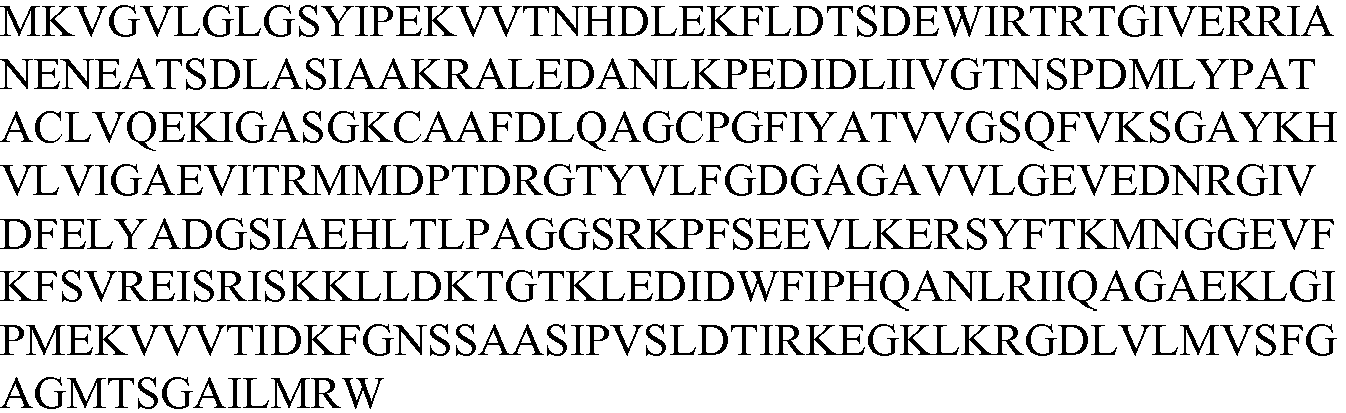
SEQ ID NO:118 >gi|404450648|ref |ZP_11015628.1| 3-oxoacyl-(acyl carrier protein) synthase III [Indibacter alkaliphilus LW1] 
SEQ ID NO:119 >gi|1895021 12|ref |YP_001957829.1| 3-oxoacyl-(acyl carrier protein) synthase III [Candidatus Amoebophilus asiaticus 5a2] 
SEQ ID NO:120 >gi|395801183|ref |ZP_10480443.1| 3-oxoacyl-ACP synthase [Flavobacterium sp. F52] 
- As noted above, the reaction initiation phase for even chain fatty acid products is completed by the conversion of 3-ketobutyryl-CoA to butyryl-CoA by three enzymes: a ketoacyl-CoA reductase, a hydroxyacyl-CoA dehydratase, and an enoyl-CoA reductase. For this phase, the ketoacyl-CoA reductase may be selected from the group consisting of 3-ketobutyryl-CoA reductase (e.g., fadB, a bifunctional enzyme - SEQ ID NO 183) and 3-hydroxybutyryl-CoA dehydrogenase (e.g., hbd - SEQ ID NO 271); the hydroxyacyl-CoA dehydratase may be selected from the group consisting of 3-hydroxybutyryl-CoA dehydratase (e.g., fadB, a bifunctional enzyme - SEQ ID NO 183) and enoyl-CoA hydratase (e.g., crt - SEQ ID NO 272); and the enoyl-CoA reductase may be trans-2-enoyl-reductase (e.g., ter - SEQ ID NO 275). Preferably, the bifunctional fadB is both the ketoacyl-CoA reductase and the hydroxyacyl-CoA dehydratase, or the ketoacyl-CoA reductase is hbd and the hydroxyacyl-CoA dehydratase is crt.
- As noted above, the reaction initiation phase for odd chain fatty acid products is completed by the conversion of 3-ketovaleryl-CoA to valeryl-CoA by three enzymes: a ketoacyl-CoA reductase, a hydroxyacyl-CoA dehydratase, and an enoyl-CoA reductase. For this phase, the ketoacyl-CoA reductase may be selected from the group consisting of 3-ketovaleryl-CoA reductase (e.g., fadB, a bifunctional enzyme - SEQ ID NO 183) and 3-hydroxyvaleryl-CoA dehydrogenase (e.g., hbd - SEQ ID NO 271); the hydroxyacyl-CoA dehydratase may be selected from the group consisting of 3-hydroxyvaleryl-CoA dehydratase (e.g., fadB, a bifunctional enzyme - SEQ ID NO 183) and enoyl-CoA hydratase (e.g., crt - SEQ ID NO 272); and the enoyl-CoA reductase may be trans-2-enoyl-reductase (e.g., ter - SEQ ID NO 275). Preferably, the bifunctional fadB is both the ketoacyl-CoA reductase and the hydroxyacyl-CoA dehydratase, or the ketoacyl-CoA reductase is hbd and the hydroxyacyl-CoA dehydratase is crt.
- In accordance with an alternative embodiment, as shown in
Figure 12 andFigure 13 , the initiation phase may be achieved through a malonyl-ACP dependent pathway with at least a portion of one or more subsequent phases (i.e., elongation phase and/or termination phase) relying upon the malonyl-CoA dependent pathway. In accordance with this embodiment, the reaction to produce even chain fatty acid products is initiated through conversion of acetyl-CoA + malonyl-ACP to 3-ketobutyryl-ACP. In accordance with this embodiment, the reaction to produce even chain fatty acid products is initiated through conversion of propionyl-CoA + malonyl-ACP to 3-ketovaleryl-ACP. In accordance with this embodiment, a genetically modified microorganism is provided having encoded therein one or more enzymes described herein that catalyze reactions along the malonyl-CoA dependent pathway, and wherein native enzymes facilitate the initiation phase through the native malonyl-ACP pathway. - If a CoA-dependent elongation phase immediately follows an ACP-dependent initiation phase (see for example
Figure 13 ), the microorganism must also encode for a transacylase, such as butyryl-ACP:CoA transacylase, which will convert butyryl-ACP to butyryl-CoA or valeryl-ACP:CoA transacylase, which will convert valeryl-ACP to valeryl-CoA. Similarly, if an ACP-dependent elongation phase immediately follows an CoA-dependent initiation phase (see for exampleFigure 11 ), the microorganism must also encode for a transacylase, such as butyryl-CoA:ACP transacylase, which will convert butyryl-CoA to butyryl-ACP or valeryl- CoA:ACP transacylase, which will convert valeryl-CoA to valeryl-ACP. Suitable butyryl-CoA:ACP transacylase include fabH, preferably from E. Coli, FASN, preferably from Homo sapiens, and FAS1, preferably from Saccharomyces cerevisiae. Additional transacylases include enzymes of the class 2.3.1.38, such as from Brassica juncea, Euglena gracilis, and ACT from Streptomyces collinus. - Alternatively, a genetically modified microorganism may be encoded for a gene that transitions a fatty acid production pathway from an ACP-dependent pathway to a CoA-dependent pathway, or conversely from a CoA-dependent pathway to an ACP-dependent pathway, by converting any ACP intermediate to its corresponding CoA intermediate, or vice versa. For example, the genetically modified microorganism may be encoded for phaG, preferably from Pseudomonas putida KT2440, which converts 3-hydroxyacyl-ACP to 3-hydroxyacyl-CoA.
- The second phase of the malonyl-CoA dependent pathway involves a cyclic process wherein the length of the carbon chain is extended by two carbons with each cycle. As illustrated in
Figure 7 , this phase requires a ketoacyl-CoA synthase, a ketoacyl-CoA reductase, a hydroxyacyl-CoA dehydratase, and an enoyl-CoA reductase. Accordingly, a genetically modified microorganism of the present invention includes native or exogenous enzymes encoded therein that provide these functions. - NphT7 exhibits significant specificty for acetyl-CoA and propionyl-CoA as primers in the initiation phase, and it shows minimal activity with larger acyl-CoA chains during the elongation phase. Most 3-ketoacyl-CoA synthases that are capable of catalyzing the condensation of longer acyl-CoA chains are found in plants, mammals, yeast and other lower eukaryotes. Without a 3-ketoacyl-CoA synthase that has specificity for longer acyl-CoA, there will be no elongation of the acyl-CoA chain greater than C4-CoA or C5-CoA, and therefore 3-ketoacyl-CoA synthases that have specificity for longer acyl-CoA may be required.
- In one aspect, the present invention provides a modified NphT7 polypeptide that functions as the ketoacyl-CoA synthase during the elongation phase in the malonyl-CoA dependent pathway. The modified NphT7 comprises an amino acid sequence having at least 70% but less than 100% or about 100% homology to SEQ ID NO:1 and one or more amino acid substitutions, deletions, or insertions, wherein the modified NphT7 polypeptide is capable of accepting an acyl-CoA substrate having a carbon chain length of C4 or greater, for example C5, C6, C7, C8, C9, C10, C11, C12, C13, C14, C15, C16, C17, C18, C19, C20, C21 or C22. In some embodiments, the modified NphT7 polypeptide is capable of catalyzing a condensation reaction to condense an acyl-CoA substrate with a malonyl-CoA to produce a 3-ketoacyl-CoA having a carbon chain length of C6 or greater, for example C7, C8, C9, C10, C11, C12, C13, C14, C15, C16, C17, C18, C19, C20, C21 or C22. In some embodiments, the modified NphT7 polypeptide comprises one or more amino acid substitutions selected from the group consisting of I147T, F217V, Y144L, V157F, G309S, G288S, a PDRP to HFLQ substitution for amino acids 86-89, I147F, I147M, I147Q, I147S, I147C, I147E, I147N, I147W, I147D, I147R, I147P, I147L, V196G, I147G, I147H, I147K, 1147V, I147A, I147Y, F217G, F217A, F217L, F217I, F217M, F217T, F217P, F217S, F217E, F217L, F217W, and any combination thereof. In some embodiments, the modified NphT7 polypeptide comprises one amino acid substitution selected from the group consisting of I147V, I147F, I147M, I147Q, I147S, I147C, I147E, I147N, I147W, I147D, I147R, I147P, I147L, I147G, I147H, I147K, I147A, I147Y, and F217V. In some embodiments, the modified NphT7 polypeptide comprises two amino acid substitutions selected from the group consisting of I147T and F217V, I147T and Y144L, I147T and V196G, I147F and F217V, I147M and F217V, I147S and F217V, I147T and HFLQ, I147T and V157F, I147T and F217G, I147T and F217A, I147T and F217L, I147T and F217I, I147T and F217M, I147T and F217P, I147T and F217S, I147T and F217E, I147S and F217G, I147S and F217A, I147S and F217L, I147S and F217I, I147S and F217M, I147S and F217W, I147S and F217S, I147S and F217E, I147S and F217K, I147F and F217A, I147F and F217L, I147F and F217I, I147F and F217M, I147F and F217P, I147F and F217E, I147M and F217G, I147M and F217A, I147M and F217L, I147M and F217I, I147M and F217M, I147M and F217P, I147M and F217S, I147M and F217E, and I147M and F217K. In some embodiments, the modified NphT7 polypeptide of any embodiment, comprising three amino acid substitutions selected from the group consisting of (Y144L, I147T, and F217V), (I147T, F217V, and HFLQ), (I147T, V147F, and F217V), and (Y144L, I147T, and V157F). In some embodiments, the modified NphT7 polypeptide comprises one or more amino acid substitutions at a position selected from the group consisting of Ser84, Val114, Gly288, Ile194, Gly318, Thr85, Gln90, Val196, Tyr144, Phe159, Ile147, Phe217, and any combination thereof. In some embodiments, the modified NphT7 polypeptide comprises an I147T amino acid substitution. In some embodiments, the modified NphT7 polypeptide comprises an F217V amino acid substitution. In some embodiments, the modified NphT7 polypeptide comprises two or more amino acid substitutions, deletions, or insertions, such as an I147T amino acid substitution and an F217V amino acid substitution. In some embodiments, the modified polypeptide is isolated and purified.
- In one aspect, the present invention provides an isolated and purified polynucleotide encoding a modified NphT7 polypeptide. In some embodiments, the isolated and purified polynucleotide comprises a nucleic acid sequence having at least 70% but less than 100% or about 100% homology or complementarity to SEQ ID NO:2, wherein the polynucleotide encodes a modified NphT7 polypeptide of SEQ ID NO:1 having one or more amino acid substitutions, deletions, or insertions, wherein the modified NphT7 polypeptide is capable of accepting an acyl-CoA substrate having a carbon chain length of C4 or greater, for example C5, C6, C7, C8, C9, C10, C11, C12, C13, C14, C15, C16, C17, C18, C19, C20, C21 or C22. In some embodiments, the isolated and purified polynucleotide encodes a modified NphT7 polypeptide capable of catalyzing a condensation reaction to condense an acyl-CoA substrate with a malonyl-CoA to produce a 3-ketoacyl-CoA having a carbon chain length of C6 or greater, for example C7, C8, C9, C10, C11, C12, C13, C14, C15, C16, C17, C18, C19, C20, C21 or C22. The isolated and purified polynucleotide of any embodiment that encodes a modified NphT7 polypeptide comprising one or more amino acid substitutions selected from the group consisting of I147T, F217V, Y144L, V157F, G309S, G288S, a PDRP to HFLQ substitution for amino acids 86-89, 1147F, I147M, I147Q, I147S, I147C, I147E, I147N, I147W, I147D, I147R, I147P, I147L, V196G, I147G, I147H, I147K, 1147V, I147A, I147Y, F217G, F217A, F217L, F217I, F217M, F217T, F217P, F217S, F217E, F217L, F217W, and any combination thereof. In some embodiments, the isolated and purified polynucleotide encodes a modified NphT7 polypeptide comprising one amino acid substitution selected from the group consisting of 1147V, I147F, I147M, I147Q, I147S, I147C, I147E, I147N, I147W, I147D, I147R, I147P, I147L, I147G, I147H, I147K, I147A, I147Y, and F217V. In some embodiments, the isolated and purified polynucleotide encodes a modified NphT7 polypeptide comprising two amino acid substitutions selected from the group consisting of I147T and F217V, I147T and Y144L, I147T and V196G, I147F and F217V, I147M and F217V, I147S and F217V, I147T and HFLQ, I147T and V157F, I147T and F217G, I147T and F217A, I147T and F217L, I147T and F217I, I147T and F217M, I147T and F217P, I147T and F217S, I147T and F217E, I147S and F217G, I147S and F217A, I147S and F217L, I147S and F217I, I147S and F217M, I147S and F217W, I147S and F217S, I147S and F217E, I147S and F217K, I147F and F217A, I147F and F217L, I147F and F217I, I147F and F217M, I147F and F217P, I147F and F217E, I147M and F217G, I147M and F217A, I147M and F217L, I147M and F217I, I147M and F217M, I147M and F217P, I147M and F217S, I147M and F217E, and I147M and F217K. In some embodiments, the isolated and purified polynucleotide herein encodes a modified NphT7 polypeptide comprising three amino acid substitutions selected from the group consisting of (Y144L, I147T, and F217V), (I147T, F217V, and HFLQ), (I147T, V147F, and F217V), and (Y144L, I147T, and V157F). In some embodiments, the isolated and purified polynucleotide herein encodes a modified NphT7 polypeptide comprising one or more amino acid substitutions at a position selected from the group consisting of Ser84, Val114, Gly288, Ile194, Gly318, Thr85, Gln90, Val196, Tyr144, Phe159, Ile147, Phe217, and any combination thereof. In some embodiments, the isolated and purified polynucleotide herein encodes a modified NphT7 polypeptide comprising an I147T amino acid substitution. In some embodiments, the isolated and purified polynucleotide herein encodes a modified NphT7 polypeptide comprising an F217V amino acid substitution. In some aspects, the isolated and purified polynucleotide herein encodes a modified NphT7 polypeptide comprising two or more amino acid substitutions, deletions, or insertions. In some aspects, the isolated and purified polynucleotide herein encodes a modified NphT7 polypeptide, comprising an I147T amino acid substitution and an F217V amino acid substitution. In some embodiments, the isolated and purified polynucleotide herein is a RNA, mRNA, DNA, or cDNA. In some embodiments, the isolated and purified polynucleotide herein is a synthetic polynucleotide. In some embodiments, the isolated and purified polynucleotide herein is synthetic: RNA, mRNA, DNA, or cDNA.
- In one aspect, the present invention provides for a ketoacyl-CoA synthase that is active during the elongation phase in the malonyl-CoA dependent pathway, wherein the ketoacyl-CoA synthase is selected from the group consisting of npht7 F217V, npht7 I147T, synthase III, synthase IV, synthase V, and synthase VI; wherein npht7 F217V and/or npht7 I147T catalyzes a reaction adding the 5th and/or 6th carbon in the elongation, npht7 F217V, npht7 I147T, and/or synthase III catalyzes a reaction adding the 7th and/or 8th carbon in the elongation, npht7 F217V, npht7 I147T, synthase III, synthase IV, and/or synthase V catalyzes a reaction adding the 9th and/or 10th carbon in the elongation, or wherein npht7 F217V, npht7 I147T, synthase III, synthase IV, synthase V, and/or synthase VI catalyzes a reaction adding the 9th and/or higher number carbon in the elongation.
- Referring again to
Figure 7 , in addition to a 3-ketoacyl-CoA synthase, each cycle of the malonyl-CoA dependent elongation phase requires a 3-ketoacyl-CoA reductase ("KCR"), a hydroxyacyl-CoA dehydratase ("3HDh"), and an enoyl-CoA reductase ("EnCr"). - For the elongation phase, the ketoacyl-CoA reductase may be selected from the group consisting of 3-ketoacyl-CoA reductase (e.g., fadB, a bifunctional enzyme - SEQ ID NO 183) and 3-hydroxyacyl-CoA dehydrogenase (e.g., hbd - SEQ ID NO 271); the hydroxyacyl-CoA dehydratase may be selected from the group consisting of 3-hydroxyacyl-CoA dehydratase (e.g., fadB, a bifunctional enzyme - SEQ ID NO 183) and enoyl-CoA hydratase (e.g., crt - SEQ ID NO 272); and the enoyl-CoA reductase may be trans-2-enoyl-reductase (e.g., ter - SEQ ID NO 275). Preferably, the bifunctional fadB is both the ketoacyl-CoA reductase and the hydroxyacyl-CoA dehydratase, or the ketoacyl-CoA reductase is hbd and the hydroxyacyl-CoA dehydratase is crt.
- The elongation phase ends with a termination step once the desired chain length is achieved. In one aspect of the invention, the genetically modified microorganism encodes an enzyme capable of terminating an acyl elongation cycle substantially at a desired chain length or substantially within a relatively narrow distribution of chain lengths (i.e., a distribution of 2-4 carbons - e.g., C8-C10, C8-C12, C10-C12, C10-C14, etc.). In another aspect of the invention, the termination enzyme is a thioesterase such as an acyl-CoA esterase, and the microorganism produces a fatty acid. Suitable thioesterases include tesA - SEQ ID NO 277, 'tesA - SEQ ID NO 278, tesB - SEQ ID NO 279, yciA - SEQ ID NO 280, ybgC - SEQ ID NO 281, ybfF - SEQ ID NO 282, fadM - SEQ ID NO 283, AtTE - SEQ ID NO 284, CpTE - SEQ ID NO 285, CperfTE - SEQ ID NO 286, LpTE - SEQ ID NO 287, and PA2801TE - SEQ ID NO 288, and combinations thereof. Alternatively, the termination enzyme is a wax ester synthase and the microorganism produces a fatty ester. Suitable wax ester synthase include Maq1 - SEQ ID NO 289, Pcryl - SEQ ID NO 290, Rjos1 - SEQ ID NO 291, and Abork1 - SEQ ID NO 292. Alternatively, it is within the skill of the art to add other known termination enzyme(s) that will enable the genetically modified microorganism to produce alternative fatty acid derivatives such as, for example, a fatty alcohol, a fatty aldehyde, a fatty alkene, a fatty amide, a fatty alkane, or a fatty diacid. By way of example, the termination enzyme may be a fatty acid or acyl-CoA reductase that catalyzes the production of a fatty alcohol or fatty aldehyde, or an aldehyde decarbonylase that catalyzes the production of fatty aldehyde, or an aldehyde decarbonylase together with an acyl-ACP reductase or an acyl-CoA reductase that catalyzes the production of an alkane.
- In accordance with one aspect of the invention, the genetically modified microorganism is engineered to produce a fatty acid or fatty acid derivative product having substantially a specific chain length or having a substantially narrow distribution of chain lengths (i.e., 2-4 carbons). Preferably, at least 50%, 60%, 70%, 80%, or 90% of the fatty acids or fatty acid derivative produced by the genetically modified microorganism of the present invention is of a desired chain length or within a desired narrow distribution of chain lengths. Applicants have determined that such specificity may be achieved through engineering a microorganism to encode for various combinations of genes that will lead to the production of fatty acids and fatty acid derivatives having specific chain lengths. Table 2 below sets forth certain unique combinations of genes that lead to the production of products having the carbon chain lengths indicated in Table 2.
Table 2. Chain length specificity of fatty Acid products by the enzyme combinations in the fatty acid pathways. Product pathway synthase KCR 3HDh EnCR Thioesterase C4 A nphT7 hbd crt ter yciA B npht7 fadB fadB ter yciA C6 A npht7 fadB fadB ter yciA npht7 I147T, F217V B npht7 fadB fadB ter PA2801TE npht7 I147T, F217V C8 A npht7 fadB fadB ter yciA B npht7 fabG ech ter yciA npht7 I147T, F217V synthase III C npht7 fadB fadB ter PA2801TE npht7 I147T, F217V synthase III D npht7 fabG ech ter PA2801TE npht7 I147T, F217V synthase III C10 A npht7 fadB fadB ter AtTE npht7 I147T, F217V synthase III, IV, V B npht7 fabG ech ter AtTE npht7 I147T, F217V synthase III, IV, V C npht7 fadB fadB ter ybgC npht7 I147T, F217V synthase III, IV, V D npht7 fabG ech ter ybgC npht7 I147T, F217V synthase III, IV, V C12 A npht7 fadB fadB ter tesA npht7 I147T, F217V synthase III, IV, V, VI B npht7 fabG ech ter ybgC npht7 I147T, F217V synthase III, IV, V, VI C npht7 fadJ fadJ ter ybfF npht7 I147T, F217V synthase III, IV, V, VI C14-16 A npht7 fadB fadB ter tesA npht7 I147T, F217V synthase III, IV, V, VI B npht7 npht7 I147T, F217Vsynthase III, IV, V, VI fadJ fadJ ter fadM A npht7 fadB fadB ter fadE ydiO tesA npht7 I147T, F217V synthase III, IV, V, VI B npht7 fadJ fadJ ter fadE ydiO fadM npht7 I147T, F217V synthase III, IV, V, VI - In accordance with one aspect of the invention, there is provided a genetically modified microorganism having encoded therein the genes included in Table 2 for a given pathway, wherein such microorganism is capable of producing a fatty acid or fatty acid derivative having a carbon chain length indicated in Table 2 for such pathway. There is also provided a genetically modified microorganism having encoded therein the genes included in Table 2 above for a combination of pathways, wherein the microorganism is capable of producing fatty acids or fatty acid derivatives within a substantially narrow distribution of chain lengths corresponding to the carbon chain lengths indicated in Table 2 for such combination of pathways. For example, there is provided a genetically modified microorganism comprising NphT7, fadB, ter, AtTE, and tesA (C10 pathway A and C12 pathway A), wherein said microorganism is capable of producing a fatty acid composition comprising C10 and C12 fatty acids.
- In another aspect, applicants have discovered that chain length specificity can be controlled by utilizing certain enzymes from certain specific species of organisms. Accordingly, the present invention provides one or more isolated and purified polynucleotides comprising exogenous nucleic acid molecules encoding proteins comprising a 3-oxoacyl-(acyl carrier protein) synthase III from a species selected from the group consisting of Alishewanella aestuarii B11, Arcobacter butzleri ED-1, Clostridiales bacterium 1_7_47_FAA, Gluconacetobacter oboediens 174Bp2, Gordonia aichiensis NBRC 108223, Mesorhizobium sp. STM 4661, Pelosinus fermentans DSM 17108, Phaeobacter gallaeciensis 2.10, Ralstonia solanacearum Po82, Saccharomonospora azurea NA-128, Saccharomonospora glauca K62, and Verrucosispora maris AB-18-032, wherein the proteins encoded by the polynucleotides are capable of producing a fatty acid.
- In some embodiments, the 3-oxoacyl-(acyl carrier protein) synthase III is from a species selected from the group consisting of Pelosinus fermentans DSM 17108, Saccharomonospora glauca K62, Verrucosispora maris AB-18-032, and Clostridiales bacterium 1_7_47_FAA, and wherein the proteins encoded by the polynucleotides are capable of producing an acetyl-CoA. In some embodiments, the 3-oxoacyl-(acyl carrier protein) synthase III is from a species selected from the group consisting of Saccharomonospora glauca K62, Saccharomonospora azurea NA-128, Mesorhizobium sp. STM 4661, and Clostridiales bacterium 1_7_47_FAA, and wherein the proteins encoded by the polynucleotides are capable of producing a four carbon fatty acid. In some embodiments, the 3-oxoacyl-(acyl carrier protein) synthase III is from a species selected from the group consisting of Gordonia aichiensis NBRC 108223, Arcobacter butzleri ED-1, Clostridiales bacterium 1_7_47_FAA, Saccharomonospora glauca K62, and Ralstonia solanacearum Po82, and wherein the proteins encoded by the polynucleotides are capable of producing a six carbon fatty acid. In some embodiments, the 3-oxoacyl-(acyl carrier protein) synthase III is from a species selected from the group consisting of Gordonia aichiensis NBRC 108223, Gluconacetobacter oboediens 174Bp2, Arcobacter butzleri ED-1, Ralstonia solanacearum Po82, and Phaeobacter gallaeciensis 2.10, and wherein the proteins encoded by the polynucleotides are capable of producing an eight carbon fatty acid. In some embodiments, the 3-oxoacyl-(acyl carrier protein) synthase III is from Alishewanella aestuarii B11, and wherein the proteins encoded by the polynucleotides are capable of producing a ten carbon fatty acid.
- As discussed above, certain aspects the present invention relate to microorganisms that are genetically modified to produce fatty acids and fatty acid derivatives through a malonyl-CoA dependent pathway that is also a malonyl-ACP independent pathway. This aspect of the invention may be used in combination with the inhibition of a microorganism's malonyl-ACP dependent fatty acid synthase pathway through one or more genetic modifications to reduce the activity of enzymes encoded by one or more of the microorganism's malonyl-ACP dependent fatty acid synthase system genes. The compositions may be used in the methods and systems of the present invention.
- In many microorganism cells the fatty acid synthase system comprises polypeptides that have the following enzymatic activities: malonyl-CoA-acyl carrier protein (ACP) transacylase; 3-ketoacyl-ACP synthase; 3-ketoacyl-ACP reductase; 3-hydroxyacyl-ACP dehydratase; 3-hydroxyacyl-ACP dehydratase; and enoyl-ACP reductase. In various embodiments nucleic acid sequences that encode temperature-sensitive forms of these polypeptides may be introduced in place of the native enzymes, and when such genetically modified microorganisms are cultured at elevated temperatures (at which these thermolabile polypeptides become inactivated, partially or completely, due to alterations in protein structure or complete denaturation), there is observed an increase in flux through the malonyl-CoA dependent pathway and a decrease in flux through the malonyl-ACP dependent pathway.
- In E. coli, these temperature-sensitive mutant genes could include fabIts(S241F), fabBts(A329V) or fabDts(W257Q). In other embodiments other types of genetic modifications may be made to otherwise modulate, such as lower, enzymatic activities of one or more of these polypeptides. In various embodiments, a result of such genetic modifications is to shift malonyl-CoA utilization so that there is a reduced conversion of malonyl-CoA to fatty acids via the native pathway, overall biomass, and proportionally greater conversion of carbon source to a chemical product including a fatty acid or fatty acid derived product via a malonyl-CoA dependent, and in some cases a malonyl-ACP independent route. In various embodiments, the specific productivity for the microbially produced chemical product is unexpectedly high. Also, additional genetic modifications, such as to increase malonyl-CoA production, may be made for certain embodiments.
- One enzyme, enoyl-acyl carrier protein reductase (EC No. 1.3.1.9, also referred to as enoyl-ACP reductase) is a key enzyme for fatty acid biosynthesis from malonyl-CoA. In Escherichia coli this enzyme, FabI, is encoded by the gene fabI (See "Enoyl-Acyl Carrier Protein (fabI) Plays a Determinant Role in Completing Cycles of Fatty Acid Elongation in Escherichia coli," Richard J. Heath and Charles O. Rock, J. Biol. Chem. 270:44, pp. 26538-26543 (1995)for its discussion of fabI and the fatty acid synthase system).
- The present invention may utilize a microorganism that is provided with a nucleic acid sequence (polynucleotide) that encodes a polypeptide having enoyl-ACP reductase enzymatic activity that may be modulated during a fermentation event. For example, a nucleic acid sequence encoding a temperature-sensitive enoyl-ACP reductase may be provided in place of the native enoyl-ACP reductase, so that an elevated culture temperature results in reduced enzymatic activity, which then results in a shifting utilization of malonyl-CoA to production of a desired chemical product. One such sequence is a mutant temperature-sensitive fabI (fabITS) of E. coli or the fabIts(S241F) (SEQ ID NO 141). This enzyme may exhibit reduced enzymatic activity at temperatures above 30°C but normal enzymatic activity at 30°C, so that elevating the culture temperature to, for example to 34°C, 35°C, 36°C, 37°C or even 42°C, reduces enzymatic activity of enoyl-ACP reductase. In such case, more malonyl-CoA is converted to a fatty acid or fatty acid derived product or another chemical product through the non-native pathway under the current invention than at 30°C, where conversion of malonyl-CoA to fatty acids through its native fatty acid pathway is not impeded by a less effective enoyl-ACP reductase.
- It is appreciated that nucleic acid and amino acid sequences for enoyl-ACP reductase in species other than E. coli are readily obtained by conducting homology searches in known genomics databases, such as BLASTN and BLASTP. Approaches to obtaining homologues in other species and functional equivalent sequences are described herein. Accordingly, it is appreciated that the present invention may be practiced by one skilled in the art for many microorganism species of commercial interest.
- Approaches other than a temperature-sensitive enoyl-ACP reductase may be employed as known to those skilled in the art, such as, but not limited to, replacing a native enoyl-ACP or enoyl-CoA reductase with a nucleic acid sequence that includes an inducible promoter for this enzyme, so that an initial induction may be followed by no induction, thereby decreasing enoyl-ACP or enoyl-CoA reductase enzymatic activity after a selected cell density is attained. For example, a genetic modification may be made to reduce the enzymatic activity of the enoyl-ACP reductase gene (e.g., fabI in E. coli). In such example the promoter may be induced (such as with isopropyl-µ-D-thiogalactopyranoiside (IPTG)) during a first phase of a method herein, and after the IPTG is exhausted, removed or diluted out the second step, of reducing enoyl-ACP reductase enzymatic activity, may begin. Other approaches may be applied to control enzyme expression and activity such as are described herein and/or known to those skilled in the art. For example promoters that are turned on in response to phosphate depletion may be used to controllably express desired genes. Such promoters could include the yibD or pstS gene promoters in E. coli.
- Without being bound to a particular theory, it is believed that reducing the enzymatic activity of enoyl-ACP reductase (and/or of other enzymes of the fatty acid synthase system) in a microorganism leads to an accumulation and/or shunting of malonyl-CoA, a metabolic intermediate upstream of the enzyme, and such malonyl-CoA may then be converted to a chemical product for which the microorganism cell comprises a metabolic pathway that utilizes malonyl-CoA. In certain compositions, methods and systems of the present invention the reduction of enzymatic activity of enoyl-ACP reductase (or, more generally, of the fatty acid synthase system) is made to occur after a sufficient cell density of a genetically modified microorganism is attained. This bi-phasic culture approach balances a desired quantity of biocatalyst, in the cell biomass which supports a particular production rate, with yield, which may be partly attributed to having less carbon be directed to cell mass after the enoyl-ACP reductase activity (and/or activity of other enzymes of the fatty acid synthase system) is/are reduced. This results in a shifting net utilization of malonyl-CoA, thus providing for greater carbon flux to a desired chemical product.
- Once the modulation is in effect to decrease the noted enzymatic activity(ies), each respective enzymatic activity so modulated may be reduced by at least 10, at least 20, at least 30, at least 40, at least 50, at least 60, at least 70, at least 80, or at least 90 percent compared with the activity of the native, non-modulated enzymatic activity (such as in a cell or isolated). Similarly, the conversion of malonyl-CoA to fatty acyl-ACP or molecules may be reduced by at least 10, at least 20, at least 30, at least 40, at least 50, at least 60, at least 70, at least 80, or at least 90 percent compared with such conversion in a non-modulated cell or other system. Likewise, the conversion of malonyl-CoA to fatty acid molecules through its native pathway may be reduced by at least 10, at least 20, at least 30, at least 40, at least 50, at least 60, at least 70, at least 80, or at least 90 percent compared with such conversion in a non-modulated cell or other system.
- The genetic modifications described hereinabove may be combined with various additional genetic modifications to further enhance production of a desired chemical product. Such additional genetic modifications may result in a variety of beneficial attributes, such as increasing glucose uptake, decreasing consumption of key intermediates by alternative reaction pathways leading to undesirable by-products, and driving carbon flux to malonyl-CoA. Certain of these additional genetic modifications are set forth in Table 3.
Table 3: Genetic Modifications Enzyme Function E.C. Classification Gene Name in E. coli Modifications Glucose transporter N/A galP Increase function Pyruvate dehydrogenase E1p 1.2.4.1 aceE Increase function lipoate acetyltransferase / dihydrolipoamide acetyltransferase 2.3.1.12 aceF Increase function Pyruvate dehydrogenase E3 (lipoamide dehydrogenase) 1.8.1.4 lpd Increase function or alter such as by mutation to increase resistance to NADH inhibition, Lactate dehydrogenase 1.1.1.28 ldhA Decrease function, including by mutation Pyruvate formate lyase (B "inactive") 2.3.1.- pflB Decrease function, including by mutation Pyruvate oxidase 1.2.2.2 poxB Decrease function, including by mutation Phosphate acetyltransferase 2.3.1.8 Pta Decrease function, including by mutation acetate kinase 2.7.2.15 2.7.2.1 ackA Decrease function, including by mutation methylglyoxal synthase 4.2.3.3 mgsA Decrease function, including by mutation Heat stable, histidyl phosphorylatable protein (of PTS) N/A ptsH (HPr) Decrease function, including by mutation Phosphoryl transfer protein (of PTS) N/A ptsI Decrease function, including by mutation Polypeptide chain (of PTS) N/A Crr Decrease function, including by mutation 3-oxoacyl-ACP synthase I 2.3.1.179 fabF Decrease or increase function, including by mutation 3-oxoacyl-ACP synthase II monomer 2.3.1.41 3-ketoacyl-ACP synthase I, 3-oxoacyl-ACP-synthase I 2.3.1.41 2.3.1.- fabB Decrease or increase function, including by mutation Malonyl-CoA-ACP transacylase 2.3.1.39 fabD Decrease or increase function, including by mutation enoyl acyl carrier protein reductase 1.3.1.9, 1.3.1.10 fabI Decrease or increase function, including by mutation 3-ketoacyl-acyl carrier protein synthase III 2.3.1.180 fabH Decrease or increase function, including by mutation Carboxyl transferase subunit α subunit 6.4.1.2 accA Increase function Biotin carboxyl carrier protein 6.4.1.2 accB Increase function Biotin carboxylase subunit 6.3.4.14 accC Increase function Carboxyl transferase subunit β subunit 6.4.1.2 accD Increase function long chain fatty acyl thioesterase I 3.1.2.2, 3.1.1.5 tesA Decrease or increase function as well as alter by mutation to express in cytoplasm. acyl-CoA synthase 2.3.1.86 fadD Decrease via deletion or mutation acetate CoA-transferase 2.8.3.8 atoD Decrease via deletion or mutation acetate CoA-transferase 2.8.3.8 atoA Decrease via deletion or mutation Transporter atoE Decrease via deletion or mutation acetyl-CoA acetyltransferase 2.3.1.9 atoB Decrease via deletion or mutation pantothenate kinase 2.7.1.33 coaA Increase function lactose repressor lacI Decrease via deletion or mutation γ-glutamyl-γ-amino butyraldehyde dehydrogenase 1.2.1.- puuC Decrease via deletion or mutation malate synthase A 2.3.3.9 aceB Decrease via deletion or mutation isocitrate lyase 4.1.3.1 aceA Decrease via deletion or mutation isocitrate dehydrogenase phosphatase / isocitrate dehydrogenase kinase 3.1.3.-2.7.11.5. aceK Decrease via deletion or mutation pyruvate formate-lyase deactivase 1.2.1.10 1.1.1.1 adhE Decrease via deletion or mutation aldehyde dehydrogenase A, NAD-linked 1.2.1.21 1.2.1.22 aldA Decrease via deletion or mutation acetaldehyde dehydrogenase 1.2.1.4 aldB Decrease via deletion or mutation Lambda phage DE3 lysogen λDE3 Increase function T7 mRNA polymerase T7pol Increase function trigger factor 5.2.1.8 tig Decrease via deletion or mutation 3-ketoacyl-CoA thiolase 2.3.1.16 fadA Increase or decrease function dodecenoyl-CoA δ-isomerase, enoyl-CoA hydratase, 3-hydroxybutyryl-CoA epimerase, 3-hydroxyacyl-CoA dehydrogenase 5.3.3.8 1.1.1.35 5.1.2.3 4.2.1.17 fadB Increase or decrease function Sucrose permease cscB Increase function Invertase 3.2.1.26 cscA Increase function fructokinase 2.7.1.4 cscK Increase function carbonic anhydrase 4.2.1.1 cynT Increase function carbonic anhydrase 4.2.1.1 can Increase function pyridine nucleotide transhydrogenase 1.6.1.2 pntAB Increase function pyridine nucleotide transhydrogenase 1.6.1.1 udhA Increase function acyl-CoA thioesterase 3.1.2.20 3.1.2.2 yciA Increase or decrease function thioesterase II 3.1.2.20 3.1.2.2 tesB Increase or decrease function thioesterase III 3.1.2.- fadM Increase or decrease function hydroxyphenylacetyl-CoA thioesterase paaI Increase or decrease function esterase/thioesterase 3.1.2.28 ybgC Increase or decrease function proofreading thioesterase in enterobactin biosynthesis entH Increase or decrease function acetoacetyl-CoA synthase 2.3.1.194 npth07 Increase function 3-ketoacyl-CoA synthase/ elongase 2.3.1 Elo1 Increase function 3-ketoacyl-CoA synthase/ elongase 2.3.1 Elo2 Increase function 3-ketoacyl-CoA synthase/ elongase 2.3.1 Elo3 Increase function 3-Hydroxybutyryl-CoA dehydrogenase 1.1.1.157 hbd Increase function 3-oxoacyl-CoA reductase 1.1.1.100 fabG Increase function enoyl-CoA hydratase 4.2.1.17 crt Increase function enoyl-CoA hydratase 4.2.1.17 ech2 Increase function Trans-2-enoyl-reductase 1.3.1.9 ter Increase function - In addition to the above-described genetic modifications, in various embodiments genetic modifications also are provided to increase the pool and availability of the cofactor NADPH, and/or, consequently, the NADPH/NADP+ ratio. For example, in various embodiments for E. coli, this may be done by increasing activity, such as by genetic modification, of one or more of the following genes: pgi (in a mutated form), pntAB, overexpressed, gapA:gapN substitution/replacement, and disrupting or modifying a soluble transhydrogenase such as sthA, and/or genetic modifications of one or more of zwf, gnd, and edd.
- Any of the genetic modifications described herein may be provided to species not having such functionality, or having a less than desired level of such functionality.
- More generally, and depending on the particular metabolic pathways of a microorganism selected for genetic modification, any subgroup of genetic modifications may be made to decrease cellular production of fermentation product(s) selected from the group consisting of acetate, acetoin, acetone, acrylic, malate, fatty acid ethyl esters, glycerolipids, lipids, isoprenoids, glycerol, ethylene glycol, ethylene, propylene, butylene, isobutylene, ethyl acetate, vinyl acetate, other acetates, 1,4-butanediol, 2,3-butanediol, butanol, isobutanol, sec-butanol, butyrate, isobutyrate, 2-OH-isobutryate, 3-OH-butyrate, ethanol, isopropanol, D-lactate, L-lactate, pyruvate, itaconate, levulinate, glucarate, glutarate, caprolactam, adipic acid, propanol, isopropanol, fusel alcohols, and 1,2-propanediol, 1,3-propanediol, formate, fumaric acid, propionic acid, succinic acid, valeric acid, and maleic acid. Gene deletions may be made as disclosed generally herein, and other approaches may also be used to achieve a desired decreased cellular production of selected fermentation products.
- In some embodiments, additional genetic modification is associated with a genotype or an enzyme selected from the group listed in Table 4 - Table 13 below. The amino acid sequences of these enzymes are shown in Table 14.
Table 4. Base strain E. coli K12 BW25113 (Datsenko, K.A., and Wanner, B.L., Proc. Natl., Acad. Sci. USA 97:6640-6645, 2000) Genotype Function EC # Organism Gene Gene ID Comments F- Mating negative E. coli araD araA araB b0061, ECK0062 b0062, ECK0063 b0063, ECK0064 Δ(araD-araB)567 utilization of arabinose E. coli lacZ b0344, ECK0341 deletion of araB, araA, araD ΔlacZ4787(::rrnB-3) utilization of lactose disruption of lacZ LAM- lambda phage lysogen deletion E. coli pyrE b3642, ECK3632 rph-1 1-bp deletion in pyrE E. coli rhaD rhaA rhaB b3902, ECK3895 b3903, ECK3896 b3904, ECK3897 Δ(rhaD-rhaB)568 utilization of rhamnose E. coli araD araA araB b0061, ECK0062 b0062, ECK0063 b0063, ECK0064 deletion of araB, araA, araD hsdR514 restriction endonuclease R 3.1.21.3 E. coli lacZ b0344, ECK0341 Table 5. Host modifications for yield increase / byproduct elimination Enzyme Function Reaction EC # Organism Gene Gene ID Comments ldhA lactate dehydrogenase pyruvate + NADH = lactate + NAD 1.1.1.28 E. coli ldhA b1380, ECK1377, NC_ 000913 .2 deletion pflB pyruvate formate lyase pyruvate + CoASH = acetyl-CoA + formate 2.3.1.54 E. coli pflB b0903, ECK0894 deletion mgsA methyl glyoxal synthase dihydroxyaceton e phosphate = methylglyoxal + Pi 4.2.3.3 E. coli mgsA b0963, ECK0954 deletion poxB pyruvate oxidase pyruvate + an ubiquinone = CO2 + an ubiquinol + acetate 1.2.2.2 E. coli poxB b9871, ECK0862, NP_415392 deletion pta phosphotransacetyla se acetyl-CoA + Pi = acetyl-P + CoASH 2.3.1.8 E. coli pta b2296, ECK2291, deletion ack acetate kinase acetyl-P + ADP = acetate + ATP 2.7.2.1 E. coli ackA b2296, ECK2290, NP 416799 deletion adhE bifunctional acetyl-CoA reductase/alcohol dehydrogenase acetyl-CoA + NAD = acetaldehyde + NADH acetaldehyde + NAD = ethanol + NADH 1.1.1.1, 1.2.1.10 E. coli adhE b1241, ECK1235, MG4323 deletion Table 6. Fatty acid synthesis (including temperature sensitive alleles used for increased malonyl-CoA availability) Enzyme Function Reaction EC # Organism Gene Gene ID Comments ACP acyl carrier protein none none E. coli acpP b1094, ECK1080, MG4178 fabI enoyl-ACP reductase a trans-enoyl-acyl-ACP + NADH = an acyl-ACP + NAD 1.3.1.9 E. coli fabI b1288, ECK1283, NP_415804 TS allele used: S241F fabB 3-keto-acyl-ACP synthase KASI an acyl-ACP + malonyl-ACP = a 3-keto-acyl-ACP + CO2 + ACP-SH 2.3.1.41 E. coli fabB b2323, ECK2317 TS allele used: A329V fabH 3-keto-acyl-ACP synthase KASIII acetyl-CoA + malonyl-ACP = acetoacetyl-CoA + CO2 + ACP-SH 2.3.1.180 E. coli fabH b1091, ECK1077 fabD malonyl-CoA:ACP transacylase ACP-SH + malonyl-CoA = malonyl-ACP + CoASH 2.3.1.29 2.3.1.85, 86 E. coli fabD b1092, ECK1078, AP_002424 TS allele used: W257Q fabF 3-keto-acyl-ACP synthase KASII malonyl-ACP + acetyl-ACP = acetoacetyl-ACP + ACP + CO2 2.3.1.41, 2.3.1.179 E. coli fabF b1095, ECK1081 fabG 3-keto-acyl-ACP reductase (NADPH-dep) 3-keto-acyl-ACP + NADPH = 3-OH-acyl-ACP + NADP 1.1.1.100 E. coli fabG b1093, ECK1079 fabA 3-keto-hydroxyl-acyl-ACP dehydrase 3-hydroxy-acyl-ACP = 3-enoyl-acyl-ACP + H2O 4.2.1.60 E. coli fabA b0954, ECK0945 fabZ 3-keto-hydroxyl-acyl-ACP dehydrase 3-hydroxy-acyl-ACP = 3-enoyl-acyl-ACP + H2O 4.2.1.- E. coli fabZ b0180, ECK0179, NP 414722 fabR transcriptional repressor none none E. coli fabR b3963, NP_ 418398 Table 7. Malonyl-CoA synthesis and other genes related to optimizing flux Enzyme Function Reaction EC # Organism Gene Gene ID Comments udhA NADP/NAD transhydrogena se (soluble) NAD+ +NADPH = NADP+ + NADH 1.6.1.1 E. coli udhA = sthA b3962, ECK3954 pntAB NADP/NAD transhydrogena se (membrane, complex) NADP+ + NADH = NADPH + NAD+ 1.6.1.2 E. coli pntA, pntb b1603, ECK1598 b1602, ECK1597 PDH Pyruvate dehydrogenase, subunit E1 pyruvate + NAD + CoASH = acetyl-CoA + NADH + CO2 1.2.4.1 E. coli aceE b0114, NP_41465 6 PDH Pyruvate dehydrogenase, subunit E2 pyruvate + NAD + CoASH = acetyl-CoA + NADH + CO2 1.2.4.1 2.3.1.12 E. coli aceF b0115, NP_41465 7 PDH Lipoamide dehydrogenase of Pyruvate dehydrogenase complex pyruvate + NAD + CoASH = acetyl-CoA + NADH + CO2 1.2.4.1 2.3.1.12, 1.8.1.4 E. coli lpd b0116, ECK0115 1pd* = NADH-resistant mutant E354K coaA pantothenate kinase pantothenate + ATP = phosphopantothen ate + ADP 2.7.1.33 E. coli coaA (panK) b3974, ECK3966 coaA* = feedback-resistant variant R106A panD aspartate-1 - decarboxylase (proenzyme) aspartate = beta-alanine + CO2 4.1.1.11 E. coli panD b0131, ECK0130 aceA isocitrate lyase isocitrate = glyoxylate + succinate 4.1.3.1 H. elongata aceA b4015, ECK4007 aceB malate synthase acetyl-CoA + glyoxylate +H2O = Malate + CoASH + H+ 2.3.3.9 H. elongata aceB b4014, ECK4006 aceK isocitrate dehydrogenase kinase/phospha tase phosphorylated isocitrate dehydrogenase = isodictrate dehydrogenase + Pi 3.1.3.- H. elongata aceK b4016, ECK4008 GAPDH glyceraldehyde 3-P dehydrogenase glyceraldehyde-3-P + NAD+ + Pi = 1,3-bisPi-glycerate + NADH + H+ 1.2.1.12 H. elongata gapA b1779, ECK1777 pyk pyruvate kinase pyruvate + ATP = ADP + P-enolpyruvate 2.7.1.10 E. coli pykA b1854, ECK1855 pyk pyruvate kinase pyruvate + ATP = ADP + P-enolpyruvate 2.4.1.40 E. coli pykF b1676, ECK1672 gltA citrate synthase oxaloacetate + acetyl-CoA = citrate + CoASH 2.3.3.1 E. coli gltA b0720, ECK0709 CS citrate synthase oxaloacetate + acetyl-CoA = citrate + CoASH 2.3.3.1 E. coli Arthrobacter strain DS2-3R AAC4566 2 SKG loop insertion, K313L, A10E bicA bicarbonate transporter bicarbonate (out) = bicarbonate (in) none E. coli Synechococc us sp. PCC7942 ABG4642 7 GOGAT glutamate synthase complex (transaminating ) glutamine + 2-oxoglutarate + NADPH = 2 glutamate + NADP 1.4.1.13 E. coli gltB, gltD b3212, ECK3202 b3213, ECK3203 GOGAT glutamate synthase complex (deaminating) glutamate + NADP = 2-oxoglutarate + NH3 + NADPH 1.4.1.4 E. coli gltB, gltD b3212, ECK3202 b3213, ECK3203 gdh glutamate dehydrogenase glutamate + NADP = 2-oxoglutarate + NH3 + NADPH 11.4.1.4 E. coli gdhA b1761, ECK1759 can carbonic anhydrase CO2 + H20 = bicarbonate + H+ 4.2.1.1 E. coli can b0126, ECK0125 cynT carbonic anhydrase CO2 + H20 = bicarbonate + H+ 4.2.1.1 E. coli cynT b0339, ECK0336 cynS cyanase cyanate + bicarbonate = carbamate + CO2 4.2.1.104 E. coli cynS b0340, ECK0337 yibD predicted glycosyltransfe rase none none E. coli yibD b3615, ECK3605 P-regulated gene pstS Phosphate ABC transporter, Pi binding protein Pi (out)+ ATP = Pi (in) + ADP 3.6.3.27 Arthrobac ter (Antarctic bacterium) strain DS2-3R pstS b3729, ECK3721 P-regulated gene Table 8. Sugar transport and utilization Enzyme Function Reaction EC # Organism Gene Gene ID Comments cscA sucrose hydrolase sucrose = glucose + fructose 3.2.1.48 E. coli cscA CAA57219 cscB sucrose transporter sucrose (out) = sucrose (in) none E. coli cscB CAA57217 N234D, I312V cscK fructokinase fructose + ATP = fructose-P + ADP 2.7.1.3 E. coli cscK CAA57218 galP galactose transporter galactose (out) = galactose (in) none E. coli galP b2943, ECK2938 galK galactokinase galactose + ATP = galactose-P + ADP 2.7.1.6 E. coli galK b0757, ECK0746 Table 9. Host modifications for fatty acid product Enzyme Function Reaction EC # Organism Gene Gene ID Comments fadE acyl-CoA dehydrogenase a saturated acyl-CoA + oxidized flavoprotein = a trans-enoyl-acyl-CoA + a reduced flavoprotein 1.3.8.- E. coli fadE b0221, ECK0222 fadD fatty acyl-CoA synthetase a saturated fatty acid + ATP + CoASH = acyl-CoA + AMP + PPi 6.2.1.3 E. coli fadD b1805, ECK1803 deletion fadA 3-keto-acyl-CoA thiolase acyl-CoA + acetyl-CoA = 3-ketoacyl-CoA + CoASH 2.3.1.16 E. coli fadA b3845, ECK3 847 fadB fatty acid oxidation complex 3-ketoacyl-CoA → 3-hydroxyacyl-CoA → enoyl-CoA 5.1.2.3, 1.1.1.35, 4.2.1.17, 5.3.3.8 E. coli fadB b3846, ECK3838 fadI 3-keto-acyl-CoA thiolase (anaerobic) acyl-CoA + acetyl-CoA = 3-ketoacyl-CoA + CoASH 2.3.1.16 E. coli fadI b2342, ECK2336 fadJ fatty acid oxidation complex (anaerobic) 3-ketoacyl-CoA → 3-hydroxyacyl-CoA → enoyl-CoA 5.1.2.3, 1.1.1.35, 4.2.1.17, 5.3.3.8 E. coli fadJ b2341, ECK2335 ydiO predicted enoyl-CoA reductase enoyl-CoA + reduced flavoprotein = acyl-CoA + oxidized flavoprotein 1.3.8.- E. coli ydiO b1695, ECK1963 paaJ 3-ketoacyl-CoA thiolase acyl-CoA + acetyl-CoA = 3-keto-acyl-CoA + CoASH 2.3.1.- paaJ b1397, ECK1394 yqeF predicted acyltransferase E. coli yqeF b2844, ECK2842 tig molecular chaperone none none E. coli tig b0436, ECK0430 deletion atoD Predicted acetate-CoA transferase, alpha subunit acetoacetate + acetyl-CoA = acetoacetyl-CoA + acetate 2.8.3.- E. coli atoD b2221, ECK2214 deletion atoA Predicted acetate-CoA transferase, beta subunit acetoacetate + acetyl-CoA = acetoacetyl-CoA + acetate 2.8.3.- E. coli atoA b2222, ECK2215 deletion atoE Predicted fatty acid transporter none E. coli atoE b2223, ECK2216 deletion atoB acetyl-CoA acetyltransferase 2 acetyl-CoA = acetoacetyl-CoA + CoASH 2.3.1.9 E. coli atoB b2224, ECK2217 deletion Table 10. Fatty acid pathway 3-keto-acyl-CoA synthases Enzyme Function Reaction EC # Organism Gene ID NphT7 acetoacetyl-CoA synthase acetyl-CoA + malonyl-CoA = acetoacetyl-CoA + CoASH + CO2 2.3.1.- Streptomyces Sp CL190 NphT7 AB540131 SaFabH 3-ketoacyl-CoA synthase a fatty acyl-CoA + malonyl-CoA = a 3-ketoacyl-CoA + CoASH + CO2 2.3.1.- Staphylococcus aureus MW2 PRK09352 GI:75765832 BsFabH 3-ketoacyl-CoA synthase a fatty acyl-CoA + malonyl-CoA = a 3-ketoacyl-CoA + CoASH + CO2 2.3.1.- Bacillus subtilis 168 fabH1 YP_004207150 PaFabH 3-ketoacyl-CoA synthase a fatty acyl-CoA + malonyl-CoA = a 3-ketoacyl-CoA + CoASH + CO2 2.3.1.- Pseudomonas aeruginosa PAO1 PRK07515 NP 251976 MtFabH 3-ketoacyl-CoA synthase a fatty acyl-CoA + malonyl-CoA = a 3-ketoacyl-CoA + CoASH + CO2 2.3.1.- Mycobacterium tuberculosis H37Rv fabH CAB08984 FabH 3-ketoacyl-CoA synthase a fatty acyl-CoA + malonyl-CoA = a 3-ketoacyl-CoA + CoASH + CO2 2.3.1.- Rhodothermus marinus SG0.5JP17-172 gi|345301988 FabH 3-ketoacyl-CoA synthase a fatty acyl-CoA + malonyl-CoA = a 3-ketoacyl-CoA + CoASH + CO2 2.3.1.- Streptomyces davawensis gi|471324089 FabH 3-ketoacyl-CoA synthase a fatty acyl-CoA + malonyl-CoA = a 3-ketoacyl-CoA + CoASH + CO2 2.3.1.- Chlamydophila pecorum E58 gi|330444499 FabH 3-ketoacyl-CoA synthase a fatty acyl-CoA + malonyl-CoA = a 3-ketoacyl-CoA + CoASH + CO2 2.3.1.- Clostridium ultunense Esp gi|459068159 FabH 3-ketoacyl-CoA synthase a fatty acyl-CoA + malonyl-CoA = a 3-ketoacyl-CoA + CoASH + CO2 2.3.1.- Corallococcus coralloides DSM 2259 gi|383454618 FabH 3-ketoacyl-CoA synthase a fatty acyl-CoA + malonyl-CoA = a 3-ketoacyl-CoA + CoASH + CO2 2.3.1.- Desmospora sp. 8437 gi|333371191 FabH 3-ketoacyl-CoA synthase a fatty acyl-CoA + malonyl-CoA = a 3-ketoacyl-CoA + CoASH + CO2 2.3.1.- Paenibacillus peoriae KCTC 3763 gi|390454110 FabH 3-ketoacyl-CoA synthase a fatty acyl-CoA + malonyl-CoA = a 3-ketoacyl-CoA + CoASH + CO2 2.3.1.- Pelosinus fermentans DSM 17108 gi|392959403 FabH 3-ketoacyl-CoA synthase a fatty acyl-CoA + malonyl-CoA = a 3-ketoacyl-CoA + CoASH + CO2 2.3.1.- Candidatus Solibacter usitatus Ellin6076 gi|116626090 FabH 3-ketoacyl-CoA synthase a fatty acyl-CoA + malonyl-CoA = a 3-ketoacyl-CoA + CoASH + CO2 2.3.1.- Desulfotomaculum nigrificans DSM 574 gi|323702691 FabH 3-ketoacyl-CoA synthase a fatty acyl-CoA + malonyl-CoA = a 3-ketoacyl-CoA + CoASH + CO2 2.3.1.- Saccharomonospora glauca K62 gi|384566084 FabH 3-ketoacyl-CoA synthase a fatty acyl-CoA + malonyl-CoA = a 3-ketoacyl-CoA + CoASH + CO2 2.3.1.- Corallococcus coralloides gi|298162138 FabH 3-ketoacyl-CoA synthase a fatty acyl-CoA + malonyl-CoA = a 3-ketoacyl-CoA + CoASH + CO2 2.3.1.- Legionella pneumophila str. Corby gi|148359775 FabH 3-ketoacyl-CoA synthase a fatty acyl-CoA + malonyl-CoA = a 3-ketoacyl-CoA + CoASH + CO2 2.3.1.- Streptomyces avermitilis gi|15824218 FabH 3-ketoacyl-CoA synthase a fatty acyl-CoA + malonyl-CoA = a 3-ketoacyl-CoA + CoASH + CO2 2.3.1.- Verrucosispora maris AB-18-032 gi|330468931 FabH 3-ketoacyl-CoA synthase a fatty acyl-CoA + malonyl-CoA = a 3-ketoacyl-CoA + CoASH + CO2 2.3.1.- Rhodopirellula baltica SH 1 gi|32444698 FabH 3-ketoacyl-CoA synthase a fatty acyl-CoA + malonyl-CoA = a 3-ketoacyl-CoA + CoASH + CO2 2.3.1.- Candidatus methylomirabilis oxyfera gi|392374495 FabH 3-ketoacyl-CoA synthase a fatty acyl-CoA + malonyl-CoA = a 3-ketoacyl-CoA + CoASH + CO2 2.3.1.- Thermaerobacter marianensis gi|317121784 FabH 3-ketoacyl-CoA synthase a fatty acyl-CoA + malonyl-CoA = a 3-ketoacyl-CoA + CoASH + CO2 2.3.1.- Caldisericum exile AZM16c01 gi|383787841 FabH 3-ketoacyl-CoA synthase a fatty acyl-CoA + malonyl-CoA = a 3-ketoacyl-CoA + CoASH + CO2 2.3.1.- Indibacter alkaliphilus LW1 gi|404450648 FabH 3-ketoacyl-CoA synthase a fatty acyl-CoA + malonyl-CoA = a 3-ketoacyl-CoA + CoASH + CO2 2.3.1.- Candidatus amoebophilus asiaticus 5a2 gi|189502112 FabH 3-ketoacyl-CoA synthase a fatty acyl-CoA + malonyl-CoA = a 3-ketoacyl-CoA + CoASH + CO2 2.3.1.- Flavobacterium sp. F52 gi|395801183 FabH 3-ketoacyl-CoA synthase a fatty acyl-CoA + malonyl-CoA = a 3-ketoacyl-CoA + CoASH + CO2 2.3.1.- Anaeromyxobacter dehalogenans 2CP-C gi|86159172 FabH 3-ketoacyl-CoA synthase a fatty acyl-CoA + malonyl-CoA = a 3-ketoacyl-CoA + CoASH + CO2 2.3.1.- Microcystis aeruginosa NIES-843 gi|166364688 FabH 3-ketoacyl-CoA synthase a fatty acyl-CoA + malonyl-CoA = a 3-ketoacyl-CoA + CoASH + CO2 2.3.1.- Chloroflexus aggregans DSM 9485 gi|219849850 FabH 3-ketoacyl-CoA synthase a fatty acyl-CoA + malonyl-CoA = a 3-ketoacyl-CoA + CoASH + CO2 2.3.1.- Lactobacillus hilgardii ATCC 8290 gi|227523050 FabH 3-ketoacyl-CoA synthase a fatty acyl-CoA + malonyl-CoA = a 3-ketoacyl-CoA + CoASH + CO2 2.3.1.- Bartonella grahamii as4aup gi|240850683 FabH 3-ketoacyl-CoA synthase a fatty acyl-CoA + malonyl-CoA = a 3-ketoacyl-CoA + CoASH + CO2 2.3.1.- Clostridium botulinum D str. 1873 gi|253681256 FabH 3-ketoacyl-CoA synthase a fatty acyl-CoA + malonyl-CoA = a 3-ketoacyl-CoA + CoASH + CO2 2.3.1.- Vibrio cholerae AM-19226 gi|254286853 FabH 3-ketoacyl-CoA synthase a fatty acyl-CoA + malonyl-CoA = a 3-ketoacyl-CoA + CoASH + CO2 2.3.1.- Propionibacterium acnes J139 gi|282854072 FabH 3-ketoacyl-CoA synthase a fatty acyl-CoA + malonyl-CoA = a 3-ketoacyl-CoA + CoASH + CO2 2.3.1.- Streptomyces ghanaensis ATCC 14672 gi|291439887 FabH 3-ketoacyl-CoA synthase a fatty acyl-CoA + malonyl-CoA = a 3-ketoacyl-CoA + CoASH + CO2 2.3.1.- Veillonella sp. 6_1_27 gi|294791665 FabH 3-ketoacyl-CoA synthase a fatty acyl-CoA + malonyl-CoA = a 3-ketoacyl-CoA + CoASH + CO2 2.3.1.- Streptomyces sp. C gi|302539498 FabH 3-ketoacyl-CoA synthase a fatty acyl-CoA + malonyl-CoA = a 3-ketoacyl-CoA + CoASH + CO2 2.3.1.- Streptomyces sp. SA3_actF gi|318080591 FabH 3-ketoacyl-CoA synthase a fatty acyl-CoA + malonyl-CoA = a 3-ketoacyl-CoA + CoASH + CO2 2.3.1.- uncultured Aquificae bacterium gi|374851360 FabH 3-ketoacyl-CoA synthase a fatty acyl-CoA + malonyl-CoA = a 3-ketoacyl-CoA + CoASH + CO2 2.3.1.- Saccharomonospora azurea NA-128 gi|381164912 FabH 3-ketoacyl-CoA synthase a fatty acyl-CoA + malonyl-CoA = a 3-ketoacyl-CoA + CoASH + CO2 2.3.1.- Ralstonia solanacearum Po82 gi|386335197 FabH 3-ketoacyl-CoA synthase a fatty acyl-CoA + malonyl-CoA = a 3-ketoacyl-CoA + CoASH + CO2 2.3.1.- Frankia sp. QA3 gi|392946737 FabH 3-ketoacyl-CoA synthase a fatty acyl-CoA + malonyl-CoA = a 3-ketoacyl-CoA + CoASH + CO2 2.3.1.- Alishewanella aestuarii B11 gi|397172008 FabH 3-ketoacyl-CoA synthase a fatty acyl-CoA + malonyl-CoA = a 3-ketoacyl-CoA + CoASH + CO2 2.3.1.- Brevibacillus sp. CF112 gi|399047091 FabH 3-ketoacyl-CoA synthase a fatty acyl-CoA + malonyl-CoA = a 3-ketoacyl-CoA + CoASH + CO2 2.3.1.- Sphingomonas sp. LH128 gi|402823152 FabH 3-ketoacyl-CoA synthase a fatty acyl-CoA + malonyl-CoA = a 3-ketoacyl-CoA + CoASH + CO2 2.3.1.- Alteromonas macleodii str. 'English Channel 673' gi|407684813 FabH 3-ketoacyl-CoA synthase a fatty acyl-CoA + malonyl-CoA = a 3-ketoacyl-CoA + CoASH + CO2 2.3.1.- Leptospirillum ferriphilum ML-04 gi|410479651 FabH 3-ketoacyl-CoA synthase a fatty acyl-CoA + malonyl-CoA = a 3-ketoacyl-CoA + CoASH + CO2 2.3.1.- Glaciecola polaris LMG 21857 gi|410617776 FabH 3-ketoacyl-CoA synthase a fatty acyl-CoA + malonyl-CoA = a 3-ketoacyl-CoA + CoASH + CO2 2.3.1.- Listeria monocytogenes Jl-220 gi|417318270 FabH 3-ketoacyl-CoA synthase a fatty acyl-CoA + malonyl-CoA = a 3-ketoacyl-CoA + CoASH + CO2 2.3.1.- Mycobacterium avium subsp. paratuberculosis S397 gi|417747984 FabH 3-ketoacyl-CoA synthase a fatty acyl-CoA + malonyl-CoA = a 3-ketoacyl-CoA + CoASH + CO2 2.3.1.- Fusobacterium nucleatum subsp. polymorphum F0401 gi|422338672 FabH 3-ketoacyl-CoA synthase a fatty acyl-CoA + malonyl-CoA = a 3-ketoacyl-CoA + CoASH + CO2 2.3.1.- Mycobacterium liflandii 128FXT gi|443491493 FabH 3-ketoacyl-CoA synthase a fatty acyl-CoA + malonyl-CoA = a 3-ketoacyl-CoA + CoASH + CO2 2.3.1.- Mesorhizobium sp. STM 4661 gi|474659331 FabH 3-ketoacyl-CoA synthase a fatty acyl-CoA + malonyl-CoA = a 3-ketoacyl-CoA + CoASH + CO2 2.3.1.- Streptomyces coelicolor A3(2) gi|21224866 FabH 3-ketoacyl-CoA synthase a fatty acyl-CoA + malonyl-CoA = a 3-ketoacyl-CoA + CoASH + CO2 2.3.1.- Clostridiales bacterium 1_7_47_FAA gi|239623103 FabH 3-ketoacyl-CoA synthase a fatty acyl-CoA + malonyl-CoA = a 3-ketoacyl-CoA + CoASH + CO2 2.3.1.- Ruegeria sp. R11 gi|254477647 FabH 3-ketoacyl-CoA synthase a fatty acyl-CoA + malonyl-CoA = a 3-ketoacyl-CoA + CoASH + CO2 2.3.1.- Rothia dentocariosa ATCC 17931 gi|311113478 FabH 3-ketoacyl-CoA synthase a fatty acyl-CoA + malonyl-CoA = a 3-ketoacyl-CoA + CoASH + CO2 2.3.1.- Caldicellulosiruptor kristj anssonii 177R1B gi|312793335 FabH 3-ketoacyl-CoA synthase a fatty acyl-CoA + malonyl-CoA = a 3-ketoacyl-CoA + CoASH + CO2 2.3.1.- Thermus scotoductus SA-01 gi|320449672 FabH 3-ketoacyl-CoA synthase a fatty acyl-CoA + malonyl-CoA = a 3-ketoacyl-CoA + CoASH + CO2 2.3.1.- Geobacter sp. M18 gi|322421910 FabH 3-ketoacyl-CoA synthase a fatty acyl-CoA + malonyl-CoA = a 3-ketoacyl-CoA + CoASH + CO2 2.3.1.- Rhodococcus equi ATCC 33707 gi|325677042 FabH 3-ketoacyl-CoA synthase a fatty acyl-CoA + malonyl-CoA = a 3-ketoacyl-CoA + CoASH + CO2 2.3.1.- Clostridium papyrosolvens DSM 2782 gi|326203621 FabH 3-ketoacyl-CoA synthase a fatty acyl-CoA + malonyl-CoA = a 3-ketoacyl-CoA + CoASH + CO2 2.3.1.- Cellulomonas fimi ATCC 484 gi|332670773 FabH 3-ketoacyl-CoA synthase a fatty acyl-CoA + malonyl-CoA = a 3-ketoacyl-CoA + CoASH + CO2 2.3.1.- Neisseria macacae ATCC 33926 gi|340361349 FabH 3-ketoacyl-CoA synthase a fatty acyl-CoA + malonyl-CoA = a 3-ketoacyl-CoA + CoASH + CO2 2.3.1.- Rhodothermus marinus SG0.5JP17-172 gi|345304635 FabH 3-ketoacyl-CoA synthase a fatty acyl-CoA + malonyl-CoA = a 3-ketoacyl-CoA + CoASH + CO2 2.3.1.- Gluconacetobacter oboediens 174Bp2 gi|349685677 FabH 3-ketoacyl-CoA synthase a fatty acyl-CoA + malonyl-CoA = a 3-ketoacyl-CoA + CoASH + CO2 2.3.1.- Halomonas sp. HAL1 gi|352106212 FabH 3-ketoacyl-CoA synthase a fatty acyl-CoA + malonyl-CoA = a 3-ketoacyl-CoA + CoASH + CO2 2.3.1.- Saccharomonospora cyanea NA-134 gi|375098553 FabH 3-ketoacyl-CoA synthase a fatty acyl-CoA + malonyl-CoA = a 3-ketoacyl-CoA + CoASH + CO2 2.3.1.- Arcobacter butzleri ED-1 gi|384154990 FabH 3-ketoacyl-CoA synthase a fatty acyl-CoA + malonyl-CoA = a 3-ketoacyl-CoA + CoASH + CO2 2.3.1.- Marinobacter adhaerens HP15 gi|385331603 FabH 3-ketoacyl-CoA synthase a fatty acyl-CoA + malonyl-CoA = a 3-ketoacyl-CoA + CoASH + CO2 2.3.1.- Phaeobacter gallaeciensis 2.10 gi|400755130 FabH 3-ketoacyl-CoA synthase a fatty acyl-CoA + malonyl-CoA = a 3-ketoacyl-CoA + CoASH + CO2 2.3.1.- Aeromonas hydrophila SSU gi|423197564 FabH 3-ketoacyl-CoA synthase a fatty acyl-CoA + malonyl-CoA = a 3-ketoacyl-CoA + CoASH + CO2 2.3.1.- Rhodococcus opacus PD630 gi|424853848 FabH 3-ketoacyl-CoA synthase a fatty acyl-CoA + malonyl-CoA = a 3-ketoacyl-CoA + CoASH + CO2 2.3.1.- Gordonia aichiensis NBRC 108223 gi|441509582 FabH 3-ketoacyl-CoA synthase a fatty acyl-CoA + malonyl-CoA = a 3-ketoacyl-CoA + CoASH + CO2 2.3.1.- Acinetobacter sp. NIPH 236 gi|479875377 PaFabG 3-ketoacyl-CoA reductase a 3-ketoacyl-CoA + NADH = a 3-hydroxyacyl-CoA + NAD+ 1.1.1.35 Pseudomonas aeruginosa PAO1 NP_251657 fabG 3-ketoacyl-CoA reductase a 3-ketoacyl-CoA + NADH = a 3-hydroxyacyl-CoA + NAD+ 1.1.1.35 Pseudomonas aeruginosa PA7 ABR85110 hbd 3 -hydroxybutyryl-CoA dehydrogenase acetoacetyl-CoA + NADH = 3-hydroxybutyryl-CoA + NAD+ 1.1.1.35 Clostridium beijerinckii AF494018_5 crt crotonase / enoyl-CoA hydratase 3-hydroxybutyryl-CoA = crotonyl-CoA + H2O 4.2.1.55 Clostridium acetobutylicum AAA95967 ech enoyl-CoA hydratase 3-hydroxybutyryl-CoA = crotonyl-CoA + H2O 4.2.1.55 Pseudomonas putida ABA10805 ech2 bifunctional 3-hydroxyacyl-CoA dehydrogenase / enoyl-CoA hydratase a 3-ketoacyl-CoA + NADH = a 3-hydroxyacyl-CoA + NAD+ 3-hydroxyacyl-CoA = enoyl-CoA + H2O 1.1.1.35 4.2.1.55 Rattus norvegicus NP_077368 ter crotonase / enoyl-CoA hydratase a enoyl-CoA + NADH = a fattyacyl-CoA + NAD+ 1.1.1.36 Treponema denticola TDE0597 WP_002681770 ccr crotonase / enoyl-CoA hydratase a enoyl-CoA + NADH = a fattyacyl-CoA + NAD+ 1.1.1.36 Streptomyces collinus GI:81309006, Q53865 Table 11. Thioesterases Enzyme Function Reaction EC # Organism Gene Gene ID Comments tesA acyl-CoA thioesterase, protease, phosphlipase (periplasmic) acyl-ACP + H2O = fatty acid + ACP acyl-CoA + H2O = fatty acid + CoASH 3.1.2.14 3.1.2.2 E. coli tesA b0494, ECK0488 'tesA acyl-CoA thioesterase (cytoplasmic) acyl-ACP + H2O = fatty acid + ACP acyl-CoA + H2O = fatty acid + CoASH 3.1.2.14 3.1.2.2 E. coli 'tesA del2-24 (signal sequence) tesB thioesterase acyl-CoA + H2O = fatty acid + CoASH 3.1.2.20 E. coli tesB b0452, ECK0446 yciA acyl-CoA thioesterase acyl-CoA + H2O = fatty acid + CoASH 3.1.2.20 E. coli yciA b1253, ECK1247 ybgC acyl-CoA thioesterase acyl-CoA + H2O = fatty acid + CoASH 3.1.2.28 E. coli ybgC b0736, ECK0725 ybfF predicted thioesterase acyl-CoA + H2O = fatty acid + CoASH 3.1.2.20 E. coli ybfF b0686, ECK0674 fadM thioesterase acyl-CoA + H2O = fatty acid + CoASH 3.1.2.- E. coli fadM b0443, ECK0437 AtTE thioesterase acyl-CoA + H2O = fatty acid + CoASH 3.1.2.20 Anaerococcus tetradius A TCC35098 EEI82564 CpTE thioesterase acyl-CoA + H2O = fatty acid + CoASH 3.1.2.20 Cuphea palustris AAC49179 CperfTE thioesterase acyl-CoA + H2O = fatty acid + CoASH 3.1.2.20 Clostridium perfringens ATCC13124 ABG82470 LpTE thioesterase acyl-CoA + H2O = fatty acid + CoASH 3.1.2.20 Lactobacillus plantarum ACFS1 fat CAD63310 PA2801TE thioesterase acyl-CoA + H2O = fatty acid + CoASH 3.1.2.20 Pseudomonas aeruginosa PAO1 NP_251491 Table 12. Wax ester synthases Enzyme Function Reaction EC # Organism Gene ID Maq1 Wax ester synthase a fatty acyl-CoA + an alcohol = a fatty acyl methyl ester + CoASH 2.3.1.20 Marinobacter aquaeolei VT8 (ATCC700491) Mal YP_957462 Pcry1 Wax ester synthase a fatty acyl-CoA + an alcohol = a fatty acyl methyl ester + CoASH 2.3.1.20 Psychrobacter cryohalolentis K5 Ps1 YP_579515 Rjos1 Wax ester synthase a fatty acyl-CoA + an alcohol = a fatty acyl methyl ester + CoASH 2.3.1.20 Rhodococcus jostii RHA1 Rh1 YP_701572 Abork1 Wax ester synthase a fatty acyl-CoA + an alcohol = a fatty acyl methyl ester + CoASH 2.3.1.20 Alcanivorax borkumensis strain SK2 atfA1 YP_694462 Table 13. Miscellaneous Enzyme Function Reaction EC # Source / Genes E. coli unless noted Gene ID Comments prpE propionyl-CoA synthetase propionate + CoASH + ATP = propionyl-CoA + AMP + PPi 6.2.1.17 Salmonella enterica subsp typhimirium NP_454966 phaA acetyl-CoA acetyltransferase / thiolase 2 acetyl-CoA = acetoacetyl-CoA + CoASH 2.3.1.9 Cupriavides necator (Rhodobacter sphaeroides 2.4.1) YP_353824 phaB acetoacetyl-CoA reductase 3-ketoacyl-CoA + NAD(P)H = 3-hydroxyacyl-CoA + NAD(P)+ 1.1.1.35 Cupriavides necator (Rhodobacter sphaeroides 2.4.1) YP_353825 phaC PHA synthase hydroxyacyl-CoA + [hydroxyalkanoate]n = [hydroxyalkanoate]n+1 + CoASH 2.3.1.- Pseudomonas stutzeri phaC1 AAO59383 phaC PHA synthase hydroxyacyl-CoA + [hydroxyalkanoate]n = [hydroxyalkanoate]n+1 + CoASH 2.3.1.- Pseudomonas oleovorans AAA25932 phaC PHA synthase hydroxyacyl-CoA + [hydroxyalkanoate]n = [hydroxyalkanoate]n+1 + CoASH 2.3.1.- Pseudomonas aeruginosa PAO1 AAG08441 THNS THN synthase 5 malonyl-CoA = THN (tetrahydroxynaphthalene) → flaviolin unknown Streptomycs coelicolor bcsA CAC01488 THNS" THN synthase variant C184S, del25 5 malonyl-CoA = THN (tetrahydroxynaphthalene) → flaviolin unknown Streptomycs coelicolor bcsA CAC01488 C184S, del351-374 Table 14. Protein Sequences of the enzymes involved in the genetic modification. (Amino acids listed in bold and underlined represent modifications made in applicants' alleles) SEQ ID NO Enzyme FASTA Header Protein Sequence - NCBI Database Host modifications for yield increase / byproduct elimination SEQ ID NO: 124 ldha >gi|16129341|ref|NP_4158 98.1| fermentative D-lactate dehydrogenase, NAD-dependent [Escherichia coli str. K-12 substr. MG1655] 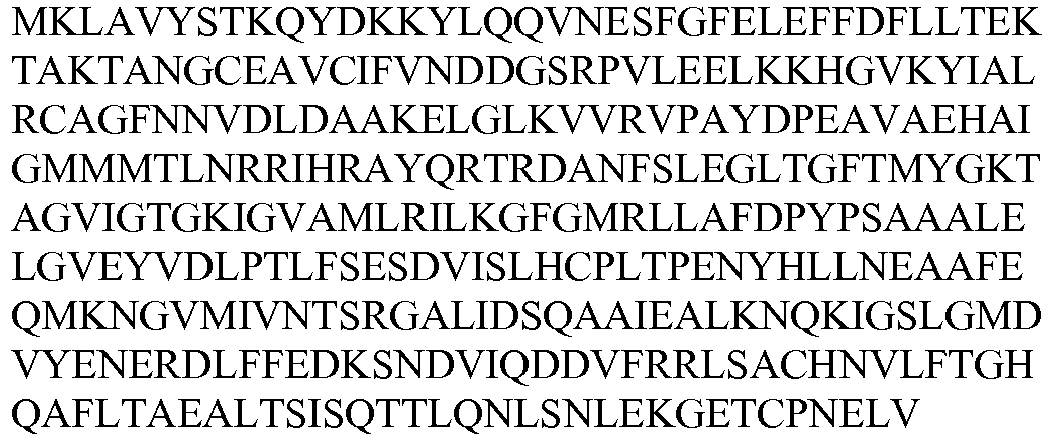
SEQ ID NO:125 pflB >gi|16128870|ref|NP_4154 23.11 pyruvate formate lyase I [Escherichia coli str. K-12 substr. MG1655] 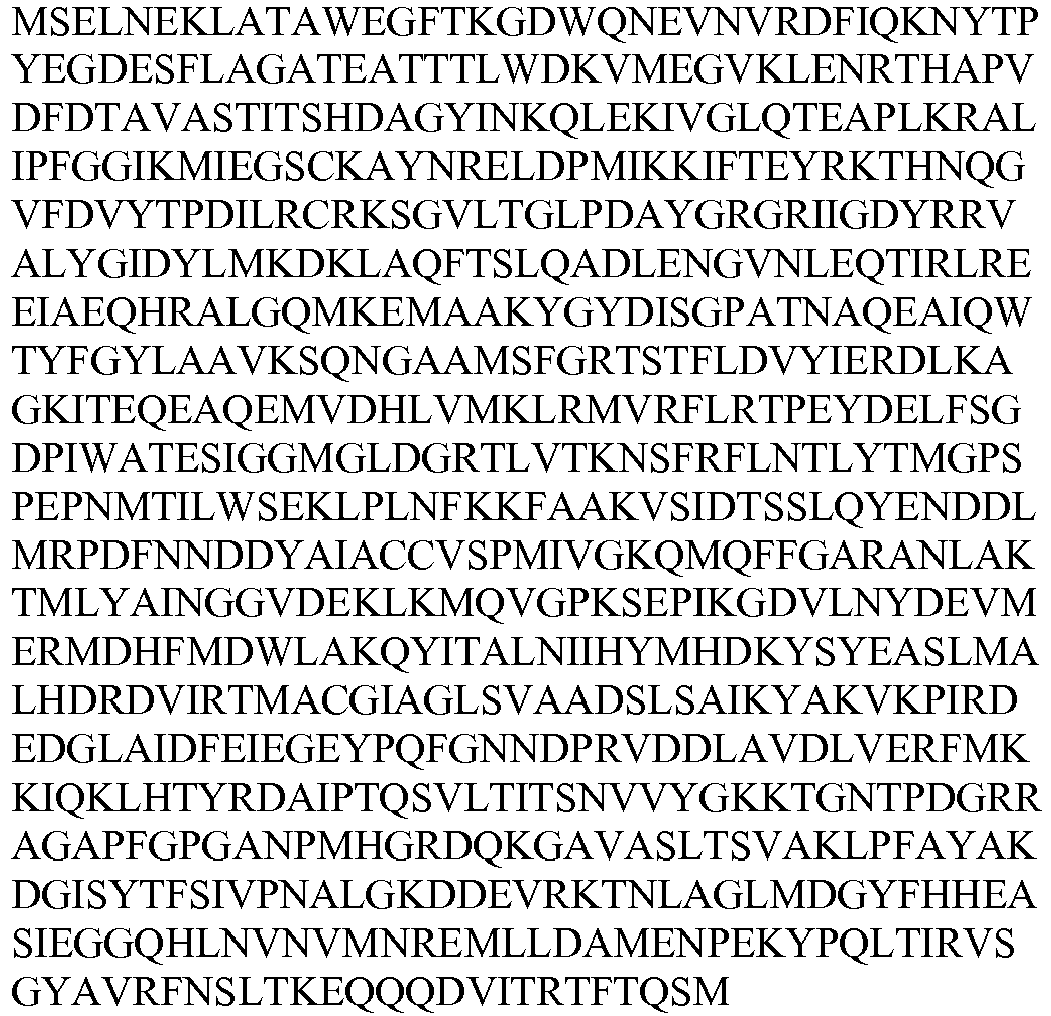
SEQ ID NO:126 mgsA >gi|90111195|ref|NP_4154 83.21| methylglyoxal synthase [Escherichia coli str. K-12 substr. MG1655] 
SEQ ID NO:127 poxB >gi|16128839|ref|NP_4153 92.11 pyruvate dehydrogenase (pyruvate oxidase), thiamin-dependent, FAD-binding [Escherichia coli str. K-12 substr. MG1655] 
SEQ ID NO:128 pta >gi|16130232|ref|NP_4168 00.1| phosphate acetyltransferase [Escherichia coli str. K-12 substr. MG1655] 
SEQ ID NO:129 ack >gi|16130231|ref|NP_4167 99.11 acetate kinase A and propionate kinase 2 [Escherichia coli str. K-12 substr. MG1655] 
SEQ ID NO:130 adhE >gi|16129202|ref|NP_4157 57.1| fused acetaldehyde-CoA dehydrogenase/iron-dependent alcohol dehydrogenase/pyruvate-formate lyase deactivase [Escherichia coli str. K-12 substr. MG1655] 
Fatty acid synthesis (including temperature sensitive alleles used for increased malonyl-CoA availability) SEQ ID NO:131 ACP >gi|16129057|ref|NP_4156 12.1| acyl carrier protein (ACP) [Escherichia coli str. K-12 substr. MG1655] 
SEQ ID NO:132 fabI >gi|16129249|ref|NP_4158 04.1| enoyl-[acyl-carrier-protein] reductase, NADH-dependent [Escherichia coli str. K-12 substr. MG1655] 
SEQ ID NO:133 fabB >gi|16130258|ref|NP_4168 26.1| 3-oxoacyl-[acyl-carrier-protein] synthase I [Escherichia coli str. K-12 substr. MG1655] 
SEQ ID NO:134 fabH >gi|16129054|ref|NP_4156 09.1| 3-oxoacyl-[acyl-carrier-protein] synthase III [Escherichia coli str. K-12 substr. MG1655] 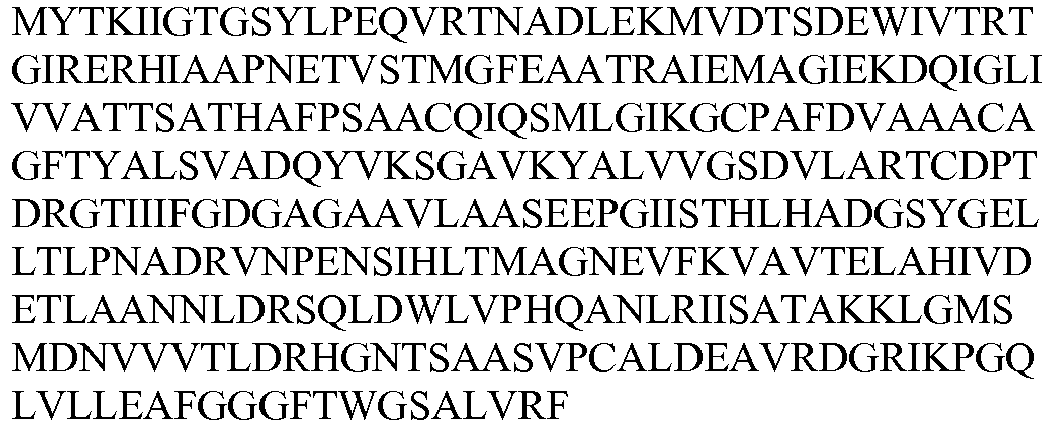
SEQ ID NO:135 fabD >gi|16129055|ref|NP_4156 10.1| malonyl-CoA-[acyl-carrier-protein] transacylase [Escherichia coli str. K-12 substr. MG1655] 
SEQ ID NO:136 fabF >gi|16129058|ref|NP_4156 13.1| 3-oxoacyl-[acyl-carrier-protein] synthase II [Escherichia coli str. K-12 substr. MG1655] 
SEQ ID NO:137 fabG >gi|16129056|ref|NP_4156 11.1| 3-oxoacyl-[acyl-carrier-protein] reductase [Escherichia coli str. K-12 substr. MG1655] 
SEQ ID NO:138 fabA >gi|16128921|ref|NP_4154 74.1| beta-hydroxydecanoyl thioester dehydrase [Escherichia coli str. K-12 substr. MG1655] 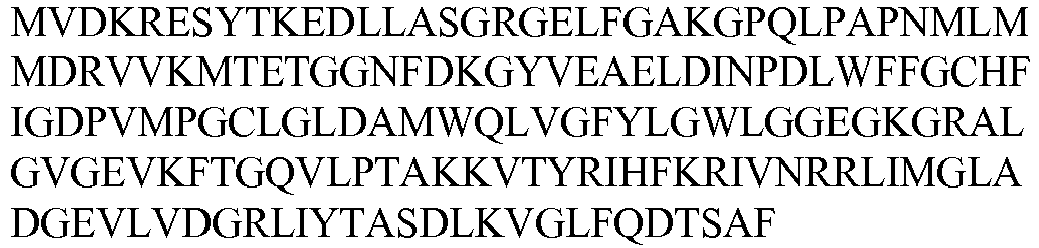
SEQ ID NO:139 fabZ >gi|16128173|ref|NP_4147 22.1| (3R)-hydroxymyristol acyl carrier protein dehydratase [Escherichia coli str. K-12 substr. MG1655] 
SEQ ID NO:140 fabR >gi|145698338|ref|NP_418 398.2| DNA-binding transcriptional repressor [Escherichia coli str. K-12 substr. MG1655] 
SEQ ID NO:141 fabI enoyl-ACP reductase, NADH-dependent, temperature-sensitive applicants allele 
SEQ ID NO:142 fabB 3-ketoacyl-ACP synthase I, temperature sensitive applicants allele 
SEQ ID NO:143 fabD malonyl-CoA:ACP transacylase, temperature sensitive applicants allele 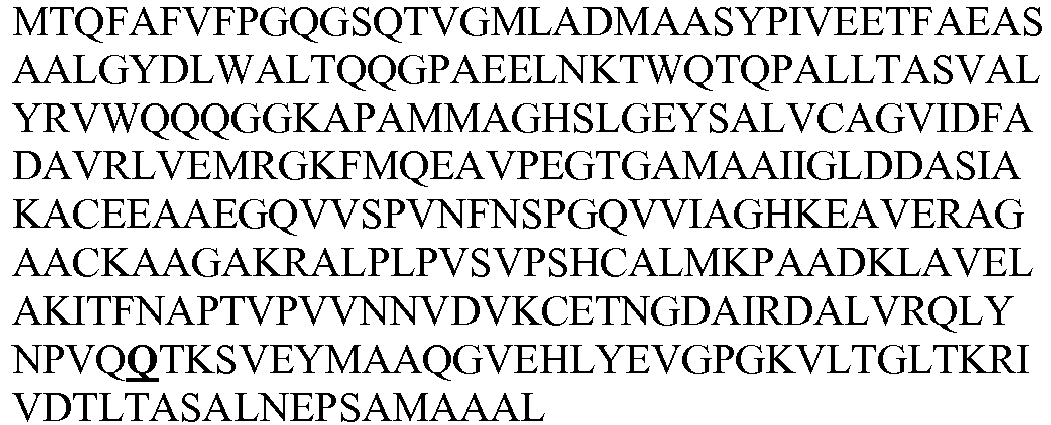
Malonyl-CoA synthesis and other genes related to optimizing flux SEQ ID NO:144 udhA >gi|90111670|ref|NP_4183 97.2| pyridine nucleotide transhydrogenase, soluble [Escherichia coli str. K-12 substr. MG1655] 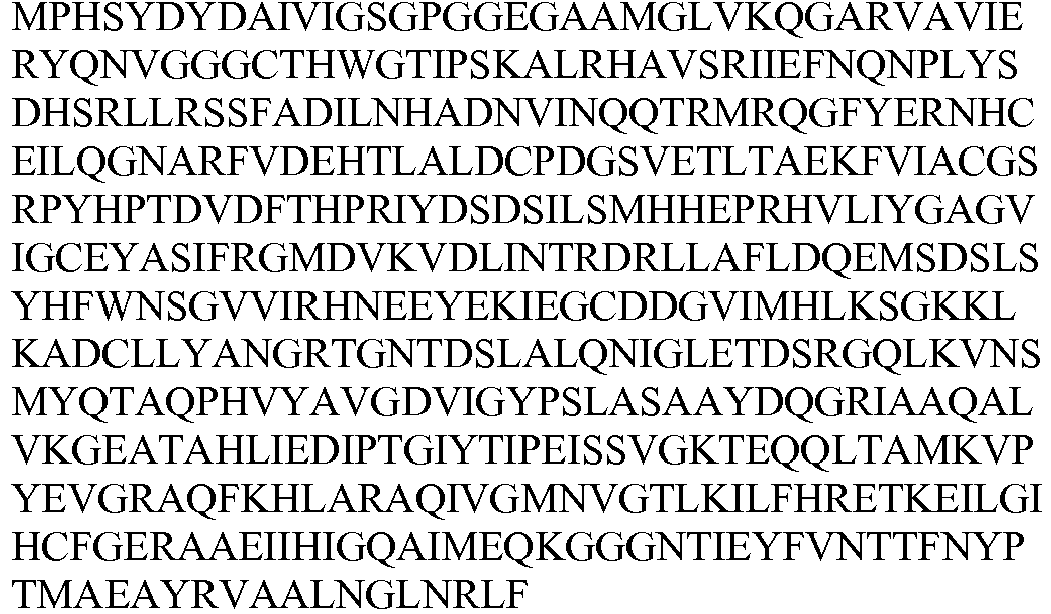
SEQ ID NO:145 pntA >gi|16129561|ref|NP_4161 20.1| pyridine nucleotide transhydrogenase, alpha subunit [Escherichia coli str. K-12 substr. MG1655] 
SEQ ID NO:146 pntB >gi|16129560|ref|NP_4161 19.1| pyridine nucleotide transhydrogenase, beta subunit [Escherichia coli str. K-12 substr. MG1655] 
SEQ ID NO:147 ACCase >gi|6128178|ref|NP_4147 27.1| acetyl-CoA carboxylase, carboxytransferase, alpha subunit [Escherichia coli str. K-12 substr. MG1655] 
SEQ ID NO:148 ACCase >gi|16131143|ref|NP_4177 21.1| acetyl CoA carboxylase, BCCP subunit [Escherichia coli str. K-12 substr. MG1655] 
SEQ ID NO:149 ACCase >gi|16131144|ref|NP_4177 22.1| acetyl-CoA carboxylase, biotin carboxylase subunit [Escherichia coli str. K-12 substr. MG1655] 
SEQ ID NO:150 ACCase >gi|16130251|ref|NP_4168 19.1| acetyl-CoA carboxylase, beta (carboxyltransferase) subunit [Escherichia coli str. K-12 substr. MG1655] 
SEQ ID NO:151 PDH >gi|16128107|ref|NP_4146 56.1| pyruvate dehydrogenase, decarboxylase component E1, thiamin-binding [Escherichia coli str. K-12 substr. MG1655] 
SEQ ID NO:152 PDH >gi|16128108|ref|NP_4146 57.1| pyruvate dehydrogenase, dihydrolipoyltransacetylase component E2 [Escherichia coli str. K-12 substr. MG1655] 
SEQ ID NO:153 PDH >gi|16128109|ref|NP_4146 58.1| lipoamide dehydrogenase, E3 component is part of three enzyme complexes [Escherichia coli str. K-12 substr. MG1655] 
SEQ ID NO:154 coaA >gi|16131808|ref|NP_4184 05.1| pantothenate kinase [Escherichia coli str. K-12 substr. MG1655] 
SEQ ID NO:155 panD >gi|16128124|ref|NP_4146 73.1| aspartate 1-decarboxylase [Escherichia coli str. K-12 substr. MG1655] 
SEQ ID NO:156 aceA >gi|16131841|ref|NP_4184 39.1| isocitrate lyase [Escherichia coli str. K-12 substr. MG1655] 
SEQ ID NO:157 aceB >gi|16131840|ref|NP_4184 38.1| malate synthase A [Escherichia coli str. K-12 substr. MG1655] 
SEQ ID NO:158 aceK >gi|16131842|ref|NP_4184 40.1| isocitrate dehydrogenase kinase/phosphatase [Escherichia coli str. K-12 substr. MG1655] 
SEQ ID NO:159 GAPDH >gi|16129733|ref|NP_4162 93.1| glyceraldehyde-3-phosphate dehydrogenase A [Escherichia coli str. K-12 substr. MG1655] 
SEQ ID NO:160 pyk >gi|16129807|ref|NP_4163 68.1| pyruvate kinase II [Escherichia coli str. K-12 substr. MG1655] 
SEQ ID NO:161 pyk >gi|16129632|ref|NP_4161 91.1| pyruvate kinase I [Escherichia coli str. K-12 substr. MG1655] 
SEQ ID NO:162 gltA >gi|16128695|ref|NP_4152 48.1| citrate synthase [Escherichia coli str. K-12 substr. MG1655] 
SEQ ID NO:163 bicA >gi|109820126|gb|ABG464 27.1| BicA [Synechococcus sp. PCC 7002] 
SEQ ID NO:164 GOGAT >gi|308209621|ref|NP_417 679.2| glutamate synthase, large subunit [Escherichia coli str. K-12 substr. MG1655] 
SEQ ID NO:165 GOGAT >gi|16131103|ref|NP_4176 80.1| glutamate synthase, 4Fe-4S protein, small subunit [Escherichia coli str. K-12 substr. MG1655] 
SEQ ID NO:166 gdh >gi|16129715|ref|NP_4162 75.1| glutamate dehydrogenase, NADP-specific [Escherichia coli str. K-12 substr. MG1655] 
SEQ ID NO:167 can >gi|16128119|ref|NP_4146 68.1| carbonic anhydrase [Escherichia coli str. K-12 substr. MG1655] 
SEQ ID NO:168 cynT >gi|16128324|ref|NP_4148 73.1| carbonic anhydrase [Escherichia coli str. K-12 substr. MG1655] 
SEQ ID NO:169 cynS >gi|16128325|ref|NP_4148 74.1| cyanate aminohydrolase [Escherichia coli str. K-12 substr. MG1655] 
SEQ ID NO:170 yibD >gi|16131486|ref|NP_4180 72.1| putative glycosyl transferase [Escherichia coli str. K-12 substr. MG1655] 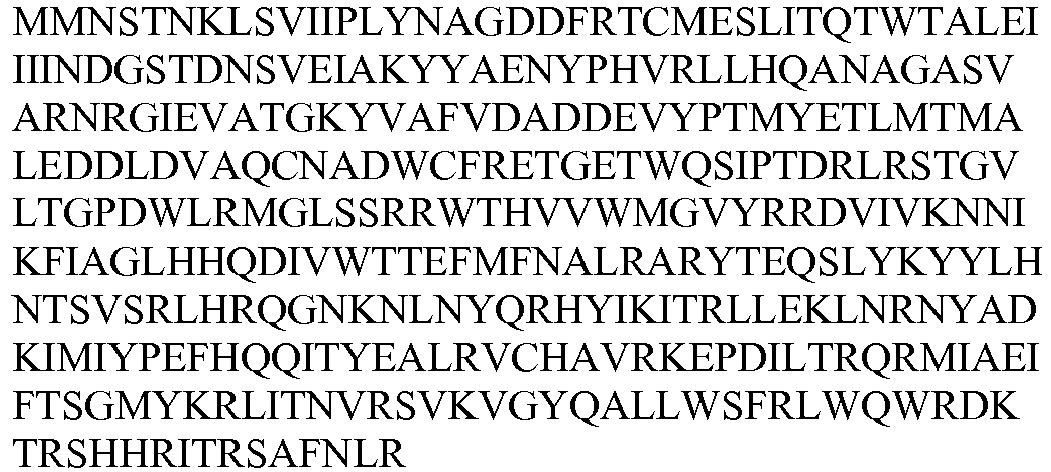
SEQ ID NO:171 pstS >gi|16131597|ref|NP_4181 85.1| L-glutamine:D-fructose-6-phosphate aminotransferase [Escherichia coli str. K-12 substr. MG1655] 
SEQ ID NO:172 PDH lipoamide dehydrogenase, NADH-inhibition resistant 
SEQ ID NO:173 coaA pantothenate kinase, feedback-resistant 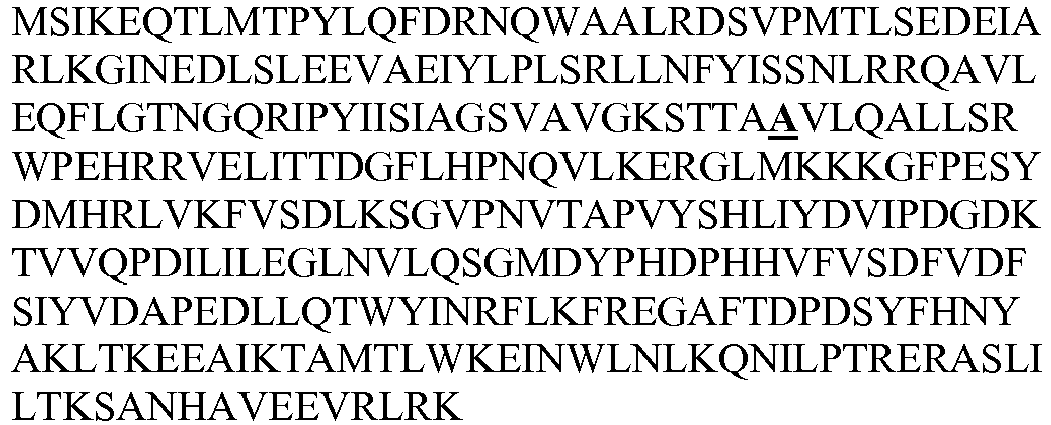
Sugar transport and utilization SEQ ID NO:174 cscA >gi|608708|emb|CAA5721 9.1| sucrose hydrolase [Escherichia coli] 
SEQ ID NO:175 cscB >gi|608706|emb|CAA5721 7.1| sucrose permease [Escherichia coli] 
SEQ ID NO:176 cscK >gi|20451632|emb|CAA57 218.2| D-fructokinase [Escherichia coli] 
SEQ ID NO:177 galP >gi|16130844|ref|NP_4174 18.1| D-galactose transporter [Escherichia coli str. K-12 substr. MG1655] 
SEQ ID NO:178 galK >gi|16128725|ref|NP_4152 78.1| galactokinase [Escherichia coli str. K-12 substr. MG1655] SEQ ID NO:179 cscB sucrose permease mutant with increased activity 
Host modifications for fatty acid production SEQ ID NO:180 fadE >gi|90111100|ref|NP_4147 56.2| acyl coenzyme A dehydrogenase [Escherichia coli str. K-12 substr. MG1655] 
SEQ ID NO:181 fadD >gi|16129759|ref|NP_4163 19.1| acyl-CoA synthetase (long-chain-fatty-acid-CoA ligase) [Escherichia coli str. K-12 substr. MG1655] 
SEQ ID NO:182 fadA >gi|49176430|ref|YP_0262 72.1| 3-ketoacyl-CoA thiolase (thiolase I) [Escherichia coli str. K-12 substr. MG1655] 
SEQ ID NO:183 fadB >gi|16131692|ref|NP_4182 88.1| fused 3-hydroxybutyryl-CoA epimerase/delta(3)-cis-delta(2)-trans-enoyl-CoA isomerase/enoy l-CoA hydratase/3 -hydroxyacyl-CoA dehydrogenase [Escherichia coli str. K-12 substr. MG1655] 
SEQ ID NO:184 fadI >gi|16130275|ref|NP_4168 44.1| beta-ketoacyl-CoA thiolase, anaerobic, subunit [Escherichia coli str. K-12 substr. MG1655] 
SEQ ID NO:185 fadJ >gi|16130274|ref|NP_4168 43.1| fused enoyl-CoA hydratase and epimerase and isomerase/3-hydroxyacyl-CoA dehydrogenase [Escherichia coli str. K-12 substr. MG1655] 
SEQ ID NO:186 ydiO >gi|90111318|ref|NP_4162 10.4| putative acyl-CoA dehydrogenase [Escherichia coli str. K-12 substr. MG1655] 
SEQ ID NO:187 paaJ >gi|16129358|ref|NP_4159 15.1| 3-oxoadipyl-CoA/3-oxo-5,6-dehydrosuberyl-CoA thiolase [Escherichia coli str. K-12 substr. MG1655] 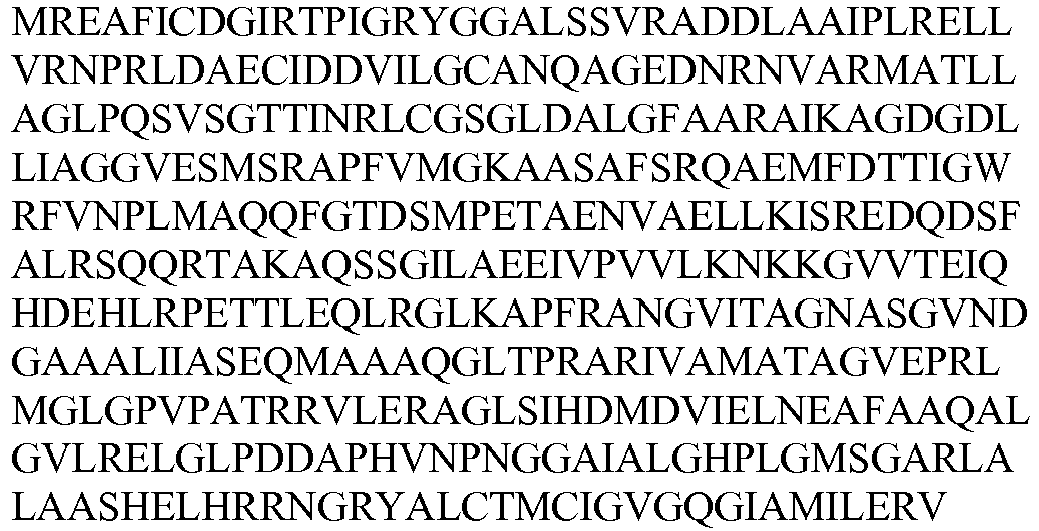
SEQ ID NO:188 yqeF >gi|90111494|ref|NP_4173 21.2| putative acyltransferase [Escherichia coli str. K-12 substr. MG1655] 
SEQ ID NO:189 tig >gi|16128421|ref|NP_4149 70.1| peptidyl-prolyl cis/trans isomerase (trigger factor) [Escherichia coli str. K-12 substr. MG1655] 
SEQ ID NO:190 atoD >gi|16130158|ref|NP_4167 25.1| acetyl-CoA: acetoacety l-CoA transferase, alpha subunit [Escherichia coli str. K-12 substr. MG1655] 
SEQ ID NO:191 atoA >gi|16130159|ref|NP_4167 26.1| acetyl-CoA: acetoacety l-CoA transferase, beta subunit [Escherichia coli str. K-12 substr. MG1655] 
SEQ ID NO:192 atoE >gi|16130160|ref|NP_4167 27.1| short chain fatty acid transporter [Escherichia coli str. K-12 substr. MG1655] 
SEQ ID NO:193 atoB >gi|16130161|ref|NP_4167 28.1| acetyl-CoA acetyltransferase [Escherichia coli str. K-12 substr. MG1655] 
Fatty acid pathway 3-keto-acyl-CoA synthases SEQ ID NO:1 NphT7 >gi|299758082|dbj|BAJ100 48.1| acetyl-CoA:malonyl-CoA acyltransferase [Streptomyces sp. CL190] 
SEQ ID NO:194 SaFabH >gi|75765832|pdb|1ZOW| A Chain A, Crystal Structure Of S. Aureus Fabh, Beta-Ketoacyl Carrier Protein Synthase Iii 
SEQ ID NO:195 BsFabH >gi|321314863|ref|YP_004 207150.1| 3-oxoacyl-(acyl carrier protein) synthase III [Bacillus subtilis BSn5] 
SEQ ID NO:196 PaFabH >gi|15598482|ref|NP_2519 76.1| 3-oxoacyl-ACP synthase [Pseudomonas aeruginosa PAO1] 
SEQ ID NO:197 MtFabH >gi|2113995|emb|CAB089 84.1| 3-OXOACYL-[ACYL-CARRIER-PROTEIN] SYNTHASE III FABH (BETA-KETOACYL-ACP SYNTHASE III) (KAS III) [Mycobacterium tuberculosis H37Rv] 
SEQ ID NO:198 FabH >gi|345301988|ref|YP_004 823890.1| 3-oxoacyl-ACP synthase III [Rhodothermus marinus SG0.5JP17-172] 
SEQ ID NO:199 FabH >gi|471324089|ref|YP_007 523119.1| 3-oxoacyl-[acyl-carrier-protein] synthase 3 protein 3 [Streptomyces davawensis JCM 4913] 
SEQ ID NO:200 FabH >gi|330444499|ref|YP_004 377485.1| 3-oxoacyl-ACP synthase III [Chlamydophila pecorum E58] 
SEQ ID NO:201 FabH >gi|459068159|ref|ZP_231 65498.1| 3-oxoacyl-(acyl-carrier-protein) synthase III [Clostridium ultunense Esp] 
SEQ ID NO:202 FabH >gi|383454618|ref|YP_005 368607.1| 3-oxoacyl-(acyl-carrier-protein) synthase III [Corallococcus coralloides DSM 2259] 
SEQ ID NO:203 FabH >gi|333371191|ref|ZP_084 63153.1| 3-oxoacyl-[acyl-carrier-protein] synthase III [Desmospora sp. 8437] 
SEQ ID NO:204 FabH >gi|390454110|ref|ZP_102 39638.1| 3-oxoacyl-(acyl-carrier-protein) synthase III [Paenibacillus peoriae KCTC 3763] 
SEQ ID NO:205 FabH >gi|392959403|ref|ZP_103 24886.1| 3-oxoacyl-(acyl-carrier-protein) synthase 3 [Pelosinus fermentans DSM 17108] 
SEQ ID NO:206 FabH >gi|116626090|ref|YP_828 246.1| 3-oxoacyl-ACP synthase [Candidatus Solibacter usitatus Ellin6076] 
SEQ ID NO:207 FabH >gi|323702691|ref|ZP_081 14352.1| 3-oxoacyl-(acyl-carrier-protein) synthase III [Desulfotomaculum nigrificans DSM 574] 
SEQ ID NO:208 FabH >gi|384566084|ref|ZP_100 13188.1| 3-oxoacyl-(acyl-carrier-protein) synthase III [Saccharomonospora glauca K62] 
SEQ ID NO:209 FabH >gi|298162138|gb|ADI595 24.1| CorB [Corallococcus coralloides] 
SEQ ID NO:210 FabH >gi|148359775|ref|YP_001 250982.1| 3-oxoacyl-(acyl carrier protein) synthase III FabH [Legionella pneumophila str. Corby] 
SEQ ID NO:211 FabH >gi|15824218|dbj|BAB693 76.1| 3-oxoacyl-(acyl carrier protein) synthase [Streptomyces avermitilis] 
SEQ ID NO:212 FabH >gi|330468931|ref|YP_004 406674.1| 3-oxoacyl-(acyl carrier protein) synthase III [Verrucosispora maris AB-18-032] 
SEQ ID NO:213 FabH >gi|32444698|emb|CAD74 700.1| 3-oxoacyl-(acyl-carrier protein) synthase [Rhodopirellula baltica SH 1] 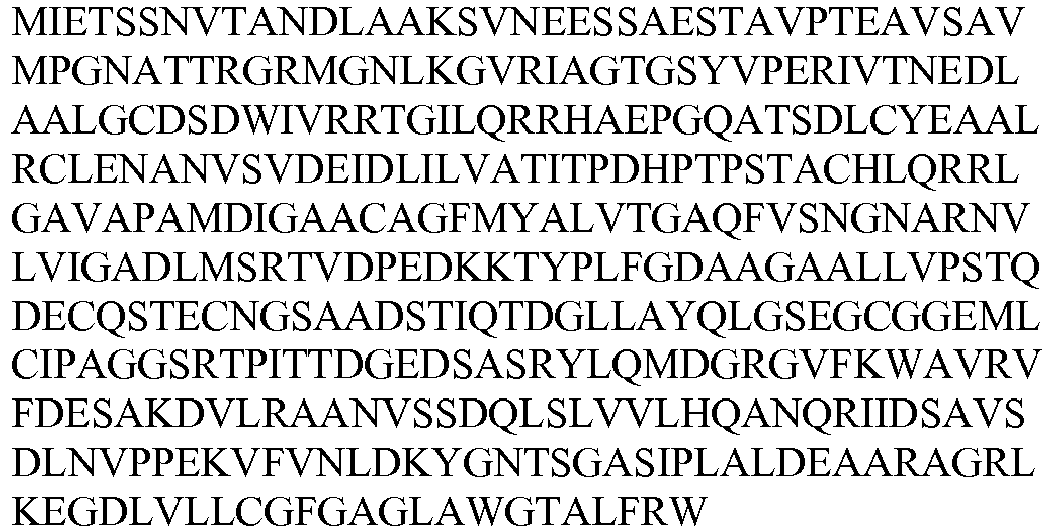
SEQ ID NO:214 FabH >gi|392374495|ref|YP_003 206328.1| 3-oxoacyl-[acyl-carrier-protein] synthase III (Beta-ketoacyl-ACP synthase III)(KAS III) [Candidatus Methylomirabilis oxyfera] 
SEQ ID NO:215 FabH >gi|317121784|ref|YP_004 101787.1| 3-oxoacyl-(acyl-carrier-protein) synthase III [Thermaerobacter marianensis DSM 12885] 
SEQ ID NO:216 FabH >gi|383787841|ref|YP_005 472409.1| 3-oxoacyl-ACP synthase [Caldisericum exile AZM16c01] 
SEQ ID NO:217 FabH >gi|404450648|ref|ZP_110 15628.1| 3-oxoacyl-(acyl carrier protein) synthase III [Indibacter alkaliphilus LW1] 
SEQ ID NO:218 FabH >gi|189502112|ref|YP_001 957829.1| 3-oxoacyl-(acyl carrier protein) synthase III [Candidatus Amoebophilus asiaticus 5a2] 
SEQ ID NO:219 FabH >gi|395801183|ref|ZP_104 80443.1| 3-oxoacyl-ACP synthase [Flavobacterium sp. F52] 
SEQ ID NO:220 FabH >gi|86159172|ref|YP_4659 57.1| 3-oxoacyl-ACP synthase [Anaeromyxobacter dehalogenans 2CP-C] 
SEQ ID NO:221 FabH >gi|166364688|ref|YP_001 656961.1| 3-oxoacyl-ACP synthase [Microcystis aeruginosa NIES-843] 
SEQ ID NO:222 FabH >gi|219849850|ref|YP_002 464283.1| 3-oxoacyl-(acyl-carrier-protein) synthase III [Chloroflexus aggregans DSM 9485] 
SEQ ID NO:223 FabH >gi|227523050|ref|ZP_039 53099.1| 3-oxoacyl-(acyl carrier protein) synthase III [Lactobacillus hilgardii ATCC 8290] 
SEQ ID NO:224 FabH >gi|240850683|ref|YP_002 972083.1| 3-oxoacyl-(acyl carrier protein) synthase III [Bartonella grahamii as4aup] 
SEQ ID NO:225 FabH >gi|253681256|ref|ZP_048 62054.1| 3-oxoacyl-[acyl-carrier-protein] synthase 3 [Clostridium botulinum D str. 1873] 
SEQ ID NO:226 FabH >gi|254286853|ref|ZP_049 61806.1| 3-oxoacyl-(acyl-carrier-protein) synthase III [Vibrio cholerae AM-19226] 
SEQ ID NO:227 FabH >gi|282854072|ref|ZP_062 63409.1| 3-oxoacyl-[acyl-carrier-protein] synthase 3 [Propionibacterium acnes J139] 
SEQ ID NO:228 FabH >gi|291439887|ref|ZP_065 79277.1| 3-oxoacyl-(acyl carrier protein) synthase III [Streptomyces ghanaensis ATCC 14672] 
SEQ ID NO:229 FabH >gi|294791665|ref|ZP_067 56813.1| 3-oxoacyl-(acyl-carrier-protein) synthase III [Veillonella sp. 6_1_27] 
SEQ ID NO:230 FabH >gi|302539498|ref|ZP_072 91840.1| 3-oxoacyl-[acyl-carrier-protein] synthase III [Streptomyces sp. C] 
SEQ ID NO:231 FabH >gi|318080591|ref|ZP_079 87923.1| 3-oxoacyl-(acyl-carrier-protein) synthase III [Streptomyces sp. SA3_actF] 
SEQ ID NO:232 FabH >gi|374851360|dbj|BAL54 322.1| 3-oxoacyl-[acyl-carrier-protein] synthase III [uncultured Aquificae bacterium] 
SEQ ID NO:233 FabH >gi|381164912|ref|ZP_098 74142.1| 3-oxoacyl-(acyl-carrier-protein) synthase III [Saccharomonospora azurea NA-128] 
SEQ ID NO:234 FabH >gi|386335197|ref|YP_006 031367.1| 3-oxoacyl-ACP synthase [Ralstonia solanacearum Po82] 
SEQ ID NO:235 FabH >gi|392946737|ref|ZP_103 12379.1| 3-oxoacyl-(acyl-carrier-protein) synthase III [Frankia sp. QA3] 
SEQ ID NO:236 FabH >gi|397172008|ref|ZP_104 95404.1| 3-oxoacyl-(acyl carrier protein) synthase III [Alishewanella aestuarii B11] 
SEQ ID NO:237 FabH >gi|399047091|ref|ZP_107 39223.1| 3-oxoacyl-(acyl-carrier-protein) synthase III [Brevibacillus sp. CF112] 
SEQ ID NO:238 FabH >gi|402823152|ref|ZP_108 72590.1| 3-oxoacyl-(acyl carrier protein) synthase III [Sphingomonas sp. LH128] 
SEQ ID NO:239 FabH >gi|407684813|ref|YP_006 799987.1| 3-oxoacyl-ACP synthase [Alteromonas macleodii str. 'English Channel 673'] 
SEQ ID NO:240 FabH >gi|410479651|ref|YP_006 767288.1| 3-oxoacyl-(acyl-carrier-protein) synthase III [Leptospirillum ferriphilum ML-04] 
SEQ ID NO:241 FabH >gi|410617776|ref|ZP_1 13 28741.1| 3-oxoacyl-[acyl-carrier-protein] synthase 3 protein 1 [Glaciecola polaris LMG 21857]
SEQ ID NO:242 FabH >gi|417318270|ref|ZP_121 04859.1| 3-oxoacyl-(acyl carrier protein) synthase III [Listeria monocytogenes J1-220] 
SEQ ID NO:243 FabH >gi|417747984|ref|ZP_123 96438.1| 3-oxoacyl-(acyl-carrier-protein) synthase III [Mycobacterium avium subsp. paratuberculosis S397] 
SEQ ID NO:244 FabH >gi|422338672|ref|ZP_164 19632.1| 3-oxoacyl-(acyl-carrier-protein) synthase III [Fusobacterium nucleatum subsp. polymorphum F0401] 
SEQ ID NO:245 FabH >gi|443491493|ref|YP_007 369640.1| 3-oxoacyl-[acyl-carrier-protein] synthase III, FabH_1 [Mycobacterium liflandii 128FXT] 
SEQ ID NO:246 FabH >gi|474659331|emb|CCV1 4840.1| Beta-ketoacyl-acyl-carrier-protein synthase I [Mesorhizobium sp. STM 4661] 
SEQ ID NO:247 FabH >gi|21224866|ref|NP_6306 45.1| 3-oxoacyl-ACP synthase [Streptomyces coelicolor A3(2)] 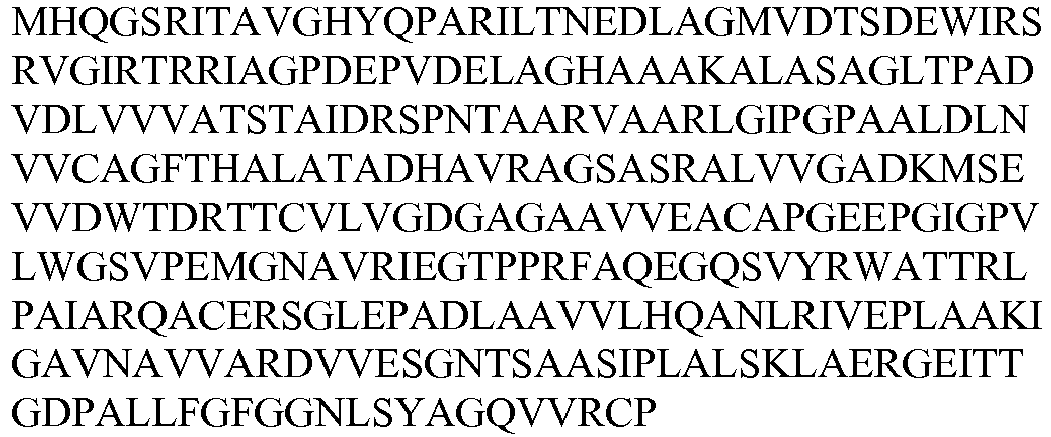
SEQ ID NO:248 FabH >gi|239623103|ref|ZP_046 66134.1| 3-oxoacyl-[acyl-carrier-protein] synthase III [Clostridiales bacterium 1_7_47_FAA] 
SEQ ID NO:249 FabH >gi|254477647|ref|ZP_050 91033.1| 3-oxoacyl-(acyl-carrier-protein) synthase III [Ruegeria sp. R11] 
SEQ ID NO:250 FabH >gi|311113478|ref|YP_003 984700.1| 3-oxoacyl-(acyl-carrier-protein) synthase III [Rothia dentocariosa ATCC 17931] 
SEQ ID NO:251 FabH >gi|312793335|ref|YP_004 026258.1| 3-oxoacyl-(acyl-carrier-protein) synthase iii [Caldicellulosiruptor kristjanssonii 177R1B] 
SEQ ID NO:252 FabH >gi|320449672|ref|YP_004 201768.1| 3-oxoacyl-ACP synthase [Thermus scotoductus SA-01] 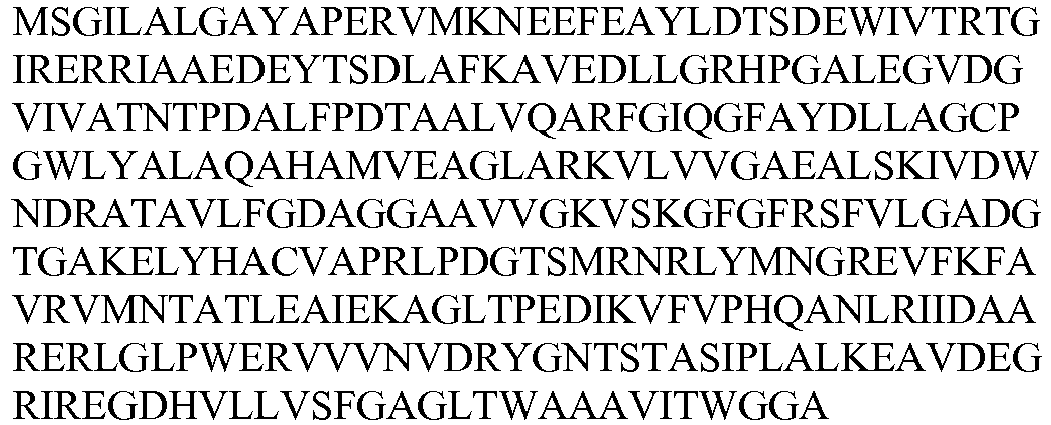
SEQ ID NO:253 FabH >gi|322421910|ref|YP_004 201133.1| 3-oxoacyl-(acyl-carrier-protein) synthase III [Geobacter sp. M18] 
SEQ ID NO:254 FabH >gi|325677042|ref|ZP_081 56713.1| 3-oxoacyl-(acyl-carrier-protein) synthase III [Rhodococcus equi ATCC 33707] 
SEQ ID NO:255 FabH >gi|326203621|ref|ZP_081 93485.1| 3-oxoacyl-(acyl-carrier-protein) synthase III [Clostridium papyrosolvens DSM 2782] 
SEQ ID NO:256 FabH >gi|332670773|ref|YP_004 453781.1| 3-oxoacyl-(acyl-carrier-protein) synthase III [Cellulomonas fimi ATCC 484] 
SEQ ID NO:257 FabH >gi|340361349|ref|ZP_086 83778.1| 3-oxoacyl-[acyl-carrier-protein] synthase III [Neisseria macacae ATCC 33926] 
SEQ ID NO:258 FabH >gi|345304635|ref|YP_004 826537.1| 3-oxoacyl-ACP synthase III [Rhodothermus marinus SG0.5JP17-172] 
SEQ ID NO:259 FabH >gi|349685677|ref|ZP_088 96819.1| 3-oxoacyl-[acyl-carrier-protein] synthase III [Gluconacetobacter oboediens 174Bp2] 
SEQ ID NO:260 FabH >gi|352106212|ref|ZP_089 61263.1| 3-oxoacyl-(acyl carrier protein) synthase III [Halomonas sp. HAL1] 
SEQ ID NO:261 FabH >gi|375098553|ref|ZP_097 44816.1| 3-oxoacyl-(acyl-carrier-protein) synthase III [Saccharomonospora cyanea NA-134] 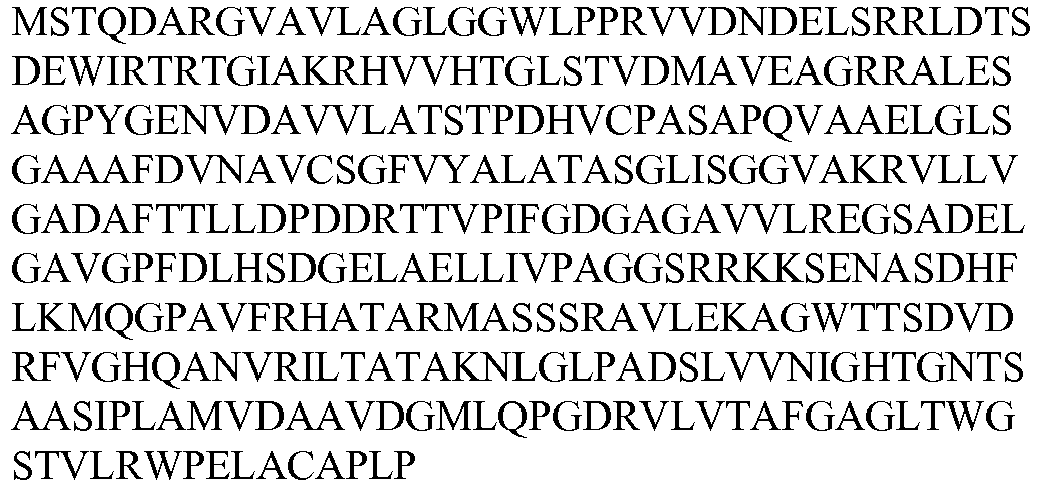
SEQ ID NO:262 FabH >gi|384154990|ref|YP_005 537805.1| 3-oxoacyl-ACP synthase [Arcobacter butzleri ED-1] 
SEQ ID NO:263 FabH >gi|385331603|ref|YP_005 885554.1| 3-oxoacyl-ACP synthase [Marinobacter adhaerens HP15] 
SEQ ID NO:264 FabH >gi|400755130|ref|YP_006 563498.1| 3-oxoacyl-[acyl-carrier-protein] synthase 3 [Phaeobacter gallaeciensis 2.10] 
SEQ ID NO:265 FabH >gi|423197564|ref|ZP_171 84147.1| hypothetical protein HMPREF1171_02179 [Aeromonas hydrophila SSU] 
SEQ ID NO:266 FabH >gi|424853848|ref|ZP_182 78206.1| 3-oxoacyl-[acyl-carrier-protein] synthase [Rhodococcus opacus PD630] 
SEQ ID NO:267 FabH >gi|441509582|ref|ZP_209 91498.1| 3-oxoacyl-[acyl-carrier-protein] synthase III [Gordonia aichiensis NBRC 108223] 
SEQ ID NO:268 FabH >gi|479875377|gb|ENU266 38.1| hypothetical protein F992_02187 [Acinetobacter sp. NIPH 236] 
SEQ ID NO:269 PaFabG >gi|15598163|ref|NP_2516 57.1| 3-ketoacyl-ACP reductase [Pseudomonas aeruginosa PAO1] 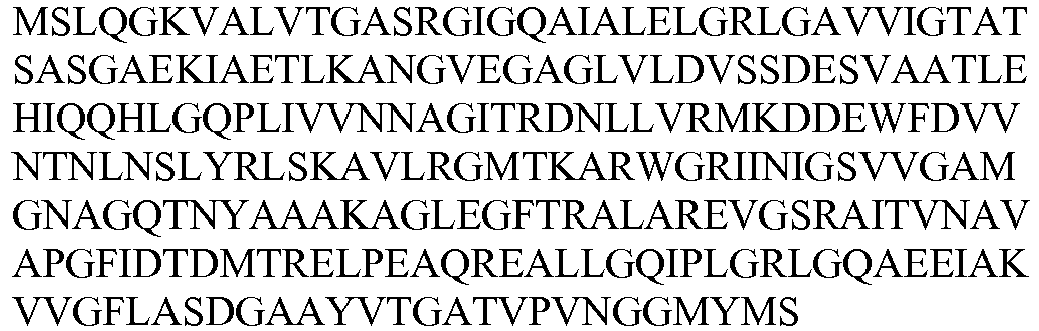
SEQ ID NO:270 fabG >gi|150963085|gb|ABR851 10.1| 3-oxoacyl-(acyl-carrier-protein) reductase [Pseudomonas aeruginosa PA7] 
SEQ ID NO:271 hbd >gi|20162442|gb|AAM145 86.1|AF494018_5 3-hydroxybutyryl-CoA dehydrogenase [Clostridium beijerinckii] 
SEQ ID NO:272 crt >gi:1706153 P52046|CRT_CLOAB 3-hydroxybutyryl-CoA dehydratase Clostridium acetobutylicum 
SEQ ID NO:273 ech >gi|74484320|gb|ABA1080 5.1| enoyl CoA hydratase [Pseudomonas putida] 
SEQ ID NO:274 ech2 >gi|162287198|ref|NP_077 368.2| peroxisomal multifunctional enzyme type 2 [Rattus norvegicus] 
SEQ ID NO:275 ter >gi|488758537|ref|WP_002 681770.1| trans-2-enoyl-CoA reductase [Treponema denticola] 
SEQ ID NO:276 ccr >gi|81309006|sp|Q53865.1| CCR STRCU RecName: Full=Crotonyl-CoA reductase 
Thioesterases SEQ ID NO:277 T tesA >gi|16128478|ref|NP_4150 27.1| multifunctional acyl-CoA thioesterase I and protease I and lysophospholipase L1 [Escherichia coli str. K-12 substr. MG1655] 
SEQ ID NO:278 'tesA acyl-CoA thioesterase I, cytosolic form 
SEQ ID NO:279 tesB >gi|16128437|ref|NP_4149 86.1| acyl-CoA thioesterase II [Escherichia coli str. K-12 substr. MG1655] 
SEQ ID NO:280 yciA >gi|16129214|ref|NP_4157 69.1| acyl-CoA esterase [Escherichia coli str. K-12 substr. MG1655] 
SEQ ID NO:281 ybgC >gi|16128711|ref|NP_4152 64.1| acyl-CoA thioesterase, involved in phospholipid metabolism [Escherichia coli str. K-12 substr. MG1655] 
SEQ ID NO:282 ybfF >gi|16128662|ref|NP_4152 12.1| acyl-CoA esterase [Escherichia coli str. K-12 substr. MG1655] 
SEQ ID NO:283 fadM >gi|16128428|ref|NP_4149 77.1| long-chain acyl-CoA thioesterase III [Escherichia coli str. K-12 substr. MG1655] 
SEQ ID NO:284 AtTE >gi|227217220|gb|EEI8256 4.1| Acyl-ACP thioesterase [Anaerococcus tetradius ATCC 35098] 
SEQ ID NO:285 CpTE >gi|1215718|gb|AAC49179 .1| thioesterase [Cuphea palustris] 
SEQ ID NO:286 CperfTE >gi|110673483|gb|ABG824 70.1| acyl-ACP thioesterase family protein [Clostridium perfringens ATCC 13124] 
SEQ ID NO:287 LpTE >gi|28270407|emb|CAD63 310.1| oleoyl-[acyl-carrier protein] thioesterase (putative) [Lactobacillus plantarum WCFS1] 
SEQ ID NO:288 PA2801TE >gi|15597997|ref|NP_2514 91.1| hypothetical protein PA2801 [Pseudomonas aeruginosa PAO1] 
Wax ester synthases SEQ ID NO:289 Maq1 >gi|120553111|ref|YP_957 462.1| hypothetical protein Maqu_0168 [Marinobacter aquaeolei VT8] 
SEQ ID NO:290 Pcry1 >gi|93005078|ref|YP_5795 15.1| hypothetical protein Pcryo_0247 [Psychrobacter cryohalolentis K5] 
SEQ ID NO:291 Rjosl >gi|111018600|ref|YP_701 572.1| hypothetical protein RHA1_ro01601 [Rhodococcus jostii RHA1] 
SEQ ID NO:292 Abork1 >gi|110835603|ref|YP_694 462.1| acyltransferase [Alcanivorax borkumensis SK2] 
Miscellaneous SEQ ID NO:293 prpE >gi|16759349|ref|NP_4549 66.1| propionyl-CoA synthetase [Salmonella enterica subsp. enterica serovar Typhi str. CT18] 
SEQ ID NO:294 phaA >gi|77464320|ref|YP_3538 24.1| acetyl-CoA acetyltransferase [Rhodobacter sphaeroides 2.4.1] 
SEQ ID NO:295 phaB >gi|77464321|ref|YP_3538 25.1| 3-oxoacyl-ACP reductase [Rhodobacter sphaeroides 2.4.1] 
SEQ ID NO:296 phaC >gi|28916412|gb|AAO593 83.1| PHA synthase 1 [Pseudomonas stutzeri] 
SEQ ID NO:297 phaC >gi|151442|gb|AAA25932. 1| PHA-polymerase 1 [Pseudomonas oleovorans] 
SEQ ID NO:298 phaC >gi|9951348|gb|AAG0844 1.1|AE004919_2 poly(3-hydroxyalkanoic acid) synthase 1 [Pseudomonas aeruginosa PAO1] 
- Some amino acids in amino acid sequences can be varied without significant effect on the structure or function of proteins. Variants included can constitute deletions, insertions, inversions, repeats, and type substitutions so long as the indicated enzyme activity is not significantly adversely affected. Guidance concerning which amino acid changes are likely to be phenotypically silent can be found, inter alia, in Bowie, J. U., et al., "Deciphering the Message in Protein Sequences: Tolerance to Amino Acid Substitutions," Science 247:1306-1310 (1990). In various embodiments polypeptides obtained by the expression of the polynucleotide molecules of the present invention may have at least approximately 50%, 60%, 70%, 80%, 90%, 95%, 96%, 97%, 98%, 99% or 100% identity to one or more amino acid sequences encoded by the genes and/or nucleic acid sequences described herein for the fatty acid or fatty acid derived product tolerance-related and biosynthesis pathways.
- It will be appreciated by those skilled in the art that amino acids homologous to those described herein are within the scope of the present invention. It will be appreciated that amino acid "homology" includes conservative substitutions, i.e. those that substitute a given amino acid in a polypeptide by another amino acid of similar characteristics. Typically seen as conservative substitutions are the following replacements: replacements of an aliphatic amino acid such as Ala, Val, Leu and Ile with another aliphatic amino acid; replacement of a Ser with a Thr or vice versa; replacement of an acidic residue such as Asp or Glu with another acidic residue; replacement of a residue bearing an amide group, such as Asn or Gln, with another residue bearing an amide group; exchange of a basic residue such as Lys or Arg with another basic residue; and replacement of an aromatic residue such as Phe or Tyr with another aromatic residue.
- For all nucleic acid and amino acid sequences provided herein, it is appreciated that conservatively modified variants of these sequences are included, and are within the scope of the invention in its various embodiments. Functionally equivalent nucleic acid and amino acid sequences (functional variants), which may include conservatively modified variants as well as more extensively varied sequences, which are well within the skill of the person of ordinary skill in the art, and microorganisms comprising these, also are within the scope of various embodiments of the invention, as are methods and systems comprising such sequences and/or microorganisms. In various embodiments, nucleic acid sequences encoding sufficiently homologous proteins or portions thereof are within the scope of the invention. More generally, nucleic acids sequences that encode a particular amino acid sequence employed in the invention may vary due to the degeneracy of the genetic code, and nonetheless fall within the scope of the invention. Table 15 provides a summary of similarities among amino acids, upon which conservative and less conservative substitutions may be based, and also various codon redundancies that reflect this degeneracy.
Table 15. Amino Acid Conservative Substitutions Amino Acid Relationships DNA codons Alanine N, Ali GCT, GCC, GCA, GCG Proline N CCT, CCC, CCA, CCG Valine N, Ali GTT, GTC, GTA, GTG Leucine N, Ali CTT, CTC, CTA, CTG, TTA, TTG Isoleucine N, Ali ATT, ATC, ATA Methionine N ATG Phenylalanine N, Aro TTT, TTC Tryptophan N TGG Glycine PU GGT, GGC, GGA, GGG Serine PU TCT, TCC, TCA, TCG, AGT, AGC Threonine PU ACT, ACC, ACA, ACG Asparagine PU, Ami AAT, AAC Glutamine PU, Ami CAA, CAG Cysteine PU TGT, TGC Aspartic acid NEG, A GAT, GAC Glutamic acid NEG, A GAA, GAG Arginine POS, B CGT, CGC, CGA, CGG, AGA, AGG Lysine POS, B AAA, AAG Histidine POS CAT, CAC Tyrosine Aro TAT, TAC Stop Codons TAA, TAG, TGA Legend: side groups and other related properties: A=acidic; B=basic; Ali=aliphatic; Ami=amine; Aro= aromatic; N=nonpolar; PU=polar uncharged; NEG=negatively charged; POS=positively charged. - Also, variants and portions of particular nucleic acid sequences, and respective encoded amino acid sequences recited herein may be exhibit a desired functionality, e.g., enzymatic activity at a selected level, when such nucleic acid sequence variant and/or portion contains a 15 nucleotide sequence identical to any 15 nucleotide sequence set forth in the nucleic acid sequences recited herein including, without limitation, the sequence starting at
nucleotide number 1 and ending at nucleotide number 15, the sequence starting atnucleotide number 2 and ending atnucleotide number 16, the sequence starting atnucleotide number 3 and ending at nucleotide number 17, and so forth. It will be appreciated that the disclosure also provides isolated nucleic acid that contains a nucleotide sequence that is greater than 15 nucleotides (e.g., 16, 17, 18, 19, 20, 21, 22, 23, 24, 25, 26, 27, 28, 29, 30 or more nucleotides) in length and identical to any portion of the sequence set forth in nucleic acid sequences recited herein. For example, the disclosure provides isolated nucleic acid that contains a 25 nucleotide sequence identical to any 25 nucleotide sequence set forth in any one or more (including any grouping of) nucleic acid sequences recited herein including, without limitation, the sequence starting atnucleotide number 1 and ending at nucleotide number 25, the sequence starting atnucleotide number 2 and ending at nucleotide number 26, the sequence starting atnucleotide number 3 and ending at nucleotide number 27, and so forth. Additional examples include, without limitation, isolated nucleic acids that contain a nucleotide sequence that is 50 or more nucleotides (e.g., 100, 150, 200, 250, 300, or more nucleotides) in length and identical to any portion of any of the sequences disclosed herein. Such isolated nucleic acids can include, without limitation, those isolated nucleic acids containing a nucleic acid sequence represented in any one section of discussion and/or examples, such as regarding a fatty acid or fatty acid derived product production pathways, nucleic acid sequences encoding enzymes of the fatty acid synthase system, or a fatty acid or fatty acid derived product tolerance. For example, the disclosure provides an isolated nucleic acid containing a nucleic acid sequence listed herein that contains a single insertion, a single deletion, a single substitution, multiple insertions, multiple deletions, multiple substitutions, or any combination thereof (e. g., single deletion together with multiple insertions). Such isolated nucleic acid molecules can share at least 60, 65, 70, 75, 80, 85, 90, 95, 97, 98, or 99 percent sequence identity with a nucleic acid sequence listed herein (i.e., in the sequence listing). - Additional examples include, without limitation, isolated nucleic acids that contain a nucleic acid sequence that encodes an amino acid sequence that is 50 or more amino acid residues (e.g., 100, 150, 200, 250, 300, or more amino acid residues) in length and identical to any portion of an amino acid sequence listed or otherwise disclosed herein.
- In addition, the invention provides isolated nucleic acid that contains a nucleic acid sequence that encodes an amino acid sequence having a variation of an amino acid sequence listed or otherwise disclosed herein. For example, the invention provides isolated nucleic acid containing a nucleic acid sequence encoding an amino acid sequence listed or otherwise disclosed herein that contains a single insertion, a single deletion, a single substitution, multiple insertions, multiple deletions, multiple substitutions, or any combination thereof (e.g., single deletion together with multiple insertions). Such isolated nucleic acid molecules can contain a nucleic acid sequence encoding an amino acid sequence that shares at least 60, 65, 70, 75, 80, 85, 90, 95, 97, 98, or 99 percent sequence identity with an amino acid sequence listed or otherwise disclosed herein.
- Examples of properties that provide the bases for conservative and other amino acid substitutions are exemplified in Table 15. Accordingly, one skilled in the art may make numerous substitutions to obtain an amino acid sequence variant that exhibits a desired functionality. BLASTP, CLUSTALP, and other alignment and comparison tools may be used to assess highly conserved regions, to which fewer substitutions may be made (unless directed to alter activity to a selected level, which may require multiple substitutions). More substitutions may be made in regions recognized or believed to not be involved with an active site or other binding or structural motif. In accordance with Table 15, for example, substitutions may be made of one polar uncharged (PU) amino acid for a polar uncharged amino acid of a listed sequence, optionally considering size/molecular weight (i.e., substituting a serine for a threonine). Guidance concerning which amino acid changes are likely to be phenotypically silent can be found, inter alia, in Bowie, J. U., et Al., "Deciphering the Message in Protein Sequences: Tolerance to Amino Acid Substitutions," Science 247:1306-1310 (1990),which teachings are, however, also generally known to those skilled in the art. Recognized conservative amino acid substitutions comprise (substitutable amino acids following each colon of a set): ala:ser; arg:lys; asn:gln or his; asp:glu; cys:ser; gln:asn; glu:asp; gly:pro; his:asn or gln; ile:leu or val; leu:ile or val; lys: arg or gln or glu; met:leu or ile; phe:met or leu or tyr; ser:thr; thr:ser; trp:tyr; tyr:trp or phe; val:ile or leu.
- It is noted that codon preferences and codon usage tables for a particular species can be used to engineer isolated nucleic acid molecules that take advantage of the codon usage preferences of that particular species. For example, the isolated nucleic acid provided herein can be designed to have codons that are preferentially used by a particular microorganism of interest. Numerous software and sequencing services are available for such codon-optimizing of sequences.
- The invention provides polypeptides that contain the entire amino acid sequence of an amino acid sequence listed or otherwise disclosed herein. In addition, the invention provides polypeptides that contain a portion of an amino acid sequence listed or otherwise disclosed herein. For example, the invention provides polypeptides that contain a 15 amino acid sequence identical to any 15 amino acid sequence of an amino acid sequence listed or otherwise disclosed herein including, without limitation, the sequence starting at amino
acid residue number 1 and ending at amino acid residue number 15, the sequence starting at aminoacid residue number 2 and ending at aminoacid residue number 16, the sequence starting at aminoacid residue number 3 and ending at amino acid residue number 17, and so forth. It will be appreciated that the invention also provides polypeptides that contain an amino acid sequence that is greater than 15 amino acid residues (e. g., 16, 17, 18, 19, 20, 21, 22, 23, 24, 25, 26, 27, 28, 29, 30 or more amino acid residues) in length and identical to any portion of an amino acid sequence listed or otherwise disclosed herein For example, the invention provides polypeptides that contain a 25 amino acid sequence identical to any 25 amino acid sequence of an amino acid sequence listed or otherwise disclosed herein including, without limitation, the sequence starting at aminoacid residue number 1 and ending at amino acid residue number 25, the sequence starting at aminoacid residue number 2 and ending at amino acid residue number 26, the sequence starting at aminoacid residue number 3 and ending at amino acid residue number 27, and so forth. Additional examples include, without limitation, polypeptides that contain an amino acid sequence that is 50 or more amino acid residues (e.g., 100, 150, 200, 250, 300 or more amino acid residues) in length and identical to any portion of an amino acid sequence listed or otherwise disclosed herein. Further, it is appreciated that, per above, a 15 nucleotide sequence will provide a 5 amino acid sequence, so that the latter, and higher-length amino acid sequences, may be defined by the above-described nucleotide sequence lengths having identity with a sequence provided herein. - In addition, the invention provides polypeptides that an amino acid sequence having a variation of the amino acid sequence set forth in an amino acid sequence listed or otherwise disclosed herein. For example, the invention provides polypeptides containing an amino acid sequence listed or otherwise disclosed herein that contains a single insertion, a single deletion, a single substitution, multiple insertions, multiple deletions, multiple substitutions, or any combination thereof (e.g., single deletion together with multiple insertions). Such polypeptides can contain an amino acid sequence that shares at least 60, 65, 70, 75, 80, 85, 90, 95, 97, 98 or 99 percent sequence identity with an amino acid sequence listed or otherwise disclosed herein. A particular variant amino acid sequence may comprise any number of variations as well as any combination of types of variations.
- As indicated herein, polypeptides having a variant amino acid sequence can retain enzymatic activity. Such polypeptides can be produced by manipulating the nucleotide sequence encoding a polypeptide using standard procedures such as site-directed mutagenesis or various PCR techniques. As noted herein, one type of modification includes the substitution of one or more amino acid residues for amino acid residues having a similar chemical and/or biochemical property. For example, a polypeptide can have an amino acid sequence set forth in an amino acid sequence listed or otherwise disclosed herein comprising one or more conservative substitutions.
- More substantial changes can be obtained by selecting substitutions that are less conservative, and/or in areas of the sequence that may be more critical, for example selecting residues that differ more significantly in their effect on maintaining: (a) the structure of the polypeptide backbone in the area of the substitution, for example, as a sheet or helical conformation; (b) the charge or hydrophobicity of the polypeptide at the target site; or (c) the bulk of the side chain. The substitutions that in general are expected to produce the greatest changes in polypeptide function are those in which: (a) a hydrophilic residue, e.g., serine or threonine, is substituted for (or by) a hydrophobic residue, e.g., leucine, isoleucine, phenylalanine, valine or alanine; (b) a cysteine or proline is substituted for (or by) any other residue ; (c) a residue having an electropositive side chain, e.g., lysine, arginine, or histidine, is substituted for (or by) an electronegative residue, e.g., glutamic acid or aspartic acid; or (d) a residue having a bulky side chain, e.g., phenylalanine, is substituted for (or by) one not having a side chain, e.g., glycine. The effects of these amino acid substitutions (or other deletions or additions) can be assessed for polypeptides having enzymatic activity by analyzing the ability of the polypeptide to catalyze the conversion of the same substrate as the related native polypeptide to the same product as the related native polypeptide. Accordingly, polypeptides having 5, 10, 20, 30, 40, 50 or less conservative substitutions are provided by the invention.
- As a practical matter, whether any particular polypeptide is at least 50%, 60%, 70%, 80%, 85%, 90%, 92%, 95%, 96%, 97%, 98% or 99% identical to any reference amino acid sequence of any polypeptide described herein (which may correspond with a particular nucleic acid sequence described herein), such particular polypeptide sequence can be determined conventionally using known computer programs such the Bestfit program (Wisconsin Sequence Analysis Package, Version 8 for Unix, Genetics Computer Group, University Research Park, 575 Science Drive, Madison, Wis. 53711). When using Bestfit or any other sequence alignment program to determine whether a particular sequence is, for instance, 95% identical to a reference sequence according to the present invention, the parameters are set such that the percentage of identity is calculated over the full length of the reference amino acid sequence and that gaps in homology of up to 5% of the total number of amino acid residues in the reference sequence are allowed.
- For example, in a specific embodiment the identity between a reference sequence (query sequence, i.e., a sequence of the present invention) and a subject sequence, also referred to as a global sequence alignment, may be determined using the FASTDB computer program based on the algorithm of Brutlag et al. (Comp. App. Biosci. 6:237-245 (1990)). Preferred parameters for a particular embodiment in which identity is narrowly construed, used in a FASTDB amino acid alignment, are: Scoring Scheme=PAM (Percent Accepted Mutations) 0, k-tuple=2, Mismatch Penalty=1, Joining Penalty=20, Randomization Group Length=0, Cutoff Score=1, Window Size=sequence length, Gap Penalty=5, Gap Size Penalty=0.05, Window Size=500 or the length of the subject amino acid sequence, whichever is shorter. According to this embodiment, if the subject sequence is shorter than the query sequence due to N- or C-terminal deletions, not because of internal deletions, a manual correction is made to the results to take into consideration the fact that the FASTDB program does not account for N- and C-terminal truncations of the subject sequence when calculating global percent identity. For subject sequences truncated at the N- and C-termini, relative to the query sequence, the percent identity is corrected by calculating the number of residues of the query sequence that are lateral to the N- and C-terminal of the subject sequence, which are not matched/aligned with a corresponding subject residue, as a percent of the total bases of the query sequence. A determination of whether a residue is matched/aligned is determined by results of the FASTDB sequence alignment. This percentage is then subtracted from the percent identity, calculated by the FASTDB program using the specified parameters, to arrive at a final percent identity score. This final percent identity score is what is used for the purposes of this embodiment. Only residues to the N- and C-termini of the subject sequence, which are not matched/aligned with the query sequence, are considered for the purposes of manually adjusting the percent identity score. That is, only query residue positions outside the farthest N- and C-terminal residues of the subject sequence are considered for this manual correction. For example, a 90 amino acid residue subject sequence is aligned with a 100 residue query sequence to determine percent identity. The deletion occurs at the N-terminus of the subject sequence and therefore, the FASTDB alignment does not show a matching/alignment of the first 10 residues at the N-terminus. The 10 unpaired residues represent 10% of the sequence (number of residues at the N- and C-termini not matched/total number of residues in the query sequence) so 10% is subtracted from the percent identity score calculated by the FASTDB program. If the remaining 90 residues were perfectly matched the final percent identity would be 90%. In another example, a 90 residue subject sequence is compared with a 100 residue query sequence. This time the deletions are internal deletions so there are no residues at the N- or C-termini of the subject sequence which are not matched/aligned with the query. In this case the percent identity calculated by FASTDB is not manually corrected. Once again, only residue positions outside the N- and C-terminal ends of the subject sequence, as displayed in the FASTDB alignment, which are not matched/aligned with the query sequence are manually corrected for.
- Various methods and techniques may be used in accordance with the present invention to modify microorganisms. Embodiments of the present invention may result from introduction of an expression vector into a host microorganism, wherein the expression vector contains a nucleic acid sequence coding for an enzyme that is, or is not, normally found in a host microorganism.
- The ability to genetically modify a host cell is essential for the production of any genetically modified (recombinant) microorganism. The mode of gene transfer technology may be by electroporation, conjugation, transduction, or natural transformation. A broad range of host conjugative plasmids and drug resistance markers are available. The cloning vectors are tailored to the host microorganisms based on the nature of antibiotic resistance markers that can function in that host. Also, as disclosed herein, a genetically modified (recombinant) microorganism may comprise modifications other than via plasmid introduction, including modifications to its genomic DNA.
- More generally, nucleic acid constructs can be prepared comprising an isolated polynucleotide encoding a polypeptide having enzyme activity operably linked to one or more (several) control sequences that direct the expression of the coding sequence in a microorganism, such as E. coli, under conditions compatible with the control sequences. The isolated polynucleotide may be manipulated to provide for expression of the polypeptide. Manipulation of the polynucleotide's sequence prior to its insertion into a vector may be desirable or necessary depending on the expression vector. The techniques for modifying polynucleotide sequences utilizing recombinant DNA methods are well established in the art.
- The control sequence may be an appropriate promoter sequence, a nucleotide sequence that is recognized by a host cell for expression of a polynucleotide encoding a polypeptide of the present invention. The promoter sequence contains transcriptional control sequences that mediate the expression of the polypeptide. The promoter may be any nucleotide sequence that shows transcriptional activity in the host cell of choice including mutant, truncated, and hybrid promoters, and may be obtained from genes encoding extracellular or intracellular polypeptides either homologous or heterologous to the host cell. Examples of suitable promoters for directing transcription of the nucleic acid constructs, especially in an E. coli host cell, are the lac promoter (Gronenborn, 1976, Mol. Gen. Genet. 148: 243-250), tac promoter (DeBoer et a/., 1983, Proceedings of the National Academy of Sciences USA 80: 21-25), trc promoter (Brosius et al, 1985, J. Biol. Chem. 260: 3539-3541), T7 RNA polymerase promoter (Studier and Moffatt, 1986, J. Mol. Biol. 189: 113-130), phage promoter pL (Elvin et al., 1990, Gene 87: 123-126), tetA promoter (Skerra, 1994, Gene 151 : 131-135), araBAD promoter (Guzman et al., 1995, J. Bacteriol. 177: 4121-4130), and rhaPBAD promoter (Haldimann et al., 1998, J. Bacteriol. 180: 1277-1286). Other promoters are described in "Useful proteins from recombinant bacteria" in Scientific American, 1980, 242: 74-94; and in Sambrook and Russell, "Molecular Cloning: A Laboratory Manual," Third Edition 2001 (volumes 1-3), Cold Spring Harbor Laboratory Press, Cold Spring Harbor, N.Y.
- The control sequence may also be a suitable transcription terminator sequence, a sequence recognized by a host cell to terminate transcription. The terminator sequence is operably linked to the 3' terminus of the nucleotide sequence encoding the polypeptide. Any terminator that is functional in an E. coli cell may be used in the present invention. It may also be desirable to add regulatory sequences that allow regulation of the expression of the polypeptide relative to the growth of the host cell. Examples of regulatory systems are those that cause the expression of the gene to be turned on or off in response to a chemical or physical stimulus, including the presence of a regulatory compound. Regulatory systems in prokaryotic systems include the lac, tac, and trp operator systems.
- For various embodiments of the invention the genetic manipulations and/or modifications may be described to include various genetic manipulations, including those directed to change regulation of, and therefore ultimate activity of, an enzyme or enzymatic activity of an enzyme identified in any of the respective pathways. Such genetic modifications, and any references herein to modulating a gene, may be directed to transcriptional, translational, and post-translational modifications that result in a change of enzyme activity and/or selectivity under selected and/or identified culture conditions and/or to provision of additional nucleic acid sequences such as to increase copy number and/or mutants of an enzyme related to fatty acid or fatty acid derived product production. Specific methodologies and approaches to achieve such genetic modification and/or modulation are well known to one skilled in the art, and include, but are not limited to: increasing expression of an endogenous genetic element; decreasing functionality of a repressor gene; introducing a heterologous genetic element; increasing copy number of a nucleic acid sequence encoding a polypeptide catalyzing an enzymatic conversion step to produce fatty acid or a fatty acid derived product; mutating a genetic element to provide a mutated protein to increase specific enzymatic activity; over-expressing; under-expressing; over-expressing a chaperone; knocking out a protease; altering or modifying feedback inhibition; providing an enzyme variant comprising one or more of an impaired binding site for a repressor and/or competitive inhibitor; knocking out a repressor gene; evolution, selection and/or other approaches to improve mRNA stability as well as use of plasmids having an effective copy number and promoters to achieve an effective level of improvement. Random mutagenesis may be practiced to provide genetic modifications that may fall into any of these or other stated approaches. The genetic modifications and/or modulation further broadly fall into additions (including insertions), deletions (such as by a mutation) and substitutions of one or more nucleic acids in a nucleic acid of interest. In various embodiments a genetic modification and/or modulation results in improved enzymatic specific activity and/or turnover number of an enzyme. Without being limited, changes may be measured by one or more of the following: KM; Kcat; and Kavidity.
- In various embodiments, to function more efficiently, a microorganism may comprise one or more gene deletions. For example, in E. coli, the genes encoding the lactate dehydrogenase (ldhA), phosphate acetyltransferase (pta), pyruvate oxidase (poxB), and pyruvate-formate lyase (pflB) may be disrupted, including deleted. Such gene disruptions, including deletions, are not meant to be limiting, and may be implemented in various combinations in various embodiments. Gene deletions may be accomplished by mutational gene deletion approaches, and/or starting with a mutant strain having reduced or no expression of one or more of these enzymes, and/or other methods known to those skilled in the art. Gene deletions may be effectuated by any of a number of known specific methodologies, including but not limited to the RED/ET methods using kits and other reagents sold by Gene Bridges (Gene Bridges GmbH, Dresden, Germany, <<www.genebridges.com>>).
- More particularly as to the latter method, use of Red/ET recombination, is known to those of ordinary skill in the art and described in
U.S. Patent Nos. 6,355,412 and6,509,156, issued to Stewart et al. for its teachings of this method. Material and kits for such method are available from Gene Bridges (Gene Bridges GmbH, Dresden, Germany, <<www.genebridges.com>>), and the method may proceed by following the manufacturer's instructions. The method involves replacement of the target gene by a selectable marker via homologous recombination performed by the recombinase from λ-phage. The host microorganism expressing λ-red recombinase is transformed with a linear DNA product coding for a selectable marker flanked by the terminal regions (generally ∼50 bp, and alternatively up to about ∼300 bp) homologous with the target gene. The marker could then be removed by another recombination step performed by a plasmid vector carrying the FLP-recombinase, or another recombinase, such as Cre. - Targeted deletion of parts of microbial chromosomal DNA or the addition of foreign genetic material to microbial chromosomes may be practiced to alter a host cell's metabolism so as to reduce or eliminate production of undesired metabolic products. This may be used in combination with other genetic modifications such as described herein in this general example. In this detailed description, reference has been made to multiple embodiments and to the accompanying drawings in which is shown by way of illustration specific exemplary embodiments in which the invention may be practiced. These embodiments are described in sufficient detail to enable those skilled in the art to practice the invention, and it is to be understood that modifications to the various disclosed embodiments may be made by a skilled artisan.
- Polypeptides and nucleic acids encoding polypeptides can be produced by standard DNA mutagenesis techniques, for example, M13 primer mutagenesis. Details of these techniques are provided in Sambrook and Russell, 2001. Nucleic acid molecules can contain changes of a coding region to fit the codon usage bias of the particular microorganism into which the molecule is to be introduced.
- Alternatively, the coding region can be altered by taking advantage of the degeneracy of the genetic code to alter the coding sequence in such a way that, while the nucleic acid sequence is substantially altered, it nevertheless encodes a polypeptide having an amino acid sequence identical or substantially similar to the native amino acid sequence. For example, alanine is encoded in the open reading frame by the nucleotide codon triplet GCT. Because of the degeneracy of the genetic code, three other nucleotide codon triplets--GCA, GCC, and GCGalso code for alanine. Thus, the nucleic acid sequence of the open reading frame can be changed at this position to any of these three codons without affecting the amino acid sequence of the encoded polypeptide or the characteristics of the polypeptide. Based upon the degeneracy of the genetic code, nucleic acid variants can be derived from a nucleic acid sequence disclosed herein using standard DNA mutagenesis techniques as described herein, or by synthesis of nucleic acid sequences. Thus, for various embodiments the invention encompasses nucleic acid molecules that encode the same polypeptide but vary in nucleic acid sequence by virtue of the degeneracy of the genetic code.
- The invention also provides an isolated nucleic acid that is at least about 12 bases in length (e.g., at least about 13, 14, 15, 16, 17, 18, 19, 20, 25, 30, 40, 50, 60, 100, 250, 500, 750, 1000, 1500, 2000, 3000, 4000, 5000, 6000, 7000, 8000, 9000, 10000, 11000, 12000, 13000, 14000, 15000, 16000, 17000, 18000, 19000 or 20000 bases in length) and hybridizes, under hybridization conditions, to the sense or antisense strand of a nucleic acid having a sequence listed or otherwise disclosed herein. The hybridization conditions can be moderately or highly stringent hybridization conditions.
- In accordance with the present invention, the microorganisms described herein are used in a fermentation process to produce a desired chemical product, such as a fatty acid or fatty acid derivative, through the bioproduction pathways described herein. Without being limiting, such a process may be exemplified by providing into a vessel, such as a culture or bioreactor vessel, the following: (1) bio-production media, (2) nutrient media, such as a minimal media as known to those skilled in the art, and (3) an inoculum of a genetically modified microorganism so as to provide a population of such microorganism, such as a bacterium, and more particularly a member of the family Enterobacteriaceae, such as E. coli. In accordance with one aspect of the invention, the genetically modified microorganism comprises a metabolic pathway that converts malonyl-CoA to a selected chemical product. The inoculum is cultured in the vessel so that the cell density increases to a cell density suitable for reaching a production level of a fatty acid or fatty acid derived product that meets the desired overall productivity metrics. In various alternative embodiments, a population of these genetically modified microorganisms may be cultured to a first cell density in a first, preparatory vessel, and then transferred to the noted vessel so as to provide the selected cell density. Numerous multi-vessel culturing strategies are known to those skilled in the art.
- Bio-production media, which is used in the present invention with recombinant microorganisms having a biosynthetic pathway for a fatty acid or fatty acid derived product, may contain suitable carbon sources or substrates for the intended metabolic pathways. Suitable substrates may include, but are not limited to, monosaccharides such as glucose and fructose, oligosaccharides such as lactose or sucrose, polysaccharides such as starch or cellulose or mixtures thereof and unpurified mixtures from renewable feedstocks such as cheese whey permeate, cornsteep liquor, sugar beet molasses, and barley malt. Additionally the carbon substrate may also be one-carbon substrates such as carbon dioxide, carbon monoxide, or methanol for which metabolic conversion into key biochemical intermediates has been demonstrated. In addition to one and two carbon substrates methylotrophicmicroorganisms are also known to utilize a number of other carbon containing compounds such as methylamine, glucosamine and a variety of amino acids for metabolic activity.
- Although it is contemplated that all of the above mentioned carbon substrates and mixtures thereof are suitable in the present invention as a carbon source, common carbon substrates used as carbon sources are various monomeric and oligomeric sugars, such as for example glucose, fructose, and sucrose, as well as mixtures of any of these sugars. Other suitable substrates include xylose, arabinose, other cellulose-based C-5 sugars, high-fructose corn syrup, and various other sugars and sugar mixtures as are available commercially. Sucrose may be obtained from feedstocks such as sugar cane, sugar beets, cassava, bananas or other fruit, and sweet sorghum. Glucose and dextrose may be obtained through saccharification of starch based feedstocks including grains such as corn, wheat, rye, barley, and oats. Also, in some embodiments all or a portion of the carbon source may be glycerol. Alternatively, glycerol may be excluded as an added carbon source.
- In one embodiment, the carbon source is selected from glucose, fructose, sucrose, dextrose, lactose, glycerol, and mixtures thereof. Variously and independently, the amount of these components in the carbon source may be greater than about 50%, greater than about 60%, greater than about 70%, greater than about 80%, greater than about 90%, or more, up to 100% or essentially 100% of the carbon source.
- In addition, methylotrophicmicroorganisms are known to utilize a number of other carbon containing compounds such as methylamine, glucosamine and a variety of amino acids for metabolic activity. For example, methylotrophic yeast are known to utilize the carbon from methylamine to form trehalose or glycerol (Bellion et al., Microb. Growth C1 Compd. (Int. Symp.), 7th (1993), 415-32. Editor(s): Murrell, J. Collin; Kelly, Don P. Publisher: Intercept, Andover, UK). Similarly, various species of Candida will metabolize alanine or oleic acid (Sulter et al., Arch. Microbiol. 153:485-489 (1990)). Hence it is contemplated that the source of carbon utilized in embodiments of the present invention may encompass a wide variety of carbon-containing substrates.
- In addition, fermentable sugars may be obtained from cellulosic and lignocellulosic biomass through processes of pretreatment and saccharification, as described, for example, in
U.S. Patent Publication No. 2007/0031918A1 . Biomass refers to any cellulosic or lignocellulosic material and includes materials comprising cellulose, and optionally further comprising hemicellulose, lignin, starch, oligosaccharides and/or monosaccharides. Biomass may also comprise additional components, such as protein and/or lipid. Biomass may be derived from a single source, or biomass can comprise a mixture derived from more than one source; for example, biomass could comprise a mixture of corn cobs and corn stover, or a mixture of grass and leaves. Biomass includes, but is not limited to, bioenergy crops, agricultural residues, municipal solid waste, industrial solid waste, sludge from paper manufacture, yard waste, wood and forestry waste. Examples of biomass include, but are not limited to, corn grain, corn cobs, crop residues such as corn husks, corn stover, grasses, wheat, wheat straw, barley, barley straw, hay, rice straw, switchgrass, waste paper, sugar cane bagasse, sorghum, soy, components obtained from milling of grains, trees, branches, roots, leaves, wood chips, sawdust, shrubs and bushes, vegetables, fruits, flowers and animal manure. Any such biomass may be used in a bio-production method or system to provide a carbon source. Various approaches to breaking down cellulosic biomass to mixtures of more available and utilizable carbon molecules, including sugars, include: heating in the presence of concentrated or dilute acid (e.g., < 1% sulfuric acid); treating with ammonia; treatment with ionic salts; enzymatic degradation; and combinations of these. These methods normally follow mechanical separation and milling, and are followed by appropriate separation processes. - In various embodiments, any of a wide range of sugars, including, but not limited to sucrose, glucose, xylose, cellulose or hemicellulose, are provided to a microorganism, such as in an industrial system comprising a reactor vessel in which a defined media (such as a minimal salts media including but not limited to M9 minimal media, potassium sulfate minimal media, yeast synthetic minimal media and many others or variations of these), an inoculum of a microorganism providing one or more of the fatty acid or fatty acid derived biosynthetic pathway alternatives, and the a carbon source may be combined. The carbon source enters the cell and is catabolized by well-known and common metabolic pathways to yield common metabolic intermediates, including phosphoenolpyruvate (PEP). (See Molecular Biology of the Cell, 3rd Ed., B. Alberts et al. Garland Publishing, New York, 1994, pp. 42-45, 66-74, for the teachings of basic metabolic catabolic pathways for sugars; Principles of Biochemistry, 3rd Ed., D. L. Nelson & M. M. Cox, Worth Publishers, New York, 2000, pp 527-658, for the teachings of major metabolic pathways; and Biochemistry, 4th Ed., L. Stryer, W. H. Freeman and Co., New York, 1995, pp. 463-650, for the teachings of major metabolic pathways.)
- Bio-based carbon can be distinguished from petroleum-based carbon according to a variety of methods, including without limitation ASTM D6866, or various other techniques. For example, carbon-14 and carbon-12 ratios differ in bio-based carbon sources versus petroleum-based sources, where higher carbon-14 ratios are found in bio-based carbon sources. In various embodiments, the carbon source is not petroleum-based, or is not predominantly petroleum based. In various embodiments, the carbon source is greater than about 50% non-petroleum based, greater than about 60% non-petroleum based, greater than about 70% non-petroleum based, greater than about 80% non-petroleum based, greater than about 90% non-petroleum based, or more. In various embodiments, the carbon source has a carbon-14 to carbon-12 ratio of about 1.0 x 10⁻¹⁴ or greater, for example, 2.0 x 10⁻¹⁴ or greater, 3.0 x 10⁻¹⁴ or greater, 4.0 x 10⁻¹⁴ or greater, 5.0 x 10⁻¹⁴ or greater, 6.0 x 10⁻¹⁴ or greater, 7.0 x 10⁻¹⁴ or greater, 8.0 x 10⁻¹⁴ or greater, 9.0 x 10⁻¹⁴ or greater, or 10.0 x 10⁻¹⁴ or greater.
- The carbon source of any embodiment, comprising a C6 carbon source or C3 carbon source. The carbon source of any embodiment, comprising one or more cellulosic sugars, such as glucose, sucrose, fructose, dextrose, lactose, xylose, or any combination thereof. The carbon source of any embodiment, comprising less than about 50%, 40%, 30%, 20%, 10%, or 5% by mass of glycerol.
- The fermentation bioproduction process in accordance with the present invention may utilize an inoculum comprising any of the genetically modified microorganism described hereinabove. Features as described and claimed herein may be provided in a microorganism selected from the listing herein, or another suitable microorganism, that also comprises one or more natural, introduced, or enhanced fatty acid or fatty acid derived product bio-production pathways. Thus, in some embodiments the microorganism comprises an endogenous fatty acid or fatty acid derived product production pathway (which may, in some such embodiments, be enhanced), whereas in other embodiments the microorganism does not comprise an endogenous fatty acid or fatty acid derived product production pathway.
- Varieties of these genetically modified microorganisms may comprise genetic modifications and/or other system alterations as may be described in other patent applications of one or more of the present inventor(s) and/or subject to assignment to the owner of the present patent application.
- The examples describe specific modifications and evaluations to certain bacterial and yeast microorganisms. The scope of the invention is not meant to be limited to such species, but to be generally applicable to a wide range of suitable microorganisms. Generally, a microorganism used for the present invention may be selected from bacteria, cyanobacteria, filamentous fungi and yeasts.
- For some embodiments, microbial hosts initially selected for bio-production of a selected chemical product should also utilize sugars including glucose at a high rate. Most microbes are capable of utilizing carbohydrates. However, certain environmental microbes cannot utilize carbohydrates to high efficiency, and therefore would not be suitable hosts for such embodiments that are intended for glucose or other carbohydrates as the principal added carbon source.
- As the genomes of various species become known, the present invention easily may be applied to an ever-increasing range of suitable microorganisms. Further, given the relatively low cost of genetic sequencing, the genetic sequence of a species of interest may readily be determined to make application of aspects of the present invention more readily obtainable (based on the ease of application of genetic modifications to a microorganism having a known genomic sequence).
- More particularly, based on the various criteria described herein, suitable microbial hosts for the bio-production of a chemical product generally may include, but are not limited to, any gram negative microorganisms, more particularly a member of the family Enterobacteriaceae, such as E. coli, or Oligotropha carboxidovorans, or Pseudomononas sp.; any gram positive microorganism, for example Bacillus subtilis, Lactobaccilus sp. or Lactococcus sp.; a yeast, for example Saccharomyces cerevisiae, Pichia pastoris or Pichia stipitis; and other groups or microbial species. More particularly, suitable microbial hosts for the bio-production of a fatty acid or fatty acid derived product generally include, but are not limited to, members of the genera Clostridium, Zymomonas, Escherichia, Salmonella, Rhodococcus, Pseudomonas, Bacillus, Lactobacillus, Enterococcus, Alcaligenes, Klebsiella, Paenibacillus, Arthrobacter, Corynebacterium, Brevibacterium, Pichia, Candida, Hansenula and Saccharomyces. Hosts that may be particularly of interest include: Oligotropha carboxidovorans (such as strain OM5), Escherichia coli, Alcaligenes eutrophus (Cupriavidus necator), Bacillus licheniformis, Paenibacillus macerans, Rhodococcus erythropolis, Pseudomonas putida, Lactobacillus plantarum, Enterococcus faecium, Enterococcus gallinarium, Enterococcus faecalis, Bacillus subtilis and Saccharomyces cerevisiae.
- More particularly, suitable microbial hosts for the bio-production of fatty acid or fatty acid derived product generally include, but are not limited to, members of the genera Clostridium, Zymomonas, Escherichia, Salmonella, Rhodococcus, Pseudomonas, Bacillus, Lactobacillus, Enterococcus, Alcaligenes, Klebsiella, Paenibacillus, Arthrobacter, Corynebacterium, Brevibacterium, Pichia, Candida, Hansenula and Saccharomyces.
- Hosts that may be particularly of interest include: Oligotropha carboxidovorans (such as strain OM5T), Escherichia coli, Alcaligenes eutrophus (Cupriaviaus necator), Bacillus licheniformis, Paenibacillus macerans, Rhodococcus erythropolis, Pseudomonas putida, Lactobacillus plantarum, Enterococcus faecium, Enterococcus gallinarium, Enterococcus faecalis, Bacillus subtilis and Saccharomyces cerevisiae. Also, any of the known strains of these species may be utilized as a starting microorganism, as may any of the following species including respective strains thereof - Cupriavidus basilensis, Cupriavidus campinensis, Cupriavidus gilardi, Cupriavidus laharsis, Cupriavidus metallidurans, Cupriavidus oxalaticus, Cupriavidus pauculus, Cupriavidus pinatubonensis, Cupriavidus respiraculi, and Cupriavidus taiwanensis.
- In some embodiments, the recombinant microorganism is a gram-negative bacterium. In some embodiments, the recombinant microorganism is selected from the genera Zymomonas, Escherichia, Pseudomonas, Alcaligenes, and Klebsiella. In some embodiments, the recombinant microorganism is selected from the species Escherichia coli, Cupriavidus necator, Oligotropha carboxidovorans, and Pseudomonas putida. In some embodiments, the recombinant microorganism is an E. coli strain.
- In some embodiments, the recombinant microorganism is a gram-positive bacterium. In some embodiments, the recombinant microorganism is selected from the genera Clostridium, Salmonella, Rhodococcus, Bacillus, Lactobacillus, Enterococcus, Paenibacillus, Arthrobacter, Corynebacterium, and Brevibacterium. In some embodiments, the recombinant microorganism is selected from the species Bacillus licheniformis, Paenibacillus macerans, Rhodococcus erythropolis, Lactobacillus plantarum, Enterococcus faecium, Enterococcus gallinarium, Enterococcus faecalis, and Bacillus subtilis. In particular embodiments, the recombinant microorganism is a B. subtilis strain.
- In some embodiments, the recombinant microorganism is yeast. In some embodiments, the recombinant microorganism is selected from the genera Pichia, Candida, Hansenula, Klebsiella, Issatchenkia, and Saccharomyces. In particular embodiments, the recombinant microorganism is Saccharomyces cerevisiae.
- It is further appreciated, in view of the disclosure, that any of the above microorganisms may be used for production of chemical products other than fatty acid or fatty acid derived product.
- The ability to genetically modify the host is essential for the production of any recombinant microorganism. The mode of gene transfer technology may be by electroporation, conjugation, transduction or natural transformation. A broad range of host conjugative plasmids and drug resistance markers are available. The cloning vectors are tailored to the host microorganisms based on the nature of antibiotic resistance markers that can function in that host.
- In addition to an appropriate carbon source, such as selected from one of the herein-disclosed types, bio-production media must contain suitable minerals, salts, cofactors, buffers and other components, known to those skilled in the art, suitable for the growth of the cultures and promotion of the enzymatic pathway necessary for chemical product bio-production under the present invention.
- Another aspect of the invention regards media and culture conditions that comprise genetically modified microorganisms of the invention and optionally supplements.
- Typically cells are grown at a temperature in the range of about 25° C to about 40° C in an appropriate medium, as well as up to 70° C for thermophilic microorganisms. Suitable growth media in the present invention are common commercially prepared media such as Luria Bertani (LB) broth, Terrific Broth (TB), M9 minimal media, Sabouraud Dextrose (SD) broth, Yeast medium (YM) broth, (Ymin) yeast synthetic minimal media, and minimal media as described herein, such as M9 minimal media. Other defined or synthetic growth media may also be used, and the appropriate medium for growth of the particular microorganism will be known by one skilled in the art of microbiology or bio-production science. In various embodiments a minimal media may be developed and used that does not comprise, or that has a low level of addition of various components, for example less than 10, 5, 2 or 1 g/L of a complex nitrogen source including but not limited to yeast extract, peptone, tryptone, soy flour, corn steep liquor, or casein. These minimal medias may also have limited supplementation of vitamin mixtures including biotin, vitamin B12 and derivatives of vitamin B12, thiamin, pantothenate and other vitamins. Minimal media may also have limited simple inorganic nutrient sources containing less than 28, 17, or 2.5 mM phosphate, less than 25 or 4 mM sulfate, and less than 130 or 50mM total nitrogen.
- Suitable pH ranges for the bio-production are from pH 3.0 to pH 10.0, where pH 6.0 to pH 8.0 is a typical pH range for the initial condition. For example, the pH can be 2.0, 3.0, 4.0, 5.0, 6.0, 7.0, 8.0, 9.0, or 10.0 However, the actual culture conditions for a particular embodiment are not meant to be limited by these pH ranges.
- Bio-productions may be performed under aerobic, microaerobic, or anaerobic conditions, with or without agitation.
- In various embodiments, specific supplements to a bioreactor vessel comprising such microorganism population may also be provided to further improve the methods and systems.
- Fermentation systems utilizing methods according to the invention are also within the scope of the disclosure.
- Any of the recombinant microorganisms as described and/or referred to herein may be introduced into an industrial bio-production system where the microorganisms convert a carbon source into a fatty acid or fatty acid derived product in a commercially viable operation. The bio-production system includes the introduction of such a recombinant microorganism into a bioreactor vessel, with a carbon source substrate and bio-production media suitable for growing the recombinant microorganism, and maintaining the bio-production system within a suitable temperature range (and dissolved oxygen concentration range if the reaction is aerobic or microaerobic) for a suitable time to obtain a desired conversion of a portion of the substrate molecules to a selected chemical product. Industrial bio-production systems and their operation are well-known to those skilled in the arts of chemical engineering and bioprocess engineering.
- Bio-productions may be performed under aerobic, microaerobic, or anaerobic conditions, with or without agitation. The operation of cultures and populations of microorganisms to achieve aerobic, microaerobic and anaerobic conditions are known in the art, and dissolved oxygen levels of a liquid culture comprising a nutrient media and such microorganism populations may be monitored to maintain or confirm a desired aerobic, microaerobic or anaerobic condition. When syngas is used as a feedstock, aerobic, microaerobic, or anaerobic conditions may be utilized. When sugars are used, anaerobic, aerobic or microaerobic conditions can be implemented in various embodiments.
- Any of the recombinant microorganisms as described and/or referred to herein may be introduced into an industrial bio-production system where the microorganisms convert a carbon source into a selected chemical product in a commercially viable operation. The bio-production system includes the introduction of such a recombinant microorganism into a bioreactor vessel, with a carbon source substrate and bio-production media suitable for growing the recombinant microorganism, and maintaining the bio-production system within a suitable temperature range (and dissolved oxygen concentration range if the reaction is aerobic or microaerobic) for a suitable time to obtain a desired conversion of a portion of the substrate molecules to the selected chemical product.
- In various embodiments, syngas components or sugars are provided to a microorganism, such as in an industrial system comprising a reactor vessel in which a defined media (such as a minimal salts media including but not limited to M9 minimal media, potassium sulfate minimal media, yeast synthetic minimal media and many others or variations of these), an inoculum of a microorganism providing an embodiment of the biosynthetic pathway(s) taught herein, and the carbon source may be combined. The carbon source enters the cell and is catabolized by well-known and common metabolic pathways to yield common metabolic intermediates, including phosphoenolpyruvate (PEP) or acetyl-CoA. (See Molecular Biology of the Cell, 3rd Ed., B. Alberts et al. Garland Publishing, New York, 1994, pp. 42-45, 66-74, for the teachings of basic metabolic catabolic pathways for sugars; Principles of Biochemistry, 3rd Ed., D. L. Nelson & M. M. Cox, Worth Publishers, New York, 2000, pp. 527-658 for the teachings of major metabolic pathways; and Biochemistry, 4th Ed., L. Stryer, W. H. Freeman and Co., New York, 1995, pp. 463-650, for the teachings of major metabolic pathways.).
- Further to types of industrial bio-production, various embodiments of the present invention may employ a batch type of industrial bioreactor. A classical batch bioreactor system is considered "closed" meaning that the composition of the medium is established at the beginning of a respective bio-production event and not subject to artificial alterations and additions during the time period ending substantially with the end of the bio-production event. Thus, at the beginning of the bio-production event the medium is inoculated with the desired microorganism or microorganisms, and bio-production is permitted to occur without adding anything to the system. Typically, however, a "batch" type of bio-production event is batch with respect to the addition of carbon source and attempts are often made at controlling factors such as pH and oxygen concentration. In batch systems the metabolite and biomass compositions of the system change constantly up to the time the bio-production event is stopped. Within batch cultures cells moderate through a static lag phase to a high growth log phase and finally to a stationary phase where growth rate is diminished or halted. If untreated, cells in the stationary phase will eventually die. Cells in log phase generally are responsible for the bulk of production of a desired end product or intermediate.
- A variation on the standard batch system is the fed-batch system. Fed-batch bio-production processes are also suitable in the present invention and comprise a typical batch system with the exception that the nutrients, including the substrate, are added in increments as the bio-production progresses. Fed-Batch systems are useful when catabolite repression is apt to inhibit the metabolism of the cells and where it is desirable to have limited amounts of substrate in the media. Measurement of the actual nutrient concentration in Fed-Batch systems may be measured directly, such as by sample analysis at different times, or estimated on the basis of the changes of measurable factors such as pH, dissolved oxygen and the partial pressure of waste gases such as CO2. Batch and fed-batch approaches are common and well known in the art and examples may be found in Thomas D. Brock in Biotechnology: A Textbook of Industrial Microbiology, Second Edition (1989) Sinauer Associates, Inc., Sunderland, Mass., Deshpande, Mukund V., Appl. Biochem. Biotechnol., 36:227, (1992), and Biochemical Engineering Fundamentals, 2nd Ed. J. E. Bailey and D. F. Ollis, McGraw Hill, New York, 1986, for general instruction on bio-production.
- Although embodiments of the present invention may be performed in batch mode, or in fed-batch mode, it is contemplated that the invention would be adaptable to continuous bio-production methods. Continuous bio-production is considered an "open" system where a defined bio-production medium is added continuously to a bioreactor and an equal amount of conditioned media is removed simultaneously for processing. Continuous bio-production generally maintains the cultures within a controlled density range where cells are primarily in log phase growth. Two types of continuous bioreactor operation include a chemostat, wherein fresh media is fed to the vessel while simultaneously removing an equal rate of the vessel contents. The limitation of this approach is that cells are lost and high cell density generally is not achievable. In fact, typically one can obtain much higher cell density with a fed-batch process. Another continuous bioreactor utilizes perfusion culture, which is similar to the chemostat approach except that the stream that is removed from the vessel is subjected to a separation technique which recycles viable cells back to the vessel. This type of continuous bioreactor operation has been shown to yield significantly higher cell densities than fed-batch and can be operated continuously. Continuous bio-production is particularly advantageous for industrial operations because it has less down time associated with draining, cleaning and preparing the equipment for the next bio-production event. Furthermore, it is typically more economical to continuously operate downstream unit operations, such as distillation, than to run them in batch mode.
- Continuous bio-production allows for the modulation of one factor or any number of factors that affect cell growth or end product concentration. For example, one method will maintain a limiting nutrient such as the carbon source or nitrogen level at a fixed rate and allow all other parameters to moderate. In other systems a number of factors affecting growth can be altered continuously while the cell concentration, measured by media turbidity, is kept constant. Methods of modulating nutrients and growth factors for continuous bio-production processes as well as techniques for maximizing the rate of product formation are well known in the art of industrial microbiology and a variety of methods are detailed by Brock, supra.
- It is contemplated that embodiments of the present invention may be practiced using either batch, fed-batch or continuous processes and that any known mode of bio-production would be suitable. It is contemplated that cells may be immobilized on an inert scaffold as whole cell catalysts and subjected to suitable bio-production conditions for chemical product bio-production, or be cultured in liquid media in a vessel, such as a culture vessel. Thus, embodiments used in such processes, and in bio-production systems using these processes, include a population of genetically modified microorganisms of the present invention, a culture system comprising such population in a media comprising nutrients for the population, and methods of making a selected chemical product.
- Embodiments of the invention include methods of making a selected chemical product in a bio-production system, some of which methods may include obtaining a fatty acid or fatty acid derived product after such bio-production event. For example, a method of making a fatty acid or fatty acid derived product may comprise: providing to a culture vessel a media comprising suitable nutrients; providing to the culture vessel an inoculum of a genetically modified microorganism comprising genetic modifications described herein such that the microorganism produces a selected chemical product from syngas and/or a sugar molecule; and maintaining the culture vessel under suitable conditions for the genetically modified microorganism to produce a selected chemical product.
- It is within the scope of the present invention to produce, and to utilize in bio-production methods and systems, including industrial bio-production systems for production of a selected chemical product, a recombinant microorganism genetically engineered to modify one or more aspects effective to increase chemical product bio-production by at least 20 percent over control microorganism lacking the one or more modifications.
- A system for bio-production of a chemical product is also described herein, said system comprising: a fermentation tank suitable for microorganism cell culture; a line for discharging contents from the fermentation tank to an extraction and/or separation vessel; and an extraction and/or separation vessel suitable for removal of the chemical product from cell culture waste. The system may include one or more pre-fermentation tanks, distillation columns, centrifuge vessels, back extraction columns, mixing vessels, or combinations thereof.
- The following published resources are teachings to indicate the level of skill in these relevant arts, and as needed to support a disclosure that teaches how to make and use methods of industrial bio-production of chemical product(s) produced under the invention, from sugar sources, and also industrial systems that may be used to achieve such conversion with any of the recombinant microorganisms of the present invention (Biochemical Engineering Fundamentals, 2nd Ed. J. E. Bailey and D. F. Ollis, McGraw Hill, New York, 1986, entire book for purposes indicated and
Chapter 9, pages 533-657 in particular for biological reactor design; Unit Operations of Chemical Engineering, 5th Ed., W. L. McCabe et al., McGraw Hill, New York 1993, entire book for purposes indicated, and particularly for process and separation technologies analyses; Equilibrium Staged Separations, P. C. Wankat, Prentice Hall, Englewood Cliffs, NJ USA, 1988, entire book for separation technologies teachings). - In some embodiments, the genetic modification increases microbial synthesis of a selected fatty acid or fatty acid derived chemical product above a rate or titer of a control microorganism lacking said at least one genetic modification to produce a selected chemical product. In some embodiments, the genetic modification is effective to increase enzymatic conversions to a selected chemical product by at least about 5 percent, at least about 10 percent, at least about 20 percent, at least about 30 percent, or at least about 50 percent above the enzymatic conversion of a control microorganism lacking the genetic modification. In various embodiments, bio-production of a selected chemical product may reach at least 1, at least 2, at least 5, at least 10, at least 20, at least 30, at least 40, and at least 50 g/liter titer, such as by using one of the methods disclosed herein.
- As may be realized by appreciation of the advances disclosed herein as they relate to commercial fermentations of selected chemical products, embodiments of the present invention may be combined with other genetic modifications and/or method or system modulations so as to obtain a microorganism (and corresponding method) effective to produce at least 10, at least 20, at least 30, at least 40, at least 45, at least 50, at least 80, at least 100, or at least 120 grams of a chemical product (such as a fatty acid or fatty acid derivative) per liter of final (e.g., spent) fermentation broth while achieving this with specific and/or volumetric productivity rates as disclosed herein. The amount of a chemical product produced in a bio-production media generally can be determined using a number of methods known in the art, for example, high performance liquid chromatography (HPLC), gas chromatography (GC), or GC/Mass Spectroscopy (MS).
- Unexpected increases in specific productivity by a population of a genetically modified microorganism may be achieved in methods and systems in which that microorganism has a microbial production pathway from malonyl-CoA to a selected chemical product as well as a reduction in the enzymatic activity of a selected enzyme of the microorganism's fatty acid synthase system (more particularly, its malonyl-ACP dependent fatty acid elongation enzymes), in addition to the increase activity of a microorganisms malonyl-CoA dependent fatty acyl-CoA production pathway.
- In some embodiments a microbial chemical bio-production event (i.e., a fermentation event using a cultured population of a microorganism) proceeds using a genetically modified microorganism as described herein, wherein the specific productivity is between 0.01 and 0.60 grams of selected chemical product produced per gram of microorganism cell on a dry weight basis per hour (g chemical product/g DCW-hr). In various embodiments the specific productivity is greater than 0.01, greater than 0.05, greater than 0.10, greater than 0.15, greater than 0.20, greater than 0.25, greater than 0.30, greater than 0.35, greater than 0.40, greater than 0.45, or greater than 0.50 g chemical product/g DCW-hr. Specific productivity may be assessed over a 2, 4, 6, 8, 12 or 24 hour period in a particular microbial chemical production event. More particularly, the specific productivity for a chemical product is between 0.05 and 0.10, 0.10 and 0.15, 0.15 and 0.20, 0.20 and 0.25, 0.25 and 0.30, 0.30 and 0.35, 0.35 and 0.40, 0.40 and 0.45, or 0.45 and 0.50 g chemical product/g DCW-hr., 0.50 and 0.55, or 0.55 and 0.60 g chemical product/g DCW-hr. Various embodiments comprise culture systems demonstrating such productivity.
- Also, in various embodiments of the present invention the volumetric productivity achieved may be about 0.25 g fatty acid (or other chemical product) per liter per hour (g (chemical product)/L-hr), may be greater than about 0.25 g fatty acid (or other chemical product)/L-hr, may be greater than about 0.50 g fatty acid (or other chemical product)/L-hr, may be greater than about 1.0 g fatty acid (or other chemical product)/L-hr, may be greater than about 1.50 g fatty acid (or other chemical product)/L-hr, may be greater than about 2.0 g fatty acid (or other chemical product)/L-hr, may be greater than about 2.50 g fatty acid (or other chemical product)/L-hr, may be greater than about 3.0 g fatty acid (or other chemical product)/L-hr, may be greater than about 3.50 g fatty acid (or other chemical product)/L-hr, may be greater than about 4.0 g fatty acid (or other chemical product)/L-hr, may be greater than about 4.50 g fatty acid (or other chemical product)/L-hr, may be greater than about 5.0 g fatty acid (or other chemical product)/L-hr, may be greater than about 5.50 g fatty acid (or other chemical product)/L-hr, may be greater than about 6.0 g fatty acid (or other chemical product)/L-hr, may be greater than about 6.50 g fatty acid (or other chemical product)/L-hr, may be greater than about 7.0 g fatty acid (or other chemical product)/L-hr, may be greater than about 7.50 g fatty acid (or other chemical product)/L-hr, may be greater than about 8.0 g fatty acid (or other chemical product)/L-hr, may be greater than about 8.50 g fatty acid (or other chemical product)/L-hr, may be greater than about 9.0 g fatty acid (or other chemical product)/L-hr, may be greater than about 9.50 g fatty acid (or other chemical product)/L-hr, or may be greater than about 10.0 g fatty acid (or other chemical product)/L-hr.
- In some embodiments, specific productivity as measured over a 24-hour fermentation (culture) period may be greater than about 0.01, 0.05, 0.10, 0.20, 0.5, 1.0, 2.0, 3.0, 4.0, 5.0, 6.0, 7.0, 8.0, 9.0, 10.0, 11.0 or 12.0 grams of chemical product per gram DCW of microorganisms (based on the final DCW at the end of the 24-hour period).
- In various aspects and embodiments of the present invention, there is a resulting substantial increase in microorganism specific productivity that advances the fermentation art and commercial economic feasibility of microbial chemical production, such as of a fatty acid (but not limited thereto).
- Stated in another manner, in various embodiments the specific productivity exceeds (is at least) 0.01 g chemical product/g DCW-hr, exceeds (is at least) 0.05 g chemical product/g DCW-hr, exceeds (is at least) 0.10 g chemical product/g DCW-hr, exceeds (is at least) 0.15 g chemical product/g DCW-hr, exceeds (is at least) 0.20 g chemical product/g DCW-hr, exceeds (is at least) 0.25 g chemical product/g DCW-hr, exceeds (is at least) 0.30 g chemical product/g DCW-hr, exceeds (is at least) 0.35 g chemical product/g DCW-hr, exceeds (is at least) 0.40 g chemical product/g DCW-hr, exceeds (is at least) 0.45 g chemical product/g DCW-hr, exceeds (is at least) 0.50 g chemical product/g DCW-hr, exceeds (is at least) 0.60 g chemical product/g DCW-hr. In accordance with certain embodiments of the present invention the chemical product is a fatty acid or a fatty acid derived product.
- More generally, based on various combinations of the genetic modifications described herein, optionally in combination with supplementations described herein, specific productivity values for a fatty acid or fatty acid derived product, and for other chemical products described herein, may exceed 0.01 g chemical product/g DCW-hr, may exceed 0.05 g chemical product/g DCW-hr, may exceed 0.10 g chemical product/g DCW-hr, may exceed 0.15 g chemical product/g DCW-hr, may exceed 0.20 g chemical product/g DCW-hr, may exceed 0.25 g chemical product/g DCW-hr, may exceed 0.30 g chemical product/g DCW-hr, may exceed 0.35 g chemical product/g DCW-hr, may exceed 0.40 g chemical product/g DCW-hr, may exceed 0.45 g chemical product/g DCW-hr, and may exceed 0.50 g or 0.60 chemical product/g DCW-hr. Such specific productivity may be assessed over a 2, 4, 6, 8, 12 or 24 hour period in a particular microbial chemical production event.
- The improvements achieved by embodiments of the present invention may be determined by percentage increase in specific productivity, or by percentage increase in volumetric productivity, compared with an appropriate control microorganism lacking the particular genetic modification combinations taught herein (with or without the supplements taught herein, added to a vessel comprising the microorganism population). For particular embodiments and groups thereof, such specific productivity and/or volumetric productivity improvements is/are at least 10, at least 20, at least 30, at least 40, at least 50, at least 100, at least 200, at least 300, at least 400, and at least 500 percent over the respective specific productivity and/or volumetric productivity of such appropriate control microorganism.
- The specific methods and teachings of the specification may be incorporated into the examples. Also, production of a chemical product may reach at least 1, at least 2, at least 5, at least 10, at least 20, at least 30, at least 40, and at least 50 g/liter titer in various embodiments.
- The metrics may be applicable to any of the compositions, e.g., genetically modified microorganisms, methods, e.g., of producing chemical products, and systems, e.g., fermentation systems utilizing the genetically modified microorganisms and/or methods disclosed herein.
- It is appreciated that iterative improvements using the strategies and methods provided herein, and based on the discoveries of the interrelationships of the pathways and pathway portions, may lead to even greater chemical product bio-production at the conclusion of a bio-production event.
- The novel bioproduction pathways, fermentation processes and genetically modified microorganisms described herein are engineered to produce various chemical products of interest. One chemical product may be a fatty acid of any chain length from 4 to greater than 18 carbons, for example, 5, 6, 7, 8, 9, 10, 11, 12, 13, 14, 15, 16, 17, 18, 19, 20 carbon atoms, or more carbon atoms. This group of chemical products includes: butyrate or butyric acid, valerate or valeric acid, caproate or caproic acid, enanthate or enanthic acid, caprylate or caprylic acid, pelargonate or pelargonic acid, caprate or capric acid, undecylate or undecylic acid, laurate or lauric acid, tridecylate or tridecylic acid, myristate or myristic acid, pentadecylate or pentadecylic acid, palmitate or palmitic acid, margarate or margaric acid, stearate or stearic acid, nonadecylate or nonadecylic acid, arachidate or arachidic acid. These fatty acid products may be produced from a fatty acyl-CoA intermediate via the activity of a fatty acyl-CoA thioesterase or wax ester synthase. Alternatively, these fatty acids may be produced from a fatty acyl-CoA intermediate via concerted activities of a fatty acyl-CoA phosphotransferase first producing a fatty acyl-phosphate and then the action of a fatty acid kinase operating to produce a fatty acid from the fatty acyl-phosphate.
- Another chemical product may be a fatty aldehyde of any chain length from 4 to greater than 18 carbons, for example, 5, 6, 7, 8, 9, 10, 11, 12, 13, 14, 15, 16, 17, 18, 19, 20 carbon atoms, or more carbon atoms. This group of chemical products includes: Butyraldehyde, Valeraldehyde, Caproaldehyde, Enanthaldehyde, Caprylaldehyde, Pelargonaldehyde, Capraldehyde, Undecylaldehyde, Lauraldehyde, Tridecylaldehyde, Myristaldehyde, Pentadecylaldehyde, Palmitaldehyde, Margaraldehyde, Stearaldehyde, Nonadecylaldehyde, and Arachidaldehyde. These aldehyde products may be produced from a fatty acyl-CoA intermediate via the activity of a fatty acyl-CoA reductase or acyl-CoA reductase. Production strains making fatty acids may also be used to produce fatty aldehydes.
- Another chemical product may be a fatty alcohol of any chain length from 4 to greater than 18 carbons, for example, 5, 6, 7, 8, 9, 10, 11, 12, 13, 14, 15, 16, 17, 18, 19, 20 carbon atoms, or more carbon atoms. This group of chemical products includes: butanol, amyl alcohol, hexanol, heptanol, octanol, nonanol, decanol, hendecanol, dodecanol, tridecanol, tetradecanol, pentadecanol, hexadecanol, heptadecanol, octadecanol, nonadecanol, and eicosanol. These fatty acid products may be produced from a fatty aldehyde via the activity of an aldehyde reductase. Production strains making fatty acids may also be used to produce fatty alcohols by expressing genes encoding enzymes that convert fatty acyl-CoA or free fatty acids to fatty alcohols. Examples of these enzymes include an alcohol-forming acyl-CoA reductase (EC 1.2.1.-), or a long-chain-fatty-acyl-CoA reductase (EC 1.2.1.50) plus an alcohol dehydrogenase (EC 1.1.1.1), or a combination of an aldehyde dehydrogenase (EC 1.2.1.-) and an alcohol dehydrogenase. A polypeptide with fatty acyl-CoA reductase activity is provided by the fabG gene of Acinetobacter SP. ADP1, accession number YP_047869. A polypeptide with fatty-acyl reductase activity is provided by the FAR-N_SDR_e gene of Bombyx mori, accession number BAC79425. A polypeptide with aldehyde dehydrogenase is provided by the ALDH gene of Geobacillus thermodenitrificans NG80-2, accession number YP_001125970. A polypeptide with alcohol dehydrogenase activity is provided by the yqhD gene of E. coli, accession number AP_003562.1. Additional sources of these activities are known to the art and can be combined to generate a production strain that produces fatty alcohols.
- Another chemical product may be an alpha olefin of any chain length from 4 to greater than 18 carbons, for example, 5, 6, 7, 8, 9, 10, 11, 12, 13, 14, 15, 16, 17, 18, 19, 20 carbon atoms, or more carbon atoms.
- Another chemical product may be an alkane of any chain length from 4 to greater than 18 carbons, for example, 5, 6, 7, 8, 9, 10, 11, 12, 13, 14, 15, 16, 17, 18, 19, 20 carbon atoms, or more carbon atoms.
- Another chemical product may be a diacid of any chain length from 4 to greater than 18 carbons, for example, 5, 6, 7, 8, 9, 10, 11, 12, 13, 14, 15, 16, 17, 18, 19, 20 carbon atoms, or more carbon atoms. These fatty acid derived products may be produced from a fatty acid via omega or terminal oxidation by enzymes known in the art.
- Any of these may be described herein as a selected chemical product, or a chemical product of interest or as a fatty acid product or as a fatty acid derivative or fatty acid product derivative. Also, any grouping, including any sub-group, of the above listing may be considered what is referred to by "selected chemical product," "chemical product of interest," and the like. For any of these chemical products a microorganism may inherently comprise a biosynthesis pathway to such chemical product and/or may require addition of one or more heterologous nucleic acid sequences to provide or complete such a biosynthesis pathway, in order to achieve a desired production of such chemical product.
- While various embodiments of the present invention have been shown and described herein, it is emphasized that such embodiments are provided by way of example only. Numerous variations, changes and substitutions may be made without departing from the invention herein in its various embodiments. Specifically, and for whatever reason, for any grouping of compounds, nucleic acid sequences, polypeptides including specific proteins including functional enzymes, metabolic pathway enzymes or intermediates, elements, or other compositions, or concentrations stated or otherwise presented herein in a list, table, or other grouping (such as metabolic pathway enzymes shown in a scheme), unless clearly stated otherwise, it is intended that each such grouping provides the basis for and serves to identify various subset embodiments, the subset embodiments in their broadest scope comprising every subset of such grouping by exclusion of one or more members (or subsets) of the respective stated grouping. Moreover, when any range is described herein, unless clearly stated otherwise, that range includes all values therein and all sub-ranges therein.
- Also, and more generally, in accordance with disclosures, discussions, examples and embodiments herein, there may be employed conventional molecular biology, cellular biology, microbiology, and recombinant DNA techniques within the skill of the art. Such techniques are explained fully in the literature. (See, e.g., Sambrook and Russell, "Molecular Cloning: A Laboratory Manual," Third Edition 2001 (volumes 1-3), Cold Spring Harbor Laboratory Press, Cold Spring Harbor, N.Y.; Animal Cell Culture, R. I. Freshney, ed., 1986.) These published resources containteachings of standard laboratory methods.
- The enzyme NphT7 is a 3-keto-acyl-CoA synthase that is active with acetyl-CoA as the primer and malonyl-CoA as the extender donor to generate a 3-keto-C4-CoA product; the native enzyme has no detectable activity on longer chain primers. Residue modifications were made to NphT7 to alter the acyl-CoA binding pocket to accept substrates with chain lengths greater than or equal to 4 carbons. These modifications are single amino acid changes, combinations of single amino acid changes, and targeted structural loop modifications that allow the condensation reaction of acyl-CoAs with chain lengths greater than or equal to 4 carbons, such as C4-CoA and C6-CoA, with malonyl-CoA. The modifications were made based on the following criteria:
(a) Examination of the crystal structure of a related enzyme, the fabH from Mycobacterium tuberculosis (structure 1U6S in the Protein DataBase) identified the residues in Table 16 that contact the acyl chain. The corresponding residues in NphT7 were identified based on homology.Table 16. Residues of mtFabH that contact the acyl chain in the substrates. 1U6S (mtFabH) Asn B81 Thr B82 Leu B142 Thr B145 Phe B157 Ile B189 Ser B276 Val B205 Gln A86 Thr A87 Ile A196 Tyr 304
(b) Lid swap mutants. Comparison of the sequence and structural homologies between the mtFabH and NphT7 reveals a predicted L9 loop in NphT7 comprising residues 167-201. The amino acid sequence: GGLTDLIRVPAGGSRQPLDTDGLDAGLQYFAMD, makes up the L9 loops structure corresponding to the acyl-CoA lid. Saturated mutagenesis of the lid (Conversion of each amino acid in the lid to every other amino acid, and combinations of mutations within the lid) may change the lid structure to accept larger acyl-CoA chains. - Mutant nphT7 genes were constructed by oligonucleotide-directed mutagenesis and all mutants were verified to be correct by DNA sequencing. Parent and mutant nphT7 genes were cloned in pET28b vectors in frame with 6 His residues, transformed into E. coli BL21(DE3), and cultures in Terrific Broth containing 35 ug/ml kanamycin were incubated at 37°C until the OD600 was 0.4. Expression was induced by the addition of 0.1 mM IPTG. Cells were incubated at 18 °C and harvested after 18 hours by centrifugation at 4,000 rpm at 4°C for 10 minutes. Pellets were stored at -80 °C prior to lysis. Lysates were prepared by resuspending cells in 50 mL Lysis Buffer (25 mM Tris, pH 8.0, 300 mM NaCl, 5 mM β-mercaptoethanol, and benzonase nuclease) and lysing with a Microfluidizer (two passes). Soluble fractions were isolated by centrifugation at 12,000 RPM at 4 °C for 30 minutes. Expression was analyzed by SDS-PAGE (coomassie staining) and anti-His western blotting (4 ug soluble/lane, maintained same volume for soluble/insoluble fraction). NphT7 enzymes were purified by Ni-NTA chromatography. Loop mutants mtloop1 and mtloop2 were additionally purified using DEAE-Sepharose chromatography.
- 3-ketoacyl-CoA synthase activity was monitored by measuring the release of free CoA-SH using the 5,5'-dithiobis-(2-nitrobenzoic acid) (DTNB) reagent, malonyl-CoA as the donor substrate, and various primer substrates (acetyl-CoA, C4-CoA, C6-CoA, or C10-CoA). The increase in absorbance at 412 nm at 37 °C (TNB product formation;= 14.14 mM-1cm-1 in phosphate buffer at pH 8.0) was used to determine the enzymatic activity. 3-ketoacyl-CoA synthase activity was also monitored by coupling the production of 3-ketoacyl-CoA to the subsequent formation of the 3-hydroxyacyl-CoA product by purified PaFabG and NADPH. Reactions were carried out at room temperature for 30 min, stopped by the addition of acetonitrile to 20% and incubating on ice for 15 minutes, and analyzed by UPLC-MS/MS.

- Specific activities of various engineered NphT7 mutants are shown in Table 17. In addition, by measuring the products of the reactions using UPLC-mass spectrometry, it was demonstrated that the variant of NphT7 with the I147T, F217V mutations produces 3-keto-C6-CoA from C4-CoA, 3-keto-C8-CoA from C6-CoA, and 3-keto-C12-CoA from C10-CoA using malonyl-CoA as the extender donor (see
Figure 15 ; products of the NphT7 reaction were converted to the 3-OH-acyl-CoA by PaFabG to allow quantitation by UPLC-MS). As may be seen from these results, modification of selected residues of NphT7 alters the substrate preference from the almost exclusive preference for acetyl-CoA in the wildtype enzyme to variants that have significant activity on C4-CoA, for example variants I147F,F217V and I147S, F217V.Table 17. Specific Activities for various NphT7 Mutants Mutation(s) S.A. (µmol/min./mg), purified Acetyl-CoA C4-CoA C6-CoA C10-CoA N/A (wild-type) gi|299758082 5.52 0.003 0 ND F217V 0.544 0.722 0.03 0.003 I147T 2.05 0.015 0.010 ND I147T, F217V 0.251 0.47 0.025 0.003 I147F, F217V 0.461 1.39 0.054 0.02 I147M, F217V 0.41 1.103 0.049 0.013 I147S, F217V 0.855 1.87 0.075 0.009 Y144L, I147T, F216V 0.005 0.065 0.059 0.007 "ND" = Not Determined - NphT7 is an ideal place to begin forming a strategy for identifying other 3-ketoacyl-CoA synthase candidates because unlike type II FAS 3-ketoacyl-ACP synthases (KAS) that uses malonyl-ACP as an extender, it can perform the targeted reaction using malonyl-CoA and therefore, homologs of NphT7 would likely have maintained specificity for malonyl-CoA. In addition, KAS III from various organisms have been characterized by crystal structures and biochemical assays to define substrate binding sites and substrate specificities. Unlike NphT7, KAS III from various organisms have shown different specificity for longer or branched acyl-CoA. There is similar information available for KAS I and KAS II but unlike KAS III that utilizes acyl-CoA as a substrate for the condensation reaction, they require acyl-ACP as a substrate. Therefore, crystal structures of known KAS III along with biochemical data provide guidance in identifying conserved residues that recognize acyl-CoA and aid in identification of NphT7 homologs that utilize longer chain acyl-CoAs.
Table 18. Summary of substrate specificity of KAS III from different organisms KAS III (FabH homologs) Substrate Specificitya Reference E. coli FabH C2 - C3 Choi et al., J Bact. 2000 B. subtilis FabH1 C2 - C8* Choi et al., J Bact. 2000 B. subtilis FabH2 C2 - C7* Choi et al., J Bact. 2000 S. aureus FabH C2 - C16* Qui et al., Protein Science 2005 S. pneumoniae FabH C2-C4 Khandekar et. al., J. Bio. Chem. 2001 M. tuberculosis FabH C8 - C16 Choi et al., J Bio. Chem. 2000 a Substrate specificity determined by enzyme activity
* Substrates include branched chain acyl-CoA - Okamura et al. (PNAS, 2010) defines the biochemical function of NphT7 and compares the amino acid sequence to other NphT7 homologs and E. coli KAS III, FabH (ecFabH). Mainly, the well characterized ecFabH is used to describe the similarities between all NphT7 (NphT7 and 6 NphT7 homologs) and the main differences to KAS III. The information provided by Okaramura et al. with addition of other reports describing other KAS III will be used to define rules for identifying potential 3-ketoacyl-CoA candidates.
- The following five strategies for identifying 3-ketoacyl-CoA candidates were used:
- 1. BLASTp to identify NphT7 homologs
Rationale:- a. Most likely to utilize malonyl-CoA as an extender for the condensation reaction
- 2. Identify homologs that contains (A/G)GGSR sequence motif
Rationale:- a. The predicted L9 loops in the NphT7 homologs are inserted with additional sequence and share an (A/G)GGSR sequence motif
- b. Okamura et al. suggest (A/G)GGSR motif may serve as one of recognition sites for the CoA moiety of the extender substrate malonyl-CoA
- c. (A/G)GGSR motif and additional sequence are not found in KAS III homologs, thus indicating the sequence motif is specific to NphT7 homologs
- d. Reference
- i. Okamura et al., PNAS 2010
- 3. Select for NphT7 homologs that do not contain STPDXPQ sequence motif
Rationale:- a. Phe87 residue that dictates primer substrate specificity in ecFabH (KAS III) is replaced by Gln in the NphT7 homologs.
- b. All NphT7 homologs share a STPDXPQ sequence motif with Gln being part of the sequence motif.
- c. KAS III homologs do not have conserved STPDXPQ motif.
- d. Reference
- i. Okamura et al., PNAS 2010
- 4. Identify homologs that contain only hydrophobic residues in the substrate binding site
Rationale:- a. Phe87, Leu142, Phe157, Leu188, and Leu205 of ecFabH that form the hydrophobic pocket for recognition of the acetyl methyl group of acetyl-CoA are not conserved in NphT7 homologs
- i. NphT7 has 3 out 5 amino acids that are hydrophobic residues
- b. Most hydrophobic residues are conserved among KAS III homologs.
- c. Reference
- i. Okamura et al., PNAS 2010
- ii. Qui et al., Protein Science 2005
- iii. Scarsdale et al., JBC 2001
- iv. Qui et al., JBC 1999
- a. Phe87, Leu142, Phe157, Leu188, and Leu205 of ecFabH that form the hydrophobic pocket for recognition of the acetyl methyl group of acetyl-CoA are not conserved in NphT7 homologs
- 5. Identify different families of NphT7 homologs
Rationale:- a. Phylogenetic tree created from multiple sequence alignment (MSA) of NphT7 homologs that have met the above requirements will be used to select candidates that would represent the most diverse group of NphT7 homologs that have evolved from different ancestors.
- i. The diversity would allow for the highest possibility of finding an NphT7 homolog with different specificity due to evolving from different ancestors
- a. Phylogenetic tree created from multiple sequence alignment (MSA) of NphT7 homologs that have met the above requirements will be used to select candidates that would represent the most diverse group of NphT7 homologs that have evolved from different ancestors.
- The following summarizes the results from the five strategies for identifying 3-ketoacyl-CoA candidates outlined above:
- 1. Homology search of NphT7
- a. BLAST search was performed with NphT7 as a reference sequence with maximum sequence target at 10,000 without a cutoff for e-value
- i. BLAST search resulted in 7141 homologs of NphT7
- a. BLAST search was performed with NphT7 as a reference sequence with maximum sequence target at 10,000 without a cutoff for e-value
- 2. Select for NphT7 homologs with (A/G)GGSR motif
- a. 309 NphT7 homologs had (A/G)GGSR motif.
- 3. Elimination of homologs with STPDXPQ sequence motif
- a. 288 NphT7 homologs did not have STPDXPQ motif
- 4. Selection based on conservation of hydrophobic residues in the substrate binding pocket
- a. Of the 288 homologs, 144 NphT7 homologs had hydrophobic residues at the 5 residues that are conserved between KAS III
- 5. Selection based on evolutionary distance from NphT7 and known KAS III
- a. Phylogenetic tree constructed from MSA of NphT7 homologs, NphT7, ecFabH, mtFabH, bsFabH1, bsFabH2, saFabH, spFabH with (A/G)GGSR sequence motif indicate there are 6 different families of NphT7 homologs (Table 17).
- b. 22 3-ketoacyl-CoA synthase candidate were chosen to cover all 6 families
- i. 10 3-ketoacyl-CoA synthase candidates
- 1. With (A/G)GGSR sequence motif
- 2. Without STPDXPQ sequence motif
- 3. With conserved hydrophobic residues
- ii. 11 3-ketoacyl-CoA synthase candidates
- 1. With (A/G)GGSR sequence motif
- 2. Without STPDXPQ sequence motif
- iii. 1 3-ketoacyl-CoA synthase candidates
- 1. With (A/G)GGSR sequence motif
- i. 10 3-ketoacyl-CoA synthase candidates
- lists the 3-ketoacyl-CoA synthase chosen based on the criteria described above. In addition, each synthase was aligned to NphT7, ecFabH, mtFabH, and saFabH to determine percent sequence identity, similarity and gap. Synthases 1 - 10 are chosen based on having all criteria met. Synthases 11 - 21 are chosen based on having all criteria met except for conserved hydrophobic residues. Synthase 22 is chosen based on having (A/G)GGSR sequence motif


- While mutants of NphT7 were engineered that are capable of extending acyl-CoAs of chain length C4, C6, and C10, the specific activities of these enzymes are relatively low for the higher chain lengths. The extension by 2 carbon lengths of acyl-CoAs to form 3-keto-acyl-CoAs is a reaction also carried out by keto-acyl-CoA synthases known as KASIII enzymes, encoded by fabH gene homologs. A number of such gene homologs were synthesized using codons for optimal expression in E. coli by a commercial DNA synthesis provider (DNA2.0) and fused with 6 His residues at the N-terminus for purification of the proteins by affinity chromatography. The genes were expressed in E. coli and KAS activity was assayed using the DTNB assay for CoA-SH release from the condensation of malonyl-CoA with acyl-CoAs of varying chain lengths. Table 20 lists the enzyme homologs with sufficiently high level KAS activity to enable such enzymes to extend the acyl-CoAs of the various chain lengths noted in the table. As may be seen from the results in Table 20, FabH enzymes from different sources have different substrate chain-length preferences.
Table 20. High level KAS activity Enzymes Organisms Acetyl-CoA Streptomyces sp. (strain CL190) Pelosinus fermentans DSM 17108 Saccharomonospora glauca K62 Verrucosispora maris AB-18-032 Clostridiales bacterium 1_7_47_ FAA C4-CoA Streptomyces sp. (strain CL190) Saccharomonospora glauca K62 Saccharomonospora azurea NA-128 Mesorhizobium sp. STM 4661 Clostridiales bacterium 1 7 47 FAAC6-CoA Gordonia aichiensis NBRC 108223 Arcobacter butzleri ED-1 Clostridiales bacterium 1_7_47_FAA Saccharomonospora glauca K62 Ralstonia solanacearum Po82 C8-CoA Gordonia aichiensis NBRC 108223 Gluconacetobacter oboediens 174Bp2 Arcobacter butzleri ED-1 Ralstonia solanacearum Po82 Phaeobacter gallaeciensis 2.10 C10-CoA Alishewanella aestuarii B11 Streptomyces sp. (strain CL190) - A further approach to chain length specificity can be achieved by targeting the release of fatty acids from the acyl-CoA precursor. The genes encoding a variety of thioesterases were synthesized using codons optimized for expression in E. coli by a commercial DNA synthesis provider (DNA2.0) and the genes expressed. Purification of the enzymes was enabled by affinity chromatography based on the N-terminal 6His affinity tag. The activity of this variety of thioesterases on acyl-CoAs of different chain lengths was assessed (
Figure 16 ). Thus while thioesterase PA2801TE has broad specificity from C6-CoA to C16-CoA, thioesterase 'tesA has no detectable activity on acyl-CoAs shorter than C10, and is minimally active on C10-CoA. - Thus the incorporation of an NphT7 variant, a FabH with the desired specificity as shown in Table 20, and the appropriate thioesterase as shown in
Figure 16 into a recombinant organism along with the enzymes that comprise an engineered fatty acid pathway enables the targeted production of fatty acids with specified chain lengths. - A number of genetically modified E. coli strains were evaluated for production of free fatty acids. These strains comprise an engineered host based on strain BW25113 and with the additional genetic modifications: ΔldhA::frt, ApflB::frt, ΔmgsA::frt, ΔpoxB::frt, Δpta-ack::frt; a temperature-sensitive allele of fabI (fabIts S241F); and the additional modifications: Δtig::frt, ΔatoDAEB::frt, ΔfadD::frt that minimize diversion of acyl-CoA substrates or fatty acid products. Genes encoding NphT7, one or more thioesterases, a keto-CoA reductase (KCR), a 3-hydroxyacyl-CoA dehydratase (3HDh), and an enoyl-CoA reductase (EnCr) are also provided on plasmids. The genes present in samples 1-5 are depicted in Table 21.
Table 21. Genes Present in Samples 1 - 5 Strain Sample 3-ketoacyl-CoA synthase Thioesterases KCR 3HDh EnCr Sample 1 (control) NphT7 none Sample 2 NphT7 'tesA Hbd Crt Ter Sample 3 NphT7 FadA 'tesA FadB FadB Ter Sample 4 NphT7 'tesA FadB FadB Ter Sample 5 NphT7 'tesA FadB FadB Ter fadE - The rate of producing C8-C18 FFA by these samples is shown in
Figure 17 and the titers for C6-C18 FFA production is shown inFigure 18 . The distribution of chain length specificity withstrain sample 3 is shown inFigure 19 ; 36% of the product is C14-C16 FFA. These results demonstrate that increased fatty acid production is achieved in these engineered strains, with a titer of 4.07 g/L bySample 3. - Alternative KCRs, 3HDh, and EnCr enzymes may be used to provide the requisite activities to convert the keto-acyl-CoA product of NphT7, NphT7 mutants, or fabH homologs to the fully saturated product elongated by 2 carbons, viz. the reduction of the keto-acyl-CoA to 3-hydroxyacyl-CoA by KCR, the dehydration of the 3-hydroxyacyl-CoA to the enoyl-CoA by 3HDh, and the reduction of the enoyl-CoA to acyl-CoA by EnCr. For example, alternative KCRs including FadIJ, Hbd, and FadB. FadB has sufficient activity as a KCR up to C16 (See the Table 22 below).
Table 22. Activity of FadB on 3-hydroxyacyl-CoAs of different chain lengths Substrate Specific Activity (U/mg) 3-OH-C4-CoA 0.4321 3-OH-C6-CoA 0.585 3-OH-C8-CoA 0.1255 3-OH-C10-CoA 0.1777 3-OH-C12-CoA 0.1935 3-OH-C14-CoA 0.2564 3-OH-C16-CoA 0.1158 - Alternative 3HDhs including the bifunctional FadB, FabG, FadJ, and Hbd were tested for activity and product specificity. The results are shown in
Figure 20 expressed as percent of the activity achieved with the most preferred substrate. - To prevent consumption of the fatty acid product and to maintain chain length specificity, additional host genetic modifications to eliminate thioesterases may be required. These modifications include deletion or modulation of tesB, yciA, fadM, ybgC, and ybfF.
- It was demonstrated that odd chain length fatty acids can be produced using the genetically modified enzymes and methods of the present invention. In particular, it was demonstrated that the enzymes NphT7 and NphT7 mutants are active with propionyl-CoA as the primer and malonyl-CoA as the extender donor to generate C5 keto-acyl-CoA. The NphT7 variants and fabHs described herein would further extend the C5 keto-acyl-CoA to make longer chain odd-numbered fatty acid products.
- Freshly purified His6-NphT7, His6-NphT7(I147T, F217V), His6-NphT7(I147S, F217V), and His6-Hbd were used in all the experiments in this example. NphT7 reactions (200 µL) contained 100 mM Tris-HCl (pH 8), 5 mM MgCl2, 1 mM malonyl-CoA, 1 mM primer CoA (C2-, or C3-CoA), and various concentrations of wild-type NphT7 or mutant enzymes. Reactions without any primer CoA but with malonyl-CoA were also run. Formation of Mg2+-3-keto-acyl-CoA adduct was monitored at 303 nm, at 37°C for 15 min. NphT7-Hbd coupled reactions (200 µL) contained 100 mM Tris-HCl (pH 8), 0.75 mM NADH, 1 mM malonyl-CoA, 1 mM primer CoA (C2 or C3-CoA), 10 µg of partially purified Hbd, and various concentrations of wild-type NphT7 or mutant enzymes. Reactions without any primer CoA but with malonyl-CoA were also run. Oxidation of NADH was followed at 340 nm, at 37°C for 15 min. At the end of the 15-minute enzyme reactions, 100 µL of samples were removed from each reaction and immediately mixed with 25 µL acetonitrile to terminate enzyme reactions. The mixtures were incubated on ice for at least 15 min, followed by centrifugation at 3,220 x g at 4°C for 15 min. Supernatants were saved for UPLC-MS/MS analyses for the detection of 3-keto- and 3-OH-C4 and C5-CoA. In certain runs, the Hbd enzyme was also used to determine if keto-CoA produced could be reduced to hydroxyacyl-CoA. The experimental results are shown in Table 23.
Table 23. Summary of Substrates and Enzymes use in Experiment Runs Substrate 1 Substrate 2 Enzyme Amount of Products Produced (ppm) Synthase Hbd Synthase Amount (mg) 3-keto-C4-CoA (851.6) 3-OH-C4-CoA (853.6) 3-keto-C5-CoA (865.6) 3-OH-C5-CoA (867.6) 1 C2-CoA M-CoA NphT7 No 0.00404 587.1 35.9 0.1 0.1 0.00202 393.3 25.8 0.1 0 0.00101 282.4 22.1 0 0.1 0.000505 123.3 17.2 0.1 0 0.000253 61.9 15.4 0.1 0 0 22.3 16.1 0 0 2 C3-CoA M-CoA NphT7 No 0.00404 20 9.4 79.8 5.2 0.00202 10.1 10.6 31.3 2.2 0.00101 6.2 9.6 13.2 1 0.000505 4.9 10.4 6.1 0.5 0.000253 3.2 10.8 3 0.2 0 3.6 11.5 1.1 0.1 3 - M-CoA NphT7 No 0.00404 7.9 7.3 0.6 0.1 0.00202 5.9 6.6 0.5 0 0.00101 4.1 5.7 0.4 0 0.000505 2.3 7.8 0.4 0 0.000253 1.5 6.3 0.3 0 0 1 10.3 0.3 0 4 C2-CoA M-CoA NphT7 Yes 0.00404 25 421.3 0.1 0.1 0.00202 17.5 220.6 0.1 0 0.00101 16.8 87.8 0.1 0 0.000505 17.6 34.7 0.1 0.1 5 C3-CoA M-CoA NphT7 Yes 0.00404 4.1 15.4 1.6 46.8 0.00202 2.3 9.1 1.4 13.1 0.00101 1.8 8.2 1.4 3.8 0.000505 1.3 6.8 1.1 1.6 6 - M-CoA NphT7 Yes 0.00404 0.9 23.9 0.1 0 0.00202 0.7 13 0.1 0 0.00101 0.7 7 0.1 0 0.000505 0.7 8.2 0.1 0 7 C2-CoA M-CoA NphT7(I147T, F217V) No 0.146 613.6 33.8 0.1 0.1 0.073 637.8 35 0.1 0.1 0.0365 695.1 38.7 0.1 0.1 0.01825 664.1 39.9 0.1 0.1 0 26.6 10.7 0.1 0 8 C3-CoA M-CoA NphT7(I147T, F217V) No 0.146 49.5 5.9 221.1 15.1 0.073 43.2 6.5 232.2 16.1 0.0365 42.5 6 250.7 17.9 0.01825 28.3 4.9 237.9 15.8 0 2.2 8.6 4.5 0.3 9 - M-CoA NphT7(I147T, F217V) No 0.146 125.9 12.6 0.3 0.1 0.073 169.1 9.7 0.3 0.1 0.0365 176.7 10.1 0.3 0.1 0.01825 88 12.1 0.3 0.1 0 3.6 8.6 0.3 0 10 C2-CoA M-CoA NphT7(I147T, F217V) Yes 0.146 99.7 568.8 0.1 0.6 0.073 55.3 605.7 0.1 0.6 0.0365 43.9 553.3 0.1 0.4 0 16 15.9 0 0.4 11 C3-CoA M-CoA NphT7(I147T, F217V) Yes 0.146 9.5 55.1 16.5 348.7 0.073 6.3 45.5 14.9 330.3 0.0365 4.7 47.1 13.8 351 0 1.2 8.5 1.1 4.3 12 - M-CoA NphT7(I147T, F217V) Yes 0.146 4.4 270.1 0.1 2.1 0.073 4.7 302.5 0.2 1.5 0.0365 1.6 148.6 0.1 1.1 0 0.8 8.6 0.1 0.7 13 C2-CoA M-CoA NphT7(I147S, F217V) No 0.01925 570.3 26.8 0.3 0.1 0.009625 487 24.9 0.2 0.1 0.004813 340.7 19.5 0.2 0.1 0.002406 232.7 15.5 0.2 0 0 20.9 10.2 0.2 0 14 C3-CoA M-CoA NphT7(I147S, F217V) No 0.01925 33.1 5.4 247.1 18.4 0.009625 14.6 6.2 173.5 11.8 0.004813 6.6 6.2 107.2 7.5 0.002406 3.9 6.6 67.1 4.7 0 1.5 7.5 2.5 0.2 15 - M-CoA NphT7(I147S, F217V) No 0.01925 121.9 8.7 0.2 0.1 0.009625 88.3 8.6 0.2 0.1 0.004813 40.2 8.1 0.2 0.1 0.002406 13.6 6.3 0.1 0.1 0 1.5 6.6 0.2 0.1 16 C2-CoA M-CoA NphT7(I147S, F217V) Yes 0.01925 23.6 427.2 0.1 0.1 0.009625 22.3 452.9 0.1 0.1 0.004813 17.4 342.2 0.1 0.1 0 18.2 14 0.1 0.1 17 C3-CoA M-CoA NphT7(I147S, F217V) Yes 0.01925 3.4 36.8 10.9 333.6 0.009625 2.5 32.6 7.1 306.4 0.004813 2.1 18.5 2 204.4 0 1 7.3 0.9 3.3 18 - M-CoA NphT7(I147S, F217V) Yes 0.01925 2.3 268 0.1 1.4 0.009625 0.7 92.8 0.1 0.8 0.004813 0.8 23.5 0.1 0.6 0 0.6 7.4 0.1 0.4 - 3-keto-C5-CoA was produced by NphT7 only when C3- and malonyl-CoA were present simultaneously (Table 23 - Run 2). When NphT7 was coupled to Hbd, the majority of the 3-keto-C5-CoA was reduced to 3-OH-C5-CoA. These results indicated that wild-type NphT7 is capable of utilizing a C3-CoA as primer in synthesizing 3-keto-C5-CoA, and Hbd from Clostridium acetobutylicum is capable of reducing 3-keto-C5-CoA.
- Reactions using either NphT7 (I147T, F217V) or NphT7 (I147S, F217V) mutants were similar to those obtained in wild-type NphT7 reactions. Both mutants could use C3-CoA as primer to produce 3-keto-C5-CoA, which was further reduced to 3-OH-C5-CoA in the presence of Hbd plus NADH (Table 23 - Runs 7-18). With acetyl-CoA plus malonyl-CoA or malonyl-CoA alone, only 3-keto-C4-CoA was produced by these enzymes. Higher concentrations of products were detected in either NphT7 (I147T, F217V) or NphT7 (I147S, F217V) because more enzymes were used in these 2 reactions than the reactions with wild-type NphT7.
- When 3-keto-C5-CoA concentrations were plotted against the amount of enzymes in each reaction, specific activities (average over 15 min) of NphT7, NphT7 (I147T, F217V), and NphT7 (I147S, F217V) were 0.3, 0.2, and 0.27 U/mg, respectively.
- Production of odd chain fatty acids, such as fatty acids of C5, C7, C9, C11, C13, C15, and C17 in length, is made possible by the construction of recombinant strains carrying genes expressing NphT7 and/or an NphT7 mutant, a fabH with the desired chain length specificity, a KCR, a 3HDh, and an EnCr, and a terminating enzyme such as a thioesterase or an ester synthase with the desired chain length specificity, and providing a source of propionyl-CoA as the primer and malonyl-CoA as the extender.
- It was demonstrated that C4 and C6 fatty acids can be produced using the genetically modified enzymes and methods of the present invention. In particular, it was demonstrated that C4 and C6 fatty acids can be produced by microorganisms genetically modified to encode certain NphT7 mutant enzymes in combination with PA2801TE thioesterase. These amino acid modifications enable the condensation reaction of acyl-CoA (C4-CoA and C6-CoA) with malonyl-CoA. In particular, the genetically modified microorganism comprises one or more heterologous 3-ketoacyl-CoA synthases selected from the group comprising wild-type NphT7, a variant of NphT7 with the I147T and F217V mutations, or a variant of NphT7 with I147S and F217V mutations, and any combination thereof, and at least one of: a) a heterologous KCR, such as fadB; b) a heterologous 3HDh, such as a fadB, c) a heterologous EnCr, such as ter; and d) a thioesterase PA2801TE.
- The following genetically modified E. coli strains were evaluated for production of free fatty acids:
Table 24. Genetic Modifications of Test Strains Strain Synthase/thiolase KCR 3HDh EnCr thioesterase Host Genotype* Plasmid 1Plasmid 2 A nphT7 fadA fadB ter ' tesA 1 pACYC-PpstsIH-nphtT7-ter TT - PpstsIH 'tesA pET-PpstsIH-fadBA- TT B nphT7 fadA fadB ter ' tesA 2 pACYC-PpstsIH-nphtT7-ter TT - PpstsIH 'tesA pET-PpstsIH-fadBA-TT- C nphT7 fadB ter NONE 2 pACYC-PpstsIH-nphtT7-ter TT-PpstsIH-fadB pET-PpstsIH-empty vector D nphT7 fadB ter PA2801TE 2 pACYC-PpstsIH-nphtT7-ter TT - PpstsIH fadB pET-PpstsIH-PA2801TE E nphT7 npht7(I147T, F217V) fadB ter PA2801TE 2 pACYC-PpstsIH-nphtT7-ter TT-PpstsIH fadB pET-PpstsIH-NphT7(I147 T, F216V)-PA2801TE F nphT7 npht7(I147T, F217V) fadB ter PA28018TE 2 pACYC-PpstsIH-nphtT7-ter TT-PpstsIH fadB pET-PpstsIH-NphT7(I147 T, F216V)-PA2801TE *Genotype 1: F-, Δ(araD-araB)567, ΔlacZ4787(::rrnB-3), LAM-, rph-1, Δ(rhaD-rhaB)568, hsdR514, ΔldhA::frt, ΔpflB::frt, ΔmgsA::frt, ΔpoxB::frt, Δpta-ack::frt, fabI(ts)-(S241F)-zeoR, Δtig::frt, ΔatoDAEB::frt, ΔfadD::frt, ΔtesB::frt, ΔyciA::frt *Genotype 2: F-, Δ(araD-araB)567, ΔlacZ4787(::rrnB-3), LAM-, rph-1, Δ(rhaD-rhaB)568, hsdR514, ΔldhA::frt, ΔpflB::frt, ΔmgsA::frt, ΔpoxB::frt, Δpta-ack::frt, fabI(ts)-(S241F)-zeoR, fabB(ts), ΔfabF::frt, coaA*, fabD(ts), Δtig::frt, ΔatoDAEB::frt, ΔfadD::frt, ΔyciA::frt, ΔtesB::frt, ΔfadBA::frt, ΔfadIJ::frt, ΔybgC::frt, ΔybfF::frt - A single colony was incubated at 30°C for 20 hours in 150 ml SM11 with 35µg/ml Kanamycin and 20µg/ml Chloramphenicol. The cultures were transferred to 50 mL conical tubes and centrifuged at 4,000 RPM for 15 minutes. The pellets were resuspended in fresh SM11 (with phosphate) media to an optical density of 20. The resuspensions of each strain were combined, and 2.5 ml (5%) of the combined resuspensions was used to inoculate 50ml of SM11 without phosphate media. The culture was incubated for 4 hours at 30°C, and thereafter the temperature was shifted to 37°C. After an additional 20 hours, samples were taken and analyzed for the amount of free fatty acid present. The amounts of C4, C6, and total free fatty acid measured as C4-C18 produced are shown in
Figure 21 . In addition, samples were taken at the 18 hour time point post the temperature shift and analyzed for the free fatty acid distribution. The results of this analysis are shown inFigure 22 . - C4, C6 and C8 fatty acids were produced using the genetically modified enzymes and methods of the present invention. In particular, C4, C6 and C8 fatty acids were produced by microorganisms genetically modified to encode certain NphT7 mutant enzymes in combination with thioesterases. These amino acid modifications enable the condensation reaction of acyl-CoA (C2-CoA, C4-CoA, and C6-CoA) with malonyl-CoA. The genetically modified microorganism comprises one or more heterologous 3-ketoacyl-CoA synthases selected from the group comprising wild-type NphT7, or a variant of NphT7 with I147S and F217V mutations, and any combination thereof, and at least one of: a) a heterologous KCR, such as fadB; b) a heterologous 3HDh, such as a fadB, c) a heterologous EnCr, such as ter; and d) a thioesterase 'tesA.
- The following genetically modified E. coli strains were evaluated for production of free fatty acids:
Table 25. Genetic Modifications of Test Strains Strain Synthase KCR 3Hdh EnCr thioesterase Host Genotype Plasmid(s) G nphT7 fadB ter 'tesA F-, Δ(araD-araB)567, ΔlacZ4787(::rrnB-3), LAM-, rph-1, Δ(rhaD-rhaB)568, hsdR514, ΔldhA::frt, ΔpflB::frt, ΔmgsA::frt, ΔpoxB::frt, Δpta-ack::frt, fabI(ts)-(S241F)-zeoR, fabB(ts), ΔfabF::frt, coaA*, fabD(ts), Δtig::frt, ΔatoDAEB::frt, ΔfadD::frt, ΔyciA::frt, ΔtesB::frt, ΔfadBA::frt, ΔfadIJ::frt pACYC_PpstsIH-npht7 - ter_ PpstsIH - 'tesA pET-PpstsIH-FadB H nphT7 nphT7(I147S-F217V) fadB ter NONE F-, Δ(araD-araB)567, ΔlacZ4787(::rrnB-3), LAM-, rph-1, Δ(rhaD-rhaB)568, hsdR514, ΔldhA::frt, ΔpflB::frt, ΔmgsA::frt, ΔpoxB::frt, Δpta-ack::frt, fabI(ts)-(S241F)-zeoR, fabB(ts), ΔfabF::frt, coaA*, fabD(ts), Δtig::frt, ΔatoDAEB::frt, ΔfadD::frt, ΔyciA::frt, ΔtesB::frt, ΔfadBA::frt, ΔfadIJ::frt, ΔybgC::frt pACYC_PpstsIH-nphT7-ter-TT-PpstsIH-fadB pET_PpstsIH-His-nphT7(I147S-F217V) I nphT7 nphT7(I147S-F217V) fadB ter NONE F-, Δ(araD-araB)567, ΔlacZ4787(::rrnB-3), LAM-, rph-1, Δ(rhaD-rhaB)568, hsdR514, ΔldhA::frt, ΔpflB::frt, ΔmgsA::frt, ΔpoxB::frt, Δpta-ack::frt, fabI(ts)-(S241F)-zeoR, fabB(ts), ΔfabF::frt, coaA*, fabD(ts), Δtig::frt, ΔatoDAEB::frt, ΔfadD::frt, ΔyciA::frt, ΔtesB::frt, ΔfadBA::frt, ΔfadIJ::frt, ΔybgC::frt, ΔybfF::frt pACYC_PpstsIH-nphT7-ter-TT-PpstsIH-fadB pET_PpstsIH-His-nphT7(I147S-F217V) J nphT7 nphT7(I147S-F217V) fadB ter 'tesA F-, Δ(araD-araB)567, ΔlacZ4787(::rrnB-3), LAM-, rph-1, Δ(rhaD-rhaB)568, hsdR514, ΔldhA::frt, ΔpflB::frt, ΔmgsA::frt, ΔpoxB::frt, Δpta-ack::frt, fabI(ts)-(S241F)-zeoR, fabB(ts), ΔfabF::frt, coaA*, fabD(ts), Δtig::frt, ΔatoDAEB::frt, ΔfadD::frt, ΔyciA::frt, ΔtesB::frt, ΔfadBA::frt, ΔfadIJ::frt, ΔybgC::frt, ΔaldB::PpstsIH-'tesA-TT loxP-BlsdR-loxP pACYC_PpstsIH-nphT7-ter-TT-PpstsIH-fadB pET_PpstsIH-His-nphT7(I147S-F217V) K nphT7 nphT7(I147S-F217V) fadB ter 'tesA F-, Δ(araD-araB)567, ΔlacZ4787(::rrnB-3), LAM-, rph-1, Δ(rhaD-rhaB)568, hsdR514, ΔldhA::frt, ΔpflB::frt, ΔmgsA::frt, ΔpoxB::frt, Δpta-ack::frt, fabI(ts)-(S241F)-zeoR, fabB(ts), ΔfabF::frt, coaA*, fabD(ts), Δtig::frt, ΔatoDAEB::frt, ΔfadD::frt, ΔyciA::frt, ΔtesB::frt, ΔfadBA::frt, ΔfadIJ::frt, ΔybgC::frt, ΔybfF::frt, ΔaldB::PpstsIH-'tesA-TT loxP-BlsdR-loxP pACYC_PpstsIH-nphT7-ter-TT-PpstsIH-fadB pET_PpstsIH-His-nphT7(I147S-F217V) coaA* denotes an allele of coaA (pantothenate kinase) which is resistant to feedback inhibition.The same method outlined in Example 7 was used, however the culture was allowed to ferment for 68 hours post temperature shift and samples were taken and analyzed for the amount of free fatty acid present. The amounts of C4, C6, and C8 free fatty acid produced are shown in Figure 23 and the amounts of total fatty acids (C4-C18) produced are shown inFigure 24 . The distribution of free fatty acids produced by the various strains is shown inFigure 25 . These results indicate that strains J and K produce C6-fatty acids with high specificity. - Production of fatty acids of chain length > C8, such as C10, C12, C14, C16, and C18 fatty acids in length with high specificity, is made possible by the construction of recombinant strains carrying genes expressing NphT7 and/or an NphT7 mutant, a fabH with the desired chain length specificity, a KCR, a 3HDh, and an EnCr, and a terminating enzyme such as a thioesterase or an ester synthase with the desired specificity, and providing a source of acetyl-CoA as the primer and malonyl-CoA as the extender.
Claims (7)
- A genetically modified microorganism comprising:a heterologous nucleic acid sequence encoding a 3-ketoacyl-CoA synthase and a heterologous nucleic acid sequence encoding a wax ester synthase;wherein said microorganism is a bacteria, yeast, fungi, microalgae or algae cell, and said microorganism is capable of producing a fatty acid-derived product having a carbon chain length of C4 or greater;wherein the 3-ketoacyl-CoA synthase comprises a modified NphT7 polypeptide comprising an amino acid sequence of at least 70% identity to SEQ ID NO 1 and further comprising:one or more amino acid substitutions selected from the group consisting of: P86H, D87F, R88L, P89Q, F217A, F217E, F217G, F217I, F217L, F217M, F217P, F217S, F217T, F217V, F217W, G288S, G309S, I147A, I147C, I147D, I147E, I147F, I147G, I147H, I147K, I147L, I147M, I147N, I147P, I147Q, I147R, I147S, I147T, I147V, I147W, I147Y, V157F, V196G, and Y144L, ortwo amino acid substitutions selected from the group consisting of: I147T and F217V; I147T and Y144L; I147T and V196G; I147F and F217V; I147M and F217V; I147S and F217V; I147T and P86H; D87F, R88L, P89Q, I147T and V157F; I147T and F217G; I147T and F217A; I147T and F217L; I147T and F217I; I147T and F217M; I147T and F217P; I147T and F217S; I147T and F217E; I147S and F217G; I147S and F217A; I147S and F217L; I147S and F217I; I147S and F217M; I147S and F217W; I147S and F217S; I147S and F217E; I147S and F217K; I147F and F217A; I147F and F217L; I147F and F217I; I147F and F217M; I147F and F217P; I147F and F217E; I147M and F217G; I147M and F217A; I147M and F217L; I147M and F217I; I147M and F217M; I147M and F217P; I147M and F217S; I147M and F217E; and I147M and F217K, orthree amino acid substitutions selected from the group consisting of: Y144L, I147T, and F217V; I147T, F217V, and P86H, D87F, R88L, P89Q; I147T, V147F, and F217V; and Y144L, I147T, and V157F, orone or more amino acid substitutions at a position selected from the group consisting of: Ser84, Val114, Gly288, Ile194, Gly318, Thr85, Gln90, Val196, Tyr144, Phe159, Ile147, and Phe217; andwherein the modified NphT7 polypeptide is capable of accepting an acyl-CoA substrate having a carbon chain length of C4 or greater, andwherein the fatty acid-derived product is an ester, aldehyde, alcohol, alkane, alkene, or a diacid.
- The genetically modified microorganism of Claim 1 further comprising a heterologous nucleic acid sequence encoding a termination enzyme that catalyzes the production of a fatty acid-derived product selected from the group comprising a fatty alcohol, a fatty aldehyde, a fatty alkene, a fatty amide, a fatty alkane, and a fatty diacid.
- The genetically modified microorganism of Claim 1 wherein the wax ester synthase is selected from the group comprising Maq1 SEQ ID NO 289, Pcryl SEQ ID NO 290, Rjos1 SEQ ID NO 291, and Abork1 SEQ ID NO 292, or wherein the wax ester synthase comprises an amino acid sequence of at least 70% homology to any one of SEQ ID NO 289, SEQ ID NO 290, SEQ ID NO 291, and SEQ ID NO 292, and wherein said microorganism is capable of producing a fatty ester.
- The genetically modified microorganism of Claim 1 wherein the microorganism is capable of using acetyl-CoA as a primer and malonyl-CoA as the extender molecule to produce a fatty acid or fatty acid derived product have a carbon chain length selected from 4, 6, 8, 10, 12, 14, 16, 18 and 20.
- The genetically modified microorganism of Claim 1 comprising:one or more heterologous 3-ketoacyl-CoA synthases selected from the group consisting of: NphT7 mutated at I147T, NphT7 mutated at I147T and F217V, and any combination thereof; andat least one of: a heterologous ketoacyl-CoA reductase fadB, a heterologous enoyl-CoA reductase ter;wherein at least 20% of free fatty acids produced by the genetically modified microorganism comprise a carbon chain length of C8 or greater.
- The genetically modified microorganism of Claim 1 comprising:one or more heterologous 3-ketoacyl-CoA synthases selected from the group consisting of: NphT7 mutated at I147T, NphT7 mutated at I147T and F217V, synthase III, and any combination thereof; andat least one of: one or more heterologous ketoacyl-CoA reductases selected from the group consisting of: fadB and fabG, one or more heterologous hydroxyacyl-CoA dehydratases selected from the group consisting of fadB, ech and ech2, a heterologous enoyl-CoA reductase ter;wherein at least 20% of free fatty acids produced by the genetically modified microorganism comprise a carbon chain length of C10 or greater.
- The genetically modified microorganism of Claim 1 comprising:one or more heterologous 3-ketoacyl-CoA synthases selected from the group consisting of: NphT7 mutated at I147T, NphT7 mutated at I147T and F217V, synthase III, synthase IV, synthase V, and any combination thereof;at least one of: one or more heterologous ketoacyl-CoA reductases selected from the group consisting of fadB and fabG, one or more heterologous hydroxyacyl-CoA dehydratases selected from the group consisting of fadB, ech and ech2, a heterologous enoyl-CoA reductase ter;wherein at least 20% of free fatty acids produced by a genetically modified microorganism comprise a carbon chain length of C12.
Applications Claiming Priority (2)
| Application Number | Priority Date | Filing Date | Title |
|---|---|---|---|
| US201361856652P | 2013-07-19 | 2013-07-19 | |
| PCT/US2014/047320 WO2015010103A2 (en) | 2013-07-19 | 2014-07-18 | Microorganisms and methods for the production of fatty acids and fatty acid derived products |
Publications (3)
| Publication Number | Publication Date |
|---|---|
| EP3022310A2 EP3022310A2 (en) | 2016-05-25 |
| EP3022310A4 EP3022310A4 (en) | 2017-03-15 |
| EP3022310B1 true EP3022310B1 (en) | 2019-10-16 |
Family
ID=52346854
Family Applications (1)
| Application Number | Title | Priority Date | Filing Date |
|---|---|---|---|
| EP14825882.5A Active EP3022310B1 (en) | 2013-07-19 | 2014-07-18 | Microorganisms and methods for the production of fatty acids and fatty acid derived products |
Country Status (6)
| Country | Link |
|---|---|
| US (1) | US10337038B2 (en) |
| EP (1) | EP3022310B1 (en) |
| JP (1) | JP6603658B2 (en) |
| CN (1) | CN106795483A (en) |
| BR (1) | BR112016001026A2 (en) |
| WO (1) | WO2015010103A2 (en) |
Cited By (1)
| Publication number | Priority date | Publication date | Assignee | Title |
|---|---|---|---|---|
| WO2025015215A1 (en) * | 2023-07-11 | 2025-01-16 | Lanzatech, Inc. | Microorganisms and methods for the continuous production of fatty acids, fatty alcohols, and cultured protein from c1-substrates |
Families Citing this family (24)
| Publication number | Priority date | Publication date | Assignee | Title |
|---|---|---|---|---|
| US8647642B2 (en) | 2008-09-18 | 2014-02-11 | Aviex Technologies, Llc | Live bacterial vaccines resistant to carbon dioxide (CO2), acidic PH and/or osmolarity for viral infection prophylaxis or treatment |
| CN109182238A (en) | 2012-08-10 | 2019-01-11 | 嘉吉有限公司 | For producing microorganism and the method for fatty acid and fatty acid derivative products |
| WO2014146026A1 (en) | 2013-03-15 | 2014-09-18 | Opx Biotechnologies, Inc. | Bioproduction of chemicals |
| JP2016518821A (en) | 2013-03-15 | 2016-06-30 | カーギル・インコーポレイテッド | Recovery of 3-hydroxypropionic acid |
| US11408013B2 (en) | 2013-07-19 | 2022-08-09 | Cargill, Incorporated | Microorganisms and methods for the production of fatty acids and fatty acid derived products |
| JP6603658B2 (en) | 2013-07-19 | 2019-11-06 | カーギル インコーポレイテッド | Microorganisms and methods for the production of fatty acids and fatty acid derivatives |
| EP2993228B1 (en) | 2014-09-02 | 2019-10-09 | Cargill, Incorporated | Production of fatty acid esters |
| US10676723B2 (en) | 2015-05-11 | 2020-06-09 | David Gordon Bermudes | Chimeric protein toxins for expression by therapeutic bacteria |
| ES2905957T3 (en) | 2015-11-18 | 2022-04-12 | Ind Microbes Inc | Functional expression of monooxygenases and methods of use |
| WO2017184691A1 (en) * | 2016-04-19 | 2017-10-26 | Kapa Biosystems, Inc. | Transposase competitor control system |
| EP3488006B1 (en) * | 2016-07-25 | 2023-06-07 | INVISTA Textiles (U.K.) Limited | Materials and methods utilizing biotin producing mutant hosts for the production of 7-carbon chemicals |
| US11129906B1 (en) | 2016-12-07 | 2021-09-28 | David Gordon Bermudes | Chimeric protein toxins for expression by therapeutic bacteria |
| US11180535B1 (en) | 2016-12-07 | 2021-11-23 | David Gordon Bermudes | Saccharide binding, tumor penetration, and cytotoxic antitumor chimeric peptides from therapeutic bacteria |
| WO2018144701A2 (en) | 2017-02-02 | 2018-08-09 | Cargill Incorporated | Genetically modified cells that produce c6-c10 fatty acid derivatives |
| WO2019236819A1 (en) * | 2018-06-07 | 2019-12-12 | Cargill, Incorporated | Methods and genetically modified cells for producing c8 fatty acids and fatty acid chain products |
| WO2020005495A1 (en) * | 2018-06-28 | 2020-01-02 | Cargill, Incorporated | Methods and cells for producing fatty acids and fatty acid chain products |
| CN109517811B (en) * | 2018-11-29 | 2022-11-11 | 滨州医学院 | A β-ketoacyl-ACP synthase mutant |
| CN109609427B (en) * | 2019-01-25 | 2021-11-12 | 中国科学院水生生物研究所 | Hishewanella loevansis genetic engineering bacterium capable of producing heme at high yield and construction method thereof |
| CN111621435B (en) * | 2020-05-28 | 2022-01-04 | 广东省微生物研究所(广东省微生物分析检测中心) | A Myxobacteria and Its Application |
| CN111647537B (en) * | 2020-06-18 | 2022-04-26 | 浙江工业大学 | Salt-tolerant capsaicin degrading bacteria, application and kitchen waste treatment method |
| CN111793663B (en) * | 2020-07-22 | 2022-09-27 | 江南大学 | Starch pullulanase with wide pH value adaptability and application thereof |
| WO2023178197A1 (en) | 2022-03-16 | 2023-09-21 | Genomatica, Inc. | Recombinant microbes for production of trans-2 unsaturated fatty acids and derivatives thereof |
| WO2023178211A1 (en) | 2022-03-16 | 2023-09-21 | Genomatica, Inc. | Microorganisms and methods for production of fatty acid derivatives with reduced levels of byproducts |
| US12203030B2 (en) * | 2022-09-02 | 2025-01-21 | China University Of Geosciences, Beijing | Method for reducing pressure and increasing injection by continuous operation system of biological acid acidification and nano coating |
Citations (1)
| Publication number | Priority date | Publication date | Assignee | Title |
|---|---|---|---|---|
| WO2012177726A1 (en) * | 2011-06-22 | 2012-12-27 | Genomatica, Inc. | Microorganism for producing primary alcohols and related compounds and methods related thereto |
Family Cites Families (271)
| Publication number | Priority date | Publication date | Assignee | Title |
|---|---|---|---|---|
| US2408889A (en) | 1946-10-08 | Production of organic compounds | ||
| US2469701A (en) | 1946-02-13 | 1949-05-10 | American Cyanamid Co | Preparation of acrylic acid |
| US2464768A (en) | 1946-02-13 | 1949-03-15 | American Cyanamid Co | Preparation of esters of acrylic acid |
| US2798053A (en) | 1952-09-03 | 1957-07-02 | Goodrich Co B F | Carboxylic polymers |
| US3687885A (en) | 1970-04-15 | 1972-08-29 | Du Pont | Water base paints having an improved balance of anti-drip and leveling qualities |
| US3872037A (en) | 1970-12-11 | 1975-03-18 | Polysar Ltd | Improved carboxylic latex for paper coating utilizing butadiene-styrene-acrylic acid-acrolein tetrapolymers |
| GB1349586A (en) | 1970-12-11 | 1974-04-03 | Polysar Ltd | Latex composition and process for producing the same |
| US3904685A (en) | 1973-07-20 | 1975-09-09 | Celanese Corp | Polyacrylic acid having high chelation value and its production |
| US3891591A (en) | 1973-08-13 | 1975-06-24 | Du Pont | Coating compositions |
| CH606154A5 (en) | 1974-07-02 | 1978-11-15 | Goodrich Co B F | |
| US4029577A (en) | 1975-11-17 | 1977-06-14 | Betz Laboratories, Inc. | Polymers for use in water treatment |
| DE2757329C2 (en) | 1977-12-22 | 1980-02-07 | Basf Ag, 6700 Ludwigshafen | Process for the production of polymers of acrylic acid or methacrylic acid |
| US4268641A (en) | 1979-04-24 | 1981-05-19 | Union Carbide Corporation | Acrylic acid-acrylate copolymer thickening agents |
| US4431547A (en) | 1981-08-24 | 1984-02-14 | Nalco Chemical Company | Use of acrylamide/acrylic acid copolymers for prevention of fouling by Ca3 (PO4)2 |
| US4985518A (en) | 1981-10-26 | 1991-01-15 | American Colloid Company | Process for preparing water-absorbing resins |
| JPS58180233A (en) | 1982-04-19 | 1983-10-21 | Nippon Shokubai Kagaku Kogyo Co Ltd | Absorbing agent |
| US4685915A (en) | 1984-04-06 | 1987-08-11 | The Procter & Gamble Company | Disposable diaper having density and basis weight profiled absorbent core |
| US4734478A (en) | 1984-07-02 | 1988-03-29 | Nippon Shokubai Kagaku Kogyo Co., Ltd. | Water absorbing agent |
| US4708997A (en) | 1985-07-22 | 1987-11-24 | The Dow Chemical Company | Suspending agent for the suspension polymerization of water-soluble monomers |
| DE3544770A1 (en) | 1985-12-18 | 1987-06-19 | Stockhausen Chem Fab Gmbh | METHOD AND DEVICE FOR THE CONTINUOUS PRODUCTION OF POLYMERISATES AND COPOLYMERISATES OF ACRYLIC ACID AND / OR METHACRYLIC ACID |
| US5009653A (en) | 1988-03-31 | 1991-04-23 | The Procter & Gamble Company | Thin, flexible sanitary napkin |
| US5135677A (en) | 1988-04-11 | 1992-08-04 | Nippon Shokubai Co., Ltd. | Process for producing acid-type maleic acid polymer and water-treating agent and detergent additive containing said polymer |
| US4952505A (en) | 1988-08-08 | 1990-08-28 | Florida State University | Fermentation of trichoderma reesei and apparatus therefor |
| US5487989A (en) | 1988-08-31 | 1996-01-30 | Bioenergy International, L.C. | Ethanol production by recombinant hosts |
| IT1229506B (en) | 1989-01-26 | 1991-09-03 | Sigma Prodotti Chimici Srl | POLYMER OF ACRYLIC ACID FREE FROM RESIDUAL SOLVENTS AND PROCEDURE FOR ITS PREPARATION. |
| US5252474A (en) | 1989-03-31 | 1993-10-12 | Merck & Co., Inc. | Cloning genes from Streptomyces avermitilis for avermectin biosynthesis and the methods for their use |
| US5145906A (en) | 1989-09-28 | 1992-09-08 | Hoechst Celanese Corporation | Super-absorbent polymer having improved absorbency properties |
| JP2938920B2 (en) | 1990-01-31 | 1999-08-25 | 住友精化株式会社 | Method for producing water absorbent resin |
| US5350799A (en) | 1990-05-31 | 1994-09-27 | Hoechst Celanese Corporation | Process for the conversion of fine superabsorbent polymer particles into larger particles |
| US5342899A (en) | 1991-05-16 | 1994-08-30 | The Dow Chemical Company | Process for recycling aqueous fluid absorbents fines to a polymerizer |
| DE4138408A1 (en) | 1991-11-22 | 1993-05-27 | Cassella Ag | HYDROPHILES, HIGHLY SOURCE HYDROGELS |
| CA2083346A1 (en) | 1991-12-13 | 1993-06-14 | Eric G. Lundquist | A catalyzed esterification process |
| US5142023A (en) | 1992-01-24 | 1992-08-25 | Cargill, Incorporated | Continuous process for manufacture of lactide polymers with controlled optical purity |
| US5827255A (en) | 1992-07-27 | 1998-10-27 | The Procter & Gamble Company | Sanitary napkin comprising an absorbent core having a density gradient |
| US5405913A (en) | 1993-03-22 | 1995-04-11 | The University Of Akron | Free radical copper(II)-enolate polymerization initiators |
| US5510307A (en) | 1993-04-08 | 1996-04-23 | Isp Investments Inc. | Free radical initiator delivery system |
| US5510526A (en) | 1993-06-29 | 1996-04-23 | Cargill, Incorporated | Lactic acid production, separation and/or recovery process |
| CA2169170C (en) | 1993-08-24 | 2007-01-09 | Masakazu Sugimoto | Mutant phosphoenolpyruvate carboxylase, its gene, and production method of amino acid |
| US5487987A (en) | 1993-09-16 | 1996-01-30 | Purdue Research Foundation | Synthesis of adipic acid from biomass-derived carbon sources |
| US5558656A (en) | 1993-12-20 | 1996-09-24 | The Procter & Gamble Company | Sanitary napkin having an internal shaping component |
| US6274311B1 (en) | 1995-05-18 | 2001-08-14 | University Of Guelph | Method and nucleotide sequence for transforming microorganisms |
| US5723639A (en) | 1995-10-16 | 1998-03-03 | University Of Chicago | Esterification of fermentation-derived acids via pervaporation |
| DE19629372A1 (en) | 1996-07-20 | 1998-01-22 | Degussa | Malonic acid or salt preparation |
| BR9712761B1 (en) | 1996-11-13 | 2010-02-23 | Method for the production of 1,3-propanediol and transformed host microorganism. | |
| SK285201B6 (en) | 1996-12-05 | 2006-08-03 | Ajinomoto Co., Inc. | Recombinant DNA autonomously replicable in cells of coryneform bacteria, coryneform bacterium and method for producing L-lysine, vector pVK7 |
| EP0977865A1 (en) | 1997-02-13 | 2000-02-09 | James Madison University | Methods of making polyhydroxyalkanoates comprising 4-hydroxybutyrate monomer units |
| US6087140A (en) | 1997-02-19 | 2000-07-11 | Wisconsin Alumni Research Foundation | Microbial production of 1,2-propanediol from sugar |
| US6143538A (en) | 1997-02-20 | 2000-11-07 | The United States Of America As Represented By The United States Department Of Energy | Fatty acyl-CoA reductase |
| US7125938B2 (en) | 1997-03-11 | 2006-10-24 | Carnegie Mellon University | Atom or group transfer radical polymerization |
| US6566583B1 (en) | 1997-06-04 | 2003-05-20 | Daniel Facciotti | Schizochytrium PKS genes |
| CN1255541C (en) * | 1997-06-05 | 2006-05-10 | 卡尔金有限责任公司 | Fatty acyl-CoA: fatty alcohol acyltransferases |
| BE1011197A3 (en) | 1997-06-06 | 1999-06-01 | Brussels Biotech En Abrege Bb | Process for purification lactic acid. |
| US6306636B1 (en) | 1997-09-19 | 2001-10-23 | Arch Development Corporation | Nucleic acid segments encoding wheat acetyl-CoA carboxylase |
| JP2001516586A (en) | 1997-09-19 | 2001-10-02 | オーソ−マクニール・フアーマシユーチカル・インコーポレーテツド | DNA encoding RAS carboxyl-terminal processing protein |
| US6229046B1 (en) | 1997-10-14 | 2001-05-08 | Cargill, Incorported | Lactic acid processing methods arrangements and products |
| DE69841340D1 (en) | 1997-12-05 | 2010-01-07 | Europ Lab Molekularbiolog | New method for cloning DNA using the E. coli RecE / RecT recombination system |
| KR100250830B1 (en) | 1997-12-09 | 2000-04-01 | 성재갑 | Method for producing monomeric hydroxycarboxylic acid having optical activity from polyhydroxyalkynic acid by autolysis |
| US20030087381A1 (en) | 1998-04-13 | 2003-05-08 | University Of Georgia Research Foundation, Inc. | Metabolically engineered organisms for enhanced production of oxaloacetate-derived biochemicals |
| JP4913929B2 (en) | 1998-06-12 | 2012-04-11 | 味の素株式会社 | Method for producing nucleic acid substances |
| WO2000008198A1 (en) | 1998-08-04 | 2000-02-17 | Metabolix, Inc. | Polyhydroxyalkanoate production from polyols |
| MXPA01001750A (en) | 1998-08-18 | 2002-04-08 | Metabolix Inc | Transgenic microbial polyhydroxyalkanoate producers. |
| DE69826726T2 (en) | 1998-10-30 | 2005-05-25 | Catalytic Distillation Technologies, Pasadena | PROCESS FOR THE PREPARATION OF AMIDES AND / OR ACIDS OF NITRILES |
| DE69939048D1 (en) | 1998-11-05 | 2008-08-21 | Nippon Catalytic Chem Ind | Water-absorbent resin and process for its preparation |
| US6410301B1 (en) | 1998-11-20 | 2002-06-25 | Kosan Biosciences, Inc. | Myxococcus host cells for the production of epothilones |
| CA2356608A1 (en) | 1998-12-31 | 2000-07-06 | Millennium Pharmaceuticals, Inc. | A. fumigatus acetyl coenzyme-a carboxylase genes and polypeptides abd uses thereof |
| US7217856B2 (en) | 1999-01-14 | 2007-05-15 | Martek Biosciences Corporation | PUFA polyketide synthase systems and uses thereof |
| WO2000056693A1 (en) | 1999-03-22 | 2000-09-28 | Purac Biochem B.V. | Method of industrial-scale purification of lactic acid |
| US6750049B1 (en) | 1999-03-23 | 2004-06-15 | Board Of Trustees Operating Michigan State University | Synthesis of 1,2,3,4-tetrahydroxybenzenes and 1,2,3-trihydroxybenzenes using myo-inositol-1-phosphate synthase and myo-inositol 2-dehydrogenase |
| AU4211600A (en) | 1999-04-10 | 2000-11-14 | Maxygen, Inc. | Modified lipid production |
| US6355412B1 (en) | 1999-07-09 | 2002-03-12 | The European Molecular Biology Laboratory | Methods and compositions for directed cloning and subcloning using homologous recombination |
| AU7093600A (en) | 1999-08-30 | 2001-03-26 | Wisconsin Alumni Research Foundation | Production of 3-hydroxypropionic acid in recombinant organisms |
| US6852517B1 (en) | 1999-08-30 | 2005-02-08 | Wisconsin Alumni Research Foundation | Production of 3-hydroxypropionic acid in recombinant organisms |
| US7033781B1 (en) | 1999-09-29 | 2006-04-25 | Diversa Corporation | Whole cell engineering by mutagenizing a substantial portion of a starting genome, combining mutations, and optionally repeating |
| US20020102672A1 (en) | 1999-10-04 | 2002-08-01 | Joseph Mizrahi | Process for producing a purified lactic acid solution |
| AU1231701A (en) | 1999-10-25 | 2001-05-08 | Kosan Biosciences, Inc. | Production of polyketides |
| US6531291B1 (en) | 1999-11-10 | 2003-03-11 | The Trustees Of Columbia University In The City Of New York | Antimicrobial activity of gemfibrozil and related compounds and derivatives and metabolites thereof |
| AU1661901A (en) | 1999-11-24 | 2001-06-04 | Cargill Dow Llc | Improved lactic acid processing; methods; arrangements; and, products |
| NL1013682C2 (en) | 1999-11-26 | 2001-05-30 | Purac Biochem Bv | Method and device for purifying an aqueous solution of lactic acid. |
| US6613553B1 (en) | 2000-02-04 | 2003-09-02 | St. Jude Children's Research Hospital | Enoyl reductases and methods of use thereof |
| JP3673137B2 (en) | 2000-02-29 | 2005-07-20 | シスメックス株式会社 | Sperm counting method and reagent |
| RU2212447C2 (en) | 2000-04-26 | 2003-09-20 | Закрытое акционерное общество "Научно-исследовательский институт Аджиномото-Генетика" | Strain escherichia coli as producer of amino acid (variants) and method for preparing amino acid (variants) |
| US6998256B2 (en) | 2000-04-28 | 2006-02-14 | Kosan Biosciences, Inc. | Methods of obtaining epothilone D using crystallization and /or by the culture of cells in the presence of methyl oleate |
| US6586229B1 (en) | 2000-06-01 | 2003-07-01 | North Carolina State University | Method for the production of ρ-Hydroxybenzoate in species of pseudomonas and agrobacterium |
| ATE329048T1 (en) | 2000-07-21 | 2006-06-15 | Metabolix Inc | PRODUCTION OF POLYHYDROXYALKANOATES FROM POLYOLS |
| CA2322105A1 (en) | 2000-10-23 | 2002-04-23 | Plant Bioscience Limited | Antibiotic production (ii) |
| US7186541B2 (en) | 2000-11-20 | 2007-03-06 | Cargill, Incorporated | 3-hydroxypropionic acid and other organic compounds |
| US6623944B2 (en) | 2001-03-14 | 2003-09-23 | Degussa Ag | Process for preparation of D-pantothenic acid and/or salts thereof |
| BR0209491A (en) | 2001-05-07 | 2004-10-13 | Cargil Inc | Process for preparing carboxylic acids and derivatives thereof |
| MY146503A (en) | 2001-08-13 | 2012-08-15 | Malaysian Palm Oil Board | Method and compositions for the production of transgenic plants |
| US6723799B2 (en) | 2001-08-24 | 2004-04-20 | E I. Du Pont De Nemours And Company | Acid-dyeable polymer compositions |
| WO2003035873A1 (en) | 2001-10-23 | 2003-05-01 | Ajinomoto Co, Inc | Novel glutamic acid receptor and utilization thereof |
| MXPA04004194A (en) | 2001-11-02 | 2005-03-31 | Rice University | Recycling system for manipulation of intracellular nadh availability. |
| US7230144B2 (en) | 2001-12-18 | 2007-06-12 | Metabolix Inc. | Methods of making intermediates from polyhydroxyalkanoates |
| EP1575881B1 (en) | 2002-01-18 | 2009-05-27 | Novozymes A/S | Alanine 2,3- aminomutase |
| US6709919B2 (en) | 2002-05-15 | 2004-03-23 | Taiwan Semiconductor Manufacturing Company | Method for making auto-self-aligned top electrodes for DRAM capacitors with improved capacitor-to-bit-line-contact overlay margin |
| US7314974B2 (en) | 2002-02-21 | 2008-01-01 | Monsanto Technology, Llc | Expression of microbial proteins in plants for production of plants with improved properties |
| DE60329983D1 (en) | 2002-03-01 | 2009-12-24 | Monsanto Technology Llc | WAXESESYNTHASE DNA SEQUENCE, PROTEIN AND USES THEREOF |
| CN1781897A (en) | 2002-03-25 | 2006-06-07 | 嘉吉有限公司 | Methods of manufacturing derivatives of beta-hydroxycarboxylic acids |
| EP2431475B1 (en) | 2002-05-10 | 2019-07-10 | Tepha, Inc. | Bioabsorbable polymer containing 2-hydroxyacid monomers |
| JP4418793B2 (en) | 2002-07-10 | 2010-02-24 | ザ ペン ステート リサーチ ファウンデーション | How to determine a gene knockout strategy |
| US7826975B2 (en) | 2002-07-10 | 2010-11-02 | The Penn State Research Foundation | Method for redesign of microbial production systems |
| AU2003205041A1 (en) | 2002-07-12 | 2004-01-29 | Ajinomoto Co., Inc. | Method for producing target substance by fermentation |
| GB0218019D0 (en) | 2002-08-05 | 2002-09-11 | Ciba Spec Chem Water Treat Ltd | Production of a fermentation product |
| US7371558B2 (en) | 2002-10-04 | 2008-05-13 | E.I. Du Pont De Nemours And Company | Process for the biological production of 1,3-propanediol with high yield |
| DK1556320T3 (en) | 2002-11-01 | 2015-06-08 | Novozymes As | PROCEDURE FOR PREPARING 1,3-PROPANDIOL |
| WO2004044210A2 (en) | 2002-11-06 | 2004-05-27 | University Of Florida | Materials and methods for the efficient production of acetate and other products |
| JP4460533B2 (en) | 2002-12-06 | 2010-05-12 | 株式会社カネカ | Process for producing optically active 3-hydroxypropionic acid ester derivative |
| EP2348107A3 (en) | 2003-02-18 | 2012-07-11 | Metabolic Explorer | Method for preparing evolved micro-organisms, enabling the creation or modification of metabolic pathways |
| US7141154B2 (en) | 2003-03-06 | 2006-11-28 | Uchicago Argonne Llc | Single-stage separation and esterification of cation salt carboxylates using electrodeionization |
| US7855321B2 (en) | 2003-03-31 | 2010-12-21 | University Of Bristol | Plant acyltransferases specific for long-chained, multiply unsaturated fatty acids |
| DE10314618A1 (en) | 2003-04-01 | 2004-10-14 | Degussa Ag | Process for the preparation of L-amino acids using strains of the family Enterobacteriaceae |
| US20040225116A1 (en) | 2003-05-08 | 2004-11-11 | Payne Mark S. | Nucleic acid fragments encoding nitrile hydratase and amidase enzymes from comamonas testosteroni 5-MGAM-4D and recombinant organisms expressing those enzymes useful for the production of amides and acids |
| BRPI0411842B1 (en) | 2003-06-26 | 2014-01-14 | SEPARATION AND RECOVERY PROCESS FOR 3-HYDROXIPROPIONIC ACID AND ACRYLIC ACID | |
| AU2004277608A1 (en) | 2003-09-29 | 2005-04-14 | The Regents Of The University Of California | Methods for identifying a biosynthetic pathway gene product |
| FR2862068B1 (en) | 2003-11-06 | 2007-10-12 | Metabolic Explorer Sa | OPTIMIZED MICROORGANISM STRAINS FOR NADPH CONSUMPTION BIOSYNTHESIS PATHWAYS |
| US7326557B2 (en) | 2003-11-14 | 2008-02-05 | Rice University | Increasing intracellular NADPH availability in E. coli |
| WO2005118719A2 (en) | 2003-12-04 | 2005-12-15 | Cargill, Incorporated | Production of 3-hydroxypropionic acid using beta-alanine/pyruvate aminotransferase |
| US7186214B2 (en) | 2004-02-12 | 2007-03-06 | Medtronic, Inc. | Instruments and methods for accessing an anatomic space |
| EP1731604A4 (en) | 2004-03-26 | 2007-04-04 | Nippon Catalytic Chem Ind | Process for producing 1,3-propanediol and/or 3-hydroxypropionic acid |
| WO2005095320A1 (en) | 2004-04-02 | 2005-10-13 | Ciba Specialty Chemicals Water Treatments Limited | Preparation of acrylic acid derivatives from alpha or beta-hydroxy carboxylic acids |
| MXPA06012486A (en) | 2004-04-28 | 2007-03-15 | Icos Corp | Arylphenylamino-, arylphenylamide-, and arylphenylether-sulfide derivatives. |
| US20050272135A1 (en) | 2004-06-02 | 2005-12-08 | The University Of Chicago | Processs for production and purification of fermentation derived organic acids |
| US7652167B2 (en) | 2004-07-19 | 2010-01-26 | Board Of Trustees Of Michigan State University | Process for production of organic acid esters |
| MX2007001195A (en) | 2004-07-30 | 2007-10-03 | Cargill Inc | Alanine 2, 3 aminomutases. |
| US7148051B2 (en) | 2004-08-16 | 2006-12-12 | E. I. Du Pont De Nemours And Company | Production of 3-hydroxycarboxylic acid using nitrilase |
| JP4771437B2 (en) | 2004-08-27 | 2011-09-14 | ライス ユニバーシティー | Mutant E. with increased succinic acid production E. coli strain |
| CN101023178A (en) | 2004-09-17 | 2007-08-22 | 莱斯大学 | High succinate producing bacteria |
| US7987056B2 (en) | 2004-09-20 | 2011-07-26 | The Regents Of The University Of Colorado, A Body Corporate | Mixed-library parallel gene mapping quantitative micro-array technique for genome-wide identification of trait conferring genes |
| KR101340580B1 (en) | 2004-10-12 | 2013-12-11 | 보드 오브 트러스티즈 오브 미시건 스테이트 유니버시티 | Biosynthesis of phloroglucinol and synthesis of 1,3-dihydroxybenzene therefrom |
| EP1815246A4 (en) | 2004-10-14 | 2009-12-16 | Carnegie Inst Of Washington | DEVELOPMENT OF SENSITIVE FRET SENSORS AND METHOD OF USE THEREOF |
| US7588931B2 (en) | 2004-11-04 | 2009-09-15 | E. I. Du Pont De Nemours And Company | High arachidonic acid producing strains of Yarrowia lipolytica |
| US7273746B2 (en) | 2004-11-04 | 2007-09-25 | E.I. Dupont De Nemours And Company | Diacylglycerol acyltransferases for alteration of polyunsaturated fatty acids and oil content in oleaginous organisms |
| DE102004062294A1 (en) | 2004-12-23 | 2006-07-06 | Basf Plant Science Gmbh | Process for the preparation of polyunsaturated long-chain fatty acids in transgenic organisms |
| TWI529181B (en) | 2005-02-28 | 2016-04-11 | 贏創德固賽有限責任公司 | Water-absorbent polymer structure based on renewable raw materials and method for producing same |
| WO2006102755A1 (en) | 2005-03-30 | 2006-10-05 | National Research Council Of Canada | Identification of a sterol acyltransferase gene |
| JP4991700B2 (en) | 2005-04-12 | 2012-08-01 | イー・アイ・デュポン・ドウ・ヌムール・アンド・カンパニー | Systems and methods for biomass processing |
| US20060247153A1 (en) | 2005-04-29 | 2006-11-02 | Mcmahon Robert J | Method of improving learning and memory in mammals |
| US7524660B2 (en) | 2005-05-05 | 2009-04-28 | E.I. Du Pont De Nemours And Company | Utilization of fructose in microbial production strains |
| US7772444B2 (en) | 2005-05-19 | 2010-08-10 | E. I. Du Pont De Nemours And Company | Method for the production of resveratrol in a recombinant oleaginous microorganism |
| MX2008000480A (en) | 2005-07-18 | 2008-03-07 | Basf Ag | Methionine producing recombinant microorganisms. |
| WO2007093848A2 (en) | 2005-08-03 | 2007-08-23 | Affinium Pharmaceuticals, Inc. | Crystalline enoyl-(acyl-carrier-protein) reductase from heliobacter pylori |
| EP1752532A1 (en) | 2005-08-09 | 2007-02-14 | Helmholtz-Zentrum für Infektionsforschung GmbH | Extracellular polyhydroxyalkanoates produced by genetically engineered microorganisms |
| US7846688B2 (en) | 2005-08-15 | 2010-12-07 | The Regents Of The University Of Colorado | Broad host range vectors for shotgun and expression library cloning in Gram negative bacteria |
| AU2006287257A1 (en) | 2005-09-09 | 2007-03-15 | Genomatica, Inc. | Methods and organisms for the growth-coupled production of succinate |
| US7765029B2 (en) | 2005-09-13 | 2010-07-27 | Neurosciences Research Foundation, Inc. | Hybrid control device |
| US9297028B2 (en) | 2005-09-29 | 2016-03-29 | Butamax Advanced Biofuels Llc | Fermentive production of four carbon alcohols |
| DE102005048818A1 (en) | 2005-10-10 | 2007-04-12 | Degussa Ag | Microbiological production of 3-hydroxypropionic acid |
| WO2007047680A2 (en) | 2005-10-14 | 2007-04-26 | Cargill, Incorporated | Increasing the activity of radical s-adenosyl methionine (sam) enzymes |
| US7300275B2 (en) | 2005-10-26 | 2007-11-27 | Panos Trakas | Multi-point nozzle assembly |
| JP5064761B2 (en) | 2005-12-21 | 2012-10-31 | 富士フイルム株式会社 | Higher fatty acid triesters and amide derivatives having diethylenetriamine type metal chelate structure |
| US8535916B2 (en) | 2006-02-13 | 2013-09-17 | Ls9, Inc. | Modified microorganisms and uses therefor |
| US20070219390A1 (en) | 2006-03-15 | 2007-09-20 | Battelle Memorial Institute | Method and apparatus for conversion of beta-hydroxy carbonyl compounds |
| CN101473038B (en) | 2006-03-15 | 2014-05-28 | Dsmip资产公司 | Vegetable Seed Oils Containing Polyunsaturated Fatty Acids |
| KR101524398B1 (en) * | 2006-03-15 | 2015-06-04 | 디에스엠 아이피 어셋츠 비.브이. | Polyunsaturated Fatty Acid Production in Heterologous Organisms Using PUFA Polyketide Synthase Systems |
| US7687661B2 (en) | 2006-03-15 | 2010-03-30 | Battelle Memorial Institute | Method for conversion of β-hydroxy carbonyl compounds |
| WO2007130745A1 (en) | 2006-03-15 | 2007-11-15 | Regents Of The University Of Colorado | Enhanced alcohol tolerant microorganism and methods of use thereof |
| KR20070096348A (en) | 2006-03-23 | 2007-10-02 | 주식회사 엘지화학 | Variants having 1,4-Vetuati nyledi [1,4-VDO] and a method of producing 1,4-VDO using the same |
| WO2008119082A2 (en) * | 2007-03-28 | 2008-10-02 | Ls9, Inc. | Enhanced production of fatty acid derivatives |
| ES2528482T3 (en) | 2006-05-19 | 2015-02-10 | Ls9, Inc. | Production of fatty acids and derivatives thereof |
| US8110670B2 (en) | 2006-05-19 | 2012-02-07 | Ls9, Inc. | Enhanced production of fatty acid derivatives |
| CA2651747C (en) | 2006-05-26 | 2017-10-24 | Amyris Biotechnologies, Inc. | Production of isoprenoids |
| DE102006025821A1 (en) | 2006-06-02 | 2007-12-06 | Degussa Gmbh | An enzyme for the production of Mehylmalonatsemialdehyd or Malonatsemialdehyd |
| US20080103060A1 (en) | 2006-08-08 | 2008-05-01 | Regents Of The University Of Colorado | Compositions and methods for chemical reporter vectors |
| DE102006039203B4 (en) | 2006-08-22 | 2014-06-18 | Evonik Degussa Gmbh | Process for the preparation of crystallization-purified acrylic acid from hydroxypropionic acid and apparatus therefor |
| US8906667B2 (en) | 2006-08-29 | 2014-12-09 | William Marsh Rice University | Increasing NADPH-dependent products |
| EP2064321B1 (en) | 2006-08-30 | 2016-03-09 | Cargill, Incorporated | Beta-alanine/alpha-ketoglutarate aminotransferase for 3-hydroxypropionic acid production |
| KR20090092758A (en) | 2006-09-18 | 2009-09-01 | 더 아리조나 보드 오브 리전트스, 어 바디 코포레이트 액팅 포 앤드 온 비핼프 오브 아리조나 스테이트 유니버시티 | Algal medium chain length fatty acids and hydrocarbons |
| WO2008042958A2 (en) | 2006-10-04 | 2008-04-10 | Cargill, Incorporated | Carboxylic acids prepared using a salt-splitting process |
| US8753840B2 (en) | 2006-10-20 | 2014-06-17 | Arizona Board Of Regents On Behalf Of Arizona State University | Modified cyanobacteria |
| EP2094844A4 (en) | 2006-12-15 | 2010-01-06 | Biofuelchem Co Ltd | Enhanced butanol producing microorganisms and method for preparing butanol using the same |
| CA2675026A1 (en) | 2007-01-12 | 2008-07-24 | The Regents Of The University Of Colorado, A Body Corporate | Compositions and methods for enhancing tolerance for the production of organic chemicals produced by microorganisms |
| WO2008091627A2 (en) | 2007-01-22 | 2008-07-31 | Genomatica, Inc. | Methods and organisms for growth-coupled production of 3-hydroxypropionic acid |
| JP2010517581A (en) | 2007-02-09 | 2010-05-27 | ジーケム インコーポレイテッド | Method for producing products with good energy efficiency |
| US8110093B2 (en) | 2007-03-14 | 2012-02-07 | Ls9, Inc. | Process for producing low molecular weight hydrocarbons from renewable resources |
| JP2010521190A (en) | 2007-03-23 | 2010-06-24 | メタボリック エクスプローラー | Metabolically engineered microorganisms useful for the production of 1,2-propanediol |
| EP2149608A4 (en) | 2007-04-16 | 2013-02-20 | Ajinomoto Kk | PROCESS FOR PRODUCING AN ORGANIC ACID |
| MX2009012867A (en) | 2007-06-01 | 2010-02-15 | Evonik Roehm Gmbh | A process for preparing methacrylic acid or methacrylic esters. |
| CN101679924B (en) | 2007-06-06 | 2013-06-05 | 花王株式会社 | Transparent solid soap |
| US8198055B2 (en) | 2007-06-08 | 2012-06-12 | Coskata, Inc. | Process for converting syngas to liquid products with microorganisms on two-layer membrane |
| WO2009006430A1 (en) | 2007-06-29 | 2009-01-08 | The Regents Of The University Of California | Host cells and methods for producing fatty acid derived compounds |
| JP2010263790A (en) | 2007-09-04 | 2010-11-25 | Ajinomoto Co Inc | Amino acid-producing microorganism and method for producing amino acid |
| KR20090026230A (en) | 2007-09-09 | 2009-03-12 | 김건 | General purpose high speed real time monitoring device in embedded system |
| WO2009036095A1 (en) | 2007-09-10 | 2009-03-19 | Joule Biotechnologies, Inc. | Engineered light-harvesting organisms |
| JP2009067775A (en) | 2007-09-17 | 2009-04-02 | Rohm & Haas Co | Method for converting hydroxycarboxylic acid or salt thereof to unsaturated carboxylic acid and / or ester thereof |
| US8313934B2 (en) | 2007-09-27 | 2012-11-20 | Ls9, Inc. | Reduction of the toxic effect of impurities from raw materials by extractive fermentation |
| MX2010005061A (en) | 2007-11-10 | 2010-09-09 | Joule Unltd Inc | Hyperphotosynthetic organisms. |
| US8048624B1 (en) | 2007-12-04 | 2011-11-01 | Opx Biotechnologies, Inc. | Compositions and methods for 3-hydroxypropionate bio-production from biomass |
| US8518678B2 (en) | 2007-12-21 | 2013-08-27 | Butamax(Tm) Advanced Biofuels Llc | Strain comprising increased expression of a CFA coding region for butanol production |
| US8183028B2 (en) | 2007-12-21 | 2012-05-22 | Ls9, Inc. | Methods and compositions for producing olefins |
| WO2009089457A1 (en) | 2008-01-11 | 2009-07-16 | Novozymes A/S | Methods for producing 3-hydroxypropionic acid and compounds thereof |
| CN107090424A (en) | 2008-01-22 | 2017-08-25 | 基因组股份公司 | Utilize the method and organism of synthesis gas or other gaseous carbon sources and methanol |
| EP2285948B1 (en) | 2008-03-03 | 2014-01-08 | Joule Unlimited Technologies, Inc. | Engineered co2 fixing microorganisms producing carbon-based products of interest |
| EP3450550A1 (en) | 2008-03-05 | 2019-03-06 | Genomatica, Inc. | Primary alcohol producing organisms |
| US8598378B2 (en) | 2008-03-14 | 2013-12-03 | University Of Hawaii | Methods and compositions for extraction and transesterification of biomass components |
| US8569023B2 (en) | 2008-03-28 | 2013-10-29 | The Regents Of The University Of California | Producing dicarboxylic acids using polyketide synthases |
| TWI456949B (en) | 2008-04-30 | 2014-10-11 | Thomson Licensing | System and method for switching between phone services |
| CA3101888A1 (en) | 2008-05-16 | 2009-11-19 | REG Life Sciences, LLC | Methods and compositions for producing hydrocarbons |
| BRPI0908642A2 (en) | 2008-05-23 | 2020-06-23 | E.I. Du Pont De Mours And Company | RECOMBINANT POLYNUCLEOTIDE, BUILDING RECOMBINANT DNA, METHOD TO INCREASE THE TOTAL FATTY ACID CONTENT OF A SEED, PRODUCT OR BY-PRODUCT, METHOD TO PRODUCE AN OLEAGINOUS SEED WITH A TOTAL CONTENT OF A NUTRITION OF NUTRUMOUS NUTRUM. OIL SEED |
| AU2009256209A1 (en) | 2008-06-04 | 2009-12-10 | Butamax(Tm) Advanced Biofuels Llc | Deletion mutants for the production of isobutanol |
| BRPI0915017B1 (en) | 2008-06-09 | 2018-12-26 | Lanzatech New Zealand Limited | a method for producing 2,3-butanediol by microbial fermentation of a gaseous substrate comprising co |
| DE102008002309A1 (en) | 2008-06-09 | 2009-12-10 | Evonik Degussa Gmbh | Process for the preparation of L-amino acids using improved strains of the family Enterobacteriaceae |
| US20110189697A1 (en) * | 2008-06-27 | 2011-08-04 | Institute National De La Recherche Agronimique | Recombinant cells and plants for synthesis of very long chains fatty acid (vlcfa) |
| DE102008002715A1 (en) | 2008-06-27 | 2009-12-31 | Evonik Röhm Gmbh | 2-hydroxyisobutyric acid producing recombinant cell |
| EP2313491A4 (en) | 2008-07-08 | 2011-12-07 | Opx Biotechnologies Inc | Methods, compositions and systems for biosynthetic bio production of 1,4-butanediol |
| BRPI0918882A2 (en) | 2008-07-23 | 2019-02-26 | Opx Biotechnologies Inc | methods, systems and compositions for increased microorganism tolerance for 3-hydroxypropionic acid (3-hp) production |
| US20100021978A1 (en) | 2008-07-23 | 2010-01-28 | Genomatica, Inc. | Methods and organisms for production of 3-hydroxypropionic acid |
| US20110281314A1 (en) | 2008-08-04 | 2011-11-17 | Lynch Michael D | Methods, systems and compositions related to microbial bio-production of butanol and/or isobutanol |
| US20160362710A9 (en) | 2008-08-18 | 2016-12-15 | REG Life Sciences, LLC | Systems and methods for production of mixed fatty esters |
| WO2010031083A2 (en) | 2008-09-15 | 2010-03-18 | Opx Biotechnologies, Inc. | Methods, systems and compositions related to reduction of conversions of microbially produced 3-hydroxypropionic acid (3-hp) to aldehyde metabolites |
| NZ591972A (en) * | 2008-10-03 | 2013-04-26 | Agrisoma Biosciences Inc | Production of modified fatty acids in plants |
| US8097439B2 (en) | 2008-10-07 | 2012-01-17 | Ls9, Inc. | Methods and compositions for producing fatty aldehydes |
| AU2009324422A1 (en) | 2008-12-12 | 2011-07-07 | Celexion, Llc | Biological synthesis of difunctional alkanes from alpha ketoacids |
| US8835137B2 (en) | 2008-12-23 | 2014-09-16 | Matrix Genetics, Llc | Modified photosynthetic microorganisms with reduced glycogen and their use in producing carbon-based products |
| CA2747516C (en) | 2008-12-23 | 2019-11-05 | Ls9, Inc. | Methods and compositions related to thioesterase enzymes |
| US20120094386A1 (en) | 2009-03-11 | 2012-04-19 | Sapphire Energy, Inc. | Engineering salt tolerance in photosynthetic microorganisms |
| US20120058530A1 (en) | 2009-04-02 | 2012-03-08 | University Of Florida Research Foundation Inc. | Engineering the pathway for succinate production |
| CA2758301A1 (en) | 2009-04-10 | 2010-10-14 | Ls9, Inc. | Production of fatty acid derivatives |
| EP2425007A4 (en) | 2009-04-27 | 2013-01-02 | Ls9 Inc | PRODUCTION OF ESTERS OF FATTY ACIDS |
| JP4760951B2 (en) * | 2009-05-08 | 2011-08-31 | トヨタ自動車株式会社 | Recombinant microorganism having butanol-producing ability and method for producing butanol |
| US20110144377A1 (en) | 2009-06-16 | 2011-06-16 | E. I. Du Pont Nemours And Company | Process for the biological production of 3-hydroxypropionic acid with high yield |
| WO2011008565A1 (en) | 2009-06-29 | 2011-01-20 | Synthetic Genomics, Inc. | Acyl-acp thioesterase genes and uses therefor |
| CN102482692A (en) | 2009-07-01 | 2012-05-30 | 诺维信北美公司 | Process for separating and recovering 3-hydroxypropionic acid |
| MX2012003472A (en) | 2009-09-25 | 2012-05-22 | Ls9 Inc | PRODUCTION OF FATTY ACID DERIVATIVES. |
| US8809027B1 (en) | 2009-09-27 | 2014-08-19 | Opx Biotechnologies, Inc. | Genetically modified organisms for increased microbial production of 3-hydroxypropionic acid involving an oxaloacetate alpha-decarboxylase |
| CA2775390C (en) | 2009-09-27 | 2021-06-29 | Opx Biotechnologies, Inc. | Method for producing 3-hydroxypropionic acid and other products |
| AU2010306785B2 (en) | 2009-10-13 | 2016-01-14 | Genomatica, Inc. | Microorganisms for the production of 1,4-butanediol, 4-hydroxybutanal, 4-hydroxybutyryl-CoA, putrescine and related compounds, and methods related thereto |
| CA2777903A1 (en) * | 2009-10-20 | 2011-04-28 | Bayer Cropscience Nv | Methods and means to alter lipid biosynthesis by targeting multiple enzymes to suborganelle domains |
| CA2781400A1 (en) | 2009-11-20 | 2011-05-26 | Opx Biotechnologies, Inc. | Production of an organic acid and/or related chemicals |
| US20110124063A1 (en) | 2009-11-20 | 2011-05-26 | Opx Biotechnologies, Inc. | Methods, Systems, and Compositions for Microbial Bio-Production of Biomolecules Using Syngas Components, or Sugars, as Feedstocks |
| JP2013511283A (en) | 2009-11-23 | 2013-04-04 | ビュータマックス・アドバンスド・バイオフューエルズ・エルエルシー | Method for producing butanol using extractive fermentation with electrolyte addition |
| WO2011069008A1 (en) | 2009-12-02 | 2011-06-09 | Board Of Trustees Michigan State University | Carboxylic acid recovery and methods related thereto |
| WO2011081658A2 (en) | 2009-12-15 | 2011-07-07 | Qteros, Inc. | Methods and compositions for producing chemical products from c. phytofermentants |
| US8530221B2 (en) | 2010-01-14 | 2013-09-10 | Ls9, Inc. | Production of branched chain fatty acids and derivatives thereof in recombinant microbial cells |
| IN2012DN06617A (en) | 2010-01-27 | 2015-10-23 | Opx Biotechnologies Inc | |
| CN101745245B (en) | 2010-02-05 | 2012-05-23 | 北京化工大学 | A multi-stage countercurrent rotary bed reactive distillation device and its application |
| WO2011100667A1 (en) | 2010-02-14 | 2011-08-18 | Ls9, Inc. | Surfactant and cleaning compositions comprising microbially produced branched fatty alcohols |
| WO2012017083A1 (en) | 2010-08-06 | 2012-02-09 | Jens Nielsen | Methods and products for production of wax esters |
| US10138504B2 (en) | 2010-08-06 | 2018-11-27 | Lallemand Hungary Liquidity Management Llc | Production of malonyl-CoA derived products via anaerobic pathways |
| US8372610B2 (en) | 2010-09-15 | 2013-02-12 | Ls9, Inc. | Production of odd chain fatty acid derivatives in recombinant microbial cells |
| KR20130123388A (en) | 2010-09-28 | 2013-11-12 | 더 리젠츠 오브 더 유니버시티 오브 캘리포니아 | Producing alpha-olefins using polyketide synthases |
| WO2012054400A1 (en) | 2010-10-18 | 2012-04-26 | Zeachem, Inc. | Recovery of organic acid using a complex extraction solvent |
| AU2011336923B2 (en) | 2010-11-22 | 2017-02-16 | Cargill, Incorporated | Compositions and methods for 3-hydroxypropionic acid production |
| US8900835B2 (en) | 2010-11-22 | 2014-12-02 | University Of Florida Research Foundation, Inc. | Engineering of thermotolerant Bacillus coagulans for production of D(−)-lactic acid |
| US20140121118A1 (en) | 2010-11-23 | 2014-05-01 | Opx Biotechnologies, Inc. | Methods, systems and compositions regarding multiplex construction protein amino-acid substitutions and identification of sequence-activity relationships, to provide gene replacement such as with tagged mutant genes, such as via efficient homologous recombination |
| US9416364B2 (en) | 2011-02-07 | 2016-08-16 | William Marsh Rice University | Reverse beta oxidation pathway |
| BR112013024288A2 (en) * | 2011-03-22 | 2016-08-16 | Opx Biotechnologies Inc | method for the production of fatty acid or fatty acid derivative, genetically modified organism and product |
| KR20120108538A (en) | 2011-03-24 | 2012-10-05 | 삼성전자주식회사 | Method of producing 3-hydroxypropionic acid using reduction pathway of malonic semialdehyde |
| US20140215904A1 (en) | 2011-03-30 | 2014-08-07 | Ls9, Inc. | Compositions comprising and methods for producing beta-hydroxy fatty acid esters |
| US20120264902A1 (en) | 2011-04-18 | 2012-10-18 | The Regents Of The University Of Colorado, A Body Corporate | Methods, Systems and Compositions for Increased Microorganism Tolerance to and Production of 3-Hydroxypropionic Acid (3-HP) |
| KR101860442B1 (en) | 2011-06-27 | 2018-05-24 | 삼성전자주식회사 | Genetic Modification for Production of 3-hydroxypropionic acid |
| US20140230091A1 (en) | 2011-06-28 | 2014-08-14 | Brookhaven Science Associates, Llc | Modified plants with increased oil content |
| BR112014002624A8 (en) * | 2011-08-03 | 2017-07-04 | Ls9 Inc | RECOMBINANT MICROORGANISM AND RECOMBINANT MICROORGANISM CULTURE |
| CA2853849C (en) | 2011-08-04 | 2015-10-13 | Suntory Holdings Limited | Protein exhibiting fatty acid elongation promoting activity, gene encoding same and use thereof |
| BR112014002661A2 (en) | 2011-08-04 | 2019-09-24 | Danisco Us Inc | isoprene production, isoprene precursors, and isoprenes with the use of acetoacetyl coa synthase |
| CN103975070A (en) | 2011-09-27 | 2014-08-06 | 艾克森美孚研究与工程公司 | ACYL-ACP wax ester synthases |
| US8790901B2 (en) | 2011-12-14 | 2014-07-29 | Pronutria, Inc. | Microorganisms and methods for producing unsaturated fatty acids |
| WO2013126855A1 (en) | 2012-02-23 | 2013-08-29 | The Regents Of The University Of California | Atp driven direct photosynthetic production of fuels and chemicals |
| WO2013152052A2 (en) | 2012-04-02 | 2013-10-10 | Ls9, Inc. | Novel car enzymes and improved production of fatty alcohols |
| CA2883968C (en) | 2012-04-02 | 2022-08-23 | REG Life Sciences, LLC | Improved production of fatty acid derivatives |
| US20130345470A1 (en) | 2012-06-20 | 2013-12-26 | Opx Biotechnologies, Inc. | Purification of 3-Hydroxypropionic Acid from Crude Cell Broth and Production of Acrylamide |
| WO2013192453A1 (en) | 2012-06-20 | 2013-12-27 | Opx Biotechnologies, Inc. | Purification of 3-hydroxypropionic acid from crude cell broth and dehydration to acrylic acid |
| CN109182238A (en) | 2012-08-10 | 2019-01-11 | 嘉吉有限公司 | For producing microorganism and the method for fatty acid and fatty acid derivative products |
| CN104955944B (en) | 2012-09-14 | 2021-03-09 | 基因组股份公司 | Enzyme variants with improved ester synthase properties |
| WO2014113571A2 (en) | 2013-01-16 | 2014-07-24 | Ls9, Inc. | Acyl-acp reductase with improved properties |
| US20150044746A1 (en) | 2013-03-15 | 2015-02-12 | Opx Biotechnologies, Inc. | Method of enhanced bioproduction |
| WO2014145096A1 (en) | 2013-03-15 | 2014-09-18 | Cindy Hoppe | Flash evaporation for production purification and recovery |
| WO2014146026A1 (en) | 2013-03-15 | 2014-09-18 | Opx Biotechnologies, Inc. | Bioproduction of chemicals |
| EP2970988A4 (en) | 2013-03-15 | 2016-12-07 | Cargill Inc | Control of growth-induction-production phases |
| US10066245B2 (en) | 2013-06-14 | 2018-09-04 | Technical University Of Denmark | Microbial production of 3-hydroxypropionic acid |
| JP6603658B2 (en) | 2013-07-19 | 2019-11-06 | カーギル インコーポレイテッド | Microorganisms and methods for the production of fatty acids and fatty acid derivatives |
| US9766964B2 (en) | 2013-09-27 | 2017-09-19 | Fts Computertechnik Gmbh | Method for detecting a failure of a constituent system in a system-of-systems |
-
2014
- 2014-07-18 JP JP2016527149A patent/JP6603658B2/en active Active
- 2014-07-18 BR BR112016001026A patent/BR112016001026A2/en not_active Application Discontinuation
- 2014-07-18 WO PCT/US2014/047320 patent/WO2015010103A2/en not_active Ceased
- 2014-07-18 EP EP14825882.5A patent/EP3022310B1/en active Active
- 2014-07-18 CN CN201480051860.6A patent/CN106795483A/en active Pending
- 2014-07-18 US US14/904,862 patent/US10337038B2/en active Active
Patent Citations (1)
| Publication number | Priority date | Publication date | Assignee | Title |
|---|---|---|---|---|
| WO2012177726A1 (en) * | 2011-06-22 | 2012-12-27 | Genomatica, Inc. | Microorganism for producing primary alcohols and related compounds and methods related thereto |
Non-Patent Citations (1)
| Title |
|---|
| FUZHONG ZHANG ET AL: "Metabolic engineering of microbial pathways for advanced biofuels production", CURRENT OPINION IN BIOTECHNOLOGY, vol. 22, no. 6, 4 February 2011 (2011-02-04), pages 775 - 783, XP028397464, ISSN: 0958-1669, [retrieved on 20110510], DOI: 10.1016/J.COPBIO.2011.04.024 * |
Cited By (1)
| Publication number | Priority date | Publication date | Assignee | Title |
|---|---|---|---|---|
| WO2025015215A1 (en) * | 2023-07-11 | 2025-01-16 | Lanzatech, Inc. | Microorganisms and methods for the continuous production of fatty acids, fatty alcohols, and cultured protein from c1-substrates |
Also Published As
| Publication number | Publication date |
|---|---|
| BR112016001026A2 (en) | 2017-10-24 |
| JP6603658B2 (en) | 2019-11-06 |
| EP3022310A2 (en) | 2016-05-25 |
| US10337038B2 (en) | 2019-07-02 |
| CN106795483A (en) | 2017-05-31 |
| WO2015010103A2 (en) | 2015-01-22 |
| EP3022310A4 (en) | 2017-03-15 |
| US20160257975A1 (en) | 2016-09-08 |
| WO2015010103A3 (en) | 2015-04-02 |
| JP2016525350A (en) | 2016-08-25 |
Similar Documents
| Publication | Publication Date | Title |
|---|---|---|
| US10337038B2 (en) | Microorganisms and methods for the production of fatty acids and fatty acid derived products | |
| US10465213B2 (en) | Microorganisms and methods for the production of fatty acids and fatty acid derived products | |
| US12129506B2 (en) | Microorganisms and methods for the production of fatty acids and fatty acid derived products | |
| EP2993228B1 (en) | Production of fatty acid esters | |
| CN104011216A (en) | Bioconversion process for producing nylon-7, nylon-7,7 and polyesters | |
| JP2016528904A (en) | Process for producing acylamino acids | |
| US20250059524A1 (en) | Thioesterase variants having improved activity for the production of medium-chain fatty acid derivatives | |
| US10450593B2 (en) | Type II fatty acid synthesis enzymes in reverse β-oxidation | |
| US8993281B2 (en) | Genetically modified Acinetobacter hosts for lipid production | |
| WO2018203076A1 (en) | Modified microorganisms and methods for production of branched c5 carbon compounds | |
| JP6486372B2 (en) | Improved acetyl-CoA carboxylase variant | |
| US20180119183A1 (en) | Alpha omega bifunctional fatty acids | |
| US20220064684A1 (en) | Enzymatic Biosynthesis Of Lactones | |
| CA3109062A1 (en) | Xylr mutant for improved xylose utilization or improved co-utilization of glucose and xylose |
Legal Events
| Date | Code | Title | Description |
|---|---|---|---|
| PUAI | Public reference made under article 153(3) epc to a published international application that has entered the european phase |
Free format text: ORIGINAL CODE: 0009012 |
|
| 17P | Request for examination filed |
Effective date: 20160217 |
|
| AK | Designated contracting states |
Kind code of ref document: A2 Designated state(s): AL AT BE BG CH CY CZ DE DK EE ES FI FR GB GR HR HU IE IS IT LI LT LU LV MC MK MT NL NO PL PT RO RS SE SI SK SM TR |
|
| AX | Request for extension of the european patent |
Extension state: BA ME |
|
| RIN1 | Information on inventor provided before grant (corrected) |
Inventor name: COPLEY, SHELLEY Inventor name: EVANS, RON Inventor name: LIAO, HANS Inventor name: LOUIE, MICHAEL Inventor name: LIPSCOMB, MATTHEW Inventor name: LIPSCOMB, TANYA Inventor name: PRATHER, BRITTANY Inventor name: LYNCH, MICHAEL Inventor name: HOGSETT, DAVE Inventor name: SPINDLER, EILEEN |
|
| DAX | Request for extension of the european patent (deleted) | ||
| A4 | Supplementary search report drawn up and despatched |
Effective date: 20170213 |
|
| RIC1 | Information provided on ipc code assigned before grant |
Ipc: C12N 15/52 20060101ALI20170207BHEP Ipc: C12P 7/40 20060101ALI20170207BHEP Ipc: C12N 9/10 20060101ALI20170207BHEP Ipc: C12N 9/16 20060101ALI20170207BHEP Ipc: C12N 15/55 20060101ALI20170207BHEP Ipc: C12N 15/54 20060101ALI20170207BHEP Ipc: C12N 1/21 20060101ALI20170207BHEP Ipc: C12P 7/64 20060101AFI20170207BHEP Ipc: C12P 7/52 20060101ALI20170207BHEP |
|
| STAA | Information on the status of an ep patent application or granted ep patent |
Free format text: STATUS: EXAMINATION IS IN PROGRESS |
|
| 17Q | First examination report despatched |
Effective date: 20180220 |
|
| REG | Reference to a national code |
Ref country code: DE Ref legal event code: R079 Ref document number: 602014055358 Country of ref document: DE Free format text: PREVIOUS MAIN CLASS: C12P0007640000 Ipc: C12N0009040000 |
|
| RIC1 | Information provided on ipc code assigned before grant |
Ipc: C12N 15/52 20060101ALI20190403BHEP Ipc: C12N 15/54 20060101ALI20190403BHEP Ipc: C12N 9/04 20060101AFI20190403BHEP Ipc: C12N 9/88 20060101ALI20190403BHEP Ipc: C12N 9/02 20060101ALI20190403BHEP Ipc: C12P 7/64 20060101ALI20190403BHEP Ipc: C12N 1/21 20060101ALI20190403BHEP Ipc: C12P 7/40 20060101ALI20190403BHEP Ipc: C12N 15/55 20060101ALI20190403BHEP Ipc: C12N 9/10 20060101ALI20190403BHEP Ipc: C12P 7/52 20060101ALI20190403BHEP Ipc: C12N 9/16 20060101ALI20190403BHEP |
|
| GRAP | Despatch of communication of intention to grant a patent |
Free format text: ORIGINAL CODE: EPIDOSNIGR1 |
|
| STAA | Information on the status of an ep patent application or granted ep patent |
Free format text: STATUS: GRANT OF PATENT IS INTENDED |
|
| INTG | Intention to grant announced |
Effective date: 20190517 |
|
| GRAS | Grant fee paid |
Free format text: ORIGINAL CODE: EPIDOSNIGR3 |
|
| GRAA | (expected) grant |
Free format text: ORIGINAL CODE: 0009210 |
|
| STAA | Information on the status of an ep patent application or granted ep patent |
Free format text: STATUS: THE PATENT HAS BEEN GRANTED |
|
| AK | Designated contracting states |
Kind code of ref document: B1 Designated state(s): AL AT BE BG CH CY CZ DE DK EE ES FI FR GB GR HR HU IE IS IT LI LT LU LV MC MK MT NL NO PL PT RO RS SE SI SK SM TR |
|
| REG | Reference to a national code |
Ref country code: GB Ref legal event code: FG4D |
|
| REG | Reference to a national code |
Ref country code: CH Ref legal event code: EP |
|
| REG | Reference to a national code |
Ref country code: DE Ref legal event code: R096 Ref document number: 602014055358 Country of ref document: DE |
|
| REG | Reference to a national code |
Ref country code: IE Ref legal event code: FG4D |
|
| REG | Reference to a national code |
Ref country code: AT Ref legal event code: REF Ref document number: 1191276 Country of ref document: AT Kind code of ref document: T Effective date: 20191115 |
|
| REG | Reference to a national code |
Ref country code: NL Ref legal event code: FP |
|
| REG | Reference to a national code |
Ref country code: LT Ref legal event code: MG4D |
|
| REG | Reference to a national code |
Ref country code: AT Ref legal event code: MK05 Ref document number: 1191276 Country of ref document: AT Kind code of ref document: T Effective date: 20191016 |
|
| PG25 | Lapsed in a contracting state [announced via postgrant information from national office to epo] |
Ref country code: SE Free format text: LAPSE BECAUSE OF FAILURE TO SUBMIT A TRANSLATION OF THE DESCRIPTION OR TO PAY THE FEE WITHIN THE PRESCRIBED TIME-LIMIT Effective date: 20191016 Ref country code: LV Free format text: LAPSE BECAUSE OF FAILURE TO SUBMIT A TRANSLATION OF THE DESCRIPTION OR TO PAY THE FEE WITHIN THE PRESCRIBED TIME-LIMIT Effective date: 20191016 Ref country code: PL Free format text: LAPSE BECAUSE OF FAILURE TO SUBMIT A TRANSLATION OF THE DESCRIPTION OR TO PAY THE FEE WITHIN THE PRESCRIBED TIME-LIMIT Effective date: 20191016 Ref country code: GR Free format text: LAPSE BECAUSE OF FAILURE TO SUBMIT A TRANSLATION OF THE DESCRIPTION OR TO PAY THE FEE WITHIN THE PRESCRIBED TIME-LIMIT Effective date: 20200117 Ref country code: NO Free format text: LAPSE BECAUSE OF FAILURE TO SUBMIT A TRANSLATION OF THE DESCRIPTION OR TO PAY THE FEE WITHIN THE PRESCRIBED TIME-LIMIT Effective date: 20200116 Ref country code: BG Free format text: LAPSE BECAUSE OF FAILURE TO SUBMIT A TRANSLATION OF THE DESCRIPTION OR TO PAY THE FEE WITHIN THE PRESCRIBED TIME-LIMIT Effective date: 20200116 Ref country code: LT Free format text: LAPSE BECAUSE OF FAILURE TO SUBMIT A TRANSLATION OF THE DESCRIPTION OR TO PAY THE FEE WITHIN THE PRESCRIBED TIME-LIMIT Effective date: 20191016 Ref country code: FI Free format text: LAPSE BECAUSE OF FAILURE TO SUBMIT A TRANSLATION OF THE DESCRIPTION OR TO PAY THE FEE WITHIN THE PRESCRIBED TIME-LIMIT Effective date: 20191016 Ref country code: AT Free format text: LAPSE BECAUSE OF FAILURE TO SUBMIT A TRANSLATION OF THE DESCRIPTION OR TO PAY THE FEE WITHIN THE PRESCRIBED TIME-LIMIT Effective date: 20191016 Ref country code: PT Free format text: LAPSE BECAUSE OF FAILURE TO SUBMIT A TRANSLATION OF THE DESCRIPTION OR TO PAY THE FEE WITHIN THE PRESCRIBED TIME-LIMIT Effective date: 20200217 |
|
| PG25 | Lapsed in a contracting state [announced via postgrant information from national office to epo] |
Ref country code: RS Free format text: LAPSE BECAUSE OF FAILURE TO SUBMIT A TRANSLATION OF THE DESCRIPTION OR TO PAY THE FEE WITHIN THE PRESCRIBED TIME-LIMIT Effective date: 20191016 Ref country code: IS Free format text: LAPSE BECAUSE OF FAILURE TO SUBMIT A TRANSLATION OF THE DESCRIPTION OR TO PAY THE FEE WITHIN THE PRESCRIBED TIME-LIMIT Effective date: 20200224 Ref country code: HR Free format text: LAPSE BECAUSE OF FAILURE TO SUBMIT A TRANSLATION OF THE DESCRIPTION OR TO PAY THE FEE WITHIN THE PRESCRIBED TIME-LIMIT Effective date: 20191016 |
|
| PG25 | Lapsed in a contracting state [announced via postgrant information from national office to epo] |
Ref country code: AL Free format text: LAPSE BECAUSE OF FAILURE TO SUBMIT A TRANSLATION OF THE DESCRIPTION OR TO PAY THE FEE WITHIN THE PRESCRIBED TIME-LIMIT Effective date: 20191016 |
|
| REG | Reference to a national code |
Ref country code: DE Ref legal event code: R097 Ref document number: 602014055358 Country of ref document: DE |
|
| PG2D | Information on lapse in contracting state deleted |
Ref country code: IS |
|
| PG25 | Lapsed in a contracting state [announced via postgrant information from national office to epo] |
Ref country code: EE Free format text: LAPSE BECAUSE OF FAILURE TO SUBMIT A TRANSLATION OF THE DESCRIPTION OR TO PAY THE FEE WITHIN THE PRESCRIBED TIME-LIMIT Effective date: 20191016 Ref country code: DK Free format text: LAPSE BECAUSE OF FAILURE TO SUBMIT A TRANSLATION OF THE DESCRIPTION OR TO PAY THE FEE WITHIN THE PRESCRIBED TIME-LIMIT Effective date: 20191016 Ref country code: CZ Free format text: LAPSE BECAUSE OF FAILURE TO SUBMIT A TRANSLATION OF THE DESCRIPTION OR TO PAY THE FEE WITHIN THE PRESCRIBED TIME-LIMIT Effective date: 20191016 Ref country code: RO Free format text: LAPSE BECAUSE OF FAILURE TO SUBMIT A TRANSLATION OF THE DESCRIPTION OR TO PAY THE FEE WITHIN THE PRESCRIBED TIME-LIMIT Effective date: 20191016 Ref country code: ES Free format text: LAPSE BECAUSE OF FAILURE TO SUBMIT A TRANSLATION OF THE DESCRIPTION OR TO PAY THE FEE WITHIN THE PRESCRIBED TIME-LIMIT Effective date: 20191016 Ref country code: IS Free format text: LAPSE BECAUSE OF FAILURE TO SUBMIT A TRANSLATION OF THE DESCRIPTION OR TO PAY THE FEE WITHIN THE PRESCRIBED TIME-LIMIT Effective date: 20200216 |
|
| PLBE | No opposition filed within time limit |
Free format text: ORIGINAL CODE: 0009261 |
|
| STAA | Information on the status of an ep patent application or granted ep patent |
Free format text: STATUS: NO OPPOSITION FILED WITHIN TIME LIMIT |
|
| PG25 | Lapsed in a contracting state [announced via postgrant information from national office to epo] |
Ref country code: SM Free format text: LAPSE BECAUSE OF FAILURE TO SUBMIT A TRANSLATION OF THE DESCRIPTION OR TO PAY THE FEE WITHIN THE PRESCRIBED TIME-LIMIT Effective date: 20191016 Ref country code: SK Free format text: LAPSE BECAUSE OF FAILURE TO SUBMIT A TRANSLATION OF THE DESCRIPTION OR TO PAY THE FEE WITHIN THE PRESCRIBED TIME-LIMIT Effective date: 20191016 Ref country code: IT Free format text: LAPSE BECAUSE OF FAILURE TO SUBMIT A TRANSLATION OF THE DESCRIPTION OR TO PAY THE FEE WITHIN THE PRESCRIBED TIME-LIMIT Effective date: 20191016 |
|
| 26N | No opposition filed |
Effective date: 20200717 |
|
| PG25 | Lapsed in a contracting state [announced via postgrant information from national office to epo] |
Ref country code: SI Free format text: LAPSE BECAUSE OF FAILURE TO SUBMIT A TRANSLATION OF THE DESCRIPTION OR TO PAY THE FEE WITHIN THE PRESCRIBED TIME-LIMIT Effective date: 20191016 |
|
| PG25 | Lapsed in a contracting state [announced via postgrant information from national office to epo] |
Ref country code: MC Free format text: LAPSE BECAUSE OF FAILURE TO SUBMIT A TRANSLATION OF THE DESCRIPTION OR TO PAY THE FEE WITHIN THE PRESCRIBED TIME-LIMIT Effective date: 20191016 |
|
| REG | Reference to a national code |
Ref country code: CH Ref legal event code: PL |
|
| REG | Reference to a national code |
Ref country code: BE Ref legal event code: MM Effective date: 20200731 |
|
| PG25 | Lapsed in a contracting state [announced via postgrant information from national office to epo] |
Ref country code: CH Free format text: LAPSE BECAUSE OF NON-PAYMENT OF DUE FEES Effective date: 20200731 Ref country code: LU Free format text: LAPSE BECAUSE OF NON-PAYMENT OF DUE FEES Effective date: 20200718 Ref country code: LI Free format text: LAPSE BECAUSE OF NON-PAYMENT OF DUE FEES Effective date: 20200731 |
|
| PG25 | Lapsed in a contracting state [announced via postgrant information from national office to epo] |
Ref country code: BE Free format text: LAPSE BECAUSE OF NON-PAYMENT OF DUE FEES Effective date: 20200731 |
|
| PG25 | Lapsed in a contracting state [announced via postgrant information from national office to epo] |
Ref country code: IE Free format text: LAPSE BECAUSE OF NON-PAYMENT OF DUE FEES Effective date: 20200718 |
|
| PG25 | Lapsed in a contracting state [announced via postgrant information from national office to epo] |
Ref country code: TR Free format text: LAPSE BECAUSE OF FAILURE TO SUBMIT A TRANSLATION OF THE DESCRIPTION OR TO PAY THE FEE WITHIN THE PRESCRIBED TIME-LIMIT Effective date: 20191016 Ref country code: MT Free format text: LAPSE BECAUSE OF FAILURE TO SUBMIT A TRANSLATION OF THE DESCRIPTION OR TO PAY THE FEE WITHIN THE PRESCRIBED TIME-LIMIT Effective date: 20191016 Ref country code: CY Free format text: LAPSE BECAUSE OF FAILURE TO SUBMIT A TRANSLATION OF THE DESCRIPTION OR TO PAY THE FEE WITHIN THE PRESCRIBED TIME-LIMIT Effective date: 20191016 |
|
| PG25 | Lapsed in a contracting state [announced via postgrant information from national office to epo] |
Ref country code: MK Free format text: LAPSE BECAUSE OF FAILURE TO SUBMIT A TRANSLATION OF THE DESCRIPTION OR TO PAY THE FEE WITHIN THE PRESCRIBED TIME-LIMIT Effective date: 20191016 |
|
| P01 | Opt-out of the competence of the unified patent court (upc) registered |
Effective date: 20230522 |
|
| PGFP | Annual fee paid to national office [announced via postgrant information from national office to epo] |
Ref country code: GB Payment date: 20240620 Year of fee payment: 11 |
|
| PGFP | Annual fee paid to national office [announced via postgrant information from national office to epo] |
Ref country code: NL Payment date: 20240619 Year of fee payment: 11 |
|
| PGFP | Annual fee paid to national office [announced via postgrant information from national office to epo] |
Ref country code: FR Payment date: 20240619 Year of fee payment: 11 |
|
| PGFP | Annual fee paid to national office [announced via postgrant information from national office to epo] |
Ref country code: DE Payment date: 20250620 Year of fee payment: 12 |
|
| REG | Reference to a national code |
Ref country code: NL Ref legal event code: MM Effective date: 20250801 |
|
| GBPC | Gb: european patent ceased through non-payment of renewal fee |
Effective date: 20250718 |
|
| PG25 | Lapsed in a contracting state [announced via postgrant information from national office to epo] |
Ref country code: GB Free format text: LAPSE BECAUSE OF NON-PAYMENT OF DUE FEES Effective date: 20250718 |
|
| PG25 | Lapsed in a contracting state [announced via postgrant information from national office to epo] |
Ref country code: NL Free format text: LAPSE BECAUSE OF NON-PAYMENT OF DUE FEES Effective date: 20250801 |
|
| PG25 | Lapsed in a contracting state [announced via postgrant information from national office to epo] |
Ref country code: FR Free format text: LAPSE BECAUSE OF NON-PAYMENT OF DUE FEES Effective date: 20250731 |