EP3018209B1 - Respiratory disease-related gene specific sirna, double-helical oligo rna structure containing sirna, compositon containing same for preventing or treating respiratory disease - Google Patents
Respiratory disease-related gene specific sirna, double-helical oligo rna structure containing sirna, compositon containing same for preventing or treating respiratory disease Download PDFInfo
- Publication number
- EP3018209B1 EP3018209B1 EP14820458.9A EP14820458A EP3018209B1 EP 3018209 B1 EP3018209 B1 EP 3018209B1 EP 14820458 A EP14820458 A EP 14820458A EP 3018209 B1 EP3018209 B1 EP 3018209B1
- Authority
- EP
- European Patent Office
- Prior art keywords
- rna
- artificial sequence
- sirna
- sequence
- structural formula
- Prior art date
- Legal status (The legal status is an assumption and is not a legal conclusion. Google has not performed a legal analysis and makes no representation as to the accuracy of the status listed.)
- Active
Links
Images



Classifications
-
- C—CHEMISTRY; METALLURGY
- C12—BIOCHEMISTRY; BEER; SPIRITS; WINE; VINEGAR; MICROBIOLOGY; ENZYMOLOGY; MUTATION OR GENETIC ENGINEERING
- C12N—MICROORGANISMS OR ENZYMES; COMPOSITIONS THEREOF; PROPAGATING, PRESERVING, OR MAINTAINING MICROORGANISMS; MUTATION OR GENETIC ENGINEERING; CULTURE MEDIA
- C12N15/00—Mutation or genetic engineering; DNA or RNA concerning genetic engineering, vectors, e.g. plasmids, or their isolation, preparation or purification; Use of hosts therefor
- C12N15/09—Recombinant DNA-technology
- C12N15/11—DNA or RNA fragments; Modified forms thereof; Non-coding nucleic acids having a biological activity
- C12N15/113—Non-coding nucleic acids modulating the expression of genes, e.g. antisense oligonucleotides; Antisense DNA or RNA; Triplex- forming oligonucleotides; Catalytic nucleic acids, e.g. ribozymes; Nucleic acids used in co-suppression or gene silencing
- C12N15/1136—Non-coding nucleic acids modulating the expression of genes, e.g. antisense oligonucleotides; Antisense DNA or RNA; Triplex- forming oligonucleotides; Catalytic nucleic acids, e.g. ribozymes; Nucleic acids used in co-suppression or gene silencing against growth factors, growth regulators, cytokines, lymphokines or hormones
-
- A—HUMAN NECESSITIES
- A61—MEDICAL OR VETERINARY SCIENCE; HYGIENE
- A61K—PREPARATIONS FOR MEDICAL, DENTAL OR TOILETRY PURPOSES
- A61K48/00—Medicinal preparations containing genetic material which is inserted into cells of the living body to treat genetic diseases; Gene therapy
- A61K48/0008—Medicinal preparations containing genetic material which is inserted into cells of the living body to treat genetic diseases; Gene therapy characterised by an aspect of the 'non-active' part of the composition delivered, e.g. wherein such 'non-active' part is not delivered simultaneously with the 'active' part of the composition
- A61K48/0025—Medicinal preparations containing genetic material which is inserted into cells of the living body to treat genetic diseases; Gene therapy characterised by an aspect of the 'non-active' part of the composition delivered, e.g. wherein such 'non-active' part is not delivered simultaneously with the 'active' part of the composition wherein the non-active part clearly interacts with the delivered nucleic acid
- A61K48/0041—Medicinal preparations containing genetic material which is inserted into cells of the living body to treat genetic diseases; Gene therapy characterised by an aspect of the 'non-active' part of the composition delivered, e.g. wherein such 'non-active' part is not delivered simultaneously with the 'active' part of the composition wherein the non-active part clearly interacts with the delivered nucleic acid the non-active part being polymeric
-
- A—HUMAN NECESSITIES
- A61—MEDICAL OR VETERINARY SCIENCE; HYGIENE
- A61P—SPECIFIC THERAPEUTIC ACTIVITY OF CHEMICAL COMPOUNDS OR MEDICINAL PREPARATIONS
- A61P11/00—Drugs for disorders of the respiratory system
-
- A—HUMAN NECESSITIES
- A61—MEDICAL OR VETERINARY SCIENCE; HYGIENE
- A61P—SPECIFIC THERAPEUTIC ACTIVITY OF CHEMICAL COMPOUNDS OR MEDICINAL PREPARATIONS
- A61P11/00—Drugs for disorders of the respiratory system
- A61P11/02—Nasal agents, e.g. decongestants
-
- A—HUMAN NECESSITIES
- A61—MEDICAL OR VETERINARY SCIENCE; HYGIENE
- A61P—SPECIFIC THERAPEUTIC ACTIVITY OF CHEMICAL COMPOUNDS OR MEDICINAL PREPARATIONS
- A61P11/00—Drugs for disorders of the respiratory system
- A61P11/04—Drugs for disorders of the respiratory system for throat disorders
-
- A—HUMAN NECESSITIES
- A61—MEDICAL OR VETERINARY SCIENCE; HYGIENE
- A61P—SPECIFIC THERAPEUTIC ACTIVITY OF CHEMICAL COMPOUNDS OR MEDICINAL PREPARATIONS
- A61P11/00—Drugs for disorders of the respiratory system
- A61P11/06—Antiasthmatics
-
- A—HUMAN NECESSITIES
- A61—MEDICAL OR VETERINARY SCIENCE; HYGIENE
- A61P—SPECIFIC THERAPEUTIC ACTIVITY OF CHEMICAL COMPOUNDS OR MEDICINAL PREPARATIONS
- A61P11/00—Drugs for disorders of the respiratory system
- A61P11/10—Expectorants
-
- A—HUMAN NECESSITIES
- A61—MEDICAL OR VETERINARY SCIENCE; HYGIENE
- A61P—SPECIFIC THERAPEUTIC ACTIVITY OF CHEMICAL COMPOUNDS OR MEDICINAL PREPARATIONS
- A61P11/00—Drugs for disorders of the respiratory system
- A61P11/14—Antitussive agents
-
- A—HUMAN NECESSITIES
- A61—MEDICAL OR VETERINARY SCIENCE; HYGIENE
- A61P—SPECIFIC THERAPEUTIC ACTIVITY OF CHEMICAL COMPOUNDS OR MEDICINAL PREPARATIONS
- A61P11/00—Drugs for disorders of the respiratory system
- A61P11/16—Central respiratory analeptics
-
- A—HUMAN NECESSITIES
- A61—MEDICAL OR VETERINARY SCIENCE; HYGIENE
- A61P—SPECIFIC THERAPEUTIC ACTIVITY OF CHEMICAL COMPOUNDS OR MEDICINAL PREPARATIONS
- A61P29/00—Non-central analgesic, antipyretic or antiinflammatory agents, e.g. antirheumatic agents; Non-steroidal antiinflammatory drugs [NSAID]
-
- A—HUMAN NECESSITIES
- A61—MEDICAL OR VETERINARY SCIENCE; HYGIENE
- A61P—SPECIFIC THERAPEUTIC ACTIVITY OF CHEMICAL COMPOUNDS OR MEDICINAL PREPARATIONS
- A61P31/00—Antiinfectives, i.e. antibiotics, antiseptics, chemotherapeutics
- A61P31/04—Antibacterial agents
-
- A—HUMAN NECESSITIES
- A61—MEDICAL OR VETERINARY SCIENCE; HYGIENE
- A61P—SPECIFIC THERAPEUTIC ACTIVITY OF CHEMICAL COMPOUNDS OR MEDICINAL PREPARATIONS
- A61P37/00—Drugs for immunological or allergic disorders
- A61P37/08—Antiallergic agents
-
- A—HUMAN NECESSITIES
- A61—MEDICAL OR VETERINARY SCIENCE; HYGIENE
- A61P—SPECIFIC THERAPEUTIC ACTIVITY OF CHEMICAL COMPOUNDS OR MEDICINAL PREPARATIONS
- A61P43/00—Drugs for specific purposes, not provided for in groups A61P1/00-A61P41/00
-
- C—CHEMISTRY; METALLURGY
- C12—BIOCHEMISTRY; BEER; SPIRITS; WINE; VINEGAR; MICROBIOLOGY; ENZYMOLOGY; MUTATION OR GENETIC ENGINEERING
- C12N—MICROORGANISMS OR ENZYMES; COMPOSITIONS THEREOF; PROPAGATING, PRESERVING, OR MAINTAINING MICROORGANISMS; MUTATION OR GENETIC ENGINEERING; CULTURE MEDIA
- C12N15/00—Mutation or genetic engineering; DNA or RNA concerning genetic engineering, vectors, e.g. plasmids, or their isolation, preparation or purification; Use of hosts therefor
- C12N15/09—Recombinant DNA-technology
- C12N15/11—DNA or RNA fragments; Modified forms thereof; Non-coding nucleic acids having a biological activity
- C12N15/113—Non-coding nucleic acids modulating the expression of genes, e.g. antisense oligonucleotides; Antisense DNA or RNA; Triplex- forming oligonucleotides; Catalytic nucleic acids, e.g. ribozymes; Nucleic acids used in co-suppression or gene silencing
-
- C—CHEMISTRY; METALLURGY
- C12—BIOCHEMISTRY; BEER; SPIRITS; WINE; VINEGAR; MICROBIOLOGY; ENZYMOLOGY; MUTATION OR GENETIC ENGINEERING
- C12N—MICROORGANISMS OR ENZYMES; COMPOSITIONS THEREOF; PROPAGATING, PRESERVING, OR MAINTAINING MICROORGANISMS; MUTATION OR GENETIC ENGINEERING; CULTURE MEDIA
- C12N2310/00—Structure or type of the nucleic acid
- C12N2310/10—Type of nucleic acid
- C12N2310/14—Type of nucleic acid interfering nucleic acids [NA]
-
- C—CHEMISTRY; METALLURGY
- C12—BIOCHEMISTRY; BEER; SPIRITS; WINE; VINEGAR; MICROBIOLOGY; ENZYMOLOGY; MUTATION OR GENETIC ENGINEERING
- C12N—MICROORGANISMS OR ENZYMES; COMPOSITIONS THEREOF; PROPAGATING, PRESERVING, OR MAINTAINING MICROORGANISMS; MUTATION OR GENETIC ENGINEERING; CULTURE MEDIA
- C12N2310/00—Structure or type of the nucleic acid
- C12N2310/30—Chemical structure
- C12N2310/31—Chemical structure of the backbone
- C12N2310/315—Phosphorothioates
-
- C—CHEMISTRY; METALLURGY
- C12—BIOCHEMISTRY; BEER; SPIRITS; WINE; VINEGAR; MICROBIOLOGY; ENZYMOLOGY; MUTATION OR GENETIC ENGINEERING
- C12N—MICROORGANISMS OR ENZYMES; COMPOSITIONS THEREOF; PROPAGATING, PRESERVING, OR MAINTAINING MICROORGANISMS; MUTATION OR GENETIC ENGINEERING; CULTURE MEDIA
- C12N2310/00—Structure or type of the nucleic acid
- C12N2310/30—Chemical structure
- C12N2310/32—Chemical structure of the sugar
- C12N2310/321—2'-O-R Modification
-
- C—CHEMISTRY; METALLURGY
- C12—BIOCHEMISTRY; BEER; SPIRITS; WINE; VINEGAR; MICROBIOLOGY; ENZYMOLOGY; MUTATION OR GENETIC ENGINEERING
- C12N—MICROORGANISMS OR ENZYMES; COMPOSITIONS THEREOF; PROPAGATING, PRESERVING, OR MAINTAINING MICROORGANISMS; MUTATION OR GENETIC ENGINEERING; CULTURE MEDIA
- C12N2310/00—Structure or type of the nucleic acid
- C12N2310/30—Chemical structure
- C12N2310/32—Chemical structure of the sugar
- C12N2310/322—2'-R Modification
-
- C—CHEMISTRY; METALLURGY
- C12—BIOCHEMISTRY; BEER; SPIRITS; WINE; VINEGAR; MICROBIOLOGY; ENZYMOLOGY; MUTATION OR GENETIC ENGINEERING
- C12N—MICROORGANISMS OR ENZYMES; COMPOSITIONS THEREOF; PROPAGATING, PRESERVING, OR MAINTAINING MICROORGANISMS; MUTATION OR GENETIC ENGINEERING; CULTURE MEDIA
- C12N2310/00—Structure or type of the nucleic acid
- C12N2310/30—Chemical structure
- C12N2310/32—Chemical structure of the sugar
- C12N2310/323—Chemical structure of the sugar modified ring structure
- C12N2310/3231—Chemical structure of the sugar modified ring structure having an additional ring, e.g. LNA, ENA
-
- C—CHEMISTRY; METALLURGY
- C12—BIOCHEMISTRY; BEER; SPIRITS; WINE; VINEGAR; MICROBIOLOGY; ENZYMOLOGY; MUTATION OR GENETIC ENGINEERING
- C12N—MICROORGANISMS OR ENZYMES; COMPOSITIONS THEREOF; PROPAGATING, PRESERVING, OR MAINTAINING MICROORGANISMS; MUTATION OR GENETIC ENGINEERING; CULTURE MEDIA
- C12N2310/00—Structure or type of the nucleic acid
- C12N2310/30—Chemical structure
- C12N2310/35—Nature of the modification
- C12N2310/351—Conjugate
-
- C—CHEMISTRY; METALLURGY
- C12—BIOCHEMISTRY; BEER; SPIRITS; WINE; VINEGAR; MICROBIOLOGY; ENZYMOLOGY; MUTATION OR GENETIC ENGINEERING
- C12N—MICROORGANISMS OR ENZYMES; COMPOSITIONS THEREOF; PROPAGATING, PRESERVING, OR MAINTAINING MICROORGANISMS; MUTATION OR GENETIC ENGINEERING; CULTURE MEDIA
- C12N2310/00—Structure or type of the nucleic acid
- C12N2310/30—Chemical structure
- C12N2310/35—Nature of the modification
- C12N2310/352—Nature of the modification linked to the nucleic acid via a carbon atom
- C12N2310/3521—Methyl
-
- C—CHEMISTRY; METALLURGY
- C12—BIOCHEMISTRY; BEER; SPIRITS; WINE; VINEGAR; MICROBIOLOGY; ENZYMOLOGY; MUTATION OR GENETIC ENGINEERING
- C12N—MICROORGANISMS OR ENZYMES; COMPOSITIONS THEREOF; PROPAGATING, PRESERVING, OR MAINTAINING MICROORGANISMS; MUTATION OR GENETIC ENGINEERING; CULTURE MEDIA
- C12N2310/00—Structure or type of the nucleic acid
- C12N2310/30—Chemical structure
- C12N2310/35—Nature of the modification
- C12N2310/352—Nature of the modification linked to the nucleic acid via a carbon atom
- C12N2310/3523—Allyl
-
- C—CHEMISTRY; METALLURGY
- C12—BIOCHEMISTRY; BEER; SPIRITS; WINE; VINEGAR; MICROBIOLOGY; ENZYMOLOGY; MUTATION OR GENETIC ENGINEERING
- C12N—MICROORGANISMS OR ENZYMES; COMPOSITIONS THEREOF; PROPAGATING, PRESERVING, OR MAINTAINING MICROORGANISMS; MUTATION OR GENETIC ENGINEERING; CULTURE MEDIA
- C12N2310/00—Structure or type of the nucleic acid
- C12N2310/30—Chemical structure
- C12N2310/35—Nature of the modification
- C12N2310/352—Nature of the modification linked to the nucleic acid via a carbon atom
- C12N2310/3525—MOE, methoxyethoxy
-
- C—CHEMISTRY; METALLURGY
- C12—BIOCHEMISTRY; BEER; SPIRITS; WINE; VINEGAR; MICROBIOLOGY; ENZYMOLOGY; MUTATION OR GENETIC ENGINEERING
- C12N—MICROORGANISMS OR ENZYMES; COMPOSITIONS THEREOF; PROPAGATING, PRESERVING, OR MAINTAINING MICROORGANISMS; MUTATION OR GENETIC ENGINEERING; CULTURE MEDIA
- C12N2310/00—Structure or type of the nucleic acid
- C12N2310/30—Chemical structure
- C12N2310/35—Nature of the modification
- C12N2310/353—Nature of the modification linked to the nucleic acid via an atom other than carbon
- C12N2310/3533—Halogen
-
- C—CHEMISTRY; METALLURGY
- C12—BIOCHEMISTRY; BEER; SPIRITS; WINE; VINEGAR; MICROBIOLOGY; ENZYMOLOGY; MUTATION OR GENETIC ENGINEERING
- C12N—MICROORGANISMS OR ENZYMES; COMPOSITIONS THEREOF; PROPAGATING, PRESERVING, OR MAINTAINING MICROORGANISMS; MUTATION OR GENETIC ENGINEERING; CULTURE MEDIA
- C12N2320/00—Applications; Uses
- C12N2320/30—Special therapeutic applications
-
- C—CHEMISTRY; METALLURGY
- C12—BIOCHEMISTRY; BEER; SPIRITS; WINE; VINEGAR; MICROBIOLOGY; ENZYMOLOGY; MUTATION OR GENETIC ENGINEERING
- C12N—MICROORGANISMS OR ENZYMES; COMPOSITIONS THEREOF; PROPAGATING, PRESERVING, OR MAINTAINING MICROORGANISMS; MUTATION OR GENETIC ENGINEERING; CULTURE MEDIA
- C12N2320/00—Applications; Uses
- C12N2320/50—Methods for regulating/modulating their activity
- C12N2320/51—Methods for regulating/modulating their activity modulating the chemical stability, e.g. nuclease-resistance
Definitions
- the present invention relates to a respiratory disease-related gene-specific siRNA and a high efficient structure comprising double helical-oligo RNA ('double helical-oligo RNA structure') containing the siRNA.
- the double helical-oligo RNA structure has a structure in which a hydrophilic material and a hydrophobic material are conjugated to both ends of double helical RNA (siRNA) by using a simple covalent bond or a linker-mediated covalent bond so as to be effectively delivered into cells, wherein the structure may be converted into a nanoparticle form by hydrophobic interactions of the double helical-oligo RNA structures in an aqueous solution.
- the siRNA included in the double helical-oligo RNA structure is preferably a siRNA specific to CTGF, Cyr61, or Plekhol (hereinafter, referred to as a CTGF, Cyr61 or Plekhol-specific siRNA), which is a gene related with respiratory diseases, particularly, idiopathic pulmonary fibrosis and chronic obstructive pulmonary disease (COPD).
- CTGF CTGF
- Cyr61 Plekhol-specific siRNA
- COPD chronic obstructive pulmonary disease
- the present invention relates to a method for producing the double-helical oligo RNA structure and a pharmaceutical composition containing the double-helical oligo RNA structure for preventing or treating respiratory diseases, particularly, idiopathic pulmonary fibrosis and COPD.
- RNA interference acts on a sequence-specific mRNA in various kinds of mammalian cells ( Silence of the transcripts: RNA interference in medicine. J. Mol. Med. (2005) 83: 764-773 .
- RNA-induced silencing complex RISC
- RISC RNA-induced silencing complex
- siRNA has an effect of significantly inhibiting mRNA expression in vitro and in vivo, and the corresponding effect is maintained for a long time (Comparison of antisense oligonucleotides and siRNAs in cell culture and in vivo. Biochem. Biophys. Res. Commun. 2002. 296: 1000-1004 .
- siRNA is complementarily coupled to a target mRNA to sequence-specifically regulate an expression of the target gene
- a mechanism of the siRNA has an advantage in that a target to be applicable may be remarkably increased as compared to the existing antibody-based medical product or chemical pharmaceuticals (small molecular drug) ( Progress Towards in Vivo Use of siRNAs. MOLECULAR THERAPY. 2006 13(4):664-670 ).
- the siRNA In order to develop the siRNA as a therapeutic agent even with excellent effect and variously usable range of the siRNA, the siRNA needs to be effectively delivered to a target cell with improved stability and a more efficient cell delivery of the siRNA ( Harnessing In Vivo siRNA Delivery for Drug Discovery and Therapeutic Development. Drug Discov. Today. 2006 Jan; 11(1-2):67-73 .
- a method using a nanocarrier in the non-viral delivery systems various polymers such as liposomes, cationic polymer composites, etc., are used to form nanoparticles, and a siRNA is supported on the nanoparticles, that is, nanocarrier, to be delivered into the cells.
- a method using polymeric nanoparticle, polymer micelle, lipoplex, or the like is mainly used, wherein the lipoplex consists of cationic lipid to interact with anionic lipid of endosome of a cell, thereby eliciting a destabilization effect of the endosome to deliver the siRNA into a cell ( Proc. Natl. Acad. Sci. 15; 93(21):11493-8, 1996 ).
- siRNA passenger (sense) strand is connected to end portions of a siRNA passenger (sense) strand to provide promoted pharmacokinetics characteristics, such that high efficacy may be induced in vivo ( Nature 11; 432(7014):173-8, 2004 ).
- stability of the siRNA may vary depending on properties of the chemical materials bonded to ends of the siRNA sense (passenger) or antisense (guide) strand.
- a siRNA to which a polymer compound such as polyethylene glycol (PEG) is conjugated interacts with an anionic phosphate group of siRNA in the presence of cationic materials to form a complex, thereby being a carrier having an improved siRNA stability ( J.
- PEG polyethylene glycol
- micelle consisting of polymer complexes has an extremely small size, significantly uniform distribution, and is spontaneously form, thereby being easy to manage quality of formulation and secure reproducibility, as compared to other systems used as a drug delivery vehicle, such as microsphere, nanoparticle, etc.
- siRNA conjugate in which hydrophilic material which is a biocompatible polymer (for example, polyethylene glycol (PEG)) is conjugated to the siRNA by a simple covalent bond or a linker-mediated covalent bond, to thereby secure stability of siRNA and have effective cell membrane permeability was developed (see Korean Patent Publication No. 883471 ).
- hydrophilic material which is a biocompatible polymer for example, polyethylene glycol (PEG)
- PEG polyethylene glycol
- a double-helical oligo RNA structure in which a hydrophilic material and a hydrophobic material are bonded to oligonucleotides, in particular, double helical RNA such as siRNA, was developed, wherein the double-helical oligo RNA structure forms a self assembled nanoparticle named a self assembled micelle inhibitory RNA (SAMiRNATM) by a hydrophobic interaction of a hydrophobic material (see Korean Patent Publication No. 1224828 ), the SAMiRNATM technology has an advantage in that homogenous nanoparticles having a significantly small size are capable of being obtained as compared to the existing delivery technologies.
- SAMiRNATM self assembled micelle inhibitory RNA
- PEG polyethylene glycol
- PEG polyethylene glycol
- PEG synthetic polymer
- Mw/Mn polydispersity values
- the polydisperse value when PEG has a low molecular weight (3 to 5 kDa), the polydisperse value is about 1.01, and when PEG has a high molecular weight (20 kDa), the polydisperse value is about 1.2, which is high, such that as the molecular weight is higher, the homogeneity of the material is relatively low ( F. M. Veronese. Peptide and protein PEGylation: a review of problems and solutions. Biomaterials (2001) 22:405-417 ).
- SAMiRNATM which is the existing self-assembled nanoparticles
- a technology of a new form of carrier having a significantly small size as compared to the existing SAMiRNATM and remarkably improved polydispersity has been developed by blocking the hydrophilic material of the double helical RNA structure configuring SAMiRNATM as a base unit including 1 to 15 uniform monomers having a predetermined molecular weight and a linker as needed, and using the appropriate number of blocked hydrophilic materials as needed.
- biopharmaceuticals specifically act to a target gene sequence or a protein structure
- a material acting with the same mechanism as the corresponding biopharmaceuticals in human is additionally required even in species of the surrogate model. Therefore, in order to avoid difficulty in additionally finding the material including the same mechanism as human, a material acting with the same mechanism both in human (treatment target) in the mouse (the non-clinical surrogate model), is required to be developed.
- Idiopathic Pulmonary Fibrosis (hereinafter, abbreviated as 'IPF') is a disease in which chronic inflammatory cells penetrate into a wall of an alveolar wall (lung alveolus) to make the lung become hard, causing severe structural change in lung tissue, such that lung function is gradually reduced to induce death.
- 'IPF' Idiopathic Pulmonary Fibrosis
- Idiopathic Pulmonary Fibrosis is generally diagnosed when symptoms appear at last, and has extremely bad prognosis since a median survival time is only about three to five years. It is reported that the incidence frequency of the foreign countries is about 3-5 people per 100,000, and it is known that the incidence is generally high after the age of 50, and men have a two-times higher incidence than women.
- COPD one of representative lung diseases together with asthma
- COPD is different from asthma in that it is accompanied by irreversible airway obstruction, and is a respiratory disease which is accompanied by abnormal inflammatory response of lung caused by repeated infection, harmful particles, gas inlet or smoking, and is not fully reversible, but shows increasingly progressed airflow limitation ( Pauwels et al, Am J Respir Crit Care Med, 163:1256-1276, 2001 ).
- COPD is a disease caused by pathological changes of bronchioles and lung parenchyma by airway and lung parenchyma inflammation, and is characterized by obstructive bronchiolitis and emphysema (destruction of lung parenchyma).
- Types of COPD include chronic obstructive bronchitis, chronic bronchiolitis and emphysema.
- COPD chronic obstructive bronchitis
- chronic bronchiolitis the number of neutrophils is increased, and secretion of cytokines such as GM-CSF, TNF- ⁇ , IL-8, and MIP-2 is increased. Further, airway inflammation, a thickened muscle wall, and bronchial closure due to increased mucus secretion are also shown.
- bronchus is closed, alveoli are expanded and damaged, such that an exchange ability of oxygen and carbon dioxide is damaged to increase respiratory failure.
- COPD chronic obstructive pulmonary disease
- CTGF connective tissue growth factor
- CCN2 connective tissue growth factor
- CCN2 connective tissue growth factor
- CCN2 connective tissue growth factor
- organ fibrosis lessons from transgenic animals.
- CTGF is known to cause sustained fibrosis together with TGF- ⁇ (Transforming growth factor- ⁇ ) or to promote production of ECM (extracelluar matrix) under a condition in which fiber formation is caused, and recently, it is known to be capable of treating ocular disorders or muscular dystrophy caused by abnormal expression of CTGF by treating samples or materials that hinder expression of CTGF or inhibiting action thereof, but relevancy with a respiratory disease has not been suggested ( U.S. Patent No. 7,622,454 , and U.S Patent Application Publication No. 20120164151 ).
- CYR61 Cysteine-rich angiogenic inducer 61
- ECM extracelluar matrix
- the purified CYR61 promotes attachment and spreading of endothelial cells in a similar manner to fibronectin, and does not have mitogenic activity, but acts to reinforce a mitogen effect of a fibroblast growth factor ( MARIA L. KIREEVA et al. Cyr61, a Product of a Growth Factor-Inducible Immediate-Early Gene, Promotes Cell Proliferation, Migration, and Adhesion. MOLECULAR AND CELLULAR BIOLOGY, Apr. 1996, p. 1326-1334 ).
- Plekhol Plekhol (Pleckstrin homology domain-containing family O member 1) is present in a plasma membrane or nucleus, acts as a non-enzymatic regulator of protein kinase CK2 ⁇ 1(Casein kinase 2, alpha 1), and is involved in apoptosis by inhibition of AP-1 action through C-terminal piece produced when being decomposed by Caspase 3 ( Denis G. Bosc et al. Identification and Characterization of CKIP-1, a Novel Pleckstrin Homology Domain-containing Protein That Interacts with Protein Kinase CK2. The Journal of Biological Chemistry(2000) 275, 14295-14306 ; Lingqiang Zhang et al. Role for the pleckstrin homology domain containing protein CKIP-1 in AP-1 regulation and apoptosis. The EMBO Journal (2005) 24, 766-778 ).
- WO 2011/119887 A1 discloses a double-stranded ribonucleic acid (dsRNA) comprising a sense strand and an antisense strand wherein the antisense strand is complementary to at least 12 contiguous nucleotides and wherein the dsRNA is an sd-rxRNA.
- dsRNA double-stranded ribonucleic acid
- US 2008/0108583 A1 discloses inhibitors, in particular siRNAs, which down-regulate the expression of human pro-apoptotic genes.
- US 2013/0096288 A1 discloses a hybrid conjugate formed by covalently bonding siRNA and a polymeric compound for improving the vivo stability of siRNA.
- An object of the present invention is to provide a novel siRNA specific to CTGF (hereinafter, referred to as a CTGF-specific siRNA), capable of inhibiting expression thereof at a significantly high efficiency, a double helical-oligo RNA structure.
- a CTGF-specific siRNA a novel siRNA specific to CTGF
- Another object of the present invention is to provide a pharmaceutical composition including the CTGF-specific siRNA or the double-helical oligo RNA structure containing the siRNA as an effective component, for preventing or treating respiratory diseases, particularly, idiopathic pulmonary fibrosis and COPD.
- Another object of the present invention is to provide a method for preventing or treating respiratory diseases, particularly, idiopathic pulmonary fibrosis and COPD, by using the CTGF-specific siRNA or the double-helical oligo RNA structure containing the siRNA.
- the present invention provides a CTGF (respiratory diseases-related gene)-specific siRNA consisting of first oligonucleotide which is a sense strand including any one sequence selected from the group consisting of SEQ ID NOs: 1 to 600 and 602 to 604 and a second oligonucleotide which is an antisense strand including a complementary sequence thereto.
- CTGF respiratory diseases-related gene
- the siRNA in the present invention includes all materials having a general RNAi (RNA interference) action, and accordingly, it is obvious to a person skilled in the art that CTGF-specific siRNA includes CTGF-specific shRNA, etc.
- RNAi RNA interference
- SEQ ID NOs: 1 to 100, or 602 to 604 are sense strand sequences of CTGF (Homo sapiens)-specific siRNA.
- the siRNA according to the present invention is preferably CTGF-specific siRNA including any one sequence selected from the group consisting of SEQ ID NOs: 1 to 10, 35, 42, 59, 602, 603, 604, 301 to 303, 305 to 307, 309, 317, 323 and 329, as a sense strand
- the siRNA according to the present invention is CTGF-specific siRNA including any one sequence selected from the group consisting of SEQ ID NOs: 4, 5, 8, 9, 35, 42, 59, 601, 602, 604, 301, 303, 307 and 323, as a sense strand
- the siRNA according to the present invention is CTGF-specific siRNA including any one sequence selected from the group consisting of SEQ ID NO: 42, 59, 602 and 323, as a sense strand.
- the siRNA capable of simultaneously inhibiting the expression of human and mouse CTGF preferably includes a sense strand of CTGF-specific siRNA according to SEQ ID NO: 6 or 8.
- the siRNA includes a sense strand of CTGF-specific siRNA according to SEQ ID NO: 6.
- the sense strand or the antisense strand of the siRNA according to the present invention preferably has 19 to 31 nucleotides, and the siRNA includes a sense strand including any one sequence selected from SEQ ID NOs: 1 to 604 and an antisense strand complementary thereto.
- the CTGF-specific siRNA according to the present invention has a base sequence designed to be capable of being complementarily bonded to mRNA encoding the corresponding gene, expression of the corresponding gene is capable of being effectively inhibited.
- the CTGF-specific siRNA according to the present invention may include overhang which is a structure including one or two or more unpaired nucleotide(s) at 3' end of the siRNA, and may include various modifications of the siRNA to provide nucleic acid lyase resistance, and to decrease non-specific immune response for improving stability in vivo.
- the modification of the first oligonucleotide or the second oligonucleotide configuring the siRNA may be one or more combinations selected from modification in which -OH group at 2' carbon in a sugar structure in one or more nucleotides is substituted with -CH 3 (methyl), -OCH 3 (methoxy), -NH 2 , -F(fluorine), -O-2-methoxyethyl, -O-propyl, -O-2-methylthioethyl, -O-3-aminopropyl, -O-3-dimethylaminopropyl, -O-N-methylacetamido or -O-dimethylamidooxyethyl; modification in which oxygen in a sugar structure in nucleotides is substituted with sulfur; and modification to phosphorothioate or boranophosphate, methyl phosphonate bindings from nucleotides bindings, or may be modification to peptide nucleic acid
- the CTGF-specific siRNA according to the present invention may inhibit expression of the corresponding gene, and may remarkably inhibit expression of the corresponding protein.
- the present invention also provides a conjugate in which a hydrophilic material and a hydrophobic material are conjugated to both ends of siRNA, for effective in vivo delivery and for improving stability, of the respiratory diseases-related gene-specific siRNA, particularly, the CTGF-specific siRNA.
- a self-assembled nanoparticle is formed by a hydrophobic interaction of the hydrophobic material (see Korean Patent Publication No. 1224828 ), wherein the self-assembled nanoparticle has advantages in that internal delivery efficiency and stability in vivo are significantly excellent, and uniformity of a particle size is excellent, such that quality control (QC) is easily performed, whereby a process for producing drugs is easy.
- QC quality control
- a double-helical oligo RNA structure containing the CTGF-specific siRNA according to the present invention preferably has a structure represented by the following Structural Formula (1) : Structural Formula 1 A-X-R-Y-B
- Structural Formula (1) A is a hydrophilic material
- B is a hydrophobic material
- X and Y are each independently a simple covalent bond or a linker-mediated covalent bond
- R is CTGF-specific siRNA.
- the double-helical oligo RNA structure containing the CTGF-specific siRNA according to the present invention has a structure represented by the following Structural Formula (2): Structural Formula 2 A-X-S-Y-B AS
- Structural Formula (2) A, B, X and Y are the same as being defined in Structural Formula (1), S is a sense strand of the CTGF-specific siRNA, and AS is an antisense strand of the CTGF-specific siRNA.
- the double-helical oligo RNA structure containing the CTGF-specific siRNA according to the present invention has a structure represented by the following Structural Formula (3) or (4): Structural Formula 3 A-X-5' S 3'-Y-B AS Structural Formula 4 A-X-3' S S'-Y-B AS In Structural Formulas (3) and (4), A, B, S, AS, X and Y are the same as being defined in Structural Formula (1), and 5' and 3' mean 5' end and 3' end of the sense strand of the CTGF-specific siRNA.
- one to three phosphate group(s) may be bonded to 5' end of the antisense strand of the double-helical oligo RNA structure containing the CTGF-specific siRNA, and shRNA is capable of being used instead of using siRNA.
- the hydrophilic material in Structural Formulas (1) to (4) is preferably a cationic or non-ionic polymer material having a molecular weight of 200 to 10,000, more preferably, a non-ionic polymer material having a molecular weight of 1,000 to 2,000.
- non-ionic hydrophilic polymer compounds such as polyethylene glycol, polyvinyl pyrrolidone, polyoxazoline, etc., are preferably used as the hydrophilic polymer material, but the present invention is not necessarily limited thereto.
- the hydrophilic material (A) in Structural Formulas (1) to (4) may be used in a hydrophilic material block form represented by the following Structural Formula (5) or (6), and by using an appropriate number (n in Structural Formula (5) or (6)) of hydrophilic material blocks as needed, problems caused by polydispersibility that may occur in a case of using a general synthetic polymer material, etc., may be largely improved.
- A' is a hydrophilic material monomer
- J is a linker for connecting hydrophilic material monomers (the sum is m) therebetween or a linker for connecting hydrophilic material monomers (the sum is m) to siRNA
- m is an integer of 1 to 15
- n is an integer of 1 to 10
- the repeating unit represented by (A' m -J) or (J-A' m ) corresponds to a base unit of the hydrophilic material block.
- the double-helical oligo RNA structure containing the CTGF-specific siRNA according to the present invention may have a structure represented by the following Structural Formula (7) or (8): Structural Formula 7 (A' m -J) n -X-R-Y-B Structural Formula 8 (J-A' m ) n -X-R-Y-B
- Structural Formulas (7) and (8) X, R, Y and B are the same as being defined in Structural Formula (1), and A', J, m and n are the same as being defined in Structural Formulas (5) and (6).
- the hydrophilic material monomer A' is usable without limitation as long as it meets the objects of the present invention among the monomers of the non-ionic hydrophilic polymer.
- the hydrophilic material monomer A' is preferably a monomer selected from the following compounds (1) to (3) shown in Table 1, more preferably, a monomer of the compound (1), and G in the compound (1) may be preferably selected from CH 2 , O, S and NH.
- the monomer of Compound (1) may have various functional groups introduced thereinto and good affinity in vivo, and induce a little immune response, thereby having excellent bio-compatibility, and further, may increase stability in vivo of the oligonucleotide included in the structure of Structural Formula (7) or (8), and may increase delivery efficiency, which is significantly suitable for producing the structure according to the present invention.
- Compound (1) Compound (2)
- Compound (3) G is O, S or NH
- the hydrophilic material in Structural Formulas (5) to (8) preferably has total molecular weight of 1,000 to 2,000. Therefore, for example, when hexaethylene glycol represented by Compound (1), that is, G is O, and m is 6, is used in Structural Formulas (7) and (8), a molecular weight of hexaethylene glycol spacer is 344, such that the repeating number (n) is preferred to be 3 to 5.
- the repeating unit of the hydrophilic group that is, hydrophilic material block, represented by (A' m -J) or (J-A' m ) n in Structural Formulas (5) and (6), is capable of being used in an appropriate number represented by n, as needed.
- linkers mediating the combination of the hydrophilic material monomer may also be same as each other or different from each other for all hydrophilic material blocks.
- the linker (J) is preferably selected from the group consisting of PO 3 - , SO 3 and CO 2 , but the present invention is not limited thereto. It is obvious to a person skilled in the art that any linker may be used depending on the used hydrophilic material monomer, etc., as long as it meets the objects of the present invention.
- the hydrophobic material (B) in Structural Formulas (1) to (4), (7) and (8) serves to form a nanoparticle formed of the oligonucleotide structures according to Structural Formulas (1) to (4), (7) and (8) through hydrophobic interaction.
- the hydrophobic material preferably has a molecular weight of 250 to 1,000, and may include a steroid derivative, a glyceride derivative, glycerol ether, polypropylene glycol, C 12 to C 50 unsaturated or saturated hydrocarbon, diacylphosphatidylcholine, fatty acid, phospholipid, lipopolyamine, etc., but the present invention is not limited thereto. It is obvious to a person skilled in the art that any hydrophobic material may be used as long as it meets the objects of the present invention.
- the steroid derivative may be selected from the group consisting of cholesterol, cholestanol, cholic acid, cholesteryl formate, cholestanyl formate, and cholesteryl amine, and the glyceride derivative may be selected from mono-, di- and tri-glyceride, etc., wherein the fatty acid of the glyceride is preferred to be C 12 to C 50 unsaturated or saturated fatty acid.
- saturated or unsaturated hydrocarbon or cholesterol is preferred since it is capable of easily being bonded in a synthetic step of the oligonucleotide structure according to the present invention
- C 24 hydrocarbon, particularly, tetradocosane including a disulfide bond is the most preferred.
- the hydrophobic material is bonded to the distal end of the hydrophilic material, and it does not matter if the hydrophobic material is bonded to any position of the sense strand or the antisense strand of the siRNA.
- the hydrophilic material or the hydrophobic material in Structural Formulas (1) to (4), (7) and (8) according to the present invention is bonded to the CTGF-specific siRNA by a simple covalent bond or a linker-mediated covalent bond (X or Y).
- the linker mediating the covalent bond is covalently bonded to the hydrophilic material or the hydrophobic material at the end of the CTGF-specific siRNA, and is not particularly limited as long as the bond that is possible to be decomposed in a specific environment is provided as needed. Therefore, any compound for the binding to activate the CTGF-specific siRNA and/or the hydrophilic material (or the hydrophobic material) in production of the double-helical oligo RNA.
- the covalent bond may be any one of a non-degradable bond or a degradable bond.
- examples of the non-degradable bond may include an amide bond or a phosphorylation bond
- examples of the degradable bond may include a disulfide bond, an acid degradable bond, an ester bond, an anhydride bond, a biodegradable bond or an enzymatically degradable bond, and the like, but the present invention is not limited thereto.
- CTGF-specific siRNA represented by R (or S and AS) in Structural Formulas (1) to (4), (7), and (8) is usable without limitation as long as it is siRNA capable of being specifically bonded to CTGF, Cyr61 or Plekhol.
- the CTGF-specific siRNA consists of a sense strand including any one sequence selected from SEQ ID NOs: 1 to 600 and 602 to 604 and an antisense strand including a complementary sequence thereto.
- the siRNA included in Structural Formulas (1) to (4), (7) and (8) according to the present invention is preferably CTGF-specific siRNA including any one sequence selected from the group consisting of SEQ ID NOs: 1 to 10, 35, 42, 59, 602 to 604 or 301 to 303, 305 to 307, 309, 317, 323 and 329, as a sense strand,
- the siRNA according to the present invention is CTGF-specific siRNA including any one sequence selected from the group consisting of SEQ ID NOs: 4, 5, 8, 9, 35, 42, 59, 602, 603, 604, 301, 303, 307 and 323, as a sense strand, Most preferably, the siRNA according to the present invention is CTGF-specific siRNA including any one sequence of SEQ ID NO: 42, 59, 602 or 323, as a sense strand.
- siRNA including human and mouse CTGF-specific siRNA sense strand according to SEQ ID NO: 6 or 8 are particularly preferred, which is because the siRNA having the sequence as the sense strand has an effect of simultaneously inhibiting expression of human and mouse CTGF, such that siRNA including human and mouse CTGF-specific siRNA sense strand according to SEQ ID NO: 6 is the most preferred.
- an amine group or a polyhistidine group may be additionally introduced into a portion of the distal end bonded with the siRNA of the hydrophilic material in the structure.
- the primary amine group expressed at the end or the outside of the carrier is protonated in vivo pH to form a conjugate with a negatively charged gene by an electrostatic interaction, and the escape from the endosome is easily performed due to internal tertiary amines having a buffer effect at a low pH of the endosome after being introduced into the cells, thereby being capable of protecting the carrier from decomposition of lysosome ( gene delivery and expression inhibition using a polymer-based hybrid material. Polymer Sci. Technol., Vol. 23, No.3, pp254-259 ).
- histidine which is one of non-essential amino acids, has an imidazole ring (pKa3 6.04) at a residue (-R) to increase a buffer capacity in the endosome and the lysosome, such that histidine expression may be used to increase an escape efficiency from the endosome in non-viral gene carriers including liposome ( Novel histidine-conjugated galactosylated cationic liposomes for efficient hepatocyte selective gene transfer in human hepatoma HepG2 cells. J. Controlled Release 118, pp262-270 ).
- the amine group or the polyhistidine group may be linked to the hydrophilic material or the hydrophilic material block through at least one linker.
- the double helical-oligo RNA structure may have a structure represented by Structural Formula (9) below: Structural Formula 9 P-J 1 -J 2 -A-X-R-Y-B
- J 2 is preferably a simple covalent bond or PO 3 -
- J 1 is preferably C 6 alkyl, but the present invention is not limited thereto.
- J 2 is preferably a simple covalent bond or PO 3 -
- J 1 is preferably the following Compound (4), but the present invention is not limited thereto.
- the double-helical oligo RNA structure represented by Structural Formula (9) is a hydrophilic material block represented by Structural Formula (5) or (6), and the amine group or the polyhistidine group is introduced
- the double-helical oligo RNA structure may be represented by Structural Formula (10) or (11): Structural Formula 10 P-J 1 -J 2 -(A' m -J) n -X-R-Y-B Structural Formula 11 P-J 1 -J 2 -(J-A' m ) n -X-R-Y-B
- Structural Formulas (10) and (11) X, R, Y, B, A', J, m and n are the same as being defined in Structural Formula (5) or (6), and P, J1 and J2 are the same as being defined in Structural Formula (9).
- Structural Formulas (10) and (11) the hydrophilic material is preferably bonded to 3' end of the sense strand of the CTGF-specific siRNA, and in this case, Structural Formulas (9) to (11) may be represented by the following Structural Formulas (12) to (14): Structural Formula 12 P-J 1 -J 2 -A-X-3' S 5'-Y-B AS Structural Formula 13 P-J 1 -J 2 -(A' m -J) n -X-3' S 5'-Y-B AS Structural Formula 14 P-J 1 -J 2 -(J-A' m ) n -X-3' S 5'-Y-B AS In Structural Formulas (12) to (14), X, R, Y, B, A, A' J, m, n, P, J 1 and J 2 are the same as being defined in Structural Formulas (9) to (11), and 5' and 3' mean
- the amine group that may be introduced in the present invention may be primary to tertiary amine groups, and the primary amine group is particularly preferred.
- the introduced amine group may be present as an amine salt.
- the salt of the primary amine group may be present in a form of NH 3 + .
- polyhistidine group that may be introduced in the present invention preferably includes 3 to 10 histidines, more preferably, 5 to 8 histidines, and the most preferably, 6 histidines.
- at least one cystein may be additionally included.
- a targeting moiety is provided in the double-helical oligo RNA structure containing the CTGF-specific siRNA according to the present invention and the nanoparticle formed therefrom, delivery to the target cell is effectively promoted to achieve delivery to the target cell even in a relatively low concentration of dosage, thereby showing a high control function for target gene expression, and thereby preventing non-specific delivery of the CTGF-specific siRNA into other organs and cells.
- the present invention provides a double-helical oligo RNA structure in which a ligand (L), particularly, a ligand specifically bonded to a receptor that promotes target cell internalization through receptor-mediated endocytosis (RME), is additionally bonded to the structure according to Structural Formulas (1) to (4), (7) and (8).
- a ligand particularly, a ligand specifically bonded to a receptor that promotes target cell internalization through receptor-mediated endocytosis (RME)
- RME receptor-mediated endocytosis
- the form in which the ligand is bonded to the double-helical oligo RNA structure according to Structural Formula (1) has a structure represented by the following Structural Formula (15): Structural Formula 15 (L i -Z)-A-X-R-Y-B
- Structural Formula (15) A, B, X and Y are the same as being defined in Structural Formula (1)
- L is a ligand specifically bonded to a receptor that promotes target cell internalization through receptor-mediated endocytosis (RME), and i represents an integer from 1 to 5, preferably, an integer of 1 to 3.
- the ligand in Structural Formula (15) may be preferably selected from the group consisting of a target receptor-specific antibody or aptamer, peptide that has properties of RME for promoting cell internalization in a target cell-specific manner; or folate (generally, folate and folic acid are intersectionally used, and the folate in the present invention means folate in a natural state or in an activated state in a human body), chemicals such as sugar, carbohydrate, etc., including hexoamines such as N-acetyl galactosamine (NAG), etc., glucose, mannose, but the present invention is not limited thereto.
- hexoamines such as N-acetyl galactosamine (NAG), etc., glucose, mannose, but the present invention is not limited thereto.
- hydrophilic material A in Structural Formula (15) may be used in the form of the hydrophilic material block represented by Structural Formulas (5) and (6) .
- the present invention also provides a method for producing the double-helical oligo RNA structure containing the CTGF-specific siRNA.
- the method for producing the double-helical oligo RNA structure containing the CTGF-specific siRNA according to the present invention may include the following steps:
- the solid support in the present invention is preferably a controlled pore glass (CPG), but the present invention is not limited thereto, but may be polystyrene, silica gel, cellulose paper, etc.
- CPG controlled pore glass
- a diameter is preferably 40 to 180 ⁇ m
- a pore size is preferably 500 to 3000 ⁇ .
- Step (4) which is a step of synthesizing the RNA single strand having a complementary sequence to a sequence of the RNA single strand synthesized in Step (2) may be performed before Step (1) or may be performed during any one step of Steps (1) to (5).
- RNA single strand having a complementary sequence to the RNA single strand synthesized in Step (2) may contain a phosphate group bonded to 5' end thereof.
- the present invention provides a method for producing a double-helical oligo RNA structure in which a ligand is additionally bonded to the double-helical oligo RNA structure containing the CTGF-specific siRNA.
- the method for producing the double-helical oligo RNA structure containing the ligand-bonded CTGF-specific siRNA according to the present invention may include the following steps:
- step (6) above when the production is completed, whether the desired ligand-double-helical oligo RNA structure and the desired RNA single strand having a complementary sequence thereto are prepared may be confirmed by separating and purifying the ligand-RNA-polymer structure and the RNA single strand having a complementary sequence thereto, and measuring molecular weights by MALDI-TOF mass spectrometer.
- the ligand-double-helical oligo RNA structure may be produced by annealing the prepared ligand-RNA-polymer structure and the RNA single strand having a complementary sequence thereto.
- Step (4) which is a step of synthesizing the RNA single strand having a complementary sequence to a sequence of the RNA single strand synthesized in Step (3), is an independent synthesis process, and may be performed before Step (1) or may be performed during any one step of Steps (1) to (6).
- the present invention also provides a nanoparticle including the double-helical oligo RNA structure containing the CTGF-specific siRNA.
- the double-helical oligo RNA structure containing the CTGF-specific siRNA is amphipathic structure containing both of hydrophobic materials and hydrophilic materials, wherein the hydrophilic materials have affinity through an interaction such as a hydrogen bond, etc., with water molecules present in the body to face toward the outside, and the hydrophobic materials face toward the inside through a hydrophobic interaction therebetween, thereby forming a thermodynamically stable nanoparticle. That is, the hydrophobic materials are positioned in the center of the nanoparticle, and the hydrophilic materials are positioned in the outside direction of the CTGF-specific siRNA to form nanoparticles protecting the CTGF-specific siRNA. These formed nanoparticles improve intracellular delivery of the CTGF, Cyr61, and/or Plekhol-specific siRNA and improve siRNA effect.
- the nanoparticles according to the present invention may be formed of only the double-helical oligo RNA structure containing siRNAs each having the same sequence as each other, or may be formed of the double-helical oligo RNA structure containing siRNAs each having different sequence, wherein it is construed in the present invention that the siRNAs each having different sequence includes siRNA having different target genes, for example, CTGF-specific siRNA, or siRNA having the same target gene-specificity, but having different sequence.
- double-helical oligo RNA structure containing other respiratory diseases-related gene-specific siRNA in addition to the CTGF-specific siRNA may also be included in the nanoparticle according to the present invention.
- the present invention provides a composition for preventing or treating respiratory diseases, particularly, idiopathic pulmonary fibrosis and COPD, including: the CTGF-specific siRNA, the double-helical oligo RNA structure containing the siRNA, and/or the nanoparticle formed of the double-helical oligo RNA structure.
- composition including the CTGF-specific siRNA according to the present invention, the double-helical oligo RNA structure containing the siRNA, and/or the nanoparticle formed of the double-helical oligo RNA structure as effective components inhibits pulmonary artery remodeling and airway remodeling, such that the CTGF-specific siRNA or the composition containing the siRNA has an effect of preventing or treating the respiratory diseases.
- a double-helical oligo RNA structure containing the CTGF-specific siRNA may be included in the composition, and additionally, siRNA specific to the other respiratory diseases-related gene in addition to CTGF or a double-helical oligo RNA structure containing the other respiratory diseases-related gene-specific siRNA may also be included in the composition according to the present invention.
- a synergistic effect like that of a combination therapy may be obtained.
- COPD chronic obstructive pulmonary disease
- the nanoparticle included in the composition for preventing or treating the respiratory disease including the nanoparticle formed of the double-helical oligo RNA structure according to the present invention may purely consist of only any one structure selected from the double-helical oligo RNA structure containing the CTGF, Cyr61, or Plekhol-specific siRNA, or may be configured in a form in which two or more kinds of the double-helical oligo RNA structures including the CTGF-specific siRNA are mixed with each other.
- composition of the present invention may be prepared by additionally including at least one pharmaceutically acceptable carrier in addition to the effective components.
- the pharmaceutically acceptable carrier is required to be compatible with the effective components of the present invention, and may be used by mixing one or more components selected from saline, sterile water, Ringer's solution, buffered saline, dextrose solution, maltodextrin solution, glycerol and ethanol, and other conventional additives such as antioxidant, buffer, fungistat, and the like, may be added thereto as needed.
- the composition may be prepared as a formulation for injection, such as an aqueous solution, suspension, emulsion, and the like, by additionally adding diluent, dispersant, surfactant, binder and lubricant thereto.
- a formulation for injection such as an aqueous solution, suspension, emulsion, and the like
- diluent, dispersant, surfactant, binder and lubricant thereto.
- any method which is generally known in the technical field of the present invention may be used, wherein a stabilizer for lyophlization may be added thereto.
- appropriate methods in the art or a method disclosed in Remington's pharmaceutical Science, Mack Publishing Company , or Easton PA may be preferably used for formulation depending on each disease or component.
- the dosage and administration method of the effective components, etc, included in the pharmaceutical composition of the present invention may be determined based on symptoms of the general patient and severity of the disease by general experts in the art.
- the composition may be formulated with various types such as powder, tablet, capsule, solution, injection, ointment, syrup, and the like, and may be provided as a unit-dose or a multi-dose container, for example, a sealed ampoule, bottle, and the like.
- the pharmaceutical composition of the present invention may be orally or parenterally administered.
- Examples of an administration route of the pharmaceutical composition according to the present invention may include oral, intravenous, intramuscular, intra-arterial, intramedullary, intradural, intracardiac, transdermal, subcutaneous, intraperitoneal, intestinal, sublingual or topical administration, but the present invention is not limited thereto.
- the administration route may also include administration into lung via drip infusion in respiratory organs for treatment of respiratory diseases.
- the administration amount of the composition may have various ranges depending on weight, age, gender, health condition, diet, administration time, method, excretion rate, the severity of disease, and the like, of a patient, and may be easily determined by a general expert in the art.
- the composition of the present invention may be formulated into an appropriate dosage form by using known technologies for clinical administration.
- the present invention provides a method for preventing or treating respiratory diseases, particularly, idiopathic pulmonary fibrosis and COPD, including: administrating the double-helical oligo RNA structure according to the present invention and the nanoparticle including the double-helical oligo RNA structure to a patient requiring such treatment.
- siRNA for respiratory disease-related genes has a double stranded structure including a sense strand consisting of 19 nucleotides and an antisense strand complementary thereto.
- siCONT having sequence of SEQ ID NO: 601 as a sense strand
- siRNA having a sequence in which expression of any gene is not inhibited was produced.
- the siRNA was produced by linking phosphodiester bonds forming an RNA backbone structure by using ⁇ -cyanoethyl phosphoramidite ( Nucleic Acids Research, 12:4539-4557, 1984 ). Specifically, a reaction product including RNA having a desired length was obtained by repeating a series of processes of deblocking, coupling, oxidation and capping, on a solid support to which nucleotide is attached, using RNA synthesizer (384 Synthesizer, BIONEER, Korea).
- RNA of the reaction product was separated and purified by HPLC LC918(Japan Analytical Industry, Japan) equipped with Daisogel C 18 (Daiso, Japan) column, and it was confirmed whether or not the purified RNA meets the target sequence by MALDI-TOF mass spectrometer (Shimadzu, Japan). Then, the desired double-stranded siRNA (SEQ ID NOs: 1 to 604) was produced by binding the RNA sense strand to the RNA antisense strand.
- the double-helical oligo RNA structure (PEG-SAMiRNA) produced in the present invention has a structure represented by the following Structural Formula (16): Structural Formula 16 C 24 -5'-S-3'-PEG AS
- S is a sense strand of siRNA
- AS is an antisense strand of siRNA
- PEG is a hydrophilic material, that is, polyethylene glycol
- C 24 is a hydrophobic material and tetradocosane including a disulfide bond
- RNA single strand and the RNA-polymer structure synthesized by treating 28%(v/v) ammonia in water bath at 60°C were separated from CPG and protecting moieties were removed therefrom by a deprotection reaction, respectively.
- the RNA single strand and the RNA-polymer structure from which the protecting moieties were removed were treated with N-methylpyrrolidone, triethylamine and triethylaminetrihydrofluoride at a volume ratio of 10:3:4 in an oven at 70°C, to remove 2' TBDMS(tert-butyldimethylsilyl).
- RNA of the reaction product was separated and purified by HPLC LC918 (Japan Analytical Industry, Japan) equipped with Daisogel C18(Daiso, Japan) column, and it was confirmed whether or not the purified RNA meets the target sequence by MALDI-TOF mass spectrometer (Shimadzu, Japan).
- each double-helical oligo RNA structure the sense strand and the antisense strand each having the same amount were mixed with each other, put in 1X annealing buffer (30 mM HEPES, 100 mM potassium acetate, 2 mM magnesium acetate, pH 7.0 ⁇ 7.5), and reacted in a constant-temperature water bath at 90°C for 3 minutes, and reacted again at 37°C, thereby producing each double-helical oligo RNA structure including siRNA having sequence of SEQ ID NO: 42, 59, 602, 124, 153, 187, 197, 212, 218, 221, 223, 323, 424, 525 or 601 as the sense strand (hereinafter, referred to as SAMiRNALP-hCTGF, SAMiRNALP-hCyr, SAMiRNALP-hPlek, SAMiRNALP-mCTGF, SAMiRNALP-mCyr, and SAMiRNALP-mPlek SAM
- Example 3 Production of improved double-helical oligo RNA structure (Mono-HEG-SAMiRNA).
- the improved double-helical oligo RNA structure produced in the present invention is obtained by using [PO 3 - -hexaethylene glycol] 4 (hereinafter, referred to as 'Mono-HEG-SAMiRNA', see Structural Formula (17)) which is the hydrophilic material block instead of using PEG which is the hydrophilic material, and has the following Structure Formula (17): Structure Formula 17 C 24 -5'-S-3'-[(Hexa Ethylene Glycol)-PO 3 - ] 4 AS
- S is a sense strand of siRNA
- AS is an antisense strand of siRNA
- [Hexa Ethylene Glycol] 4 is a hydrophilic material monomer
- C 24 is a hydrophobic material and tetradocosane including a disulfide bond
- 5 'and 3' mean directions of the double-helical oligo RNA sense strand end.
- Mono-HEG SAMiRNA according to Structural Formula (17) may be represented by the following Structural Formula (18):
- RNA of the reaction product was separated and purified by HPLC LC918 (Japan Analytical Industry, Japan) equipped with Daisogel C 18 (Daiso, Japan) column, and it was confirmed whether or not the purified RNA meets the target sequence by MALDI-TOF mass spectrometer (Shimadzu, Japan).
- each double-helical oligo RNA structure the sense strand and the antisense strand each having the same amount were mixed with each other, put in 1X annealing buffer (30 mM HEPES, 100 mM potassium acetate, 2 mM magnesium acetate, pH 7.0 ⁇ 7.5), and reacted in a constant-temperature water bath at 90°C for 3 minutes, and reacted again at 37°C, thereby producing each double-helical oligo RNA structure including siRNA having sequence of SEQ ID NO: 42, 59, 602, 124, 153, 187, 197, 212, 218, 221, 223, 323, 424, 525 or 601 as the sense strand (hereinafter, referred to as Mono-HEG-SAMiRNALP-hCTGF, Mono-HEG-SAMiRNALP-hCyr, Mono-HEG-SAMiRNALP-hPlek, Mono-HEG-SAMiRNALP-mCTGF, Mono-HEG
- Example 4 Production of nanoparticles formed of improved double-helical oligo RNA structure (Mono-HEG-SAMiRNA) and measurement of size thereof
- the double-helical oligo RNA structure (Mono-HEG-SAMiRNA) produced by Example 3 forms a nanoparticle, that is, micelle by a hydrophobic interaction between the hydrophobic materials bonded to the end of the double-helical oligo RNA ( FIG. 1 ).
- the nanoparticle (SAMiRNA) formed of the corresponding Mono-HEG-SAMiRNA was formed by analyzing PDI (polydispersity index) of the nanoparticles formed of Mono-HEG-SAMiRNA-hCTGF, Mono-HEG-SAMiRNA-hCyr, Mono-HEG-SAMiRNA-hPlek, Mono-HEG-SAMiRNA-mCTGF, Mono-HEG-SAMiRNA-mCyr, Mono-HEG-SAMiRNA-mPlek and Mono-HEG-SAMiRNA-CONT.
- PDI polydispersity index
- the Mono-HEG-SAMiRNA-hCTGF was dissolved in 1.5 ml DPBS(Dulbecco's Phosphate Buffered Saline) at a concentration of 50 ⁇ g/ml, the obtained mixture was freeze-dried at -75°C and 5mTorr condition for 48 hours to produce nanoparticle powder, and the nanoparticle powder was dissolved in DPBS which is a solvent to produce homogenized nanoparticles.
- DPBS Dulbecco's Phosphate Buffered Saline
- the nanoparticles formed of Mono-HEG-SAMiRNA-hCyr, Mono-HEG-SAMiRNA-hPlek, Mono-HEG-SAMiRNA-mCTGF, Mono-HEG-SAMiRNA-mCyr, Mono-HEG-SAMiRNA-mPlek, and Mono-HEG-SAMiRNA-CONT were produced by the same method.
- a size of the nanoparticle was measured by zeta-potential measurement.
- a size of the homogenized nanoparticles produced by Example 4-1 was measured by zeta-potential measurement (Nano-ZS, MALVERN, England), under conditions in which a refractive index to the material is 1.459, an absorption index is 0.001, a temperature of a solvent: DPBS is 25°C and the corresponding viscosity and refractive index are 1.0200 and 1.335, respectively.
- a size measurement including repeating 15 times and then repeating six times.
- the corresponding particles become uniformly distributed, and thus, it could be appreciated that the nanoparticles of the present invention have a significantly uniform size.
- Example 5 Confirmation of inhibition of target gene expression using target gene-specific siRNA for human in human fibroblast cell line (MRC-5).
- Human fibroblast which is a fibroblast cell line was transformed by siRNAs having sequences of SEQ ID NOs: 1 to 10, 101 to 110, 201 to 210 and 601 produced by Example 1 as the sense strand, and the expression aspect of the target gene was analyzed in the transformed fibroblast cell line (MRC-5).
- Example 5-1 Culture of human fibroblast cell line
- a human fibroblast cell line obtained from Korean Cell line bank (KCLB) was cultured in RPMI-1640 culture medium (GIBCO/Invitrogen, USA, 10% (v/v) fetal bovine serum, penicillin 100 units/ml and 100 ⁇ g/ml of streptomycin) under condition of 37°C and 5%(v/v) CO 2 .
- Example 5-2 Transfection of target siRNA into human fibroblast cell line
- 1.8 ⁇ 10 5 fibroblast cell line (MRC-5) cultured by Example 5-1 was cultured in RPMI 1640 medium for 18 hours in 6-well plate under condition of 37°C and 5 %(v/v) CO 2 , and the medium was removed, and 500 ⁇ l of Opti-MEM medium (GIBCO, USA) for each well was dispensed.
- RNAi Max (Invitrogen, USA) was mixed with 246.5 ⁇ l of Opti-MEM medium to prepare a mixed solution, and the mixed solution was reacted at room temperature for 5 minutes.
- siRNA solutions each having a final concentration of 5 or 20 nM were prepared by adding 5 or 20 ⁇ l of siRNAs (1 pmole/ ⁇ l) having sequences of SEQ ID NOs: 1 to 10, 101 to 110, 201 to 210 and 601 by Example 1, as the sense strand, to 230 ⁇ l of Opti-MEM medium.
- the LipofectamineTM RNAi Max mixture and the siRNA solution were mixed and reacted at room temperature for 15 minutes, thereby preparing a solution for transfection.
- each transfection solution was dispensed in each well of the tumor cell line containing Opti-MEM dispensed therein, and cultured for 6 hours, and the Opti-MEM medium was removed.
- 1 ml of RPMI 1640 culture medium was dispensed therein and cultured under condition of 37°C and 5%(v/v) CO2 for 24 hours.
- Example 5-3 Quantitative analysis of target gene mRNA
- cDNA was produced by extracting total RNA from the transfected cell line by Example 5-2, and an mRNA expression amount of the target gene was subjected to relative-quantification by real-time PCR.
- Example 5-3-1 RNA separation from transfected cell and cDNA production
- a process of hybridizing RNA and primers at 30°C for 1 minute by a gene amplifier (MyGenieTM 96 Gradient Thermal Block, BIONEER, Korea) and a process of producing cDNA at 52°C for 4 minutes were repeated 6 times, and then, an amplification reaction was completed by inactivating the enzyme at 90°C for 5 minutes.
- a relative amount of the respiratory disease-related gene mRNA was quantified by the following method through real-time PCR having the cDNA produced by Example 5-3-1 as a template.
- cDNA produced by Example 5-3-1 was diluted 5 times with distilled water in each well of 96-well plate. Then, 3 ⁇ l of the diluted cDNA, 25 ⁇ l of 2 ⁇ GreenStarTM PCR master mix (BIONEER, Korea), 19 ⁇ l of distilled water, and 3 ⁇ l of qPCR primers (Table 2; F and R each having 10 pmole/ ⁇ l; BIONEER, Korea) were added thereto to prepare each mixed solution.
- RPL13A ribosomal protein L13a which is a housekeeping gene (hereinafter, referred to as HK gene) was determined as a standard gene to normalize the expression amount of the target gene mRNA.
- the following reaction was performed on 96-well plate containing the mixture by ExicyclerTM 96 Real-Time Quantitative Thermal Block (BIONEER, Korea).
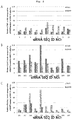
- the expression amount of the target gene of the cell treated with the CTGF (Homo sapiens)-specific siRNA was relatively quantified by using the ⁇ Ct value and calculation formula 2(- ⁇ Ct) ⁇ 100 ( FIG. 2A ). Further, the expression amount of the target gene of the cell treated with the Cyr61(Homo sapiens)-specific siRNA (having sequence of SEQ ID NOs: 101 to 110 as the sense strand) was relatively quantified ( FIG.
- FIG. 2C the expression amount of the target gene of the cell treated with the Plekho1(Homo sapiens)-specific siRNA (having sequence of SEQ ID NOs: 201 to 210 as the sense strand) was relatively quantified.
- Example 6 Selection of target gene-specific siRNA for human with high efficiency in human fibroblast cell line (MRC-5)
- Human fibroblast cell line (MRC-5) was transformed by using siRNAs having sequences of SEQ ID NOs: 1, 3, 4, 8, 9, 10, 102, 104, 105, 106, 107, 108, 109, 204, 206, 207, 208, 209, 210 and 601 selected by Example 5-3-2, as the sense strand, and the expression aspect of the target gene was analyzed in the transformed fibroblast cell line (MRC-5) to select siRNA with high efficiency.
- Example 6-1 Culture of human fibroblast cell line
- Human fibroblast cell line obtained from Korean Cell line bank (KCLB, Korea) was cultured under the same condition as Example 5-1.
- Example 6-2 Transfection of target siRNA into human fibroblast cell line
- 1.8 ⁇ 10 5 fibroblast cell line (MRC-5) cultured by Example 6-1 was cultured in RPMI 1640 medium for 18 hours in 6-well plate under condition of 37°C and 5 %(v/v) CO 2 , and the medium was removed, and 500 ⁇ l of Opti-MEM medium (GIBCO, USA) for each well was dispensed.
- siRNA solutions each having a final concentration of 0.2 or 1 nM were prepared by adding 0.2 or 1 ⁇ l of siRNAs (1 pmole/ ⁇ l) having sequences of SEQ ID NOs: 1, 3, 4, 8, 9, 10, 102, 104, 105, 106, 107, 108, 109, 204, 206, 207, 208, 209, 210 and 601 by Example 1, as the sense strand, to 230 ⁇ l of Opti-MEM medium.
- the LipofectamineTM RNAi Max mixture and the siRNA solution were mixed and reacted at room temperature for 15 minutes, thereby preparing a solution for transfection.
- each transfection solution was dispensed in each well of the tumor cell line containing Opti-MEM dispensed therein, and cultured for 6 hours, and the Opti-MEM medium was removed.
- 1 ml of RPMI 1640 culture medium was dispensed therein and cultured under condition of 37°C and 5%(v/v) CO 2 for 24 hours.
- Example 6-3 Quantitative analysis of target gene mRNA
- cDNA was produced by extracting total RNA from the transfected cell line by Example 6-2 through the same method as Example 4-3, and an mRNA expression amount of the target gene was subjected to relative-quantification by real-time PCR.
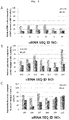
- the inhibition amount of the target gene expression according to low concentration siRNA treatment was observed to clearly confirm each siRNA efficacy, and it was confirmed that siRNAs having sequence of SEQ ID NOs: 8, 107 and 206 as the sense strand showed relatively high level of inhibition for target gene expression even at a significantly low concentration ( FIG. 3 ).
- Example 7 Confirmation of inhibition of target gene expression using target gene-specific siRNA for human in human lung cancer cell line (A549).
- Human lung cancer cell line (A549) which is a lung tumor cell line was transformed by siRNAs having sequences of SEQ ID NOs: 35, 42, 59, 602, 603, 604, 124, 153, 166, 187, 197, 212, 218, 221, 223 and 601 produced by Example 1 as the sense strand, and the expression aspect of the target gene was analyzed in the transformed lung cancer cell line (A549).
- Example 7-1 Culture of human lung cancer cell line
- a human lung cancer cell line obtained from American Type Culture Collection (ATCC) was cultured in DMEM culture medium (GIBCO/Invitrogen, USA, 10% (v/v) fetal bovine serum, penicillin 100 units/ml and 100 ⁇ g/ml of streptomycin) under condition of 37 °C and 5%(v/v) CO 2 .
- DMEM culture medium GIBCO/Invitrogen, USA, 10% (v/v) fetal bovine serum, penicillin 100 units/ml and 100 ⁇ g/ml of streptomycin
- Example 7-2 Transfection of target siRNA into human lung cancer cell line
- Example 7-1 1.2 ⁇ 10 5 lung cancer cell line (A549) cultured by Example 7-1 was cultured in DMEM medium for 18 hours in 6-well plate under condition of 37°C and 5 % (v/v) CO 2 , and the medium was removed, and 500 ⁇ l of Opti-MEM medium (GIBCO, USA) for each well was dispensed.
- siRNA solutions each having a final concentration of 5nM, 1nM, 0.5nM, 0.2nM or 0.04nM were prepared by adding 1 ⁇ l of siRNAs (1 pmole/ ⁇ l) having sequences of SEQ ID NOs: 35, 42, 59, 602, 603, 604, 124, 153, 166, 187, 197, 212, 218, 221 and 223 by Example 1, as the sense strand, to 230 ⁇ l of Opti-MEM medium.
- the LipofectamineTM RNAi Max mixture and the siRNA solution were mixed and reacted at room temperature for 15 minutes, thereby preparing a solution for transfection.
- each transfection solution was dispensed in each well of the tumor cell line containing Opti-MEM dispensed therein, and cultured for 6 hours, and the Opti-MEM medium was removed.
- 1 ml of RPMI 1640 culture medium was dispensed therein and cultured under condition of 37°C and 5%(v/v) CO 2 for 24 hours.
- Example 7-3 Quantitative analysis of target gene mRNA
- cDNA was produced by extracting total RNA from the transfected cell line by Example 7-2, and an mRNA expression amount of the target gene was subjected to relative-quantification by real-time PCR.
- Example 7-3-1 RNA separation from transfected cell and cDNA production
- DEPC diethyl pyrocarbonate
- a process of hybridizing RNA and primers at 30°C for 1 minute by a gene amplifier (MyGenieTM 96 Gradient Thermal Block, BIONEER, Korea) and a process of producing cDNA at 52°C for 4 minutes were repeated 6 times, and then, an amplification reaction was completed by inactivating the enzyme at 90°C for 5 minutes.
- Example 7-3-2 Relative quantitative analysis of target gene mRNA
- a relative amount of the respiratory disease-related gene mRNA was quantified by the following method through real-time PCR having the cDNA produced by Example 7-3-1 as a template.
- cDNA produced by Example 6-3-1 was diluted 5 times with distilled water in each well of 96-well plate. Then, 3 ⁇ l of the diluted cDNA, 25 ⁇ l of 2 ⁇ GreenStarTM PCR master mix (BIONEER, Korea), 19 ⁇ l of distilled water, and 3 ⁇ l of qPCR primers (Table 2; F and R each having 10 pmole/ ⁇ l; BIONEER, Korea) were added thereto to prepare each mixed solution.
- RPL13A ribosomal protein L13a which is a housekeeping gene (hereinafter, referred to as HK gene) was determined as a standard gene to normalize the expression amount of the target gene mRNA.
- the following reaction was performed on 96-well plate containing the mixture by ExicyclerTM 96 Real-Time Quantitative Thermal Block (BIONEER, Korea).
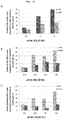
- the expression amount of the target gene of the cell treated with the CTGF (Homo sapiens)-specific siRNA (having sequence of SEQ ID NOs: 132, 42, 59, 602, 603, 604 as the sense strand) was relatively quantified by using the ⁇ Ct value and calculation formula 2( - ⁇ Ct ) ⁇ 100 ( FIG. 4A ). Further, the expression amount of the target gene of the cell treated with the Cyr61(Homo sapiens)-specific siRNA (having sequence of SEQ ID NOs: 124, 153, 166, 187, and 197 as the sense strand) was relatively quantified ( FIG.
- FIG. 4C the expression amount of the target gene of the cell treated with the Plekho1(Homo sapiens)-specific siRNA (having sequence of SEQ ID NOs: 212, 218, 221, and 223 as the sense strand) was relatively quantified.
- siRNAs having sequences of SEQ ID NOs: 42, 59, 602, 124, 153, 187, 197, 212, 218, 221 and 223 in which the mRNA expression amount for each gene at 5 nM concentration is significantly decreased, as the sense strand, were selected.
- Example 8 Inhibition of target gene expression in human lung cancer cell line (A549) by nanoparticle (SAMiRNA) formed of double-helical oligo polymer structure
- Human lung cancer cell line (A549) was transformed by using the nanoparticle formed of SAMiRNA LP including siRNA having sequences of SEQ ID NOs: 42, 59, 602, 124, 153, 187, 197, 212, 218, 221 and 223 selected by Example 7-3-2, as the sense strand, and the expression aspect of the target gene was analyzed in the transformed lung cancer cell line (A549).
- Example 8-1 Culture of human lung cancer cell line
- Human lung cancer cell line (A549) obtained from American Type Culture Collection (ATCC) was cultured under the same condition as Example 7-1.
- Example 8-2 Transfection of target SAMiRNA into human lung cancer cell line
- Example 8-1 1.2 ⁇ 10 5 lung cancer cell line (A549) cultured by Example 8-1 was cultured in RPMI 1640 medium for 18 hours in 12-well plate under condition of 37°C and 5 %(v/v) CO 2 , and the medium was removed, and the same amount of Opti-MEM medium (GIBCO, USA) for each well was dispensed. 100 ⁇ l of Opti-MEM medium and SAMiRNALP and monoSAMiRNALP produced by Example 4-2 were added to DPBS at a concentration of 50 ⁇ g/ml, the obtained mixture was freeze-dried at -75°C and 5mTorr condition for 48 hours by the same method as Example 4-1 to produce homogenized nanoparticles.
- each well of the tumor cell line in which the Opti-MEM is dispensed was treated with a transfection solution at a concentration of 200 nM, and cultured at 37°C and 5 %(v/v) CO 2 for the total of 48 hours.
- Example 8-3 Relative-quantitative analysis of target gene mRNA
- cDNA was produced by extracting total RNA from the transfected cell line by Example 8-2 through the same method as Example 6-3, and an mRNA expression amount of the target gene was subjected to relative quantification by real-time PCR.
- the inhibition amount of the target gene expression according to low concentration siRNA treatment was observed to clearly confirm each siRNA efficacy, and it was confirmed that siRNAs having sequence of SEQ ID NOs: 42, 59 and 602 as the sense strand showed relatively high level of inhibition for target gene expression even at a significantly low concentration ( FIG. 5 ).
- Example 9 Confirmation of inhibition of target gene expression using target gene-specific siRNA for mouse in mouse fibroblast cell line (NIH3T3).
- Mouse fibroblast (NIH3T3) which is a fibroblast cell line was transformed by siRNAs having sequences of SEQ ID NOs: 301 to 330, 401 to 430, 501 to 530 and 601 produced by Example 1 as the sense strand, and an expression aspect of the target gene was analyzed in the transformed fibroblast cell line (NIH3T3).
- Example 9-1 Culture of mouse fibroblast cell line
- a mouse fibroblast cell line obtained from American Type Culture Collection (ATCC) was cultured in RPMI-1640 culture medium (GIBCO/Invitrogen, USA, 10% (v/v) fetal bovine serum, penicillin 100 units/ml and 100 ⁇ g/ml of streptomycin) under condition of 37 °C and 5%(v/v) CO 2 .
- Example 9-2 Transfection of target siRNA into mouse fibroblast cell line
- fibroblast cell line (NIH3T3) cultured by Example 9-1 was cultured in RPMI 1640 medium for 18 hours in 12-well plate under condition of 37°C and 5 %(v/v) CO 2 , and the medium was removed, and 500 ⁇ l of Opti-MEM medium (GIBCO, USA) for each well was dispensed.
- RNAi Max 1.5 ⁇ l of LipofectamineTM RNAi Max (Invitrogen, USA) was mixed with 248.5 ⁇ l of Opti-MEM medium to prepare a mixed solution, and the mixed solution was reacted at room temperature for 5 minutes.
- the LipofectamineTM RNAi Max mixture and the siRNA solution were mixed and reacted at room temperature for 20 minutes, thereby preparing a solution for transfection.
- each transfection solution was dispensed in each well of the tumor cell line containing Opti-MEM dispensed therein, and cultured for 6 hours, and the Opti-MEM medium was removed.
- 1 ml of RPMI 1640 culture medium was dispensed therein and cultured under condition of 37°C and 5%(v/v) CO 2 for 24 hours.
- Example 9-3 Quantitative analysis of target gene mRNA
- cDNA was produced by extracting total RNA from the transfected cell line by Example 9-2 through the same method as Example 5-3, and an mRNA expression amount of the target gene was subjected to relative quantification by real-time PCR.
- the expression amount of the target gene of the cell treated with the CTGF (Mus musculus)-specific siRNA (having sequence of SEQ ID NOs: 301 to 330 as the sense strand) was relatively quantified ( FIG. 6A ). Further, the expression amount of the target gene of the cell treated with the Cyr61(Mus musculus)-specific siRNA (having sequence of SEQ ID NOs: 401 to 430 as the sense strand) was relatively quantified ( FIG. 6B ), and the expression amount of the target gene of the cell treated with the Plekho1(Mus musculus)-specific siRNA (having sequence of SEQ ID NOs: 501 to 530 as the sense strand) was relatively quantified ( FIG. 6C ).
- siRNA having sequence of SEQ ID NO: 301, 302, 303, 305, 306, 307, 309, 317, 323 or 329 in which the mRNA expression amount for CTGF(Mus musculus) at 20 nM concentration is significantly decreased, as the sense strand was selected, siRNA having sequence of SEQ ID NO: 409, 410, 415, 417, 418, 420, 422, 424, 427 or 429 in which the mRNA expression amount for Cyr61(Mus musculus) at 20 nM concentration is significantly decreased, as the sense strand, was selected, and siRNA having sequence of SEQ ID NO: 504, 505, 506, 507, 514, 515, 522, 523, 524 or 525 in which the mRNA expression amount for Plekhol(Mus musculus) at 20 nM
- siRNA having sequence of SEQ ID NO: 301, 303, 307 or 323 in which the mRNA expression amount for CTGF(Mus musculus) at 5 nM concentration is significantly decreased, as the sense strand was selected, siRNA having sequence of SEQ ID NO: 410, 422, or 424 in which the mRNA expression amount for Cyr61(Mus musculus) at 5 nM concentration is significantly decreased, as the sense strand, was selected, and siRNA having sequence of SEQ ID NO: 507, 515, or 525 in which the mRNA expression amount for Plekho1(Mus musculus) at 5 nM concentration is significantly decreased, as the sense strand, was selected ( FIG. 7 ).
- the expression aspect of the target gene was analyzed in the mouse fibroblast cell line (NIH3T3) using siRNAs having sequences of SEQ ID NOs: 301, 303, 307, 323, 410, 422, 424, 507, 515, 525 and 601 selected by Example 9-3, as the sense strand, to select siRNA with high efficiency.
- Example 10-1 Culture of mouse fibroblast cell line
- Mouse fibroblast cell line (NIH3T3) obtained from American Type Culture Collection (ATCC) was cultured under the same condition as Example 9-1.
- Example 10-2 Transfection of target siRNA into mouse fibroblast cell line
- fibroblast cell line (NIH3T3) cultured by Example 10-1 was cultured in RPMI 1640 medium for 18 hours in 12-well plate under condition of 37°C and 5 %(v/v) CO 2 , and the medium was removed, and 500 ⁇ l of Opti-MEM medium (GIBCO, USA) for each well was dispensed.
- RNAi Max 1.5 ⁇ l of LipofectamineTM RNAi Max (Invitrogen, USA) was mixed with 248.5 ⁇ l of Opti-MEM medium to prepare a mixed solution, and the mixed solution was reacted at room temperature for 5 minutes.
- the LipofectamineTM RNAi Max mixture and the siRNA solution were mixed and reacted at room temperature for 20 minutes, thereby preparing a solution for transfection.
- each transfection solution was dispensed in each well of the tumor cell line containing Opti-MEM dispensed therein, and cultured for 6 hours, and the Opti-MEM medium was removed.
- 1 ml of RPMI 1640 culture medium was dispensed therein and cultured under condition of 37°C and 5%(v/v) CO 2 for 24 hours.
- Example 10-3 Quantitative analysis of target gene mRNA
- cDNA was produced by extracting total RNA from the transfected cell line by Example 10-2 through the same method as Example 5-3, and an mRNA expression amount of the target gene was subjected to relative quantification by real-time PCR.
- the expression amount of the target gene of the cell treated with the CTGF (Mus musculus)-specific siRNA (having sequence of SEQ ID NOs: 301, 303, 307, and 323 as the sense strand) was relatively quantified ( FIG. 8A ).
- the expression amount of the target gene of the cell treated with the Cyr61 (Mus musculus)-specific siRNA (having sequence of SEQ ID NOs: 410, 422 and 424, as the sense strand) was relatively quantified ( FIG.
- FIG. 8C the expression amount of the target gene of the cell treated with the Plekho1 (Mus musculus)-specific siRNA (having sequence of SEQ ID NOs: 507, 515, and 525 as the sense strand) was relatively quantified.
- each target gene-specific siRNA inhibits the expression of the target gene in a concentration-dependent manner, and it was confirmed that siRNAs having sequences of SEQ ID NOs: 307, 424 and 525 as the sense strand showed relatively high level of inhibition for target gene expression even at a significantly low concentration, to select siRNA with high efficiency.
- Example 11 Confirmation of inhibition of target gene expression using target gene-specific siRNA for human in mouse fibroblast cell line (NIH3T3).
- biopharmaceuticals have species-specific action sites such as protein structure or gene sequence
- identity of treatment drug is significantly important for securing efficiency in developing biopharmaceutical novel drug.
- Gene sequence homology between the target gene-specific siRNA for human and the target gene-specific siRNA for mouse designed in Example 1 was analyzed to select siRNA sequences that may confirm the inhibition effect of the target gene expression in the mouse fibroblast cell.
- the selected siRNA sequences are siRNAs having sequences of SEQ ID NOs: 4, 5, 6, 8, 9, 102, 104, 105, 107, 108, 109, 202, 204, 206, 207, 208 and 209, as the sense strand, which are the target gene-specific siRNAs for human produced by Example 1, siRNAs having sequences of SEQ ID NOs: 307, 424 and 525, as the sense strand, which are the target gene-specific siRNAs for mouse, and siRNA having sequence of SEQ ID NO: 601, as the sense strand, which is a control group.
- the expression aspect of the target gene was analyzed in the mouse fibroblast cell line (NIH3T3) using these selected siRNAs, and efficacy thereof was confirmed in the mouse cell of siRNA designed based on the human gene.
- Example 11-1 Culture of mouse fibroblast cell line
- Mouse fibroblast cell line (NIH3T3) obtained from American Type Culture Collection (ATCC) was cultured under the same condition as Example 9-1.
- Example 11-2 Transfection of target siRNA into mouse fibroblast cell line
- 1.8 ⁇ 10 5 fibroblast cell line (NIH3T3) cultured by Example 11-1 was cultured in RPMI 1640 medium for 18 hours in 6-well plate under condition of 37°C and 5 %(v/v) CO 2 , and the medium was removed, and 500 ⁇ l of Opti-MEM medium (GIBCO, USA) for each well was dispensed.
- siRNA solutions each having a final concentration of 5 or 20 nM were prepared by adding 5 or 20 ⁇ l of siRNAs (1 pmole/ ⁇ l) having sequences of SEQ ID NOs: 4, 5, 6, 8, 9, 102, 104, 105, 107, 108, 109, 202, 204, 206, 207, 208, 209, 307, 424, 525 and 601 produced by Example 1, as the sense strand, to 230 ⁇ l of Opti-MEM medium.
- the LipofectamineTM RNAi Max mixture and the siRNA solution were mixed and reacted at room temperature for 15 minutes, thereby preparing a solution for transfection.
- each transfection solution was dispensed in each well of the tumor cell line containing Opti-MEM dispensed therein, and cultured for 6 hours, and the Opti-MEM medium was removed.
- 1 ml of RPMI 1640 culture medium was dispensed therein and cultured under condition of 37°C and 5%(v/v) CO 2 for 24 hours.
- Example 11-3 Quantitative analysis of target gene mRNA
- cDNA was produced by extracting total RNA from the transfected cell line by Example 11-2 through the same method as Example 5-3, and an mRNA expression amount of the target gene was subjected to relative quantification by real-time PCR.
- the expression amount of the target gene of the cell treated with the CTGF (Mus musculus)-specific siRNA (SEQ ID NO: 307) or treated with the CTGF (Homo sapiens)-specific siRNA (SEQ ID NO: 4, 5, 6, 8 or 9) was relatively quantified ( FIG. 9A ).
- the expression amount of the target gene of the cell treated with Cyr61(Mus musculus)-specific siRNA (having a sequence of SEQ ID NO: 424 as the sense strand) or treated with Cyr61(Homo sapiens)-specific siRNA (having a sequence of SEQ ID NO: 102, 104, 105, 107, 108 or 109 as the sense strand) was relatively quantified ( FIG.
- each target gene-specific siRNA for human inhibits the expression of the target gene according to sequence homology, and it was confirmed that siRNAs having sequences of SEQ ID NOs: 6, 8, 102, 104, 105, 204, 207 and 208 as the sense strand showed relatively high level of inhibition for target gene expression at 20nM, and among them, IC50(inhibition concentration 50%) was less than 20nM in siRNAs having sequences of SEQ ID NOs: 6, 102 and 207 even in mouse cell lines. Therefore, it was confirmed that relatively high level of inhibition for target gene expression was maintained even at a low concentration, that is, these siRNAs had high efficiency ( FIG. 10 ).
- the CTGF-specific siRNA according to the present invention, the double-helical oligo RNA structure containing the siRNA, and the pharmaceutical composition containing the double-helical oligo RNA structure for treatment are capable of inhibiting expression of CTGF, Cyr61 or Plekho1 at a high efficiency without side effects to provide treatment effects for respiratory diseases, particularly, idiopathic pulmonary fibrosis and chronic obstructive pulmonary disease (COPD), which may be significantly usefully used for treating respiratory diseases in which there is no appropriate therapeutic agent at present, particularly, idiopathic pulmonary fibrosis and chronic obstructive pulmonary disease (COPD).
- COPD chronic obstructive pulmonary disease
Landscapes
- Health & Medical Sciences (AREA)
- Life Sciences & Earth Sciences (AREA)
- Engineering & Computer Science (AREA)
- Chemical & Material Sciences (AREA)
- Genetics & Genomics (AREA)
- Organic Chemistry (AREA)
- Bioinformatics & Cheminformatics (AREA)
- General Health & Medical Sciences (AREA)
- Biomedical Technology (AREA)
- Medicinal Chemistry (AREA)
- Veterinary Medicine (AREA)
- Animal Behavior & Ethology (AREA)
- Pharmacology & Pharmacy (AREA)
- Public Health (AREA)
- Molecular Biology (AREA)
- Biotechnology (AREA)
- Nuclear Medicine, Radiotherapy & Molecular Imaging (AREA)
- General Chemical & Material Sciences (AREA)
- Chemical Kinetics & Catalysis (AREA)
- Zoology (AREA)
- Wood Science & Technology (AREA)
- General Engineering & Computer Science (AREA)
- Pulmonology (AREA)
- Biochemistry (AREA)
- Biophysics (AREA)
- Plant Pathology (AREA)
- Microbiology (AREA)
- Physics & Mathematics (AREA)
- Endocrinology (AREA)
- Otolaryngology (AREA)
- Epidemiology (AREA)
- Immunology (AREA)
- Oncology (AREA)
- Communicable Diseases (AREA)
- Pain & Pain Management (AREA)
- Rheumatology (AREA)
- Pharmaceuticals Containing Other Organic And Inorganic Compounds (AREA)
- Medicinal Preparation (AREA)
- Medicines That Contain Protein Lipid Enzymes And Other Medicines (AREA)
- Saccharide Compounds (AREA)
Description
- The present invention relates to a respiratory disease-related gene-specific siRNA and a high efficient structure comprising double helical-oligo RNA ('double helical-oligo RNA structure') containing the siRNA. The double helical-oligo RNA structure has a structure in which a hydrophilic material and a hydrophobic material are conjugated to both ends of double helical RNA (siRNA) by using a simple covalent bond or a linker-mediated covalent bond so as to be effectively delivered into cells, wherein the structure may be converted into a nanoparticle form by hydrophobic interactions of the double helical-oligo RNA structures in an aqueous solution. The siRNA included in the double helical-oligo RNA structure is preferably a siRNA specific to CTGF, Cyr61, or Plekhol (hereinafter, referred to as a CTGF, Cyr61 or Plekhol-specific siRNA), which is a gene related with respiratory diseases, particularly, idiopathic pulmonary fibrosis and chronic obstructive pulmonary disease (COPD).
- Further, the present invention relates to a method for producing the double-helical oligo RNA structure and a pharmaceutical composition containing the double-helical oligo RNA structure for preventing or treating respiratory diseases, particularly, idiopathic pulmonary fibrosis and COPD.
- Technologies for inhibiting gene expression are important tools in the development of a therapeutic agent and target validation for treating diseases. Among the technologies, since a role of an RNA interference (hereinafter, referred to as 'RNAi') had been found, it was found that the RNA interference acts on a sequence-specific mRNA in various kinds of mammalian cells (Silence of the transcripts: RNA interference in medicine. J. Mol. Med. (2005) 83: 764-773. When a long-chain double-stranded RNA is delivered into a cell, the delivered double-stranded RNA is converted into a small interfering RNA (hereinafter, referred to as 'siRNA') which is processed to 21 to 23 base pairs (bp) by Dicer endonuclease. siRNA is bonded to an RNA-induced silencing complex (RISC), whereby a guide (antisense) strand recognizes and decomposes a target mRNA to sequence-specifically inhibit expression of a target gene (NUCLEIC-ACID THERAPEUTICS: BASIC PRINCIPLES AND RECENT APPLICATIONS. Nature Reviews Drug Discovery. 2002. 1, 503-514).
- Bertrand et al., found that as compared to an antisense oligonucleotide (ASO) on the same target gene, siRNA has an effect of significantly inhibiting mRNA expression in vitro and in vivo, and the corresponding effect is maintained for a long time (Comparison of antisense oligonucleotides and siRNAs in cell culture and in vivo. Biochem. Biophys. Res. Commun. 2002. 296: 1000-1004. In addition, since siRNA is complementarily coupled to a target mRNA to sequence-specifically regulate an expression of the target gene, a mechanism of the siRNA has an advantage in that a target to be applicable may be remarkably increased as compared to the existing antibody-based medical product or chemical pharmaceuticals (small molecular drug) (Progress Towards in Vivo Use of siRNAs. MOLECULAR THERAPY. 2006 13(4):664-670).
- In order to develop the siRNA as a therapeutic agent even with excellent effect and variously usable range of the siRNA, the siRNA needs to be effectively delivered to a target cell with improved stability and a more efficient cell delivery of the siRNA (Harnessing In Vivo siRNA Delivery for Drug Discovery and Therapeutic Development. Drug Discov. Today. 2006 Jan; 11(1-2):67-73.
- In order to solve the problems, research into modification of some nucleotides or backbone of siRNA to have a nucleic acid lyase resistance, or use of carriers such as viral vectors, liposomes or nanoparticles, etc. for improving stability in vivo, has been actively attempted.
- Delivery systems using viral vectors such as adenovirus, retrovirus, etc, have high transfection efficacy, and also have high immunogenicity and oncogenicity. Meanwhile, a non-viral delivery system including nanoparticles has a low cell delivery efficiency as compared to the viral delivery system, but has high stability in vivo and is possible to be target-specifically delivered, has highly improved delivery effects such as uptake, internalization, etc., of RNAi oligonucleotide into cells or tissues, and rarely has cytotoxicity and immune stimulation, such that the non-viral delivery system is currently evaluated as a viable delivery method as compared to the viral delivery systems (Nonviral delivery of synthetic siRNA s in vivo. J Clin Invest. 2007 December 3; 117(12): 3623-3632).
- In a method using a nanocarrier in the non-viral delivery systems, various polymers such as liposomes, cationic polymer composites, etc., are used to form nanoparticles, and a siRNA is supported on the nanoparticles, that is, nanocarrier, to be delivered into the cells. Among the methods using nanocarriers, a method using polymeric nanoparticle, polymer micelle, lipoplex, or the like, is mainly used, wherein the lipoplex consists of cationic lipid to interact with anionic lipid of endosome of a cell, thereby eliciting a destabilization effect of the endosome to deliver the siRNA into a cell (Proc. Natl. Acad. Sci. 15; 93(21):11493-8, 1996).
- In addition, it is known that chemical materials, etc., are connected to end portions of a siRNA passenger (sense) strand to provide promoted pharmacokinetics characteristics, such that high efficacy may be induced in vivo (Nature 11; 432(7014):173-8, 2004). Here, stability of the siRNA may vary depending on properties of the chemical materials bonded to ends of the siRNA sense (passenger) or antisense (guide) strand. For example, a siRNA to which a polymer compound such as polyethylene glycol (PEG) is conjugated, interacts with an anionic phosphate group of siRNA in the presence of cationic materials to form a complex, thereby being a carrier having an improved siRNA stability (J. Control Release 129(2):107-16, 2008). In particular, micelle consisting of polymer complexes has an extremely small size, significantly uniform distribution, and is spontaneously form, thereby being easy to manage quality of formulation and secure reproducibility, as compared to other systems used as a drug delivery vehicle, such as microsphere, nanoparticle, etc.
- Further, in order to improve an intracellular delivery efficiency of siRNA, technology of using a siRNA conjugate in which hydrophilic material which is a biocompatible polymer (for example, polyethylene glycol (PEG)) is conjugated to the siRNA by a simple covalent bond or a linker-mediated covalent bond, to thereby secure stability of siRNA and have effective cell membrane permeability was developed (see Korean Patent Publication No.
883471 1224828 - As a specific example of the SAMiRNA™ technology, PEG (polyethylene glycol) is used as a hydrophilic material, wherein PEG is synthetic polymer, which is used for increasing solubility of pharmaceuticals, particularly, protein, and for controlling pharmacokinetics. PEG is a polydisperse material, a polymer in one batch consists of the sum of different number of monomers, a molecular weight is shown in the Gaussian curve, and polydispersity values (Mw/Mn) express the homogeneity degree of a material. That is, when PEG has a low molecular weight (3 to 5 kDa), the polydisperse value is about 1.01, and when PEG has a high molecular weight (20 kDa), the polydisperse value is about 1.2, which is high, such that as the molecular weight is higher, the homogeneity of the material is relatively low (F. M. Veronese. Peptide and protein PEGylation: a review of problems and solutions. Biomaterials (2001) 22:405-417). Accordingly, when the PEG is combined to the pharmaceuticals, polydispersed characteristic of PEG is reflected on the conjugate, such that it is not easy to perform verification of single material, and accordingly, production of materials having a low polydisperse value through synthesis of PEG and improvement of purification processes is on a rising trend, but has still problems due to polydispersed characteristic of the material, particularly, when PEG is combined to a material having a small molecular weight, there is difficult in confirming whether or not the combination is easily performed, etc. (Francesco M. Veronese and Gianfranco Pasut. PEGylation, successful approach to drug delivery. DRUG DISCOVERY TODAY (2005) 10(21):1451-1458).
- Accordingly, recently, as an improved technology of SAMiRNA™ which is the existing self-assembled nanoparticles, a technology of a new form of carrier having a significantly small size as compared to the existing SAMiRNA™ and remarkably improved polydispersity has been developed by blocking the hydrophilic material of the double helical RNA structure configuring SAMiRNA™ as a base unit including 1 to 15 uniform monomers having a predetermined molecular weight and a linker as needed, and using the appropriate number of blocked hydrophilic materials as needed.
- Meanwhile, since biopharmaceuticals specifically act to a target gene sequence or a protein structure, in order to evaluate the efficacy and safety in a non-clinical surrogate model, a material acting with the same mechanism as the corresponding biopharmaceuticals in human is additionally required even in species of the surrogate model. Therefore, in order to avoid difficulty in additionally finding the material including the same mechanism as human, a material acting with the same mechanism both in human (treatment target) in the mouse (the non-clinical surrogate model), is required to be developed.
- Idiopathic Pulmonary Fibrosis (hereinafter, abbreviated as 'IPF') is a disease in which chronic inflammatory cells penetrate into a wall of an alveolar wall (lung alveolus) to make the lung become hard, causing severe structural change in lung tissue, such that lung function is gradually reduced to induce death. However, an effective treatment thereof does not exist yet, and Idiopathic Pulmonary Fibrosis is generally diagnosed when symptoms appear at last, and has extremely bad prognosis since a median survival time is only about three to five years. It is reported that the incidence frequency of the foreign countries is about 3-5 people per 100,000, and it is known that the incidence is generally high after the age of 50, and men have a two-times higher incidence than women.
- The cause of IPF has not been clearly identified yet, and it is merely reported that high frequency is shown in smokers, antidepressants, chronic pulmonary inhalation due to gastroesophageal reflux, metal dust, wood dust, solvent inhalation, etc., are regarded as risk factors related with IPF occurrence. However, definitive causal factors cannot be found in the majority of patients.
- It is known that IPF is continuously worsen with no treatment, and about 50% of patients die within 3-5 years, and once a lung is completely hardened by fibrosis as the disease progresses, there is no improvement despite any treatment, and accordingly, it is predicted that an early treatment increases efficacy. As the currently used therapeutic agent, a combination therapy method using steroid and azathioprine or cyclophosphamide, has been known, but it is difficult to say that there are special effects, and attempts of several fibrosis inhibitors in animal experiments and small group of patients failed in proving clear effects. In particular, there is no other effective treatment in patients with end-stage IPF, in addition to lung transplantation. Therefore, development of more effective therapeutic agent against IPF is desperately required.
- Meanwhile, COPD, one of representative lung diseases together with asthma, is different from asthma in that it is accompanied by irreversible airway obstruction, and is a respiratory disease which is accompanied by abnormal inflammatory response of lung caused by repeated infection, harmful particles, gas inlet or smoking, and is not fully reversible, but shows increasingly progressed airflow limitation (Pauwels et al, Am J Respir Crit Care Med, 163:1256-1276, 2001). COPD is a disease caused by pathological changes of bronchioles and lung parenchyma by airway and lung parenchyma inflammation, and is characterized by obstructive bronchiolitis and emphysema (destruction of lung parenchyma). Types of COPD include chronic obstructive bronchitis, chronic bronchiolitis and emphysema. In COPD, the number of neutrophils is increased, and secretion of cytokines such as GM-CSF, TNF-α, IL-8, and MIP-2 is increased. Further, airway inflammation, a thickened muscle wall, and bronchial closure due to increased mucus secretion are also shown. When bronchus is closed, alveoli are expanded and damaged, such that an exchange ability of oxygen and carbon dioxide is damaged to increase respiratory failure.
- The severity of COPD is emerging around the world since it is predicted that COPD ranked 6th in 1990 among causes of death due to disease, but will rank in third place in 2020, and is the only disease of which the incidence is increased in 10 diseases. COPD has a high prevalence rate, causes a respiratory disorder, and requires a large amount of direct medical costs required for diagnosis and treatment of COPD, and a significant amount of indirect expenses such as losses due to dyspnea and leave of absence or loss due to premature death, which is a social and economic problem in the world (Chronic obstructive pulmonary disease (COPD) treatment guidelines 2005. Chronic obstructive airway disease Clinical Research Center, p.30-31).
- Existing therapeutic drugs have not been confirmed as relieving reduction in long time lung function which is a characteristic of COPD. Accordingly, drug treatment in COPD has a main purpose of reducing symptoms or complications. Among the therapeutic drugs, a bronchodilator is a typical COPD allopathic drug, and an anti-inflammatory drug or corticosteroid is usually prescribed, but the effect is not significant, the application range is narrow, and there is great concern for side effects. As other drugs, it is known that only the influenza vaccine reduces serious symptoms and death by about 50% in patients with COPD (chronic obstructive pulmonary disease (COPD) treatment guidelines 2005. Chronic obstructive airway disease Clinical Research Center. p.52-58).
- Meanwhile, many genetic factors are estimated as increasing (or decreasing) the risk of individual COPD. A genetic risk factor which has been demonstrated so far is genetic deficiency of α1-antitrypsin. Smoking significantly increases the risk of COPD, but occurrence of panlobular emphysema and reduction in lung function that rapidly progress at a young age are shown by both of smokers and non-smokers having significant genetic deficiency. Although other genes confirmed to be related with the COPD pathogenesis do not exist yet in addition to α1-antitrypsin, attempt for identifying biomarkers of the disease to be utilized for diagnosis through research into cellular, molecular, and genetic abnormal states that are basically shown in patients with COPD or attempt for finding a new treatment method is being progressed (P.J. Barnes and R.A. Stockely. COPD: current therapeutic interventions and future approaches. Eur Respir J. (2005) 25:1084-1106. In particular, research into diagnosis of COPD and selection of target for treatment through methods such as gene microarray, proteomics, etc., has been actively conducted, and analyses of genetic factors for obtaining COPD sensitivity (susceptibility) and causes of the worsen COPD symptoms induced by smoking have been mainly conducted (Peter J. Castaldi et al. The COPD genetic association compendium. Human Molecular Genetics, 2010, Vol. 19, No. 3 526-534).
- CTGF (connective tissue growth factor; CCN2), which is one of matricellular proteins included in CCN family, is known to be a secretion cytokine involved in various biological processes such as cell adhesion, migration, proliferation, angiogenesis, wound repair, etc. Over-expression of CTGF is regarded as being main cause of symptoms such as scleroderma, fibrotic disease, and scar formation (Brigstock DR. Connective tissue growth factor (CCN2, CTGF) and organ fibrosis: lessons from transgenic animals. J Cell Commun Signal (2010) 4 (1): 1-4).In particular, regarding fibrosis, CTGF is known to cause sustained fibrosis together with TGF-β (Transforming growth factor-β) or to promote production of ECM (extracelluar matrix) under a condition in which fiber formation is caused, and recently, it is known to be capable of treating ocular disorders or muscular dystrophy caused by abnormal expression of CTGF by treating samples or materials that hinder expression of CTGF or inhibiting action thereof, but relevancy with a respiratory disease has not been suggested (
U.S. Patent No. 7,622,454 , and U.S Patent Application Publication No.20120164151 ). - CYR61 (Cysteine-rich angiogenic inducer 61) is an extracelluar matrix (ECM)-related signaling protein included in CCN family, which is known to control various cellular activities such as cell adhesion, migration, proliferation, differentiation, apoptosis, etc. The purified CYR61 promotes attachment and spreading of endothelial cells in a similar manner to fibronectin, and does not have mitogenic activity, but acts to reinforce a mitogen effect of a fibroblast growth factor (MARIA L. KIREEVA et al. Cyr61, a Product of a Growth Factor-Inducible Immediate-Early Gene, Promotes Cell Proliferation, Migration, and Adhesion. MOLECULAR AND CELLULAR BIOLOGY, Apr. 1996, p. 1326-1334).
- It is reported that Plekhol (Pleckstrin homology domain-containing family O member 1) is present in a plasma membrane or nucleus, acts as a non-enzymatic regulator of protein kinase CK2α1(
Casein kinase 2, alpha 1), and is involved in apoptosis by inhibition of AP-1 action through C-terminal piece produced when being decomposed by Caspase 3 (Denis G. Bosc et al. Identification and Characterization of CKIP-1, a Novel Pleckstrin Homology Domain-containing Protein That Interacts with Protein Kinase CK2. The Journal of Biological Chemistry(2000) 275, 14295-14306; Lingqiang Zhang et al. Role for the pleckstrin homology domain containing protein CKIP-1 in AP-1 regulation and apoptosis. The EMBO Journal (2005) 24, 766-778). - As described above, prevalence of the respiratory diseases, particularly, idiopathic pulmonary fibrosis and COPD has increased, but therapeutic agents being capable of basically preventing and treating the idiopathic pulmonary fibrosis and COPD do not exist yet. Therefore, the demand for the therapeutic agent for the idiopathic pulmonary fibrosis and COPD showing high level of prevention and treatment effects without side effects is significantly largely present in the market.
-
WO 2011/119887 A1 discloses a double-stranded ribonucleic acid (dsRNA) comprising a sense strand and an antisense strand wherein the antisense strand is complementary to at least 12 contiguous nucleotides and wherein the dsRNA is an sd-rxRNA. -
US 2008/0108583 A1 discloses inhibitors, in particular siRNAs, which down-regulate the expression of human pro-apoptotic genes.US 2013/0096288 A1 discloses a hybrid conjugate formed by covalently bonding siRNA and a polymeric compound for improving the vivo stability of siRNA. - The embodiment of the present invention is reflected in
claim 1.
Preferred embodiments are reflected independent claims 2 to 12. - An object of the present invention is to provide a novel siRNA specific to CTGF (hereinafter, referred to as a CTGF-specific siRNA), capable of inhibiting expression thereof at a significantly high efficiency, a double helical-oligo RNA structure.
- Another object of the present invention is to provide a pharmaceutical composition including the CTGF-specific siRNA or the double-helical oligo RNA structure containing the siRNA as an effective component, for preventing or treating respiratory diseases, particularly, idiopathic pulmonary fibrosis and COPD.
- Another object of the present invention is to provide a method for preventing or treating respiratory diseases, particularly, idiopathic pulmonary fibrosis and COPD, by using the CTGF-specific siRNA or the double-helical oligo RNA structure containing the siRNA.
-
-
FIG. 1 is a schematic diagram of a nanoparticle formed of a double-helical oligo polymer structure according to the present invention. -
FIG. 2 is a graph showing an inhibition amount of target gene expression, confirmed after transforming a human fibroblast cell line with siRNA having sequence of SEQ ID NOs: 1 to 10, 101 to 110, and 201 to 210 as a sense strand according to the present invention.- A : Graph showing CTGF expression amount according to treatment of 5 or 20 nM of siRNA having sequence of SEQ ID NOs: 1 to 10 as a sense strand.
- B : Graph showing Cyr61 expression amount according to treatment of 5 or 20 nM of siRNA having sequence of SEQ ID NOs: 101 to 110 as a sense strand.
- C : Graph showing Plekhol expression amount according to treatment of 5 or 20 nM of siRNA having sequence of SEQ ID NOs: 201 to 210 as a sense strand.
-
FIG. 3 is a graph showing an inhibition amount of target gene expression, confirmed after transforming a human fibroblast cell line with siRNA having sequence of SEQ ID NO: 1, 3, 4, 8, 9, 10, 102, 104, 105, 106, 107, 108, 109, 204, 206, 207, 208, 209 or 210 as a sense strand according to the present invention.- A : Graph showing CTGF expression amount according to treatment of 0.2 or 1 nM of siRNA having sequence of SEQ ID NO: 1, 3, 4, 8, 9 or 10 as a sense strand.
- B : Graph showing Cyr61 expression amount according to treatment of 0.2 or 1 nM of siRNA having sequence of SEQ ID NO: 102, 104, 105, 106, 107, 108 or 109 as a sense strand.
- C : Graph showing Plekhol expression amount according to treatment of 0.2 or 1 nM of siRNA having sequence of SEQ ID NO: 204, 206, 207, 208, 209, or 210 as a sense strand.
-
FIG. 4 is a graph showing an inhibition amount of target gene expression, confirmed after transforming a human lung cancer cell line with siRNA having sequence of SEQ ID NO: 35, 42, 59, 602, 603, 604, 124, 153, 166, 187, 197, 212, 218, 221 or 223 as a sense strand according to the present invention.- A : Graph showing CTGF expression amount according to treatment of 0.04, 0.2 or 1 nM of siRNA having sequence of SEQ ID NO: 35, 42, 59, 602, 603, or 604 as a sense strand.
- B : Graph showing Cyr61 expression amount according to treatment of 0.5, 1 or 5 nM of siRNA having sequence of SEQ ID NO: 124, 153, 166, 187, or 197 as a sense strand.
- C : Graph showing Plekhol expression amount according to treatment of 0.5, 1 or 5 nM of siRNA having sequence of SEQ ID NO: 212, 218, 221 or 223 as a sense strand.
-
FIG. 5 is a graph showing an inhibition amount of target gene expression, confirmed after transforming a human lung cancer cell line with SAMiRNA having sequence of SEQ ID NO: 42, 59, or 602 as a sense strand according to the present invention. -
FIG. 6 is a graph showing an inhibition amount of target gene expression, confirmed after transforming a mouse fibroblast cell line with siRNA having sequence of SEQ ID NOs: 301 to 330, 401 to 430, 501 to 530 as a sense strand according to the present invention.- A : Graph showing CTGF expression amount according to treatment of 20 nM of siRNA having sequence of SEQ ID NOs: 301 to 330 as a sense strand.
- B : Graph showing Cyr61 expression amount according to treatment of 20 nM of siRNA having sequence of SEQ ID NOs: 401 to 430 as a sense strand.
- C : Graph showing Plekhol expression amount according to treatment of 20 nM of siRNA having sequence of SEQ ID NOs: 501 to 530 as a sense strand.
-
FIG. 7 is a graph showing an inhibition amount of target gene expression, confirmed after transforming a mouse fibroblast cell line with siRNA having sequence of SEQ ID NO: 404 to 406, 408 to 410, 414 to 418, 420 to 422, 424, 427, 429, 430, 503 to 509, 514 to 517, 519, 521 to 526 or 528 as a sense strand according to the present invention.- A: Graph showing Cyr61 expression amount according to treatment of 5 nM of siRNA having sequence of SEQ ID NOs: 404 to 406, 408 to 410, 414 to 418, 420 to 422, 424, 427, 429, or 430 as a sense strand.
- B : Graph showing Plekhol expression amount according to treatment of 5 nM of siRNA having sequence of SEQ ID NO: 503 to 509, 514 to 517, 519, 521 to 526 or 528 as a sense strand.
-
FIG. 8 is a graph showing an inhibition amount of target gene expression, confirmed after transforming a mouse fibroblast cell line with siRNA having sequence of SEQ ID NO: 301, 303, 307, 323, 410, 422, 424, 507, 515 or 525 as a sense strand according to the present invention.- A : Graph showing CTGF expression amount according to treatment of 0.2, 1, or 5 nM of siRNA having sequence of SEQ ID NO: 301, 303, 307 or 323 as a sense strand.
- B : Graph showing Cyr61 expression amount according to treatment of 0.2, 1, or 5 nM of siRNA having sequence of SEQ ID NO: 410, 422 or 424 as a sense strand.
- C : Graph showing Plekhol expression amount according to treatment of 0.2, 1 or 5 nM of siRNA having sequence of SEQ ID NO: 507, 515 or 525 as a sense strand.
-
FIG. 9 is a graph showing an inhibition amount of target gene expression, confirmed after transforming a mouse fibroblast cell line with siRNA having a SEQ ID NO: 4, 5, 6, 8, 9, 102, 104, 105, 107, 108, 109, 202, 204, 206 to 209, 307, 424 or 525 as a sense strand according to the present invention.- A : Graph showing CTGF expression amount according to treatment of 5 nM of siRNA having sequence of SEQ ID NO: 4, 5, 6, 8, 9 or 307 as a sense strand.
- B : Graph showing Cyr61 expression amount according to treatment of 5 nM of siRNA having sequence of SEQ ID NO: 102, 104, 105, 107, 108, 109 or 424 as a sense strand.
- C : Graph showing Plekhol expression amount according to treatment of 5 nM of siRNA having sequence of SEQ ID NO: 202, 204, 206 to 209 or 525 as a sense strand.
-
FIG. 10 is a graph showing an inhibition amount of target gene expression, confirmed after transforming a mouse fibroblast cell line with siRNA having sequence of SEQ ID NO: 6, 8, 102, 104, 105, 204, 207, 208, 307, 424 or 525 as a sense strand according to the present invention.- A : Graph showing CTGF expression amount according to treatment of 5 or 20 nM of siRNA having sequence of SEQ ID NO: 6, 8 or 307 as a sense strand.
- B : Graph showing Cyr61 expression amount according to treatment of 5 or 20 nM of siRNA having sequence of SEQ ID NO: 102, 104, 105 or 424 as a sense strand.
- C : Graph showing Plekhol expression amount according to treatment of 5 or 20 nM of siRNA having sequence of SEQ ID NO: 204, 207, 208 or 525 as a sense strand.
- In order to achieve the foregoing objects, the present invention provides a CTGF (respiratory diseases-related gene)-specific siRNA consisting of first oligonucleotide which is a sense strand including any one sequence selected from the group consisting of SEQ ID NOs: 1 to 600 and 602 to 604 and a second oligonucleotide which is an antisense strand including a complementary sequence thereto.
- The siRNA in the present invention includes all materials having a general RNAi (RNA interference) action, and accordingly, it is obvious to a person skilled in the art that CTGF-specific siRNA includes CTGF-specific shRNA, etc.
- SEQ ID NOs: 1 to 100, or 602 to 604 are sense strand sequences of CTGF (Homo sapiens)-specific siRNA.
- The siRNA according to the present invention is preferably CTGF-specific siRNA including any one sequence selected from the group consisting of SEQ ID NOs: 1 to 10, 35, 42, 59, 602, 603, 604, 301 to 303, 305 to 307, 309, 317, 323 and 329, as a sense strand,
More preferably, the siRNA according to the present invention is CTGF-specific siRNA including any one sequence selected from the group consisting of SEQ ID NOs: 4, 5, 8, 9, 35, 42, 59, 601, 602, 604, 301, 303, 307 and 323, as a sense strand,
Most preferably, the siRNA according to the present invention is CTGF-specific siRNA including any one sequence selected from the group consisting of SEQ ID NO: 42, 59, 602 and 323, as a sense strand. - In particular, it was confirmed that some of human CTGF-specific siRNA according to the present invention is capable of simultaneously inhibiting expression of mouse CTGF.
- The siRNA capable of simultaneously inhibiting the expression of human and mouse CTGF preferably includes a sense strand of CTGF-specific siRNA according to SEQ ID NO: 6 or 8.
- Most preferably, the siRNA includes a sense strand of CTGF-specific siRNA according to SEQ ID NO: 6.
- The sense strand or the antisense strand of the siRNA according to the present invention preferably has 19 to 31 nucleotides, and the siRNA includes a sense strand including any one sequence selected from SEQ ID NOs: 1 to 604 and an antisense strand complementary thereto.
- Since the CTGF-specific siRNA according to the present invention has a base sequence designed to be capable of being complementarily bonded to mRNA encoding the corresponding gene, expression of the corresponding gene is capable of being effectively inhibited. Further, the CTGF-specific siRNA according to the present invention may include overhang which is a structure including one or two or more unpaired nucleotide(s) at 3' end of the siRNA, and
may include various modifications of the siRNA to provide nucleic acid lyase resistance, and to decrease non-specific immune response for improving stability in vivo. The modification of the first oligonucleotide or the second oligonucleotide configuring the siRNA may be one or more combinations selected from modification in which -OH group at 2' carbon in a sugar structure in one or more nucleotides is substituted with -CH3(methyl), -OCH3 (methoxy), -NH2, -F(fluorine), -O-2-methoxyethyl, -O-propyl, -O-2-methylthioethyl, -O-3-aminopropyl, -O-3-dimethylaminopropyl, -O-N-methylacetamido or -O-dimethylamidooxyethyl; modification in which oxygen in a sugar structure in nucleotides is substituted with sulfur; and modification to phosphorothioate or boranophosphate, methyl phosphonate bindings from nucleotides bindings, or may be modification to peptide nucleic acid (PNA), modification to locked nucleic acid (LNA), or modification to unlocked nucleic acid (UNA) (Ann. Rev. Med. 55, 61-65 2004;US 5,660,985 ;US 5,958,691 ;US 6,531,584 ;US 5,808,023 ;US 6,326,358 ;US 6,175,001 ; Bioorg. Med. Chem. Lett. 14:1139-1143, 2003; RNA, 9:1034-1048, 2003; Nucleic Acid Res. 31:589-595, 2003; Nucleic Acids Research, 38(17) 5761-5773, 2010; Nucleic Acids Research, 39(5) 1823-1832, 2011). - The CTGF-specific siRNA according to the present invention may inhibit expression of the corresponding gene, and may remarkably inhibit expression of the corresponding protein.
- The present invention also provides a conjugate in which a hydrophilic material and a hydrophobic material are conjugated to both ends of siRNA, for effective in vivo delivery and for improving stability, of the respiratory diseases-related gene-specific siRNA, particularly, the CTGF-specific siRNA.
- In the siRNA conjugate in which a hydrophilic material and a hydrophobic material are bonded to the siRNA, a self-assembled nanoparticle is formed by a hydrophobic interaction of the hydrophobic material (see Korean Patent Publication No.
1224828 - In one preferable exemplary embodiment, a double-helical oligo RNA structure containing the CTGF-specific siRNA according to the present invention preferably has a structure represented by the following Structural Formula (1) :
Structural Formula 1 A-X-R-Y-B
In Structural Formula (1), A is a hydrophilic material, B is a hydrophobic material, X and Y are each independently a simple covalent bond or a linker-mediated covalent bond, and R is CTGF-specific siRNA. - More preferably, the double-helical oligo RNA structure containing the CTGF-specific siRNA according to the present invention has a structure represented by the following Structural Formula (2):
Structural Formula 2 A-X-S-Y-B AS
In Structural Formula (2), A, B, X and Y are the same as being defined in Structural Formula (1), S is a sense strand of the CTGF-specific siRNA, and AS is an antisense strand of the CTGF-specific siRNA. - More preferably, the double-helical oligo RNA structure containing the CTGF-specific siRNA according to the present invention has a structure represented by the following Structural Formula (3) or (4):
Structural Formula 3 A-X-5' S 3'-Y-B AS
Structural Formula 4 A-X-3' S S'-Y-B AS
In Structural Formulas (3) and (4), A, B, S, AS, X and Y are the same as being defined in Structural Formula (1), and 5' and 3' mean 5' end and 3' end of the sense strand of the CTGF-specific siRNA. - It is obvious to a person skilled in the art that in Structural Formulas (1) to (4), one to three phosphate group(s) may be bonded to 5' end of the antisense strand of the double-helical oligo RNA structure containing the CTGF-specific siRNA, and shRNA is capable of being used instead of using siRNA.
- The hydrophilic material in Structural Formulas (1) to (4) is preferably a cationic or non-ionic polymer material having a molecular weight of 200 to 10,000, more preferably, a non-ionic polymer material having a molecular weight of 1,000 to 2,000. For example, non-ionic hydrophilic polymer compounds such as polyethylene glycol, polyvinyl pyrrolidone, polyoxazoline, etc., are preferably used as the hydrophilic polymer material, but the present invention is not necessarily limited thereto.
- In particular, the hydrophilic material (A) in Structural Formulas (1) to (4) may be used in a hydrophilic material block form represented by the following Structural Formula (5) or (6), and by using an appropriate number (n in Structural Formula (5) or (6)) of hydrophilic material blocks as needed, problems caused by polydispersibility that may occur in a case of using a general synthetic polymer material, etc., may be largely improved.
Structural Formula 5 (A'm-J)n
Structural Formula 6 (J-A'm)n
In Structural Formula (5), A' is a hydrophilic material monomer, J is a linker for connecting hydrophilic material monomers (the sum is m) therebetween or a linker for connecting hydrophilic material monomers (the sum is m) to siRNA, m is an integer of 1 to 15, n is an integer of 1 to 10, and the repeating unit represented by (A'm-J) or (J-A'm) corresponds to a base unit of the hydrophilic material block. - When the hydrophilic material block is represented by Structural Formula (5) or (6), the double-helical oligo RNA structure containing the CTGF-specific siRNA according to the present invention may have a structure represented by the following Structural Formula (7) or (8):
Structural Formula 7 (A'm-J)n-X-R-Y-B
Structural Formula 8 (J-A'm)n-X-R-Y-B
In Structural Formulas (7) and (8), X, R, Y and B are the same as being defined in Structural Formula (1), and A', J, m and n are the same as being defined in Structural Formulas (5) and (6). - In Structural Formulas (5) and (6), the hydrophilic material monomer A' is usable without limitation as long as it meets the objects of the present invention among the monomers of the non-ionic hydrophilic polymer. The hydrophilic material monomer A' is preferably a monomer selected from the following compounds (1) to (3) shown in Table 1, more preferably, a monomer of the compound (1), and G in the compound (1) may be preferably selected from CH2, O, S and NH.
- In particular, among the hydrophilic material monomers, the monomer of Compound (1) may have various functional groups introduced thereinto and good affinity in vivo, and induce a little immune response, thereby having excellent bio-compatibility, and further, may increase stability in vivo of the oligonucleotide included in the structure of Structural Formula (7) or (8), and may increase delivery efficiency, which is significantly suitable for producing the structure according to the present invention.
[Table 1] Monomer structure of hydrophilic material in the present invention Compound (1) Compound (2) Compound (3) 


G is O, S or NH - In particular, the hydrophilic material in Structural Formulas (5) to (8) preferably has total molecular weight of 1,000 to 2,000. Therefore, for example, when hexaethylene glycol represented by Compound (1), that is, G is O, and m is 6, is used in Structural Formulas (7) and (8), a molecular weight of hexaethylene glycol spacer is 344, such that the repeating number (n) is preferred to be 3 to 5. In particular, the repeating unit of the hydrophilic group, that is, hydrophilic material block, represented by (A'm-J) or (J-A'm)n in Structural Formulas (5) and (6), is capable of being used in an appropriate number represented by n, as needed. A which is the hydrophilic material monomer and J which is the linker included in each hydrophilic material block may be independently the same as each other or be different from each other. That is, when 3 hydrophilic material blocks are used (n = 3), the hydrophilic material monomer of the compound (1) is used in the first block, the hydrophilic material monomer of the compound (2) is used in the second block, the hydrophilic material monomer of the compound (3) is used in the third block, etc. That is, different hydrophilic material monomers for all hydrophilic material blocks may be used, and any one hydrophilic material monomer selected from the hydrophilic material monomers of compounds (1) to (3) may also be equally used in all hydrophilic material blocks. Similarly, linkers mediating the combination of the hydrophilic material monomer may also be same as each other or different from each other for all hydrophilic material blocks. Further, m which is the number of hydrophilic material monomers may be the same as each other or different from each other among all hydrophilic material blocks. That is, 3 hydrophilic material monomers (m=3) are connected in the first hydrophilic material block, 5 hydrophilic material monomers (m=5) are connected in the second hydrophilic material block, 4 hydrophilic material monomers (m=4) are connected in the third hydrophilic material block, etc. That is, hydrophilic material monomers each having different numbers or each having the same number may be used in all hydrophilic material blocks.
- Further, in the present invention, the linker (J) is preferably selected from the group consisting of PO3 -, SO3 and CO2, but the present invention is not limited thereto. It is obvious to a person skilled in the art that any linker may be used depending on the used hydrophilic material monomer, etc., as long as it meets the objects of the present invention.
- The hydrophobic material (B) in Structural Formulas (1) to (4), (7) and (8) serves to form a nanoparticle formed of the oligonucleotide structures according to Structural Formulas (1) to (4), (7) and (8) through hydrophobic interaction. The hydrophobic material preferably has a molecular weight of 250 to 1,000, and may include a steroid derivative, a glyceride derivative, glycerol ether, polypropylene glycol, C12 to C50 unsaturated or saturated hydrocarbon, diacylphosphatidylcholine, fatty acid, phospholipid, lipopolyamine, etc., but the present invention is not limited thereto. It is obvious to a person skilled in the art that any hydrophobic material may be used as long as it meets the objects of the present invention.
- The steroid derivative may be selected from the group consisting of cholesterol, cholestanol, cholic acid, cholesteryl formate, cholestanyl formate, and cholesteryl amine, and the glyceride derivative may be selected from mono-, di- and tri-glyceride, etc., wherein the fatty acid of the glyceride is preferred to be C12 to C50 unsaturated or saturated fatty acid.
- In particular, among the hydrophobic materials, saturated or unsaturated hydrocarbon or cholesterol is preferred since it is capable of easily being bonded in a synthetic step of the oligonucleotide structure according to the present invention, and C24 hydrocarbon, particularly, tetradocosane including a disulfide bond is the most preferred.
- The hydrophobic material is bonded to the distal end of the hydrophilic material, and it does not matter if the hydrophobic material is bonded to any position of the sense strand or the antisense strand of the siRNA.
- The hydrophilic material or the hydrophobic material in Structural Formulas (1) to (4), (7) and (8) according to the present invention is bonded to the CTGF-specific siRNA by a simple covalent bond or a linker-mediated covalent bond (X or Y). In addition, the linker mediating the covalent bond is covalently bonded to the hydrophilic material or the hydrophobic material at the end of the CTGF-specific siRNA, and is not particularly limited as long as the bond that is possible to be decomposed in a specific environment is provided as needed. Therefore, any compound for the binding to activate the CTGF-specific siRNA and/or the hydrophilic material (or the hydrophobic material) in production of the double-helical oligo RNA. structure according to the present invention, may be used as the linker. The covalent bond may be any one of a non-degradable bond or a degradable bond. Here, examples of the non-degradable bond may include an amide bond or a phosphorylation bond, and examples of the degradable bond may include a disulfide bond, an acid degradable bond, an ester bond, an anhydride bond, a biodegradable bond or an enzymatically degradable bond, and the like, but the present invention is not limited thereto.
- In addition, any CTGF-specific siRNA represented by R (or S and AS) in Structural Formulas (1) to (4), (7), and (8) is usable without limitation as long as it is siRNA capable of being specifically bonded to CTGF, Cyr61 or Plekhol. Preferably, the CTGF-specific siRNA consists of a sense strand including any one sequence selected from SEQ ID NOs: 1 to 600 and 602 to 604 and an antisense strand including a complementary sequence thereto.
- In particular, the siRNA included in Structural Formulas (1) to (4), (7) and (8) according to the present invention is preferably CTGF-specific siRNA including any one sequence selected from the group consisting of SEQ ID NOs: 1 to 10, 35, 42, 59, 602 to 604 or 301 to 303, 305 to 307, 309, 317, 323 and 329, as a sense strand,
- More preferably, the siRNA according to the present invention is CTGF-specific siRNA including any one sequence selected from the group consisting of SEQ ID NOs: 4, 5, 8, 9, 35, 42, 59, 602, 603, 604, 301, 303, 307 and 323, as a sense strand,
Most preferably, the siRNA according to the present invention is CTGF-specific siRNA including any one sequence of SEQ ID NO: 42, 59, 602 or 323, as a sense strand. - In addition, siRNA including human and mouse CTGF-specific siRNA sense strand according to SEQ ID NO: 6 or 8 are particularly preferred, which is because the siRNA having the sequence as the sense strand has an effect of simultaneously inhibiting expression of human and mouse CTGF, such that siRNA including human and mouse CTGF-specific siRNA sense strand according to SEQ ID NO: 6 is the most preferred.
- In the double helical-oligo RNA structure containing the CTGF-specific siRNA according to the present invention, an amine group or a polyhistidine group may be additionally introduced into a portion of the distal end bonded with the siRNA of the hydrophilic material in the structure.
- This makes it easy to perform intercellular introduction and escape from the endosome of the double helical-oligo RNA structure containing the CTGF-specific siRNA according to the present invention, and a possibility of introducing an amine group and using a polyhistidine group to easily perform the intercellular introduction and the escape from the endosome of the carriers such as Quantum dot, Dendrimer, liposome, etc., and the effect thereof, have been reported.
- Specifically, it is known that the primary amine group expressed at the end or the outside of the carrier is protonated in vivo pH to form a conjugate with a negatively charged gene by an electrostatic interaction, and the escape from the endosome is easily performed due to internal tertiary amines having a buffer effect at a low pH of the endosome after being introduced into the cells, thereby being capable of protecting the carrier from decomposition of lysosome (gene delivery and expression inhibition using a polymer-based hybrid material. Polymer Sci. Technol., Vol. 23, No.3, pp254-259).
- In addition, it is known that histidine which is one of non-essential amino acids, has an imidazole ring (pKa3 6.04) at a residue (-R) to increase a buffer capacity in the endosome and the lysosome, such that histidine expression may be used to increase an escape efficiency from the endosome in non-viral gene carriers including liposome (Novel histidine-conjugated galactosylated cationic liposomes for efficient hepatocyte selective gene transfer in human hepatoma HepG2 cells. J. Controlled Release 118, pp262-270).
- The amine group or the polyhistidine group may be linked to the hydrophilic material or the hydrophilic material block through at least one linker.
- When the amine group or the polyhistidine group is introduced into the hydrophilic material of the double-helical oligo RNA structure represented by Structural Formula (1), the double helical-oligo RNA structure may have a structure represented by Structural Formula (9) below:
Structural Formula 9 P-J1-J2-A-X-R-Y-B
- In Structural Formula (9), A, B, R, X and Y are the same as being defined in Structural Formula (1),
- P is an amine group or a polyhistidine group. J1 and J2 are linkers and may be each independently selected from a simple covalent bond, PO3 -, SO3, CO2, C2-12 alkyl, alkenyl, and alkynyl, but the present invention is not limited thereto. It is obvious to a person skilled in the art that any linker is usable as J1 and J2 as long as it meets the objects of the present invention depending on the used hydrophilic material.
- Preferably, when the amine group is introduced, J2 is preferably a simple covalent bond or PO3 -, and J1 is preferably C6 alkyl, but the present invention is not limited thereto.
- Further, when the polyhistidine group is introduced, in Structural Formula (9), J2 is preferably a simple covalent bond or PO3 -, and J1 is preferably the following Compound (4), but the present invention is not limited thereto.
-

- Further, when the hydrophilic material of the double-helical oligo RNA structure represented by Structural Formula (9) is a hydrophilic material block represented by Structural Formula (5) or (6), and the amine group or the polyhistidine group is introduced, the double-helical oligo RNA structure may be represented by Structural Formula (10) or (11):
Structural Formula 10 P-J1-J2-(A'm-J)n-X-R-Y-B
Structural Formula 11 P-J1-J2-(J-A'm)n-X-R-Y-B
In Structural Formulas (10) and (11), X, R, Y, B, A', J, m and n are the same as being defined in Structural Formula (5) or (6), and P, J1 and J2 are the same as being defined in Structural Formula (9). - In particular, in Structural Formulas (10) and (11), the hydrophilic material is preferably bonded to 3' end of the sense strand of the CTGF-specific siRNA, and in this case, Structural Formulas (9) to (11) may be represented by the following Structural Formulas (12) to (14):
Structural Formula 12 P-J1-J2-A-X-3' S 5'-Y-B AS
Structural Formula 13 P-J1-J2-(A'm-J)n-X-3' S 5'-Y-B AS
Structural Formula 14 P-J1-J2-(J-A'm)n-X-3' S 5'-Y-B AS
In Structural Formulas (12) to (14), X, R, Y, B, A, A' J, m, n, P, J1 and J2 are the same as being defined in Structural Formulas (9) to (11), and 5' and 3' mean 5' end and 3' end of the sense strand of the CTGF-specific siRNA. - The amine group that may be introduced in the present invention may be primary to tertiary amine groups, and the primary amine group is particularly preferred. The introduced amine group may be present as an amine salt. For example, the salt of the primary amine group may be present in a form of NH3 +.
- Further, the polyhistidine group that may be introduced in the present invention preferably includes 3 to 10 histidines, more preferably, 5 to 8 histidines, and the most preferably, 6 histidines. In addition to histidine, at least one cystein may be additionally included.
- Meanwhile, when a targeting moiety is provided in the double-helical oligo RNA structure containing the CTGF-specific siRNA according to the present invention and the nanoparticle formed therefrom, delivery to the target cell is effectively promoted to achieve delivery to the target cell even in a relatively low concentration of dosage, thereby showing a high control function for target gene expression, and thereby preventing non-specific delivery of the CTGF-specific siRNA into other organs and cells.
- Accordingly, the present invention provides a double-helical oligo RNA structure in which a ligand (L), particularly, a ligand specifically bonded to a receptor that promotes target cell internalization through receptor-mediated endocytosis (RME), is additionally bonded to the structure according to Structural Formulas (1) to (4), (7) and (8). For example, the form in which the ligand is bonded to the double-helical oligo RNA structure according to Structural Formula (1), has a structure represented by the following Structural Formula (15):
Structural Formula 15 (Li-Z)-A-X-R-Y-B
In Structural Formula (15), A, B, X and Y are the same as being defined in Structural Formula (1), L is a ligand specifically bonded to a receptor that promotes target cell internalization through receptor-mediated endocytosis (RME), and i represents an integer from 1 to 5, preferably, an integer of 1 to 3. - The ligand in Structural Formula (15) may be preferably selected from the group consisting of a target receptor-specific antibody or aptamer, peptide that has properties of RME for promoting cell internalization in a target cell-specific manner; or folate (generally, folate and folic acid are intersectionally used, and the folate in the present invention means folate in a natural state or in an activated state in a human body), chemicals such as sugar, carbohydrate, etc., including hexoamines such as N-acetyl galactosamine (NAG), etc., glucose, mannose, but the present invention is not limited thereto.
- Further, the hydrophilic material A in Structural Formula (15) may be used in the form of the hydrophilic material block represented by Structural Formulas (5) and (6) .
- The present invention also provides a method for producing the double-helical oligo RNA structure containing the CTGF-specific siRNA.
- The method for producing the double-helical oligo RNA structure containing the CTGF-specific siRNA according to the present invention may include the following steps:
- (1) binding a hydrophilic material based on a solid support;
- (2) synthesizing an RNA single strand based on the solid support containing the hydrophilic material bonded thereto;
- (3) covalently binding a hydrophobic material to 5' end of the RNA single strand;
- (4) synthesizing an RNA single strand having a complementary sequence to a sequence of the RNA single strand;
- (5) separating and purifying an RNA-polymer structure and the RNA single strand from the solid support when the synthesizing of the RNA single strand is completed; and
- (6) producing the double-helical oligo RNA structure by annealing the RNA-polymer structure and an RNA single strand having a complementary sequence thereto.
- The solid support in the present invention is preferably a controlled pore glass (CPG), but the present invention is not limited thereto, but may be polystyrene, silica gel, cellulose paper, etc. In the CPG, a diameter is preferably 40 to 180 µm, and a pore size is preferably 500 to 3000Å. After step (5) above, when the production is completed, it may be confirmed whether the purified RNA-polymer structure and the purified RNA single strand are produced as the desired RNA-polymer structure and the desired RNA single strand by measuring molecular weights by MALDI-TOF mass spectrometer. In the production method, Step (4) which is a step of synthesizing the RNA single strand having a complementary sequence to a sequence of the RNA single strand synthesized in Step (2) may be performed before Step (1) or may be performed during any one step of Steps (1) to (5).
- In addition, the RNA single strand having a complementary sequence to the RNA single strand synthesized in Step (2) may contain a phosphate group bonded to 5' end thereof.
- Meanwhile, the present invention provides a method for producing a double-helical oligo RNA structure in which a ligand is additionally bonded to the double-helical oligo RNA structure containing the CTGF-specific siRNA.
- The method for producing the double-helical oligo RNA structure containing the ligand-bonded CTGF-specific siRNA according to the present invention may include the following steps:
- (1) binding a hydrophilic material to a solid support containing a functional group bonded thereto;
- (2) synthesizing an RNA single strand based on the solid support containing a functional group-hydrophilic material bonded thereto;
- (3) covalently binding a hydrophilic material to 5' end of the RNA single strand;
- (4) synthesizing an RNA single strand having a complementary sequence to a sequence of the RNA single strand;
- (5) separating a functional group-RNA-polymer structure and the RNA single strand having the complementary sequence from the solid support when the synthesizing of the RNA single strand is completed;
- (6) producing a ligand-RNA-polymer structure single strand by binding a ligand to an end of the hydrophilic material using the functional group; and
- (7) producing a ligand-double-helical oligo RNA structure by annealing the ligand-RNA-polymer structure and an RNA single strand having a complementary sequence thereto.
- After step (6) above, when the production is completed, whether the desired ligand-double-helical oligo RNA structure and the desired RNA single strand having a complementary sequence thereto are prepared may be confirmed by separating and purifying the ligand-RNA-polymer structure and the RNA single strand having a complementary sequence thereto, and measuring molecular weights by MALDI-TOF mass spectrometer. The ligand-double-helical oligo RNA structure may be produced by annealing the prepared ligand-RNA-polymer structure and the RNA single strand having a complementary sequence thereto. In the production method, Step (4) which is a step of synthesizing the RNA single strand having a complementary sequence to a sequence of the RNA single strand synthesized in Step (3), is an independent synthesis process, and may be performed before Step (1) or may be performed during any one step of Steps (1) to (6).
- The present invention also provides a nanoparticle including the double-helical oligo RNA structure containing the CTGF-specific siRNA.
- As described above, the double-helical oligo RNA structure containing the CTGF-specific siRNA is amphipathic structure containing both of hydrophobic materials and hydrophilic materials, wherein the hydrophilic materials have affinity through an interaction such as a hydrogen bond, etc., with water molecules present in the body to face toward the outside, and the hydrophobic materials face toward the inside through a hydrophobic interaction therebetween, thereby forming a thermodynamically stable nanoparticle. That is, the hydrophobic materials are positioned in the center of the nanoparticle, and the hydrophilic materials are positioned in the outside direction of the CTGF-specific siRNA to form nanoparticles protecting the CTGF-specific siRNA. These formed nanoparticles improve intracellular delivery of the CTGF, Cyr61, and/or Plekhol-specific siRNA and improve siRNA effect.
- The nanoparticles according to the present invention may be formed of only the double-helical oligo RNA structure containing siRNAs each having the same sequence as each other, or may be formed of the double-helical oligo RNA structure containing siRNAs each having different sequence, wherein it is construed in the present invention that the siRNAs each having different sequence includes siRNA having different target genes, for example, CTGF-specific siRNA, or siRNA having the same target gene-specificity, but having different sequence.
- Further, the double-helical oligo RNA structure containing other respiratory diseases-related gene-specific siRNA in addition to the CTGF-specific siRNA may also be included in the nanoparticle according to the present invention.
- Further, the present invention provides a composition for preventing or treating respiratory diseases, particularly, idiopathic pulmonary fibrosis and COPD, including: the CTGF-specific siRNA, the double-helical oligo RNA structure containing the siRNA, and/or the nanoparticle formed of the double-helical oligo RNA structure.
- The composition including the CTGF-specific siRNA according to the present invention, the double-helical oligo RNA structure containing the siRNA, and/or the nanoparticle formed of the double-helical oligo RNA structure as effective components, inhibits pulmonary artery remodeling and airway remodeling, such that the CTGF-specific siRNA or the composition containing the siRNA has an effect of preventing or treating the respiratory diseases.
- In particular, the composition for preventing or treating respiratory diseases, including the double-helical oligo RNA structure according to the present invention may include:
- a double-helical oligo RNA structure including a CTGF-specific siRNA that includes a sense strand including any one sequence selected from the group consisting of SEQ ID NOs: 1 to 100 or 602 to 604 and 301 to 400, preferably, any one sequence selected from the group consisting of SEQ ID NOs: 1 to 10, 35, 42, 59, 602 to 604, 301 to 303, 305 to 307, 309, 317, 323 and 329, more preferably, any one sequence selected from the group consisting of SEQ ID NOs: 4, 5, 8, 9, 35, 42, 59, 602 to 604, 301, 303, 307 and 323, the most preferably, any one sequence of SEQ ID NO: 42, 59, 602 or 323, and an antisense strand including a complementary sequence thereto;
- In addition, the composition for preventing or treating respiratory diseases, including the double-helical oligo RNA structure according to the present invention may include: a double-helical oligo RNA structure including a CTGF-specific siRNA that includes a sense strand of human and mouse CTGF-specific siRNA according to sequence of SEQ ID NO: 6 or 8, preferably, SEQ ID NO: 6 and an antisense strand including a complementary sequence thereto.
- In addition, a double-helical oligo RNA structure containing the CTGF-specific siRNA may be included in the composition, and additionally, siRNA specific to the other respiratory diseases-related gene in addition to CTGF or a double-helical oligo RNA structure containing the other respiratory diseases-related gene-specific siRNA may also be included in the composition according to the present invention.
- At the time of using a composition for preventing or treating respiratory diseases additionally including the double-helical oligo RNA structure containing the other respiratory diseases-related gene-specific siRNA together with the CTGF-specific siRNA, or the double-helical oligo RNA structure containing the CTGF-specific siRNA, a synergistic effect like that of a combination therapy may be obtained.
- Examples of the respiratory diseases capable of being prevented or treated by the composition of the present invention include idiopathic pulmonary fibrosis, asthma, chronic obstructive pulmonary disease (COPD), acute or chronic bronchitis, allergic rhinitis, cough and phlegm, acute lower respiratory tract infection, bronchitis, and bronchiolitis, acute upper respiratory tract infection, pharyngitis, tonsillitis, laryngitis, etc., but the present invention is not limited thereto.
- Further, the nanoparticle included in the composition for preventing or treating the respiratory disease, including the nanoparticle formed of the double-helical oligo RNA structure according to the present invention may purely consist of only any one structure selected from the double-helical oligo RNA structure containing the CTGF, Cyr61, or Plekhol-specific siRNA, or may be configured in a form in which two or more kinds of the double-helical oligo RNA structures including the CTGF-specific siRNA are mixed with each other.
- The composition of the present invention may be prepared by additionally including at least one pharmaceutically acceptable carrier in addition to the effective components. The pharmaceutically acceptable carrier is required to be compatible with the effective components of the present invention, and may be used by mixing one or more components selected from saline, sterile water, Ringer's solution, buffered saline, dextrose solution, maltodextrin solution, glycerol and ethanol, and other conventional additives such as antioxidant, buffer, fungistat, and the like, may be added thereto as needed. In addition, the composition may be prepared as a formulation for injection, such as an aqueous solution, suspension, emulsion, and the like, by additionally adding diluent, dispersant, surfactant, binder and lubricant thereto. In particular, it is preferred to provide the composition prepared as a lyophilized formulation. To prepare the lyophilized formulation, any method which is generally known in the technical field of the present invention may be used, wherein a stabilizer for lyophlization may be added thereto. In addition, appropriate methods in the art or a method disclosed in Remington's pharmaceutical Science, Mack Publishing Company, or Easton PA may be preferably used for formulation depending on each disease or component.
- The dosage and administration method of the effective components, etc, included in the pharmaceutical composition of the present invention may be determined based on symptoms of the general patient and severity of the disease by general experts in the art. In addition, the composition may be formulated with various types such as powder, tablet, capsule, solution, injection, ointment, syrup, and the like, and may be provided as a unit-dose or a multi-dose container, for example, a sealed ampoule, bottle, and the like.
- The pharmaceutical composition of the present invention may be orally or parenterally administered. Examples of an administration route of the pharmaceutical composition according to the present invention may include oral, intravenous, intramuscular, intra-arterial, intramedullary, intradural, intracardiac, transdermal, subcutaneous, intraperitoneal, intestinal, sublingual or topical administration, but the present invention is not limited thereto. Particularly, the administration route may also include administration into lung via drip infusion in respiratory organs for treatment of respiratory diseases. The administration amount of the composition may have various ranges depending on weight, age, gender, health condition, diet, administration time, method, excretion rate, the severity of disease, and the like, of a patient, and may be easily determined by a general expert in the art. In addition, the composition of the present invention may be formulated into an appropriate dosage form by using known technologies for clinical administration.
- Further, the present invention provides a method for preventing or treating respiratory diseases, particularly, idiopathic pulmonary fibrosis and COPD, including: administrating the double-helical oligo RNA structure according to the present invention and the nanoparticle including the double-helical oligo RNA structure to a patient requiring such treatment.
- Hereinafter, the present invention will be described in detail with reference to the following Examples. These examples are only for exemplifying the present invention, and it will be obvious to those skilled in the art that the scope of the present invention is not construed to be limited to these examples.
- 604 types of target sequences (sense strands) capable of being bonded to mRNA sequence of CTGF(Homo sapiens) gene (NM_001901), mRNA sequence of Cyr61(Homo sapiens) gene (NM_001554), mRNA sequence of Plekhol(Homo sapiens) gene (NM_016274), mRNA sequence of CTGF(Mus musculus) gene (NM_010217), mRNA sequence of Cyr61(Mus musculus) gene (NM_010516), or mRNA sequence of Plekho1(Mus musculus) gene (NM_023320) were designed, and siRNAs of antisense strands having complementary sequences to the target sequences were produced.
- First, a gene design program (Turbo si-Designer) developed by Bioneer Co., was used to design target sequence that the siRNA is capable of being bonded from mRNA sequences of the corresponding genes. The siRNA for respiratory disease-related genes according to the present invention has a double stranded structure including a sense strand consisting of 19 nucleotides and an antisense strand complementary thereto. Further, siCONT (having sequence of SEQ ID NO: 601 as a sense strand) which is siRNA having a sequence in which expression of any gene is not inhibited, was produced. The siRNA was produced by linking phosphodiester bonds forming an RNA backbone structure by using β-cyanoethyl phosphoramidite (Nucleic Acids Research, 12:4539-4557, 1984). Specifically, a reaction product including RNA having a desired length was obtained by repeating a series of processes of deblocking, coupling, oxidation and capping, on a solid support to which nucleotide is attached, using RNA synthesizer (384 Synthesizer, BIONEER, Korea). RNA of the reaction product was separated and purified by HPLC LC918(Japan Analytical Industry, Japan) equipped with Daisogel C18 (Daiso, Japan) column, and it was confirmed whether or not the purified RNA meets the target sequence by MALDI-TOF mass spectrometer (Shimadzu, Japan). Then, the desired double-stranded siRNA (SEQ ID NOs: 1 to 604) was produced by binding the RNA sense strand to the RNA antisense strand.
- The double-helical oligo RNA structure (PEG-SAMiRNA) produced in the present invention has a structure represented by the following Structural Formula (16):
Structural Formula 16 C24-5'-S-3'-PEG AS
In Structural Formula (16), S is a sense strand of siRNA; AS is an antisense strand of siRNA; PEG is a hydrophilic material, that is, polyethylene glycol; C24 is a hydrophobic material and tetradocosane including a disulfide bond; and 5' and 3' mean directions of the double-helical oligo RNA end. - The sense strand of siRNA of Structural Formula (16) was produced by synthesizing a double-helical oligo RNA-hydrophilic material structure of a sense strand in which polyethylene glycol is bonded to 3' end by the above-described method in which phosphodiester bonds forming an RNA backbone structure are linked by using β-cyanoethyl phosphoramidite, based on 3' polyethylene glycol (PEG, Mn=2,000)-CPG produced by Example 1 of Korean Patent Laid-Open Publication No.
10-2012-0119212 - When the synthesis was completed, the RNA single strand and the RNA-polymer structure synthesized by treating 28%(v/v) ammonia in water bath at 60°C were separated from CPG and protecting moieties were removed therefrom by a deprotection reaction, respectively. The RNA single strand and the RNA-polymer structure from which the protecting moieties were removed were treated with N-methylpyrrolidone, triethylamine and triethylaminetrihydrofluoride at a volume ratio of 10:3:4 in an oven at 70°C, to remove 2' TBDMS(tert-butyldimethylsilyl).
- RNA of the reaction product was separated and purified by HPLC LC918 (Japan Analytical Industry, Japan) equipped with Daisogel C18(Daiso, Japan) column, and it was confirmed whether or not the purified RNA meets the target sequence by MALDI-TOF mass spectrometer (Shimadzu, Japan). Then, to produce each double-helical oligo RNA structure, the sense strand and the antisense strand each having the same amount were mixed with each other, put in 1X annealing buffer (30 mM HEPES, 100 mM potassium acetate, 2 mM magnesium acetate, pH 7.0 ∼7.5), and reacted in a constant-temperature water bath at 90°C for 3 minutes, and reacted again at 37°C, thereby producing each double-helical oligo RNA structure including siRNA having sequence of SEQ ID NO: 42, 59, 602, 124, 153, 187, 197, 212, 218, 221, 223, 323, 424, 525 or 601 as the sense strand (hereinafter, referred to as SAMiRNALP-hCTGF, SAMiRNALP-hCyr, SAMiRNALP-hPlek, SAMiRNALP-mCTGF, SAMiRNALP-mCyr, and SAMiRNALP-mPlek SAMiRNALP-CONT, respectively). It was confirmed that the produced double-helical oligo RNA structure was annealed by electrophoresis.
- The improved double-helical oligo RNA structure produced in the present invention is obtained by using [PO3 --hexaethylene glycol]4 (hereinafter, referred to as 'Mono-HEG-SAMiRNA', see Structural Formula (17)) which is the hydrophilic material block instead of using PEG which is the hydrophilic material, and has the following Structure Formula (17):
Structure Formula 17 C24-5'-S-3'-[(Hexa Ethylene Glycol)-PO3 -]4 AS
In Structural Formula (17), S is a sense strand of siRNA; AS is an antisense strand of siRNA; [Hexa Ethylene Glycol]4 is a hydrophilic material monomer; C24 is a hydrophobic material and tetradocosane including a disulfide bond; and 5 'and 3' mean directions of the double-helical oligo RNA sense strand end. - The structure of Mono-HEG SAMiRNA according to Structural Formula (17) may be represented by the following Structural Formula (18):
-

- RNA of the reaction product was separated and purified by HPLC LC918 (Japan Analytical Industry, Japan) equipped with Daisogel C18(Daiso, Japan) column, and it was confirmed whether or not the purified RNA meets the target sequence by MALDI-TOF mass spectrometer (Shimadzu, Japan). Then, to produce each double-helical oligo RNA structure, the sense strand and the antisense strand each having the same amount were mixed with each other, put in 1X annealing buffer (30 mM HEPES, 100 mM potassium acetate, 2 mM magnesium acetate, pH 7.0 ∼7.5), and reacted in a constant-temperature water bath at 90°C for 3 minutes, and reacted again at 37°C, thereby producing each double-helical oligo RNA structure including siRNA having sequence of SEQ ID NO: 42, 59, 602, 124, 153, 187, 197, 212, 218, 221, 223, 323, 424, 525 or 601 as the sense strand (hereinafter, referred to as Mono-HEG-SAMiRNALP-hCTGF, Mono-HEG-SAMiRNALP-hCyr, Mono-HEG-SAMiRNALP-hPlek, Mono-HEG-SAMiRNALP-mCTGF, Mono-HEG-SAMiRNALP-mCyr, Mono-HEG-SAMiRNALP-mPlek, and Mono-HEG-SAMiRNALP-CONT, respectively). It was confirmed that the produced double-helical oligo RNA structure was annealed by electrophoresis.
- The double-helical oligo RNA structure (Mono-HEG-SAMiRNA) produced by Example 3 forms a nanoparticle, that is, micelle by a hydrophobic interaction between the hydrophobic materials bonded to the end of the double-helical oligo RNA (
FIG. 1 ). - It was confirmed that the nanoparticle (SAMiRNA) formed of the corresponding Mono-HEG-SAMiRNA was formed by analyzing PDI (polydispersity index) of the nanoparticles formed of Mono-HEG-SAMiRNA-hCTGF, Mono-HEG-SAMiRNA-hCyr, Mono-HEG-SAMiRNA-hPlek, Mono-HEG-SAMiRNA-mCTGF, Mono-HEG-SAMiRNA-mCyr, Mono-HEG-SAMiRNA-mPlek and Mono-HEG-SAMiRNA-CONT.
- The Mono-HEG-SAMiRNA-hCTGF was dissolved in 1.5 mℓ DPBS(Dulbecco's Phosphate Buffered Saline) at a concentration of 50 µg/mℓ, the obtained mixture was freeze-dried at -75°C and 5mTorr condition for 48 hours to produce nanoparticle powder, and the nanoparticle powder was dissolved in DPBS which is a solvent to produce homogenized nanoparticles. The nanoparticles formed of Mono-HEG-SAMiRNA-hCyr, Mono-HEG-SAMiRNA-hPlek, Mono-HEG-SAMiRNA-mCTGF, Mono-HEG-SAMiRNA-mCyr, Mono-HEG-SAMiRNA-mPlek, and Mono-HEG-SAMiRNA-CONT were produced by the same method.
- A size of the nanoparticle was measured by zeta-potential measurement. A size of the homogenized nanoparticles produced by Example 4-1 was measured by zeta-potential measurement (Nano-ZS, MALVERN, England), under conditions in which a refractive index to the material is 1.459, an absorption index is 0.001, a temperature of a solvent: DPBS is 25°C and the corresponding viscosity and refractive index are 1.0200 and 1.335, respectively. Once measurement was conducted by a size measurement including repeating 15 times and then repeating six times.
- As the PDI value is decreased, the corresponding particles become uniformly distributed, and thus, it could be appreciated that the nanoparticles of the present invention have a significantly uniform size.
- Human fibroblast (MRC-5) which is a fibroblast cell line was transformed by siRNAs having sequences of SEQ ID NOs: 1 to 10, 101 to 110, 201 to 210 and 601 produced by Example 1 as the sense strand, and the expression aspect of the target gene was analyzed in the transformed fibroblast cell line (MRC-5).
- A human fibroblast cell line (MRC-5) obtained from Korean Cell line bank (KCLB) was cultured in RPMI-1640 culture medium (GIBCO/Invitrogen, USA, 10% (v/v) fetal bovine serum,
penicillin 100 units/ml and 100 µg/mℓ of streptomycin) under condition of 37°C and 5%(v/v) CO2. - 1.8×10⁵ fibroblast cell line (MRC-5) cultured by Example 5-1 was cultured in RPMI 1640 medium for 18 hours in 6-well plate under condition of 37°C and 5 %(v/v) CO2, and the medium was removed, and 500µℓ of Opti-MEM medium (GIBCO, USA) for each well was dispensed.
- Meanwhile, 3.5µℓ of Lipofectamine™ RNAi Max (Invitrogen, USA) was mixed with 246.5µℓ of Opti-MEM medium to prepare a mixed solution, and the mixed solution was reacted at room temperature for 5 minutes. siRNA solutions each having a final concentration of 5 or 20 nM were prepared by adding 5 or 20µℓ of siRNAs (1 pmole/µℓ) having sequences of SEQ ID NOs: 1 to 10, 101 to 110, 201 to 210 and 601 by Example 1, as the sense strand, to 230µℓ of Opti-MEM medium. The Lipofectamine™ RNAi Max mixture and the siRNA solution were mixed and reacted at room temperature for 15 minutes, thereby preparing a solution for transfection.
- Then, 500µℓ of each transfection solution was dispensed in each well of the tumor cell line containing Opti-MEM dispensed therein, and cultured for 6 hours, and the Opti-MEM medium was removed. Here, 1 mℓ of RPMI 1640 culture medium was dispensed therein and cultured under condition of 37°C and 5%(v/v) CO2 for 24 hours.
- cDNA was produced by extracting total RNA from the transfected cell line by Example 5-2, and an mRNA expression amount of the target gene was subjected to relative-quantification by real-time PCR.
- Total RNA was extracted from the transfected cell line of Example 5-2 by RNA extraction kit (AccuPrep Cell total RNA extraction kit, BIONEER, Korea), and the extracted RNA was used to produce cDNA by RNA reverse transcriptase (AccuPower CycleScript RT Premix/dT20, Bioneer, Korea) according to the following method. Specifically, 1 µg of the extracted RNA per each tube was added to AccuPower CycleScript RT Premix/dT20(Bioneer, Korea) contained in 0.25mℓ Eppendorf tube, and distilled water treated with DEPC(diethyl pyrocarbonate) was added thereto so as to have a total volume of 20µℓ. A process of hybridizing RNA and primers at 30°C for 1 minute by a gene amplifier (MyGenie™ 96 Gradient Thermal Block, BIONEER, Korea) and a process of producing cDNA at 52°C for 4 minutes were repeated 6 times, and then, an amplification reaction was completed by inactivating the enzyme at 90°C for 5 minutes.
- A relative amount of the respiratory disease-related gene mRNA was quantified by the following method through real-time PCR having the cDNA produced by Example 5-3-1 as a template. cDNA produced by Example 5-3-1 was diluted 5 times with distilled water in each well of 96-well plate. Then, 3µℓ of the diluted cDNA, 25µℓ of 2 × GreenStar™ PCR master mix (BIONEER, Korea), 19µℓ of distilled water, and 3µℓ of qPCR primers (Table 2; F and R each having 10 pmole/µℓ; BIONEER, Korea) were added thereto to prepare each mixed solution. Meanwhile, RPL13A (ribosomal protein L13a) which is a housekeeping gene (hereinafter, referred to as HK gene) was determined as a standard gene to normalize the expression amount of the target gene mRNA. The following reaction was performed on 96-well plate containing the mixture by Exicycler™ 96 Real-Time Quantitative Thermal Block (BIONEER, Korea). After the reaction at 95°C for 15 minutes to activate the enzyme and remove a secondary structure of cDNA, four processes including a process of denaturing at 94°C for 30 seconds, a process of annealing at 58°C for 30 seconds, a process of extension at 72°C for 30 seconds, and a process of SYBR green scan were repeated 42 times, and final extension was performed at 72°C for 3 minutes. Then, the temperature was maintained at 55°C for 1 minute, and a melting curve was analyzed from 55°C up to 95°C. After PCR was completed, for Ct (threshold cycle) value of each of the obtained target gene, Ct values of the target gene corrected through GAPDH gene were calculated, and then the difference (ΔCt) was obtained by using a test group treated with siRNA (SEQ ID NO: 601, siCONT) having a control sequence preventing inhibition of gene expression, as a control group.
- The expression amount of the target gene of the cell treated with the CTGF (Homo sapiens)-specific siRNA (having sequence of SEQ ID NOs: 1 to 10 as the sense strand) was relatively quantified by using the ΔCt value and calculation formula 2(-ΔCt)× 100 (
FIG. 2A ). Further, the expression amount of the target gene of the cell treated with the Cyr61(Homo sapiens)-specific siRNA (having sequence of SEQ ID NOs: 101 to 110 as the sense strand) was relatively quantified (FIG. 2B ), and the expression amount of the target gene of the cell treated with the Plekho1(Homo sapiens)-specific siRNA (having sequence of SEQ ID NOs: 201 to 210 as the sense strand) was relatively quantified (FIG. 2C ). - As a result, it could be confirmed that several kinds of siRNA of the present invention showed high inhibition level of target gene expression. In addition, in order to select siRNA with high efficiency, siRNAs having sequences of SEQ ID NOs: 1, 3, 4, 8, 9, 10, 102, 104, 105, 106, 107, 108, 109, 204, 206, 207, 208, 209 and 210 in which the mRNA expression amount for each gene at 5 nM concentration is significantly decreased, as the sense strand, were selected.
Table 2 qPCR primer sequences (m, Mus musculus ; h, Homo sapiens, F, Forward prime; R-reverse primer) Name Sequences or product name hCTGF-F P199255(qPCR primer #, BIONEER) hCTGF-R hAREG-F ACACCTACTCTGGGAAGCGT hAREG-R GCCAGGTATTTGTGGTTCGT hCYR61-F AAAGGAAGCCTTGCTCATTC hCYR61-R TCAACTCCACAAGCTCCAAA hPlekho1-F P299777(qPCR primer #, BIONEER) hPlekho1-R hRPL13A-F AGCTCATGAGGCTACGGAAA hRPL13A-R CGTACATTCCAGGGCAACA mCTGF-F GGGCCTCTTCTGCGATTTC mCTGF-R ATCCAGGCAAGTGCATTGGTA mAREG-F GGTCTTAGGCTCAGGCCATTA mAREG-R CGCTTATGGTGGAAACCTCTC mCYR61-F CTGCGCTAAACAACTCAACGA mCYR61-R GCAGATCCCTTTCAGAGCGG mPlekmol-F AATTCTGCGGGAAAGGGATTT mPlekmol-R AACACCTCCTGACTGTTTTTCTC mRPL13A-F CCTGCTGCTCTCAAGGTTGTT mRPL13A-R CGATAGTGCATCTTGGCCTTT - Human fibroblast cell line (MRC-5) was transformed by using siRNAs having sequences of SEQ ID NOs: 1, 3, 4, 8, 9, 10, 102, 104, 105, 106, 107, 108, 109, 204, 206, 207, 208, 209, 210 and 601 selected by Example 5-3-2, as the sense strand, and the expression aspect of the target gene was analyzed in the transformed fibroblast cell line (MRC-5) to select siRNA with high efficiency.
- Human fibroblast cell line (MRC-5) obtained from Korean Cell line bank (KCLB, Korea) was cultured under the same condition as Example 5-1.
- 1.8×10⁵ fibroblast cell line (MRC-5) cultured by Example 6-1 was cultured in RPMI 1640 medium for 18 hours in 6-well plate under condition of 37°C and 5 %(v/v) CO2, and the medium was removed, and 500µℓ of Opti-MEM medium (GIBCO, USA) for each well was dispensed.
- Meanwhile, 3.5µℓ of Lipofectamine™ RNAi Max (Invitrogen, USA) was mixed with 246.5µℓ of Opti-MEM medium to prepare a mixed solution, and the mixed solution was reacted at room temperature for 5 minutes. siRNA solutions each having a final concentration of 0.2 or 1 nM were prepared by adding 0.2 or 1µℓ of siRNAs (1 pmole/µℓ) having sequences of SEQ ID NOs: 1, 3, 4, 8, 9, 10, 102, 104, 105, 106, 107, 108, 109, 204, 206, 207, 208, 209, 210 and 601 by Example 1, as the sense strand, to 230µℓ of Opti-MEM medium. The Lipofectamine™ RNAi Max mixture and the siRNA solution were mixed and reacted at room temperature for 15 minutes, thereby preparing a solution for transfection.
- Then, 500µℓ of each transfection solution was dispensed in each well of the tumor cell line containing Opti-MEM dispensed therein, and cultured for 6 hours, and the Opti-MEM medium was removed. Here, 1 mℓ of RPMI 1640 culture medium was dispensed therein and cultured under condition of 37°C and 5%(v/v) CO2 for 24 hours.
- cDNA was produced by extracting total RNA from the transfected cell line by Example 6-2 through the same method as Example 4-3, and an mRNA expression amount of the target gene was subjected to relative-quantification by real-time PCR. The inhibition amount of the target gene expression according to low concentration siRNA treatment was observed to clearly confirm each siRNA efficacy, and it was confirmed that siRNAs having sequence of SEQ ID NOs: 8, 107 and 206 as the sense strand showed relatively high level of inhibition for target gene expression even at a significantly low concentration (
FIG. 3 ). - Human lung cancer cell line (A549) which is a lung tumor cell line was transformed by siRNAs having sequences of SEQ ID NOs: 35, 42, 59, 602, 603, 604, 124, 153, 166, 187, 197, 212, 218, 221, 223 and 601 produced by Example 1 as the sense strand, and the expression aspect of the target gene was analyzed in the transformed lung cancer cell line (A549).
- A human lung cancer cell line (A549) obtained from American Type Culture Collection (ATCC) was cultured in DMEM culture medium (GIBCO/Invitrogen, USA, 10% (v/v) fetal bovine serum,
penicillin 100 units/ml and 100 µg/mℓ of streptomycin) under condition of 37 °C and 5%(v/v) CO2. - 1.2×10⁵ lung cancer cell line (A549) cultured by Example 7-1 was cultured in DMEM medium for 18 hours in 6-well plate under condition of 37°C and 5 % (v/v) CO2, and the medium was removed, and 500µℓ of Opti-MEM medium (GIBCO, USA) for each well was dispensed.
- Meanwhile, 3.5µℓ of Lipofectamine™ RNAi Max (Invitrogen, USA) was mixed with 246.5µℓ of Opti-MEM medium to prepare a mixed solution, and the mixed solution was reacted at room temperature for 5 minutes. siRNA solutions each having a final concentration of 5nM, 1nM, 0.5nM, 0.2nM or 0.04nM were prepared by adding 1µℓ of siRNAs (1 pmole/µℓ) having sequences of SEQ ID NOs: 35, 42, 59, 602, 603, 604, 124, 153, 166, 187, 197, 212, 218, 221 and 223 by Example 1, as the sense strand, to 230µℓ of Opti-MEM medium. The Lipofectamine™ RNAi Max mixture and the siRNA solution were mixed and reacted at room temperature for 15 minutes, thereby preparing a solution for transfection.
- Then, 500µℓ of each transfection solution was dispensed in each well of the tumor cell line containing Opti-MEM dispensed therein, and cultured for 6 hours, and the Opti-MEM medium was removed. Here, 1 mℓ of RPMI 1640 culture medium was dispensed therein and cultured under condition of 37°C and 5%(v/v) CO2 for 24 hours.
- cDNA was produced by extracting total RNA from the transfected cell line by Example 7-2, and an mRNA expression amount of the target gene was subjected to relative-quantification by real-time PCR.
- Total RNA was extracted from the transfected cell line of Example 5-2 by RNA extraction kit (AccuPrep Cell total RNA extraction kit, BIONEER, Korea), and the extracted RNA was used to produce cDNA by RNA reverse transcriptase (AccuPower CycleScript RT Premix/dT20, Bioneer, Korea) according to the following method. Specifically, 1 µg of the extracted RNA per each tube was added to AccuPower CycleScript RT Premix/dT20(Bioneer, Korea) contained in 0.25mℓ Eppendorf tube, and distilled water treated with DEPC (diethyl pyrocarbonate) was added thereto so as to have a total volume of 20µℓ. A process of hybridizing RNA and primers at 30°C for 1 minute by a gene amplifier (MyGenie™ 96 Gradient Thermal Block, BIONEER, Korea) and a process of producing cDNA at 52°C for 4 minutes were repeated 6 times, and then, an amplification reaction was completed by inactivating the enzyme at 90°C for 5 minutes.
- A relative amount of the respiratory disease-related gene mRNA was quantified by the following method through real-time PCR having the cDNA produced by Example 7-3-1 as a template. cDNA produced by Example 6-3-1 was diluted 5 times with distilled water in each well of 96-well plate. Then, 3µℓ of the diluted cDNA, 25µℓ of 2 × GreenStar™ PCR master mix (BIONEER, Korea), 19µℓ of distilled water, and 3µℓ of qPCR primers (Table 2; F and R each having 10 pmole/µℓ; BIONEER, Korea) were added thereto to prepare each mixed solution. Meanwhile, RPL13A (ribosomal protein L13a) which is a housekeeping gene (hereinafter, referred to as HK gene) was determined as a standard gene to normalize the expression amount of the target gene mRNA. The following reaction was performed on 96-well plate containing the mixture by Exicycler™ 96 Real-Time Quantitative Thermal Block (BIONEER, Korea). After the reaction at 95°C for 15 minutes to activate the enzyme and remove a secondary structure of cDNA, four processes including a process of denaturing at 94°C for 30 seconds, a process of annealing at 58°C for 30 seconds, a process of extension at 72°C for 30 seconds, and a process of SYBR green scan were repeated 42 times, and final extension was performed at 72°C for 3 minutes. Then, the temperature was maintained at 55°C for 1 minute, and a melting curve was analyzed from 55°C up to 95°C. After PCR was completed, for Ct (threshold cycle) value of each of the obtained target gene, Ct values of the target gene corrected through GAPDH gene were calculated, and then the difference (ΔCt) was obtained by using a test group treated with siRNA (SEQ ID NO: 601, siCONT) having a control sequence preventing inhibition of gene expression, as a control group.
- The expression amount of the target gene of the cell treated with the CTGF (Homo sapiens)-specific siRNA (having sequence of SEQ ID NOs: 132, 42, 59, 602, 603, 604 as the sense strand) was relatively quantified by using the ΔCt value and calculation formula 2(-ΔCt)× 100 (
FIG. 4A ). Further, the expression amount of the target gene of the cell treated with the Cyr61(Homo sapiens)-specific siRNA (having sequence of SEQ ID NOs: 124, 153, 166, 187, and 197 as the sense strand) was relatively quantified (FIG. 4B ), and the expression amount of the target gene of the cell treated with the Plekho1(Homo sapiens)-specific siRNA (having sequence of SEQ ID NOs: 212, 218, 221, and 223 as the sense strand) was relatively quantified (FIG. 4C ). - As a result, it could be confirmed that several kinds of siRNA of the present invention showed high inhibition level of target gene expression. In addition, in order to select siRNA with high efficiency, siRNAs having sequences of SEQ ID NOs: 42, 59, 602, 124, 153, 187, 197, 212, 218, 221 and 223 in which the mRNA expression amount for each gene at 5 nM concentration is significantly decreased, as the sense strand, were selected.
- Human lung cancer cell line (A549) was transformed by using the nanoparticle formed of SAMiRNA LP including siRNA having sequences of SEQ ID NOs: 42, 59, 602, 124, 153, 187, 197, 212, 218, 221 and 223 selected by Example 7-3-2, as the sense strand, and the expression aspect of the target gene was analyzed in the transformed lung cancer cell line (A549).
- Human lung cancer cell line (A549) obtained from American Type Culture Collection (ATCC) was cultured under the same condition as Example 7-1.
- 1.2×10⁵ lung cancer cell line (A549) cultured by Example 8-1 was cultured in RPMI 1640 medium for 18 hours in 12-well plate under condition of 37°C and 5 %(v/v) CO2, and the medium was removed, and the same amount of Opti-MEM medium (GIBCO, USA) for each well was dispensed. 100µℓ of Opti-MEM medium and SAMiRNALP and monoSAMiRNALP produced by Example 4-2 were added to DPBS at a concentration of 50 µg/mℓ, the obtained mixture was freeze-dried at -75°C and 5mTorr condition for 48 hours by the same method as Example 4-1 to produce homogenized nanoparticles. Then, each well of the tumor cell line in which the Opti-MEM is dispensed was treated with a transfection solution at a concentration of 200 nM, and cultured at 37°C and 5 %(v/v) CO2 for the total of 48 hours.
- cDNA was produced by extracting total RNA from the transfected cell line by Example 8-2 through the same method as Example 6-3, and an mRNA expression amount of the target gene was subjected to relative quantification by real-time PCR. The inhibition amount of the target gene expression according to low concentration siRNA treatment was observed to clearly confirm each siRNA efficacy, and it was confirmed that siRNAs having sequence of SEQ ID NOs: 42, 59 and 602 as the sense strand showed relatively high level of inhibition for target gene expression even at a significantly low concentration (
FIG. 5 ). - Mouse fibroblast (NIH3T3) which is a fibroblast cell line was transformed by siRNAs having sequences of SEQ ID NOs: 301 to 330, 401 to 430, 501 to 530 and 601 produced by Example 1 as the sense strand, and an expression aspect of the target gene was analyzed in the transformed fibroblast cell line (NIH3T3).
- A mouse fibroblast cell line (NIH3T3) obtained from American Type Culture Collection (ATCC) was cultured in RPMI-1640 culture medium (GIBCO/Invitrogen, USA, 10% (v/v) fetal bovine serum,
penicillin 100 units/ml and 100 µg/mℓ of streptomycin) under condition of 37 °C and 5%(v/v) CO2. - 1×10⁵ fibroblast cell line (NIH3T3) cultured by Example 9-1 was cultured in RPMI 1640 medium for 18 hours in 12-well plate under condition of 37°C and 5 %(v/v) CO2, and the medium was removed, and 500µℓ of Opti-MEM medium (GIBCO, USA) for each well was dispensed.
- Meanwhile, 1.5µℓ of Lipofectamine™ RNAi Max (Invitrogen, USA) was mixed with 248.5µℓ of Opti-MEM medium to prepare a mixed solution, and the mixed solution was reacted at room temperature for 5 minutes. 5 or 20µℓ of siRNAs (1 pmole/µℓ) having sequences of SEQ ID NOs: 301 to 330, 401 to 430, 501 to 530 and 601 produced by Example 1, as the sense strand, were added to 230µℓ of Opti-MEM medium, thereby preparing siRNA solutions each having a final concentration of 5 or 20 nM. The Lipofectamine™ RNAi Max mixture and the siRNA solution were mixed and reacted at room temperature for 20 minutes, thereby preparing a solution for transfection.
- Then, 500µℓ of each transfection solution was dispensed in each well of the tumor cell line containing Opti-MEM dispensed therein, and cultured for 6 hours, and the Opti-MEM medium was removed. Here, 1 mℓ of RPMI 1640 culture medium was dispensed therein and cultured under condition of 37°C and 5%(v/v) CO2 for 24 hours.
- cDNA was produced by extracting total RNA from the transfected cell line by Example 9-2 through the same method as Example 5-3, and an mRNA expression amount of the target gene was subjected to relative quantification by real-time PCR.
- The expression amount of the target gene of the cell treated with the CTGF (Mus musculus)-specific siRNA (having sequence of SEQ ID NOs: 301 to 330 as the sense strand) was relatively quantified (
FIG. 6A ). Further, the expression amount of the target gene of the cell treated with the Cyr61(Mus musculus)-specific siRNA (having sequence of SEQ ID NOs: 401 to 430 as the sense strand) was relatively quantified (FIG. 6B ), and the expression amount of the target gene of the cell treated with the Plekho1(Mus musculus)-specific siRNA (having sequence of SEQ ID NOs: 501 to 530 as the sense strand) was relatively quantified (FIG. 6C ). - As a result, it could be confirmed that several kinds of siRNA of the present invention showed high inhibition level of target gene expression. In addition, in order to select siRNA with high efficiency, siRNA having sequence of SEQ ID NO: 301, 302, 303, 305, 306, 307, 309, 317, 323 or 329 in which the mRNA expression amount for CTGF(Mus musculus) at 20 nM concentration is significantly decreased, as the sense strand, was selected, siRNA having sequence of SEQ ID NO: 409, 410, 415, 417, 418, 420, 422, 424, 427 or 429 in which the mRNA expression amount for Cyr61(Mus musculus) at 20 nM concentration is significantly decreased, as the sense strand, was selected, and siRNA having sequence of SEQ ID NO: 504, 505, 506, 507, 514, 515, 522, 523, 524 or 525 in which the mRNA expression amount for Plekhol(Mus musculus) at 20 nM concentration is significantly decreased, as the sense strand, was selected.
- Further, in order to select siRNA with more preferable efficiency, siRNA having sequence of SEQ ID NO: 301, 303, 307 or 323 in which the mRNA expression amount for CTGF(Mus musculus) at 5 nM concentration is significantly decreased, as the sense strand, was selected, siRNA having sequence of SEQ ID NO: 410, 422, or 424 in which the mRNA expression amount for Cyr61(Mus musculus) at 5 nM concentration is significantly decreased, as the sense strand, was selected, and siRNA having sequence of SEQ ID NO: 507, 515, or 525 in which the mRNA expression amount for Plekho1(Mus musculus) at 5 nM concentration is significantly decreased, as the sense strand, was selected (
FIG. 7 ). - The expression aspect of the target gene was analyzed in the mouse fibroblast cell line (NIH3T3) using siRNAs having sequences of SEQ ID NOs: 301, 303, 307, 323, 410, 422, 424, 507, 515, 525 and 601 selected by Example 9-3, as the sense strand, to select siRNA with high efficiency.
- Mouse fibroblast cell line (NIH3T3) obtained from American Type Culture Collection (ATCC) was cultured under the same condition as Example 9-1.
- 1×10⁵ fibroblast cell line (NIH3T3) cultured by Example 10-1 was cultured in RPMI 1640 medium for 18 hours in 12-well plate under condition of 37°C and 5 %(v/v) CO2, and the medium was removed, and 500µℓ of Opti-MEM medium (GIBCO, USA) for each well was dispensed.
- Meanwhile, 1.5µℓ of Lipofectamine™ RNAi Max (Invitrogen, USA) was mixed with 248.5µℓ of Opti-MEM medium to prepare a mixed solution, and the mixed solution was reacted at room temperature for 5 minutes. 0.2, 1 or 5µℓ of siRNAs (1 pmole/µℓ) having sequences of SEQ ID NOs: 301, 303, 307, 323, 410, 422, 424, 507, 515, 525 and 601 produced by Example 1, as the sense strand, were added to 230µℓ of Opti-MEM medium, thereby preparing siRNA solutions each having a final concentration of 0.2, 1 or 5 nM. The Lipofectamine™ RNAi Max mixture and the siRNA solution were mixed and reacted at room temperature for 20 minutes, thereby preparing a solution for transfection.
- Then, 500µℓ of each transfection solution was dispensed in each well of the tumor cell line containing Opti-MEM dispensed therein, and cultured for 6 hours, and the Opti-MEM medium was removed. Here, 1 mℓ of RPMI 1640 culture medium was dispensed therein and cultured under condition of 37°C and 5%(v/v) CO2 for 24 hours.
- cDNA was produced by extracting total RNA from the transfected cell line by Example 10-2 through the same method as Example 5-3, and an mRNA expression amount of the target gene was subjected to relative quantification by real-time PCR. The expression amount of the target gene of the cell treated with the CTGF (Mus musculus)-specific siRNA (having sequence of SEQ ID NOs: 301, 303, 307, and 323 as the sense strand) was relatively quantified (
FIG. 8A ). Further, the expression amount of the target gene of the cell treated with the Cyr61 (Mus musculus)-specific siRNA (having sequence of SEQ ID NOs: 410, 422 and 424, as the sense strand) was relatively quantified (FIG. 8B ), and the expression amount of the target gene of the cell treated with the Plekho1 (Mus musculus)-specific siRNA (having sequence of SEQ ID NOs: 507, 515, and 525 as the sense strand) was relatively quantified (FIG. 8C ). - As a result, it was confirmed that each target gene-specific siRNA inhibits the expression of the target gene in a concentration-dependent manner, and it was confirmed that siRNAs having sequences of SEQ ID NOs: 307, 424 and 525 as the sense strand showed relatively high level of inhibition for target gene expression even at a significantly low concentration, to select siRNA with high efficiency.
- Since biopharmaceuticals have species-specific action sites such as protein structure or gene sequence, identity of treatment drug is significantly important for securing efficiency in developing biopharmaceutical novel drug. Gene sequence homology between the target gene-specific siRNA for human and the target gene-specific siRNA for mouse designed in Example 1 was analyzed to select siRNA sequences that may confirm the inhibition effect of the target gene expression in the mouse fibroblast cell.
- The selected siRNA sequences are siRNAs having sequences of SEQ ID NOs: 4, 5, 6, 8, 9, 102, 104, 105, 107, 108, 109, 202, 204, 206, 207, 208 and 209, as the sense strand, which are the target gene-specific siRNAs for human produced by Example 1, siRNAs having sequences of SEQ ID NOs: 307, 424 and 525, as the sense strand, which are the target gene-specific siRNAs for mouse, and siRNA having sequence of SEQ ID NO: 601, as the sense strand, which is a control group. The expression aspect of the target gene was analyzed in the mouse fibroblast cell line (NIH3T3) using these selected siRNAs, and efficacy thereof was confirmed in the mouse cell of siRNA designed based on the human gene.
- Mouse fibroblast cell line (NIH3T3) obtained from American Type Culture Collection (ATCC) was cultured under the same condition as Example 9-1.
- 1.8×10⁵ fibroblast cell line (NIH3T3) cultured by Example 11-1 was cultured in RPMI 1640 medium for 18 hours in 6-well plate under condition of 37°C and 5 %(v/v) CO2, and the medium was removed, and 500µℓ of Opti-MEM medium (GIBCO, USA) for each well was dispensed.
- Meanwhile, 3.5µℓ of Lipofectamine™ RNAi Max (Invitrogen, USA) was mixed with 246.5µℓ of Opti-MEM medium to prepare a mixed solution, and the mixed solution was reacted at room temperature for 5 minutes. siRNA solutions each having a final concentration of 5 or 20 nM were prepared by adding 5 or 20µℓ of siRNAs (1 pmole/µℓ) having sequences of SEQ ID NOs: 4, 5, 6, 8, 9, 102, 104, 105, 107, 108, 109, 202, 204, 206, 207, 208, 209, 307, 424, 525 and 601 produced by Example 1, as the sense strand, to 230µℓ of Opti-MEM medium. The Lipofectamine™ RNAi Max mixture and the siRNA solution were mixed and reacted at room temperature for 15 minutes, thereby preparing a solution for transfection.
- Then, 500µℓ of each transfection solution was dispensed in each well of the tumor cell line containing Opti-MEM dispensed therein, and cultured for 6 hours, and the Opti-MEM medium was removed. Here, 1 mℓ of RPMI 1640 culture medium was dispensed therein and cultured under condition of 37°C and 5%(v/v) CO2 for 24 hours.
- cDNA was produced by extracting total RNA from the transfected cell line by Example 11-2 through the same method as Example 5-3, and an mRNA expression amount of the target gene was subjected to relative quantification by real-time PCR. The expression amount of the target gene of the cell treated with the CTGF (Mus musculus)-specific siRNA (SEQ ID NO: 307) or treated with the CTGF (Homo sapiens)-specific siRNA (SEQ ID NO: 4, 5, 6, 8 or 9) was relatively quantified (
FIG. 9A ). The expression amount of the target gene of the cell treated with Cyr61(Mus musculus)-specific siRNA (having a sequence of SEQ ID NO: 424 as the sense strand) or treated with Cyr61(Homo sapiens)-specific siRNA (having a sequence of SEQ ID NO: 102, 104, 105, 107, 108 or 109 as the sense strand) was relatively quantified (FIG. 9B ), and the expression amount of the target gene of the cell treated with Plekho1 (Mus musculus)-specific siRNA (having a sequence of SEQ ID NO: 525 as the sense strand) or treated with Plekho1(Homo sapiens)-specific siRNA (having a sequence of SEQ ID NO: 202, 204, 206, 207, 208 or 209 as the sense strand) was relatively quantified (FIG. 9C ). - As a result, it was confirmed that each target gene-specific siRNA for human inhibits the expression of the target gene according to sequence homology, and it was confirmed that siRNAs having sequences of SEQ ID NOs: 6, 8, 102, 104, 105, 204, 207 and 208 as the sense strand showed relatively high level of inhibition for target gene expression at 20nM, and among them, IC50(
inhibition concentration 50%) was less than 20nM in siRNAs having sequences of SEQ ID NOs: 6, 102 and 207 even in mouse cell lines. Therefore, it was confirmed that relatively high level of inhibition for target gene expression was maintained even at a low concentration, that is, these siRNAs had high efficiency (FIG. 10 ). - The CTGF-specific siRNA according to the present invention, the double-helical oligo RNA structure containing the siRNA, and the pharmaceutical composition containing the double-helical oligo RNA structure for treatment, are capable of inhibiting expression of CTGF, Cyr61 or Plekho1 at a high efficiency without side effects to provide treatment effects for respiratory diseases, particularly, idiopathic pulmonary fibrosis and chronic obstructive pulmonary disease (COPD), which may be significantly usefully used for treating respiratory diseases in which there is no appropriate therapeutic agent at present, particularly, idiopathic pulmonary fibrosis and chronic obstructive pulmonary disease (COPD).
- <110> BIONEER CORPORATION
- <120> Respiratory disease related genes-specific siRNA, double-stranded oligo RNA molecules comprising the siRNA, and composition for the prevention or treatment of respiratory diseases comprising the same
- <130> PP-B1388
- <150>
KR 10-2013-0079311
<151> 2013-07-05 - <160> 604
- <170> KopatentIn 2.0
- <210> 1
<211> 23
<212> RNA
<213> Artificial Sequence - <220>
<223> hCTGF - <400> 1
atgtgcattc tccagccatc aag 23 - <210> 2
<211> 23
<212> RNA
<213> Artificial Sequence - <220>
<223> hCTGF - <400> 2
ttctgaacac cataggtaga atg 23 - <210> 3
<211> 23
<212> RNA
<213> Artificial Sequence - <220>
<223> hCTGF - <400> 3
gtctgatcgt tcaaagcatg aaa 23 - <210> 4
<211> 23
<212> RNA
<213> Artificial Sequence - <220>
<223> hCTGF - <400> 4
tatgactgtt tttcggacag ttt 23 - <210> 5
<211> 23
<212> RNA
<213> Artificial Sequence - <220>
<223> hCTGF - <400> 5
gggaaaagat tcccacccaa ttc 23 - <210> 6
<211> 23
<212> RNA
<213> Artificial Sequence - <220>
<223> hCTGF - <400> 6
gagacatggc atgaagccag aga 23 - <210> 7
<211> 23
<212> RNA
<213> Artificial Sequence - <220>
<223> hCTGF - <400> 7
ttcacatctc atttttccgt aaa 23 - <210> 8
<211> 23
<212> RNA
<213> Artificial Sequence - <220>
<223> hCTGF - <400> 8
tacaactgtc ccggagacaa tga 23 - <210> 9
<211> 23
<212> RNA
<213> Artificial Sequence - <220>
<223> hCTGF - <400> 9
ttgtctgatc gttcaaagca tga 23 - <210> 10
<211> 23
<212> RNA
<213> Artificial Sequence - <220>
<223> hCTGF - <400> 10
atgatttcag tagcacaagt tat 23 - <210> 11
<211> 23
<212> RNA
<213> Artificial Sequence - <220>
<223> hCTGF - <400> 11
taccagcaga aaggttagta tca 23 - <210> 12
<211> 23
<212> RNA
<213> Artificial Sequence - <220>
<223> hCTGF - <400> 12
cggagacatg gcatgaagcc aga 23 - <210> 13
<211> 23
<212> RNA
<213> Artificial Sequence - <220>
<223> hCTGF - <400> 13
ttgatatgac tgtttttcgg aca 23 - <210> 14
<211> 23
<212> RNA
<213> Artificial Sequence - <220>
<223> hCTGF - <400> 14
gagagacatt aactcattag act 23 - <210> 15
<211> 23
<212> RNA
<213> Artificial Sequence - <220>
<223> hCTGF - <400> 15
gagtgagaga cattaactca tta 23 - <210> 16
<211> 23
<212> RNA
<213> Artificial Sequence - <220>
<223> hCTGF - <400> 16
gtcgattaga ctggacagct tgt 23 - <210> 17
<211> 23
<212> RNA
<213> Artificial Sequence - <220>
<223> hCTGF - <400> 17
aagttacatg tttgcacctt tct 23 - <210> 18
<211> 23
<212> RNA
<213> Artificial Sequence - <220>
<223> hCTGF - <400> 18
aaaacattgt gccatgtcaa aca 23 - <210> 19
<211> 23
<212> RNA
<213> Artificial Sequence - <220>
<223> hCTGF - <400> 19
taagacttga cagtggaact aca 23 - <210> 20
<211> 23
<212> RNA
<213> Artificial Sequence - <220>
<223> hCTGF - <400> 20
gaacaccata ggtagaatgt aaa 23 - <210> 21
<211> 23
<212> RNA
<213> Artificial Sequence - <220>
<223> hCTGF - <400> 21
ggacagcttg tggcaagtga att 23 - <210> 22
<211> 23
<212> RNA
<213> Artificial Sequence - <220>
<223> hCTGF - <400> 22
ccctgccggt ggagttcaag tgc 23 - <210> 23
<211> 23
<212> RNA
<213> Artificial Sequence - <220>
<223> hCTGF - <400> 23
gcccagaccc aactatgatt aga 23 - <210> 24
<211> 23
<212> RNA
<213> Artificial Sequence - <220>
<223> hCTGF - <400> 24
aacaccatag gtagaatgta aag 23 - <210> 25
<211> 23
<212> RNA
<213> Artificial Sequence - <220>
<223> hCTGF - <400> 25
gtccttggca ggctgatttc tag 23 - <210> 26
<211> 23
<212> RNA
<213> Artificial Sequence - <220>
<223> hCTGF - <400> 26
catcttcggt ggtacggtgt acc 23 - <210> 27
<211> 23
<212> RNA
<213> Artificial Sequence - <220>
<223> hCTGF - <400> 27
agacttgaca gtggaactac att 23 - <210> 28
<211> 23
<212> RNA
<213> Artificial Sequence - <220>
<223> hCTGF - <400> 28
tttctgaaca ccataggtag aat 23 - <210> 29
<211> 23
<212> RNA
<213> Artificial Sequence - <220>
<223> hCTGF - <400> 29
cagcaccaga atgtatatta agg 23 - <210> 30
<211> 23
<212> RNA
<213> Artificial Sequence - <220>
<223> hCTGF - <400> 30
tagtatcatc agatagcatc tta 23 - <210> 31
<211> 23
<212> RNA
<213> Artificial Sequence - <220>
<223> hCTGF - <400> 31
ctctgacatt ctgattcgaa tga 23 - <210> 32
<211> 23
<212> RNA
<213> Artificial Sequence - <220>
<223> hCTGF - <400> 32
tggcaggctg atttctaggt agg 23 - <210> 33
<211> 23
<212> RNA
<213> Artificial Sequence - <220>
<223> hCTGF - <400> 33
cacagcacca gaatgtatat taa 23 - <210> 34
<211> 23
<212> RNA
<213> Artificial Sequence - <220>
<223> hCTGF - <400> 34
gttcaggaat cggaatcctg tcg 23 - <210> 35
<211> 23
<212> RNA
<213> Artificial Sequence - <220>
<223> hCTGF - <400> 35
catctttgaa tcgctgtact aca 23 - <210> 36
<211> 23
<212> RNA
<213> Artificial Sequence - <220>
<223> hCTGF - <400> 36
ctgatttcta ggtaggaaat gtg 23 - <210> 37
<211> 23
<212> RNA
<213> Artificial Sequence - <220>
<223> hCTGF - <400> 37
agccagagag tgagagacat taa 23 - <210> 38
<211> 23
<212> RNA
<213> Artificial Sequence - <220>
<223> hCTGF - <400> 38
gacagcttgt ggcaagtgaa ttt 23 - <210> 39
<211> 23
<212> RNA
<213> Artificial Sequence - <220>
<223> hCTGF - <400> 39
ttgaagaatg ttaagacttg aca 23 - <210> 40
<211> 23
<212> RNA
<213> Artificial Sequence - <220>
<223> hCTGF - <400> 40
gacagctagg atgtgcattc tcc 23 - <210> 41
<211> 23
<212> RNA
<213> Artificial Sequence - <220>
<223> hCTGF - <400> 41
gagtgtgacc aaaagttaca tgt 23 - <210> 42
<211> 23
<212> RNA
<213> Artificial Sequence - <220>
<223> hCTGF - <400> 42
gcctatcaag tttgagcttt ctg 23 - <210> 43
<211> 23
<212> RNA
<213> Artificial Sequence - <220>
<223> hCTGF - <400> 43
taccgactgg aagacacgtt tgg 23 - <210> 44
<211> 23
<212> RNA
<213> Artificial Sequence - <220>
<223> hCTGF - <400> 44
ccccagtgac agctaggatg tgc 23 - <210> 45
<211> 23
<212> RNA
<213> Artificial Sequence - <220>
<223> hCTGF - <400> 45
ctccagccat caagagactg agt 23 - <210> 46
<211> 23
<212> RNA
<213> Artificial Sequence - <220>
<223> hCTGF - <400> 46
aggctgattt ctaggtagga aat 23 - <210> 47
<211> 23
<212> RNA
<213> Artificial Sequence - <220>
<223> hCTGF - <400> 47
ccagagagtg agagacatta act 23 - <210> 48
<211> 23
<212> RNA
<213> Artificial Sequence - <220>
<223> hCTGF - <400> 48
cagtggaact acattagtac aca 23 - <210> 49
<211> 23
<212> RNA
<213> Artificial Sequence - <220>
<223> hCTGF - <400> 49
tctgaacacc ataggtagaa tgt 23 - <210> 50
<211> 23
<212> RNA
<213> Artificial Sequence - <220>
<223> hCTGF - <400> 50
agtgtccttg gcaggctgat ttc 23 - <210> 51
<211> 23
<212> RNA
<213> Artificial Sequence - <220>
<223> hCTGF - <400> 51
catgtttgca cctttctagt tga 23 - <210> 52
<211> 23
<212> RNA
<213> Artificial Sequence - <220>
<223> hCTGF - <400> 52
tgctcactga cctgcctgta gcc 23 - <210> 53
<211> 23
<212> RNA
<213> Artificial Sequence - <220>
<223> hCTGF - <400> 53
ctccctgcat cttcggtggt acg 23 - <210> 54
<211> 23
<212> RNA
<213> Artificial Sequence - <220>
<223> hCTGF - <400> 54
agcctcaatt tctgaacacc ata 23 - <210> 55
<211> 23
<212> RNA
<213> Artificial Sequence - <220>
<223> hCTGF - <400> 55
tgccattaca actgtcccgg aga 23 - <210> 56
<211> 23
<212> RNA
<213> Artificial Sequence - <220>
<223> hCTGF - <400> 56
acctgtgcct gccattacaa ctg 23 - <210> 57
<211> 23
<212> RNA
<213> Artificial Sequence - <220>
<223> hCTGF - <400> 57
agcagaaagg ttagtatcat cag 23 - <210> 58
<211> 23
<212> RNA
<213> Artificial Sequence - <220>
<223> hCTGF - <400> 58
gtgcagcatg gacgttcgtc tgc 23 - <210> 59
<211> 23
<212> RNA
<213> Artificial Sequence - <220>
<223> hCTGF - <400> 59
ctgcaccagc atgaagacat acc 23 - <210> 60
<211> 23
<212> RNA
<213> Artificial Sequence - <220>
<223> hCTGF - <400> 60
gacctgtgcc tgccattaca act 23 - <210> 61
<211> 23
<212> RNA
<213> Artificial Sequence - <220>
<223> hCTGF - <400> 61
aagagactga gtcaagttgt tcc 23 - <210> 62
<211> 23
<212> RNA
<213> Artificial Sequence - <220>
<223> hCTGF - <400> 62
gtgtccttgg caggctgatt tct 23 - <210> 63
<211> 23
<212> RNA
<213> Artificial Sequence - <220>
<223> hCTGF - <400> 63
ttgagagtgt gaccaaaagt tac 23 - <210> 64
<211> 23
<212> RNA
<213> Artificial Sequence - <220>
<223> hCTGF - <400> 64
gtgtgaccaa aagttacatg ttt 23 - <210> 65
<211> 23
<212> RNA
<213> Artificial Sequence - <220>
<223> hCTGF - <400> 65
ggcaaaaagt gcatccgtac tcc 23 - <210> 66
<211> 23
<212> RNA
<213> Artificial Sequence - <220>
<223> hCTGF - <400> 66
tcctgtcgat tagactggac agc 23 - <210> 67
<211> 23
<212> RNA
<213> Artificial Sequence - <220>
<223> hCTGF - <400> 67
aggaaatgtg gtagcctcac ttt 23 - <210> 68
<211> 23
<212> RNA
<213> Artificial Sequence - <220>
<223> hCTGF - <400> 68
ctgcatcttc ggtggtacgg tgt 23 - <210> 69
<211> 23
<212> RNA
<213> Artificial Sequence - <220>
<223> hCTGF - <400> 69
gcccaaggac caaaccgtgg ttg 23 - <210> 70
<211> 23
<212> RNA
<213> Artificial Sequence - <220>
<223> hCTGF - <400> 70
taactcatta gactggaact tga 23 - <210> 71
<211> 23
<212> RNA
<213> Artificial Sequence - <220>
<223> hCTGF - <400> 71
tgtgcattct ccagccatca aga 23 - <210> 72
<211> 23
<212> RNA
<213> Artificial Sequence - <220>
<223> hCTGF 72 - <400> 72
tcgttcaaag catgaaatgg ata 23 - <210> 73
<211> 23
<212> RNA
<213> Artificial Sequence - <220>
<223> hCTGF 73 - <400> 73
cagcatgaag acataccgag cta 23 - <210> 74
<211> 23
<212> RNA
<213> Artificial Sequence - <220>
<223> hCTGF - <400> 74
agattcccac ccaattcaaa aca 23 - <210> 75
<211> 23
<212> RNA
<213> Artificial Sequence - <220>
<223> hCTGF - <400> 75
cattgtgcca tgtcaaacaa ata 23 - <210> 76
<211> 23
<212> RNA
<213> Artificial Sequence - <220>
<223> hCTGF - <400> 76
cagtgtcctt ggcaggctga ttt 23 - <210> 77
<211> 23
<212> RNA
<213> Artificial Sequence - <220>
<223> hCTGF - <400> 77
ccctgcatct tcggtggtac ggt 23 - <210> 78
<211> 23
<212> RNA
<213> Artificial Sequence - <220>
<223> hCTGF - <400> 78
gagctaaatt ctgtggagta tgt 23 - <210> 79
<211> 23
<212> RNA
<213> Artificial Sequence - <220>
<223> hCTGF - <400> 79
aagattccca cccaattcaa aac 23 - <210> 80
<211> 23
<212> RNA
<213> Artificial Sequence - <220>
<223> hCTGF - <400> 80
tcccacccaa ttcaaaacat tgt 23 - <210> 81
<211> 23
<212> RNA
<213> Artificial Sequence - <220>
<223> hCTGF - <400> 81
cagcagaaag gttagtatca tca 23 - <210> 82
<211> 23
<212> RNA
<213> Artificial Sequence - <220>
<223> hCTGF - <400> 82
acgagtaata tgcctgctat ttg 23 - <210> 83
<211> 23
<212> RNA
<213> Artificial Sequence - <220>
<223> hCTGF - <400> 83
atcaagagac tgagtcaagt tgt 23 - <210> 84
<211> 23
<212> RNA
<213> Artificial Sequence - <220>
<223> hCTGF - <400> 84
atcggaatcc tgtcgattag act 23 - <210> 85
<211> 23
<212> RNA
<213> Artificial Sequence - <220>
<223> hCTGF - <400> 85
tggtagcctc acttttaatg aac 23 - <210> 86
<211> 23
<212> RNA
<213> Artificial Sequence - <220>
<223> hCTGF - <400> 86
gactgttttt cggacagttt att 23 - <210> 87
<211> 23
<212> RNA
<213> Artificial Sequence - <220>
<223> hCTGF - <400> 87
tacatgtttg cacctttcta gtt 23 - <210> 88
<211> 23
<212> RNA
<213> Artificial Sequence - <220>
<223> hCTGF - <400> 88
aaagttacat gtttgcacct ttc 23 - <210> 89
<211> 23
<212> RNA
<213> Artificial Sequence - <220>
<223> hCTGF - <400> 89
ttctactttg atatgactgt ttt 23 - <210> 90
<211> 23
<212> RNA
<213> Artificial Sequence - <220>
<223> hCTGF - <400> 90
cacccgggtt accaatgaca acg 23 - <210> 91
<211> 23
<212> RNA
<213> Artificial Sequence - <220>
<223> hCTGF - <400> 91
aagtgcatcc gtactcccaa aat 23 - <210> 92
<211> 23
<212> RNA
<213> Artificial Sequence - <220>
<223> hCTGF - <400> 92
aagcctatca agtttgagct ttc 23 - <210> 93
<211> 23
<212> RNA
<213> Artificial Sequence - <220>
<223> hCTGF - <400> 93
agcctatcaa gtttgagctt tct 23 - <210> 94
<211> 23
<212> RNA
<213> Artificial Sequence - <220>
<223> hCTGF - <400> 94
ctgtcccgga gacaatgaca tct 23 - <210> 95
<211> 23
<212> RNA
<213> Artificial Sequence - <220>
<223> hCTGF - <400> 95
gtggaactac attagtacac agc 23 - <210> 96
<211> 23
<212> RNA
<213> Artificial Sequence - <220>
<223> hCTGF - <400> 96
agccatcaag agactgagtc aag 23 - <210> 97
<211> 23
<212> RNA
<213> Artificial Sequence - <220>
<223> hCTGF - <400> 97
ttctgattcg aatgacactg ttc 23 - <210> 98
<211> 23
<212> RNA
<213> Artificial Sequence - <220>
<223> hCTGF - <400> 98
ctgttcagga atcggaatcc tgt 23 - <210> 99
<211> 23
<212> RNA
<213> Artificial Sequence - <220>
<223> hCTGF - <400> 99
tggacagctt gtggcaagtg aat 23 - <210> 100
<211> 23
<212> RNA
<213> Artificial Sequence - <220>
<223> hCTGF - <400> 100
tggcaagtga atttgcctgt aac 23 - <210> 101
<211> 23
<212> RNA
<213> Artificial Sequence - <220>
<223> hCyr61 - <400> 101
gccagtgtac agcagcctga aaa 23 - <210> 102
<211> 23
<212> RNA
<213> Artificial Sequence - <220>
<223> hCyr61 - <400> 102
ctcaacgagg actgcagcaa aac 23 - <210> 103
<211> 23
<212> RNA
<213> Artificial Sequence - <220>
<223> hCyr61 - <400> 103
gggacactcc atgagtgtct gtg 23 - <210> 104
<211> 23
<212> RNA
<213> Artificial Sequence - <220>
<223> hCyr61 - <400> 104
gggcagaccc tgtgaatata act 23 - <210> 105
<211> 23
<212> RNA
<213> Artificial Sequence - <220>
<223> hCyr61 - <400> 105
gggaaagttt ccagcccaac tgt 23 - <210> 106
<211> 23
<212> RNA
<213> Artificial Sequence - <220>
<223> hCyr61 - <400> 106
ttgttcaaac aacttcatgg tcc 23 - <210> 107
<211> 23
<212> RNA
<213> Artificial Sequence - <220>
<223> hCyr61 - <400> 107
aagcagcgtt tcccttctac agg 23 - <210> 108
<211> 23
<212> RNA
<213> Artificial Sequence - <220>
<223> hCyr61 - <400> 108
ttgtagaaag gaagccttgc tca 23 - <210> 109
<211> 23
<212> RNA
<213> Artificial Sequence - <220>
<223> hCyr61 - <400> 109
ttggagcaca tgttactgct tca 23 - <210> 110
<211> 23
<212> RNA
<213> Artificial Sequence - <220>
<223> hCyr61 - <400> 110
tggagcttgt ggagttgatg act 23 - <210> 111
<211> 23
<212> RNA
<213> Artificial Sequence - <220>
<223> hCyr61 - <400> 111
tcccagtgct caaagacctg tgg 23 - <210> 112
<211> 23
<212> RNA
<213> Artificial Sequence - <220>
<223> hCyr61 - <400> 112
aactggtatc tccacacgag tta 23 - <210> 113
<211> 23
<212> RNA
<213> Artificial Sequence - <220>
<223> hCyr61 - <400> 113
tggacactaa tgcagccacg att 23 - <210> 114
<211> 23
<212> RNA
<213> Artificial Sequence - <220>
<223> hCyr61 - <400> 114
gtgcggatgg acactaatgc agc 23 - <210> 115
<211> 23
<212> RNA
<213> Artificial Sequence - <220>
<223> hCyr61 - <400> 115
tagtcgtcac ccttctccac ttg 23 - <210> 116
<211> 23
<212> RNA
<213> Artificial Sequence - <220>
<223> hCyr61 - <400> 116
tggtcaaagt taccgggcag tgc 23 - <210> 117
<211> 23
<212> RNA
<213> Artificial Sequence - <220>
<223> hCyr61 - <400> 117
agccttgctc attcttgagg agc 23 - <210> 118
<211> 23
<212> RNA
<213> Artificial Sequence - <220>
<223> hCyr61 - <400> 118
ttcggtattt ttagaggtgc tcc 23 - <210> 119
<211> 23
<212> RNA
<213> Artificial Sequence - <220>
<223> hCyr61 - <400> 119
cacgacattg tatgaagcac aat 23 - <210> 120
<211> 23
<212> RNA
<213> Artificial Sequence - <220>
<223> hCyr61 - <400> 120
ctcattcttg aggagcatta agg 23 - <210> 121
<211> 23
<212> RNA
<213> Artificial Sequence - <220>
<223> hCyr61 - <400> 121
gtgaaagaaa cccggatttg tga 23 - <210> 122
<211> 23
<212> RNA
<213> Artificial Sequence - <220>
<223> hCyr61 - <400> 122
cccgaaccag tcaggtttac tta 23 - <210> 123
<211> 23
<212> RNA
<213> Artificial Sequence - <220>
<223> hCyr61 - <400> 123
atgcagccac gattggagaa tac 23 - <210> 124
<211> 23
<212> RNA
<213> Artificial Sequence - <220>
<223> hCyr61 - <400> 124
ttcgtccttt gacaaaagta aat 23 - <210> 125
<211> 23
<212> RNA
<213> Artificial Sequence - <220>
<223> hCyr61 - <400> 125
gctcaacgag gactgcagca aaa 23 - <210> 126
<211> 23
<212> RNA
<213> Artificial Sequence - <220>
<223> hCyr61 - <400> 126
aaaagtaaat gggagggcat tcc 23 - <210> 127
<211> 23
<212> RNA
<213> Artificial Sequence - <220>
<223> hCyr61 - <400> 127
gtgtatgcca ttcggtattt tta 23 - <210> 128
<211> 23
<212> RNA
<213> Artificial Sequence - <220>
<223> hCyr61 - <400> 128
ctgagtgtat gccattcggt att 23 - <210> 129
<211> 23
<212> RNA
<213> Artificial Sequence - <220>
<223> hCyr61 - <400> 129
accctcggct ggtcaaagtt acc 23 - <210> 130
<211> 23
<212> RNA
<213> Artificial Sequence - <220>
<223> hCyr61 - <400> 130
cccccgaacc agtcaggttt act 23 - <210> 131
<211> 23
<212> RNA
<213> Artificial Sequence - <220>
<223> hCyr61 - <400> 131
ttccaagaac gtcatgatga tcc 23 - <210> 132
<211> 23
<212> RNA
<213> Artificial Sequence - <220>
<223> hCyr61 - <400> 132
gtgatgggac tcattgtaga aag 23 - <210> 133
<211> 23
<212> RNA
<213> Artificial Sequence - <220>
<223> hCyr61 - <400> 133
gccacgattg gagaatactt tgc 23 - <210> 134
<211> 23
<212> RNA
<213> Artificial Sequence - <220>
<223> hCyr61 - <400> 134
aagcttttat tcgtcctttg aca 23 - <210> 135
<211> 23
<212> RNA
<213> Artificial Sequence - <220>
<223> hCyr61 - <400> 135
ggacactaat gcagccacga ttg 23 - <210> 136
<211> 23
<212> RNA
<213> Artificial Sequence - <220>
<223> hCyr61 - <400> 136
ttcatggtcc cagtgctcaa aga 23 - <210> 137
<211> 23
<212> RNA
<213> Artificial Sequence - <220>
<223> hCyr61 - <400> 137
cgccttagtc gtcacccttc tcc 23 - <210> 138
<211> 23
<212> RNA
<213> Artificial Sequence - <220>
<223> hCyr61 - <400> 138
ggggacactc catgagtgtc tgt 23 - <210> 139
<211> 23
<212> RNA
<213> Artificial Sequence - <220>
<223> hCyr61 - <400> 139
cttgctcatt cttgaggagc att 23 - <210> 140
<211> 23
<212> RNA
<213> Artificial Sequence - <220>
<223> hCyr61 - <400> 140
ggccagaaat gtattgttca aac 23 - <210> 141
<211> 23
<212> RNA
<213> Artificial Sequence - <220>
<223> hCyr61 - <400> 141
ccagtgtaca gcagcctgaa aaa 23 - <210> 142
<211> 23
<212> RNA
<213> Artificial Sequence - <220>
<223> hCyr61 - <400> 142
cccaaccctc ggctggtcaa agt 23 - <210> 143
<211> 23
<212> RNA
<213> Artificial Sequence - <220>
<223> hCyr61 - <400> 143
cggatttgtg aggtgcggcc ttg 23 - <210> 144
<211> 23
<212> RNA
<213> Artificial Sequence - <220>
<223> hCyr61 - <400> 144
gccttgtgaa agaaacccgg att 23 - <210> 145
<211> 23
<212> RNA
<213> Artificial Sequence - <220>
<223> hCyr61 - <400> 145
ccctgagtgc cgccttgtga aag 23 - <210> 146
<211> 23
<212> RNA
<213> Artificial Sequence - <220>
<223> hCyr61 - <400> 146
gggtctgtga cgaggatagt atc 23 - <210> 147
<211> 23
<212> RNA
<213> Artificial Sequence - <220>
<223> hCyr61 - <400> 147
agcacatgtt actgcttcat ttt 23 - <210> 148
<211> 23
<212> RNA
<213> Artificial Sequence - <220>
<223> hCyr61 - <400> 148
accctgtgaa tataactcca gaa 23 - <210> 149
<211> 23
<212> RNA
<213> Artificial Sequence - <220>
<223> hCyr61 - <400> 149
gactcattgt agaaaggaag cct 23 - <210> 150
<211> 23
<212> RNA
<213> Artificial Sequence - <220>
<223> hCyr61 - <400> 150
caggacttat tgggatacag cag 23 - <210> 151
<211> 23
<212> RNA
<213> Artificial Sequence - <220>
<223> hCyr61 - <400> 151
cgagttacca atgacaaccc tga 23 - <210> 152
<211> 23
<212> RNA
<213> Artificial Sequence - <220>
<223> hCyr61 - <400> 152
ggtttactta cgctggatgt ttg 23 - <210> 153
<211> 23
<212> RNA
<213> Artificial Sequence - <220>
<223> hCyr61 - <400> 153
aagattagtt ggacagttta aag 23 - <210> 154
<211> 23
<212> RNA
<213> Artificial Sequence - <220>
<223> hCyr61 - <400> 154
cgaaccagtc aggtttactt acg 23 - <210> 155
<211> 23
<212> RNA
<213> Artificial Sequence - <220>
<223> hCyr61 - <400> 155
tgatgggact cattgtagaa agg 23 - <210> 156
<211> 23
<212> RNA
<213> Artificial Sequence - <220>
<223> hCyr61 - <400> 156
gatccagtcc tgcaaatgca act 23 - <210> 157
<211> 23
<212> RNA
<213> Artificial Sequence - <220>
<223> hCyr61 - <400> 157
ggagcacatg ttactgcttc att 23 - <210> 158
<211> 23
<212> RNA
<213> Artificial Sequence - <220>
<223> hCyr61 - <400> 158
ttgtatgaag cacaataaag att 23 - <210> 159
<211> 23
<212> RNA
<213> Artificial Sequence - <220>
<223> hCyr61 - <400> 159
cacacctaga caaacaaggg aga 23 - <210> 160
<211> 23
<212> RNA
<213> Artificial Sequence - <220>
<223> hCyr61 - <400> 160
tgtatgccat tcggtatttt tag 23 - <210> 161
<211> 23
<212> RNA
<213> Artificial Sequence - <220>
<223> hCyr61 - <400> 161
aaccctttac aaggccagaa atg 23 - <210> 162
<211> 23
<212> RNA
<213> Artificial Sequence - <220>
<223> hCyr61 - <400> 162
accctttaca aggccagaaa tgt 23 - <210> 163
<211> 23
<212> RNA
<213> Artificial Sequence - <220>
<223> hCyr61 - <400> 163
ctggtatctc cacacgagtt acc 23 - <210> 164
<211> 23
<212> RNA
<213> Artificial Sequence - <220>
<223> hCyr61 - <400> 164
ctccacacga gttaccaatg aca 23 - <210> 165
<211> 23
<212> RNA
<213> Artificial Sequence - <220>
<223> hCyr61 - <400> 165
ttgtgaaaga aacccggatt tgt 23 - <210> 166
<211> 23
<212> RNA
<213> Artificial Sequence - <220>
<223> hCyr61 - <400> 166
tccagggcac acctagacaa aca 23 - <210> 167
<211> 23
<212> RNA
<213> Artificial Sequence - <220>
<223> hCyr61 - <400> 167
tgggtgatgg gactcattgt aga 23 - <210> 168
<211> 23
<212> RNA
<213> Artificial Sequence - <220>
<223> hCyr61 - <400> 168
tgcagccacg attggagaat act 23 - <210> 169
<211> 23
<212> RNA
<213> Artificial Sequence - <220>
<223> hCyr61 - <400> 169
cagccacgat tggagaatac ttt 23 - <210> 170
<211> 23
<212> RNA
<213> Artificial Sequence - <220>
<223> hCyr61 - <400> 170
gagtgtatgc cattcggtat ttt 23 - <210> 171
<211> 23
<212> RNA
<213> Artificial Sequence - <220>
<223> hCyr61 - <400> 171
atgccattcg gtatttttag agg 23 - <210> 172
<211> 23
<212> RNA
<213> Artificial Sequence - <220>
<223> hCyr61 - <400> 172
gggcacacct agacaaacaa ggg 23 - <210> 173
<211> 23
<212> RNA
<213> Artificial Sequence - <220>
<223> hCyr61 - <400> 173
ggtgatggga ctcattgtag aaa 23 - <210> 174
<211> 23
<212> RNA
<213> Artificial Sequence - <220>
<223> hCyr61 - <400> 174
gaacgtcatg atgatccagt cct 23 - <210> 175
<211> 23
<212> RNA
<213> Artificial Sequence - <220>
<223> hCyr61 - <400> 175
ttggacagtt taaagctttt att 23 - <210> 176
<211> 23
<212> RNA
<213> Artificial Sequence - <220>
<223> hCyr61 - <400> 176
agcccaactg taaacatcag tgc 23 - <210> 177
<211> 23
<212> RNA
<213> Artificial Sequence - <220>
<223> hCyr61 - <400> 177
cacacgagtt accaatgaca acc 23 - <210> 178
<211> 23
<212> RNA
<213> Artificial Sequence - <220>
<223> hCyr61 - <400> 178
atgaagcagc gtttcccttc tac 23 - <210> 179
<211> 23
<212> RNA
<213> Artificial Sequence - <220>
<223> hCyr61 - <400> 179
gacactaatg cagccacgat tgg 23 - <210> 180
<211> 23
<212> RNA
<213> Artificial Sequence - <220>
<223> hCyr61 - <400> 180
aacatgtatt gaacacgaca ttg 23 - <210> 181
<211> 23
<212> RNA
<213> Artificial Sequence - <220>
<223> hCyr61 - <400> 181
acgacattgt atgaagcaca ata 23 - <210> 182
<211> 23
<212> RNA
<213> Artificial Sequence - <220>
<223> hCyr61 - <400> 182
gacattgtat gaagcacaat aaa 23 - <210> 183
<211> 23
<212> RNA
<213> Artificial Sequence - <220>
<223> hCyr61 - <400> 183
agttggacag tttaaagctt tta 23 - <210> 184
<211> 23
<212> RNA
<213> Artificial Sequence - <220>
<223> hCyr61 - <400> 184
gaccctgtga atataactcc aga 23 - <210> 185
<211> 23
<212> RNA
<213> Artificial Sequence - <220>
<223> hCyr61 - <400> 185
cacctagaca aacaagggag aag 23 - <210> 186
<211> 23
<212> RNA
<213> Artificial Sequence - <220>
<223> hCyr61 - <400> 186
ctcattgtag aaaggaagcc ttg 23 - <210> 187
<211> 23
<212> RNA
<213> Artificial Sequence - <220>
<223> hCyr61 - <400> 187
aagcatattt tctctaggct ttt 23 - <210> 188
<211> 23
<212> RNA
<213> Artificial Sequence - <220>
<223> hCyr61 - <400> 188
gggcattcca tcccttcctg aag 23 - <210> 189
<211> 23
<212> RNA
<213> Artificial Sequence - <220>
<223> hCyr61 - <400> 189
ccctttacaa ggccagaaat gta 23 - <210> 190
<211> 23
<212> RNA
<213> Artificial Sequence - <220>
<223> hCyr61 - <400> 190
ttgagtgtga agaaataccg gcc 23 - <210> 191
<211> 23
<212> RNA
<213> Artificial Sequence - <220>
<223> hCyr61 - <400> 191
gtggacagcc agtgtacagc agc 23 - <210> 192
<211> 23
<212> RNA
<213> Artificial Sequence - <220>
<223> hCyr61 - <400> 192
ttacgctgga tgtttgagtg tga 23 - <210> 193
<211> 23
<212> RNA
<213> Artificial Sequence - <220>
<223> hCyr61 - <400> 193
tttccagccc aactgtaaac atc 23 - <210> 194
<211> 23
<212> RNA
<213> Artificial Sequence - <220>
<223> hCyr61 - <400> 194
aaacatcagt gcacatgtat tga 23 - <210> 195
<211> 23
<212> RNA
<213> Artificial Sequence - <220>
<223> hCyr61 - <400> 195
ggtctgtgac gaggatagta tca 23 - <210> 196
<211> 23
<212> RNA
<213> Artificial Sequence - <220>
<223> hCyr61 - <400> 196
agcattaagg tatttcgaaa ctg 23 - <210> 197
<211> 23
<212> RNA
<213> Artificial Sequence - <220>
<223> hCyr61 - <400> 197
tgggtttcca gggcacacct aga 23 - <210> 198
<211> 23
<212> RNA
<213> Artificial Sequence - <220>
<223> hCyr61 - <400> 198
ttgctaagca tattttctct agg 23 - <210> 199
<211> 23
<212> RNA
<213> Artificial Sequence - <220>
<223> hCyr61 - <400> 199
cgaggagtgg gtctgtgacg agg 23 - <210> 200
<211> 23
<212> RNA
<213> Artificial Sequence - <220>
<223> hCyr61 - <400> 200
cacatgtatt gatggcgccg tgg 23 - <210> 201
<211> 23
<212> RNA
<213> Artificial Sequence - <220>
<223> hPlekho1 - <400> 201
ctgaccttgg acttgatcca aga 23 - <210> 202
<211> 23
<212> RNA
<213> Artificial Sequence - <220>
<223> hPlekho1 - <400> 202
ttgagtgaaa ccggagctac aaa 23 - <210> 203
<211> 23
<212> RNA
<213> Artificial Sequence - <220>
<223> hPlekho1 - <400> 203
agccaagaac cgtatcttgg atg 23 - <210> 204
<211> 23
<212> RNA
<213> Artificial Sequence - <220>
<223> hPlekho1 - <400> 204
caagaaccgt atcttggatg agg 23 - <210> 205
<211> 23
<212> RNA
<213> Artificial Sequence - <220>
<223> hPlekho1 - <400> 205
cccctgagga accaacctct tgt 23 - <210> 206
<211> 23
<212> RNA
<213> Artificial Sequence - <220>
<223> hPlekho1 - <400> 206
aagttgacgc ccacagagaa agg 23 - <210> 207
<211> 23
<212> RNA
<213> Artificial Sequence - <220>
<223> hPlekho1 - <400> 207
gagatttgga aaaaccgcta tgt 23 - <210> 208
<211> 23
<212> RNA
<213> Artificial Sequence - <220>
<223> hPlekho1 - <400> 208
tgctgagagc tttcgggttg acc 23 - <210> 209
<211> 23
<212> RNA
<213> Artificial Sequence - <220>
<223> hPlekho1 - <400> 209
gggtctggaa cttgtcgggt tgg 23 - <210> 210
<211> 23
<212> RNA
<213> Artificial Sequence - <220>
<223> hPlekho1 - <400> 210
tgggagaggc atcatcgaat tgg 23 - <210> 211
<211> 23
<212> RNA
<213> Artificial Sequence - <220>
<223> hPlekho1 - <400> 211
atcgtggatc aatgccctca act 23 - <210> 212
<211> 23
<212> RNA
<213> Artificial Sequence - <220>
<223> hPlekho1 - <400> 212
acctcttgtg ctgagagctt tcg 23 - <210> 213
<211> 23
<212> RNA
<213> Artificial Sequence - <220>
<223> hPlekho1 - <400> 213
cacggcaccc aacctgatct tcc 23 - <210> 214
<211> 23
<212> RNA
<213> Artificial Sequence - <220>
<223> hPlekho1 - <400> 214
gaggacagct atcttgccca tcc 23 - <210> 215
<211> 23
<212> RNA
<213> Artificial Sequence - <220>
<223> hPlekho1 - <400> 215
gacacctaat ggctgtggct tcc 23 - <210> 216
<211> 23
<212> RNA
<213> Artificial Sequence - <220>
<223> hPlekho1 - <400> 216
gtcgggttgg acagactctt atc 23 - <210> 217
<211> 23
<212> RNA
<213> Artificial Sequence - <220>
<223> hPlekho1 - <400> 217
tcagtaccgg aagagcctga tgt 23 - <210> 218
<211> 23
<212> RNA
<213> Artificial Sequence - <220>
<223> hPlekho1 - <400> 218
ttatctccgt gttgctggat aaa 23 - <210> 219
<211> 23
<212> RNA
<213> Artificial Sequence - <220>
<223> hPlekho1 - <400> 219
tccgccggat tctgagtcag agc 23 - <210> 220
<211> 23
<212> RNA
<213> Artificial Sequence - <220>
<223> hPlekho1 - <400> 220
ctcgagacag ggcaaaaatc cag 23 - <210> 221
<211> 23
<212> RNA
<213> Artificial Sequence - <220>
<223> hPlekho1 - <400> 221
aaccaacctc ttgtgctgag agc 23 - <210> 222
<211> 23
<212> RNA
<213> Artificial Sequence - <220>
<223> hPlekho1 - <400> 222
caggacctgg tagcaaggaa act 23 - <210> 223
<211> 23
<212> RNA
<213> Artificial Sequence - <220>
<223> hPlekho1 - <400> 223
ctgggagagg catcatcgaa ttg 23 - <210> 224
<211> 23
<212> RNA
<213> Artificial Sequence - <220>
<223> hPlekho1 - <400> 224
gtccagaaga gaaggaatcg tgg 23 - <210> 225
<211> 23
<212> RNA
<213> Artificial Sequence - <220>
<223> hPlekho1 - <400> 225
gccttgagtg aaaccggagc tac 23 - <210> 226
<211> 23
<212> RNA
<213> Artificial Sequence - <220>
<223> hPlekho1 - <400> 226
ttggaaaaac cgctatgtgg tgc 23 - <210> 227
<211> 23
<212> RNA
<213> Artificial Sequence - <220>
<223> hPlekho1 - <400> 227
gaagttgacg cccacagaga aag 23 - <210> 228
<211> 23
<212> RNA
<213> Artificial Sequence - <220>
<223> hPlekho1 - <400> 228
gctgggagag gcatcatcga att 23 - <210> 229
<211> 23
<212> RNA
<213> Artificial Sequence - <220>
<223> hPlekho1 - <400> 229
gaacttgtcg ggttggacag act 23 - <210> 230
<211> 23
<212> RNA
<213> Artificial Sequence - <220>
<223> hPlekho1 - <400> 230
acagactctt atctccgtgt tgc 23 - <210> 231
<211> 23
<212> RNA
<213> Artificial Sequence - <220>
<223> hPlekho1 - <400> 231
aggtcaccgt tgaggaggac agc 23 - <210> 232
<211> 23
<212> RNA
<213> Artificial Sequence - <220>
<223> hPlekho1 - <400> 232
tccctggagg agatcctatc tca 23 - <210> 233
<211> 23
<212> RNA
<213> Artificial Sequence - <220>
<223> hPlekho1 - <400> 233
gggagctgag agacctgtac aga 23 - <210> 234
<211> 23
<212> RNA
<213> Artificial Sequence - <220>
<223> hPlekho1 - <400> 234
ctgagagacc tgtacagaca gat 23 - <210> 235
<211> 23
<212> RNA
<213> Artificial Sequence - <220>
<223> hPlekho1 - <400> 235
acagggcaaa aatccagcac tcc 23 - <210> 236
<211> 23
<212> RNA
<213> Artificial Sequence - <220>
<223> hPlekho1 - <400> 236
gagctttcgg gttgacctgg aca 23 - <210> 237
<211> 23
<212> RNA
<213> Artificial Sequence - <220>
<223> hPlekho1 - <400> 237
cactcgagac agggcaaaaa tcc 23 - <210> 238
<211> 23
<212> RNA
<213> Artificial Sequence - <220>
<223> hPlekho1 - <400> 238
gtccggaaat tctgcgggaa agg 23 - <210> 239
<211> 23
<212> RNA
<213> Artificial Sequence - <220>
<223> hPlekho1 - <400> 239
tgggatgctg accttggact tga 23 - <210> 240
<211> 23
<212> RNA
<213> Artificial Sequence - <220>
<223> hPlekho1 - <400> 240
gaccttggac ttgatccaag agg 23 - <210> 241
<211> 23
<212> RNA
<213> Artificial Sequence - <220>
<223> hPlekho1 - <400> 241
aacctcttgt gctgagagct ttc 23 - <210> 242
<211> 23
<212> RNA
<213> Artificial Sequence - <220>
<223> hPlekho1 - <400> 242
gaagaagaac aattccgcca agc 23 - <210> 243
<211> 23
<212> RNA
<213> Artificial Sequence - <220>
<223> hPlekho1 - <400> 243
ttcaagaggt atttgacctg agt 23 - <210> 244
<211> 23
<212> RNA
<213> Artificial Sequence - <220>
<223> hPlekho1 - <400> 244
aatcgtggat caatgccctc aac 23 - <210> 245
<211> 23
<212> RNA
<213> Artificial Sequence - <220>
<223> hPlekho1 - <400> 245
cttggacttg atccaagagg aag 23 - <210> 246
<211> 23
<212> RNA
<213> Artificial Sequence - <220>
<223> hPlekho1 - <400> 246
gacagactct tatctccgtg ttg 23 - <210> 247
<211> 23
<212> RNA
<213> Artificial Sequence - <220>
<223> hPlekho1 - <400> 247
agagaaggaa tcgtggatca atg 23 - <210> 248
<211> 23
<212> RNA
<213> Artificial Sequence - <220>
<223> hPlekho1 - <400> 248
ggggtctgga acttgtcggg ttg 23 - <210> 249
<211> 23
<212> RNA
<213> Artificial Sequence - <220>
<223> hPlekho1 - <400> 249
cacccgagcc aagaaccgta tct 23 - <210> 250
<211> 23
<212> RNA
<213> Artificial Sequence - <220>
<223> hPlekho1 - <400> 250
caccgttgag gaggacagct atc 23 - <210> 251
<211> 23
<212> RNA
<213> Artificial Sequence - <220>
<223> hPlekho1 - <400> 251
gagaaggaat cgtggatcaa tgc 23 - <210> 252
<211> 23
<212> RNA
<213> Artificial Sequence - <220>
<223> hPlekho1 - <400> 252
cgtgtgtgtg cgagtgcgaa tgc 23 - <210> 253
<211> 23
<212> RNA
<213> Artificial Sequence - <220>
<223> hPlekho1 - <400> 253
cctggcagtg agtccagaag aga 23 - <210> 254
<211> 23
<212> RNA
<213> Artificial Sequence - <220>
<223> hPlekho1 - <400> 254
cctgaggaac caacctcttg tgc 23 - <210> 255
<211> 23
<212> RNA
<213> Artificial Sequence - <220>
<223> hPlekho1 - <400> 255
gctgagagac ctgtacagac aga 23 - <210> 256
<211> 23
<212> RNA
<213> Artificial Sequence - <220>
<223> hPlekho1 - <400> 256
acctctacct cggatgggat gct 23 - <210> 257
<211> 23
<212> RNA
<213> Artificial Sequence - <220>
<223> hPlekho1 - <400> 257
tggatcaatg ccctcaactc tgc 23 - <210> 258
<211> 23
<212> RNA
<213> Artificial Sequence - <220>
<223> hPlekho1 - <400> 258
tcgagacagg gcaaaaatcc agc 23 - <210> 259
<211> 23
<212> RNA
<213> Artificial Sequence - <220>
<223> hPlekho1 - <400> 259
tgagtgaaac cggagctaca aag 23 - <210> 260
<211> 23
<212> RNA
<213> Artificial Sequence - <220>
<223> hPlekho1 - <400> 260
ctcaactctg ccatcacccg agc 23 - <210> 261
<211> 23
<212> RNA
<213> Artificial Sequence - <220>
<223> hPlekho1 - <400> 261
aatcatagca agtttactct tgc 23 - <210> 262
<211> 23
<212> RNA
<213> Artificial Sequence - <220>
<223> hPlekho1 - <400> 262
ttggacagac tcttatctcc gtg 23 - <210> 263
<211> 23
<212> RNA
<213> Artificial Sequence - <220>
<223> hPlekho1 - <400> 263
tggacagact cttatctccg tgt 23 - <210> 264
<211> 23
<212> RNA
<213> Artificial Sequence - <220>
<223> hPlekho1 - <400> 264
ccttgagtga aaccggagct aca 23 - <210> 265
<211> 23
<212> RNA
<213> Artificial Sequence - <220>
<223> hPlekho1 - <400> 265
gattttcagg gagatttgga aaa 23 - <210> 266
<211> 23
<212> RNA
<213> Artificial Sequence - <220>
<223> hPlekho1 - <400> 266
aaaccgctat gtggtgctga aag 23 - <210> 267
<211> 23
<212> RNA
<213> Artificial Sequence - <220>
<223> hPlekho1 - <400> 267
agtaccggaa gagcctgatg tga 23 - <210> 268
<211> 23
<212> RNA
<213> Artificial Sequence - <220>
<223> hPlekho1 - <400> 268
cttatctccg tgttgctgga taa 23 - <210> 269
<211> 23
<212> RNA
<213> Artificial Sequence - <220>
<223> hPlekho1 - <400> 269
tcacccgagc caagaaccgt atc 23 - <210> 270
<211> 23
<212> RNA
<213> Artificial Sequence - <220>
<223> hPlekho1 - <400> 270
ctacctcgga tgggatgctg acc 23 - <210> 271
<211> 23
<212> RNA
<213> Artificial Sequence - <220>
<223> hPlekho1 - <400> 271
cccactcgag acagggcaaa aat 23 - <210> 272
<211> 23
<212> RNA
<213> Artificial Sequence - <220>
<223> hPlekho1 - <400> 272
tcgggttgga cagactctta tct 23 - <210> 273
<211> 23
<212> RNA
<213> Artificial Sequence - <220>
<223> hPlekho1 - <400> 273
agacctgtac agacagatgg acc 23 - <210> 274
<211> 23
<212> RNA
<213> Artificial Sequence - <220>
<223> hPlekho1 - <400> 274
cttgagtgaa accggagcta caa 23 - <210> 275
<211> 23
<212> RNA
<213> Artificial Sequence - <220>
<223> hPlekho1 - <400> 275
cggaaattct gcgggaaagg gat 23 - <210> 276
<211> 23
<212> RNA
<213> Artificial Sequence - <220>
<223> hPlekho1 - <400> 276
caacctcttg tgctgagagc ttt 23 - <210> 277
<211> 23
<212> RNA
<213> Artificial Sequence - <220>
<223> hPlekho1 - <400> 277
ctctcccgac cttgggaaaa aac 23 - <210> 278
<211> 23
<212> RNA
<213> Artificial Sequence - <220>
<223> hPlekho1 - <400> 278
atctccgtgt tgctggataa agc 23 - <210> 279
<211> 23
<212> RNA
<213> Artificial Sequence - <220>
<223> hPlekho1 - <400> 279
tggaacttgt cgggttggac aga 23 - <210> 280
<211> 23
<212> RNA
<213> Artificial Sequence - <220>
<223> hPlekho1 - <400> 280
ggaatcgtgg atcaatgccc tca 23 - <210> 281
<211> 23
<212> RNA
<213> Artificial Sequence - <220>
<223> hPlekho1 - <400> 281
ggaggacagc tatcttgccc atc 23 - <210> 282
<211> 23
<212> RNA
<213> Artificial Sequence - <220>
<223> hPlekho1 - <400> 282
tcggctgggt ccggaaattc tgc 23 - <210> 283
<211> 23
<212> RNA
<213> Artificial Sequence - <220>
<223> hPlekho1 - <400> 283
ggacctggta gcaaggaaac tgg 23 - <210> 284
<211> 23
<212> RNA
<213> Artificial Sequence - <220>
<223> hPlekho1 - <400> 284
tcccactcga gacagggcaa aaa 23 - <210> 285
<211> 23
<212> RNA
<213> Artificial Sequence - <220>
<223> hPlekho1 - <400> 285
ctctacctcg gatgggatgc tga 23 - <210> 286
<211> 23
<212> RNA
<213> Artificial Sequence - <220>
<223> hPlekho1 - <400> 286
cggatccagg acctggtagc aag 23 - <210> 287
<211> 23
<212> RNA
<213> Artificial Sequence - <220>
<223> hPlekho1 - <400> 287
cagggagctg agagacctgt aca 23 - <210> 288
<211> 23
<212> RNA
<213> Artificial Sequence - <220>
<223> hPlekho1 - <400> 288
tgaggtcacc gttgaggagg aca 23 - <210> 289
<211> 23
<212> RNA
<213> Artificial Sequence - <220>
<223> hPlekho1 - <400> 289
tcaccgttga ggaggacagc tat 23 - <210> 290
<211> 23
<212> RNA
<213> Artificial Sequence - <220>
<223> hPlekho1 - <400> 290
ccaggcaaag agggtgctgc agg 23 - <210> 291
<211> 23
<212> RNA
<213> Artificial Sequence - <220>
<223> hPlekho1 - <400> 291
gccaagaacc gtatcttgga tga 23 - <210> 292
<211> 23
<212> RNA
<213> Artificial Sequence - <220>
<223> hPlekho1 - <400> 292
gagagacctg tacagacaga tgg 23 - <210> 293
<211> 23
<212> RNA
<213> Artificial Sequence - <220>
<223> hPlekho1 - <400> 293
ggaccagctc tacatctctg aga 23 - <210> 294
<211> 23
<212> RNA
<213> Artificial Sequence - <220>
<223> hPlekho1 - <400> 294
cctggaggag atcctatctc agc 23 - <210> 295
<211> 23
<212> RNA
<213> Artificial Sequence - <220>
<223> hPlekho1 - <400> 295
ccaggacctg gtagcaagga aac 23 - <210> 296
<211> 23
<212> RNA
<213> Artificial Sequence - <220>
<223> hPlekho1 - <400> 296
ccactcgaga cagggcaaaa atc 23 - <210> 297
<211> 23
<212> RNA
<213> Artificial Sequence - <220>
<223> hPlekho1 - <400> 297
cctgtacaga cagatggacc tgc 23 - <210> 298
<211> 23
<212> RNA
<213> Artificial Sequence - <220>
<223> hPlekho1 - <400> 298
cacctctacc tcggatggga tgc 23 - <210> 299
<211> 23
<212> RNA
<213> Artificial Sequence - <220>
<223> hPlekho1 - <400> 299
tcccctgagg aaccaacctc ttg 23 - <210> 300
<211> 23
<212> RNA
<213> Artificial Sequence - <220>
<223> hPlekho1 - <400> 300
gtcagtaccg gaagagcctg atg 23 - <210> 301
<211> 19
<212> RNA
<213> Artificial Sequence - <220>
<223> mCTGF - <400> 301
acacgaactc attagacta 19 - <210> 302
<211> 19
<212> RNA
<213> Artificial Sequence - <220>
<223> mCTGF - <400> 302
gaagtaaggg acacgaact 19 - <210> 303
<211> 19
<212> RNA
<213> Artificial Sequence - <220>
<223> mCTGF - <400> 303
gagcatgtgt cctccacta 19 - <210> 304
<211> 19
<212> RNA
<213> Artificial Sequence - <220>
<223> mCTGF - <400> 304
gtacggagac atggcgtaa 19 - <210> 305
<211> 19
<212> RNA
<213> Artificial Sequence - <220>
<223> mCTGF - <400> 305
agtcagattt ctagtagga 19 - <210> 306
<211> 19
<212> RNA
<213> Artificial Sequence - <220>
<223> mCTGF - <400> 306
gacactggtt tcgagacag 19 - <210> 307
<211> 19
<212> RNA
<213> Artificial Sequence - <220>
<223> mCTGF - <400> 307
gtgaacaaat ggcctttat 19 - <210> 308
<211> 19
<212> RNA
<213> Artificial Sequence - <220>
<223> mCTGF - <400> 308
cacgaactca ttagactat 19 - <210> 309
<211> 19
<212> RNA
<213> Artificial Sequence - <220>
<223> mCTGF - <400> 309
tcaacctcag acactggtt 19 - <210> 310
<211> 19
<212> RNA
<213> Artificial Sequence - <220>
<223> mCTGF - <400> 310
cctgctgtgc atcctccta 19 - <210> 311
<211> 19
<212> RNA
<213> Artificial Sequence - <220>
<223> mCTGF - <400> 311
ggccatacaa gtagtctgt 19 - <210> 312
<211> 19
<212> RNA
<213> Artificial Sequence - <220>
<223> mCTGF - <400> 312
gcctactttt tggagtgta 19 - <210> 313
<211> 19
<212> RNA
<213> Artificial Sequence - <220>
<223> mCTGF - <400> 313
ggtgagtcct tccaaagca 19 - <210> 314
<211> 19
<212> RNA
<213> Artificial Sequence - <220>
<223> mCTGF - <400> 314
cagtttacac ttgacagtt 19 - <210> 315
<211> 19
<212> RNA
<213> Artificial Sequence - <220>
<223> mCTGF - <400> 315
aaactccaaa caccatagg 19 - <210> 316
<211> 19
<212> RNA
<213> Artificial Sequence - <220>
<223> mCTGF - <400> 316
cttgtctgtt agactggac 19 - <210> 317
<211> 19
<212> RNA
<213> Artificial Sequence - <220>
<223> mCTGF - <400> 317
acacttgaca gttgttcat 19 - <210> 318
<211> 19
<212> RNA
<213> Artificial Sequence - <220>
<223> mCTGF - <400> 318
agacactggt ttcgagaca 19 - <210> 319
<211> 19
<212> RNA
<213> Artificial Sequence - <220>
<223> mCTGF - <400> 319
agctgcaaat accaatgca 19 - <210> 320
<211> 19
<212> RNA
<213> Artificial Sequence - <220>
<223> mCTGF - <400> 320
tcagacactg gtttcgaga 19 - <210> 321
<211> 19
<212> RNA
<213> Artificial Sequence - <220>
<223> mCTGF - <400> 321
caccaaagtg agaacgtta 19 - <210> 322
<211> 19
<212> RNA
<213> Artificial Sequence - <220>
<223> mCTGF - <400> 322
gcatccggac acctaaaat 19 - <210> 323
<211> 19
<212> RNA
<213> Artificial Sequence - <220>
<223> mCTGF - <400> 323
gtactagctg aggttattt 19 - <210> 324
<211> 19
<212> RNA
<213> Artificial Sequence - <220>
<223> mCTGF - <400> 324
gacacgaact cattagact 19 - <210> 325
<211> 19
<212> RNA
<213> Artificial Sequence - <220>
<223> mCTGF - <400> 325
ctgcaaatac caatgcact 19 - <210> 326
<211> 19
<212> RNA
<213> Artificial Sequence - <220>
<223> mCTGF - <400> 326
ggacacctaa aatcgccaa 19 - <210> 327
<211> 19
<212> RNA
<213> Artificial Sequence - <220>
<223> mCTGF - <400> 327
gtgaagacat acagggcta 19 - <210> 328
<211> 19
<212> RNA
<213> Artificial Sequence - <220>
<223> mCTGF - <400> 328
ccaaacacca taggtagga 19 - <210> 329
<211> 19
<212> RNA
<213> Artificial Sequence - <220>
<223> mCTGF - <400> 329
ctgtaacaag ccagatttt 19 - <210> 330
<211> 19
<212> RNA
<213> Artificial Sequence - <220>
<223> mCTGF - <400> 330
ggtgaacaaa tggccttta 19 - <210> 331
<211> 19
<212> RNA
<213> Artificial Sequence - <220>
<223> mCTGF - <400> 331
ggtgagtcct tccaaagca 19 - <210> 332
<211> 19
<212> RNA
<213> Artificial Sequence - <220>
<223> mCTGF - <400> 332
gcatccggac acctaaaat 19 - <210> 333
<211> 19
<212> RNA
<213> Artificial Sequence - <220>
<223> mCTGF - <400> 333
ctgcaaatac caatgcact 19 - <210> 334
<211> 19
<212> RNA
<213> Artificial Sequence - <220>
<223> mCTGF - <400> 334
caaaaagtgc atccggaca 19 - <210> 335
<211> 19
<212> RNA
<213> Artificial Sequence - <220>
<223> mCTGF - <400> 335
ggacacctaa aatcgccaa 19 - <210> 336
<211> 19
<212> RNA
<213> Artificial Sequence - <220>
<223> mCTGF - <400> 336
gtgaagacat acagggcta 19 - <210> 337
<211> 19
<212> RNA
<213> Artificial Sequence - <220>
<223> mCTGF - <400> 337
ccttcccgag aagggtcaa 19 - <210> 338
<211> 19
<212> RNA
<213> Artificial Sequence - <220>
<223> mCTGF - <400> 338
cgcctgttct aagacctgt 19 - <210> 339
<211> 19
<212> RNA
<213> Artificial Sequence - <220>
<223> mCTGF - <400> 339
ctgtgcctgc cattacaac 19 - <210> 340
<211> 19
<212> RNA
<213> Artificial Sequence - <220>
<223> mCTGF - <400> 340
agcggtgagt ccttccaaa 19 - <210> 341
<211> 19
<212> RNA
<213> Artificial Sequence - <220>
<223> mCTGF - <400> 341
gcaccagtgt gaagacata 19 - <210> 342
<211> 20
<212> RNA
<213> Artificial Sequence - <220>
<223> mCTGF - <400> 342
gacaatacct tctgcagact 20 - <210> 343
<211> 19
<212> RNA
<213> Artificial Sequence - <220>
<223> mCTGF - <400> 343
cgcaagatcg gagtgtgca 19 - <210> 344
<211> 19
<212> RNA
<213> Artificial Sequence - <220>
<223> mCTGF - <400> 344
gcaaaaagtg catccggac 19 - <210> 345
<211> 19
<212> RNA
<213> Artificial Sequence - <220>
<223> mCTGF - <400> 345
tcttcggtgg gtcggtgta 19 - <210> 346
<211> 19
<212> RNA
<213> Artificial Sequence - <220>
<223> mCTGF - <400> 346
tcccgagaag ggtcaagct 19 - <210> 347
<211> 19
<212> RNA
<213> Artificial Sequence - <220>
<223> mCTGF - <400> 347
gtgcatccgg acacctaaa 19 - <210> 348
<211> 19
<212> RNA
<213> Artificial Sequence - <220>
<223> mCTGF - <400> 348
cgatggcgag atcatgaaa 19 - <210> 349
<211> 19
<212> RNA
<213> Artificial Sequence - <220>
<223> mCTGF - <400> 349
gatggcgaga tcatgaaaa 19 - <210> 350
<211> 19
<212> RNA
<213> Artificial Sequence - <220>
<223> mCTGF - <400> 350
ctgtcaagtt tgagctttc 19 - <210> 351
<211> 19
<212> RNA
<213> Artificial Sequence - <220>
<223> mCTGF - <400> 351
ctcttctgcg atttcggct 19 - <210> 352
<211> 19
<212> RNA
<213> Artificial Sequence - <220>
<223> mCTGF - <400> 352
gttaccaatg acaatacct 19 - <210> 353
<211> 19
<212> RNA
<213> Artificial Sequence - <220>
<223> mCTGF - <400> 353
cctgtcaagt ttgagcttt 19 - <210> 354
<211> 19
<212> RNA
<213> Artificial Sequence - <220>
<223> mCTGF - <400> 354
ggaagatgta cggagacat 19 - <210> 355
<211> 19
<212> RNA
<213> Artificial Sequence - <220>
<223> mCTGF - <400> 355
catccggaca cctaaaatc 19 - <210> 356
<211> 19
<212> RNA
<213> Artificial Sequence - <220>
<223> mCTGF - <400> 356
tgtcaagttt gagctttct 19 - <210> 357
<211> 19
<212> RNA
<213> Artificial Sequence - <220>
<223> mCTGF - <400> 357
caaggaccgc acagcagtt 19 - <210> 358
<211> 19
<212> RNA
<213> Artificial Sequence - <220>
<223> mCTGF - <400> 358
ggaagacaca tttggccca 19 - <210> 359
<211> 19
<212> RNA
<213> Artificial Sequence - <220>
<223> mCTGF - <400> 359
ggcaaaaagt gcatccgga 19 - <210> 360
<211> 19
<212> RNA
<213> Artificial Sequence - <220>
<223> mCTGF - <400> 360
gactggaaga cacatttgg 19 - <210> 361
<211> 19
<212> RNA
<213> Artificial Sequence - <220>
<223> mCTGF - <400> 361
tgaagacata cagggctaa 19 - <210> 362
<211> 19
<212> RNA
<213> Artificial Sequence - <220>
<223> mCTGF - <400> 362
gggaaatgct gcgaggagt 19 - <210> 363
<211> 19
<212> RNA
<213> Artificial Sequence - <220>
<223> mCTGF - <400> 363
acaggaagat gtacggaga 19 - <210> 364
<211> 19
<212> RNA
<213> Artificial Sequence - <220>
<223> mCTGF - <400> 364
ttggcccaga cccaactat 19 - <210> 365
<211> 19
<212> RNA
<213> Artificial Sequence - <220>
<223> mCTGF - <400> 365
cctaaaatcg ccaagcctg 19 - <210> 366
<211> 19
<212> RNA
<213> Artificial Sequence - <220>
<223> mCTGF - <400> 366
gaagacatac agggctaag 19 - <210> 367
<211> 19
<212> RNA
<213> Artificial Sequence - <220>
<223> mCTGF - <400> 367
actatgatgc gagccaact 19 - <210> 368
<211> 19
<212> RNA
<213> Artificial Sequence - <220>
<223> mCTGF - <400> 368
agaagggcaa aaagtgcat 19 - <210> 369
<211> 19
<212> RNA
<213> Artificial Sequence - <220>
<223> mCTGF - <400> 369
atcgccaagc ctgtcaagt 19 - <210> 370
<211> 19
<212> RNA
<213> Artificial Sequence - <220>
<223> mCTGF - <400> 370
aggaagatgt acggagaca 19 - <210> 371
<211> 19
<212> RNA
<213> Artificial Sequence - <220>
<223> mCTGF - <400> 371
ccgactggaa gacacattt 19 - <210> 372
<211> 19
<212> RNA
<213> Artificial Sequence - <220>
<223> mCTGF - <400> 372
gcccagaccc aactatgat 19 - <210> 373
<211> 19
<212> RNA
<213> Artificial Sequence - <220>
<223> mCTGF - <400> 373
cgccaagcct gtcaagttt 19 - <210> 374
<211> 19
<212> RNA
<213> Artificial Sequence - <220>
<223> mCTGF - <400> 374
ccgatggcga gatcatgaa 19 - <210> 375
<211> 19
<212> RNA
<213> Artificial Sequence - <220>
<223> mCTGF - <400> 375
tccggacacc taaaatcgc 19 - <210> 376
<211> 18
<212> RNA
<213> Artificial Sequence - <220>
<223> mCTGF - <400> 376
tttgagcttt ctggctgc 18 - <210> 377
<211> 19
<212> RNA
<213> Artificial Sequence - <220>
<223> mCTGF - <400> 377
ggagaactgt gtacggagc 19 - <210> 378
<211> 19
<212> RNA
<213> Artificial Sequence - <220>
<223> mCTGF - <400> 378
ctgcaccagt gtgaagaca 19 - <210> 379
<211> 19
<212> RNA
<213> Artificial Sequence - <220>
<223> mCTGF - <400> 379
agcgcctgtt ctaagacct 19 - <210> 380
<211> 19
<212> RNA
<213> Artificial Sequence - <220>
<223> mCTGF - <400> 380
cgactggaag acacatttg 19 - <210> 381
<211> 19
<212> RNA
<213> Artificial Sequence - <220>
<223> mCTGF - <400> 381
gagaagggtc aagctgcct 19 - <210> 382
<211> 19
<212> RNA
<213> Artificial Sequence - <220>
<223> mCTGF - <400> 382
ctacaggaag atgtacgga 19 - <210> 383
<211> 19
<212> RNA
<213> Artificial Sequence - <220>
<223> mCTGF - <400> 383
gacctggagg aaaacatta 19 - <210> 384
<211> 19
<212> RNA
<213> Artificial Sequence - <220>
<223> mCTGF - <400> 384
tggagcgcct gttctaaga 19 - <210> 385
<211> 19
<212> RNA
<213> Artificial Sequence - <220>
<223> mCTGF - <400> 385
tgccattaca actgtcctg 19 - <210> 386
<211> 19
<212> RNA
<213> Artificial Sequence - <220>
<223> mCTGF - <400> 386
cggagtgtgc actgccaaa 19 - <210> 387
<211> 19
<212> RNA
<213> Artificial Sequence - <220>
<223> mCTGF - <400> 387
tcggagtgtg cactgccaa 19 - <210> 388
<211> 19
<212> RNA
<213> Artificial Sequence - <220>
<223> mCTGF - <400> 388
cggacaccta aaatcgcca 19 - <210> 389
<211> 19
<212> RNA
<213> Artificial Sequence - <220>
<223> mCTGF - <400> 389
gcctgttcta agacctgtg 19 - <210> 390
<211> 19
<212> RNA
<213> Artificial Sequence - <220>
<223> mCTGF - <400> 390
caggaagatg tacggagac 19 - <210> 391
<211> 19
<212> RNA
<213> Artificial Sequence - <220>
<223> mCTGF - <400> 391
tgcaccagtg tgaagacat 19 - <210> 392
<211> 19
<212> RNA
<213> Artificial Sequence - <220>
<223> mCTGF - <400> 392
tgcatccgga cacctaaaa 19 - <210> 393
<211> 19
<212> RNA
<213> Artificial Sequence - <220>
<223> mCTGF - <400> 393
atggcgagat catgaaaaa 19 - <210> 394
<211> 19
<212> RNA
<213> Artificial Sequence - <220>
<223> mCTGF - <400> 394
ccaaccgcaa gatcggagt 19 - <210> 395
<211> 19
<212> RNA
<213> Artificial Sequence - <220>
<223> mCTGF - <400> 395
aacattaaga agggcaaaa 19 - <210> 396
<211> 19
<212> RNA
<213> Artificial Sequence - <220>
<223> mCTGF - <400> 396
gccattacaa ctgtcctgg 19 - <210> 397
<211> 19
<212> RNA
<213> Artificial Sequence - <220>
<223> mCTGF - <400> 397
tcgccaagcc tgtcaagtt 19 - <210> 398
<211> 19
<212> RNA
<213> Artificial Sequence - <220>
<223> mCTGF - <400> 398
agctgggaga actgtgtac 19 - <210> 399
<211> 19
<212> RNA
<213> Artificial Sequence - <220>
<223> mCTGF - <400> 399
agctgcctac cgactggaa 19 - <210> 400
<211> 19
<212> RNA
<213> Artificial Sequence - <220>
<223> mCTGF - <400> 400
acagagtgga gcgcctgtt 19 - <210> 401
<211> 19
<212> RNA
<213> Artificial Sequence - <220>
<223> mCyr61 - <400> 401
ctgtgaagtg cgtccttgt 19 - <210> 402
<211> 19
<212> RNA
<213> Artificial Sequence - <220>
<223> mCyr61 - <400> 402
gtgaagatgc ggttccgat 19 - <210> 403
<211> 19
<212> RNA
<213> Artificial Sequence - <220>
<223> mCyr61 - <400> 403
ctgcaaatgt aactacaac 19 - <210> 404
<211> 19
<212> RNA
<213> Artificial Sequence - <220>
<223> mCyr61 - <400> 404
ggatgaatgg tgccttgct 19 - <210> 405
<211> 19
<212> RNA
<213> Artificial Sequence - <220>
<223> mCyr61 - <400> 405
gcagaccctg tgaatataa 19 - <210> 406
<211> 19
<212> RNA
<213> Artificial Sequence - <220>
<223> mCyr61 - <400> 406
gaagtaaatg aaagcgcct 19 - <210> 407
<211> 19
<212> RNA
<213> Artificial Sequence - <220>
<223> mCyr61 - <400> 407
ggacaaccag tgtacagca 19 - <210> 408
<211> 19
<212> RNA
<213> Artificial Sequence - <220>
<223> mCyr61 - <400> 408
gcattaagga ctccctgga 19 - <210> 409
<211> 19
<212> RNA
<213> Artificial Sequence - <220>
<223> mCyr61 - <400> 409
tgtacagcct attcaatga 19 - <210> 410
<211> 19
<212> RNA
<213> Artificial Sequence - <220>
<223> mCyr61 - <400> 410
cgactgtaca gcctattca 19 - <210> 411
<211> 19
<212> RNA
<213> Artificial Sequence - <220>
<223> mCyr61 - <400> 411
tggagcgggc attattgct 19 - <210> 412
<211> 19
<212> RNA
<213> Artificial Sequence - <220>
<223> mCyr61 - <400> 412
gacttcgctt catagtact 19 - <210> 413
<211> 19
<212> RNA
<213> Artificial Sequence - <220>
<223> mCyr61 - <400> 413
gtactggagc gggcattat 19 - <210> 414
<211> 19
<212> RNA
<213> Artificial Sequence - <220>
<223> mCyr61 - <400> 414
ggcattattg ctccatatt 19 - <210> 415
<211> 19
<212> RNA
<213> Artificial Sequence - <220>
<223> mCyr61 - <400> 415
gagttctttt caaccctct 19 - <210> 416
<211> 19
<212> RNA
<213> Artificial Sequence - <220>
<223> mCyr61 - <400> 416
ctgtgaatat aactccaga 19 - <210> 417
<211> 19
<212> RNA
<213> Artificial Sequence - <220>
<223> mCyr61 - <400> 417
cgaagatgga gagatgttt 19 - <210> 418
<211> 19
<212> RNA
<213> Artificial Sequence - <220>
<223> mCyr61 - <400> 418
ccaagaatgt catgatgat 19 - <210> 419
<211> 19
<212> RNA
<213> Artificial Sequence - <220>
<223> mCyr61 - <400> 419
ggagttaacg agaaacaat 19 - <210> 420
<211> 19
<212> RNA
<213> Artificial Sequence - <220>
<223> mCyr61 - <400> 420
cctgcactct aaaactgca 19 - <210> 421
<211> 19
<212> RNA
<213> Artificial Sequence - <220>
<223> mCyr61 - <400> 421
ggcaagaaat gcagcaaga 19 - <210> 422
<211> 19
<212> RNA
<213> Artificial Sequence - <220>
<223> mCyr61 - <400> 422
gccagaaatg catcgttca 19 - <210> 423
<211> 19
<212> RNA
<213> Artificial Sequence - <220>
<223> mCyr61 - <400> 423
gtctgcgcta aacaactca 19 - <210> 424
<211> 19
<212> RNA
<213> Artificial Sequence - <220>
<223> mCyr61 - <400> 424
gcaagcatca tggagacgt 19 - <210> 425
<211> 19
<212> RNA
<213> Artificial Sequence - <220>
<223> mCyr61 - <400> 425
gcgagttctt ttcaaccct 19 - <210> 426
<211> 19
<212> RNA
<213> Artificial Sequence - <220>
<223> mCyr61 - <400> 426
agtactggag cgggcatta 19 - <210> 427
<211> 19
<212> RNA
<213> Artificial Sequence - <220>
<223> mCyr61 - <400> 427
gaatggtgcc ttgctcatt 19 - <210> 428
<211> 19
<212> RNA
<213> Artificial Sequence - <220>
<223> mCyr61 - <400> 428
agaaataccg gcccaaata 19 - <210> 429
<211> 19
<212> RNA
<213> Artificial Sequence - <220>
<223> mCyr61 - <400> 429
cagccgcagt tggagaaga 19 - <210> 430
<211> 19
<212> RNA
<213> Artificial Sequence - <220>
<223> mCyr61 - <400> 430
gagagatgtt ttccaagaa 19 - <210> 431
<211> 19
<212> RNA
<213> Artificial Sequence - <220>
<223> mCyr61 - <400> 431
ctgtgaagtg cgtccttgt 19 - <210> 432
<211> 19
<212> RNA
<213> Artificial Sequence - <220>
<223> mCyr61 - <400> 432
gtgaagatgc ggttccgat 19 - <210> 433
<211> 19
<212> RNA
<213> Artificial Sequence - <220>
<223> mCyr61 - <400> 433
ctgcaaatgt aactacaac 19 - <210> 434
<211> 19
<212> RNA
<213> Artificial Sequence - <220>
<223> mCyr61 - <400> 434
gcagaccctg tgaatataa 19 - <210> 435
<211> 19
<212> RNA
<213> Artificial Sequence - <220>
<223> mCyr61 - <400> 435
gtgtacagca gcctaaaaa 19 - <210> 436
<211> 19
<212> RNA
<213> Artificial Sequence - <220>
<223> mCyr61 - <400> 436
ctgaagaggc ttcctgtct 19 - <210> 437
<211> 19
<212> RNA
<213> Artificial Sequence - <220>
<223> mCyr61 - <400> 437
gtaactacaa ctgcccgca 19 - <210> 438
<211> 19
<212> RNA
<213> Artificial Sequence - <220>
<223> mCyr61 - <400> 438
caagaaatac cggcccaaa 19 - <210> 439
<211> 19
<212> RNA
<213> Artificial Sequence - <220>
<223> mCyr61 - <400> 439
gcattaagga ctccctgga 19 - <210> 440
<211> 19
<212> RNA
<213> Artificial Sequence - <220>
<223> mCyr61 - <400> 440
ggacaaccag tgtacagca 19 - <210> 441
<211> 19
<212> RNA
<213> Artificial Sequence - <220>
<223> mCyr61 - <400> 441
agaaccagtc agatttact 19 - <210> 442
<211> 19
<212> RNA
<213> Artificial Sequence - <220>
<223> mCyr61 - <400> 442
tgtacagcct attcaatga 19 - <210> 443
<211> 19
<212> RNA
<213> Artificial Sequence - <220>
<223> mCyr61 - <400> 443
ccagtgcaca tgtattgat 19 - <210> 444
<211> 19
<212> RNA
<213> Artificial Sequence - <220>
<223> mCyr61 - <400> 444
cgactgtaca gcctattca 19 - <210> 445
<211> 19
<212> RNA
<213> Artificial Sequence - <220>
<223> mCyr61 - <400> 445
ctgtgaatat aactccaga 19 - <210> 446
<211> 19
<212> RNA
<213> Artificial Sequence - <220>
<223> mCyr61 - <400> 446
ggagttaacg agaaacaat 19 - <210> 447
<211> 19
<212> RNA
<213> Artificial Sequence - <220>
<223> mCyr61 - <400> 447
ccaagaatgt catgatgat 19 - <210> 448
<211> 19
<212> RNA
<213> Artificial Sequence - <220>
<223> mCyr61 - <400> 448
gaagaggctt cctgtcttt 19 - <210> 449
<211> 19
<212> RNA
<213> Artificial Sequence - <220>
<223> mCyr61 - <400> 449
cccatggcca gaaatgcat 19 - <210> 450
<211> 19
<212> RNA
<213> Artificial Sequence - <220>
<223> mCyr61 - <400> 450
gccagaaatg catcgttca 19 - <210> 451
<211> 19
<212> RNA
<213> Artificial Sequence - <220>
<223> mCyr61 - <400> 451
ggcaagaaat gcagcaaga 19 - <210> 452
<211> 19
<212> RNA
<213> Artificial Sequence - <220>
<223> mCyr61 - <400> 452
aggcagaccc tgtgaatat 19 - <210> 453
<211> 19
<212> RNA
<213> Artificial Sequence - <220>
<223> mCyr61 - <400> 453
gtctgcgcta aacaactca 19 - <210> 454
<211> 19
<212> RNA
<213> Artificial Sequence - <220>
<223> mCyr61 - <400> 454
gcgagttctt ttcaaccct 19 - <210> 455
<211> 19
<212> RNA
<213> Artificial Sequence - <220>
<223> mCyr61 - <400> 455
gctctgaaag ggatctgca 19 - <210> 456
<211> 19
<212> RNA
<213> Artificial Sequence - <220>
<223> mCyr61 - <400> 456
tgaagagtgg gtttgtgat 19 - <210> 457
<211> 19
<212> RNA
<213> Artificial Sequence - <220>
<223> mCyr61 - <400> 457
agaaataccg gcccaaata 19 - <210> 458
<211> 19
<212> RNA
<213> Artificial Sequence - <220>
<223> mCyr61 - <400> 458
gagagatgtt ttccaagaa 19 - <210> 459
<211> 19
<212> RNA
<213> Artificial Sequence - <220>
<223> mCyr61 - <400> 459
gactgtacag cctattcaa 19 - <210> 460
<211> 19
<212> RNA
<213> Artificial Sequence - <220>
<223> mCyr61 - <400> 460
agttaccaat gacaaccca 19 - <210> 461
<211> 19
<212> RNA
<213> Artificial Sequence - <220>
<223> mCyr61 - <400> 461
ccggatctgt gaagtgcgt 19 - <210> 462
<211> 19
<212> RNA
<213> Artificial Sequence - <220>
<223> mCyr61 - <400> 462
atgcagcaag accaagaaa 19 - <210> 463
<211> 19
<212> RNA
<213> Artificial Sequence - <220>
<223> mCyr61 - <400> 463
ctaaacaact caacgagga 19 - <210> 464
<211> 19
<212> RNA
<213> Artificial Sequence - <220>
<223> mCyr61 - <400> 464
gaaataccgg cccaaatac 19 - <210> 465
<211> 19
<212> RNA
<213> Artificial Sequence - <220>
<223> mCyr61 - <400> 465
ctgtaaggtc tgcgctaaa 19 - <210> 466
<211> 19
<212> RNA
<213> Artificial Sequence - <220>
<223> mCyr61 - <400> 466
gaaccgcgag ttcttttca 19 - <210> 467
<211> 19
<212> RNA
<213> Artificial Sequence - <220>
<223> mCyr61 - <400> 467
gatgctccag tgtcaagaa 19 - <210> 468
<211> 19
<212> RNA
<213> Artificial Sequence - <220>
<223> mCyr61 - <400> 468
gcgaagatgg agagatgtt 19 - <210> 469
<211> 19
<212> RNA
<213> Artificial Sequence - <220>
<223> mCyr61 - <400> 469
gatccagtcc tgcaaatgt 19 - <210> 470
<211> 19
<212> RNA
<213> Artificial Sequence - <220>
<223> mCyr61 - <400> 470
cctgcaaatg taactacaa 19 - <210> 471
<211> 19
<212> RNA
<213> Artificial Sequence - <220>
<223> mCyr61 - <400> 471
ttccgactgt acagcctat 19 - <210> 472
<211> 19
<212> RNA
<213> Artificial Sequence - <220>
<223> mCyr61 - <400> 472
aagtgcgtcc ttgtggaca 19 - <210> 473
<211> 19
<212> RNA
<213> Artificial Sequence - <220>
<223> mCyr61 - <400> 473
acaactgccc gcatcccaa 19 - <210> 474
<211> 19
<212> RNA
<213> Artificial Sequence - <220>
<223> mCyr61 - <400> 474
gctgtaaggt ctgcgctaa 19 - <210> 475
<211> 19
<212> RNA
<213> Artificial Sequence - <220>
<223> mCyr61 - <400> 475
gagttaatcg caattggaa 19 - <210> 476
<211> 19
<212> RNA
<213> Artificial Sequence - <220>
<223> mCyr61 - <400> 476
ccttgtggac aaccagtgt 19 - <210> 477
<211> 19
<212> RNA
<213> Artificial Sequence - <220>
<223> mCyr61 - <400> 477
gttccgatgc gaagatgga 19 - <210> 478
<211> 19
<212> RNA
<213> Artificial Sequence - <220>
<223> mCyr61 - <400> 478
gatggagaga tgttttcca 19 - <210> 479
<211> 19
<212> RNA
<213> Artificial Sequence - <220>
<223> mCyr61 - <400> 479
ggagagatgt tttccaaga 19 - <210> 480
<211> 19
<212> RNA
<213> Artificial Sequence - <220>
<223> mCyr61 - <400> 480
gcctattcaa tgacatcca 19 - <210> 481
<211> 19
<212> RNA
<213> Artificial Sequence - <220>
<223> mCyr61 - <400> 481
ccatggccag aaatgcatc 19 - <210> 482
<211> 19
<212> RNA
<213> Artificial Sequence - <220>
<223> mCyr61 - <400> 482
tcaagaaata ccggcccaa 19 - <210> 483
<211> 19
<212> RNA
<213> Artificial Sequence - <220>
<223> mCyr61 - <400> 483
cccaactgta aacaccagt 19 - <210> 484
<211> 19
<212> RNA
<213> Artificial Sequence - <220>
<223> mCyr61 - <400> 484
ctgtaaacac cagtgcaca 19 - <210> 485
<211> 19
<212> RNA
<213> Artificial Sequence - <220>
<223> mCyr61 - <400> 485
ggaggtggag ttaacgaga 19 - <210> 486
<211> 19
<212> RNA
<213> Artificial Sequence - <220>
<223> mCyr61 - <400> 486
tccagcccaa ctgtaaaca 19 - <210> 487
<211> 19
<212> RNA
<213> Artificial Sequence - <220>
<223> mCyr61 - <400> 487
tgcagcaaga ccaagaaat 19 - <210> 488
<211> 19
<212> RNA
<213> Artificial Sequence - <220>
<223> mCyr61 - <400> 488
aagaaatacc ggcccaaat 19 - <210> 489
<211> 19
<212> RNA
<213> Artificial Sequence - <220>
<223> mCyr61 - <400> 489
catgtattga tggcgccgt 19 - <210> 490
<211> 19
<212> RNA
<213> Artificial Sequence - <220>
<223> mCyr61 - <400> 490
tgaagaggct tcctgtctt 19 - <210> 491
<211> 19
<212> RNA
<213> Artificial Sequence - <220>
<223> mCyr61 - <400> 491
tcctgcaaat gtaactaca 19 - <210> 492
<211> 19
<212> RNA
<213> Artificial Sequence - <220>
<223> mCyr61 - <400> 492
ccaccgctct gaaagggat 19 - <210> 493
<211> 19
<212> RNA
<213> Artificial Sequence - <220>
<223> mCyr61 - <400> 493
cccaaatact gcggctcct 19 - <210> 494
<211> 19
<212> RNA
<213> Artificial Sequence - <220>
<223> mCyr61 - <400> 494
ctctgcagac cagaactgt 19 - <210> 495
<211> 19
<212> RNA
<213> Artificial Sequence - <220>
<223> mCyr61 - <400> 495
ggttggaatg caatttcgg 19 - <210> 496
<211> 19
<212> RNA
<213> Artificial Sequence - <220>
<223> mCyr61 - <400> 496
aacaccagtg cacatgtat 19 - <210> 497
<211> 19
<212> RNA
<213> Artificial Sequence - <220>
<223> mCyr61 - <400> 497
agagtgggtt tgtgatgaa 19 - <210> 498
<211> 19
<212> RNA
<213> Artificial Sequence - <220>
<223> mCyr61 - <400> 498
agcccaactg taaacacca 19 - <210> 499
<211> 19
<212> RNA
<213> Artificial Sequence - <220>
<223> mCyr61 - <400> 499
cgcaattgga aaaggcagc 19 - <210> 500
<211> 19
<212> RNA
<213> Artificial Sequence - <220>
<223> mCyr61 - <400> 500
gaatgcaatt tcggcgcca 19 - <210> 501
<211> 19
<212> RNA
<213> Artificial Sequence - <220>
<223> mPlekho1 - <400> 501
gagaaggagt catggatca 19 - <210> 502
<211> 19
<212> RNA
<213> Artificial Sequence - <220>
<223> mPlekho1 - <400> 502
gatttggaaa aaccgctat 19 - <210> 503
<211> 19
<212> RNA
<213> Artificial Sequence - <220>
<223> mPlekho1 - <400> 503
ggatgctaac attagacct 19 - <210> 504
<211> 19
<212> RNA
<213> Artificial Sequence - <220>
<223> mPlekho1 - <400> 504
cacaagcact gaagaagtt 19 - <210> 505
<211> 19
<212> RNA
<213> Artificial Sequence - <220>
<223> mPlekho1 - <400> 505
tgtttgacct gagtgacta 19 - <210> 506
<211> 19
<212> RNA
<213> Artificial Sequence - <220>
<223> mPlekho1 - <400> 506
cgccctgagt tctgccatt 19 - <210> 507
<211> 19
<212> RNA
<213> Artificial Sequence - <220>
<223> mPlekho1 - <400> 507
cattagacct gatccaaga 19 - <210> 508
<211> 19
<212> RNA
<213> Artificial Sequence - <220>
<223> mPlekho1 - <400> 508
ggacctggta gcaaggaaa 19 - <210> 509
<211> 19
<212> RNA
<213> Artificial Sequence - <220>
<223> mPlekho1 - <400> 509
ggaaactgga gaagactca 19 - <210> 510
<211> 19
<212> RNA
<213> Artificial Sequence - <220>
<223> mPlekho1 - <400> 510
tggagaagac tcaggagct 19 - <210> 511
<211> 19
<212> RNA
<213> Artificial Sequence - <220>
<223> mPlekho1 - <400> 511
ctctacctca gatgggatg 19 - <210> 512
<211> 19
<212> RNA
<213> Artificial Sequence - <220>
<223> mPlekho1 - <400> 512
cctatcccag agggacact 19 - <210> 513
<211> 19
<212> RNA
<213> Artificial Sequence - <220>
<223> mPlekho1 - <400> 513
ggaaaaaccg ctatgtggt 19 - <210> 514
<211> 19
<212> RNA
<213> Artificial Sequence - <220>
<223> mPlekho1 - <400> 514
gtttgacctg agtgactat 19 - <210> 515
<211> 19
<212> RNA
<213> Artificial Sequence - <220>
<223> mPlekho1 - <400> 515
ctcagatggg atgctaaca 19 - <210> 516
<211> 19
<212> RNA
<213> Artificial Sequence - <220>
<223> mPlekho1 - <400> 516
gagctgagag acctgtaca 19 - <210> 517
<211> 19
<212> RNA
<213> Artificial Sequence - <220>
<223> mPlekho1 - <400> 517
ctcgagacag agcaaaaat 19 - <210> 518
<211> 19
<212> RNA
<213> Artificial Sequence - <220>
<223> mPlekho1 - <400> 518
agtcatggat caacgccct 19 - <210> 519
<211> 19
<212> RNA
<213> Artificial Sequence - <220>
<223> mPlekho1 - <400> 519
aaagagagtg ctgcaggaa 19 - <210> 520
<211> 19
<212> RNA
<213> Artificial Sequence - <220>
<223> mPlekho1 - <400> 520
actatgagaa gtgcgaaga 19 - <210> 521
<211> 19
<212> RNA
<213> Artificial Sequence - <220>
<223> mPlekho1 - <400> 521
gactcccacc tcagacaga 19 - <210> 522
<211> 19
<212> RNA
<213> Artificial Sequence - <220>
<223> mPlekho1 - <400> 522
cgtgagtcct gaagagaag 19 - <210> 523
<211> 19
<212> RNA
<213> Artificial Sequence - <220>
<223> mPlekho1 - <400> 523
tgaaaggcga ccagctcta 19 - <210> 524
<211> 19
<212> RNA
<213> Artificial Sequence - <220>
<223> mPlekho1 - <400> 524
cctcttgtgc tgagagctt 19 - <210> 525
<211> 19
<212> RNA
<213> Artificial Sequence - <220>
<223> mPlekho1 - <400> 525
ccacaagcac tgaagaagt 19 - <210> 526
<211> 19
<212> RNA
<213> Artificial Sequence - <220>
<223> mPlekho1 - <400> 526
cacagtcaat accggaaga 19 - <210> 527
<211> 19
<212> RNA
<213> Artificial Sequence - <220>
<223> mPlekho1 - <400> 527
cctactcgag acagagcaa 19 - <210> 528
<211> 19
<212> RNA
<213> Artificial Sequence - <220>
<223> mPlekho1 - <400> 528
ccgtgagtcc tgaagagaa 19 - <210> 529
<211> 19
<212> RNA
<213> Artificial Sequence - <220>
<223> mPlekho1 - <400> 529
ctaaaaaccg tatcttgga 19 - <210> 530
<211> 19
<212> RNA
<213> Artificial Sequence - <220>
<223> mPlekho1 - <400> 530
gtgtttgacc tgagtgact 19 - <210> 531
<211> 19
<212> RNA
<213> Artificial Sequence - <220>
<223> mPlekho1 - <400> 531
gagaaggagt catggatca 19 - <210> 532
<211> 19
<212> RNA
<213> Artificial Sequence - <220>
<223> mPlekho1 - <400> 532
ccagagctaa aaaccgtat 19 - <210> 533
<211> 19
<212> RNA
<213> Artificial Sequence - <220>
<223> mPlekho1 - <400> 533
ctatcttgcc caccctact 19 - <210> 534
<211> 19
<212> RNA
<213> Artificial Sequence - <220>
<223> mPlekho1 - <400> 534
gatttggaaa aaccgctat 19 - <210> 535
<211> 19
<212> RNA
<213> Artificial Sequence - <220>
<223> mPlekho1 - <400> 535
ctgagtgact atgagaagt 19 - <210> 536
<211> 19
<212> RNA
<213> Artificial Sequence - <220>
<223> mPlekho1 - <400> 536
ggatgctaac attagacct 19 - <210> 537
<211> 19
<212> RNA
<213> Artificial Sequence - <220>
<223> mPlekho1 - <400> 537
ctccggatgg aaaccatca 19 - <210> 538
<211> 19
<212> RNA
<213> Artificial Sequence - <220>
<223> mPlekho1 - <400> 538
caccttcaag ctgaggaat 19 - <210> 539
<211> 19
<212> RNA
<213> Artificial Sequence - <220>
<223> mPlekho1 - <400> 539
ccgctatgtg gtgctgaaa 19 - <210> 540
<211> 19
<212> RNA
<213> Artificial Sequence - <220>
<223> mPlekho1 - <400> 540
ggaggtaaaa gatgagaaa 19 - <210> 541
<211> 19
<212> RNA
<213> Artificial Sequence - <220>
<223> mPlekho1 - <400> 541
tgtttgacct gagtgacta 19 - <210> 542
<211> 19
<212> RNA
<213> Artificial Sequence - <220>
<223> mPlekho1 - <400> 542
cgccctgagt tctgccatt 19 - <210> 543
<211> 19
<212> RNA
<213> Artificial Sequence - <220>
<223> mPlekho1 - <400> 543
cattagacct gatccaaga 19 - <210> 544
<211> 19
<212> RNA
<213> Artificial Sequence - <220>
<223> mPlekho1 - <400> 544
ggacctggta gcaaggaaa 19 - <210> 545
<211> 19
<212> RNA
<213> Artificial Sequence - <220>
<223> mPlekho1 - <400> 545
ggaaactgga gaagactca 19 - <210> 546
<211> 19
<212> RNA
<213> Artificial Sequence - <220>
<223> mPlekho1 - <400> 546
tggagaagac tcaggagct 19 - <210> 547
<211> 19
<212> RNA
<213> Artificial Sequence - <220>
<223> mPlekho1 - <400> 547
ctctacctca gatgggatg 19 - <210> 548
<211> 19
<212> RNA
<213> Artificial Sequence - <220>
<223> mPlekho1 - <400> 548
cgtatcttgg atgaggtca 19 - <210> 549
<211> 19
<212> RNA
<213> Artificial Sequence - <220>
<223> mPlekho1 - <400> 549
ggaaaaaccg ctatgtggt 19 - <210> 550
<211> 19
<212> RNA
<213> Artificial Sequence - <220>
<223> mPlekho1 - <400> 550
cctatcccag agggacact 19 - <210> 551
<211> 19
<212> RNA
<213> Artificial Sequence - <220>
<223> mPlekho1 - <400> 551
gtcaccgttg aggaggaca 19 - <210> 552
<211> 19
<212> RNA
<213> Artificial Sequence - <220>
<223> mPlekho1 - <400> 552
ctttctcggc cttgggaaa 19 - <210> 553
<211> 19
<212> RNA
<213> Artificial Sequence - <220>
<223> mPlekho1 - <400> 553
gagctgagag acctgtaca 19 - <210> 554
<211> 19
<212> RNA
<213> Artificial Sequence - <220>
<223> mPlekho1 - <400> 554
agaaggaggt aaaagatga 19 - <210> 555
<211> 19
<212> RNA
<213> Artificial Sequence - <220>
<223> mPlekho1 - <400> 555
agtcatggat caacgccct 19 - <210> 556
<211> 19
<212> RNA
<213> Artificial Sequence - <220>
<223> mPlekho1 - <400> 556
actatgagaa gtgcgaaga 19 - <210> 557
<211> 19
<212> RNA
<213> Artificial Sequence - <220>
<223> mPlekho1 - <400> 557
aaagagagtg ctgcaggaa 19 - <210> 558
<211> 19
<212> RNA
<213> Artificial Sequence - <220>
<223> mPlekho1 - <400> 558
cctcccagca cagtcaata 19 - <210> 559
<211> 19
<212> RNA
<213> Artificial Sequence - <220>
<223> mPlekho1 - <400> 559
cgtgagtcct gaagagaag 19 - <210> 560
<211> 19
<212> RNA
<213> Artificial Sequence - <220>
<223> mPlekho1 - <400> 560
tgaaaggcga ccagctcta 19 - <210> 561
<211> 19
<212> RNA
<213> Artificial Sequence - <220>
<223> mPlekho1 - <400> 561
cgggtcgatc tggacaagt 19 - <210> 562
<211> 19
<212> RNA
<213> Artificial Sequence - <220>
<223> mPlekho1 - <400> 562
ccggaaattc tgcgggaaa 19 - <210> 563
<211> 19
<212> RNA
<213> Artificial Sequence - <220>
<223> mPlekho1 - <400> 563
gtgtttgacc tgagtgact 19 - <210> 564
<211> 19
<212> RNA
<213> Artificial Sequence - <220>
<223> mPlekho1 - <400> 564
ccgtgagtcc tgaagagaa 19 - <210> 565
<211> 19
<212> RNA
<213> Artificial Sequence - <220>
<223> mPlekho1 - <400> 565
ctaaaaaccg tatcttgga 19 - <210> 566
<211> 19
<212> RNA
<213> Artificial Sequence - <220>
<223> mPlekho1 - <400> 566
cgttgaggag gacagctat 19 - <210> 567
<211> 19
<212> RNA
<213> Artificial Sequence - <220>
<223> mPlekho1 - <400> 567
cctactcgag acagagcaa 19 - <210> 568
<211> 19
<212> RNA
<213> Artificial Sequence - <220>
<223> mPlekho1 - <400> 568
cctcttgtgc tgagagctt 19 - <210> 569
<211> 19
<212> RNA
<213> Artificial Sequence - <220>
<223> mPlekho1 - <400> 569
ccacaagcac tgaagaagt 19 - <210> 570
<211> 19
<212> RNA
<213> Artificial Sequence - <220>
<223> mPlekho1 - <400> 570
cacagtcaat accggaaga 19 - <210> 571
<211> 19
<212> RNA
<213> Artificial Sequence - <220>
<223> mPlekho1 - <400> 571
tgactatgag aagtgcgaa 19 - <210> 572
<211> 19
<212> RNA
<213> Artificial Sequence - <220>
<223> mPlekho1 - <400> 572
caggaggtgt ttgacctga 19 - <210> 573
<211> 19
<212> RNA
<213> Artificial Sequence - <220>
<223> mPlekho1 - <400> 573
cctctacctc agatgggat 19 - <210> 574
<211> 19
<212> RNA
<213> Artificial Sequence - <220>
<223> mPlekho1 - <400> 574
ggccttggga aaaaccaga 19 - <210> 575
<211> 19
<212> RNA
<213> Artificial Sequence - <220>
<223> mPlekho1 - <400> 575
gatgggatgc taacattag 19 - <210> 576
<211> 19
<212> RNA
<213> Artificial Sequence - <220>
<223> mPlekho1 - <400> 576
agaaggagtc atggatcaa 19 - <210> 577
<211> 19
<212> RNA
<213> Artificial Sequence - <220>
<223> mPlekho1 - <400> 577
acctcccagc acagtcaat 19 - <210> 578
<211> 19
<212> RNA
<213> Artificial Sequence - <220>
<223> mPlekho1 - <400> 578
ccgttgagga ggacagcta 19 - <210> 579
<211> 19
<212> RNA
<213> Artificial Sequence - <220>
<223> mPlekho1 - <400> 579
ccaccctact cgagacaga 19 - <210> 580
<211> 19
<212> RNA
<213> Artificial Sequence - <220>
<223> mPlekho1 - <400> 580
gacaggatcc agccctctt 19 - <210> 581
<211> 19
<212> RNA
<213> Artificial Sequence - <220>
<223> mPlekho1 - <400> 581
ctactcgaga cagagcaaa 19 - <210> 582
<211> 19
<212> RNA
<213> Artificial Sequence - <220>
<223> mPlekho1 - <400> 582
tcaccttcaa gctgaggaa 19 - <210> 583
<211> 19
<212> RNA
<213> Artificial Sequence - <220>
<223> mPlekho1 - <400> 583
cggactcaga caggatcca 19 - <210> 584
<211> 19
<212> RNA
<213> Artificial Sequence - <220>
<223> mPlekho1 - <400> 584
ggcttcgacc tctacctca 19 - <210> 585
<211> 19
<212> RNA
<213> Artificial Sequence - <220>
<223> mPlekho1 - <400> 585
gagctaaaaa ccgtatctt 19 - <210> 586
<211> 19
<212> RNA
<213> Artificial Sequence - <220>
<223> mPlekho1 - <400> 586
ccgtatcttg gatgaggtc 19 - <210> 587
<211> 19
<212> RNA
<213> Artificial Sequence - <220>
<223> mPlekho1 - <400> 587
tcaagctgag gaatcccta 19 - <210> 588
<211> 19
<212> RNA
<213> Artificial Sequence - <220>
<223> mPlekho1 - <400> 588
tgagagacct gtacaggca 19 - <210> 589
<211> 19
<212> RNA
<213> Artificial Sequence - <220>
<223> mPlekho1 - <400> 589
ggacagctat cttgcccac 19 - <210> 590
<211> 19
<212> RNA
<213> Artificial Sequence - <220>
<223> mPlekho1 - <400> 590
ctgtggcttc gacctctac 19 - <210> 591
<211> 19
<212> RNA
<213> Artificial Sequence - <220>
<223> mPlekho1 - <400> 591
ttttcaggga gatttggaa 19 - <210> 592
<211> 19
<212> RNA
<213> Artificial Sequence - <220>
<223> mPlekho1 - <400> 592
accgctatgt ggtgctgaa 19 - <210> 593
<211> 19
<212> RNA
<213> Artificial Sequence - <220>
<223> mPlekho1 - <400> 593
tggatcaacg ccctgagtt 19 - <210> 594
<211> 19
<212> RNA
<213> Artificial Sequence - <220>
<223> mPlekho1 - <400> 594
aaaaccgtat cttggatga 19 - <210> 595
<211> 19
<212> RNA
<213> Artificial Sequence - <220>
<223> mPlekho1 - <400> 595
agacctgatc caagaggaa 19 - <210> 596
<211> 19
<212> RNA
<213> Artificial Sequence - <220>
<223> mPlekho1 - <400> 596
acctgatcca agaggaaga 19 - <210> 597
<211> 19
<212> RNA
<213> Artificial Sequence - <220>
<223> mPlekho1 - <400> 597
gaggtaaaag atgagaaaa 19 - <210> 598
<211> 19
<212> RNA
<213> Artificial Sequence - <220>
<223> mPlekho1 - <400> 598
acgtctccga gaaggaggt 19 - <210> 599
<211> 19
<212> RNA
<213> Artificial Sequence - <220>
<223> mPlekho1 - <400> 599
agagaaggag tcatggatc 19 - <210> 600
<211> 19
<212> RNA
<213> Artificial Sequence - <220>
<223> mPlekho1 - <400> 600
acctctacct cagatggga 19 - <210> 601
<211> 19
<212> RNA
<213> Artificial Sequence - <220>
<223> SiCON - <400> 601
cuuacgcuga guacuucga 19 - <210> 602
<211> 23
<212> RNA
<213> Artificial Sequence - <220>
<223> hCTGF - <400> 602
ttacaactgt cccggagaca atg 23 - <210> 603
<211> 23
<212> RNA
<213> Artificial Sequence - <220>
<223> hCTGF - <400> 603
aagggcaaaa agtgcatccg tac 23 - <210> 604
<211> 23
<212> RNA
<213> Artificial Sequence - <220>
<223> hCTGF - <400> 604
ttgaatcgct gtactacagg aag 23
Claims (12)
- A structure comprising double-helical oligo RNA, represented by the following Structural Formula (1):
Structural Formula 1 A-X-R-Y-B
wherein A is a hydrophilic material, B is a hydrophobic material, X and Y are each independently a simple covalent bond or a linker-mediated covalent bond, and R is CTGF-specific siRNA,wherein the hydrophilic material has the structure represented by the following Structural Formula (5) or Structural Formula (6):
Structural Formula 5 (A'm-J)n
Structural Formula 6 (J-A'm)n
wherein A' is a hydrophilic material monomer,J is a linker for connecting between m hydrophilic material monomers, or a linker for connecting between m hydrophilic material monomers with siRNA, m is an integer of 1 to 15, n is an integer of 1 to 10,the hydrophilic material monomer A' is a compound selected from the group consisting of compounds (1) to (3), andthe linker J is selected from the group consisting of PO3 -, SO3 and CO2.Compound (1) Compound (2) Compound (3) 


G is O, S or NH - The structure according to claim 1, wherein the structure comprising double-helical oligo RNA represented by the following Structural Formula (2):
Structural Formula 2 A-X-S-Y-B AS
wherein S is sense strand of the siRNA of claim 1, and AS is an antisense strand of claim 1, A, B, X and Y are the same as being defined in claim 1. - The structure according to claim 2, wherein the structure comprising double-helical oligo RNA represented by the following Structural Formula (3) or Structural Formula (4):
Structural Formula 3 A-X-5' S 3'-Y-B AS
Structural Formula 4 A-X-3' S 5'-Y-B AS
wherein A, B, X, Y S and AS are the same as being defined in claim 2, and 5' and 3' mean 5' end and 3' end of the sense strand of siRNA. - The structure according to any one of claims 1 to 3, wherein the hydrophilic material has a molecular weight of 200 to 10,000, preferably the hydrophilic material is any one selected from the group consisting of polyethylene glycol, polyvinyl pyrrolidone and polyoxazoline.
- The structure according to claim 1, wherein the CTGF-specific siRNA is siRNA comprising a sense strand selected from the group consisting of SEQ ID NOs: 1 to 100 and 301 to 400 and an anti-sense strand complementary to the sense strand.
- The structure according to any one of claims 1 to 5, wherein the hydrophobic material has a molecular weight of 250 to 1,000, preferably the hydrophobic material is one selected from the group consisting of a steroid derivative, a glyceride derivative, glycerol ether, polypropylene glycol, C12 to C50 unsaturated or saturated hydrocarbon, diacylphosphatidylcholine, fatty acid, phospholipid and lipopolyamine, preferably the steroid derivative is selected from the group consisting of cholesterol, cholestanol, cholic acid, cholesteryl formate, cholestanyl formate, and cholesteryl amine, preferably the glyceride derivative is selected from the group consisting of mono-, di- and tri-glyceride.
- The structure according to any one of claims 1 to 6, wherein the covalent bond represented by X or Y is non-degradable bond or a degradable bond, preferably the non-degradable bond is amide bond or a phosphorylation bond, preferably the degradable bond is a disulfide bond, an acid degradable bond, an ester bond, an anhydride bond, a biodegradable bond or an enzymatically degradable bond.
- The structure according to any one of claims 1 to 7, further comprising a ligand bonded to the hydrophilic material, which is specifically bonded to a receptor that promotes target cell internalization through receptor-mediated endocytosis (RME), preferably the ligand is selected from the group consisting of a target receptor-specific antibody, aptamer, peptide, N-acetyl galactosamine (NAG), glucose and mannose.
- The structure according to any one of claims 1 to 8, further comprising amine group or polyhistidine introduced into the distal end bonded with the siRNA in the hydrophilic material, preferably the amine group or polyhistidine is bonded to hydrophilic material or hydrophilic block with more than a linker, preferably the amine group is one selected from the group consisting of primary to tertiary amine groups, preferably the polyhistidine comprises 3 to 10 histidines.
- Nanoparticle(s) comprising the structure according to any one of claims 1 to 9, preferably the structure comprising the double-helical oligo RNA containing siRNAs with different sequences, is mixed in the nanoparticle(s).
- A pharmaceutical composition comprising the structure according to any one of claims 1 to 9, or the nanoparticle(s) according to claim 10 as an active ingredient, preferably the composition is for prevention or treatment of respiratory diseases, preferably the respiratory diseases is selected from the group consisting of asthma, idiopathic pulmonary fibrosis, chronic obstructive pulmonary disease (COPD), acute or chronic bronchitis, allergic rhinitis, cough and phlegm, acute lower respiratory tract infection, bronchitis, bronchiolitis, acute upper respiratory tract infection, pharyngitis, tonsillitis, and laryngitis.
- A lyophilized formulation comprising the pharmaceutical composition according to claim 11.
Priority Applications (1)
| Application Number | Priority Date | Filing Date | Title |
|---|---|---|---|
| EP19180054.9A EP3591053A1 (en) | 2013-07-05 | 2014-07-04 | Respiratory disease-related gene specific sirna, double-helical oligo rna structure containing sirna, compositon containing same for preventing or treating respiratory disease |
Applications Claiming Priority (2)
| Application Number | Priority Date | Filing Date | Title |
|---|---|---|---|
| KR20130079311 | 2013-07-05 | ||
| PCT/KR2014/006033 WO2015002513A2 (en) | 2013-07-05 | 2014-07-04 | Respiratory disease-related gene specific sirna, double-helical oligo rna structure containing sirna, compositon containing same for preventing or treating respiratory disease |
Related Child Applications (2)
| Application Number | Title | Priority Date | Filing Date |
|---|---|---|---|
| EP19180054.9A Division EP3591053A1 (en) | 2013-07-05 | 2014-07-04 | Respiratory disease-related gene specific sirna, double-helical oligo rna structure containing sirna, compositon containing same for preventing or treating respiratory disease |
| EP19180054.9A Division-Into EP3591053A1 (en) | 2013-07-05 | 2014-07-04 | Respiratory disease-related gene specific sirna, double-helical oligo rna structure containing sirna, compositon containing same for preventing or treating respiratory disease |
Publications (3)
| Publication Number | Publication Date |
|---|---|
| EP3018209A2 EP3018209A2 (en) | 2016-05-11 |
| EP3018209A4 EP3018209A4 (en) | 2017-06-07 |
| EP3018209B1 true EP3018209B1 (en) | 2019-10-16 |
Family
ID=52144252
Family Applications (2)
| Application Number | Title | Priority Date | Filing Date |
|---|---|---|---|
| EP19180054.9A Withdrawn EP3591053A1 (en) | 2013-07-05 | 2014-07-04 | Respiratory disease-related gene specific sirna, double-helical oligo rna structure containing sirna, compositon containing same for preventing or treating respiratory disease |
| EP14820458.9A Active EP3018209B1 (en) | 2013-07-05 | 2014-07-04 | Respiratory disease-related gene specific sirna, double-helical oligo rna structure containing sirna, compositon containing same for preventing or treating respiratory disease |
Family Applications Before (1)
| Application Number | Title | Priority Date | Filing Date |
|---|---|---|---|
| EP19180054.9A Withdrawn EP3591053A1 (en) | 2013-07-05 | 2014-07-04 | Respiratory disease-related gene specific sirna, double-helical oligo rna structure containing sirna, compositon containing same for preventing or treating respiratory disease |
Country Status (10)
| Country | Link |
|---|---|
| US (1) | US20160122764A1 (en) |
| EP (2) | EP3591053A1 (en) |
| JP (3) | JP2016525346A (en) |
| KR (1) | KR101867414B1 (en) |
| CN (3) | CN105683377B (en) |
| AU (1) | AU2014284836B2 (en) |
| CA (1) | CA2917320C (en) |
| MX (1) | MX382210B (en) |
| RU (1) | RU2656154C2 (en) |
| WO (1) | WO2015002513A2 (en) |
Cited By (1)
| Publication number | Priority date | Publication date | Assignee | Title |
|---|---|---|---|---|
| AU2019314093B2 (en) * | 2018-07-31 | 2023-04-27 | Lemonex Inc. | Composition for inhibiting CTGF expression |
Families Citing this family (20)
| Publication number | Priority date | Publication date | Assignee | Title |
|---|---|---|---|---|
| EP2631291B1 (en) | 2010-10-22 | 2019-05-15 | OliX Pharmaceuticals, Inc. | Nucleic acid molecules inducing rna interference, and uses thereof |
| DK2853597T3 (en) | 2012-05-22 | 2019-04-08 | Olix Pharmaceuticals Inc | RNA INTERFERENCE-INducing NUCLEIC ACID MOLECULES WITH CELL PENETENING EQUIPMENT AND USE THEREOF |
| EP3377630A4 (en) | 2015-11-16 | 2020-01-01 | Olix Pharmaceuticals, Inc. | TREATMENT OF AGE-RELATED MACULAR DEGENERATION USING RNA COMPLEXES THAT TARGET MYD88 OR TLR3 |
| EP3411481A4 (en) | 2016-02-02 | 2020-02-26 | Olix Pharmaceuticals, Inc. | TREATMENT OF ANGIOGENESE-ASSOCIATED DISEASES WITH RNA COMPLEXES TARGETING ANGPT2 AND PDGFB |
| JP6944942B2 (en) | 2016-02-02 | 2021-10-06 | オリックス ファーマシューティカルズ,インコーポレーテッド | Treatment of atopic dermatitis and asthma with RNA complexes targeting IL4Rα, TRPA1, or F2RL1 |
| WO2017178883A2 (en) * | 2016-04-11 | 2017-10-19 | Olix Pharmaceuticals, Inc. | Treatment of idiopathic pulmonary fibrosis using rna complexes that target connective tissue growth factor |
| KR101916652B1 (en) | 2016-06-29 | 2018-11-08 | 올릭스 주식회사 | Compounds improving RNA interference of small interfering RNA and use thereof |
| KR101861738B1 (en) * | 2016-08-24 | 2018-05-29 | (주)바이오니아 | Double Stranded Oligo RNA Structure Comprising miRNA |
| CN108251420B (en) * | 2016-12-28 | 2024-08-02 | 苏州瑞博生物技术股份有限公司 | SiRNA for inhibiting expression of CTGF gene in human and animal, composition containing same and application thereof |
| EP3580339A4 (en) | 2017-02-10 | 2020-12-23 | Research & Business Foundation Sungkyunkwan University | LONG DOUBLE STRANDED RNA FOR RNA INTERFERENCE |
| CN117866959A (en) * | 2017-09-07 | 2024-04-12 | 北京泰德制药股份有限公司 | CKIP-1-targeted double-stranded RNA molecules and uses thereof |
| KR102141124B1 (en) * | 2018-01-30 | 2020-08-04 | (주)바이오니아 | Double-stranded Oligonucleotide Complex comprising Double― stranded miRNA and Uses thereof |
| KR101993894B1 (en) * | 2018-05-21 | 2019-06-28 | (주)바이오니아 | Double Stranded Oligo RNA Structure Comprising miRNA |
| CN109402127B (en) * | 2018-09-29 | 2021-12-10 | 复旦大学附属眼耳鼻喉科医院 | Group of high-affinity nucleic acid aptamers capable of being specifically bound with connective tissue growth factor and application of high-affinity nucleic acid aptamers |
| KR102473989B1 (en) * | 2018-11-28 | 2022-12-07 | (주)바이오니아 | Double-stranded oligo nucleotide structure comprising androgen receptor specific sequences and composition comprising the same for preventing hair loss and hair growth |
| WO2020149644A1 (en) * | 2019-01-15 | 2020-07-23 | (주)바이오니아 | Double-stranded oligonucleotide targeting dkk1 gene, construct including same, and hair loss prevention or hair growth composition containing same |
| KR102757180B1 (en) * | 2019-11-22 | 2025-01-21 | (주)바이오니아 | A double-stranded oligonucleotide comprising CTGF specific sequence and a composition for treating and preventing fibrosis related diseases and respiratory related diseases |
| JP7554850B2 (en) * | 2020-05-14 | 2024-09-20 | バイオニア コーポレーション | Composition for preventing and treating obesity-related diseases comprising amphiregulin-specific double-stranded oligonucleotide structure |
| KR102570826B1 (en) * | 2021-03-08 | 2023-08-29 | (주)바이오니아 | Composition for administration of double-stranded oligonucleotide structures using an ultrasonic nebulizer for prevention or treatment of respiratory viral infection including COVID-19, pulmonary fibrosis caused by viral infection, or respiratory diseases |
| CN120210190A (en) * | 2023-12-27 | 2025-06-27 | 天津天士力圣特制药有限公司 | siRNA for inhibiting CTGF gene expression and its use |
Family Cites Families (33)
| Publication number | Priority date | Publication date | Assignee | Title |
|---|---|---|---|---|
| US6005087A (en) | 1995-06-06 | 1999-12-21 | Isis Pharmaceuticals, Inc. | 2'-modified oligonucleotides |
| US5660985A (en) | 1990-06-11 | 1997-08-26 | Nexstar Pharmaceuticals, Inc. | High affinity nucleic acid ligands containing modified nucleotides |
| US5386023A (en) | 1990-07-27 | 1995-01-31 | Isis Pharmaceuticals | Backbone modified oligonucleotide analogs and preparation thereof through reductive coupling |
| US6277967B1 (en) | 1998-07-14 | 2001-08-21 | Isis Pharmaceuticals, Inc. | Carbohydrate or 2′-modified oligonucleotides having alternating internucleoside linkages |
| US6175001B1 (en) | 1998-10-16 | 2001-01-16 | The Scripps Research Institute | Functionalized pyrimidine nucleosides and nucleotides and DNA's incorporating same |
| AU1763300A (en) * | 1998-12-17 | 2000-07-03 | Manitoba Cancer Treatment and Research Foundation, The | Protein kinase targeting protein |
| WO2006006948A2 (en) * | 2002-11-14 | 2006-01-19 | Dharmacon, Inc. | METHODS AND COMPOSITIONS FOR SELECTING siRNA OF IMPROVED FUNCTIONALITY |
| WO2005038013A1 (en) * | 2003-10-07 | 2005-04-28 | Isis Pharmaceuticals, Inc. | Artisense oligonucleotides optimized for kidney targeting |
| US7374927B2 (en) * | 2004-05-03 | 2008-05-20 | Affymetrix, Inc. | Methods of analysis of degraded nucleic acid samples |
| EP1752536A4 (en) * | 2004-05-11 | 2008-04-16 | Alphagen Co Ltd | Polynucleotide causing rna interfere and method of regulating gene expression with the use of the same |
| NZ551669A (en) * | 2004-05-31 | 2010-07-30 | Almirall Lab | Combinations comprising antimuscarinic agents and PDE4 inhibitors |
| WO2006023491A2 (en) * | 2004-08-16 | 2006-03-02 | The Cbr Institute For Biomedical Research, Inc. | Method of delivering rna interference and uses thereof |
| TWI386225B (en) * | 2004-12-23 | 2013-02-21 | Alcon Inc | Rnai inhibition of ctgf for treatment of ocular disorders |
| CN101287835A (en) * | 2005-08-17 | 2008-10-15 | 株式会社百奥尼 | siRNA-hydrophilic polymer conjugates for intracellular delivery of siRNA and methods thereof |
| US7825099B2 (en) * | 2006-01-20 | 2010-11-02 | Quark Pharmaceuticals, Inc. | Treatment or prevention of oto-pathologies by inhibition of pro-apoptotic genes |
| JP2010507387A (en) * | 2006-10-25 | 2010-03-11 | クアーク・ファーマスーティカルス、インコーポレイテッド | Novel siRNA and method of using the same |
| EP3604533A1 (en) * | 2008-04-11 | 2020-02-05 | Arbutus Biopharma Corporation | Site-specific delivery of nucleic acids by combining targeting ligands with endosomolytic components |
| JP2012520683A (en) * | 2009-03-19 | 2012-09-10 | メルク・シャープ・エンド・ドーム・コーポレイション | RNA interference-mediated inhibition of connective tissue growth factor (CTGF) gene expression using small interfering nucleic acids (siNA) |
| AU2010226434A1 (en) * | 2009-03-20 | 2011-10-13 | Egen, Inc. | Polyamine derivatives |
| KR101179471B1 (en) * | 2009-05-12 | 2012-09-07 | 한국과학기술연구원 | SiRNA Transfer System Using Self-Aggregate Polymer Nanoparticles |
| KR101224828B1 (en) * | 2009-05-14 | 2013-01-22 | (주)바이오니아 | SiRNA conjugate and preparing method thereof |
| CN102666587A (en) | 2009-07-02 | 2012-09-12 | 菲布罗根有限公司 | Methods for treatment of muscular dystrophy |
| CN101708328A (en) | 2009-11-06 | 2010-05-19 | 上海市免疫学研究所 | Pharmaceutical application of CYR61 protein |
| BR112012024049A2 (en) * | 2010-03-24 | 2017-03-01 | Rxi Pharmaceuticals Corp | rna interference on dermal and fibrotic indications |
| WO2012061811A2 (en) * | 2010-11-05 | 2012-05-10 | Fibrogen, Inc. | Treatment method for lung remodeling diseases |
| CN102824647B (en) * | 2011-06-13 | 2014-07-23 | 香港中文大学 | Bone-targeted delivery system based on small nucleic acid drug osteogenesis therapy and preparation method thereof |
| ES2745373T3 (en) * | 2011-10-18 | 2020-03-02 | Dicerna Pharmaceuticals Inc | Cationic amine lipids and their use |
| JP5952423B2 (en) * | 2011-12-15 | 2016-07-13 | バイオニア コーポレーションBioneer Corporation | Novel oligonucleotide conjugates and uses thereof |
| KR20130068032A (en) * | 2011-12-15 | 2013-06-25 | (주)바이오니아 | 'stable antisense oligonucleotide conjugate and its manufacturing method' |
| KR101752812B1 (en) * | 2012-01-05 | 2017-06-30 | (주)바이오니아 | High-efficiency nanoparticle-type double-helical oligo-rna structure and method for prep aring same |
| CN102793910A (en) * | 2012-06-07 | 2012-11-28 | 中国航天员科研训练中心 | New application of casein kinase2-interacting protein-1 (CKIP-1) protein and coding gene thereof |
| KR20150064065A (en) * | 2012-10-05 | 2015-06-10 | (주)바이오니아 | AMPHIREGULIN-SPECIFIC DOUBLE-HELICAL OLIGO-RNA, DOUBLE-HELICAL OLIGO-RNA STRUCTURE COMPRISING DOUBLE-HELICAL OLIGO-RNA, AND COMPOSITION FOR PREVENTING OR TREATING RESPlRATORY DISEASES CONTAINING SAME |
| KR101392973B1 (en) | 2012-10-15 | 2014-05-09 | (주)바이오니아 | siRNA conjugate and preparing method thereof |
-
2014
- 2014-07-04 EP EP19180054.9A patent/EP3591053A1/en not_active Withdrawn
- 2014-07-04 CN CN201480048988.7A patent/CN105683377B/en active Active
- 2014-07-04 CA CA2917320A patent/CA2917320C/en active Active
- 2014-07-04 KR KR1020167002234A patent/KR101867414B1/en active Active
- 2014-07-04 EP EP14820458.9A patent/EP3018209B1/en active Active
- 2014-07-04 AU AU2014284836A patent/AU2014284836B2/en active Active
- 2014-07-04 JP JP2016523670A patent/JP2016525346A/en active Pending
- 2014-07-04 US US14/902,566 patent/US20160122764A1/en not_active Abandoned
- 2014-07-04 CN CN201910356447.5A patent/CN110592082A/en active Pending
- 2014-07-04 WO PCT/KR2014/006033 patent/WO2015002513A2/en not_active Ceased
- 2014-07-04 MX MX2016000019A patent/MX382210B/en unknown
- 2014-07-04 RU RU2016103695A patent/RU2656154C2/en active
- 2014-07-04 CN CN201910357348.9A patent/CN110592083A/en active Pending
-
2017
- 2017-07-10 JP JP2017134539A patent/JP6677679B2/en active Active
-
2019
- 2019-12-06 JP JP2019220825A patent/JP6899509B2/en not_active Expired - Fee Related
Non-Patent Citations (1)
| Title |
|---|
| None * |
Cited By (2)
| Publication number | Priority date | Publication date | Assignee | Title |
|---|---|---|---|---|
| AU2019314093B2 (en) * | 2018-07-31 | 2023-04-27 | Lemonex Inc. | Composition for inhibiting CTGF expression |
| US12234458B2 (en) | 2018-07-31 | 2025-02-25 | Lemonex Inc. | Composition for inhibiting CTGF expression |
Also Published As
| Publication number | Publication date |
|---|---|
| JP2016525346A (en) | 2016-08-25 |
| RU2016103695A (en) | 2017-08-15 |
| CN105683377A (en) | 2016-06-15 |
| BR112016000163A2 (en) | 2017-11-28 |
| JP2017225447A (en) | 2017-12-28 |
| RU2656154C2 (en) | 2018-05-31 |
| CA2917320C (en) | 2020-10-13 |
| CN110592083A (en) | 2019-12-20 |
| AU2014284836A1 (en) | 2016-02-18 |
| EP3018209A4 (en) | 2017-06-07 |
| JP6677679B2 (en) | 2020-04-08 |
| CA2917320A1 (en) | 2015-01-08 |
| WO2015002513A3 (en) | 2015-03-05 |
| EP3591053A1 (en) | 2020-01-08 |
| US20160122764A1 (en) | 2016-05-05 |
| MX382210B (en) | 2025-03-13 |
| KR20160033125A (en) | 2016-03-25 |
| MX2016000019A (en) | 2016-08-18 |
| WO2015002513A2 (en) | 2015-01-08 |
| EP3018209A2 (en) | 2016-05-11 |
| KR101867414B1 (en) | 2018-06-14 |
| CN110592082A (en) | 2019-12-20 |
| CN105683377B (en) | 2019-05-21 |
| JP2020062023A (en) | 2020-04-23 |
| JP6899509B2 (en) | 2021-07-07 |
| AU2014284836B2 (en) | 2017-07-27 |
Similar Documents
| Publication | Publication Date | Title |
|---|---|---|
| CA2917320C (en) | Respiratory disease-related gene specific sirna, double-helical oligo rna structure containing sirna, composition containing same for preventing or treating respiratory disease | |
| US10208309B2 (en) | Double-stranded oligo RNA targeted to amphiregulin and pharmaceutical composition comprising same for preventing or treating fibrosis or respiratory diseases | |
| US12037589B2 (en) | Amphiregulin gene-specific double-stranded oligonucleotide and composition for preventing and treating fibrosis-related diseases and respiratory diseases, comprising same | |
| CN114981433B (en) | CTGF gene-specific double-stranded oligonucleotides and compositions comprising the same for preventing and treating fibrotic diseases and respiratory-related diseases | |
| HK40016323A (en) | Respiratory disease-related gene specific sirna, double-helical oligo rna structure containing sirna, compositon containing same for preventing or treating respiratory disease | |
| WO2026026829A1 (en) | Angiotensinogen-targeting double-stranded rna molecule, modifier thereof and use thereof | |
| BR112016000163B1 (en) | DOUBLE HELIX OLIGO RNA STRUCTURE, NANOPARTICLES, PHARMACEUTICAL COMPOSITION AND FREEZE DRIED FORMULATION | |
| HK40051564A (en) | Amphiregulin gene-specific double-stranded oligonucleotide and composition, for preventing and treating fibrosis-related diseases and respiratory diseases, comprising same |
Legal Events
| Date | Code | Title | Description |
|---|---|---|---|
| PUAI | Public reference made under article 153(3) epc to a published international application that has entered the european phase |
Free format text: ORIGINAL CODE: 0009012 |
|
| 17P | Request for examination filed |
Effective date: 20160203 |
|
| AK | Designated contracting states |
Kind code of ref document: A2 Designated state(s): AL AT BE BG CH CY CZ DE DK EE ES FI FR GB GR HR HU IE IS IT LI LT LU LV MC MK MT NL NO PL PT RO RS SE SI SK SM TR |
|
| AX | Request for extension of the european patent |
Extension state: BA ME |
|
| DAX | Request for extension of the european patent (deleted) | ||
| RIC1 | Information provided on ipc code assigned before grant |
Ipc: C12N 15/113 20100101AFI20170126BHEP Ipc: A61P 11/00 20060101ALI20170126BHEP Ipc: C07H 21/02 20060101ALI20170126BHEP Ipc: A61K 48/00 20060101ALI20170126BHEP |
|
| A4 | Supplementary search report drawn up and despatched |
Effective date: 20170509 |
|
| RIC1 | Information provided on ipc code assigned before grant |
Ipc: A61P 11/00 20060101ALI20170502BHEP Ipc: A61K 48/00 20060101ALI20170502BHEP Ipc: C12N 15/113 20100101AFI20170502BHEP Ipc: C07H 21/02 20060101ALI20170502BHEP |
|
| STAA | Information on the status of an ep patent application or granted ep patent |
Free format text: STATUS: EXAMINATION IS IN PROGRESS |
|
| 17Q | First examination report despatched |
Effective date: 20180307 |
|
| GRAP | Despatch of communication of intention to grant a patent |
Free format text: ORIGINAL CODE: EPIDOSNIGR1 |
|
| STAA | Information on the status of an ep patent application or granted ep patent |
Free format text: STATUS: GRANT OF PATENT IS INTENDED |
|
| INTG | Intention to grant announced |
Effective date: 20190404 |
|
| RAP1 | Party data changed (applicant data changed or rights of an application transferred) |
Owner name: YUHAN CORPORATION Owner name: BIONEER CORPORATION |
|
| GRAJ | Information related to disapproval of communication of intention to grant by the applicant or resumption of examination proceedings by the epo deleted |
Free format text: ORIGINAL CODE: EPIDOSDIGR1 |
|
| STAA | Information on the status of an ep patent application or granted ep patent |
Free format text: STATUS: EXAMINATION IS IN PROGRESS |
|
| INTC | Intention to grant announced (deleted) | ||
| GRAR | Information related to intention to grant a patent recorded |
Free format text: ORIGINAL CODE: EPIDOSNIGR71 |
|
| GRAS | Grant fee paid |
Free format text: ORIGINAL CODE: EPIDOSNIGR3 |
|
| STAA | Information on the status of an ep patent application or granted ep patent |
Free format text: STATUS: GRANT OF PATENT IS INTENDED |
|
| GRAA | (expected) grant |
Free format text: ORIGINAL CODE: 0009210 |
|
| STAA | Information on the status of an ep patent application or granted ep patent |
Free format text: STATUS: THE PATENT HAS BEEN GRANTED |
|
| INTG | Intention to grant announced |
Effective date: 20190905 |
|
| AK | Designated contracting states |
Kind code of ref document: B1 Designated state(s): AL AT BE BG CH CY CZ DE DK EE ES FI FR GB GR HR HU IE IS IT LI LT LU LV MC MK MT NL NO PL PT RO RS SE SI SK SM TR |
|
| REG | Reference to a national code |
Ref country code: GB Ref legal event code: FG4D |
|
| REG | Reference to a national code |
Ref country code: CH Ref legal event code: EP |
|
| REG | Reference to a national code |
Ref country code: DE Ref legal event code: R096 Ref document number: 602014055348 Country of ref document: DE |
|
| REG | Reference to a national code |
Ref country code: IE Ref legal event code: FG4D |
|
| REG | Reference to a national code |
Ref country code: AT Ref legal event code: REF Ref document number: 1191282 Country of ref document: AT Kind code of ref document: T Effective date: 20191115 |
|
| REG | Reference to a national code |
Ref country code: CH Ref legal event code: NV Representative=s name: PATENTANWAELTE SCHAAD, BALASS, MENZL AND PARTN, CH |
|
| REG | Reference to a national code |
Ref country code: NL Ref legal event code: MP Effective date: 20191016 |
|
| REG | Reference to a national code |
Ref country code: LT Ref legal event code: MG4D |
|
| REG | Reference to a national code |
Ref country code: AT Ref legal event code: MK05 Ref document number: 1191282 Country of ref document: AT Kind code of ref document: T Effective date: 20191016 |
|
| PG25 | Lapsed in a contracting state [announced via postgrant information from national office to epo] |
Ref country code: BG Free format text: LAPSE BECAUSE OF FAILURE TO SUBMIT A TRANSLATION OF THE DESCRIPTION OR TO PAY THE FEE WITHIN THE PRESCRIBED TIME-LIMIT Effective date: 20200116 Ref country code: PT Free format text: LAPSE BECAUSE OF FAILURE TO SUBMIT A TRANSLATION OF THE DESCRIPTION OR TO PAY THE FEE WITHIN THE PRESCRIBED TIME-LIMIT Effective date: 20200217 Ref country code: FI Free format text: LAPSE BECAUSE OF FAILURE TO SUBMIT A TRANSLATION OF THE DESCRIPTION OR TO PAY THE FEE WITHIN THE PRESCRIBED TIME-LIMIT Effective date: 20191016 Ref country code: LV Free format text: LAPSE BECAUSE OF FAILURE TO SUBMIT A TRANSLATION OF THE DESCRIPTION OR TO PAY THE FEE WITHIN THE PRESCRIBED TIME-LIMIT Effective date: 20191016 Ref country code: SE Free format text: LAPSE BECAUSE OF FAILURE TO SUBMIT A TRANSLATION OF THE DESCRIPTION OR TO PAY THE FEE WITHIN THE PRESCRIBED TIME-LIMIT Effective date: 20191016 Ref country code: PL Free format text: LAPSE BECAUSE OF FAILURE TO SUBMIT A TRANSLATION OF THE DESCRIPTION OR TO PAY THE FEE WITHIN THE PRESCRIBED TIME-LIMIT Effective date: 20191016 Ref country code: LT Free format text: LAPSE BECAUSE OF FAILURE TO SUBMIT A TRANSLATION OF THE DESCRIPTION OR TO PAY THE FEE WITHIN THE PRESCRIBED TIME-LIMIT Effective date: 20191016 Ref country code: NO Free format text: LAPSE BECAUSE OF FAILURE TO SUBMIT A TRANSLATION OF THE DESCRIPTION OR TO PAY THE FEE WITHIN THE PRESCRIBED TIME-LIMIT Effective date: 20200116 Ref country code: AT Free format text: LAPSE BECAUSE OF FAILURE TO SUBMIT A TRANSLATION OF THE DESCRIPTION OR TO PAY THE FEE WITHIN THE PRESCRIBED TIME-LIMIT Effective date: 20191016 Ref country code: GR Free format text: LAPSE BECAUSE OF FAILURE TO SUBMIT A TRANSLATION OF THE DESCRIPTION OR TO PAY THE FEE WITHIN THE PRESCRIBED TIME-LIMIT Effective date: 20200117 Ref country code: NL Free format text: LAPSE BECAUSE OF FAILURE TO SUBMIT A TRANSLATION OF THE DESCRIPTION OR TO PAY THE FEE WITHIN THE PRESCRIBED TIME-LIMIT Effective date: 20191016 |
|
| PG25 | Lapsed in a contracting state [announced via postgrant information from national office to epo] |
Ref country code: HR Free format text: LAPSE BECAUSE OF FAILURE TO SUBMIT A TRANSLATION OF THE DESCRIPTION OR TO PAY THE FEE WITHIN THE PRESCRIBED TIME-LIMIT Effective date: 20191016 Ref country code: IS Free format text: LAPSE BECAUSE OF FAILURE TO SUBMIT A TRANSLATION OF THE DESCRIPTION OR TO PAY THE FEE WITHIN THE PRESCRIBED TIME-LIMIT Effective date: 20200224 Ref country code: RS Free format text: LAPSE BECAUSE OF FAILURE TO SUBMIT A TRANSLATION OF THE DESCRIPTION OR TO PAY THE FEE WITHIN THE PRESCRIBED TIME-LIMIT Effective date: 20191016 |
|
| PG25 | Lapsed in a contracting state [announced via postgrant information from national office to epo] |
Ref country code: AL Free format text: LAPSE BECAUSE OF FAILURE TO SUBMIT A TRANSLATION OF THE DESCRIPTION OR TO PAY THE FEE WITHIN THE PRESCRIBED TIME-LIMIT Effective date: 20191016 |
|
| REG | Reference to a national code |
Ref country code: DE Ref legal event code: R097 Ref document number: 602014055348 Country of ref document: DE |
|
| PG2D | Information on lapse in contracting state deleted |
Ref country code: IS |
|
| PG25 | Lapsed in a contracting state [announced via postgrant information from national office to epo] |
Ref country code: EE Free format text: LAPSE BECAUSE OF FAILURE TO SUBMIT A TRANSLATION OF THE DESCRIPTION OR TO PAY THE FEE WITHIN THE PRESCRIBED TIME-LIMIT Effective date: 20191016 Ref country code: DK Free format text: LAPSE BECAUSE OF FAILURE TO SUBMIT A TRANSLATION OF THE DESCRIPTION OR TO PAY THE FEE WITHIN THE PRESCRIBED TIME-LIMIT Effective date: 20191016 Ref country code: RO Free format text: LAPSE BECAUSE OF FAILURE TO SUBMIT A TRANSLATION OF THE DESCRIPTION OR TO PAY THE FEE WITHIN THE PRESCRIBED TIME-LIMIT Effective date: 20191016 Ref country code: CZ Free format text: LAPSE BECAUSE OF FAILURE TO SUBMIT A TRANSLATION OF THE DESCRIPTION OR TO PAY THE FEE WITHIN THE PRESCRIBED TIME-LIMIT Effective date: 20191016 Ref country code: ES Free format text: LAPSE BECAUSE OF FAILURE TO SUBMIT A TRANSLATION OF THE DESCRIPTION OR TO PAY THE FEE WITHIN THE PRESCRIBED TIME-LIMIT Effective date: 20191016 Ref country code: IS Free format text: LAPSE BECAUSE OF FAILURE TO SUBMIT A TRANSLATION OF THE DESCRIPTION OR TO PAY THE FEE WITHIN THE PRESCRIBED TIME-LIMIT Effective date: 20200216 |
|
| PLBE | No opposition filed within time limit |
Free format text: ORIGINAL CODE: 0009261 |
|
| STAA | Information on the status of an ep patent application or granted ep patent |
Free format text: STATUS: NO OPPOSITION FILED WITHIN TIME LIMIT |
|
| PG25 | Lapsed in a contracting state [announced via postgrant information from national office to epo] |
Ref country code: SM Free format text: LAPSE BECAUSE OF FAILURE TO SUBMIT A TRANSLATION OF THE DESCRIPTION OR TO PAY THE FEE WITHIN THE PRESCRIBED TIME-LIMIT Effective date: 20191016 Ref country code: IT Free format text: LAPSE BECAUSE OF FAILURE TO SUBMIT A TRANSLATION OF THE DESCRIPTION OR TO PAY THE FEE WITHIN THE PRESCRIBED TIME-LIMIT Effective date: 20191016 Ref country code: SK Free format text: LAPSE BECAUSE OF FAILURE TO SUBMIT A TRANSLATION OF THE DESCRIPTION OR TO PAY THE FEE WITHIN THE PRESCRIBED TIME-LIMIT Effective date: 20191016 |
|
| 26N | No opposition filed |
Effective date: 20200717 |
|
| PG25 | Lapsed in a contracting state [announced via postgrant information from national office to epo] |
Ref country code: SI Free format text: LAPSE BECAUSE OF FAILURE TO SUBMIT A TRANSLATION OF THE DESCRIPTION OR TO PAY THE FEE WITHIN THE PRESCRIBED TIME-LIMIT Effective date: 20191016 |
|
| PG25 | Lapsed in a contracting state [announced via postgrant information from national office to epo] |
Ref country code: MC Free format text: LAPSE BECAUSE OF FAILURE TO SUBMIT A TRANSLATION OF THE DESCRIPTION OR TO PAY THE FEE WITHIN THE PRESCRIBED TIME-LIMIT Effective date: 20191016 |
|
| REG | Reference to a national code |
Ref country code: BE Ref legal event code: MM Effective date: 20200731 |
|
| PG25 | Lapsed in a contracting state [announced via postgrant information from national office to epo] |
Ref country code: IE Free format text: LAPSE BECAUSE OF NON-PAYMENT OF DUE FEES Effective date: 20200704 Ref country code: LU Free format text: LAPSE BECAUSE OF NON-PAYMENT OF DUE FEES Effective date: 20200704 |
|
| PG25 | Lapsed in a contracting state [announced via postgrant information from national office to epo] |
Ref country code: BE Free format text: LAPSE BECAUSE OF NON-PAYMENT OF DUE FEES Effective date: 20200731 |
|
| PG25 | Lapsed in a contracting state [announced via postgrant information from national office to epo] |
Ref country code: TR Free format text: LAPSE BECAUSE OF FAILURE TO SUBMIT A TRANSLATION OF THE DESCRIPTION OR TO PAY THE FEE WITHIN THE PRESCRIBED TIME-LIMIT Effective date: 20191016 Ref country code: MT Free format text: LAPSE BECAUSE OF FAILURE TO SUBMIT A TRANSLATION OF THE DESCRIPTION OR TO PAY THE FEE WITHIN THE PRESCRIBED TIME-LIMIT Effective date: 20191016 Ref country code: CY Free format text: LAPSE BECAUSE OF FAILURE TO SUBMIT A TRANSLATION OF THE DESCRIPTION OR TO PAY THE FEE WITHIN THE PRESCRIBED TIME-LIMIT Effective date: 20191016 |
|
| PG25 | Lapsed in a contracting state [announced via postgrant information from national office to epo] |
Ref country code: MK Free format text: LAPSE BECAUSE OF FAILURE TO SUBMIT A TRANSLATION OF THE DESCRIPTION OR TO PAY THE FEE WITHIN THE PRESCRIBED TIME-LIMIT Effective date: 20191016 |
|
| REG | Reference to a national code |
Ref country code: DE Ref legal event code: R081 Ref document number: 602014055348 Country of ref document: DE Owner name: BIONEER CORPORATION, KR Free format text: FORMER OWNERS: BIONEER CORPORATION, DAEJEON, KR; YUHAN CORPORATION, SEOUL, KR |
|
| REG | Reference to a national code |
Ref country code: GB Ref legal event code: 732E Free format text: REGISTERED BETWEEN 20220721 AND 20220727 |
|
| PGFP | Annual fee paid to national office [announced via postgrant information from national office to epo] |
Ref country code: GB Payment date: 20250529 Year of fee payment: 12 |
|
| PGFP | Annual fee paid to national office [announced via postgrant information from national office to epo] |
Ref country code: FR Payment date: 20250610 Year of fee payment: 12 |
|
| PGFP | Annual fee paid to national office [announced via postgrant information from national office to epo] |
Ref country code: DE Payment date: 20250604 Year of fee payment: 12 |
|
| PGFP | Annual fee paid to national office [announced via postgrant information from national office to epo] |
Ref country code: CH Payment date: 20250801 Year of fee payment: 12 |