EP3017314B1 - Vorrichtung und verfahren zur steigerung der genauigkeit der ortsbestimmung von mobilen vorrichtungen in einer standortbasierten gruppe - Google Patents
Vorrichtung und verfahren zur steigerung der genauigkeit der ortsbestimmung von mobilen vorrichtungen in einer standortbasierten gruppe Download PDFInfo
- Publication number
- EP3017314B1 EP3017314B1 EP14742651.4A EP14742651A EP3017314B1 EP 3017314 B1 EP3017314 B1 EP 3017314B1 EP 14742651 A EP14742651 A EP 14742651A EP 3017314 B1 EP3017314 B1 EP 3017314B1
- Authority
- EP
- European Patent Office
- Prior art keywords
- location
- mobile device
- mobile
- mobile devices
- processor
- Prior art date
- Legal status (The legal status is an assumption and is not a legal conclusion. Google has not performed a legal analysis and makes no representation as to the accuracy of the status listed.)
- Active
Links
Images


Classifications
-
- H—ELECTRICITY
- H04—ELECTRIC COMMUNICATION TECHNIQUE
- H04W—WIRELESS COMMUNICATION NETWORKS
- H04W4/00—Services specially adapted for wireless communication networks; Facilities therefor
- H04W4/02—Services making use of location information
- H04W4/029—Location-based management or tracking services
-
- G—PHYSICS
- G01—MEASURING; TESTING
- G01S—RADIO DIRECTION-FINDING; RADIO NAVIGATION; DETERMINING DISTANCE OR VELOCITY BY USE OF RADIO WAVES; LOCATING OR PRESENCE-DETECTING BY USE OF THE REFLECTION OR RERADIATION OF RADIO WAVES; ANALOGOUS ARRANGEMENTS USING OTHER WAVES
- G01S5/00—Position-fixing by co-ordinating two or more direction or position line determinations; Position-fixing by co-ordinating two or more distance determinations
- G01S5/02—Position-fixing by co-ordinating two or more direction or position line determinations; Position-fixing by co-ordinating two or more distance determinations using radio waves
- G01S5/0284—Relative positioning
-
- H—ELECTRICITY
- H04—ELECTRIC COMMUNICATION TECHNIQUE
- H04W—WIRELESS COMMUNICATION NETWORKS
- H04W4/00—Services specially adapted for wireless communication networks; Facilities therefor
- H04W4/02—Services making use of location information
Definitions
- Embodiments of the invention relate generally to an apparatus and method of increasing the accuracy of determining the location of mobile devices within a location-based group.
- mapping applications may be used to show the user of the mobile device his current location on the mobile device's display. These applications may also be used to navigate the user to a destination based on his current location to a given destination. In some applications, the user's location is tracked and onscreen and audio directions are provided to the user.
- mapping applications suffers when the user's location cannot be fixed accurately using sensors, WiFi and GPS. For instance, the display of the user's location which cannot be accurately fixed may jump from one location to the next (e.g., rapid phantom jumps) as the user moves. In order for the display of the user's location as he moves to appear as a smooth linear location change, a more accurate location fixing and tracking of the mobile device is needed.
- WO 2003091873 A1 describes a first velocity model for a first object and a second velocity model for a second object. A spatial relationship between the first object and the second object is established. At least a portion of the first velocity model is adjusted based on at least a portion of the second velocity model and the spatial relationship of the first object to the second object.
- a method of increasing accuracy of a location determination of mobile devices (101) within a location-based subgroup as defined in the appended independent claim 1 an apparatus for increasing accuracy of a location determination of mobile devices within a location-based subgroup as defined in the appended independent claim 6, and a non-transitory computer-readable medium having stored thereon instructions that, when executed by a processor (610), cause the processor (610) to perform a method of increasing accuracy of a location determination of mobile devices within a location-based subgroup as defined in the appended independent claim 11.
- Prefered embodiments are defined in the dependent claims.
- the terms “component,” “unit,” “module,” and “logic” are representative of hardware and/or software configured to perform one or more functions.
- examples of “hardware” include, but are not limited or restricted to an integrated circuit such as a processor (e.g., a digital signal processor, microprocessor, application specific integrated circuit, a micro-controller, etc.).
- the hardware may be alternatively implemented as a finite state machine or even combinatorial logic.
- An example of "software” includes executable code in the form of an application, an applet, a routine or even a series of instructions. The software may be stored in any type of machine-readable medium.
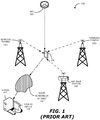
- FIG. 1 illustrates a prior art system for tracking the location of mobile devices.
- the system 100 illustrates a mobile device 101 being tracked which may be portable computers such as laptop, notebook, tablet, and handheld computers or may also take the form of other types of devices, such as mobile telephones, media players, personal data organizers, handheld game platforms, cameras, and/or combinations of such devices.
- the tracking server 107 included in the system 100 links to the registered mobile device 101 over a network 106 (e.g., Cloud Network or Internet) to collect and transfer location data.
- the server 117 requests location data from the mobile device 101 in order to display the location of the mobile device 101 on the display device 108.
- a network 106 e.g., Cloud Network or Internet
- the mobile device 101 may extract its location data upon receiving the request from the server 107 by using its internal sensors and radios and by connecting to the Global Positioning System (GPS) 105.
- GPS Global Positioning System
- the mobile device 101 may also extract its location data by using its internal sensors and radios and by triangulation using the Wireless (WiFi) towers 102 1 , 102 2 and/or WiFi base station 104.
- the location data from mobile device 101 is generated and transmitted to the tracking server 107 over the network 106.
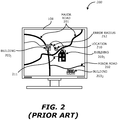
- Figure 2 illustrates a displayed location of the mobile device 101 using the prior art system for tracking the location of mobile devices.
- the display 200 on a display device 108 includes a representation a map with major roads 201, minor roads 202 and buildings 203 1 -203 j (j >2).
- the map also includes the location 210 of the mobile device 101.
- the location 210 is not accurate but rather it is located within the location fixing accuracy of the mobile device's sensor and may further be affected by the reflections from the mobile device 101's surroundings.
- Figure 2 illustrates the sensor sensitivity or sensor accuracy limit 211 of the mobile device 101.
- the possible error in the location of mobile device 101 can be as much as the area within the sensor error radius 212.
- actual location of the mobile device 101 may be anywhere within the area having an error radius 212. Therefore, even when the mobile device 101 is within the building 203 1 as shown in Figure 2 , the location of the mobile device 101 can be shown on display device 108 as being outside of the building 203 1 . Similarly, it may be difficult to judge the location of the device 101 since both buildings 203 1 and 203 j fall within the error radius 212 of the sensitivity of the sensor included in mobile device 101.
- Figure 3 illustrates a system for increasing accuracy of a location determination of mobile devices within a location-based subgroup according to an embodiment of the invention.
- the system 300 includes the plurality of mobile devices 301 1 -301 m (m>1), and 302 1 -302 p (p>1).
- the mobile devices may be combined in groups that are explicitly registered and linked with a server 307 that tracks the location of the mobile devices.
- the mobile devices 301 1 -301 m (m>1) may form a first explicit group and the mobile devices 302 1 -302 p (p>1) may form a second explicit group.
- the first explicit group may include the mobile devices 301 1 -301 m , that are members of a social networking group and that are being tracked by their location.
- the membership to these social networks include registration with one or more central servers as part of explicit groups, such as family group, friends group, extended family and friends group, sport and club groups etc.
- explicit groups such as family group, friends group, extended family and friends group, sport and club groups etc.
- combinations of the first and second explicit groups may also form implicit groups of mobile devices that have common properties but are not linked by an explicit registration for tracking.
- implicit groups include all registered devices, all members of a club, etc.
- the tracking server 307 included in the system 300 also links to each of the registered mobile devices over a network 106 (e.g., Internet, Cloud Network) to collect and transfer location data and proximity information.
- the server 307 may request location data and the proximity information from each of the mobile devices 101, 301 1 -301 m , and 302 1 -302 p .
- the location data received from a first mobile device 101 includes a fixed location of the first mobile device 101.
- the mobile devices 101, 301 1 -301 m , and 302 1 -302 p may extract their location data, respectively, upon receiving the request from the server 307 by using its internal sensors and radios and by connecting to the Global Positioning System (GPS) 105.
- GPS Global Positioning System
- the mobile devices 101 301 1 -301 m , and 302 1 -302 p may also extract their location data, respectively, by using its internal sensors and radios and by triangulation using the Wireless (WiFi) towers 102 1 , 102 2 and/or WiFi base station 104.
- the proximity information received from the first mobile device 101 may include an identification of mobile devices that are within a proximity sensitivity radius of the first mobile device 101.
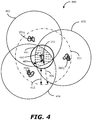
- the first mobile device 101 has a proximity sensitivity radius of 406 such that the proximity information received by the server 307 from the first mobile device 101 may include an identification of the proximate mobile devices being mobile devices 301 6 , 302 5 , and 302 6 .
- the fixed location of mobile device 101 is within the first device's 101 sensor accuracy limit 211 which has a proximity sensor sensitivity radius (or error radius) 406.
- the fixed location of mobile device 301 6 is within its sensor accuracy limit 402
- mobile device 302 5 is within its sensor accuracy limit 403
- mobile device 302 6 is within sensor accuracy limit 404.
- the server 307 may perform a proximity check which includes assessing the proximity information from each of the mobile devices 101, 301 6 , 302 5 , and 302 6 to determine and confirm that each of the mobile devices 301 6 , 302 5 , and 302 6 are proximate in location to the first mobile device 101.
- the server 307 may check that first mobile device 101 is identified in the proximate information from the mobile devices 301 6 , 302 5 , and 302 6 which indicates that mobile device 101 is within the proximity sensor sensitivity radius of each of the mobile devices 301 6 , 302 5 , and 302 6 . If the four devices are found to be in the proximity of each other using the proximity check, these devices can be considered to be in close by locations to or same location as the mobile device 101. In some embodiments, the mobile devices 301 6 , 302 5 , and 302 6 that are found to be proximate to the first mobile device 101 may also be from the first mobile device 101's implicit and/or explicit groups.
- the server 307 forms a subgroup of mobile devices that includes the mobile devices 301 6 , 302 5 , and 302 6 that provided proximity information identifying the first mobile device 101 are being within the proximity sensitivity radiuses of the mobile devices, respectively.
- the subgroup may also include the first mobile device 101.
- the server 307 may then refine the fixed location of the first mobile device 101 to generate a refined location of the first mobile device 101.
- the refining of the fixed location of first mobile device 101 includes identifying an intersection 410 of the proximity sensor sensitivity of each of the mobile devices 101, 301 6 , 302 5 , and 302 6 that in the subgroup.
- the server 307 is able to obtain a refined location (e.g., within intersection 410) for the first mobile device 101. More specifically, rather than being based on only the first device's 101 accuracy limit 211, the server 307 is able to refine the location of the first device 101 within an accuracy limit 411 and eliminate the ring area of a distance 413 around the accuracy limit 411 as a potential location for the first mobile device 101.
- the new error radius 407 now associated with the first mobile device 101 is much smaller than the first mobile device 101's proximity sensitivity radius 406.
- the server 307 may determine if a database 305 in Figure 3 includes a location that is associated with the first mobile device 101 and that is within the intersection 410 or within a predetermined distance from the intersection 410.
- the database being checked for a location that is associated with the first mobile device 101 may also be a database 630 ( Figure 6 ) that is included in the server 307.
- Location data associated with each of the mobile devices in the system 300 may be collected by the server 307 which stores the data in a database memory 305/630.
- the location associated with the first device 101 may include at least one of: (i) an explicit group location that is associated with an explicit group that includes the first mobile device 101, (ii) an implicit group location that is associated with an implicit group that includes the first mobile device 101, and (iii) a historic location that is associated with the first mobile device 101, wherein the historic location is a location previously frequented by the first mobile device 101.
- the explicit group location and the implicit group location may respectively be locations where members of the explicit and implicit groups congregate such as clubs, schools, colleges, places of worship, sport facilities etc.
- the subgroup 101, 301 6 , 302 5 , 302 6 may include registered members from both explicit and implicit members that are proximate to mobile device 101.
- the subgroup in Figure 4 is shown to include different mobile users, it is understood that the subgroup may be formed of multiple mobile devices belonging to a single user (e.g., tablet computers, mobile phones, smart watches etc.) in conjunction with other mobile devices identified by the proximity sensors of the mobile devices.
- the historic location may be, for instance, a club, a school, a library or a sports facility, that was previously frequented by the mobile device 101.
- the explicit group that includes first mobile device 101 may be, for example, a soccer team that organizes their games using social media. This explicit group may play their games at a specific soccer field. Accordingly, the location of that field may be an example of an explicit group location.
- the implicit group may be all sports teams that organize on a given social media site. Accordingly, the implicit group location may include the soccer fields that are frequented by any of mobile devices included in these sports teams.
- the server 307 sets the location associated with the first device as the refined location of the first mobile. For instance, referring back to Figure 2 , if multiple buildings 203 1 and 203 j are found to be within the intersection 410 or within the predetermined distance from the intersection 410, the server 307 may determine whether there is a location associated with the first mobile device 101 that is located within the intersection 410 or within the predetermined distance from the intersection 410.
- the server 307 may set the building 203 1 as the refined location for first mobile device 101 and may send a signal to the display device 108 to display the refined location of the mobile device 101.
- the server 307 may also update the database 305/630 to associate the refined location of the first mobile device 101 with the first mobile device 101.
- the server 307 may update the database 305/630 to associate the refined location with each of the mobile devices 101, 301 6 , 302 5 , and 302 6 in the subgroup of mobile devices.
- the server 307 may refine the location of the mobile device 101 by triangulating based on the location data from each of the mobile devices 101, 301 6 , 302 5 , and 302 6 that in the subgroup to obtain a refined location of the first mobile device 101.
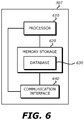
- the server 307 may include a processor 610, memory storage 620, and a communication interface 640.
- the communication interface 640 is be a network communication interface that may include a wired network interface such as an IEEE 802.3 Ethernet interface as well as a wireless interface such as an IEEE 802.11 WiFi interface. Data may also be received from any one of a variety of different wireless communications networks and in accordance with any one of several different protocols. These include: a cellular mobile phone network (e.g. a Global System for Mobile communications, GSM, network), including current 2G, 3G, 4G, and LTE networks; and an IEEE 802.11 network (WiFi or Wireless Local Area Network, WLAN).
- GSM Global System for Mobile communications
- the communication interface 640 may receive location data and proximity information from each of the mobile devices, respectively.
- the location data received from a mobile device 101 may include the location 210, which is the fixed location of the mobile device 101.
- the proximity information received from the mobile device 101 may include an identification of mobile devices proximate in location to the mobile device 101.
- the mobile device 101 may provide the identification of mobile devices 301 6 , 302 5 , and 302 6 that are within a proximity sensitivity radius 406 of the mobile device 101.
- the communication interface 640 may also transmit a refined location of the mobile devices received from a processor 610 to a display device 108.
- the processor 610 that is coupled to the communication interface 640 may include a microprocessor, a microcontroller, a digital signal processor, or a central processing unit, and other needed integrated circuits such as glue logic.
- the term "processor” may refer to a device having two or more processing units or elements, e.g. a CPU with multiple processing cores.
- the processor 640 may be used to control the operations of the communication interface 640.
- the processor 640 may be coupled to the communication interface 640 and executes software to control the wireless network communications functionality of the server 307 (e.g. communicating with a network 106 to transmit and receive data to other components of system 300 (e.g., mobile devices) via the communication interface 640).
- a particular function may be implemented as two or more pieces of software that are being executed by different hardware units of a processor.
- the processor 610 is also coupled to the memory storage 620 that may include one or more different types of storage such as hard disk drive storage, nonvolatile memory, and volatile memory such as dynamic random access memory.
- the memory storage 620 may also include a database 630 that stores location data associated with the plurality of mobile devices included in system 300.
- the database 630 may also store membership data in explicit or implicit groups, member or mobile device characteristics, location identification, other location related information, historical subgroup member data and location based subgroup data.
- the memory device 620 may also store instructions (e.g. software; firmware) which may be executed by the processor 610.
- the processor 610 when the instructions stored in memory device 620 are executed by the processor 610, the processor 610 performs methods for increasing accuracy of a location determination of mobile devices within a location-based subgroup.
- the processor 610 may receive the location data and the proximity information from the communication interface, form a subgroup of mobile devices based on the proximity information from each of the plurality of mobile devices, and refine the fixed location of the first mobile device to generate a refined location of the first mobile device 101.
- the processor 610 may also control the functions of the communication interface 640 by signaling to the communication interface 640 to request from each of the mobile devices in the system 300 their location data and proximity information and by signaling to the communication interface 640 to transmit the refined location of the first device 101 to the display device 108 to be displayed.
- the methods for increasing accuracy of a location determination of mobile devices within a location-based subgroup are discussed in further detail below.
- various other peripheral units may be connected to the server 307 to form a computer platform, such as but not limited to keyboards, mouse, additional data storage units, printing units and/or display units.
- the processor 610, memory storage 620, and communication interface 640 communicate to input devices and output devices via one or more communication links such as a bus.
- the communication links may also be other wired or wireless communication links.
- a single server 307 is shown, it is understood that the server 307 may be a virtual machine, with all the above capabilities, distributed over multiple servers or the cloud computing.
- a process which is usually depicted as a flowchart, a flow diagram, a structure diagram, or a block diagram.
- a flowchart may describe the operations as a sequential process, many of the operations can be performed in parallel or concurrently.
- the order of the operations may be re-arranged.
- a process is terminated when its operations are completed.
- a process may correspond to a method, a procedure, etc.
- FIG. 5A illustrates a flow diagram of an example method for increasing accuracy of a location determination of mobile devices within a location-based subgroup according to an embodiment of the invention.
- the method 500 starts at Block 501 with the server 307 receiving location data and proximity information from each of a plurality of mobile devices, respectively.
- the location data received from a first mobile device 101 included in the mobile devices includes a fixed location of the first mobile device 101.
- the proximity information received from the first mobile device 101 includes an identification of mobile devices that are within a proximity sensitivity 406 radius of the first mobile device 101.
- the server 307 may form a subgroup of mobile devices based on the proximity information from each of the plurality of mobile devices.
- the subgroup may include the first mobile device and the mobile devices that have provided proximity information that identifies the first mobile device are being within the proximity sensitivity radiuses of the mobile devices, respectively.
- the proximity information from mobile device 301 6 includes an identification of first mobile device 101 as being within mobile device 301 6 's proximity sensitivity radius that creates the sensor accuracy limit (or area) 402.
- proximity information from mobile device 302 5 includes an identification of first mobile device 101 as being within the mobile device 302 5 's proximity sensitivity radius that creates the sensor accuracy limit (or area) 403 and proximity information from mobile device 302 6 includes an identification of first mobile device 101 as being within the mobile device 302 6 's proximity sensitivity radius that creates the sensor accuracy limit (or area) 404.
- the subgroup being formed in Figure 4 may include first mobile device 101 and mobile devices 301 6 , 302 5 , and 302 6 .
- the server 307 may refine the fixed location of the first mobile device 101 to generate a refined location of the first mobile device 101.
- the server 507 may transmit the refined location of the first mobile device to a display device 108 to be displayed on a display device 108.
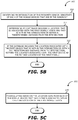
- Figure 5B illustrates a flow diagram of an example method for refining the location of a mobile device according to an embodiment of the invention.
- the server 307 may identify an intersection 410 of the proximity sensor sensitivity of each of the mobile devices 101, 301 6 , 302 5 , and 302 6 that in the subgroup at Block 510.
- the server 307 may determine if a database 305/630 includes a location associated with the first mobile device 101 that is within the intersection 410 or within a predetermined distance from the intersection 410 and at Block 512, if the database 305/630 includes the location associated with the first device 101 that is within the intersection 410 or within the predetermined distance from the intersection 410, the server 307 may set the location associated with the first device 101 as the refined location of the first mobile device 101.
- the location associated with the first device 101 that is stored in the database 305/630 may include historic data on the first device 101's previously frequented locations. Accordingly, if the first device 101's previously frequented location falls within the intersection 410, the server 307 may set the previously frequented location as the refined location of the first mobile device.
- Figure 5C illustrates a flow diagram of an example method for refining the location of a mobile device according to another embodiment of the invention.
- the server 307 may triangulate based on the location data from each of the mobile devices that in the subgroup to obtain a refined location of the first mobile device 101 (Block 520).
- An embodiment of the invention may be a machine-readable medium having stored thereon instructions which program a processor to perform some or all of the operations described above.
- a machine-readable medium may include any mechanism for storing or transmitting information in a form readable by a machine (e.g., a computer), such as Compact Disc Read-Only Memory (CD-ROMs), Read-Only Memory (ROMs), Random Access Memory (RAM), and Erasable Programmable Read-Only Memory (EPROM).
- CD-ROMs Compact Disc Read-Only Memory
- ROMs Read-Only Memory
- RAM Random Access Memory
- EPROM Erasable Programmable Read-Only Memory
- some of these operations might be performed by specific hardware components that contain hardwired logic. Those operations might alternatively be performed by any combination of programmable computer components and fixed hardware circuit components.
Landscapes
- Engineering & Computer Science (AREA)
- Physics & Mathematics (AREA)
- General Physics & Mathematics (AREA)
- Radar, Positioning & Navigation (AREA)
- Remote Sensing (AREA)
- Computer Networks & Wireless Communication (AREA)
- Signal Processing (AREA)
- Position Fixing By Use Of Radio Waves (AREA)
- Mobile Radio Communication Systems (AREA)
Claims (15)
- Verfahren zur Erhöhung der Genauigkeit einer Positionsbestimmung mobiler Geräte (101) innerhalb einer positionsbasierten Untergruppe, die Folgendes umfasst:Empfangen, durch einen Prozessor (610), von Positionsdaten und Entfernungsinformationen von jeweils jedem von einer Vielzahl von mobilen Geräten (101, 3011, 3012, 3013, 3014, 3015, 3016, 3021, 3022, 3023, 3024, 3025, 3026, 3026), wobei die Positionsdaten, die von einem ersten mobilen Gerät (101) empfangen werden, das in der Vielzahl von mobilen Geräten (101, 3011, 3012, 3013, 3014, 3015, 3016, 3021, 3022, 3023, 3024, 3025, 3026, 3026) enthalten ist, eine feste Position des ersten mobilen Geräts (101) enthalten und die Näheinformationen, die vom ersten mobilen Gerät (101) empfangen werden, eine Identifikation von mobilen Geräten (3016, 3025, 3026) enthalten, die in einem Empfindlichkeitsradius eines positionsfixierenden Sensors des ersten mobilen Geräts (101) liegen;Bilden durch den Prozessor (610) einer Untergruppe von mobilen Geräten (101, 3016, 3025, 3026) auf der Basis der Entfernungsinformationen von jedem der Vielzahl von mobilen Geräten, wobei die Untergruppe das erste mobile Gerät (101) und mobile Geräte enthält, die Entfernungsinformationen bereitgestellt haben, die das erste mobile Gerät als in den Empfindlichkeitsradii der positionsfixierenden Sensoren der jeweiligen mobilen Geräte befindlich identifizieren; undVerfeinern, durch den Prozessor (610), der festen Position des ersten mobilen Geräts (101) zur Erzeugung einer verfeinerten Position des ersten mobilen Geräts, wobei das Verfeinern der festen Position das Identifizieren eines Schnittpunkts (410) der Empfindlichkeit des positionsfixierenden Sensors von jedem der mobilen Geräte einschließt, die in der Untergruppe (101, 3016, 3025, 3026) sind.
- Verfahren nach Anspruch 1, wobei das Verfeinern der festen Position des ersten mobilen Geräts (101) ferner umfasst:Bestimmen durch den Prozessor (610), ob eine Datenbank (305; 630) eine Position einschließt, die mit dem ersten mobilen Gerät (101) verbunden ist und innerhalb des Schnittpunkts (410) oder innerhalb einer vorgegebenen Entfernung von dem Schnittpunkt liegt; undwenn die Datenbank (305; 630) die Position einschließt, die mit dem ersten mobilen Gerät (101) verbunden ist und die innerhalb des Schnittpunkts (410) oder innerhalb der vorgegebenen Entfernung von dem Schnittpunkt liegt, Festlegen der Position, die mit dem ersten Gerät (101) verbunden ist, als die verfeinerte Position des ersten mobilen Geräts (101).
- Verfahren nach Anspruch 2, wobei die Position, die mit dem ersten mobilen Gerät (101) verbunden ist, mindestens eine von (i) einer expliziten Gruppenposition, die mit einer expliziten Gruppe verbunden ist, die das erste mobile Gerät (101) einschließt, (ii) einer impliziten Gruppenposition, die mit einer impliziten Gruppe verbunden ist, die das erste mobile Gerät (101) einschließt, und (iii) einer historischen Position, die mit dem ersten mobilen Gerät (101) verbunden ist, einschließt, wobei die historische Position eine Position ist, die zuvor durch das erste mobile Gerät (101) frequentiert wurde.
- Verfahren nach Anspruch 1, wobei das Verfeinern, durch den Prozessor (610), der Position des ersten mobilen Geräts (101) ferner Folgendes umfasst:
Triangulieren auf der Basis der Positionsdaten von jedem der mobilen Geräte in der Untergruppe (101, 3016, 3025, 3026), um eine verfeinerte Position des ersten mobilen Geräts (101) zu erhalten. - Verfahren nach Anspruch 1, ferner umfassend
Aktualisieren der Datenbank (305; 630), um die verfeinerte Position des ersten mobilen Geräts (101) mit dem ersten mobilen Gerät (101) zu verbinden; und
Übertragen der verfeinerten Position des ersten mobilen Geräts (101) an eine Anzeigeeinrichtung (108), um auf der Anzeigeeinrichtung (108) angezeigt zu werden. - Vorrichtung zur Erhöhung der Genauigkeit einer Positionsbestimmung mobiler Geräte innerhalb einer positionsbasierten Untergruppe (101, 3016, 3025, 3026), die Folgendes umfasst:einen Prozessor (610);eine Kommunikationsschnittstelle (640) zum:
Empfangen von Positionsdaten und Entfernungsinformation von jeweils jedem von einer Vielzahl von mobilen Geräten (101, 3011, 3012, 3013, 3014, 3015, 3016, 3021, 3022, 3023, 3024, 3025, 3026, 3026), wobei die Positionsdaten, die von einem ersten mobilen Gerät empfangen werden, das in der Vielzahl von mobilen Geräten (101, 3011, 3012, 3013, 3014, 3015, 3016, 3021, 3022, 3023, 3024, 3025, 3026, 3026) enthalten ist, eine feste Position des ersten mobilen Geräts (101) enthält und die Entfernungsinformationen, die von dem ersten mobilen Gerät (101) empfangen werden, eine Identifikation der mobilen Geräte (101, 3016, 3025, 3026) enthält, die sich innerhalb eines Empfindlichkeitsradius eines positionsfixierenden Sensors des ersten mobilen Geräts (101) befinden; undeine Speichereinheit (620), die Anweisungen speichert, die bei Ausführung durch den Prozessor (610) den Prozessor (610) zu Folgendem veranlassen:Empfangen der Positionsdaten und der Entfernungsinformationen von der Kommunikationsschnittstelle (640);Bilden einer Untergruppe von mobilen Geräten (101, 3016, 3025, 3026) auf der Basis der Entfernungsinformationen von jedem der Vielzahl von mobilen Geräten (101, 3011, 3012, 3013, 3014, 3015, 3016, 3021, 3022, 3023, 3024, 3025, 3026, 3026), wobei die Untergruppe (101, 3016, 3025, 3026) das erste mobile Gerät (101) und mobile Geräte einschließt, die Entfernungsinformationen bereitgestellt haben, die das erste mobile Gerät als innerhalb des Empfindlichkeitsradius des positionsfixierenden Sensors der jeweiligen mobilen Geräte befindlich identifiziert, undVerfeinern der festen Position des ersten mobilen Geräts (101) zur Erzeugung einer verfeinerten Position des ersten mobilen Geräts (101), wobei das Verfeinern der festen Position das Identifizieren eines Schnittpunkts (410) der Empfindlichkeit des positionsfixierenden Sensors von jedem der mobilen Geräte (101, 3016, 3025, 3026) einschließt, die in der Untergruppe sind. - Vorrichtung nach Anspruch 6, ferner umfassend:eine Datenbank (305; 630), die Daten speichert, die mit einer Vielzahl von mobilen Geräten (101, 3011, 3012, 3013, 3014, 3015, 3016, 3021, 3022, 3023, 3024, 3025, 3026, 3026) verbunden sind,wobei, wenn der Prozessor (610) die in dem Speicher (620) gespeicherten Anweisungen ausführt, der Prozessor (610) die feste Position des ersten mobilen Geräts (101) verfeinert durch:
Bestimmen, ob die Datenbank (305; 630) eine Position enthält, die mit dem ersten mobilen Gerät (101) verbunden ist und sich innerhalb des Schnittpunkts (410) oder innerhalb einer vorgegebenen Entfernung vom Schnittpunkt (410) befindet, undwenn die Datenbank (305; 630) die Position enthält, die mit dem ersten mobilen Gerät (101) verbunden ist, das innerhalb des Schnittpunkts (410) oder innerhalb der vorgegebenen Entfernung von dem Schnittpunkt (410) liegt, Festlegen der Position, die mit dem ersten Gerät (101) verbunden ist, als die verfeinerte Position des ersten mobilen Geräts (101). - Vorrichtung nach Anspruch 7, wobei die Position, die mit dem ersten mobilen Gerät (101) verbunden ist, mindestens eine von (i) einer expliziten Gruppenposition, die mit einer expliziten Gruppe verbunden ist, die das erste mobile Gerät (101) einschließt, (ii) einer impliziten Gruppenposition, die mit einer impliziten Gruppe verbunden ist, die das erste mobile Gerät (101) einschließt, und (iii) einer historischen Position, die mit dem ersten mobilen Gerät (101) verbunden ist, einschließt, wobei die historische Position eine Position ist, die zuvor durch das erste mobile Gerät (101) frequentiert wurde.
- Vorrichtung nach Anspruch 6, wobei, wenn der Prozessor (610) die in dem Speicher (620) gespeicherten Anweisungen ausführt, der Prozessor (610) die feste Position des ersten mobilen Geräts (101) verfeinert durch:
Triangulieren auf der Basis der Positionsdaten von jedem der mobilen Geräte (101, 3016, 3025, 3026) in der Untergruppe, um eine verfeinerte Position des ersten mobilen Geräts (101) zu erhalten. - Vorrichtung nach Anspruch 6, wobei, wenn der Prozessor (610) die in dem Speicher (620) gespeicherten Anweisungen ausführt, der Prozessor ferner:die Datenbank (305; 630) aktualisiert, um die verfeinerte Position des ersten mobilen Geräts (101) mit dem ersten mobilen Gerät (101) zu verbinden; undan die Kommunikationsschnittstelle signalisiert, um die verfeinerte Position des mobilen Geräts (101) an eine Anzeigeeinrichtung (108) zu übertragen.
- Nicht flüchtiges computerlesbares Medium mit darauf gespeicherten Anweisungen, die bei Ausführung durch einen Prozessor (610) den Prozessor (610) zum Durchführen eines Verfahrens zur Erhöhung der Genauigkeit einer Positionsbestimmung von mobilen Geräten innerhalb einer positionsbasierten Untergruppe veranlasst, umfassend:Empfangen von Positionsdaten und Entfernungsinformation von jeweils jedem von einer Vielzahl von mobilen Geräten (101, 3011, 3012, 3013, 3014, 3015, 3016, 3021, 3022, 3023, 3024, 3025, 3026, 3026), wobei die Positionsdaten, die von einem ersten mobilen Gerät (101) empfangen werden, das in der Vielzahl von mobilen Geräten (101, 3011, 3012, 3013, 3014, 3015, 3016, 3021, 3022, 3023, 3024, 3025, 3026, 3026) enthalten ist, eine feste Position des ersten mobilen Geräts (101) enthält und die Entfernungsinformationen, die von dem ersten mobilen Gerät (101) empfangen werden, eine Identifikation der mobilen Geräte (3016, 3025, 3026) enthält, die sich innerhalb eines Empfindlichkeitsradius eines positionsfixierenden Sensors des ersten mobilen Geräts (101) befinden;Bilden einer Untergruppe von mobilen Geräten (101, 3016, 3025, 3026) auf der Basis der Entfernungsinformationen von jedem der Vielzahl von mobilen Geräten (101, 3011, 3012, 3013, 3014, 3015, 3016, 3021, 3022, 3023, 3024, 3025, 3026, 3026), wobei die Untergruppe (101, 3016, 3025, 3026) das erste mobile Gerät (101) und mobile Geräte einschließt, die Entfernungsinformationen bereitgestellt haben, die das erste mobile Gerät (101) als innerhalb der Empfindlichkeitsradii der positionsfixierenden Sensoren der jeweiligen mobilen Geräte (3016, 3025, 3026) befindlich identifiziert, undVerfeinern der festen Position des ersten mobilen Geräts (101) zur Erzeugung einer verfeinerten Position des ersten mobilen Geräts (101), wobei das Verfeinern der festen Position das Identifizieren eines Schnittpunkts (410) der Empfindlichkeit des positionsfixierenden Sensors von jedem der mobilen Geräte (101, 3016, 3025, 3026) einschließt, die in der Untergruppe sind.
- Nicht-flüchtiges computerlesbares Medium nach Anspruch 11, wobei das Verfeinern der festen Position des ersten mobilen Geräts (101) ferner umfasst:Bestimmen durch den Prozessor (610), ob eine Datenbank (305; 630) eine Position beinhaltet, die mit dem ersten mobilen Gerät (101) verbunden ist und sich innerhalb des Schnittpunkts (410) oder innerhalb einer vorgegebenen Entfernung vom Schnittpunkt (410) befindet, undwenn die Datenbank (305, 630) die Position einschließt, die mit dem ersten mobilen Gerät (101) verbunden ist, das innerhalb des Schnittpunkts (410) oder innerhalb der vorgegebenen Entfernung von dem Schnittpunkt (410) liegt, Festlegen der Position, die mit dem ersten mobilen Gerät (101) verbunden ist, als die verfeinerte Position des ersten mobilen Geräts (101).
- Nicht-flüchtiges computerlesbares Medium nach Anspruch 12, wobei die Position, die mit dem ersten mobilen Gerät (101) verbunden ist, mindestens eine von (i) einer expliziten Gruppenposition, die mit einer expliziten Gruppe verbunden ist, die das erste mobile Gerät (101) einschließt, (ii) einer impliziten Gruppenposition, die mit einer impliziten Gruppe verbunden ist, die das erste mobile Gerät (101) einschließt, und (iii) einer historischen Position, die mit dem ersten mobilen Gerät (101) verbunden ist, einschließt, wobei die historische Position eine Position ist, die zuvor durch das erste mobile Gerät (101) frequentiert wurde.
- Nicht-flüchtiges computerlesbares Medium nach Anspruch 11, wobei das Verfeinern, durch den Prozessor, der Position des ersten mobilen Geräts (101) ferner umfasst:
Triangulieren auf der Basis der Positionsdaten von jedem der mobilen Geräte in der Untergruppe (101, 3016, 3025, 3026), um eine verfeinerte Position des ersten mobilen Geräts (101) zu erhalten. - Nicht-flüchtiges computerlesbares Medium nach Anspruch 13, wobei das Verfahren ferner umfasst:Aktualisieren der Datenbank (305, 630), um die verfeinerte Position des ersten mobilen Geräts (101) mit dem ersten mobilen Gerät (101) zu verbinden; undÜbertragen der verfeinerten Position des ersten mobilen Geräts (101) an eine Anzeigeeinrichtung (108), um auf der Anzeigeeinrichtung (108) angezeigt zu werden.
Applications Claiming Priority (3)
| Application Number | Priority Date | Filing Date | Title |
|---|---|---|---|
| US201361842344P | 2013-07-02 | 2013-07-02 | |
| US14/023,225 US9788163B2 (en) | 2013-07-02 | 2013-09-10 | Apparatus and method for increasing accuracy of location determination of mobile devices within a location-based group |
| PCT/US2014/044456 WO2015002816A1 (en) | 2013-07-02 | 2014-06-26 | Apparatus and method for increasing accuracy of location determination of mobile devices within a location-based group |
Publications (2)
| Publication Number | Publication Date |
|---|---|
| EP3017314A1 EP3017314A1 (de) | 2016-05-11 |
| EP3017314B1 true EP3017314B1 (de) | 2019-03-27 |
Family
ID=51225040
Family Applications (1)
| Application Number | Title | Priority Date | Filing Date |
|---|---|---|---|
| EP14742651.4A Active EP3017314B1 (de) | 2013-07-02 | 2014-06-26 | Vorrichtung und verfahren zur steigerung der genauigkeit der ortsbestimmung von mobilen vorrichtungen in einer standortbasierten gruppe |
Country Status (3)
| Country | Link |
|---|---|
| US (2) | US9788163B2 (de) |
| EP (1) | EP3017314B1 (de) |
| WO (1) | WO2015002816A1 (de) |
Families Citing this family (11)
| Publication number | Priority date | Publication date | Assignee | Title |
|---|---|---|---|---|
| EP3869234A1 (de) * | 2015-06-02 | 2021-08-25 | Hangit Llc | Lokalisierung einer mobilen vorrichtung |
| US10133565B2 (en) * | 2015-10-16 | 2018-11-20 | International Business Machines Corporation | System and method for context aware mobile application installation queuing |
| US10715581B2 (en) * | 2017-01-25 | 2020-07-14 | International Business Machines Corporation | System and method to download file from common recipient devices in proximity |
| US11094026B2 (en) | 2018-02-19 | 2021-08-17 | Honda Motor Co., Ltd. | System and method for determining a safe return to a vehicle |
| US10609202B2 (en) | 2018-02-19 | 2020-03-31 | Honda Motor Co., Ltd. | System and method for determining a safe return to a vehicle |
| US10623893B2 (en) | 2018-02-22 | 2020-04-14 | Life360, Inc. | Auto-resizing of geofences |
| US10757212B2 (en) | 2018-04-27 | 2020-08-25 | Life360, Inc. | Methods and systems for sending prepopulated messages to a selected group of mobile devices |
| US11032335B1 (en) * | 2019-06-03 | 2021-06-08 | Massachusetts Mutual Life Insurance Company | Concurrent secondary electronic communication session |
| US12141716B2 (en) * | 2019-11-15 | 2024-11-12 | Lyft, Inc. | Systems and methods for determining rideable vehicle locations |
| US11570307B2 (en) * | 2020-08-03 | 2023-01-31 | Microsoft Technology Licensing, Llc | Automatic reaction-triggering for live presentations |
| JP2025519148A (ja) * | 2022-05-26 | 2025-06-24 | アイ-ネット モバイル リミテッド | 1つ以上のコンピューティングデバイスの地理的場所を決定するシステム及び方法 |
Family Cites Families (29)
| Publication number | Priority date | Publication date | Assignee | Title |
|---|---|---|---|---|
| US20040002346A1 (en) * | 2000-12-14 | 2004-01-01 | John Santhoff | Ultra-wideband geographic location system and method |
| US7848905B2 (en) | 2000-12-26 | 2010-12-07 | Troxler Electronic Laboratories, Inc. | Methods, systems, and computer program products for locating and tracking objects |
| JP2002257564A (ja) | 2001-03-06 | 2002-09-11 | Nippon Telegr & Teleph Corp <Ntt> | 精度と計測時刻の異なる複数の位置情報に基づく位置推定方法、システム、プログラム及びプログラムを記録した記録媒体 |
| US6947880B2 (en) | 2002-04-23 | 2005-09-20 | Motorola, Inc. | Method for improving accuracy of a velocity model |
| CA2397431A1 (en) | 2002-08-09 | 2004-02-09 | Andrew Lohbihler | Method and apparatus for a wireless position sensing interface device employing spread spectrum technology of one or more radio transmitting devices |
| US8436773B2 (en) | 2005-04-19 | 2013-05-07 | Qualcomm Incorporated | Method for leveraging diversity for enhanced location determination |
| US8639757B1 (en) * | 2011-08-12 | 2014-01-28 | Sprint Communications Company L.P. | User localization using friend location information |
| US8275397B2 (en) | 2005-07-14 | 2012-09-25 | Huston Charles D | GPS based friend location and identification system and method |
| JP4689480B2 (ja) | 2006-01-27 | 2011-05-25 | 三菱電機株式会社 | 測位端末及び測位システム |
| US8428098B2 (en) | 2006-07-06 | 2013-04-23 | Qualcomm Incorporated | Geo-locating end-user devices on a communication network |
| US8175613B2 (en) | 2006-08-04 | 2012-05-08 | Misonimo Chi Acquisitions L.L.C. | Systems and methods for determining location of devices within a wireless network |
| US8229458B2 (en) * | 2007-04-08 | 2012-07-24 | Enhanced Geographic Llc | Systems and methods to determine the name of a location visited by a user of a wireless device |
| US8019356B2 (en) | 2007-04-26 | 2011-09-13 | Qualcomm Incorporated | Location based tracking |
| US8160617B2 (en) | 2007-06-22 | 2012-04-17 | Nokia Corporation | Apparatus and method for use in location determination |
| US8797214B2 (en) | 2007-07-06 | 2014-08-05 | Qualcomm Incorporated | Tracking implementing geopositioning and local modes |
| US8045482B2 (en) * | 2008-02-08 | 2011-10-25 | Yahoo! Inc. | Location tracking based on proximity-based ad hoc network |
| WO2009104923A2 (ko) | 2008-02-21 | 2009-08-27 | 주식회사 아이디폰 | 휴대단말을 이용한 현장 감시 시스템 |
| AU2010308068A1 (en) | 2009-10-12 | 2012-05-03 | Waytag (Proprietary) Limited | A locating system and a method for operating a locating system |
| US8531523B2 (en) | 2009-12-08 | 2013-09-10 | Trueposition, Inc. | Multi-sensor location and identification |
| US7840226B1 (en) * | 2009-12-29 | 2010-11-23 | Oto Technologies, Llc | Apparatus and method of location based telecommunication authorization |
| US8966390B2 (en) * | 2009-12-29 | 2015-02-24 | Nokia Corporation | Method and apparatus for visually indicating location probability |
| US20110171973A1 (en) | 2010-01-08 | 2011-07-14 | Andrew, Llc | System and Method for Mobile Location By Proximity Detection |
| US8437972B2 (en) | 2010-07-07 | 2013-05-07 | Raytheon Company | Sensor bias estimation for multiple hypothesis tracker |
| US8150844B2 (en) | 2010-08-18 | 2012-04-03 | Facebook, Inc. | Location ranking using social graph information |
| CN102378312A (zh) | 2010-08-23 | 2012-03-14 | 国基电子(上海)有限公司 | 移动手持装置及其追踪定位方法 |
| US8593277B2 (en) | 2011-03-17 | 2013-11-26 | Kaarya, LLC. | System and method for proximity detection |
| US20120329484A1 (en) | 2011-06-23 | 2012-12-27 | Ariel Inventions Llc | Locating mobile devices utilizing wi-fi information |
| US8666373B2 (en) | 2011-12-28 | 2014-03-04 | Technocom Corporation | System and method for determining a zone of relevance for subscriber location and notification |
| US20140162687A1 (en) * | 2012-12-10 | 2014-06-12 | Qualcomm Incorporated | Techniques for determining a state of proximity between mobile devices |
-
2013
- 2013-09-10 US US14/023,225 patent/US9788163B2/en active Active
-
2014
- 2014-06-26 WO PCT/US2014/044456 patent/WO2015002816A1/en not_active Ceased
- 2014-06-26 EP EP14742651.4A patent/EP3017314B1/de active Active
-
2017
- 2017-08-23 US US15/684,266 patent/US9906915B2/en active Active
Non-Patent Citations (1)
| Title |
|---|
| None * |
Also Published As
| Publication number | Publication date |
|---|---|
| WO2015002816A1 (en) | 2015-01-08 |
| US9788163B2 (en) | 2017-10-10 |
| US20170353837A1 (en) | 2017-12-07 |
| US20150018019A1 (en) | 2015-01-15 |
| EP3017314A1 (de) | 2016-05-11 |
| US9906915B2 (en) | 2018-02-27 |
Similar Documents
| Publication | Publication Date | Title |
|---|---|---|
| US9906915B2 (en) | Apparatus and method for increasing accuracy of location determination of mobile devices within a location-based group | |
| US9294876B2 (en) | Apparatus and method for generating, displaying and implementing a geo-fence using location determination of mobile devices within a location-based group | |
| AU2012231360B2 (en) | Improved device location detection | |
| KR101895455B1 (ko) | 전자장치에서 의미적 위치 인식 방법 및 장치 | |
| US9712964B2 (en) | Maintaining privacy in location-based operations | |
| US10075922B2 (en) | Apparatus and method for conservation of battery power of mobile devices within a location-based group | |
| US20130016012A1 (en) | Method and/or apparatus for backtracking position estimation | |
| CN105284163A (zh) | 用于检测地理围栏的功率减小的地点确定 | |
| CN104764461A (zh) | 一种用于医院门诊的导航方法和装置 | |
| US9635691B2 (en) | Apparatus and method of providing connection source recommendations using a database of historic data on connectivity | |
| CN104081220B (zh) | 用于利用和促进大地三角测量以判定计算设备的全球定位的机制 | |
| JP6070561B2 (ja) | 情報処理装置 | |
| Mizan et al. | Indoor positioning and navigation using bluetooth low energy and cloud service in healthcare perspective | |
| CN111757261B (zh) | 一种确定室内位置的方法及终端设备 | |
| Fernandes et al. | Virtual location-based indoor guide |
Legal Events
| Date | Code | Title | Description |
|---|---|---|---|
| PUAI | Public reference made under article 153(3) epc to a published international application that has entered the european phase |
Free format text: ORIGINAL CODE: 0009012 |
|
| 17P | Request for examination filed |
Effective date: 20160202 |
|
| AK | Designated contracting states |
Kind code of ref document: A1 Designated state(s): AL AT BE BG CH CY CZ DE DK EE ES FI FR GB GR HR HU IE IS IT LI LT LU LV MC MK MT NL NO PL PT RO RS SE SI SK SM TR |
|
| AX | Request for extension of the european patent |
Extension state: BA ME |
|
| DAX | Request for extension of the european patent (deleted) | ||
| 17Q | First examination report despatched |
Effective date: 20161012 |
|
| STAA | Information on the status of an ep patent application or granted ep patent |
Free format text: STATUS: EXAMINATION IS IN PROGRESS |
|
| RAP1 | Party data changed (applicant data changed or rights of an application transferred) |
Owner name: LIFE360, INC. |
|
| REG | Reference to a national code |
Ref country code: DE Ref legal event code: R079 Ref document number: 602014043630 Country of ref document: DE Free format text: PREVIOUS MAIN CLASS: G01S0005000000 Ipc: G01S0005020000 |
|
| GRAP | Despatch of communication of intention to grant a patent |
Free format text: ORIGINAL CODE: EPIDOSNIGR1 |
|
| STAA | Information on the status of an ep patent application or granted ep patent |
Free format text: STATUS: GRANT OF PATENT IS INTENDED |
|
| RIC1 | Information provided on ipc code assigned before grant |
Ipc: G01S 5/02 20100101AFI20181016BHEP Ipc: H04W 4/029 20160511ALI20181016BHEP Ipc: H04W 4/02 20090101ALI20181016BHEP |
|
| INTG | Intention to grant announced |
Effective date: 20181031 |
|
| RIC1 | Information provided on ipc code assigned before grant |
Ipc: H04W 4/029 20180101ALI20181016BHEP Ipc: H04W 4/02 20180101ALI20181016BHEP Ipc: G01S 5/02 20100101AFI20181016BHEP |
|
| RIC1 | Information provided on ipc code assigned before grant |
Ipc: G01S 5/02 20100101AFI20181016BHEP Ipc: H04W 4/029 20180101ALI20181016BHEP Ipc: H04W 4/02 20180101ALI20181016BHEP |
|
| GRAS | Grant fee paid |
Free format text: ORIGINAL CODE: EPIDOSNIGR3 |
|
| GRAA | (expected) grant |
Free format text: ORIGINAL CODE: 0009210 |
|
| STAA | Information on the status of an ep patent application or granted ep patent |
Free format text: STATUS: THE PATENT HAS BEEN GRANTED |
|
| AK | Designated contracting states |
Kind code of ref document: B1 Designated state(s): AL AT BE BG CH CY CZ DE DK EE ES FI FR GB GR HR HU IE IS IT LI LT LU LV MC MK MT NL NO PL PT RO RS SE SI SK SM TR |
|
| REG | Reference to a national code |
Ref country code: GB Ref legal event code: FG4D |
|
| REG | Reference to a national code |
Ref country code: CH Ref legal event code: EP |
|
| REG | Reference to a national code |
Ref country code: AT Ref legal event code: REF Ref document number: 1113744 Country of ref document: AT Kind code of ref document: T Effective date: 20190415 |
|
| REG | Reference to a national code |
Ref country code: IE Ref legal event code: FG4D |
|
| REG | Reference to a national code |
Ref country code: DE Ref legal event code: R096 Ref document number: 602014043630 Country of ref document: DE |
|
| PG25 | Lapsed in a contracting state [announced via postgrant information from national office to epo] |
Ref country code: SE Free format text: LAPSE BECAUSE OF FAILURE TO SUBMIT A TRANSLATION OF THE DESCRIPTION OR TO PAY THE FEE WITHIN THE PRESCRIBED TIME-LIMIT Effective date: 20190327 Ref country code: FI Free format text: LAPSE BECAUSE OF FAILURE TO SUBMIT A TRANSLATION OF THE DESCRIPTION OR TO PAY THE FEE WITHIN THE PRESCRIBED TIME-LIMIT Effective date: 20190327 Ref country code: LT Free format text: LAPSE BECAUSE OF FAILURE TO SUBMIT A TRANSLATION OF THE DESCRIPTION OR TO PAY THE FEE WITHIN THE PRESCRIBED TIME-LIMIT Effective date: 20190327 Ref country code: NO Free format text: LAPSE BECAUSE OF FAILURE TO SUBMIT A TRANSLATION OF THE DESCRIPTION OR TO PAY THE FEE WITHIN THE PRESCRIBED TIME-LIMIT Effective date: 20190627 |
|
| REG | Reference to a national code |
Ref country code: NL Ref legal event code: MP Effective date: 20190327 |
|
| PG25 | Lapsed in a contracting state [announced via postgrant information from national office to epo] |
Ref country code: GR Free format text: LAPSE BECAUSE OF FAILURE TO SUBMIT A TRANSLATION OF THE DESCRIPTION OR TO PAY THE FEE WITHIN THE PRESCRIBED TIME-LIMIT Effective date: 20190628 Ref country code: BG Free format text: LAPSE BECAUSE OF FAILURE TO SUBMIT A TRANSLATION OF THE DESCRIPTION OR TO PAY THE FEE WITHIN THE PRESCRIBED TIME-LIMIT Effective date: 20190627 Ref country code: RS Free format text: LAPSE BECAUSE OF FAILURE TO SUBMIT A TRANSLATION OF THE DESCRIPTION OR TO PAY THE FEE WITHIN THE PRESCRIBED TIME-LIMIT Effective date: 20190327 Ref country code: LV Free format text: LAPSE BECAUSE OF FAILURE TO SUBMIT A TRANSLATION OF THE DESCRIPTION OR TO PAY THE FEE WITHIN THE PRESCRIBED TIME-LIMIT Effective date: 20190327 Ref country code: NL Free format text: LAPSE BECAUSE OF FAILURE TO SUBMIT A TRANSLATION OF THE DESCRIPTION OR TO PAY THE FEE WITHIN THE PRESCRIBED TIME-LIMIT Effective date: 20190327 Ref country code: HR Free format text: LAPSE BECAUSE OF FAILURE TO SUBMIT A TRANSLATION OF THE DESCRIPTION OR TO PAY THE FEE WITHIN THE PRESCRIBED TIME-LIMIT Effective date: 20190327 |
|
| REG | Reference to a national code |
Ref country code: AT Ref legal event code: MK05 Ref document number: 1113744 Country of ref document: AT Kind code of ref document: T Effective date: 20190327 |
|
| PG25 | Lapsed in a contracting state [announced via postgrant information from national office to epo] |
Ref country code: SK Free format text: LAPSE BECAUSE OF FAILURE TO SUBMIT A TRANSLATION OF THE DESCRIPTION OR TO PAY THE FEE WITHIN THE PRESCRIBED TIME-LIMIT Effective date: 20190327 Ref country code: IT Free format text: LAPSE BECAUSE OF FAILURE TO SUBMIT A TRANSLATION OF THE DESCRIPTION OR TO PAY THE FEE WITHIN THE PRESCRIBED TIME-LIMIT Effective date: 20190327 Ref country code: PT Free format text: LAPSE BECAUSE OF FAILURE TO SUBMIT A TRANSLATION OF THE DESCRIPTION OR TO PAY THE FEE WITHIN THE PRESCRIBED TIME-LIMIT Effective date: 20190727 Ref country code: AL Free format text: LAPSE BECAUSE OF FAILURE TO SUBMIT A TRANSLATION OF THE DESCRIPTION OR TO PAY THE FEE WITHIN THE PRESCRIBED TIME-LIMIT Effective date: 20190327 Ref country code: ES Free format text: LAPSE BECAUSE OF FAILURE TO SUBMIT A TRANSLATION OF THE DESCRIPTION OR TO PAY THE FEE WITHIN THE PRESCRIBED TIME-LIMIT Effective date: 20190327 Ref country code: EE Free format text: LAPSE BECAUSE OF FAILURE TO SUBMIT A TRANSLATION OF THE DESCRIPTION OR TO PAY THE FEE WITHIN THE PRESCRIBED TIME-LIMIT Effective date: 20190327 Ref country code: CZ Free format text: LAPSE BECAUSE OF FAILURE TO SUBMIT A TRANSLATION OF THE DESCRIPTION OR TO PAY THE FEE WITHIN THE PRESCRIBED TIME-LIMIT Effective date: 20190327 Ref country code: RO Free format text: LAPSE BECAUSE OF FAILURE TO SUBMIT A TRANSLATION OF THE DESCRIPTION OR TO PAY THE FEE WITHIN THE PRESCRIBED TIME-LIMIT Effective date: 20190327 |
|
| PG25 | Lapsed in a contracting state [announced via postgrant information from national office to epo] |
Ref country code: SM Free format text: LAPSE BECAUSE OF FAILURE TO SUBMIT A TRANSLATION OF THE DESCRIPTION OR TO PAY THE FEE WITHIN THE PRESCRIBED TIME-LIMIT Effective date: 20190327 Ref country code: PL Free format text: LAPSE BECAUSE OF FAILURE TO SUBMIT A TRANSLATION OF THE DESCRIPTION OR TO PAY THE FEE WITHIN THE PRESCRIBED TIME-LIMIT Effective date: 20190327 |
|
| PG25 | Lapsed in a contracting state [announced via postgrant information from national office to epo] |
Ref country code: IS Free format text: LAPSE BECAUSE OF FAILURE TO SUBMIT A TRANSLATION OF THE DESCRIPTION OR TO PAY THE FEE WITHIN THE PRESCRIBED TIME-LIMIT Effective date: 20190727 Ref country code: AT Free format text: LAPSE BECAUSE OF FAILURE TO SUBMIT A TRANSLATION OF THE DESCRIPTION OR TO PAY THE FEE WITHIN THE PRESCRIBED TIME-LIMIT Effective date: 20190327 |
|
| REG | Reference to a national code |
Ref country code: DE Ref legal event code: R097 Ref document number: 602014043630 Country of ref document: DE |
|
| PG25 | Lapsed in a contracting state [announced via postgrant information from national office to epo] |
Ref country code: DK Free format text: LAPSE BECAUSE OF FAILURE TO SUBMIT A TRANSLATION OF THE DESCRIPTION OR TO PAY THE FEE WITHIN THE PRESCRIBED TIME-LIMIT Effective date: 20190327 Ref country code: MC Free format text: LAPSE BECAUSE OF FAILURE TO SUBMIT A TRANSLATION OF THE DESCRIPTION OR TO PAY THE FEE WITHIN THE PRESCRIBED TIME-LIMIT Effective date: 20190327 |
|
| REG | Reference to a national code |
Ref country code: CH Ref legal event code: PL |
|
| PLBE | No opposition filed within time limit |
Free format text: ORIGINAL CODE: 0009261 |
|
| STAA | Information on the status of an ep patent application or granted ep patent |
Free format text: STATUS: NO OPPOSITION FILED WITHIN TIME LIMIT |
|
| PG25 | Lapsed in a contracting state [announced via postgrant information from national office to epo] |
Ref country code: SI Free format text: LAPSE BECAUSE OF FAILURE TO SUBMIT A TRANSLATION OF THE DESCRIPTION OR TO PAY THE FEE WITHIN THE PRESCRIBED TIME-LIMIT Effective date: 20190327 |
|
| 26N | No opposition filed |
Effective date: 20200103 |
|
| REG | Reference to a national code |
Ref country code: BE Ref legal event code: MM Effective date: 20190630 |
|
| PG25 | Lapsed in a contracting state [announced via postgrant information from national office to epo] |
Ref country code: TR Free format text: LAPSE BECAUSE OF FAILURE TO SUBMIT A TRANSLATION OF THE DESCRIPTION OR TO PAY THE FEE WITHIN THE PRESCRIBED TIME-LIMIT Effective date: 20190327 |
|
| PG25 | Lapsed in a contracting state [announced via postgrant information from national office to epo] |
Ref country code: IE Free format text: LAPSE BECAUSE OF NON-PAYMENT OF DUE FEES Effective date: 20190626 |
|
| PG25 | Lapsed in a contracting state [announced via postgrant information from national office to epo] |
Ref country code: BE Free format text: LAPSE BECAUSE OF NON-PAYMENT OF DUE FEES Effective date: 20190630 Ref country code: CH Free format text: LAPSE BECAUSE OF NON-PAYMENT OF DUE FEES Effective date: 20190630 Ref country code: LU Free format text: LAPSE BECAUSE OF NON-PAYMENT OF DUE FEES Effective date: 20190626 Ref country code: LI Free format text: LAPSE BECAUSE OF NON-PAYMENT OF DUE FEES Effective date: 20190630 |
|
| PG25 | Lapsed in a contracting state [announced via postgrant information from national office to epo] |
Ref country code: FR Free format text: LAPSE BECAUSE OF NON-PAYMENT OF DUE FEES Effective date: 20190630 |
|
| PG25 | Lapsed in a contracting state [announced via postgrant information from national office to epo] |
Ref country code: CY Free format text: LAPSE BECAUSE OF FAILURE TO SUBMIT A TRANSLATION OF THE DESCRIPTION OR TO PAY THE FEE WITHIN THE PRESCRIBED TIME-LIMIT Effective date: 20190327 |
|
| PG25 | Lapsed in a contracting state [announced via postgrant information from national office to epo] |
Ref country code: HU Free format text: LAPSE BECAUSE OF FAILURE TO SUBMIT A TRANSLATION OF THE DESCRIPTION OR TO PAY THE FEE WITHIN THE PRESCRIBED TIME-LIMIT; INVALID AB INITIO Effective date: 20140626 Ref country code: MT Free format text: LAPSE BECAUSE OF FAILURE TO SUBMIT A TRANSLATION OF THE DESCRIPTION OR TO PAY THE FEE WITHIN THE PRESCRIBED TIME-LIMIT Effective date: 20190327 |
|
| PG25 | Lapsed in a contracting state [announced via postgrant information from national office to epo] |
Ref country code: MK Free format text: LAPSE BECAUSE OF FAILURE TO SUBMIT A TRANSLATION OF THE DESCRIPTION OR TO PAY THE FEE WITHIN THE PRESCRIBED TIME-LIMIT Effective date: 20190327 |
|
| P01 | Opt-out of the competence of the unified patent court (upc) registered |
Effective date: 20230524 |
|
| PGFP | Annual fee paid to national office [announced via postgrant information from national office to epo] |
Ref country code: DE Payment date: 20250402 Year of fee payment: 12 |
|
| PGFP | Annual fee paid to national office [announced via postgrant information from national office to epo] |
Ref country code: GB Payment date: 20250401 Year of fee payment: 12 |