EP3012337A1 - Hot-forged ti-al-based alloy and method for producing same - Google Patents
Hot-forged ti-al-based alloy and method for producing same Download PDFInfo
- Publication number
- EP3012337A1 EP3012337A1 EP14814461.1A EP14814461A EP3012337A1 EP 3012337 A1 EP3012337 A1 EP 3012337A1 EP 14814461 A EP14814461 A EP 14814461A EP 3012337 A1 EP3012337 A1 EP 3012337A1
- Authority
- EP
- European Patent Office
- Prior art keywords
- phase
- tial
- atom
- based alloy
- hot
- Prior art date
- Legal status (The legal status is an assumption and is not a legal conclusion. Google has not performed a legal analysis and makes no representation as to the accuracy of the status listed.)
- Granted
Links
Images











Classifications
-
- C—CHEMISTRY; METALLURGY
- C21—METALLURGY OF IRON
- C21D—MODIFYING THE PHYSICAL STRUCTURE OF FERROUS METALS; GENERAL DEVICES FOR HEAT TREATMENT OF FERROUS OR NON-FERROUS METALS OR ALLOYS; MAKING METAL MALLEABLE, e.g. BY DECARBURISATION OR TEMPERING
- C21D9/00—Heat treatment, e.g. annealing, hardening, quenching or tempering, adapted for particular articles; Furnaces therefor
- C21D9/0068—Heat treatment, e.g. annealing, hardening, quenching or tempering, adapted for particular articles; Furnaces therefor for particular articles not mentioned below
-
- C—CHEMISTRY; METALLURGY
- C21—METALLURGY OF IRON
- C21D—MODIFYING THE PHYSICAL STRUCTURE OF FERROUS METALS; GENERAL DEVICES FOR HEAT TREATMENT OF FERROUS OR NON-FERROUS METALS OR ALLOYS; MAKING METAL MALLEABLE, e.g. BY DECARBURISATION OR TEMPERING
- C21D8/00—Modifying the physical properties of ferrous metals or ferrous alloys by deformation combined with, or followed by, heat treatment
-
- C—CHEMISTRY; METALLURGY
- C22—METALLURGY; FERROUS OR NON-FERROUS ALLOYS; TREATMENT OF ALLOYS OR NON-FERROUS METALS
- C22C—ALLOYS
- C22C14/00—Alloys based on titanium
-
- C—CHEMISTRY; METALLURGY
- C22—METALLURGY; FERROUS OR NON-FERROUS ALLOYS; TREATMENT OF ALLOYS OR NON-FERROUS METALS
- C22C—ALLOYS
- C22C30/00—Alloys containing less than 50% by weight of each constituent
-
- C—CHEMISTRY; METALLURGY
- C22—METALLURGY; FERROUS OR NON-FERROUS ALLOYS; TREATMENT OF ALLOYS OR NON-FERROUS METALS
- C22F—CHANGING THE PHYSICAL STRUCTURE OF NON-FERROUS METALS AND NON-FERROUS ALLOYS
- C22F1/00—Changing the physical structure of non-ferrous metals or alloys by heat treatment or by hot or cold working
- C22F1/04—Changing the physical structure of non-ferrous metals or alloys by heat treatment or by hot or cold working of aluminium or alloys based thereon
-
- C—CHEMISTRY; METALLURGY
- C22—METALLURGY; FERROUS OR NON-FERROUS ALLOYS; TREATMENT OF ALLOYS OR NON-FERROUS METALS
- C22F—CHANGING THE PHYSICAL STRUCTURE OF NON-FERROUS METALS AND NON-FERROUS ALLOYS
- C22F1/00—Changing the physical structure of non-ferrous metals or alloys by heat treatment or by hot or cold working
- C22F1/16—Changing the physical structure of non-ferrous metals or alloys by heat treatment or by hot or cold working of other metals or alloys based thereon
- C22F1/18—High-melting or refractory metals or alloys based thereon
-
- C—CHEMISTRY; METALLURGY
- C22—METALLURGY; FERROUS OR NON-FERROUS ALLOYS; TREATMENT OF ALLOYS OR NON-FERROUS METALS
- C22F—CHANGING THE PHYSICAL STRUCTURE OF NON-FERROUS METALS AND NON-FERROUS ALLOYS
- C22F1/00—Changing the physical structure of non-ferrous metals or alloys by heat treatment or by hot or cold working
- C22F1/16—Changing the physical structure of non-ferrous metals or alloys by heat treatment or by hot or cold working of other metals or alloys based thereon
- C22F1/18—High-melting or refractory metals or alloys based thereon
- C22F1/183—High-melting or refractory metals or alloys based thereon of titanium or alloys based thereon
-
- F—MECHANICAL ENGINEERING; LIGHTING; HEATING; WEAPONS; BLASTING
- F01—MACHINES OR ENGINES IN GENERAL; ENGINE PLANTS IN GENERAL; STEAM ENGINES
- F01D—NON-POSITIVE DISPLACEMENT MACHINES OR ENGINES, e.g. STEAM TURBINES
- F01D5/00—Blades; Blade-carrying members; Heating, heat-insulating, cooling or antivibration means on the blades or the members
- F01D5/12—Blades
- F01D5/28—Selecting particular materials; Particular measures relating thereto; Measures against erosion or corrosion
-
- C—CHEMISTRY; METALLURGY
- C22—METALLURGY; FERROUS OR NON-FERROUS ALLOYS; TREATMENT OF ALLOYS OR NON-FERROUS METALS
- C22F—CHANGING THE PHYSICAL STRUCTURE OF NON-FERROUS METALS AND NON-FERROUS ALLOYS
- C22F1/00—Changing the physical structure of non-ferrous metals or alloys by heat treatment or by hot or cold working
-
- F—MECHANICAL ENGINEERING; LIGHTING; HEATING; WEAPONS; BLASTING
- F05—INDEXING SCHEMES RELATING TO ENGINES OR PUMPS IN VARIOUS SUBCLASSES OF CLASSES F01-F04
- F05D—INDEXING SCHEME FOR ASPECTS RELATING TO NON-POSITIVE-DISPLACEMENT MACHINES OR ENGINES, GAS-TURBINES OR JET-PROPULSION PLANTS
- F05D2220/00—Application
- F05D2220/30—Application in turbines
-
- F—MECHANICAL ENGINEERING; LIGHTING; HEATING; WEAPONS; BLASTING
- F05—INDEXING SCHEMES RELATING TO ENGINES OR PUMPS IN VARIOUS SUBCLASSES OF CLASSES F01-F04
- F05D—INDEXING SCHEME FOR ASPECTS RELATING TO NON-POSITIVE-DISPLACEMENT MACHINES OR ENGINES, GAS-TURBINES OR JET-PROPULSION PLANTS
- F05D2230/00—Manufacture
- F05D2230/20—Manufacture essentially without removing material
- F05D2230/25—Manufacture essentially without removing material by forging
-
- F—MECHANICAL ENGINEERING; LIGHTING; HEATING; WEAPONS; BLASTING
- F05—INDEXING SCHEMES RELATING TO ENGINES OR PUMPS IN VARIOUS SUBCLASSES OF CLASSES F01-F04
- F05D—INDEXING SCHEME FOR ASPECTS RELATING TO NON-POSITIVE-DISPLACEMENT MACHINES OR ENGINES, GAS-TURBINES OR JET-PROPULSION PLANTS
- F05D2230/00—Manufacture
- F05D2230/40—Heat treatment
-
- F—MECHANICAL ENGINEERING; LIGHTING; HEATING; WEAPONS; BLASTING
- F05—INDEXING SCHEMES RELATING TO ENGINES OR PUMPS IN VARIOUS SUBCLASSES OF CLASSES F01-F04
- F05D—INDEXING SCHEME FOR ASPECTS RELATING TO NON-POSITIVE-DISPLACEMENT MACHINES OR ENGINES, GAS-TURBINES OR JET-PROPULSION PLANTS
- F05D2240/00—Components
- F05D2240/20—Rotors
- F05D2240/30—Characteristics of rotor blades, i.e. of any element transforming dynamic fluid energy to or from rotational energy and being attached to a rotor
-
- F—MECHANICAL ENGINEERING; LIGHTING; HEATING; WEAPONS; BLASTING
- F05—INDEXING SCHEMES RELATING TO ENGINES OR PUMPS IN VARIOUS SUBCLASSES OF CLASSES F01-F04
- F05D—INDEXING SCHEME FOR ASPECTS RELATING TO NON-POSITIVE-DISPLACEMENT MACHINES OR ENGINES, GAS-TURBINES OR JET-PROPULSION PLANTS
- F05D2300/00—Materials; Properties thereof
- F05D2300/10—Metals, alloys or intermetallic compounds
- F05D2300/17—Alloys
- F05D2300/174—Titanium alloys, e.g. TiAl
Definitions
- the present invention has been made to solve the above problems in the TiAl-based alloy and an object thereof is to provide a TiAl-based alloy which is excellent in hot forgeability as a hot forging material, ductility at a room temperature, and impact properties as well as having excellent high-temperature strength.
- a rotor blade for turbine of the present invention is characterized in that the TiAl-based alloy having the above composition is produced by the production method described above.
- the method for producing the TiAl-based alloy according to the first embodiment of the present invention is as follows. First, the ingot having the composition described above is melted. Subsequently, the ingot is subjected to hot forging. That is, similarly with the conventional hot-forged TiAl alloy, after being held in an coexisting region of the ⁇ -phase and the ⁇ -phase, the ingot is taken out of the furnace and is subjected to the hot forging for working at a high strain rate while being rapidly cooled. In this case, similarly with the hot forged material of the conventional TiAl-based alloy, the hot forgeability can be ensured due to the effect that the ⁇ -phase rich in plastic deformability exists. In addition, due to the effect that plastic strain is imparted by the hot forging, the crystal grain size becomes finer.
- each plot corresponds to a separate ingot having a different composition, and a state of crack occurrence in the hot forging is indicated by a black-plotted mark or a void-plotted mark.
- the crack occurs in the case of the ingot having a composition of the black-plotted mark, and the crack does not occur in the case of the ingot having a composition of the void-potted mark.
- Fig. 11 is a photograph of a reflected electron image structure of a test material obtained in such a manner that the ingot of Comparative Alloy 4 is heat-treated under appropriate conditions after being subjected to the hot forging. Since a ⁇ -phase (large white phase) having excellent high temperature deformability (low high-temperature strength) remains, it is assumed that the high-temperature strength is low. In fact, a creep rupture time (h) in a state of 870°C x 225 MPa is 16 hours which is shorter than that in the inventive alloy.
- Fig. 12 is a reflected electron image photograph of a test material obtained in such a manner that the ingot (alloy 13) according to the first embodiment of the present invention is held at 1220°C lower than the appropriate holding temperature in a heat treatment after being subjected to the hot forging.
- Other heat treatment conditions are appropriate conditions. It is found that a large black equi-axied ⁇ -phase exists. That is, since a perfect lamellar structure is not formed, it is considered that the high-temperature strength is lower than that of the inventive alloy. This is considered because the holding temperature of 1220°C is within a ( ⁇ + ⁇ ) region rather than an ⁇ -single phase region.
- Fig. 14 is a reflected electron image photograph of a test material obtained in such a manner that the ingot (alloy 13) according to the first embodiment of the present invention is held for 0.5 hours shorter than the appropriate holding time in a heat treatment after being subjected to the hot forging.
- Other heat treatment conditions are appropriate conditions. It is found that a large white ⁇ -phase exists. Since the ⁇ -phase remains, it is considered that the high-temperature strength is lower than that of the inventive alloy. This is considered because the holding time is short and thus a sufficient time for transformation of the ⁇ -phase existing in the forged material into the ⁇ -phase is not left.
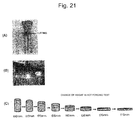
- Figs. 21 (A) to (C) illustrate a hot forging test for evaluating hot forgeability of the TiAl alloy including the hot-forged TiAl material according to the second embodiment of the present invention
- Fig. 21 (A) illustrates an appearance photograph of the ingot and a cutting position (using a lower side) of a material subjected to a forging test
- Fig. 21 (B) is a circumstantial photograph during the hot forging test
- Fig. 21 (C) is an explanatory view of a change of height in the hot forging test.
- Additive elements have different effects, respectively, but the results can be better summarized in the case of using the Cr equivalent of the formula of Cr + Mo + 0.5Mn + 0.25Nb + 0.25V (at%).
- the ⁇ -phase remains in the composition located above a slanted dotted line, and the ⁇ -phase is eliminated in the composition located below the slanted dotted line during the cooling and thus a perfect lamellar structure of ⁇ 2/ ⁇ is formed.
- the perfect lamellar structure of ⁇ 2/ ⁇ is formed in the range surrounded by a dotted line and the composition in this range exhibits the excellent hot forgeability illustrated in Fig. 22 .
- the following drawings relate to a TiAl-casting material as Comparative Example and a conventional hot-forged TiAl material.
- Fig. 27 is a photograph of an optical microscope structure for the conventionally compositional TiAl-casting material (composition of Ti-46at%Al).
- the crystal grain size is coarse and thus the room-temperature ductility is poor.
- Fig. 32 is a reflected electron image of a test material obtained in such a manner that the conventionally compositional hot-forged TiAl material (composition of Ti-42AI-5Mn (at%)) is subjected to cooling treatment at 20°C/min. after being held at 1300°C for two hours.
- the structure of this hot forged material includes a ⁇ -phase, a ⁇ -phase, and a lamellar structure of ⁇ 2/ ⁇ . Since the ⁇ -phase having excellent high temperature deformability (low high-temperature strength) exists, the high-temperature strength is low, and an available temperature is about 700°C. Then, it is not possible to eliminate the ⁇ -phase by the change of heat treatment conditions. The reason is that the ⁇ -phase is stable in a low temperature with this composition.
Landscapes
- Chemical & Material Sciences (AREA)
- Engineering & Computer Science (AREA)
- Mechanical Engineering (AREA)
- Materials Engineering (AREA)
- Metallurgy (AREA)
- Organic Chemistry (AREA)
- Physics & Mathematics (AREA)
- Thermal Sciences (AREA)
- Crystallography & Structural Chemistry (AREA)
- General Engineering & Computer Science (AREA)
- Forging (AREA)
Abstract
Description
- The present invention relates to a TiAl-based alloy to be suitably used for a rotor blade of a gas turbine for power generation, a gas turbine for aircraft, or the like, and specifically, to a hot-forged TiAl-based alloy in which hot forgeability is excellent, strength is high at a high temperature, and ductility is also excellent in a room temperature. In addition, the present invention relates to a method for producing the hot-forged TiAl-based alloy.
- Recently, as materials used for a rotor blade of various turbines, TiAl-based alloys, being lightweight and having excellent heat resistance, have attracted attention. Particularly, in the case of a large rotatable rotor blade, as the constituent member of the rotor blade become lighter, the centrifugal stress becomes smaller, which enables improvement in the maximum engine speed, an increase in area of the rotor blade, and a reduction in the load stress applied to a disk portion of the rotor blade and is very beneficial to the increase in efficiency of the entire apparatus.
- This TiAl-based alloy is an alloy composed mainly of TiAl or Ti3Al, which is an intermetallic compound having excellent high-temperature strength, and the alloy is excellent in heat resistance as described above. The TiAl alloy, which is a lightweight heat resistance alloy, is used as a casting material and a forged material.
- The casting material has a perfect lamellar structure laminated with a α2-phase and a γ-phase which are excellent in high-temperature strength, but there is a problem that room-temperature ductility is deficient because forgeability is poor and a crystal grain is coarsened. Therefore, for example, a technique is proposed in
Patent Literatures -
- Patent Literature 1:
JP 4209092 B1 - Patent Literature 2:
JP 4287991 B1 - Patent Literature 3:
JP 6-49565 A - However, the case of the casting material described above was not sufficient in view of a general coarseness of the cast structure and improvement in ductility at a room temperature. In particular, with respect to a rotor blade used for an engine for industrial use or the like, foreign matter such as sludge may collide with the rotor blade at the time of operation, or at the time of production of the rotor blade, the blade may be broken due to impact at the time of fixing the blade to an outer periphery of the disk with a hammer. Hence, it becomes necessary to improve ductility or impact properties of the TiAl based alloy. In the casting material of the above conventional technique, however, it was difficult to improve the ductility or the impact properties.
- In the case of the casting material, production of small parts such as vehicle parts is relatively easy. However production of large parts has been difficult because castability such as molten-metal flowability of the TiAl-based alloy was generally poor.
- On the other hand, isothermal forging is also commonly used as a forging method of the forged material of the TiAl-based alloy, the isothermal forging being characterized in that the mold and the material are held together at a high temperature and are slowly deformed at a constant temperature. With the isothermal forging, however, there are problems in that process costs are very expensive and production of large parts can be difficult because of the limitation of methodology that the mold and the material are heated together.
- Meanwhile, with respect to hot forging material in the forged material of the TiAl-based alloy, for example, as disclosed in
Patent Literature 3, a β-phase having excellent high temperature deformability (that is, small high-temperature strength) is generated by the addition of a β-stabilization element (Mn, V, Nb, Cr, or the like), and thus so-called hot forging can be performed to cause high-speed deformation as a temperature decreases during the forging. In the hot forged material of the conventional TiAl-based alloy, however, since the β-phase remains in the final product, there were problems in that high-temperature strength was small in a usable state and an available temperature was about 700°C in maximum which was significantly lower than about 850°C which was an available temperature of the casting material. - The present invention has been made to solve the above problems in the TiAl-based alloy and an object thereof is to provide a TiAl-based alloy which is excellent in hot forgeability as a hot forging material, ductility at a room temperature, and impact properties as well as having excellent high-temperature strength.
- A TiAl-based alloy of the present invention, which solves the above problems, contains: Al: 40 to 45 atom%, and additive elements in the following composition ratio (A) or (B), and the balance Ti with inevitable impurities,
- (A) Nb: 7 to 9 atom%,
- Cr: 0.4 to 4.0 atom%,
- Si: 0.3 to 1.0 atom%, and
- C: 0.3 to 1.0 atom%;
- (B) at least one of Cr: 0.1 to 2.0 atom%,
- Mo: 0.1 to 2.0 atom%,
- Mn: 0.1 to 4.0 atom%,
- Nb: 0.1 to 8.0 atom%, and
- V: 0.1 to 8.0 atom%,
- A method for producing the TiAl-based alloy according to the present Invention includes:
- a process in which the TiAl-based alloy is held at a coexisting temperature range of a hexagonal close-packed structure phase (α-phase) and a body-centered cubic structure phase (β-phase) and is then subjected to hot forging; and
- a process in which the hot-forged TiAl-based alloy material is held in a temperature range of from 1180°C to 1290°C for 0.5 to 20 hours and is subjected to a heat treatment at a cooling rate of from 0.3 [°C/min.] to 10 [°C/min.] at the same time.
- According to the present invention, a TiAl-based alloy is provided which is excellent in hot forgeability as a hot forging material, ductility at a room temperature, and impact properties as well as having excellent high-temperature strength.
-
-
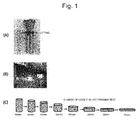
Figs. 1(A) and 1(B) are appearance photographs illustrating a TiAl alloy ingot used in a first embodiment of the present invention andFig. 1(C) is an explanatory view of a hot forging test procedure performed for evaluating hot forgeability. -
Fig. 2 is a diagram illustrating a summary of compositions of trial ingots and evaluation test results of the ingots. -
Fig. 3 is a diagram illustrating a summary of compositions of trial ingots and evaluation test results of the ingots. -
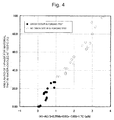
Fig. 4 is an explanatory view illustrating a relation among an alloy element parameter P of a trial ingot, an area ratio of a β-phase existing in a material, which is water-cooled in a condition of 1350°C x 1 h (procedure 2 to be described below), and a forging test result at 1350°C (procedure 3). -
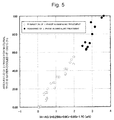
Fig. 5 is an explanatory view illustrating a relation among an alloy element parameter P of a trial ingot, an area ratio of a β-phase existing in a material, which is water-cooled in a condition of 1350°C x 1 h (procedure 2), and the presence or absence of a β-phase residue in the case of being subjected to annealing at 0.2°C/min. after being held at 1350°C for 2 h (procedure 4). -
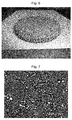
Fig. 6 is an appearance photograph of a hot-forged TiAl alloy according to the first embodiment of the present invention which is subjected to hot forging at 1350°C. -
Fig. 7 is a reflected electron image photograph of a cross-sectional structure for the hot forged TiAl alloy according to the first embodiment of the present invention which is heat-treated under appropriate conditions after being subjected to the hot forging. -
Fig. 8 is an appearance photograph of a hot-forged TiAl alloy of analloy 6 as Comparative Example which is subjected to hot forging at 1350°C. -
Fig. 9 is a reflected electron image photograph of a cross-sectional structure for the hot-forged TiAl alloy of thealloy 6 as Comparative Example which is heat-treated under appropriate conditions after being subjected to the hot forging. -
Fig. 10 is an appearance photograph of a hot-forged TiAl alloy of analloy 17 as Comparative Example which is subjected to hot forging at 1350°C. -
Fig. 11 is a reflected electron image photograph of a cross-sectional structure for the hot-forged TiAl alloy of thealloy 17 as Comparative Example which is heat-treated under appropriate conditions after being subjected to the hot forging. -
Fig. 12 is a reflected electron image photograph of a cross-sectional structure for the hot-forged TiAl alloy according to the first embodiment of the present invention, as Comparative Example, which is held at 1220°C lower than an appropriate holding temperature in a heat treatment. Other heat treatment conditions are appropriate conditions. -
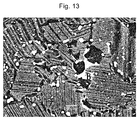
Fig. 13 is a reflected electron image photograph of a cross-sectional structure for the hot-forged TiAl alloy according to the first embodiment of the present invention, as Comparative Example, which is held at 1300°C higher than the appropriate holding temperature in a heat treatment. Other heat treatment conditions are appropriate conditions. -
Fig. 14 is a reflected electron image photograph of a cross-sectional structure for the hot-forged TiAl alloy according to the first embodiment of the present invention, as Comparative Example, which is held for 0.5 hours shorter than the appropriate holding time in a heat treatment. Other heat treatment conditions are appropriate conditions. -
Fig. 15 is a reflected electron image photograph of a cross-sectional structure for the hot-forged TiAl alloy according to the first embodiment of the present invention, as Comparative Example, which is held for 23 hours longer than the appropriate holding time in a heat treatment. Other heat treatment conditions are appropriate conditions. -
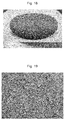
Fig. 16 is a reflected electron image photograph of a cross-sectional structure for the hot-forged TiAl alloy according to the first embodiment of the present invention, as Comparative Example, which is cooled at 0.7 [°C/min.] slower than the appropriate cooling rate in a heat treatment. Other heat treatment conditions are appropriate conditions. -
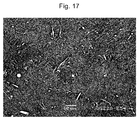
Fig. 17 is a reflected electron image photograph of a cross-sectional structure for the hot-forged TiAl alloy according to the first embodiment of the present invention, as Comparative Example, which is cooled at 15 [°C/min.] faster than the appropriate cooling rate in a heat treatment. Other heat treatment conditions are appropriate conditions. -
Fig. 18 is an appearance photograph of a hot-forged TiAl material according to a second embodiment of the present invention which is subjected to hot forging at 1350°C. -
Fig. 19 is an optical microscope photograph for a structure of the forged material illustrated inFig. 18 . -
Figs. 20(A) and 20(B) are reflected electron image photographs of a test material obtained in such a manner that the hot-forged TiAl material according to the second embodiment of the present invention which is held at 1200°C of a α-region for two hours and is then cooled at 3°C/min. -
Figs. 21 (A) to 21 (C) are diagrams illustrating a hot forging test for evaluating hot forgeability of a TiAl alloy including the hot-forged TiAl material according to the second embodiment of the present invention -
Fig. 22 is a diagram illustrating an influence of Al content and Cr equivalent on the hot forgeability of the TiAl alloy including the hot-forged TiAl material according to the second embodiment of the present invention, and illustrates a state of crack occurrence in the hot forging. -
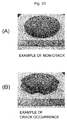
Figs. 23(A) and 23(B) are examples of appearance photographs for a test material after the alloy having the evaluation result of the hot forgeability illustrated inFig. 22 is subjected to a hot forging test. -
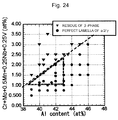
Fig. 24 is a diagram illustrating an influence of Al content and Cr equivalent on the change in structure of a forged material of the TiAl alloy including the hot-forged TiAl material according to the second embodiment of the present invention subjected to the heat treatment, and illustrates the presence or absence of a β-phase residue. -
Figs. 25(A) and 25(B) are examples of reflected electron image photographs of the alloy having the evaluation result of the presence or absence of the β-phase residue after the heat treatment illustrated inFig. 24 , after the heat treatment. -
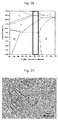
Fig. 26 is an explanatory view of a typical composition range in a TiAl-binary phase diagram of a TiAl-casting material as Comparative Example. -
Fig. 27 is a photograph of an optical microscope structure for the TiAl-casting material as Comparative Example. -
Fig. 28 is a photograph of a reflected electron image structure for the TiAl-casting material as Comparative Example. -
Fig. 29 is an appearance photograph of the TiAl-casting material as Comparative Example in the case of being subjected to the hot forging at 1350°C. -
Fig. 30 is an explanatory view of a typical composition range in a phase diagram of the conventional hot-forged TiAl material as Comparative Example. -
Fig. 31 is an appearance photograph of an ingot for the conventional hot-forged TiAl material, as Comparative Example, which is subjected to the hot forging at 1300°C. -
Fig. 32 is a reflected electron image of a test material obtained in such a manner that the conventional hot-forged TiAl material as Comparative Example is subjected to cooling treatment at 20°C/min. after being held at 1300°C for two hours. - A TiAl-based alloy according to a first embodiment of the invention consists of: 41 to 45 atom% of Al, 7 to 9 atom% of Nb, 0.4 to 4.0 atom% of Cr, 0.3 to 1.0 atom% of Si, and 0.3 to 1.0 atom% of C, and the balance Ti with inevitable impurities. In the TiAl-based alloy, an alloy element parameter P obtained by the following formula is in the composition range of from 1.1 to 2.3, and in a final state after a heat treatment subsequent to hot forging, the TiAl-based alloy has a fine structure in which lamella grains laminated alternately with a Ti3Al phase (α2-phase) and a TiAl phase (γ-phase) are densely arranged and a β-phase is not included, the lamella grains having an average grain size of 1 to 200 µm:

- The other aspect of the TiAl-based alloy according to the first embodiment of the present invention is a TiAl-based alloy in which at least one element selected from the group consisting of W, Mo, B, Hf, Ta, and Zr is further contained in the above TiAl-based alloy to be 0.1 to 3 atom% in total. By the addition of a small amount of these elements, it is possible to increase high-temperature strength, creep strength, and oxidation resistance.
- As a method for producing the TiAl-based alloy having the composition, first, an ingot is prepared by dissolution, a process in which the ingot is held at a coexisting temperature range of a hexagonal close-packed structure phase (α-phase) and a body-centered cubic structure phase (β-phase) and is then subjected to hot forging, and a process in which the hot-forged TiAl-based alloy material is held in a temperature range of from 1230°C to 1290°C, which is an α-single phase region, for 1 to 20 hours and is subjected to a heat treatment at a cooling rate of from 1 [°C/min.] to 10 [°C/min.].
- In the method for producing the TiAl-based alloy according to the first embodiment of the present invention, after the structure including the β-phase formed after the hot forging is turned into the α-single phase during the heat treatment in the heat treatment process, and transformation of a → α+γ → α2+γ occurs in the cooling process, that is, the hexagonal close-packed structure phase (α-phase) is transformed into an eutectoid phase of the hexagonal close-packed structure phase (α-phase) and the TiAl phase (γ-phase), and is further transformed into an eutectoid phase of the Ti3Al phase (α2-phase) and the TiAl phase (γ-phase).
- A rotor blade for turbine of the present invention is characterized in that the TiAl-based alloy having the above composition is produced by the production method described above.
- A gas turbine for power generation, a gas turbine for aircraft, a turbocharger for ship, or a gas turbine or a steam turbine for various industrial machines according to the invention is characterized by using the rotor blade for turbine.
- Hereinafter, the reason why the composition and the content of the TiAl-based alloy according to the first embodiment of the present invention are limited as described above will described as follows. In the following description, a percentage (%) indicating the content is referred to as atom%.
- Aluminum (Al): When the content of Al is in the range of from 41.0 atom% to 45.0 atom%, it is preferred because the β-phase does not exist in a final state after the heat treatment, a perfect lamellar structure laminated with the α2-phase and the γ-phase is obtained, and the hot forgeability is excellent. The excellence in the hot forgeability means that large cracks do not occur even when the hot forging is performed under conditions illustrated in
Figs. 1(A) and 1(C) in particular and fine cracks caused by the change in surface structure of oxidation or the like are not included. When the content of Al is less than 41.0 atom%, the hot forgeability is good, but the ratio of the α2-phase becomes too high. Thus, in this case, the ductility may be deteriorated. When the content of Al exceeds 45.0 atom%, the hot forgeability may become poor. - Niobium (Nb): When the content of Nb is in the range of from 7.0 atom% to 9.0 atom%, it is preferred because oxidation resistance is improved. When the content of Nb is less than 7.0 atom%, the effect of improving the oxidation resistance may be insufficient. The content of Nb exceeds 9.0 atom%, problems may arise in that the β-phase remains and the weight increases.
- Chromium (Cr): When the content of Cr is in the range of from 0.4 atom% to 4.0 atom%, it is preferred because the hot forgeability is improved. When the content of Cr is less than 0.4 atom%, for example, as indicated in
alloys - Silicon (Si): When the content of Si is in the range of from 0.3 atom% to 1.0 atom%, it is preferred because the creep strength is improved. When the content of Si is less than 0.3 atom%, for example, as indicated in an
alloy 21 to be described below, the creep strength may not be improved. When the content of Si exceeds 1.0 atom%, the hot forgeability may become poor. - Carbon (C): When the content of C is in the range of from 0.3 atom% to 1.0 atom%, it is preferred because the creep strength is improved. When the content of C is less than 0.3 atom%, for example, as indicated in an
alloy 5 to be described below, the creep strength may be insufficient. When the content of C exceeds 1.0 atom%, the hot forgeability may become poor. - In the TiAl-based alloy according to the first embodiment of the present invention, the alloy element parameter "P = (41-Al)/3 + 0.25Nb + 0.8Cr - 0.8Si - 1.7C" is preferably in the range of 1.1 atom% to 2.3 atom%. When the alloy element parameter P is less than 1.1 atom%, the hot forgeability may become poor. When the alloy element parameter P exceeds 2.3 atom%, since the β-phase remains even after the heat treatment, the high-temperature strength such as creep strength is deteriorated and thus an available temperature may be lowered.
- In the TiAl-based alloy according to the first embodiment of the present invention, the crystal grain size of the lamella grain is preferably 1 µm or more and 200 µm or less, and particularly preferably 30 µm or more and 100 µm or less. When the crystal grain size of the lamella grain is 100 µm or less, it is preferred because the room-temperature ductility is ensured. It is industrially very difficult to make the average grain size of the lamella grain to be less than 1 µm, and when the average grain size of the lamella grain is less than 30 µm, production costs may increase or production yield may be reduced. On the other hand, when average grain size exceeds 200 µm, the room-temperature ductility, especially, impact properties may be reduced.
- In the method for producing the TiAl-based alloy according to the first embodiment of the present invention, the reason why the heat treatment conditions of the forging material are limited as described will be described below. The temperature range in which the hot-forged TiAl-based alloy is held in the equilibrium temperature range of the α-single phase region is preferably from 1230°C to 1290°C. When the temperature range is lower than 1230°C, since it is within the (α+γ) region, the perfect lamellar structure may not be formed after cooling. When the temperature range exceeds 1290°C, since it is within the (α+β) region, the β-phase may remain by the cooling rate after the cooling.
- In addition, the time at which the hot-forged TiAl-based alloy material is held within the equilibrium temperature range of the α-single phase region is preferably from one hour to 20 hours. When the holding time is shorter than one hour, the time is too short and thus the α-single phase may not be obtained. When the holding time exceeds 20 hours, the time is too long and thus the crystal grain size of the α-grain (final lamella grain) is coarsened, whereby the ductility or the like may be deteriorated.
- Furthermore, the cooling rate after the hot-forged TiAl-based alloy material is held for a predetermined holding time within the equilibrium temperature range of the α-single phase region is preferably from 1 [°C/min.] to 10 [°C/min.]. When the cooling rate is slower than 1 [°C/min.], since the cooling rate is too slow and the gap between the α2-phase and the γ-phase within the lamella grain becomes coarse, the high-temperature strength such as creep strength may be deteriorated. When the cooling rate exceeds 10 [°C/min.], since the cooling rate is too fast and the ratio of the α2-phase is too large, the ductility may be deteriorated.
- Specifically, the method for producing the TiAl-based alloy according to the first embodiment of the present invention is as follows. First, the ingot having the composition described above is melted. Subsequently, the ingot is subjected to hot forging. That is, similarly with the conventional hot-forged TiAl alloy, after being held in an coexisting region of the β-phase and the β-phase, the ingot is taken out of the furnace and is subjected to the hot forging for working at a high strain rate while being rapidly cooled. In this case, similarly with the hot forged material of the conventional TiAl-based alloy, the hot forgeability can be ensured due to the effect that the β-phase rich in plastic deformability exists. In addition, due to the effect that plastic strain is imparted by the hot forging, the crystal grain size becomes finer.
- Subsequently, the hot-forged material is subjected to a heat treatment. In the heat treatment, the material is held for a predetermined time at the α-single phase region, and thus the β-phase existing in the forged material is eliminated and the α-single phase is obtained. Then, by cooling of the forged material at a predetermined rate, transformation of α → α+γ → α2+γ occurs. The crystal grain is not coarsened by optimization of the holding time at the α-region, and it is possible to obtain a perfect lamellar structure laminated with the α2-phase and the γ-phase, which are fine grains and are finally excellent in high-temperature strength and room-temperature ductility, by optimization of the cooling rate. Unlike the hot forging material of the conventional TiAl-based alloy, the alloy of the present invention is characterized by not including the β-phase in the final state.
- In the first embodiment of the present invention, the alloy composition has compositions different from the conventional hot-forged TiAl material, and specifically, the alloy element parameter "P = (41 - AI)/3 + 0.25Nb + 0.8Cr - 0.8Si - 1.7C" is in the range of from 1.1 atom% to 2.3 atom%. By this alloy composition, a phase transformation process (α+β → α → α+γ → α2+γ) is realized, which is not realized in the conventional hot forged material, and it is possible to obtain the perfect lamellar structure laminated with the α2-phase and the γ-phase, in which the β-phase is not included in the final state and the high-temperature strength is high, using the phase transformation in the processes of the hot forging and the heat treatment. That is, both of the hot forgeability and the high-temperature strength are balanced. In addition, due to the effect that plastic strain is imparted by the hot forging, the crystal grain becomes finer and thus the room-temperature ductility, the impact properties, and the like are significantly superior to those of the casting material.
- A TiAl-based alloy according to a second embodiment of the present invention consists of Al: 40.0 to 42.8 atom% and a Cr equivalent being 1.2 to 2.0 atom% that is obtained by the following formula, and the balance Ti with inevitable impurities,

- The TiAl-based alloy is characterized by having a fine structure of densely arranged lamella grains that are laminated alternately with a α2-phase and a γ-phase and have an average grain size of 30 to 200 µm.
- The other aspect of the TiAl-based alloy according to the second embodiment of the present invention is a TiAl-based alloy in which at least one element selected from the group consisting of C, Si, W, B, Ta, and Zr is further contained in the above TiAl-based alloy to be 0.1 to 3 atom% in total. By the addition of these elements, it is possible to increase high-temperature strength, creep strength, and oxidation resistance.
- A method for producing the TiAl-based alloy according to the second embodiment of the present invention that has the fine structure of densely arranged lamella grains that are laminated alternately with the α2-phase and the γ-phase and have the average grain size of 30 to 200 µm, the method includes:
- a process in which the TiAl-based alloy material is held at a coexisting temperature range of an α-phase and a β-phase and is then subjected to hot forging, the TiAl-based alloy material consisting of Al: 40.0 to 42.8 atom% and a Cr equivalent being 1.2 to 2.0 atom% that is obtained by the following formula, and the balance Ti with inevitable impurities;

- a process in which the hot-forged TiAl-based alloy material is held in a temperature range of from 1180°C to 1260°C for 0.5 to 20 hours and is subjected to a heat treatment at a cooling rate of from 0.3 [°C/min.] to 10 [°C/min.] at the same time.
- In the TiAl-based alloy according to the second embodiment of the present invention, when the content of Al is in the range of from 40.0 atom% to 42.8 atom%, it is preferred because the β-phase does not exist in a final state after the heat treatment and a perfect lamellar structure of the α2/γ is obtained. In addition, since the (α+β) phase is obtained during forging, it is preferred because the hot forgeability is excellent. The excellence in the hot forgeability means that large cracks do not occur even when the hot forging is performed under conditions illustrated in
Figs. 21 (A) and 21 (C) in particular and fine cracks caused by the change in surface structure of oxidation or the like are not included. When the content of Al is less than 40.0 atom%, the forgeability is good and the β-phase does not remain, but the ratio of the α2-phase becomes too high. Thus, in this case, the room-temperature ductility may be deteriorated. When the content of Al exceeds 42.8 atom%, the forgeability may become poor. - In the TiAl-based alloy according to the second embodiment of the present invention, the Cr equivalent is preferably in the range of from 1.2 atom% to 2.0 atom%. When the Cr equivalent is less than 1.2 atom%, since the amount of β-phase is deficient during the forging, the forgeability may become poor. When the Cr equivalent exceeds 2.0 atom%, since the β-phase remains after the heat treatment, the high-temperature strength is low and the available temperature may be lowered.
- Elements included in the relation equation of the Cr equivalent have different addition effects, respectively, but when the Cr equivalent is in the above range, it is preferred because the forgeability is good and the β-phase does not also remain.
- In the TiAl-based alloy according to the second embodiment of the present invention, the crystal grain size of the lamella grain is preferably 200 µm or less because the room-temperature ductility is ensured. It is industrially difficult to make the average grain size of the lamella grain to be less than 30 µm, and the room-temperature ductility may be reduced when the average grain size exceeds 200 µm.
- In the method for producing the TiAl-based alloy according to the second embodiment of the present invention, when the hot-forged TiAl-based alloy material is subjected to the heat treatment at the (α+β) region, the temperature range in which the hot-forged TiAl-based alloy is held in the equilibrium temperature range of the α-single phase region is preferably from 1180°C to 1260°C. When the temperature range is lower than 1180°C, since it is within the (α+γ) region, the α-single phase is not obtained and the perfect lamellar structure may not be formed after cooling. When the temperature range exceeds 1260°C, since it is within the (α+β) region, the β-phase may remain by the cooling rate.
- In the method for producing the TiAl-based alloy according to the second embodiment of the present invention, when the hot-forged TiAl-based alloy material is subjected to the heat treatment, the time at which the hot-forged TiAl-based alloy material is held within the equilibrium temperature range of the α-single phase region is preferably from 0.5 hours to 20 hours. When the holding time is shorter than 0.5 hours, the time is too short and thus the α-single phase may not be obtained. When the holding time exceeds 20 hours, the time is too long and thus the crystal grain size of the α-grain (final lamella grain) may be coarsened.
- In the method for producing the TiAl-based alloy according to the second embodiment of the present invention, the cooling rate after the hot-forged TiAl-based alloy material is held for a predetermined holding time within the equilibrium temperature range of the α-single phase region is preferably from 0.3 [°C/min.] to 10 [°C/min.]. When the cooling rate is slower than 0.3 [°C/min.], since the cooling rate is too slow and the gap between the α2-phase and the γ-phase within the lamella grain is coarsened, the ductility and the strength may be deteriorated. When the cooling rate exceeds 10 [°C/min.], since the cooling rate is too fast and the ratio of the α2-phase is too large, the ductility may be deteriorated.
- Specifically, the method for producing the TiAl-based alloy according to the second embodiment of the present invention is as follows. First, the ingot having a predetermined composition is melted. Subsequently, the ingot is subjected to hot forging. That is, similarly with the conventional hot-forged TiAl alloy, the forging is performed at the (α+β) region. Similarly with the conventional material, the hot forgeability can be ensured by the effect of the β-phase. In addition, the crystal grain size becomes finer by the effect of the forging.
- Subsequently, the hot-forged material is subjected to a heat treatment. When the material is cooled at a predetermined rate after being held for a predetermined time at the α-single phase region, transformation of α → α+γ → α2+γ occurs. The crystal grain is not coarsened by optimization of the holding time at the α-region, and it is possible to obtain a perfect lamellar structure of the α2/γ, which are fine grains and are finally excellent in high-temperature strength and room-temperature ductility.
- In the second embodiment of the present invention, the composition is largely changed compared to the conventional hot-forged TiAl material. By this composition, a phase transformation process (α+β → α → α+γ → α2+γ) is realized, which is not realized in the conventional hot forged material, and it is possible to obtain the perfect lamellar structure of the α2/γ, in which the high-temperature strength is high in the final state, using the phase transformation in the processes of the forging and the heat treatment. That is, both of the hot forgeability and the high-temperature strength are balanced. In addition, the crystal grain becomes finer due to the effect of the forging and thus the room-temperature ductility is significantly superior to that of the casting material.
- The present invention will be described below with reference to the accompanying drawings.
-
Figs. 1(A) to 17 relate to a first embodiment of the present invention, andFigs. 18 to 25 relate to a second embodiment of the present invention. In addition,Figs. 26 to 32 relate to a TiAl-casting material and a conventional hot-forged TiAl material as Comparative Example. - First, preparation procedures and evaluation test procedures of a hot-forged TiAl alloy according to the first embodiment of the present invention will be sequentially described in detail.
-
Figs. 1(A) to 1(C) illustrate an ingot used in Example and a hot forging test for evaluating hot forgeability;Fig. 1(A) illustrates an appearance photograph of the ingot and a cutting position (using a lower side) of a material subjected to a forging test,Fig. 1(B) is a circumstantial photograph during the hot forging test, andFig. 1 (C) is an explanatory view of a change of height in the hot forging test. -
Fig. 1(A) is a representative example of the appearance of the ingot prepared by alloy compositions illustrated inFigs. 2 and3 . All of the ingots have almost the same appearance.Figs. 2 and3 are diagrams illustrating compositions of trial ingots and summaries of evaluation test results of the trial ingots. The ingot is prepared by high-frequency melting using an yttria crucible. A raw material of the ingot includes sponge Ti, granular raw materials of Al, Nb, Cr, and Si, and C added in the form of a TiC powder, and the total weight is about 700 g. A melting atmosphere is in argon gas. Casting was performed using a cast iron mold having an inner diameter of φ 40 mm, cutting is performed at the position illustrated inFig. 1(A) , and the lower side is subjected to the hot forging test. The weight of the ingot in the photograph was about 700 g, but the weight of the ingot after riser cutting was about 450 g. - With respect to the ingot prepared in the
above procedure 1, a small piece was worked from an upper portion the cut plane of the ingot, and was subjected to a water-cooling treatment after being held at 1350°C for one hour. Subsequently, a cross-sectional structure of the test material subjected to the water-cooling treatment was observed by a reflected electron image of a scanning electron microscope, and the resulting photograph was subjected to an image treatment, whereby the area ratio of the β-phase existing in the test material was measured. - The hot forging test was performed in the same manner as the circumstantial photograph illustrated in
Fig. 1(B) and the explanatory view illustrated inFig. 1(C) . That is, the heating temperature was 1350°C, the ingot was taken out of the furnace and was placed in a press, and forging was performed by descending of the press. The descending speed of the press was 50 mm/second or faster, the forging direction was upset, and the number of times of the forging was seven times. The material returned to the furnace every each forging and was subjected to reheating. In the hot forging test, the height was changed into 90 mm (initial height of the ingot), 80 mm, 70 mm, 55 mm, 40 mm, 30 mm, 20 mm, and 15 mm, and compression was performed in this order. - After being held at 1350°C for two hours, the hot-forged test material was subjected to an annealing treatment for cooling at 0.2°C/min., and cross-sectional structure thereof was observed by a reflected electron image of the scanning electron microscope, whereby the presence or absence of the β-phase remaining was investigated. This heat treatment was intended to investigate whether the β-phase was ultimately stabilized in each composition of
Figs. 2 and3 , and thus the annealing treatment was performed for the purpose. In addition, this heat treatment is independent of heat treatment conditions after the forging which is a requirement of the present invention. - The hot forged material after the
above procedure 3 was subjected to a heat treatment test by changing of the following conditions, and appropriate heat treatment conditions were investigated from structure observation. The changed conditions include a holding temperature, a holding time, and a cooling rate. - As a result, with respect to the alloy of the first embodiment according to the present invention, that is, the hot-forged TiAl alloy having an alloy element parameter P (= (41 - AI)/3 + 0.25Nb + 0.8Cr - 0.8Si - 1.7C) in the range of from 1.1 atom% to 2.3 atom%, it was found that the temperature range of the holding temperature for holding the alloy in an equilibrium temperature range of α-single phase region was preferably 1230 to 1290°C.
- It was found that the holding time was a time for holding the hot-forged TiAl-based alloy within the equilibrium temperature range of the α-single phase region and was preferably 1 to 20 hours.
- It was found that the cooling rate was a cooling rate of the alloy after the hot-forged TiAl-based alloy was held in the equilibrium temperature range of the α-single phase region for a predetermined time, and was preferably 1 to 10 [°C/min.].
- Subsequently, in the
Procedure 5 of Investigation of appropriate heat treatment conditions, an appropriate structure is determined as follows. That is, an object of structure is a fine structure in which lamella grains are densely arranged, the lamella grains being alternately laminated with an α2-phase of gray in the reflected electron image and a γ-phase of black in the reflected electron image and having an average grain size of 1 to 200 µm. In addition, a β-phase of white in the reflected electron image or a γ-grain in which the equi-axied γ-phase of black in the reflected electron image is largely grown is not included. Silicide of a small white granular shape in the reflected electron image is outside the scope of the evaluation determination, the silicide being precipitated along with the addition of Si. - After the hot forged material was subjected to the heat treatment, a creep test piece was worked and was subjected to a creep rupture test in a state of 870°C x 225 MPa. Then, creep strength of each alloy was evaluated by a rupture time. The inventive alloy was subjected to the heat treatment under heat treatment conditions to obtain the object of structure in the
procedure 5. Further, Comparative Alloys (alloys in which the β-phase remains in the procedure 4) is treated under the appropriate conditions in the inventive alloy having an analogous composition. -
Fig. 4 is an explanatory view illustrating a relation between an alloy element parameter "P = (41 - AI)/3 + 0.25Nb + 0.8Cr - 0.8Si - 1.7C" of a trial ingot of the present invention and a forging test result at 1350°C measured in theprocedure 3 and a relation between the area ratio of the β-phase of a material, which is water-cooled in the condition of 1350°C x 1 h, measured in theabove procedure 2 and the forging test result. InFig. 4 , each plot corresponds to a separate ingot having a different composition, and a state of crack occurrence in the hot forging is indicated by a black-plotted mark or a void-plotted mark. During the hot forging test, the crack occurs in the case of the ingot having a composition of the black-plotted mark, and the crack does not occur in the case of the ingot having a composition of the void-potted mark. - From
Fig. 4 , it can be confirmed that the correlation between the alloy element parameter "P = (41 -Al)/3 + 0.25Nb + 0.8Cr - 0.8Si - 1.7C" and the area ratio of the β-phase of the material which is water-cooled in the condition of 1350°C x 1 h is good. In addition, the relation between the hot forgeability and the area ratio of the β-phase of the material which is water-cooled in the condition of 1350°C x 1 h and the relation between the alloy element parameter P and the area ratio of the β-phase of the material which is water-cooled in the condition of 1350°C x 1 h are as follows. An ingot having a composition in which the alloy element parameter P is 1.1 atom% or less and the area ratio of the β-phase of the material which is water-cooled in the condition of 1350°C x 1 h is 30% or less has poor hot forgeability. On the other hand, an ingot having a composition in which the alloy element parameter P is 1.1 atom% or more and the area ratio of the β-phase of the material which is water-cooled in the condition of 1350°C x 1 h is 30% or more has excellent hot forgeability. -
Fig. 5 is an explanatory view illustrating a relation between an alloy element parameter "P = (41 - AI)/3 + 0.25Nb + 0.8Cr - 0.8Si- 1.7C" of the trial ingot of the present invention and the presence or absence of the β-phase residue in an annealing treatment evaluated in the procedure 4 (whether the β-phase is finally stable in each composition) and a relation between the area ratio of the β-phase of a material, which is water-cooled in the condition of 1350°C x 1 h, measured in theabove procedure 2 and the presence or absence of the β-phase residue. - The relation between the presence or absence of the β-phase residue and the alloy element parameter P and the relation between the presence or absence of the β-phase residue and the area ratio of the β-phase of a material, which is water-cooled in the condition of 1350°C x 1 h, are as follows. In an ingot having a composition in which the alloy element parameter P is 2.3 atom% or less and the area ratio of the β-phase of the material which is water-cooled in the condition of 1350°C x 1 h is 60% or less, the β is eliminated after the annealing treatment. That is, in this composition, the β-phase is finally unstable. On the other hand, in an ingot having a composition in which the alloy element parameter P is 2.3 atom% or more and the area ratio of the β-phase of the material which is water-cooled in the condition of 1350°C x 1 h is 60% or more, the β remains after the annealing treatment. That is, in this composition, the β-phase is finally stable.
- From the above results illustrated in
Figs. 4 and5 , it is possible to evaluate the hot forgeability and the influence of the alloy composition on the stability of the final β-phase using the alloy element parameter "P = (41 - AI)/3 + 0.25Nb + 0.8Cr - 0.8Si - 1.7C". It could be confirmed that the hot forgeability was excellent and the β-phase did not finally remain when the parameter was in the range of from 1.1 atom% to 2.3 atom%. - The hot forged materials of the ingots prepared by the compositions illustrated in
Figs. 2 and3 will be described in detail below based on typical cases by being divided into Examples and Comparative Examples. -
Fig. 6 is an appearance photograph when an ingot (alloy 13 having a composition of Ti-42AI-8Nb-2.3Cr-0.9Si-0.7C (atom%)) according to the first embodiment of the present invention is subjected to the hot forging at 1350°C. Since it is estimated that the amount of β-phase at 1350°C is 42% much larger than that in the evaluation in theprocedure 2, forgeability is good, and no crack occurs. -
Fig. 7 is a reflected electron image photograph of a test material obtained in such a manner that the ingot (alloy 13) according to the first embodiment of the present invention is heat-treated under appropriate conditions after being subjected to the hot forging. A perfect lamellar structure having no β-phase (large white phase) appears in the photograph. Fine white points indicate precipitates (silicide) caused by Si. Here, the appropriate conditions refer to the heat-treatment conditions described above. - That is, when the
alloy 13 subjected to the hot forging is heat-treated under the appropriate conditions, the β-phase existing in the hot forged material is no longer present in the alloy, the β-phase having excellent high temperature deformability (low high-temperature strength). The grain size is slightly coarsened compared to that of the forged alloy, but becomes significantly smaller than that of a casting material. Therefore, since this hot forged material has the above structure, it is excellent in both of the high-temperature strength and the room-temperature ductility. -
Fig. 8 is an appearance photograph when an ingot (composition: Ti-41AI-7Nb-0.9Si-0.4C (atom%)) ofComparative Alloy 6 is subjected to the hot forging at 1350°C. Since it is estimated that the amount of β-phase at 1350°C is 12% smaller than that in the evaluation in theprocedure 2, deformability is poor, and large cracks have occurred. -
Fig. 9 is a photograph of a reflected electron image structure of a test material obtained in such a manner that the forged TiAl material ofComparative Alloy 6 is heat-treated under appropriate conditions. Similarly to the inventive alloy, a perfect lamellar structure having no β-phase (large white phase) appears in the photograph. Fine white points indicate precipitates (silicide) caused by Si. -
Fig. 10 is an appearance photograph when an ingot (composition: Ti-40AI-7Nb-3Cr-0.6Si-0.9C (atom%)) ofComparative Alloy 4 is subjected to the hot forging at 1350°C. Since it is estimated that the amount of β-phase at 1350°C is 63% much larger than that in the evaluation in theprocedure 2, forgeability is good, and no crack occurs. -
Fig. 11 is a photograph of a reflected electron image structure of a test material obtained in such a manner that the ingot ofComparative Alloy 4 is heat-treated under appropriate conditions after being subjected to the hot forging. Since a β-phase (large white phase) having excellent high temperature deformability (low high-temperature strength) remains, it is assumed that the high-temperature strength is low. In fact, a creep rupture time (h) in a state of 870°C x 225 MPa is 16 hours which is shorter than that in the inventive alloy. -
Fig. 12 is a reflected electron image photograph of a test material obtained in such a manner that the ingot (alloy 13) according to the first embodiment of the present invention is held at 1220°C lower than the appropriate holding temperature in a heat treatment after being subjected to the hot forging. Other heat treatment conditions are appropriate conditions. It is found that a large black equi-axied γ-phase exists. That is, since a perfect lamellar structure is not formed, it is considered that the high-temperature strength is lower than that of the inventive alloy. This is considered because the holding temperature of 1220°C is within a (α+γ) region rather than an α-single phase region. -
Fig. 13 is a reflected electron image photograph of a test material obtained in such a manner that the ingot (alloy 13) according to the first embodiment of the present invention is held at 1300°C higher than the appropriate holding temperature in a heat treatment after being subjected to the hot forging. Other heat treatment conditions are appropriate conditions. It is found that a large white β-phase exists. Since the β-phase remains, it is considered that the high-temperature strength is lower than that of the inventive alloy. This is considered because the holding temperature of 1300°C is within a (α+β) region rather than an α-single phase region. -
Fig. 14 is a reflected electron image photograph of a test material obtained in such a manner that the ingot (alloy 13) according to the first embodiment of the present invention is held for 0.5 hours shorter than the appropriate holding time in a heat treatment after being subjected to the hot forging. Other heat treatment conditions are appropriate conditions. It is found that a large white β-phase exists. Since the β-phase remains, it is considered that the high-temperature strength is lower than that of the inventive alloy. This is considered because the holding time is short and thus a sufficient time for transformation of the β-phase existing in the forged material into the α-phase is not left. -
Fig. 15 is a reflected electron image photograph of a test material obtained in such a manner that the ingot (alloy 13) according to the first embodiment of the present invention is held for 23 hours longer than the appropriate holding time in a heat treatment after being subjected to the hot forging. Other heat treatment conditions are appropriate conditions. It is found that a perfect lamellar structure is formed, but a crystal grain is large. Since the crystal grain is large, it is considered that the room-temperature ductility or the like is lower than that of the inventive alloy. This is considered because the holding time is long and thus an α-grain (lamellar grain after cooling) is coarsened during the holding. -
Fig. 16 is a reflected electron image photograph of a test material obtained in such a manner that the ingot (alloy 13) according to the first embodiment of the present invention is cooled at 0.7 [°C/min.] slower than the appropriate cooling rate in a heat treatment after being subjected to the hot forging. Other heat treatment conditions are appropriate conditions. It is found that a perfect lamellar structure is formed, but a lamella gap is large. Since the lamella gap is large, it is considered that the high-temperature strength is lower than that of the inventive alloy. -
Fig. 17 is a reflected electron image photograph of a test material obtained in such a manner that the ingot (alloy 13) according to the first embodiment of the present invention is cooled at 15 [°C/min.] faster than the appropriate cooling rate in a heat treatment after being subjected to the hot forging. Other heat treatment conditions are appropriate conditions. It is found that a perfect lamellar structure is formed, but a lamella gap is small. Since the lamella gap is small, it is considered that the room-temperature ductility or the like is lower than that of the inventive alloy. - Table 1 indicates a composition, a hot forging temperature, a heat-treatment condition, a structure, and tensile properties at a room temperature, 850°C, and 950°C with respect to a hot-forged TiAl alloy according to a second embodiment of the present invention, a material of Comparative Example 9 as a TiAl-casting material, and a material of Comparative Example 10 as a conventional hot-forged TiAl material.
[Table 1] Compare tensile properties to each other in materials of present invention and Comparative Examples Material Composition (at%) Hot forging temperature (°C) Heat-treatment condition Structure Temperature (°C) Time (h) Cooling rate (°C/min) Structure state and constituting phase Average grain size (µm) Comparative Example 9 TiAl-forged material Ti-46AI - - - - α2/γ- perfect lamellar structure 1200 Comparative Example 10 Conventional hot-forged TiAl material Ti42Al-5Mn 1300 1300 2 20 α2/lamellar structure + β-phase + γ-phase 80 (Only lamella grain) Example 2 Hot-forged TiAl material of present invention Ti-41Al-0.6Cr-4Nb 1350 1200 2 3 α2/γ-perfect lamellar structure 70 Compare tensile properties to each other in materials of present invention and Comparative Examples (continued) Tensile property Room temperature 850°C 950°C Strength (MPa) Elongation (%) Strength (MPa) Elongation (%) Strength (MPa) Elongation (%) Comparative Example 9 465 0.2 472 1.3 353 3.2 Comparative Example 10 540 0.7 340 10.5 146 30.5 Example 2 650 1.5 527 4.2 327 14.5 -
Fig. 18 is an appearance photograph when a hot-forged TiAl material (composition: Ti-41AI-0.6Cr-4Nb (at%)) of the second embodiment of the present invention is subjected to the hot forging at 1350°C. The forging temperature is within an (α+β) region. Since the β-phase having excellent high temperature deformability exists, forgeability of this hot forged material is good, and no crack occurs. -
Fig. 19 is a structure photograph of an optical microscope of the forged material illustrated inFig. 18 . A horizontal line of a right corner indicates 10 µm. By the effect of plastic strain due to the forging, the crystal grain size becomes fine, for example, about 10 to 100 µm. -
Figs. 20(A) and (B) are reflected electron image photographs of a test material obtained in such a manner that the hot-forged TiAl material (composition: Ti-41AI-0.6Cr-4Nb (at%)) according to the second embodiment of the present invention is held at 1200°C of the α-region for two hours and is then cooled at 3°C/min.Fig. 20(A) is a low magnification photograph, andFig. 20(B) is a high magnification photograph. The structure is a perfect lamellar structure consisting of α2-phase and γ-phase, and is similar to that of the casting material. In the heat-treated material, the β-phase having excellent high temperature deformability (low high-temperature strength) does not exist. The grain size is slightly coarsened compared to that of the forged alloy, but becomes significantly smaller than that of a casting material illustrated inFig. 27 . Therefore, since this hot forged material has the above structure, it is excellent in both of the high-temperature strength and the room-temperature ductility. -
Figs. 21 (A) to (C) illustrate a hot forging test for evaluating hot forgeability of the TiAl alloy including the hot-forged TiAl material according to the second embodiment of the present invention;Fig. 21 (A) illustrates an appearance photograph of the ingot and a cutting position (using a lower side) of a material subjected to a forging test,Fig. 21 (B) is a circumstantial photograph during the hot forging test, andFig. 21 (C) is an explanatory view of a change of height in the hot forging test. -
Fig. 21 (A) is an appearance photograph of an ingot prepared by a composition indicated in Tables 2 and 3. The ingot is prepared by high-frequency melting using an yttria crucible. A raw material of the ingot includes sponge Ti, Al grains, and at least one of Cr, Mo, Mn, Nb, or V as an additive element. A melting atmosphere is in argon gas. The weight of the ingot in the photograph was about 700 g, but the weight of the ingot after riser cutting was about 450 g. -
Figs. 21 (B) and 21 (C) illustrate the circumstantial photograph during the hot forging test and the explanatory view. The heating temperature is 1350°C, the speed of press is 50 mm/second or faster, the forging direction is upset, and the number of times of the forging is seven times. The material is subjected to reheating every each forging. In the hot forging test, the height is changed into 90 mm, 80 mm, 70 mm, 55 mm, 40 mm, 30 mm, 20 mm, and 15 mm, and compression is performed in this order. - Tables 2 and 3 indicate a composition and a test result of an ingot in which the hot forgeability and the presence or absence of the β-phase residue after the heat treatment are investigated.
[Table 2] Composition and test result of ingot in which hot forgeability and presence or absence of β-phase residue after heat treatment are investigated (Part 1) Alloy composition (at%) Cr equivalent (Cr + Mo + 0.5Mn + 0.25Nb + 0.25V) Test result Al Cr Mo Mn Nb V Ti Forging test Structure after heat treatment 39 1.00 Balance 0.50 Crack occurrence Perfect lamellar structure 39 0.50 0.60 Balance 0.80 Crack occurrence Perfect lamellar structure 39 1.00 2.00 Balance 1.50 Good Residue of β-phase 40 1.00 1.00 Balance 0.75 Crack occurrence Perfect lamellar structure 40 1.00 2.00 Balance 1.00 Crack occurrence Perfect lamellar structure 40 1.13 Balance 1.13 Good Perfect lamellar structure 40 2.00 Balance 2.00 Good Residue of β-phase 40 3.00 Balance 3.00 Good Residue of β-phase 40.5 1.00 0.40 Balance 1.20 Good Perfect lamellar structure 40.5 3.20 Balance 1.60 Good Perfect lamellar structure 40.5 8.00 Balance 2.00 Good Residue of β-phase 40.5 1.00 5.00 Balance 2.25 Good Residue of β-phase 41 0.50 1.00 Balance 0.75 Crack occurrence Perfect lamellar structure 41 0.50 2.00 Balance 1.00 Crack occurrence Perfect lamellar structure 41 2.50 Balance 2.50 Good Residue of β-phase 41 2.00 1.50 Balance 3.50 Good Residue of β-phase 41.5 1.13 Balance 1.13 Good Perfect lamellar structure [Table 3] Composition and test result of ingot in which hot forgeability and presence or absence of β-phase residue after heat treatment are investigated (Part 2) Alloy composition (at%) Cr equivalent (Cr + Mo + 0.5Mn + 0.25Nb + 0.25V) Test result Al Cr Mo Mn Nb V Ti Forging test Structure after heat treatment 42 0.50 1.00 Balance 0.75 Crack occurrence Perfect lamellar structure 42 0.50 2.00 Balance 1.00 Crack occurrence Perfect lamellar structure 42 2.40 Balance 1.20 Good Perfect lamellar structure 42 2.90 Balance 1.45 Good Perfect lamellar structure 42 1.00 1.20 Balance 1.60 Good Perfect lamellar structure 42 8.00 Balance 2.00 Good Perfect lamellar structure 42 1.00 5.00 Balance 2.25 Good Residue of β-phase 42 5.00 5.00 Balance 2.50 Good Residue of β-phase 43 0.50 1.00 Balance 0.75 Crack occurrence Perfect lamellar structure 43 0.50 2.00 Balance 1.00 Crack occurrence Perfect lamellar structure 43 0.40 0.80 Balance 1.20 Crack occurrence Perfect lamellar structure 42.8 1.00 4.00 Balance 1.50 Good Perfect lamellar structure 42.8 1.00 6.00 Balance 2.00 Good Perfect lamellar structure 42.8 2.00 2.00 Balance 2.50 Good Residue of β-phase 43.5 2.00 1.00 Balance 2.50 Crack occurrence Residue of β-phase 44 1.00 Balance 1.00 Crack occurrence Perfect lamellar structure 44 1.00 1.00 Balance 1.50 Crack occurrence Perfect lamellar structure 44 1.00 4.00 Balance 2.00 Crack occurrence Perfect lamellar structure 44 2.00 4.00 Balance 3.00 Crack occurrence Residue of β-phrase 45 1.00 1.00 Balance 1.50 Crack occurrence Perfect lamellar structure 45 1.00 4.00 Balance 2.00 Crack occurrence Perfect lamellar structure 45 0.50 1.00 1.00 5.00 Balance 2.50 Crack occurrence Perfect lamellar structure 45 2.00 4.00 Balance 3.00 Crack occurrence 46 1.00 1.00 Balance 1.50 Crack occurrence Residue of β-phase 46 1.00 4.00 Balance 2.00 Crack occurrence Perfect lamellar structure 46 2.00 4.00 Balance 3.00 Crack occurrence Perfect lamellar structure -
Fig. 22 is a diagram illustrating an influence of Al content and Cr equivalent on the hot forgeability of the TiAl alloy including the hot-forged TiAl material according to the second embodiment of the present invention, and illustrates a state of crack occurrence in the hot forging. Here, plots inFig. 22 correspond to separate ingots, respectively. Additive elements have different effects, respectively, but the results can be better summarized in the case of using the formula of Cr + Mo + 0.5Mn + 0.25Nb + 0.25V (at%). When the Cr equivalent was 1 at% or more and the Al content was 43 at% or less, it could be confirmed that the hot forging could be performed without cracks. -
Figs. 23(A) and 23(B) are examples of appearance photographs for the test material after the hot forging test ofFig. 22 , respectively.Fig. 23(A) illustrates a case where no crack occurs, andFig. 23(B) illustrates a case where the crack occurs. -
Fig. 24 is a diagram illustrating an influence of Al content and Cr equivalent on the change in structure of a forged material of the TiAl alloy including the hot-forged TiAl material according to the second embodiment of the present invention subjected to the heat treatment, and illustrates the presence or absence of the β-phase residue. Here, the test is performed using the hot-forged material of the ingot prepared by the composition of Tables 2 and 3. With respect to test conditions, a small piece cut from the hot-forged material is subjected to a heat treatment in such a manner that the small piece is cooled at 0.2°C/min. after being held at 1350°C for two hours. In the heat treatment test conditions relating to this drawing, the piece was cooled at a very slow rate so as to investigate whether the β-phase finally remained in each composition. Accordingly, the crystal grain size becomes coarse. - Additive elements have different effects, respectively, but the results can be better summarized in the case of using the Cr equivalent of the formula of Cr + Mo + 0.5Mn + 0.25Nb + 0.25V (at%). In
Fig. 24 , the β-phase remains in the composition located above a slanted dotted line, and the β-phase is eliminated in the composition located below the slanted dotted line during the cooling and thus a perfect lamellar structure of α2/γ is formed. In the drawing, the perfect lamellar structure of α2/γ is formed in the range surrounded by a dotted line and the composition in this range exhibits the excellent hot forgeability illustrated inFig. 22 . -
Figs. 25(A) and (B) are examples of reflected electron image photographs of the forged material of the TiAl alloy inFig. 24 which is subjected to the heat treatment;Fig. 25(A) illustrates an example of a structure in which the β-phase remains, andFig. 25(B) illustrates an example of a structure in which a perfect lamellar structure is obtained without the remaining of the β-phase. - The following drawings relate to a TiAl-casting material as Comparative Example and a conventional hot-forged TiAl material.
-
Fig. 26 is an explanatory view of a typical composition range in a TiAl-binary phase diagram of the TiAl-casting material. Since the amount of β-phase stabilization element (Mn, Cr, Mo, V, or the like) to be added to the casting material is small, even if added, the phase state is not changed fromFig. 26 . The phase transformation of α → α+γ → α2+γ occurs, and the β-phase is not stable even in the high temperature. -
Fig. 27 is a photograph of an optical microscope structure for the conventionally compositional TiAl-casting material (composition of Ti-46at%Al). The crystal grain size is coarse and thus the room-temperature ductility is poor. -
Fig. 28 is a photograph of a reflected electron image structure for the conventionally compositional TiAl-casting material (composition of Ti-46at%Al). The TiAl-casting material consists of γ-phase and α2-phase and has a lamellar structure layered with the above two phases. Here, since all structures is made up of this lamellar structure, a perfect lamellar structure is obtained. The TiAl-casting material has the perfect lamellar structure and is high in terms of high-temperature strength, which can be used up to about 850°C. -
Fig. 29 is an appearance photograph of the conventionally compositional TiAl-casting material (composition of Ti-46at%Al) in the case of being subjected to the hot forging at 1350°C. Since the β-phase (phase in which the high temperature deformability is excellent) does not exist, deformability is poor and a large crack has occurred. -
Fig. 30 is an explanatory view of a typical composition range in a phase diagram of the conventionally compositional hot-forged TiAl alloy. The phase diagram is a phase diagram of TiAl-V ternary alloy in which Al content is fixed to 42 at% and the β-phase is stabilized by the addition of the β-stabilization element (V in this case). Basic components are common even when the addition element is Mn, Cr, Mo, or Nb, but the location of each phase varies depending on the addition element. In addition, the location of each phase also varies depending on the variation of the Al content. Here, a region surrounded by a rectangular solid line indicates the composition of the conventional hot-forged TiAl alloy in a case where the addition element is V. However, since the V content is in the range of 9 to 13 at%, a (β+α)-phase region appears near 1300°C, and the β-phase is stable even in a low-temperature side lower than 1000°C. Thus, the β-phase remains in the final product even when any heat treatment is performed. In addition, in the case of using at a high temperature for a long time as a product, it becomes close to an equilibrium state, and the amount of β-phase may increase. -
Fig. 31 is an appearance photograph of the conventionally compositional hot-forged TiAl material (composition of Ti-42AI-5Mn (at%)) which is subjected to the hot forging at 1300°C. A forging temperature is a (α+β) region. Since the β-phase having excellent high temperature deformability exists, forgeability is good and no crack occur. -
Fig. 32 is a reflected electron image of a test material obtained in such a manner that the conventionally compositional hot-forged TiAl material (composition of Ti-42AI-5Mn (at%)) is subjected to cooling treatment at 20°C/min. after being held at 1300°C for two hours. The structure of this hot forged material includes a β-phase, a γ-phase, and a lamellar structure of α2/γ. Since the β-phase having excellent high temperature deformability (low high-temperature strength) exists, the high-temperature strength is low, and an available temperature is about 700°C. Then, it is not possible to eliminate the β-phase by the change of heat treatment conditions. The reason is that the β-phase is stable in a low temperature with this composition. - The above embodiments are merely made to describe in detail the present invention. Accordingly, the present invention should not be restrictively construed with the above embodiments. The TiAl-based alloy of the present invention or the method for producing the TiAl-based alloy includes ratio changes of composition elements within an obvious range in a person skilled in the art, for example, composition changes in an allowable range included inevitably in manufacturing or composition changes in an allowable range depending on variations in purchase price or fluctuations in supply state of raw-material compositions.
- The TiAl-based alloy according to the present invention is excellent in high-temperature strength or impact resistance, and thus is suitably used for a rotor blade of a gas turbine or steam turbine for power generation, aircraft, ship, or various industrial machines.
- The TiAl-based alloy material produced by the present invention is excellent in high-temperature strength and has excellent ductility or impact properties. When this material is used for the rotor blade of various turbines or turbocharger, it is possible to improve energy efficiency due to an increase in an engine speed and contribute to reduction in weight while maintaining reliability.
- In addition, the TiAl-based alloy according to the present invention can be used to manufacture large parts from excellent hot forgeability and is suitably used for the rotor blade or a disk of an aircraft engine or the gas turbine for power generation because of being excellent in high-temperature strength, room-temperature ductility, or the like.
- In the case of using the TiAl-based alloy according to the present invention, it is possible to obtain a large-scaled material which is excellent in high-temperature strength and room-temperature ductility. Since the rotor blade or disk made of this material has excellent high-temperature strength or room-temperature ductility, when this material is used for the rotor blade of the aircraft engine or the gas turbine for power generation, it is possible to improve energy efficiency due to an increase in an engine speed and an increase in size of parts while maintaining reliability.
Claims (11)
- A TiAl-based alloy containing:Al: 40 to 45 atom%, andadditive elements in the following composition ratio (A) or (B), and the balance Ti with inevitable impurities,(A) Nb: 7 to 9 atom%,Cr: 0.4 to 4.0 atom%,Si: 0.3 to 1.0 atom%, andC: 0.3 to 1.0 atom%;(B) at least one of Cr: 0.1 to 2.0 atom%,Mo: 0.1 to 2.0 atom%,Mn: 0.1 to 4.0 atom%,Nb: 0.1 to 8.0 atom%, andV: 0.1 to 8.0 atom%,wherein the TiAl-based alloy has a fine structure of densely arranged lamella grains that are laminated alternately with a Ti3Al phase (α2-phase) and a TiAl phase (γ-phase) and have an average grain size of 1 to 200 µm.
- A method for producing the TiAl-based alloy according to claim 1, comprising:a process in which the TiAl-based alloy is held at a coexisting temperature range of a hexagonal close-packed structure phase (α-phase) and a body-centered cubic structure phase (β-phase) and is then subjected to hot forging; anda process in which the hot-forged TiAl-based alloy material is held in a temperature range of from 1180°C to 1290°C for 0.5 to 20 hours and is subjected to a heat treatment at a cooling rate of from 0.3 [°C/min.] to 10 [°C/min.] at the same time.
- The TiAl-based alloy according to claim 1, consisting of:Al: 41 to 45 atom%,Nb: 7 to 9 atom%,Cr: 0.4 to 4.0 atom%,Si: 0.3 to 1.0 atom%, andC: 0.3 to 1.0 atom%,and the balance Ti with inevitable impurities,wherein an alloy element parameter P obtained by the following formula is in the composition range of from 1.1 to 2.3;

and the TiAl-based alloy has a fine structure in which lamella grains laminated alternately with a Ti3Al phase (α2-phase) and a TiAl phase (γ-phase) are densely arranged and a β-phase is not included, the lamella grains having an average grain size of 1 to 200 µm. - The TiAl-based alloy according to claim 3, further containing 0.1 to 3 atom% total of at least one element selected from the group consisting of W, Mo, B, Hf, Ta, and Zr.
- A method for producing a TiAl-based alloy, comprising:a process in which the TiAl-based alloy according to claim 3 or 4 is held at a coexisting temperature range of a hexagonal close-packed structure phase (α-phase) and a body-centered cubic structure phase (β-phase) and is then subjected to hot forging; anda process in which the hot-forged TiAl-based alloy material is held in a temperature range of from 1230°C to 1290°C for 1 to 20 hours and is subjected to a heat treatment at a cooling rate of from 1 [°C/min.] to 10 [°C/min.] at the same time.
- The method for producing the TiAl-based alloy according to claim 5, wherein
in the TiAl-based alloy, after the β-phase existing in the forged material is eliminated and thus an α-single phase is once obtained in the process of the heat treatment, transformation of α → α+γ → α2+γ occurs. - A rotor blade for turbine that uses the TiAl-based alloy material produced in such a manner that an ingot having the composition according to claim 3 or 4 is produced by the production method according to claim 5 or 6.
- A turbine that uses the rotor blade for turbine according to claim 7.
- The TiAl-based alloy according to claim 1, wherein the TiAl-based alloy consists of Al: 40.0 to 42.8 atom% and a Cr equivalent being 1.2 to 2.0 atom% that is obtained by the following formula, and the balance Ti with inevitable impurities;

- A method for producing the TiAl-based alloy according to claim 9 that has the fine structure of densely arranged lamella grains that are laminated alternately with the α2-phase and the γ-phase and have the average grain size of 30 to 200 µm, the method comprising:a process in which the TiAl-based alloy material is held at a coexisting temperature range of an α-phase and a β-phase and is then subjected to hot forging, the TiAl-based alloy material consisting of Al: 40.0 to 42.8 atom% and a Cr equivalent being 1.2 to 2.0 atom% that is obtained by the following formula, and the balance Ti with inevitable impurities;
 a process in which the hot-forged TiAl-based alloy material is held in a temperature range of from 1180°C to 1260°C for 0.5 to 20 hours and is subjected to a heat treatment at a cooling rate of from 0.3 [°C/min.] to 10 [°C/min.] at the same time.
 - The method for producing the TiAl-based alloy according to claim 10, wherein transformation of α → α+γ → α2+γ occurs in the TiAl-based alloy material during the heat treatment process.
Applications Claiming Priority (3)
| Application Number | Priority Date | Filing Date | Title |
|---|---|---|---|
| JP2013128866A JP6202556B2 (en) | 2013-06-19 | 2013-06-19 | Hot forging type TiAl based alloy |
| JP2014029044A JP2015151612A (en) | 2014-02-19 | 2014-02-19 | Hot forging die TiAl based alloy and method for producing the same |
| PCT/JP2014/064611 WO2014203714A1 (en) | 2013-06-19 | 2014-06-02 | Hot-forged ti-al-based alloy and method for producing same |
Publications (3)
| Publication Number | Publication Date |
|---|---|
| EP3012337A1 true EP3012337A1 (en) | 2016-04-27 |
| EP3012337A4 EP3012337A4 (en) | 2017-03-15 |
| EP3012337B1 EP3012337B1 (en) | 2018-04-25 |
Family
ID=52104456
Family Applications (1)
| Application Number | Title | Priority Date | Filing Date |
|---|---|---|---|
| EP14814461.1A Not-in-force EP3012337B1 (en) | 2013-06-19 | 2014-06-02 | Hot-forged ti-al-based alloy and method for producing same |
Country Status (3)
| Country | Link |
|---|---|
| US (1) | US10208360B2 (en) |
| EP (1) | EP3012337B1 (en) |
| WO (1) | WO2014203714A1 (en) |
Cited By (2)
| Publication number | Priority date | Publication date | Assignee | Title |
|---|---|---|---|---|
| WO2017123186A1 (en) * | 2016-01-11 | 2017-07-20 | General Electric Company | Tial-based alloys having improved creep strength by strengthening of gamma phase |
| EP3067435B1 (en) | 2015-03-09 | 2017-07-26 | LEISTRITZ Turbinentechnik GmbH | Method for producing a heavy-duty component made of an alpha+gamma titanium aluminide alloy for piston engines and gas turbines, in particular jet engines |
Families Citing this family (9)
| Publication number | Priority date | Publication date | Assignee | Title |
|---|---|---|---|---|
| CN104928531B (en) * | 2015-05-12 | 2017-03-01 | 哈尔滨工业大学 | A kind of homogenization TiAl alloy lamellar microstructure and preparation method thereof |
| CN109312427B (en) | 2016-09-02 | 2020-12-15 | 株式会社Ihi | TiAl alloy and its manufacturing method |
| JP7093583B2 (en) * | 2018-12-21 | 2022-06-30 | 国立研究開発法人物質・材料研究機構 | TiAl-based alloys, turbine blades, gas turbines for power generation, jet engines for aircraft, superchargers for ships or gas turbines for various industrial machinery, steam turbines |
| CN111326220B (en) * | 2020-04-16 | 2023-08-15 | 重庆大学 | Design method of high-strength and high-toughness zirconium-titanium-based alloy |
| CN111826536A (en) * | 2020-06-03 | 2020-10-27 | 周睿之 | A kind of preparation method of titanium alloy substrate for diamond saw blade |
| CN113958409B (en) * | 2020-07-21 | 2023-02-24 | 中国航发商用航空发动机有限责任公司 | Aviation titanium alloy part and preparation method thereof |
| CN115386780B (en) * | 2022-09-13 | 2023-03-21 | 南京工业大学 | Lightweight high-strength high-toughness Gao Shangchao alloy and preparation method thereof |
| CN117150788B (en) * | 2023-09-06 | 2025-07-04 | 南昌航空大学 | Accurate modeling method for grain size evolution during hot forging of key load-bearing components in aviation |
| CN118080747B (en) * | 2023-11-20 | 2025-03-04 | 北京科技大学 | A method for ultra-high temperature plastic forming of TiAl alloy blades |
Family Cites Families (9)
| Publication number | Priority date | Publication date | Assignee | Title |
|---|---|---|---|---|
| JP2734794B2 (en) * | 1991-03-15 | 1998-04-02 | 住友金属工業株式会社 | Method for producing Ti-Al-based intermetallic compound-based alloy |
| US5370839A (en) * | 1991-07-05 | 1994-12-06 | Nippon Steel Corporation | Tial-based intermetallic compound alloys having superplasticity |
| JPH0649565A (en) | 1992-08-04 | 1994-02-22 | Honda Motor Co Ltd | High strength and high ductility ti al intermetallic compound |
| JPH07173557A (en) * | 1993-12-17 | 1995-07-11 | Kobe Steel Ltd | Tial-based intermetallic compound alloy excellent in workability, toughness and high temperature strength |
| US6051084A (en) * | 1994-10-25 | 2000-04-18 | Mitsubishi Jukogyo Kabushiki Kaisha | TiAl intermetallic compound-based alloys and methods for preparing same |
| JP2000199025A (en) * | 1999-01-05 | 2000-07-18 | Mitsubishi Heavy Ind Ltd | TiAl INTERMETALLIC COMPOUND BASE ALLOY, ITS PRODUCTION, TURBINE MEMBER AND ITS PRODUCTION |
| JP4287991B2 (en) | 2000-02-23 | 2009-07-01 | 三菱重工業株式会社 | TiAl-based alloy, method for producing the same, and moving blade using the same |
| JP4209092B2 (en) | 2001-05-28 | 2009-01-14 | 三菱重工業株式会社 | TiAl-based alloy, method for producing the same, and moving blade using the same |
| JP2009215631A (en) * | 2008-03-12 | 2009-09-24 | Mitsubishi Heavy Ind Ltd | Titanium-aluminum-based alloy and production method therefor, and moving blade using the same |
-
2014
- 2014-06-02 EP EP14814461.1A patent/EP3012337B1/en not_active Not-in-force
- 2014-06-02 WO PCT/JP2014/064611 patent/WO2014203714A1/en not_active Ceased
- 2014-06-02 US US14/898,257 patent/US10208360B2/en not_active Expired - Fee Related
Non-Patent Citations (1)
| Title |
|---|
| See references of WO2014203714A1 * |
Cited By (4)
| Publication number | Priority date | Publication date | Assignee | Title |
|---|---|---|---|---|
| EP3067435B1 (en) | 2015-03-09 | 2017-07-26 | LEISTRITZ Turbinentechnik GmbH | Method for producing a heavy-duty component made of an alpha+gamma titanium aluminide alloy for piston engines and gas turbines, in particular jet engines |
| US10196725B2 (en) | 2015-03-09 | 2019-02-05 | LEISTRITZ Turbinentechnik GmbH | Method for the production of a highly stressable component from an α+γ-titanium aluminide alloy for reciprocating-piston engines and gas turbines, especially aircraft engines |
| EP3067435B2 (en) † | 2015-03-09 | 2021-11-24 | LEISTRITZ Turbinentechnik GmbH | Method for producing a heavy-duty component made of an alpha+gamma titanium aluminide alloy for piston engines and gas turbines, in particular jet engines |
| WO2017123186A1 (en) * | 2016-01-11 | 2017-07-20 | General Electric Company | Tial-based alloys having improved creep strength by strengthening of gamma phase |
Also Published As
| Publication number | Publication date |
|---|---|
| US10208360B2 (en) | 2019-02-19 |
| EP3012337A4 (en) | 2017-03-15 |
| WO2014203714A1 (en) | 2014-12-24 |
| US20160145703A1 (en) | 2016-05-26 |
| EP3012337B1 (en) | 2018-04-25 |
Similar Documents
| Publication | Publication Date | Title |
|---|---|---|
| US10208360B2 (en) | Hot-forged TiAl-based alloy and method for producing the same | |
| JP6889418B2 (en) | Manufacturing method of Ni-based super heat-resistant alloy and Ni-based super heat-resistant alloy | |
| US10196724B2 (en) | Method for manufacturing Ni-based super-heat-resistant alloy | |
| EP3587606A1 (en) | Ni-based super heat-resistant alloy and method for manufacturing same | |
| JP7223121B2 (en) | High-strength fastener material by forged titanium alloy and its manufacturing method | |
| EP3611280A1 (en) | Ni-based wrought alloy material and high-temperature turbine member using same | |
| EP3276016B1 (en) | Alpha-beta titanium alloy | |
| US11078563B2 (en) | TiAl alloy and method of manufacturing the same | |
| JP6826879B2 (en) | Manufacturing method of Ni-based super heat-resistant alloy | |
| WO2020203460A1 (en) | Ni-BASED SUPER-HEAT-RESISTANT ALLOY AND METHOD FOR MANUFACTURING Ni-BASED SUPER-HEAT-RESISTANT ALLOY | |
| JP7233659B2 (en) | Titanium aluminide alloy material for hot forging, method for forging titanium aluminide alloy material, and forged body | |
| EP2851446B1 (en) | Resource-saving titanium alloy member having excellent strength and toughness, and method for manufacturing same | |
| EP3128037B1 (en) | Method for producing fe-ni-based super heat-resistant alloy | |
| US12276015B2 (en) | Method of manufacturing TiAl alloy and TiAl alloy | |
| CN106103757A (en) | High intensity α/β titanium alloy | |
| WO2009113335A1 (en) | Tial-based alloy, process for production of the same, and rotor blade comprising the same | |
| EP3520915A1 (en) | Method of manufacturing ni-based super heat resistant alloy extruded material, and ni-based super heat resistant alloy extruded material | |
| CN113508183A (en) | bar | |
| JP6202556B2 (en) | Hot forging type TiAl based alloy | |
| JP6284232B2 (en) | TiAl-based cast alloy and method for producing the same | |
| JP6642843B2 (en) | Manufacturing method of Ni-base super heat-resistant alloy | |
| JP2015151612A (en) | Hot forging die TiAl based alloy and method for producing the same | |
| JP6939913B2 (en) | Titanium alloy material | |
| WO2020129840A1 (en) | Hot-forged tial-based alloy, method for producing same, and uses for same | |
| EP4159360A1 (en) | Cobalt-based alloy product and method for producing cobalt-based alloy product |
Legal Events
| Date | Code | Title | Description |
|---|---|---|---|
| PUAI | Public reference made under article 153(3) epc to a published international application that has entered the european phase |
Free format text: ORIGINAL CODE: 0009012 |
|
| 17P | Request for examination filed |
Effective date: 20151215 |
|
| AK | Designated contracting states |
Kind code of ref document: A1 Designated state(s): AL AT BE BG CH CY CZ DE DK EE ES FI FR GB GR HR HU IE IS IT LI LT LU LV MC MK MT NL NO PL PT RO RS SE SI SK SM TR |
|
| AX | Request for extension of the european patent |
Extension state: BA ME |
|
| DAX | Request for extension of the european patent (deleted) | ||
| A4 | Supplementary search report drawn up and despatched |
Effective date: 20170213 |
|
| RIC1 | Information provided on ipc code assigned before grant |
Ipc: B21J 5/00 20060101ALI20170203BHEP Ipc: C21D 9/00 20060101ALI20170203BHEP Ipc: C22C 30/00 20060101ALI20170203BHEP Ipc: C22C 14/00 20060101AFI20170203BHEP Ipc: B21K 3/04 20060101ALI20170203BHEP Ipc: C22F 1/18 20060101ALI20170203BHEP Ipc: C21D 8/00 20060101ALI20170203BHEP Ipc: B21K 1/32 20060101ALI20170203BHEP |
|
| GRAP | Despatch of communication of intention to grant a patent |
Free format text: ORIGINAL CODE: EPIDOSNIGR1 |
|
| STAA | Information on the status of an ep patent application or granted ep patent |
Free format text: STATUS: GRANT OF PATENT IS INTENDED |
|
| RIC1 | Information provided on ipc code assigned before grant |
Ipc: C21D 9/00 20060101ALI20171004BHEP Ipc: C22C 14/00 20060101AFI20171004BHEP Ipc: B21K 1/32 20060101ALI20171004BHEP Ipc: C22F 1/18 20060101ALI20171004BHEP Ipc: C22C 30/00 20060101ALI20171004BHEP Ipc: B21K 3/04 20060101ALI20171004BHEP Ipc: B21J 5/00 20060101ALI20171004BHEP Ipc: C21D 8/00 20060101ALI20171004BHEP Ipc: C22F 1/04 20060101ALI20171004BHEP |
|
| INTG | Intention to grant announced |
Effective date: 20171102 |
|
| GRAS | Grant fee paid |
Free format text: ORIGINAL CODE: EPIDOSNIGR3 |
|
| GRAJ | Information related to disapproval of communication of intention to grant by the applicant or resumption of examination proceedings by the epo deleted |
Free format text: ORIGINAL CODE: EPIDOSDIGR1 |
|
| GRAL | Information related to payment of fee for publishing/printing deleted |
Free format text: ORIGINAL CODE: EPIDOSDIGR3 |
|
| STAA | Information on the status of an ep patent application or granted ep patent |
Free format text: STATUS: REQUEST FOR EXAMINATION WAS MADE |
|
| INTC | Intention to grant announced (deleted) | ||
| GRAR | Information related to intention to grant a patent recorded |
Free format text: ORIGINAL CODE: EPIDOSNIGR71 |
|
| STAA | Information on the status of an ep patent application or granted ep patent |
Free format text: STATUS: GRANT OF PATENT IS INTENDED |
|
| GRAA | (expected) grant |
Free format text: ORIGINAL CODE: 0009210 |
|
| STAA | Information on the status of an ep patent application or granted ep patent |
Free format text: STATUS: THE PATENT HAS BEEN GRANTED |
|
| INTG | Intention to grant announced |
Effective date: 20180315 |
|
| AK | Designated contracting states |
Kind code of ref document: B1 Designated state(s): AL AT BE BG CH CY CZ DE DK EE ES FI FR GB GR HR HU IE IS IT LI LT LU LV MC MK MT NL NO PL PT RO RS SE SI SK SM TR |
|
| REG | Reference to a national code |
Ref country code: GB Ref legal event code: FG4D |
|
| REG | Reference to a national code |
Ref country code: CH Ref legal event code: EP |
|
| REG | Reference to a national code |
Ref country code: AT Ref legal event code: REF Ref document number: 992998 Country of ref document: AT Kind code of ref document: T Effective date: 20180515 |
|
| REG | Reference to a national code |
Ref country code: IE Ref legal event code: FG4D |
|
| REG | Reference to a national code |
Ref country code: DE Ref legal event code: R096 Ref document number: 602014024623 Country of ref document: DE |
|
| REG | Reference to a national code |
Ref country code: FR Ref legal event code: PLFP Year of fee payment: 5 |
|
| REG | Reference to a national code |
Ref country code: NL Ref legal event code: MP Effective date: 20180425 |
|
| REG | Reference to a national code |
Ref country code: LT Ref legal event code: MG4D |
|
| PG25 | Lapsed in a contracting state [announced via postgrant information from national office to epo] |
Ref country code: NL Free format text: LAPSE BECAUSE OF FAILURE TO SUBMIT A TRANSLATION OF THE DESCRIPTION OR TO PAY THE FEE WITHIN THE PRESCRIBED TIME-LIMIT Effective date: 20180425 |
|
| PG25 | Lapsed in a contracting state [announced via postgrant information from national office to epo] |
Ref country code: FI Free format text: LAPSE BECAUSE OF FAILURE TO SUBMIT A TRANSLATION OF THE DESCRIPTION OR TO PAY THE FEE WITHIN THE PRESCRIBED TIME-LIMIT Effective date: 20180425 Ref country code: ES Free format text: LAPSE BECAUSE OF FAILURE TO SUBMIT A TRANSLATION OF THE DESCRIPTION OR TO PAY THE FEE WITHIN THE PRESCRIBED TIME-LIMIT Effective date: 20180425 Ref country code: NO Free format text: LAPSE BECAUSE OF FAILURE TO SUBMIT A TRANSLATION OF THE DESCRIPTION OR TO PAY THE FEE WITHIN THE PRESCRIBED TIME-LIMIT Effective date: 20180725 Ref country code: PL Free format text: LAPSE BECAUSE OF FAILURE TO SUBMIT A TRANSLATION OF THE DESCRIPTION OR TO PAY THE FEE WITHIN THE PRESCRIBED TIME-LIMIT Effective date: 20180425 Ref country code: SE Free format text: LAPSE BECAUSE OF FAILURE TO SUBMIT A TRANSLATION OF THE DESCRIPTION OR TO PAY THE FEE WITHIN THE PRESCRIBED TIME-LIMIT Effective date: 20180425 Ref country code: LT Free format text: LAPSE BECAUSE OF FAILURE TO SUBMIT A TRANSLATION OF THE DESCRIPTION OR TO PAY THE FEE WITHIN THE PRESCRIBED TIME-LIMIT Effective date: 20180425 Ref country code: BG Free format text: LAPSE BECAUSE OF FAILURE TO SUBMIT A TRANSLATION OF THE DESCRIPTION OR TO PAY THE FEE WITHIN THE PRESCRIBED TIME-LIMIT Effective date: 20180725 |
|
| PG25 | Lapsed in a contracting state [announced via postgrant information from national office to epo] |
Ref country code: HR Free format text: LAPSE BECAUSE OF FAILURE TO SUBMIT A TRANSLATION OF THE DESCRIPTION OR TO PAY THE FEE WITHIN THE PRESCRIBED TIME-LIMIT Effective date: 20180425 Ref country code: RS Free format text: LAPSE BECAUSE OF FAILURE TO SUBMIT A TRANSLATION OF THE DESCRIPTION OR TO PAY THE FEE WITHIN THE PRESCRIBED TIME-LIMIT Effective date: 20180425 Ref country code: LV Free format text: LAPSE BECAUSE OF FAILURE TO SUBMIT A TRANSLATION OF THE DESCRIPTION OR TO PAY THE FEE WITHIN THE PRESCRIBED TIME-LIMIT Effective date: 20180425 Ref country code: GR Free format text: LAPSE BECAUSE OF FAILURE TO SUBMIT A TRANSLATION OF THE DESCRIPTION OR TO PAY THE FEE WITHIN THE PRESCRIBED TIME-LIMIT Effective date: 20180726 |
|
| REG | Reference to a national code |
Ref country code: AT Ref legal event code: MK05 Ref document number: 992998 Country of ref document: AT Kind code of ref document: T Effective date: 20180425 |
|
| PG25 | Lapsed in a contracting state [announced via postgrant information from national office to epo] |
Ref country code: PT Free format text: LAPSE BECAUSE OF FAILURE TO SUBMIT A TRANSLATION OF THE DESCRIPTION OR TO PAY THE FEE WITHIN THE PRESCRIBED TIME-LIMIT Effective date: 20180827 |
|
| REG | Reference to a national code |
Ref country code: DE Ref legal event code: R097 Ref document number: 602014024623 Country of ref document: DE |
|
| PG25 | Lapsed in a contracting state [announced via postgrant information from national office to epo] |
Ref country code: RO Free format text: LAPSE BECAUSE OF FAILURE TO SUBMIT A TRANSLATION OF THE DESCRIPTION OR TO PAY THE FEE WITHIN THE PRESCRIBED TIME-LIMIT Effective date: 20180425 Ref country code: SK Free format text: LAPSE BECAUSE OF FAILURE TO SUBMIT A TRANSLATION OF THE DESCRIPTION OR TO PAY THE FEE WITHIN THE PRESCRIBED TIME-LIMIT Effective date: 20180425 Ref country code: EE Free format text: LAPSE BECAUSE OF FAILURE TO SUBMIT A TRANSLATION OF THE DESCRIPTION OR TO PAY THE FEE WITHIN THE PRESCRIBED TIME-LIMIT Effective date: 20180425 Ref country code: AT Free format text: LAPSE BECAUSE OF FAILURE TO SUBMIT A TRANSLATION OF THE DESCRIPTION OR TO PAY THE FEE WITHIN THE PRESCRIBED TIME-LIMIT Effective date: 20180425 Ref country code: DK Free format text: LAPSE BECAUSE OF FAILURE TO SUBMIT A TRANSLATION OF THE DESCRIPTION OR TO PAY THE FEE WITHIN THE PRESCRIBED TIME-LIMIT Effective date: 20180425 Ref country code: CZ Free format text: LAPSE BECAUSE OF FAILURE TO SUBMIT A TRANSLATION OF THE DESCRIPTION OR TO PAY THE FEE WITHIN THE PRESCRIBED TIME-LIMIT Effective date: 20180425 |
|
| REG | Reference to a national code |
Ref country code: CH Ref legal event code: PL |
|
| PG25 | Lapsed in a contracting state [announced via postgrant information from national office to epo] |
Ref country code: SM Free format text: LAPSE BECAUSE OF FAILURE TO SUBMIT A TRANSLATION OF THE DESCRIPTION OR TO PAY THE FEE WITHIN THE PRESCRIBED TIME-LIMIT Effective date: 20180425 Ref country code: IT Free format text: LAPSE BECAUSE OF FAILURE TO SUBMIT A TRANSLATION OF THE DESCRIPTION OR TO PAY THE FEE WITHIN THE PRESCRIBED TIME-LIMIT Effective date: 20180425 |
|
| PLBE | No opposition filed within time limit |
Free format text: ORIGINAL CODE: 0009261 |
|
| STAA | Information on the status of an ep patent application or granted ep patent |
Free format text: STATUS: NO OPPOSITION FILED WITHIN TIME LIMIT |
|
| REG | Reference to a national code |
Ref country code: BE Ref legal event code: MM Effective date: 20180630 |
|
| REG | Reference to a national code |
Ref country code: IE Ref legal event code: MM4A |
|
| GBPC | Gb: european patent ceased through non-payment of renewal fee |
Effective date: 20180725 |
|
| PG25 | Lapsed in a contracting state [announced via postgrant information from national office to epo] |
Ref country code: LU Free format text: LAPSE BECAUSE OF NON-PAYMENT OF DUE FEES Effective date: 20180602 Ref country code: MC Free format text: LAPSE BECAUSE OF FAILURE TO SUBMIT A TRANSLATION OF THE DESCRIPTION OR TO PAY THE FEE WITHIN THE PRESCRIBED TIME-LIMIT Effective date: 20180425 |
|
| 26N | No opposition filed |
Effective date: 20190128 |
|
| PG25 | Lapsed in a contracting state [announced via postgrant information from national office to epo] |
Ref country code: GB Free format text: LAPSE BECAUSE OF NON-PAYMENT OF DUE FEES Effective date: 20180725 Ref country code: LI Free format text: LAPSE BECAUSE OF NON-PAYMENT OF DUE FEES Effective date: 20180630 Ref country code: CH Free format text: LAPSE BECAUSE OF NON-PAYMENT OF DUE FEES Effective date: 20180630 Ref country code: IE Free format text: LAPSE BECAUSE OF NON-PAYMENT OF DUE FEES Effective date: 20180602 |
|
| PG25 | Lapsed in a contracting state [announced via postgrant information from national office to epo] |
Ref country code: BE Free format text: LAPSE BECAUSE OF NON-PAYMENT OF DUE FEES Effective date: 20180630 Ref country code: SI Free format text: LAPSE BECAUSE OF FAILURE TO SUBMIT A TRANSLATION OF THE DESCRIPTION OR TO PAY THE FEE WITHIN THE PRESCRIBED TIME-LIMIT Effective date: 20180425 |
|
| PG25 | Lapsed in a contracting state [announced via postgrant information from national office to epo] |
Ref country code: AL Free format text: LAPSE BECAUSE OF FAILURE TO SUBMIT A TRANSLATION OF THE DESCRIPTION OR TO PAY THE FEE WITHIN THE PRESCRIBED TIME-LIMIT Effective date: 20180425 |
|
| PG25 | Lapsed in a contracting state [announced via postgrant information from national office to epo] |
Ref country code: MT Free format text: LAPSE BECAUSE OF NON-PAYMENT OF DUE FEES Effective date: 20180602 |
|
| PG25 | Lapsed in a contracting state [announced via postgrant information from national office to epo] |
Ref country code: TR Free format text: LAPSE BECAUSE OF FAILURE TO SUBMIT A TRANSLATION OF THE DESCRIPTION OR TO PAY THE FEE WITHIN THE PRESCRIBED TIME-LIMIT Effective date: 20180425 |
|
| PG25 | Lapsed in a contracting state [announced via postgrant information from national office to epo] |
Ref country code: HU Free format text: LAPSE BECAUSE OF FAILURE TO SUBMIT A TRANSLATION OF THE DESCRIPTION OR TO PAY THE FEE WITHIN THE PRESCRIBED TIME-LIMIT; INVALID AB INITIO Effective date: 20140602 Ref country code: MK Free format text: LAPSE BECAUSE OF NON-PAYMENT OF DUE FEES Effective date: 20180425 Ref country code: CY Free format text: LAPSE BECAUSE OF FAILURE TO SUBMIT A TRANSLATION OF THE DESCRIPTION OR TO PAY THE FEE WITHIN THE PRESCRIBED TIME-LIMIT Effective date: 20180425 |
|
| PG25 | Lapsed in a contracting state [announced via postgrant information from national office to epo] |
Ref country code: IS Free format text: LAPSE BECAUSE OF FAILURE TO SUBMIT A TRANSLATION OF THE DESCRIPTION OR TO PAY THE FEE WITHIN THE PRESCRIBED TIME-LIMIT Effective date: 20180825 |
|
| PGFP | Annual fee paid to national office [announced via postgrant information from national office to epo] |
Ref country code: FR Payment date: 20200619 Year of fee payment: 7 Ref country code: DE Payment date: 20200618 Year of fee payment: 7 |
|
| REG | Reference to a national code |
Ref country code: DE Ref legal event code: R119 Ref document number: 602014024623 Country of ref document: DE |
|
| PG25 | Lapsed in a contracting state [announced via postgrant information from national office to epo] |
Ref country code: DE Free format text: LAPSE BECAUSE OF NON-PAYMENT OF DUE FEES Effective date: 20220101 |
|
| PG25 | Lapsed in a contracting state [announced via postgrant information from national office to epo] |
Ref country code: FR Free format text: LAPSE BECAUSE OF NON-PAYMENT OF DUE FEES Effective date: 20210630 |