EP3011107B1 - A method of improving dewatering efficiency, increasing sheet wet web strength, increasing sheet wet strength and enhancing filler retention in papermaking - Google Patents
A method of improving dewatering efficiency, increasing sheet wet web strength, increasing sheet wet strength and enhancing filler retention in papermaking Download PDFInfo
- Publication number
- EP3011107B1 EP3011107B1 EP14814129.4A EP14814129A EP3011107B1 EP 3011107 B1 EP3011107 B1 EP 3011107B1 EP 14814129 A EP14814129 A EP 14814129A EP 3011107 B1 EP3011107 B1 EP 3011107B1
- Authority
- EP
- European Patent Office
- Prior art keywords
- filler
- slurry
- strength
- additive
- composition
- Prior art date
- Legal status (The legal status is an assumption and is not a legal conclusion. Google has not performed a legal analysis and makes no representation as to the accuracy of the status listed.)
- Active
Links
Images

Classifications
-
- D—TEXTILES; PAPER
- D21—PAPER-MAKING; PRODUCTION OF CELLULOSE
- D21H—PULP COMPOSITIONS; PREPARATION THEREOF NOT COVERED BY SUBCLASSES D21C OR D21D; IMPREGNATING OR COATING OF PAPER; TREATMENT OF FINISHED PAPER NOT COVERED BY CLASS B31 OR SUBCLASS D21G; PAPER NOT OTHERWISE PROVIDED FOR
- D21H17/00—Non-fibrous material added to the pulp, characterised by its constitution; Paper-impregnating material characterised by its constitution
- D21H17/63—Inorganic compounds
- D21H17/67—Water-insoluble compounds, e.g. fillers, pigments
- D21H17/675—Oxides, hydroxides or carbonates
-
- D—TEXTILES; PAPER
- D21—PAPER-MAKING; PRODUCTION OF CELLULOSE
- D21H—PULP COMPOSITIONS; PREPARATION THEREOF NOT COVERED BY SUBCLASSES D21C OR D21D; IMPREGNATING OR COATING OF PAPER; TREATMENT OF FINISHED PAPER NOT COVERED BY CLASS B31 OR SUBCLASS D21G; PAPER NOT OTHERWISE PROVIDED FOR
- D21H17/00—Non-fibrous material added to the pulp, characterised by its constitution; Paper-impregnating material characterised by its constitution
- D21H17/20—Macromolecular organic compounds
- D21H17/33—Synthetic macromolecular compounds
- D21H17/34—Synthetic macromolecular compounds obtained by reactions only involving carbon-to-carbon unsaturated bonds
- D21H17/37—Polymers of unsaturated acids or derivatives thereof, e.g. polyacrylates
- D21H17/375—Poly(meth)acrylamide
-
- D—TEXTILES; PAPER
- D21—PAPER-MAKING; PRODUCTION OF CELLULOSE
- D21H—PULP COMPOSITIONS; PREPARATION THEREOF NOT COVERED BY SUBCLASSES D21C OR D21D; IMPREGNATING OR COATING OF PAPER; TREATMENT OF FINISHED PAPER NOT COVERED BY CLASS B31 OR SUBCLASS D21G; PAPER NOT OTHERWISE PROVIDED FOR
- D21H17/00—Non-fibrous material added to the pulp, characterised by its constitution; Paper-impregnating material characterised by its constitution
- D21H17/20—Macromolecular organic compounds
- D21H17/33—Synthetic macromolecular compounds
- D21H17/34—Synthetic macromolecular compounds obtained by reactions only involving carbon-to-carbon unsaturated bonds
- D21H17/41—Synthetic macromolecular compounds obtained by reactions only involving carbon-to-carbon unsaturated bonds containing ionic groups
- D21H17/44—Synthetic macromolecular compounds obtained by reactions only involving carbon-to-carbon unsaturated bonds containing ionic groups cationic
- D21H17/45—Nitrogen-containing groups
-
- D—TEXTILES; PAPER
- D21—PAPER-MAKING; PRODUCTION OF CELLULOSE
- D21H—PULP COMPOSITIONS; PREPARATION THEREOF NOT COVERED BY SUBCLASSES D21C OR D21D; IMPREGNATING OR COATING OF PAPER; TREATMENT OF FINISHED PAPER NOT COVERED BY CLASS B31 OR SUBCLASS D21G; PAPER NOT OTHERWISE PROVIDED FOR
- D21H17/00—Non-fibrous material added to the pulp, characterised by its constitution; Paper-impregnating material characterised by its constitution
- D21H17/63—Inorganic compounds
- D21H17/67—Water-insoluble compounds, e.g. fillers, pigments
- D21H17/69—Water-insoluble compounds, e.g. fillers, pigments modified, e.g. by association with other compositions prior to incorporation in the pulp or paper
-
- D—TEXTILES; PAPER
- D21—PAPER-MAKING; PRODUCTION OF CELLULOSE
- D21H—PULP COMPOSITIONS; PREPARATION THEREOF NOT COVERED BY SUBCLASSES D21C OR D21D; IMPREGNATING OR COATING OF PAPER; TREATMENT OF FINISHED PAPER NOT COVERED BY CLASS B31 OR SUBCLASS D21G; PAPER NOT OTHERWISE PROVIDED FOR
- D21H21/00—Non-fibrous material added to the pulp, characterised by its function, form or properties; Paper-impregnating or coating material, characterised by its function, form or properties
- D21H21/06—Paper forming aids
- D21H21/10—Retention agents or drainage improvers
Definitions
- This invention relates to a method of improving dewatering efficiency, increasing sheet wet web strength, increasing sheet wet strength and enhancing filler retention in a papermaking process.
- chemicals are added in the wet end to assist in the dewatering of the slurry, increasing retention and improving wet or dry sheet strength.
- the wet end of the papermaking process refers to the stage in the papermaking process where the fiber is dispersed in the water in the slurry form.
- the fiber-water slurry then go through drainage and dewatering process to form a wet web.
- the solid content after this wet formation process is about 50%.
- the wet web is further dried and forms a dry sheet of paper mat.
- Paper mat comprises water and solids and is commonly 4 to 8% water.
- the solid portion of the paper mat includes fibers (typically cellulose based fibers) and also fillers.
- Fillers are mineral particles that are added to paper mat during the papermaking process to enhance the resulting paper's opacity and light reflecting properties. Some examples of fillers are described in US Patent Number 7,211,608 . Fillers include inorganic and organic particle or pigments used to increase the opacity or brightness, reduce the porosity, or reduce the cost of the paper or paperboard sheet. Some examples of fillers include one or more of: kaolin clay, talc, titanium dioxide, alumina trihydrate, barium sulfate, magnesium hydroxide, pigments such as calcium carbonate, and the like.
- GCC ground calcium carbonate
- PCC precipitated calcium carbonate
- Filler is generally much smaller than fiber, therefore, filler has much larger specific surface area than fiber.
- One of the challenges people found to increase filler content in the sheet is that high filler content decreases the efficiency of wet end chemicals, such as dewatering aids, wet web strength aids and wet strength aids.
- This invention is to provide novel filler pretreatment, so that it reduced the adsorption of wet end chemicals onto filler surface, therefore, increased the efficiency of wet end chemicals such as dewatering aids, wet web strength aids and wet strength aids.
- Paper wet web strength is very critical for paper producers because increased paper wet web strength would increase machine runnability and reduce sheet breaks and machine down time. Paper wet web strength is a function of the number and the strength of the bonds formed between interweaved fibers of the paper mat. Filler particles with greater surface area are more likely to become engaged to those fibers and interfere with the number and strength of those bonds. Because of its greater surface area, PCC filler interferes with those bonds more than GCC.
- WO 2012/125235 relates to a method of improving dewatering efficiency, increasing sheet wet web strength, increasing sheet wet strength and enhancing filler retention in a papermaking process.
- the method improves the efficiency of drainage aids or wet web strength aids or wet strength aid by coating at least some of the filler particles with a material that prevents the filler materials from adhering to those additives.
- the drainage additive or wet web strength additive or wet strength aid holds the cellulose fibers together tightly and is not wasted on the filler particles.
- US 2010/126684 provides a method of producing paper with a higher proportion of mineral filler particles than is otherwise be possible without the expected loss in paper strength.
- the method allows for the use of the greater amount of filler particles by coating at least some of the filler particles with a material that prevents the filler materials form adhering to a strength additive.
- the strength additive holds the cellulose fibers together tightly and is not wasted on the filler particles.
- the method is particularly effective when the filler particles are a PCC-GCC blend and when the GCC particles are coated with the adherence preventing coating.
- Paper dewatering efficiency is also very critical for paper producers because decreased dewatering efficiency in wet wed would increase steam demand for drying operation, reduce machine speed and production efficiency.
- Dewatering aids are widely used to improve dewatering efficiency for reducing energy consumption, increasing machine speed and production efficiency.
- At least one embodiment of the invention is directed towards a method of papermakingcomprising filler, the method comprising the steps of: providing a blend of filler particles, at least one drainage additive or wet web strength additive or wet strength aid selected from the list of: glyoxylated Acrylamide/DADMAC copolymer, poly-vinylamine, poly-vinylamide, poly-diallylamine, and any combination thereof, and cellulose fiber stock,
- the method of papermaking comprises the steps of: creating a filler blend of PCC and GCC in which PCC comprises at least 10% by mass of the filler and GCC comprises at least 10% of the filler mass, pre-treating at least some of the filler particles with a coating that decreases the adhesion between a wet web strength additive or drainage aid or wet strength aid and the filler particles, and adding both the filler blend and the wet web strength additive or drainage aid or wet strength aid to the paper mat.
- wet web strength additives or drainage aid or wet strength aid increases the wet web strength of the resulting paper or enhances drainage or improves machine speed and runnability or enhance sheet wet strength.
- wet strength aids, wet web strength additives and drainage aids are described in US Patents 7,125,469, 7,615,135 and 7,641,776.
- wet strength aids or wet web strength additives or drainage aids it is not practical to add large amounts of wet strength aids or wet web strength additives or drainage aids to compensate for the weakness due to large amounts of filler in paper mat.
- those additives are expensive and using large amounts of additives would result in production costs that are commercially non-viable.
- adding too much additive negatively affects the process of papermaking and inhibits the operability of various forms of papermaking equipment.
- cellulose fibers can only adsorb a limited amount of wet strength aid or wet web strength additive or drainage aid. This imposes a limit on how much additive can be used.
- wet strength aid or wet web strength additive or drainage aid tend to neutralize the anionic fiber/ filler charges and when these charges are neutralized further adsorption of those additives is inhibited.
- Adding filler to the paper mat also reduces the effectiveness of the wet strength aid or wet web strength additive or drainage aid.
- Those additives have a tendency to coat the filler particles. The more filler particles present, the more additive coats the filler particles, and therefore there is less wet strength aid or wet web strength additive or drainage available to bind the cellulose fibers together. Because there is a maximum amount of wet strength aid or wet web strength additive or drainage that can be added, more filler has always meant less effective strength additive. This effect is more acute with PCC than GCC because PCC's higher surface area becomes more coated with the additives than GCC.
- At least some of the filler particles are pre-treated with a composition of matter to at least partially prevent the adherence of wet strength aid or wet web strength additive or drainage aid to the filler particles.
- the pre-treatment contemplates entirely coating some or all of one or more filler particles with the composition of matter.
- the pre-treatment contemplates applying the composition of matter to only a portion of one or more of the filler particles, or completely coating some filler particles and applying the composition of matter to only a portion of some other particles.
- the pre-treatment is performed with at least some of the compositions of matter described in US Patent Number 5,221,435 and in particular the cationic charge-biasing species described therein.
- the pre-treatment is performed with a diallyl -N,N-disubstituted ammonium halide-acrylamide copolymer described in US Patent Number 6,592,718 .
- pre-treating filler particles While pre-treating filler particles is known in the art, prior art methods of pre-treating filler particles are not directed towards affecting the adhesion of the wet strength aid or wet web strength additive or drainage aid to the filler particles. In fact, many prior art pre-treatments increase the adhesion of the strength additive to the filler particles. For example, US Patent Number 7,211,608 describes a method of pre-treating filler particles with hydrophobic polymers. This pre-treatment however does nothing to the adhesion between the strength additive and the filler particles and merely repels water to counterbalance an excess of water absorbed by the strength additive. In contrast, the invention decreases the interactions between the wet strength aid or wet web strength additive or drainage aid and the filler particles and results in an unexpectedly huge increase in paper strength, sheet dewatering and machine runnability.
- fillers encompassed by this invention are well known and commercially available. They include any inorganic or organic particle or pigment used to increase the opacity or brightness, reduce the porosity, or reduce the cost of the paper or paperboard sheet.
- the most common fillers are calcium carbonate and clay. However, talc, titanium dioxide, alumina trihydrate, barium sulfate, and magnesium hydroxide are also suitable fillers.
- Calcium carbonate includes ground calcium carbonate (GCC) in a dry or dispersed slurry form, chalk, precipitated calcium carbonate (PCC) of any morphology, and precipitated calcium carbonate in a dispersed slurry form.
- the dispersed slurry forms of GCC or PCC are typically produced using polyacrylic acid polymer dispersants or sodium polyphosphate dispersants. Each of these dispersants imparts a significant anionic charge to the calcium carbonate particles.
- Kaolin clay slurries also are dispersed using polyacrylic acid polymers or sodium polyphosphate.
- the treating composition of matter is any one of or combination of the compositions of matter described in US Patent 6,592,718 .
- any of the AcAm/DADMAC copolymer compositions described in detail therein are suitable as the treating composition of matter.
- An example of an AcAm/DADMAC copolymer composition is product# Nalco -4690 from Nalco Company of Naperville, Illinois (hereinafter referred to as 4690).
- the treating composition of matter is a coagulant.
- the coagulants encompassed in this invention are well known and commercially available. They may be inorganic or organic.
- Representative inorganic coagulants include alum, sodium aluminate, polyaluminum chlorides or PACs (which are also known as aluminum chlorohydroxide, aluminum hydroxide chloride, and polyaluminum hydroxychloride), sulfated polyaluminum chlorides, polyaluminum silica sulfate, ferric sulfate, ferric chloride, and the like and blends thereof.
- organic coagulants suitable as a treating composition of matter are formed by condensation polymerization.
- polymers of this type include epichlorohydrin-dimethylamine (EPI-DMA), and EPI-DMA ammonia crosslinked polymers.
- Additional coagulants suitable as a treating composition of matter include polymers of ethylene dichloride and ammonia, or ethylene dichloride and dimethylamine, with or without the addition of ammonia, condensation polymers of multifunctional amines such as diethylenetriamine, tetraethylenepentamine, hexamethylenediamine and the like with ethylenedichloride and polymers made by condensation reactions such as melamine formaldehyde resins.
- Additional coagulants suitable as a treating composition of matter include cationically charged vinyl addition polymers such as polymers, copolymers, and terpolymers of (meth)acrylamide, diallyl-N,N-disubstituted ammonium halide, dimethylaminoethyl methacrylate and its quaternary ammonium salts, dimethylaminoethyl acrylate and its quaternary ammonium salts, methacrylamidopropyltrimethylammonium chloride, diallylmethyl(beta-propionamido)ammonium chloride, (beta-methacryloyloxyethyl)trimethyl ammonium methylsulfate, quaternized polyvinyllactam, vinylamine, and acrylamide or methacrylamide that has been reacted to produce the Mannich or quaternary Mannich derivatives.
- vinyl addition polymers such as polymers, copolymers, and terpolymers of (meth
- Preferable quaternary ammonium salts may be produced using methyl chloride, dimethyl sulfate, or benzyl chloride.
- the terpolymers may include anionic monomers such as acrylic acid or 2-acrylamido 2-methylpropane sulfonic acid as long as the overall charge on the polymer is cationic.
- the molecular weights of these polymers, both vinyl addition and condensation, range from as low as several hundred to as high as several million. Preferably, the molecular weight range should be from about 20,000 to about 1,000,000.
- the pre-treatment is preformed by a combination of one, some, or all of any of the compositions of matter described as suitable compositions of matter for pre-treating the filler particles.
- the wet strength aid or wet web strength additive or drainage aids carries the same charge as the composition of matter suitable for treating the filler particles.
- the filler additive is less likely to adsorb wet strength aid, wet web strength additive or drainage aid on its surface.
- Wet strength aids, wet web strength additives or drainage aids encompassed by the invention include any one of the compositions of matter described in US Patent 4,605,702 and US Patent Application 2005/0161181 A1 and in particular the various glyoxylated Acrylamide/DADMAC copolymer compositions described therein.
- glyoxylated Acrylamide/DADMAC copolymer composition is product# Nalco 63700 (made by Nalco Company, Naperville, Illinois).
- amine-containing polymers including allylamine/acrylamide copolymers and polyvinylamines; one more example is Polyamide-Polyamine-Epichlorohydrin (PAE)
- the fillers used are PCC, GCC, and/or kaolin clay. In at least one embodiment, the fillers used are PCC, GCC, and/or kaolin clay with polyacrylic acid polymer dispersants or their blends.
- the ratio of wet strength additive or wet web strength aid or drainage additive relative to solid paper mat can be 3kg of additive per ton of paper mat.
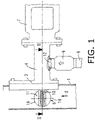
- At least some of the filler particles are pre-treated using a rotating admixing apparatus.
- a rotating admixing apparatus comprises a distribution head which is constructed and arranged to rotate as it disperses the treating chemicals to the filler particles.
- the rotating admixing apparatus is the device described in US Patent 5,993,670 .
- the apparatus can admix flocculant liquid(s) to a process stream, in which a distribution head, which is rotated by a drive, is arranged in a pipe/conduit, through which a slurry of filler particles flows, and is associated with a rotational plane, and the distribution head has, along a circumference thereof, which surrounds a rotational axis, distributed flocculant outlets and mixing blades, and is connected with a flocculant liquid delivery conduit.
- the invention also relates to the use of the apparatus of admixing the flocculant liquid, which is formed by a mixture of an active agent and water and of which n parts are added to 100 parts of the filler slurry, with the flocculant liquid added to the 100 parts of the slurry containing a necessary amount a of the active agent.
- the flocculant outlets are formed as holes or nozzles, and each mixing blade is formed as a journal-like projection, with the dimensions of the mixing blade and the outlet in a direction transverse to the rotational plane being very small in comparison with the width of the filler slurry stream.
- the admixture of the flocculant liquid to the slurry, which is obtained with this apparatus is insufficient, i.e., the added flocculant liquid is not sufficiently uniformly distributed in the slurry stream behind the apparatus and is not contained in the slurry in the quantity necessary for a satisfactory flocculation.
- an object of the invention is an apparatus of the above-described type with which a better admixing of the flocculant liquid to the slurry is achieved.
- the apparatus which achieves this object, is characterized in that the flocculant outlets are formed as slots and the mixing blades are formed as strips, which extend transverse to the rotational plane and have a length equal at least a half of the width of the slurry stream.
- only one, some, or all of the chemicals added in the pre-treatment process are added with the rotating apparatus.
- the construction of the distribution head of the apparatus permits to achieve an improved admixture and distribution of the flocculant liquid in the slurry.
- the flocculant liquid exits from every slot in a form of a broad strip into which a following mixing blade is inserted in a direction opposite to the rotational direction and which pulls the flocculant liquid along its edge as a foggy strip through the slurry.
- the flocculant liquid is delivered through the slots as an interrupted torrent into the slurry, and the slots and strips are arranged one after another in the rotational direction.
- the dimensioning of the length of the slots and the blades is effected in accordance with the diameter of the stream or of the distribution head.
- the flocculant slots and the strip-shaped blades can extend both in the direction of the slurry stream and substantially perpendicular to the slurry stream.
- Another embodiment of the invention is possible in which the rotational axis of the mixing head extends at an angle to the slurry stream. As a rule, however, the rotational plane of the mixing head extends substantially in the direction of the slurry stream.
- Each slot is formed, e.g., of two or more slot sections arranged in a row. It is, however, particularly effective and advantageous when each slot is continuous along its entire length. This prevents clogging and an undesirable high exit velocity of the flocculant liquid.
- Each strip-shaped mixing blade is divided, e.g., along its length, with radial incisions in a comb-like fashion. However, if is particularly effective and advantageous when each strip-shaped mixing blade is continuous over its length. This improves the rigidity of the strip-shaped mixing blades and improves the mixing action.
- each outlet slot can be changed along its length for controlling the amount of the emerging flocculant liquid. It is particular effective and advantageous when the cross-section of each outlet slot is increased, when viewed along its length, toward the middle.
- This shape of the outlet slots is used when the slots extend transverse to the stream direction, as in the middle of the slurry pipe, there is more slurry than at the sides. With a uniform slot width, a uniform delivery of the flocculant into the slurry is achieved.
- the slots which form an outlet for the flocculant liquid, have, e.g., a width of 7-9 mm. The greater is the amount of the flocculant liquid to be delivered in a unit of time, the wider the slots are, and the smaller is the amount of the flocculant liquid to be delivered in a unit of time, the narrower they are.
- each strip-shaped mixing blade extends approximately parallel to the inner contour of the slurry pipe, forming a clearance therebetween.
- the elongate strip-shaped mixing blades extending in a radial direction improve the admixing action.
- a clearance should remain between the mixing blade and the slurry conduit, with the clearance being sufficiently large to permit passing of stone pieces present in the slurry.
- This clearance is particularly important and is large when the strip-shaped mixing blades extend transverse to the stream.
- the clearance preferably is smaller in the direction of the rotational axis than in the direction transverse to the rotational axis.
- a particularly effective and advantageous embodiment of the invention is obtained, when the direction of rotation of the distribution head drive can be changed.
- the mixing blade is relatively large or protrudes with respect to the slurry pipe cross-section, so that a danger of clogging with hard pieces and of accumulation of fibers or threads exists if the distribution head rotates in the same direction for a long time.
- the rotation in opposite directions prevents such clogging and accumulation.
- One, two, and/or more flocculant outlets can be provided, e.g., between two mixing blades. However, it is particularly effective and advantageous when outlet slots and strip-shaped mixing blades alternate in the rotational direction. This also improves the admixing process. Over the distribution head, in the rotational direction, there are provided two or more outlet slots and two or more strip-shaped mixing blades.
- the inner cross-section of the slurry pipe in the region of the distribution head, is similar to the further inner cross-section of the slurry pipe.
- the apparatus thus eliminates the narrowing of the slurry pipe and an associated with it increase of the flow velocity of the slurry.
- the distribution head already forms a greater narrowing of the cross-section available for the slurry.
- the distribution head is formed as a cylindrical tubular section and/or when the outer diameter of the distribution head is equal at least to 0.4 of the inner diameter of the slurry pipe. This simplifies the construction and improves the rigidity of the distribution head, with the shape of the outlet slots and the strip-shaped mixing blades presenting an increased demand to the rigidity of the distribution head.
- a particularly effective and advantageous embodiment is formed when the distribution head passes into a rotatably supported connection tube which extends away from the slurry pipe and which is connected to the drive and with a flocculant liquid delivery conduit, and is further provided with inlet openings and is rotably supported in a connection chamber into which the flocculant liquid delivery conduit opens.
- the flow cross-section which is available for the flocculant liquid(s) through the outlet slots.
- all of the outlet slots together have a cross-section which is smaller than the preceding flow cross-section of the flocculant liquid.
- the entire cross-section of the inlet opening is not smaller than the flow cross-section in the delivery conduit and in the connection tube.
- the flow cross-section in the distribution head and in the connection tube are similar. The arrangement of the connection tube in a sealed connection chamber enables to optimize the flow cross-section of the flocculant liquid.
- a check valve is arranged in the flocculant liquid delivery conduit when the flocculant liquid in front of the check valve is not under pressure, e.g., when the flocculant liquid pump does not operate, the slurry can penetrate into the outlet slots.
- the sealings and the bearings in the connection chamber remain lubricated with the flocculant liquid when the flocculant liquid from the flocculant liquid pump is not under pressure any more.
- the apparatus has a distribution head, which is rotated by a drive with a rotational speed of 1,000 to 2,000 revolution/min.
- a desired improved admixing and distribution of the flocculant liquid in the slurry takes place.
- the strip or the stream of the flocculant liquid break off.
- a big speed requires too high expenses in order to achieve the desired effect.
- the flocculant is available which is stored in a reservoir.
- an object of the invention is to so improve the process described above that the expenses associated with the use of the flocculant liquid or increase of its water content, are eliminated.
- This object is achieved according to the invention by so designing the above-described apparatus that maximum 3t of the flocculant liquid need be provided for 100t of filler slurry.
- the use of the distribution head of the apparatus permits to eliminate the water component of the flocculant liquid without the elimination of the effectiveness of the flocculant liquid admixed to the slurry.
- a large amount of the water component is necessary, this is not necessary when the apparatus is used.
- the water component of the flocculant liquid can be reduced to a very large extent, so that the expenses associated with this water content are correspondingly eliminated. As less water is necessary, less water need be pumped, and less water need be purified.
- the improved effectiveness achieved by the invention can be explained, without claiming that the explanation is correct, as follows:
- the particular shape of the mixing blade of the apparatus breaks the filler slurry particles of the slurry to a great extent, and the resulting broken pieces form open fissures.
- the particular shape of the flocculant outlets insures that the flocculant liquid takes a shape of a large surface veil which cover the freshly opened fissures so that the mixing of the filler and the flocculant intensifies.
- the flocculant liquid in accordance with the invention is already admixed in a finely distributed state so that it is not necessary the additive to further dilute in a large amount of water, i.e., to increase the water component of the flocculant liquid.
- the flocculant liquid is used as a parent solution, with the additive being mixed with water in a single step. With this embodiment, additional stations for further mixing with water are eliminated.
- the apparatus may be mounted on a filler slurry carrying conduit/pipe 1 through which a filler slurry flows in a direction of arrow 2.
- the apparatus may be mounted on the slurry pipe 1 by means of an elongate flange 3 and includes a connection chamber 4 projecting from the flange 3.
- a distribution head 6 extends into the slurry pipe 1 and is rotated by a drive 7 provided at the opposite end of the chamber 4 and formed as an electromotor.
- a flocculant liquid conduit 8 opens into the chamber 4, and a check valve 9 is located in the conduit 8.
- the distribution head 6 forms outlet slots 10 and carries mixing strip shaped blades (11).
- a sleeve 14 supports a connection tube 15 in a shaft extension 12 which extends from the drive 7, and in the end wall of the connection chamber 4, there is provided an axial face seal 16 through which the shaft extension 13 extends.
- the connection tube 15 has a plurality of elongate entrance openings 17 through which flocculant flows into the connection tube from the connection chamber.
- the connection tube 15 projects into connection chamber 4 through a plain bearing sleeve 5 provided in the flange 3, with the tubular-shaped distribution head 6 forming an integral part of the tube 15.
- the distribution head 6 is associated with a rotational plane 18 designated with a dash line.
- Each mixing blade 11 forms an arcuate edge 19 which, in a corresponding position of the blade, limits a slot 20 with respect to the slurry pipe 1, which has a circular cross-section.
- a blend of filler particles was obtained from a paper mill.
- the blend filler was a mixture of 50% PCC and 50% GCC.
- the filler blend was diluted to 20% solid content with tap water. 200 mL of the diluted filler blend was placed in a 500 mL glass beaker. Stirring was conducted for at least 30 seconds prior to the addition of coagulant.
- the stirrer was a EUROSTAR Digital overhead mixer with a R1342, 50 mm, four-blade propeller (both from IKA Works, Inc., Wilmington, North Carolina).
- a coagulant solution was slowly added after the initial 30 seconds of mixing under stirring with 800rpm.
- the coagulant solution used was 4690.
- the dose of coagulant was 1kg/ton based on dry filler weight. Stirring continued at 800 rpm until all the coagulant was added. Then the stirring speed increased to 1500 rpm for one minute.
- Furnish was prepared by disintegrating commercial bleached hardwood dry lap. The mixture of 50% PCC and 50% GCC was added to pulp furnish to achieve different filler content in the sheet. 200ppm Nalco 61067 was used as retention aid.
- filler mixture was pretreated using Nalco coagulant 4690 before filler was added into the furnish.
- 3kg/ton Nalco 63700 was added to improve the sheet wet web strength. We tried to evaluate the effect of filler pretreatment on the press dewatering performance of 63700 by measuring sheet wet web strength.
- Handsheets were pressed to a certain solid content (50%) by controlling the same pressure level at 60 degree C, and the time required to completely break up wet sheet in water under the shear force of 1000RPM was recorded to compare sheet wet web strength, which was expected to indirectly reflect press dewatering.
- the results indicate that sheet wet web strength could be significantly improved by the addition of 63700.
- Filler pretreatment could further boost sheet wet web strength by additional 20% at the lower ash content. As for the higher ash content, the performance of 63700 was even higher than 20%.
- a machine trial was run in which a papermaking machine made GAB300 with machine speed of 900m/min. A composition was provided whose cellulose fibers were 14% MXW; 3% coated broke; 17% SOW; 12% Uncoated Broke, 44% DIP and 10% ONP. The furnish also contained GCC. During the trial, all the wet end additives including 15/ton Nalco press dewatering aid 63700, retention aids, sizing agents, and cationic starches were kept constant.
Landscapes
- Chemical & Material Sciences (AREA)
- Chemical Kinetics & Catalysis (AREA)
- Inorganic Chemistry (AREA)
- Paper (AREA)
Applications Claiming Priority (2)
| Application Number | Priority Date | Filing Date | Title |
|---|---|---|---|
| US13/919,167 US9487916B2 (en) | 2007-09-12 | 2013-06-17 | Method of improving dewatering efficiency, increasing sheet wet web strength, increasing sheet wet strength and enhancing filler retention in papermaking |
| PCT/US2014/041573 WO2014204702A1 (en) | 2013-06-17 | 2014-06-09 | A method of improving dewatering efficiency, increasing sheet wet web strength, increasing sheet wet stregnth and enhancing filler retention in papermaking |
Publications (3)
| Publication Number | Publication Date |
|---|---|
| EP3011107A1 EP3011107A1 (en) | 2016-04-27 |
| EP3011107A4 EP3011107A4 (en) | 2017-02-01 |
| EP3011107B1 true EP3011107B1 (en) | 2022-04-20 |
Family
ID=52105116
Family Applications (1)
| Application Number | Title | Priority Date | Filing Date |
|---|---|---|---|
| EP14814129.4A Active EP3011107B1 (en) | 2013-06-17 | 2014-06-09 | A method of improving dewatering efficiency, increasing sheet wet web strength, increasing sheet wet strength and enhancing filler retention in papermaking |
Country Status (8)
| Country | Link |
|---|---|
| EP (1) | EP3011107B1 (enExample) |
| JP (1) | JP6469099B2 (enExample) |
| KR (1) | KR102220315B1 (enExample) |
| CN (1) | CN105378179B (enExample) |
| CA (1) | CA2913789C (enExample) |
| ES (1) | ES2922931T3 (enExample) |
| MX (1) | MX386541B (enExample) |
| WO (1) | WO2014204702A1 (enExample) |
Families Citing this family (2)
| Publication number | Priority date | Publication date | Assignee | Title |
|---|---|---|---|---|
| JP2019056050A (ja) * | 2017-09-20 | 2019-04-11 | ソマール株式会社 | カチオン性填料処理剤 |
| CN117904896B (zh) * | 2024-03-19 | 2024-07-12 | 山东奥赛新材料有限公司 | 一种纸料滤水增强剂及其制备方法 |
Citations (1)
| Publication number | Priority date | Publication date | Assignee | Title |
|---|---|---|---|---|
| US20130306261A1 (en) * | 2007-09-12 | 2013-11-21 | Yulin Zhao | Method to increase dewatering, sheet wet web strength and wet strength in papermaking |
Family Cites Families (22)
| Publication number | Priority date | Publication date | Assignee | Title |
|---|---|---|---|---|
| US4605702A (en) | 1984-06-27 | 1986-08-12 | American Cyanamid Company | Temporary wet strength resin |
| DE3901292C2 (de) | 1989-01-18 | 2001-03-15 | Joachim Friedrich Knauer | Verfahren und Vorrichtung zum Konditionieren von wäßrigem Schlamm zum Filterpressen |
| DE4029824A1 (de) * | 1990-09-20 | 1992-03-26 | Passavant Werke | Vorrichtung zum einmischen einer fluessigkeit in eine fluessigkeitsstroemung in einer rohrleitung |
| US5126014A (en) * | 1991-07-16 | 1992-06-30 | Nalco Chemical Company | Retention and drainage aid for alkaline fine papermaking process |
| US5221435A (en) * | 1991-09-27 | 1993-06-22 | Nalco Chemical Company | Papermaking process |
| US5676746A (en) * | 1995-04-11 | 1997-10-14 | Columbia River Carbonates | Agglomerates for use in making cellulosic products |
| EP0835843A3 (de) * | 1996-10-09 | 1998-12-30 | Joachim Friedrich Knauer | Vorrichtung zum Einmischen von Flockungsflüssigkeit in eine Klärschlamm-Strömung und Anwendung der Vorrichtung |
| EP1029125A4 (en) * | 1998-05-15 | 2001-10-10 | Ecc Internat Inc | POLYMERIC COMPOSITION FOR IMPROVING RETENTION, DRAINAGE AND FORMATION CHARACTERISTICS DURING PAPERMAKING |
| FI117716B (fi) | 2000-04-18 | 2007-01-31 | Ciba Sc Holding Ag | Menetelmä täyteaineen esikäsittelemiseksi, modifioitu täyteaine ja sen käyttö |
| US6592718B1 (en) * | 2001-09-06 | 2003-07-15 | Ondeo Nalco Company | Method of improving retention and drainage in a papermaking process using a diallyl-N,N-disubstituted ammonium halide-acrylamide copolymer and a structurally modified cationic polymer |
| US7125469B2 (en) | 2003-10-16 | 2006-10-24 | The Procter & Gamble Company | Temporary wet strength resins |
| US7641766B2 (en) | 2004-01-26 | 2010-01-05 | Nalco Company | Method of using aldehyde-functionalized polymers to enhance paper machine dewatering |
| CN101080533B (zh) | 2004-12-14 | 2012-05-30 | 赫尔克里士公司 | 助留和助排剂 |
| US7641776B2 (en) | 2005-03-10 | 2010-01-05 | Lsi Corporation | System and method for increasing yield from semiconductor wafer electroplating |
| JP4406882B2 (ja) * | 2005-03-18 | 2010-02-03 | ハリマ化成株式会社 | 填料内添紙及びその製造方法 |
| JP2008248398A (ja) * | 2007-03-29 | 2008-10-16 | Nippon Paper Industries Co Ltd | 紙の製造方法および紙 |
| US8088250B2 (en) * | 2008-11-26 | 2012-01-03 | Nalco Company | Method of increasing filler content in papermaking |
| US8088213B2 (en) * | 2007-09-12 | 2012-01-03 | Nalco Company | Controllable filler prefloculation using a dual polymer system |
| US8647472B2 (en) | 2007-09-12 | 2014-02-11 | Nalco Company | Method of increasing filler content in papermaking |
| PL2331593T3 (pl) | 2008-09-22 | 2017-03-31 | Solenis Technologies Cayman, L.P. | Kompozycje mieszanki kopolimerowej do zastosowania do zwiększania zawartości wypełniacza w papierze |
| JP5344463B2 (ja) | 2008-12-11 | 2013-11-20 | ハイモ株式会社 | 紙用添加剤及びそれを含む紙 |
| WO2012125235A2 (en) | 2011-03-11 | 2012-09-20 | Nalco Company | A method of improving dewatering efficiency, increasing sheet wet web strength, increasing sheet wet strength and enhancing filler retention in papermaking |
-
2014
- 2014-06-09 KR KR1020167001416A patent/KR102220315B1/ko active Active
- 2014-06-09 MX MX2015017287A patent/MX386541B/es unknown
- 2014-06-09 JP JP2016521440A patent/JP6469099B2/ja active Active
- 2014-06-09 ES ES14814129T patent/ES2922931T3/es active Active
- 2014-06-09 EP EP14814129.4A patent/EP3011107B1/en active Active
- 2014-06-09 WO PCT/US2014/041573 patent/WO2014204702A1/en not_active Ceased
- 2014-06-09 CN CN201480031469.XA patent/CN105378179B/zh active Active
- 2014-06-09 CA CA2913789A patent/CA2913789C/en active Active
Patent Citations (1)
| Publication number | Priority date | Publication date | Assignee | Title |
|---|---|---|---|---|
| US20130306261A1 (en) * | 2007-09-12 | 2013-11-21 | Yulin Zhao | Method to increase dewatering, sheet wet web strength and wet strength in papermaking |
Also Published As
| Publication number | Publication date |
|---|---|
| CA2913789C (en) | 2021-07-27 |
| KR102220315B1 (ko) | 2021-02-25 |
| WO2014204702A1 (en) | 2014-12-24 |
| ES2922931T3 (es) | 2022-09-21 |
| KR20160021851A (ko) | 2016-02-26 |
| EP3011107A1 (en) | 2016-04-27 |
| CA2913789A1 (en) | 2014-12-24 |
| MX2015017287A (es) | 2016-04-06 |
| CN105378179B (zh) | 2018-05-25 |
| JP2016524662A (ja) | 2016-08-18 |
| MX386541B (es) | 2025-03-18 |
| JP6469099B2 (ja) | 2019-02-13 |
| CN105378179A (zh) | 2016-03-02 |
| EP3011107A4 (en) | 2017-02-01 |
Similar Documents
| Publication | Publication Date | Title |
|---|---|---|
| US10145067B2 (en) | Method of improving dewatering efficiency, increasing sheet wet web strength, increasing sheet wet strength and enhancing filler retention in papermaking | |
| CN107407054B (zh) | 一种增加纸制品灰分的造纸方法及由该方法获得的纸制品 | |
| CN104884706B (zh) | 通过在湿部使用天然树胶和干强度试剂增加纸强度的方法 | |
| KR101691029B1 (ko) | 제지에서 탈수, 시트 습윤 웹 강도 및 습윤 강도를 증가시키는 방법 | |
| WO2012125235A2 (en) | A method of improving dewatering efficiency, increasing sheet wet web strength, increasing sheet wet strength and enhancing filler retention in papermaking | |
| EP3011107B1 (en) | A method of improving dewatering efficiency, increasing sheet wet web strength, increasing sheet wet strength and enhancing filler retention in papermaking | |
| CN102677535A (zh) | 造纸中改进脱水效率、增加板湿纸幅强度、增加板湿强度和提高填料保持力的方法 | |
| BR112015030607B1 (pt) | Método para fabricar papel compreendendo carga |
Legal Events
| Date | Code | Title | Description |
|---|---|---|---|
| PUAI | Public reference made under article 153(3) epc to a published international application that has entered the european phase |
Free format text: ORIGINAL CODE: 0009012 |
|
| 17P | Request for examination filed |
Effective date: 20151222 |
|
| AK | Designated contracting states |
Kind code of ref document: A1 Designated state(s): AL AT BE BG CH CY CZ DE DK EE ES FI FR GB GR HR HU IE IS IT LI LT LU LV MC MK MT NL NO PL PT RO RS SE SI SK SM TR |
|
| AX | Request for extension of the european patent |
Extension state: BA ME |
|
| DAX | Request for extension of the european patent (deleted) | ||
| A4 | Supplementary search report drawn up and despatched |
Effective date: 20170105 |
|
| RIC1 | Information provided on ipc code assigned before grant |
Ipc: D21H 17/69 20060101ALI20161223BHEP Ipc: D21H 17/67 20060101ALI20161223BHEP Ipc: D21H 21/10 20060101AFI20161223BHEP |
|
| STAA | Information on the status of an ep patent application or granted ep patent |
Free format text: STATUS: EXAMINATION IS IN PROGRESS |
|
| 17Q | First examination report despatched |
Effective date: 20200821 |
|
| GRAP | Despatch of communication of intention to grant a patent |
Free format text: ORIGINAL CODE: EPIDOSNIGR1 |
|
| STAA | Information on the status of an ep patent application or granted ep patent |
Free format text: STATUS: GRANT OF PATENT IS INTENDED |
|
| INTG | Intention to grant announced |
Effective date: 20211112 |
|
| GRAS | Grant fee paid |
Free format text: ORIGINAL CODE: EPIDOSNIGR3 |
|
| GRAA | (expected) grant |
Free format text: ORIGINAL CODE: 0009210 |
|
| STAA | Information on the status of an ep patent application or granted ep patent |
Free format text: STATUS: THE PATENT HAS BEEN GRANTED |
|
| AK | Designated contracting states |
Kind code of ref document: B1 Designated state(s): AL AT BE BG CH CY CZ DE DK EE ES FI FR GB GR HR HU IE IS IT LI LT LU LV MC MK MT NL NO PL PT RO RS SE SI SK SM TR |
|
| REG | Reference to a national code |
Ref country code: GB Ref legal event code: FG4D |
|
| REG | Reference to a national code |
Ref country code: CH Ref legal event code: EP |
|
| REG | Reference to a national code |
Ref country code: DE Ref legal event code: R096 Ref document number: 602014083347 Country of ref document: DE |
|
| REG | Reference to a national code |
Ref country code: IE Ref legal event code: FG4D |
|
| REG | Reference to a national code |
Ref country code: AT Ref legal event code: REF Ref document number: 1485218 Country of ref document: AT Kind code of ref document: T Effective date: 20220515 |
|
| REG | Reference to a national code |
Ref country code: SE Ref legal event code: TRGR |
|
| REG | Reference to a national code |
Ref country code: LT Ref legal event code: MG9D |
|
| REG | Reference to a national code |
Ref country code: NL Ref legal event code: MP Effective date: 20220420 |
|
| REG | Reference to a national code |
Ref country code: AT Ref legal event code: MK05 Ref document number: 1485218 Country of ref document: AT Kind code of ref document: T Effective date: 20220420 |
|
| REG | Reference to a national code |
Ref country code: ES Ref legal event code: FG2A Ref document number: 2922931 Country of ref document: ES Kind code of ref document: T3 Effective date: 20220921 |
|
| PG25 | Lapsed in a contracting state [announced via postgrant information from national office to epo] |
Ref country code: NL Free format text: LAPSE BECAUSE OF FAILURE TO SUBMIT A TRANSLATION OF THE DESCRIPTION OR TO PAY THE FEE WITHIN THE PRESCRIBED TIME-LIMIT Effective date: 20220420 |
|
| PG25 | Lapsed in a contracting state [announced via postgrant information from national office to epo] |
Ref country code: PT Free format text: LAPSE BECAUSE OF FAILURE TO SUBMIT A TRANSLATION OF THE DESCRIPTION OR TO PAY THE FEE WITHIN THE PRESCRIBED TIME-LIMIT Effective date: 20220822 Ref country code: NO Free format text: LAPSE BECAUSE OF FAILURE TO SUBMIT A TRANSLATION OF THE DESCRIPTION OR TO PAY THE FEE WITHIN THE PRESCRIBED TIME-LIMIT Effective date: 20220720 Ref country code: LT Free format text: LAPSE BECAUSE OF FAILURE TO SUBMIT A TRANSLATION OF THE DESCRIPTION OR TO PAY THE FEE WITHIN THE PRESCRIBED TIME-LIMIT Effective date: 20220420 Ref country code: HR Free format text: LAPSE BECAUSE OF FAILURE TO SUBMIT A TRANSLATION OF THE DESCRIPTION OR TO PAY THE FEE WITHIN THE PRESCRIBED TIME-LIMIT Effective date: 20220420 Ref country code: GR Free format text: LAPSE BECAUSE OF FAILURE TO SUBMIT A TRANSLATION OF THE DESCRIPTION OR TO PAY THE FEE WITHIN THE PRESCRIBED TIME-LIMIT Effective date: 20220721 Ref country code: FI Free format text: LAPSE BECAUSE OF FAILURE TO SUBMIT A TRANSLATION OF THE DESCRIPTION OR TO PAY THE FEE WITHIN THE PRESCRIBED TIME-LIMIT Effective date: 20220420 Ref country code: BG Free format text: LAPSE BECAUSE OF FAILURE TO SUBMIT A TRANSLATION OF THE DESCRIPTION OR TO PAY THE FEE WITHIN THE PRESCRIBED TIME-LIMIT Effective date: 20220720 Ref country code: AT Free format text: LAPSE BECAUSE OF FAILURE TO SUBMIT A TRANSLATION OF THE DESCRIPTION OR TO PAY THE FEE WITHIN THE PRESCRIBED TIME-LIMIT Effective date: 20220420 |
|
| PG25 | Lapsed in a contracting state [announced via postgrant information from national office to epo] |
Ref country code: RS Free format text: LAPSE BECAUSE OF FAILURE TO SUBMIT A TRANSLATION OF THE DESCRIPTION OR TO PAY THE FEE WITHIN THE PRESCRIBED TIME-LIMIT Effective date: 20220420 Ref country code: PL Free format text: LAPSE BECAUSE OF FAILURE TO SUBMIT A TRANSLATION OF THE DESCRIPTION OR TO PAY THE FEE WITHIN THE PRESCRIBED TIME-LIMIT Effective date: 20220420 Ref country code: LV Free format text: LAPSE BECAUSE OF FAILURE TO SUBMIT A TRANSLATION OF THE DESCRIPTION OR TO PAY THE FEE WITHIN THE PRESCRIBED TIME-LIMIT Effective date: 20220420 Ref country code: IS Free format text: LAPSE BECAUSE OF FAILURE TO SUBMIT A TRANSLATION OF THE DESCRIPTION OR TO PAY THE FEE WITHIN THE PRESCRIBED TIME-LIMIT Effective date: 20220820 |
|
| REG | Reference to a national code |
Ref country code: DE Ref legal event code: R097 Ref document number: 602014083347 Country of ref document: DE |
|
| PG25 | Lapsed in a contracting state [announced via postgrant information from national office to epo] |
Ref country code: SM Free format text: LAPSE BECAUSE OF FAILURE TO SUBMIT A TRANSLATION OF THE DESCRIPTION OR TO PAY THE FEE WITHIN THE PRESCRIBED TIME-LIMIT Effective date: 20220420 Ref country code: SK Free format text: LAPSE BECAUSE OF FAILURE TO SUBMIT A TRANSLATION OF THE DESCRIPTION OR TO PAY THE FEE WITHIN THE PRESCRIBED TIME-LIMIT Effective date: 20220420 Ref country code: RO Free format text: LAPSE BECAUSE OF FAILURE TO SUBMIT A TRANSLATION OF THE DESCRIPTION OR TO PAY THE FEE WITHIN THE PRESCRIBED TIME-LIMIT Effective date: 20220420 Ref country code: MC Free format text: LAPSE BECAUSE OF FAILURE TO SUBMIT A TRANSLATION OF THE DESCRIPTION OR TO PAY THE FEE WITHIN THE PRESCRIBED TIME-LIMIT Effective date: 20220420 Ref country code: EE Free format text: LAPSE BECAUSE OF FAILURE TO SUBMIT A TRANSLATION OF THE DESCRIPTION OR TO PAY THE FEE WITHIN THE PRESCRIBED TIME-LIMIT Effective date: 20220420 Ref country code: DK Free format text: LAPSE BECAUSE OF FAILURE TO SUBMIT A TRANSLATION OF THE DESCRIPTION OR TO PAY THE FEE WITHIN THE PRESCRIBED TIME-LIMIT Effective date: 20220420 Ref country code: CZ Free format text: LAPSE BECAUSE OF FAILURE TO SUBMIT A TRANSLATION OF THE DESCRIPTION OR TO PAY THE FEE WITHIN THE PRESCRIBED TIME-LIMIT Effective date: 20220420 |
|
| REG | Reference to a national code |
Ref country code: CH Ref legal event code: PL |
|
| REG | Reference to a national code |
Ref country code: BE Ref legal event code: MM Effective date: 20220630 |
|
| PLBE | No opposition filed within time limit |
Free format text: ORIGINAL CODE: 0009261 |
|
| STAA | Information on the status of an ep patent application or granted ep patent |
Free format text: STATUS: NO OPPOSITION FILED WITHIN TIME LIMIT |
|
| 26N | No opposition filed |
Effective date: 20230123 |
|
| GBPC | Gb: european patent ceased through non-payment of renewal fee |
Effective date: 20220720 |
|
| PG25 | Lapsed in a contracting state [announced via postgrant information from national office to epo] |
Ref country code: AL Free format text: LAPSE BECAUSE OF FAILURE TO SUBMIT A TRANSLATION OF THE DESCRIPTION OR TO PAY THE FEE WITHIN THE PRESCRIBED TIME-LIMIT Effective date: 20220420 |
|
| REG | Reference to a national code |
Ref country code: FR Ref legal event code: PLFP Year of fee payment: 10 |
|
| PG25 | Lapsed in a contracting state [announced via postgrant information from national office to epo] |
Ref country code: LU Free format text: LAPSE BECAUSE OF NON-PAYMENT OF DUE FEES Effective date: 20220609 Ref country code: LI Free format text: LAPSE BECAUSE OF NON-PAYMENT OF DUE FEES Effective date: 20220630 Ref country code: IE Free format text: LAPSE BECAUSE OF NON-PAYMENT OF DUE FEES Effective date: 20220609 Ref country code: CH Free format text: LAPSE BECAUSE OF NON-PAYMENT OF DUE FEES Effective date: 20220630 |
|
| PG25 | Lapsed in a contracting state [announced via postgrant information from national office to epo] |
Ref country code: SI Free format text: LAPSE BECAUSE OF FAILURE TO SUBMIT A TRANSLATION OF THE DESCRIPTION OR TO PAY THE FEE WITHIN THE PRESCRIBED TIME-LIMIT Effective date: 20220420 Ref country code: GB Free format text: LAPSE BECAUSE OF NON-PAYMENT OF DUE FEES Effective date: 20220720 Ref country code: BE Free format text: LAPSE BECAUSE OF NON-PAYMENT OF DUE FEES Effective date: 20220630 |
|
| PG25 | Lapsed in a contracting state [announced via postgrant information from national office to epo] |
Ref country code: HU Free format text: LAPSE BECAUSE OF FAILURE TO SUBMIT A TRANSLATION OF THE DESCRIPTION OR TO PAY THE FEE WITHIN THE PRESCRIBED TIME-LIMIT; INVALID AB INITIO Effective date: 20140609 |
|
| PG25 | Lapsed in a contracting state [announced via postgrant information from national office to epo] |
Ref country code: MK Free format text: LAPSE BECAUSE OF FAILURE TO SUBMIT A TRANSLATION OF THE DESCRIPTION OR TO PAY THE FEE WITHIN THE PRESCRIBED TIME-LIMIT Effective date: 20220420 Ref country code: CY Free format text: LAPSE BECAUSE OF FAILURE TO SUBMIT A TRANSLATION OF THE DESCRIPTION OR TO PAY THE FEE WITHIN THE PRESCRIBED TIME-LIMIT Effective date: 20220420 |
|
| PG25 | Lapsed in a contracting state [announced via postgrant information from national office to epo] |
Ref country code: MT Free format text: LAPSE BECAUSE OF FAILURE TO SUBMIT A TRANSLATION OF THE DESCRIPTION OR TO PAY THE FEE WITHIN THE PRESCRIBED TIME-LIMIT Effective date: 20220420 |
|
| PG25 | Lapsed in a contracting state [announced via postgrant information from national office to epo] |
Ref country code: BG Free format text: LAPSE BECAUSE OF FAILURE TO SUBMIT A TRANSLATION OF THE DESCRIPTION OR TO PAY THE FEE WITHIN THE PRESCRIBED TIME-LIMIT Effective date: 20220420 |
|
| PG25 | Lapsed in a contracting state [announced via postgrant information from national office to epo] |
Ref country code: BG Free format text: LAPSE BECAUSE OF FAILURE TO SUBMIT A TRANSLATION OF THE DESCRIPTION OR TO PAY THE FEE WITHIN THE PRESCRIBED TIME-LIMIT Effective date: 20220420 |
|
| PGFP | Annual fee paid to national office [announced via postgrant information from national office to epo] |
Ref country code: SE Payment date: 20250310 Year of fee payment: 12 |
|
| PGFP | Annual fee paid to national office [announced via postgrant information from national office to epo] |
Ref country code: DE Payment date: 20250402 Year of fee payment: 12 |
|
| PGFP | Annual fee paid to national office [announced via postgrant information from national office to epo] |
Ref country code: IT Payment date: 20250522 Year of fee payment: 12 |
|
| PGFP | Annual fee paid to national office [announced via postgrant information from national office to epo] |
Ref country code: FR Payment date: 20250401 Year of fee payment: 12 |
|
| PGFP | Annual fee paid to national office [announced via postgrant information from national office to epo] |
Ref country code: ES Payment date: 20250703 Year of fee payment: 12 |
|
| PG25 | Lapsed in a contracting state [announced via postgrant information from national office to epo] |
Ref country code: TR Free format text: LAPSE BECAUSE OF FAILURE TO SUBMIT A TRANSLATION OF THE DESCRIPTION OR TO PAY THE FEE WITHIN THE PRESCRIBED TIME-LIMIT Effective date: 20220420 |