EP3009934B1 - Verfahren zur bestimmung einer optimalen prozessor-frequenz für die ausführung einer software - Google Patents
Verfahren zur bestimmung einer optimalen prozessor-frequenz für die ausführung einer software Download PDFInfo
- Publication number
- EP3009934B1 EP3009934B1 EP15187546.5A EP15187546A EP3009934B1 EP 3009934 B1 EP3009934 B1 EP 3009934B1 EP 15187546 A EP15187546 A EP 15187546A EP 3009934 B1 EP3009934 B1 EP 3009934B1
- Authority
- EP
- European Patent Office
- Prior art keywords
- frequency
- mpi
- application
- execution
- previous
- Prior art date
- Legal status (The legal status is an assumption and is not a legal conclusion. Google has not performed a legal analysis and makes no representation as to the accuracy of the status listed.)
- Active
Links
Images
Classifications
-
- G—PHYSICS
- G06—COMPUTING OR CALCULATING; COUNTING
- G06F—ELECTRIC DIGITAL DATA PROCESSING
- G06F1/00—Details not covered by groups G06F3/00 - G06F13/00 and G06F21/00
- G06F1/26—Power supply means, e.g. regulation thereof
- G06F1/28—Supervision thereof, e.g. detecting power-supply failure by out of limits supervision
-
- G—PHYSICS
- G06—COMPUTING OR CALCULATING; COUNTING
- G06F—ELECTRIC DIGITAL DATA PROCESSING
- G06F1/00—Details not covered by groups G06F3/00 - G06F13/00 and G06F21/00
- G06F1/26—Power supply means, e.g. regulation thereof
- G06F1/32—Means for saving power
-
- G—PHYSICS
- G06—COMPUTING OR CALCULATING; COUNTING
- G06F—ELECTRIC DIGITAL DATA PROCESSING
- G06F1/00—Details not covered by groups G06F3/00 - G06F13/00 and G06F21/00
- G06F1/26—Power supply means, e.g. regulation thereof
- G06F1/32—Means for saving power
- G06F1/3203—Power management, i.e. event-based initiation of a power-saving mode
- G06F1/3234—Power saving characterised by the action undertaken
- G06F1/324—Power saving characterised by the action undertaken by lowering clock frequency
-
- G—PHYSICS
- G06—COMPUTING OR CALCULATING; COUNTING
- G06F—ELECTRIC DIGITAL DATA PROCESSING
- G06F11/00—Error detection; Error correction; Monitoring
- G06F11/30—Monitoring
- G06F11/34—Recording or statistical evaluation of computer activity, e.g. of down time, of input/output operation ; Recording or statistical evaluation of user activity, e.g. usability assessment
- G06F11/3409—Recording or statistical evaluation of computer activity, e.g. of down time, of input/output operation ; Recording or statistical evaluation of user activity, e.g. usability assessment for performance assessment
-
- G—PHYSICS
- G06—COMPUTING OR CALCULATING; COUNTING
- G06F—ELECTRIC DIGITAL DATA PROCESSING
- G06F11/00—Error detection; Error correction; Monitoring
- G06F11/30—Monitoring
- G06F11/34—Recording or statistical evaluation of computer activity, e.g. of down time, of input/output operation ; Recording or statistical evaluation of user activity, e.g. usability assessment
- G06F11/3409—Recording or statistical evaluation of computer activity, e.g. of down time, of input/output operation ; Recording or statistical evaluation of user activity, e.g. usability assessment for performance assessment
- G06F11/3419—Recording or statistical evaluation of computer activity, e.g. of down time, of input/output operation ; Recording or statistical evaluation of user activity, e.g. usability assessment for performance assessment by assessing time
-
- G—PHYSICS
- G06—COMPUTING OR CALCULATING; COUNTING
- G06F—ELECTRIC DIGITAL DATA PROCESSING
- G06F11/00—Error detection; Error correction; Monitoring
- G06F11/30—Monitoring
- G06F11/34—Recording or statistical evaluation of computer activity, e.g. of down time, of input/output operation ; Recording or statistical evaluation of user activity, e.g. usability assessment
- G06F11/3447—Performance evaluation by modeling
-
- G—PHYSICS
- G06—COMPUTING OR CALCULATING; COUNTING
- G06F—ELECTRIC DIGITAL DATA PROCESSING
- G06F9/00—Arrangements for program control, e.g. control units
- G06F9/06—Arrangements for program control, e.g. control units using stored programs, i.e. using an internal store of processing equipment to receive or retain programs
- G06F9/46—Multiprogramming arrangements
- G06F9/48—Program initiating; Program switching, e.g. by interrupt
- G06F9/4806—Task transfer initiation or dispatching
- G06F9/4843—Task transfer initiation or dispatching by program, e.g. task dispatcher, supervisor, operating system
- G06F9/4881—Scheduling strategies for dispatcher, e.g. round robin, multi-level priority queues
-
- G—PHYSICS
- G06—COMPUTING OR CALCULATING; COUNTING
- G06Q—INFORMATION AND COMMUNICATION TECHNOLOGY [ICT] SPECIALLY ADAPTED FOR ADMINISTRATIVE, COMMERCIAL, FINANCIAL, MANAGERIAL OR SUPERVISORY PURPOSES; SYSTEMS OR METHODS SPECIALLY ADAPTED FOR ADMINISTRATIVE, COMMERCIAL, FINANCIAL, MANAGERIAL OR SUPERVISORY PURPOSES, NOT OTHERWISE PROVIDED FOR
- G06Q10/00—Administration; Management
-
- G—PHYSICS
- G06—COMPUTING OR CALCULATING; COUNTING
- G06F—ELECTRIC DIGITAL DATA PROCESSING
- G06F11/00—Error detection; Error correction; Monitoring
- G06F11/30—Monitoring
- G06F11/3003—Monitoring arrangements specially adapted to the computing system or computing system component being monitored
-
- G—PHYSICS
- G06—COMPUTING OR CALCULATING; COUNTING
- G06F—ELECTRIC DIGITAL DATA PROCESSING
- G06F11/00—Error detection; Error correction; Monitoring
- G06F11/30—Monitoring
- G06F11/3058—Monitoring arrangements for monitoring environmental properties or parameters of the computing system or of the computing system component, e.g. monitoring of power, currents, temperature, humidity, position, vibrations
- G06F11/3062—Monitoring arrangements for monitoring environmental properties or parameters of the computing system or of the computing system component, e.g. monitoring of power, currents, temperature, humidity, position, vibrations where the monitored property is the power consumption
-
- G—PHYSICS
- G06—COMPUTING OR CALCULATING; COUNTING
- G06F—ELECTRIC DIGITAL DATA PROCESSING
- G06F11/00—Error detection; Error correction; Monitoring
- G06F11/30—Monitoring
- G06F11/34—Recording or statistical evaluation of computer activity, e.g. of down time, of input/output operation ; Recording or statistical evaluation of user activity, e.g. usability assessment
- G06F11/3409—Recording or statistical evaluation of computer activity, e.g. of down time, of input/output operation ; Recording or statistical evaluation of user activity, e.g. usability assessment for performance assessment
- G06F11/3428—Benchmarking
-
- G—PHYSICS
- G06—COMPUTING OR CALCULATING; COUNTING
- G06F—ELECTRIC DIGITAL DATA PROCESSING
- G06F11/00—Error detection; Error correction; Monitoring
- G06F11/30—Monitoring
- G06F11/34—Recording or statistical evaluation of computer activity, e.g. of down time, of input/output operation ; Recording or statistical evaluation of user activity, e.g. usability assessment
- G06F11/3466—Performance evaluation by tracing or monitoring
-
- G—PHYSICS
- G06—COMPUTING OR CALCULATING; COUNTING
- G06F—ELECTRIC DIGITAL DATA PROCESSING
- G06F2201/00—Indexing scheme relating to error detection, to error correction, and to monitoring
- G06F2201/865—Monitoring of software
-
- Y—GENERAL TAGGING OF NEW TECHNOLOGICAL DEVELOPMENTS; GENERAL TAGGING OF CROSS-SECTIONAL TECHNOLOGIES SPANNING OVER SEVERAL SECTIONS OF THE IPC; TECHNICAL SUBJECTS COVERED BY FORMER USPC CROSS-REFERENCE ART COLLECTIONS [XRACs] AND DIGESTS
- Y02—TECHNOLOGIES OR APPLICATIONS FOR MITIGATION OR ADAPTATION AGAINST CLIMATE CHANGE
- Y02D—CLIMATE CHANGE MITIGATION TECHNOLOGIES IN INFORMATION AND COMMUNICATION TECHNOLOGIES [ICT], I.E. INFORMATION AND COMMUNICATION TECHNOLOGIES AIMING AT THE REDUCTION OF THEIR OWN ENERGY USE
- Y02D10/00—Energy efficient computing, e.g. low power processors, power management or thermal management
Definitions
- the invention relates to the execution of a software application on an information processing system. It relates more particularly to determining the optimal frequency of execution of the software application, for example on a calculation farm.
- Certain information processing devices allow the choice, when launching a software application, of the frequency of the microprocessor (s) (or CPU for "Central Processing Unit") at which it must be executed.
- the execution time of the application depends on this choice: the higher the frequency, the shorter the execution time.
- the user of a software application wishes to minimize both the execution time and the energy consumption.
- Billing is typically based on time of use but also, increasingly, on energy consumption, that is to say on the power consumption used by the calculation farm to run the client's software application.
- the object of the present invention is to provide a solution which at least partially overcomes the aforementioned drawbacks.
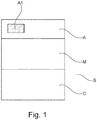
- the figure 1 very schematically represents an information processing system, according to an embodiment of the invention.
- These layers can represent an abstract view insofar as the information processing system can be distributed over a plurality of processing machines. This is particularly the case for a computing farm which interconnects a large number of computers, located in one or more sites.
- the intermediate layer makes it possible, among other functions, to make the hardware infrastructure transparent for A1 applications. It also makes it possible to ensure communications between applications and interactions between applications and the outside world, that is to say, to manage input-output.
- the intermediate layer may include a management and communication system having, for example, a message passing interface, or MPI for " massage Passing Interface" in English.
- MPI is a standard based on the Unix operating system defining functions that can be used by software applications to exploit the functionality of multi-computer and / or multi-processor processing platforms via a message passing mechanism.
- the invention aims to determine an optimal frequency f o as the frequency optimizing a criterion C (f) combining the execution time and the energy consumption, as a function of the execution frequency of the application A1.
- this optimal frequency is determined specifically for the application A1: according to the characteristics and the specific behavior of each application, a different optimal frequency f o can be determined.
- the order in which the two executions take place is immaterial. In addition, it is not important that the two executions are linked: they can take place at different times, in particular according to the scheduling imposed by the load of the information processing system.
- the value of the frequency f d is also unimportant, but it must be the same for both executions.
- the overall execution time T g and the electrical consumption E g can be determined using task scheduling tools called “batch scheduler” or “job scheduler”.
- these tools allow you to chain application launches and, for some, to record in a log (or "log” in English), information on these launches, including dates, possible errors, etc.
- An example of such a tool can be SLURM (for "Simple Linux Utility Resource Management").
- the overall execution time T g is easily determined by comparing the start date of execution of the software application A1 and the end date of execution. These dates can easily be obtained from the log of the scheduling tool.
- the energy consumption E g can be determined by a tool by consulting the newspaper.
- the energy consumption is typically expressed in joules and represents the energy consumed by the material resources used for the execution of the software application A1.
- This IPMI interface allows the management of an information processing system using a network interface and without going through the operating system.
- the measurement tool used for the second execution can be a code profiling tool.
- Code profiling (or " code profiling” in English) consists in analyzing the execution of a software in order to know its behavior at runtime.
- the profiling of the code is implemented by instrumentation of the source code by adding instructions to the original source code which make it possible to measure the behavior of the software during execution. Then, a usage scenario is defined and executed on the instrumented software. Profiling data is collected and analyzed at the end of the execution.
- profiling tools examples include the BullxProf tool from Bull, the Allinea Map tool from Allinea, Gprof, which is a tool under GNU license, etc.
- a selection is made from among the different functions of the MPI interface. Series of experiments were undertaken to determine the subset of functions giving the optimal results.
- the functions taken into account for the measurement of time T MPI ⁇ are the functions MPI_Init, MPI_wait and MPI_Barrier.
- the MPI_Init function initializes the execution environment of the MPI interface.
- the MPI_Wait function waits until a request to the MPI interface is completed.
- the MPI_Barrier function blocks execution until all the processes have reached this point.
- Time T MPI ⁇ The time spent performing these three functions is a good estimate of the time spent on calls to the management and communication system.
- a second law is also determined which supplies the energy consumed E (f) as a function of the frequency f.
- the power P (f) can be determined beforehand for different values of the frequency
- a preliminary step can be to launch the execution of a test application at each of these frequency values, and to measure the energy consumed E (f) and the execution time. It is then easy to deduce the power p (f) for each of these frequencies.
- the test application should ideally be a software application making few I / O and calls to the management and communication system, but making many calls to the microprocessor.
- a test application can for example be the “Linpack” performance test. This test is used in particular to classify the most powerful supercomputers in the world in the TOP500. Created by Jack Dongarra, it measures the time taken by a computer to solve a dense system of n equations with n unknowns, the solution being obtained by a partial use of the Gauss pivot, by 2/3 ⁇ n 3 + n 2 operations with floating point. The performance is then calculated by dividing the number of operations by the time taken, so in FLOPS.
- the invention then comprises a step of determining the optimal frequency f o as the frequency optimizing a criterion C (f) combining execution time and energy consumption, as a function of frequency. These execution times and energy consumption are obviously determined by the first and second laws respectively.
- the optimal frequency f o is the frequency corresponding to this minimum value of the criterion C (f).
Landscapes
- Engineering & Computer Science (AREA)
- Theoretical Computer Science (AREA)
- General Engineering & Computer Science (AREA)
- Physics & Mathematics (AREA)
- General Physics & Mathematics (AREA)
- Quality & Reliability (AREA)
- Computer Hardware Design (AREA)
- Software Systems (AREA)
- Business, Economics & Management (AREA)
- Evolutionary Biology (AREA)
- Bioinformatics & Computational Biology (AREA)
- Bioinformatics & Cheminformatics (AREA)
- Life Sciences & Earth Sciences (AREA)
- Economics (AREA)
- Entrepreneurship & Innovation (AREA)
- Human Resources & Organizations (AREA)
- Marketing (AREA)
- Operations Research (AREA)
- Strategic Management (AREA)
- Tourism & Hospitality (AREA)
- General Business, Economics & Management (AREA)
- Debugging And Monitoring (AREA)
Claims (9)
- Verfahren, um eine optimale Frequenz (fo) für das Ausführen einer Softwareanwendung auf einem Informationsverarbeitungssystem zu bestimmen, umfassend- ein erstes Ausführen der Anwendung bei einer bestimmten Mikroprozessor-Frequenz (fd), das es ermöglicht, eine allgemeine Ausführungszeit (Tg) und einen allgemeinen Energieverbrauch (Eg) zu bestimmen;- ein zweites Ausführen der Anwendung bei der bestimmten Frequenz (fd) mithilfe eines Tools zum Profilieren durch Instrumentieren des Codes der Anwendung, das es ermöglicht, Messungen (T* MPI, T* IO, T* g) an der Ausführung der Anwendung zu bestimmen, wobei die Messungen eine allgemeine Ausführungszeit mit dem Messtool (T* g ), Messungen (T* IO ) an den Eingängen/Ausgängen der Softwareanwendung, und Messungen (T* MPI ) an den Aufrufen des Verwaltungs- und Kommunikationssystems umfassen;- einen Schritt zum Bestimmen eines ersten Gesetzes, das eine Ausführungszeit (t(f)) in Abhängigkeit von der Frequenz (f), in Abhängigkeit von der allgemeinen Ausführungszeit mit dem Messtool (T* g ), von den Messungen an den Eingängen/Ausgängen der Anwendung und von den Messungen an den Aufrufen des Verwaltungs- und Kommunikationssystems liefert, und zum Bestimmen eines zweiten Gesetzes, das einen Energieverbrauch (E (f)) in Abhängigkeit von der Frequenz (f) liefert, wobei das erste Gesetz in der Form

wobei
 - einen Schritt zum Bestimmen der optimalen Frequenz (fo) als Frequenz, die ein Kriterium (C(f)) optimiert, das die Ausführungszeit und den Energieverbrauch in Abhängigkeit von der Frequenz, die jeweils über das erste und zweite Gesetz bestimmt wurden, kombiniert.
 - Verfahren nach dem vorstehenden Anspruch, wobei die Aufrufe über eine Message Passing Interface, MPI, vorgenommen werden, und wobei die Messungen an den Aufrufen Zeiten umfassen, die sich auf die Funktionen MPI_Init, MPI_wait, MPI_Barrier beziehen.
- Verfahren nach einem der vorstehenden Ansprüche, wobei das Kriterium der Form C(f) = wt·t(f) + wE·E(f) entspricht, wobei wt und wE zwei vorbestimmte Gewichtungen sind.
- Verfahren nach dem vorstehenden Anspruch, wobei die optimale Frequenz (fo) unter Berechnen der Werte des Kriteriums (C(f)) für mehrere Frequenzwerte, und unter Suchen des Minimalwerts des Kriteriums unter den berechneten Werten bestimmt wird.
- Verfahren nach dem vorstehenden Anspruch, wobei der Wert des Kriteriums C(f) für jeden möglichen Wert der Frequenz (f) berechnet wird.
- Verfahren nach einem der vorstehenden Ansprüche, wobei das zweite Gesetz in der Form

wobei p(f) die Leistung des Informationsverarbeitungssystems in Abhängigkeit von der Frequenz darstellt, und t die Ausführungszeit ist. - Verfahren nach dem vorstehenden Anspruch, wobei ein vorausgehender Schritt darin besteht, eine Testanwendung bei jedem der möglichen Frequenzwerte zu starten und die verbrauchte Energie und die entsprechende Ausführungszeit zu messen, um die Leistung (p(f)) für jede der Frequenzen zu bestimmen.
- Verfahren nach einem der vorstehenden Ansprüche, wobei das Informationsverarbeitungssystem eine Rechenfarm ist.
- Computerprogramm, das Softwaremittel umfasst, die für die Umsetzung des Verfahrens nach einem der vorstehenden Ansprüche geeignet sind, wenn es von einer Informationsverarbeitungsplattform ausgelöst wird.
Applications Claiming Priority (1)
| Application Number | Priority Date | Filing Date | Title |
|---|---|---|---|
| FR1459967A FR3027419B1 (fr) | 2014-10-16 | 2014-10-16 | Procede de determination d'une frequence optimale pour l'execution d'une application logicielle |
Publications (2)
| Publication Number | Publication Date |
|---|---|
| EP3009934A1 EP3009934A1 (de) | 2016-04-20 |
| EP3009934B1 true EP3009934B1 (de) | 2020-03-18 |
Family
ID=52130432
Family Applications (1)
| Application Number | Title | Priority Date | Filing Date |
|---|---|---|---|
| EP15187546.5A Active EP3009934B1 (de) | 2014-10-16 | 2015-09-30 | Verfahren zur bestimmung einer optimalen prozessor-frequenz für die ausführung einer software |
Country Status (3)
| Country | Link |
|---|---|
| US (1) | US9541979B2 (de) |
| EP (1) | EP3009934B1 (de) |
| FR (1) | FR3027419B1 (de) |
Families Citing this family (2)
| Publication number | Priority date | Publication date | Assignee | Title |
|---|---|---|---|---|
| EP3502890A1 (de) * | 2017-12-22 | 2019-06-26 | Bull SAS | Verfahren zur verwaltung von ressourcen eines computerclusters mittels historischer daten |
| CN112445595B (zh) * | 2020-11-26 | 2022-10-25 | 深圳晶泰科技有限公司 | 基于slurm计算平台的多任务提交系统 |
Family Cites Families (4)
| Publication number | Priority date | Publication date | Assignee | Title |
|---|---|---|---|---|
| WO2007056705A2 (en) * | 2005-11-03 | 2007-05-18 | Los Alamos National Security | Adaptive real-time methodology for optimizing energy-efficient computing |
| GB201008785D0 (en) * | 2009-12-18 | 2010-07-14 | Univ Gent | A counter architecture for online dvfs profitability estimation |
| US8612984B2 (en) * | 2010-04-28 | 2013-12-17 | International Business Machines Corporation | Energy-aware job scheduling for cluster environments |
| US8689220B2 (en) * | 2011-11-30 | 2014-04-01 | International Business Machines Corporation | Job scheduling to balance energy consumption and schedule performance |
-
2014
- 2014-10-16 FR FR1459967A patent/FR3027419B1/fr not_active Expired - Fee Related
-
2015
- 2015-09-30 EP EP15187546.5A patent/EP3009934B1/de active Active
- 2015-10-16 US US14/884,886 patent/US9541979B2/en active Active
Non-Patent Citations (1)
| Title |
|---|
| None * |
Also Published As
| Publication number | Publication date |
|---|---|
| US20160109919A1 (en) | 2016-04-21 |
| EP3009934A1 (de) | 2016-04-20 |
| US9541979B2 (en) | 2017-01-10 |
| FR3027419B1 (fr) | 2018-01-05 |
| FR3027419A1 (fr) | 2016-04-22 |
Similar Documents
| Publication | Publication Date | Title |
|---|---|---|
| Pathania et al. | Power-performance modelling of mobile gaming workloads on heterogeneous MPSoCs | |
| WO2020242679A1 (en) | Automated cloud-edge streaming workload distribution and bidirectional migration with lossless, once-only processing | |
| US20170351546A1 (en) | Resource predictors indicative of predicted resource usage | |
| US10817287B2 (en) | Code quality evaluation and user interfaces | |
| JP2008027442A (ja) | サブタスク・プロセッサの分散スケジューリング | |
| WO2022062964A1 (en) | Detecting performance degradation in remotely deployed applications | |
| US20130332588A1 (en) | Maintaining application performances upon transfer between cloud services | |
| US11663505B2 (en) | Estimating performance and required resources from shift-left analysis | |
| US8612984B2 (en) | Energy-aware job scheduling for cluster environments | |
| WO2015179575A1 (en) | Load generation application and cloud computing benchmarking | |
| US11057280B2 (en) | User interface with expected response times of commands | |
| Gsteiger et al. | Caribou: Fine-grained geospatial shifting of serverless applications for sustainability | |
| US20220374276A1 (en) | Scheduling jobs on interruptible cloud computing instances | |
| EP3502895A1 (de) | Steuerung des energieverbrauchs einer serverfarm | |
| WO2024255174A1 (zh) | 基于异构计算的参数处理方法和装置 | |
| WO2023180265A1 (fr) | Procédé de gestion d'exécution d'une pluralité de fonctions | |
| EP3009934A1 (de) | Verfahren zur bestimmung einer optimalen prozessor-frequenz für die ausführung einer software | |
| CN117076280A (zh) | 策略生成方法及装置、电子设备和计算机可读存储介质 | |
| EP3380942A1 (de) | Verfahren und system zur unterstützung der wartung und optimierung eines supercomputers | |
| Zhang et al. | Power, Performance Modeling and Optimization for Mobile System and Applications. | |
| Bouchenak | Automated control for SLA-aware elastic clouds | |
| FR3056786B1 (fr) | Procede de gestion des taches de calcul sur un processeur multi-cœurs fonctionnellement asymetrique | |
| Khrouf et al. | On the Energy Consumption of Web Applications: An Empirical Study of their Design Solutions | |
| Stoyanov et al. | Engine-Agnostic Model Hot-Swapping for Cost-Effective LLM Inference | |
| Tiwari et al. | Experiences of using LQN and QPN tools for performance modeling of a J2EE application |
Legal Events
| Date | Code | Title | Description |
|---|---|---|---|
| PUAI | Public reference made under article 153(3) epc to a published international application that has entered the european phase |
Free format text: ORIGINAL CODE: 0009012 |
|
| AK | Designated contracting states |
Kind code of ref document: A1 Designated state(s): AL AT BE BG CH CY CZ DE DK EE ES FI FR GB GR HR HU IE IS IT LI LT LU LV MC MK MT NL NO PL PT RO RS SE SI SK SM TR |
|
| AX | Request for extension of the european patent |
Extension state: BA ME |
|
| 17P | Request for examination filed |
Effective date: 20160830 |
|
| RBV | Designated contracting states (corrected) |
Designated state(s): AL AT BE BG CH CY CZ DE DK EE ES FI FR GB GR HR HU IE IS IT LI LT LU LV MC MK MT NL NO PL PT RO RS SE SI SK SM TR |
|
| STAA | Information on the status of an ep patent application or granted ep patent |
Free format text: STATUS: EXAMINATION IS IN PROGRESS |
|
| 17Q | First examination report despatched |
Effective date: 20190510 |
|
| GRAP | Despatch of communication of intention to grant a patent |
Free format text: ORIGINAL CODE: EPIDOSNIGR1 |
|
| RIC1 | Information provided on ipc code assigned before grant |
Ipc: G06F 11/30 20060101ALN20190905BHEP Ipc: G06F 11/34 20060101AFI20190905BHEP Ipc: G06F 1/324 20190101ALI20190905BHEP Ipc: G06Q 10/00 20120101ALI20190905BHEP |
|
| STAA | Information on the status of an ep patent application or granted ep patent |
Free format text: STATUS: GRANT OF PATENT IS INTENDED |
|
| INTG | Intention to grant announced |
Effective date: 20191010 |
|
| RAP1 | Party data changed (applicant data changed or rights of an application transferred) |
Owner name: BULL |
|
| GRAS | Grant fee paid |
Free format text: ORIGINAL CODE: EPIDOSNIGR3 |
|
| GRAA | (expected) grant |
Free format text: ORIGINAL CODE: 0009210 |
|
| STAA | Information on the status of an ep patent application or granted ep patent |
Free format text: STATUS: THE PATENT HAS BEEN GRANTED |
|
| AK | Designated contracting states |
Kind code of ref document: B1 Designated state(s): AL AT BE BG CH CY CZ DE DK EE ES FI FR GB GR HR HU IE IS IT LI LT LU LV MC MK MT NL NO PL PT RO RS SE SI SK SM TR |
|
| REG | Reference to a national code |
Ref country code: GB Ref legal event code: FG4D Free format text: NOT ENGLISH |
|
| REG | Reference to a national code |
Ref country code: DE Ref legal event code: R096 Ref document number: 602015048904 Country of ref document: DE |
|
| REG | Reference to a national code |
Ref country code: AT Ref legal event code: REF Ref document number: 1246730 Country of ref document: AT Kind code of ref document: T Effective date: 20200415 Ref country code: IE Ref legal event code: FG4D Free format text: LANGUAGE OF EP DOCUMENT: FRENCH |
|
| PG25 | Lapsed in a contracting state [announced via postgrant information from national office to epo] |
Ref country code: FI Free format text: LAPSE BECAUSE OF FAILURE TO SUBMIT A TRANSLATION OF THE DESCRIPTION OR TO PAY THE FEE WITHIN THE PRESCRIBED TIME-LIMIT Effective date: 20200318 Ref country code: RS Free format text: LAPSE BECAUSE OF FAILURE TO SUBMIT A TRANSLATION OF THE DESCRIPTION OR TO PAY THE FEE WITHIN THE PRESCRIBED TIME-LIMIT Effective date: 20200318 Ref country code: NO Free format text: LAPSE BECAUSE OF FAILURE TO SUBMIT A TRANSLATION OF THE DESCRIPTION OR TO PAY THE FEE WITHIN THE PRESCRIBED TIME-LIMIT Effective date: 20200618 |
|
| REG | Reference to a national code |
Ref country code: NL Ref legal event code: MP Effective date: 20200318 |
|
| PG25 | Lapsed in a contracting state [announced via postgrant information from national office to epo] |
Ref country code: BG Free format text: LAPSE BECAUSE OF FAILURE TO SUBMIT A TRANSLATION OF THE DESCRIPTION OR TO PAY THE FEE WITHIN THE PRESCRIBED TIME-LIMIT Effective date: 20200618 Ref country code: SE Free format text: LAPSE BECAUSE OF FAILURE TO SUBMIT A TRANSLATION OF THE DESCRIPTION OR TO PAY THE FEE WITHIN THE PRESCRIBED TIME-LIMIT Effective date: 20200318 Ref country code: HR Free format text: LAPSE BECAUSE OF FAILURE TO SUBMIT A TRANSLATION OF THE DESCRIPTION OR TO PAY THE FEE WITHIN THE PRESCRIBED TIME-LIMIT Effective date: 20200318 Ref country code: GR Free format text: LAPSE BECAUSE OF FAILURE TO SUBMIT A TRANSLATION OF THE DESCRIPTION OR TO PAY THE FEE WITHIN THE PRESCRIBED TIME-LIMIT Effective date: 20200619 Ref country code: LV Free format text: LAPSE BECAUSE OF FAILURE TO SUBMIT A TRANSLATION OF THE DESCRIPTION OR TO PAY THE FEE WITHIN THE PRESCRIBED TIME-LIMIT Effective date: 20200318 |
|
| REG | Reference to a national code |
Ref country code: LT Ref legal event code: MG4D |
|
| PG25 | Lapsed in a contracting state [announced via postgrant information from national office to epo] |
Ref country code: NL Free format text: LAPSE BECAUSE OF FAILURE TO SUBMIT A TRANSLATION OF THE DESCRIPTION OR TO PAY THE FEE WITHIN THE PRESCRIBED TIME-LIMIT Effective date: 20200318 |
|
| PG25 | Lapsed in a contracting state [announced via postgrant information from national office to epo] |
Ref country code: CZ Free format text: LAPSE BECAUSE OF FAILURE TO SUBMIT A TRANSLATION OF THE DESCRIPTION OR TO PAY THE FEE WITHIN THE PRESCRIBED TIME-LIMIT Effective date: 20200318 Ref country code: RO Free format text: LAPSE BECAUSE OF FAILURE TO SUBMIT A TRANSLATION OF THE DESCRIPTION OR TO PAY THE FEE WITHIN THE PRESCRIBED TIME-LIMIT Effective date: 20200318 Ref country code: IS Free format text: LAPSE BECAUSE OF FAILURE TO SUBMIT A TRANSLATION OF THE DESCRIPTION OR TO PAY THE FEE WITHIN THE PRESCRIBED TIME-LIMIT Effective date: 20200718 Ref country code: EE Free format text: LAPSE BECAUSE OF FAILURE TO SUBMIT A TRANSLATION OF THE DESCRIPTION OR TO PAY THE FEE WITHIN THE PRESCRIBED TIME-LIMIT Effective date: 20200318 Ref country code: SM Free format text: LAPSE BECAUSE OF FAILURE TO SUBMIT A TRANSLATION OF THE DESCRIPTION OR TO PAY THE FEE WITHIN THE PRESCRIBED TIME-LIMIT Effective date: 20200318 Ref country code: LT Free format text: LAPSE BECAUSE OF FAILURE TO SUBMIT A TRANSLATION OF THE DESCRIPTION OR TO PAY THE FEE WITHIN THE PRESCRIBED TIME-LIMIT Effective date: 20200318 Ref country code: PT Free format text: LAPSE BECAUSE OF FAILURE TO SUBMIT A TRANSLATION OF THE DESCRIPTION OR TO PAY THE FEE WITHIN THE PRESCRIBED TIME-LIMIT Effective date: 20200812 Ref country code: SK Free format text: LAPSE BECAUSE OF FAILURE TO SUBMIT A TRANSLATION OF THE DESCRIPTION OR TO PAY THE FEE WITHIN THE PRESCRIBED TIME-LIMIT Effective date: 20200318 |
|
| REG | Reference to a national code |
Ref country code: AT Ref legal event code: MK05 Ref document number: 1246730 Country of ref document: AT Kind code of ref document: T Effective date: 20200318 |
|
| REG | Reference to a national code |
Ref country code: DE Ref legal event code: R097 Ref document number: 602015048904 Country of ref document: DE |
|
| PLBE | No opposition filed within time limit |
Free format text: ORIGINAL CODE: 0009261 |
|
| STAA | Information on the status of an ep patent application or granted ep patent |
Free format text: STATUS: NO OPPOSITION FILED WITHIN TIME LIMIT |
|
| PG25 | Lapsed in a contracting state [announced via postgrant information from national office to epo] |
Ref country code: DK Free format text: LAPSE BECAUSE OF FAILURE TO SUBMIT A TRANSLATION OF THE DESCRIPTION OR TO PAY THE FEE WITHIN THE PRESCRIBED TIME-LIMIT Effective date: 20200318 Ref country code: AT Free format text: LAPSE BECAUSE OF FAILURE TO SUBMIT A TRANSLATION OF THE DESCRIPTION OR TO PAY THE FEE WITHIN THE PRESCRIBED TIME-LIMIT Effective date: 20200318 Ref country code: IT Free format text: LAPSE BECAUSE OF FAILURE TO SUBMIT A TRANSLATION OF THE DESCRIPTION OR TO PAY THE FEE WITHIN THE PRESCRIBED TIME-LIMIT Effective date: 20200318 Ref country code: ES Free format text: LAPSE BECAUSE OF FAILURE TO SUBMIT A TRANSLATION OF THE DESCRIPTION OR TO PAY THE FEE WITHIN THE PRESCRIBED TIME-LIMIT Effective date: 20200318 |
|
| 26N | No opposition filed |
Effective date: 20201221 |
|
| PG25 | Lapsed in a contracting state [announced via postgrant information from national office to epo] |
Ref country code: PL Free format text: LAPSE BECAUSE OF FAILURE TO SUBMIT A TRANSLATION OF THE DESCRIPTION OR TO PAY THE FEE WITHIN THE PRESCRIBED TIME-LIMIT Effective date: 20200318 |
|
| PG25 | Lapsed in a contracting state [announced via postgrant information from national office to epo] |
Ref country code: MC Free format text: LAPSE BECAUSE OF FAILURE TO SUBMIT A TRANSLATION OF THE DESCRIPTION OR TO PAY THE FEE WITHIN THE PRESCRIBED TIME-LIMIT Effective date: 20200318 |
|
| REG | Reference to a national code |
Ref country code: CH Ref legal event code: PL |
|
| PG25 | Lapsed in a contracting state [announced via postgrant information from national office to epo] |
Ref country code: SI Free format text: LAPSE BECAUSE OF FAILURE TO SUBMIT A TRANSLATION OF THE DESCRIPTION OR TO PAY THE FEE WITHIN THE PRESCRIBED TIME-LIMIT Effective date: 20200318 |
|
| REG | Reference to a national code |
Ref country code: BE Ref legal event code: MM Effective date: 20200930 |
|
| PG25 | Lapsed in a contracting state [announced via postgrant information from national office to epo] |
Ref country code: LU Free format text: LAPSE BECAUSE OF NON-PAYMENT OF DUE FEES Effective date: 20200930 |
|
| PG25 | Lapsed in a contracting state [announced via postgrant information from national office to epo] |
Ref country code: IE Free format text: LAPSE BECAUSE OF NON-PAYMENT OF DUE FEES Effective date: 20200930 Ref country code: LI Free format text: LAPSE BECAUSE OF NON-PAYMENT OF DUE FEES Effective date: 20200930 Ref country code: BE Free format text: LAPSE BECAUSE OF NON-PAYMENT OF DUE FEES Effective date: 20200930 Ref country code: CH Free format text: LAPSE BECAUSE OF NON-PAYMENT OF DUE FEES Effective date: 20200930 |
|
| PG25 | Lapsed in a contracting state [announced via postgrant information from national office to epo] |
Ref country code: TR Free format text: LAPSE BECAUSE OF FAILURE TO SUBMIT A TRANSLATION OF THE DESCRIPTION OR TO PAY THE FEE WITHIN THE PRESCRIBED TIME-LIMIT Effective date: 20200318 Ref country code: MT Free format text: LAPSE BECAUSE OF FAILURE TO SUBMIT A TRANSLATION OF THE DESCRIPTION OR TO PAY THE FEE WITHIN THE PRESCRIBED TIME-LIMIT Effective date: 20200318 Ref country code: CY Free format text: LAPSE BECAUSE OF FAILURE TO SUBMIT A TRANSLATION OF THE DESCRIPTION OR TO PAY THE FEE WITHIN THE PRESCRIBED TIME-LIMIT Effective date: 20200318 |
|
| PG25 | Lapsed in a contracting state [announced via postgrant information from national office to epo] |
Ref country code: MK Free format text: LAPSE BECAUSE OF FAILURE TO SUBMIT A TRANSLATION OF THE DESCRIPTION OR TO PAY THE FEE WITHIN THE PRESCRIBED TIME-LIMIT Effective date: 20200318 Ref country code: AL Free format text: LAPSE BECAUSE OF FAILURE TO SUBMIT A TRANSLATION OF THE DESCRIPTION OR TO PAY THE FEE WITHIN THE PRESCRIBED TIME-LIMIT Effective date: 20200318 |
|
| P01 | Opt-out of the competence of the unified patent court (upc) registered |
Effective date: 20230330 |
|
| PGFP | Annual fee paid to national office [announced via postgrant information from national office to epo] |
Ref country code: DE Payment date: 20250919 Year of fee payment: 11 |
|
| PGFP | Annual fee paid to national office [announced via postgrant information from national office to epo] |
Ref country code: GB Payment date: 20250923 Year of fee payment: 11 |
|
| PGFP | Annual fee paid to national office [announced via postgrant information from national office to epo] |
Ref country code: FR Payment date: 20250924 Year of fee payment: 11 |