EP3009432A1 - Amino-triazine derivatives and pharmaceutical composition containing said derivatives - Google Patents
Amino-triazine derivatives and pharmaceutical composition containing said derivatives Download PDFInfo
- Publication number
- EP3009432A1 EP3009432A1 EP14810134.8A EP14810134A EP3009432A1 EP 3009432 A1 EP3009432 A1 EP 3009432A1 EP 14810134 A EP14810134 A EP 14810134A EP 3009432 A1 EP3009432 A1 EP 3009432A1
- Authority
- EP
- European Patent Office
- Prior art keywords
- substituted
- unsubstituted
- pharmaceutically acceptable
- acceptable salt
- compound
- Prior art date
- Legal status (The legal status is an assumption and is not a legal conclusion. Google has not performed a legal analysis and makes no representation as to the accuracy of the status listed.)
- Granted
Links
- 0 CC[C@@](C)C1(CC2C(*)CC(C)*2)COC1 Chemical compound CC[C@@](C)C1(CC2C(*)CC(C)*2)COC1 0.000 description 51
- PWWKPOCHRQULHN-UHFFFAOYSA-N CC(C)(CN(C(N/C(/N1Cc2ccc(C)cc2)=N\c(cc2)ccc2Oc2ncc(C)cc2)=O)C1=O)C(OC)=O Chemical compound CC(C)(CN(C(N/C(/N1Cc2ccc(C)cc2)=N\c(cc2)ccc2Oc2ncc(C)cc2)=O)C1=O)C(OC)=O PWWKPOCHRQULHN-UHFFFAOYSA-N 0.000 description 1
- CWHQSKZKARXJKQ-UHFFFAOYSA-N CC(CC(C)(N=N1)O)C1OC Chemical compound CC(CC(C)(N=N1)O)C1OC CWHQSKZKARXJKQ-UHFFFAOYSA-N 0.000 description 1
- GJHONTQVDCDPDM-UHFFFAOYSA-N CC(CC=C1C)N=C1F Chemical compound CC(CC=C1C)N=C1F GJHONTQVDCDPDM-UHFFFAOYSA-N 0.000 description 1
- SXGWKWIBVYFVDY-UHFFFAOYSA-N CC1=CCC(CN(/C(/NC(N2CCC(O)=O)=O)=N/c(cc3)cc(Cl)c3Oc3ncccc3)C2=O)C=C1 Chemical compound CC1=CCC(CN(/C(/NC(N2CCC(O)=O)=O)=N/c(cc3)cc(Cl)c3Oc3ncccc3)C2=O)C=C1 SXGWKWIBVYFVDY-UHFFFAOYSA-N 0.000 description 1
- QMOOHOJCOKTWLO-FQEVSTJZSA-N CO[C@@H](CN(C(N/C(/N1Cc(cc2)ccc2Cl)=N\c(cc2)ccc2Oc2cccc(F)n2)=O)C1=O)C(OC)=O Chemical compound CO[C@@H](CN(C(N/C(/N1Cc(cc2)ccc2Cl)=N\c(cc2)ccc2Oc2cccc(F)n2)=O)C1=O)C(OC)=O QMOOHOJCOKTWLO-FQEVSTJZSA-N 0.000 description 1
- WZHBMIWLICTUHZ-JQHMZKTJSA-N C[C@@H](CN(C(N/C(/N1Cc(cc2)ccc2Cl)=N\c(cc2)ccc2OC2N=CC=CC2C)=O)C1=O)C(O)=O Chemical compound C[C@@H](CN(C(N/C(/N1Cc(cc2)ccc2Cl)=N\c(cc2)ccc2OC2N=CC=CC2C)=O)C1=O)C(O)=O WZHBMIWLICTUHZ-JQHMZKTJSA-N 0.000 description 1
- YHLJFLCFXSCMJP-HNNXBMFYSA-N C[C@@H](CN(C(N/C(/N1Cc(cc2)ccc2Cl)=N\c(cc2)ccc2Oc(nc2)ccc2OC(F)F)=O)C1=O)C(O)=O Chemical compound C[C@@H](CN(C(N/C(/N1Cc(cc2)ccc2Cl)=N\c(cc2)ccc2Oc(nc2)ccc2OC(F)F)=O)C1=O)C(O)=O YHLJFLCFXSCMJP-HNNXBMFYSA-N 0.000 description 1
- DLTPUSLYHWXQEF-KRWDZBQOSA-N C[C@@H](CN(C(N/C(/N1Cc2ccc(C)cc2)=N\c(cc2)ccc2Oc(nc2)ccc2Cl)=O)C1=O)C(O)=O Chemical compound C[C@@H](CN(C(N/C(/N1Cc2ccc(C)cc2)=N\c(cc2)ccc2Oc(nc2)ccc2Cl)=O)C1=O)C(O)=O DLTPUSLYHWXQEF-KRWDZBQOSA-N 0.000 description 1
- XQCZWWQZFNAXTM-KRWDZBQOSA-N C[C@@H](CN(C(N/C(/N1Cc2ccc(C)cc2)=N\c(cc2)ccc2Oc(nc2)ccc2OC(F)F)=O)C1=O)C(O)=O Chemical compound C[C@@H](CN(C(N/C(/N1Cc2ccc(C)cc2)=N\c(cc2)ccc2Oc(nc2)ccc2OC(F)F)=O)C1=O)C(O)=O XQCZWWQZFNAXTM-KRWDZBQOSA-N 0.000 description 1
- PLVNQMSFZJGLNW-IBGZPJMESA-N C[C@@H](CN(C(N/C(/N1Cc2ccc(C)cc2)=N\c(cc2)ccc2Oc2ncc(C)cc2)=O)C1=O)C(O)=O Chemical compound C[C@@H](CN(C(N/C(/N1Cc2ccc(C)cc2)=N\c(cc2)ccc2Oc2ncc(C)cc2)=O)C1=O)C(O)=O PLVNQMSFZJGLNW-IBGZPJMESA-N 0.000 description 1
- GDFXAZDOAMDOIS-FQEVSTJZSA-N C[C@@H](CN(C(N/C(/N1Cc2ccc(C)cc2)=N\c(cc2)ccc2Oc2ncc(C)cc2)=O)C1=O)C(OC)=O Chemical compound C[C@@H](CN(C(N/C(/N1Cc2ccc(C)cc2)=N\c(cc2)ccc2Oc2ncc(C)cc2)=O)C1=O)C(OC)=O GDFXAZDOAMDOIS-FQEVSTJZSA-N 0.000 description 1
- LMHYMGWNQMGJPS-INIZCTEOSA-N C[C@@H](CN(C(N/C(/N1Cc2ccc(CF)cc2)=N\c(cc2)ccc2OC2=NC(F)=CCC2)=O)C1=O)C(O)=O Chemical compound C[C@@H](CN(C(N/C(/N1Cc2ccc(CF)cc2)=N\c(cc2)ccc2OC2=NC(F)=CCC2)=O)C1=O)C(O)=O LMHYMGWNQMGJPS-INIZCTEOSA-N 0.000 description 1
- KZFFMDURFXKFQX-LJQANCHMSA-N C[C@H](CN(C(N/C(/N1Cc2ccc(C)cc2)=N\c(cc2)ccc2Oc2ncccc2)=O)C1=O)C(OC)=O Chemical compound C[C@H](CN(C(N/C(/N1Cc2ccc(C)cc2)=N\c(cc2)ccc2Oc2ncccc2)=O)C1=O)C(OC)=O KZFFMDURFXKFQX-LJQANCHMSA-N 0.000 description 1
- KENAQIAHVYHQJO-UHFFFAOYSA-N Cc1ccc(CN(/C(/NC(N2CCCCCC(O)=O)=O)=N/c(cc3)ccc3Oc3ccccn3)C2=O)cc1 Chemical compound Cc1ccc(CN(/C(/NC(N2CCCCCC(O)=O)=O)=N/c(cc3)ccc3Oc3ccccn3)C2=O)cc1 KENAQIAHVYHQJO-UHFFFAOYSA-N 0.000 description 1
- RNVCVTLRINQCPJ-UHFFFAOYSA-N Cc1ccccc1N Chemical compound Cc1ccccc1N RNVCVTLRINQCPJ-UHFFFAOYSA-N 0.000 description 1
- UCQFSGCWHRTMGG-UHFFFAOYSA-N NC([n]1nccc1)=N Chemical compound NC([n]1nccc1)=N UCQFSGCWHRTMGG-UHFFFAOYSA-N 0.000 description 1
- QDUJAWMTVKZULD-UHFFFAOYSA-N O=C(NC([n]1nccc1)=N1)N(C2CCC2)C1=O Chemical compound O=C(NC([n]1nccc1)=N1)N(C2CCC2)C1=O QDUJAWMTVKZULD-UHFFFAOYSA-N 0.000 description 1
- WVLGRYHPVJYWTI-UHFFFAOYSA-N OC(CN(C(N/C(/N1Cc(cc2)ccc2F)=N\c(cc2)ccc2OC2=NC=CCC2)=O)C1=O)=O Chemical compound OC(CN(C(N/C(/N1Cc(cc2)ccc2F)=N\c(cc2)ccc2OC2=NC=CCC2)=O)C1=O)=O WVLGRYHPVJYWTI-UHFFFAOYSA-N 0.000 description 1
- VTTBVJRGDXWJQC-UHFFFAOYSA-N OCC1(CN(C(N/C(/N2Cc(cc3)ccc3Cl)=N\c(cc3)ccc3Oc3nc(F)ccc3)=O)C2=O)COC1 Chemical compound OCC1(CN(C(N/C(/N2Cc(cc3)ccc3Cl)=N\c(cc3)ccc3Oc3nc(F)ccc3)=O)C2=O)COC1 VTTBVJRGDXWJQC-UHFFFAOYSA-N 0.000 description 1
Classifications
-
- C—CHEMISTRY; METALLURGY
- C07—ORGANIC CHEMISTRY
- C07D—HETEROCYCLIC COMPOUNDS
- C07D401/00—Heterocyclic compounds containing two or more hetero rings, having nitrogen atoms as the only ring hetero atoms, at least one ring being a six-membered ring with only one nitrogen atom
- C07D401/02—Heterocyclic compounds containing two or more hetero rings, having nitrogen atoms as the only ring hetero atoms, at least one ring being a six-membered ring with only one nitrogen atom containing two hetero rings
- C07D401/12—Heterocyclic compounds containing two or more hetero rings, having nitrogen atoms as the only ring hetero atoms, at least one ring being a six-membered ring with only one nitrogen atom containing two hetero rings linked by a chain containing hetero atoms as chain links
-
- A—HUMAN NECESSITIES
- A61—MEDICAL OR VETERINARY SCIENCE; HYGIENE
- A61K—PREPARATIONS FOR MEDICAL, DENTAL OR TOILETRY PURPOSES
- A61K31/00—Medicinal preparations containing organic active ingredients
- A61K31/33—Heterocyclic compounds
- A61K31/395—Heterocyclic compounds having nitrogen as a ring hetero atom, e.g. guanethidine or rifamycins
- A61K31/53—Heterocyclic compounds having nitrogen as a ring hetero atom, e.g. guanethidine or rifamycins having six-membered rings with three nitrogens as the only ring hetero atoms, e.g. chlorazanil, melamine
-
- A—HUMAN NECESSITIES
- A61—MEDICAL OR VETERINARY SCIENCE; HYGIENE
- A61P—SPECIFIC THERAPEUTIC ACTIVITY OF CHEMICAL COMPOUNDS OR MEDICINAL PREPARATIONS
- A61P11/00—Drugs for disorders of the respiratory system
-
- A—HUMAN NECESSITIES
- A61—MEDICAL OR VETERINARY SCIENCE; HYGIENE
- A61P—SPECIFIC THERAPEUTIC ACTIVITY OF CHEMICAL COMPOUNDS OR MEDICINAL PREPARATIONS
- A61P11/00—Drugs for disorders of the respiratory system
- A61P11/06—Antiasthmatics
-
- A—HUMAN NECESSITIES
- A61—MEDICAL OR VETERINARY SCIENCE; HYGIENE
- A61P—SPECIFIC THERAPEUTIC ACTIVITY OF CHEMICAL COMPOUNDS OR MEDICINAL PREPARATIONS
- A61P13/00—Drugs for disorders of the urinary system
-
- A—HUMAN NECESSITIES
- A61—MEDICAL OR VETERINARY SCIENCE; HYGIENE
- A61P—SPECIFIC THERAPEUTIC ACTIVITY OF CHEMICAL COMPOUNDS OR MEDICINAL PREPARATIONS
- A61P25/00—Drugs for disorders of the nervous system
- A61P25/04—Centrally acting analgesics, e.g. opioids
-
- A—HUMAN NECESSITIES
- A61—MEDICAL OR VETERINARY SCIENCE; HYGIENE
- A61P—SPECIFIC THERAPEUTIC ACTIVITY OF CHEMICAL COMPOUNDS OR MEDICINAL PREPARATIONS
- A61P43/00—Drugs for specific purposes, not provided for in groups A61P1/00-A61P41/00
-
- C—CHEMISTRY; METALLURGY
- C07—ORGANIC CHEMISTRY
- C07D—HETEROCYCLIC COMPOUNDS
- C07D251/00—Heterocyclic compounds containing 1,3,5-triazine rings
- C07D251/02—Heterocyclic compounds containing 1,3,5-triazine rings not condensed with other rings
- C07D251/12—Heterocyclic compounds containing 1,3,5-triazine rings not condensed with other rings having three double bonds between ring members or between ring members and non-ring members
- C07D251/26—Heterocyclic compounds containing 1,3,5-triazine rings not condensed with other rings having three double bonds between ring members or between ring members and non-ring members with only hetero atoms directly attached to ring carbon atoms
-
- C—CHEMISTRY; METALLURGY
- C07—ORGANIC CHEMISTRY
- C07D—HETEROCYCLIC COMPOUNDS
- C07D405/00—Heterocyclic compounds containing both one or more hetero rings having oxygen atoms as the only ring hetero atoms, and one or more rings having nitrogen as the only ring hetero atom
- C07D405/14—Heterocyclic compounds containing both one or more hetero rings having oxygen atoms as the only ring hetero atoms, and one or more rings having nitrogen as the only ring hetero atom containing three or more hetero rings
-
- C—CHEMISTRY; METALLURGY
- C07—ORGANIC CHEMISTRY
- C07D—HETEROCYCLIC COMPOUNDS
- C07D409/00—Heterocyclic compounds containing two or more hetero rings, at least one ring having sulfur atoms as the only ring hetero atoms
- C07D409/14—Heterocyclic compounds containing two or more hetero rings, at least one ring having sulfur atoms as the only ring hetero atoms containing three or more hetero rings
Definitions
- the invention relates to a compound useful for the treatment of diseases or conditions associated with P2X receptor, specifically to P2X 3 and/or P2X 2 / 3 receptor, and a pharmaceutical composition comprising such compound.
- Adenosine triphosphate is known to serve as a source of energy in cells and a substrate of phosphorylation, as well as an extracellular messenger. It is known that ATP is released from a cell by various stimulation such as cellular injury, inflammation, nociceptive stimulus, reduced blood oxygen level, and also known to be released together with another messenger from a primary sensory nerve terminal. ATP thus released mediates various extracellular signal transductions through an ATP receptor (Non-Patent Document 4, Non-Patent Document 5).
- ATP receptor is categorized into ionotropic P2X family and G protein-coupled P2Y family.
- P2X family seven subtypes have been reported, and a member of this family forms a homo-trimeric structure or a hetero-trimeric structure together with another member of this subtype and functions as a non-specific cation channel (Non-Patent Document 6).
- P2X 3 receptors are expressed in a specific manner on peripheral sensory nerve to form a homo-complex or hetero-complex with P2X 2 (P2X 2 / 3 ) (Non-Patent Document 1).
- A-317491 was reported as a specific antagonist to P2X 3 and P2X 2 / 3 receptors.
- A-317491 is tri-substituted-N-[(1S)-1,2,3,4-tetrahydro-1-naphthalenyl]benzamide derivative represented by the formula: (Patent Document 1). It was reported to exhibit an antagonist activity to P2X 3 and P2X 2 / 3 receptors and analgesic action in neuropathic pain model and inflammatory pain model in rats (Non-Patent Document 7).
- Non-Patent Document 2 a compound having P2X 3 antagonistic activity is useful in the treatment of diseases caused by overactive bladder. Also, compounds that exhibit P2X 3 or P2X 2 / 3 receptor antagonistic activity are described in Patent Documents 2-7.
- P2X 3 receptor is expressed in neuroepithelial bodies (NEB) of the lung (Non-Patent Document 9), ATP induces cough (Non-Patent Document 10), and the like, therefore it ie suggested that P2X 3 receptor participates in signal transduction in the respiratory system (Non-Patent Document 11).
- Patent Document 16 the compound A-317491 known as a specific antagonist to P2X 3 and P2X 2 / 3 receptors was reported inhibiting an activity of afferent vagal A fiber in pulmonary diseases.
- Patent Document 17 biphenyl and phenyl-pyridine derivatives were reported as a specific antagonist to P2X 3 and P2X 2 / 3 receptors, and it is suggested that the biphenyl and phenyl-pyridine derivatives exhibit improving effect on respiratory diseases in asthma and lung model.
- Patent Document 17 compounds that exhibit P2X 3 or P2X 2 / 3 receptor antagonistic activity are described in Patent Documents 2-7.
- Patent Documents 8, 9, 10, 11, and 15 and Non-Patent Document 14 disclose compounds having similar structure to the compounds of the present invention but they do not disclose analgesic effect and P2X 3 or P2X 2 / 3 receptor antagonistic activity.
- Non-Patent Document 8 discloses compounds having similar structure to the compounds of the present invention and having analgesic effect, but it does not discloses P2X 3 nor P2X 2 / 3 receptor antagonistic activity.
- Patent Document 12 and Non-Patent Documents 12 and 13 disclose compounds having P2X 3 receptor antagonistic activity but the structures are different with those of the compounds of the present invention.
- Patent Documents 13, 14, and 18 disclose compounds having P2X 3 or P2X 2 / 3 receptor antagonistic activity with a triazine structure.
- the present invention provides a novel compound having a P2X 3 and/or P2X 2 / 3 receptor antagonistic activity. It also provides a pharmaceutical composition having a P2X 3 and/or P2X 2 / 3 receptor antagonistic activity.
- novel compounds that bind specifically to P2X 3 and/or P2X 2 / 3 receptor and exhibit an antagonistic activity novel compounds that bind specifically to P2X 3 and/or P2X 2 / 3 receptor.
- pharmaceutical compositions that have P2X 3 and/or P2X 2 / 3 antagonistic activity.
- the compounds and pharmaceutical compositions encompassed by the present invention produced excellent results of P2X 3 receptor inhibitory effect, P2X 3 receptor inhibitory effect in the presence of rat serum albumin (hereinafter referred to as RSA) and the like.
- the compounds encompassed by the present invention or the pharmaceutical compositions encompassed by the present invention also produced excellent results in CYP enzyme inhibition assay, FAT assay, solubility assay, metabolic stability assay, hERG inhibitory activity assay, pharmacokinetic assay (bioavailability assay, total body clearance assay, etc.) and/or protein binding assay and the like.
- This invention relates to the following (1) to (44):
- the compound of the invention has a P2X 3 and/or P2X 2 / 3 receptor antagonistic activity and is useful in the treatment of diseases or conditions associated with a P2X 3 and/or P2X 2 / 3 receptor.
- halogen means fluoro, chloro, bromo and iodo.
- haloalkyl haloalkylcarbamoyl
- haloalkyloxy haloalkyloxy
- alkyl includes a straight or branched chain monovalent hydrocarbon group of a carbon number of 1 to 15, as one embodiment a carbon number of 1 to 10, and as another embodiment a carbon number of 1 to 6.
- Examples include methyl, ethyl, n-propyl, isopropyl, n-butyl, isobutyl, sec-butyl, tert-butyl, n-pentyl, isopentyl, neo-pentyl, n-hexyl, isohexyl, n-heptyl, isoheptyl, n-octyl, isooctyl, n-nonyl, n-decyl, n-undecanyl, dodecanyl, tridecanyl, and the like.
- alkyl may be limited.
- C3-C6 alkyl means “alkyl” of a carbon number of 3 to 6.
- alkyl examples are methyl, ethyl, and the like.
- alkyloxy includes an alkyloxy group of which alkyl moiety is as defined above for "alkyl”. For example, methoxy, ethoxy, propoxy, isopropoxy, butoxy, isobutoxy, sec-butoxy, tert-butoxy, pentyloxy, isopentyloxy, neopentyloxy, hexyloxy, etc are exemplified as alkyloxy.
- alkyloxy moiety in said "haloalkyloxy", “arylalkyloxy", “alkyloxycarbonyl”, “alkyloxycarbonylalkyl”, “alkyloxyalkyloxy", “alkylcarbamoylalkyloxy”, “carbamoylalkyloxy", “carboxyalkyloxy", and “alkyloxyimino” is as defined above for “alkyloxy”.
- alkylthio methylthio, ethylthio, propylthio, isopropylthio, butylthio, isobutylthio, sec-butylthio, tert-butylthio, pentylthio, isopentylthio, neopentylthio, hexylthio, and the like are exemplified as "alkylthio".
- alkyloxycarbonyl methyloxycarbonyl, ethyloxycarbonyl, n-propyloxycarbonyl, isopropyloxycarbonyl, n-butyloxycarbonyl, tert-butyloxycarbonyl, n-pentyloxycarbonyl, and the like are exemplified as "alkyloxycarbonyl”.
- alkylcarbamoyl such as methylcarbamoyl, ethylcarbamoyl, n-propylcarbamoyl, isopropylcarbamoyl, cyclopropylcarbamoyl, n-butylcarbamoyl, dimethylcarbamoyl, diethylcarbamoyl, dipropylcarbamoyl, and the like are exemplified as "alkylcarbamoyl”.
- alkenyl includes linear or branched alkenyl of a carbon number of 2 to 15, as one embodiment a carbon number of 2 to 10, and as another embodiment a carbon number of 2 to 6 having one or more double bonds at any available position.
- Examples include vinyl, propenyl, isopropenyl, butenyl, isobutenyl, prenyl, butadienyl, pentenyl, isopentenyl, pentadienyl, hexenyl, isohexenyl, hexadienyl, heptenyl, octenyl, nonenyl, decenyl, undecenyl, dodecenyl, tridecenyl and the like.
- alkenyl may be limited.
- C3-C6 alkenyl means “alkenyl” of a carbon number of 3 to 6.
- alkenyl moiety in said "alkenyloxy”, “alkenylthio”, “alkenylcarbamoyl”, “alkenylsulfamoyl” and “alkenyloxycarbonyl” is as defined above for “alkenyl”.
- alkynyl includes a linear or branched alkynyl of a carbon number of 2 to 15, as one embodiment a carbon number of 2 to 10, as another embodiment a carbon number 2 to 6. Examples include ethynyl, propynyl, butynyl, pentynyl, hexynyl, heptynyl, octynyl, nonynyl and decynyl. These have one or more triple bonds at any available position and may further a double bond.
- alkynyl may be limited.
- C3-C6 alkynyl means “alkynyl” of a carbon number of 3 to 6.
- alkynyl moiety in said "alkynyloxy”, “alkynylthio” and “alkynyloxycarbonyl” is as defined above for “alkynyl”.
- cycloalkane includes a monocyclic or polycyclic saturated cyclic carbocyclic ring containing from 3 to 10 carbons.
- Monocyclic cycloalkane includes, for example, cyclopropane, cyclobutane, cyclopentane, cyclohexane, cycloheptane, cyclooctane, cyclononane, cyclodecane, etc.
- Polycyclic cycloalkane includes norbornanane, tetrahydronaphthalene, etc.
- cycloalkyl includes a monovalent group derived from “cycloalkane” as defined above.
- Monocyclic cycloalkyl includes, for example, cyclopropyl, cyclobutyl, cyclopentyl, cyclohexyl, cycloheptyl, cyclooctyl, cyclononyl, cyclodecyl, etc.
- C3 to C8 cycloalkane is exemplified.
- C3 to C7 cycloalkane is exemplified.
- Polycyclic cycloalkyl includes norbornyl, tetrahydronaphthalene-5-yl, tetrahydronaphthalene-6-yl, etc.
- cycloalkyl examples include cyclopentyl, cyclohexyl, cycloheptyl, cyclooctyl and the like.
- cycloalkyl moiety in said "cycloaokylcarbonyl", “cycloalkyloxycarbonyl” and “cycloalkyloxy” is as defined above for “cycloalkyl”.
- cycloalkene includes a non-aromatic monocyclic or polycyclic ring of 3 to 10 carbons containing at least one carbon-carbon double bond.
- C3 to C8 cycloalkene is exemplified.
- C3 to C7 cycloalkene is exemplified.
- Monocyclic cycloalkene includes, for example, cyclopentene, cyclohexene, etc.
- Polycyclic cycloalkene includes norbornene, indene, etc.
- cycloalkenyl includes a monovalent group derived from “cycloalkene” as defined above.
- Monocyclic cycloalkenyl includes cyclopentenyl, cyclohexenyl, etc.
- C3 to C8 cycloalkyl is exemplified.
- C3 to C7 cycloalkyl is exemplified.
- Polycyclic cycloalkenyl includes norbornenyl, indene-1-yl, indene-2-yl, indene-3-yl, etc.
- cycloalkenyl moiety in said "cycloalkenyloxycarbonyl" and “cyclolalkenyloxy” is as defined above for “cycloalkenyl”.
- aromatic carbocyclic ring includes an aromatic hydrocarbocyclic ring which is monocyclic or fused-cyclic, such as benzene, naphthalene, anthracene, phenanthrene, etc.
- aryl includes a monovalent group derived from “aromatic carbocyclic ring” as defined above. For example, phenyl, 1-naphthyl, 2-naphthyl, anthryl, phenanthryl, etc. are exemplified.
- aryl for R 2 is phenyl
- aryl moiety in said "aryloxy”, “arylthio” and “aryloxycarbonyl” is as defined above for “aryl”.
- heterocyclic ring includes an aromatic or a non-aromatic monocyclic or fused-cyclic ring, which includes a five- to seven-membered ring having at least one nitrogen atom, oxygen atom, and/or sulfur atom in the ring; a fused ring consisting of two or more said five- to seven-membered rings; or a fused ring consisting of said five- to seven-membered ring having at least one nitrogen atom, oxygen atom, and/or sulfur atom in the ring fused to one or more "aromatic carbocyclic ring", "cycloalkane” or "cycloalkene” as defined above.
- a monocyclic non-aromatic heterocyclic ring such as pyrroline, pyrrolidine, piperidine, piperazine, morpholine, thiomorpholine, tetrahydropyrane, dihydropyridine, dihydropyridazine, dioxane, oxathiolane, thiane, tetrahydrofuran, tetrahydropyran, tetrahydrothiazole, tetrahydroisothiazole, etc.; a monocyclic aromatic heterocyclic ring such as pyrrole, pyrazine, pyrazole, tetrazole, furan, thiophene, pyridine, imidazole, triazole, tetrazole, triazine, pyridazine, pyrimidine, isoxazole, thiazole, isothiazole, thiadiazole, oxazole, oxadiazol
- heterocyclic group includes a monovalent group derived from “heterocyclic ring” as defined above.
- monocyclic non-aromatic heterocyclic groups such as pyrrolinyl, pyrrolidino, pyrrolidinyl, imidazolinyl, imidazolidinyl, pyrazolinyl, pyrazolidinyl, piperidino, piperidyl, piperazino, piperazinyl, morpholinyl, morpholino, thiomorpholinyl, thiomorpholino, tetrahydropyranyl, dihydropyridyl, dihydropyridazinyl, dihydropyrazinyl, dioxanyl, oxathiolanyl, thianyl, tetrahydrofuryl, tetrahydropyranyl, tetrahydrothiazolinyl, tetrahydroisothiazolinyl, etc.; monocyclic aromatic heterocyclic groups such as pyrrolyl, pyrazinyl, pyrazoly
- non-aromatic carbocyclic ring includes “cycloalkane” as defined above, “cycloalkene” as defined above, a fused ring consisting of “aromatic carbocyclic ring” as defined above fused to "cycloalkane” or “cycloalkene” as defined above.
- cycloalkane as defined above
- cycloalkene as defined above
- fused ring consisting of "aromatic carbocyclic ring” as defined above fused to "cycloalkane” or “cycloalkene” as defined above.
- fused ring indene and the like are exemplified.
- non-aromatic carbocyclic group includes a monovalent group derived from “non-aromatic carbocyclic ring” as defined above.
- cyclopropyl, cyclobutyl, cyclopentyl, cyclohexyl, cycloheptyl, cyclooctyl, cyclononyl, cyclodecyl, cyclopentenyl, cyclohexenyl, norbornyl, tetrahydronaphthalene-5-yl, tetrahydronaphthalene-6-yl, norbornenyl, inden-1-yl, inden-2-yl, inden-3-yl and the like are exemplified.
- non-aromatic carbocyclyl moiety in said "non-aromatic carbocyclyloxy" and “non-aromatic carbocyclylalkyloxy" is as defined above for "non-aromatic carbocyclic ring”.
- aromatic heterocyclic ring includes aromatic rings of "heterocyclic ring” as defined above.
- Aromatic heterocyclic ring includes a five- to seven-membered aromatic ring having at least one nitrogen atom, oxygen atom, and/or sulfur atom in the ring; a fused aromatic ring consisting of two or more said rings; and a fused ring consisting of a five- to seven-membered aromatic ring having at least one nitrogen atom, oxygen atom, and/or sulfur atom in the ring fused to one or more "aromatic carbocyclic ring" as defined above.
- a monocyclic aromatic heterocyclic ring such as pyrazine, pyrazole, tetrazole, furan, thiophene, pyridine, imidazole, triazole, triazine, pyridazine, pyrimidine, pyrazine, isoxazole, thiazole, isothiazole, thiadiazole, oxazole, oxadiazole, etc; and a fused aromatic heterocyclic ring such as indole, isoindole, indazole, indolizine, quinoline, isoquinoline, cinnoline, phthalazine, quinazoline, naphthyridine, quinoxaline, purine, pteridine, benzimidazole, benzisoxazole, benzoxazole, benzoxadiazole, benzisothiazole, benzothiazole, benzothiadiazole, benzofuran,
- heteroaryl includes a monovalent group derived from “aromatic heterocyclic ring” as defined above.
- Heteroaryl includes a five- to seven-membered aromatic group having at least one nitrogen atom, oxygen atom, and/or sulfur atom in the ring; a fused aromatic group consisting of two or more said rings; and a fused ring consisting of a five- to seven-membered aromatic group having at least one nitrogen atom, oxygen atom, and/or sulfur atom in the ring fused to one or more "aromatic carbocyclic ring” as defined above.
- monocyclic heteroaryl such as pyrrolyl, pyrazinyl, pyrazolyl, indolyl, tetrazolyl, furyl, thienyl, pyridyl, imidazolyl, triazolyl, tetrazolyl, triazinyl, pyridazinyl, pyrimidinyl, pyrazinyl, isoxazolyl, thiazolyl, isothiazolyl, thiadiazolyl, oxazolyl, oxadiazolyl, etc; and fused heteroaryl such as isoindolyl, indazolyl, indolizinyl, isoindolinyl, quinolyl, isoquinolyl, cinnolinyl, phthalazinyl, quinazolinyl, naphthyridinyl, quinoxalinyl, purinyl, pteridinyl, benzimi
- heteroaryl for R 2 is pyridyl.
- heteroaryl moiety in said "heteroaryloxy” and “heteroaryloxycarbonyl” is as defined above for “heteroaryl”.
- non-aromatic heterocyclic ring includes non-aromatic rings of "heterocyclic ring” as defined above.
- Non-aromatic heterocyclic ring includes, a four- to seven-membered non-aromatic ring having at least one nitrogen atom, oxygen atom, and/or sulfur atom in the ring; a fused non-aromatic ring consisting of two or more said rings; a fused ring consisting of a five- to seven-membered aromatic ring having at least one nitrogen atom, oxygen atom, and/or sulfur atom in the ring fused to one or more "cycloalkane” or “cycloalkene” as defined above; and a fused ring consisting of a five- to seven-membered non-aromatic heterocyclic ring having at least one nitrogen atom, oxygen atom, and/or sulfur atom in the ring fused to one or more "aromatic carbocyclic ring” or "non-ar
- monocyclic non-aromatic heterocyclic ring such as oxetane, thietane, azetidine, pyrroline, pyrrolidine, imidazoline, imidazolidine, pyrazoline, pyrazolidine, piperidine, piperazine, morpholine, thiomorpholine, thiomorpholine, tetrahydropyran, for example, 2-tetrahydropyran, 3-tetrahydropyran, 4-tetrahydropyran, dihydropyridine, dihydropyridazine, dihydropyrazine, dioxane, oxathiolane, thiane, tetrahydrofuran, tetrahydropyran, tetrahydrothiazoline, tetrahydroisothiazoline etc.; a fused non-aromatic heterocyclic ring such as indoline, isoindoline, benzopyrane
- Non-aromatic heterocyclic group includes a monovalent group derived from “non-aromatic heterocyclic ring” as defined above.
- Examples are monocyclic non-aromatic heterocyclic group such as pyrrolinyl, pyrrolidino, pyrrolidinyl, imidazolinyl, imidazolidinyl, pyrazolinyl, pyrazolidinyl, piperidino, piperidyl, piperazino, piperazinyl, morpholinyl, morpholino, thiomorpholinyl, thiomorpholino, tetrahydropyranyl, dihydropyridyl, dihydropyridazinyl, dihydropyrazinyl, dioxanyl, oxathiolanyl, thianyl, tetrahydrofuryl, tetrahydropyranyl, tetrahydrothiazolinyl, tetrahydroisothiazolinyl etc. and a fused heterocyclic group such as benzodioxane, tetrahydroquinoline,
- non-aromatic heterocyclyl moiety in said "non-aromatic heterocyclyloxy" and “non-aromatic heterocyclyloxycarbonyl” is as defined above for "non-aromatic heterocyclic ring”.
- nitrogen-containing non-aromatic heterocyclic group includes a group derived from a four- to seven-membered non-aromatic ring which contains at least one nitrogen atom in the ring and may contain one or more atoms arbitrarily selected from an oxygen atom and a sulfur atom in the ring, or a fused ring consisting of two or more said rings. Examples are pyrrolinyl, pyrrolidino, pyrrolidinyl, piperidino, piperidyl, piperazino, piperazinyl, morpholinyl, morpholino, thiomorpholino etc.
- non-aromatic heterocyclyl moiety in said "non-aromatic heterocyclyloxycarbonyl" is as defined above for "non-aromatic heterocyclic ring”.
- Substituents for "substituted alkyl”, “substituted alkenyl”, “substituted alkynyl”, “substituted alkyloxy”, “substituted alkenyloxy”, “substituted alkynyloxy”, “substituted alkylthio”, “substituted alkenylthio”, “substituted alkynylthio", “substituted alkyloxycarbonyl”, “substituted alkenyloxycarbonyl", “substituted alkynyloxycarbonyl” and “substituted alkylcarbamoyl” include but are not limited to one or more same or different substituents selected from the group consisting of: hydroxy, carboxy, halogen (F, Cl, Br, I), haloalkyloxy (e.g., CF 3 O), cycloalkyl (e.g., cyclopropyl
- alkylimino e.g., methylimino, ethylimino, dimethylimino, etc.
- alkyloxyimino e.g., methoxyimino, ethoxyimino, etc.
- acylimino e.g., acetylimino, benzoylimino, etc.
- azido aryl (e.g., phenyl, etc.), arylalkyl (e.g., benzyl, phenylethyl etc.), arylalkyloxy (e.g., benzyloxy), a non-aromatic heterocyclic group (e.g., pyrrolinyl, piperidyl, piperazinopyrrolidino, pyrrolidinyl, morpholinyl, morpholino , 2,2-dimethyl-1,3-di
- Substituents for "substituted carbamoyl” or “substituted sulfamoyl” are one or more same or different groups selected from, but are not limited to, the group consisting of:
- Substituents for "substituted sulfonyl” or “substituted sulfinyl” are selected from the above “substituted or unsubstituted alkyl", the above “substituted or unsubstituted alkenyl", the above “substituted or unsubstituted alkynyl", the after-mentioned “substituted or unsubstituted cycloalkyl", the after-mentioned "substituted or unsubstituted cycloalkenyl", the after-mentioned "a substituted or unsubstituted non-aromatic heterocyclic group", the after-mentioned "substituted or unsubstituted aryl", and the after-mentioned "substituted or unsubstituted heteroaryl".
- each ring may be substituted with alkyl (e.g., methyl, ethyl, isopropyl, tert-butyl, etc.), haloalkyl (e.g., CF 3 , CH 2 CF 3 , CH 2 CCl 3 , etc.), alkenyl, alkynyl (e.g., ethynyl), alkyloxy (e.g., methoxy, ethoxy, isopropyloxy), halogen (e.g., fluoro, chloro etc.) or the like.
- alkyl e.g., methyl, ethyl, isopropyl, tert-butyl, etc.
- Substituents for "substituted amino”, “substituted imino” and “substituted guanidyl” are one or more same or different groups selected from, but are not limited to, the group consisting of:
- a substituent Group Y includes hydroxyalkyl (e.g., hydroxyethyl,-C(CH 3 ) 2 CH 2 OH etc.), alkyloxycarbonyl (methoxycarbonyl, tert-butyloxycarbonyl etc.), alkyloxycarbonylalkyl, alkylsulfonyl (e.g., methanesulfonyl etc.), alkylsulfinyl (e.g., methanesulfinyl etc.), carbamoyl, alkylcarbamoyl (e.g., methylcarbamoyl etc.), alkylcarbamoylalkyl (e.g., methylcarbamoylmethyl etc.), carbamoylalkyl (e.g., carbamoylmethyl etc.), carboxyalkyl (e.g., carboxymethyl etc.), sulfamoyl, alkylsulfamoy
- a substituent Group Z includes halogen (e.g., F, Cl etc.), hydroxy, carboxy, carboxyalkyloxy (e.g., carboxymethyloxy etc.), cyano, nitro, alkyl (e.g., methyl etc.), hydroxyalkyl (e.g., hydroxymethyl etc.), aminoalkyl, alkylaminoalkyl, alkenyl, alkynyl, alkyloxy, alkenyloxy, alkynyloxy, alkylthio, alkenylthio, alkynylthio, acyl, alkyloxycarbonyl (e.g., methyloxycarbonyl, ethyloxycarbonyl etc.), alkenyloxycarbonyl, alkynyloxycarbonyl, carbamoyl, carbamoylalkyloxy (e.g., carbamoylmethyloxy etc.), alkylcarbamoyl (e.g., methylcarbam
- R 2 are 4-methylphenyl, 4-chlorophenyl, 4-fluoromethyl, 4-difluoromethylphenyl, 2,4-difluorophenyl, 2,4-dichloromethyl, 4-methylcyclohexyl and the like.
- R 2 are 4-methylphenyl, 4-chlorophenyl, 2,4-difluorophenyl, 4-methylcyclohexyl and the like.
- R 2 are 4-methylphenyl and the like.
- R 2 are 4-chlorophenyl and the like.
- R 9 examples are halogen, alkyl, haloalkyl, alkenyl, alkynyl and the like.
- R 9 are fluoro, chloro, bromo, iodo, methyl, ethyl, propyl, isopropyl and the like.
- R 9 are fluoro, chloro, methyl and the like.
- R 9' are halogen, carboxy, cyano, substituted or unsubstituted alkyl, substituted or unsubstituted alkyloxy, substituted or unsubstituted acyl, substituted or unsubstituted alkyloxycarbonyl, substituted sulfonyl, or substituted or unsubstituted aryl, and the like.
- R 9' are halogen, carboxy, cyano, substituted or unsubstituted alkyl, substituted or unsubstituted alkyloxy, substituted or unsubstituted alkyloxycarbonyl, substituted or unsubstituted aryl, and the like.
- R 9' are fluoro, chloro, bromo, iodo, carboxy, cyano, methyl, ethyl, propyl, isopropyl, hydroxymethyl, hydroxyethyl, methyloxymethyl, ethyloxymethyl, fluoromethyl, difluoromethyl, trifluoromethyl, methyloxy, ethyloxy, propyloxy, isopropyloxy, formyl, acetyl, methyloxycarbonyl, ethyloxycarbonyl, methanesulfonyl, ethanesulfonyl, and the like.
- R 9' are fluoro, chloro, bromo, iodo, carboxy, cyano, methyl, ethyl, propyl, isopropyl, hydroxymethyl, fluoromethyl, difluoromethyl, trifluoromethyl, methyloxy, ethyloxy, propyloxy, isopropyloxy, methyloxycarbonyl, ethyloxycarbonyl, and the like.
- R 9' are fluoro, chloro, carboxy, cyano, methyl, ethyl, hydroxymethyl, hydroxyethyl, methyloxymethyl, fluoromethyl, difluoromethyl, trifluoromethyl, methyloxy, isopropyloxy, acetyl, methyloxycarbonyl, ethyloxycarbonyl, methanesulfonyl, and the like.
- R 9' are fluoro, chloro, carboxy, cyano, methyl, hydroxymethyl, trifluoromethyl, methyloxy, isopropyloxy, difluoromethyl, methyloxycarbonyl, ethyloxycarbonyl, and the like.
- R 9' are carboxy, hydroxymethyl, isopropyloxy, difluoromethyl, methyloxycarbonyl, ethyloxycarbonyl, and the like.
- R 4a and R 4b attached to the same carbon atom are taken together to form oxo or thioxo
- n, R 4a , R 4b and R 2 are as defined in the above (1) or the like.
- R 20a and R 20b attached to the same carbon atom are taken together to form substituted or unsubstituted cycloalkane, substituted or unsubstituted cycloalkene, or a substituted or unsubstituted non-aromatic heterocyclic ring” includes the followings:
- R 20a and R 20b attached to the different carbon atoms are taken together to form substituted or unsubstituted cycloalkane, substituted or unsubstituted cycloalkene, or a substituted or unsubstituted non-aromatic heterocyclic ring” includes the followings:
- the group represented by the following formula: is the same as a group represented by the following formula: wherein the bond a is attached to the nitrogen atom of the triazine ring, and the bond b is attached to the "C” atom of the "-CO 2 R 13 " group.
- the above formulae are the same as groups represented by the following formula: wherein the bond a is attached to the nitrogen atom of the triazine ring, and the bond b is attached to the "C” atom of the "-CO 2 R 13" group.
- the binding mode is the same also in the below formula.
- the following is a general method for synthesizing the compounds of this invention.
- the starting materials and reagents used for synthesizing these compounds are commercially available or can be manufactured in accordance with a widely known method in this field using commercially available compounds.
- the compounds of the Formula (I) described in this invention can be manufactured by the following synthesis route, or by reference to what is described in WO2010/092966 and WO2012/020749 if necessary.
- Lg is a leaving group represented by the formula:
- R 3 is a group represented by the formula:
- R c is a group represented by the formula:
- R 10 is alkyl
- R 27 is alkyl
- Z 2 is an oxygen atom or a sulfur atom
- X is NH
- n' is an integer of 0 to 3
- Lg 1 is a leaving group and other symbols are as defined above.
- the compound (i) or its hydrochloride or bromate is reacted with isocyanate (ii) or 1-carbamoyl imidazole (ii)' in a solvent, such as N,N-dimethylformamide, N,N-dimethylacetamide, N,N'-dimethyl imidazolidinone and dimethylsulfoxide, in the presence of a base, such as DBU, triethylamine and pyridine (preferably DBU) at a temperature between -20 and 50 °C, preferably at a temperature between -10°C and below zero.
- a solvent such as N,N-dimethylformamide, N,N-dimethylacetamide, N,N'-dimethyl imidazolidinone and dimethylsulfoxide
- a base such as DBU, triethylamine and pyridine (preferably DBU) at a temperature between -20 and 50 °C, preferably at a temperature between -10°C and below zero.
- the compound (iii) can be manufactured by reacting the reactive mixture with a carbonylating or thiocarbonylating agent, such as 1,1'-carbonyldiimidazole, 1,1'-thiocarbonyldiimidazole, phosgene, thiophosgene and triphosgene, etc., and a base, such as DBU, triethylamine or pyridine (preferably DBU) at a temperature between -20 and 50°C ,preferably at a temperature between -10°C and below zero.
- a carbonylating or thiocarbonylating agent such as 1,1'-carbonyldiimidazole, 1,1'-thiocarbonyldiimidazole, phosgene, thiophosgene and triphosgene, etc.
- a base such as DBU, triethylamine or pyridine (preferably DBU) at a temperature between -20 and 50°C ,preferably at a temperature between
- the compound (v) can be manufactured by reacting the compound (iii) with the compound (iv) in a solvent, such as acetonitrile, acetone, DMF and DMSO, in the presence of a base, such as potassium carbonate and sodium carbonate, at a temperature between 50 °C to reflux, preferably at reflux.
- a solvent such as acetonitrile, acetone, DMF and DMSO
- a base such as potassium carbonate and sodium carbonate
- a leaving group examples include halogen and -OSO 2 (C t F 2t+1 ) wherein t is an integer of 1 to 4.
- halogen chloro, iodo and bromo are preferred.
- -OSO 2 (C t F 2t+1 ) group -OTf group (trifluoromethanesulfonate) is preferred.
- the compound indicated by Formula (II') can be manufactured by reacting the compound (v) with the compound (vii) in a solvent, such as NMP, DMF and DMSO, or under solvent-free conditions under microwave irradiation at a temperature between 150°C and 250°C, preferably at a temperature between 200°C and 230°C, or in a solvent, such as t-butanol, in the presence of an acid, such as acetic acid, at a temperature between 60°C and 150°C, preferably at a temperature between 80°C and 120°C.
- a solvent such as NMP, DMF and DMSO
- solvent-free conditions under microwave irradiation at a temperature between 150°C and 250°C, preferably at a temperature between 200°C and 230°C, or in a solvent, such as t-butanol, in the presence of an acid, such as acetic acid, at a temperature between 60°C and 150°C, preferably at a temperature between 80°
- optically active isocyanate (ii) enables to synthesize optically active compound (II').
- Hal 2 and Hal 3 are halogen and other symbols are as defined above.
- the compound (ix) can be manufactured by reacting the compound (vii) with alkylating agent (viii), such as methyl iodide and ethyl iodide, in a solvent, such as methanol and ethanol, at a temperature between - 40°C and 30°C, preferably below zero.
- alkylating agent (viii) such as methyl iodide and ethyl iodide
- the compound (x) can be manufactured by reacting the compound (ix) with isocyanate, such as N-(chlorocarbonyl) isocyanate, in a solvent, such as dichloromethane, chloroform, 1,2-dichloroethane, in the presence of a base, such as triethylamine and N,N-diisopropylethylamine, at a temperature between - 20°C and 30°C, preferably below zero.
- isocyanate such as N-(chlorocarbonyl) isocyanate
- a solvent such as dichloromethane, chloroform, 1,2-dichloroethane
- a base such as triethylamine and N,N-diisopropylethylamine
- the compound (xi) can be manufactured by reacting the compound (x) with the compound (vi) in a solvent, such as t-butanol, isopropanol, ethanol and acetonitrile, in the presence of an acid, such as acetic acid, formic acid and methanesulfonic acid, at reflux.
- a solvent such as t-butanol, isopropanol, ethanol and acetonitrile
- the compound represented by Formula (II") can be manufactured by reacting the compound (xi) with the compound (xii) in a solvent, such as DMF or NMP, etc, in the presence of a base, such as potassium t-butoxide, or sodium hydride, at a temperature between 40°C and 100°C, preferably at a temperature between 50°C and 70°C.
- a solvent such as DMF or NMP, etc
- a base such as potassium t-butoxide, or sodium hydride
- optically-active compound (xii) enables to synthesize optically-active compound (II").
- Pg 1 is an appropriate hydroxy protecting group
- s is an integer of 1 to 4 and other symbols are as defined above.
- the compound (xiii) can be manufactured by reacting a mixture of the compound (x) obtained by the method B, and the alcohol (xii) whose one hydroxyl group is protected, such as 2-(tetrahydro-2H-pyran-2-yloxy) ethanol in a solvent, such as THF or dioxane, etc, with triphenylphosphine, and diethyl azodicarboxylate, etc.
- the compound (xiv) can be manufactured by reacting the compound (xiii) with the compound (vi) in the presence of an acid, such as formic acid or acetic acid, etc., at reflux.
- an acid such as formic acid or acetic acid, etc.
- R 11 is substituted or unsubstituted alkyl, substituted or unsubstituted arylalkyl, substituted or unsubstituted heteroarylalkyl, substituted or unsubstituted alkenyl, substituted or unsubstituted alkynyl, substituted or unsubstituted cycloalkyl, substituted or unsubstituted cycloalkenyl, substituted or unsubstituted acyl, a substituted or unsubstituted non-aromatic heterocyclic group, substituted or unsubstituted aryl or substituted or unsubstituted heteroaryl, R 12 is hydroxy or halogen, t is an integer of 1 to 4 and other symbols are as defined above.)
- the compound (xvi) can be manufactured by reacting the compound (xv) obtained by the method A or B with acid, such as hydrochloric acid-dioxane solution, hydrochloric acid-methanol, hydrochloric acid-ethyl acetate solution and trifluoroacetic acid, etc.
- acid such as hydrochloric acid-dioxane solution, hydrochloric acid-methanol, hydrochloric acid-ethyl acetate solution and trifluoroacetic acid, etc.
- the compound (xviii) can be manufactured by reacting the compound (xvi) with the acid halide (xvii) (R 12 is halogen) in a solvent, such as THF or dioxane, etc., in the presence of a base, such as triethylamine or diisopropylethylamine, etc. If necessary, dimethylaminopyridine, etc., can be added.
- a solvent such as THF or dioxane, etc.
- a base such as triethylamine or diisopropylethylamine, etc.
- dimethylaminopyridine, etc. can be added.
- the compound (xviii) can be manufactured by reacting the compound (xvi) with the carboxylic acid (xvii, R 12 is hydroxy) in a solvent, such as THF or DMF, in the presence of a condensing agent, such as 1-hydroxybenzotriazole and 1-ethyl-3-(3-dimethylaminopropyl) carbodiimide hydrochloride, and a base, such as triethylamine or diisipropylethylamine, etc.
- a condensing agent such as 1-hydroxybenzotriazole and 1-ethyl-3-(3-dimethylaminopropyl) carbodiimide hydrochloride
- a base such as triethylamine or diisipropylethylamine, etc.
- R 13 is substituted or unsubstituted alkyl
- R 20a and R 20b are hydrogen, halogen, cyano, hydroxy, carboxy, sulfo, substituted or unsubstituted alkyloxy, substituted or unsubstituted alkenyloxy, substituted or unsubstituted alkynyloxy, substituted or unsubstituted cycloalkyl, substituted or unsubstituted cycloalkenyl, a substituted or unsubstituted non-aromatic heterocyclic group, substituted or unsubstituted aryl, substituted or unsubstituted heteroaryl, substituted or unsubstituted alkyloxycarbonyl, substituted or unsubstituted alkenyloxycarbonyl, substituted or unsubstituted alkynyloxycarbonyl, substituted or unsubstituted carbamoyl, substituted or unsubstituted sulf
- the compound (xx) can be manufactured by reacting the compound (x) obtained by the method B with the compound (xix) in a solvent, such as DMF, NMP or THF, etc., in the presence of a base, such as DBU, potassium t-butoxide or sodium hydride, etc., at a temperature between 0°C and 80°C, preferably at a temperature between 30°C and 50°C.
- a solvent such as DMF, NMP or THF, etc.
- a base such as DBU, potassium t-butoxide or sodium hydride, etc.
- the compound (xxi) can be manufactured by reacting the compound (xx) with the compound (vi) in a solvent, such as t-butanol, isopropanol, ethanol or acetonitrile, etc., in the presence of an acid such as formic acid, acetic acid or methanesulfonic acid, etc., at reflux.
- a solvent such as t-butanol, isopropanol, ethanol or acetonitrile, etc.
- the compound (xxii) can be manufactured by reacting the compound (xxi) with a solution, such as lithium hydroxide aqueous solution, sodium hydroxide aqueous solution and potassium hydroxide aqueous solution, in a solvent, such as methanol or ethanol, etc., or in a mixture of such solvent and a solvent, such as THF or dioxane, etc.
- a solution such as lithium hydroxide aqueous solution, sodium hydroxide aqueous solution and potassium hydroxide aqueous solution
- a solvent such as methanol or ethanol, etc.
- a solvent such as THF or dioxane, etc.
- R 14 is substituted or unsubstituted alkyl
- R 15 and R 16 are each independently substituted or unsubstituted alkyl, substituted or unsubstituted arylalkyl, substituted or unsubstituted heteroarylalkyl, substituted or unsubstituted alkenyl, substituted or unsubstituted alkynyl, substituted or unsubstituted cycloalkyl, substituted or unsubstituted cycloalkenyl, substituted or unsubstituted acyl, a substituted or unsubstituted non-aromatic heterocyclic group, substituted or unsubstituted aryl or substituted or unsubstituted heteroaryl, u is an integer of 1 to 4 and other symbols are as defined above.
- the compound (xxiv) can be manufactured by reacting the compound (xxiii) obtainored by the method A or B with a solution, such as lithium hydroxide aqueous solution, sodium hydroxide aqueous solution and potassium hydroxide aqueous solution, in a solvent, such as methanol or ethanol, etc., or in a mixture of such solvent and a solvent, such as dioxane THF, etc.
- a solution such as lithium hydroxide aqueous solution, sodium hydroxide aqueous solution and potassium hydroxide aqueous solution
- a solvent such as methanol or ethanol, etc.
- a solvent such as dioxane THF, etc.
- the compound (xxvi) can be manufactured by reacting the compound (xxiv) with the compound (xxv) in a solvent, such as THF, DMF or NMP, etc., in the presence of a condensing agent, such as 1-hydroxybenzotriazole, HOAt, 1-ethyl-3-(3-dimethylaminopropyl)carbodiimide hydrochloride, HATU or PyBOP, etc., and a base, such as triethylamine or diisipropylethylamine, etc.
- a solvent such as THF, DMF or NMP, etc.
- a condensing agent such as 1-hydroxybenzotriazole, HOAt, 1-ethyl-3-(3-dimethylaminopropyl)carbodiimide hydrochloride, HATU or PyBOP, etc.
- a base such as triethylamine or diisipropylethylamine, etc.
- the compound (ixl) can be manufactured by reacting a mixture of the compound (x) obtained by the method B and the alcohol (xxxviii) in a solvent, such as THF or dioxane, etc., with triphenylphosphine, etc., and diethyl azodicarboxylate, etc.
- a solvent such as THF or dioxane, etc.
- the compound (II) can be manufactured by reacting the compound (ix1) with the compound (vi) in the presence of an acid, such as formic acid or acetic acid, etc., at reflux.
- an acid such as formic acid or acetic acid, etc.
- Using the optically-active alcohol (xxxviii) enables to synthesize the optically-active compound (II).
- the alcohol used as an intermediate (xxxviii) is commercially available or can be manufactured according to a method specified in the following documents: Tetrahedron (1993), 49(11), 2325-44 . Chemical Communications (2008), (47), 6408-6410 . Tetrahedron (1990), 46(24), 8207-28 . Synlett (1994), (3), 199-200 . Bulletin of the Chemical Society of Japan (1994), 67(8), 2244-7 Canadian Journal of Chemistry (1996), 74, 1731-1737 Chemistry--A European Journal (2010), 16(2), 577-587 Bioorganic & Medicinal Chemistry Letters (2009), 19(21), 6196-6199 . Chemische Berichte (1985), 118(10), 3966-79 . Tetrahedron: Asymmetry (1992), 3(4), 515-16 . Organic Letters (1999), 1(6), 957-959 . Chimia (1986), 40(5), 172-3 .
- R 21 is hydrogen, substituted or unsubstituted alkyl or substituted or unsubstituted alkoxy, etc.
- R 22 is bromo or iodo
- R 23 and R 24 are each independently substituted or unsubstituted alkyl, substituted or unsubstituted arylalkyl, substituted or unsubstituted heteroarylalkyl, substituted or unsubstituted cycloalkyl, a substituted or unsubstituted non-aromatic heterocyclic group, substituted or unsubstituted aryl or substituted or unsubstituted heteroaryl, and other symbols are as defined above.
- the compound (xxxix) can be manufactured by reacting the compound (xxxvii) obtained by the method from A to F or L with the compound (xxxviii) in a solvent, such as THF or dioxane, etc., in the presence of a palladium catalyst and a solution, such as potassium carbonate, cesium carbonate or sodium carbonate aqueous solution, etc., at a temperature between 50°C and reflux, preferably at reflux, or under microwave irradiation at a temperature between 120°C and 200°C, preferably at a temperature between 130°C and 150°C.
- a solvent such as THF or dioxane, etc.
- a solution such as potassium carbonate, cesium carbonate or sodium carbonate aqueous solution, etc.
- a metallic catalyst such as palladium-carbon, platinum oxide, chlorotris (triphenylphosphine) rhodium (I), etc.
- the compound (xlii) can be manufactured by reacting the compound (xli) obtained by the method from A to F or L with the compound (xxxviii) in a solvent, such as THF or dioxane, etc., in the presence of a palladium catalyst and a solution, such as potassium carbonate, cesium carbonate or sodium carbonate aqueous solution, etc., at a temperature between 50°C and reflux, preferably at reflux, or under microwave irradiation at a temperature between 120°C and 200°C, preferably at a temperature between 130°C and 150°C.
- a solvent such as THF or dioxane, etc.
- a solution such as potassium carbonate, cesium carbonate or sodium carbonate aqueous solution, etc.
- a metallic catalyst such as palladium-carbon, platinum oxide or chlorotris (triphenylphosphine) rhodium (I), etc.
- R 25 is substituted or unsubstituted alkyl or substituted or unsubstituted alkoxy
- R 26 is bromo or iodo, and other symbols are as defined above.
- the compound (xlvi) can be obtained from the compound (xliv) in the presence of Lewis acid or trifluoroacetic acid, etc., under solvent-free conditions or in an appropriate solvent at a temperature between 0°C and reflux.
- the compound (xlviii) can be manufactured by reacting the compound (xlvi) with the compound (xlvii) in a solvent, such as THF or dioxane, etc., in the presence of a palladium catalyst and a solution, such as potassium carbonate, cesium carbonate or sodium carbonate aqueous solution, etc., at a temperature between 50°C and reflux, preferably at reflux, or under microwave irradiation at a temperature of 120°C and 200°C, preferably at a temperature between 130°C and 150°C.
- a solvent such as THF or dioxane, etc.
- a solution such as potassium carbonate, cesium carbonate or sodium carbonate aqueous solution, etc.
- the compound (xlii) can be manufactured by reacting the compound (xli) or its hydrochloride or bromate with a reducing agent, such as lithium aluminum hydride, diisobutylaluminum hydride, diborane, lithium borohydride, sodium borohydride etc., in a solvent, such as THF, dioxane, methanol etc., in the presence or absence of Lewis acid or acid, such as titanium tetrachloride, cobalt chloride (II), methane sulfonic acid etc., at a temperature between -20°C and reflux, preferably at room temperature.
- a reducing agent such as lithium aluminum hydride, diisobutylaluminum hydride, diborane, lithium borohydride, sodium borohydride etc.
- a solvent such as THF, dioxane, methanol etc.
- Lewis acid or acid such as titanium tetrachloride, cobalt chloride (II), me
- the preferred embodiment of the present invention is a compound or its pharmaceutically acceptable salt as mentioned below.
- the absolute configuration of the formula is preferably the following configration: wherein R 20a is preferably methyl.
- the compounds of Formula (I) are not limited to specific isomers but include all possible isomers (e.g., keto-enol isomers, imine-enamine isomers, diastereoisomers, enantiomers, rotamers or the like), racemates or mixtures thereof.
- a compound of Formula (I) includes the following tautomer.
- one or more hydrogen atoms, carbon atoms or other atoms of the compound of Formula (I) can be replaced by an isotope of the hydrogen atom, carbon atom or other atoms.
- Compounds of Formula (I) include all radiolabeled forms of compounds of Formula (I).
- the "radiolabeled,” “radiolabeled form” and the like of the compound of Formula (I) are encompassed by the present invention and useful as a research and/or diagnostic tool in metabolism pharmacokinetic studies and in binding assays. It is also useful for a medicament.
- One or more hydrogen, carbon and/or other atoms in the compounds of Formula (I) may be replaced with isotopes of hydrogen, carbon and/or other atoms respectively.
- isotopes include hydrogen, carbon, nitrogen, oxygen, phosphorus, sulfur, fluorine, iodine and chlorine, such as 2 H, 3H, 11 C, 13 C, 14 C, 15 N, 18 O, 17 O, 31 P, 32 P, 35 S, 18 F, 123 I and 36 Cl respectively.
- the compounds of Formula (I) include the compounds replaced with these isotopes.
- the compounds replaced with the above isotopes are useful as medicines and include all of radiolabeled compounds of the compound of Formula (I).
- a "method of radiolabeling" in the manufacture of the “radiolabeled compounds” is encompassed by the present invention, and the “radiolabeled compounds” are useful for studies on metabolized drug pharmacokinetics, studies on binding assay and/or diagnostic tools.
- a radiolabeled compound of the compounds of Formula (I) can be prepared using well-known methods in this field of the invention.
- a tritium-labeled compound of Formula (I) can be prepared by introducing a tritium to a certain compound of Formula (I), through a catalytic dehalogenation reaction using a tritium. This method comprises reacting with an appropriately-halogenated precursor of the compound of Formula (I) with tritium gas in the presence of an appropriate catalyst, such as Pd/C, and in the presence or absent of a base.
- an appropriate catalyst such as Pd/C
- the other appropriate method of preparing a tritium-labeled compound can be referred to " Isotopes in the Physical and Biomedical Sciences, Vol. 1, Labeled Compounds (Part A), Chapter 6 (1987 )".
- a 14 C-labeled compound can be prepared by using a raw material having 14 C.
- the pharmaceutically acceptable salts of the compounds of Formula (I) include, for example, salts with alkaline metal (e.g., lithium, sodium, potassium or the like), alkaline earth metal (e.g., calcium, barium or the like), magnesium, transition metal (e.g., zinc, iron or the like), ammonia, organic bases (e.g., trimethylamine, triethylamine, dicyclohexylamine, ethanolamine, diethanolamine, triethanolamine, meglumine, ethylenediamine, pyridine, picoline, quinoline or the like) or amino acids, or salts with inorganic acids (e.g., hydrochloric acid, sulfuric acid, nitric acid, carbonic acid, hydrobromic acid, phosphoric acid, hydroiodic acid or the like) or organic acids (e.g., formic acid, acetic acid, propionic acid, trifluoroacetic acid, citric acid, lactic acid, tartaric acid, oxalic acid,
- the compounds of Formula (I) of the present invention or pharmaceutically acceptable salts thereof may form solvates (e.g., hydrates or the like) and/or crystal polymorphs.
- the present invention encompasses those various solvates and crystal polymorphs.
- “Solvates” may be those wherein any numbers of solvent molecules (e.g., water molecules or the like) are coordinated with the compounds of Formula (I).
- solvent molecules e.g., water molecules or the like
- Recrystallization of the compounds of Formula (I) or pharmaceutically acceptable salts thereof may produce crystal polymorphs.
- the compounds of Formula (I) of the present invention or pharmaceutically acceptable salts thereof may form prodrugs.
- the present invention also encompasses such various prodrugs.
- Prodrugs are derivatives of the compounds of the present invention that have chemically or metabolically degradable groups, and compounds that are converted to the pharmaceutically active compounds of the present invention through solvolysis or under physiological conditions in vivo.
- Prodrugs include compounds that are converted to the compounds of Formula (I) through enzymatic oxidation, reduction, hydrolysis or the like under physiological conditions in vivo, compounds that are converted to the compounds of Formula (I) through hydrolysis by gastric acid etc., and the like. Methods for selecting and preparing suitable prodrug derivatives are described in, for example, " Design of Prodrugs, Elsevier, Amsrdam, 1985 ". Prodrugs themselves may have some activity.
- prodrugs include acyloxy derivatives and sulfonyloxy derivatives that are prepared by, for example, reacting compounds having hydroxyl group(s) with suitable acyl halide, suitable acid anhydride, suitable sulfonyl chloride, suitable sulfonyl anhydride and mixed anhydride, or with a condensing agent.
- they include CH 3 COO-, C 2 H 5 COO-, tert-BuCOO-, C 15 H 31 COO-, PhCOO-, (m-NaOOCPh)COO-, NaOOCCH2 CH 2 COO-, CH 3 CH(NH 2 )COO-, CH 2 N(CH 3 ) 2 COO-, CH 2 SO 3 -, CH 3 CH 2 SO 3 -, CF 3 SO 3 -, CH 2 FSO 3 -, CF 3 CH 2 SO 3 -, p-CH 3 O-PhSO 3 -, PhSO 3 - and p-CH 3 PhSO 3 .
- the compound of the Formula (I) has an antagonistic activity on P2X 3 and/or P2X 2 / 3 receptor, and therefore, is useful as a therapeutic agent for diseases associated with a P2X 3 and/or P2X 2 / 3 receptor. Since P2X 3 and/or P2X 2 / 3 receptor is believed to associate with pain, diseases in urinary system and respiratory disease ( Nature 407, 26, 1011-1015 (2000 ), Nature, Vol.407, No.26, 1015-1017 (2000 ), Non-Patent Document 1, Non-Patent Document 2, Non-Patent Documents 9-11 etc.), the compound of the invention is useful in the treatment, alleviation of symptoms or prevention of diseases, such as for example, pain associated with rheumatoid arthritis, pain associated with osteoarthritis, headache, migraine, orofacial pain, toothache, glossagra, pain associated with temporomandibular arthrosis, trigeminal neuralgia, shoulder pain, pain associated with hernia of interverte
- a pharmaceutical composition having an improving effect of urination disorder includes a pharmaceutical composition for use to improve the treatment and/or prevention of urination disorder.
- the compound of the present invention or the pharmaceutical composition of the present invention can be a drug with reduced side-effect such as effect on motor function because it has a high affinity for ATP receptor, especially P2X 3 receptor, and also has high subtype selectivity and high selectivity for other receptors.
- the compound encompassed by the present invention or the pharmaceutical composition encompassed by the present invention is advantageous because of its high P2X3 receptor inhibitor activity in the presence of RSA, high metabolic stability, high oral absorption, high solubility, good bioavailability, low total body clearance, long half-life, prolonged duration of action, low activity of hepatic enzyme inhibition, high unbound fraction in serum and/or high safety etc.
- the compound of the present invention or the pharmaceutical composition of the present invention can be a drug with high persistence after administration because of its low total body clearance.
- parenteral administration include dermal, subcutaneous, intravenous, intraarterial, intramuscular, intraperitoneal, transmucosal, inhalation, transnasal, ophthalmic, inner ear or vaginal administration and the like.
- any forms, which are usually used such as oral solid formulations (e.g., tablets, powders, granules, capsules, pills, films or the like), oral liquid formulations (e.g., suspension, emulsion, elixir, syrup, lemonade, spirit, aromatic water, extract, decoction, tincture or the like) and the like may prepared according to the usual method and administered.
- the tablets can be sugar-coated tablets, film-coated tablets, enteric-coating tablets, sustained-release tablets, troche tablets, sublingual tablets, buccal tablets, chewable tablets or orally dispersing tablets. Powders and granules can be dry syrups.
- Capsules can be soft capsules, micro capsules or sustained-release capsules.
- any forms which are usually used, such as injections, drips, external preparations (e.g., ophthalmic drops, nasal drops, ear drops, aerosols, inhalations, lotion, infusion, liniment, mouthwash, enema, ointment, plaster, jelly, cream, patch, cataplasm, external powder, suppository or the like) and the like can be preferably administered.
- Injections can be emulsions whose type is O/W, W/O, O/W/O, W/O/W or the like.
- Various pharmaceutical additives such as excipients, binders, disintegrating agents and lubricants suitable for the dosage form can be mixed as necessary in an effective amount of the compound of the present invention, to make the compound into a pharmaceutical composition.
- the pharmaceutical composition can be for pediatric patients, geriatric patients, serious cases or operations by appropriately changing the effective amount of the compound of the present invention, formulation and/or various pharmaceutical additives.
- the pediatric pharmaceutical compositions are preferably administered to patients under 12 or 15 years old.
- the pediatric pharmaceutical compositions can be administered to patients who are under 27 days old after the birth, 28 days to 23 months old after the birth, 2 to 11 years old, 12 to 16 years old, or 18 years old.
- the geriatric pharmaceutical compositions are preferably administered to patients who are 65 years old or over.
- a usual oral dosage is 0.05 to 100 and preferably 0.1 to 10 mg/kg/day.
- a usual dosage is 0.005 to 10 and preferably 0.01 to 1 mg/kg/day. The dosage may be administered in one to several divisions per day.
- the dosage amount of the concomitant drug can be appropriately selected based on the clinically used dose.
- the blending ratio of the compound of the present invention to the concomitant drug can be appropriately selected depending on the administration subject, administration route, target disease, symptoms, combination and the like. For example, when the administration subject is a human, 0.01 to 100 parts by weight of the concomitant drug may be used, based on 1 part by weight of the compound of the present invention.
- 1,1'-Carbonyldiimidazole (564 mg, 3.5 mmol) was added to the reaction mixture under ice-cooling, then DBU (0.52 mL, 3.5 mmol) was added. The reaction mixture was stirred at 50°C for 15 hours. 4 mol/L Hydrochloric acid (7.5 mL) was added to the reaction mixture under ice-cooling. The resulting powder was collected by filtration to give trans-3-(4-ethoxycarbonylcyclobutyl)-6-(1-pyrazolyl)-1,3,5-triazine-2,4(1H,3H)-dione(376 mg, yield: 53%) as white powder.
- reaction mixture was concentrated in vacuo, and the residue was purified by silica-gel chromatography(ethyl acetate/hexane) to give 6-[4-(5-chloro-2-pyridyloxy)phenylimino]-3-(4-ethoxycarbonylcyclobutyl)-1-(4-methylbenzyl)-1,3,5-triazinane-2,4-dione(I-172, 140 mg, yield:83%) as pale yellow amorphous.
- Potassium carbonate (17.97 g, 130 mmol) was added to mixture of 6-(ethylthio)-3-t-butyl-1,3,5-triazine-2,4(1H,3H)-dione (22.93 g, 100 mmol), 4-chlorobenzyl bromide (22.60 g, 110 mmol), and acetonitrile (200 mL), and the resulting mixture was heated at reflux and stirred for 3 hours.
- Potassium carbonate(1.80 g, 13 mmol) was added to mixture of 1-(4-chlorobenzyl)-6-(ethylthio)-1,3,5-triazine-2,4(1H,3H)-dione (2.98 g, 10 mmol), methyl bromoacetate (1.04 mL, 11 mmol), and DMF (30 mL), and the resulting mixture was stired at room temperature for 4 hours. Water (250 mL) was added to the reaction mixture, and the resulting mixture was extracted with ethyl acetate (200 mL). The organic layer was washed by brine (250 mL), and dried over anhydrous magnesium sulfate.
- Ammonium chloride (16.7 mg, 0.31 mmol), 1-hydroxybenzotriazole hydrate (57.4 mg, 0.38 mmol), 4-dimethylaminopyridine (3.8 mg, 0.03 mmol), 1-ethyl-3-(3-dimethylaminopropyl)carbodiimide hydrochloride (71.9 mg, 0.38 mmol), and triethylamine (0.05 mL, 0.38 mmol) were added to the reaction mixture, and the resulting mixture was stirred at room temperature for 16 hours. To the reaction mixture was added saturated aqueous solution of sodium hydrogen carbonate (20 mL) and extracted with ethyl acetate (30 mL).
- Diisopropylethylamine (92 mL, 528 mmol) was added dropwise to mixture of 3-ethyl-6-(1-pyrazolyl)-1,3,5-triazine-2,4(1H,3H)-dione (89 g, 480 mmol), 4-chlorobenzyl bromide (108 g, 528 mmol), and DMA (400 mL) at room temperature over 10 minutes, and the resulting mixture was stirred at 60°C for 2 hours. Water (800 mL) was added dropwise to the reaction mixture under ice-cooling over 40 minutes, and then hexane (200 mL) was added.
- Di-2-methoxyethylazo dicarboxylate (56.2g, 240 mmol) was gradually added to mixture of 1-(4-chlorobenzyl)-6-(ethylthio)-1,3,5-triazine-2,4(1H,3H)-dione (59.6 g, 200 mmol), methyl (S)-(+)-3-hydroxyisolactate (28.4 g, 240 mmol), triphenylphosphine (62.9 g, 240 mmol) and dioxane (400 mL), and the resulting mixture was stirred at room temperature for 3 hours. The reaction mixture was added to ice water (1000 mL) and extracted with toluene (500 mL).
- triphenylphosphine (478 mg, 1.82 mmol) and dimethoxyethylazadicarboxylate (478 mg, 1.82 mmol) were added to the reaction mixture, and the resulting mixture was stirred at room temperature for 4 hours.
- the reaction mixture was concentrated in vacuo, and to the resulting residue was added diethylether.
- the generated powder was removed by filtration. The filtrate was washed by water and brine, dried over anhydrous sodium sulfate, and concentrated in vacuo.
- Lithium aluminum hydride 38 mg, 1 mmol was added to 1-(4-chlorobenzyl)-3-(methoxycarbonylmethyl)-6-[4-(2-pyridyloxy)phenylimino]-1,3,5-triazinane-2,4-dione (248 mg, 0.5 mmol) in THF (6 mL) under ice-cooling, and the resulting mixture was stirred at room temperature for 1.5 hours. To the reaction mixture were added water (0.04 ml) and 10% aqueous solution of sodium hydroxide (0.04 ml) and stirred at room temperature for 1 hour.
- reaction mixture was filtrated through Celite, washed by ethyl acetate, and dried over anhydrous magnesium sulfate. After concentrated in vacuo, the residue was purified by silica-gel chromatography (ethyl acetate/hexane) to give 1-(4-chlorobenzyl)-3-(2-hydroxyethyl)-6-[4-(2-pyridyloxy)phenylimino]-1,3,5-triazinane-2,4-dione(R-257, 65.4 mg, yield:28%) as white solid.
- p-Toluenesulfonic acid hydrate (12 mg, 0.064 mmol) was added to 1-(4-chlorobenzyl)-3-(3-tetrahydropyran-2-yloxypropyl)-6-[4-(2-pyridyloxy)phenylimino]-1,3,5-triazinane-2,4-dione (180 mg, 0.32 mol) in methanol (2 ml), and the resulting mixture was stirred at 50°C for 2 hours. To the reaction mixture was added triethylamine and concentrated in vacuo.
- LC/MS data of compound of the present invention were measured under any one of the following 2 conditions (Methods 1 and 2), and a retention time (RT) (unit: min) and [M+H] + are shown.
- C6BU-1 cell transfected with human P2X 3 receptor gene GenBank accession number Y07683 was used.
- the cells were seeded in a 384-well PDL-coated microtiter plate at a concentration of 3000 cells/well and cultured in the medium (8.3% fetal bovine serum, 8.3% horse serum, and 1% antibiotic and antifungal in DMEM) for one day at 37 °C under 5 % carbon dioxide atmosphere.
- the medium was replaced with 4 ⁇ M Fluo-3-AM solution (20 mM HEPES, 137 mM NaCl, 2.7 mM KCl, 0.9 mM MgCl 2 , 5.0 mM CaCl 2 , 5.6 mM D-glucose, 2.5 mM probenecid, 0.5% BSA, and 0.04% Pluronic F-127, pH 7.5) and incubated at 37°C under 5% dioxide carbon atmosphere for one hour.
- 4 ⁇ M Fluo-3-AM solution (20 mM HEPES, 137 mM NaCl, 2.7 mM KCl, 0.9 mM MgCl 2 , 5.0 mM CaCl 2 , 5.6 mM D-glucose, 2.5 mM probenecid, 0.5% BSA, and 0.04% Pluronic F-127, pH 7.5
- the plate was washed with washing buffer (20 mM HEPES, 137 mM NaCl, 2.7 mM KCl, 0.9 mM MgCl 2 , 5.0 mM CaCl 2 , 5.6 mM D-glucose, 2.5mM probenecid, pH7.5), and each well was added with 20 ⁇ L of the washing buffer.
- the plate was placed in High-Throughput Screening System FLIPR 384 (Molecular Device Co.).
- Measurement of fluorescence intensity by FLIPR 384 was started, and 20 ⁇ L of DMSO solutions containing different concentrations of the test compound as prepared by dilution with dilution buffer (20 mM HEPES, 137 mM NaCl, 2.7 mM KCl, 0.9 mM MgCl 2 , 5.0 mM CaCl 2 , 5.6 mM D-glucose, 2.5 mM probenecid, 0.1% Pluronic F-127, pH7.5) were dispensed to each well through the built-in automatic dispenser.
- dilution buffer 20 mM HEPES, 137 mM NaCl, 2.7 mM KCl, 0.9 mM MgCl 2 , 5.0 mM CaCl 2 , 5.6 mM D-glucose, 2.5 mM probenecid, 0.1% Pluronic F-127, pH7.5
- the specific maximum fluorescence intensity was calculated as the ratio of the maximum fluorescence intensity after addition of the ATP solution to the fluorescence intensity at the starting of the measurement.
- the 50% inhibitory concentration (IC 50 ) was calculated under the assumption that the specific maximum fluorescence intensity without test compound is 0% inhibition and that the specific maximum fluorescence intensity when the dilution buffer was added in place of ATP solution is 100% inhibition, to evaluate the inhibitory activity of the test compound.
- the specific maximum fluorescence intensity and IC 50 were calculated using Spotfire (Science & Technology Systems, Inc.)
- P2X3 IC50 ( ⁇ M) Compound No. P2X3 IC50 ( ⁇ M) Compound No. P2X3 IC50 ( ⁇ M) I-151 0.01 R-001 0.007 R-054 0.026 I-152 0.006 R-002 0.363 R-055 0.007 I-153 0.013 R-003 0.004 R-056 0.01 I-154 0.008 R-004 0.123 R-057 0.006 I-155 0.008 R-005 0.608 R-058 0.004 I-156 0.012 R-006 0.004 R-059 0.005 I-157 0.005 R-007 0.301 R-060 0.016 I-158 0.006 R-009 0.007 R-061 0.007 I-159 0.009 R-010 0.01 R-062 0.318 I-160 0.005 R-011 0.049 R-063 0.456 I-161 0.01 R-012 0.005 R-064 0.012
- P2X3 IC50 ( ⁇ M) Compound No. P2X3 IC50 ( ⁇ M) Compound No. P2X3 IC50 ( ⁇ M) R-108 0.008 R-160 0.008 R-210 0.006 R-111 0.005 R-161 0.01 R-211 0.007 R-112 0.017 R-162 0.006 R-212 0.008 R-113 0.013 R-163 0.014 R-213 0.012 R-114 0.039 R-164 0.01 R-214 0.006 R-115 0.065 R-165 0.014 R-215 0.006 R-116 0.005 R-166 0.048 R-216 0.007 R-117 0.006 R-167 0.011 R-217 0.008 R-118 0.005 R-168 0.017 R-218 0.006 R-119 0.005 R-169 0.304 R-219 0.011 R-120 0.008 R-170 0.193 R-220 0.022 R-121 0.005 R-171 0.033 R-221
- P2X3 IC50 ( ⁇ M) Compound No. P2X3 IC50 ( ⁇ M) Compound No. P2X3 IC50 ( ⁇ M) I-200 0.042 I-250 0.031 R-275 0.023 I-201 0.013 I-251 0.008 R-276 0.042 I-202 0.008 I-252 0.014 R-277 0.014 I-203 0.003 I-253 0.009 R-278 0.015 I-204 0.004 I-254 0.006 R-279 0.007 I-205 0.012 I-255 0.018 R-280 0.009 I-206 0.010 I-256 0.029 R-281 0.007 I-207 0.012 I-257 0.016 R-282 0.023 I-208 0.012 I-258 0.004 R-283 0.028 I-209 0.008 I-259 0.005 R-284 0.005 I-210 0.007 I-260 0.005 R-285 0.006 I-211 0.007 I-261 0.008
- C6BU-1 cell transfected with human P2X 3 receptor gene GenBank accession number Y07683 was used.
- the cells were seeded in a 96-well microtiter plate at a concentration of 8000 cells/well and cultured in the medium (7.0% fetal bovine serum, 7.0% horse serum, 1% antibiotic and antifungal, and 2.0% glutamine in DMEM) for one day at 37 °C under 5 % carbon dioxide atmosphere.
- the medium was replaced with 4 ⁇ M Fluo-3-AM solution (20 mM HEPES, 137 mM NaCl, 5.37 mM KCl, 0.9 mM MgCl 2 , 1.26 mM CaCl 2 , 5.6 mM D-glucose, 2.5 mM probenecid, 0.5% BSA, and 0.04% Pluronic F-127, pH 7.5) and incubated at 37°C under 5% dioxide carbon atmosphere for one hour.
- 4 ⁇ M Fluo-3-AM solution (20 mM HEPES, 137 mM NaCl, 5.37 mM KCl, 0.9 mM MgCl 2 , 1.26 mM CaCl 2 , 5.6 mM D-glucose, 2.5 mM probenecid, 0.5% BSA, and 0.04% Pluronic F-127, pH 7.5
- the plate was washed with washing buffer (20 mM HEPES, 137 mM NaCl, 5.27 mM KCl, 0.9 mM MgCl 2 , 1.26 mM CaCl 2 , 5.6 mM D-glucose, 2.5mM probenecid, pH7.5), and each well was added with 40 ⁇ L of this buffer.
- the plate was placed in High-Throughput Screening System FDSS 3000 (Hamamatsu Photonics K.K.).
- Measurement of fluorescence intensity by FDSS 3000 was started, and 40 ⁇ L of DMSO solutions containing 1% HSA (final concentrations) different concentrations of the test compound as prepared by dilution with dilution buffer (20 mM HEPES, 137 mM NaCl, 5.27 mM KCl, 0.9 mM MgCl 2 , 1.26 mM CaCl 2 , 5.6 mM D-glucose, 2.5 mM probenecid, 0.1% Pluronic F-127, pH7.5) were dispensed to each well through the built-in automatic dispenser.
- dilution buffer (20 mM HEPES, 137 mM NaCl, 5.27 mM KCl, 0.9 mM MgCl 2 , 1.26 mM CaCl 2 , 5.6 mM D-glucose, 2.5 mM probenecid, 0.1% Pluronic F-127, pH7.5
- nM ATP solution 50 ⁇ L prepared by dilution with the dilution buffer was dispensed through the built-in automatic dispenser, and the measurement of fluorescence intensity was continued for 4 min.
- the specific maximum fluorescence intensity was calculated as the ratio of the maximum fluorescence intensity after addition of the ATP solution to the fluorescence intensity at the starting of the measurement.
- the 50% inhibitory concentration (IC 50 ) was calculated under the assumption that the specific maximum fluorescence intensity without test compound is 0% inhibition and that the specific maximum fluorescence intensity when the dilution buffer was added in place of ATP solution is 100% inhibition, to evaluate the inhibitory activity of the test compound.
- FDSS software Hamamatsu Photonics K.K.
- IC 50 was calculated using Microsoft Excel (Microsoft Corporation) and XLfit (idbs Ltd.)
- Rat P2X 3 receptor gene (GenBank accession number NM_031075) was expressed in C6BU-1 cell.
- the C6BU-1 cells were seeded in a 96-well microtiter plate at a concentration of 2500 cells/well and cultured in the medium (7.0% fetal bovine serum, 7.0% horse serum, and 1% antibiotic and antifungal in DMEM) for one day at 37 °C under 5 % carbon dioxide atmosphere.
- the plasmid was transfected into the cells using transfection reagent FuGENE6 (Promega). The transfected cells were cultured in the medium for one day at 37 °C under 5 % carbon dioxide atmosphere.
- the medium was replaced with 4 ⁇ M Fluo-3-AM solution (pH7.5) containing 20 mM HEPES, 137 mM NaCl, 5.27 mM KCl, 0.9 mM MgCl 2 , 1.26 mM CaCl 2 , 5.6 mM D-glucose, 2.5 mM probenecid, 1% BSA, and 0.08% Pluronic F-127, and incubated at 37°C under 5% dioxide carbon atmosphere for one hour.
- the plate was washed with washing buffer (20 mM HEPES, 137 mM NaCl, 5.27 mM KCl, 0.9 mM MgCl 2 , 1.26 mM CaCl 2 , 5.6 mM D-glucose, 2.5mM probenecid, pH7.5), and each well was added with 40 ⁇ L of this buffer.
- the plate was placed in High-Throughput Screening System FDSS 3000 (Hamamatsu Photonics K.K.).
- Measurement of fluorescence intensity by FDSS 3000 was started, and 40 ⁇ L of DMSO solutions containing different concentrations of the test compound as prepared by dilution with dilution buffer (20 mM HEPES, 137 mM NaCl, 5.27 mM KCl, 0.9 mM MgCl 2 , 1.26 mM CaCl 2 , 5.6 mM D-glucose, 2.5 mM probenecid, 0.1% Pluronic F-127, pH7.5) were dispensed to each well through the built-in automatic dispenser.
- dilution buffer 20 mM HEPES, 137 mM NaCl, 5.27 mM KCl, 0.9 mM MgCl 2 , 1.26 mM CaCl 2 , 5.6 mM D-glucose, 2.5 mM probenecid, 0.1% Pluronic F-127, pH7.5
- nM ATP solution 50 ⁇ L prepared by dilution with the dilution buffer was dispensed through the built-in automatic dispenser, and the measurement of fluorescence intensity was continued for 4 min.
- the specific maximum fluorescence intensity was calculated as the ratio of the maximum fluorescence intensity after addition of the ATP solution to the fluorescence intensity at the starting of the measurement.
- the 50% inhibitory concentration (IC 50 ) was calculated under the assumption that the specific maximum fluorescence intensity without test compound is 0% inhibition and that the specific maximum fluorescence intensity when the dilution buffer was added in place of ATP solution is 100% inhibition, to evaluate the inhibitory activity of the test compound.
- FDSS software Hamamatsu Photonics K.K.
- IC 50 was calculated using Microsoft Excel (Microsoft Corporation) and XLfit (idbs Ltd.).
- Rat P2X 3 receptor gene (GenBank accession number NM_031075) was expressed in C6BU-1 cell.
- the C6BU-1 cells were seeded in a 96-well microtiter plate at a concentration of 2500 cells/well and cultured in the medium (7.0% fetal bovine serum, 7.0% horse serum, and 1% antibiotic and antifungal in DMEM) for one day at 37 °C under 5 % carbon dioxide atmosphere.
- the plasmid was transfected into the cells using transfection reagent FuGENE6 (Promega). The transfected cells were cultured in the medium for one day at 37 °C under 5 % carbon dioxide atmosphere.
- the medium was replaced with 4 ⁇ M Fluo-4-AM solution (pH7.5) containing 20 mM HEPES, 137 mM NaCl, 5.27 mM KCl, 0.9 mM MgCl 2 , 1.26 mM CaCl 2 , 5.6 mM D-glucose, 2.5 mM probenecid, 10% BSA, and 0.08% Pluronic F-127, and incubated at 37°C under 5% dioxide carbon atmosphere for one hour.
- the plate was washed with washing buffer (20 mM HEPES, 137 mM NaCl, 5.27 mM KCl, 0.9 mM MgCl 2 , 1.26 mM CaCl 2 , 5.6 mM D-glucose, 2.5mM probenecid, pH7.5), and each well was added with 40 ⁇ L of this buffer.
- the plate was placed in High-Throughput Screening System FDSS 3000 (Hamamatsu Photonics K.K.).
- Measurement of fluorescence intensity by FDSS 3000 was started, and 40 ⁇ L of DMSO solutions containing 1% RSA (final concentrations) and different concentrations of the test compound as prepared by dilution with dilution buffer (20 mM HEPES, 137 mM NaCl, 5.27 mM KCl, 0.9 mM MgCl 2 , 1.26 mM CaCl 2 , 5.6 mM D-glucose, 2.5 mM probenecid, 0.1% Pluronic F-127, pH7.5) were dispensed to each well through the built-in automatic dispenser.
- dilution buffer (20 mM HEPES, 137 mM NaCl, 5.27 mM KCl, 0.9 mM MgCl 2 , 1.26 mM CaCl 2 , 5.6 mM D-glucose, 2.5 mM probenecid, 0.1% Pluronic F-127, pH7.5
- nM ATP solution 50 ⁇ L prepared by dilution with the dilution buffer was dispensed through the built-in automatic dispenser, and the measurement of fluorescence intensity was continued for 4 min.
- the specific maximum fluorescence intensity was calculated as the ratio of the maximum fluorescence intensity after addition of the ATP solution to the fluorescence intensity at the starting of the measurement.
- the 50% inhibitory concentration (IC 50 ) was calculated under the assumption that the specific maximum fluorescence intensity without test compound is 0% inhibition and that the specific maximum fluorescence intensity when the dilution buffer was added in place of ATP solution is 100% inhibition, to evaluate the inhibitory activity of the test compound.
- FDSS software Hamamatsu Photonics K.K.
- IC 50 was calculated using Microsoft Excel (Microsoft Corporation) and XLfit (idbs Ltd.).
- the compounds described in the present specification showed inhibiting activity on P2X 3 receptor. Furthermore, as the compounds of the invention are effective on P2X 3 subtype, the compounds are also considered to have inhibiting activity on P2X 2/3 receptor, which comprises P2X 2 subtype.
- a midline incision is made in its abdomen to expose the bladder.
- a cannula (made by processing a polyethylene tube (PE-50: Becton Dickinson)) is inserted through a small incision on top of the bladder and fixed to create a bladder fistula.
- the other end of the cannula is led through the hypodermal tissue to the back, and the muscular coat and skin are sutured.
- the cannula, which is led to the back, is protected with a stainless spring in the middle and connected to the cannula swivel.
- acetic acid is infused into the bladder through the indwelled cannula at a rate of 4 mL/hr for 30 minutes to induce cystitis.
- the animals, where acetic acid is not infused, are used as normal animals.
- the other end of the cannula inserted into the bladder is connected to a T shape stopcock and then the intravesical pressure is recorded continuously using a pressure amplifier while infusing warmed normal saline solution at a rate of 3.0 mL/hr from one side and through a pressure transducer on the other side.
- the baseline of the intravesical pressure is measured (for approximately 40 minutes) after a measurement for stable duration (for approximately 20 minutes). After that, a vehicle, positive control compound or test compound are administered, and the value after administration is measured for approximately 120 minutes.
- a compound of the present invention is crushed with a mortar and pestle so as to be 0.1-2 mg/mL/kg solution or suspension using 0.5% methylcellulose solution, and administered to an animal orally with an oral sonde. At the same time, the voided urine is received on scales under the cage to measure the variation in weight simultaneously.
- the infusion of normal saline solution is stopped immediately after urination to collect the residual urine under pentobarbital sodium anesthesia.
- the collected residual urine is transferred to the voided urine receiver and recorded on the chart.
- Intravesical pressure one to two hours after the start of the measurement (pressure during rest and pressure during urination), voiding interval, voided volume per urination, and residual urine volume
- Improvement rate of the urinary function Voiding interval of an animal with cystitis after drug treatment ⁇ Voiding interval of an animal with cystitis before drug treatment / Mean Voiding interval of normal animals before drug treatment ⁇ Voiding interval of an animal with cystitis before drug treatment ⁇ 100
- Improvement rate of the voided volume per urination Voided volume per urination of a rat with cystitis after drug treatment ⁇ Voided volume per urination of an animal with cystitis before drug treatment / Mean voided volume per urination of normal animals before drug treatment ⁇ Voided volume per urination of an animal with cystitis before drug treatment ⁇ 100
- Rats were anaesthetized using isoflurane/O2 inhalation anaesthesia. After induction of anesthesia, the left thigh was shaved. An incision was made in the skin just below the hip bone. The muscle was bluntly dissected to expose the sciatic nerve. One third (1/3) to one half (1/2) of the sciatic nerve thickness was tightly ligated and the wound was closed. The right thigh is used as a sham-operated control. The right thigh undergoes an identical procedure with the left hind limb, however, the sciatic nerve is not manipulated or ligated.
- the adopted animal was administrated with the test compounds.
- the test compounds were homogenized with mortar and pestle and suspended or diluted in 0.5% Methyl Cellulose to prepare 0.1 - 2.0 mg/mL/kg suspension and orally administered to rat using a syringe attached with a sonde.
- Post-dose mechanical sensitivities of the right and left hind paws were measured at approximately 1 to 5 hours after drug administration.
- Percent reversal of mechanical allodynia for each rat was calculated using the following formula. The analgesic effects of the compounds were compared.
- % Reversal Log 10 Postdose mechanical sensitivity in nerve ligated side ⁇ Log 10 Predose mechanical sensitivity in nerve ligated side
- Log 10 Predose mechanical sensitivity in sham operated side ⁇ Log 10 Predose mechanical sensitivity in nerve ligated side
- test compounds are homogenized with mortar and pestle and suspended or diluted in 0.5% Methyl Cellulose to prepare 0.03 - 100 mg/2mL/kg suspension and orally administered to rat using a syringe attached with a sonde.
- Post-dose PWT of the right and left hind paws are measured at approximately 1 to 5 hours after drug administration.
- Percent reversal of mechanical hyperalgesia for each rat is calculated using the following formula. The analgesic effects of the compounds are compared.
- % Reversal Postdose PWT in nerve ligated side ⁇ Predose PWT in nerve ligated side
- Predose PWT in sham operated side Predose PWT in nerve ligated side
- the CYP3A4 fluorescent MBI test is a test of investigating enhancement of CYP3A4 inhibition of a compound by a metabolism reaction, and the test was performed using, as CYP3A4 enzyme expressed in Escherichia coli and employing, as an index, a reaction in which 7-benzyloxytrifluoromethylchmarin (BFC) is debenzylated by the CYP3A4 enzyme to produce a metabolite, 7-hydroxytrifluoromethylchmarin (HFC) emitting fluorescent light.
- BFC 7-benzyloxytrifluoromethylchmarin
- HFC 7-hydroxytrifluoromethylchmarin
- reaction conditions were as follows: substrate, 5.6 ⁇ mol/L 7-BFC; pre-reaction time, 0 or 30 minutes; reaction time, 15 minutes; reaction temperature, 25°C (room temperature); CYP3A4 content (expressed in Escherichia coli ), at pre-reaction 62.5 pmol/mL, at reaction 6.25 pmol/mL (at 10-fold dilution); test drug concentration, 1.56, 3.125, 6.25, 12.5, 25, 50 ⁇ mol/L (six points).
- NADPH was added to a remaining preincubation solution to initiate a preincubation (with preincubation) and, after a predetermined time of a preincubation, a part was transferred to another plate so that it was 1/10 diluted with a substrate and a K-Pi buffer to initiate a reaction as an index.
- acetonitrile:0.5 mol/L Tris (trishydroxyaminomethane) 4:1 was added to stop the reaction.
- CYP1A2 7-ethoxyresorufin O-deethylation
- CYP2C9 mephenytoin 4'-hydroxylation
- CYP2D6 dextromethorphan O-demethylation
- terfenedine hydroxylation as typical substrate metabolism reactions of human main five CYP enzyme forms
- reaction conditions were as follows: substrate, 0.5 ⁇ mol/L ethoxyresorufin (CYP1A2), 100 ⁇ mol/L tolbutamide (CYP2C9), 50 ⁇ mol/L S-mephenitoin (CYP2C19), 5 ⁇ mol/L dextromethorphan (CYP2D6), 1 ⁇ mol/L terfenedine (CYP3A4); reaction time, 15 minutes; reaction temperature, 37°C; enzyme, pooled human hepatic microsome 0.2 mg protein/mL; test drug concentration, 1.0, 5.0, 10, 20 ⁇ mol/L (four points).
- resorufin CYP1A2 metabolite
- CYP2CP metabolite mephenytoin 4' hydroxide
- CYP2C19 metabolite mephenytoin 4' hydroxide
- CYP2D6 metabolite dextromethorphan
- CYP3A4 metabolite terfenadine alcohol
- the bacteria was suspended in 7.70 mL of a Micro F buffer (K 2 HPO 4 : 3.5 g/L, KH 2 PO 4 : 1 g/L, (NH 4 ) 2 SO 4 : 1 g/L, trisodium citrate dehydrate: 0.25 g/L, MgSO 4 • 7H20: 0.1 g/L), the suspension was added to 110 mL of an Exposure medium (Micro F buffer containing Biotin: 8 ⁇ g/mL, histidine: 0.2 ⁇ g/mL, glucose: 8 mg/mL). The TA100 strain was added to 120 mL of the Exposure medium relative to 3.42 mL of the bacterial solution to prepare a test bacterial solution.
- a Micro F buffer K 2 HPO 4 : 3.5 g/L, KH 2 PO 4 : 1 g/L, (NH 4 ) 2 SO 4 : 1 g/L, trisodium citrate dehydrate: 0.25 g/L, MgSO
- DMSO solution of a compound of the present invention (several stage dilution from maximum dose 50 mg/mL at 2 to 3 fold ratio), DMSO as a negative control, and 50 ⁇ g/mL of 4-nitroquinoline-1-oxide DMSO solution for the TA98 strain, 0.25 ⁇ g/mL of 2-(2-furyl)-3-(5-nitro-2-furyl)acrylamide DMSO solution for the TA100 strain under the non-metabolism activating condition, 40 ⁇ g/mL of 2-aminoanthracene DMSO solution for the TA98 strain, 20 ⁇ g/mL of 2-aminoanthracene DMSO solution for the TA100 strain under the metabolism activating condition as a positive control, and 588 ⁇ L of the test bacterial solution (a mixed solution of 498 ⁇ l of the test bacterial solution and 90 ⁇ L of S9 mix under the metabolism activating condition) were mixed, and this was shaking-cultured at 37°C
- 460 ⁇ L of the bacterial solution exposed to a compound of the present invention was mixed with 2300 ⁇ L of an Indicator medium (Micro F buffer containing biotin: 8 ⁇ g/mL, histidine: 0.2 ⁇ g/mL, glucose: 8 mg/mL, Bromo Cresol Purple: 37.5 ⁇ g/mL), each 50 ⁇ L was dispensed into microplate 48 wells/dose, and this was subjected to stationary culturing at 37°C for 3 days.
- an Indicator medium Micro F buffer containing biotin: 8 ⁇ g/mL, histidine: 0.2 ⁇ g/mL, glucose: 8 mg/mL, Bromo Cresol Purple: 37.5 ⁇ g/mL
- the solubility of a compound was determined under a condition in which 1% DMSO was added. 10 mmol/L compound solution was prepared using DMSO, and then 2 ⁇ L of the compound solution was added to 198 ⁇ L of artificial intestinal juice in pH 6.8 (to 250 mL of 0.2 mol/L potassium dihydrogen phosphate reagent solution was added 118 mL of 0.2 mol/L NaOH reagent solution and water to provide a final volume of 1000 mL). After standing at 25 degrees Celsius for 16 hours, the mixed solution was filtrated with suction. The filtrate was diluted twice with methanol/water (1/1), and then a concentration in the filtration was measured with HPLC or LC/MS/MS by the absolute calibration method.
- a test compound is reacted for a constant time, a remaining rate is calculated by comparing a reacted sample and an unreacted sample, thereby, a degree of metabolism in liver is assessed.
- a reaction was performed (oxidative reaction) at 37°C for 0 minute or 30 minutes in the presence of 1 mmol/L NADPH in 0.2 mL of a buffer (50 mmol/L tris-HCl pH 7.4, 150 mmol/L potassium chloride, 10 mmol/L magnesium chloride) containing 0.5 mg protein/mL of human liver microsomes.
- the test compound in the supernatant was quantified by LC/MS/MS, and a remaining amount of the test compound after the reaction was calculated, letting a compound amount at 0 minute reaction time to be 100%.
- test compound is reacted for a given period of time using cryopreserved rat hepatocytes that are prepared and the residual ratio is calculated based on the comparison between reacted and unreacted samples to evaluate the degree of hepatic metabolism.
- the compound is reacted in the Williams E medium containing 1.0 x 10 6 cells/mL of cryopreserved rat hepatocytes at a temperature of 37°C for 0, 1 or 2 hours.
- 50 ⁇ L of reaction solution is added to and mixed with 100 ⁇ L of a solution containing methanol and acetonitrile in the proportion of one to one (v/v) and the mixture is centrifuged at 3000 rpm for 15 minutes.
- the test compound contained in the centrifugal supernatant is quantitated using a LC/MS/MS system and the residual ratio of the test compound after reaction is calculated regarding the amount of compound after the reaction for 0 minute as 100%.
- an absolute value of the tail peak current was measured based on the current value at the resting membrane potential using analysis software (Falster Patch;Sophion Bioscience A/S). Further, the % inhibition
- the unbound fraction of the present compound in serum was measured using serum of various species.
- the reactive conditions are as follows: Evaluation method, Equilibrium dialysis; Reaction time, 24 hours; Reaction temperature, 37°C; Concentration of the present compound, 2 ⁇ g/mL
- test solution was added to each serum and the mixture was agitated to prepare the serum samples at the concentration mentioned above.
- Each serum sample was added into one side of the cell and phosphate buffered saline (PBS) was added into the other side to perform equilibrium dialysis at 37°C for 24 hours. Then, the concentration of the compounds in the samples that were obtained from both sides was measured by LC/MS/MS.
- PBS phosphate buffered saline
- Appropriate quantity of the compound of the present invention is put in a suitable container and 200 ⁇ L of JP-1 solution (water was added to 2.0 g of sodium chloride and 7.0 mL of hydrochloric acid to reach 1000 mL), JP-2 solution (500 mL of water is added to 500 mL of phosphate buffer with a pH of 6.8) or 20 mmol/L sodium taurocholate (TCA)/JP-2 solution (JP-2 solution was added to 1.08 g of TCA to reach 100 mL) is independently added to each container. When total amount is dissolved after adding the test reagent, the compound of the present invention is added appropriately.
- Formulation Example 1 Tablet Compound of the present invention 15 mg Lactose 15 mg Calcium Stearate 3 mg
- Formulation Example 3 Granules Compound of the present invention 30 g Lactose 265 g Magnecium Stearate 5 g
- the above ingredients are fully mixed, compressed, crushed, selected the size to prepare granules of suitable size.
- the compounds of the present invention and crystalline cellulose are mixed, granulated and tablets are made to give orally dispersing tablets.
- the compounds of the present invention and lactose are mixed, crushed, granulated and sieved to give suitable sizes of dry syrups.
- the compounds of the present invention and phosphate buffer are mixed to give injection.
- the compounds of the present invention and phosphate buffer are mixed to give injection.
- the compound of the present invention and lactose are mixed and crushed finely to give inhalations.
- the compounds of the present invention and petrolatum are mixed to give ointments.
- the compounds of the present invention and base such as adhesive plaster or the like are mixed to give patches.
- the compounds represented by Formula (I) have an antagonistic activity on P2X 3 and/or P2X 2/3 receptor and are useful in the treatment of diseases or conditions associated with a P2X 3 and/or P2X 2/3 receptor, such as chronic pain, urination disorder, respiratory disease, and the like.
Landscapes
- Chemical & Material Sciences (AREA)
- Organic Chemistry (AREA)
- Health & Medical Sciences (AREA)
- Life Sciences & Earth Sciences (AREA)
- Veterinary Medicine (AREA)
- Public Health (AREA)
- General Health & Medical Sciences (AREA)
- Medicinal Chemistry (AREA)
- Animal Behavior & Ethology (AREA)
- Pharmacology & Pharmacy (AREA)
- General Chemical & Material Sciences (AREA)
- Nuclear Medicine, Radiotherapy & Molecular Imaging (AREA)
- Chemical Kinetics & Catalysis (AREA)
- Bioinformatics & Cheminformatics (AREA)
- Engineering & Computer Science (AREA)
- Pulmonology (AREA)
- Epidemiology (AREA)
- Biomedical Technology (AREA)
- Neurology (AREA)
- Neurosurgery (AREA)
- Urology & Nephrology (AREA)
- Pain & Pain Management (AREA)
- Pharmaceuticals Containing Other Organic And Inorganic Compounds (AREA)
- Plural Heterocyclic Compounds (AREA)
- Acyclic And Carbocyclic Compounds In Medicinal Compositions (AREA)
- Organic Low-Molecular-Weight Compounds And Preparation Thereof (AREA)
Abstract
Description
- The invention relates to a compound useful for the treatment of diseases or conditions associated with P2X receptor, specifically to P2X3 and/or P2X2/3 receptor, and a pharmaceutical composition comprising such compound.
- Adenosine triphosphate (ATP) is known to serve as a source of energy in cells and a substrate of phosphorylation, as well as an extracellular messenger. It is known that ATP is released from a cell by various stimulation such as cellular injury, inflammation, nociceptive stimulus, reduced blood oxygen level, and also known to be released together with another messenger from a primary sensory nerve terminal. ATP thus released mediates various extracellular signal transductions through an ATP receptor (Non-Patent Document 4, Non-Patent Document 5).
- ATP receptor is categorized into ionotropic P2X family and G protein-coupled P2Y family. For P2X family, seven subtypes have been reported, and a member of this family forms a homo-trimeric structure or a hetero-trimeric structure together with another member of this subtype and functions as a non-specific cation channel (Non-Patent Document 6).
- ATP is known to cause pain, and studies with P2X3 knockout and knockdown methodologies have shown that P2X3 receptor mediates transmission of chronic pain. P2X3 receptors are expressed in a specific manner on peripheral sensory nerve to form a homo-complex or hetero-complex with P2X2 (P2X2/3) (Non-Patent Document 1).
- Later, the compound A-317491 was reported as a specific antagonist to P2X3 and P2X2/3 receptors. A-317491 is tri-substituted-N-[(1S)-1,2,3,4-tetrahydro-1-naphthalenyl]benzamide derivative represented by the formula:

- Additionally, it was recently reported that vesical reflex was strongly reduced in P2X3 knockout mouse (Non-Patent Document 2), suggesting that a compound having P2X3 antagonistic activity is useful in the treatment of diseases caused by overactive bladder. Also, compounds that exhibit P2X3 or P2X2/3 receptor antagonistic activity are described in Patent Documents 2-7.
- In addition, P2X3 receptor is expressed in neuroepithelial bodies (NEB) of the lung (Non-Patent Document 9), ATP induces cough (Non-Patent Document 10), and the like, therefore it ie suggested that P2X3 receptor participates in signal transduction in the respiratory system (Non-Patent Document 11). These reports suggest the possibility that compounds that exhibit P2X3 receptor antagonistic activity are useful in the treatment of respiratory diseases.
- Later, the compound A-317491 known as a specific antagonist to P2X3 and P2X2/3 receptors was reported inhibiting an activity of afferent vagal A fiber in pulmonary diseases (Patent Document 16). Additionally, biphenyl and phenyl-pyridine derivatives were reported as a specific antagonist to P2X3 and P2X2/3 receptors, and it is suggested that the biphenyl and phenyl-pyridine derivatives exhibit improving effect on respiratory diseases in asthma and lung model (Patent Document 17). Also, compounds that exhibit P2X3 or P2X2/3 receptor antagonistic activity are described in Patent Documents 2-7.
- Patent Documents 8, 9, 10, 11, and 15 and Non-Patent Document 14 disclose compounds having similar structure to the compounds of the present invention but they do not disclose analgesic effect and P2X3 or P2X2/3 receptor antagonistic activity. Non-Patent Document 8 discloses compounds having similar structure to the compounds of the present invention and having analgesic effect, but it does not discloses P2X3 nor P2X2/3 receptor antagonistic activity. Patent Document 12 and Non-Patent Documents 12 and 13 disclose compounds having P2X3 receptor antagonistic activity but the structures are different with those of the compounds of the present invention. Patent Documents 13, 14, and 18 disclose compounds having P2X3 or P2X2/3 receptor antagonistic activity with a triazine structure.
-
- [Patent Document 1]
WO02/094767 - [Patent Document 2]
WO2005/095359 - [Patent Document 3]
US2007/0037974 - [Patent Document 4]
US2007/0049758 - [Patent Document 5]
US2007/0049610 - [Patent Document 6]
US2007/0049609 - [Patent Document 7]
US2007/0049534 - [Patent Document 8]
JP12-072757A - [Patent Document 9]
WO2006/104713 - [Patent Document 10]
WO2006/104715 - [Patent Document 11]
WO2006/102112 - [Patent Document 12]
WO2010/051188 - [Patent Document 13]
WO2010/092966 - [Patent Document 14]
WO2012/020749 - [Patent Document 15]
WO2011/017347 - [Patent Document 16]
WO2006/012639 - [Patent Document 17]
WO2010/149578 - [Patent Document 18]
WO2013/089212 -
- [Non-Patent Document 1] Neuroscientist (2005), 11, pp.345-356
- [Non-Patent Document 2] J. Physiol. 567.2 (2005), pp.621-639
- [Non-Patent Document 3] Expert Opin. Ther. Patens (2006), 16(8), pp. 113-1127
- [Non-Patent Document 4] J. Physiology (2003), 554(2), pp.301-308
- [Non-Patent Document 5] J. Physiology (2003), 553(3), pp.683-694
- [Non-Patent Document 6] Pflungers Arch Eur J physiol (2006), p.452, 513-537
- [Non-Patent Document 7] PNAS (2002), 99(26), pp.17179-17184
- [Non-Patent Document 8] Journal of Medicinal Chemistry (2008), 51(23), pp.7635-7639
- [Non-Patent Document 9] Brouns et al. Am J Respir Cell MoI Biol (2000), 23, pp.52-61
- [Non-Patent Document 10] Basoglu et al. Chest. (2005), 128(4), pp.1905-9
- [Non-Patent Document 11] Adriaensen et al. THE ANATOMICAL RECORD PART A (2003), 270A, pp.25-40
- [Non-Patent Document 12] Cantin, L.-D. et al. Bioorg. Med. Chem. Lett. (2012), 22(7), pp.2565-2571
- [Non-Patent Document 13] Jahangir, A. et al. Bioorg. Med. Chem. Lett. (2009), 19, pp.1632-1635
- [Non-Patent Document 14] Chemistry--A European Journal (2012), 18(5), pp.1476-1486
- The present invention provides a novel compound having a P2X3 and/or P2X2/3 receptor antagonistic activity. It also provides a pharmaceutical composition having a P2X3 and/or P2X2/3 receptor antagonistic activity.
- Through their extensive research to solve the aforementioned problems, the inventors have found novel compounds that bind specifically to P2X3 and/or P2X2/3 receptor and exhibit an antagonistic activity, and novel compounds that bind specifically to P2X3 and/or P2X2/3 receptor. Additionally, they have discovered pharmaceutical compositions that have P2X3 and/or P2X2/3 antagonistic activity.
- The compounds and pharmaceutical compositions encompassed by the present invention produced excellent results of P2X3 receptor inhibitory effect, P2X3 receptor inhibitory effect in the presence of rat serum albumin (hereinafter referred to as RSA) and the like. The compounds encompassed by the present invention or the pharmaceutical compositions encompassed by the present invention also produced excellent results in CYP enzyme inhibition assay, FAT assay, solubility assay, metabolic stability assay, hERG inhibitory activity assay, pharmacokinetic assay (bioavailability assay, total body clearance assay, etc.) and/or protein binding assay and the like.
- This invention relates to the following (1) to (44):
- (1) A compound of Formula (I):

- Ra and Rb are both hydrogen atoms, or Ra and Rb are taken together to form oxo, thioxo or =N-Rx
- Rd and Re are both hydrogen atoms, or Rd and Re are taken together to form oxo, thioxo or =N-Ry;
- Rx and Ry are each independently a hydrogen atom, substituted or unsubstituted alkyl, substituted or unsubstituted alkenyl, substituted or unsubstituted alkynyl, substituted or unsubstituted cycloalkyl, substituted or unsubstituted cycloalkenyl, a substituted or unsubstituted non-aromatic heterocyclic group, substituted or unsubstituted aryl or substituted or unsubstituted heteroaryl;
- R4a is each independently a hydrogen atom or substituted or unsubstituted alkyl; R4b is each independently a hydrogen atom or substituted or unsubstituted alkyl; or R4a and R4b attached to the same carbon atom are taken together to form oxo or thioxo;
- n is an integer of 1 to 4;
- R2 is substituted or unsubstituted cycloalkyl, substituted or unsubstituted cycloalkenyl, a substituted or unsubstituted non-aromatic heterocyclic group, substituted or unsubstituted aryl, or substituted or unsubstituted heteroaryl;
- R9 is each independently halogen, hydroxy, carboxy, cyano, nitro, substituted or unsubstituted alkyl, substituted or unsubstituted alkenyl, substituted or unsubstituted alkynyl, substituted or unsubstituted alkyloxy, substituted or unsubstituted alkenyloxy, substituted or unsubstituted alkynyloxy, substituted or unsubstituted alkylthio, substituted or unsubstituted alkenylthio, substituted or unsubstituted alkynylthio, substituted or unsubstituted acyl, substituted or unsubstituted alkyloxycarbonyl, substituted or unsubstituted alkenyloxycarbonyl, substituted or unsubstituted alkynyloxycarbonyl, substituted or unsubstituted carbamoyl, substituted or unsubstituted amino, substituted or unsubstituted sulfamoyl, substituted sulfonyl, substituted sulfinyl, substituted or unsubstituted cycloalkyl, substituted or unsubstituted cycloalkenyl, a substituted or unsubstituted non-aromatic heterocyclic group, substituted or unsubstituted aryl, substituted or unsubstituted heteroaryl, substituted or unsubstituted cycloalkyloxy, substituted or unsubstituted cycloalkenyloxy, substituted or unsubstituted non-aromatic heterocyclyloxy, substituted or unsubstituted aryloxy or substituted or unsubstituted heteroaryloxy;
- R9' is each independently halogen, hydroxy, carboxy, cyano, nitro, substituted or unsubstituted alkyl, substituted or unsubstituted alkenyl, substituted or unsubstituted alkynyl, substituted or unsubstituted alkyloxy, substituted or unsubstituted alkenyloxy, substituted or unsubstituted alkynyloxy, substituted or unsubstituted alkylthio, substituted or unsubstituted alkenylthio, substituted or unsubstituted alkynylthio, substituted or unsubstituted acyl, substituted or unsubstituted alkyloxycarbonyl, substituted or unsubstituted alkenyloxycarbonyl, substituted or unsubstituted alkynyloxycarbonyl, substituted or unsubstituted carbamoyl, substituted or unsubstituted amino, substituted or unsubstituted sulfamoyl, substituted sulfonyl, substituted sulfinyl, substituted or unsubstituted cycloalkyl, substituted or unsubstituted cycloalkenyl, a substituted or unsubstituted non-aromatic heterocyclic group, substituted or unsubstituted aryl, substituted or unsubstituted heteroaryl, substituted or unsubstituted cycloalkyloxy, substituted or unsubstituted cycloalkenyloxy, substituted or unsubstituted non-aromatic heterocyclyloxy, substituted or unsubstituted aryloxy or substituted or unsubstituted heteroaryloxy;
- s and s' are each independently an integer of 0 to 3;
- R20a is each independently a hydrogen atom, hydroxy, substituted or unsubstituted alkyl, substituted or unsubstituted alkenyl, substituted or unsubstituted alkynyl, or substituted or unsubstituted alkyloxy;
- R20b is each independently a hydrogen atom, hydroxy, substituted or unsubstituted alkyl, substituted or unsubstituted alkenyl, substituted or unsubstituted alkynyl, or substituted or unsubstituted alkyloxy;
- or R20a and R20b attached to the same carbon atom or the different carbon atoms are taken together to form substituted or unsubstituted cycloalkane, substituted or unsubstituted cycloalkene, or a substituted or unsubstituted non-aromatic heterocyclic ring; provided that all R20a and R20b are not hydrogen atoms at the same time;
- u is an integer of 1 to 4; and
- R13 is a hydrogen atom or substituted or unsubstituted alkyl, provided that the following compounds:

or its pharmaceutically acceptable salt.
- (2) The compound according to the above (1), wherein the group represented by the formula:


- (3) The compound according to the above (1), wherein the group represented by the formula:


- (4) The compound according to the above (1), wherein the group represented by the formula:

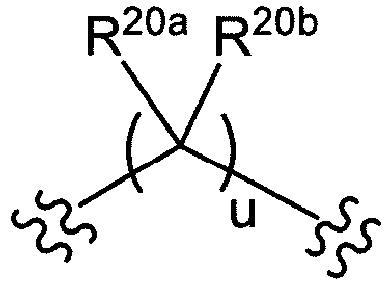
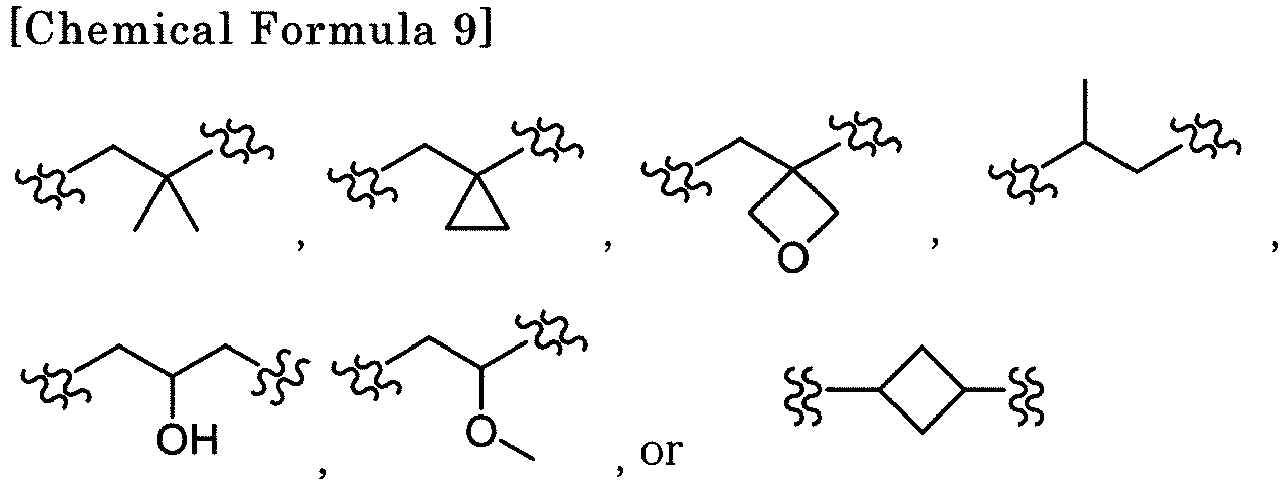
- (5) The compound according to the above (1), wherein the group represented by the formula:


- (6) The compound according to the above (1), wherein the group represented by the formula:


- (7) The compound according to any one of the above (1) to (6), wherein n is 1, R4a and R4b are both hydrogen atoms, and R2 is substituted or unsubstituted phenyl or substituted or unsubstituted cycloalkyl, or its pharmaceutically acceptable salt.
- (8) The compound according to any one of the above (1) to (7), wherein n is 1, R4a and R4b are both hydrogen atoms, and R2 is substituted or unsubstituted phenyl, or its pharmaceutically acceptable salt.
- (9) The compound according to any one of the above (1) to (8), wherein n is 1, R4a and R4b are both hydrogen atoms, and R2 is phenyl substituted with chloro or methyl, or its pharmaceutically acceptable salt.
- (10) The compound according to any one of the above (1) to (9), wherein n is 1, R4a and R4b are both hydrogen atoms, and R2 is phenyl substituted with methyl, or its pharmaceutically acceptable salt.
- (11) The compound according to any one of the above (1) to (8), wherein n is 1, R4a and R4b are both hydrogen atoms, and R2 is phenyl substituted with halogen, or its pharmaceutically acceptable salt.
- (12) The compound according to any one of the above (1) to (8), wherein n is 1, R4a and R4b are both hydrogen atoms, and R2 is 4-methylphenyl, 4-chlorophenyl, 2, 4-dichlorophenyl, or 4-methylcyclohexyl, or its pharmaceutically acceptable salt.
- (13) The compound according to any one of the above (1) to (10) and (12), wherein n is 1, R4a and R4b are both hydrogen atoms, and R2 is 4-methylphenyl, or its pharmaceutically acceptable salt.
- (14) The compound according to any one of the above (1) to (9), (11) and (12), wherein n is 1, R4a and R4b are both hydrogen atoms, and R2 is 4-chlorolphenyl, or its pharmaceutically acceptable salt.
- (15) The compound according to any one of the above (1) to (14), wherein Ra and Rb are taken together to form oxo, or its pharmaceutically acceptable salt.
- (16) The compound according to any one of the above (1) to (15), wherein Rd and Re are taken together to form oxo, or its pharmaceutically acceptable salt.
- (17) The compound according to any one of the above (1) to (16), wherein s is 0, or its pharmaceutically acceptable salt.
- (18) The compound according to any one of the above (1) to (16), wherein s is 1 or 2, and R9 is each independently halogen, unsubstituted alkyl, haloalkyl, unsubstituted alkenyl, or unsubstituted alkynyl, or its pharmaceutically acceptable salt.
- (19) The compound according to the above (18), wherein s is 1, R9 is fluoro, chloro or methyl, or its pharmaceutically acceptable salt.
- (20) The compound according to any one of the above (1) to (19), wherein s' is 0, or its pharmaceutically acceptable salt.
- (21) The compound according to any one of the above (1) to (19), wherein s' is an integer of 1 to 3, or its pharmaceutically acceptable salt.
- (22) The compound according to the above (21), wherein s' is 1 or 2, and R9' is each independently halogen, carboxy, cyano, substituted or unsubstituted alkyl, substituted or unsubstituted alkyloxy, substituted or unsubstituted alkyloxycarbonyl, or substituted or unsubstituted aryl, or its pharmaceutically acceptable salt.
- (23) The compound according to the above (21) or (22), wherein s' is 1, and R9' is fluoro, chloro, bromo, iodo, carboxy, cyano, methyl, ethyl, propyl, isopropyl, hydroxymethyl, fluoromethyl, difluoromethyl, trifluoromethyl, methyloxy, ethyloxy, propyloxy, isopropyloxy, methyloxycarbonyl, or ethyloxycarbonyl, or its pharmaceutically acceptable salt.
- (24) The compound according to any one of the above (21) to (23), wherein s' is 1, and R9' is fluoro, chloro, carboxy, cyano, methyl, hydroxymethyl, trifluoromethyl, methyloxy, isopropyloxy, difluoromethyl, methyloxycarbonyl, or ethyloxycarbonyl, or its pharmaceutically acceptable salt.
- (25) The compound according to the above (1), wherein
Ra and Rb are taken together to form oxo:
Rd and Re are taken together to form oxo;
R4a and R4b are both hydrogen atoms;
n is 1;
R2 is phenyl substituted with methyl;
s is 0; and
s' is 1,
or its pharmaceutically acceptable salt. - (26) The compound according to the above (1), wherein
Ra and Rb are taken together to form oxo:
Rd and Re are taken together to form oxo;
R4a and R4b are both hydrogen atoms;
n is 1;
R2 is phenyl substituted with halogen; and
s and s' are both 0,
or its pharmaceutically acceptable salt. - (27) The compound according to the above (26), wherein R13 is a hydrogen atom and the group represented by the formula:


- (28) A compound of formula:


- (29) A pharmaceutical composition comprising the compound according to any one of the above (1) to (28), or its pharmaceutically acceptable salt.
- (30) The pharmaceutical composition according to the above (29), wherein the composition has a P2X3 and/or P2X2/3 receptor antagonistic activity.
- (31) The pharmaceutical composition according to the above (30), wherein the composition has an effect of treatment for and/or prevention of chronic pain, urination disorder, or respiratory disease.
- (32) A compound according to any one of the above (1) to (28), or its pharmaceutically acceptable salt, for use in a method for treating and/or preventing a disease related to P2X3 and/or P2X2/3 receptor.
- (33) The compound according to the above (32), or its pharmaceutically acceptable salt, for use in a method for treating and/or preventing chronic pain, urination disorder, or respiratory disease.
- (34) A method for treating and/or preventing a disease related to P2X3 and/or P2X2/3 receptor comprising administering the compound according to any one of the above (1) to (28), or its pharmaceutically acceptable salt.
- (35) The method according to the above (34), for treating and/or preventing chronic pain, urination disorder, or respiratory disease.
- (36) Use of the compound of any one of the above (1) to (28), or its pharmaceutically acceptable salt, in the manufacturing of an agent for treating and/or preventing a disease related to P2X3 and/or P2X2/3 receptor.
- (37) The use according to the above (36), in the manufacturing of an agent for treating and/or preventing chronic pain, urination disorder, or respiratory disease.
- (38) A pharmaceutical composition comprising the compound of any one of the above (1) to (28), or a pharmaceutically acceptable salt thereof, for oral administration.
- (39) The pharmaceutical composition of the above (38), which is a tablet, powder, granule, capsule, pill, film, suspension, emulsion, elixir, syrup, lemonade, spirit, aromatic water, extract, decoction or tincture.
- (40) The pharmaceutical composition of the above (39), which is a sugar-coated tablet, film-coated tablet, enteric-coated tablet, sustained-release tablet, troche tablet, sublingual tablet, buccal tablet, chewable tablet, orally dispersing tablet, dry syrup, soft capsule, micro capsule or sustained-release capsule.
- (41) A pharmaceutical composition comprising the compound of any one of the above (1) to (28), or a pharmaceutically acceptable salt thereof, for parenteral administration.
- (42) The pharmaceutical composition of the above (41), for dermal, subcutaneous, intravenous, intraarterial, intramuscular, intraperitoneal, transmucosal, inhalation, transnasal, ophthalmic, inner ear or vaginal administration.
- (43) The pharmaceutical composition of the above (41) or (42), which is injection, infusion, eye drop, nose drop, ear drop, aerosol, inhalation, lotion, impregnation, liniment, mouthwash, enema, ointment, plaster, jelly, cream, patch, cataplasm, external powder or suppository.
- (44) A pharmaceutical composition comprising the compound of any one of the above (1) to (28), or a pharmaceutically acceptable salt thereof, for a pediatric or geriatric patient.
- The compound of the invention has a P2X3 and/or P2X2/3 receptor antagonistic activity and is useful in the treatment of diseases or conditions associated with a P2X3 and/or P2X2/3 receptor.
- As used throughout the specification, the following terms have the following meaning unless specifically indicated.
- The term "halogen" means fluoro, chloro, bromo and iodo.
- The halogen moiety in said "haloalkyl", "haloalkylcarbamoyl" and "haloalkyloxy" is as defined above for "halogen".
- The term "alkyl" includes a straight or branched chain monovalent hydrocarbon group of a carbon number of 1 to 15, as one embodiment a carbon number of 1 to 10, and as another embodiment a carbon number of 1 to 6. Examples include methyl, ethyl, n-propyl, isopropyl, n-butyl, isobutyl, sec-butyl, tert-butyl, n-pentyl, isopentyl, neo-pentyl, n-hexyl, isohexyl, n-heptyl, isoheptyl, n-octyl, isooctyl, n-nonyl, n-decyl, n-undecanyl, dodecanyl, tridecanyl, and the like.
- In the present specification, the carbon number in the term "alkyl" may be limited. For example, C3-C6 alkyl means "alkyl" of a carbon number of 3 to 6.
- Examples of "alkyl" for R13 are methyl, ethyl, and the like.
- The alkyl moiety in said "haloalkyl", "hydroxyalkyl", "aminoalkyl", "alkylaminoalkyl", "alkylamino", "alkylimino", "alkylsulfonyl", "alkylsulfamoyl", "alkylcarbamoyl", "arylalkyl", "alkylsilylalkynyl", "alkylsulfonyl", "alkylsulfinyl", "alkylcarbamoyl", "alkylcarbamoylalkyl", "alkylcarbamoylalkyloxy", "alkylsulfamoyl", "alkylsulfamoylalkyl", "haloalkylcarbamoyl", "hydroxyalkylcarbamoyl", "alkyloxycarbonylalkyl", "alkylcarbamoylamino", "alkyloxycarbonylamino", "alkylsulfonylcarbamoyl", and "arylalkylamino" is as defined above for "alkyl".
- The term "alkyloxy" includes an alkyloxy group of which alkyl moiety is as defined above for "alkyl". For example, methoxy, ethoxy, propoxy, isopropoxy, butoxy, isobutoxy, sec-butoxy, tert-butoxy, pentyloxy, isopentyloxy, neopentyloxy, hexyloxy, etc are exemplified as alkyloxy.
- The alkyloxy moiety in said "haloalkyloxy", "arylalkyloxy", "alkyloxycarbonyl", "alkyloxycarbonylalkyl", "alkyloxyalkyloxy", "alkylcarbamoylalkyloxy", "carbamoylalkyloxy", "carboxyalkyloxy", and "alkyloxyimino" is as defined above for "alkyloxy".
- For example, methylthio, ethylthio, propylthio, isopropylthio, butylthio, isobutylthio, sec-butylthio, tert-butylthio, pentylthio, isopentylthio, neopentylthio, hexylthio, and the like are exemplified as "alkylthio".
- For example, methyloxycarbonyl, ethyloxycarbonyl, n-propyloxycarbonyl, isopropyloxycarbonyl, n-butyloxycarbonyl, tert-butyloxycarbonyl, n-pentyloxycarbonyl, and the like are exemplified as "alkyloxycarbonyl".
- For example, mono- or di- alkylcarbamoyl, such as methylcarbamoyl, ethylcarbamoyl, n-propylcarbamoyl, isopropylcarbamoyl, cyclopropylcarbamoyl, n-butylcarbamoyl, dimethylcarbamoyl, diethylcarbamoyl, dipropylcarbamoyl, and the like are exemplified as "alkylcarbamoyl".
- The term "alkenyl" includes linear or branched alkenyl of a carbon number of 2 to 15, as one embodiment a carbon number of 2 to 10, and as another embodiment a carbon number of 2 to 6 having one or more double bonds at any available position. Examples include vinyl, propenyl, isopropenyl, butenyl, isobutenyl, prenyl, butadienyl, pentenyl, isopentenyl, pentadienyl, hexenyl, isohexenyl, hexadienyl, heptenyl, octenyl, nonenyl, decenyl, undecenyl, dodecenyl, tridecenyl and the like.
- In the present specification, the carbon number in the term "alkenyl" may be limited. For example, C3-C6 alkenyl means "alkenyl" of a carbon number of 3 to 6.
- The alkenyl moiety in said "alkenyloxy", "alkenylthio", "alkenylcarbamoyl", "alkenylsulfamoyl" and "alkenyloxycarbonyl" is as defined above for "alkenyl".
- The term "alkynyl" includes a linear or branched alkynyl of a carbon number of 2 to 15, as one embodiment a carbon number of 2 to 10, as another embodiment a carbon number 2 to 6. Examples include ethynyl, propynyl, butynyl, pentynyl, hexynyl, heptynyl, octynyl, nonynyl and decynyl. These have one or more triple bonds at any available position and may further a double bond.
- In the present specification, the carbon number in the term "alkynyl" may be limited. For example, C3-C6 alkynyl means "alkynyl" of a carbon number of 3 to 6.
- The alkynyl moiety in said "alkynyloxy", "alkynylthio" and "alkynyloxycarbonyl" is as defined above for "alkynyl".
- The term "acyl" includes a group of the formula R-C(=O)-, wherein R is, for example, "hydrogen", "alkyl", "alkenyl" or "alkynyl" as defined above and "cycloalkyl", "cycloalkenyl", "non-aromatic heterocyclic group", "aryl" or "heteroaryl" as defined below.
- The acyl moiety in "acylamino" and "acylimino" is as defined above for "acyl".
- The term "cycloalkane" includes a monocyclic or polycyclic saturated cyclic carbocyclic ring containing from 3 to 10 carbons. Monocyclic cycloalkane includes, for example, cyclopropane, cyclobutane, cyclopentane, cyclohexane, cycloheptane, cyclooctane, cyclononane, cyclodecane, etc. Polycyclic cycloalkane includes norbornanane, tetrahydronaphthalene, etc.
- The term "cycloalkyl" includes a monovalent group derived from "cycloalkane" as defined above. Monocyclic cycloalkyl includes, for example, cyclopropyl, cyclobutyl, cyclopentyl, cyclohexyl, cycloheptyl, cyclooctyl, cyclononyl, cyclodecyl, etc. As one embodiment, C3 to C8 cycloalkane is exemplified. As another embodiment, C3 to C7 cycloalkane is exemplified. Polycyclic cycloalkyl includes norbornyl, tetrahydronaphthalene-5-yl, tetrahydronaphthalene-6-yl, etc.
- Examples of "cycloalkyl" for R2 are cyclopentyl, cyclohexyl, cycloheptyl, cyclooctyl and the like.
- The cycloalkyl moiety in said "cycloaokylcarbonyl", "cycloalkyloxycarbonyl" and "cycloalkyloxy" is as defined above for "cycloalkyl".
- The term "cycloalkene" includes a non-aromatic monocyclic or polycyclic ring of 3 to 10 carbons containing at least one carbon-carbon double bond. As one embodiment C3 to C8 cycloalkene is exemplified. As another embodiment C3 to C7 cycloalkene is exemplified. Monocyclic cycloalkene includes, for example, cyclopentene, cyclohexene, etc. Polycyclic cycloalkene includes norbornene, indene, etc.
- The term "cycloalkenyl" includes a monovalent group derived from "cycloalkene" as defined above. Monocyclic cycloalkenyl includes cyclopentenyl, cyclohexenyl, etc. As one embodiment, C3 to C8 cycloalkyl is exemplified. As another embodiment, C3 to C7 cycloalkyl is exemplified. Polycyclic cycloalkenyl includes norbornenyl, indene-1-yl, indene-2-yl, indene-3-yl, etc.
- The cycloalkenyl moiety in said "cycloalkenyloxycarbonyl" and "cyclolalkenyloxy" is as defined above for "cycloalkenyl".
- The term "aromatic carbocyclic ring" includes an aromatic hydrocarbocyclic ring which is monocyclic or fused-cyclic, such as benzene, naphthalene, anthracene, phenanthrene, etc.
- The term "aryl" includes a monovalent group derived from "aromatic carbocyclic ring" as defined above. For example, phenyl, 1-naphthyl, 2-naphthyl, anthryl, phenanthryl, etc. are exemplified.
- Preferable "aryl" for R2 is phenyl.
- The aryl moiety in said "aryloxy", "arylthio" and "aryloxycarbonyl" is as defined above for "aryl".
- The term "heterocyclic ring" includes an aromatic or a non-aromatic monocyclic or fused-cyclic ring, which includes a five- to seven-membered ring having at least one nitrogen atom, oxygen atom, and/or sulfur atom in the ring; a fused ring consisting of two or more said five- to seven-membered rings; or a fused ring consisting of said five- to seven-membered ring having at least one nitrogen atom, oxygen atom, and/or sulfur atom in the ring fused to one or more "aromatic carbocyclic ring", "cycloalkane" or "cycloalkene" as defined above.
- For example, a monocyclic non-aromatic heterocyclic ring such as pyrroline, pyrrolidine, piperidine, piperazine, morpholine, thiomorpholine, tetrahydropyrane, dihydropyridine, dihydropyridazine, dioxane, oxathiolane, thiane, tetrahydrofuran, tetrahydropyran, tetrahydrothiazole, tetrahydroisothiazole, etc.;
a monocyclic aromatic heterocyclic ring such as pyrrole, pyrazine, pyrazole, tetrazole, furan, thiophene, pyridine, imidazole, triazole, tetrazole, triazine, pyridazine, pyrimidine, isoxazole, thiazole, isothiazole, thiadiazole, oxazole, oxadiazole, etc; and
a fused heterocyclic ring such as indole, isoindole, indazole, indolizine, indoline, isoindoline, quinoline, isoquinoline, cinnoline, phthalazine, quinazoline, naphthyridine, quinoxaline, purine, pteridine, benzopyrane, benzimidazole, benzisoxazole, benzoxazole, benzoxadiazole, benzisothiazole, benzothiazole, benzothiadiazole, benzofuran, isobenzofuran, benzothiophene, benzotriazole, imidazopyridine, triazolopyridine, imidazothiazole, pyrazinopyridazine, benzimidazole, benzodioxane, tetrahydroquinoline, tetrahydrobenzothiophene, etc. are exemplified. - The term "heterocyclic group" includes a monovalent group derived from "heterocyclic ring" as defined above.
- For example, monocyclic non-aromatic heterocyclic groups such as pyrrolinyl, pyrrolidino, pyrrolidinyl, imidazolinyl, imidazolidinyl, pyrazolinyl, pyrazolidinyl, piperidino, piperidyl, piperazino, piperazinyl, morpholinyl, morpholino, thiomorpholinyl, thiomorpholino, tetrahydropyranyl, dihydropyridyl, dihydropyridazinyl, dihydropyrazinyl, dioxanyl, oxathiolanyl, thianyl, tetrahydrofuryl, tetrahydropyranyl, tetrahydrothiazolinyl, tetrahydroisothiazolinyl, etc.;
monocyclic aromatic heterocyclic groups such as pyrrolyl, pyrazinyl, pyrazolyl, tetrazolyl, furyl, thienyl, pyridyl, imidazolyl, triazolyl, tetrazolyl, triazinyl, pyridazinyl, pyrimidinyl, pyrazinyl, isoxazolyl, thiazolyl, isothiazolyl, thiadiazolyl, oxazolyl, oxadiazolyl, etc; and
fused heterocyclic groups such as indolyl, isoindolyl, indazolyl, indolizinyl, indolinyl, isoindolinyl, quinolyl, isoquinolyl, cinnolinyl, phthalazinyl, quinazolinyl, naphthyridinyl, quinoxalinyl, purinyl, pteridinyl, benzopyranyl, benzimidazolyl, benzisoxazolyl, benzoxazolyl, benzoxadiazolyl, benzisothiazolyl, benzothiazolyl, benzothiadiazolyl, benzofuryl, isobenzofuryl, benzothienyl, benzotriazolyl, imidazopyridyl, triazolopyridyl, imidazothiazolyl, pyrazinopyridazinyl, benzimidazolinyl, benzodioxanyl, tetrahydroquinoline, tetrahydrobenzothienyl, etc. are exemplified. - The term "non-aromatic carbocyclic ring" includes "cycloalkane" as defined above, "cycloalkene" as defined above, a fused ring consisting of "aromatic carbocyclic ring" as defined above fused to "cycloalkane" or "cycloalkene" as defined above. As a fused ring, indene and the like are exemplified.
- The term "non-aromatic carbocyclic group" includes a monovalent group derived from "non-aromatic carbocyclic ring" as defined above. For example, cyclopropyl, cyclobutyl, cyclopentyl, cyclohexyl, cycloheptyl, cyclooctyl, cyclononyl, cyclodecyl, cyclopentenyl, cyclohexenyl, norbornyl, tetrahydronaphthalene-5-yl, tetrahydronaphthalene-6-yl, norbornenyl, inden-1-yl, inden-2-yl, inden-3-yl and the like are exemplified.
- The non-aromatic carbocyclyl moiety in said "non-aromatic carbocyclyloxy" and "non-aromatic carbocyclylalkyloxy" is as defined above for "non-aromatic carbocyclic ring".
- The term "aromatic heterocyclic ring" includes aromatic rings of "heterocyclic ring" as defined above.
- "Aromatic heterocyclic ring" includes a five- to seven-membered aromatic ring having at least one nitrogen atom, oxygen atom, and/or sulfur atom in the ring; a fused aromatic ring consisting of two or more said rings; and
a fused ring consisting of a five- to seven-membered aromatic ring having at least one nitrogen atom, oxygen atom, and/or sulfur atom in the ring fused to one or more "aromatic carbocyclic ring" as defined above. - For example, a monocyclic aromatic heterocyclic ring such as pyrazine, pyrazole, tetrazole, furan, thiophene, pyridine, imidazole, triazole, triazine, pyridazine, pyrimidine, pyrazine, isoxazole, thiazole, isothiazole, thiadiazole, oxazole, oxadiazole, etc; and a fused aromatic heterocyclic ring such as indole, isoindole, indazole, indolizine, quinoline, isoquinoline, cinnoline, phthalazine, quinazoline, naphthyridine, quinoxaline, purine, pteridine, benzimidazole, benzisoxazole, benzoxazole, benzoxadiazole, benzisothiazole, benzothiazole, benzothiadiazole, benzofuran, isobenzofuran, benzothiophene, benzotriazole, imidazopyridine, triazolopyridine, imidazothiazole, pyrazinopyridazine, benzimidazoline, etc. are exemplified.
- The term "heteroaryl" includes a monovalent group derived from "aromatic heterocyclic ring" as defined above. "Heteroaryl" includes a five- to seven-membered aromatic group having at least one nitrogen atom, oxygen atom, and/or sulfur atom in the ring;
a fused aromatic group consisting of two or more said rings; and
a fused ring consisting of a five- to seven-membered aromatic group having at least one nitrogen atom, oxygen atom, and/or sulfur atom in the ring fused to one or more "aromatic carbocyclic ring" as defined above. - For example, monocyclic heteroaryl such as pyrrolyl, pyrazinyl, pyrazolyl, indolyl, tetrazolyl, furyl, thienyl, pyridyl, imidazolyl, triazolyl, tetrazolyl, triazinyl, pyridazinyl, pyrimidinyl, pyrazinyl, isoxazolyl, thiazolyl, isothiazolyl, thiadiazolyl, oxazolyl, oxadiazolyl, etc; and
fused heteroaryl such as isoindolyl, indazolyl, indolizinyl, isoindolinyl, quinolyl, isoquinolyl, cinnolinyl, phthalazinyl, quinazolinyl, naphthyridinyl, quinoxalinyl, purinyl, pteridinyl, benzimidazolyl, benzisoxazolyl, benzoxazolyl, benzoxadiazolyl, benzisothiazolyl, benzothiazolyl, benzothiadiazolyl, benzofuryl, isobenzofuryl, benzothienyl, benzotriazolyl, imidazopyridyl, triazolopyridyl, imidazothiazolyl, pyrazinopyridazinyl, benzimidazolinyl, etc. are exemplified. - One of examples of "heteroaryl" for R2 is pyridyl.
- The heteroaryl moiety in said "heteroaryloxy" and "heteroaryloxycarbonyl" is as defined above for "heteroaryl".
- The term "non-aromatic heterocyclic ring" includes non-aromatic rings of "heterocyclic ring" as defined above.
"Non-aromatic heterocyclic ring" includes, a four- to seven-membered non-aromatic ring having at least one nitrogen atom, oxygen atom, and/or sulfur atom in the ring; a fused non-aromatic ring consisting of two or more said rings;
a fused ring consisting of a five- to seven-membered aromatic ring having at least one nitrogen atom, oxygen atom, and/or sulfur atom in the ring fused to one or more "cycloalkane" or "cycloalkene" as defined above; and
a fused ring consisting of a five- to seven-membered non-aromatic heterocyclic ring having at least one nitrogen atom, oxygen atom, and/or sulfur atom in the ring fused to one or more "aromatic carbocyclic ring" or "non-aromatic carbocyclic ring" as defined above. - For example, monocyclic non-aromatic heterocyclic ring such as oxetane, thietane, azetidine, pyrroline, pyrrolidine, imidazoline, imidazolidine, pyrazoline, pyrazolidine, piperidine, piperazine, morpholine, thiomorpholine, thiomorpholine, tetrahydropyran, for example, 2-tetrahydropyran, 3-tetrahydropyran, 4-tetrahydropyran, dihydropyridine, dihydropyridazine, dihydropyrazine, dioxane, oxathiolane, thiane, tetrahydrofuran, tetrahydropyran, tetrahydrothiazoline, tetrahydroisothiazoline etc.;
a fused non-aromatic heterocyclic ring such as indoline, isoindoline, benzopyrane, benzodioxane, tetrahydroquinoline, benzo[d]oxazole-2(3H)-one, tetrahydrobenzothiophene etc. are exemplified. - "Non-aromatic heterocyclic group" includes a monovalent group derived from "non-aromatic heterocyclic ring" as defined above.
- Examples are monocyclic non-aromatic heterocyclic group such as pyrrolinyl, pyrrolidino, pyrrolidinyl, imidazolinyl, imidazolidinyl, pyrazolinyl, pyrazolidinyl, piperidino, piperidyl, piperazino, piperazinyl, morpholinyl, morpholino, thiomorpholinyl, thiomorpholino, tetrahydropyranyl, dihydropyridyl, dihydropyridazinyl, dihydropyrazinyl, dioxanyl, oxathiolanyl, thianyl, tetrahydrofuryl, tetrahydropyranyl, tetrahydrothiazolinyl, tetrahydroisothiazolinyl etc. and
a fused heterocyclic group such as benzodioxane, tetrahydroquinoline, benzo[d]oxazole-2(3H)-one, tetrahydfobenzothiophene etc. - The non-aromatic heterocyclyl moiety in said "non-aromatic heterocyclyloxy" and "non-aromatic heterocyclyloxycarbonyl" is as defined above for "non-aromatic heterocyclic ring".
- The term "nitrogen-containing non-aromatic heterocyclic group" includes a group derived from a four- to seven-membered non-aromatic ring which contains at least one nitrogen atom in the ring and may contain one or more atoms arbitrarily selected from an oxygen atom and a sulfur atom in the ring, or a fused ring consisting of two or more said rings. Examples are pyrrolinyl, pyrrolidino, pyrrolidinyl, piperidino, piperidyl, piperazino, piperazinyl, morpholinyl, morpholino, thiomorpholino etc.
- The non-aromatic heterocyclyl moiety in said "non-aromatic heterocyclyloxycarbonyl" is as defined above for "non-aromatic heterocyclic ring".
- Substituents for "substituted alkyl", "substituted alkenyl", "substituted alkynyl", "substituted alkyloxy", "substituted alkenyloxy", "substituted alkynyloxy", "substituted alkylthio", "substituted alkenylthio", "substituted alkynylthio", "substituted alkyloxycarbonyl", "substituted alkenyloxycarbonyl", "substituted alkynyloxycarbonyl" and "substituted alkylcarbamoyl" include but are not limited to one or more same or different substituents selected from the group consisting of: hydroxy, carboxy, halogen (F, Cl, Br, I), haloalkyloxy (e.g., CF3O), cycloalkyl (e.g., cyclopropyl), cycloalkenyl (e.g., cyclopropenyl), alkyloxy (e.g., methoxy, ethoxy, propoxy, butoxy, etc.), alkenyloxy (e.g., vinyloxy, allyloxy, etc.), alkyloxycarbonyl (e.g., methoxycarbonyl, ethoxycarbonyl, tert-butoxycarbonyl, etc.), nitro, nitroso, amino, alkylamino (e.g., methylamino, ethylamino, dimethylamino, etc.), acylamino (e.g., acetylamino, benzoylamino, etc.), arylalkylamino (e.g., benzylamino, tritylamino), hydroxyamino, alkylsulfonylamino (e.g., methanesulfonylamino), alkylsulfinylamino (e.g., methanesulfinylamino), non-aromatic heterocyclylamino (e.g. 4-tetrahydropyranylamino etc.) imino, hydroxyimino, alkylimino (e.g., methylimino, ethylimino, dimethylimino, etc.), alkyloxyimino (e.g., methoxyimino, ethoxyimino, etc.), acylimino (e.g., acetylimino, benzoylimino, etc.), azido, aryl (e.g., phenyl, etc.), arylalkyl (e.g., benzyl, phenylethyl etc.), arylalkyloxy (e.g., benzyloxy), a non-aromatic heterocyclic group (e.g., pyrrolinyl, piperidyl, piperazinopyrrolidino, pyrrolidinyl, morpholinyl, morpholino , 2,2-dimethyl-1,3-dioxopyranyl etc.), heteroaryl (e.g., furyl, thienyl, pyridyl, isoxazolyl, thiazolyl, thiadiazolyl, oxazolyl, oxadiazolyl, tetrazolyl, indolyl, benzofuryl etc.), heteroarylalkyl (e.g., pyridylmethyl, pyridylethyl etc.), cyano, isocyano, isocyanato, thiocyanato, isothiocyanato, mercapto, alkylthio (e.g., methylthio, etc.), alkylsulfonyl (e.g., methanesulfonyl, ethanesulfonyl), carbamoyl, alkylcarbamoyl (e.g., methylcarbamoyl, ethylcarbamoyl, dimethylcarbamoyl, etc.), sulfamoyl, alkylsulfamoyl, acyl (e.g., formyl, acetyl, etc.), formyloxy, thioformyl, thiocarboxy, dithiocarboxy, thiocarbamoyl, sulfino, sulfo, hydrazino, azido, ureido, amidino, guanidino, phthalimido, tri-alkylsilyl (e.g., trimethylsilyl, etc.), hydroxyalkylcarbamoyl (hydroxyethylcarbamoyl, etc.), tetrahydropyranyloxy, carbamoylamino, alkylcarbamoylamino (e.g., methylcarbamoylamino, etc.), haloalkylcarbamoyl (e.g., trifluoroethylcarbamoyl, etc.), alkyloxyalkyloxy (e.g., methyloxymethyloxy, etc.), carbamoylcarbamoyl, alkylsulfonylcarbamoyl (e.g., methanesulfonylcarbamoyl) and oxo.
- Substituents for "substituted acyl" are selected from the substituents as defined above for "substituted alkyl", the above "alkyl", the above "alkenyl" and the above "alkynyl". If R in acyl (R-C(=O)-) is "cycloalkyl", "cycloalkenyl", "non-aromatic heterocyclic group", "aryl", or "heteroaryl", then each ring may be substituted with alkyl (e.g., methyl, ethyl, isopropyl, tert-butyl, etc.), haloalkyl (e.g., CF3, CH2CF3, CH2CCl3, etc.), alkenyl, alkynyl (e.g., ethynyl), alkyloxy (e.g., methoxy, ethoxy, isopropyloxy), halogen (e.g., fluoro, chloro etc.) or the like.
- Substituents for "substituted carbamoyl" or "substituted sulfamoyl" are one or more same or different groups selected from, but are not limited to, the group consisting of:
- hydroxy, carboxy, carboxyalkyl (e.g., carboxymethyl, carboxyethyl etc.), halogen (F, Cl, Br, I), alkyl (e.g., methyl, ethyl), alkenyl (e.g., vinyl), alkynyl (e.g., ethynyl), cycloalkyl (e.g., cyclopropyl), cycloalkenyl (e.g., cyclopropenyl), alkyloxycarbonyl (e.g., methoxycarbonyl, ethoxycarbonyl, tert-butoxycarbonyl, etc.), alkyloxycarbonylalkyl (e.g., methoxycarbonylmethyl, ethoxycarbonylmethyl etc.), amino, alkylamino (e.g., methylamino, ethylamino, dimethylamino, etc.), acylamino (e.g., acetylamino, benzoylamino, etc.), arylalkylamino (e.g., benzylamino, tritylamino), hydroxyamino, aryl (e.g., phenyl, etc.), a non-aromatic heterocyclic group (e.g., 4-tetrahydropyranyl etc.), heteroaryl (e.g., pyridyl etc.), cyano, isocyano, isocyanato, thiocyanato, isothiocyanato and acyl (e.g., formyl, acetyl, etc.).
- Substituents for "substituted sulfonyl" or "substituted sulfinyl" are selected from the above "substituted or unsubstituted alkyl", the above "substituted or unsubstituted alkenyl", the above "substituted or unsubstituted alkynyl", the after-mentioned "substituted or unsubstituted cycloalkyl", the after-mentioned "substituted or unsubstituted cycloalkenyl", the after-mentioned "a substituted or unsubstituted non-aromatic heterocyclic group", the after-mentioned "substituted or unsubstituted aryl", and the after-mentioned "substituted or unsubstituted heteroaryl". If R in R-S(=O)2- or R-S(=O)- is "cycloalkyl", "cycloalkenyl", "non-aromatic heterocyclic group", "aryl", "heteroaryl" or the like, then each ring may be substituted with alkyl (e.g., methyl, ethyl, isopropyl, tert-butyl, etc.), haloalkyl (e.g., CF3, CH2CF3, CH2CCl3, etc.), alkenyl, alkynyl (e.g., ethynyl), alkyloxy (e.g., methoxy, ethoxy, isopropyloxy), halogen (e.g., fluoro, chloro etc.) or the like.
- Substituents for "substituted amino", "substituted imino" and "substituted guanidyl" are one or more same or different groups selected from, but are not limited to, the group consisting of:
- alkyl (e.g., methyl, ethyl, isopropyl, tert-butyl etc.), haloalkyl (e.g., CF3, CH2CF3, CH2CCl3, etc.), hydroxyalkyl (e.g., hydroxyethyl, -C(CH3)2CH2OH, etc.), alkenyl (e.g., vinyl), alkynyl (e.g., ethynyl), cycloalkyl (e.g., cyclopropyl), cycloalkenyl (e.g., cyclopropenyl), alkyloxy (e.g., methoxy, ethoxy, propoxy, butoxy, etc.), haloalkyloxy (e.g., CF3O), alkenyloxy (e.g., vinyloxy, allyloxy, etc.), alkyloxycarbonyl (methoxycarbonyl, tert-butyloxycarbonyl, etc.), alkyloxycarbonylalkyl, amino, alkylamino (e.g., methylamino, ethylamino, dimethylamino, etc.), acylamino (e.g., acetylamino, benzoylamino, etc.), arylalkylamino (e.g., benzylamino, tritylamino), hydroxyamino, imino, hydroxyimino, alkylimino (e.g., methylimino, ethylimino, dimethylimino, etc.), alkyloxyimino (e.g., methoxyimino, ethoxyimino, etc.), acylimino (e.g., acetylimino, benzoylimino, etc.), aryl (e.g., phenyl, etc.), arylalkyl (e.g., benzyl, etc.), aryloxy (e.g., phenoxy etc.), a non-aromatic heterocyclic group (e.g., pyrrolinyl, pyrrolidino, piperidino, piperidyl, piperazino, piperazinyl, morpholinyl, morpholino etc.), heteroaryl (e.g., pyridyl, thienyl, thiazolyl, furyl etc.), heteroarylalkyl (e.g., pyridylmethyl, thienylmethyl, thiazolylmethyl, furylmethyl etc.), non-aromatic heterocyclyloxy (pipierazinooxy, piperidinooxy etc.), heteroaryloxy (pyridyloxy etc.), hydroxy, halogen,(F, Cl, Br, I), cyano, acyl (e.g., formyl, acetyl, etc.), non-aromatic heterocyclicylcarbonyl (e.g., 4-tetrahydropyranylcarbonyl etc.), alkylsulfonyl (e.g., methanesulfonyl etc.), non-aromatic heterocyclicylsulfonyl (e.g., 4-tetrahydropyranylsulfonyl etc.), alkylsulfinyl (e.g., methansulfinyl), carbamoyl, alkylcarbamoyl (e.g., methylcarbamoyl etc.), alkylcarbamoylalkyl (e.g., methylcarbamoylmethyl etc.), carbamoylalkyl (e.g., carbamoylmethyl etc.), carboxyalkyl (e.g., carboxymethyl etc.), sulfamoyl, alkylsulfamoyl (e.g., methylsulfamoyl etc.), alkylsulfamoylalkyl (e.g., methylsulfamoylmethyl etc.), and sulfamoylalkyl (e.g, sulfamoylmethyl etc.).
- Substituents for "substituted cycloalkyl", "substituted cycloalkenyl", "substituted aryl", "substituted phenyl", "a substituted heterocyclic group", "substituted heteroaryl", "a substituted non-aromatic carbocyclic group", "a substituted non-aromatic heterocyclic group", "a substituted nitrogen-containing non-aromatic heterocyclic group", "substituted cycloalkyloxycarbonyl", "substituted cycloalkyenyloxycarbonyl", "substituted non-aromatic heterocyclyloxycarbonyl", "substituted aryloxycarbonyl", "substituted heteroaryloxycarbonyl", "a substituted cyclopropane ring", "a substituted cyclopropene ring", "a substituted oxetane ring", "a substituted thietane ring" and "a substituted azetizine ring" are one or more same or different groups selected from, but are not limited to, the group consisting of: alkyl (e.g., methyl, ethyl, isopropyl, tert-butyl etc.), haloalkyl (e.g., CF3, CH2CF3, CH2CCl3, etc.), haloalkyloxy (e.g., CF3O, CHCF2O etc.), alkenyl (e.g., vinyl), alkynyl (e.g., ethynyl), cycloalkyl (e.g., cyclopropyl), cycloalkenyl (e.g., cyclopropenyl), alkyloxy (e.g., methoxy, ethoxy, propoxy, butoxy, etc.), alkenyloxy (e.g., vinyloxy, allyloxy, etc.), alkyloxycarbonyl (e.g., methoxycarbonyl, ethoxycarbonyl, tert-butoxycarbonyl, etc.), nitro, nitroso, amino, alkylamino (e.g., methylamino, ethylamino, dimethylamino, etc.), acylamino (e.g., acetylamino, benzoylamino, etc.), arylalkylamino (e.g., benzylamino, tritylamino), hydroxyamino, amino substituted with one or two same or different substituent selected from the after-mentioned substituent Group Y, imino, hydroxyimino, alkylimino (e.g., methylimino, ethylimino, dimethylimino etc.), alkyloxyimino (e.g., methoxyimino, ethoxyimino etc.), acylimino (e.g., acetylimino, benzoylimino etc.), azido, aryl (e.g., phenyl etc.), arylalkyl (e.g., benzyl etc.), unsubstituted non-aromatic carbocyclyloxy (e.g., cyclopropyloxy etc.), non-aromatic carbocyclyloxy substituted with one or more same or different substituents selected from the after-mentioned Substituent Group Z, unsubstituted non-aromatic carbocyclylalkyloxy (e.g., cyclopropylmethyloxy etc.), non-aromatic carbocyclylalkyloxy substituted with one or more same or different substituents selected from the after-mentioned Substituent Group Z, unsubstituted aryloxy (e.g., phenoxy etc.), aryloxy substituted with one or more same or different substituents selected from the after-mentioned Substituent Group Z, unsubstituted arylalkyloxy (e.g., benzyloxy etc.), arylalkyloxy substituted with one or more same or different substituents selected from the after-mentioned Substituent Group Z, a non-aromatic heterocyclic group (e.g., pyrrolinyl, pyrrolidino, piperidino, piperidyl, piperazino, piperazinyl, morpholinyl, morpholino etc.), heteroaryl (e.g., pyridyl, thienyl, thiazolyl, furyl etc.), heteroarylalkyl (e.g., pyridylmethyl, thienylmethyl, thiazolylmethyl, furylmethyl etc.), unsubstituted non-aromatic heterocyclyloxy (e.g., piperazinooxy, piperizinooxy etc.), non-aromatic heterocyclyloxy substituted with one or more same or different substituents selected from the after-mentioned Substituent Group Z, unsubstituted heteroaryloxy (e.g., pyridyloxy, pyridazinyloxy, pyrimidinyloxy, pyrazinyloxy, oxazolyloxy, isoxazolyloxy, oxadiazolyloxy, thiazolyloxy, isothiazolyloxy, thiadiazolyloxy, furyloxy, thienyloxy, etc.), heteroaryloxy substituted with one or more same or different substituents selected from the after-mentioned Substituent Group Z, cyano, isocyano, isocyanato, thiocyanato, isothiocyanato, mercapto, alkylthio (e.g., methylthio etc.), alkylsulfonyl (e.g., methanesulfonyl, ethanesulfonyl), substituted or unsubstituted carbamoyl (e.g., carbamoyl, N-methyl -N-methoxycarbamoyl etc.), substituted or unsubstituted alkylcarbamoyl (e.g., methylcarbamoyl, ethylcarbamoyl, dimethylcarbamoyl, hydroxyethylcarbamoyl, trifluoromethylcarbamoyl, trifluoroethylcarbamoyl etc.), sulfamoyl, alkylsulfamoyl, hydroxy, carboxy, halogen (F, Cl, Br, I), acyl (e.g., formyl, acetyl etc.), formyloxy, thioformyl, thiocarboxy, dithiocarboxy, thiocarbamoyl, sulfino, sulfo, hydrazino, azido, ureido, amidino, guanidino, phthalimido and oxo.
- A substituent Group Y includes hydroxyalkyl (e.g., hydroxyethyl,-C(CH3)2CH2OH etc.), alkyloxycarbonyl (methoxycarbonyl, tert-butyloxycarbonyl etc.), alkyloxycarbonylalkyl, alkylsulfonyl (e.g., methanesulfonyl etc.), alkylsulfinyl (e.g., methanesulfinyl etc.), carbamoyl, alkylcarbamoyl (e.g., methylcarbamoyl etc.), alkylcarbamoylalkyl (e.g., methylcarbamoylmethyl etc.), carbamoylalkyl (e.g., carbamoylmethyl etc.), carboxyalkyl (e.g., carboxymethyl etc.), sulfamoyl, alkylsulfamoyl (e.g., methylsulfamoyl etc.), alkylsulfamoylalkyl (e.g., methylsulfamoylmethyl etc.) and sulfamoylalkyl (e.g., sulfamoylmethyl etc.).
- A substituent Group Z includes halogen (e.g., F, Cl etc.), hydroxy, carboxy, carboxyalkyloxy (e.g., carboxymethyloxy etc.), cyano, nitro, alkyl (e.g., methyl etc.), hydroxyalkyl (e.g., hydroxymethyl etc.), aminoalkyl, alkylaminoalkyl, alkenyl, alkynyl, alkyloxy, alkenyloxy, alkynyloxy, alkylthio, alkenylthio, alkynylthio, acyl, alkyloxycarbonyl (e.g., methyloxycarbonyl, ethyloxycarbonyl etc.), alkenyloxycarbonyl, alkynyloxycarbonyl, carbamoyl, carbamoylalkyloxy (e.g., carbamoylmethyloxy etc.), alkylcarbamoyl (e.g., methylcarbamoyl, ethylcarbamoyl etc.), haloalkylcarbamoyl, cycloalkylcarbamoyl (e.g., cyclopropylcarbamoyl etc), alkylcarbamoylalkyloxy (e.g., methylcarbamoylmethyloxy etc), hydroxyalkylcarbamoyl (e.g., hydroxyethylcarbamoyl etc), cyanocarbamoyl, amino, acylamino, amino substituted with one or two same or different substituent selected from the above substituent Group Y, sulfamoyl, methylsulfonyl, methylsulfinyl, cycloalkyl, cycloalkenyl, a non-aromatic heterocyclic group, aryl, heteroaryl (e.g., tetrazolyl etc), cycloalkyloxy, cycloalkenyloxy, non-aromatic heterocyclyloxy, aryloxy heteroaryloxy and oxo.
- As substituents for "substituted aryl" and "substituted heteroaryl" for R2, halogen, alkyl, alkenyl, alkynyl, alkyloxy, haloalkyl, cycloalkyl, alkylsilylalkynyl and the like are exemplified.
- As substituents for "substituted aryl" and "substituted heteroaryl" for R2, alkyl, haloalkyl, and the like are exemplified.
- As substituents for "substituted aryl" and "substituted heteroaryl" for R2, halogen and the like are exemplified.
- As substituents for "substituted aryl" and "substituted heteroaryl" for R2, fluoro, chloro, bromo, iodo, methyl, ethyl, propyl, isopropyl, propenyl, vinyl, ethynyl, methyloxy, fluoromethyl, difluoromethyl, trifluoromethyl, cyclopropyl, trimethylsilylethynyl and the like are exemplified.
- As substituents for "substituted aryl" and "substituted heteroaryl" for R2, fluoro, chloro, methyl, fluoromethyl, difluoromethyl and the like are exemplified.
- As substituents for "substituted aryl" and "substituted heteroaryl" for R2, fluoro, chloro, methyl, difluoromethyl and the like are exemplified.
- As substituents for "substituted aryl" and "substituted heteroaryl" for R2, chloro, methyl and the like are exemplified.
- As substituents for "substituted aryl" and "substituted heteroaryl" for R2, methyl and the like are exemplified.
- As substituents for "substituted aryl" and "substituted heteroaryl" for R2, chloro and the like are exemplified.
- Examples of R2 are 4-methylphenyl, 4-chlorophenyl, 4-fluoromethyl, 4-difluoromethylphenyl, 2,4-difluorophenyl, 2,4-dichloromethyl, 4-methylcyclohexyl and the like.
- Examples of R2 are 4-methylphenyl, 4-chlorophenyl, 2,4-difluorophenyl, 4-methylcyclohexyl and the like.
- Examples of R2 are 4-methylphenyl and the like.
- Examples of R2 are 4-chlorophenyl and the like.
- Examples of R9 are halogen, alkyl, haloalkyl, alkenyl, alkynyl and the like.
- Examples of R9 are fluoro, chloro, bromo, iodo, methyl, ethyl, propyl, isopropyl and the like.
- Examples of R9 are fluoro, chloro, methyl and the like.
- Examples of R9' are halogen, carboxy, cyano, substituted or unsubstituted alkyl, substituted or unsubstituted alkyloxy, substituted or unsubstituted acyl, substituted or unsubstituted alkyloxycarbonyl, substituted sulfonyl, or substituted or unsubstituted aryl, and the like.
- Examples of R9' are halogen, carboxy, cyano, substituted or unsubstituted alkyl, substituted or unsubstituted alkyloxy, substituted or unsubstituted alkyloxycarbonyl, substituted or unsubstituted aryl, and the like.
- Examples of R9' are fluoro, chloro, bromo, iodo, carboxy, cyano, methyl, ethyl, propyl, isopropyl, hydroxymethyl, hydroxyethyl, methyloxymethyl, ethyloxymethyl, fluoromethyl, difluoromethyl, trifluoromethyl, methyloxy, ethyloxy, propyloxy, isopropyloxy, formyl, acetyl, methyloxycarbonyl, ethyloxycarbonyl, methanesulfonyl, ethanesulfonyl, and the like.
- Examples of R9' are fluoro, chloro, bromo, iodo, carboxy, cyano, methyl, ethyl, propyl, isopropyl, hydroxymethyl, fluoromethyl, difluoromethyl, trifluoromethyl, methyloxy, ethyloxy, propyloxy, isopropyloxy, methyloxycarbonyl, ethyloxycarbonyl, and the like.
- Examples of R9' are fluoro, chloro, carboxy, cyano, methyl, ethyl, hydroxymethyl, hydroxyethyl, methyloxymethyl, fluoromethyl, difluoromethyl, trifluoromethyl, methyloxy, isopropyloxy, acetyl, methyloxycarbonyl, ethyloxycarbonyl, methanesulfonyl, and the like.
- Examples of R9' are fluoro, chloro, carboxy, cyano, methyl, hydroxymethyl, trifluoromethyl, methyloxy, isopropyloxy, difluoromethyl, methyloxycarbonyl, ethyloxycarbonyl, and the like.
- Examples of R9' are carboxy, hydroxymethyl, isopropyloxy, difluoromethyl, methyloxycarbonyl, ethyloxycarbonyl, and the like.
- In Formula (I), "R4a and R4b attached to the same carbon atom are taken together to form oxo or thioxo" includes the followings:


-


-

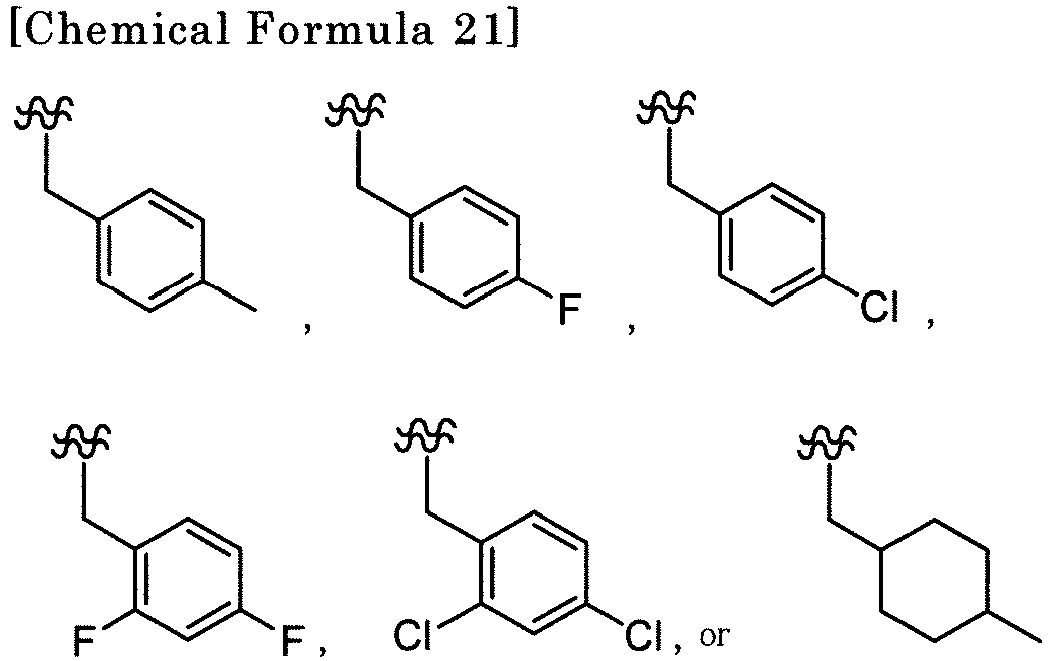
-


-

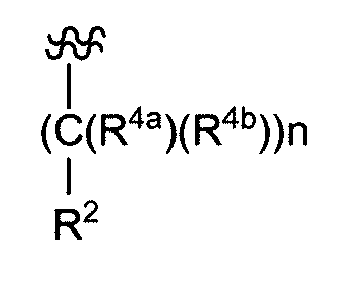

-

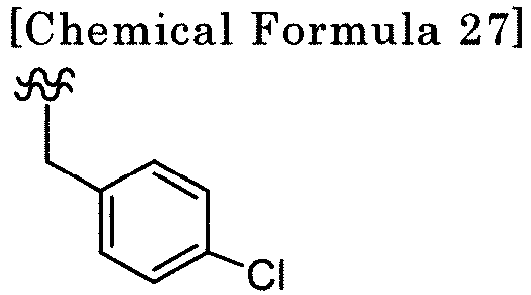
- In Formula (I), "R20a and R20b attached to the same carbon atom are taken together to form substituted or unsubstituted cycloalkane, substituted or unsubstituted cycloalkene, or a substituted or unsubstituted non-aromatic heterocyclic ring" includes the followings:

- wherein u, R20a and R20b are as defined in the above (1);
- Ve is an integer of 0 to 3 (e.g., 0 or 1, and e.g., 0);
- -We- is -O-, -S- or -N(R17d)- (e.g., -O-);
- R17d is a hydrogen atom, substituted or unsubstituted alkyl, substituted or unsubstituted alkenyl, substituted or unsubstituted alkynyl, substituted or unsubstituted acyl or the like.
- In Formula (I), "R20a and R20b attached to the different carbon atoms are taken together to form substituted or unsubstituted cycloalkane, substituted or unsubstituted cycloalkene, or a substituted or unsubstituted non-aromatic heterocyclic ring" includes the followings:

- wherein u, R20a and R20b are as defined in the above (1);
- Vf is an integer of 0 to 3 (e.g., 0 or 1, and e.g., 1);
- Vf is an integer of 1 to 3 (e.g., 1);
- -Wf- is -O-, -S- or -N(R1d7)- (e.g., -O-);
- R17d is a hydrogen atom, substituted or unsubstituted alkyl, substituted or unsubstituted alkenyl, substituted or unsubstituted alkynyl, substituted or unsubstituted acyl
or the like. - In Formula (I), the group represented by the following formula:
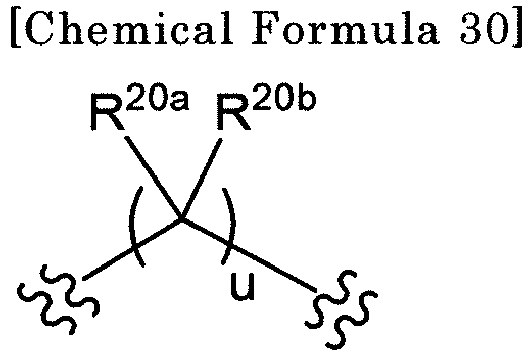

-


- As described above, the above formulae are the same as groups represented by the following formula:

-


-
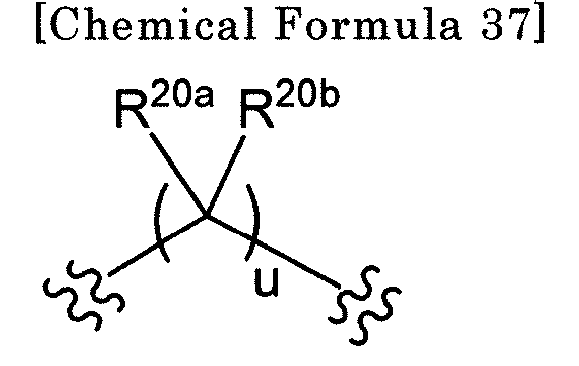

-


-


-


-


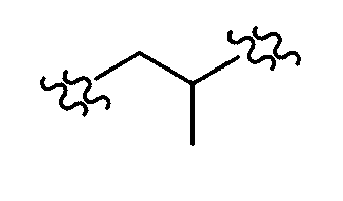
- The following is a general method for synthesizing the compounds of this invention. The starting materials and reagents used for synthesizing these compounds are commercially available or can be manufactured in accordance with a widely known method in this field using commercially available compounds.
- For example, the compounds of the Formula (I) described in this invention can be manufactured by the following synthesis route, or by reference to what is described in
WO2010/092966 andWO2012/020749 if necessary. -


- The compound (i) or its hydrochloride or bromate is reacted with isocyanate (ii) or 1-carbamoyl imidazole (ii)' in a solvent, such as N,N-dimethylformamide, N,N-dimethylacetamide, N,N'-dimethyl imidazolidinone and dimethylsulfoxide, in the presence of a base, such as DBU, triethylamine and pyridine (preferably DBU) at a temperature between -20 and 50 °C, preferably at a temperature between -10°C and below zero. After that, the compound (iii) can be manufactured by reacting the reactive mixture with a carbonylating or thiocarbonylating agent, such as 1,1'-carbonyldiimidazole, 1,1'-thiocarbonyldiimidazole, phosgene, thiophosgene and triphosgene, etc., and a base, such as DBU, triethylamine or pyridine (preferably DBU) at a temperature between -20 and 50°C ,preferably at a temperature between -10°C and below zero.
- The compound (v) can be manufactured by reacting the compound (iii) with the compound (iv) in a solvent, such as acetonitrile, acetone, DMF and DMSO, in the presence of a base, such as potassium carbonate and sodium carbonate, at a temperature between 50 °C to reflux, preferably at reflux.
- The examples of a leaving group include halogen and -OSO2 (CtF2t+1) wherein t is an integer of 1 to 4. As halogen, chloro, iodo and bromo are preferred. As -OSO2 (CtF2t+1) group, -OTf group (trifluoromethanesulfonate) is preferred.
- The compound indicated by Formula (II') can be manufactured by reacting the compound (v) with the compound (vii) in a solvent, such as NMP, DMF and DMSO, or under solvent-free conditions under microwave irradiation at a temperature between 150°C and 250°C, preferably at a temperature between 200°C and 230°C, or in a solvent, such as t-butanol, in the presence of an acid, such as acetic acid, at a temperature between 60°C and 150°C, preferably at a temperature between 80°C and 120°C.
- Using optically active isocyanate (ii) enables to synthesize optically active compound (II').
-

- The compound (ix) can be manufactured by reacting the compound (vii) with alkylating agent (viii), such as methyl iodide and ethyl iodide, in a solvent, such as methanol and ethanol, at a temperature between - 40°C and 30°C, preferably below zero.
- The compound (x) can be manufactured by reacting the compound (ix) with isocyanate, such as N-(chlorocarbonyl) isocyanate, in a solvent, such as dichloromethane, chloroform, 1,2-dichloroethane, in the presence of a base, such as triethylamine and N,N-diisopropylethylamine, at a temperature between - 20°C and 30°C, preferably below zero.
- The compound (xi) can be manufactured by reacting the compound (x) with the compound (vi) in a solvent, such as t-butanol, isopropanol, ethanol and acetonitrile, in the presence of an acid, such as acetic acid, formic acid and methanesulfonic acid, at reflux.
- The compound represented by Formula (II") can be manufactured by reacting the compound (xi) with the compound (xii) in a solvent, such as DMF or NMP, etc, in the presence of a base, such as potassium t-butoxide, or sodium hydride, at a temperature between 40°C and 100°C, preferably at a temperature between 50°C and 70°C.
- Using optically-active compound (xii) enables to synthesize optically-active compound (II").
-

- The compound (xiii) can be manufactured by reacting a mixture of the compound (x) obtained by the method B, and the alcohol (xii) whose one hydroxyl group is protected, such as 2-(tetrahydro-2H-pyran-2-yloxy) ethanol in a solvent, such as THF or dioxane, etc, with triphenylphosphine, and diethyl azodicarboxylate, etc.
- The compound (xiv) can be manufactured by reacting the compound (xiii) with the compound (vi) in the presence of an acid, such as formic acid or acetic acid, etc., at reflux.
-

- The compound (xvi) can be manufactured by reacting the compound (xv) obtained by the method A or B with acid, such as hydrochloric acid-dioxane solution, hydrochloric acid-methanol, hydrochloric acid-ethyl acetate solution and trifluoroacetic acid, etc.
- The compound (xviii) can be manufactured by reacting the compound (xvi) with the acid halide (xvii) (R12 is halogen) in a solvent, such as THF or dioxane, etc., in the presence of a base, such as triethylamine or diisopropylethylamine, etc. If necessary, dimethylaminopyridine, etc., can be added.
- Alternatively, the compound (xviii) can be manufactured by reacting the compound (xvi) with the carboxylic acid (xvii, R12 is hydroxy) in a solvent, such as THF or DMF, in the presence of a condensing agent, such as 1-hydroxybenzotriazole and 1-ethyl-3-(3-dimethylaminopropyl) carbodiimide hydrochloride, and a base, such as triethylamine or diisipropylethylamine, etc.
-

- The compound (xx) can be manufactured by reacting the compound (x) obtained by the method B with the compound (xix) in a solvent, such as DMF, NMP or THF, etc., in the presence of a base, such as DBU, potassium t-butoxide or sodium hydride, etc., at a temperature between 0°C and 80°C, preferably at a temperature between 30°C and 50°C.
- The compound (xxi) can be manufactured by reacting the compound (xx) with the compound (vi) in a solvent, such as t-butanol, isopropanol, ethanol or acetonitrile, etc., in the presence of an acid such as formic acid, acetic acid or methanesulfonic acid, etc., at reflux.
- The compound (xxii) can be manufactured by reacting the compound (xxi) with a solution, such as lithium hydroxide aqueous solution, sodium hydroxide aqueous solution and potassium hydroxide aqueous solution, in a solvent, such as methanol or ethanol, etc., or in a mixture of such solvent and a solvent, such as THF or dioxane, etc.
-

- The compound (xxiv) can be manufactured by reacting the compound (xxiii) obtainored by the method A or B with a solution, such as lithium hydroxide aqueous solution, sodium hydroxide aqueous solution and potassium hydroxide aqueous solution, in a solvent, such as methanol or ethanol, etc., or in a mixture of such solvent and a solvent, such as dioxane THF, etc.
- The compound (xxvi) can be manufactured by reacting the compound (xxiv) with the compound (xxv) in a solvent, such as THF, DMF or NMP, etc., in the presence of a condensing agent, such as 1-hydroxybenzotriazole, HOAt, 1-ethyl-3-(3-dimethylaminopropyl)carbodiimide hydrochloride, HATU or PyBOP, etc., and a base, such as triethylamine or diisipropylethylamine, etc.
-

- The compound (ixl) can be manufactured by reacting a mixture of the compound (x) obtained by the method B and the alcohol (xxxviii) in a solvent, such as THF or dioxane, etc., with triphenylphosphine, etc., and diethyl azodicarboxylate, etc.
- The compound (II) can be manufactured by reacting the compound (ix1) with the compound (vi) in the presence of an acid, such as formic acid or acetic acid, etc., at reflux.
Using the optically-active alcohol (xxxviii) enables to synthesize the optically-active compound (II). - The alcohol used as an intermediate (xxxviii) is commercially available or can be manufactured according to a method specified in the following documents: Tetrahedron (1993), 49(11), 2325-44.
Chemical Communications (2008), (47), 6408-6410.
Tetrahedron (1990), 46(24), 8207-28.
Synlett (1994), (3), 199-200.
Bulletin of the Chemical Society of Japan (1994), 67(8), 2244-7
Canadian Journal of Chemistry (1996), 74, 1731-1737
Chemistry--A European Journal (2010), 16(2), 577-587
Bioorganic & Medicinal Chemistry Letters (2009), 19(21), 6196-6199.
Chemische Berichte (1985), 118(10), 3966-79.
Tetrahedron: Asymmetry (1992), 3(4), 515-16.
Organic Letters (1999), 1(6), 957-959.
Chimia (1986), 40(5), 172-3. -

- The compound (xxxix) can be manufactured by reacting the compound (xxxvii) obtained by the method from A to F or L with the compound (xxxviii) in a solvent, such as THF or dioxane, etc., in the presence of a palladium catalyst and a solution, such as potassium carbonate, cesium carbonate or sodium carbonate aqueous solution, etc., at a temperature between 50°C and reflux, preferably at reflux, or under microwave irradiation at a temperature between 120°C and 200°C, preferably at a temperature between 130°C and 150°C.
- The compound (x1) can be obtained by dissolving the compound (xxxix) in an alcohols solvent, such as methanol or ethanol, etc., and performing catalytic reduction using a hydrogenation reactor (such as H-Cube (10%Pt-C, H2=1 atm)) or a metallic catalyst, such as palladium-carbon, platinum oxide, chlorotris (triphenylphosphine) rhodium (I), etc.
-
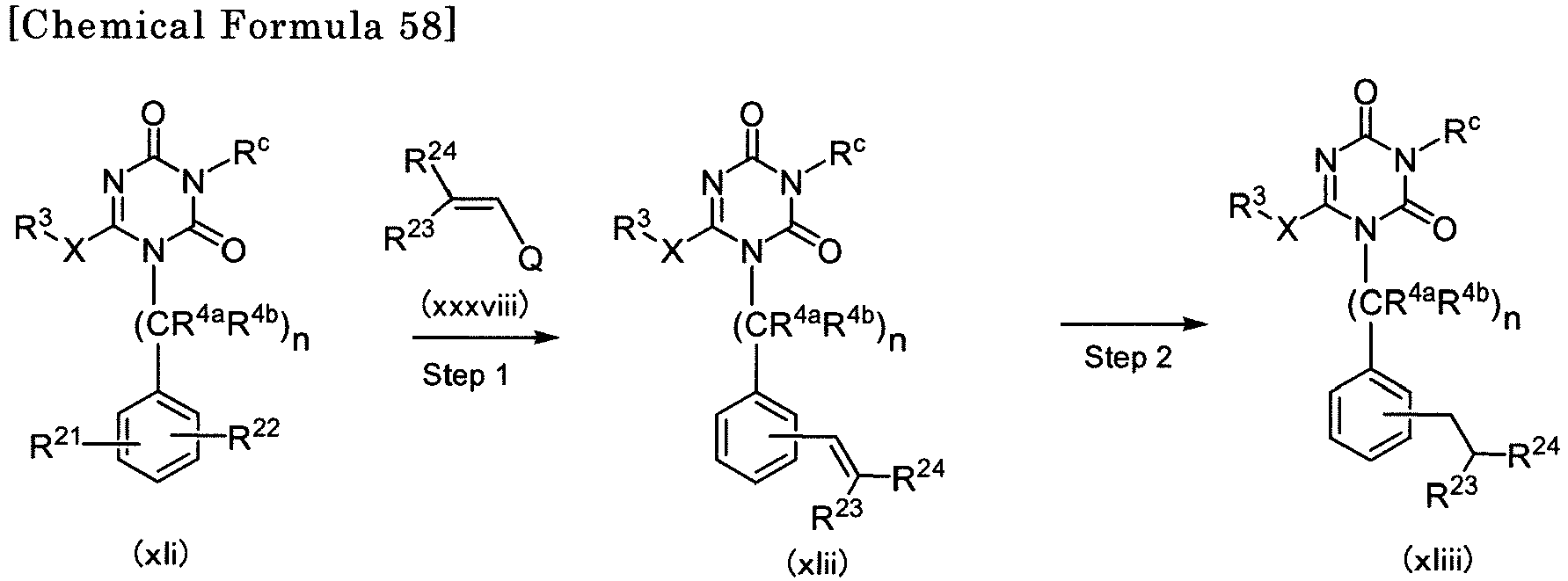
- The compound (xlii) can be manufactured by reacting the compound (xli) obtained by the method from A to F or L with the compound (xxxviii) in a solvent, such as THF or dioxane, etc., in the presence of a palladium catalyst and a solution, such as potassium carbonate, cesium carbonate or sodium carbonate aqueous solution, etc., at a temperature between 50°C and reflux, preferably at reflux, or under microwave irradiation at a temperature between 120°C and 200°C, preferably at a temperature between 130°C and 150°C.
- The compound (xliii) can be obtained by dissolving the compound (xlii) in an alcohols solvent, such as methanol or ethanol, etc., and performing catalytic reduction using a hydrogenation reactor (such as H-Cube (10%Pt-C, H2=1 atm)) or a metallic catalyst, such as palladium-carbon, platinum oxide or chlorotris (triphenylphosphine) rhodium (I), etc.
-
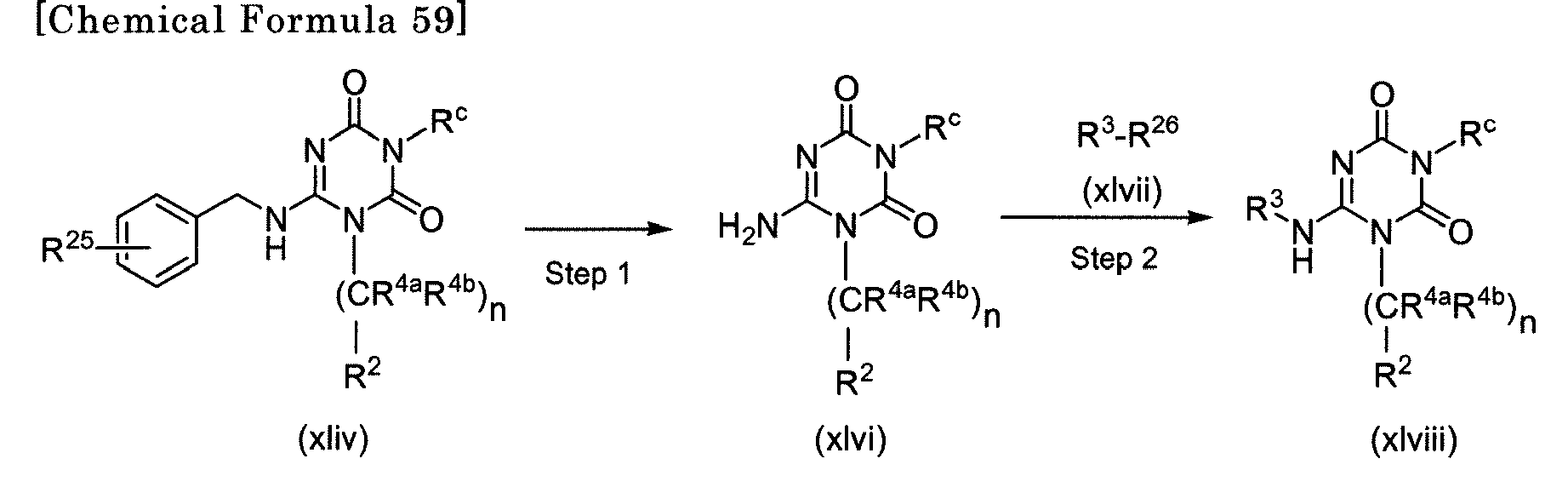
- The compound (xlvi) can be obtained from the compound (xliv) in the presence of Lewis acid or trifluoroacetic acid, etc., under solvent-free conditions or in an appropriate solvent at a temperature between 0°C and reflux.
- The compound (xlviii) can be manufactured by reacting the compound (xlvi) with the compound (xlvii) in a solvent, such as THF or dioxane, etc., in the presence of a palladium catalyst and a solution, such as potassium carbonate, cesium carbonate or sodium carbonate aqueous solution, etc., at a temperature between 50°C and reflux, preferably at reflux, or under microwave irradiation at a temperature of 120°C and 200°C, preferably at a temperature between 130°C and 150°C.
-
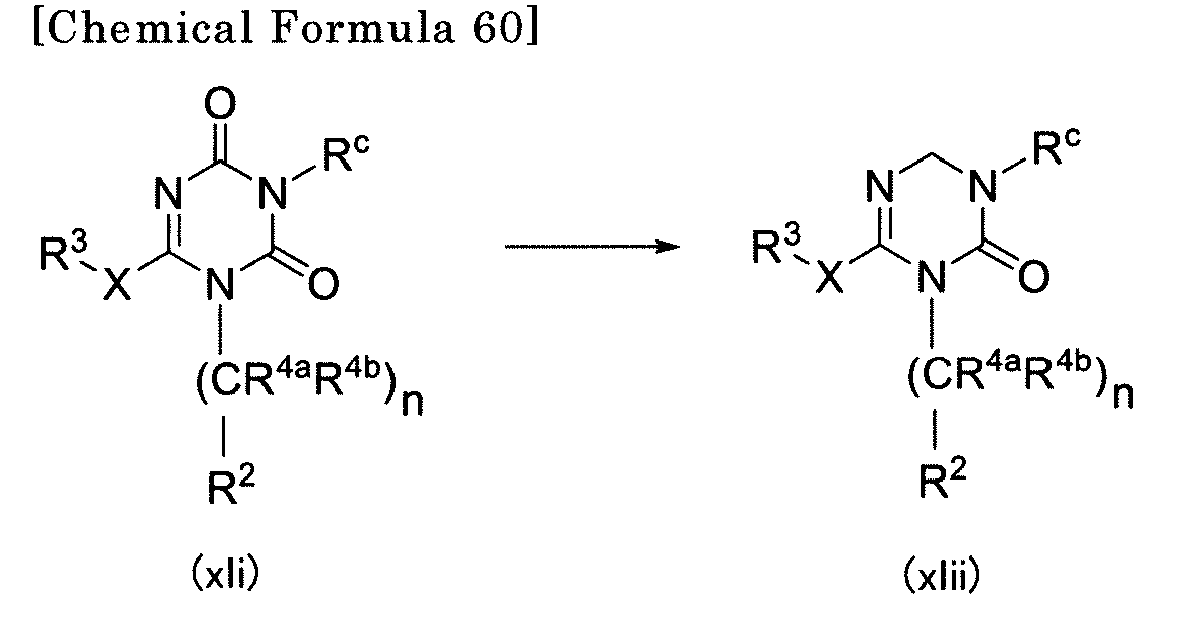
- The compound (xlii) can be manufactured by reacting the compound (xli) or its hydrochloride or bromate with a reducing agent, such as lithium aluminum hydride, diisobutylaluminum hydride, diborane, lithium borohydride, sodium borohydride etc., in a solvent, such as THF, dioxane, methanol etc., in the presence or absence of Lewis acid or acid, such as titanium tetrachloride, cobalt chloride (II), methane sulfonic acid etc., at a temperature between -20°C and reflux, preferably at room temperature.
- The preferred embodiment of the present invention is a compound or its pharmaceutically acceptable salt as mentioned below.
-

-
- 1) The compound of Formula (I), wherein
the group represented by the following formula:
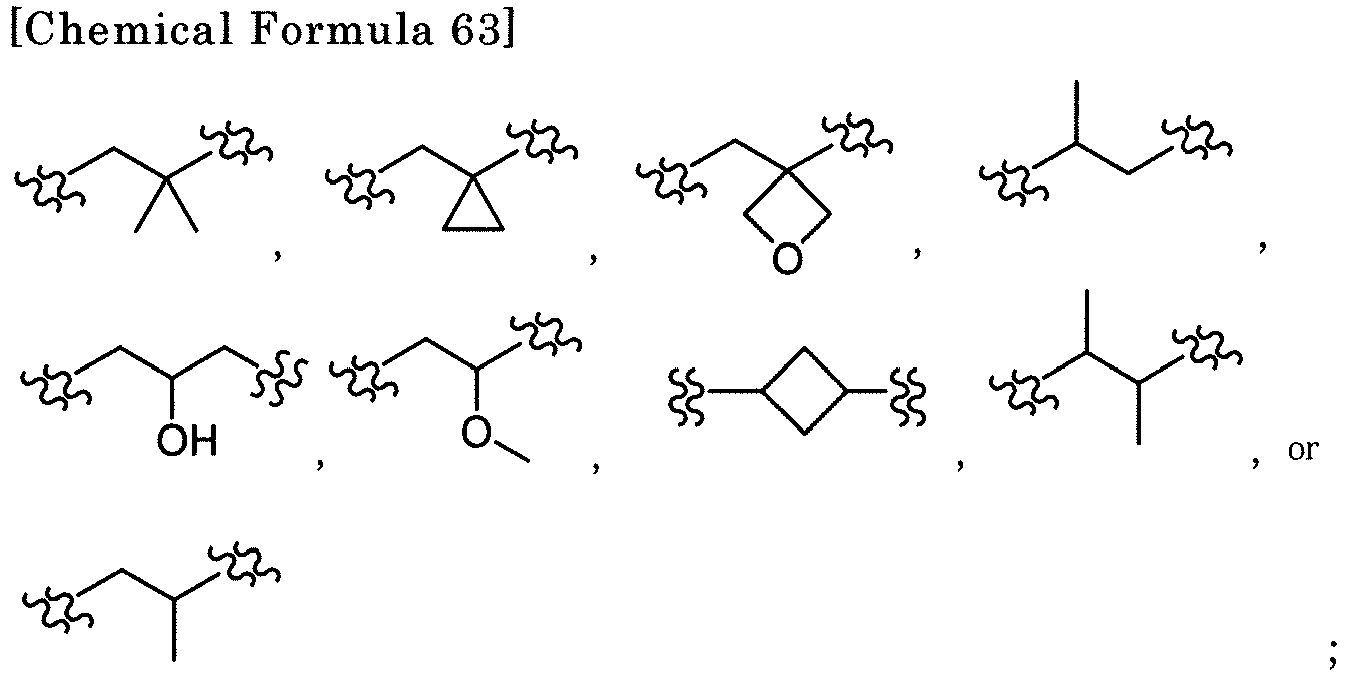


- 2) The compound of Formula (I), wherein
the group represented by the following formula:
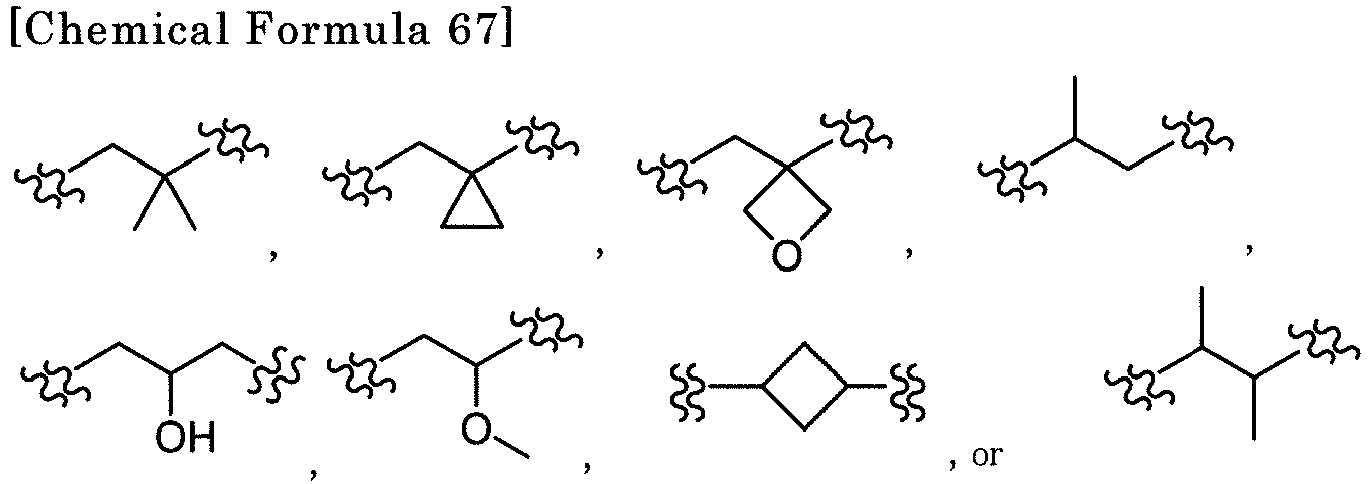


- 3) The compound of Formula (I), wherein
the group represented by the following formula:


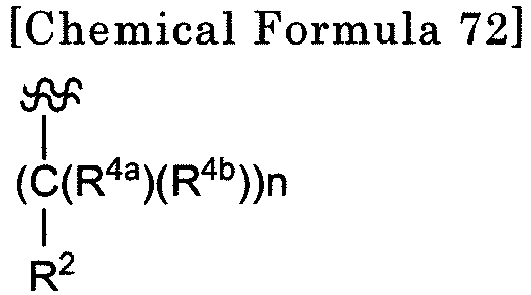

- 4) The compound of Formula (I), wherein
the group represented by the following formula:



- 5) The compound Formula (I), wherein
the group represented by the following formula: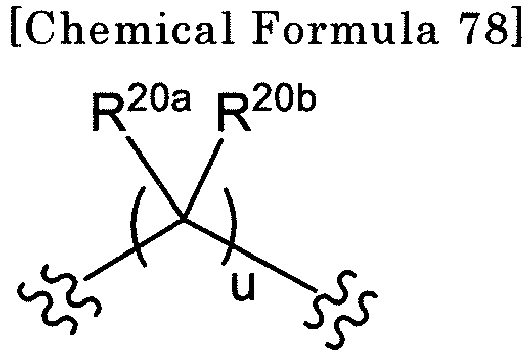


- 6) The compound of Formula (I), wherein
the group represented by the following formula:


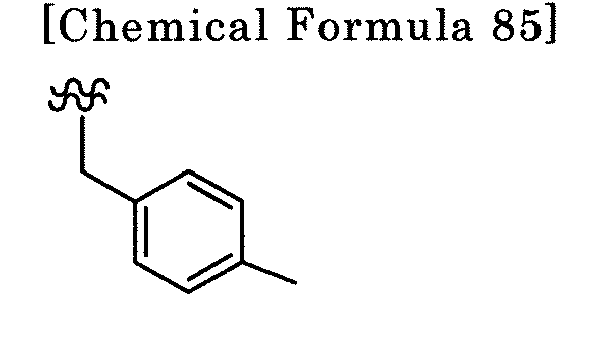
- 7) The compound of Formula (I), wherein
Ra and Rb are taken together to form oxo:
Rd and Re are taken together to form oxo;
R4a and R4b are both hydrogen atoms;
n is 1;
R2 is phenyl substituted with methyl;
s is 0; and
s' is 1,
or its pharmaceutically acceptable salt. - 8) The compound of Formula (I), wherein
Ra and Rb are taken together to form oxo:
Rd and Re are taken together to form oxo;
R4a and R4b are both hydrogen atoms;
n is 1;
R2 is phenyl substituted with halogen; and
s and s' are both 0,
or its pharmaceutically acceptable salt.
(Subtituent groups not specially defined in the above 1)-8) are as defined in the above (1)) - When the group represented by the following formula in the compound of Formula (I):
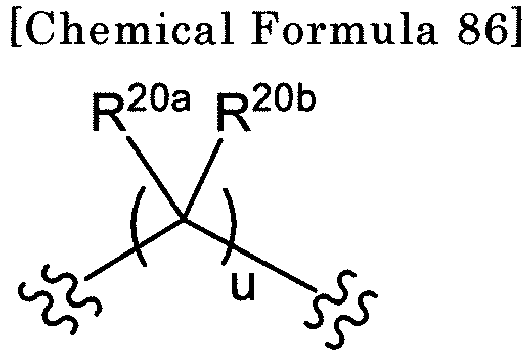


- When the group represented by the following formula in the compound of Formula (I):


- Particularly, when the group represented by the following formula:


- The compounds of Formula (I) are not limited to specific isomers but include all possible isomers (e.g., keto-enol isomers, imine-enamine isomers, diastereoisomers, enantiomers, rotamers or the like), racemates or mixtures thereof. For example, a compound of Formula (I) includes the following tautomer.

- In addition, one or more hydrogen atoms, carbon atoms or other atoms of the compound of Formula (I) can be replaced by an isotope of the hydrogen atom, carbon atom or other atoms. Compounds of Formula (I) include all radiolabeled forms of compounds of Formula (I). The "radiolabeled," "radiolabeled form" and the like of the compound of Formula (I) are encompassed by the present invention and useful as a research and/or diagnostic tool in metabolism pharmacokinetic studies and in binding assays. It is also useful for a medicament.
- One or more hydrogen, carbon and/or other atoms in the compounds of Formula (I) may be replaced with isotopes of hydrogen, carbon and/or other atoms respectively. Examples of isotopes include hydrogen, carbon, nitrogen, oxygen, phosphorus, sulfur, fluorine, iodine and chlorine, such as 2H, 3H, 11C, 13C, 14C, 15N, 18O, 17O, 31P, 32P, 35S, 18F, 123I and 36Cl respectively. The compounds of Formula (I) include the compounds replaced with these isotopes. The compounds replaced with the above isotopes are useful as medicines and include all of radiolabeled compounds of the compound of Formula (I). A "method of radiolabeling" in the manufacture of the "radiolabeled compounds" is encompassed by the present invention, and the "radiolabeled compounds" are useful for studies on metabolized drug pharmacokinetics, studies on binding assay and/or diagnostic tools.
- A radiolabeled compound of the compounds of Formula (I) can be prepared using well-known methods in this field of the invention. For example, a tritium-labeled compound of Formula (I) can be prepared by introducing a tritium to a certain compound of Formula (I), through a catalytic dehalogenation reaction using a tritium. This method comprises reacting with an appropriately-halogenated precursor of the compound of Formula (I) with tritium gas in the presence of an appropriate catalyst, such as Pd/C, and in the presence or absent of a base. The other appropriate method of preparing a tritium-labeled compound can be referred to "Isotopes in the Physical and Biomedical Sciences, Vol. 1, Labeled Compounds (Part A), Chapter 6 (1987)". A 14C-labeled compound can be prepared by using a raw material having 14C.
- The pharmaceutically acceptable salts of the compounds of Formula (I) include, for example, salts with alkaline metal (e.g., lithium, sodium, potassium or the like), alkaline earth metal (e.g., calcium, barium or the like), magnesium, transition metal (e.g., zinc, iron or the like), ammonia, organic bases (e.g., trimethylamine, triethylamine, dicyclohexylamine, ethanolamine, diethanolamine, triethanolamine, meglumine, ethylenediamine, pyridine, picoline, quinoline or the like) or amino acids, or salts with inorganic acids (e.g., hydrochloric acid, sulfuric acid, nitric acid, carbonic acid, hydrobromic acid, phosphoric acid, hydroiodic acid or the like) or organic acids (e.g., formic acid, acetic acid, propionic acid, trifluoroacetic acid, citric acid, lactic acid, tartaric acid, oxalic acid, maleic acid, fumaric acid, mandelic acid, glutaric acid, malic acid, benzoic acid, phthalic acid, ascorbic acid, benzenesulfonic acid, p-toluenesulfonic acid, methanesulfonic acid, ethanesulfonic acid or the like). Especially, salts with hydrochloric acid, sulfuric acid, phosphoric acid, tartaric acid, methanesulfonic acid and the like are included. These salts can be formed by the usual methods.
- The compounds of Formula (I) of the present invention or pharmaceutically acceptable salts thereof may form solvates (e.g., hydrates or the like) and/or crystal polymorphs. The present invention encompasses those various solvates and crystal polymorphs. "Solvates" may be those wherein any numbers of solvent molecules (e.g., water molecules or the like) are coordinated with the compounds of Formula (I). When the compounds of Formula (I) or pharmaceutically acceptable salts thereof are allowed to stand in the atmosphere, the compounds may absorb water, resulting in attachment of adsorbed water or formation of hydrates. Recrystallization of the compounds of Formula (I) or pharmaceutically acceptable salts thereof may produce crystal polymorphs.
- The compounds of Formula (I) of the present invention or pharmaceutically acceptable salts thereof may form prodrugs. The present invention also encompasses such various prodrugs. Prodrugs are derivatives of the compounds of the present invention that have chemically or metabolically degradable groups, and compounds that are converted to the pharmaceutically active compounds of the present invention through solvolysis or under physiological conditions in vivo. Prodrugs include compounds that are converted to the compounds of Formula (I) through enzymatic oxidation, reduction, hydrolysis or the like under physiological conditions in vivo, compounds that are converted to the compounds of Formula (I) through hydrolysis by gastric acid etc., and the like. Methods for selecting and preparing suitable prodrug derivatives are described in, for example, "Design of Prodrugs, Elsevier, Amsrdam, 1985". Prodrugs themselves may have some activity.
- When the compounds of Formula (I) or pharmaceutically acceptable salts thereof have hydroxyl group(s), prodrugs include acyloxy derivatives and sulfonyloxy derivatives that are prepared by, for example, reacting compounds having hydroxyl group(s) with suitable acyl halide, suitable acid anhydride, suitable sulfonyl chloride, suitable sulfonyl anhydride and mixed anhydride, or with a condensing agent. For example, they include CH3COO-, C2H5COO-, tert-BuCOO-, C15H31COO-, PhCOO-, (m-NaOOCPh)COO-, NaOOCCH2 CH2 COO-, CH3 CH(NH2)COO-, CH2N(CH3)2COO-, CH2SO3-, CH3CH2SO3-, CF3SO3-, CH2FSO3-, CF3CH2SO3-, p-CH3O-PhSO3-, PhSO3- and p-CH3PhSO3.
- The compound of the Formula (I) has an antagonistic activity on P2X3 and/or P2X2/3 receptor, and therefore, is useful as a therapeutic agent for diseases associated with a P2X3 and/or P2X2/3 receptor. Since P2X3 and/or P2X2/3 receptor is believed to associate with pain, diseases in urinary system and respiratory disease (Nature 407, 26, 1011-1015 (2000), Nature, Vol.407, No.26, 1015-1017 (2000), Non-Patent Document 1, Non-Patent Document 2, Non-Patent Documents 9-11 etc.), the compound of the invention is useful in the treatment, alleviation of symptoms or prevention of diseases, such as for example, pain associated with rheumatoid arthritis, pain associated with osteoarthritis, headache, migraine, orofacial pain, toothache, glossagra, pain associated with temporomandibular arthrosis, trigeminal neuralgia, shoulder pain, pain associated with hernia of intervertebral disk, pain associated with cervical spondylosis deformans, pain associated with spinal canal stenosis, pain associated with thoracic outlet syndrome, pain associated with traumatic brachial plexus injury syndrome, pain associated with shoulder-hand syndrome, pain associated with whiplash injury, chest pain, abdominal pain, colic pain, pain associated with cholelithiasis, pain associated with pancreatitis, pain associated with urinary calculosis, pain associated with irritable bowel syndrome, lumbar backache, sciatica, pain associated with bone fracture, pain associated with osteoporosis, joint pain, pain associated with gout, pain associated with cauda equina syndrome, pain associated with ankylosing spondylitis, sore muscle, pain associated with painful spasm, pain associated with myofascial pain syndrome, pain associated with fibromyalgia syndrome, complex regional pain syndrome, pain associated with arteriosclerosis obliterans, pain associated with Buerger's disease, pain associated with Raynaud's phenomenon, pain associated with zoster, causalgic pain, pain associated with entrapment neuropathy, pain associated with carpal canal syndrome, pain associated with diabetes, pain associated with Guillain-Barre syndrome, pain associated with Hansen's disease, pain associated with drug therapy, pain associated with radiation therapy, pain associated with cord injury, pain associated with syringomyelia, pain associated with stroke, thalamic pain, pain associated with deafferentation, sympathetically-maintained pain, ABC syndrome, multiple sclerosis, pain associated with skin disease, cancer pain, postoperative pain, pain associated with injury, pain associated with gangrene, pain associated with somatoform disorder, pain associated with somatization disorder, pain associated with depression, pain associated with Parkinson's disease, knee joint pain, pain associated with arthritis, neuropathic pain such as menstrual pain, intermenstrual pain, labor pain, etc., inflammatory pain, nociceptive pain, psychogenic pain, pains associated with endometriosis, and the like; Overactive bladder, urge incontinence, stress urinary incontinence, reflex incontinence, urinary urgency, neurogenic bladder, unstable bladder, urethritis, urinary tract infections, interstitial cystitis, cystitis, bladder cancer, chemotherapy-induced urinary tract disorder, urinary tract disorders associated with brain disorders such as stroke etc., voiding dysfunction, pain, etc. associated with prostatic hyperplasia, prostatitis, etc., and the like.;
And chronic obstructive pulmonary disease (COPD), asthma, bronchospasm, chronic cough, and the like. - "A pharmaceutical composition having an improving effect of urination disorder" includes a pharmaceutical composition for use to improve the treatment and/or prevention of urination disorder.
- The compound of the present invention or the pharmaceutical composition of the present invention can be a drug with reduced side-effect such as effect on motor function because it has a high affinity for ATP receptor, especially P2X3 receptor, and also has high subtype selectivity and high selectivity for other receptors. Also, the compound encompassed by the present invention or the pharmaceutical composition encompassed by the present invention is advantageous because of its high P2X3 receptor inhibitor activity in the presence of RSA, high metabolic stability, high oral absorption, high solubility, good bioavailability, low total body clearance, long half-life, prolonged duration of action, low activity of hepatic enzyme inhibition, high unbound fraction in serum and/or high safety etc.
- The compound of the present invention or the pharmaceutical composition of the present invention can be a drug with high persistence after administration because of its low total body clearance.
- When administering the pharmaceutical composition of the present invention, it can be administered in any method of orally and parenterally methods. Methods for parenteral administration include dermal, subcutaneous, intravenous, intraarterial, intramuscular, intraperitoneal, transmucosal, inhalation, transnasal, ophthalmic, inner ear or vaginal administration and the like.
- In case of oral administration, any forms, which are usually used, such as oral solid formulations (e.g., tablets, powders, granules, capsules, pills, films or the like), oral liquid formulations (e.g., suspension, emulsion, elixir, syrup, lemonade, spirit, aromatic water, extract, decoction, tincture or the like) and the like may prepared according to the usual method and administered. The tablets can be sugar-coated tablets, film-coated tablets, enteric-coating tablets, sustained-release tablets, troche tablets, sublingual tablets, buccal tablets, chewable tablets or orally dispersing tablets. Powders and granules can be dry syrups. Capsules can be soft capsules, micro capsules or sustained-release capsules.
- In case of parenteral administration, any forms, which are usually used, such as injections, drips, external preparations (e.g., ophthalmic drops, nasal drops, ear drops, aerosols, inhalations, lotion, infusion, liniment, mouthwash, enema, ointment, plaster, jelly, cream, patch, cataplasm, external powder, suppository or the like) and the like can be preferably administered. Injections can be emulsions whose type is O/W, W/O, O/W/O, W/O/W or the like.
- Various pharmaceutical additives such as excipients, binders, disintegrating agents and lubricants suitable for the dosage form can be mixed as necessary in an effective amount of the compound of the present invention, to make the compound into a pharmaceutical composition. Furthermore, the pharmaceutical composition can be for pediatric patients, geriatric patients, serious cases or operations by appropriately changing the effective amount of the compound of the present invention, formulation and/or various pharmaceutical additives. The pediatric pharmaceutical compositions are preferably administered to patients under 12 or 15 years old. In addition, the pediatric pharmaceutical compositions can be administered to patients who are under 27 days old after the birth, 28 days to 23 months old after the birth, 2 to 11 years old, 12 to 16 years old, or 18 years old. The geriatric pharmaceutical compositions are preferably administered to patients who are 65 years old or over.
- Although the dosage of a pharmaceutical composition of the present invention should be determined in consideration of the patient's age and body weight, the type and degree of diseases, the administration route and the like, a usual oral dosage is 0.05 to 100 and preferably 0.1 to 10 mg/kg/day. For parenteral administration, although the dosage highly varies with administration routes, a usual dosage is 0.005 to 10 and preferably 0.01 to 1 mg/kg/day. The dosage may be administered in one to several divisions per day.
- The dosage amount of the concomitant drug can be appropriately selected based on the clinically used dose. In addition, the blending ratio of the compound of the present invention to the concomitant drug can be appropriately selected depending on the administration subject, administration route, target disease, symptoms, combination and the like. For example, when the administration subject is a human, 0.01 to 100 parts by weight of the concomitant drug may be used, based on 1 part by weight of the compound of the present invention.
- Following examples illustrate the present invention in more detail, but the present invention is not limited by these examples. The meaning of each abbreviation is as folllows:
- Me: methyl
- TMS: tetramethylsilane
- DMSO: dimethyl sulfoxide
- DMA: dimethyl acetamide
- DMF: dimethylformamide
- THF: tetrahydrofuran
- DBU: 1,8-diazabicyclo [5.4.0]undeca-7-ene
- NMP: N-methyl-2-pyrrolidone
- HOAt:1-hydroxy-7-azabenzotriazole
- HATU: 2-(7-azabenzotriazole-1-yl)-1,1,3,3-tetramethyluronium hexafluorophosphate
- PyBOP: benzotriazole-1-yl-oxytrispyrrolidinophosphonium hexafluorophosphate
- rt: room temperature
- M: mol/L
-

- To a solution of ethyl trans-3-aminocyclobutanecarboxylate hydrochloride (340 mg, 2.3 mmol) in DMA (3.4 mL) were added 1,1'-Carbonyldiimidazole (496 g, 3.1 mmol) and DBU (0.46 mL, 3.1 mmol) under ice-cooling. The reaction mixture was stirred at room temperature for 4.5 hours, then 1-amidinopyrazole hydrochloride (340 mg, 2.3 mmol) and DBU (0.37 mL, 2.4 mmol) were added. The reaction mixture was stirred at room temperature for 7.5 hours. 1,1'-Carbonyldiimidazole (564 mg, 3.5 mmol) was added to the reaction mixture under ice-cooling, then DBU (0.52 mL, 3.5 mmol) was added. The reaction mixture was stirred at 50°C for 15 hours. 4 mol/L Hydrochloric acid (7.5 mL) was added to the reaction mixture under ice-cooling. The resulting powder was collected by filtration to give trans-3-(4-ethoxycarbonylcyclobutyl)-6-(1-pyrazolyl)-1,3,5-triazine-2,4(1H,3H)-dione(376 mg, yield: 53%) as white powder.
1H-NMR (δ ppm TMS / DMSO-d6): 1.21 (3H, t, J = 6.9 Hz), 2.40 (2H, t, J = 9.4 Hz), 3.03 (2H, dd, J = 19.4, 9.9 Hz), 3.09-3.17 (1H, m), 4.12 (2H, q, J = 6.8 Hz), 5.13-5.31 (1H, m), 6.72 (1H, s), 8.05 (1H, s), 8.56 (1H, s), 13.05 (1H, br s). -

- Diisopropylethylamine (0.19 mL, 1.1 mmol) was added to mixture of trans-3-(4-ethoxycarbonylcyclobutyl)-6-(1-pyrazolyl)-1,3,5-triazine-2,4(1H,3H)-dione (279 mg, 0.9 mmol), 4-methylbenzyl bromide (203 mg, 1.1 mmol), and DMA (2.8 mL), and the reaction mixture was stirred at 60°C for 7 hours. The reaction mixture was acidified by 5% aqueous solution of citric acid, and extracted with ethyl acetate. The organic layer was washed by brine, dried over anhydrous sodium sulfate, and concentrated in vacuo to give crude trans-3-(4-ethoxycarbonylcyclobutyl)-1-(4-methylbenzyl)-6-(1-pyrazolyl)-1,3,5-triazine-2,4(1H,3H)-dione (371 mg, yield:99%) as yellow solid.
-

- Mixture of trans-3-(4-ethoxycarbonylcyclobutyl)-1-(4-methylbenzyl)-6-(1-pyrazolyl)-1,3,5-triazine-2,4(1H,3H)-dione (123 mg, 0.3 mmol), 4-(5-chloro-2-pyridyloxy)aniline (73 mg, 0.33 mmol), and t-butanol (1.2 mL) was heated under reflux with stirring for 2 hours. The reaction mixture was concentrated in vacuo, and the residue was purified by silica-gel chromatography(ethyl acetate/hexane) to give 6-[4-(5-chloro-2-pyridyloxy)phenylimino]-3-(4-ethoxycarbonylcyclobutyl)-1-(4-methylbenzyl)-1,3,5-triazinane-2,4-dione(I-172, 140 mg, yield:83%) as pale yellow amorphous. 1H-NMR (CDCl3) δ: 1.28 (3H, t, J = 6.8 Hz), 2.35 (3H, s), 2.50-2.70 (2H, m), 3.03-3.15 (2H, m), 3.16-3.30 (1H, m), 4.17 (2H, q, J = 7.0 Hz), 5.20 (2H, s), 5.34-5.58 (1H, m), 6.59-7.08 (4H, m), 7.14 (3H, dd, J = 14.4, 7.8 Hz), 7.49 (2H, d, J = 7.4 Hz), 7.56-7.71 (2H, m), 8.10 (1H, s).
-

- 4mol/L Lithium hydroxide (0.24 mL, 0.96 mmol) was added to mixture of 6-[4-(5-chloro-2-pyridyloxy)phenylimino]-3-(4-ethoxycarbonylcyclobutyl)-1-(4-methylbenzyl)-1,3,5-triazinane-2,4-dione (135 mg, 0.24 mmol), methanol (0.7 mL), and THF (0.7 mL), and stirred at 50°C for 3 hours. 2mol/L Hydrochloric acid (0.43 mL) was added to the reaction mixture, and the resulting mixture was concentrated in vacuo. The residue was purified by silica-gel chromatography (chloroform/methanol) and powderized by ethyl acetate and hexane to give 6-[4-(5-chloro-2-pyridyloxy)phenylimino]-3-(4-hydroxycarbonylcyclobutyl)-1-(4-methylbenzyl)-1,3,5-triazinane-2,4-dione (I-178, 103 mg, yield:80%) as white powder.
1H-NMR (CDCl3) δ: 2.35 (3H, s), 2.52-2.72 (2H, m), 3.08-3.42 (3H, m), 5.20 (2H, s), 5.37-5.61 (1H, m), 6.82-6.95 (3H, m), 7.01-7.20 (4H, m), 7.48 (2H, d, J = 7.3 Hz), 7.61-7.81 (2H, m), 8.11 (1H, s). -

- t-Butyl isocyanate (1.2 mL, 10.5 mmol) and DBU (1.9 mL, 12.8 mmol) were added to mixture of S-ethylthiourea hydrobromate (1.85 g, 10 mmol) and DMF(9.3 mL) under ice-cooling, and the resulting mixture was stirred for 6 hours. 1,1'-Carbonyldiimidazole (1.95 g, 12 mmol) and DBU (1.9 mL, 12.8 mmol) were added to the reaction mixture under ice-cooling and the mixture was stirred for 2 hours. 2 mol/L Hydrochloric acid (80 mL) was added to the reaction mixture under ice-cooling over 50 minutes, and the generated powder was collected by filtration. The powder was dissolved in ethyl acetate, dried over anhydrous magnesium sulfate, and concentrated in vacuo to give 6-(ethylthio)-3-t-butyl-1,3,5-triazine-2,4(1H,3H)-dione (1.15g, yield:50%) as pale brown powder.
1H-NMR (δ ppm TMS / DMSO-d6): 1.27 (3H, t, J=7.3 Hz), 1.55 (9H, s), 3.03 (2H, q, J=7.3), 12.30 (1H, brs) - Potassium carbonate (17.97 g, 130 mmol) was added to mixture of 6-(ethylthio)-3-t-butyl-1,3,5-triazine-2,4(1H,3H)-dione (22.93 g, 100 mmol), 4-chlorobenzyl bromide (22.60 g, 110 mmol), and acetonitrile (200 mL), and the resulting mixture was heated at reflux and stirred for 3 hours. The reaction mixture was filtered, and the filtrate was concentrated in vacuo to give the crude product (39.9g) of 3-t-butyl-1-(4-chlorobenzyl)-6-(ethylthio)-1,3,5-triazine-2,4(1H,3H)-dione as pale brown oil.
- Trifluoroacetic acid (100 mL) was added to the resulting crude product, the resulting mixture was stirred at room temperature for 17 hours. The reaction mixture was concentrated in vacuo to give 1-(4-chlorobenzyl)-6-(ethylthio)-1,3,5-triazine-2,4(1H,3H)-dione (29.03 g, yield: 97%) as pale brown powder.
1H-NMR (δ ppm TMS / d6-DMSO): 1.25 (3H, t, J=7.3 Hz), 3.08 (2H, q, J=7.3 Hz), 5.02 (2H, s), 7.30-7.33 (2H, m), 7.39-7.42 (2H, m), 11.61 (1H, s). -

- Potassium carbonate(1.80 g, 13 mmol) was added to mixture of 1-(4-chlorobenzyl)-6-(ethylthio)-1,3,5-triazine-2,4(1H,3H)-dione (2.98 g, 10 mmol), methyl bromoacetate (1.04 mL, 11 mmol), and DMF (30 mL), and the resulting mixture was stired at room temperature for 4 hours. Water (250 mL) was added to the reaction mixture, and the resulting mixture was extracted with ethyl acetate (200 mL). The organic layer was washed by brine (250 mL), and dried over anhydrous magnesium sulfate. After concentrated in vacuo, to the residue were added ethyl acetate and hexane. The generated powder was collected by filtration to give 1-(4-chlorobenzyl)-3-(methoxycarbonylmethyl)-6-(ethylthio)-1,3,5-triazine-2,4(1H,3H)-dione (3.26 g, yield: 88%) as colorless powder.
1H-NMR (δ ppm TMS / CDCl3): 1.37 (3H, t, J=7.2 Hz), 3.23 (2H, q, J=7.2 Hz), 3.78 (3H, s), 4.68 (2H, s), 5.11 (2H, s), 7.27-7.35 (4H, m). - Mixture of 1-(4-chlorobenzyl)-3-(methoxycarbonylmethyl)-6-(ethylthio)-1,3,5-triazine-2,4(1H,3H)-dione (1.0 g, 2.70 mmol), 4-(2-pyridyloxy)aniline (1.0 g, 5.4 mmol), t-butanol (10.0 mL), and acetic acid (2.3 mL) was heated under reflux with stirring for 8 hours. Saturated aqueous solution of sodium hydrogen carbonate (30 mL) was added to the reaction mixture, and the resulting mixture was extracted with ethyl acetate (20 mL × 3). The organic layer was washed by water (20 mL) and brine (20 mL) and dried over anhydrous magnesium sulfate. After concentrated in vacuo, the residue was purified by silica-gel chromatography (ethyl acetate/hexane) to give 1-(4-chlorobenzyl)-3-(methoxycarbonylmethyl)-6-[4-(2-pyridyloxy)phenylimino]-1,3,5-triazinane-2,4-dione(R-238, 1.24 g, yield:93%) as pale yellow amorphous.
1H-NMR (CDCl3) δ: 3.78 (3H, s), 4.59 (2H, s), 5.23 (2H, s), 6.86 (2H, d, J=7.8 Hz), 6.96 (1H, d, J=8.1 Hz), 7.00 (1H, t, J=6.0 Hz), 7.15 (2H, d, J=8.1 Hz), 7.31 (2H, d, J=7.8 Hz), 7.49 (2H, d, J=7.8 Hz), 7.71 (1H, t, J=7.8 Hz), 7.86 (1H, s), 8.15 (1H, s). -

- 4mol/L Lithium hydroxide(2.43 mL, 9.7 mmol) was added to mixture of 1-(4-chlorobenzyl)-3-(methoxycarbonylmethyl)-6-[4-(2-pyridyloxy)phenylimino]-1,3,5-triazinane-2,4-dione (1.2 g, 2.43 mmol), methanol (12 mL), THF (12 mL), and water (12 mL), and the resulting mixture was stirred under ice-cooling for 1 hour. The reaction mixture was poured into ice water, acidified by 1mol/L hydrochloric acid, and extracted with ethyl acetate (100 mL). The organic layer was washed by water (50 mL) and brine (50 mL) and dried over anhydrous magnesium sulfate. After concentrated in vacuo, to the residue were added ethyl acetate and diethylether, and the generated powder was collected by filtration to give 1-(4-chlorobenzyl)-3-(hydroxylcarbonylmethyl)-6-[4-(2-pyridyloxy)phenylimino]-1,3,5-triazinane-2,4-dione (R-239, 2.23 mg, yield:92%) as pale brown powder.
1H-NMR (δ ppm TMS / d6-DMSO): 4.40 (2H, s), 5.30 (2H, s), 7.03 (2H, d, J=7.8 Hz), 7.12(2H, s), 7.13(1H, s), 7.37 (4H, d, J=7.5 Hz), 7.45 (4H, d, J=7.5 Hz), 7.84 (1H, t, J=7.8 Hz), 8.16 (1H, s), 9.48 (1H, brs). -

- 1-(4-chlorobenzyl)-3-(methoxycarbonylmethyl)-6-[4-(2-pyridyloxy)phenylimino]-1,3,5-triazinane-2,4-dione (150 mg, 0.31 mmol) was dissolved in DMF (2 mL). Ammonium chloride (16.7 mg, 0.31 mmol), 1-hydroxybenzotriazole hydrate (57.4 mg, 0.38 mmol), 4-dimethylaminopyridine (3.8 mg, 0.03 mmol), 1-ethyl-3-(3-dimethylaminopropyl)carbodiimide hydrochloride (71.9 mg, 0.38 mmol), and triethylamine (0.05 mL, 0.38 mmol) were added to the reaction mixture, and the resulting mixture was stirred at room temperature for 16 hours. To the reaction mixture was added saturated aqueous solution of sodium hydrogen carbonate (20 mL) and extracted with ethyl acetate (30 mL). The organic phase was washed by water (10 mL) and brine (10 mL) and dried over anhydrous magnesium sulfate. After concentrated in vacuo, to the residue was added ethyl acetate, and the generated powder was collected by filtration to give 1-(4-chlorobenzyl)-3-(carbamoylmethyl)-6-[4-(2-pyridyloxy)phenylimino]-1,3,5-triazinane-2,4-dione (R-240, 79 mg, yield:53%) as pale yellow powder.
1H-NMR (δ ppm TMS / DMSO-d6): 4.28 (2H, s), 5.29 (2H, s), 7.03 (2H, d, J=7.2 Hz), 7.12(4H, s), 7.35 (1H, s), 7.38 (1H, d, J=7.2 Hz), 7.42 (4H, d, J=9.3 Hz), 7.54 (1H, s), 7.85 (1H, t, J=7.2 Hz), 8.16 (1H, s), 9.37 (1H,s). -

- DBU (63.3 mL, 420 mmol) was added dropwise to mixture of 1-amidinopyrazole hydrochloride (58.6 g, 400 mmol), ethyl isocyanate (33.2 mL, 420 mmol), and DMA (240 mL) at -10°C over 15 minutes, and the resulting mixture was stirred under ice-cooling for 30 minutes. 1,1'-Carbonyldiimidazole (97.2 g, 600 mmol) was added to the reaction mixture under ice-cooling, and then DBU(93 mL, 620 mmol) was added at -5°C over 30 minutes. The reaction mixture was stirred under ice-cooling for 1 hour and then stirred at room temperature for 1 hour. 2 mol/L Hydrochloric acid (1.16 L) was added to the reaction mixture at 20°C over 1 hour. The resulting powder was collected by filtration to give 3-ethyl-6-(1-pyrazolyl)-1,3,5-triazine-2,4(1H,3H)-dione (73.0 g, yield:88%) as pale brown powder.
1H-NMR (δ ppm TMS / CDCl3): 1.30 (6H, t, J=7.0 Hz), 4.02 (2H, q, J=7.0 Hz), 6.59 (1H, m), 7.34 (1H, m), 8.48 (1H, m), 9.79 (1H, brs). -
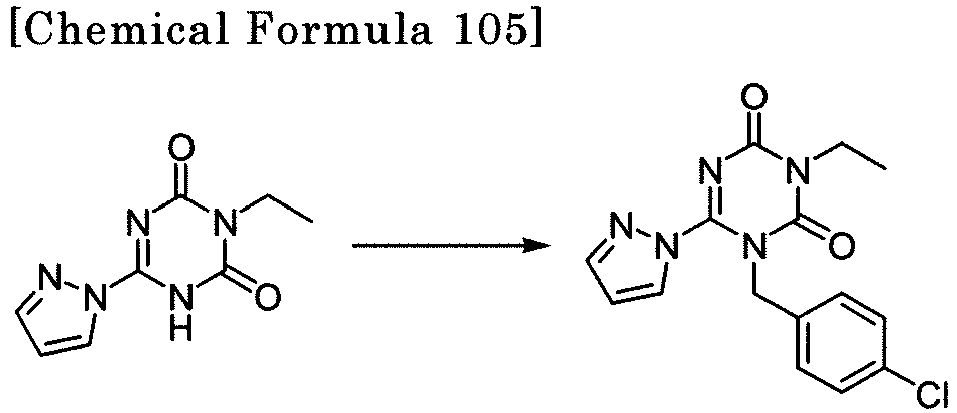
- Diisopropylethylamine (92 mL, 528 mmol) was added dropwise to mixture of 3-ethyl-6-(1-pyrazolyl)-1,3,5-triazine-2,4(1H,3H)-dione (89 g, 480 mmol), 4-chlorobenzyl bromide (108 g, 528 mmol), and DMA (400 mL) at room temperature over 10 minutes, and the resulting mixture was stirred at 60°C for 2 hours. Water (800 mL) was added dropwise to the reaction mixture under ice-cooling over 40 minutes, and then hexane (200 mL) was added. The resulting powder was collected by filtration to give 1-(4-chlorobenzyl)-3-ethyl-6-(1-pyrazolyl)-1,3,5-triazine-2,4(1H,3H)-dione (156 g, yield:97.6%) as pale brown powder.
1H-NMR (δ ppm TMS / CDCl3): 1.30 (3H, t, J=7.1 Hz), 4.04 (2H, q, J=7.1 Hz), 5.86 (2H, s), 6.48 (1H, m), 7.02 (2H, d, J=8.6 Hz), 7.20-7.25 (2H, m), 7.84 (1H, m), 8.33 (1H, m). -

- Mixture of 1-(4-chlorobenzyl)-2-ethyl-6-(1-pyrazolyl)-1,3,5-triazine-2,4(1H,3H)-dione (200 mg, 0.6 mmol), 4-(3-chloro-5-ethoxycarbonyl-2-pyridyloxy)aniline (176 mg, 0.6 mmol), and t-butanol (4 mL) was stirred at 80°C for 1 hour. The reaction mixture was concentrated in vacuo, and the residue was purified by silica-gel chromatography (ethyl acetate/hexane) to give 1-(4-chlorobenzyl)-6-[4-(3-chloro-5-ethoxycarbonyl-2-pyridyloxy)phenylimino]-3-ethyl-1,3,5-triazinane-2,4-dione(R-015, 321 mg, yield:96%) as white powder.
1H-NMR (CDCl3) δ: 1.24 (3H, t, J = 7.2 Hz), 1.39 (3H, t, J = 7.2 Hz), 3.90 (2H, q, J= 7.1 Hz), 4.39 (2H, q, J = 7.1 Hz), 5.21 (2H, s), 6.88 (2H, dd, J = 6.5, 2.0 Hz), 7.16 (2H, dd, J = 6.7, 2.1 Hz), 7.30-7.33 (2H, m), 7.52 (2H, t, J = 4.1 Hz), 7.89 (1H, s), 8.35 (1H, d, J = 2.0 Hz), 8.63 (1H, d, J = 2.0 Hz). -

- 1mol/L Sodium hydroxide (0.75 mL) was added to mixture of 1-(4-chlorobenzyl)-6-[4-(3-chloro-5-ethoxycarbonyl-2-pyridyloxy)phenylimino]-3-ethyl-1,3,5-triazinane-2,4-dione (209 mg, 0.38 mmol), THF (0.75 mL), and methanol(0.75 mL), and the resulting mixture was stirred at room temperature for overnight. The reaction mixture was poured into water, acidified by 5% aqueous solution of citric acid, and then extracted with ethyl acetate. The organic phase was dried over anhydrous sodium sulfate. After concentrated in vacuo, to the residue was added diethylether, and the generated powder was collected by filtration to give 1-(4-chlorobenzyl)-6-[4-(3-chloro-5-hydroxycarbonyl-2-pyridyloxy)phenylimino]-3-ethyl-1,3,5-triazinane-2,4-dione (R-016, 125 mg, yield:63%) as white powder.
1H-NMR (CDCl3) δ: 1.24 (3H, q, J = 8.3 Hz), 3.93 (2H, q, J = 7.0 Hz), 5.23 (2H, s), 6.91 (2H, d, J = 8.5 Hz), 7.14 (2H, dd, J= 6.8, 2.0 Hz), 7.32 (2H, d, J = 8.3 Hz), 7.53 (2H, d, J = 8.3 Hz), 8.36 (1H, d, J = 2.0 Hz), 8.74 (1H, d, J = 1.8 Hz), 9.78 (1H, s). -

- Di-2-methoxyethylazo dicarboxylate (56.2g, 240 mmol) was gradually added to mixture of 1-(4-chlorobenzyl)-6-(ethylthio)-1,3,5-triazine-2,4(1H,3H)-dione (59.6 g, 200 mmol), methyl (S)-(+)-3-hydroxyisolactate (28.4 g, 240 mmol), triphenylphosphine (62.9 g, 240 mmol) and dioxane (400 mL), and the resulting mixture was stirred at room temperature for 3 hours. The reaction mixture was added to ice water (1000 mL) and extracted with toluene (500 mL). The organic phase was washed by brine (700 mL) and dried over anhydrous magnesium sulfate. After concentrated in vacuo, the residue was purified by silica-gel column chromatography (ethyl acetate/hexane) to give (S)-1-(4-chloro benzyl)-6-(ethylthio)-3-(2-methoxycarbonylpropyl)-1,3,5-triazine-2,4(1H,3H)-dione (64.44 g, yield:81%) as white solid.
1H-NMR (δ ppm TMS / CDCl3): 1.19 (3H, d, J=5.7 Hz), 1.37 (3H, t, J=7.1 Hz), 2.96 (1H, m), 3.12 (2H, q, J=7.1 Hz), 3.60 (3H, s), 3,98 (1H, m), 4.21 (1H, m), 5.08 (2H, s), 7.29-7.34 (4H, m). - Mixture of (S)-1-(4-chlorobenzyl)-6-(ethylthio)-3-(2-methoxycarbonylpropyl)-1,3,5-triazine-2,4(1H,3H)-dione (5.0 g, 12.6 mmol), 4-aminophenol (2.06 g, 18.9 mmol), acetic acid (11.32g, 189 mmol), and t-butanol (100 mL) was stirred under heating at reflux for 3 hours. After the reaction, the reaction mixture was added to saturated aqueous solution of sodium hydrogen carbonate (500 mL) and extracted with ethyl acetate (500 mL). The organic layer was washed by 1mol/L hydrochloric acid (500 mL), dried over anhydrous sodium sulfate. After concentrated in vacuo, to the residue were added toluene and ethyl acetate, and heated, and the generated powder was collected by filtration to give (S)-1-(4-chlorobenzyl)-6-(4-hydroxyphenylimino)-3-(2-methoxycarbonylpropyl)-1,3,5-triazinane-2,4-dione (5.17 g, yield:92%) as white powder.
- 2mol/L Sodium hydroxide (25 mL) was added to mixture of (S)-1-(4-chlorobenzyl)-6-(4-hydroxyphenylimino)-3-(2-methoxycarbonylpropyl)-1,3,5-triazinane-2,4-dione (5.13 g, 11.5 mmol) and DMSO (50 mL), the resulting mixture was stirred at room temperature for 1 hour. To the reaction mixture was added 2mol/L hydrochloric acid (25 mL), then the mixture was poured into water and extracted with ethyl acetate. The organic phase was washed by brine (700 mL) and dried over anhydrous sodium sulfate. After concentrated in vacuo, to the residue was added ethyl acetate, and the generated powder was collected by filtration to give (S)-1-(4-chlorobenzyl)-6-(4-hydroxyphenylimino)-3-(2-hydroxycarbonylpropyl)-1,3,5-triazinane-2,4-dione (3.92 g, yield:79%) as white powder.
1H-NMR (δ ppm TMS / d6 DMSO): 0.99 (3H, d, J = 7.0 Hz), 2.50 (1H, t, J = 1.8 Hz), 2.74 (1H, td, J = 14.5, 7.2 Hz), 3.89-3.95 (1H, m), 5.21 (2H, s), 6.70-6.75 (2H, m), 7.01 (2H, d, J = 7.8 Hz), 7.29 (2H, d, J = 8.5 Hz), 7.41 (2H, d, J = 8.5 Hz), 9.16 (1H, br s), 9.66 (1H, br s). -

- Cesium carbonate (454 mg, 1.39 mmol) was added to mixture of (S)-1-(4-chlorobenzyl)-6-(4-hydroxyphenylimino)-3-(2-hydroxycarbonylpropyl)-1,3,5-triazinane-2,4-dione (200 mg, 0.46 mmol), 2-chlorobenzoxazol (78 mg, 0.51 mmol), and DMSO (1 mL), and the resulting mixture was stirred overnight at room temperature. The reaction mixture was poured into water, acidified by 5% aqueous solution of citric acid, and then extracted with ethyl acetate. The organic phase was washed by brine and dried over anhydrous sodium sulfate. After concentrated in vacuo, the residue was purified by high-performance liquid chromatography (acetnitrile/water containing 0.3% formic acid) to give (S)-1-(4-chlorobenzyl)-6-[4-(2-benzoxazolyloxy)phenyliminol-3-(2-methoxycarbonylpropyl)-1,3,5-triazinane-2,4-dione (R-144, 55.3 mg, yield:22%) as white powder.
1H-NMR (CDCl3) δ: 1.13 (3H, d, J= 6.8 Hz), 2.74-2.79 (1H, m), 3.82 (1H, dd, J= 13.3, 5.4 Hz), 4.04 (1H, dd, J= 12.8, 9.2 Hz), 5.13 (1H, d, J= 14.4 Hz), 5.22 (1H, d, J= 14.3 Hz), 6.88 (2H, d, J = 7.5 Hz), 7.23-7.49 (10H, m), 8.96 (1H, s). -

- 1-(4-Chlorobenzyl)-6-(ethylthio)-1,3,5-triazine-2,4(1H,3H)-dione (1090 mg, 3.65 mmol), 2-(tetrahydropyran-2-yloxy)methyl-2-propenol (628 mg, 3.65 mmol), and triphenylphosphine (956 mg, 3.65 mmol) were dissolved in 1,4-dioxane(5.0 mL). Dimethoxyethylazadicarboxylate (854 mg, 3.65 mmol) was added to the reaction mixture, the resulting mixture was stirred at room temperature for 3 hours. Then, triphenylphosphine (478 mg, 1.82 mmol) and dimethoxyethylazadicarboxylate (478 mg, 1.82 mmol) were added to the reaction mixture, and the resulting mixture was stirred at room temperature for 4 hours. The reaction mixture was concentrated in vacuo, and to the resulting residue was added diethylether. The generated powder was removed by filtration. The filtrate was washed by water and brine, dried over anhydrous sodium sulfate, and concentrated in vacuo. The resulting residue was purified by silica-gel chromatography (ethyl acetate/hexane) to give 1-(4-chlorobenzyl)-6-(ethylthio)-3-(2-tetrahydropyran-2-yloxymethyl-2-propenyl)-1,3,5-triazine-2,4(1H,3H)-dione (1589 mg, yield:96%) as colorless oil.
- t-Butanol (2.4 mL), 4-(2-pyridyloxy)aniline (148 mg, 0.8 mmol) and acetic acid (0.58 mL, 10 mmol) were added to 1-(4-chlorobenzyl)-6-(ethylthio)-3-(2-tetrahydropyran-2-yloxymethyl-2-propenyl)-1,3,5-triazine-2,4(1H,3H)-dione (300 mg, 0.66 mmol), and the reaction mixture was heated at reflux for 15 hours. To the reaction mixture was added 2mol/L hydrochloric acid (0.33 mL) and stirred at room temperature for 8 hours. To the reaction mixture was added saturated aqueous solution of sodium hydrogen carbonate and extracted with ethyl acetate. The organic phase was washed by brine (30 mL) and dried over anhydrous sodium sulfate. After concentrated in vacuo, the residue was purified by silica-gel chromatography (ethyl acetate/hexane) to give 1-(4-chlorobenzyl)-3-(2-hydroxymethyl-2-propenyl)-6-[4-(2-pyridyloxy)phenylimino]-1,3,5-triazinane-2,4-dione(R-254, 206 mg, yield:63%) as white amorphous.
1H-NMR (CDCl3) δ: .52-2.66 (1H, m), 4.08 (2H, d, J = 5.0 Hz), 4.50 (2H, s), 5.16 (2H, d, J = 21.1 Hz), 5.21 (2H, s), 6.86 (2H, d, J = 8.5 Hz), 6.96-7.01 (2H, m), 7.13 (2H, d, J = 8.8 Hz), 7.31 (2H, d, J = 8.3 Hz), 7.51 (2H, d, J = 8.5 Hz), 7.69-7.73 (1H, m), 8.10 (1H, d, J = 3.5 Hz), 8.14-8.40 (1H, m). -

- 1-(4-chlorobenzyl)-3-(2-hydroxymethyl-2-propenyl)-6-[4-(2-pyridyloxy)phenyliminol-1,3,5-triazinane-2,4-dione (192 mg, 0.39 mmol) was dissolved in 95% aqueous solution of THF (2.2 mL). Potassium osmate (VI) dehydrate (14.4 mg, 0.04 mmol) and N-methylmorpholine (92 mg, 0.78 mmol) were added to the reaction mixture, the resulting mixture was stirred at room temperature for 2 hours. To the reaction mixture was added 5% aqueous solution of sodium sulfite (1.0 mL) and water (50 mL) and extracted with ethyl acetate (50 mL). The organic phase was washed by brine (50 mL) and dried over anhydrous sodium sulfate. After concentrated in vacuo, the residue was purified by silica-gel chromatography(chloroform/methanol) and powdered with ethyl acetate and hexane to give 1-(4-chlorobenzyl)-3-(2-hydroxymethyl-2,3-dihydroxypropyl)-6-[4-(2-pyridyloxy)phenylimino]-1,3,5-triazinane-2,4-dione (R-255, 155 mg, yield:75%) as white powder.
1H-NMR (DMSO-d6) δ: 3.26-3.31 (4H, m), 3.94 (2H, s), 4.31 (1H, s), 4.42 (2H, t, J = 6.0 Hz), 5.29 (2H, s), 6.97-7.18 (4H, m), 7.30-7.52 (6H, m), 7.85 (1H, t, J = 7.3 Hz), 8.16 (1H, d, J = 3.3 Hz), 9.39 (1H, s). -
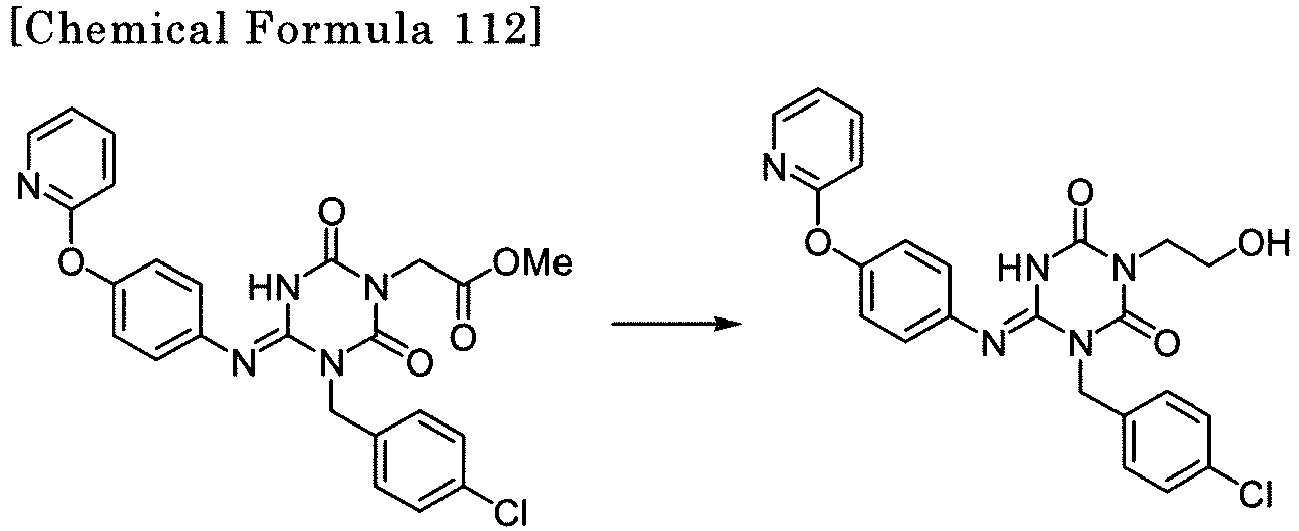
- Lithium aluminum hydride (38 mg, 1 mmol) was added to 1-(4-chlorobenzyl)-3-(methoxycarbonylmethyl)-6-[4-(2-pyridyloxy)phenylimino]-1,3,5-triazinane-2,4-dione (248 mg, 0.5 mmol) in THF (6 mL) under ice-cooling, and the resulting mixture was stirred at room temperature for 1.5 hours. To the reaction mixture were added water (0.04 ml) and 10% aqueous solution of sodium hydroxide (0.04 ml) and stirred at room temperature for 1 hour. The reaction mixture was filtrated through Celite, washed by ethyl acetate, and dried over anhydrous magnesium sulfate. After concentrated in vacuo, the residue was purified by silica-gel chromatography (ethyl acetate/hexane) to give 1-(4-chlorobenzyl)-3-(2-hydroxyethyl)-6-[4-(2-pyridyloxy)phenylimino]-1,3,5-triazinane-2,4-dione(R-257, 65.4 mg, yield:28%) as white solid.
1H-NMR (CDCl3) δ: 2.25 (1H, t, J=5.7 Hz), 3.80 (2H, q, J=5.4 Hz), 4.05 (2H, t, J=5.1 Hz), 5.20 (2H, s), 6.85 (2H, d, J=8.5 Hz), 6.97 (1H, d, J=8.3 Hz), 7.00 (1H, dd, J=6.8, 5.3 Hz), 7.13 (2H, d, J=8.5 Hz), 7.30 (2H, d, J=8.3 Hz), 7.51 (2H, d, J=8.3 Hz), 7.71 (1H, t, J=8.0 Hz), 8.07 (1H, brs), 8.16 (1H, dd, J=4.8, 1.2 Hz). -

- Mixture of 1-(4-chlorobenzyl)-6-(ethylthio)-3-(3-tetrahydropyran-2-yloxypropyl)-1,3,5-triazine-2,4(1H,3H)-dione (230 mg, 0.52 mol), 4-(2-pyridyloxy)aniline (146 mg, 0.78 mmol), acetic acid (0.45 mL), and t-butanol (4 ml) was stirred overnight under heating at reflux. To the reaction mixture was added saturated aqueous solution of sodium hydrogen carbonate (50 mL) and extracted with ethyl acetate (50 mL). The organic phase was washed by brine and dried over anhydrous sodium sulfate. After concentrated in vacuo, the residue was purified by silica-gel column chromatography (hexane/ethyl acetate) to give 1-(4-chlorobenzyl)-3-(3-tetrahydropyran-2-yloxypropyl)-6-[4-(2-pyridyloxy)phenylimino]-1,3,5-triazinane-2,4-dione (188 mg, yield:64%) as colorless amorphous.
1H-NMR (CDCl3) δ: 1.47-1.66 (6H, m), 1.95 (2H, td, J = 12.3, 6.6 Hz), 3.42-3.49 (2H, m), 3.80-3.84 (2H, m), 3.96-4.00 (2H, m), 4.52 (1H, br s), 5.20 (2H, s), 6.84 (2H, d, J= 8.6 Hz), 6.95-7.01 (2H, m), 7.13 (2H, d, J= 8.6 Hz), 7.30 (2H, d, J= 8.3 Hz), 7.52 (2H, d, J= 8.3 Hz), 7.68-7.73 (1H, m), 7.95 (1H, s), 8.13 (1H, t, J= 2.5 Hz). -
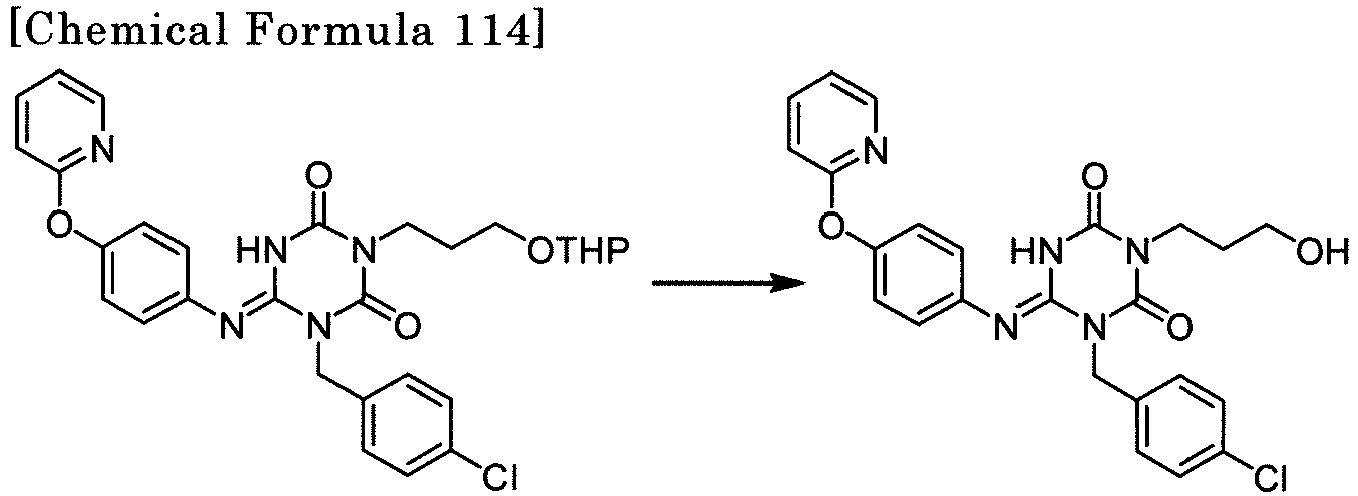
- p-Toluenesulfonic acid hydrate (12 mg, 0.064 mmol) was added to 1-(4-chlorobenzyl)-3-(3-tetrahydropyran-2-yloxypropyl)-6-[4-(2-pyridyloxy)phenylimino]-1,3,5-triazinane-2,4-dione (180 mg, 0.32 mol) in methanol (2 ml), and the resulting mixture was stirred at 50°C for 2 hours. To the reaction mixture was added triethylamine and concentrated in vacuo. The residue was purified by silica-gel column chromatography (hexane/ethyl acetate) to give 1-(4-chlorobenzyl)-3-(3-hydroxypropyl)-6-[4-(2-pyridyloxy)phenylimino]-1,3,5-triazinane-2,4-dione (R-251, 150 mg, yield:99%) as colorless amorphous.
1H-NMR (CDCl3) δ: 1.83-1.89 (2H, m), 2.63 (1H, t, J= 6.5 Hz), 3.59 (2H, q, J= 5.9 Hz), 4.00 (2H, t, J= 6.1 Hz), 5.22 (2H, s), 6.86 (2H, d, J= 8.8 Hz), 6.97-7.01 (2H, m), 7.13 (2H, d, J= 8.5 Hz), 7.31 (2H, d, J= 8.5 Hz), 7.52 (2H, d, J= 8.3 Hz), 7.69-7.74 (1H, m), 8.10 (1H, dd, J= 4.9, 1.4 Hz). - The following compounds of the invention were synthesized in a similar manner to those described in the above general procedures for the synthesis of the compound of the invention and Examples, with reference to the contents described in
WO2010/092966 andWO2012/020749 as needed. The chemical structure of the compounds and the physical properties of them are described below. - LC/MS data of compound of the present invention were measured under any one of the following 2 conditions (Methods 1 and 2), and a retention time (RT) (unit: min) and [M+H]+ are shown.
-
- Column: Shim-pack XR-ODS (2.2µm, i.d.50x3.0mm) (Shimadzu)
- Flow rate: 1.6 mL/min
- UV detection wavelength: 254nm
- Mobile phase: [A] is 0.1% formic acid-containing aqueous solution, and [B] is 0.1% formic acid-containing acetnitrile solution.
- Gradient: Linear gradient of 10% to 100% solvent [B] for 3 minutes was performed, and 100% solvent [B] was maintained for 1 minute.
-
- Column: ACQUITY UPLC (registered trademark) BEH C18 (1.7µm, i.d.2. 1x50mm)
- (Waters)
- Flow rate: 0.8 mL/min
- UV detection wavelength: 254nm
- Mobile phase: [A] is 10 mM ammonium carbonate-containing aqueous solution, and [B] is acetonitrile
- Gradient: Linear gradient of 5% to 100% solvent [B] for 3.5 minutes was performed, and 100% solvent [B] was maintained for 0.5 minute.
- The following compounds of the Reference Examples were synthesized in a similar manner to those described in the above general procedures for the synthesis of the compound of the invention and Reference Examples, with reference to the contents described in
WO2010/092966 andWO2012/020749 as needed. -
[Table 57] Compound No Structure [M+H]+ RT Method R-001 
598 2.55 1 R-002 
556 2.38 1 R-003 
542 2.07 1 R-004 
599 2.59 1 [Table 58] R-005 
459 2.28 1 R-006 
585 2.24 1 R-007 
440 2.3 1 R-008 
412 2.21 1 R-009 
552 2.11 1 R-010 
553 2.05 1 [Table 59] Compound No Structure [M+H]+ RT Method R-011 
523 2.61 1 R-012 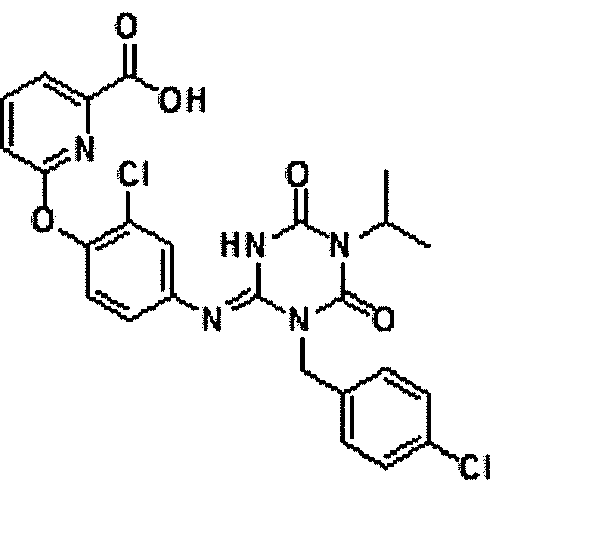
542 2.47 1 R-013 
557 2.37 1 R-014 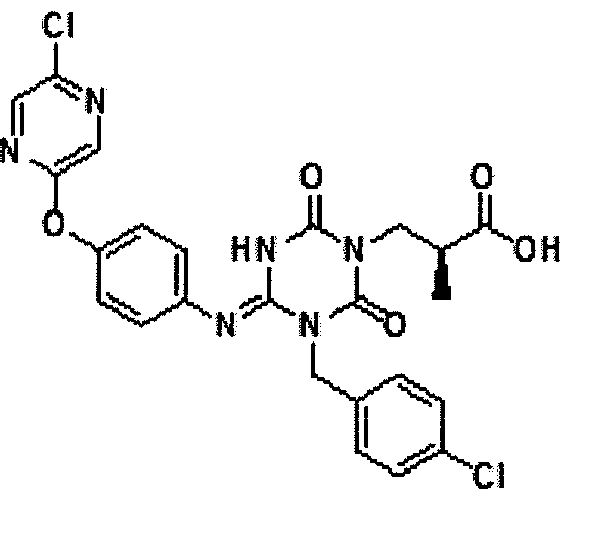
543 2.12 1 R-015 
556 2.7 1 [Table 60] Compound No Structure [M+H]+ RT Method R-016 
528 2.27 1 R-017 
523 2.12 1 R-018 
527 2.23 1 R-019 
509 1.86 1 R-020 
523 1.94 1 [Table 61] Compound No Structure [M+H]+ RT Method R-021 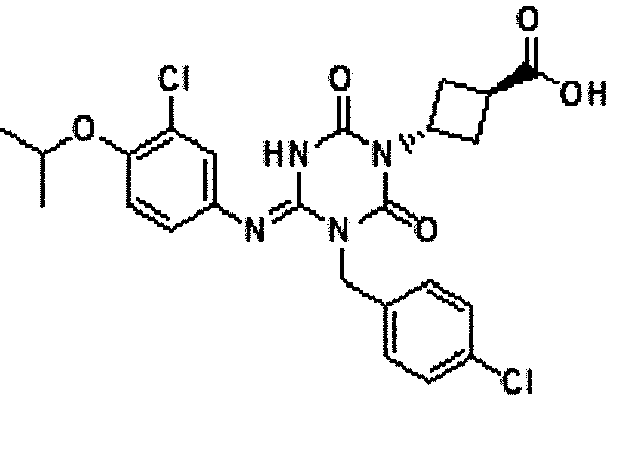
519 2.31 1 R-022 
519 2.26 1 R-023 
509 2.32 1 R-024 
509 2.27 1 R-025 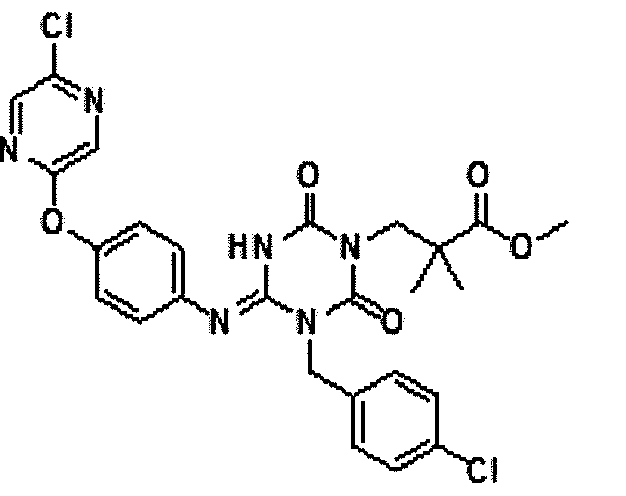
571 2.48 1 [Table 62] Compound No Structure [M+H]+ RT Method R-026 
588 2.39 1 R-027 
557 2.19 1 R-028 
591 2.32 1 R-029 
605 2.42 1 R-030 
577 2.08 1 [Table 63] Compound No Structure [M+H]+ RT Method R-031 
591 2.15 1 R-032 
538 2 1 R-033 
541 2.17 1 R-034 
555 2.27 1 R-035 
591 2.46 1 [Table 64] Compound No Structure [M+H]+ RT Method R-036 
605 2.56 1 R-037 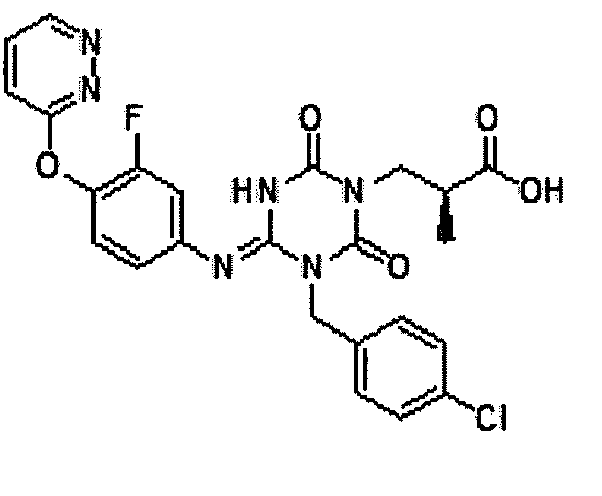
527 1.93 1 R-038 
543 2.01 1 R-039 
577 2.22 1 R-040 
558 2.47 1 [Table 65] Compound No Structure [M+H]+ RT Method R-041 
572 2.57 1 R-042 
537 2.03 1 R-043 
551 2.15 1 R-044 
523 1.78 1 R-045 
537 1.87 1 [Table 66] Compound No Structure [M+H]+ RT Method R-046 
557 2.32 1 R-047 
571 2.42 1 R-048 
541 2.27 1 R-049 
555 2.37 1 R-050 
539 2.02 1 [Table 67] Compound No Structure [M+H]+ RT Method R-051 
556 2.49 1 R-052 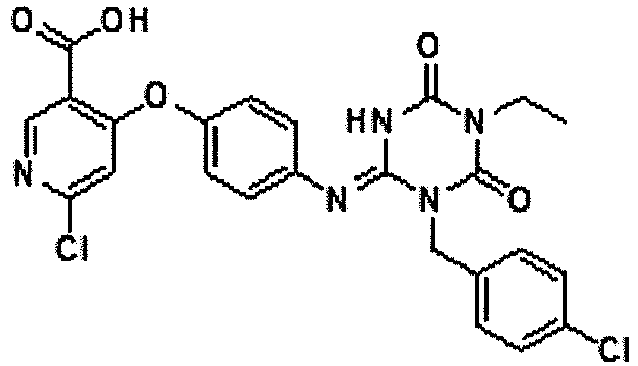
528 2.08 1 R-053 
556 2.61 1 R-054 
528 2.19 1 R-055 
527 2.01 1 [Table 68] Compound No Structure [M+H]+ RT Method R-056 
541 2.1 1 R-057 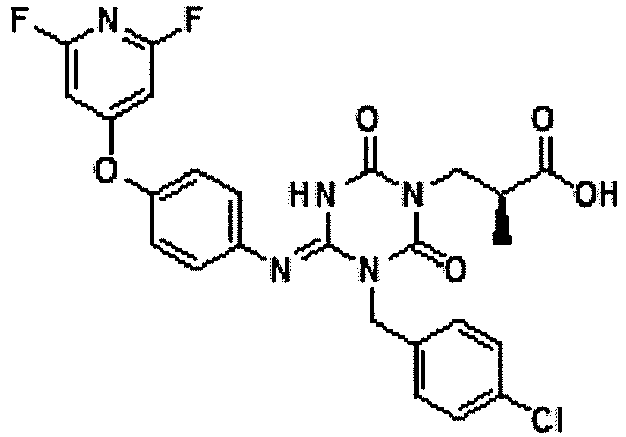
544 2.21 1 R-058 
556 2.27 1 R-059 
523 2.03 1 R-060 
523 1.86 1 [Table 69] Compound No Structure [M+H]+ RT Method R-061 
539 1.94 1 R-062 
499 2.28 1 R-063 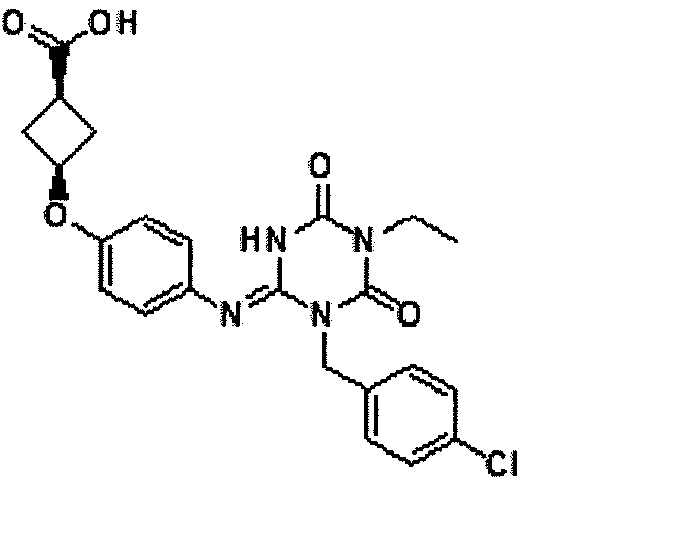
471 1.87 1 R-064 
542 2.41 1 R-065 
542 2.4 1 [Table 70] Compound No Structure [M+H]+ RT Method R-066 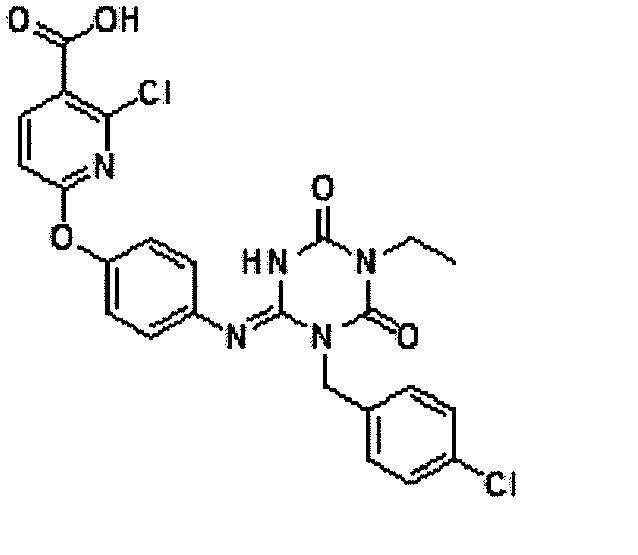
528 2.11 1 R-067 
528 2.12 1 R-068 
510 2.25 1 R-069 
524 2.36 1 R-070 
558 2.29 1 [Table 71] Compound No Structure [M+H]+ RT Method R-071 
570 2.35 1 R-072 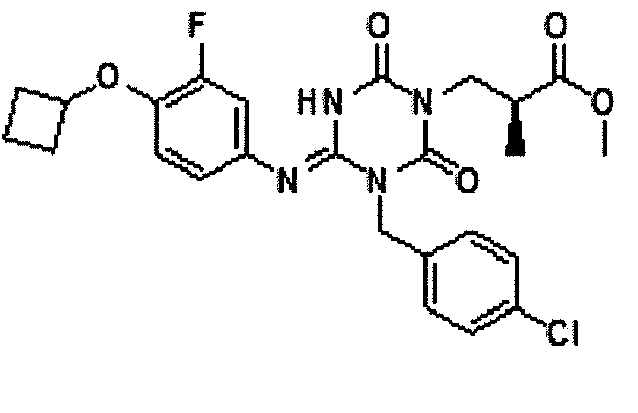
517 2.45 1 R-073 
531 2.55 1 R-074 
496 2 1 R-075 
510 2.09 1 [Table 72] Compound No Structure [M+H]+ RT Method R-076 
503 2.19 1 R-077 
517 2.27 1 R-078 
509 1.77 1 R-079 
556 2.37 1 R-080 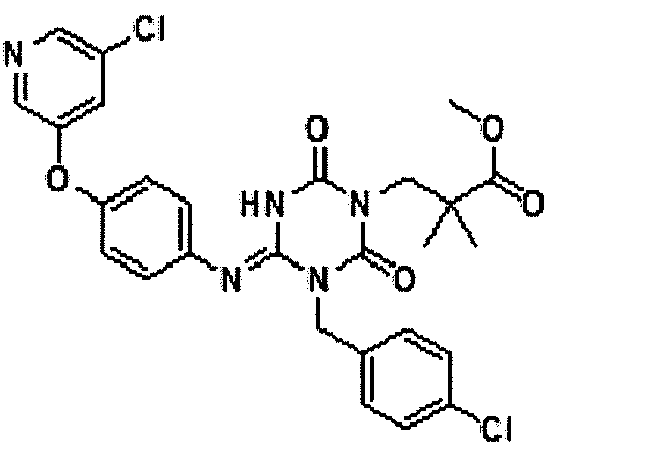
570 2.48 1 [Table 73] Compound No Structure [M+H]+ RT Method R-081 
542 2.17 1 R-082 
556 2.2 1 R-t)83 
540 1.98 1 R-084 
540 1.97 1 R-085 
539 1.93 1 [Table 74] Compound No Structure [M+H]+ RT Method R-086 
556 2.38 1 R-087 
570 2.47 1 R-088 
542 2.09 1 R-089 
556 2.17 1 R-090 
559 2.55 1 [Table 75] Compound No Structure [M+H]+ RT Method R-091 
573 2.58 1 R-092 
557 2.15 1 R-093 
545 2.26 1 R-094 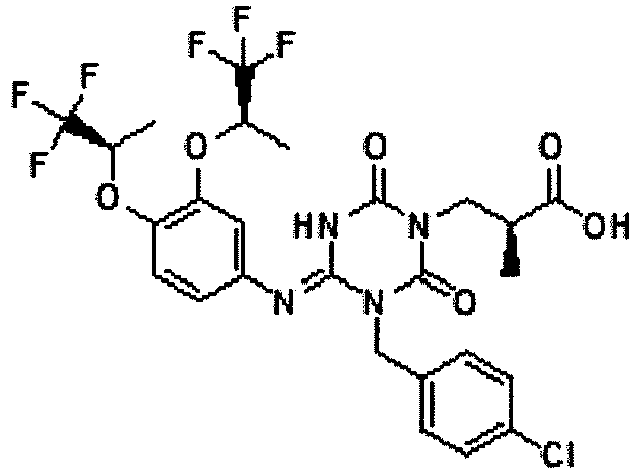
639 2.46 1 R-095 
559 2.33 1 [Table 76] Compound No Structure [M+H]+ RT Method R-096 
653 2.51 1 R-097 
555 2.49 1 R-098 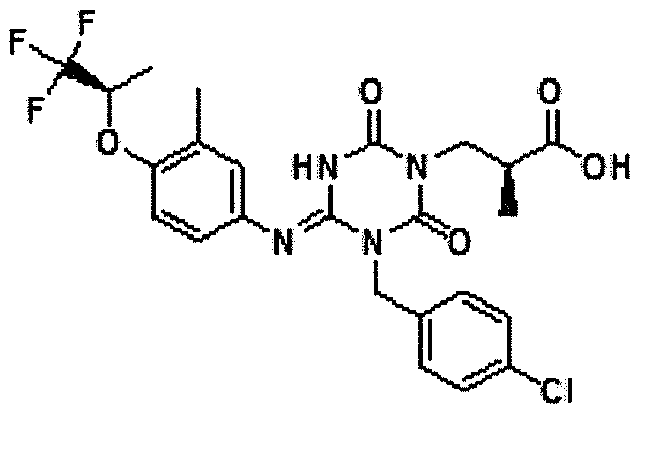
541 2.25 1 R-099 
547 2.25 1 R-100 
561 2.36 1 [Table 77] Compound No Structure [M+H]+ RT Method R-101 
528 2.2 1 R-102 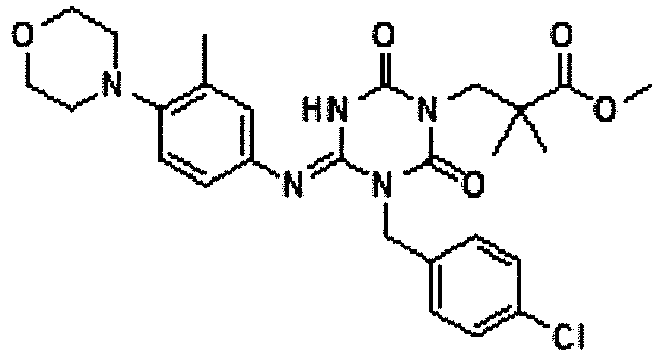
542 2.32 1 R-103 
514 1.91 1 R-104 
528 2 1 R-105 
580 1.94 1 [Table 78] Compound No Structure [M+H]+ RT Method R-106 
532 2.14 1 R-107 
546 2.26 1 R-108 
547 2.18 1 R-109 
518 1.88 1 R-110 
532 1.97 1 [Table 79] Compound No Structure [M+H]+ RT Method R-111 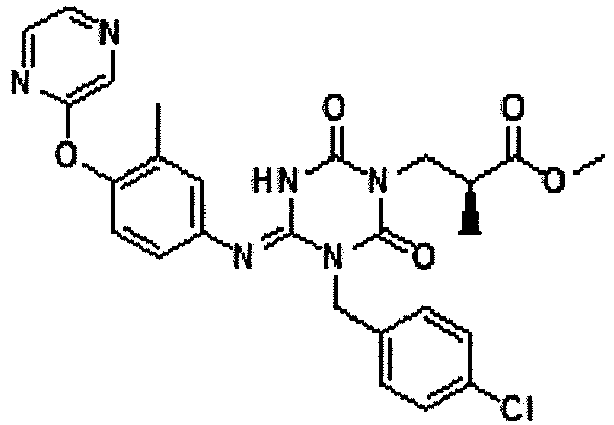
537 2.22 1 R-112 
527 2.15 1 R-113 
541 2.27 1 R-112 
513 1.9 1 R-115 
527 1.99 1 [Table 80] Compound No Structure [M+H]+ RT Method R-116 
540 2.08 1 R-117 
544 2.12 1 R-118 
554 2.16 1 R-119 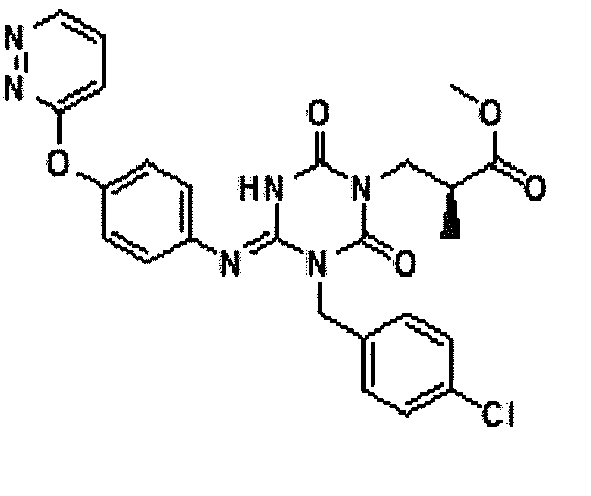
523 2.01 1 R-120 
509 1.77 1 [Table 81] Compound No Structure [M+H]+ RT Method R-121 
558 2.2 1 R-112 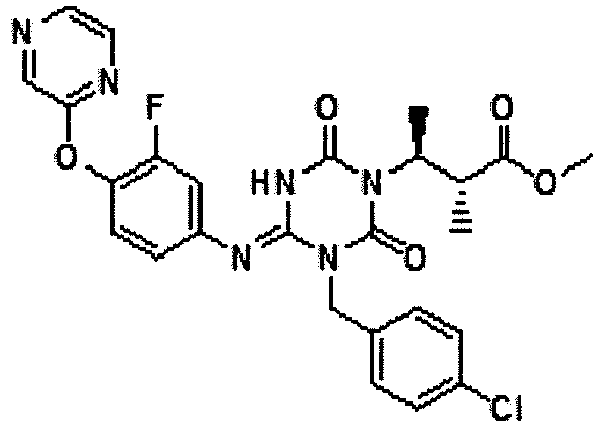
555 2.42 1 R-123 
533 2 1 R-124 
543 2.07 1 R-125 
541 2.13 1 [Table 82] Compound No Structure [M+H]+ RT Method R-126 
556 1.99 1 R-127 
524 2.39 1 R-128 
510 2.1 1 R-129 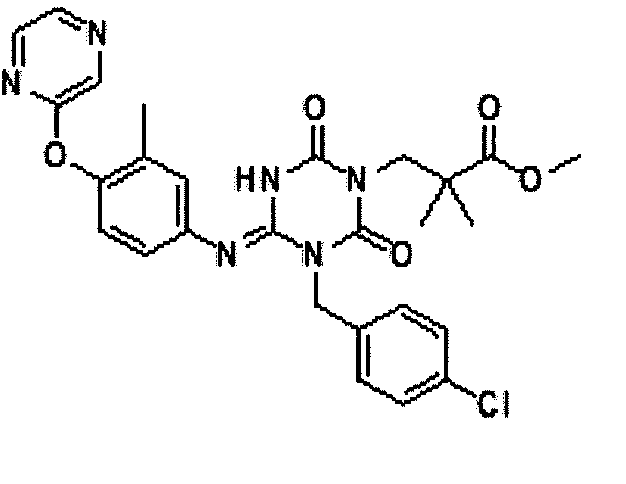
551 2.33 1 R-130 
523 1.97 1 [Table 83] Compound No Structure [M+H]+ RT Method R-131 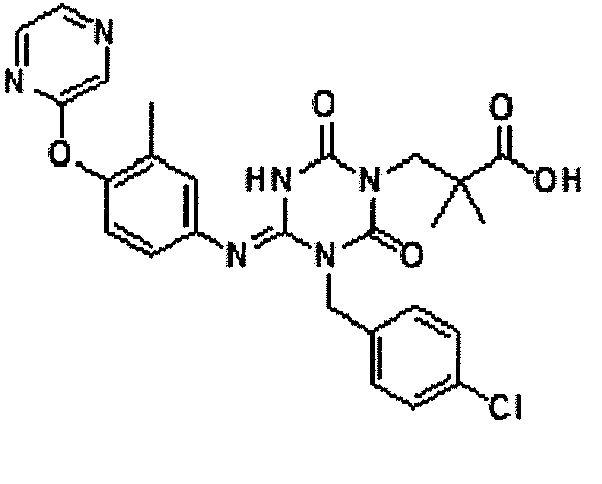
537 2.06 1 R-132 
542 2.38 1 R-133 
528 2.13 1 R-134 
529 2.2 1 R-135 
543 2.27 1 [Table 84] Compound No Structure [M+H]+ RT Method R-136 
543 2.31 1 R-137 
557 2.38 1 R-138 
526 1.98 1 R-139 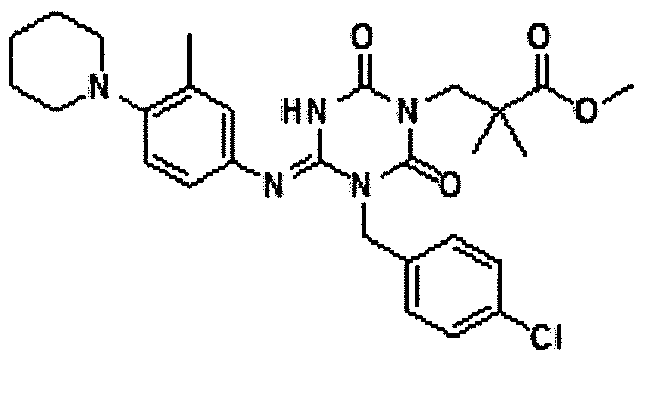
540 2.12 1 R-140 
530 2.43 1 [Table 85] Compound No Structure [M+H]+ RT Method R-141 
544 2.54 1 R-142 
512 2.17 2 R-143 
526 1.77 1 R-144 
548 2.26 1 R-145 
583 2.8 1 [Table 86] Compound No Structure [M+H]+ RT Method R-146 
516 2.14 1 R-147 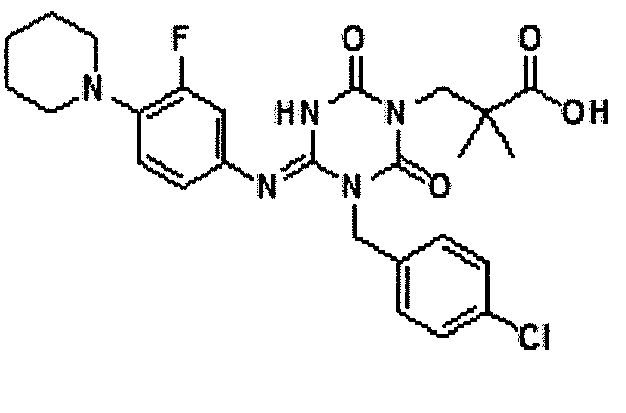
530 2.23 1 R-148 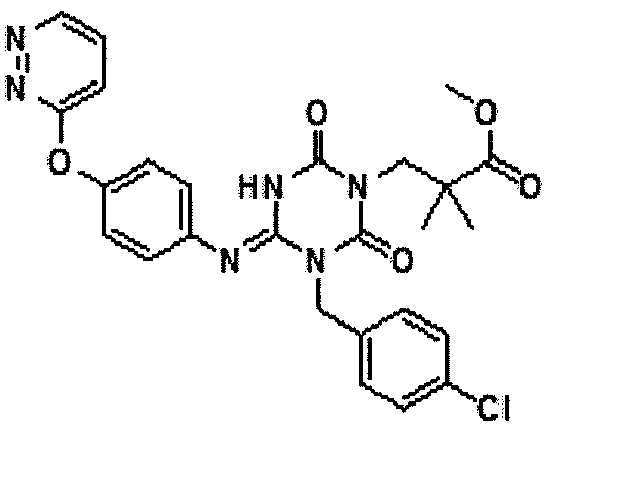
537 2.12 1 R-149 
556 2.49 1 R-150 
570 2.49 1 [Table 87] Compound No Structure [M+H]+ RT Method R-151 
523 1.87 1 R-152 
552 1.8 1 R-153 
542 2.22 1 R-154 
556 2.21 1 R-155 
538 1.55 1 [Table 88] Compound No Structure [M+H]+ RT Method R-156 
572 2.6 1 R-157 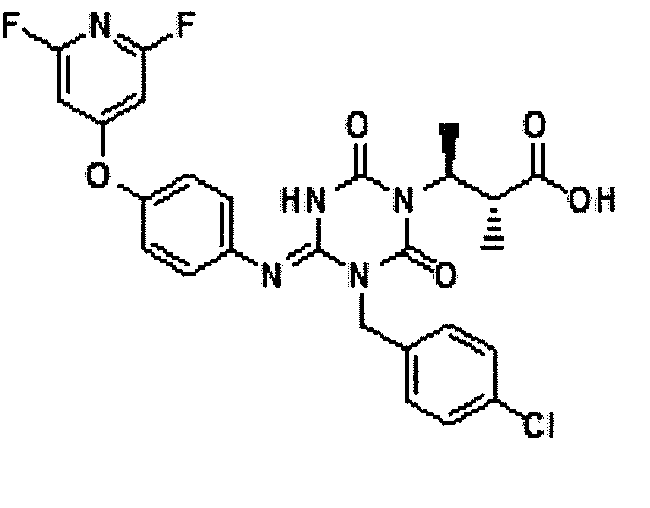
558 2.33 1 R-158 
551 2.38 1 R-159 
571 2.5 1 R-160 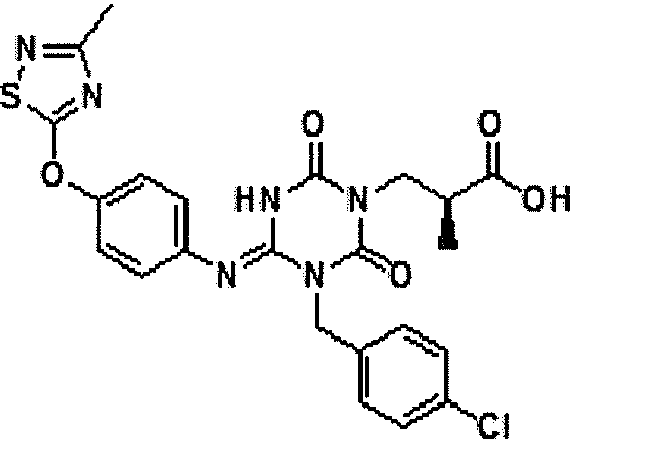
529 2.02 1 [Table 89] Compound No Structure [M+H]+ RT Method R-161 
537 2.08 1 R-162 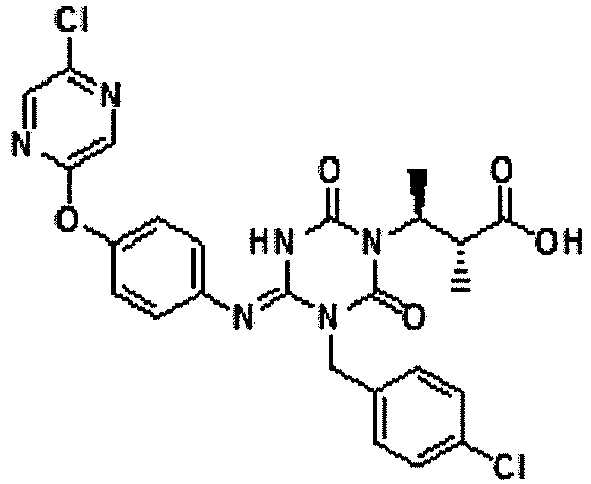
557 2.23 1 R-163 
529 2.03 1 R-164 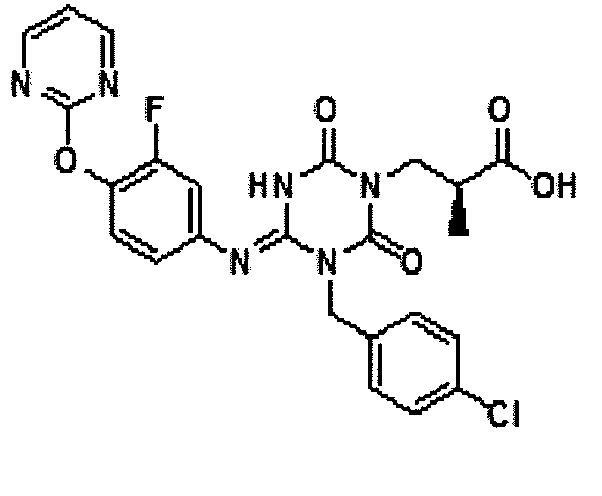
527 1.93 1 R-165 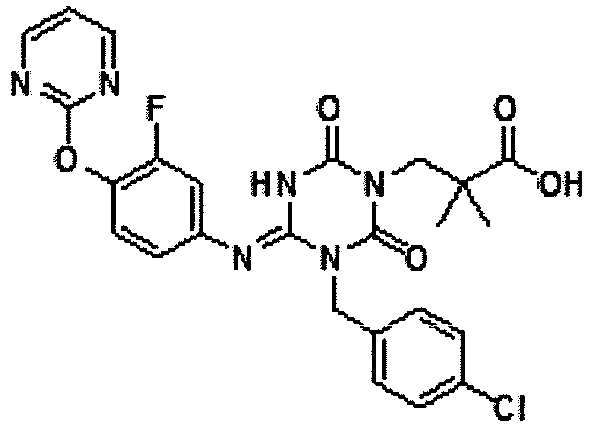
541 2.01 1 [Table 90] Compound No Structure [M+H]+ RT Method R-166 
509 2.42 1 R-167 
537 2.27 1 R-168 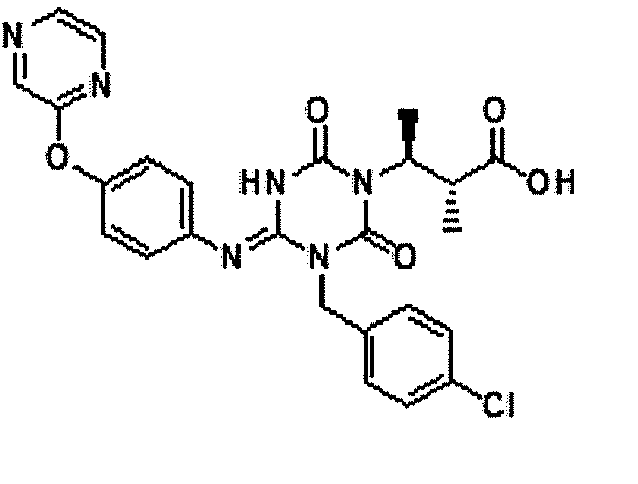
523 1.97 1 R-169 
528 2.05 1 R-170 
440 2.02 1 [Table 91] Compound No Structure [M+H]+ RT Method R-171 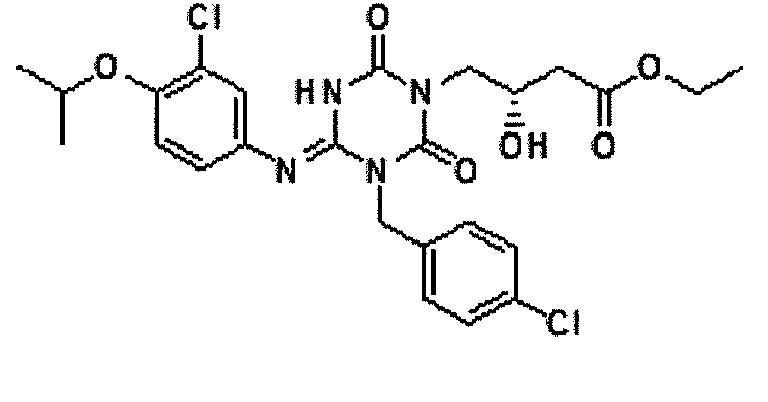
551 2.35 1 R-172 
541 2.35 1 R-173 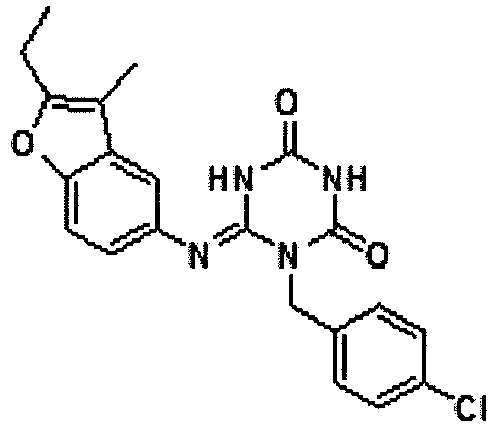
411 2.23 1 R-174 
555 2.24 1 R-175 
569 2.34 1 [Table 92] Compound No Structure [M+H]+ RT Method R-176 
591 2.3 1 R-177 
570 2.4 1 R-178 
513 2.06 1 R-179 
523 2.05 1 R-180 
541 1.99 1 [Table 93] Compound No Structure [M+H]+ RT Method R-181 
555 2.08 1 R-182 
556 2.53 1 R-183 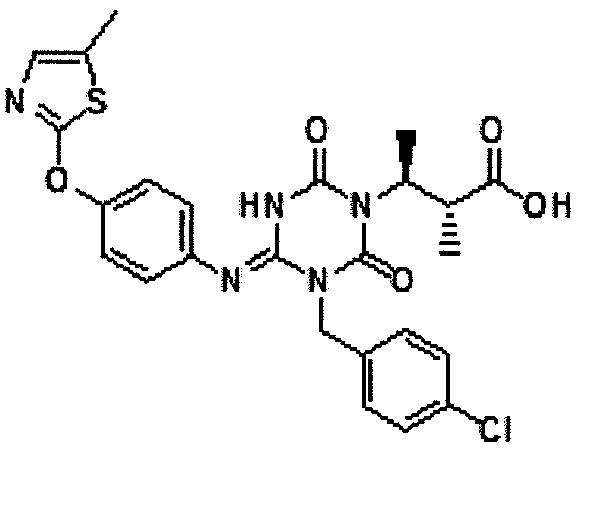
542 2.25 1 R-184 
536 1.92 1 R-185 
522 1.66 1 [Table 94] Compound No Structure [M+H]+ RT Method R-186 
568 2.51 1 R-187 
572 2.54 1 R-188 
554 2.21 1 R-189 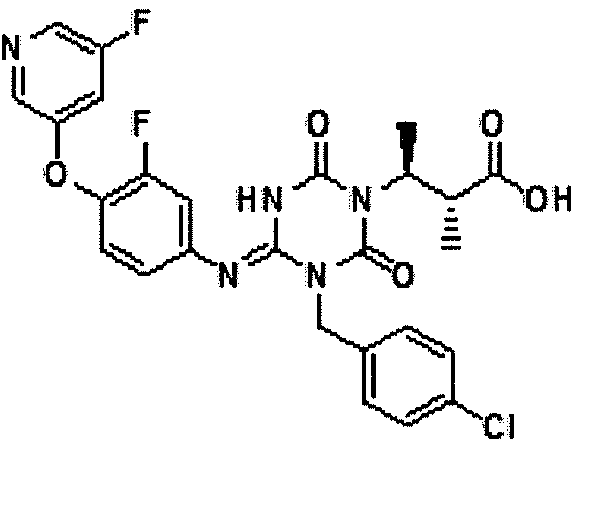
558 2.25 1 R-190 
553 2.02 1 [Table 95] Compound No Structure [M+H]+ RT Method R-191 
553 2.04 1 R-192 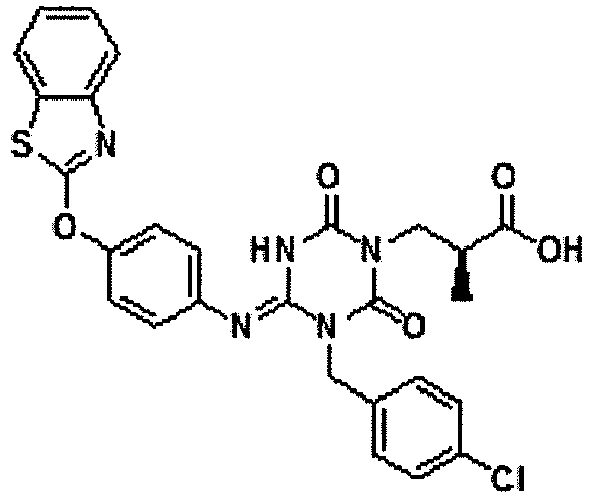
564 2.37 1 R-193 
550 2.04 1 R-194 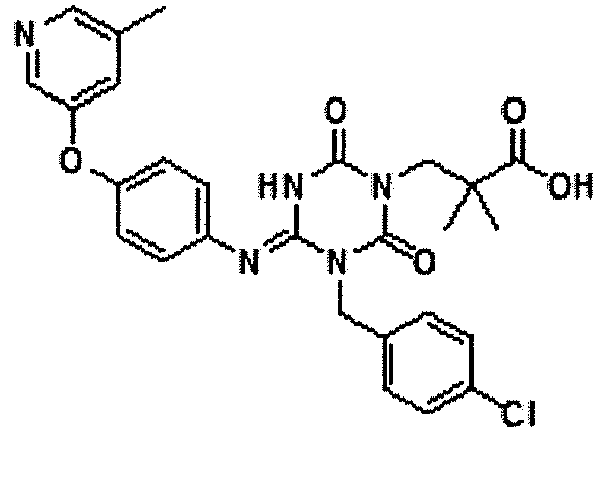
536 1.75 1 R-195 
515 1.95 1 [Table 96] Compound No Structure [M+H]+ RT Method R-196 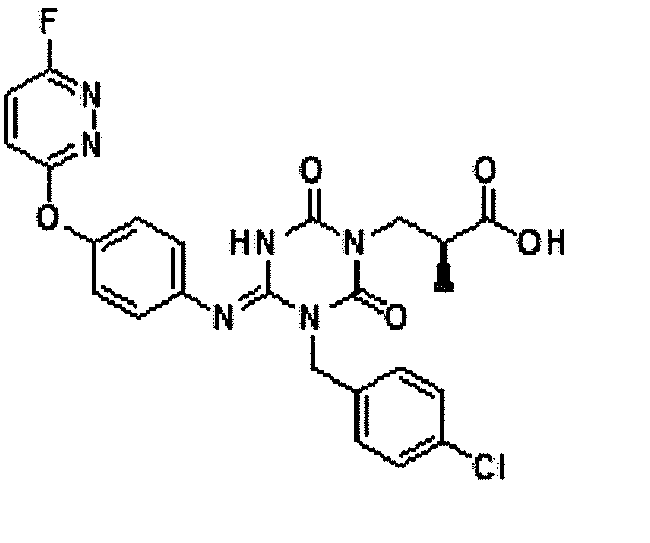
527 1.88 1 R-197 
543 1.96 1 R-198 
527 2 1 R-199 
552 2.11 1 R-200 
566 2.22 1 [Table 97] Compound No Structure [M+H]+ RT Method R-201 
538 1.85 1 R-202 
552 1.94 1 R-203 
581 2.12 1 R-204 
549 1.97 1 R-205 
522 1.94 1 [Table 98] Compound No Structure [M+H]+ RT Method R-206 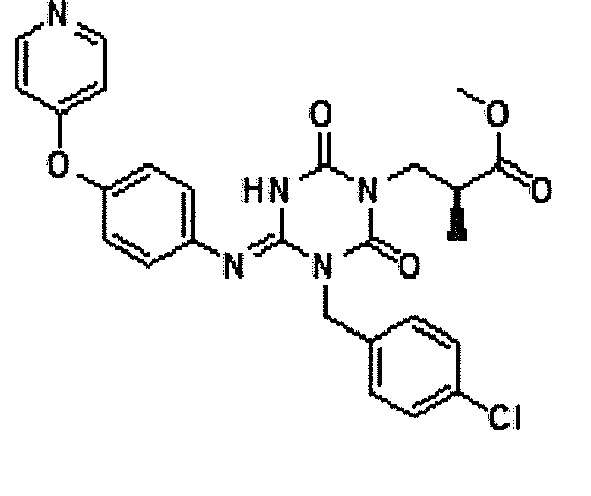
522 1.5 1 R-207 
508 1.69 1 R-208 
508 1.39 1 R-209 
519 1.7 1 R-210 
505 1.51 1 [Table 99] Compound No Structure [M+H]+ RT Method R-211 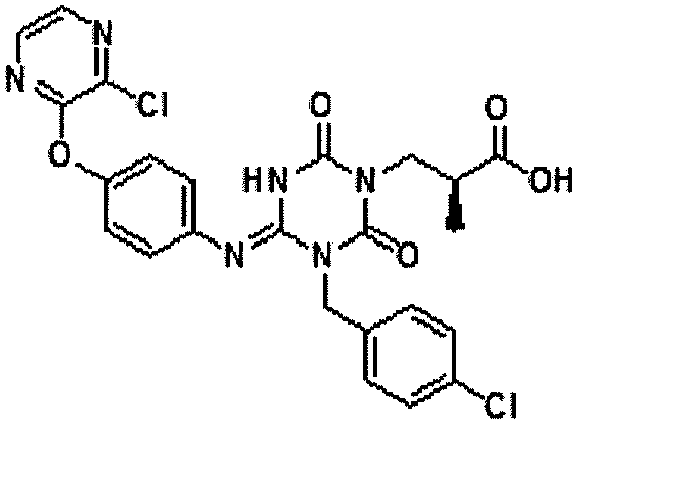
543 2.1 1 R-212 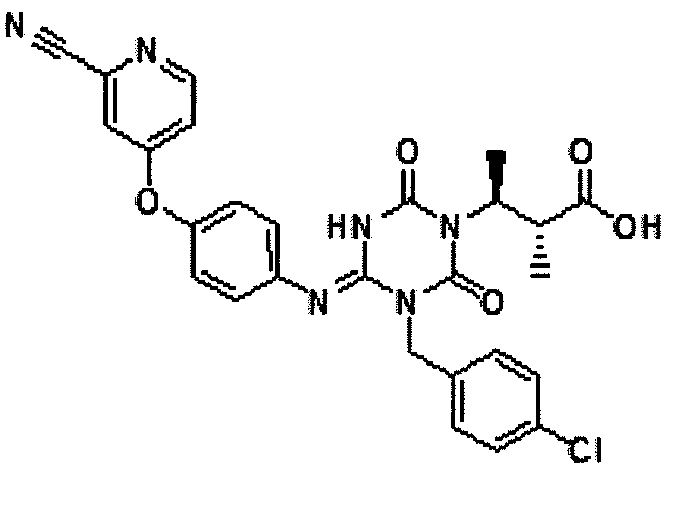
547 2.11 1 R-213 
536 2.44 1 R-214 
522 2.3 1 R-215 
536 2.4 1 [Table 100] Compound No Structure [M+H]+ RT Method R-216 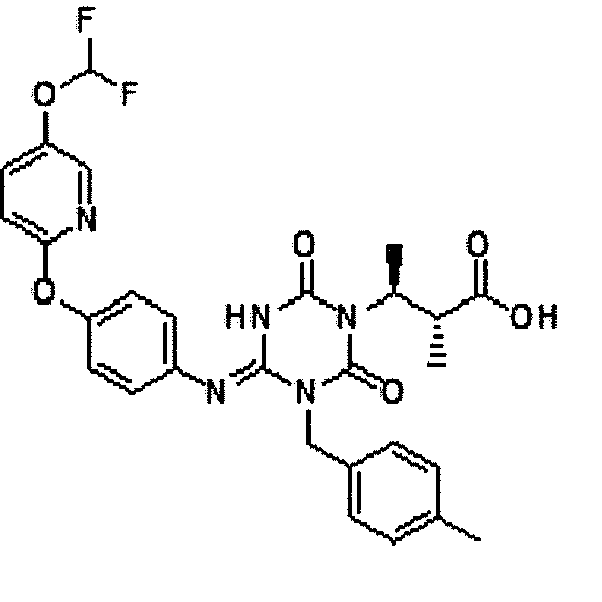
568 2.16 1 R-217 
522 2.16 1 R-218 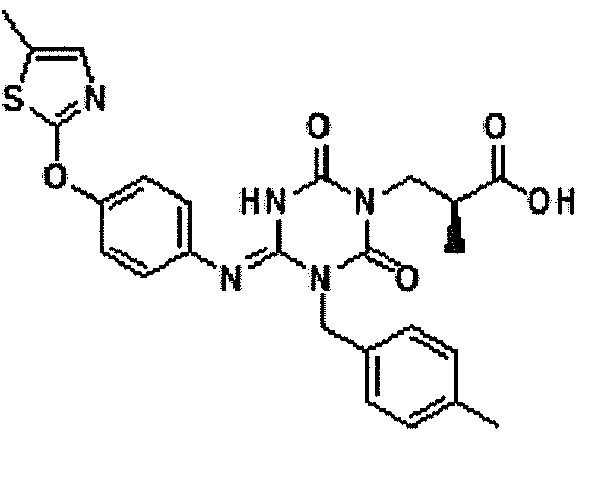
508 2.05 1 R-219 
522 2.13 1 R-220 
491 2.44 1 [Table 101] Compound No Structure [M+H]+ RT Method R-221 
520 2.21 1 R-222 
477 2.19 1 R-223 
506 1.95 1 R-224 
548 2.1 1 R-225 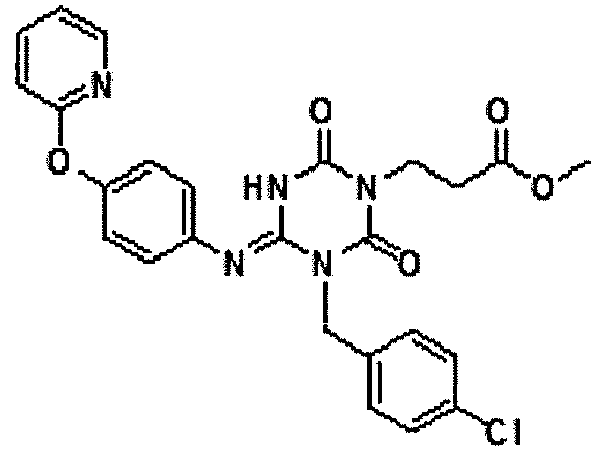
508 2.19 1 [Table 102] Compound No Structure [M+H]+ RT Method R-226 
488 2.1 1 R-227 
508 1.88 1 R-228 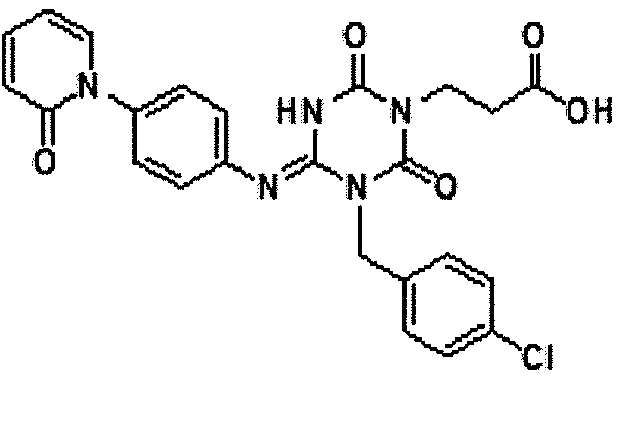
494 1.66 1 R-229 
493 1.82 1 R-230 
507 1.88 1 [Table 103] Compound No Structure [M+H]+ RT Method R-231 
548 1.52 1 R-232 
461 1.9 1 R-233 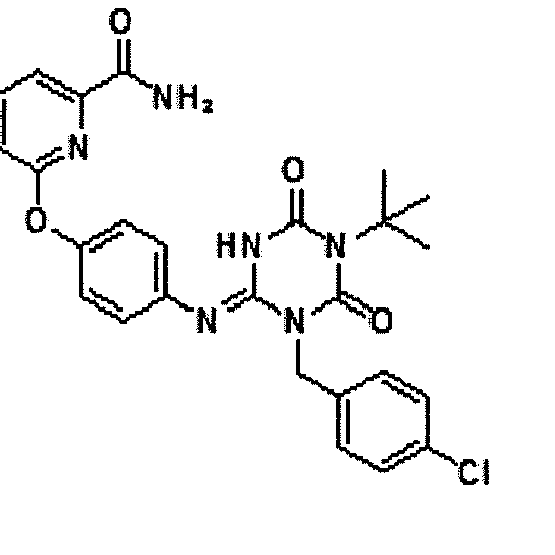
521 2.07 1 R-234 
536 2.32 1 R-235 
496 1.8 1 [Table 104] Compound No Structure [M+H]+ RT Method R-236 
564 2.43 1 R-237 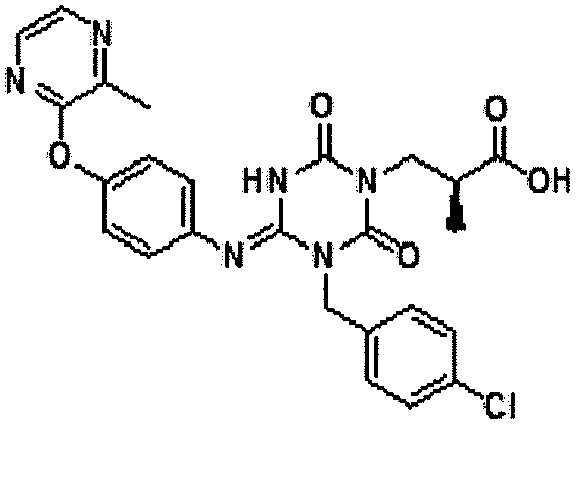
523 1.98 1 R-238 
494 2.13 1 R-239 
480 1.93 1 R-240 
479 1.8 1 [Table 105] Compound No Structure [M+H]+ RT Method R-241 
493 1.87 1 R-242 
523 1.75 1 R-243 
561 2.12 1 R-244 
524 1.94 1 R-245 
550 2.3 1 [Table 106] Compound No Structure [M+H]+ RT Method R-246 
534 2.02 1 R-247 
536 2.33 1 R-248 
564 2.5 1 R-249 
548 2.13 1 R-250 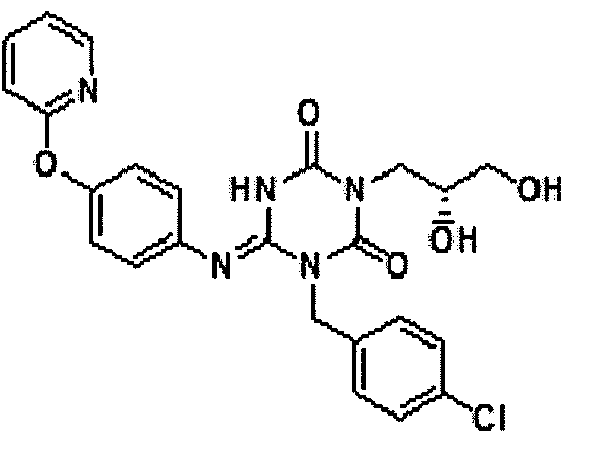
496 1.8 1 [Table 107] Compound No Structure [M+H]+ RT Method R-251 
480 1.97 1 R-252 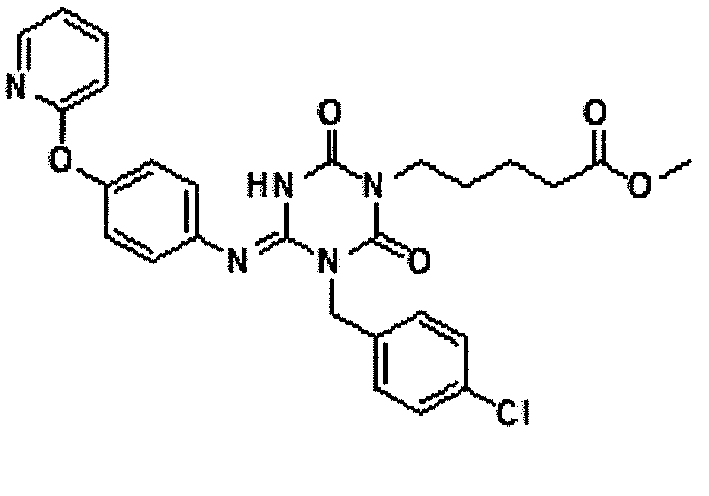
536 2.35 1 R-253 
516 2.25 1 R-254 
492 2.02 1 R-255 
526 1.77 1 [Table 108] Compound No Structure [M+H]+ RT Method R-256 
522 1.86 1 R-257 
466 1.93 1 R-258 
522 2.05 1 R-259 
506 1.96 1 R-260 
492 1.75 1 [Table 109] Compound No Structure [M+H]+ RT Method R-261 
524 2.03 1 R-262 
502 1.96 1 R-263 
510 1.81 1 R-264 
516 2.26 1 R-265 
536 2.36 1 [Table 110] Compound No Structure [M+H]+ RT Method R-266 
473 2.04 1 R-267 
488 1.9 1 R-268 
492 1.85 1 R-269 
508 1.99 1 R-270 
472 1.73 1 [Table 111] Compound No Structure [M+H]+ RT Method R-271 
414 1.77 1 R-272 
548 2.25 1 R-273 
458 1.5 1 R-274 
523 2.04 1 [Table 112] Compound No Structure [M+H]+ RT Method R-275 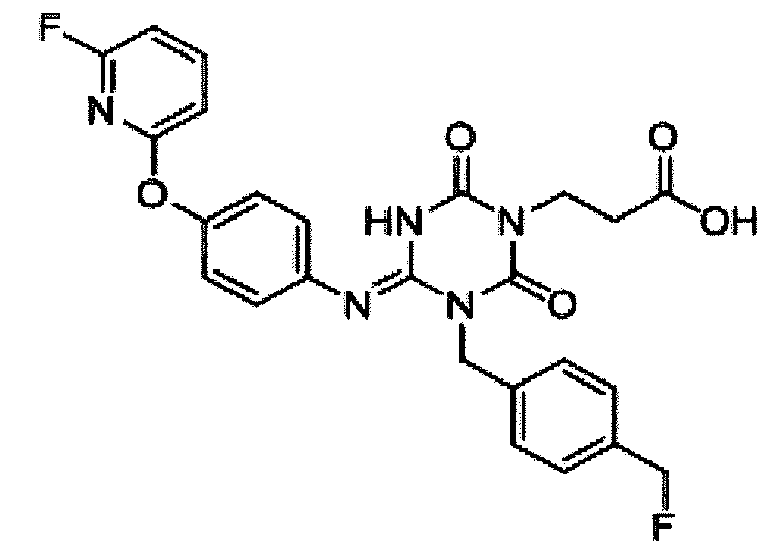
510 1.84 1 R-276 
510 1.83 1 R-277 
506 1.98 1 R-278 
506 1.99 1 R-279 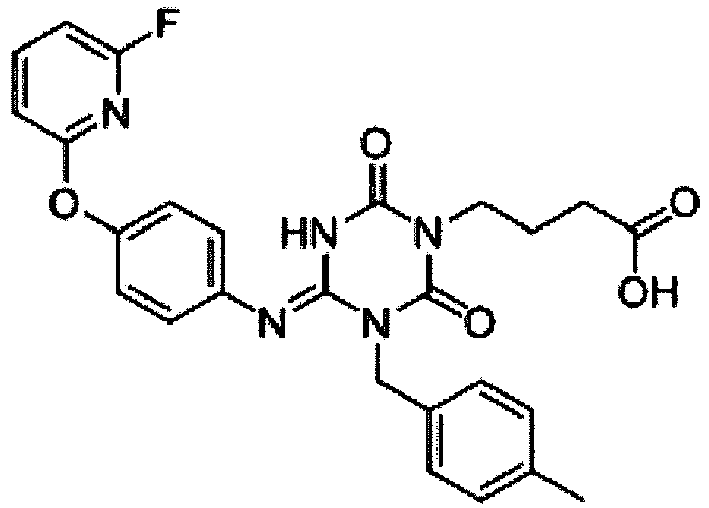
506 2.02 1 [Table 113] Compound No Structure [M+H]+ RT Method R-280 
492 2.06 1 R-281 
512 2.12 1 R-282 
488 1.98 1 R-283 
508 2.07 1 R-284 
528 2.19 1 [Table 114] Compound No Structure [M+H]+ RT Method R-285 
508 2.11 1 R-286 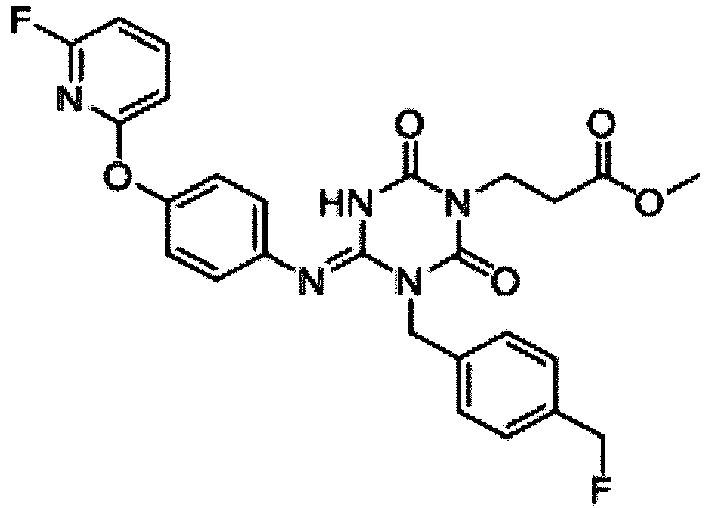
524 2.05 1 R-287 
542 2.38 1 R-288 
524 2.03 1 R-289 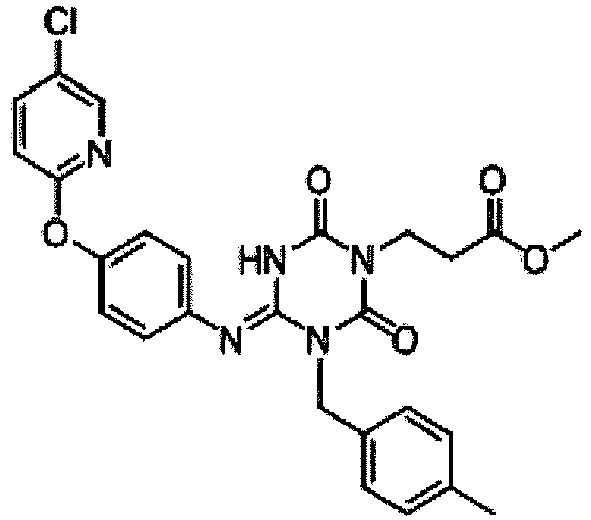
522 2.3 1 [Table 115] Compound No Structure [M+H]+ RT Method R-290 
502 2.23 1 R-291 
522 2.33 1 R-292 
506 2.29 1 R-293 
526 2.37 1 R-294 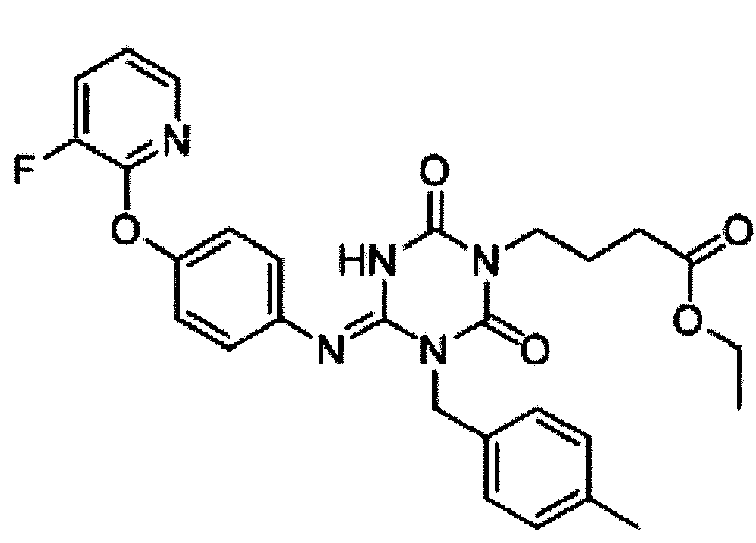
534 2.35 1 [Table 116] Compound No Structure [M+H]+ RT Method R-295 
534 2.34 1 R-296 
534 2.36 1 R-297 
528 2.22 1 R-298 
508 2.14 1 R-299 
536 1.98 1 [Table 117] Compound No Structure [M+H]+ RT Method R-300 
542 2.46 1 R-301 
522 2.38 1 R-302 
550 2.22 1 R-303 
550 2.17 1 R-304 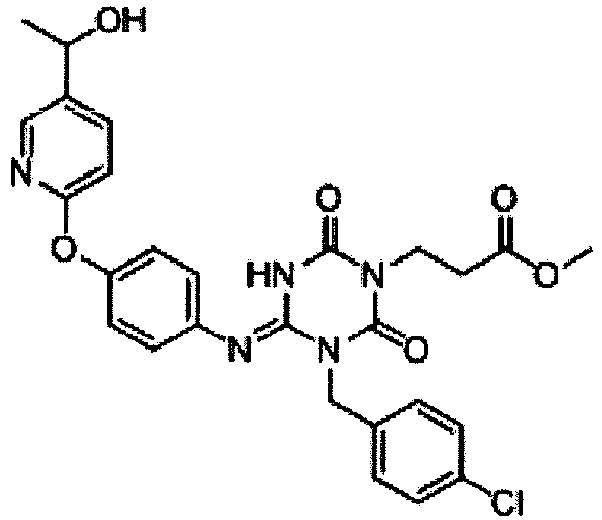
552 2 1 [Table 118] Compound No Structure [M+H]+ RT Method R-305 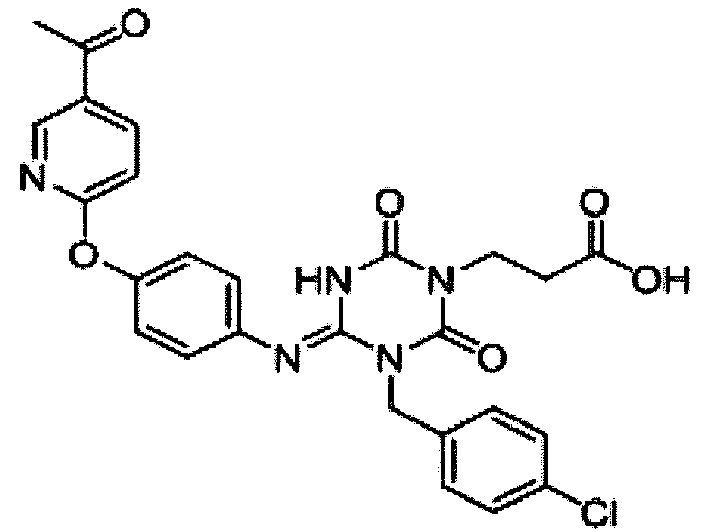
536 1.93 1 R-306 
538 1.79 1 R-307 
492 2.11 1 R-308 
464 1.78 1 R-309 
526 2.29 1 [Table 119] Compound No Structure [M+H]+ RT Method R-310 
542 2.44 1 R-311 
498 1.96 1 R-312 
514 2.1 1 R-313 
533 2.23 1 R-314 
505 1.91 1 - The following compounds of the invention can be synthesized in a similar manner to those described in the above general procedures for the synthesis of the compound of the invention and Examples, with reference to the contents described in
WO2010/092966 andWO2012/020749 as needed.
[Table 120] R3 RC (R2')m 4-(2-Pyridyl)O-Ph CH2CHMeCOOH 4-CHF2 4-(2-Pyridyl)O-Ph CH(Me)CH(Me)COOHR 4-Me 4-(3-F-2-Pyridyl)O-Ph (CH2)3COOH 4-Me 4-(5-F-2-Pyridyl)O-Ph (CH2)3COOH 4-Me 4-(6-F-2-Pyridyl)O-Ph (CH2)3COOH 4-Me 4-(5-F-3-Pyridyl)O-Ph CH2CHMeCOOH 4-Me 4-(2-F-4-Pyridyl)O-Ph CH2C(Me)2COOH 4-Me 4-(2-F-4-Pyridyl)O-Ph CH(Me)CH(Me)COOH 4-Me 4-(5-Cl-2-Pyridy)O-Ph (CH2)2COOH 4-Cl 4-(5-Cl-2-Pyridyl)O-Ph (CH2)2COOH 4-Me 4-(5-Cl-3-Pyridyl)O-Ph CH(Me)CH(Me)COOH 4-Cl 4-(2-Cl-4-Pyridyl)O-Ph CH2CHMeCOOH 4-Me 4-(3-MeO-2-Pyridyl)O-Ph CH2CHMeCOOH 4-Me 4-(5-MeO-2-Pyridyl)O-Ph CH2CHMeCOOH 4-Me 4-(6-MeO-2-Pyridyl)O-Ph CH2CHMeCOOH 4-Me 4-(5-MeO-3-Pyridyl)O-Ph CH(Me)CH(Me)COOH 4-Cl 4-(2-MeO-4-Pyridyl)O-Ph CH2CHMeCOOH 4-Me 4-(2-MeO-4-Pyridyl)O-Ph CH2C(Me)2COOH 4-Cl 4-(5-HOCO-2-thiazolyl)O-Ph Et 4-CH2F 4-(5-HOCO-2-Pyridyl)O-Ph Et 4-CH2F 4-(5-HOCO-2-Pyridyl)O-3-Me-Ph Et 4-CH2F 4-(5-HOCO-3-Pyridyl)O-Ph Et 4-CH2F 4-(2-HOCO-4-Pyridyl)O-Ph Et 4-CH2F 4-(6-HOCO-3-Pyridazinyl)O-Ph Et 4-CH2F 4-(6-H2NCO-3-Pyridazinyl)O-Ph Et 4-CH2F 4-(2-Pyrimidyl)O-Ph CH(Me)CH(Me)COOH 4-Cl 4-(2-Pyrimidyl)O-3-F-Ph CH(Me)CH(Me)COOH 4-Cl 4-(6-Cl-4-Pyrimidyl)O-Ph CH(Me)CH(Me)COOH 4-Cl 4-(6-F-4-Pyrimidyl)O-Ph CH2C(Me)2COOH 4-Cl 4-(6-F-4-Pyrimidyl)O-Ph CH(Me)CH(Me)COOH 4-Cl 4-(2-Me-4-Pyrimidyl)O-Ph CH(Me)CH(Me)COOH 4-Cl 4-(2-CN-5-Pyrimidyl)O-Ph CH2C(Me)2COOH 4-Cl 4-(5-Cl-2-Pyrazinyl)O-Ph CH2C(Me)2COOH 4-Me 4-(5-Cl-2-Pyrazinyl)O-Ph CH(Me)CH(Me)COOH 4-Me 4-(5-CF3-2-Pyrazinyl)O-Ph CH(Me)CH(Me)COOH 4-Cl 4-(3-Pyridazinyl)O-Ph CH2CHMeCOOH 4-Me 4-(3-Pyridazinyl)O-Ph CH(Me)CH(Me)COOH 4-Cl 4-(3-Pyridazinyl)O-3-F-Ph CH(Me)CH(Me)COOH 4-Cl 4-(6-Me-3-Pyridazinyl)O-3-F-Ph CH(Me)CH(Me)COOH 4-Cl 4-(6-MeO-3-Pyridazinyl)O-Ph CH2CHMeCOOH 4-Me 4-(6-CF3-3-Pyridazinyl)O-Ph CH(Me)CH(Me)COOH 4-Cl 4-(4-Pyridazinyl)O-3-F-Ph CH2CHMeCOOH 4-Cl 4-(4-Pyridazinyl)O-3-F-Ph CH2C(Me)2COOH 4-Cl 4-(4-Pyridazinyl)O-3-F-Ph CH(Me)CH(Me)COOH 4-Cl [Table 121] R3 RC (R2')m 4-(2-oxazolyl)O-Ph CH2CHMeCOOH 4-Cl 4-(2-oxazolyl)O-Ph CH2CHMeCOOH 4-Me 4-(2-oxazolyl)O-Ph CH2C(Me)2COOH 4-Cl 4-(2-oxazolyl)O-Ph CH(Me)CH(Me)COOH 4-Cl 4-(1,2,4-oxadiazol-2-yl)O-Ph CH2CHMeCOOH 4-Cl 4-(1,2,4-oxadiazol-2-yl)O-Ph CH2CHMeCOOH 4-Me 4-(1,2,4-oxadiazol-2-yl)O-Ph CH2C(Me)2COOH 4-Cl 4-(1,2,4-oxadiazol-2-yl)O-Ph CH(Me)CH(Me)COOH 4-Cl 4-(1,3,4-oxadiazol-2-yl)O-Ph CH2CHMeCOOH 4-Cl 4-(1,3,4-oxadiazol-2-yl)O-Ph CH2CHMeCOOH 4-Me 4-(1,3,4-oxadiazol-2-yl)O-Ph CH2C(Me)2COOH 4-Cl 4-(1,3,4-oxadiazol-2-yl)O-Ph CH(Me)CH(Me)COOH 4-Cl 4-(3-isothiazolyl)O-Ph CH2CHMeCOOH 4-Cl 4-(3-isothiazolyl)O-Ph CH2CHMeCOOH 4-Me 4-(3-isothiazolyl)O-Ph CH2C(Me)2COOH 4-Cl 4-(3-isothiazolyl)O-Ph CH(Me)CH(Me)COOH 4-Cl 4-(2-thiazolyl)O-Ph CH2CHMeCOOH 4-Me 4-(1,2,4-thiadiazol-5-yl)O-Ph CH2CHMeCOOH 4-Me 4-(1,2,4-thiadiazol-5-yl)O-Ph CH(Me)CH(Me)COOH 4-Cl 4-(3-Me-1,2,4-thiadiazol-5-yl)O-Ph CH2CHMeCOOH 4-Me 4-(3-Me-1,2,4-thiadiazol-5-yl)O-Ph CH2CHMeCOOH 4-Cl 4-(3-Me-1,2,4-thiadiazol-5-yl)O-Ph CH(Me)CH(Me)COOH 4-Cl 4-(1,2,5-thiadiazol-3-yl)O-Ph CH2CHMeCOOH 4-Cl 4-(1,2,5-thiadiazol-3-yl)O-Ph CH2CHMeCOOH 4-Me 4-(1,2,5-thiadiazol-3-yl)O-Ph CH2C(Me)2COOH 4-Cl 4-(1,2,5-thiadiazol-3-yl)O-Ph CH(Me)CH(Me)COOH 4-Cl 4-(2-Pyridyl)O-3-F-Ph (CH2)2COOH 4-Cl 4-(2-Pyridyl)O-3-F-Ph (CH2)2COOH 4-Me 4-(2-Pyridyl)O-3-F-Ph CH2CHMeCOOH 4-Cl 4-(2-Pyridyl)O-3-F-Ph CH2CHMeCOOH 4-Me 4-(2-Pyridyl)O-3-F-Ph CH2C(Me)2COOH 4-Cl 4-(2-Pyridyl)O-3-F-Ph CH(Me)CH(Me)COOH 4-Cl 4-(2-Pyridyl)O-3-Me-Ph (CH2)2COOH 4-Cl 4-(2-Pyridyl)O-3-Me-Ph (CH2)2COOH 4-Me 4-(2-Pyridyl)O-3-Me-Ph CH2CHMeCOOH 4-Cl 4-(2-Pyridyl)O-3-Me-Ph CH2CHMeCOOH 4-Me 4-(2-Pyridyl)O-3-Me-Ph CH2C(Me)2COOH 4-Cl 4-(2-Pyridyl)O-3-Me-Ph CH(Me)CH(Me)COOH 4-Cl 4-(5-Et-2-Pyridyl)O-Ph CH2CHMeCOOH 4-Cl 4-(5-Et-2-Pyridyl)O-Ph CH2CHMeCOOH 4-Me 4-(5-Et-2-Pyridyl)O-Ph CH2C(Me)2COOH 4-Cl 4-(5-Et-2-Pyridyl)O-Ph CH(Me)CH(Me)COOH 4-Cl 4-(6-Et-2-Pyridyl)O-Ph CH2CHMeCOOH 4-Cl 4-(6-Et-2-Pyridyl)O-Ph CH2CHMeCOOH 4-Me [Table 122] R3 RC (R2')m 4-(6-Et-2-Pyridyl)O-Ph CH2C(Me)2COOH 4-Cl 4-(6-Et-2-Pyridyl)O-Ph CH(Me)CH(Me)COOH 4-Cl 4-(2-Pyridyl)O-Ph CH2CHMeCOOH 4-CH2F 4-(3-F-2-Pyridyl)O-Ph CH2CHMeCOOH 4-CH2F 4-(5-F-2-Pyridyl)O-Ph CH2CHMeCOOH 4-CH2F 4-(6-F-2-Pyridyl)O-Ph CH2CHMeCOOH 4-CH2F 4-(5-F-3-Pyridyl)O-Ph CH2CHMeCOOH 4-CH2F 4-(Benzoxazol-2-yl)O-Ph CH2CHMeCOOH 4-Me 4-(4-Azabenzoxazol-2-yl)O-Ph CH2CHMeCOOH 4-Me 4-(Benzothiazol-2-yl)O-Ph CH2CHMeCOOH 4-Me 4-(3-Me-1,2-Benzizoxazol-6-yl)O-Ph CH2CHMeCOOH 4-Cl 4-(3-Me-1,2-Benzizoxazol-6-yl)O-Ph CH2CHMeCOOH 4-Me 4-(5-Benzoimidazolyl)O-Ph CH2CHMeCOOH 4-Cl 4-(5-Benzoimidazolyl)O-Ph CH2CHMeCOOH 4-Me 4-(Imidazopyridaziin-3-yl)O-Ph CH2CHMeCOOH 4-Me 4-(Imidazopyridaziin-3-yl)O-Ph CH2C(Me)2COOH 4-Cl 4-(Imidazopyridaziin-3-yl)O-Ph CH(Me)CH(Me)COOH 4-Cl 4-(Imidazopyridaziin-3-yl)O-Ph (CH2)2OH 4-Cl 4-(Imidazopyridaziin-3-yl)O-Ph (CH2)3OH 4-Cl 4-(Imidazopyridaziin-3-yl)O-Ph CH2CH(OH)CH2OH 4-Cl 4-(Imidazopyridaziin-3-yl)O-Ph CH2CH(CH2OH)2 4-Cl 4-(Imidazopyridaziin-3-yl)O-Ph CH2CMe(CH2OH)2 4-Cl 4-(Imidazopyridaziin-3-yl)O-Ph CH2COH(CH2OH)2 4-Cl 
[Table 123] R3 RC (R2')m 4-(2-Pyridyl)O-Ph (CH2)2COOH 4-Me 4-(2-Pyridyl)O-Ph (CH2)2COOH 4,4-(CH2)2 4-(2-Pyridyl)O-Ph CH2CHMeCOOH 4,4-(CH2)2 4-(2-Pyridyl)O-3-F-Ph (CH2)2COOH 4-Me 4-(2-Pyridyl)O-3-F-Ph CH2CHMeCOOH 4-Me 4-(2-Pyridyl)O-3-F-Ph (CH2)2COOH 4,4-(CH2)2 4-(2-Pyridyl)O-3-F-Ph CH2CHMeCOOH 4,4-(CH2)2 4-(2-Pyridyl)O-3-Me-Ph (CH2)2COOH 4-Me 4-(2-Pyridyl)O-3-Me-Ph CH2CHMeCOOH 4-Me 4-(2-Pyridyl)O-3-Me-Ph (CH2)2COOH 4,4-(CH2)2 4-(2-Pyridyl)O-3-Me-Ph CH2CHMeCOOH 4,4-(CH2)2 4-(3-F-2-Pyridyl)O-Ph CH2CHMeCOOH 4,4-(CH2)2 4-(5-F-2-Pyridyl)O-Ph CH2CHMeCOOH 4,4-(CH2)2 4-(6-F-2-Pyridyl)O-Ph CH2CHMeCOOH 4,4-(CH2)2 4-(5-F-3-Pyridyl)O-Ph CH2CHMeCOOH 4,4-(CH2)2 4-(4-HOCO-2-Pyridyl)O-Ph Et 4,4-(CH2)2 4-(5-HOCO-2-Pyridyl)O-Ph Et 4,4-(CH2)2 4-(6-HOCO-2-Pyridyl)O-Ph Et 4,4-(CH2)2 4-(5-HOCO-2-Pyridyl)O-3-Me-Ph Et 4,4-(CH2)2 4-(6-HOCO-2-Pyridyl)O-3-Me-Ph Et 4,4-(CH2)2 4-(5-HOCO-2-Pyridyl)O-3-F-Ph Et 4,4-(CH2)2 4-(6-HOCO-2-Pyridyl)O-3-F-Ph Et 4,4-(CH2)2 - Biological test examples for compounds of the present invention were described below.
- Stably expressing cell line (C6BU-1 cell transfected with human P2X3 receptor gene (GenBank accession number Y07683) was used. The cells were seeded in a 384-well PDL-coated microtiter plate at a concentration of 3000 cells/well and cultured in the medium (8.3% fetal bovine serum, 8.3% horse serum, and 1% antibiotic and antifungal in DMEM) for one day at 37 °C under 5 % carbon dioxide atmosphere. The medium was replaced with 4 µM Fluo-3-AM solution (20 mM HEPES, 137 mM NaCl, 2.7 mM KCl, 0.9 mM MgCl2, 5.0 mM CaCl2, 5.6 mM D-glucose, 2.5 mM probenecid, 0.5% BSA, and 0.04% Pluronic F-127, pH 7.5) and incubated at 37°C under 5% dioxide carbon atmosphere for one hour. The plate was washed with washing buffer (20 mM HEPES, 137 mM NaCl, 2.7 mM KCl, 0.9 mM MgCl2, 5.0 mM CaCl2, 5.6 mM D-glucose, 2.5mM probenecid, pH7.5), and each well was added with 20 µL of the washing buffer. The plate was placed in High-Throughput Screening System FLIPR 384 (Molecular Device Co.). Measurement of fluorescence intensity by FLIPR 384 was started, and 20 µL of DMSO solutions containing different concentrations of the test compound as prepared by dilution with dilution buffer (20 mM HEPES, 137 mM NaCl, 2.7 mM KCl, 0.9 mM MgCl2, 5.0 mM CaCl2, 5.6 mM D-glucose, 2.5 mM probenecid, 0.1% Pluronic F-127, pH7.5) were dispensed to each well through the built-in automatic dispenser. Five minutes after, 150 nM ATP solution (25 µL) prepared by dilution with the dilution buffer was dispensed through the built-in automatic dispenser, and the measurement of fluorescence intensity was continued for 4 min. For each well, the specific maximum fluorescence intensity was calculated as the ratio of the maximum fluorescence intensity after addition of the ATP solution to the fluorescence intensity at the starting of the measurement. The 50% inhibitory concentration (IC50) was calculated under the assumption that the specific maximum fluorescence intensity without test compound is 0% inhibition and that the specific maximum fluorescence intensity when the dilution buffer was added in place of ATP solution is 100% inhibition, to evaluate the inhibitory activity of the test compound. The specific maximum fluorescence intensity and IC50 were calculated using Spotfire (Science & Technology Systems, Inc.)
- The data of the compounds of the present invention are as shown in the following Tables.
[Table 124] Compound No. P2X3 IC50 (µM) Compound No. P2X3 IC50 (µM) Compound No. P2X3 IC50 (µM) I-001 0.044 I-051 0.006 I-101 0.005 I-002 0.005 I-052 0.006 I-102 0.005 I-003 0.007 I-053 0.006 I-103 0.007 I-004 0.014 I-054 0.005 I-104 0.005 I-005 0.008 I-055 0.009 I-105 0.007 I-006 0.005 I-056 0.007 I-106 0.006 I-007 0.009 I-057 0.005 I-107 0.031 I-008 0.007 I-058 0.006 I-108 0.004 I-009 0.007 I-059 0.016 I-109 0.006 I-010 0.005 I-060 0.024 I-110 0.004 I-011 0.018 I-061 0.062 I-111 0.009 I-012 0.025 I-062 0.031 I-112 0.004 I-013 0.058 I-063 0.009 I-113 0.005 I-014 0.007 I-064 0.01 I-114 0.006 I-015 0.009 I-065 0.008 I-115 0.006 I-016 0.008 I-066 0.015 I-116 0.007 I-017 0.006 I-067 0.011 I-117 0.005 I-018 0.012 I-068 0.005 I-118 0.009 I-019 0.007 I-069 0.007 I-119 0.006 I-020 0.009 I-070 0.005 I-120 0.009 I-021 0.025 I-071 0.038 I-121 0.006 I-022 0.004 I-072 0.006 I-122 0.004 I-023 0.007 I-073 0.015 I-123 0.005 I-024 0.034 I-074 0.005 I-124 0.005 I-025 0.023 I-075 0.021 I-125 0.005 I-026 0.017 I-076 0.022 I-126 0.005 I-027 0.039 I-077 0.01 I-127 0.004 I-028 0.02 I-078 0.019 I-128 0.008 I-029 0.014 I-079 0.005 I-129 0.004 I-030 0.176 I-080 0.01 I-130 0.006 I-031 0.199 I-081 0.038 I-131 0.008 I-032 0.011 I-082 0.112 I-132 0.008 I-033 0.023 I-083 0.006 I-133 0.008 I-034 0.009 I-084 0.008 I-134 0.007 I-035 0.012 I-085 0.225 I-135 0.004 I-036 0.005 I-086 0.033 I-136 0.007 I-037 0.006 I-087 0.107 I-137 0.014 I-038 0.005 I-088 0.015 I-138 0.007 I-039 0.008 I-089 0.008 I-139 0.01 I-040 0.006 I-090 0.072 I-140 0.003 I-041 0.009 I-091 0.01 I-141 0.014 I-042 0.004 I-092 0.068 I-142 0.007 I-043 0.117 I-093 0.016 I-143 0.005 I-044 0.026 I-094 0.011 I-144 0.009 I-045 0.019 I-095 0.009 I-145 0.006 I-046 0.019 I-096 0.008 I-146 0.005 I-047 0.022 I-097 0.005 I-147 0.007 I-048 0.03 I-098 0.007 I-148 0.009 I-049 0.015 I-099 0.006 I-149 0.005 I-050 0.028 I-100 0.004 I-150 0.004 [Table 125] Compound No. P2X3 IC50 (µM) Compound No. P2X3 IC50 (µM) Compound No. P2X3 IC50 (µM) I-151 0.01 R-001 0.007 R-054 0.026 I-152 0.006 R-002 0.363 R-055 0.007 I-153 0.013 R-003 0.004 R-056 0.01 I-154 0.008 R-004 0.123 R-057 0.006 I-155 0.008 R-005 0.608 R-058 0.004 I-156 0.012 R-006 0.004 R-059 0.005 I-157 0.005 R-007 0.301 R-060 0.016 I-158 0.006 R-009 0.007 R-061 0.007 I-159 0.009 R-010 0.01 R-062 0.318 I-160 0.005 R-011 0.049 R-063 0.456 I-161 0.01 R-012 0.005 R-064 0.012 I-162 0.007 R-013 0.006 R-066 0.058 I-163 0.008 R-014 0.005 R-068 0.04 I-164 0.029 R-015 0.104 R-069 0.051 I-165 0.015 R-016 0.006 R-070 0.007 I-166 0.013 R-017 0.006 R-071 0.006 I-167 0.019 R-018 0.005 R-072 0.016 I-168 0.012 R-019 0.006 R-073 0.031 I-169 0.021 R-020 0.013 R-074 0.013 I-170 0.015 R-021 0.015 R-075 0.013 I-171 0.009 R-022 0.012 R-076 0.013 I-172 0.026 R-023 0.021 R-077 0.024 I-173 0.008 R-024 0.018 R-078 0.01 I-174 0.006 R-025 0.005 R-079 0.011 I-175 0.009 R-026 0.008 R-080 0.013 I-176 0.007 R-027 0.006 R-081 0.005 I-177 0.006 R-028 0.007 R-082 0.007 I-178 0.005 R-029 0.007 R-083 0.007 I-179 0.006 R-030 0.008 R-084 0.006 I-180 0.005 R-031 0.012 R-085 0.006 I-181 0.005 R-032 0.004 R-086 0.007 I-182 0.008 R-033 0.006 R-087 0.012 I-183 0.012 R-034 0.005 R-088 0.006 I-184 0.006 R-035 0.008 R-089 0.007 I-185 0.009 R-036 0.011 R-090 0.07 I-186 0.005 R-037 0.007 R-091 0.108 I-187 0.008 R-038 0.007 R-092 0.01 I-188 0.007 R-039 0.006 R-093 0.013 I-189 0.012 R-040 0.007 R-094 0.029 I-190 0.005 R-041 0.011 R-095 0.045 I-191 0.011 R-042 0.005 R-096 0.156 I-192 0.005 R-043 0.005 R-097 0.212 I-193 0.008 R-044 0.01 R-098 0.08 I-194 0.012 R-045 0.014 R-099 0.004 I-195 0.007 R-046 0.006 R-100 0.006 R-047 0.009 R-101 0.201 R-048 0.006 R-102 0.1 R-049 0.008 R-105 0.007 R-050 0.014 R-106 0.379 R-053 0.052 R-107 0.217 [Table 126] Compound No. P2X3 IC50 (µM) Compound No. P2X3 IC50 (µM) Compound No. P2X3 IC50 (µM) R-108 0.008 R-160 0.008 R-210 0.006 R-111 0.005 R-161 0.01 R-211 0.007 R-112 0.017 R-162 0.006 R-212 0.008 R-113 0.013 R-163 0.014 R-213 0.012 R-114 0.039 R-164 0.01 R-214 0.006 R-115 0.065 R-165 0.014 R-215 0.006 R-116 0.005 R-166 0.048 R-216 0.007 R-117 0.006 R-167 0.011 R-217 0.008 R-118 0.005 R-168 0.017 R-218 0.006 R-119 0.005 R-169 0.304 R-219 0.011 R-120 0.008 R-170 0.193 R-220 0.022 R-121 0.005 R-171 0.033 R-221 0.005 R-122 0.013 R-172 0.033 R-222 0.009 R-123 0.005 R-173 0.376 R-223 0.007 R-124 0.009 R-174 0.01 R-224 0.012 R-125 0.007 R-175 0.019 R-225 0.004 R-126 0.01 R-176 0.007 R-226 0.003 R-127 0.09 R-177 0.005 R-227 0.035 R-128 0.011 R-178 0.045 R-229 0.007 R-129 0.007 R-179 0.056 R-230 0.005 R-130 0.009 R-180 0.007 R-231 0.005 R-131 0.009 R-181 0.007 R-232 0.061 R-132 0.01 R-182 0.026 R-233 0.318 R-133 0.006 R-183 0.007 R-234 0.003 R-134 0.005 R-184 0.01 R-235 0.01 R-135 0.005 R-185 0.012 R-236 0.004 R-136 0.006 R-186 0.026 R-237 0.009 R-137 0.006 R-187 0.021 R-238 0.007 R-138 0.078 R-188 0.009 R-239 0.399 R-139 0.119 R-189 0.008 R-240 0.011 R-140 0.037 R-190 0.009 R-241 0.009 R-141 0.047 R-191 0.012 R-242 0.005 R-142 0.069 R-192 0.004 R-243 0.004 R-143 0.097 R-193 0.011 R-244 0.004 R-144 0.005 R-194 0.013 R-245 0.004 R-145 0.011 R-195 0.009 R-246 0.006 R-146 0.033 R-196 0.011 R-247 0.005 R-147 0.051 R-197 0.007 R-248 0.005 R-148 0.005 R-198 0.009 R-249 0.006 R-149 0.012 R-199 0.007 R-250 0.009 R-150 0.018 R-200 0.008 R-251 0.005 R-151 0.011 R-201 0.008 R-254 0.003 R-152 0.005 R-202 0.012 R-255 0.005 R-153 0.008 R-203 0.006 R-256 0.002 R-154 0.008 R-204 0.008 R-257 0.01 R-155 0.01 R-205 0.008 R-156 0.035 R-206 0.005 R-157 0.006 R-207 0.009 R-158 0.012 R-208 0.005 R-159 0.018 R-209 0.005 [Table 127] Compound No. P2X3 IC50 (µM) Compound No. P2X3 IC50 (µM) Compound No. P2X3 IC50 (µM) I-200 0.042 I-250 0.031 R-275 0.023 I-201 0.013 I-251 0.008 R-276 0.042 I-202 0.008 I-252 0.014 R-277 0.014 I-203 0.003 I-253 0.009 R-278 0.015 I-204 0.004 I-254 0.006 R-279 0.007 I-205 0.012 I-255 0.018 R-280 0.009 I-206 0.010 I-256 0.029 R-281 0.007 I-207 0.012 I-257 0.016 R-282 0.023 I-208 0.012 I-258 0.004 R-283 0.028 I-209 0.008 I-259 0.005 R-284 0.005 I-210 0.007 I-260 0.005 R-285 0.006 I-211 0.007 I-261 0.008 R-286 0.006 I-212 0.010 I-262 0.007 R-287 0.006 I-213 0.012 I-263 0.005 R-288 0.012 I-214 0.011 I-264 0.005 R-289 0.005 I-215 0.016 I-265 0.010 R-290 0.006 I-216 0.017 I-266 0.008 R-291 0.006 I-217 0.011 I-267 0.003 R-292 0.004 I-218 0.010 I-268 0.003 R-293 0.004 I-219 0.012 I-269 0.004 R-294 0.006 I-220 0.010 I-270 0.004 R-295 0.006 I-221 0.011 I-271 0.010 R-296 0.005 I-222 0.004 I-272 0.008 R-297 0.008 I-223 0.011 I-273 0.005 R-298 0.009 I-224 0.006 I-274 0.005 R-299 0.020 I-225 0.014 I-275 0.004 R-300 0.008 I-226 0.038 I-276 0.019 R-301 0.005 I-227 0.031 I-277 0.004 R-302 0.006 I-228 0.021 I-278 0.006 R-303 0.003 I-229 0.006 R-304 0.004 I-230 0.011 R-305 0.007 I-231 0.007 R-306 0.014 I-232 0.005 R-307 0.013 I-233 0.006 R-309 0.004 I-234 0.007 R-310 0.004 I-235 0.009 R-311 0.428 I-236 0.016 R-312 0.350 I-237 0.014 R-313 0.003 I-238 0.005 R-314 0.048 I-239 0.006 I-240 0.022 I-241 0.008 I-242 0.008 I-243 0.007 I-244 0.008 I-245 0.014 I-246 0.014 I-247 0.006 I-248 0.005 I-249 0.036 - Stably expressing cell line (C6BU-1 cell transfected with human P2X3 receptor gene (GenBank accession number Y07683) was used. The cells were seeded in a 96-well microtiter plate at a concentration of 8000 cells/well and cultured in the medium (7.0% fetal bovine serum, 7.0% horse serum, 1% antibiotic and antifungal, and 2.0% glutamine in DMEM) for one day at 37 °C under 5 % carbon dioxide atmosphere. The medium was replaced with 4 µM Fluo-3-AM solution (20 mM HEPES, 137 mM NaCl, 5.37 mM KCl, 0.9 mM MgCl2, 1.26 mM CaCl2, 5.6 mM D-glucose, 2.5 mM probenecid, 0.5% BSA, and 0.04% Pluronic F-127, pH 7.5) and incubated at 37°C under 5% dioxide carbon atmosphere for one hour. The plate was washed with washing buffer (20 mM HEPES, 137 mM NaCl, 5.27 mM KCl, 0.9 mM MgCl2, 1.26 mM CaCl2, 5.6 mM D-glucose, 2.5mM probenecid, pH7.5), and each well was added with 40 µL of this buffer. The plate was placed in High-Throughput Screening System FDSS 3000 (Hamamatsu Photonics K.K.). Measurement of fluorescence intensity by FDSS 3000 was started, and 40 µL of DMSO solutions containing 1% HSA (final concentrations) different concentrations of the test compound as prepared by dilution with dilution buffer (20 mM HEPES, 137 mM NaCl, 5.27 mM KCl, 0.9 mM MgCl2, 1.26 mM CaCl2, 5.6 mM D-glucose, 2.5 mM probenecid, 0.1% Pluronic F-127, pH7.5) were dispensed to each well through the built-in automatic dispenser. Five minutes after, 50 nM ATP solution (50 µL) prepared by dilution with the dilution buffer was dispensed through the built-in automatic dispenser, and the measurement of fluorescence intensity was continued for 4 min. For each well, the specific maximum fluorescence intensity was calculated as the ratio of the maximum fluorescence intensity after addition of the ATP solution to the fluorescence intensity at the starting of the measurement. The 50% inhibitory concentration (IC50) was calculated under the assumption that the specific maximum fluorescence intensity without test compound is 0% inhibition and that the specific maximum fluorescence intensity when the dilution buffer was added in place of ATP solution is 100% inhibition, to evaluate the inhibitory activity of the test compound. FDSS software (Hamamatsu Photonics K.K.) was used for calculation of the specific maximum fluorescence intensity. IC50 was calculated using Microsoft Excel (Microsoft Corporation) and XLfit (idbs Ltd.)
- The data of the compounds of the present invention are as shown in the following Tables.
[Table 128] Compound No. P2X3+HSA IC50 (µM) I-019 0.068 I-040 0.018 I-056 0.023 I-070 0.037 I-079 0.037 R-123 0.018 - Rat P2X3 receptor gene (GenBank accession number NM_031075) was expressed in C6BU-1 cell. The C6BU-1 cells were seeded in a 96-well microtiter plate at a concentration of 2500 cells/well and cultured in the medium (7.0% fetal bovine serum, 7.0% horse serum, and 1% antibiotic and antifungal in DMEM) for one day at 37 °C under 5 % carbon dioxide atmosphere. The plasmid was transfected into the cells using transfection reagent FuGENE6 (Promega). The transfected cells were cultured in the medium for one day at 37 °C under 5 % carbon dioxide atmosphere. The medium was replaced with 4 µM Fluo-3-AM solution (pH7.5) containing 20 mM HEPES, 137 mM NaCl, 5.27 mM KCl, 0.9 mM MgCl2, 1.26 mM CaCl2, 5.6 mM D-glucose, 2.5 mM probenecid, 1% BSA, and 0.08% Pluronic F-127, and incubated at 37°C under 5% dioxide carbon atmosphere for one hour. The plate was washed with washing buffer (20 mM HEPES, 137 mM NaCl, 5.27 mM KCl, 0.9 mM MgCl2, 1.26 mM CaCl2, 5.6 mM D-glucose, 2.5mM probenecid, pH7.5), and each well was added with 40 µL of this buffer. The plate was placed in High-Throughput Screening System FDSS 3000 (Hamamatsu Photonics K.K.). Measurement of fluorescence intensity by FDSS 3000 was started, and 40 µL of DMSO solutions containing different concentrations of the test compound as prepared by dilution with dilution buffer (20 mM HEPES, 137 mM NaCl, 5.27 mM KCl, 0.9 mM MgCl2, 1.26 mM CaCl2, 5.6 mM D-glucose, 2.5 mM probenecid, 0.1% Pluronic F-127, pH7.5) were dispensed to each well through the built-in automatic dispenser. Five minutes after, 50 nM ATP solution (50 µL) prepared by dilution with the dilution buffer was dispensed through the built-in automatic dispenser, and the measurement of fluorescence intensity was continued for 4 min. For each well, the specific maximum fluorescence intensity was calculated as the ratio of the maximum fluorescence intensity after addition of the ATP solution to the fluorescence intensity at the starting of the measurement. The 50% inhibitory concentration (IC50) was calculated under the assumption that the specific maximum fluorescence intensity without test compound is 0% inhibition and that the specific maximum fluorescence intensity when the dilution buffer was added in place of ATP solution is 100% inhibition, to evaluate the inhibitory activity of the test compound. FDSS software (Hamamatsu Photonics K.K.) was used for calculation of the specific maximum fluorescence intensity. IC50 was calculated using Microsoft Excel (Microsoft Corporation) and XLfit (idbs Ltd.).
- The data of the compounds of the present invention are as shown in the following Table.
[Table 129] Compound No. ratP2X3 IC50 (µM) I-002 0.006 R-009 0.004 - Rat P2X3 receptor gene (GenBank accession number NM_031075) was expressed in C6BU-1 cell. The C6BU-1 cells were seeded in a 96-well microtiter plate at a concentration of 2500 cells/well and cultured in the medium (7.0% fetal bovine serum, 7.0% horse serum, and 1% antibiotic and antifungal in DMEM) for one day at 37 °C under 5 % carbon dioxide atmosphere. The plasmid was transfected into the cells using transfection reagent FuGENE6 (Promega). The transfected cells were cultured in the medium for one day at 37 °C under 5 % carbon dioxide atmosphere. The medium was replaced with 4 µM Fluo-4-AM solution (pH7.5) containing 20 mM HEPES, 137 mM NaCl, 5.27 mM KCl, 0.9 mM MgCl2, 1.26 mM CaCl2, 5.6 mM D-glucose, 2.5 mM probenecid, 10% BSA, and 0.08% Pluronic F-127, and incubated at 37°C under 5% dioxide carbon atmosphere for one hour. The plate was washed with washing buffer (20 mM HEPES, 137 mM NaCl, 5.27 mM KCl, 0.9 mM MgCl2, 1.26 mM CaCl2, 5.6 mM D-glucose, 2.5mM probenecid, pH7.5), and each well was added with 40 µL of this buffer. The plate was placed in High-Throughput Screening System FDSS 3000 (Hamamatsu Photonics K.K.). Measurement of fluorescence intensity by FDSS 3000 was started, and 40 µL of DMSO solutions containing 1% RSA (final concentrations) and different concentrations of the test compound as prepared by dilution with dilution buffer (20 mM HEPES, 137 mM NaCl, 5.27 mM KCl, 0.9 mM MgCl2, 1.26 mM CaCl2, 5.6 mM D-glucose, 2.5 mM probenecid, 0.1% Pluronic F-127, pH7.5) were dispensed to each well through the built-in automatic dispenser. Five minutes after, 50 nM ATP solution (50 µL) prepared by dilution with the dilution buffer was dispensed through the built-in automatic dispenser, and the measurement of fluorescence intensity was continued for 4 min. For each well, the specific maximum fluorescence intensity was calculated as the ratio of the maximum fluorescence intensity after addition of the ATP solution to the fluorescence intensity at the starting of the measurement. The 50% inhibitory concentration (IC50) was calculated under the assumption that the specific maximum fluorescence intensity without test compound is 0% inhibition and that the specific maximum fluorescence intensity when the dilution buffer was added in place of ATP solution is 100% inhibition, to evaluate the inhibitory activity of the test compound. FDSS software (Hamamatsu Photonics K.K.) was used for calculation of the specific maximum fluorescence intensity. IC50 was calculated using Microsoft Excel (Microsoft Corporation) and XLfit (idbs Ltd.).
- The data of the compounds of the present invention are as shown in the following Table.
[Table 130] Compound No. ratP2X3+RSA IC50 (µM) I-019 0.011 I-022 0.011 I-040 0.009 I-100 0.009 I-113 0.010 R-014 0.006 R-019 0.008 R-037 0.008 - As shown, the compounds described in the present specification showed inhibiting activity on P2X3 receptor. Furthermore, as the compounds of the invention are effective on P2X3 subtype, the compounds are also considered to have inhibiting activity on P2X2/3 receptor, which comprises P2X2 subtype.
- A rat is fixed in the supine position after being given anesthesia through the inhalation of 2% isoflurane (Anesthetic background; Nitrous oxide: Oxygen = 7:3). A midline incision is made in its abdomen to expose the bladder. A cannula (made by processing a polyethylene tube (PE-50: Becton Dickinson)) is inserted through a small incision on top of the bladder and fixed to create a bladder fistula. The other end of the cannula is led through the hypodermal tissue to the back, and the muscular coat and skin are sutured. The cannula, which is led to the back, is protected with a stainless spring in the middle and connected to the cannula swivel.
- Two days after the surgery, 0.3% acetic acid is infused into the bladder through the indwelled cannula at a rate of 4 mL/hr for 30 minutes to induce cystitis. The animals, where acetic acid is not infused, are used as normal animals.
- Two or three days after the acetic acid infusion, the other end of the cannula inserted into the bladder is connected to a T shape stopcock and then the intravesical pressure is recorded continuously using a pressure amplifier while infusing warmed normal saline solution at a rate of 3.0 mL/hr from one side and through a pressure transducer on the other side. The baseline of the intravesical pressure is measured (for approximately 40 minutes) after a measurement for stable duration (for approximately 20 minutes). After that, a vehicle, positive control compound or test compound are administered, and the value after administration is measured for approximately 120 minutes. A compound of the present invention is crushed with a mortar and pestle so as to be 0.1-2 mg/mL/kg solution or suspension using 0.5% methylcellulose solution, and administered to an animal orally with an oral sonde. At the same time, the voided urine is received on scales under the cage to measure the variation in weight simultaneously.
- Based on the voiding interval, normal animals whose voiding interval is 10 minutes or longer were adopted and those whose voiding interval is shorter than that were excluded. In the case of the animals into which acetic acid is infused, those whose voiding interval is less than half the average value of the normal animals are adopted as animals with cystitis and those whose voiding interval is longer than that were excluded.
- After the completion of the measurement, the infusion of normal saline solution is stopped immediately after urination to collect the residual urine under pentobarbital sodium anesthesia. The collected residual urine is transferred to the voided urine receiver and recorded on the chart.
- Intravesical pressure one to two hours after the start of the measurement (pressure during rest and pressure during urination), voiding interval, voided volume per urination, and residual urine volume
- The following value is used as an indicator of the effect on the voiding interval:

- The following value is used as an indicator of the effect on the voided volume per urination:

- Rats were anaesthetized using isoflurane/O2 inhalation anaesthesia. After induction of anesthesia, the left thigh was shaved. An incision was made in the skin just below the hip bone. The muscle was bluntly dissected to expose the sciatic nerve. One third (1/3) to one half (1/2) of the sciatic nerve thickness was tightly ligated and the wound was closed. The right thigh is used as a sham-operated control. The right thigh undergoes an identical procedure with the left hind limb, however, the sciatic nerve is not manipulated or ligated.
- Two weeks after nerve ligation, the effect on mechanical allodynia was assessed using a series of von Frey filaments. For habituation, the rats were placed into a plastic cage on a wire mesh bottom. The mechanical sensitivity (mechanical threshold) of the hind paws was estimated with a series of von Frey filaments (0.4 - 26 g). The measurement of mechanical sensitivity of the right and left hind paws was performed to obtain predose mechanical sensitivity. The rats showing the threshold change from 0.6 to 2 g (in nerve ligated side) and 8 to 15 g (in sham operated side) were used in the experiments. On the day before the experiment, the rats were evaluated with a series of von Frey filaments to familiarize them with the test procedure. The adopted animal was administrated with the test compounds. The test compounds were homogenized with mortar and pestle and suspended or diluted in 0.5% Methyl Cellulose to prepare 0.1 - 2.0 mg/mL/kg suspension and orally administered to rat using a syringe attached with a sonde. Post-dose mechanical sensitivities of the right and left hind paws were measured at approximately 1 to 5 hours after drug administration. Percent reversal of mechanical allodynia for each rat was calculated using the following formula. The analgesic effects of the compounds were compared.

- The analgesic effects of the compounds of the present invention after single administration of 1 mg/kg at 3 hours are as shown in the following Table.
[Table 131] Compound No. %reversal I-019 27.9 I-057 21.4 - Mechanical hyperalgesia is evaluated using an analgesy meter. Two weeks after nerve ligation, the paw pressure test is performed using an analgesy meter (stimulus pressure increased 16g per second) to obtain paw withdrawal thresholds (PWT). Measurements are made on both sides of the hind paw and to obtain pre-dose PWT. The rats showing the threshold change from 60 to 90 g (in nerve ligated side) and 100 to 175 g (in sham operated side) are used in the experiments. On the day before the experiment, the rats have their hind paws set on the apparatus to familiarize them with the test procedure. The adopted animal is administrated with the test compounds. The test compounds are homogenized with mortar and pestle and suspended or diluted in 0.5% Methyl Cellulose to prepare 0.03 - 100 mg/2mL/kg suspension and orally administered to rat using a syringe attached with a sonde. Post-dose PWT of the right and left hind paws are measured at approximately 1 to 5 hours after drug administration. Percent reversal of mechanical hyperalgesia for each rat is calculated using the following formula. The analgesic effects of the compounds are compared.

- The CYP3A4 fluorescent MBI test is a test of investigating enhancement of CYP3A4 inhibition of a compound by a metabolism reaction, and the test was performed using, as CYP3A4 enzyme expressed in Escherichia coli and employing, as an index, a reaction in which 7-benzyloxytrifluoromethylchmarin (BFC) is debenzylated by the CYP3A4 enzyme to produce a metabolite, 7-hydroxytrifluoromethylchmarin (HFC) emitting fluorescent light.
- The reaction conditions were as follows: substrate, 5.6 µmol/L 7-BFC; pre-reaction time, 0 or 30 minutes; reaction time, 15 minutes; reaction temperature, 25°C (room temperature); CYP3A4 content (expressed in Escherichia coli), at pre-reaction 62.5 pmol/mL, at reaction 6.25 pmol/mL (at 10-fold dilution); test drug concentration, 1.56, 3.125, 6.25, 12.5, 25, 50 µmol/L (six points).
- An enzyme in a K-Pi buffer (pH 7.4) and a test drug solution as a pre-reaction solution were added to a 96-well plate at the composition of the pre-reaction, a part of it was transferred to another 96-well plate so that it was 1/10 diluted by a substrate in a K-Pi buffer, NADPH as a co-factor was added to initiate a reaction as an index (without preincubation) and, after a predetermined time of a reaction, acetonitrile:0.5 mol/L Tris (trishydroxyaminomethane) = 4:1 was added to stop the reaction. In addition, NADPH was added to a remaining preincubation solution to initiate a preincubation (with preincubation) and, after a predetermined time of a preincubation, a part was transferred to another plate so that it was 1/10 diluted with a substrate and a K-Pi buffer to initiate a reaction as an index. After a predetermined time of a reaction, acetonitrile:0.5 mol/L Tris (trishydroxyaminomethane) = 4:1 was added to stop the reaction. For the plate on which each index reaction had been performed, a fluorescent value of 7-HFC which is a metabolite was measured with a fluorescent plate reader. (Ex = 420 nm, Em = 535 nm).
- Addition of only DMSO which is a solvent dissolving a drug to a reaction system was adopted as a control (100%), remaining activity (%) was calculated at each concentration of a test drug added as the solution, and IC50 was calculated by reverse-presumption by a logistic model using a concentration and an inhibition rate. When a difference between IC50 values is 5 µM or more, this was defined as (+) and, when the difference is 3 µM or less, this was defined as (-).
- The results of the compounds of the present invention are as shown in the following Table.
[Table 132] Compound No. MBI I-041 (-) I-057 (-) I-063 (-) I-069 (-) I-106 (-) R-010 (-) R-014 (-) R-027 (-) R-058 (-) - Using commercially available pooled human hepatic microsome, and employing, as markers, 7-ethoxyresorufin O-deethylation (CYP1A2), tolbutamide methyl-hydroxylation (CYP2C9), mephenytoin 4'-hydroxylation (CYP2C19), dextromethorphan O-demethylation (CYP2D6), and terfenedine hydroxylation as typical substrate metabolism reactions of human main five CYP enzyme forms (CYP1A2, 2C9, 2C19, 2D6, 3A4), an inhibitory degree of each metabolite production amount by a test compound was assessed.
- The reaction conditions were as follows: substrate, 0.5 µmol/L ethoxyresorufin (CYP1A2), 100 µmol/L tolbutamide (CYP2C9), 50 µmol/L S-mephenitoin (CYP2C19), 5 µmol/L dextromethorphan (CYP2D6), 1 µmol/L terfenedine (CYP3A4); reaction time, 15 minutes; reaction temperature, 37°C; enzyme, pooled human hepatic microsome 0.2 mg protein/mL; test drug concentration, 1.0, 5.0, 10, 20 µmol/L (four points).
- Each five kinds of substrates, human hepatic microsome, or a test drug in 50 mmol/L Hepes buffer as a reaction solution was added to a 96-well plate at the composition as described above, NADPH, as a cofactor was added to initiate metabolism reactions as markers and, after the incubation at 37°C for 15 minutes, a methanol/acetonitrile = 1/1 (v/v) solution was added to stop the reaction. After the centrifugation at 3000 rpm for 15 minutes, resorufin (CYP1A2 metabolite) in the supernatant was quantified by a fluorescent multilabel counter and tributamide hydroxide (CYP2CP metabolite), mephenytoin 4' hydroxide (CYP2C19 metabolite), dextromethorphan (CYP2D6 metabolite), and terfenadine alcohol (CYP3A4 metabolite) were quantified by LC/MS/MS.
- Addition of only DMSO being a solvent dissolving a drug to a reaction system was adopted as a control (100%), remaining activity (%) was calculated at each concentration of a test drug added as the solution and IC50 was calculated by reverse presumption by a logistic model using a concentration and an inhibition rate.
- The data of the compounds of the present invention are as shown in the following Table.
[Table 133] Compound No. CYP1A2 (µmol/L) CYP2C9 (µmol/L) CYP2C19 (µmol/L) CYP2D6 (µmol/L) CYP3A4 (µmol/L) I-041 >20 >20 >20 >20 >20 I-057 >20 >20 >20 >20 >20 I-063 >20 >20 >20 >20 >20 I-069 >20 >20 >20 >20 >20 I-106 >20 >20 >20 >20 >20 R-010 >20 >20 >20 >20 >20 R-014 >20 >20 >20 >20 >20 R-027 >20 >20 >20 >20 >20 R-058 >20 >20 >20 >20 >20 - Mutagenicity of compounds of the present invention was evaluated.
- 20 µL of freezing-stored rat typhoid bacillus (Salmonella typhimurium TA98 strain, TA100 strain) was inoculated on 10 mL of a liquid nutrient medium (2.5% Oxoid nutrient broth No.2), and this was cultured before shaking at 37°C for 10 hours. 7.70 mL of a bacterial solution of the TA98 strain was centrifuged (2000 x g, 10 minutes) to remove a culturing solution. The bacteria was suspended in 7.70 mL of a Micro F buffer (K2HPO4: 3.5 g/L, KH2PO4: 1 g/L, (NH4)2SO4: 1 g/L, trisodium citrate dehydrate: 0.25 g/L, MgSO4 • 7H20: 0.1 g/L), the suspension was added to 110 mL of an Exposure medium (Micro F buffer containing Biotin: 8 µg/mL, histidine: 0.2 µg/mL, glucose: 8 mg/mL). The TA100 strain was added to 120 mL of the Exposure medium relative to 3.42 mL of the bacterial solution to prepare a test bacterial solution. Each 12 µL of DMSO solution of a compound of the present invention (several stage dilution from maximum dose 50 mg/mL at 2 to 3 fold ratio), DMSO as a negative control, and 50 µg/mL of 4-nitroquinoline-1-oxide DMSO solution for the TA98 strain, 0.25 µg/mL of 2-(2-furyl)-3-(5-nitro-2-furyl)acrylamide DMSO solution for the TA100 strain under the non-metabolism activating condition, 40 µg/mL of 2-aminoanthracene DMSO solution for the TA98 strain, 20 µg/mL of 2-aminoanthracene DMSO solution for the TA100 strain under the metabolism activating condition as a positive control, and 588 µL of the test bacterial solution (a mixed solution of 498 µl of the test bacterial solution and 90 µL of S9 mix under the metabolism activating condition) were mixed, and this was shaking-cultured at 37°C for 90 minutes. 460 µL of the bacterial solution exposed to a compound of the present invention was mixed with 2300 µL of an Indicator medium (Micro F buffer containing biotin: 8 µg/mL, histidine: 0.2 µg/mL, glucose: 8 mg/mL, Bromo Cresol Purple: 37.5 µg/mL), each 50 µL was dispensed into microplate 48 wells/dose, and this was subjected to stationary culturing at 37°C for 3 days. Since a well containing a bacterium which has obtained the proliferation ability by mutation of an amino acid (histidine) synthesizing enzyme gene turns from purple to yellow due to a pH change, the bacterium proliferation well which has turned to yellow in 48 wells per dose is counted, and was assessed by comparing with a negative control group. (-) means that mutagenicity is negative and (+) is positive.
- The data of the compounds of the present invention are as shown in the following Table.
[Table 134] Compound No. FAT I-002 (-) I-019 (-) I-040 (-) I-057 (-) I-070 (-) - The solubility of a compound was determined under a condition in which 1% DMSO was added. 10 mmol/L compound solution was prepared using DMSO, and then 2 µL of the compound solution was added to 198 µL of artificial intestinal juice in pH 6.8 (to 250 mL of 0.2 mol/L potassium dihydrogen phosphate reagent solution was added 118 mL of 0.2 mol/L NaOH reagent solution and water to provide a final volume of 1000 mL). After standing at 25 degrees Celsius for 16 hours, the mixed solution was filtrated with suction. The filtrate was diluted twice with methanol/water (1/1), and then a concentration in the filtration was measured with HPLC or LC/MS/MS by the absolute calibration method.
- The reslults of the compounds of the present invention are as shown in the following Table.
[Table 135] Compound No. Solubulity (µmol/L) I-002 > 50 I-019 > 50 I-038 > 50 I-039 > 50 I-040 > 50 I-041 > 50 I-057 > 50 I-063 > 50 - Using commercially available pooled human hepatic microsomes, a test compound is reacted for a constant time, a remaining rate is calculated by comparing a reacted sample and an unreacted sample, thereby, a degree of metabolism in liver is assessed.
- A reaction was performed (oxidative reaction) at 37°C for 0 minute or 30 minutes in the presence of 1 mmol/L NADPH in 0.2 mL of a buffer (50 mmol/L tris-HCl pH 7.4, 150 mmol/L potassium chloride, 10 mmol/L magnesium chloride) containing 0.5 mg protein/mL of human liver microsomes. After the reaction, 50 µL of the reaction solution was added to 100 µL of a methanol/acetonitrile = 1/1 (v/v), mixed and centrifuged at 3000 rpm for 15 minutes. The test compound in the supernatant was quantified by LC/MS/MS, and a remaining amount of the test compound after the reaction was calculated, letting a compound amount at 0 minute reaction time to be 100%.
- The data of the compounds of the present invention are as shown in the following Table. The remaining rate at the compound concentration 0.5 µmol/L are shown below.
[Table 136] Compound No. Metabolism Stability (%) I-002 99 I-019 96 I-029 100 I-057 91 I-063 97 I-070 103 - The test compound is reacted for a given period of time using cryopreserved rat hepatocytes that are prepared and the residual ratio is calculated based on the comparison between reacted and unreacted samples to evaluate the degree of hepatic metabolism.
- The compound is reacted in the Williams E medium containing 1.0 x 10⁶ cells/mL of cryopreserved rat hepatocytes at a temperature of 37°C for 0, 1 or 2 hours. After reaction, 50 µL of reaction solution is added to and mixed with 100 µL of a solution containing methanol and acetonitrile in the proportion of one to one (v/v) and the mixture is centrifuged at 3000 rpm for 15 minutes. The test compound contained in the centrifugal supernatant is quantitated using a LC/MS/MS system and the residual ratio of the test compound after reaction is calculated regarding the amount of compound after the reaction for 0 minute as 100%.
- For the purpose of assessing risk of an electrocardiogram QT interval prolongation of the compound of the present invention, effects of the compound of the present invention on delayed rectifier K+ current (IKr), which plays an important role in the ventricular repolarization process, was studied using CHO cells expressing human ether-a-go-go related gene (hERG) channel.
- After a cell was retained at a membrane potential of -80 mV by whole cell patch clamp method using an automated patch clamp system (QPatch; Sophion Bioscience A/S) and gave a leak potential of -50 mV, IKr induced by depolarization pulse stimulation at +20 mV for 2 seconds and, further, repolarization pulse stimulation at-50 mV for 2 seconds, was recorded. After the generated current was stabilized, extracellular solution (NaCl: 145 mmol/L, KCl: 4 mmol/L, CaCl2: 2 mmol/L, MgCl2: 1 mmol/L, glucose: 10 mmol/L, HEPES (4-(2-hydroxyethyl)-1-piperazineethanesulfonic acid): 10 mmol/L, pH=7.4), in which the compound of the present invention had been dissolved at an objective concentration, was applied to the cell at room temperature for 10 minutes. From the recording IKr, an absolute value of the tail peak current was measured based on the current value at the resting membrane potential using analysis software (Falster Patch;Sophion Bioscience A/S). Further, the % inhibition relative to the tail peak current before application of the compound of the present invention was calculated, and compared with the vehicle-applied group (0.1% dimethyl sulfoxide solution) to assess influence of the compound of the present invention on IKr.
- The data of the compounds of the present invention are as shown in the following Table.
[Table 137] Compound No. hERG Inhibition (%) I-002 7.3 I-006 5.3 - The unbound fraction of the present compound in serum was measured using serum of various species.
- The reactive conditions are as follows: Evaluation method, Equilibrium dialysis; Reaction time, 24 hours; Reaction temperature, 37°C; Concentration of the present compound, 2 µg/mL
- The test solution was added to each serum and the mixture was agitated to prepare the serum samples at the concentration mentioned above. Each serum sample was added into one side of the cell and phosphate buffered saline (PBS) was added into the other side to perform equilibrium dialysis at 37°C for 24 hours. Then, the concentration of the compounds in the samples that were obtained from both sides was measured by LC/MS/MS.
- The data of the compounds of the present invention are as shown in the following Table. The ratio of PBS concentration to serum concentration is expressed as unbound fraction (fu).
[Table 138] Compound No. fu (%) I-019 1 I-029 1.7 I-040 3.5 I-056 1.8 I-057 1.7 R-019 1.8 -
- (1) Animals: SD rats were used
- (2) Breeding conditions: SD rats were allowed to freely take solid food and sterilized tap water.
- (3) Dose and grouping: orally or intravenously administered at a predetermined dose; grouping was as follows (Dose depends on the compound)
- Oral administration: 1 mg/kg (n=2)
- Intravenous administration: 0.5 mg/kg (n=2)
- (4) Preparation of dosing solution: for oral administration, in a solution or a suspension state; for intravenous administration, in a solubilized state
- (5) Administration method: in oral administration, forcedly administer into ventriculus with oral probe; in intravenous administration, administer from caudal vein with a needle-equipped syringe
- (6) Evaluation items: blood was collected over time, and the plasma concentration of drug was measured by LC/MS/MS
- (7) Statistical analysis: regarding the transition of the plasma concentration of the present compound, the area under the plasma concentration-time curve (AUC) was calculated by non-linear least squares program WinNonlin (Registered trade name), and the bioavailability (BA) was calculated from the AUCs of the oral administration group and intravenous administration group. The total body clearance (CLtot) was calculated by dividing the dose by the AUC of the intravenous administration group.
- The data of the compounds of the present invention are as shown in the following Table.
[Table 139] Compound No. AUC (po) (ng•hr/mL) AUC (iv) (ng•hr/mL) BA (%) CLtot (mL/min/kg) I-014 4890 2300 106.2 4 I-017 6110 3790 80.7 2.3 I-040 410 291 70.3 28.6 I-057 487 367 66.4 22.9 I-058 2030 1510 67.2 5.8 I-127 2460 2330 52.8 3.8 - Appropriate quantity of the compound of the present invention is put in a suitable container and 200 µL of JP-1 solution (water was added to 2.0 g of sodium chloride and 7.0 mL of hydrochloric acid to reach 1000 mL), JP-2 solution (500 mL of water is added to 500 mL of phosphate buffer with a pH of 6.8) or 20 mmol/L sodium taurocholate (TCA)/JP-2 solution (JP-2 solution was added to 1.08 g of TCA to reach 100 mL) is independently added to each container. When total amount is dissolved after adding the test reagent, the compound of the present invention is added appropriately. After sealing and shaking at 37 °C for 1 hour, solution is filtrated and 100µL of methanol was added to 100 µL of each filtrate to dilute two-fold. The dilution rate is changed as necessary. After checking that there is no bubble and deposit, the container is sealed and shaken. The compound of the present invention is measured using HPLC by absolute calibration curve method.
- The following Formulation Examples are only exemplified and not intended to limit the scope of the invention.
Formulation Example 1: Tablet Compound of the present invention 15 mg Lactose 15 mg Calcium Stearate 3 mg - The above ingredients other than Calcium Stearate are uniformly mixed, crushed, granule, dried to prepare granules of suitable size. After addition of Calcium Stearate, the mixture is compressed to prepare tables.
Formulation Example 2: Capsules Compound of the present invention 10 mg Magnecium Stearate 10 mg Lactose 80 mg - The above ingredients are uniformly mixed to prepare powdered medicine as powder or fine particles, which are put into capsule containers to prepare capsules.
Formulation Example 3: Granules Compound of the present invention 30 g Lactose 265 g Magnecium Stearate 5 g - The above ingredients are fully mixed, compressed, crushed, selected the size to prepare granules of suitable size.
- The compounds of the present invention and crystalline cellulose are mixed, granulated and tablets are made to give orally dispersing tablets.
- The compounds of the present invention and lactose are mixed, crushed, granulated and sieved to give suitable sizes of dry syrups.
- The compounds of the present invention and phosphate buffer are mixed to give injection.
- The compounds of the present invention and phosphate buffer are mixed to give injection.
- The compound of the present invention and lactose are mixed and crushed finely to give inhalations.
- The compounds of the present invention and petrolatum are mixed to give ointments.
- The compounds of the present invention and base such as adhesive plaster or the like are mixed to give patches.
- The compounds represented by Formula (I) have an antagonistic activity on P2X3 and/or P2X2/3 receptor and are useful in the treatment of diseases or conditions associated with a P2X3 and/or P2X2/3 receptor, such as chronic pain, urination disorder, respiratory disease, and the like.
| Compound No | Structure | [M+H]+ | RT | Method |
| I-001 |
 |
572 | 2.61 | 1 |
| I-002 |
 |
558 | 2.33 | 1 |
| I-003 |
 |
554 | 2.43 | 1 |
| I-004 |
 |
570 | 2.57 | 1 |
| I-005 |
 |
540 | 2.15 | 1 |
| Compound No | Structure | [M+H]+ | RT | Method |
| I-006 |
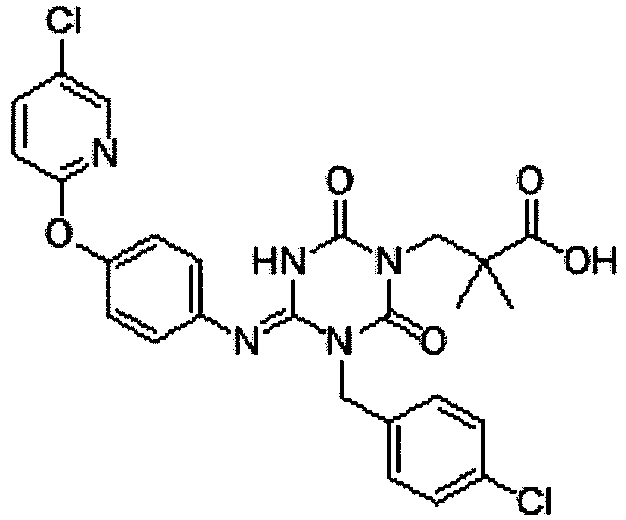 |
556 | 2.28 | 1 |
| I-007 |
 |
554 | 2.43 | 1 |
| I-008 |
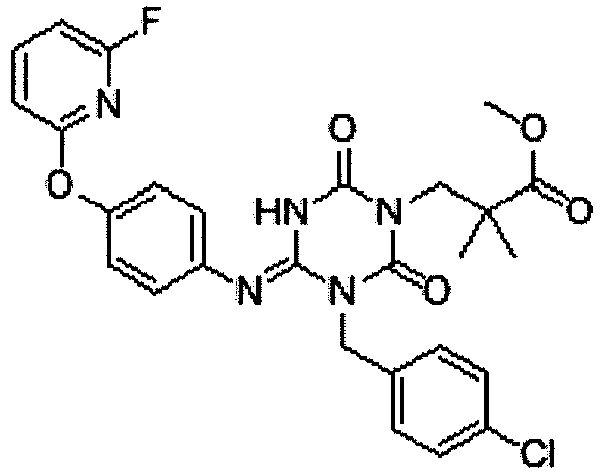 |
554 | 2.45 | 1 |
| I-009 |
 |
540 | 2.2 | 1 |
| I-010 |
 |
540 | 2.21 | 1 |
| Compound No | Structure | [M+H]+ | RT | Method |
| I-011 |
 |
556 | 2.43 | 1 |
| I-012 |
 |
570 | 2.58 | 1 |
| I-013 |
 |
570 | 2.56 | 1 |
| I-014 |
 |
542 | 2.18 | 1 |
| I-015 |
 |
556 | 2.25 | 1 |
| Compound No | Structure | [M+H]+ | RT | Method |
| I-016 |
 |
556 | 2.28 | 1 |
| I-017 |
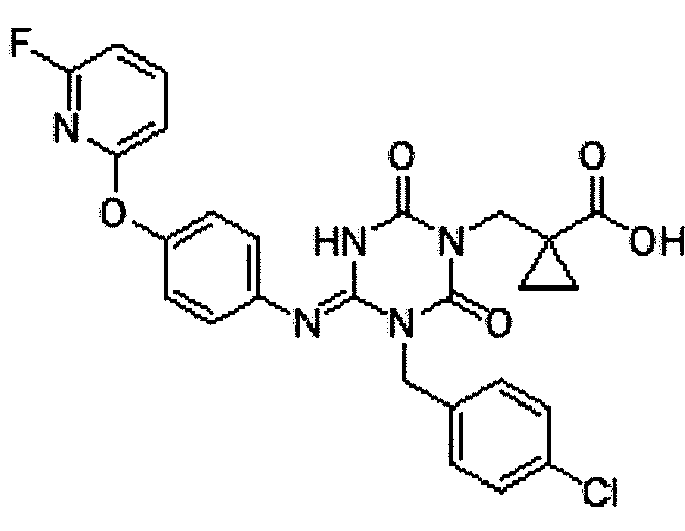 |
538 | 2.13 | 1 |
| I-018 |
 |
538 | 2.11 | 1 |
| I-019 |
 |
538 | 2.13 | 1 |
| I-020 |
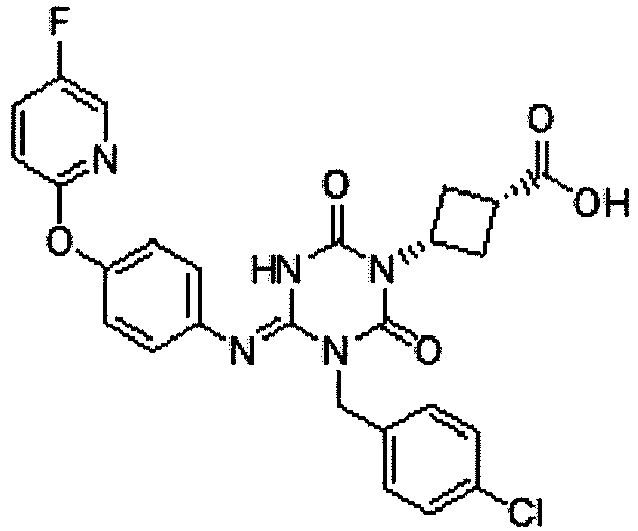 |
538 | 2.08 | 1 |
| Compound No | Structure | [M+H]+ | RT | Method |
| I-021 |
 |
602 | 2.48 | 1 |
| I-022 |
 |
574 | 2.15 | 1 |
| I-023 |
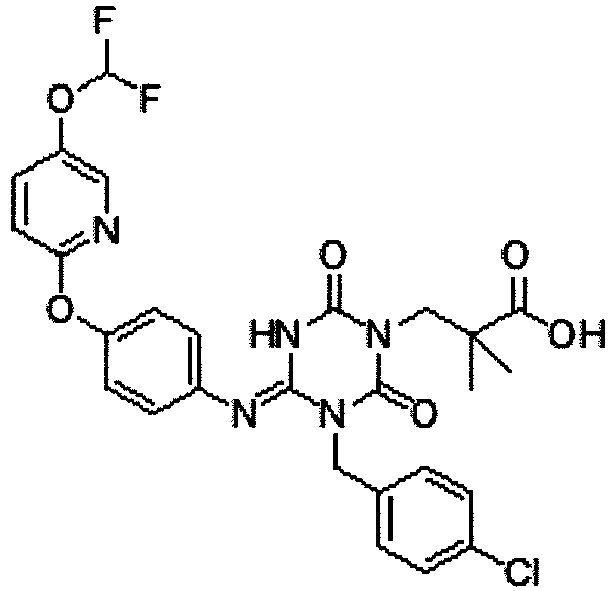 |
588 | 2.22 | 1 |
| I-024 |
 |
542 | 2.23 | 1 |
| I-025 |
 |
542 | 2.22 | 1 |
| Compound No | Structure | [M+H]+ | RT | Method |
| I-026 |
 |
542 | 2.24 | 1 |
| I-027 |
 |
528 | 1.99 | 1 |
| I-028 |
 |
528 | 1.98 | 1 |
| I-029 |
 |
528 | 2 | 1 |
| I-030 |
 |
590 | 2.52 | 1 |
| Compound No | Structure | [M+H]+ | RT | Method |
| I-031 |
 |
604 | 2.61 | 1 |
| I-032 |
 |
576 | 2.28 | 1 |
| I-033 |
 |
590 | 2.35 | 1 |
| I-034 |
 |
570 | 2.46 | 1 |
| I-035 |
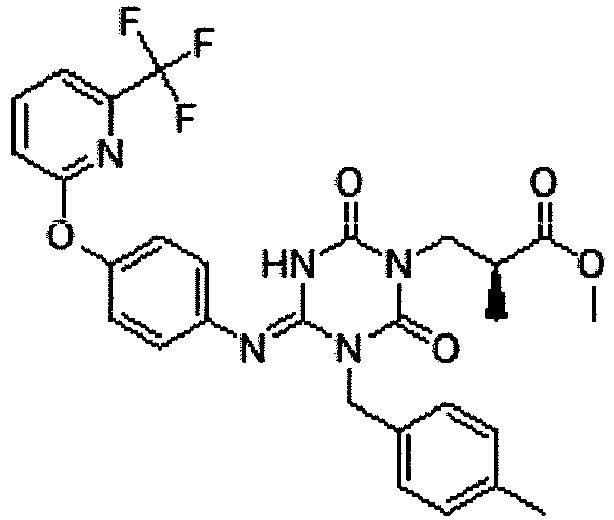 |
570 | 2.4 | 1 |
| Compound No | Structure | [M+H]+ | RT | Method |
| I-036 |
 |
520 | 2.24 | 1 |
| I-037 |
 |
534 | 2.34 | 1 |
| I-038 |
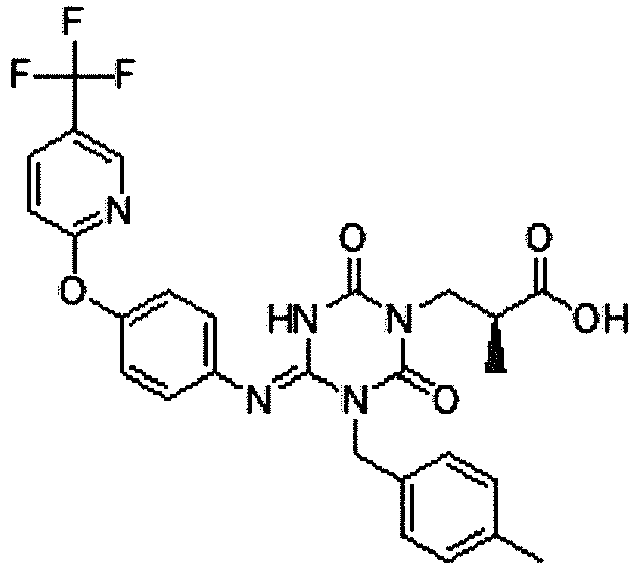 |
556 | 2.21 | 1 |
| I-039 |
 |
556 | 2.17 | 1 |
| I-040 |
 |
506 | 1.98 | 1 |
| Compound No | Structure | [M+H]+ | RT | Method |
| I-041 |
 |
520 | 2.06 | 1 |
| I-042 |
 |
540 | 2 | 1 |
| I-043 |
 |
588 | 2.36 | 1 |
| I-044 |
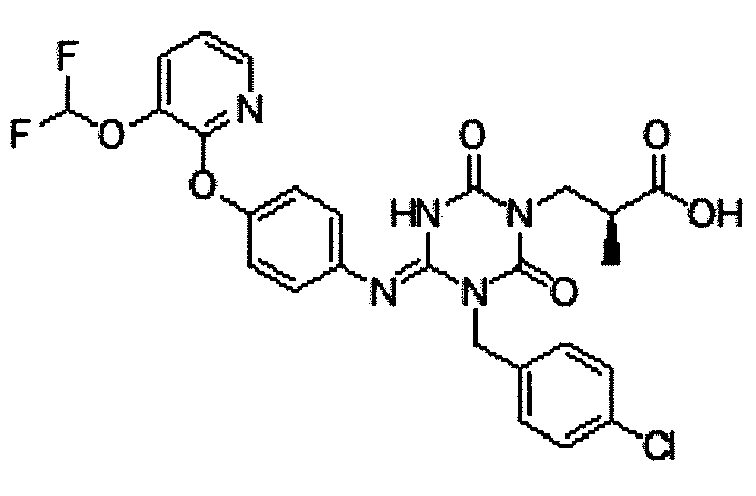 |
574 | 2.13 | 1 |
| I-045 |
 |
547 | 2.24 | 1 |
| Compound No | Structure | [M+H]+ | RT | Method |
| I-046 |
 |
561 | 2.34 | 1 |
| I-047 |
 |
533 | 1.99 | 1 |
| I-048 |
 |
547 | 2.07 | 1 |
| I-049 |
 |
554 | 1.97 | 1 |
| I-050 |
 |
554 | 1.95 | 1 |
| Compound No | Structure | [M+H]+ | RT | Method |
| I-051 |
 |
536 | 2.37 | 1 |
| I-052 |
 |
520 | 2.25 | 1 |
| I-053 |
 |
520 | 2.27 | 1 |
| I-054 |
 |
522 | 2.12 | 1 |
| I-055 |
 |
550 | 2.48 | 1 |
| Compound No | Structure | [M+H]+ | RT | Method |
| I-056 |
 |
506 | 2 | 1 |
| I-057 |
 |
506 | 2.02 | 1 |
| I-058 |
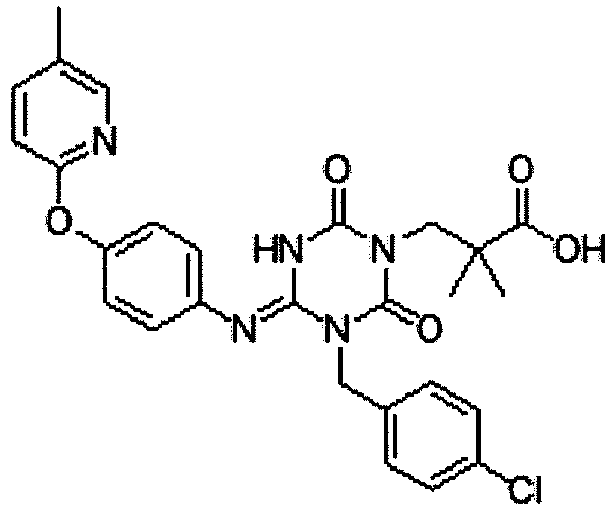 |
536 | 2.2 | 1 |
| I-059 |
 |
554 | 1.94 | 1 |
| I-060 |
 |
556 | 2.5 | 1 |
| Compound No | Structure | [M+H]+ | RT | Method |
| I-061 |
 |
566 | 2.52 | 1 |
| I-062 |
 |
566 | 2.47 | 1 |
| I-063 |
 |
538 | 2.14 | 1 |
| I-064 |
 |
538 | 2.09 | 1 |
| I-065 |
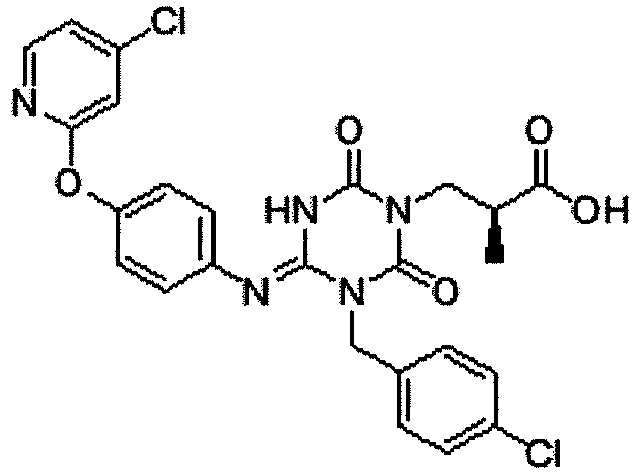 |
542 | 2.25 | 1 |
| Compound No | Structure | [M+H]+ | RT | Method |
| I-066 |
 |
566 | 2.49 | 1 |
| I-067 |
 |
538 | 2.12 | 1 |
| I-068 |
 |
540 | 2.35 | 1 |
| I-069 |
 |
538 | 2.02 | 1 |
| I-070 |
 |
526 | 2.11 | 1 |
| Compound No | Structure | [M+H]+ | RT | Method |
| I-071 |
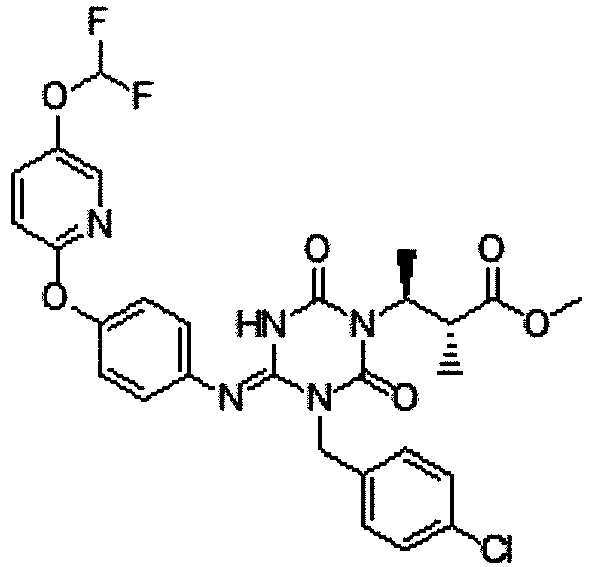 |
602 | 2.51 | 1 |
| I-072 |
 |
588 | 2.25 | 1 |
| I-073 |
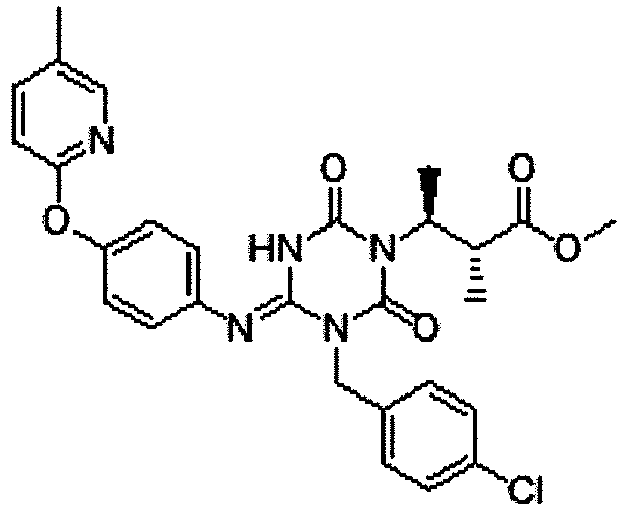 |
550 | 2.52 | 1 |
| I-074 |
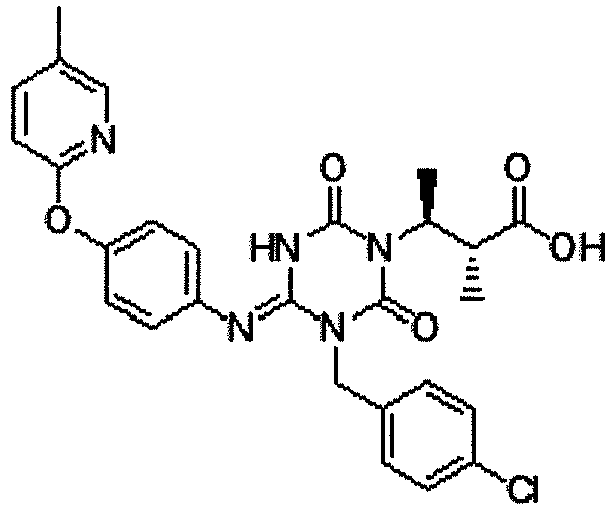 |
536 | 2.23 | 1 |
| I-075 |
 |
561 | 2.43 | 1 |
| Compound No | Structure | [M+H]+ | RT | Method |
| I-076 |
 |
536 | 2.38 | 1 |
| I-077 |
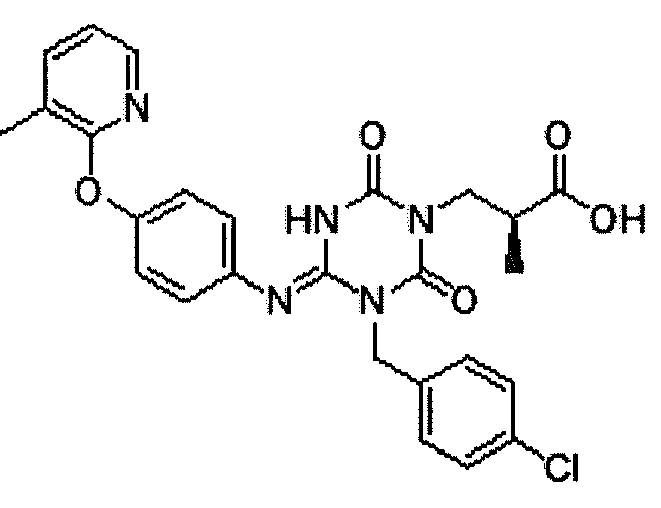 |
522 | 2.2 | 1 |
| I-078 |
 |
536 | 2.28 | 1 |
| I-079 |
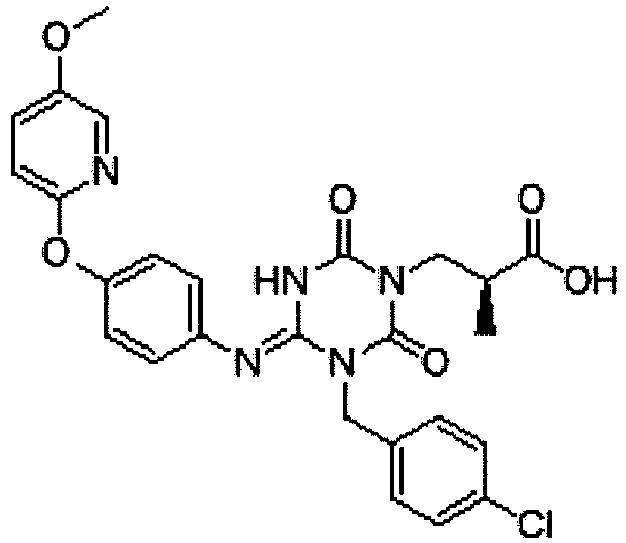 |
538 | 2.04 | 1 |
| I-080 |
 |
522 | 2.12 | 1 |
| Compound No | Structure | [M+H]+ | RT | Method |
| I-081 |
 |
570 | 2.6 | 1 |
| I-082 |
 |
590 | 2.56 | 1 |
| I-083 |
 |
552 | 2 | 1 |
| I-084 |
 |
538 | 1.77 | 1 |
| I-085 |
 |
604 | 2.66 | 1 |
| Compound No | Structure | [M+H]+ | RT | Method |
| I-086 |
 |
556 | 2.33 | 1 |
| I-087 |
 |
570 | 2.64 | 1 |
| I-088 |
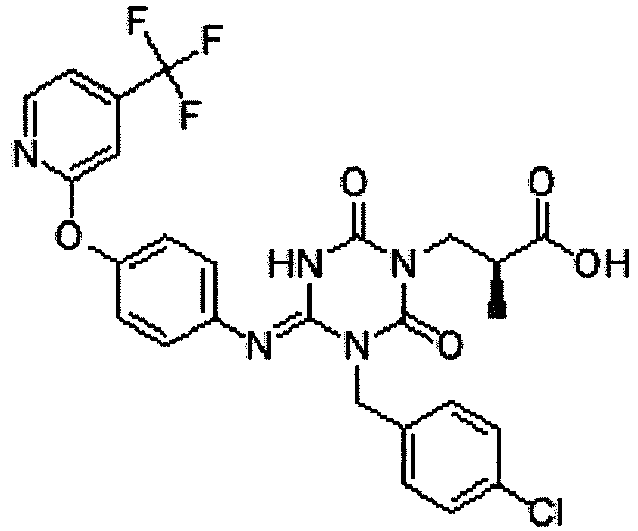 |
576 | 2.33 | 1 |
| I-089 |
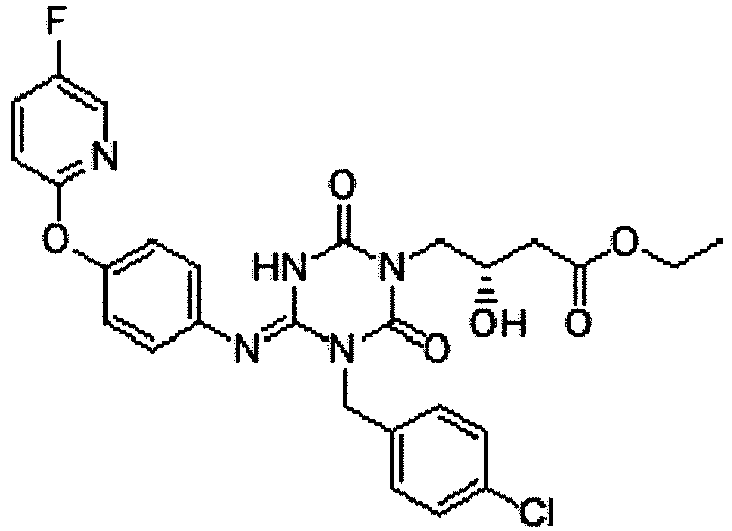 |
570 | 2.17 | 1 |
| I-090 |
 |
542 | 1.88 | 1 |
| Compound No | Structure | [M+H]+ | RT | Method |
| I-091 |
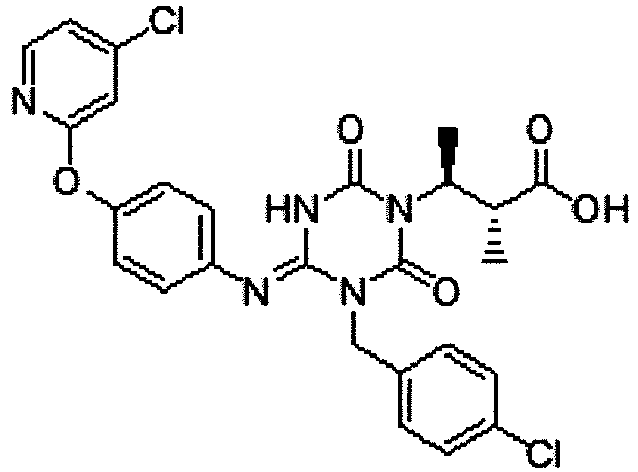 |
556 | 2.37 | 1 |
| I-092 |
 |
590 | 2.4 | 1 |
| I-093 |
 |
552 | 2.23 | 1 |
| I-094 |
 |
552 | 2.26 | 1 |
| I-095 |
 |
534 | 2.39 | 1 |
| Compound No | Structure | [M+H]+ | RT | Method |
| I-096 |
 |
520 | 2.11 | 1 |
| I-097 |
 |
536 | 2.38 | 1 |
| I-098 |
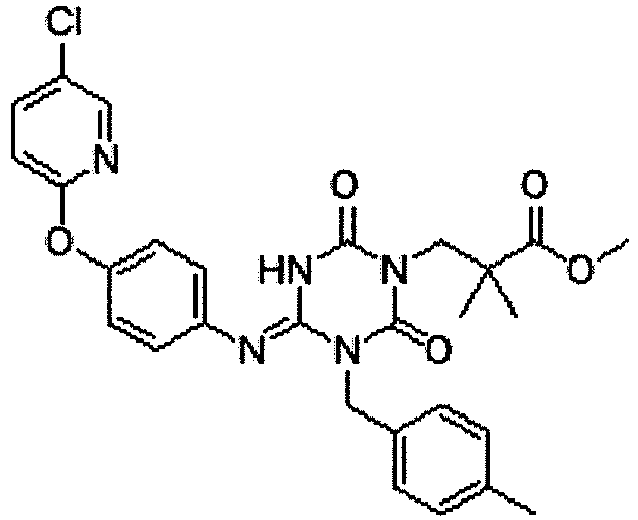 |
550 | 2.49 | 1 |
| I-099 |
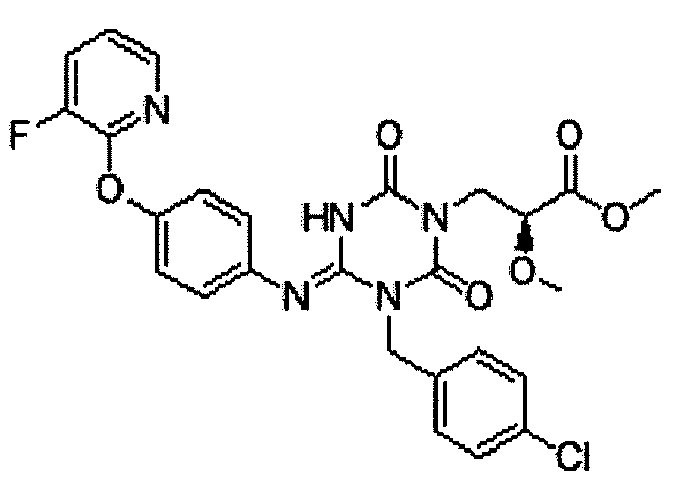 |
556 | 2.23 | 1 |
| I-100 |
 |
522 | 2.15 | 1 |
| Compound No | Structure | [M+H]+ | RT | Method |
| I-101 |
 |
536 | 2.22 | 1 |
| I-102 |
 |
542 | 2.01 | 1 |
| I-103 |
 |
534 | 2.38 | 1 |
| I-104 |
 |
534 | 2.41 | 1 |
| I-105 |
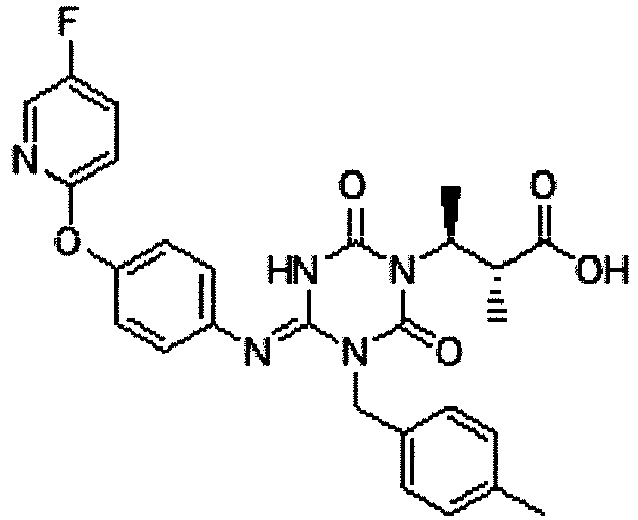 |
520 | 2.1 | 1 |
| Compound No | Structure | [M+H]+ | RT | Method |
| I-106 |
 |
520 | 2.13 | 1 |
| I-107 |
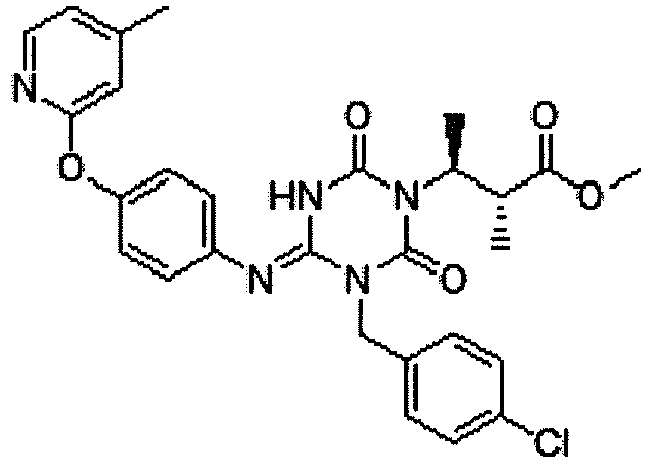 |
550 | 2.52 | 1 |
| I-108 |
 |
516 | 2.29 | 1 |
| I-109 |
 |
530 | 2.43 | 1 |
| I-110 |
 |
530 | 2.4 | 1 |
| Compound No | Structure | [M+H]+ | RT | Method |
| I-111 |
 |
536 | 2.23 | 1 |
| I-112 |
 |
502 | 2.04 | 1 |
| I-113 |
 |
516 | 2.14 | 1 |
| I-114 |
 |
516 | 2.12 | 1 |
| I-115 |
 |
536 | 2.36 | 1 |
| Compound No | Structure | [M+H]+ | RT | Method |
| I-116 |
 |
550 | 2.46 | 1 |
| I-117 |
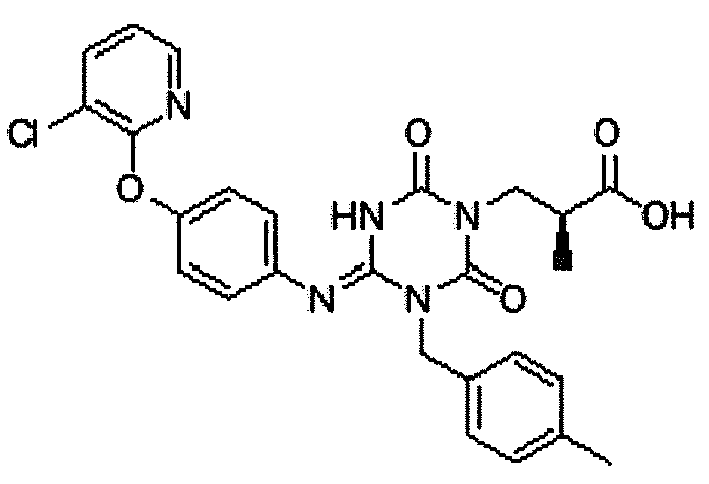 |
522 | 2.13 | 1 |
| I-118 |
 |
536 | 2.21 | 1 |
| I-119 |
 |
522 | 2.11 | 1 |
| I-120 |
 |
550 | 2.52 | 1 |
| Compound No | Structure | [M+H]+ | RT | Method |
| I-121 |
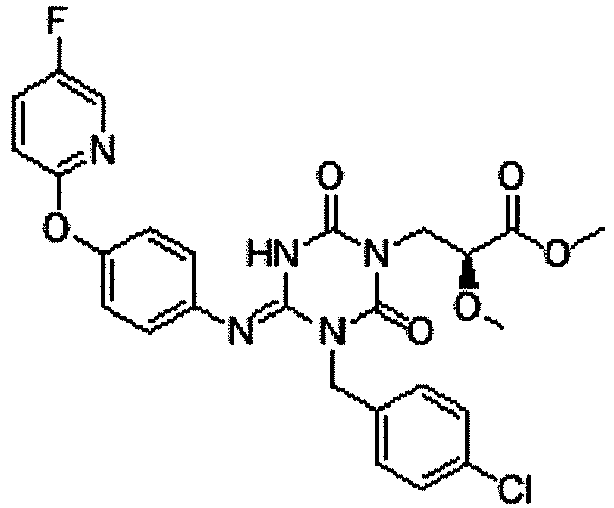 |
556 | 2.22 | 1 |
| I-122 |
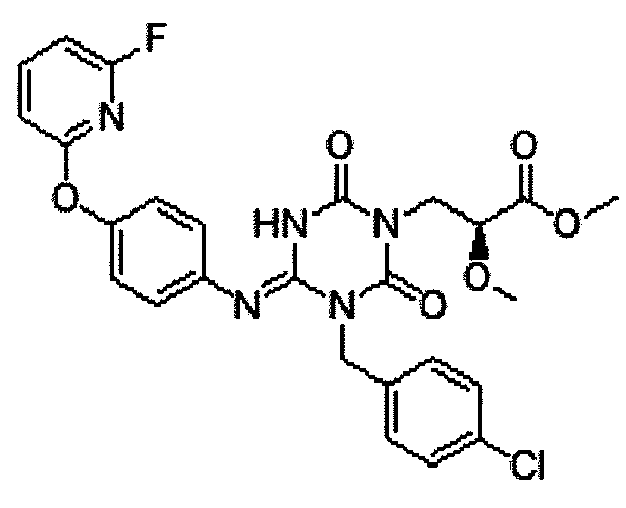 |
556 | 2.24 | 1 |
| I-123 |
 |
536 | 2.24 | 1 |
| I-124 |
 |
542 | 1.99 | 1 |
| I-125 |
 |
542 | 2.01 | 1 |
| Compound No | Structure | [M+H]+ | RT | Method |
| I-126 |
 |
522 | 2.28 | 1 |
| I-127 |
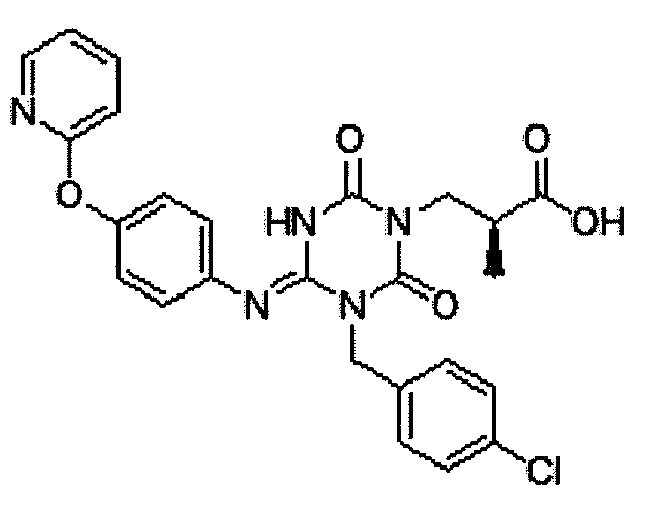 |
508 | 2.02 | 1 |
| I-128 |
 |
536 | 2.2 | 1 |
| I-129 |
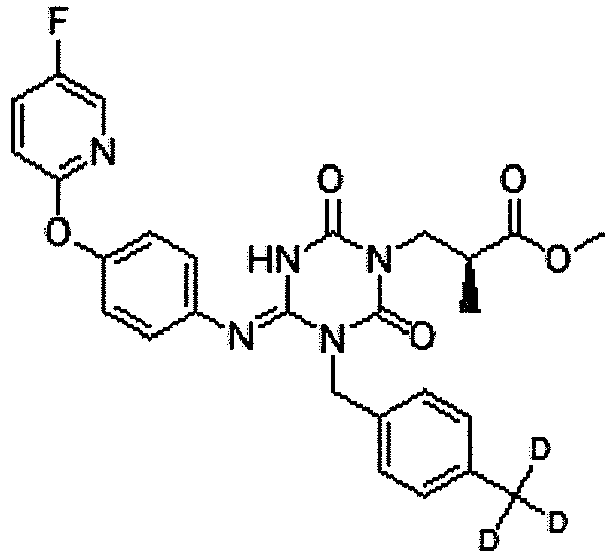 |
523 | 2.24 | 1 |
| I-130 |
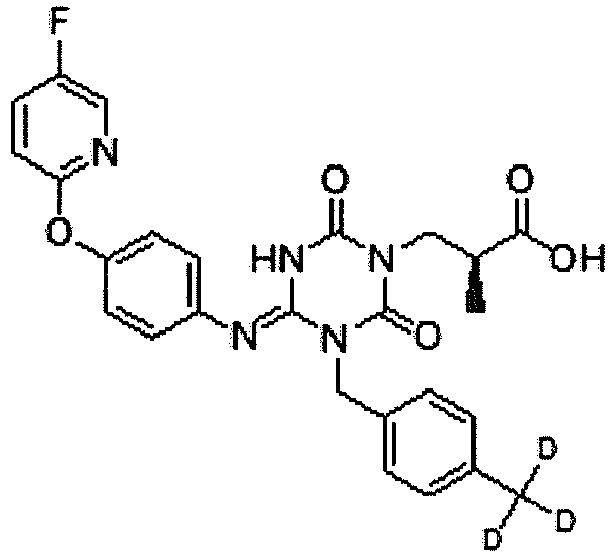 |
509 | 1.99 | 1 |
| Compound No | Structure | [M+H]+ | RT | Method |
| I-131 |
 |
522 | 2.27 | 1 |
| I-132 |
 |
568 | 2.32 | 1 |
| I-133 |
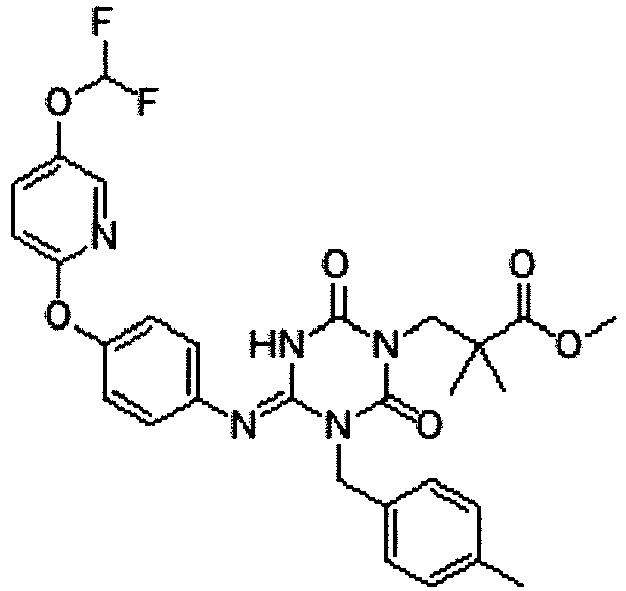 |
582 | 2.42 | 1 |
| I-134 |
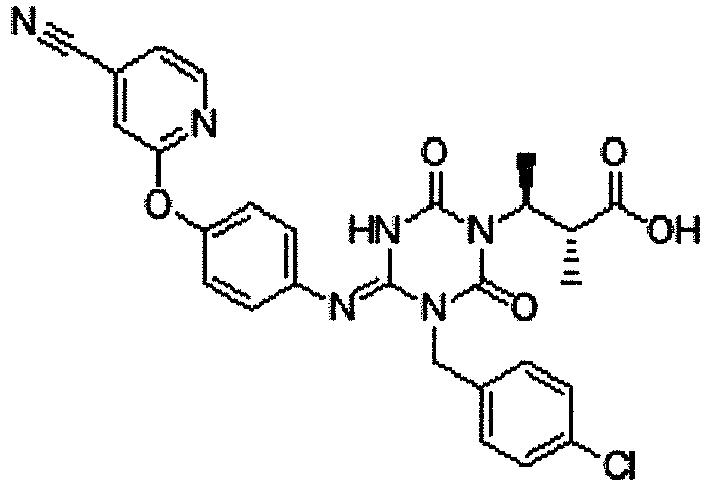 |
547 | 2.16 | 1 |
| I-135 |
 |
554 | 2.08 | 1 |
| Compound No | Structure | [M+H]+ | RT | Method |
| I-136 |
 |
568 | 2.15 | 1 |
| I-137 |
 |
582 | 2.43 | 1 |
| I-138 |
 |
568 | 2.16 | 1 |
| I-139 |
 |
552 | 2.29 | 1 |
| I-140 |
 |
502 | 2.19 | 1 |
| Compound No | Structure | [M+H]+ | RT | Method |
| I-141 |
 |
508 | 2.02 | 1 |
| I-142 |
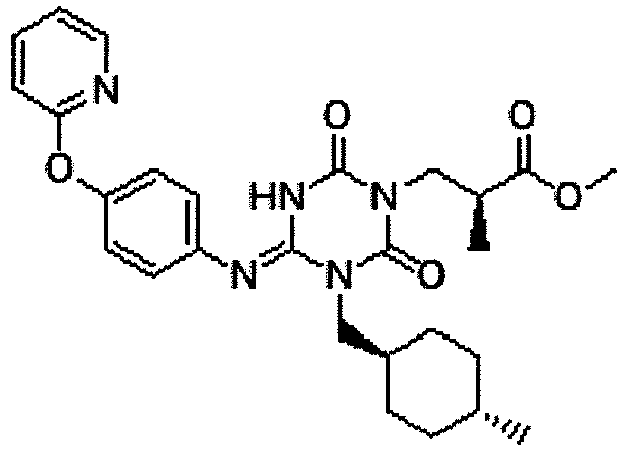 |
508 | 2.42 | 1 |
| I-143 |
 |
538 | 2.16 | 1 |
| I-144 |
 |
536 | 2.43 | 1 |
| I-145 |
 |
494 | 2.14 | 1 |
| Compound No | Structure | [M+H]+ | RT | Method |
| I-146 |
 |
524 | 1.94 | 1 |
| I-147 |
 |
522 | 2.12 | 1 |
| I-148 |
 |
488 | 1.94 | 1 |
| I-149 |
 |
536 | 2.39 | 1 |
| I-150 |
 |
516 | 2.3 | 1 |
| Compound No | Structure | [M+H]+ | RT | Method |
| I-151 |
 |
536 | 2.42 | 1 |
| I-152 |
 |
522 | 2.14 | 1 |
| I-153 |
 |
552 | 2.22 | 1 |
| I-154 |
 |
522 | 2.11 | 1 |
| I-155 |
 |
502 | 2.02 | 1 |
| Compound No | Structure | [M+H]+ | RT | Method |
| I-156 |
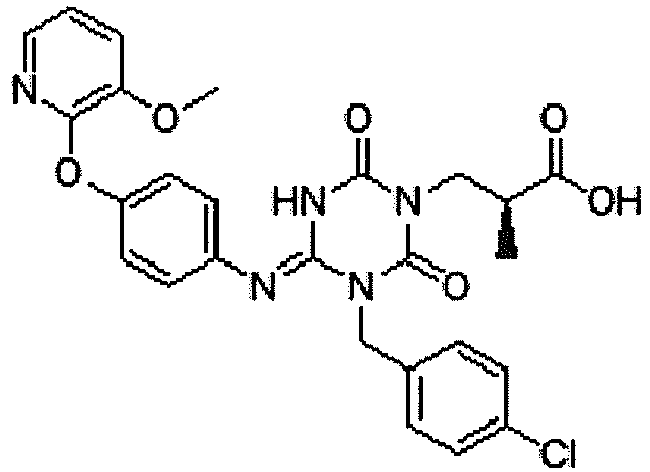 |
538 | 1.98 | 1 |
| I-157 |
 |
522 | 2.32 | 1 |
| I-158 |
 |
540 | 2.4 | 1 |
| I-159 |
 |
566 | 2.35 | 1 |
| I-160 |
 |
540 | 2.38 | 1 |
| Compound No | Structure | [M+H]+ | RT | Method |
| I-161 |
 |
540 | 2.39 | 1 |
| I-162 |
 |
506 | 2.06 | 1 |
| I-163 |
 |
526 | 2.14 | 1 |
| I-164 |
 |
552 | 2.07 | 1 |
| I-165 |
 |
526 | 2.12 | 1 |
| Compound No | Structure | [M+H]+ | RT | Method |
| I-166 |
 |
526 | 2.13 | 1 |
| I-167 |
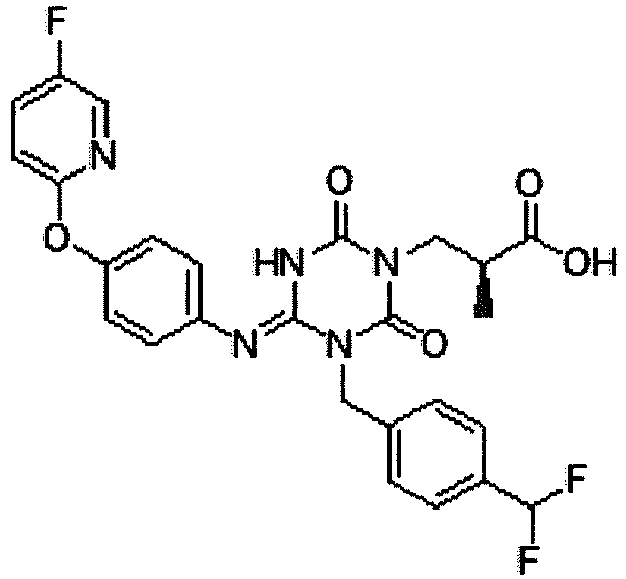 |
542 | 1.97 | 1 |
| I-168 |
 |
542 | 1.99 | 1 |
| I-169 |
 |
542 | 1.98 | 1 |
| I-170 |
 |
548 | 2.49 | 1 |
| Compound No | Structure | [M+H]+ | RT | Method |
| I-171 |
 |
548 | 2.43 | 1 |
| I-172 |
 |
562 | 2.6 | 1 |
| I-173 |
 |
562 | 2.54 | 1 |
| I-174 |
 |
520 | 2.1 | 1 |
| I-175 |
 |
520 | 2.04 | 1 |
| Compound No | Structure | [M+H]+ | RT | Method |
| I-176 |
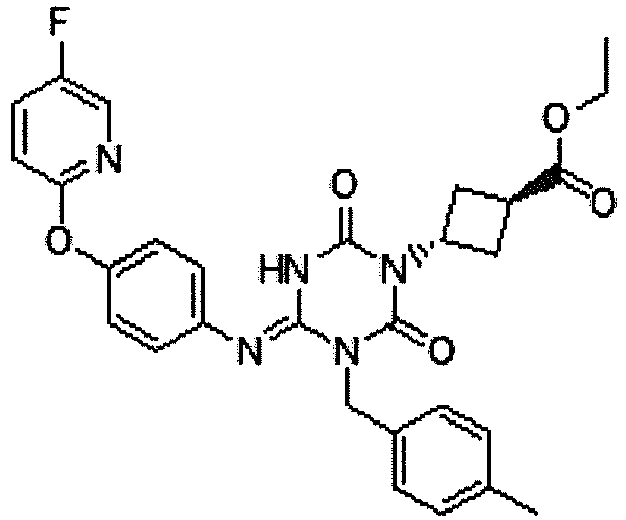 |
546 | 2.47 | 1 |
| I-177 |
 |
546 | 2.41 | 1 |
| I-178 |
 |
534 | 2.22 | 1 |
| I-179 |
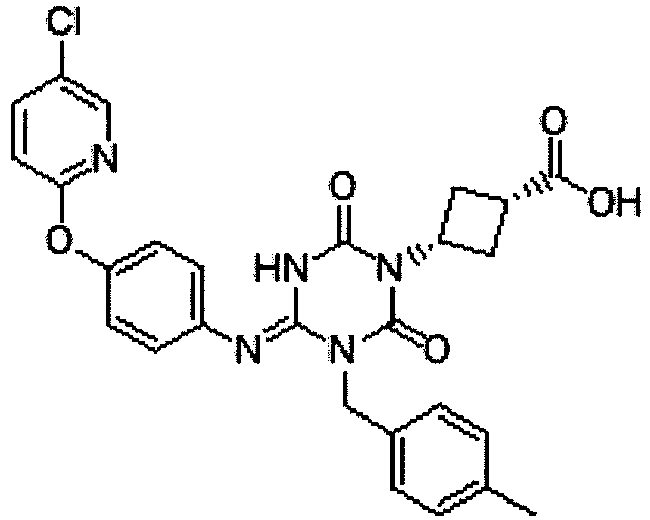 |
534 | 2.17 | 1 |
| I-180 |
 |
528 | 2.42 | 1 |
| Compound No | Structure | [M+H]+ | RT | Method |
| I-181 |
 |
528 | 2.35 | 1 |
| I-182 |
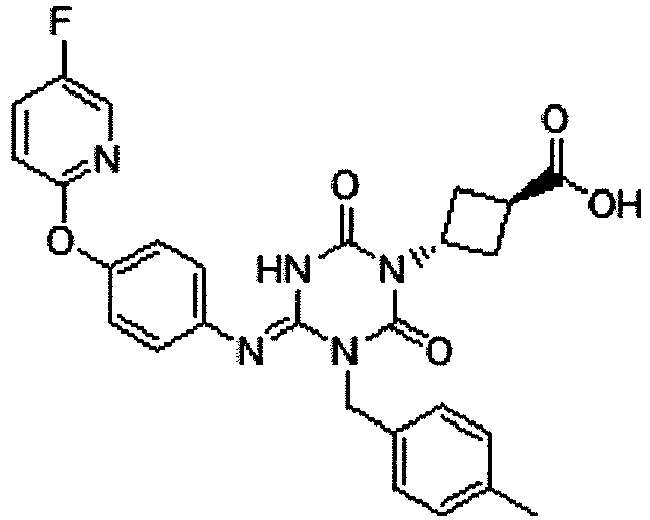 |
518 | 2.07 | 1 |
| I-183 |
 |
518 | 2.02 | 1 |
| I-184 |
 |
500 | 2.01 | 1 |
| I-185 |
 |
500 | 1.96 | 1 |
| Compound No | Structure | [M+H]+ | RT | Method |
| I-186 |
 |
502 | 2.23 | 1 |
| I-187 |
 |
488 | 1.97 | 1 |
| I-188 |
 |
520 | 2.3 | 1 |
| I-189 |
 |
506 | 2.05 | 1 |
| I-190 |
 |
520 | 2.29 | 1 |
| Compound No | Structure | [M+H]+ | RT | Method |
| I-191 |
 |
506 | 2.05 | 1 |
| I-192 |
 |
548 | 2.46 | 1 |
| I-193 |
 |
520 | 2.08 | 1 |
| I-194 |
 |
538 | 2.14 | 1 |
| I-195 |
 |
502 | 2.06 | 1 |
| Compound No | Structure | [M+H]+ | RT | Method |
| I-196 |
 |
520 | 2.33 | 1 |
| I-197 |
 |
506 | 2.07 | 1 |
| I-198 |
 |
505 | 2.18 | 1 |
| I-199 |
 |
491 | 1.93 | 1 |
| Compound No | Structure | [M+H]+ | RT | Method |
| I-200 |
 |
524 | 1.94 | 1 |
| I-201 |
 |
524 | 1.9 | 1 |
| I-202 |
 |
506 | 2.15 | 1 |
| I-203 |
 |
538 | 2.16 | 1 |
| I-204 |
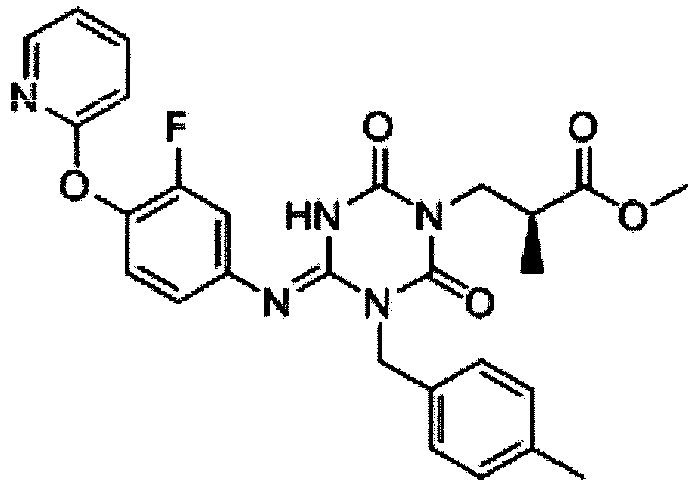 |
520 | 2.36 | 1 |
| Compound No | Structure | [M+H]+ | RT | Method |
| I-205 |
 |
540 | 2.47 | 1 |
| I-206 |
 |
520 | 2.05 | 1 |
| I-207 |
 |
538 | 2.14 | 1 |
| I-208 |
 |
538 | 2.11 | 1 |
| I-209 |
 |
538 | 2.16 | 1 |
| Compound No | Structure | [M+H]+ | RT | Method |
| I-210 |
 |
506 | 2.11 | 1 |
| I-211 |
 |
526 | 2.19 | 1 |
| I-212 |
 |
522 | 2.14 | 1 |
| I-213 |
 |
502 | 2.06 | 1 |
| I-214 |
 |
506 | 1.82 | 1 |
| Compound No | Structure | [M+H]+ | RT | Method |
| I-215 |
 |
524 | 1.89 | 1 |
| I-216 |
 |
524 | 1.88 | 1 |
| I-217 |
 |
524 | 1.91 | 1 |
| I-218 |
 |
518 | 2.08 | 1 |
| I-219 |
 |
536 | 2.22 | 1 |
| Compound No | Structure | [M+H]+ | RT | Method |
| I-220 |
 |
536 | 2.26 | 1 |
| I-221 |
 |
532 | 2.34 | 1 |
| I-222 |
 |
532 | 2.2 | 1 |
| I-223 |
 |
536 | 2.4 | 1 |
| I-224 |
 |
| Compound No | Structure | [M+H]+ | RT | Method |
| I-225 |
 |
550 | 2.51 | 1 |
| I-226 |
 |
550 | 2.55 | 1 |
| I-227 |
 |
554 | 2.54 | 1 |
| I-228 |
 |
554 | 2.57 | 1 |
| I-229 |
 |
518 | 1.96 | 1 |
| Compound No | Structure | [M+H]+ | RT | Method |
| I-230 |
 |
540 | 2.26 | 1 |
| I-231 |
 |
540 | 2.29 | 1 |
| I-232 |
 |
540 | 2.05 | 1 |
| I-233 |
 |
540 | 1.95 | 1 |
| I-234 |
 |
524 | 2.22 | 1 |
| Compound No | Structure | [M+H]+ | RT | Method |
| I-235 |
 |
524 | 2.19 | 1 |
| I-236 |
 |
538 | 2.49 | 1 |
| I-237 |
 |
538 | 2.46 | 1 |
| I-238 |
 |
554 | 2.33 | 1 |
| I-239 |
 |
554 | 2.23 | 1 |
| Compound No | Structure | [M+H]+ | RT | Method |
| I-240 |
 |
537.952 | 1.5 | 1 |
| I-241 |
 |
552 | 2.04 | 1 |
| I-242 |
 |
520 | 1.98 | 1 |
| I-243 |
 |
542 | 2.29 | 1 |
| I-244 |
 |
512 | 2.33 | 1 |
| Compound No | Structure | [M+H]+ | RT | Method |
| I-245 |
 |
552 | 2.06 | 1 |
| I-246 |
 |
532 | 1.97 | 1 |
| I-247 |
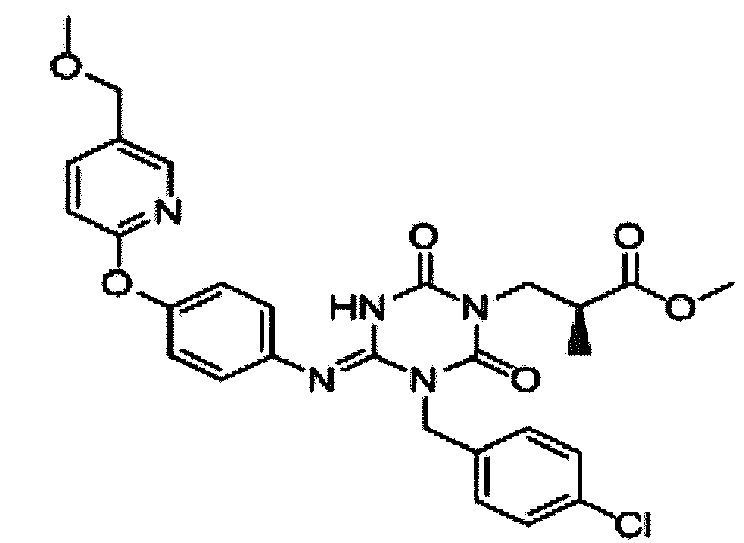 |
566 | 2.28 | 1 |
| I-248 |
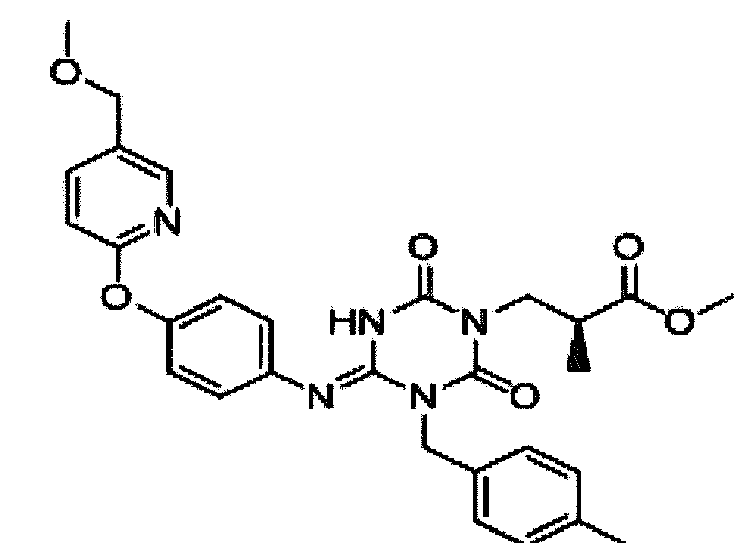 |
548 | 2.19 | 1 |
| I-249 |
 |
566 | 2.32 | 1 |
| Compound No | Structure | [M+H]+ | RT | Method |
| I-250 |
 |
546 | 2.23 | 1 |
| I-251 |
 |
550 | 2.5 | 1 |
| I-252 |
 |
556 | 2.54 | 1 |
| I-253 |
 |
526 | 2.6 | 1 |
| I-254 |
 |
532 | 1.95 | 1 |
| Compound No | Structure | [M+H]+ | RT | Method |
| I-255 |
 |
552 | 2.07 | 1 |
| I-256 |
 |
532 | 1.99 | 1 |
| I-257 |
 |
538 | 1.83 | 1 |
| I-258 |
 |
536 | 2.24 | 1 |
| I-259 |
 |
550 | 2.01 | 1 |
| Compound No | Structure | [M+H]+ | RT | Method |
| I-260 |
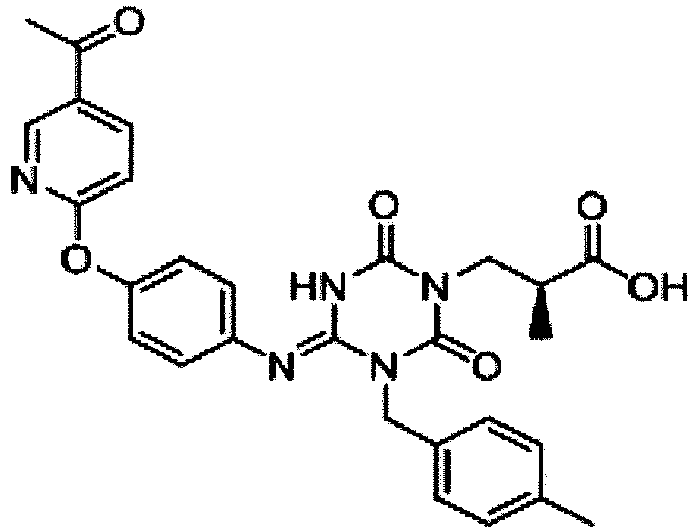 |
530 | 1.93 | 1 |
| I-261 |
 |
520 | 2.01 | 1 |
| I-262 |
 |
532 | 1.77 | 1 |
| I-263 |
 |
492 | 2.11 | 1 |
| I-264 |
 |
510 | 2.18 | 1 |
| Compound No | Structure | [M+H]+ | RT | Method |
| I-265 |
 |
642 | 2.42 | 1 |
| I-266 |
 |
534 | 2.26 | 1 |
| I-267 |
 |
544 | 2.17 | 1 |
| I-268 |
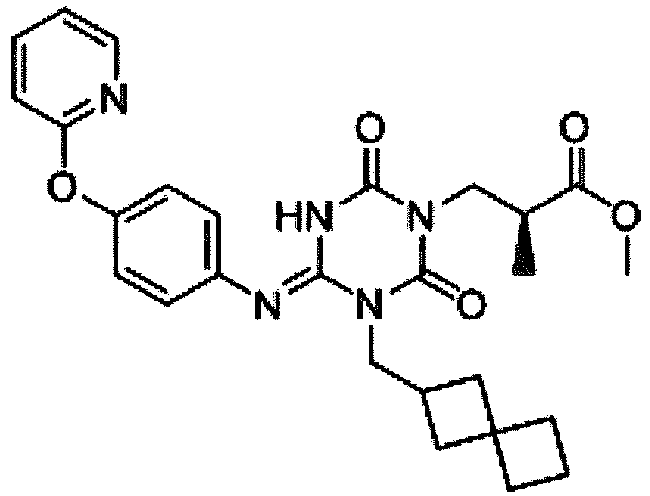 |
506 | 2.37 | 1 |
| I-269 |
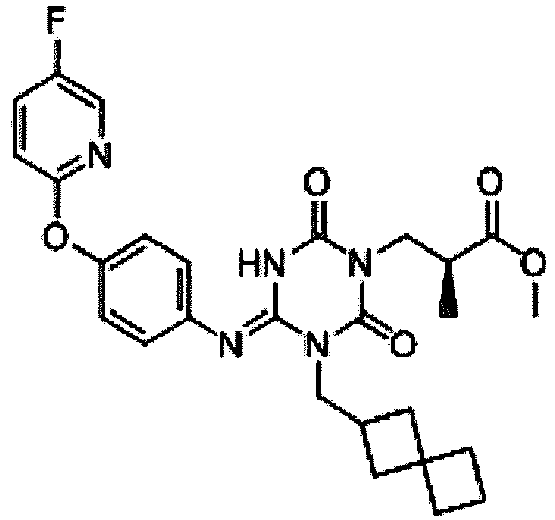 |
524 | 2.43 | 1 |
| Compound No | Structure | [M+H]+ | RT | Method |
| I-270 |
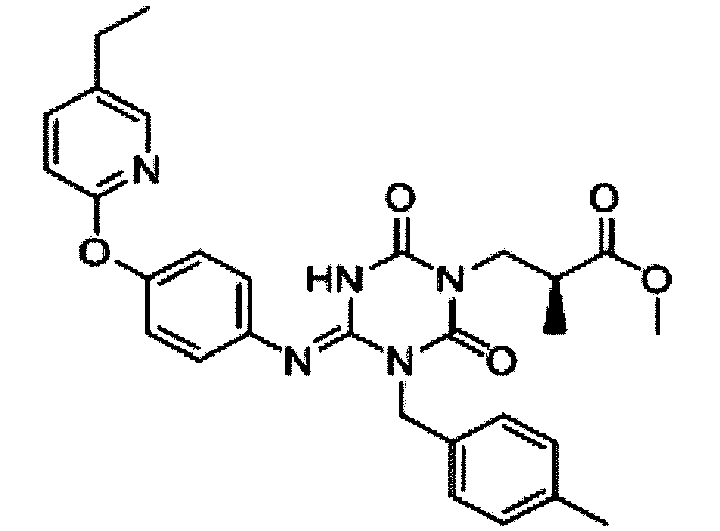 |
530 | 2.43 | 1 |
| I-271 |
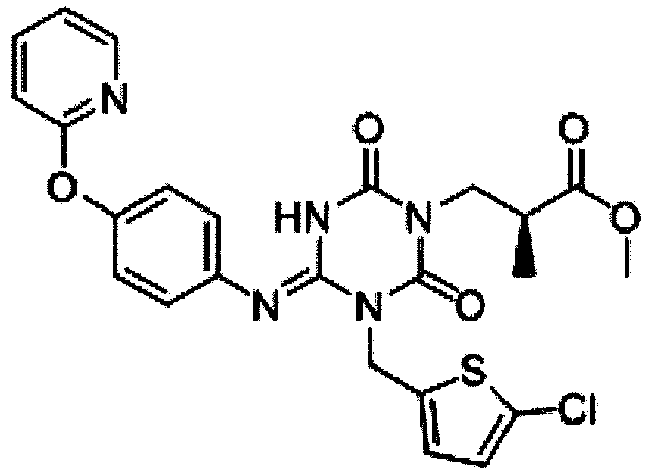 |
527.98 | 2.43 | 1 |
| I-272 |
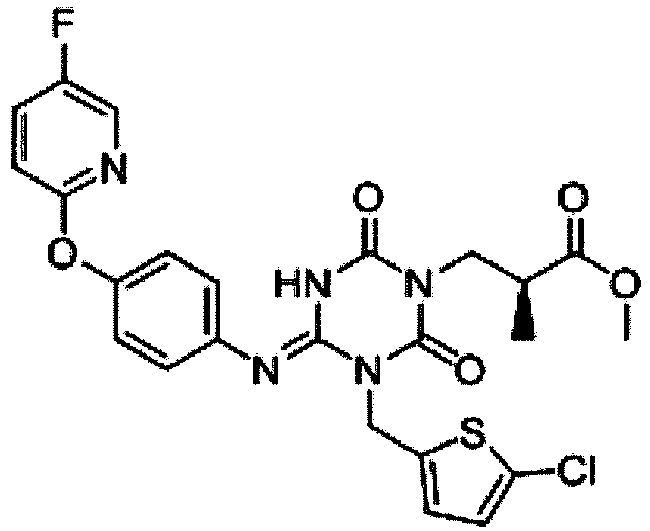 |
545.97 | 2.47 | 1 |
| I-273 |
 |
513.953 | 2.14 | 1 |
| I-274 |
 |
532 | 2.19 | 1 |
| Compound No | Structure | [M+H]+ | RT | Method |
| I-275 |
 |
516 | 2.18 | 1 |
| I-276 |
 |
546 | 2.32 | 1 |
| I-277 |
 |
601 | 2.15 | 1 |
| I-278 |
 |
587 | 1.89 | 1 |
Claims (22)
- A compound of Formula (I):
 Ra and Rb are both hydrogen atoms, or Ra and Rb are taken together to form oxo, thioxo or =N-Rx;Rd and Re are both hydrogen atoms, or Rd and Re are taken together to form oxo, thioxo or =N-Ry;Rx and Ry are each independently a hydrogen atom, substituted or unsubstituted alkyl, substituted or unsubstituted alkenyl, substituted or unsubstituted alkynyl, substituted or unsubstituted cycloalkyl, substituted or unsubstituted cycloalkenyl, a substituted or unsubstituted non-aromatic heterocyclic group, substituted or unsubstituted aryl or substituted or unsubstituted heteroaryl;R4a is each independently a hydrogen atom or substituted or unsubstituted alkyl;R4b is each independently a hydrogen atom or substituted or unsubstituted alkyl or R4a and R4b attached to the same carbon atom are taken together to form oxo or thioxo;n is an integer of 1 to 4;R2 is substituted or unsubstituted cycloalkyl, substituted or unsubstituted cycloalkenyl, a substituted or unsubstituted non-aromatic heterocyclic group, substituted or unsubstituted aryl, or substituted or unsubstituted heteroaryl;R9 is each independently halogen, hydroxy, carboxy, cyano, nitro, substituted or unsubstituted alkyl, substituted or unsubstituted alkenyl, substituted or unsubstituted alkynyl, substituted or unsubstituted alkyloxy, substituted or unsubstituted alkenyloxy, substituted or unsubstituted alkynyloxy, substituted or unsubstituted alkylthio, substituted or unsubstituted alkenylthio, substituted or unsubstituted alkynylthio, substituted or unsubstituted acyl, substituted or unsubstituted alkyloxycarbonyl, substituted or unsubstituted alkenyloxycarbonyl, substituted or unsubstituted alkynyloxycarbonyl, substituted or unsubstituted carbamoyl, substituted or unsubstituted amino, substituted or unsubstituted sulfamoyl, substituted sulfonyl, substituted sulfinyl, substituted or unsubstituted cycloalkyl, substituted or unsubstituted cycloalkenyl, a substituted or unsubstituted non-aromatic heterocyclic group, substituted or unsubstituted aryl, substituted or unsubstituted heteroaryl, substituted or unsubstituted cycloalkyloxy, substituted or unsubstituted cycloalkenyloxy, substituted or unsubstituted non-aromatic heterocyclyloxy, substituted or unsubstituted aryloxy or substituted or unsubstituted heteroaryloxy;R9' is each independently halogen, hydroxy, carboxy, cyano, nitro, substituted or unsubstituted alkyl, substituted or unsubstituted alkenyl, substituted or unsubstituted alkynyl, substituted or unsubstituted alkyloxy, substituted or unsubstituted alkenyloxy, substituted or unsubstituted alkynyloxy, substituted or unsubstituted alkylthio, substituted or unsubstituted alkenylthio, substituted or unsubstituted alkynylthio, substituted or unsubstituted acyl, substituted or unsubstituted alkyloxycarbonyl, substituted or unsubstituted alkenyloxycarbonyl, substituted or unsubstituted alkynyloxycarbonyl, substituted or unsubstituted carbamoyl, substituted or unsubstituted amino, substituted or unsubstituted sulfamoyl, substituted sulfonyl, substituted sulfinyl, substituted or unsubstituted cycloalkyl, substituted or unsubstituted cycloalkenyl, a substituted or unsubstituted non-aromatic heterocyclic group, substituted or unsubstituted aryl, substituted or unsubstituted heteroaryl, substituted or unsubstituted cycloalkyloxy, substituted or unsubstituted cycloalkenyloxy, substituted or unsubstituted non-aromatic heterocyclyloxy, substituted or unsubstituted aryloxy or substituted or unsubstituted heteroaryloxy;s and s' are each independently an integer of 0 to 3;R20a is each independently a hydrogen atom, hydroxy, substituted or unsubstituted alkyl, substituted or unsubstituted alkenyl, substituted or unsubstituted alkynyl, or substituted or unsubstituted alkyloxy;R20b is each independently a hydrogen atom, hydroxy, substituted or unsubstituted alkyl, substituted or unsubstituted alkenyl, substituted or unsubstituted alkynyl, or substituted or unsubstituted alkyloxy; or R20a and R20b attached to the same carbon atom or the different carbon atoms are taken together to form substituted or unsubstituted cycloalkane, substituted or unsubstituted cycloalkene, or a substituted or unsubstituted non-aromatic heterocyclic ring; provided that all R20a and R20b are not hydrogen atoms at the same time;u is an integer of 1 to 4; andR13 is a hydrogen atom or substituted or unsubstituted alkyl, provided that the following compounds:
or its pharmaceutically acceptable salt. - The compound according to claim 1, wherein the group represented by the formula:


- The compound according to claim 1, wherein the group represented by the formula:


- The compound according to any one of claims 1 to 3, wherein n is 1, R4a and R4b are both hydrogen atoms, and R2 is substituted or unsubstituted phenyl or substituted or unsubstituted cycloalkyl, or its pharmaceutically acceptable salt.
- The compound according to any one of claims 1 to 4, wherein n is 1, R4a and R4b are both hydrogen atoms, and R2 is 4-methylphenyl, or its pharmaceutically acceptable salt.
- The compound according to any one of claims 1 to 4, wherein n is 1, R4a and R4b are both hydrogen atoms, and R2 is phenyl substituted with halogen, or its pharmaceutically acceptable salt.
- The compound according to claim 6, wherein n is 1, R4a and R4b are both hydrogen atoms, and R2 is 4-chlorophenyl, or its pharmaceutically acceptable salt.
- The compound according to any one of claims 1 to 7, wherein Ra and Rb are taken together to form oxo, or its pharmaceutically acceptable salt.
- The compound according to any one of claims 1 to 8, wherein Rd and Re are taken together to form oxo, or its pharmaceutically acceptable salt.
- The compound according to any one of claims 1 to 9, wherein s is 0, or its pharmaceutically acceptable salt.
- The compound according to any one of claims 1 to 9, wherein s is 1 or 2, and R9 is each independently halogen, unsubstituted alkyl, haloalkyl, unsubstituted alkenyl or unsubstituted alkynyl, or its pharmaceutically acceptable salt.
- The compound according to any one of claims 1 to 11, wherein s' is 0, or its pharmaceutically acceptable salt.
- The compound according to any one of claims 1 to 11, wherein s' is an integer of 1 to 3, or its pharmaceutically acceptable salt.
- The compound according to claim 13, wherein s' is 1 or 2, and R9' is each independently halogen, carboxy, cyano, substituted or unsubstituted alkyl, substituted or unsubstituted alkyloxy, substituted or unsubstituted alkyloxycarbonyl or substituted or unsubstituted aryl, or its pharmaceutically acceptable salt.
- The compound according to claim 1, wherein
Ra and Rb are taken together to form oxo:
Rd and Re are taken together to form oxo;
R4a and R4b are both hydrogen atoms;
n is 1;
R2 is phenyl substituted with methyl
s is 0; and
s' is 1,
or its pharmaceutically acceptable salt. - The compound according to claim 1, wherein
Ra and Rb are taken together to form oxo:
Rd and Re are taken together to form oxo;
R4a and R4b are both hydrogen atoms;
n is 1;
R2 is phenyl substituted with halogen; and
s and s' are both 0,
or its pharmaceutically acceptable salt. - The compound according to claim 16, wherein R13 is a hydrogen atom, and the group represented by the formula:
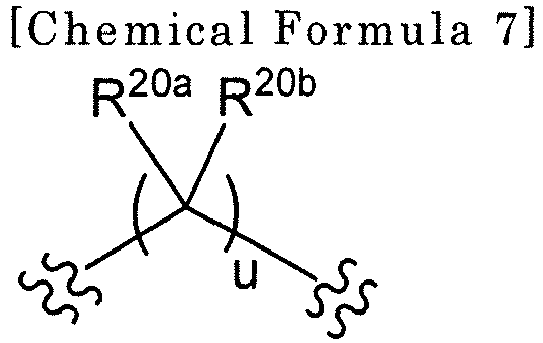

- A compound of formula:


- A pharmaceutical composition comprising the compound according to any one of claims 1 to 18, or its pharmaceutically acceptable salt.
- The pharmaceutical composition according to claim 19, wherein the composition has a P2X3 and/or P2X2/3 receptor antagonistic activity.
- A compound according to any one of claims 1 to 18, or its pharmaceutically acceptable salt, for use in a method for treating and/or preventing a disease related to P2X3 and/or P2X2/3 receptor.
- A method for treating and/or preventing a disease related to P2X3 and/or P2X2/3 receptor comprising administering the compound according to any one of claims 1 to 18, or its pharmaceutically acceptable salt.
Priority Applications (1)
| Application Number | Priority Date | Filing Date | Title |
|---|---|---|---|
| PL14810134T PL3009432T3 (en) | 2013-06-14 | 2014-06-13 | Amino-triazine derivatives and pharmaceutical composition containing said derivatives |
Applications Claiming Priority (2)
| Application Number | Priority Date | Filing Date | Title |
|---|---|---|---|
| JP2013125134 | 2013-06-14 | ||
| PCT/JP2014/065678 WO2014200078A1 (en) | 2013-06-14 | 2014-06-13 | Amino-triazine derivatives and pharmaceutical composition containing said derivatives |
Publications (3)
| Publication Number | Publication Date |
|---|---|
| EP3009432A1 true EP3009432A1 (en) | 2016-04-20 |
| EP3009432A4 EP3009432A4 (en) | 2016-11-02 |
| EP3009432B1 EP3009432B1 (en) | 2018-04-25 |
Family
ID=52022364
Family Applications (1)
| Application Number | Title | Priority Date | Filing Date |
|---|---|---|---|
| EP14810134.8A Active EP3009432B1 (en) | 2013-06-14 | 2014-06-13 | Amino-triazine derivatives and pharmaceutical composition containing said derivatives |
Country Status (20)
| Country | Link |
|---|---|
| US (2) | US9732060B2 (en) |
| EP (1) | EP3009432B1 (en) |
| JP (1) | JP6132371B2 (en) |
| KR (2) | KR20170116177A (en) |
| CN (1) | CN105452234B (en) |
| AR (1) | AR096620A1 (en) |
| AU (1) | AU2014279116B2 (en) |
| BR (1) | BR112015031079B1 (en) |
| CA (1) | CA2915325C (en) |
| DK (1) | DK3009432T3 (en) |
| EA (1) | EA030198B1 (en) |
| ES (1) | ES2675528T3 (en) |
| IL (1) | IL243042A0 (en) |
| MX (1) | MX362995B (en) |
| PH (1) | PH12015502775A1 (en) |
| PL (1) | PL3009432T3 (en) |
| SG (1) | SG11201510179PA (en) |
| TR (1) | TR201809085T4 (en) |
| TW (1) | TWI637949B (en) |
| WO (1) | WO2014200078A1 (en) |
Cited By (5)
| Publication number | Priority date | Publication date | Assignee | Title |
|---|---|---|---|---|
| EP4032884A4 (en) * | 2019-09-19 | 2023-09-13 | Shionogi & Co., Ltd. | 1,3,5-TRIAZINE DERIVATIVE CRYSTAL OR SOLVATE THEREOF AND PRODUCTION METHOD THEREFOR |
| US11883407B2 (en) | 2018-10-05 | 2024-01-30 | Shionogi & Co., Ltd. | Medicament for the treatment of chronic cough |
| EP4129294A4 (en) * | 2020-04-03 | 2024-05-08 | Shionogi & Co., Ltd | MEDICINES FOR PAIN TREATMENT |
| EP4151219A4 (en) * | 2020-05-15 | 2024-05-15 | Shionogi & Co., Ltd | Impurity production-inhibited drug composition |
| EP4349816A4 (en) * | 2021-06-04 | 2025-05-21 | Shanghai Haiyan Pharmaceutical Technology Co., Ltd. | TRIAZINYLMETHYLCYCLOALKYLCARBOXYLIC ACID DERIVATIVE, PHARMACEUTICAL COMPOSITION AND USE THEREOF |
Families Citing this family (28)
| Publication number | Priority date | Publication date | Assignee | Title |
|---|---|---|---|---|
| MX2011008362A (en) | 2009-02-13 | 2011-08-24 | Shionogi & Co | Novel triazine derivative and pharmaceutical composition containing same. |
| EP2604260B1 (en) * | 2010-08-10 | 2017-05-10 | Shionogi&Co., Ltd. | Novel heterocyclic derivatives and pharmaceutical composition containing same |
| DK2604595T3 (en) | 2010-08-10 | 2016-05-23 | Shionogi & Co | TRIAZINE DERIVATIVES AND PHARMACEUTICAL RELATIONSHIP CONTAINING THIS AND PROVIDING ANALGETIC ACTIVITY |
| TWI637949B (en) * | 2013-06-14 | 2018-10-11 | 塩野義製藥股份有限公司 | Aminotriazine derivative and pharmaceutical composition comprising the same |
| WO2015099107A1 (en) | 2013-12-26 | 2015-07-02 | 塩野義製薬株式会社 | Nitrogen-containing six-membered ring derivative and pharmaceutical composition containing same |
| WO2016084922A1 (en) * | 2014-11-28 | 2016-06-02 | 塩野義製薬株式会社 | 1,2,4-triazine derivative and pharmaceutical composition thereof |
| EP3957627B1 (en) | 2015-04-24 | 2024-06-19 | Shionogi & Co., Ltd | 6-membered heterocyclic derivative and pharmaceutical composition comprising same |
| MA43821A (en) | 2016-03-14 | 2018-11-28 | Afferent Pharmaceuticals Inc | PYRIMIDINS AND VARIANTS THEREOF, AND THEIR USES |
| MA44489A (en) * | 2016-03-25 | 2019-01-30 | Afferent Pharmaceuticals Inc | PYRIMIDINS AND VARIANTS THEREOF, AND THEIR USES |
| KR102528627B1 (en) | 2016-10-17 | 2023-05-03 | 시오노기 앤드 컴파니, 리미티드 | Bicyclic nitrogen-containing heterocyclic derivatives and pharmaceutical compositions containing them |
| KR102742881B1 (en) | 2018-06-29 | 2024-12-16 | 삼성디스플레이 주식회사 | Display device |
| KR102548987B1 (en) | 2018-08-09 | 2023-06-29 | 삼성디스플레이 주식회사 | Display device |
| BR112021022099A2 (en) | 2019-05-31 | 2021-12-28 | Chiesi Farm Spa | Amino quinazoline derivatives as p2x3 inhibitors |
| CA3164134A1 (en) | 2019-12-06 | 2021-06-10 | Vertex Pharmaceuticals Incorporated | Substituted tetrahydrofurans as modulators of sodium channels |
| TW202203930A (en) * | 2020-04-03 | 2022-02-01 | 日商塩野義製藥股份有限公司 | Medicament for the treatment of sleep apnea syndrome |
| CN117820248A (en) | 2021-04-14 | 2024-04-05 | 盐野义制药株式会社 | Triazine derivatives with virus proliferation inhibitory effect and pharmaceutical compositions containing the same |
| SI4347031T1 (en) | 2021-06-04 | 2026-01-30 | Vertex Pharmaceuticals Incorporated | N-(hydroxyalkyl (hetero)aryl) tetrahydrofuran carboxamides as modulators of sodium channels |
| CN113620888B (en) * | 2021-09-27 | 2023-06-06 | 成都施贝康生物医药科技有限公司 | Dihydropyrimidine compound and preparation method and application thereof |
| CN113773300B (en) * | 2021-09-27 | 2022-10-11 | 成都施贝康生物医药科技有限公司 | Sulfonamide compound, preparation method and application thereof |
| CN113801097B (en) * | 2021-09-27 | 2022-11-22 | 成都施贝康生物医药科技有限公司 | Dihydropyrimidine compound, preparation method and application thereof |
| TW202320793A (en) | 2021-09-28 | 2023-06-01 | 日商塩野義製藥股份有限公司 | Pharmaceutical composition comprising triazine derivative |
| CA3233206A1 (en) | 2021-09-28 | 2023-04-06 | Yuki Tachibana | Pharmaceutical composition containing triazine derivative |
| JP7253866B1 (en) | 2021-11-24 | 2023-04-07 | 塩野義製薬株式会社 | Orally Administered Formulations Containing Triazine Derivatives |
| WO2023095860A1 (en) * | 2021-11-26 | 2023-06-01 | 塩野義製薬株式会社 | Covid-19 treatment medicine characterized by combining 3cl protease inhibitor and covid-19 treatment drug |
| WO2023054732A2 (en) | 2022-01-19 | 2023-04-06 | 塩野義製薬株式会社 | Pharmaceutical for treating novel coronavirus infection |
| CN115650959B (en) * | 2022-05-20 | 2023-10-20 | 南京济群医药科技股份有限公司 | Process for the preparation or purification of compounds |
| WO2024169781A1 (en) * | 2023-02-15 | 2024-08-22 | 南京明德新药研发有限公司 | Pyrimidinone derivative and pharmaceutical application thereof |
| WO2025255215A1 (en) | 2024-06-05 | 2025-12-11 | Shionogi-Apnimed Sleep Science, Llc | Methods and compositions for treating sleep apnea |
Family Cites Families (61)
| Publication number | Priority date | Publication date | Assignee | Title |
|---|---|---|---|---|
| US3598815A (en) | 1968-10-25 | 1971-08-10 | Goodrich Co B F | Bis-(hydroxyphenylalkylene) alkyl isocyanurates |
| JPS5132324A (en) | 1974-09-12 | 1976-03-18 | Fuji Photo Film Co Ltd | Netsugenzokankozairyo |
| CH622536A5 (en) | 1976-07-08 | 1981-04-15 | Ciba Geigy Ag | |
| US4158724A (en) | 1976-10-18 | 1979-06-19 | Ciba-Geigy Corporation | Tris-tetrazoles as chemical blowing agents |
| CH623840A5 (en) | 1976-10-18 | 1981-06-30 | Ciba Geigy Ag | |
| GB1599518A (en) | 1977-02-21 | 1981-10-07 | Ici Ltd | 1,3,5-triazine-2,6-diones and pharmaceutical compositions thereof |
| EP0005911B1 (en) | 1978-05-26 | 1982-02-17 | Imperial Chemical Industries Plc | Analgesic 6-acylaminotetrahydro-1,3,5-triazine-2,4-dione derivatives, pharmaceutical compositions thereof, and process for their manufacture |
| JPS57144269A (en) | 1981-03-03 | 1982-09-06 | Taiho Yakuhin Kogyo Kk | Triazine derivative and its preparation |
| EP0110828B1 (en) | 1982-11-26 | 1988-01-20 | Ciba-Geigy Ag | Colour-photographic recording material |
| JPS62156110A (en) | 1985-12-27 | 1987-07-11 | Res Inst For Prod Dev | Polymer containing isocyanurate structure in side chain and having adsorption capability |
| JPS62156110U (en) | 1986-03-26 | 1987-10-03 | ||
| IL94592A (en) | 1989-06-05 | 1994-07-31 | Daiichi Seiyaku Co | Piperidinoalkyl-substituted fused, bicyclic 1,2,4-triazolone and 1.3.5-triazinedione derivatives, their preparation and pharmaceutical compositions containing them |
| RU2057754C1 (en) | 1989-06-05 | 1996-04-10 | Дайити Фармасьютикал Ко., Лтд. | Heterocyclic compounds or their acid-additive salts |
| DE4141721A1 (en) | 1991-12-18 | 1993-06-24 | Bayer Ag | SUBSTITUTED HETEROCYCLYLTRIAZINDIONE |
| JP3542482B2 (en) | 1997-12-25 | 2004-07-14 | 日研化学株式会社 | 3-anilino-2-cycloalkenone derivatives |
| WO1999052881A1 (en) | 1998-04-15 | 1999-10-21 | Sagami Chemical Research Center | 2-anilinopyrimidinone derivatives, intermediates in the production thereof, process for producing the same and pesticides containing the same as the active ingredient |
| JP2995293B1 (en) | 1998-08-25 | 1999-12-27 | 工業技術院長 | Method for producing 1,6-disubstituted-1,3,5-triazine-2,4 (1H, 3H) -dione compound |
| US6177437B1 (en) | 1998-09-04 | 2001-01-23 | University Of Massachusetts Medical Center | Inhibitors of Herpes Simplex virus uracil-DNA glycosylase |
| GB9828511D0 (en) | 1998-12-24 | 1999-02-17 | Zeneca Ltd | Chemical compounds |
| WO2000051990A1 (en) | 1999-03-04 | 2000-09-08 | Korea Research Institute Of Chemical Technology | Antiviral 2,4-pyrimidinedione derivatives and process for the preparation thereof |
| JP4674676B2 (en) | 1999-11-08 | 2011-04-20 | 公益財団法人相模中央化学研究所 | 2-Substituted aminopyrimidinone derivatives, methods for producing them, and insecticides and acaricides containing them as active ingredients |
| WO2001055093A1 (en) | 2000-01-25 | 2001-08-02 | Japan Tobacco Inc. | N-arylhydrazide compounds and use thereof as drugs |
| US20020049320A1 (en) | 2000-04-27 | 2002-04-25 | American Cyanamid Company | 6-amino-2,4-dioxo-3,4-dihydro-1,3,5-triazine derivatives and methods for the solid phase synthesis thereof |
| ES2249589T3 (en) | 2001-05-18 | 2006-04-01 | Abbott Laboratories | TRISUSTITUDE-N - ((1S) -1,2,3,4-TETRAHIDRO-1-NAFTALENIL) BENZAMIDS THAT INHIBIT RECEPTORS CONTAINING P2X3 AND P2X2 / 3 ANTAGONISTS. |
| JPWO2004054617A1 (en) | 2002-12-13 | 2006-04-20 | 協和醗酵工業株式会社 | Preventive and / or therapeutic agent for central diseases |
| AU2004259346A1 (en) | 2003-07-22 | 2005-02-03 | Neurogen Corporation | Substituted pyridin-2-ylamine analogues |
| CN1930135B (en) | 2004-03-05 | 2011-12-28 | 弗·哈夫曼-拉罗切有限公司 | Diaminopyrimidines as P2X3 and P2X2/3 antagonists |
| JP2008507368A (en) | 2004-07-22 | 2008-03-13 | デュスカ サイエンティフィック カンパニー | Methods for diagnosing, monitoring and treating lung disease |
| AU2005322855B2 (en) | 2004-12-30 | 2012-09-20 | Exelixis, Inc. | Pyrimidine derivatives as kinase modulators and method of use |
| KR20080006564A (en) | 2005-03-24 | 2008-01-16 | 얀센 파마슈티카 엔.브이. | Prokineticin 1 Receptor Antagonist |
| AU2006227394A1 (en) | 2005-03-24 | 2006-09-28 | Janssen Pharmaceutica N.V. | Prokineticin 1 receptor |
| AU2006229791A1 (en) | 2005-03-24 | 2006-10-05 | Janssen Pharmaceutica, N.V. | Pyrimidindione derivatives as prokineticin 2 receptor antagonists |
| US8507415B2 (en) | 2005-05-03 | 2013-08-13 | Southwest Research Institute | Lubricant oils and greases containing nanoparticle additives |
| MX2007013595A (en) | 2005-05-04 | 2008-01-24 | Renovis Inc | Fused heterocyclic compounds, and compositions and uses thereof. |
| CN102659774A (en) | 2005-08-15 | 2012-09-12 | 弗·哈夫曼-拉罗切有限公司 | Piperidine and piperazine derivatives as P2X3 antagonists |
| JP4850914B2 (en) | 2005-09-01 | 2012-01-11 | エフ.ホフマン−ラ ロシュ アーゲー | Diaminopyrimidines as P2X3 and P2X2 / 3 modulators |
| CA2620129C (en) | 2005-09-01 | 2014-12-23 | F. Hoffmann-La Roche Ag | Diaminopyrimidines as p2x3 and p2x2/3 modulators |
| WO2007025900A1 (en) | 2005-09-01 | 2007-03-08 | F. Hoffmann-La Roche Ag | Diaminopyrimidines as p2x3 and p3x2/3 modulators |
| CA2619919C (en) | 2005-09-01 | 2014-04-01 | F. Hoffmann-La Roche Ag | Diaminopyrimidines as p2x3 and p2x2/3 modulators |
| CN103396398A (en) | 2005-12-29 | 2013-11-20 | 詹森药业有限公司 | Prokineticin 1 receptor antagonists |
| EP1976528A2 (en) | 2005-12-29 | 2008-10-08 | Janssen Pharmaceutica, N.V. | Prokineticin 2 receptor antagonists |
| EP2043651A2 (en) | 2006-07-05 | 2009-04-08 | Exelixis, Inc. | Methods of using igf1r and abl kinase modulators |
| JP2009544710A (en) | 2006-07-24 | 2009-12-17 | ギリアード サイエンシーズ, インコーポレイテッド | HIV reverse transcriptase inhibitor |
| CL2008000065A1 (en) | 2007-01-12 | 2008-09-22 | Smithkline Beecham Corp | COMPOUNDS DERIVED FROM N-SUBSTITUTED GLYCINE, INHIBITORS OF HIF PROLIL HYDROXYLASES; YOUR PREPARATION PROCESS; PHARMACEUTICAL COMPOSITION THAT INCLUDES SUCH COMPOUNDS; AND ITS USE IN THE TREATMENT OF THE ANEMIA. |
| CN101679445A (en) | 2007-04-13 | 2010-03-24 | 先灵公司 | Pyrimidinedione derivatives and their use |
| US20090099195A1 (en) | 2007-05-08 | 2009-04-16 | Astrazeneca Ab | Therapeutic Compounds 570 |
| JP2009007258A (en) | 2007-06-26 | 2009-01-15 | Kowa Pharmaceutical Co Ltd | 3-anilino-2-cycloalkenone derivative having PAI-1 production inhibitory action |
| WO2009058653A1 (en) | 2007-10-30 | 2009-05-07 | Janssen Pharmaceutica N.V. | Amino-heteroaryl-containing prokineticin 1 receptor antagonists |
| EP2241567A4 (en) | 2008-02-13 | 2011-11-09 | Eisai R&D Man Co Ltd | Bicycloamine derivative |
| CA2737038A1 (en) | 2008-09-18 | 2010-03-25 | Evotec Ag | Amide compounds, compositions and uses thereof |
| ES2534199T3 (en) | 2008-10-31 | 2015-04-20 | Merck Sharp & Dohme Corp. | P2X3 receptor antagonists for pain management |
| MX2011008362A (en) | 2009-02-13 | 2011-08-24 | Shionogi & Co | Novel triazine derivative and pharmaceutical composition containing same. |
| CN102574778B (en) | 2009-06-22 | 2015-01-07 | 弗·哈夫曼-拉罗切有限公司 | Novel biphenyl and phenyl-pyridine amides |
| US20120122680A1 (en) | 2009-08-05 | 2012-05-17 | E.I. Du Pont De Nemours And Company | Mesoionic pesticides |
| ES2655104T3 (en) | 2010-07-30 | 2018-02-16 | Expression Pathology, Inc. | Assay to control a selected reaction with c-Src |
| DK2604595T3 (en) * | 2010-08-10 | 2016-05-23 | Shionogi & Co | TRIAZINE DERIVATIVES AND PHARMACEUTICAL RELATIONSHIP CONTAINING THIS AND PROVIDING ANALGETIC ACTIVITY |
| EP2604260B1 (en) | 2010-08-10 | 2017-05-10 | Shionogi&Co., Ltd. | Novel heterocyclic derivatives and pharmaceutical composition containing same |
| BR112013025387B1 (en) | 2011-04-01 | 2021-07-27 | University Of Utah Research Foundation | REPLACED N-FENYLPYRIMIDIN-2-AMINE ANALOGUE COMPOUNDS AS KINASE AXL INHIBITORS, USE OF SUCH COMPOUNDS FOR THE TREATMENT OF AN UNCONTROLLED CELL PROLIFERATION DISORDER, AS WELL AS KIT INCLUDING SUCH COMPOUNDS |
| TW201331188A (en) | 2011-12-15 | 2013-08-01 | Shionogi & Co | Substituted triazine derivative and pharmaceutical composition comprising the same |
| WO2013118855A1 (en) | 2012-02-09 | 2013-08-15 | 塩野義製薬株式会社 | Heterocyclic ring and carbocyclic derivative |
| TWI637949B (en) * | 2013-06-14 | 2018-10-11 | 塩野義製藥股份有限公司 | Aminotriazine derivative and pharmaceutical composition comprising the same |
-
2014
- 2014-06-04 TW TW103119435A patent/TWI637949B/en active
- 2014-06-13 EP EP14810134.8A patent/EP3009432B1/en active Active
- 2014-06-13 PL PL14810134T patent/PL3009432T3/en unknown
- 2014-06-13 EA EA201690019A patent/EA030198B1/en not_active IP Right Cessation
- 2014-06-13 AU AU2014279116A patent/AU2014279116B2/en active Active
- 2014-06-13 MX MX2015016877A patent/MX362995B/en unknown
- 2014-06-13 KR KR1020177027171A patent/KR20170116177A/en not_active Withdrawn
- 2014-06-13 KR KR1020167000768A patent/KR101813411B1/en active Active
- 2014-06-13 CA CA2915325A patent/CA2915325C/en active Active
- 2014-06-13 BR BR112015031079-6A patent/BR112015031079B1/en active IP Right Grant
- 2014-06-13 SG SG11201510179PA patent/SG11201510179PA/en unknown
- 2014-06-13 US US14/897,836 patent/US9732060B2/en active Active
- 2014-06-13 AR ARP140102276A patent/AR096620A1/en unknown
- 2014-06-13 JP JP2015522870A patent/JP6132371B2/en active Active
- 2014-06-13 CN CN201480043967.6A patent/CN105452234B/en active Active
- 2014-06-13 DK DK14810134.8T patent/DK3009432T3/en active
- 2014-06-13 ES ES14810134.8T patent/ES2675528T3/en active Active
- 2014-06-13 WO PCT/JP2014/065678 patent/WO2014200078A1/en not_active Ceased
- 2014-06-13 TR TR2018/09085T patent/TR201809085T4/en unknown
-
2015
- 2015-12-10 IL IL243042A patent/IL243042A0/en unknown
- 2015-12-14 PH PH12015502775A patent/PH12015502775A1/en unknown
-
2017
- 2017-06-29 US US15/637,967 patent/US10065941B2/en active Active
Cited By (8)
| Publication number | Priority date | Publication date | Assignee | Title |
|---|---|---|---|---|
| US11883407B2 (en) | 2018-10-05 | 2024-01-30 | Shionogi & Co., Ltd. | Medicament for the treatment of chronic cough |
| EP4032884A4 (en) * | 2019-09-19 | 2023-09-13 | Shionogi & Co., Ltd. | 1,3,5-TRIAZINE DERIVATIVE CRYSTAL OR SOLVATE THEREOF AND PRODUCTION METHOD THEREFOR |
| US12312327B2 (en) | 2019-09-19 | 2025-05-27 | Shionogi & Co., Ltd. | Crystal of 1,3,5-triazine derivative or solvate thereof and method for producing same |
| AU2020348089B2 (en) * | 2019-09-19 | 2025-12-18 | Shionogi & Co., Ltd. | Crystal of 1,3,5-triazine derivative or solvate thereof and method for producing same |
| EP4129294A4 (en) * | 2020-04-03 | 2024-05-08 | Shionogi & Co., Ltd | MEDICINES FOR PAIN TREATMENT |
| EP4151219A4 (en) * | 2020-05-15 | 2024-05-15 | Shionogi & Co., Ltd | Impurity production-inhibited drug composition |
| US12570627B2 (en) | 2020-05-15 | 2026-03-10 | Shionogi & Co., Ltd. | Pharmaceutical composition in which production of impurities is suppressed |
| EP4349816A4 (en) * | 2021-06-04 | 2025-05-21 | Shanghai Haiyan Pharmaceutical Technology Co., Ltd. | TRIAZINYLMETHYLCYCLOALKYLCARBOXYLIC ACID DERIVATIVE, PHARMACEUTICAL COMPOSITION AND USE THEREOF |
Also Published As
Similar Documents
| Publication | Publication Date | Title |
|---|---|---|
| US10065941B2 (en) | Aminotriazine derivative and pharmaceutical composition comprising the same | |
| US9708338B2 (en) | Aromatic heterocyclylamine derivative having TRPV4-inhibiting activity | |
| US10532985B2 (en) | Heterocycle and carbocycle derivatives having TRKA inhibitory activity | |
| AU2023202086A1 (en) | Antagonists of the muscarinic acetylcholine receptor M4 | |
| JP6124351B2 (en) | Heterocyclic and carbocyclic derivatives | |
| US10233156B2 (en) | 9-membered fused ring derivative | |
| WO2013089212A1 (en) | Substituted triazine derivative and pharmaceutical composition containing same | |
| TW201127833A (en) | Oxazine derivatives | |
| CN110891569A (en) | Antagonists of muscarinic acetylcholine receptor M4 | |
| JPWO2018021447A1 (en) | Nitrogen-containing fused ring compound having dopamine D3 receptor antagonistic activity | |
| EP4074700A1 (en) | Histone deacetylase inhibitor having nitrogen-containing aromatic heterocyclic group | |
| TW202043235A (en) | Dihydropyrazolopyrazinone derivative having mgat-2 inhibitory activity | |
| JP2022016394A (en) | Pharmaceutical composition containing dihydro pyrazolo pyrazinone derivative having mgat2 inhibitory activity | |
| WO2019146740A1 (en) | Cyclic compound having dopamine d3 receptor antagonism | |
| CN120936605A (en) | Compound containing oxo-pyrido alicyclic ring or alicyclic heterocyclic structure and medical application thereof |
Legal Events
| Date | Code | Title | Description |
|---|---|---|---|
| PUAI | Public reference made under article 153(3) epc to a published international application that has entered the european phase |
Free format text: ORIGINAL CODE: 0009012 |
|
| 17P | Request for examination filed |
Effective date: 20151214 |
|
| AK | Designated contracting states |
Kind code of ref document: A1 Designated state(s): AL AT BE BG CH CY CZ DE DK EE ES FI FR GB GR HR HU IE IS IT LI LT LU LV MC MK MT NL NO PL PT RO RS SE SI SK SM TR |
|
| AX | Request for extension of the european patent |
Extension state: BA ME |
|
| DAX | Request for extension of the european patent (deleted) | ||
| A4 | Supplementary search report drawn up and despatched |
Effective date: 20161005 |
|
| RIC1 | Information provided on ipc code assigned before grant |
Ipc: A61P 13/00 20060101ALI20160928BHEP Ipc: C07D 409/14 20060101ALI20160928BHEP Ipc: C07D 405/14 20060101ALI20160928BHEP Ipc: A61K 31/53 20060101ALI20160928BHEP Ipc: A61P 43/00 20060101ALI20160928BHEP Ipc: A61P 25/04 20060101ALI20160928BHEP Ipc: C07D 401/12 20060101AFI20160928BHEP Ipc: A61P 11/00 20060101ALI20160928BHEP |
|
| 17Q | First examination report despatched |
Effective date: 20170424 |
|
| GRAP | Despatch of communication of intention to grant a patent |
Free format text: ORIGINAL CODE: EPIDOSNIGR1 |
|
| INTG | Intention to grant announced |
Effective date: 20170901 |
|
| GRAJ | Information related to disapproval of communication of intention to grant by the applicant or resumption of examination proceedings by the epo deleted |
Free format text: ORIGINAL CODE: EPIDOSDIGR1 |
|
| INTC | Intention to grant announced (deleted) | ||
| GRAP | Despatch of communication of intention to grant a patent |
Free format text: ORIGINAL CODE: EPIDOSNIGR1 |
|
| INTG | Intention to grant announced |
Effective date: 20180112 |
|
| GRAS | Grant fee paid |
Free format text: ORIGINAL CODE: EPIDOSNIGR3 |
|
| GRAA | (expected) grant |
Free format text: ORIGINAL CODE: 0009210 |
|
| AK | Designated contracting states |
Kind code of ref document: B1 Designated state(s): AL AT BE BG CH CY CZ DE DK EE ES FI FR GB GR HR HU IE IS IT LI LT LU LV MC MK MT NL NO PL PT RO RS SE SI SK SM TR |
|
| REG | Reference to a national code |
Ref country code: GB Ref legal event code: FG4D |
|
| REG | Reference to a national code |
Ref country code: CH Ref legal event code: EP |
|
| REG | Reference to a national code |
Ref country code: AT Ref legal event code: REF Ref document number: 992737 Country of ref document: AT Kind code of ref document: T Effective date: 20180515 |
|
| REG | Reference to a national code |
Ref country code: IE Ref legal event code: FG4D |
|
| REG | Reference to a national code |
Ref country code: DE Ref legal event code: R096 Ref document number: 602014024613 Country of ref document: DE |
|
| REG | Reference to a national code |
Ref country code: FR Ref legal event code: PLFP Year of fee payment: 5 |
|
| REG | Reference to a national code |
Ref country code: ES Ref legal event code: FG2A Ref document number: 2675528 Country of ref document: ES Kind code of ref document: T3 Effective date: 20180711 |
|
| REG | Reference to a national code |
Ref country code: DK Ref legal event code: T3 Effective date: 20180709 |
|
| REG | Reference to a national code |
Ref country code: SE Ref legal event code: TRGR |
|
| REG | Reference to a national code |
Ref country code: NL Ref legal event code: FP |
|
| REG | Reference to a national code |
Ref country code: LT Ref legal event code: MG4D |
|
| PG25 | Lapsed in a contracting state [announced via postgrant information from national office to epo] |
Ref country code: BG Free format text: LAPSE BECAUSE OF FAILURE TO SUBMIT A TRANSLATION OF THE DESCRIPTION OR TO PAY THE FEE WITHIN THE PRESCRIBED TIME-LIMIT Effective date: 20180725 Ref country code: NO Free format text: LAPSE BECAUSE OF FAILURE TO SUBMIT A TRANSLATION OF THE DESCRIPTION OR TO PAY THE FEE WITHIN THE PRESCRIBED TIME-LIMIT Effective date: 20180725 Ref country code: LT Free format text: LAPSE BECAUSE OF FAILURE TO SUBMIT A TRANSLATION OF THE DESCRIPTION OR TO PAY THE FEE WITHIN THE PRESCRIBED TIME-LIMIT Effective date: 20180425 |
|
| PG25 | Lapsed in a contracting state [announced via postgrant information from national office to epo] |
Ref country code: GR Free format text: LAPSE BECAUSE OF FAILURE TO SUBMIT A TRANSLATION OF THE DESCRIPTION OR TO PAY THE FEE WITHIN THE PRESCRIBED TIME-LIMIT Effective date: 20180726 Ref country code: HR Free format text: LAPSE BECAUSE OF FAILURE TO SUBMIT A TRANSLATION OF THE DESCRIPTION OR TO PAY THE FEE WITHIN THE PRESCRIBED TIME-LIMIT Effective date: 20180425 Ref country code: RS Free format text: LAPSE BECAUSE OF FAILURE TO SUBMIT A TRANSLATION OF THE DESCRIPTION OR TO PAY THE FEE WITHIN THE PRESCRIBED TIME-LIMIT Effective date: 20180425 Ref country code: LV Free format text: LAPSE BECAUSE OF FAILURE TO SUBMIT A TRANSLATION OF THE DESCRIPTION OR TO PAY THE FEE WITHIN THE PRESCRIBED TIME-LIMIT Effective date: 20180425 |
|
| REG | Reference to a national code |
Ref country code: AT Ref legal event code: MK05 Ref document number: 992737 Country of ref document: AT Kind code of ref document: T Effective date: 20180425 |
|
| PG25 | Lapsed in a contracting state [announced via postgrant information from national office to epo] |
Ref country code: PT Free format text: LAPSE BECAUSE OF FAILURE TO SUBMIT A TRANSLATION OF THE DESCRIPTION OR TO PAY THE FEE WITHIN THE PRESCRIBED TIME-LIMIT Effective date: 20180827 |
|
| REG | Reference to a national code |
Ref country code: DE Ref legal event code: R097 Ref document number: 602014024613 Country of ref document: DE |
|
| PG25 | Lapsed in a contracting state [announced via postgrant information from national office to epo] |
Ref country code: SK Free format text: LAPSE BECAUSE OF FAILURE TO SUBMIT A TRANSLATION OF THE DESCRIPTION OR TO PAY THE FEE WITHIN THE PRESCRIBED TIME-LIMIT Effective date: 20180425 Ref country code: RO Free format text: LAPSE BECAUSE OF FAILURE TO SUBMIT A TRANSLATION OF THE DESCRIPTION OR TO PAY THE FEE WITHIN THE PRESCRIBED TIME-LIMIT Effective date: 20180425 Ref country code: CZ Free format text: LAPSE BECAUSE OF FAILURE TO SUBMIT A TRANSLATION OF THE DESCRIPTION OR TO PAY THE FEE WITHIN THE PRESCRIBED TIME-LIMIT Effective date: 20180425 Ref country code: EE Free format text: LAPSE BECAUSE OF FAILURE TO SUBMIT A TRANSLATION OF THE DESCRIPTION OR TO PAY THE FEE WITHIN THE PRESCRIBED TIME-LIMIT Effective date: 20180425 Ref country code: AT Free format text: LAPSE BECAUSE OF FAILURE TO SUBMIT A TRANSLATION OF THE DESCRIPTION OR TO PAY THE FEE WITHIN THE PRESCRIBED TIME-LIMIT Effective date: 20180425 |
|
| PG25 | Lapsed in a contracting state [announced via postgrant information from national office to epo] |
Ref country code: SM Free format text: LAPSE BECAUSE OF FAILURE TO SUBMIT A TRANSLATION OF THE DESCRIPTION OR TO PAY THE FEE WITHIN THE PRESCRIBED TIME-LIMIT Effective date: 20180425 |
|
| PLBE | No opposition filed within time limit |
Free format text: ORIGINAL CODE: 0009261 |
|
| STAA | Information on the status of an ep patent application or granted ep patent |
Free format text: STATUS: NO OPPOSITION FILED WITHIN TIME LIMIT |
|
| PG25 | Lapsed in a contracting state [announced via postgrant information from national office to epo] |
Ref country code: MC Free format text: LAPSE BECAUSE OF FAILURE TO SUBMIT A TRANSLATION OF THE DESCRIPTION OR TO PAY THE FEE WITHIN THE PRESCRIBED TIME-LIMIT Effective date: 20180425 Ref country code: LU Free format text: LAPSE BECAUSE OF NON-PAYMENT OF DUE FEES Effective date: 20180613 |
|
| 26N | No opposition filed |
Effective date: 20190128 |
|
| PG25 | Lapsed in a contracting state [announced via postgrant information from national office to epo] |
Ref country code: SI Free format text: LAPSE BECAUSE OF FAILURE TO SUBMIT A TRANSLATION OF THE DESCRIPTION OR TO PAY THE FEE WITHIN THE PRESCRIBED TIME-LIMIT Effective date: 20180425 |
|
| PG25 | Lapsed in a contracting state [announced via postgrant information from national office to epo] |
Ref country code: AL Free format text: LAPSE BECAUSE OF FAILURE TO SUBMIT A TRANSLATION OF THE DESCRIPTION OR TO PAY THE FEE WITHIN THE PRESCRIBED TIME-LIMIT Effective date: 20180425 |
|
| PG25 | Lapsed in a contracting state [announced via postgrant information from national office to epo] |
Ref country code: MT Free format text: LAPSE BECAUSE OF NON-PAYMENT OF DUE FEES Effective date: 20180613 |
|
| PG25 | Lapsed in a contracting state [announced via postgrant information from national office to epo] |
Ref country code: HU Free format text: LAPSE BECAUSE OF FAILURE TO SUBMIT A TRANSLATION OF THE DESCRIPTION OR TO PAY THE FEE WITHIN THE PRESCRIBED TIME-LIMIT; INVALID AB INITIO Effective date: 20140613 Ref country code: CY Free format text: LAPSE BECAUSE OF FAILURE TO SUBMIT A TRANSLATION OF THE DESCRIPTION OR TO PAY THE FEE WITHIN THE PRESCRIBED TIME-LIMIT Effective date: 20180425 Ref country code: MK Free format text: LAPSE BECAUSE OF NON-PAYMENT OF DUE FEES Effective date: 20180425 |
|
| PG25 | Lapsed in a contracting state [announced via postgrant information from national office to epo] |
Ref country code: IS Free format text: LAPSE BECAUSE OF FAILURE TO SUBMIT A TRANSLATION OF THE DESCRIPTION OR TO PAY THE FEE WITHIN THE PRESCRIBED TIME-LIMIT Effective date: 20180825 |
|
| P01 | Opt-out of the competence of the unified patent court (upc) registered |
Effective date: 20230413 |
|
| PGFP | Annual fee paid to national office [announced via postgrant information from national office to epo] |
Ref country code: NL Payment date: 20250516 Year of fee payment: 12 |
|
| PGFP | Annual fee paid to national office [announced via postgrant information from national office to epo] |
Ref country code: FI Payment date: 20250620 Year of fee payment: 12 |
|
| PGFP | Annual fee paid to national office [announced via postgrant information from national office to epo] |
Ref country code: DE Payment date: 20250429 Year of fee payment: 12 Ref country code: PL Payment date: 20250429 Year of fee payment: 12 |
|
| PGFP | Annual fee paid to national office [announced via postgrant information from national office to epo] |
Ref country code: GB Payment date: 20250501 Year of fee payment: 12 Ref country code: DK Payment date: 20250618 Year of fee payment: 12 |
|
| PGFP | Annual fee paid to national office [announced via postgrant information from national office to epo] |
Ref country code: BE Payment date: 20250516 Year of fee payment: 12 Ref country code: IT Payment date: 20250522 Year of fee payment: 12 |
|
| PGFP | Annual fee paid to national office [announced via postgrant information from national office to epo] |
Ref country code: FR Payment date: 20250508 Year of fee payment: 12 |
|
| PGFP | Annual fee paid to national office [announced via postgrant information from national office to epo] |
Ref country code: TR Payment date: 20250612 Year of fee payment: 12 |
|
| PGFP | Annual fee paid to national office [announced via postgrant information from national office to epo] |
Ref country code: IE Payment date: 20250509 Year of fee payment: 12 |
|
| PGFP | Annual fee paid to national office [announced via postgrant information from national office to epo] |
Ref country code: SE Payment date: 20250429 Year of fee payment: 12 |
|
| PGFP | Annual fee paid to national office [announced via postgrant information from national office to epo] |
Ref country code: ES Payment date: 20250701 Year of fee payment: 12 |
|
| PGFP | Annual fee paid to national office [announced via postgrant information from national office to epo] |
Ref country code: CH Payment date: 20250701 Year of fee payment: 12 |