EP3001376A1 - Method of searching for information of electronic label and system therefor - Google Patents
Method of searching for information of electronic label and system therefor Download PDFInfo
- Publication number
- EP3001376A1 EP3001376A1 EP15174220.2A EP15174220A EP3001376A1 EP 3001376 A1 EP3001376 A1 EP 3001376A1 EP 15174220 A EP15174220 A EP 15174220A EP 3001376 A1 EP3001376 A1 EP 3001376A1
- Authority
- EP
- European Patent Office
- Prior art keywords
- product
- information
- electronic label
- product search
- search request
- Prior art date
- Legal status (The legal status is an assumption and is not a legal conclusion. Google has not performed a legal analysis and makes no representation as to the accuracy of the status listed.)
- Withdrawn
Links
Images




Classifications
-
- G—PHYSICS
- G06—COMPUTING OR CALCULATING; COUNTING
- G06Q—INFORMATION AND COMMUNICATION TECHNOLOGY [ICT] SPECIALLY ADAPTED FOR ADMINISTRATIVE, COMMERCIAL, FINANCIAL, MANAGERIAL OR SUPERVISORY PURPOSES; SYSTEMS OR METHODS SPECIALLY ADAPTED FOR ADMINISTRATIVE, COMMERCIAL, FINANCIAL, MANAGERIAL OR SUPERVISORY PURPOSES, NOT OTHERWISE PROVIDED FOR
- G06Q30/00—Commerce
- G06Q30/06—Buying, selling or leasing transactions
- G06Q30/0601—Electronic shopping [e-shopping]
-
- G—PHYSICS
- G06—COMPUTING OR CALCULATING; COUNTING
- G06Q—INFORMATION AND COMMUNICATION TECHNOLOGY [ICT] SPECIALLY ADAPTED FOR ADMINISTRATIVE, COMMERCIAL, FINANCIAL, MANAGERIAL OR SUPERVISORY PURPOSES; SYSTEMS OR METHODS SPECIALLY ADAPTED FOR ADMINISTRATIVE, COMMERCIAL, FINANCIAL, MANAGERIAL OR SUPERVISORY PURPOSES, NOT OTHERWISE PROVIDED FOR
- G06Q30/00—Commerce
- G06Q30/06—Buying, selling or leasing transactions
- G06Q30/0601—Electronic shopping [e-shopping]
- G06Q30/0639—Locating goods or services, e.g. based on physical position of the goods or services within a shopping facility
-
- G—PHYSICS
- G06—COMPUTING OR CALCULATING; COUNTING
- G06F—ELECTRIC DIGITAL DATA PROCESSING
- G06F16/00—Information retrieval; Database structures therefor; File system structures therefor
-
- G—PHYSICS
- G06—COMPUTING OR CALCULATING; COUNTING
- G06F—ELECTRIC DIGITAL DATA PROCESSING
- G06F16/00—Information retrieval; Database structures therefor; File system structures therefor
- G06F16/20—Information retrieval; Database structures therefor; File system structures therefor of structured data, e.g. relational data
- G06F16/24—Querying
- G06F16/248—Presentation of query results
-
- G—PHYSICS
- G06—COMPUTING OR CALCULATING; COUNTING
- G06F—ELECTRIC DIGITAL DATA PROCESSING
- G06F3/00—Input arrangements for transferring data to be processed into a form capable of being handled by the computer; Output arrangements for transferring data from processing unit to output unit, e.g. interface arrangements
- G06F3/01—Input arrangements or combined input and output arrangements for interaction between user and computer
- G06F3/03—Arrangements for converting the position or the displacement of a member into a coded form
- G06F3/041—Digitisers, e.g. for touch screens or touch pads, characterised by the transducing means
-
- G—PHYSICS
- G06—COMPUTING OR CALCULATING; COUNTING
- G06K—GRAPHICAL DATA READING; PRESENTATION OF DATA; RECORD CARRIERS; HANDLING RECORD CARRIERS
- G06K19/00—Record carriers for use with machines and with at least a part designed to carry digital markings
- G06K19/06—Record carriers for use with machines and with at least a part designed to carry digital markings characterised by the kind of the digital marking, e.g. shape, nature, code
- G06K19/067—Record carriers with conductive marks, printed circuits or semiconductor circuit elements, e.g. credit or identity cards also with resonating or responding marks without active components
- G06K19/07—Record carriers with conductive marks, printed circuits or semiconductor circuit elements, e.g. credit or identity cards also with resonating or responding marks without active components with integrated circuit chips
- G06K19/0723—Record carriers with conductive marks, printed circuits or semiconductor circuit elements, e.g. credit or identity cards also with resonating or responding marks without active components with integrated circuit chips the record carrier comprising an arrangement for non-contact communication, e.g. wireless communication circuits on transponder cards, non-contact smart cards or RFIDs
-
- G—PHYSICS
- G06—COMPUTING OR CALCULATING; COUNTING
- G06K—GRAPHICAL DATA READING; PRESENTATION OF DATA; RECORD CARRIERS; HANDLING RECORD CARRIERS
- G06K7/00—Methods or arrangements for sensing record carriers, e.g. for reading patterns
- G06K7/10—Methods or arrangements for sensing record carriers, e.g. for reading patterns by electromagnetic radiation, e.g. optical sensing; by corpuscular radiation
- G06K7/10009—Methods or arrangements for sensing record carriers, e.g. for reading patterns by electromagnetic radiation, e.g. optical sensing; by corpuscular radiation sensing by radiation using wavelengths larger than 0.1 mm, e.g. radio-waves or microwaves
- G06K7/10237—Methods or arrangements for sensing record carriers, e.g. for reading patterns by electromagnetic radiation, e.g. optical sensing; by corpuscular radiation sensing by radiation using wavelengths larger than 0.1 mm, e.g. radio-waves or microwaves the reader and the record carrier being capable of selectively switching between reader and record carrier appearance, e.g. in near field communication [NFC] devices where the NFC device may function as an RFID reader or as an RFID tag
-
- G—PHYSICS
- G06—COMPUTING OR CALCULATING; COUNTING
- G06Q—INFORMATION AND COMMUNICATION TECHNOLOGY [ICT] SPECIALLY ADAPTED FOR ADMINISTRATIVE, COMMERCIAL, FINANCIAL, MANAGERIAL OR SUPERVISORY PURPOSES; SYSTEMS OR METHODS SPECIALLY ADAPTED FOR ADMINISTRATIVE, COMMERCIAL, FINANCIAL, MANAGERIAL OR SUPERVISORY PURPOSES, NOT OTHERWISE PROVIDED FOR
- G06Q30/00—Commerce
- G06Q30/02—Marketing; Price estimation or determination; Fundraising
- G06Q30/0281—Customer communication at a business location, e.g. providing product or service information, consulting
-
- G—PHYSICS
- G06—COMPUTING OR CALCULATING; COUNTING
- G06Q—INFORMATION AND COMMUNICATION TECHNOLOGY [ICT] SPECIALLY ADAPTED FOR ADMINISTRATIVE, COMMERCIAL, FINANCIAL, MANAGERIAL OR SUPERVISORY PURPOSES; SYSTEMS OR METHODS SPECIALLY ADAPTED FOR ADMINISTRATIVE, COMMERCIAL, FINANCIAL, MANAGERIAL OR SUPERVISORY PURPOSES, NOT OTHERWISE PROVIDED FOR
- G06Q30/00—Commerce
- G06Q30/06—Buying, selling or leasing transactions
- G06Q30/0601—Electronic shopping [e-shopping]
- G06Q30/0623—Electronic shopping [e-shopping] by investigating goods or services
- G06Q30/0625—Electronic shopping [e-shopping] by investigating goods or services by formulating product or service queries, e.g. using keywords or predefined options
-
- G—PHYSICS
- G06—COMPUTING OR CALCULATING; COUNTING
- G06Q—INFORMATION AND COMMUNICATION TECHNOLOGY [ICT] SPECIALLY ADAPTED FOR ADMINISTRATIVE, COMMERCIAL, FINANCIAL, MANAGERIAL OR SUPERVISORY PURPOSES; SYSTEMS OR METHODS SPECIALLY ADAPTED FOR ADMINISTRATIVE, COMMERCIAL, FINANCIAL, MANAGERIAL OR SUPERVISORY PURPOSES, NOT OTHERWISE PROVIDED FOR
- G06Q30/00—Commerce
- G06Q30/06—Buying, selling or leasing transactions
- G06Q30/0601—Electronic shopping [e-shopping]
- G06Q30/0641—Electronic shopping [e-shopping] utilising user interfaces specially adapted for shopping
-
- G—PHYSICS
- G06—COMPUTING OR CALCULATING; COUNTING
- G06Q—INFORMATION AND COMMUNICATION TECHNOLOGY [ICT] SPECIALLY ADAPTED FOR ADMINISTRATIVE, COMMERCIAL, FINANCIAL, MANAGERIAL OR SUPERVISORY PURPOSES; SYSTEMS OR METHODS SPECIALLY ADAPTED FOR ADMINISTRATIVE, COMMERCIAL, FINANCIAL, MANAGERIAL OR SUPERVISORY PURPOSES, NOT OTHERWISE PROVIDED FOR
- G06Q30/00—Commerce
- G06Q30/06—Buying, selling or leasing transactions
- G06Q30/0601—Electronic shopping [e-shopping]
- G06Q30/0641—Electronic shopping [e-shopping] utilising user interfaces specially adapted for shopping
- G06Q30/0643—Electronic shopping [e-shopping] utilising user interfaces specially adapted for shopping graphically representing goods, e.g. 3D product representation
-
- H—ELECTRICITY
- H04—ELECTRIC COMMUNICATION TECHNIQUE
- H04W—WIRELESS COMMUNICATION NETWORKS
- H04W4/00—Services specially adapted for wireless communication networks; Facilities therefor
- H04W4/80—Services using short range communication, e.g. near-field communication [NFC], radio-frequency identification [RFID] or low energy communication
Definitions
- the following description relates to a technology regarding electronic labels that show information on products displayed in a store.
- An electronic information label (EIL; hereinafter referred to as 'electronic label') is an electronic device that can substitute a paper label that shows information (e.g., product name, price, place of origin, etc.) on a product display stand in a store.
- the electronic label communicates with a server through a repeater.
- the electronic labels controlled by the same repeater may be included in one group.
- the electronic labels may be divided into many groups, and each group's information may be managed. Furthermore, these electronic labels operate on battery power, and so to reduce power consumption, the electronic labels run only during when it is in wake-up mode, because this is the time required for the information updates; when they are not in wakeup mode, the electronic labels go into sleep mode.
- wake-up mode electronic labels listen to the communication at a server; and if there is data to be received from the server, the electronic labels receive and store the data.
- Electronic labels primarily show information on the price of products; however, sometimes a search for information on a specific product is needed.
- big-box stores it is not easy to find the desired products, which is why, in the past, customers had to personally find store managers or clerks and request assistance.
- this practice of directing customers to the desired products one at a time may have incurred high costs, since big-box stores tend to have many customers at a time.
- a method of searching for information of electronic labels in order to find products displayed in stores and a system therefor are suggested.
- a system for searching information of an electronic label includes a server, a repeater, and an electronic label; and the system may transmit and/or receive information with the server through the repeater.
- the electronic label may receive an input of information on a search request from a user.
- the electronic label may receive the input of information on a search request through a touch panel.
- the electronic label may display a product search result that has been received from the repeater.
- the repeater may store and transmit, to the electronic label, a product search request message and the product search result corresponding thereto.
- the product search result may include a product location.
- the system may further include a terminal device to receive an input of the information on a search request from the user, transmit the information on a search request to the electronic label, receive the product search result from the electronic label, and display the product search result.
- 'information on a search request' indicates information that a user inputs to search a specific product in a store.
- the information on a search request may be the name of a specific product that the user desires to search or a keyword regarding a specific product.
- the information on a search request may be the 'product name' of the specific brand's milk.
- the information on a search request may be the 'milk', which may be a keyword for the specific brand's milk.
- a "product search request message' is a system message for requesting a system to search for the product by using the search request information that the user has input.
- the message may be a communications message, which is generated for transmitting, to a repeater, the information on a search request that the user has input.
- the 'product search result' is the result acquired after searching for information on the product in a store.
- the product search result may include the product's location information, direction information, price information, map information, etc.
- the product search result is not limited thereto and may include any information related to the product.
- FIG. 1 is a rough diagram illustrating an electronic labelling system according to an exemplary embodiment.
- an electronic labelling system receives a product search request message, and consists of a server 100 that transmits a product search result that corresponds to the message, a repeater 200 that relays the result, and an electronic label 300.
- the electronic label 300 shows the product information received from the server 100.
- the electronic label 300 consists of a repeater 200, a communicator that performs communications with the repeater 200, storage, a display, and a controller.
- the controller consists of the following elements: 1) an information searcher that generates a product search request message from information on a search request that a user has input and transmits the generated message to the repeater 200 and 2) an information display that controls the product search result received from the repeater 200 to be shown on the display.
- the server 100 stores and distributes data for the purpose of information management. Specifically, the server 100 stores the product information (e.g., prices of the products displayed in the store); if a product search request message is received, the server 100 searches for the product information corresponding to the product search request message and transmits the product search result.
- the server 100 may include: 1) a product database that stores the product information needed for the system operation and as well as information regarding management of the system, and 2) middleware that performs the role of connecting and relaying the database to an external device.
- the server 100 may acquire, in real-time, information related to the sales of a product in a store in association with other means, such as a point-of-sale (POS) system (not illustrated).
- POS point-of-sale
- the repeater 200 relays information between the electronic label 300 and the server 100.
- the repeater 200 may be connected to the server 100 over a wired network (e.g., Ethernet) and to the electronic label 300 over a wireless network (e.g., Wi-Fi or ZigBee).
- a wired network e.g., Ethernet
- a wireless network e.g., Wi-Fi or ZigBee
- the repeater 200 may be a Wi-Fi access point (AP) or a ZigBee Gateway.
- AP Wi-Fi access point
- ZigBee Gateway ZigBee Gateway
- the electronic label 300 transmits a product search request message to the repeater 200, and receives a product search result through the repeater 200.
- the electronic label 300 and the repeater 200 may be connected over a wireless network (e.g., Wi-Fi, Bluetooth®, ZigBee communications, etc.).
- the electronic label 300 and the repeater 200 may be connected over a wired network as needed.
- FIG. 2 is a rough diagram illustrating an electronic label according to an exemplary embodiment.
- an electronic label 300 consists of storage 310, a display 320, a controller 330, and a communicator 340.
- the configuration of the electronic label 300 illustrated in FIG. 2 is an example, and the electronic label 300 may be composed of a part of the modules illustrated in FIG. 2 , and/or other additional modules, which are necessary for the operations.
- the electronic label 300 is attached to a location on a kiosk in which products are displayed in a store, wherein the location is easy for a buyer to see, and the electronic label 300 may show information on the products displayed on the kiosk.
- the storage 310 stores information that includes the product information or the product search result, which have been received from a system operating program, temporary data, and the repeater 200.
- the storage 310 may be a storage medium that includes memory, a hard disk drive (HDD), etc.
- the display 320 shows the product information or the product search result.
- the display 320 can function as an electronic paper display (EPD) that maintains an information display state even without a power supply.
- EPD electronic paper display
- the display 320 is not limited thereto, and as such, it may be a device that includes a liquid-crystal display (LCD), a plasma display panel (PDP), a light-emitting diode (LED), a cathode ray tube (CRT), etc.
- LCD liquid-crystal display
- PDP plasma display panel
- LED light-emitting diode
- CRT cathode ray tube
- EPDs There are many well-known EPDs, some of which are Xerox Corporation's twist ball type, which uses a hemispherical twist ball charged with electrostatic charges; E-ink Corporation's electrophoresis display, which applies electrophoresis and microcapsules; Kent Display Inc.'s cholesterol liquid crystal display, which use cholesterol liquid crystal display.
- the EPDs may be products, which are made to include: 1) a thin film transistor (TFT) substrate in which the TFT is formed on a polysilicon layer deposited on a plastic substrate, 2) a transparent electrode substrate), and 3) a microcapsule layer sealed there in between and formed with CMOS circuits by re-crystalizing a corner area of the TFT substrate.
- TFT thin film transistor
- the controller 330 consists of an information searcher 331 that generates a product search request message from the information on a search request that the user has input and transmits said product search request message to a repeater; and an information display 332 that controls the product search result received from the repeater to be displayed on the display.
- the repeater 200 transmits the received product search request message to the server 100.
- the repeater 200 receives, from the server 100, the product search result corresponding to the product search request message and transmits the product search result to the electronic label 300.
- the information display 332 of the electronic label 300 then displays the received product search result on the display 320.
- the communicator 340 performs communications with the repeater 200.
- the communicator 340 may be a Wi-Fi or ZigBee module.
- the electronic label 300 may further include an input 350.
- the input 350 receives the input of the information on a search request from a user and outputs the information to the information searcher 331.
- the input 350 may include a touch panel.
- a user may input the information on a search request through the touch panel.
- the touch panel indicates a transparent switch panel, in combination with CRT, LCD, etc., through which a user can control a device by directly pushing a place where sentences, pictures, etc., are displayed.
- the touch panel is a kind of interactive graphic input device through which a user can directly set a location in the store via the screen. When a user touches the CRT screen which is covered with a transparent panel, the location is input to a computer.
- the touch panel may include an optical touch panel that uses infrared rays; a transparent electrode touch panel that uses the contact point on a transparent conductive film, whereby a polyester film is covered with an indium tin oxide (ITO) film ; a transparent conductive film touch panel where stainless steel wire has been put into the transparent conductive film; an electrode capacity touch panel that detects a change of static capacitors, a touch panel that detects the point on the surface via pressure sensors which are arranged around the panel and which pick up pressure distribution of a user's fingertip upon contact with the panel.
- ITO indium tin oxide
- a user may input information on a search request through speech recognition.
- Speech recognition or voice recognition, is the technology of understanding and converting the speech of humans into character (code) information that a computer can process.
- speech recognition there is a method of extracting and isolating a vocal register that characterizes vowels or the equivalent features thereto by analyzing vibrations based on a frequency.
- a user may input the information on a search request through an auxiliary keypad.
- the repeater 200 may further include a search cache.
- the search cache stores, in storage, a product search request message received from the electronic label 300, as well as a product search result received from the server 100.
- the search cache transmits a product search result of the storage to the electronic label in a case in which the product search result corresponding to the product search request message exists in the storage.
- Use of the search cache in the repeater 200 may reduce the load of a server and the entire search time because there is no need to use the server for information on products.
- the search cache stores, in the storage, 1) the product name of the specific brand's milk, which is the information on a search request input by the user, and 2) the product search result acquired after searching for the information about the specific brand's milk, which has been received from the server 100.
- the repeater 200 does not transmit the product search request message to the server 100.
- the storage of the repeater 200 has kept the product name of the brand's milk and its product search result, and as such, the search cache directly transmits, to the electronic label, the product search result stored in the storage of the repeater 200.
- FIG. 3 is a diagram illustrating a product search result according to an exemplary embodiment.
- a product search result may include location information of the product.
- the 'location information' of the product refers to an actual location of the product in a store, and includes information regarding the floor where the product is located, the location of the display stand on its relevant floor, the shelf location on the relevant display stand, and directions to where the product is located.
- the location information of the product is not limited thereto, in which any information to find the relevant product may be included.
- the directions regarding where the product is located are to roughly show the directions to where the product is located based on a user's present location, and may be shown using symbols and the like. For example, the directions may be shown using arrows.
- the location information of the product may further include price information. For example, if several prices about one product exist in the product search result, the price information may include both the minimum and maximum prices among the searched product prices.
- the server 100 may transmit a message that shows the product cannot be found, or in other words, a product search unavailable message.
- This product search unavailable message is transmitted as the product search result to the electronic label 300 through the repeater 200.
- the electronic label 300 may display a message for inputting new search information on the display 320 so as to prompt a user to input other information on the search request.
- the electronic label 300 may transmit the received product search unavailable message to a terminal device 400.
- the communications between the electronic label 300 and the terminal device 400 is specifically described below.
- FIG. 4 is a rough diagram illustrating a terminal device according to an exemplary embodiment.
- a system for searching for information of an electronic label may further include a terminal device 400.
- the terminal device 400 receives an input of information on a search request from a user and transmits the information to an electronic label 300.
- the terminal device 400 includes a search result display 410 that receives a product search result from the electronic label 300 and displays the information.
- a terminal device 400 may further include a product location display 420. Amid all the information of the product search result that the product location display 420 has received, the product location display 420 displays the product's location information on a store map.
- the product location display 420 of the terminal device 400 may include a product location calculator 421, a terminal location calculator 422, and a map display 423.
- the product location calculator 421 calculates the location of the product from the received product search result and displays the location of the product.
- the location of the product is managed with an identification number on the electronic label in an electronic labeling system.
- the terminal location calculator 422 acquires the present location of the terminal device 400 via an indoor positioning system (IPS) and displays the present location.
- IPS indoor positioning system
- the IPS refers to a system for confirming and tracking a location, which can be used in limited space (e.g., within a short distance or an indoor area) based on precise location information.
- there is no specific limit to execution of a method of calculating the present location of the terminal device 400 and as such, any well-known, pre-existing indoor positioning algorithm, or the like, may be used so as to calculate the present location of the terminal device 400.
- an indoor positioning method can be divided into a triangulation method, a proximity identification method, and a fingerprinting method.
- the triangulation method is to calculate a location, which a user wants to know, using the measured distance from three points.
- the proximity identification method there are: a method of monitoring a wireless access point so as to know whether an object, which is a position tracking target, comes into a usable range of one of or a plurality of access points in a wireless cell network; and a method of calling and identifying an automatic identification system or tag information and finding out the present location.
- the location fingerprint method is a fingerprint technique, which is a method for randomly selecting several locations in advance in a service area and estimating the location by using information on the signal strength that has been collected from the selected locations.
- the map display 423 displays the location of the product and the present location of the terminal device on a store map.
- Such a terminal device 400 may indicate all kinds of terminal devices, which individuals can carry, and which are capable of implementing various functions using application programs, as well as the wireless communications.
- the terminal device 400 may be a personal mobile communications service terminal device, a personal digital assistant (PDA), a tablet, a laptop, a wireless LAN terminal device, a shopping guide device that is equipped in a cart placed in a store, a hand-held device that a store provides, etc.
- PDA personal digital assistant
- FIG. 5 is a diagram illustrating a product search result according to another exemplary embodiment.
- a product search result may be shown in a terminal device 400, including a location of a product and a present location of the terminal device on a store map displayed therein.
- a point of departure 510 is a present location of the terminal device, and a destination 520 is a location of the product.
- the shortest path from the point of departure 510 to the destination 520 is shown with a line.
- FIG. 6 is a rough diagram illustrating an electronic label according to another exemplary embodiment.
- an electronic label 300 may further include a near field communicator 360.
- the NFC communicator 360 receives information on a search request from a terminal device 400 and outputs the information to an information searcher 331.
- the NFC communicator 360 may be executed via one or more of NFC, Wi-Fi, and ZigBee.
- FIG. 7 is a flowchart illustrating a product search method using electronic labels according to an exemplary embodiment.
- a product search method using an electronic label includes the following operations: transmitting, by an electronic label, a product search request message to a repeater in 701; searching, by the repeater in storage, whether there is a product search result corresponding to the product search request message in 702; after the search, if the a product search result exists, transmitting the product search result to the electronic label in 703; if no product search result exists, transmitting the product search request message to a server in 704; searching a database according to the product search request message and generating the product search result in 705; transmitting the generated product search result to the electronic label through the repeater in 707; and displaying the product search result that the electronic label has received in 709.
- the product search method using the electronic label is a method by which the electronic label 300 in FIG. 2 is implemented in a system for searching information of an electronic label in FIG. 1 .
- the product search method using the electronic label is briefly described to avoid an unnecessary repetition, and the description with reference to FIGS. 1 to 5 may be, in the same way, applied to what is not specifically described here.
- the electronic label 300 transmits the product search request message to the repeater 200 in 701.
- the electronic label 300 may transmit the product search request message to the repeater 200 as being connected to the repeater 200 through wireless networks (e.g., Wi-Fi, Bluetooth®, and ZigBee).
- the electronic label 300 may be connected to the repeater 200 through wired networks as needed.
- the repeater 200 searches, in the storage, whether there is the product search result corresponding to the product search request message in 702.
- the repeater 200 may store, in the storage, the product search request message which has been received from the electronic label 300, and the product search result which has been received from a server 100.
- the repeater 200 transmits the product search result to the electronic label 300 in 703. However, if no product search result exists in the storage of the repeater 200, the repeater 200 transmits the product search request message to the server 100 in 704.
- the server 100 generates the product search result by searching in a database according to the product search request message in 705.
- the product search result may include location information on a product.
- the server 100 may transmit the product search unavailable message to the electronic label 300 through the repeater 200.
- the electronic label 300 may display a message for inputting new search information on a display 320 so as to prompt a user to input other information on a search request in 708.
- the electronic label 300 displays the received product search result in 709.
- FIG. 8 is a flowchart illustrating a product search method using electronic labels according to another exemplary embodiment.
- a product search method using an electronic label may further include operations: acquiring, at a terminal device, information on a search request in 801, transmitting, by the terminal device, the information on a search request to an electronic label in 802; and transmitting, by the electronic label, a product search result, which has been received, to the terminal device in 813.
- the product search method using an electronic label is a method by which the electronic label 300 in FIG. 6 is implemented in a system for searching information of an electronic label in FIG. 1 by using a terminal device 400.
- the product search method using the electronic label is briefly described to avoid an unnecessary repetition, and the description with reference to FIGS. 1 to 6 may be, in the same way, applied to what is not specifically described here.
- the terminal device 400 acquires information on a search request in 801.
- the terminal device 400 may receive an input of information on a search request from a user of the terminal device 400.
- the terminal device 400 transmits the information on a search request to the electronic label 300 in 802.
- the electronic label 300 transmits a product search request message to the repeater 200 in 803, and the operation of receiving the product search result from the server 100 through the repeater 200 is the same as the description in FIG. 7 .
- the terminal device 400 displays the received product search result in 813.
- FIGS. 9 and 10 are flowcharts illustrating a product search method using a terminal device and an electronic label according to yet another exemplary embodiment.
- the product search method using an electronic label may be a method by which the electronic label 300 in FIG. 6 is implemented in a system for searching information of the electronic label in FIG. 1 by using the terminal device 400.
- the product search method using the electronic label is briefly described to avoid an unnecessary repetition, and the description with reference to FIGS. 1 to 6 may be, in the same way, applied to what is not specifically described here.
- FIG. 9 illustrates an example of transmitting the product search result to the electronic label by the direct use of the repeater without passing through the server in a case in which the product search result is stored in storage of the repeater.
- FIG. 10 illustrates an example of transmitting the product search request message to the server and transmitting the information from the server to the electronic label through the repeater in a case in which the product search result is not stored in storage of the repeater.
Landscapes
- Business, Economics & Management (AREA)
- Engineering & Computer Science (AREA)
- Accounting & Taxation (AREA)
- Finance (AREA)
- Theoretical Computer Science (AREA)
- Physics & Mathematics (AREA)
- General Physics & Mathematics (AREA)
- Development Economics (AREA)
- Strategic Management (AREA)
- Economics (AREA)
- Marketing (AREA)
- General Business, Economics & Management (AREA)
- General Engineering & Computer Science (AREA)
- Data Mining & Analysis (AREA)
- Computer Networks & Wireless Communication (AREA)
- Databases & Information Systems (AREA)
- Health & Medical Sciences (AREA)
- Game Theory and Decision Science (AREA)
- Entrepreneurship & Innovation (AREA)
- Signal Processing (AREA)
- Computational Linguistics (AREA)
- Toxicology (AREA)
- Computer Hardware Design (AREA)
- Microelectronics & Electronic Packaging (AREA)
- Electromagnetism (AREA)
- General Health & Medical Sciences (AREA)
- Artificial Intelligence (AREA)
- Computer Vision & Pattern Recognition (AREA)
- Human Computer Interaction (AREA)
- Management, Administration, Business Operations System, And Electronic Commerce (AREA)
Abstract
A technology of an electronic label showing information of products displayed in a store is disclosed. A system for searching for information of an electronic label according to an exemplary embodiment may include: a server; a repeater; and an electronic label that includes a communicator, storage, a display, and a controller. The server may receive a product search request message and transmit a product search result corresponding to the product search request message. The communicator may perform communications with the repeater. The controller may include an information searcher and an information display. The information searcher may generate a product search request message from information on a search request that a user has input and transmits the product search request message to the repeater. The information display may control the product search result to be displayed on the display.
Description
- This application claims the benefit under 35 U.S.C. §119(a) of Korean Patent Application No.
10-2014-0127119, filed on September 23, 2014 - The following description relates to a technology regarding electronic labels that show information on products displayed in a store.
- An electronic information label (EIL; hereinafter referred to as 'electronic label') is an electronic device that can substitute a paper label that shows information (e.g., product name, price, place of origin, etc.) on a product display stand in a store. The electronic label communicates with a server through a repeater. The electronic labels controlled by the same repeater may be included in one group. The electronic labels may be divided into many groups, and each group's information may be managed. Furthermore, these electronic labels operate on battery power, and so to reduce power consumption, the electronic labels run only during when it is in wake-up mode, because this is the time required for the information updates; when they are not in wakeup mode, the electronic labels go into sleep mode. During wake-up mode, electronic labels listen to the communication at a server; and if there is data to be received from the server, the electronic labels receive and store the data.
- Electronic labels primarily show information on the price of products; however, sometimes a search for information on a specific product is needed. In big-box stores, it is not easy to find the desired products, which is why, in the past, customers had to personally find store managers or clerks and request assistance. Thus From the store's point of view, this practice of directing customers to the desired products one at a time may have incurred high costs, since big-box stores tend to have many customers at a time.
- A method of searching for information of electronic labels in order to find products displayed in stores and a system therefor are suggested.
- Furthermore, a technology for reducing the time it takes to search for a product in a store is suggested.
- In one general aspect, a system for searching information of an electronic label includes a server, a repeater, and an electronic label; and the system may transmit and/or receive information with the server through the repeater.
- The electronic label may receive an input of information on a search request from a user. The electronic label may receive the input of information on a search request through a touch panel.
- The electronic label may display a product search result that has been received from the repeater.
- The repeater may store and transmit, to the electronic label, a product search request message and the product search result corresponding thereto.
- The product search result may include a product location.
- The system may further include a terminal device to receive an input of the information on a search request from the user, transmit the information on a search request to the electronic label, receive the product search result from the electronic label, and display the product search result.
- Other features and aspects may be apparent from the following detailed description, the drawings, and the claims.
-
-
FIG. 1 is a rough diagram illustrating an electronic labelling system according to an exemplary embodiment. -
FIG. 2 is a rough diagram illustrating an electronic label according to an exemplary embodiment. -
FIG. 3 is a diagram illustrating a product search result according to an exemplary embodiment. -
FIG. 4 is a rough diagram illustrating a terminal device according to an exemplary embodiment. -
FIG. 5 is a diagram illustrating a product search result according to another exemplary embodiment. -
FIG. 6 is a rough diagram illustrating an electronic label according to another exemplary embodiment. -
FIG. 7 is a flowchart illustrating a product search method using electronic labels according to an exemplary embodiment. -
FIG. 8 is a flowchart illustrating a product search method using electronic labels according to another exemplary embodiment. -
FIGS. 9 and10 are flowcharts illustrating a product search method using a terminal device and an electronic label according to yet another exemplary embodiment. - Throughout the drawings and the detailed description, unless otherwise described, the same drawing reference numerals will be understood to refer to the same elements, features, and structures. The relative size and depiction of these elements may be exaggerated for clarity, illustration, and convenience.
- The following description is provided to assist the reader in gaining a comprehensive understanding of the methods, apparatuses, and/or systems described herein. Accordingly, various changes, modifications, and equivalents of the methods, apparatuses, and/or systems described herein will be suggested to those of ordinary skill in the art. Also, descriptions of well-known functions and constructions may be omitted for increased clarity and conciseness.
- In the present disclosure, 'information on a search request' indicates information that a user inputs to search a specific product in a store. The information on a search request may be the name of a specific product that the user desires to search or a keyword regarding a specific product. For example, if a user desires to search for information about a specific brand's milk, the information on a search request may be the 'product name' of the specific brand's milk. Alternatively, the information on a search request may be the 'milk', which may be a keyword for the specific brand's milk.
- A "product search request message' is a system message for requesting a system to search for the product by using the search request information that the user has input. For example, the message may be a communications message, which is generated for transmitting, to a repeater, the information on a search request that the user has input.
- Corresponding to the product search request message is the 'product search result', which is the result acquired after searching for information on the product in a store. The product search result may include the product's location information, direction information, price information, map information, etc. However, the product search result is not limited thereto and may include any information related to the product.
-
FIG. 1 is a rough diagram illustrating an electronic labelling system according to an exemplary embodiment. - Referring to
FIG. 1 , an electronic labelling system, according to an exemplary embodiment, receives a product search request message, and consists of aserver 100 that transmits a product search result that corresponds to the message, arepeater 200 that relays the result, and anelectronic label 300. - In an exemplary embodiment, the
electronic label 300 shows the product information received from theserver 100. Theelectronic label 300 consists of arepeater 200, a communicator that performs communications with therepeater 200, storage, a display, and a controller. In the exemplary embodiment, the controller consists of the following elements: 1) an information searcher that generates a product search request message from information on a search request that a user has input and transmits the generated message to therepeater 200 and 2) an information display that controls the product search result received from therepeater 200 to be shown on the display. - The
server 100 stores and distributes data for the purpose of information management. Specifically, theserver 100 stores the product information (e.g., prices of the products displayed in the store); if a product search request message is received, theserver 100 searches for the product information corresponding to the product search request message and transmits the product search result. Here, theserver 100 may include: 1) a product database that stores the product information needed for the system operation and as well as information regarding management of the system, and 2) middleware that performs the role of connecting and relaying the database to an external device. Also, theserver 100 may acquire, in real-time, information related to the sales of a product in a store in association with other means, such as a point-of-sale (POS) system (not illustrated). - The
repeater 200 relays information between theelectronic label 300 and theserver 100. Therepeater 200 may be connected to theserver 100 over a wired network (e.g., Ethernet) and to theelectronic label 300 over a wireless network (e.g., Wi-Fi or ZigBee). For example, therepeater 200 may be a Wi-Fi access point (AP) or a ZigBee Gateway. - The
electronic label 300 transmits a product search request message to therepeater 200, and receives a product search result through therepeater 200. For example, theelectronic label 300 and therepeater 200 may be connected over a wireless network (e.g., Wi-Fi, Bluetooth®, ZigBee communications, etc.). However, theelectronic label 300 and therepeater 200 may be connected over a wired network as needed. -
FIG. 2 is a rough diagram illustrating an electronic label according to an exemplary embodiment. - Referring to
FIG. 2 , anelectronic label 300, according to an exemplary embodiment, consists ofstorage 310, adisplay 320, acontroller 330, and acommunicator 340. The configuration of theelectronic label 300 illustrated inFIG. 2 is an example, and theelectronic label 300 may be composed of a part of the modules illustrated inFIG. 2 , and/or other additional modules, which are necessary for the operations. - The
electronic label 300 is attached to a location on a kiosk in which products are displayed in a store, wherein the location is easy for a buyer to see, and theelectronic label 300 may show information on the products displayed on the kiosk. - The
storage 310 stores information that includes the product information or the product search result, which have been received from a system operating program, temporary data, and therepeater 200. Thestorage 310 may be a storage medium that includes memory, a hard disk drive (HDD), etc. - The
display 320 shows the product information or the product search result. Thedisplay 320 can function as an electronic paper display (EPD) that maintains an information display state even without a power supply. Thedisplay 320 is not limited thereto, and as such, it may be a device that includes a liquid-crystal display (LCD), a plasma display panel (PDP), a light-emitting diode (LED), a cathode ray tube (CRT), etc. - There are many well-known EPDs, some of which are Xerox Corporation's twist ball type, which uses a hemispherical twist ball charged with electrostatic charges; E-ink Corporation's electrophoresis display, which applies electrophoresis and microcapsules; Kent Display Inc.'s cholesterol liquid crystal display, which use cholesterol liquid crystal display. For example, according to an exemplary embodiment illustrated in the present disclosure, the EPDs may be products, which are made to include: 1) a thin film transistor (TFT) substrate in which the TFT is formed on a polysilicon layer deposited on a plastic substrate, 2) a transparent electrode substrate), and 3) a microcapsule layer sealed there in between and formed with CMOS circuits by re-crystalizing a corner area of the TFT substrate.
- The
controller 330 consists of aninformation searcher 331 that generates a product search request message from the information on a search request that the user has input and transmits said product search request message to a repeater; and aninformation display 332 that controls the product search result received from the repeater to be displayed on the display. - If the
information searcher 331 of theelectronic label 300 generates the product search request message and transmits said product search request message to therepeater 200 through thecommunicator 340, therepeater 200 transmits the received product search request message to theserver 100. Therepeater 200 receives, from theserver 100, the product search result corresponding to the product search request message and transmits the product search result to theelectronic label 300. Theinformation display 332 of theelectronic label 300 then displays the received product search result on thedisplay 320. - The
communicator 340 performs communications with therepeater 200. In an exemplary embodiment, thecommunicator 340 may be a Wi-Fi or ZigBee module. - The
electronic label 300 may further include aninput 350. Theinput 350 receives the input of the information on a search request from a user and outputs the information to theinformation searcher 331. - Here, the
input 350 may include a touch panel. A user may input the information on a search request through the touch panel. The touch panel indicates a transparent switch panel, in combination with CRT, LCD, etc., through which a user can control a device by directly pushing a place where sentences, pictures, etc., are displayed. The touch panel is a kind of interactive graphic input device through which a user can directly set a location in the store via the screen. When a user touches the CRT screen which is covered with a transparent panel, the location is input to a computer. - The touch panel may include an optical touch panel that uses infrared rays; a transparent electrode touch panel that uses the contact point on a transparent conductive film, whereby a polyester film is covered with an indium tin oxide (ITO) film ; a transparent conductive film touch panel where stainless steel wire has been put into the transparent conductive film; an electrode capacity touch panel that detects a change of static capacitors, a touch panel that detects the point on the surface via pressure sensors which are arranged around the panel and which pick up pressure distribution of a user's fingertip upon contact with the panel.
- In another exemplary embodiment, a user may input information on a search request through speech recognition. Speech recognition, or voice recognition, is the technology of understanding and converting the speech of humans into character (code) information that a computer can process. In speech recognition, there is a method of extracting and isolating a vocal register that characterizes vowels or the equivalent features thereto by analyzing vibrations based on a frequency.
- In yet another exemplary embodiment, a user may input the information on a search request through an auxiliary keypad.
- The
repeater 200 may further include a search cache. The search cache stores, in storage, a product search request message received from theelectronic label 300, as well as a product search result received from theserver 100. The search cache transmits a product search result of the storage to the electronic label in a case in which the product search result corresponding to the product search request message exists in the storage. - Use of the search cache in the
repeater 200 may reduce the load of a server and the entire search time because there is no need to use the server for information on products. - For example, if a user searches for information about a specific brand's milk in a store, the search cache stores, in the storage, 1) the product name of the specific brand's milk, which is the information on a search request input by the user, and 2) the product search result acquired after searching for the information about the specific brand's milk, which has been received from the
server 100. Afterwards, if the user puts in a product search request for the same product by entering the product name of the same brand's milk as the information on the search request, therepeater 200 does not transmit the product search request message to theserver 100. The storage of therepeater 200 has kept the product name of the brand's milk and its product search result, and as such, the search cache directly transmits, to the electronic label, the product search result stored in the storage of therepeater 200. -
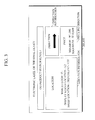
FIG. 3 is a diagram illustrating a product search result according to an exemplary embodiment. - Referring to
FIG. 3 , a product search result may include location information of the product. Here, the 'location information' of the product refers to an actual location of the product in a store, and includes information regarding the floor where the product is located, the location of the display stand on its relevant floor, the shelf location on the relevant display stand, and directions to where the product is located. The location information of the product is not limited thereto, in which any information to find the relevant product may be included. - The directions regarding where the product is located are to roughly show the directions to where the product is located based on a user's present location, and may be shown using symbols and the like. For example, the directions may be shown using arrows.
- The location information of the product may further include price information. For example, if several prices about one product exist in the product search result, the price information may include both the minimum and maximum prices among the searched product prices.
- Otherwise, if no product search result exists, the
server 100 may transmit a message that shows the product cannot be found, or in other words, a product search unavailable message. This product search unavailable message is transmitted as the product search result to theelectronic label 300 through therepeater 200. In such a case, theelectronic label 300 may display a message for inputting new search information on thedisplay 320 so as to prompt a user to input other information on the search request. - Alternatively, the
electronic label 300 may transmit the received product search unavailable message to aterminal device 400. The communications between theelectronic label 300 and theterminal device 400 is specifically described below. -
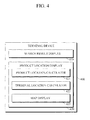
FIG. 4 is a rough diagram illustrating a terminal device according to an exemplary embodiment. - A system for searching for information of an electronic label may further include a
terminal device 400. - Referring to
FIG. 4 , theterminal device 400 receives an input of information on a search request from a user and transmits the information to anelectronic label 300. Theterminal device 400 includes asearch result display 410 that receives a product search result from theelectronic label 300 and displays the information. - A
terminal device 400 may further include aproduct location display 420. Amid all the information of the product search result that theproduct location display 420 has received, theproduct location display 420 displays the product's location information on a store map. - Here, the
product location display 420 of theterminal device 400 may include aproduct location calculator 421, aterminal location calculator 422, and amap display 423. - The
product location calculator 421 calculates the location of the product from the received product search result and displays the location of the product. The location of the product is managed with an identification number on the electronic label in an electronic labeling system. - The
terminal location calculator 422 acquires the present location of theterminal device 400 via an indoor positioning system (IPS) and displays the present location. The IPS refers to a system for confirming and tracking a location, which can be used in limited space (e.g., within a short distance or an indoor area) based on precise location information. In an exemplary embodiment, there is no specific limit to execution of a method of calculating the present location of theterminal device 400, and as such, any well-known, pre-existing indoor positioning algorithm, or the like, may be used so as to calculate the present location of theterminal device 400. - Depending on the wireless communications technology for each positioning method, an indoor positioning method can be divided into a triangulation method, a proximity identification method, and a fingerprinting method. The triangulation method is to calculate a location, which a user wants to know, using the measured distance from three points. In the proximity identification method, there are: a method of monitoring a wireless access point so as to know whether an object, which is a position tracking target, comes into a usable range of one of or a plurality of access points in a wireless cell network; and a method of calling and identifying an automatic identification system or tag information and finding out the present location. The location fingerprint method is a fingerprint technique, which is a method for randomly selecting several locations in advance in a service area and estimating the location by using information on the signal strength that has been collected from the selected locations.
- The
map display 423 displays the location of the product and the present location of the terminal device on a store map. - Such a
terminal device 400 may indicate all kinds of terminal devices, which individuals can carry, and which are capable of implementing various functions using application programs, as well as the wireless communications. For example, theterminal device 400 may be a personal mobile communications service terminal device, a personal digital assistant (PDA), a tablet, a laptop, a wireless LAN terminal device, a shopping guide device that is equipped in a cart placed in a store, a hand-held device that a store provides, etc. -
FIG. 5 is a diagram illustrating a product search result according to another exemplary embodiment. - Referring to
FIG. 5 , a product search result may be shown in aterminal device 400, including a location of a product and a present location of the terminal device on a store map displayed therein. - A point of
departure 510 is a present location of the terminal device, and adestination 520 is a location of the product. The shortest path from the point ofdeparture 510 to thedestination 520 is shown with a line. -
FIG. 6 is a rough diagram illustrating an electronic label according to another exemplary embodiment. - Referring to
FIG. 6 , anelectronic label 300 may further include anear field communicator 360. TheNFC communicator 360 receives information on a search request from aterminal device 400 and outputs the information to aninformation searcher 331. - Here, the
NFC communicator 360 may be executed via one or more of NFC, Wi-Fi, and ZigBee. -
FIG. 7 is a flowchart illustrating a product search method using electronic labels according to an exemplary embodiment. - Referring to
FIG. 7 , a product search method using an electronic label includes the following operations: transmitting, by an electronic label, a product search request message to a repeater in 701; searching, by the repeater in storage, whether there is a product search result corresponding to the product search request message in 702; after the search, if the a product search result exists, transmitting the product search result to the electronic label in 703; if no product search result exists, transmitting the product search request message to a server in 704; searching a database according to the product search request message and generating the product search result in 705; transmitting the generated product search result to the electronic label through the repeater in 707; and displaying the product search result that the electronic label has received in 709. - A procedure which is described below including one exemplary embodiment may be implemented in various forms. The product search method using the electronic label, illustrated in
FIG. 7 , is a method by which theelectronic label 300 inFIG. 2 is implemented in a system for searching information of an electronic label inFIG. 1 . The product search method using the electronic label is briefly described to avoid an unnecessary repetition, and the description with reference toFIGS. 1 to 5 may be, in the same way, applied to what is not specifically described here. - First, the
electronic label 300 transmits the product search request message to therepeater 200 in 701. Theelectronic label 300 may transmit the product search request message to therepeater 200 as being connected to therepeater 200 through wireless networks (e.g., Wi-Fi, Bluetooth®, and ZigBee). Theelectronic label 300 may be connected to therepeater 200 through wired networks as needed. - Then, the
repeater 200 searches, in the storage, whether there is the product search result corresponding to the product search request message in 702. Therepeater 200 may store, in the storage, the product search request message which has been received from theelectronic label 300, and the product search result which has been received from aserver 100. - Then, after the search, if the product search result exists in the storage of the
repeater 200, therepeater 200 transmits the product search result to theelectronic label 300 in 703. However, if no product search result exists in the storage of therepeater 200, therepeater 200 transmits the product search request message to theserver 100 in 704. - Then, the
server 100 generates the product search result by searching in a database according to the product search request message in 705. The product search result may include location information on a product. - Then, if the product search result exists in the
server 100, the generated product search result is transmitted toelectronic label 300 through therepeater 200 in 707. However, if the information does not exist in theserver 100, theserver 100 may transmit the product search unavailable message to theelectronic label 300 through therepeater 200. In such a case, theelectronic label 300 may display a message for inputting new search information on adisplay 320 so as to prompt a user to input other information on a search request in 708. - Then, the
electronic label 300 displays the received product search result in 709. -
FIG. 8 is a flowchart illustrating a product search method using electronic labels according to another exemplary embodiment. - Referring to
FIG. 8 , a product search method using an electronic label may further include operations: acquiring, at a terminal device, information on a search request in 801, transmitting, by the terminal device, the information on a search request to an electronic label in 802; and transmitting, by the electronic label, a product search result, which has been received, to the terminal device in 813. - A procedure which is described below including one exemplary embodiment may be implemented in various forms. The product search method using an electronic label, illustrated in
FIG. 8 , is a method by which theelectronic label 300 inFIG. 6 is implemented in a system for searching information of an electronic label inFIG. 1 by using aterminal device 400. The product search method using the electronic label is briefly described to avoid an unnecessary repetition, and the description with reference toFIGS. 1 to 6 may be, in the same way, applied to what is not specifically described here. - First, the
terminal device 400 acquires information on a search request in 801. Theterminal device 400 may receive an input of information on a search request from a user of theterminal device 400. - Then, the
terminal device 400 transmits the information on a search request to theelectronic label 300 in 802. - Then, the
electronic label 300 transmits a product search request message to therepeater 200 in 803, and the operation of receiving the product search result from theserver 100 through therepeater 200 is the same as the description inFIG. 7 . - Then, when the
electronic label 300 transmits the received product search result to theterminal device 400, theterminal device 400 displays the received product search result in 813. -
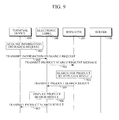
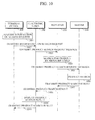
FIGS. 9 and10 are flowcharts illustrating a product search method using a terminal device and an electronic label according to yet another exemplary embodiment. - The product search method using an electronic label, illustrated in
FIGS. 9 and10 , may be a method by which theelectronic label 300 inFIG. 6 is implemented in a system for searching information of the electronic label inFIG. 1 by using theterminal device 400. The product search method using the electronic label is briefly described to avoid an unnecessary repetition, and the description with reference toFIGS. 1 to 6 may be, in the same way, applied to what is not specifically described here. -
FIG. 9 illustrates an example of transmitting the product search result to the electronic label by the direct use of the repeater without passing through the server in a case in which the product search result is stored in storage of the repeater. -
FIG. 10 illustrates an example of transmitting the product search request message to the server and transmitting the information from the server to the electronic label through the repeater in a case in which the product search result is not stored in storage of the repeater. - A number of examples have been described above. Nevertheless, it should be understood that various modifications may be made. For example, suitable results may be achieved if the described techniques are performed in a different order and/or if components in a described system, architecture, device, or circuit are combined in a different manner and/or replaced or supplemented by other components or their equivalents. Accordingly, other implementations are within the scope of the following claims.
Claims (15)
- A system for searching information of an electronic label, the system comprising:a server configured to receive a product search request message and transmit a product search result corresponding to the product search request message;a repeater configured to relay information; andan electronic label configured to display product information received from the server, the electronic label comprising:a communicator configured to perform communications with the repeater;storage;a display; anda controller comprising information searcher configured to generate the product search request message from information on a search request that a user has input and transmit the product search request message to the repeater, and an information display configured to control the product search result to be displayed on the display.
- The system of claim 1, wherein the electronic label further comprises an input configured to receive an input of the information on a search request from the user and output the information on a search request to the information searcher.
- The system of claim 1, wherein the repeater is configured to store, in the storage, the product search request message received from the electronic label, and the product search result received from the server; and further comprises a search cache configured to transmit, to the electronic label, the product search result of the storage in a case in which the product search result corresponding to the product search request message exists in the storage.
- The system of claim 1, wherein the product search result comprises a product location.
- The system of claim 1, further comprising:a terminal device comprising a search result display configured to receive an input of the information on a search request from the user, transmit the information on a search request to the electronic label, receive the product search result from the electronic label, and display the product search result.
- The system of claim 5, wherein the terminal device further comprises a product location display configured to display, on a store map, a product location amid the received product search result.
- The system of claim 6, wherein the product location display comprises:a product location calculator configured to calculate and output a product location from the received product search result;a terminal location calculator configured to acquire and output a present location of the terminal device from an indoor positioning system (IPS); anda map display configured to display the product location and the present location of the terminal device on the store map.
- The system of claim 5, wherein the electronic label further comprises a near field communicator configured to receive the information on a search request from the terminal device and transmit the information on a search request to the information searcher.
- The system of claim 8, wherein the NFC communicator is configured to be executed via one or more of NFC, Wi-Fi, and ZigBee.
- A product search method using an electronic label, the product search method comprising:transmitting, by an electronic label, a product search request message to a repeater;searching, by the repeater in storage, whether there is a product search result corresponding to the product search request message;transmitting the product search result to the electronic label in response to a search result indicating that the product search result exists in the storage, and transmitting the product search request message to a server in response to a search result indicating that the product search result does not exist in the storage;at the server, searching a database based on the product search request message and generating the product search result;transmitting the generated product search result to the electronic label through the repeater; anddisplaying, at the electronic label, the transmitted product search result.
- The product search method of claim 10, wherein the searching of the product further comprises:acquiring, at a terminal device, information on a search request;transmitting, by a terminal device, the information on a search request to the electronic label; andtransmitting, by the electronic label, the transmitted product search result to the terminal device.
- An electronic label, comprising:a communicator configured to perform communications with a repeater;storage;a display configured to display received product information;a controller comprising an information searcher configured to generate a product search request message from information on a search request that a user has input and transmit the product search request message to a repeater, and an information display configured to control a product search result to be displayed on the display.
- The electronic label of claim 12, further comprising an input configured to receive an input of the information on a search request from the user and output the information on a search request to the information searcher.
- The electronic label of claim 13, wherein the input is a touch panel.
- The electronic label of claim 12, wherein the product search result comprises a product location.
Applications Claiming Priority (1)
| Application Number | Priority Date | Filing Date | Title |
|---|---|---|---|
| KR1020140127119A KR20160035709A (en) | 2014-09-23 | 2014-09-23 | Method of searching the informations of electronic information lable and system thereof |
Publications (1)
| Publication Number | Publication Date |
|---|---|
| EP3001376A1 true EP3001376A1 (en) | 2016-03-30 |
Family
ID=53546109
Family Applications (1)
| Application Number | Title | Priority Date | Filing Date |
|---|---|---|---|
| EP15174220.2A Withdrawn EP3001376A1 (en) | 2014-09-23 | 2015-06-29 | Method of searching for information of electronic label and system therefor |
Country Status (3)
| Country | Link |
|---|---|
| US (1) | US20160086256A1 (en) |
| EP (1) | EP3001376A1 (en) |
| KR (1) | KR20160035709A (en) |
Cited By (2)
| Publication number | Priority date | Publication date | Assignee | Title |
|---|---|---|---|---|
| CN111063165A (en) * | 2019-12-30 | 2020-04-24 | 中南大学湘雅医院 | Monitor crisis alarm method and device and electronic equipment |
| JP2024546232A (en) * | 2021-12-18 | 2024-12-19 | ヴジョングループ・ゲゼルシャフト・ミト・ベシュレンクテル・ハフツング | Devices to assist the visually impaired or visually impaired when shopping |
Families Citing this family (2)
| Publication number | Priority date | Publication date | Assignee | Title |
|---|---|---|---|---|
| KR20190129421A (en) * | 2018-05-11 | 2019-11-20 | 고권석 | System for providing location-tracking and location information of goods |
| CN115545127A (en) * | 2021-06-29 | 2022-12-30 | 汉朔科技股份有限公司 | Product information display method and device, computer equipment and storage medium |
Citations (3)
| Publication number | Priority date | Publication date | Assignee | Title |
|---|---|---|---|---|
| US20090319625A1 (en) * | 2008-06-20 | 2009-12-24 | Alcatel Lucent | Interactivity in a digital public signage network architecture |
| US20140139548A1 (en) * | 2012-11-16 | 2014-05-22 | Cisco Technology, Inc. | Retail digital signage |
| US20140225852A1 (en) * | 2008-04-11 | 2014-08-14 | T-Mobile Usa, Inc. | Digital display devices having communication capabilities |
Family Cites Families (7)
| Publication number | Priority date | Publication date | Assignee | Title |
|---|---|---|---|---|
| US6185598B1 (en) * | 1998-02-10 | 2001-02-06 | Digital Island, Inc. | Optimized network resource location |
| US7152040B1 (en) * | 2003-05-27 | 2006-12-19 | Microsoft Corporation | Electronic shelf label |
| KR20110109072A (en) * | 2010-03-30 | 2011-10-06 | 삼성전기주식회사 | Electronic price display system and the method of synchronizing the electronic price display tag with the goods applied to it and how to update the product information |
| US20120259732A1 (en) * | 2011-04-07 | 2012-10-11 | Sanal Sasankan | Method and system for locating a product in a store using a mobile device |
| US20130253982A1 (en) * | 2012-03-21 | 2013-09-26 | Michael J. Sciore | System, method and apparatus for locating products |
| US20140019231A1 (en) * | 2012-07-16 | 2014-01-16 | The Sinclair Group, Inc. | Consumer interface device system and method for in-store sales tracking |
| US20140279294A1 (en) * | 2013-03-14 | 2014-09-18 | Nordstrom, Inc. | System and methods for order fulfillment, inventory management, and providing personalized services to customers |
-
2014
- 2014-09-23 KR KR1020140127119A patent/KR20160035709A/en not_active Ceased
-
2015
- 2015-06-29 EP EP15174220.2A patent/EP3001376A1/en not_active Withdrawn
- 2015-07-08 US US14/794,301 patent/US20160086256A1/en not_active Abandoned
Patent Citations (3)
| Publication number | Priority date | Publication date | Assignee | Title |
|---|---|---|---|---|
| US20140225852A1 (en) * | 2008-04-11 | 2014-08-14 | T-Mobile Usa, Inc. | Digital display devices having communication capabilities |
| US20090319625A1 (en) * | 2008-06-20 | 2009-12-24 | Alcatel Lucent | Interactivity in a digital public signage network architecture |
| US20140139548A1 (en) * | 2012-11-16 | 2014-05-22 | Cisco Technology, Inc. | Retail digital signage |
Cited By (3)
| Publication number | Priority date | Publication date | Assignee | Title |
|---|---|---|---|---|
| CN111063165A (en) * | 2019-12-30 | 2020-04-24 | 中南大学湘雅医院 | Monitor crisis alarm method and device and electronic equipment |
| CN111063165B (en) * | 2019-12-30 | 2022-06-10 | 中南大学湘雅医院 | Monitor crisis alarm method and device and electronic equipment |
| JP2024546232A (en) * | 2021-12-18 | 2024-12-19 | ヴジョングループ・ゲゼルシャフト・ミト・ベシュレンクテル・ハフツング | Devices to assist the visually impaired or visually impaired when shopping |
Also Published As
| Publication number | Publication date |
|---|---|
| US20160086256A1 (en) | 2016-03-24 |
| KR20160035709A (en) | 2016-04-01 |
Similar Documents
| Publication | Publication Date | Title |
|---|---|---|
| US10282776B2 (en) | User equipment for recognizing object and displaying database matching result, control method thereof and non-transitory computer readable storage medium having computer program recorded thereon | |
| US20130344899A1 (en) | Presenting information for a current location or time | |
| KR101409062B1 (en) | Tag reading apparatus including near field communication module, mobile terminal device for interworking with the reader, and operating method thereof | |
| JP6227682B2 (en) | Service support system, service support server and program | |
| JP5951775B2 (en) | Electronic device and data transmission system | |
| US20160086256A1 (en) | Method of searching for information of electronic label and system therefor | |
| WO2019065286A1 (en) | Purchase support device, purchase support terminal and purchase support system | |
| JP6580499B2 (en) | Advertisement providing system, advertisement providing method, and advertisement providing program | |
| CN113590981B (en) | Information processing method and device for vehicle, vehicle and electronic equipment | |
| KR101647949B1 (en) | Task distribution method in personal assistant service using text messages | |
| KR102199228B1 (en) | Method, apparatus and computer-readable medium of providing untact ordering service | |
| EP3437054A1 (en) | Merchant loyalty account enrollment through payment checkout platform services | |
| KR102616248B1 (en) | Method for selling no-show product at spcial price and apparatus therefor | |
| CN105160536A (en) | An information push method and user terminal in an indoor environment | |
| KR20210150747A (en) | System and Method for recommending estimate sheet based moving data analysis | |
| KR102016729B1 (en) | System and method for synchronizing digital information between digital information display and user terminal | |
| KR102895154B1 (en) | A method and system for monitoring product display status | |
| KR20160072436A (en) | Smart device for providing location based service using electronic shelf label signal, smart cart including the same and method for providing location based service using electronic shelf label signal | |
| KR20160108090A (en) | Terminal and operating method thereof | |
| CN110826751A (en) | Method and device for picking | |
| KR102918118B1 (en) | A method and system for providing recommendation route based on location information of electronic shelf label | |
| KR20260044320A (en) | Apparatus and method for operating co-living based on big data | |
| KR101596320B1 (en) | Method for location calculating with electronic shelf label signal, recording medium, terminal and system for performing the method | |
| KR101644578B1 (en) | Total service providing apparatus using near field communication | |
| CN107205078B (en) | Method and device for managing wearable intelligent equipment |
Legal Events
| Date | Code | Title | Description |
|---|---|---|---|
| PUAI | Public reference made under article 153(3) epc to a published international application that has entered the european phase |
Free format text: ORIGINAL CODE: 0009012 |
|
| AK | Designated contracting states |
Kind code of ref document: A1 Designated state(s): AL AT BE BG CH CY CZ DE DK EE ES FI FR GB GR HR HU IE IS IT LI LT LU LV MC MK MT NL NO PL PT RO RS SE SI SK SM TR |
|
| AX | Request for extension of the european patent |
Extension state: BA ME |
|
| STAA | Information on the status of an ep patent application or granted ep patent |
Free format text: STATUS: THE APPLICATION IS DEEMED TO BE WITHDRAWN |
|
| 18D | Application deemed to be withdrawn |
Effective date: 20161001 |