EP2995300B1 - Proteintransduktionsdomäne auf der basis eines goldnanopartikelaptamerkonjugats und verfahren zur herstellung davon - Google Patents
Proteintransduktionsdomäne auf der basis eines goldnanopartikelaptamerkonjugats und verfahren zur herstellung davon Download PDFInfo
- Publication number
- EP2995300B1 EP2995300B1 EP13875242.3A EP13875242A EP2995300B1 EP 2995300 B1 EP2995300 B1 EP 2995300B1 EP 13875242 A EP13875242 A EP 13875242A EP 2995300 B1 EP2995300 B1 EP 2995300B1
- Authority
- EP
- European Patent Office
- Prior art keywords
- protein
- aunp
- apt
- aptamer
- bim
- Prior art date
- Legal status (The legal status is an assumption and is not a legal conclusion. Google has not performed a legal analysis and makes no representation as to the accuracy of the status listed.)
- Active
Links
Images













Classifications
-
- A—HUMAN NECESSITIES
- A61—MEDICAL OR VETERINARY SCIENCE; HYGIENE
- A61K—PREPARATIONS FOR MEDICAL, DENTAL OR TOILETRY PURPOSES
- A61K9/00—Medicinal preparations characterised by special physical form
- A61K9/14—Particulate form, e.g. powders, Processes for size reducing of pure drugs or the resulting products, Pure drug nanoparticles
- A61K9/16—Agglomerates; Granulates; Microbeadlets ; Microspheres; Pellets; Solid products obtained by spray drying, spray freeze drying, spray congealing,(multiple) emulsion solvent evaporation or extraction
-
- C—CHEMISTRY; METALLURGY
- C12—BIOCHEMISTRY; BEER; SPIRITS; WINE; VINEGAR; MICROBIOLOGY; ENZYMOLOGY; MUTATION OR GENETIC ENGINEERING
- C12N—MICROORGANISMS OR ENZYMES; COMPOSITIONS THEREOF; PROPAGATING, PRESERVING, OR MAINTAINING MICROORGANISMS; MUTATION OR GENETIC ENGINEERING; CULTURE MEDIA
- C12N15/00—Mutation or genetic engineering; DNA or RNA concerning genetic engineering, vectors, e.g. plasmids, or their isolation, preparation or purification; Use of hosts therefor
- C12N15/09—Recombinant DNA-technology
- C12N15/11—DNA or RNA fragments; Modified forms thereof; Non-coding nucleic acids having a biological activity
- C12N15/115—Aptamers, i.e. nucleic acids binding a target molecule specifically and with high affinity without hybridising therewith ; Nucleic acids binding to non-nucleic acids, e.g. aptamers
-
- A—HUMAN NECESSITIES
- A61—MEDICAL OR VETERINARY SCIENCE; HYGIENE
- A61K—PREPARATIONS FOR MEDICAL, DENTAL OR TOILETRY PURPOSES
- A61K47/00—Medicinal preparations characterised by the non-active ingredients used, e.g. carriers or inert additives; Targeting or modifying agents chemically bound to the active ingredient
- A61K47/50—Medicinal preparations characterised by the non-active ingredients used, e.g. carriers or inert additives; Targeting or modifying agents chemically bound to the active ingredient the non-active ingredient being chemically bound to the active ingredient, e.g. polymer-drug conjugates
-
- A—HUMAN NECESSITIES
- A61—MEDICAL OR VETERINARY SCIENCE; HYGIENE
- A61K—PREPARATIONS FOR MEDICAL, DENTAL OR TOILETRY PURPOSES
- A61K47/00—Medicinal preparations characterised by the non-active ingredients used, e.g. carriers or inert additives; Targeting or modifying agents chemically bound to the active ingredient
- A61K47/50—Medicinal preparations characterised by the non-active ingredients used, e.g. carriers or inert additives; Targeting or modifying agents chemically bound to the active ingredient the non-active ingredient being chemically bound to the active ingredient, e.g. polymer-drug conjugates
- A61K47/51—Medicinal preparations characterised by the non-active ingredients used, e.g. carriers or inert additives; Targeting or modifying agents chemically bound to the active ingredient the non-active ingredient being chemically bound to the active ingredient, e.g. polymer-drug conjugates the non-active ingredient being a modifying agent
- A61K47/54—Medicinal preparations characterised by the non-active ingredients used, e.g. carriers or inert additives; Targeting or modifying agents chemically bound to the active ingredient the non-active ingredient being chemically bound to the active ingredient, e.g. polymer-drug conjugates the non-active ingredient being a modifying agent the modifying agent being an organic compound
- A61K47/549—Sugars, nucleosides, nucleotides or nucleic acids
-
- A—HUMAN NECESSITIES
- A61—MEDICAL OR VETERINARY SCIENCE; HYGIENE
- A61K—PREPARATIONS FOR MEDICAL, DENTAL OR TOILETRY PURPOSES
- A61K47/00—Medicinal preparations characterised by the non-active ingredients used, e.g. carriers or inert additives; Targeting or modifying agents chemically bound to the active ingredient
- A61K47/50—Medicinal preparations characterised by the non-active ingredients used, e.g. carriers or inert additives; Targeting or modifying agents chemically bound to the active ingredient the non-active ingredient being chemically bound to the active ingredient, e.g. polymer-drug conjugates
- A61K47/69—Medicinal preparations characterised by the non-active ingredients used, e.g. carriers or inert additives; Targeting or modifying agents chemically bound to the active ingredient the non-active ingredient being chemically bound to the active ingredient, e.g. polymer-drug conjugates the conjugate being characterised by physical or galenical forms, e.g. emulsion, particle, inclusion complex, stent or kit
- A61K47/6921—Medicinal preparations characterised by the non-active ingredients used, e.g. carriers or inert additives; Targeting or modifying agents chemically bound to the active ingredient the non-active ingredient being chemically bound to the active ingredient, e.g. polymer-drug conjugates the conjugate being characterised by physical or galenical forms, e.g. emulsion, particle, inclusion complex, stent or kit the form being a particulate, a powder, an adsorbate, a bead or a sphere
- A61K47/6923—Medicinal preparations characterised by the non-active ingredients used, e.g. carriers or inert additives; Targeting or modifying agents chemically bound to the active ingredient the non-active ingredient being chemically bound to the active ingredient, e.g. polymer-drug conjugates the conjugate being characterised by physical or galenical forms, e.g. emulsion, particle, inclusion complex, stent or kit the form being a particulate, a powder, an adsorbate, a bead or a sphere the form being an inorganic particle, e.g. ceramic particles, silica particles, ferrite or synsorb
-
- A—HUMAN NECESSITIES
- A61—MEDICAL OR VETERINARY SCIENCE; HYGIENE
- A61K—PREPARATIONS FOR MEDICAL, DENTAL OR TOILETRY PURPOSES
- A61K47/00—Medicinal preparations characterised by the non-active ingredients used, e.g. carriers or inert additives; Targeting or modifying agents chemically bound to the active ingredient
- A61K47/50—Medicinal preparations characterised by the non-active ingredients used, e.g. carriers or inert additives; Targeting or modifying agents chemically bound to the active ingredient the non-active ingredient being chemically bound to the active ingredient, e.g. polymer-drug conjugates
- A61K47/69—Medicinal preparations characterised by the non-active ingredients used, e.g. carriers or inert additives; Targeting or modifying agents chemically bound to the active ingredient the non-active ingredient being chemically bound to the active ingredient, e.g. polymer-drug conjugates the conjugate being characterised by physical or galenical forms, e.g. emulsion, particle, inclusion complex, stent or kit
- A61K47/6921—Medicinal preparations characterised by the non-active ingredients used, e.g. carriers or inert additives; Targeting or modifying agents chemically bound to the active ingredient the non-active ingredient being chemically bound to the active ingredient, e.g. polymer-drug conjugates the conjugate being characterised by physical or galenical forms, e.g. emulsion, particle, inclusion complex, stent or kit the form being a particulate, a powder, an adsorbate, a bead or a sphere
- A61K47/6927—Medicinal preparations characterised by the non-active ingredients used, e.g. carriers or inert additives; Targeting or modifying agents chemically bound to the active ingredient the non-active ingredient being chemically bound to the active ingredient, e.g. polymer-drug conjugates the conjugate being characterised by physical or galenical forms, e.g. emulsion, particle, inclusion complex, stent or kit the form being a particulate, a powder, an adsorbate, a bead or a sphere the form being a solid microparticle having no hollow or gas-filled cores
- A61K47/6929—Medicinal preparations characterised by the non-active ingredients used, e.g. carriers or inert additives; Targeting or modifying agents chemically bound to the active ingredient the non-active ingredient being chemically bound to the active ingredient, e.g. polymer-drug conjugates the conjugate being characterised by physical or galenical forms, e.g. emulsion, particle, inclusion complex, stent or kit the form being a particulate, a powder, an adsorbate, a bead or a sphere the form being a solid microparticle having no hollow or gas-filled cores the form being a nanoparticle, e.g. an immuno-nanoparticle
-
- A—HUMAN NECESSITIES
- A61—MEDICAL OR VETERINARY SCIENCE; HYGIENE
- A61K—PREPARATIONS FOR MEDICAL, DENTAL OR TOILETRY PURPOSES
- A61K9/00—Medicinal preparations characterised by special physical form
- A61K9/14—Particulate form, e.g. powders, Processes for size reducing of pure drugs or the resulting products, Pure drug nanoparticles
-
- C—CHEMISTRY; METALLURGY
- C12—BIOCHEMISTRY; BEER; SPIRITS; WINE; VINEGAR; MICROBIOLOGY; ENZYMOLOGY; MUTATION OR GENETIC ENGINEERING
- C12N—MICROORGANISMS OR ENZYMES; COMPOSITIONS THEREOF; PROPAGATING, PRESERVING, OR MAINTAINING MICROORGANISMS; MUTATION OR GENETIC ENGINEERING; CULTURE MEDIA
- C12N2310/00—Structure or type of the nucleic acid
- C12N2310/10—Type of nucleic acid
- C12N2310/16—Aptamers
Definitions
- the present invention relates to a protein delivery carrier with improved intracellular protein delivery capability by conjugating gold nanoparticles with a variety of tag aptamers or protein-specific aptamers, and a method of preparing the same.
- nanoparticles have been a promising tool for biomedical applications such as a delivery agent for drug and DNAs, intracellular imaging, or light therapy.
- Gold nanomaterials in particular, have been attracting much attention as an excellent candidate for such applications, due to the ease of its synthesis and action, chemical stability, biocompatibility, and adjustability in its optical and electrical properties.
- substances prepared for diagnostic or therapeutic applications generally need to be delivered to the cell interior in a diagnostically or therapeutically significant amount, but cells are usually impermeable to macromolecules like proteins, thus such protein-based diagnostic or therapeutic techniques might face a limitation.
- US 2007/134665 discloses a method for the detection and localization of proteins in situ.
- the method comprises contacting a peptide tag labelled protein with a nucleic acid aptamer that recognizes the peptide tag.
- the nucleic acid aptamer is functionalized such that is detectable by a variety of methods.
- the method allows for the detection of one or more proteins and/or protein complexes in sub-cellular and sub-nuclear structures with high specificity and also allows for the purification of such identified proteins.
- the objective of the present invention is to provide a protein delivery carrier including a gold nanoparticle and an aptamer that binds to a surface of the gold nanoparticle.
- Another objective of the present invention is to provide a method of preparing a protein delivery carrier, wherein the method includes a process of conjugating a gold nanoparticle with an aptamer.
- the present invention is as defined in the appended claims.
- the present invention provides a protein delivery carrier comprising a gold nanoparticle and an aptamer that conjugated to a surface of the gold nanoparticle, wherein the aptamer is selected from an aptamer that has SEQ ID NO: 1 and can specifically bind to a histidine-tag and/or an aptamer that has SEQ ID NO: 2 and can specifically bind to a glutathione S-transferase (GST)-tag.
- GST glutathione S-transferase
- the gold nanoparticle may have a size of 10 to 20 nm.
- the aptamer may specifically bind to a protein to be delivered.
- the protein may be a protein labeled with a tag.
- the aptamer may bind specifically to the tag.
- the tag may be histidine and/or glutathione S-transferase (GST).
- the present invention provides a method of preparing a protein delivery carrier, comprising conjugating a gold nanoparticle with one or more aptamers, wherein the one or more aptamers are selected from an aptamer that has SEQ ID NO: 1 and can specifically bind to a histidine-tag and/or an aptamer that has SEQ ID NO: 2 and can specifically bind to a glutathione S-transferase (GST)-tag.
- GST glutathione S-transferase
- a complex formed by conjugating a protein delivery carrier with a protein is disclosed.
- a protein delivery carrier for use in a method of delivering a protein, including administering a complex to an individual.
- a protein delivery carrier according to the present invention can effectively deliver a protein into cells by specifically binding a variety of tagged aptamers or protein-specific aptamers conjugated with a gold nanoparticle to a protein to be delivered. Also, the protein delivery carrier is harmless to the human body by using gold nanoparticles with a very low cytotoxicity and expected to be useful for diagnosis or therapy of a disease by reflecting light in various wavelengths to easily detect a location in the cells.
- the inventors have completed the present invention as a result of research on a protein delivery carrier that has an excellent intracellular protein delivery capability and a very low cytotoxicity.
- the present invention provides a protein delivery carrier including a gold nanoparticle and an aptamer conjugated to a surface of the gold nanoparticle, wherein the aptamer is selected from an aptamer that has SEQ ID NO: 1 and can specifically bind to a histidine-tag and/or an aptamer that has SEQ ID NO: 2 and can specifically bind to a glutathione S-transferase (GST)-tag.
- GST glutathione S-transferase
- nanoparticle(s) in the present invention is intended to mean particles of various materials having a diameter of nano unit. If the nanoparticle is particles having a nano size, it is not particularly limited In the present invention, the term “gold nanoparticle(s)” refers to a particle of gold metal having a diameter of nano unit. The small size of the particle allows penetration of nanoparticles of the present invention into the target cells (for example, human cells) as a result, making penetration of a protein delivery carrier into the cell interior possible.
- target cells for example, human cells
- Gold nanoparticles are relatively easy to prepare in a stable particle form, and also can be manufactured in various sizes from 0.8 nm to 200 nm suitable for its intended application.
- Gold can be structurally modified by combining with a variety of molecules such as peptides, proteins, nucleic acids and can reflect the light at various wavelengths, thereby being easily detectable inside cells.
- gold nanoparticles are harmless to the human body, having high biocompatibility and very low cytotoxicity.
- Gold nanoparticles with diameter equal to or greater than 100 nm no longer exhibit nanomaterial characteristics, and the surface of gold without nanomaterial characteristics possesses weak binding ability to thiol groups and further, gold nanoparticles with diameter outside the range of 10 to 20 nm induce cytotoxicity. It is therefore preferable to maintain the size of the gold nanoparticle of the present invention within the range of 10 to 20 nm.
- aptamer refers to a single-strand nucleic acid (DNA, RNA or modified nucleic acids) having a stable three-dimensional structure of itself, and high affinity to and selectivity for a target molecule.
- Aptamers binding to various target materials protein, sugars, dyes, DNA, metal ions, cells, etc.
- SELEX Systematic Evolution of Ligands of Exponential enrichment
- aptamers to be conjugated with gold nanoparticles may be any aptamer of various tags, or a protein-specific aptamer of any kind, there is no particular limitation thereof.
- Protein delivery carriers of the present invention can effectively deliver the target protein to the cell interior by specifically binding aptamers of various tags or protein-specific aptamers conjugated with gold nanoparticles with the target protein to be delivered, and therefore can be useful as a diagnostic or therapeutic tool in biomedical applications.
- a method of delivering a protein including administering the above-described complex to an individual.
- the "individual” used herein means a subject needing to be treated or diagnosed, and more specifically, human or non-human primates, and mammals including mice, rats, dogs, cats, horses, and cows.
- a protein delivery carrier was prepared by conjugating histidine-tagged aptamers or GST-tagged aptamers to gold nanoparticles (see Example 2), and the protein delivery carrier described above was found to be effective in intracellular delivery of proteins, namely, AcrA protein (Example 3), BCL-xL protein (Example 4), FOXL2 protein (Example 5), BIM protein (Example 7).
- AuNP gold nanoparticles
- the protein delivery carrier (gold nanoparticle-aptamer conjugate) of the present invention has no detectable cytotoxicity (See Example 10) and capable of delivering multiple proteins at once (See Example 11).
- mice (Charles River Laboratories International, Inc., Japan) weighing from 18 to 20 g and 18-day-old Sprague-Dawley rats (Samtako, Korea) were injected subcutaneously with 2 mg of diethylstilbesterol (DES; Sigma) daily for three days.
- DES diethylstilbesterol
- the animal room in which all mice were housed was maintained at a humidity of 30-40% and a temperature of 22 ⁇ 1°C. The lighting in the room was on a 12-h light/dark cycle. Animal protocols were approved by the Chung-Ang University Support Center for Animal Experiments, and the animals were treated as described in the protocol.
- HeLa Human cervical carcinoma cells were cultured in Dulbecco's modified Eagle's medium (DMEM).
- Human adult-type granulosa cell tumor-derived KGN and primary rat granulosa cells were cultured in Dulbecco's modified Eagle's medium/F12. All media contained 10% heat-inactivated fetal bovine serum (Caisson, USA) and 1% penicillin-streptomycin (Welgene, Korea).
- AuNP-Apt conjugate was pre-incubated at 80°C for 5 minutes to prevent formation of secondary structures.
- AuNP-His/GST-Apt (1 nM) and purified His/GST-tagged protein were incubated at room temperature in 1x PBS containing 5 mM MgCl 2 (pH 7.2) for 10 minutes, the resulting conjugates were centrifuged at 13,000 ⁇ g, and the supernatant was removed.
- the AuNP-Apt-protein complex was washed with TBST supplemented with 500 mM NaCl and 1M KCl.
- HeLa cells (1 x 10 7 ) were subcutaneously injected into 6-week old BALB/c-nu/nu mice (purchased from Central Lab Animal Inc, Korea) with weights ranging from 18 to 20g, and an AuNP-GST-Apt-His-BIM or AuNP-His-Apt-His-BIM complex was directly injected into tumor cells (tumor volume of approximately 0.1 cm 3 ). The long and short axial lengths of the tumors were measured every other day. Mice were killed 30 days after the first injection of the complex, and tumor samples were collected for further analyses. Results are expressed as the mean ⁇ S.E.M. of the tumors of five mice in each group, and asterisks indicate statistically significant values compared to the corresponding controls (P ⁇ 0.05).
- Histidine-tagged proteins were produced in BL21(DE3) E. coli cells and were purified using Ni-NTA agarose resin (Qiagen, USA) or GST Sepharose 4B beads (GE Life science, USA). His- or GST-tags were removed from purified proteins using the TAGZyme System (Qiagen) and Thrombin (GE Life science). For the protein uptake experiments, proteins were labeled with the Alexa Fluor® 488 Microscale Protein Labeling Kit (Invitrogen, USA) or the Texas Red® X Protein Labeling Kit (Invitrogen).
- HeLa cells were seeded in 96-well plates and cultured overnight to allow for cell attachment. The cells were incubated with AuNP-His-Apt-His-BIM, and cell viability was measured ( Yeom, J.H. et al. Inhibition of Xenograft Tumor Growth by Gold Nanoparticle-DNA Oligonucleotide Conjugates-Assisted Delivery of BAX mRNA. PLoS One 8, e75369 (2013 )).
- HeLa cells were treated with AuNP-His-Apt-His-BIM and incubated for 1 hour, and then the mitochondrial fractions were collected using a mitochondria isolation kit (Thermo, USA).
- HeLa cells were treated with AuNP-GST-Apt-GST-FOXL2 and incubated for 1 hour, and then the nuclear fraction was isolated using NE-PER® nuclear and cytoplasmic extraction reagents (Thermo).
- Reverse transcription and real-time PCR were performed by the method previously disclosed ( Kim, J.H. et al. Differential apoptotic activities of wild-type FOXL2 and the adult-type granulosa cell tumor-associated mutant FOXL2 (C134W). Oncogene 30, 1653-1663 (2010 )).
- a protein delivery carrier was prepared by using a his-tag aptamer and gluthathione S-transferase (GST), as illustrated in the schematic diagram in FIG. 1 .
- GST gluthathione S-transferase
- a DNA aptamer that specifically detects and binds to histidine was used. More specifically, the histidine-tag DNA aptamer is a 3'-thiol modified aptamer, whose sequence consists of 5'-GCTATGGGTGGTCTGGTTGGGATTGGCCCCGGGAGCTGGCAAAAAAAA-3'(SH) (SEQ ID NO: 1).
- the dried DNA aptamer was dissolved in water to reach a final concentration of 100 ⁇ M and reacted with 50 ⁇ l of an oligonucleotides to which 1N DTT (dithiothreitol) was added for 15 minutes at room temperature.
- the DTT was mixed with 50 ⁇ l of ethylacetate, and the supernatant was removed by centrifugation. The process was repeated 3 times. Aptamers were precipitated by ethanol (EtOH) precipitation method.
- the precipitated DNA aptamers obtained by pretreatment from Example 2-1 A) was dissolved in water and added to gold nanoparticles.
- AuNP gold nanoparticles
- a gold colloid-15nm #EM.GC15
- UK BBI Life Science
- AuNPs were conjugated with a 5'-Cy5-labeled His-aptamer (Bioneer) in order to detect localization of the AuNPs.
- the protein delivery carrier according to the present invention was prepared by using a DNA aptamer (GST-tag aptamer) that detects and specifically binds to glutathione S-transferase (GST). More specifically, the GST-tag DNA aptamer is an aptamer with 3'-end thiol-modified whose sequence consists of 5'-CTGCCCCGCTATAGAACACCCGTTGGGCAAATGTGTTCGAAAAAAAAA-3'(SH) (SEQ ID NO: 2). The GST-tag DNA aptamer was pretreated by the method described in Example 2-1 A).
- Pretreated and precipitated DNA aptamers from Example 2-2 A) were conjugated with gold nanoparticles by the method described in Example 2-1 B) to prepare the final aptamer-gold conjugate.
- 1 nM gold nanoparticle-aptamer conjugate prepared from Example 2-1 was subjected to 80 °C for 5 minutes and cooled down to room temperature. The conjugate was then allowed to react with 1-2 ⁇ g/ ⁇ l histidine-tagged AcrA (His-AcrA) or untagged AcrA protein (AcrA) in 5 mM MgCl 2 -PBS buffer at room temperature for 2 hours. The reacted gold nanoparticle-aptamer-protein complex was then centrifuged at ⁇ 10,000 x g for 20 minutes and the supernatant was removed.
- His-AcrA histidine-tagged AcrA
- AcrA untagged AcrA protein
- HeLa cells Human cervical cancer cells
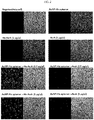
- FIG. 2 shows the results of confocal microscopy analysis for E.coli AcrA protein delivery using secondary antibodies labeled with Rabbit-488 (Green)
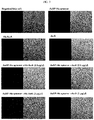
- FIG. 3 shows the results of confocal microscopy analysis for E.coli AcrA protein delivery using secondary antibodies labeled with Rabbit-584 (Red).
- the histidine-tag aptamer of the histidine-tag aptamer-gold nanoparticle conjugate detects and specifically binds to histidine, as shown in FIG. 2 and FIG. 3 , the histidine-tag aptamer-gold nanoparticle conjugate conjugated with histidine-tagged AcrA proteins showed greater intracellular protein delivery capability than those conjugated with untagged AcrA proteins.
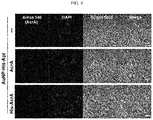
- HeLa cells treated with the AcrA or His-AcrA proteins that are conjugated or unconjugated with AuNP-His-Apt were incubated for 1 hour and immunostained using anti-AcrA antibodies and Alexa 546 rabbit-IgG antibodies, and then analyzed using confocal fluorescence microscopy.
- the results are shown in FIG. 4 . Representative confocal fluorescence images were observed with a 40 ⁇ water-immersion objective using excitation at 556 nm and emission at 573 nm.
- HeLa cells treated with the AcrA or His-AcrA proteins that are conjugated or unconjugated with AuNP-His-Apt were incubated for 1 hour and the Western blot analysis was performed using anti-AcrA antibodies. The results are shown in FIG. 6 .
- Intracellular delivery capability of BCL-xL protein was confirmed by the method described in Example 3-1, and the results are shown in FIG. 7 .
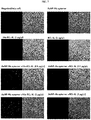
- FIG. 7 shows the results of confocal microscopy analysis of delivery of the BCL-xL protein by using Rabbit488 (Green)-labeled secondary antibodies, and as shown in FIG. 7 , the histidine-tag aptamer-gold nanoparticle conjugate conjugated with histidine-tagged BCL-xL proteins was shown to have greater intracellular protein delivery capability than those conjugated with untagged BCL-xL proteins.
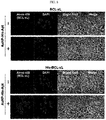
- HeLa cells treated with the BCL-xL or His-BCL-xL proteins that are conjugated or not conjugated with AuNP-His-Apt were incubated for 1 hour and immunostained using anti-BCL-xL and Alexa 488-labeled mouse-IgG, and then analyzed using a confocal fluorescence microscope. The results are shown in FIG. 8 . Representative confocal fluorescence images were observed with a 40 ⁇ water-immersion objective and the scale bar was 20 ⁇ m.
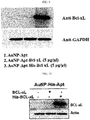
- Example 3-2 intracellular delivery of BCL-xL protein was confirmed by Western blotting and the results are shown in FIG. 9 .
- FIG. 9 shows the results of Western blot analysis performed to detect BCL-xL protein, and as shown in FIG. 9 , when histidine-tag aptamer-gold nanoparticle conjugates were conjugated with histidine-tagged BCL-xL proteins (lane 3), the BCL-xL protein was detected.
- HeLa cells treated with BCL-xL or His- BCL-xL proteins that are conjugated or unconjugated with AuNP-His-Apt were incubated for 1 hour and analyzed by Western blotting. The results are shown in FIG. 10 .
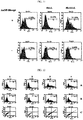
- the complex was prepared by the method described in Example 3-1 using Alexa488-His-BCL-xL protein and Alexa488-BCL-xL protein. Once the complex is prepared, the supernatant was removed and HeLa cells were treated with the resultant aptamer-gold nanoparticle-protein complex and incubated for 1 hour. After the incubation, the cells were washed with PBS and dispersed into 1 mL of PBS buffer. The samples were observed by flow cytometry and the results are shown in FIG. 11 and Fig 12 .
- FIG. 11 shows the results of flow cytometry analysis of protein delivery of Alexa488 (Green) fluorophore-labeled His-BCL-xL protein and BCL-xL protein.
- FIG. 12 shows the flow cytometry results that show the number of cells having both red wavelength from the gold nanoparticle and green wavelength from the protein using BCL-xL protein complex prepared by combining a Cy5 (Red)-labeled gold nanoparticle-aptamer conjugate and Alexa488 (Green) fluorophore-labeled His-BCL-xL protein.
- the His-tag aptamer-gold nanoparticle conjugate conjugated with His-tagged BCL-xL protein showed higher intracellular protein delivery capability than that of the conjugate conjugated with untagged BCL-xL protein.
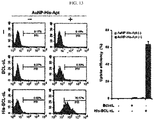
- HeLa cells treated with BCL-xL or His-BCL-xL proteins that were conjugated or not conjugated with AuNP-His-Apt were incubated for 1 hour and flow cytometry analysis was performed on Alexa 488-positive cells. The results are shown in FIG. 13 .
- Intracellular delivery capability of GST-FOXL2 protein was confirmed by the method described in Example 3-1 using the gold nanoparticle-aptamer conjugate prepared in Example 2-2. The results are shown in FIG. 14 .
- FIG. 14 shows the results of confocal microscopy analysis of protein delivery of FOXL2 using Rabbit-Rodamine (Red)-labeled secondary antibodies.
- the GST-tag aptamer-gold nanoparticle conjugate conjugated with GST-tagged FOXL2 proteins was shown to have greater intracellular protein delivery capability than those conjugated with untagged FOXL2 proteins.
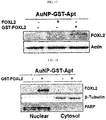
- Intracellular delivery capability of GST-FOXL2 protein was confirmed by Western blotting as described in Example 3-2 using the gold nanoparticle-aptamer conjugate prepared in Example 2-2. The results are shown in FIG. 15 .
- FIG. 15 shows the results of Western blot analysis for FOXL2 protein detection, and as is shown, FOXL2 protein was detected when the GST-tag aptamer-gold nanoparticle conjugate was conjugated with GST-tagged FOXL2 protein (lane 3).
- An aptamer-gold nanoparticle-protein complex (AuNP-GST-Apt-GST-FOXL2) was prepared by reacting GST-tagged FOXL2 protein (GST-FOXL2) and AuNP-GST-Apt. HeLa cells treated with the above complex were incubated for 1 hour and immunostained using anti-FOXL2 and Alexa546-rabbit IgG. The cells were observed using confocal microscopy and the results are shown in FIG. 16 . Images were observed with a 40 ⁇ water-immersion objective using excitation at 556 nm and emission at 573 nm. The scale bar was 20 ⁇ m.
- FOXL2 proteins were effectively delivered into HeLa cells. Also, it was observed that the FOXL2 proteins were localized in cell nuclei.
- HeLa cells treated with AuNP-GST-Apt-GST-FOXL2 were incubated for 1 hour and analyzed by Western blotting, and the results are shown in FIG. 17 .
- intracellular-delivered FOXL2 proteins effectively up-regulated target genes including TNF-R1 (tumor necrosis factor-receptor 1) and Fas (CD95/APO-1).
- the aptamer-gold nanoparticle-protein complex (AuNP-His-Apt-His-BIM) was prepared by adding histidine-tags to AuNP-His-Apt, which then were reacted with Alexa 488 labeled BIM protein (His-BIM).
- Human cervical cancer cells HeLa cells
- the aptamer-gold nanoparticle-protein complex (AuNP-His-Apt-His-BIM)
- AuNP-His-Apt-His-BIM Human cervical cancer cells
- AuNP-His-Apt-His-BIM were treated with the aptamer-gold nanoparticle-protein complex (AuNP-His-Apt-His-BIM), incubated for 1 hour and stained using Mitotracker (red) and DAPI, and then analyzed using a confocal microscope.
- FIG. 20 Here the final concentration of AuNP-His-Apt and His-BIM were respectively 1 nM and
- the HeLa cells treated and incubated with AuNP-His-Apt loaded with Alexa 488-labeled His-BIM protein show green fluorescence of Alexa 488, whereas the cells treated with unloaded AuNP-His-Apt show no fluorescent signal.
- His-BIM proteins delivered by AuNP-His-Apt were localized predominantly in mitochondria. The above results show that intracellular-delivery of His-BIM proteins was done by the aptamer-gold nanoparticle conjugate of the present invention.
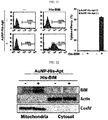
- HeLa cells treated with Alexa 488-His-BIM proteins that are reacted or unreacted with AuNP-His-Apt were incubated for 1 hour, and observed by flow cytometry. The results are shown in FIG. 21 .
- His-BIM protein uptake efficiency was obtained by repeating the experiment 3 times and results are presented as means ⁇ SEM, in FIG. 21 (right panel).
- His-BIM protein uptake efficiency was greater when AuNP-His-Apt was reacted with Alexa 488-His-BIM.
- HeLa cells treated with the aptamer-gold nanoparticle-protein complex (AuNP-His-Apt-His-BIM) prepared by conjugating AuNP-His-Apt with His-BIM protein were incubated for 1 hour and analyzed by western blotting. The results are shown in FIG. 22 . Efficient isolation of the mitochondrial and cytosolic fractions was confirmed by western blotting using anti-Cox IV and anti- ⁇ -actin.
- His-BIM proteins were delivered into the cells by AuNP-His-Apt and particularly, localized predominantly in mitochondria.
- Cellular apoptosis induced by His-BIM protein was quantified by flow cytometry of Annexin V-positive apoptotic cells. That is, HeLa cells treated with the aptamer-gold nanoparticle-protein complex (AuNP-His-Apt-His-BIM) prepared by conjugating AuNP-His-Apt with His-BIM protein at predetermined concentrations (0.4 ⁇ M and 0.8 ⁇ M) were incubated for 12 hour and analyzed by flow cytometry, and the results are shown in FIG. 23 . The results (means ⁇ SEM) were obtained from three independent experiments, and unless otherwise defined, statistically significant values are indicated as P ⁇ 0.05.
- AuNP-His-Apt-His-BIM aptamer-gold nanoparticle-protein complex
- the Annexin V-positive apoptotic cells were found to be increasing in the cells treated with AuNP-His-Apt-His-BIM than the control group. From these results, it was confirmed that His-BIM proteins were delivered into the cell by the aptamer-gold nanoparticle conjugate of the present invention.
- His-BIM protein can be controlled by regulating apoptosis-inducing factors such as cytochrome c, Smac/DIABLO and caspases activities in mitochondria.
- apoptosis-inducing factors such as cytochrome c, Smac/DIABLO and caspases activities in mitochondria.
- HeLa cells were treated with AuNP-His-Apt-His-BIM for 12 hours, and then cell viability was measured. The results are shown in FIG. 24 . The results (means ⁇ SEM) were obtained from experiments repeated 3 times.
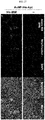
- KGN cells treated with AuNP-His-Apt (1 nM) or an AuNP-His-Apt-Alexa488-His-BIM complex were incubated for 1 hour and observed using a confocal fluorescence microscope, and the results are shown in FIG. 27 .
- the cells were imaged by using the 40x water immersion objective lens, and the scale bar was 20 ⁇ m.
- KGN cells treated with either AuNP-His-Apt (1 nM) or the AuNP-His-Apt-Alexa488-His-BIM complex were incubated for 1 hour and analyzed by western blotting, and the results are shown in FIG. 28 .
- confocal microscopy analysis was performed on endosomal marker proteins (early endosome antigen 1 (EEA), or lysosomal-associated membrane protein 1 (LAMP1)), and the results are shown in FIG. 30 . More specifically, HeLa cells treated with AuNP-His-Apt-Alexa 488-His-BIM were incubated for 1 hour or 3 hours, and allowed to react with anti-EEA-1 (1:500) and anti-LAMPl (1:100) and analyzed by a confocal fluorescence microscope. Here, the cells were counterstained using Alexa Fluor 546 goat anti-mouse IgG (1:1,000) and Alexa Fluor 546 goat anti-rabbit IgG (1:1,000).
- EAA endosome antigen 1
- LAMP1 lysosomal-associated membrane protein 1
- FIG. 31 The percentages in FIG. 31 represents is the positive cell groups for both Cy5 and Alexa 488.
- HeLa cells (1 x 10 7 ) treated with AuNP-His-Apt-His-BIM were incubated for 15 and 30 minutes respectively, and trypsizined, centrifuged, and then washed with PBS (phosphate buffered saline). Once trypsin was removed, cell pellets were fixed in the Karnovsky's glutaraldehyde-paraformaldehyde mixture in a 0.2 M cacodylate buffer (pH 7.4) at room temperature for 3 hours, and washed with the cacodylate buffer (pH 7.4) to remove the fixatives.
- PBS phosphate buffered saline
- Quantitative analysis of aptamers was performed to evaluate loading capacity of AuNP for His-apt or GST-apt.
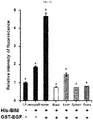
- protein binding capacity of AuNP-His-Apt or AuNP-GST-Apt was measured. More specifically, known amounts of His-BIM, His-BCL-xL, His-AcrA, or GST-FOXL2 were electrophoresed on SDS-PAGE to serve as standards.
- AuNP-apt (1 nM) was reacted with the indicated concentrations of His-BIM, His-BCL-xL, His-AcrA, or GST-FOXL2 in 10 ⁇ l of binding buffer and analyzed by SDS-PAGE. The amounts of proteins bound to AuNPs were determined by measuring the intensities of bands and comparing them with the standards. The results are shown in FIG. 34 .
- the dissociation constants (K D ) were obtained using the slopes calculated from the graphs in the right panel.
- HeLa cells were treated with varying concentrations (0, 0.5, 1.0, and 2 nM) of AuNP-His-Apt and incubated for 12 hours. After the incubation, cell viability was measured and the results are shown in FIG. 35 . Results (mean ⁇ SEM) are from three independent experiments performed in triplicate.
- Annexin V-positive apoptotic cells were confirmed by flow cytometry analysis, and the results are shown in FIG. 35 .
- AuNP-(His-GST)-Apt conjugated with both His-Apt and GST-Apt were allowed to react with His-BCL-xL, GST-FOXL2, or with His-BCL-xL and GST-FOXL2 together.
- HeLa cells were treated with the AuNP conjugates and incubated for 1 hour and immunostained with anti-BCL-xL antibodies or anti-FOXL2 antibodies, and then analyzed using a confocal fluorescence microscope. The results are shown in FIG. 36 .
- DAPI was used for labeling of nuclei, and the cells were imaged using the 40x water immersion objective lens (Scale bar; 20 ⁇ m). Each protein type was identified through detection of Alexa 488-labeled mouse IgG or Alexa 546-labeled-rabbit IgG.
- HeLa cells were injected into nude mice to induce cervical cancer and an AuNP-His-Apt-His-BIM complex (0.5 mg/kg) was injected into xenograft tumors every second day and tumor volume over time was calculated by the following equation, and the results are shown in FIG. 37 . Meanwhile, the mice of the control group were injected with an AuNP-GST-Apt-His-BIM complex. length ⁇ width 2 ⁇ ⁇ / 6
- mice were euthanized and tumor weight was measured. The results were shown in FIG. 37 .
- both volume and weight of tumor injected with the AuNP-His-Apt-His-BIM showed a significant decrease compared to the control group, therefore from the results, it was found that growth of tumor was suppressed due to the injection of AuNP-His-Apt-His-BIM.
- the samples injected with Alexa 488-labeled AuNP-His-Apt-His-BIM show green fluorescence of Alexa 488, and thus it was confirmed that His-BIM protein were delivered to tumor tissues by the AuNP-His-Apt conjugate.
- TUNEL terminal deoxynucleotidyl transferase-mediated dUTP-biotin nick end labeling
- Epidermal growth factor receptor (EGFR)-overexpressing A431 human epidermoid carcinoma cells were injected intraperitoneally into nude mice to allow to form xenograft tumors.
- AuNP-(His-GST)-Apt loaded with His-BIM only, or AuNP-(His-GST)-Apt (0.5mg/kg of body weight) loaded with both His-BIM and GST-EGF were injected via tail vein injection into the tumor-bearing mice.
- His-BIM and GST-EGF were labeled with Alexa 488 and Texas Red, respectively.
- mice 12 hours after the injection, the mice were euthanized and organs (brain, liver, spleen and ovaries) were retrieved, and sections of the xenograft tumors were observed using a confocal fluorescence microscope.
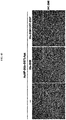
- the results are shown in FIG. 41 and the scale bar was 200 ⁇ m.
- a stronger green signal reflecting efficient BIM protein delivery was observed upon delivery of AuNP-Apt conjugated with Alexa 488-loaded BIM along with Texas Red-loaded EGF whereas less BIM delivery was detected in the absence of EGF protein
- the gold nanoparticle-aptamer conjugate of the present application was capable of in vivo targeted delivery of proteins.
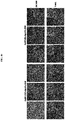
- AuNP-His-Apt-Alexa488-His-BIM prepared by reacting 10 ⁇ g of Alexa488-His-BIM with AuNP-His-Apt, was intravenously injected into rats (1 mg/kg), and organ samples (brain, heart, kidney, liver, ovaries, spleen and thymus) were collected at each time point (0, 1, 6, 12, 24 hours). The samples were analyzed using a confocal microscope and the results are shown in FIG. 44 . Representative fluorescence images indicate the presence of Alexa488-His-BIM in tissues of the brain, heart, kidney, liver, ovaries, spleen and thymus at each time point and the scale bar was 200 ⁇ m.
- a protein delivery carrier according to the present invention can effectively deliver a protein into cells by specifically binding a variety of tagged aptamers or protein-specific aptamers conjugated with a gold nanoparticle to a protein to be delivered. Also, the protein delivery carrier is harmless to the human body by using gold nanoparticles with a very low cytotoxicity and expected to be useful for diagnosis or therapy of a disease by reflecting light in various wavelengths to easily detect a location in the cells.
Landscapes
- Health & Medical Sciences (AREA)
- Engineering & Computer Science (AREA)
- Life Sciences & Earth Sciences (AREA)
- Chemical & Material Sciences (AREA)
- Bioinformatics & Cheminformatics (AREA)
- Genetics & Genomics (AREA)
- General Health & Medical Sciences (AREA)
- Biomedical Technology (AREA)
- Pharmacology & Pharmacy (AREA)
- Epidemiology (AREA)
- Public Health (AREA)
- Veterinary Medicine (AREA)
- Animal Behavior & Ethology (AREA)
- Medicinal Chemistry (AREA)
- Molecular Biology (AREA)
- Wood Science & Technology (AREA)
- Zoology (AREA)
- Organic Chemistry (AREA)
- Biotechnology (AREA)
- General Engineering & Computer Science (AREA)
- Biochemistry (AREA)
- Biophysics (AREA)
- Microbiology (AREA)
- Plant Pathology (AREA)
- Physics & Mathematics (AREA)
- Inorganic Chemistry (AREA)
- Ceramic Engineering (AREA)
- Immunology (AREA)
- Nanotechnology (AREA)
- Medicinal Preparation (AREA)
- Pharmaceuticals Containing Other Organic And Inorganic Compounds (AREA)
Claims (8)
- Proteinlieferträger, umfassend:ein Goldnanopartikel; undein Aptamer, das an eine Oberfläche des Goldnanopartikels konjugiert istwobei das Aptamer aus einem Aptamer ausgewählt ist, das SEQ ID NR: 1 aufweist und spezifisch an ein Histidin-Tag und/oder ein Aptamer binden kann, das SEQ ID NR: 2 aufweist und spezifisch an ein Glutathion-S-Transferase (GST)-Tag binden kann.
- Proteinlieferträger nach Anspruch 1, wobei das Goldnanopartikel eine Größe von 10 bis 20 nm aufweist.
- Proteinlieferträger nach Anspruch 1 oder Anspruch 2, wobei das Aptamer spezifisch an ein Histidin-Tag binden kann und SEQ ID NR: 1 aufweist.
- Proteinlieferträger nach Anspruch 1 oder Anspruch 2, wobei das Aptamer spezifisch an ein Glutathion-S-Transferase (GST)-Tag binden kann und SEQ ID NR: 2 aufweist.
- Proteinlieferträger nach einem der Ansprüche 1-4, wobei sowohl ein Aptamer, das spezifisch an ein Histidin-Tag binden kann und SEQ ID NR: 1 aufweist, als auch ein Aptamer, das spezifisch an ein Glutathion-S-Transferase (GST)-Tag binden kann und SEQ ID NR: 2 aufweist, an eine Oberfläche des Goldnanopartikels konjugiert sind.
- Verfahren zum Zubereiten des Proteinlieferträgers nach einem der Ansprüche 1-5, umfassend:
Konjugieren eines Goldnanopartikels mit einem oder mehr Aptameren, wobei das eine oder die mehr Aptamere aus einem Aptamer, das SEQ ID NR: 1 aufweist und spezifisch an ein Histidin-Tag binden kann, und/oder einem Aptamer, das SEQ ID NR: 2 aufweist und spezifisch an ein Glutathion-S-Transferase (GST)-Tag binden kann, ausgewählt sind. - Isolierter Proteinlieferkomplex, umfassend:ein Goldnanopartikel;ein Aptamer, das an eine Oberfläche des Goldnanopartikels konjugiert ist; undein Protein, das an das Aptamer konjugiert ist,wobei das Aptamer aus einem Aptamer, das SEQ ID NR: 1 aufweist und spezifisch an ein Histidin-Tag binden kann, und/oder einem Aptamer, das SEQ ID NR: 2 aufweist und spezifisch an ein Glutathion-S-Transferase (GST)-Tag binden kann, ausgewählt ist, undwobei das Protein mit einem Histidin-Tag und/oder einem Glutathion-S-Transferase (GST)-Tag markiert ist.
- Proteinlieferkomplex nach Anspruch 7 zur Verwendung in Therapie.
Applications Claiming Priority (3)
| Application Number | Priority Date | Filing Date | Title |
|---|---|---|---|
| KR20130015552 | 2013-02-13 | ||
| KR1020130158104A KR101596552B1 (ko) | 2013-02-13 | 2013-12-18 | 금나노입자-앱타머 결합체를 기반으로 하는 단백질 전달체 및 이의 제조 방법 |
| PCT/KR2013/011851 WO2014126332A1 (ko) | 2013-02-13 | 2013-12-19 | 금나노입자-앱타머 결합체를 기반으로 하는 단백질 전달체 및 이의 제조 방법 |
Publications (3)
| Publication Number | Publication Date |
|---|---|
| EP2995300A1 EP2995300A1 (de) | 2016-03-16 |
| EP2995300A4 EP2995300A4 (de) | 2016-11-09 |
| EP2995300B1 true EP2995300B1 (de) | 2020-04-22 |
Family
ID=51747353
Family Applications (1)
| Application Number | Title | Priority Date | Filing Date |
|---|---|---|---|
| EP13875242.3A Active EP2995300B1 (de) | 2013-02-13 | 2013-12-19 | Proteintransduktionsdomäne auf der basis eines goldnanopartikelaptamerkonjugats und verfahren zur herstellung davon |
Country Status (3)
| Country | Link |
|---|---|
| EP (1) | EP2995300B1 (de) |
| KR (1) | KR101596552B1 (de) |
| WO (1) | WO2014126332A1 (de) |
Families Citing this family (9)
| Publication number | Priority date | Publication date | Assignee | Title |
|---|---|---|---|---|
| KR101966505B1 (ko) * | 2016-12-05 | 2019-04-05 | 중앙대학교 산학협력단 | 항균용 나노 구조체 및 이의 용도 |
| KR102205032B1 (ko) | 2018-10-25 | 2021-01-19 | (주)에스비바이오사이언스 | 면역 검출용 접합체 및 이를 사용한 면역 검출 방법 |
| KR102336120B1 (ko) * | 2019-06-05 | 2021-12-08 | 주식회사 엔이에스바이오테크놀러지 | 금 나노입자-앱타머 결합체를 기반으로 하는 항체 전달체 및 이의 제조 방법 |
| KR102221169B1 (ko) | 2021-01-05 | 2021-02-26 | 주식회사 에스비바이오사이언스 | 단일 가닥 dna 결합 단백질과 신호발생물질이 결합된 접합체를 포함하는 면역 검출 키트 및 이를 사용한 면역 검출 방법 |
| KR102221168B1 (ko) | 2021-01-05 | 2021-02-26 | 주식회사 에스비바이오사이언스 | 인플루엔자 a 바이러스 검출용 접합체 및 이를 사용한 인플루엔자 a 바이러스 검출 방법 |
| CN114034748B (zh) * | 2021-11-08 | 2024-12-31 | 商丘师范学院 | 一种检测胰岛素的电化学适配体传感器及其制备和使用方法 |
| WO2023224352A1 (ko) * | 2022-05-16 | 2023-11-23 | 주식회사 엔이에스바이오테크놀러지 | 나노 입자-crispr 결합체를 기반으로 하는 유전자 조작 및 이의 제조 방법 |
| KR102685034B1 (ko) * | 2022-05-17 | 2024-07-16 | 주식회사 엔이에스바이오테크놀러지 | 금속 나노 입자-핵산 결합체를 기반으로 하는 유전자 운반체 |
| WO2025110773A1 (ko) * | 2023-11-21 | 2025-05-30 | 주식회사 엔이에스바이오테크놀러지 | 금 나노 입자-핵산 결합체를 기반으로 하는 유전자 운반체를 포함하는 암 치료용 조성물 |
Family Cites Families (5)
| Publication number | Priority date | Publication date | Assignee | Title |
|---|---|---|---|---|
| CA2540472A1 (en) * | 2003-09-30 | 2005-04-07 | The Hospital For Sick Children | Method of in situ detection of proteins using aptamers |
| WO2008119181A1 (en) * | 2007-04-02 | 2008-10-09 | Mcmaster University | Stabilized gold nanoparticles and methods of making the same |
| EP2496268A4 (de) * | 2009-11-06 | 2013-06-19 | Univ Chung Ang Ind | Genabgabesysteme auf nanopartikelbasis |
| PL3446714T3 (pl) * | 2011-06-02 | 2021-11-22 | University Of Louisville Research Foundation, Inc. | Nanocząstki sprzężone z cząsteczką skierowaną przeciwko nukleolinie |
| US8916696B2 (en) * | 2011-06-12 | 2014-12-23 | City Of Hope | Aptamer-mRNA conjugates for targeted protein or peptide expression and methods for their use |
-
2013
- 2013-12-18 KR KR1020130158104A patent/KR101596552B1/ko active Active
- 2013-12-19 WO PCT/KR2013/011851 patent/WO2014126332A1/ko not_active Ceased
- 2013-12-19 EP EP13875242.3A patent/EP2995300B1/de active Active
Non-Patent Citations (1)
| Title |
|---|
| YEOM JI-HYUN ET AL: "Gold nanoparticle-DNA aptamer conjugate-assisted delivery of antimicrobial peptide effectively eliminates intracellularSalmonella entericaserovar Typhimurium", BIOMATERIALS, ELSEVIER SCIENCE PUBLISHERS BV., BARKING, GB, vol. 104, 8 July 2016 (2016-07-08), pages 43 - 51, XP029681210, ISSN: 0142-9612, DOI: 10.1016/J.BIOMATERIALS.2016.07.009 * |
Also Published As
| Publication number | Publication date |
|---|---|
| KR101596552B9 (ko) | 2024-11-21 |
| KR20140102596A (ko) | 2014-08-22 |
| EP2995300A4 (de) | 2016-11-09 |
| KR101596552B1 (ko) | 2016-02-23 |
| WO2014126332A1 (ko) | 2014-08-21 |
| EP2995300A1 (de) | 2016-03-16 |
Similar Documents
| Publication | Publication Date | Title |
|---|---|---|
| EP2995300B1 (de) | Proteintransduktionsdomäne auf der basis eines goldnanopartikelaptamerkonjugats und verfahren zur herstellung davon | |
| Limoni et al. | Engineered exosomes for targeted transfer of siRNA to HER2 positive breast cancer cells | |
| Han et al. | Application and development of aptamer in cancer: from clinical diagnosis to cancer therapy | |
| Kim et al. | Biomedical applications of copper-free click chemistry: in vitro, in vivo, and ex vivo | |
| Sivaram et al. | Recent advances in the generation of antibody–nanomaterial conjugates | |
| Bidwell III et al. | Application of thermally responsive polypeptides directed against c-Myc transcriptional function for cancer therapy | |
| Sangsuwan et al. | Cytosolic delivery of proteins using amphiphilic polymers with 2-pyridinecarboxaldehyde groups for site-selective attachment | |
| Bagalkot et al. | siRNA-aptamer chimeras on nanoparticles: preserving targeting functionality for effective gene silencing | |
| Quarta et al. | Polymer coated inorganic nanoparticles: tailoring the nanocrystal surface for designing nanoprobes with biological implications | |
| Kotcherlakota et al. | Engineered fusion protein-loaded gold nanocarriers for targeted co-delivery of doxorubicin and erbB2-siRNA in human epidermal growth factor receptor-2+ ovarian cancer | |
| Pollinger et al. | Kidney podocytes as specific targets for cyclo (RGDfC)‐modified nanoparticles | |
| Farrell et al. | Recent advances from the national cancer institute alliance for nanotechnology in cancer | |
| Ye et al. | High-yield synthesis of monomeric LMWP (CPP)-siRNA covalent conjugate for effective cytosolic delivery of siRNA | |
| US9395371B2 (en) | Synthesis of fluorescent noble metal nanoparticles | |
| Chen et al. | MUC1 aptamer-based near-infrared fluorescence probes for tumor imaging | |
| US20160303256A1 (en) | Methods and compositions for self-assembly system of nanoparticles and microparticles for multi-targeting specificity | |
| Larsen et al. | Requirements for the nuclear entry of polyplexes and nanoparticles during mitosis | |
| Li et al. | A novel dendritic nanocarrier of polyamidoamine-polyethylene glycol-cyclic RGD for “smart” small interfering RNA delivery and in vitro antitumor effects by human ether-à-go-go-related gene silencing in anaplastic thyroid carcinoma cells | |
| Quagliarini et al. | The influence of protein corona on Graphene Oxide: implications for biomedical theranostics | |
| Niu et al. | Aptamer-mediated selective delivery of a cytotoxic cationic NHC-Au (i) complex to cancer cells | |
| CN114404607A (zh) | 核酸球形纳米颗粒药物、及其制备方法和应用 | |
| Zhang et al. | High transfection efficiency of quantum dot-antisense oligonucleotide nanoparticles in cancer cells through dual-receptor synergistic targeting | |
| Namgung et al. | Multifunctional silica nanotubes for dual-modality gene delivery and MR imaging | |
| Juliano et al. | Integrin targeted delivery of gene therapeutics | |
| EP4534682A1 (de) | Messenger-rna-träger auf basis eines nanopartikel-oligo-t-konjugats |
Legal Events
| Date | Code | Title | Description |
|---|---|---|---|
| PUAI | Public reference made under article 153(3) epc to a published international application that has entered the european phase |
Free format text: ORIGINAL CODE: 0009012 |
|
| 17P | Request for examination filed |
Effective date: 20150907 |
|
| AK | Designated contracting states |
Kind code of ref document: A1 Designated state(s): AL AT BE BG CH CY CZ DE DK EE ES FI FR GB GR HR HU IE IS IT LI LT LU LV MC MK MT NL NO PL PT RO RS SE SI SK SM TR |
|
| AX | Request for extension of the european patent |
Extension state: BA ME |
|
| DAX | Request for extension of the european patent (deleted) | ||
| A4 | Supplementary search report drawn up and despatched |
Effective date: 20161011 |
|
| RIC1 | Information provided on ipc code assigned before grant |
Ipc: A61K 47/48 20060101AFI20161005BHEP |
|
| STAA | Information on the status of an ep patent application or granted ep patent |
Free format text: STATUS: EXAMINATION IS IN PROGRESS |
|
| 17Q | First examination report despatched |
Effective date: 20180518 |
|
| REG | Reference to a national code |
Ref country code: DE Ref legal event code: R079 Ref document number: 602013068287 Country of ref document: DE Free format text: PREVIOUS MAIN CLASS: A61K0009160000 Ipc: A61K0047540000 |
|
| GRAP | Despatch of communication of intention to grant a patent |
Free format text: ORIGINAL CODE: EPIDOSNIGR1 |
|
| STAA | Information on the status of an ep patent application or granted ep patent |
Free format text: STATUS: GRANT OF PATENT IS INTENDED |
|
| RIC1 | Information provided on ipc code assigned before grant |
Ipc: A61K 47/69 20170101ALI20191106BHEP Ipc: A61K 47/54 20170101AFI20191106BHEP Ipc: A61P 35/00 20060101ALI20191106BHEP Ipc: C12N 15/115 20100101ALI20191106BHEP Ipc: A61K 38/00 20060101ALI20191106BHEP |
|
| INTG | Intention to grant announced |
Effective date: 20191128 |
|
| GRAS | Grant fee paid |
Free format text: ORIGINAL CODE: EPIDOSNIGR3 |
|
| GRAA | (expected) grant |
Free format text: ORIGINAL CODE: 0009210 |
|
| STAA | Information on the status of an ep patent application or granted ep patent |
Free format text: STATUS: THE PATENT HAS BEEN GRANTED |
|
| AK | Designated contracting states |
Kind code of ref document: B1 Designated state(s): AL AT BE BG CH CY CZ DE DK EE ES FI FR GB GR HR HU IE IS IT LI LT LU LV MC MK MT NL NO PL PT RO RS SE SI SK SM TR |
|
| REG | Reference to a national code |
Ref country code: GB Ref legal event code: FG4D |
|
| REG | Reference to a national code |
Ref country code: CH Ref legal event code: EP |
|
| REG | Reference to a national code |
Ref country code: DE Ref legal event code: R096 Ref document number: 602013068287 Country of ref document: DE |
|
| REG | Reference to a national code |
Ref country code: IE Ref legal event code: FG4D |
|
| REG | Reference to a national code |
Ref country code: AT Ref legal event code: REF Ref document number: 1259207 Country of ref document: AT Kind code of ref document: T Effective date: 20200515 |
|
| REG | Reference to a national code |
Ref country code: CH Ref legal event code: NV Representative=s name: VALIPAT S.A. C/O BOVARD SA NEUCHATEL, CH |
|
| REG | Reference to a national code |
Ref country code: LT Ref legal event code: MG4D |
|
| REG | Reference to a national code |
Ref country code: NL Ref legal event code: MP Effective date: 20200422 |
|
| PG25 | Lapsed in a contracting state [announced via postgrant information from national office to epo] |
Ref country code: LT Free format text: LAPSE BECAUSE OF FAILURE TO SUBMIT A TRANSLATION OF THE DESCRIPTION OR TO PAY THE FEE WITHIN THE PRESCRIBED TIME-LIMIT Effective date: 20200422 Ref country code: IS Free format text: LAPSE BECAUSE OF FAILURE TO SUBMIT A TRANSLATION OF THE DESCRIPTION OR TO PAY THE FEE WITHIN THE PRESCRIBED TIME-LIMIT Effective date: 20200822 Ref country code: PT Free format text: LAPSE BECAUSE OF FAILURE TO SUBMIT A TRANSLATION OF THE DESCRIPTION OR TO PAY THE FEE WITHIN THE PRESCRIBED TIME-LIMIT Effective date: 20200824 Ref country code: NO Free format text: LAPSE BECAUSE OF FAILURE TO SUBMIT A TRANSLATION OF THE DESCRIPTION OR TO PAY THE FEE WITHIN THE PRESCRIBED TIME-LIMIT Effective date: 20200722 Ref country code: FI Free format text: LAPSE BECAUSE OF FAILURE TO SUBMIT A TRANSLATION OF THE DESCRIPTION OR TO PAY THE FEE WITHIN THE PRESCRIBED TIME-LIMIT Effective date: 20200422 Ref country code: GR Free format text: LAPSE BECAUSE OF FAILURE TO SUBMIT A TRANSLATION OF THE DESCRIPTION OR TO PAY THE FEE WITHIN THE PRESCRIBED TIME-LIMIT Effective date: 20200723 Ref country code: SE Free format text: LAPSE BECAUSE OF FAILURE TO SUBMIT A TRANSLATION OF THE DESCRIPTION OR TO PAY THE FEE WITHIN THE PRESCRIBED TIME-LIMIT Effective date: 20200422 Ref country code: NL Free format text: LAPSE BECAUSE OF FAILURE TO SUBMIT A TRANSLATION OF THE DESCRIPTION OR TO PAY THE FEE WITHIN THE PRESCRIBED TIME-LIMIT Effective date: 20200422 |
|
| REG | Reference to a national code |
Ref country code: AT Ref legal event code: MK05 Ref document number: 1259207 Country of ref document: AT Kind code of ref document: T Effective date: 20200422 |
|
| PG25 | Lapsed in a contracting state [announced via postgrant information from national office to epo] |
Ref country code: HR Free format text: LAPSE BECAUSE OF FAILURE TO SUBMIT A TRANSLATION OF THE DESCRIPTION OR TO PAY THE FEE WITHIN THE PRESCRIBED TIME-LIMIT Effective date: 20200422 Ref country code: BG Free format text: LAPSE BECAUSE OF FAILURE TO SUBMIT A TRANSLATION OF THE DESCRIPTION OR TO PAY THE FEE WITHIN THE PRESCRIBED TIME-LIMIT Effective date: 20200722 Ref country code: RS Free format text: LAPSE BECAUSE OF FAILURE TO SUBMIT A TRANSLATION OF THE DESCRIPTION OR TO PAY THE FEE WITHIN THE PRESCRIBED TIME-LIMIT Effective date: 20200422 Ref country code: LV Free format text: LAPSE BECAUSE OF FAILURE TO SUBMIT A TRANSLATION OF THE DESCRIPTION OR TO PAY THE FEE WITHIN THE PRESCRIBED TIME-LIMIT Effective date: 20200422 |
|
| PG25 | Lapsed in a contracting state [announced via postgrant information from national office to epo] |
Ref country code: AL Free format text: LAPSE BECAUSE OF FAILURE TO SUBMIT A TRANSLATION OF THE DESCRIPTION OR TO PAY THE FEE WITHIN THE PRESCRIBED TIME-LIMIT Effective date: 20200422 |
|
| REG | Reference to a national code |
Ref country code: DE Ref legal event code: R081 Ref document number: 602013068287 Country of ref document: DE Owner name: NES BIOTECHNOLOGY CO., LTD., KR Free format text: FORMER OWNER: CHUNG-ANG UNIVERSITY INDUSTRY ACADEMIC COOPERATION FOUNDATION, SEOUL, KR |
|
| REG | Reference to a national code |
Ref country code: CH Ref legal event code: PUE Owner name: NES BIOTECHNOLOGY CO., LTD., KR Free format text: FORMER OWNER: CHUNG-ANG UNIVERSITY INDUSTRY-ACADEMIC COOPERATION FOUNDATION, KR Ref country code: CH Ref legal event code: NV Representative=s name: BOVARD SA NEUCHATEL CONSEILS EN PROPRIETE INTE, CH |
|
| REG | Reference to a national code |
Ref country code: DE Ref legal event code: R097 Ref document number: 602013068287 Country of ref document: DE |
|
| PG25 | Lapsed in a contracting state [announced via postgrant information from national office to epo] |
Ref country code: ES Free format text: LAPSE BECAUSE OF FAILURE TO SUBMIT A TRANSLATION OF THE DESCRIPTION OR TO PAY THE FEE WITHIN THE PRESCRIBED TIME-LIMIT Effective date: 20200422 Ref country code: SM Free format text: LAPSE BECAUSE OF FAILURE TO SUBMIT A TRANSLATION OF THE DESCRIPTION OR TO PAY THE FEE WITHIN THE PRESCRIBED TIME-LIMIT Effective date: 20200422 Ref country code: AT Free format text: LAPSE BECAUSE OF FAILURE TO SUBMIT A TRANSLATION OF THE DESCRIPTION OR TO PAY THE FEE WITHIN THE PRESCRIBED TIME-LIMIT Effective date: 20200422 Ref country code: IT Free format text: LAPSE BECAUSE OF FAILURE TO SUBMIT A TRANSLATION OF THE DESCRIPTION OR TO PAY THE FEE WITHIN THE PRESCRIBED TIME-LIMIT Effective date: 20200422 Ref country code: DK Free format text: LAPSE BECAUSE OF FAILURE TO SUBMIT A TRANSLATION OF THE DESCRIPTION OR TO PAY THE FEE WITHIN THE PRESCRIBED TIME-LIMIT Effective date: 20200422 Ref country code: EE Free format text: LAPSE BECAUSE OF FAILURE TO SUBMIT A TRANSLATION OF THE DESCRIPTION OR TO PAY THE FEE WITHIN THE PRESCRIBED TIME-LIMIT Effective date: 20200422 Ref country code: CZ Free format text: LAPSE BECAUSE OF FAILURE TO SUBMIT A TRANSLATION OF THE DESCRIPTION OR TO PAY THE FEE WITHIN THE PRESCRIBED TIME-LIMIT Effective date: 20200422 Ref country code: RO Free format text: LAPSE BECAUSE OF FAILURE TO SUBMIT A TRANSLATION OF THE DESCRIPTION OR TO PAY THE FEE WITHIN THE PRESCRIBED TIME-LIMIT Effective date: 20200422 |
|
| REG | Reference to a national code |
Ref country code: GB Ref legal event code: 732E Free format text: REGISTERED BETWEEN 20210121 AND 20210127 |
|
| PG25 | Lapsed in a contracting state [announced via postgrant information from national office to epo] |
Ref country code: SK Free format text: LAPSE BECAUSE OF FAILURE TO SUBMIT A TRANSLATION OF THE DESCRIPTION OR TO PAY THE FEE WITHIN THE PRESCRIBED TIME-LIMIT Effective date: 20200422 Ref country code: PL Free format text: LAPSE BECAUSE OF FAILURE TO SUBMIT A TRANSLATION OF THE DESCRIPTION OR TO PAY THE FEE WITHIN THE PRESCRIBED TIME-LIMIT Effective date: 20200422 |
|
| PLBE | No opposition filed within time limit |
Free format text: ORIGINAL CODE: 0009261 |
|
| STAA | Information on the status of an ep patent application or granted ep patent |
Free format text: STATUS: NO OPPOSITION FILED WITHIN TIME LIMIT |
|
| 26N | No opposition filed |
Effective date: 20210125 |
|
| PG25 | Lapsed in a contracting state [announced via postgrant information from national office to epo] |
Ref country code: SI Free format text: LAPSE BECAUSE OF FAILURE TO SUBMIT A TRANSLATION OF THE DESCRIPTION OR TO PAY THE FEE WITHIN THE PRESCRIBED TIME-LIMIT Effective date: 20200422 |
|
| PG25 | Lapsed in a contracting state [announced via postgrant information from national office to epo] |
Ref country code: MC Free format text: LAPSE BECAUSE OF FAILURE TO SUBMIT A TRANSLATION OF THE DESCRIPTION OR TO PAY THE FEE WITHIN THE PRESCRIBED TIME-LIMIT Effective date: 20200422 |
|
| REG | Reference to a national code |
Ref country code: BE Ref legal event code: MM Effective date: 20201231 |
|
| PG25 | Lapsed in a contracting state [announced via postgrant information from national office to epo] |
Ref country code: IE Free format text: LAPSE BECAUSE OF NON-PAYMENT OF DUE FEES Effective date: 20201219 Ref country code: LU Free format text: LAPSE BECAUSE OF NON-PAYMENT OF DUE FEES Effective date: 20201219 |
|
| PG25 | Lapsed in a contracting state [announced via postgrant information from national office to epo] |
Ref country code: TR Free format text: LAPSE BECAUSE OF FAILURE TO SUBMIT A TRANSLATION OF THE DESCRIPTION OR TO PAY THE FEE WITHIN THE PRESCRIBED TIME-LIMIT Effective date: 20200422 Ref country code: MT Free format text: LAPSE BECAUSE OF FAILURE TO SUBMIT A TRANSLATION OF THE DESCRIPTION OR TO PAY THE FEE WITHIN THE PRESCRIBED TIME-LIMIT Effective date: 20200422 Ref country code: CY Free format text: LAPSE BECAUSE OF FAILURE TO SUBMIT A TRANSLATION OF THE DESCRIPTION OR TO PAY THE FEE WITHIN THE PRESCRIBED TIME-LIMIT Effective date: 20200422 |
|
| PG25 | Lapsed in a contracting state [announced via postgrant information from national office to epo] |
Ref country code: MK Free format text: LAPSE BECAUSE OF FAILURE TO SUBMIT A TRANSLATION OF THE DESCRIPTION OR TO PAY THE FEE WITHIN THE PRESCRIBED TIME-LIMIT Effective date: 20200422 |
|
| PG25 | Lapsed in a contracting state [announced via postgrant information from national office to epo] |
Ref country code: BE Free format text: LAPSE BECAUSE OF NON-PAYMENT OF DUE FEES Effective date: 20201231 |
|
| REG | Reference to a national code |
Ref country code: CH Ref legal event code: U11 Free format text: ST27 STATUS EVENT CODE: U-0-0-U10-U11 (AS PROVIDED BY THE NATIONAL OFFICE) Effective date: 20260101 |
|
| PGFP | Annual fee paid to national office [announced via postgrant information from national office to epo] |
Ref country code: GB Payment date: 20251224 Year of fee payment: 13 |
|
| PGFP | Annual fee paid to national office [announced via postgrant information from national office to epo] |
Ref country code: FR Payment date: 20251229 Year of fee payment: 13 |
|
| REG | Reference to a national code |
Ref country code: CH Ref legal event code: R18 Free format text: ST27 STATUS EVENT CODE: U-0-0-R10-R18 (AS PROVIDED BY THE NATIONAL OFFICE) Effective date: 20260209 |
|
| REG | Reference to a national code |
Ref country code: CH Ref legal event code: R18 Free format text: ST27 STATUS EVENT CODE: U-0-0-R10-R18 (AS PROVIDED BY THE NATIONAL OFFICE) Effective date: 20260320 |
|
| PGFP | Annual fee paid to national office [announced via postgrant information from national office to epo] |
Ref country code: DE Payment date: 20251231 Year of fee payment: 13 |
|
| PGFP | Annual fee paid to national office [announced via postgrant information from national office to epo] |
Ref country code: CH Payment date: 20260101 Year of fee payment: 13 |