EP2990987B1 - Computersystem und verfahren zur verschlüsselten fernspeicherung - Google Patents
Computersystem und verfahren zur verschlüsselten fernspeicherung Download PDFInfo
- Publication number
- EP2990987B1 EP2990987B1 EP15182777.1A EP15182777A EP2990987B1 EP 2990987 B1 EP2990987 B1 EP 2990987B1 EP 15182777 A EP15182777 A EP 15182777A EP 2990987 B1 EP2990987 B1 EP 2990987B1
- Authority
- EP
- European Patent Office
- Prior art keywords
- partial files
- client computer
- remote storage
- files
- storage locations
- Prior art date
- Legal status (The legal status is an assumption and is not a legal conclusion. Google has not performed a legal analysis and makes no representation as to the accuracy of the status listed.)
- Active
Links
Images

Classifications
-
- H—ELECTRICITY
- H04—ELECTRIC COMMUNICATION TECHNIQUE
- H04L—TRANSMISSION OF DIGITAL INFORMATION, e.g. TELEGRAPHIC COMMUNICATION
- H04L63/00—Network architectures or network communication protocols for network security
- H04L63/06—Network architectures or network communication protocols for network security for supporting key management in a packet data network
- H04L63/061—Network architectures or network communication protocols for network security for supporting key management in a packet data network for key exchange, e.g. in peer-to-peer networks
-
- G—PHYSICS
- G06—COMPUTING OR CALCULATING; COUNTING
- G06F—ELECTRIC DIGITAL DATA PROCESSING
- G06F16/00—Information retrieval; Database structures therefor; File system structures therefor
- G06F16/10—File systems; File servers
- G06F16/13—File access structures, e.g. distributed indices
-
- G—PHYSICS
- G06—COMPUTING OR CALCULATING; COUNTING
- G06F—ELECTRIC DIGITAL DATA PROCESSING
- G06F21/00—Security arrangements for protecting computers, components thereof, programs or data against unauthorised activity
- G06F21/60—Protecting data
- G06F21/62—Protecting access to data via a platform, e.g. using keys or access control rules
- G06F21/6218—Protecting access to data via a platform, e.g. using keys or access control rules to a system of files or objects, e.g. local or distributed file system or database
-
- G—PHYSICS
- G06—COMPUTING OR CALCULATING; COUNTING
- G06F—ELECTRIC DIGITAL DATA PROCESSING
- G06F21/00—Security arrangements for protecting computers, components thereof, programs or data against unauthorised activity
- G06F21/60—Protecting data
- G06F21/62—Protecting access to data via a platform, e.g. using keys or access control rules
- G06F21/6218—Protecting access to data via a platform, e.g. using keys or access control rules to a system of files or objects, e.g. local or distributed file system or database
- G06F21/6272—Protecting access to data via a platform, e.g. using keys or access control rules to a system of files or objects, e.g. local or distributed file system or database by registering files or documents with a third party
-
- H—ELECTRICITY
- H04—ELECTRIC COMMUNICATION TECHNIQUE
- H04L—TRANSMISSION OF DIGITAL INFORMATION, e.g. TELEGRAPHIC COMMUNICATION
- H04L63/00—Network architectures or network communication protocols for network security
- H04L63/04—Network architectures or network communication protocols for network security for providing a confidential data exchange among entities communicating through data packet networks
- H04L63/0428—Network architectures or network communication protocols for network security for providing a confidential data exchange among entities communicating through data packet networks wherein the data content is protected, e.g. by encrypting or encapsulating the payload
-
- H—ELECTRICITY
- H04—ELECTRIC COMMUNICATION TECHNIQUE
- H04L—TRANSMISSION OF DIGITAL INFORMATION, e.g. TELEGRAPHIC COMMUNICATION
- H04L67/00—Network arrangements or protocols for supporting network services or applications
- H04L67/01—Protocols
- H04L67/10—Protocols in which an application is distributed across nodes in the network
- H04L67/1097—Protocols in which an application is distributed across nodes in the network for distributed storage of data in networks, e.g. transport arrangements for network file system [NFS], storage area networks [SAN] or network attached storage [NAS]
-
- H—ELECTRICITY
- H04—ELECTRIC COMMUNICATION TECHNIQUE
- H04L—TRANSMISSION OF DIGITAL INFORMATION, e.g. TELEGRAPHIC COMMUNICATION
- H04L9/00—Cryptographic mechanisms or cryptographic arrangements for secret or secure communications; Network security protocols
- H04L9/06—Cryptographic mechanisms or cryptographic arrangements for secret or secure communications; Network security protocols the encryption apparatus using shift registers or memories for block-wise or stream coding, e.g. DES systems or RC4; Hash functions; Pseudorandom sequence generators
- H04L9/0618—Block ciphers, i.e. encrypting groups of characters of a plain text message using fixed encryption transformation
-
- H—ELECTRICITY
- H04—ELECTRIC COMMUNICATION TECHNIQUE
- H04L—TRANSMISSION OF DIGITAL INFORMATION, e.g. TELEGRAPHIC COMMUNICATION
- H04L9/00—Cryptographic mechanisms or cryptographic arrangements for secret or secure communications; Network security protocols
- H04L9/08—Key distribution or management, e.g. generation, sharing or updating, of cryptographic keys or passwords
- H04L9/0861—Generation of secret information including derivation or calculation of cryptographic keys or passwords
- H04L9/0863—Generation of secret information including derivation or calculation of cryptographic keys or passwords involving passwords or one-time passwords
-
- G—PHYSICS
- G06—COMPUTING OR CALCULATING; COUNTING
- G06F—ELECTRIC DIGITAL DATA PROCESSING
- G06F2212/00—Indexing scheme relating to accessing, addressing or allocation within memory systems or architectures
- G06F2212/26—Using a specific storage system architecture
- G06F2212/263—Network storage, e.g. SAN or NAS
-
- H—ELECTRICITY
- H04—ELECTRIC COMMUNICATION TECHNIQUE
- H04L—TRANSMISSION OF DIGITAL INFORMATION, e.g. TELEGRAPHIC COMMUNICATION
- H04L2209/00—Additional information or applications relating to cryptographic mechanisms or cryptographic arrangements for secret or secure communication H04L9/00
- H04L2209/16—Obfuscation or hiding, e.g. involving white box
Definitions
- the subject matter described herein relates generally to systems, methods, and computer-readable media for remote data storage, and more particularly, to systems, methods, and computer-readable media for encrypted remote data storage carried out from a computer system, even more particularly from a client computer.
- the user has no influence or control what the company actually does with his data, at which geographical locations and in which countries the data is stored, or which safety mechanisms and standards are employed against data loss, manipulation and intrusion, etc.
- the user is entirely dependent on at least one third party, namely the service provider, but also on his internet service provider to take good care of his data.
- this trust-based approach is not satisfactory with respect to a number of aspects and leaves room for improvements.
- this method also has a number of drawbacks and potential risks for customers, be it consumers or corporate customers: Even if the customer's data is stored in an encrypted form at a facility of the service provider - that is, when the data is stored in a scrambled, non-readable form and is only readable with the knowledge of the employed encryption method and, for example, an encryption key - intruders may for example gain electronic access to a location of a company's storage network where the cryptographic information needed for accessing the data is stored. Also, even employees of the service provider might behave inappropriately and thus gain access to the customer's data. Thus, it is desirable to have a method for securely storing data remotely, without the potential for intrusion or data theft by an unauthorized private individual or other instance.
- That data might in turn, for example, even contain information relevant to the security of the US or be potentially damaging to the business interests of US companies, such as to the employer of the individual using the storage service, or directly to a private business using the storage service.
- a method for securely storing data remotely which offers enhanced security against intrusion or manipulation by, for example, cryptographic attacks or the well-known "social engineering" attacks used by professional attackers against individuals and companies.
- EP1164489 A1 discloses a distributed data archive device placed on an arbitrary location on a network so that data can be saved and extracted.
- a to-be-saved data file is given to the archive device, and a division/encryption means carries out division/ encryption, and individual divided files are distributed and saved onto data servers by a network communication means.
- a data management means in the data archive device forms management data that shows a division/encryption method and depository-destination data server information, and records it onto a portable recording medium during the data saving.
- the portable recording medium is connected to an arbitrary archive device, and the management data is read.
- the divided files are extracted from the depository destinations, and are reconstituted into the original data file by a decryption/integration means. Redundancy is achieved by a mirroring method (i.e. divided file is duplicately stored) and a parity file formation method.
- US8335807 B1 discloses a file distribution system configured to communicate with a plurality of storage devices, to receive a file from a file source, and to transfer two or more file portions to two or more storage devices of the plurality of storage devices.
- a method for remotely storing data comprises providing a first data file on a client computer; splitting, on the client computer, the first data file into at least two partial files; encrypting the at least two partial files with an encryption algorithm; distributing the at least two encrypted partial files in at least two remote storage locations; storing information about the at least two storage locations of the at least two encrypted partial files for a later retrieval of the at least two encrypted partial files; and storing decryption information for the decryption of the at least two encrypted partial files on the client computer.
- a computer software product adapted for executing, when run on a computer, a method for remotely storing data.
- the method comprises providing a first data file on a client computer; splitting, on the client computer, the first data file into at least two partial files; encrypting the at least two partial files with an encryption algorithm; distributing the at least two encrypted partial files in at least two remote storage locations; storing information about the at least two storage locations of the at least two encrypted partial files for a later retrieval of the at least two encrypted partial files; and storing decryption information for the decryption of the at least two encrypted partial files on the client computer.
- a computer system for remotely storing data comprises a client computer, comprising a central processing unit, a storage device, a device for inputting data by a user, and a network adapter for connecting the client computer to a network, a software for the distributed and encrypted storage of data over a network in at least two remote storage locations, wherein the software is executable on the client computer and comprises processes for splitting, on the client computer, a first data file to be stored into at least two partial data files, encrypting the at least two partial data files with an encryption algorithm, distributing the at least two partial data files over at least two remote storage locations connected over a network, storing information, on the client computer, about the at least two storage locations of the at least two partial files for a later retrieval of the at least two partial files, storing decryption information, on the client computer, for the decryption of the at least two partial files.
- the embodiments described herein include a method, a computer system and computer readable media storing computer executable instructions that, when executed on a processor, perform that method, which provide remote storage of user data with enhanced security. More specifically, this is achieved while providing ease of use, a high level of security against data loss, and the possibility for a user to influence the level of security with which his data is stored.
- network is intended to mean a computer network or data network, which is a telecommunications network that allows computers to exchange data.
- networked computing devices pass data to each other along data connections.
- the connection nodes are established using either cable media or wireless media.
- the best-known computer network is the Internet.
- Network computer devices that originate, route and terminate the transmitted data are called network nodes.
- Nodes can include "hosts” such as personal computers, mobile phones, servers, as well as networking hardware. Two such devices are said to be networked together when one device is able to exchange information with the other device, whether or not they have a direct connection to each other.
- networks support applications such as access of an individual with his client computer to the World Wide Web, shared use of application and storage servers, printers, and fax machines, and use of email and instant messaging applications.
- Networks differ in the physical media used to transmit their signals, the communications protocols to organize network traffic, the network's size, topology and organizational intent.
- client computer is intended to be representative of a standalone computer for use by an individual, such as the typical personal computers used in private households, or the computers used by employees at their workplace in companies.
- Subtypes of client computers are, for example, personal computers (PC), home computers, and microcomputers.
- portable devices such as tablet computers, mobile phones with built-in computing devices (known as smartphones) which are used by individuals are regarded as client computers herein.
- the terms "storage medium” or "computer readable media” are intended to mean physical devices for the storage of digital data. They include technology comprising computer components and/or recording media which are used to retain digital data, also called information. Typical computer readable media are, as non-limiting examples, hard discs, optical discs such as CD ROMs and DVDs, diskettes, memory cards such as SD cards or compact flash cards, and USB memory sticks.
- Cryptography is intended to mean the practice and study of techniques for secure communication in the presence of third parties, which are sometimes called adversaries, in the following also called “attackers” and “intruders”. More generally, cryptography is about constructing and analyzing protocols that overcome the influence of adversaries and which are related to various aspects in information security such as data confidentiality, data integrity, authentication, and non-repudiation. Modern cryptography is heavily based on mathematical theory and computer science practice; cryptographic algorithms are designed around computational hardness assumptions, making such algorithms hard to break in practice by any adversary. It is theoretically possible to break such a system, but this requires efforts which are, if at all, only infeasible for very large institutions such as states.
- encryption refers to encryption, which is the process of converting ordinary information (called plaintext) into unintelligible text (called ciphertext). Decryption is the reverse, in other words, moving from the unintelligible ciphertext back to plaintext.
- a “cipher” (or cypher), as used herein, is a pair of algorithms that create the encryption and the reversing decryption. The detailed operation of a cipher is controlled both by the algorithm and in each instance by a "key”. This is a secret (ideally known only to the communicants), usually a short string of characters, which is needed to decrypt the ciphertext. As used herein, the key is originally only known to the user which encrypts and uploads his files to an online storage provider.
- cryptography is the term used for the study of methods for obtaining the meaning of encrypted information without access to the key normally required to do so; i.e., it is the study of how to crack encryption algorithms or their implementations.
- the plaintext or ordinary information stands for the original file of a user which he intends to encrypt.
- the encrypted file has the form of the unintelligible text (ciphertext).
- the original, unencrypted file can only be retrieved from that file by decryption of the encrypted file, typically by using the key only known to the user.
- a "file hosting service”, “cloud storage service”, “online file storage provider”, “remote storage service”, “remote storage” or “cyberlocker” is an Internet hosting service specifically designed to host user files, also called user data. It allows users to upload files from their client computer, which can then be accessed over the internet from the same or from a different computer, tablet, smart phone or other networked device, by the same user or possibly by other users, after a password or other authentication is provided.
- Organizations, such as companies, which provide such services are herein called “online storage providers”, “remote storage providers”, “cloud storage providers”, “storage service providers” or similar.
- the term "remote storage location” is intended to mean a physical unit other than the client computer of the user, which is suitable for storing data files and is located at a different geographical location than the client computer. It has the potential and may be used by the user for storing data thereon over a network.
- the remote storage location comprises at least one server, but may also comprise only a single client computer other than the client computer of the user.
- the remote storage location typically comprises at least one device for permanently storing data, such as a hard disc (HD), a solid state disc (SSD), or other known storage devices and media.
- HD hard disc
- SSD solid state disc
- the remote storage location may be a data center comprising a plurality of servers and storage devices which are housed in a building, wherein the storage capacity of this data center is offered by the company owning it to paying customers. The customers may then store their personal files over the internet on the servers and hard discs of the data center, pay for this service and have permanent access over the internet on their stored files. Companies may also run a plurality of such data centers, wherein a customer using a storage service of the company sees and uses only one single point of access, as the data centers are internally coupled by the service provider. This single point of access may for example be an IP address and a port number accessible over a network protocol such as TCP/IP.
- TCP/IP network protocol
- a remote storage service provider appears logically as one single unit to the user, or to a client computer accessing the service
- the storage space provided to a user is also regarded as only one remote storage location in the context of the present disclosure.
- a remote storage location would be a university server, on which authorized personnel of the university and also students may store files, which is also accessible over the internet.
- a further example may be a server with a hard disc, wherein the server is part of a wide area network (WAN) or local area network (LAN) run by a company.
- WAN wide area network
- LAN local area network
- this server may serve as a remote storage location for the storage of personal files of the user on a hard disc of the server.
- the user may access the server, that is the remote storage location, over the WAN or LAN without the need of using the internet for this purpose.
- a user for example a company employee, has authorized access from the internet to servers inside the WAN or LAN, he can access the same server (remote storage location) also over the internet, and not only using the LAN or WAN as previously described.
- the term remote storage location should be interpreted broadly in the present context as any storage location which is geographically distinct from a client computer of a user, and which is accessible for the client computer of the user over a network such as the internet, a LAN or a WAN.
- a remote storage location may be a server which is only 20 meters or 50 meters away from the client computer and is connected to it by a network, which may be the internet, a copper-line based LAN, or even a Wifi network (WLAN).
- WLAN Wifi network
- the distance is however much larger, such as tens, hundreds or thousands of kilometers, and is typically bridged via cables comprising copper or glass fiber.
- the client computer is in embodiments at least temporarily connected to a computer network over a network adapter, and it can communicate over the network with other client computers used by other individuals, or can communicate with at least one server, in particular with at least one server of at least one remote storage service provider.
- the term "network” as used herein is intended to mean the internet. It can also mean, for example, a local area network (LAN) or a wide area network (WAN) as used by companies, which may connect a larger number of client computers and also servers, which can in the case of the WAN be distributed over a larger geographical area or across borders.
- LAN or WAN provides restricted, limited access for users from outside the instance or company running the network to client computers and servers connected by the network.
- Such a LAN or WAN is typically also connected to the internet, but does not allow free access from the internet to client computers and servers belonging to the LAN or WAN.
- the connection to the internet is typically protected by a firewall, which is a hardware or software device between the LAN or WAN and the internet, which allows data traffic from computers belonging to and connected by the LAN or WAN to the internet, and generally blocks access from the internet to the LAN or WAN.
- a first data file also called original file
- the partial files are encrypted on the client computer, resulting in encrypted partial files.
- the encrypted partial files are then distributed (also called: striped) over a network across at least two remote storage locations.
- the original, unencrypted partial files are typically deleted from the client computer.
- the first data file typically resides on the client computer.
- the remotely stored encrypted partial files are a backup of the original file, which adds security against data loss by way of redundancy.
- the remote storage locations are typically, but not necessarily part of remote storage services or cloud storage services, which are typically provided by commercial companies.
- One advantage of the remote storage methods, systems and software according to embodiments described herein is, that the original file is split and encrypted before it leaves the client computer of the user. This provides a high level of security in terms of limiting the number of possible weaknesses which might be used by an attacker. Once the encrypted partial files have left the client computer over the network adapter to the network, for example the internet, there is practically no chance for an attacker to retrieve access to the original file (first data file) - even if he can access a part, or even all of the encrypted partial files.
- the user may also choose to have the original file automatically deleted after encryption and distribution as described above, but in this case some options for later retrieval and file sharing are not accessible. Yet, as the original file in this case only remains in form of the remotely stored encrypted partial files, this is an option which provides even greater security against access of an unauthorized party to the original file, but does not provide the advantage of redundant file storage which was described above.
- the user files are secure even if an attacker compromises one remote storage location of one service provider, and/or breaks the encryption of user files stored online. In this case, he will only gain access to a fraction of the partial files stored with this particular remote storage location, and can thus not retrieve the original file, because other partial files stored elsewhere are missing. As the attacker typically does not know on which other remote storage locations the missing partial files are stored, he cannot access the original file even if he breaks the encryption of the partial files retrieved.
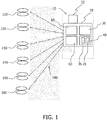
- a computer system 10 With the computer system 10, data may be remotely stored.
- the data typically has the form of a file.
- a client computer 20 comprises a central processing unit 30, a storage device 40, a device for inputting data by a user 50, and a network adapter 60 for connecting the client computer 20 to a network 100.
- a software 35 according to embodiments is stored in the storage device 40, which when executed on the central processing unit 30 of the client computer serves for distributed and encrypted storage of a file over the network 100 in at least two remote storage locations 110, 120, 130, 140, 150, 160.
- the data to be encrypted and stored is typically a first data file 45, which is initially stored on the storage device 40.
- the software 35 is executable on the central processing unit 30 of the client computer 20.
- the software also produces output data for display to a user which is shown on a screen 22 of the client computer 20, and may receive input from a user via the device for inputting data by a user 50, which may typically be at least one of a keyboard, a touchscreen, a virtual keyboard displayed on the screen 22, a computer mouse, a data glove, or a trackball.
- the software 35 causes the client computer 20 to perform the following method 200 (see also Fig. 3 ) according to embodiments:
- the original file or first data file 45 is split into a plurality of partial data files or chunks, the minimum number of partial files being two.
- the at least two partial data files are encrypted with an encryption algorithm, resulting in encrypted partial files.
- the at least two partial data files are then distributed over the network 100 to at least two remote storage locations 110, 120, 130, 140, 150, 160 connected over the network.
- the client computer stores the information about where exactly the partial files are stored on the storage device 40. This information about the remote storage location of the at least two partial files is stored for a later retrieval of the at least two encrypted partial files (the retrieval information). Further, information about the encryption algorithm, a cryptographic key employed and optionally a passphrase are also stored locally on the storage device 40 (the decryption information). These two types of information can be used to retrieve the first data file 45 from the remotely stored encrypted partial files at a later stage.
- the remote storage locations 110, 120, 130, 140, 150, 160 may in embodiments be commercial remote storage services.
- the internet addresses and the respective account information and passphrases, herein called access information, are typically stored on the storage device 40 by the software 35. They may be provided by the vendor of the software 35 and may be hard-coded in the software 35, or may typically be stored in a form such that the information may be updated by the software vendor.
- the software 35 may be configured in embodiments such that the user can edit the information about possible remote storage locations on his own. Hence, he may add providers of storage space which are accessible over, for example, the FTP protocol or the WEBDAV protocol, and may so increase both his available amount of storage, and increase overall security by adding additional remote storage locations. The more remote storage locations are used for the storage of the encrypted partial files, or the more partial files for each original file are used, the more difficult it is for an attacker to retrieve the original file.
- the software 35 is typically configured to regularly check if the remote storage locations 110, 120, 130, 140, 150, 160 used for the storage of the first data file 45 of the user are still online, that is, if they are currently available at the time of the test. If not, the software can look up in the retrieval information which partial files were stored with a remote storage location which is offline. The respective partial file is then temporarily considered as lost, and is again produced by splitting and encrypting the first data file 45 which is still stored on the client computer 20. The partial files considered as lost are then distributed to other remote storage locations determined as currently available.
- the lost encrypted partial files can easily be redistributed in the background from the original file, that is the first data file 45. In embodiments, this can even happen automatically without the user noticing, depending on the configuration of the software 35. The user may however receive a notice from the software 35 that one of the remote storage locations seems not to be working currently, or stopped working at a certain time.
- the cryptographic algorithm employed in the encryption of the partial files is typically an algorithm which is known to provide high security against attacks.
- the encryption algorithm may typically be a block cipher. It may make use, for additional safety, of a passphrase chosen by the user, which is typically not stored on the client computer 20.
- Possible algorithms are, as non-limiting examples, AES-128, AES-192, or AES-256.
- the encrypted partial files are cryptographically signed, for example using the RSA algorithm.
- cryptographic algorithms are generally known to be broken after some years of usage and with growing computing power over time, the employed algorithm shall not be given too much attention in this disclosure.
- any cryptographic method or algorithm may be employed in embodiments which are suitable for encrypting data files.
- the algorithm may make or may not make use of cryptographic keys and passphrases.
- the software 35 may also be configured to offer more than one type of encryption algorithm, between which a user can choose depending on his security needs. Also, more than one type of algorithm may be combined, or an algorithm may be employed n times, wherein n is an integer greater than 1 and is chosen by the user to further enhance security.
- the software 35 can have a number of built-in security features and mechanisms according to embodiments, which may be realized and activated individually, in combinations or together, and which may for example be individually activated or deactivated by a user, typically over a user interface of the software 35.
- the parameters of the distribution of the encrypted partial files on the remote storage locations 110, 120, 130, 140, 150, 160 may be carried out using an algorithm which takes into account properties of the first data file 45. In embodiments, this or these algorithms can be included in the software 35.
- the manner of distribution of the at least two encrypted partial files on the at least two remote storage locations 110, 120, 130, 140, 150, 160 may be dependent on a variety of parameters. For example, the access frequency on the first data file on the client computer 20 in a past predefined time-span may be determined. The background is that most files are updated often during a short period after creation or their first use, and then sit untouched in a file system for a long time. Thus, the software can take into account the last change date, and if the file is younger, larger partial files are distributed. Also, a frequently used file may be stored primarily on remote storage location for which it was determined that they have shorter access times than other remote storage locations used.
- the number of different users who have accessed the first data file in a past predefined time-span may be taken into account, also employing the above methods for access optimization.
- a type of file may be taken into account. For example, text files for a word processor program may be stored to have lower access time, as they tend to be used and reworked more often than other file types.
- the software 35 may consider the geographical distance in which a remote storage location is located, as greater distances may tend to cause longer latency times and slower transmission, in particular across continents. Thus, larger files may for example rather be stored in locations which are closer to the client computer or in the same country, if that information is available.
- the software 35 is configured in embodiments to split the first data file 45 into a minimum number of partial files, regardless of the original file size.
- the minimum number may be from 2 to 100, more typically from 5 to 20. It typically has an internal list of potential remote storage locations which can be used by the software 35.
- the number of partial files created can typically be from 2 to 50, more typically from 5 to 30, and also larger numbers are possible.
- the number of created partial files may be dependent on the size of the original file, or it can be predetermined by a user into how many partial files the first data file 45 is split at minimum, and/or what the minimum or maximum size for each partial file is.
- the software 35 is configured such that a user can set his own security confidence level for each original file. This is used by the software to calculate the minimum size of the partial files and the number of remote storage locations needed to meet this security confidence level.
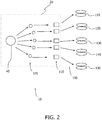
- Fig. 2 the method for remotely storing data according to embodiments is schematically shown.
- the first data file 45, stored on the client computer 20, is first split into a number of partial files 105, the number of which is five only for illustrational purposes, in Fig. 2 .
- These partial files 105 are then encrypted, and an equal number of encrypted partial files 110 results.
- the method is carried out entirely on the client computer 20, using a software 35 stored thereon.
- the encrypted partial files 110 are then distributed over network 100 to the remote storage locations 110, 120, 130, 140, 150.
- the number of remote storage locations is typically smaller than the number of partial files, however in Fig. 2 the number of remote storage locations 110, 120, 130, 140, 150 is equal to the number of partial files 105 for illustrational purposes only.
- Fig. 3 schematically shows a method 200 for remotely storing data according to embodiments.
- the method 200 comprises: Providing a first data file 45 on a client computer 20, in a block 210; splitting, on the client computer 20, the first data file 45 into at least two partial files 105, in a block 220; encrypting the at least two partial files 105 with an encryption algorithm in a block 230; distributing the at least two encrypted partial files 110 in at least two remote storage locations 110, 120, 130, 140, 150, 160, in a block 240; storing information, on the client computer 20, about the at least two storage locations 110, 120, 130, 140, 150, 160 of the at least two encrypted partial files 110 for a later retrieval of the at least two encrypted partial files, in a block 250; storing decryption information for the decryption of the at least two encrypted partial files 110 on the client computer 20, in a block 260.
- the method 200 is performed on a client computer 20.
- a software 35 comprising instructions is provided, which when executed on a computer, more precisely on the client computer 20, forces the client computer to perform method 200.
- the software 35 is typically stored on a storage device 40 of the client computer.
- the client computer 20 and the software 35 together form computer system 10 for executing the method 200.
- Embodiments pertain also to a computer readable medium storing computer executable instructions that, when executed on the central processing unit 30 (short: processor) of the client computer 20, force the client computer 20 to perform the method 200.
- the computer executable instructions are identical to the software 35.
- the software 35 may in embodiments choose from a list of available providers and/or locations which remote storage locations to employ for the storage of the encrypted partial files of a first data file. Thereby, it can for example be configured to prefer locations which had the best availability and/or response time (ping time) and/or access data rate (read/write performance) over a defined time-span in the past, for example in the last week or month. Also, the distribution of the partial files on the various remote storage locations may typically be oriented on the percentage of available storage space on each remote storage location, in order to avoid reaching a storage quota during storing.
- the software frequently and/or randomly and/or on request by a user checks if all partial files of the first data file 45 are available on the remote storage locations employed for the partial files of a certain first data file 45.
- the software 35 may in embodiments be configured to automatically redistribute partial files between remote storage locations, in order to enhance the number of different storage locations for enhanced security.
- the first data file may additionally be encrypted with an encryption algorithm prior to splitting the first data file 45 into partial files.
- the security against cryptographic attacks, using cryptanalysis is further enhanced.
- a further option to enhance security is to store at least a part of the decryption information for the decryption of the encrypted partial files of an original file in at least one further storage location different from the storage device on the client computer 20, and different from the remote storage locations. This may for example be a smartphone of a user, or an email account provided by the user, or a further client computer. This adds obfuscation, because even if an attacker were to gain access to the client computer, he would not be able to retrieve the first data file, as he misses retrieval and/or decryption information.
- corporations can add an additional layer of security by placing one or more self-managed remote storage services behind their firewalls. That is, at least one remote storage location is protected from access from the internet within its own LAN or WAN. Also, users can open space on their hard drives for the storage of partial files of friends and vice versa, essentially avoiding the need of a commercial storage service provider altogether. Larger institutions such as corporations can use the same mechanism for long term storage of sensitive files on employees' client computers.
- the methods and software according to embodiments may be employed to enable secure file sharing between a plurality of users, respectively between the client computers of the users.
- the partial files originating from the original file to be shared are newly encrypted on the client computer 20 with a new encryption key.
- This encryption key is then signed with the public key of a peer user which shall receive the file(s).
- the newly encrypted partial files are then transmitted to the peer via a peer-to-peer algorithm or via a server, for example using FTP or Webdav.
- the employed keys may be RSA keys.
- the software may include report and analysis functionality, which provides a user with data such as: number of accesses from peers to a remote file, revision events for the change of a file by a peer, the general usage of storage and storage quotas, and on the distribution of partial files, including the respective level of security.
- further measures may be employed to enhance the security of the method and software even further, which is for example relevant for high security applications or the handling of highly sensitive financial data.
- at least a part of the method 200, embodied in the software 35 may be carried out in a sandbox environment on the client computer. This further prevents intrusion by a third party, even if that party would gain access to the client computer 20.
- a passphrase used in the encryption of the partial files 105 and/or additionally in the encryption of the first data file 45 may be put in by the user using a virtual keyboard displayed on the screen 22 of the client computer 20.
- the virtual keyboard is operable with a computer mouse, for example. This prevents against so called keyloggers, for example.
- the encryption process may be configured in the software 35 for using encryption data provided by, or obtained through, an external hardware device (not shown) connected to the client computer - preferably comprising at least one of a card reader, a token reader, an ID reader, a keyboard, or a biometric identification device.
- the manner of distribution of the at least two partial files on the at least two remote storage locations is carried out using an algorithm which determines and takes into account at least one of the following parameters: the access frequency on the first data file on the client computer in a past predefined time-span; the number of different users who have accessed the first data file in a past predefined time-span, the type of the file, the size of the file, the determined percentage of accessibility of the at least two remote storage locations; the determined write/read performance of the at least two remote storage locations, or the degree to which a maximum storage amount on each of the at least two remote storage locations is used; an individual security level which is chosen by a user for the first data file prior to the splitting.
- the encryption of the at least two partial files can be carried out using one or more from a plurality of encryption algorithms, which can optionally be chosen by a user.
- encryption of the at least two partial files is carried out by applying the encryption algorithm(s) n times, wherein n can optionally be chosen by a user from 1 to a predetermined number.
- it can be predetermined, preferably by a user, into how many partial files the first data file is split at minimum, and/or what the maximum size for each partial file is.
- a software 35 frequently and/or randomly and/or on request by a user checks if all partial files of the first data file are available on the at least two remote storage locations. If some are not available, the partial file(s) which is not currently available is redistributed to a different one of the at least two remote storage locations.
- a number of additional dummy partial files are generated by the software.
- dummy partial files can be generated by taking or merging fragments of real existing files, for example randomly downloaded from random internet-web-sites, or from files from a pool of files regarded as having lowest secrecy, which are to this purpose chosen or predefined by a user.
- the generation of dummy partial files is done preferably prior to the encryption.
- the number of generated dummy partial files may vary and may make up from about 5 percent to about 95 percent of the number of all partial files, more preferably form 10 percent to 80 percent, or the combined size of all dummy partial files may make up from about 5 percent to about 95 percent of the size of all combined partial files, more preferably form 10 percent to 80 percent.
- a user may preferably determine the respective percentage before the encryption of the partial files. This adds obfuscation and makes it more difficult for an attacker, as he cannot easily identify which partial files are dummy files, as after encryption all the partial files are encrypted, which further enhances security.
- the size of at least one dummy partial file and/or the size of a combination of dummy partial files may represent a code, to further add obfuscation by providing misguiding information.
- the first data file may be integrated (in a hidden manner not obvious to an observer) in another file which has the function of a carrier, for example a video file or picture.
- a carrier for example a video file or picture.
- This method is principally known as steganography and adds a further level of security.
- the partial files may, all or partially, be integrated in a carrier file each, prior to encryption. This adds even more security, as an attacker, if at all, will see the carrier file after a successful attack, and not the real file hidden therein.
- At least a part of the method may be carried out in a sandbox environment on the client computer, to prevent intrusion by a third party.
- a passphrase used in the encryption of the partial files and/or additionally in the encryption of the first data file may be put in by the user using a virtual keyboard on a screen of the client computer.
- the encryption process may use encryption data provided by or obtained through an external hardware device, which is connected to the client computer. This may be, as non-limiting examples only, a card reader, a token reader, an ID reader, a keyboard, or a biometric identification device.
- a user may predetermine a level of security, as a non-limiting example from 1 to 5 in integer steps (5 being highest security), prior to executing the method on a first data file.
- the first data file 45 is encrypted with an encryption algorithm prior to splitting the first data file 45 into at least two partial files 105.
- At least a part of the decryption information for the decryption of the at least two encrypted partial files 110 is stored in at least one storage location other than the client computer 20 and the at least two remote storage locations 110, 120, 130, 140, 150, 160.
- systems and methods for remotely storing data are described above in detail.
- the systems and methods are not limited to the specific embodiments described herein, but rather, components of the systems and/or steps of the methods may be utilized independently and separately from other components and/or steps described herein.
- systems and methods described are not limited to practice with only the cryptographic algorithms as described herein. Rather, the exemplary embodiment can be implemented and utilized in connection with many other cryptographic applications.
Landscapes
- Engineering & Computer Science (AREA)
- Computer Security & Cryptography (AREA)
- Theoretical Computer Science (AREA)
- General Engineering & Computer Science (AREA)
- Signal Processing (AREA)
- Computer Networks & Wireless Communication (AREA)
- Computer Hardware Design (AREA)
- General Physics & Mathematics (AREA)
- Databases & Information Systems (AREA)
- Physics & Mathematics (AREA)
- General Health & Medical Sciences (AREA)
- Software Systems (AREA)
- Computing Systems (AREA)
- Bioethics (AREA)
- Health & Medical Sciences (AREA)
- Data Mining & Analysis (AREA)
- Storage Device Security (AREA)
Claims (14)
- Verfahren (200) zum Fernspeichern von Daten, umfassend:a. Aufteilen, mit einem Client-Computer (20), einer ersten Datendatei (45), die im Client-Computer gespeichert ist, in mindestens zwei Teildateien (105),b. Verschlüsseln, mit dem Client-Computer, der mindestens zwei Teildateien (105) mit mindestens einem Verschlüsselungsalgorithmus,c. Verteilen, mit dem Client-Computer, der mindestens zwei verschlüsselten Teildateien (110) an mindestens zwei Fernspeicherorte (110, 120, 130, 140, 150, 160), wobei mindestens einer der mindestens zwei Fernspeicherorte ein internetbasierter Cloud-Speicherdienst ist,d. Speichern von Informationen, im Client-Computer (20), über die mindestens zwei Speicherorte (110, 120, 130, 140, 150, 160) der mindestens zwei verschlüsselten Teildateien (110) für einen späteren Abruf der mindestens zwei verschlüsselten Teildateien,e. Speichern von Entschlüsselungsinformationen zur Entschlüsselung der mindestens zwei verschlüsselten Teildateien (110) im Client-Computer (20),f. Prüfen, mit dem Client-Computer, und zwar häufig, zufällig oder durch eine empfangene Anfrage von einem Benutzer, ob alle verschlüsselten Teildateien (110) der ersten Datendatei an den mindestens zwei Fernspeicherorten (110, 120, 130, 140, 150, 160) verfügbar sind, und in dem Fall, dass mindestens eine der verschlüsselten Teildateien (110) gegenwärtig nicht verfügbar ist, sie als durch den Client-Computer verloren zu erachten, und nochmal Aufteilen und Verschlüsseln der im Client-Computer (20) gespeicherten ersten Datendatei (45), und Neuverteilen mindestens einer hergestellten verschlüsselten Teildatei (110), die zuvor als verloren erachtet wurde, an einen der mindestens zwei Fernspeicherorte (110, 120, 130, 140, 150, 160).
- Verfahren nach Anspruch 1, wobei die Verteilung der mindestens zwei verschlüsselten Teildateien (110) an die mindestens zwei Fernspeicherorte (110, 120, 130, 140, 150, 160) unter Verwendung eines Algorithmus erfolgt, der Eigenschaften der ersten Datendatei (45) berücksichtigt.
- Verfahren nach Anspruch 1 oder 2, wobei die Verteilung der mindestens zwei verschlüsselten Teildateien (110) an die mindestens zwei Fernspeicherorte (110, 120, 130, 140, 150, 160) unter Verwendung eines Algorithmus erfolgt, der mindestens einen der folgenden Parameter bestimmt und berücksichtigt:a. die Zugriffshäufigkeit auf die erste Datendatei (45) im Client-Computer (20) in einer vergangenen vordefinierten Zeitspanne,b. die Anzahl von verschiedenen Benutzern, die auf die erste Datendatei (45) in einer vergangenen vordefinierten Zeitspanne zugegriffen haben,c. den Typ der ersten Datendatei (45),d. die Größe der ersten Datendatei (45),e. den vorbestimmten Prozentsatz der Zugreifbarkeit auf die mindestens zwei Fernspeicherorte (110, 120, 130, 140, 150, 160),f. die vorbestimmte Schreib/Leseleistung der mindestens zwei Fernspeicherorte (110, 120, 130, 140, 150, 160), oderg. den Grad, in dem eine maximale Speichermenge in jedem der mindestens zwei Fernspeicherorte (110, 120, 130, 140, 150, 160) genutzt wird,h. eine individuelle Sicherheitsstufe, die durch einen Benutzer für die erste Datendatei (45) vor dem Aufteilen gewählt wird.
- Verfahren nach einem der vorhergehenden Ansprüche, wobei die Verschlüsselung der mindestens zwei Teildateien (105) unter Verwendung eines oder mehrerer aus einer Vielzahl von Verschlüsselungsalgorithmen erfolgt, die optional durch einen Benutzer gewählt werden, und wobei die Verschlüsselung der mindestens zwei Teildateien (105) dadurch erfolgt, dass der Verschlüsselungsalgorithmus bzw. die Verschlüsselungsalgorithmen n Mal angewendet wird bzw. werden, wobei n durch einen Benutzer optional von 1 bis zu einer vorbestimmten Zahl gewählt werden kann.
- Verfahren nach einem der vorhergehenden Ansprüche, wobei bestimmt werden kann, in wie viele Teildateien (105) die erste Datendatei (45) mindestens aufgeteilt wird und/oder was die maximale Größe für jede Teildatei (105) ist.
- Verfahren nach einem der vorhergehenden Ansprüche, wobei zusätzlich zu den mindestens zwei Teildateien (105) eine Anzahl von Dummy-Teildateien, um zu verschleiern, welche verschlüsselten Teildateien (110) zur ersten Datendatei (45) gehören, vorzugsweise vor der Verschlüsselung generiert und bereitgestellt werden, und wobei die Anzahl der Dummy-Teildateien von ca. 5 Prozent bis ca. 95 Prozent der Anzahl aller Teildateien (105) ausmachen kann, oder die kombinierte Größe aller Dummy-Teildateien ca. 5 Prozent bis ca. 95 Prozent der Größe aller Teildateien (105) ausmachen kann, und wobei ein Benutzer vorzugsweise den jeweiligen Prozentsatz vor der Verschlüsselung der Teildateien (105) bestimmen kann, und wobei optional die Größe einer Dummy-Teildatei und/oder die Größe einer Kombination von Dummy-Teildateien einen Code zum Hinzufügen von Verschleierung darstellt bzw. darstellen.
- Verfahren nach einem der vorhergehenden Ansprüche, darüber hinaus eine Neuverteilung verschlüsselter Teildateien (110) zwischen den mindestens zwei Fernspeicherorten (110, 120, 130, 140, 150, 160) umfassend, wenn sich ein Betrag an verfügbarem Speicherplatz an mindestens einem der Fernspeicherorte ändert, oder wenn ein neuer Fernspeicherort hinzukommt.
- Verfahren nach einem der vorhergehenden Ansprüche, wobei es sich bei zumindest einem Teil der mindestens zwei Fernspeicherorte (110, 120, 130, 140, 150, 160) um andere Computer in einer Gemeinschaft von Computer-Benutzern handelt, die vorzugsweise ein Netz des Vertrauens (web of trust) mit definierten Prozeduren zum Beitreten ist, die als ablauffähige Software im Client-Computer (20) enthalten sind.
- Verfahren nach einem der vorhergehenden Ansprüche, wobei der Verschlüsselungsalgorithmus ein Blockcode ist, mindestens einen Schlüssel umfasst, vorzugswese ein durch einen Benutzer eingegebenes Passwort verwendet und vorzugsweise mindestens AES-128, AES-192 oder AES-256 umfasst, und wobei die mindestens zwei Teildateien (105) vorzugsweise unter Verwendung von RSA nach der Verschlüsselung kryptographisch signiert werden.
- Verfahren nach einem der vorhergehenden Ansprüche, darüber hinaus mindestens einen der folgenden Punkte beinhaltend:a. Zumindest ein Teil des Verfahrens (200) wird in einer Sandbox-Umgebung im Client-Computer (20) ausgeführt, um ein Eindringen durch eine Drittpartei zu verhindern,b. ein Passwort, das bei der Verschlüsselung der Teildateien (105) und/oder zusätzlich bei der Verschlüsselung der ersten Datendatei (45) verwendet wird, wird durch den Benutzer unter Verwendung einer virtuellen Tastatur auf einem Bildschirm (22) des Client-Computers (20) eingegeben,c. der Verschlüsselungsprozess verwendet Verschlüsselungsdaten, die durch ein an den Client-Computer (20) angeschlossenes externes Hardware-Gerät bereitgestellt oder über dieses erhalten werden, das vorzugsweise einen Kartenleser, einen Zeichenleser, einen ID-Leser, eine Tastatur und/oder ein biometrisches Identifikationsgerät umfasst.
- Verfahren nach einem der vorhergehenden Ansprüche, darüber hinaus beinhaltend, eine Sicherheitsstufe zu wählen, wenn das Verfahren (200) mit einer ersten Datendatei (45) ausgeführt wird, was mindestens einen der folgenden Punkte beeinflusst:a. die Anzahl von Teildateien (105), in welche die erste Datendatei (45) aufgeteilt wird,b. die Anzahl von Malen, mit der mindestens ein Verschlüsselungsalgorithmus an jeder Teildatei (105) eingesetzt wird,c. die Anzahl verschiedener Fernspeicherorte (110, 120, 130, 140, 150, 160), auf welche die verschlüsselten Teildateien (110) verteilt werden,d. die Wahl der mindestens zwei Fernspeicherorte (110, 120, 130, 140, 150, 160), auf welche die verschlüsselten Teildateien (110) verteilt werden, wobei die verwendeten Fernspeicherorte (110, 120, 130, 140, 150, 160) je nach ihrem geographischen Standort gewählt werden, und wobei vorzugsweise die Anzahl von Ländern maximiert wird, odere. die Verwendung von Fernspeicherorten (110, 120, 130, 140, 150, 160) in vorab definierten Ländern minimiert oder gänzlich ausgeschlossen wird, die als weniger Persönlichkeitsrechte bereitstellend angesehen werden.
- Verfahren nach einem der vorhergehenden Ansprüche, darüber hinaus eine gemeinsame Peer-to-Peer-Dateinutzung von Dateien zwischen verschiedenen Client-Computern beinhaltend, umfassend:a. eine gemeinsam zu nutzende erste Datendatei (45) wird im Client-Computer (20) mit einem neuen Schlüssel neu verschlüsselt,b. der verwendete Schlüssel wird mit einem öffentlichen Schlüssel eines Peers signiert,c. verschlüsselte Teildateien (110) werden an einen Peer über einen Peer-to-Peer-Algorithmus oder über einen Server übertragen,wobei es sich bei den Schlüsseln vorzugsweise um RSA-Schlüssel handelt.
- Computerlesbares Medium, das computerausführbare Instruktionen speichert, die, wenn sie auf einem Prozessor ablaufen, das Verfahren nach einem der Ansprüche 1 bis 12 durchführen.
- Computersystem zur Fernspeicherung von Daten, umfassend:a. einen Client-Computer, der eine zentrale Verarbeitungseinheit, eine Speichervorrichtung, eine Vorrichtung zur Eingabe von Daten durch einen Benutzer, einen Bildschirm und einen Netzwerkadapter zum Anschließen des Client-Computers an ein Netzwerk umfasst,b. eine Software für die verteilte und verschlüsselte Speicherung von Daten über ein Netzwerk an mindestens zwei Fernspeicherorten, wobei die Software auf dem Client-Computer ausführbar ist und ihn dazu veranlasst, das Verfahren nach einem der Ansprüche 1 bis 12 durchzuführen.
Applications Claiming Priority (1)
| Application Number | Priority Date | Filing Date | Title |
|---|---|---|---|
| US14/473,239 US9577996B2 (en) | 2014-08-29 | 2014-08-29 | Computer system and method for encrypted remote storage |
Publications (2)
| Publication Number | Publication Date |
|---|---|
| EP2990987A1 EP2990987A1 (de) | 2016-03-02 |
| EP2990987B1 true EP2990987B1 (de) | 2019-10-09 |
Family
ID=54014538
Family Applications (1)
| Application Number | Title | Priority Date | Filing Date |
|---|---|---|---|
| EP15182777.1A Active EP2990987B1 (de) | 2014-08-29 | 2015-08-27 | Computersystem und verfahren zur verschlüsselten fernspeicherung |
Country Status (2)
| Country | Link |
|---|---|
| US (1) | US9577996B2 (de) |
| EP (1) | EP2990987B1 (de) |
Families Citing this family (13)
| Publication number | Priority date | Publication date | Assignee | Title |
|---|---|---|---|---|
| US10279583B2 (en) * | 2014-03-03 | 2019-05-07 | Ctpg Operating, Llc | System and method for storing digitally printable security features used in the creation of secure documents |
| TWI553489B (zh) * | 2014-09-02 | 2016-10-11 | 緯創資通股份有限公司 | 存取雲端儲存空間資料的方法以及使用該方法的裝置 |
| KR20160041398A (ko) * | 2014-10-07 | 2016-04-18 | 삼성전자주식회사 | 컨텐츠 처리 장치 및 그의 컨텐츠 처리 방법 |
| US10318575B2 (en) * | 2014-11-14 | 2019-06-11 | Zorroa Corporation | Systems and methods of building and using an image catalog |
| KR102249826B1 (ko) * | 2015-01-06 | 2021-05-11 | 삼성전자주식회사 | 데이터 관리 방법 및 이를 수행하는 전자 장치 |
| US11455097B2 (en) | 2016-01-28 | 2022-09-27 | Weka.IO Ltd. | Resource monitoring in a distributed storage system |
| US10311112B2 (en) | 2016-08-09 | 2019-06-04 | Zorroa Corporation | Linearized search of visual media |
| US10467257B2 (en) | 2016-08-09 | 2019-11-05 | Zorroa Corporation | Hierarchical search folders for a document repository |
| US10664514B2 (en) | 2016-09-06 | 2020-05-26 | Zorroa Corporation | Media search processing using partial schemas |
| US20180137291A1 (en) * | 2016-11-14 | 2018-05-17 | Linkedin Corporation | Securing files at rest in remote storage systems |
| US10701070B2 (en) * | 2018-05-23 | 2020-06-30 | Verum Securitas, Inc. | Personalized security system |
| US11223479B1 (en) * | 2021-04-02 | 2022-01-11 | CyLogic, Inc. | Resilience against denial of availability attacks in a secure decentralized P2P filesystem |
| CN115113821B (zh) * | 2022-07-07 | 2023-05-12 | 北京算讯科技有限公司 | 基于量子加密的5g大数据算力服务系统 |
Family Cites Families (12)
| Publication number | Priority date | Publication date | Assignee | Title |
|---|---|---|---|---|
| CA2363838C (en) * | 1999-12-20 | 2010-03-09 | Dai Nippon Printing Co., Ltd. | Distributed data archive device and system |
| JP2003018143A (ja) * | 2001-06-28 | 2003-01-17 | Mitsubishi Electric Corp | 情報処理装置 |
| US8335807B1 (en) * | 2004-08-30 | 2012-12-18 | Sprint Communications Company, L.P. | File distribution system and method |
| US20100162004A1 (en) * | 2008-12-23 | 2010-06-24 | David Dodgson | Storage of cryptographically-split data blocks at geographically-separated locations |
| FR2886494B1 (fr) * | 2005-05-24 | 2007-06-29 | Canon Kk | Procede et dispositif d'echange de donnees entre des stations mobiles dans un reseau pair a pair |
| US7894599B2 (en) * | 2006-12-04 | 2011-02-22 | International Business Machines Corporation | Enhanced data security with redundant inclusive data encryption segments |
| CN103178965B (zh) * | 2008-01-07 | 2016-08-31 | 安全第一公司 | 使用多因素或密钥式分散对数据进行保护的系统和方法 |
| US20100162003A1 (en) * | 2008-12-23 | 2010-06-24 | David Dodgson | Retrieval of cryptographically-split data blocks from fastest-responding storage devices |
| US20100162001A1 (en) * | 2008-12-23 | 2010-06-24 | David Dodgson | Secure network attached storage device using cryptographic settings |
| US8930686B2 (en) * | 2009-12-23 | 2015-01-06 | International Business Machines Corporation | Deduplication of encrypted data |
| KR101465966B1 (ko) | 2011-03-09 | 2014-11-28 | 에스케이텔레콤 주식회사 | 클라우드 환경에서의 데이터 암호화 처리 장치 및 방법 |
| US9003183B2 (en) | 2013-01-28 | 2015-04-07 | Digitalmailer, Inc. | Virtual storage system and file encryption methods |
-
2014
- 2014-08-29 US US14/473,239 patent/US9577996B2/en active Active
-
2015
- 2015-08-27 EP EP15182777.1A patent/EP2990987B1/de active Active
Non-Patent Citations (1)
| Title |
|---|
| None * |
Also Published As
| Publication number | Publication date |
|---|---|
| EP2990987A1 (de) | 2016-03-02 |
| US9577996B2 (en) | 2017-02-21 |
| US20160065547A1 (en) | 2016-03-03 |
Similar Documents
| Publication | Publication Date | Title |
|---|---|---|
| US9577996B2 (en) | Computer system and method for encrypted remote storage | |
| Albugmi et al. | Data security in cloud computing | |
| Jakimoski | Security techniques for data protection in cloud computing | |
| KR101769282B1 (ko) | 데이터 보안 서비스 | |
| AU2013101722A4 (en) | Data security management system | |
| JP2018057045A (ja) | 仮想サービスプロバイダゾーン | |
| US20180115535A1 (en) | Blind En/decryption for Multiple Clients Using a Single Key Pair | |
| Doshi et al. | A review paper on security concerns in cloud computing and proposed security models | |
| Ahmad et al. | Assessment on potential security threats and introducing novel data security model in cloud environment | |
| US20250047480A1 (en) | Distributed digital wallet seed phrase | |
| Nasreldin et al. | Digital forensics evidence acquisition and chain of custody in cloud computing | |
| US20210288798A1 (en) | Jigsaw key encryption/decryption | |
| Islam et al. | A novel approach for client side encryption in cloud computing | |
| Mondal et al. | A systematic literature survey on data security techniques in a cloud environment | |
| US11972000B2 (en) | Information dispersal for secure data storage | |
| Manek et al. | Cloud Oriented Distributed and Encrypted File Storage (CODE-FS) | |
| Sathana et al. | Three level security system for dynamic group in cloud | |
| Verma et al. | Prevention of duplication of encrypted big data in cloud | |
| Salman et al. | Iot-Enabled Cloud Storage Data Access Control Algorithm Based on Blockchain Technology | |
| Alexander | ENCRYPTION TECHNIQUES FOR PROTECTING SENSITIVE DATA IN THE CLOUD | |
| Mikhaylov et al. | OVERVIEW OF EXISTING CLOUD STORAGE SERVICES FROM A SECURITY PERSPECTIVE | |
| Kirukmet | INFLUENCE OF BALANCED SCORECARD PERSPECTIVES ON EMPLOYEE PERFORMANCE AT KENYA MEDICAL TRAINING COLLEGE, NAKURU CAMPUS, KENYA MERCY JEPCHIRCHIR | |
| Okechukwu et al. | A Hybrid Implementation of Encryption and Decryption Algorithms for Data Security in Cloud Computing | |
| KR20230108155A (ko) | 합성곱 신경망(CNN: Convolutional Neual Network) 기반 영상 가치 판단 및 블록체인 기술을 이용한 데이터의 분산 저장 방법 | |
| Yadav et al. | Fingerprinting Based Recursive Information Hiding Strategy in Cloud Computing Environment |
Legal Events
| Date | Code | Title | Description |
|---|---|---|---|
| PUAI | Public reference made under article 153(3) epc to a published international application that has entered the european phase |
Free format text: ORIGINAL CODE: 0009012 |
|
| AK | Designated contracting states |
Kind code of ref document: A1 Designated state(s): AL AT BE BG CH CY CZ DE DK EE ES FI FR GB GR HR HU IE IS IT LI LT LU LV MC MK MT NL NO PL PT RO RS SE SI SK SM TR |
|
| AX | Request for extension of the european patent |
Extension state: BA ME |
|
| RIN1 | Information on inventor provided before grant (corrected) |
Inventor name: MORINA, DURIM Inventor name: HEINRICH, FRANK |
|
| 17P | Request for examination filed |
Effective date: 20160902 |
|
| RBV | Designated contracting states (corrected) |
Designated state(s): AL AT BE BG CH CY CZ DE DK EE ES FI FR GB GR HR HU IE IS IT LI LT LU LV MC MK MT NL NO PL PT RO RS SE SI SK SM TR |
|
| GRAP | Despatch of communication of intention to grant a patent |
Free format text: ORIGINAL CODE: EPIDOSNIGR1 |
|
| STAA | Information on the status of an ep patent application or granted ep patent |
Free format text: STATUS: GRANT OF PATENT IS INTENDED |
|
| INTG | Intention to grant announced |
Effective date: 20190326 |
|
| GRAS | Grant fee paid |
Free format text: ORIGINAL CODE: EPIDOSNIGR3 |
|
| RAP1 | Party data changed (applicant data changed or rights of an application transferred) |
Owner name: PENTLAND FIRTH SOFTWARE GMBH |
|
| RIN1 | Information on inventor provided before grant (corrected) |
Inventor name: MORINA, DURIM Inventor name: HEINRICH, FRANK |
|
| GRAA | (expected) grant |
Free format text: ORIGINAL CODE: 0009210 |
|
| STAA | Information on the status of an ep patent application or granted ep patent |
Free format text: STATUS: THE PATENT HAS BEEN GRANTED |
|
| AK | Designated contracting states |
Kind code of ref document: B1 Designated state(s): AL AT BE BG CH CY CZ DE DK EE ES FI FR GB GR HR HU IE IS IT LI LT LU LV MC MK MT NL NO PL PT RO RS SE SI SK SM TR |
|
| REG | Reference to a national code |
Ref country code: GB Ref legal event code: FG4D |
|
| REG | Reference to a national code |
Ref country code: CH Ref legal event code: EP |
|
| REG | Reference to a national code |
Ref country code: IE Ref legal event code: FG4D |
|
| REG | Reference to a national code |
Ref country code: DE Ref legal event code: R096 Ref document number: 602015039376 Country of ref document: DE |
|
| REG | Reference to a national code |
Ref country code: AT Ref legal event code: REF Ref document number: 1189675 Country of ref document: AT Kind code of ref document: T Effective date: 20191115 |
|
| REG | Reference to a national code |
Ref country code: CH Ref legal event code: NV Representative=s name: SCHMAUDER AND PARTNER AG PATENT- UND MARKENANW, CH |
|
| REG | Reference to a national code |
Ref country code: NL Ref legal event code: FP |
|
| REG | Reference to a national code |
Ref country code: LT Ref legal event code: MG4D |
|
| REG | Reference to a national code |
Ref country code: AT Ref legal event code: MK05 Ref document number: 1189675 Country of ref document: AT Kind code of ref document: T Effective date: 20191009 |
|
| PG25 | Lapsed in a contracting state [announced via postgrant information from national office to epo] |
Ref country code: PL Free format text: LAPSE BECAUSE OF FAILURE TO SUBMIT A TRANSLATION OF THE DESCRIPTION OR TO PAY THE FEE WITHIN THE PRESCRIBED TIME-LIMIT Effective date: 20191009 Ref country code: LT Free format text: LAPSE BECAUSE OF FAILURE TO SUBMIT A TRANSLATION OF THE DESCRIPTION OR TO PAY THE FEE WITHIN THE PRESCRIBED TIME-LIMIT Effective date: 20191009 Ref country code: FI Free format text: LAPSE BECAUSE OF FAILURE TO SUBMIT A TRANSLATION OF THE DESCRIPTION OR TO PAY THE FEE WITHIN THE PRESCRIBED TIME-LIMIT Effective date: 20191009 Ref country code: NO Free format text: LAPSE BECAUSE OF FAILURE TO SUBMIT A TRANSLATION OF THE DESCRIPTION OR TO PAY THE FEE WITHIN THE PRESCRIBED TIME-LIMIT Effective date: 20200109 Ref country code: BG Free format text: LAPSE BECAUSE OF FAILURE TO SUBMIT A TRANSLATION OF THE DESCRIPTION OR TO PAY THE FEE WITHIN THE PRESCRIBED TIME-LIMIT Effective date: 20200109 Ref country code: GR Free format text: LAPSE BECAUSE OF FAILURE TO SUBMIT A TRANSLATION OF THE DESCRIPTION OR TO PAY THE FEE WITHIN THE PRESCRIBED TIME-LIMIT Effective date: 20200110 Ref country code: AT Free format text: LAPSE BECAUSE OF FAILURE TO SUBMIT A TRANSLATION OF THE DESCRIPTION OR TO PAY THE FEE WITHIN THE PRESCRIBED TIME-LIMIT Effective date: 20191009 Ref country code: SE Free format text: LAPSE BECAUSE OF FAILURE TO SUBMIT A TRANSLATION OF THE DESCRIPTION OR TO PAY THE FEE WITHIN THE PRESCRIBED TIME-LIMIT Effective date: 20191009 Ref country code: LV Free format text: LAPSE BECAUSE OF FAILURE TO SUBMIT A TRANSLATION OF THE DESCRIPTION OR TO PAY THE FEE WITHIN THE PRESCRIBED TIME-LIMIT Effective date: 20191009 Ref country code: ES Free format text: LAPSE BECAUSE OF FAILURE TO SUBMIT A TRANSLATION OF THE DESCRIPTION OR TO PAY THE FEE WITHIN THE PRESCRIBED TIME-LIMIT Effective date: 20191009 Ref country code: PT Free format text: LAPSE BECAUSE OF FAILURE TO SUBMIT A TRANSLATION OF THE DESCRIPTION OR TO PAY THE FEE WITHIN THE PRESCRIBED TIME-LIMIT Effective date: 20200210 |
|
| PG25 | Lapsed in a contracting state [announced via postgrant information from national office to epo] |
Ref country code: IS Free format text: LAPSE BECAUSE OF FAILURE TO SUBMIT A TRANSLATION OF THE DESCRIPTION OR TO PAY THE FEE WITHIN THE PRESCRIBED TIME-LIMIT Effective date: 20200224 Ref country code: HR Free format text: LAPSE BECAUSE OF FAILURE TO SUBMIT A TRANSLATION OF THE DESCRIPTION OR TO PAY THE FEE WITHIN THE PRESCRIBED TIME-LIMIT Effective date: 20191009 Ref country code: RS Free format text: LAPSE BECAUSE OF FAILURE TO SUBMIT A TRANSLATION OF THE DESCRIPTION OR TO PAY THE FEE WITHIN THE PRESCRIBED TIME-LIMIT Effective date: 20191009 |
|
| PG25 | Lapsed in a contracting state [announced via postgrant information from national office to epo] |
Ref country code: AL Free format text: LAPSE BECAUSE OF FAILURE TO SUBMIT A TRANSLATION OF THE DESCRIPTION OR TO PAY THE FEE WITHIN THE PRESCRIBED TIME-LIMIT Effective date: 20191009 |
|
| REG | Reference to a national code |
Ref country code: DE Ref legal event code: R097 Ref document number: 602015039376 Country of ref document: DE |
|
| PG2D | Information on lapse in contracting state deleted |
Ref country code: IS |
|
| PG25 | Lapsed in a contracting state [announced via postgrant information from national office to epo] |
Ref country code: IS Free format text: LAPSE BECAUSE OF FAILURE TO SUBMIT A TRANSLATION OF THE DESCRIPTION OR TO PAY THE FEE WITHIN THE PRESCRIBED TIME-LIMIT Effective date: 20200209 Ref country code: DK Free format text: LAPSE BECAUSE OF FAILURE TO SUBMIT A TRANSLATION OF THE DESCRIPTION OR TO PAY THE FEE WITHIN THE PRESCRIBED TIME-LIMIT Effective date: 20191009 Ref country code: EE Free format text: LAPSE BECAUSE OF FAILURE TO SUBMIT A TRANSLATION OF THE DESCRIPTION OR TO PAY THE FEE WITHIN THE PRESCRIBED TIME-LIMIT Effective date: 20191009 Ref country code: CZ Free format text: LAPSE BECAUSE OF FAILURE TO SUBMIT A TRANSLATION OF THE DESCRIPTION OR TO PAY THE FEE WITHIN THE PRESCRIBED TIME-LIMIT Effective date: 20191009 Ref country code: RO Free format text: LAPSE BECAUSE OF FAILURE TO SUBMIT A TRANSLATION OF THE DESCRIPTION OR TO PAY THE FEE WITHIN THE PRESCRIBED TIME-LIMIT Effective date: 20191009 |
|
| PLBE | No opposition filed within time limit |
Free format text: ORIGINAL CODE: 0009261 |
|
| STAA | Information on the status of an ep patent application or granted ep patent |
Free format text: STATUS: NO OPPOSITION FILED WITHIN TIME LIMIT |
|
| PG25 | Lapsed in a contracting state [announced via postgrant information from national office to epo] |
Ref country code: IT Free format text: LAPSE BECAUSE OF FAILURE TO SUBMIT A TRANSLATION OF THE DESCRIPTION OR TO PAY THE FEE WITHIN THE PRESCRIBED TIME-LIMIT Effective date: 20191009 Ref country code: SK Free format text: LAPSE BECAUSE OF FAILURE TO SUBMIT A TRANSLATION OF THE DESCRIPTION OR TO PAY THE FEE WITHIN THE PRESCRIBED TIME-LIMIT Effective date: 20191009 Ref country code: SM Free format text: LAPSE BECAUSE OF FAILURE TO SUBMIT A TRANSLATION OF THE DESCRIPTION OR TO PAY THE FEE WITHIN THE PRESCRIBED TIME-LIMIT Effective date: 20191009 |
|
| 26N | No opposition filed |
Effective date: 20200710 |
|
| PG25 | Lapsed in a contracting state [announced via postgrant information from national office to epo] |
Ref country code: SI Free format text: LAPSE BECAUSE OF FAILURE TO SUBMIT A TRANSLATION OF THE DESCRIPTION OR TO PAY THE FEE WITHIN THE PRESCRIBED TIME-LIMIT Effective date: 20191009 |
|
| PG25 | Lapsed in a contracting state [announced via postgrant information from national office to epo] |
Ref country code: MC Free format text: LAPSE BECAUSE OF FAILURE TO SUBMIT A TRANSLATION OF THE DESCRIPTION OR TO PAY THE FEE WITHIN THE PRESCRIBED TIME-LIMIT Effective date: 20191009 |
|
| PG25 | Lapsed in a contracting state [announced via postgrant information from national office to epo] |
Ref country code: LU Free format text: LAPSE BECAUSE OF NON-PAYMENT OF DUE FEES Effective date: 20200827 |
|
| REG | Reference to a national code |
Ref country code: BE Ref legal event code: MM Effective date: 20200831 |
|
| PG25 | Lapsed in a contracting state [announced via postgrant information from national office to epo] |
Ref country code: BE Free format text: LAPSE BECAUSE OF NON-PAYMENT OF DUE FEES Effective date: 20200831 Ref country code: IE Free format text: LAPSE BECAUSE OF NON-PAYMENT OF DUE FEES Effective date: 20200827 |
|
| PG25 | Lapsed in a contracting state [announced via postgrant information from national office to epo] |
Ref country code: TR Free format text: LAPSE BECAUSE OF FAILURE TO SUBMIT A TRANSLATION OF THE DESCRIPTION OR TO PAY THE FEE WITHIN THE PRESCRIBED TIME-LIMIT Effective date: 20191009 Ref country code: MT Free format text: LAPSE BECAUSE OF FAILURE TO SUBMIT A TRANSLATION OF THE DESCRIPTION OR TO PAY THE FEE WITHIN THE PRESCRIBED TIME-LIMIT Effective date: 20191009 Ref country code: CY Free format text: LAPSE BECAUSE OF FAILURE TO SUBMIT A TRANSLATION OF THE DESCRIPTION OR TO PAY THE FEE WITHIN THE PRESCRIBED TIME-LIMIT Effective date: 20191009 |
|
| PG25 | Lapsed in a contracting state [announced via postgrant information from national office to epo] |
Ref country code: MK Free format text: LAPSE BECAUSE OF FAILURE TO SUBMIT A TRANSLATION OF THE DESCRIPTION OR TO PAY THE FEE WITHIN THE PRESCRIBED TIME-LIMIT Effective date: 20191009 |
|
| REG | Reference to a national code |
Ref country code: DE Ref legal event code: R082 Ref document number: 602015039376 Country of ref document: DE Representative=s name: TER MEER STEINMEISTER & PARTNER PATENTANWAELTE, DE |
|
| REG | Reference to a national code |
Ref country code: DE Ref legal event code: R082 Ref document number: 602015039376 Country of ref document: DE Representative=s name: TER MEER STEINMEISTER & PARTNER PATENTANWAELTE, DE |
|
| PGFP | Annual fee paid to national office [announced via postgrant information from national office to epo] |
Ref country code: NL Payment date: 20250821 Year of fee payment: 11 |
|
| PGFP | Annual fee paid to national office [announced via postgrant information from national office to epo] |
Ref country code: DE Payment date: 20250827 Year of fee payment: 11 |
|
| PGFP | Annual fee paid to national office [announced via postgrant information from national office to epo] |
Ref country code: GB Payment date: 20250822 Year of fee payment: 11 |
|
| PGFP | Annual fee paid to national office [announced via postgrant information from national office to epo] |
Ref country code: FR Payment date: 20250821 Year of fee payment: 11 |
|
| PGFP | Annual fee paid to national office [announced via postgrant information from national office to epo] |
Ref country code: CH Payment date: 20250901 Year of fee payment: 11 |