EP2990984A1 - Sicherheitsrisikoinformationsanalyse - Google Patents
Sicherheitsrisikoinformationsanalyse Download PDFInfo
- Publication number
- EP2990984A1 EP2990984A1 EP15181400.1A EP15181400A EP2990984A1 EP 2990984 A1 EP2990984 A1 EP 2990984A1 EP 15181400 A EP15181400 A EP 15181400A EP 2990984 A1 EP2990984 A1 EP 2990984A1
- Authority
- EP
- European Patent Office
- Prior art keywords
- subset
- data
- subsets
- party
- determining
- Prior art date
- Legal status (The legal status is an assumption and is not a legal conclusion. Google has not performed a legal analysis and makes no representation as to the accuracy of the status listed.)
- Granted
Links
Images




Classifications
-
- H—ELECTRICITY
- H04—ELECTRIC COMMUNICATION TECHNIQUE
- H04L—TRANSMISSION OF DIGITAL INFORMATION, e.g. TELEGRAPHIC COMMUNICATION
- H04L63/00—Network architectures or network communication protocols for network security
- H04L63/20—Network architectures or network communication protocols for network security for managing network security; network security policies in general
-
- G—PHYSICS
- G06—COMPUTING OR CALCULATING; COUNTING
- G06F—ELECTRIC DIGITAL DATA PROCESSING
- G06F16/00—Information retrieval; Database structures therefor; File system structures therefor
- G06F16/20—Information retrieval; Database structures therefor; File system structures therefor of structured data, e.g. relational data
- G06F16/28—Databases characterised by their database models, e.g. relational or object models
- G06F16/284—Relational databases
- G06F16/285—Clustering or classification
-
- G—PHYSICS
- G06—COMPUTING OR CALCULATING; COUNTING
- G06F—ELECTRIC DIGITAL DATA PROCESSING
- G06F21/00—Security arrangements for protecting computers, components thereof, programs or data against unauthorised activity
- G06F21/50—Monitoring users, programs or devices to maintain the integrity of platforms, e.g. of processors, firmware or operating systems
- G06F21/57—Certifying or maintaining trusted computer platforms, e.g. secure boots or power-downs, version controls, system software checks, secure updates or assessing vulnerabilities
- G06F21/577—Assessing vulnerabilities and evaluating computer system security
-
- G—PHYSICS
- G06—COMPUTING OR CALCULATING; COUNTING
- G06F—ELECTRIC DIGITAL DATA PROCESSING
- G06F40/00—Handling natural language data
- G06F40/20—Natural language analysis
- G06F40/205—Parsing
-
- H—ELECTRICITY
- H04—ELECTRIC COMMUNICATION TECHNIQUE
- H04L—TRANSMISSION OF DIGITAL INFORMATION, e.g. TELEGRAPHIC COMMUNICATION
- H04L41/00—Arrangements for maintenance, administration or management of data switching networks, e.g. of packet switching networks
- H04L41/16—Arrangements for maintenance, administration or management of data switching networks, e.g. of packet switching networks using machine learning or artificial intelligence
-
- H—ELECTRICITY
- H04—ELECTRIC COMMUNICATION TECHNIQUE
- H04L—TRANSMISSION OF DIGITAL INFORMATION, e.g. TELEGRAPHIC COMMUNICATION
- H04L63/00—Network architectures or network communication protocols for network security
- H04L63/14—Network architectures or network communication protocols for network security for detecting or protecting against malicious traffic
-
- H—ELECTRICITY
- H04—ELECTRIC COMMUNICATION TECHNIQUE
- H04L—TRANSMISSION OF DIGITAL INFORMATION, e.g. TELEGRAPHIC COMMUNICATION
- H04L63/00—Network architectures or network communication protocols for network security
- H04L63/14—Network architectures or network communication protocols for network security for detecting or protecting against malicious traffic
- H04L63/1408—Network architectures or network communication protocols for network security for detecting or protecting against malicious traffic by monitoring network traffic
-
- H—ELECTRICITY
- H04—ELECTRIC COMMUNICATION TECHNIQUE
- H04L—TRANSMISSION OF DIGITAL INFORMATION, e.g. TELEGRAPHIC COMMUNICATION
- H04L63/00—Network architectures or network communication protocols for network security
- H04L63/14—Network architectures or network communication protocols for network security for detecting or protecting against malicious traffic
- H04L63/1408—Network architectures or network communication protocols for network security for detecting or protecting against malicious traffic by monitoring network traffic
- H04L63/1416—Event detection, e.g. attack signature detection
-
- H—ELECTRICITY
- H04—ELECTRIC COMMUNICATION TECHNIQUE
- H04L—TRANSMISSION OF DIGITAL INFORMATION, e.g. TELEGRAPHIC COMMUNICATION
- H04L63/00—Network architectures or network communication protocols for network security
- H04L63/14—Network architectures or network communication protocols for network security for detecting or protecting against malicious traffic
- H04L63/1433—Vulnerability analysis
Definitions
- Organizations may use security threat information to make changes to their networks, e.g., in response to perceived or actual threats. For instance, an organization may learn about a software vulnerability and install a software update that removes the vulnerability or change network settings to prevent, or reduce the likelihood, of a malicious actor exploiting the vulnerability.
- one innovative aspect of the subject matter described in this specification can be embodied in methods that include the actions of for each dataset from multiple datasets that each include information about potential security threats: identifying, by one or more computers, one or more respective intelligence types that each categorizes a subset of data in the respective dataset, and associating, for each of the identified intelligence types, each of the subsets of data, which are categorized by the respective intelligence type, with the respective intelligence type.
- the method includes the actions of determining, for each of the subsets, whether the respective subset does not include information about the same threat as a different subset, determining one or more rules for a third party that each indicate that the third party should receive data associated with particular types of potential security threats and priority information for the data, determining, for each of the potential security threats indicated in the rules, a group of the subsets that include information associated with the respective potential security threat, assigning, for each subset in each of the groups, a priority to the respective subset using the priority information, and providing the determined subsets to the third party using the respective priorities.
- Other embodiments of this aspect include corresponding computer systems, apparatus, and computer programs recorded on one or more computer storage devices, each configured to perform the actions of the methods.
- a system of one or more computers can be configured to perform particular operations or actions by virtue of having software, firmware, hardware, or a combination of them installed on the system that in operation causes or cause the system to perform the actions.
- One or more computer programs can be configured to perform particular operations or actions by virtue of including instructions that, when executed by data processing apparatus, cause the apparatus to perform the actions.
- one innovative aspect of the subject matter described in this specification can be embodied in methods that include the actions of for each dataset from multiple datasets that each include information about potential security threats: identifying, by at least one of the computers, one or more respective intelligence types that each categorizes a subset of data in the respective dataset, and associating, for each of the identified intelligence types, each of the subsets of data, which are categorized by the respective intelligence type, with the respective intelligence type.
- the method includes the actions of determining one or more rules for a third party that each indicate that the third party should receive data associated with particular types of potential security threats and priority information for the data, determining, for each of the potential security threats indicated in the rules, a group of the subsets that include information associated with the respective potential security threat, assigning, for each subset in each of the groups, a priority to the respective subset using the priority information, and providing the determined subsets to the third party using the respective priorities.
- Other embodiments of this aspect include corresponding computer systems, apparatus, and computer programs recorded on one or more computer storage devices, each configured to perform the actions of the methods.
- a system of one or more computers can be configured to perform particular operations or actions by virtue of having software, firmware, hardware, or a combination of them installed on the system that in operation causes or cause the system to perform the actions.
- One or more computer programs can be configured to perform particular operations or actions by virtue of including instructions that, when executed by data processing apparatus, cause the apparatus to perform the actions.
- one innovative aspect of the subject matter described in this specification can be embodied in methods that include the actions of for each dataset from multiple datasets that each include information about potential security threats: identifying one or more respective intelligence types that each categorizes a subset of data in the respective dataset, and associating, for each of the identified intelligence types, each of the subsets of data, which are categorized by the respective intelligence type, with the respective intelligence type.
- the method includes the actions of determining, for each of the subsets, whether the respective subset does not include information about the same threat as a different subset, determining, for a third party, a group of the subsets that include information requested by the third party, assigning, for each subset in the group, a priority to the respective subset using priority information for the third party, and providing the determined subsets to the third party using the respective priorities.
- Other embodiments of this aspect include corresponding computer systems, apparatus, and computer programs recorded on one or more computer storage devices, each configured to perform the actions of the methods.
- a system of one or more computers can be configured to perform particular operations or actions by virtue of having software, firmware, hardware, or a combination of them installed on the system that in operation causes or cause the system to perform the actions.
- One or more computer programs can be configured to perform particular operations or actions by virtue of including instructions that, when executed by data processing apparatus, cause the apparatus to perform the actions.
- Providing the determined subsets to the third party using the respective priorities may include providing the determined subsets for presentation according to the respective priorities.
- Determining the group that does not include the first subset may include determining the group that does not include the first subset in response to determining that the first subset includes information from a less reputable source than the corresponding different subset.
- the method may include determining that content in the first subset varies from the corresponding subset by more than a threshold amount.
- the method may include determining that a first subset from the subsets includes information about the same threat as a different subset, and merging the first subset with the corresponding different subset.
- the method may include determining that the first subset varies from the corresponding different subset by less than a threshold amount.
- Merging the first subset with the corresponding different subset may include merging the first subset with the corresponding different subset in response to determining that the first subset varies from the corresponding different subset by less than the threshold amount.
- the method may include determining that a first subset from the subsets includes information about the same threat as a different subset, determining that the first subset varies from the corresponding different subset by more than a threshold amount, and linking the first subset with the corresponding different subset.
- a system when a system receives data from multiple sources and stores the data in data constructs, e.g., formatted according to a standardized representation, the system reduces duplicate data sent to third parties and reduces potential confusion about related threat intelligence.
- the system when a system formats data received from multiple sources in data constructs, the system may improve expressiveness when describing a certain threat actor, their activities, how they operate, and possible mitigation actions.
- a system automates the process of determining duplicates and applying appropriate resolution to address duplicate data.
- a system provides users with an automatic determination of relevance of data specific to their particular infrastructure, e.g., hardware, software, or both.
- a system may automate collection, normalization (e.g., de-duplication), contextualization, prioritization, and distribution of threat intelligence to enhance security operations. For instance, the system may collect cyber threat information from a variety of sources, convert the collected information into a standardized representation, manage the information over its lifetime, create custom filters to process the information, enrich the information (e.g., with data from other sources), and draw actionable inferences about impending activities or current incidents in progress, e.g., past, present, or future events that may affect other organizations. The actionable inferences may be delivered to clients in structured machine readable format, human readable formats, or both.
- FIG. 1 is an example of an environment 100 in which a system receives data 104 from multiple data sources 102a-c, parses the data to create structured data constructs, and provides some of the structured data to third parties.
- the system receives the data 104, e.g., cyber information, that is formatted according to a schema, e.g., specific to the particular data source 102a-c, from the data sources 102a-c at time T 1 , and parses the data 104 at time T 2 to determine intelligence types for the parsed data.
- the data 104 may be received as a data feed, e.g., a separate feed for each of the sources 102a-c or separate feeds for a subset of the sources 102a-c, or through any other appropriate method.
- intelligence types may include i) observables, ii) indicators of compromise (IOC), iii) vulnerabilities, iv) exploits, v) adversary tactics, techniques, and procedures (TTP), vi) threat actors, vii) threat campaigns, and viii) courses of action (COA).
- IOC indicators of compromise
- TTP adversary tactics, techniques, and procedures
- COA courses of action
- Each of the intelligence types may have a corresponding data construct in the system, e.g., particular to the types of information available for or related to the respective intelligence type.
- the intelligence types may be formatted according to Structured Threat Information expression (STIXTM).
- Observables may be properties or measurable events pertinent to the operation of computers and networks. Some examples of observables may include information about a file, e.g., name, hash, or size; a registry key value; a service being started; or a Hypertext Transfer Protocol (HTTP) request being sent.
- a file e.g., name, hash, or size
- a registry key value e.g., a registry key value
- HTTP Hypertext Transfer Protocol
- IOC may include certain observable conditions as well as contextual information about patterns of those observable conditions and how and when a pattern should be acted on.
- the contextual information may represent artifacts or behaviors of interest within a cyber-security context or both.
- the patterns of the observable conditions may be mapped to related TTP context information, include relevant metadata about confidence in the indicator's assertion, handling restrictions, valid time windows, likely impact, sightings of the information indicator, structured test mechanisms for detection, related campaigns, or suggested COA, or both related TTP context information and relevant metadata.
- Vulnerabilities may include information about security vulnerabilities identified by independent research teams, internal teams, or security vendors.
- the security vulnerabilities may indicate particular vulnerabilities for an operating system, an application, or a version of an application, e.g., particular to a specific operating system.
- Exploits may include information related to system vulnerabilities or the tools used to take advantage of a particular vulnerability by techniques of a threat actor.
- One example of exploit information may include identification or characterization of a vulnerability.
- TTP may include information about how threat actors operate and perform their adversarial actions.
- An example tactic may include the use of malware to steal credit card credentials.
- An example technique may include sending emails to potential victims that include malicious attachments, e.g., used to capture credit card information.
- An example procedure may include research to identify potential targets for malicious email.
- Threat actors may include characterizations of malicious actors that represent a cyber-threat and may include potential identity, location, specific techniques used by, presumed intent of and other observed historical behavior for the respective threat actor. Threat actors may be linked to TTPs, threat campaigns, or both, which were used by the respective threat actor or other threat actors that may be or are known to have been associated with the respective threat actor.
- Threat campaigns may relate threat actors to particular IOC, exploits, TTP, or any combination of two or more of these.
- a threat campaign may indicate the particular procedures, and the indicators used to determine those procedures, used by a particular threat actor to compromise one or more organizations.
- COA may include recommended actions to mitigate or remediate risks presented by IOC or motivation of threat actors or threat campaigns.
- a COA may be corrective, e.g., to fix an exploited vulnerability, or preventative, e.g., to fix a potential vulnerability or a vulnerability that has not yet been exploited, for the particular organization or another organization.
- some of the data 104 may be associated with multiple intelligence types.
- a feed received from a first source may include a particular subset with information that can be categorized as a threat actor and as a threat campaign.
- a first set of data 104a includes two subsets of data, a first that is categorized as intelligence type X and a second that is categorized as intelligence type Y.
- a second set of data 104b includes one subset, e.g., as shown and may include many additional subsets that are not shown, that is categorized as intelligence type Y.
- the system determines whether some of the parsed data is related to the same threat.
- the system may compare all of the data that is related to the same intelligence type, e.g., intelligence type Y, to determine if a subset of that data is related to the same threat. For instance, the system determines that threat A and threat B, identified by the first set of data 104a and the second set of data 104b respectfully, are the same threat and how the related data should be stored in the system. In some examples, the system determines whether some data for different intelligence types is related to the same threat, e.g., the same threat actor.
- the system determines a relationship for the data that is related to the same threat and how that relationship should be identified. For example, at time T 4 , the system may merge two sets or subsets of data when creating a data construct n 106b; discard some of the data, e.g., one of the subsets, and create a single data construct m 106a; or relate two separate data constructs, one of which may be newly created and the other previously created or both of which may be newly created.
- the data construct n 106b may include data subsets from both the first set of data 104a and the second set of data 104b, both of which correspond to intelligence type Y.
- the system may discard the older datasets and keep the newest dataset for a construct.
- multiple subsets are related to the same threat and include most of the same information, e.g., the newest dataset includes more information or updated information
- the system may discard the older datasets and keep the newest dataset.
- an IOC subset or data construct includes the same observables, or links to the data constructs for the same observables, as another IOC subset or data construct, the system determines that the two are related to the same threat.
- the system may discard a dataset when two datasets are related to the same threat but the information included in the two datasets varies by more than a threshold amount, e.g., by more than a predetermined percentage or by a predetermined quantity, such as a quantity of words, phrases, sentences or paragraphs.
- the discarded dataset may be the older dataset or the dataset from a less reputable source.
- the system may use historical analysis of information from a certain source to determine a reputation for that source, e.g., historical analysis of how actionable is the information from a certain source.
- the system may determine how much data from source A overlaps with a known well-reputed source. If there is a high overlap between data from source A and the well-reputed source, the system may assign a high reputation to the source A.
- an analyst may dynamically assign a reputation score to a source. The system may use any appropriate method to determine a source's reputation.
- the element with the highest confidence score may be kept, e.g., and the other data discarded.
- the confidence score may represent a probability that the data in the data construct is accurate or a probability that the data in the data construct is from a reputable source.
- the system may discard data with a lower confidence score when there is more than a twenty percent difference between the two confidence scores.
- the system may discard the subsets from the less reputable sources and keep the subsets from the more reputable sources. For instance, the system may create a data construct using the data from the more reputable sources.
- the system may use the subset or data construct from the more reputable source, e.g., when each data construct includes a "source" element.
- each data construct may include an identifier or one or more pointers that the system may use to determine the related data constructs, e.g., using a "related packages" element in the respective data construct.
- a name in a subset of data is similar to a name in another subset of data, or in an existing data construct, e.g., when the names are used to identify the data
- the system may relate a new data construct for the subset to a data construct for the other subset, or the existing data construct.
- the similarity in the name may allow for small errors, e.g., one character differences, and extensions of names, e.g., where "cat" and "cat_1" are considered matches.
- the system identifies third party rules 108a-b for security threat information.
- the rules are particular to a specific third party.
- Third Party A 110a may have rules 1a and 2a and Third Party B 110b may have rule 1b.
- rule 1b may be the same as rule 2a, e.g., may identify the same types of intelligence types or the same subsets of intelligence types. These two rules may indicate that both third parties want to receive information about intelligence type Y, and the rule 1a may indicate that Third Party A would like to receive information about intelligence type X.
- a rule may indicate that the corresponding third party is interested in vulnerabilities for particular applications, operating systems, hardware, or two or more of these.
- the rules may include a destination, e.g., a system address for the particular third party. In some examples, the rules do not include a destination, and the system determines a destination using the particular third party to which the rule corresponds.
- the destination may be an internet protocol (IP) address, a uniform resource identifier (URI), or another appropriate type of identifier for the third party or a system, e.g., computer, used by the third party.
- IP internet protocol
- URI uniform resource identifier
- the two rules may include different destinations that correspond with the respective third party.
- the system sends data constructs, identified using the third party rules 108a-b, to the respective third parties 110a-b. For instance, the system sends the data construct m 106a to the Third Party A 110a and the data construct n 106b to both the Third Party A 110a and the Third Party B 110b.
- the data constructs provided to the third parties may be prioritized, e.g., using the third party rules 108a-b or other data, as described in more detail below.
- One or more of the third parties 110a-b may use the data constructs 106a-b to adjust rules for an intrusion detection system (IDS), an intrusion prevention system (IPS), or both.
- the Third Party B 110b may receive courses of action from the system and update rules for an intrusion prevention system using the received courses of action.
- the Third Party B 110b may receive indicators of compromise, vulnerabilities, and exploits from the system, determine which of those threats are relevant to the Third Party B 110b, e.g., relevant to devices associated with the Third Party B 110b, and request courses of action from the system for the threats that are determined to be relevant to the Third Party B 110b.
- the Third Party B 110b may then use the received courses of action to update corresponding systems or policies, e.g., to prevent or reduce the likelihood of those threats occurring.
- Some of the third parties 110a-b may analyze the data in the data constructs 106a-b, e.g., to determine historical perspectives, trends, or both. For instance, the Third Party A 110a may perform frequency analysis, determine clusters of threat relationships, or identify specific actors using the data constructs 106a-b.
- a third party may use received data constructs to determine potential tests for the third party's systems. For instance, the third party may test a potential vulnerability and determine how to manage the potential vulnerability.
- a third party system may determine if one or more indicators, one or more observables, or a combination of the two, are currently occurring within the third party's infrastructure and, if so, perform an appropriate corrective action.
- a network resource manager e.g., an IDS
- may detect anomalous behavior e.g., network behavior, and determine whether this behavior maps to indicators or observables received from the system.
- the network resource manager may request additional information about the mapped indicators or observables from the system. For instance, the network resource manager may request and receive courses of action for the mapped indicators or observables, e.g., that the system identifies using relationships between the indicators or observables and the respective courses of action.
- FIG. 2 is an example of an environment 200 in which an analysis system 202 receives data from multiple structured data sources 204, parses the received data, and provides some of the parsed data to one or more third party systems 206a-c.
- the structured data sources 204 may include multiple proprietary sources 208.
- Some examples of proprietary sources 208 may include paid providers, to which the analysis system 202, or another system or party associated with the analysis system 202, provides compensation for data received by the analysis system 202, and government sources. For instance, a government agency may make threat information publically available to other systems, including the analysis system 202, upon request or may send the threat information to the analysis system 202 upon determining new threat information.
- the analysis system 202 may receive data from each of the proprietary sources 208 in a proprietary format, e.g., in a data feed formatted specific to the particular proprietary source, or an open format.
- the structured data sources 204 may include a threat exchange 210 that provides data to the analysis system 202 for free.
- the threat exchange 210 may require that the analysis system 202 provides the threat exchange with threat information in order to access threat information provided to the threat exchange 210 by other sources.
- the threat exchange 210 may receive data from one or more free content providers and provide that data to the analysis system 202, e.g., in exchange for data received from the analysis system 202 or not.
- the analysis system 202 may receive open source data 212 from some of the structured data sources 204.
- the analysis system 202 may receive an Extensible Markup Language (XML) feed, a feed with comma-separated values (CSV), or a tab delimited feed.
- XML Extensible Markup Language
- CSV feed with comma-separated values
- tab delimited feed a tab delimited feed.
- One or more of the structured data sources 204 may overlap with other types of the structured data sources 204.
- one of the proprietary sources 208 may provide an XML feed, a CSV feed, a tab delimited feed, or free threat information.
- some of the proprietary sources 208 may make data available on the threat exchange 210, e.g., for free or for a fee.
- Some of the open source data 212 may be made available on the threat exchange 210.
- a parser 214 included in the analysis system 202, receives the structured data from the structured data sources 204 and uses rules 216 to determine which intelligence types 218 apply to the structured data.
- the rules may indicate that data from a particular source or data with particular keywords corresponds with an observables intelligence type, and data with a different set of keywords, some of which may be the same as the keywords for the observables intelligence type, corresponds with a vulnerabilities intelligence type.
- Some examples of intelligence types include observables, indicators of compromise (IOC), vulnerabilities, exploits, threat actors, threat campaigns, courses of action (COA), and adversary tactics, techniques, and procedures (TTP).
- the parser 214 may receive multiple data packets from a single one of the structured data sources 204 that together form a single dataset.
- the dataset may include information about a particular threat or about multiple threats.
- the parser 214 determines that the single dataset includes data specific to one or more of the intelligence types 218. For instance, the parser 214 may determine that a dataset received from a government source XML feed includes information about observables, exploits, and threat actors. Some of the same data from the dataset may be associated with multiple of the intelligence types 218, e.g., both observables and threat actors, and some of the data from the dataset may be associated with only one of the intelligence types, e.g., observables.
- the parser 214 For each of the intelligence types for the single dataset or subset, the parser 214 creates a data construct specific to the respective intelligence type and stores the data construct in a construct database 220. For example, the parser 214 may create a data construct for an observable, a threat campaign, a COA, a vulnerability, or an exploit that includes an identifier for the data construct and the subset of data from the dataset that corresponds with the intelligence type.
- the data constructs may include an identifier for the source of the data, e.g., the particular structured data source 204 from which the analysis system 202 received the data, a time stamp, e.g., for when the corresponding data was generated by or received from the respective structured data source, a source reputation, a severity, a severity reputation, or a combination of two or more of these.
- Some of the data constructs may include links to other data constructs.
- a data construct for an IOC may include one or more links to data constructs for corresponding observables and a threat actor data construct may include one or more links to threat campaigns or TTP used by the respective actor.
- Some of the data constructs, e.g., for IOC, threat actors, or TTP, may include a title or a name.
- the parser 214 may create multiple data constructs for a particular intelligence type, e.g., from a single dataset. For instance, the parser 214 may determine a subset of a particular dataset that corresponds with observables and that different portions of that subset correspond with different instances of observables. One portion of the subset may include information about an HTTP request and another portion of the subset may include information about a particular file. In this example, the parser 214 creates a first observable data construct for information about the HTTP request and a second observable data construct for information about the particular file.
- a de-duplication module 222 included in the analysis system 202, may determine relationships between datasets received from the structured data sources 204, parsed data, e.g., that has not yet been stored in the construct database 220, data constructs stored in the construct database 220, or any combination of two or more of these. For instance, the de-duplication module 222 may determine whether some of the data in two data constructs is related to the same threat, includes the same information about a threat, or includes information about related threats and how that information or those threats are related. The de-duplication module 222 may merge two different data constructs, relate two different data constructs, or discard one of two related data constructs, as described above.
- the analysis system 202 uses third party rules 224 to determine when to send data constructs to the third parties 206a-c, what types of data constructs to send to the third parties 206a-c, and how to prioritize the data constructs, e.g., an order in which to present the data constructs to the third parties 206a-c or for the third parties 208a-c to present the information to a user. For instance, the analysis system 202 may determine to send data constructs to the third party system A 206a when relevant data constructs are created by the analysis system 202, to send data constructs to the third party system B 206b once each day, and to send data constructs to the third party system C 206c once each week.
- the third party rules 224 may include a particular time of day at which the analysis system 202 should send corresponding data constructs to the requesting third party systems 206a-c.
- the analysis system 202 may use the third party rules 224 to determine which data constructs to send to each of the third party systems 206a-c. For instance, a first rule for the third party system A 206a may indicate that the third party A wants to receive threat information that is relevant to a particular organization or industry and a second rule for the third party system B 206b may indicate that the third party B wants to receive threat information for a particular operating system or a particular version of an operating system.
- the third party rules 224 may include a corresponding destination for the requested data constructs.
- the first rule for the third party system A 206a may include an IP address for the third party system A 206a.
- a rule may indicate that the analysis system 202 should send a first subset of data constructs to a first destination and a second subset of data constructs to a second destination.
- the third party system B 206b may include multiple servers and the analysis system 202 provides the first subset to a first server in the third party system B 206b and provides the second subset to a second server in the third party system B 206b.
- a prioritization module 226, included in the analysis system 202 may use the third party rules 224 to determine a priority for each of the data constructs requested by a particular one of the third party systems 206a-c. For instance, after the analysis system 202 determines the data constructs to provide to the third party system C 206c, the prioritization module 226 determines the order in which the data constructs are provided to the third party system C 206c or presented on a user interface on the third party system C 206c, e.g., based on instructions provided by the analysis system 202 to the third party system C 206c for the presentation of the information included in the requested data constructs.
- the prioritization module 226 may analyze how recently a threat, e.g., that is represented by a corresponding data construct, was used or identified, the severity of the threat, whether a government source has released a statement about the threat, or any combination of two or more of these when prioritizing the data constructs. For instance, the prioritization module 226 may assign a data construct for a newer threat a higher priority than another data construct for an older threat. The prioritization module 226 may assign a data construct for a more severe threat a higher priority than another data construct for a less severe threat, e.g., irrespective of the newness of either of the threats.
- the prioritization module 226 may determine a severity of a threat using comments included in data from the structured data sources 204 or from other sources. For instance, the prioritization module 226 may assign a data construct a default, e.g., low or medium, severity unless the prioritization module 226 determines that comments that correspond with a threat represented by a data construct indicate that the threat should be associated with a different, e.g., higher, severity.
- the third party systems 206a-c may use the received data constructs, and the priority in which the data constructs are received or identified for presentation, to take corresponding actions based on the threats identified in the data constructs.
- the third party system A 206a may be an automated system that determines whether the indicated threat is relevant to the third party A, e.g., whether or not any devices for the third party A may be affected by the indicated threat.
- the automated system may request a course of action (COA) from the analysis system 202 that corresponds with the particular threat.
- COA course of action
- the third party system A 206a may analyze the data constructs in the order the data constructs are received from the analysis system 202, e.g., according to the priority of the data constructs.
- the analysis system 202 may provide data constructs to third party systems 206a-c using an application programming interface (API), a feed, e.g., XML or rich site summary (RSS), or any other appropriate type of method or protocol.
- API application programming interface
- RSS rich site summary
- the analysis system 202 provides instructions to one of the third party systems 206a-c, e.g., the third party system B 206b, for the presentation of a user interface that includes information about the requested data constructs and the threats indicated by those data constructs.
- the user interface presents the threats according to the priority determined by the prioritization module 226, e.g., with higher priority threats presented before lower priority threats.
- the third party system may merge the most recently received data constructs, or information associated with these data constructs, with a current presentation of other previously received data constructs, or information associated with those data constructs.
- the third party system may determine that a first newly received data construct has a higher priority than a currently presented data construct and present the first newly received data construct above the currently presented data construct in a user interface.
- a second newly received data construct may have a lower priority than, and be presented below, the currently presented data construct.
- a user may view the user interface and determine which of the threats are relevant to the third party C and which threats require a corresponding action to be taken. For instance, a device operated by the user may request additional information about a particular threat, such as a COA, from the analysis system, e.g., when an action should be taken for a threat. Upon receipt of the COA, the device operated by the user or another device, e.g., an automated device, may perform the action identified by the COA, e.g., to prevent or reduce the likelihood of the threat.
- a particular threat such as a COA
- the device operated by the user or another device e.g., an automated device, may perform the action identified by the COA, e.g., to prevent or reduce the likelihood of the threat.
- the prioritization module 226 may use learning to determine how to prioritize data constructs that will be sent to the third party systems 206a-c. For instance, the prioritization module 226 may receive requests for COAs from the third party system C 206c, determine that the types of threats associated with these COAs should have a higher priority than other types of threats for which the third party system C 206c requested information, and update corresponding third party rules, or a prioritization module for the third party C, to indicate which types of threats should have a higher priority.
- the prioritization module 226 may use a list of hardware manufacturers, a list of device models, a list of software developers, a list of software versions, a list of firewall rules, a list of intrusion prevention system rules, a list of malware rules, information source data, whether a course of action was performed, e.g., by the respective third party system, whether a patch was applied, e.g., by the respective third party system, or any combination of two or more of these when determining a data construct priority for one of the third party systems 206a-c.
- the particular third party system 206a-c may include any combination of prioritization rules, and rules for data constructs of interest, when defining the corresponding third party rules 224.
- the prioritization module 226 may filter out data constructs for particular hardware manufacturers, device models, software developers, software versions or any combination of two or more of these, determined not to be relevant to a particular one of the third party systems 206a-c, e.g., and not send these data constructs to the particular third party system.
- the prioritization module 226 may filter out data constructs for particular data sources, e.g., when a third party rule indicates that data constructs from the particular data sources should not be sent to the corresponding third party system or when the third party system should only receive data constructs for data from a predetermined list of data sources that does not include any of the particular data sources.
- the prioritization module 226 might not send any COAs to one or more of the third party systems 206a-c, e.g., unless one of the third party systems 206a-c requests a specific COA, at which time the analysis system 202 provides the respective third party system with the specific COA.
- the prioritization module 226 determines whether a particular data construct relates to a malware signature, a firewall rule, or both, that has already been added to a corresponding firewall or anti-virus configuration. If so, the analysis system 202 might not send a corresponding data construct to the respective third party system. If not, the analysis system 202 sends the corresponding data structure to the respective third party system.
- a network 228, such as a local area network (LAN), wide area network (WAN), the Internet, or a combination thereof, connects the analysis system 202, the structured data sources 204, and the third party systems 206a-c.
- the analysis system 202 may receive structured data from the structured data sources 204 using the network 228 and provide data constructs to one or more of the third party systems 206a-c using the network 228.
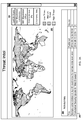
- FIGS. 3A-B are an example of a user interface 300 for presenting security threat information.
- the user interface 300 includes a map 302 that shows a geo-location mapping of the security threat information gathered from different sources, e.g., structured data sources. Shading in the map 302, e.g., a color of a particular country, may indicate a quantity of threats, e.g., with respect to the other countries. For instance, more malicious IP addresses and malicious uniform resource locators (URLs), or uniform resource identifiers (URIs), originate from a high threat country than a low or a medium threat country.
- the map 302 may include any appropriate identifier for the different threat severities of the countries.
- the user interface 300 may include a summary 304 of recent malicious activity.
- the summary 304 may change dynamically based on the types of security threats during a predetermined period of time, e.g., the past day, week, or month.
- the summary 304 may include a quantity of blacklisted certificates, e.g., 7007, a quantity of blacklisted URLs, e.g., 6987, a quantity of malicious IP addresses, e.g., 3150, and a quantity of vulnerabilities identified during the predetermined period of time, e.g., zero.
- An advisories section 306 shown in FIG. 3B includes a list of the latest threat advisories.
- the advisories section 306 includes a title for each advisory, a date and time when the advisory was published, and a source that provided the advisory to the system, e.g., a structured data source.
- the advisories section 306 may include links to corresponding full advisory pages, e.g., with additional details about the respective advisory. For instance, selection of a title for a particular advisory may cause the user interface 300, or another user interface, to present the corresponding full advisory page.
- a trending vulnerabilities section 308 includes the most relevant vulnerabilities, most prevalent vulnerabilities, or a combination of the two, and corresponding descriptions of each vulnerability.
- the trending vulnerabilities section 308 may include a common vulnerabilities and exposures (CVE) identifier for each of the vulnerabilities.
- CVE common vulnerabilities and exposures
- CVSS common vulnerability scoring system
- the analysis system 202 may provide a third party system with instructions for the presentation of the user interface 300 in response to receipt of a request for security threat information. For instance, a user of a third party system may cause the third party system to request the user interface 300 from the analysis system. In some examples, a third party system may receive data constructs from the analysis system 202 and generate the user interface 300 using the received data constructs, e.g., and additional data stored on the third party system.
- FIG. 4 is an example of a user interface 400 that includes threat trend information.
- the analysis system may provide a third party system with security threat information and the third party system may use the received security threat information to generate the user interface 400.
- the analysis system may provide the third party system with instructions for the presentation of the user interface 400.
- the user interface 400 includes a threat actors graph 402 with information about a quantity of threat actors over a particular period of time.
- the particular period of time may be the most recent year, month, week, or another time range, e.g., determined by a user of the user interface 400.
- the quantity of threat actors may be specific to a particular industry, e.g., retail, a particular organization or entity, e.g., Company A, or for all known threat actors during the particular period of time.
- the quantity of threat actors may include only unique instances of threat actors or may include multiple instances of the same threat actor. For example, when a particular group attacks two different organizations using different techniques, the quantity of threat actors may count this particular group once, e.g., only unique instances of threat actors, or twice, e.g., for each attack performed by the particular group.
- the threat actors graph 402 may be a threat attacks graph that shows trends in a quantity of attacks over time.
- Threat actors details 404 may include details about some of or all of the threat actors identified in the threat actors graph 402. For instance, for each threat actor included in the threat actors graph 402, the threat actors details 404 may include the number of attacks performed by that actor, e.g., during the predetermined period of time or at any time, an attack percentage for the respective actor, e.g., a ratio of the quantity of attacks associated with the respective actor to the quantity of attacks that have been carried out by all other threat actors, and the number of threat campaigns performed by the respective threat actor, e.g., during the predetermined period of time or at any time. In some examples, a sum of all the attack percentages may be greater than 100%, e.g., when multiple actors are involved in the same attack.
- a sum of all the attack percentages may be 100%, e.g., when only a single attacker is associated with each attack. In some implementations, a sum of all the attack percentages may be less than 100%, e.g., when some attacks are not attributed to any attacker.
- the user interface 400 may include additional information, such as a news feed 406 with information about security threats, potential security threats, solutions to security threats, or other relevant information.
- the user interface 400 may include information about trends for particular types of threats, such as DDoS, particular types of threat campaigns, or other types of trend information determined using the data constructs.
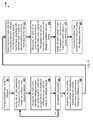
- FIG. 5 is a flow diagram of a process 500 for providing data to third parties using third party rules.
- the process 500 can be used by the analysis system 202 from the environment 200.
- the process For each dataset from multiple datasets (502), the process identifies one or more respective intelligence types that each categorizes a subset in the respective dataset (504). For instance, a parser may parse the datasets to create subsets and identify at least one intelligence type for each of the subsets.
- the process associates, for each of the identified intelligence types, each of the subsets, which are categorized by the respective intelligence type, with the respective intelligence type (506).
- a parser creates a data construct for each of the subsets.
- the data construct includes data from the respective subset and an identification of the intelligence type, e.g., using an identifier or a particular type of data construct for the respective intelligence type, and stores the data construct in a construct database.
- the process determines whether all of the datasets are processed (508) and, if so, determines, for each of the subsets, whether the respective subset does not include information about the same threat as a different subset (510). For instance, a de-duplication module determines whether some of the subsets, or the respective data constructs, should be merged, linked, or discarded, as described above. If the process determines that not all of the datasets are processed, the process identifies one or more respective intelligence types for one of the unprocessed datasets.
- the process determines one or more rules for a third party that each indicate that the third party should receive data associated with particular types of potential security threats and priority information for the data (512).
- the particular types of potential security threats may be specific to a particular software application, hardware device, or both.
- a rule may indicate that data constructs for a particular operating system, for specific software for a particular operating system, or for particular software for a certain type of hardware, e.g., brand, model, or instruction set, should be sent to the third party.
- the process determines, for each of the potential security threats indicated in the rules, a group of the subsets that include information associated with the respective potential security threat (514). For instance, the analysis system uses the rules to determine which data constructs correspond with the rules for a particular third party, e.g., and have not already been sent to that particular third party. The analysis system may use a frequency of updates, specified by the rules, to determine when to send data constructs to the third party, e.g., and determine the data constructs that have been created or updated since the last time data constructs were sent to the particular third party.
- the process assigns, for each subset in each of the groups, a priority to the respective subset using the priority information (516).
- a priority module uses the priority information, which may directly or indirectly correspond with the potential security threats, to determine a priority for the data constructs, e.g., which data constructs are more likely to be of greater importance to the third party than the other data constructs.
- each of the potential security threats in the rules may include corresponding priority information for the priority module to use when determining the priorities.
- the priority module determines priority information using machine learning. For instance, the priority module may determine that the third party requests additional information for certain types of potential security threats, and not others, and rank data constructs for those certain types of potential security threats with a higher priority than data constructs for the other types of potential security threats.
- the process provides the determined subsets to the third party using the respective priorities (518).
- the analysis system provides each of the data constructs to a system of the third party, e.g., with each data construct in a separate message or with all of the data constructs in a message feed.
- the order of steps in the process 500 described above is illustrative only, and the providing the data to the third parties using the third party rules can be performed in different orders.
- the analysis system may determine the rules before identifying the intelligence types that each categorize the subset in the respective data type, e.g., perform step 512 before step 504.
- the process 500 can include additional steps, fewer steps, or some of the steps can be divided into multiple steps.
- the process can receive the datasets from multiple sources and parse each of the datasets into the subsets.
- Embodiments of the subject matter and the functional operations described in this specification can be implemented in digital electronic circuitry, in tangibly-embodied computer software or firmware, in computer hardware, including the structures disclosed in this specification and their structural equivalents, or in combinations of one or more of them.
- Embodiments of the subject matter described in this specification can be implemented as one or more computer programs, i.e., one or more modules of computer program instructions encoded on a tangible non-transitory program carrier for execution by, or to control the operation of, data processing apparatus.
- the program instructions can be encoded on an artificially-generated propagated signal, e.g., a machine-generated electrical, optical, or electromagnetic signal, that is generated to encode information for transmission to suitable receiver apparatus for execution by a data processing apparatus.
- the computer storage medium can be a machine-readable storage device, a machine-readable storage substrate, a random or serial access memory device, or a combination of one or more of them.
- data processing apparatus refers to data processing hardware and encompasses all kinds of apparatus, devices, and machines for processing data, including by way of example a programmable processor, a computer, or multiple processors or computers.
- the apparatus can also be or further include special purpose logic circuitry, e.g., an FPGA (field programmable gate array) or an ASIC (application-specific integrated circuit).
- the apparatus can optionally include, in addition to hardware, code that creates an execution environment for computer programs, e.g., code that constitutes processor firmware, a protocol stack, a database management system, an operating system, or a combination of one or more of them.
- a computer program which may also be referred to or described as a program, software, a software application, a module, a software module, a script, or code, can be written in any form of programming language, including compiled or interpreted languages, or declarative or procedural languages, and it can be deployed in any form, including as a stand-alone program or as a module, component, subroutine, or other unit suitable for use in a computing environment.
- a computer program may, but need not, correspond to a file in a file system.
- a program can be stored in a portion of a file that holds other programs or data, e.g., one or more scripts stored in a markup language document, in a single file dedicated to the program in question, or in multiple coordinated files, e.g., files that store one or more modules, sub-programs, or portions of code.
- a computer program can be deployed to be executed on one computer or on multiple computers that are located at one site or distributed across multiple sites and interconnected by a communication network.
- the processes and logic flows described in this specification can be performed by one or more programmable computers executing one or more computer programs to perform functions by operating on input data and generating output.
- the processes and logic flows can also be performed by, and apparatus can also be implemented as, special purpose logic circuitry, e.g., an FPGA (field programmable gate array) or an ASIC (application-specific integrated circuit).
- special purpose logic circuitry e.g., an FPGA (field programmable gate array) or an ASIC (application-specific integrated circuit).
- Computers suitable for the execution of a computer program include, by way of example, general or special purpose microprocessors or both, or any other kind of central processing unit.
- a central processing unit will receive instructions and data from a read-only memory or a random access memory or both.
- the essential elements of a computer are a central processing unit for performing or executing instructions and one or more memory devices for storing instructions and data.
- a computer will also include, or be operatively coupled to receive data from or transfer data to, or both, one or more mass storage devices for storing data, e.g., magnetic, magneto-optical disks, or optical disks.
- mass storage devices for storing data, e.g., magnetic, magneto-optical disks, or optical disks.
- a computer need not have such devices.
- a computer can be embedded in another device, e.g., a mobile telephone, a personal digital assistant (PDA), a mobile audio or video player, a game console, a Global Positioning System (GPS) receiver, or a portable storage device, e.g., a universal serial bus (USB) flash drive, to name just a few.
- PDA personal digital assistant
- GPS Global Positioning System
- USB universal serial bus
- Computer-readable media suitable for storing computer program instructions and data include all forms of non-volatile memory, media and memory devices, including by way of example semiconductor memory devices, e.g., EPROM, EEPROM, and flash memory devices; magnetic disks, e.g., internal hard disks or removable disks; magneto-optical disks; and CD-ROM and DVD-ROM disks.
- semiconductor memory devices e.g., EPROM, EEPROM, and flash memory devices
- magnetic disks e.g., internal hard disks or removable disks
- magneto-optical disks e.g., CD-ROM and DVD-ROM disks.
- the processor and the memory can be supplemented by, or incorporated in, special purpose logic circuitry.
- a computer having a display device, e.g., a CRT (cathode ray tube) or LCD (liquid crystal display) monitor, for displaying information to the user and a keyboard and a pointing device, e.g., a mouse or a trackball, by which the user can provide input to the computer.
- a display device e.g., a CRT (cathode ray tube) or LCD (liquid crystal display) monitor
- a keyboard and a pointing device e.g., a mouse or a trackball
- Other kinds of devices can be used to provide for interaction with a user as well; for example, feedback provided to the user can be any form of sensory feedback, e.g., visual feedback, auditory feedback, or tactile feedback; and input from the user can be received in any form, including acoustic, speech, or tactile input.
- a computer can interact with a user by sending documents to and receiving documents from a device that is used by the user; for example, by sending web pages to
- Embodiments of the subject matter described in this specification can be implemented in a computing system that includes a back-end component, e.g., as a data server, or that includes a middleware component, e.g., an application server, or that includes a front-end component, e.g., a client computer having a graphical user interface or a Web browser through which a user can interact with an implementation of the subject matter described in this specification, or any combination of one or more such back-end, middleware, or front-end components.
- the components of the system can be interconnected by any form or medium of digital data communication, e.g., a communication network. Examples of communication networks include a local area network (LAN) and a wide area network (WAN), e.g., the Internet.
- LAN local area network
- WAN wide area network
- the computing system can include clients and servers.
- a client and server are generally remote from each other and typically interact through a communication network. The relationship of client and server arises by virtue of computer programs running on the respective computers and having a client-server relationship to each other.
- a server transmits data, e.g., an HTML page, to a user device, e.g., for purposes of displaying data to and receiving user input from a user interacting with the user device, which acts as a client.
- Data generated at the user device e.g., a result of the user interaction, can be received from the user device at the server.
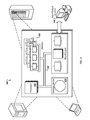
- FIG. 6 shows a schematic diagram of a generic computer system 600.
- the system 600 can be used for the operations described in association with any of the computer-implement methods described previously, according to one implementation.
- the system 600 includes a processor 610, a memory 620, a storage device 630, and an input/output device 640. Each of the components 610, 620, 630, and 640 are interconnected using a system bus 650.
- the processor 610 is capable of processing instructions for execution within the system 600. In one implementation, the processor 610 is a single-threaded processor. In another implementation, the processor 610 is a multi-threaded processor.
- the processor 610 is capable of processing instructions stored in the memory 620 or on the storage device 630 to display graphical information for a user interface on the input/output device 640.
- the memory 620 stores information within the system 600.
- the memory 620 is a computer-readable medium.
- the memory 620 is a volatile memory unit.
- the memory 620 is a non-volatile memory unit.
- the storage device 630 is capable of providing mass storage for the system 600.
- the storage device 630 is a computer-readable medium.
- the storage device 630 may be a floppy disk device, a hard disk device, an optical disk device, or a tape device.
- the input/output device 640 provides input/output operations for the system 600.
- the input/output device 640 includes a keyboard and/or pointing device.
- the input/output device 640 includes a display unit for displaying graphical user interfaces.
Landscapes
- Engineering & Computer Science (AREA)
- Computer Security & Cryptography (AREA)
- General Engineering & Computer Science (AREA)
- Computer Hardware Design (AREA)
- Theoretical Computer Science (AREA)
- Computing Systems (AREA)
- Computer Networks & Wireless Communication (AREA)
- Signal Processing (AREA)
- Databases & Information Systems (AREA)
- Software Systems (AREA)
- General Physics & Mathematics (AREA)
- Physics & Mathematics (AREA)
- Artificial Intelligence (AREA)
- Data Mining & Analysis (AREA)
- Computer Vision & Pattern Recognition (AREA)
- Evolutionary Computation (AREA)
- Medical Informatics (AREA)
- Health & Medical Sciences (AREA)
- Audiology, Speech & Language Pathology (AREA)
- Computational Linguistics (AREA)
- General Health & Medical Sciences (AREA)
- Information Transfer Between Computers (AREA)
- Computer And Data Communications (AREA)
- Information Retrieval, Db Structures And Fs Structures Therefor (AREA)
- Management, Administration, Business Operations System, And Electronic Commerce (AREA)
- Data Exchanges In Wide-Area Networks (AREA)
Applications Claiming Priority (1)
| Application Number | Priority Date | Filing Date | Title |
|---|---|---|---|
| US14/473,730 US9407645B2 (en) | 2014-08-29 | 2014-08-29 | Security threat information analysis |
Publications (2)
| Publication Number | Publication Date |
|---|---|
| EP2990984A1 true EP2990984A1 (de) | 2016-03-02 |
| EP2990984B1 EP2990984B1 (de) | 2020-07-15 |
Family
ID=53886942
Family Applications (1)
| Application Number | Title | Priority Date | Filing Date |
|---|---|---|---|
| EP15181400.1A Active EP2990984B1 (de) | 2014-08-29 | 2015-08-18 | Sicherheitsrisikoinformationsanalyse |
Country Status (3)
| Country | Link |
|---|---|
| US (2) | US9407645B2 (de) |
| EP (1) | EP2990984B1 (de) |
| AU (2) | AU2015213391B2 (de) |
Cited By (1)
| Publication number | Priority date | Publication date | Assignee | Title |
|---|---|---|---|---|
| US11637862B1 (en) * | 2019-09-30 | 2023-04-25 | Mandiant, Inc. | System and method for surfacing cyber-security threats with a self-learning recommendation engine |
Families Citing this family (31)
| Publication number | Priority date | Publication date | Assignee | Title |
|---|---|---|---|---|
| US9886581B2 (en) * | 2014-02-25 | 2018-02-06 | Accenture Global Solutions Limited | Automated intelligence graph construction and countermeasure deployment |
| US9503467B2 (en) | 2014-05-22 | 2016-11-22 | Accenture Global Services Limited | Network anomaly detection |
| US9407645B2 (en) | 2014-08-29 | 2016-08-02 | Accenture Global Services Limited | Security threat information analysis |
| US9716721B2 (en) | 2014-08-29 | 2017-07-25 | Accenture Global Services Limited | Unstructured security threat information analysis |
| US20170031676A1 (en) | 2015-07-27 | 2017-02-02 | Deja Vu Security, Llc | Blockchain computer data distribution |
| US9979743B2 (en) | 2015-08-13 | 2018-05-22 | Accenture Global Services Limited | Computer asset vulnerabilities |
| US9886582B2 (en) | 2015-08-31 | 2018-02-06 | Accenture Global Sevices Limited | Contextualization of threat data |
| US10902114B1 (en) * | 2015-09-09 | 2021-01-26 | ThreatQuotient, Inc. | Automated cybersecurity threat detection with aggregation and analysis |
| US9943116B2 (en) | 2015-11-17 | 2018-04-17 | Lunatech, Llc | Electronic vapor device warning system |
| US10135862B1 (en) * | 2015-12-04 | 2018-11-20 | Amazon Technologies, Inc. | Testing security incident response through automated injection of known indicators of compromise |
| AU2016367922B2 (en) * | 2015-12-11 | 2019-08-08 | Servicenow, Inc. | Computer network threat assessment |
| US11934937B2 (en) | 2017-07-10 | 2024-03-19 | Accenture Global Solutions Limited | System and method for detecting the occurrence of an event and determining a response to the event |
| US10607021B2 (en) | 2018-01-26 | 2020-03-31 | Bank Of America Corporation | Monitoring usage of an application to identify characteristics and trigger security control |
| US12063243B2 (en) * | 2018-02-20 | 2024-08-13 | Darktrace Holdings Limited | Autonomous email report generator |
| US11341449B2 (en) * | 2018-09-20 | 2022-05-24 | Fair Isaac Corporation | Data distillery for signal detection |
| US11741196B2 (en) | 2018-11-15 | 2023-08-29 | The Research Foundation For The State University Of New York | Detecting and preventing exploits of software vulnerability using instruction tags |
| US11115440B2 (en) | 2019-05-08 | 2021-09-07 | Bank Of America Corporation | Dynamic threat intelligence detection and control system |
| US11381588B2 (en) * | 2019-07-30 | 2022-07-05 | Saudi Arabian Oil Company | Cybersecurity vulnerability classification and remediation based on installation base |
| US11768945B2 (en) * | 2020-04-07 | 2023-09-26 | Allstate Insurance Company | Machine learning system for determining a security vulnerability in computer software |
| US11477231B2 (en) * | 2020-06-10 | 2022-10-18 | Saudi Arabian Oil Company | System and method for vulnerability remediation prioritization |
| US11765195B2 (en) * | 2021-02-16 | 2023-09-19 | Icf International | Distributed network-level probabilistic attack graph generation |
| US11783068B2 (en) * | 2021-03-24 | 2023-10-10 | Bank Of America Corporation | System for dynamic exposure monitoring |
| WO2022239166A1 (ja) * | 2021-05-12 | 2022-11-17 | 日本電信電話株式会社 | 抽出方法、抽出装置及び抽出プログラム |
| US20220385675A1 (en) * | 2021-05-27 | 2022-12-01 | Saudi Arabian Oil Company | System and methods for detecting malware adversary and campaign identification |
| CN113890758B (zh) * | 2021-09-27 | 2024-04-12 | 深信服科技股份有限公司 | 一种威胁情报方法、装置、设备及计算机存储介质 |
| US12267299B2 (en) * | 2022-01-12 | 2025-04-01 | Bank Of America Corporation | Preemptive threat detection for an information system |
| CN114826715B (zh) * | 2022-04-15 | 2024-03-22 | 咪咕文化科技有限公司 | 网络防护方法、装置、设备及存储介质 |
| US20240111873A1 (en) * | 2022-09-30 | 2024-04-04 | Nucleus Security, Inc. | Determining Trend Records for Vulnerability Detection and Management in IT Systems |
| US12395515B2 (en) * | 2023-03-06 | 2025-08-19 | International Business Machines Corporation | Dynamically placing tasks into edge nodes based on reputation scores |
| US12495062B2 (en) * | 2023-09-21 | 2025-12-09 | SoftWarfare, LLC | Continuous authentication in secure and isolated network environments |
| US12489774B2 (en) | 2023-10-27 | 2025-12-02 | Target Brands, Inc. | Tracking, evaluating, and improving responses to malicious threats in a network security system |
Citations (2)
| Publication number | Priority date | Publication date | Assignee | Title |
|---|---|---|---|---|
| US20070067848A1 (en) * | 2005-09-22 | 2007-03-22 | Alcatel | Security vulnerability information aggregation |
| US20080307525A1 (en) * | 2007-06-05 | 2008-12-11 | Computer Associates Think, Inc. | System and method for evaluating security events in the context of an organizational structure |
Family Cites Families (50)
| Publication number | Priority date | Publication date | Assignee | Title |
|---|---|---|---|---|
| JPH06250911A (ja) | 1993-02-26 | 1994-09-09 | Kobe Steel Ltd | データ解析装置 |
| US6173284B1 (en) | 1997-05-20 | 2001-01-09 | University Of Charlotte City Of Charlotte | Systems, methods and computer program products for automatically monitoring police records for a crime profile |
| US6321338B1 (en) * | 1998-11-09 | 2001-11-20 | Sri International | Network surveillance |
| WO2001084285A2 (en) * | 2000-04-28 | 2001-11-08 | Internet Security Systems, Inc. | Method and system for managing computer security information |
| US7203693B2 (en) | 2001-06-12 | 2007-04-10 | Lucent Technologies Inc. | Instantly indexed databases for multimedia content analysis and retrieval |
| US7379993B2 (en) | 2001-09-13 | 2008-05-27 | Sri International | Prioritizing Bayes network alerts |
| AU2003207856A1 (en) | 2002-02-04 | 2003-09-02 | Cataphora, Inc | A method and apparatus to visually present discussions for data mining purposes |
| JP2003330943A (ja) * | 2002-05-17 | 2003-11-21 | Fujitsu Ltd | 多次元インデクス生成装置、多次元インデクス生成方法、近似情報作成装置、近似情報作成方法、及び検索装置 |
| US6952779B1 (en) | 2002-10-01 | 2005-10-04 | Gideon Cohen | System and method for risk detection and analysis in a computer network |
| US8272061B1 (en) | 2002-10-01 | 2012-09-18 | Skyobox security Inc. | Method for evaluating a network |
| US8407798B1 (en) | 2002-10-01 | 2013-03-26 | Skybox Secutiry Inc. | Method for simulation aided security event management |
| US8504879B2 (en) | 2002-11-04 | 2013-08-06 | Riverbed Technology, Inc. | Connection based anomaly detection |
| US8024795B2 (en) | 2003-05-09 | 2011-09-20 | Q1 Labs, Inc. | Network intelligence system |
| US7783740B2 (en) * | 2003-09-25 | 2010-08-24 | Rockwell Automation Technologies, Inc. | Embedded network traffic analyzer |
| EP1526457B1 (de) | 2003-10-22 | 2013-03-13 | Sony Deutschland GmbH | Kontextbewusste automatische Dienstedetektions- und Ausführungstreiber in mobilen ad-hoc Netzwerken |
| US7194769B2 (en) | 2003-12-11 | 2007-03-20 | Massachusetts Institute Of Technology | Network security planning architecture |
| US7447331B2 (en) | 2004-02-24 | 2008-11-04 | International Business Machines Corporation | System and method for generating a viewable video index for low bandwidth applications |
| US7565368B2 (en) | 2004-05-04 | 2009-07-21 | Next It Corporation | Data disambiguation systems and methods |
| WO2005111805A1 (en) | 2004-05-18 | 2005-11-24 | Esphion Limited | Method of network traffic signature detection |
| US7523137B2 (en) | 2005-04-08 | 2009-04-21 | Accenture Global Services Gmbh | Model-driven event detection, implication, and reporting system |
| WO2007002838A2 (en) | 2005-06-29 | 2007-01-04 | Trustees Of Boston University | Whole-network anomaly diagnosis |
| US8516104B1 (en) | 2005-12-22 | 2013-08-20 | At&T Intellectual Property Ii, L.P. | Method and apparatus for detecting anomalies in aggregated traffic volume data |
| US9118617B1 (en) | 2005-12-23 | 2015-08-25 | Emc Corporation | Methods and apparatus for adapting the protection level for protected content |
| US7739211B2 (en) | 2006-11-08 | 2010-06-15 | 21St Century Technologies, Inc. | Dynamic SNA-based anomaly detection using unsupervised learning |
| US8261344B2 (en) * | 2006-06-30 | 2012-09-04 | Sophos Plc | Method and system for classification of software using characteristics and combinations of such characteristics |
| US20080295172A1 (en) | 2007-05-22 | 2008-11-27 | Khushboo Bohacek | Method, system and computer-readable media for reducing undesired intrusion alarms in electronic communications systems and networks |
| ES2398374T3 (es) | 2007-06-25 | 2013-03-15 | Deutsche Telekom Ag | Método, dispositivo de procesamiento de datos y red informática para la detección de anomalías |
| US8310372B2 (en) * | 2008-02-29 | 2012-11-13 | Purdue Research Foundation | Fingerprint acquisition system and method using force measurements |
| US8635694B2 (en) * | 2009-01-10 | 2014-01-21 | Kaspersky Lab Zao | Systems and methods for malware classification |
| US8069374B2 (en) * | 2009-02-27 | 2011-11-29 | Microsoft Corporation | Fingerprinting event logs for system management troubleshooting |
| US9317692B2 (en) | 2009-12-21 | 2016-04-19 | Symantec Corporation | System and method for vulnerability risk analysis |
| US8800036B2 (en) | 2010-01-22 | 2014-08-05 | The School Of Electrical Engineering And Computer Science (Seecs), National University Of Sciences And Technology (Nust) | Method and system for adaptive anomaly-based intrusion detection |
| BR112012018643B1 (pt) | 2010-01-26 | 2021-12-07 | EMC IP Holding Company LLC | Método para detecção de acessos não autorizados de recursos online seguros, sistema de segurança de rede para detectar acessos não autorizados de recursos online seguros e mídia de armazenamento legível por computador |
| US20120303645A1 (en) | 2010-02-03 | 2012-11-29 | Anita Kulkarni-Puranik | System and method for extraction of structured data from arbitrarily structured composite data |
| US11367295B1 (en) | 2010-03-23 | 2022-06-21 | Aurea Software, Inc. | Graphical user interface for presentation of events |
| US9032521B2 (en) | 2010-10-13 | 2015-05-12 | International Business Machines Corporation | Adaptive cyber-security analytics |
| US20120123822A1 (en) | 2010-11-17 | 2012-05-17 | Projectioneering, LLC | Computerized complex system event assessment, projection and control |
| US8935383B2 (en) | 2010-12-31 | 2015-01-13 | Verisign, Inc. | Systems, apparatus, and methods for network data analysis |
| US8732302B2 (en) | 2011-07-15 | 2014-05-20 | Inetco Systems Limited | Method and system for monitoring performance of an application system |
| US20140165207A1 (en) | 2011-07-26 | 2014-06-12 | Light Cyber Ltd. | Method for detecting anomaly action within a computer network |
| US8595845B2 (en) | 2012-01-19 | 2013-11-26 | Mcafee, Inc. | Calculating quantitative asset risk |
| US9668137B2 (en) | 2012-03-07 | 2017-05-30 | Rapid7, Inc. | Controlling enterprise access by mobile devices |
| US10664768B2 (en) | 2012-06-13 | 2020-05-26 | Expedia, Inc. | Travel advisory notifications |
| US20140157405A1 (en) | 2012-12-04 | 2014-06-05 | Bill Joll | Cyber Behavior Analysis and Detection Method, System and Architecture |
| EP2770688A1 (de) | 2013-02-22 | 2014-08-27 | Alcatel Lucent | Verfahren und Vorrichtung zum Bewerten der Wirksamkeit von Regeln für Filtervorrichtungen, die ein Netzwerk schützen |
| US8984643B1 (en) | 2014-02-14 | 2015-03-17 | Risk I/O, Inc. | Ordered computer vulnerability remediation reporting |
| US8966639B1 (en) | 2014-02-14 | 2015-02-24 | Risk I/O, Inc. | Internet breach correlation |
| US9503467B2 (en) | 2014-05-22 | 2016-11-22 | Accenture Global Services Limited | Network anomaly detection |
| US9716721B2 (en) * | 2014-08-29 | 2017-07-25 | Accenture Global Services Limited | Unstructured security threat information analysis |
| US9407645B2 (en) | 2014-08-29 | 2016-08-02 | Accenture Global Services Limited | Security threat information analysis |
-
2014
- 2014-08-29 US US14/473,730 patent/US9407645B2/en active Active
-
2015
- 2015-08-14 AU AU2015213391A patent/AU2015213391B2/en active Active
- 2015-08-18 EP EP15181400.1A patent/EP2990984B1/de active Active
-
2016
- 2016-05-16 US US15/155,328 patent/US9762617B2/en active Active
- 2016-10-20 AU AU2016247167A patent/AU2016247167B2/en active Active
Patent Citations (2)
| Publication number | Priority date | Publication date | Assignee | Title |
|---|---|---|---|---|
| US20070067848A1 (en) * | 2005-09-22 | 2007-03-22 | Alcatel | Security vulnerability information aggregation |
| US20080307525A1 (en) * | 2007-06-05 | 2008-12-11 | Computer Associates Think, Inc. | System and method for evaluating security events in the context of an organizational structure |
Non-Patent Citations (2)
| Title |
|---|
| SEAN BARNUM: "Standardizing Cyber Threat Intelligence Information with the Structured Threat Information eXpression (STIX)", 20 February 2014 (2014-02-20), XP055234195, Retrieved from the Internet <URL:http://stixproject.github.io/getting-started/whitepaper/> [retrieved on 20151207] * |
| SIRIRAM POLEPEDDI: "Software Vulnerability Taxonomy Consolidation", INTERNET CITATION, 5 January 2005 (2005-01-05), XP002457428, Retrieved from the Internet <URL:http://www.osti.gov/bridge/product.biblio.jsp?osti_id=15020074> [retrieved on 20071102] * |
Cited By (2)
| Publication number | Priority date | Publication date | Assignee | Title |
|---|---|---|---|---|
| US11637862B1 (en) * | 2019-09-30 | 2023-04-25 | Mandiant, Inc. | System and method for surfacing cyber-security threats with a self-learning recommendation engine |
| US12388865B2 (en) | 2019-09-30 | 2025-08-12 | Google Llc | System and method for surfacing cyber-security threats with a self-learning recommendation engine |
Also Published As
| Publication number | Publication date |
|---|---|
| US20160261640A1 (en) | 2016-09-08 |
| AU2016247167A1 (en) | 2016-11-10 |
| US9407645B2 (en) | 2016-08-02 |
| AU2015213391B2 (en) | 2016-11-17 |
| EP2990984B1 (de) | 2020-07-15 |
| US9762617B2 (en) | 2017-09-12 |
| US20160065598A1 (en) | 2016-03-03 |
| AU2016247167B2 (en) | 2017-12-14 |
| AU2015213391A1 (en) | 2016-03-17 |
Similar Documents
| Publication | Publication Date | Title |
|---|---|---|
| AU2016247167B2 (en) | Security threat information analysis | |
| US10880320B2 (en) | Unstructured security threat information analysis | |
| US11212306B2 (en) | Graph database analysis for network anomaly detection systems | |
| US11323460B2 (en) | Malicious threat detection through time series graph analysis | |
| US10264009B2 (en) | Automated machine learning scheme for software exploit prediction | |
| US10313389B2 (en) | Computer asset vulnerabilities | |
| CA2939279C (en) | Contextualization of threat data | |
| JP6723267B2 (ja) | スペースおよび時間効率のよい脅威検知 | |
| US20180191763A1 (en) | System and method for determining network security threats | |
| JP7120350B2 (ja) | セキュリティ情報分析方法、セキュリティ情報分析システム、及び、プログラム |
Legal Events
| Date | Code | Title | Description |
|---|---|---|---|
| PUAI | Public reference made under article 153(3) epc to a published international application that has entered the european phase |
Free format text: ORIGINAL CODE: 0009012 |
|
| AK | Designated contracting states |
Kind code of ref document: A1 Designated state(s): AL AT BE BG CH CY CZ DE DK EE ES FI FR GB GR HR HU IE IS IT LI LT LU LV MC MK MT NL NO PL PT RO RS SE SI SK SM TR |
|
| AX | Request for extension of the european patent |
Extension state: BA ME |
|
| 17P | Request for examination filed |
Effective date: 20160209 |
|
| RBV | Designated contracting states (corrected) |
Designated state(s): AL AT BE BG CH CY CZ DE DK EE ES FI FR GB GR HR HU IE IS IT LI LT LU LV MC MK MT NL NO PL PT RO RS SE SI SK SM TR |
|
| STAA | Information on the status of an ep patent application or granted ep patent |
Free format text: STATUS: EXAMINATION IS IN PROGRESS |
|
| 17Q | First examination report despatched |
Effective date: 20190207 |
|
| GRAP | Despatch of communication of intention to grant a patent |
Free format text: ORIGINAL CODE: EPIDOSNIGR1 |
|
| STAA | Information on the status of an ep patent application or granted ep patent |
Free format text: STATUS: GRANT OF PATENT IS INTENDED |
|
| RIC1 | Information provided on ipc code assigned before grant |
Ipc: G06F 16/28 20190101ALI20200213BHEP Ipc: G06F 21/57 20130101AFI20200213BHEP Ipc: H04L 29/06 20060101ALI20200213BHEP |
|
| INTG | Intention to grant announced |
Effective date: 20200305 |
|
| GRAS | Grant fee paid |
Free format text: ORIGINAL CODE: EPIDOSNIGR3 |
|
| GRAA | (expected) grant |
Free format text: ORIGINAL CODE: 0009210 |
|
| STAA | Information on the status of an ep patent application or granted ep patent |
Free format text: STATUS: THE PATENT HAS BEEN GRANTED |
|
| AK | Designated contracting states |
Kind code of ref document: B1 Designated state(s): AL AT BE BG CH CY CZ DE DK EE ES FI FR GB GR HR HU IE IS IT LI LT LU LV MC MK MT NL NO PL PT RO RS SE SI SK SM TR |
|
| REG | Reference to a national code |
Ref country code: CH Ref legal event code: EP Ref country code: GB Ref legal event code: FG4D |
|
| REG | Reference to a national code |
Ref country code: IE Ref legal event code: FG4D |
|
| REG | Reference to a national code |
Ref country code: DE Ref legal event code: R096 Ref document number: 602015055671 Country of ref document: DE |
|
| REG | Reference to a national code |
Ref country code: AT Ref legal event code: REF Ref document number: 1291812 Country of ref document: AT Kind code of ref document: T Effective date: 20200815 |
|
| REG | Reference to a national code |
Ref country code: LT Ref legal event code: MG4D |
|
| REG | Reference to a national code |
Ref country code: AT Ref legal event code: MK05 Ref document number: 1291812 Country of ref document: AT Kind code of ref document: T Effective date: 20200715 |
|
| REG | Reference to a national code |
Ref country code: NL Ref legal event code: MP Effective date: 20200715 |
|
| PG25 | Lapsed in a contracting state [announced via postgrant information from national office to epo] |
Ref country code: LT Free format text: LAPSE BECAUSE OF FAILURE TO SUBMIT A TRANSLATION OF THE DESCRIPTION OR TO PAY THE FEE WITHIN THE PRESCRIBED TIME-LIMIT Effective date: 20200715 Ref country code: FI Free format text: LAPSE BECAUSE OF FAILURE TO SUBMIT A TRANSLATION OF THE DESCRIPTION OR TO PAY THE FEE WITHIN THE PRESCRIBED TIME-LIMIT Effective date: 20200715 Ref country code: AT Free format text: LAPSE BECAUSE OF FAILURE TO SUBMIT A TRANSLATION OF THE DESCRIPTION OR TO PAY THE FEE WITHIN THE PRESCRIBED TIME-LIMIT Effective date: 20200715 Ref country code: BG Free format text: LAPSE BECAUSE OF FAILURE TO SUBMIT A TRANSLATION OF THE DESCRIPTION OR TO PAY THE FEE WITHIN THE PRESCRIBED TIME-LIMIT Effective date: 20201015 Ref country code: PT Free format text: LAPSE BECAUSE OF FAILURE TO SUBMIT A TRANSLATION OF THE DESCRIPTION OR TO PAY THE FEE WITHIN THE PRESCRIBED TIME-LIMIT Effective date: 20201116 Ref country code: GR Free format text: LAPSE BECAUSE OF FAILURE TO SUBMIT A TRANSLATION OF THE DESCRIPTION OR TO PAY THE FEE WITHIN THE PRESCRIBED TIME-LIMIT Effective date: 20201016 Ref country code: NO Free format text: LAPSE BECAUSE OF FAILURE TO SUBMIT A TRANSLATION OF THE DESCRIPTION OR TO PAY THE FEE WITHIN THE PRESCRIBED TIME-LIMIT Effective date: 20201015 Ref country code: ES Free format text: LAPSE BECAUSE OF FAILURE TO SUBMIT A TRANSLATION OF THE DESCRIPTION OR TO PAY THE FEE WITHIN THE PRESCRIBED TIME-LIMIT Effective date: 20200715 Ref country code: SE Free format text: LAPSE BECAUSE OF FAILURE TO SUBMIT A TRANSLATION OF THE DESCRIPTION OR TO PAY THE FEE WITHIN THE PRESCRIBED TIME-LIMIT Effective date: 20200715 Ref country code: HR Free format text: LAPSE BECAUSE OF FAILURE TO SUBMIT A TRANSLATION OF THE DESCRIPTION OR TO PAY THE FEE WITHIN THE PRESCRIBED TIME-LIMIT Effective date: 20200715 |
|
| PG25 | Lapsed in a contracting state [announced via postgrant information from national office to epo] |
Ref country code: RS Free format text: LAPSE BECAUSE OF FAILURE TO SUBMIT A TRANSLATION OF THE DESCRIPTION OR TO PAY THE FEE WITHIN THE PRESCRIBED TIME-LIMIT Effective date: 20200715 Ref country code: PL Free format text: LAPSE BECAUSE OF FAILURE TO SUBMIT A TRANSLATION OF THE DESCRIPTION OR TO PAY THE FEE WITHIN THE PRESCRIBED TIME-LIMIT Effective date: 20200715 Ref country code: LV Free format text: LAPSE BECAUSE OF FAILURE TO SUBMIT A TRANSLATION OF THE DESCRIPTION OR TO PAY THE FEE WITHIN THE PRESCRIBED TIME-LIMIT Effective date: 20200715 Ref country code: IS Free format text: LAPSE BECAUSE OF FAILURE TO SUBMIT A TRANSLATION OF THE DESCRIPTION OR TO PAY THE FEE WITHIN THE PRESCRIBED TIME-LIMIT Effective date: 20201115 |
|
| PG25 | Lapsed in a contracting state [announced via postgrant information from national office to epo] |
Ref country code: NL Free format text: LAPSE BECAUSE OF FAILURE TO SUBMIT A TRANSLATION OF THE DESCRIPTION OR TO PAY THE FEE WITHIN THE PRESCRIBED TIME-LIMIT Effective date: 20200715 |
|
| REG | Reference to a national code |
Ref country code: CH Ref legal event code: PL |
|
| REG | Reference to a national code |
Ref country code: DE Ref legal event code: R097 Ref document number: 602015055671 Country of ref document: DE |
|
| PG25 | Lapsed in a contracting state [announced via postgrant information from national office to epo] |
Ref country code: IT Free format text: LAPSE BECAUSE OF FAILURE TO SUBMIT A TRANSLATION OF THE DESCRIPTION OR TO PAY THE FEE WITHIN THE PRESCRIBED TIME-LIMIT Effective date: 20200715 Ref country code: CZ Free format text: LAPSE BECAUSE OF FAILURE TO SUBMIT A TRANSLATION OF THE DESCRIPTION OR TO PAY THE FEE WITHIN THE PRESCRIBED TIME-LIMIT Effective date: 20200715 Ref country code: DK Free format text: LAPSE BECAUSE OF FAILURE TO SUBMIT A TRANSLATION OF THE DESCRIPTION OR TO PAY THE FEE WITHIN THE PRESCRIBED TIME-LIMIT Effective date: 20200715 Ref country code: CH Free format text: LAPSE BECAUSE OF NON-PAYMENT OF DUE FEES Effective date: 20200831 Ref country code: EE Free format text: LAPSE BECAUSE OF FAILURE TO SUBMIT A TRANSLATION OF THE DESCRIPTION OR TO PAY THE FEE WITHIN THE PRESCRIBED TIME-LIMIT Effective date: 20200715 Ref country code: SM Free format text: LAPSE BECAUSE OF FAILURE TO SUBMIT A TRANSLATION OF THE DESCRIPTION OR TO PAY THE FEE WITHIN THE PRESCRIBED TIME-LIMIT Effective date: 20200715 Ref country code: RO Free format text: LAPSE BECAUSE OF FAILURE TO SUBMIT A TRANSLATION OF THE DESCRIPTION OR TO PAY THE FEE WITHIN THE PRESCRIBED TIME-LIMIT Effective date: 20200715 Ref country code: MC Free format text: LAPSE BECAUSE OF FAILURE TO SUBMIT A TRANSLATION OF THE DESCRIPTION OR TO PAY THE FEE WITHIN THE PRESCRIBED TIME-LIMIT Effective date: 20200715 Ref country code: LU Free format text: LAPSE BECAUSE OF NON-PAYMENT OF DUE FEES Effective date: 20200818 Ref country code: LI Free format text: LAPSE BECAUSE OF NON-PAYMENT OF DUE FEES Effective date: 20200831 |
|
| PLBE | No opposition filed within time limit |
Free format text: ORIGINAL CODE: 0009261 |
|
| STAA | Information on the status of an ep patent application or granted ep patent |
Free format text: STATUS: NO OPPOSITION FILED WITHIN TIME LIMIT |
|
| REG | Reference to a national code |
Ref country code: BE Ref legal event code: MM Effective date: 20200831 |
|
| PG25 | Lapsed in a contracting state [announced via postgrant information from national office to epo] |
Ref country code: AL Free format text: LAPSE BECAUSE OF FAILURE TO SUBMIT A TRANSLATION OF THE DESCRIPTION OR TO PAY THE FEE WITHIN THE PRESCRIBED TIME-LIMIT Effective date: 20200715 |
|
| 26N | No opposition filed |
Effective date: 20210416 |
|
| PG25 | Lapsed in a contracting state [announced via postgrant information from national office to epo] |
Ref country code: SK Free format text: LAPSE BECAUSE OF FAILURE TO SUBMIT A TRANSLATION OF THE DESCRIPTION OR TO PAY THE FEE WITHIN THE PRESCRIBED TIME-LIMIT Effective date: 20200715 |
|
| PG25 | Lapsed in a contracting state [announced via postgrant information from national office to epo] |
Ref country code: SI Free format text: LAPSE BECAUSE OF FAILURE TO SUBMIT A TRANSLATION OF THE DESCRIPTION OR TO PAY THE FEE WITHIN THE PRESCRIBED TIME-LIMIT Effective date: 20200715 Ref country code: BE Free format text: LAPSE BECAUSE OF NON-PAYMENT OF DUE FEES Effective date: 20200831 |
|
| PG25 | Lapsed in a contracting state [announced via postgrant information from national office to epo] |
Ref country code: TR Free format text: LAPSE BECAUSE OF FAILURE TO SUBMIT A TRANSLATION OF THE DESCRIPTION OR TO PAY THE FEE WITHIN THE PRESCRIBED TIME-LIMIT Effective date: 20200715 Ref country code: MT Free format text: LAPSE BECAUSE OF FAILURE TO SUBMIT A TRANSLATION OF THE DESCRIPTION OR TO PAY THE FEE WITHIN THE PRESCRIBED TIME-LIMIT Effective date: 20200715 Ref country code: CY Free format text: LAPSE BECAUSE OF FAILURE TO SUBMIT A TRANSLATION OF THE DESCRIPTION OR TO PAY THE FEE WITHIN THE PRESCRIBED TIME-LIMIT Effective date: 20200715 |
|
| PG25 | Lapsed in a contracting state [announced via postgrant information from national office to epo] |
Ref country code: MK Free format text: LAPSE BECAUSE OF FAILURE TO SUBMIT A TRANSLATION OF THE DESCRIPTION OR TO PAY THE FEE WITHIN THE PRESCRIBED TIME-LIMIT Effective date: 20200715 |
|
| P01 | Opt-out of the competence of the unified patent court (upc) registered |
Effective date: 20230523 |
|
| PGFP | Annual fee paid to national office [announced via postgrant information from national office to epo] |
Ref country code: GB Payment date: 20250626 Year of fee payment: 11 |
|
| PGFP | Annual fee paid to national office [announced via postgrant information from national office to epo] |
Ref country code: FR Payment date: 20250610 Year of fee payment: 11 |
|
| PGFP | Annual fee paid to national office [announced via postgrant information from national office to epo] |
Ref country code: IE Payment date: 20250610 Year of fee payment: 11 |
|
| PGFP | Annual fee paid to national office [announced via postgrant information from national office to epo] |
Ref country code: DE Payment date: 20250624 Year of fee payment: 11 |