EP2990943A1 - Intelligent terminal device control method and system - Google Patents
Intelligent terminal device control method and system Download PDFInfo
- Publication number
- EP2990943A1 EP2990943A1 EP13882545.0A EP13882545A EP2990943A1 EP 2990943 A1 EP2990943 A1 EP 2990943A1 EP 13882545 A EP13882545 A EP 13882545A EP 2990943 A1 EP2990943 A1 EP 2990943A1
- Authority
- EP
- European Patent Office
- Prior art keywords
- running
- application
- state
- terminal device
- smart terminal
- Prior art date
- Legal status (The legal status is an assumption and is not a legal conclusion. Google has not performed a legal analysis and makes no representation as to the accuracy of the status listed.)
- Granted
Links
Images



Classifications
-
- G—PHYSICS
- G06—COMPUTING OR CALCULATING; COUNTING
- G06F—ELECTRIC DIGITAL DATA PROCESSING
- G06F9/00—Arrangements for program control, e.g. control units
- G06F9/06—Arrangements for program control, e.g. control units using stored programs, i.e. using an internal store of processing equipment to receive or retain programs
- G06F9/44—Arrangements for executing specific programs
- G06F9/445—Program loading or initiating
-
- H—ELECTRICITY
- H04—ELECTRIC COMMUNICATION TECHNIQUE
- H04R—LOUDSPEAKERS, MICROPHONES, GRAMOPHONE PICK-UPS OR LIKE ACOUSTIC ELECTROMECHANICAL TRANSDUCERS; ELECTRIC HEARING AIDS; PUBLIC ADDRESS SYSTEMS
- H04R1/00—Details of transducers, loudspeakers or microphones
- H04R1/10—Earpieces; Attachments therefor ; Earphones; Monophonic headphones
- H04R1/1041—Mechanical or electronic switches, or control elements
-
- H—ELECTRICITY
- H04—ELECTRIC COMMUNICATION TECHNIQUE
- H04M—TELEPHONIC COMMUNICATION
- H04M1/00—Substation equipment, e.g. for use by subscribers
- H04M1/72—Mobile telephones; Cordless telephones, i.e. devices for establishing wireless links to base stations without route selection
- H04M1/724—User interfaces specially adapted for cordless or mobile telephones
- H04M1/72403—User interfaces specially adapted for cordless or mobile telephones with means for local support of applications that increase the functionality
- H04M1/72409—User interfaces specially adapted for cordless or mobile telephones with means for local support of applications that increase the functionality by interfacing with external accessories
-
- H—ELECTRICITY
- H04—ELECTRIC COMMUNICATION TECHNIQUE
- H04M—TELEPHONIC COMMUNICATION
- H04M1/00—Substation equipment, e.g. for use by subscribers
- H04M1/72—Mobile telephones; Cordless telephones, i.e. devices for establishing wireless links to base stations without route selection
- H04M1/724—User interfaces specially adapted for cordless or mobile telephones
- H04M1/72448—User interfaces specially adapted for cordless or mobile telephones with means for adapting the functionality of the device according to specific conditions
- H04M1/72454—User interfaces specially adapted for cordless or mobile telephones with means for adapting the functionality of the device according to specific conditions according to context-related or environment-related conditions
-
- H—ELECTRICITY
- H04—ELECTRIC COMMUNICATION TECHNIQUE
- H04M—TELEPHONIC COMMUNICATION
- H04M1/00—Substation equipment, e.g. for use by subscribers
- H04M1/72—Mobile telephones; Cordless telephones, i.e. devices for establishing wireless links to base stations without route selection
- H04M1/724—User interfaces specially adapted for cordless or mobile telephones
- H04M1/72403—User interfaces specially adapted for cordless or mobile telephones with means for local support of applications that increase the functionality
- H04M1/72409—User interfaces specially adapted for cordless or mobile telephones with means for local support of applications that increase the functionality by interfacing with external accessories
- H04M1/72412—User interfaces specially adapted for cordless or mobile telephones with means for local support of applications that increase the functionality by interfacing with external accessories using two-way short-range wireless interfaces
-
- H—ELECTRICITY
- H04—ELECTRIC COMMUNICATION TECHNIQUE
- H04R—LOUDSPEAKERS, MICROPHONES, GRAMOPHONE PICK-UPS OR LIKE ACOUSTIC ELECTROMECHANICAL TRANSDUCERS; ELECTRIC HEARING AIDS; PUBLIC ADDRESS SYSTEMS
- H04R19/00—Electrostatic transducers
- H04R19/04—Microphones
-
- H—ELECTRICITY
- H04—ELECTRIC COMMUNICATION TECHNIQUE
- H04R—LOUDSPEAKERS, MICROPHONES, GRAMOPHONE PICK-UPS OR LIKE ACOUSTIC ELECTROMECHANICAL TRANSDUCERS; ELECTRIC HEARING AIDS; PUBLIC ADDRESS SYSTEMS
- H04R2420/00—Details of connection covered by H04R, not provided for in its groups
- H04R2420/03—Connection circuits to selectively connect loudspeakers or headphones to amplifiers
-
- H—ELECTRICITY
- H04—ELECTRIC COMMUNICATION TECHNIQUE
- H04R—LOUDSPEAKERS, MICROPHONES, GRAMOPHONE PICK-UPS OR LIKE ACOUSTIC ELECTROMECHANICAL TRANSDUCERS; ELECTRIC HEARING AIDS; PUBLIC ADDRESS SYSTEMS
- H04R2420/00—Details of connection covered by H04R, not provided for in its groups
- H04R2420/05—Detection of connection of loudspeakers or headphones to amplifiers
-
- H—ELECTRICITY
- H04—ELECTRIC COMMUNICATION TECHNIQUE
- H04R—LOUDSPEAKERS, MICROPHONES, GRAMOPHONE PICK-UPS OR LIKE ACOUSTIC ELECTROMECHANICAL TRANSDUCERS; ELECTRIC HEARING AIDS; PUBLIC ADDRESS SYSTEMS
- H04R2420/00—Details of connection covered by H04R, not provided for in its groups
- H04R2420/07—Applications of wireless loudspeakers or wireless microphones
-
- H—ELECTRICITY
- H04—ELECTRIC COMMUNICATION TECHNIQUE
- H04R—LOUDSPEAKERS, MICROPHONES, GRAMOPHONE PICK-UPS OR LIKE ACOUSTIC ELECTROMECHANICAL TRANSDUCERS; ELECTRIC HEARING AIDS; PUBLIC ADDRESS SYSTEMS
- H04R2420/00—Details of connection covered by H04R, not provided for in its groups
- H04R2420/09—Applications of special connectors, e.g. USB, XLR, in loudspeakers, microphones or headphones
-
- H—ELECTRICITY
- H04—ELECTRIC COMMUNICATION TECHNIQUE
- H04R—LOUDSPEAKERS, MICROPHONES, GRAMOPHONE PICK-UPS OR LIKE ACOUSTIC ELECTROMECHANICAL TRANSDUCERS; ELECTRIC HEARING AIDS; PUBLIC ADDRESS SYSTEMS
- H04R2460/00—Details of hearing devices, i.e. of ear- or headphones covered by H04R1/10 or H04R5/033 but not provided for in any of their subgroups, or of hearing aids covered by H04R25/00 but not provided for in any of its subgroups
- H04R2460/03—Aspects of the reduction of energy consumption in hearing devices
-
- H—ELECTRICITY
- H04—ELECTRIC COMMUNICATION TECHNIQUE
- H04R—LOUDSPEAKERS, MICROPHONES, GRAMOPHONE PICK-UPS OR LIKE ACOUSTIC ELECTROMECHANICAL TRANSDUCERS; ELECTRIC HEARING AIDS; PUBLIC ADDRESS SYSTEMS
- H04R5/00—Stereophonic arrangements
- H04R5/04—Circuit arrangements, e.g. for selective connection of amplifier inputs/outputs to loudspeakers, for loudspeaker detection, or for adaptation of settings to personal preferences or hearing impairments
-
- Y—GENERAL TAGGING OF NEW TECHNOLOGICAL DEVELOPMENTS; GENERAL TAGGING OF CROSS-SECTIONAL TECHNOLOGIES SPANNING OVER SEVERAL SECTIONS OF THE IPC; TECHNICAL SUBJECTS COVERED BY FORMER USPC CROSS-REFERENCE ART COLLECTIONS [XRACs] AND DIGESTS
- Y02—TECHNOLOGIES OR APPLICATIONS FOR MITIGATION OR ADAPTATION AGAINST CLIMATE CHANGE
- Y02D—CLIMATE CHANGE MITIGATION TECHNOLOGIES IN INFORMATION AND COMMUNICATION TECHNOLOGIES [ICT], I.E. INFORMATION AND COMMUNICATION TECHNOLOGIES AIMING AT THE REDUCTION OF THEIR OWN ENERGY USE
- Y02D30/00—Reducing energy consumption in communication networks
- Y02D30/70—Reducing energy consumption in communication networks in wireless communication networks
Definitions
- Step 102 a running state of an application in the smart terminal device or an operation mode of the smart terminal device is controlled according to the wear state of the receiver(s).
- the smart terminal device may be controlled to be automatically switched to the earphone mode when it is detected that the receiver of the earphone is worn, that is, a user may listen to the playing rich media content through the earphone without performing a manual switch among modes.
- Sub-step 2022 an application in the smart terminal device is started in a predetermined strategy according to the wear state of the receivers when no application is running in the smart terminal device.
- some strategies of starting up an application in the smart terminal device may be preset.
- the sub-step 2022 may include three situations as below.
- the smart terminal device may be automatically switched to the phone receiver mode upon receiving the control instruction from the earphone, and the user may directly put the receiver of the terminal device to the ear so as to continue the audio communication.
- the above usage scenario may correspond to steps 11-12 in Fig.5 .
Landscapes
- Engineering & Computer Science (AREA)
- Signal Processing (AREA)
- Human Computer Interaction (AREA)
- Computer Networks & Wireless Communication (AREA)
- Software Systems (AREA)
- Physics & Mathematics (AREA)
- Theoretical Computer Science (AREA)
- Acoustics & Sound (AREA)
- General Physics & Mathematics (AREA)
- General Engineering & Computer Science (AREA)
- Environmental & Geological Engineering (AREA)
- Telephone Function (AREA)
- Headphones And Earphones (AREA)
- Circuit For Audible Band Transducer (AREA)
- Selective Calling Equipment (AREA)
- User Interface Of Digital Computer (AREA)
Abstract
Description
- The present application claims the priority of Chinese patent application No.
201310136307.X, filed on April 18, 2013 - The present application relates to a smart terminal technology, and more particular to a method for controlling a smart terminal device and a system thereof.
- Smart terminal devices are such smart devices with multimedia functions, which can support audio, video, data, or the like. For example, a visual telephone, a conference terminal, Personal Computer (PC) with a built-in multimedia function, Personal Digital Assistant (PDA), and so on belong to the smart terminal device.
- With the rapid popular of smart terminal devices, the devices can bring a more and more perfect video-audio experience and thus become important recreational devices when people travels.
- In a case of mobile application, a user generally listens to multimedia contents by wearing an earphone, for example listening to the playing audio, visual or game using the earphone. On the other hand, with the development of audio and video communication based on mobile Internet, the earphone is often used by people for audio communication and video communication.
- However, in some emergency cases, the user generally takes off the wear earphone in a hurry so as to forget or have no time to stop playing multimedia content, which may lead to a mistake in the playing audio, video or game and a waste of electric energy. If the user wants to stop playing multimedia, it is required to go to an operation interface of the smart terminal so that the user can press a pause button. For example, for a wired earphone, it is required to either press a pause button with a play control function in the wire control thereof or directly unplug the earphone from the terminal device to pause the playing; and for a wireless earphone, it is required to press a switch on the earphone or a pause button in a play interface.
- In addition, in some emergency cases, it is required for a user to switch among a earphone mode, a speaker mode and a hand-free mode during the audio communication and the video communication. However, it is still required for the switch to manually perform plugging on a wired earphone plug or turn on/off the connection of a wireless earphone.
- Thus, the above manual operations are cumbersome, and the frequent mechanical operations easily cause the wear and aging of a switch, a plug and a socket of the earphone.
- The embodiments of the present invention provides a method for controlling a smart terminal device and a system thereof, which can simplify operations caused by the change of wear state of an earphone, increase service life of the mechanism member of the earphone, and save electric energy of the smart terminal device.
- According to a first aspect of the present invention, there is provided a method for controlling a smart terminal device, which may include:
- detecting a wear state of receivers of an earphone connected to the smart terminal device, wherein the wear state comprises a wearing state and a taking-off state; and
- controlling a running state of an application in the smart terminal device and/or an operation mode of the smart terminal device according to the wear state of the receivers.
- In an embodiment, controlling a running state of an application in the smart terminal device and/or an operation mode of the smart terminal device according to the wear state of the receivers may include:
- detecting whether or not an application is running in the smart terminal device;
- starting up, if no, the application in the smart terminal device in a predetermined strategy according to the wear state of the receivers;
- determining, if yes, a type of the running application, so that the running state of the running application and/or the operation mode of the smart terminal device controlled according to the determined type and the wear state of the receivers
- In an embodiment, starting up, if no, the application in the smart terminal device in a predetermined strategy according to the wear state of the receivers may include:
- controlling, when the wear state of the receivers is the wearing state, to start up and display a desktop application; or
- controlling, when the wear state of the receivers is the wearing state, to start up an application preset in the smart terminal device; or
- controlling, when the wear state of the receivers is the wearing state, a display interface to display a list of applications, so that an application selected by a user from the list is started up.
- In an embodiment, determining, if yes, a type of the running application, so that the running state of the running application and/or the operation mode of the smart terminal device controlled according to the determined type and the wear state of the receivers may include:
- determining, when the running application is a rich media application, whether the running application is in a first running state if the wear state of the receivers is the wearing state, wherein if yes, the running application is controlled to be switched from the first running state to a second running state;
- determining, when the running application is a rich media application, the running state of the running application if the wear state of the receivers is the taking-off state, wherein the running application to be switched from the second running state to the first running state if the running application is in the second running state, and the running application is controlled to be switched from the first running state to the second running state and the smart terminal device is controlled to be switched to a first operation mode if the running application is in the first running state;
- controlling the smart terminal device to be switched to the second operation mode or determining whether the running state is in the first running state, when the running application is a communication application and the wear state of the receivers is the wearing state, wherein the running application is controlled to be switched from the first running state to the second running state if the running application is in the first running state; and
- controlling the smart terminal device to be switched to a third operation mode or determining whether the running state is in the second running state, when the running application is a communication application and the wear state of the receivers is the taking-off state, wherein the running application is controlled to be switched from the second running state to the first running state if the running application is in the second running state.
- In an embodiment, controlling the running application to be switched from the first running state to the second running state may include:
- controlling, when only one application is running, the running application to be switched from the first running state to the second running state; and
- providing, when two or more running applications are running, a list of the running applications, so that an application selected by the user from the list is controlled to be switched from the first running state to the second running state.
- In an embodiment, detecting a wear state of receiver of an earphone connected to the smart terminal device may include:
- detecting the wear state of the receivers of the earphone connected to the smart terminal device through a sensor installed in surface of or inside the receivers of the earphone;
- wherein the sensor comprises at least one of a camera sensor, a capacitive electrostatic sensor, a resistive pressure sensor, a piezoelectric sensor, an optical sensor, an infrared sensor, and a distance sensor.
- In an embodiment, detecting whether or not an application is running in the smart terminal device may include:
- receiving a control instruction generated by a signal codec installed in the earphone; and
- detecting whether or not an application is running in the smart terminal device according to the control instruction.
- According to a second aspect of the present invention, there is provided a system for controlling a smart terminal device, which may include:
- a detection module configured to detect a wear state of receivers of an earphone connected to the smart terminal device, wherein the wear state comprises a wearing state and a taking-off state; and
- a control module configured to control a running state of an application in the smart terminal device and/or an operation mode of the smart terminal device according to the wear state of the receivers.
- In an embodiment, the control module may include:
- a detection sub-module configured to detect whether or not an application is running in the smart terminal device;
- a running sub-module configured to start up an application in the smart terminal device in a predetermined strategy according to the wear state of the receivers when the detection subunit detects that no application is running in the smart terminal device; and
- a control sub-module configured to determine a type of the running application when the application is running in the smart terminal device, and to control a running state of the running application and/or the operation mode of the smart terminal device according to the determined type and the wear state of the receivers.
- In an embodiment, the running sub-module may include:
- a first application running subunit configured to control to start up and display a desktop application when the wear state of the receivers is the wearing state;
- a second application running subunit configured to control to start up an application preset in the smart terminal device when the wear state of the receivers is the wearing state; and
- a third application running subunit configured to control a display interface to display a list of applications and start up an application selected by a user from the list when the wear state of the receivers is the wearing state.
- In an embodiment, the control sub-module may include:
- a first rich media switch subunit configured, when the running application is a rich media application, to determine whether the running application is in a first running state if the wear state of the receivers is the wearing state, if yes, the first rich media switch subunit is configured to control the running application to be switched from the first running state to a second running state;
- a second rich media switch subunit configured, when the running application is a rich media application, to determine the running state of the running application if the wear state of the receivers is the taking-off state, wherein the second rich media switch subunit is configured to control the running application to be switched from the second running state to the first running state if the running application is in the second running state, and wherein the second rich media switch subunit is configured to control the running application to be switched from the first running state to the second running state and to control the smart terminal device to be switched to a first operation mode if the running application is in the first running state;
- a first communication switch subunit configured, when the running application is a communication application, to control the smart terminal device to be switched to the second operation mode or determine whether the running state is in the first running state if the wear state of the receivers is the wearing state, wherein the first communication switch subunit is configured to control the running application to be switched from the first running state to the second running state if the running application is in the first running state;
- a second communication switch subunit configured, when the running application is a communication application, to control the smart terminal device to be switched to a third operation mode or determine whether the running state is in the second running state if the wear state of the receivers is the taking-off state, and the second communication switch subunit is configured to control the running application to be switched from the second running state to the first running state if the running application is in the second running state.
- In an embodiment, controlling the running application to be switched from the first running state to the second running state may include:
- when only one application is running, the running application is controlled to be switched from the first running state to the second running state; and
- when two or more running applications are running, a list of the running applications is provided and an application selected by a user from the list is controlled to be switched from the first running state to the second running state.
- In an embodiment, the detection module may be configured to detect the wear states of the receivers of the earphone connected to the smart terminal device through a sensor installed in surface of or inside the receivers of the earphone. The sensor may include at least one of a camera sensor, a capacitive electrostatic sensor, a resistive pressure sensor, a piezoelectric sensor, an optical sensor, an infrared sensor, and a distance sensor.
- In an embodiment, the detection sub-module may include:
- a receiving subunit configured to receive a control instruction generated by a signal codec installed in the earphone; and
- a detection subunit configured to detect whether or not an application is running in the smart terminal device according to the control instruction.
- Compared with the prior art, the embodiments of the present invention may at least include the following advantages.
- The wear state of receivers of the earphone connected to the smart terminal device may be detected in real time, and then the application may be automatically controlled according to the wear state of the receivers. Accordingly, in the embodiment of the present invention, the running state of a corresponding application and the operation mode of the smart terminal device may be automatically controlled only by detecting the actions of wearing and taking off the receivers without performing manual control operations, so that operations with respect to an earphone may be simplified, service life of the mechanism member of the earphone may be increased, and electric energy of the smart terminal device may be saved.
- It should be understood that the descriptions both in general above and in details hereinafter are only exemplary, rather than to limit the present invention.
-
-
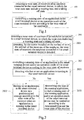
FIG. 1 is an exemplary flow chart of a method for controlling a smart terminal device according to a first embodiment of the present invention; -
FIG. 2 is an exemplary flow chart of a method for controlling a smart terminal device according to a second embodiment of the present invention; -
FIG. 3 is an exemplary diagram showing an internal structure of an earphone according to the prior art; -
FIG. 4 is an exemplary diagram showing an internal structure of an earphone according to a second embodiment of the present invention; -
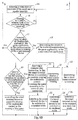
FIG. 5 is an exemplary flow chart of a method for controlling a smart terminal device according to a third embodiment of the present invention; -
FIG. 6 is an exemplary block diagram showing a system for controlling a smart terminal device according to a fourth embodiment of the present invention; -
FIG. 7 is an exemplary block diagram showing a system for controlling a smart terminal device according to a fifth embodiment of the present invention. - Some specific embodiments of the present invention are illustrated through the above mentioned drawings, followed by description in more detail hereinafter. Such drawings and description are provided to explain the concept of the present invention for those skilled in the art with reference to particular embodiments, rather than to limit the scope of the disclosed conception in any manner.
- In order to clearly understand the above objects, features and advantages of the embodiments of the present invention, hereafter, the embodiments of the present invention will be described in detail by some specific implements with reference to the appending drawings.
- According to the embodiments of the present invention, a smart terminal device can be automatically controlled to perform a corresponding operation according to the wear state of receivers of an earphone connected to the smart terminal device. Thus, some cumbersome manual operations may be avoided and the service life of the earphone may be increased. Meanwhile, the electric energy waste of the smart terminal device due to forgetting to perform a manual operation may be avoided.
- In the embodiments of the present invention, the smart terminal device may be a smart terminal device with multimedia functions, which can support audio, video, data, and so on. For example, the smart terminal may be a mobile phone, a player or a game machine, a videophone, a conference terminal, PC with a built-in multimedia function, PDA, and so on.
- Currently, when an earphone is used in a smart terminal device, if the receiver of the earphone is wore or taken off, it is required to manually control running states of some applications in the terminal device or operation mode of the smart terminal device. However, the manual operation is very cumbersome and the frequent mechanical operations easily lead to abrasion and aging of a switch, a plug, and a socket of the earphone. Furthermore, in a case of forgetting to perform the manual operation, a mistake may be occurred in run process of an application and the electric energy waste of the device may be caused.
- Aiming at the above problems, an embodiment of the present invention provides a method for controlling a smart terminal device, which can automatically control the smart terminal device to perform a corresponding operation according to various wear states of receivers of an earphone connected to the smart terminal device.
- Referring to
Fig.1 , it illustrates a flow chart of a method for controlling a smart terminal device according to the first embodiment of the present invention, which may include: - Step 100: a wear state of receivers of an earphone connected to the smart terminal device is detected, in which the wear state may include a wearing state and a taking off state.
- In the embodiment of the present invention, the above earphone connected to the smart terminal device may be a wireless earphone (including a Bluetooth earphone, etc.), or a wired earphone, which is not limited in the invention.
- In the embodiment of the present invention, the smart terminal device may be controlled to perform different operations according to the different wear states of the earphone connected to the smart terminal device. Accordingly, the wear state of the earphone connected to the smart terminal device may be firstly detected, in which the wear state may include two states, i.e., the wearing state and the taking-off state.
- Herein, for such an earphone (wired or wireless) with left and right receivers, when it is detected that at least one of the receivers is in the wearing state, it is considered that the earphone is in the wearing state, and when it is detected that both of the receivers are taken off, it is considered that the earphone is in the taking-off state. For such an earphone with one receiver, the wearing or taking off state of the one receiver indicates the wear state of the earphone.
- Step 102: a running state of an application in the smart terminal device or an operation mode of the smart terminal device is controlled according to the wear state of the receiver(s).
- In the embodiment of the present invention, the running state of application in the smart terminal device or the operation mode of the smart terminal device may be correspondingly controlled according to the detected wear state of the receiver(s).
- The above-mentioned application in the smart terminal device may be a rich media application including various multimedia applications and game applications, or a communication application including audio, video, and so on. The running state of the application may include an un-playing state and a playing state; and the operation mode of the smart terminal device may include a earphone mode (e.g., wearing the receiver of the earphone when an application is run), a phone receiver mode (e.g., taking off the receivers of the earphone when a voice communication is performed), a hand-free mode (e.g., taking off the receivers of the earphone when a video communication is performed), a speaker mode (e.g., taking off the receivers of the earphone when a rich media content is played), and so on.
- For example, if the current running state of the rich media application in the smart terminal device is the playing state and the smart terminal device is in the speaker mode, the smart terminal device may be controlled to be automatically switched to the earphone mode when it is detected that the receiver of the earphone is worn, that is, a user may listen to the playing rich media content through the earphone without performing a manual switch among modes.
- It should be illustrated that the term "and/or" may be understood that the embodiments of the present invention are not limited to the above two cases, i.e., to separately control the running state of the application in the smart terminal device and to separately controlling the operation mode of the smart terminal device. As needed, the control of the running state and the control of the operation mode may be combined according to the wear state of the receivers, that is, the running state of the application in the smart terminal device and the operation mode of the smart terminal device may be simultaneously controlled. Hereafter, these specific cases will be discussed in detail in the following embodiments.
- It should be understood that the control process is only exemplary, and the specific control process will be described in detail in the following embodiments.
- Accordingly, in the embodiments of the present invention, the running state of the corresponding application or the operation mode of the smart terminal device may be automatically controlled only by detecting the actions of wearing and taking off receivers of the earphone without manually performing a control operation, so that operations performed when the wear state of the receivers of the earphone is changed may be simplified, service life of the mechanism member of the earphone may be improved, and electric energy of the smart terminal device may be saved.
- In the second embodiment, the method for controlling a smart terminal device will be described in detail.
- Referring to
Fig.2 , it illustrates a flow chart of a method for controlling a smart terminal device according to the second embodiment of the present invention, which may include: - Step 200: a wear state of receivers of an earphone connected to a smart terminal device is detected, the wear state including a wearing state and a taking off state.
- In the embodiment of the present invention, it is determined, by analyzing a structure of a currently used earphone, that the wear state of the earphone connected to the smart terminal device may be detected via a sensor installed on the earphone.
- In the conventional technology, a microswitch of a wired or wireless earphone is a peripheral member for controlling the play of multimedia content, game, communication, and so on. As shown in
Fig.3 , it illustrates an internal structure of a conventional earphone. - The microswitch in
Fig.3 may control the operations such as playing multimedia content, running a game, performing communication. If the microswitch is clicked when the terminal device is used for pausing or playing, the device may receive an instruction to continue playing or pausing. If the microswitch is clicked during the communication of the terminal device, the device may receive an instruction to receive or hang off a call. The other situation is similar to this. - However, in the prior art, the microswitch of the wired or wireless earphone controls the play of multimedia, game, communication only by manual operations, while the frequent mechanical operations easily lead to abrasion and aging of a switch, a plug and a socket of the earphone, and the manual operations are very cumbersome.
- Aiming at the above problems, the embodiment of the present invention proposes that the sensor detects the wear state of receivers of the earphone in real time, and thus the smart terminal device may be automatically controlled to perform a corresponding operation according to different wear states.
- Referring to
Fig.4 , it illustrates an internal structure of an earphone according to the second embodiment of the present invention. As shown inFig.4 , in the embodiment of the present invention, the earphone may be provided with the sensor which can detect the wear state of the earphone in real time. - Therefore, step 200 may include:
- sub-step 2001: the wear state of receivers the earphone connected to the smart terminal device is detected by the sensor installed on the surface of or in the internal of the receivers of the earphone.
- In the embodiment of the present invention, the sensor may include a camera sensor, a capacitive electrostatic sensor, a resistive pressure sensor, a piezoelectric sensor, an optical sensor, an infrared sensor, a distance sensor, and the combination thereof.
- It should be understood that the above may include other type of sensor, which is not limited in the embodiments of the present invention.
- An external signal may be sensed by the sensor on the surface of the receiver of the earphone or inside the receiver of the earphone, and thus the wear state of the receivers of the earphone, that is, whether the receiver of the earphone is worn or taken off, may be determined according to the sensed signal.
- For the specific operations of the sensor, one of ordinary skill in the art may perform corresponding process based on practical experiences and thus the detailed description thereof will be omitted in the embodiment of the present invention.
- Step 202: a running state of an application in the smart terminal device and/or an operation mode of the smart terminal device is controlled according to the wear state of receivers.
- In the embodiment of the present invention, the running state of an application in the smart terminal device and/or the operation mode of the smart terminal device may be correspondingly controlled according to different wear states of the receivers.
- Step 202 may further include:
- sub-step 2021: it is detected whether or not an application is running in the smart terminal device.
- If no application is running, the process proceeds to sub-step 2022; and if an application is running, the process proceeds to sub-step 2023.
- As shown in
Fig.4 , in the embodiment of the present invention, a signal codec may be provided in an internal control part of the earphone. The signal codec may encode the signal detected by the sensor to generate a corresponding control instruction. - For example, when a signal is detected by the sensor, the signal may be transmitted to the signal codec via a sensor signal line, and then is encoded by the signal codec to generate the corresponding instruction, which is transmitted to the smart terminal device to control the smart terminal device to perform a corresponding operation.
- Accordingly, in the embodiment of the present invention, the sub-step 2021 of detecting whether or not an application is running in the smart terminal device may include:
- a1: the control instruction generated by a signal codec installed in the earphone is received;
- a2: it is detected whether the application is running in the smart terminal device according to the control instruction.
- For example, when the sensor detects an action of wearing or taking off the receiver of the earphone, the sensor transmits the detected signal to the signal codec via the sensor signal line, and the signal codec encodes the received signal to generate a control instruction. The smart terminal device may automatically detect whether or not an application is running in the smart terminal device according to the control instruction.
- In addition, in the embodiment of the present invention, the signal codec may decode an instruction transmitted to the earphone by the smart terminal device, and control the sensor and other mechanism (e.g., earphone). For example, the instruction for adjusting the sensitivity of the sensor transmitted by the smart terminal device may be decoded, and then the sensitivity of the sensor may be adjusted according to the decoded instruction, of which further description will be omitted.
- For functions of other parts in the earphone, one of ordinary skill in the art may perform a corresponding process according to practical experiences, of which detailed description will be omitted.
- Sub-step 2022: an application in the smart terminal device is started in a predetermined strategy according to the wear state of the receivers when no application is running in the smart terminal device.
- Herein, the application, which is not running in the smart terminal device, means that the smart terminal device is in a locked and sleeping state, or the smart terminal device is unlocked but the application related to playing or communication is closed.
- In embodiment of the present invention, some strategies of starting up an application in the smart terminal device may be preset. For example, the sub-step 2022 may include three situations as below.
- A first situation: when the receiver is in the wearing state, a desktop application in the smart terminal device may be controlled to be started up and displayed.
- For example, when the sensor detects that the receiver of the earphone is worn by a user, if the smart terminal device (e.g., mobile phone, player, or game machine) is in the locked and sleeping state, the signal codec may firstly generate a waking instruction and the waking instruction is transmitted to the smart terminal device, and then the smart terminal device may be automatically waked and unlocked according to the waking instruction. After the smart terminal device is unlocked, the desktop application in the smart terminal device may be displayed so as to be selected for running.
- A second situation: when the receiver is in the wearing state, the preset application in the smart terminal device may be controlled to be started up and displayed.
- If a predetermined strategy is to automatically run a certain application (which may be preset) when the receiver is worn, the preset application in the smart terminal device may be controlled to be started up when the receiver is in the wearing state.
- In the embodiment of the present invention, the application may include a rich media application and a communication application. For example, if the application, which is preset to run when the receiver is worn, is a communication application, a control instruction may be generated when the receiver is in the wearing state, and the smart terminal device may automatically run the communication application according to the control instruction(e.g., automatically opening a contact). For example, according to the settings from the user, when the receiver is in the wearing state, the smart terminal device may automatically run the rich media application related to the earphone, such as a music player, a video player or a game.
- A third situation: when the receiver is in the wearing state, the display interface may be controlled to display a list of applications and an application selected by the user from the list of applications may be started up. Here, the list of applications may be a list of rich media applications or a list of communication applications.
- For example, the list of rich media applications may include two lists as below.
- (1) if a plurality of rich media applications are preset, the display interface may be controlled to display the preset list including the plurality of rich media applications and the application selected by the user from the list of rich media applications may be started up.
- (2) if there is no preset rich media application, in the embodiment of the present invention, the smart terminal device may be automatically controlled to sort respective rich media applications according to the predetermined strategy (e.g., the number of uses, last using time), display the sorted list including the plurality of rich media applications, and start up the application selected by the user from the list of rich media applications.
- Sub-step 2023: when an application is running in the smart terminal device, the type of the running application is determined, and a running state of the running application and/or an operation mode of the smart terminal device is controlled according to the determined type and the wear state of the receiver.
- In the embodiment of the present invention, if an application is running in the smart terminal device, the running state of the running application or the operation mode of the smart terminal device may be controlled according to the type of the application and the wear state of the receiver.
- The sub-step 2023 may include four situations as below.
- When the running application is a rich media application, if the receiver is in the wearing state, it is determined whether the running application is in a first running state; and if yes, the running application may be controlled to be switched from the first running state to a second running state.
- In the embodiment of the present invention, the first running state is an un-playing state, and the second running state is a playing state. For example, in the case that the running application is the rich media application, if it is detected that the receiver is in the wearing state and the rich media application is the un-playing state (e.g., a pause state), the smart terminal device may automatically switch the rich media application from the un-playing state to the playing state according to a control instruction.
- It should be illustrated that in the wearing state, the operation mode of the smart terminal device is set by default as the earphone mode. Thus, in the case that the running application is the rich media application, if the receiver is in the wearing state and the running state is the second running state (i.e., the playing state), the smart terminal mode uses the earphone mode. If the receiver is switched from the taking-off state to the wearing state and the operation mode is the speaker mode in the taking off state, the operation mode of the smart terminal device is switched to the earphone mode after the above state switch is performed.
- In the case that the running application is a rich media application, if the wear state of the receiver is a taking-off state, a running state of the running application may be determined; if the running state is the second running state, the running application may be controlled to be switched from the second running state to the first running state; and if the running state is the first running state, the running application may be controlled to be switched from the first running state to the second running state, and the operation mode of the smart terminal device may be controlled to be switched to the first operation mode.
- For example, when the sensor detects the receiver of the earphone is in the taking off state, if the rich media application in the smart terminal device is in the playing state, the smart terminal device receives a control instruction transmitted from the earphone so as to automatically pause the playing (that is, the running state of the rich media application is switched from the playing state to the un-playing state); if the rich media application in the smart terminal device is in the un-playing state, the smart terminal device receives an instruction of continuing the play triggered by a user (e.g., the user controls a switch of the earphone and clicks a play button in a play interface), so that the running state of the smart terminal device is switched from the un-playing state to the playing state, and the operation mode of the smart terminal device is switched to the first operation mode (i.e., the speaker mode) so that an internal speaker in the smart terminal device may continue playing the rich media content.
- When the running application is the communication application, if the receiver is in the wearing state, the smart terminal device is controlled to be switched to a second operation mode, or it is determined whether the running state is the first running state; and if yes, the running application may be controlled to be switched from the first running state to the second running state.
- In the embodiment of the present invention, the second operation mode may be the earphone mode. In the case of running the communication application (which may be an audio communication or a video communication), if the receiver is in the wearing state, the smart terminal device may be controlled to be switched to the earphone mode, i.e., to be used for communicating via the earphone.
- In addition, in a certain communication application (for example, Webchat communication), the communication contents are transmitted in a form of audio clip which may be controlled to be played or paused. In such case, if the receiver is in the wearing state and the communication application is detected to be in the first running state (i.e., the un-playing state), the running application may be controlled to be switched from the first running state to the second running state (i.e., playing state) so as to continue playing the communication content. At this time, the smart terminal device uses the earphone mode by default.
- When the running application is the communication application, if the receiver is in the taking-off state, the smart terminal device may be controlled to be switched to a third operation mode, or it is determined whether the running application is in the second running state; and if yes, the running application may be controlled to be switched from the second running state to the first running state.
- In the embodiment of the present invention, the third operation mode may be varied according to various types of communication.
- For example, when the user is wearing the earphone to receive an audio communication, if the sensor detects that the user takes off the receiver of the earphone, the smart terminal device may be automatically switched to the phone receiver mode upon receiving the control instruction from the earphone, and the user may directly put the receiver of the terminal device to the ear so as to continue the audio communication.
- When the user is wearing the earphone to receive a video communication, if the sensor detects that the user takes off the receiver of the earphone, the smart terminal device may be automatically switched to the hand-free mode upon receiving the control instruction from the earphone, and the user may directly use a speaker of the terminal device to continue the video communication.
- In addition, in some communication applications (e.g., a Webchat communication application), if the receiver is in the taking-off state and it is detected that the communication application is in the second running state (i.e., the playing state), the running application may be controlled to be switched from the second running state to the first running state (i.e., the un-playing state) so as to pause the playing of the information content.
- It should be illustrated that the controlling the running application to be switched from the first running state to the second running state may include the following cases:
- (i) when there is only one running application, the running application may be controlled to be switched from the first running state to the second running state;
- (ii) when there are two or more running applications, a list of running applications may be provided to the user, and an application selected from the list of running applications by the user may be controlled to be switched from the first running state to the second running state.
- If there are two or more applications in the first running state, a corresponding list of running applications may be generated, so that the priority of the applications in the list may be sorted according to the predetermined strategy (e.g., last using time), and the user may select the corresponding application by clicking to make it switched from the first running state to the second running state.
- Accordingly, the embodiment of the present invention provides a method for controlling a smart terminal device, which is capable of detecting a signal via the sensor installed in the earphone, encoding the signal by the signal codec to generate the corresponding control instruction and transmitting the control instruction to the smart terminal device. Therefore, the smart terminal device may automatically control the running state of the application in the smart terminal device or the operation mode of the smart terminal device according to the control instruction without performing a cumbersome manual operation.
- In the embodiment of the present invention, it will be described in detail how to control the smart terminal device to perform a corresponding operation according to a wear state of receiver of the earphone.
- The embodiment of the present invention is described by taking a wired earphone (including two receivers) as an example. The running application in the smart terminal device may include rich media applications and communication applications. The rich media application may include multimedia applications and game applications, and the communication application may include audio communication applications and video communication applications (also includes a Webchat application, as for this, the embodiment does not give further detailed description).
- Referring to
Fig.5 , it illustrates a flow chart of a method of controlling a smart terminal device according to the third embodiment of the present invention, which may include the following steps. - Step 1: an earphone is connected to the smart terminal device.
In the embodiment of the present invention, the earphone may be connected to the smart terminal device firstly, for example, an wired earphone is plugged into the smart terminal device (for example, a mobile phone, a player, or a game machine), or an wireless earphone is connected to the smart terminal device. - Step 2: a wearing state of receivers of the earphone is detected at regular intervals.
After the earphone is connected to the smart terminal device, the smart terminal device detects whether the user is wearing the receivers of the earphone through a sensor in the earphone.
In the embodiment of the present invention, the wear state of the receivers of the earphone may be detected by the sensor at regular intervals. The embodiment of the present invention does not limit the specific time of the intervals. - Step 3: it is sensed whether at least one of the receivers of the earphone has been worn by the sensor.
If yes, the process proceeds with step 4; otherwise the process returns to step 2. - In step 4, it is determined whether a multimedia application, a game application or a communication application is running in the smart terminal device.
If yes (i.e., the multimedia application, the game application or the communication application is running), the process proceeds withstep 10 ; otherwise (i.e., no multimedia application is started up to play multimedia contents, no game application is started up to run a game, and no communication application is started up for communication) the process proceeds withstep 5. - Step 5: it is determined that whether one or more of the multimedia application, the game application, and the communication application have been preset.
The process proceeds withstep 6 if one of the multimedia application, the game application and the communication application is preset; the process proceeds withstep 7 if more than one of the multimedia application, the game application and the communication application are preset; and the process proceeds withstep 8 if each of the multimedia application, the game application and the communication application is not preset. - Step 6: the smart terminal device is controlled to start up the preset multimedia application, the preset game application or the preset application.
In the embodiment of the present invention, if the multimedia application, the game application or the communication application is preset, the preset application is started up and then the process proceeds withstep 10 if it is detected that at least one of the receivers of the earphone has been worn while no multimedia application is started up to play multimedia contents, no game application is started up to run a game, and no communication application is started up for communication. - Step 7: the smart terminal device is controlled to display a list of more than one of the preset multimedia applications, game applications, and communication applications.
If more than one of the multimedia applications, game applications, and communication applications are preset, the smart terminal device may be controlled to display the list of more than one of these preset applications, the more than one of these preset applications may be sorted according to a predetermined strategy (e.g., the number of uses). Thereafter, the process proceeds to step 9, i.e., to select an application from the list according to a select instruction triggered when a user clicks the application in the list. - Step 8: the smart terminal device is controlled to sort and display the list of the multimedia applications, the game applications, and the communication applications according to the number of uses.
In the embodiment of the present invention, if each of the multimedia application, the game application and the communication application is not preset, the smart terminal device may be automatically controlled to sort respective applications according to the number of uses thereof and display the list of the sorted multimedia applications, game applications and communication applications. Then, the process proceeds to step 9, i.e., to select the application to be started up from the list according to the select instruction triggered then the user clicks the application in the list. - Step 9: the application is selected to be started up from the list according to the select instruction triggered when the user clicks the application in the list.
- Step 10: it is determined that the situation of the multimedia application, the game application, or the communication application.
When it is determined in step 4 that the multimedia application, the game application, or the communication application is running in the smart terminal device, the situation of the multimedia application, the game application, or the communication application may be further determined and then the smart terminal device may be controlled to perform a corresponding operation according to the situation of the multimedia application, the game application, the communication application.
If it is determined that the multimedia application or the game application is running, the process proceeds withstep 11; and if it is determined that the communication application is running, the process proceeds withstep 13. - Step 11: it is determined whether the running situation of the multimedia application or the game application is in the un-playing state.
If yes, the process proceeds withstep 12; if the running situation of the multimedia application or the game application is in the playing state, the process proceeds withstep 14. - Step 12: the smart terminal device is controlled to continue playing the multimedia content or playing game, and the process proceeds with
step 14. - Step 13: it is determined that a communication is being performed, the process proceeds with
step 14. - Step 14: the smart terminal device is controlled to be switched to the earphone mode, and the process proceeds with
step 15. - Step 15: the wear state of receivers of the earphone is detected at regular intervals.
- Step 16: the sensor senses whether two receivers have been taken off.
If yes, the process proceeds withstep 17; otherwise the process proceeds withstep 15. - Step 17: it is determined whether the multimedia application, the game application, or the communication application is running in the smart terminal device.
If yes, (i.e., the multimedia application, the game application, or the communication application is running in the smart terminal device), the process proceeds withstep 18; and if no, (i.e., no multimedia application is started up to play the multimedia content, no game application is started up to run game, or no communication application is started up for communication) the process returns to step 2. - Step 18: the situation of the multimedia application, the game application, or the communication application is determined.
When it is determined instep 17 that the multimedia application, the game application, or the communication application is running in the smart terminal device, the situation of the multimedia application, the game application, or the communication application may be further determined, and then the smart terminal device is controlled to perform a corresponding operation according to the determined situation of the multimedia application, the game application, or the communication application.
If it is determined that the multimedia application or the game application is running, the process proceeds withstep 19; if it is determined that a voice communication is running, the process proceeds withstep 23; and if it is determined that a video communication is running, the process proceeds withstep 25. - Step 19: it is determined whether the running situation of the multimedia application or the game application is in the un-playing state.
If yes, the process proceeds withstep 21; and if the running situation of the multimedia application or the game application is in the playing state, the process proceeds withstep 20. - Step 20: the smart terminal device is controlled to pause the playing of the multimedia content or the running of the game, and the process returns to step 2.
- Step 21: a continue-play instruction is received, and the smart terminal device is controlled to continue playing the multimedia content or running the game according to the continue-play instruction.
- In the embodiment of the present invention, the continue-play instruction may be triggered when the user clicks a continue-play button, and may be triggered in other form, which is not limited in the embodiment of the present invention.
- Step 22: the smart terminal device is controlled to be switched to the speaker mode, and the process returns to step 2.
- Step 23: it is determined that the voice communication is running, and the process proceeds with
step 24. - Step 24: the smart terminal device is controlled to be switched to the earphone mode, and the process returns to step 2.
- Step 25: it is determined that the video communication is running, and the process proceeds with
step 26. -
Step 26; the smart terminal device is controlled to be switched to the hand-free mode, and the process returns to step 2. - Hereafter, the method for controlling a smart terminal device according to the embodiment of the present invention will be explained by the following four usage scenarios.
- When the sensor senses that the user wears the earphone, if the smart terminal device (e.g., a mobile phone, a player, or a game machine, etc.) is in the locked and sleeping state, the signal codec may firstly generate the waking instruction and transmit the waking instruction to the smart terminal device, and the smart terminal device may be controlled to be automatically unlocked according to the waking instruction (if there is a password on lock screen, an input box may be popped up firstly). Then, the signal codec generates the wear control instruction so as to control the smart terminal device to automatically start up the multimedia application, the game application or the communication application according to the settings preset by the user, or display the list of these applications (in the list, the priority of these applications may be sorted according to the preset settings and the number of uses so that the user may start up a corresponding application by selection).
- If the screen of the smart terminal device has been unlocked and no application with respect to the playing and the communication is started up (e.g., no multimedia application is started up to play multimedia content, no game application is started up to run game, and no communication application is started up for communication), the signal codec generates the wear control instruction and controls the smart terminal device to perform a startup operation.
- The first usage scenario may correspond to steps 5-9 in
Fig.5 , and of which the detailed process will be omitted in the embodiment of the present invention. - When the sensor senses that the user wears the earphone, if the smart terminal device is in a state of pausing the multimedia content (for example, music, video) or pausing a game, the smart terminal device receives the wear control instruction transmitted from the earphone to automatically continue the playing of the multimedia content or the running of the game.
- The above usage scenario may correspond to steps 11-12 in
Fig.5 . - When the sensor senses that the user wears the earphone, if the smart terminal device is in a state of playing the multimedia content (for example, music, video) or running a game, the smart terminal device receives the taking-off control instruction transmitted from the earphone to automatically pause the play of the multimedia content or the running of the game. At this time, the user may continue playing the multimedia content or running the game through a switch in the earphone or a play button on a play interface, and an internal speaker in the smart terminal device.
- The above usage scenario may correspond to steps 19-22 in
Fig.5 . - Additionally, if two or more of the multimedia contents or games are paused, a play list may be correspondingly generated in which the priority of these multimedia contents or games is sorted according to the last using time by the user, so that the user may continue playing the corresponding multimedia content or game by a click selection.
- When the user wearing the earphone is receiving an audio communication, if the sensor detects that the user takes off the earphone, the smart terminal device receives the taking-off control instruction transmitted from the earphone and then is automatically switched to the earphone mode, so that the user may continue receiving the audio communication by directly putting the receiver of the device to the ear.
- The above usage scenario may correspond to steps 23-24 in
Fig.5 . - When the user wearing the earphone is receiving a video communication, if the sensor detects that the user takes off the earphone, the smart terminal device receives the taking-off control instruction transmitted from the earphone and then is automatically switched to the hand-free mode, so that the user may continue performing the video communication directly by the speaker of the device.
- The above scenario may correspond to steps 25-26 in
Fig.5 . - It should be understood that the present invention may include other usage scenarios. One of ordinary skill in the art may perform a corresponding process according to actual situations, which will not be further described hereinafter.
- Accordingly, in the embodiment of the present invention, in various emergency scenarios the user may control the running of a related application just by simply wearing and taking off the receivers of the earphone. That is, by wearing or taking off the receivers of the earphone, the device may automatically control the playing of a multimedia content, a game, and a communication and control the switch among the respective operation modes according to different scenarios. Thus, the mistake in the playing contents or the game process and the electric energy waste of the device may be avoided when the user forgets or has no time to stop the playing of the multimedia content and game due to taking off the receiver of the earphone in hurry. Meanwhile, the respective modes may be automatically switched according to different scenarios, without plugging the wired earphone or turning on/off the wireless earphone by settings. The method provided by the embodiments of the present invention can provide a more humanization experience, by simplifying operation with respect to the earphone, increasing service life of the mechanism member of the earphone, and saving electric energy of the smart terminal device.
- It should be illustrated that for a brief description, the above embodiments relating to methods are expressed as a series combination of actions. However, one of ordinary skill in the art should understand the invention is not limited by an order of the actions described herein, while some steps may be performed in other order or simultaneously according to the present invention. Secondly, one of ordinary skill in the art should also understand that the embodiments described in specification are the preferred embodiments, and thus the actions involved in this invention are not necessarily required.
- Referring to
Fig.6 , it illustrates a block diagram of a system for controlling a smart terminal device according to the fourth embodiment of the present invention, and the system may include adetection module 600 and acontrol module 602. - Herein, the
detection module 600 may be configured to detect a wear state of receivers of an earphone connected to the smart terminal device, the wear state includes a wearing state and a taking-off state. - Herein, the detected earphone connected to the smart terminal device may be a wireless earphone or a wired earphone.
- The
control module 602 may be configured to control a running state of an application in the smart terminal device and/or an operation mode of the smart terminal device according to the wear state of the receivers. - According to the embodiment of the present invention, the wear state of the receivers of the earphone connected to the smart terminal device may be detected in real time, and then the application may be automatically controlled according to the wear state of the receivers. Accordingly, in the embodiment of the present invention, the running state of a corresponding application and the operation mode of the smart terminal device may be automatically controlled just by detecting the actions of wearing and taking off the receivers without performing a manual control operation, so that operations with respect to the earphone is simplified, service life of the mechanism member of the earphone is increased, and electric energy of the smart terminal device is saved.
- Referring to
Fig.7 , it illustrates a block diagram of a system for controlling a smart terminal device according to the fifth embodiment of the present invention, and the system may include adetection module 700 and acontrol module 702. - Herein, the
detection module 700 may be configured to detect a wear state of receiver of an earphone connected to the smart terminal device, the wear state includes a wearing state and a taking-off state. - In the embodiments of the present invention, the detection module may be configured to detect the wear state of the receivers of the earphone connected to the smart terminal device through a sensor installed in the surface of or inside the receivers of the earphone.
- Herein, the sensor includes at least one of a camera sensor, a capacitive electrostatic sensor, a resistive pressure sensor, a piezoelectric sensor, an optical sensor, an infrared sensor, and a distance sensor.
- The
control module 702 may be configured to control a running state of an application in the smart terminal device and/or an operation mode of the smart terminal device according to the wear state of the receivers. - The
control module 702 may include adetection sub-module 7021, a running sub-module 7022, and acontrol sub-module 7023. - Herein, the
detection sub-module 7021 may be configured to detect whether or not an application is running in the smart terminal device. - The
detection sub-module 7021 may include: - a receiving subunit configured to receive a control instruction generated by a signal codec installed in the earphone; and
- a detection subunit configured to detect whether or not an application is running in the smart terminal device according to the control instruction.
- The running sub-module 7022 may be configured to start up an application in the smart terminal device according to a predetermined strategy based on the wear state of the receivers when the detection subunit detects that no application is running in the smart terminal device.
- The running sub-module 7022 may include:
- a first application running subunit configured to control to start up and display a desktop application when the wear state of the receivers is the wearing state,; or
- a second application running subunit configured to control to start up an application preset in the smart terminal device when the wear state of the receivers is the wearing state; and
- a third application running subunit configured to control a display interface to display a list of applications and start up an application selected by a user from the list of applications when the wear state of the receivers is the wearing state.
- The control sub-module 7023 may be configured to determine a type of the running application when an application is running in the smart terminal device, and control a running state of the running application and/or the operation mode of the smart terminal device according to the determined type and the wear state of the receivers.
- The control sub-module 7023 may include:
- a first rich media switch subunit configured, when the running application is a rich media application, to determine whether the running application is in a first running state if the wear state of the receivers is the wearing state; and to control the running application to be switched from the first running state to a second running state if the running application is in the first running state;
- a second rich media switch subunit configured, when the running application is a rich media application, to determine the running state of the running application if the wear state of the receivers is the taking-off state; to control the running application to be switched from the second running state to the first running state if the running application is in the second running state; and to control the running application to be switched from the first running state to the second running state and control the smart terminal device to be switched to a first operation mode if the running application is in the first running state;
- a first communication switch subunit configured, when the running application is a communication application, to control the smart terminal device to be switched to the second operation mode or determine whether the running state is in the first running state if the wear state of the receivers is the wearing state; and to control the running application to be switched from the first running state to the second running state if the running application is in the first running state;
- a second communication switch subunit configured, when the running application is a communication application, to control the smart terminal device to be switched to a third operation mode or determine whether the running state is in the second running state if the wear state of the receivers is the taking-off state;, and to control the running application to be switched from the second running state to the first running state if the running application is in the second running state.
- It may include the follows that the running application is controlled to be switched from the first running state to the second running state:
- when there in only one running applications, the running application is controlled to be switched from the first running state to the second running state; and
- when there are two or more running applications, a list of the running applications may be provided and an application selected by the user from the list of the running applications may be controlled to be switched from the first running state to the second running state.
- The embodiment of the present invention may employ any form of wired earphone or wireless earphone, for example, an earbud earphone, an insert type earphone, a headphone, a circumaural earphone, and so on. By adding the sensor or the combination of several sensors on the surface of earphone or inside the earphone, the smart terminal device may sense whether the user wears the receivers of the earphone through the sensor; and then, for different scenarios, the running of an application and the operation mode may be controlled to be switched just by simply wearing and taking off the receivers of the earphone to, so as to simplify the operations procedure.
- Since the embodiments of the system are similar with the embodiments of the method, the description thereof is simplified and the same part may refer to the embodiment of the method.
- It should be noted that in the embodiments of the present invention, a signal generated when the sensor senses that the user wears and takes off the receivers of the earphone passes through the signal codec to generate the encoded instruction to be transmitted to the smart terminal device. At this time, a corresponding control may be performed according to the current specific situation of the smart terminal device, while a common earphone interactive operation mode is still followed during the whole process that the user wears or takes off the receivers of the earphone.
- In this specification, the respective embodiments are described in a progressive manner, and each of the embodiments describes a focus different from that of the other embodiment. Thus, the same parts between the respective embodiments may refer to each other.
- One of ordinary skill in the art easily thinks of: it is feasible to make any combination of these applications in each of the above embodiments, and thus any combination of the above respective embodiments is of the embodiments of the present invention. As space is limited, the present specification does not give a detailed description.
- The present invention may be described in the general context of computer-executable instructions executed by a computer such as program modules. Generally, the program modules may include routines, programs, objects, components, data structures, etc. performing particular tasks or implementing particular abstract data types. The present invention may be also be implemented in a distributed computing environment, in which the tasks may be performed by remote processing devices connected to each other via a communication network. In a distributed computing environment, the program modules may be located in the local and remote computer storage media including a storage device therein.
- Finally, it should be noted that the terms herein representing relationships such as first and second is only used to distinguish an entity or operation from another entity or operation, but do not necessarily require or imply these entities or operation existing in the actual relationship or order. Moreover, the term "comprising", "including" or any other variants thereof are intended to cover a non-exclusive inclusion, such that the process, method, product or device including a number of elements not only include these elements, but also other elements not explicitly listed, or but also inherent elements for the process, method, product or device. Unless otherwise restricted, the elements defined by the statement "comprise a ......" does not exclude other elements included in the process, method, product or device including the said elements.
- The method for controlling a smart terminal device and system thereof provided by the present invention are described in detail above, and the principle and embodiments of the present invention are explained by some specific examples. However, the above description of the embodiments is only used to help understand the method and its heart of the present invention. Meanwhile, one of ordinary skill in the art may make any modification in the specific embodiments and application scope, according to the concept of the present invention, and thus the contents disclosed in the specification should be not construed as limiting the present invention.
Claims (14)
- A method for controlling a smart terminal device, characterized in that, the method comprises:detecting a wear state of receivers of an earphone connected to the smart terminal device, wherein the wear state comprises a wearing state and a taking-off state; andcontrolling a running state of an application in the smart terminal device and/or an operation mode of the smart terminal device according to the wear state of the receivers.
- The method of claim 1, characterized in that, controlling a running state of an application in the smart terminal device and/or an operation mode of the smart terminal device according to the wear state of the receivers comprises:detecting whether or not an application is running in the smart terminal device;starting up, if no, the application in the smart terminal device in a predetermined strategy according to the wear state of the receivers;determining, if yes, a type of the running application, so that the running state of the running application and/or the operation mode of the smart terminal device controlled according to the determined type and the wear state of the receivers.
- The method of claim 2, characterized in that, starting up, if no, the application in the smart terminal device in a predetermined strategy according to the wear state of the receivers comprises:controlling, when the wear state of the receivers is the wearing state, to start up and display a desktop application; orcontrolling, when the wear state of the receivers is the wearing state, to start up an application preset in the smart terminal device; orcontrolling, when the wear state of the receivers is the wearing state, a display interface to display a list of applications, so that an application selected by a user from the list is started up.
- The method of claim 2, characterized in that, determining, if yes, a type of the running application, so that the running state of the running application and/or the operation mode of the smart terminal device controlled according to the determined type and the wear state of the receivers comprises:determining, when the running application is a rich media application, whether the running application is in a first running state if the wear state of the receivers is the wearing state, wherein if yes, the running application is controlled to be switched from the first running state to a second running state;determining, when the running application is a rich media application, the running state of the running application if the wear state of the receivers is the taking-off state, wherein the running application to be switched from the second running state to the first running state if the running application is in the second running state, and the running application is controlled to be switched from the first running state to the second running state and the smart terminal device is controlled to be switched to a first operation mode if the running application is in the first running state;controlling the smart terminal device to be switched to the second operation mode or determining whether the running state is in the first running state, when the running application is a communication application and the wear state of the receivers is the wearing state, wherein the running application is controlled to be switched from the first running state to the second running state if the running application is in the first running state; andcontrolling the smart terminal device to be switched to a third operation mode or determining whether the running state is in the second running state, when the running application is a communication application and the wear state of the receivers is the taking-off state, wherein the running application is controlled to be switched from the second running state to the first running state if the running application is in the second running state.
- The method of claim 4, characterized in that, controlling the running application to be switched from the first running state to the second running state comprises:controlling, when only one application is running, the running application to be switched from the first running state to the second running state; andproviding, when two or more running applications are running, a list of the running applications, so that an application selected by the user from the list is controlled to be switched from the first running state to the second running state.
- The method of claim 1, characterized in that, detecting a wear state of receivers of an earphone connected to the smart terminal device comprises:detecting the wear state of the receivers of the earphone connected to the smart terminal device through a sensor installed in surface of or inside the receivers of the earphone;wherein the sensor comprises at least one of a camera sensor, a capacitive electrostatic sensor, a resistive pressure sensor, a piezoelectric sensor, an optical sensor, an infrared sensor, and a distance sensor.
- The method of claim 2, characterized in that, detecting whether or not an application is running in the smart terminal device comprises:receiving a control instruction generated by a signal codec installed in the earphone; anddetecting whether or not an application is running in the smart terminal device according to the control instruction.
- A system for controlling a smart terminal device, characterized in that, the system comprises:a detection module configured to detect a wear state of receivers of an earphone connected to the smart terminal device, wherein the wear state comprises a wearing state and a taking-off state; anda control module configured to control a running state of an application in the smart terminal device and/or an operation mode of the smart terminal device according to the wear state of the receivers.
- The system of claim 8, characterized in that, the control module comprises:a detection sub-module configured to detect whether or not an application is running in the smart terminal device;a running sub-module configured to start up an application in the smart terminal device in a predetermined strategy according to the wear state of the receivers when the detection subunit detects that no application is running in the smart terminal device; anda control sub-module configured to determine a type of the running application when the application is running in the smart terminal device, and to control a running state of the running application and/or the operation mode of the smart terminal device according to the determined type and the wear state of the receivers.
- The system of claim 9, characterized in that, the running sub-module comprises:a first application running subunit configured to control to start up and display a desktop application when the wear state of the receivers is the wearing state; ora second application running subunit configured to control to start up an application preset in the smart terminal device when the wear state of the receivers is the wearing state; anda third application running subunit configured to control a display interface to display a list of applications and start up an application selected by a user from the list when the wear state of the receivers is the wearing state.
- The system of claim 9, characterized in that, the control sub-module comprises:a first rich media switch subunit configured, when the running application is a rich media application, to determine whether the running application is in a first running state if the wear state of the receivers is the wearing state, if yes, the first rich media switch subunit is configured to control the running application to be switched from the first running state to a second running state;a second rich media switch subunit configured, when the running application is a rich media application, to determine the running state of the running application if the wear state of the receivers is the taking-off state, wherein the second rich media switch subunit is configured to control the running application to be switched from the second running state to the first running state if the running application is in the second running state, and wherein the second rich media switch subunit is configured to control the running application to be switched from the first running state to the second running state and to control the smart terminal device to be switched to a first operation mode if the running application is in the first running state;a first communication switch subunit configured, when the running application is a communication application, to control the smart terminal device to be switched to the second operation mode or determine whether the running state is in the first running state if the wear state of the receivers is the wearing state, wherein the first communication switch subunit is configured to control the running application to be switched from the first running state to the second running state if the running application is in the first running state;a second communication switch subunit configured, when the running application is a communication application, to control the smart terminal device to be switched to a third operation mode or determine whether the running state is in the second running state if the wear state of the receivers is the taking-off state, and the second communication switch subunit is configured to control the running application to be switched from the second running state to the first running state if the running application is in the second running state.
- The system of claim 11, characterized in that, controlling the running application to be switched from the first running state to the second running state comprises:when only one application is running, the running application is controlled to be switched from the first running state to the second running state; andwhen two or more running applications are running, a list of the running applications is provided and an application selected by a user from the list is controlled to be switched from the first running state to the second running state.
- The system of claim 8, characterized in that, the detection module is configured to detect the wear states of the receivers of the earphone connected to the smart terminal device through a sensor installed in surface of or inside the receivers of the earphone;
wherein, the sensor comprises at least one of a camera sensor, a capacitive electrostatic sensor, a resistive pressure sensor, a piezoelectric sensor, an optical sensor, an infrared sensor, and a distance sensor. - The system of claim 9, characterized in that, the detection sub-module comprises:a receiving subunit configured to receive a control instruction generated by a signal codec installed in the earphone; anda detection subunit configured to detect whether or not an application is running in the smart terminal device according to the control instruction.
Applications Claiming Priority (2)
| Application Number | Priority Date | Filing Date | Title |
|---|---|---|---|
| CN201310136307.XA CN103257873B (en) | 2013-04-18 | 2013-04-18 | The control method of a kind of intelligent terminal and system |
| PCT/CN2013/085942 WO2014169609A1 (en) | 2013-04-18 | 2013-10-25 | Intelligent terminal device control method and system |
Publications (3)
| Publication Number | Publication Date |
|---|---|
| EP2990943A1 true EP2990943A1 (en) | 2016-03-02 |
| EP2990943A4 EP2990943A4 (en) | 2017-03-08 |
| EP2990943B1 EP2990943B1 (en) | 2019-12-04 |
Family
ID=48961808
Family Applications (1)
| Application Number | Title | Priority Date | Filing Date |
|---|---|---|---|
| EP13882545.0A Active EP2990943B1 (en) | 2013-04-18 | 2013-10-25 | Intelligent terminal device control method and system |
Country Status (9)
| Country | Link |
|---|---|
| US (1) | US9402124B2 (en) |
| EP (1) | EP2990943B1 (en) |
| JP (1) | JP6275734B2 (en) |
| KR (1) | KR101665277B1 (en) |
| CN (1) | CN103257873B (en) |
| BR (1) | BR112015016708B1 (en) |
| MX (1) | MX346697B (en) |
| RU (1) | RU2613775C2 (en) |
| WO (1) | WO2014169609A1 (en) |
Cited By (3)
| Publication number | Priority date | Publication date | Assignee | Title |
|---|---|---|---|---|
| US10326861B2 (en) | 2014-12-31 | 2019-06-18 | Tencent Technology (Shenzhen) Company Limited | Method for controlling cooperation of multiple intelligent devices and apparatus thereof |
| EP3588248A4 (en) * | 2017-03-09 | 2020-01-01 | Huawei Technologies Co., Ltd. | TERMINAL, EARPHONES AND CONTROL METHOD |
| CN114745651A (en) * | 2022-02-28 | 2022-07-12 | 潍坊歌尔电子有限公司 | Headphone state detection method, headphone, and computer-readable storage medium |
Families Citing this family (113)
| Publication number | Priority date | Publication date | Assignee | Title |
|---|---|---|---|---|
| US10652661B2 (en) | 2008-06-27 | 2020-05-12 | Snik, LLC | Headset cord holder |
| US8225465B2 (en) | 2008-06-27 | 2012-07-24 | Snik Llc | Headset cord holder |
| US8621724B2 (en) | 2008-06-27 | 2014-01-07 | Snik Llc | Headset cord holder |
| US9142207B2 (en) | 2010-12-03 | 2015-09-22 | Cirrus Logic, Inc. | Oversight control of an adaptive noise canceler in a personal audio device |
| US8908877B2 (en) | 2010-12-03 | 2014-12-09 | Cirrus Logic, Inc. | Ear-coupling detection and adjustment of adaptive response in noise-canceling in personal audio devices |
| US9824677B2 (en) | 2011-06-03 | 2017-11-21 | Cirrus Logic, Inc. | Bandlimiting anti-noise in personal audio devices having adaptive noise cancellation (ANC) |
| US8958571B2 (en) | 2011-06-03 | 2015-02-17 | Cirrus Logic, Inc. | MIC covering detection in personal audio devices |
| US9318094B2 (en) | 2011-06-03 | 2016-04-19 | Cirrus Logic, Inc. | Adaptive noise canceling architecture for a personal audio device |
| US8948407B2 (en) | 2011-06-03 | 2015-02-03 | Cirrus Logic, Inc. | Bandlimiting anti-noise in personal audio devices having adaptive noise cancellation (ANC) |
| US9325821B1 (en) | 2011-09-30 | 2016-04-26 | Cirrus Logic, Inc. | Sidetone management in an adaptive noise canceling (ANC) system including secondary path modeling |
| US9769556B2 (en) * | 2012-02-22 | 2017-09-19 | Snik Llc | Magnetic earphones holder including receiving external ambient audio and transmitting to the earphones |
| US10524038B2 (en) | 2012-02-22 | 2019-12-31 | Snik Llc | Magnetic earphones holder |
| US9318090B2 (en) | 2012-05-10 | 2016-04-19 | Cirrus Logic, Inc. | Downlink tone detection and adaptation of a secondary path response model in an adaptive noise canceling system |
| US9319781B2 (en) | 2012-05-10 | 2016-04-19 | Cirrus Logic, Inc. | Frequency and direction-dependent ambient sound handling in personal audio devices having adaptive noise cancellation (ANC) |
| US9123321B2 (en) | 2012-05-10 | 2015-09-01 | Cirrus Logic, Inc. | Sequenced adaptation of anti-noise generator response and secondary path response in an adaptive noise canceling system |
| US9532139B1 (en) | 2012-09-14 | 2016-12-27 | Cirrus Logic, Inc. | Dual-microphone frequency amplitude response self-calibration |
| US9369798B1 (en) | 2013-03-12 | 2016-06-14 | Cirrus Logic, Inc. | Internal dynamic range control in an adaptive noise cancellation (ANC) system |
| US9414150B2 (en) | 2013-03-14 | 2016-08-09 | Cirrus Logic, Inc. | Low-latency multi-driver adaptive noise canceling (ANC) system for a personal audio device |
| US9502020B1 (en) | 2013-03-15 | 2016-11-22 | Cirrus Logic, Inc. | Robust adaptive noise canceling (ANC) in a personal audio device |
| US10206032B2 (en) | 2013-04-10 | 2019-02-12 | Cirrus Logic, Inc. | Systems and methods for multi-mode adaptive noise cancellation for audio headsets |
| US9462376B2 (en) | 2013-04-16 | 2016-10-04 | Cirrus Logic, Inc. | Systems and methods for hybrid adaptive noise cancellation |
| US9460701B2 (en) | 2013-04-17 | 2016-10-04 | Cirrus Logic, Inc. | Systems and methods for adaptive noise cancellation by biasing anti-noise level |
| US9478210B2 (en) | 2013-04-17 | 2016-10-25 | Cirrus Logic, Inc. | Systems and methods for hybrid adaptive noise cancellation |
| CN103257873B (en) * | 2013-04-18 | 2016-07-06 | 小米科技有限责任公司 | The control method of a kind of intelligent terminal and system |
| US9578432B1 (en) | 2013-04-24 | 2017-02-21 | Cirrus Logic, Inc. | Metric and tool to evaluate secondary path design in adaptive noise cancellation systems |
| US9264808B2 (en) | 2013-06-14 | 2016-02-16 | Cirrus Logic, Inc. | Systems and methods for detection and cancellation of narrow-band noise |
| US9392364B1 (en) | 2013-08-15 | 2016-07-12 | Cirrus Logic, Inc. | Virtual microphone for adaptive noise cancellation in personal audio devices |
| CN104427438A (en) * | 2013-08-22 | 2015-03-18 | 深圳富泰宏精密工业有限公司 | Audio play system, earphone used by the same, and automatic control method |
| US9666176B2 (en) | 2013-09-13 | 2017-05-30 | Cirrus Logic, Inc. | Systems and methods for adaptive noise cancellation by adaptively shaping internal white noise to train a secondary path |
| US20160210111A1 (en) * | 2013-09-29 | 2016-07-21 | Nokia Technologies Oy | Apparatus for enabling Control Input Modes and Associated Methods |
| US9620101B1 (en) | 2013-10-08 | 2017-04-11 | Cirrus Logic, Inc. | Systems and methods for maintaining playback fidelity in an audio system with adaptive noise cancellation |
| US10219071B2 (en) | 2013-12-10 | 2019-02-26 | Cirrus Logic, Inc. | Systems and methods for bandlimiting anti-noise in personal audio devices having adaptive noise cancellation |
| US9704472B2 (en) | 2013-12-10 | 2017-07-11 | Cirrus Logic, Inc. | Systems and methods for sharing secondary path information between audio channels in an adaptive noise cancellation system |
| US10382864B2 (en) | 2013-12-10 | 2019-08-13 | Cirrus Logic, Inc. | Systems and methods for providing adaptive playback equalization in an audio device |
| CN103727957A (en) * | 2013-12-27 | 2014-04-16 | 北京超思电子技术股份有限公司 | Pedometer |
| CN104808772B (en) * | 2014-01-24 | 2018-10-16 | 北京奇虎科技有限公司 | Detection wear-type smart machine is persistently attached to the device and method on human body |
| US9369557B2 (en) | 2014-03-05 | 2016-06-14 | Cirrus Logic, Inc. | Frequency-dependent sidetone calibration |
| US9479860B2 (en) * | 2014-03-07 | 2016-10-25 | Cirrus Logic, Inc. | Systems and methods for enhancing performance of audio transducer based on detection of transducer status |
| CN103813023A (en) * | 2014-03-10 | 2014-05-21 | 联想(北京)有限公司 | State control method and device and electronic device |
| US9319784B2 (en) | 2014-04-14 | 2016-04-19 | Cirrus Logic, Inc. | Frequency-shaped noise-based adaptation of secondary path adaptive response in noise-canceling personal audio devices |
| CN103985400A (en) * | 2014-04-18 | 2014-08-13 | 青岛尚慧信息技术有限公司 | Audio file playing system |
| US10181315B2 (en) | 2014-06-13 | 2019-01-15 | Cirrus Logic, Inc. | Systems and methods for selectively enabling and disabling adaptation of an adaptive noise cancellation system |
| CN104065832A (en) * | 2014-07-17 | 2014-09-24 | 广东欧珀移动通信有限公司 | A method and device for preventing a mobile terminal from missing a call |
| CN104185109A (en) * | 2014-09-01 | 2014-12-03 | 联想(北京)有限公司 | Control system, earphone, electronic device and control method |
| US9478212B1 (en) | 2014-09-03 | 2016-10-25 | Cirrus Logic, Inc. | Systems and methods for use of adaptive secondary path estimate to control equalization in an audio device |
| WO2016045088A1 (en) * | 2014-09-26 | 2016-03-31 | 华为技术有限公司 | Method, device and electronic device for controlling application program |
| US9552805B2 (en) | 2014-12-19 | 2017-01-24 | Cirrus Logic, Inc. | Systems and methods for performance and stability control for feedback adaptive noise cancellation |
| WO2016109918A1 (en) * | 2015-01-05 | 2016-07-14 | 华为技术有限公司 | Detection method for wearable device, and wearable device |
| CN107111687A (en) | 2015-01-20 | 2017-08-29 | 诺华股份有限公司 | Carry out applying unblock using the physical equipment and data transfer therebetween of connection |
| CN104768092A (en) * | 2015-01-30 | 2015-07-08 | 西安乾易企业管理咨询有限公司 | Earphone and mobile terminal state switching system and method based on earphone |
| WO2016196838A1 (en) * | 2015-06-05 | 2016-12-08 | Apple Inc. | Changing companion communication device behavior based on status of wearable device |
| CN105120089B (en) * | 2015-08-17 | 2020-01-03 | 惠州Tcl移动通信有限公司 | Method for mobile terminal to automatically answer call and mobile terminal |
| WO2017029550A1 (en) | 2015-08-20 | 2017-02-23 | Cirrus Logic International Semiconductor Ltd | Feedback adaptive noise cancellation (anc) controller and method having a feedback response partially provided by a fixed-response filter |
| US9578415B1 (en) | 2015-08-21 | 2017-02-21 | Cirrus Logic, Inc. | Hybrid adaptive noise cancellation system with filtered error microphone signal |
| US10856068B2 (en) * | 2015-09-16 | 2020-12-01 | Apple Inc. | Earbuds |
| CN105262911B (en) * | 2015-09-16 | 2019-05-10 | 腾讯科技(深圳)有限公司 | The processing method, system and device of system telephone in voice communication |
| CN105338447B (en) * | 2015-10-19 | 2019-03-15 | 京东方科技集团股份有限公司 | Headphone control circuit and method, headphone and audio output device and method |
| CN106658280A (en) * | 2015-10-28 | 2017-05-10 | 鸿富锦精密工业(武汉)有限公司 | Output switching circuit and earphones applying the circuit |
| CN105282338A (en) * | 2015-10-30 | 2016-01-27 | 东莞酷派软件技术有限公司 | A mobile terminal message reminder method and system |
| CN105472496A (en) * | 2015-11-21 | 2016-04-06 | 惠州Tcl移动通信有限公司 | Bluetooth earphone and automatic on-off method thereof |
| US9973621B2 (en) | 2015-11-23 | 2018-05-15 | Google Llc | Cross-device security scheme for tethered devices |
| CN105491470B (en) * | 2015-11-25 | 2019-09-20 | 惠州Tcl移动通信有限公司 | Bluetooth headset and its method that auto switching is realized by intelligent wear contact equipment |
| CN105516483A (en) * | 2015-12-03 | 2016-04-20 | 小米科技有限责任公司 | Equipment control method, device and terminal |
| GB2545222B (en) | 2015-12-09 | 2021-09-29 | Nokia Technologies Oy | An apparatus, method and computer program for rendering a spatial audio output signal |
| CN105679350B (en) * | 2016-01-11 | 2019-05-03 | Oppo广东移动通信有限公司 | A method and device for audio playback |
| US10013966B2 (en) | 2016-03-15 | 2018-07-03 | Cirrus Logic, Inc. | Systems and methods for adaptive active noise cancellation for multiple-driver personal audio device |
| US10225640B2 (en) | 2016-04-19 | 2019-03-05 | Snik Llc | Device and system for and method of transmitting audio to a user |
| US10455306B2 (en) | 2016-04-19 | 2019-10-22 | Snik Llc | Magnetic earphones holder |
| US10951968B2 (en) | 2016-04-19 | 2021-03-16 | Snik Llc | Magnetic earphones holder |
| US10631074B2 (en) | 2016-04-19 | 2020-04-21 | Snik Llc | Magnetic earphones holder |
| US11272281B2 (en) | 2016-04-19 | 2022-03-08 | Snik Llc | Magnetic earphones holder |
| CN106125886A (en) * | 2016-06-22 | 2016-11-16 | 联想(北京)有限公司 | A kind of condition control method and electronic equipment |
| CN106291121B (en) * | 2016-07-29 | 2023-10-13 | 歌尔股份有限公司 | Wearing state detection method of wearable device and wearable device |
| CN118984350A (en) | 2016-08-26 | 2024-11-19 | 荣耀终端有限公司 | Audio output method, electronic device and storage medium |
| CN106302804B (en) * | 2016-09-12 | 2021-01-12 | 中国电力科学研究院 | Interactive method and system for electric power field operation |
| CN106453850A (en) * | 2016-09-19 | 2017-02-22 | 惠州Tcl移动通信有限公司 | Scenario mode switching method of terminal and terminal for scenario mode switching |
| US10349259B2 (en) * | 2016-09-23 | 2019-07-09 | Apple Inc. | Broadcasting a device state in a wireless communication network |
| KR102546249B1 (en) | 2016-10-10 | 2023-06-23 | 삼성전자주식회사 | output device outputting audio signal and method for controlling thereof |
| CN106791191A (en) * | 2017-02-07 | 2017-05-31 | 广东小天才科技有限公司 | Play control method and device |
| CN106851455A (en) * | 2017-02-23 | 2017-06-13 | 上海与德信息技术有限公司 | A kind of music control method and device based on earphone play mode |
| CN107272427B (en) * | 2017-06-16 | 2021-01-05 | 北京小米移动软件有限公司 | Control method and device of intelligent equipment |
| CN107205187B (en) * | 2017-06-21 | 2019-10-01 | 深圳市冠旭电子股份有限公司 | A kind of method, apparatus and terminal device based on earphone control music |
| KR102161554B1 (en) * | 2017-06-29 | 2020-10-05 | 네이버 주식회사 | Method and apparatus for function of translation using earset |
| CN107507622A (en) * | 2017-08-07 | 2017-12-22 | 维沃移动通信有限公司 | Processing method, mobile terminal and the computer-readable recording medium of voice signal |
| CN107577447A (en) * | 2017-08-24 | 2018-01-12 | 联想(北京)有限公司 | Control the method and apparatus for media playing of media data output |
| CN107623777A (en) * | 2017-08-29 | 2018-01-23 | 努比亚技术有限公司 | Terminal and its control method for playing back, computer-readable recording medium |
| CN110139178A (en) * | 2018-02-02 | 2019-08-16 | 中兴通讯股份有限公司 | A kind of method, apparatus, equipment and the storage medium of determining terminal moving direction |
| CN108955758B (en) * | 2018-04-26 | 2021-04-09 | Oppo广东移动通信有限公司 | Wearable device wearing detection method and related product |
| CN108769387A (en) * | 2018-05-03 | 2018-11-06 | Oppo广东移动通信有限公司 | Application control method and related equipment |
| CN108664818B (en) * | 2018-05-14 | 2020-07-07 | 维沃移动通信有限公司 | Unlocking control method and device |
| CN110572731A (en) * | 2018-06-05 | 2019-12-13 | 四川斐讯信息技术有限公司 | Automatic shutdown wireless earphone and automatic shutdown method for wireless earphone |
| CN108989931B (en) * | 2018-06-19 | 2020-10-09 | 美特科技(苏州)有限公司 | Hearing protection earphone, hearing protection method thereof and computer readable storage medium |
| CN110933546B (en) * | 2018-09-20 | 2021-10-22 | 苹果公司 | Earplug tip and in-ear earphone |
| US11558687B2 (en) | 2018-10-29 | 2023-01-17 | Goertek Inc. | Interactive control method and device of earphones, earphone and storage medium |
| CN109587597B (en) * | 2018-10-29 | 2020-07-10 | 歌尔科技有限公司 | Interactive control method and device for combined sound box and combined sound box |
| US12189453B2 (en) * | 2018-12-19 | 2025-01-07 | Nec Corporation | Information processing device, wearable device, information processing method, and storage medium |
| US10638229B1 (en) * | 2019-03-29 | 2020-04-28 | Bose Corporation | Methods and systems for establishing user controls |
| US11725932B2 (en) * | 2019-06-25 | 2023-08-15 | Illinois Tool Works Inc. | Video extensometer system with reflective back screen |
| CN110381410B (en) * | 2019-08-13 | 2020-10-23 | 美特科技(苏州)有限公司 | Earphone wearing detection method and device, Bluetooth earphone and storage medium |
| CN111131590B (en) * | 2019-12-20 | 2021-04-09 | Oppo广东移动通信有限公司 | Bluetooth headset control method, device, terminal device and storage medium |
| CN110972022B (en) * | 2019-12-25 | 2020-12-18 | 歌尔股份有限公司 | TWS earphone and method, device and medium for reducing energy consumption of same |
| CN111131966B (en) * | 2019-12-26 | 2022-05-20 | 上海传英信息技术有限公司 | Mode control method, earphone system, and computer-readable storage medium |
| CN113132959B (en) * | 2019-12-31 | 2022-08-09 | 荣耀终端有限公司 | Wireless audio system, wireless communication method and device |
| US11228853B2 (en) | 2020-04-22 | 2022-01-18 | Bose Corporation | Correct donning of a behind-the-ear hearing assistance device using an accelerometer |
| US11089429B1 (en) * | 2020-09-18 | 2021-08-10 | Plantronics, Inc. | Indication for correct audio device orientation |
| CN112449297B (en) * | 2020-10-19 | 2022-04-29 | 安克创新科技股份有限公司 | A kind of detection method of earphone wearing state |
| CN112261536B (en) * | 2020-10-20 | 2023-08-04 | 深圳市凯狮博电子有限公司 | Earphone control method, earphone control device, terminal equipment and storage medium |
| CN112866878B (en) * | 2021-01-22 | 2022-07-15 | 深圳市安特信技术有限公司 | Method for interactive arbitration scheduling of left and right ear keys of TWS (time-wave satellite system) earphone |
| CN114915888B (en) * | 2021-02-10 | 2023-10-20 | 华为技术有限公司 | Headphone wearing error identification method and related equipment |
| KR102640527B1 (en) * | 2021-02-25 | 2024-02-27 | (주)파트론 | Canal type concha body temperature measurement system |
| CN115602144A (en) * | 2021-06-28 | 2023-01-13 | Oppo广东移动通信有限公司(Cn) | Recording method, device, wireless earphone, user terminal and computer readable medium |
| CN113542961A (en) * | 2021-07-15 | 2021-10-22 | 成都纤声科技有限公司 | Earphone, electronic equipment and in-ear detection method |
| CN114040286B (en) * | 2021-10-28 | 2024-12-17 | 歌尔科技有限公司 | True wireless earphone and true wireless earphone system |
Family Cites Families (24)
| Publication number | Priority date | Publication date | Assignee | Title |
|---|---|---|---|---|
| US6704428B1 (en) * | 1999-03-05 | 2004-03-09 | Michael Wurtz | Automatic turn-on and turn-off control for battery-powered headsets |
| JP2003023479A (en) * | 2001-07-10 | 2003-01-24 | Sharp Corp | Portable wireless terminal |
| AT413923B (en) * | 2003-01-31 | 2006-07-15 | Akg Acoustics Gmbh | HEADPHONE |
| JP4737496B2 (en) * | 2004-07-06 | 2011-08-03 | ソニー株式会社 | REPRODUCTION SYSTEM, REPRODUCTION DEVICE AND METHOD, RECORDING MEDIUM, AND PROGRAM |
| US7418103B2 (en) * | 2004-08-06 | 2008-08-26 | Sony Computer Entertainment Inc. | System and method for controlling states of a device |
| JP4698349B2 (en) * | 2005-09-09 | 2011-06-08 | Necカシオモバイルコミュニケーションズ株式会社 | Portable information terminal and audio output control program |
| JP2007121694A (en) * | 2005-10-28 | 2007-05-17 | Sharp Corp | Portable terminal device, headphones, and reproduction control method for portable terminal device |
| CN101211650A (en) * | 2006-12-25 | 2008-07-02 | 鸿富锦精密工业(深圳)有限公司 | Audio playback device and earphone for its application, and automatic control method |
| CN101488081A (en) * | 2008-01-14 | 2009-07-22 | 鸿富锦精密工业(深圳)有限公司 | Audio device and its playing apparatus and method |
| US20100020998A1 (en) * | 2008-07-28 | 2010-01-28 | Plantronics, Inc. | Headset wearing mode based operation |
| KR101174116B1 (en) * | 2009-07-16 | 2012-08-14 | 주식회사 케이티 | Terminal control system and method for providing notice information |
| JP2011114677A (en) * | 2009-11-27 | 2011-06-09 | Sanyo Electric Co Ltd | Cell phone voice reproduction system |
| CN102104388B (en) * | 2009-12-16 | 2013-06-05 | 鸿富锦精密工业(深圳)有限公司 | Audio play system and earphone used by same |
| KR101688141B1 (en) * | 2010-05-20 | 2016-12-20 | 엘지전자 주식회사 | Apparatus for executing application and method for controlling operation of the same |
| US20120045990A1 (en) * | 2010-08-23 | 2012-02-23 | Sony Ericsson Mobile Communications Ab | Intelligent Audio Routing for Incoming Calls |
| CN202034054U (en) * | 2010-12-07 | 2011-11-09 | 盛乐信息技术(上海)有限公司 | Audio playing system and earphones |
| US20120244812A1 (en) * | 2011-03-27 | 2012-09-27 | Plantronics, Inc. | Automatic Sensory Data Routing Based On Worn State |
| CN202276442U (en) * | 2011-05-31 | 2012-06-13 | 深圳市力合鑫源智能技术有限公司 | Headset controlled by intelligent induction |
| KR20130014752A (en) * | 2011-08-01 | 2013-02-12 | 엘지전자 주식회사 | Mobile terminal and method for controlling the same |
| JP5736276B2 (en) * | 2011-08-23 | 2015-06-17 | 京セラ株式会社 | Portable electronic device, control method, and control program |
| US20130101140A1 (en) * | 2011-10-25 | 2013-04-25 | Lg Electronics Inc. | Electronic device and method of operating the same |
| KR20120115191A (en) * | 2012-09-04 | 2012-10-17 | (주)스마트하우스 | The synchronization system and method using smart device sensors |
| CN103024193A (en) * | 2012-12-25 | 2013-04-03 | 北京百度网讯科技有限公司 | Mobile terminal and play control method and play control device for same |
| CN103257873B (en) * | 2013-04-18 | 2016-07-06 | 小米科技有限责任公司 | The control method of a kind of intelligent terminal and system |
-
2013
- 2013-04-18 CN CN201310136307.XA patent/CN103257873B/en active Active
- 2013-10-25 KR KR1020157013822A patent/KR101665277B1/en active Active
- 2013-10-25 MX MX2015008149A patent/MX346697B/en active IP Right Grant
- 2013-10-25 JP JP2015543274A patent/JP6275734B2/en active Active
- 2013-10-25 WO PCT/CN2013/085942 patent/WO2014169609A1/en not_active Ceased
- 2013-10-25 EP EP13882545.0A patent/EP2990943B1/en active Active
- 2013-10-25 RU RU2015125073A patent/RU2613775C2/en active
- 2013-10-25 BR BR112015016708-0A patent/BR112015016708B1/en active IP Right Grant
-
2014
- 2014-01-24 US US14/162,788 patent/US9402124B2/en active Active
Non-Patent Citations (1)
| Title |
|---|
| See references of WO2014169609A1 * |
Cited By (5)
| Publication number | Priority date | Publication date | Assignee | Title |
|---|---|---|---|---|
| US10326861B2 (en) | 2014-12-31 | 2019-06-18 | Tencent Technology (Shenzhen) Company Limited | Method for controlling cooperation of multiple intelligent devices and apparatus thereof |
| US10834237B2 (en) | 2014-12-31 | 2020-11-10 | Tencent Technology (Shenzhen) Company Limited | Method, apparatus, and storage medium for controlling cooperation of multiple intelligent devices with social application platform |
| EP3588248A4 (en) * | 2017-03-09 | 2020-01-01 | Huawei Technologies Co., Ltd. | TERMINAL, EARPHONES AND CONTROL METHOD |
| US10951973B2 (en) | 2017-03-09 | 2021-03-16 | Huawei Technologies Co., Ltd. | Headset, terminal, and control method |
| CN114745651A (en) * | 2022-02-28 | 2022-07-12 | 潍坊歌尔电子有限公司 | Headphone state detection method, headphone, and computer-readable storage medium |
Also Published As
| Publication number | Publication date |
|---|---|
| JP2016509379A (en) | 2016-03-24 |
| EP2990943B1 (en) | 2019-12-04 |
| BR112015016708B1 (en) | 2021-12-07 |
| MX2015008149A (en) | 2016-02-05 |
| BR112015016708A2 (en) | 2017-07-11 |
| WO2014169609A1 (en) | 2014-10-23 |
| MX346697B (en) | 2017-03-28 |
| KR101665277B1 (en) | 2016-10-11 |
| EP2990943A4 (en) | 2017-03-08 |
| US20140314247A1 (en) | 2014-10-23 |
| RU2613775C2 (en) | 2017-03-21 |
| CN103257873B (en) | 2016-07-06 |
| JP6275734B2 (en) | 2018-02-07 |
| RU2015125073A (en) | 2017-01-10 |
| KR20150079826A (en) | 2015-07-08 |
| CN103257873A (en) | 2013-08-21 |
| US9402124B2 (en) | 2016-07-26 |
Similar Documents
| Publication | Publication Date | Title |
|---|---|---|
| EP2990943B1 (en) | Intelligent terminal device control method and system | |
| CN108683798B (en) | A sound output control method and mobile terminal | |
| KR102279600B1 (en) | Method for operating in a portable device, method for operating in a content reproducing apparatus, the protable device, and the content reproducing apparatus | |
| CN110851213B (en) | Information display method and terminal | |
| CN105338389B (en) | The method and apparatus for controlling smart television | |
| CN110022487B (en) | Volume adjusting method and device | |
| US20130072251A1 (en) | Mobile terminal, method for controlling of the mobile terminal and system | |
| CN102981622A (en) | An external control method and system for a mobile terminal | |
| CN102833399A (en) | Application program selection method and device | |
| CN112751971A (en) | Voice playing method and device and electronic equipment | |
| CN104636110B (en) | Control the method and device of volume | |
| CN106126161A (en) | Voice playback control method and device for mobile terminal and mobile terminal | |
| CN106126179B (en) | Information processing method and electronic equipment | |
| CN105635460A (en) | Control method for information outputting, mobile terminal, and wearable equipment | |
| CN104683469A (en) | Method and system for immediately sharing and operating application program data | |
| CN106448113B (en) | Remote controller pairing control method and multimedia playback terminal | |
| CN108235084B (en) | Video playing method and mobile terminal | |
| CN111263223A (en) | Media volume adjusting method and display device | |
| CN106028159A (en) | Video playing control method and device | |
| CN118647010A (en) | Bluetooth headset control method, system, storage medium and electronic device | |
| CN115798525B (en) | Voice note recording method, device and mobile terminal | |
| CN106789943B (en) | Playing method and device of Bluetooth equipment | |
| CN104822023A (en) | Method and system for providing video through earphones | |
| CN110191227A (en) | Message reminder method and mobile terminal | |
| US20160155280A1 (en) | Information processing methods, electronic devices and wearable electronic devices |
Legal Events
| Date | Code | Title | Description |
|---|---|---|---|
| PUAI | Public reference made under article 153(3) epc to a published international application that has entered the european phase |
Free format text: ORIGINAL CODE: 0009012 |
|
| 17P | Request for examination filed |
Effective date: 20151008 |
|
| AK | Designated contracting states |
Kind code of ref document: A1 Designated state(s): AL AT BE BG CH CY CZ DE DK EE ES FI FR GB GR HR HU IE IS IT LI LT LU LV MC MK MT NL NO PL PT RO RS SE SI SK SM TR |
|
| AX | Request for extension of the european patent |
Extension state: BA ME |
|
| DAX | Request for extension of the european patent (deleted) | ||
| A4 | Supplementary search report drawn up and despatched |
Effective date: 20170203 |
|
| RIC1 | Information provided on ipc code assigned before grant |
Ipc: G06F 9/45 20060101AFI20170130BHEP Ipc: H04R 1/10 20060101ALI20170130BHEP Ipc: H04R 5/033 20060101ALI20170130BHEP Ipc: H04M 1/725 20060101ALI20170130BHEP |
|
| REG | Reference to a national code |
Ref country code: DE Ref legal event code: R079 Ref document number: 602013063756 Country of ref document: DE Free format text: PREVIOUS MAIN CLASS: G06F0009450000 Ipc: H04R0001100000 |
|
| RIC1 | Information provided on ipc code assigned before grant |
Ipc: H04R 5/033 20060101ALI20190411BHEP Ipc: H04M 1/725 20060101ALI20190411BHEP Ipc: H04R 1/10 20060101AFI20190411BHEP Ipc: H04R 5/04 20060101ALI20190411BHEP Ipc: H04R 19/04 20060101ALI20190411BHEP |
|
| GRAP | Despatch of communication of intention to grant a patent |
Free format text: ORIGINAL CODE: EPIDOSNIGR1 |
|
| STAA | Information on the status of an ep patent application or granted ep patent |
Free format text: STATUS: GRANT OF PATENT IS INTENDED |
|
| INTG | Intention to grant announced |
Effective date: 20190521 |
|
| GRAJ | Information related to disapproval of communication of intention to grant by the applicant or resumption of examination proceedings by the epo deleted |
Free format text: ORIGINAL CODE: EPIDOSDIGR1 |
|
| STAA | Information on the status of an ep patent application or granted ep patent |
Free format text: STATUS: REQUEST FOR EXAMINATION WAS MADE |
|
| GRAR | Information related to intention to grant a patent recorded |
Free format text: ORIGINAL CODE: EPIDOSNIGR71 |
|
| GRAS | Grant fee paid |
Free format text: ORIGINAL CODE: EPIDOSNIGR3 |
|
| STAA | Information on the status of an ep patent application or granted ep patent |
Free format text: STATUS: GRANT OF PATENT IS INTENDED |
|
| INTC | Intention to grant announced (deleted) | ||
| INTG | Intention to grant announced |
Effective date: 20190918 |
|
| GRAA | (expected) grant |
Free format text: ORIGINAL CODE: 0009210 |
|
| STAA | Information on the status of an ep patent application or granted ep patent |
Free format text: STATUS: THE PATENT HAS BEEN GRANTED |
|
| AK | Designated contracting states |
Kind code of ref document: B1 Designated state(s): AL AT BE BG CH CY CZ DE DK EE ES FI FR GB GR HR HU IE IS IT LI LT LU LV MC MK MT NL NO PL PT RO RS SE SI SK SM TR |
|
| REG | Reference to a national code |
Ref country code: GB Ref legal event code: FG4D |
|
| REG | Reference to a national code |
Ref country code: CH Ref legal event code: EP |
|
| REG | Reference to a national code |
Ref country code: AT Ref legal event code: REF Ref document number: 1211020 Country of ref document: AT Kind code of ref document: T Effective date: 20191215 |
|
| REG | Reference to a national code |
Ref country code: DE Ref legal event code: R096 Ref document number: 602013063756 Country of ref document: DE |
|
| REG | Reference to a national code |
Ref country code: IE Ref legal event code: FG4D |
|
| REG | Reference to a national code |
Ref country code: NL Ref legal event code: MP Effective date: 20191204 |
|
| REG | Reference to a national code |
Ref country code: LT Ref legal event code: MG4D |
|
| PG25 | Lapsed in a contracting state [announced via postgrant information from national office to epo] |
Ref country code: BG Free format text: LAPSE BECAUSE OF FAILURE TO SUBMIT A TRANSLATION OF THE DESCRIPTION OR TO PAY THE FEE WITHIN THE PRESCRIBED TIME-LIMIT Effective date: 20200304 Ref country code: FI Free format text: LAPSE BECAUSE OF FAILURE TO SUBMIT A TRANSLATION OF THE DESCRIPTION OR TO PAY THE FEE WITHIN THE PRESCRIBED TIME-LIMIT Effective date: 20191204 Ref country code: LT Free format text: LAPSE BECAUSE OF FAILURE TO SUBMIT A TRANSLATION OF THE DESCRIPTION OR TO PAY THE FEE WITHIN THE PRESCRIBED TIME-LIMIT Effective date: 20191204 Ref country code: LV Free format text: LAPSE BECAUSE OF FAILURE TO SUBMIT A TRANSLATION OF THE DESCRIPTION OR TO PAY THE FEE WITHIN THE PRESCRIBED TIME-LIMIT Effective date: 20191204 Ref country code: SE Free format text: LAPSE BECAUSE OF FAILURE TO SUBMIT A TRANSLATION OF THE DESCRIPTION OR TO PAY THE FEE WITHIN THE PRESCRIBED TIME-LIMIT Effective date: 20191204 Ref country code: NO Free format text: LAPSE BECAUSE OF FAILURE TO SUBMIT A TRANSLATION OF THE DESCRIPTION OR TO PAY THE FEE WITHIN THE PRESCRIBED TIME-LIMIT Effective date: 20200304 Ref country code: GR Free format text: LAPSE BECAUSE OF FAILURE TO SUBMIT A TRANSLATION OF THE DESCRIPTION OR TO PAY THE FEE WITHIN THE PRESCRIBED TIME-LIMIT Effective date: 20200305 |
|
| PG25 | Lapsed in a contracting state [announced via postgrant information from national office to epo] |
Ref country code: HR Free format text: LAPSE BECAUSE OF FAILURE TO SUBMIT A TRANSLATION OF THE DESCRIPTION OR TO PAY THE FEE WITHIN THE PRESCRIBED TIME-LIMIT Effective date: 20191204 Ref country code: RS Free format text: LAPSE BECAUSE OF FAILURE TO SUBMIT A TRANSLATION OF THE DESCRIPTION OR TO PAY THE FEE WITHIN THE PRESCRIBED TIME-LIMIT Effective date: 20191204 |
|
| PG25 | Lapsed in a contracting state [announced via postgrant information from national office to epo] |
Ref country code: AL Free format text: LAPSE BECAUSE OF FAILURE TO SUBMIT A TRANSLATION OF THE DESCRIPTION OR TO PAY THE FEE WITHIN THE PRESCRIBED TIME-LIMIT Effective date: 20191204 |
|
| PG25 | Lapsed in a contracting state [announced via postgrant information from national office to epo] |
Ref country code: EE Free format text: LAPSE BECAUSE OF FAILURE TO SUBMIT A TRANSLATION OF THE DESCRIPTION OR TO PAY THE FEE WITHIN THE PRESCRIBED TIME-LIMIT Effective date: 20191204 Ref country code: RO Free format text: LAPSE BECAUSE OF FAILURE TO SUBMIT A TRANSLATION OF THE DESCRIPTION OR TO PAY THE FEE WITHIN THE PRESCRIBED TIME-LIMIT Effective date: 20191204 Ref country code: NL Free format text: LAPSE BECAUSE OF FAILURE TO SUBMIT A TRANSLATION OF THE DESCRIPTION OR TO PAY THE FEE WITHIN THE PRESCRIBED TIME-LIMIT Effective date: 20191204 Ref country code: CZ Free format text: LAPSE BECAUSE OF FAILURE TO SUBMIT A TRANSLATION OF THE DESCRIPTION OR TO PAY THE FEE WITHIN THE PRESCRIBED TIME-LIMIT Effective date: 20191204 Ref country code: ES Free format text: LAPSE BECAUSE OF FAILURE TO SUBMIT A TRANSLATION OF THE DESCRIPTION OR TO PAY THE FEE WITHIN THE PRESCRIBED TIME-LIMIT Effective date: 20191204 Ref country code: PT Free format text: LAPSE BECAUSE OF FAILURE TO SUBMIT A TRANSLATION OF THE DESCRIPTION OR TO PAY THE FEE WITHIN THE PRESCRIBED TIME-LIMIT Effective date: 20200429 |
|
| PG25 | Lapsed in a contracting state [announced via postgrant information from national office to epo] |
Ref country code: IS Free format text: LAPSE BECAUSE OF FAILURE TO SUBMIT A TRANSLATION OF THE DESCRIPTION OR TO PAY THE FEE WITHIN THE PRESCRIBED TIME-LIMIT Effective date: 20200404 Ref country code: SK Free format text: LAPSE BECAUSE OF FAILURE TO SUBMIT A TRANSLATION OF THE DESCRIPTION OR TO PAY THE FEE WITHIN THE PRESCRIBED TIME-LIMIT Effective date: 20191204 Ref country code: SM Free format text: LAPSE BECAUSE OF FAILURE TO SUBMIT A TRANSLATION OF THE DESCRIPTION OR TO PAY THE FEE WITHIN THE PRESCRIBED TIME-LIMIT Effective date: 20191204 |
|
| REG | Reference to a national code |
Ref country code: DE Ref legal event code: R097 Ref document number: 602013063756 Country of ref document: DE |
|
| REG | Reference to a national code |
Ref country code: AT Ref legal event code: MK05 Ref document number: 1211020 Country of ref document: AT Kind code of ref document: T Effective date: 20191204 |
|
| PLBE | No opposition filed within time limit |
Free format text: ORIGINAL CODE: 0009261 |
|
| STAA | Information on the status of an ep patent application or granted ep patent |
Free format text: STATUS: NO OPPOSITION FILED WITHIN TIME LIMIT |
|
| PG25 | Lapsed in a contracting state [announced via postgrant information from national office to epo] |
Ref country code: DK Free format text: LAPSE BECAUSE OF FAILURE TO SUBMIT A TRANSLATION OF THE DESCRIPTION OR TO PAY THE FEE WITHIN THE PRESCRIBED TIME-LIMIT Effective date: 20191204 |
|
| 26N | No opposition filed |
Effective date: 20200907 |
|
| PG25 | Lapsed in a contracting state [announced via postgrant information from national office to epo] |
Ref country code: SI Free format text: LAPSE BECAUSE OF FAILURE TO SUBMIT A TRANSLATION OF THE DESCRIPTION OR TO PAY THE FEE WITHIN THE PRESCRIBED TIME-LIMIT Effective date: 20191204 Ref country code: AT Free format text: LAPSE BECAUSE OF FAILURE TO SUBMIT A TRANSLATION OF THE DESCRIPTION OR TO PAY THE FEE WITHIN THE PRESCRIBED TIME-LIMIT Effective date: 20191204 Ref country code: PL Free format text: LAPSE BECAUSE OF FAILURE TO SUBMIT A TRANSLATION OF THE DESCRIPTION OR TO PAY THE FEE WITHIN THE PRESCRIBED TIME-LIMIT Effective date: 20191204 |
|
| PG25 | Lapsed in a contracting state [announced via postgrant information from national office to epo] |
Ref country code: IT Free format text: LAPSE BECAUSE OF FAILURE TO SUBMIT A TRANSLATION OF THE DESCRIPTION OR TO PAY THE FEE WITHIN THE PRESCRIBED TIME-LIMIT Effective date: 20191204 |
|
| REG | Reference to a national code |
Ref country code: CH Ref legal event code: PL |
|
| PG25 | Lapsed in a contracting state [announced via postgrant information from national office to epo] |
Ref country code: LU Free format text: LAPSE BECAUSE OF NON-PAYMENT OF DUE FEES Effective date: 20201025 Ref country code: MC Free format text: LAPSE BECAUSE OF FAILURE TO SUBMIT A TRANSLATION OF THE DESCRIPTION OR TO PAY THE FEE WITHIN THE PRESCRIBED TIME-LIMIT Effective date: 20191204 |
|
| REG | Reference to a national code |
Ref country code: BE Ref legal event code: MM Effective date: 20201031 |
|
| PG25 | Lapsed in a contracting state [announced via postgrant information from national office to epo] |
Ref country code: LI Free format text: LAPSE BECAUSE OF NON-PAYMENT OF DUE FEES Effective date: 20201031 Ref country code: CH Free format text: LAPSE BECAUSE OF NON-PAYMENT OF DUE FEES Effective date: 20201031 Ref country code: BE Free format text: LAPSE BECAUSE OF NON-PAYMENT OF DUE FEES Effective date: 20201031 |
|
| PG25 | Lapsed in a contracting state [announced via postgrant information from national office to epo] |
Ref country code: IE Free format text: LAPSE BECAUSE OF NON-PAYMENT OF DUE FEES Effective date: 20201025 |
|
| PG25 | Lapsed in a contracting state [announced via postgrant information from national office to epo] |
Ref country code: TR Free format text: LAPSE BECAUSE OF FAILURE TO SUBMIT A TRANSLATION OF THE DESCRIPTION OR TO PAY THE FEE WITHIN THE PRESCRIBED TIME-LIMIT Effective date: 20191204 Ref country code: MT Free format text: LAPSE BECAUSE OF FAILURE TO SUBMIT A TRANSLATION OF THE DESCRIPTION OR TO PAY THE FEE WITHIN THE PRESCRIBED TIME-LIMIT Effective date: 20191204 Ref country code: CY Free format text: LAPSE BECAUSE OF FAILURE TO SUBMIT A TRANSLATION OF THE DESCRIPTION OR TO PAY THE FEE WITHIN THE PRESCRIBED TIME-LIMIT Effective date: 20191204 |
|
| PG25 | Lapsed in a contracting state [announced via postgrant information from national office to epo] |
Ref country code: MK Free format text: LAPSE BECAUSE OF FAILURE TO SUBMIT A TRANSLATION OF THE DESCRIPTION OR TO PAY THE FEE WITHIN THE PRESCRIBED TIME-LIMIT Effective date: 20191204 |
|
| REG | Reference to a national code |
Ref country code: DE Ref legal event code: R082 Ref document number: 602013063756 Country of ref document: DE Representative=s name: CBDL PATENTANWAELTE GBR, DE Ref country code: DE Ref legal event code: R082 Ref document number: 602013063756 Country of ref document: DE Representative=s name: CBDL PATENTANWAELTE EGBR, DE |
|
| P01 | Opt-out of the competence of the unified patent court (upc) registered |
Effective date: 20230523 |
|
| PGFP | Annual fee paid to national office [announced via postgrant information from national office to epo] |
Ref country code: DE Payment date: 20251021 Year of fee payment: 13 |
|
| PGFP | Annual fee paid to national office [announced via postgrant information from national office to epo] |
Ref country code: GB Payment date: 20251022 Year of fee payment: 13 |
|
| PGFP | Annual fee paid to national office [announced via postgrant information from national office to epo] |
Ref country code: FR Payment date: 20251030 Year of fee payment: 13 |