EP2990833A2 - Projektzeitvergleich über suchindizes - Google Patents
Projektzeitvergleich über suchindizes Download PDFInfo
- Publication number
- EP2990833A2 EP2990833A2 EP15181864.8A EP15181864A EP2990833A2 EP 2990833 A2 EP2990833 A2 EP 2990833A2 EP 15181864 A EP15181864 A EP 15181864A EP 2990833 A2 EP2990833 A2 EP 2990833A2
- Authority
- EP
- European Patent Office
- Prior art keywords
- search
- time
- results
- index
- criterion
- Prior art date
- Legal status (The legal status is an assumption and is not a legal conclusion. Google has not performed a legal analysis and makes no representation as to the accuracy of the status listed.)
- Withdrawn
Links
Images



Classifications
-
- G—PHYSICS
- G06—COMPUTING OR CALCULATING; COUNTING
- G06F—ELECTRIC DIGITAL DATA PROCESSING
- G06F16/00—Information retrieval; Database structures therefor; File system structures therefor
- G06F16/20—Information retrieval; Database structures therefor; File system structures therefor of structured data, e.g. relational data
- G06F16/24—Querying
- G06F16/245—Query processing
- G06F16/2458—Special types of queries, e.g. statistical queries, fuzzy queries or distributed queries
- G06F16/2477—Temporal data queries
-
- G—PHYSICS
- G01—MEASURING; TESTING
- G01V—GEOPHYSICS; GRAVITATIONAL MEASUREMENTS; DETECTING MASSES OR OBJECTS; TAGS
- G01V1/00—Seismology; Seismic or acoustic prospecting or detecting
- G01V1/28—Processing seismic data, e.g. for interpretation or for event detection
- G01V1/34—Displaying seismic recordings or visualisation of seismic data or attributes
-
- G—PHYSICS
- G06—COMPUTING OR CALCULATING; COUNTING
- G06F—ELECTRIC DIGITAL DATA PROCESSING
- G06F16/00—Information retrieval; Database structures therefor; File system structures therefor
- G06F16/10—File systems; File servers
- G06F16/13—File access structures, e.g. distributed indices
-
- G—PHYSICS
- G06—COMPUTING OR CALCULATING; COUNTING
- G06F—ELECTRIC DIGITAL DATA PROCESSING
- G06F16/00—Information retrieval; Database structures therefor; File system structures therefor
- G06F16/20—Information retrieval; Database structures therefor; File system structures therefor of structured data, e.g. relational data
- G06F16/22—Indexing; Data structures therefor; Storage structures
- G06F16/2228—Indexing structures
- G06F16/2272—Management thereof
-
- G—PHYSICS
- G06—COMPUTING OR CALCULATING; COUNTING
- G06F—ELECTRIC DIGITAL DATA PROCESSING
- G06F16/00—Information retrieval; Database structures therefor; File system structures therefor
- G06F16/20—Information retrieval; Database structures therefor; File system structures therefor of structured data, e.g. relational data
- G06F16/24—Querying
- G06F16/245—Query processing
- G06F16/2457—Query processing with adaptation to user needs
- G06F16/24575—Query processing with adaptation to user needs using context
-
- G—PHYSICS
- G06—COMPUTING OR CALCULATING; COUNTING
- G06F—ELECTRIC DIGITAL DATA PROCESSING
- G06F16/00—Information retrieval; Database structures therefor; File system structures therefor
- G06F16/20—Information retrieval; Database structures therefor; File system structures therefor of structured data, e.g. relational data
- G06F16/24—Querying
- G06F16/248—Presentation of query results
-
- G—PHYSICS
- G06—COMPUTING OR CALCULATING; COUNTING
- G06F—ELECTRIC DIGITAL DATA PROCESSING
- G06F16/00—Information retrieval; Database structures therefor; File system structures therefor
- G06F16/20—Information retrieval; Database structures therefor; File system structures therefor of structured data, e.g. relational data
- G06F16/29—Geographical information databases
-
- G—PHYSICS
- G06—COMPUTING OR CALCULATING; COUNTING
- G06F—ELECTRIC DIGITAL DATA PROCESSING
- G06F16/00—Information retrieval; Database structures therefor; File system structures therefor
- G06F16/90—Details of database functions independent of the retrieved data types
- G06F16/95—Retrieval from the web
- G06F16/953—Querying, e.g. by the use of web search engines
- G06F16/9535—Search customisation based on user profiles and personalisation
-
- G—PHYSICS
- G06—COMPUTING OR CALCULATING; COUNTING
- G06F—ELECTRIC DIGITAL DATA PROCESSING
- G06F16/00—Information retrieval; Database structures therefor; File system structures therefor
- G06F16/90—Details of database functions independent of the retrieved data types
- G06F16/95—Retrieval from the web
- G06F16/958—Organisation or management of web site content, e.g. publishing, maintaining pages or automatic linking
-
- G—PHYSICS
- G06—COMPUTING OR CALCULATING; COUNTING
- G06F—ELECTRIC DIGITAL DATA PROCESSING
- G06F3/00—Input arrangements for transferring data to be processed into a form capable of being handled by the computer; Output arrangements for transferring data from processing unit to output unit, e.g. interface arrangements
- G06F3/01—Input arrangements or combined input and output arrangements for interaction between user and computer
- G06F3/048—Interaction techniques based on graphical user interfaces [GUI]
- G06F3/0484—Interaction techniques based on graphical user interfaces [GUI] for the control of specific functions or operations, e.g. selecting or manipulating an object, an image or a displayed text element, setting a parameter value or selecting a range
- G06F3/04847—Interaction techniques to control parameter settings, e.g. interaction with sliders or dials
-
- G—PHYSICS
- G06—COMPUTING OR CALCULATING; COUNTING
- G06Q—INFORMATION AND COMMUNICATION TECHNOLOGY [ICT] SPECIALLY ADAPTED FOR ADMINISTRATIVE, COMMERCIAL, FINANCIAL, MANAGERIAL OR SUPERVISORY PURPOSES; SYSTEMS OR METHODS SPECIALLY ADAPTED FOR ADMINISTRATIVE, COMMERCIAL, FINANCIAL, MANAGERIAL OR SUPERVISORY PURPOSES, NOT OTHERWISE PROVIDED FOR
- G06Q10/00—Administration; Management
- G06Q10/06—Resources, workflows, human or project management; Enterprise or organisation planning; Enterprise or organisation modelling
- G06Q10/063—Operations research, analysis or management
Definitions
- modules, frameworks, etc. exist for modeling, analyzing, etc., geological formations, reservoirs, sedimentary basins, etc.
- various types of information may be stored in one or more storage devices (e.g., as databases, datastores, datasources, etc.).
- a method can include receiving a search criterion and information indicative of a time differential.
- the method may also involve performing a first search and a second search using the search criterion on a first search index that is associated with a first time, and a second search index that is associated with a second time. The difference between the first time and the second time may approximate the time differential.
- the method may also involve comparing a portion of the results of the first search to a portion of the results of the second search.
- the method may further involve rendering a search result to a display based part on the comparison.
- a system can include one or more processors; memory; and instructions stored in the memory and executable by processors to instruct the system.
- the instructions can include instructions to receive a search criterion and to receive information indicative of a time differential.
- the instructions may also cause the system to perform a first search and a second search using the search criterion on a first search index that is associated with a first time and a second search index that is associated with a second time. The difference between the first time and the second time may approximate the time differential.
- the system may also compare a portion of the results of the first search with a portion of results of the second search and render at results based on the comparison.
- Various other apparatuses, systems, methods, etc. are also disclosed and may be used to implement methods as described above or within this description.
- Resource exploration and development as well as production can include data acquisition and modeling.
- a model of a geologic environment may be built based at least in part on acquired data.
- a model may be a simulation model, for example, to simulate one or more physical phenomena.
- a model may be a way of structuring data, for example, where such data may facilitate economic or other analyses (e.g., optionally without simulation of physical phenomena).
- data associated with a model may be considerable and may, for example, include data associated with one or more other models.
- data may be quantitative, qualitative or both quantitative and qualitative.
- data may be stored in one or more data stores, which may be considered data sources.
- the value of data may be enhanced via aggregation, classification, etc.
- data may have one or more associated attributes that characterize the data, for example, consider data characterized by type of data (e.g., sensor data, simulation data, economic data, etc.).
- data may be characterized, for example, in addition to including values, which may be qualitative, quantitative, etc.
- a search engine may be configured to access data based on one or more values, attributes, etc.
- a search engine may perform a search based at least in part on indexed data values, data attributes, etc., which may facilitate searches.
- an index or indexes may be generated for data, optionally where the data may be available from multiple sources, where the data includes data available from multiple sources, etc.
- search results returned by a search engine that performs a search based on one or more search criteria may be presented as items in a table, for example, as items of a list.
- items may be presented in another format.
- the order of the items in a list may be based, for example, on relevance with respect to a search criterion or search criteria, numerical order, or alphabetical order.
- results may be structured according to one or more structuring criteria, for example, that may form one or more levels of a hierarchy.
- structuring criteria for example, that may form one or more levels of a hierarchy.
- results from a search may be presented in a virtual tree hierarchy that shows projects at a first level in the tree (per the "Project” criterion), where one or more project folders may be expanded to show well types as a second level (per the "Well Type” criterion), and where one or more well type folders may be expanded to show users as a third level (per the "User” criterion).
- a user when a user opens up a folder for a specific project (e.g., project "X"), the user may then see a list of child nodes (e.g., child folders) for the well types in project X.
- a specific well type e.g., "Oil”
- the user may then see a list of users (e.g., child folders) that have modified the "Oil" wells in project "X”.
- the user if the user then opens up a folder for a given user (e.g., user "Y”), the user may see a list of oil wells in project X modified by user "Y”.
- a structuring criterion may be an attribute, for example, an attribute associated with data.
- "project” may be a structuring attribute associated with project data for a project or projects, which may be at a level that encompasses various other attributes for a project (e.g., as defined by a project framework).
- an attribute may be referred to as a path attribute, for example, akin to a path term in a file system.
- a search tool can provide for returning structured data (e.g., exploration and production data "E&P data") such as, for example, wells and seismic objects (e.g., as entities in a model, entities in a field, etc.).
- structured data e.g., exploration and production data "E&P data”
- seismic objects e.g., as entities in a model, entities in a field, etc.
- search results may be visualized in one or more 2D/3D canvases (e.g., panels rendered to a display) and, for example, optionally in a table viewer (e.g., in a table format).
- search results may be presented according to such criteria (e.g., consider a path attribute akin to a folder path in a file system).
- structuring criteria may specify hierarchical levels for nesting of search results where "folders" may be presented to a graphical user interface, the folders being expandable and collapsible with respect to the hierarchical levels.
- search results may be rendered to a graphical user interface on a display as an interactive tree of folder branches and search item leaves.
- a search module may provide for searching via a search engine.
- the STUDIO E&P TM knowledge environment (Schlumberger Ltd., Houston, Texas) includes STUDIO FIND TM search functionality, which provides a search engine.
- the STUDIO FIND TM search functionality also provides for indexing content, for example, to create one or more indexes.
- search functionality may provide for access to public content, private content or both, which may exist in one or more databases, for example, optionally distributed and accessible via an intranet, the Internet or one or more other networks.
- a search engine may be configured to apply one or more filters from a set or sets of filters, for example, to enable users to filter out data that may not be of interest.
- the PETREL® seismic-to-simulation framework may provide for interaction with a search engine and, for example, associated features such as features of the STUDIO FIND TM search functionality.
- a framework may provide for implementation of one or more spatial filters (e.g., based on an area viewed on a display, static data, etc.).
- a search may provide access to dynamic data (e.g., "live" data from one or more sources, optionally including a GIS source), which may be available via one or more networks (e.g., wired, wireless, etc.).
- one or more modules may optionally be implemented within a framework or, for example, in a manner operatively coupled to a framework (e.g., as an add-on, a plug-in, etc.).
- a module for structuring search results e.g., in a list, a hierarchical tree structure, etc.
- a framework may optionally be implemented within a framework or, for example, in a manner operatively coupled to a framework (e.g., as an add-on, a plug-in, etc.).
- a search engine may be implemented to search for data. Over time, data may be added, deleted, modified, etc. As an example, a search engine may operate using a search index. Search engine indexing collects, parses, and stores data to facilitate fast and accurate information retrieval.
- a search index may be structured with respect to various types of informational concepts such as, for example, concepts stemming from linguistics, cognitive psychology, mathematics, informatics, physics, and computer science. Where data are web pages (e.g., on the Internet or other network), search engine indexing may be referred to as web indexing.
- a search engine may operate via full-text indexing of online, natural language documents.
- a search engine may operative via indexing that can index one or more types of media such as, for example, video, audio, graphics, etc.
- a so-called meta search engine may reuse one or more search indices of one or more other services, for example, without possessing its own search index.
- a cache-based search engine may store an index along with a corpus.
- a partial-text service may restrict a depth indexed to reduce index size.
- a larger service may perform indexing at a predetermined time interval due to time and processing costs, while a so-called agent-based search engine may index information in real time.
- Storage of a search index can optimize speed and performance in finding relevant documents, files, etc., with respect to a search query (e.g., one or more search criteria).
- a search engine would operate by scanning documents, files, etc. in a corpus, which may take considerable time and computing power. For example, while an index of 10,000 documents may be queried within milliseconds, a sequential scan of individual words in 10,000 large documents could take hours.
- the aforementioned STUDIO FIND TM search functionality can populate a search index to allow a user to search one or more databases.
- search functionality may include features that allow for comparison of data across projects, etc.
- search indexes may be stored over time to create a historical search index archive. For example, consider a time frame of about five years where a search index is updated once a week.
- a historical search index archive may include over 250 search indexes where each of the search indexes represents a respective corpus at a particular time.
- a search functionality may include a time selection criterion to select one or more times and/or a time differential such that one or more comparisons may be made with respect to corpuses at corresponding times.
- search functionality allows for entry and/or selection of one or more search criteria (e.g., as to content of a corpus)
- differences over time may be presented based on search results for two or more search indexes.
- a selection of a time may be associated with a "closest" time of an index. For example, where a time is a day of the week and where indexes are on a weekly basis on a Sunday, a "closest" corresponding time may be the closest Sunday. In such a manner, a time of an index may approximate a selected time (e.g., given times of indexes that are available, can be made available via generation, etc.).
- a comparison tool may be implemented for taking a snapshot of a search index that is updated at given intervals. For example, consider a comparison tool that can show monthly changes to a search index (e.g., via accessing historical search indexes). As an example, a time increment for a tool may be equal to or greater than a time increment for updating a search index.
- a tool may include a comparison feature that allows a user to compare search results backwards in time by letting the user drag a slider to select a snapshot of the search index to compare with.
- the slider may be configured with time increments that correspond to time increments that are equal to or greater than time increments as to available historical search indexes (e.g., generated via updating of a search index of a search engine).
- a user may activate a historical comparison feature such that a system connects to one or more appropriate corresponding "old" search indexes (e.g., historical search indexes) to run a common query across two or more search indexes where one of the search indexes may be a current (e.g., latest) search index.
- a system may include a storage for storing one or more queries such that a user can readily perform a time span analysis of information.
- a system may include a storage for storing one or more sets of search results such that a user can readily perform a search index-based query and compare results thereof to one or more sets of stored search results.
- a method may include retrieving items from a search index-based query and comparing those items with items returned from the current time search index-based query.
- a slider tool e.g., or wheel, etc.
- a user may drag the slider back and forth (e.g., or rotate a wheel) to understand better when one or more changes were been made.
- a tool that allows for comparing historical changes may facilitate management of one or more project, which may be at one or more stages. Such an approach may provide a user with a trajectory of how one or more projects are progressing with respect to time.
- a system may include a framework and associated components (e.g., modules, etc.), followed by examples of systems, methods, graphical user interfaces, etc.
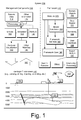
- Fig. 1 shows an example of a system 100 that includes various management components 110 to manage various aspects of a geologic environment 150.
- the management components 110 may allow for direct or indirect management of sensing, drilling, injecting, extracting, etc., with respect to the geologic environment 150.
- further information about the geologic environment 150 may become available as feedback 160 (e.g., optionally as input to one or more of the management components 110).
- the management components 110 include a seismic data component 112, an information component 114, a processing component 116, a simulation component 120, an attribute component 130, an analysis/visualization component 142 and a workflow component 144.
- seismic data and other information provided per the components 112 and 114 may be input to the simulation component 120.
- the simulation component 120 may rely on entities 122.
- Entities 122 may include, for example, earth entities or geological objects such as wells, surfaces, reservoirs, etc.
- the entities 122 can include virtual representations of actual physical entities that are reconstructed for purposes of simulation.
- the entities 122 may include entities based on data acquired via sensing, observation, etc. (e.g., the seismic data 112 and other information 114).
- the simulation component 120 may rely on a software framework such as an object-based framework.
- entities may include entities based on pre-defined classes to facilitate modeling and simulation.
- object-based framework is the MICROSOFT® .NET TM framework (Redmond, Washington), which provides a set of extensible object classes.
- .NET TM framework an object class encapsulates a module of reusable code and associated data structures.
- Object classes can be used to instantiate object instances for use in by a program, script, etc.
- borehole classes may define objects for representing boreholes based on well data.
- the simulation component 120 may process information to conform to one or more attributes specified by the attribute component 130, which may include a library of attributes (e.g., including seismic attributes). Such processing may occur prior to input to the simulation component 120. Alternatively, or in addition to, the simulation component 120 may perform operations on input information based on one or more attributes specified by the attribute component 130. In an example embodiment, the simulation component 120 may construct one or more models of the geologic environment 150, which may be relied on to simulate behavior of the geologic environment 150 (e.g., responsive to one or more acts, whether natural or artificial). In the example of Fig. 1 , the analysis/visualization component 142 may allow for interaction with a model or model-based results. Additionally, or alternatively, output from the simulation component 120 may be input to one or more other workflows, as indicated by a workflow component 144.
- the attribute component 130 may include a library of attributes (e.g., including seismic attributes). Such processing may occur prior to input to the simulation component 120. Alternatively, or in addition to, the simulation component 120 may perform
- the management components 110 may include features of the PETREL® seismic-to-simulation software framework.
- the PETREL® framework provides components that can allow for optimization of exploration and development operations.
- the PETREL® framework includes seismic to simulation software components that can output information for use in increasing reservoir performance, for example, by improving asset team productivity.
- various professionals e.g., geophysicists, geologists, and reservoir engineers
- Such a framework may be considered an application and may be considered a data-driven application (e.g., where data is input for purposes of simulating a geologic environment).
- the management components 110 may include features for geology and geological modeling to generate high-resolution geological models of reservoir structure and stratigraphy (e.g., classification and estimation, facies modeling, well correlation, surface imaging, structural and fault analysis, well path design, data analysis, fracture modeling, workflow editing, uncertainty and optimization modeling, petrophysical modeling, etc.). Particular features may allow for performance of rapid 2D and 3D seismic interpretation, optionally for integration with geological and engineering tools (e.g., classification and estimation, well path design, seismic interpretation, seismic attribute analysis, seismic sampling, seismic volume rendering, geobody extraction, domain conversion, etc.).
- geological and engineering tools e.g., classification and estimation, well path design, seismic interpretation, seismic attribute analysis, seismic sampling, seismic volume rendering, geobody extraction, domain conversion, etc.
- one or more features may allow for a simulation workflow to perform streamline simulation, reduce uncertainty and assist in future well planning (e.g., uncertainty analysis and optimization workflow, well path design, advanced gridding and upscaling, history match analysis, etc.).
- the management components 110 may include features for drilling workflows including well path design, drilling visualization, and real-time model updates (e.g., via real-time data links).
- various aspects of the management components 110 may include add-ons or plug-ins that operate according to specifications of a framework environment.
- the framework environment marketed as the OCEAN® framework environment can allow for integration of add-ons (or plug-ins) into a PETREL® framework (e.g., for implementation in a workflow).
- the OCEAN® framework environment leverages .NET® tools (Microsoft Corporation, Redmond, Washington).
- various components may be implemented as add-ons (or plug-ins) that conform to and operate according to specifications of a framework environment (e.g., according to application programming interface (API) specifications, etc.).
- API application programming interface
- Fig. 1 also shows an example of a framework 170 that includes a model simulation layer 180 along with a framework services layer 190, a framework core layer 195 and a modules layer 175.
- the framework 170 may include the commercially available OCEAN® framework where the model simulation layer 180 is the commercially available PETREL® seismic-to-simulation framework that can host OCEAN® framework applications.
- the model simulation layer 180 may provide domain objects 182, act as a data source 184, provide for rendering 186 and provide for various user interfaces 188.
- Rendering 186 may provide a graphical environment in which applications can display their data while the user interfaces 188 may provide a common look and feel for application user interface components (e.g., a user interface environment that aims to provide a relatively harmonious, comprehensible user experience).
- the domain objects 182 can include entity objects, property objects and optionally other objects.
- Entity objects may be used to geometrically represent wells, surfaces, reservoirs, etc.
- property objects may be used to provide property values as well as data versions and display parameters.
- an entity object may represent a well where a property object provides log information as well as version information and display information (e.g., to display the well as part of a model).
- data may be stored in one or more data sources (e.g., data stores), which may be at the same or different physical sites and accessible via one or more networks.
- the model simulation layer 180 may be configured to model projects. As such, a particular project may be stored where stored project information may include inputs, models, results and cases. Thus, upon completion of a modeling session, a user may store a project. At a later time, the project can be accessed and restored, for example, using the model simulation layer 180, which can recreate instances of the relevant domain objects.
- a search module 197 may be provided that allows for integration with a search engine (e.g., the STUDIO FIND TM search engine), one or more databases, one or more structuring modules, one or more formatting modules, one or more search indexes (e.g., historical search indexes), etc.
- the search module 197 may be part of the framework 170 and provide for "plugging-in" to one or more other modules (e.g., whether local or remote).
- the search module 197 may receive data responsive to input from a pointing device (e.g., via a computer bus, network, wireless, etc. connection).
- the module 197 may communicate the data in appropriate form to a database server (e.g., via a network, whether wired or wireless), optionally in a manner specified by one or more application programming interfaces (APIs) associated with the database server.
- the module 197 may receive information (e.g., via a network) from the database server (e.g., where the module 197 makes an API call and the server responds to the call according to a specification for the API).
- the module 197 may then process at least some of the information (e.g., structuring, formatting, etc.), which may be returned, for example, to process a workflow associated with the framework 170.
- the module 197 may provide for historical search index-based comparisons. For example, one or more comparisons may be performed with respect to time for a project, etc. using one or more historical search indexes.
- the geologic environment 150 may be outfitted with any of a variety of sensors, detectors, actuators, etc.
- equipment 152 may include communication circuitry to receive and to transmit information with respect to one or more networks 155.
- Such information may include information associated with downhole equipment 154, which may be equipment to acquire information, to assist with resource recovery, etc.
- Other equipment 156 may be located remote from a well site and include sensing, detecting, emitting or other circuitry.
- Such equipment may include storage and communication circuitry to store and to communicate data, instructions, etc.
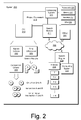
- Fig. 2 shows an example of a system 200 that includes a computing system 211, a computing system 231, and a database 251 (e.g., including a server or servers) configured for communication via one or more networks 205.
- the computing system 211 provides for execution of a project framework 210 to present a GUI 212 and of a search module 214.
- instructions and data may be transmitted by the module 214 via the network 205 to the computing system 231, which provides for execution of a search engine 230 that operates according to one or more of the indexes 235 (see, e.g., historical indexes T-1, T-2, T-3 to T-N, where T may represent a current time or current search index time).
- the computing system 231 may transmit information to the computing system 211.
- the indexes 235 may pertain to items stored or previously stored in the database 251, for example, according to a file system.
- the computing system 211 and/or the computing system 231 can include one or more processors 215, one or more memories 216 (e.g., RAM, ROM, etc.) accessibly by at least one processor, one or more modules 217 and/or one or more other types of circuitry 218 (e.g., hardware, software, hardware and software).
- a computing system can include one or more types of interfaces (e.g., network interfaces, data interfaces to data storage devices, etc.).
- a module may be an instruction module that includes, for example, instructions that can be stored in memory and executable by at least one of one or more processors, for example, to instruct a system to perform one or more actions.
- An action may include one or more of accessing information, receiving information, transmitting information, storing information, calculating information, rendering information, etc.
- a search criteria (SC) module 252 may allow a user to input one or more search criteria while the TD module 253 may allow a user to input a time differential and/or one or more times.
- the CC module 255 it may provide for input of one or more comparison criteria for search results (e.g., search results items) where the search results include search results from two or more of the search indexes 235 where a difference exists as their times of creation, update, etc.
- the modules 252, 253 and 255 may be operatively coupled to the GUI 212.
- the module 255 may provide a default comparison, which may be, for example, a user defined default comparison or, for example, a default comparison associated with a particular task, workstep, workflow, etc.
- the module 253 may provide a graphical control that can be rendered to the GUI 212 where the graphical control may include, for example, a slider, a wheel, one or more time entry/selection fields, etc.
- the CC module 255 may allow for results to be compared according to a Venn diagram approach. For example, where results A and B returned from two different ones of the search indexes 235, the CC module 255 may allow for presentation of results A, for presentation of results B, for presentation of an intersection of results A and results B, for presentation of a union of results A and results B, for presentation of a union minus an intersection of results A and results B, etc.
- search results may be items where such items are specified according to a corresponding search index as searched by a search engine.
- Fig. 3 shows an example of a method 300.
- the method 300 includes an entry block 310 for entering search and time criteria (e.g., one or more search criteria and one or more time criteria), a transmission block 320 for transmitting the criteria, a reception block 330 for receiving at least two sets of search results based on the criteria (e.g., a set for one time of a search index and a set for another time of a search index), a compare block 340 for comparing the sets of search results based at least in part on a comparison criterion, a render block 350 for rendering at least a portion of the compared results (e.g., as a graphic, a list, etc.
- search and time criteria e.g., one or more search criteria and one or more time criteria
- a transmission block 320 for transmitting the criteria
- a reception block 330 for receiving at least two sets of search results based on the criteria (e.g., a set for one time of a search index and a set for another
- navigating may include expanding a portion of a tree structure and, per a collapse block 364, navigating may include collapsing a portion of a tree structure.
- the method 300 may include a redefinition block 370 for redefining a comparison criterion (e.g., optionally using a Venn diagram approach, etc.) and a re-comparison block 380 for re-comparing the sets of search results according to a redefined comparison criterion.
- the method 300 may include rendering at least a portion of the re-compared sets of search results (e.g., as a graphic, a list, etc. to a display).
- the method 300 is shown in Fig. 3 in association with various computer-readable media (CRM) blocks 311, 321, 331, 341, 351, 361, 371 and 381.
- CRM computer-readable media
- Such blocks generally include instructions suitable for execution by one or more processors (or cores) to instruct a computing device or system to perform one or more actions. While various blocks are shown, a single medium may be configured with instructions to allow for, at least in part, performance of various actions of the method 300.
- a computer-readable medium may be non-transitory and not a carrier wave.
- Figs. 4 to 9 show examples of graphical user interfaces (GUIs).
- GUIs graphical user interfaces
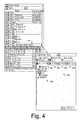
- Fig. 4 shows an example GUI 410 and an example GUI 420.
- a user may select a result set (or a subset) from a search functional such as, for example, the STUDIO FIND TM search functionality.
- the GUI 410 can include a compare control 412 (e.g., as an item in a context menu, etc.) that may be actuated upon receipt of input (e.g., mouse click, touch, voice command, etc.) such that a computing system may launch a GUI such as, for example, the GUI 420 (e.g., a "Compare search results" GUI).
- GUI graphical user interfaces
- a user may run another search in "Find” and, for example, select a compare action (e.g., a compare criterion) or, for example, drag the hits over to a compare dialog graphical control.
- a compare action e.g., a compare criterion
- the user may see, as rendered to a display, which items differ in two sets of search results, etc.
- a user may modify one or more keys used for matching as well as specify that the user may wish to ignore (e.g., certain attributes in the comparison).
- a system may include functionality as to a "shopping bag". For example, a user may open a shopping bag and compare items from shopping bags. As an example, save/open options may be available via a GUI as to a shopping bag (e.g., a shopping bag dialog, etc.).
- the GUI may be utilized as part of a workflow.
- a graphical control may allow for selection of at least a portion of the search results (e.g., a first set) for comparison to another set of search results (e.g., a second set).
- a user may navigate those results (e.g., search records) that exist in the first set, those that exist in the second set, those that differ and those that are the same.
- tabs 450 are included, where selection of a tab 451, 452, 453 or 454 can call for additional information broken out by categories 455 (e.g., input, models, framework, template, etc.) to be rendered to a display.
- categories 455 e.g., input, models, framework, template, etc.
- the tab 451 is an "Only in A” control
- the tab 452 is an "Only in B” control
- the tab 453 is a "Differs” control
- the tab 454 is an "Identical" control.
- the GUI 420 can readily be navigated to assess results only in A that meet one or more matching attributes (e.g., one or more criteria), results only in B that meet one or more matching attributes (e.g., one or more criteria), results that differ for A and B and results that are identical for A and B.
- the categories 455 include check boxes as well as drop down menu controls, where appropriate. Such an approach allows for further navigation of results.
- the tabs 451, 452, 453 and 454 maybe color coded (e.g., blue, yellow, red and green, etc.), which may allow for learning/training of use and more expeditious navigation of results and comparisons thereof.
- the tabs 451, 452, 453 and 454 show numbers (see also, e.g., Fig. 5 ).
- the numbers represent items (e.g., search result items, items of a project, etc.), which may be, for example, broken into categories with associated numbers as to such items (see, e.g., the categories 455; see also, e.g., Fig. 5 ).
- Fig. 5 shows examples of GUIs 510, 520 and 530 where a comparison is made as to a project which has been duplicated at a point in time.
- the GUI 510 includes tabs 550, which may be tabs such as the tabs 450 of the GUI 420 of Fig. 4 .
- the tabs 550 include numbers that correspond to search result items per a comparison or comparisons.
- categories 555 are also shown where an individual category can include a number (e.g., for a corresponding search result or search results).
- one or more search filter GUIs 520 and 530 may be rendered to a display where each of the search filter GUIs 520 and 530 corresponds to a particular number of items, which may be selectable via check box controls.
- various types of filter criteria may be rendered and selectable.
- the search filter GUI 520 shows selection of 1971 items that correspond to the search results A of the GUI 510
- the search filter GUI 530 shows selection of 1628 items that correspond to the search results B of the GUI 510.
- the "Differs" control tab is selected where 162 items exist, as listed in the categories 555.
- a text field indicates that "Differences found for 38 compared attributes".
- a search may be performed to determine one or more ways in which the projects are the same and/or differ.
- a project may be duplicated to provide a starting point for another project where one or more additions, subtractions, modifications, etc. may be made to alter the other project as may be desired to suit a particular scenario (e.g., a well, a field operation, environmental conditions, etc.).
- an approach as illustrated in Fig. 5 may provide a time-lapse view of changes that have occurred to one or both projects.
- a quality control workflow may determine whether relevant differences have been addressed in adapting one project as a basis for another project. For example, where one type of data is modified, a recommendation may be to modify some amount of associated data. Where a comparison indicates that such a modification has not yet occurred, a quality control workflow may generate a notification to make the modification.
- one project may overlap spatially with another project. For example, consider wells A, B and C in one project and wells C, D and E in another project. In such an example, a comparison of the projects may be performed to determine whether well C data are matched or differ. As an example, where one or more differences exist, a user may decide to select a set of data for replication (e.g., such that the projects match as to well C data).
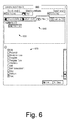
- Fig. 6 shows an example GUI 600 that allows a user to revise criteria (e.g., attributed to be compared, etc.).
- the GUI 600 includes tabs 650 and category 655 controls.
- a user may expand a lower section and see a detailed breakdown control 670, for example, per attribute to see which attributes differ.
- a user may uncheck one or more attributes to exclude them from a comparison.
- Such an approach may be useful for workflows such as where a method includes comparing wells across two different datastores and where the data model is different.
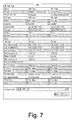
- Fig. 7 shows an example GUI 700 that shows, as an example, well top information.
- a GUI may provide functionality such as a double click functionality as to an item, for example, to see detailed differences.
- the GUI 700 shows a version 2011.1 framework and a version 2014.1 framework.
- Below these framework fields exist listings of entries as to properties and templates.
- a difference may be uncovered as to template type, for example, one type can be general discrete and another type fluvial.
- Such information may highlight differences in versions of frameworks and indicate what features of a later version may be suitable for use where a project is to be migrated to the later version.
- a migrated project may be compared to a prior version, prior to migration.
- one or more differences may be highlighted, for example, as part of a quality control workflow to determine whether migration may have occurred effectively and/or whether adjustments, modifications, etc., may be recommended.
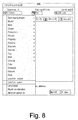
- Fig. 8 shows an example GUI 800 that includes functionality to compare various search results. For example, a user may revise a lookup by selecting an item from a menu such as "geographical location". As an example attributes present in two sets of results may be available for matching. As an example, a function may be a geohash function that allows for matching items based on geographic location. As an example, a system can include features that support accuracy for geohash and floating point attributes.
- such an approach may be implemented to compare different repositories.
- repositories where data may be in different formats, of different types, etc.
- one or more names, geo-coordinates, etc. may be common and/or otherwise comparable.
- a search may aim to associate data from disparate data sources, optionally based at least in part on time, using one or more hash types of approaches. For example, a geohash, a name hash, a combination geo-and name hash, etc.
- a GUI may include a control that calls for execution of one or more hash algorithms that can hash one or more entries, numbers, etc. to generate a hash value.
- hash values may be determined and/or exist within an index for purposes of searching, comparing, etc.
- a geohash may be a unique identifier.
- a geohash may represent point and/or region data in one or more databases, which may optionally be associated with an entity, a geologic feature, etc.
- information may be geotagged in a database or databases (e.g., or an index or indexes).
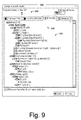
- Fig. 9 shows an example GUI 900 for performing a time-based comparison, for example, using two different search indexes where the indexes differ as to the time at which they were created, updated, etc.
- one search index may be for a present time while another search index may be for a historic time.
- a slider tool 990 may be rendered as a graphical control of the GUI 900 where a span of the slider tool 990 corresponds to a span of search indexes with respect to historic times (see, e.g., the search indexes 235 of Fig. 2 ).
- tabs 950 and category 955 controls are also shown, which may be updated responsive to an adjustment or adjustments made via the slider tool 990.
- the results rendered to the tabs 950 and categories 955 may be updated in response (e.g., triggered by a adjustment to the slider tool 990).
- STUDIO FIND TM search functionality may include a tool such as the slider tool 990 of the GUI 900.
- one or more features may be implemented with respect to STUDIO MANAGER TM functionality. For example, consider management functionality that archives search indexes with respect to time. In such an example, the archive may be accessed to perform a search or searches. As an example, archiving may occur less frequently than updating of a search index. For example, a search index may be updated daily and a archiving may occur weekly.
- a GUI may include a compare dialog that allows for input of one or more comparison criteria as to historical comparisons.
- a compare dialog graphical control that allows a user to view differences in time for the current search.
- a search result A and search result B approach may be implemented and/or a time control approach such as, for example, the time slider approach shown in the GUI 900 of Fig. 9 .
- an instruction or instructions, commands, etc.
- a user may then see how a repository (e.g., a corpus) has changed over time.
- a search may provide for visualization of how the well data may have changed or not in each of the projects. Further, a search may provide for determining who may have duplicated the well and how one or more individuals may be related (e.g., group-wise, company-wise, location-wise, etc.) to determine why and/or how the well was selected for duplication. As an example, a search may be part of a quality control workflow that aims to uncover projects or portions of a project that have been duplicated, which may optionally allow for development of one or more templates, framework features, etc.
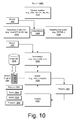
- Fig. 10 shows an example of a system 1000 that includes a search engine 1060 and an index database 1070 (e.g., for storing a plurality of search indexes with respect to time).
- the index database 1070 may provide one or more search indexes where a GUI may include a query field for entry of a query and a control for transmission of the query to the search engine 1060 (e.g., a server or other computing device or system) where the search engine 1060 may include a reception module 1062 to receive a query, a parse module 1064 to parse the query, a match module 1066 to search for one or more matches (e.g., to information, terms, etc., included in the query) and a transmission module 1068 to transmit at least one of the one or more matches for presentation as results in a results GUI.
- a reception module 1062 to receive a query
- a parse module 1064 to parse the query
- a match module 1066 to search for one or more matches (e.
- the transmitted results per the transmission module 1068 may include multiple sets of results.
- a compare module may interact with the results module 1085, as explained, for example, with respect to the GUI 900 of Fig. 9 .
- the system 1000 includes an operations application module 1010, a communications module 1020, source modules 1032 and 1034, an associations module 1040, a modeling application module 1050, a database module 1060, and a search index module 1080.
- the modules 1010, 1020, 1032, 1034 and 1050 may provide access to various sources of information.
- a system may include one or more such modules, for example, to provide access to one or more sources of information.
- a user module 1001 provides for one or more users to enter one or more search terms, criteria, etc., to the search index module 1080 where the search index module 1080 can return one or more results (e.g., items) per a results module 1085 (e.g., or an indication that no results match the search).
- results e.g., items
- results module 1085 e.g., or an indication that no results match the search.
- associations may be made by the associations module 1040 based on such types of information and associated information may optionally be stored in one or more databases per the database module 1060. Such information may be indexed for purposes of searching per the search index module 1080.
- the search index module 1080 may perform additional indexing to update an index, for example, to dynamically enrich the search capabilities.
- the search index module 1080 may include search engine functionality for indexing where indexing may include collecting, parsing, and storing data to facilitate information retrieval.
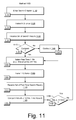
- Fig. 11 shows an example of a method 1100 that includes an entry block 1110 of entering a search criterion (e.g., receiving a search criterion via a graphical user interface of a computing device, etc.), a transmission block 1120 for transmitting the criterion, a reception block 1130 for receiving a set of search results responsive to performing a search using at least the criterion, a decision block 1140 for deciding whether to compare at least a portion of the search results to other search results, a selection block 1150 for selecting a past time or times, a transmission block 1160 for transmitting the search criterion, a reception block for receiving a set of past time search results and a comparison block 1180 for comparing at least a portion of the set of search results and at least a portion of the past time search results.
- a search criterion e.g., receiving a search criterion via a graphical user interface of a computing device, etc.
- a transmission block 1120
- the method 1100 may include another decision block 1190, for example, for deciding whether to adjust one or more times. If the decision block 1190 decides to adjust a time or times, the method 1110 may continue at the selection block 1150 for selecting one or more past times, for example, where the selected one or more past times may not encompassed within a previously selected time or times. Where an adjustment includes a time or times within a previously selected one or more past times, a method may include honing received search results, for example, rather than retrieving new search results.
- a graphical user interface may include a slider control and/or other type of control that can be actuated via touch, voice command, mouse, stylus, etc., to select one or more times.
- results e.g., comparison of results
- a time control e.g., a slider, etc.
- the method 1100 may continue at a continuation block 1146. As shown, where the decision block 1190 decides to not perform an adjustment to a time or times, the method 1100 may continue to the continuation block 1146 (e.g., to continue to a termination block, another block, etc.).
- the method 1100 is shown in Fig. 11 in association with various computer-readable media (CRM) blocks 1111, 1121, 1131, 1141, 1147, 1151, 1161, 1171, 1181 and 1191.
- Such blocks generally include instructions suitable for execution by one or more processors (or cores) to instruct a computing device or system to perform one or more actions. While various blocks are shown, a single medium may be configured with instructions to allow for, at least in part, performance of various actions of the method 1100.
- a computer-readable medium may be non-transitory and not a carrier wave.
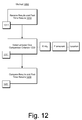
- Fig. 12 shows an example of a method 1200 that includes a reception block 1210 for receiving results and past time results, a selection block 1220 for selecting at least one comparison criterion, and a comparison block 1230 for comparing at least a portion of the results and at least a portion of the past results.
- a reception block 1210 for receiving results and past time results
- a selection block 1220 for selecting at least one comparison criterion
- a comparison block 1230 for comparing at least a portion of the results and at least a portion of the past results.
- criteria such as an entity criterion, a framework criterion, a location criterion, etc.
- an entity criterion may aim to search for results associated with a person, a company, equipment, etc.
- a framework criterion may aim to search for a type and/or version of a framework associated with one or more results (e.g., as generated, modified, used, etc.); and a location criterion may aim to search for one or more locations where a result or results may have been stored, generated, modified, used, etc.
- the method 1200 is shown in Fig. 12 in association with various computer-readable media (CRM) blocks 1211, 1221, and 1231.
- Such blocks generally include instructions suitable for execution by one or more processors (or cores) to instruct a computing device or system to perform one or more actions. While various blocks are shown, a single medium may be configured with instructions to allow for, at least in part, performance of various actions of the method 1200.
- a computer-readable medium may be non-transitory and not a carrier wave.
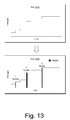
- Fig. 13 shows an example plot 1310 and an example plot 1330 that indicate changes with respect to time as to data.
- the plot 1310 periods of time exist where no changes are indicated and other periods of time exist, represented substantially as step-changes, where records have been changed.
- the plot 1330 indicates a number of records at points in time where changes have been made by, for example, an entity specified by an entity criterion. For example, a person may have made such changes.
- a framework version where a quality control workflow is implemented.
- an algorithm of that framework version may have provided less than desirable values
- such an approach can highlight where changes to data have occurred that used such an algorithm.
- a workflow may include recalculating the values and replacing them in one or more databases, datastores, etc.
- Fig. 14 shows an example of a method 1400 that includes a commencement block 1410 for commencing an indexing process, an access block 1420 for accessing file system information (e.g., one or more logs, namespaces, etc.) where such information includes time information, a generation block 1430 for generating an index based at least in part on file system information, a generation block 1440 for generating time-based search results using the index and a comparison block 1450 for comparing at least a portion of the search results to other results (e.g., other search results).
- file system information e.g., one or more logs, namespaces, etc.
- a generation block 1430 for generating an index based at least in part on file system information
- a generation block 1440 for generating time-based search results using the index
- a comparison block 1450 for comparing at least a portion of the search results to other results (e.g., other search results).
- the method 1400 may include making an API call, for example, via an API call block 1412.
- a utility may include an application programming interface that can receive a call that specifies a task or tasks to be performed.
- a task may be to generate an index from file system information of a source or sources.
- the API call may instruct the utility to access the file system information and optionally content of one or more files to generate an index.
- Such an approach may operate in substantially real-time, for example, depending on the amount of files, etc.
- a utility may include an associated graphical user interface that includes a control to commence indexing.
- input may include a target that is a source of file system information.
- a user may navigate a network and select a source that includes file system information where the utility may access such information for generation of an index (e.g., optionally including accessing content of one or more files as well).
- the method 1400 is shown in Fig. 14 in association with various computer-readable media (CRM) blocks 1411, 1413, 1421, 1431, 1441, and 1451.
- Such blocks generally include instructions suitable for execution by one or more processors (or cores) to instruct a computing device or system to perform one or more actions. While various blocks are shown, a single medium may be configured with instructions to allow for, at least in part, performance of various actions of the method 1400.
- a computer-readable medium may be non-transitory and not a carrier wave.
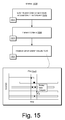
- Fig. 15 shows an example of a method 1500 that includes an entry block 1510 for entering search criteria that include at least one time criterion (e.g., receiving search criteria), a transmission block 1520 for transmitting the search criteria (e.g., via one or more networks, etc.), and a reception block 1530 for receiving a set of search results based at least in part on searching one or more sources via one or more indexes.
- an entry block 1510 for entering search criteria that include at least one time criterion (e.g., receiving search criteria)
- a transmission block 1520 for transmitting the search criteria (e.g., via one or more networks, etc.)
- a reception block 1530 for receiving a set of search results based at least in part on searching one or more sources via one or more indexes.
- Fig. 15 also shows an example of a plot 1550 that includes sources with information that spans periods of time.
- vertical lines represent a search criterion, for example, a period of time or time window within which searches were performed for the plurality of sources (e.g., indexes for such sources).
- solid blocks represent records (e.g., search results) that exist in the particular sources.
- the plot 1550 may be generated via a graphical user interface (e.g., a module, instructions, etc.) and may include one or more controls. For example, consider a control that can select one or more records (e.g., search results) and perform one or more actions with respect thereto. For example, consider one or more of a review action, a store action, a compare action, etc.
- a search criterion may specify how data were used.
- particular seismic data may be suitable for trials to develop an attribute algorithm (e.g., to output a seismic attribute).
- a developer of an attribute algorithm may specify a criterion to provide search results as to data that may be suitable for trials, for example, to determine quality of the attribute algorithm.
- the developer may uncover such data and, for example, times at which such data were used. The developer may then select such data and retrieve it for purposes of development, quality control trials, etc.
- one or more other criteria may be implemented in a search.
- a lithology based criterion may be used, particularly where a seismic attribute aims to highlight or otherwise differentiate such lithology by processing data (e.g., seismic data and/or other type(s) of data).
- the method 1500 is shown in Fig. 15 in association with various computer-readable media (CRM) blocks 1511, 1521, and 1531.
- Such blocks generally include instructions suitable for execution by one or more processors (or cores) to instruct a computing device or system to perform one or more actions. While various blocks are shown, a single medium may be configured with instructions to allow for, at least in part, performance of various actions of the method 1500.
- a computer-readable medium may be non-transitory and not a carrier wave.
- search indexes may be searched where at least one of the search indexes is a historical search index.
- search criteria such an approach may allow a user to "drill" in on certain types of changes to a project via a search tool.
- changes may provide insight as to development of a particular aspect/aspects of a project and, via such a tool, to possibly identify who made a change, why a change was made, etc.
- a historical search index may provide information as to data that may no longer exist, may be re-tagged, may be updated, etc.
- a search index may include information as to existence of historical "data" even where the data may no longer exist as it did at that historical time (e.g., consider a webpage in search results where the webpage no longer exists).
- time may be considered a criterion that is other than a "search criterion".
- time may be considered a selector of a particular historical search index.
- a tool e.g., slider tool, wheel, etc.
- a tool may be an expeditious way of looking into the past - as opposed to looking for data itself in a data store, noting that that some data may no longer exist in that data store.
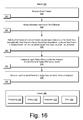
- Fig. 16 shows an example of a method 1600 and an example of a system 1690.
- the method 1600 includes a reception block 1610 for receiving a search criterion; a reception block 1620 for receiving information indicative of a time differential; a performance block 1630 for performing a first search and a second search using the search criterion on a first search index associated with a first time and a second search index associated with a second time where a difference between the first time and the second time approximates the time differential (e.g., to associated times with times of indexes, etc.); a comparison block 1640 for comparing at least a portion of results of the first search to at least a portion of results of the second search; and a render block 1650 for rendering at least one search result to a display based at least in part on the comparing.
- a reception block 1610 for receiving a search criterion
- a reception block 1620 for receiving information indicative of a time differential
- a performance block 1630 for performing a first search
- the method 1600 is shown in Fig. 16 in association with various computer-readable media (CRM) blocks 1611, 1621, 1631, 1641 and 1651.
- Such blocks generally include instructions suitable for execution by one or more processors (or cores) to instruct a computing device or system to perform one or more actions. While various blocks are shown, a single medium may be configured with instructions to allow for, at least in part, performance of various actions of the method 1600.
- a computer-readable medium may be non-transitory and not a carrier wave.
- a method can include receiving a search criterion; receiving information indicative of a time differential; performing a first search and a second search using the search criterion on a first search index associated with a first time and a second search index associated with a second time where a difference between the first time and the second time approximates the time differential; comparing results of the first search to results of the second search; and rendering at least one search result to a display based at least in part on the comparing.
- receiving information can include receiving information via a time slide graphical control.
- at least one search result can include a result common to results of a first search and to results of a second search.
- At least one search result can include a result present in results of a first search and not in results of a second search or in the results of the second search and not in the results of the first search.
- at least one search result can include a result that differs between the results of the first search and the results of the second search (e.g., a number of items that differ for a comparison of two or more sets of search results).
- a method can include receiving search criteria and performing a first search and a second search using the search criteria where the first and second searches may be performed using two different search indexes where one was created prior to the other.
- a system may include a storage device that stores historical search indexes and that provides access thereto.
- a method can include using search indexes that correspond to respective corpuses of project data associated with a seismic-to-simulation framework (e.g., Project A and Project B, etc.).
- a seismic-to-simulation framework e.g., Project A and Project B, etc.
- a search criterion may specify geographic information.
- a search criterion may specify an entity, for example, where the entity may be an individual or a company.
- an entity may be an entity of a framework (e.g., a well, a piece of equipment, etc.).
- a method can include generating a search index.
- a method can include accessing file system information and, for example, generating at least one search index based at least in part on such file system information (e.g., as to times, filenames, directory structures, permissions, etc.).
- a method can include using a first search index that is associated with a first project and using a second search index that is associated with a second project.
- the projects may include one or more common features (e.g., consider at least one well in common).
- a first search index can be generated based on first project data stored in a first datasource and a second search index can be generated based on second project data stored in a second datasource where, for example, the locations of the first datasource and the second datasource differ (e.g., different network locations, physical locations, etc.).
- Such a method may act to perform one or more actions of a quality control workflow (e.g., to compare information, etc.).
- a method can include rendering a graphical user interface to a display where the graphical user interface can include a plurality of controls for comparing at least a portion of the results of the first search to at least a portion of the results of the second search.
- the plurality of controls can include a control selectable for generating search results of records associated with the first search index that differ from records associated with the second search index and records associated with the second search index that differ from records associated with the first search index.
- the system 1690 can include one or more processors 1691; memory 1692; and instructions 1693 stored in the memory and executable by at least one of the one or more processors 1691 to instruct the system 1691.
- the instructions 1693 can include instructions to, for example, receive a search criterion (see, e.g., the block 1611); receive information indicative of a time differential (see, e.g., the block 1621); perform a first search and a second search using the search criterion on a first search index associated with a first time and a second search index associated with a second time where a difference between the first time and the second time approximates the time differential (e.g., to associated times with times of indexes, etc.) (see, e.g., the block 1631); compare results of the first search to results of the second search (see, e.g., the block 1641); and render at least one search result to a display based at least in part
- the system 1690 may include one or more other types of circuitry, instructions, etc. 1694 (e.g., hardware, software, hardware and software, etc.).
- the system 1690 may include one or more displays (e.g., touchscreen, projectors, etc.).
- the system 1690 may include one or more graphics processors (e.g., GPUs), for example, to render information to a display or displays.
- a GPU may optionally be instructed to perform one or more actions (e.g., calculations, etc.).
- a system can include one or more processors; memory; and instructions stored in the memory and executable by at least one of the one or more processors to instruct the system, the instructions including instructions to: receive a search criterion; receive information indicative of a time differential; perform a first search and a second search using the search criterion on a first search index associated with a first time and a second search index associated with a second time where a difference between the first time and the second time approximates the time differential; compare at least a portion of results of the first search to at least a portion of results of the second search; and render at least one search result to a display based at least in part on a comparison.
- the search indexes may correspond to respective corpuses of project data associated with a seismic-to-simulation framework.
- a system can include instructions to render a graphical control to a display for reception of information indicative of the time differential (e.g., consider a time slider control, time fields, a time differential field, etc.).
- one or more computer-readable media can include processor-executable instructions that instruct a system, the instructions including instructions to: receive a search criterion; receive information indicative of a time differential; perform a first search and a second search using the search criterion on a first search index associated with a first time and a second search index associated with a second time where a difference between the first time and the second time approximates the time differential; compare at least a portion of results of the first search to at least a portion of results of the second search; and render at least one search result to a display based at least in part on a comparison.
- one or more computer-readable media can include instructions to render a graphical control to a display for reception of information indicative of the time differential (e.g., consider a time slider control, time fields, a time differential field, etc.).
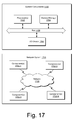
- Fig. 17 shows components of an example of a computing system 1700 and an example of a networked system 1710.
- the system 1700 includes one or more processors 1702, memory and/or storage components 1704, one or more input and/or output devices 1706 and a bus 1708.
- instructions may be stored in one or more computer-readable media (e.g., memory/storage components 1704). Such instructions may be read by one or more processors (e.g., the processor(s) 1702) via a communication bus (e.g., the bus 1708), which may be wired or wireless.
- the one or more processors may execute such instructions to implement (wholly or in part) one or more modules, components, etc. (e.g., as part of a method).
- a user may view output from and interact with a process via an I/O device (e.g., the device 1706).
- a computer-readable medium may be a storage component such as a physical memory storage device, for example, a chip, a chip on a package, a memory card, etc.
- components may be distributed, such as in the network system 1710.
- the network system 1710 includes components 1722-1, 1722-2, 1722-3, ... 1722-N.
- the components 1722-1 may include the processor(s) 1702 while the component(s) 1722-3 may include memory accessible by the processor(s) 1702.
- the component(s) 1702-2 may include an I/O device for display and optionally interaction with a method.
- the network may be or include the Internet, an intranet, a cellular network, a satellite network, etc.
- a device may be a mobile device that includes one or more network interfaces for communication of information.
- a mobile device may include a wireless network interface (e.g., operable via IEEE 802.11, ETSI GSM, BLUETOOTH®, satellite, etc.).
- a mobile device may include components such as a main processor, memory, a display, display graphics circuitry (e.g., optionally including touch and gesture circuitry), a SIM slot, audio/video circuitry, motion processing circuitry (e.g., accelerometer, gyroscope), wireless LAN circuitry, smart card circuitry, transmitter circuitry, GPS circuitry, and a battery.
- a mobile device may be configured as a cell phone, a tablet, etc.
- a method may be implemented (e.g., wholly or in part) using a mobile device.
- a system may include one or more mobile devices.
- a system may be a distributed environment, for example, a so-called “cloud” environment where various devices, components, etc. interact for purposes of data storage, communications, computing, etc.
- a device or a system may include one or more components for communication of information via one or more of the Internet (e.g., where communication occurs via one or more Internet protocols), a cellular network, a satellite network, etc.
- a method may be implemented in a distributed environment (e.g., wholly or in part as a cloud-based service).
- information may be input from a display (e.g., consider a touchscreen), output to a display or both.
- information may be output to a projector, a laser device, a printer, etc. such that the information may be viewed.
- information may be output stereographically or holographically.
- a printer consider a 2D or a 3D printer.
- a 3D printer may include one or more substances that can be output to construct a 3D object.
- data may be provided to a 3D printer to construct a 3D representation of a subterranean formation.
- layers may be constructed in 3D (e.g., horizons, etc.), geobodies constructed in 3D, etc.
- holes, fractures, etc. may be constructed in 3D (e.g., as positive structures, as negative structures, etc.).
Landscapes
- Engineering & Computer Science (AREA)
- Theoretical Computer Science (AREA)
- Physics & Mathematics (AREA)
- General Physics & Mathematics (AREA)
- Databases & Information Systems (AREA)
- General Engineering & Computer Science (AREA)
- Data Mining & Analysis (AREA)
- Business, Economics & Management (AREA)
- Human Resources & Organizations (AREA)
- Computational Linguistics (AREA)
- Remote Sensing (AREA)
- Strategic Management (AREA)
- Entrepreneurship & Innovation (AREA)
- Economics (AREA)
- Life Sciences & Earth Sciences (AREA)
- Software Systems (AREA)
- Marketing (AREA)
- Game Theory and Decision Science (AREA)
- General Business, Economics & Management (AREA)
- Tourism & Hospitality (AREA)
- Quality & Reliability (AREA)
- Development Economics (AREA)
- Operations Research (AREA)
- Educational Administration (AREA)
- Acoustics & Sound (AREA)
- Geology (AREA)
- Environmental & Geological Engineering (AREA)
- Probability & Statistics with Applications (AREA)
- General Life Sciences & Earth Sciences (AREA)
- Geophysics (AREA)
- Fuzzy Systems (AREA)
- Mathematical Physics (AREA)
- Human Computer Interaction (AREA)
- User Interface Of Digital Computer (AREA)
- Circuits Of Receivers In General (AREA)
- Two-Way Televisions, Distribution Of Moving Picture Or The Like (AREA)
- Information Retrieval, Db Structures And Fs Structures Therefor (AREA)
Applications Claiming Priority (2)
| Application Number | Priority Date | Filing Date | Title |
|---|---|---|---|
| US201462042086P | 2014-08-26 | 2014-08-26 | |
| US14/828,061 US20160063070A1 (en) | 2014-08-26 | 2015-08-17 | Project time comparison via search indexes |
Publications (2)
| Publication Number | Publication Date |
|---|---|
| EP2990833A2 true EP2990833A2 (de) | 2016-03-02 |
| EP2990833A3 EP2990833A3 (de) | 2016-04-06 |
Family
ID=53969217
Family Applications (1)
| Application Number | Title | Priority Date | Filing Date |
|---|---|---|---|
| EP15181864.8A Withdrawn EP2990833A3 (de) | 2014-08-26 | 2015-08-20 | Projektzeitvergleich über suchindizes |
Country Status (3)
| Country | Link |
|---|---|
| US (1) | US20160063070A1 (de) |
| EP (1) | EP2990833A3 (de) |
| CA (1) | CA2901098A1 (de) |
Families Citing this family (9)
| Publication number | Priority date | Publication date | Assignee | Title |
|---|---|---|---|---|
| US20170192645A1 (en) * | 2015-01-06 | 2017-07-06 | Brad Murray | System and method for storing and searching digital media |
| US10679228B2 (en) * | 2015-03-30 | 2020-06-09 | Walmart Apollo, Llc | Systems, devices, and methods for predicting product performance in a retail display area |
| GB201518176D0 (en) * | 2015-10-14 | 2015-11-25 | Mood Entpr Ltd | Method and system for causal relationship discovery and analysis |
| US10515062B2 (en) | 2016-05-09 | 2019-12-24 | Sumo Logic, Inc. | Searchable investigation history for event data store |
| US11210618B2 (en) * | 2018-07-10 | 2021-12-28 | Walmart Apollo, Llc | Systems and methods for generating a two-dimensional planogram based on intermediate data structures |
| US10922298B2 (en) | 2019-01-30 | 2021-02-16 | Walmart Apollo, Llc | System and method for indexing time-series-based data |
| CN110990609B (zh) * | 2019-12-13 | 2023-06-16 | 云粒智慧科技有限公司 | 一种搜索方法、装置、电子设备及存储介质 |
| CN111898905A (zh) * | 2020-07-28 | 2020-11-06 | 霍翔 | 质量抽检管理方法、装置、计算机设备和存储介质 |
| CN114880595B (zh) * | 2022-02-22 | 2025-11-07 | 北京百度网讯科技有限公司 | 搜索结果样式监控方法及装置 |
Family Cites Families (13)
| Publication number | Priority date | Publication date | Assignee | Title |
|---|---|---|---|---|
| JPH1196174A (ja) * | 1997-09-22 | 1999-04-09 | Fujitsu Denso Ltd | 履歴データの探索方法 |
| US7720833B1 (en) * | 2000-02-02 | 2010-05-18 | Ebay Inc. | Method and system for automatically updating search results on an online auction site |
| US7720845B2 (en) * | 2004-08-13 | 2010-05-18 | Yahoo! Inc. | Systems and methods for updating query results based on query deltas |
| JP2007272463A (ja) * | 2006-03-30 | 2007-10-18 | Toshiba Corp | 情報検索装置、情報検索方法および情報検索プログラム |
| US7716236B2 (en) * | 2006-07-06 | 2010-05-11 | Aol Inc. | Temporal search query personalization |
| US20080104045A1 (en) * | 2006-11-01 | 2008-05-01 | Cohen Alain J | Collectively enhanced semantic search |
| US20110184940A1 (en) * | 2010-01-26 | 2011-07-28 | Yahoo! Inc. | System and method for detecting changes in the relevance of past search results |
| JP4924742B2 (ja) * | 2010-06-30 | 2012-04-25 | カシオ計算機株式会社 | 画像処理装置及び方法、並びにプログラム |
| US20140188892A1 (en) * | 2010-10-05 | 2014-07-03 | Schlumberger Technology Corporation | Social network resource integration |
| JP2013025779A (ja) * | 2011-07-26 | 2013-02-04 | Sony Computer Entertainment Inc | 情報処理システム、情報処理方法、プログラム及び情報記憶媒体 |
| JP5751336B2 (ja) * | 2011-10-18 | 2015-07-22 | 富士通株式会社 | 情報処理装置、時刻補正値決定方法、およびプログラム |
| US20130346394A1 (en) * | 2012-06-20 | 2013-12-26 | Schlumberger Technology Corporation | Virtual tree |
| US20140129296A1 (en) * | 2012-11-07 | 2014-05-08 | Schlumberger Technology Corporation | Method and system for offering and procuring well services |
-
2015
- 2015-08-17 US US14/828,061 patent/US20160063070A1/en not_active Abandoned
- 2015-08-20 CA CA2901098A patent/CA2901098A1/en not_active Abandoned
- 2015-08-20 EP EP15181864.8A patent/EP2990833A3/de not_active Withdrawn
Non-Patent Citations (1)
| Title |
|---|
| None |
Also Published As
| Publication number | Publication date |
|---|---|
| EP2990833A3 (de) | 2016-04-06 |
| US20160063070A1 (en) | 2016-03-03 |
| CA2901098A1 (en) | 2016-02-26 |
Similar Documents
| Publication | Publication Date | Title |
|---|---|---|
| EP2990833A2 (de) | Projektzeitvergleich über suchindizes | |
| Jones et al. | Digital field data acquisition: towards increased quantification of uncertainty during geological mapping | |
| US20200040719A1 (en) | Machine-Learning Based Drilling Models for A New Well | |
| US20190391295A1 (en) | Seismic Data Processing Artificial Intelligence | |
| US20130346394A1 (en) | Virtual tree | |
| US20140068448A1 (en) | Production data management system utility | |
| WO2021211579A1 (en) | Subsurface lithological model with machine learning | |
| US12032547B2 (en) | Automated system and method for processing oilfield information | |
| US20220341292A1 (en) | Geological analog recommendation workflow using representative embeddings | |
| US20140188892A1 (en) | Social network resource integration | |
| US9542064B2 (en) | Information pinning for contexual and task status awareness | |
| CN111472763B (zh) | 地层厚度预测方法及装置 | |
| EP4404076A1 (de) | Qualitätsverbesserung und visualisierung von bohrlochaufzeichnungen | |
| WO2015108921A1 (en) | Organization of metadata for data objects | |
| WO2002026014A2 (en) | Project management system and method | |
| NO20160254A1 (en) | Data analytics for oilfield data repositories | |
| US20140089317A1 (en) | Associating operations information and communications information | |
| Mentes | Design and development of a mineral exploration ontology | |
| CA2818469A1 (en) | Virtual tree | |
| CA2912776A1 (en) | System, method and computer program product for smart grouping of seismic interpretation data in inventory trees based on processing history | |
| Werlang et al. | Ontological foundations for petroleum application modeling | |
| Aliyev et al. | Mud Invasion Zone Detection Using Retrieval-Augmented Generation (RAG): A Generative AI Approach | |
| Kumar et al. | Realizing the Need for Agentic AI for Subsurface Data and Workflows | |
| NO20240048A1 (en) | Contextualization of geoscientific data using geological age framework | |
| Venugopal | Data Driven Approach to Saltwater Disposal (SWD) Well Location Optimization in North Dakota |
Legal Events
| Date | Code | Title | Description |
|---|---|---|---|
| PUAI | Public reference made under article 153(3) epc to a published international application that has entered the european phase |
Free format text: ORIGINAL CODE: 0009012 |
|
| 17P | Request for examination filed |
Effective date: 20150820 |
|
| AK | Designated contracting states |
Kind code of ref document: A2 Designated state(s): AL AT BE BG CH CY CZ DE DK EE ES FI FR GB GR HR HU IE IS IT LI LT LU LV MC MK MT NL NO PL PT RO RS SE SI SK SM TR |
|
| AX | Request for extension of the european patent |
Extension state: BA ME |
|
| PUAL | Search report despatched |
Free format text: ORIGINAL CODE: 0009013 |
|
| AK | Designated contracting states |
Kind code of ref document: A3 Designated state(s): AL AT BE BG CH CY CZ DE DK EE ES FI FR GB GR HR HU IE IS IT LI LT LU LV MC MK MT NL NO PL PT RO RS SE SI SK SM TR |
|
| AX | Request for extension of the european patent |
Extension state: BA ME |
|
| RIC1 | Information provided on ipc code assigned before grant |
Ipc: G01V 1/34 20060101AFI20160226BHEP Ipc: G06F 3/06 20060101ALI20160226BHEP Ipc: G06F 17/30 20060101ALI20160226BHEP |
|
| STAA | Information on the status of an ep patent application or granted ep patent |
Free format text: STATUS: THE APPLICATION IS DEEMED TO BE WITHDRAWN |
|
| 18D | Application deemed to be withdrawn |
Effective date: 20180301 |