EP2989846B1 - Kommunikationsverfahren und system mit auf rr-aloha basierenden protokollen - Google Patents
Kommunikationsverfahren und system mit auf rr-aloha basierenden protokollen Download PDFInfo
- Publication number
- EP2989846B1 EP2989846B1 EP13882659.9A EP13882659A EP2989846B1 EP 2989846 B1 EP2989846 B1 EP 2989846B1 EP 13882659 A EP13882659 A EP 13882659A EP 2989846 B1 EP2989846 B1 EP 2989846B1
- Authority
- EP
- European Patent Office
- Prior art keywords
- slot
- temporary identifier
- source temporary
- predetermined value
- aloha
- Prior art date
- Legal status (The legal status is an assumption and is not a legal conclusion. Google has not performed a legal analysis and makes no representation as to the accuracy of the status listed.)
- Active
Links
Images



Classifications
-
- H—ELECTRICITY
- H04—ELECTRIC COMMUNICATION TECHNIQUE
- H04W—WIRELESS COMMUNICATION NETWORKS
- H04W74/00—Wireless channel access
- H04W74/08—Non-scheduled access, e.g. ALOHA
- H04W74/0808—Non-scheduled access, e.g. ALOHA using carrier sensing, e.g. carrier sense multiple access [CSMA]
- H04W74/0825—Non-scheduled access, e.g. ALOHA using carrier sensing, e.g. carrier sense multiple access [CSMA] with collision detection
-
- H—ELECTRICITY
- H04—ELECTRIC COMMUNICATION TECHNIQUE
- H04W—WIRELESS COMMUNICATION NETWORKS
- H04W74/00—Wireless channel access
- H04W74/08—Non-scheduled access, e.g. ALOHA
-
- H—ELECTRICITY
- H04—ELECTRIC COMMUNICATION TECHNIQUE
- H04W—WIRELESS COMMUNICATION NETWORKS
- H04W84/00—Network topologies
- H04W84/18—Self-organising networks, e.g. ad-hoc networks or sensor networks
Definitions
- the present disclosure generally relates to communication systems and methods thereof using RR-ALOHA based protocols, more particularly, to inter-vehicle communication systems and methods thereof.
- RR-ALOHA based protocols are designed for inter-vehicle communication in Vehicular Ad-Hoc Networks (VANETs). RR-ALOHA based protocols require various control overheads, such as Frame Information (FI). Vehicles in Vehicular Ad-Hoc Networks may obtain status of time slots based on FI. However, conventional FI would increase the number of bits of an overhead and the increase is about the square of the number of time slots, which reduces the communication efficiency. Therefore, there is a need for new FI to improve communication efficiency.
- FI Frame Information
- Patent application publication EP 2 256 993 A1 relates to a method for accessing a communication channel for a communication network formed by a plurality of nodes designed to transmit and receive subframes by means of the communication channel, including the steps of: defining a succession of frames formed by one and the same first number (N) of time intervals associated to corresponding periods of a reference frame formed by a number of periods equal to the first number (N) of time intervals; and executing selectively, at each time interval and by a first node, one from among the operations of: determining, for each period of the reference frame, a corresponding state indication, and transmitting a subframe of its own including a vector (FI) formed by a number of fields, each containing the state indication determined for the corresponding period; and receiving a possible subframe transmitted by another node, and storing the vector (FI) contained in the subframe received.
- the step of determining a corresponding state indication includes selecting, alternatively, a first, second, third, or fourth state indication, which are all
- RICCARDO SCOPIGNO ET AL describe a "Mobile Slotted Aloha for Vanets", in VEHICULAR TECHNOLOGY CONFERENCE FALL (VTC 2009-FALL), 2009 IEEE 70TH, IEEE, PISCATAWAY, NJ, USA, (20090920), ISBN 978-1-4244-2514-3, pages 1 - 5 .
- RUILIN LIU ET AL describe a "MARR-ALOHA: A mobility adaptive variety of RR-ALOHA for vehicular ad-hoc networks", in CONSUMER ELECTRONICS, COMMUNICATIONS AND NETWORKS (CECNET), 2012 2ND INTERNATIONAL CONFERENCE ON, IEEE, (20120421), doi:10.1109/CECNET.2012.6201688, ISBN 978-1-4577-1414-6, pages 3304 - 3309 .
- ITS Intelligent Transport Systems
- Performance Evaluation of Self-Organizing TDMA as Medium Access Control Method Applied to ITS; Access Layer Part are described in TECHNICAL REPORT, EUROPEAN TELECOMMUNICATIONS STANDARDS INSTITUTE (ETSI), 650, ROUTE DES LUCIOLES ; F-06921 SOPHIA-ANTIPOLIS; FRANCE, (20111201), vol. ITS WG4, no. V1.1.1 .
- a method for determining whether a slot is free in an Ad-Hoc network using a RR-ALOHA based protocol may include: receiving a data frame which includes N slots, where N is a positive integer greater than two, where a slot includes a payload and a frame information field, where a frame information field includes N sub-frame information fields which correspond to the N slots, respectively, where a sub-frame information field includes a source temporary identifier field for indicating which node occupies its corresponding slot; and if a source temporary identifier field contained in the received data frame equals to a first predetermined value representing the status of free, determining that a corresponding slot is free and can be reserved.
- a method for determining whether a slot is free in an Ad-Hoc network using a RR-ALOHA based protocol may include: receiving a data frame which includes N slots, where N is a positive integer greater than two, where a slot includes a payload and a frame information field, where a frame information field includes N sub-frame information fields which correspond to the N slots, respectively, where a sub-frame information field includes a source temporary identifier field for indicating which node occupies its corresponding slot; and if all source temporary identifier fields corresponding to a first slot, contained in the received data frame, equal to a first predetermined value representing the status of free, determining that the first slot is free and can be reserved.
- the method may further include: if a source temporary identifier field corresponding to a first slot, contained in the received data frame, equals to a second predetermined value representing the status of collision, determining that there is collision on reservation of the first slot.
- the method may further include: if all source temporary identifier fields corresponding to a first slot, contained in the received data frame, equal to a third predetermined value representing the status of hop limit reached, determining that a hop limit is reached and the first slot can be reserved.
- a hop is typically the distance a signal can reach without being relayed.
- the hop limit may be a third hop.
- a method for generating a source temporary identifier field in an Ad-Hoc network using a RR-ALOHA based protocol may include: a first node receiving a data frame which includes N slots, where N is a positive integer greater than two, where a slot includes a payload and a frame information field, where a frame information field includes N sub-frame information fields which correspond to the N slots, respectively, where a sub-frame information field includes a source temporary identifier field for indicating which node occupies its corresponding slot; and if all source temporary identifier fields corresponding to a first slot, contained in the received data frame indicating that the first slot is free, generating a source temporary identifier field corresponding to the first slot having a first predetermined value representing the status of free, which source temporary identifier field is to be transmitted on a second slot reserved by the first node.
- the method may include: if a first source temporary identifier field contained in the received data frame indicating that a first slot is occupied by a second node and a second source temporary identifier field contained in the received data frame indicating that the first slot is occupied by a third node, generating a source temporary identifier field corresponding to the first slot having a second predetermined value representing the status of collision, which source temporary identifier field is to be transmitted on a second slot reserved by the first node.
- the source temporary identifier fields corresponding to the first slot if all the source temporary identifier fields corresponding to the first slot equal to a first predetermined value representing the status of free, or if all the source temporary identifier fields corresponding to the first slot equal to a third predetermined value representing the status of hop limit reached, or if some of the source temporary identifier fields corresponding to the first slot equal to the first predetermined value and the rest source temporary identifier fields corresponding to the first slot equal to the third predetermined value, it indicates that the first slot is free and can be reserved.
- the RR-ALOHA based protocol may be one of a RR-ALOHA protocol, a RR-ALOHA+ protocol and a MS-ALOHA protocol.
- a system for determining whether a slot is free in an Ad-Hoc network using a RR-ALOHA based protocol may include a communication device for receiving data frames, where a data frame includes N slots, where N is a positive integer greater than two, where a slot includes a payload and a frame information field, where a frame information field includes N sub-frame information fields which correspond to the N slots, respectively, where a sub-frame information field includes a source temporary identifier field for indicating which node occupies its corresponding slot; and a processing device configured to determine that a slot is free and can be reserved if a source temporary identifier field corresponding to the slot contained in a data frame received by the communication device equals to a first predetermined value representing the status of free.
- a system for determining whether a slot is free in an Ad-Hoc network using a RR-ALOHA based protocol may include a communication device for receiving data frames, where a data frame includes N slots, where N is a positive integer greater than two, where a slot includes a payload and a frame information field, where a frame information field includes N sub-frame information fields which correspond to the N slots, respectively, where a sub-frame information field includes a source temporary identifier field for indicating which node occupies its corresponding slot; and a processing device configured to determine that a first slot is free and can be reserved if all source temporary identifier fields corresponding to the first slot, contained in a data frame received by the communication device, equal to a first predetermined value representing the status of free.
- the processing device may be configured to: if a source temporary identifier field corresponding to a first slot, contained in the received data frame, equals to a second predetermined value representing the status of collision, determine that there is collision on reservation of the first slot.
- the processing device may be configured to: if all source temporary identifier fields corresponding to a first slot, contained in the received data frame, equal to a third predetermined value representing the status of hop limit reached, determine that a hop limit is reached and the first slot can be reserved.
- the hop limit may be a third hop.
- a system for generating a source temporary identifier field in an Ad-Hoc network using a RR-ALOHA based protocol may include a communication device for receiving data frames, where a data frame includes N slots, where N is a positive integer greater than two, where a slot includes a payload and a frame information field, where a frame information field includes N sub-frame information fields which correspond to the N slots, respectively, where a sub-frame information field includes a source temporary identifier field for indicating which node occupies its corresponding slot; and a processing device configured to generate a source temporary identifier field corresponding to a first slot having a first predetermined value representing the status of free, which source temporary identifier field is to be transmitted on a second slot reserved by a node on which the system is mounted, if all source temporary identifier fields corresponding to the first slot, contained in a data frame received by the communication device indicate that the first slot is free.
- a first source temporary identifier field contained in the received data frame indicating that a first slot is occupied by a first node and a second source temporary identifier field contained in the received data frame indicating that the first slot is occupied by a second node generate a source temporary identifier field corresponding to the first slot having a second predetermined value representing the status of collision, which source temporary identifier field is to be transmitted on a second slot reserved by the node.
- the source temporary identifier fields corresponding to the first slot if all the source temporary identifier fields corresponding to the first slot equal to a first predetermined value representing the status of free, or if all the source temporary identifier fields corresponding to the first slot equal to a third predetermined value representing the status of hop limit reached, or if some of the source temporary identifier fields corresponding to the first slot equal to the first predetermined value and the rest source temporary identifier fields corresponding to the first slot equal to the third predetermined value, it indicates that the first slot is free and can be reserved.
- a system for determining whether a slot is free in an Ad-Hoc network using a RR-ALOHA based protocol may include a communication device for receiving data frames, where a data frame includes N slots, where N is a positive integer greater than two, where a slot includes a payload and a frame information field, where a frame information field includes N sub-frame information fields which correspond to the N slots, respectively, where a sub-frame information field includes a source temporary identifier field for indicating which node occupies its corresponding slot; and a processing device configured for determining that a slot is free and can be reserved if a source temporary identifier field corresponding to the slot contained in a data frame received by the communication device equals to a first predetermined value representing the status of free.
- a system for determining whether a slot is free in an Ad-Hoc network using a RR-ALOHA based protocol may include a communication device for receiving data frames, where a data frame includes N slots, where N is a positive integer greater than two, where a slot includes a payload and a frame information field, where a frame information field includes N sub-frame information fields which correspond to the N slots, respectively, where a sub-frame information field includes a source temporary identifier field for indicating which node occupies its corresponding slot; and a processing device configured for determining that a first slot is free and can be reserved if all source temporary identifier fields corresponding to the first slot, contained in a data frame received by the communication device, equal to a first predetermined value representing the status of free.
- a system for generating a source temporary identifier field in an Ad-Hoc network using a RR-ALOHA based protocol may include a communication device for receiving data frames, where a data frame includes N slots, where N is a positive integer greater than two, where a slot includes a payload and a frame information field, where a frame information field includes N sub-frame information fields which correspond to the N slots, respectively, where a sub-frame information field includes a source temporary identifier field for indicating which node occupies its corresponding slot; and a processing device configured for generating a source temporary identifier field corresponding to a first slot having a first predetermined value representing the status of free, which source temporary identifier field is to be transmitted on a second slot reserved by a node on which the system is mounted, if all source temporary identifier fields corresponding to the first slot, contained in a data frame received by the communication device indicate that the first slot is free.
- the RR-ALOHA based protocol may be one of a RR-ALOHA protocol, a RR-ALOHA+ protocol and a MS-ALOHA protocol.
- RR-ALOHA based protocols may include three different versions, which include a RR-ALOHA protocol, a RR-ALOHA+ protocol and a MS-ALOHA protocol.
- Fig.1 illustrates a schematic data frame structure of RR-ALOHA protocol according to the conventional art.
- time is divided into a number of data frames.
- Each data frame may have a period of T and is subdivided into a plurality of N slots.
- N is a positive integer greater than two.
- each slot may have a same duration.
- Nodes in a Vehicular Ad-Hoc Network e.g., vehicles
- BCH basic channel
- a slot may include a payload, a frame information (FI) field and a Guard Time (Tg) field.
- a frame information field includes N sub-frame information fields which correspond to the N slots, respectively.
- the sub-frame information field labeled "0" (FI 0) corresponds to slot 1
- the sub-frame information field labeled "1" (FI 1) corresponds to slot 2, and so on.
- the FI may be used to indicate status of a slot corresponding to a sub-frame information field (hereinafter, referred to as a corresponding slot). For example, vehicles in the network may know from its received FIs which vehicle occupies a slot corresponding to a sub-frame information field.
- a sub-frame information field may have a same configuration, including a plurality of fields.
- One field of a sub-frame information field may be referred to as a Source Temporary Identifier (STI) field, for indicating which vehicle occupies its corresponding slot.
- STI Source Temporary Identifier
- the first field of FI 0 is configured to indicate which vehicle occupies a slot corresponding to FI 0. If FI 0 corresponds to slot 1 and slot 1 is occupied by a vehicle, FI 0 may contain an identity information of the vehicle in the STI field.
- the STI field generally includes n bits, where n is a positive integer.
- the STI field may have 2 n values.
- n is equal to 8
- the STI field has 256 values, from "00000000" to "11111111".
- the number of STI field values is at least equal (corresponding) to the number of slots, that is, at most 256 vehicles can be identified in the network.
- a sub-frame information field further includes a field formed by one bit, referred to as a BUSY bit, for indicating whether a corresponding slot is busy or free.
- the BUSY bit may be set to "1" if its corresponding slot is occupied; otherwise, it may be set to "0".
- the STI field indicates the identity of the vehicle occupying the corresponding slot.
- the RR-ALOHA protocol increase the number of bits of an overhead with a BUSY bit arranged in a sub-frame information field, which in turn reduces the communication efficiency.
- a sub-frame information field may further include a priority status field (PSF) for indicating the priority of data transmitted on the slot, and a FTP which is used in point-to-point transmission, which are not described in detail in the present disclosure.
- PSF priority status field
- Fig.2 illustrates a schematic data frame structure of RR-ALOHA+ protocol according to the conventional art.
- a field formed by one bit is introduced to the FI, which may be used to indicate a collision detected by a vehicle in the network (referred to as a CLS bit).
- CLS bit a field formed by one bit is introduced to the FI, which may be used to indicate a collision detected by a vehicle in the network.
- each vehicle is supposed to aggregate in its FI its channel sensing result and all FIs received. For example, if a vehicle receives two FIs announcing a slot is reserved by different vehicles, or if the channel sensing result contradicts the information in the received FI, the vehicle determines that there is collision on reservation of the slot.
- the usage of the CLS and BUSY bits is shown in Table 1.
- a frame period is too long, that is, it can allow multiple hops. It seems meaningless since the frame information is forwarded more than two hops. So if all STI fields corresponding to a slot indicate that a third hop is reached, the slot is deemed to be free and can be reserved.
- the RR-ALOHA+ protocol does not consider a hop limit for the number of hops over which the frame information is forwarded, which would result in low reuse of slots.
- the MS-ALOHA protocol is an improvement to the RR-ALOHA+ protocol, by exploiting the fourth state in the CLS and BUSY bits, thus the problem of slot reuse limitation due to forwarding the FI beyond two hops is resolved.
- the usage of the fourth state in CLS and BUSY bits is shown in Table 2.
- the fourth state in the CLS and BUSY bits is exploited to track the number of hops of FI forwarding.
- the RR-ALOHA+ and MS-ALOHA protocols increase the number of bits of an overhead with the one bit of CLS arranged in the sub-frame information field, which in turn reduces the communication efficiency.
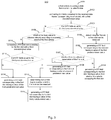
- the present disclosure provides a method S10 for determining whether a slot is free in an Ad-Hoc network using a MS-ALOHA protocol.
- a first vehicle receiving a data frame which includes N slots.
- N is a positive integer greater than two. If a first vehicle needs to transmit, it receives a data frame, or sense a channel to determine whether there is a free slot can be reserved.
- Fig.4 illustrates a schematic data frame structure of RR-ALOHA protocol according to one embodiment of the present disclosure.
- the data frame structure in Fig.4 is similar to that in Fig. 1 other than the structure of a sub-frame information field.
- each sub-frame information field may include a "new STI" field, where a specific value in the "new STI" is reserved for indicating a corresponding slot is free. That is, the status of a slot being free or not and identity of a vehicle occupying the slot can be indicated using a same bit field with different values. Thus the BUSY bit can be omitted.
- a value of the STI may be predetermined for indication of a slot's free status.
- a STI field of a sub-frame information field not only can indicate which vehicle occupies a corresponding slot if the slot is occupied, but also can indicate the slot being Free using a predetermined value if the slot is not occupied.
- the first predetermined value represents the status of free.
- a STI field includes n bits, which results in 2 n , e.g., 256 different values.
- the first predetermined value may be any one of the 2 n different values, for indicating a corresponding slot is free.
- the first predetermined value may be set as, e.g., all-zero "00000000", while the other values of the STI field, like "00000001" to "11111111", may be used to indicate the identity of a vehicle occupying a slot.
- the first slot is determined to be free. Otherwise, the first slot is determined to be busy, where the value of the STI field may indicate identity of a vehicle occupying the first slot. In this way, vehicles in the network can know occupation state of a slot only according to a STI field.
- the first vehicle may forward the free status of the first slot on a slot reserved by the first vehicle.
- the first vehicle may generate a STI field corresponding to the first slot having a value which indicates identity of the first vehicle, and transmit on the first slot.
- the eight-bit STI field may not be enough.
- the STI field may be extended to nine or more bits.
- the control overhead remains the same as in eight-bit case of the conventional techniques. Therefore, the communication efficiency may be further improved without increasing bits of control overhead.
- the method goes to S106, determining whether the busy status is obtained directly according to a sensing result of the first vehicle. If yes, the method goes to S107.
- determining whether there is collision on reservation of the first slot For example, if the received STI fields corresponding to the first slot, have different values which indicate identities of different vehicles, respectively, it means there are different vehicles occupying the first slot. Thus a collision is detected.
- the method goes to S108, generating a STI field corresponding to the first slot having a value of a second predetermined value.
- the second predetermined value represents the status of collision.
- the second predetermined value may be used to indicate there is collision on reservation of a slot, which is different from the first predetermined value.
- the second predetermined value may be selected as, for example, "00000001".
- the method goes to S109, generating a STI field corresponding to the first slot, having a value of an identity of a vehicle occupying the first slot.
- the method S10 goes to S110, comparing a STI field corresponding to the first slot with a third predetermined value.
- the third predetermined value represents the status of hop limit reached.
- the third predetermined value may be used to indicate whether a hop limit for forwarding the frame information is reached, to assure that the frame information is not forwarded more than two-hop far from the transmitting vehicle.
- the first, second, and third predetermined values may be set different from each other.
- the third predetermined value may be selected as, for example, "00000010". For example, if all the STI fields corresponding to the first slot, equal to the third predetermined value, e.g., "00000010", it means a third hop is reached. Accordingly, the first vehicle may determine the first slot is free and can be reserved. It should be noted that the choices of the first, second and third predetermined values are presented for examples, which is not intended to limit the scope of the disclosure.
- the first vehicle may forward the free status of the first slot on a slot reserved by the first vehicle.
- the first vehicle may generate a STI field corresponding to the first slot having a value which indicates identity of the first vehicle, and transmit on the first slot.
- the first vehicle may generate a STI field corresponding to the first slot, equal to the third predetermined value, and forward this frame information.
- the Ad-Hoc network can accommodate larger payload or more vehicle nodes, thereby improving the communication efficiency.
- a system for determining whether a slot is free in an Ad-Hoc network using a RR-ALOHA based protocol is provided.
- a system for generating a source temporary identifier field in an Ad-Hoc network using a RR-ALOHA based protocol is provided. The systems can determine whether a slot is free only based on its received source temporary identifier fields.
- the systems described above may be mounted on a vehicle, which may include a communication device and a processing device.
- the communication device is adapted for receiving data frames, where a data frame includes N slots, where N is a positive integer greater than two, where a slot includes a payload and a frame information field, where a frame information field includes N sub-frame information fields which correspond to the N slots, respectively, where a sub-frame information field includes a source temporary identifier field for indicating which node occupies its corresponding slot.
- the processing device may be configured to perform S101 to S114 of the method S10.
- the processing device may be a CPU, a GPU, a DSP etc, or any combination thereof.
Landscapes
- Engineering & Computer Science (AREA)
- Computer Networks & Wireless Communication (AREA)
- Signal Processing (AREA)
- Mobile Radio Communication Systems (AREA)
Claims (15)
- Verfahren zum Bestimmen, ob ein Slot in einem Ad-Hoc-Netz, das ein auf RR-ALOHA basierendes Protokoll verwendet, frei ist, umfassend:Empfangen eines Datenrahmens, der N Slots umfasst, wobei N eine positive Ganzzahl größer als zwei ist (S101), wobei jeder Slot der N Slots eine Nutzlast und ein Rahmeninformationsfeld umfasst, wobei ein Rahmeninformationsfeld N Unterrahmeninformationsfelder umfasst, die jeweils den N Slots entsprechen, wobei ein Unterrahmeninformationsfeld ein temporäres Quellenkennungsfeld zum Angeben, welcher Knoten den Slot, der dem temporären Quellenkennungsfeld entspricht, belegt, umfasst; undgekennzeichnet durchBestimmen, dass ein erster Slot frei ist und reserviert werden kann, wenn alle temporären Quellenkennungsfelder, die dem ersten Slot entsprechen (S104), die in dem empfangenen Datenrahmen enthalten sind, gleich einem ersten vorbestimmten Wert, der den Status 'frei' darstellt (S103), sind.
- Verfahren nach Anspruch 1, ferner umfassend: Bestimmen, dass eine Kollision bei der Reservierung eines ersten Slots vorliegt (S107), wenn ein temporäres Quellenkennungsfeld, das dem ersten Slot entspricht, das in dem empfangenen Datenrahmen enthalten ist, gleich einem zweiten vorbestimmten Wert, der den Status 'Kollision' darstellt, ist.
- Verfahren nach Anspruch 1, ferner umfassend: Bestimmen, dass eine Etappengrenze erreicht ist und ein erster Slot reserviert werden kann (S112), wenn alle temporären Quellenkennungsfelder, die dem ersten Slot entsprechen, die in dem empfangenen Datenrahmen enthalten sind, gleich einem dritten vorbestimmten Wert, der den Status ,Etappengrenze erreicht' darstellt (S111), sind.
- Verfahren nach Anspruch 3, wobei die Etappengrenze eine dritte Etappe ist.
- Verfahren nach Anspruch 1, wobei das auf RR-ALOHA basierende Protokoll eines von einem RR-ALOHA-Protokoll, einem RR-ALOHA+-Protokoll und einem MS-ALOHA-Protokoll ist.
- Verfahren zum Erzeugen eines temporären Quellenkennungsfelds in einem Ad-Hoc-Netz, das ein auf RR-ALOHA basierendes Protokoll verwendet, umfassend:einen ersten Knoten, der eine Datenrahmen empfängt, der N Slots umfasst (S101), wobei N eine positive Ganzzahl größer als zwei ist, wobei jeder Slot der N Slots eine Nutzlast und ein Rahmeninformationsfeld umfasst, wobei ein Rahmeninformationsfeld N Unterrahmeninformationsfelder umfasst, die jeweils den N Slots entsprechen, wobei ein Unterrahmeninformationsfeld ein temporäres Quellenkennungsfeld zum Angeben, welcher Knoten den Slot, der dem temporären Quellenkennungsfeld entspricht, belegt, umfasst; undgekennzeichnet durchwenn alle temporären Quellenkennungsfelder, die einem ersten Slot entsprechen, die in dem empfangenen Datenrahmen enthalten sind, angeben, dass der erste Slot frei ist, Erzeugen eines temporären Quellenkennungsfelds, das dem ersten Slot entspricht, der einen Wert eines ersten vorbestimmten Werts aufweist, der den Status 'frei' darstellt (S105), wobei das erzeugte temporäre Quellenkennungsfeld auf einem zweiten Slot, der von dem ersten Knoten reserviert ist, zu übertragen ist.
- Verfahren nach Anspruch 6, ferner umfassend: wenn ein erstes temporäres Quellenkennungsfeld, das in dem empfangenen Datenrahmen enthalten ist, angibt, dass ein erster Slot von einem zweiten Knoten belegt ist und ein zweites temporäres Quellenkennungsfeld, das in dem empfangenen Datenrahmen enthalten ist, angibt, dass der erste Slot von einem dritten Knoten belegt ist, Erzeugen eines temporären Quellenkennungsfelds, das dem ersten Slot entspricht, der einen Wert eines zweiten vorbestimmten Werts aufweist, der den Status 'Kollision' darstellt (S108), wobei das erzeugte temporäre Quellenkennungsfeld auf einem zweiten Slot, der von dem ersten Knoten reserviert ist, zu übertragen ist.
- Verfahren nach Anspruch 6, wobei, wenn alle der temporären Quellenkennungsfelder, die dem ersten Slot entsprechen, gleich einem ersten vorbestimmten Wert sind, der den Status 'frei' darstellt, oder wenn alle der temporären Quellenkennungsfelder, die dem ersten Slot entsprechen, gleich einem dritten vorbestimmten Wert sind, der den Status 'Etappengrenze erreicht' darstellt, oder wenn einige der temporären Quellenkennungsfelder, die dem ersten Slot entsprechen, gleich dem ersten vorbestimmten Wert sind und die restlichen temporären Quellenkennungsfelder, die dem ersten Slot entsprechen, gleich dem dritten vorbestimmten Wert sind, dies angibt, dass der erste Slot frei ist.
- Verfahren nach Anspruch 8, wobei die Etappengrenze eine dritte Etappe ist.
- Verfahren nach Anspruch 6, wobei das auf RR-ALOHA basierende Protokoll eines von einem RR-ALOHA-Protokoll, einem RR-ALOHA+-Protokoll und einem MS-ALOHA-Protokoll umfasst.
- System zum Erzeugen eines temporären Quellenkennungsfelds in einem Ad-Hoc-Netz, das ein auf RR-ALOHA basierendes Protokoll verwendet, umfassend:eine Kommunikationsvorrichtung, konfiguriert zum Empfangen von Datenrahmen, wobei ein Datenrahmen N Slots umfasst, wobei N eine positive Ganzzahl größer als zwei ist, wobei jeder Slot der N Slots eine Nutzlast und ein Rahmeninformationsfeld umfasst, wobei ein Rahmeninformationsfeld N Unterrahmeninformationsfelder umfasst, die jeweils den N Slots entsprechen, wobei ein Unterrahmeninformationsfeld ein temporäres Quellenkennungsfeld zum Angeben, welcher Knoten den Slot, der dem temporären Quellenkennungsfeld entspricht, belegt, umfasst; undgekennzeichnet durcheine Verarbeitungsvorrichtung, konfiguriert zum Erzeugen eines temporären Quellenkennungsfelds, das einem ersten Slot entspricht, der einen Wert eines ersten vorbestimmten Werts aufweist, der den Status 'frei' darstellt, wobei das erzeugte temporäre Quellenkennungsfeld auf einem zweiten Slot, der von einem Knoten, an dem das System angebracht ist, reserviert ist, zu übertragen ist, wenn alle temporären Quellenkennungsfelder, die dem ersten Slot entsprechen, die in einem von der Kommunikationsvorrichtung empfangenen Datenrahmen enthalten sind, angeben, dass der erste Slot frei ist.
- System nach Anspruch 11, wobei die Verarbeitungseinheit ferner konfiguriert ist, um:wenn ein erstes temporäres Quellenkennungsfeld, das in dem empfangenen Datenrahmen enthalten ist, angibt, dass ein erster Slot von einem ersten Knoten belegt ist und ein zweites temporäres Quellenkennungsfeld, das in dem empfangenen Datenrahmen enthalten ist, angibt, dass der erste Slot von einem zweite Knoten belegt ist, ein temporäres Quellenkennungsfeld zu erzeugen, das dem ersten Slot entspricht, der einen Wert eines zweiten vorbestimmten Werts aufweist, der den Status 'Kollision' darstellt, wobei das erzeugte temporäre Quellenkennungsfeld auf einem zweiten Slot, der von dem Knoten reserviert ist, zu übertragen ist.
- System nach Anspruch 12, wobei, wenn alle der temporären Quellenkennungsfelder, die dem ersten Slot entsprechen, gleich einem ersten vorbestimmten Wert sind, der den Status 'frei' darstellt, oder wenn alle der temporären Quellenkennungsfelder, die dem ersten Slot entsprechen, gleich einem dritten vorbestimmten Wert sind, der den Status 'Etappengrenze erreicht' darstellt, oder wenn einige der temporären Quellenkennungsfelder, die dem ersten Slot entsprechen, gleich dem ersten vorbestimmten Wert sind und die restlichen temporären Quellenkennungsfelder, die dem ersten Slot entsprechen, gleich dem dritten vorbestimmten Wert sind, die Verarbeitungsvorrichtung ferner konfiguriert ist anzugeben, dass der erste Slot frei ist.
- System nach Anspruch 13, wobei die Etappengrenze eine dritte Etappe ist.
- System nach Anspruch 12, wobei das auf RR-ALOHA basierende Protokoll eines von einem RR-ALOHA-Protokoll, einem RR-ALOHA+-Protokoll und einem MS-ALOHA-Protokoll umfasst.
Applications Claiming Priority (1)
| Application Number | Priority Date | Filing Date | Title |
|---|---|---|---|
| PCT/CN2013/074711 WO2014172872A1 (en) | 2013-04-25 | 2013-04-25 | Communication method and system using rr-aloha based protocols |
Publications (3)
| Publication Number | Publication Date |
|---|---|
| EP2989846A1 EP2989846A1 (de) | 2016-03-02 |
| EP2989846A4 EP2989846A4 (de) | 2016-12-21 |
| EP2989846B1 true EP2989846B1 (de) | 2018-06-06 |
Family
ID=51791001
Family Applications (1)
| Application Number | Title | Priority Date | Filing Date |
|---|---|---|---|
| EP13882659.9A Active EP2989846B1 (de) | 2013-04-25 | 2013-04-25 | Kommunikationsverfahren und system mit auf rr-aloha basierenden protokollen |
Country Status (4)
| Country | Link |
|---|---|
| US (1) | US9820305B2 (de) |
| EP (1) | EP2989846B1 (de) |
| CN (1) | CN105075377B (de) |
| WO (1) | WO2014172872A1 (de) |
Families Citing this family (2)
| Publication number | Priority date | Publication date | Assignee | Title |
|---|---|---|---|---|
| CN106304389B (zh) * | 2015-05-25 | 2019-09-17 | 电信科学技术研究院 | 一种资源碰撞的指示方法及装置 |
| US11979804B2 (en) * | 2018-11-01 | 2024-05-07 | Kyocera Corporation | Reservation channel transmission forwarding in vehicle-to-vehicle communications |
Family Cites Families (5)
| Publication number | Priority date | Publication date | Assignee | Title |
|---|---|---|---|---|
| WO2007133264A2 (en) * | 2005-12-09 | 2007-11-22 | Automotive Communications Systems, Inc. | Integrated vehicular positioning and communications system |
| US20100226308A1 (en) * | 2006-08-15 | 2010-09-09 | Comhouse Wireless Lp | node- arbitrated media access control protocol for ad hoc broadcast networks carrying ephemeral information |
| IT1394944B1 (it) | 2009-05-29 | 2012-07-27 | Ist Superiore Mario Boella | Metodo di accesso ad un canale di comunicazione per reti di comunicazione |
| US8488545B2 (en) * | 2010-05-18 | 2013-07-16 | Telcodia Applied Research Center Taiwan Co. | Region-based clustering mechanism for channel access in vehicular Ad Hoc networks |
| CN102724764B (zh) | 2012-06-27 | 2014-11-19 | 电子科技大学 | 用于车载无线自组织网络的自适应mac协议 |
-
2013
- 2013-04-25 EP EP13882659.9A patent/EP2989846B1/de active Active
- 2013-04-25 CN CN201380073693.0A patent/CN105075377B/zh active Active
- 2013-04-25 WO PCT/CN2013/074711 patent/WO2014172872A1/en not_active Ceased
- 2013-04-25 US US14/773,719 patent/US9820305B2/en active Active
Non-Patent Citations (1)
| Title |
|---|
| None * |
Also Published As
| Publication number | Publication date |
|---|---|
| CN105075377B (zh) | 2019-05-14 |
| EP2989846A1 (de) | 2016-03-02 |
| WO2014172872A1 (en) | 2014-10-30 |
| EP2989846A4 (de) | 2016-12-21 |
| CN105075377A (zh) | 2015-11-18 |
| US9820305B2 (en) | 2017-11-14 |
| US20160037561A1 (en) | 2016-02-04 |
Similar Documents
| Publication | Publication Date | Title |
|---|---|---|
| US10136349B2 (en) | System and method for changing an identifier of a basic service set | |
| Luo et al. | Cooperative asynchronous multichannel MAC: Design, analysis, and implementation | |
| JP6158198B2 (ja) | 高速初期ネットワークリンクセットアップのためのシステムおよび方法 | |
| JP5136590B2 (ja) | 無線通信システム、無線通信装置、無線通信方法及びコンピュータプログラム | |
| ES2716014T3 (es) | Sistemas y procedimientos para una rápida configuración inicial de enlace de red | |
| JP6465112B2 (ja) | 情報処理装置、情報処理方法およびプログラム | |
| EP3063895B1 (de) | Verbessete, selektive subkanalübertragung | |
| KR101832043B1 (ko) | 장치-대-장치〔d2d〕 발견 | |
| US8437304B2 (en) | System and method for transmitting and receiving frequency resource information in a frequency overlay system | |
| KR20160048141A (ko) | 무선 네트워크 상에서 역방향 승인을 연장시키기 위한 방법들 및 장치 | |
| JP2014534741A (ja) | 高速初期ネットワークリンクセットアップのためのシステムおよび方法 | |
| JP2017529803A (ja) | ワイヤレスネットワークにおいてマルチユーザアップリンク媒体アクセス制御プロトコルをインプリメントするための方法および装置 | |
| JP2014534739A (ja) | 高速初期ネットワークリンクセットアップのためのシステムおよび方法 | |
| KR101413777B1 (ko) | 애드혹 네트워크의 시분할 다중접속 프레임 구조 및 이를 이용한 동적 시간 슬롯 할당 방법 | |
| JP2014533021A (ja) | 高速初期ネットワークリンクセットアップのためのシステムおよび方法 | |
| KR101250036B1 (ko) | 센서 네트워크의 저전력 시분할 접속 방식에서 신뢰성이 높은 통신 장치 및 방법 | |
| US10004105B2 (en) | Method for network self-healing in cluster-tree structured wireless communication networks | |
| KR20180027426A (ko) | 통신 장치 및 통신 방법 | |
| KR20130119485A (ko) | 무선 통신 네트워크들에서 개선된 토폴로지 맵핑을 위한 방법 | |
| US9468019B2 (en) | Method and apparatus for assigning slot | |
| US7548521B2 (en) | System for dynamically shifting beacons in distributed wireless network and method thereof | |
| EP2989846B1 (de) | Kommunikationsverfahren und system mit auf rr-aloha basierenden protokollen | |
| US9473989B2 (en) | Method and apparatus for assigning slot | |
| US20160014670A1 (en) | Method for generating network route using tv white space | |
| Wu et al. | A multichannel MAC protocol for IoT-enabled cognitive radio ad hoc networks |
Legal Events
| Date | Code | Title | Description |
|---|---|---|---|
| PUAI | Public reference made under article 153(3) epc to a published international application that has entered the european phase |
Free format text: ORIGINAL CODE: 0009012 |
|
| 17P | Request for examination filed |
Effective date: 20150827 |
|
| AK | Designated contracting states |
Kind code of ref document: A1 Designated state(s): AL AT BE BG CH CY CZ DE DK EE ES FI FR GB GR HR HU IE IS IT LI LT LU LV MC MK MT NL NO PL PT RO RS SE SI SK SM TR |
|
| AX | Request for extension of the european patent |
Extension state: BA ME |
|
| DAX | Request for extension of the european patent (deleted) | ||
| A4 | Supplementary search report drawn up and despatched |
Effective date: 20161123 |
|
| RIC1 | Information provided on ipc code assigned before grant |
Ipc: H04W 74/08 20090101AFI20161117BHEP |
|
| STAA | Information on the status of an ep patent application or granted ep patent |
Free format text: STATUS: EXAMINATION IS IN PROGRESS |
|
| 17Q | First examination report despatched |
Effective date: 20170705 |
|
| GRAP | Despatch of communication of intention to grant a patent |
Free format text: ORIGINAL CODE: EPIDOSNIGR1 |
|
| STAA | Information on the status of an ep patent application or granted ep patent |
Free format text: STATUS: GRANT OF PATENT IS INTENDED |
|
| RIC1 | Information provided on ipc code assigned before grant |
Ipc: H04W 74/08 20090101AFI20171130BHEP Ipc: H04W 84/18 20090101ALN20171130BHEP |
|
| RIC1 | Information provided on ipc code assigned before grant |
Ipc: H04W 84/18 20090101ALN20171204BHEP Ipc: H04W 74/08 20090101AFI20171204BHEP |
|
| INTG | Intention to grant announced |
Effective date: 20171222 |
|
| GRAS | Grant fee paid |
Free format text: ORIGINAL CODE: EPIDOSNIGR3 |
|
| GRAA | (expected) grant |
Free format text: ORIGINAL CODE: 0009210 |
|
| STAA | Information on the status of an ep patent application or granted ep patent |
Free format text: STATUS: THE PATENT HAS BEEN GRANTED |
|
| AK | Designated contracting states |
Kind code of ref document: B1 Designated state(s): AL AT BE BG CH CY CZ DE DK EE ES FI FR GB GR HR HU IE IS IT LI LT LU LV MC MK MT NL NO PL PT RO RS SE SI SK SM TR |
|
| REG | Reference to a national code |
Ref country code: GB Ref legal event code: FG4D |
|
| REG | Reference to a national code |
Ref country code: CH Ref legal event code: EP Ref country code: AT Ref legal event code: REF Ref document number: 1007427 Country of ref document: AT Kind code of ref document: T Effective date: 20180615 |
|
| REG | Reference to a national code |
Ref country code: IE Ref legal event code: FG4D |
|
| REG | Reference to a national code |
Ref country code: DE Ref legal event code: R096 Ref document number: 602013038723 Country of ref document: DE |
|
| REG | Reference to a national code |
Ref country code: NL Ref legal event code: MP Effective date: 20180606 |
|
| REG | Reference to a national code |
Ref country code: LT Ref legal event code: MG4D |
|
| PG25 | Lapsed in a contracting state [announced via postgrant information from national office to epo] |
Ref country code: BG Free format text: LAPSE BECAUSE OF FAILURE TO SUBMIT A TRANSLATION OF THE DESCRIPTION OR TO PAY THE FEE WITHIN THE PRESCRIBED TIME-LIMIT Effective date: 20180906 Ref country code: FI Free format text: LAPSE BECAUSE OF FAILURE TO SUBMIT A TRANSLATION OF THE DESCRIPTION OR TO PAY THE FEE WITHIN THE PRESCRIBED TIME-LIMIT Effective date: 20180606 Ref country code: SE Free format text: LAPSE BECAUSE OF FAILURE TO SUBMIT A TRANSLATION OF THE DESCRIPTION OR TO PAY THE FEE WITHIN THE PRESCRIBED TIME-LIMIT Effective date: 20180606 Ref country code: NO Free format text: LAPSE BECAUSE OF FAILURE TO SUBMIT A TRANSLATION OF THE DESCRIPTION OR TO PAY THE FEE WITHIN THE PRESCRIBED TIME-LIMIT Effective date: 20180906 Ref country code: ES Free format text: LAPSE BECAUSE OF FAILURE TO SUBMIT A TRANSLATION OF THE DESCRIPTION OR TO PAY THE FEE WITHIN THE PRESCRIBED TIME-LIMIT Effective date: 20180606 Ref country code: LT Free format text: LAPSE BECAUSE OF FAILURE TO SUBMIT A TRANSLATION OF THE DESCRIPTION OR TO PAY THE FEE WITHIN THE PRESCRIBED TIME-LIMIT Effective date: 20180606 Ref country code: CY Free format text: LAPSE BECAUSE OF FAILURE TO SUBMIT A TRANSLATION OF THE DESCRIPTION OR TO PAY THE FEE WITHIN THE PRESCRIBED TIME-LIMIT Effective date: 20180606 |
|
| PG25 | Lapsed in a contracting state [announced via postgrant information from national office to epo] |
Ref country code: RS Free format text: LAPSE BECAUSE OF FAILURE TO SUBMIT A TRANSLATION OF THE DESCRIPTION OR TO PAY THE FEE WITHIN THE PRESCRIBED TIME-LIMIT Effective date: 20180606 Ref country code: HR Free format text: LAPSE BECAUSE OF FAILURE TO SUBMIT A TRANSLATION OF THE DESCRIPTION OR TO PAY THE FEE WITHIN THE PRESCRIBED TIME-LIMIT Effective date: 20180606 Ref country code: GR Free format text: LAPSE BECAUSE OF FAILURE TO SUBMIT A TRANSLATION OF THE DESCRIPTION OR TO PAY THE FEE WITHIN THE PRESCRIBED TIME-LIMIT Effective date: 20180907 Ref country code: LV Free format text: LAPSE BECAUSE OF FAILURE TO SUBMIT A TRANSLATION OF THE DESCRIPTION OR TO PAY THE FEE WITHIN THE PRESCRIBED TIME-LIMIT Effective date: 20180606 |
|
| REG | Reference to a national code |
Ref country code: AT Ref legal event code: MK05 Ref document number: 1007427 Country of ref document: AT Kind code of ref document: T Effective date: 20180606 |
|
| PG25 | Lapsed in a contracting state [announced via postgrant information from national office to epo] |
Ref country code: NL Free format text: LAPSE BECAUSE OF FAILURE TO SUBMIT A TRANSLATION OF THE DESCRIPTION OR TO PAY THE FEE WITHIN THE PRESCRIBED TIME-LIMIT Effective date: 20180606 |
|
| PG25 | Lapsed in a contracting state [announced via postgrant information from national office to epo] |
Ref country code: PL Free format text: LAPSE BECAUSE OF FAILURE TO SUBMIT A TRANSLATION OF THE DESCRIPTION OR TO PAY THE FEE WITHIN THE PRESCRIBED TIME-LIMIT Effective date: 20180606 Ref country code: EE Free format text: LAPSE BECAUSE OF FAILURE TO SUBMIT A TRANSLATION OF THE DESCRIPTION OR TO PAY THE FEE WITHIN THE PRESCRIBED TIME-LIMIT Effective date: 20180606 Ref country code: AT Free format text: LAPSE BECAUSE OF FAILURE TO SUBMIT A TRANSLATION OF THE DESCRIPTION OR TO PAY THE FEE WITHIN THE PRESCRIBED TIME-LIMIT Effective date: 20180606 Ref country code: IS Free format text: LAPSE BECAUSE OF FAILURE TO SUBMIT A TRANSLATION OF THE DESCRIPTION OR TO PAY THE FEE WITHIN THE PRESCRIBED TIME-LIMIT Effective date: 20181006 Ref country code: CZ Free format text: LAPSE BECAUSE OF FAILURE TO SUBMIT A TRANSLATION OF THE DESCRIPTION OR TO PAY THE FEE WITHIN THE PRESCRIBED TIME-LIMIT Effective date: 20180606 Ref country code: RO Free format text: LAPSE BECAUSE OF FAILURE TO SUBMIT A TRANSLATION OF THE DESCRIPTION OR TO PAY THE FEE WITHIN THE PRESCRIBED TIME-LIMIT Effective date: 20180606 Ref country code: SK Free format text: LAPSE BECAUSE OF FAILURE TO SUBMIT A TRANSLATION OF THE DESCRIPTION OR TO PAY THE FEE WITHIN THE PRESCRIBED TIME-LIMIT Effective date: 20180606 |
|
| PG25 | Lapsed in a contracting state [announced via postgrant information from national office to epo] |
Ref country code: SM Free format text: LAPSE BECAUSE OF FAILURE TO SUBMIT A TRANSLATION OF THE DESCRIPTION OR TO PAY THE FEE WITHIN THE PRESCRIBED TIME-LIMIT Effective date: 20180606 Ref country code: IT Free format text: LAPSE BECAUSE OF FAILURE TO SUBMIT A TRANSLATION OF THE DESCRIPTION OR TO PAY THE FEE WITHIN THE PRESCRIBED TIME-LIMIT Effective date: 20180606 |
|
| REG | Reference to a national code |
Ref country code: DE Ref legal event code: R097 Ref document number: 602013038723 Country of ref document: DE |
|
| PLBE | No opposition filed within time limit |
Free format text: ORIGINAL CODE: 0009261 |
|
| STAA | Information on the status of an ep patent application or granted ep patent |
Free format text: STATUS: NO OPPOSITION FILED WITHIN TIME LIMIT |
|
| 26N | No opposition filed |
Effective date: 20190307 |
|
| PG25 | Lapsed in a contracting state [announced via postgrant information from national office to epo] |
Ref country code: SI Free format text: LAPSE BECAUSE OF FAILURE TO SUBMIT A TRANSLATION OF THE DESCRIPTION OR TO PAY THE FEE WITHIN THE PRESCRIBED TIME-LIMIT Effective date: 20180606 Ref country code: DK Free format text: LAPSE BECAUSE OF FAILURE TO SUBMIT A TRANSLATION OF THE DESCRIPTION OR TO PAY THE FEE WITHIN THE PRESCRIBED TIME-LIMIT Effective date: 20180606 |
|
| PG25 | Lapsed in a contracting state [announced via postgrant information from national office to epo] |
Ref country code: AL Free format text: LAPSE BECAUSE OF FAILURE TO SUBMIT A TRANSLATION OF THE DESCRIPTION OR TO PAY THE FEE WITHIN THE PRESCRIBED TIME-LIMIT Effective date: 20180606 |
|
| REG | Reference to a national code |
Ref country code: CH Ref legal event code: PL |
|
| REG | Reference to a national code |
Ref country code: BE Ref legal event code: MM Effective date: 20190430 |
|
| PG25 | Lapsed in a contracting state [announced via postgrant information from national office to epo] |
Ref country code: LU Free format text: LAPSE BECAUSE OF NON-PAYMENT OF DUE FEES Effective date: 20190425 Ref country code: MC Free format text: LAPSE BECAUSE OF FAILURE TO SUBMIT A TRANSLATION OF THE DESCRIPTION OR TO PAY THE FEE WITHIN THE PRESCRIBED TIME-LIMIT Effective date: 20180606 |
|
| PG25 | Lapsed in a contracting state [announced via postgrant information from national office to epo] |
Ref country code: CH Free format text: LAPSE BECAUSE OF NON-PAYMENT OF DUE FEES Effective date: 20190430 Ref country code: LI Free format text: LAPSE BECAUSE OF NON-PAYMENT OF DUE FEES Effective date: 20190430 |
|
| PG25 | Lapsed in a contracting state [announced via postgrant information from national office to epo] |
Ref country code: BE Free format text: LAPSE BECAUSE OF NON-PAYMENT OF DUE FEES Effective date: 20190430 |
|
| PG25 | Lapsed in a contracting state [announced via postgrant information from national office to epo] |
Ref country code: TR Free format text: LAPSE BECAUSE OF FAILURE TO SUBMIT A TRANSLATION OF THE DESCRIPTION OR TO PAY THE FEE WITHIN THE PRESCRIBED TIME-LIMIT Effective date: 20180606 |
|
| PG25 | Lapsed in a contracting state [announced via postgrant information from national office to epo] |
Ref country code: IE Free format text: LAPSE BECAUSE OF NON-PAYMENT OF DUE FEES Effective date: 20190425 |
|
| PG25 | Lapsed in a contracting state [announced via postgrant information from national office to epo] |
Ref country code: PT Free format text: LAPSE BECAUSE OF FAILURE TO SUBMIT A TRANSLATION OF THE DESCRIPTION OR TO PAY THE FEE WITHIN THE PRESCRIBED TIME-LIMIT Effective date: 20181008 |
|
| PG25 | Lapsed in a contracting state [announced via postgrant information from national office to epo] |
Ref country code: HU Free format text: LAPSE BECAUSE OF FAILURE TO SUBMIT A TRANSLATION OF THE DESCRIPTION OR TO PAY THE FEE WITHIN THE PRESCRIBED TIME-LIMIT; INVALID AB INITIO Effective date: 20130425 Ref country code: MT Free format text: LAPSE BECAUSE OF FAILURE TO SUBMIT A TRANSLATION OF THE DESCRIPTION OR TO PAY THE FEE WITHIN THE PRESCRIBED TIME-LIMIT Effective date: 20180606 |
|
| PGFP | Annual fee paid to national office [announced via postgrant information from national office to epo] |
Ref country code: FR Payment date: 20220323 Year of fee payment: 10 |
|
| PG25 | Lapsed in a contracting state [announced via postgrant information from national office to epo] |
Ref country code: MK Free format text: LAPSE BECAUSE OF FAILURE TO SUBMIT A TRANSLATION OF THE DESCRIPTION OR TO PAY THE FEE WITHIN THE PRESCRIBED TIME-LIMIT Effective date: 20180606 |
|
| P01 | Opt-out of the competence of the unified patent court (upc) registered |
Effective date: 20230527 |
|
| PG25 | Lapsed in a contracting state [announced via postgrant information from national office to epo] |
Ref country code: FR Free format text: LAPSE BECAUSE OF NON-PAYMENT OF DUE FEES Effective date: 20230430 |
|
| PGFP | Annual fee paid to national office [announced via postgrant information from national office to epo] |
Ref country code: GB Payment date: 20250319 Year of fee payment: 13 |
|
| PGFP | Annual fee paid to national office [announced via postgrant information from national office to epo] |
Ref country code: DE Payment date: 20250319 Year of fee payment: 13 |