EP2989138B1 - Urethane acrylates based on 2,4,8,10-tetraoxospiro[5.5]undecane-3,9-dialkanols - Google Patents
Urethane acrylates based on 2,4,8,10-tetraoxospiro[5.5]undecane-3,9-dialkanols Download PDFInfo
- Publication number
- EP2989138B1 EP2989138B1 EP14788269.0A EP14788269A EP2989138B1 EP 2989138 B1 EP2989138 B1 EP 2989138B1 EP 14788269 A EP14788269 A EP 14788269A EP 2989138 B1 EP2989138 B1 EP 2989138B1
- Authority
- EP
- European Patent Office
- Prior art keywords
- urethane acrylate
- component
- diisocyanate
- acrylate according
- undecane
- Prior art date
- Legal status (The legal status is an assumption and is not a legal conclusion. Google has not performed a legal analysis and makes no representation as to the accuracy of the status listed.)
- Revoked
Links
- UHESRSKEBRADOO-UHFFFAOYSA-N ethyl carbamate;prop-2-enoic acid Chemical class OC(=O)C=C.CCOC(N)=O UHESRSKEBRADOO-UHFFFAOYSA-N 0.000 title claims description 35
- -1 hydroxyalkyl acrylate Chemical compound 0.000 claims description 16
- NIXOWILDQLNWCW-UHFFFAOYSA-N acrylic acid group Chemical group C(C=C)(=O)O NIXOWILDQLNWCW-UHFFFAOYSA-N 0.000 claims description 11
- VKQPHJLIVKHAQA-UHFFFAOYSA-N 2-[3-(2-hydroxyethyl)-2,4,8,10-tetraoxaspiro[5.5]undecan-9-yl]ethanol Chemical compound C1OC(CCO)OCC21COC(CCO)OC2 VKQPHJLIVKHAQA-UHFFFAOYSA-N 0.000 claims description 10
- NIXOWILDQLNWCW-UHFFFAOYSA-M Acrylate Chemical compound [O-]C(=O)C=C NIXOWILDQLNWCW-UHFFFAOYSA-M 0.000 claims description 9
- CERQOIWHTDAKMF-UHFFFAOYSA-N Methacrylic acid Chemical compound CC(=C)C(O)=O CERQOIWHTDAKMF-UHFFFAOYSA-N 0.000 claims description 8
- 150000002009 diols Chemical class 0.000 claims description 7
- SMZOUWXMTYCWNB-UHFFFAOYSA-N 2-(2-methoxy-5-methylphenyl)ethanamine Chemical compound COC1=CC=C(C)C=C1CCN SMZOUWXMTYCWNB-UHFFFAOYSA-N 0.000 claims description 6
- 239000007795 chemical reaction product Substances 0.000 claims description 6
- 239000005058 Isophorone diisocyanate Substances 0.000 claims description 5
- 125000002887 hydroxy group Chemical group [H]O* 0.000 claims description 5
- NIMLQBUJDJZYEJ-UHFFFAOYSA-N isophorone diisocyanate Chemical compound CC1(C)CC(N=C=O)CC(C)(CN=C=O)C1 NIMLQBUJDJZYEJ-UHFFFAOYSA-N 0.000 claims description 5
- 239000000203 mixture Substances 0.000 claims description 5
- BAPJBEWLBFYGME-UHFFFAOYSA-N acrylic acid methyl ester Natural products COC(=O)C=C BAPJBEWLBFYGME-UHFFFAOYSA-N 0.000 claims description 4
- 125000005907 alkyl ester group Chemical group 0.000 claims description 4
- OBETXYAYXDNJHR-UHFFFAOYSA-N alpha-ethylcaproic acid Natural products CCCCC(CC)C(O)=O OBETXYAYXDNJHR-UHFFFAOYSA-N 0.000 claims description 4
- WWZKQHOCKIZLMA-UHFFFAOYSA-N octanoic acid Chemical compound CCCCCCCC(O)=O WWZKQHOCKIZLMA-UHFFFAOYSA-N 0.000 claims description 4
- WXZMFSXDPGVJKK-UHFFFAOYSA-N pentaerythritol Chemical compound OCC(CO)(CO)CO WXZMFSXDPGVJKK-UHFFFAOYSA-N 0.000 claims description 4
- 239000005056 polyisocyanate Substances 0.000 claims description 4
- 229920001228 polyisocyanate Polymers 0.000 claims description 4
- 239000002994 raw material Substances 0.000 claims description 4
- 125000001424 substituent group Chemical group 0.000 claims description 4
- OMIGHNLMNHATMP-UHFFFAOYSA-N 2-hydroxyethyl prop-2-enoate Chemical compound OCCOC(=O)C=C OMIGHNLMNHATMP-UHFFFAOYSA-N 0.000 claims description 3
- 239000002253 acid Substances 0.000 claims description 3
- 239000012948 isocyanate Substances 0.000 claims description 3
- 150000002513 isocyanates Chemical class 0.000 claims description 3
- OBETXYAYXDNJHR-SSDOTTSWSA-M (2r)-2-ethylhexanoate Chemical compound CCCC[C@@H](CC)C([O-])=O OBETXYAYXDNJHR-SSDOTTSWSA-M 0.000 claims description 2
- MTZUIIAIAKMWLI-UHFFFAOYSA-N 1,2-diisocyanatobenzene Chemical compound O=C=NC1=CC=CC=C1N=C=O MTZUIIAIAKMWLI-UHFFFAOYSA-N 0.000 claims description 2
- ZXHZWRZAWJVPIC-UHFFFAOYSA-N 1,2-diisocyanatonaphthalene Chemical compound C1=CC=CC2=C(N=C=O)C(N=C=O)=CC=C21 ZXHZWRZAWJVPIC-UHFFFAOYSA-N 0.000 claims description 2
- OJEWIWBDGBRNFP-UHFFFAOYSA-N 2,2,3-trimethylhexanoic acid Chemical compound CCCC(C)C(C)(C)C(O)=O OJEWIWBDGBRNFP-UHFFFAOYSA-N 0.000 claims description 2
- RXGPYPPCEXISOV-UHFFFAOYSA-N 2-propylheptanoic acid Chemical compound CCCCCC(C(O)=O)CCC RXGPYPPCEXISOV-UHFFFAOYSA-N 0.000 claims description 2
- UPMLOUAZCHDJJD-UHFFFAOYSA-N 4,4'-Diphenylmethane Diisocyanate Chemical compound C1=CC(N=C=O)=CC=C1CC1=CC=C(N=C=O)C=C1 UPMLOUAZCHDJJD-UHFFFAOYSA-N 0.000 claims description 2
- ZHESOIPTRUDICE-UHFFFAOYSA-N CCCCCCCCC.N=C=O.N=C=O.N=C=O Chemical compound CCCCCCCCC.N=C=O.N=C=O.N=C=O ZHESOIPTRUDICE-UHFFFAOYSA-N 0.000 claims description 2
- GAWIXWVDTYZWAW-UHFFFAOYSA-N C[CH]O Chemical group C[CH]O GAWIXWVDTYZWAW-UHFFFAOYSA-N 0.000 claims description 2
- 239000005057 Hexamethylene diisocyanate Substances 0.000 claims description 2
- RAXUBWMOZZQOEQ-UHFFFAOYSA-N N=C=O.N=C=O.C1CCOC1 Chemical compound N=C=O.N=C=O.C1CCOC1 RAXUBWMOZZQOEQ-UHFFFAOYSA-N 0.000 claims description 2
- QNBZOZUXXFSIAJ-UHFFFAOYSA-N N=C=O.N=C=O.C=1C=COC=1 Chemical compound N=C=O.N=C=O.C=1C=COC=1 QNBZOZUXXFSIAJ-UHFFFAOYSA-N 0.000 claims description 2
- IIGAAOXXRKTFAM-UHFFFAOYSA-N N=C=O.N=C=O.CC1=C(C)C(C)=C(C)C(C)=C1C Chemical compound N=C=O.N=C=O.CC1=C(C)C(C)=C(C)C(C)=C1C IIGAAOXXRKTFAM-UHFFFAOYSA-N 0.000 claims description 2
- QORUGOXNWQUALA-UHFFFAOYSA-N N=C=O.N=C=O.N=C=O.C1=CC=C(C(C2=CC=CC=C2)C2=CC=CC=C2)C=C1 Chemical compound N=C=O.N=C=O.N=C=O.C1=CC=C(C(C2=CC=CC=C2)C2=CC=CC=C2)C=C1 QORUGOXNWQUALA-UHFFFAOYSA-N 0.000 claims description 2
- ZJCCRDAZUWHFQH-UHFFFAOYSA-N Trimethylolpropane Chemical compound CCC(CO)(CO)CO ZJCCRDAZUWHFQH-UHFFFAOYSA-N 0.000 claims description 2
- KXBFLNPZHXDQLV-UHFFFAOYSA-N [cyclohexyl(diisocyanato)methyl]cyclohexane Chemical compound C1CCCCC1C(N=C=O)(N=C=O)C1CCCCC1 KXBFLNPZHXDQLV-UHFFFAOYSA-N 0.000 claims description 2
- 125000000217 alkyl group Chemical group 0.000 claims description 2
- 125000002947 alkylene group Chemical group 0.000 claims description 2
- 125000001301 ethoxy group Chemical group [H]C([H])([H])C([H])([H])O* 0.000 claims description 2
- RRAMGCGOFNQTLD-UHFFFAOYSA-N hexamethylene diisocyanate Chemical compound O=C=NCCCCCCN=C=O RRAMGCGOFNQTLD-UHFFFAOYSA-N 0.000 claims description 2
- 125000002768 hydroxyalkyl group Chemical group 0.000 claims description 2
- DVKJHBMWWAPEIU-UHFFFAOYSA-N toluene 2,4-diisocyanate Chemical group CC1=CC=C(N=C=O)C=C1N=C=O DVKJHBMWWAPEIU-UHFFFAOYSA-N 0.000 claims description 2
- 239000008096 xylene Substances 0.000 claims description 2
- 150000001732 carboxylic acid derivatives Chemical class 0.000 claims 2
- 241000736839 Chara Species 0.000 claims 1
- 229930185605 Bisphenol Natural products 0.000 description 13
- VPWNQTHUCYMVMZ-UHFFFAOYSA-N 4,4'-sulfonyldiphenol Chemical class C1=CC(O)=CC=C1S(=O)(=O)C1=CC=C(O)C=C1 VPWNQTHUCYMVMZ-UHFFFAOYSA-N 0.000 description 12
- IISBACLAFKSPIT-UHFFFAOYSA-N bisphenol A Chemical compound C=1C=C(O)C=CC=1C(C)(C)C1=CC=C(O)C=C1 IISBACLAFKSPIT-UHFFFAOYSA-N 0.000 description 8
- 238000000576 coating method Methods 0.000 description 8
- 239000000047 product Substances 0.000 description 8
- YXFVVABEGXRONW-UHFFFAOYSA-N Toluene Chemical compound CC1=CC=CC=C1 YXFVVABEGXRONW-UHFFFAOYSA-N 0.000 description 6
- 238000006243 chemical reaction Methods 0.000 description 4
- 230000000052 comparative effect Effects 0.000 description 4
- 150000001875 compounds Chemical class 0.000 description 4
- 239000000126 substance Substances 0.000 description 4
- 231100001261 hazardous Toxicity 0.000 description 3
- 230000008018 melting Effects 0.000 description 3
- 238000002844 melting Methods 0.000 description 3
- 230000005855 radiation Effects 0.000 description 3
- JOYRKODLDBILNP-UHFFFAOYSA-N Ethyl urethane Chemical compound CCOC(N)=O JOYRKODLDBILNP-UHFFFAOYSA-N 0.000 description 2
- LYCAIKOWRPUZTN-UHFFFAOYSA-N Ethylene glycol Chemical compound OCCO LYCAIKOWRPUZTN-UHFFFAOYSA-N 0.000 description 2
- 238000003848 UV Light-Curing Methods 0.000 description 2
- UKLDJPRMSDWDSL-UHFFFAOYSA-L [dibutyl(dodecanoyloxy)stannyl] dodecanoate Chemical compound CCCCCCCCCCCC(=O)O[Sn](CCCC)(CCCC)OC(=O)CCCCCCCCCCC UKLDJPRMSDWDSL-UHFFFAOYSA-L 0.000 description 2
- 239000000853 adhesive Substances 0.000 description 2
- 230000001070 adhesive effect Effects 0.000 description 2
- 239000003054 catalyst Substances 0.000 description 2
- 238000001723 curing Methods 0.000 description 2
- LHGVFZTZFXWLCP-UHFFFAOYSA-N guaiacol Chemical compound COC1=CC=CC=C1O LHGVFZTZFXWLCP-UHFFFAOYSA-N 0.000 description 2
- 238000010438 heat treatment Methods 0.000 description 2
- 239000003112 inhibitor Substances 0.000 description 2
- 239000007788 liquid Substances 0.000 description 2
- 238000004519 manufacturing process Methods 0.000 description 2
- 239000004814 polyurethane Substances 0.000 description 2
- 229920002635 polyurethane Polymers 0.000 description 2
- 238000003847 radiation curing Methods 0.000 description 2
- 239000011541 reaction mixture Substances 0.000 description 2
- 239000007787 solid Substances 0.000 description 2
- LDHQCZJRKDOVOX-UHFFFAOYSA-N trans-crotonic acid Natural products CC=CC(O)=O LDHQCZJRKDOVOX-UHFFFAOYSA-N 0.000 description 2
- YKYIFUROKBDHCY-ONEGZZNKSA-N (e)-4-ethoxy-1,1,1-trifluorobut-3-en-2-one Chemical group CCO\C=C\C(=O)C(F)(F)F YKYIFUROKBDHCY-ONEGZZNKSA-N 0.000 description 1
- IAYPIBMASNFSPL-UHFFFAOYSA-N Ethylene oxide Chemical group C1CO1 IAYPIBMASNFSPL-UHFFFAOYSA-N 0.000 description 1
- CERQOIWHTDAKMF-UHFFFAOYSA-M Methacrylate Chemical compound CC(=C)C([O-])=O CERQOIWHTDAKMF-UHFFFAOYSA-M 0.000 description 1
- 239000004721 Polyphenylene oxide Substances 0.000 description 1
- 229910000831 Steel Inorganic materials 0.000 description 1
- 150000001252 acrylic acid derivatives Chemical class 0.000 description 1
- 150000001735 carboxylic acids Chemical class 0.000 description 1
- 230000001143 conditioned effect Effects 0.000 description 1
- LDHQCZJRKDOVOX-NSCUHMNNSA-N crotonic acid Chemical compound C\C=C\C(O)=O LDHQCZJRKDOVOX-NSCUHMNNSA-N 0.000 description 1
- 125000005442 diisocyanate group Chemical group 0.000 description 1
- 230000000694 effects Effects 0.000 description 1
- 229920001971 elastomer Polymers 0.000 description 1
- 239000000806 elastomer Substances 0.000 description 1
- 239000000598 endocrine disruptor Substances 0.000 description 1
- 230000007613 environmental effect Effects 0.000 description 1
- 239000000262 estrogen Substances 0.000 description 1
- 231100000502 fertility decrease Toxicity 0.000 description 1
- 239000011521 glass Substances 0.000 description 1
- 238000013007 heat curing Methods 0.000 description 1
- WGCNASOHLSPBMP-UHFFFAOYSA-N hydroxyacetaldehyde Natural products OCC=O WGCNASOHLSPBMP-UHFFFAOYSA-N 0.000 description 1
- 239000000976 ink Substances 0.000 description 1
- 230000007794 irritation Effects 0.000 description 1
- LDHQCZJRKDOVOX-IHWYPQMZSA-N isocrotonic acid Chemical compound C\C=C/C(O)=O LDHQCZJRKDOVOX-IHWYPQMZSA-N 0.000 description 1
- 239000004922 lacquer Substances 0.000 description 1
- 125000005395 methacrylic acid group Chemical group 0.000 description 1
- 230000003278 mimic effect Effects 0.000 description 1
- 239000000178 monomer Substances 0.000 description 1
- 230000001537 neural effect Effects 0.000 description 1
- ISWSIDIOOBJBQZ-UHFFFAOYSA-N phenol group Chemical group C1(=CC=CC=C1)O ISWSIDIOOBJBQZ-UHFFFAOYSA-N 0.000 description 1
- 229920000570 polyether Polymers 0.000 description 1
- 125000002572 propoxy group Chemical group [*]OC([H])([H])C(C([H])([H])[H])([H])[H] 0.000 description 1
- 238000010992 reflux Methods 0.000 description 1
- 210000002345 respiratory system Anatomy 0.000 description 1
- 230000000630 rising effect Effects 0.000 description 1
- 231100000370 skin sensitisation Toxicity 0.000 description 1
- 239000002904 solvent Substances 0.000 description 1
- 125000003003 spiro group Chemical group 0.000 description 1
- 239000010959 steel Substances 0.000 description 1
Classifications
-
- C—CHEMISTRY; METALLURGY
- C08—ORGANIC MACROMOLECULAR COMPOUNDS; THEIR PREPARATION OR CHEMICAL WORKING-UP; COMPOSITIONS BASED THEREON
- C08G—MACROMOLECULAR COMPOUNDS OBTAINED OTHERWISE THAN BY REACTIONS ONLY INVOLVING UNSATURATED CARBON-TO-CARBON BONDS
- C08G18/00—Polymeric products of isocyanates or isothiocyanates
- C08G18/06—Polymeric products of isocyanates or isothiocyanates with compounds having active hydrogen
- C08G18/28—Polymeric products of isocyanates or isothiocyanates with compounds having active hydrogen characterised by the compounds used containing active hydrogen
- C08G18/30—Low-molecular-weight compounds
- C08G18/32—Polyhydroxy compounds; Polyamines; Hydroxyamines
- C08G18/3203—Polyhydroxy compounds
- C08G18/3218—Polyhydroxy compounds containing cyclic groups having at least one oxygen atom in the ring
-
- C—CHEMISTRY; METALLURGY
- C07—ORGANIC CHEMISTRY
- C07D—HETEROCYCLIC COMPOUNDS
- C07D493/00—Heterocyclic compounds containing oxygen atoms as the only ring hetero atoms in the condensed system
- C07D493/02—Heterocyclic compounds containing oxygen atoms as the only ring hetero atoms in the condensed system in which the condensed system contains two hetero rings
- C07D493/10—Spiro-condensed systems
-
- C—CHEMISTRY; METALLURGY
- C08—ORGANIC MACROMOLECULAR COMPOUNDS; THEIR PREPARATION OR CHEMICAL WORKING-UP; COMPOSITIONS BASED THEREON
- C08G—MACROMOLECULAR COMPOUNDS OBTAINED OTHERWISE THAN BY REACTIONS ONLY INVOLVING UNSATURATED CARBON-TO-CARBON BONDS
- C08G18/00—Polymeric products of isocyanates or isothiocyanates
- C08G18/06—Polymeric products of isocyanates or isothiocyanates with compounds having active hydrogen
- C08G18/28—Polymeric products of isocyanates or isothiocyanates with compounds having active hydrogen characterised by the compounds used containing active hydrogen
- C08G18/67—Unsaturated compounds having active hydrogen
- C08G18/671—Unsaturated compounds having only one group containing active hydrogen
- C08G18/672—Esters of acrylic or alkyl acrylic acid having only one group containing active hydrogen
-
- C—CHEMISTRY; METALLURGY
- C08—ORGANIC MACROMOLECULAR COMPOUNDS; THEIR PREPARATION OR CHEMICAL WORKING-UP; COMPOSITIONS BASED THEREON
- C08G—MACROMOLECULAR COMPOUNDS OBTAINED OTHERWISE THAN BY REACTIONS ONLY INVOLVING UNSATURATED CARBON-TO-CARBON BONDS
- C08G18/00—Polymeric products of isocyanates or isothiocyanates
- C08G18/06—Polymeric products of isocyanates or isothiocyanates with compounds having active hydrogen
- C08G18/70—Polymeric products of isocyanates or isothiocyanates with compounds having active hydrogen characterised by the isocyanates or isothiocyanates used
- C08G18/72—Polyisocyanates or polyisothiocyanates
- C08G18/74—Polyisocyanates or polyisothiocyanates cyclic
- C08G18/75—Polyisocyanates or polyisothiocyanates cyclic cycloaliphatic
- C08G18/751—Polyisocyanates or polyisothiocyanates cyclic cycloaliphatic containing only one cycloaliphatic ring
- C08G18/752—Polyisocyanates or polyisothiocyanates cyclic cycloaliphatic containing only one cycloaliphatic ring containing at least one isocyanate or isothiocyanate group linked to the cycloaliphatic ring by means of an aliphatic group
- C08G18/753—Polyisocyanates or polyisothiocyanates cyclic cycloaliphatic containing only one cycloaliphatic ring containing at least one isocyanate or isothiocyanate group linked to the cycloaliphatic ring by means of an aliphatic group containing one isocyanate or isothiocyanate group linked to the cycloaliphatic ring by means of an aliphatic group having a primary carbon atom next to the isocyanate or isothiocyanate group
- C08G18/755—Polyisocyanates or polyisothiocyanates cyclic cycloaliphatic containing only one cycloaliphatic ring containing at least one isocyanate or isothiocyanate group linked to the cycloaliphatic ring by means of an aliphatic group containing one isocyanate or isothiocyanate group linked to the cycloaliphatic ring by means of an aliphatic group having a primary carbon atom next to the isocyanate or isothiocyanate group and at least one isocyanate or isothiocyanate group linked to a secondary carbon atom of the cycloaliphatic ring, e.g. isophorone diisocyanate
-
- C—CHEMISTRY; METALLURGY
- C08—ORGANIC MACROMOLECULAR COMPOUNDS; THEIR PREPARATION OR CHEMICAL WORKING-UP; COMPOSITIONS BASED THEREON
- C08G—MACROMOLECULAR COMPOUNDS OBTAINED OTHERWISE THAN BY REACTIONS ONLY INVOLVING UNSATURATED CARBON-TO-CARBON BONDS
- C08G18/00—Polymeric products of isocyanates or isothiocyanates
- C08G18/06—Polymeric products of isocyanates or isothiocyanates with compounds having active hydrogen
- C08G18/70—Polymeric products of isocyanates or isothiocyanates with compounds having active hydrogen characterised by the isocyanates or isothiocyanates used
- C08G18/81—Unsaturated isocyanates or isothiocyanates
- C08G18/8108—Unsaturated isocyanates or isothiocyanates having only one isocyanate or isothiocyanate group
- C08G18/8116—Unsaturated isocyanates or isothiocyanates having only one isocyanate or isothiocyanate group esters of acrylic or alkylacrylic acid having only one isocyanate or isothiocyanate group
-
- C—CHEMISTRY; METALLURGY
- C09—DYES; PAINTS; POLISHES; NATURAL RESINS; ADHESIVES; COMPOSITIONS NOT OTHERWISE PROVIDED FOR; APPLICATIONS OF MATERIALS NOT OTHERWISE PROVIDED FOR
- C09D—COATING COMPOSITIONS, e.g. PAINTS, VARNISHES OR LACQUERS; FILLING PASTES; CHEMICAL PAINT OR INK REMOVERS; INKS; CORRECTING FLUIDS; WOODSTAINS; PASTES OR SOLIDS FOR COLOURING OR PRINTING; USE OF MATERIALS THEREFOR
- C09D175/00—Coating compositions based on polyureas or polyurethanes; Coating compositions based on derivatives of such polymers
- C09D175/04—Polyurethanes
- C09D175/14—Polyurethanes having carbon-to-carbon unsaturated bonds
- C09D175/16—Polyurethanes having carbon-to-carbon unsaturated bonds having terminal carbon-to-carbon unsaturated bonds
Definitions
- the present invention refers to a novel urethane acrylate being a reaction product of at least a diol component, a component having acrylic unsaturation and an isocyanate component, wherein said diol component comprises at least one alkoxylated 2,4,8,10-tetraoxaspiro[5.5]-undecane-3,9-dialkanol.
- Radiation such as UV-curing coatings for industrial applications has been rising constantly for many years. Less productive and/or less environmentally friendly systems have gradually been replaced by radiation technology, and an ever increasing number of new applications is being found for radiation curing coatings. Radiation curable polyurethane acrylates have been well known for more than two decades. The most common are coatings based on urethane acrylate or methacrylate oligomers, which represent a major class of coatings widely used in industry.
- Such coatings are used for protection purposes as well as applications such as heat and/or radiation curing coatings, inks and adhesives. Cured coatings typically yield films with for instance a good combination of toughness and elasticity.
- the urethane acrylate is the main part of the composition, thus determining the properties of both the liquid and the cured product.
- US 4 587 352 A discloses a urethane (meth)acrylate compound which can be obtained by allowing (meth)acrylate to react with a reaction product of diisocyanate with spiro glycol.
- JP S57 102891 discloses a polyether diol in form of an alkoxylated spiroglycol for making polyurethanes, which can be used in elastomers, adhesives and coatings, and for making photosetting monomers.
- Hydrogenated bisphenols have been suggested as replacement for corresponding bisphenols.
- drawbacks include for instance the fact that hydrogenated bisphenol A is a high melting solid and thus difficult to handle in a plant environment and the fact that reactions between liquids and high melting solids are difficult to moderate. It would accordingly be desirable to have a diol which provide the property advantages of a high melting point diol with reduced processing problems.
- a further disadvantage is that production of hydrogenated bisphenols means handling of and contact with the hazardous bisphenols.
- An object of the present invention is to provide a novel urethane acrylate having at least one acrylic, methacrylic and/or methylacrylic double bond.
- a further object is to provide a suitable replacement for urethane acrylates involving handling of hazardous and/or restricted compounds such as bisphenols, bisphenol releasing substances and especially compounds derived from bisphenols, such as alkoxylated bisphenols.
- an alkoxylated 2,4,8,10-tetraoxaspiro[5.5]-undecane-3,9-dialkanol is a versatile compound in most applications involving urethane acylates.
- the novel urethane acrylate of the present invention can thus advantageously replace urethane acrylates based on alkoxylated bisphenols, as well as bisphenols, as a product being safer to handle, safer to produce and/or being environmentally friendlier.
- the novel urethane acrylate of the present invention is a reaction product of a raw material composition comprising at least (A) a diol component, (B) a component having acrylic unsaturation and (C) an isocyanate component.
- Said component (A) comprises at least one alkoxylated 2,4,8,10-tetraoxaspiro[5.5]undecane-3,9-dialkanol of formula wherein each substituent R individually is a linear or branched C 1 -C 8 alkylene group and m, n, p and q individually are integers each being at least 1,
- said component (B) comprises, in embodiments thereof, at least one hydroxyalkyl acrylate, hydroxyalkyl methacrylate and/or hydroxyalkyl methylacrylate, whereby hydroxyalkyl preferably is hydroxy-C 1 -C 12 -alkyl, which can be exemplified by hydroxyethyl (meth)acrylate, hydroxypropyl
- m and p in above formula, are independently integers each being between 1 and 6, such as between 1 and 4 and n and q are independently integers each being between 1 and 10, such as between 1 and 8, between 1 and 6 or between 1 and 4.
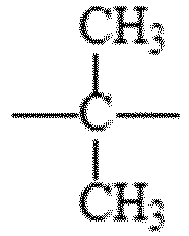
- Substituent R in above formula is in likewise preferred embodiments an alkyl group of formula
- alkoxylated 2,4,8,10-tetraoxaspiro[5.5]-undecane-3,9-dialkanol include alkoxylated, such as ethoxylated, propoxylated and/or butoxylated 2,4,8,10-tetraoxaspiro[5.5]undecane-3,9-diethanol.
- alkoxylated 2,4,8,10-tetraoxaspiro[5.5]-undecane-3,9-diethanol is an ethoxylated and/or propoxylated 2,4,8,10-tetraoxaspiro[5.5]undecane-3,9-diethanol having 1-10, such as 1-6, 1-5, 1-4, 1-3, 1-2 or most preferably 3-6 ethoxy and/or propoxy units / hydroxyl group.
- Said component (A) comprises, in preferred embodiments of the novel urethane acrylate according to the present invention, 50-100%, such as 70-100% or 80-100%, by weight of said alkoxylated 2,4,8,10-tetraoxaspiro[5.5]undecane-3,9-dialkanol, such as said ethoxylated, propoxylated and/or butoxylated 2,4,8,10-tetraoxaspiro[5.5]undecane-3,9-diethanol, optionally in combination with one or more other hydroxyfunctional compound(s) known in the art.
- said component (B) comprises 50-100% by weight of said at least one hydroxyalkyl acrylate, hydroxyalkyl methacrylate and/or hydroxyalkyl methylacrylate and/or 50-100% by weight of said acrylic acid, methacrylic acid and/or a methylacrylic acid and/or an alkyl ester thereof.
- Said di or polyisocyanate is preferably and advantageously selected from the group consisting of toluene diisocyanate, diphenyl methane diisocyanate, hexamethylene diisocyanate, isophorone diisocyanate, tetramethylxylene diisocyanate, dicyclohexyl methane diisocyanate, furan diisocyanate, tetrahydrofuran diisocyanate, cyclohexylene diisocyanate, xylene diisocyanate, naphthalene diisocyanate, phenylene diisocyanate, nonane triisocyanate and/or triphenyl methane triisocyanate.
- Said raw material composition may, in addition to said components (A), (B) and (C), comprise one or more carboxylic acids, such as octanoic acid, 2-ethylhexanoic acid, 2-propylheptanoic acid, cecanoic acid and/or trimethylhexanoic acid.
- carboxylic acids such as octanoic acid, 2-ethylhexanoic acid, 2-propylheptanoic acid, cecanoic acid and/or trimethylhexanoic acid.
- Example 1 100.0 parts by weight of the adduct yielded in Example 1 was now slowly charged to the reaction mixture followed by charging of 0.03 parts by weight of dibutyltinlaurate as catalyst. The temperature was rapidly raised to 65°C and maintained until the NCO value was close to 0. Toluene was now evaporated and remaining reaction product was cooled to room temperature. Properties measured on obtained product are given in Table 1.
- Example 2 was repeated with the difference that 52.4 parts by weight of a bisphenol A ethoxylate having an average of 4 ethoxy units / phenolic hydroxyl group (Sigma Aldrich Co) was charged instead of 54.5 parts by weight of the ethoxylated 2,4,8,10-tetraoxaspiro-[5.5]undecane-3,9-diethanol. Properties measured on obtained product are given in Table 1.
- Examples 2 and 3 were, after addition of 1.0 part by weight of Irgacure 500 (Photoinitiator, Ciba Specialty Chemicals Inc.), coated on glass and steel panels at a dry filmthickness of 40 ⁇ m and cured.
- Irgacure 500 Photoinitiator, Ciba Specialty Chemicals Inc.
- the coated panels were first placed in an oven for 30 minutes at 50°C, cooled to room temperature and subsequently UV cured. UV curing was performed by means of a UV-lamp of 80W/cm 2 and at a belt speed of 20 m/min. The lacquers were allowed to pass the UV-lamp 4 times. The samples were after curing conditioned for 24 hours at 23 ⁇ 2°C and 50 ⁇ 5% relative humidity followed by measuring of filmhardness, flexibility and gloss.
- Example 2 Example 3 Hardness, König sees. 214 200 Erichsen flexibility, mm 0.4 2.6 Gloss at 60° 89 94 Table 2
- Example 2 Example 3 Hydroxyl value, mg KOH/g 4 5 Acid value, mg KOH/g 0.1 0.3 Molecular weight Mw, g/mol 2 200 2 400 Acrylic concentration IR 1.40 1.42 Polydispersity 1.4 1.4
Landscapes
- Chemical & Material Sciences (AREA)
- Organic Chemistry (AREA)
- Health & Medical Sciences (AREA)
- Chemical Kinetics & Catalysis (AREA)
- Medicinal Chemistry (AREA)
- Polymers & Plastics (AREA)
- Life Sciences & Earth Sciences (AREA)
- Engineering & Computer Science (AREA)
- Materials Engineering (AREA)
- Wood Science & Technology (AREA)
- Macromonomer-Based Addition Polymer (AREA)
- Polyurethanes Or Polyureas (AREA)
- Organic Low-Molecular-Weight Compounds And Preparation Thereof (AREA)
Description
- The present invention refers to a novel urethane acrylate being a reaction product of at least a diol component, a component having acrylic unsaturation and an isocyanate component, wherein said diol component comprises at least one alkoxylated 2,4,8,10-tetraoxaspiro[5.5]-undecane-3,9-dialkanol.
- Radiation, such as UV-curing coatings for industrial applications has been rising constantly for many years. Less productive and/or less environmentally friendly systems have gradually been replaced by radiation technology, and an ever increasing number of new applications is being found for radiation curing coatings. Radiation curable polyurethane acrylates have been well known for more than two decades. The most common are coatings based on urethane acrylate or methacrylate oligomers, which represent a major class of coatings widely used in industry.
- Such coatings are used for protection purposes as well as applications such as heat and/or radiation curing coatings, inks and adhesives. Cured coatings typically yield films with for instance a good combination of toughness and elasticity. The urethane acrylate is the main part of the composition, thus determining the properties of both the liquid and the cured product.
- There is, however, despite the large amount of commercially available urethane acrylates and derivatives thereof, due to for instance environmental concerns and legislation and/or new application areas, a substantial and ever growing demand for novel, safer, more efficient and/or more versatile urethane acrylates. A major search, for safer urethane acrylates, is directed to suitable replacements for presently used urethane acrylates based on bisphenols and alkoxylated bisphenols, such as the frequently used ethoxylated bisphenol A. Bisphenols and derivatives thereof are known to be endocrine disrupters that mimic for instance oestrogen and are associated with irritation to the respiratory system, risks of serious damage to the eyes and neural system, risk of sensitisation by skin contact and risk of impaired fertility. The hazardous effects of inadvertent exposure to bisphenols and bisphenol releasing chemicals in professionals and in the general population should thus be avoided.
-
US 4 587 352 A discloses a urethane (meth)acrylate compound which can be obtained by allowing (meth)acrylate to react with a reaction product of diisocyanate with spiro glycol. -
JP S57 102891 - Hydrogenated bisphenols have been suggested as replacement for corresponding bisphenols. There are, however, significant drawbacks associated with the use of for instance hydrogenated bisphenol A. Drawbacks include for instance the fact that hydrogenated bisphenol A is a high melting solid and thus difficult to handle in a plant environment and the fact that reactions between liquids and high melting solids are difficult to moderate. It would accordingly be desirable to have a diol which provide the property advantages of a high melting point diol with reduced processing problems. A further disadvantage is that production of hydrogenated bisphenols means handling of and contact with the hazardous bisphenols.
- An object of the present invention is to provide a novel urethane acrylate having at least one acrylic, methacrylic and/or methylacrylic double bond. A further object is to provide a suitable replacement for urethane acrylates involving handling of hazardous and/or restricted compounds such as bisphenols, bisphenol releasing substances and especially compounds derived from bisphenols, such as alkoxylated bisphenols.
- It has now quite unexpectedly been found that an alkoxylated 2,4,8,10-tetraoxaspiro[5.5]-undecane-3,9-dialkanol is a versatile compound in most applications involving urethane acylates. The novel urethane acrylate of the present invention can thus advantageously replace urethane acrylates based on alkoxylated bisphenols, as well as bisphenols, as a product being safer to handle, safer to produce and/or being environmentally friendlier.
- The novel urethane acrylate of the present invention is a reaction product of a raw material composition comprising at least (A) a diol component, (B) a component having acrylic unsaturation and (C) an isocyanate component. Said component (A) comprises at least one alkoxylated 2,4,8,10-tetraoxaspiro[5.5]undecane-3,9-dialkanol of formula

- In preferred embodiments of said alkoxylated 2,4,8,10-tetraoxaspiro[5.5]undecane-3,9--dialkanol, m and p, in above formula, are independently integers each being between 1 and 6, such as between 1 and 4 and n and q are independently integers each being between 1 and 10, such as between 1 and 8, between 1 and 6 or between 1 and 4. Substituent R in above formula is in likewise preferred embodiments an alkyl group of formula

- The most preferred embodiments of said alkoxylated 2,4,8,10-tetraoxaspiro[5.5]-undecane-3,9-dialkanol include alkoxylated, such as ethoxylated, propoxylated and/or butoxylated 2,4,8,10-tetraoxaspiro[5.5]undecane-3,9-diethanol.
- The especially preferred embodiments of said alkoxylated 2,4,8,10-tetraoxaspiro[5.5]-undecane-3,9-diethanol (pentaerythritol spiroglycol) is an ethoxylated and/or propoxylated 2,4,8,10-tetraoxaspiro[5.5]undecane-3,9-diethanol having 1-10, such as 1-6, 1-5, 1-4, 1-3, 1-2 or most preferably 3-6 ethoxy and/or propoxy units / hydroxyl group.
- Said component (A) comprises, in preferred embodiments of the novel urethane acrylate according to the present invention, 50-100%, such as 70-100% or 80-100%, by weight of said alkoxylated 2,4,8,10-tetraoxaspiro[5.5]undecane-3,9-dialkanol, such as said ethoxylated, propoxylated and/or butoxylated 2,4,8,10-tetraoxaspiro[5.5]undecane-3,9-diethanol, optionally in combination with one or more other hydroxyfunctional compound(s) known in the art. In likewise preferred embodiments, said component (B) comprises 50-100% by weight of said at least one hydroxyalkyl acrylate, hydroxyalkyl methacrylate and/or hydroxyalkyl methylacrylate and/or 50-100% by weight of said acrylic acid, methacrylic acid and/or a methylacrylic acid and/or an alkyl ester thereof.
- Said di or polyisocyanate is preferably and advantageously selected from the group consisting of toluene diisocyanate, diphenyl methane diisocyanate, hexamethylene diisocyanate, isophorone diisocyanate, tetramethylxylene diisocyanate, dicyclohexyl methane diisocyanate, furan diisocyanate, tetrahydrofuran diisocyanate, cyclohexylene diisocyanate, xylene diisocyanate, naphthalene diisocyanate, phenylene diisocyanate, nonane triisocyanate and/or triphenyl methane triisocyanate.
- Said raw material composition may, in addition to said components (A), (B) and (C), comprise one or more carboxylic acids, such as octanoic acid, 2-ethylhexanoic acid, 2-propylheptanoic acid, cecanoic acid and/or trimethylhexanoic acid.
- Without further elaboration, it is believed that one skilled in the art can, using the preceding description, utilise the present invention to its fullest extent. The following preferred specific embodiments are, therefore, to be construed as merely illustrative and not limitative. In the following Examples 1 and 2 illustrate an embodiment of the present invention and Examples 1 and 3 a comparative product based on bisphenol A ethoxylate. Example 4 refer to curing of the products yielded in Examples 2 and 3. Table 1 returns properties measured on products yielded in Examples 2 and 3.
- An adduct between isophorone diisocyanate and hydroxyethyl acrylate was produced for use in productions of urethane acrylates as disclosed in Examples 2 and 3 (comparative).
- 175.0 parts by weight of isophorone diisocyanate and 0.6 parts by weight of methoxy phenol, as inhibitor, were charged to a reaction vessel, equipped with a heating device, temperature control, stirrer, air inlet and a cooler. 86.8 parts by weight of hydroxyethyl acrylate was successively during 10 minutes charged and 0.03 part by weight of dibutyltinlaurate as catalyst was subsequently charged to the reaction mixture. The temperature was now slowly raised to 60-70°C and the reaction was allowed to continue until the theoretical remaining NCO value was reached. Yielded reaction product was finally cooled to room temperature.
- 54.5 parts by weight of an ethoxylated 2,4,8,10-tetraoxaspiro[5.5]undecane-3,9-diethanol, having an average of 4-5 ethylene oxide units / hydroxyl group (pentaerythritol spiroglycol ethoxylate, Perstorp Specialty Chemicals AB), 0.2 parts by weight of methoxy phenol as inhibitor and 133.0 parts by weight of toluene as azeotropic solvent were charged to a reaction vessel, equipped with a heating device, temperature control, stirrer, air inlet and reflux. 100.0 parts by weight of the adduct yielded in Example 1 was now slowly charged to the reaction mixture followed by charging of 0.03 parts by weight of dibutyltinlaurate as catalyst. The temperature was rapidly raised to 65°C and maintained until the NCO value was close to 0. Toluene was now evaporated and remaining reaction product was cooled to room temperature. Properties measured on obtained product are given in Table 1.
- Example 2 was repeated with the difference that 52.4 parts by weight of a bisphenol A ethoxylate having an average of 4 ethoxy units / phenolic hydroxyl group (Sigma Aldrich Co) was charged instead of 54.5 parts by weight of the ethoxylated 2,4,8,10-tetraoxaspiro-[5.5]undecane-3,9-diethanol. Properties measured on obtained product are given in Table 1.
- The products yielded in Examples 2 and 3 (comparative) were, after addition of 1.0 part by weight of Irgacure 500 (Photoinitiator, Ciba Specialty Chemicals Inc.), coated on glass and steel panels at a dry filmthickness of 40 µm and cured.
- The coated panels were first placed in an oven for 30 minutes at 50°C, cooled to room temperature and subsequently UV cured. UV curing was performed by means of a UV-lamp of 80W/cm2 and at a belt speed of 20 m/min. The lacquers were allowed to pass the UV-lamp 4 times. The samples were after curing conditioned for 24 hours at 23 ± 2°C and 50 ± 5% relative humidity followed by measuring of filmhardness, flexibility and gloss.
-
Example 2 Example 3 Hardness, König sees. 214 200 Erichsen flexibility, mm 0.4 2.6 Gloss at 60° 89 94 Table 2 Example 2 Example 3 Hydroxyl value, mg KOH/g 4 5 Acid value, mg KOH/g 0.1 0.3 Molecular weight Mw, g/mol 2 200 2 400 Acrylic concentration IR 1.40 1.42 Polydispersity 1.4 1.4
Claims (20)
- A urethane acrylate being a reaction product of a raw material composition comprising at least (A) a diol component, (B) a component having acrylic unsaturation and (C) an isocyanate component characterised in, that said component (A) comprises at least one alkoxylated 2,4,8,10-tetraoxaspiro[5.5]undecane-3,9-dialkanol of formula

- The urethane acrylate according to Claim 1 characterised in, that said hydroxyalkyl is hydroxy-C1-C12-alkyl.
- The urethane acrylate according to Claim 1 or 2 characterised in, that said component (B) comprises hydroxyethyl(meth)acrylate, hydroxypropyl (meth)acrylate, trimethylolpropane di(meth)acrylate and/or pentaerythritol tri(meth)acrylate.
- The urethane acrylate according to any of the Claims 1-3 characterised in, that m and p independently are integers each being between 1 and 6.
- The urethane acrylate according to any of the Claims 1-3 characterised in, that m and p independently are integers each being between 1 and 4.
- The urethane acrylate according to any of the Claims 1-5 characterised in, that n and q independently are integers each being between 1 and 10.
- The urethane acrylate according to any of the Claims 1-5 characterised in, that n and q independently are integers each being between 1 and 6.
- The urethane acrylate according to any of the Claims 1-6 characterised in, that each substituent R is an alkyl group of formula
- The urethane acrylate according to any of the Claims 1-8 characterised in, that said alkoxylated 2,4,8,10-tetraoxaspiro[5.5]undecane-3,9-dialkanol is an alkoxylated 2,4,8,10-tetraoxaspiro[5.5]undecane-3,9-diethanol.
- The urethane acrylate according to any of the Claims 1-9 characterised in, that said alkoxylated is ethoxylated, propoxylated and/or butoxylated.
- The urethane acrylate according to any of the Claims 1-10 characterised in, that said component (A) comprises 50-100% by weight of said alkoxylated 2,4,8,10-tetraoxaspiro[5.5]undecane-3,9-dialkanol.
- The urethane acrylate according to any of the Claims 1-10 characterised in, that said component (A) comprises 70-100% by weight of said alkoxylated 2,4,8,10-tetraoxaspiro[5.5]undecane-3,9-dialkanol.
- The urethane acrylate according to any of the Claims 1-10 characterised in, that said component (A) comprises 80-100% by weight of said alkoxylated 2,4,8,10-tetraoxaspiro[5.5]undecane-3,9-dialkanol.
- The urethane acrylate according to Claims 1-13 chara cterised in, that said alkoxylated 2,4,8,10-tetraoxaspiro[5.5]undecane-3,9-diethanol is an ethoxylated and/or propoxylated 2,4,8,10-tetraoxaspiro[5.5]undecane-3,9-diethanol.
- The urethane acrylate according to any of the Claims 1-14 characterised in, that said component (B) comprises 50-100% by weight of said hydroxyalkyl acrylate, hydroxyalkyl methacrylate and/or hydroxyalkyl methylacrylate.
- The urethane acrylate according to any of the Claims 1-15 characterised in, that said component (B) comprises 50-100% by weight of said acrylic acid, methacrylic acid and/or a methylacrylic acid and/or an alkyl ester of a said acrylic acid.
- The urethane acrylate according to any of the Claims 1-16 characterised in, that said di or polyisocyanate is toluene diisocyanate, diphenyl methane diisocyanate, hexamethylene diisocyanate, isophorone diisocyanate, tetramethylxylene diisocyanate, dicyclohexyl methane diisocyanate, furan diisocyanate, tetrahydrofuran diisocyanate, cyclohexylene diisocyanate, xylene diisocyanate, naphthalene diisocyanate, phenylene diisocyanate, nonane triisocyanate and/or triphenyl methane triisocyanate.
- The urethane acrylate according to any of the Claims 1-17 characterised in, that said raw material composition additionally comprises at least one carboxylic acid.
- The urethane acrylate according to Claim 18 characterised in, that said carboxylic acid is octanoic acid, 2-ethylhexanoic acid, 2-propylheptanoic acid, cecanoic acid and/or trimethylhexanoic acid.
- The urethane acrylate according to any of the Claims 1-19 characterised in, that said component (A) comprises an ethoxylated 2,4,8,10-tetraoxaspiro[5.5]undecane-3,9-diethanol having an average of 3-6 ethoxy units / hydroxyl group, that said component (B) comprises hydroxyethyl acrylate and that said component (C) comprises isophorone diisocyanate.
Applications Claiming Priority (2)
| Application Number | Priority Date | Filing Date | Title |
|---|---|---|---|
| SE1300292A SE537631C2 (en) | 2013-04-22 | 2013-04-22 | A urethane acrylate which is a reaction product of a diol component A, a component B with acrylic saturation and an isocyanate component C, wherein A comprises alkoxylated 2,4,8,10-tetraoxaspiro [5.5] undecane-3,9-dialkanol. |
| PCT/SE2014/000024 WO2014175802A1 (en) | 2013-04-22 | 2014-03-11 | Urethane acrylates based on 2,4,8,10-tetraoxospiro[5.5]undecane-3,9-dialkanols |
Publications (3)
| Publication Number | Publication Date |
|---|---|
| EP2989138A1 EP2989138A1 (en) | 2016-03-02 |
| EP2989138A4 EP2989138A4 (en) | 2016-11-30 |
| EP2989138B1 true EP2989138B1 (en) | 2018-08-01 |
Family
ID=51792210
Family Applications (1)
| Application Number | Title | Priority Date | Filing Date |
|---|---|---|---|
| EP14788269.0A Revoked EP2989138B1 (en) | 2013-04-22 | 2014-03-11 | Urethane acrylates based on 2,4,8,10-tetraoxospiro[5.5]undecane-3,9-dialkanols |
Country Status (7)
| Country | Link |
|---|---|
| US (1) | US20170320887A1 (en) |
| EP (1) | EP2989138B1 (en) |
| JP (1) | JP2016522183A (en) |
| KR (1) | KR20160002985A (en) |
| CN (1) | CN105263980A (en) |
| SE (1) | SE537631C2 (en) |
| WO (1) | WO2014175802A1 (en) |
Citations (11)
| Publication number | Priority date | Publication date | Assignee | Title |
|---|---|---|---|---|
| JPS558013A (en) | 1978-06-30 | 1980-01-21 | Fujitsu Ltd | Semiconductor device manufacturing method |
| US4260703A (en) | 1979-10-26 | 1981-04-07 | Union Carbide Corporation | Novel urethane-acrylate and radiation curable compositions |
| JPS57102891A (en) | 1980-12-16 | 1982-06-26 | Mitsubishi Gas Chem Co Inc | Polyether diol |
| JPS5938223A (en) | 1982-08-30 | 1984-03-02 | Nippon Polyurethan Kogyo Kk | Production of solid polyurethane composition |
| JPS6147722A (en) | 1984-08-14 | 1986-03-08 | Sanyo Kokusaku Pulp Co Ltd | Urethane (meth)acrylate prepolymer |
| US4587352A (en) | 1984-07-16 | 1986-05-06 | Sanyo-Kokusaku Pulp Co., Ltd. | Urethane (meth)acrylate compounds |
| JPS6230640A (en) | 1985-07-30 | 1987-02-09 | Nitto Electric Ind Co Ltd | Coating material for optical glass fiber |
| JPH0834948A (en) | 1994-07-21 | 1996-02-06 | Toagosei Co Ltd | Active energy ray curing composition for ink |
| JPH0995655A (en) | 1995-09-30 | 1997-04-08 | Toppan Printing Co Ltd | Electron beam curable monofunctional urethane (meth) acrylate oligomer and electron beam curable adhesive composition containing the same |
| JP2000034441A (en) | 1998-07-21 | 2000-02-02 | Dainippon Ink & Chem Inc | Active energy ray-curable coating composition |
| US6207744B1 (en) | 1998-03-12 | 2001-03-27 | Basf Aktiengesellschaft | Curable polyurethane polymer dispersion based on this polymer, processing for preparing the dispersion, and its use |
Family Cites Families (1)
| Publication number | Priority date | Publication date | Assignee | Title |
|---|---|---|---|---|
| KR20090115797A (en) * | 2007-02-20 | 2009-11-06 | 바스프 에스이 | High refractive index monomers, compositions and uses thereof |
-
2013
- 2013-04-22 SE SE1300292A patent/SE537631C2/en unknown
-
2014
- 2014-03-11 WO PCT/SE2014/000024 patent/WO2014175802A1/en not_active Ceased
- 2014-03-11 EP EP14788269.0A patent/EP2989138B1/en not_active Revoked
- 2014-03-11 JP JP2016510651A patent/JP2016522183A/en active Pending
- 2014-03-11 KR KR1020157033112A patent/KR20160002985A/en not_active Ceased
- 2014-03-11 US US14/784,421 patent/US20170320887A1/en not_active Abandoned
- 2014-03-11 CN CN201480022877.9A patent/CN105263980A/en active Pending
Patent Citations (11)
| Publication number | Priority date | Publication date | Assignee | Title |
|---|---|---|---|---|
| JPS558013A (en) | 1978-06-30 | 1980-01-21 | Fujitsu Ltd | Semiconductor device manufacturing method |
| US4260703A (en) | 1979-10-26 | 1981-04-07 | Union Carbide Corporation | Novel urethane-acrylate and radiation curable compositions |
| JPS57102891A (en) | 1980-12-16 | 1982-06-26 | Mitsubishi Gas Chem Co Inc | Polyether diol |
| JPS5938223A (en) | 1982-08-30 | 1984-03-02 | Nippon Polyurethan Kogyo Kk | Production of solid polyurethane composition |
| US4587352A (en) | 1984-07-16 | 1986-05-06 | Sanyo-Kokusaku Pulp Co., Ltd. | Urethane (meth)acrylate compounds |
| JPS6147722A (en) | 1984-08-14 | 1986-03-08 | Sanyo Kokusaku Pulp Co Ltd | Urethane (meth)acrylate prepolymer |
| JPS6230640A (en) | 1985-07-30 | 1987-02-09 | Nitto Electric Ind Co Ltd | Coating material for optical glass fiber |
| JPH0834948A (en) | 1994-07-21 | 1996-02-06 | Toagosei Co Ltd | Active energy ray curing composition for ink |
| JPH0995655A (en) | 1995-09-30 | 1997-04-08 | Toppan Printing Co Ltd | Electron beam curable monofunctional urethane (meth) acrylate oligomer and electron beam curable adhesive composition containing the same |
| US6207744B1 (en) | 1998-03-12 | 2001-03-27 | Basf Aktiengesellschaft | Curable polyurethane polymer dispersion based on this polymer, processing for preparing the dispersion, and its use |
| JP2000034441A (en) | 1998-07-21 | 2000-02-02 | Dainippon Ink & Chem Inc | Active energy ray-curable coating composition |
Also Published As
| Publication number | Publication date |
|---|---|
| SE1300292A1 (en) | 2014-10-23 |
| EP2989138A1 (en) | 2016-03-02 |
| WO2014175802A1 (en) | 2014-10-30 |
| SE537631C2 (en) | 2015-08-25 |
| US20170320887A1 (en) | 2017-11-09 |
| KR20160002985A (en) | 2016-01-08 |
| JP2016522183A (en) | 2016-07-28 |
| CN105263980A (en) | 2016-01-20 |
| EP2989138A4 (en) | 2016-11-30 |
Similar Documents
| Publication | Publication Date | Title |
|---|---|---|
| KR101798089B1 (en) | Radical-curable hot-melt urethane resin composition and moldings for optical use | |
| EP2410971B1 (en) | Radiation-curing, highly functional polyurethane (meth)acrylate | |
| KR101001656B1 (en) | Photopolymerizable resin composition and optical fiber manufactured using the same | |
| CN103443209B (en) | For the radiation-curable coating composition of metal | |
| US20160251472A1 (en) | Polyfunctional urethane (meth)acrylates comprising low-monomer-content diisocyanate monoadducts | |
| TW201336877A (en) | Activation-energy-ray-curable resin composition | |
| EP3004265B1 (en) | Aqueous composition | |
| US20090306240A1 (en) | Process for synthesis of telechelic urethane acrylate uv curable pre-polymeric materials | |
| JP6870241B2 (en) | Urethane (meth) acrylate, active energy ray-curable resin composition and its cured product | |
| JP6314378B2 (en) | Curable resin composition | |
| JP7318256B2 (en) | Urethane prepolymer composition | |
| WO2014175802A1 (en) | Urethane acrylates based on 2,4,8,10-tetraoxospiro[5.5]undecane-3,9-dialkanols | |
| CN115746690B (en) | Water-based UV glass transparent gloss oil | |
| JP6932900B2 (en) | Polyurethane (meth) acrylate and its composition, cured product | |
| CN118251437A (en) | Urethane (meth)acrylate | |
| KR20160136502A (en) | Method for manufacturing uv curable oligomer using long chain dicarboxylic acid derived from biomass resources, and uv curable coating composition | |
| US9932301B2 (en) | Polyacrylate allophanate | |
| CN104974657A (en) | Sunlight curable coating compositions | |
| Park et al. | Synthesis of poly (methyl urethane) acrylate oligomer using 2-Isocyanatoethyl methacrylate for UV curable coating | |
| EP2989107B1 (en) | Acrylic compund with tetraoxaspiro backbone for radiation curable compositions | |
| CN111072910A (en) | A kind of nonionic polyurethane acrylate and its preparation method and application | |
| JP2020176161A (en) | Curable composition | |
| JP2017066339A (en) | Urethane (meth)acrylate oligomer, method for producing the same, and photocurable composition | |
| HK1191040A (en) | Radiation curable coating compositions for metal | |
| JP2012077278A (en) | Resin composition for optical material and cured product thereof |
Legal Events
| Date | Code | Title | Description |
|---|---|---|---|
| PUAI | Public reference made under article 153(3) epc to a published international application that has entered the european phase |
Free format text: ORIGINAL CODE: 0009012 |
|
| 17P | Request for examination filed |
Effective date: 20151012 |
|
| AK | Designated contracting states |
Kind code of ref document: A1 Designated state(s): AL AT BE BG CH CY CZ DE DK EE ES FI FR GB GR HR HU IE IS IT LI LT LU LV MC MK MT NL NO PL PT RO RS SE SI SK SM TR |
|
| AX | Request for extension of the european patent |
Extension state: BA ME |
|
| DAX | Request for extension of the european patent (deleted) | ||
| A4 | Supplementary search report drawn up and despatched |
Effective date: 20161031 |
|
| RIC1 | Information provided on ipc code assigned before grant |
Ipc: C07D 493/10 20060101ALI20161024BHEP Ipc: C08G 18/81 20060101ALI20161024BHEP Ipc: C08G 18/67 20060101ALI20161024BHEP Ipc: C08G 18/75 20060101ALI20161024BHEP Ipc: C09D 175/16 20060101ALI20161024BHEP Ipc: C08G 18/32 20060101AFI20161024BHEP |
|
| GRAP | Despatch of communication of intention to grant a patent |
Free format text: ORIGINAL CODE: EPIDOSNIGR1 |
|
| STAA | Information on the status of an ep patent application or granted ep patent |
Free format text: STATUS: GRANT OF PATENT IS INTENDED |
|
| INTG | Intention to grant announced |
Effective date: 20180316 |
|
| GRAJ | Information related to disapproval of communication of intention to grant by the applicant or resumption of examination proceedings by the epo deleted |
Free format text: ORIGINAL CODE: EPIDOSDIGR1 |
|
| STAA | Information on the status of an ep patent application or granted ep patent |
Free format text: STATUS: REQUEST FOR EXAMINATION WAS MADE |
|
| GRAR | Information related to intention to grant a patent recorded |
Free format text: ORIGINAL CODE: EPIDOSNIGR71 |
|
| GRAS | Grant fee paid |
Free format text: ORIGINAL CODE: EPIDOSNIGR3 |
|
| STAA | Information on the status of an ep patent application or granted ep patent |
Free format text: STATUS: GRANT OF PATENT IS INTENDED |
|
| RIN1 | Information on inventor provided before grant (corrected) |
Inventor name: JAMES, DAVID Inventor name: ZELLNER, LINDA |
|
| GRAA | (expected) grant |
Free format text: ORIGINAL CODE: 0009210 |
|
| STAA | Information on the status of an ep patent application or granted ep patent |
Free format text: STATUS: THE PATENT HAS BEEN GRANTED |
|
| INTC | Intention to grant announced (deleted) | ||
| INTG | Intention to grant announced |
Effective date: 20180620 |
|
| AK | Designated contracting states |
Kind code of ref document: B1 Designated state(s): AL AT BE BG CH CY CZ DE DK EE ES FI FR GB GR HR HU IE IS IT LI LT LU LV MC MK MT NL NO PL PT RO RS SE SI SK SM TR |
|
| REG | Reference to a national code |
Ref country code: GB Ref legal event code: FG4D |
|
| REG | Reference to a national code |
Ref country code: CH Ref legal event code: EP Ref country code: AT Ref legal event code: REF Ref document number: 1024207 Country of ref document: AT Kind code of ref document: T Effective date: 20180815 |
|
| REG | Reference to a national code |
Ref country code: IE Ref legal event code: FG4D |
|
| REG | Reference to a national code |
Ref country code: DE Ref legal event code: R096 Ref document number: 602014029606 Country of ref document: DE |
|
| REG | Reference to a national code |
Ref country code: NL Ref legal event code: MP Effective date: 20180801 |
|
| REG | Reference to a national code |
Ref country code: LT Ref legal event code: MG4D |
|
| REG | Reference to a national code |
Ref country code: AT Ref legal event code: MK05 Ref document number: 1024207 Country of ref document: AT Kind code of ref document: T Effective date: 20180801 |
|
| PG25 | Lapsed in a contracting state [announced via postgrant information from national office to epo] |
Ref country code: BG Free format text: LAPSE BECAUSE OF FAILURE TO SUBMIT A TRANSLATION OF THE DESCRIPTION OR TO PAY THE FEE WITHIN THE PRESCRIBED TIME-LIMIT Effective date: 20181101 Ref country code: RS Free format text: LAPSE BECAUSE OF FAILURE TO SUBMIT A TRANSLATION OF THE DESCRIPTION OR TO PAY THE FEE WITHIN THE PRESCRIBED TIME-LIMIT Effective date: 20180801 Ref country code: NL Free format text: LAPSE BECAUSE OF FAILURE TO SUBMIT A TRANSLATION OF THE DESCRIPTION OR TO PAY THE FEE WITHIN THE PRESCRIBED TIME-LIMIT Effective date: 20180801 Ref country code: IS Free format text: LAPSE BECAUSE OF FAILURE TO SUBMIT A TRANSLATION OF THE DESCRIPTION OR TO PAY THE FEE WITHIN THE PRESCRIBED TIME-LIMIT Effective date: 20181201 Ref country code: LT Free format text: LAPSE BECAUSE OF FAILURE TO SUBMIT A TRANSLATION OF THE DESCRIPTION OR TO PAY THE FEE WITHIN THE PRESCRIBED TIME-LIMIT Effective date: 20180801 Ref country code: AT Free format text: LAPSE BECAUSE OF FAILURE TO SUBMIT A TRANSLATION OF THE DESCRIPTION OR TO PAY THE FEE WITHIN THE PRESCRIBED TIME-LIMIT Effective date: 20180801 Ref country code: PL Free format text: LAPSE BECAUSE OF FAILURE TO SUBMIT A TRANSLATION OF THE DESCRIPTION OR TO PAY THE FEE WITHIN THE PRESCRIBED TIME-LIMIT Effective date: 20180801 Ref country code: NO Free format text: LAPSE BECAUSE OF FAILURE TO SUBMIT A TRANSLATION OF THE DESCRIPTION OR TO PAY THE FEE WITHIN THE PRESCRIBED TIME-LIMIT Effective date: 20181101 Ref country code: GR Free format text: LAPSE BECAUSE OF FAILURE TO SUBMIT A TRANSLATION OF THE DESCRIPTION OR TO PAY THE FEE WITHIN THE PRESCRIBED TIME-LIMIT Effective date: 20181102 Ref country code: FI Free format text: LAPSE BECAUSE OF FAILURE TO SUBMIT A TRANSLATION OF THE DESCRIPTION OR TO PAY THE FEE WITHIN THE PRESCRIBED TIME-LIMIT Effective date: 20180801 Ref country code: SE Free format text: LAPSE BECAUSE OF FAILURE TO SUBMIT A TRANSLATION OF THE DESCRIPTION OR TO PAY THE FEE WITHIN THE PRESCRIBED TIME-LIMIT Effective date: 20180801 |
|
| PG25 | Lapsed in a contracting state [announced via postgrant information from national office to epo] |
Ref country code: LV Free format text: LAPSE BECAUSE OF FAILURE TO SUBMIT A TRANSLATION OF THE DESCRIPTION OR TO PAY THE FEE WITHIN THE PRESCRIBED TIME-LIMIT Effective date: 20180801 Ref country code: AL Free format text: LAPSE BECAUSE OF FAILURE TO SUBMIT A TRANSLATION OF THE DESCRIPTION OR TO PAY THE FEE WITHIN THE PRESCRIBED TIME-LIMIT Effective date: 20180801 Ref country code: HR Free format text: LAPSE BECAUSE OF FAILURE TO SUBMIT A TRANSLATION OF THE DESCRIPTION OR TO PAY THE FEE WITHIN THE PRESCRIBED TIME-LIMIT Effective date: 20180801 |
|
| PG25 | Lapsed in a contracting state [announced via postgrant information from national office to epo] |
Ref country code: ES Free format text: LAPSE BECAUSE OF FAILURE TO SUBMIT A TRANSLATION OF THE DESCRIPTION OR TO PAY THE FEE WITHIN THE PRESCRIBED TIME-LIMIT Effective date: 20180801 Ref country code: IT Free format text: LAPSE BECAUSE OF FAILURE TO SUBMIT A TRANSLATION OF THE DESCRIPTION OR TO PAY THE FEE WITHIN THE PRESCRIBED TIME-LIMIT Effective date: 20180801 Ref country code: EE Free format text: LAPSE BECAUSE OF FAILURE TO SUBMIT A TRANSLATION OF THE DESCRIPTION OR TO PAY THE FEE WITHIN THE PRESCRIBED TIME-LIMIT Effective date: 20180801 Ref country code: CZ Free format text: LAPSE BECAUSE OF FAILURE TO SUBMIT A TRANSLATION OF THE DESCRIPTION OR TO PAY THE FEE WITHIN THE PRESCRIBED TIME-LIMIT Effective date: 20180801 Ref country code: RO Free format text: LAPSE BECAUSE OF FAILURE TO SUBMIT A TRANSLATION OF THE DESCRIPTION OR TO PAY THE FEE WITHIN THE PRESCRIBED TIME-LIMIT Effective date: 20180801 |
|
| PGFP | Annual fee paid to national office [announced via postgrant information from national office to epo] |
Ref country code: FR Payment date: 20190319 Year of fee payment: 6 Ref country code: DE Payment date: 20190320 Year of fee payment: 6 |
|
| REG | Reference to a national code |
Ref country code: DE Ref legal event code: R026 Ref document number: 602014029606 Country of ref document: DE |
|
| PLBI | Opposition filed |
Free format text: ORIGINAL CODE: 0009260 |
|
| PLAX | Notice of opposition and request to file observation + time limit sent |
Free format text: ORIGINAL CODE: EPIDOSNOBS2 |
|
| PG25 | Lapsed in a contracting state [announced via postgrant information from national office to epo] |
Ref country code: SM Free format text: LAPSE BECAUSE OF FAILURE TO SUBMIT A TRANSLATION OF THE DESCRIPTION OR TO PAY THE FEE WITHIN THE PRESCRIBED TIME-LIMIT Effective date: 20180801 Ref country code: DK Free format text: LAPSE BECAUSE OF FAILURE TO SUBMIT A TRANSLATION OF THE DESCRIPTION OR TO PAY THE FEE WITHIN THE PRESCRIBED TIME-LIMIT Effective date: 20180801 Ref country code: SK Free format text: LAPSE BECAUSE OF FAILURE TO SUBMIT A TRANSLATION OF THE DESCRIPTION OR TO PAY THE FEE WITHIN THE PRESCRIBED TIME-LIMIT Effective date: 20180801 |
|
| PGFP | Annual fee paid to national office [announced via postgrant information from national office to epo] |
Ref country code: BE Payment date: 20190318 Year of fee payment: 6 |
|
| 26 | Opposition filed |
Opponent name: VOSSIUS & PARTNER PATENTANWAELTE RECHTSANWAELTE MB Effective date: 20190430 |
|
| PG25 | Lapsed in a contracting state [announced via postgrant information from national office to epo] |
Ref country code: SI Free format text: LAPSE BECAUSE OF FAILURE TO SUBMIT A TRANSLATION OF THE DESCRIPTION OR TO PAY THE FEE WITHIN THE PRESCRIBED TIME-LIMIT Effective date: 20180801 |
|
| PLBB | Reply of patent proprietor to notice(s) of opposition received |
Free format text: ORIGINAL CODE: EPIDOSNOBS3 |
|
| RDAF | Communication despatched that patent is revoked |
Free format text: ORIGINAL CODE: EPIDOSNREV1 |
|
| REG | Reference to a national code |
Ref country code: DE Ref legal event code: R064 Ref document number: 602014029606 Country of ref document: DE Ref country code: DE Ref legal event code: R103 Ref document number: 602014029606 Country of ref document: DE |
|
| PG25 | Lapsed in a contracting state [announced via postgrant information from national office to epo] |
Ref country code: MC Free format text: LAPSE BECAUSE OF FAILURE TO SUBMIT A TRANSLATION OF THE DESCRIPTION OR TO PAY THE FEE WITHIN THE PRESCRIBED TIME-LIMIT Effective date: 20180801 |
|
| REG | Reference to a national code |
Ref country code: CH Ref legal event code: PL |
|
| GBPC | Gb: european patent ceased through non-payment of renewal fee |
Effective date: 20190311 |
|
| PG25 | Lapsed in a contracting state [announced via postgrant information from national office to epo] |
Ref country code: LU Free format text: LAPSE BECAUSE OF NON-PAYMENT OF DUE FEES Effective date: 20190311 |
|
| RDAG | Patent revoked |
Free format text: ORIGINAL CODE: 0009271 |
|
| STAA | Information on the status of an ep patent application or granted ep patent |
Free format text: STATUS: PATENT REVOKED |
|
| PG25 | Lapsed in a contracting state [announced via postgrant information from national office to epo] |
Ref country code: GB Free format text: LAPSE BECAUSE OF NON-PAYMENT OF DUE FEES Effective date: 20190311 Ref country code: IE Free format text: LAPSE BECAUSE OF NON-PAYMENT OF DUE FEES Effective date: 20190311 Ref country code: LI Free format text: LAPSE BECAUSE OF NON-PAYMENT OF DUE FEES Effective date: 20190331 Ref country code: CH Free format text: LAPSE BECAUSE OF NON-PAYMENT OF DUE FEES Effective date: 20190331 |
|
| 27W | Patent revoked |
Effective date: 20190922 |
|
| REG | Reference to a national code |
Ref country code: FI Ref legal event code: MGE |
|
| PG25 | Lapsed in a contracting state [announced via postgrant information from national office to epo] |
Ref country code: PT Free format text: LAPSE BECAUSE OF FAILURE TO SUBMIT A TRANSLATION OF THE DESCRIPTION OR TO PAY THE FEE WITHIN THE PRESCRIBED TIME-LIMIT Effective date: 20181201 |
|
| PG25 | Lapsed in a contracting state [announced via postgrant information from national office to epo] |
Ref country code: HU Free format text: LAPSE BECAUSE OF FAILURE TO SUBMIT A TRANSLATION OF THE DESCRIPTION OR TO PAY THE FEE WITHIN THE PRESCRIBED TIME-LIMIT; INVALID AB INITIO Effective date: 20140311 |
|
| PG25 | Lapsed in a contracting state [announced via postgrant information from national office to epo] |
Ref country code: TR Free format text: LAPSE BECAUSE OF FAILURE TO SUBMIT A TRANSLATION OF THE DESCRIPTION OR TO PAY THE FEE WITHIN THE PRESCRIBED TIME-LIMIT Effective date: 20180801 |
|
| PG25 | Lapsed in a contracting state [announced via postgrant information from national office to epo] |
Ref country code: MK Free format text: LAPSE BECAUSE OF FAILURE TO SUBMIT A TRANSLATION OF THE DESCRIPTION OR TO PAY THE FEE WITHIN THE PRESCRIBED TIME-LIMIT Effective date: 20180801 |
|
| PG25 | Lapsed in a contracting state [announced via postgrant information from national office to epo] |
Ref country code: MT Free format text: LAPSE BECAUSE OF FAILURE TO SUBMIT A TRANSLATION OF THE DESCRIPTION OR TO PAY THE FEE WITHIN THE PRESCRIBED TIME-LIMIT Effective date: 20180801 |