EP2986139B1 - System for processing primary food product waste into secondary food product - Google Patents
System for processing primary food product waste into secondary food product Download PDFInfo
- Publication number
- EP2986139B1 EP2986139B1 EP14770294.8A EP14770294A EP2986139B1 EP 2986139 B1 EP2986139 B1 EP 2986139B1 EP 14770294 A EP14770294 A EP 14770294A EP 2986139 B1 EP2986139 B1 EP 2986139B1
- Authority
- EP
- European Patent Office
- Prior art keywords
- food product
- subsystem
- housing
- screw auger
- primary food
- Prior art date
- Legal status (The legal status is an assumption and is not a legal conclusion. Google has not performed a legal analysis and makes no representation as to the accuracy of the status listed.)
- Active
Links
Images


Classifications
-
- A—HUMAN NECESSITIES
- A23—FOODS OR FOODSTUFFS; TREATMENT THEREOF, NOT COVERED BY OTHER CLASSES
- A23N—MACHINES OR APPARATUS FOR TREATING HARVESTED FRUIT, VEGETABLES OR FLOWER BULBS IN BULK, NOT OTHERWISE PROVIDED FOR; PEELING VEGETABLES OR FRUIT IN BULK; APPARATUS FOR PREPARING ANIMAL FEEDING- STUFFS
- A23N17/00—Apparatus specially adapted for preparing animal feeding-stuffs
- A23N17/005—Apparatus specially adapted for preparing animal feeding-stuffs for shaping by moulding, extrusion, pressing, e.g. pellet-mills
-
- A—HUMAN NECESSITIES
- A23—FOODS OR FOODSTUFFS; TREATMENT THEREOF, NOT COVERED BY OTHER CLASSES
- A23K—FODDER
- A23K40/00—Shaping or working-up of animal feeding-stuffs
- A23K40/20—Shaping or working-up of animal feeding-stuffs by moulding, e.g. making cakes or briquettes
-
- A—HUMAN NECESSITIES
- A23—FOODS OR FOODSTUFFS; TREATMENT THEREOF, NOT COVERED BY OTHER CLASSES
- A23K—FODDER
- A23K40/00—Shaping or working-up of animal feeding-stuffs
- A23K40/25—Shaping or working-up of animal feeding-stuffs by extrusion
-
- A—HUMAN NECESSITIES
- A23—FOODS OR FOODSTUFFS; TREATMENT THEREOF, NOT COVERED BY OTHER CLASSES
- A23N—MACHINES OR APPARATUS FOR TREATING HARVESTED FRUIT, VEGETABLES OR FLOWER BULBS IN BULK, NOT OTHERWISE PROVIDED FOR; PEELING VEGETABLES OR FRUIT IN BULK; APPARATUS FOR PREPARING ANIMAL FEEDING- STUFFS
- A23N17/00—Apparatus specially adapted for preparing animal feeding-stuffs
- A23N17/004—Apparatus specially adapted for preparing animal feeding-stuffs for treating by application of heat, e.g. by means of potato cookers
Definitions
- the present disclosure is related to recycling of waste food product, and more specifically to processes and systems for converting primary food product waste into secondary food product such as animal feed.
- Foods produced for human consumption are referred to herein as primary food products.
- Many facilities such as restaurants, cafeterias at businesses and schools, food production and processing plants, and the like collect and dispose of unused and unconsumed primary food product. Examples include table scraps, unconsumed foods, trimmings from food preparation, blemished foods, etc.
- This unused and unconsumed primary food product is referred to herein as waste.
- a waste processing service is often paid to haul this waste and dispose of it, such as in a landfill.
- Product must be produced under established standards of cleanliness and care both for the benefit of the animals consuming the secondary food product, whether domestic pets or commercial stock, and for the benefit of neighbors of the production facility, addressing issues such as odor, noise, flies and other vectors, and so on.
- the present disclosure is directed to systems and processes for providing secondary food product from primary food product waste in an efficient and hygienic fashion, capable of maintaining nutritional value and quality in the secondary food product.
- a system for producing a secondary food product from a primary food product waste comprises: a primary food product waste staging subsystem; a primary food product waste processing subsystem comprising a pre-processing subsystem, coupled to the staging subsystem in a sealed fashion, for receipt of primary food product waste therefrom, configured for removal of inorganic material from the primary food product waste; a mill subsystem, coupled to the pre-processing subsystem in a sealed fashion, for receipt of primary food product waste therefrom, configured to mill the primary food product waste to a selected constituent size; a press subsystem, coupled to the mill subsystem in a sealed fashion, configured to separate the milled or shredded primary food product liquid constituents, foreign solid constituents and residue, and target material constituents; a transfer subsystem for transferring the separated liquid constituents, foreign solid constituents and residue, and target material constituents to respective storage containers in a sealed fashion; a dryer subsystem comprising a first screw auger transfer and working element having an auger heating element disposed therein and substantially along
- Implementations of this aspect may also include a second screw auger transfer and working element communicatively connected to the first screw auger transfer and working element in a sealed and sequential fashion.
- the second screw auger transfer and working element may have an auger heating element disposed therein and substantially along the length thereof and communicatively connected to the heating element disposed within the first screw auger transfer and working element.
- Still further implementations may include a moisture sensor disposed and configured for sensing moisture content of product being transferred and worked with the housing at a selected location.
- the controller may be coupled to the moisture sensor and the motor, for controlling the speed of the motor, and for ultimately controlling rotational speed of the screw auger transfer and working element, in part in response to the moisture content sensed by said moisture sensor.
- Additional implementations may include some or all of: a magnetic subsystem and a screening subsystem for removing oversized and inorganic material, including ferromagnetic material, from said primary food product waste; a metal sensing subsystem for identifying metal constituents that are not otherwise identified by said magnetic and screening subsystems; a vapor capture subsystem communicatively coupled to said housing and configured such that vapor produced by drying product being transported and worked within said housing is condensed and collected.
- the auger heating element may comprise a generally hollow central shaft around which pitch-cut flighting rotates, the generally hollow central shaft configured to receive heated fluid to heat the screw auger transfer and working elements and thereby heat product being transferred and worked thereby.
- System 10 is comprised of several subsystems including transport, delivery, and staging subsystem 12, product processing subsystem 14, processed product drying subsystem 16, and pelletization subsystem 18. Each subsystem is described further below.
- Primary food product waste may comprise unconsumed foods produced for human consumption.
- Primary food product waste may be collected from facilities such as restaurants, cafeterias at businesses and schools, food production and processing plants, and the like, such as by waste haulers, recyclers, and others. Examples include table scraps, unconsumed foods, trimmings from food preparation, blemished foods, etc.
- the primary food product waste may be collected in large containers that may be transported to a processing facility, emptied on-site into a transport vehicle (e.g., a waste collection truck), and so on.
- a transport vehicle e.g., a waste collection truck
- the primary food product waste is collected on site and emptied into a special transport vehicle capable of effectively keeping the waste product separated from the general environment in order to keep odor to a minimum, minimize attraction of insect, rodents, and other vectors, and in order to minimize contamination of the primary food product waste during transport. Partial processing of the primary food product waste may also take place within the transport vehicle in transit between collection and delivery of the primary food waste product to a processing site. See U.S. patent application 13/835,814 , titled "Collection And Processing Container Configured For Removable Disposition Within A Refuse Collection Vehicle". The delivered primary food product waste may be staged at the processing site for further processing.
- transportation, delivery, and staging subsystem 12 is shown in dashed outline. According to certain embodiments, some of the elements or steps described may be omitted, or alternate embodiments or steps substituted therefore while accomplishing similar results. Indeed, in general, elements or steps shown in dashed outline are to be understood as optional, unless recited in the independent claim, and present in certain embodiments and not present in whole or in part in others. In particular, the primary food product waste staging subsystem, the primary food product waste processing subsystem and the dryer subsystem are not optional.
- the primary food product waste may be processed by product processing subsystem 14 to produce intermediate product.
- the primary food product waste may be screened and filtered to remove inorganic material, potentially harmful material, to produce intermediate product of a specified granular size and consistency, and so on.
- product processing subsystem may comprise few or lesser elements, depending for example of the content and quality of the primary food product waste. Exemplary elements of product processing subsystem 14 are described below.
- primary food product waste is processed and/or transported from transport, delivery, and staging subsystem 12 to product processing subsystem 14 isolated from the general environment in order to keep odor to a minimum, minimize attraction of insect, rodents, and other vectors, and in order to minimize contamination of the primary food product waste. In additional to practical considerations, in certain embodiments this transport of food product isolated from the general environment is required by permit or assists with meeting other regulatory requirements for waste product processing.
- Primary food product processed by product processing subsystem 14 is provided to product drying subsystem 16 where the moisture content of the primary food product is adjusted to a desired level. Drying subsystem 16 is described further below. See also U.S. patent application 13/835,396 , titled “Systems and Methods for Drying Processed Food Product".
- There are multiple motivations for controlling the moisture content of the processed food product including but not limited to: maximizing the nutritional content per weight of the food product, maximizing lifespan of the food product by controlling the likelihood of contamination and spoilage, controlling the consistency of the processed food product for pelletization, minimizing weight of the food product to minimize transportation cost, minimizing dust and airborne product particles, and so on.
- the primary food product waste has been converted into secondary food product.
- the processed food product is dried and/or transported to pelletization subsystem 18 isolated from the general environment for the reasons discussed previously.
- pellets are one convenient form factor of the final state of the secondary food product, other form factors are contemplated herein including but not limited to: granules, rings, ribbons, chips, and so on. Reference to pellets and pelletization is therefore merely by way of example. Secondary food product exiting processed product drier subsystem 16 may be stored prior to pelletization, or may be delivery directly to pelletization subsystem 18 as produced for sequential production into a desired form factor. For this reason, pelletization subsystem 18 is shown as optional in dashed outline in Fig. 1 .
- System 20 comprises a plurality of mobile subsystems. While shown as mobile, one or more of the subsystem illustrated in Fig. 2 may be partially or primarily stationary. The subsystems illustrated in Fig. 2 roughly correspond to the subsystems described with respect to Fig. 1 . For this reason, subsystems of the embodiment shown in Fig. 2 performing functions analogous to those described with respect to Fig. 1 are assigned the same element number, with a prime symbol (') appended to indicate they are an element of the embodiment shown in Fig. 2 .
- Transport, delivery, and staging subsystem 12' comprises a plurality of platforms 22a, 22b, etc.
- Platforms 22a, 22b are configured to receive transport pods 24a, 24b, etc.
- Pods 24a, 24b, etc. which each are configured to be removably carried by a transport vehicle, such as a refuse collection truck.
- the structure and operation of pods 24a, 24b, etc. is beyond the scope of the present disclosure. See the aforementioned U.S. patent application 13/835,814 .
- platforms 22a, 22b, etc. are arranged such that a truck may deliver a pod, for example pod 24a, that contains primary food product waste and pick up an emptied pod, for example pod 24b, while the overall system continuously processes delivered primary food product waste.
- Pods 24a, 24b may be configured to mate to a receiving port in system 20 such that primary food product waste may be delivered in a sealed fashion, isolated from the general environment, for example by screw-auger system 26a, from pod 24a to hopper 28, and from hopper 28 to hopper 30.
- Hoppers 28, 30 both stage the primary food product waste for further processing and perform certain preprocessing of the primary food product waste.
- hopper 28 (or 30, or both) may be provided with one or more electromagnets and a magnet cleaning subsystem configured for removal of metallic components of the primary food product waste, for example, errant metal cutlery or serving containers, etc.
- Hopper 28 may be provided with a metal detection subsystem to identify non-ferromagnetic metal components of the primary food product waste, for removal by alternative means such as manually, agitation and filtering, etc. Similar filtering can be used to identify and remove other non-metallic inorganic elements from the primary food product waste, such as plastic cutlery, wrapping and containers, and so on.
- system 20 is closed and the food product isolated from the general environment for reasons stated above. Therefore, manual picking of non-food elements from the primary food product waste may generally not be practicable, or must occur prior to the food product entering the system, such as at point of collection. In other embodiments, a limited intra-system opportunity for picking may be provided.
- Conveyers 32, 34 such as screw augers, conveyor belts, etc. transport the primary food product waste between hopper 28 and hopper 30, and from hopper 30 to a hammermill 36, respectively.
- Hammermill 36 mills (e.g., shreds and crushes) the primary food product waste into a desired constituent size.
- the shredded crushed primary food product waste is transported by conveyor 38 to screw press 40.
- Screw press 40 extracts and separates liquid constituents (e.g., water), foreign solids and residue, and target product.
- a transfer subsystem is provided such that liquid constituents are transferred to holding tank 42 (for later filtering, treatment, and recycling), and foreign solids and residue are transferred to holding tank 44 (for later filtering, treatment, recycling, and disposal).
- Target product is transferred to a holding tank 46 for staging prior to introduction into product dryer 16'. At this stage, target product in holding tank 46 is at least in significant part moist, organic material having nutritional value.
- the target material in holding tank 46 is then transferred to product dryer 16', for example by way of a progressive cavity pump.
- Dryer 16' is configured to reduce the moisture content of the target material to a selected level for a number of reasons, including but not limited to minimizing spoilage of the secondary food product over relatively long transport and storage times.
- the dried product may be safely handled and agglomerates for ease of handling and storage.
- Dryer 16' dries the target material under vacuum between input port and output port.
- One motivation is to lower the effective boiling point within dryer 16' such that moisture may be removed (evaporated) safely below temperatures at which the primary food product waste might burn or otherwise be overheated.
- Other reasons include minimizing emissions, potentially eliminating the need for emissions permitting and permitting indoor operation of the system, and so on.
- Heating of the primary food product waste causes water contained therein to turn to water vapor.
- This water vapor is carried away from the primary food product being dried, for example by vents, double walled channels in which the product is retained, or other mechanism.
- the water vapor may then be condensed into water that is captured by dryer 16', and useable for various purposes, including but not limited to cooling sections of the dryer, cleaning sections of the dryer (before, during or after processing, automatically or manually), etc.
- Dryer 16' gradually and progressively dries the target material such that nutrients are retained in the dried product, permitting the secondary food product to be economically and nutritionally useful as animal feed, pet food ingredient, etc.
- Product temperature is maintained at or below a critical temperature such that proteins in the food product remain intact and the food product is preserved, and scorching or burning of the food product is avoided.
- the processing temperature within dryer 16' remains below 100° C (212° F).
- the critical temperature may vary, and is in part a function of the type of food product waste.
- food product waste dryer subsystem 16' is configured to provide a progressive vacuum dehydration system.
- the vacuum decreases atmospheric pressure in a series of chambers, each separated by an airlock (e.g., butterfly valve).
- a progressive vacuum system may facilitate a staged lowering along the length of the dryer of the boiling point of the food product waste being dried, which provides a desired profile (e.g., rate of water extraction) of drying of the product along the length of the dryer, and may account for progressively reduced water content in the product along the length of the dryer.
- the vacuum may be substantially uniform along the length of the dryer.
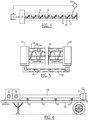
- screw-type auger assemblies 48a, 48b act as conveyers to move product along the length of a tubular housing.
- a full lineal length of dryer assembly may be on the order of 40-feet.
- the lineal length may connected in sequential fashion, effectively as a folded path, such as constructing the dryer from two 20-foot 6.01m) long sections 48a, 48b, with a flanged, bolted u-connection 50 at a distal end that mates to an end flange of each subassembly.
- a hanger bearing support 52 is provided for access to a center hanger bearing for maintenance and for assembly and disassembly of the auger-to-auger connection.
- sections of the length of the dryer assembly may be oriented horizontally adjacent one another, vertically one above another, or such as with three or more sections, may be both horizontally and vertically arrayed.
- the specifics of the layout of a dryer and elements thereof will vary from one implementation to another, and the above is simply by way of example.
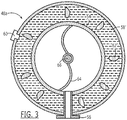
- Assembly 48a comprises a housing 54 constructed for example of stainless steel pipe with a polished interior surface. Each housing also includes a flanged pipe stub 56 for connection to a vacuum manifold.
- Jacket 58 Surrounding conveyor housing 54 is a hot oil jacket 58 that may extend along at least the majority of housing 54.
- Jacket 58 includes couplings for oil inlet and oil outlet (not shown) and a coupling 60 for a temperature sensor.
- Jacket 58 include internal baffles 62 providing an even temperature around the radius of the conveyor housing by insuring that oil flows uniformly thereover.
- housing 58 may be configured to include channels for heated oil or other heating material, or provided with other heating mechanisms such as resistive heating filaments, chemical reactive heating, radiant heating, etc.
- hot oil 80 enters one end of jacket 58 through a first rotary coupling 82, passes through length of jacket 58, and out the other end of jacket 58 through a second rotary coupling 84.
- the oil then enters an oil return manifold 86.
- Manifold 86 may be constructed, for example, of stainless steel pipe. This manifold may be mounted to a support frame at one end of the dryer subsystem 16' and feeds oil onto both the auger rotary union and into the auger housing jacket
- Auger 64 disposed within housing 54 is a screw-type auger 64.
- Auger 64 includes pitch-cut-style flighting to allow for vapor removal. For longer sections of housing, the outside diameter of the flighting may be tapered to a smaller diameter in the center of the length of the auger to allow for sagging within housing.
- auger 64 includes a hollow central shaft 66, configured to allow for hot oil to flow therethrough. This permits the auger to heat the product as it is being worked and transported within the heater. This heating, in conjunction with heating by jacket 58, speeds the drying of product within dryer 16.
- housing 54 and auger 64 are configured to convey 1361 kg per hour (3000 pounds per hour) of pulverized primary food product waste with a bulk density of approximately 1041 kg/m 3 (65 pounds per cubic foot) through the entire length (e.g., 12.2 m (40 feet)) of dryer subsystem 16'.
- Auger 64 simultaneously moves and works (and in some embodiments, heats) the target product over the uniformly heated inside surface area of the jacketed housing 54 at a pressure and temperature combination that flashes liquid within the target product to vapor, effectively drying the product. Dryness of the product may be monitored and the system parameters such as heat, processing speed, vacuum level, etc. controlled such that a target product dryness is achieved.
- a moisture sensor 68 may be disposed with a sensor probe within housing 54, or alternatively at the output of housing 54, to measure the moisture of target product 70 at a selected position.
- a controller 72 receives the moisture measurement from sensor 68, and variably controls the speed of motor 74, thereby controlling the speed of the movement of the target product through the system. Other aspects of system operation may also be controlled by a similar controller and feedback loop. Drying to the desired moisture level may thereby be controlled.
- Auger assemblies 48a, 48b are isolated from the general environment for noise reduction, temperature isolation, control of odor, and so on.
- the entire auger housing (including center hanger bearing flanges) may be covered with insulating material, such as removable sections of hydrophobic Thermaxx Teflon/fiberglass and Pyrogel XT aerogel insulation (Thermaxx Inc. Fremont, CA).
- some or all of the elements of system 20 may be transportable, or mobile, for example on the flatbed trailer of a semi-trailer truck. Elements of the system are specifically sized and configured to permit convenient and safe transport of the system, and certain elements of the system are configured for relatively rapid and easy disassembly and reassembly during transport. A minimum number of interconnections between subsystems, quick-disconnect/quick-connect fittings, and sealed connection ports during transport are examples of such configurations.
- a mobile arrangement of dryer subsystem 16' is shown in elevation view in Fig. 6 , in which previously described elements are mounted to flatbed 90. Due to the close clearances required between auger and housing, it is important to permit leveling and alignment of the housings, particularly in mobile applications.
- Jacketed housings may be configured to "float" on flatbed 90 (or frame) to allow for thermal expansion occurring during operation of the system.
- adjustable vertical and horizontal connection pads 92 are provided on the frame members supporting the jacketed housings. Any connections between discrete mobile (or stationary) subsystems and conveyers are configured to allow the conveyors to maintain alignment during operation.
- a dry product delivery subsystem comprising a drop out chamber 94 for intermediate holding of the dried secondary food product.
- chamber 94 includes a vacuum maintenance mechanism (such as pneumatically actuated butterfly valves at the inlet and outlet of the chamber).
- a high- and low-level sensor(s) is also provided internal to chamber 94. Chamber 94 will be located proximate (e.g., adjacent or below) the discharge of the final stage drying assembly. During operation the valve on the inlet side will remain open while the valve on the outlet side will remain closed.
- the inlet valve When the level sensor signals that the product level has reached a fill point, the inlet valve will close to maintain vacuum in the system and the outlet valve will open to discharge product, for example to an external hold vessel, further processing apparatus, pelletization subsystem 18', etc. Once the product level has triggered the low level sensor, the discharge valve closes and the inlet valve opens to allow product to begin to flow into the chamber without opening the vacuum system to the environment.
- the secondary food product has a desired dryness, and while in a relatively bulk format may be utilized as is.
- the secondary food product may be transferred to a subsystem 18' for converting the secondary food product from a bulk format to a morsel format. While pellets are one convenient morsel form factor, other form factors are contemplated herein including but not limited to: granules, rings, ribbons, chips, and so on. Reference to pellets and pelletization is therefore merely by way of example.
- secondary food product is provided from chamber 94 to a pelletizing subsystem 18', isolated from the general environment for the reasons discussed previously.
- pelletization subsystem 18' comprises an Insta-Pro International model 2000-series extruder (Insta-Pro International, Urbandale, IA).
- secondary food product is dried, by dryer subsystem 16' to 10-20% moisture content, then extruded and cut to generate a finished dried meal or a pellet.
- the size, shape, color, etc. of the pellet may be selected to suit end use of the product.
- the high shear extruder generates heat through friction to accomplish numerous processes - cooking, expansion, sterilizing, dehydrating and texturizing. The temperatures and pressures created in the extrusion process allow for a HTST (High Temperature, Short Time) process resulting in quality nutritional feed and food.
- HTST High Temperature, Short Time
Landscapes
- Life Sciences & Earth Sciences (AREA)
- Chemical & Material Sciences (AREA)
- Polymers & Plastics (AREA)
- Engineering & Computer Science (AREA)
- Food Science & Technology (AREA)
- Zoology (AREA)
- Processing Of Solid Wastes (AREA)
- Fodder In General (AREA)
- Drying Of Solid Materials (AREA)
Priority Applications (2)
| Application Number | Priority Date | Filing Date | Title |
|---|---|---|---|
| PL14770294T PL2986139T3 (pl) | 2013-03-15 | 2014-03-10 | System do przetwarzania odpadków podstawowego produktu żywnościowego we wtórny produkt żywnościowy |
| SI201430923T SI2986139T1 (sl) | 2013-03-15 | 2014-03-10 | Sistem za predelavo odpadkov primarnega prehranskega izdelka v sekundarni prehranski izdelek |
Applications Claiming Priority (2)
| Application Number | Priority Date | Filing Date | Title |
|---|---|---|---|
| US13/835,081 US8973491B1 (en) | 2013-03-15 | 2013-03-15 | System for processing primary food product waste into secondary food product |
| PCT/US2014/022717 WO2014150249A1 (en) | 2013-03-15 | 2014-03-10 | System for processing primary food product waste into secondary food product |
Publications (3)
| Publication Number | Publication Date |
|---|---|
| EP2986139A1 EP2986139A1 (en) | 2016-02-24 |
| EP2986139A4 EP2986139A4 (en) | 2017-05-03 |
| EP2986139B1 true EP2986139B1 (en) | 2018-08-22 |
Family
ID=51580725
Family Applications (1)
| Application Number | Title | Priority Date | Filing Date |
|---|---|---|---|
| EP14770294.8A Active EP2986139B1 (en) | 2013-03-15 | 2014-03-10 | System for processing primary food product waste into secondary food product |
Country Status (11)
| Country | Link |
|---|---|
| US (2) | US8973491B1 (pl) |
| EP (1) | EP2986139B1 (pl) |
| JP (1) | JP2016519272A (pl) |
| DK (1) | DK2986139T3 (pl) |
| ES (1) | ES2691098T3 (pl) |
| HU (1) | HUE040620T2 (pl) |
| PL (1) | PL2986139T3 (pl) |
| PT (1) | PT2986139T (pl) |
| SI (1) | SI2986139T1 (pl) |
| TR (1) | TR201815574T4 (pl) |
| WO (1) | WO2014150249A1 (pl) |
Families Citing this family (6)
| Publication number | Priority date | Publication date | Assignee | Title |
|---|---|---|---|---|
| US9615604B2 (en) * | 2014-02-06 | 2017-04-11 | David Russick | Food waste dehydrator |
| EP3501297A1 (en) * | 2017-12-21 | 2019-06-26 | Graintec A/S | A method for preventing heavy metal in an extruded feed or food |
| IT201900001607A1 (it) | 2019-02-04 | 2020-08-04 | Feed From Food S R L Soc Benefit | Metodo e apparecchiatura per il recupero e la trasformazione di un prodotto alimentare primario in un prodotto alimentare secondario e relativo prodotto alimentare |
| US20220192212A1 (en) * | 2019-02-08 | 2022-06-23 | Outcast Foods Inc. | System, method, and apparatus for on-site processing of plant-based waste foods |
| CN112293771B (zh) * | 2019-08-02 | 2022-02-25 | 泰安市岱岳区泰峰农牧机械厂 | 一种用于单胃动物青鲜植物饲料化青贮装备及方法 |
| CN112371220B (zh) * | 2020-11-10 | 2024-08-16 | 池州星美生物科技有限公司 | 一种挤压研磨机 |
Family Cites Families (42)
| Publication number | Priority date | Publication date | Assignee | Title |
|---|---|---|---|---|
| US3956980A (en) | 1971-12-29 | 1976-05-18 | Lassiter Rush E | Method for processing refuse material |
| US3858505A (en) | 1973-04-06 | 1975-01-07 | Rush Corp Floyd | Apparatus for processing food wastes |
| US3911808A (en) | 1973-04-06 | 1975-10-14 | Rush Corp Floyd | Method for processing food wastes |
| US3971306A (en) | 1974-07-30 | 1976-07-27 | Cord Systems, Inc. | System for manufacturing animal feed |
| US4074868A (en) | 1977-02-07 | 1978-02-21 | Recovery Systems, Inc. | Food processing system |
| US4150795A (en) | 1977-08-03 | 1979-04-24 | Recovery Systems, Inc. | Waste food processor |
| JPS5465869A (en) * | 1977-11-05 | 1979-05-26 | Doumae Shiyouten Kk | Continuous vacuum drier |
| JPS55130799U (pl) * | 1979-03-07 | 1980-09-16 | ||
| US4262633A (en) | 1979-05-07 | 1981-04-21 | Leandro Taboga | Means and methods of reclaiming and processing biodegradable waste into poultry products and humus-like substances |
| JPH0325276A (ja) * | 1989-06-20 | 1991-02-04 | Yuzuru Matsubara | 連続真空乾燥装置 |
| US5098564A (en) | 1990-07-25 | 1992-03-24 | Thermaco, Inc. | Automatic self-cleaning strainer assembly |
| US5230917A (en) | 1991-11-12 | 1993-07-27 | Ssde Technologies Corporation | Method for separation of canned goods and reclaiming useful food values therefrom |
| US5269939A (en) | 1992-07-13 | 1993-12-14 | Laurent Edward L | Method of solids recovery for use in animal feed or as a fuel utilizing natural flocculents |
| US5340036A (en) | 1993-05-19 | 1994-08-23 | Emerson Electric Co. | Dry waste grinder |
| JPH07138759A (ja) * | 1993-11-17 | 1995-05-30 | Nissin Electric Co Ltd | 真空処理装置 |
| JPH07241545A (ja) * | 1994-03-01 | 1995-09-19 | Shigeru Manabe | 厨芥処理装置 |
| GB9505857D0 (en) | 1995-03-23 | 1995-05-10 | Organic Waste Processing Limit | Method Of Extracting Aromatic Oils From Citrus Fruit |
| US6059972A (en) * | 1995-07-18 | 2000-05-09 | Mahrer; Francois-Regis | Apparatus for receiving and conditioning organic waste by anaerobic bioconversion |
| IT1283297B1 (it) * | 1996-03-22 | 1998-04-16 | Vomm Chemipharma Srl | Metodo per lo smaltimento di rifiuti umidi |
| JPH1034051A (ja) * | 1996-07-30 | 1998-02-10 | Trinity Ind Corp | 塗装用乾燥炉 |
| JPH1057923A (ja) * | 1996-08-22 | 1998-03-03 | Okano Kosan Kk | 廃物再生処理装置 |
| US5865113A (en) | 1997-12-11 | 1999-02-02 | Weber; Irvon | Material densifying and separating device |
| US5976594A (en) | 1998-02-26 | 1999-11-02 | Lafollette; John | System and process for producing feed from food waste |
| JP2001046975A (ja) * | 1999-08-17 | 2001-02-20 | Matsushita Electric Ind Co Ltd | 複合廃棄物の処理方法及び処理装置 |
| KR100520756B1 (ko) * | 2001-02-27 | 2005-10-12 | (주)이엔이티 | 내염성 버섯 균주 및 그 제조방법, 상기 균주를 이용한 음식물쓰레기 처리 방법 |
| US6534105B2 (en) | 2001-03-01 | 2003-03-18 | Food Development Corporation | Process for preparation of animal feed from food waste |
| JP2002336825A (ja) * | 2001-05-17 | 2002-11-26 | Kubota Corp | 有機性廃棄物のリサイクル方法 |
| JP2003019475A (ja) * | 2001-07-10 | 2003-01-21 | Shonan Pure:Kk | 食品残渣の乾燥方法及び乾燥装置 |
| JP2003094009A (ja) * | 2001-09-27 | 2003-04-02 | Kurimoto Ltd | 食品廃棄物の処理装置 |
| US6635297B2 (en) | 2001-10-16 | 2003-10-21 | Nutracycle Llc | System and process for producing animal feed from food waste |
| JP3877161B2 (ja) * | 2002-12-19 | 2007-02-07 | 三井物産株式会社 | 真空乾燥装置を用いた廃棄物処理方法 |
| US7041215B2 (en) | 2004-01-15 | 2006-05-09 | Yes-Sun Holdings Limited | System for composting-free disposal of organic wastes |
| US20050274035A1 (en) | 2004-06-04 | 2005-12-15 | Wastech International, Inc. | Waste handling system |
| JP2006153376A (ja) * | 2004-11-30 | 2006-06-15 | Tsukishima Kikai Co Ltd | 被処理物の処理方法及び処理設備 |
| JP2008284463A (ja) * | 2007-05-17 | 2008-11-27 | Mayekawa Mfg Co Ltd | 廃棄食品の再資源化プラント |
| KR101229655B1 (ko) | 2007-12-31 | 2013-02-04 | 코웨이 주식회사 | 음식물 처리기의 건조로 |
| US8151482B2 (en) | 2008-11-25 | 2012-04-10 | William H Moss | Two-stage static dryer for converting organic waste to solid fuel |
| EP2480348A2 (en) * | 2009-09-22 | 2012-08-01 | Maithilee Dinesh Chandratre | System and method for biological treatment of biodegradable waste including biodegradable municipal solid waste |
| US20110281003A1 (en) | 2010-05-13 | 2011-11-17 | King Abdul Aziz City For Science And Technology | Method and system for deriving animal feed from waste food |
| JP5433519B2 (ja) * | 2010-07-16 | 2014-03-05 | トナミ運輸株式会社 | 包装材廃棄物からのアルミ資源回収方法 |
| JP5765911B2 (ja) * | 2010-10-01 | 2015-08-19 | 共立工業株式会社 | 食品廃棄物処理システム |
| JP5737928B2 (ja) * | 2010-12-21 | 2015-06-17 | 株式会社カワタ | 乾燥粉粒体の製造方法 |
-
2013
- 2013-03-15 US US13/835,081 patent/US8973491B1/en active Active
-
2014
- 2014-03-10 JP JP2016501044A patent/JP2016519272A/ja active Pending
- 2014-03-10 EP EP14770294.8A patent/EP2986139B1/en active Active
- 2014-03-10 HU HUE14770294A patent/HUE040620T2/hu unknown
- 2014-03-10 DK DK14770294.8T patent/DK2986139T3/en active
- 2014-03-10 PL PL14770294T patent/PL2986139T3/pl unknown
- 2014-03-10 TR TR2018/15574T patent/TR201815574T4/tr unknown
- 2014-03-10 SI SI201430923T patent/SI2986139T1/sl unknown
- 2014-03-10 WO PCT/US2014/022717 patent/WO2014150249A1/en not_active Ceased
- 2014-03-10 PT PT14770294T patent/PT2986139T/pt unknown
- 2014-03-10 ES ES14770294.8T patent/ES2691098T3/es active Active
-
2015
- 2015-01-05 US US14/589,254 patent/US9380806B2/en active Active
Non-Patent Citations (1)
| Title |
|---|
| None * |
Also Published As
| Publication number | Publication date |
|---|---|
| PT2986139T (pt) | 2018-11-13 |
| DK2986139T3 (en) | 2018-11-05 |
| SI2986139T1 (sl) | 2018-12-31 |
| PL2986139T3 (pl) | 2019-03-29 |
| US20150245652A1 (en) | 2015-09-03 |
| TR201815574T4 (tr) | 2018-11-21 |
| EP2986139A1 (en) | 2016-02-24 |
| EP2986139A4 (en) | 2017-05-03 |
| JP2016519272A (ja) | 2016-06-30 |
| US8973491B1 (en) | 2015-03-10 |
| HUE040620T2 (hu) | 2019-03-28 |
| US20150059594A1 (en) | 2015-03-05 |
| ES2691098T3 (es) | 2018-11-23 |
| US9380806B2 (en) | 2016-07-05 |
| WO2014150249A1 (en) | 2014-09-25 |
Similar Documents
| Publication | Publication Date | Title |
|---|---|---|
| US9380806B2 (en) | System for processing primary food product waste into secondary food product | |
| US10012441B2 (en) | Waste management system and method | |
| US9480281B1 (en) | Distiller grain production device | |
| US5230917A (en) | Method for separation of canned goods and reclaiming useful food values therefrom | |
| CN111107741A (zh) | 昆虫幼虫饲养 | |
| CN102794290B (zh) | 一种餐厨垃圾资源化处理系统 | |
| US20180172348A1 (en) | Continuous flow dryer for treating bulk material | |
| EP3482829B1 (en) | Device for fluidizing at least one substance | |
| CN104368588A (zh) | 病死动物干化化制法无害化处理装置及其处理方法 | |
| EP2418075A2 (de) | Vorrichtung und Verfahren zur Herstellung von Pellets aus Biomasse | |
| US10507470B2 (en) | Method of sorting trash for recycling of paper and apparatus for sorting trash for paper recycling | |
| US20130108506A1 (en) | Device And Procedure For Continuous Treatment Of Waste | |
| WO2017013457A1 (en) | Apparatus and method for processing waste material | |
| US20150216223A1 (en) | Food waste dehydrator | |
| US20240302097A1 (en) | Method for processing heat-sensitive materials in a vortex chamber | |
| CN109229449A (zh) | 一种模块化料箱自动灌装机与方法 | |
| US3899301A (en) | Continuous rendering apparatus | |
| KR20020023357A (ko) | 음식물 쓰레기를 이용한 난방연료 제작장치 및 방법 | |
| KR102124811B1 (ko) | 음식물 쓰레기 이송장치 | |
| WO2020161618A1 (en) | Method and apparatus for the recovery and transformation of a primary food product into a secondary food product and related food product | |
| WO2025130448A1 (zh) | 一种病死动物无害化处理工艺及装置 | |
| RS64132B1 (sr) | Rotirajući bubanj za ubacivanje materijala gravitacijom u njegovu unutrašnjost | |
| WO2018133905A1 (de) | Einrichtung und verfahren zur aufbereitung von biomasse |
Legal Events
| Date | Code | Title | Description |
|---|---|---|---|
| PUAI | Public reference made under article 153(3) epc to a published international application that has entered the european phase |
Free format text: ORIGINAL CODE: 0009012 |
|
| 17P | Request for examination filed |
Effective date: 20151015 |
|
| AK | Designated contracting states |
Kind code of ref document: A1 Designated state(s): AL AT BE BG CH CY CZ DE DK EE ES FI FR GB GR HR HU IE IS IT LI LT LU LV MC MK MT NL NO PL PT RO RS SE SI SK SM TR |
|
| AX | Request for extension of the european patent |
Extension state: BA ME |
|
| DAX | Request for extension of the european patent (deleted) | ||
| REG | Reference to a national code |
Ref country code: DE Ref legal event code: R079 Ref document number: 602014030924 Country of ref document: DE Free format text: PREVIOUS MAIN CLASS: A23K0010000000 Ipc: A23K0040200000 |
|
| A4 | Supplementary search report drawn up and despatched |
Effective date: 20170405 |
|
| RIC1 | Information provided on ipc code assigned before grant |
Ipc: A23N 17/00 20060101ALI20170330BHEP Ipc: A23K 40/20 20160101AFI20170330BHEP |
|
| STAA | Information on the status of an ep patent application or granted ep patent |
Free format text: STATUS: EXAMINATION IS IN PROGRESS |
|
| 17Q | First examination report despatched |
Effective date: 20170921 |
|
| GRAP | Despatch of communication of intention to grant a patent |
Free format text: ORIGINAL CODE: EPIDOSNIGR1 |
|
| STAA | Information on the status of an ep patent application or granted ep patent |
Free format text: STATUS: GRANT OF PATENT IS INTENDED |
|
| INTG | Intention to grant announced |
Effective date: 20180425 |
|
| GRAS | Grant fee paid |
Free format text: ORIGINAL CODE: EPIDOSNIGR3 |
|
| GRAA | (expected) grant |
Free format text: ORIGINAL CODE: 0009210 |
|
| STAA | Information on the status of an ep patent application or granted ep patent |
Free format text: STATUS: THE PATENT HAS BEEN GRANTED |
|
| AK | Designated contracting states |
Kind code of ref document: B1 Designated state(s): AL AT BE BG CH CY CZ DE DK EE ES FI FR GB GR HR HU IE IS IT LI LT LU LV MC MK MT NL NO PL PT RO RS SE SI SK SM TR |
|
| REG | Reference to a national code |
Ref country code: GB Ref legal event code: FG4D |
|
| RIN2 | Information on inventor provided after grant (corrected) |
Inventor name: FORD, WILLIAM, L. Inventor name: ZUNDEL, KERRY Inventor name: PELLEGRINI, LOUIS Inventor name: PASTUSEK, JOHN |
|
| REG | Reference to a national code |
Ref country code: CH Ref legal event code: EP |
|
| REG | Reference to a national code |
Ref country code: AT Ref legal event code: REF Ref document number: 1031408 Country of ref document: AT Kind code of ref document: T Effective date: 20180915 |
|
| REG | Reference to a national code |
Ref country code: IE Ref legal event code: FG4D |
|
| REG | Reference to a national code |
Ref country code: DE Ref legal event code: R096 Ref document number: 602014030924 Country of ref document: DE |
|
| REG | Reference to a national code |
Ref country code: NL Ref legal event code: FP |
|
| REG | Reference to a national code |
Ref country code: RO Ref legal event code: EPE |
|
| REG | Reference to a national code |
Ref country code: CH Ref legal event code: NV Representative=s name: HEPP WENGER RYFFEL AG, CH |
|
| REG | Reference to a national code |
Ref country code: NO Ref legal event code: CHAD Owner name: SUSTAINABLE ALTERNATIVE FEED ENTERPRISES, US Ref country code: DK Ref legal event code: T3 Effective date: 20181022 |
|
| REG | Reference to a national code |
Ref country code: PT Ref legal event code: SC4A Ref document number: 2986139 Country of ref document: PT Date of ref document: 20181113 Kind code of ref document: T Free format text: AVAILABILITY OF NATIONAL TRANSLATION Effective date: 20181023 |
|
| REG | Reference to a national code |
Ref country code: ES Ref legal event code: FG2A Ref document number: 2691098 Country of ref document: ES Kind code of ref document: T3 Effective date: 20181123 |
|
| REG | Reference to a national code |
Ref country code: CH Ref legal event code: PK Free format text: BERICHTIGUNG INHABER |
|
| REG | Reference to a national code |
Ref country code: NO Ref legal event code: T2 Effective date: 20180822 |
|
| REG | Reference to a national code |
Ref country code: SE Ref legal event code: TRGR |
|
| REG | Reference to a national code |
Ref country code: LT Ref legal event code: MG4D |
|
| PG25 | Lapsed in a contracting state [announced via postgrant information from national office to epo] |
Ref country code: RS Free format text: LAPSE BECAUSE OF FAILURE TO SUBMIT A TRANSLATION OF THE DESCRIPTION OR TO PAY THE FEE WITHIN THE PRESCRIBED TIME-LIMIT Effective date: 20180822 Ref country code: LT Free format text: LAPSE BECAUSE OF FAILURE TO SUBMIT A TRANSLATION OF THE DESCRIPTION OR TO PAY THE FEE WITHIN THE PRESCRIBED TIME-LIMIT Effective date: 20180822 |
|
| PG25 | Lapsed in a contracting state [announced via postgrant information from national office to epo] |
Ref country code: AL Free format text: LAPSE BECAUSE OF FAILURE TO SUBMIT A TRANSLATION OF THE DESCRIPTION OR TO PAY THE FEE WITHIN THE PRESCRIBED TIME-LIMIT Effective date: 20180822 Ref country code: LV Free format text: LAPSE BECAUSE OF FAILURE TO SUBMIT A TRANSLATION OF THE DESCRIPTION OR TO PAY THE FEE WITHIN THE PRESCRIBED TIME-LIMIT Effective date: 20180822 Ref country code: HR Free format text: LAPSE BECAUSE OF FAILURE TO SUBMIT A TRANSLATION OF THE DESCRIPTION OR TO PAY THE FEE WITHIN THE PRESCRIBED TIME-LIMIT Effective date: 20180822 |
|
| REG | Reference to a national code |
Ref country code: HU Ref legal event code: AG4A Ref document number: E040620 Country of ref document: HU |
|
| REG | Reference to a national code |
Ref country code: SK Ref legal event code: T3 Ref document number: E 29333 Country of ref document: SK |
|
| REG | Reference to a national code |
Ref country code: GR Ref legal event code: EP Ref document number: 20180402974 Country of ref document: GR Effective date: 20190320 |
|
| PG25 | Lapsed in a contracting state [announced via postgrant information from national office to epo] |
Ref country code: EE Free format text: LAPSE BECAUSE OF FAILURE TO SUBMIT A TRANSLATION OF THE DESCRIPTION OR TO PAY THE FEE WITHIN THE PRESCRIBED TIME-LIMIT Effective date: 20180822 |
|
| REG | Reference to a national code |
Ref country code: DE Ref legal event code: R097 Ref document number: 602014030924 Country of ref document: DE |
|
| PG25 | Lapsed in a contracting state [announced via postgrant information from national office to epo] |
Ref country code: SM Free format text: LAPSE BECAUSE OF FAILURE TO SUBMIT A TRANSLATION OF THE DESCRIPTION OR TO PAY THE FEE WITHIN THE PRESCRIBED TIME-LIMIT Effective date: 20180822 |
|
| PLBE | No opposition filed within time limit |
Free format text: ORIGINAL CODE: 0009261 |
|
| STAA | Information on the status of an ep patent application or granted ep patent |
Free format text: STATUS: NO OPPOSITION FILED WITHIN TIME LIMIT |
|
| 26N | No opposition filed |
Effective date: 20190523 |
|
| PG25 | Lapsed in a contracting state [announced via postgrant information from national office to epo] |
Ref country code: MC Free format text: LAPSE BECAUSE OF FAILURE TO SUBMIT A TRANSLATION OF THE DESCRIPTION OR TO PAY THE FEE WITHIN THE PRESCRIBED TIME-LIMIT Effective date: 20180822 |
|
| PG25 | Lapsed in a contracting state [announced via postgrant information from national office to epo] |
Ref country code: MT Free format text: LAPSE BECAUSE OF NON-PAYMENT OF DUE FEES Effective date: 20190310 |
|
| PG25 | Lapsed in a contracting state [announced via postgrant information from national office to epo] |
Ref country code: CY Free format text: LAPSE BECAUSE OF FAILURE TO SUBMIT A TRANSLATION OF THE DESCRIPTION OR TO PAY THE FEE WITHIN THE PRESCRIBED TIME-LIMIT Effective date: 20180822 |
|
| PG25 | Lapsed in a contracting state [announced via postgrant information from national office to epo] |
Ref country code: MK Free format text: LAPSE BECAUSE OF FAILURE TO SUBMIT A TRANSLATION OF THE DESCRIPTION OR TO PAY THE FEE WITHIN THE PRESCRIBED TIME-LIMIT Effective date: 20180822 |
|
| PGFP | Annual fee paid to national office [announced via postgrant information from national office to epo] |
Ref country code: HU Payment date: 20250220 Year of fee payment: 12 |
|
| PGFP | Annual fee paid to national office [announced via postgrant information from national office to epo] |
Ref country code: IT Payment date: 20250319 Year of fee payment: 12 |
|
| PGFP | Annual fee paid to national office [announced via postgrant information from national office to epo] |
Ref country code: ES Payment date: 20250401 Year of fee payment: 12 |
|
| PGFP | Annual fee paid to national office [announced via postgrant information from national office to epo] |
Ref country code: CH Payment date: 20250401 Year of fee payment: 12 |
|
| REG | Reference to a national code |
Ref country code: CH Ref legal event code: U11 Free format text: ST27 STATUS EVENT CODE: U-0-0-U10-U11 (AS PROVIDED BY THE NATIONAL OFFICE) Effective date: 20260401 |
|
| PGFP | Annual fee paid to national office [announced via postgrant information from national office to epo] |
Ref country code: SE Payment date: 20260323 Year of fee payment: 13 |
|
| PGFP | Annual fee paid to national office [announced via postgrant information from national office to epo] |
Ref country code: GB Payment date: 20260324 Year of fee payment: 13 |
|
| PGFP | Annual fee paid to national office [announced via postgrant information from national office to epo] |
Ref country code: NO Payment date: 20260320 Year of fee payment: 13 Ref country code: DE Payment date: 20260320 Year of fee payment: 13 Ref country code: DK Payment date: 20260323 Year of fee payment: 13 Ref country code: IE Payment date: 20260323 Year of fee payment: 13 |
|
| PGFP | Annual fee paid to national office [announced via postgrant information from national office to epo] |
Ref country code: AT Payment date: 20260319 Year of fee payment: 13 |
|
| PGFP | Annual fee paid to national office [announced via postgrant information from national office to epo] |
Ref country code: RO Payment date: 20260310 Year of fee payment: 13 Ref country code: LU Payment date: 20260320 Year of fee payment: 13 Ref country code: FI Payment date: 20260320 Year of fee payment: 13 Ref country code: BE Payment date: 20260323 Year of fee payment: 13 |
|
| PGFP | Annual fee paid to national office [announced via postgrant information from national office to epo] |
Ref country code: NL Payment date: 20260323 Year of fee payment: 13 |
|
| PGFP | Annual fee paid to national office [announced via postgrant information from national office to epo] |
Ref country code: IS Payment date: 20260327 Year of fee payment: 13 Ref country code: FR Payment date: 20260324 Year of fee payment: 13 |
|
| PGFP | Annual fee paid to national office [announced via postgrant information from national office to epo] |
Ref country code: TR Payment date: 20260226 Year of fee payment: 13 |
|
| PGFP | Annual fee paid to national office [announced via postgrant information from national office to epo] |
Ref country code: PT Payment date: 20260226 Year of fee payment: 13 Ref country code: CZ Payment date: 20260226 Year of fee payment: 13 |
|
| PGFP | Annual fee paid to national office [announced via postgrant information from national office to epo] |
Ref country code: GR Payment date: 20260319 Year of fee payment: 13 Ref country code: PL Payment date: 20260227 Year of fee payment: 13 |
|
| PGFP | Annual fee paid to national office [announced via postgrant information from national office to epo] |
Ref country code: SK Payment date: 20260305 Year of fee payment: 13 |
|
| PGFP | Annual fee paid to national office [announced via postgrant information from national office to epo] |
Ref country code: SI Payment date: 20260226 Year of fee payment: 13 |
|
| PGFP | Annual fee paid to national office [announced via postgrant information from national office to epo] |
Ref country code: BG Payment date: 20260318 Year of fee payment: 13 |