EP2977114B1 - Ultrasonic motion generator and ultrasonic surgical apparatus comprising the same - Google Patents
Ultrasonic motion generator and ultrasonic surgical apparatus comprising the same Download PDFInfo
- Publication number
- EP2977114B1 EP2977114B1 EP15178067.3A EP15178067A EP2977114B1 EP 2977114 B1 EP2977114 B1 EP 2977114B1 EP 15178067 A EP15178067 A EP 15178067A EP 2977114 B1 EP2977114 B1 EP 2977114B1
- Authority
- EP
- European Patent Office
- Prior art keywords
- ultrasonic
- motion
- ultrasonic transducer
- motion generator
- comparator
- Prior art date
- Legal status (The legal status is an assumption and is not a legal conclusion. Google has not performed a legal analysis and makes no representation as to the accuracy of the status listed.)
- Active
Links
Images




Classifications
-
- B—PERFORMING OPERATIONS; TRANSPORTING
- B06—GENERATING OR TRANSMITTING MECHANICAL VIBRATIONS IN GENERAL
- B06B—METHODS OR APPARATUS FOR GENERATING OR TRANSMITTING MECHANICAL VIBRATIONS OF INFRASONIC, SONIC, OR ULTRASONIC FREQUENCY, e.g. FOR PERFORMING MECHANICAL WORK IN GENERAL
- B06B1/00—Methods or apparatus for generating mechanical vibrations of infrasonic, sonic, or ultrasonic frequency
- B06B1/02—Methods or apparatus for generating mechanical vibrations of infrasonic, sonic, or ultrasonic frequency making use of electrical energy
- B06B1/0207—Driving circuits
- B06B1/0223—Driving circuits for generating signals continuous in time
- B06B1/0238—Driving circuits for generating signals continuous in time of a single frequency, e.g. a sine-wave
- B06B1/0246—Driving circuits for generating signals continuous in time of a single frequency, e.g. a sine-wave with a feedback signal
- B06B1/0261—Driving circuits for generating signals continuous in time of a single frequency, e.g. a sine-wave with a feedback signal taken from a transducer or electrode connected to the driving transducer
-
- A—HUMAN NECESSITIES
- A61—MEDICAL OR VETERINARY SCIENCE; HYGIENE
- A61B—DIAGNOSIS; SURGERY; IDENTIFICATION
- A61B17/00—Surgical instruments, devices or methods
- A61B17/32—Surgical cutting instruments
- A61B17/320068—Surgical cutting instruments using mechanical vibrations, e.g. ultrasonic
-
- A—HUMAN NECESSITIES
- A61—MEDICAL OR VETERINARY SCIENCE; HYGIENE
- A61B—DIAGNOSIS; SURGERY; IDENTIFICATION
- A61B17/00—Surgical instruments, devices or methods
- A61B2017/00017—Electrical control of surgical instruments
- A61B2017/00022—Sensing or detecting at the treatment site
- A61B2017/00026—Conductivity or impedance, e.g. of tissue
- A61B2017/0003—Conductivity or impedance, e.g. of tissue of parts of the instruments
-
- A—HUMAN NECESSITIES
- A61—MEDICAL OR VETERINARY SCIENCE; HYGIENE
- A61B—DIAGNOSIS; SURGERY; IDENTIFICATION
- A61B17/00—Surgical instruments, devices or methods
- A61B2017/00017—Electrical control of surgical instruments
- A61B2017/00022—Sensing or detecting at the treatment site
- A61B2017/00106—Sensing or detecting at the treatment site ultrasonic
-
- A—HUMAN NECESSITIES
- A61—MEDICAL OR VETERINARY SCIENCE; HYGIENE
- A61B—DIAGNOSIS; SURGERY; IDENTIFICATION
- A61B17/00—Surgical instruments, devices or methods
- A61B17/32—Surgical cutting instruments
- A61B17/320068—Surgical cutting instruments using mechanical vibrations, e.g. ultrasonic
- A61B17/320092—Surgical cutting instruments using mechanical vibrations, e.g. ultrasonic with additional movable means for clamping or cutting tissue, e.g. with a pivoting jaw
- A61B2017/320094—Surgical cutting instruments using mechanical vibrations, e.g. ultrasonic with additional movable means for clamping or cutting tissue, e.g. with a pivoting jaw additional movable means performing clamping operation
-
- A—HUMAN NECESSITIES
- A61—MEDICAL OR VETERINARY SCIENCE; HYGIENE
- A61B—DIAGNOSIS; SURGERY; IDENTIFICATION
- A61B17/00—Surgical instruments, devices or methods
- A61B17/32—Surgical cutting instruments
- A61B17/320068—Surgical cutting instruments using mechanical vibrations, e.g. ultrasonic
- A61B17/320092—Surgical cutting instruments using mechanical vibrations, e.g. ultrasonic with additional movable means for clamping or cutting tissue, e.g. with a pivoting jaw
- A61B2017/320095—Surgical cutting instruments using mechanical vibrations, e.g. ultrasonic with additional movable means for clamping or cutting tissue, e.g. with a pivoting jaw with sealing or cauterizing means
-
- A—HUMAN NECESSITIES
- A61—MEDICAL OR VETERINARY SCIENCE; HYGIENE
- A61B—DIAGNOSIS; SURGERY; IDENTIFICATION
- A61B18/00—Surgical instruments, devices or methods for transferring non-mechanical forms of energy to or from the body
- A61B2018/00636—Sensing and controlling the application of energy
- A61B2018/00696—Controlled or regulated parameters
- A61B2018/00726—Duty cycle
-
- A—HUMAN NECESSITIES
- A61—MEDICAL OR VETERINARY SCIENCE; HYGIENE
- A61B—DIAGNOSIS; SURGERY; IDENTIFICATION
- A61B18/00—Surgical instruments, devices or methods for transferring non-mechanical forms of energy to or from the body
- A61B2018/00636—Sensing and controlling the application of energy
- A61B2018/00773—Sensed parameters
- A61B2018/00827—Current
-
- A—HUMAN NECESSITIES
- A61—MEDICAL OR VETERINARY SCIENCE; HYGIENE
- A61B—DIAGNOSIS; SURGERY; IDENTIFICATION
- A61B18/00—Surgical instruments, devices or methods for transferring non-mechanical forms of energy to or from the body
- A61B2018/00636—Sensing and controlling the application of energy
- A61B2018/00773—Sensed parameters
- A61B2018/00845—Frequency
-
- A—HUMAN NECESSITIES
- A61—MEDICAL OR VETERINARY SCIENCE; HYGIENE
- A61N—ELECTROTHERAPY; MAGNETOTHERAPY; RADIATION THERAPY; ULTRASOUND THERAPY
- A61N7/00—Ultrasound therapy
-
- B—PERFORMING OPERATIONS; TRANSPORTING
- B06—GENERATING OR TRANSMITTING MECHANICAL VIBRATIONS IN GENERAL
- B06B—METHODS OR APPARATUS FOR GENERATING OR TRANSMITTING MECHANICAL VIBRATIONS OF INFRASONIC, SONIC, OR ULTRASONIC FREQUENCY, e.g. FOR PERFORMING MECHANICAL WORK IN GENERAL
- B06B2201/00—Indexing scheme associated with B06B1/0207 for details covered by B06B1/0207 but not provided for in any of its subgroups
- B06B2201/70—Specific application
- B06B2201/76—Medical, dental
Definitions
- the present disclosure relates to an ultrasonic surgical system for treating tissue. More particularly, the present disclosure relates to an ultrasonic surgical system that automatically tracks the resonant frequency of the ultrasonic transducer of the ultrasonic surgical system.
- Ultrasonic surgical devices have been demonstrated to provide outstanding hemostasis and efficient dissection of tissue with minimum lateral thermal damage and low smoke generation. Unlike electrosurgical devices, which require electrical current to flow through a patient, ultrasonic surgical devices operate by applying mechanical action of an ultrasonic transducer that is driven at a mechanical resonant frequency.
- the Phase-lock-loop (PLL) technique has been used to generate ultrasonic mechanical motion having a resonant frequency by locking a phase in a reliable range so that the signals are prevented from becoming unstable.
- PLL Phase-lock-loop
- the PLL technique tends to be complex, and difficult to stabilize under large transient loading conditions.
- the PLL technique needs more computational power to accurately lock the phases between a power source and outputs of the ultrasonic transducer, and thus necessarily includes a time lag which might cause harm to patients.
- simpler and less computationally complex ultrasonic surgical systems for treating tissue are desired
- US4750488 discloses a vibration apparatus comprising an inverter and a control loop for correcting the vibration frequency of the transducer based on a feedback signal derived from the current input to the transducer.
- the present invention relates to an ultrasonic motion generator according to claim 1. Further details of the invention are set forth in the dependent claims.
- the present disclosure features ultrasonic surgical systems and ultrasonic motion generators according to the invention which automatically track the resonant frequency of the ultrasonic transducer.
- the present disclosure provides an ultrasonic surgical system for treating, e.g., sealing and dissecting, tissue.
- the ultrasonic surgical system utilizes an ultrasonic mechanical motion generator that follows an electronic circuit model for automatically tracking the resonant frequency.
- the ultrasonic surgical system automatically tracks its resonant frequency without requiring any computational operations to be performed by a processor.
- the ultrasonic surgical system includes an ultrasonic transducer, which is based on a band-pass filter oscillator architecture. Tissue treatment is achieved by the mechanical action of the ultrasonic transducer that is driven at the proper mechanical resonant frequency by a comparator.
- a pulse-width modulation (PWM) amplitude control is employed to regulate the mechanical motion of an end effector and to provide different levels of power for treating tissue. Further, a proportional-integral (PI) controller is included to obtain a rapid transient response to changes in load and to maintain stable surgical operations.
- PWM pulse-width modulation
- PI proportional-integral
- the ultrasonic surgical system includes two control loops to control the mechanical ultrasonic motion of the ultrasonic transducer.
- the first loop is an amplitude control loop to control the average power delivered to the ultrasonic transducer to regulate the longitudinal mode displacement and includes a closed-loop feedback control.
- the amplitude of the DC power is proportional to the amount of longitudinal mode displacement of the ultrasonic transducer.
- the second loop generates an AC signal from the DC input and automatically tracks the resonant frequency of the ultrasonic transducer, which is based on a band-pass filter oscillator.
- the ultrasonic surgical system 100 includes a power source 110, a housing 130, an ultrasonic transducer 150, and an end effector 190.
- the power source 110 provides DC power to the ultrasonic transducer 150.
- the power source 110 may be a battery that directly provides DC power.
- the power source 110 may be insertable or incorporated into the housing 130 so that the ultrasonic surgical system 100 may be portably carried without disturbances of any cable.
- the power source 110 may be rechargeable so that the power source 110 may be reusable for a certain amount of time.
- the power source 110 may be connected to an alternating current (AC) power source and invert the AC power to DC power.
- the AC power source may be of a relatively low frequency, such as 60 hertz (Hz), while the ultrasonic surgical system 100 needs a higher frequency power, such as 55.5 kilo hertz (kHz).
- the power source 110 may convert the low frequency AC power to DC power so that the DC power may be inverted to AC power having a frequency suitable to cause the ultrasonic transducer 150 to generate mechanical ultrasonic motion.
- the housing 130 includes a handle portion 131 and a cover 133.
- the handle portion 131 includes a compartment 132 which houses the power source 110 when the power source 110 is inserted, and a power source door 134 that allows the power source 110 to be inserted into the compartment 132 when opened.
- the power source door 134 may create a water-tight seal between the interior and the exterior of the compartment 132.
- the handle portion 131 further includes a trigger 136. When the trigger 136 is squeezed, the power source 110 is electrically connected to the ultrasonic transducer 150 so that the ultrasonic transducer 150 is powered to generate mechanical ultrasonic motion. When the trigger 136 is released, the power source is electrically disconnected with the ultrasonic transducer 150.
- the cover 133 provides protection by covering the ultrasonic transducer 150.
- the ultrasonic transducer 150 includes a generator assembly 152 and a transducer assembly 154.
- the generator assembly 152 is electrically connected with the transducer assembly 154 via a pair of contacts 158.
- the generator assembly 152 receives the DC power from the power source 110 and generates AC signals having an ultrasonic frequency.
- the generator 152 assembly may be capable of generating signals having a different frequency based on a surgical operation. For example, the generator assembly 152 generates AC signals having a frequency from about 40 kHz to about 60 kHz.
- the transducer assembly 154 includes a transducer body 156 and a transducer attachment port 160.
- the transducer body 156 receives the AC signal generated by the generator assembly 152 and generates mechanical ultrasonic motion based on the amplitude and the frequency of the generated AC signal.
- the transducer body 156 includes piezoelectric material, which converts the generated AC signal to mechanical ultrasonic motion.
- the transducer body 156 may be based on an electrical oscillator model having an inductor and a capacitor, which oscillates between charging and discharging. This oscillation model for the transducer body 156 is described further in detail below.
- the cover 133 also includes a spindle 170, which is formed with indentations so that a user can easily rotate the spindle 170.
- spindle 170 When spindle 170 is rotated clockwise, the end effector 190 is attached to the housing and is mechanically connected to the ultrasonic transducer 150 via the transducer attachment port 160 so that the end effector 190 conveys the mechanical ultrasonic motion to treat tissue.
- the spindle 170 may rotate the end effector 190 so that the end effector 190 may provide sealing and/or dissecting tissue in any proper angle.
- the end effector 190 includes waveguides 192 and 194, and a jaw member 196.
- the end effector 190 is mechanically connected with the transducer body 156 via the transducer attachment port 160.
- the trigger 136 When the trigger 136 is activated, e.g. it is squeezed or pulled, the pair of contacts 158 makes an electrical connection between the generator assembly 152 and the transducer body 156, such that the signals generated by the generator assembly 152 cause the transducer body 156 to physically vibrate longitudinally and thereby generate mechanical ultrasonic motion.
- the transducer attachment port 160 may have a locking portion around which the end effector 190 rotates to make a physical coupling with the transducer body 156. Through this physical coupling, the end effector 190 conveys the mechanical ultrasonic motion from the transducer body 156 to tissue via the waveguides 192 and 194.
- the jaw member 196 also has a pivoting arm that acts to grasp or clamp onto tissue between the jaw member 196 and the waveguide 194.
- a pivoting arm that acts to grasp or clamp onto tissue between the jaw member 196 and the waveguide 194.
- FIG. 1B illustrates the ultrasonic transducer 150 separate from the handle portion 131 of the housing 130 of FIG. 1A .
- the pair of connectors 158 is connected to the round groove of the ultrasonic transducer 150 so that the rotational movement of the ultrasonic transducer 150 does not disrupt the connection between the ultrasonic transducer 150 and the generator assembly 152.
- the ultrasonic transducer 150 is able to freely rotate within the housing 130.
- the ultrasonic transducer 150 further includes an outer coupling 162 which physically and/or mechanically locks the end effector 190 to the ultrasonic transducer 150.
- the ultrasonic transducer 150 includes a first connector 164 and the handle portion 131 of the housing 130 includes a second connector 142.
- the first connector 164 and the second connector 142 may be selectively removable from the ultrasonic transducer 150 and the handle portion 131, respectively.
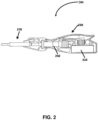
- FIG. 2 shows an ultrasonic surgical pen device 200, which is another illustrative embodiment of the ultrasonic surgical system 100 of FIG. 1A .
- the ultrasonic surgical pen device 200 includes a power source 210, the housing 230, the ultrasonic transducer 250, and the end effector 290. Descriptions for the power source 210, the housing 230, the ultrasonic transducer 250, the end effector 290 are similar to those for the power source 110, the housing 130, the ultrasonic transducer 150, and the end effector 190 of FIG. 1A and are thus omitted.
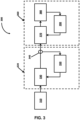
- FIG. 3 illustrates a ultrasonic surgical system 300, e.g., ultrasonic surgical system 100 or 200 of FIGS. 1A and 2 , using a band-pass filter (BPF) oscillator architecture, which automatically tracks the resonant frequency of the BPF regardless of process variations and environmental interferences.
- BPF band-pass filter
- a pulse-width modulation (PWM) signal is used to regulate mechanical ultrasonic motion as described in further detail below.
- the ultrasonic surgical system 300 for the ultrasonic surgical system includes a power source 310, an amplitude controller 320, and an automatic resonance tracking controller 360.
- the amplitude controller 320 includes a converter 330, a sensor 340 and a controller 350.
- the automatic resonance tracking controller 360 includes a non-resonant inverter 370, an ultrasonic transducer 380, and a comparator 390.
- the power source 310 provides DC power to the converter 330 which modulates the amplitude of the DC power.
- the converter 330 may be a buck converter or a step-down converter.
- the sensor 340 then senses current passing to the automatic resonance tracking controller 360.
- the controller 350 receives the sensed results from the sensor 340 and generates a PWM control signal to control a duty cycle of the converter 330.
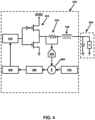
- FIG. 4 shows a circuit diagram illustrating the amplitude controller 320 of FIG. 3 .
- the amplitude controller 320 controls amplitudes of outputs of the converter 330 so that ultrasonic surgical system 300 generates mechanical ultrasonic motion suitable for treating tissue.
- the amplitude controller 320 includes a driver 410, a converter 420, a sensor 430, an analog to digital converter (ADC) 450, an adder 460, a reference provider 470, a controller 480, and a PWM generator 490.
- the automatic resonance tracking controller 360 is shown as a capacitor and a load in parallel, which is an electrical model at the resonant frequency of interest.
- the driver 410 drives two field-effector transistors (FETs) of the converter 420 using PWM signals which have pulses with variable lengths at a regular interval. The widths of pulses turn on and off the FETs of the converter 420.
- the converter 420 receives power from a power source and outputs modulated power through the FETs.
- the output power flows through the sensor 430 in the form of DC.
- the sensor 430 includes a sensing resistor which drops voltage around the sensor resistor.
- the resistance value of the sensing resistor may be about 0.02 ohms ( ⁇ ). Since the DC passing through the sensing resistor also passes through the inductor 440, inductor current, I L , passing through the inductor 440 may be determined by measuring the DC passing through the sensing resistor.
- the sensed current by the sensor 430 is then sampled by the ADC 450.
- the size of bits of digital samples of the ADC 450 determines a level of accuracy of the measurements of the sensor 430. In embodiments, if the ADC 450 samples sensed data with 14 bits, the maximum range of the measured value can be divided up to 16,384 sub-ranges.
- the ADC 450 may include a zero-order sample and hold (ZOH).
- the ADC 450 may include an adjuster and a compensator. Since the ADC 450 can only sample data whose magnitude is less than or equal to a predetermined maximum (e.g., 1 volt), the output data (e.g., current or voltage) of the converter 430 may be adjusted when the output data of the converter 430 is greater than the predetermined maximum. Thus, the adjuster adjusts the magnitude of the output data. After the ADC 450 samples the adjusted output, the compensator adjusts the output so that the compensated output has the same magnitude as the original data.
- a predetermined maximum e.g. 1 volt
- the adder 460 subtracts the sampled data (i.e., measured value of the DC) from a reference value provided by the reference provider 470.
- the adder 460 outputs a positive value when the reference value is greater than the sampled data, a negative value when the reference value is less than the measured value, and zero when the reference value is equal to the measured value.
- the reference provider 470 may provide a different reference value.
- the reference provider 470 may provide a reference value with a small load (e.g., 50 ⁇ ) smaller than a reference value with a bigger load (e.g., 500 ⁇ ).
- the amplitude controller 320 can appropriately control the amplitude of the DC in accordance with the load.
- the controller 480 receives the output from the adder 460 and controls the duty cycle of the PWM signals. In embodiments, when the output from the adder 460 is positive, the controller 480 controls the PWM generator 490 to generate PWM signals with an increased duty cycle, and when the output from the adder 460 is negative, the controller 480 controls the PWM generator 490 to generate PWM signals with a decreased duty cycle. Duty cycle of PWM signals does not need to be changed when the output is zero.
- the adder 460 may subtract the reference value from the measured value. In this aspect, the signs of the output of the adder 460 are reversed from the above situation, and increase and decrease of the duty cycle are also reversed.
- the PWM generator 490 generates PWM signals having an appropriate duty cycle in accordance with the controls of the controller 480.
- the generated PWM signals are used to drive the converter 420 by the driver 410. In this way, amplitude of the converter 420 is controlled to match the reference value output from the reference provider 470.
- the controller 480 may be realized in digital domain and use a proportional-integral (PI) controller.
- Proportional gain K p and integral gain K i may be selected such that a high DC gain is achieved and static errors are reduced between the measured values and the reference value.
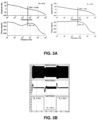
- FIGS. 5A and 5B Graphical diagrams with a PI controller for two loads are illustrated in FIGS. 5A and 5B.
- FIG. 5A shows Bode plots in the frequency domain.
- the proportional constant K p may be set to 16 and the integral gain K i may be set to 100,000 to ensure sufficient phase margin and avoid the high frequency poles due to the switching frequency which is set to 100 kHz.
- the Bode plot in the left is for the minimum 50 ⁇ load and the Bode plot in the right is for the maximum 500 ⁇ load.
- the top two graphs are Bode gain plots and the bottom two graphs are Bode phase plots.
- the horizontal axis for both Bode plots represents frequency in logarithmic scale.
- the vertical axis for the Bode gain plots represents magnitudes in decibel (dB) scale and that for the Bode phase plots represents phase.
- the gain bandwidth product (GBW) is 4.6 kHz which is less than one twentieth of the switching frequency, which is 5 kHz, but higher than 300 Hz, ensuring that a settling time is less than 18 milliseconds (ms).
- the gain bandwidth product (GBW) is 4 kHz, which is within 5 kHz and 300 Hz, also ensuring that the settling time is less than 18 ms. Further, in both cases with the minimum and maximum loads, the system is stable with the PI controller.
- FIG. 5B shows changes in amplitude of current according to changes in the load.
- the horizontal axis for all three graphs of FIG. 5B is time.
- the bottom graph shows that 50 ⁇ is loaded at the starting and the load is changed from 50 ⁇ to 500 ⁇ at 5 ms and changed back to 50 ⁇ from 500 ⁇ at 10 ms.
- the middle graph shows changes in amplitude of current passing through the inductor, which may be the inductor 440 of FIG. 4 .
- the amplitude controller 320 of FIG. 3 reacts and forces the inductor current to return to the reference value. Thus, changes in amplitude of current passing through inductor 440 occur when the load is loaded and changed.
- the top graph shows changes in amplitude of current passing through the ultrasonic transducer 380.
- the amplitude drops when a higher load is loaded. This is because the parasitic capacitor creates an offset in the motion current output even though the ultrasonic surgical system 300 forces more output voltage to the ultrasonic transducer 380.
- This drawback may be corrected by adjusting the reference value provided by the reference provider 470.
- the reference provider 470 may provide 7,000 as the reference value to the adder 460 with 500 ⁇ load to compensate the amplitude drop in the current passing through the automatic resonance tracking controller 360.
- FIG. 6A shows a BPF oscillator model 600 illustrating automatic resonance tracking controller 360.
- the BPF oscillator model 600 includes a BPF circuit 610 and a motional sensing circuit 650.
- the BPF circuit 610 which represents an electrical model for an ultrasonic transducer 380, includes a motion capacitor having a capacitance value C m , a motion resistor having a resistance value R m , a motion inductor having an inductance value L m , and a parasitic capacitor having a capacitance value C p .
- the motion capacitor and the motion inductor represent mechanical motion of the ultrasonic transducer 380 which is modeled as charging and discharging energy in the BPF circuit 610.
- the motion resistor represents an end effector 190 of the ultrasonic surgical system 100 or a mechanical load.
- the resistance value R m may range from 50 ⁇ to 500 ⁇ .
- a capacitor and its capacitance value, an inductor and its inductance value, and a resistor and its resistance value may be used interchangeably hereinafter when there is no confusion, e.g., the motion resistor R m and the resistance value R m may be used interchangeably.
- the impedance of the BPF circuit 610 may be calculated in the frequency domain.
- the parasitic capacitor is in parallel with the motion capacitor, the motion resistor, and the motion inductor.
- the impedances of the motion capacitor Z C m 1 sC m .
- the impedance of the BPF circuit 610 or the ultrasonic transducer 380 at resonance is Z Total .
- the resonant frequency of the ultrasonic transducer 380 depends on the capacitance value C m of the motion capacitor and the inductance value L m of the motion inductor.
- the BPF oscillator model 600 includes the motional sensing circuit 650 which senses the motion current I m .
- the motional sensing circuit 650 includes a capacitor having a capacitance value C 3 in series with a resistor having a resistance value R 3 , which are in parallel with two resistors having resistance values R 4 and R 2 .
- the resistance value R 4 is very large relative to the impedance of the BPF circuit 610 so that most of input current I IN goes through the BPF circuit 610. In other words, the resistor R 4 looks like an open circuit.
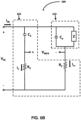
- the BPF oscillator model 600 can be simplified as FIG. 6B by ignoring the resistor R 4 and simplifying the BPF circuit 610 as a parallel combination of the parasitic capacitor C p and an impedance block Z representing the other passive components, L m , R m , and C m .
- the motional sensing voltage V MFB is related to the motion current I m .
- the relationship between the motional sensing voltage V MFB and the motion current I m also shows that the motional sensing circuit 650 directly measures the motion current I m .
- this motional sensing circuit 650 is frequency-dependent and a function of the load Z. Selection of passive components R 2 , R 3 , and C 3 may be based on the variations in Z, different loading conditions, and parasitic parallel capacitor C p over a wide range of frequencies. R 3 may be matched to C p R 2 C 3 to make the motional sensing circuit 650 a load independent circuit and to completely cancel its effect on the measured signal, as can be observed in the numerator of the equation of the gain K. This selection is clearly load independent and may make the sensing signal more robust against variations of the load, ensuring good tracking over wide load transients.
- the non-resonant inverter 370 receives the modulated DC power from the converter 330 and inverts to AC power having the resonant frequency of the ultrasonic transducer 380.
- the non-resonant inverter 370 is driven by output signals from the comparator 390.
- the non-resonant inverter 370 may include any suitable topology such as an H-bridge (e.g., full bridge), a half bridge, and the like.
- the output signals from the comparator 390 may be digitally generated by the controller 350.
- the controller 350 not only generates DPWM signals to drive the converter 330 but also generates resonant signals, which have 50 percent duty cycle, for the non-resonant inverter 370. Nevertheless, the controller 350 may not control the automatic resonance tracking controller 360.
- the controller 350 just receives outputs from the comparator 390, generates resonant signals according to the outputs of the comparator 390, and provides the generated resonant signals to the non-resonant inverter 370.
- the controller 350 may be realized using a programmable gate array (PGA), field-programmable gate array (FPGA), application-specific integrated circuit (ASIC), or complex programmable logic device (CPLD). This list provides examples and may further include other techniques and devices as those having ordinary skill in the art would appreciate.
- PGA programmable gate array
- FPGA field-programmable gate array
- ASIC application-specific integrated circuit
- CPLD complex programmable logic device
- the non-resonant inverter 370 inverts the DC power to the AC signal, whose frequency is independent of the switching frequency of the non-resonant inverter 370, by tracking the resonant frequency of the ultrasonic transducer 380.
- a transformer may be electrically coupled between the non-resonant inverter 370 and the ultrasonic transducer 380 so that the transformer may increase or decrease the amplitude of the inverted AC power.
- the ultrasonic transducer 380 received the AC power having a first frequency and generates mechanical ultrasonic motion.
- the comparator 390 receives the motion current I m , as described in FIGS. 6A and 6B , and automatically tracks the resonant frequency of the ultrasonic transducer 380.
- the motion current I m passing through the ultrasonic transducer 380 fluctuates based on deviations of the first frequency from its resonant frequency. In other words, when the first frequency does not match the resonant frequency, the motion current I m goes up or down from zero. Thus, the motion current I m has information of the resonant frequency of the ultrasonic transducer 380.
- the comparator 390 amplifies the motion current I m to generate output signals having the resonant frequency information of the ultrasonic transducer 380.
- FIG. 7 shows a circuit diagram of the comparator 390 of FIG. 3 .
- the comparator 390 includes an amplifier 710 which has first and second input ports and an output port. Each of the two input ports provides a voltage to the amplifier 710 which subtracts one voltage from the other and amplifies the difference.
- a voltage source 720 provides a voltage to the amplifier 710 via the first and the second input ports.
- the comparator 390 includes four resistors 730a-d.
- the first pair of resistors 730a and 730b are connected in series and the second pair of resistors 730c and 730d are connected in series, while the first pair of resistors and the second pair of resistors are connected in parallel.
- the voltage source 720 is connected to the resistors 730a and 730c, and the resistors 730b and 730d are connected to the ground.
- the first input port is connected to the connection point between the two resistors 730a and 730b, and the second input port is connected to the connection point between the two resistors 730c and 730d.
- the resistance values of the four resistors 730a-730d are same to each other.
- the first input port and the second input port are provided with the same voltage, which is the half of the voltage that the voltage source 720 provides, according to the voltage divider rule.
- the output of the amplifier, or the output of the comparator 390 is a zero AC motional signal current. Specifically, during an idle condition, a static output will turn-on half side of the non-resonant inverter 370, resulting in constant DC output. Thus, no power is delivered to the load.
- connection point between the resistors 730a and 730b is also connected to a capacitor 740 which receives the motion current I m from the ultrasonic transducer 380 and the second input port is also connected to a capacitor 750 which is connected to the ground.
- the capacitor 740 prevents DC component of the motion current I m from being provided to the amplifier 710. Now, when the motion current I m fluctuates, the input to the first input port also fluctuates accordingly and the amplifier 710 amplifies the difference between inputs from the first and second input ports due to the fluctuations. In this way, the resonant frequency information included in the motion current I m is amplified to and included in the outputs of the comparator 390.
- the comparator 390 further includes a feedback resistor 760 which is connected between the voltage source 720 and the output port of the amplifier 710, and another resistor 770 which is connected to the output port of the amplifier 710.
- the resistor 770 having a high resistance value (e.g., 1 k ⁇ ) may be placed between the comparator 390 and the controller 350.
- the amplifier 710 may have an infinite gain so that an analog signal (i.e., motion current I m ) may be converted to a digital signal that can directly drive the non-resonant inverter 370. Then, the non-resonant inverter 370 generates AC having the resonant frequency of the ultrasonic transducer 380 which then turns to generate mechanical ultrasonic motion having the resonant frequency of the ultrasonic transducer 380.
- the comparator 390 has a limited but very high gain, which may be higher than the resistance value R m of the motion resistor, as described in FIG. 6A , or mechanical resistance, and outputs a signal similar to the digital signal.
- the controller 350 then receives this signal and generates a DPWM signal having the resonant frequency information to drive the non-resonant inverter 370.
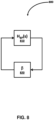
- FIG. 8 shows a block diagram illustrating a closed loop feedback system 800 of the ultrasonic transducer 380 and the comparator 390 of FIG. 3 .
- a BPF 810 represents the ultrasonic transducer 380
- a voltage limiter 820 represents the comparator 390 of FIG. 3 .
- the BPF 810 and the voltage limiter 820 forms the closed loop feedback system 800 as the ultrasonic transducer 380 and the comparator 390 form a closed loop feedback system.
- the above criteria are called Barkhausen stability criterion.
- the loop gain LG(s) has to be one to make the denominator of the transfer function H CL (s) of the closed loop feedback system zero, which makes the magnitude of the closed loop feedback system 800 infinite and ensures oscillations.
- the ultrasonic transducer suffers from environmental variations such as load or temperature changes which may result in shifts of resonant frequency.
- the oscillating center frequency locates exactly at the resonant frequency, which guarantees that the closed loop feedback system 800 automatically tracks the resonant frequency of the ultrasonic transducer.
- the complexity of this feature is as simple as ordinary second order system as shown in the denominator of the transfer function H CL (s).
- the gain ⁇ of the voltage limiter 820 has to be greater than a minimum value of ⁇ 0 K 1 ⁇ Q that represents the peak magnitude value of the BPF 810 at the resonant frequency, to meet the Barkhausen stability criterion for sustained oscillation, and has to be greater than the resistance value R m of the motion resistor based on the description of FIGS. 6A and 6B . If the gain ⁇ is smaller than ⁇ 0 K 1 ⁇ Q , the output signal amplitude will be insufficient to sustain the oscillations and will eventually settle down to a static state.
Landscapes
- Health & Medical Sciences (AREA)
- Engineering & Computer Science (AREA)
- Mechanical Engineering (AREA)
- Life Sciences & Earth Sciences (AREA)
- Surgery (AREA)
- Animal Behavior & Ethology (AREA)
- Veterinary Medicine (AREA)
- Nuclear Medicine, Radiotherapy & Molecular Imaging (AREA)
- Biomedical Technology (AREA)
- Public Health (AREA)
- General Health & Medical Sciences (AREA)
- Molecular Biology (AREA)
- Medical Informatics (AREA)
- Heart & Thoracic Surgery (AREA)
- Dentistry (AREA)
- Surgical Instruments (AREA)
- Radiology & Medical Imaging (AREA)
- Inverter Devices (AREA)
- General Electrical Machinery Utilizing Piezoelectricity, Electrostriction Or Magnetostriction (AREA)
- Dc-Dc Converters (AREA)
Applications Claiming Priority (2)
| Application Number | Priority Date | Filing Date | Title |
|---|---|---|---|
| US201462028916P | 2014-07-25 | 2014-07-25 | |
| US14/797,301 US10086217B2 (en) | 2014-07-25 | 2015-07-13 | Electrosurgical ultrasonic vessel sealing and dissecting system |
Publications (3)
| Publication Number | Publication Date |
|---|---|
| EP2977114A2 EP2977114A2 (en) | 2016-01-27 |
| EP2977114A3 EP2977114A3 (en) | 2016-03-30 |
| EP2977114B1 true EP2977114B1 (en) | 2023-04-26 |
Family
ID=53800830
Family Applications (1)
| Application Number | Title | Priority Date | Filing Date |
|---|---|---|---|
| EP15178067.3A Active EP2977114B1 (en) | 2014-07-25 | 2015-07-23 | Ultrasonic motion generator and ultrasonic surgical apparatus comprising the same |
Country Status (5)
| Country | Link |
|---|---|
| US (2) | US10086217B2 (enExample) |
| EP (1) | EP2977114B1 (enExample) |
| JP (2) | JP6138870B2 (enExample) |
| AU (1) | AU2015204334B2 (enExample) |
| CA (1) | CA2897555C (enExample) |
Families Citing this family (9)
| Publication number | Priority date | Publication date | Assignee | Title |
|---|---|---|---|---|
| US10086217B2 (en) * | 2014-07-25 | 2018-10-02 | Covidien Lp | Electrosurgical ultrasonic vessel sealing and dissecting system |
| ES2632260B1 (es) * | 2016-03-09 | 2018-05-04 | Clarton Horn, S.A.U. | Procedimiento de control de un avisador acústico, y avisador acústico que realiza dicho procedimiento de control |
| CN105973997A (zh) * | 2016-04-28 | 2016-09-28 | 长沙金码高科技实业有限公司 | 一种超声波收发器 |
| WO2018134886A1 (ja) * | 2017-01-17 | 2018-07-26 | オリンパス株式会社 | 電源装置 |
| CN109061294B (zh) * | 2018-05-30 | 2020-01-24 | 清华大学 | 超磁致伸缩换能器谐振频率跟踪系统及方法 |
| US11540856B2 (en) * | 2018-05-31 | 2023-01-03 | Covidien Lp | Methods and systems for ultrasonic vessel sealing |
| US11331115B2 (en) | 2018-10-03 | 2022-05-17 | Covidien Lp | Reusable ultrasonic transducer and generator assemblies, surgical instruments including the same, and methods of manufacturing the same |
| JP2024072368A (ja) * | 2022-11-16 | 2024-05-28 | ローム株式会社 | 駆動装置、超音波センサ、及び車両 |
| CN115770089B (zh) * | 2023-02-10 | 2023-06-20 | 杭州康基医疗器械有限公司 | 一种高集成高频超声系统及工作方法 |
Family Cites Families (21)
| Publication number | Priority date | Publication date | Assignee | Title |
|---|---|---|---|---|
| US4750902A (en) | 1985-08-28 | 1988-06-14 | Sonomed Technology, Inc. | Endoscopic ultrasonic aspirators |
| JPS63500850A (ja) * | 1985-08-28 | 1988-03-31 | バレイラブ インコーポレーテッド | 内視鏡超音波吸引器 |
| US4750488A (en) * | 1986-05-19 | 1988-06-14 | Sonomed Technology, Inc. | Vibration apparatus preferably for endoscopic ultrasonic aspirator |
| EP0424685B1 (en) | 1989-10-27 | 1995-05-10 | Storz Instrument Company | Method for driving an ultrasonic transducer |
| JP2523998B2 (ja) | 1991-01-31 | 1996-08-14 | 株式会社東芝 | コンパレ―タ |
| US5446650A (en) | 1993-10-12 | 1995-08-29 | Tektronix, Inc. | Logic signal extraction |
| JP3486469B2 (ja) | 1994-10-26 | 2004-01-13 | オリンパス株式会社 | 圧電振動子の駆動装置 |
| US5832412A (en) | 1996-02-09 | 1998-11-03 | Kulicke And Soffa Investments, Inc. | Programmable digital frequency ultrasonic generator |
| US5866968A (en) | 1997-05-07 | 1999-02-02 | Motorola Inc. | Single-input phase locking piezoelectric transformer driving circuit |
| AU7581998A (en) | 1997-05-19 | 1998-12-11 | Angiosonics, Inc. | Feedback control system for ultrasound probe |
| US6016052A (en) * | 1998-04-03 | 2000-01-18 | Cts Corporation | Pulse frequency modulation drive circuit for piezoelectric transformer |
| US6469418B1 (en) | 2001-06-27 | 2002-10-22 | Scitex Digital Printing, Inc. | Vibration monitoring system and method |
| JP2006006410A (ja) | 2004-06-22 | 2006-01-12 | Olympus Corp | 超音波手術装置 |
| JP5346441B2 (ja) | 2006-02-24 | 2013-11-20 | 株式会社半導体エネルギー研究所 | 液晶表示装置 |
| US8663262B2 (en) * | 2007-12-03 | 2014-03-04 | Covidien Ag | Battery assembly for battery-powered surgical instruments |
| US9089360B2 (en) | 2008-08-06 | 2015-07-28 | Ethicon Endo-Surgery, Inc. | Devices and techniques for cutting and coagulating tissue |
| AU2009313415B2 (en) * | 2008-11-07 | 2015-01-15 | Johnson & Johnson Surgical Vision, Inc. | Multiple frequency phacoemulsification needle driver |
| US8258886B2 (en) | 2010-03-30 | 2012-09-04 | Tyco Healthcare Group Lp | System and method for improved start-up of self-oscillating electro-mechanical surgical devices |
| US10677764B2 (en) | 2012-06-11 | 2020-06-09 | Covidien Lp | Temperature estimation and tissue detection of an ultrasonic dissector from frequency response monitoring |
| EP2733839B1 (en) * | 2012-11-14 | 2017-01-04 | AIRBUS HELICOPTERS DEUTSCHLAND GmbH | Electric circuit with one power amplifier for antagonistic piezoelectric actuators |
| US10086217B2 (en) * | 2014-07-25 | 2018-10-02 | Covidien Lp | Electrosurgical ultrasonic vessel sealing and dissecting system |
-
2015
- 2015-07-13 US US14/797,301 patent/US10086217B2/en active Active
- 2015-07-15 CA CA2897555A patent/CA2897555C/en not_active Expired - Fee Related
- 2015-07-16 AU AU2015204334A patent/AU2015204334B2/en not_active Ceased
- 2015-07-23 EP EP15178067.3A patent/EP2977114B1/en active Active
- 2015-07-24 JP JP2015146694A patent/JP6138870B2/ja active Active
-
2016
- 2016-10-04 JP JP2016196119A patent/JP6585575B2/ja not_active Expired - Fee Related
-
2018
- 2018-09-17 US US16/132,640 patent/US11596978B2/en active Active
Also Published As
| Publication number | Publication date |
|---|---|
| EP2977114A2 (en) | 2016-01-27 |
| US20160023021A1 (en) | 2016-01-28 |
| JP2016032429A (ja) | 2016-03-07 |
| US20190076675A1 (en) | 2019-03-14 |
| JP2017047224A (ja) | 2017-03-09 |
| US11596978B2 (en) | 2023-03-07 |
| US10086217B2 (en) | 2018-10-02 |
| AU2015204334B2 (en) | 2017-05-25 |
| EP2977114A3 (en) | 2016-03-30 |
| JP6138870B2 (ja) | 2017-05-31 |
| AU2015204334A1 (en) | 2016-02-11 |
| JP6585575B2 (ja) | 2019-10-02 |
| CA2897555A1 (en) | 2016-01-25 |
| CA2897555C (en) | 2017-12-19 |
Similar Documents
| Publication | Publication Date | Title |
|---|---|---|
| US11596978B2 (en) | Electrosurgical ultrasonic vessel sealing and dissecting system | |
| US11033292B2 (en) | Medical device | |
| US11969201B2 (en) | Control systems for electrosurgical generator | |
| US20210186554A1 (en) | Medical device | |
| US20140028389A1 (en) | Power Distortion-Based Servo Control Systems for Frequency Tuning RF Power Sources | |
| JPH11137560A (ja) | 超音波手術装置 | |
| US12102373B2 (en) | Generator | |
| EP3106109B1 (en) | Ultrasonic surgical device and method for detection of attachment of ultrasonic probe | |
| JP2014010152A (ja) | 高周波医療用デバイスによって生成される信号の周波数を測定するシステムおよび方法 | |
| US11974771B2 (en) | Ultrasonic surgical device and method for detection of attachment of ultrasonic probe | |
| CN111679128B (zh) | 基于变pwm载波频率的电网阻抗测量方法 | |
| US10571435B2 (en) | Systems and methods for digital control of ultrasonic devices | |
| Krivoshei et al. | An adaptive filtering system for separation of cardiac and respiratory components of bioimpedance signal | |
| JP6474985B2 (ja) | 高周波電源 | |
| CN120961409A (zh) | 温度检测电路、超声驱动装置及超声治疗设备 | |
| JP2604852B2 (ja) | 超音波駆動装置 | |
| CN120961408A (zh) | 超声驱动装置和超声治疗设备 |
Legal Events
| Date | Code | Title | Description |
|---|---|---|---|
| PUAI | Public reference made under article 153(3) epc to a published international application that has entered the european phase |
Free format text: ORIGINAL CODE: 0009012 |
|
| AK | Designated contracting states |
Kind code of ref document: A2 Designated state(s): AL AT BE BG CH CY CZ DE DK EE ES FI FR GB GR HR HU IE IS IT LI LT LU LV MC MK MT NL NO PL PT RO RS SE SI SK SM TR |
|
| AX | Request for extension of the european patent |
Extension state: BA ME |
|
| PUAL | Search report despatched |
Free format text: ORIGINAL CODE: 0009013 |
|
| AK | Designated contracting states |
Kind code of ref document: A3 Designated state(s): AL AT BE BG CH CY CZ DE DK EE ES FI FR GB GR HR HU IE IS IT LI LT LU LV MC MK MT NL NO PL PT RO RS SE SI SK SM TR |
|
| AX | Request for extension of the european patent |
Extension state: BA ME |
|
| RIC1 | Information provided on ipc code assigned before grant |
Ipc: A61N 7/00 20060101ALI20160225BHEP Ipc: B06B 1/02 20060101AFI20160225BHEP |
|
| 17P | Request for examination filed |
Effective date: 20160927 |
|
| RBV | Designated contracting states (corrected) |
Designated state(s): AL AT BE BG CH CY CZ DE DK EE ES FI FR GB GR HR HU IE IS IT LI LT LU LV MC MK MT NL NO PL PT RO RS SE SI SK SM TR |
|
| STAA | Information on the status of an ep patent application or granted ep patent |
Free format text: STATUS: EXAMINATION IS IN PROGRESS |
|
| 17Q | First examination report despatched |
Effective date: 20190221 |
|
| GRAP | Despatch of communication of intention to grant a patent |
Free format text: ORIGINAL CODE: EPIDOSNIGR1 |
|
| STAA | Information on the status of an ep patent application or granted ep patent |
Free format text: STATUS: GRANT OF PATENT IS INTENDED |
|
| INTG | Intention to grant announced |
Effective date: 20221115 |
|
| GRAS | Grant fee paid |
Free format text: ORIGINAL CODE: EPIDOSNIGR3 |
|
| GRAA | (expected) grant |
Free format text: ORIGINAL CODE: 0009210 |
|
| STAA | Information on the status of an ep patent application or granted ep patent |
Free format text: STATUS: THE PATENT HAS BEEN GRANTED |
|
| AK | Designated contracting states |
Kind code of ref document: B1 Designated state(s): AL AT BE BG CH CY CZ DE DK EE ES FI FR GB GR HR HU IE IS IT LI LT LU LV MC MK MT NL NO PL PT RO RS SE SI SK SM TR |
|
| REG | Reference to a national code |
Ref country code: GB Ref legal event code: FG4D |
|
| REG | Reference to a national code |
Ref country code: CH Ref legal event code: EP |
|
| REG | Reference to a national code |
Ref country code: DE Ref legal event code: R096 Ref document number: 602015083286 Country of ref document: DE |
|
| REG | Reference to a national code |
Ref country code: AT Ref legal event code: REF Ref document number: 1562458 Country of ref document: AT Kind code of ref document: T Effective date: 20230515 |
|
| REG | Reference to a national code |
Ref country code: IE Ref legal event code: FG4D |
|
| PGFP | Annual fee paid to national office [announced via postgrant information from national office to epo] |
Ref country code: FR Payment date: 20230621 Year of fee payment: 9 |
|
| REG | Reference to a national code |
Ref country code: LT Ref legal event code: MG9D |
|
| REG | Reference to a national code |
Ref country code: NL Ref legal event code: MP Effective date: 20230426 |
|
| REG | Reference to a national code |
Ref country code: AT Ref legal event code: MK05 Ref document number: 1562458 Country of ref document: AT Kind code of ref document: T Effective date: 20230426 |
|
| PG25 | Lapsed in a contracting state [announced via postgrant information from national office to epo] |
Ref country code: NL Free format text: LAPSE BECAUSE OF FAILURE TO SUBMIT A TRANSLATION OF THE DESCRIPTION OR TO PAY THE FEE WITHIN THE PRESCRIBED TIME-LIMIT Effective date: 20230426 |
|
| PG25 | Lapsed in a contracting state [announced via postgrant information from national office to epo] |
Ref country code: SE Free format text: LAPSE BECAUSE OF FAILURE TO SUBMIT A TRANSLATION OF THE DESCRIPTION OR TO PAY THE FEE WITHIN THE PRESCRIBED TIME-LIMIT Effective date: 20230426 Ref country code: PT Free format text: LAPSE BECAUSE OF FAILURE TO SUBMIT A TRANSLATION OF THE DESCRIPTION OR TO PAY THE FEE WITHIN THE PRESCRIBED TIME-LIMIT Effective date: 20230828 Ref country code: NO Free format text: LAPSE BECAUSE OF FAILURE TO SUBMIT A TRANSLATION OF THE DESCRIPTION OR TO PAY THE FEE WITHIN THE PRESCRIBED TIME-LIMIT Effective date: 20230726 Ref country code: ES Free format text: LAPSE BECAUSE OF FAILURE TO SUBMIT A TRANSLATION OF THE DESCRIPTION OR TO PAY THE FEE WITHIN THE PRESCRIBED TIME-LIMIT Effective date: 20230426 Ref country code: AT Free format text: LAPSE BECAUSE OF FAILURE TO SUBMIT A TRANSLATION OF THE DESCRIPTION OR TO PAY THE FEE WITHIN THE PRESCRIBED TIME-LIMIT Effective date: 20230426 |
|
| PG25 | Lapsed in a contracting state [announced via postgrant information from national office to epo] |
Ref country code: RS Free format text: LAPSE BECAUSE OF FAILURE TO SUBMIT A TRANSLATION OF THE DESCRIPTION OR TO PAY THE FEE WITHIN THE PRESCRIBED TIME-LIMIT Effective date: 20230426 Ref country code: PL Free format text: LAPSE BECAUSE OF FAILURE TO SUBMIT A TRANSLATION OF THE DESCRIPTION OR TO PAY THE FEE WITHIN THE PRESCRIBED TIME-LIMIT Effective date: 20230426 Ref country code: LV Free format text: LAPSE BECAUSE OF FAILURE TO SUBMIT A TRANSLATION OF THE DESCRIPTION OR TO PAY THE FEE WITHIN THE PRESCRIBED TIME-LIMIT Effective date: 20230426 Ref country code: LT Free format text: LAPSE BECAUSE OF FAILURE TO SUBMIT A TRANSLATION OF THE DESCRIPTION OR TO PAY THE FEE WITHIN THE PRESCRIBED TIME-LIMIT Effective date: 20230426 Ref country code: IS Free format text: LAPSE BECAUSE OF FAILURE TO SUBMIT A TRANSLATION OF THE DESCRIPTION OR TO PAY THE FEE WITHIN THE PRESCRIBED TIME-LIMIT Effective date: 20230826 Ref country code: HR Free format text: LAPSE BECAUSE OF FAILURE TO SUBMIT A TRANSLATION OF THE DESCRIPTION OR TO PAY THE FEE WITHIN THE PRESCRIBED TIME-LIMIT Effective date: 20230426 Ref country code: GR Free format text: LAPSE BECAUSE OF FAILURE TO SUBMIT A TRANSLATION OF THE DESCRIPTION OR TO PAY THE FEE WITHIN THE PRESCRIBED TIME-LIMIT Effective date: 20230727 |
|
| PG25 | Lapsed in a contracting state [announced via postgrant information from national office to epo] |
Ref country code: FI Free format text: LAPSE BECAUSE OF FAILURE TO SUBMIT A TRANSLATION OF THE DESCRIPTION OR TO PAY THE FEE WITHIN THE PRESCRIBED TIME-LIMIT Effective date: 20230426 |
|
| PG25 | Lapsed in a contracting state [announced via postgrant information from national office to epo] |
Ref country code: SK Free format text: LAPSE BECAUSE OF FAILURE TO SUBMIT A TRANSLATION OF THE DESCRIPTION OR TO PAY THE FEE WITHIN THE PRESCRIBED TIME-LIMIT Effective date: 20230426 |
|
| REG | Reference to a national code |
Ref country code: DE Ref legal event code: R097 Ref document number: 602015083286 Country of ref document: DE |
|
| PG25 | Lapsed in a contracting state [announced via postgrant information from national office to epo] |
Ref country code: SM Free format text: LAPSE BECAUSE OF FAILURE TO SUBMIT A TRANSLATION OF THE DESCRIPTION OR TO PAY THE FEE WITHIN THE PRESCRIBED TIME-LIMIT Effective date: 20230426 Ref country code: SK Free format text: LAPSE BECAUSE OF FAILURE TO SUBMIT A TRANSLATION OF THE DESCRIPTION OR TO PAY THE FEE WITHIN THE PRESCRIBED TIME-LIMIT Effective date: 20230426 Ref country code: RO Free format text: LAPSE BECAUSE OF FAILURE TO SUBMIT A TRANSLATION OF THE DESCRIPTION OR TO PAY THE FEE WITHIN THE PRESCRIBED TIME-LIMIT Effective date: 20230426 Ref country code: EE Free format text: LAPSE BECAUSE OF FAILURE TO SUBMIT A TRANSLATION OF THE DESCRIPTION OR TO PAY THE FEE WITHIN THE PRESCRIBED TIME-LIMIT Effective date: 20230426 Ref country code: DK Free format text: LAPSE BECAUSE OF FAILURE TO SUBMIT A TRANSLATION OF THE DESCRIPTION OR TO PAY THE FEE WITHIN THE PRESCRIBED TIME-LIMIT Effective date: 20230426 Ref country code: CZ Free format text: LAPSE BECAUSE OF FAILURE TO SUBMIT A TRANSLATION OF THE DESCRIPTION OR TO PAY THE FEE WITHIN THE PRESCRIBED TIME-LIMIT Effective date: 20230426 |
|
| PG25 | Lapsed in a contracting state [announced via postgrant information from national office to epo] |
Ref country code: MC Free format text: LAPSE BECAUSE OF FAILURE TO SUBMIT A TRANSLATION OF THE DESCRIPTION OR TO PAY THE FEE WITHIN THE PRESCRIBED TIME-LIMIT Effective date: 20230426 |
|
| PG25 | Lapsed in a contracting state [announced via postgrant information from national office to epo] |
Ref country code: MC Free format text: LAPSE BECAUSE OF FAILURE TO SUBMIT A TRANSLATION OF THE DESCRIPTION OR TO PAY THE FEE WITHIN THE PRESCRIBED TIME-LIMIT Effective date: 20230426 |
|
| REG | Reference to a national code |
Ref country code: CH Ref legal event code: PL |
|
| PLBE | No opposition filed within time limit |
Free format text: ORIGINAL CODE: 0009261 |
|
| STAA | Information on the status of an ep patent application or granted ep patent |
Free format text: STATUS: NO OPPOSITION FILED WITHIN TIME LIMIT |
|
| REG | Reference to a national code |
Ref country code: BE Ref legal event code: MM Effective date: 20230731 |
|
| PG25 | Lapsed in a contracting state [announced via postgrant information from national office to epo] |
Ref country code: LU Free format text: LAPSE BECAUSE OF NON-PAYMENT OF DUE FEES Effective date: 20230723 |
|
| GBPC | Gb: european patent ceased through non-payment of renewal fee |
Effective date: 20230726 |
|
| PG25 | Lapsed in a contracting state [announced via postgrant information from national office to epo] |
Ref country code: LU Free format text: LAPSE BECAUSE OF NON-PAYMENT OF DUE FEES Effective date: 20230723 |
|
| 26N | No opposition filed |
Effective date: 20240129 |
|
| REG | Reference to a national code |
Ref country code: IE Ref legal event code: MM4A |
|
| PG25 | Lapsed in a contracting state [announced via postgrant information from national office to epo] |
Ref country code: GB Free format text: LAPSE BECAUSE OF NON-PAYMENT OF DUE FEES Effective date: 20230726 Ref country code: CH Free format text: LAPSE BECAUSE OF NON-PAYMENT OF DUE FEES Effective date: 20230731 |
|
| PG25 | Lapsed in a contracting state [announced via postgrant information from national office to epo] |
Ref country code: SI Free format text: LAPSE BECAUSE OF FAILURE TO SUBMIT A TRANSLATION OF THE DESCRIPTION OR TO PAY THE FEE WITHIN THE PRESCRIBED TIME-LIMIT Effective date: 20230426 |
|
| PG25 | Lapsed in a contracting state [announced via postgrant information from national office to epo] |
Ref country code: SI Free format text: LAPSE BECAUSE OF FAILURE TO SUBMIT A TRANSLATION OF THE DESCRIPTION OR TO PAY THE FEE WITHIN THE PRESCRIBED TIME-LIMIT Effective date: 20230426 Ref country code: IT Free format text: LAPSE BECAUSE OF FAILURE TO SUBMIT A TRANSLATION OF THE DESCRIPTION OR TO PAY THE FEE WITHIN THE PRESCRIBED TIME-LIMIT Effective date: 20230426 Ref country code: BE Free format text: LAPSE BECAUSE OF NON-PAYMENT OF DUE FEES Effective date: 20230731 |
|
| PG25 | Lapsed in a contracting state [announced via postgrant information from national office to epo] |
Ref country code: IE Free format text: LAPSE BECAUSE OF NON-PAYMENT OF DUE FEES Effective date: 20230723 |
|
| PG25 | Lapsed in a contracting state [announced via postgrant information from national office to epo] |
Ref country code: IE Free format text: LAPSE BECAUSE OF NON-PAYMENT OF DUE FEES Effective date: 20230723 |
|
| PG25 | Lapsed in a contracting state [announced via postgrant information from national office to epo] |
Ref country code: BG Free format text: LAPSE BECAUSE OF FAILURE TO SUBMIT A TRANSLATION OF THE DESCRIPTION OR TO PAY THE FEE WITHIN THE PRESCRIBED TIME-LIMIT Effective date: 20230426 |
|
| PG25 | Lapsed in a contracting state [announced via postgrant information from national office to epo] |
Ref country code: BG Free format text: LAPSE BECAUSE OF FAILURE TO SUBMIT A TRANSLATION OF THE DESCRIPTION OR TO PAY THE FEE WITHIN THE PRESCRIBED TIME-LIMIT Effective date: 20230426 |
|
| PG25 | Lapsed in a contracting state [announced via postgrant information from national office to epo] |
Ref country code: FR Free format text: LAPSE BECAUSE OF NON-PAYMENT OF DUE FEES Effective date: 20240731 |
|
| PG25 | Lapsed in a contracting state [announced via postgrant information from national office to epo] |
Ref country code: CY Free format text: LAPSE BECAUSE OF FAILURE TO SUBMIT A TRANSLATION OF THE DESCRIPTION OR TO PAY THE FEE WITHIN THE PRESCRIBED TIME-LIMIT; INVALID AB INITIO Effective date: 20150723 |
|
| PG25 | Lapsed in a contracting state [announced via postgrant information from national office to epo] |
Ref country code: HU Free format text: LAPSE BECAUSE OF FAILURE TO SUBMIT A TRANSLATION OF THE DESCRIPTION OR TO PAY THE FEE WITHIN THE PRESCRIBED TIME-LIMIT; INVALID AB INITIO Effective date: 20150723 |
|
| PGFP | Annual fee paid to national office [announced via postgrant information from national office to epo] |
Ref country code: DE Payment date: 20250620 Year of fee payment: 11 |